Pressing Concerns is back, today looking at new records from Spud Cannon and Olivia Kaplan, the new Meat Wave EP, and the newly-issued-on-vinyl album from The Goalie’s Anxiety at the Penalty Kick, which originally came out late last year. I should be on vacation by the time this goes live—I’m not planning on doing any writing this week, so it might be awhile before anything else goes up here! I have a few things for July I’m excited to write about, though, so—patience is a virtue. In the meantime, you can browse previous editions of Pressing Concerns for a lot more great new music.
Spud Cannon – Good Kids Make Bad Apples
Release date: June 25th Record label: Good Eye Genre: Pop rock, garage rock, power pop Formats: Vinyl, digital Pull track: Supersonic
To quote the poet laureate Jake Ewald: “Hey man, I went to college too”. During my time in school I remember seeing a few bands that remind me of Poughkeepsie, New York’s Spud Cannon—a fun, musically-talented group of people who livened up the few parties I attended. The lifespan of these bands is generally no longer than the members’ shared years at their college of origin, and Spud Cannon seemed like it could meet the same fate when the band found itself at a crossroads in 2019. With no resources to record or release a follow-up 2018’s Squeeze, members on the verge of graduating, and everyone dealing with the exhaustion of finishing school while being in a touring band, they stared everything down and decided they wanted to make Good Kids Make Bad Apples instead. Regardless of how many of them currently attend it, this record will be forever linked to their old stomping grounds of Vassar College—I imagine most of the album’s scenes and settings take place on its campus, and Good Kids Make Bad Apples was recorded surreptitiously one of Vassar’s squash courts over a few late-night live sessions.
Spud Cannon sound great on Good Kids Make Bad Apples, and only so much of that can be written off as squash court acoustics. It really does come off as a document of a group that had just toured heavily together—the band’s rhythm section of bassist Lucy Horgan and drummer Ben Scharf is incredibly tight, with Scharf grounding lead single “Juno” with some basketball-dribbling percussion and Horgan letting songs like “Out!” pop as much as possible. Good Kids Make Bad Apples is such a full-sounding record that I was actually surprised that they only have one guitar player, but Jackson Walker Lewis’ Andy Gill dance-rock playing style is more than enough to make these songs work. And above it all is the singular vocals of Meg Matthews, who aurally jukes and jives all over the record—her range includes the motor-mouth opening scene of “Juno”, the pop punk Kate Bush high notes of “You Got It All (NOT)”, and the fittingly dreamy croon of “Sleeper”.
Spud Cannon are committed to having a good time—while that’s clear from the opening notes of Good Kids Make Bad Apples, delving deeper into the record only reaffirms their position. Sometimes this means straight-up party anthems like “Juno”, or outright goofing off, like the bizarrely catchy minute-and-change glam punk track “P.O.T.A.T.O.”. Other times it’s marrying sadder lyrics to more upbeat music, like the bittersweet “we had some good times” breakup song “Lovely”, or “Sleeper”, which seems to be about trying to reach someone who stubbornly refuses to be. Good Kids Make Bad Apples ends with two songs that both find Matthews’ narrator cajoling a friend to leave a bad relationship—with the message that life is too short to entrust yours to an unreliable caretaker. “Don’t waste everything you might be / There’s no way you see him clearly,” notes Matthews in “Na Na Na”, and “Easy” is perhaps even stronger in its resolve to help its addressee see that they’ve outgrown their emotionally unavailable partner. “You’re only young once / Wake up, embrace your luck /Now, girl you gotta get out” is some tough medicine to swallow but Spud Cannon, as always, help it go down easier. (Bandcamp link)
The Goalie’s Anxiety at the Penalty Kick – Ways of Hearing (Vinyl release)
Release date: June 11th Record label: Count Your Lucky Stars Genre: Slowcore, emo Formats: Vinyl, cassette, digital Pull track: God’s Country
Ways of Hearing was something of a late 2020 sleeper hit, at least to the degree that a string-heavy slowcore album released on cassette by a band with a classically-laborious emo band name can be a “hit”. The debut record from The Goalie’s Anxiety at the Penalty Kick came to my attention after earning a vinyl pressing mere months after its initial release last October, and it’s not hard to see why the Philadelphia-based band has picked up some steam off the back of this record. Ways of Hearing is a delicately-crafted album that’s made up of plenty of interesting quirks and flourishes that lodge its songs into my brain—the vocal interplay between the band’s two singers, keyboardist Becky Hanno and guitarist Ben Curttright, is an essential part of their sound, as is the prominent bell accents from drummer Alyssa Resh and the winding, meandering pace of several of these tracks. Some of Ways of Hearing’s tracks, like the opening two songs “An Olive Coat” and “We Love You So Much”, start off relatively unassuming before gradually swelling into a crescendo of violin, percussion, and Curttright and Hanno’s vocals, which help The Goalie’s Anxiety at the Penalty Kick reach toward post-rock gravitas without losing the record’s underdog charm.
The band doesn’t rely too much on their ability to go all-out to the point where it might become exhausting, however—some of Ways of Hearing’s best moments are its sparsest. Album closer “Everyone Around Us” sends everyone off with little more than a simple keyboard riff and hushed vocals from Curttright, and “The Best of All Possible Worlds” and “Joseph Stalin” are acoustic numbers that end on more or less the same foot as they begin but don’t lose any weight for this steadiness. “Joseph Stalin” in particular is an example of the best of this record, a wistful indie folk song that’s a showcase for Hanno’s vocals and some historical lockbox lyrics. Ways of Hearing is marked by similarly confusing, occasionally contextless reaches for specificity—“They’re killing all the cattle and breaking all their ribs / While I’m mulling over calendars for six” mutters Curttright over a moody instrumental in “The Cat Stands on My Arm”, and muses “I hope your robberies went well, I read about them in the Times” in “The Best of All Possible Worlds” (the song’s Bandcamp page gives a jumping off point: “for Ulrike Meinhof”). Ways of Hearing is a record that invites the listener to get lost within its contents, and its from-a-distance position only enhances this aspect of it. (Bandcamp link)
Meat Wave – Volcano Park
Release date: June 11th Record label: Many Hats/Big Scary Monsters Genre: Post-hardcore, noise rock, punk rock Formats: Vinyl, digital Pull track: Tugboat
Chicago’s Meat Wave had a bit of a moment in 2017 with the release of their third album, The Incessant, a sharp noise punk record that’s only grown in my esteem with time (frankly, I don’t think I was entirely ready for it four years ago). They’d been mostly silent in the interim, and while I imagine there’s a fewreasons for that, this month’s Volcano Park EP is a heartening sign that Meat Wave are alive, well, and making some of the best music of their career. The Incessant was a royally pissed-off album that sounded like Hot Snakes at their most agitated, and while Volcano Park still rages, the record comes off like that particular mask is slipping to reveal a frantic, even more existential core underneath. Volcano Park is surprisingly musically dynamic while at the same time being an incredibly thematically-cohesive set of songs. In a larger-picture sense I would consider the EP to be fairly opaque in its subject matter, but Meat Wave make it clear that it’s all connected.
Threads of individual commodification and wear and tear, perhaps befitting of a band barreling towards its second decade of existence with a relatively unknown future, run through Volcano Park. “You wanted it new / You wanted it back / It couldn’t be had / You’re used to it now,” puts forth vocalist Chris Sutter in the opening “Tugboat”, and he roars “I am for sale / Buy me” one song later in “For Sale”. “Yell at the Moon” finds him musing “Slow ride, high tide, truth died,” before moving into the next song called, indeed, “Truth Died”—and the entire bridge of “Tugboat” later gets repurposed as a mantra repeated in “Nursing”. While some of Sutter’s lyrics push up against the classic Meat Wave post-hardcore sound, Volcano Park gets a bit “out there” in its second half, particularly in “Truth Died”, which flirts with synth-colored psychedelic pop rock, and in “Nursing”, which deconstructs both “Tugboat” before it and “Fire Dreams” immediately after it via feedback and callback. The final song on the EP, “Fire Dreams” is entirely devoted to vividly describing the image of flames its title suggests, and fully illuminates the Meat Wave of Volcano Park: equal parts blazing inferno and controlled slow-burn. (Bandcamp link)
Olivia Kaplan – Tonight Turns to Nothing
Release date: June 25th Record label: Topshelf Genre: Indie folk, folk rock Formats: Vinyl, cassette, digital Pull track: Still Strangers
The debut album from Los Angeles’ Olivia Kaplan is an incredible-sounding record; this is confirmed from the moment halfway through opening track “Spill” where Kaplan’s voice and its lone picked-guitar accompaniment give way to a full-band sweeping mid-section. Part of why Tonight Turns to Nothing sounds like it does likely has to do with the cast with which Kaplan has surrounded herself. Bassist/producer Adam Gunther’s fingerprints may be the most obvious—his slinky bass playing pops out throughout the album, and it positively drives songs like “Wrong”. Gunther’s most recent notable credit is working with Sharon Van Etten—one of the more musically adept leaders in this strain of modern folk rock—and more sonic touchstones can be found in the “main” bands of collaborators Buck Meek (Big Thief) and Alex Fischel (Spoon). But Kaplan is still very much the star of Tonight Turns to Nothing, and it never really feels like she’s in danger of being outshined by her backing musicians.
It is a bit surprising that Tonight Turns to Nothing is Kaplan’s debut full-length record, as she already seems to have developed a distinct songwriting voice, one that shows remarkable restraint and control despite dealing with some messy and uncontrollable topics. “I’m casual, it’s cool / And this conversation’s just a tool / To get you where you wanna go,” she quips in “Spill”, a song that also finds her bent over drunk on the side of a highway. This “cool” serves her well and makes Tonight Turns to Nothing a bit of a wild card lyrically; you’re just as likely to get musings such as “In the age of forgetting, we’re excessively evading / The facts and the physics of what’s becoming nonexistent” in “Talking to the Dead” as you are to get hit with a blunt object like “I’m not asking you to love me / I’m just talking about some company / I know I’m not alone in wanting” in “Still Strangers”. The latter track is the songwriting peak of Tonight Turns to Nothing, and it’s also the record’s most musically stripped-down moment. As great as some of the album’s busier moments sound, “Still Strangers” suggests multiple paths forward for Olivia Kaplan, all of which sound promising based off what she’s put together with Tonight Turns to Nothing. (Bandcamp link)
It’s been awhile since Rosy Overdrive just had a good old-fashioned album roundup post. In the time between that last one and now, RO premiered a new single from Jack Habegger’s Celebrity Telethon, went long on the newest St. Lenox album, and gathered up the forty best albums to come out in 2021 thus far. Today, I’m writing about new albums from The Cocker Spaniels, Williamson Brothers, Supreme Joy, and Parting. I’m hoping to have another one of these up a week from now; I’m going on vacation soon, so things may be a bit erratic until mid-July. In the meantime, browse previous editions of Pressing Concerns for a lot more good new music.
The Cocker Spaniels – The Cocker Spaniels Are Still Alive, and So Are You
Release date: June 4th Record label: Self-released Genre: Indie rock, psychedelic pop, power pop Formats: Digital (cassette/vinyl pending) Pull track: Racism Priest
Although The Cocker Spaniels Are Still Alive, and So Are You is the project’s first full-length album in over a decade, I doubt Cocker Spaniels bandleader Sean Padilla views the interstitial years as “lost time”. Padilla begins the album’s Bandcamp description by deeming the record “a tribute to my spouse, our children, and our cats”, and many of …Are Still Alive’s twenty songs are directly about Padilla’s family life. This includes more lighthearted tracks like the cat-versus-cat turf war of “Eternal Grudge” or the extended-family-interrogation of “Family Narc”, the latter of which finds Padilla threatening to “do more than just unfriend” to whoever told his mother that he’s “started getting high and stopped going to church”. …Are Still Alive also features songs like “No Steps or Halves”, a soaring ode to the part of Padilla’s family that’s bonded by “by the law and by our love”, and “I Sleep Well at Night”, a bouncy track that details Padilla’s determination to be a different kind of “man of the household” than those who came and went from his childhood (“My home is where the family curses end”). And those who know me shouldn’t be surprised that “A New Hello”—which is instantly one of the best non-John K. Samson-penned songs about a cat—is the one that hit me the hardest.
Despite its familial focus, The Cocker Spaniels Are Still Alive refuses to be an album that doesn’t interact with the outside world. I doubt Padilla would recognize a dichotomy, anyway—the analysis and rejection of toxic masculinity in “I Sleep Well at Night” shows he’s more than aware of how they’re connected. Moreover, given the events of the past year, …Are Still Alive doesn’t have much of a choice. “Cousin Chat Room” is about staying connected to family during a global pandemic, and also directly addresses what COVID-19 has taken away from Padilla and his anger at those who refuse to take it seriously. Coming in the wake of a summer of widespread protests against anti-black police violence, several more of…Are Still Alive’s songs directly speak to Padilla’s experience as a black man in America. As someone who once sang about being “The Only Black Guy at the Indie-Rock Show”, his attempts to address these peers lead to some strong songwriting—the furious “Snuff Film”, about not wanting to have to become a headline for them to stick up for his right to exist (“Are you gonna wait for Shaun King to tweet the snuff film before you march for me?”), and the humorous but pointed “Racism Priest”, in which Padilla politely declines to take on all of his acquaintances’ white guilt at their past misdeeds or silence (“I’m gonna give it back to you to do what thou wilt”). “Cops Don’t Care About the Drip” is addressed to a different audience, but its point about not being able to use “respectability” to skip the effects of white supremacy is just as sharp (nearly every line is quotable; I’ll go with “You’ll die watching the goalposts shift”).
The Cocker Spaniels Are Still Alive covers a lot of sonic ground over its considerable breadth, but its most frequent mode is a psychedelic-pop-rock sound that successfully hybridizes Padilla’s twin influences of Robert Pollard and Prince (and if you think the Prince influence is entirely musical, “Biker Shorts” would like a word). It might seem a bit odd to describe Are Still Alive… as one of the most “fun” albums of 2021 after everything I went into earlier in this review, but Padilla takes the musical joyfulness of his “two P’s” as much as anything else from them, and the record’s further genre diversions (including a dub outro on one song and a surprise hardcore track near its conclusion) continue the excitement. It feels like I’ve only really scratched the surface of The Cocker Spaniels Are Still Alive here—this is one long-in-the-tooth record that sounds like it took full advantage of its gestation period. (Bandcamp link)
Williamson Brothers – Williamson Brothers
Release date: June 18th Record label: Dial Back Sound Genre: Southern rock, alt-country Formats: Vinyl, CD, digital Pull track: This War
Birmingham, Alabama’s Williamson Brothers are Adam and Blake, who have played in the bands Vespre and Black Willis, and currently make up the rhythm section for the scorching southern rock band Lee Bains III & The Glory Fires. Although much of their self-titled debut album falls under the same umbrella of “political southern punk rock” that also characterizes the Glory Fires, the Williamsons carve out a style distinct from their other band over the record’s course. Bains’ songwriting is lyrically dense and nearly always delivered with the passion of a fire-and-brimstone preacher—the kind of music that comes with a list of reading suggestions. Adam and Blake, meanwhile, come off as two regular guys from Alabama who just happen to be passionate and politically active, particularly in songs like “I Hate It Here”, a classic “fuck this town” anthem that runs through both systemic issues and minor annoyances. “God for Government” reminds me (not musically, but topically) of XTC’s “Dear God”—it’s more of an angry release of frustration against organized religion and its nefarious social influence than a rational, principled argument against Christianity, because sometimes that’s all one can muster up. This sort of “everyman” songwriting evokes another clear sonic touchstone for the Williamsons, the Drive-By Truckers, whose Jay Gonzales plays keyboard on the record.
The Williamson Brothers’ strongest political moments are what feel like their most personal ones, as well. “This War” is a protest anthem that’s both a declaration of solidarity for the Black Lives Matter protests that have reverberated not just in their native Deep South but across the United States, and also a plea for other white folks to join them. “You shouldn’t need any more proof,” sings Adam, before reminding passive onlookers that “this is the time to pick your side, climb down off of the fence”. Another strength of Williamson Brothers is that it’s not afraid to deviate from its southern country-rock and throw in some sonic left-turns. “Avenue H” is oddly atmospheric in its verses, before exploding into a garage-rock-power-pop chorus that recalls Teenage Fanclub at their most ragged. “Pass the Blame” is even more surprising: a synth-and-keys pop song that imagines what it would sound like if Fountains of Wayne’s suburban satire originated in Alabama instead of New Jersey. Even the more conventional songs like “Kick and Scream” gain an extra dimension due to Gonzales doing his best Franz Nicolay impression over the track’s garage-rocking skeleton. There’s plenty of meat on this record’s bones, and for as strong as they are in The Glory Fires, I would certainly welcome it if the Williamson Brothers were to step further into the spotlight in the future. (Bandcamp link)
Supreme Joy – Joy
Release date: May 28th Record label: Self-released Genre: Garage rock, lo-fi rock, psych-rock Formats: Cassette, digital Pull track: Palace of Oranges
Ryan Wong is probably most renowned for his work with the San Franciscan band Cool Ghouls, who have made a name for themselves mining 60s psychedelia over their past decade of recorded output. Joy, the first album from the now-Denver-based Wong’s new solo project, doesn’t abandon the influences of his “main” band, but comes off as a much looser amalgamation of them compared to Cool Ghouls’ more rigid devotion. After the spacey intro of “Peace Curls”, Joy barrels out of the gate with the shambling garage rocker “Body Contact” and the midtempo groove of “Doldrums”, which evoke both its Troggs/Nuggets source material and fellow West Coast revivalists like John Dwyer and Ty Segall. With Joy running under twenty minutes, I might expect Wong to run through a few more like-minded numbers and call it a day, but the album takes a nicely unexpected turn with “She Plants a Garden” and “Palace of Oranges” in its midsection. The minute-long “She Plants a Garden” is a tribute to Wong’s late grandmother and her gardening led by acoustic guitar and some psychedelic flourishes, and the languid stroll of “Palace of Oranges” might be Joy’s strongest moment. A country shuffle, “Oranges” features inspired lap steel guitar from Wong and a Beatles-y playfully melodic feel—it’s the longest song on the album by a good amount, but never drags.
Though Supreme Joy do crank up the amps again in Joy’s second half, songs like “EastWest” and “Yūrei” have as much going on below the surface as the quieter ones. The former is a dizzy but determined reflection on growing up as a mixed-race person in a “white culture”; Wong has referred to it as “the mission statement of the band”. “EastWest” and the album’s cover art (taken from a World War II-era Japanese internment camp) find Wong connecting a “personal identity crisis” to unavoidable cultural and historical touchstones, as does “Yūrei” (literally translating to “ghost”), a rhythm-heavy track inspired by the dropping of the atomic bomb on Hiroshima. The acoustic closer “Rain” can’t neatly resolve Joy over its short runtime, but it does feel ever so slightly cleansing. “Take your time and wait for a chance, it’ll find you” are the last words Wong imparts on the listener as Joy closes out; I, for one, am glad these songs found their way from a Denver basement to me. (Bandcamp link)
Parting – Unmake Me
Release date: June 4th Record label: Count Your Lucky Stars Genre: Emo Formats: Vinyl, cassette, digital Pull track: After the Fact
Michigan’s Parting has been either blessed or cursed with the “emo supergroup” designation—the band’s four members come from notable fourth-wave bands including Empire! Empire! (I Was a Lonely Estate), Dowsing, and Annabel. My familiarity with these acts is surface-level at best, so for me Unmake Me is just another solid release from Count Your Lucky Stars, who’ve put out quality material from both newer and older bands this year. The band’s debut 10” EP is an inviting collection of songs that emphasizes the melodic aspects of the band’s contributors, such as singer Keith Latinen’s clear, ageless vocals. Parting cite bands who flirted with a friendly pop-punk sound like The Promise Ring and The Get-Up kids as their influences—but like those acts’ best work, there’s no mistaking Unmake Me for anything other than an emo record.
The urgent backing vocals from Ben Hendricks provide a nice counterbalance to Latinen’s dulcet tones, and Unmake Me tackles big emotions from the get-go with “Jesse Eisenbird”, a second-person account of someone’s mother dying of cancer, and “Ratt Michards”, a song about working all day at a terrible job that begins with “I wanted to sleep all day / I was miserable, and I knew it”. “Stapler’s Monster” has some great imagery about being kept awake in the middle of night by good old-fashioned existential worry (“I am buried under covers and I feel so heavy / Like my legs are a mountain range and I am anchored to the sheets”). Still, Parting allow some lyrical light to peek into Unmake Me to match the music: “Ratt Michards” ends with Latinen vowing not to be defined by his employer (“I am not a sunk cost, I will not bend, I am better off without this”) and the cathartic group vocals on closing track “Living Proof” feel more than earned. “Living Proof” finds an undercurrent throughout Unmake Me coming to the surface—the fear of being broken and wasting life by giving into dull routine. “Today will be different, today will be the same / The same can be different, in some weird kinda way” Latinen sings, committing to doing something harder than making a huge, drastic change—taking control of what’s already there and making it work for you. (Bandcamp link)
Jack Habegger has played in the Olympia, Washington bands Pigtails and Foreign Powers, but 2021 has seen the rise of his new “quasi-solo” project, Jack Habegger’s Celebrity Telethon. The Telethon’s first release, January’s Oy Vey! EP, came out on limited cassette and vinyl from Portland’s Bud Tapes (Helens, Balloon Club, Wyatt Smith). Just a few months later, Habegger and crew are back with the (for now, at least) one-off single “Gretchen Took a Ride”, premiering today on Rosy Overdrive.
“Gretchen Took a Ride” is largely a collaboration between Habegger and Jordan Krimston (Weatherbox, The Obsessives, a solo career), who mixed the song and played “most of the instruments”, and also features cello from Addison Clark (who also appeared on Oy Vey!). Habegger has a warm voice that reminds me of fellow indie-country bands like Friendship, Half Stack, and State Champion, but the Celebrity Telethon brings these bands’ “dreamy folk” undercurrents to the forefront. “Gretchen Took a Ride” ends up sounding like a full-band, widescreen expansion of the more insular Oy Vey!’s five songs. “Gretchen took a ride, she explained upon return with a smile in her eye / She had to clear her mind” begins Habegger’s lyrics, and the breezy instrumental that then kicks in invites the listener to do the same. Both lyrically and musically, “Gretchen Took a Ride” seems to walk the line between familiar intimacy and West Coast cosmic psychedelia.
The newly-solidified lineup of Jack Habegger’s Celebrity Telethon plans to spend the rest of the summer playing out and recording more new material. Habegger is also a comics artist, and you can catch his work in the Honky Tonk Times starting next month.
If you’re only just now joining us: this is part two of my list of my favorite forty albums of 2021 thus far, presented in reverse alphabetical order. Thanks for reading!
Release date: January 22nd Record label: Sub Pop Genre: Jangle pop, 90s indie rock Formats: Vinyl, cassette, CD, digital
It’s a pleasant surprise that Kiwi Jr. is back already with their sophomore LP after the blast that was Football Money (one of my favorite albums of 2020). They feel ever-so-slightly less eager to please on Cooler Returns—they don’t slow down the tempo too much or abandon hooky choruses, but mellowing out just a bit is a subtle but nonetheless bold move for the Canadian band. An emphasis on bass and more acoustic parts leads to a surprising point of comparison for me—early Spoon, before they ended up as the unflappable groovers they would end up becoming. It’d be far too dramatic to say that Kiwi Jr. have strangled the jangle pop band of Football Money with Cooler Returns, but what they have made is a distinct and rewarding follow-up to a debut that merited one. (Read full review)
Ross Ingram – Sell the Tape Machine
Release date: May 3rd Record label: Hogar Genre: Folk-tronica Formats: Vinyl, CD, digital
Ross Ingram is a producer and engineer at his own Brainville Recording Studio, where he partially recorded his first solo full-length, Sell the Tape Machine. It’s therefore hard not to pick up on subtle sonic flourishes throughout the album and attribute it to his studio background. However, Sell the Tape Machine has a surprisingly songwriting-forward approach, with Ingram’s vocals and lyrics coming through crystal-clear at center stage. Lyrically, Sell the Tape Machine is all over the place, as Ingram maps his own internal ups and downs. Sometimes, the highs and lows come in the same track—Ingram’s moments of confidence often feel fragile and tenuous, and his moments of despair are offset by tenderness a few lines later. What’s impressive about Sell the Tape Machine isn’t just that it’s “confessional” songwriting, but that Ingram builds something around this foundation that enhances the initiating emotions. (Read full review)
Idle Ray – Idle Ray
Release date: May 7th Record label: Life Like Tapes/Half-Broken Music Genre: Power pop Formats: Vinyl, digital
After a very good trilogy of albums released under his own name throughout the back half of the 2010s, Michigan’s Fred Thomas has been quietly releasing singles and demos as Idle Ray over the past two years. The payoff, the project’s self-titled debut, is a cohesive dozen songs that stand up against any of his past work. Even though Idle Ray comes under what’s ostensibly a band name, these songs were mostly recorded by Thomas alone on 4-track, and finds the songwriter embracing lo-fi pop rock that shades lyrics about isolation, fractured and fading friendships, and interpersonal interaction-trigged anxiety. Songs like “Polaroid” and “Coat of Many Colors” work out feelings perhaps exacerbated by the pandemic but coming from somewhere deeper within Thomas over some of the most straightforward, catchy pop music I’ve enjoyed this year, and against all odds it leads to Idle Ray being a perfect summer record. (Read full review)
The Hold Steady – Open Door Policy
Release date: February 19th Record label: Positive Jams/Thirty Tigers Genre: The Hold Steady Formats: Vinyl, CD, digital
On the heels of the success of their half-album, half-singles-comp Thrashing Thru the Passion in 2019, Open Door Policy is The Hold Steady’s first attempt to create an entire LP’s worth of songs that work together in seven years. The band’s eighth record noticeably contains a lower ratio of unapologetic sing-along choruses than their mid-2000s work and Passion, but with Craig Finn and company sounding as sharp as ever, Open Door Policy comes off as a welcome convergence of Finn’s most recent and best solo album (2019’s I Need a New War) with the Hold Steady’s full band power. The run from “Lanyards” to “Heavy Covenant” rivals any stretch from the band’s “golden” period, and they do it by nailing left turns (“Unpleasant Breakfast”), very clear callbacks (“Family Farm”), and in-betweeners (“Heavy Covenant”) alike. Nearing two decades together, they’re still working with a similar roadmap, but aren’t afraid to annotate it and try some new routes. (Read full review)
Harmony Woods – Graceful Rage
Release date: March 12th Record label: Skeletal Lightning Genre: Emo, alt-rock, folk rock Formats: Vinyl, CD, digital
The third album from Harmony Woods, the project of Philadelphia’s Sofia Verbilla, is an incredible-sounding record that takes a long, unflinching look at the aftermath of a traumatic relationship throughout its eight songs. Produced by Bartees Strange, Graceful Rage adorns Verbilla’s complicated, contemplative lyrics with flourishes of Kate Rears’ cello, Brian Turnmire’s horns, and a shiny exterior that alternatively builds everything up (like in the scene-setting opener “Good Luck Rd.”) or burns it all down (the pop-punk scorcher “God’s Gift to Women”, which is Verbilla’s hardest lean into the rage portion of Graceful Rage). After tackling difficult emotions for the entirety of Graceful Rage, Verbilla saves her most definitive statements for the album closer “I Can’t”; namely, “You will never hurt me again” and “I can’t forgive you”. Too well-polished to deny but too emotionally hard-hitting to take in casually—every pop songwriter wants to make an album like Graceful Rage, but very few have the courage to even try, much less put enough of themselves into it to make it stand as tall as this.
Guided by Voices – Earth Man Blues
Release date: April 30th Record label: GBV, Inc. Genre: Power pop, post-punk Formats: Vinyl, CD, digital
Guided by Voices have presented Earth Man Blues as a cohesive rock opera of sorts, which would seem to contradict the album’s initial description as a “collage of rejected songs”— but with an end result that hangs together this well, I don’t feel particularly inclined to question Robert Pollard and company. There are stretches on the album like the back-to-back 70-second sugar rush of “Margaret Middle School” and one of the band’s best ever Tommy moments in “I Bet Hippy” where Pollard is clearly reaching for an overarching story, and it works as a catalyst for an exciting run of songs if nothing else. The album has a looseness to it that reminds me of my favorite of the recent Guided by Voices albums, August by Cake, but while that record’s grab-bag quality was a matter of its transitional circumstances, Earth Man Blues earns its dexterity by being the product of a band that’s only grown more comfortable and in tune with each other—disparate tracks like “Lights Out in Memphis (Egypt)” and “How Can a Plumb Be Perfected?” stand proudly side-by-side. (Read full review)
Gaadge – Yeah?
Release date: March 19th Record label: Crafted Sounds Genre: Shoegaze, noise pop Formats: Cassette, CD, digital
Pittsburgh, Pennsylvania’s Gaadge are a swirly rock band that started as the project of Mitch DeLong, but has since evolved into a full-band effort. The reverb-heavy sound of their debut full-length nods to, among others, the revved-up hard-shoegaze of Ovlov and Swervedriver, the chaotic noise pop of The Spirit of the Beehive, and the tender lo-fi melodies of Guided by Voices and Alex G—not to mention their heroes, My Bloody Valentine. The six-minute psychedelic rock odyssey of “Thrill” is the peak of their deeply-layered, sensory-overload streak, but Gaadge also shine on the relatively straightforward alt-rock of “Flipping Shit” and “Holy Formers”. They’ve already got a particular sound down pat, and frequently hint at a duality they could explore in the future. (Read full review)
Fust – Evil Joy
Release date: May 28th Record label: Dear Life Genre: Country-folk Formats: Cassette, CD, digital
The debut album from Durham, North Carolina’s Fust is a record of gentle, deliberate, and clear Americana/folk rock that evokes the work of troubadours like Richard Buckner and Bill Callahan. Fust bandleader Aaron Dowdy spins memorable songs out of little more than a wearily melodic vocal and relatively sparse instrumentation, which follow the album’s narrative tracing the emotional ups and downs of a deteriorating relationship. Song titles like “The Last Days”, “The Day That You Went Away”, and “When the Trial Ends” all nod to the album’s main throughline, and though Evil Joy is mostly in the past tense, Dowdy’s narrator is still reckoning with matters that don’t seem wholly resolved throughout the album. It’s not until Fust ride off into the wild blue yonder on album closer “Wyoming County” that Evil Joy finally gives us a hint of finality. (Read full review)
The Fragiles – On and On
Release date: February 12th Record label: Living Lost Genre: Fuzz rock, lo-fi rock Formats: Cassette, digital
David Settle continues to keep busy. Last year he released two albums as Psychic Flowers (which ended up on my best of 2020 list) as well as another solid record from his longer-running band Big Heet. This time around it’s The Fragiles, whose second record On and On continues the pop songwriting Psychic Flowers explored but also allows itself to stretch out a bit more than that project’s ramshackle nature. The album (mostly recorded by Settle, with a couple drum credits and a lead guitar credit) is still fairly lo-fi and fuzzy, but Settle wrings twists and turns out of these tools, like opening On and On with the slow-burning title track only to then let loose with the fuzzy power pop of “Kaleidoscope”. The latter song’s title evokes The Chills and the Dunedin sound in general, and “Garden of Cleaners” nods to another influence, Martin Newell—but songs like the lumbering “Success Is…” confirm that On and On is more than just hero worship. Whatever the moniker, it’s another worthy effort from Settle and his collaborators. (Read full review)
Fishboy – Waitsgiving
Release date: April 2nd Record label: Lauren Genre: Power pop, twee pop, folk rock Formats: Vinyl, digital
Waitsgiving, the latest album from Denton, Texas’ Fishboy, is an intricate, detailed work of indie rock storytelling that weaves a cohesive and unique narrative across ten songs, forty years, and three generations of characters. Bandleader Eric Michener and the band gleefully marry their instrumentals (which sit somewhere between Elephant Six orchestral pop and folk punk) to a record-long narrative whose complexity and grandiosity is normally reserved for progressive rock operas. Taking all of Waitsgiving in at once, it’s refreshing to hear a band just go for it like Fishboy have done here—and it works both because Waitsgiving has the songs to back up their conceptual moon-shot, and because the album’s message of art for art’s sake rings true coming from the long-running band. If there’s anything to take from Waitsgiving, it’s that these songs would be just as valuable if we weren’t hearing them. (Read full review)
FACS – Present Tense
Release date: May 21st Record label: Trouble in Mind Genre: Noise rock, post-punk, dub Formats: Vinyl, CD, digital
The fourth album from the experimental Chicago band FACS in as many years just might be their most complete effort to date. Present Tense offers up seven songs from the trio (drummer Noah Leger, bassist Alianna Kalaba, guitarist/vocalist Brian Case) that continue to probe sonic depths but still very much leave the footprint of a rock band. Most of Present Tense is grounded in Kalaba and Leger’s sonic assault, like the increasingly disorienting opener “XOUT” and the prowling industrial music of “General Public”. “Strawberry Cough” is positively catchy, the FACS version of a psychedelic pop anthem with a shouted chorus featuring triumphant usage of the word “hauntology”. Of course, they follow it up with the nine-minute “Alone Without”, the one song where the band truly unmoors itself. It’s a worthwhile endeavor, following FACS there and back again.
Eleventh Dream Day – Since Grazed
Release date: April 2nd (digital), August 7th (physical) Record label: Comedy Minus One Genre: Indie goddamn rock Formats: Vinyl, digital
Eleventh Dream Day have carried on through more than three decades of lineup shifts, major label drama, and relocating from Louisville to their current home of Chicago. The band’s most recent records had suggested that they had finally settled into a lane of Crazy Horse-inspired guitar freakout rock and roll—but Since Grazed is a late-career left-turn. It’s a double album, clocking in at around an hour in length, making it the band’s longest record to date. It’s filled not with extended guitar soloing and garage rock jams, but with expansive, skyscraping, deliberately-sculpted songs like the sweeping title track and the immortal ballad “Just Got Home (In Time to Say Goodbye)”. It shouldn’t be a surprise that Eleventh Dream Day have turned in something as strong as Since Grazed after thirty years of musical vitality, but that they did it by expanding and reshaping their sound is remarkable in its own right. (Read full review)
Editrix – Tell Me I’m Bad
Release date: February 5th Record label: Exploding in Sound Genre: Math rock, post-punk, “avant-rock” Formats: Vinyl, digital
Editrix are a power trio of sorts, voiced and guitared by Wendy Eisenberg and further enhanced by drummer Josh Daniel and bassist Steve Cameron. Tell Me I’m Bad deals in chaotic yet catchy guitar squalls and a kinetic rhythm section that does not get in the way of Eisenberg’s strong vocal hooks and memorable lyrics. There are moments—such as the one-liner drop and subsequent instrumental rave-up of “Instant”—that remind me of a zippier Grifters, and turns like when “Sinner” morphs into a bizzaro marching number in its second half that back up the band’s stated prog influence. Tell Me I’m Bad is like a 1000-piece jigsaw puzzle—full of jagged edges, rewarding in the long run, and greater than the sum of its parts. (Read full review)
Downhaul – PROOF
Release date: May 21st Record label: Refresh Genre: Emo, alt-rock Formats: Vinyl, digital
Downhaul’s PROOF is an album carefully crafted to give off a serious, smoldering listening experience for the entirety of its ten tracks. Lead vocalist Gordon Phillips’ baritone guitar leads an instrumental controlled-burn that’s grounded by his own stoic drawl. The fifth overall release and second full-length from the Richmond band probes thematic depths from the harrowing seven-minute opening track “Bury”, and PROOF continues to decline pulling its punches from there. The specter of collapsed relationships, both romantic and otherwise, hovers over PROOF, like when Phillips laments his failures in holding onto friendships in “Circulation”. Closing track “About Leaving” is more clear-eyed, and the song’s music is the lone callback to the band’s earlier alt-country days, right up to its cathartic twangy guitar solo. It’s a suitable way to end a record that examines the power of personal baggage and the equally powerful pulling force of time. (Read full review)
Dinosaur Jr. – Sweep It into Space
Release date: April 23rd Record label: Jagjaguwar Genre: Indie rock, alt-rock Formats: Vinyl, CD, digital
The new Dinosaur Jr. album sounds like the band decided to make a whole record out of the hooky alt-rock singles from their “reunion” albums (You know: “Over It”, “Tiny”, “Almost Ready” etc.), and while I’ve enjoyed some of the more “out there” moments from those recent albums, just throwing out a dozen classic Dinosaur Jr. pop songs elevates Sweep It into Space above most of their considerable discography. Five albums into what could’ve just been a nostalgia-fest, the second J. Mascis-Lou Barlow Dino Jr. run should be taken seriously as a force rivaling their initial time together. Although Mascis makes it sound like he could do songs like the acoustic-rocking “I Ran Away” and the bouncy “Hide Another Round” in his sleep, I don’t want to take his consistency for granted. Nor should Mascis’ songwriting distract from Barlow’s “Garden”, which might be the best song he’s ever contributed to his most famous band.
The Dead Space – Chlorine Sleep
Release date: May 7th Record label: 12XU Genre: Noise rock, post-punk Formats: Vinyl, digital
The second record from Austin’s The Dead Space is a lean effort from the power trio that’s either on the angular side of noise rock or the tougher side of post-punk, depending on one’s perspective. Chlorine Sleep, which comes a full seven years after the band’s debut album, is carried by a beefy rhythm section made up of bassist/vocalist Quin Galavis and drummer Jenny Arthur. Galavis’ vocals, which can go from “unassuming” to “anxious and angry”, are not quite as immediately noticeable, but they add a dimension to these songs, especially numbers like the pummeling, paranoid opener “La La Man”. In other places, like the title track and “Animal”, The Dead Space are content to build a foundation in which to let Galavis and guitarist Garrett Hadden mess around. The one outlier is album closer “True Shame”, that adds a violin and sounds almost like a slowcore song. It’s still crushing, just from a different angle.
Corvair – Corvair
Release date: February 19th Record label: Paper Walls/wiaiwya Genre: Power pop Formats: Vinyl, CD, digital
Portland husband-and-wife duo Brian Naubert and Heather Larimer have been involved separately in various Pacific Northwest bands for the past two decades or so, but they’ve only just now gotten around to recording something together. Born out of COVID-19 quarantine, the project’s self-titled debut is an impressive, ambitious work of indie pop that’s both immediate and multi-layered. They cite Electrical Light Orchestra as an influence, and this is borne out by Corvair’s big hooks that come via both guitar and synthesizer. These songs also remind me of The New Pornographers—another ELO-indebted band—particularly in moments like Larimer’s melodic verse vocal for “Green (Mean Time)”. Moments like the travelogue “Focus Puller”’s relatively sparse first half let the album’s thematic undercurrents peek through, but the song’s groovy second half remind us that Corvair are going to have fun with all this, no matter what.
Cloud Nothings – The Shadow I Remember
Release date: February 26th Record label: Carpark Genre: Alt-rock, noise rock, power pop Formats: Vinyl, CD, cassette, digital
Cloud Nothings’ Dylan Baldi has been keeping busy with a subscriber-based steady stream of quarantine releases—in the time between The Shadow I Remember’s recording and its release, Baldi has come out with two Bandcamp-exclusive Cloud Nothings albums. Even though it actually predates 2020’s The Black Hole Understands, The Shadow I Remember has as much in common with that record’s shiny power pop than it does with that of the band’s last “proper” release, 2018’s pummeling Last Building Burning. Singles “Am I Something” and “Nothing Without You” may be a little rough around the edges, but they’re pop songs first and foremost, and “Nara” is downright gentle. Still, The Shadow I Remember never comes off as “easy listening”, and moments like the frantic verses of “Only Light” and the 90-second sprint of “It’s Love” lean into the “recorded by Steve Albini” of it all. After ten years and nearly as many great records, it’s heartening that Cloud Nothings show no signs of slowing down—in terms of album quality, at least.
Cicala – Cicala
Release date: January 8th Record label: Acrobat Unstable Genre: Alt-country, “post-country” Formats: Digital
South Carolina’s Cicala make sharp alt-country-tinged indie rock that’s very up my alley, something I ascertained about eight seconds into the rootsy earnestness of opening track “Truck Stop”. Bandleader Quinn Cicala’s characters and narrators frequently find themselves alternating between driving somewhere and stopping at some kind of liminal space, making grand proclamations and life decisions somewhere in the turns, only to eventually come back to Earth, resolving that their denouement will come in the next few miles, or at the next rest stop. Cicala proves they can write a winning song in several guises—whether it’s the careening garage rock of “Red Rocks”, the mid-tempo farm emo of “Intervention”, or the world-weary “Will”. They label themselves as “post-country”—a movement I can get behind. (Read full review)
The Boys with the Perpetual Nervousness – Songs from Another Life
Release date: February 5th Record label: Bobo Integral Genre: Jangle pop Formats: Vinyl, digital
Songs from Another Life’s all-too-short runtime is stuffed to the brim with jangling guitars, beautiful vocal melodies, and bright, shiny numbers with titles like “Waking Up in the Sunshine” and “Summer” that still somehow have a melancholy cloud hanging over them. The Teenage Fanclub comparisons are unavoidable, right down to the Scottish accent of Andrew Taylor, one half of the duo behind TBWTPN. But Taylor and his counterpart, Gonzalo Marcos, do draw from elsewhere in the jangle pop lineage—and regardless, these songs are simply too well-crafted to dismiss. TBWTPN work very hard to wring genuinely affecting emotional material from these well-worn tools, and Songs from Another Life’s best moments (like the contemplative “Rose Tinted Glass”, the pleading “Can’t You See”) are completely transcendent. Perhaps the highest praise I can give this record is that I like it more than the actual Teenage Fanclub album that also came out this year. (Read full review)
Well: the year is nearly halfway over, so I shall now commemorate it by sharing my forty favorite records from it thus far with you, the Rosy Overdrive reader. I could have done more than forty albums. I have heard significantly more than forty good albums so far this year, many of which you can read about in the site’s archives. But I’m also hearing new good music every day, and I would like to write about some of it instead of spending too much time effectively recapping what I’ve already covered (although there are a few albums here I hadn’t touched on yet). Plus, I’d like my big year-end list to be majority stuff-that-isn’t-here.
Since my 2020 year-end list was in alphabetical order, I thought it was only fair to go in reverse alphabetical order this time around. Sorry if you’re upset about this. I’ve made this a two-part list, with the second part going up the day after the first. This is sort of a test; if people would prefer everything to hit at once, then I’ll take that into account for next time. While a couple of EPs did sneak onto the list, I mostly stuck to full-lengths. I’ve heard many great EPs in 2021 and I promise they will get their due before the year is out.
Release date: March 26th Record label: Trouble in Mind Genre: Space rock, psychedelic prog rock Formats: Vinyl, CD, digital
If phrases like “space rock odyssey”, “modern prog rock double LP”, and “psychedelic saxophone” pique your interest, then Writhing Squares’ Chart for the Solution is for you. The Philadelphia duo earn all these descriptors, and more, over the album’s 71-minute sprint. Some of the more “out there” moments include the motorik opener “Rogue Moon” and the cosmic horror spoken word piece “The Library”, but Writhing Squares also trade in mirror-universe skewed pop songs like “Geisterwaltz” and “Ganymede”. The album’s brass instrumentation, post-punk aggression, cosmic aural assault, and unabashed recalling of King Crimson and other classic progressive rock bands all help to put Chart for the Solution on its own planet. (Read full review)
Dan Wriggins – Mr. Chill
Release date: March 12th Record label: Orindal Genre: Alt-country Formats: Cassette, digital
Dan Wriggins has gained modest notoriety as the lead singer for the Philadelphia “ambient country” group Friendship, but 2021 has been the year he struck out on his own. If the inclusion of an EP on this list bothers you, just mash all three of Wriggins’ solo releases—this one, the “Dent / The Diner” single, and his Utah Phillips covers EP—together, but Mr. Chill is strong enough on its own to stand among the full-lengths. These five musically sparse songs feature only Wriggins’ acoustic guitar, occasional organ and piano stabs, and fellow Friendship member Michael Cormier’s steady drumming, which all help Wriggins’ distinctive warble and strong songwriting to shine. The title track and “Lucinda on June Bug” are some of Wriggins’ sharpest lyrics to date, and “Season” is able to tread darker waters just by slightly altering Mr. Chill’s core sound. (Read full review)
Yasmin Williams – Urban Driftwood
Release date: January 29th Record label: SPINSTER Genre: Fingerstyle acoustic guitar Formats: Vinyl, CD, digital
Despite being the only entirely instrumental album on this list, Yasmin Williams’ sophomore record is full of songs that communicate their ideas, themes, and throughlines just as well as any of the other records here do, if not better. Urban Driftwood is full of memorable moments—the quiet picking on opening track “Sunshowers” that gives way to a giddy riff, the arresting tap-heavy main motif of “Swift Breeze”, Taryn Wood’s cello accompaniment in “Adrift”. Almost the entire album solely features Williams’ guitar playing; the few collaborations (Wood’s cello, Amadou Kouyate’s djembe and cadjembe on the title track) are wisely chosen and only serve to enhance Williams, who plays like she knows she can carry the entire album herself. Whatever the ceiling is for fingerstyle acoustic guitar music in 2021, Urban Driftwood makes it feel like the stratosphere. (Read full review)
Subsonic Eye – Nature of Things
Release date: January 15th Record label: Middle Class Cigars Genre: Indie/dream/jangle pop Formats: Vinyl, cassette, digital
Singaporean indie rock band Subsonic Eye pull away from the noisier elements of their sound to hone into something more sublime with Nature of Things, somewhere between Sonic Youth’s last couple of albums and the guitar-first dreaminess of The Sundays. They can do pure guitar pop (such as in “Fruitcake” and half of “Further”), but they’ve also got a melancholy streak to them (the heartstring-tugging “Kaka the Cat” and the other half of “Further”). The album cover is perfect—the map with the record’s song titles as fake landmarks is admittedly corny, but by making it look real enough to use for navigation and combining it with the “field guide” motif and the strange image to its left, it strikes the balance between “sweet and comforting” and “venturing into the unknown”. (Read full review)
Stoner Control – Sparkle Endlessly
Release date: March 19th Record label: Sound Judgement Genre: Power pop, pop punk Formats: CD, digital
Portland’s Stoner Control are a real power trio. Guitarist Charley Williams, bassist Sam Greenspan, and drummer Michael Cathcart all contribute vocals and songwriting to the hooky, shiny, and appropriately-titled Sparkle Endlessly, which sees the band confidently plows through ten remarkably well-written guitar pop songs in thirty minutes and change. No matter who’s on vocals or credited as penning the song, Sparkle Endlessly is stubbornly consistent—Greenspan’s carefree, aurally sunglasses-clad talk-singing in “Learning to Swim” is the record’s first “wow” moment, while Williams guides the title track through four minutes of power-pop-punk perfection. Stoner Control has the smart pop sensibilities of album co-producer Mo Troper and the musical chops to flesh these songs out and find new ways to impress along the way. (Read full review)
St. Lenox – Ten Songs of Worship and Praise for Our Tumultuous Times
Release date: June 11th Record label: Don Giovanni/Anyway Genre: Indie pop Formats: Vinyl, digital
St. Lenox’s fourth album, Ten Songs of Worship and Praise for Our Tumultuous Times, is a self-described “progressive, queer, spiritual record” made by a man who admits he is not particularly religious in several of its songs. Andrew Choi, the man behind St. Lenox, ends up creating an honest portrayal of religion and how we interact with it because of his questioning, uncertain perspective. Album opener “Deliverance” finds Choi confronting mortality in his middle age and admitting that he now may be open to these discussions—and the rest of the record is a headfirst dive into it all. Choi sympathizes with his Korean immigrant parents’ views on religion in “The Gospel of Hope”, traces his experience back to his childhood Lutheran church with “Bethesda”, and turns to both the galactic and molecular with “Superkamiokande”. An individual’s relationship with religion is never as static as some pretend; it’s influenced and altered by the people around them, society, and their own personal growth. Ten Songs of Worship and Praise… is a singular album that reflects this from Choi’s perspective. (Read full review)
John Sharkey III – Shoot Out the Cameras
Release date: March 5th Record label: 12XU/Mistletone Genre: Gothic country folk Formats: Vinyl, digital
If you’re familiar with the icy post-punk bombast of John Sharkey III’s current band Dark Blue, then you might be surprised to hear that his solo debut is a sparse, largely acoustic folk record. Sharkey’s voice, however, is as unmistakable and affecting as ever on Shoot Out the Cameras. Recorded after Sharkey relocated to Australia from his native Philadelphia, his rich baritone anchors an album inspired by the wildfires visible ambiently in the distance, discord in both his adopted home and birth nation, and the country music passed down to him at a young age from his mother and grandmother. The record takes the listener to morbid and harrowing extremes in songs like “Death Is All Around” and “Pain Dance”, but there’s a defiant hopefulness that rears its head throughout Shoot Out the Cameras. It’s a traditional, universal, elemental album that strikes new ground for Sharkey by unearthing the old. (Read full review)
Russel the Leaf – Then You’re Gunna Wanna
Release date: February 26th Record label: Self-released Genre: Psychedelic pop, power pop Formats: Cassette,Digital
Russel the Leaf’s sole member Evan M. Marré is a Philadelphia-based producer who’s amassed an impressive list of credits, including Remember Sports, Friendship, and Another Michael. On his own, Marré trades in the type of busily beautiful baroque pop that’s frequently associated with producer-musician studio rats. He invites Beach Boys comparisons right from the start with the nautical croon of “Sailin’ Away”, and the strings and vocal theatrics of “Skipping School” giddily continue them. Then You’re Gunna Wanna does anything but lose steam from then on, trotting out perfect pop songs like “Classic Like King Kong” and “Hey! (It’s Alright)” and indulging in full-on studio-bag-of-tricks mode with “California”. It’s an album that reveals even more of its charms with each listen. (Read full review)
Jeff Rosenstock – SKA DREAM
Release date: April 20th Record label: Polyvinyl Genre: Ska punk, punk rock Formats: Vinyl, CD, cassette, digital
So, we’re in the fourth wave of ska now? If so, cheers to Jeff Rosenstock for toiling away and bridging pretty much the entire gap between the third one and now—he never fully abandoned ska-punk, just toned it down enough to get the nerds in the door (or to, perhaps, get the nerds who listened to Bomb the Music Industry! back in high school but foolishly thought we’d “outgrown” that kind of music to return to the fold). Call SKA DREAM a celebration of a genre that only now seems to be getting taken seriously, further evidence of the greatness of NO DREAM (one of my favorite albums of last year), a well-earned victory lap for Rosenstock, or a celebration of the scene he and the like-minded individuals who make up the considerable guest-credits have cultivated—either way, this “oops, all ska” reimagining of his most recent solo album is a blast in its own right.
Rosali – No Medium
Release date: May 7th Record label: SPINSTER Genre: Folk rock, country rock Formats: Vinyl, CD, digital
The third album from Philadelphia’s Rosali Middleman is a folk rock record—in that it genuinely sounds like a rock band playing these songs, rather than a “roots” music group that just happens to utilize traditional rock instrumentation. The David Nance Group, her backing band for No Medium, ends up being a spirited choice, as they help turn the record into her sharpest yet. The album contains its share of rock and roll fireworks, such as the careening riff in “Bones” and Middleman’s lead guitar in “Pour Over Ice”, but the slower moments on No Medium are just as impactful—“Tender Heart” and “All This Lightning” capture very different moments in interpersonal relationships, but land their punches with equal weight. With No Medium, Middleman has made an album that grapples with some fairly universal themes in a confident and affirming way but, instead of giving into the shallow and cliché, works precisely because of how personally evocative she makes these songs. (Read full review)
Tucker Riggleman & The Cheap Dates – Alive and Dying Fast
Release date: January 29th Record label: WarHen Records Genre: Alt-country, roots rock Formats: Vinyl, digital
Tucker Riggleman has been working the Appalachian DIY circuit for the past decade or so, playing in bands such as the fuzz-rockers Bishops and The Demon Beat, as well as making music under his own name. Alive and Dying Fast is the debut full-length of his new band The Cheap Dates, and they aren’t afraid to slow things down a bit in order to accentuate and compliment some of Riggleman’s strongest songwriting to date. Despite his evolved writing and under-the-belt experience, Riggelman paints himself as a man very much still in the middle of it all throughout the record. Over the course of Alive and Dying Fast, Riggleman chases his vitamins with beer, clings to his music idols (Paul Westerberg in “Void”, the obvious in “Robert Smith Tattoo”), swears to unnamed skeptics that he’s really an artist, and shouts into the void— all we can do is experience it with him in the moment (Read full review)
Remember Sports – Like a Stone
Release date: April 23rd Record label: Father/Daughter Genre: Pop punk, indie punk, “emo-adjacent” Formats: Vinyl, CD, cassette, digital
Like a Stone is a big leap forward from a band that was already good enough to not even need one to keep me interested. In one sense, it’s a world away from the sloppy indie punk that put them on my (and most of their fans’) radar, but on the other hand the traces are still there, whether they’re sharpening that sound to give it a stronger bite (“Pinky Ring”) or refining it into a slick, multi-part two minute pop song (“Like a Stone”). The songs that land the furthest from the band’s previous work are no less potent: “Materialistic” finds Remember Sports showing up all the Philly emo bands at their own game, the seven-minute indie pop shuffle of “Out Loud” is like nothing the band has done before but doesn’t feel out of place at all, and closing the record with a country-rock singalong (“Odds Are”) somehow works even better. Lead singer Carmen Perry’s songwriting is as hard-hitting as ever, but this time the music behind her is more than game to take Like a Stone to the next level.
Anika Pyle – Wild River
Release date: February 12th Record label: June/Quote Unquote Genre: Indie folk, synthpop, spoken word Formats: Vinyl, digital
Anika Pyle spent the majority of the 2010s fronting emo-tinged DIY punk bands Chumped and Katie Ellen. Her first record on her own, however, is not the “Anika Pyle solo album” that a casual fan of either of those groups might conjure up in their head. It’s a sparse album, built from minimal synths, quiet acoustic guitar, and Pyle’s words—which are as likely to be spoken as they are to be sung. Although it didn’t totally come out of nowhere, Wild River confronts the listener head-on with this dimension of Pyle’s songwriting, and she uses her new music vocabulary to command your full attention. Poetry pieces, heavy recurring themes, and an unflinching account of a very real loss make Wild River nothing short of active listening. This is not to say that individual songs from the album could never stand on their own, but the heft of tracks like “Orange Flowers” is sharply enhanced by Pyle’s contextualizing spoken words. (Read full review)
Proper Nouns – Feel Free
Release date: April 23rd Record label: Self-released Genre: Power pop Formats: Vinyl, cassette, digital
The first album from Baltimore’s Proper Nouns is an espresso shot of a record, featuring fourteen jaunty rock songs informed by classic guitar pop bands like Ted Leo and the Pharmacists and Game Theory as well as bandleader Spencer Compton’s left-wing political pontifications. Compton leads the rest of the power trio (bassist Jon Birkholz and drummer Joe Martin) both through motor-mouth rave-ups like “Terror by the Book” and dangerously catchy mid-tempo pop-rock cruisers like “Redeeming Qualities”. Compton has a lot to say, and isn’t exactly waiting for the listener to catch up, but I’ve picked up bits and pieces by osmosis—the microscope turned towards academic leftism on “Emma”, the reflection on the changing cloud of information on “Y2k”. It bears repeating that Proper Nouns remain devoted to pure pop throughout it all, even on stranger numbers like the mathy “Nowhereland”, and their execution of it is what makes Feel Free a strong and promising debut.
Personal Space – A Lifetime of Leisure
Release date: March 19th Record label: Good Eye Genre: Indie pop, chill math rock Formats: Digital
Brooklyn’s Personal Space ask more of the listener than your average chill indie guitar rock band. A Lifetime of Leisure’s ten tracks are populated with character sketches that look at various archetypes through the band’s leftist activist lens. “Ethical” media consumption, choices of wine, biting a Greek philosopher’s style—there’s nothing Personal Space can’t and won’t put under their analytical microscope. You don’t need to always be on the same ideological page as the band to enjoy A Lifetime of Leisure, however—the lyrics are just another ingredient in their languid guitar pop songs that triangulate the likes of XTC, Pinback, and the Dismemberment Plan. Despite its firm political convictions, A Lifetime of Leisure is less “exhausting” and more “commiseration and comfort for the exhausted”. As they say on one of the record’s best tracks: “It’s chill, man. I’m supine.” (Read full review)
Palberta – Palberta5000
Release date: January 22nd Record label: Wharf Cat Records Genre: Post-punk, experimental punk Formats: Vinyl, CD, digital
After trading in deconstructed rock music for the majority of their relatively brief career, Palberta are ready to step into the spotlight with their most inviting collection of songs to date. Palberta5000 is a positively accessible album that doesn’t lose the base components of a Palberta—hearing the band spin their scrappy post-punk into winning hooks and pop gold is like watching Sully land on the Hudson a dozen times in a row. Palberta5000 is still a fairly topsy-turvey album, though—“Big Bad Want” rides a single line and riff for four minutes in some sort of bizarre endurance test, and they even flirt with some multi-suite prog-pop a la Guided by Voices in the last couple of songs on the record. Whether it’s those outer reaches or the more straightforward moments (like the 90-second “Summer Sun”), the songs on Palberta5000 aren’t easy to forget. (Read full review)
Olivia’s World – Tuff 2B Tender
Release date: April 23rd Record label: Lost Sound Tapes Genre: Twee pop Formats: Cassette, digital
Olivia’s World has geography-, label-, and personnel-based connections to K Records, but the second release by the now-Queensland-based band doesn’t just stick to the guileless indie pop to which many modern twee-indebted acts hew. Bandleader Alice Rezende’s songwriting is bursting with big ideas, and the group goes big musically to back them up. Now a four-piece, Olivia’s World paints Tuff 2B Tender with a layered, full-band sound that does justice to both ends of the EP’s title. Opening track “Debutante” gradually turns into a wall of sound featuring ringing piano and cascading guitars, “Hell-Bent” is a romp that features Rezende’s best stream-of-consciousness lyrics, and the pastoral fantasy of “Grassland” ends Tuff 2B Tender by finding comfort and strength in discovering and inventing new worlds. “Grassland” features a restless lyric from Rezende, who has traversed two continents and made several sonic strides with her band over its relatively short life. (Read full review)
Nightshift – Zöe
Release date: February 26th Record label: Trouble in Mind Genre: Post-punk, no wave indie pop Formats: Vinyl, CD, cassette, digital
For their second album, Glasgow’s Nightshift have fashioned together an inviting collection of minimalist indie rock songs by taking a No New York-esque attitude to the melodic, utilitarian pop structures that recall Young Marble Giants or Marine Girls. Zöe is an album where many instrumental and vocal parts come unadorned, placed front and center for the listener to take in, and Nightshift offer up hypnotically catchy guitar riffs and repetitive vocals hooks from opener “Piece Together” on out. Despite the amount of empty space on Zöe, there are plenty of inspired instrumental choices—the liberal clarinet that first appears on early highlight “Spray Paint the Bridge” for example, and later helps accent the spoken-word musings of “Make Kin”. The record ends up feeling both ethereal and grounded; it’s not afraid to unapologetically present itself as “art”, but it doesn’t hide what makes it worth appreciating either. (Read full review)
Mister Goblin – Four People in an Elevator and One of Them Is the Devil
Release date: February 19th Record label: Exploding in Sound Genre: Post-hardcore, indie folk pop Formats: Cassette, digital
Mister Goblin—both on his own and as part of the cult post-hardcore band Two Inch Astronaut— has honed in on a recognizable sound, led by his golden, effortlessly melodic voice combined with thorny guitar that, as a music writer, I am required to describe as “Dischord-esque”. The first two Mister Goblin releases (2018’s Final Boy EP and 2019’s Is Path Warm?) found the act probing depths beyond punk rock, and the excellent Four People in an Elevator and One of Them Is the Devil feels like the Goblin’s fullest realization yet of these new components. Lead single “Six Flags America” takes its trip to the amusement park acoustically, accompanied by tasteful cello playing, and “Cardboard Box” features a mortally wounded bird that ends its life on its own terms in the parking lot of a wildlife rescue over a mid-tempo drum machine beat. At 29 minutes, Four People in an Elevator… is a no-filler record by a songwriter who’s quietly becoming one of the most dependable in indie rock. (Read full review)
MJ Lenderman – Ghost of Your Guitar Solo
Release date: March 26th Record label: Dear Life Genre: Alt-country Formats: CD, cassette, digital
Asheville singer-songwriter Jake Lenderman plays in the dreamy indie rock band Wednesday, but under his own name he’s made an album of lo-fi, offbeat country-punk that falls somewhere between David Berman (a noted lyrical influence) and early Simon Joyner (particularly in the voice cracking of “Catholic Priest” and the singsong melody of “Gentleman’s Jack”). Lenderman is an intriguing songwriter, finding fertile ground in the sight of Jack Nicholson sitting courtside at a Lakers game or the bizarre feeling of shame caused by seeing a friend or lover’s mother sleeping. Ghost of Your Guitar Solo is a short album (clocking in at around 25 minutes) and is anchored by two mostly-instrumental title tracks and a live version of one of the songs, which end up only enhancing the record’s ramshackle charm. The quality of these songs leaves me hoping we hear more from Lenderman soon. (Read full review)
Release date: June 11th Record label: Don Giovanni/Anyway Genre: Indie pop Formats: Vinyl, digital Pull track: Kroger Twilight
Despite catering to a portion of American culture that is more prone than others to vent about “political correctness” and “cancel culture”, the contemporary Christian music industry certainly has very strict rules about what can be marketed as “Christian music” and how musicians labeled as such should behave. One should be unwavering in one’s faith, and questioning it is off-limits. Swearing is off the table. All of one’s music should be about the glory of God and Jesus; singing about worldly concerns is, to say the least, frowned upon. Politics (unless they’re, you know, the right kind) are out of the question. Oh, and you probably shouldn’t be gay. Which brings us to St. Lenox’s fourth album, Ten Songs of Worship and Praise for Our Tumultuous Times, his self-described “progressive, queer, spiritual record” made by a man who admits he is not particularly religious in several of its songs. It is a more honest portrayal of religion and how we interact with it because of this freedom.
Album opener “Deliverance” finds Andrew Choi, the man behind St. Lenox, driven to consider the questions surrounding religion and the afterlife by both his own mortality and that of those around him. Admitting that the catalyst for his curiosity in religion is something other than an inextinguishable love for God is not the idealized version of American Christian passion, but is a more accurate depiction of those who begin to consider religion later in life after drifting away from it. When Choi sings “I’m ready to believe in something these days / Maybe I can believe in deliverance now,” he’s after the same thing that animates the most devout: hope in something greater. “Bethesda” is about Choi’s religious upbringing, growing up going to a Lutheran church in Ames, Iowa. Although the song doesn’t directly connect the scenes from his childhood to his present-day queries, I do find the potential seeds for deliverance hidden within them. Choi describes boredly scribbling on and counting spelling errors in church programs and mouthing the words to hymns because he hated singing in front of others. It is not lost on anyone paying attention that Choi, decades removed from Bethesda Lutheran, is now a musician singing a religious-themed album featuring songs that approach scripture from an intrigued perspective (like “The Great Blue Heron (Song of Solomon)”). After finding himself receptive to things later in life that his younger self probably couldn’t imagine, perhaps the door is only opening for Choi.
Of course, not all of Ten Songs of Worship and Praise… is about Choi’s relationship with religion, at least not directly. “What Is It Like to Have Children”, in the middle of the album, is a direct rumination on the question its title poses, and a good deal of the song touches on Choi’s relationship with his parents in a way that hearkens back to his 2016 album Ten Hymns from My American Gothic. That album detailed Choi’s experience being the son of Korean immigrants, and as “Gospel of Hope” from his new album makes explicit, much of Choi’s experience with religion is derived from how it shaped his parents’ lives as they uprooted themselves into an unfamiliar country. It follows that any meditation on religion by Choi would lead to his parents, which in turn informs his own goals and fears when thinking of his potential children (“Could I be a great and mighty fortress never failing / And could I do better than my father did before me?”). It’s also perhaps relevant in that having children, raising something that one hopes lives beyond one’s own life and passes on some part of them, is its own form of finding something greater in this world, and could also be seen response to the theme of mortality that pops up throughout the album.
Choi has received comparisons to John Darnielle of the Mountain Goats and Craig Finn of The Hold Steady, and thematically Ten Songs of Worship and Praise… is certainly in the same realm as those writers’ Biblically-informed verbosity, but the influence that I can’t stop thinking about ever since I noticed it is Michael Stipe, whose band Choi has cited as a formative influence. Choi’s writing may be the Midwestern-direct mirror image to Stipe’s Southern Gothic-opaque lyrics for the most part, but one can draw a direct line from the themes on “Nightswimming” and “Gardening at Night” to this album’s “Kroger Twilight”. In addition, musically, Ten Songs of Worship and Praise… kind of sounds like if R.E.M. had made Up at the peak of their confidence as a band, rather than at their nadir.
St. Lenox is one of the most “lyrics-forward” projects around, but I do not want to overlook Choi’s musical and vocal choices, as they undoubtedly shape how one hears Ten Songs of Worship and Praise for Our Tumultuous Times. In several places, Choi’s backing music feels like a step forward for the project, like the way the sleepy synths in “Kroger Twilight” help create the late-night grocery shopping experience contained within the song, or the buzzing in “Deliverance” helps kick off a record that traverses a lot of ground over its ten tracks. There are no solo acoustic songs on Ten Songs of Worship and Praise… like Choi has brought out in the past (like “The Public School System” and “Don’t Ever Change Me New York City”) and the structures feel looser than St. Lenox has been in the past, letting Choi’s vocals sprawl out over the music—there’s nothing as tightly-constructed as, say, “Korea” here. Whether these slight but notable changes are due to an increased confidence by Choi in his “beats” or just more fitting of the material covered on the record I’m not certain, but it does help make Ten Songs of Worship and Praise… a distinct entry in the St. Lenox discography.
This confidence and Choi’s freewheeling style can be a lot to take in all at once; I haven’t decided if Ten Songs of Worship and Praise… is the best St. Lenox album, it already feels like the most St. Lenox album. At times Ten Songs of Worship and Praise… seems to nearly careen off the rails, straining under the weight of everything the album seeks to encapsulate. Choi has moments where he sounds like an over-excited professor whose mind is traveling even faster than his mouth: the speedy “Teenage Eyes” zips along, with Choi’s tale of holding on to one’s frequently stamped-out youthful passions undergirded by a Dwight Eisenhower speech whose significance in respect to the song’s lyrics I haven’t yet ascertained. Album closer “Superkamiokande” is similarly curious, using the titular Japanese neutrino detector to turn Choi’s religious musings to both the galactic and molecular, but Choi isn’t forthright in how these pieces all fit together for him, if at all. And yet, “Teenage Eyes” and “Superkamiokande” are two of my favorite songs on Ten Songs of Worship and Praise for Our Tumultuous Times. The concerns Choi spends the bulk of this album singing about don’t come with easy explanations or neat resolutions. As much as we’d like to view religion as a pure or absolute force, it’s not—it’s complicated, influenced and altered for each individual by the people around them, society, and their own personal growth. And Ten Songs of Worship and Praise… is informed by this: it’s a singular album that could have only been made by Andrew Choi. Much work on religion caters to either the extremely devout or extremely un-devout—groups who may not enjoy the indefinite nature of this album. For all of us who fall somewhere in between—and for those in those two extremes who still keep an open mind— Ten Songs of Worship and Praise… is a rewarding album that deftly navigates questions as old as humanity itself with fresh eyes.
Another month in the books, another round-up of the best songs I heard over its contents. Mostly containing songs from the last couple of months, but there are a few older selections whose identities you’ll have to continue reading to find out. Rosali and The Bevis Frond are the only ones to land multiple songs on the list this time around. Be sure to check out previous playlist posts if you’ve enjoyed this one.
“7 Smile”, Lily Konigsberg From The Best of Lily Konigsberg Right Now (2021, Wharf Cat)
Originally released on her 2018 EP 4 Picture Tear, “7 Smile” is one of a handful of Lily Konigsberg songs rounded up by Wharf Cat Records for their The Best of Lily Konigsberg Right Now compilation. I’ve covered the fractured post-punk of her band, Palberta, before, but “7 Smile” is Rosy Overdrive’s first foray into the material released under her own name so far. The Konigsberg of The Best Of… is one of freewheeling, anything-goes pop music, much like a band with which she’s recently collaborated, This Is Lorelei. The songs on the compilation range from danceable synthpop to acoustic folk-pop to a moving instrumental called “Lily’s National Anthem”. “7 Smile” is a sneakily-catchy piece of lo-fi pop marked by drum machine and Palberta bandmate Ani Ivry-Block’s guitar. Lyrically, the song finds Konigsberg preoccupied with the passing of time and the changes inherent therein, repeating “The point is not exactly where I am, the point is what I’m not” like a mantra as the seasons cycle and years pass in front of her.
“Bones”, Rosali From No Medium (2021, SPINSTER)
The third album from Philadelphia’s Rosali Middleman was recorded with Midwestern lo-fi garage rock band David Nance Group, and the two converge early on in No Medium to make fireworks with “Bones”. The song’s forceful, careening opening riff is an instant attention-grabber, and Middleman doesn’t let up from there as she sings of extricating herself from an unpleasant relationship over top of the instrumental blast. “I’ll gather my bones and go back home / And be alone, be alone” anchors an anthem about the power in just existing on one’s own. Read more about No Medium here.
“A Fake Idea”, Hurry From Fake Ideas (2021, Lame-O)
Philadelphia’s Hurry have been responsible for some of the best power pop of the past few years, and their most recent album, 2018’s Every Little Thought, ranks among my favorite records from that year. Now the band is gearing up to release their fourth LP, Fake Ideas, next month, and if this almost-title track is any indication, we can expect a group of songs that at the very least should stand up to Hurry’s previous work. Lead singer and songwriter Matt Scottoline’s unabashedly melodic vocals are as unabashedly melodic as ever, and the music continues to evoke the likes of Teenage Fanclub or Hurry’s like-minded contemporaries such as Portland’s Eyelids. Despite creating the perfect backdrop for a starry-eyed song about girls, the summertime, or girls in the summertime, however, Scottoline’s thoughts lie elsewhere on “A Fake Idea”. While there may be a relationship in the song, it’s discussed in the context of anxiety and mental illness—all of Scottoline’s troubled thoughts on himself and skewed views of relationships were “just created by my mind, and twisted over time / to make a fake idea start feeling true”. The song finds Scottoline being very open about the dangers of believing all of one’s overwrought conceptions of one’s self and loved ones. It’s not the most common sentiment for this kind of music, but given that it exists in a genre known for sincerity and earnestness, it’s not at all out of place.
“Hey Annabelle!”, Fightmilk From Contender (2021, Reckless Yes)
London’s Fightmilk (yes, I’m pretty sure their name is an Always Sunny reference) make big, go-for-it pop punk for people who have a hard time choosing their favorite Letters to Cleo or that dog. songs. They’ve garnered some Martha comparisons—that band’s Blisters in the Pit of My Heart was one of the greatest punk albums of the last decade, and considering that Martha themselves haven’t even reached those heights since, I don’t think it’s a slight to Contender to say it doesn’t quite either. The album does, however, have “Hey Annabelle!”, which has the same infectious, completely undeniable charm that marks Martha’s best moments, and functions well as a “pay attention to this band from now on” song. “Hey Annabelle!” finds lead singer Lily Rae, post-breakup, oh-so-casually trying to ascertain just how her former girlfriend is taking the separation. The titular addressee of the song is the sister of Rae’s ex, who she’s now soliciting to check in on her former lover, but “please don’t make it obvious, because I definitely don’t care”. That last bit seems odd, because indifference is rarely the driver of a song that packs this much of a punch.
“I Wanna Get High to the Music”, Pardoner From Came Down Different (2021, Bar/None)
Pardoner’s third album is some nice comfort music, for me at least. Came Down Different splits the difference between the hooky 90s indie rock revival of 2018’s Playin’ on a Cloud and the fuzzed-out, Polvo-inspired noise rock of 2017’s Uncontrollable Salvation. The last track on the new album, “Fuck You!”, even shouts out Polvo’s Ash Bowie, in addition to a bunch of other “dumb old guys” from which the Bay Area band have taken notes. Still, it’s the one-minute simple pop of “I Wanna Get High to the Music” that allows Pardoner to shine brightest. Are there meatier songs on Came Down Different? Sure, but the way that “I Wanna Get High to the Music” erupts from a breezy jangle rock tune to full-on alt-rock in its last few seconds is exhilarating, merging the two in a way that few others than, say, Grant Hart would’ve even thought to attempt.
“The Great Blue Heron (Song of Solomon)”, St. Lenox From Ten Songs of Worship and Praise for Our Tumultuous Times (2021, Don Giovanni/Anyway)
If you haven’t been following the press cycle for St. Lenox’s upcoming fourth album, you’ve been missing out. The rollout for Ten Songs of Worship and Praise for Our Tumultuous Times has found Andrew Choi (who, uh, is St. Lenox) doing everything from writing about the drift of America away from organized religion to sharing his favorite quarantine recipe discovery. “The Great Blue Heron (Song of Solomon)” may be the best moment yet—the song itself, with its keyboard-on-organ-setting and a characteristically strong Choi vocal, is great, but half the reason it’s here on this list is so I can point you in the direction of its accompanying music video. The video ties everything the song touches on together—Biblical interpretation, queer love, and, of course, the titular heron. It’s above all else a love song to Choi’s husband, who stars in the video literally alongside the heron, and also goes into detail about Choi’s personal interpretation of Song of Solomon and its position in the Bible, which—oh, just watch the video, you’ll get it. Read more about Ten Songs of Worship and Praise for Our Tumultuous Times here.
“Prudence”, Sieve From Prudence b/w Around (2021, Ramp Local)
As Mick Jagger once said, “It’s a bittersweet symphony, that’s life”. Such wisdom is applicable in the case of Philadelphia’s Sieve, who I learned about through the release of their two-song “farewell single”, Prudence b/w Around. The A-side is a spiky two-minute post-punk/no-wavey track that doesn’t take itself too seriously or overstay its welcome. The four-piece band (lead singer/guitarist Em Boltz, drummer Madeline Rafter, bassist Rachie Weisberg, and synth player Emily Bliss Lyon) all sound great together, and it makes one wish they’d been able to stick it out for more than just a single and EP. Of course, the members of Sieve are still active in other places—singer Em Boltz plays guitar in Corey Flood and is one half of Enchanted Forest, drummer Madeline Rafter plays in Snake Boy Gang and The Original Crooks and Nannies, and so forth. We should all take a moment to appreciate “Prudence” before everyone moves on to bigger and better things, however.
“Love Song #5”, Upper Wilds From Venus (2021, Thrill Jockey)
Here I was thinking “Oh, Upper Wilds are back!” after “Love Song #2” came out last month with the announcement of the power trio’s upcoming third record, Venus. That song is still quite good, and it serves as a solid introduction to Dan Friel and company’s unique brand of sonically assaulting, anthemic noise pop, but the album’s fifth love song is the advance track that feels like the transcendent one—something like “The Gold We’re Digging”, or “Roy Sullivan”. For one, it starts with a similar “lit fuse burning down on a cartoon block of TNT” guitar intro to the one that begins “Roy Sullivan”, and Friel’s lyrics go toe-to-toe with the squealing instrumental that follows in terms of sheer power. “The sun won’t care if you fall in love / And the void still stares if you fall in love” begins the verse, before it further enumerates all the reasons why the connection between two people pales in comparison to the infinity of space and time. The chorus, as a rejoinder, is merely “But you know you will, you know you will, you know you will, you know you will tonight”—the most defiant “So what?” ever. Read more about Venus here.
“Disappearing”, Benjamin Belinska From Lost Illusions (2020, Hidden Bay/Kocliko)
The Newcastle-based songwriter Benjamin Belinska makes a breezy style of folk rock that falls somewhere in between his two most prominent stated influences, Tom Petty and The Feelies. Lost Illusions, his first solo album, is full of these sweet jangly-pastoral songs, flying by in under thirty minutes, and “Disappearing” is the record’s best-executed version of this sound. Perhaps it is due to my own biases, but despite Britain’s own strong tradition of folk music, Lost Illusions feels more in line with the version that recalls the American heartland. Belinska holds onto his words when he’s singing like Petty or Bob Dylan, and the songs place as much emphasis on evoking a specific feeling musically as what Belinska’s literally saying in his lyrics (not that there’s nothing going on lyrically with “Disappearing”). Lost Illusions was self-released by Belinska last year and has just received CD and cassette pressings through Kocliko and Hidden Bay Records, respectively. Listening to Belinska make his sincere professions of love throughout “Disappearing”, it’s easy to understand why one might be moved to make his music exist in the physical world.
“Daisy”, (T-T)b From Suporma (2021, Acrobat Unstable)
I won’t pretend to be an expert in the genre, but when I think about bands that incorporate vintage video game soundtrack instrumentation into their sound, I think of—and I say this with no judgment attached to this at all—tryhard music. You know: high-energy, sensory-overload, sugar-rush, aggressive Nintendocore stuff. So when I became aware of (T-T)b, a chiptune “bitpunk” band named after an emoji on emo label Acrobat Unstable, I wasn’t necessarily expecting…slacker rock? And yet, that’s exactly where “Daisy” and the rest of the Suporma EP end up, and it rules. The song is a fairly straightforward 90’s emo-pop-rocker that just happens to have some 8-bit accents between the chugging, “When I Come Around”-esque guitar chords. (T-T)b utilize their bleeps the way another band might use a horn section or, hell, a melodica, and it works just as well as any of those more “traditional” musical embellishments might. Also: “Daisy” seems to be about a possum, which the song’s music video helpfully illustrates.
“New River Head”, The Bevis Frond From New River Head (1991, Reckless/Fire)
The Bevis Frond seem tailor-made to be a cult band. They have a very specific, defined sound—J. Mascis-level guitar hero inferno rock combined with 60’s psychedelia and power pop hooks—that for a small subsection of music fans is probably exactly what they’ve been looking for their whole lives. Just as importantly, there’s a lot to take in with the Frond, on every level—from song length (tracks regularly stretch into eight-minute and beyond range) to album length (the “restored as originally intended” tracklist of New River Head nears two hours, and that’s not even counting bonus tracks) to career output (do you really think they’ve made less than twenty records?). But one doesn’t need to commit fully to the school of Nick Saloman and his collaborators to appreciate the title track to the band’s 1991 landmark album. “New River Head” has it all—soaring guitar solos, a gorgeous, melancholic vocal melody from Saloman, gleeful usage of classic pop song chords—and gets its point across in a relatively manageable five and a half minutes.
“Control”, Mannequin Pussy From Perfect (2021, Epitaph)
I saw a tweet recently that said something to the effect of “There are no casual Mannequin Pussy fans”. Well: hello, it is I, the casual Mannequin Pussy fan, here to casually enjoy the songs of the Mare of Eastown-famous band. At least, that was my relationship with Thee MPs before their new Perfect EP, which I think is very good and is more or less exactly what I wanted from this band since they showed up on my radar. It’s a nearly 50/50 mix of exciting hardcore-influenced tracks and stately, capital E-emotional indie rock, both of which are executed about as well as one could hope. I even considered one of the more confrontational songs for the playlist –“Pigs Is Pigs”, sung by bassist Colins “Bear” Regisford, is worth an honorable mention. But there’s no getting past “Control”. Marisa Dabice sells the hell out of the anxious lyrics, the music gives her space but still has more bite than your average modern rock-crit approved indie rock instrumental, and that bridge (“Something’s in your eyes something’s in your eyes something’s in your…) lodged itself firmly in my head from the moment I heard it.
“High / Low”, Oblivion Orchestra From Scene to Scene (2021)
The debut album from New York’s Oblivion Orchestra is a unique record of cello-heavy indie folk. While I did compare the “head” of the Orchestra, Josh Allen, to Arthur Russell, the way Scene to Scene layers and distorts its chosen string instrument makes it a distinct entity rather than a modern-day version of the same sound. The album’s gorgeous opener, “High / Low”, is Allen’s strongest vocal turn as he floats over the ebbing and flowing of instrumental build-up beneath him that mirrors the “highs” and “lows” alluded to in the song’s title. Read more about Scene to Scene here.
“Cents”, Enumclaw From Jimbo Demo (2021, Suite A/Youth Riot)
Tacoma, Washington’s Enumclaw only have one release to their name so far, but that one—April’s Jimbo Demo EP—is a captivating record of ever-so-slightly-crooked Pacific Northwest indie rock that both hints at the band’s full potential and works quite well on its own. I could’ve chosen any of the EP’s five songs for this playlist and been happy with them, but there’s something about the short, driving opener “Cents” that keeps me coming back to it. As catchy as it is (an attribute aided amply by Nathan Cornell’s prominent bass playing), lead singer Aramis Johnson injects the song with a darkness caused by longing for a more innocent time. “Remember when we were kids / How did it end up like this?” he wonders in the verse, and his plea of “Can you make it last? / Can you bring it back?” in the chorus is left unanswered.
“Resist the Urge”, Matt Sweeney and Bonnie “Prince” Billy From Superwolves (2021, Drag City)
I am not a Will Oldham superfan. I like I See a Darkness, sure, (I mean, who doesn’t?) and I’ve written favorably about Palace Music here before, but I’ve only ever scratched the surface of the Kentuckian’s prodigious output. It wasn’t a guarantee that I was even going to get around to Superwolves, but I’m glad I did, for “Resist the Urge” if nothing else. I did find Superwolves—an Oldham collaboration with Matt Sweeney (Chavez, Zwan, Guided by Voices- adjacent) and a sequel to 2005’s Superwolf—to be a worthwhile listen, but “Resist the Urge” is something else. It’s an extremely potent folk song that wastes not a single moment or word in getting to its message. It takes the perspective of a parent reassuring a child not to mourn their death, because in one form or another they will live on (“You’re not without that much of me / I wasn’t just a body”) and it’s one of the more affecting songs about death (or, as the narrator of the song might say, the end of one’s physical existence) I’ve heard…this year? Ever?
“Dried”, Downhaul From PROOF (2021, Refresh)
Calling Downhaul’s PROOF a record akin to a “car crash in slow motion” seems like an undersell—perhaps a more accurate pull would be “the sinking of the Titanic”. “Dried” is one of the more spirited moments found in the album’s cold, dark majesty. Lead singer Gordon Phillips spends much of PROOF reflecting on dissolving relationships, and here he turns the album’s damaged undercurrents towards himself explicitly: “Gordon, get it together / You’re supposed to be better/…/So tell me right now if I’m wasting my time here”, he rages against himself in one of PROOF’s most dramatic moments, lifting his voice above the churning waters of the six-minute song to remind you that, no, things are not okay in case you were wondering. Read more about PROOF here.
“Chaos Magic”, Death Hags From Big Grey Sun #3 (2021, Big Grey Sun)
I’m always here for ambition, and the Los Angeles-based Death Hags can’t be accused of wanting for it. The “interstellar psychedelic noise pop” led by one Lola G. is in the middle of slowly rolling out a seven-album project called Big Grey Sun that began in late 2019 and crested its third volume earlier this month. Big Grey Sun #3 was co-released with an ambient record that is not part of the Big Grey Sun series, and is also available in VHS form. None of this would be all that interesting if the music wasn’t good as well, so I’m happy to report that I found Big Grey Sun #3 to be an entertaining listen. It splits the difference between spacious, synth-driven darkwave and more straightforward, guitar-grounded dream pop, the latter of which is where “Chaos Magic” falls. The first half of the song, led by Lola G.’s melodic verses and bass-heavy instrumentation, is satisfying enough, but then the song finds another gear as the second-half chorus kicks “Chaos Magic” into overdrive.
“Flyin’ the Flannel”, fIREHOSE From Flyin’ the Flannel (1991, Columbia)
Add fIREHOSE to the list of bands I’ve finally listened to after years of thinking “you know, I really should…” The fourth album and major label debut from notorious flannel-wearer Mike Watt and drummer George Hurley’s post-Minutemen band is…alright. It’s no Double Nickels on the Dime, but I knew that going into it. If you do like the Minutemen, I would recommend giving it a spin for the more memorable tracks, like the roaring opener “Down with the Bass” and the title track, which we have here. Ed Crawford’s guitar playing—which alternates between a spindly riff that’s kind of the main hook and some fuzzy power chords—puts this pretty far away from a typical Minutemen song, and I like that fIREHOSE seemed to be plumbing their own sonic territory around this time. Watt’s lyrics are the strongest link to his and Hurley’s pasts, with lines like “I use deduction to reveal / New assumptions from old spiel” making “Flyin’ the Flannel” sound like a reaffirmation of a long-held mission statement.
“I’ll Hold the Mirror”, Hello Whirled From No Victories (2021)
“I’ll Hold the Mirror” is probably the friendliest song on No Victories, a warped and frequently intense but nevertheless transfixing record. This track finds Hello Whirled in full jangle pop mode, cruising through a three-minute pop song that’s effortlessly catchy. Lead singer and sole member Ben Spizuco’s vocals sound like Franklin Bruno here again, although the instrumental is more Guided by Voices or even something more straightforward, like a peppier Teenage Fanclub song. The lyrics have been described by Spizuco as “nonsensical”, but lines like “Paint the rocks with beautiful hearts out of sync” don’t really need to make sense to work in the context of “I’ll Hold the Mirror”. Read more about No Victories here.
“Baleful”, Needles//Pins From Needles//Pins (2021, Dirt Cult)
I try not to get hung up on the discrepancy between the bands I think should be big and the bands that actually become so, but that being said, when I heard Vancouver punk band Needles//Pins’ 2017 album Goodnight, Tomorrow, I remember thinking that they’d be rocking festivals if there was any justice in this world. Adam Solomonian’s gruff vocals may be an acquired taste, sure, but once one has acclimated themselves to them, they become a feature instead of a bug. Four years later, their new self-titled album has picked up right where the band left off, its only demerit being that, at 23 minutes, it feels all too short. Depending on time, I may have more to say about Needles//Pins in the coming weeks, but for now I’ll leave you with the one-minute “Baleful”, a full-throated pop punk declaration that features surprising but welcome backing vocals from (I think?) drummer Macey Budgell.
“Don’t Understand the Shorthand”, Mope City From Within the Walls (2021, Tenth Court)
Within the Walls is an electric slowcore album that’s equal parts thorny and nervy and subtly beautiful. “Don’t Understand the Shorthand”, an early highlight from the Australian band’s third record, starts off as the former with a winding guitar riff that turns into a squall. Then, however, the track gives into shimmering bursts of melody in the verses and especially in its chorus, where Mope City’s two vocalists Matthew Neville and Amaya Lang sing over top of each other to complement the song’s tale of communication woes over languidly-picked guitar. Read more about Within the Walls here.
“I Refuse to Believe (You Could Love Me)”, John Murry From The Stars Are God’s Bullet Holes (2021, Submarine Cat)
“I Refuse to Believe (You Could Love Me)” is John Murry’s attempt to write a song that sounds like Ric Ocasek fused with UK Surf-era Pixies (he said this himself; I’m not that good of a musical analyst). From a purely musical perspective, Murry has succeeded in his stated goal—the precision in the song’s arrangement and instrumentation is Ocasek through and through, and the roaring guitar and controlled uncontrollability does remind me of Frank Black and company’s more refined moments. “I Refuse to Believe” is just as obviously a quintessential Murry creation as well, though. This isn’t the first time he’s taken advantage of power chords and whoa-ohs to soften (or perhaps sharpen) the blows of his lyrics, which—well, I can’t say the song’s title didn’t warn me about the level of self-laceration enclosed therein. No embed, but there’s a fun music video.
“I’ll Make It Up to You”, Sunny Jain From Phoenix Rise (2021, Sinj)
Right in the middle of Sunny Jain’s Phoenix Rise—a collaborative, celebrative album that features contributions from over fifty musicians and artists and incorporates nearly as many genres of music—is the record’s one straight-up rock song that also grapples with some of the heaviest themes on the LP. The strongest sonic feature of “I’ll Make It Up to You” is the blistering guitar solo from Black Pumas’ Adrian Quesada, while Darius Christian’s trombone takes its turn in the limelight too. Both of these instruments add an extra punch to vocalist Kushal Gaya’s lyrics about the horror of American gun violence. Like much of Phoenix Rise, however, the song ends in a vow to fight for a better future, with Gaya promising the song’s titular phrase to those whose lives have been affected or cut short due to one country’s firearm obsession. Read more about Phoenix Rise here.
“Broken Glass Shore”, Refrigerator From So Long to Farewell (2021, Shrimper)
So Long to Farewell is lo-fi pop band Refrigerator’s twelfth album since the early nineties, and little of their charm has been lost in their three decades as a group. Right out of the gate, the band greets us with the warmly familiar album opener “Broken Glass Shore”, which exemplifies the slow-moving, deliberate and delicate atmospheric pop rock at which Refrigerator excels, with lead singer Allen Callaci’s half-sung vocals gliding over the live-in-studio instrumental. Their toolkit hasn’t changed much since the days of How You Continue Dreaming, but they make what’s there count: the steady drumbeat pulls the song along amiably, soul singer Claudia Lennear’s guest vocals provide a nice touch but aren’t overused, and new member Mark Givens (Wckr Spgt) weaves in and out of the instrumental but never gets too showy either. Read more about So Long to Farewell here, and watch the music video for “Broken Glass Shore” here.
“Unsubscribe”, Keen Dreams From The Second Body (2021, Whatever’s Clever/Strange Daisy)
The Second Body, the debut record from New Orleans’ Keen Dreams, is an expansive, widescreen pop album that treads in the same water as everything from The War on Drugs to Talk Talk to Destroyer. Songs stretch out to 6-7 minutes, instrumental interludes and horns abound, but the album remains warm and inviting. “Unsubscribe”, which manages to condense the maximalism of The Second Body into a digestible three minutes, just might be the record’s biggest triumph, and it’s certainly Keen Dreams’ most welcoming moment. Read more about The Second Body here.
“It Hasn’t Happened Yet”, Okkervil River From In a Light b/w It Hasn’t Happened Yet (2021, ATO)
Okkervil River might be my favorite band I hadn’t yet covered here directly—part of which has to do with Rosy Overdrive’s relative infancy, and also because in recent years Will Sheff and his crew of increasingly-changing backing musicians have moved away from the sound of those first five records, which are all “pry from my cold, dead hands” level for me. That’s fine, we all change, and even the Okkervil River album that’s the furthest from my cup of tea still has at least one breathtaking song. All that said, “It Hasn’t Happened Yet” is a smart, well-crafted song that rolls together most of what I like about their later-period work, like the nostalgic brassy pop of The Silver Gymnasium, or the surprisingly earnest meta-ness of “Okkervil River R.I.P.” “It Hasn’t Happened Yet” has a pretty straightforward message: Sheff has missed playing music for other people and he can’t wait to get back out there (“Meet again, meet again, I can swear that we will / Meet again, meet again, at the closest of range”) but of course being an Okkervil River song it meanders and wanders into all sorts of asides in between its thesis: listing all the old standards that Sheff’s eager to cover, recognizing a fan in a crowd, buying “a couple loose joints” in Amsterdam. And you gotta love that swinging instrumental outro.
“Small World”, Cheer-Accident From Dumb Ask (1991, Complacency/Pravda)
Cheer-Accident are a long-running Chicago “avant-prog” band that are not well-known at all, but if they are known, it’s for their wilder, more experimental later work that seems to have started in the late 90s and peaked in the 2000s with Introducing Lemon. I’m not sure how many people, even among the small subset of folks who know about Cheer-Accident, have heard 1991’s Dumb Ask, but I do know that it’s nowhere near enough. Dumb Ask, recorded in late 1989 by Steve Albini, is a fascinating, dynamic noise rock record that hints at their future genre experimentation just enough to make this album stand out. What little discussion of it I’ve read has compared it to two other landmark 1991 albums: Slint’s Spiderland and The Jesus Lizard’s Goat, and while Dumb Ask can’t really be reduced to “sounding like” either of them, there’s no reason it shouldn’t be held up as a similar underground rock achievement. Just listen to “Small World”, which bounces and grooves through six minutes of sludge without dragging in the slightest, the vocals switching from an aggrieved scream to a credulous, Devo-esque croon as the music shifts.
“Ye Old Man”, Mia Joy From Spirit Tamer (2021, Fire Talk)
The debut album from Chicago’s Mia Joy Rocha is a dream pop record that’s even less tethered to the ground than anything by the Cocteau Twins (a stated influence on Spirit Tamer), but still maintains a foot in the pop corner despite the floating atmosphere (her Spotify bio refers to her as “Chicago’s melodic dove”). The driving, full-rock-band sound of “Ye Old Man” makes it one of the more Rosy Overdrive-core songs on Spirit Tamer, but it’s far from the only one—“Across Water” and “See Us” utilize the same setup in a more subdued fashion. “Ye Old Man”, however, is the instant-classic modern dream pop single. Everything’s in its right place here: the prominent bass, the heavy reverb on the simple but effective guitar, the breathy melodic vocals from Rocha that pack a lot into relatively few words, such as the role reversal in the titular line (“Sometimes you’re the baby and I’m the old man”) or Rocha’s reaction to it (“It doesn’t get me down”).
“Mouth Breather”, Antonioni From Antonioni (2021, Lauren)
Seattle band Antonioni have been releasing singles and EPs on small labels like Den Tapes for the last couple of years, and their self-titled debut that came out earlier this year on Lauren Records sounds like a group that’s already found their sea legs together, so to speak. They do recall the sound of their geographical neighbors and former tourmates Great Grandpa, except Antonioni skipped the scrappy first album and went straight to the “mature follow-up LP”. “Mouth Breather” isn’t nearly as cheeky as its title might suggest—one might expect a pop punk anthem, but the seeds of such are overpowered by a surprising reverb-y, jangly dream pop sheen. The titular mouth-breather is none other than Antonioni bandleader Sarah Pasillas herself—and she’s also a “backwards-walking, shit-talking bitch with such bad timing”, and the curious refrain at the end (“Are we a dying breed?”) makes “Mouth Breather” fairly thorny for a three-minute pop song.
“Waving”, The Bevis Frond From New River Head (1991, Reckless/Fire)
As I established when I talked about the title track to The Bevis Frond’s New River Head earlier: there is a lot going on in that sprawling album. On the one hand, that leaves plenty of space for psychedelic guitar freakouts, but on the other hand it might overpower something like the acoustic baroque pop of “Waving” on first blush. This song gives me Renaissance fair vibes, and I will not apologize for saying so (it’s probably the Britishness of it all). Of course, just because it takes me to that particular universe and because of its instrumental choices (violin and acoustic guitar are, I believe, the only players) doesn’t mean Nick Saloman’s writing isn’t squarely in modern day. “Waving” is populated with city buses, Q.P.R. supporters, and the alleyways and debris of London. It doesn’t sound like he’s particularly pumped about it, though (“Are you cash inside a cylinder in Mother London’s shop / To be popped around the system ‘til the air is all used up?”). The entire last verse reads like a full-on rejection, though what exactly that entails to Saloman’s second-person narrator eludes me.
“This One Is Your One”, Palms From Intensity Sunshine (2021, Ivy League/Mushroom)
Sydney’s Palms are something of garage rock revival veterans—they rose from the ashes of the Red Riders, who played with Franz Ferdinand and Jet and contained one of The Vines at one point. Some twenty years removed from that genre’s cultural peak, Palm’s Intensity Sunshine EP isn’t going to be mistaken for a Kid A-esque turn away from their roots, but that they still play their sunny power pop with such enthusiasm more than makes up for any garage rock fatigue. What it all comes down to is that “This One Is Your One” is just too infectious too deny. It’s got a bouncy energy that only an unabashed love song can truly inhabit (the song’s “about how rad my boyfriend is”, according to frontman Al Grigg), and it’s hard to argue with that Ramones-y “never gonna let you go-oh” in the chorus.
“The World of Tomorrow”, Signal Valley From Music for People (2021)
The latest album from New Jersey artist Signal Valley is an ambitious, stuffed-to-the-brim collection of psychedelic synthpop helmed by the project’s leader, Dan Spizuco. Dan is the sibling of Hello Whirled’s Ben Spizuco, and they share an affinity for pop wizardry, but while Hello Whirled evoke underground 90s indie rock, Signal Valley feels more descended from older influences—XTC, Todd Rundgren, progressive rock. The opening track from Music for People, “The World of Tomorrow”, exemplifies this lineage in the way it marries the aggressive cheeriness of XTC’s “Garden of Earthly Delights” with the dystopian pomp of the latest Hello Whirled release. Spizuco’s voice reminds me of Okkervil River’s Will Sheff’s, but grafted onto a sterile, chrome-laced synthetic environment. “Working machines, dance in moonbeams / Everything’s clean in the world of tomorrow,” Spizuco sings as if to drown out the darkness underneath the world they’re describing—“Where can we run, where can we hide / Unsafe in the world of tomorrow,” warns a vocoder-cloaked voice to send the song into full-on science fiction mode.
“Montreal – Live”, The Tragically Hip From Saskadelphia (2021, Universal Canada)
“We’d like to do a song now about the identification process. It’s called ‘Montreal’.” So begins Gord Downie’s introduction to “Montreal”, a “lost” Tragically Hip song circa 1991 that finally saw release this month as part of the Saskadelphia EP. Even after the surviving members of the Hip rediscovered the Road Apples studio outtakes that make up the EP, “Montreal” wasn’t among them, so it’s represented in the form of a live version recorded in its titular city in 2000. The song is in the lineage of Gord Downie’s spinning scenes from Canada’s dark past into rock anthems—in this case, it’s the École Polytechnique massacre (major content warning for gun- and gender-based violence for those unfamiliar). Downie does his job almost too well—hearing the Montreal crowd cheer the name-check of their city in the midst of a song about horrible, unspeakable violence is disorienting, and honestly makes me kind of glad that the band held this one back lest its powerful simplicity become cheapened via the ever-dulling effects of Canadian rock radio and bar playlists. Even if that had happened, however, I believe that “Montreal” would still be potent in 2021.
“When Will When Come?”, Cozy Slippers From When Will When Come? (2021)
Seattle’s Cozy Slippers only have a handful of songs to their name so far, but they’ve already established themselves as gifted students of classic guitar pop with “When Will When Come?”. The A-side of their latest single, “When Will When Come?” is a breezy three-minute song that starts off with a bass-driven, almost Breeders-esque opening bit only to explode into a joyous jangle pop chorus that sets the tone for the rest of the track. “When Will When Come?” evokes bands from their own part of the country, such as Tiger Trap (among other K Records alumni) and The Spinanes, but also reminds me of some “across the pond” acts like The Sundays and Heavenly. “When Will When Come?” is a “don’t be afraid to live your life” anthem, the titular phrase nodding to the excuses of “whens” the people make to prolong pursuing whatever it is that they dream of pursuing. When bassist Sarah Engel and drummer Barbara Barrilleaux join together to harmonize in the chorus, it becomes a convincing argument.
“I Feel So Good”, Richard Thompson From Rumor and Sigh (1991, Capitol)
I am always very aware of whenever I put a song on one of these playlists that also appears in Scott Miller’s Music: What Happened?, the book from which these blog posts are pretty much a straight rip-off. I haven’t read the 1991 section of M: WH? recently, however, so any similarities between this and Miller’s thoughts on “I Feel So Good” are either from the subconscious or pure coincidence. Anyway, here we have Richard Thompson’s paean to debauchery, illegal activity, and resistance to reformation. The narrator is a genuinely disturbed individual who’s “old enough to sin but too young to vote” and is planning to celebrate his release from prison (“two years, seven months, and sixteen days”) with a briefcase full of questionably-obtained money and by “break[ing] somebody’s heart tonight”. It was Thompson’s best-known song in America until getting overtaken by some song about a motorcycle over the past few years. I’m sure there’s someone out there who could deftly analyze “I Feel So Good” in the context of the war on drugs, the “tough on crime” era, and 80s moral hysteria, but that sure isn’t me.
“How Can a Plumb Be Perfected?”, Guided by Voices From Earth Man Blues (2021, GBV, Inc.)
Hidden near the end of Earth Man Blues, the half-demo quality of the chill-inducing “How Can a Plumb Be Perfected?” captures the magic of Robert Pollard’s sparse poetic side. The song is reminiscent of classic understated Guided by Voices songs such as “Learning to Hunt” and “Kiss Only the Important Ones”, but it’s updated musically with tasteful flourishes from the band. The song’s lyrics seem weightier than your typical late-era GBV song—typically opaque, but the central question it’s asking (“How can a plumb be perfected, and how would you know?”) definitely seems to be getting at universal questions about subjectivity, art, and work, all of which figure heavily into approaching Pollard’s music. Read more about Earth Man Blues here.
“All This Lightning”, Rosali From No Medium (2021, SPINSTER)
“All This Lightning” is the centerpiece of No Medium, the acoustic eye of the record’s folk rock storm. It’s a smoldering song about staring down the blossoming of an interpersonal relationship and taking joy in giving into wherever it goes without fear. Rosali Middleman declares “I wanna wrap my legs around your neck, finding pleasure in our recklessness” in the middle of the track, and it’s just one of the many bold statements that comes pouring out in the heat of the moment. The capturing of this radical honesty and openness of “All This Lightning” that comes from a rush of euphoria is an impressive songwriting feat from Middleman, and is only one of the moods explored in No Medium. Read more about No Medium here.
“Wyoming County”, Fust From Evil Joy (2021, Dear Life)
“Wyoming County” ends Fust’s Evil Joy with the final realization that the relationship that had been central to the entire album’s narrative has now run its course (“I looked and you and I thought / How I could live without you / Even though we had a good day”). It’s Evil Joy’s most upbeat number, beginning with Fust bandleader Aaron Dowdy literally singing about driving down the highway as a way to cope with the physical and emotional departure of a partner, and against all odds it works as a windows-down car song. “It was almost like we were still in love in Wyoming County,” sings Dowdy in the chorus, and it sounds like he’s okay with “almost”. The track ends with an instrumental outro marked by a triumphant mid-tempo guitar solo that serves as the album’s punctuation mark. Read more about Evil Joy here.
Welcome back to Pressing Concerns, the almost-weekly new music column on Rosy Overdrive. Today I’m highlighting new albums from Downhaul, Jill Whit, and Mike Uva, as well as an upcoming J. Marinelli EP.
Look for an end-of-May playlist post later this week or early next week (check the April one for what to expect with that), and in the meantime you can browse previous Pressing Concerns for hours of good new music.
Downhaul – PROOF
Release date: May 21st Record label: Refresh Genre: Emo, alt-rock Formats: Vinyl, digital Pull track: Eyesight
The cover art for Downhaul’s PROOF is on my shortlist for album artwork of the year. The photograph, taken by Norwegian artist Øystein Aspelund, is of a silhouette standing in front of the headlights of a car pulled off to the side of a small winding Scandinavian road, and mirrors the thematic heaviness, sonic darkness, and visible light that’s contained in the Richmond band’s second album and fifth overall release. PROOF, produced by Chris Teti of The World Is a Beautiful Place and I Am No Longer Afraid to Die, is an album carefully crafted to give off a serious, smoldering listening experience for the entirety of its ten tracks. Even when lead vocalist Gordon Phillips raises his voice to find a bit of extra emotion, its stoic drawl is still a grounding force throughout PROOF’s instrumental controlled burn, led by Phillips’ prominent baritone guitar. Downhaul are so steadfast in their commitment to this titanic sound that small touches that wouldn’t merit much notice in most other similar emo-influenced rock albums—such as the short acoustic interlude track “The Ladder”—come across as jarring in comparison.
The baritone six-string is an under-utilized instrument that’s perfect for emotional daggers of rock albums like PROOF, and it reminds me of one of my favorite bands of all-time, Bottomless Pit, whose Tim Midyett similarly used its tones to probe harrowing thematic depths. While Bottomless Pit was lyrically reckoning with the death of a former bandmate, the losses and trials Phillips and Downhaul face feel ultimately within one’s own self. PROOF doesn’t hold one’s hand from the get-go, beginning with the seven-minute “Bury”, which is about suffocating baggage and the struggle to toss it off. “It’s all too often a wayward comment can derail five years of progress”, confesses Phillips over pounding percussion. While “Bury” contains imagery of stepping back from the brink and pressing on after personal failure, it becomes clear that this struggle can’t end so easily. Reflecting on the dissolution of something between two people merely one song later in “Dried”, Phillips turns the album’s underlying damage towards himself explicitly: “Gordon, get it together / You’re supposed to be better/…/So tell me right now if I’m wasting my time here”, he rages against himself in one of PROOF’s most dramatic moments.
The specter of collapsed relationships, both romantic and otherwise, hovers over PROOF: “I’ve been a poor friend / A dozen friendships I let fade in great passivity”, observes Phillips in “Circulation”, displaying little confidence in the moment that this will change, and nobody’s in their best moment when declaring “You’ve got me dead to rights, another spineless hypocrite” as he does in “Curtains”. On album closer “About Leaving”, Phillips comes off more clear-eyed and Downhaul tie together a lot of what’s seething under PROOF. Both the song title (which comes from a 2017 Downhaul EP) and its music (which recalls the alt-country of earlier Downhaul releases, right up to a cathartic twangy guitar solo) bring long-standing elements of the band to the forefront, while Phillips finally responds to the question of “proof” that was introduced in “Bury”. Phillips runs through a list of personal improvement goals, including a vow to “chase the ways that we felt before this stood ten feet tall”. This metaphorical object is still standing right in front of him, but after everything else in PROOF, Downhaul doesn’t sound daunted at the notion of scaling that canyon. (Bandcamp link)
Jill Whit – Time Is Being
Release date: May 28th Record label: Orindal Genre: Synthpop, ambient pop, spoken word Formats: Cassette, digital Pull track: Internet Cowboy
This year has been, perhaps unsurprisingly, a good one for unabashedly introspective songwriting, and it’s been a banner year for albums that incorporate spoken-word poetry into musical compositions as well. I’ve already heard great albums from Anika Pyle and Leanne Betasamosake Simpson that fall under the category of the latter, and now Salt Lake City songwriter Jill Whit has put out a record that merits a seat at this particular table. Time Is Being was birthed from isolation in 2020, which Whit addresses head-on in the spoken-word opening track “Touchless” and the instrumental “Quarantine”. Most of Time Is Being is more interested in where this isolation leads Whit, however. On one end of this spectrum is “Windows”, a very passive song vividly describes both time and Whit herself slipping away (“Like something you can’t hold”, she says of herself). But Time Is Being also contains “Maybe Means No”, a half spoken/half sung list of resolutions Whit is actively making with herself: to take care of herself, to appreciate simple things, to feel worthy of the appreciation of others, to breathe, and so forth. “Maybe Means No” is about using “true silence” to discover new things about one’s self; in Whit’s case, it’s realizing how the titular phrase applies to her feelings, among other developments.
Time Is Being is an “ambient pop” album, and while the spacious atmospherics may be its more immediately noticeable feature, it doesn’t skimp on the “pop” front either. The first non-spoken track, “Internet Cowboy”, floats along for two minutes and lets Whit’s voice and lyrics (“Your love is so simple / Like a river that runs while I’m standing still”) take the record to a completely different place than the poetry pieces, despite having the same surface-level ingredients. Some of the more melodic moments on Time Is Being evoke the feeling of timeless—pre rock-and-roll even—pop songwriting, which is remarkable for a synth-driven ambient record, but does feel like a deliberate juxtaposition from the moment the phrase “internet cowboy” enters one’s mind. The most obvious example of this is in “Make It Seem True”, in which Whit sings what could pass for doo-wop lyrics over top of minimal synth touches, and her version of Merle Haggard’s “I Always Get Lucky with You” is the like a positively giddy mirror image of the former song’s heartbreak. The cassette release of the album comes with a zine of photos and drawings by Whit that underlines the record’s strength, which is that it doesn’t just say that Time Is Being—it shows it, too. (Bandcamp link)
J. Marinelli – Fjorden & Fjellet
Release date: June 4th Record label: Commodity Fetish Genre: Lo-fi pop rock Formats: Digital Pull track: Worker and Parasite
Nearly twenty releases and fifteen years into his solo career, the Norway-based, West Virginia-originating J. Marinelli has changed up his sound for his latest EP. After putting his time in recording and performing as a “one-man punk band”, which had entailed manning a crude drumset with his feet while hammering things out on the six-string, Marinelli has taken the unthinkable step of recording his instruments separately for the Fjorden & Fjellet EP. Don’t get me wrong, it’s still on the side of lo-fi—if you enjoyed last year’s Laughing All the Way to the Fretex (one of Rosy Overdrive’s favorite albums of 2020) then this isn’t a huge departure. However, the four songs on Fjorden & Fjellet hint at some newfound freedom into which to roam: Bass guitar! Less rudimentary drumming! And handclaps! Lots of handclaps!
Although he may be undergoing a sort of musical evolution, songcraft-wise Fjorden & Fjellet is still vintage Marinelli, continuing his Appalachian spin on Robert Pollard-esque lo-fi pop rock. Three of these tracks are short, sweet, straightforwardly-catchy numbers, but as breezy as they sound, they resist easy lyrical interpretation. Despite (or perhaps because of) this, Marinelli still manages to be evocative: “Where they’d have us swim / See them muddying the water so we cannot see the shallowness therein” from the opening track is his own version of punk rock agitating and sloganeering. Closer “Worker and Parasite” is perhaps the most interesting moment on Fjorden & Fjellet, in the way it seems to use the political as a metaphor for the personal (or is it the other way around?). Either way, “There’s no struggle quite like your fight for attention” is a great one-liner in any context, and Marinelli harmonizing with himself is a nice surprise. The EP’s one outlier, the lumbering, three-minute “Dinosaur Dan”, presents as a less immediate but still intriguing alternate path forward. These songs were culled from a fertile songwriting period for Marinelli—as a preview for the proper full-length follow-up to Fretex, it’s undeniably appetite-whetting. (Bandcamp link)
Mike Uva – Are You Dreaming
Release date: May 14th Record label: Self-released Genre: Lo-fi, indie folk, jangle pop Formats: Cassette, CD, digital Pull track: Safety Zone
Cleveland’s Mike Uva has been making his own style of lo-fi folk rock since the beginning of the century, although it sounds like he’s shaken up his creative process for his latest album. The songs on last month’s Are You Dreaming began in late 2019 as electric guitar improvisations, and their development also found Uva experimenting with phone recording and beat-making. Although he’d intended to continue to flesh them out, Uva decided to leave them mostly as-is, with only drum overdub from Elliott Hoffman transforming them from their original state, and then topping it off with cover art drawn by his son. Nearly half of the album’s eight songs are instrumental guitar meanderings (one of them is literally titled “Meander”), and it gives the album a very casual feel, allowing the “proper” songs to float in and out of focus as the instrumentation washes over Are You Dreaming. These passages on Are You Dreaming can lull the listener into missing that there are some very strong songs hidden within the album, until they sneak up on you after a few listens.
The first song with vocals, “Safety Zone”, lays out a lazy, languid hook that has only grown on me, and accents it with some tuneful keyboard. Uva’s sincerely confident vocals help make “Oh for the Day” sound particularly like something that could’ve come from Woodsist Records, although it’s far from the only moment on the record that does this— the rustic feel of the entire of Are You Dreaming evokes Woods and other bands of their ilk. The only song that doesn’t feel descended from the album’s electric guitar origins is the title track, with the electric only contributing some musical accents to what’s otherwise the album’s most straightforward folk song. Though these songs may have started out as “noodling”, all the songs with vocals feel like fully-formed compositions, with the exception of the one-minute closer “Hollywood Dancer”. That track, which begins as another instrumental passage before the actual forty-second acoustic song begins, feels more like a snippet, like one of the brief but captivating interlude songs on Alien Lanes or Lolita Nation. In Uva’s context, it’s a deliberate tribute to immediacy, much like the appeal of the simple drawing on the cover of Are You Dreaming. (Bandcamp link)
Release date: May 28th Record label: Dear Life Genre: Country-folk Formats: Cassette, CD, digital Pull track: Wyoming County
The last album I heard (and wrote about) from Philadelphia’s Dear Life Records was MJ Lenderman’s Ghost of Your Guitar Solo, whose punk influence and lo-fi recording put it firmly on the “alt” end of alt-country. Durham, North Carolina’s Fust share some surface genre-level similarity with their label-mate on their debut album, but they approach their musical influences more traditionally. Evil Joy is a record of gentle, deliberate, and clear Americana/folk rock that evokes the work of troubadours like Richard Buckner and Bill Callahan. Fust bandleader Aaron Dowdy particularly reminds me of early Buckner albums in the way he can spin memorable songs out of little more than a wearily melodic vocal and relatively sparse instrumentation. The tracks on Evil Joy are all pleasantly hummable—Dowdy turns the title of “When the Trial Ends” into an inviting vocal hook for a song about picking up the pieces of something shattered together on one’s own, and when he sings “But they’ve got better things to do / Then sitting around here, loving you” in “Night on the Lam”, his confident voice belies the line’s role in a lyric about making mistakes with one’s friends that can’t be reversed no matter how hard one may try.
Similarly to the work of the folk singers mentioned previously as musical reference points, Evil Joy has some deep and occasionally dark introspection going on beneath its breezy surface. The album has been described by the band as a narrative that follows the emotional ups and downs of a deteriorating relationship. Dowdy alludes to this throughline across the record in references to leaving and of being released (one doesn’t have to dig much deeper than some of the song titles, which include “The Last Days”, “The Day That You Went Away”, and “When the Trial Ends”). There’s even a rough timeline if you try to put everything together—the rewarding but difficult April, the summer of “pitiful shame”, the day in August where one person in the relationship returned. Even though Evil Joy feels like an album written in the past tense, much of it is spent reckoning with matters that don’t seem wholly resolved. Dowdy’s lyrics seem preoccupied with being “wrong”, and with feeling the “wrong” way about major life decisions and events—the idea of experiencing “evil” joy instead of the “pure” version. The contradiction at the heart of the album’s title seems to point towards the emotional turmoil of watching something die between two people, and the oddness inherent in experiencing positive emotions at the death of something. Contradiction is another preoccupation of Evil Joy, like in “Long Hard Days in April” where Dowdy yearns to “go back, forever” to those hard days.
“Wyoming County” ends the record on a note of finality that Evil Joy hadn’t quite achieved up until those last couple of minutes. The closing song is able to look at the album’s central relationship with fresh eyes, and only then can Dowdy fully realize that it has run its course (“I looked and you and I thought / How I could live without you / Even though we had a good day”). It’s Evil Joy’s most upbeat number, beginning with Dowdy literally singing about driving down the highway as a way to cope with the physical and emotional departure of a partner, and against all odds it works as a windows-down car song. The track ends with an instrumental outro marked by a triumphant mid-tempo guitar solo that serves as the album’s punctuation mark. “It was almost like we were still in love in Wyoming County,” sings Dowdy, and it’s clear that he and Fust are riding off into the wild blue yonder without being haunted by coming just shy, close but not quite. (Bandcamp link)
Paper Mice – 1-800-MONDAYS
Release date: May 7th Record label: Three One G Genre: Math rock, post-punk Formats: Vinyl, digital Pull track: The Cynic Route
The first album in eight years from the math rock trio Paper Mice is a recording from a world of fear, stupidity, anger, and flammability (Did I mention they’re from Chicago?). Nomeansno is a clear influence, and the band also cite The Beach Boys, whose impact on Paper Mice manifests itself in the warped catchiness the songs on 1-800-MONDAYS possess, the vocal harmonies peppered throughout the album, and the orchestral touches in “Trial by Fire” and “The Cynic Route”. A contemporary point of reference might be the math rock side of fellow Chicagoan NNAMDÏ, who has toured with the band and directed a music video for the album. Paper Mice continue their songwriting method of taking inspiration from oddly humorous news headlines for the album, with an emphasis on darker subjects this time around. “Fight Fire with Firearms” kicks off 1-800-MONDAYS with a vignette of a man whose van full of guns and ammunition goes down in flames, and both fire (“Trial by Fire”, about a lawyer whose pants catch on fire) and firearms (“Taking the Heat”, an exhausting and circular song about exhausting and circular gun control debates) weigh heavily on 1-800-MONDAYS.
The album’s title track is a pretty clear lamentation of the cumulative effects of ocean pollution (sample lyric: “But that’s in the past, now at last everything is fantastic / No it isn’t, I was being sarcastic”), and “For the Birds” (about a parrot who returns to his owner speaking Spanish after being gone for several few years) could be a metaphor for all sorts of things, but Paper Mice wisely let the absurdity stand on its own. 1-800-MONDAYS does a lot of letting these stories stand on their alone, for the listener to sort through to their own ends. One can gravitate towards the way irrational hatred leads people to do stupid things that endanger themselves, like the man who tries to kill a spider with a lighter at a gas station in “Fight Spider with Fire”, or one can read a sort of odd nobility to the Russian pedestrians who try to dress up as a school bus in a futile attempt to cross a vehicles-only bridge in Vladivostok (“The Cynic Route”). 1-800-MONDAYS remains a unique and captivating listen either way. (Bandcamp link)
HUSHPUPPY – Singles Club (Remastered)
Release date: April 23rd Record label: Babe City Genre: Lo-fi indie rock Formats: Cassette, digital Pull track: I’m at Home with You
I was unfamiliar with HUSHPUPPY’S Zoë Brecher before I stumbled onto last month’s Singles Club, although perhaps I should have been, as the New York drummer has played with several bands and acts I care about, including Sad13, Kalbells, and King Tuff. Even though this collection of songs seems to be the first time Brecher’s solo work has seen a relatively wide release, she’s been making music on her own for several years now. Even the tracks that make up Singles Club have been around for awhile, having been “semi-secretly” released on Bandcamp five years ago. Brecher collected a dozen of these recordings and, as the title suggests, had them remastered (by Amar Lal of Big Ups) for a cassette from Babe City.
Singles Club does resemble an album with humble origins—Brecher plows through twelve songs in seventeen minutes, and they do have a slapdash, home-recorded feel to them. Some of these tracks, like the 45-second slice of bedroom pop “I Wanna Be Your GF”, feel like they’re over as soon as they began, and the production and brevity give Singles Club a sincere immediacy. This only works to serve the tracks’ subject matters, with songs like “If Only You Were My Girl” and “I Like Girls” being open treatises on queer romance, longing, and loneliness. Still, Brecher doesn’t overly commit to quick runtimes and lo-fi distortion when it’s not what suits the song. “I’m at Home with You” is a highlight because it sounds clean, Brecher’s voice is front and center, and it feels like it accomplishes a lot in two minutes. Album closer “Alone with Me” splits the difference—it slows the tempo down, but the recording still feels like it could fall apart at any moment. It never does, though, instead bringing Singles Club across the finish line on a bittersweet but relatable note. (Bandcamp link)
Speak, Memory – Adirondack
Release date: May 21st Record label: Clerestory AV Genre: Emo, post-rock, math rock Formats: Vinyl, digital Pull track: Lakes
Oklahoma City trio Speak, Memory make a mostly-instrumental, expressive strain of emo and post-rock. Adirondack is the band’s first release since 2014, and a lot has changed over the past seven years, including the band’s original bass player, Bartees Strange, becoming one of the hottest names in indie rock. Strange mixed Adirondack, whose three songs were recorded in late 2019, a couple of months before the onset of another “big thing” that’s happened since Speak, Memory’s debut EP. Adirondack is bookended by “Trails” and “Cabin”, two long and twinkly instrumentals. Both of them flow, ebb, and contain multiple distinct “parts”, but the opening “Trails” in particular maintains a steady feeling of hopeful optimism throughout its musical shifts. “Lakes” is the odd song out—for one, it’s the only song under four minutes long, and it’s also the only one of the three to feature vocals.
Guitarist Timothy Miller only sings a few lines towards the back end of “Lakes”, however, and they’re easy to blink and miss, especially after the first half of the track. Even more so than the vocals, the song is striking because of how it tumbles out of the gate instrumentally, with galloping, four-minute-mile drums and appropriately matching tossed-off guitar riffs. The closing “Cabin” eventually reaches the same propulsive, charging drive as “Lakes”, but it takes its time getting there. The first three minutes of “Cabin” are the calmest moments on Adirondack, so much so that the song’s initial build-up reverts back to the calmness before the real peak happens. The final two-minute crescendo is the closest to the feeling of cresting the top of one of the mountains for which Adirondack is named. Or, I suppose, it’s what I imagine the feeling of climbing to the top of a mountain feels like; I’m more than happy to stay at home and let Speak, Memory do the work of taking me there in spirit. (Bandcamp link)
Today I’m writing about new albums from Hello Whirled, Refrigerator, and Sunny Jain, and also one of the handful of new This Is Lorelei releases. I’ll be back with more next week, and in the meantime you can check out older editions of Pressing Concerns for more new music.
Hello Whirled – No Victories
Release date: May 14th Record label: Sherilyn Fender Genre: Lo-fi power pop Formats: Digital Pull track: I’ll Hold the Mirror
Hello Whirled, the project of Mount Laurel Township, New Jersey’s Ben Spizuco, has released 100 albums and EPs over the last half-decade, all of which can be found on the act’s monster of a Bandcamp page. The 99th Hello Whirled album, a 64-song Robert Pollard cover album called Down on Sex and Romance, put Spizuco on my radar, and Pollard’s influence is unavoidable when considering No Victories, Spizuco’s centennial release under the name. Even without the recorded tribute as evidence, Guided by Voices are a clear influence on Hello Whirled—the similarities abound, from the project’s collage cover art to its prolific output pace and hooky lo-fi rock stylings. On the band’s latest, the GBV sonic influence is most obvious on “Mrs. Matter”, whose wordplay title, stop-and-start music, and that descending-root-note-chord-thing Pollard does make it a dead-ringer for a later-era Guided by Voices song. The horrifying distorted-voice spoken word piece “Heroes Are the Best Villains”, meanwhile, is a reminder that Spizuco just as frequently reached for a nightmare-prog Circus Devils song as he did a more well-known Pollard song on Down on Sex and Romance.
It’s not all GBV pastiche, however—other than those two obvious examples, the influence is more implicit. Spizuco falls especially far from that tree on No Victories’ quieter numbers, like the ambient synths of “Chariot”, which sounds like a deconstructed Cleaners from Venus song. When Spizuco really pushes both the music and his vocals, it reminds me of a few different underground 90s indie rock bands, specifically Nothing Painted Blue and DiskothiQ. Hello Whirled sound the most like Nothing Painted Blue frontman Franklin Bruno on “Money Is the Death of Art”, a cheerfully nihilistic song touching on such lighthearted matters as imminent climate catastrophe and, of course, the dead-end future of art and those who value it—for example, Ben Spizuco. “Money Is the Death of Art” ends with its singer lying bleeding on the pavement, suffering dramatically for his creative vision. I should mention that No Victories is a dark album, populated with violence, bodies, and spilled blood. The opening title track is an even-more apocalyptic “Baba O’Reilly”, with Spizuco declaring “Here’s your second coming / as blood fills up the skies” over a swirling synth, and we get “There’s a flag hanging over our bodies / Bodies hanging over our land” just a few songs later in “The Way It Is”.
I get the sense that Hello Whirled is just kind of like this, with Spizuco either refusing or being unable to dial down his grandiosity even when singing about smaller topics, like how he doesn’t want to dance and please don’t ask him to dance in “Please Stop Dancing” (“I wish not to be expected / To perform this ritual / Tradition be damned with all due respect”). No Victories was apparently recorded as Spizuco’s college senior thesis project, and it makes sense that it was made by somebody young enough to really feel things (as well as to, you know, have the will to make 100 records about it). With No Victories, Hello Whirled has put forth an album brimming with ideas and strong songwriting, and if we’re here already, I look forward to seeing where Spizuco’s music ends up over its next hundred albums. (Bandcamp link)
Refrigerator – So Long to Farewell
Release date: May 14th Record label: Shrimper Genre: Lo-fi indie rock Formats: Vinyl Pull track: Broken Glass Shore
There’s nothing Rosy Overdrive appreciates more than a long-running, consistently strong indie rock band, so I am happy to report that Refrigerator is back with a new record that excels at everything one would hope to hear in a Refrigerator album. So Long to Farewell is the twelfth LP from the Inland Empire-based band, and it appears that the Fridge have softened their recent physical-only approach by premiering the whole thing via Magnet Magazine and even putting it up on streaming services. While I don’t know if they’ve done this because they viewed So Long to Farewell as a worthy introduction to Refrigerator’s brand of lo-fi rock, it functions as such all the same. Right out of the gate, Refrigerator greet us with the warmly familiar album opener “Broken Glass Shore”, which exemplifies the slow-moving, deliberate and delicate atmospheric pop rock at which Refrigerator excels. “Drink Ourselves to Death” follows immediately afterward, which finds the band trafficking in the shambolic, guitar-distorted, classic-rock-in-the-basement feel of the other side of Refrigerator. It doesn’t lapse into pure chaos like an early-career Refrigerator song might’ve, though, sounding as if lead singer Allen Callaci and the rest of the band haven’t drunk themselves to death just yet, and are instead confidently and gleefully plotting it out in advance.
Most of So Long to Farewell probes the ground between these two poles. “Tulsa” and “Greyhound Sundown” are clear-eyed acoustic numbers, and the band grow even more sparse with “All the People I Lied to Are Dead Now” and “From Eternity to 4am”, both of which featuring haunting Callaci vocals over what are effectively ambient-drone instrumentals. “David Jove the Acid King” and “Jealousy Is Gone” feature the push-and-pull between pop songwriting and rowdy electric guitar, and the rocking “Corvette Winter” surprisingly kicks up dust in the middle of the album. After frequently collaborating and playing with each other for years, it’s not surprising to recognize traces of other bands from the Shrimper Records/Inland Empire scene in So Long to Farewell—the “song about a song” of “Part Time Lover Part II” feels like something written and performed by Simon Joyner, and I’d tag “I Could Be Anything” (which is mostly about being a bear) for a Wckr Spgt song if I didn’t know better. Indeed, Wckr Spgt’s Mark Givens joined the rest of the band as a second guitarist for So Long to Farewell (previously Allen’s brother Dennis was the only one), which adds yet another dimension to their sound in their third decade of existence—not that they needed one. (Grapefruit Records link)
This Is Lorelei – Love Is Everywhere
Release date: May 13th Record label: Self-released Genre: Folk pop, lo-fi rock, pop punk Formats: Digital Pull track: My Friend 2
In the time since I last wrote about a This Is Lorelei release (the Bad Forever EP), the Nate Amos project has continued its steady drip of singles and one-off songs, but Love Is Everywhere is a solid, sturdy collection of four breezy pop songs that all seem right together. Also, Palberta is back again—Lily Konigsberg and Anina Ivry-Block from the trio had guested frequently on Bad Forever, and both of them plus third member Nina Ryser all show up on the Love Is Everywhere EP to continue Berta’s hostile takeover of This Is Lorelei. Their roles in these songs are even more foregrounded this time —EP opener “My Friend 2” is the only one of the four where Amos sings lead on his own, although he also helms part of “She Dress Unreal”.
The songs on Love Is Everywhere are just as immediately catchy as the ones on Bad Forever, but whereas the revved-up pop punk on the latter found Amos at his most pessimistic and self-critical, this EP is an overall lighter affair. The most obvious example of This Is Lorelei’s change in hue would be that Love Is Everywhere starts with two different songs called “My Friend”, compared to Bad Forever’s opening track, “Not My Friend”, and the content of the songs only confirm it. “My Friend 2” is an acoustic pop ode to what its title suggests, and while the other songs are closer sonically to Bad Forever, they come off as positive mirror images to that EP’s trashy-pop rock, particularly the infectious auto-tune closing track “She Dress Unreal”. The This Is Lorelei of Love Is Everywhere is still one of big emotional ups and downs—“My friend, feels like I’m walking on eggshells with you” is the refrain of “My Friend 1”, and “It’s a Hack” finds Ryser asking “And if I’m lovesick always / Oh god, like, what am I supposed to with that?”—but for these four songs, Amos and Palberta explore the feeling of being at the peak. (Bandcamp link)
Sunny Jain – Phoenix Rise
Release date: May 21th Record label: Sinj Genre: Bhangra, jazz, psychedelia Formats: Digital Pull track: I’ll Make It Up to You
The latest “solo” album from Sunny Jain—dhol player, drummer, and frontman of the New York bhangra band Red Baraat—is actually a collaborative effort, featuring contributions from over fifty musicians and vocalists brought together virtually during COVID-19 quarantine to flesh out ten songs initiated and arranged by Jain. Most of these songs began as percussive pieces by Jain and, while his playing is prominent for the majority of Phoenix Rise, it shares the spotlight with an incredibly wide range of instrumentation that helps steer the album through several genre shifts. The beautiful “Where Is Home” features mbira from John Falsetto and violin from Raaginder, the latter of which also accents the bass-driven next song, “Say It”. “Wild Wild East (Recharge)” (a reimagined version of the title track from Jain’s last solo release) is led by busy saxophone from Lauren Sevian and the wordless vocals of Grey McMurray. “I’ll Make It Up to You”, meanwhile, is a straight-up rock song, with trombone and a blistering guitar solo from Black Pumas’ Adrian Quesada punching up vocalist Kushal Gaya’s lyrics about American gun violence. While many of the other songs don’t have lyrics as straightforward as “I’ll Make It Up to You”, Jain and his collaborators use what is there to speak on and support shared issues and causes—the “it” in “Say It” is that black lives matter, and the instrumental “Pride in Rhythm” has been used as a fundraiser for Black Trans Femmes in the Arts.
Phoenix Rise is a recipe book (that can be purchased on Bandcamp) as well as an album. I’ve enjoyed musical artists integrating how quarantine increased their interest in cooking into their music in the past, and a collaborative collection of recipes makes perfect sense to go along with an album like this. While none of the songs on Phoenix Rise are explicitly about food, the similarities between it and this kind of music—as a necessity for life, as a force for community, as a place to share divergent backgrounds—are all over it. It would be easy for Phoenix Rise to be an overstuffed affair due to there being too many cooks in the kitchen, and while perhaps not every wrinkle on the album is an unqualified success, for the most part it comes off as a group of people building something that’s more than the sum of its considerable parts.
All proceeds from Phoenix Rise will be donated to the Center for Constitutional Rights. (Bandcamp link)
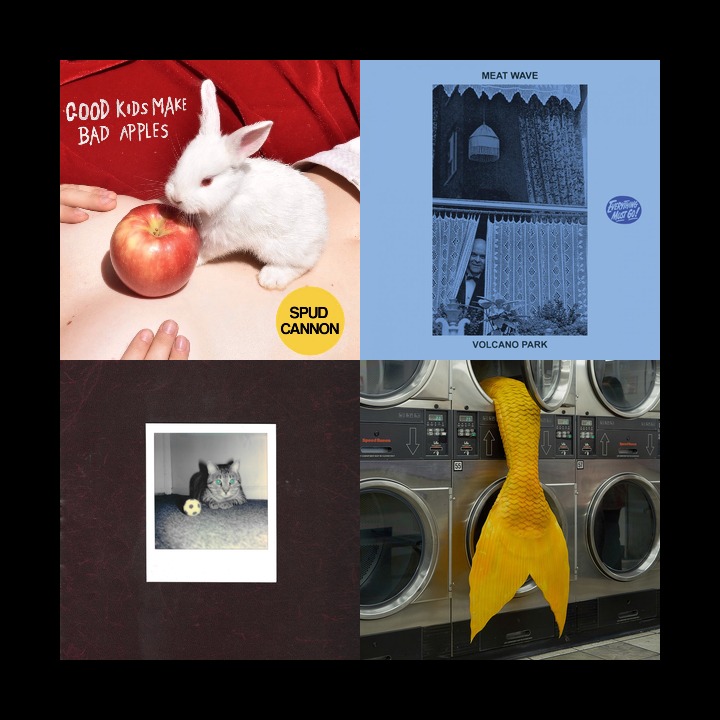
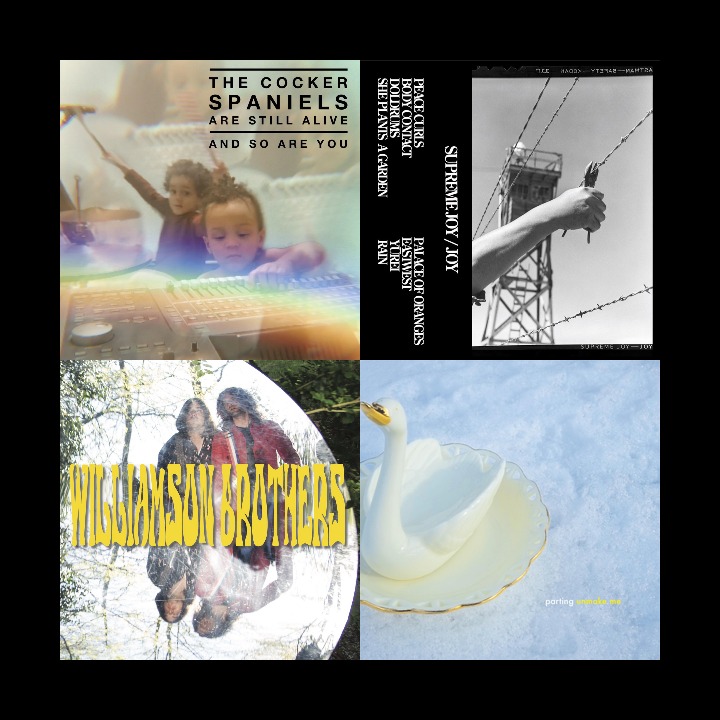
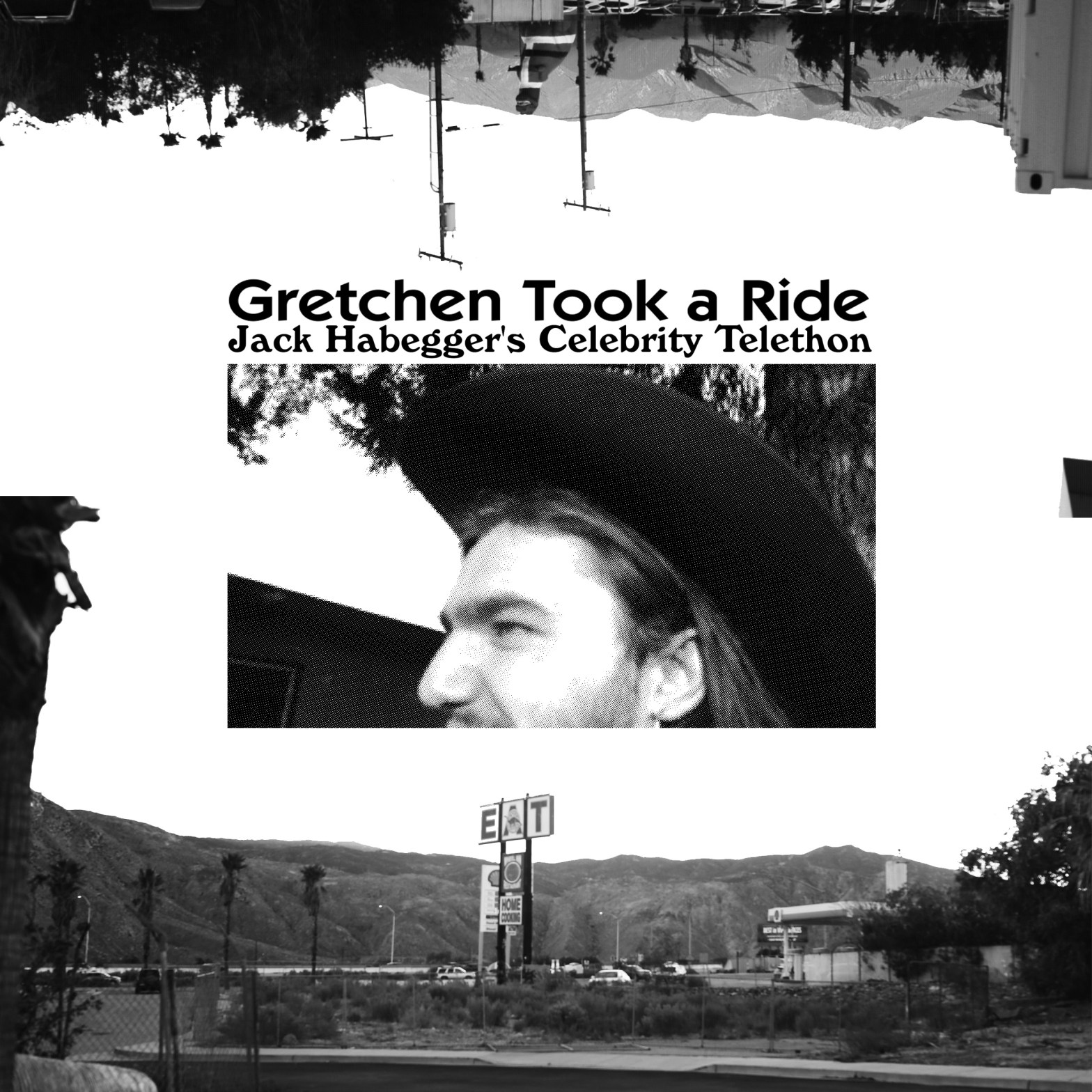



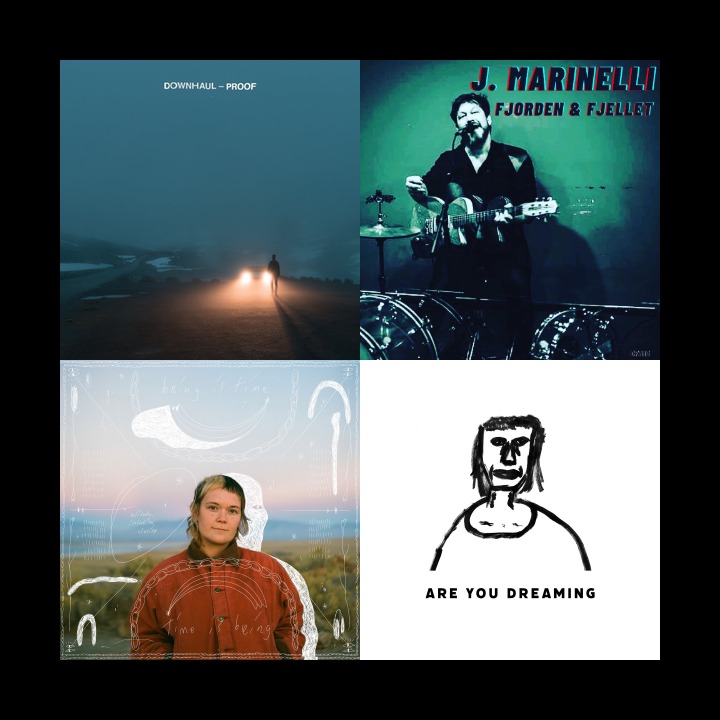
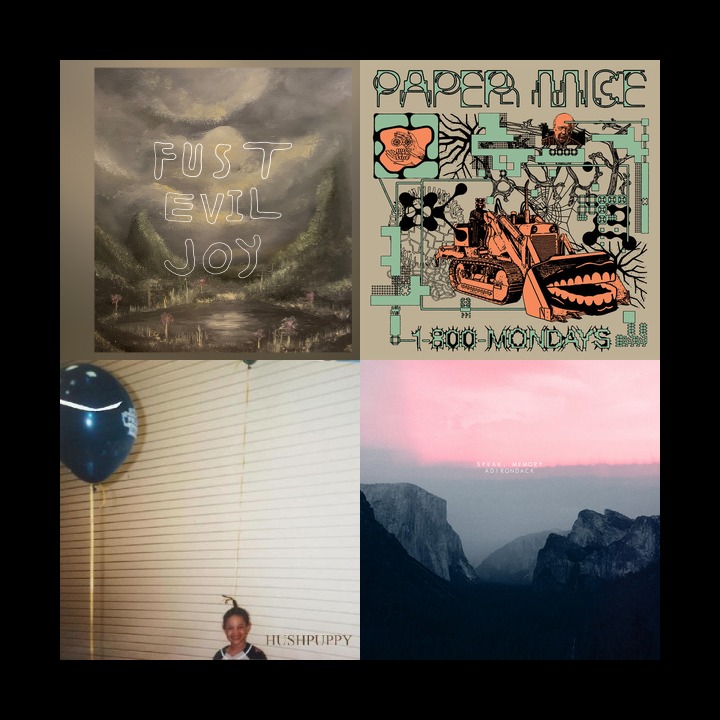
 Rosy Overdrive