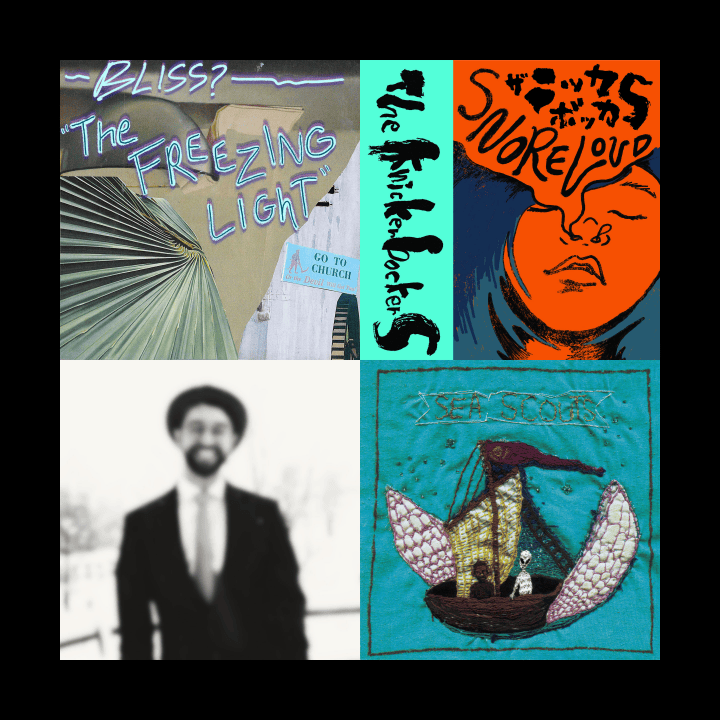
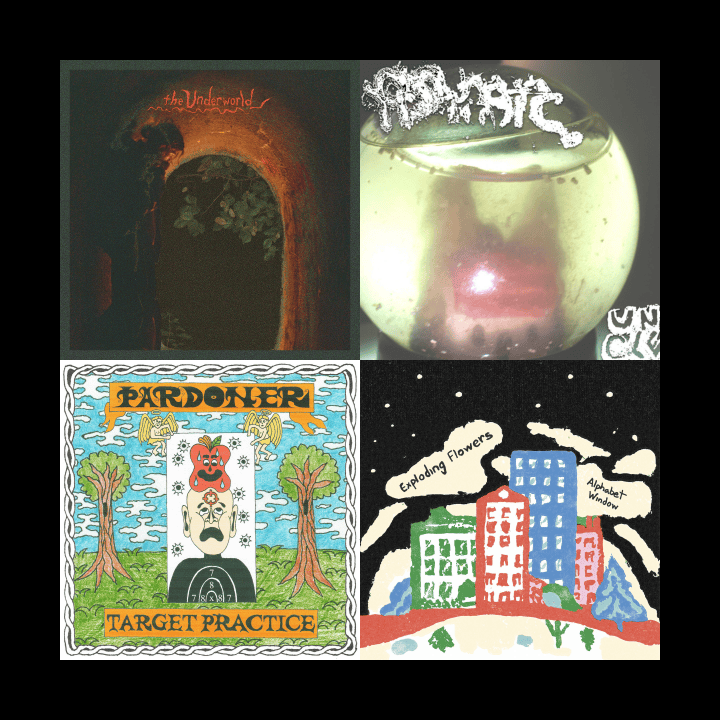
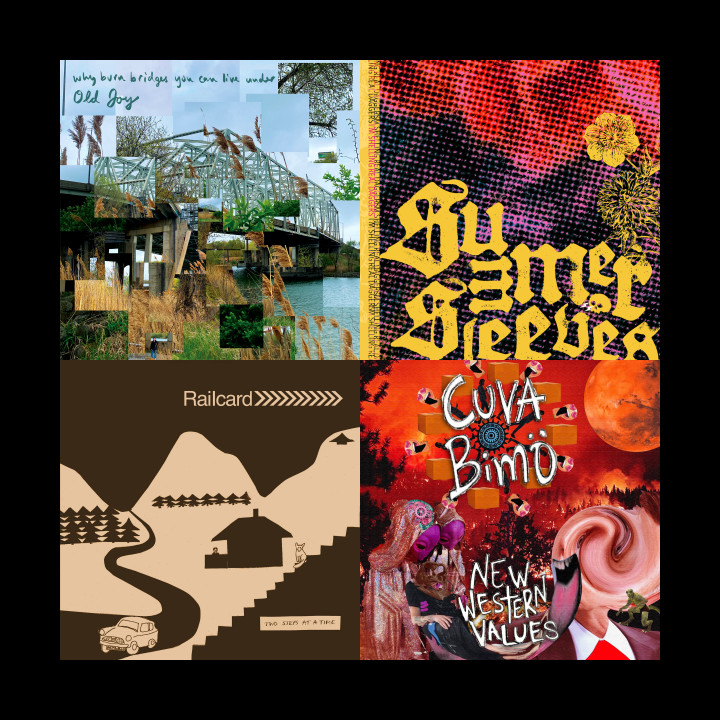
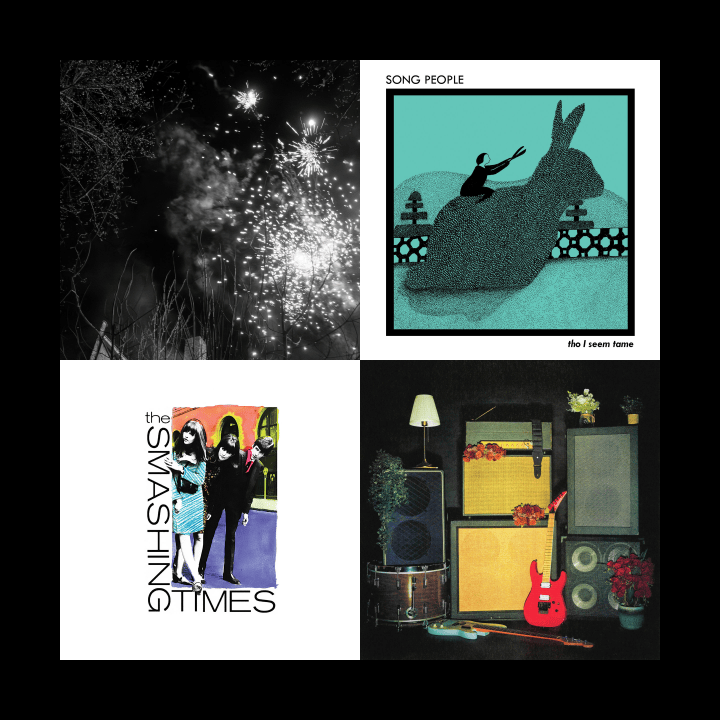
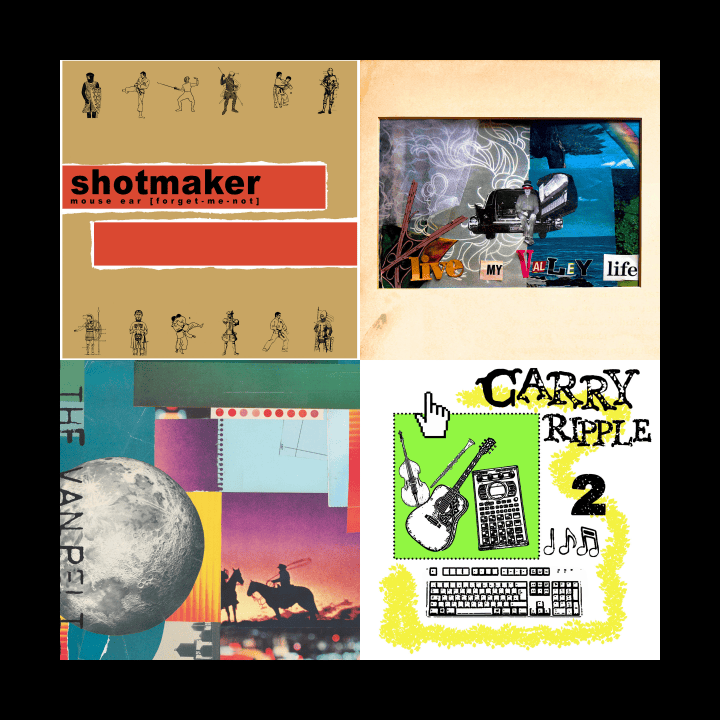
Welcome to the Thursday Pressing Concerns! We’ve got a new compilation from Dazy, plus new albums from The Cat’s Miaow, A Country Western, and Billiam. All of them are out tomorrow except for A Country Western, which came out yesterday. Check them out below, and if you missed Monday’s blog post (featuring Bliss?, Jacob T. Simons, The Knickerbocker5, and Sea Scouts), check that out too.
If you’re looking for more new music, you can visit the site directory to see what else we’ve written about lately. If you’d like to support Rosy Overdrive, you can share this (or another) post, or donate here.
Dazy – MAXIMUMBLASTSUPERLOUD Vol. 2: 24 Songs from 2023-2026
Release date: October 23rd Record label: Lame-O Genre: Power pop, Madchester, alt-dance, fuzz pop, pop punk, Dazy Formats: Cassette, digital Pull Track: I Don’t Wanna Think About the Money
It’s time for the second Dazy compilation. The first MAXIMUMBLASTSUPERLOUD cassette tape came out back in 2021, and it marked the passing of an incredibly fruitful year for the Richmond, Virginia musician James Goodson’s solo project. I’ve been talking about Dazy and their recognizable mixture of power pop, pop punk, Madchester, and turn-of-the-century electronic-y alt-rock since beforeMAXIMUMBLASTSUPERLOUD even came out, and I’ve been happy to follow them over the next five years. MAXIMUMBLASTSUPERLOUD Vol: 2 is pretty much every Dazy song since the first compilation came out except for the 2022 album OUTOFBODY (still their only “proper” LP), the 2023 companion EP OTHERBODY, and some collaborative singles. That means the twin I Get Lost (When I Try to Get Found) and It’s Only a Secret (If You Repeat It) EPs from 2024 are here, as well as the longer 2025 Bad Penny EP, plus a few miscellaneous singles and seven new songs. I’ve covered a little under half of these songs in Pressing Concerns, which means it’s totally fine to feature MAXIMUMBLASTSUPERLOUD Vol: 2 despite some repeats.
Goodson makes the interesting choice to present MAXIMUMBLASTSUPERLOUD Vol: 2 in reverse chronological order, which really helps underscore just how much the project has grown since its inception. The electronic parts to these songs have gotten more intricate and subversive-feeling; opening track “Beat Change” rules, but it’s very far from the “Dazy pop song” archetype that put the project on the map initially. Goodson still has a pop fastball though, which, oddly enough, he chooses to use on the quieter songs among the new tracks: “Ugly” and “Unreasonable Person” both immediately stick out as unusual and very welcome entries into the Dazy discography. I don’t need to talk too much about how great Bad Penny and the 2024 EPs are because I’ve already done that, but in this context these supercharged, twitching pop songs seem to serve as the bridge between the “early” Dazy era and where Goodson is right now. Goodson has talked about how his fairly unorthodox release schedule is what keeps Dazy interesting to him–revisiting OUTOFBODY, it’s even more obvious that he really had to go against his own personal grain to make even one “normal” album. I’ve no clue what to expect regarding the next Dazy release (on an even more basic level than any other band I write about here), but that’s fine–in fact, it’s more and more clear that that’s part of the draw. (Bandcamp link)
The Cat’s Miaow – When You Smiled and Turned Away
Release date: October 23rd Record label: Slumberland Genre: Indie pop, jangle pop, dream pop Formats: Vinyl, CD, digital Pull Track: When You Smiled and Turned Away
Many indie pop fans (including myself) have had the pleasure of getting acquainted with the work of Australian quartet The Cat’s Miaow this decade due to a pair of World of Echo-released archival compilations covering the band’s initial six years of activity: Songs ‘94-’98 in 2022 and Skipping Stones: The Cassette Years ‘92-’93 in 2024. Vocalist Kerrie Bolton, bassist/guitarist Andrew Withycombe, guitarist/bassist/vocalist Bart Cummings, and drummer Cam Smith (the first three of which played together in Hydroplane after The Cat’s Miaow’s initial breakup) were inspired by the reception of the compilations to get back together, and, on the heels of Hydroplane’s first album in twenty-some years in 2025, The Cat’s Miaow have released their first-ever proper studio album thirty-four years after they initially debuted.
The minimal, refined, guitar pop band that I heard on Songs ‘94-’98 is very much alive on When You Smiled and Turned Away, a fourteen-song, thirty-one-minute LP that breezes through melancholic, simply-executed indie pop songs with the same paradoxically speedy slowness of The Cat’s Miaow’s past work. The artists that would eventually become the more atmospheric Hydroplane are present here, but The Cat’s Miaow are able to retrain their focus on short, self-contained pop songs like the title track and “Luminosity” like they hadn’t been away at all. Even as a young band, The Cat’s Miaow’s patient take on indie pop felt mature and timeless; unsurprisingly, the passing of time hasn’t shaken their ability to step right back into this world at all. When You Smiled and Turned Away is less an outwardly triumphant return and more a quiet reaffirming of The Cat’s Miaow’s music–as it should be. (Bandcamp link)
A Country Western – Audition Tape
Release date: October 21st Record label: Crafted Sounds Genre: Fuzz rock, shoegaze, lo-fi indie rock, slowcore Formats: Vinyl, CD, cassette, digital Pull Track: No Alcohol
Philadelphia shoegaze group A Country Western really impressed me back in 2024 when they put out Life on the Lawn, which shook off some of the odder experimental touches of their earlier releases to make “an incredibly confident and cool-sounding record” that “embrace[s] rock music with hardly a shred of self-consciousness”, as I said at the time (I also compared them to Swervedriver, notably). A Country Western’s fourth album, Audition Tape, is another change-up for the quartet (Derek Hengemihle, Garrett Miades, Erik Hilbert, and Paris Parker), albeit one that has plenty of links back to Life on the Lawn. The sometimes lo-fi, chilly, grayscale indie rock A Country Western embrace on Audition Tape is less singularly focused on pursuing loud, blaring, distorted rock and roll–it often does, but it’s just as indebted to slowcore and mid-tempo, slightly dreamy 90s-style indie rock. The opening of the LP, in which the five-minute doomy journey “45 Degrees” gives way to the rippers “Audition” and “Blood Eagle”, is a bit of a fake-out–the midsection of the record is made up of curious, relatively quiet little tracks like “Not Far Enough” and “I Found”. Aside from “45 Degrees”, the songs of Audition Tape are pretty quick, too; whether they’re a rocker like late-record detour “No Alcohol” or something more acoustic like “Baseball Game”, A Country Western do embrace brevity throughout the LP. Audition Tape displays a willingness to evolve like many good bands in their sphere, and A Country Western sounds like they’ll be making strong records for a while. (Bandcamp link)
Billiam – Fang the Sniper
Release date: October 22nd Record label: Chain Smoking/BDK/Ubac Genre: Garage rock, garage punk, synthpunk, egg punk Formats: Vinyl, CD, digital Pull Track: Unemployable
The mononymous Australian musician Billiam has been making garage punk and self-described “Autismcore” at a frenetic pace across this decade, eventually graduating from the song-a-minute intensity of early releases to more “mature”, relatively normal albums like 2023’s Corner Tactics and 2024’s Animation Cel. Billiam’s official website, eggpunk.com, proclaims that his fourth album, Fang the Sniper, “is the first time Billiam has tried to make something good”. It’s a bold proclamation, but the result is inarguably a particularly strong effort from the Melbourne artist. All the hallmarks of recent Billiam are here on Fang the Sniper: the twenty-six-minute runtime, the chaotic cartoony vibe of both the artwork (done by Edan D) and the music itself, which is foot-on-grass Aussie garage rock with bits of post-punk, synthpunk, noise rock, and “egg” in the mixture. Billiam rips through plenty of quick punk keepers like “Human Body Units”, “Birdman Rally”, and “Unemployable”; some tracks, like “Asbestos and Me”, “Gossip Sesh [Feb 24]”, and “Another Brick in the Floor”, are a little more synth-heavy, but they’re right at home with the tougher tracks. The seething garage rock of “Skinning Dolphins Alive” is another sort-of outlier, but it ultimately contains the same amount of energy as the rest of Fang the Sniper, just redirected elsewhere. It’s pretty much all we could want from an Australian punk record in 2026. (Bandcamp link)
It’s a Monday Pressing Concerns! We’ve got new albums from Bliss?, Jacob T. Simons, and The Knickerbocker5, plus a reissue from Sea Scouts. Check ’em out below.
If you’re looking for more new music, you can visit the site directory to see what else we’ve written about lately. If you’d like to support Rosy Overdrive, you can share this (or another) post, or donate here.
Bliss? – The Freezing Light
Release date: October 16th Record label: Psychic Spice Genre: Power pop, art rock, college rock, post-punk, Americana Formats: CD, cassette, digital Pull Track: God Hates Cops
Emerging from Baton Rouge, Louisiana in early 2025, Bliss? are a college rock/power pop/reformed punk group who’ve been on an incredible run ever since: their debut LP, Pass Yr Pain Along, was one of my favorite albums of last year, and last November’s compendium EP Keep Your Joy to Yourself was just as strong. Pass Yr Pain Along was recorded with the lineup of guitarist/vocalist Josh Higdon, bassist Hunter Kiser, and drummer Robert DeMouy; Kiser left soon afterwards, and Keep Your Joy to Yourself was recorded by Higdon and DeMouy as a duo. Even though their most recent EP was recorded with the duo lineup, those songs were written at the same time as their debut album, meaning that Bliss? LP2, The Freezing Light, is the first to entirely originate from the two-piece version of the band. I will miss the tight power trio that recorded Pass Yr Pain Along and made it a true diamond-in-the-rough punk-informed Costellian power pop revival album, but Kiser and DeMouy have reinvented themselves as a more expansive, risk-taking, and just-as-exciting underground rock duo on this double LP.
Described by DeMouy as “a song cycle about growing up in South Louisiana’s schools, kitchens, and chemical plants, told by a narrator attempting to escape the state’s oppressive institutions and cycles of poverty and addiction,” the sixteen-song, sixty-eight-minute The Freezing Light is an overwhelming Americana album delivered out of nowhere from a couple of red state punks. In classic rock terms, they’ve graduated from My Generation to Tommy, although the sound of Bliss? is still somewhere between Elvis Costello and early 1980s Los Angeles punk rock, with a bit of stuff like The Silos and Alejandro Escovedo’s solo work in there now too. The first dozen minutes of the album are comprised of a two-part suite called “Suddenly (The Joy Pt.1)” and “For Rozz Williams (The Joy Pt. 2)”, the vibrant jangly pop rock of the former giving way to the chilly slowness of the latter. Bliss? still give us plenty of great rock songs on The Freezing Light, but arguably its best moment is completely new terrain for them in the six-minute jawdropping acoustic (mainly) folk ballad “God Hates Cops”. In the span of less than two years, Bliss? have made two masterpieces of incredibly different stripes; I’d be one of many lauding them if the world was a just place, but part of the reason The Freezing Light exists is because that isn’t the case. (Bandcamp link)
Jacob T. Simons – Shadow Creek
Release date: September 4th Record label: Self-released Genre: Folk rock, country rock, singer-songwriter Formats: Vinyl, digital Pull Track: Cadillac Horses
Last February, I wrote about the debut album from a Kalamazoo-originating project called Moon Orchids led by the singer-songwriter Jacob Simons, a Michigan indie rock veteran who’d been playing in bands like Dori over the past decade. Moon Orchids was a lovely folk rock record, inspired by the cleaner and less “proto-grunge” sides of Neil Young & Crazy Horse that new bands seem less apt to try to rip off; however, by the time the album was released, Simons had relocated to Boulder, Colorado, and Moon Orchids was dissolved shortly thereafter. Unsurprisingly, Simons continued writing songs, and last year linked up with Mark Anderson, a producer and multi-instrumentalist who runs the Cowboy Cowabunga in Evergreen, Colorado. Shadow Creek is made up of those Anderson sessions alongside some home-recorded ones, ten tracks (nine songs “plus one brief recording of a rainstorm from our balcony”) also featuring contributions from violinist Olivia Shaw and keyboardist Paul Robert Fake.
As one might expect, Shadow Creek sounds like Moon Orchids, only more stripped down; I would chalk that up to a combination of the record’s relatively short gestation time, Simons’ self-imposed restrictions he outlines on the album’s Bandcamp page (ranging from “no doubling of vocals” to “no slide or steel guitar”), and sheer necessity. Some of the songs on Shadow Creek have drums and some are little more than Simons and an acoustic guitar; the relatively electric vibes of the noirish/“Revolution Blues”-style “Black Elephant” and the power chord-featuring heartland rock of “Cadillac Horses” are the exceptions but hardly sound out of place. The stripped-down acoustic country-folk (in attitude if not always in instrumentation) of “Turtledoves”, “The Wanderer”, and “Seasons of a Lifetime” is the heart of Shadow Creek to my ears, lovely, slow-moving recordings marked by occasional bouts of harmonica or fiddle. Shadow Creek may have heralded a pretty quick start to Jacob T. Simons’ Colorado era, but it’s a success that hardly sounds hurried. (Bandcamp link)
The Knickerbocker5 – Snore Loud
Release date: September 26th Record label: Self-released Genre: Dance-punk, post-punk, funk rock, jazz-pop Formats: Cassette, digital Pull Track: How Do You Still Love Me
About two years ago I introduced the readers of Rosy Overdrive to The Knickerbocker5, a trio (not quintet) of Japanese musicians living in Brooklyn who’d just put out their first album, Disco Princess (Where We Are Now). The group (bassist Yoko, guitarist Arii, and drummer Ayako) have played in a bunch of New York groups (Hard Nips, First President of Japan, Juice, and Invisible College, among others, between the three of them), but The Knickerbocker5 seems to be the musicians’ chance to make “funky- groovy little bit jazzy rock’n roll” as they themselves call their sophomore album, Snore Loud. Like Disco Princess (Where We Are Now), Snore Loud is also a seven-track affair, but this one is even shorter, paring down the trio’s dance-post-punk explorations to a quick twenty minutes. It’s subsequently a more pop-focused record, ditching some of Disco Princess (Where We Are Now)‘s wilder moments and extended jam sessions for brief bursts of fun new wave/jazz-marked pop songs. It’s still relatively wide-ranging, of course–“Panic Mania” has fuzzy garage punk in its bones, “Limitación de la Vida” moves towards jazz and even dub, “How Do You Still Love Me” brings the funk grooves, the saxophone-featuring “Zammer kan kan girl” is very nearly ska, et cetera–but, again, this is all in the context of quick power-trio-pop bursts. The Knickerbocker5 are one of the more exciting and intriguing bands of the Brooklyn underground, and Snore Loud only cements this. (Bandcamp link)
Sea Scouts – Beacon of Hope (Remastered)
Release date: September 18th Record label: Zum Genre: Noise rock, post-hardcore, 90s indie rock, post-punk Formats: Vinyl, digital Pull Track: Song for Ché
Sea Scouts were a noise rock band who came out of Hobart, the capital city of the Australian island-state Tasmania–a place I don’t believe Rosy Overdrive had ever covered before now. They were active from 1994 to 2000, co-founded by vocalist/guitarist Tim Evans and coming to feature bassist Alex Pope and drummer Monika Fikerle by the time they recorded their second and final album, 1998’s Beacon of Hope. Co-released on CD by Unstable Ape (Evans’ own label) and Patsy Records (the label run by onetime Sleater-Kinney drummer Laura MacFarlane), Beacon of Hope is an intense Australian post-hardcore album capturing a power trio less than two years away from dissolving. The album shares plenty of overlap with contemporaneous underground American rock music–the murky, standoffish attitude reminds me of a less obviously punk-influenced Unwound, while Fikerle’s unique drumming (she would play standing apparently, and her style is largely a furious pounding on toms with occasional cymbal crashes) gives Beacon of Hope some Swans-like characteristics, too. The marriage of earsplitting guitar feedback, tortured vocals, and incessant rhythms is extremely late 1990s, although they’re also proudly from the same continent as The Birthday Party. It’s a tough album in more ways than one, and it’s very deserving of this remastered reissue (and first-ever vinyl release) all these years later. (Bandcamp link)
The Thursday Pressing Concerns! It’s got new albums from Sadurn, Pardoner, Fish Narc, and Exploding Flowers, all of which come out tomorrow (October 16th). Also, check out the Monday blog post (featuring Old Joy, Railcard, Summer Sleeves, and CuVa Bimö) if you missed that one.
If you’re looking for more new music, you can visit the site directory to see what else we’ve written about lately. If you’d like to support Rosy Overdrive, you can share this (or another) post, or donate here.
Sadurn – The Underworld
Release date: October 16th Record label: Run for Cover Genre: Alt-country, folk rock, singer-songwriter Formats: Vinyl, CD, cassette, digital Pull Track: Mess
I first heard Sadurn on a various-artist compilation in 2021, and at the time I remarked that they might “end up ‘going places’”. The following year they released Radiator, their first album for Run for Cover Records, and (for once) I was proven correct, as it garnered the Philadelphia alt-country quartet a good deal of attention (including from this very blog, who named it one of the ten best albums of 2022). I did not predict, however, that we wouldn’t hear from Sadurn again until four years after Radiator’s release–and neither did they, precisely. Frontperson G DeGroot struggled with both the sudden popularity of their band and an “intense break up” which manifested physically as being unable to sing, halting the band’s ability to record the songs which eventually became The Underworld. The quartet (DeGroot, guitarist Jon Cox, drummer Amelia Swain, and bassist Tabitha Ahnert) mostly recorded these songs with Heather Jones (Ther) in January 2024, and DeGroot finished their vocals a few months later.
The songs of The Underworld were actually written fairly quickly after Radiator, and the album really does sound like a companion piece to that record despite the gap. Sadurn sound quiet and tired–just like they did on Radiator, but quite possibly even more so. The quartet have played together quite a bit in the four years between records, but their chemistry is more subtle than other road-tested, well-oiled-machine rock bands I write about on this blog. The players continue to leave plenty of space for DeGroot’s writing and their voice (a standout in this current era of alt-country, it should be said). The band meander through the electric numbers, occasionally rising to something relatively rousing in “The Weight” and “Never Tell Me”, but just as content to ride out the plain-delivered country of “Mess”. Spending time with the lyrics of The Underworld is to recognize some pretty intimate and appropriately hard-hitting “breakup album” writing, but the “rawness” of The Underworld is very well-crafted and performed in every aspect of the album. Sadurn are a very strong band, and they made another very strong album. (Bandcamp link)
Pardoner – Target Practice
Release date: October 16th Record label: Bar/None Genre: 90s indie rock, garage rock, punk rock, fuzz rock, post-punk Formats: Vinyl, CD, digital Pull Track: Don’t Slouch
Pardoner have been doing their thing for over a decade now. I first heard the San Francisco quartet (vocalist/guitarist Max Freeland, bassist Colin Burris, drummer River van den Berghe, and guitarist Trey Flanigan) in 2017 when they put out the chaotic, noisy garage-post-punk LP Uncontrollable Salvation on Father/Daughter, and I’ve kept tabs on them as they’ve ping-ponged between that end of their sound and a more pop-friendly one on albums like 2019’s Playin’ on a Cloud and 2021’s Came Down Different. Pardoner’s quest to make music that sounds like it should’ve been on a Merge Records sampler circa 1995 serves them especially well on their latest album, Target Practice (their fifth LP, I believe).
I don’t know precisely what spurred Pardoner to sharpen their hooks, shorten their songs, and make their most straight-ahead pop album yet, but I’m glad they did it, because it suits them very well. Despite the pop-centric writing, Freeland doesn’t assert himself any more as a lead vocalist than he typically does (again, how Merge Records in 1995 of them), but “Crazy Bass” and “Crop Circle” are about as attention-grabbing as Pardoner can get without going back to noise rock (and, plus, I can hear what he’s saying just fine on “Don’t Slouch”, which might be one of my favorite choruses of the year so far). “I thought I saw a shooting star / But it was only changing mags,” murmurs Freeland in the refrain of closing track “Changing Mags”, sounding almost demure about the whip-smart power pop record his band put together. It reminds me a lot of a certain period in the history of indie rock… (Bandcamp link)
Fish Narc – Uncle
Release date: October 16th Record label: K Genre: 90s alt-rock, power pop Formats: Vinyl, digital Pull Track: Much Less Me
It’s probably not all that surprising that I’m writing about an Alex Farrar-produced indie rock album that is being released by K Records, but the road that Olympia, Washington’s Fish Narc took to get to Uncle is a long and surprising one. See, Fish Narc is the moniker of Ben Funkhouser, a punk musician from the Pacific Northwest who apparently played a big role in the 2010s emo-rap flap, collaborating with names that I, someone who doesn’t know much about emo rap, nonetheless do recognize like Lil Peep and Wicca Phase Springs Eternal. I didn’t know about any of that when I first listened to Uncle, though, which is a great 90s alt-rock/power pop album in the vein of The Lemonheads, Gin Blossoms, Paul Westerberg, Dinosaur Jr., and the like.
Having returned to guitar music in recent records like last year’s frog song, Uncle is a different kind of new frontier for Fish Narc: shiny, professionally-produced guitar pop. The first proper song on Uncle, “Much Less Me”, is damn near orgcore in its unassuming, raspy vocals and vague rootsiness, and from that point forward Funkhouser displays a workmanlike attitude in fully embracing earnest power pop in “Emma”, “Not to Guess”, and “Wouldn’t You Know”. There’s a subtle tension in Uncle between the meandering Cascadian undertones and the breathlessness with which Funkhouser delivers his pop songs, which would make it an intriguing release even if it wasn’t pound-for-pound full of some of the best power pop I’ve heard in a minute. (Bandcamp link)
Exploding Flowers – Alphabet Window
Release date: October 16th Record label: Meritorio Genre: Jangle pop, psychedelic pop, college rock Formats: Vinyl, digital Pull Track: Space in Between
Last March, Los Angeles quartet Exploding Flowers charmed me with Watermelon/Peacock, a strong and capable collection of “hook-fest power pop”, “pure psychedelia”, “throwback San Francisco garage rock”, and “60s-style keys and organs” as I deemed it at the time. Led by Los Angeles music veteran Sharif Dumani and rounded out by Josh Mancell, Happy Tsugawa-Banta, and Mark Sogomian, Exploding Flowers bucked the typical long gap in between their albums this time by only waiting about a year and a half to release Alphabet Window, their fourth LP. Like their previous record, Alphabet Window is another strong guitar pop album over which “college rock”, their region’s Paisley Underground, and Dunedin’s Flying Nun Records loom large (Exploding Flowers’ Bandcamp page displays a complimentary quote from The Bats’ Robert Scott, which I’d imagine they consider a crowning achievement). The haziness of bands like The Byrds and The Bats permeates Alphabet Window to perhaps an even greater degree than their past records, though Exploding Flowers remain a pop-song-first exploration of the psychedelic phenomenon. Alphabet Window is perhaps a bit more of a laid back Exploding Flowers, but it’s still a very upbeat album with all the “vibrant jangle” one could want. If Exploding Flowers want to start making these a more regular occasion, that’s more than alright with me. (Bandcamp link)
Hey there! I was on vacation last week, but the blog still kept on updating. Now I’m back home (thus concludes the “personal life update” portion of this blog post), and I’m bringing you new albums from Old Joy, Railcard, Summer Sleeves, and CuVa Bimö here in Pressing Concerns. Read ’em below.
If you’re looking for more new music, you can visit the site directory to see what else we’ve written about lately. If you’d like to support Rosy Overdrive, you can share this (or another) post, or donate here.
Old Joy – Why Burn Bridges You Can Live Under
Release date: September 18th Record label: Candlepin Genre: Power pop, indie pop, jangle pop, folk rock, 90s indie rock Formats: CD, cassette, digital Pull Track: Gut Shot
For the past decade, Alex Reindl was a fixture in the Chicago indie rock scene, playing in acts like Sonny Falls and Dogs at Large and regularly releasing self-described “scum-pop” music inspired by 90s indie rock, singer-songwriter indie folk, and power pop as Old Joy. Why Burn Bridges You Can Live Under appears to be the third Old Joy album, and it’s something of Reindl’s goodbye to the Windy City–shortly after he recorded it at Jamdek with Keifer Douglas and Doug Malone and a long list of Chicago musicians, Reindel relocated to Austin. The final Old Joy LP of the project’s Midwestern era is nothing less than Reindel’s finest work yet, an ambitious thirteen-track, fifty-five minute affair that ping-pongs between immediately-hitting guitar pop anthems and more “involved” indie rock numbers.
Sonny Falls bandleader Ryan Ensley contributes guitar to several tracks on Why Burn Bridges You Can Live Under, and Sonny Falls’ distorted indie rock hooks are a clear reference point for this album. More polished Windy City guitar pop acts like Truth or Consequences New Mexico and Disaster Kid also come to mind, as well as West Coast indie poppers Poppy Patica. In terms of older influences, Old Joy invoke greats from Big Star to Elliott Smith to Fountains of Wayne to Death Cab for Cutie–it’s a mixture of classic power pop and sprawling indie rock that feels very fresh. Look no further than the crazy eight-minute opening track “Cinco de Mayo” spilling into the sparkling guitar pop of “Gut Shot” to get an immediate sense of what Why Burn Bridges You Can Live Under is capable of doing. “Pocket”, “Crucifiction Song”, and “My Brother” all match “Gut Shot” for exciting power pop moments, and repeated listens reveal more great songwriting in the tracks that stitch these “hits” together. We’ll all find out together what’s next for Reindl in Texas, but this chapter of Old Joy has closed out on top. (Bandcamp link)
Railcard – Two Steps at a Time
Release date: September 18th Record label: Slumberland/Skep Wax Genre: Indie pop, twee, chamber pop, folk rock Formats: Vinyl, CD, digital Pull Track: Hillman Minx
Railcard are indie pop royalty, and so it’s only natural that their debut album comes to us via two labels also befitting of the title in Slumberland Records (the imprint who brought us Velocity Girl, The Pains of Being Pure at Heart, and Boyracer, among others) and Skep Wax (the label founded by members of twee legends Heavenly). Between the four of them (vocalist/guitarist/keyboardist Rachel Love, bassist Peter Momtchiloff, vocalist/guitarist/drummer Ian Button, and trumpeter Allison Thomson), they’ve played with Dolly Mixture, The Catenary Wires, Heavenly, and The Trash Can Sinatras, but they nonetheless released a couple of digital EPs with little fanfare in 2024 until Slumberland and Skep Wax stepped in to release the Railcard compilation physically earlier this year.
Two Steps at a Time quickly followed, and both the album title and the opening track for which it’s named reflect the pace Railcard is setting for themselves. The juxtaposition of “new, fresh project” and “long-time indie veterans” is key to understanding Two Steps at a Time and Railcard as a whole; these indie pop songs sound like they were written and bashed out quickly, but they also sound very carefully-constructed and considered. Songwriters Love, Button, and Momtchiloff (the first two co-writing the majority of the tracks and the latter contributing a couple songs George Harrison-style) have spent their entire musical lives leading up to the ability to make an album like Two Steps at a Time, where they can walk into a room with one another and stuff like the timeless lament of “When You Say You Love Me, Something’s Wrong”, the perky, electric indie-pop-power of “Hillman Minx”, and the chamber pop/dream folk of “Foxy” comes out of it. I’d hurry into the studio too if I knew that Two Steps at a Time was on the other end of the line. (Bandcamp link)
Summer Sleeves – I’m Shelling Real Daggers
Release date: September 4th Record label: Self-released Genre: Power pop, college rock, pop rock Formats: Vinyl, digital Pull Track: Simple Matters
Summer Sleeves is Jeremy Wayne, a Seattle-based musician who expresses a devotion to guitar pop of the “power”, “indie”, and “jangle” varieties, citing everyone from Elvis Costello and The New Pornographers to Elephant 6 and The Rentals as influences. I’m Shelling Real Daggers is the third Summer Sleeves album since they debuted in 2021 with the Jigsaw Records-released In the Throes of Woes, and the twelve-track LP features bass on half of the songs from Ethan Jones of local indie pop trio Model Shop and flute and horns from a few different collaborators (Roni and Peter Schmiedeskamp, Alon Bassok, and Harry Rivera); otherwise, it’s all Wayne. If any album I’ve written about recently deserves the “college rock” tag, it’s probably I’m Shelling Real Daggers; looking at Wayne’s list of influences again, I’m detecting a pattern of new wave glitziness, 60s pop fluency, power pop catchiness, and (and this is important) blaring keyboard hooks. Throw in a bit of that pre-1990s jangle pop rootsiness and you’ve got I’m Shelling Real Daggers, an underdog power pop album that nonetheless isn’t shy about wrecking balls of key-led hooks in tracks like “Anywhere, Anytime”, “Simple Matters”, and “Now You Have Time”. Even the songs that don’t have obvious handclaps and tambourines feel like they could have them. It’s a clean thirty minutes, and the few relatively brief detours away from “pop rock hits” are calculated (the sixty-second piano ballad “Tiny Violins”, the stripped down penultimate track “Delegating Is Nice”). I’m Shelling Real Daggers is an undeniable display of Summer Sleeves’ masterful understanding of power pop songwriting and execution. (Bandcamp link)
CuVa Bimö – New Western Values
Release date: September 4th Record label: Sell the Heart Genre: Punk rock, garage rock, noise rock Formats: Vinyl, CD, digital Pull Track: Charm Offensive
I wrote about CuVa Bimö back at the beginning of last year, when the Oakland group put out their debut album, CB Radio. In a Bay Area full of (very good) indie pop, the self-proclaimed “grunge rock” group’s embrace of garage punk and scuzzy noise rock stood out, and after dropping a single last December, the quartet (guitarist/vocalists Pete Vadelnieks and Sebastian Beltran-Moeller, drummer Ricky Cunliffe, and bassist Jake Bilich) got picked up by Sell the Heart Records (The Blackburns, Onesie, States of Nature) for their second LP. New Western Values is every bit the electric punk record that CB Radio was, from the sneering title track that kicks things off to the oddly melodic “Charm Offensive” to the nervous post-punk energy of “Graysin”. The rock-solid rhythms found in “Sound and Fury” and “800 Meter Tears” among other tracks continue to set CuVa Bimö apart from a horde of basement punk rock groups–there is something heavier and darker in New Western Values, unmistakably so. It’s in the occasionally theatrical vocals, the aforementioned low-end emphasis, but, really, just in how CuVa Bimö carry themselves. (Bandcamp link)
This is the Thursday Pressing Concerns! It’s got new albums from Hour, Song People, and Classic Traffic, plus a reissue of an album from The Smashing Times. Earlier this week, the September 2026 playlist went up, so check that out too.
If you’re looking for more new music, you can visit the site directory to see what else we’ve written about lately. If you’d like to support Rosy Overdrive, you can share this (or another) post, or donate here.
Hour – Ghost Bridge
Release date: October 9th Record label: Dear Life Genre: Post-rock, contemporary classical, orchestral, chamber music Formats: Vinyl, CD, digital Pull Track: So Long Without a Word
We checked up on the chamber music/contemporary classical ensemble Hour in 2024 when they put out their fourth studio album, Ease the Work, and then again in February of last year when they put out the live album Subminiature. While releasing folk-leaning music under his own name, drumming in the alt-country group Friendship, and co-running Dear Life Records, the Philadelphia-based Michael Cormier-O’Leary has nonetheless found time to lead Hour in a brand-new collection of music in the form of their fifth LP, Ghost Bridge. While Ease the Work was made in Maine, Cormier-O’Leary built the latest Hour album close to home, calling on a familiar group of collaborators to realize these compositions: Peter Gill (2nd Grade, Friendship) on electric bass, Frank Meadows (Fust, Dear Life Records) and Pat Keen (Flora Hibberd) on upright bass, Abi Reimold on electric guitar, Em Downing (Buttchug 69) on violin, Peter McLaughlin (Jordan Holtz, Dead Gowns) on drums, and Lucas Knapp (2nd Grade, Nina Ryser, Joey Nebulous) on synth and pump organ, to name about half of them.
Hour has always felt somewhat related to 1990s Chicago post-rock, and Tortoise and Jim O’Rouke are indeed cited as influences on Ghost Bridge. The record’s title apparently comes from an “an unrealized movie concept” of Cormier-O’Leary’s, and Ghost Bridge is subsequently more inspired by soundtrack work–in his essay about the album, Office Culture’s Winston Cook Wilson also references ECM Records and Van Dyke Parks. Longer compositions like “So Long Without a Word” and the title track are slow and expressive, languid with well-timed moments of dissonance (a key aspect of Ghost Bridge more outwardly apparent in the relatively shorter “Centralia” and the ever-so-slightly rousing “Pearls”). Heeyoon Won (who’s also contributed to Gill and Cormier-O’Leary’s solo projects) is brought forward to sing vocals on “Sky Is Blue”, a lovely orchestral/chamber pop song that rises from and recedes back into the larger Hour soundscape with smoothness. Ghost Bridge is another strong entry into the Hour discography, moving forward from the Ease the Work/Subminiature era subtly but deliberately. (Bandcamp link)
The Smashing Times – Come Along with Me
Release date: October 9th Record label: K/Perennial Genre: Jangle pop, lo-fi pop, psychedelic pop Formats: Vinyl, CD, cassette, digital Pull Track: Shade, The Changing Man
From 2021 to 2024, Baltimore group The Smashing Times put out four superb albums of vintage jangle pop and folk rock, evolving into a five-piece band led by Thee Jasmine Monk on guitar and vocals. Before that hot streak, though, came Come Along with Me–The Smashing Times’ debut album, initially released only on cassette in 2019 and featuring an earlier lineup of Monk, Alex (AKA Zelda-Anais), and former member Ole Johnson. The Smashing Times’ labels of K and Perennial (who’ve put out their two most recent LPs) have given Come Along with Me a reissue and first-ever vinyl and CD pressings, augmenting the original seven-song cassette with four previously-unreleased tracks from between the time of this album and 2021’s Summer Inside.
Come Along with Me is a peek into The Smashing Times still in the process of developing their signature sound. That striking mixture of hazy, murky psychedelia, pastoral British ambience, and undeniable guitar pop expertise isn’t apparent yet, but Come Along with Me does prove that Thee Jasmine Monk could already write excellent jangle pop songs at this point. Compared to, say, Mrs Ladyships and the Cleanerhouse Boys, Come Along with Me is a much more streamlined and straightforward listen, although they’re still a bit more fractured than your more typical jangle pop revivalists. Any band who starts their first record with a handful of timeless-sounding guitar pop songs in “Shade, The Changing Man”, “Romani Coats”, and “The Lemon King” is most certainly going somewhere, and one that’s also willing and able to stretch their 60s pop rock out in “Edward Gorey Stories” and “Noburu’s Eyes” is probably going to blaze a trail or two. This expanded version of Come Along with Me is a worthy part of The Smashing Times’ story, one that fulfilled much of this promise in the first half of this decade and one that hopefully opens a new chapter sooner than later. (Bandcamp link)
Song People – Tho I Seem Tame
Release date: October 9th Record label: Strange Mono Genre: Post-punk, jangle pop, college rock, folk rock Formats: Vinyl, digital Pull Track: Silver Flag
Song People is vocalist Shaina Kapeluck, guitarist Darian Scatton, and bassist Benjamin Schurr, a trio of Philadelphia indie music veterans who’ve played in each other’s bands (like Ruah, Hallowed Bells, and Br’er) and contributed to other Philly acts (like Luna Honey and Nyxy Nyx) over the past decade or so. The trio’s debut album, Like Somebody Calling Your Name, came out on Don Giovanni in 2024, and their sophomore LP Tho I Seem Tame has followed a little under two years later. Very few new bands sound like how Song People sound on Tho I Seem Tame, even though I write about a lot of bands who play “jangle pop”, “folk rock”, and even “college rock”.
Tho I Seem Tame reminds me a lot of 10,000 Maniacs, who perhaps similarly built beautiful pop rock (with bits of dream, jangle, and post-punk) via a few talented musical ringers and a striking lead singer (in this case, Kapeluck, who “began her music life as a ballad singer, drawing from traditions of the British Isles, the US and Maritime Canada”). The more “ethereal” and polished sides of Siouxsie and the Banshees are also present, as well as Sinead O’Connor and many of the influences listed for Like Somebody Calling Your Name (Fairport Convention, R.E.M., Talk Talk). Schurr’s post-punk bass work and Scatton’s jangly guitar playing contribute to the gentle “push and pull” feeling we get in songs like “Unwritten Rules” and “Silver Flag”, and Kapeluck’s background very clearly informs her writing in “Mead Hall” (which begins with “I keep coming back to the mead hall, knowing I might be slain”) and “Intervene on My Behalf” (“…for I am weary”, pleads the narrator). Song People virtually have this lane to themselves right now, and Tho I Seem Tame sounds like they’re thriving in it. (Bandcamp link)
Classic Traffic – Real Music
Release date: October 9th Record label: Same View Genre: Power pop, alt-rock Formats: Vinyl, digital Pull Track: Wanna Wish
Classic Traffic are a power pop trio from New Jersey; they formed in 2022, the same year they released their self-titled debut album, and two more LPs followed in 2023 and 2024. Real Music is the fourth full-length from the trio (guitarist/vocalist Andy Altadonna, drummer/lyricist Dante Fotino, and bassist Michael “Dogmeat” Svehla) and their first for Baltimore label Same View Records (formerly known as Strange View Records), who’ve notably put out records from Powerwasher, Beauty, and Robber Robber lately. Beauty’s 2024 album I’d Do Almost Anything for You is especially worth a mention, as Classic Traffic share plenty of similarities with that act: they’re both trios, both from Jersey, and they both share an obvious reverence for 1990s power pop. I referenced Sloan, Teenage Fanclub, and Matthew Sweet when I wrote about I’d Do Almost Anything for You, all of whom very much apply to Real Music, too. If there’s a difference, I think the fuzz rock/pop punk/hard rock edge is more pronounced in Classic Traffic’s music–it sort of sounds like if Thin Lizzy loomed just as large over the Blue Album as the Beach Boys do. Fans of the aforementioned Sloan will love the electric crunchy power pop of “There With You” and “Wanna Wish”, and the relatively quieter songs on the album like “Ghost’s Host” and “It Leaves Your Mind” are nonetheless marked by exciting guitar work. Real Music is quite short, but like the best new power pop bands of this decade, Classic Traffic jam a bunch of great pop music in this short package. (Bandcamp link)
Hey there, everyone! Check out the September playlist below. We’ve got two hours’ worth of mostly new music for you to enjoy.
Artists with multiple songs on this playlist: Scarves (3), Perennial (2), My Pet Fossil (2), Name Names (2), The Tubs (2), Asher White (2), Deady (2).
Here is where you can listen to the playlist on various streaming services: Spotify (missing three songs), Tidal (missing two). Be sure to check out previous playlist posts if you’ve enjoyed this one, or visit the site directory. If you’d like to support Rosy Overdrive, you can share this (or another) post, or donate here.
“Still in Error”, The Human Hearts From Faith & Credit (2026, Dromedary)
It’s been a fourteen-year wait for the third album from The Human Hearts, the current band of 90s indie rock/pop lifer Franklin Bruno (Nothing Painted Blue, The Extra Glenns). Sure, the singles/EP compilation Viable bridged the gap in 2023, but it’s still very exciting to hear the brisk rhythm section and jangly guitars that kick off “Still in Error”, the opening track and lead single for Faith & Credit. Bruno picks up right where he left off, just like riding a bicycle–an activity that he only just recently learned how to do, as amusingly chronicled in the song’s music video.
“The Eagle Is No Omen”, Asher White From Love Aggregates (2026, Joyful Noise)
On Love Aggregates, Asher White is still the same weirdo musician who made 2025’s wild 8 Tips for Full Catastrophe Living, but her eccentricities are focused relatively cleanly on making 70s-inspired baroque/chamber pop this time around. One fun wrinkle to Love Aggregates is that many of its “wildest” moments are also its catchiest ones, like the synthetic, bass-led minimal banger “The Eagle Is No Omen”, which might be my favorite song on the LP. Read more about Love Aggregates here.
“Stoop to Me”, The Tubs From Hard Life (2026, Merge)
Oh, Jesus Christ. About a year and a half after their last album, the superb Cotton Crown, British jangle pop institution The Tubs have already returned with their third album and Merge Records debut Hard Life. It contains “Stoop to Me”, which is possibly the best song ever (every Tubs album–scratch that, every album from an Owen Williams band–has at least one song that makes me feel like this). So many of the Tubs’ hallmarks–the folk-influenced Big Music opening, the jangly guitars, the Husker Du edge to the instrumental breaks–are present in “Stoop to Me”, and that’s not even going into how weird and funny it is to hear Williams contort his voice in an almost mocking tone to try to wrap himself around this too-good pop chorus he’s had the misfortune of writing. Because baby, you know, he’s a patient guy.
“New Year’s Eve”, Hey I’m Outside From Loud Ass Barking Dogs (2026, Archival Workshop)
Hey, Hey I’m Outside are back with a new album. Despite being from Massachusetts, the Medford duo (now trio)’s 2024 self-titled album proved them to be one of the best new alt-country bands capable of incorporating actual twang into their music. Their winning streak has extended into Loud Ass Barking Dogs, surprise-released last month. So far, my favorite song on Loud Ass Barking Dogs is the first one–on “New Year’s Eve”, guitarist/vocalist Patrick McPherson, drummer Noah Wisch, and bassist Hannah Fletcher waste no time jumping right back into their rootsy No Depression-style folk/country rock sweet spot.
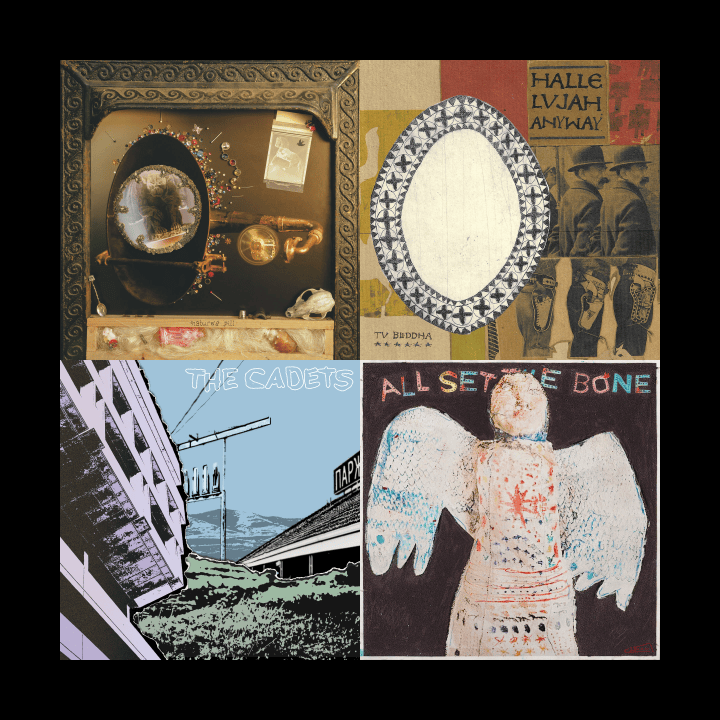
“A Million Bugs”, Name Names From Waste in My Enrichment Area (2026)
One of the great indie pop bands of the 2010s was Bent Shapes, a Boston-originating “jangle punk” group led by the inimitable Ben Moy until they broke up in 2017. Moy’s new band, Name Names, doesn’t exactly sound like Bent Shapes, but they can get pretty damn close. The five-song, eight-minute Waste in My Enrichment Area is way too short, but it packs a punch for every second. Opener “A Million Bugs” is seventy-two seconds of fizzy power-garage-pop-punk (“You make me feel like a million bugs! / Crawling all over me, I can’t get enough!” bellows Moy at the onset) featuring great intertwined sibling vocals (shout out to Moy’s sister, Kate Virginia). Read more about Waste in My Enrichment Area here.
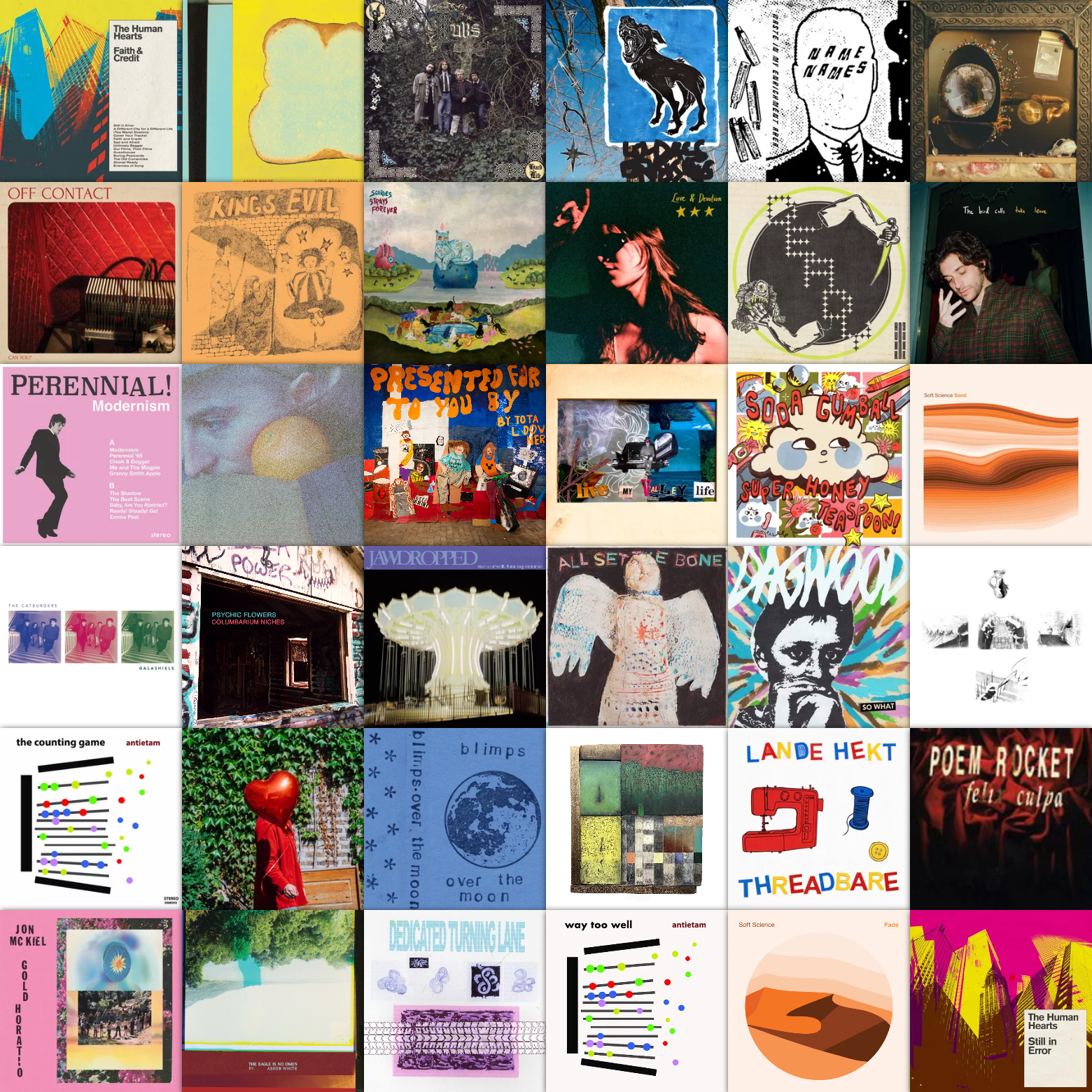
“All the Rage”, Wishy From Nature’s Pill (2026, Winspear)
After seemingly getting a more laid-back detour out of their system last year with the Planet Popstar EP, Nature’s Pill is every bit the gigantic-sounding pop album that 2024’s Triple Seven was, cementing Wishy’s status as one of the best at making this kind of 90s alternative-influenced guitar pop. “All the Rage” opens with the Indianapolis group’s second album with nothing less than a lost, timeless indie pop classic–this breezy, jangly fuzz-pop banger is perhaps not the most entirely representative “Wishy song” on the LP, but it’s hard not to open your record with something like this if you have the option to do so. Read more about Nature’s Pill here.
“Anew”, Off Contact From Can You? (2026)
Hailing from Sioux Falls, South Dakota, Off Contact are an art-punk quartet who marry jagged post-punk foundations with psychedelia, off-beat guitar pop, and shoegaze distortion. Unsurprisingly, their latest album Can You? is thus kind of unclassifiable, other than being “very good”. Largely due to Qarl Koyzer’s somewhat petulant yelp of a led vocal, I can’t help but being reminded of Game Theory listening to this album, even as the differences between the two acts are nonetheless myriad. Opening track “Anew” is seething, streamlined, and incredibly catchy. Read more about Can You? here.
“Sneezed”, King’s Evil From King’s Evil (2026, Worry Bead)
King’s Evil are a duo co-founded in 2020 by two very good Boston indie musicians in their own right: Sami Martasian of the bedroom pop act Puppy Problems and JM Dussault of chiptune-slacker-rockers (T-T)b. Their self-titled debut EP’s one entry into the modern alt-country sweepstakes, “Sneezed”, is a perfect toe-dipping; the “Range Life” guitar riff and the Silver Jews reference situate it right at the center of a hyper-specific movement, but one doesn’t need to have an opinion on Berman versus Malkmus to appreciate what’s ultimately a flawless pop song. Read more about King’s Evil here.
“We Should Get a Dog”, Scarves From Strays Forever (2026, Tender Loving Empire)
I wrote about the Seattle group Scarves back in 2022, when the Niko Stathakopoulos-led act put out their fourth album, Delicate Creatures. That aptly-titled record won me over with its mixture of tender, almost-twee indie pop with 90s-style meandering and occasionally distorted indie rock, all led by a frontperson whose earnest and, yes, gentle vocals and lyrics take cues from John K. Samson of The Weakerthans and Ben Gibbard of Death Cab for Cutie. Their fifth LP, Strays Forever, was produced by Chris Walla, a natural choice to record a Scarves album. A second-half highlight, “We Should Get a Dog” is a swirling, anthemic kicking against ennui that all leads up to the title line. Read more about Strays Forever here.
“Down on Love”, Sam and Louise Sullivan From Love & Devotion (2026, Historic New Jersey)
Sam and Louise Sullivan are a sibling duo inspired by 60s and 70s folk and pop rock who’ve put out three albums since 2023. Unlike a lot of modern bands who try to recreate this kind of laid-back, “studio-based” 1970s music, Sam and Louise Sullivan keep the recordings on Love & Devotion crisp and clear, the arrangements simple, and the pop hooks front and center. There’s nothing “psychedelic” whatsoever about the fist-pumping retro-pop success of opening track “Down on Love”. Read more about Love & Devotion here.
“The Weight”, Deady From Hunka Junk (2026, Romanus)
Hunka Junk is the long-awaited debut album from Kentucky post-hardcore/noise rock group Deady. Over twenty-seven minutes and thirteen tracks, the quintet offer up plenty of the self-aggrandizing, absurdist fury of their first EP and fully veer away from their signature sound on multiple occasions, too. A late-record highlight, the relatively mid-tempo “The Weight” demonstrates that Deady can evolve their sound a bit while still remaining pretty heavy (in multiple senses). Read more about Hunka Junk here.
“Means More Now”, The Bird Calls From Take Leave (2026, Ruination)
This year’s Bird Calls album, Take Leave, continues Sam Sodomsky’s collaboration with producer Ryan Weiner that began with last year’s Melody Trail, but the two take a step back from some of that album’s more synthetic touches on this LP. That doesn’t mean, however, that Take Leave is a complete return to the straight-up one-man acoustic band sound of early Bird Calls; effectively, Sodomsky and Weiner embrace a warm, simple but robust folk rock sound throughout the album. Take Leave’s second song, “Means More Now”, is on the animated, electric, and (relatively) fist-pumping side of The Bird Calls’ sound. Read more about Take Leave here.
“Modernism”, Perennial From Modernism (2026, Ernest Jenning/Safe Suburban Home)
On their fourth album, Modernism, New England art-punk trio Perennial are extremely “Perennial”–like I said when I wrote about 2024’s Art History, they’ve a near-AC/DC level of knowing exactly what they’re about and performing it perfectly. It’s easy to take this for granted after four LPs’ worth of it, but whenever the faucet stops and the group decide to hang it up–that’s it. This is the Perennial Sound, and they’re the only band that does it. Modernism gives us the hits yet again, rolling through blaring, deafening songs that are equally indebted to 60s garage rock and turn-of-the-century noise rock–and the opening title track sets the bar high. Read more about Modernism here.
“Life of Accidents”, Joan Kelsey From A Dog Called Memory (2026, Dear Life)
Joan Kelsey’s 2022 album Standing Out on the Grass is a sleeper contender for one of my favorite “folk” LPs I’ve written about on this blog; the Dear Life Records mainstay penned some of the most rewarding music in that vein for that record. A Dog Called Memory is Kelsey’s first new record in nearly four years, and comes after the singer-songwriter relocated to New York City from Seattle. “Life of Accidents” is the standout of this five-song EP and already one of my favorite Kelsey songs; it’s a little more ragged than most of Standing Out on the Grass, but there’s still a refined, string-aided side to it.
“Pretend”, Total Downer From Presented for to You by (2026, Just Because)
Cleveland pop punk/power pop group Total Downer followed up their very good 2023 album Caretaker last month with a surprise-release LP called Presented for to You by (got it?). Caretaker was a “big feelings” album, tackling heavy subject matter head-on via frontperson Andy Schumann’s performance. If you enjoyed that, you’ll love “Pretend”, the immediate standout on their latest LP. Even if Schumann didn’t leave us with a messy oversharing tangle of sexual and gender identity to sift through, the triumphant refrain would be enough to get me to come back to “Pretend” (“In the dark, you can be anything”).
“Dedicated Turning Lane”, My Pet Fossil From Live My Valley Life (2026, Cherub Dream)
Live My Valley Life is effectively a concept album about the “American West” as an ideal–sometimes it’s a violent exorcism of its demonic influence, other times it’s a more curious exploration, but the subject is certainly dark enough to give My Pet Fossil enough fuel for a thirty-minute record. “Dedicated Turning Lane” is an exciting, skeevy rock song that imagines a world where Wipers and Thin White Rope crossed paths at the peak of their powers. Read more about Live My Valley Life here.
“Malt Shop Gizmo”, Soda Gumball From Super Honey Teaspoon! (2026, Den Tapes)
Soda Gumball is the project of Benjamin Rea, a Seattle music instructor who has been making chaotic freak-punk on his own as Jealous Yellow since the pandemic and who also plays in the post-hardcore group Laminate. Soda Gumball in particular stems from Rea’s time as an instructor, and some of these comparatively simple pop songs even originated from collaborations with the musician’s students. Super Honey Teaspoon!, the first Soda Gumball album, displays a laid-back comfort with K Records-style indie pop; Rea’s low-key vocals, while more outwardly sorted for the kind of greyscale, noisy post-punk of his other projects, lend a slacker, almost Elephant 6 psychedelic vibe to these compositions. The chirping synth-twee-pop of “Malt Shop Gizmo” is about as animated as Soda Gumball gets. Read more about Super Honey Teaspoon! here.
“Fade”, Soft Science From Sand (2026, Shelflife/Spinout Nuggets)
On 2023’s Lines, Sacramento’s Soft Science established themselves as a heavier, distorted indie pop group with a sound containing bits of dream pop, synthpop, jangle pop, and shoegaze. The quintet’s fifth LP, Sand, is even larger-feeling than their previous LP; it’s a full-on “dream-rock” album, with vocalist Katie Haley’s vocals gliding over full-bodied, shoegaze-influenced, fuzzed-out pop music. Sand is very nearly a tour through several types of “big music”, such as in the starry-eyed highlight “Fade”, which shoots for power pop and new wave. Read more about Sand here.
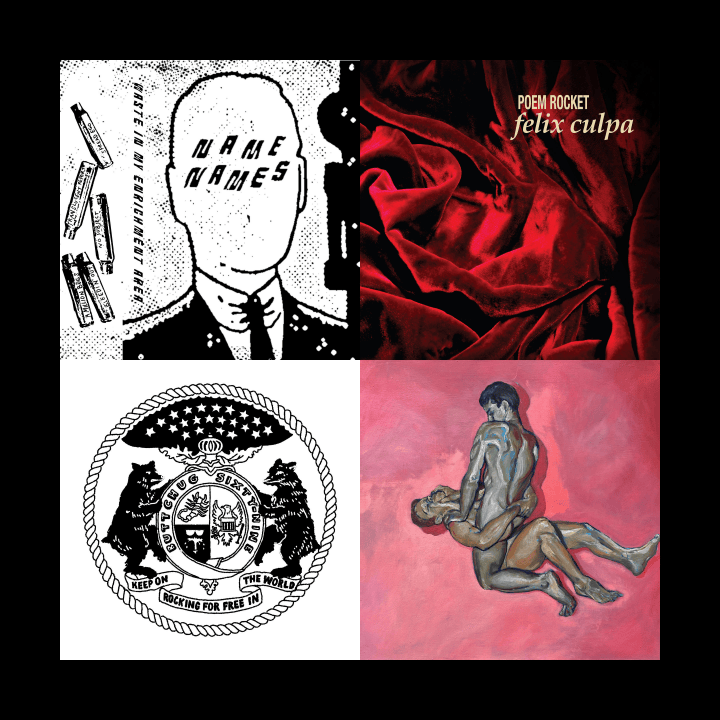
“I’ve Got a Friend”, The Catburgers From Galashiels (2026, Slumberland)
The Catburgers formed in 1985 in Edinburgh, Scotland, right in time to be part of a golden age of indie pop, post-punk, and combinations thereof in the United Kingdom. They broke up in 1990 without ever formally releasing anything, including nine songs that they recorded in 1989 which then sat on a shelf for thirty years before seeing the light of day this year via Slumberland Records. Listening to Galashiels is to suddenly be swept back to the key time and place from which The Catburgers emerged–an exciting era where bands made records with bubbly, jangly indie pop songs like “I’ve Got a Friend” right next to moodier post-punk. Read more about Galashiels here.
“Living Is Easy”, Psychic Flowers From Columbarium Niches (2026, Living Lost)
Not only have David Settle’s blown-out, fuzzed-out garage-pop group Psychic Flowers returned, but their first album since 2021’s For the Undertow is an oversized, twenty-song, forty-plus-minute CD and cassette. Settle wrote a dozen new songs for Columbarium Niches, but then decided to augment the record with a handful of outtakes from previous Psychic Flowers albums and a few alternate versions of previously-released tracks. The overstuffed record tosses off highlights like the sparkly, Guided by Voices-esque guitar pop song “Living Is Easy” with ease. Read more about Columbarium Niches here.
“Chainsaw”, Scarves From Strays Forever (2026, Tender Loving Empire)
Scarves frontperson Niko Stathakopoulos is most impactful when he seems to fully give in to his deeply-felt, eccentric writing, and the triumph of “Chainsaw” in the second half of Strays Forever reflect this. The dreamy track is a love song apparently inspired by The Texas Chainsaw Massacre and features Stathakopoulos proclaiming “I love you like a cat loves cardboard / I want to tear you to shreds / Out of pure joy” in the refrain. Read more about Strays Forever here.
“Split Lip”, Jawdropped From Secret to Spare (2026, Transgressive)
The Los Angeles group Jawdropped has been getting a fair amount of buzz since they put out their debut EP, Just Fantasy, on Fire Talk last year. Signing to Transgressive Records (Greg Freeman, Alvvays, Black Country, New Road), playing shows with This Is Lorelei and Graham Hunt, and having Alex Farrar (Wednesday, Colin Miller) mix their debut album, Secret to Spare, all certainly helps with that. Regardless, I was fairly impressed with Secret to Spare, a strong guitar pop album with an appropriate amount of Teenage Fanclub and Lemonheads influence. You can hear it especially in highlight “Split Lip”.
“Cahokia”, Greg Freeman From All Set the Bone (2026, Transgressive)
In an indie rock landscape dominated by Magnolia Electric Co.-influenced “alt-country” acts, Greg Freeman separates himself by singing like Jason Molina sang on his most beloved records. Freeman’s lightning-strike tenor voice is what stood out to me first on All Set the Bone, the Vermont singer-songwriter’s third album and best one yet. The magic of this sixty-six-minute double LP is that it merges Freeman’s windswept Molina-style vocals with tight pop songcraft. Read more about All Set the Bone here.
“Easier to Trust”, Dagwood From So What (2026)
So What is Dagwood’s fourth full-length album and first in four years. The twelve-song proper LP also comes with six bonus tracks, christened the So What Else EP by the Connecticut group, making the entire package a behemoth eighteen-song collection of 90s-style fuzzed-out power pop, alt-rock, and garage rock revival that stands as Dagwood’s most impressive statement yet–in terms of sheer magnitude, if nothing else. The steadily-building opening track “Easier to Trust” is a more restrained version of Dagwood, but it’s one of the best pop songs on the album regardless. Read more about So What here.
“Prophets of Doom”, The Drin From I Lost My Way for Centuries (2026, Feel It)
I Lost My Way for Centuries feels like a “double album” in a classic rock sense. The Drin take the meditative aspects of 2024’s Elude the Torch and allow them to stretch and sprawl to previously-unthinkable proportions. This album’s twenty-three songs give the Cincinnati group the chance to fully embrace the music that’s led them to this point: you’ll hear clear bits of progressive rock, psychedelia, folk, dub, and krautrock throughout I Lost My Way for Centuries. The thundering blues-rock of “Prophets of Doom” evokes Led Zeppelin through the Midwestern post-punk underground haze in which The Drin operate. Read more about I Lost My Way for Centuries here.
“Now and Then”, The Tubs From Hard Life (2026, Merge)
I’ve said it before and I’ll say it again: Owen Williams and Lan McArdle singing together is one of the best sounds in “indie rock”. The band they co-led, Ex-Vöid, sadly but unsurprisingly disbanded last year, but it doesn’t seem like these two will ever stop showing up on each others’ records, and the chorus of “Now and Then” certainly benefits from McArdle dropping in to check up on Williams’ group The Tubs. I like plenty of the stuff Williams has led The Tubs into on his own, but he could do whatever he wanted and still get me to listen as long as he turns in refrains like this every now and then.
“Way Too Well”, Antietam From The Counting Game (2026, Dromedary)
It’s been nearly a decade since the most recent original Antietam album, but bassist Tim Harris, guitarist/vocalist Tara Key, and drummer Joshua Madell still sound like themselves four decades into their career. The Counting Game is classic Antietam–it’ll appeal to real-deep-in-it “indie rock/alternative rock” fans in its evocation of the likes of the Paisley Underground, Crazy Horse, alt-country, and psychedelic pop rock. See the album’s Dream Syndicate-like opening track “Way Too Well” for a sterling example of multiple of these influences. Read more about The Counting Game here.
“Gender Dysphoria”, CalicoLoco From I Love Myself (2024, Ur Mom)
CalicoLoco are a new-to-me band, but they’ve been putting out singles since 2020 and their first album, I Love Myself, came out back in 2024. They’re a Chicago-based emo-punk-pop-power et cetera group who were a duo (Dani Robles & Zeke Ramsey) when they recorded I Love Myself but who seem to have since expanded to a five-piece. The first track on I Love Myself is called “Gender Dysphoria”, and it’s a gigantic emo-punk pop song large enough to tackle the subject acknowledged in its title. It can (and should) be enjoyed by fans of Jeff Rosenstock and that one We Are the Union album–let’s say that it’s “not ska-punk, but fits nicely alongside ska-punk”.
“Over the Moon”, Blimps From Over the Moon (2026, Terminal Releases)
Blimps is Rocky Mercer and Colin Musolf, a lo-fi power pop duo from Charleston, South Carolina who put out their debut record, a seven-song cassette called Over the Moon, back in May. As a prolific group of underground pop musicians from a C-class American city whose band is named after a Guided by Voices song, Blimps certainly have a Robert Pollard-esque side, but that doesn’t necessarily define all of Over the Moon. The crunchy opening title track, for one, is more indebted to Weezer and 90s fuzzed-out power pop (it’s very nearly a Rozwell Kid song). Read more about Over the Moon here.
“Is It Real?”, Mr. Husband From Song for the Old World (2026, Good Soil)
As Mr. Husband, the Maryland panhandle’s Kenny Tompkins has straddled the line between Appalachian-inspired folky Americana and jangly indie pop (with plenty of excursions away from both as well), and Song for the Old World (dubbed the ninth Mr. Husband album by Tompkins, though I think it depends on how one counts) plays to the troubadour’s strengths. Tompkins and the same lineup from 2024’s Wildflower (drummer Chris Morris, lap steel guitarist Adam Laye, and bassist Curt Tompkins) thoughtfully move through timeless-sounding pop music with bits of folk and rock music history contained therein, rousing a bit more than normal to suit the rollicking folk-rocking “Is It Real”. Read more about Song for the Old World here.
“The Time Changes”, Lande Hekt From Threadbare (2026, Tapete)
Back in January, Bristol musician Lande Hekt put out Lucky Now, her fourth album and first in four years–I called it “an earnest, emotional take on British guitar pop, C86 and jangle pop” at the time and compared it to Hekt’s labelmates Ex-Vöid. We didn’t have to wait nearly as long for new music from Hekt this time, though, as the four-song Threadbare EP showed up in September with some more excellent indie pop songwriting–especially on my favorite song on the EP, “The Time Changes”.
“My Day at the Casino”, Asher White From Love Aggregates (2026, Joyful Noise)
Just about everything on Love Aggregates is ornate pop music–just listen to how Asher White turns the minimalist, R&B-influenced “My Day at the Casino” into a clever, single-worthy orchestral pop piece if you’re still a White skeptic. Read more about Love Aggregates here.
“Baby, Are You Abstract?”, Perennial From Modernism (2026, Ernest Jenning/Safe Suburban Home)
Well, are you? Like many a track on Perennial’s latest LP, Modernism, “Baby, Are You Abstract?” has everything one could want in a Perennial song–Chelsey Hahn’s sharp electric organ stabs, Chad Jewett bellowing lyrics (and Hahn giving them right back), plenty of “yeah yeahs”, and a weirdly (ahem) abstract instrumental break as the song draws to a close. It’s over in two and a half minutes, too, so if you have somewhere to be after our date with abstraction, that’s nice. Read more about Modernism here.
“(No Subject) Empty Body”, Name Names From Waste in My Enrichment Area (2026)
Name Names is a new quartet featuring former Bent Shapes leader Ben Moy on vocals, guitar, and keys, alongside Moy’s sister (and occasional Bent Shapes member) Kate Virginia on vocals and guitar and a rhythm section (drummer Ethan Cannon and bassist Dan Paul Mary) who used to play together in the band Courters. The polish of the final Bent Shapes album is entirely dispensed with on their debut EP, Waste in My Enrichment Area, and Name Names instead bash out five relatively snotty and gritty garage punk tracks recorded in a basement. Nonetheless, everything that made Bent Shapes great–the indie pop melodies, Moy’s lyrics, the overall shout-along-vibe–is still there upon a closer listen, especially in the clinking, biting garage rocker “(No Subject) Empty Body”. Read more about Waste in My Enrichment Area here.
“Eject”, Poem Rocket From Felix Culpa (1995/2026, PCP/Silver Girl)
Originally released in 1995, Felix Culpa wasn’t a proper “album” from turn-of-the-century New York City noise rock group Poem Rocket but rather a CD compilation of the band’s earliest EP and singles. Now reissued on double vinyl to coincide with its 30th anniversary, Felix Culpa is a time capsule straight from the 1990s New York art rock scene. The screeching feedback, post-punk rhythms, and noise rock abrasion of Felix Culpa make names like Sonic Youth and Blonde Redhead obvious points of comparison for Poem Rocket, though the “art” side of their music doesn’t prevent Poem Rocket from pulling off straightforward noise rock rippers like “Eject”. Read more about Felix Culpa here.
“Berlin”, Scarves From Strays Forever (2026, Tender Loving Empire)
The third Scarves song on this playlist, “Berlin” may not have the offbeat thematic hooks that “We Should Get a Dog” and “Chainsaw” do, but it’s still an exploration of everything Scarves do best on Strays Forever: an ambitious, busy, Chris Walla-guided instrumental, strong hooks, and maximum earnestness from frontperson Niko Stathakopoulos. Read more about Strays Forever here.
“My Heart Won’t Wait”, My Pet Fossil From Live My Valley Life (2026, Cherub Dream)
The heart-on-sleeve jangly indie rock of “My Heart Won’t Wait” is a likely candidate for “song on a Rosy Overdrive playlist”, but it comes from an unlikely place: the B-side of an SST/Touch & Go Records-inspired noise rock band from central California. Nonetheless, Sacramento’s My Pet Fossil pull this off very well, and it helps cement Live My Valley Life as one of the sneakily more interesting rock records I’ve heard this year. Read more about Live My Valley Life here.
“Louisville”, Deady From Hunka Junk (2026, Romanus)
The first curveball on the Kentucky noise-punk group Deady’s debut album is track number five, “Louisville”, nestled right in between the metallic “Spinning Rooms” and the furious rocker single “Bad As It Sounds”. It’s a straight-up acoustic folk song, believe it or not. The gorgeous guitar line has the work of Deady guitarist Sam Woodring (FKA Mister Goblin) written all over it with its hushed, resigned, but somewhat wonky beauty; lead vocalist Mandy Keathley adds a twang to it that I never knew I needed in a Sam Woodring ballad. Read more about Hunka Junk here.
“Pass Life”, Jon Mckiel From Gold Horatio (2026, You’ve Changed)
New Brunswick-based singer-songwriter Jon Mckiel has subtly been one of the most consistent voices in psychedelic Canadian indie folk this decade (though I’m not sure if one can be a non-subtle Canadian psychedelic indie folk musician). Picking up where strong releases like 2020’s Bobby Joe Hope and 2024’s Hex left off, this year’s Gold Horatio is a nicely frayed and warbly collection of warped pop music. The simple groove and golden melodies of “Pass Life” make this song one of Mckiel’s most straightforwardly enjoyable moments yet, but it’s hardly the only one on Gold Horatio.
This Thursday Pressing Concerns covers new albums from Wishy, TV Buddha, and Greg Freeman, plus a retrospective compilation from The Cadets (all of them are out tomorrow, October 2nd). Read ’em below, and if you missed Monday’s Pressing Concerns (featuring Name Names, Buttchug 69, Poem Rocket, and Flower Show), check that out too.
If you’re looking for more new music, you can visit the site directory to see what else we’ve written about lately. If you’d like to support Rosy Overdrive, you can share this (or another) post, or donate here.
Wishy – Nature’s Pill
Release date: October 2nd Record label: Winspear Genre: Fuzz pop, dream pop, Madchester, psychedelia, jangle pop Formats: Vinyl, CD, cassette, digital Pull Track: All the Rage
The Indianapolis group Wishy exploded onto the scene in 2024, when the intriguing indie pop of the previous year’s Paradise EP metastasized into the impressively confident fuzzed-out power pop/shoegaze quintet on their debut LP Triple Seven. Band co-leader Kevin Krauter is an Indiana indie music veteran at this point, so the ascension of Wishy didn’t come out of nowhere, but the addition of co-lead-singer/songwriter Nina Pitchkites and the backing of guitarist Dimitri Morris, bassist Mitch Collins, and drummer Conner Host resulted in a fascinating dance between Smashing Pumpkins-inspired 90s alt-rock, ethereal dream pop, and just a bit of Madchester psychedelia. Wishy hasn’t slowed down since, releasing the more subdued Planet Popstar EP in 2025 and regrouping for LP2, Nature’s Pill, this year. After seemingly getting a more laid-back detour out of their system last year, Nature’s Pill is every bit the gigantic-sounding pop album that Triple Seven was, cementing Wishy’s status as one of the best at making this currently-quite-popular kind of music.
“All the Rage” opens with Nature’s Pill with nothing less than a lost, timeless indie pop classic–this breezy, jangly fuzz-pop banger is perhaps not the most entirely representative “Wishy song” on the album, but it’s hard not to open your record with something like this if you have the option to do so. The alt-dance and psychedelic sides of Wishy are more apparent in the next few songs on the record, but that doesn’t mean the heavy dreamgaze of “Covergirl” and the spring-in-their-step alt-pop-rock of “Shift” aren’t top-tier pop songs, too (not to mention the sharp-edged groove of “Sensational”, which is just as key a part of Wishy’s sound). “Mona Lisa” and “Lovesick” are a couple more classic Wishy-style guitar pop songs, both steeped in indie rock and pop knowledge but hardly contained within any bygone era, and the quiet-loud closing ballad “Party World” is one last embrace of pop-stratosphere ambition from the Indianapolis artists. Whether or not Nature’s Pill lives up to or even outclasses Triple Seven is to be determined in my book, but the magic is still very much present in this one. (Bandcamp link)
The Cadets – Exile in Marginalia Vol 4
Release date: October 2nd Record label: Bar/None Genre: 90s indie rock, garage rock, post-surf rock, experimental rock Formats: Vinyl, digital Pull Track: Threat of Winds
The Cadets emerged out of Jacksonville, Florida in 1995, debuting and then honing a sound that combined surf rock and garage rock with the underground indie rock of the time (apparently Man or Astroman? played a role in the band’s initial formation, which makes sense). Their first album, 1999’s The Cadets, was recorded with the lineup of guitarist Chuck Smyth, bassist Pete Cochrane, and drummer Cash Carter; from 2001 to 2006, two more LPs and an EP followed in which Cochrane was replaced by Chad Matheny (aka Emperor X) on bass and Isaac Bear joined in on guitar and keyboard. Twenty years after their last album, The Cadets have reunited (with Donny Dusinberre replacing Matheny, who lives in Berlin now) and signed to Bar/None Records; their first release for their new home is a retrospective compilation featuring songs from all four of their records as well as a couple of previously-unreleased tracks.
Exile in Marginalia Vol 4 isn’t in chronological order, but it tells the story of The Cadets’ first decade and change of existence upon a closer look. The one song from their first album, “S.O.S. from Darien Coy”, is a solid surf-punk Man or Astroman? tribute, but The Cadets evolve very quickly into the surf/garage/noisy indie rock band displayed on the cuts from 2001’s Conditions on Alpha Atoll (four songs are chosen from this album, the most of any one release) and 2002’s Finding the Straight and Level. “Threat of Winds”, which marries a near-Polvo-level noise squall with a shout-along chorus, and the skittering math rock of “Atuometropolis” demonstrate the range of The Cadets at their most prolific period, and the three songs from 2006’s On the death of science as science as a major world religion also show a multifaceted group (compare the spaghetti Western vibes of “South of the Border at 8:13 a.m.” to the post-rock soundscape of “On the Symmetry of Baobab Trees”). Throw in a couple of extras (including a fuzzed-out cover of The Magnetic Fields’ “The Saddest Story Ever Told”), and you’ve got a superb crash course in a piece of Florida indie rock history. (Bandcamp link)
TV Buddha – Hallelujah Anyway
Release date: October 2nd Record label: Ever/Never/Hallogallo Genre: Lo-fi pop, psychedelic pop, fuzz pop, garage rock, 90s indie rock, jangle pop Formats: Vinyl, CD, digital Pull Track: You’ve Been Changed
TV Buddha are Johnson Rockstar and Eli Schmitt, a Chicago-based fuzz pop duo who started putting out music in 2023, first on Sharp Pins’ Kai Slater’s Hallogallo label, then on Georgia’s Chunklet Industries (The Olivia Tremor Control, The Apples in Stereo, Tar), and now finally what appears to be their vinyl LP debut, Hallelujah Anyway, for Ever/Never (Bullseye, National Photo Committee, Patois Counselors). TV Buddha are very much enmeshed in the Windy City’s lo-fi pop underground; Schmitt helped assemble the scene’s Red Xerox compilation earlier this year, and Hallelujah Anyway features contributions from Slater, Joe Glass, Good Flying Birds’ Kellen Baker, and Lifeguard’s Asher Case, among others. This sprawling fifteen-track, forty-six-minute LP indeed fits in with their local movement, embracing distorted, lo-fi, psychedelic guitar pop music and all that entails.
Hallelujah Anyway feels very Elephant 6–especially early Olivia Tremor Control and Apples in Stereo–in its combination of hooky 60s-influenced pop, hissing “slacker” 90s indie rock, and psychedelic, noisy experimentation. TV Buddha slam through the hits “Land of the Lord”, “You’ve Been Changed”, and “Too Much to Live” at the onset of Hallelujah Anyway, and later pop gems like “Hey Ella” and “Tears in My Eyes” sit alongside acoustic psych-folk journeys like “Alfred, Don’t Be Dull” and the bonkers seven-minute Velvets-style rave-up “More Than Yesterday, Less Than Tomorrow”. TV Buddha has been hovering around the edges of the modern guitar pop movement for a minute now, but Hallelujah Anyway announces that it’s time to pay full attention to them. (Bandcamp link)
Greg Freeman – All Set the Bone
Release date: October 2nd Record label: Transgressive Genre: Country rock, alt-country, garage rock, Americana Formats: Vinyl, CD, cassette, digital Pull Track: Cahokia
In an indie rock landscape dominated by Magnolia Electric Co.-influenced “alt-country” acts, Greg Freeman separates himself by singing like Jason Molina sang on his most beloved records. Freeman’s lightning-strike tenor voice is what stood out to me first on All Set the Bone, the Vermont singer-songwriter’s third album and best one yet. After 2025’s Burnover crashed Rosy Overdrive’s Readers Poll last year, I figured I better see what the deal with this guy was, and I enjoyed that one and 2022’s I Looked Out–but All Set the Bone is the record Freeman achieving the peak of his powers. The magic of this sixty-six-minute double LP is that it merges Freeman’s windswept Molina-style vocals with tight pop songcraft, another thing often missing from this current wave of alt-country-influenced indie rock bands (he’s the Old 97s to MJ Lenderman’s Drive-By Truckers, if you will). Laid out like that, the recent success Freeman has been experiencing is the least surprising thing in the world, but it’s still pretty impressive to come shooting out of a burgeoning scene like a bottle rocket (Burlington, Vermont, from which Lily Seabird, Dari Bay, and Robber Robber have recently emerged) and make an album that’s able to sound electric and possessed for over an hour. (Bandcamp link)
This Monday Pressing Concerns features new albums from Buttchug 69 and Flower Show, a new EP from Name Names, and a reissued compilation from Poem Rocket. Check ’em out!
If you’re looking for more new music, you can visit the site directory to see what else we’ve written about lately. If you’d like to support Rosy Overdrive, you can share this (or another) post, or donate here.
Name Names – Waste in My Enrichment Area
Release date: September 18th Record label: Self-released Genre: Garage rock, fuzz pop, garage punk Formats: Digital Pull Track: A Million Bugs
One of the great indie pop bands of the 2010s was Bent Shapes, a Boston-originating “jangle punk” group led by the inimitable Ben Potrykus until they broke up in 2017. They put out two distinct-from-one-another records of sugar-rush tempos, over-the-top cleverness, and massive hooks; both Feels Weird and Wolves of Want get regular play from me in 2026. On multiple occasions over the past few years, I’d throw on “Behead Yrself, Pt. 2” on my car speakers to give me a jolt of energy and keep me awake driving home from attending a show in the city and idly wonder if I’d ever hear new music from Potrykus again. There was a relocation to Rhode Island and a pandemic-era project called Fruiting Body that released one tantalizing song in 2020, but nothing further ever materialized from them, and another half-decade passed in radio silence from the New England college rock poet laureate. Then, without warning, we got Waste in My Enrichment Area, the debut EP from a brand-new Potrykus band called Name Names. Name Names is a quartet featuring the former Bent Shapes leader (billed as Ben Moy) on vocals, guitar, and keys, alongside Moy’s sister (and occasional Bent Shapes member) Kate Virginia on vocals and guitar and a rhythm section (drummer Ethan Cannon and bassist Dan Paul Mary) who used to play together in the band Courters.
It’s been a decade since Wolves of Want, and the lineup is completely different other than Moy, so it’s no big surprise that Name Names doesn’t exactly sound like Bent Shapes. But it gets pretty damn close. The five-song, eight-minute Waste in My Enrichment Area is way too short, but it packs a punch for every second. The polish of the final Bent Shapes album is entirely dispensed with here, and Name Names instead bash out five relatively snotty and gritting garage punk tracks recorded in a basement. Nonetheless, everything that made Bent Shapes great–the indie pop melodies, Moy’s lyrics, the overall shout-along-vibe–is still there upon a closer listen. “A Million Bugs” is seventy-two seconds of fizzy power-garage-pop-punk (“You make me feel like a million bugs! / Crawling all over me, I can’t get enough!” bellows Moy at the onset) featuring great intertwined sibling vocals starting the EP perfectly. There’s something about the runaway-train guitar chord and metallic-smack drumbeat that kicks off “Translucent Report” that feels spiritually Bent Shapes, even as it’s one of the least-Bent Shapes songs overall on the EP (Kate’s verses are chain; the chorus is egg punk). The crunchy white-hot pop-punk of “Bleeding Out”, the clinking, biting garage rocker “(No Subject) Empty Body”, the “bit of this, bit of that” closing track “Spread Ego”–it’s all essential. It’s a triumphant return for Ben Moy and hopefully the start of something new and exciting for Name Names. (Bandcamp link)
Buttchug 69 – Keep on Rocking for Free in the World
Release date: August 9th Record label: Self-released Genre: Garage rock, twee, indie pop, 90s indie rock Formats: Vinyl, digital Pull Track: For Free
The memorably-titled Buttchug 69 are a trio that came out of Columbia, Missouri in the “mid-2010s”, playing shows but never releasing anything before the three members all moved to different cities (Chicago, New York, and Denver). That’s a familiar story for many bands who formed and disbanded in Midwestern college towns (and all over the world, sure), but vocalist/guitarist Jonas Weir, bassist/vocalist Em Downing (who has also played in Hour), and drummer/vocalist Loretta Kyle reunited in 2023 to play some more shows and eventually get around to recording their debut album. All these years later, Keep on Rocking for Free in the World (which is hands-down the album title of the year) is here; the full album is only available on vinyl and digitally on the co-op streaming platform subvert.fm, so it may involve more mouse clicks than normal for you, the listener, to hear–but it’s worth that Herculean effort, especially if you like the kind of music that Rosy Overdrive typically covers.
The most obvious point of comparison for Buttchug 69 is Beat Happening due to the droll monotone vocals of (I assume) Weir, although the frequently interjections from Kyle and Downing and the simple, straightforward musical choices also help with the similarities. Nonetheless, there’s a Midwestern rootsiness to the irreverence of Keep on Rocking for Free in the World; the trio chug along cheerfully to blustery electric cowboy chords and rudimentary rhythms much like the Canadian musician who inspired the album’s title and his most famous backing band. It’s sort of like surf rock if it was slower, landlocked, and more like alt-country. It’s a dozen fun pop songs by a band fluent in underground indie rock. “For Free” and “Ghost Party” are a couple of immediate standouts, but Keep on Rocking for Free in the World is a really consistent listen from the soft-launching opening of “Intergalactic” to the meandering finale of “Water & Water”. (Bandcamp link)
Poem Rocket – Felix Culpa (30th Anniversary Edition)
Release date: June 4th Record label: Silver Girl Genre: Noise rock, post-punk, post-hardcore, art punk, 90s indie rock, post-rock Formats: Vinyl, digital Pull Track: Eject
It’s been a good few years for fans of the turn-of-the-century New York City noise rock group Poem Rocket. Not only have the band started playing shows again, but guitarist Mike Knowlton has been prolific recently as Unlettered and the band finally released their 1999-recorded “lost EP” Lend-Lease in 2024. Apparently the resuscitation of Lend-Lease was the prelude for a discography-wide reissue campaign for all of Poem Rocket’s releases, starting with Felix Culpa. Originally released in 1995, Felix Culpa wasn’t a proper “album” but rather a CD compilation of the band’s earliest EP and singles; these songs predate Knowlton’s involvement in the band, as they were recorded in 1994 and 1995 with the original lineup of vocalist/guitarist Michael Peters, vocalist/bassist Sandra Gardner, drummer Andrew Nelson, and guitarist/keyboardist Dennis Bass.
Now reissued on double vinyl to coincide with its 30th anniversary, Felix Culpa is a time capsule straight from the 1990s New York art rock scene. Largely recorded by William Gilmore Weber and Jerry Teel of The Chrome Cranks, the screeching feedback, post-punk rhythms, and noise rock abrasion of Felix Culpa make names like Sonic Youth and Blonde Redhead obvious points of comparison for Poem Rocket. Although it’s a very “New York” sound, the punk heaviness of Felix Culpa’s “rockers” feels less like coastal no wave and a little more…inland (primary songwriter Peters has roots in Ohio, which may explain it). Of course, with Felix Culpa spanning nearly an hour in length, Poem Rocket have plenty of time to nail both relatively straightforward noise rock rippers like “Eject” and “Small White Animal” as well as quieter things like “Milky White Entropy” and “Pretty Baby” and wild experimentation like “The Furry Evil Bird”. It all ends with the massive ten-minute “Blue Chevy Impala”, a destructive march that ensures Felix Culpa is a gripping listen all the way through. (Bandcamp link)
Flower Show – A Cake in a Daydream
Release date: September 4th Record label: Self-released Genre: Baroque pop, indie pop, folk-pop, Britpop Formats: CD, digital Pull Track: Planets in My Eyes
Last May, I wrote about the debut album from Liverpool’s Flower Show, a self-described “charity shop pop” sextet whose first LP displayed a very British grasp of guitar pop music (I mentioned David Bowie, Jarvis Cocker, and The Bevis Frond as names who come to mind at various points on Painted Nails & Silver Bells). The second album from the band (vocalist/guitarist/synth player Craig Sinclair, guitarists Dave Miller and Simon Gabriel, bassist Dominic Price, synth player Lloyd Gabriel, and drummer Terry Green) has arrived a year and a couple of months after Painted Nails & Silver Bells, and while A Cake in a Daydream is similarly a lot to take in at once, it also sounds like the work of a group of musicians who’ve taken a large leap forward together as a band and have thus made something remarkably coherent.
A Cake in a Daydream opens with a string of hits: if the mid-tempo, in media res opening track “The Morning Horn” isn’t exciting enough for you, the quick jangle pop of “Planets in My Eyes” and the bouncy post-punk hooks of “Three Day Week” should do it. The minimal ballad “The Only Way Is Down” (which opens side two) is the first moment on A Cake in a Daydream where Flower Show “slows down”, but “Size Queen”, “Lorraine”, and “Noises Off” all ensure that the LP is vibrant as it draws to a close. Flower Show are well on their way to developing a distinct footprint two albums and two years into their run, and A Cake in a Daydream has all the development one would want to hear in a sophomore album, too. (Bandcamp link)
Welcome to the Thursday Pressing Concerns! We have new albums from Psychic Flowers and Homework that come out tomorrow (September 25th), as well as an archival release from The Catburgers that also comes out tomorrow and a brand-new LP from Deady that came out earlier this week. Check them out below, and if you missed Monday’s blog post (featuring Shotmaker, The Van Pelt, My Pet Fossil, and Carry Ripple), check that out too.
If you’re looking for more new music, you can visit the site directory to see what else we’ve written about lately. If you’d like to support Rosy Overdrive, you can share this (or another) post, or donate here.
Psychic Flowers – Columbarium Niches
Release date: September 25th Record label: Living Lost Genre: Lo-fi power pop, lo-fi indie rock, garage rock Formats: CD, cassette, digital Pull Track: Living Is Easy
After a five-year hiatus from releasing his own music, prolific Philadelphia musician (and 2nd Grade bassist) David Settle brought back one of his three projects at the beginning of this year with The Fragiles’ Sing the Heat of the Sun. The Fragiles is Settle’s outlet for relatively dreamy, psychedelic jangle pop, while Psychic Flowers, which Settle has also revived this year, hews towards blown-out, fuzzed-out garage-pop (the third Settle band, the post-punk/noise rock group Big Heet, hasn’t resurfaced yet–but, fingers crossed). Not only have the Psychic Flowers returned, but their first album since 2021’s For the Undertow is an oversized, twenty-song, forty-plus-minute CD and cassette. Settle wrote a dozen new songs for Columbarium Niches, but then decided to augment the record with a handful of outtakes from previous Psychic Flowers albums and a few alternate versions of previously-released tracks (inspired by compilations like Superchunk’s Cup of Sand, per Settle).
There’s no clear “band” on Columbarium Niches, but the majority of these songs have outside help on drums (between Nathan Walters, Ronnie Francisco, and Leo Suarez) and Zak Krone provides bass on a few of them. Unsurprisingly, Columbarium Niches is full-steam-ahead from the get-go between snotty garage-punk opening track “Diamonds in the Sky” and the speedy punk-pop of single “Go Man Go”. The relatively pastoral jangle pop of “Follow You Down” and the acoustic folk-pop “Summer Rose” are surprising turns, setting up an album that doesn’t always go the direction I’ve been expecting Psychic Flowers to go. The pin-drop quiet “Dust Cloud Descends” and the mini-epic “Atlas Wager” stand out in the first half, but this is still a record from a band that can toss off garage rockers (“Last Drive-In”) and sparkly, Guided by Voices-core guitar pop songs (“Living Is Easy”) with ease. One of the quieter moments on Columbarium Niches is actually an acoustic version of “For the Record” from For the Undertow, a nice call-back before the thirty-second Alien Lanes-style snippet “Astral Projector” and the ripping “Crushing the Microscope” lurch Psychic Flowers back into gear. Much like Sing the Heat of the Sun was in January, Columbarium Niches is a welcome return from a talented songwriter. (Bandcamp link)
Deady – Hunka Junk
Release date: September 21st Record label: Romanus Genre: Punk rock, noise punk, hardcore punk, noise rock, post-hardcore Formats: Vinyl, digital Pull Track: The Weight
Louisville quintet Deady came out of the gate swinging back in 2023 with their self-titled EP, six tracks of exciting, wild punk rock with bits of Brainiac and Midwestern egg punk in the mix. It’s the kind of debut EP that, as fun as it is, makes one wonder how they’re going to pull off a full-length album’s worth of this kind of thing. Three years later, we have our answer with Hunka Junk, the Kentucky post-hardcore/noise rock group’s first-ever LP. Over twenty-seven minutes and thirteen tracks, the group (vocalist Mandy Keathley, guitarists Sam Woodring FKA Mister Goblin and Chyppe Crosby, bassist Clayton Ray, and drummer KJ Bechtloff) offer up plenty of the self-aggrandizing, absurdist fury of their first EP and fully veer away from their signature sound on multiple occasions, too.
When Hunka Junk rocks, it’s an unstoppable force–the goal of any punk band in 2026 should be blowing the door off its hinges as well as Deady do with “Systematic Slaughter”, “Outlaw Pornography”, and “Hot Damn” before we’ve got a chance to catch our breath. The first curveball is track number five, “Louisville”, nestled right in between the metallic “Spinning Rooms” and the noise punk single “Bad As It Sounds”; it’s a straight-up acoustic folk song, believe it or not. The gorgeous guitar line has Woodring’s solo work written all over it with its hushed, resigned, but somewhat wonky beauty; Keathley adds a twang to it that I never knew I needed in a Sam Woodring ballad. It’s a different side of Keathley from the one who’s shouting “suck my dick in hell!” in the more-or-less nu metal “Hunka” (when Deady get like this, they remind me of Jobber if they were inspired by barfights instead of professional wrestling). The acoustic moments return in “Goodnight Bitch” and “Lie to the Police”, and the relatively mid-tempo “The Weight” demonstrates that Deady can evolve their sound a bit while still remaining pretty heavy (in multiple senses). Hunka Junk is a predictably unpredictable wild ride worth taking. (Bandcamp link)
The Catburgers – Galashiels
Release date: September 25th Record label: Slumberland Genre: Jangle pop, indie pop, C86, post-punk Formats: Vinyl, CD, digital Pull Track: I’ve Got a Friend
The Catburgers formed in 1985 in Edinburgh, Scotland, right in time to be part of a golden age of indie pop, post-punk, and combinations thereof in the United Kingdom. Guitarist/vocalist Robert Jones, bassist Stuart Macgregor, drummer Jeff Duffy, and guitarist Keith Burns played shows and recorded demos over their five-year run, even rubbing elbows with Dan Treacy of their biggest musical influence, the Television Personalities; however, they broke up in 1990 without ever formally releasing anything. Nine songs that The Catburgers recorded in 1989 sat unreleased and mixed for more than thirty years, but after a few earlier Catburgers recordings saw release through FELT Records in 2022, it was time for their shelved album to see the light of day. Unsurprisingly, major indie pop player Slumberland Records is at the scene of the crime, as they’ve put out these songs–mixed by Archie Moore and christened Galashiels–on vinyl and CD.
Listening to Galashiels is to suddenly be swept back to the key time and place from which The Catburgers emerged–an exciting time where bands made records with bubbly, jangly indie pop songs like “I’ve Got a Friend” and “Children’s TV” right next to moodier, post-punk-ish tracks like “Holiday House” and “Nothing to Live For”. “Holiday House”, featuring melodica from Jowe Head of Television Personalities and Swell Maps, is a neat early curveball, one that doesn’t derail the nearly pop-punk giddiness of “The First Day of Spring” or the low-end-heavy proto-gaze of “Summer of Love”. The dreaminess of “I’m Leaving on the 7:52” leads us into a more subdued closing stretch marked by the dread-filled quiet of “Darkness Before Dawn” and the rumbling post-punk of finale “Nothing to Live For”. Even here, though, The Catburgers sneak in one last jangle pop song in penultimate track “The Frightened Girl”, and one of Galashiels’ strongest qualities as a whole is an LP-long ability to live in the darkness and the light. (Bandcamp link)
Homework – Bang Here If Stuck
Release date: September 25th Record label: Meritorio Genre: Jangle pop, indie pop, 90s indie rock, slacker rock Formats: Vinyl, digital Pull Track: Heroes Welcome
Homework are a new-ish band out of Glasgow who make a warmly familiar kind of pop music–it’s either classic 1980s British indie pop filtered through 1990s American indie rock, or vice versa. After a couple of three-song EPs in 2023 and 2024, Bang Here If Stuck is Homework’s first LP, and it finds the quartet (Michael Newton, Santiago Taberna, Lizzie Quirke, and Andrew Gordon) putting together a set of sharply-written tunes that justifies their label Meritorio Records’ invocation of Pavement, Teenage Fanclub, and Urusei Yatsura (it also reminds me a lot of modern power pop/90s revivalists Kiwi Jr.). The album’s dozen songs take us on a catchy, somewhat warped odyssey; we get gold-soundz guitar pop like “Made” right next to sloppy rockers like “Hedge Your Bets” (finally, somebody rips of that side of Pavement) and stuff like “Trivial” that embraces Homework’s absurd and pop sides. Homework keep their eyes on the indie pop prize and don’t let any of their excursions go too far off the beaten path; by the time they’re closing out Bang Here If Stuck with the appropriately-titled “Ending Song”, it feels like their first LP has been wrapped up as neatly as possible. If actual homework was this fun and rewarding, I probably would’ve ended up a physicist instead of a music blogger. (Bandcamp link)
This is the Monday Pressing Concerns! It features a reissue from Shotmaker and new albums from The Van Pelt, My Pet Fossil, and Carry Ripple. Check ’em out below.
If you’re looking for more new music, you can visit the site directory to see what else we’ve written about lately. If you’d like to support Rosy Overdrive, you can share this (or another) post, or donate here.
Release date: September 18th Record label: Solid Brass Genre: Noise rock, post-hardcore, 90s indie rock, post-punk, emo Formats: Vinyl, digital Pull Track: Sky
It’s time to revisit another plucked-from-obscurity noise rock band from the 1990s–are you ready? Specifically, we’re talking about Shotmaker, a trio who formed in 1993 in between Toronto and Ottawa (specifically, they arose from the towns of Belleville and Tweed), relocated to the latter city the following year, and put out two albums plus the requisite smattering of compilation appearances and EPs/singles before disbanding in 1999. The band (drummer Matt Deline, guitarist Tim McKeough, and bassist Nick Pye) partnered with reissue-focused label Solid Brass in 2023 for a career-spanning box set, and the success of that endeavor inspired the trio and the label to reissue their final album, Mouse Ear [Forget-Me-Not], as a standalone release for its thirtieth anniversary. Originally released in 1996 on Troubleman Unlimited (Lync, Dahlia Seed, Ex Models), Mouse Ear [Forget-Me-Not] is as a kinetic and uncompromising record of 90s-style emo-tinged post-hardcore as I’ve heard in recent memory.
Solid Brass’ bio for Shotmaker makes sure to list the impressive number of notable bands with which the trio rubbed elbows as a frequently-touring act in the 1990s: Modest Mouse! Unwound! Fugazi! Cap’n Jazz! Mouse Ear [Forget-Me-Not] does indeed appeal to devotees of multiple heavy indie rock scenes: early 90s emo, Dischord Records when they affixed “post-” to hardcore, and yes, the greyer, insular side of what was happening in the Pacific Northwest. Unwound is definitely the closest analogue among those big names, and I would also shout out a lesser-known Dischord band Shotmaker also played with in Hoover. In between the circular, depressive riffs and the shouted vocals drowned out by the music, though, there’s a more propulsive, “rock and roll” side to Mouse Ear [Forget-Me-Not] to which Unwound’s records didn’t really aspire even at their most “punk”. They’re not in any way really “accessible”, but you can hear the hard rock DNA in stuff like “Uninhibited” and “Bailer”. All these bands active concurrently had their own little variations on the sound of the day, and a more complete picture of it is certainly welcome. (Bandcamp link)
The Van Pelt – Remain Obscure
Release date: September 18st Record label: Ernest Jenning/La Tempesta Dischi/Wrong Speed Genre: 90s indie rock, post-rock, art rock Formats: Vinyl, digital Pull Track: Arid as the Aral
Reviving a band after more than two decades of inactivity has been a tricky maze that many of our great 1990s indie rock groups have navigated in recent years to varying degrees of success, but New York-originating quartet The Van Pelt has a sound that naturally seems to lend itself to “elder statesmen” status. They were originally active from 1993 to 1997, and by the time of their second LP, 1997’s Sultans of Sentiment, founding members Chris Leo (vocals/guitar) and Neil O’Brien (drums) had been joined by guitarist Brian Maryansky and bassist Sean Greene. Leo (brother of Ted of The Pharmacists fame) sketched gripping sung-spoken images over music that pulled from 90s emo, post-hardcore, and post-rock, and when this lineup reunited for 2023’s Artisans & Merchants, the punk edges were stretched into a vast atmospheric sound, but otherwise The Van Pelt transitioned into the 2020s quite smoothly.
Remain Obscure, the fourth Van Pelt LP (fifth if you count the archival release Imaginary Third), picks up the quartet’s wandering thread, having explored the reaches of their whole deal to the point where they’re making largely unclassifiable post-indie rock “art” music. On the one hand, the music of The Van Pelt is sculpted to be the backdrop for what’s effectively “aging New York artist poetry” from Leo, but that minimizes the effect that these musical choices have on the final LP. It reminds me of the sprawling Fred Thomas solo LP from a few years ago, a collection of alternatively fuzzy and stark remembrances given an appropriate reading from adept veterans of “indie music”. Remain Obscure is a knowing title, although it would have been so no matter what kind of album The Van Pelt would’ve made in 2026. With that in mind, The Van Pelt took advantage of being themselves for thirty years and made something only they could’ve made. (Bandcamp link)
My Pet Fossil – Live My Valley Life
Release date: August 21st Record label: Cherub Dream Genre: Punk rock, noise rock, garage punk Formats: CD, cassette, digital Pull Track: Dedicated Turning Lane
Who doesn’t like noise rock? People whose only interactions with that genre have been Jesus Lizard and Swans clones might not jump to call My Pet Fossil “noise rock”, but this Sacramento quartet display a deeper and more understanding knowledge of 1980s SST and Touch & Go Records’ discographies than most modern acts. The second album from the band (guitarist/vocalist Julian Hall, guitarist Alejandro Magallan, bassist Claire Tauber, and drummer Eric Frankenstein), Live My Valley Life, is a punk record that is sometimes heavy, sometimes downtuned, and frequently ugly, but most importantly, it’s an LP that understands that this kind of underground U.S. indie (as in “independent”) rock music is at its best when it’s holding up a mirror to the seedy underbelly of Americana. You can do this in any part of the country if you’re good enough, but Sacramento, California has got to be one of the most fertile breeding grounds for this kind of thing.
Live My Valley Life is effectively a concept album about the “American West” as an ideal–sometimes it’s a violent exorcism of its demonic influence, other times it’s a more curious exploration, but the subject is certainly dark enough to give My Pet Fossil enough fuel for a thirty-minute record. “Michael P. Fossil” and “Dedicated Turning Lane” are exciting, skeevy rock songs that imagine a world where Wipers and Thin White Rope crossed paths at the peak of their powers, and My Pet Fossil throw some real curveballs into the record’s second half between the (ironically) somewhat psychedelic ballad “Not So Psychedelic”, the heart-on-sleeve jangly indie rock of “My Heart Won’t Wait”, and the stuck-between-stations finale of “For Morro Rock”. It’s a cloudy and beautiful dispatch from the frontier that’s going to stick with me for a while. (Bandcamp link)
Carry Ripple – Carry Ripple 2
Release date: September 4th Record label: Machine Duplication Genre: Lo-fi indie rock, experimental rock, lo-fi folk, electronic Formats: Cassette, digital Pull Track: Mathematics of the Infinite
Carry Ripple is the project of Carter Earheart-Brown, a Memphis-based musician whose 2024 debut album was pegged as part of the American South’s “current wave of weirdo lo-fi indie rock” by me. Carry Ripple’s synthesis of MJ Lenderman, Feeble Little Horse, and Spirit of the Beehive into experimental shoegaze-alt-country-90s-slacker-indie-rock made it one of the more intriguing debut LPs of that year, and I’m pleased to hear that Earheart-Brown decided to get even weirder with Carry Ripple 2. Although the album features performances from names like Colin Miller, Darryl Johns, and Heaven Schmitt, Carry Ripple 2 is ultimately a trip deeper and deeper into the mind of Earheart-Brown. That’s an arena large enough to contain the molasses-slow “Whisper”, the beautiful folk-country-tinged numbers “Birdbath” and “Mathematics of the Infinite”, the experimental ecological folk-tronica of “Ailanthus Altissima”, and soundscapes like “Trepanning” (which is quite beautiful) and “Goofy” (which indeed is). Despite the wide-ranging nature of Carry Ripple 2, Earheart-Brown takes us on this trip slowly and deliberately in a way that helps it feel like Carry Ripple’s most coherent work yet. (Bandcamp link)