Release date: June 26th Record label: Bar None Genre: Experimental folk, folk punk, folk rock, singer-songwriter Formats: Vinyl, CD, digital
Chad Matheny is one of the most unique and exciting songwriters of his era, and for the fast few years he’s been acting like it–self-releasing albums, hiding some of his best material on high-concept digital-only releases, appearing in opening slots for tours by bands much bigger (and less interesting) than his Emperor X project who nonetheless recognize the debt they owe to Matheny’s long-running career. Matheny’s music is instantly recognizable–bits of “folk punk” and Mountain Goats-ish folk rock with very specific geopolitical, transportational, and interpersonal (always found in the midst of these heady subjects) concerns. It is tempting to frame Unified Field, the latest Emperor X album, as a “return to form” in some way–it finds him returning to Bar None Records (who released 2011’s Western Teleport, arguably his most beloved album) after years in the semi-independent wilderness, and he’s even doing the “advance singles leading up to a wide digital and physical release” thing with this one. Of course, there’s not really a one-size-fits-all “form” when it comes to Emperor X, so what we’re talking about here is a fascinating and singular album in a fascinating and singular discography.
Unified Field was largely recorded in Ukraine, a country that the Florida-originating, Berlin-based Matheny has spent a lot of time in over the years; his recent experiences in the war-torn country (and his perception of these experiences in the non-war-torn countries in which he lives and tours) explicitly shape what we can reductively call the more “political” side of Unified Field; I’ll talk about that end in a second, but the album, like the rest of the Emperor X oeuvre, is more than that. The deeply-felt personal (real or fictional) narratives have always been the glue holding Matheny’s writing together, and Unified Field offers up beautiful examples of the form like the title track, “Superbus”, and (probably my favorite song on the album) “Feeling Nothing”. They bolster the granular details throughout Unified Field but they also live and breathe on their own. With Unified Field literally on the front lines and subsequently sounding more urgent than ever in parts, they’re absolutely needed.
The other end of the spectrum is Matheny’s explicit zeroing in on immigration in “Praise Jesus! Hail Reagan!”, the Russian-Ukrainian War in “Pissing With the Flashlight On”, and market forces in “Line Go Up Line Go Down”. While the first two come from deeply sincere places and are also both quite catchy, “Line Go Up Line Go Down” is the shining example of big-picture, global Emperor X on Unified Field. Everything is perfect on that one, an extremely fervent rejection of the invisible hand with a complex but understandable call to action. When I talk about the “uniqueness” of Emperor X, I’m absolutely thinking of the bridge to “Line Go Up Line Go Down”, the clearest journey into Matheny’s personal politics on the record. No matter where one falls on the political spectrum, one could certainly find something objectionable in Matheny’s linking together of the Soviet Union, United Nations, and European Union as he weighs the failures and ideals of all three–the brilliance and righteousness of “Line Go Up Line Go Down” is such that any quibbles with framing I might have start to look like the luxurious window-dressing they ultimately are.
I’m going to have to do a fourth paragraph here to tackle what I’m viewing as another category in Matheny’s writing in Unified Field–an overtly metaphorical, surprisingly (for Emperor X) vague and opaque side seen in “Cybertruck”, “Ostrich Toss”, and “I Am a Beached Whale”. These all read like fables of some kind, following straightforward narratives holding up larger points that may or not be obvious at first. Climate change and extraction capitalism hover over all three to a degree–“Cybertruck” seems to use the titular vehicle as an opulent metaphor for the rotting death march certain actors seem hell-bent on keeping us following (let’s not forget to draw the link between the endless drones and bombs falling around Matheny’s choice of recording location and the slow-roasting of the planet, of course). “I Am a Beached Whale” is pretty sad; I kind of don’t want to think about that one right now. “Ostrich Toss” might be the most interesting thing on Unified Field. It’s a bouncy one, a Looney Tunes-esque see-saw between the narrator and their foil before the titular flightless bird delivers a speech condemning, I guess, all of humanity, at the end of the song. Perhaps the characters in the song have State-level analogues, or perhaps the ultimate driver of “Ostrich Toss” is a different kind of subjugation or industrial violence. I’m not sure, but I’m thinking about it and turning it over in my head–Unified Field, as with the rest of Matheny’s best work, is expertly designed to provoke in such a way. (Bandcamp link)
Hello, and welcome to a Monday Pressing Concerns! We’ve got new albums from Sun Kin, National Photo Committee, and Wade Easy, and a new EP from Chorus Truly. Check ’em out below!
If you’re looking for more new music, you can visit the site directory to see what else we’ve written about lately. If you’d like to support Rosy Overdrive, you can share this (or another) post, or donate here.
Sun Kin – Bobby’s Voice
Release date: June 5th Record label: Self-released Genre: Folk rock, indie pop, folk-pop Formats: Digital Pull Track: Of Some Use
I’ve been a fan of Kabir Kumar and their project Sun Kin ever since 2024’s Sunset World, an excellent art pop album that was one of my favorite LPs from that year. Kumar has been quite busy since then, playing in the band Guppy, co-founding the duo Left Tracks, guesting on the most recent Pacing album, and releasing a Sunset World remix album (Sunrise World, featuring Miracle Sweepstakes, Planet 81, and Pacing) and an ambient one (Painting Whales). Bobby’s Voice is Sun Kin’s return to “pop music”, although it’s a very different animal than the vibrant, apocalyptic Sunset World. This record is actually a “cross-generational collaboration” between Kabir’s father, Rajesh Prakash (“RP”) Kumar; the elder as lyricist and the younger Kumar writing the music and performing vocals. Kiran ‘Bobby’ Kumar was RP’s brother and Kabir’s uncle, who passed away in the Kumars’ native Delhi in 2018. Bobby was unable to walk for most of his life due to a stroke suffered in 1979, and his brother eventually left Bobby behind by moving to New York to raise his own family; Bobby’s Voice is RP’s attempt to tell his brother’s story from the deceased Kumar’s perspective.
The material with which Kabir has been given to work is undeniably difficult, in multiple ways–on the one hand, Bobby’s Voice tackles specific circumstances and situations that I imagine may never have been addressed in “indie pop” before, and, if the lyrics of Bobby’s Voice are a family member attempting to step into another’s shoes, Kabir’s setting them to music and singing them are effectively another level of interpretation. All things considered, the Kumars pull this off admirably–Kabir injects a more subtle, folky sound into these songs than what Sun Kin has been in the past, but it’s still within Kabir’s fairly vast wheelhouse. At the very least, “Of Some Use” (which soundtracks something of a rebirth) is one of Sun Kin’s best pop songs in its own right, and album bookends “Spinning” and “Pyre” pull off a more understated beauty. “Judas” and “ICU”, conversely, are the challenging, meaty centers of Bobby’s Voice that work best when experienced as part of RP and Bobby’s stories rather than on their own. That’s certainly not a knock on the quality of those songs, just an example of how Sun Kin was able to evolve into something new to fit this new, unique direction. It was not the Sun Kin album I would’ve expected after Sunset World, but I’m glad Bobby’s Voice came into existence nonetheless. (Bandcamp link)
National Photo Committee – Red Hot Photo Committee
Release date: April 3rd Record label: Ever/Never Genre: Alt-country, fuzz rock, country rock, garage rock Formats: Vinyl, CD, digital Pull Track: Before the Feeling’s Gone
Oh boy, another fuzzy alt-country rock band from Chicago who’ve garnered David Berman comparisons? Well, let’s just see about that. To be fair, National Photo Committee didn’t come out of nowhere–their first EP, Songs About Sticks & Rocks, came out in May 2021, back when MJ Lenderman was still a hidden blog-rock gem. Their debut LP, Red Hot Photo Committee, has been a while in the making–you can hear some of these songs in their initial forms in the 2023 live tape Live Nude Photo Committee–but I’m happy to report that the first proper album from the group (led by vocalist/guitarist Maxwell Bottner and featuring some combination of pedal steel player Henry Moskal, bassist Will Carr, and drummer Jason Shapiro) was worth the gestation time.
I’m doing my best not to crib entirely from the bio Reed Jackson penned for Ever/Never, but it’s not my fault that his main thesis–basically, what if Ryan Davis’ old band State Champion was led by a Calvin Johnson type instead of a more explicit Berman acolyte from Kentucky–is pretty accurate to what Red Hot Photo Committee sounds like. Bottner is compelling and clever, of course, but the reason I enjoyed this album at first is because so much of it (particularly early highlights “If I Wait”, “Before the Feeling’s Gone”, and “It’s Hard”) genuinely country-rocks. National Photo Committee use the momentum they build in the record’s first half to hurdle headfirst into twin behemoths in the eleven-minute Crazy Horse tribute “Gizzard” and “Adelaide”, a seven-minute song begging to be labeled as a “barnburner”, “ripper”, and so forth. It’s not often that a debut album is willing and able to take us to such places, but Red Hot Photo Committee isn’t precisely an ordinary debut album. (Bandcamp link)
Wade Easy – Sea of Night
Release date: May 1st Record label: Self-released Genre: Folk rock, singer-songwriter, lo-fi folk, psychedelia, Appalachian Gothic Formats: Digital Pull Track: Dead Moons
I don’t know much about Wade Easy beyond the singer-songwriter’s current whereabouts (Morgantown, West Virginia) and the few details he gives in this recent interview. Is “Wade Easy” even his real name? We can only hope so. Either way, Easy made his debut last year with an album called Sleeping with the Sun On, and the second Wade Easy album, Sea of Night, has arrived mere months after the first one. Everything on this eleven-song, thirty-eight minute album was recorded by Easy himself, and the entirety of Sea of Night is devoted to building a singular, striking ambience. Easy’s signature sound is a hushed, molasses-slow, Appalachian-shaded, “atmospheric” and “gothic” one. It’s electric, but I don’t know if I’d call it “rock” music. If early Songs: Ohia is “folk music” than I suppose that Sea of Night is too, but there’s a hazy, psychedelic side to Wade Easy that was never really the style of Jason Molina (Easy’s vocals, delivered in more or less a whisper, are another key difference). I don’t particularly feel like calling out specific tracks for this one, because it matters less here–from the moment the blurry “Where the River Sinks” starts to come into focus (but never fully doing so), Sea of Night is one, long, black piece. Sort of like the ocean at night. (Bandcamp link)
Chorus Truly – Is As Real As You Are
Release date: April 24th Record label: Gentle Reminder/Home Late Genre: Indie pop, power pop, jangle pop, college rock Formats: Cassette, digital Pull Track: Your Name
Chorus Truly is a new project from Zo Talkin, a St. Louis-based musician who, in a different life, played in a bunch of underground Philadelphia bands like Mint, Dolly, Cabbage, Prob No, and Fire Roast. Resurfacing in the Midwest, Talkin assembled a supergroup of sorts with Martin Meyer (Lumpy and the Dumpers, Soup Activists, Rotten Apple Records) on drums, Pete Millar (BB Eye) and Mikey Crotty (Ratboys, Dowsing) on guitars, and TJ Pearson (Carte de Visite) on bass. On Chorus Truly’s first proper EP, Is As Real As You Are, Talkin and their collaborators make snappy, polished guitar pop with bits of college rock, jangle pop, and power pop in the mixture. Talkin’s confident, centered vocals separate Chorus Truly from a lot of modern college rock-influenced bands; there’s more than a bit of the classic Pretenders sound in these six songs. Everything on Is As Real As You Are is decidedly pop music, but the smooth-sailing jangly indie pop of opening track “Your Name” is the “hit” if I’ve ever heard one; the rest of the EP remains propulsive, but there’s a more melancholy streak to “Talk About It” and “Body” and more restraint is given to “Ways of a Child” and “Set Aside”. A very promising and likeable debut, all things considered. (Bandcamp link)
It’s a Thursday Pressing Concerns! We have new albums from Styrofoam Winos, …or Does It Explode?, and The Pines of Rome, plus a retrospective compilation from Hypnolovewheel. Check them out below, and if you missed Rosy Overdrive’s Top 40 Albums of 2026, So Far, which went up earlier this week, check that out too.
If you’re looking for more new music, you can visit the site directory to see what else we’ve written about lately. If you’d like to support Rosy Overdrive, you can share this (or another) post, or donate here.
Hypnolovewheel – Parallel Universe
Release date: June 19th Record label: Octopeace Genre: Fuzz pop, college rock, 90s indie rock, garage rock Formats: Vinyl, digital Pull Track: Bridget Because
Hypnolovewheel were one of the great lost college rock bands of the late 1980s and early 90s; they formed in New York in 1986 and released five LPs before dissolving in 1993. Their music was pop with a healthy amount of distortion, psychedelia, and post-punk attitude–it would’ve fit in well with what was going on in New Zealand at the time, and it did fit in well with their sonic and geographical neighbors in Yo La Tengo. I gather that there was some kind of dispute over the rights to Hypnolovewheel’s music at some point, but bassist Dan Cuddy, guitarists Stephen Hunking and Dave Ramirez, and drummer Peter Walsh were able to release a vinyl-only retrospective compilation called Parallel Universe in 2020 (compiled by Yo La Tengo’s James McNew, in fact). Walsh unfortunately passed away the following year, but the rest of the band has finally secured the ability to release their discography digitally, which they’ve begun by re-releasing Parallel Universe with a bunch of previously-unreleased demos as bonus tracks.
The first fifteen songs on Parallel Universe are from the band’s five studio albums, presented in no particular order–well, no particular chronological order, I mean. The front end of Parallel Universe is stacked with could’ve-been-hits like “I Dream of Jeannie” and “Bridget Because”, as well as the noise pop masterpiece “Peace of Mind”. There are plenty of hits in the second half of the record too (check out the garage-y “Nature’s Little Sunshine”, the desperate guitar pop of “Kiss Big”, and the hazy “What’s Going On”), and the demos (largely built from two sessions, one from the near the beginning of Hypnolovewheel’s career and one towards the end) reveal that they sounded nearly as great in a less formal setting. Hopefully this is just the beginning of a long-overdue revisitation of the Hypnolovewheel discography, but Parallel Universe is just the right collection to get us started. (Bandcamp link)
Styrofoam Winos – Any River
Release date: June 19th Record label: Dear Life Genre: Alt-country, country rock, folk rock Formats: Vinyl, CD, digital Pull Track: Somebody Wants to Send You a Message
If you’re a fan of modern alt-country music, you either know Styrofoam Winos or know somebody connected to them. The exploits of the Nashville-based supergroup and its members are numerous, spilling over into neighboring scenes in Louisville and Asheville and sharing members with both Ryan Davis and MJ Lenderman’s bands. And that’s not to mention Lou Turner, Trevor Nikrant, and Joe Kenkel’s impressive solo careers, too. Still, albums like their 2021 self-titled one and 2024’s Real Timeshowed that there’s something special about when Turner, Nikrant, and Kenkel get together, swapping instruments, lead vocals, and song ideas to the tune of breezy but adventurous folk rock. Aside from a truly incredible bass clarinet solo from Equipment Pointed Ankh’s Jim Marlowe on “Somebody Wants to Send You a Message”, Any River is entirely the work of the three of them, and it sounds like a band still very in-tune with one another.
Any River is fun and meaty from the start of the chiming, meandering, Turner-sung opening track “Pearls”, and the lovely Neil Young/60s campfire folk journey of “BBQ” is a curveball and another fastball at the same time. The Winos are as quick as ever with a turn of phrase (Turner has one in “I Felt You” that ends with “I wanna meet you on the gastro-plane” that’s sticking out to me right now), and they stitch together a quilt made from sunny southern rock (“Swimmin’”), a particularly Kenkel-esque soft touch (“New Friend”), and good-old fashioned, gently-loping country-folk music (most of the rest of the album). Any River is “merely” another great album from a great band made up of great singer-songwriters; it is, now as ever, a great time to appreciate the Styrofoam Winos. (Bandcamp link)
…or Does It Explode? – Realities Disguised as Symbols
Release date: June 18th Record label: Middle-Man Genre: Emo, post-hardcore, post-rock Formats: Vinyl, CD, digital Pull Track: Do You Feel It Too?
I first heard the Madison, Wisconsin emo band …or Does It Explode? last year when they released Tales to Needed Outcomes, their third LP. Tales to Needed Outcomes found the band (guitarist/vocalist Shawn Bass, guitarist Brandon Boggess, bassist J Granberg, drummer Erik Rasmuson, and vocalist Katya Pierce) exploring post-rock, slowcore, and even orchestral music, which, as it turns out, was something of an outlier for the quintet. Their “normal” sound is much more indebted to the post-hardcore side of 1990s emo, and it’s to this genre they return on their fourth album, the Electrical Audio-recorded Realities Disguised as Symbols.
Like Tales to Needed Outcomes, Realities Disguised as Symbols is sprawling (thirteen songs and nearly an hour long for the CD and digital editions), but the endlessly floating ambience of the last LP has been replaced by something noisier and grittier. Fans of vintage Touch & Go noisy post-rock will enjoy the one-two opening punch of “Instincts” and “Do You Feel It Too?”; “Lucky Even Dead” is the first trace of Tales to Needed Outcomes on this album, but it of course builds to a distorted squall, too. Realities Disguised as Symbols covers plenty of ground, from relatively straightforward rockers like “Ground and Leaves”and “Weaker Gods” to messy post-hardcore like “Noise in the Quiet” and “Baby’s First Rorschach Test” to “big ones” like seven-minute closing track “Shelter”. I quite liked the sound of …or Does It Explode?’s last album, but I do not mind at all that they’ve returned to their roots on Realities Disguised as Symbols; their foundation is as strong as ever. (Bandcamp link)
The Pines of Rome – When You Are as Full as the Moon
Release date: June 19th Record label: Solid Brass Genre: Slowcore, 90s indie rock, alt-country Formats: Vinyl, CD, digital Pull Track: Pawns
The Providence, Rhode Island band The Pines of Rome formed in the late 1990s, with the trio of vocalist/guitarist Matthew Derby, guitarist John Kolodij, and drummer Rick Prior releasing albums in 1999 and 2003 before a two-decade period of inactivity. They returned in 2023 with a new member (bassist Steven Kimura), a new label (Solid Brass, also home to Bondo, Convinced Friend, and The Black Heart Procession), and a new album called The Unstruck Bell. The fourth Pines of Rome album, and second of their second act, is called When You Are as Full as the Moon, and it sounds like an album made by a self-admitted slowcore band who toured with Songs: Ohia, June of 44, and Silkworm twenty years ago. The Pines of Rome aren’t “heavy” in the way some of their contemporaries were on When You Are as Full as the Moon (why, I’d even call opening track “New Zealand” a pop song), but the Jason Molina scholars among us know that “heavy” is a destination with many different roads. You can find it in long, alt-country-flecked, sprawling slowcore songs like “Pawns”, “Bad Timing”, and “Holler Gold”, each one of which is very nearly its own universe. It’s hovering around the edges of rockers like “Brass Knuckles”. It’s integral to The Pines of Rome, a band who’s exactly right where they should be right now. (Bandcamp link)
If you’re only just now joining us: this is part two of my list of my favorite forty albums/EPs of 2026 thus far, presented in alphabetical order by artist name. Thanks for reading!
Here are links to stream a playlist of these selections via Spotify and Tidal (Bandcamp links are provided below for all records).
Loto – _____
Release date: April 17th Record label: Self-released Genre: Art rock, soft rock, chamber pop, indie pop Formats: Digital
On the latest album from their project Loto, Montreal musician Lautaro Akira Martinez-Satoh and a rotating cast of musical guests throw themselves headfirst into art pop, chamber pop, and soft rock, bravely looking beyond “Bandcamp experimentalism” to “60s/70s studio-pop wizardry” for inspiration. The six-song album labeled “_____” (officially speaking, it’s untitled) only has two more songs than Loto’s 2024 A Year in Review EP, but the sprawling thirty-six minute record is a much grander-feeling affair. (Read more)
Miserable chillers – Innocent Victims
Release date: April 3rd Record label: Baby Blue Genre: Soft rock, indie pop, art pop, sophisti-pop, singer-songwriter Formats: CD, digital
On the first proper song-based Miserable chillers album since 2020, Miguel Gallego continues to mine soft rock, art pop, and 60s/70s studio-auteur-type music for inspiration, and his referencing of Paul Simon, Judee Sill, and Burt Bacharach checks out (it goes well with the album that happened to land just above it on this list!). Innocent Victims is a more muted, pensive version of it than previous Miserable chillers records, though, a feeling inseparable from the tragedy and personal loss behind its creation. Innocent Victims took shape slowly over the next five years, finally presented to us here as a forty-five-minute, thirteen-track package that gives an ironic twinge to the term “easy listening”. (Read more)
Missed Dunks at Summer League – Fared Well
Release date: March 13th Record label: Machine Duplication Genre: 90s indie rock, lo-fi indie rock, fuzz rock Formats: Cassette, digital
Jordan Petersen-Kamp began Missed Dunks at Summer League not long after landing in Memphis from Grand Rapids, Michigan, and his debut album under the name, Fared Well, is largely a solo effort. Compared to the garage punk bands around them in their adopted hometown, Missed Dunks at Summer League’s influences are a bit more…esoteric? The dominant sound of Fared Well is greyscale, chilly, introverted 90s indie rock–their label, Machine Duplication, mentions Built to Spill and the Mountain Goats as ingredients, though they don’t particularly sound like either one of those acts. (Read more)
Morningstar – Juvenalia
Release date: February 23rd Record label: Self-released Genre: Alt-country, 90s indie rock, Crazy Horse stuff, folk rock, garage rock Formats: Digital
Morningstar are a Maine-based group whose debut album was recorded last February at Prism Analog by Joni Elfers, who compared Juvenalia’s sound to Neil Young and post-punk. I don’t take any issue with that, although it doesn’t quite do justice to this massive eight-song, fifty-four minute rock journey. Morningstar have absolutely inherited a disregard for punctuality from Crazy Horse, both in terms of song length and in tempo. There are a few indie rock bands Juvenalia reminds me of from time to time–Silkworm, Lungfish, and, of course Magnolia Electric Co.–although Morningstar’s sprawling, messy, occasionally rootsy electric sound isn’t overly indebted to anyone in particular. (Read more)
The Most Distant Object – Volition
Release date: May 4th Record label: Landland Colportage Genre: Indie pop, art rock, post-punk, synthpop, post-rock Formats: Vinyl, digital
The Most Distant Object are a Chicago trio founded by a couple of Windy City indie rock veterans in C-Clamp’s Tom Fitzgerald and Dianogah’s Jason Harvey during the pandemic, and joined by C-Clamp drummer Frantz Etienne sometime after their 2022 debut album. Volition, the band’s second LP, is a sublime and intriguing collection of electronic-tinged rock music (“Post-punk atmosphere and melodic precision. Synthesizers and bass and the space between notes,” writes Landland Colportage, their current label). There’s “Chicago post-rock” in Volition’s DNA, but most of Volition is pop music at its core.
Peaer – Doppelgänger
Release date: January 16th Record label: Danger Collective Genre: Math rock, indie pop, 90s indie rock, slowcore Formats: Digital
The SUNY Purchase-originating trio Peaer were one of the great indie rock bands to emerge from the American Northeast in the mid-2010s (fitting right in with the “Exploding in Sound math rock sound” heyday), and though they spent the first half of this decade in relative silence, they continued work on a third proper Peaer album, finally arriving at the beginning of 2026 as Doppelgänger. For a band who hadn’t been afraid to get pretty noisy in the past, Doppelgänger represents a clear shift into more “refined”, “restrained”, “reserved” and other such “re”-word-territory. (Read more)
PONY – Clearly Cursed
Release date: February 13th Record label: Take This to Heart Genre: Indie pop, power pop, pop punk, grunge-pop Formats: Vinyl, digital
It’s been a little under two years since Toronto group PONY released Velveteen, which I called a “monster of a pop album” with the hooks to back up its 90s-alt-pop-rock worship. On Clearly Cursed, the band’s founding duo of vocalist Sam Bielanski and guitarist Matty Morand (aka Pretty Matty) are joined by bassist Christian Beale and drummer Joey Ginaldi, though the alternatively dreamy and grungy power pop that’s resulted is in lockstep with PONY’s previous output. Perhaps the extra help is what pushed Clearly Cursed into some of PONY’s best territory, maybe it’s something Bielanski and Morand have been working towards for some time, but it’s a strong whirlwind nonetheless.
The Pretty Flowers – Never Felt Bitter
Release date: March 27th Record label: Forge Again Genre: Power pop, college rock, heartland rock Formats: Vinyl, CD, cassette, digital
Never Felt Bitter, The Pretty Flowers’ third full-length and first for Forge Again Records, finds the southern California power pop group back in their Paul Westerberg- and Lemonheads-influenced element. Bandleader Noah Green writes that he was inspired by moving out of Los Angeles to the more spacious and quiet town of Sierra Madre, but Never Felt Bitter doesn’t abandon what The Pretty Flowers started in the city–it’s just more. The sprawling, fifty-minute Never Felt Bitter is “larger” for The Pretty Flowers in a strictly literal sense, but the songs really do feel like they are able to take up more space and stretch out more than the band had done so previously. (Read more)
Prism Shores – Softest Attack
Release date: April 10th Record label: Meritorio/Having Fun Genre: Power pop, jangle pop, fuzz pop, college rock Formats: Vinyl, digital
With last year’s Out from Underneath, Prism Shores revealed themselves as strong practitioners of fuzz-drenched indie pop and college rock, claiming a spot for themselves at a Montreal guitar pop table that’s been impressively crowded as of late. Their latest album, Softest Attack, is a classic leveling-up moment, taking the spirited energy of their last LP and marrying it with larger, more confident hooks and a studio polish designed to accentuate them. Softest Attack is once again stuffed with C86 and Flying Nun-influenced power pop and “fuzz pop” and contains no shortage of top-notch examples of the form. (Read more)
Remember Sports – The Refrigerator
Release date: February 13th Record label: Get Better Genre: Pop punk, power pop, alt-alt-country Formats: Vinyl, CD, cassette, digital
Remember Sports have been in Philadelphia for nearly a decade now, and their members are solidly enmeshed in the city’s indie rock scene. The Refrigerator is the album where the quartet confirm that the power pop and alt-country regularly being exported from Philly (and which has always been in Remember Sports’ sound to some degree) really is intertwined in their own music, too. Remember Sports’ approachability, for lack of a better word, sets them apart from other long-running indie rock bands: they’re just four people who happen to make perfect albums. Sometimes sounding just like their last LP, Like a Stone, sometimes getting noticeably “weird”, The Refrigerator is what you want a great band to make in their second decade as a unit. (Read more)
Sacred Heart Academy – Oh Good! Sacred Heart Academy Made an EP
Release date: March 17th Record label: Self-released Genre: Power pop, indie pop, bedroom pop, folk rock, lo-fi pop Formats: CD, digital
Eilee and Evren Centeno are a sibling duo from North Carolina who’ve appeared on the blog before thanks to the record label they co-run, Trash Tape Records. Lately, both of them have moved from Chapel Hill to Chicago and started making music together as Sacred Heart Academy. Oh Good! Sacred Heart Academy Made an EP is an instantly likeable six-song introduction to their new project, establishing the Centenos as compelling bandleaders: Evren is the “slacker”-adjacent alt-country/folk rocker, and they’re countered nicely by a more openly expressive/heart-on-sleeve performance from Eilee. (Read more)
Micah Schnabel and Vanessa Jean Speckman – The Great Degradation
Release date: March 11th Record label: Self-released Genre: Country punk, cowpunk, alt-country, singer-songwriter, Americana Formats: Vinyl, CD, digital
Two Cow Garage co-leader and central Ohio cowpunk poet laureate Micah Schnabel is about two years removed from The Clown Watches the Clock, a smart, catchy, and funny opus of Midwestern desperation, poverty, and general ambience that stands as one of the long-running musician’s best works. The cult alt-country lifer is back with a record called The Great Degradation, made with his partner, poet and musician Vanessa Jean Speckman, and partially spurred on by the two of them getting priced out of their Columbus apartment. They assembled a group who bashed out The Great Degradation over “2.5 days in two separate basements in Columbus”, and the result is an ornery, more laser-focused sequel to Schnabel’s last LP. (Read more)
The Sleeves – The Sleeves
Release date: May 8th Record label: 12XU Genre: Post-rock, slowcore, folk Formats: Vinyl, digital
London musician Jack Cooper has spent the better part of the last decade leading Modern Nature, a group who’ve explored post-rock, psychedelic folk, and chamber music over the course of several LPs. On their most recent album, last year’s The Heat Warps, Modern Nature became a quartet with new member Tara Cunningham joining Cooper on guitar, and now the two of them are The Sleeves. The Sleeves’ self-titled debut album is, loosely speaking, a song-based folk album; Cunningham and Cooper both sing and play guitar, and these songs thrive in a glacial, stark, wide-open emptiness. (Read more)
Sluice – Companion
Release date: March 27th Record label: Mtn Laurel Recording Co. Genre: Alt-country, folk rock, singer-songwriter Formats: Vinyl, CD, digital
It’s hard for me not to compare North Carolina’s Sluice to the Asheville alt-country group Fust, as there’s nearly complete overlap in the two group’s members. Fust seized the little “moment” that their scene is having last year with a polished, vibrant, immediately-grabbing country rock album called Big Ugly–Sluice’s Companion is, conversely, a different beast. It’s a more challenging, wide-ranging “folk rock” album, with plenty of accessible moments and just as many I would hardly describe as such. Nonetheless, I’ve sat with Companion long enough to view it as a moment-seizing record in its own right, too. (Read more)
Star Moles – Highway to Hell
Release date: February 26th Record label: Historic New Jersey Genre: Singer-songwriter, folk rock, piano pop Formats: Digital
Star Moles is Emily Moales, a prolific Philadelphia-based singer-songwriter who’s been putting out music under the name since 2017 and as of late has been averaging at least one record per year. Moales has described Star Moles’ music as “medieval-via-1960s folk-troubadour” before, and that’s not far off from the offbeat, transcendent, marching-to-the-beat-of-her-own-drum singer-songwriter I hear on Highway to Hell. It’s a well-executed and disciplined album, but the vision that Moales and producer Kevin Basko have in mind with these songs is something beautiful in a more challenging way than most “indie folk”. (Read more)
Status/Non Status – Big Changes
Release date: March 6th Record label: You’ve Changed Genre: Fuzz rock, shoegaze, 90s indie rock, art rock, psychedelia, folk rock Formats: Vinyl, digital
Anishinaabe indie rocker Adam Sturgeon exploded onto the scene in 2021 with an EP called 1, 2, 3, 4, 500 Years that introduced his Status/Non Status project. Over the next three years, another Status/Non Status EP, an LP, and two albums from OMBIIGIZI (Sturgeon’s duo with Zoon’s Daniel Monkman) followed, and the chaotic, all-over-the-place energy of 1, 2, 3, 4, 500 Years began to congeal into a recognizable sound combining 90s indie and alt-rock, psychedelia, and folk. Big Changes is nonetheless the first Status/Non Status album since 2022, and Sturgeon takes the opportunity to make an overwhelming, emotional Canadian rock album. (Read more)
Timeout Room – Celebration Station
Release date: February 20th Record label: Tough Gum Genre: Garage rock, lo-fi pop, pop punk, power pop Formats: Vinyl, cassette, digital Pull Track: Night Eye
Timeout Room LP2, Celebration Station,is a fantastically frayed collection of jangle pop, power pop, and garage punk that meets the high bar set by the Baton Rouge, Louisiana project’s 2023 debut album, Tight-Ass Goku Pictures. S.T. McCrary gets some more help this time around and some of the more overtly silly aspects of their debut are absent, leading to a tighter, more rocking collection of tracks that is nonetheless still very fun. After the excitement of Tight-Ass Goku Pictures, Celebration Station feels like Timeout Room settling down just a little bit and confirming that they’ve got more up their sleeves yet. (Read more)
Touch Girl Apple Blossom – Graceful
Release date: May 15th Record label: K/Perennial Genre: Jangle pop, indie pop, twee Formats: Vinyl, CD, digital
A couple of years ago, an indie pop quartet from Austin called Touch Girl Apple Blossom started gaining some buzz on the strength of their debut record; perhaps it was due to that EP or perhaps due to Beat Happening reference in their name, but K Records (alongside their sibling label Perennial) then signed the band to put out their debut LP, Graceful. I’ve long since given up on trying to guess whether or not any given act will “get big”, but those who do check Touch Girl Apple Blossom out will find a confident, infectious, and more-than-ready-for-primetime collection of indie pop songs. (Read more)
True Green – Hail Disaster
Release date: March 24th Record label: Spacecase Genre: Lo-fi pop, singer-songwriter, lo-fi indie rock, folk rock, dream pop Formats: Vinyl, digital
One of my favorite albums of 2024 was My Lost Decade, the debut LP from Minneapolis musician and novelist Dan Hornsby’s project True Green. My Lost Decade was an inspired combination of Hornsby’s sharp storytelling with Beatles-esque kitchen-sink lo-fi pop cooked up by Hornsby and multi-instrumentalist Tailer Ransom. The quieter, more pensive side of True Green displayed in last year’s singles “Consider the Priesthood” and “Falconry” turned out to be an apt preview of the band’s second album; not everything on Hail Disaster is such a clear turn into sparse, spacey folk-rock, but there’s a subdued, adrift nature throughout the entire album spurred by both Hornsby’s delivery and True Green’s musical choices. (Read more)
Vesuvian – Vesuvian
Release date: May 29th Record label: Worry Bead Genre: Punk rock, noise rock, garage rock, post-hardcore, 90s indie rock Formats: Vinyl, digital
I first heard the Philadelphia group Vesuvian thanks to a song on a Gaza benefit compilation, which led me to their 2023 debut album, More Treble. At the time, they were more or less a Joey DeGrado solo project, and the name of their game was fuzzy, lo-fi alt-country. Now a solid quartet, Vesuvian appear to have completely reinvented themselves on their self-titled sophomore album: there’s still a slight twang, but Vesuvian is a mesmerizing mixture of riff-forward classic rock as filtered through abrasive underground indie/noise rock and lyrics preoccupied with mythology, history, and other esoteric subjects that sound particularly gripping coming from DeGrado’s deadpan, almost Albini-esque mouth. Vesuvian’s hard-left turn makes it less likely that this band will become the toast of Philadelphia anytime soon, but it’s resulted in their best work yet.
Hello there, and welcome to “roughly halfway through the year 2026”. Below, you’ll find forty records that RO loved more than anything else so far this year. As always, there’s a bunch of good music I wasn’t able to fit on here (check the site directory for other records we’ve written about recently), but I’m quite happy with this list. I think you will be, too!
The list is unranked, ordered alphabetically by artist name (last year I did it reverse-alphabetically, and I alternate it every year).
Thanks for reading, and here are links to stream a playlist of these selections via Spotify (missing one album) and Tidal (Bandcamp links are provided for all records).
Release date: January 3rd Record label: Sinkhole/Wombat Cock Genre: Garage rock, punk rock, surf rock Formats: Vinyl, digital
I first heard about St. Louis garage rockers Ace of Spit in 2022 thanks to their Sophomore Lounge-released self-titled debut album, a wild punk rock LP that sucked up and spat out surf rock, proto-punk, and even a bit of power pop on us all. Four years later, we have Ace of Spit II, which if anything is an even greater commitment to the twin tornadoes of freewheeling garage punk and “spaghetti western” vibes; the quartet spend almost all of II‘s twenty-seven minutes prowling the fabled “Cramps to MC5” spectrum. (Read more)
Avery Island BCE – Dom Pump
Release date: April 20th Record label: Tough Gum Genre: Art rock, math rock, prog-pop Formats: Cassette, digital
Avery Legendre has played in the New Orleans underground groups STEEF, Jess Joy, and Butte over the past few years; her first solo album under the name Avery Island BCE, Dom Pump, reveals an interesting and (in her label’s own words) “hard to pin down” art rock project. Dom Pump is less wedded to “punk rock” than Legendre’s past bands–in fact, I’d go as far as to say that it’s hardly a punk record at all. Dom Pump feels larger than its nine tracks and thirty minutes–half the songs feel like mini-epics, and even the relative respites work as standalone pieces. (Read more)
Bellows – “Que Bello!”
Release date: June 12th Record label: Bloody Knuckles Genre: Art pop, synthpop, indie pop, folk-pop Formats: Vinyl, CD, digital
Arriving four years after the technicolor, multi-layered death rumination of Next of Kin, Bellows’ latest album once again lands on the maximalist side of indie pop. The hour-long double LP “Que Bello!” puts the Brooklyn project’s intricacies on an even larger canvas; it is indeed a lot to take in, but the pop music and deliberate layers of sound that’ve characterized Bellows’ music in the past carry us across these eighteen songs deftly. “Que Bello!” continues to hold court in frontperson Oliver Kalb’s unique niche of soft rock, 2010s Brooklyn indie pop/twee-folk, and synth-y, glitzy pop–it sounds like a Bellows album, a concept that’s as nebulous and intriguing as it’s ever been. (Read more)
The Blackburns – Alternative Rock
Release date: April 24th Record label: Sell the Heart Genre: Power pop, college rock, Alternative Rock Formats: Vinyl, CD, digital
A couple of very good singles last year indicated that The Blackburns were ready to level up, and their sophomore album delivers on that promise. It’s called Alternative Rock, and that’s what we get: post-Paul Westerberg guitar pop hooks with Weezer guitars, Rentals keyboards, and a Fountains of Wayne outlook on life. Everything on Alternative Rock is written like it could be the focal point of the entire album, and The Blackburns are rewarded for their ambition with a transcendent record that juggles nostalgia and pastiche and develops its own style in defiance of all of that. (Read more)
Cape Crush – Place Memory
Release date: May 1st Record label: Wanna Hear It Genre: Emo-punk, power pop, pop punk Formats: Vinyl, digital
A self-described “power-emo” band from Massachusetts, the quartet Cape Crush first showed up in 2023 with an EP called San Souci, and they released a split record with the bands Impossible Dog and Good June early last year. Place Memory is the group’s first full-length album, a strong and confident debut of emo-tinged power pop and pop punk songwriting. Place Memory is buoyed with archetypal emo-power-pop anthems carried by instantly-engrossing performances from frontperson Ali Lipman, and the meat of the album indicates that Cape Crush came more than ready to fill an album’s worth of space with their ideas. (Read more)
The Chop – Third Window
Release date: April 24th Record label: Lost Sound Tapes Genre: Post-punk, indie pop, minimalism Formats: Cassette, digital
Gemma Fleet and Andrew Doig have put out a lot of music in recent years as one half of Dancer, and they debuted a new project called The Chop just last year. Third Window, a six-song “mini-album” coming less than a year after The Chop’s debut LP, continues the duo’s journey into more subdued indie pop; combine the brief length, the sparse arrangements, and the creators’ ever-expanding discography, and you’ve got a recipe for a record destined to be “unfairly overlooked”. Personal disorientation and uncertainty shade these half dozen-songs (Doig’s recent health issues having perhaps altered his relationship to music), but Third Window is a particularly strong document of The Chop’s present. (Read more)
Cootie Catcher – Something We All Got
Release date: February 27th Record label: Carpark Genre: Indie pop, twee, experimental pop, electronica, power pop Formats: Vinyl, CD, cassette, digital
The electronic-twee pop of Shy at First ended up being an unlikely breakout record for Montreal quartet Cootie Catcher last year; they were subsequently picked up by Carpark Records, and a new LP has arrived less than a year after the last. On Something We All Got, Cootie Catcher have clearly “gone for it”; armed with a label with a larger reach and (presumably) more resources than before, the band have polished the stranger, “out-there” side of their sound away and honed in on making big-hook, excitable indie pop songs. Any worry that the band may have inadvertently sanded off their strong suits is laid to rest with a parade of monster guitar pop tracks. (Read more)
Crooked Fingers – Swet Deth
Release date: February 27th Record label: Merge Genre: Folk rock, chamber rock, art rock, singer-songwriter Formats: Vinyl, CD, digital
Crooked Fingers was Eric Bachmann’s second act–after the dissolution of the North Carolina musician’s tight, noisy, intense 90s indie rock quartet Archers of Loaf, he reinvented himself as a more folk rock/AM radio-esque frontperson with a loose and revolving cast of backing musicians. The first Crooked Fingers album since 2011 came about in an organic fashion–while attempting to make another solo album, Bachmann found himself with a bunch of songs that “belonged to a larger space”. So, he pulled together a few collaborators and Swet Deth, a collection of songs about mortality inspired by the morbid but vibrant cover (drawn by Bachmann’s son in school), was born. (Read more)
Wendy Eisenberg – Wendy Eisenberg
Release date: April 3rd Record label: Joyful Noise Genre: Folk rock, singer-songwriter, art pop, jazz-pop, alt-country Formats: Vinyl, CD, digital
Wendy Eisenberg has been quite busy in recent years between their groups Editrix, Squanderers, and performing as part of Bill Orcutt’s Guitar Quartet, but it’s still been a minute since we’d gotten a song-based Eisenberg solo album. Enter Wendy Eisenberg, an album of self-proclaimed “folk songs” made by someone whose definition of practitioners of the form includes Michael Hurley, John Prine, and Willie Nelson but also Van Dyke Parks, Richard Dawson, and the Mekons. Eisenberg and their collaborators have created a record that combines the conversational, wandering jazz-ish folk stylings of Eisenberg’s past solo work with ornate, string-laden country-folk backdrops. (Read more)
Fake Canadian – Fellow Traveler
Release date: March 6th Record label: Daylight Headlight Section Genre: Pop punk, power pop, post-punk, new wave, 90s indie rock Formats: Digital
Fake Canadian began in San Jose late last decade as the solo project of one Christopher Casuga, eventually turning into a Sacramento-based trio dealing in bratty, nasally power-pop-punk, Devo-y nerve-y post-punk/new wave, and 90s-inspired underground indie rock. The second Fake Canadian album and first as a full-on band is called Fellow Traveler, and it’s large enough to contain several more hits from the self-described “angular power pop” band as well as push some of their (already fairly loose) boundaries. As always, Fake Canadian remain on the more ornery side of whatever they’re doing. (Read more)
Fazed on a Pony – Swan
Release date: January 23rd Record label: Meritorio/Melted Ice Cream Genre: Folk rock, alt-country, indie pop Formats: Vinyl, digital
Swan is catchy and, at times, jangly enough to fit on the two esteemed guitar pop record labels that are co-releasing it, and Fazed on a Pony frontperson Peter McCall works to combine that side of his sound with folk-y indie rock and whatever the New Zealand version of “Americana” is on this album. The alt-country influence is incorporated tastefully and reverently, but I think it makes the most sense to approach Swan as an indie pop album first and foremost. McCall might’ve chosen a different way of going about making guitar pop than many of his Kiwi peers, but that doesn’t mean Fazed on a Pony isn’t partaking in a rich tradition on Swan nonetheless. (Read more)
The Fragiles – Sing the Heat of the Sun
Release date: January 9th Record label: Living Lost Genre: Jangle pop, lo-fi indie rock, psychedelic pop, dream pop Formats: Cassette, digital
Philadelphia musician David Settle ruled the realms of lo-fi indie rock in 2020 and 2021, putting out a slew of albums via his aliases The Fragiles, Big Heet, and Psychic Flowers. After a few years off, Settle kicked off 2026 with the first album from The Fragiles in five years. While Big Heet deals in noisy post-punk and Psychic Flowers in shit-fi fuzz pop, The Fragiles has always been where Settle explores dreamier, almost psychedelic indie-gaze, and Sing the Heat of the Sun offers a strong collection of such material. With a capable band now behind him, Settle is able to give the songs of Sing the Heat of the Sun delicate but forceful readings. (Read more)
Friends of Cesar Romero – Soul Scouts / Songs the Siren Sing
Release date: February 6th / March 19th Record label: Doomed Babe/Kit Fox Genre: Garage rock, punk rock, power pop Formats: Digital
John Waylon Miller, AKA J. Waylon Porcupine, passed away suddenly on April 2nd of this year. Shortly before his untimely death, the South Dakota power pop/garage rocker had announced his retirement from rock and roll for the “fourth time”; I was still holding out hope he’d reconsider, but at least his Friends of Cesar Romero project was prolific right up until the end, releasing three albums in the first three months of 2026. February’s Soul Scouts was one of my favorite Friends of Cesar Romero records in a long time with its blistering, ripping basement garage punk attitude–for some reason, that one’s been removed from streaming and there’s only one song from it on Bandcamp, but I wanted to include it here because it deserves to not be forgotten and hopefully somebody associated with the project can make it publicly available again someday. Songs the Siren Sing, the final Friends of Cesaro Romero record, is available for you to hear in full, though, and that album is a more than worthy send-off to an underappreciated, brilliant artist I was lucky enough to cover on Rosy Overdrive many times. (Read more)
Gentle Brontosaurus – Three Hares
Release date: February 13th Record label: Self-released Genre: Indie pop, power pop, twee pop, chamber pop, jangle pop Formats: CD, digital
Three Hares is Gentle Brontosaurus’ third album and first one since 2018; those of you who have enjoyed primary frontperson Huan-Hua Chye’s clever, catchy indie pop songwriting in her blog mainstay Miscellaneous Owl project will find plenty of it here. I’ve gotten used to Chye’s albums being scattershot collections of wide-ranging songs both thematically and musically; Gentle Brontosaurus is different, and both Chye’s writing and the band’s playing make conscious efforts to cohere. The five-piece band setup (featuring two other lead vocalists, even) adds a lot to the music, allowing Gentle Brontosaurus to explore bouncy power pop and Midwestern college rock, among other genres. (Read more)
Doug Gillard – Parallel Stride
Release date: April 24th Record label: Dromedary Genre: Power pop, college rock, psychedelic pop, Guided by Voices Formats: Vinyl, CD, digital
With Guided by Voices’ touring schedule finally slowing down, GBV sideman Doug Gillard apparently had time to return to solo act mode. Gillard is a much more low-key vocalist than his longtime collaborator Robert Pollard; maybe he sounds like somebody who’s more used to the sideman role than the spotlight, but it’s the right tone for the subtle, workmanlike beauty of Parallel Stride. The fourth Gillard solo album is unmistakably him, a strong collection of songs that emphasize his pop songwriting, art rock fluency, and, of course, renowned guitar playing. (Read more)
Joe Glass – Snakewards
Release date: January 3rd Record label: Hallogallo Genre: Power pop, jangle pop, lo-fi pop, mod revival Formats: Cassette, digital
The Rockford-originating, Chicago-based musician Joe Glass has been playing bass guitar in the live version of Kai Slater’s acclaimed mod revival/power pop project Sharp Pins as of late, but he’s a singer-songwriter in his own right as well, releasing a collection of lo-fi, psychedelic guitar pop called Slither in 2022. His second solo album, Snakewards, is perhaps the result of playing in what is by all accounts a very tight live trio in Sharp Pins; Glass has landed himself directly in the world of brisk, mid-fi, early Guided by Voices-evoking power pop that Slater has also been pursuing. Thirty-one minutes never went so fast. (Read more)
Guided by Voices – Crawlspace of the Pantheon
Release date: May 29th Record label: GBV, Inc. Genre: 90s indie rock, post-punk, power pop, college rock, Guided by Voices Formats: Vinyl, digital
Considering that there’ve been periods of my life where I’ve listened exclusively to Guided by Voices and Robert Pollard’s assortment of side projects, Rosy Overdrive giving a thumbs up to GBV LP number 44, Crawlspace of the Pantheon, was probably very foreseeable. Discounting the actually incredible debut LP from Pollard’s Rip Van Winkle side project from last year, though, Crawlspace of the Pantheon is one of the most gripping and front-to-back solid Guided by Voices albums in…well, a couple years (so, like, a half-dozen LPs). Maybe this is the new Guided by Voices album you’ll dive right into, maybe it’ll stay on the shelf until the moment is right, but Crawlspace of the Pantheon will be there to appreciate even after the band that created it has moved onto the next one. (Read more)
It’s All You, Cowboy – I Can’t Eat
Release date: February 13th Record label: Crutch of Memory Genre: Synthpop, indie pop, alt-country, twee, piano pop Formats: Cassette, digital
This It’s All You, Cowboy record might be the greatest album of all time. Probably not, but it might be. I Can’t Eat has an absurd but deadpan vibe to it that could only possibly come from a Midwestern “experimental grindcore” musician’s minimalist 80s art pop side project. That’s Frankie Furillo, a guy from Stoughton, Wisconsin who also plays in The Central and who put out a second album on Crutch of Memory (Dusk, Julia Blair, Amos Pitsch) back in February. The label calls I Can’t Eat “23 infectious yacht/boogie influenced pop tracks”, and Furillo himself cites Michael McDonald as an influence. Just the kind of thing I’d expect a grindcore musician to release on a Midwestern alt-country label, of course.
Labrador – The Rosy Red World
Release date: June 5th Record label: No Way of Knowing Genre: Alt-country, country rock, country punk, garage rock, Americana Formats: Vinyl, CD, digital
The third Labrador album in four years, The Rosy Red World, keeps the Philadelphia group moving forward by embracing a more kinetic country-punk (relatively speaking) sound and delving explicitly into the realm of protest music. Far from being an awkward fit, it would almost be disingenuous for a band to claim folk music, punk rock, Neil Young, and soul as influences without having something to say about the state of things. The Rosy Red World enters the arena white-knuckled and with gritted teeth, but with the purpose and precision of musical craftsmen. (Read more)
Land Whales – How to Make a Breakfast
Release date: March 13th Record label: Buh Genre: Noise rock, experimental rock, punk rock, fuzz rock, shoegaze Formats: Cassette, digital
Land Whales were started by vocalist/guitarist Martín Schellekens in Havana, Cuba in 2021, and while Schellekens recently relocated from Havana to The Netherlands, he recorded How to Make a Breakfast, the second Land Whales album, with regular collaborator Martín Espinosa in Havana before departing. How to Make a Breakfast is an abrasive, maxed-out noise rock record; more accessible influences like Sonic Youth and shoegaze are present, but Schellekens and Espinosa are truly committed to making challenging pillars of noise music as well. Droning feedback, sludgy noise punk, blistering post-hardcore, and more or less straightforward indie rock all figure into How to Make a Breakfast. (Read more)
In this Thursday Pressing Concerns, we’ve got new albums from Bellows, The Cowboys, Horse Lords, and Yea-Ming and the Rumours, all of which are out tomorrow (June 12th). Check them out below! The May 2026 playlist went up earlier this week, so also queue that one up if you missed it.
If you’re looking for more new music, you can visit the site directory to see what else we’ve written about lately. If you’d like to support Rosy Overdrive, you can share this (or another) post, or donate here.
Bellows – “Que Bello!”
Release date: June 12th Record label: Bloody Knuckles Genre: Art pop, synthpop, indie pop, folk-pop Formats: Vinyl, CD, digital Pull Track: Delta9 Self Immolation
Next of Kin by the Brooklyn project Bellows is an album I remember fondly from the early-ish days of blog–Oliver Kalb’s technicolor, multi-layered art pop explored death in an unusual package in a way that made an unlikely choice for one of my favorite LPs of 2022. Arriving four years later, Kalb’s follow-up to Next of Kin once again lands on the maximalist side of indie pop, but the hour-long double LP “Que Bello!” puts Bellows’ intricacies on an even larger canvas. The core of Bellows (Kalb, Jack Greenleaf, Ian Cory and Frank Meadows) recorded the bulk of “Que Bello!” in 2023 and 2024, with Kalb, Greenleaf, and vocalist Emily Reo putting the finishing touches on it last year; the band has released the eighteen-song album in five “chunks” over the past two months, perhaps an acknowledgement that it is indeed a lot to take in.
Even in Rosy Overdrive’s most long-winded era I probably would’ve struggled to do justice to something like “Que Bello!”; it’s an album that has so much to it that I’m still finding new and interesting angles every time I put it on. Bellows draw us in perfectly with two of the record’s best songs right up front: “Chrysanthemum Flowers” is the jaw-dropping, kaleidoscopic “tapestry” piece as the opener, and then “Delta9 Self Immolation” is the punchy, sub-two-minute hook-infested robot-pop song that follows in slot number two. This listen, I’m struck by the hushed horror of “To the God Nemesis”, the mid-tempo zigzagging of “Fung Wah Bus”, and the bursting-at-the-seams folk rock of “Swing into London”. That’s just a sampling of what Bellows are doing in “Que Bello!” (a “chunk”, if you will), an album that continues to hold court in Kalb’s unique niche of soft rock, 2010s Brooklyn indie pop/twee-folk, and synth-y, glitzy pop. It sounds like a Bellows album, a concept that’s as nebulous and intriguing as it’s ever been. (Bandcamp link)
The Cowboys – Captain Easy’s Downfall
Release date: June 12th Record label: Feel It Genre: Power pop, garage rock, indie pop Formats: Vinyl, CD, digital Pull Track: Sugar in the Shoe
The Cowboys are garage rock/power pop legends to people who have at one time or another spent too much money on a purchase from Feel It Records; we last heard from them in 2023, when they dropped the very good Sultan of Squat(which paired nicely with an album also out that year from frontperson Keith Harman’s other project, Good Looking Son). The Bloomington, Indiana-originating band may be spread out between Indiana, Ohio, and Mexico City these days, but that didn’t stop vocalist/keyboardist Harman, guitarist Mark McWhirter, bassist Zack Worcel, and drummer Jordan Tarantino from assembling the rollicking nineteen-song Captain Easy’s Downfall.
Rock ‘n’ roll/power pop missiles like “The Hate in Your Heart”, “Sugar in the Shoe”, and “Not a Lot Goin’ On” are Stiff Records throwbacks that The Cowboys could probably bash out in their sleep, but the time and distance haven’t dampened the energy they inject into them. Harman’s predilection for piano-aided crooning remains arguably The Cowboys’ defining feature; I can’t think of many punk bands who could pull off something like “Joey, You Love Too Much” or (especially) “Punk House Bidet”, which regales us with a tale from the DIY indie rock circuit that keeps us in constant suspense as to when the titular contraption will finally show up (it’s in the final line). The second half of Captain Easy’s Downfall is The Cowboys burning through as many great ideas as possible–said ideas include rockers like “Sisters of Correction” and “Ever Since the Accident” and weirdos like “Bright Colors Indicate Toxicity” and “Where the Buffalo Roam”. As always, whatever they’re doing is working. (Bandcamp link)
Horse Lords – Demand to Be Taken to Heaven Alive!
Release date: June 12th Record label: RVNG Intl. Genre: Art rock, post-rock, krautrock Formats: Vinyl, CD, digital Pull Track: Brain of the Firm
Horse Lords are demanding to be taken to heaven alive–and why shouldn’t they? They’re an experimental instrumental rock institution at this point, a four-way partnership that began in Baltimore in the early 2010s and now has spanned six proper albums and a boatload of incidental music in between them. The majority of the band (guitarist Owen Gardner, bassist Max Eilbacher, and saxophonist Andrew Bernstein) now live in Germany, but it hasn’t slowed them down in recent years–Demand to Be Taken to Heaven Alive! follows 2022’s Comradely Objects, live releases in 2023 and 2024, and a collaboration with Arnold Dreyblatt last year.
Demand to Be Taken to Heaven Alive! sounds a lot like the krautrock/jazz-inspired band from their previous LPs; the main obvious difference is the choral vocals from Nina Guo and Evelyn Saylor, injected in between (and, sometimes, during) Horse Lords’ instrumental squall. The otherworldly touch that Guo and Saylor give this album is palpable; less so is the more freewheeling and, indeed, angelic bent to the quartet’s playing (the three Germans assembled their parts in Berlin, with drummer Sam Haberman beaming in from Maryland). The heavy groove of Comradely Objects is replaced with something much more spacey, despite being built from the same foundation. It’s as good an example as any as to how Horse Lords have earned their reputation as one of the most interesting bands currently active. (Bandcamp link)
Yea-Ming and the Rumours – Residue
Release date: June 12th Record label: Dandy Boy Genre: Indie pop, folk rock, dream pop, jangle pop Formats: Vinyl, CD, digital Pull Track: Cold
Rosy Overdrive readers will remember Oakland musician Yea-Ming Chen and her band The Rumours from their incredibly strong 2024 album I Can’t Have It All, the project’s third LP. For those in the know (or about to be in the know), I’ve good news: the 60s pop, folk rock, and gentle-side-of Yo La Tengo conjured up by I Can’t Have It All once again factor heavily into Residue, Yea-Ming and the Rumours’ fourth album. On this LP, the Rumours once again overlap heavily with Chen’s other band, Ryli–that band’s guitarist and vocalist Luke Robbins and bassist Rob Good play on Residue, with longtime Chen sideperson Eóin Galvin on guitar rounding out the quartet.
The Rumours are heavily linked to the San Francisco Bay Area’s indie pop scene (their label, Dandy Boy, is at the center of it), but their take on the genre has always been a different, “proto-” version than that of their janglier/twee-er peers. There’s a freedom to this that The Rumours embrace in Residue–they’re smoothly moving from relatively dense pedal-steel dream pop in “Paper Doll” to the soft rock swoon of “Sweet Opiate” to the stop-and-go power pop of “Cold” to the striking, familial 60s pop of “Treasury of Loved Ones”. I’m still getting a handle on Residue, which I’m learning to expect from Yea-Ming and The Rumours records–they’re immediately likeable, but it takes time for these songs to fully sink in. The Rumours have earned this leisurely pace. (Bandcamp link)
Welcome to the May 2026 playlist! We’ve got a bunch of songs on here that I enjoyed last month; some from earlier this year, a few are older pulls, and whatnot. Check them out below!
Me at the Zoo and Labrador have two songs on this playlist.
Here is where you can listen to the playlist on various streaming services: Spotify (missing three songs), Tidal (missing two). Be sure to check out previous playlist posts if you’ve enjoyed this one, or visit the site directory. If you’d like to support Rosy Overdrive, you can share this (or another) post, or donate here.
“SOL”, Shortcuts From SOL (2026, Calendar)
“Are you S.O.- / Are you so low? / Are you shit out of luck like me?” asks Philadelphia group Shortcuts, a slacker rock/fuzz pop quartet led by vocalist/guitarist Stephen Svacina and also featuring drummer Tyler Wolff, bassist Eric Braden, and guitarist Tony Aquilino. Svacina is an Austin transplant, spending time in bands like Radioactivity and Mind Spiders before moving to the East Coast and putting out an album called Gather in 2024. “SOL” is the title track to Shortcuts’ newest three-song EP, and it really does sound like Svacina has acclimated well to the “distortion-aided power pop” side of his new home city based on this one.
“Cicadas”, Me at the Zoo From Vol. 1 (2026, Vacant Stare)
The great Oakland indie pop quartet Blues Lawyer haven’t broken up, but with half the band having moved out of California in recent years, it’s not surprising that the first new music we’ve heard from their members since 2023 comes via different projects. Now in Easton, Pennsylvania, Blues Lawyer guitarist/vocalist Rob I. Miller started a new group called Me at the Zoo and released its debut EP, Vol. 1, on his own Vacant Stare label. Me at the Zoo rip through some wall-of-sound power pop fuzz in opening track “Cicadas”, cranking the amps a bit louder than Blues Lawyer typically do. Read more about Vol. 1 here.
“Red Bandana”, Ben Auld From Loserdom (2026, Repeating Cloud/Safe Suburban Home)
Ben Auld arrived on the scene in 2022 with Lemongrass, a humble solo outing of 1960s-influenced jangle pop, folk rock, and psychedelia. Auld released Lemongrass while living in Bristol, but soon after he returned to his hometown of Norwich and recruited a few local musicians to be his backing band. His new collaborators seem to have given Auld the power to explore more electric power pop, with Loserdom evoking classic early guitar-hero-era Tony Molina. The first song (just barely) over two minutes in length on Loserdom is “Red Bandana”, a brilliant power pop track featuring power chords and distortion in the verses colliding with a vintage Teenage Fanclub chorus. Read more about Loserdom here.
“Can Get Through”, Local Drags From Cool If We Split? (2026, Stardumb)
Springfield, Illinois power pop masters Local Drags are good for at least one song as good as this per album. Whether or not “Can Get Through” is as good as “Aloe” or “Left in the Sun” remains to be seen, but early returns on this one are very strong. My favorite song on the Midwesterners’ latest LP, Cool If We Split?, technically takes a minute or two to really take off, but the excellent melodies and jangly guitars are present from the get-go. When Local Drags ask “What in God’s name / Are we gonna do with our Friday nights?”, though, that’s when the rocketship leaves the launchpad.
“In the Alpine”, Jack Shields & The Mojave Rush From Avalanche Hour (2026)
The Los Angeles-based Jack Shields plays guitar in the Montana-originating folk rock group Richy Mitch & The Coal Miners, and he’s spent time as a singer-songwriter in Nashville, too. Recorded “quickly in the gaps between tours”, Avalanche Hour is an intriguing album that was clearly made by a country musician, but by one who’s channeled his songwriting into distorted guitars and a gritty, electric sound (it’s almost like an…“alternative” kind of country?). My favorite moment on the album, “In the Alpine”, is an atmospheric, dark alt-country song with a massive hook nonetheless. Read more about Avalanche Hour here.
“Meander”, Northeast Regional From In the Desert (2026, Tor Johnson)
Northeast Regional are a garage punk/post-hardcore band from Richmond, Virginia founded by vocalist/guitarist Jeff Byers and congealing into a quintet over the past few years. As they’ve grown into a proper band, vocalist/guitarist Mike Morris has started to sing and contribute songs to the project as well, and his contributions take In the Desert in a different, more power pop-friendly direction. “Meander”, for instance, owes more to Superdrag, The Lemonheads, and even Teenage Fanclub than Fugazi or Hot Snakes. Read more about In the Desert here.
“Your Home Is an Eyesore”, Labrador From The Rosy Red World (2026, No Way of Knowing)
After moving from New York to Philadelphia, Pat King retooled his solo project Labrador into the polished country rock/folk rock group seen on the 2023 LP Hold the Door for Strangers and its 2025 follow-up, My Version of Desire. The third Labrador album in four years, The Rosy Red World, keeps the band moving forward by embracing a more kinetic country-punk (relatively, speaking) sound and delving explicitly into the realm of protest music. “Your Home Is an Eyesore” keep the pace at “blistering” in the record’s second half; there’s an unhinged irony to it that’s unusual for an overly earnest band operating in overly earnest genres, but amping up the absurdity keeps The Rosy Red World barreling down the tracks. Read more about The Rosy Red World here.
“Heart-Go”, Touch Girl Apple Blossom From Graceful (2026, K/Perennial)
A couple of years ago, an indie pop quartet from Austin called Touch Girl Apple Blossom started gaining some buzz on the strength of their debut record; perhaps it was due to that EP or perhaps due to Beat Happening reference in their name, but K Records (alongside their sibling label Perennial) signed the band to put out their debut LP, Graceful. Like a lot of the best of these kinds of records, Graceful is a whirlwind that only kind of slows down in the midsection before revving its engines once again as the B-side begins–hit it, “Heart-Go”! Read more about Graceful here.
“Very Good Year”, The Greenberry Woods From It’s All Good, Sugar… (2026, Big Stir)
The Greenberry Woods are a 90s-originating power pop band featuring three main songwriters with similar but discernible styles and a love of Beatlesesque harmonies–the Sloan comparisons practically write themselves. The only song on It’s All Good, Sugar…–the Maryland band’s first new album since 1995, by the way–that I’d say very explicitly sounds like Sloan is “Very Good Year”, though. Fans of losing the state of California and waking up covered in Coke fizz will enjoy the exuberant power pop of this one. Read more about It’s All Good, Sugar… here.
“In the Valley”, The Most Distant Object From Volition (2026, Landland Colportage)
The Most Distant Object are a Chicago trio founded by a couple of Windy City indie rock veterans in C-Clamp’s Tom Fitzgerald and Dianogah’s Jason Harvey during the pandemic, and joined by C-Clamp drummer Frantz Etienne sometime after their 2022 debut album. Volition, the band’s second LP, is a sublime and intriguing collection of electronic-tinged rock music (“Post-punk atmosphere and melodic precision. Synthesizers and bass and the space between notes,” writes Landland Colportage, their current label). There’s “Chicago post-rock” in Volition’s DNA, but songs like “In the Valley” are pop music at their cores.
“Don’t Get Excited”, Graham Parker & The Rumour From Squeezing Out Sparks (1979, Sony)
I’ve been listening to a lot of prime-era Elvis Costello lately, which naturally led to (among other side-quests) finally giving Graham Parker & The Rumor’s 1979 opus Squeezing Out Sparks a long-overdue critical listen. It is, unsurprisingly, very good, though it has the odd problem of putting what to me is clearly the best song in the final spot in the tracklist. I appear to be in the minority here, as “Don’t Get Excited” doesn’t seem to be as popular as most of the rest of the album, but to me it crystallizes the punk-sneering, pop-reaching new wave of Costello as well as anything else I’ve heard not by the man himself.
“Out with a Theory”, Guided by Voices From Crawlspace of the Pantheon (2026, GBV, Inc.)
“Out with a Theory” is one of my favorite “new” Guided by Voices songs in a while (so, like, two years or six albums). It’s a surprising, bouncy mid-tempo pop rock track in which the drums don’t kick in until halfway through–it reminds me of “Make a Record for Lo-Life” (by GBV side project Boston Spaceships) in how Robert Pollard just pulls a song that sounds like it must’ve always existed somewhere out of nowhere. Like “Lo-Life”, it’s a track about the act of making music itself; it’s semi-autobiographical per Pollard himself, but I want the song’s title and reference to Mitch Easter in the lyrics to be references to Game Theory, a known favorite of GBV guitarist Doug Gillard. Read more about Crawlspace of the Pantheon here.
“Bird of My Life”, Natasha Sandworms From Lucky Three (2026, Cherub Dream)
The six-song Lucky Three split EP brings together three upstart northern California bands in Oakland’s Christina’s Trip, Merced’s Mox, and San Jose’s Natasha Sandworms (led by Natasha Sandborn). The three acts share a fair bit of overlap in their sounds–all of them can be described as distorted pop music inspired by 90s indie rock, more or less–but these six tracks are more than enough to get a picture of three distinct emerging artists. Natasha Sandworms’ “Bird of My Life”, with its propulsive drumbeat, Liz Phair frontperson performance, and shimmering guitars, might be the most brilliant pop song on Lucky Three. Read more about Lucky Three here.
“Reduce Your Motion Blur”, Comprador From Please Stay Off My Ass (2026)
A little under two years since their 2024 album Please Stay Off the Statue, Philadelphia’s Comprador are back with a similarly-titled “art rock” album that once again combines pop brilliance with a vague unease, perhaps more hand-in-hand now than before. Intense, intricate pop music is the name of the game in the opening salvo of Please Stay Off My Ass– early on, “Reduce Your Motion Blur” walks an interesting tightrope between “grand, sweeping anthem” and “apologetic”. Read more about Please Stay Off My Ass here.
“Loserville”, FOND From We Can Hang (2026, Slepping In)
Alexandria, Virginia punk quartet FOND’s debut EP, last year’s Complacent, found the band knee-deep in 90s alternative rock, power pop, and pop punk with the skill and weariness of scene veterans (which the members are, of Richmond and D.C.). Coming in at under ten minutes in total length, We Can Hang is a briefer affair than Complacent was, but this EP is still a welcome drop-in from a band seemingly on a roll. At the very least, lead-off track “Loserville” is very likely FOND’s best song yet, a massive one comparable with the best of blog-favorite power-pop-punk acts like Dagwood and The Pretty Flowers. Read more about We Can Hang here.
“Looking Out Your Window”, Greg Mendez From Beauty Land (2026, Dead Oceans)
Greg Mendez’s 2023 self-titled album was a surprising sensation, a longtime Philadelphia underground fixture riding a folk record of hushed Elliott Smith-bait pop music all the way to various year-end lists and a Dead Oceans record deal. Mendez’s first album for the big leagues, Beauty Land, stubbornly refuses to alter itself to fit on the big screen; if you liked Greg Mendez, you’ll like this one, and if that one’s appeal eluded you, I don’t think Beauty Land will be the skeleton key. But maybe you should listen to “Looking Out Your Window” just to be sure, because it’s one of the best pop songs I’ve heard this year.
“Since Yesterday”, Radhika From Cine-Pop (2026, Glass Modern)
Radhika Meera Dade is a second-generation Scottish indie pop artist, and, like her father (Sushil K. Dade aka Future Pilot A.K.A.), she brings the influence of Indian music to Glasgow indie pop. Cine-Pop apparently features contributions from current or former members of Teenage Fanclub, Camera Obscura, and The Pastels; its indie pop pedigree is unquestionable, but it’s a strong song-forward, guitar-based dream pop album in its own right. Cine-Pop goes down some interesting detours, but it’s just as likely to offer up strong guitar-centric indie pop like “Since Yesterday”. Read more about Cine-Pop here.
“Caroline Off Grace”, Prathloons From Lowcountry (2026)
After embracing slowcore on last year’s Breadbox, it may be useful to think of Prathloons’ latest album, Lowcountry, as a journey to the other side of the Minnesota-originating, Chicago-based band. The quintet have welcomed blog favorite musician Jon Massey (of Silo’s Choice, Upstairs, and Coventry) into the group, and the five of them return enthusiastically to the realms of swooning, orchestral, ornate indie/art rock. Prathloons aren’t always a “pop” band, but “Carolina Off Grace” is up there withThe Kansas Wind’s “Chagrin” in terms of their most immediately catchy material. Read more about Lowcountry here.
“So Many Californias”, Rob & Ellen From In on It (2026, Take a Turn)
Rob & Ellen reunites Blues Lawyer’s Rob I. Miller with the band’s guitarist, Ellen Matthews–their debut as a duo, In on It, is a full-on embrace of the jangly indie pop side of Miller’s songwriting. Released on cassette via Take a Turn Records (R.E. Seraphin’s label), these seven songs conjure up a more laid-back, “couple of friends making low-key pop music” informal setting. Miller brings his A-game in terms of songs, though, and Matthews’ intricate, melodic guitar lines are a helpful reminder that Blues Lawyer wasn’t “just” a vessel for two talented songwriters’ solo output–opening track “So Many Californias” is West Coast jangle pop perfection. Read more about In on It here.
“No Future”, The Thirsty Giants From Escape the Junkyard (2026, Round Bale)
The first “proper” Thirsty Giants LP, Escape the Junkyard,was recorded over a “long weekend” in October of last year, and it captures a band in the process of evolving from a pandemic-era Black Flag/Stooges/Circle Jerks cover band to something more wide-ranging. This thirteen-song, thirty-minute LP ranges from early hardcore punk rock-and-roll rave-ups to more meditative, less-easily-categorizable rock music. The thrashing, hardcore-informed garage punk of the first three proper songs on the record is entertaining and furious enough on its own to turn one’s attention to The Thirsty Giants, but it’s the mid-tempo punk rock brooding of “No Future” that suggests that the trio is looking beyond their genre of origin on Escape the Junkyard. Read more about Escape the Junkyard here.
“Fall in Love with Your Mind”, Leah Callahan From Our Lady of the Sad Adventure (2026)
After coming up in various underground Boston bands in the 1990s and 2000s, Leah Callahan returned from a musical hiatus in a big way at the beginning of this decade. On Our Lady of the Sad Adventure, her fifth solo album of the 2020s, Callahan’s distorted, dreamy indie rock once again remains dominant, but she and her team expand the palette to more wholeheartedly embrace lengthy synthpop, post-punk, and even psychedelic pieces. Six-minute opening track “Fall in Love with Your Mind” is worth the price of admission on its own, rumbling and tumbling through a rhythmic but spacey journey. Read more about Our Lady of the Sad Adventure here.
“Laughing Gull”, Tall Friend From Fossil (2026, Window Sill)
Tall Friend’s Fossil was actually recorded mostly in 2018 before frontperson River Pfaff’s gender transition, but the complexity of such a huge personal shift led him to shelve the album for nearly a decade. After testosterone began to affect his voice, Pfaff added some backing vocals to these songs, an interesting wrinkle for an album that feels drawn from a different time in more ways than one. Fossil sounds very much like 2018, feeling at home in that era’s folky, lo-fi, twee indie rock movement led by the likes of Frankie Cosmos, Free Cake for Every Creature, and Gabby’s World. The sixty-second lead single “Laughing Gall” could genuinely be called “jaunty”. Read more about Fossil here.
“Beach I”, Fastener From Card Suit Song (2026)
Fastener are a quartet from Olympia, Washington marrying vintage Pacific Northwest indie rock with 90s emo and featuring members of Pigeon Pit and Wavers among their lineup. Their sophomore album, Card Suit Song, is a dozen-track, twenty-eight minute punk album that also brings the spunkier side of The Lonesome Crowded West-era Modest Mouse and some classic K Records into their second-wave emo fray. The majority of the riff-based “Beach I” is instrumental, throwing a bit of a curveball into Fastener’s emo-punk early on in Card Suit Song’s runtime. Read more about Card Suit Song here.
“High Hopes (Ballad of Rural France)”, Rural France From Sloths (2026, Meritorio)
Tom Brown’s trademark fuzzed-out, 90s lo-fi power pop sound (most prominently seen in his Teenage Tom Petties project) took on a bit of a melancholic streak on Rural France’s 2024 LP, Exactamondo!. SLOTHS, the latest Rural France album, seems to lean into that terrain as well. Deciding to make something “a little slower and a little more melancholy”, the duo cleaned up their sound from “early Pavement” to “mid-period Pavement”, invited John Hare to play horns on a couple songs, and even enlisted a full-time drummer. I think my favorite song on SLOTHS is “High Hopes (Ballad of Rural France)”, a slowly-unfurling anthem that embraces a bit of worldbuilding as the LP draws to a close. Read more about SLOTHS here.
“Fighting My Way Back”, Thin Lizzy From Fighting (1975, Mercury)
Been listening to a lot of Thin Lizzy lately! Or at least I was earlier this month, and “Fighting My Way Back” stuck in my head long enough to make this playlist. I go through a Thin Lizzy spree once every few years now, and it’s always enjoyable to revisit–well, pretty much all of their albums, but particularly the Vagabonds of the Western World-to-Jailbreak run. Why did “Fighting My Way Back”, the sort-of-title-track to 1974’s Fighting, stick with me in particular this time? I don’t know, but you can listen to the quick-punch opening riff and maybe tell me.
“Higher Power”, Casual Technicians From Well Once There Was a King (2026, Historic New Jersey)
Back in 2024, a strange psychedelic folk-pop trio named the Casual Technicians released two albums: a self-titled one in March, and Deeply Unworthyin November. Those LPs had more than their fair share of Elephant 6-style “warped Beach Boys” pop music, but it was delivered in the casual package of three geographically far-flung friends meeting up to create something together. Well Once There Was a King continues the strong streak that Casual Technicians began with their first two albums; if anything, Well Once There Was a King is the Casual Technicians at their most “chill” yet. Read more about Well Once There Was a King here.
“The Telehealth Shuffle”, Telehealth From Green World Image (2026, Sub Pop)
I quite enjoyed Telehealth’s 2023 debut album, Content Oscillator, but even I wouldn’t have guessed that Sub Pop would look at this group of high-concept, color-coordinating late-capitalist Devo disciples and say “yes, we need them on our roster”. Regardless, Green World Image is Telehealth taking their robotic, danceable, corporate post-punk to the Big Screen; if you’re joining us just now, I’d say that “The Telehealth Shuffle” does a good job of getting us all up to speed. I appreciate them rhyming “prices” with “missile devices” in this one, as well as spelling “T-E-L-E-H-E-A-L-T-H” out loud and injecting some content from actual telehealth providers too.
“Fear of Difference”, Avery Island BCE From Dom Pump (2026, Tough Gum)
Avery Legendre has played in the New Orleans groups STEEF, Jess Joy, and Butte over the past few years; her first solo album under the name Avery Island BCE, Dom Pump, reveals an interesting and (in her label’s own words) “hard to pin down” art rock project. Dom Pump is less wedded to “punk rock” than Legendre’s past bands–in fact, I’d go as far as to say that it’s hardly a punk record at all. Opening track “Fear of Difference” is, at the very least, math rock-influenced, but it owes just as much to progressive rock, chamber rock, or even jazz-pop. Read more about Dom Pump here.
“Generational Riffs”, Patois Counselors From Protection Racket (2026, Ever/Never)
Protection Racket is the fourth album of new material from Charlotte quintet Patois Counselors, and it finds them knee-deep in their particular strain of hypnotic avant-garde agitprop post-punk. The album’s Bandcamp page names some familiar canonical post-punk acts as influences (Pere Ubu, Devo, Wire, etc.) but the inspiration is primarily attitudinal; Protection Racket hardly sounds like any of those groups, and it hardly even sounds “punk rock” at all in a recognizable way for the most part. That being said, the rave-up “Generational Riffs” is a pretty exhilarating “rocker” in its own right; it’s even a bit “power pop”, allowing for a broad definition of the term. Read more about Protection Racket here.
“Hair of the Dog”, Morningstar From Juvenalia (2026)
Juvenalia was pitched to me as “like [if] Neil Young ran a post punk band”. The Maine group Morningstar have indeed inherited a disregard for punctuality from Crazy Horse, both in terms of song length (every track is at least five minutes long, with a couple well beyond that) and in tempo (a leisurely stroll, more often than not). There are a few indie rock bands Juvenalia reminds me of from time to time–Silkworm, Lungfish, and, of course, Magnolia Electric Co.–although Morningstar’s sprawling, messy, occasionally rootsy electric sound isn’t overly indebted to anyone in particular. “Hair of the Dog” is the kind of rock music that just kind of washes over you; it’s time to let it do so. Read more about Juvenalia here.
“Sorry All Around”, The Chovies From Chovy Supernovy (2026, Graysh)
The Chovies are a new Brooklyn power pop group led by one Brendan McLaughlin, a “veteran TV writer and producer” who apparently has VH1, Comedy Central, and MTV credits to his name. With a “rotating slate of collaborators” he’s put together a rock-solid collection of guitar pop called Chovy Supernovy (sure, sure); “See Myself Out” is very good also, but I ended up giving the nod to the mid-tempo post-Westerberg bounce of “Sorry All Around” for the playlist. It’s an excellent, automatic slice of “college rock” that makes it hard to believe that The Chovies haven’t been at this for twenty years or as many albums.
“Hedgesitting”, Cola From Cost of Living Adjustment (2026, Fire Talk)
Cost of Living Adjustment follows a little under two years after The Gloss, and it finds the post-punk-ish Montreal band Cola taking an uneasy step ever so slightly out of their comfort zone. Of course, The Gloss was such a smooth experience than any amount of deviation from it would naturally feel less “comfortable”, so I don’t want to overstate the effect that these wrinkles (more emphasis on vocal melodies, a healthy amount of studio layering and experimentation, just a bit more Feelies nervousness) have on Cola’s overall sound. The warped “Hedgesitting” is one of the most obvious of these “experimental” moments, but it lands on an unbeatable groove nonetheless. Read more about Cost of Living Adjustment here.
“Wedge”, Me at the Zoo From Vol. 1 (2026, Vacant Stare)
Rosy Overdrive put a song on one of its playlists that it previously put on a 2023 playlist? Seems like they’re getting a bit lazy, no? In my defense, the 2023 version of “Wedge” was from Rob I. Miller’s solo album Companion Piece, and this is a re-recording with his brand-new fuzz-pop band Me at the Zoo. If Miller is allowed to recycle this song, so am I! And we’re both well within our rights to do so, as “Wedge” is a sterling example of thorny, bitter, complicated-feelings power pop in any of its forms. Read more about Vol. 1 here.
“We Drew Straws”, Labrador From The Rosy Red World (2026, No Way of Knowing)
It would almost be disingenuous for a band to claim folk music, punk rock, Neil Young, and soul as influences without having something to say about the state of things. With The Rosy Red World, Labrador enters the protest-music arena white-knuckled and with gritted teeth, but with the purpose and precision of musical craftsmen–and “We Drew Stars” is the beating heart of this country punk record. It’s a dire and sweeping song in its first half, and that’s all apparent even before Pat King explicitly evokes genocide and war crimes in his bellowing as the song burns to a close. Read more about The Rosy Red World here.
“Ethical Vampire”, American Cream Band From Twin (2026, Quindi)
Minnesota group American Cream Band are back with a new album called Twin, and though strange, rhythmic rock music from decades past remains the largest influence on the band, this record introduces Liz Buhmann as a new primary lead vocalist and subsequently changes things up a bit. Founder Nathan Nelson’s voice still pops in here and there, and American Cream Band use their new singer (as well as the interplay between the two) to delve more intently into the realms of dance-punk and art pop. It kind of reminds me of a more krautrock-y B-52’s, and Twin is exactly as fun as one would hope from that kind of description. See: the exuberant party-pop “Ethical Vampire”, one of those songs where words can’t quite do justice to what’s going on there. Read more about Twin here.
“Model Rockets”, Arlo Matthews From Model Rockets (2026, SolarTune)
Arlo Matthews is a Boston-based musician who put out his debut album, Waiting for Daybreak, back in 2022; Model Rockets is his second LP, made with the help of an almost comically large list of local guest musicians. Model Rockets takes inspiration from 70s folk rock among other genres; the title track, my favorite song on the album, starts as an acoustic folk-pop song before blooming into a saxophone-featuring AM gold finale. “Model Rockets” gets a lot of mileage out of its titular metaphor, perhaps even structuring itself to model a takeoff of its own.
“Swamp Thing”, Lirra Skirra From On Chemical Lawns (2026, Dead Definition)
Chrystine Rayburn and Patrick Glennon are Lirra Skirra, an experimental duo who have been putting out music on their label Dead Definition for a decade now. The duo claim Mark Hollis as an influence, and while I certainly hear Talk Talk-like empty-space chamber-post-rock on On Chemical Lawns, Lirra Skirra’s compositions can more cleanly be divided into “electro-acoustic ambience” and “slowcore-esque folk rock beauty”. The slightly electronic but mostly guitar-based slowcore of “Swamp Thing” is a big highlight among the album’s latter category. Read more about On Chemical Lawns here.
This here Thursday Pressing Concerns features new albums from Labrador, American Cream Band, and Prathloons that are coming out tomorrow (June 5th), plus an LP from Leah Callahan that came out earlier this week. Check them out, and also check out Monday’s blog post (featuring The Greenberry Woods, Fastener, Ben Auld, and Morningstar) if you missed it.
If you’re looking for more new music, you can visit the site directory to see what else we’ve written about lately. If you’d like to support Rosy Overdrive, you can share this (or another) post, or donate here.
Labrador – The Rosy Red World
Release date: June 5th Record label: No Way of Knowing Genre: Alt-country, country rock, country punk, garage rock, Americana Formats: Vinyl, CD, digital Pull Track: We Drew Straws
After moving from New York to Philadelphia, Pat King retooled his solo project Labrador into the polished country rock/folk rock group seen on the 2023 LP Hold the Door for Strangers and its 2025 follow-up, My Version of Desire. These two albums have also seen the group (King, bassist Will Hochgertel, drummer Steve Kurtz, and guitarist Kris Hayes) steadily go from a Neil Young-inspired alt-country act to one that can also find a home for King’s secondary influences of power pop, soul, and 60s pop rock. The third Labrador album in four years, The Rosy Red World, keeps the project moving forward by embracing a more kinetic country-punk (relatively speaking) sound and delving explicitly into the realm of protest music. Far from being an awkward fit, it would almost be disingenuous for a band to claim folk music, punk rock, Neil Young, and soul as influences without having something to say about the state of things. The Rosy Red World enters the arena white-knuckled and with gritted teeth, but with the purpose and precision of musical craftsmen.
King practically bellows “It’s mine / Mine, all mine,” over top of mid-tempo country rock in The Rosy Red World’s opening title track, and “Slow Down, King” is a groovy folk rocker in which King sings about painting fascist blood on his face before checking himself in the chorus. It’s almost a relief when the music of The Rosy Red World starts to match the urgency of King’s writing–although, really, there’s not much “relief” to be found in the dire, thundering “We Drew Straws”. The Detroit-flavored garage rock of “Metaphor for Love” is a little more “fun” without dialing it back at all, and “Kill Kill Kill” and “Your Home Is an Eyesore” keep the pace at “blistering” in the record’s second half. There’s an unhinged irony to the sneer in “Your Home Is an Eyesore” (as well as the title track, to a lesser degree) that’s unusual for an overly earnest band operating in overly earnest genres, but amping up the absurdity keeps The Rosy Red World barreling down the tracks. Lest you worry about any plot-losing, though, Labrador close out their latest album with a cover of The Van Dykes’ “No Man Is an Island”, a 60s soul song that beseeches the listener to stand together with the rest of humanity. It’s a song Labrador were made to sing, and they found the perfect place for it right at the end of The Rosy Red World. (Bandcamp link)
Leah Callahan – Our Lady of the Sad Adventure
Release date: June 1st Record label: Self-released Genre: Art rock, dream pop, psychedelia, 90s indie rock Formats: CD, digital Pull Track: Fall in Love with Your Mind
After coming up in various underground Boston bands in the 1990s and 2000s, Leah Callahan returned from a musical hiatus in a big way at the beginning of this decade. Since 2021, Callahan has released five solo albums, frequently collaborating with producer Richard Marr, members of fellow Boston act The Sterns, and other local ringers for arrangements and instrumental backing. Rosy Overdrive joined Callahan in 2024 with the release of Curious Tourist, in which Callahan and Chris Stern created a song-forward tapestry of music inspired by both members’ formative shoegaze, dream pop, and 90s indie rock without fitting neatly into those boxes. The fifth Leah Callahan LP of the decade, Our Lady of the Sad Adventure, is another album co-produced by Marr and Stern and featuring Jeremy Fortier on viola (who appeared on Curious Tourist) and drummer Ben Polito (a Stern collaborator who also makes power pop on his own as Benny P).
On Our Lady of the Sad Adventure, Callahan’s distorted, dreamy indie rock once again remains dominant, but Callahan and her team expand the palette to more wholeheartedly embrace lengthy synthpop, post-punk, and even psychedelic pieces. Six-minute opening track “Fall in Love with Your Mind” is worth the price of admission on its own, rumbling and tumbling through a rhythmic but spacey journey, and it spills perfectly into “Driving”, a “rocker” somewhere in between early post-punk and American college rock that really only a Boston-era music veteran could fully pull off. Other highlights include the minimal synthpop groove of the title track and the fuzz-pop “New Punk” in the first half, and Our Lady of the Sad Adventure also ends on a particularly strong note with the dynamic, almost U2-ish “Irish Goodbye”, the punchy but orchestral indie pop “Miss Me”, and a surprisingly power pop-indebted cover of Molly Drake’s “I Remember”. Our Lady of the Sad Adventure continues to surprise and continues a strong streak for Leah Callahan. (Bandcamp link)
American Cream Band – Twin
Release date: June 5th Record label: Quindi Genre: Post-punk, dance punk, kraut-pop, psychedelia, synthpop Formats: Vinyl, digital Pull Track: Ethical Vampire
We checked in on the St. Paul, Minnesota group American Cream Band in 2023, when the Nathan Nelson-led project released an album called Presents. The LP’s experimental rock music pulled together psychedelia, krautrock, and post-punk with Nelson’s “ringleader bark” as the adherent. American Cream Band is back with a new album called Twin, and though strange, rhythmic rock music from decades past remains the largest influence on the band, this record introduces Liz Buhmann as a new primary lead vocalist. Nelson’s voice still pops in here and there, and American Cream Band use their new singer (as well as the interplay between the two) to delve more intently into the realms of dance-punk and art pop. It kind of reminds me of a more krautrock-y B-52’s, and Twin is exactly as fun as one would hope from that kind of description.
“Fun” is pretty much the only thing that comes to mind listening to something like the exuberant party-pop “Ethical Vampire”, and even “journeys” like opening track “The Hive Is Pissed” and the heavy groove of “Don’t Burn the House Down” are infectious in their own ways. After an all-hits first half, American Cream Band do offer up a couple of slow-burns in the album’s B-side, but it’s not like “No Funeral Necessary” and “Leda and the Swan” grind the festivities to a halt (and, if they did, “Birthday” would be there to pick them right up). As “We’re Not So Sinister” closes Twin on a psychedelic Western note, I spend the last couple of minutes of Buhmann and Nelson communicating to each other over a “noir” groove deciding what I’d call exactly whatever it is American Cream Band are doing on this LP. Is it “high-concept”? “Camp”? “Pastiche?” Twin generously offers something for the music geeks and the rest of us, too. (Bandcamp link)
Prathloons – Lowcountry
Release date: June 5th Record label: Self-released Genre: Emo-y indie rock, folk rock, chamber pop, slowcore Formats: Digital Pull Track: Caroline Off Grace
The Minneapolis-originating, Chicago-based indie rock act Prathloons have been around since 2018, and they got on my radar with their 2022 album The Kansas Wind. Soon afterward, bandleader Collin Dall relocated to Illinois and released an LP called Breadboxthat emphasized the quieter corners of Prathloons’ sound. Although Prathloons’ influences (Death Cab for Cutie, Low, 90s emo/post-rock) have always been “delicate”, Breadbox was still an adjustment in its full-on embrace of slowcore; it may be useful to think of their latest album, Lowcountry, as a journey to the other side of Prathloons. The quintet have welcomed blog favorite musician Jon Massey (of Silo’s Choice, Upstairs, and Coventry) into the band, and the five of them (Dall, Massey, Audrey Alger-Daniels, Matt Ciani, and Nico Ciani) return enthusiastically to the realms of swooning, orchestral, ornate indie/“art” rock.
The ninety-second “Promises of Solid Gold” eases us into Lowcountry on a typically low-key note for Prathloons, but there’s nothing shy about the gorgeous string-laden folk rock of “Caroline Off Grace”, the single that immediately follows it. Prathloons aren’t always a “pop” band, but “Carolina Off Grace” is up there with The Kansas Wind’s “Chagrin” in terms of the band’s most immediately catchy material. Whether they’re slow-building (“Fed Back”), letting the strings take root from the get-go (“Name the Stars”), or embracing a surprisingly robust rhythm section (“I Can Remember”), Lowcountry is as adventurous and restless as this naturally-“cozy”-sounding kind of music can realistically be. It all leads up to an eight-minute song called “Dimple”, which stretches Prathloons’ polish out without wrecking their foundation; after that, the final two songs neatly wrap up Lowcountry with a familiar, tight bow. Prathloons have gotten very good at this. (Bandcamp link)
Hey there! In this Monday Pressing Concerns, we’ve got new (or new-ish) albums from The Greenberry Woods, Fastener, Ben Auld, and Morningstar. Check them out below!
If you’re looking for more new music, you can visit the site directory to see what else we’ve written about lately. If you’d like to support Rosy Overdrive, you can share this (or another) post, or donate here.
The Greenberry Woods – It’s All Good, Sugar…
Release date: May 29th Record label: Big Stir Genre: Power pop, jangle pop Formats: Vinyl, CD, digital Pull Track: Very Good Year
Who doesn’t love 1990s power pop? If you’re reading Rosy Overdrive, you probably at the very least enjoy some of it. The Greenberry Woods didn’t reach the commercial heights of, say, Matthew Sweet or Fountains of Wayne, but they had their moment in the limelight, releasing two albums on Sire Records in the mid-90s, opening for Debbie Harry and Squeeze, and playing on Late Night with Conan O’Brien before getting stuck in major label purgatory and disbanding in 1996. The University of Maryland-originating quartet (vocalist/guitarists Matt Huseman and Ira Katz, vocalist/bassist Brandt Huseman, and drummer Miles Rosen) were silent for a while after that, but the two Husemans and Katz continued on in the band Splitsville with multi-instrumentalist Paul Krysiak in the 2000s, and 2018 saw an archival Greenberry Woods release called House. A couple of years ago, though, The Greenberry Woods announced a reformed lineup featuring the Husemans, Katz, Krysiak, and new drummer Joe Parsons, and the five of them recorded the first Greenberry Woods album in over thirty years, It’s All Good, Sugar…, out via modern power pop purveyors Big Stir Records.
A 90s-originating power pop band with three main songwriters (the Husemans and Katz) with similar but discernible styles and a love of Beatlesesque harmonies–the Sloan comparisons practically write themselves. The only song on It’s All Good, Sugar… that I’d say very explicitly sounds like Sloan is “Very Good Year”, though (fans of losing the state of California and waking up covered in Coke fizz will enjoy that one). The Greenberry Woods don’t always embrace the “alt-rock”-indebted sound I associate with the power pop of their original scene, but the nice riff anchoring “The One That Makes You Happy” makes its foray into that arena count. The jangle-ish “Whenever You Want Me Too” and the desperate, Matthew Sweet-evoking “All I Want Is You” are both “electric”, to be sure, but The Greenberry Woods pull from a wider array of guitar pop history to make these effective, economical, hefty (“powerful”?) pop songs. I wouldn’t expect It’s All Good, Sugar… to reinvent the sound that put The Greenberry Woods on the map all those years ago, but it’s an album made by a group of people still excited and still exploring the different possibilities contained therein. (Bandcamp link)
Fastener – Card Suit Song
Release date: March 20th Record label: Self-released Genre: 90s indie rock, emo, post-hardcore Formats: Digital Pull Track: Beach I
There’ve been a slew of good bands out of Olympia, Washington over the past few years, not the least of which have been the excellent 90s indie rock revivalists Wavers and the self-described “country/punk maximalist” folk punk act Pigeon Pit. It should be big news in Rosy Overdrive world, then, that there’s also another Olympia act with ties to both of those bands. That would be Fastener, a quartet marrying vintage Pacific Northwest indie rock with 90s emo and featuring Jim Rhian (who plays in Pigeon Pit) and Josh Hoey (Pigeon Pit and Wavers). The four of them (Rhian sharing guitar/vocal/songwriting duties with Sam Costello, Hoey on bass, and Ian Francis on drums) put out their self-titled debut on Anything Bagel in late 2023, and they quietly released a follow-up called Card Suit Song earlier this year. Hoey appears to not have played on this one, but Wavers’ Rosie Shaw guests on vocals on a couple of tracks, so there’s still some kind of Wavers connection on this LP.
I called Fastener “messy, all-over-the-place emo-rock” back in 2023, and Anything Bagel name-dropped canonical second-wave emo acts Braid and The Promise Ring as influences on that one. That’s a decent starting place for Card Suit Song, a dozen-track, twenty-eight minute punk album that also brings the spunkier side of The Lonesome Crowded West-era Modest Mouse into the fray. Fastener bash out a couple of emo-punk tracks in “Club Soda” and “Fresh” to welcome us before getting a little bit more comfortable with the riff-based “Beach I” and K Records-indie pop-curious “Hearts”. Card Suit Song has plenty more loud ones (check out “Spades” and “Beach II”), but Fastener are a band for people who also can appreciate the slow-build of “t.m.t.n.t.” and “Surface Tension”. They’re a band that makes difficult and cathartic music for, as one of Card Suit Song’s tracks puts it, the “Love of the Game”. (Bandcamp link)
Ben Auld – Loserdom
Release date: April 1st Record label: Repeating Cloud/Safe Suburban Home Genre: Power pop, pop punk, indie pop, jangle pop Formats: Vinyl, digital Pull Track: Red Bandana
The Norwich, UK-originating singer-songwriter Ben Auld arrived on the scene in 2022 with an Earth Libraries-released debut album called Lemongrass, a humble solo outing of 1960s-influenced jangle pop, folk rock, and psychedelia that begged for the descriptors “Byrdsian” and “Beatlesque”. Auld released Lemongrass while living in Bristol, but soon after he returned to his hometown and recruited a few local musicians (bassist George Witty, drummer Duncan Baker, and guitarist Conor Etteridge) to be his backing band. His new collaborators seem to have given Auld the power to explore the more electric power pop side that only existed on Lemongrass as an undercurrent; classic early guitar-hero-era Tony Molina is the most obvious influence I hear on Loserdom, but there’s also plenty of Teenage Fanclub and even Weezer (it’s more 90s than 60s, if you hadn’t yet gathered).
Like Lemongrass, Loserdom is a brief twenty-four-minute listen, and it takes about a half of one of those minutes before the ascending Molina-style electric guitars to announce what Ben Auld is doing this time around. The first song (just barely) over two minutes is “Red Bandana”, a brilliant power pop track featuring power chords and distortion in the verses colliding with a vintage Teenage Fanclub chorus, which I would call the “most Gerard Love moment on the LP” if “From Now On” didn’t exist just two tracks later. Loserdom doesn’t “settle” into anything, but it’s easy enough to start expecting Auld to jump between squealing guitars to gorgeous melodies with lightning speed as he and his band rip through one song after another. It might’ve taken a move back home and a new band to get there, but Loserdom makes it sound like Ben Auld was always made for this kind of music. (Bandcamp link)
Morningstar – Juvenalia
Release date: February 23rd Record label: Self-released Genre: Alt-country, 90s indie rock, Crazy Horse stuff, folk rock, garage rock Formats: Digital Pull Track: Hair of the Dog
I can’t tell you that much about the band Morningstar. You can learn about other bands called Morningstar from a Google search, but seemingly not this one. They’re from Maine, I know that, and their debut album was recorded last February at Prism Analog by Joni Elfers, who described the sound of Juvenalia as “like [if] Neil Young ran a post punk band”. I don’t take any issue with that, although it doesn’t quite do justice for this massive eight-song, fifty-four minute rock journey. Morningstar have absolutely inherited a disregard for punctuality from Crazy Horse, both in terms of song length (every track is at least five minutes long, with a couple well beyond that) and in tempo (a leisurely stroll, more often than not). There are a few indie rock bands Juvenalia reminds me of from time to time–Silkworm, Lungfish, and, of course Magnolia Electric Co.–although Morningstar’s sprawling, messy, occasionally rootsy electric sound isn’t overly indebted to anyone in particular. I think what I’m trying to say is–we think of “post-punk”, “noise rock”, and “indie rock” as sounding a certain way, but sometimes bands come along that clearly hover around these worlds without making a recognizable version of it. Rosy Overdrive is nonetheless all about whatever it is you’d call what Morningstar is making, and hopefully they decide to come out of the shadows again with another record sooner or later. (Bandcamp link)
It’s a Thursday Pressing Concerns! We have four new albums coming out tomorrow below: new ones from Guided by Voices, The Thirsty Giants, Chaepter, and Patois Counselors. Check them out, and if you missed Tuesday’s blog post (featuring Christina’s Trip / Mox / Natasha Sandworms, Chevreuil, Casual Technicians, and Jack Shields & The Mojave Rush), check that one too.
If you’re looking for more new music, you can visit the site directory to see what else we’ve written about lately. If you’d like to support Rosy Overdrive, you can share this (or another) post, or donate here.
Guided by Voices – Crawlspace of the Pantheon
Release date: May 29th Record label: GBV, Inc. Genre: 90s indie rock, post-punk, power pop, college rock, Guided by Voices Formats: Vinyl, digital Pull Track: Out with a Theory
They sent me the new Guided by Voices album, and I liked it, so here I am writing about it in Pressing Concerns. Considering that there’ve been periods of my life where I’ve listened exclusively to Guided by Voices and Robert Pollard’s assortment of side projects, Rosy Overdrive giving a thumbs up to GBV LP number 44, Crawlspace of the Pantheon, was probably very foreseeable. For whatever reason, though, the last few albums haven’t stuck with me as much–the last one I’ve really appreciated was Welshpool Frillies, three years and four albums ago (though I actually really liked the debut LP from Pollard’s Rip Van Winkle side project from last year). I attribute this less to a decrease in quality than personal interest gravitating toward other things; that being said, the beginning of Crawlspace of the Pantheon is the strongest opening to a Guided by Voices album in…well, more than four albums.
The choppy, descending guitar chords and triumphant Pollard vocals that open “Lost in the Sun” greet us with this iteration of Guided by Voices doing what they do best–warped arena rock anthems with muscular hooks. “Out with a Theory”, track two, is even better–it’s a surprising, bouncy mid-tempo pop rock track in which the drums don’t kick in until halfway through. It reminds me of “Make a Record for Lo-Life” in how Pollard just pulls a song that sounds like it must’ve always existed somewhere out of nowhere, and, like that song, it’s a track about the act of making music itself. It’s semi-autobiographical per Pollard himself, but I want the song’s title and reference to Mitch Easter in the lyrics to be references to Game Theory, a known favorite of GBV guitarist Doug Gillard (at the very least, it fits with the college rock landscape about which Pollard sings here). Lead single “We Outlast Them All” (just a beautiful Guided by Voices-sounding song, no notes), “Advance Without Dropping” (a surging, energetic rocker), and “Arthur Square” (the requisite “I have no idea how Robert Pollard stitched this thing together, but it rules” one) are the other obvious highlights, although there are plenty more successes among these dozen tracks. Maybe this is the new Guided by Voices album you’ll dive right into, maybe it’ll stay on the shelf until the moment is right, but Crawlspace of the Pantheon will be there to appreciate even after the band that created it has moved onto the next one. (Bandcamp link)
The Thirsty Giants – Escape the Junkyard
Release date: May 29th Record label: Round Bale Recordings Genre: Punk rock, garage punk, hardcore punk Formats: Vinyl, digital Pull Track: No Future
It’s always nice to hear that Minnesota punk rock is alive and well. One sterling example of the art form is The Thirsty Giants, a Mankato-originating “inter-generational basement punk” trio initially founded by the younger Holden Perron (guitar/vocals) and elder David Perron (drums) during the pandemic and soon joined by bassist/vocalist Hunter Theisen. Their releases (such as last year’s Thirst A.D. EP and Southern Minnesota Discomfort live album) have largely been put out by Round Bale Recordings, David’s own record label, and that’s who’s responsible for Escape the Junkyard, the first “proper” Thirsty Giants LP. Escape the Junkyard was recorded by Mark Krogmann at Average Grum when the trio (now spread out between Mankato and Duluth) convened for a “long weekend” in October of last year, and it captures a band in the process of evolving from a pandemic-era Black Flag/Stooges/Circle Jerks cover band to something more wide-ranging.
This thirteen-song, thirty-minute vinyl LP ranges from early hardcore punk rock-and-roll rave-ups to more meditative, less-easily-categorizable rock music. The thrashing, hardcore-informed garage punk of the first three proper songs on the record (“This Thing Called Junk”, “Read the Room”, and “F.R.F.A.”) is entertaining and furious enough on its own to turn one’s attention to The Thirsty Giants, but it’s the mid-tempo punk rock brooding of “No Future” that suggests that the trio is looking beyond their genre of origin on Escape the Junkyard. Tracks like “Disperse” (which sounds like something from a forgotten math-influenced emo album that would’ve been recently unearthed by The Numero Group) continue to surprise, and “Abandon All Hope” (a dread-fueled punk crawl) and “Wake” (which closes the LP on a metallic note) show that The Thirsty Giants can still be “heavy” while pushing their own boundaries. Not much more one could ask for from an upper Midwestern punk debut. (Bandcamp link)
Chaepter – Dragon of Shame
Release date: May 29th Record label: Candlepin/Flesh & Bone Genre: Post-punk, noise rock, lo-fi indie rock, art rock Formats: Vinyl, digital Pull Track: Spook the Market
Chicago has a proud history of weird and noisy indie rock, and Chaepter Negro is a proper heir to the throne. Distorted records of post-punk and jagged art rock like 2023’s Naked Era and last year’s Companion Musicfound the freewheeling musician steadily honing a signature sound, and somewhere along the line “Chaepter” became a three-piece group also featuring drummer John Golden and bassist Ayethaw Tun. When Chaepter put out Companion Music last November, they hinted that they already had another LP ready to go; six months later, we’ve gotten Dragon of Shame, released by the band’s occasional home of Candlepin Records along with new partner Flesh & Bone (Marni, Cashier, Miners). Recorded by the band themselves at Jamdek Studios, Dragon of Shame continues Companion Music’s foray into a tougher, more “rocking” sound, although there’s more polish to these fourteen songs than its immediate predecessor.
“Swimming” and “Spook the Market” are classic Chaepter rockers, the former smooth and rolling in the vein of their “shoegaze-influenced” peers and the latter in the realm of choppy, frenetic post-punk. Even the more pensive moments on Dragon of Shame, like opening track “Anhedonia, Island in the Clouds” and “Teflon”, have a nice power-trio heft to them, and “TV Town” and “Miracle Worker” ensure that “rippers” continue well into the LP’s second half. Fans of Chaepter’s weirder side don’t have to worry about it being gone, though–the freak folk-y “Icebox” and the (especially) bizarre psychedelic dream pop odyssey “Hydra Economies” see to that, and the band stick a couple of burned-out ballads towards the end of the album with “The Well of St. Anthony” and “Stages”. It might’ve been a relatively quick turnaround from Companion Music, but with Dragon of Shame Chaepter have once again given us a complete-feeling experience. (Bandcamp link)
Patois Counselors – Protection Racket
Release date: May 29th Record label: Ever/Never Genre: Art rock, post-punk, avant-garage, psychedelia Formats: Vinyl, digital Pull Track: Generational Riffs
The intriguingly-named Charlotte group Patois Counselors have been flying under the radar for over a decade now: their first show was in 2015, and they put out three studio albums and a “live-in-the-studio” LP on Ever/Never from 2018 to 2024. Protection Racket is the fourth album of new material from the quintet (currently comprised of vocalist Bo White, guitarist Lenny Muckle, bassist Robin Doermann, synthesist Krizia Torres, and drummer Taylor Knox), and it finds them knee-deep in their particular strain of hypnotic avant-garde agitprop post-punk. The album’s Bandcamp page names some familiar canonical post-punk acts as influences (Pere Ubu, Devo, Wire, etc.) but the inspiration is primarily attitudinal; Protection Racket hardly sounds like any of those groups, and it hardly even sounds “punk rock” at all in a recognizable way for the most part.
Protection Racket is defined by White’s conversational, impossible-to-nail down vocals rambling over confusing soundscapes trending towards synth-heavy, prog-informed art rock. That description does make them sound like Pere Ubu or even a less troglodyte Lungfish, but the trick is that White never sounds like he’s trying to be anyone but himself. It’s how Patois Counselors are able to stitch together “Cop City” (a wonky psychedelic take on “Paint It Black” about the titular fascist project), “Generational Riffs” (“power pop” if you squint), and “Flat No” (a wild, disintegrating art-punk/post-punk journey) into one statement. Bands like Patois Counselors don’t come around all that often (and you do often have to look in unexpected places, such as Charlotte, North Carolina, to find them). It’s even rarer for one to make it to a second decade, but the results are invariably some of the most unique rock music one can find. (Bandcamp link)
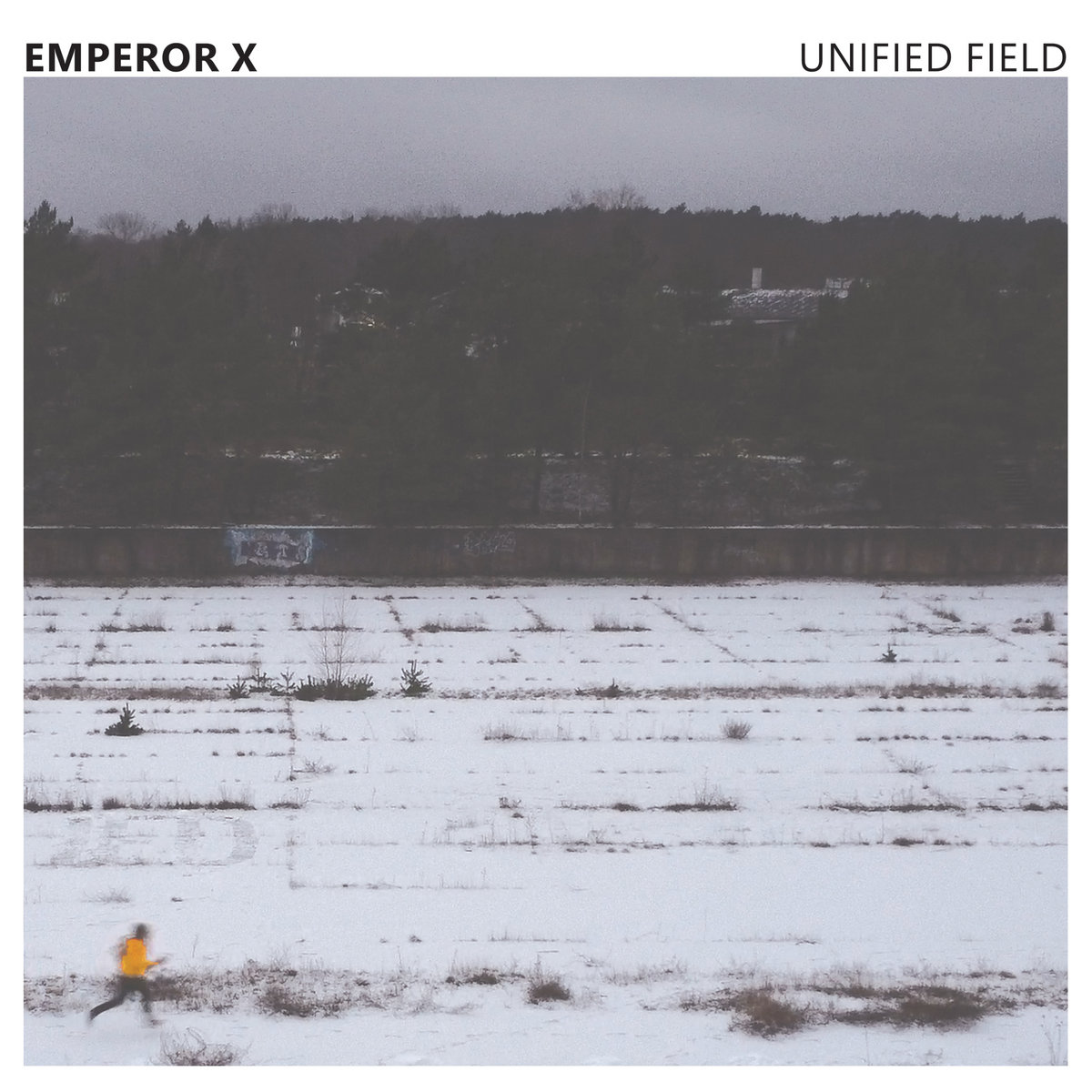
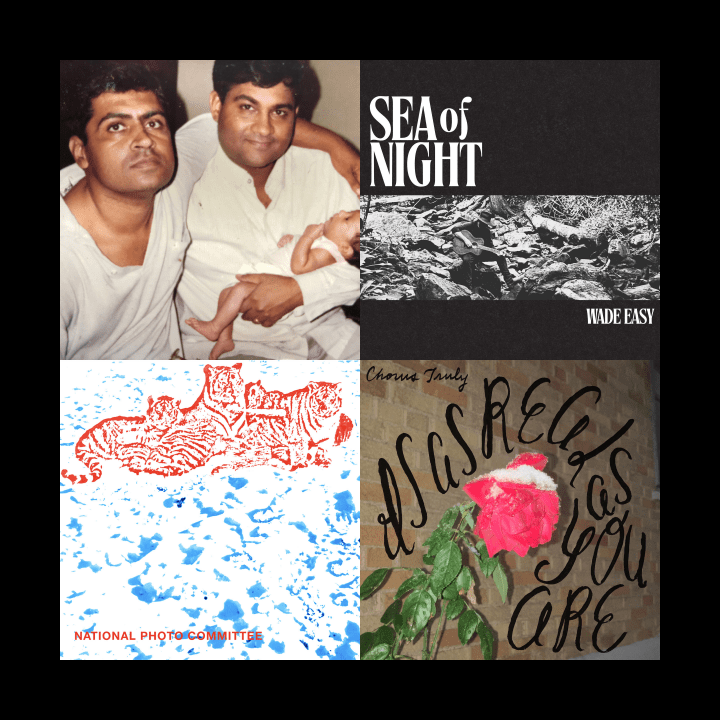
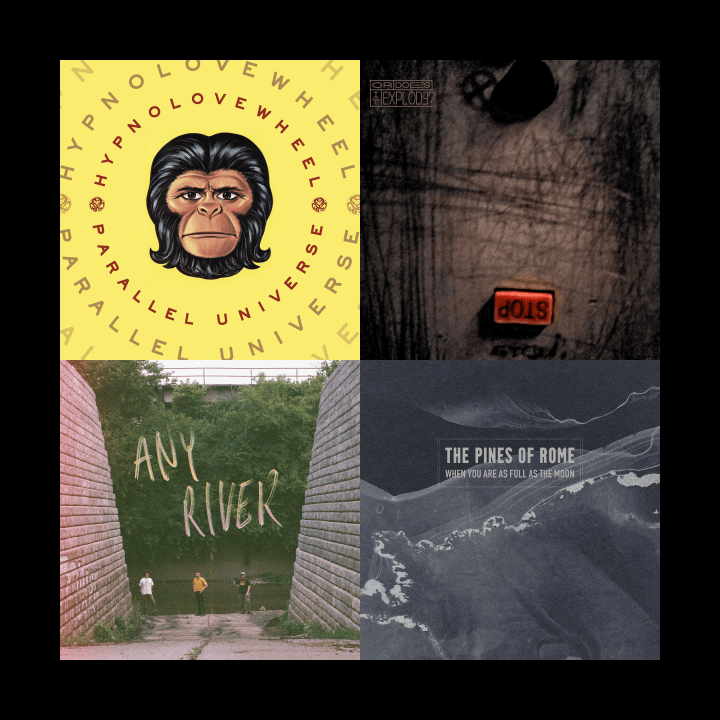
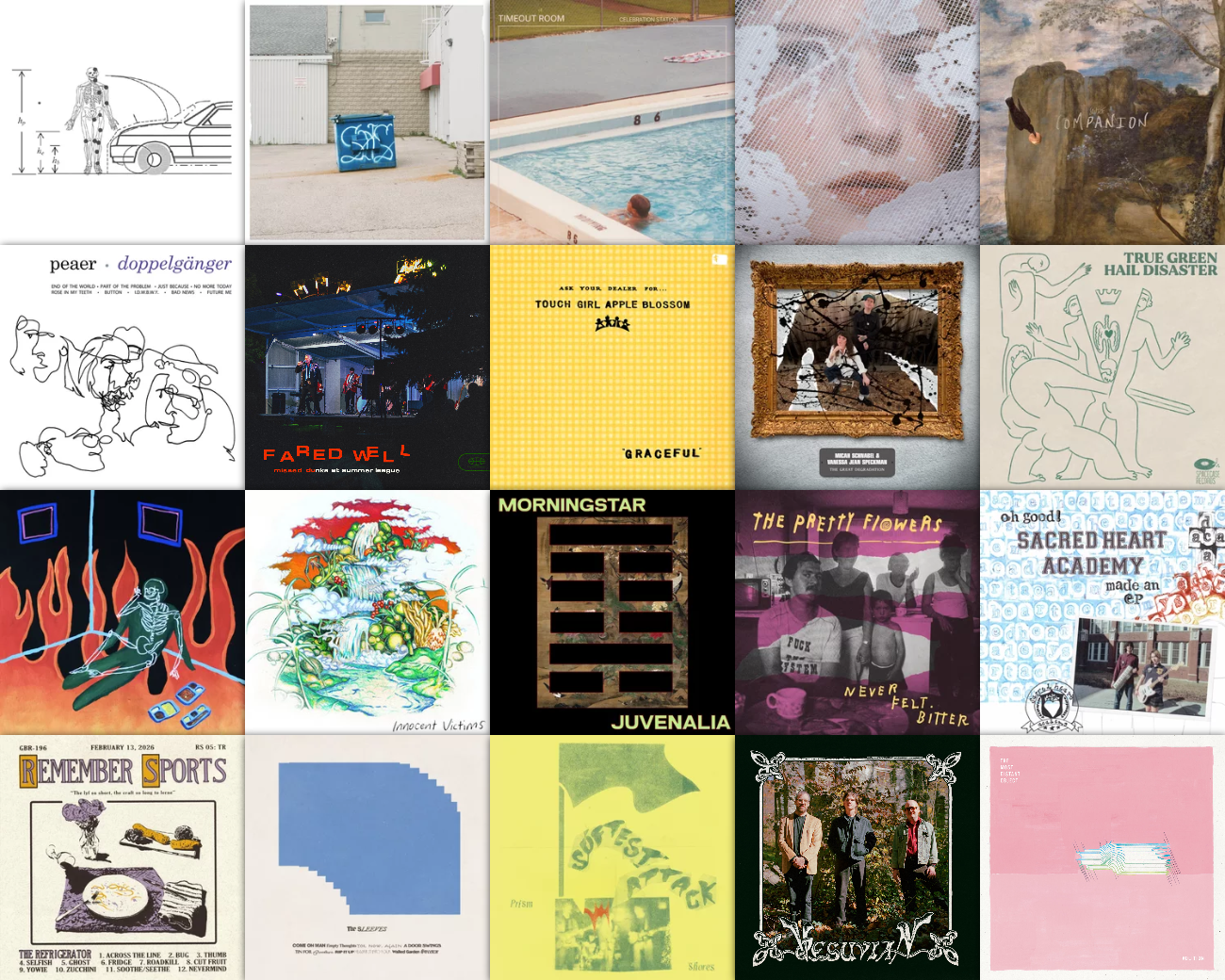
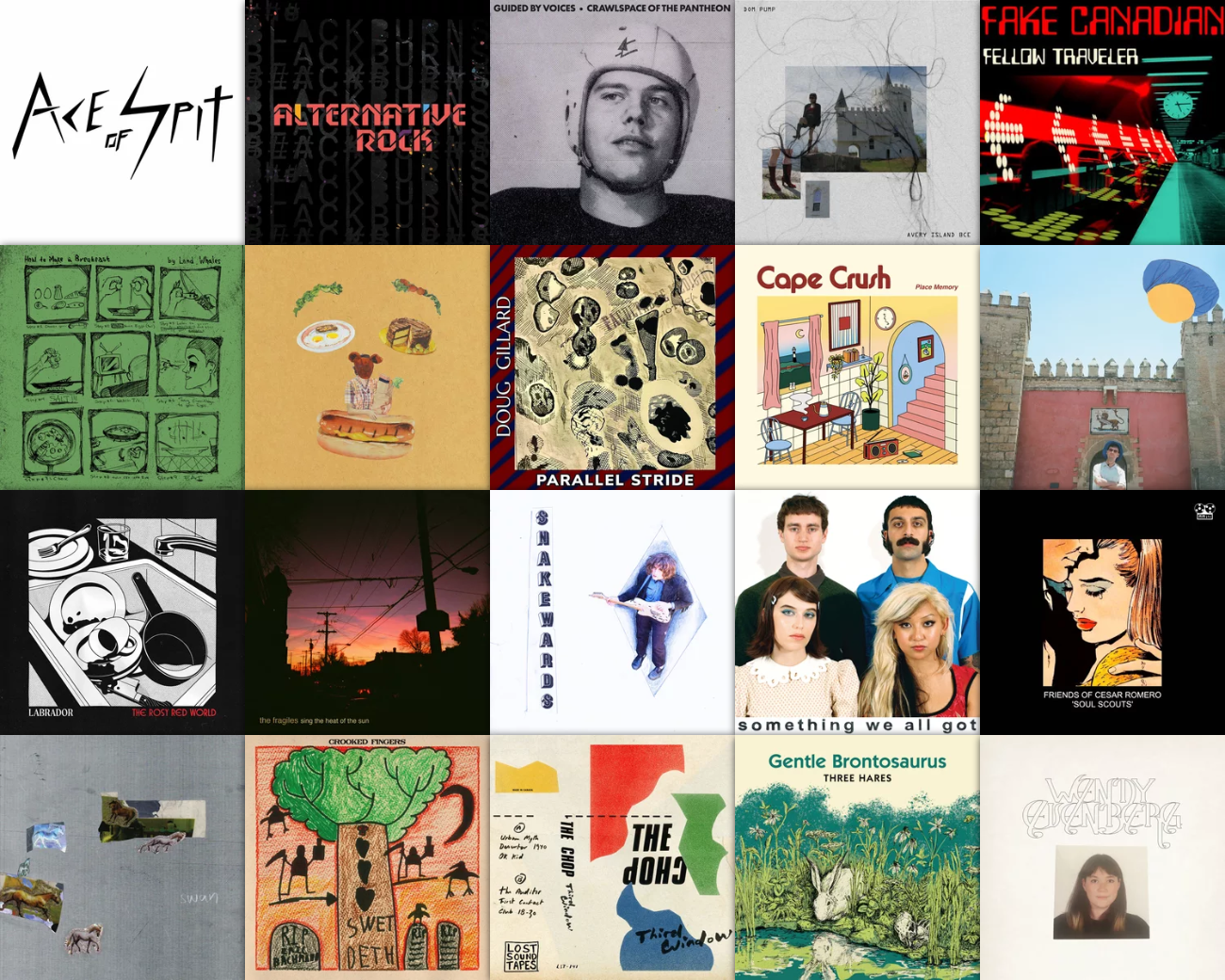
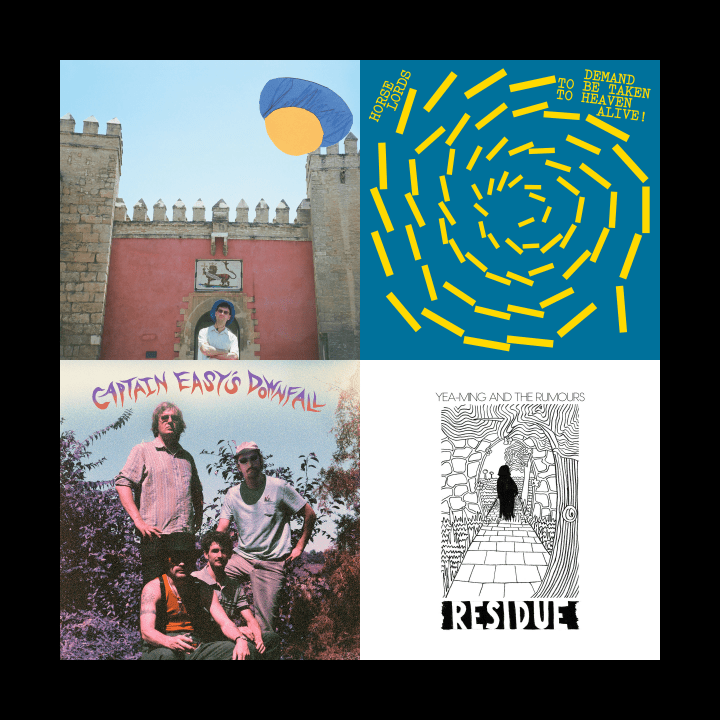
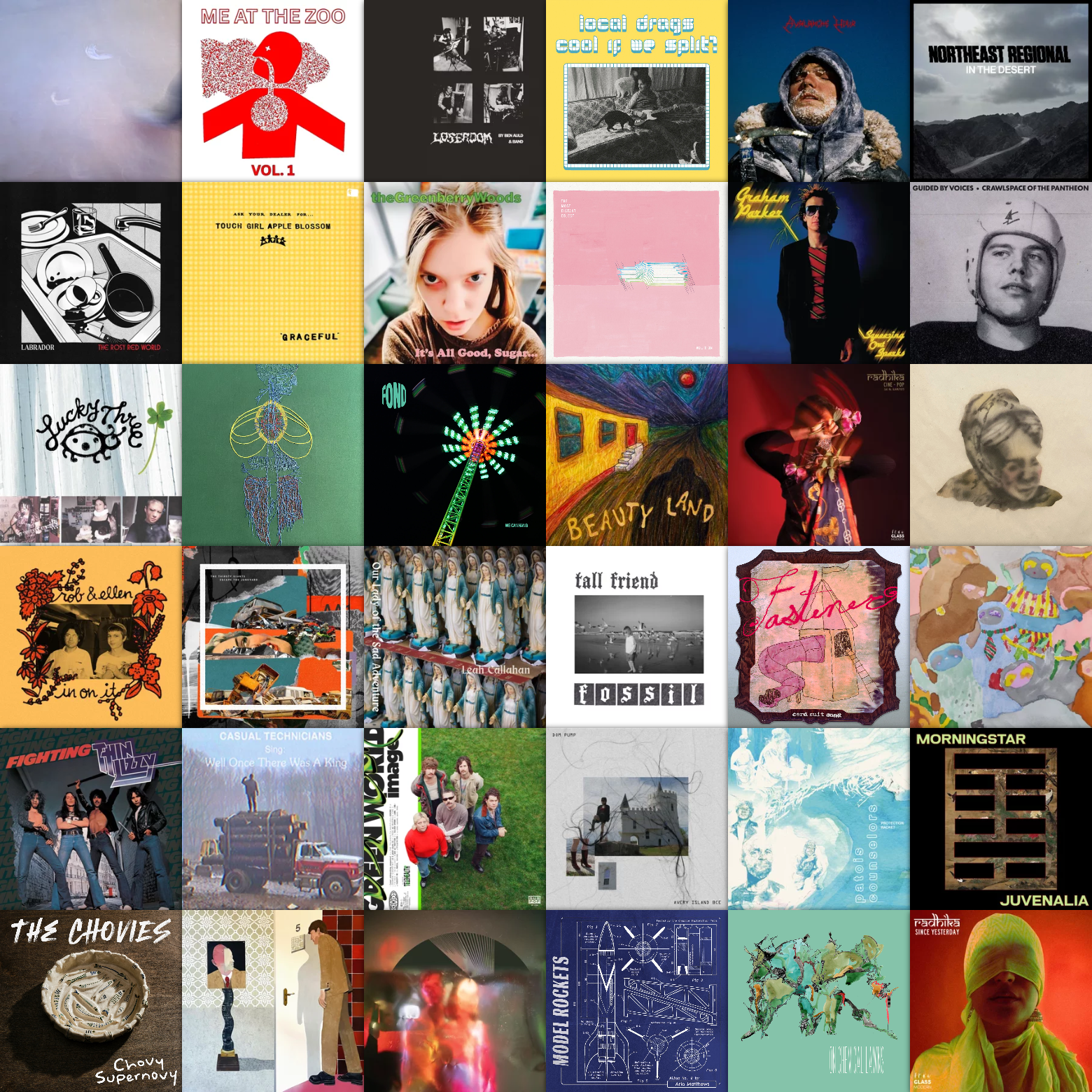
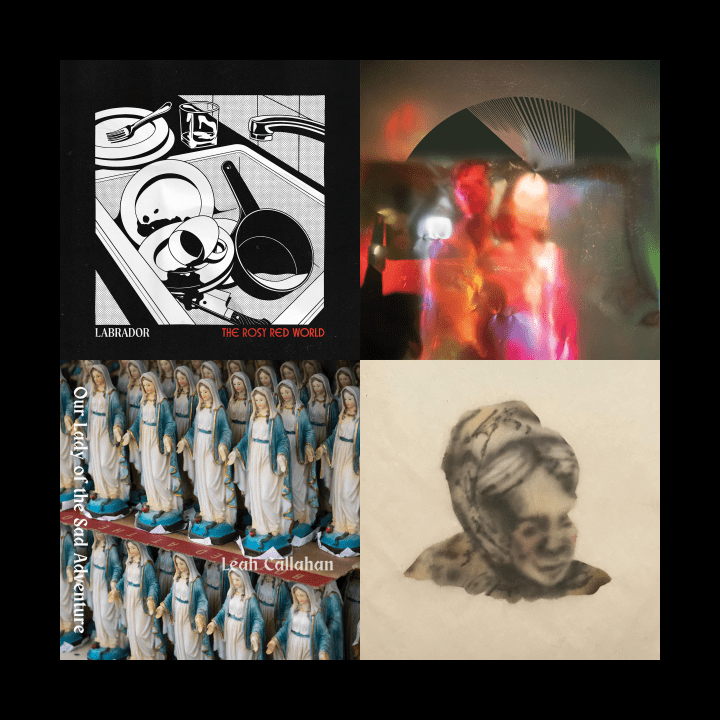
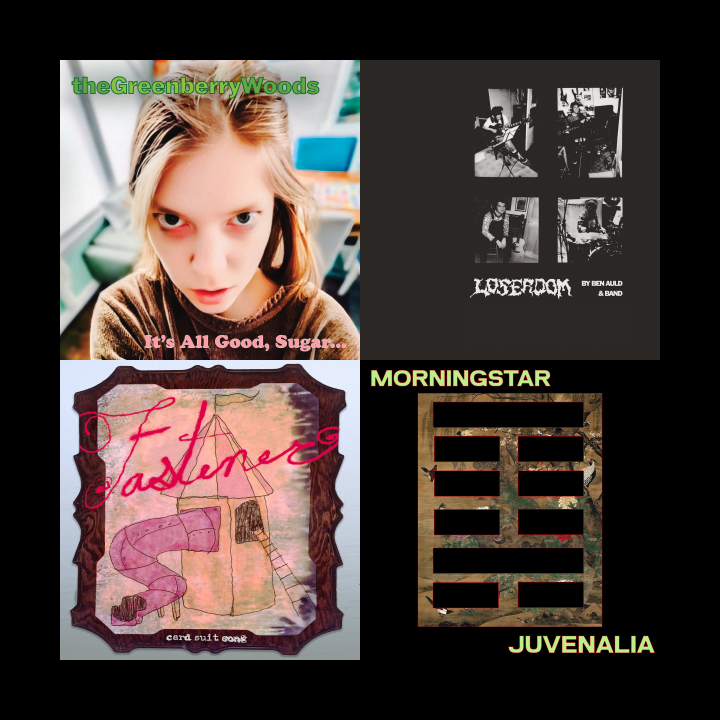
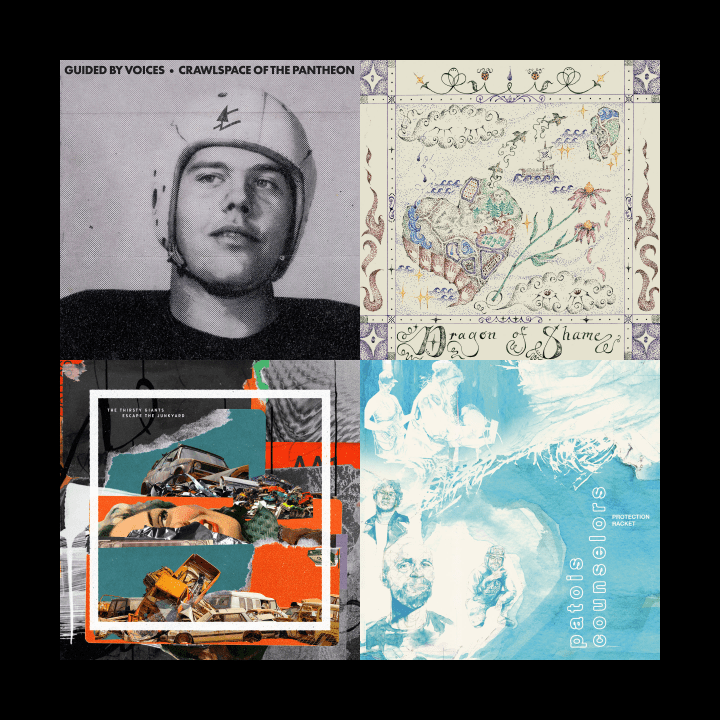
 Rosy Overdrive