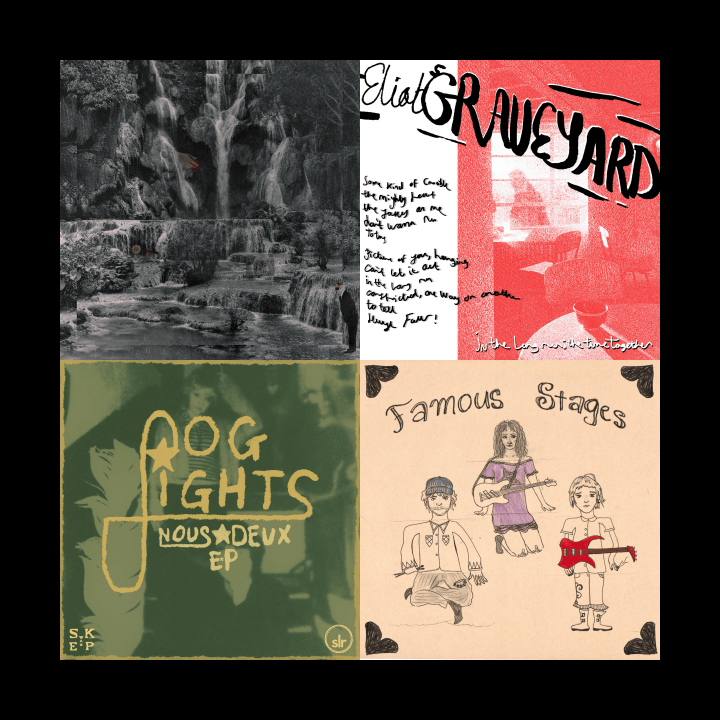
It’s the Thursday Pressing Concerns! We’ve got new albums from Perennial, The Drin, Scarves, and Mr. Husband down below. Check them out, and if you missed Monday’s blog post (featuring Dagwood, Soda Gumball, Blimps, and Plum), check that out too.
If you’re looking for more new music, you can visit the site directory to see what else we’ve written about lately. If you’d like to support Rosy Overdrive, you can share this (or another) post, or donate here.
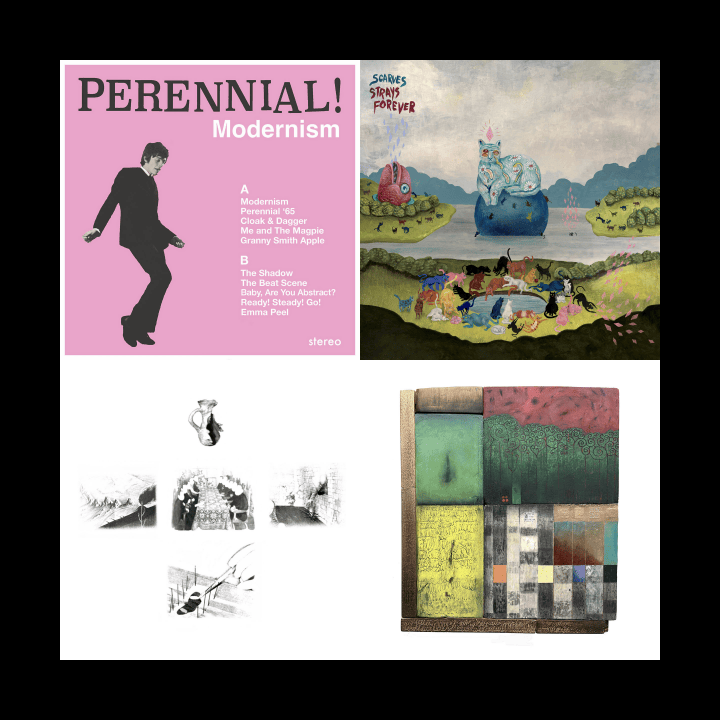
Perennial – Modernism
Release date: September 18th Record label: Ernest Jenning/Safe Suburban Home Genre: Art punk, garage rock, post-hardcore Formats: Vinyl, CD, cassette, digital Pull Track: Modernism
When this whole “Perennial” thing winds down, we’re sure gonna miss these guys. That’s a thought I had while listening to the fourth album from the New England-based “modernist punk” trio, Modernism, specifically when listening to “Me and the Magpie”, one of the most “Perennial” songs that Perennial have ever made. Chelsey Hahn stabs at her electric organ, Ceej Wolf pounds out a drum beat, and Hahn and vocalist/guitarist Chad Jewett trade lines with bits of Perennial’s favorite imagery in them (“Me and the magpie in our haunted house” / Me and the magpie going underground” / “Me and the magpie in the dead of night” / “Me and the magpie on the harpsichord”, etc., all punctuated by “Yeah, yeah, yeah”s and “Alright”s, of course). And then, of course, the guitars kick in right on time for a furious garage punk/post-hardcore rave-up of a refrain. It is, like I said, extremely “Perennial”–like I said when I wrote about 2024’s Art History, it’s a near-AC/DC level of knowing exactly what they’re about and performing it perfectly. It’s easy to take this for granted after four LPs’ worth of it, but when the faucet stops–that’s it. This is the Perennial Sound, and they’re the only band that does it.
So, Modernism gives us the hits yet again, rolling through blaring, deafening songs that are equally indebted to 60s garage rock and turn-of-the-century noise rock (the title track, “Perennial ‘65”, “Emma Peel”, “Me and the Magpie”), as well as marginally more fractured rock and rollers like “Baby, Are You Abstract?”, “What’s New on the Beat Scene”, and “Cloak & Dagger”. As opposed to Art History, which let its edges get frayed and scorched with some genuine ambient and electronic moments, the twenty-one minute Modernism is an assault for all but the two-minute “Granny Smith Apple”. You can tell that “Granny Smith Apple” wants to explode, but it doesn’t, instead living its entire brief life as a warm, mid-tempo, organ-led indie pop song–it’s Perennial by way of Sparklehorse or Flotation Toy Warning (or maybe the gentler moments of one of Perennial’s biggest influences to my ears, Lunchbox). It doesn’t sound like any other song on Modernism, although, like I said, you can hear the Perennial Sound beating on the walls of “Granny Smith Apple” trying to get out. Which it does one song later, of course, with “The Shadow”, and it doesn’t stop from there. Thankfully, it’s still going right now. (Bandcamp link)
The Drin – I Lost My Way for Centuries
Release date: September 18th Record label: Feel It Genre: Garage rock, psychedelic rock, folk rock, art rock Formats: Vinyl, CD, digital Pull Track: Prophets of Doom
2025 was the first year in quite some time that we didn’t get a new album from Cincinnati underground group The Drin (even though bandleader Dylan McCartney did put out a solo EP called For Those Not Here). In hindsight, I should’ve recognized this meant that The Drin were cooking up something big, and indeed they’ve returned this year with the massive double album I Lost My Way for Centuries (seventy-four minutes long on CD and digital, a bit shorter on vinyl). The Drin have picked a good time in their career to shoot for the moon like this–2024’s Elude the Torch was a high-water mark and a reinvention for the group, embracing the full-band sextet lineup (McCartney, Eric Dietrich, Ryan Sennett, Luke Cornett, Cole Gilfilen, and Dakota Carlyle) to make “dark, rhythmic rock music that finds power in steadiness”, as I said at the time.
I Lost My Way for Centuries feels like a “double album” in a classic rock sense. The Drin take the meditative aspects of their last album and allow them to stretch and sprawl to previously-unthinkable proportions. This album’s twenty-three songs give The Drin the chance to fully embrace the music that’s led them to this point: you’ll hear clear bits of progressive rock, psychedelia, folk, dub, and krautrock throughout I Lost My Way for Centuries. “Moths to the Light” is Neil Young circa Harvest with a warped saxophone in play, while the thundering blues-rock of “Prophets of Doom” is closer to Led Zeppelin. I Lost My Way for Centuries has this “intensity at a distance” quality to it that The Drin are really good at evoking, and it helps this double LP trip feel like an unearthed, dust-covered album from some forgotten band from the 1970s. I’ve been told music in this vein has been having something of a moment recently, which does make me wonder what would happen if I Lost My Way for Centuries came from a somewhat-mysterious art-pop auteur from a cultural capital and not a somewhat-mysterious garage rock band from Ohio on a garage rock label from Ohio. As far as Rosy Overdrive is concerned, though, I Lost My Way for Centuries came from exactly where it should’ve come from. (Bandcamp link)
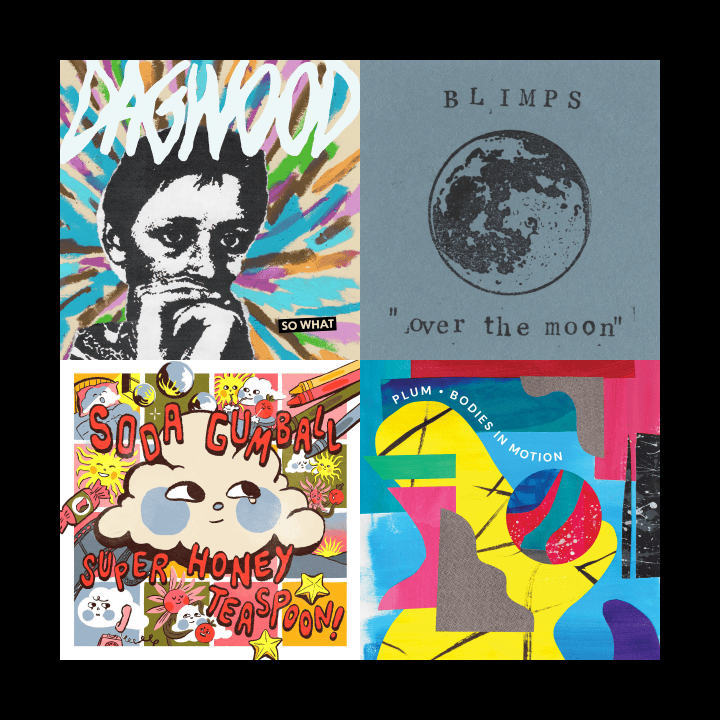
Scarves – Strays Forever
Release date: September 18th Record label: Tender Loving Empire Genre: Indie folk, 90s indie rock, indie pop, twee, synthpop Formats: Vinyl, digital Pull Track: We Should Get a Dog
I wrote about the Seattle group Scarves back in 2022, when the Niko Stathakopoulos-led act put out their fourth album, Delicate Creatures. That aptly-titled record won me over with its mixture of tender, almost-twee indie pop with 90s-style meandering and occasionally distorted indie rock, all led by a frontperson whose earnest and, yes, gentle vocals and lyrics take cues from John K. Samson of The Weakerthans and Ben Gibbard of Death Cab for Cutie. On their fifth LP, Strays Forever, Scarves are a quintet–guitarist/vocalist Nessa Grasing and multi-instrumentalist Elijah Sokolow return from Delicate Creatures, and bassist Jesse Cohen and drummer Jacob Whinihan join the trio alongside producer Chris Walla, a natural choice to record a Scarves album.
The affable pop rock of “Self Soothing” introduces Strays Forever in the most welcoming fashion, before “Marionettes” and “Hey!” inject a bit more of a rainy Pacific Northwest indie rock fog to Scarves’ sound and the title track distinguishes itself as “the one with the synths and electronics” (just a touch of them, to be clear). Stathakopoulos is most impactful when he seems to fully give in to his deeply-felt, eccentric writing, and the back-to-back triumphs of “Chainsaw” and “We Should Get a Dog” in the second half of Strays Forever reflect this. The dreamy former track is a love song apparently inspired by The Texas Chainsaw Massacre and features Stathakopoulos proclaiming “I love you like a cat loves cardboard / I want to tear you to shreds / Out of pure joy” in the refrain, while the latter is a swirling, anthemic kicking against ennui that all leads up to the title line. Closing track “Skeletons and Swords” is just as memorable, but here Scarves allow Stathakopoulos to dissolve in a sea of strings and haziness. That’s undoubtedly Walla’s touch, but Strays Forever is unmistakably a “Scarves album” first and foremost. (Bandcamp link)
Mr. Husband – Song for the Old World
Release date: September 18th Record label: Good Soil Genre: Folk rock, alt-country, jangle pop Formats: Vinyl, CD, digital Pull Track: Is It Real
From his outpost in the Maryland panhandle, the West Virginia-originating Kenny Tompkins has been a stalwart advancer of American indie pop, from involvement in record labels Yellow K and Good Soil (Japanese Breakfast, Gabby’s World, Human People) to his power pop group The Trend to, more than anything else, his long-running Mr. Husband solo project. As Mr. Husband, Tompkins has straddled the line between Appalachian-inspired folky Americana and jangly indie pop (with plenty of excursions as well), and Song for the Old World (dubbed the ninth Mr. Husband album by Tompkins, though I think it depends on how one counts) plays to the troubadour’s strengths.
The eight-track, thirty-minute LP begins and ends with the title track, an instrumental piece Tompkins claims to have tinkered with for twenty years before finally “let[ting] go of it” here. It’s a delicate and careful framing for the rest of Song for the Old World, which finds Tompkins and the same lineup from 2024’s Wildflower (drummer Chris Morris, lap steel guitarist Adam Laye, and bassist Curt Tompkins) thoughtfully moving through timeless-sounding pop music with bits of folk and rock music history contained therein. The country-folk belter “White Hot Embers”, the rollicking folk-rocking “Is It Real”, the sparse acoustic “So Goodbye”, and the heart-on-sleeve penultimate bow-out of “Haunted Head” all feel like they ought to be Song for the Old World’s centerpiece; the neat trick of this album is they’re all presented that way thanks to how Tompkins constructed this strong little collection. Mr. Husband remains one of the best at what they do here, simple as that. (Bandcamp link)
This Monday Pressing Concerns features new albums from Dagwood, Soda Gumball, and Plum, and a new EP/cassette from Blimps. Check ’em below.
If you’re looking for more new music, you can visit the site directory to see what else we’ve written about lately. If you’d like to support Rosy Overdrive, you can share this (or another) post, or donate here.
Dagwood – So What / So What Else
Release date: September 8th Record label: Self-released Genre: Power pop, pop punk, alt-rock, fuzz rock, garage rock Formats: Vinyl, CD, cassette, digital Pull Track: Change Your Mind
The New Haven, Connecticut power-pop-punk group Dagwood have been around since the beginning of the 2010s, but the quartet (guitarist/vocalist Grady Hearn, guitarist Mike Nagy, bassist Tim Casey, and drummer Kilian Appleby) really hit their stride earlier this decade with a pair of strong EPs: 2023’s Everything Turned Out Alright and 2024’s Pollyanna Visions. The latter of those EPs was recorded by the acclaimed Western Massachusetts producer Justin Pizzoferrato, and that’s who Dagwood turned to to help make So What, the band’s fourth full-length album and first in four years. The twelve-song proper LP also comes with six bonus tracks, christened the So What Else EP by Dagwood, making the entire package a behemoth eighteen-song collection of 90s-style fuzzed-out power pop, alt-rock, and garage rock revival that stands as Dagwood’s most impressive statement yet–in terms of sheer magnitude, if nothing else.
Dagwood’s influences are a transatlantic game of telephone: both 90s power pop bands with a bit of British invasion influence like Weezer and Superdrag collide with British pop bands with a bit of American indie rock and pop in their DNA like Ride and late-90s Blur. Garage rock hits like “Nowhere New”, “Group Dynamic”, and “Talk You Do” are Dagwood at their most effortless, and they sit alongside more restrained pop numbers like the steadily-building opening track “Easier to Trust”, the dreamy “Walls of My Bedroom”, the power ballad “Change Your Mind”, and the acoustic “I Forget”. The So What Else EP doesn’t feature any drop in quality–the first half in particular (the heavy, dread-tinged “Paranoid”, the turn-of-the-century pop rock “Reason to Believe”, and the breezy garage-pop of “Right Outside”) is one of the strongest stretches in this entire bundle. At the very least, So What and So What Else are proof that Dagwood are still on a hot streak, and sustaining that fire for forty-five minutes over two records is a new milestone for them. (Bandcamp link)
Soda Gumball – Super Honey Teaspoon!
Release date: July 24th Record label: Den Tapes Genre: Indie pop, 90s indie rock, twee Formats: Vinyl, cassette, digital Pull Track: Malt Shop Gizmo
Another new indie pop band from the Pacific Northwest is an intriguing proposition, and that’s before I even realized the Rosy Overdrive-related background of Seattle’s Soda Gumball. See, Soda Gumball is the project of one Benjamin Rea, a music instructor who has been making chaotic freak-punk on his own as Jealous Yellow since the pandemic and who also plays in the post-hardcore group Laminate. Soda Gumball in particular stems from Rea’s time as an instructor, and some of these comparatively simple pop songs even originated from collaborations with the musician’s students. Super Honey Teaspoon!, the first Soda Gumball album, displays a laid-back comfort with K Records-style indie pop; Rea’s low-key vocals, while more outwardly sorted for the kind of greyscale, noisy post-punk of his other projects, lend a slacker, almost Elephant 6 psychedelic vibe to these compositions. At fifteen songs and forty-five minutes, we get a full dose of Rea’s vision of pop music, which gets as animated as the chirping synth-twee-pop of “Malt Shop Gizmo”, the horn-laden pop rock “Mango Hiccup”, and the fuzzy “Twirly Whirl”. The whole thing ends with a faithful and reverent cover of Beat Happening’s “Cast a Shadow”, and the ease with which Soda Gumball add it to their repertoire is just proof of Super Honey Teaspoon!’s charming success. (Bandcamp link)
Blimps – Over the Moon
Release date: May 8th Record label: Terminal Releases Genre: Power pop, alt-rock Formats: Cassette, digital Pull Track: Over the Moon
Blimps is Rocky Mercer and Colin Musolf, a lo-fi power pop duo from Charleston, South Carolina who put out their debut record, a seven-song cassette called Over the Moon, back in May. Over the Moon was released by Terminal Releases, a label run by the members of Blimps that has also, in the months since the tape came out, put out a slow of records by various projects appearing to feature different combinations of Blimps members and other local musicians (band names include Miltons, Silky Demands, and ESP Disco). As a prolific group of underground pop musicians from a C-class American city whose band is named after a Guided by Voices song, it seems like Blimps have their heads screwed on right, and Over the Moon is as strong as one would hope it to be. While songs like “Pitfall Traps” and closer “Landed” are certainly Robert Pollard-esque, that doesn’t necessarily define all of Over the Moon–stuff like crunchy opening track “Over the Moon” is more indebted to Weezer and 90s fuzzed-out power pop (it’s very nearly a Rozwell Kid song), and distorted pop rock journeys like “Kung-Fu” sit nicely next to the clean jangle of “Goodbye, Goodbye”. Some promising things are going on down in South Carolina. (Bandcamp link)
Plum – Bodies in Motion
Release date: August 21st Record label: Self-released Genre: Post-punk, dance-punk, egg punk Formats: Vinyl, CD, cassette, digital Pull Track: Can Jam
It’s been a pretty good couple of weeks for Chicago post-punk, particularly of the “dance-punk” variety. The beloved Feel It group Spread Joy returned at the beginning of September with their third LP, noise-punks Model Living just put out their debut full-length last week, and Windy City trio Plum just dropped their second album late last month, too. On Bodies in Motion, Plum (guitarist/vocalist Jeff Kelley, bassist Heather Perry, and drummer Eric Ridder) continue to carry the flame of Midwestern “egg punk”, channeling Devo and The B-52’s into a rubbery, rhythm-section-forward collection of vibrant rock music. Like any good Devo-core group, there’s plenty of nervousness inBodies in Motion, but Plum also understand that “fun” post-punk has always borrowed liberally from other locations, and the funk and grooves found in “Born Anew”, “Too Much Sunlight”, and (especially) “Can Jam” showcase a band with real skill when it comes to realizing the music they love effectively. Elsewhere on the album, songs like “Not Out of Mind” and “Club Scum” display a more spaghetti-western approach to post-punk, splattering guitar lines over top of the sleek rhythm section. The common thread in this eleven track, thirty-one-minute album is a very animated and colorful approach to rock music, an absolutely necessary attitude to have when making a record like Bodies in Motion. (Bandcamp link)
In this Thursday Pressing Concerns, we’ve got two albums coming out tomorrow, September 11th (new LPs from Model Living and Twilark), an EP that came out earlier this week (from King’s Evil), and an album that’s out today (Halfway Up a Jagged Hill). Check them out below, and if you missed Monday’s blog post (featuring The Bird Calls, Asher White, Sam and Louise Sullivan, and Off Contact), check that too.
If you’re looking for more new music, you can visit the site directory to see what else we’ve written about lately. If you’d like to support Rosy Overdrive, you can share this (or another) post, or donate here.
King’s Evil – King’s Evil
Release date: September 8th Record label: Worry Bead Genre: Lo-fi indie pop, slacker pop, bedroom pop, folk rock Formats: Vinyl, digital Pull Track: Sneezed
King’s Evil are a duo co-founded in 2020 by two very good Boston indie musicians in their own right: Sami Martasian of the bedroom pop act Puppy Problems and JM Dussault of chiptune-slacker-rockers (T-T)b. If those two aren’t enough of a Rosy Overdrive cosign for you, their self-titled debut EP also features Alex Judd (Salty Greyhound) on synths, percussion, and production and Nick Dussault ((T-T)b, Really Great) on drums. It’s no surprise to me that King’s Evil is a good record, but it’s nonetheless striking how the duo’s first release is already one of the best things either one of them have made yet. The EP really is the best of both worlds: Martasian and Dussault trade off lead vocals over catchy indie pop like a vintage K Records release, marrying the breezy bedroom pop of the former’s project with the more tinkered-with indie rock of the latter’s.
The goofy synth hook of “Villain Story” is the most obvious “(T-T)b moment” on King’s Evil, but the sneaky heaviness of the title track and (especially) “Jerry” feel like more holistic incorporations of that band’s sound into King’s Evil. The EP’s one entry into the modern alt-country sweepstakes, “Sneezed”, is a perfect toe-dipping; the “Range Life” guitar riff and the Silver Jews reference situate it right at the center of a hyper-specific movement, but one doesn’t need to have an opinion on Berman versus Malkmus to appreciate what’s ultimately a flawless pop song. The good times come to a careening halt with “Tsavt Tanem”, a sparse all-acoustic closing track in which Martasian sings about a society constantly witnessing death and pleads for a way out of it all. It’s a beautiful song, and coming at the end of King’s Evil cements it as one of the best debut EPs I’ve heard in a minute. (Bandcamp link)
Model Living – The Wall
Release date: September 11th Record label: Earth Worms Genre: Post-punk, garage rock, no wave, noise rock Formats: Digital Pull Track: Head of Talent
Chicago post-punk quartet Model Living began their career with a pair of EPs in 2023 and 2024, and this September 11th brings us the band’s first-ever full-length album. Vocalist Geoff Daniels, bassist Matt Ciani, drummer Nico Ciani, and guitarist Jay Martinez have put together an assault of a debut LP called The Wall; rather than the “wall of sound”-style assault one might envision based upon the title, The Wall is instead a barrage of words, images, ideas, of a society’s worth of detritus in a blender. Model Living’s version of post-punk is a very American one; they belong to a lineage populated by Protomartyr, Lifter Puller, Bambara, Pardoner, and their neighbors in Stuck.
The Wall is Daniels’ deadpan, droll, grey vocals (and lyrics that are anything but), the Cianis’ blunt, unending rhythm section recalling the Windy City’s noise rock history, and occasional bursts of noise like Sarah Clausen’s saxophone in “Tire Pile” and squealing violin from Audrey Alger (of Upstairs and Prathloons) on “Backwards Racer”. Of the approximately five thousand things Daniels references throughout The Wall, I particularly enjoy the Nimrod Workman cameo in “World of Minds” and a particularly surreal shout-out to Hydroplane’s Selected Songs 1997-2003 in “Head of Talent”. Model Living’s Chicago is tired and dripping with contempt; it’s not particularly fun or easy to listen to, nor should it be. For those who are drawn to the photo-negative, quote-unquote rewarding sides of rock and post-punk music, The Wall has bravely put itself out there for us. (Bandcamp link)
Halfway Up a Jagged Hill – HUAJH
Release date: September 10th Record label: Vinegar Hill Sound Genre: Post-hardcore, post-rock, 90s indie rock, noise rock, slowcore Formats: Digital Pull Track: Silver Sword
Halfway Up a Jagged Hill are a new post-hardcore duo out of Brooklyn featuring Devin Gilbert on guitar, bass, and vocals and Jeb Polstein on the drums. Their first release is a self-titled-ish album called HUAJH, made with the help of collaborators Reed Black of Vinegar Hill Sound (who engineered it and is releasing it on his record label) and Lucy Mondello of Fish Hunt (who provides backing vocals on half of these songs), not to mention having Nick Corbo of Spirit Was make the album’s artwork. Halfway Up a Jagged Hill’s influences range from the post-rock/emo of The World Is a Beautiful Place & I Am No Longer Afraid to Die to the explosive noise rock of Pile to black metal group Liturgy, and I can believe they’re drawing from all of them listening to HUAJH. At its loudest, Halfway Up a Jagged Hill’s music is heavy, downtuned, metallic post-hardcore/emo scorching, and these crashing waves eventually recede to reveal tidal pools of exhausted-but-tense slowcore sections. It actually does remind me a lot of Spirit Was–it’s an album that’s really able to evoke heavier genres of music while still bearing the mark of the underground indie rock from which it was born. And, like the best of their predecessors, HUAJH takes on the tightrope between beauty and ugliness with purpose. (Bandcamp link)
Twilark – Never Learned the Tide
Release date: September 11th Record label: Self-released Genre: Indie folk, chamber folk, alt-country Formats: Vinyl, digital Pull Track: Tired to Sleep
Twilark is Canon Pence, a Raleigh, North Carolina-based singer-songwriter who released his debut album, The Taming Ties Create, almost exactly a year ago. The Taming Ties Create was co-recorded in Nashville at the Bomb Shelter by Dominic Billett and features pedal steel from Spencer Cullum; this must’ve been a particularly fruitful assemblage, as Twilark is back twelve months later with another Bomb Shelter-and-Billett-recorded album featuring Cullum’s contributions called Never Learned the Tide. The folk music and Americana that Pence makes as Twilark has an earnest little personality to it–there’s traditionalism in here drawing both from Nashville and from Pence’s western North Carolina origins, but it’s also an “indie folk” record displaying bygone decades of pop rock in Pence’s clear, melodious voice and in the songs’ construction and execution. The sleepy folk-country shuffle of opening track “Tired to Sleep” is nonetheless a full-band recording that takes advantage of everyone’s contributions, and the charm of the campfire folk rock of “Oranore” is only enhanced by its swooning mixture of pedal steel, strings, and accordion. Never Learned the Tide is an album out of time and place; it could’ve come out during the height of 2000s indie folk, but it’s not tethered to that era. It sounds just right in 2026, too. (Bandcamp link)
In this brand new Monday Pressing Concerns, we’ve got new albums from The Bird Calls, Asher White, Sam and Louise Sullivan, and Off Contact; check them out below!
If you’re looking for more new music, you can visit the site directory to see what else we’ve written about lately. If you’d like to support Rosy Overdrive, you can share this (or another) post, or donate here.
The Bird Calls – Take Leave
Release date: August 28th Record label: Ruination Genre: Folk rock, singer-songwriter Formats: CD, digital Pull Track: Means More Now
New music from Sam Sodomsky and his project The Bird Calls is always welcome, and thankfully the New York-based folk rock singer-songwriter and music critic seems regularly happy to oblige. New Bird Calls records have been (at least) yearly occurrences all decade, and last year’s entry into the oeuvre, the more polished, 80s-influenced Melody Trail, was a high point in his discography (and we also got a collaborative EP with Izzy Oram Brown as a nice bonus). This year’s Bird Calls album, Take Leave, continues Sodomsky’s collaboration with producer Ryan Weiner that began with Melody Trail, but the two take a step back from some of that album’s more synthetic touches on this LP. That doesn’t mean, however, that Take Leave is a complete return to the straight-up one-man acoustic band sound of early Bird Calls, though; effectively, Sodomsky and Weiner embrace a warm, simple but robust folk rock sound throughout the album (Sodomsky writes that they were shooting for “more of a live sound” on Take Leave; I assume the duo didn’t magically play several instruments at once, so they’ve done an admirable reconstruction in that case).
Most of Take Leave isn’t quite as hushed as the leisurely, pensive folk-country opening track “Some Bands”, nor is it quite as animated, electric, and (relatively) fist-pumping as the second song, “Means More Now”. Take Leave finds a middle lane and stays in it, more or less, though the lane is wide enough to encompass the subtly expansive heartland rock sound of “Clockwork”, perky folk rock like “Acid Mermaid”, and beautiful quieter ballads like “Shadow Song” (not a Mountain Goats cover, though I wouldn’t be surprised if it was an intentional nod) and “Learning to Sing” (which is one of those conversational, instantly-charming songs-about-songs that form the core of The Bird Calls’ appeal to me). Same time next year, hopefully. (Bandcamp link)
Asher White – Love Aggregates
Release date: August 28th Record label: Joyful Noise Genre: Art pop, indie pop, experimental pop, chamber pop Formats: Vinyl, CD, digital Pull Track: The Eagle Is No Omen
I first heard Asher White’s music last year thanks to 8 Tips for Full Catastrophe Living, the latest in a long string of releases from the Providence, Rhode Island-based artist and her debut for Joyful Noise Recordings. At the time, I called it “one of the wildest albums I’ve heard this year” and admitted that while I didn’t like everything White tried, I really enjoyed some moments of it. Twelve months (and one remake of Jessica Pratt’s self-titled album) later, White has returned with Love Aggregates, a gorgeous pop album that zeroes in on the aspects I loved most from 8 Tips for Full Catastrophe Living. Don’t get me wrong, Asher White is still a weirdo musician, but her eccentricities are focused relatively cleanly on making 70s-inspired baroque/chamber pop this time around. Just about everything on Love Aggregates is ornate pop music–in the first half, we get delicate opening track “Reverie for Work”, the R&B-influenced “My Day at the Casino”, the electronic touches of “Memory Patient (Motor Cycle Angel)”, and the folky “White Castle Sad”. Another remarkable wrinkle to Love Aggregates is that many of its “wildest” moments are also its catchiest ones, like in the somewhat messy, electric power pop of “Stage Diva” or the synthetic, bass-led minimal banger “The Eagle Is No Omen”, which might be my favorite song on the LP. It takes a very good musician to make the kind of music Asher White has made, and an even better one to rein it in and focus it like she does on Love Aggregates. (Bandcamp link)
Sam and Louise Sullivan – Love & Devotion
Release date: July 24th Record label: Historic New Jersey Genre: Pop rock, folk rock, soft rock, R&B Formats: Digital Pull Track: Down on Love
The Philadelphia-based sibling pop rock duo Sam and Louise Sullivan debuted in 2021 with a self-titled EP, and full-length albums quickly followed in 2023 and 2025. Both of those albums came out via Historic New Jersey Recordings, the label and studio that also recorded and released Love & Devotion, the third Sam and Louise Sullivan album. Historic New Jersey is run by Kevin Basko of Rubber Band Gun, and they’ve helped make albums from The Lemon Twigs, Star Moles, Lightheaded, and Thank You Thank You, among others–it seems like they’ve fostered a community of indie musicians making music inspired by 60s and 70s folk and pop rock, and Sam and Louise Sullivan fit right in with this movement. Unlike a lot of modern bands who try to recreate this kind of laid-back, “studio-based” 1970s music, Sam and Louise Sullivan keep the recordings crisp and clear, the arrangements simple, and the pop hooks front and center. There’s nothing “psychedelic” whatsoever about the fist-pumping retro-pop success of opening track “Down on Love”, and what follows this impressive start is nine more songs of infectious pop rock with bits of soul, folk rock, and soft rock in their DNA. It’s an incredibly fresh listen, and one that bodes well for Sam and Louise Sullivan and the kind of pop music Historic New Jersey has facilitated. (Bandcamp link)
Off Contact – Can You?
Release date: July 31th Record label: Self-released Genre: Post-punk, art punk, psychedelia Formats: Vinyl, CD, digital Pull Track: Anew
Hailing from Sioux Falls, South Dakota, Off Contact are an art-punk quartet who marry jagged post-punk foundations with psychedelia, off-beat guitar pop, and shoegaze distortion. Unsurprisingly, their latest album Can You? is thus kind of unclassifiable, other than being “very good”. The band (drummer Brogan Costa, bassist Pat Nelson, vocalist/keyboardist Qarl Koyzer, and guitarist/saxophonist Simon Keller) make indie rock music that is vibrant, serious, and multi-faceted; combined with Koyzer’s somewhat petulant yelp of a led vocal, I can’t help but being reminded of Game Theory listening to this album, even as the differences between the two acts are nonetheless myriad. Opening track “Anew” is seething, streamlined, and incredibly catchy; less straightforward moments like the saxophone odyssey “Haven” and the fuzz-rock thunderclap “Heart and Mind” still contain very obvious “pop” traces. Off Contact barrel into Can You?’s second half with the five-minute post-punk fever dream “Side”, the fiery rock and roll of “Stakes are High”, and a krautrock-evoking psych-rock closing track called “This Is a Stick Up”. Off Contact are good at what they do, and they do quite a lot on Can You?. (Bandcamp link)
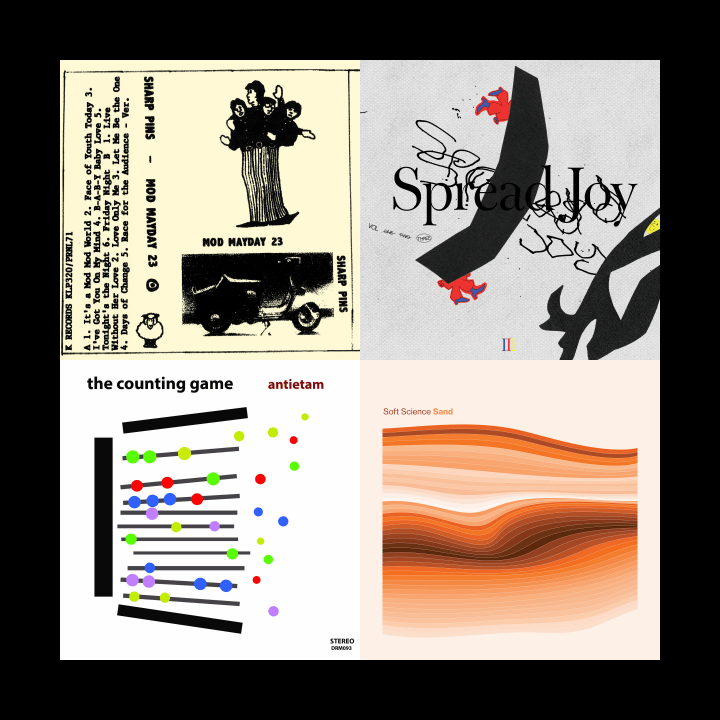
Welcome to a Thursday Pressing Concerns! We have new albums from Antietam, Spread Joy, and Soft Science, plus a reissue from Sharp Pins. Check them out below, and if you missed the July and August playlist that went up on Monday, check that out too.
If you’re looking for more new music, you can visit the site directory to see what else we’ve written about lately. If you’d like to support Rosy Overdrive, you can share this (or another) post, or donate here.
Sharp Pins – Mod Mayday 23 (Reissue)
Release date: September 4th Record label: K/Perennial Genre: Mod revival, power pop, jangle pop, indie pop Formats: Vinyl, CD, digital Pull Track: B-A-B-Y Baby Luv
Sharp Pins has ascended to the top of the modern power pop pantheon in short order–releasing three great albums of the best of mod revival, jangle pop, and classic-era Guided by Voices hooks in as many years will do that. On top of that, the Kai Slater project signed with K Records last year (who then proceeded to re-release 2024’s Radio DDR), and Sharp Pins live band member Joe Glass released an excellent solo album of his own (also being re-released by K later this year). With all this going on, you might’ve missed Mod Mayday 23 when it came out in late 2024, self-released on cassette by Slater on his own Hallogallo imprint. A covers album that (aside from the final song, a demo of an original Sharp Pins track that later appeared on Radio DDR) pulls entirely from the extended version of the Mods Mayday ‘79 compilation, Mod Mayday 23 stands as a tribute and key clue to understanding Slater’s specific style of pop music he’s chasing in his original music.
Mods Mayday ‘79 is comprised of live recordings of long-forgotten second-wave mod bands, and these self-recorded covers tell us things about Sharp Pins in how they differ from the originals. The desperation you’ll hear in the 1979 recordings, nervy bands hopped up on pub rock and some form of “punk rock”, is replaced by something more confident and ethereal. Like someone to which Slater is compared a lot, Robert Pollard, he grabs a style of music wholesale and then effortlessly injects the other styles of music he likes into it–here, it’s the chasing-that-perfect-recording power pop, the earnest basement trappings of classic indie pop, and the shiny side of psychedelic pop. Mod Mayday 23 is a not not unfaithful album of mod songs as performed by someone who really likes “mod” music, and, sure, it’s easy enough to hear the seeds of Radio DDR and Balloon Balloon Balloon in hindsight. I don’t think I’m overthinking Mod Mayday 23, though–it merits some thought, at least. (Bandcamp link)
Antietam – The Counting Game
Release date: September 4th Record label: Dromedary Genre: 90s indie rock, folk rock, fuzz rock Formats: Vinyl, CD, digital Pull Track: Way Too Well
Bassist Tim Harris and guitarist/vocalist Tara Key co-founded the indie rock group Antietam over forty years ago, and drummer Joshua Madell joined in 1990; the long-running band’s peers are acts like Yo La Tengo (who covered one of their songs back in 1989), Eleventh Dream Day (who also came out of the Louisville, Kentucky underground), and The Sonora Pine (whose Tara Jane O’Neil plays on The Counting Game). It’s been nearly a decade since the most recent original Antietam album, but the trio have remained busy in recent years; they released a collaborative covers album as a tribute to late Louisville guitarist Matthew “Wink” O’Bannon in 2021, and a four-song EP called Pitch & Yaw in 2024.
The Counting Game is classic Antietam–it’ll appeal to real-deep-in-it “indie rock/alternative rock” fans in its evocation of the likes of the Paisley Underground (see the Dream Syndicate-like opening track “Way Too Well” and the hazy Western rock of “Good Advice” for a couple), Crazy Horse (“The Finest Line” and “Coney Island”, the latter of which is an unearthed recording from 1996), alt-country (“Dorado Gold”, featuring banjo from bluegrass musician Steve Cooley), and psychedelic pop rock (“Coco Bella”). Antietam are hardly the flashiest band out there, but The Counting Game is about as warm and inviting as this kind of music can be. (Bandcamp link)
Spread Joy – III
Release date: September 4th Record label: Feel It Genre: Post-punk, garage punk, egg punk, indie pop, no wave Formats: Vinyl, digital Pull Track: (Why Can’t) I
Back in the early 2020s, the Chicago quartet Spread Joy showed up with two brief but tight collections of post-punk music that could be described as “egg punk”, “skronky”, “wiry”, “nervy”, and/or “no wave”. It’s been four years since II, which I compared to early Wire and Gang of Four at the time, so it’s about time we’ve gotten a third Spread Joy record (which you’d better believe is called III). Although it’s once again a quick one (ten songs in seventeen minutes, nearly identical to II), III is a worth-the-wait LP that plays to the strengths of the group (Raidy Hodges, Briana Hernandez, Nick Beaudoin, and Tyler Bixby). Although Spread Joy are still fairly batshit, I detect a little more pop music in their sound this time around–it’s not like their heroes like Pylon, Suburban Lawns, and Kleenex/Liliput didn’t know how to do the same. They may not be on the level of The B-52’s (another big influence on Spread Joy) or more “indie pop” labelmates like Artificial Go, but it feels natural for them to inject a bit more restrained pop rock into “(Why Can’t) I” and “Entrance” in the midst of post-punk workouts. Spread Joy has always been about fun rock music, and III is very much in that spirit. (Bandcamp link)
Soft Science – Sand
Release date: September 4th Record label: Shelflife/Spinout Nuggets Genre: Dream pop, shoegaze, fuzz pop, psychedelia Formats: Vinyl, CD, digital Pull Track: Fade
Soft Science are a six-piece band from Sacramento, California that I first heard thanks to their fourth album, Lines, back in 2023. On that record, the sextet (vocalist Katie Haley, guitarists Ross and Matt Levine, drummer Tony Cale, bassist Becky Cale, and “atmospheric electronics” player Hans Munz) established themselves as a heavier, distorted indie pop group with a sound containing bits of dream pop, synthpop, jangle pop, and shoegaze. Soft Science’s fifth album, Sand, is even larger-feeling than their previous LP; it’s a full-on “dream-rock” album, with Haley’s vocals gliding over full-bodied, shoegaze-influenced, fuzzed-out pop music. Sand is very nearly a tour through several types of “big music”: “Go” has a nice, pounding, almost post-punk rhythm, the starry-eyed “Fade” shoots for power pop and new wave, “Thread” embraces a dramatic melancholy, and “Understand” zeroes in on dreamy, quasi-jangly guitar pop. There’s a surgical precision to how Soft Science approach Sand; there’s a lot of great pop music at the core of this album, and the soft scientists expertly mix and combine ingredients to best serve their creations. (Bandcamp link)
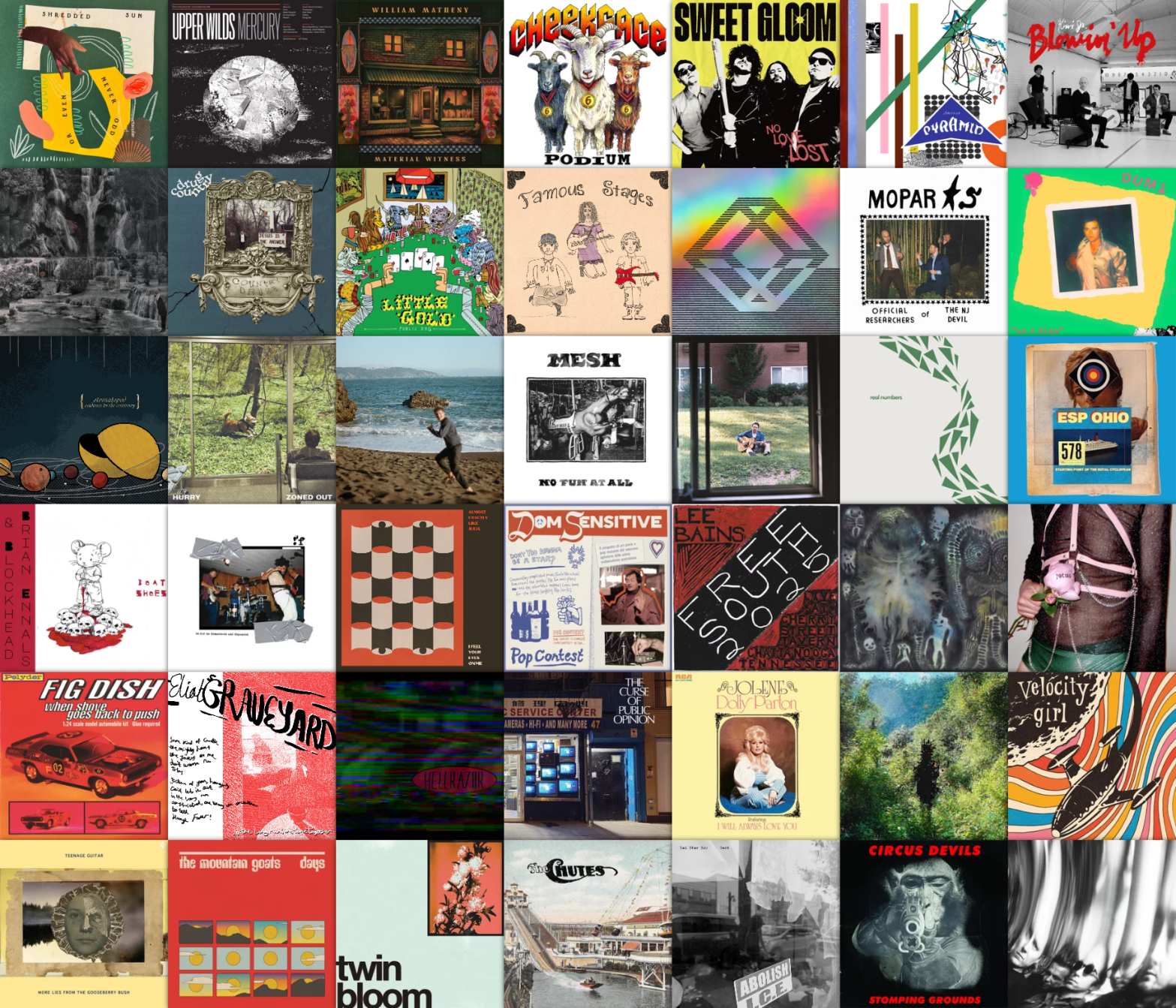
Hey, folks. You may have noticed that, due to the blog being on hiatus, Rosy Overdrive didn’t get a July 2026 playlist up. I didn’t forget about that month, though! In fact, this month’s playlist is actually a two-for-one, covering both July and August. Because of that, it’s a longer-than-normal one, and because of that, some of these blurbs are quite short. But we’re still getting back on track here!
Artists with multiple songs on here: Cheekface (3), Little Gold (3), Upper Wilds (2), William Matheny (2), Graham Hunt (2), Kiwi Jr. (2), Dinosaur Jr. (2), Lambchop (2), Parts & Labor (2), Mopar Stars (2), Poppy Patica (2), Mesh (2), and Real Numbers (2).
Here is where you can listen to the playlist on various streaming services: Spotify (missing five songs), Tidal (missing two). Be sure to check out previous playlist posts if you’ve enjoyed this one, or visit the site directory. If you’d like to support Rosy Overdrive, you can share this (or another) post, or donate here.
“Hotel Meridian”, Shredded Sun From Never Odd or Even (2026, Repeating Cloud)
Chicago garage-pop trio Shredded Sun have been responsible for a steady stream of quality records ever since their 2023 debut album, and their first release for Rosy Overdrive staple Repeating Cloud Records is a fizzy, expert-level power pop album that stands as perhaps their best work yet. At the very least, Never Odd or Even’s opening track, “Hotel Meridian”, is a perfect piece of college rock/power pop/indie pop/whatever-you-want-to-call it rock and roll.
“Fever”, Upper Wilds From Mercury (2026, Thrill Jockey)
The delirious, loud power pop of “Fever” “kinda feels like it’s about everything”, per Upper Wilds’ Dan Friel, which makes sense for a song inspired by capitalism bleeding our current planet of residence dry. Read more about Mercury here.
“Babylon Man”, William Matheny From Material Witness (2026, Diamond Teeth)
I’d say that Material Witness is William Matheny’s “tightest” album, but they’re all very tight so this might be recency bias talking. At the very least, the six-piece band barrelling through the ragged, longing pop of opening track “Babylon Man” sounds as close to Matheny’s rock-and-roll live act as they’ve ever gotten on-record. Read more about Material Witness here.
“U Can’t Do It”, Cheekface From Podium (2026)
“U Can’t Do It” might be the catchiest Cheekface song of all time, somehow. At the very least, it’s the one from Podium that’s been living in the rent-stabilized portions of my mind ever since I heard it. It’s a blistering portrait of a modern kind of society-poisoner, delivered with wildly precise Cheekface-core pop music. Read more about Podium here.
“Box Dye”, Sweet Gloom From No Love Lost (2026, Sneak Dog)
Oh my goodness. There’s nothing quite like a punk band truly, actually nailing the “Ramones-core” sound with a massive pop song (and it’s harder than it seems, given how many misses I’ve heard over the years). Los Angeles punk quartet Sweet Gloom do an admirable job of it on their sophomore album No Love Lost, but the insane, doo-wop-fluent, yearning pop punk/power pop “Box Dye” is just something else. It reminds me a little bit of the Bones Shredder album from last year, so it made sense to learn that Mr. Bones Shredder himself (aka Randy Moore) guests on guitar elsewhere on No Love Lost.
“Straight Line to Love”, Graham Hunt From American Pyramid (2026, Run for Cover)
Coming a little over a year after Timeless World Forever, American Pyramid stems from Graham Hunt resolving to do things differently, bringing skeletons of songs and an eight-piece band to Minnesota’s Pachyderm Studio to record the album live. Album opener “Straight Line to Love” is the sanded-down, slow-moving platonic pop rock song it feels like Hunt has been working towards for some time now. Read more about American Pyramid here.
“Photos of the Reenactment”, Kiwi Jr. From Blowin’ Up (2026, K/Perennial)
Kiwi Jr. open their first new album in four years with one of their best jangle pop moments yet in “Photos of the Reenactment”. As always, the Canadian indie rockers are at their peak when they combine 1980s earnest guitar pop with 90s ironic touches (“Like photos of the reenactment / Permanent afterglow” might be the new Kiwi Jr. mantra).
“Weakened”, Lambchop From Punching the Clown (2026, Merge/City Slang)
Punching the Clown is inspired by a type of gospel music called “lined out singing”, a call-and-response technique featuring a choir. Indeed, an Eau Claire-based choir backs Lambchop’s Kurt Wagner on these dozen songs, as well as co-songwriter Andrew Broder’s guitar and Justin Vernon’s banjo. Read more about Punching the Clown here.
“Apple Grove”, Drug Country From Country Drugs (2026, Self Aware)
John Russell’s fuzz rock group Gnawing sadly broke up last year, but the Richmond, Virginia musician is plowing forward with the most substantial release yet from his solo project Drug Country. Country Drugs is a hazy, lo-fi, sprawling indie rock album, a forty-minute affair raging from the blistering Dinosaur Jr./Nirvana worship of his old band to pin-drop folk songs to diamond-in-the-rough lo-fi pop music. Evoking Russell’s stated influences of Sebadoh and Sparklehorse, “Apple Grove” is Drug Country’s best rural, open-space pop song yet, quiet verses exploding into a “Brand New Love”-worthy refrain.
“What You Want”, Little Gold From Public Dog (2026, Tall Texan)
The world around Little Gold may have changed in the six years since their last album, but Christian “Smokey” DeRoeck and crew are still doing with the project what he’s been doing for nearly two decades now: making a very catchy, humble, and “Athens, Georgia” mixture of country rock, power pop, and “college rock”. Read more about Public Dog here.
“Postcards”, Commit 2 Try From Famous Stages (2026, It’s Something Personal)
Self-described “tweemo” trio Commit 2 Try claim Rainer Maria, Modest Mouse, and Juliana Hatfield as influences, and their debut EP Famous Stages is pop music inspired by a few different dusty corners of 1990s indie rock. Opening track “Postcards” is slightly wobbly but lands its heartfelt pop blow nonetheless. Read more about Famous Stages here.
“Many Worlds”, Parts & Labor From Set of All Sets (2026, Ernest Jenning)
Set of All Sets is more than a pop album, but when it decides to go for big choruses and hooks–like in the jaw-dropping eight-minute “Many Worlds”, which sounds like getting run over by a spaceship–it’s unmatched. Read more about Set of All Sets here.
“Drinkallnite”, Mopar Stars From Official Researchers of the NJ Devil (2026, K/Perennial)
Philadelphia’s Mopar Stars have particularly been heroes at the “power” end of the power pop spectrum, adding classic rock and roll, punk rock, and 90s alt-rock energy to their Lemonheads/Replacements-influenced pop rock in a way that evokes everyone from Sugar to Liquid Mike. Read more about Official Researchers of the NJ Devil here.
“No1’s Good”, DUM1 From On a Dime (2026, Take a Turn)
Bay Area Indie pop musician Mack Narragan, (also of CVCC) started writing and recording songs in response to “the loss of several family members and a close friend”; soon, he had an entire album’s worth of homespun folk rock, slacker-pop, and jangle pop that’s now being released on Ray Seraphin’s Take a Turn label as the debut album from his DUM1 project. Read more about On a Dime here.
“Mine All Mine”, Stomatopod From Evidence to the Contrary (2026, Pirate Alley)
The Chicago-based “PRF-core” garage rock trio Stomatopod recorded Evidence to the Contrary with Jon San Paolo at Electrical Audio, and it conjures up the heavy, classic rock-fluent garage rock of 2022’s Competing with Hindsight and some of the extra depth of 2024’s DrizzleFizzle (crammed into a smaller package). Opening track “Mine All Mine” will prepare you for what to expect here: indie rock that very much does rock.
“All Sunk In”, Hurry From Zoned Out (2026, Lame-O)
The first song on Zoned Out, “All Sunk In”, is already one of my favorite Hurry songs –I love how simply it starts, just clean guitar chords and Matt Scottoline’s voice for forty-five seconds. It’s a moment that brings “How does he keep doing it?” to the tongue. Read more about Zoned Out here.
“Atlantis”, Poppy Patica From Fix Your Fate (2026, Cell Ray)
The Washington, D.C.-originating, Oakland-based indie pop group Poppy Patica caught my attention in 2023 thanks to an incredible album called Black Cat Back Stage, and they quickly followed it up a year later with a more low-key, acoustic-based album called Sea Wrack. Frontperson Peter Hartmann has apparently been working on Fix Your Fate for ten years now (including recording some of it with Market’s Nate Mendelsohn in New York), and the result is an album that sonically lands somewhere in between the two LPs that preceded it. The breezy but hefty (in terms of hooks) guitar pop of “Atlantis” is an instant Poppy Patica classic.
“Atrophy”, Mesh From No Fun at All (2026, Feel It)
Philadelphia quartet Mesh have at long last returned with No Fun at All, an LP that elaborates on the “jangle-punk” sound they introduced back in 2021 with their debut EP. Read more about No Fun at All here.
“Gregory’s Sermon”, Jacob Perez From Give Up Everything You Got! (2026)
I wrote about Cincinnati singer-songwriter Jacob Perez last year when he released There’s So Many Ways to Live a Life, a really lovely Americana record that probably deserved more attention than it received. Perez is back a year later with Give Up Everything You Got!, an album that feels a little quieter and more low-key than his last one, but “Gregory’s Sermon” is still on the “anthemic” side nonetheless. This is earnest Midwestern heartland rock at its finest, humble and story-forward but with a pop hook that’s just as important to the foundation.
“This Empty Frame”, Real Numbers From Was It Always This Way (2026, Slumberland)
A blog I read called Indie Pop Atlas gave the latest album from Minneapolis indie pop group Real Numbers a mixed review, but it did concede that Was It Always This Way “does the best job I’ve ever heard of matching the feel of listening to an early-90s Sarah Records album”. This skill is put to good use to my ears in opening track “This Empty Frame”, a wistful yet sugar-driven guitar-mod-pop song with more than a bit of Television Personalities in its DNA.
“This Violent Side”, ESP Ohio From Starting Point of the Royal Cyclopean (2016, Guided by Voices, Inc.)
I’m not sure why, but I decided to revisit every single Robert Pollard mid-2010s album recently. There’s a lot of good material from this time period (I didn’t have room for Ricked Wicky on this playlist, but check them out if you’ve been enjoying the recent Guided by Voices LPs), and Starting Point of the Royal Cyclopean has a sizeable contingent of vocal fans for a reason. The highs are very high on the sole album from Pollard’s ESP Ohio project, and the smooth lo-fi pop of “This Violent Side” certainly is one of those highs.
“Signed Sealed Delivered”, Brian Ennals & Blockhead From Boatshoes (2026, Phantom Limb)
Baltimore rapper Brian Ennals reveals himself to be just as capable and clever on Boatshoes as he was with collaborator Infinity Knives on last year’s A City Drowned in God’s Black Tears–it’s producer Blockhead’s slippery, streamlined, and just-a-bit-jazzy production that separates this album from Ennals’ previous work. Read more about Boatshoes here.
“Sliding (Version)”, Franklin From Go Kid Go (Remastered & Expanded) (2026, Solid Brass)
From 1992 to 2000, Franklin were a pillar in the Philadelphia chapter of 1990s underground indie-punk; this double LP edition of Franklin’s first album contains the band’s “complete recorded output from 1993–1996”, gathering up odds and ends to supplement the original eleven-song Go Kid Go with eleven more Franklin recordings. Read more about Go Kid Go (Remastered & Expanded) here.
“Forward”, Almost Exactly Like Julia From I Feel Your Eyes on Me (2026)
Almost Exactly Like Julia is a Pittsburgh-based indie-pop-jazz-rock group led by guitarist and vocalist Julia Mahncke, who has described their sound as “a cross between Norah Jones and Dinosaur Jr.”. That’s not inaccurate, but it also doesn’t quite do justice to how strong of a pop song the opening track to their latest EP, I Feel Your Eyes on Me, is. There’s cheerful, melodic piano-led pop and some nice guitar soloing in it, yes, but “Forward” is capable enough that the unusual combination of influences feels natural.
“Faint Like a Star”, Dom Sensitive From Pop Contest (2026, Chrüsimüsi)
Dom Sensitive is Australian garage rocker Dom Trimboli’s chance to experiment with wonky sampled piano instrumentals, “patchwork hip-hop production”, and rambling sung-spoken verses delivered by an emcee in the vein of Mark E. Smith and Gareth Liddiard. Read more about Pop Contest here.
“The Company Man – Live”, Lee Bains From Free South 2025 (2026, Don Giovanni)
Sometimes a band’s best song is their most popular one, and there’s nothing wrong with that. As much as I love the two records succeeding 2014’s Dereconstructed, I don’t think there’s any denying that Lee Bains III & The Glory Fires’ crowning achievement in terms of “just one song” is “The Company Man”, the blistering, fuzzed-out country punk rock agitprop opener to that album. On his new solo live album, Bains reinvents songs from his band’s discography as drum machine-led, 80s-fluent country-tronica, and “The Company Man” is the one he chooses to open Free South 2025. It’s something of a proof-of-concept; if Bains can turn this song on its head without losing any of its power, then I’m all the more intrigued by an album’s worth of these successful experiments.
“Several Got Away”, Dinosaur Jr. From There Near (2026, Jagjaguwar)
I’m wrapping up a three-hour playlist as we speak, and now there’s a brand-new Dinosaur Jr. album coming out right before the buzzer I have to contend with! A crash-course through There Near reveals several playlist-worthy songs on the LP, but going with the opening track and single “Several Got Away” seems like a safe bet.
“From the Life of the Marionettes”, John Vanderslice From FOCUS (2026, Tiny Telephone)
Since the beginning of this decade, John Vanderslice has largely abandoned his analog-recorded folk-y indie rock sound for highly digital, experimental, frequently wordless electronic music. I wasn’t sure if I would ever hear something like “From the Life of the Marionettes” from him ever again, but here he is, singing conversationally and emotionally over tight acoustic guitars (and, of course, whirring synths) like a more synthetic version of earlier Vanderslice albums. Read more about FOCUS here.
“Come On (Don’t Come On)”, Fig Dish From When Shove Goes Back to Push (1997, Universal/Forge Again)
Chicago power pop/alt-rockers Fig Dish broke up in 1998 after two major label albums that went nowhere and a shelved third, but Forge Again Records has reissued their discography over the past couple of years, including a double-LP release of the final Fig Dish album, When Shove Goes Back to Push. Read more about When Shove Goes Back to Push here.
“Picture of You, Hanging”, Eliots Graveyard From In the Long Run; The Time Together (2026)
Eliots Graveyard is Eliot Humphreys, a “socialist & queer freak twee pop musician” from Wrexham in Wales; In the Long Run; The Time Together is steeped in the long-standing tradition of strong British indie pop but with a noticeable debt to folk-y singer-songwriters, too. Read more about In the Long Run; The Time Together here.
“Hang Up and Try Again”, Hellrazor From Gates of Hades (2026)
Michael Falcone and Kate Meizner are probably most well-known these days for their work in Jobber, but the 2022 album Heaven’s Gate from the Falcone-led, Meizener-featuring Hellrazor is still probably my favorite thing with which either of them have been involved. Gates of Hades isn’t a “new” Hellrazor album exactly, but the seven-song digital collection features some outtakes from their last LP and a few odds and ends, including a cover of Guided by Voices’ “Hang Up and Try Again”. The GBV obscurity (it’s on the 2012 album Class Clown Spots a UFO) is given a dirty, fuzzed-out glam-trash reading that I think improves on the original; credit to Hellrazor for digging this one up.
“Peanut Butter Prawns”, Cheekface From Podium (2026)
The massive new wave pop rock success “Peanut Butter Prawns”–that’s the best song They Might Be Giants never wrote right there–is the first highlight on Cheekface’s sixth LP. Read more about Podium here.
“The Queen’s Weed”, Little Gold From Public Dog (2026, Tall Texan)
The first acoustic song on Public Dog, “The Queen’s Weed”, is technically as catchy as anything else on the country-rocking LP. Read more about Public Dog here.
“Blowin’ Up”, Kiwi Jr. From Blowin’ Up (2026, K/Perennial)
I saw Kiwi Jr. live in 2024 and they played this song as well as at least one other new one (“World Like Polly”). The Canadian power pop/Pavement-core group had put out three albums in a little over three years at the beginning of this decade, and there was little to suggest that their fourth album was still over two years from coming out. I’m not sure what caused the relative delay (a label change may explain this, partially), but Blowin’ Up is still very much the band whose sharp guitar pop hooks made them one of the standout members of the microgenre back in the days of Cooler Returns and Football Money.
“Modern Convenience”, Public Opinion featuring I Am the Avalanche From The Curse of Public Opinion (2026, SideOneDummy)
The Denver punk group Public Opinion burst onto the scene in 2024 with Painted on Smile, introducing a novel and explosive mixture of power pop, hardcore, and Hivesian garage rock–all of which return for an exhilarating sophomore LP in the ten-track, twenty-three-minute The Curse of Public Opinion. The group enlist New York group I Am the Avalanche to help them out on “Modern Convenience”, one of the most immediately hard-hitting tracks on the album.
“Early Morning Breeze”, Dolly Parton From Jolene (1974, RCA)
Big old “rest in peace” on this one. People better equipped than me have said plenty about Dolly Parton in recent days, so enjoy this song if you haven’t heard it before (or even if you have).
“Haunt”, Inland Years From Nowadays (2026, BSDJ)
Inland Years’ Ryan Daniels favors shorts bursts of pop music hovering around the 60 to 90 second range, which helps his latest collection, Nowadays, sound like a lo-fi Teenage Fanclub with a Tony Molina or early Guided by Voices attitude to song construction. Read more about Nowadays here.
“Forgotten Favorite”, Velocity Girl From 1989 – 1992 (2026, Slumberland)
Rosy Overdrive loves a good time-capsule release from a 1990s indie rock band, and the latest archival release from D.C.-area group Velocity Girl certainly fits the bill. There’s no doubt a razor-sharp edge to the indie pop of their early material collected here, like their cult-hit “Forgotten Favorite”. Read more about 1989 – 1992 here.
“Wreck the Bike”, Mopar Stars From Official Researchers of the NJ Devil (2026, K/Perennial)
Mopar Stars’ debut LP is a fiery, lean eleven-song/twenty-eight-minute album with all the energy and hooks of the band’s tantalizing earlier releases. It’s hard to come up with a better opener than “Wreck the Bike”: what a riff-based hook on this one! Read more about Official Researchers of the NJ Devil here.
“Go Around (The Apartment Dwellers)”, Teenage Guitar From More Lies from the Gooseberry Bush (2014, Guided by Voices, Inc.)
Now this is lo-fi! Teenage Guitar was a particularly abrasive Robert Pollard side project where he sang, played, and home-recorded everything–a lot of which is just him fucking around on pianos and whatnot. “Go Around (The Apartment Dwellers)” is anything but half-baked, though–the opening track from More Lies from the Gooseberry Bush (the second and final Teenage Guitar album, for now at least) is dark cloud of dread and intense, shit-fi indie rock.
“Sign”, Mesh From No Fun at All (2026, Feel It)
This eleven-song, twenty-eight-minute No Fun at All is right in the center of “rough-edged and rowdy” and straight-up guitar pop–it’s a sweet spot in which Mesh thrive. Read more about No Fun at All here.
“Days”, the Mountain Goats From Days (2026, Cadmean Dawn)
The Mountain Goats are a band who are not always served best by “subtlety”, but the title track to their latest album, Days, is a very deft maneuvering through the ticking of time. Nestled in between much more eye-catching songs about Charlie Sheen, Candlebox, and Layne Stayley, “Days” finds John Darnielle asking and answering himself (“Do you know how short the days are? / No, you don’t / When they’re gone, will you be ready? / No, you won’t”) in a hushed but brisk manner.
“Getting Older”, Graham Hunt From American Pyramid (2026, Run for Cover)
The past few years have seen Madison, Wisconsin musician Graham Hunt emerge from a Midwestern underground indie rock lifer to one of the best, most innovative, and most rightfully-celebrated guitar pop minds currently operating. An instant highlight from American Pyramid, “Getting Older” is perhaps Hunt’s breeziest jangly guitar pop moment yet. Read more about American Pyramid here.
“Cochise”, Little Gold From Public Dog (2026, Tall Texan)
We’ve been living through an era of alt-country that’s very “rambly”, one that takes its cues from Jason Molina and Neil Young above all else. To be clear, I asked for this and I enjoy it–but it’s still such a breath of fresh air when Little Gold open up Public Dog with “Cochise”, an unabashed, concise power pop barnburner. Read more about Public Dog here.
“Like They’re Here to Stay”, Parts & Labor From Set of All Sets (2026, Ernest Jenning)
Nearly everything in Set of All Sets is unrelenting, pummeling catharsis, although sometimes that can be as simple as the pied-piper synth riff that leads us through “Like They’re Here to Stay”. Read more about Set of All Sets here.
“Summer’s Gone”, Twin Bloom From Twin Bloom (2026, Dandy Boy)
While Twin Bloom can indeed be described as “indie pop”, the Oakland group’s debut EP’s four songs are less directly inspired by the straightforward jangly twee pop of many of their Dandy Boy labelmates and instead chase a more cavernous, 1980s-evoking sound–Twin Bloom’s pop music is filtered through ambitious reverb-y dream-gaze and new wave sheens. Read more about Twin Bloom here.
“Everyone Leaves Everyone”, William Matheny From Material Witness (2026, Diamond Teeth)
Material Witness is as comfortable as ever between the “power pop” and “alt-country” labels frequently applied to its creator, made by a singer-songwriter with new wave and honky tonk in his DNA but who doesn’t really make either of them. Read more about Material Witness here.
“Clam Along”, Dinosaur Jr. From There Near (2026, Jagjaguwar)
…and a second Dino Jr. song sneaks onto the playlist less than 24 hours before it’s supposed to go live. If “Several Got Away” is the confident J. Mascis chugger that buoys these late-period Dinosaur Jr. albums, “Clam Along” is one of those slightly-emotional guitar-workout songs that are just as essential to these albums still feeling rewarding twenty years into the band’s “reunion”.
“Fried Clams”, Poppy Patica From Fix Your Fate (2026, Cell Ray)
Poppy Patica aren’t really “punk” or “garage rock” or anything like that, but Peter Hartmann and company can inject a bit of distortion, guitar solos, and quicker tempos into Poppy Patica’s sound and still come off as themselves, as “Fried Clams” proves. Just as “Fried Clams” seems like it’s going to veer into full-on rock and roll heroics, the two-minute track careens to a halt, and Fix Your Fate moves on to its next little world.
“Scraping the Last Bits of Light”, The Chutes From The Chutes (2026, Dandy Boy)
Some hardcore musicians bring a more punk edge to indie pop when they pick it up, but The Chutes bears virtually no signifiers of that scene despite Kenneth Turner and Erika Calderon-Turner’s backgrounds. The two trade lead vocals over top of jangly, sunny guitars like they’re veterans of the art form: opening track “Scraping the Last Bits of Light” sounds like a band who are students of British C86-style indie pop. Read more about The Chutes here.
“Green-Wood Cemetery”, Upper Wilds From Mercury (2026, Thrill Jockey)
Four LPs and nearly a decade into Upper Wilds’ space-rock exploration of our solar system, we’ve reached Mercury, the inevitable “death album”. And by that, I mean both that it was inevitable that Upper Wilds would make a planet-based album about death, and that Mercury is about the inevitability of death. Read more about Mercury here.
“Everlasting Happiness”, Real Numbers From Was It Always This Way (2026, Slumberland)
The indie pop hits continue to come on Was It Always This Way, and the relatively stripped-down, humble-sounding “Everlasting Happiness” is one of the best of ‘em. The acoustic-led, keyboard-and-synth-touched song combines the simplicity of 1980s C86/early twee with just a bit of “sophisti-pop” attitude without getting too busy in the construction.
“No Fly Zone”, Cheekface From Podium (2026)
“No Fly Zone” is the patented Cheekface “should not work anywhere near as well as it does” song on Podium–they’re always good for at least one of them per album, and the chorus of “No Fly Zone” ends up being one of the catchiest things on the LP. Read more about Podium here.
“Debt”, Red Star Sky From Debt (2026)
Debt is an acoustic collection from longtime Pittsburgh indie rocker Corey Layman; it’s “folk music” in concept and execution, particularly with the title track, which is a stark, spare meditation on the titular subject. Read more about Debt here.
“The Liquid Observer”, Circus Devils From Stomping Grounds (2015, Happy Jack Rock)
Stomping Grounds is one of the more accessible Circus Devils albums–if it’s not the most accessible, it’s probably the one that most sounds like a “normal” rock album. The quiet songs on Stomping Grounds are very charming, too–I’m thinking of the lovely “Girl in Space”, the fascinating closing track “Sunflower Wildman (Remember Him?)”, and the one I’ve put on here, “The Liquid Observer”. It’s very cool that I can just put on a random Bob Pollard album and be taken by some song I’d never thought twice of before like this.
“Just West of Nicollet”, Lambchop From Punching the Clown (2026, Merge/City Slang)
A new Ty Segall album is a neat prospect, of course. But what about a new Ty Segall album called Chrome that ends with a five-minute garage/krautrock/synth-rock/boogie barnburner of a title track? Well, yes, I’m certainly interested in that. The blistering “Chrome” is Ty Segall trending into Trans Am territory, a fascinating mode that I hope the prolific garage rock continues to explore on his next album (which I’m assuming will be coming pretty soon).
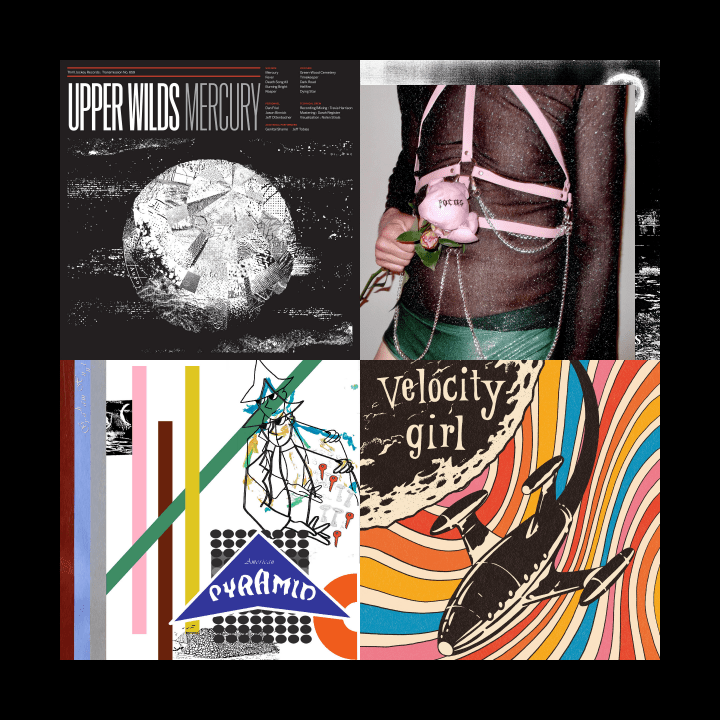
It’s an instant-classic Thursday Pressing Concerns! We have new albums from Upper Wilds, Graham Hunt, and John Vanderslice, plus an archival compilation from Velocity Girl. They’re all coming out tomorrow (August 28th)! Check them out below, and if you missed Monday’s blog post, check that out too.
If you’re looking for more new music, you can visit the site directory to see what else we’ve written about lately. If you’d like to support Rosy Overdrive, you can share this (or another) post, or donate here.
Upper Wilds – Mercury
Release date: August 28th Record label: Thrill Jockey Genre: Space rock, fuzz rock, noise pop, noise rock Formats: Vinyl, CD, digital Pull Track: Fever
Well, here we are. Four LPs and nearly a decade into Upper Wilds’ space-rock exploration of our solar system, we’ve reached Mercury, the inevitable “death album”. And by that, I mean both that it was inevitable that Upper Wilds would make a planet-based album about death, and that Mercury is about the inevitability of death. For a mortal, though, Dan Friel has been quite busy and alive lately–his 2000s Brooklyn noise rock group Parts & Labor reunited this year to release the incredible double album Set of All Sets, and for someone who’s been making music for over twenty years, it’s just as remarkable that his recent output (like Upper Wilds’ 2021 album Venus and 2023’s Jupiter) has been as great as anything else with which he’s been involved. With that in mind, there are few musicians I’d rather hear tackle an album inspired by “cancer, climate change, funerals, Henry Kissinger”, et cetera, and few musicians other than Upper Wilds’ rhythm section of bassist Jason Binnick and drummer Jeff Ottenbacher (not to mention multi-instrumentalist Jeff Tobias guesting and Guided by Voices engineer Travis Harrison behind the deck) that I’d prefer to hear back these songs up.
The signature Upper Wilds sound–maximum loudness, big riffs, just-as-big hooks–is on full display in Mercury’s opening title track, and the delirious power pop of “Fever” does that song one better (Friel writes that the song “kinda feels like it’s about everything”, which makes sense for a song inspired by capitalism bleeding our current planet of residence dry). Anyone expecting the grim reaper to slow down or modulate Upper Wilds’ sound (not that I would really guess that describes anyone) would be mistaken–“Burning Bright”, “Reaper”, and “Hellfire” hit as hard as anything off of Mars or Jupiter. There’s a slight hymn/standard-like undercurrent to “Timekeeper”, and the music of “Green-Wood Cemetery” is just a little more sidelined than normal, but these are still pretty intense songs. It’s not until closing track “Dying Star” that Upper Wilds truly let up on the power-trio assault, instead ending Mercury with a stark black hole of a song that’s one of the most jarring things the band have put to record yet. That’s the kind of gravity it takes to slow Upper Wilds down for even just five minutes–I look forward to hearing where the trio go next after death. (Bandcamp link)
Graham Hunt – American Pyramid
Release date: August 28th Record label: Run for Cover Genre: Indie pop, power pop, art pop, post-punk Formats: Vinyl, CD, digital Pull Track: Straight Line to Love
The past few years have seen Madison, Wisconsin musician Graham Hunt emerge from a Midwestern underground indie rock lifer to one of the best, most innovative, and most rightfully-celebrated guitar pop minds currently operating. A tinkering, “mad scientist” approach to pop music culminated last year in Timeless World Forever, Hunt’s best album yet and one that perfectly synthesized a bunch of his influences (power pop, late 90s alt-pop, “slacker” pop, Madchester, trip hop, psychedelia, electronica, etc.) into a career-defining LP. Coming a little over a year after Timeless World Forever, American Pyramid (Graham Hunt LP number six) stems from the musician resolving to do things differently, bringing skeletons of songs and an eight-piece band (synth player Neal Jochmann, pianist Emili Earhart, guitarists Shannon Connor and Isaac deBroux-Slone, drummer/percussionists Sheridan Connor and Stu Manley, and bassist Sam Reitman) to Minnesota’s Pachyderm Studio to record the album live with Logan Severson.
It’s both surprising and not at all surprising that American Pyramid ends up sounding a lot like the Graham Hunt albums that preceded it. “Straight Line to Love” is the sanded-down, slow-moving platonic pop rock song it feels like Hunt has been working towards for some time now, and busier stuff like “Waiting for You to Come Home” and “Riverboat Blues” contain the classic Hunt mixture of experimental touches, grooves, and hooks. On the more traditional pop side of things, “Getting Older” is perhaps Hunt’s breeziest jangly guitar pop moment yet, “Places That Are Gone” is a gorgeous piano ballad that justifies its sharing a name with the Tommy Keene power pop classic, and the sixty-second “Thank You Mother Squirrel” wrings the maximum amount of melody out of itself. No amount of studio chaos can obscure the rock and roll heart of closing track “You Always Have the Morning”, probably the most extreme example of Hunt using his band to sound as much like himself as ever before. American Pyramid is a new but familiar dispatch from somebody still at the top of their game. (Bandcamp link)
John Vanderslice – FOCUS
Release date: August 28th Record label: Tiny Telephone Genre: Indie folk, indie pop, electronica Formats: Digital Pull Track: From the Life of the Marionettes
John Vanderslice was one of the architects of the sound of 2000s “indie music” thanks to a slew of now-underappreciated solo albums and his production work, and his influence has been felt in the years beyond as bands continue to record at the studio he founded, Tiny Telephone (currently in Oakland, formerly in San Francisco as well). Despite all this, Vanderslice has abdicated this position since the beginning of this decade, abandoning his analog-recorded folk-y indie rock sound for highly digital, experimental, frequently wordless electronic music. Vanderslice’s path has occasionally crossed with “pop music” during this exploration (his project with James Riotto, Google Earth, had some good moments of it, for example), but it’s been fairly incidental, which makes his latest solo album, FOCUS, all the more surprising. Apparently the least interesting aspect of writing pop music for Vanderslice is lyrics (“I have nothing left to say,” he claims, somewhat dubiously), so his wife and sometimes musical partner Maria Vanderslice volunteered to write words for him to sing, and FOCUS was born.
I wasn’t sure if I would ever hear something like “From the Life of the Marionettes” from John Vanderslice ever again, but here he is again, singing conversationally and emotionally over tight acoustic guitars (and, of course, whirring synths) like a more synthetic version of earlier Vanderslice albums. It may not surprise you that FOCUS is a weird listen–Vanderslice still can’t commit to fully returning to folk-tinged indie pop, but “Aquamarine”, “Steep Land Surveyor”, and the first half of “Magnolia” ensure that a good portion of the album is made up of it. The halfway points are strong too, like how “Chasing My Blues” eventually congeals into something solid or how John returns to hushed piano ballad mode (in a way) in the one song whose lyrics he did write for the album, “Song for Maria”. I’ll probably always keep tabs on what John Vanderslice is doing regardless of how far out of my “wheelhouse” it is, and FOCUS is a welcome reminder of why. (Bandcamp link)
Velocity Girl – 1989 – 1992
Release date: August 28th Record label: Slumberland Genre: 90s indie rock, fuzz pop, indie pop Formats: Vinyl, digital Pull Track: Forgotten Favorite
Rosy Overdrive loves a good time-capsule release from a 1990s indie rock band, and the latest archival release from D.C.-area group Velocity Girl certainly fits the bill. The indie pop group’s first two albums have been given expanded reissues from Sub Pop over the past few years, and now they’ve partnered with Slumberland Records for 1989 – 1992, a compilation of Velocity Girl’s earliest material. These songs predate any of their proper albums, their Sub Pop signing, and, in some cases, lead singer Sarah Shannon–nearly half of these songs feature Unrest’s Bridget Cross, who departed the band in 1990, on vocals. Velocity Girl straddled the line between indie pop and noisy lo-fi rock with a love of fuzz that would probably get them tagged “shoegaze” if they came out today; not everything is intense as the blasted artifact of “Clock”, but there’s no doubt a razor-sharp edge to nonetheless undeniable pop songs like “I Don’t Care If You Go”, “I Know Exactly What You Mean”, and their cult-hit “Forgotten Favorite”. Do you want to hear a fuzzed-out cover of The Jam’s “That’s Entertainment”? Of course you do. What about a swooning, roaring version of Beat Happening’s “Tales of Brave Aphrodite”? That’s here, too. Even though Velocity Girl may not always fit into the box, 1989 – 1992 is as great a singles collection as any from this era of indie pop. (Bandcamp link)
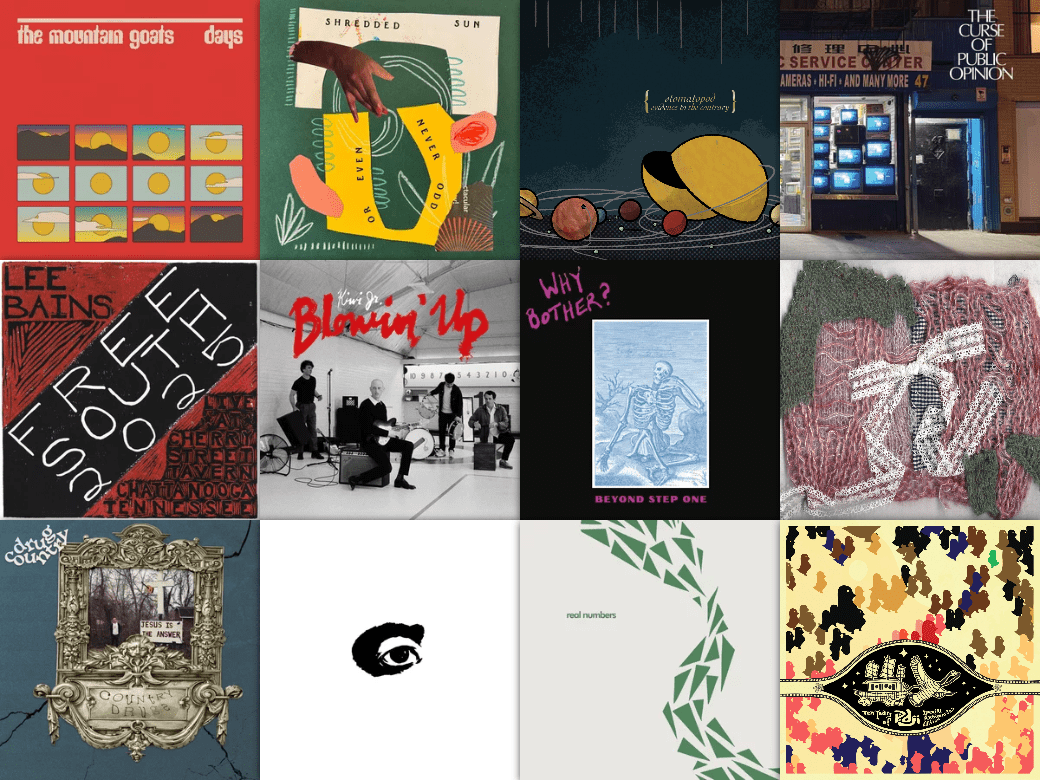
Hey everyone! Rosy Overdrive is up and running again, as you can see. As I get things back to “normal” I’ve realized I can’t spend too much time trying to write about every single album I want to write about that came out during the blog’s hiatus, but I also don’t want to ignore something just because it had the misfortune to come out during the two weeks Rosy Overdrive was down. So, we’re going to quickly run through a dozen albums that probably would’ve been in Pressing Concerns had the blog been active before we move forward.
If you’re looking for more new music, you can visit the site directory to see what else we’ve written about lately. If you’d like to support Rosy Overdrive, you can share this (or another) post, or donate here.
The Mountain Goats – Days
Release date: August 7th Record label: Cadmean Dawn Genre: Folk rock, the Mountain Goats Formats: Vinyl, cassette, CD, digital Pull Track: Charlie Sheen Reaches Out to the Feds
After a few years marked by the loss of twenty-year bassist Peter Hughes and several high-concept LPs, the Mountain Goats needed a palette cleanser, and Days is probably the closest we’ll get to it. Not that it’s a “light” album by any means, but there’s something familiar about this collection of tracks featuring names and faces strewn across the history of rock music set to what still loosely falls under “indie-folk-rock”. (Bandcamp link)
Shredded Sun – Never Odd or Even
Release date: August 14th Record label: Repeating Cloud Genre: Power pop, indie pop, garage rock Formats: Vinyl (abridged version), digital Pull Track: Hotel Meridian
Chicago garage-pop trio Shredded Sun have been responsible for a steady stream of quality records ever since their 2023 debut album, and their first release for Rosy Overdrive staple Repeating Cloud Records is a fizzy, expert-level power pop album that stands as perhaps their best work yet. (Bandcamp link)
Stomatopod – Evidence to the Contrary
Release date: August 7th Record label: Self-released Genre: Garage rock, punk rock, 90s indie rock, post-punk Formats: CD, digital Pull Track: Mine All Mine
The Chicago-based “PRF-core” garage rock trio return with another furious indie rock and roll record recorded by Jon San Paolo at Electrical Audio, hot on the heels of 2022’s Competing with Hindsight and 2024’s DrizzleFizzle. (Bandcamp link)
Public Opinion – The Curse of Public Opinion
Release date: August 7th Record label: SideOneDummy Genre: Punk rock, garage punk, pop punk Formats: Vinyl, digital Pull Track: Modern Convenience
The Denver punk group Public Opinion burst onto the scene in 2024 with Painted on Smile, introducing a novel and explosive mixture of power pop, hardcore, and Hivesian garage rock–all of which return for an exhilarating sophomore LP in the ten-track, twenty-three-minute The Curse of Public Opinion. (Bandcamp link)
Lee Bains – Free South 2025
Release date: August 7th Record label: Don Giovanni Genre: Country rock, alt-country, southern rock, synth-rock Formats: Vinyl, digital Pull Track: (In Remembrance of the) 40-Hour Week
As the leader of Birmingham, Alabama group The Glory Fires, Lee Bains has been responsible for some of the strongest southern rock of the past decade or so–but, while Free South 2025 contains a selection of songs from those great albums, this solo live album transforms the musician’s work in a completely new way. Instead of trying to recreate the country rock of his band, Bains leans into synthesizers and drum machines here, creating a mixture of 80s-fluent synthpop and alt-country that does surprising justice to these protest songs. (Bandcamp link)
Kiwi Jr. – Blowin’ Up
Release date: August 14th Record label: K/Perennial Genre: Jangle pop, power pop, indie pop, 90s indie rock Formats: Vinyl, CD, digital Pull Track: Blowin’ Up
On their first album in four years, the beloved Toronto indie rock institution Kiwi Jr. make their blend of classic power and jangle pop, 90s indie rock, and synth-rock (which they tone down from 2022’s Chopper but don’t abandon) sound as seamless and patient as ever. (Bandcamp link)
Why Bother? – Beyond Step One
Release date: August 7th Record label: Feel It Genre: Garage punk, synthpunk Formats: Vinyl, digital Pull Track: Come Undone
Beyond Step One just might be horror-tinged Iowa garage punks Why Bother?’s magnum opus–eighteen songs and forty-one minutes long, featuring plenty of dark, synth-damaged basement art punk moments connected by even more primordial dread. (Bandcamp link)
Imy3 & Towhead – Imy3 & Towhead
Release date: August 7th Record label: Cherub Dream Genre: Lo-fi indie rock, folk rock, post-rock, 90s indie rock, slowcore Formats: Cassette, digital Pull Track: What You Mean
The latest dispatch from San Francisco label Cherub Dream is a split release, a cassette featuring three songs each from Philadelphia’s imy3 and Oakland’s Towhead; the nearly-thirty-minute EP pairs the relatively short folk-pop underground of the former with the sprawling post-rock/slowcore of the latter. (Bandcamp link)
Drug Country – Country Drugs
Release date: August 14th Record label: Self Aware Genre: Lo-fi indie rock, fuzz rock, garage rock, lo-fi pop Formats: Cassette, digital Pull Track: Apple Grove
John Russell’s fuzz rock group Gnawing sadly broke up last year, but the Richmond, Virginia musician is plowing forward with the most substantial release yet from his solo project Drug Country. Country Drugs is a hazy, lo-fi, sprawling indie rock album, a forty-minute affair raging from the blistering Dinosaur Jr./Nirvana worship of his old band to pin-drop folk songs to diamond-in-the-rough lo-fi pop music. (Bandcamp link)
Ceremony – Tell Me Your Dream
Release date: August 7th Record label: Relapse Genre: Punk rock, garage punk, post-punk Formats: Vinyl, CD, cassette, digital Pull Track: Death Destruction Mayhem
On their seventh album, the notorious, shapeshifting California punk group enlist John Reis to produce a record that rolls out a ferocious garage-punk sound that nonetheless takes detours into dance-funk, moody post-punk, and synthpunk in a clean thirty-minute runtime. (Bandcamp link)
Real Numbers – Was It Always This Way
Release date: August 14th Record label: Slumberland Genre: Indie pop, jangle pop, post-punk Formats: Vinyl, CD, digital Pull Track: This Empty Frame
The first Real Numbers album in a decade is a lovely one; Was It Always This Way finds the Minneapolis group situating themselves smack dab in the middle of 1980s U.K. indie, offering up ten songs with various amounts of jangle pop, C86, post-punk, and twee impulses. (Bandcamp link)
Nature’s Neighbor – Ten Years of Pidji (Anniversary Edition)
Release date: July 31st Record label: Pigeon Infirmary Genre: Chamber pop, art pop, folk rock, orchestral rock Formats: Digital Pull Track: Hot As Hell Here in the Haze
This year marks the tenth anniversary of Pidji, the sophomore album from the prolific Chicago-originating, Kyoto-based project Nature’s Neighbor. To celebrate, bandleader Mike Walker had the album remixed and remastered, and it’s been re-presented as a formidable LP that veers from gorgeous chamber folk to experimental art pop to electric alt-rock. (Bandcamp link)
Well, look who’s back: Yes, it’s Pressing Concerns! After a couple of weeks off for personal reasons, Rosy Overdrive has returned and is ready to run down some of this week’s notable releases: we’re looking at new albums from Lambchop and Eliots Graveyard and new EPs from Foglights and Commit 2 Try. I can’t promise that the blog will be 100% back to its normal schedule now, but I’m going to do my best to get us back on track soon.
If you’re looking for more new music, you can visit the site directory to see what else we’ve written about lately. If you’d like to support Rosy Overdrive, you can share this (or another) post, or donate here.
Lambchop – Punching the Clown
Release date: August 21st Record label: Merge/City Slang Genre: Folk, gospel Formats: Vinyl, CD, digital Pull Track: Weakened
Since their inception forty years ago now, the Nashville group Lambchop have become one of the most fascinating, rewarding, and perplexing acts to skulk around the realm of “indie music”. Frontperson Kurt Wagner’s muse has led him to some particularly strange and amorphous places in recent years, as they’ve made challenging records with which I’ve admittedly struggled like Showtunes and The Bible (even as I respect Lambchop as much as ever). No consternation has faced me at all with Punching the Clown, however. Lambchop’s best album in a decade finds Wagner returning to writing songs with guitar and voice, the results of which he recorded in Eau Claire, Wisconsin at Justin Vernon (Bon Iver)’s studio.
Punching the Clown is inspired by a type of gospel music called “lined out singing”, a call-and-response technique featuring a choir. Indeed, an Eau Claire-based choir backs Wagner on these dozen songs, as well as co-songwriter Andrew Broder’s guitar and Vernon’s banjo. “Just West of Nicollet” and “Weakened” are as beautiful as anything else in Lambchop’s mountainous discography (and the first one in particular has a nice surprise to remind us all that this is Lambchop we’re dealing with), and they’re hardly alone in Punching the Clown. It may be spurred on by yet another new discovery by Wagner, but only Lambchop could’ve made Punching the Clown. (Bandcamp link)
Foglights – Nous Deux
Release date: August 21st Record label: Slumberland/Skep Wax Genre: Indie pop, dream pop, lo-fi pop, slowcore Formats: Cassette, digital Pull Track: The Day the Light Stayed (Longer Than Us)
If you’ve been following Pressing Concerns at all, you’re probably aware of the dozens of indie pop bands from the San Francisco Bay area who frequently share members and collaborate with one another. Over on the other side of the world, the British have decided not to be left out either, and so now we have a new duo called Foglights made up of Eva Cord (one half of the Scottish indie pop duo The Cords) and Archie Ingram, a Brit who just released the first album from his psychedelic pop solo project Stone Anthem. I also brought up San Francisco because Foglights’ debut cassette EP, Nous Deux, reminds me of foggy guitar pop from Bay Area acts like Tony Jay and Cindy–these four songs similarly trawl through a dreamy haze inspired by The Velvet Underground, Mazzy Star, and countless bedroom folk pop musicians from decades past. The incredibly slow-moving pop music of the first half of the EP gives way to the relatively jaunty chamber pop of “The Day the Light Stayed (Longer Than Us)” and a hall-of-mirrors dream pop closing track called “A Brighter Kind of Almost”, all of which ensures that Foglights’ brief first statement nonetheless has plenty of shades to it. (Bandcamp link)
Eliots Graveyard – In the Long Run; The Time Together
Release date: August 21st Record label: Self-released Genre: Bedroom pop, folk rock, indie pop, singer-songwriter Formats: Vinyl, digital Pull Track: Picture of You, Hanging
Eliots Graveyard is Eliot Humphreys, a “socialist & queer freak twee pop musician” from Wrexham in Wales; originally titled Cop Graveyard, Humphreys’ project has been making lo-fi indie pop since 2014, releasing a ton of EPs and singles (including a split with Long Neck in 2024) but only one proper album before now. The long-awaited second Eliots Graveyard album is called In the Long Run; The Time Together, and it’s a humble but compelling collection of earnest, catchy bedroom guitar pop. In the Long Run; The Time Together is steeped in the long-standing tradition of strong British indie pop (like that of The Terminal Buildings, another one-person-pop-group who just happen to be led by a former contributor to Eliots Graveyard) but with a noticeable debt to folk-y singer-songwriters, too (Humphreys lists Loudon Wainwright III and Michael Hurley as influences). The writer behind “Picture of You, Hanging”, “Don’t Wanna Run”, and “The Joke’s on Me” is a compelling one, to be sure. Happy to add Eliots Graveyard to the list of what’s good in Wales these days. (Bandcamp link)
Commit 2 Try – Famous Stages
Release date: August 19th Record label: Self-released Genre: 90s indie rock, emo, twee, indie pop Formats: Digital Pull Track: Postcards
At the beginning of this decade, a couple of Montreal musicians in guitarist/vocalist Daphne Giannias and drummer Antoine Mahé started making music together under the name Dafnez; at some point in the past year they added bassist Maxeen Paré, changed their name to Commit 2 Try, and have just now put out their debut EP, Famous Stages. The self-described “tweemo” trio claim Rainer Maria, Modest Mouse, and Juliana Hatfield as influences, and these four songs are pop music inspired by a few different dusty corners of 1990s indie rock. It’s in line with new bands like fellow Canadians Tin-Ear or (especially) the Pacific Northwest “Numero Group-core” act Wavers. Opening track “Postcards” is slightly wobbly but lands its heartfelt pop blow just as swiftly, and the darker, more emo-dominant “Smoke Shack” and “Bad Dreams” still have ample hooks to them. The delicate sort-of-ballad “Always a Surprise” caps off a promising debut from a band whose love of great indie rock bleeds through the cracks. (Bandcamp link)
So, bad news everyone: I’ve been dealing with a really nasty ear infection over the past week and a half which is made it difficult for me to even listen to music, much less write anything. Normally, there’d be a Pressing Concerns today, and if you’re looking for weekly recommendations for stuff that comes out Friday, I can point you towards albums from the Mountain Goats, Why Bother?, Public Opinion, and Ceremony that I heard and enjoyed before I got afflicted with my current condition. Hopefully I can write about them and some other new music soon.
In the meantime, I wanted to get something up on the blog for Thursday, and I have this list of my fifty favorite R.E.M. songs I made a few weeks ago when I was bored and thinking about R.E.M., as I often do. They’re one of the best bands! Part of why I wanted to do this was because I’ve always felt like R.E.M.’s “hits” are for the most part subpar compared to the whole of their output and not representative of them: this list is me attempting to back up that claim (you’ll see a few “big ones” on here, but hardly all of them).
Of course, here’s a playlist featuring these songs (Spotify, Tidal). I just started a round of antibiotics, so hopefully things clear up soon and we can return to regular Rosy Overdrive broadcasting.