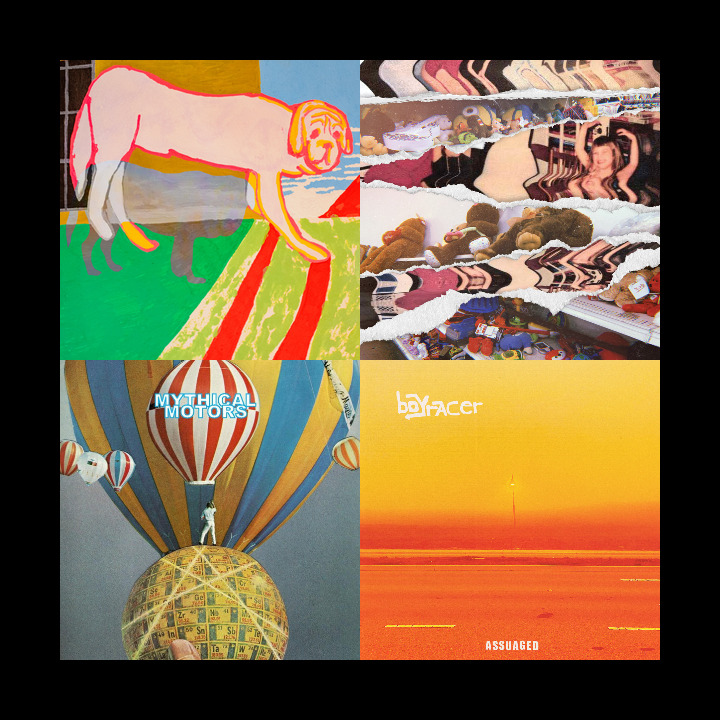
The Last Pressing Concerns of October is upon us! This incredibly spooky, hook-heavy edition looks at the latest full-lengths from pop song machines Mo Troper, Mythical Motors, and Boyracer, as well as a new EP from an up-and-comer, Louisville’s Molly O’Malley.
Release date: October 15th Record label: Self-released Genre: Power pop Formats: CD, digital Pull track: The Expendables Ride Again
Even though it eventually became one of my favorite albums of last decade, Mo Troper’s 2017 record Exposure & Response threw me for a loop at first. That album’s tightly-controlled, polished venom wasn’t how I conceptualized an “underground power pop album” at the time. I suppose I was expecting something more like Dilettante. With his newest record (also known, apparently, as Mo Troper IV), Troper has put together a 28-track, 50-minute marathon of an album that somehow feels like both the record that hews closest to Teenage Fanclub-inspired guitar pop and his most adventurous yet. It’s been quite a ride to get to this point—Troper got his last album,Natural Beauty, in right before everything shut down last February, and spent his months of quarantine making a reverent song-by-song cover album of The Beatles’ Revolver.
Like Mo Troper’s Revolver, Dilettante’s songs are almost entirely played and sung by Troper himself, and it’s a little fuzzier compared to his last couple of proper records (but not in a garage rock way, mind you). Still, Troper is a pop star above everything else, and Dilettante finds his songwriting as sharp as ever. Literally nothing could stop the runaway hooks in blissful rockers like “The Expendables Ride Again”, “Better Than That”, and “Winged Commander”. The music seems to be attempting to rise to the level of the inspiration of Troper’s lyrics on some of these tracks—“Can’t talk about how I feel inside / Without alienating everyone in my life,” he confesses in the love song “Tears on My Dockers”, and “The Perfect Song” is about something perhaps equally important for Troper. Other times, Troper’s penchant for sardonic scene observations surfaces again, but not quite as frequently, and “The Expendables Ride Again”, “All My Friends Are Venmo”, and “Camelot” all seem to greet it all with a bemused shrug more than with a smirk or scowl.
As mentioned earlier, Troper has packed Dilettante full of songs, and the smaller, in-the-cracks tracks have plenty to recommend as well. The falsetto, spare “Sugar and Cream” is breathtaking, as is (for completely different reasons) the disturbingly-spot on Elvis Costello pastiche of “Wet T-Shirt Contest”. To refer to a different 28-track album, there are plenty of “Motor Away”s on Dilettante, but the “Pimple Zoo”s are pretty good too. The acoustic, Andy Partridge-esque “My Canary Was Sure to Run” is another hidden gem almost unfairly tucked away at the penultimate track slot, and it might not even be the best song on the record about a bird. And the much-better-than-its-title-suggests “Armpit” is—you know what? Maybe they’re all hits. (Bandcamp link)
Mythical Motors – A Rare Look Ahead
Release date: October 29th Record label: Lo-Fi City Genre: Power pop, lo-fi pop Formats: Cassette, digital Pull track: Years of June
At about two minutes into “Drag Days”, a jangly album track from Guided by Voices’ 1996 record Under the Bushes Under the Stars, Robert Pollard kicks his voice up an octave to give the song a triumphant, power pop finish. It is, I think, somewhere in the midst of this moment that Chattanooga, Tennessee’s Mythical Motors were born. Mythical Motors bandleader Matt Addison shares Pollard’s penchant for collage-based album art, lo-fi guitar pop, and even choice of collaborators (A Rare Look Ahead was mastered by frequent Pollard producer Todd Tobias)—even if Addison’s exuberant, ageless voice sounds more like Tobin Sprout. A Rare Look Ahead is Mythical Motors’ only record of 2021 so far, and it picks up where their second album of 2020 (October’s Sleepwalking on Main Street) left off, with a chiming title track that continues to carry their torch for lo-fi pop rock.
In true Mythical Motors fashion, A Rare Look Ahead chugs through some psych-tinged, fantastical pop concerns (song titles include “Vivian of the Unseen Sun”, “Carnival Machine Man”, and “That’s Why I Conjured You”), tossing out 4-tracked power chords and vocal melodies at a clip of about two minutes per song. Early on in the album, “Years of June” sports what might be Addison’s finest hook yet, and “Crashing Waves of Fascination” roars to give the song a bit of a full-band bite, but A Rare Look Ahead is surprisingly backloaded. Side two of the record kicks off with the effortless “Fix the Circulation” and the fuzz-rock “The Flower Disappears Without You”, neither of which last much longer than a minute. The composed closing track “The No Name Followers” is as catchy as any of the earlier tracks, but also goes on for three-and-a-half minutes, just to show that Mythical Motors could stretch these songs out if they wanted to. Even with these longer tracks, or acoustic numbers like “Holy Midnight”, A Rare Look Ahead never lets go of its pop convictions. (Bandcamp link)
Molly O’Malley – Goodwill Toy
Release date: October 21st Record label: Mollywhop Record Shop Genre: Synthpop, dream pop Formats: Digital Pull track: Language!
“It doesn’t take much now to get me going,” Molly O’Malley announces in the chorus of “Princess Mia (Ybsntcht)”, the opening track to her new Goodwill Toy EP. In the song’s dizzying music video, it may or may not be implied that Fabio is the subject of this declaration. Although sonically “Princess Mia” is a little bit of an outlier compared to the rest of Goodwill Toy, it’s a good “you’re in or you’re out” moment as any. Either you’re into O’Malley’s specific blend of synthpop production and reverb-guitar tones, journal entry-evoking lyrics delivered in a wistful voice, and an ambitious presentation that goes far beyond what one might expect for a four-song EP (i.e., every single track has its own music video)—or you’re not very fun, are you?
Although O’Malley clearly is a fan of and incorporates the guitar flourishes of dream pop into her music, her confident, emotional, front-and-center voice ensures that Goodwill Toy won’t be mistaken for sleepy-time music any time soon, and hews closer to emo-tinged indie rock like Death Cab for Cutie or Petal. It’s a voice that sounds equally at home helming an all-out pop banger like “Princess Mia (Ybsntcht)” or a bittersweet, dramatic lyric like closing track “Tangible”. Even on the dreamiest song, the reverb-drenched “You Look So Good”, O’Malley’s voice won’t be denied while delivering the titular line. Other than the strong presence of O’Malley herself, Goodwill Toy hangs together thematically as well: The EP starts with “You know how to paint my cheeks a new shade of pink” among its first lines, and the following two songs offer up “I wanna know what’s going on in your mind / I wanna know what thoughts run wild at night” and “You look so good wearing my future,” respectively. This “liberated feeling of fearlessly falling into another person,” as O’Malley describes it, takes a thoughtful turn inward before Goodwill Toy ends. It’s short, but it’s complete. (Bandcamp link)
Boyracer – Assuaged
Release date: August 6th Record label: Emotional Response Genre: Indie pop, pop punk, power pop Formats: Vinyl, digital Pull track: Miserable Ways
Assuaged is Boyracer’s fourteenth full-length record since 1990. Over the band’s thirty years or so of existence, they’ve released music on notable indie pop labels like Slumberland and Sarah, all the while hewing towards the rougher, punkier end of that particular spectrum, and at some point bandleader and sole original member Stewart Anderson relocated from England to central Arizona (no, I had no idea anyone lived there, either). Even though they’re no longer the band that recorded 1994’s More Songs About Frustration and Self-Hate, Assuaged doesn’t feel like “Stewart Anderson solo album”—multi-instrumentalist Matty Green has been with the band for over twenty years and plenty of records’ worth of music, and while vocalist and lead guitarist Christina Riley (of Artsick) has only been in Boyracer for two years and one previous album, her presence on Assuaged is as strongly-felt as anyone else.
The theme to this edition of Pressing Concerns seems to be “musicians tearing through a bunch of pop songs”, and Boyracer certainly bash out Assuage’s fourteen tracks with no small amount of bite. The trio come roaring out of the gate with punk-pop rave-ups “Stuck with You” and “Tommy McNeil”; the bite-sized glam of “Scapegoats and Martyrs” is really only a breather in comparison to the previous two, and then the rollicking “Spoils” picks right up where Boyracer left off. The musical and songwriting flourishes that make these songs pop out from one another are aplenty, particularly in the second half: the busy, bouncy bass underneath “Bulletproof”, the razor-sharp guitar work on “Drinks with the Girls”, the trumpet in the fuck-this-job anthem “40 Hours”. Boyracer also save some of the biggest successes for late in the album, like the absolutely brutally catchy diss track “Miserable Ways”, sung by Ridley (“You should hate yourself, not everyone else,” she proclaims drolly over one of the record’s many handclap backbeats), and the exuberant duet-chant “1 Am”—there isn’t a dull moment on Assuage. (Bandcamp link)
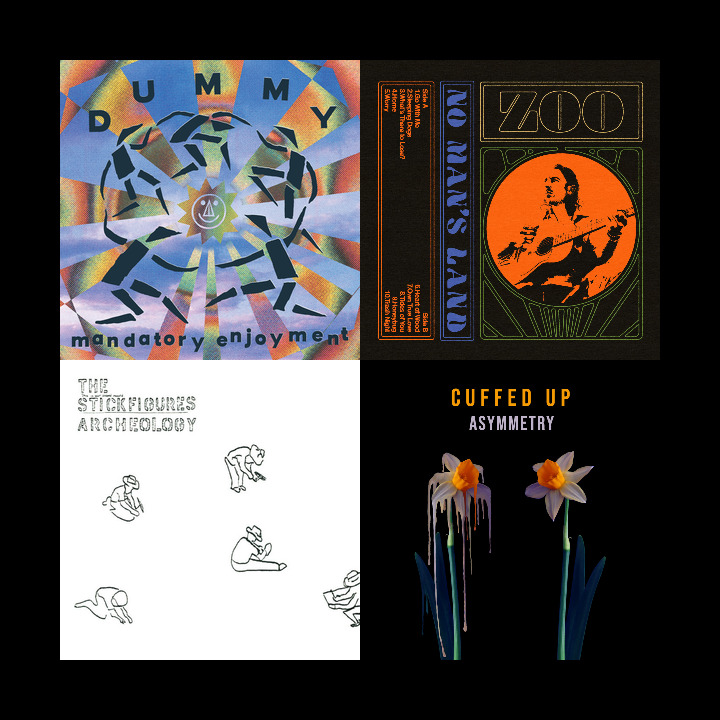
This week, a very special episode of Pressing Concerns discusses debut albums from Dummy and ZOO, an archival release from The Stick Figures, and the latest EP from Cuffed Up.
Release date: October 22nd Record label: Trouble in Mind Genre: Noise pop, shoegaze, neo-psychedelia Formats: Vinyl, CD, cassette, digital Pull track: Daffodils
The Los Angeles-based Dummy arrived in 2020 with a pair of EPs on the quality indie labels Pop Wig (Big Bite, Angel Du$t) and Born Yesterday (Stuck, Café Racer), and have since landed with Chicago’s Trouble in Mind for their debut full-length. Broadly speaking, Mandatory Enjoyment is the kind of crate-digging guitar pop music that fits well among their new label’s roster, but instead of the minimalist post-punk kind (like Nightshift or Smoke Bellow) or breezy jangle pop (The Tubs, Salad Boys), it is of the sensory overload, noise-pop variety. “Fissured Ceramics” and “Final Weapon”, the first two non-instrumental tracks that open the record, marry the buried vocals and heavy reverb of My Bloody Valentine with a krautrock rhythm section and droning keyboards, grabbing one’s attention fully and setting the stage for the rest of Mandatory Enjoyment to expand on the set-up.
The delicate dream pop of “Cloud Pleaser” and “Tapestry Distortion”, as well as the five-plus minute mid-album psychedelic journey of “H.V.A.C.”, fit with the opening salvo of Mandatory Enjoyment like a glove but avoid merely retreading it. Although “Cloud Pleaser” and “Tapestry Distortion” slow things down a bit, they’re still relatively busy tracks. When Dummy do turn it down a notch, it’s for justified reasons: the restrained post-punk of “X-Static Blanket” and the spare lounge pop of “Aluminum in Retrograde” are both welcome late-half left-turns. The last turn on Mandatory Enjoyment is a bit of everything—the closer, “Atonal Poem”, is effectively four minutes of pure synth experimentation before ending everything with an understated, brief noise pop outro.
At the bottom of Mandatory Enjoyment’s Bandcamp page, Dummy list a huge group of modern similarly-minded bands to listen to, many of which I’ve covered or wanted to cover on Rosy Overdrive. Krautrock/psychedelic noise pop isn’t known for inspiring the kind of scene-unifying devotion that, say, punk rock or emo seems to, and many that are truly hardcore about the genre are more often than not stuck in the past instead of looking for new bands. This is to say that seeing a list of a bunch of acts making this kind of music is inspiring to me—and that it’s attached to something as strong as Mandatory Enjoyment certainly gives it more weight. (Bandcamp link)
The Stick Figures – Archeology
Release date: September 3rd Record label: Floating Mill Genre: Post-punk Formats: Vinyl, CD, cassette, digital Pull track: September
One of my favorite “no, I’m serious” things to say to a certain kind of person is that American post-punk is better than British post-punk. If you stop being a stick in the mud and widen the idea of the genre to something greater than “a band that sounds like a band that sounds like Joy Division” (as well as discarding that pesky stipulation that it has to be entirely “post” the initial wave of punk rock), it doesn’t seem like such a crazy idea. Pere Ubu, Devo, Mission of Burma, The Feelies, The Wipers, The Minutemen, plenty of other SST bands that didn’t fit neatly into “hardcore”, everything coming out of Athens, Georgia…The Brits just had better press, is all. Which brings us to Tampa, Florida’s The Stick Figures, which formed in the late 70s at the University of South Florida and could’ve ended up just as revered as any of those bands listed previously in a different life. The aptly-titled Archeology is an expanded reissue of the band’s only official release, a four-song 1981 EP, that adds a full record’s length of unreleased studio and live recordings.
Of the bands and scenes mentioned above, Athens, Georgia is the closest to The Stick Figures geographically, and it lands not too far off to how they sound as well. Songs like “N-Light”, “Energy”, and “Green” are Pylon/B-52’s-esque dance-punk that also proudly display a funk rock influence. At their cleanest and most straightforward (the slinky “Yesterday” and the two poppiest songs, “September” and “Make a Fire”), they’re as immediate as any crowd-pleasing post-punk revival group. At their most inscrutable (the two scuzzy noise-punk live tracks, particularly “Screaming”, and the experimental “Ellis Otivator Dub” and an even wilder 2021 remix of said dub), they’re more adventurous than most of this brand of music. The Stick Figures broke up less than a year after the release of their only EP, but apparently they amassed another record’s worth of unreleased recordings that Pittsburgh’s Floating Mill Records is planning for a 2022 release. I imagine there are plenty of inspired post-punk bands from moderately-sized U.S. cities that continue to languish in obscurity worth revisiting. I doubt any of them sound exactly like The Stick Figures, though. (Bandcamp link)
ZOO – No Man’s Land
Release date: October 22nd Record label: Good Eye Genre: Psychedelic folk Formats: Cassette, digital Pull track: Sleeping Dogs
Cincinnati’s Cody Pavlinac has been making music under the name ZOO for the better part of a decade, so the project’s full-length debut, No Man’s Land, is some time in the making. The record’s ten songs are full of laid-back, unhurried instrumentals that befit the self-described introverted Pavlinac, who recently became a father. Although he hails from the same city as famous ‘sad dad’ group The National, Pavlinac’s airy vocals and the lightly psychedelic-tinged Americana of the music puts ZOO closer to the new strand of retro folk rock practiced by the likes of Hiss Golden Messenger, Cut Worms, and Daniel Romano. Some Byrdsian jangle-rock is audible in No Man’s Land, but Pavlinac hews closer to the psychedelic subsection of the 1960s. In addition, No Man’s Land’s intimacy and relatively humble presentation reminds me of the Mike Uva album I reviewed earlier this year.
No Man’s Land eases us into ZOO’s sound with the understated, pastoral “Go with Me”, where Pavlinac builds a delicate, subtly intricate soundscape that isn’t too busy and still leaves a lot of open space. The especially vulnerable side of Pavlinac rears up again in the tender “What’s There to Lose” and the pin-drop sparseness of side-one closer “Worry”, which has a cavernous quality that really lends weight to Pavlinac’s confession of “I’ve got worry on my mind”. Thematically and musically, No Man’s Land isn’t all so dark; lead single “Sleeping Dogs” masks up lyrics about political anxiety and isolation with a bouncy, upbeat instrumental track, and “Honeybug” doesn’t need to disguise anything about its contentedness. Like several of the tracks on No Man’s Land, “Honeybug” casually pushes the four-to-five minute mark and evolves from a grounded folk-rock song to trippy psychedelia. “What can I say now that’s already been said?” Pavlinac sings over a wash of synths in album closer “Trash Night”, a beauty-in-the-mundane epilogue, before following it up with “turn off the TV and get ready for bed”. It’s just another vivid dispatch from No Man’s Land. (Bandcamp link)
Cuffed Up – Asymmetry
Release date: October 22nd Record label: Royal Mountain Genre: Post-punk Formats: Vinyl, CD, digital Pull track: Bonnie
Cuffed Up is a Los Angeles-based post-punk band led by the alternating vocals of guitarists Ralph Torrefranca and Sapphire Jewell and backed by the rhythm section of drummer Joe Liptock and bassist Victor Ordonez. Jewell in particular is having a notable 2021; she is also a member of the shimmery post-rock band Gypsum, who just released their debut album, as well as currently playing in a band you may have heard of, “tenderpunk” group Illuminati Hotties. Cuffed Up explores a different genre of music than either of those concerns: dark, dramatic post-punk. The four-song Asymmetry is the band’s second EP since their debut in 2019 and comes in at under 15 minutes, but it’s a shiny, polished affair that succeeds at maximizing its limited time.
Asymmetry was produced by the prolific Brad Wood, who’s had his hands on everything from 90s radio-ready alt-rock (Veruca Salt/that dog.) to thorny post-hardcore (mewithoutYou/Touche Amore). Even though Asymmetry clearly has one foot in the world of the largely-U.K.-based current wave of reverent post-punk revival, these songs have a massive sound that isn’t particularly constrained to that arena (look at this video of the band citing Foals and Deftones, among others, as beloved music, for instance). Take the track that’s one of the most clearly post-punk influenced: “Bonnie”, which has that classic sense of propulsion (like “Canaries”, the other obvious one), but also manages to get an icily intense alt-rock chorus shoehorned in there. The cinematic, noir-ish “Terminal”, meanwhile, is practically all chorus, without dithering on the way there. Cuffed Up has yet to make a full-length album, and though they describe themselves as a “full time band”, it’s fair to wonder how much Jewell and Torrefranca’s other pursuits might impact the group going forward. Nevertheless, Asymmetry is quite a firm foundation. (Bandcamp link)
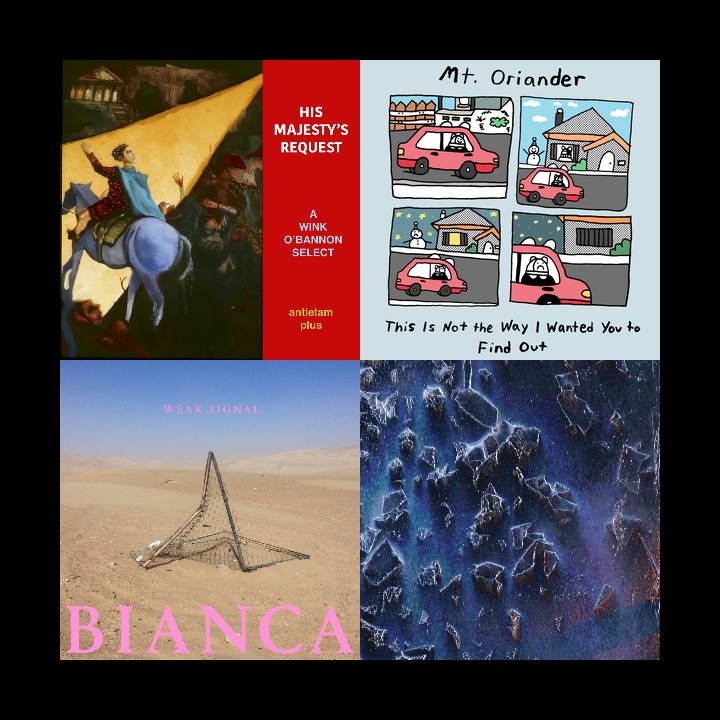
Another week, another edition of Pressing Concerns. This week, we look at a tribute record inspired by Wink O’Bannon featuring Antietam plus a wide cast of guests, the re-released Weak Signal sophomore album, the debut EP from Mt. Oriander (Keith Latinen from Empire! Empire! I Was a Lonely Estate and Parting) and the first Gypsum album.
Antietam Plus – His Majesty’s Request: A Wink O’Bannon Select
Release date: October 15th Record label: Motorific Genre: Indie rock, punk rock, post-rock, jazz, post-punk, folk rock Formats: Digital Pull track: Beware of Darkness
Matthew “Wink” O’Bannon was a longtime fixture of the Louisville, Kentucky music scene, from the late 70s until his death in June of last year. I was familiar with him as a member of indie rock behemoths Eleventh Dream Day; though he was only in the band for a couple of years, he helped record perhaps their two best records, 1993’s El Moodio and 1994’s Ursa Major. He also played in the roots rock band Bodeco and released a solo album, but there may be no greater measure of his impact on the music world than seeing just how many great musicians have lined up to help make His Majesty’s Request: A Wink O’Bannon Select happen. The album is helmed by Antietam, themselves a long-running Louisville institution, and also features, among others, several members of Eleventh Dream Day, Will Oldham, Todd Brashear of Slint, Tara Jane O’Neil of Rodan, and all three members of Yo La Tengo (who, having covered an Antietam song way back in 1989, are honorary Louisvillians).
His Majesty’s Request is a covers album—the idea being that it’s fourteen of O’Bannon’s favorite songs performed by his friends and collaborators, plus one of his originals covered at the end of the record. One can chart O’Bannon’s favorite music along the rock history timeline, with British Invasion and psychedelic/baroque pop of the 1960s giving way to the punk rock and post-punk of the following decades. His Majesty’s Request subsequently (intentionally or otherwise) makes a case for the dark Americana, post-rock, and post-hardcore misfits that arose disproportionately from Kentucky in the 1990s as an inheritor of this lineage. 60s pop songs like The Beatles’ “The Night Before” (sung by Georgia Hubley) and Donovan’s “Hurdy Gurdy Man” (sung by a chorus of voices, many of whom appear elsewhere on the record) are in capable hands, and Will Oldham singing George Harrison’s “Beware of Darkness” is such an obvious pairing that I’m surprised it had never (to my knowledge) happened until now.
The core trio of Antietam make their presence most known on the punk numbers—they rip through the Ramones’ “Commando”, the New York Dolls’ “Vietnamese Baby”, and The Clash’s “English Civil War” either on their own or with guest vocalists, and they assist Rick Rizzo ably in capturing the moodiness of Joy Division’s “Shadowplay”. But O’Bannon and those around him were never merely narrow-scope garage/punk rock revivalists, so it’s telling that both the earliest (Wolf Knapp’s take on Charles Mingus’ “Goodbye Pork Pie Hat”) and latest (Tortoise and Eleventh Dream Day’s Douglas McCombs’ faithful rendition of Sonny Sharrock’s “Who Does She Hope to Be?”) songs chosen for the album are jazz compositions, and at least one punk number (Gang of Four’s “To Hell with Poverty”) gets gloriously deconstructed by experimentalist Jaime Fennelly and Eleventh Dream Day’s Janet Bean. The album ends with an extended Antietam jam on O’Bannon’s own “Hundred” from his sole release under his own name, featuring actual recording of O’Bannon himself playing as the song fades out. Wink O’Bannon is no longer with us, but His Majesty’s Request is just one reminder that he isn’t gone.
Release date: October 15th Record label: Colonel Genre: Garage rock, fuzz rock, psychedelic rock Formats: Vinyl, cassette, digital Pull track: I’m a Fire
An unmastered version of Weak Signal’s second album, Bianca, appeared on Bandcamp with no lead-up in May of last year; after making a few waves as word spread, the New York band is seeing the record’s physical and formal release over a year later thanks to Colonel Records. It seems appropriate that I talk about Eleventh Dream Day elsewhere in this post, because Bianca deals in the same brand of fuzzy, guitar-heavy indie rock that the marked the early records of the former band. Singer and guitarist Mike Bones has played as a hired gun with everyone from Cass McCombs to Run the Jewels, but Weak Signal is where he gets to take center stage. The rhythm section of bassist Sasha Vine and drummer Tran are more than bit players, however—they’re certainly up to the task of building a foundation for Bones’ six-string.
When Vine and Bones sing together (as they often do), it reminds me of a harder-psych version of another band that feels like a reference point for the group—Yo La Tengo (this is particularly pronounced in slower songs like “Come Back” and “I’ll Stay”). It’s not all so quiet as the two previously-mentioned tracks, of course— the Vine-led opening track “I’m a Fire” and the lumbering paranoia trip “Drugs in My System” light things up early in Bianca, in addition to the chugging power chords of “Voice Inside My Head”. In “Don’t Turn Around”, Weak Signal let loose with their own version of southwestern desert rock a la Giant Sand or Thin White Rope, and the galloping “Sorry” is pretty much the band’s turn at pop punk. Bones always seems interested, either during the rockers or the space-out songs, in the interaction between his instrument and the others’—less-immediate tracks like “Zones” seem to exist almost entirely for the moment when the trio come together musically in its second half. It’s always compelling when Weak Signal does this. (Bandcamp link)
Mt. Oriander – This Is Not the Way I Wanted You to Find Out
Release date: October 8th Record label: Count Your Lucky Stars Genre: Midwest emo Formats: Cassette, digital Pull track: Nothing After Nothing Came Bursting Out
The title of the surprise-released This Is Not the Way I Wanted You to Find Out is a little piece of self-deprecation on the record’s part. Keith Latinen (former frontman of emo group Empire! Empire! (I Was a Lonely Estate) and head of Count Your Lucky Stars Records) has spent the last few years writing and recording the debut album for his new solo project, which presumably has been delayed due to the current state of things, leaving this quickly-recorded five song EP to introduce Mt. Oriander to the world instead. While the record’s name might be an attempt to lower stakes and expectations, This Is Not the Way I Wanted You to Find Out needs no such shunting. Latinen already returned to making new music earlier this year as co-leader of the band Parting, and here he picks up where that band’s debut record left off, albeit in a more subtle fashion.
The most distinct aspect of Latinen’s music is his voice: clean and melodic, and capable of portraying a palpable heaviness. These five songs, in which Latinen plays every instrument and sings every word himself, place him even more front-and-center than normal. I’ve been listening to a lot of slowcore lately, and Mt. Oriander contains a similar gravitas to the likes of full-band Idaho and early Pedro the Lion, but with the Michigan-based Latinen providing his typical Midwestern emo spin. For one, look at the verbose media references of song titles—I get “It’s Always Been Wankershim” and “I’m Never Going to Say My Lines Faster Than Jamie Taco”, but had to look up “Dream Ruby Glitch”. The Jamie Taco song in particular, despite all of those words in its title, is a bummer of a song whose sting is enhanced by its vagueness. Although Parting dispensed with something of a positive, cathartic ending on Unmake Me, Latinen gives us no such relief on his own, with the especially rough “Nothing After Nothing Came Bursting Out” offering up only numbness and the marching of time. Can’t wait for that LP. (Bandcamp link)
Gypsum – Gypsum
Release date: October 12th Record label: Sonic Ritual Genre: Indie rock, post-rock, psych rock, dream pop Formats: Digital Pull track: Follow Me
The debut album from Los Angeles’ Gypsum reminds me a bit of the reissued Supernowhere album from earlier this year—similarly to that group, they’re a trio that manages to craft a “big” sound and hop across structures and genre signifiers with the relatively simple guitar-bass-drums setup. They do claim the post-rock mantle, and the spindly opening to first track “Follow Me” inhabits that world—until they reach the chorus, where a showy bassline and a smart backbeat (from drummer Jessy Reed) steers the song into directly into dance-rock territory. Such is the way of Gypsum; a sonically intriguing record that’s characterized by a high, soaring, reverb-heavy lead guitar that tugs against a grounded, sturdy rhythm section, all while the voices of singers Sapphire Jewell and Anna Arboles stand firmly in the center of it all.
These ingredients help give a trippy, skewed edge to some of Gypsum’s more “pop” songs, like “Give It” and “Kaleidoscope”, which combine rhythmic experimentation with strong melody, and in the case of the latter, a loud, spirited psychedelic rock stomp that takes over the track’s second half. The less immediate songs, like the steady, motorik “Gull Lake” and the firm, restrained album centerpiece “Snow White”, make up for less obvious hooks with extended compelling spacey-psych instrumentals. Appearing in the middle of Gypsum’s second side, the stop-and-start of “Satisfied” might sneakily feature the strongest vocal turn of the album, but lest they show off too much, they follow it up with the spoken-word “Margaret”. Album closer “Disappear” has a foot in both ends of the Gypsum spectrum—even though it pushes boldly past the six-minute mark and takes awhile to develop, it still boasts a solidly melancholic chorus to cap off a successful first outing. (Bandcamp link)
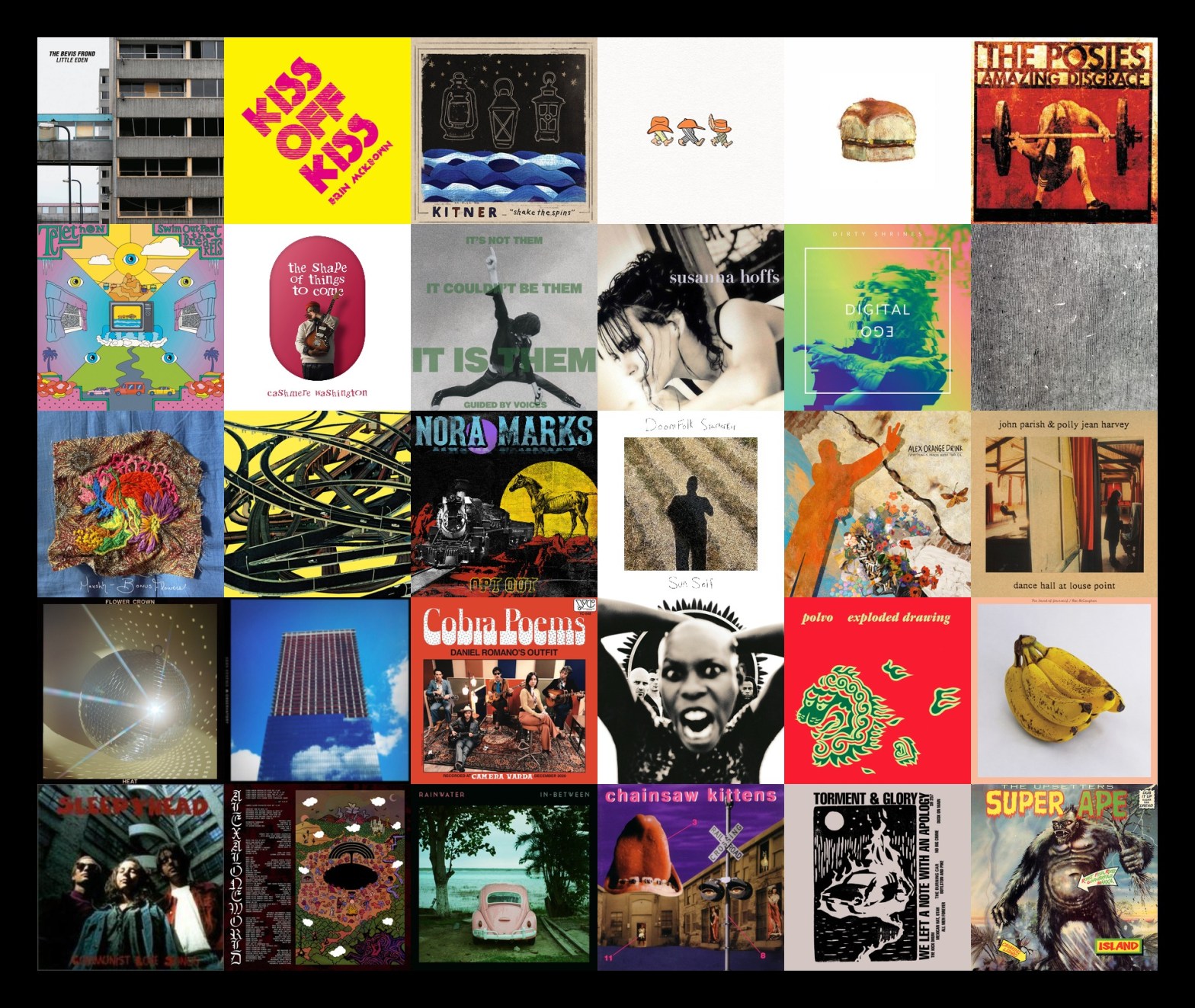
The Rosy Overdrive monthly playlist is back! It’s the September edition this time! This one is very good, in my opinion! You will find plenty of new music here, as well as a few discoveries from my 1996 deep dive, and a couple of miscellaneous tracks.
Artists with multiple tracks this time around: Telethon (4), Erin McKeown (2), Blunt Bangs (2), The Posies (2), Susanna Hoffs (2).
“Everyone Rise”, The Bevis Frond From Little Eden (2021, Fire)
It’s not exactly simple being a casual Bevis Frond fan, but I’m managing as best I can. Last time we checked in on them, back in May, I was pulling highlights from their 1991 two-hour magnum opus New River Head. The band’s newest record, Little Eden, is a “mere” 82 minutes, and while it doesn’t quite match Nick Saloman and crew’s peak, there’s plenty to like contained within. Opening track “Everyone Rise” is an instant keeper; two and a half minutes of effortless, almost lazy lead guitar-driven pop that also boasts a classic wistful Saloman vocal melody. Perhaps you need to be a little hardcore to dive into Little Eden’s twenty songs, but “Everyone Rise” couldn’t be any more inviting of a way to kick the record off.
“Cupido Stupido”, Erin McKeown From Kiss Off Kiss (2021, TVP)
I am not naming any names. I would never want to blow up anyone’s spot, per se. All I’m saying is that some of you may be in need of Kiss Off Kiss, and all it does for break-up music. Twenty years and eleven albums into her career, Erin McKeown has made what might be the sharpest record in her catalog so far. The Virginia-based songwriter (and current touring member of The Mountain Goats) unloads a lot of classic-punk-pop-soundtracked grievances throughout Kiss Off Kiss, and “Cupido Stupido” is as catchy (plenty of “da da da dah”s) as it is aggrieved at its own narrator (“How could someone so smart be so suddenly stupid / To think somehow I would reinvent Cupid?”). Things can only go up from here, right?
“Malden, MA”, Kitner From Shake the Spins (2021, Relief Map)
I’ve been sitting with Kitner’s Shake the Spins for a while now, and it’s really grown on me. One song that I’ve loved from the get-go, however, is “Malden, MA”. Although it’s not exactly a “departure” from the rest of the record’s Get Up Kids/Bright Eyes triangulation and works very well in the context of the album, the primary touchstones for the ripping “Malden, MA” are Dinosaur Jr. (local heroes for the Boston band, and if the guitar solo isn’t quite J. Mascis-level, it serves the track well) and The Hold Steady (that geographical title, the bar-band harmonica, and the fact that “I’m starving but I’m not an artist / They say Pollock was too drunk to paint and that I’m too drunk to stand up straight” could go up against plenty of great Craig Finn lyrics). Read more about Shake the Spins here.
“Detroit Basketball”, Bad Bad Hats From Walkman (2021, Don Giovanni)
Bad Bad Hats’ debut album, 2015’s Psychic Reader, is one of the big “always better than I remember it being” records for me. Sure, it’s one of countless indie pop rock albums that were coming out around the time, but it’s done very well, and nearly every song on it is quite catchy. Anyway, I lost track of them for a while (I remember 2018’s Lightning Round not grabbing me, although I may not have given it much of a shot), but their third album coming out on the excellent Don Giovanni label got my attention, and, well: it’s good, too. Although “Milky Way” is the most purely catchy song on Walkman, it’s the slightly more subtle bounce of “Detroit Basketball” that stands out the most to me. Credit to vocalist Kerry Alexander for nailing the delivery of “Gotta find a man who deserves my kissing / And doesn’t blow my money on the Detroit Pistons”.
“She’s Gone”, Blunt Bangs From Proper Smoker (2021, Ernest Jenning Record Co.)
Blunt Bangs is an Athens, Georgia trio made up of Reggie Youngblood (Black Kids), Christian “Smokey” DeRoeck (Woods, Little Gold), and Cash Carter (Tracy Shedd, Little Gold). Proper Smoker, however, doesn’t end up sounding much like early Woods’ freak folk or Black Kids’ post-punk revival; this much is clear from the moment opening track “She’s Gone” busts out its descending-chord structure, melodic guitar solos, and breezy vocal harmonies. “Don’t ask me anything about her, ‘cause she’s gone,” begins Youngblood’s lyrics, kicking off a classically Teenage Fanclub-esque bittersweet power pop anthem. Read more about Proper Smoker here.
“Daily Mutilation”, The Posies From Amazing Disgrace (1996, DGC)
In 1996, a West Coast power pop/alternative rock band prepped a noticeably darker follow-up to their breakthrough record a couple years earlier for 90s rock kingpin DGC Records. I am, of course, talking about Weezer’s Pinkerton, but this all more or less applies to Bellingham, Washington’s The Posies as well. Except for the fact that Amazing Disgrace is, you know, very good, and doesn’t come with any Rivers Cuomo-sized baggage. Something was in the water of the songwriting duo of Jon Auer and Ken Stringfellow (revered in power pop circles, unknown elsewhere); this much was apparent merely from the title of “Daily Mutilation”, the record’s opening track. “A daily mutilation and a bludgeoning review,” is how the song’s chorus elaborates on the title. It’s fuzzy and angry, but it’s never “Seattle grunge”, much closer to a bitter Matthew Sweet than a tuneful Mudhoney.
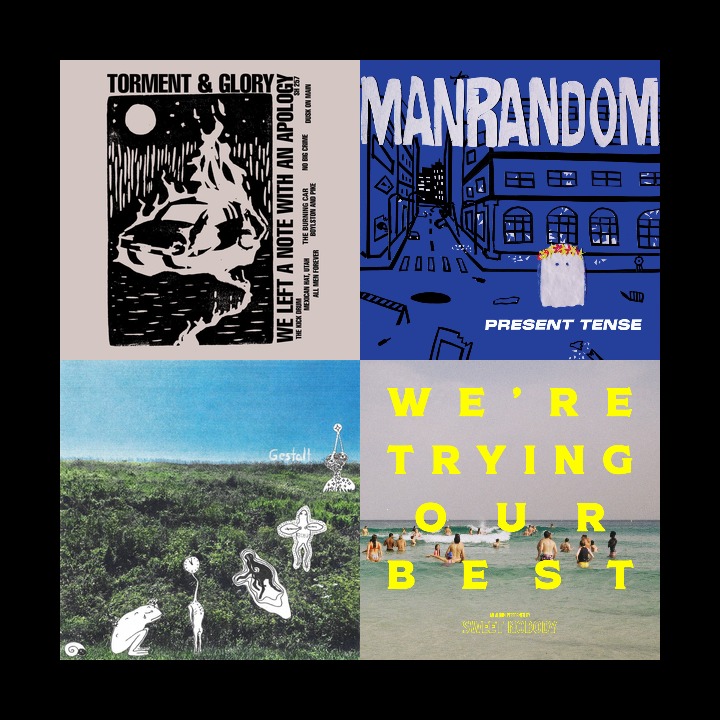
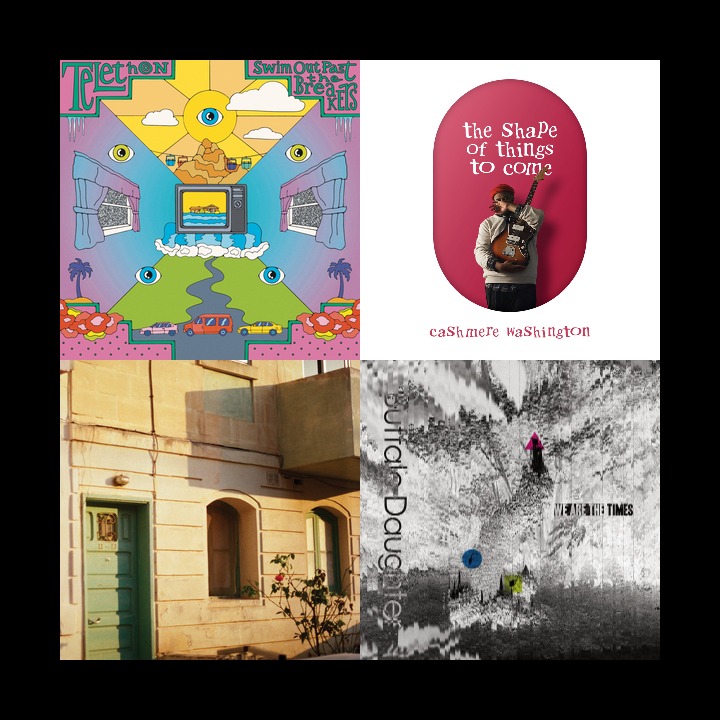
“Positively Clark Street”, Telethon feat. Gary Louris From Swim Out Past the Breakers (2021, Take This to Heart)
Telethon’s Swim Out Past the Breakers is anything but starved for memorable, triumphant pop songs, but “Positively Clark Street” might be the best of the bunch. Gary Louris of The Jayhawks assists the song on backing vocals, and The Hold Steady’s Franz Nicolay is on the harmonica, and both feel right at home on this track. Lyrically, it’s a “One Great City!”-esque tribute to lead singer Kevin Tully’s adopted hometown of Chicago, and musically it’s as much a tribute to The Weakerthans as it is to 90s alt-rock behemoths like Counting Crows and (naturally) Everclear. “It’s easy to play crank when you’re not the one having fun,” reminds Tully to local residents grumbling about blocked-off streets, beer gardens, and “blue-jay flocks” of people. Read more about Swim Out Past the Breakers here.
“Dance of Gurus”, Guided by Voices From It’s Not Them. It Couldn’t Be Them. It Is Them! (2021, GBV, Inc.)
No notes on the album rollout for It’s Not Them. It Couldn’t Be Them. It Is Them!. As solid as the “new lineup” era of Guided by Voices has been, it seemed like Bob Pollard and crew weren’t always picking the best advance singles for all those albums. That’s not the case with INT.ICBT.IIT!; I’ve already talked about “My (Limited) Engagement”, and neither of that song’s two follow-ups have been a dip in quality. The only reason I’m not talking about second single “High in the Rain” is because “Dance of Gurus” topped it mere weeks later, and I probably need to save some space for album tracks. “Gurus” is smart and punchy, a lot more calculated than “My (Limited) Engagement”, despite the fact that it’s also quite psychedelic. Of course, it’s hard not to think of “Dance of Gurus” as a bit of a mindfuck after seeing the song’s music video, which might be the most appropriately Guided by Voices music video in a long time.
“Cowboy Dan”, Cashmere Washington From The Shape of Things to Come (2021, Fish People Birds/Black Ram)
One of my favorite new discoveries over the last month has been Cashmere Washington, the Midland, Michigan solo project of Thomas Dunn II. Their debut EP, The Shape of Things to Come, is a promise-brimming mix of lo-fi indie rock, emo, and R&B, and the record’s lead single, “Cowboy Dan” is an instant attention-grabber. It’s one of the most straightforward “rock” songs on the EP, featuring fuzzy guitars that cascade over Dunn’s passionate vocals and a prominent bassline that fills in the song’s gaps. “Cowboy Dan” is apparently Dunn’s next door neighbor, who seems like a bit of a character—an odd, constant unflappable presence in Dunn’s life that contrasts with their own personal crises that the rest of the EP explores more fully. Read more about The Shape of Things to Come here.
“All I Want”, Susanna Hoffs From Susanna Hoffs (1996, London)
The 1996 self-titled Susanna Hoffs album is quite good. This shouldn’t be too much of a surprise, given the amount of good music she’s been involved with over the years, as well as the record’s eye-popping list of personnel and songwriters (Jon Brion! Jason Falkner! Mark Linkous! Linda Perry!). “All I Want” is a Lightning Seeds cover from their 1990 debut album, which Hoffs and crew transform from an end-of-the-decade synth/Britpop tune into a crisp folk-pop rocker. As that long list of backing musicians might suggest, “All I Want” gets a bit busy in its second half, but thankfully Hoffs’ voice never loses control of the song (which is, presumably, one of the greatest benefits to having the voice of Susanna Hoffs).
“Loud Cliches”, Dirty Shrines From Digital Ego (2021, Black Numbers)
Fort Collins, Colorado’s Dirty Shrines are comprised of a few punk veterans: Tim Browne (vocals/guitar) and Brian Van Proyen (guitar/vocals) are from Elway, Drew Johnson (bass/vocals) was in Chumped, and all three of them played in Your Loss. Now with drummer Max Barcelow, Dirty Shrines combines a crowd-pleasing punk/alt-rock sensibility with some heady topics with Digital Ego, in a similar way to a couple of bands I’ve written about on Rosy Overdrive, Nora Marks and Man Random. Dirty Shrines take a little bit more from classic rock than either of those bands, though, and “Loud Cliches” is where they most proudly fly their Thin Lizzy flag. Dueling lead guitars and an infectious stomp lead off Browne’s quasi-apocalyptic lyrics: instead of “Whiskey in the Jar”, we get “amphetamine and moonshine”, and we’ll “dance right through the end times” instead of “Dancing in the Moonlight”. Hey, it is called “Loud Cliches”!
“White Horses”, Low From HEY WHAT (2021, Sub Pop)
This’ll be the third month in which something from HEY WHAT graces these playlists—suffice it to say, the full record delivered on the promise that “Days Like These” and “More” hinted at (if any songs that sound like that can even be considered to “hint” at anything). Like those two songs, Alan Sparhawk and Mimi Parker reclaim the center of the music after being scrambled thoroughly in 2018’s Double Negative, but the aural corruption aided by producer BJ Burton is right there with them. Sparhawk and Parker begin the song intertwined as usual, accompanied by a sharp but minimal electronic beat, and it’s not until halfway through the five minute song that everything begins to distort and corrode. But when it does, the chaos flows and ebbs until the final minute, where nothing is left of the track but a ticking timer.
“Travelator”, Telethon feat. Future Teens From Swim Out Past the Breakers (2021, Take This to Heart)
The synth-positive “Travelator” is one of the most electric moments on Swim Out Past the Breakers. The song comes barreling out of the gate with breakneck pop punk speed and the aforementioned synth scribbling, and Kevin Tully is at his most earnestly urgent by the time we’ve reached the chorus. A “travelator” is, apparently, a British term for those moving walkways that one sees at the airport or train station or subway station. Here it’s a metaphor (and a good one at that) about the steady stream of anxiety and dread that no amount of Viewtiful Joe can totally shut up. Oh, and also there’s a part of the song that describes détente with a spider, which more songs should discuss. Daniel Radin and Amy Hoffman of Future Teens sing the final chorus of this song. I’m not really familiar with their band, but they do a good job! Read more about Swim Out Past the Breakers here.
“The Stone and I and Everybody”, Maxshh From Bonus Flowers (2021, Exploding in Sound)
Max Goldstein has certainly been on a tear this year. Bonus Flowers is the third record this year to be released under the name of his solo project, Maxshh, after January’s Feedback & PB and April’s As a Treat. Goldstein hooked up with Exploding in Sound Records for Bonus Flowers, and the album finds the somewhat unclassifiable singer-songwriter-drummer embracing an acoustic-based stoner-psych-folk sound. Album opener “The Stone and I and Everybody” starts out as such, with Goldstein picking and strumming his way through, uh, memorable lyrics about a “pleased” cabbage and a glass of water on top of a stone. Unlike a lot of the rest of the LP, however, Goldstein steers the song into noisy alt-rock territory in its second half that reminds me that, ah, yes, he’s also the drummer for “spastic heavy jazz experimental” band Fred Cracklin.
“Through to You”, Motorists From Surrounded (2021, We Are Time/Bobo Integral/Debt Offensive)
Apparently Toronto is the place to go if you want to play in or find rock bands that split the difference between post-punk and jangle pop. Obviously, Kiwi Jr. has been somewhat of a breakout star over the past two years, but there’s also the new Ducks Ltd. album, and now Motorists are here to tastefully strum and thrum their way into your hearts. Surrounded is their first album, but the members have played in a few notable bands like Tough Age and the reunited Simply Saucer, so they’ve been around a bit. Although they can do the garage-y post-punk motorik thing well (see the album’s title track), “Through to You” is pure pop; the chorus is bursting with power pop enthusiasm, while the intro and (especially) outro brim with Peter Buck energy. In one line of the song, Motorists nod to both Sloan and R.E.M. (“Automatic for the people of the sky”) and make this almost too easy.
“Go Along / Get Along”, Erin McKeown From Kiss Off Kiss (2021, TVP)
Like “Cupido Stupido” from earlier in the playlist, “Go Along / Get Along” is an infectious, shiny pop song about, um, “relationship unpleasantness”. Unlike that song’s pissed-off self-criticism, however, “Go Along / Get Along” is about something that’s frankly even darker: resignation. Erin McKeown follows up the titular line by muttering “Get this over quick, so I can get out from under you,” and she means in the most literal sense possible. The most emotional McKeown gets in “Go Along / Get Along” is in the bridge, where she reflects on just how she ended up in this situation: “In your eyes, I could see something…Used to turn something on / But now it’s gone”. The song ends with McKeown quietly resolving to “change the sheets”, “freshen up”, and “move on”, but we clearly aren’t there just yet.
“The Ballad of the Surfin’ Cowboy”, Nora Marks From Opt Out (2021, Take a Hike)
“Talking with my friends up in the sky, convincing them I’m not that kind of guy,” is how singer Michael Garrity introduces the best song on his band Nora Marks’ debut-full length. Although Opt Out is nominally a punk rock record, it makes its deepest impression with mid-tempo, alt-rock sing-along belters, including “I Think You Earned It”, “Nice to Me”, and this one. Like much of the album, “The Ballad of the Surfin’ Cowboy” seems to deal with Garrity attempting to write about the march of technology and communication, but in a weirdly indirect way, which results in some enjoyably surreal lyrics. I could spend awhile trying to parse the rest of “The Ballad of the Surfin’ Cowboy” in relation to the rest of Opt Out, sure, but the reason I come back to it is because everyone in the band injects “Intend to never stop / Raging bull, China shop” with a real sense of shout-along catharsis. Read more about Opt Out here.
“Sun Self”, DoomFolk StarterKit (2021, Like You Mean It)
DoomFolk StarterKit is Portland, Oregon’s David Swick, who has been steadily releasing music in some form under the name since 2017. 2021 has seen a couple of one-off singles on Like You Mean It Records (the Gillian Welch cover “Look at Miss Ohio” and the original “Old Times”), and in the time between “Sun Self” reached me and the publication of this post, Swick released the instrumental SunFaded album. “Sun Self” is a fluttery, breezy indie folk track that expands into a full-band song with the assist of Lou Turner (flute/harmonies) and Trevor Nikrant (guitar) of Styrofoam Winos, as well as drummer Allie Cuva. Turner’s flute, in particular, helps nudge “Sun Self” towards Elephant Six/Sparklehorse/Flotation Toy Warning territory in the song’s second half.
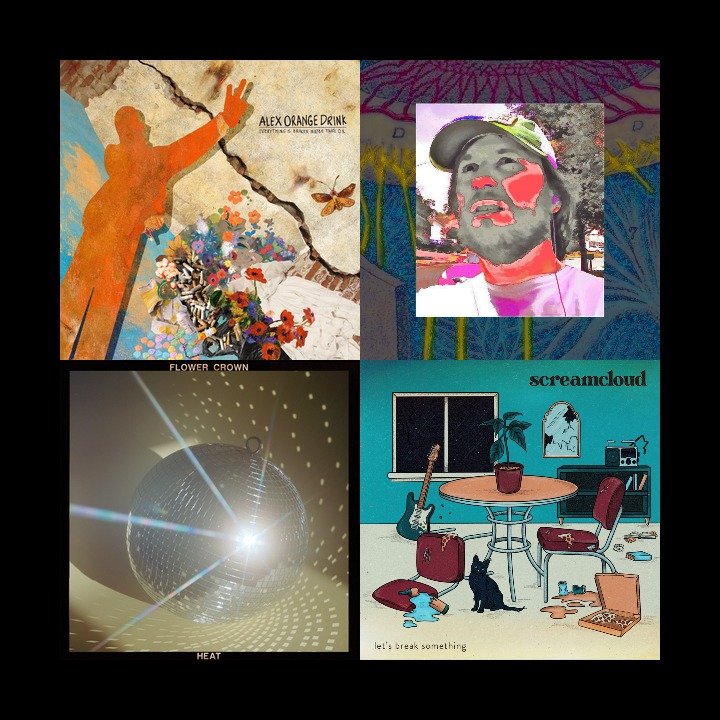
“Brooklyn Central Booking”, Alex Orange Drink From Everything Is Broken Maybe That’s Ok (2021)
Everything Is Broken Maybe That’s OK is an almost journal-like account of Alex Zarou Levine’s (most notable for his time with The So So Glos) struggle with his lifelong genetic disorder homocystinuria, among other turbulent aspects of his life, past and present. “Brooklyn Central Booking” starts the record right in the thick of it: with Levine, picked up by the cops for “drinking”, “smoking”, and “public urination”, hallucinating after the police confiscate the necessary medication for his disorder, and wondering if this is the future for him and his home (“Another noise complaint and we’ll be through”). All this is delivered over an appropriately simple folk-punk instrumental that’s remarkably catchy. Read more about Everything Is Broken Maybe That’s Ok here.
“Rope Bridge Crossing”, John Parish & PJ Harvey From Dance Hall at Louse Point (1996, Island)
Dance Hall at Louse Point is pretty good, if not an essential entry in Polly Jean Harvey’s discography. Some forgettable moments, some intriguing ideas, and a couple unqualified successes, the greatest of which is pretty easily “Rope Bridge Crossing”. Her frequent collaborator and musical partner for this record, John Parish (who produced a very good John Murry album which came out earlier this year), offers up a dusty, loping scuzzy blues-rock instrumental that Harvey lets play out for around two minutes before she starts contributing vocals. “Rope Bridge Crossing” winds and sways like the bridge to which its title alludes, and Harvey similarly swings between whisper-talk-singing and some of the record’s most theatrical moments.
“The Billy”, Flower Crown From Heat (2021, Crafted Sounds)
Heat, the third record from Pittsburgh dream pop quintet Flower Crown, is a charmingly psychedelic album that benefits greatly from the backbone its expansive lineup provides it. Along with the almost-making-the-playlist “Only Life”, “The Billy” is one of Heat’s best pure pop rock moments. The record’s lead single, it immediately hits the listener with a casually catchy guitar pop chord progression and quickly evolves into a spacier version of the classic C86 jangle pop that clearly has made an impact on Flower Crown’s music. Read more about Heat here.
“Queens”, Aeon Station From Observatory (2021, Sub Pop)
So, you folks hear about this Wrens thing? I won’t recount it, because if you care about it you already know about it, but as somebody who’s had plenty of deep personal moments soundtracked by The Meadowlands, the existence of Aeon Station and “Queens” is very surreal. The debut single from Kevin Whelan’s post-Wrens not-band solo project sounds like something that could’ve been on the probably-never-happening fourth Wrens album, even if I don’t think it’s one of the tracks originally intended for such (based on lyrical content alone). That is to say, it sounds like a more layered version of something from The Meadowlands, although thankfully it’s not too layered (although this does make me anxious that infamously fussy Charles Bissell’s Wrens songs, if we ever hear them, might go too far overboard). I didn’t really need to hear “Queens” to be excited for Aeon Station’s debut, and it’s really hard to hear the song objectively, but I can pretty confidently say this: it’s good, and I hope the rest of the record is as good as it. Read more about Observatory here.
“Tragic Head”, Daniel Romano From Cobra Poems (2021, You’ve Changed)
Come to think of it, it doesn’t appear that I’ve touched on Daniel Romano for Rosy Overdrive yet. If the blog had been more active last year, I almost certainly would’ve: there was plenty to like among the singer-songwriter’s eleven (correct me if I’m miscounting) releases from 2020. This year, comparatively, has “merely” featured a live album, one Bandcamp-only digital album, and one “normal” studio record. “Tragic Head” is the opening track to the latter of the three, and it’s an instant highlight among Romano’s classic 70s country-rock-influenced material. The build and release at the beginning of the chorus justifies “Tragic Head” on its own, but surely you want to stay for a few lines just to hear Romano growl “Somebody oughta put a bag over your tragic head”.
“Hedonism (Just Because You Feel Good)”, Skunk Anise From Stoosh (1996, One Little Independent)
Apparently Skunk Anise were/are something of a big deal, but I never heard of them until I started going deep into 1996. It seems like they didn’t really make it out of Europe, so I apologize if this is old news on Britain or the continent. Anyway, the band’s second and biggest album, Stoosh was kind of being sold to me as “political hard rock!!”, and it starts out as a ho-hum version of this, but Skunk Anise really caught my attention when they deviated a bit from it. “Hedonism (Just Because You Feel Good)” comes right after the slow, dreamy, six-minute “Infidelity (Only You)”, and while it continues to run away from the muscle of the album’s first couple of tracks, it does so by embracing hooks. Musically, “Hedonism” is some amalgamation of cornily sincere post-grunge balladry, airy dream pop, and straight-up slick 90s mainstream pop. It seems to be the band’s most popular song, and while I certainly don’t know enough about Skunk Anise to say if it’s their best one, it’s worth of its notoriety.
“Tom Ford”, Blunt Bangs From Proper Smoker (2021, Ernest Jenning Record Co.)
Although I haven’t seen anywhere that lists who wrote and who sings which songs on Proper Smoker, I’m pretty sure that “She’s Gone” from earlier is Reggie Youngblood’s, and “Tom Ford” is Christian “Smokey” DeRoeck. Hidden away in the middle of the record’s second side, “Tom Ford” takes full advantage of DeRoeck’s roots rock background for a hearty, energetic vocal delivery, and the urgent organ that rears its head in the chorus helps put the song over the top. In a world where Superchunk and Teenage Fanclub became household names, “Tom Ford” is a surefire top-of-the-charts success. Read more about Proper Smoker here.
“Cyan” & “Worm Dirt”, Telethon From Swim Out Past the Breakers (2021, Take This to Heart)
These two songs go together because A) they’re both really short and B) they’re back to back on Swim Out Past the Breakers, so who am I to mess with excellent sequencing? Actually, I just realized that all four songs from Telethon’s latest album that I selected for this playlist are all back-to-back on the album, so I’ve already messed with excellent sequencing! What a stretch, though. “Cyan” is the longer of these two at over 90 seconds, and it starts with a ska-dabbling guitar intro before an email exchange ignites some spiraling by Kevin Tully, aided by Devon Kay & The Solutions, a band I don’t know but are probably good because basically everybody who’s on Swim Out Past the Breakers is. I also love the Cyan/sighin’ swap-out thing.
“Worm Dirt” begins with Tully(?) remarking “that song’s so short, let me just do it again”, before beginning a song that clocks in at a nice, even 52 seconds. The band refer to this one as “a little ditty about God and religion and the afterlife”, and it certainly does seem like Tully is participating in a confession of some sort here (“I apologized that I didn’t buy it / I wish I could, but I got a little sick of trying” is more than a little relatable), and the extended semi-truck metaphor is also fascinating to me. Et cetera, and something stupid about the dust in the wind.
And then they go into “Travelator” on the record! Wow!
“Fast Canoe”, Polvo From Exploded Drawing (1996, Touch and Go)
Today’s Active Lifestyles seems to be the Polvo album that gets the most shine these days, and I get it. It’s the explosive, attention-grabbing noisy math rock single LP that continues to not be adequately recognized for its influence on guitar music to this day. But I recently got into Exploded Drawing, and to me, that one feels like Polvo’s biggest statement. It’s a full hour of ambitious but streamlined, expansive but utilitarian, anti-personality-led indie rock greatness. If you consider yourself a fan of 90s indie rock bands but haven’t gotten to this album yet, I highly recommend it. I can’t get into it too much here, but album opener “Fast Canoe” should let you know immediately if this is for you or not. The nearly seven-minute track spends its first two minutes just building up to the “main” riff and Ash Bowie’s vocals, but it doesn’t “build” from there so much as ebb and flow, alternatingly lapsing and reconstructing itself, even throwing in a few seconds of post-hardcore aggression in as the song draws to a close.
“Dawn Bends”, Mac McCaughan From The Sound of Yourself (2021, Merge)
Speaking of 1990s Chapel Hill indie rock: hey, Mac McCaughan made a solo album last month! The Sound of Yourself feels like a low-key but sturdy affair from the Superchunk frontman and Merge Records co-owner, in which dreamy instrumental tracks sit alongside New Order-esque synthpop experiments and more “classic” McCaughan-sounding faire. Lead single and penultimate track “Dawn Bends” is firmly in the “vintage solo McCaughan” camp; it could’ve easily been on Non-Believers or a later-career Portastatic record and fit well. As with anyone who’s been making music for three decades and been particularly generous with it, it’s easy to take a steady stream of “good Mac McCaughan songs” for granted, so I would like to remind everyone that Mac’s still got it, and that he’s capable both of songs like these and of envelope-pushers (look up “The Sound of Yourself” and “I Hear a Radio” if the idea of post-punk McCaughan intrigues you) in 2021 is worth celebrating.
“The Coronation”, Sleepyhead From Communist Love Songs (1996, Homestead)
So, who were/are Sleepyhead, one of my latest 1996 discoveries? Well, they were a New York indie pop/rock band that reminds me a bit of the noise pop that D.C.’s TeenBeat Records frequently put out around this time. They released three records in the 90s on legendary indie labels Slumberland and Homestead Records. They never formally broke up, relocated to Boston, and released a record in 2014—and apparently are working on its follow-up as of last year. “The Coronation” is the third song on 1996’s Communist Love Songs (which was re-released in 2018 as part of the Future Exhibit Goes Here compilation), and it sounds like guitarist Chris O’Rourke is the lead vocalist here, with drummer Rachel McNally (they’re a married couple) backing him up. Musically, “The Coronation” swaggers, with O’Rourke and McNally’s low-key vocals laying in wait before nailing the emotional climax: “I swear I’m never, ever, going back to Hoboken!”
“Electric Sickness”, Alexalone From ALEXALONEWORLD (2021, Polyvinyl)
Alexalone is the project of Alex Peterson, who one could describe as a “player” in the Austin, Texas scene: they’ve been in the touring lineups of both Hovvdy and Lomelda, two bands you probably know of if you read Rosy Overdrive. Their Bandcamp page characterizes their music as “soft songs played loud”, and the opening track from their debut full-length fits this description well. “Electric Sickness” is a reverby, light-shoegaze instrumental that’s guided by Peterson’s quiet, subtly melodic voice and a couple noise-rock rave-ups. Although Alexalone started (unsurprisingly) as a solo project, ALEXALONEWORLD is apparently the work of a four-piece band also featuring Sam Jordan, Mari Rubio, and Andrew Hulett, making “Electric Sickness” sound much bigger than a one-person basement recording.
“Please Return It”, The Posies From Amazing Disgrace (1996, DGC)
“Please Return It” is about as flawlessly executed a Posies song as there could be. It’s dark but catchy, it’s emotional but it’s also surgical, it’s “very 90s” but not dated. It’s got the Jon Auer/Ken Stringfellow harmonies running through almost the entire song, and it’s also got some showy power pop guitar tones hovering over the distortion. Supposedly there’s a saxophone somewhere in “Please Return It”, but one really has to strain to even hear something resembling it. I don’t know if the Posies conquering the airwaves was ever in the cards, but it would’ve been nice if DGC could’ve gotten “Please Return It” over the finish line (much stranger things have happened).
“Beekeeper’s Blues”, Susanna Hoffs From Susanna Hoffs (1996, London)
Two Susanna Hoffs songs! And it was almost three, too (look up “Enormous Wings”, which is a Hoffs-Mark Linkous co-write)! The opening track to Susanna Hoffs, “Beekeeper’s Blues”, was co-written by Hoffs and a couple of ringers: David Baerwald, who has a host of impressive credits, and David Kitay, who I know nothing about. The song exemplifies that kind of bubbly folk-pop-rock that Susanna Hoffs to which suddenly took an interest, to the benefit of her music (Did I mention that Baerwald was involved in Sheryl Crow’s Tuesday Night Music Club?). The addressee of “Beekeeper’s Blues” just seems like no good, but no amount of lyrical dissing (“I know you know that you’re good-looking / And you’re not known for too much else”) can prevent from Hoffs’ boots from “walking back” to them: “What else can I do?”
“Friends”, Rainwater From In-Between (2021, Furious Hooves)
In-Between, the latest record from Seattle’s Rainwater, is a dew-dampened mix of delicate dream pop, lights-in-the-distance new wave/synthpop, and rustic indie folk. “Friends” falls squarely into the camp of the latter of the three, with its leisurely trot of a tempo and sparse, swaying instrumentation. Rainwater leader Blake Luley’s gentle voice is aided by harmonies contributed by his wife, Aviva Stampfer, as he sings a sweet but thoughtful lyric about relying on others while struggling with mental illness and grief. “Same mixed up brain, in need of a friend who embraces your pain,” Luley murmurs, while also wondering if what he’s feeling is a “phase” or something greater. “They’re growing in their own way, and I’m growing in mine,” he concludes of those around him at the end of “Friends”; as well as “I hope we can grow together over time”.
“No Big Crime”, Torment & Glory From We Left a Note with an Apology (2021, Sargent House)
We Left a Note with an Apology is a “heavy folk” album—Brian Cook, the person behind the project, is most famous for his work in metal groups such as Botch and Sumac, but Torment & Glory unearths gorgeous acoustic songs underneath a wall of fuzz. Despite the grandiosity that the feedback skyline affords the record, lead single “No Big Crime” is about small successes and quiet moments. The song is effectively an ode to shoplifting cigarettes, and how it might be in the past tense for Cook but he sees no issue with the action. “No grand gestures now, just petty victories,” is how he summarizes learning how to stealthily sneak a pack. Read more about We Left a Note with an Apology here.
“Waltz Across Debris”, Chainsaw Kittens From Chainsaw Kittens (1996, Scratchie)
Almost last, but certainly not almost least, a brief mid-tempo piano-rocker from Norman, Oklahoma’s Chainsaw Kittens. I will probably look at the Chainsaw Kittens in greater detail at some point in Rosy Overdrive’s future, but here’s the deal: they were a glam/alt-rock act led by Tyson Meade, who’s one of those frontmen who get spoken reverently in small circles and counted Kurt Cobain and Billy Corgan among his fans. Chainsaw Kittens, the band’s fourth album, came out on Scratchie Records, a mid-90s curiosity of a label that was co-founded by (among others) James Iha, D’arcy Wretzky, and Adam Schlesinger. “Waltz Across Debris” is certainly not one of the band’s louder numbers—to use an R.E.M. comparison, it’s more “Electrolite” than “The Wake-Up Bomb”. In fact, the similarities between “Debris” and the former R.E.M. song—and, for whoever cares to write the essay, Meade and Michael Stipe—are actually rather remarkable.
“Zion’s Blood”, The Upsetters From Super Ape (1996, Upsetter)
I am not a hypocrite, although I suppose that Rosy Overdrive might be. I do think it’s hack for a website dedicated to writing about music to ignore the output of a living artist only to swing hard for them after they die, and it’s right to call bigger publications out for this. However, Rosy Overdrive is a one-person operation that has been around for less than a year, and furthermore, I consider it a personal log to some extent (I know, shocking, right). This is to say that I listened to a lot of revered Lee “Scratch” Perry material after his death last month, and I enjoyed my time doing so. I’m not an expert on dub or reggae by any means, but I liked Super Ape, so if Perry’s body of work is intimidating, maybe just start there. Or here, I guess, with its hypnotic opening track. It’s music for anybody.
In this early-week Pressing Concerns, we’re looking at new albums from Alex Orange Drink, Flower Crown, Screamcloud, and Hello Whirled. If you’re looking for more new music, you can browse previous editions of Pressing Concerns or visit the site directory.
Alex Orange Drink – Everything Is Broken, Maybe That’s O.K.
Release date: September 17th Record label: Self-released Genre: Punk rock, folk punk Formats: Digital Pull track: Brooklyn Central Booking
Two connected but distinct themes stand out on Everything Is Broken, Maybe That’s O.K., the latest album from Brooklyn’s Alex Orange Drink. One of them should be familiar to most—that of love, heartbreak, and a general frustration with the fact that humans are controlled by and addicted to chemicals created by their own bodies. The other theme is homocystinuria, a serious, life-threatening, long-term metabolic genetic disorder. Alex Zarou Levine is most famous for being the lead singer of the garage-punk band So So Glos; “Alex Orange Drink” is the name of the music he makes on his own, and the moniker “orange drink” refers to a specific medication for his disease. Alex Orange Drink’s sophomore record seems to have flown under the radar a bit compared to his “main” band, but Everything Is Broken, Maybe That’s O.K. is a major work in its own right.
As alluded to earlier, Levine doesn’t shy away from getting into the specifics of how homocystinuria impacts his life—in fact, that’s how Everything Is Broken, Maybe That’s O.K begins. Opener “Brooklyn Central Booking” starts with Levine, picked up by the cops for “drinking”, “smoking”, and “public urination”, hallucinating after the police confiscate his medication, and wondering if this is the future for him and his home (“Another noise complaint and we’ll be through”). “Homocystinuria, Pt. 1 (1987-1994)” and “Homocystinuria, Pt. 2 (1995-1999)” provide a concrete backstory; in the former, Levine begins to recognize the unfairness of the health care system (“They take my blood and my mommy’s dough”) and to use music to “drown” out the effects of his disease, specifically punk and hip-hop. It seems to work to some degree until the second part of the saga, a pissed-off garage rock track about how coping with pre-existing conditions gets more complicated as one grows into a self-conscious person of one’s own.
Perhaps above anything else, Everything Is Broken, Maybe That’s O.K. wants to make the point that everything is chemical, and that’s where homocystinuria and love intersect. “It’s Only Drugz (Limerence)” and “Oxytocin (Love Buzz)” both explicitly reckon with this seemingly simple fact, while “Clickbait, Click Me” folds yet another source of dopamine into the equation. These personal distance-attempting songs about love and romance are something of a counterbalance to the more emotionally vulnerable tracks on the record, which find Levine hanging on for dear life in a bad relationship in “How High?” (“Could you give me some good news / That don’t end in self-abuse?” Levine asks the subject of the song, who appears to have complete control over him), and cheerily wounded in “I L.U.V.I.O.U.” (“You still owe me words that I don’t ever wanna hear you say”…ouch). Although at one point Levine mourns that his problems have isolated himself to the point where he’s the only one “who’s ever felt this uniquely lonely”, maybe if Everything Is Broken, then no one truly can be that alone. As he says in “Teenage Angst Forever”: “I think there’s an army marching behind me”. (Bandcamp link)
Flower Crown – Heat
Release date: September 24th Record label: Crafted Sounds Genre: Dream pop, psychedelic pop, jangle pop Formats: Vinyl, CD, cassette, digital Pull track: The Billy
Pittsburgh “haze pop” group Flower Crown make a blurrily beautiful brand of indie rock that fits naturally well on the band’s current home of Crafted Sounds Records. Over their half-decade or so of existence, they’ve put out an EP, two full-lengths, and grown from the initial duo of Richie Colosimo and Aaron Mook into a quintet. Their third record, Heat, is an unabashed dream/psychedelic pop record, but also clearly benefits from the full band lineup that Flower Crown have built up in recent years. The first half of the record features a pair of easy pop rock successes in “Only Life” and “The Billy”; the former features a taut, Dehd/Ne-Hi-esque guitar riff that counterbalances its reverb-laden vocals, and “The Billy” is a slightly swirlier version of classic C86 jangle pop. “The Heat”, falling in between the two aforementioned tracks, is a little spacier, but it has a prominent drumbeat that keeps the song anchored in the realm of rock music.
The second half of Heat continues the momentum that Side A builds up, offering more indie jangle rock done Flower Crown’s way (“Islands in the Sky”), slices of psychedelia played by a rock band (“Through It”), and a genuine left-turn surprise in the crooner “All That You Ever Need” (which they describe as their “first-ever waltz”). Heat is a short, sweet listen—it only barely makes it across the 30 minute mark, and is a little below it if you discount the “Intro” and “Interlude” instrumentals (which you shouldn’t, because like their heavier labelmates in Gaadge, they thread these short gap tracks between the “normal” songs in a way that makes a lot of sense). Nevertheless, Heat is an album that you can throw on and enjoy any time; if you want something light or something a little busier, if you want pop music or something to chew on, Flower Crown have you covered. (Bandcamp link)
Hello Whirled – Wood Anniversary
Release date: October 4th Record label: Sherilyn Fender Genre: Lo-fi indie rock Formats: Digital Pull track: Full Blown Makoto
The wood anniversary is the fifth one, if you’re unfamiliar, and for Hello Whirled, the title is to be taken literally. Wood Anniversary comes out on a Monday because that’s five years to the date of the project’s first release. Ben Spizuco, more often than not the sole person behind Hello Whirled’s music, has celebrated multiple milestones this year—No Victories, from this May, was the 100th Hello Whirled release—which seems inevitable if one releases material at Spizuco’s rate. In fact, even though the centennial release threshold is undoubtedly impressive, it may be the more useful marker for something like Hello Whirled’s discography (“38 albums, 103 releases, 1021 songs” in a half-decade), to break the large mass into time-based chunks. Wood Anniversary loosely follows the structure of Hello Whirled’s most recent album, July’s History Worth Repeating, in that it begins and ends with two attention-grabbing tracks, with the more “normal” songs filing in between them.
The dour opener “Chance Encounters With Everyone I Thought I Loved: A Fiction” sort of picks up the thread that History Worth Repeating’s closing track, “Thousand”, despondently played with, while the record closes with “Wallpaper”, effectively a surreal story set to music that indulges Spizuco’s irreverent/creepy/fantastical side. “Wallpaper” is also over 12 minutes long, which helps explain what might be the biggest difference between the last couple Hello Whirled albums and this one: it’s over 70 minutes long. History Worth Repeating tore through the midsection of its runtime, but Wood Anniversary lets the “quick” tracks stretch out a little bit. While there are clearly a few tracks that stick out over the others—the mid-tempo bummer “A History of the Road”, the energetic “Full Blown Makoto”, the synth-buoyed “Maximum Riffage and Cartoon Violence”—it’s harder to pick out anything (other than perhaps the slightly irritating interlude “Three Songs Played at Once at Incorrect Speeds”) that should’ve been left on the cutting room floor. To those unfamiliar with Hello Whirled, No Victories and History Worth Repeating are probably friendlier initial listens, but Wood Anniversary is more than worth stopping along the Hello Whirled Highway to admire for those aboard. (Bandcamp link)
Screamcloud – Let’s Break Something
Release date: October 1st Record label: Self-released Genre: Grunge, garage rock, alt-rock Formats: Digital Pull track: Bad Habits
Screamcloud make music for people who enjoy the low end. The debut album from the Philadelphia trio certainly doesn’t skimp on that front, led by the buzzsaw attack of Emily Daly’s baritone guitar and backed up by bassist Danielle Lovier and drummer Charles McQuiggan’s rhythm section. Their heavy but still pop-based alt-rock puts them squarely in the same ballpark as fuzz-rock revivalist peers like Screaming Females, Rid of Me, and Low Dose, not to mention much of the Exploding in Sound Records roster. Even though it’s absolutely loud, Let’s Break Something isn’t always running at a breakneck pace. “Let’s Break Something” opens the record up with a propulsive full-band workout, but the number two track, the Breeders-esque mid-tempo “Take without Looking”, is the song that’s more reflective of Screamcloud’s overall sound.
The record’s catchiest moment is probably the stomp of “Bad Habits”, which turns into a kind of grunge sing-along led by Daly and Lovier in the song’s second half. Let’s Break Something is something of a push-and-pull album; there are certainly moments of restraint (like most of the empty-space showcase “Pull Me Under”) and jolts of energy (like the guitar solo that rips through the last part of album closer “Drop of Bleach”). Introducing a bit of dynamics seems like a smart move on Screamcloud’s part, given that song titles like “Drop of Bleach”, “Dark Times”, and (of course) “Let’s Break Something” all conjure up images of the grey dystopia that noise rock bands love to call home. Let’s Break Something ends up being an album that alternatively makes you want to break something and to question whether or not it even matters if you break it. (Bandcamp link)
Do you enjoy punk rock music? Because there’s quite a bit of it in the latest edition of Pressing Concerns. Today, we’re looking at brand new records from Kitner, Nora Marks, and Oscar Bait, as well as the Blunt Bangs album from a couple weeks ago (which is also the biggest genre outlier among these four).
Release date: October 1st Record label: Relief Map Genre: Emo-indie-rock Formats: Vinyl, digital Pull track: Malden, MA
The indie rock that ended up being formative for me was of the irony-steeped and “esoteric” variety; I enjoyed plenty of albums and bands from the more earnest emo and punk scenes that ran simultaneously, but casually, and from a distance. I have no strong opinion on when Vagrant Records and Warped Tour “stopped being good”, and the only Conor Oberst album I’ve heard in full is the one he did with Phoebe Bridgers. That is to say, I immediately recognize and appreciate the sphere into which Boston’s Kitner have placed themselves with their debut LP, Shake the Spins, but I’m not fluent in it. If “the Omaha indie scene” means anything to you, songs like the heartland emo of “Junebug” and “Orient Heights” will be familiar in the warmest and best way. The lead singer of Kitner, Conor Maier, sounds the most like Conor Oberst’s warbling voice on these quiet-to-dramatic tracks.
Kitner aren’t neatly slot-able into “Bright Eyes clone” territory. Guitarist James Christopher cites the Get-Up Kids as a starting point for his contributions to the band’s sound, and throughout Shake the Spins, the delicateness of Maier’s voice and the ornamental keyboard of Brianne Costa are just as likely to be accompanying a straight-up pop punk instrumental, like the first proper song “Suddenly” and the latter half of “Beth Israel” (which utilizes that classic, ‘acoustic first, then full band’ punch). The band reference local heroes Dinosaur Jr. as an inspiration for the most “rocking” song on Shake the Spins, the exuberant “Malden, MA”, but the geographical title and bar-band harmonica remind me more of The Hold Steady (Tell me that “I’m starving but I’m not an artist / They say Pollock was too drunk to paint and that I’m too drunk to stand up straight” couldn’t be a Craig Finn lyric).
Shake the Spins also just sounds great—credit to engineer Ryan Stack and the extra dimension that Costa’s keyboards give the record for that, among other things. I already mentioned “Beth Israel”, but “New Haven, CT” also relies on the acoustic-to-full-band transition and the dynamic shifts that come with it, and even electric-from-the-get-go songs like the mid-tempo “Bowery” and “Henry Miller ‘91” take a few turns that help deepen the record as well. Shake the Spins has been described as a “Lost Saddle Creek Records album”, and while it absolutely sounds like it could’ve emerged from that camp, this also rings true in the “lost” sense. The record comes five years after Kitner’s promising but rough-around-the-edges debut EP, so it’s somewhat of a surprise that the record even came together at all. At least, that might be how it looks from the outside—once you hear Shake the Spins, it’s pretty clear what a shame it would’ve been if songs this strong and a band this tuned-in to each other had just faded away. (Bandcamp link)
Blunt Bangs – Proper Smoker
Release date: September 17th Record label: Ernest Jenning Record Co. Genre: Power pop, alt-rock Formats: Vinyl, digital Pull track: Tom Ford
Reggie Youngblood made a name for himself in Black Kids, the Jacksonville post-punk revival band had a huge moment in the late 2000s. Christian “Smokey” DeRoeck was an early member of Woods in their lo-fi freak folk days, and most recently surfaced in the Silver Jews-indebted alt-country band Little Gold (who have appeared on Rosy Overdrive before). Together, the two make…power pop? Yes, the debut record from Blunt Bangs definitely showcases a different side to its two primary songwriters, something that becomes apparent from the moment opening track “She’s Gone” busts out its descending-chord structure, melodic guitar solos, and breezy vocal harmonies. By the time lead single “Decide” rolls up in the album’s second slot, Youngblood and DeRoeck (along with drummer Cash Carter, also of Little Gold) have fully transported us all back to 1993, with shades of Teenage Fanclub, The Posies, and even the Gin Blossoms coloring their work.
In defense of making a straight power pop record, Carter emphasizes that “we’re not trying to reinvent the wheel”, which, sure, but Proper Smoker never reverts to boring or unremarkable. The clever “Silence Is Golden” (a re-recording of an old Woods demo, apparently) harkens back to DeRoeck’s alt-country work, and the fizzy college rock of “Speed Reader” lands somewhere around mid-period Superchunk—just a couple of the details that help Proper Smoker feel very much like a product of all three members’ adopted home of Athens, Georgia. The fast, organ-tinged “Tom Ford” is an alt-rock hit from another universe hidden away in the middle of Side Two, and “Moshi Moshi” also stands out among the last couple of tracks due to Youngblood’s gleefully profane lyrics about “twirling at a Christian rave”, among other activities. Blunt Bangs had been kicking around for a few years before Proper Smoker eventually showed up, presumably due to the members’ other projects, but hopefully the record’s solid foundation encourages the trio to build upon it sooner rather than later. (Bandcamp link)
Nora Marks – Opt Out
Release date: October 1st Record label: Take a Hike Genre: Punk rock, pop punk Formats: Digital Pull track: The Ballad of the Surfin’ Cowboy
It’s apparently Chicago Punk week at Rosy Overdrive (see also: the next entry), and there’s no better place to start than the debut full-length from the Windy City’s Nora Marks. Opt Out is characterized by a nice, clean punk rock sound that’s accompanied by singer Michael Garrity’s nervous, post-punk-y vocals and occasional Dismemberment Plan-ish keyboard stabs. Although Nora Marks barrel out of the gate with the full-on anthem “Epiphany I’ve Had Before”, the rest of Opt Out fucks around with everything from kitchen-sink instrumental interludes (“Warshboard”, “Transmission”) to rockabilly piss-takes (“66”), all the while making its bones with mid-tempo, alt-rock sing-along belters. The band really shines on songs like “I Think You Earned It”, “Nice to Me”, and “The Ballad of the Surfin’ Cowboy”, which get a lot of mileage out of relative restraint, and helps give Opt Out a “making music for the sake of making music” Chicago indie rock feel a la Silkworm and countless other bands that have passed through Electrical Audio’s doors.
Garrity characterizes Opt Out as having grandiose ambitions regarding the Internet and AI’s effects on human behavior and emotion, but despite (or perhaps because of) this, the record is thematically marked by small, futile-feeling moments. It starts right at the beginning with the “here we go again” sigh of “Epiphany I’ve Had Before” (“You almost did something brave,” Garrity remarks to himself, ruefully) and continues to the “it’s all downhill from here” energy of “Nice to Me” (“I never even did enough to truly fail,” he mumbles). The narrator of “I Think You Earned It” spends the song reckoning with the fact that they’re “not so great” and devoted their life to creating “garbage”, and “A General Malaise” details a failed attempt to break out from the titular affliction. It’s relatively straightforward to figure out how, for example, the information overload of “Too Much History” relates to Garrity’s lyrical inspiration for Opt Out, but the personal snapshots and stream-of-consciousness, riddle-esque lyrics shine perhaps even brighter for Nora Marks. I could try to parse the chorus of “The Ballad of Surfin’ Cowboy” in relation to the rest of the record, sure, but the reason I come back to it is because everyone in the band injects “Intend to never stop / Raging bull, China shop” with a real sense of shout-along catharsis, shaking something worthwhile out of the noise Nora Marks sift through in Opt Out. (Bandcamp link)
Oscar Bait – Everything Louder Than Everything Else
Release date: October 1st Record label: Little Elephant Genre: Melodic hardcore, post-hardcore Formats: Vinyl, digital Pull track: Blitzer
It seems like melodic post-hardcore music is having a bit of a moment—Drug Church has worked their way into being one of punk’s most beloved new bands, Fiddlehead released one of the most acclaimed records of the year so far in May, and Militarie Gun’s pair of EPs show that they’re well on their way to greater heights. Everything Louder Than Everything Else, the second EP and first release since 2018 from Chicago’s Oscar Bait, might be the platonic ideal of this brand of heavy music. For one, the EP rips through six catchy bursts of energy in less than ten minutes. For another, they’ve got the tough exterior backed with an introspective underneath thing down pat. Musically, lead singer Jim Howes jumps between throaty yelling and clean singing as the song calls for it. Lyrically, Howes pulls from both ends of the punk-dude-poet continuum, with song titles nodding to both David Foster Wallace (“This Is Water”) and a former NFL player and announcer (“Trent Dilfer for a Year”).
One doesn’t need to own a half-read copy of Infinite Jest or to tune into Monday Night Football in order to enjoy Everything Louder Than Everything Else, mind you. Jim Howes’ lyrics, characteristic of no small amount of orgcore-adjacent music, deal with fairly universal themes of the weirdness of growing up, and of taking lessons from the chaos of youth without becoming overly attached to it. “Cheap Sunglasses” and “Denim Days” are the two tracks that most heavily mine the past to this end, with both Howe and those around him playing the chaos agents, while the final two songs feel more future-pointing. “Trent Dilfer for a Year”, in particular, ends with Howes’ ultimatum of: “Send me back for another college / Or take me out of here and bring me back to life”. Of course, Oscar Bait’s brand of high-energy rock and roll is plenty enjoyable even without taking the microscope to Howes’ lyrics, but there is enough going on there to warrant the look. (Bandcamp link)
In this week’s ahead-of-schedule edition of Pressing Concerns, I look at two albums I’ve been meaning to get to for awhile now (the debut from Brian Cook’s Torment & Glory and the re-released Supernowhere record) as well as two brand new releases from Man Random and Sweet Nobody.
Release date: August 27th Record label: Sargent House Genre: Blown-out folk, singer-songwriter Formats: Vinyl, digital Pull track: No Big Crime
The origin story of We Left a Note with an Apology is certainly intriguing. Brian Cook is most notable now for playing bass in the instrumental post-metal group Russian Circles and the sludge metal band SUMAC, and historically for occupying the same position in mathcore legends Botch. Torment & Glory is Cook’s first album as a solo artist, and he traces the moment of inspiration for the album to hearing a dust-covered record player attempting to play a beat-up copy of Bruce Springsteen’s Nebraska, resulting in “a wall of fuzz distortion” with glimpses of The Boss’ sparsest moments peaking through the haze; Cook then set out to make an album in the mold of this experience. I have seen We Left a Note with an Apology tagged as “post-rock” or “drone”, perhaps in an attempt to better connect it with Cook’s previous, heavier work, but to be clear: this is, more than anything else, a singer-songwriter folk album.
That isn’t to minimize the distortion and feedback that shade We Left a Note with an Apology, especially given how well Cook incorporates it into Torment & Glory’s sound. In moments like the transition between “Mexican Hat, Utah” and “All Men Are Forever”, the fuzz overwhelms everything, and even when Cook’s quiet singing and delicate acoustic guitar playing take center stage, it’s still lurking underneath. But these are songs first and foremost, not drone pieces with incidental vocals. The record begins and ends with its biggest blasts of feedback, but once accustomed to it, opening track “The Burning Car” reveals an excellent sketch of the image depicted on the record’s cover and song title. The instrumental closer should be considered a companion piece to “Mexican Hat, Utah”, a delicately-picked acoustic ballad whose windswept desert determination is more in line with the majority of We Left a Note with an Apology.
Elsewhere, the humming of “The Kick Drum” could only have been written by someone with Cook’s history; beginning with a vivid description of the power of loud live music before fast-forwarding to the denied dream of gentrification and disillusionment (“The neighborhood doesn’t want you anymore / They subsidize the trash sold at the store”) and concluding on a bittersweet note, with a hauntingly simple refrain that kind of reminds me of Eric Bachmann’s solo material. Cook doesn’t need to tackle such heady subjects to give the songs on We Left a Note with an Apology weight, however—single “No Big Crime” is effectively an ode to shoplifting cigarettes, and how it might be in the past tense for Cook but he sees no issue with the action. “No grand gestures now, just petty victories,” is how he summarizes learning how to stealthily sneak a pack. This is similar to the small victory in “Bolyston and Pike”, where Cook resolves to “Ignore the dust and stains and footsteps down the hall,” in a song about the quiet triumph of apartment living alone. Just another understated but compelling moment in a record that seems to exist for them. (Bandcamp link)
Supernowhere – Gestalt (Re-release)
Release date: August 11th Record label: Topshelf Genre: Shimmery indie rock Formats: Digital Pull track: Truly a Great Night Like Many Other Nights
Supernowhere’s debut album is one of the more subtle albums that has appeared in Pressing Concerns. Gestalt was originally self-released in 2018 before being remastered, remixed, and re-released by Topshelf Records last month, and though I knew I wanted to touch on it since I heard it, it’s taken awhile because I wasn’t sure how to talk about it. It has the off-kilter songwriting that could get flagged as “math rock”, but it feels languid and unhurried, for the most part. At the same time, it’s a little too jittery to be called “slowcore”, even as it has the same casual beauty as a lot of those bands. It’s got plenty of arpeggiated guitar playing, but doesn’t fit neatly under “jangle pop” or “twinkly emo”. Before the trio (bassist/vocalist Meredith Davey, guitarist/vocalist Kurt Pacing, drummer Matt Anderson) relocated to Seattle, Gestalt was written and recorded in Vermont, which seems about right.
Loosely speaking, the first half of Gestalt is the “pop” side, and the back half is a little more “jammy”. The bass-heavy “Truly a Great Night Like Many Other Nights” is an early “single” candidate and features Davey’s most arresting vocals and some controlled-demolition instrumental work, while “David” and “Paper” condense Supernowhere’s sound into pleasant breezy, pastoral portions. The one straightforward “rocker”, the driving “Fast Pilgrim”, also shows up early on Gestalt. The B-side finds Supernowhere stretching out a bit, with songs like “Darl” and “Cascade” pushing up against the five-minute mark and the latter appearing as a buffer between two more conceptual tracks called (appropriately) “Thaw” and “Unthaw”. Gestalt is entirely the work of a guitar, bass, and drums trio, and yet it still feels towering—which only underscores how well-served these songs are by Supernowhere. (Bandcamp link)
Man Random – Present Tense
Release date: September 24th Record label: Camp Random Genre: Pop punk, alt-rock, power pop Formats: CD, digital Pull track: Something Good
If you’re looking for the obligatory Rosy Overdrive 90s rock revival pick of the week, stop scrolling here. Milwaukee’s Man Random boldly describe themselves as “if Smashing Pumpkins were 5th wave emo”, and while I like their spirit, if pressed, I would contend that they fall somewhere around “millennial, Midwestern Billie Joe Armstrong with a Blue Album-esque wall-of-guitar sound punching him up”. Lead singer Steven Baird has a theatrical voice that pairs well with the existential, stream-of-consciousness lyrics that pour out of Present Tense. The album—Man Random’s debut LP, by the way—almost follows a linear theme, beginning with a trio of songs that are as confidentially hooky musically as they are dire thematically. Opener “Everything Gets Worse” cheerily asks “What’s the point of making long-term plans on a dying planet, in a society that’s set for self-destruction?”; the defeatist “Never Get It Right” and the self-explanatory “Full-Blown Existential Crisis” continue the endless grey (Oh, and the next song is called “Endless Grey”).
The midsection of Present Tense, while not exactly uplifting, at the very least is animated by a righteous indignation, like in the gang-vocal kiss-off of “Waiting for Apologies” and the requisite state-of-the-union “See No Evil”. Man Random save their half-fullest glasses for the end of the album, however. The bittersweet “Something Good”, even though it’s about a downer of a subject (the loss of a good relationship), chooses to reminisce on its peaks rather than mere wallowing. “Freezerburn” functions as a personal resolve from Baird (“I’m gonna make it through the winter if it kills me”), and closing track “…Before It Gets Better” (get it?) takes this and runs with it for a big, communal, upbeat send-off. Although I can trace a narrative throughline across Present Tense, the one static feature throughout the record is its fuzzy power pop enthusiasm—whether they’re accentuating the positive or the negative, Baird and Man Random feel like the best antidote or celebration is to belt it all out. (Bandcamp link)
Sweet Nobody – We’re Trying Our Best
Release date: September 17th Record label: Daydream/Relief Map Genre: Jangle pop, pop rock Formats: Cassette, digital Pull track: Five Star Diary
Long Beach, California’s Sweet Nobody had the release of their second record delayed due to the pandemic, but We’re Trying Our Best coming out four years since their debut album has done nothing to dampen these songs. The band float through ten tracks of confident, earnest guitar pop that feel like a logical step forward from 2017’s Loud Songs for Quiet People. The record’s brightest pop moments, like opener “Not a Good Judge” and lead single “Five Star Diary”, fall somewhere between jangly American college rock like 10,000 Maniacs and the C86 bands of which Sweet Nobody profess admiration. The band does shake things up a bit elsewhere, though—the light disco-accented guitar in the verses of “Why Don’t You Break My Heart?” reminds me of fellow pop-rockers Spud Cannon’s latest album, and while no one is mistaking Sweet Nobody for a punk rock band, songs like “Rhoda” and the one-two punch of “White Lies” and “Little Ghost” have a garage rock energy behind them.
Lead singer Joy Deyo’s vocals are front-and-center throughout We’re Trying Our Best, and help the album stand out among the crowd. Deyo sings her heart out on ballads and mid-tempo tracks like “Million Yard Stare” and “Young in Love” (“…and it’s so awful”, goes the chorus), and the way she turns lyrics about dealing with chronic pain and love into a song that should be immediately ushered into the Jangle Pop Singles canon with “Five Star Diary” is worth the price of admission alone. That this song comes immediately after the post-punk/surf rock groove of “Rhoda” is just one example of Sweet Nobody’s dexterity. (Bandcamp link)
The second September edition of Pressing Concerns takes on new albums from Telethon, Smoke Bellow, and Buffalo Daughter, as well as the debut EP from Cashmere Washington.
If you need more new music, you can browse previous editions of Pressing Concerns. Rosy Overdrive has also recently added a site directory, which will hopefully make navigating and accessing archival posts easier. We’ll be back in a week or two.
Telethon – Swim Out Past the Breakers
Release date: August 20th Record label: Take This to Heart Genre: Power pop, pop punk Formats: Vinyl, CD, digital Pull track: Positively Clark Street
There’s a moment a little over halfway through Telethon’s fifth album, Swim Out Past the Breakers, that I can only describe as “pure Counting Crows”—after the first chorus of “Positively Clark Street”, the keyboard fill that immediately grabs center stage would make any Crows aficionado swear that Charlie Gillingham was the featured musician on the track, instead of Gary Louris of The Jayhawks. Perhaps this very 90s interjection shouldn’t be so surprising in the midst of a record named for an Everclear song, but Swim Out Past the Breakers covers so much ground and stuffs so much into its 48 minutes that it’s easy to get lost in the indie rock star-studded, hook-heavy terrain. Seeing all the featured musicians listed on Swim Out Past the Breakers made me raise my eyebrows a bit, but it all hangs together as a whole work made by one band. It’s nice to hear the voices of Tiny Stills and Chris Farren singing on their respective featured tracks (“Shit (Jansport)” and “Matrix (One Down at Least)”), for example, but neither distract or overstay their welcomes.
Telethon are the true stars of Swim Out Past the Breakers, and they more than deliver throughout the record’s sixteen songs. They play an all-out, earnest brand of power-pop-punk that, in addition to their 90s alt-rock tribute-paying, calls up everything from Fishboy’s indie rock operas (on numbers like “Panorama (The Polynesian)”, Jeff Rosenstockian overflowing punk anthems (“Shit (Jansport)”), and even a bit of heartland emo on the mid-record breath-catcher “House of the Future, Pt. 4”. Hold Steady keyboardist Franz Nicolay also guests on the record, which underscores the similarities between Telethon and his band’s souped-up bar rock, although lead vocalist and lyricist Kevin Tully reminds me more of a young, pop punk misfit John K. Samson (who, I am old enough to remember, was once dismissed for trading in the perceived shallow waters of 90s alt-rock).
Tully’s voice is what helps anchor Swim Out Past the Breakers as the band barrel through one mini-epic after another. He firmly has his own style of singing, but gets plenty of mileage on subtle shifts to it. Two of the record’s biggest-sounding upbeat anthems are “Checker Drive” and “Travelator”, but Tully deftly switches between the sunglasses-mugging, radio-rock suaveness of the former and the insistent, worried timbre of the latter to give them completely different feelings. And then there’s “Positively Clark Street”. One part “One Great City!”, one part Suburban Indie Rock Star, Tully’s begrudging acceptance of his new adopted home of Chicago is some of the record’s most fertile lyrical ground (Key line: “It’s easy to play crank when you’re not the one having fun”). I’ve only really touched on a handful of songs on Swim Out Past the Breakers here—every time I go back to it, I find something else remarkable about its contents. (Bandcamp link)
Smoke Bellow – Open for Business
Release date: September 17th Record label: Trouble in Mind Genre: Post-punk Formats: Vinyl, CD, digital Pull track: Furry Computer 2
Smoke Bellow has been kicking around for a decade or so, formed in Australia by the duo of Meredith McHugh and Christian J. Best, and adding drummer Emmanuel “Manny” Nicolaidis upon settling in Baltimore, Maryland. Open for Business, their first album for Trouble in Mind, consciously shapes the band’s experimental rock into something more welcoming, dialing back the long instrumental breaks and eight-plus minute runtimes for a more song-based record. Like their label-mates Nightshift, they hone in on a brand of minimalist, almost no wave-influenced post-punk, but it’s nowhere near as “cold-sounding” as a lot of that music can be. The biggest reason for this is Smoke Bellow’s prominent use of keyboards and synthesizer blanketing, which provide a friendly contrast to the simple but sturdy rhythms that build up the songs’ backbones.
Songs like “Anniversary” and “Furry Computer 2” are draped in warm tones; the rumbling conclusion to the former is one of the most musically intense moments on Open for Business, but it reaches this endpoint so gradually that it doesn’t come off as jarring. “Hannan” opts for a whimsical take on the Smoke Bellow sound, as does the spoken-word “Night Light” to a lesser degree. The front-and-center keyboard drone and plain-spoken vocals are similar to yet another Trouble in Mind band, Dummy, in its Yo La Tengo and (especially) Stereolab evocation, but while that group hoovers those influences up as one part of their noisy psych-pop, Smoke Bellow take inspiration from those bands’ more economical choices in order to streamline Open for Business as much as possible. The band’s rhythmic senses shine particularly brightly in the record’s second half, where tracks like “Maybe Something” and “Take the Line for a Walk” walk across the tightrope of a single riff for pretty much their entirety, with only a couple strategically deployed additions (organ chords and what sounds like a guiro in the former, some strings and horn sounds in the latter). Open for Business is a deliberate, carefully-constructed album, and that it’s a joyful listening experience is the direct result of Smoke Bellows’ meticulousness. (Bandcamp link)
Cashmere Washington – The Shape of Things to Come
Release date: September 17th Record label: Fish People Birds/Black Ram Genre: Emo-indie-rock, R&B Formats: Cassette, digital Pull track: Cowboy Dan
Michigan has not traditionally been on my radar in terms of modern indie rock, but after strong releases from Idle Ray, Parting, and Matthew Milia this year, perhaps I need to start paying more attention to the Mitten. The latest example is Cashmere Washington, the solo project of Midland’s Thomas Dunn II. The formal debut from Dunn (who previously made music under the name Guero) is an EP that’s been placed in the realm of “post-emo” (by their tape label) and “bedroom punk/hip-hop” (by Dunn). This melding of emo-adjacent rock and rap bears some surface similitaries to one of last year’s breakout sensations, Bartees Strange, but The Shape of Things to Come distinguishes itself by committing to a lo-fi, fuzzy sound anchored by Dunn’s guitar playing (Dunn plays every instrument, except for drums on half of the EP). This isn’t to say the hip-hop influence isn’t felt; in particular, it features prominently in the basement R&B feel of “Last Year” and “Another Forest Drive”.
The soft, jazz-chord opening of “Another Forest Drive” counterbalances Cashmere Washington introducing themselves with heavy lyrics that touch on everything from gender identify and childhood trauma to debilitating depression. This confessional writing holds for the heart of The Shape of Things to Come, with more traditionally-rock songs like “Cowboy Dan” (in which Dunn seems to contrast their own personal rut with the unflappability of the titular local character) and “Second Wind (Coming Round the Bend)” (which hides a dark undercurrent below what could easily be mistaken for an upbeat, positive anthem). Cashmere Washington earns their place in the “emo-adjacent” world with ragged EP closer “Everything”—as in “You’re everything, I’m nothing”. Dunn sings of being stuck in what sounds like a terrible relationship, straining their voice over a rickety instrumental that feels like it could fall apart at any moment, only to give way to a scorching guitar solo that closes out the EP. Cashmere Washington declares that The Shape of Things to Come is the first in “a series of EPs” on their Bandcamp page—if they live up to the promise that The Shape of Things to Come demonstrates, then perhaps they’ll just be the beginning. (Bandcamp link)
Buffalo Daughter – We Are the Times
Release date: September 17th (digital)/October 15th (vinyl) Record label: Anniversary Group Genre: Experimental rock, art pop Formats: Vinyl, CD (Japan only), digital Pull track: Don’t Punk Out
The long-running Tokyo band Buffalo Daughter has been mining their psychedelic mix of electronic and experimental indie rock since the mid-90s; We Are the Times is their eighth record, and their first since 2014. The album’s 70-second opening track, “Music” is a bit of a red herring, more of a minimal techno introduction track that functions a bit as the thesis statement of the record (“Music is the vitamin to live under…Take some everyday, it won’t hurt you”) before the lengthy, kaleidoscopic “Times” reveals what the bulk of We Are the Times is going to sound like. “Times” is the first glimpse of the loopy, dance-funk influenced sound that they explore even more enthusiastically later on in “Loop” and “Don’t Punk Out”, sounding something like The B-52’s breaking up upon re-entry.
“Loop” devolves into a chaotic finish that’s one of the more discordant musical moments on We Are the Times; lyrically, however, “Global Warming Kills Us All” is the one that sticks out like a sore thumb. The song’s multi-lingual lyrics are opaque until a robotic voice broadcasts out the titlular line over a mechanical, almost industrial backing soundtrack. The other outliers aren’t quite as dire, at least not explicitly. Although “Jazz” doesn’t exactly sound like the genre after which it’s named, the spacious instrumentation and the open emotion depicted by the lyrics and mirrored in the music do end up justifying the nod. We Are the Times dips into full-on party mode and doomerism flirtation, but the propulsive “Everything Valley” sends everyone off on an uncertain note. The first half of the track describes feeling helpless and believing the present as we know it is destined to become lost, before a Black Lodge-esque distorted voice declares “Music ever played is still playing” in a mid-song break. Buffalo Daughter then take up the task one more time to close out We Are the Times. (Bandcamp link)
The August edition of the Rosy Overdrive playlist has landed, for all your reading and listening needs! You will find plenty of new music here, as well as a few discoveries from my 1996 deep dive, and a couple of miscellaneous tracks.
The Cocker Spaniels, MJ Lenderman, and Wednesday all have two songs on the list this time around. There are four Dazy songs on here, in an attempt to make sure you’re aware of Dazy.
“Cranes”, Thalia Zedek Band From Perfect Vision (2021, Thrill Jockey)
Rosy Overdrive will always be a safe haven for unfussy, speaks-for-itself, “workmanlike” indie rock. It’s why I was so high on the Eleventh Dream Day album earlier this year, it’s why Chris Brokaw got a similarly plum playlist spot at the beginning of the year, and it’s why if you ask me what the best American rock band ever was, there’s a good chance I’ll say “Silkworm”. Thalia Zedek was the bandmate of Brokaw in the great 90s band Come, which is in the midst of reissuing their second album, Don’t Ask Don’t Tell, and she has continued to make good music (solo and otherwise) in the two decades since that band’s dissolution. The opening track from her eighth album as Thalia Zedek is the singer-songwriter at her most sublime. If the soaring, pedal steel-aided instrumental isn’t sufficiently 90s-indie-by-way-of-Neil-Young for you, the wearily determined state-of-the-union lyrics should be more than enough to get you there (“The pride of a nation has been erased, drowned in waves of shame”).
“Thread”, Dazy From MAXIMUMBLASTSUPERLOUD: The First 24 Songs (2021, Convulse)
I’m really excited that there really seems to be an organic groundswell of goodwill towards James Goodson’s one-man-band Dazy project. I was on the Dazy Train back in April (when only obscure, ramshackle, deep-internet blogs like, uh, Stereogum were covering him), and the Revolving Door and Crowded Mind EPs have only sounded better in the time since. Goodson released a cassette of those EPs, some early singles, and five new songs last month called MAXIMUMBLASTSUPERLOUD: The First 24 Songs, and it’s 52 minutes of lo-fi-pop-punk-power-pop-fuzz bliss. If you don’t have that kind of time, “Thread” (one of the five new tracks) nails everything great about Dazy in less than sixty seconds, imagining a world where “Undone (The Sweater Song)” was nothing but a garage rock hook.
“Daffodils”, Dummy From Mandatory Enjoyment (2021, Trouble in Mind)
For fans of a certain vein of indie rock, Dummy should hit like a warm blanket. The bright droning synths that run throughout “Daffodils”, the lead single from their upcoming debut album Mandatory Enjoyment, evoke the steady hand of Stereolab’s shiniest pop numbers. The intertwined male/female vocals, as well as the amplifier-blasted closing moments of the song, are pure Yo La Tengo. “Daffodils” resists being merely hero worship, however—for one, the band are all functioning too well together here to be dismissed as a pale imitation of anything, and the jaunty energy that runs throughout “Daffodils” is a nice balance against the psychedelia that’s evoked by everything from the lyrics to the record’s cover art. Read more about Mandatory Enjoyment here.
“Snuff Film”, The Cocker Spaniels From The Cocker Spaniels Are Still Alive, and So Are You (2021, Evil Island Fortress)
The cassette and streaming release of The Cocker Spaniels Are Still Alive, and So Are You is more than enough occasion to revisit one of Rosy Overdrive’s favorite June releases. One of its most immediate highlights has to be “Snuff Film”, which introduces itself with what I’m going to call a “math-funk-rock” guitar riff and a synth jolt before getting to the track’s meat. Some of Cocker Spaniels vocalist and songwriter Sean Padilla’s strongest material comes from his attempts to address his white peers (see: “Racism Priest”, from last month’s playlist), and this song is the furious companion piece to “Priest”’s humor. Regarding the titular videos, Padilla’s point is simple: you shouldn’t need any more of them. We’ve seen enough. “Snuff Film” is also about how common sense gets lost in these debates (“Who believes that I am able to kill a heavily armed man / With nothing more than the strength of my skinny piano hands?”) and the fickleness of online activism (“Are you gonna wait for Shaun King to tweet the snuff film before you march for me?”) in just two minutes. Read more about The Cocker Spaniels Are Still Alive, and So Are You here.
“Walking at a Downtown Pace”, Parquet Courts From Sympathy for Life (2021, Rough Trade)
I’m not super plugged into the Parquet Courts fanbase, so I don’t actually know how “Walking at a Downtown Pace” has been received by the faithful, but I’ve seen enough comments to assume it’s at least a little bit “mixed”. I’ve always had an affection for the Courts, but I’d heard enough of their influences previously to the point where my mind wasn’t exactly blown by Light Up Gold or whatever. So, I’m not so attached to them that it’s going to bother me if they keep going down the dance-rock alleyway Wide Awake! hinted at, especially not if it means more songs like “Walking at a Downtown Pace” which, dare I say, is more successful at it than anything off of their last record. The quarantine-inspired lyrics are nothing special, but Andrew Savage sells them with a vocal that seems different despite still sounding exactly like A. Savage. And besides, the song still rocks. We’re all hearing the same guitar track, right?
“My (Limited) Engagement”, Guided by Voices From It’s Not Them. It Couldn’t Be Them. It Is Them! (2021, GBV, Inc.)
While Guided by Voices albums almost always start with a “hit”, closing tracks are more of a mixed bag. Robert Pollard is just as likely to end a GBV LP with the record’s most straight-up rocking moment (“With Glass in Foot”, “An Unmarketed Product”, “Captain’s Dead”) as he is to indulge the band’s left-turn, prog-aping tendencies with a head-scratcher (“Evolution Circus”, “Sons of the Beard”). “My (Limited) Engagement”, the lead single and final track off of the upcoming It’s Not Them. It Couldn’t Be Them. It Is Them! might be in a category of its own—it’s a bit more spirited than the mid-tempo, casual pop rock closers (“On the Tundra”, “Just to Show You”), but it’s nowhere near as souped-up as something like “No Transmission” or “Bomb the Bee-Hive”. It’s got an awesome “Exit Flagger”/”Echoes Myron” descending chord progression in the verses, and a casual, almost Todd Tobias solo album-esque chorus. I’m curious to hear the rest of the album with this as its first taste.
“Left Before Your Set”, Mister Goblin (2021, Exploding in Sound)
Towards the end of Mister Goblin’s latest album, Four People in an Elevator and One of Them Is the Devil, is a quiet, acoustic track called “Cover Song”, which appeared in one of these playlists in February. It’s a delicate tune in which Sam Goblin plays a song “everybody likes” while something nags at the back of his mind. “Left Before Your Set”, the Goblin’s latest single, is about as far away from “Cover Song” as one could get. Coming just as touring is winding back up again (or is it already going away again?), “Left Before Your Set” is a throaty post-hardcore chronicle of the heroic strength to go see a friend’s “shitty fucking band” and the high-level calculus undertaken to ascertain when it’s “safe” to duck out. We’re given a litany of potential reasons why Mister Goblin has to leave early: he’s got a meeting in the morning, he has to drive to Poughkeepsie, his dog is having a seizure (“You didn’t know he was epileptic? Well, ME EITHER”). The restraint in the bridge is the only trace of Four People in an Elevator…’s sensitive side, but I’m ready for wherever this one-off track leads.
“It’s Coming Around”, Dazy From MAXIMUMBLASTSUPERLOUD: The First 24 Songs (2021, Convulse)
Here is a sampling of song titles pulled from Dazy’s MAXIMUMBLASTSUPERLOUD cassette compilation: Easy-Go-Round. Perpetual Motion. Accelerate. Revolving Door. It’s Coming Around. When I Come Around (the last one is actually a famous song by Green Day, but you get my point). These titles, purposefully or not, get to the heart of what makes Dazy’s pop songs work as well as they do: comfort through repetition and being as loud n fast as necessary. Dazy could be the official lo-fi pop punk band of NASCAR, if there were such a thing. “It’s Coming Around” was originally released in September 2020 along with “Wind Me Up”, and the whole song seems to take place in between the few seconds between a lightning strike and thunderclap (“I saw the light but I heard no sound / I’ve been waitin’ on the thunder, it’s coming around) like a prequel song to Upper Wilds’ “Roy Sullivan”, one of the other best fuzz-pop-rock songs about lightning strikes.
“Thanksgiving Pt. II”, TIFFY From TIFFY (2021, Dollhouse Lightning)
About thirty seconds into “Thanksgiving Pt. II”, Boston’s Tiffany Sammy (aka TIFFY) yells “Yeah!”, the drums hit, and the song transitions from a quiet indie guitar pop tune to…a not-as-quiet indie guitar pop tune. This is, I believe, a defining example of the “soft punk” that Sammy uses to describe her music. The opening track to TIFFY’s second EP actually covers a lot of ground over its three minutes underneath its “indie rock singer-songwriter” sheen—it actually grinds to a stop another half-minute after its soft punk arrival, then slowly ramps up to a fuzzy conclusion that actually does rock. Lyrically, Sammy is in the middle of an internal pacing-around-the-room debate about her mental health (“They say you can’t change your brain, just be made aware…/ Well what’s the point if I can’t change?”), with the musical build-up at the end seeming to mirror her own brain as well (“My thoughts are so loud now / How can anyone not hear them”).
“More”, Low From HEY WHAT (2021, Sub Pop)
I think this should come out before HEY WHAT drops on the 10th. If this playlist shows up after that, I’ve probably set it to auto-publish, because this album is shaping up to, at the very least, knock me unconscious. The pixelated church choir-turned-to-ambient comedown workout of “Days Like These” caught my attention in June, but “More” cuts to the bone in (ironically, I suppose) less than half of that song’s runtime. Mimi Parker gives one of her most memorable vocal turns of the modern Low era here, over top of a churning industrial trash-compactor instrumental that remains stubbornly melodic and beautiful. Like “Days Like These”, I could imagine a slowcore-Low version of this song without too much squinting, although unlike “Days Like These”, I would put “More” up there with “Walk into the Sea” on the list of “Low songs that actually rock”.
“My Little Hell”, Unpheromones From Nerd (2021)
One of the many services Rosy Overdrive provides is that we will listen to your musical confessions (Rosary Overdrive?); whatever sins you need to get off of your chest, we’re here. Such is the case with Portland, Maine’s Unpheromones, whose members have committed the cardinal sin in the eyes of the Church of Hardcore—aging out of playing “fast music” and starting a slick Rentals-esque power-pop-punk band instead. That’s a bit of a fib, since the keyboard synths are not quite as prominent throughout Nerd as they are here in album opener “My Little Hell”, but Unpheromones put them to very good use in this song. There’s something very turn-of-the-century in Myles Simcock’s breathy, understated lead vocals, and I’m into it—but the eighth-note (sixteenth-note? this isn’t my area) power chords and melodic bass are timeless.
“Jean Paul Sartre”, The Crabs From Brainwashed (1996, K)
“Americans are not that smart, ‘cuz they know about Jean Paul Sartre / Everything they’ll ever know: football games and TV shows”. This is why I spend so much time listening to decades-old indie rock. There’s so much genius out there that I’ve never heard, and you probably haven’t either. 90s Portland, Oregon indie/twee pop band The Crabs are not new to me (“Swallow the Sea” from 1995’s Jackpot is a favorite song of mine), but having finally gotten around to the following year’s Brainwashed, I can report that it’s just as good, and if you’re into minimalist indie pop/rock it’s got everything one could possibly want. In the nearly percussionless “Jean Paul Sartre”, the utilitarian electric guitar playing of Jonn Lunsford and the vocal interplay between Lunsford and Lisa Jackson take center stage, both of which absolutely shine here. There’s a “ba ba ba” chorus and everything. Plus, the song is a history lesson, and the detail that Sartre “Took a chance with libations / All he sees are crustaceans” is more than just a band name reference.
“Knockin’”, MJ Lenderman From Knockin’ (2021, Dear Life)
In the midst of a prolific year from MJ Lenderman, the surprise digital-only EP Knockin’ might quietly be the strongest batch of songs from the Asheville songwriter yet. From the get-go of the record’s opening title track, we get the invocation of John Daly singing “Knockin’ on Heaven’s Door“, which is one of Lenderman’s most memorable images so far, and then he casually rhymes it with a line that’s nearly as good on its own (“Bird calls comin’ from the rafters at the hardware store”). The song takes off like a lo-fi country rocket in the last minute or so—watch the oddly stirring, cat-starring music video for maximum effect. Read more about Knockin’ here.
“Sandstorm”, Laura Stevenson From Laura Stevenson (2021, Don Giovanni)
I still need to give Laura Stevenson’s self-titled sixth album some more time to decide how it compares to her past work—I think it’s better than The Big Freeze, not sure if I like it more than Cocksure—but “Sandstorm” was an early highlight for me. It’s classic pop rock Stevenson, immediately trotting out its main hook and never losing its thread as it moves forward. The bridge brings a couple of piano flourishes that would almost be too much, but the song is just fun enough to incorporate them seamlessly. If lead single “State” was Stevenson evoking the angriest tension present in Kristin Hersh’s songs for Throwing Muses, “Sandstorm” is one of Tanya Donnelly’s cheery pop interjections. Underneath the brightness, Stevenson’s lyrics appear to be of the urging type (“Think of how many days that you wasted / Hurry up and break my heart” … “I’ve been twitching between days / For you to search your pretty thoughts”), but whether it’s the end of a relationship or something more obscure I couldn’t say. Sounds great, though.
“Winnebago Skeletons”, The Handsome Family From Milk & Scissors (1996, Carrot Top/Scout)
“Winnebago Skeletons”—now there’s a hell of a title. If you’re unfamiliar with The Handsome Family’s unique blend of gothic alt-country: jump on in, the water’s nice and murky. They’re a husband-and-wife duo, the Sparkses: Brett sings, plays guitar and writes the music, Rennie plays bass and writes the lyrics. Milk & Scissors is their second album of many—The Handsome Family were still in their fuzzy alt-rock phase musically (their best phase), and Brett’s just-enough-emotion baritone is as lonesome as ever. The detritus-describing Americana poetry is what really puts “Winnebago Skeletons” over the top, however. The banal beer can waste and “whiffle ball bats” rest alongside apocalyptic and suicidal imagery in the Handsome Family’s dark hall of curios, and they never explain who (or what) the entity narrating the song is supposed to be.
“Double Space”, Smaller Hearts From Attention (2021, √-1)
It appears that I’ve unwittingly put two husband-and-wife bands in a row in this playlist, but the dark goth-country of The Handsome Family is a pretty far cry from Smaller Hearts. The Dartmouth, Nova Scotia duo of Kristina Parlee and Ron Bates are starry-eyed synth-poppers through and through, their minimalist version of electronica giving their third album Attention an intimate feel through the machinery. Lead single “Double Space” is one of the record’s fuller moments, with a busy drum machine soundtracking one of their best vocal melodies—Bates gets to deliver it, with Parlee’s wordless backing vocals giving “Double Space” a sort of 80s dream pop edge. By the end of the song, where the synths, drums, and both vocalists are all singing over each other, it’s almost a lo-fi Madchester single.
“Gary’s”, Wednesday From Twin Plagues (2021, Orindal)
My favorite thing about “Gary’s” might be its title—“Gary’s” being short for “Gary is”, not “belonging to Gary”. I can’t think of another song that uses this particular naming convention! Most songwriters would just call the song “Gary”, but not Wednesday’s Karly Hartzman. The two-minute song is comprised of three scenes: a woman named Amanda yells at her boyfriend and breaks a screen door, Gary’s yelling outside the house with his cigarette in mouth and oxygen tank in tow, and a fight breaks out in a baseball game. In the context of Twin Plagues, it’s a respite from the fuzzy country-rock side of the North Carolina band, with even its closing guitar solo (possibly recorded by MJ Lenderman, who appears on this playlist as a solo artist as well) feeling lazy and sunburned. But it’s Hartzman’s vocals, particularly in Gary’s vignette, that pushes Wednesday above the current crop of dreamy indie rock acts.
“Living in the Good Times”, Naked Raygun From Over the Overlords (2021, Wax Trax!)
It seems like Naked Raygun’s first album in over thirty years should be a bigger deal than it is. Maybe it’s not the “classic” line-up, but the majority of the personnel that made their biggest albums are on Over the Overlords (including bassist Pierre Kezdy, who passed away in between recording and release). Maybe it’s just kind of hard to write about Naked Raygun; they’re “political”, but not always in a straightforward way. A song like “Superheroes” is fascinating, but I couldn’t tell you what it’s supposed to be from the perspective of: Greed? America? Capitalism? The military? “Living in the Good Times” I understand, however. It’s a punk anthem about just wanting all the dang fightin’ to stop. Jeff Pezzati is done with “all this talk of revolution”; he’d rather not get caught “in some asshole’s sightline” and ending up “on the wrong side of a police line”. It’s somewhere between “Revolution #1” and “Give a Fuck Fatigue” by Tropical Fuck Storm. Just another reason for Steve Albini to call them sellouts, I suppose. But I get it. Naked Raygun and Pezzati are still taking to the soapbox, even later on the same album. Just for a moment, though—can the man rescue raccoons in peace?
“Broca’s Ways”, Zumpano From Goin’ Through Changes (1996, Sub Pop)
Remove Zumpano’s second and final album to the “been meaning to get around to it” list. Goin’ Through Changes is a classic expansive sophomore record; where their debut, Look What the Rookie Did, brought power pop hit after power pop hit, Changes dove into classic pop song structures and instruments. It actually reminds me of Carl Newman’s solo career more than what he’d go on to do with The New Pornographers, but there are elements of both here (By the way, Newman is clearly the best New Pornographer. Maybe it’s a boring answer that exposes my biases, but as good as Neko Case and Dan Bejar can be, neither stack up to Carl’s oeuvre). “Broca’s Ways” is one of the most immediate songs on Goin’ Through Changes, with a bursting chorus that’s one of his best and a squiggly synth riff that’s oddly charming.
“Faking My Harlequin”, Robert Pollard From The Crawling Distance (2009, GBV, Inc.)
The Crawling Distance is a good album. Like the previous year’s (relatively) lauded Robert Pollard Is Off to Business, it’s ten tracks in 35 minutes, but it chafes at the notion of being as refined and stately as that one. Lumbering cock-rockers like “Cave Zone” and “Too Much Fun” sit alongside delicate songs like “It’s Easy” and “Imaginary Queen Ann” that would be easy to dismiss as “adult contemporary” if you have a Robert Pollard review that you don’t really want to write due in a couple hours. Even if you don’t have the patience to see The Crawling Distance for what it is, however, you can appreciate “Faking My Harlequin”. It’s an insistent, driving opener—the verses have a nice melody, sure, but Pollard’s rolling on pure vibes here. I know the drumming is a sticking point for some with the Todd Tobias-produced solo Pollard albums, but the thumping, robotic percussion here is perfect for the track. And that refrain! I dare you to get that one out of your head.
“Fool in the Mirror”, Dazy From MAXIMUMBLASTSUPERLOUD: The First 24 Songs (2021, Convulse)
Another new Dazy track, released for the first time on the MAXIMUMBLASTSUPERLOUD compilation. James Goodson’s vocals here are maybe one of his purest “pop” takes among the first 24 songs, even in the moments when the music washes over him. “Fool in the Mirror” is one of the songs that really justify the “lo-fi Fountains of Wayne/Teenage Fanclub/your favorite 90s power pop band here” comparisons, and the non-studio setting doesn’t prevent a terrific melodic lead guitar from guiding “Fool in the Mirror” along as well. I know about the fool in the mirror, Dazy, I’ve got one too. I wonder if they know each other?
“COLLAPSE!”, Jeff Rosenstock featuring Laura Stevenson & JER From 2020 DUMP (2020, Really)
I was hyped when Jeff Rosenstock shared his nine hour ska/reggae/dub playlist awhile back, so it shouldn’t be a surprise that “COLLAPSE!”, which leans heavily on that sound, is my favorite song off of 2020 DUMP, Rosenstock’s rolling collection of quarantine recordings that recently turned up (sans three covers) on streaming services. Although one might think I’m talking about a ska-punk song (in the vein of Ska Dream, one of my favorite albums of 2021 so far) here, “COLLAPSE!” actually finds Rosenstock venturing into dub-curious reggae rock territory here, a much less frequent alleyway for him. Musically it’s fairly “chilled” (for Rosenstock, at least), but it’s more “numb” than “good vibes”, a snapshot of a summer of intense protests. Rosenstock, I should say, gets some quality help on “COLLAPSE!” from trumpeter Jeremy Hunter (from Skatune Network and We Are the Union) and Laura Stevenson (from earlier in this playlist).
“Space Manatee”, Heavenly From Operation Heavenly (1996, Wiiija/K)
Heavenly and Heavenly-related bands have become something of a staple of these playlists, which on the one hand is a little odd because I didn’t really know much about Heavenly before starting these, but on the other hand, if you know anything about this band, it’s that they were good for an indie pop classic at any time. “Space Manatee” is the pull track from Operation Heavenly, their final record, released posthumously after the death of drummer Matthew Fletcher. It’s a bright, shiny pop creation that builds perfectly from its bass-driven opening to its exuberant chorus, and, as it came out in the midst of a time when British guitar pop bands just absolutely going for it was en vogue, it’s hard not to play the “what if” question. On a related note, here is an article written by Craig Finn (of Rosy Overdrive favorite The Hold Steady) that uses “Space Manatee” as a jumping-off point to talk about The Power of Music and other weighty topics (content warning for suicide).
“Blitzer”, Oscar Bait From Everything Louder Than Everything Else (2021, Little Elephant)
The title of the latest track from Chicago melodic punk band Oscar Bait is referring to NFL’s Blitz 2000, apparently. I don’t know, I’m out of my depth there. “Blitzer” is the second single from their upcoming EP Everything Louder Than Everything Else, and it’s a shining example of their gruff-but-catchy breed of anthem (we’re squarely in orgcore territory here). I would imagine the NFL video game has to do with the song’s lyrics, which deal with being disillusioned with the “grown up world” as an (increasingly less) young adult, although when the 90-second track is speeding by, it’s more about the feeling than what Jim Howes is belting. For your viewing pleasure, their label has premiered the song’s “smashing” music video—that is, they’re literally smashing things in the video. It looks cathartic. Read more about Everything Louder Than Everything Else here.
“The Margins”, Canandaigua From Slight Return (2021, Baja Dracula)
The Americana mythmaking examination of Canandaigua’s Slight Return EP is most explicit in “The Margins”, the record’s closing track. The chorus finds Canandaigua’s Raul Zahir De Leon proclaiming “I know who the heroes are supposed to be / the ones on which we always fixate,” and the rest of the song critiques De Leon’s observed reality. He expresses dissatisfaction as to how people like him are portrayed in the American canon (“I found there to be cast more a shadow than a reflection”) as well as his recognizing that while bigotry may only be pushed by a powerful few, it takes societal compliance to enshrine it as historical fact (“Will it be the wicked hand, or will it be the timid / Who does the most or does the least ensuring I’m not in it?”). That all this comes over a swelling country-rock instrumental only sharpens the effect. Read more about Slight Return here.
“Aunt Linda, c. 1989”, BRNDA From Do You Like Salt? (2021, Crafted Sounds)
“Aunt Linda, c. 1989” is a sore thumb, the eye in the middle of BRNDA’s zany stream-of-consciousness post-punk hurricane. Instead, the D.C. trio put on their best Pacific Northwest bummer pop faces (Girlpool come to mind) for a subdued musical still life about “Vanilla Aunt Linda and suburban TV”. The song’s three-minute world features long workdays, new suits, mall parking lots, slow-moving traffic, and potpourri. Aside from one reference to chopped and boiled liver, BRNDA’s food fixation is at a minimum, making “Aunt Linda, c. 1989” a nice breath of clean air in between workouts like “Year of the Hot Dog by Burger Gang” and “Wrong Taco”. Read more about Do You Like Salt? here.
“Love Special Delivery”, Los Lobos From Native Sons (2021, New West)
The new Los Lobos cover album is quite fun! It wasn’t exactly very high on my list, but I’m glad I threw it on on a whim—Los Lobos are the kind of band you can throw on on a whim and very rarely be disappointed, and Native Sons doesn’t disappoint. The conceit is that it’s a tribute to their home of Los Angeles, with twelve of the thirteen songs originating from L.A. bands and musicians (the title track is an original). Buffalo Springfield’s “From What It’s Worth” is probably the only household name here, but cuts from Jackson Browne, The Beach Boys, War, and The Blasters also feature. “Love Special Delivery”, which opens Native Sons, is an R&B-flavored tune originally released as a single in 1966 by Chicano rock band Thee Midniters, and its confident horn punches are the perfect way to start off a record.
“She Buys Herself Flowers”, The Umbrellas From The Umbrellas (2021, Slumberland)
I don’t know when the Bay Area became such a hub for modern jangle pop, but I’m certainly not complaining. The latest band to debut on the evergreen Slumberland Records, The Umbrellas are the latest San Francisco band to arpeggiate their way onto Rosy Overdrive with “She Buys Herself Flowers”, the lead single from their self-titled debut album. Singer Morgan Stanley’s front-and-center, plainly-delivered vocals and a chiming guitar that only gets bolder as the song goes on anchor a track that wouldn’t be out of place on any 1980s C86 compilation or, perhaps more accurately, Captured Tracks’ Strum & Thrum: The American Jangle Underground compilation from last year. Regarding the title, it sounds like the self-gifted flowers are part of a “learning to love one’s self” attempt, although it sounds more like one part of a personal journey than its end result.
“Cops Don’t Care About the Drip”, The Cocker Spaniels From The Cocker Spaniels Are Still Alive, and So Are You (2021, Evil Island Fortress)
Although “Cops Don’t Care About the Drip” is, like, “Snuff Film”, about racist police violence and murder, Cocker Spaniels frontman Sean Padilla is addressing a different audience here: fellow black men who believe (or at the very least hope) that they can use “respectability” to skip the effects of white supremacy via their wardrobe. Nearly every line in “Cops Don’t Care About the Drip” is sharp as a tack and infinitely quotable—“Your skin will still be black, your blood will still be red”; “Ain’t none of these crooked cops Mark Twain, they just don’t give a damn; “You’ll die watching the goalposts shift”. Read more about The Cocker Spaniels Are Still Alive, and So Are You here.
“Walking in Circles”, Chet Wasted From Raspberry (2021, Count Your Lucky Stars)
Chet Wasted is the alter (main?) ego of Jacob McCabe, most notably the vocalist and guitarist for emo band Perspective, a Lovely Hand to Hold. Like Perspective bandmate Jimmy Montague, McCabe has ventured outside of his main project to craft a record exploring a different side of his influences—60s baroque and psychedelic pop. While other songs on Raspberry delve into either the darker or more orchestral parts of this sound, the pastoral instrumentation and harmonica of “Walking in Circles” makes a breezy folk-pop song that’s one of the most successful tracks on the record. McCabe sings in a melodic croon that reminds me quite a bit of XTC’s Andy Partridge, and if it’s more Bob Dylan than Brian Wilson, the backing vocals in the chorus are a reminder that the middle ground here is larger than one might think. Read more about Raspberry here.
“Sacred Heart”, Mark Eitzel From 60 Watt Silver Lining (1996, Warner)
Mark Eitzel and his sometimes band, American Music Club, got retroactively put in the “slowcore” box presumably because of how liberally Red House Painters cribbed from them, but as a genre tag in 2021 it’s less than helpful in parsing Eitzel’s dramatically regal pop music. Not counting a self-released cassette and a live album, 60 Watt Silver Lining was Eitzel’s solo debut, and its edge-of-the-continent emotional-oil-tanker-spill ballads like “Mission Rock Escort” and “No Easy Way Down” would, I imagine, be quite a shock to anyone weaned on “indie rock”. “Sacred Heart” is one of the record’s “jauntiest” tracks, with mid-tempo acoustic guitar strums and a loping drumbeat perking up a classically Eitzel lyric and vocal. “Track me down and I’ll give you my pomegranate heart, my throwaway heart,” Eitzel more-than-asks at the song’s climax, and if that was too subtle for you, he ends “Sacred Heart” with a simply earnest “I’m always alone, and I don’t want to be always alone”.
“Somewhere Fast”, So Cow From Bisignis (2021, Dandy Boy)
Galway, Ireland’s So Cow have been at the lo-fi pop rock game for the majority of this century—Bisignis is the seventh record from the band (which seems to be at the moment solely comprised of founder Brian Kelly). “Somewhere Fast” is the most immediate attention-grabber on Bisignis, a gleeful hooky garage rocker hidden in the middle of the album’s second side. Classic pop song chords come barreling out of the gate, which combined with Kelly’s best sing-song vocal melody all give “Somewhere Fast” the quality of “song you could dance to in a basement somewhere” (or perhaps in a shed, which is apparently where all of Bisignis was recorded). “You are the reason I’m getting out of my own way” has to go down as an all-time slacker rock sentimental lyric, as well.
“Pretty Girl in the Rain”, Colm O’Mahony & the Hot Touches From Colm O’Mahony & the Hot Touches (2020, Mile 16)
Colm O’Mahony and his Hot Touches hail from Killarney, Ireland, although their self-titled debut album feels like it could’ve spawned from any sufficiently-stuck-in-time bar stage in middle America. The most obvious musical point of comparison for me would be Tom Petty and the Heartbreakers, especially on the breezy pop-rock of “Pretty Girl in the Rain”, my favorite track from last year’s Colm O’Mahony & the Hot Touches. The track (and much of the record as well) is so heart-on-sleeve that if O’Mahony didn’t come off as such a true believer, it wouldn’t work, but he’s dipping into the same stuff that made rock music shine before it was the domain of jaded burnouts (oh no, is that me?). It kind of reminds me of a rootsier version of the Benjamin Belinska album, a track from which I highlighted earlier this year.
“In My Dreams”, Dazy From MAXIMUMBLASTSUPERLOUD: The First 24 Songs (2021, Convulse)
Another older Dazy song, this one originally came out last October as a digital single with “Disappear”, and it’s another monster chorus that carves itself out a niche using pure inertia. “In My Dreams” is just as much a foot-on-the-gas track as the previously discussed tunes, with James Goodson declaring “We’re headed straight for power lines, going way too fast,” at the start of the two-line second verse, before taking us back to riding the hook for the majority of the song. I’m running out of things to say about Dazy by now, but this song is as good as anything else on MAXIMUMBLASTSUPERLOUD.
“All We Ever Got from Them Was Pain”, Alex Chilton From Free Again: The “1970” Sessions (2012, Omnivore)
In between Alex Chilton’s time in The Box Tops and Big Star, he recorded a record’s worth of songs on his own that went unreleased and unheard until a dozen of them were released in 1996 in an album titled simply 1970. Omnivore revisited this era of Chilton a few years after his death in 2012, releasing Free Again, which featured all of the 1970 songs, a few alternate versions and demos, and “All We Ever Got from Them Was Pain”, which was for whatever reason not originally included among these songs. Without a trace of R&B residue from his time with the Box Tops and not exactly Beatles-by-way-of-Memphis either, “All We Ever Got from Them Was Pain” is a fragile acoustic song that’s somewhere between 60s harmony-emphasizing folk and, say, “Thirteen”. I interpret the bitter, defeated lyrics as a reflection of Chilton’s disillusionment with the Top 40 hit-making machine that he fell into as a teenager with The Box Tops, but I’m just speculatin’.
“Minefield Searcher”, Boston Spaceships From Let It Beard (2011, GBV, Inc.)
“Nobody writes ‘Happiness Is a Warm Gun’-type songs anymore. So I figured I would. And for this record, I wrote a bunch of them.” It’s a tale as old as 1987: a Robert Pollard album that I’ve always viewed as “okay” unlocks itself, and that pulled quote is the key to understanding the overstuffed, thorny Let It Beard. It’s no hit factory like previous Spaceships records like Our Cubehouse Still Rocks and The Planets Are Blasted. I probably reduced it to “it’s got twice as many tracks and half as many pop songs as those two; what’s the point?” The point is songs like the under-the-radar “Minefield Searcher”. Unlike a lot of Let It Beard, it doesn’t really go through a “Happiness Is a Warm Gun”-type metamorphosis; rather, the entire song itself is a turn inward in between the J. Mascis-aided “Tourist U.F.O.” and the mid-tempo stomper “Make a Record for Lo-Life”. But, like “Happiness”-style songs, “Minefield Searcher” is a journey, with its low-key but satisfying payoff being the surprisingly emotional final refrain.
“Constance”, Mouth Washington From Remiss (2021, Repeating Cloud)
I’m not generally one to borrow from other music websites while I’m doing my own thing, but Sam Pfeifle of the Portland Phoenix got it too right with “Mouth Washington will not improve your mood with ‘Remiss’”. It’s a dark and frustrated post-hardcore record narrated by the alternatingly furious, pleading, and anxious vocals of singer/guitarist Max Hansen. The title of “Constance” nods to a particularly grim true crime story whose shadow looms over the record; I would call the song one of the “brighter” moments on Remiss. Musically, at least—big warning for harrowing child abuse both in that article and in the lyrics to “Constance”. Whether the track’s guitar bombast and backing “whoa-ohs” soften the blows or sharpen them depends on whether or not one gives into a false sense of security, which is sort of hard to do while taking in Remiss as a whole. Some of the six-string on “Constance” was presumably recorded by Mouth Washington’s second guitarist, Will Held, who unexpectedly passed away after the album’s recording in May—I can only imagine how difficult Held’s death has been for the remaining members of the band and the surrounding community, and I give them my deepest condolences.
“Handsome Man”, Wednesday From Twin Plagues (2021, Orindal)
We hit quiet Wednesday earlier on with the dirt road cruising of “Gary’s”; “Handsome Man” is Wednesday fully plugged in. I still think I prefer the band’s sparser moments, but “Handsome Man” makes it closer to a wash, proving that Karly Hartzman can toss off excellent lines even when the band’s threatening to overshadow her lyrics (maybe you’re of a “Holdin’ a crossbow in a family photo person” mind, or lean towards the “The only reason I’m coming home is for my second-hand handsome man” axis). Sonically, the push and pull between jagged alt-rock and insular singer-songwriter faire reminds me of Ratboys, but the distinctively southern Appalachian style of Hartzman stubbornly refuses to make this a slam-dunk comparison. The song’s music video prominently features Ring Pops and vans, two things that my market research tells me Rosy Overdrive readers enjoy disproportionately.
“TLC Cage Match”, MJ Lenderman From Knockin’ (2021, Dear Life)
“It’s hard to see you fall like that, though I know how much it’s an act,” begins “TLC Cage Match”, one of the most tender songs about wrestling that isn’t on Beat the Champ. The penultimate track of MJ Lenderman’s Knockin’ EP is the record’s “ballad”, sandwiched between the southern groove of “TV Dinners” and the rousing closing track “Tastes Just Like It Costs”. Lenderman does his most delicate Jason Molina voice, and this combined with the David Berman, Daniel Johnston, and Mark Linkous influence throughout the rest of Knockin’ makes the lines “I always believed it every time you said you were gonna be like our heroes somebody, well, baby / All our heroes now are dead” hit even harder. Read more about Knockin’ here.
“Dying to Believe”, Buck Gooter From Head in a Bird Cage (2021, Ramp Local)
“Dying to Believe” closes out Head in a Bird Cage, the final Buck Gooter album that Terry Turtle worked on before his death in November 2019. The “bird cage” is how Turtle referred to the neck brace that hung around him in his final, hospital-bound months, and many of Head in a Bird Cage’s vocals were recorded live from his bed. But according to Billy Brett, the other half of Buck Gooter, the band “will always have Terry in it”, thanks in part to a surplus of half-finished Terry Turtle songs that Brett intends to complete or incorporate in some way. So “Dying to Believe” isn’t some neat end to the “Terry Turtle era”. It is, at the very least, a mile-marker of some sort, beginning with the way that Brett and Terry rein in their “primal industrial blues” for a modern gothic folk hymn. The Kurt Cobain nod in the first line only underscores the hauntingly beautiful vibe that “Dying to Believe” shares with Nirvana’s MTV Unplugged session. “So today I will not leave,” Brett and Terry sing together, and Buck Gooter is still here.
“When Will the Sun Rise Again”, Simon Joyner From Songs for the New Year (1996, Sing, Eunuchs!/Team Love)
If you were rooting for another very long folk songs to close out the playlist (first since March, I believe), then you’re in luck. Simon Joyner has always been good for stretching out his Midwestern prairie epics past the six minute mark, and the late 1990s might’ve been his expansive heyday. Joyner followed up Songs for the New Year with the double CD Yesterday Tomorrow and In Between, which is just absolutely full of tracks like that, and I’d love to get to it someday, but New Year does just fine on its own. “When Will the Sun Rise Again” is that record’s centerpiece, an uncertain weather-watching song (“The parade had to be postponed, but we watched the balloons ascend / Though we all know that they explode as they got closer to Him”) that floats through seven minutes of Joyner’s four chords, Bill Hoover’s minimally uplifting accordion, and barely-there percussion. I don’t know when the rain will stop falling, or when the sun will rise again. Nor do I know if we’ll end up swimming around Noah’s boat while he and his circle float leisurely along as Joyner suggests, but…
This edition of pressing concerns covers new albums and EPs from MJ Lenderman, Carmen Q. Rothwell, and Grace Vonderkuhn, as well as the latest edition of the Under the First Floor podcast mixtape. You can browse previous editions of Pressing Concerns for plenty of new music, and the end-of-August playlist will hopefully go up later next week.
Various Artists – Under the First Floor Mixtape Volume 3
Release date: August 30th Record label: Living Lost Genre: Lo-fi, indie folk, noise rock, alt-country, post-punk… Formats: Cassette, digital Pull track: Radiator
The first various artist compilation featured in Pressing Concerns is certainly a heavy hitter. David Settle, who leads the bands Psychic Flowers and The Fragiles, has also hosted the Under the First Floor music podcast for the last three years or so, and the four track-recorded performances from Settle’s show make up Living Lost Records’ latest cassette release. The third “mixtape” culled from these sessions covers the latest twenty episodes of Under the First Floor, spanning from March 2020 to August 2021. Although the past two volumes featured a more geographically diverse selection of bands and musicians, most of these recordings were made in the shadow of the COVID-19 pandemic, meaning that for the most part Settle’s guests are restricted to those from his current home of Philadelphia. Thankfully (and this should come as no surprise to those who keep tabs on modern indie rock), Philly has more than enough working musicians to carry this cassette.
The cassette is split into a “quiet side” (which is more acoustic-based, with primarily folk and singer-songwriter content) and a “loud side” (full-band, electric recordings of hardcore punk, noise rock, garage rock, etc.). Regular Rosy Overdrive listeners will recognize a lot of these artists, particularly on the quiet side, where six out of the ten featured acts have been covered by Rosy Overdrive in some form. The cassette’s tagline is “shitty recordings of bands you should like”, but the lack of bells and whistles attached to these versions allows a lot of them to shine even brighter, particularly the “quiet ones”. Delicate contributions by The Goodbye Party and Michael Cormier enhance songs I already liked, and the front-porch version of “Lucinda on June Bug” by Dan Wriggins is from the same session as a song from his Utah Phillips covers EP Still Is, which I wrote about earlier this year. The biggest treat might be a slowed-down, bass-led version of “Making It Right” by Remember Sports that transforms the indie pop punk highlight from their 2018 album Slow Buzz into a different but still great track.
Some of the best songs on here are by acts I’d never heard of before: Amby Moho (who is most notably a guitarist in Speedy Ortiz) channels early, lo-fi Of Montreal in the folk-pop nugget “Open Corridor”, and the emo-country shuffle of “Radiator” by Sadurn…well, I would not be surprised at all if this band ends up “going places”, so to speak. The “loud” side of the album opens with the pure assaulting chaos of “Rolling Loud Hear My Cry” by Soul Glo, just to make sure that one understands the difference between the two halves. The rest of this side isn’t quite as intense—the garage-y post-punk selections from Mesh and Vacation in particular are highlights, and the pop hook of “Hole” by Gorgeous (one of the only non-Philly bands here) shines through the fuzz provided by the band and the recording. While I think it’s clear from the content and overall vibe of Rosy Overdrive that I tend to gravitate towards side “quiet” over side “loud”, I still must give credit to Ooloi for ending the whole tape with a blast of six minutes of improvised instrumental noise rock, which couldn’t have closed things out any better. Every U.S. city should be so lucky as to have a chronicle of its underground music talent that Under the First Floor Mixtape Volume 3 provides for Philadelphia. (Bandcamp link)
MJ Lenderman – Knockin’
Release date: August 20th Record label: Dear Life Genre: Lo-fi folk, alt-country Formats: Digital Pull track: Knockin’
Michael Jordan Lenderman is having a pretty eventful 2021. Knockin’ is the third release under his own name to come out this year, and that’s not even counting his other band Wednesday’s breakthrough album Twin Plagues (more on that one soon). January’s Guttering (credited to “MJ Lenderman and Wednesday”) combined the feedback-heavy country rock of his “main” band with hints of the songwriting of his recent solo career, and March’s Ghost of Your Guitar Solo fully embraced scuzzy alt-country. Knockin’, then, is Lenderman getting comfortable with his chosen style—there are none of Guitar Solo’s instrumentals, no “blink and you’ll miss it” 60 second tunes, just five full-fleshed out MJ Lenderman songs. By relying as fully on his songwriting as ever, Lenderman risks losing some of the spontaneous magic that made Ghost of Your Guitar Solo work, but Knockin’ only serves to affirm that Lenderman can write a hell of a song.
Like Ghost of Your Guitar Solo, Lenderman’s still wearing his influences on his sleeve—“TLC Cage Match” finds Lenderman sounding even more than usual like Jason Molina, the subject matter of “Happiness” recalls a certain Purple Mountains song while Lenderman’s delivery reminds me of Daniel Johnston above all else, and the the fuzz and distortion that fight for attention with the traditional songcraft throughout the EP is very Sparklehorse. Knockin’, however, is the work of somebody who’s constructing their own world with the medium. From the title track, John Daly singing “Knockin’ on Heaven’s Door” is nearly as effective an image as Jack Nicholson sitting courtside at Lakers game was for Ghost of Your Guitar Solo, and then he casually rhymes it with a line that’s nearly as good on its own (“Bird calls comin’ from the rafters at the hardware store”). The country groove of “TV Dinners” (featuring a guitar solo from 2nd Grade’s Jon Samuels) feels like another musical step forward. While “TLC Cage Match” is one of the most tender songs about wrestling this side of the Mountain Goats, to me at least there is an added significance to someone who’s taken inspiration from Molina, Berman, Linkous, and Johnston singing “All our heroes now are dead” in a song that wears its bittersweet nostalgia as well as that coat can be worn. Few are doing it better than MJ Lenderman at this moment in time. (Bandcamp link)
Carmen Q. Rothwell – Don’t Get Comfy / Nowhere
Release date: August 6thth Record label: Ruination Genre: Upright bass Formats: Cassette, digital Pull track: Will I Find
It’s been a fertile time for upright bassist/singer-songwriters as of late, apparently—last month, I wrote about Nat Baldwin’s Common Currents, and now I’m back to discuss the debut record from New York’s Carmen Q. Rothwell, which features six tracks where Rothwell is accompanied only by her bass. Music like this is by nature instrumentally sparse, but Don’t Get Comfy / Nowhere earns this distinction even in the context of entirely bass-led albums. While Common Currents was able to make fully fleshed out songs with warm bowing, Rothwell adds layers with her vocals. Unless you count background noise, “Don’t Get Comfy” and “Brain” are effectively nearly a capella, the former introducing the record on a floating but unsettling note, and the latter summing up Don’t Get Comfy /Nowhere’s themes rather bluntly with its “How do I get my brain to do what I want it to?” refrain.
Rothwell’s jazz background is most noticeable on early highlight “Blissful Ignore”, which has a beautiful vocal and instrumental melody and is lyrically the clearest example of the romantic frustration that Rothwell cites as side one’s biggest inspiration. The record’s other overtly melodic song, closing track “Will I Find”, is also about a relationship, but deals with Rothwell’s father, who passed away from cancer during the songwriting process. The song takes place before his death, and deals with Rothwell attempting to make peace with and find the strength to confront this inevitability. Rothwell also gets to distilling the therapeutic nature of these songs in “Will I Find”: she describes Don’t Get Comfy / Nowhere as comprised of “songs she wrote because she needed them”, and the song’s lyrics explain why: “With the ups and downs of days it’s been hard to feel / As though anything I’m saying is really real,” she confesses to herself. At the very least, Rothwell is able to end “Will I Find”, and therefore Don’t Get Comfy/ Nowhere as well, in a moment of clarity. (Bandcamp link)
Grace Vonderkuhn – Pleasure Pain
Release date: August 13th Record label: Sheer Luck Genre: Garage rock, psych-rock Formats: Vinyl, CD, digital Pull track: Deep Ends
The second album from Wilmington, Delaware group Grace Vonderkuhn is a godsend for anyone looking for loud rock music that can command one’s attention with just a no-frills, power trio setup. Lead singer Grace Koon is remains one of indie rock’s more compelling vocalists in the band’s follow-up to 2018’s Reveries, and she inhabits straight-up rippers like the pummeling “Put It on Me” and the galloping glam of “Rock & Roll Gary” in a way that more than injects the personality necessary for songs like these to fully hit. The band (Koon, drummer Dave McGrory, and bassist Brian Bartling) can also show the restraint necessary to make slow-burners like the title track and “Outside Girl” pop in their back halves, and the mantra/thesis that closes the title track in particular has just enough repetition to work.
Although Grace Vonderkuhn remain serious about rocking out, Pleasure Pain is a fun listen as well. The bouncy riff and pop hooks of “Deep Ends” remind me of the lighter end of a band that draws from the same well, Screaming Females. Along with “Things Are Changing”, it helps add some lighter colors to the album’s midsection. Elsewhere, “Rock & Roll Gary” mostly lives up to its title, which should immediately be enshrined in the “best song titles ever” Hall of Fame, and mid-tempo songs like “Defeat” and “To the Top” would be filler in the hands of a lesser group, but upon repeated listens, the details contained within them begin to show themselves. Pleasure Pain closes with the only song on the album that could really be described as a ballad, “Illuminated”, and although musically it is perhaps one of the record’s most subtle moments, its glowing lyrics clearly make the case for pleasure winning out in the end. (Bandcamp link)