To wrap up 2021, Rosy Overdrive is looking back at some of its favorite reissues, compilations, and archival releases of the year. I’ve chosen sixteen to highlight here (as well as a few honorable mentions at the end); a few entries cover several albums’ worth of music. Because of the wide variety among these selections, this list (unlike 2021’s albums and EP lists) is unranked.
2nd Grade – Wish You Were Here Tour Revisited
Release date: June 25th Record label: Double Double Whammy Genre: Power pop Formats: Vinyl, cassette, digital
The majority of Wish You Were Here Tour Revisited was originally released in 2018, so I’m counting it under the “reissue” category for year-end purposes. Three years ago, when the original fourteen-song version of Wish You Were Here Tour came out, 2nd Grade was essentially just Peter Gill. Now a five-piece band, …Revisited beefs up eight of these songs, with tracks like “Favorite Song” and the title track growing from quiet guitar-and-vocals tunes to power pop stompers. The new versions are a treat, but the originals (Wish You Were Here Tour from 2018 is here in its entirety) have plenty to commend them as well, and some of the record’s strongest songs (“There’s Something I Should Tell You”, “Bad Idea”) only appear as Gill solo recordings.
The Antelopes (and The Class of ’76) – Breaking News
Release date: November 5th Record label: Floating Mill Genre: Post-punk, dance punk Formats: Cassette, CD, vinyl (single only), digital
London’s The Antelopes originally lasted for a single six-song recording session in 1981, and only two of those songs initially saw release. November’s Breaking News collects all the band’s recorded material, as well as a few bonus tracks from an Antelopes offshoot called The Class of ‘76. While their lone single painted the band as practitioners of dark, moody post-punk, the previously unreleased songs dabble in psychedelia, country, and groove-rock, and the inclusion of three songs from the Funkadelic-inspired rhythmic agitprop of The Class of ’76 is even further out of left field. Whether they sound more like Joy Division or Chic, though, The Antelopes and The Class of ’76 remain compelling. (Read more)
Dazy – MAXIMUMBLASTSUPERLOUD: The First 24 Songs
Release date: August 20th Record label: Convulse Genre: Power pop, fuzz rock Formats: Cassette, digital
Dazy is the solo project of Richmond musician James Goodson, which regularly transmitted singles and EPs of short, sweet, revved up power pop songs underneath a healthy amount of distortion from late 2020 to the first half of 2021. The two most substantial of those releases, The Crowded Mind and Revolving Door, caught Rosy Overdrive’s attention in April—they’re included in MAXIMUMBLASTSUPERLOUD, as well as all the other singles and some previously unreleased tunes. Nearly every one of these songs has a killer hook, and Goodson stakes out a familiar yet unique sound that’s a combination of Britpop and lo-fi, or somewhere between Green Day and Madchester.
Willie Dunn – Creation Never Sleeps, Creation Never Dies: The Willie Dunn Anthology
Release date: March 19th Record label: Light in the Attic Genre: Folk, singer-songwriter Formats: Vinyl, digital
Light in the Attic Records is no stranger to bringing Indigenous Canadian music to the spotlight, having reissued Willie Thrasher’s superb Spirit Child in 2015. Their work this year in making the work of the late Mi’kmaq folk singer Willie Dunn more accessible has been particularly rewarding. Several of his records became available digitally for the first time in 2021, and the crown jewel was the career-spanning Creation Never Sleeps, Creation Never Dies compilation. The intense, ten-minute “The Ballad of Crowfoot” that opens the anthology is one of the finest folk songs ever conceived, and the rest of the record only further proves that Dunn’s songbook rivals that of folk’s household names.
Kittyhawk – Mikey’s Favorite Songs (2012-2016)
Release date: February 26th Record label: Count Your Lucky Stars Genre: Indie emo rock Formats: Cassette, digital
Chicago’s Kittyhawk amassed a collection of songs over their initial four-year ride that rivals that of their proper LP output, and the Mikey’s Favorite Songs cassette helpfully compiles all of these in one place. Kittyhawk features members of several notable bands, but the compilation reveals a group with its own unique footprint, anchored by the voice of lead singer Kate Grube and an interest in classic pop songcraft. The five songs from their 2012 debut EP hangs together well, and the non-album tracks find the group stretching out a bit more to rewarding results. (Read more)
Leo Nocentelli – Another Side
Release date: November 19th Record label: Light in the Attic Genre: Folk, soul Formats: Vinyl, cassette, CD, digital
Another Side has a cinematic history. Recorded by Leo Nocentelli, he of the genre-defining funk act The Meters, in New Orleans in 1971, shelved for years and believed destroyed in Hurricane Katrina, rediscovered by chance and finally seeing release a half-century later. That’s all well and good, but what’s more remarkable is how fresh and great these ten songs sound, long-lost or no. It’s a folk record from a funk guitarist, and probably succeeds more because of this than in spite of it; the groove of “Riverfront” and the soulfulness of “You’ve Become a Habit to Me” add even more dimension to the album. It reminds me above anything else of those two big Bill Withers records (recorded at the virtually the same time as this album), and I don’t see why Another Side couldn’t have taken a place alongside those.
Pere Ubu – Pennsylvania / St. Arkansas
Release date: September 10th Record label: Fire Genre: Post-punk, art rock Formats: Vinyl, CD, digital
The “Dark Americana” period of Pere Ubu is the band’s most underappreciated era, and the eternal all-night diners and endless highway expanses of Pennsylvania and St. Arkansas that emerged around the turn of the century are as good as anything else David Thomas and crew have cooked up over their long careers. These two records (along with the just-as-excellent Raygun Suitcase and some bonus material) were reissued as part of the Drive, He Said box set not too long ago, and I can’t necessarily recommend these over that package, but the new remixes and remasters do change things up, and are worth a listen even if you already know these songs well. St. Arkansas in particular ups the bass and the vocals, resulting in a claustrophobic, up-close listening experience.
R.E.M. – New Adventures in Hi-Fi (25th Anniversary Edition)
Release date: October 29th Record label: Craft Genre: Alternative rock Formats: Vinyl, CD, digital
R.E.M.’s best album should come from the early 1980s—that is, after all, when they were the most consistently great. But they had to go and make a massive, bloated masterpiece that looms over everything else in the second half of the 90s. New Adventures in Hi-Fi does everything, blowing the band up to levels not previously attained but still seeming quiet and intimate when it wants to be. The bonus content was always destined to be a little disappointing compared to past R.E.M. reissues—since it was recorded during the Monster tour, there weren’t going to be many record-specific shows or B-sides from which to pull, but their cover of Richard and Linda Thompson’s “Wall of Death” and the creepy carnival organ live version of “Binky the Doormat” are worth it on their own.
Seam – Headsparks
Release date: September 24th Record label: Numero Group Genre: Shoegaze, slowcore Formats: Vinyl, digital
The debut record from Chapel Hill, North Carolina’s Seam might be the group’s noisiest album, but there’s still plenty of traces of the band that would go on to make some of the most beautiful Loud Indie Rock of the 1990s. Guitarist/vocalist Sooyoung Park may have still been shaking off his work with his previous band, the unfortunately-named Bitch Magnet, and soon-to-depart drummer Mac McCaughan (yes, that one) recalls his contributions derisively, but the trio (also featuring bassist Lexi Mitchell) put together some undeniable songs, such as the takeoff of “Pins & Needles”, confident mid-tempo numbers like “Decatur” and “King Rice”, and “New Year’s”, which their friends in Codeine have made something of an indie rock standard.
Snowhore – Everything Tastes Bad
Release date: March 29th Record label: Devil Town Tapes Genre: lo-fi indie rock, bedroom indie folk Formats: Cassette, digital
Everything Tastes Bad, the debut EP from Philadelphia’s Snowhore, initially received a limited, Bandcamp-only release in 2018, but a cassette reissue from Devil Town Tapes earlier this year saw these songs reach a wider platform. Most of these tracks are blink-and-you’ll-miss it, two-minute-or-less snapshots of singer-songwriter and bandleader Veronica Isley’s writing style, but are no less effective because of this. The reissue’s two sparse, acoustic bonus tracks are appealing in an American Weekend-era Waxahatchee way, but the rest of Everything Tastes Bad shows Snowhore can similarly translate their weight to full-band settings. (Read more)
The Stick Figures – Archeology
Release date: September 3rd Record label: Floating Mill Genre: Post-punk Formats: Vinyl, CD, cassette, digital
The aptly-titled Archeology is an expanded reissue of Tampa, Florida’s The Stick Figures only official release, a self-titled 1981 EP. All four of those songs are here, as well as unreleased studio and live recordings that combine to create a record’s worth of solid, inspired American first-wave post-punk. The Stick Figures incorporate the Pylon/B-52’s-esque dance-punk that was happening one state away in Athens, Georgia, as well as a straight-up funk rock influence as well, and run the gamut from clean college rock to scuzzy noise-punk. (Read more)
Tar – Jackson
Release date: September 1st Record label: Chunklet Genre: Noise rock, post-hardcore Formats: Vinyl (as part of box set and separately), digital
Chicago’s Tar were essential noise rockers of the genre’s explosive era—from 1989 to 1995, they put out six records (four LPs, two EPs) on Touch and Go and Amphetamine Reptile Records, arguably the two most important noise rock labels. Their Touch and Go albums have been available (at least digitally), but a box set for Chunklet Industries has made Tar’s first two albums and debut EP (as well as a bonus live album) available both physically and on streaming. Among these is 1991’s Jackson, the group’s sophomore album and quite possibly their career peak: their lean, punky version of noisy indie rock sounds incredible and energetic across all its eleven tracks.
Various – Cameroon Garage Funk
Release date: September 3rd Record label: Analog Africa Genre: Funk rock, Afrobeat, Afro-funk Formats: Vinyl, CD, digital
Analog Africa’s most recent compilation is presented as a document of the vibrant 1970s music scene around the city of Yaoundé, the capital of the central-Atlantic African country of Cameroon. Most of Cameroon Garage Funk was supposedly recorded by one engineer using one microphone in a local church—however it was made, it sounds great for a fifty-year-old archival release from any country. There is, unsurprisingly, plenty of variety on Cameroon Garage Funk, but there are a few hallmarks of most of these songs: Afrobeat horns, rock and blues-y guitar solos, spirited vocals falling anywhere between “a smooth croon” and “delightfully ragged”, and above anything else, completely locked-in rhythm sections.
Winterhawk – Electric Warriors
Release date: October 22nd Record label: Don Giovanni Genre: Hard rock, heavy metal, rock and roll Formats: CD, digital
Some four decades or so later, reissues from Don Giovanni Records put a spotlight on the two albums from Native American rock group Winterhawk, 1979’s Electric Warriors and 1980’s Dog Soldier. They’re both worth a listen, but it’s the former that lands Winterhawk on this list and hopefully takes its place among the other canonical hard rock/heavy metal albums of its original era. Smooth tracks like “Dark Skin Lady” and “Restaurant” rival nearly anything of the sort Thin Lizzy put to tape, while “Black Whiskey” and “Prayer” display powerful emotional centers. Best of all is “Custer’s Dyin’”, a stomping number worth the price of admission alone.
Neil Young – Archives Vol. II (1972-1976)
Release date: March 5th Record label: Reprise Genre: Folk rock, country rock Formats: CD, digital
It’d be a fool’s errand to try to adequately explain Archives II in a couple of sentences. The 10-CD box set, which was technically released in a limited fashion at the end of 2020 but made available to the rest of us earlier this year, encompasses the four years that many (myself included) view as Neil Young’s most successful period. These recordings come from the aftermath of Harvest, when Young made his (in)famous Ditch Trilogy, the underrated Zuma, and the recently-unearthed Homegrown. If you’re streaming it, I recommend having the tracklist pulled up to see where one disc ends and another begins—buried in here are more full-album statements than most will make in a lifetime.
Thalia Zedek – Been Here and Gone
Release date: March 20th Record label: Thrill Jockey Genre: Indie rock, slowcore Formats: Vinyl, digital
Repressed and remastered for its 20th anniversary, 2001’s Been Here and Gone is a key point in Thalia Zedek’s music career. The ragged rock group she co-led for most of the 90s, Come (who also just reissued their second album, Don’t Ask Don’t Tell) had come to an end, and the singer-songwriter and ace guitarist responded by putting together a singular record that nevertheless ended up guiding what was to come in her future recordings. Been Here and Gone is a dense record, but a stately one as well, with the prominent use of David Michael Curry’s cello helping these songs roar and flow dramatically.
Rosy Overdrive’s last Pressing Concerns of 2021 looks at the new EP from Massage, as well as December full-length releases from Uncle Bengine & The Restraining Orders, Piel, and Joe Peppercorn.
If you’re looking for more new music, you can browse previous editions of Pressing Concerns or visit the site directory. Rosy Overdrive is in the midst of year-end list season, having done albums and EPs already, and hoping to have a reissue/compilation list up eventually. Even so, there’s a good chance this is the last post to go up in 2021, so thanks for reading and we’ll be back in 2022.
Massage – Lane Lines
Release date: December 10th Record label: Mt.St.Mtn. Genre: Jangle pop, post-punk Formats: Vinyl, digital Pull track: In Gray & Blue (Haçienda Verison)
The four-song (six on the vinyl edition) Lane Lines EP is Massage’s second release of 2021, following June’s Still Life. That album’s release on Mt.St.Mtn. and Bobo Integral Records as well as the band’s West Coast headquarters placed Massage squarely among severalother modern jangle/guitar pop groups, although they claim a distinct subsection of the genre for themselves. Massage—led by guitarist/vocalists Alex Naidus and Andrew Romano— are on the more subdued, rainy side, calling to mind The Clientele and the more guitar-heavy side of 80s British post-punk. The four completed tracks on Lane Lines—one alternate version of a Still Life tune, two originals that “fell through the cracks” or otherwise didn’t make it onto a record, and a cover—reaffirm all this in fifteen minutes.
The “Haçienda Version” of “In Gray & Blue” that opens the EP earns the New Order-referencing descriptor, with unmistakably Peter Hook-influenced melodic bass running prominently throughout and a great New Romantic vocal. Although it isn’t as obvious, the new wave influence also runs through the best of the two exclusive-to-this-EP songs, the title track. “Lane Lines” is a builder, pacing forward confidently until letting loose with some of the EP’s purest pop in its final minute. Massage claim The Feelies quite a bit as an influence, and that one’s where I hear it the most. The last non-vinyl exclusive song is a cover of poet/folk singer Ivon Cutler’s 1967 song “I’m Going in a Field”, and the band slips into the requisite “pastoral” and “sunburnt psychedelia” mode deftly. One of the two demos on the vinyl edition of Lane Lines (“Without Your Love”) is slated to appear on Massage’s next record, but what’s here in completed form—to say nothing of the full-length record they released six months ago—will be more than sufficient for the time being. (Bandcamp link)
Uncle Bengine and the Restraining Orders – Write Home
Release date: December 17th Record label: Funny / Not Funny Genre: Alt-country, country rock Formats: Vinyl, digital Pull track: Bleeding Out
The first full-length record from Uncle Bengine and the Restraining Orders in around a decade was recorded in various locations and with various musicians over the last seven years, the one constant being Uncle Bengine himself—Harrisonburg, Virginia’s Ben Schlabach. Schlabach anchors the ten tracks of Write Home, an unhurried, casual alt-country record that’s no less deep because of it. The Restraining Orders’ loose mix of more traditional instrumentation (upright bass, violin, and pedal steel) with their garage rock sensibilities places the album in the “country punk” sphere of bands like State Champion and Lucero (as well as Tucker Riggleman & The Cheap Dates, another group with a Harrisonburg connection). The woozy “Walk Home” introduces Write Home with relatively little fanfare, sporting an acoustic-guitar/pedal-steel shuffle instrumental and the voice of Uncle Bengine, an everyman with an ever-so-slight Appalachian twang.
Write Home then goes into two of its strongest tracks: the harried travelogue of “Trucks”, whose isolated, pill-popping trucker main character belies its upbeat, propulsive music, and “King Bed”, an anxious spiraling ballad brought on by the narrator’s mystery illness. The second half of Write Home kicks off with “Bleeding Out”, where Schlabach’s raving speak-singing reminds me a bit of Micah Schnabel from Two Cow Garage—it’s the tightest moment on the record, a controlled rock-and-roll demolition triggered from Schlabach’s troubled ruminations. Most of the songs aren’t quite as openly dire, at least not musically—just a couple songs later, “Black Smoke” succeeds mostly resting on violin and vocal harmonies for the track to work. The other exception to this is closing track “Ghost Woods”, which cranks the amps high, but not high enough to distort Uncle Bengine’s parting message: “I hope I die in the trees”. Even without Schlabach’s declaration, the fiddle triumphantly breaking through the fuzz-rock guitar at the same time delivers much the same message. (Bandcamp link)
Piel – A.K.A. Ma
Release date: December 10th Record label: Birs Genre: Shoegaze, psychedelia Formats: Vinyl, CD, digital Pull track: Custodian
The latest record from Los Angeles’ Piel is 24 minutes and six songs long, but the five-piece band views A.K.A. Ma as an album rather than an EP. There’s certainly more than enough going on in these songs to where it feels like a full experience—what appears to be the group’s first album in a decade is a dense, busy record where sounds form layer on layer over singer Tiki Lewis’ vocals. The title of the record also comes from Lewis: it’s a tribute to her mother, who passed away in 2019 shortly before these songs were written; the band (Lewis, plus drummer Kenny Ramirez, bassist/guitarist Jonathan Burkes, and mult-instrumentalists Yegor Mytrofanov and Cisco DeLuna) handle the songs of A.K.A. Ma with an appropriate delicateness to match.
A.K.A. Ma opens with “Custodian”, a shimmery dance-rock tune that also might feature the record’s most profound lyric from Lewis, in which she embraces the responsibility and caretaking at the heart of its title (“I take what I need without greed”, she vows over the swirling instrumental). The driving “The New” is the other clear upbeat track on A.K.A. Ma, coming after two songs (“Lost in Translation” and “Reach for Me”) in which Piel reach for a slightly less overwhelming industrial throb, and the synth-hypnosis of “Easy As It Feels”. The latter is the closest Piel get to “dream pop” on A.K.A. Ma, especially when Lewis’ breathy spoke-sung vocals take the spotlight. Like the best moments of the record, it’s straightforward despite all the textures Piel have layered on top of its core. (Bandcamp link)
Joe Peppercorn – Darkening Stars
Release date: December 8th Record label: Anyway Genre: Pop rock, psychedelic pop Formats: Digital Pull track: Walked on the Moon
Joe Peppercorn has made three records (most recently 2012’s Somber Honey) as part of the Columbus, Ohio indie/folk rock band The Whiles, and more recently has gained some notoriety through something called “Sgt. Peppercorn’s Marathon”, a concert in which he and some other Columbus musicians play every Beatles song ever in one 14-hour sitting. Rosy Overdrive is no stranger to elaborate Beatles tributes, but today I want to talk about Peppercorn’s original music. Darkening Stars is Peppercorn’s proper solo debut, and it’s an earnest collection of guitar pop songs clearly made by an artist with “Beatlesque” influences, but one who aims beyond imitation as well.
Darkening Stars is, musically, a lush orchestral album with harpsichord and psychedelic flourishes that recall Peppercorn’s love of 60s and 70s pop, as well as certain strains of the 2000s—Elliott Smith is explicitly cited, and I hear plenty of Jon Brion-esque studio pop here too. Unlike a lot of similarly-minded music, there’s not so much “power” in this pop; Peppercorn prefers to float through these fifteen songs, which is appropriate for Darkening Stars’ dreamy, airy world of moons, ghosts, and, yes, a sky full of stars. The bittersweet triumph of opener “Walked on the Moon” is one of the only really upbeat songs on the record, but it’s far from the only track that finds beauty in both the familiar and the unknown, in both the well-trodden and the remote. (Bandcamp link)
2021 was a great EP year, by my estimation. Maybe it’s because the pandemic made EPs more practical vis-à-vis full-lengths to release than normal, maybe because I’m more in touch with smaller (and thus more likely to release EPs) bands than normal this year, but I liked a lot of EPs this year. I chose nine for the 2020 year-end list; I could’ve done fifty this time without running out of ones that I liked. I stuck with 25 because I don’t want to do another big big scope list after Rosy Overdrive’s 100 favorite albums of 2021 took so long, and the descriptions here are shorter than that list too. I wrote about the majority of these earlier in the year, anyway, so you can read more about them if you want.
I’d like to do one more new music round-up before the end of the year, and there will also be a “Best reissues/compilations of 2021” list at…some point. Maybe not ‘til January, but it’ll go up eventually.
25. Oscar Bait – Everything Louder Than Everything Else
Release date: October 1st Record label: Little Elephant Genre: Melodic hardcore, post-hardcore Formats: Vinyl, digital
Everything Louder Than Everything Else is just about everything one could want from a melodic post-hardcore record in 2021. For one, the EP rips through six catchy bursts of energy in less than ten minutes; for another, its tough exterior is backed with an introspective underneath, with lead singer Jim Howes pulling inspiration everywhere from professional sports to David Foster Wallace. Rippers like “Blitzer” and “This Is Water” are plenty enjoyable even without taking the microscope to Howes’ lyrics, but there is enough going on there to warrant a closer reading. (Read more)
24. Beauty Pill – Instant Night
Release date: December 3rd Record label: Northern Spy Genre: Electronic, experimental indie rock Formats: Vinyl, CD, digital
Although Beauty Pill’s latest EP only contains two “full” songs, an instrumental, and a remix, it’s far from a throwaway release. The title track to Instant Night showed up as a standalone single right before the 2020 election last year, and it floats along just as ominously here as it did a year ago. The synth-funk of “You Need a Better Mind” is a world away from “Instant Night” musically, but Clark’s lyrics are not so much, perhaps a more personal take on the isolation and loneliness of the title track. (Read more)
23. My Idea – That’s My Idea
Release date: July 30th Record label: Hardly Art Genre: Indie pop, pop rock, synthpop Formats: Digital
Lily Konigsberg and Nate Amos have appeared on Rosy Overdrive plenty of times, and not infrequently together—Konigsberg has guested on Amos’ This Is Lorelei project several times, and Amos produced Konigsberg’s debut solo album—so it’s not surprising that My Idea, a new act formed by the two of them together, made the cut. That’s My Idea confidently cycles through the hallmarks of both of their output: jangly guitar pop in “I Can’t Dance” and “That’s My Idea”, spunky punk-pop in “Stay Away Still”, minimalist synthpop on “Birthday”. It’s a debut release in band name only.
22. J. Marinelli – Fjorden & Fjellet
Release date: June 4th Record label: Self-released Genre: Lo-fi pop rock Formats: Digital
The four song Fjordan & Fjellet EP is a sort of musical evolution for the Norway-based, West Virginia-originating J. Marinelli—the long-time live-to-tape “one-man punk band” recorded his instruments separately this time around, giving Marinelli freedom to add in more fleshed-out drum parts, some bass guitar, and plenty of handclaps. Nevertheless, these songs still sport Marinelli’s familiar Appalachian spin on Robert Pollard-esque lo-fi pop rock, with “Worker and Parasite” and “Where They’d Have Us” in particular coming off as pleasing yet curiously-written. (Read more)
21. Snow Ellet – Suburban Indie Rock Star
Release date: March 19th/August 13th Record label: Self-released/Wax Bodega Genre: Emo pop, power pop Formats: Cassette, digital
Snow Ellet and Suburban Indie Rock Star are definitely worthy of the very specific but very real hype they’ve gotten. The debut EP from the Chicagoland solo project plants its flag in the middle of indie rock and emo, and songs like the Oso-Oso-via-Madchester opener “To Some I’m Genius” or the starry-eyed bummer pop of reissued bonus track “Wine on the Carpet” are just executed incredibly. Along with the just-as-good non-album single “Cannonball”, Snow Ellet is an undeniable rising (suburban indie) pop rock star.
20. Noun – In the Shade
Release date: July 13th Record label: State Champion Genre: Indie rock, indie punk Formats: Vinyl, digital
Earlier this month, Screaming Females’ Marissa Paternoster released her solo debut Peace Meter—it’s an intriguing departure from her band, and perhaps I will talk about it more on Rosy Overdrive. In July, though, she released the three-song In the Shade EP as Noun, which hews much closer in sound to Screaming Females—and is just as good as her main group. The title track is Paternoster in classic “alt-rock banger” form, and the other two songs nail “dramatic tension” (“Heather”) and “hypnotic light-grooving” (“Speak to Me”).
19. Camp Trash – Downtiming
Release date: January 22nd Record label: Count Your Lucky Stars Genre: Emo power pop Formats: Vinyl, digital
Florida’s Camp Trash debuted in January with a four-song tour-de-force of bright Sunshine State emo. Downtiming confidently and casually positions itself among the long lineage of commercial “alternative rock”, evoking everything from Bleed American to the Clone High soundtrack to the effortless cool of the Gallagher brothers to The Get-Up Kids covering Superchunk to PureVolume pop punk to “Hey Jealousy” to Jade Lilitri and other “fifth wave emo” guitar pop bands. Did I forget anything? (Read more)
18. Molly O’Malley – Goodwill Toy
Release date: October 21st Record label: Mollywhop Record Shop Genre: Synthpop, dream pop Formats: Digital
Goodwill Toy dives fully into Molly O’Malley’s specific blend of synthpop production and reverb-guitar tones, journal entry-evoking lyrics delivered in a wistful voice, and an ambitious presentation that goes far beyond what one might expect for a four-song EP, and either you’re up for it or you aren’t. O’Malley’s emotional, front-and-center voice helms pop anthems (“Princess Mia (Ybsntcht)” and bittersweet, subtler dramas (“Tangible”) alike, and though short, Goodwill Toy’s four songs hang together thematically and completely. (Read more)
17. Cub Scout Bowling Pins – Heaven Beats Iowa
Release date: January 22nd Record label: GBV, Inc. Genre: Lo-fi indie rock, power pop Formats: Vinyl, CD, digital
Robert Pollard has seemingly finally found stability in the last half decade, focusing on his current iteration of Guided by Voices over his myriad side projects. Cub Scout Bowling Pins only goes further to prove Pollard’s happiness with his current group of collaborators—Heaven Beats Iowa is a collaboration between Pollard and the rest of the GBV lineup, resulting in a muddy, informal feel that buries Pollard’s (strong as ever) hooks lower in the mix, but never so low that they’re less effective. (Read more)
16. Sour Widows – Crossing Over
Release date: April 23rd Record label: Exploding in Sound Genre: Slowcore, folk rock Formats: Vinyl, digital
The latest EP from the Bay Area’s Sour Widows is a solid collection of four casually beautiful indie rock songs that push the record past twenty minutes without overstaying its welcome. Shades of folk rock, slowcore, and dream pop turn up throughout Crossing Over, though not slotting neatly into any one of those categories. One thing they do commit to is the harmonies between co-lead-singers Susanna Thomson and Maia Sinaiko, one of the most obvious reasons why these songs sound as great as they do.
15. Oblivz – Uplifts
Release date: April 5th Record label: Self-released Genre: Synthpop Formats: Cassette,digital
Oblivz’s Charlie Wilmoth and Andrew Slater are more well-known (to me at least) for their guitar pop band Fox Japan, but their new project veers headfirst into electronic territory. Slater’s guitar still interjects along Uplifts’ four tracks, but its neighbors are drum machines and synths this time. Fox Japan’s dark humor still marks these songs, particularly in “Only the Weak Survive” and “Two Is Impossible”, and the treadmill pop of “Time Cop” is proof that Wilmoth and Slater are as good at nailing synthpop hooks as they are power pop. (Read more)
14. Enumclaw – Jimbo Demo
Release date: April 30th Record label: Suite A/Youth Riot Genre: Alt-rock, shoegaze Formats: CD, cassette, digital
The one release from Tacoma, Washington’s Enumclaw thus far is a captivating record of ever-so-slightly-crooked Pacific Northwest indie rock that both hints at the band’s full potential and works quite well on its own. The five songs on Jimbo Demo are all incredibly catchy (particularly opening track “Cents” and single “Fast N All”), and there’s depth underneath: lead singer Aramis Johnson’s vocals give these songs melancholy, sometimes even dark sides, and Nathan Cornell’s prominent bass pops throughout.
13. Mt. Oriander – This Is Not the Way I Wanted You to Find Out
Release date: October 8th Record label: Count Your Lucky Stars Genre: Midwest emo Formats: Cassette, CD, digital
Empire! Empire! (I Was a Lonely Estate) and Parting’s Keith Latinen seems to try to lower the stakes of his new solo project Mt. Oriander’s debut EP with its title (referencing that he wanted to release a full-length record before today’s craziness got in the way), but This Is Not the Way I Wanted You to Find Out needs no such shunting. These five songs place Latinen’s clean, melodic vocals even more front-and-center than his past bands, sounding like a mix between palpably heavy full-band slowcore and Latinen’s Midwest emo background. It’s a subtle record from him, but a career highlight nevertheless. (Read more)
12. Dan Wriggins – Still Is: Dan Wriggins Sings Utah Phillips
Release date: May 7th Record label: Orindal Genre: Folk Formats: Digital
Friendship’s Dan Wriggins recorded (most of) Still Is at the same time as his debut solo EP, Mr. Chill, though at the time he wasn’t sure if these songs—all covers of folk singer and labor activist Utah Phillips—would ever see the light of day, until they surfaced as a digital Bandcamp-only release. One doesn’t have to be familiar with Utah Phillips’ work to appreciate Still Is—that’s a testament both to Phillips’ original songs and how Wriggins performs them. Some of these songs are bluntly, blisteringly political, and others are just as affecting on the personal level—as the title of the EP suggests, Phillips’ songs are no less powerful or relevant today. (Read more)
11. This Is Lorelei – Bad Forever
Release date: April 2nd Record label: Wharf Cat Genre: Pop punk Formats: Digital
Amidst the torrent of Nate Amos’ prolific 2021, Bad Forever stands out in particular. The nine-song release finds Amos with the guitars cranked up, in full pop punk mode—it is (yet another) left turn for This Is Lorelei, but it’s not a world away from the hooky guitar pop Amos typically makes. Bad Forever is sloppier and, in a sense, trashier than the (relatively) more restrained, measured previous work of This Is Lorelei, and Amos (with the help of the Greek chorus of Palberta) sounds like he’s teetering on the edge of something throughout the album’s frenetic pace. (Read more)
10. Mannequin Pussy – Perfect
Release date: May 21st Record label: Epitaph Genre: Punk rock, indie rock, hardcore punk Formats: Vinyl, digital
I’ve been a casual Mannequin Pussy fan for awhile now, appreciating if not “getting” their rather fervent following, but I’m fully on board with the Philadelphia band’s latest. Perfect is more or less exactly what I’ve wanted from this band: it’s a nearly 50/50 mix of exciting hardcore-influenced tracks and stately, capital E-emotional indie rock, both of which are executed about as well as one could hope. Based on the rest of this list, it’s unsurprising that the latter are more up my alley (see: “Control”, “To Lose You”), but the more, ah, confrontational Colins “Bear” Regisford-sung “Pigs Is Pigs” is just as good.
9. (T-T)b – Suporma
Release date: April 16th Record label: Acrobat Unstable Genre: Pop punk, emo, 90s indie rock Formats: Cassette, digital
(T-T)b is a chiptune and video game soundtrack instrumentation-incorporating “bitpunk” band named after an emoji who make music on the emo label Acrobat Unstable. Whatever you expected them to sound like after that description, you’re probably wrong—Suporma is, I think, a slacker-rock record more than anything else. From the triumphant chorus of opening track “I Don’t Wanna Die” and the chugging, “When I Come Around”-esque guitar chords on “Daisy”, (T-T)b utilize their bleeps the way another band might use “traditional” synths or even horns, and it works on Suporma just as well as any of those embellishments might.
8. Meat Wave – Volcano Park
Release date: June 11th Record label: Many Hats/Big Scary Monsters Genre: Post-hardcore, noise rock, punk rock Formats: Vinyl, digital
The first multi-song release from Meat Wave in four years is a heartening sign that the Chicago band are alive, well, and making some of the best music of their career. Volcano Park is surprisingly musically dynamic, while at the same time being an incredibly thematically cohesive set of songs—the rage of their past work is still there, but the mask slips to reveal a frantic, existential core over these six songs. Threads of individual commodification and wear and tear run through Volcano Park, before closing track “Fire Dreams” burns it all down. (Read more)
7. Snakeskin – Heart Orb Bone
Release date: July 13th Record label: State Champion Genre: Indie rock Formats: Vinyl, digital
The first new music from New Jersey’s Snakeskin since 2018 is a three-song, 12-minute picture disc in which the band sounds as polished and clear-eyed as ever. “T.V.” and the title track are irresistible widescreen, grand-scale indie rock, deploying chopper-takeoff power chords and sparkly melodic guitar leads as well as dramatic, nostalgia-tinged lyrics from lead singer Shanna Polley. Although overshadowed by the other two songs, acoustic closer “Happening” succeeds well at something else entirely.
6. Options – On the Draw
Release date: June 11th Record label: Self-released Genre: Bedroom pop, pop punk, indie rock Formats: Digital
Options’ Seth Engel has probably engineered a record by your favorite Chicago band, but he’s also found time to build a robust discography of his own. The nine-song, 18-minute “mixtape” On the Draw (which is an EP because I said so) is a pretty sharp departure the chilly, slowcore-and-emo-indie-rock of the last two Options records, 2020’s Window’s Open and Wind’s Gonna Blow. Recorded at home instead of Engel’s studio domain, On the Draw embraces a lo-fi pop sound that speeds through a fun selection of brief auto-tuned melodies and zippy power chords, particularly nailing the sub-two minute closing tracks “Hoper” and “Run Wild”.
5. Canandaigua – Slight Return
Release date: August 6th Record label: Baja Dracula Genre: Folk rock, alt-country Formats: Digital
Slight Return is the most substantial release yet from Raul Zahir De Leon’s Canandaigua solo project. The EP’s six tracks show off De Leon’s compelling, off-kilter interpretation of Americana that jumps from ragged electric rock to more traditional folk/country sounds—it’s ramshackle, but intentionally so. SlightReturn’s elemental lyrics describe love, sadness, toil, and friendship in a way that declines to date these songs, even as modern anxieties and struggles creep in around the edges. De Leon tackles some weighty topics, like confronting difficult societal truths and the fallibility of the Americana canon over sharp, swelling country-rock instrumentals. (Read more)
4. MJ Lenderman – Knockin’
Release date: August 20th Record label: Dear Life Genre: Lo-fi folk, alt-country Formats: Digital
Knockin’, the third release under the MJ Lenderman name in 2021, is the sound of the Asheville musician getting comfortable with his distinct style of alt-country—no bells and whistles, just five full-fleshed out Lenderman songs. Instead of losing the spontaneous magic of March’s Ghost of Your Guitar Solo, tracks like the country groove of “TV Dinners”, the tender wrestling rumination “TLC Cage Match”, and the Daniel Johnston-esque “Happiness” only serve to affirm that Lenderman can write a hell of a song. Few in music had a 2021 that even approached that of MJ Lenderman. (Read more)
3. Cashmere Washington – The Shape of Things to Come
Release date: September 17th Record label: Fish People Birds/Black Ram Genre: Emo-indie-rock, R&B Formats: Cassette, digital
The formal debut from Midland, Michigan’s Thomas Dunn II is an EP that’s been accurately called “post emo” (by their tape label) and “bedroom punk/hip-hop” (by Dunn). The Shape of Things to Come isn’t the first release to meld emo-adjacent rock and rap, but it distinguishes itself by committing to a lo-fi, fuzzy sound anchored by Dunn’s guitar playing, even in songs like “Last Year” where the hip-hop influence is particularly felt. If Cashmere Washington’s next releases (more EPs are forthcoming, per Dunn) live up to the promise that The Shape of Things to Come demonstrates, then perhaps it’ll just be the beginning. (Read more)
2. Olivia’s World – Tuff 2B Tender
Release date: April 23rd Record label: Lost Sound Tapes Genre: Twee pop Formats: Cassette, digital
Olivia’s World bandleader Alice Rezende’s songwriting is bursting with big ideas, and the group goes big musically to back them up. The Queensland-based four-piece paints Tuff 2B Tender with a layered, full-band sound that does justice to both ends of the EP’s title. Opening track “Debutante” gradually turns into a wall of sound featuring ringing piano and cascading guitars, “Hell-Bent” is a romp that features Rezende’s best stream of consciousness lyrics, and the pastoral fantasy of “Grassland” ends Tuff 2B Tender by finding comfort and strength in discovering and inventing new worlds—appropriate for a “twee” act that doesn’t just stick to that genre’s signature guileless indie pop. (Read more)
1. Dan Wriggins – Mr. Chill
Release date: March 12th Record label: Orindal Genre: Alt-country Formats: Cassette, digital
Stripping down the “ambient country” of his main band Friendship even further, Mr. Chill is comprised of five sparse tracks that feature only Dan Wriggins’ acoustic guitar, occasional organ and piano stabs, and fellow Friendship member Michael Cormier’s steady drumming. Wriggins’ distinctive warble and strong songwriting shines on Mr. Chill just as much as it does on his work with the underrated Friendship—the title track and “Lucinda on June Bug” are some of the fullest, sharpest songs Wriggins has penned to date, and the less immediate ones (particularly the dark “Season”) reveal themselves just as confidently with time. (Read more)
2021 is winding down. Music blogs sleep, their cookie-cutter year-end-lists hung as “do not disturb” signs until at least mid-January. Rosy Overdrive published its own Favorite Albums of 2021 list earlier this week (EPs forthcoming), but that’s no reason to ignore the brave few who have released new music in December (plus an October record I missed). Today, Pressing Concerns talks about new albums from Aeon Station and Shrimp Olympics, and new EPs from Beauty Pill and Ok Cowgirl.
Release date: December 10th Record label: Sub Pop Genre: Big old indie/alt-rock Formats: Vinyl, CD, digital Pull track: Queens
There is a mountain of context to go along with Observatory, Kevin Whelan’s debut album as Aeon Station. To state the obvious: this is not the fourth Wrens album the indie rock world had been promised for over a decade now, give or take. Observatory deserves to be considered beyond the murky, hotly-debated, acrimonious circumstances that led to The Wrens dissolving on the doorstep of finishing that record, leading to Whelan to take what he had written and make a record of his own. But this has to be one of hardest records to divorce from context ever—reminders of Whelan’s (sigh) former band hang all over Observatory, and I don’t just mean the obvious “The House That Guilt Built” and “This Is Not What You Had Planned” references in “Everything at Once”.
For instance, what’s the bigger callback in lead single “Queens”—is it the anxious and accusatory lyrics that could very well be about the slow and painful demise of The Wrens, or is it the driving, explosive indie rock music that soundtracks said lyrics? Yet “Queens” stands tall as an incredible song, and the rest of the record is not far behind it in terms of quality, so it’s more than worthwhile to take Aeon Station as Aeon Station. It seems odd to say that Observatory is a “straightforward” record; it’s still very much in the same 2000-era maximalist indie rock vein of The Wrens’ magnum opus The Meadowlands, but (and maybe it’s just because I know it’s all Whelan this time), the album feels less like an immaculately-executed bells-and-whistles-fest and more like something from that genre’s singular, singer-songwriter-led division.
The tension in the scene-setting “Leaves” sounds more like Will Sheff leading Okkervil River in an indie rock opera than anything else, and the snowy “Everything at Once”, musically at least, delivers itself in a shiny, timeless pop rock package. And Observatory’s quiet songs, of which there are several, are even more remarkable—the sparse, whispered “Move” and the delicate “Empty Rooms”, while certainly not “demo quality”, are confident in a structure that does show a little bit of a skeleton. Another song that fits this bill is closing track “Alpine Drive”, and while it would be very music-writer-on-easy-mode of me to dissect a few eyebrow-raising-in-context lines (“Everything can be replaced except for your time / So I’m coming back to you and I’ll take back what’s mine”), the most rewarding path to my ears is appreciating the song for what it is: an understated but triumphant closing track that fits Observatory well. (Bandcamp link)
Beauty Pill – Instant Night
Release date: December 3rd Record label: Northern Spy Genre: Electronic, experimental indie rock Formats: Vinyl, CD, digital Pull track: Instant Night
Even though it’s been over half a decade since the last “proper” full-length Beauty Pill album, the last two years have seen a steady stream of new music from the Chad Clark-led band. There was the formal release of their soundtrack album Sorry You’re Here, last year’s Please Advise EP, and a Bandcamp-only companion piece to that EP earlier this year. The title track to Instant Night was a part of this stream, appearing as a standalone single last October, right before the 2020 election, and one doesn’t need confirmation from Clark to understand the timing. The percussionless “Instant Night” floats along ominously in a way befitting its title, as Erin Nelson’s clear vocals breathlessly catalog the shadow overhead: “Look around, it was day, it was day…now it’s night,” she reports, wide-eyed.
Oh, right, there are three more songs on this EP too. The other “normal” Beauty Pill song on Instant Night (if there is such a thing) is the Clark-sung synth-funk of “You Need a Better Mind”. Clark came up with this one after messing around with a Roland TB-303, a Japanese synth that sounds like a bizarre mockery of a bass guitar. It’s a world away from “Instant Night”…or is it? In the EP’s title track, Beauty Pill assert that “scared is alright”; when “You Need a Better Mind” follows up its titular declaration with “that’s okay, I do too”, it’s not exactly comforting, but it’s trying to do something about the loneliness at the heart of the song. These two songs are accompanied on Instant Night only by a short-ish instrumental and a remixed version of “You Need a Better Mind”, but what’s here is enough. More than. (Bandcamp link)
OK Cowgirl – Not My First Rodeo
Release date: December 8th Record label: Self-released Genre: Dream pop indie rock Formats: Digital Pull track: Across the Room
Brooklyn’s Ok Cowgirl make self-described “dream rock”, which is an apt descriptor for the five songs on their debut EP, Not My First Rodeo. The four-piece band land on the “atmospheric” and “hazy” side of indie rock, reverb-y but too rooted in rock band structure to fall neatly into “dream pop”. “Shoegaze” isn’t quite it, either; singer/songwriter Leah Lavigne’s vocals are too clear in the mix for that, the bandleader’s lyrics seemingly just as important as the melodies in which they are delivered. Lavigne is a wistful pop songwriter, with her full vocals the clear star of opening two tracks “Unlost” and “Her Eyes”— though the band rave up in the last half of the former and chime in the instrumental of the latter, she won’t be overshadowed.
Even though Ok Cowgirl comes off more often than not as melancholic, there’s no hiding the infatuation at the heart of “Her Eyes”, which is about Lavigne’s “first all-consuming queer crush”. It all comes together quite successfully, but Not My First Rodeo’s best moments might be when the band deviate from their formula. “Across the Room”, the EP’s lone unqualified “rocker”, is frantic and wide-eyed, a bolt of emotion brought on by seeing a former partner “in passing” and the subsequent flooding back of an entire lifetime. The slow-building, synth-aided closing breakup song “Roadtrip (Till the End of Time)” really does seem to traverse the country over its four minutes, and though it takes a different path, it’s just as intriguing and promising as “Across the Room”. (Bandcamp link)
Shrimp Olympics – Silk Lizard
Release date: October 29th Record label: Bumpy Genre: Psychedelic pop, lo-fi pop Formats: Cassette, digital Pull track: Be My Girl (Mercury)
Minneapolis’ Shrimp Olympics is the solo project of singer-songwriter Austin Lombardo, whose affinity for lo-fi psychedelic pop music is on display throughout his latest record, October’s Silk Lizard. Home-recorded guitar pop wizards like Martin Newell and (especially) R. Stevie Moore are the easiest influences to grab onto here, but Lombardo dips his toes into everything from psychedelic country-rock to dreamy jazz-rock throughout Silk Lizard. Early highlights “Does She Still” and “Angel at Gunpoint” are the Shrimp Olympics version of Beatlesy pop rock run through Lombardo’s chosen filters, before “Athena #3” bursts in sounding like a less-metal Ty Segall single.
Songs like the fuzzy, distorted stomp of “Water Moccasin” and the rusty rock and roll of “I’d Rather Be a Woman Than a Man” are pure psychedelic southern rock, and multi-part proggy suites like “High Magick” and “Iguana in Nirvana” are just, well, pure psychedelia. It’s all a lot to take in, but Lombardo brings a lot of energy to these songs, and it’s worth diving into Silk Lizard. And even if some of the more out-there moments are off-putting at first, Lombardo can still do a no-frills pop song: “Be My Girl (Mercury)” is, both in title and structure, the record’s most Cleaners from Venus moment, the lead guitar for once settling confidently into one mode for the track’s length (in this case: “jangle”). (Bandcamp link)
Hello, readers! This is it–the final twenty-five records in Rosy Overdrive’s 100 favorites of the year. More context can be found in the first post if needed, but let me just say: these albums are all phenomenal. I loved more records this year than any other in a long time, and these 25 I loved the most of all. Any of the top fifteen or so of these could’ve been a top-three album in most years, for me. So, without any further ado:
Release date: July 16th Record label: Sitcom Universe Genre: Alt-country, singer-songwriter Formats: Vinyl, CD, digital
Despite a substantial discography between his band Frontier Ruckus and a solo career, Keego Harbor was the first album of Detroit’s Matthew Milia I’d heard—but it will not be the last. The album is an exploration of suburban Michigan, specifically the titular small town where Milia grew up. Keego Harbor is a parade of hyper-specific scenes and relics which, of course, have their mirror images beyond the outskirts of the Detroit metropolitan area. Dairy Queen, Ford Tauruses, I-75, and Tim Allen’s Home Improvement, among others, all feature across Keego Harbor’s ten tracks. Keego Harbor is more than a simple collection of images from Milia’s past—they’re just one feature of this album’s charms. If one has a hard time picking up on how the Keego Harbor of which Milia sings is more than just “the third-smallest town in Michigan by area”, his description of a mid-thirties life adrift that recurs throughout the record resonates beyond his hometown. (Read more)
24. Low – Hey What
Release date: September 10th Record label: Sub Pop Genre: Experimental rock, industrial Formats: Vinyl, CD, cassette, digital
I suppose I’m in the right demographic to long for the slowcore Low of the 90s and the lush orchestral Low of the turn of the century, and to bellyache about how they lost me when they started using “loops and shit”. That hasn’t really happened though—I liked Double Negative, and with HEY WHAT, I’m genuinely excited at where the Duluth, Minnesota band is now and where they might be headed. Producer BJ Burton once again makes his mark on these songs, but rather than deconstructing them, it feels like his aural corruption is fighting against a more “traditional” Alan Sparhawk and Mimi Parker sound. Songs like opening track “White Horses”, lead single “Days Like These”, and massive closer “The Price You Pay (It Must Be Wearing Off)” find Parker/Sparhawk’s harmonies and icily divine melodies standing tall—at least before the storm comes.
23. ME REX – Megabear
Release date: June 18th Record label: Big Scary Monsters Genre: Indie pop, folktronica Formats: Vinyl, digital
So the thing about Megabear is it’s a fifty-two track, thirty-two minute album that’s made up of 30-60 second mini-songs that are designed to all bleed into each other and be listened to in any order. Shuffling Megabear via the streaming services on which most of you listen to music doesn’t quite capture what it’s supposed to sound like (they have a website where it works better), but it’s a compelling and successful risk taken for the London band. Lead singer Myles McCabe returns to a few lyrical motifs throughout Megabear, singing declarations like “I want a river to run through me / Carve out a valley, deep, deep, deep / Make me shallow, make me empty, make me clean,” over simple piano chords, or indie pop synths, or some combination of the two. I had heard and enjoyed some of ME REX’s pre-Megabear releases, but this is where they all take a step forward as a band, and already their “normal” songs sound like they’ve benefited from this as well.
22. Fishboy – Waitsgiving
Release date: April 2nd Record label: Lauren Genre: Power pop, twee pop, folk rock Formats: Vinyl, digital
Waitsgiving, the latest album from Denton, Texas’ Fishboy, is an intricate, detailed work of indie rock storytelling that weaves a cohesive and unique narrative across ten songs, forty years, and three generations of characters. Bandleader Eric Michener and the band gleefully marry their instrumentals (which sit somewhere between Elephant Six orchestral pop and folk punk) to a record-long narrative whose complexity and grandiosity is normally reserved for progressive rock operas. Taking all of Waitsgiving in at once, it’s refreshing to hear a band just go for it like Fishboy have done here—and it works both because Waitsgiving has the songs to back up their conceptual moon-shot, and because the album’s message of art for art’s sake rings true coming from the long-running band. If there’s anything to take from Waitsgiving, it’s that these songs would be just as valuable if we weren’t hearing them. (Read more)
21. Torment & Glory – We Left a Note with an Apology
Release date: August 27th Record label: Sargent House Genre: Blown-out folk, singer-songwriter Formats: Vinyl, digital
The first solo record from Brian Cook (he of sludge metal band SUMAC and mathcore legends Botch) originated from an experience he had hearing a dust-covered record player attempting to play a beat-up copy of Bruce Springsteen’s Nebraska, resulting in “a wall of fuzz distortion” with glimpses of The Boss’ sparsest moments peaking through the haze; the seed for We Left a Note with an Apology was subsequently planted. Distortion and feedback shade the record, but these are folk songs first and foremost, not drone pieces with incidental vocals. Cook’s songs are full of quiet triumphs, like the bittersweet power of the titular instrument in “The Kick Drum”, the bright future hidden in the shabby apartment of “Bolyston and Pike”, or the “petty victory” of shoplifting cigarettes in “No Big Crime”. (Read more)
20. Russel the Leaf – Then You’re Gunna Wanna
Release date: February 26th Record label: Self-released Genre: Psychedelic pop, power pop Formats: Cassette, digital
Russel the Leaf’s sole member Evan M. Marré is a Philadelphia-based producer who’s amassed an impressive list of credits, including albums from Remember Sports, Friendship, and Another Michael. On his own, Marré trades in the type of busily beautiful baroque pop that’s frequently associated with producer-musician studio rats. He invites Beach Boys comparisons right from the start with the nautical croon of “Sailin’ Away”, and the strings and vocal theatrics of “Skipping School” giddily continue them. Then You’re Gunna Wanna does anything but lose steam from then on, trotting out perfect pop songs like “Classic Like King Kong” and “Hey! (It’s Alright)” and indulging in full-on studio-bag-of-tricks mode with “California”. It’s an album that reveals even more of its charms with each listen. (Read more)
19. Tucker Riggleman & The Cheap Dates – Alive and Dying Fast
Release date: January 29th Record label: WarHen Records Genre: Alt-country, roots rock Formats: Vinyl, digital
Tucker Riggleman has been working the Appalachian DIY circuit for the past decade or so, playing in bands such as the fuzz-rockers Bishops and The Demon Beat, as well as making music under his own name. Alive and Dying Fast is the debut full-length of his new band The Cheap Dates, and they aren’t afraid to slow things down a bit in order to accentuate and compliment some of Riggleman’s strongest songwriting to date. Despite his evolved writing and under-the-belt experience, Riggleman paints himself as a man very much still in the middle of it all throughout the record. Over the course of Alive and Dying Fast, Riggleman chases his vitamins with beer, clings to his music idols (Paul Westerberg in “Void”, the obvious in “Robert Smith Tattoo”), swears to unnamed skeptics that he’s really an artist, shouts, and wonders when and if that “big break” is going to come—all we can do is experience it with him in the moment. (Read more)
18. Chime School – Chime School
Release date: November 5th Record label: Slumberland Genre: Jangle pop Formats: Vinyl, CD, digital
Chime School, the solo project of San Francisco’s Andy Pastalaniec, is certainly aptly named—the chiming sounds of classic jangly rock are all over his self-titled debut record. Chime School’s first record evokes the delicate balance of nostalgia and bittersweet emotions in which the best of the genre trades, and Pastalaniec (who had been mostly notable as a drummer up until now) does so while keeping his foot almost entirely on the gas. Chime School sports a driving tempo that puts it much closer to the “peppy” than “melancholic” end of the jangle pop spectrum. Exuberant melodic guitar riffs, brisk arpeggios, toe-tapping drumbeats—even the slower songs on Chime School feel upbeat. Pastalaniec references driving and motorcycles throughout the record, which is befitting for the what’s essentially the audio equivalent of feeling the wind through one’s hair. (Read more)
17. St. Lenox – Ten Songs of Worship and Praise for Our Tumultuous Times
Release date: June 11th Record label: Don Giovanni/Anyway Genre: Indie pop Formats: Vinyl, digital
St. Lenox’s fourth album, Ten Songs of Worship and Praise for Our Tumultuous Times, is a self-described “progressive, queer, spiritual record” made by a man who admits he is not particularly religious in several of its songs. Andrew Choi, the man behind St. Lenox, ends up creating an honest portrayal of religion and how we interact with it because of his more even-keeled perspective. Album opener “Deliverance” finds Choi confronting mortality in his middle age and admitting that he now may be open to these discussions—and the rest of the record is a headfirst dive into it all. Choi sympathizes with his Korean immigrant parents’ views on religion in “The Gospel of Hope”, traces his experience back to his childhood Lutheran church with “Bethesda”, and turns to both the galactic and molecular with “Superkamiokande”. An individual’s relationship with religion is never as static as some pretend; it’s influenced and altered by the people around them, society, and their own personal growth. Ten Songs of Worship and Praise… is a singular album that reflects this from Choi’s perspective. (Read more)
16. The Hold Steady – Open Door Policy
Release date: February 19th Record label: Positive Jams/Thirty Tigers Genre: The Hold Steady Formats: Vinyl, CD, digital
On the heels of the success of their half-album, half-singles-comp Thrashing Thru the Passion in 2019, Open Door Policy, is The Hold Steady’s first attempt to create an entire LP’s worth of songs that work together in seven years. The band’s eighth record noticeably contains a lower volume of unapologetic sing-along choruses than their mid-2000s work and Passion, but with Craig Finn and company sounding as sharp as ever, Open Door Policy comes off as a welcome convergence of Finn’s most recent and best solo album (2019’s I Need a New War) with the Hold Steady’s full band power. The run from “Lanyards” to “Heavy Covenant” rivals any stretch from the band’s “golden” period, and they do it by nailing left turns (“Unpleasant Breakfast”), very clear callbacks (“Family Farm”), and in-betweeners (“Heavy Covenant”) alike. Nearing two decades together, they’re still working with a similar roadmap, but aren’t afraid to annotate it and try some new routes. (Read more)
15. Palberta – Palberta5000
Release date: January 22nd Record label: Wharf Cat Records Genre: Post-punk, experimental punk Formats: Vinyl, CD, digital
After trading in deconstructed rock music for the majority of their relatively brief career, Palberta subsequently zagged with their most inviting collection of songs to date. Palberta5000 is a positively accessible album that doesn’t lose the base components of a Palberta—hearing the band spin their scrappy post-punk into winning hooks and pop gold is like watching Sully land on the Hudson a dozen times in a row. Palberta5000 is still a fairly topsy-turvey album, though—“Big Bad Want” rides a single line and riff for four minutes in some sort of bizarre endurance test, and they even flirt with some multi-suite prog-pop a la Guided by Voices in the last couple of songs on the record. Whether it’s those outer reaches or the more straightforward moments (like the 90-second “Summer Sun”), the songs on Palberta5000 aren’t easy to forget. (Read more)
14. Personal Space – A Lifetime of Leisure
Release date: March 19th Record label: Good Eye Genre: Indie pop, chill math rock Formats: Digital
Brooklyn’s Personal Space ask more of the listener than your average chill indie guitar rock band. A Lifetime of Leisure’s ten tracks are populated with character sketches that look at various archetypes through the band’s leftist activist lens. . “Ethical” media consumption, choices of wine, biting a Greek philosopher’s style—there’s nothing Personal Space can’t and won’t connect to the political. One doesn’t need to always be on the same ideological page as the band to enjoy A Lifetime of Leisure, however—the lyrics are just another ingredient in their languid guitar pop songs that triangulate the likes of XTC, Pinback, and the Dismemberment Plan. Despite its firm political convictions, A Lifetime of Leisure is less “exhausting” and more “commiseration and comfort for the exhausted”. As they say on one of the record’s best tracks: “It’s chill, man. I’m supine.” (Read more)
13. Rosali – No Medium
Release date: May 7th Record label: Spinster Genre: Folk rock, country rock Formats: Vinyl, CD, digital
The third album from Philadelphia’s Rosali Middleman is a Folk Rock record—in that it genuinely sounds like a rock band playing these songs, rather than a “roots” music group that just happens to utilize traditional rock instrumentation. The David Nance Group, her backing band for No Medium, ends up being a spirited choice, as they help turn the record into her sharpest yet. The album contains its share of rock-and-roll fireworks, such as the careening riff in “Bones” and Middleman’s lead guitar in “Pour Over Ice”, but the slower moments on No Medium are just as impactful—“Tender Heart” and “All This Lightning” capture very different moments in interpersonal relationships, but land their punches with equal weight. With No Medium, Middleman has made an album that grapples with some fairly universal themes in a confident and affirming way that works precisely because of how personally evocative she makes these songs. (Read more)
12. Mo Troper – Dilettante
Release date: October 15th Record label: Self-released/Bobo Integral Genre: Power pop Formats: Vinyl, CD, digital
With Dilettante, Portland, Oregon’s power pop czar Mo Troper has put together a 28-track, 50-minute marathon of an album that somehow feels like both the record that hews closest to Teenage Fanclub-inspired guitar pop and his most adventurous yet. Troper’s fourth record is almost entirely played and sung by himself alone, and it’s a little fuzzier compared to his last couple of proper records—it’s not, for instance, the tightly-controlled, polished venom of 2017’s Exposure and Response or the tribute to a more ornate era of guitar pop that was last year’s Natural Beauty. Still, Troper is a pop star above everything else, and Dilettante finds his songwriting as sharp as ever. Hooks abound in monsters like “The Expendables Ride Again”, “Better Than That”, and “Winged Commander”, and the smaller, in-the-cracks tracks have plenty to recommend as well (see “Sugar and Cream”, coming soon to a musical near you). (Read more)
11. Downhaul – PROOF
Release date: May 21st Record label: Refresh Genre: Emo, alt-rock Formats: Vinyl, digital
Downhaul’s PROOF is an album carefully crafted to give off a serious, smoldering listening experience for the entirety of its ten tracks. Lead vocalist Gordon Phillips’ baritone guitar leads an instrumental controlled burn that’s grounded by his own stoic drawl. The fifth overall release and second full-length from the Richmond band probes thematic depths from the harrowing seven-minute opening track “Bury”, and PROOF continues to decline to pull its punches from there. The specter of collapsed relationships, both romantic and otherwise, hovers over PROOF, like when Phillips laments his failures in holding onto friendships in “Circulation”. Closing track “About Leaving” is more clear-eyed, and the song’s music is the lone callback to the band’s earlier alt-country days, right up to its cathartic twangy guitar solo. It’s a suitable way to end a record that examines the power of personal baggage and the equally powerful pulling force of time. (Read more)
10. Idle Ray – Idle Ray
Release date: May 7th Record label: Life Like Tapes/Half-Broken Music Genre: Power pop Formats: Vinyl, digital
After a very good trilogy of albums released under his own name throughout the back half of the 2010s, Michigan’s Fred Thomas has been quietly releasing singles and demos as Idle Ray over the past two years. The payoff, the project’s self-titled debut, is a cohesive dozen songs that stand up against any of his past work. Even though Idle Ray comes under what’s ostensibly a band name, these songs were mostly recorded by Thomas alone on 4-track, and finds the songwriter embracing lo-fi pop rock that shades lyrics about isolation, fractured and fading friendships, and interpersonal interaction-triggered anxiety. Songs like “Polaroid” and “Coat of Many Colors” work out these emotions, perhaps exacerbated by the pandemic but coming from somewhere deeper within Thomas, with the aid of some of the most straightforward, catchy pop music I’ve enjoyed this year.(Read more)
9. Stoner Control – Sparkle Endlessly
Release date: March 19th Record label: Sound Judgement Genre: Power pop, pop punk Formats: CD,digital
Portland’s Stoner Control are a real power trio. Guitarist Charley Williams, bassist Sam Greenspan, and drummer Michael Cathcart all contribute vocals and songwriting to the hooky, shiny, and appropriately-titled Sparkle Endlessly, which sees the band confidently plows through ten remarkably well-written guitar pop songs in thirty minutes and change. No matter who’s on vocals or credited as penning the song, Sparkle Endlessly is stubbornly consistent—Greenspan’s carefree, aurally sunglasses-clad talk-singing in “Learning to Swim” is the record’s first “wow” moment, while Williams guides the title track through four minutes of power-pop-punk perfection. Stoner Control have the smart pop sensibilities of album co-producer and fellow year-end-list-maker Mo Troper, as well as the musical chops to flesh these songs out and find new ways to impress along the way. (Read more)
8. Guided by Voices – Earth Man Blues
Release date: April 30th Record label: GBV, Inc. Genre: Power pop, post-punk Formats: Vinyl, CD, digital
Guided by Voices have presented Earth Man Blues as a cohesive rock opera of sorts, which would seem to contradict the album’s initial description as a “collage of rejected songs”–but with an end result that’s this strong and hangs together this well, I don’t feel particularly inclined to question Robert Pollard and company. There are stretches on the album (like the one-two punch of “Margaret Middle School” into “I Bet Hippy”) where Pollard is clearly reaching for an overarching story, and it works as a catalyst for an exciting run of songs if nothing else. The album has a looseness to it that reminds me of my favorite of the recent Guided by Voices albums, August by Cake, but while that record’s grab-bag quality was a matter of its transitional circumstances, Earth Man Blues earns its dexterity by being the product of a band that’s only grown more comfortable and in tune with each other—disparate tracks like “Lights Out in Memphis (Egypt)” and “How Can a Plumb Be Perfected?” stand proudly side-by-side. (Read more)
7. Charlotte Cornfield – Highs in the Minuses
Release date: October 29th Record label: Double Double Whammy/Polyvinyl Genre: Folk rock, indie folk Formats: Vinyl, CD, digital
Just from a songwriting perspective, there’s very little from this year that I’d take above Highs in the Minuses. Charlotte Cornfield puts forward some of the best storytelling in music in 2021 throughout the new record’s eleven songs—the clear-eyed adolescent reminiscing in “Blame Myself”, a Canadian’s Brooklyn experience in “Out of the Country”, and the bleak and doomed relationship at the heart of “Drunk for You” are all distinctively memorable song narratives served well by Cornfield’s rollicking but pensive folk rock. Even the songs wherein Cornfield tackles more universal subjects—inescapable news stories in “Headlines”, debilitating anxiety in “Destroy Me”—are just as strong and subsequently potent (debilitating anxiety is a universal subject, right?).
6. Upper Wilds – Venus
Release date: July 23th Record label: Thrill Jockey Genre: Space rock, noise rock, noise pop Formats: Vinyl, digital
In 2018, New York’s Upper Wilds released the science fiction interplanetary colonialist concept album Mars, featuring a muscular, bombastic power-trio sound to match its galactic ambition. How to follow that up? If you’re guitarist/vocalist Dan Friel, it’s with a record of love songs named after the second planet from the sun and the Roman goddess of love. Friel, bassist Jason Binnick, and drummer Jeff Ottenbacher still find excuses to take the record into the cosmos—“Love Song #7” is about the secret marriage of two astronauts before a mission together, and “Love Song #6” centers around a couple who survived the Heaven’s Gate “UFO religion” cult—but Venus is just as likely to find inspiration in Friel’s immediate (“Love Song #3”) and extended (“Love Song #2”) family. All this in the context of Upper Wilds’ most musically straightforward record yet —it’s an album almost entirely comprised of giddy, in-the-red melodic rock songs. (Read more)
5. Yasmin Williams – Urban Driftwood
Release date: January 29th Record label: SPINSTER Genre: Fingerstyle acoustic guitar Formats: Vinyl, CD, digital
Despite being the only entirely instrumental album on this list, Yasmin Williams’ sophomore record is full of songs that communicate their ideas, themes, and throughlines just as well as any of the other records here do. Urban Driftwood is full of memorable moments—the quiet picking on opening track “Sunshowers” that gives way to an ecstatic riff, the arresting, tap-heavy main motif of “Swift Breeze”, Taryn Wood’s cello accompaniment in “Adrift”. Almost the entire album solely features Williams’ guitar playing; the few collaborations (Wood’s cello, Amadou Kouyate’s djembe and cadjembe in the title track) are wisely chosen and only serve to enhance what’s put forth by Williams, who plays like she knows she can carry the entire album herself. Urban Driftwood is the arrival of a talent whose next steps I’m more than ready to follow. (Read more)
4. Mister Goblin – Four People in an Elevator and One of Them Is the Devil
Release date: February 19th Record label: Exploding in Sound Genre: Post-hardcore, indie folk pop Formats: Cassette, digital
Mister Goblin—both on his own and as part of the cult post-hardcore band Two Inch Astronaut— has honed in on a recognizable sound, led by his clear melodic voice combined with thorny guitar and a punch evoking fellow D.C.-area bands like Shudder to Think. The first two Mister Goblin releases (2018’s Final Boy EP and 2019’s Is Path Warm?) found the Goblin probing depths beyond punk rock, and the excellent Four People in an Elevator and One of Them Is the Devil feels like the musician’s fullest realization yet of these new components. Lead single “Six Flags America” takes its trip to the amusement park acoustically, accompanied by tasteful cello playing, and “Cardboard Box” features a mortally wounded bird that ends its life on its own terms in the parking lot of a wildlife rescue over a mid-tempo drum machine beat. At 29 minutes, Four People in an Elevator… is a no-filler record by a songwriter who has quietly but surely become one of the most dependable in indie rock. (Read more)
3. Eleventh Dream Day – Since Grazed
Release date: April 2nd (digital), August 7th (physical) Record label: Comedy Minus One Genre: Indie goddamn rock Formats: Vinyl, digital
Eleventh Dream Day have carried on through more than three decades of lineup shifts, label drama, and relocating from Louisville to their current home of Chicago. The band’s most recent records had suggested that they had finally settled into a lane of Crazy Horse-inspired guitar freakout rock and roll—but then Since Grazed happened. It’s a double album, clocking in at around an hour in length, making it the band’s longest album to date. It’s filled not with extended guitar soloing and garage rock jams, but with expansive, skyscraping, deliberately-sculpted songs like the sweeping title track and the immortal ballad “Just Got Home (In Time to Say Goodbye)”. It shouldn’t be a surprise that Eleventh Dream Day have turned in something as strong as Since Grazed after thirty years of musical vitality, but that they did it by expanding and reshaping their sound is remarkable in its own right. (Read more)
2. Remember Sports – Like a Stone
Release date: April 23rd Record label: Father/Daughter Genre: Pop punk, indie punk, “emo-adjacent” Formats: Vinyl, CD, cassette, digital
Like a Stone is a big leap forward from a band that was already good enough to not even need one to keep me interested. In one sense, it’s a world away from the sloppy indie punk that put them on my (and most of their fans’) radar, but on the other hand the traces are still there, whether they’re sharpening that sound to give it a stronger bite (“Pinky Ring”) or refining it into a slick, multi-part two minute pop song (“Like a Stone”). The songs that land the furthest from the band’s previous work are no less potent: “Materialistic” finds Remember Sports showing up all those Philly emo bands at their own game, the seven-minute indie pop shuffle of “Out Loud” is like nothing the band has done before but doesn’t feel out of place on the record at all, and closing Like a Stone with a country-rock singalong (“Odds Are”) somehow makes even more sense. Lead singer Carmen Perry and the band behind her both bring their best to the table of Like a Stone, one hell of a leveling-up record.
1. Telethon – Swim Out Past the Breakers
Release date: August 20th Record label: Take This to Heart Genre: Power pop, pop punk Formats: Vinyl, CD, digital
Swim Out Past the Breakers covers so much ground and stuffs so much into its 48 minutes that it’s easy to get lost in the indie rock star-studded, hook-heavy terrain. Seeing all the featured musicians on Telethon’s fifth album made me raise my eyebrows, but it all hangs together as a whole work made by one band—Telethon are the true stars of Swim Out Past the Breakers, and they more than deliver throughout the record’s sixteen songs. They play an all-out, earnest brand of power-pop-punk that calls up everything from Jeff Rosenstockian punk operas, beautiful mid-tempo heartland emo, and plenty of 90s alt-rock appreciation (I still stand by my Counting Crows comp to single “Positively Clark Street”). Vocalist and lyricist Kevin Tully reminds me more than a bit of a young, pop punk misfit John K. Samson, and much of the charm in Swim Out Past the Breakers comes from the way he can be everything to suave to insistent while still recognizably Tully. Everything comes together on this record—B- or C-string songs on Swim Out Past the Breakers would be the centerpiece on almost any other record from this year.
My favorite album of 2021 is titled after an Everclear lyric. God help us all. (Read more)
Hello! Welcome, and thank you either once again or for the first time for reading. Today (Tuesday, December 7th), Rosy Overdrive’s Top 50 albums of 2021 are finally revealed. There’s a longer year-end preamble from one of yesterday’s posts (which highlighted albums 51 through 100), but do you really need it to understand what’s going on here?
Release date: July 30th Record label: Living Lost Genre: Garage rock, lo-fi rock Formats: Vinyl, digital
For the fourth record under the Psychic Flowers name, the ever-prolific David Settle has taken what had been his “loosest” project and turned in what feels like his cleanest, shiniest album yet. Ramshackle fuzz-pop is still the basis of For the Undertow’s sound, but the assistance of drummer Leo Suarez on the majority of these songs and a cleaner sound is unmistakable—putting the record squarely in between the lo-fi pop of The Cleaners from Venus/early Guided by Voices that had been Settle’s previous main influence and a new strain of heavier, Goner/In the Red Records sound. Straight-ahead rippers like opening track “Coming to Collect”, the bouncy acoustic fuzz of “For the Record”, and the pensive “Gloves to Grand Air” all benefit from the jolt of energy coursing through For the Undertow. (Read more)
49. Editrix – Tell Me I’m Bad
Release date: February 5th Record label: Exploding in Sound Genre: Avant-jazz-math-pop-junk, post-punk, chillwave(?) Formats: Vinyl, digital
Tell Me I’m Bad was the first of what would become four records released by Wendy Eisenberg in 2021—Editrix is Eisenberg’s jazz- and avant-garde-influenced indie rock power trio in which they play guitar alongside drummer Josh Daniel and bassist Steve Cameron. Tell Me I’m Bad deals in chaotic yet catchy guitar squalls and a kinetic rhythm section that does not get in the way of Eisenberg’s strong vocal hooks and memorable lyrics. There are moments—such as the one-liner drop and subsequent instrumental rave-up of “Instant”—that remind me of a zippier Grifters, and turns like when “Sinner” morphs into a bizarro marching number in its second half backs up the band’s stated prog influence. Tell Me I’m Bad is like a thousand-piece jigsaw puzzle—full of jagged edges, rewarding in the long run, and greater than the sum of its parts. (Read more)
48. Guided by Voices – It’s Not Them. It Couldn’t Be Them. It Is Them!
Release date: October 22nd Record label: GBV, Inc. Genre: Power pop, post-punk, orchestral pop Formats: Vinyl, CD, digital
Even the “lesser” of the two Guided by Voices albums from 2021 has plenty to offer. While I think any reader of Rosy Overdrive can pick up on the fact that “replacement-level Robert Pollard album” on its own is probably enough for me to be into any given GBV record, It’s Not Them. It Couldn’t Be Them. It Is Them! does have something of a distinct identity stacked against the last couple of releases this lineup has put out. It’s destined to be known as the “symphonic” one, featuring some of the most ambitious non-rock-band-instrument arrangements that guitarist Doug Gillard has ever prepared for the band. But, as usual, it’s the songs that slot INTICBTIIT this high, whether they prominently feature strings and horns (“High in the Rain”, “Spanish Coin”) or stick to the typical offbeat Pollard power pop foundation (“Dance of Gurus”, “I Share a Rhythm”).
47. We Are the Union – Ordinary Life
Release date: June 4th Record label: Bad Time Genre: Ska punk, pop punk Formats: Vinyl, CD, digital
The announcement of ska-punks We Are The Union’s fifth album dovetailed as vocalist Reade Wolcott’s public coming-out as a trans woman, and while Wolcott’s experience of realizing and coming to terms with being trans features prominently throughout Ordinary Life, the record also deals with romantic uncertainty and doesn’t always follow a direct autobiographical path. Songs like “Morbid Obsessions” and “Boys Will Be Girls” clearly celebrate where Wolcott has ended up, but don’t try to pave over the frequently rough path she took to get where she is now. Wolcott’s lyrics hop from first- to second- to third- person throughout the record, and songs like opening track “Pasadena” could have several meanings besides. The confident, perfunctory resolution of closing track “December”, in which Wolcott’s old self is finally “dead”, feels earned after a record that’s always fun to listen to, but is not “easy listening”.
46. Kiwi Jr. – Cooler Returns
Release date: January 22nd Record label: Sub Pop Genre: Jangle pop, 90s indie rock Formats: Vinyl, cassette, CD, digital
It’s a pleasant surprise that Kiwi Jr. returned with their sophomore LP a mere year after the blast that was Football Money. They feel ever-so-slightly less eager to please on Cooler Returns—they don’t slow down the tempo too much or abandon hooky choruses, but mellowing out just a bit is a subtle but nonetheless bold move. An emphasis on bass and more acoustic parts leads to a surprising point of comparison for me—early Spoon, before they ended up as the unflappable groovers they would end up becoming. It’d be far too dramatic to say that Kiwi Jr. have strangled the jangle pop band of Football Money with Cooler Returns, but what they have made is a distinct and rewarding follow-up to a debut that merited one. (Read more)
45. The Boys with the Perpetual Nervousness – Songs from Another Life
Release date: February 5th Record label: Bobo Integral Genre: Jangle pop Formats: Vinyl, digital
Songs from Another Life’s all-too-short runtime is stuffed to the brim with jangling guitars, beautiful vocal melodies, and bright, shiny numbers with titles like “Waking Up in the Sunshine” and “Summer” that still somehow have a melancholy cloud hanging over them. The Teenage Fanclub comparisons are unavoidable, right down to the Scottish accent of Andrew Taylor, one half of the duo behind TBWTPN. But the songs crafted by Taylor (who just released an excellent solo album) and his counterpart Gonzalo Marcos do draw from elsewhere in the guitar pop lineage, and these songs are too well-crafted to dismiss regardless. TBWTPN work very hard to wring genuinely affecting emotional material from these well-worn tools, and Songs from Another Life’s best moments (the contemplative “Rose Tinted Glass”, the pleading “Can’t You See”) are completely transcendent. (Read more)
44. Laura Stevenson – Laura Stevenson
Release date: August 6th Record label: Don Giovanni Genre: Folk rock, indie folk Formats: Vinyl, CD, digital
Let us not take Laura Stevenson for granted. While I’ve never exactly been a super-fan, I’ve known I could count on Stevenson for a solid folk/alt-rock album for years now, and her self-titled sixth record stands out even among her consistent discography. There’s a bit of everything that Stevenson does well on Laura Stevenson—opening track and lead single “State” evokes the tension and anger of Throwing Muses, “Sandstorm” is the catchy pop rock hummer, and delicate indie folk surfaces on “Moving Cars” and “After Those Who Mean It”. The record’s mid-tempo centerpiece, “Continental Divide”, like the record itself, succeeds by not sticking to one “Laura Stevenson style”.
43. Proper Nouns – Feel Free
Release date: April 23rd Record label: Self-released Genre: Power pop Formats: Vinyl, cassette, digital
The first album from Baltimore’s Proper Nouns is an espresso shot of a record, featuring fourteen jaunty rock songs informed by classic guitar pop bands like Ted Leo and the Pharmacists and Game Theory as well as bandleader Spencer Compton’s left-wing political pontifications. Compton leads the rest of the power trio (bassist Jon Birkholz and drummer Joe Martin) both through motor-mouth rave-ups like “Terror by the Book” and dangerously catchy mid-tempo pop-rock cruisers like “Redeeming Qualities”. Compton has a lot to say—the hypocrisy and betrayal behind the heart of “Emma” require a lengthy explanation on its own—but it bears repeating that Proper Nouns remain devoted to pure pop throughout it all, even on stranger numbers like the mathy “Nowhereland”, totaling to a strong and promising debut.
42. Harmony Woods – Graceful Rage
Release date: March 12th Record label: Skeletal Lightning Genre: Emo, alt-rock, folk rock Formats: Vinyl, CD, digital
The third album from Harmony Woods, the project of Philadelphia’s Sofia Verbilla, is an incredible-sounding record that takes a long, unflinching look at the aftermath of a traumatic relationship throughout its eight songs. Produced by Bartees Strange, Graceful Rage adorns Verbilla’s complicated, contemplative lyrics with flourishes of Kate Rears’ cello, Brian Turnmire’s horns, and a shiny exterior that alternatively builds everything up (like in the scene-setting opener “Good Luck Rd.”) or burns it all down (the pop-punk scorcher “God’s Gift to Women”, which is Verbilla’s hardest lean into the rage portion of Graceful Rage). After tackling difficult emotions for the entirety of Graceful Rage, Verbilla saves her most definitive statements for the album closer “I Can’t”; namely, “You will never hurt me again” and “I can’t forgive you”. Too well-polished to deny but too emotionally hard-hitting to take in casually—every pop songwriter wants to make an album like Graceful Rage, but very few have the courage to even try, much less put enough of themselves into it to make it work.
41. Nightshift – Zöe
Release date: February 26th Record label: Trouble in Mind Genre: Post-punk, no wave indie pop Formats: Vinyl, CD, cassette, digital
For their second album, Glasgow’s Nightshift have fashioned together an inviting collection of minimalist indie rock songs by taking a No New York-esque attitude to melodic, utilitarian pop structures that recall Young Marble Giants or Marine Girls. Zöe is an album where many instrumental and vocal parts come unadorned, placed front and center for the listener to take in, and Nightshift offer up hypnotically catchy guitar riffs and repetitive vocals hooks from opener “Piece Together” on out. Despite the amount of empty space on Zöe, there are plenty of inspired instrumental choices—the liberal clarinet that first appears on early highlight “Spray Paint the Bridge” for example, and later helps accent the spoken-word musings of “Make Kin”. The record ends up feeling both ethereal and grounded; it’s not afraid to assert itself as “art”, but it doesn’t hide what makes it worth appreciating either. (Read more)
40. The World Is a Beautiful Place & I Am No Longer Afraid to Die – Illusory Walls
Release date: October 8th Record label: Epitaph Genre: Post-rock, emo, math rock Formats: Vinyl, CD, digital
Although Always Foreign is my favorite The World Is a Beautiful Place & I Am No Longer Afraid to Die album, I neither expected nor wanted the currently-five-piece emo band to pump out 11-song, 42-minute albums for however long they can stay together. Illusory Walls’ breadth does not disappoint; while it seems like that’s mainly “just” due to the two closing tracks at first, considering that “Infinite Josh” and “Fewer Afraid” make up an LP’s length together, that’s remarkable on its own. And the rest of Illusory Walls is heavy in its own way, too—much has been made (both positive and negative) of the band’s prog-metal turn on their fourth album. I like it, but even skeptics would do well to look beyond that and into David Bello’s vocals: his personal lyrics on the two quieter “Blank” tracks and, yes, the two colossal tracks at the end are some of his best yet.
39. Blunt Bangs – Proper Smoker
Release date: September 17th Record label: Ernest Jenning Record Co. Genre: Power pop, alt-rock Formats: Vinyl, digital
Reggie Youngblood made a name for himself in the 2000s Jacksonville post-punk revival band Black Kids. Christian “Smokey” DeRoeck was part of the early, freak-folk days of Woods and most recently surfaced in the Silver Jews-indebted alt-country band Little Gold. Together, the two make…Teenage Fanclub-esque power pop? That’s right–from the moment opening track “She’s Gone” busts out its descending-chord structure, melodic guitar solos, and breezy vocal harmonies, there’s no mistaking where Blunt Bangs’ head is at on Proper Smoker. Even though the band made it clear that they’re intentionally shooting for 90s jangly power pop, bits of their other music output seep through occasionally: a bit of DeRoeck’s country rock on his songs, some Superchunk-esque college rock that befits their adopted home of Athens, Georgia. But it’s always tuneful, and always a blast. (Read more)
38. Ross Ingram – Sell the Tape Machine
Release date: May 3th Record label: Hogar Genre: Folk-tronica Formats: Vinyl, CD, digital
Ross Ingram is a producer and engineer at his own Brainville Recording Studio, where he partially recorded his first solo full-length, Sell the Tape Machine (as well as his band EEP’s Winter Skin, which appeared in Part Two of this list). It’s hard not to pick up on subtle sonic flourishes throughout the album and attribute it to his studio background. However, Sell the Tape Machine has a surprisingly songwriting-forward approach, with Ingram’s vocals and lyrics coming through crystal-clear at center stage. Lyrically, Sell the Tape Machine is all over the place, as Ingram maps his own internal ups and downs—his moments of confidence often feel fragile and tenuous, and his moments of despair are offset by tenderness a few lines later. What’s impressive about Sell the Tape Machine isn’t just that it’s “confessional” songwriting, but that Ingram builds something around this foundation that enhances the initiating emotions. (Read more)
37. Erin McKeown – Kiss Off Kiss
Release date: September 24th Record label: TVP Genre: Pop punk, folk rock, power pop, folk punk Formats: Vinyl, CD, digital
I am not naming any names. I would never want to blow up anyone’s spot, per se. All I’m saying is that some of you may be in need of Kiss Off Kiss, 2021’s strongest offering to the genre of “break-up music”. Twenty years and eleven albums into her career, Erin McKeown has made what might be the sharpest record in her catalog so far. The Virginia-based songwriter (and current touring member of The Mountain Goats) unloads a lot of classic-punk-pop-soundtracked grievances throughout Kiss Off Kiss, and no stone is left unturned: the passionless sexual experience of “Go Along / Get Along”, the immediate aftermath of a jilted hookup in “Today / Sex”, the “how’s your new one, by the way” finger-pointer of “Is / He Does / He”. Although there are a few slower tracks, Kiss Off Kiss isn’t a wallower—it drags triumph out of McKeown’s situation.
36. Cloud Nothings – The Shadow I Remember
Release date: February 26th Record label: Carpark Genre: Alt-rock, noise rock, power pop Formats: Vinyl, CD, cassette, digital
Even though its recording actually predates 2020’s Bandcamp-exclusive The Black Hole Understands, The Shadow I Remember has as much in common with that record’s shiny power pop than it does with that of the band’s last “proper” release, 2018’s pummeling Last Building Burning. Singles “Am I Something” and “Nothing Without You” may be a little rough around the edges, but they’re pop songs first and foremost, and “Nara” is downright gentle. Still, The Shadow I Remember never comes off as “easy listening”, and moments like the frantic verses of “Only Light” and the 90-second sprint of “It’s Love” lean into the “recorded by Steve Albini” of it all. After ten years and nearly as many great records, it’s heartening that Cloud Nothings show no signs of slowing down—in terms of album quality, at least.
35. Kitner – Shake the Spins
Release date: October 1st Record label: Relief Map Genre: Emo-indie-rock Formats: Vinyl, digital
If the phrase “Omaha indie music scene” means anything to you, then you are already primed to understand and appreciate Kitner’s style of emotional heartland indie rock. Songs like “Junebug” and “Orient Heights” will be familiar in the warmest and best way—Conor Maier, the lead singer of the Boston band, sounds the most like Conor Oberst’s warbling voice on these quiet-to-dramatic tracks. Like any good new emo band, though, Kitner look beyond just one “sound”—in addition to Bright Eyes, the band’s more rocking numbers recall everything from The Get-Up Kids (“Suddenly”) to Dinosaur Jr. and The Hold Steady (“Malden, MA”). Shake the Spins also sounds great—many of its songs rely on acoustic-to-full-band transitions and the dynamic shifts that come with it, and the band (plus engineer Ryan Stack) give these songs the readings they deserve. (Read more)
34. Cicala – Cicala
Release date: January 8th Record label: Acrobat Unstable Genre: Alt-country, “post-country” Formats: Digital
South Carolina’s Cicala make sharp alt-country-tinged indie rock that’s very up my alley, something I ascertained about eight seconds into the rootsy earnestness of opening track “Truck Stop”. Bandleader Quinn Cicala’s characters and narrators frequently find themselves alternating between driving somewhere and stopping at some kind of liminal space, making grand proclamations and life decisions somewhere in the turns, only to eventually come back to Earth, resolving that their denouement will come in the next few miles, or at the next rest stop. Cicala proves they can write a winning song in several guises—whether it’s the careening garage rock of “Red Rocks”, the mid-tempo farm emo of “Intervention”, or the world-weary “Will”. They label themselves as “post-country”—a movement I can get behind. (Read more)
33. Dinosaur Jr. – Sweep It into Space
Release date: April 23rd Record label: Jagjaguwar Genre: Indie rock, alt-rock Formats: Vinyl, CD, digital
The new Dinosaur Jr. album sounds like the band decided to make a whole record out of the hooky alt-rock singles from their “reunion” albums (You know: “Over It”, “Tiny”, “Almost Ready” etc.), and while I’ve enjoyed some of the more “out there” moments from those recent albums, just throwing out a dozen classic Dinosaur Jr. pop songs elevates Sweep It into Space above most of their considerable discography. Five albums into what could’ve just been a nostalgia-fest, the second J. Mascis-Lou Barlow Dino Jr. run should be taken seriously as a force rivaling their initial time together. Although Mascis makes it sound like he could do songs like the acoustic-rocking “I Ran Away” and the bouncy “Hide Another Round” in his sleep, I don’t want to take his consistency for granted. Nor should Mascis’ songwriting distract from Barlow’s “Garden”, which might be the best song he’s has ever contributed to his most famous band.
32. John Murry – The Stars Are God’s Bullet Holes
Release date: June 25th Record label: Submarine Cat Genre: Folk rock, alt-rock, singer-songwriter Formats: Vinyl, CD, digital
2017’s A Short History of Decay was one of my favorite records of that year, a sometimes darkly-humorous, sometimes just-plain-dark personal southern Gothic reckoning from the Mississippi-born, Ireland-based John Murry. The Stars Are God’s Bullet Holes is a bit rougher around the edges than A Short History of Decay, and it finds some freedom in that roughness. It’s still recognizably Murry, but songs like the fuzz-heavy title track and “Time and a Rifle” have almost a tossed-off, garage-rocking feel to them, likely at least partially due to legendary producer John Parish. Murry is still unmistakably the center of The Stars Are God’s Bullet Holes—Murry’s hope, or at the very least, a desire for a better future in which hope can thrive, hides beneath the album’s cloudy surface. As Murry affirms in a quite affecting cover of Duran Duran’s “Ordinary World”: “I will learn to survive”. (Read more)
31. Fust – Evil Joy
Release date: May 28th Record label: Dear Life Genre: Country-folk Formats: Cassette, CD,digital
The debut album from Durham, North Carolina’s Fust is a record of gentle, deliberate, and clear Americana/folk rock that evokes the work of troubadours like Richard Buckner and Bill Callahan. Fust bandleader Aaron Dowdy spins memorable songs out of little more than a wearily melodic vocal and relatively sparse instrumentation, which follow the album’s narrative tracing the emotional ups and downs of a deteriorating relationship. Song titles like “The Last Days”, “The Day That You Went Away”, and “When the Trial Ends” all nod to the album’s main throughline, and though the album is mostly in the past tense, Dowdy’s narrator is still reckoning with matters that don’t seem wholly resolved throughout Evil Joy. It’s not until Fust ride off into the wild blue yonder on album closer “Wyoming County” that Evil Joy finally gives us a hint of finality. (Read more)
30. Anika Pyle – Wild River
Release date: February 12th Record label: June/Quote Unquote Genre: Indie folk, synthpop, spoken word Formats: Vinyl, digital
Anika Pyle spent the majority of the 2010s fronting emo-tinged DIY punk bands Chumped and Katie Ellen. Her first record on her own, however, is not the “Anika Pyle solo album” that a casual Chumped or Katie Ellen listener might conjure up in their head. It’s a sparse album, built from minimal synths, quiet acoustic guitar, and Pyle’s words—which are as likely to be spoken as they are to be sung. Although this turn didn’t totally come out of nowhere, Wild River confronts the listener head-on with this dimension of Pyle’s songwriting, and she uses this new music vocabulary to command your full attention. Poetry pieces, heavy recurring themes, and an unflinching account of a very real loss make Wild River nothing short of active listening. This is not to say that individual songs from the album could never stand on their own, but the heft of tracks like “Orange Flowers” is sharply enhanced by Pyle’s contextualizing spoken words. (Read more)
29. Writhing Squares – Chart for the Solution
Release date: March 26th Record label: Trouble in Mind Genre: Space rock, psychedelic prog rock Formats: Vinyl, CD, digital
If phrases like “space rock odyssey”, “modern prog rock double LP”, and “psychedelic saxophone” pique your interest, then Chart for the Solution is for you. The Philadelphia duo Writhing Squares earn all these descriptors, and more, over their latest 71-minute sprint of a record. Some of the more “out there” moments include the motorik opener “Rogue Moon” and the cosmic horror spoken word piece “The Library”, but Writhing Squares also trade in mirror-universe skewed pop songs like “Geisterwaltz” and “Ganymede”. The album’s brass instrumentation, post-punk aggression, cosmic aural assault, and unabashed recalling of King Crimson and other classic progressive rock bands all help to put Chart for the Solution on its own planet. (Read more).
28. John Sharkey III – Shoot Out the Cameras
Release date: March 5th Record label: 12XU/Mistletone Genre: Gothic country folk Formats: Vinyl, digital
If you’re familiar with the icy post-punk bombast of John Sharkey III’s current band Dark Blue, then you might be surprised to hear that his solo debut is a sparse, largely acoustic folk record. Sharkey’s voice, however, is as unmistakable and affecting as ever on Shoot Out the Cameras. Recorded after Sharkey relocated to Australia from his native Philadelphia, his rich baritone anchors an album inspired by the wildfires visible ambiently in the distance, discord in both his adopted home and birth nation, and the country music passed down to him at a young age from his mother and grandmother. The record takes the listener to morbid and harrowing extremes in songs like “Death Is All Around” and “Pain Dance”, but there’s a defiant hopefulness that rears its head throughout Shoot Out the Cameras. It’s a traditional, universal, elemental album that strikes new ground for Sharkey by unearthing the old. (Read more)
27. Lilly Hiatt – Lately
Release date: October 15th Record label: New West Genre: Alt-country, country rock Formats: Cassette, digital
Last March, right around the beginning of pandemic times, Lilly Hiatt released Walking Proof, which hinted at worlds beyond her (very solid) brand of alt-country, and was one of my favorite records of 2020. A year and a half later found Hiatt returning with a follow-up palpably shaped by the ensuing times. October’s Lately is a stripped-down, mid-tempo-heavy roots rock collection that finds Hiatt embracing an earned subtlety. The record’s mostly single-word titles (“Simple”, “Been”, “Stop”) further the humble feel of Lately—these songs began being written “as a means of keeping sane”, according to Hiatt. Like the album art suggests, Lately ends up being a snapshot of a tumultuous time, but the record’s grappling with confusion and with the emotional wildfire that is an isolated imagination will prevent Lately from ever feeling dated.
26. MJ Lenderman – Ghost of Your Guitar Solo
Release date: March 26th Record label: Dear Life Genre: Alt-country Formats: CD, cassette, digital
Asheville singer-songwriter Jake Lenderman plays in the dreamy indie rock band Wednesday (who released a solid album in its own right this year), but under his own name he’s made an album of lo-fi, offbeat country-punk that falls somewhere between David Berman’s more off-the-cuff moments and early Simon Joyner. Lenderman is an intriguing songwriter, finding fertile ground in the sight of Jack Nicholson sitting courtside at a Lakers game or the bizarre feeling of shame caused by seeing a friend or lover’s mother sleeping. Ghost of Your Guitar Solo is a short album (clocking in at around 25 minutes) and is anchored by two mostly-instrumental title tracks and a live version of one of the songs, which end up only enhancing the record’s ramshackle charm. Along with August’s Knockin’ EP, 2021 truly was Lenderman’s year. (Read more)
Part two of the Rosy Overdrive year-end list! All the pertinent info (not that there is much, I mean, it’s a year-end list from a music blog) is in part one.
Release date: April 30th Record label: Tenth Court Genre: Slowcore Formats: Vinyl, digital
The third album from the Sydney, Australia-based Mope City is a record of subtly beautiful electric slowcore. Vocalists Matthew Neville and Amaya Lang frequently trade off between each other or harmonize together in ways that recalls Low at Within the Walls’ most gorgeous moments, or Unwound at its thorniest ones. Shimmering bursts of melody abound, particularly in lead single “Don’t Understand the Shorthand”, but they also explore claustrophobic acoustic textures in “Trapped as a Child” and late-night jazz in “A Mannequin Head Smiled (A Mannequin Smile)”, and a few songs towards the record’s end trend toward Bedhead-esque post-rock slowcore. Mope City aren’t afraid to evoke some of the genre’s greats, but Within the Walls backs up the band’s ambitions with a memorable collection of songs. (Read more)
74. The Fragiles – On and On
Release date: February 12th Record label: Living Lost Genre: Fuzz rock, lo-fi rock Formats: Cassette, digital
David Settle continues to keep busy. Last year he released two albums as Psychic Flowers as well as another solid record from his longer-running band Big Heet, and 2021 matched his output in volume and quality. This time Settle kicked off the year with The Fragiles, whose second record On and On continues the pop songwriting Psychic Flowers explored but also allows itself to stretch out a bit more than that project’s ramshackle nature. The album is still fairly lo-fi and fuzzy, but Settle wrings twists and turns out of these tools, like opening On and On with the slow-burning title track only to then let loose with the fuzzy power pop of “Kaleidoscope”. That song’s title evokes The Chills and the Dunedin sound in general, and “Garden of Cleaners” nods to another influence, Martin Newell—but songs like the lumbering “Success Is…” confirm that On and On is more than just hero worship. Whatever the moniker, it’s another worthy effort from Settle and his collaborators. (Read more)
73. Jodi – Blue Heron
Release date: July 16th Record label: Sooper Genre: Indie folk, slowcore, alt-country Formats: Vinyl, CD, cassette, digital
The debut full-length from Jodi, aka ex-Pinegrove guitarist and wading bird appreciator Nick Levine, is a beautifully sparse indie folk record that’s a pretty convincing argument for a songwriter to watch in the genre moving forward. Even coming in at under a half-hour in length, Blue Heron has plenty of transcendent moments—there are certainly shades of Levine’s former band throughout, but the deployment of empty space in these songs reminds me a lot more of Songs: Ohia’s shades-of-grey alt-country, or even slowcore bands like Idaho or Red House Painters at times. In Blue Heron’s more upbeat numbers, like “Hawks” or “Get Back”, Levine’s suitably weary voice sings over music evoking a twangier take on the new Americana of Trace Mountains or Told Slant, but even these songs have a delicate barebones feel.
72. Angel Du$t – YAK: A Collection of Truck Songs
Release date: October 22nd Record label: Roadrunner Genre: Power pop, indie rock, indie pop Formats: Vinyl, digital
I’ve been intrigued by indie rock/power pop side projects of hardcore dudes lately, so I was drawn to Angel Du$t, and subsequently hooked after one song. The band is fronted by Justice Tripp, the vocalist of hardcore group Trapped Under Ice, and he’s backed up by the majority of hardcore/jock jam revival act Turnstile on YAK: A Collection of Truck Songs. The album, which Tripp refers to as more of a “playlist” than a thematically-grouped collection of songs, is very good, and it has no hardcore in it whatsoever. And other than a cameo from Rancid’s Tim Armstrong, there isn’t much punk either. This is pure Rob Schnapf-produced guitar pop rock—they cite the Lemonheads as an influence and they aren’t fucking with you there at all. One bite of “Big Bite” or “Cool Faith” and these songs will be in your head all day.
71. The Dead Space – Chlorine Sleep
Release date: May 7th Record label: 12XU Genre: Noise rock, post-punk Formats: Vinyl, digital
The second record from Austin’s The Dead Space is a lean effort from the power trio that’s either on the angular side of noise rock or the tougher side of post-punk, depending on one’s perspective. Chlorine Sleep, coming a full seven years after the band’s debut album, is carried by a beefy rhythm section made up of bassist/vocalist Quin Galavis and drummer Jenny Arthur. Galavis’ vocals, which can go from “unassuming” to “anxious and angry”, are not quite as immediately noticeable, but they add a dimension to these songs. In some places, like the title track and “Animal”, The Dead Space are content to build a foundation in which to let Galavis and guitarist Garrett Hadden mess around. The one outlier on Chlorine Sleep is album closer “True Shame”, which adds a violin and sounds almost like a slowcore song. It’s still crushing, just from a different angle.
70. Needles//Pins – Needles//Pins
Release date: May 28th Record label: Dirt Cult Genre: Punk rock, pop punk Formats: Vinyl, digital
Needles//Pins’ third album, 2017’s Goodnight, Tomorrow, was one of the most underrated records of that year, a heart-on-sleeve gruff melodic punk album full of singalong choruses that should’ve launched the Vancouver band to the top of its genre. Four years later, the band’s new self-titled fourth album has picked up right where Needles//Pins left off, its only demerit being that, at 23 minutes, it feels all too short. One can’t say they don’t make the most of their limited time with us, though—several songs barely cross the one minute mark, but tracks like “Stumble” and “Baleful” are fully-formed and quite memorable. On the few songs that the band allow to stretch out a bit, like the ragged single “A Rather Strained Apologetic”, one can best glimpse the band’s signature mix of the pretty (the tasteful backing vocals and a clean arpeggiated guitar line) and the rough (singer Adam Solomonian’s, ahem, rather strained emotional vocals).
69. Pom Pom Squad – Death of a Cheerleader
Release date: June 25th Record label: City Slang Genre: Pop punk, alt-rock, dream pop Formats: Vinyl, digital
I’ve believed in the potential of Pom Pom Squad since their 2019 EP Ow, and Death of a Cheerleader feels like a realization of something that Mia Berrin has been working toward her entire relatively brief music career. Berrin, the artist behind the Pom Pom Squad project, has created a specific kind of inter-and intra-music world that omnivorously gobbles up David Lynch, John Waters, pre-rock-and-roll pop music, cheerleading and all the cultural baggage inherent therein into a unique presentation that is all well and good, but the songs on Death of a Cheerleader are more than strong enough to back all that up. Berrin rips through pop-punk heaters like “Head Cheerleader” and “Lux” with the same aplomb as acoustic tension-builder “Second That” and the gut-spilling “Drunk Voicemail”. It’s the birth of Pom Pom Squad!
68. The Telephone Numbers – The Ballad of Doug
Release date: June 25th Record label: Meritorio/Paisley Shirt Genre: Power pop, jangle pop Formats: Vinyl, cassette, digital
San Francisco jangle pop dean and auxiliary Telephone Numbers member Glenn Donaldson says that The Ballad of Doug “may or may not be a concept album about the rise and fall of the Gin Blossoms”. The record’s title track is pretty clearly about the events right up to and right after the tragic death of Gin Blossoms songwriter Doug Hopkins (hence, “The Ballad of Doug”), but I’m not quite sure how the rest of these songs figure into the greater picture. What the album definitely is, however, is a collection of songs that boast an instrumentally soft, vocally clear and emotional take on guitar pop that sounds closer to the late Tommy Keene than anything I’ve heard in awhile, primarily courtesy of vocalist and songwriter Thomas Rubenstein, but the contributions from the rest of the players (such as Donaldson and keyboardist Morgan Stanley) are key as well.
67. Pays P. – Ça v aller
Release date: September 10th Record label: Peculiar Works Genre: Noise rock Formats: Vinyl, digital
Paris noise rock band Pays P. have built up a following primarily through their live act that includes Big Thief’s Buck Meek (who invited them to open for his main band’s European tour) and Brooklyn’s SAVAK (who ended up recording Ça v aller and releasing it on their own label, Peculiar Works), and if nothing else, their sophomore record suggests they’re a force of nature on the stage. The band’s dramatic sound, built around (amp)le distortion, pounding percussion, and a muttering-to-wailing vocal from lead singer Laura Boullic, certainly justify the mid-period Sonic Youth comparisons that I’m sure Pays P. have gotten. Ça v aller may be noisy, but it isn’t “chaotic”—the trio of Boullic and brothers Lucas and Pablo Valero are laser-focused throughout the record’s seven songs, and they know exactly what they’re doing.
66. Cub Scout Bowling Pins – Clang Clang Ho
Release date: July 2nd Record label: GBV, Inc. Genre: Psychedelic pop, jangle pop Formats: Vinyl, CD, digital
Clang Clang Ho is Robert Pollard’s most intriguing full-length record since 2016’s Please Be Honest. I was a little disappointed that it wasn’t as murkily hook-centric as Cub Scout Bowling Pins’ debut EP, January’s Heaven Beats Iowa, but there’s something oddly hypnotic about these songs. The largely straightforward-ornamental music (provided by the other members of the current Guided by Voices lineup) combined with some of Pollard’s most bizarre vocal deliveries and lyrics ever is fascinating. These songs were built around a cappella vocal demos, and songs like “Ride My Earthmobile” and “Strange Walk Home” are delightfully unmoored from typical Pollard song structure. Still, the Cub Scout Bowling Pins manage some more typical Guided by Voices-esque gold, with hidden gems like “She Cannot Know” and “Roll Up Your Nose” hiding out in Clang Clang Ho’s second half.
65. EEP – Winter Skin
Release date: November 5th Record label: Hogar Genre: Shoegaze, dream pop Formats: Vinyl, CD, digital
Rosie Varela may be the founder and, more often than not, the singer of El Paso’s EEP, but collaborators Sebastian Estrada, Serge Carrasco, Lawrence Brown III, and Ross Ingram have made their mark on the shoegaze band’s second album in the last year and a half as well. Winter Skin feels like the work of a band working together in lockstep—which is important, because EEP’s sophomore album finds the band probing beyond their shoegaze roots in several directions. Winter Skin incorporates funk (“Stubblefield”), electronica (“Stargazer”, “Slow Down”), psychedelia (“Today I Woke Up”), and traditional Mexican love ballads (“Ángeles”) into its sound, and they pull it off in a way that slots nicely along with more straightforward shoegaze and noise pop (“A Message to You”, “Hanging on a Wire”). Nothing is out of place on Winter Skin. (Read more)
64. Corvair – Corvair
Release date: February 19th Record label: Paper Walls/wiaiwya Genre: Power pop Formats: Vinyl, CD, digital
Portland husband-and-wife duo Brian Naubert and Heather Larimer have been involved separately in various Pacific Northwest bands for the past two decades or so, but they’ve only just now gotten around to recording something together. Born out of COVID-19 quarantine, the project’s self-titled debut is an impressive, ambitious work of indie pop that’s both immediate and multi-layered. They cite Electrical Light Orchestra as an influence, and this is borne out by Corvair’s big hooks that come via both guitar and synthesizer. These songs also remind me of The New Pornographers—another ELO-indebted band—particularly in moments like Larimer’s melodic verse vocal for “Green (Mean Time)”. Moments like the travelogue “Focus Puller”’s relatively sparse first half let the album’s thematic undercurrents peek through, but the song’s groovy second half remind us that Corvair are going to have fun with all this, no matter what.
63. The Cocker Spaniels – The Cocker Spaniels Are Still Alive, and So Are You
Release date: June 4th Record label: Self-released/Evil Island Fortress Genre: Indie rock, psychedelic pop, power pop Formats: Cassette, digital
Sean Padilla has deemed his first full-length record as The Cocker Spaniels in over a decade “a tribute to my spouse, our children, and our cats”, and many of The Cocker Spaniels Are Still Alive, and So Are You’s strongest moments reflect that directly. Padilla finds inspiration in more lighthearted family moments, like the cat-versus-cat turf war of “Eternal Grudge” or the self-explanatory “Family Narc”, but isn’t afraid to evoke deeper emotions with “No Steps or Halves” and “A New Hello” (which is, yes, also about a cat). Despite its familial focus, …Are Still Alive refuses to be an album that doesn’t interact with the outside world. Padilla would probably say he doesn’t have much choice: as a Black father of three in 2021, toxic masculinity, racist police violence, and white guilt all swirl around his domestic life. …Are Still Alive tackles it all head-on over nearly an hour, and has a blast while doing so, with Padilla’s twin influences of Robert Pollard and Prince leading the songs on their psychedelic-pop-rock journey through a long-in-the-tooth record that sounds like it took full advantage of its gestation period. (Read more)
62. Charlie Martin – Imaginary People
Release date: April 30th Record label: Grand Jury Genre: Indie folk, folk pop, dream folk Formats: Digital
At the end of April, Austin’s Charlie Martin quietly released his first solo album, Imaginary People—a record that slowly grew on me for months until it became a lock for this list. Imaginary People doesn’t stray too far from Martin’s work with his main band, Hovvdy, but the songwriting that’s made the Texas duo a beloved lo-fi indie folk band is no less potent when Martin is on his own. The album’s thirteen songs leisurely flow in and out of one another, creating a calming listening experience aided by Martin’s reassuring vocals, subtle but confident piano accents, and the familiar acoustic guitar backbone. Imaginary People floats various characters, places, and times across its surface—we hear about “Madison”, “Deborah”, and “Sadie” among others, and are transported to “September”, “June”, and “9 a.m.”.
61. Hello Whirled – No Victories
Release date: May 14th Record label: Sherilyn Fender Genre: Lo-fi power pop Formats: Digital
The absurdly prolific Hello Whirled, the project of Mount Laurel Township, New Jersey’s Ben Spizuco, celebrated its 100th release this year with the lo-fi power pop epic No Victories, and Spizuco clearly brought his A-game to mark the milestone. Even without the long tribute album and collage cover art as evidence, Robert Pollard is a clear influence on No Victories, but Spizuco is just as likely to pull from the freak-psych Circus Devils (“Heroes Are the Best Villains”) as he is mid-fi Matador Guided by Voices (“Mrs. Matter”). Elsewhere, Spizuco (whose voice reminds me of Nothing Painted Blue’s Franklin Bruno) is in a dire mood, from the apocalyptic, “Baba O’Reilly”-esque opening title track to the cheerfully nihilistic pop of “Money Is the Death of Art”. With No Victories, Hello Whirled has put forth an album brimming with ideas and strong songwriting, and if we’re here already, I look forward to seeing where Spizuco’s music ends up over its next hundred albums. (Read more)
60. Subsonic Eye – Nature of Things
Release date: January 15th Record label: Middle Class Cigars Genre: Indie/dream/jangle pop Formats: Vinyl, cassette, digital
Singaporean indie rock band Subsonic Eye pull away from the noisier elements of their sound to hone into something more sublime with Nature of Things, somewhere between Sonic Youth’s last couple of albums and The Sundays. They can do pure guitar pop (such as in “Fruitcake” and half of “Further”), but they’ve also got a melancholy streak to them (the heartstring-tugging “Kaka the Cat” and the other half of “Further”). The album cover is perfect—the map with the record’s song titles as fake landmarks is admittedly corny, but by making it look real enough to use for navigation and combining it with the “field guide” motif and the strange image to its left, it strikes the balance between “sweet and comforting” and “venturing into the unknown”. (Read more)
59. Refrigerator – So Long to Farewell
Release date: May 14th Record label: Shrimper Genre: Lo-fi indie rock Formats: Vinyl
There’s nothing Rosy Overdrive appreciates more than a long-running, consistently strong indie rock band—let me introduce Refrigerator to you all. So Long to Farewell is the twelfth album from the Inland Empire-based band, but it functions just as well as a worthy introduction to the group’s brand of lo-fi rock. Both sides of Refrigerator are out in full force here: slow-moving, deliberate and delicate atmospheric pop rock (opening track “Broken Glass Shore”) and shambolic, guitar-distorted, classic-rock-in-the-basement (“Drink Ourselves to Death” immediately after), and most of So Long to Farewell lands somewhere along this spectrum. “David Jove the Acid King” and “Jealousy Is Gone, Grief Always Lingers” are pop songs with rowdy electric guitar nipping at their heels, partially due to the addition of Wckr Spgt’s Mark Givens as second guitarist after thirty years with just one. It’s an extra dimension to be sure, but it’s also the same old Refrigerator. (Read more)
58. FACS – Present Tense
Release date: May 21st Record label: Trouble in Mind Genre: Noise rock, post-punk, dub Formats: Vinyl, CD, digital
The fourth album from the experimental Chicago band FACS in as many years just might be their most complete effort to date. Present Tense offers up seven songs from the trio (drummer Noah Leger, bassist Alianna Kalaba, guitarist/vocalist Brian Case) that continue to probe sonic depths but still very much leave the footprint of a rock band. Most of Present Tense is grounded in Kalaba and Leger’s sonic assault, like the increasingly disorienting opener “XOUT” and the prowling industrial of “General Public”. “Strawberry Cough” is positively catchy, the FACS version of a psychedelic pop anthem with a shouted chorus featuring triumphant usage of the word “hauntology”. Of course, they follow it up with the nine-minute “Alone Without”, the one song where the band truly unmoors itself. It’s a worthwhile endeavor, following FACS there and back again.
57. Motorists – Surrounded
Release date: September 3rd Record label: Bobo Integral/We Are Time/Debt Offensive Genre: Jangle pop, post-punk, power pop Formats: Vinyl, digital
This list is something of a document of the Bay Area’s thriving jangle pop scene, but Toronto gave it a run for its money this year, especially among the “post-punk/college rock-influenced” variety of guitar pop. Surrounded is Motorist’s first album, but the members have played in a few notable local bands like Tough Age and the reunited Simply Saucer, so they’ve been around a bit. The album presents garage-y motorik post-punk (the droll title track, the stomping “New Day”), pure pop (the unabashed singalong of “Through to You”, the especially Peter Buck-esque “Go Back”) and songs that incorporate both (“Vainglorious”, which like the majority of Surrounded is jangly but also bass-heavy) in a way that justifies “Through to You”’s Sloan and R.E.M. namedrops.
56. Trace Mountains – House of Confusion
Release date: October 22nd Record label: Lame-O Genre: Indie folk, Americana Formats: Vinyl, digital
We’re living in the golden age of ex-LVL UP music, and Trace Mountains’ Dave Benton has been the most generous so far of his former bandmates. Starting with his old band and blossoming with his current project, Benton’s songs have always felt like they’ve inhabited their own world, and House of Confusion is no different. The third proper Trace Mountains record continues to embrace the Americana of last year’s Lost in the Country (which also featured on the Rosy Overdrive year-end list). Songs like “The Moon” and opener “See It Coming” sound like they could’ve come from any point in Benton’s career, but with a mark of maturity and subtlety that suggest the songwriter isn’t done growing yet. Some of the best moments on House of Confusion are the biggest departures, like the propulsive electronica-rock of “Eyes on the Road”. Again, golden age.
55. Gaadge – Yeah?
Release date: March 19th Record label: Crafted Sounds Genre: Shoegaze, noise pop Formats: Cassette, CD, digital
Pittsburgh, Pennsylvania’s Gaadge are a swirly rock band that started as the project of Mitch DeLong, but has since evolved into a full-band effort. The reverb-heavy sound of their debut full-length nods to, among others, the revved-up hard-shoegaze of Ovlov and Swervedriver, the chaotic noise pop of The Spirit of the Beehive, and the tender lo-fi melodies of Guided by Voices and Alex G—not to mention their heroes, My Bloody Valentine. The six-minute psychedelic rock odyssey of “Thrill” is the peak of their deeply-layered, sensory-overload streak, but Gaadge also shine on the relatively straightforward alt-rock of “Flipping Shit” and “Holy Formers”. They’ve already got a particular sound down pat, and frequently hint at a duality they could explore in the future. (Read more)
54. Smoke Bellow – Open for Business
Release date: September 17th Record label: Trouble in Mind Genre: Post-punk Formats: Vinyl, CD, digital
The Australia-formed, Baltimore-based Smoke Bellow has consciously shaped their experimental rock into something a bit more welcoming on their first record for Trouble in Mind. Open for Business is a minimalist, almost no wave-influenced post-punk album, but a warm layer of keyboard and synthesizer blanketing helps the record come off not quite so chilly as a lot of that genre of music does. Open for Business’ front-and-center keyboard drone and frequently plain-spoken vocals take influence from the more economical side of Stereolab for a streamlined, rhythm-heavy pop album. Open for Business is a deliberate, carefully-constructed record overall, and that it’s a joyful listening experience is the direct result of Smoke Bellows’ meticulousness. (Read more)
53. Cheekface – Empathically No.
Release date: January 11th Record label: New Professor Music Genre: Garage rock, post-punk, pop Formats: Vinyl, digital
The lyrical and vocal stylings of Greg Katz are the unmistakable hallmark of any Cheekface song, and on Emphatically No., he’s out in full force. Like some of Cheekface’s biggest influences (The Modern Lovers, Pavement, Lou Reed), Katz and crew aim to make catchy and re-listenable pop rock music despite talking over the music as frequently as singing over it. Cheekface (also featuring bassist Amanda Tannen and drummer Mark Echo Edwards) succeed on two fronts: their knack for great hooks (“Emotional Rent Control” is the best example right now, but I could really choose any of these songs) and Katz’s put-it-all-out-there, swing-for-the-fences lyrics (“Boyfriend with a soul patch, I know, I know, it’s serious”, “I am eating like it’s Thanksgiving, but without the gratitude”, “I come from a long line of people, a long line of people who procreated”, and many more one-liners). Resistance is easy—listen to Empathically No. (Read more)
52. Alex Orange Drink – Everything Is Broken, Maybe That’s O.K.
Release date: September 17th Record label: Self-released Genre: Punk rock, folk punk Formats: Digital
The latest album from Brooklyn’s Alex Orange Drink, the solo project of the So So Glos’ Alex Zarou Levine, is about two things. One of them should be familiar to most—that of love, heartbreak, and a general frustration with the fact that humans are controlled by and addicted to chemicals created by their own bodies. The other theme is homocystinuria, a serious, life-threatening, long-term metabolic genetic disorder from which Levine suffers. Levine doesn’t shy away from getting into the specifics of how homocystinuria impacts his life—album opener “Brooklyn, Central Booking” dives right into it, and two songs titled after it look at his childhood through its lens. Everything is chemical in Everything Is Broken, Maybe That’s O.K, everyone at the mercy of reactions in our own brains. Although at one point Levin mourns that he’s subsequently become isolated to the point where he’s the only one “who’s ever felt this uniquely lonely”, maybe if Everything Is Broken, then no one truly can be that alone. As he says in “Teenage Angst Forever”: “I think there’s an army marching behind me”. (Read more)
51. Hurry – Fake Ideas
Release date: June 25th Record label: Lame-O Genre: Power pop, jangle pop Formats: Vinyl, digital
Philadelphia’s Hurry have been responsible for some of the best power pop of the past few years, and their fourth record is every bit the equal of their past work, if not better. Lead singer and songwriter Matt Scottoline’s unabashedly melodic vocals are as unabashedly melodic as ever, and the music continues to evoke the likes of Teenage Fanclub, Tommy Keene, and Eyelids. Despite creating the perfect backdrop for a starry-eyed record full of bittersweet love songs, Fake Ideas looks internally more often that your typical power pop album. From the head-on confrontation of troubled and skewed thoughts brought about by mental illness in the title track to the repressive twist at the heart of the sun-soaked “Slogging Through Summer” through to the gorgeously reflective cores of “(Sometimes I’m About It, and) Sometimes I’m Not There” and “Where You Go, I Go”, Fake Ideas has plenty of meat to go along with its cotton candy exterior.
I don’t want to do a big preamble to the year-end list this time around. It’s long enough as it is. This year, it is 100 albums, ranked. 51 through 100 go up today (Monday, December 6th), and 1 through 50 will be posted the day after (Tuesday, 12/7). Thanks for reading.
…Okay, fine. Rosy Overdrive started a year ago as a place for me to post my favorite records of last year somewhere where people might read and care about them, and it quickly became a lot more than that. Rosy Overdrive wrote about 147 different albums and EPs in 2021 (who’s to say there won’t be a few more before December’s over), and via the playlists highlighted and talked about over 24 hours’ worth of songs as well. 100 albums is a lot–but I had to leave out several good records to get there. I don’t know what will happen in 2022 with Rosy Overdrive, but it will continue to exist and cover new music in some form or another. Separate lists for EPs and reissues/compilations will go up later this month, or maybe early January. Thanks for reading, again. Seriously. Oh, and here’s a Spotify playlist of the 98 of these albums available on streaming services, if that is useful to you.
Release date: February 14th Record label: Maggot Chic/Figbox Genre: 90s indie rock, power pop Formats: Vinyl, cassette, digital
We’re kicking off the 2021 year-end list with a record that’s actually several years old. Tigers Can’t Be Choosers came out in February, but Wake Up recorded these songs in 2012-2013 before they were shelved for several years as the band, led by Los Angeles’ Evan Mui, focused on new material. The pandemic caused Mui and crew to look back, and I’m grateful they did—Tigers Can’t Be Choosers is an inspired collection of 90’s indie rock-influenced music that deserved to see the light of day. Mui’s melodic vocals conjure up Stephen Malkmus’ solo career at its most melodic, and there’s also a There’s Nothing Wrong with Love guileless pop sensibility to the record, particularly in opening track “I Gotta Gettaway”, one of the best songs of 2021 easily.
99. John R. Miller – Depreciated
Release date: July 16th Record label: Rounder Genre: Country, folk rock Formats: Vinyl, CD, digital
Eastern West Virginia’s John R. Miller is new to most, but he’s not new—he’s been making music since the 2000s either leading, co-leading, or playing behind the scenes in bands like The Fox Hunt, Goodwolf, and Prison Book Club, as well as building a solo career as “John R. Miller & the Engine Lights”. Depreciated, his solo debut for historic Rounder Records, seems to be Miller’s moment: featuring a handful of re-recorded songs from his earlier days and plenty of new ones, Depreciated is a more-than-fine introduction to Miller’s lonesome country-folk. The country groove of opening track “Lookin’ Over My Shoulder” and the rambling “Faustina” are the starkest examples of Miller’s talent, while more subtle songs like the Craigslist ad “Half Ton Van” are growers.
98. Gold Dust – Gold Dust
Release date: October 15th Record label: Self-released Genre: Folk rock Formats: Cassette, CD, digital
After putting in some time in the underappreciated Massachusetts shoegaze group Kindling, Gold Dust is the first solo material to come from Easthampton’s Stephen Pierce, and it finds him moving towards a warm folk rock sound. Gold Dust embraces a Neil Young-ish hybridization of folk songs and rock band instrumentation, where lazy acoustic guitar picking, strumming, and beautiful vocal melodies sit alongside meandering, soaring electric guitars and a blanket of distortion. The classic 60s and 70s folk influence is most obvious on the “clear” tracks like “Cat Song”, but Pierce buries strong writing underneath the fuzzy exterior of songs like “Anywhereing” as well. (Read more)
97. Gabriel Bernini – You Got Me
Release date: October 22nd Record label: Dadstache/Requested Genre: Folk rock, country rock Formats: Cassette, digital
You Got Me came together on both coasts of the United States—Gabriel Bernini wrote the album in his Los Angeles apartment while also apparently trying to make it as a comedian, and he went to his native Massachusetts to record the record with a cast of New England friends and collaborators. The end result is an infinitely comfortable folk rock album that doesn’t exactly hide its Bob Dylan and Lou Reed influences, but You Got Me never sacrifices Bernini’s songwriting for cosplay’s sake. The leisurely title track eases us all into Bernini’s friendly universe, and Bernini only continues to impress with songs like “Under All Summer” (featuring an excellent falsetto from the singer) and the equally-casual “Honeybee”. If this truly is the last new album to be released by Rochester, New York’s Dadstache Records, then they’ve gone out on a high note.
96. Grace Vonderkuhn – Pleasure Pain
Release date: August 13th Record label: Sheer Luck Genre: Garage rock, psych-rock Formats: Vinyl, CD, digital
The second album from Wilmington, Delaware group Grace Vonderkuhn is a godsend for anyone looking for loud rock music that can command one’s attention with just a no-frills, power trio setup. Lead singer Grace Koon is one of indie rock’s more compelling vocalists, on display both in straight-up garage-y rippers (lead single “Put it on Me”, the amusingly-titled “Rock & Roll Gary”) and slow-burners (the title track, “Outside Girl”). Although Grace Vonderkuhn remain serious about rocking out, Pleasure Pain is a fun listen as well, thanks in part to the bouncy pop hooks of “Deep Ends” and “Things Are Changing” in the middle of the album. With these, along with the glowing lyrics from the closing ballad, “Illuminated”, Pleasure Pain makes the case for pleasure winning out in the end. (Read more)
95. Herzog – Fiction Writer
Release date: March 19th Record label: Exit Stencil Genre: Power pop Formats: Vinyl, digital
Herzog has been making their fuzzy garage rock out of Cleveland, Ohio for a decade now, and an entire year of that decade was spent slowly rolling out Fiction Writer—one song released a month, until the 12-track record was fully available in March. Despite the delayed release, these songs are all very much of a piece with each other and form something greater than the sum of their parts. Fiction Writer is a multi-layered collection of meta-rock anthems that find Herzog both playing with and taking literally the album’s title and how it relates to themselves as a band. And Herzog has a blast playing along with it, too—they still indulge in the garage rock numbers that garnered them semi-accurate Cloud Nothings and Weezer comparisons back in the day, but an aging musician/songwriter narrator connects Fiction Writer and gives it extra weight. Not that you need to feel said weight to enjoy the record, though. (Read more)
94. Birthday Ass – Head of the Household
Release date: April 23rd Record label: Ramp Local Genre: Post-punk, no wave, jazz-rock Formats: Vinyl, digital
Head of the Household is marked by the wild horn-section-led, adventurous jazzy rock of the Birthday Ass Players, and by the equally wild vocals of lead singer Priya Carlberg. The record is a kinetic and chaotic affair that’s certainly informed by their New England Conservatory background, but it comes off quite playful and pop-tuneful thanks to ample twists and turns through its nine songs. Opening track “Blah” starts, stops, and writhes around, and features a motor-mouth vocal from Carlberg that’s compellingly Pere Ubu-esque. All of Carlberg’s interjections and the music’s seemingly-unpredictable path are working very much in tandem with each other; as much as they might sound “tossed off” or “random”, I’m sure a lot of work went into making these songs cohere in such a way. There isn’t a dull moment on Head of the Household. (Read more)
93. Really From – Really From
Release date: March 12th Record label: Topshelf Genre: Emo-jazz, post-rock Formats: Vinyl, CD, cassette, digital
With their self-titled third album, Boston’s Really From take a musical turn towards the expansive, opening up their unique blend of jazz, emo, and math rock in new ways but never letting this get in the way of their most cutting and focused lyrics to date. The down-stroked alt-rock verses of “Yellow Fever” and the ambient floating of “Apartment Song” are a bit curious back-to-back, but the mood-setting of the former and the punchiness of the latter both make sense in context. A band putting together something this musically adventurous always runs the risk of getting lost in the weeds, but the depth at the heart of Really From (the grappling with trying to learn a parent’s native language in “Try Lingual”, or the unflinching portrayal of household racial dynamics in “The House”) come through loud and clear. (Read more)
92. Katy Kirby – Cool Dry Place
Release date: February 19th Record label: Keeled Scales Genre: Indie folk, folk pop Formats: Vinyl, CD, cassette, digital
The debut record from Texas-born, Nashville-based Katy Kirby is a classic singer-songwriter album that uses “folk rock” as a starting point for wherever its creator wants to take it. Cool Dry Place includes Auto-Tuned pop rock (“Traffic!”), balladry (the Leonard Cohen-quoting “Secret Language” and the gorgeous title track), and sparse folk (“Eyelids” and “Portals”). Songs like “Juniper” and “Fireman” feel timeless already, and I can tell that Kirby’s popularity is only going to grow by how much Cool Dry Place has already resonated with people. For instance: my mother does not get a vote on the Rosy Overdrive year-end list, but I know for a fact that Cool Dry Place would top her ballot (“I love her” – her full review).
91. Footings – Annihilation
Release date: July 30th Record label: Sophomore Lounge/Feeding Tube/Don’t Live Like Me/Trailing Twelve Genre: Folk rock, alt-country Formats: Vinyl, digital
The New Hampshire band Footings is led by Eric Gagne, with a backing cast that’s made up of musicians that have played in other New England bands such as Pile and Rick Rude. Like most of the acts that have graced Sophomore Lounge’s roster, Footings plays an expansive, inclusive brand of Americana/folk rock that’s as likely to lapse into ambient acoustic guitar plucking as it is to build to a post-rock crescendo—sometimes within the same song, like the mini-epic opening track “Tornado” or the ambitious “Heading West”. Suffice it to say, Annihilation packs a lot into under 30 minutes; weary folk/country reprieves like “Sometimes” and “Lottery” allow us a moment on the ground before Annihilation takes off yet again.
90. Lily Konigsberg – Lily We Need to Talk Now
Release date: October 29th Record label: Wharf Cat Genre: Indie pop Formats: Vinyl, CD, digital
Lily Konigsberg may have done the most in 2021. Her band Palberta helped kick off the year back in January with their third album, she released a compilation of previously-released solo singles and EPs in May, released an EP as My Idea with Nate Amos two months later, and appeared on severalreleases by Amos’ This Is Lorelei project throughout 2021. To top it all off, we get Lily We Need to Talk Now, which is somehow only Konigsberg’s debut full-length, and it features everything I’d come to expect from Konigsberg. Lily We Need to Talk Now hops around fearlessly from the ambient haze of “Don’t Be Lazy with Me” to the minimalist Auto-Tuned pop of “Hark” to the classic giddy Konigsberg guitar pop of “That’s the Way I Like It”. I do wish it was a little longer than 24 minutes, sure, but it’s plenty substantial even at short-LP length.
89. Fortitude Valley – Fortitude Valley
Release date: October 29th Record label: Fika Genre: Pop rock, power pop Formats: Vinyl, CD, digital
Fortitude Valley is a new band founded by the Brisbane, Australia-originating, Durham, England-living Laura Kovic, and she’s recruited some Durham-area indie rock royalty to fill out the four-piece. Half of Rosy Overdrive favorites Martha play in Fortitude Valley (guitarist Daniel Ellis and drummer Nathan Stephens Griffin), in addition to bass from Greg Ullyart of Night School. Fortitude Valley isn’t a far cry from Martha’s catchy, energetic power pop/pop-punk hybrid sound, but Kovic has a vocal and writing style distinct from her bandmates’ other group: it’s a little more unassuming and laid-back than Martha’s constant exuberance, perhaps befitting the Australian suburb from which the band and album take their names. Kovic’s a compelling songwriter, and I look forward to hearing more from Fortitude Valley.
88. Spirit Was – Heaven’s Just a Cloud
Release date: October 22nd Record label: Danger Collective Genre: Fuzz rock, drone rock, doom metal Formats: Vinyl, CD, cassette, digital
Of the three singer-songwriters in the legendary (to me) cult indie rock band LVL UP, we’ve had to wait the longest for Spirit Was’ Nick Corbo to deliver a post-breakup full-length record. Heaven’s Just a Cloud comes three and a half years after LVL UP split, and the album is anything but slight. I had expected Corbo would indulge some of his heavier influences more now that he was on his own, but it’s still absolutely shocking when opening track “I Saw the Wheel” ends with a black metal breakdown. The rest of Heaven’s Just a Cloud isn’t quite as intense, but it still traverses new territory for Corbo. Down-tuned guitar riffs, glacial-paced fuzz rock, droning vocals that drift in and out of the songs—this isn’t “LVL UP but just the Nick songs”, and it’s not even in the same world as what his former bandmates Dave Benton and Michael Caridi are doing now. It’s Spirit Was.
87. Leanne Betasamosake Simpson – Theory of Ice
Release date: March 12th Record label: You’ve Changed Genre: Folk rock, spoken word Formats: Vinyl, CD, digital
Theory of Ice, the latest album from Michi Saagiig Nishnaabeg author and singer Leanne Betasamosake Simpson, is a strong collection of writing that draws inspiration from water and its forms, as well as her experiences as an indigenous North American. She and an all-star group of Canadian musicians steer the album deftly from forceful full-band folk rock (like their update of Willie Dunn’s withering “I Pity the County”, or the last half of the slow-building “Surface Tension”) to spare acoustic-led songs like “Failure of Melting” and “The Wake”. The louder moments are powerful on their own, but the quiet tracks let Simpson’s environmentally- and historically-aware but just as frequently poetic and in-the-moment lyrics come through clearly. “July 15th, thirty cubic meters / Just like the Gwich’in always said,” she intones in “Failure of Melting”, before an equally important announcement: “I bring you coffee, a blanket, moonlight”.
86. Mac McCaughan – The Sound of Yourself
Release date: September 24th Record label: Merge Genre: New wave, post-punk, ambient pop Formats: Vinyl, CD, digital
After making a pair of more experimental collaborative records with Mary Lattimore, The Sound of Yourself is closer to a “normal” Mac McCaughan solo album—but still a far cry from the indie punk of his main act. The Sound of Yourself feels like a low-key but sturdy affair from the Superchunk frontman and Merge Records co-owner, in which dreamy instrumental tracks sit alongside New Order-esque synthpop experiments and more “classic” McCaughan-sounding faire. Songs like the title track and “I Hear a Radio” are the most “post-punk” McCaughan has ever sounded, and vocal-less tracks like the ambient “36 and Rain” take some getting used to, to be sure. But it’s commendable that he’s pushing himself at this stage in his career, and that so much of the “weirder” tracks on The Sound of Yourself are successful is just as impressive as when he busts out a Portastatic-sounding pop tune (see “Dawn Bends”).
85. Japanese Breakfast – Jubilee
Release date: June 4th Record label: Dead Oceans Genre: Indie pop, pop rock, dream pop Formats: Vinyl, CD, cassette, digital
As any reader of Rosy Overdrive can probably guess, I don’t have much of a handle on what’s “relevant” in the current “indie” “music” “landscape”. Among the inarguably Big Indie releases, however, Jubilee would have to get my vote for the best one of the year. It’s probably my favorite Japanese Breakfast album so far—Soft Sounds from Another Planet was impressive and all, but I never found myself eager to just throw it on and listen to it with the frequency with which I do with this one. The unabashed pop songs like “Be Sweet” and “Savage Good Boy” are fun and more than substantial enough to hold up with repeated listens, and the “studio tracks” are basically built for that kind of experience. Oh, and any record with “In Hell” on it is going to end up on this list.
84. Nervous Dater – Call in the Mess
Release date: February 26th Record label: Counter Intuitive Genre: Indie punk, emo, pop punk Formats: Vinyl, digital
Call in the Mess is Nervous Dater’s second album, following 2017’s solid Don’t Be a Stranger, and it sounds a lot like a band growing and taking a step forward together. The New York band can be broadly described as “emo/pop punk”, but Call in the Mess mostly seems to go with “whatever fits the song best”. “The Dirt” sports classic power pop synth hooks over a gruff punk vocal from drummer Andrew Goetz, and if “Farm Song” isn’t exactly “country rock”, the Lorenzo Wolff-played slide guitar is very real (and surprisingly fitting). Lead singer Rachel Lightner’s songs are as sharp as ever, essential for delivering the apocalyptic “Violent Haiku” and the mid-tempo doom-march of “Turn Them Ourselves in the Grave”.
83. Mdou Moctar – Afrique Victime
Release date: May 21st Record label: Matador Genre: Psychedelic rock, blues rock, Tuareg guitar Formats: Vinyl, CD, digital
I was a little let-down by Afrique Victime at first—it felt less inspired to me compared to their excellent 2019 record, Illana (The Creator), which was a breakout moment for both Mdou Moctar and their then-label, the Sahara-specializing Sahel Sounds. It turns out that I just needed more time for The Riffs to work their magic on me. And Mdou Moctar’s Matador debut and first album as a four-piece (previously it had been the solo project of Tchintabaraden, Niger’s Mahamadou Souleymane) certainly has riffs—the swirling electric guitar at the center of opening two tracks “Chismiten” and “Taliat” are hypnotically pleasing, and later on in Afrique Victime, “Layla” does it all just as effectively built around an acoustic. Afrique Victime isn’t a step down—the Tuareg guitarist and his band might actually be at their peak.
82. Dave Scanlon – Pink in Each, Bright Blue, Bright Green
Release date: January 15th Record label: Whatever’s Clever Genre: Indie folk, ambient folk Formats: Vinyl, digital
Pink in Each, Bright Blue, Bright Green is a minimal folk album, one that trades the experimental rock of Dave Scanlon’s band JOBS for fingerpicking, speak-singing, and pastoral lyrics. Its sparse instrumentation and gentle vocals remind me more of Phil Elverum’s recent work over anything else, but there isn’t any one Dave Scanlon “style” over the course of the record. “Water’s No Crop” and “She Is the Girl Behind Your Money” grab one’s attention through vivid lyrics and busy picking, while the rest of the album plumbs various depths—“Everybody Knows” floats along through ambience and harmonics, “Indoors” is a near-spoken spoken word rumination on what its title suggests, and “We’ll Ride in Your Car” is a beautifully straightforward slowcore ballad. Pink in Each, Bright Blue, Bright Green—a good an argument as any for “less is more” in 2021. (Read more)
81. Pile – Songs Known Together, Alone
Release date: August 20th Record label: Exploding in Sound Genre: Slowcore, ambient rock Formats: Vinyl, digital
Songs Known Together, Alone, a sparse reinterpretation of selections from the Pile songbook, is merely the latest example of why “noise rock/post-hardcore” remains an unsatisfactory genre description for the Boston band. Essentially a pandemic-induced Rick Maguire solo album, half of it was recorded using synthesizer and (mostly in the form of accents and flourishes) electric guitar, and the second half Maguire plays alone on piano. For the most part, Maguire pulls from the moody and atmospheric side of his band, like “Hair” and “Keep the Last Light On”, but he isn’t afraid to tackle louder Pile tracks like “Afraid of Home” and “Mam’s Lipstick”. And I don’t know how exactly to categorize what he did in interpolating “Rope’s Length” and “My Employer” into a single nine-minute experience, but it sounds like nothing else in 2021. (Read more)
80. Styrofoam Winos – Styrofoam Winos
Release date: February 12th Record label: Sophomore Lounge Genre: Alt-country, indie folk Formats: Vinyl, digital
A supergroup of sorts, Nashville’s Styrofoam Winos feature three songwriters with notable discographies of their own—Lou Turner, Joe Kenkel, and Trevor Nikrant, and all three of them contribute their own styles to the band’s stuffed 40-minute self-titled record. Just in the first three songs, they rip through the country-fried egg punk of “Stuck in a Museum”, the charming southern folk duet of “In Your Room”, and the plaintive, Tweedy-esque “Once”. The final half or so of Styrofoam Winos floats away as if exhausted from the more raucous numbers earlier, but the lightly-strummed, caught-in-a-moment reflections of “Maybe More” and the string-aided mundane observations of “Wrong Season’s Length” are no less deftly-executed. (Read more)
79. Mythical Motors – A Rare Look Ahead
Release date: October 29th Record label: Lo-Fi City Genre: Power pop, lo-fi pop Formats: Cassette, digital
Mythical Motors bandleader Matt Addison shares much with his clear main influence, Robert Pollard: his penchant for collage-based album art, his lo-fi guitar pop, and even his choice of collaborators (A Rare Look Ahead was mastered by frequent Pollard producer Todd Tobias), even if his exuberant, ageless voice sounds more like Tobin Sprout’s. A Rare Look Ahead is Mythical Motors’ only record of 2021, and it picks up where their second album of 2020 (October’s Sleepwalking on Main Street) left off, with chiming lo-fi pop rock. In true Mythical Motors fashion, A Rare Look Ahead chugs through psych-tinged pop bites, tossing out 4-tracked power chords and vocal melodies at a clip of about two minutes per song. Even though the record does find Addison stretching out a bit with some (gasp) longer than two-minute songs and a handful of acoustic moments, A Rare Look Ahead never lets go of its pop convictions. (Read more)
78. Dummy – Mandatory Enjoyment
Release date: October 22nd Record label: Trouble in Mind Genre: Noise pop, shoegaze, neo-psychedelia Formats: Vinyl, CD, cassette, digital
The sensory overlord, crate-digging noise pop of Los Angeles’ Dummy is a glove-like fit for Trouble in Mind Records, the home of their debut full-length album. Mandatory Enjoyment grabs one’s attention early on with its blend of shoegaze reverb/buried vocals with a krautrock rhythm section and droning keyboards, and the album only expands Dummy’s sound from that point. They explore delicate dream pop (“Cloud Pleaser”), a five-minute psychedelic journey (“H.V.A.C.”), restrained post-punk (“X-Static Blanket”), and spare lounge pop (“Aluminum in Retrograde”) before the curious but hypnotic closing track, “Atonal Poem”, sends us all on our way. Mandatory Enjoyment is an exciting debut that does what any “record collector” band seeks to do—synthesize sounds from the past into something new and vibrant. (Read more)
77. Pardoner – Came Down Different
Release date: May 14th Record label: Bar None Genre: 90s indie rock, post-punk Formats: Vinyl, cassette, digital
Pardoner’s third album is some nice comfort music, for me at least. Came Down Different splits the difference between the hooky 90s indie rock revival of 2018’s Playin’ on a Cloud and the fuzzed-out, Polvo-inspired noise rock of 2017’s Uncontrollable Salvation. The last track on the new album, “Fuck You!”, even shouts out Polvo’s Ash Bowie, in addition to a bunch of other “dumb old guys” from which the Bay Area band have taken notes. Songs like “Totally Evil Powers” and the title track put them in the same sphere as the recent strain of garage-y post-punk revival bands, but extraordinarily loud and noisy pop songs populate the majority of Came Down Different (even the poppiest track, “I Wanna Get High to the Music”, turns into an alt-rock rave-up in the last part of its 70-second runtime).
76. Smol Data – Inconvenience Store
Release date: May 14th Record label: Open Door/Broken Camera Genre: Pop punk, indie punk Formats: Vinyl, cassette, digital
Inconvenience Store is another scrappy under-the-radar indie punk, emo-adjacent rock record—at least on first blush. Musically, its unabashed, almost theatrical giddiness is a remarkable achievement, and the writing style of Smol Data’s Karah Goldstein is fascinating to me as well. Goldstein’s prose is not exactly purple or flowery—each individual line is fairly straightforward and makes sense on its own, but the songs on Inconvenience Store resist being easily strung together to make a linear story. That being said, there’s clearly a semi-autobiographic throughline of some sort across Inconvenience Store, but one doesn’t need to trace everything to appreciate the sharpness of tracks like the mini rock opera of “Bitch Store” and “Cartoon Str8 People”, which somehow sounds both tightly-controlled and right on the edge of falling off into something.
The music world is winding things down for year-end list season (Rosy Overdrive will join them soon enough), but we are not done with November just yet. The latest edition of the Rosy Overdrive Monthly Playlist is the most “let’s cram a bunch of new music together while it’s all still fresh” edition thus far, I think—almost everything here is from 2021. I’ve been catching up with a lot of albums I missed recently, and also here is where I’m highlighting a lot of releases that I wanted to cover as a whole album but just didn’t have the time to do so.
Artists with multiple tracks this time around: Chime School, Angel Du$t, and Charlotte Cornfield all get two apiece.
“You Got Me”, Gabriel Bernini From You Got Me (2021, Dadstache)
The latest record from former New Englander, current Los Angeles resident Gabriel Bernini is an infinitely comfortable folk rock album that doesn’t exactly hide its Dylan and Lou Reed influences, but never sacrifices Bernini’s songwriting for cosplay’s sake. You Got Me’s opening title track begins with a vintage-sounding, organ-keyboard riff (Bernini is a former touring keyboardist for roots rockers Deer Tick) that welcomes leisurely-strummed guitar and ringing piano accents all before Bernini confidently takes the mic. If this truly is the last new album to be released by Rochester, New York’s Dadstache Records, then at least we got You Got Me.
“Blame Myself”, Charlotte Cornfield From Highs in the Minuses (2021, Double Double Whammy/Polyvinyl)
One of the most upbeat songs on Charlotte Cornfield’s very good new album Highs in the Minuses comes with a mantra for those of us who relive every moment of their pasts in bed each night before falling asleep: “I try not to blame myself / For anything I did / When I was just a kid”. Cornfield puts forward some of the best storytelling in music this year throughout the new record’s eleven songs, and the scenes in “Blame Myself” are no different. Cornfield lies to and is forgiven by her friend Amelia, writes extensively to herself, and drinks wine on a trampoline at some point in her past. “Part of me is still 17 in my mind,” she admits in the song’s closing line, but whether it’s a rejoinder to the song’s chorus or a reaffirmation of it I couldn’t say.
“Flashover”, Barlow From Walls of Future (2021)
Barlow is something of a sibling band to Gaadge, who released the very good Yeah? earlier this year. The Pittsburgh groups feature common members (Ethan Oliva fronts Barlow and plays guitar in Gaadge, while Andy Yadeski drums for both), and they both play reverb-heavy, shoegaze-adjacent indie rock. While they’re equally My Bloody Valentine disciples, Barlow is the more punk/pop of the two: Walls of Future has plenty of hooks buried underneath the noise, as much Vampire on Titus as it is Loveless. Opening track “Flashover” is a forward-charging fuzz-rock attention-getter, although Oliva’s vocals are clear enough in the gaps between the walls of sound.
“Truck Songs”, Angel Du$t From YAK: A Collection of Truck Songs (2021, Roadrunner)
Yeah, I dunno. Angel Du$t is fronted by Justice Tripp, the vocalist of hardcore band Trapped Under Ice, and he’s backed up by the majority of hardcore/jock jam revival act Turnstile here. I’m a little intrigued by indie rock/power pop side projects of hardcore dudes at the moment, so I gave YAK: A Collection of Truck Songs a listen, and, well…it’s very good. And it also has no hardcore in it whatsoever. And other than a cameo from Rancid’s Tim Armstrong, there isn’t much punk either. This is pure Rob Schnapf-produced guitar pop rock—they cite the Lemonheads as an influence and they aren’t fucking with you there at all. “Truck Songs”, which is I guess kind of a title track, starts with this awesome surf rock-type riff before veering into fuzz rock and then a hell of a chorus hook from Tripp. And then they repeat it a bunch. They could’ve gone on for another five minutes, I wouldn’t have minded.
“Dead Saturdays”, Chime School From Chime School (2021, Slumberland)
“Dead Saturdays” is jangle pop at its brisk, sugary beverage-drunk best. Andy Pastalaniec, the San Francisco musician and long-time drummer making his solo debut as Chime School, stuffs the song with melodic guitar leads, tasteful background synths, and a driving drumbeat that helps “Dead Saturdays”—and for that matter, the rest of Chime School—run as smoothly as possible. And that’s not even accounting for Pastalaniec’s vocals, emotional but not showy, singing about a classic day-of-the-week yearning pop lyric. Read more about Chime School here.
“All Hail the Great Destroyer”, Fortitude Valley From Fortitude Valley (2021, Fika)
Fortitude Valley is a new band founded by the Brisbane, Australia-originating, Durham, England-living Laura Kovic, and she’s recruited some Durham-area indie rock royalty to fill out the four-piece. Half of Rosy Overdrive favorites Martha play in Fortitude Valley (guitarist Daniel Ellis and drummer Nathan Stephens Griffin), in addition to bass from Greg Ullyart of Night School. Fortitude Valley isn’t a far cry from Martha’s catchy, energetic power pop/pop-punk hybrid sound, but Kovic has a vocal and writing style distinct from her bandmates’ other group: it’s a little more unassuming and laid-back than Martha’s constant exuberance, perhaps befitting the Australian suburb from which the band and album take their names. Kovic can still rock and command attention, though, mind you: “All Hail the Great Destroyer” finds her delivering “Won’t you please come and rescue me? Spent too many years in this black hole, baby,” with matter-of-fact confidence.
“Dear Resident”, Robert Sotelo From Celebrant (2021, Upset the Rhythm)
Andrew Doig has already had an accomplished 2021—back in February, the band in which he plays bass, Nightshift, released a very good album on Trouble in Mind Records. Nightshift make a very distinct, minimalist, no-wave-influenced kind of post-punk, but under his Robert Sotelo alias, Doig explores psychedelic synthpop. Celebrant is Sotelo’s fourth record, and it shares at least one thing with his other band: there’s plenty of pop to go around. Nowhere is this more on display than opening track “Dear Resident”, featuring a delicate melodic vocal from Sotelo that could’ve been pulled from any number of decades of British alt-pop—just that, instead of jangly guitars, it’s pulled along by lilting synths and a mid-tempo drum machine beat. The showy synth-instrumental breaks in between Sotelo’s voice feel very Oranges & Lemons-era XTC as filtered through digital translation.
“Cannonball”, Snow Ellet and Quarter-Life Crisis (2021, Wax Bodega)
I must say, I’m getting more and more impressed with these Snow Ellet songs. Ellet, aka Eric Reyes, received some deserved hype for their Suburban Indie Rock Star EP in the first half of 2021 (which will be forever linked in my mind to the debut EP of Camp Trash, another act who recently released a leveling-up single that appears on this playlist), and their standalone “Wine on the Carpet” single nailed a specific kind of clear-eyed bummer pop of which I’d be happy to hear more. “Cannonball”, recorded with Ryan Hemsworth, aka Quarter-Life Crisis, is something else entirely, but still recognizably Snow Ellet. I don’t know if the fuzz-rock undertone of the song is Hemsworth’s doing, but it rocks in a way that Snow Ellet hadn’t quite rocked before, and Reyes still contributes as ace of a pop-punk vocal melody as any of their other tracks thus far.
“Illusion”, The Tubs From Names (2021, Trouble in Mind)
Owen Williams and George Nicholls put themselves on the map playing in Cardiff’s unforgettably-titled Joanna Gruesome, but the now-London-based duo also form the basis of the five-piece band The Tubs—a band which inhabits the world of classic British jangle pop, from The Cleaners from Venus to Felt, from C86 to Slumberland. Their debut EP (and sophomore release, after a two-song single in early 2020) is four songs of positively triumphant guitar pop, and Names’ opening track is an instant classic. “Illusion” places Williams’ heart-on-sleeve vocals front and center—the bouncy instrumental is more than capable of captivating as well, only enhancing Williams’ pensive lyrics that seem to touch on dysphoria and individual presentation (“Sometimes I can’t see myself when I look into the mirror…Is it just an illusion staring back at me?”).
“Drunk”, Frogpond From Time Thief (2021, Black-Site)
Just last month, I highlighted a song from Frogpond’s 1996 debut album, Count to Ten, and promised that if any song from their upcoming reunion record rose to the same heights, we’d be right back to them. Well, here we are again with the Kansas City band already, which bodes well for their 20-plus-years-in-the-making third album, Time Thief. “Drunk” is a classic mid-tempo 90s alt-rock track that could’ve easily come from the band’s heyday: the rhythm-section-heavy verses and the roaring power chords that mark the instrumental chorus are the “Pixies-esque” signifiers that Frogpond have always dabbled in, but the weary vocals of Heidi Phillips are all her own.
“Anything”, Elly Kace From Nothing I Say Means Anything (2021, Dragonbreath)
Brooklyn’s Elly Kace is both a fresh face and an old hat—she’s been singing virtually her whole life, a journey that took her from children’s choirs all the way to becoming an award-winning opera singer. Nothing I Say Means Anything, however, is Kace’s first recorded foray outside of the music world in which she grew up, instead embracing the indie and art pop that she has long admired. Kace cites Kate Bush and Bjork as influences, and I also hear a lot of Laurie Anderson in Nothing I Say Means Anything. “Anything” falls in the middle of the album, and it’s a bit of an oasis after Kace fully embraces pop bombast in the record’s first few songs. Although it might be one of the more “subtle” songs on Nothing I Say Means Anything, it’s far from half-hearted—Kace reminds us all of her musical background with an inspired vocal take, and the song’s acoustic, pastoral instrumental is the perfect backdrop.
“Weed Song”, Double Grave From Echinacea (2021, Suntanman)
The second and best song on Double Grave’s latest EP, Echinacea, is a sub-two-minute track that synthesizes the band’s slowcore and 90s lo-fi indie rock influences into an unassuming but brilliant pop song. “Weed Song” is effectively just one looping monster of a molasses guitar riff and Jeremy Warden’s weary, melodic vocal that matches the guitar in both categories. “One more hit, don’t wanna think for a while,” Warden murmurs in the song’s opening line, but the rest of “Weed Song”’s lyrics suggest that he’s not quite successful in this resolution. The Minneapolis band also adds some tasteful synths near the end of the track, but it enhances rather than detracts from the song’s percussion-less reflective beauty. And then it just ends, real suddenly—like everything else, I guess.
“SIN”, Alcopops From Devil (2021, Kangals Krall)
The latest from Portland, Oregon’s Alcopops is a four-song EP that liberally pulls from power pop, shoegaze, pop punk, post-grunge, and 90s indie rock all in under fifteen minutes. The group—singer/guitarist Leland Brehl, bassist Simon Miller, and drummer Ben Burwell—pretty clearly know their way around a pop song, and they kick the DEVIL EP off with their best foot forward. “SIN” boasts a classic slacker-rock riff, chugging yet melodic verses, and a chorus from Brehl that strains against Alcopops’ Portland punk trio set-up but not, like, in a way that ruins the song’s vibe. This is giddy noise pop done up in its most basic rock elements, except for—wait, what’s up with those floating synths at the end of the track? That’s pretty cool too.
“My Street”, Russel the Leaf From Re Mix “My Street” (2021, Records from Russ)
As best as I can tell, the four-song Re Mix “My Street” EP is not a “remix album” in the traditional sense—I believe all of the songs are new tracks from Russel the Leaf. Evan M. Marre, who is Russel the Leaf, released what he called his “punk departure record” back in September, but because he self-releases all his albums and doesn’t use social media other than Instagram, I only just now discovered it. Despite Marre’s (presumably) half-joking description, Re Mix “My Street” isn’t a world away from February’s Then You’re Gunna Wanna—a little fuzzier and faster, sure, but still the same studio-crafted power pop Russ. “My Street”, the semi-title track, is a jaunty pop-rocker that seems to excitedly barrel down its namesake roadway.
“Quality”, Bedtime Khal From Wake Up (2019, Dr. Esophagus/Devil Town)
Bedtime Khal, specifically with his Wake Up EP, and specifically on the song “Quality” on that Wake Up EP, is something of a curiosity. Khal Malik is a lo-fi bedroom pop musician from Michigan, but he doesn’t make indie folk that sounds like a heavily-sedated Lou Barlow, nor does he trade in sanitized pop punk. More than anything else, Wake Up sounds like a lower-budget (but not lower quality) version of the British 2000s post-punk revival, down to the showy bass guitar parts and Malik’s occasionally yelp-shouty vocals. I discovered Bedtime Khal through Leeds’ Devil Town Tapes reissuing his Wake Up and Hard to Find EPs on cassette, which made me just assume he was British at first. The jittery, early-morning briskness of “Quality”, however, sounds great on any continent.
“Go Away from My Window”, Myriam Gendron From Ma délire – Songs of Love, Lost & Found (2021, Feeding Tube)
The latest album from Montreal, Quebec folk singer Myriam Gendron is a long journey that justifies its hyphenated title. Her fist album in seven years, Ma délire – Songs of Love, Lost & Found stretches Gendron’s bilingual, expansive mix of traditional acoustic folk and towering rock music across fifteen songs and seventy-five minutes. With Ma délire, Gendron takes on folk music from the United States, Canada, and France—opening track “Go Away from My Window” is one of the two songs on the record credited to American folk songwriter and archivist John Jacob Niles. In Ma délire, it’s one of the more straightforward songs: Gendron’s matter-of-fact vocals emphasize the song’s ageless lyrics, and the only accompaniment is a double-tracked, lightly-picked acoustic guitar that eventually reaches towards melody but doesn’t detract from Gendron.
“Weird Florida”, Camp Trash (2021, Count Your Lucky Stars)
Ah, memories. Oh, no, I’m not talking about the specific era of turn-of-the-century big-Pop-little-punk pop-punk that Camp Trash have excelled at evoking throughout their brief career. I’m talking about how their debut EP Downtiming was one of the first records Rosy Overdrive ever wrote about, way back in January. Those four tracks still hold up well—a sneaky collection of songs that were content to let their catchiness slowly reveal themselves than beat you over the head with it. “Weird Florida”, their first new song since Downtiming, didn’t need to grab you by the shirt collar either—but Camp Trash went the extra mile for us anyway, and put together an instant classic as a result. That gleeful pop-song chord progression isn’t messing around, and the backing vocals in the chorus are pure precision.
“Arizona”, Log Across the Washer From It’s Funny How the Colors (2021, Crash Symbols)
It’s Funny How the Colors spends time probing both ends of “experimental pop”, but “Arizona” falls squarely into the “pop” portion of Log Across the Washer’s latest album. Of the handful of lo-fi jangle pop songs scattered throughout the record, “Arizona”, despite being hidden away in the middle of It’s Funny How the Colors’ second half, might the most straightforwardly pleasing of them all. Tyler Keene’s vocals are delicate, Mark Linkous-evoking, and almost twee, and the steady, leisurely instrumental never veers from its guitar-pop grounding. Read more about It’s Funny How the Colors here.
“Residential Military”, OMBIIGIZI From Sewn Back Together (2022, Arts & Crafts)
The upcoming debut album from OMBIIGIZI is a collaboration between Anishnaabe artists Daniel Monkman and Adam Sturgeon, the latter of whom leads the Status / Non-Status project that I’ve highlighted on Rosy Overdrive before. The Status / Non-Status EP from earlier this year was a bit all over the map, featuring warm reverby psych-rock sitting side by side with angry post-hardcore, and indications are that Sewn Back Together may be similarly restless. Lead single “Residential Military” is both poppy and noisy indie rock that cites late-era Sonic Youth as an inspiration, and Sturgeon’s stoic vocals also remind me of Beauty Pill’s Chad Clark. One doesn’t title a song “Residential Military” if one doesn’t have anything to say, but OMBIIGIZI are content to speak in images (“Birch bark canoe merges onto the freeway / No turn signal, how to switch lanes?”) for now. Read more about Sewn Back Together here.
“Little Love Songs”, Wendy Eisenberg From Bent Ring (2021, Dear Life)
“Little Love Songs” is a hidden gem that’s buried in the second half of Bent Ring, and there are plenty of lyrical clues as to why Wendy Eisenberg might have done that intentionally. Even on a record predicated on risk taking (Eisenberg, an accomplished guitarist, recorded Bent Ring with no guitar, substituting in “a strange, salvaged, nameless banjo”), “Little Love Songs” is the result of Eisenberg straying even further from their comfort zone. “I told myself not to write sentimental / This dare I took seemed to have other plans,” Eisenberg explains at the beginning of the song, before plowing ahead anyway. “This is a very advanced form of torture,” they sing pleasantly over a bouncy banjo strum. “Writing this way is much too forward, much too upbeat,” they sing upbeat-ly and forwardly. Read more about Bent Ring here.
“Plain Sight”, The Goodbye Party From Stray Sparks (2021, Double Double Whammy)
In praise of the low-key follow-up. The Goodbye Party’s second album, Beautiful Motors, surfaced on Double Double Whammy last year after a five-year gap, and its deft take on bedroom power-pop practically guaranteed it a spot on Rosy Overdrive’s Best Albums of 2020 list. Fans of Michael Cantor, the person behind The Goodbye Party, did not have to wait nearly as long for new music this time around. Barely a year later, the surprise-released Stray Sparks is “part album, part mixtape, part soundtrack, part tape collage” in which piano instrumentals, songs that utilize Cantor’s recent interest in sampling, and more “traditional” Goodbye Party songs all sit side-by-side. “Plain Sight” is closest to the latter, albeit more sparse than most of Beautiful Motors. Over a quiet acoustic guitar and some background noise, Cantor sings a vocal that’s as strong as anything he’s done.
“Get a Bike”, Chime School From Chime School (2021, Slumberland)
“Get a Bike” boasts arguably the best vocal melody in Chime School, a record brimming with them—but even Andy Pastalaniec’s voice is outshone by that positively exuberant, ecstatic opening guitar riff. In the song’s lyrics, Pastalaniec instructs the listener to “ride a motorbike around in the country, if you want to understand”, while also referencing “1960s cars” and a “little Honda”. This transportation motif seems important—it isn’t the only song on Chime School with a motorcycle allusion in the title (see: “Fixing Motorcycles”), and with how zippy Chime School is, I doubt it’s unintentional. Read more about Chime School here.
“Boy/Moon”, Doran From Doran (2021, Spinster)
The North Carolina/West Virginia-based Spinster Records ruled the first half of 2021, going two for two with the roaring country rock of Rosali’s No Medium and the delicate but determined fingerstyle acoustic guitar of Yasmin Williams’ Urban Driftwood. The label’s follow-up release is something that both makes total sense among this company, yet is completely different than either. Doran is a “four person freak folk collective” featuring the talents of Elizabeth LaPrelle, Channing Showalter, Annie Schermer, and Brian Dolphin, and despite being clearly a folk record, feels like all four bring a breadth of influences to the table. “Boy/Moon” is one of Schermer’s, and she apparently improvised it completely on the harmonium. Over a droning tone, Schermer’s steady voice guides the song through both “eerie” and “gorgeous” (often both).
“Sometimes”, Footings From Annihilation (2021, Sophomore Lounge/Feeding Tube/Don’t Live Like Me/Trailing Twelve)
The New Hampshire band Footings is led by Eric Gagne, with a backing cast that’s made up of musicians that have played in other New England bands such as Pile and Rick Rude. Like most of Sophomore Lounge’s roster, Footings plays an expansive, inclusive brand of Americana/folk rock that’s as likely to lapse into ambient acoustic guitar plucking as it is to build to a post-rock crescendo. Suffice it to say, Annihilation packs a lot into under 30 minutes. “Sometimes” is one of the record’s quieter, “breather track” moments, featuring warm vocals from Gagne over top of harmonies from the rest of the band and Elisabeth Fuchsia’s string accents.
“Sunset Town”, The Telephone Numbers From The Ballad of Doug (2021, Meritorio)
I’m late to The Telephone Numbers’ The Ballad of Doug—it came out in June—but it’s as sturdy a jangle pop record as any other that’s been released in 2021, and I may yet try to write about it beyond “Sunset Town” if time permits. The Ballad of Doug has a familiar yet distinct sound, an instrumentally soft, vocally clear and emotional take on guitar pop that sounds closer to the late Tommy Keene than anything I’ve heard in awhile. The band (featuring vocalist Thomas Rubenstein of The Love-Birds and Bay Area jangle pop dean Glenn Donaldson) are at their sweetest on “Sunset Town”, a song that features a classically bittersweet chorus in which Rubenstein and (I think) keyboardist Morgan Stanley give it their all.
“Kennedy”, Feeble Little Horse From Hayday (2021, Julia’s War)
I have to love any song that starts with a Clone High sample. As best as I can tell, “Kennedy” has little to actually do with the 2000s MTV cartoon, and if it’s about John F. Kennedy himself I’m not sure either, but it’s still a fun highlight from Hayday, the debut record from Pittsburgh’s Feeble Little Horse. On the surface, Hayday bears some similarity to fellow Pittsburgh shoegaze-influenced reverb rockers Barlow and Gaadge, but this brief, 21-minute LP fully embraces noisy, crackly guitar pop over subtle texture-building. Especially on “Kennedy”, a track that sounds like it’s about to burst right through my speakers as Ryan Walchonski, Sebastian Kinsler, and Jake Kelley bash out their respective instruments over Lydia Slocum’s insistent vocals.
“Remember”, The Ocean Greys From Next Station (2021)
The austere dream pop of The Ocean Greys is the project of Pete Pagonis, who’s written the songs and played virtually every instrument on the three EPs the band has released in the past year and a half. However, the one non-Pagonis contribution is an essential one: lead singer Kora Goodman, whose icy voice effectively completes The Ocean Greys’ dark, chilly vibe. This is Goodman’s first release with Pagonis (about why former singer Carlee Jackson is no longer involved, Pagonis simply says “it wasn’t meant to be”), but Next Station’s mix of Mazzy Star ambience, Portishead electronic-rock, and slowcore empty-space utilization feels like a natural collaboration between the two artists. Opening track “Remember” is particularly sparse, with Goodman’s stoic vocals holding court against Pagonis’ slow-building synths and steady drumbeat.
“Line Going Out the Door”, High Pony From All We Did Was Dream (2021, Super Wimpy Punch)
You’re probably looking for some 90s indie rock-inspired new music, yes? I know I always am. Well, Brooklyn’s High Pony are more than worth your time in that case. The latest record from what’s now a trio (singer/guitarist/bassist Seth Goldman, guitarist Jay Fox, drummer Pete Stanton) has shades of Pavement, Built to Spill, and even some 90s emo, but I hear Modest Mouse in Goldman’s voice and backing band above anything else. “Line Going Out the Door” is the “hit” from All We Did Was Dream—it’s able to shuttle the energy of High Pony’s garage-band squall and Goldman’s muttering and yelling into a darkly anthemic chorus.
“Drunk for You”, Charlotte Cornfield From Highs in the Minuses (2021, Double Double Whammy/Polyvinyl)
It can be a chore sometimes determining which of all these indie singer-songwriter albums are actually deserving of the music writer hyperbole, but all of this can be subverted with one “Drunk for You”. As an advance single, it hooked me instantly, and while the rest of Highs in the Minuses lived up to its promise, this song is still just something else. It’s a beautiful piano-and-vocals composition, a sparse musical background for a set of lyrics that are nowhere near so simple. The relationship Charlotte Cornfield describes is bleak and doomed (“I was caught up in our sad ballet / Of fighting ‘til we fell asleep” would be tough even if it wasn’t followed up by “You don’t even like my songs, you don’t even like me”), but Cornfield describes the mess with a sad dignity. The song’s music video, in which she sings while standing waist-deep in the waves of Lake Ontario, seems apt.
“Nothin’ to Say”, Snake Lips From Melt the Sun (2021, Repeating Cloud/Totally Real)
Portland, Maine’s Repeating Cloud Records haven’t exactly pigeonholed themselves. 2021 has seen the label release music from shoegazers Crystal Canyon, scrappy pop-punk group Crunchcoat, and the dark post-hardcore of Mouth Washington. Still, if they wanted to become “Maine’s number one garage rock label”, they certainly could: after the debut EP from similarly-minded That Hideous Sound, the four-piece Snake Lips have offered up a half-dozen tracks of vintage Wavves-esque fuzzy garage rock revival. My favorite track from Melt the Sun (co-released with Totally Real Records, whose signee We Are Joiners guests on another song), “Nothin’ to Say”, is one of the breezier numbers on the EP, almost a jangle-rock tune but with a harder edge—oh, and of course, it’s only a minute and a half long.
“Africa Iyo”, Jean-Pierre Djeukam From Cameroon Garage Funk (2021, Analog Africa)
Analog Africa’s most recent compilation is presented as a document of the vibrant 1970s music scene around the city of Yaoundé, the capital of the central-Atlantic African country of Cameroon. Most of Cameroon Garage Funk was supposedly recorded by one engineer using one microphone in a local church—however it was made, it sounds great for a fifty-year-old archival release from any country. The whole compilation is worth a listen, but the record’s opening track sets a particularly high bar for the rest of it: “Africa Iyo”, performed by Jean-Pierre Djeukam, is a nonstop energy jolt that perfectly exemplifies “garage funk” music. A beast of a rhythm section and horns lead the song in a way that certainly recalls American funk and rock music but doesn’t mirror it.
“Over My Head”, Megan Siebe From Swaying Steady (2021, Shrimper/Grapefruit)
Shrimper and Grapefruit Records are co-releasing Swaying Steady as the debut full-length record for Megan Siebe, but it sounds like the Omaha singer-songwriter has accrued plenty of behind-the-scenes experience for both of those labels beforehand. She’s played in the band of Grapefruit Records founder Simon Joyner, and arranged strings for Shrimper mainstays Refrigerator and John Davis, among others. “Over My Head”, which opens Swaying Steady, is a confident piece of mid-American alt-country, and Siebe sounds perfectly at home as the main attraction of a record. Far from the lo-fi that put Shrimper Records on the map, tasteful piano and twangy guitar dress up “Over My Head”, the star of which is still unambiguously Siebe’s voice.
“Cool Faith”, Angel Du$t From YAK: A Collection of Truck Songs (2021, Roadrunner)
Oh, this is nearly as good as “Truck Songs”! “Cool Faith” isn’t trying to impress with its dynamics quite as much as that one, but it more than makes up for it in sheer exuberance. It doesn’t have any vehicles in its title or lyrics, but its just as driving as YAK’s semi-title track. This is, like, slam-dunk commercial music. Beer, cars, vacation destinations…it’s not “garage rock revival”, but it’s got the same unpretentious excitement that the best of that genre did (does, I guess) well. Also, because of the song’s title, it’s extremely hard to Google without being inundated with results for Faith No More’s 1992 album Angel Dust. Justice Tripp and crew aren’t yet Mike Patton big, but, well, let’s give them a couple more years.
“Hecky Skelters”, Godcaster From Saltergasp (2021, Ramp Local)
The chaotic six-piece rock band Godcaster rips through four songs in under ten minutes in their latest EP, Saltergasp. Most of the record is an instrumental free-for-all, with experimental guitar lines and crashing percussion fighting for control over the songs and the listener’s attention. Opening track and lead single “Hecky Skelters” is no different, but singer David McFaul’s deep monotone vocals are equally important for this one. When he sings (backed by the vocals of, maybe, flautist Von Kolk, it’s hard to tell), the song takes rough shape as a sloppy garage rock number, only to lapse back into anarchy once Godcaster’s singer looks the other way.
“My Friend”, Cindy From 1:2 (2021, Mt.St.Mtn.)
Yet another San Francisco indie pop band, Cindy hews towards the slow and dreamy end of the guitar pop spectrum. The group is the project of Karina Gill, who began making music “only recently” but has clearly made up for lost time, releasing three albums as Cindy over the past three years. 1:2 is a cohesive listen; album track “My Friend” is representative of the record as a whole in its leisurely paced instrumental and melodic vocals from Gill. It’s not quite Paisley Underground psychedelic, but we are veering into Mazzy Star Velvet Underground-interpreting territory here with the clearly-recorded slowcore pop song chords and Gill’s matter-of-fact voice.
“Stolen Beer”, Rural France From RF (2021, Meritorio)
West Wiltshire, England’s Rural France are lo-fi indie rock true believers, plowing through Guided by Voices-inspired hooky power pop through a layer of distortion as well as across the pond groups such as Mythical Motors and Galactic Static. Their second album, the garage-recorded RF, fits eleven songs in at about 26 minutes, and while “Stolen Beer” isn’t the only home-run pop anthem on the record (“Teenage Tom Petty” also comes to mind), its bittersweet chorus hook and pushing-three-minute runtime helps distinguish the track as “lead single material” as much as a band like this can have a “lead single”. The band’s core duo of Tom Brown and Rob Frawkes put together a two-pronged guitar attack, allowing chugging power chords and triumphant leads to both stick out of the song’s garage-rock veneer—“’Stolen Beer’ tastes much sweeter”, indeed.
“Oreo”, Pass Away From Thirty Nine (2021, Suburbia)
Thirty Nine by Pass Away is professional punk rock music. The Brooklyn band is made up of members of long-hauling acts I Am the Avalanche and Crime in Stereo, and as a cohesive trio they aren’t spring chickens either, putting together a couple of EPs and a debut record in the 2010s before taking three years to release a proper follow-up to the latter. Not quite as hard as but still in the same realm as their “other” bands, Thirty Nine is full of rugged but determined pop-punk (orgcore), among which is the highlight “Oreo”. The song rocks both the pop-pleasing side (the power chord-heavy verse, the sing-along chorus) and the Serious Punk side (the stone-faced instrumental intro that also separates the verses).
“Oh the Night”, Courtney Barnett From Things Take Time, Take Time (2021, Mom+Pop)
Remember when Courtney Barnett was supposed to single-handedly save rock and roll or whatever? Sometimes I Sit and Think, and Sometimes I Just Sit was a perfectly decent debut record that was burdened was overhype and unreasonable expectations, and if you approach her music without that baggage she’s done just fine since. 2018’s Tell Me How You Really Feel has actually become underrated, and while Things Take Time, Take Time definitely feels disappointingly slight at first after a three-year wait, there’s a lot to like on the record, especially among the album’s back half. Album closer “Oh the Night” is one of Barnett’s finest songs yet, one last fumble towards clarity on a record that seems to constantly circle around it but never latches on completely.
“We Need You for Our Plan”, Trevor Nikrant From Tall Ladders (2021, Dear Life)
The latest record from Nashville indie folk singer (and Styrofoam Wino member) Trevor Nikrant is a composed, refined take on underground alt-country that’s refreshing in its neatness. A mid-album highlight, the gently-picked “We Need You for Our Plan” almost remind me of Dagger Beach-era John Vanderslice, featuring studio flourishes colliding with more austere indie folk-rock songwriting. Nikrant tenderly sings the title line over an acoustic guitar that’s steadily marching forward, and the song builds by adding a matching drumbeat that ramps things up until Nikrant raises his singing voice ever-so-slightly toward the end. Read more about Tall Ladders here.
“Judy and the Dream of Horses”, Belle & Sebastian From If You’re Feeling Sinister (1996, Jeepster)
I believe that “Judy and the Dream of Horses” is the only 1996 song to make the playlist this time around, but what a song—the closing track to Belle & Sebastian’s second and possibly most beloved record, If You’re Feeling Sinister, is a perfect indie pop track. I’ve never been a huge Belle & Sebastian fan—listening to a full album of theirs front-to-back isn’t easy for me, but I’ve picked out songs here and there that have stood out, and this might be the strongest one I’ve come across yet. Stuart Murdoch is going on about some girl named Judy who dreams about horses and then writes songs about said dreams about horses (I imagine there are like six other Belle & Sebastian songs that have basically the same plot as this), but for whatever reason he sounds more poignant here than usual. I’ll just enjoy it.
In this eclectic edition of Pressing Concerns, Rosy Overdrives discusses new records from Trevor Nikrant (of Styrofoam Winos), Big Heet, and Hans Condor, as well as Floating Mill Records’ reissue of London post-punk band The Antelopes’ discography.
Release date: November 5th Record label: Floating Mill Genre: Post-punk, dance punk Formats: Cassette, CD, vinyl (single only), digital Pull track: How Can We Dance (With Our Backs Up to the Wall)
Right on the heels of their reissue of Tampa band The Stick Figures’ late 70s/early 80s recordings, Pittsburgh’s Floating Mill Records have unearthed another lost post-punk band, this time from across the pond. Formed by three braille translators (guitarist/vocalist Glenn Dallender, bassist Martin O’Keefe-Liddard, and guitarist Steve Empson) and a pub worker (vocalist Tilly Vosburgh) and later adding a drummer (Vince Brown), The Antelopes originally lasted long enough to make a single six-song recording session in 1981. Their only release was a 7” single comprised of two of those recordings, and although the London band self-reissued some of their material last year, Breaking News seems to be a comprehensive physical document of all the band’s output as well as a few bonus tracks from an Antelopes offshoot called The Class of ‘76.
The two tracks that made up The Antelopes’ lone single (which Floating Mill has also reissued) paint the band as practitioners of the dark, moody post-punk that was typical of British bands around this time. This isn’t to say that they aren’t great—the “epic scream” that Vosburgh unleashes near the end of the claustrophobic “Hour of Light” alone is worth the price of admission—but it’s the previously unreleased tracks that are the most intriguing aspect of The Antelopes to me. These songs find the group dabbling in everything from psychedelia (“10,000 Flies Can’t be Wrong”) to groove-rock (“Keys to the Kingdom”) to country-rock (“Mississippi Line”), suggesting a band capable of a wide range of sounds that merely chose the two songs most in-line with what was going on around them to release.
The rhythm section of “Keys to the Kingdom” is perhaps the most obvious path to the final three songs on Breaking News: a group of previously-unreleased recordings from Dallender and Brown’s post-Antelopes band, The Class of ’76 (which also featured bassist Martin Grant and a host of rotating vocalists and/or guitarists including Rupert Sweeney, Chris Homewood, and Mark and Paul Brandon). Like The Stick Figures across the Atlantic, The Class of ’76—an excellent name for a post-punk band, by the way—also cited Parliament/Funkadelic as an inspiration for their groovy funk rock, and songs like “Going Nowhere (My Hands Are Tied)” have more in common with Chic than The Cure. Listen to Breaking News all the way through and it feels like a natural progression, but it would be shocking to hear the slap bass agitprop of “Uprising” and the mopey Joy Division plod of “Prisoners” back-to-back. Even more impressive than this range, however, is that both ends of Breaking News are compelling. (Bandcamp link)
Trevor Nikrant – Tall Ladders
Release date: November 19th Record label: Dear Life Genre: Folk rock, dream folk Formats: Cassette, CD, digital Pull track: We Need You for Our Plan
True Rosy Overdrive heads will recall Trevor Nikrant as one-third of the Nashville group Styrofoam Winos, who appeared in Pressing Concerns way back in February of this year. All three Winos have had solo careers beyond their band, and Nikrant is the latest to step out on his own. Tall Ladders is Nikrant’s first proper solo album in nearly four years, and he’s deemed it a “sonic and thematic sequel” to that last one, 2018’s Living in the Kingdom. As hinted at by that record and his contributions to Styrofoam Winos, Tall Ladders is an abstract folk/country album that sounds very David Berman-influenced in several spots. Nikrant is not the only member of the modern Americana movement to find inspiration in the Silver Jews; traces of Berman can be found on both his own label’s roster and among the acts on Styrofam Winos’ label. Unlike a lot of his peers, however, it’s not a “lo-fi” or “punked-up” version of this sound—in fact, Nikrant runs all the way to the other side of the spectrum with Tall Ladders.
Outside of opening track “Panic @ the Café”, which comes off as a slightly more subdued version of Styrofoam Winos’ “Stuck in a Museum”, Tall Ladders is a languid, meandering take on dreamy indie folk-rock. The rougher edges of Living in the Kingdom and Styrofoam Winos have been largely sanded down here, giving way to an expanded instrumental pallet and some eyebrow-raising song lengths. Tracks like the gently-picked “We Need You for Our Plan” almost remind me of Dagger Beach-era John Vanderslice, featuring studio flourishes colliding with more austere indie folk-rock songwriting. “Dead Skin”, something of the album’s centerpiece, floats into eight-minute territory aided by slow-marching piano and a smartly-harnessed wall of sound, while “Slow Notion” introduces sad horns into the fray in one of the moments that most recalls 2000s maximalist indie folk It’s all done in Nikrant’s own subtle way, however—he always sounds in control of everything around him on Tall Ladders. (Bandcamp link)
Big Heet – Playing the Bug
Release date: November 19th Record label: Living Lost Genre: Post-punk, noise rock Formats: Cassette, digital Pull track: Body of Noise
It’s been a nice and balanced year for David Settle. Although the Philadelphia-based musician also released three records in 2020, this year’s trio are evenly split among Settle’s current bands: February saw the lo-fi psych-pop of The Fragiles’ On and On, the garage-rock fuzzy power pop of Psychic Flowers’ For the Undertow followed in July, and for this month he’s returned to the longest-running of the three acts, Big Heet, for that project’s third album (oh, and he also released a cassette compilation of recording sessions culled from his Under the First Floor podcast). Although Settle’s other two bands are different from one another in their own ways, Big Heet is increasingly the odd one out among the three. It’s the one that isn’t primarily “pop”, instead inspired by underground noise rock and post-punk: everything from Blonde Redhead to Devo to Wire runs through Playing the Bug.
As anyone familiar with the previously-mentioned bands knows, these reference points should give Settle a lot of different sounds and styles with which to work. Album opener “Body of Noise” (featuring lead guitar from Jon Samuels of 2nd Grade and Friendship) is a motorik, somewhat restrained beginning that doesn’t quite sound like any Settle project, while “Life Is Limitless” is modern meaty post-punk at its crunchy, fidgety best. If there’s such a thing as a “classic Big Heet” sound, it’s exemplified by the rhythm-section-heavy garage-y egg punk of Playing the Bug’s midgut—songs like the needs-no-further-explanation mumbling of “American Reichstag” or the treadmill bark of “Octogenarians”. Closing track “Gilded Hand” reminds me of the recent strain of indie rock/hardcore hybrid bands like Militarie Gun, even though it’s still recognizably Big Heet. At eight songs and 18 minutes, Playing the Bug is the slightest of Settle’s 2021 releases, but Playing the Bug gives us plenty on which to chew. (Bandcamp link)
Hans Condor – Breaking & Entering
Release date: November 16th Record label: Dial Back Sound Genre: Garage rock, garage punk Formats: Vinyl, CD, digital Pull track: Breaking & Entering
The Nashville garage punk trio Hans Condor recorded Breaking & Entering several years ago, half at RCA’s historical Grand Victor Sound and half in something called “The Shed”, which is presumably not quite as renowned. Soong afterword, however,, “a series of managerial and personal snags” that were punctuated by the tragic death of bassist Erik Holcombe led to Hans Condor taking an indefinite hiatus and these songs gathering dust at Mississippi’s Dial Back Sound studio and label. The reuniting of the remaining members of the band last year has inspired Hans Condor and Dial Back Sound to finally let these songs loose into the light of day, consequences be damned. Breaking & Entering is for those who like their garage rock at its most unhinged and threatening: even disregarding its felonious title, glancing at its tracklist also reveals gems such as “Blood on the Rug”, “Hardwired for Death”, and “Pent-Up Aggression”.
Lead singer Charles Kaster barks and howls his way through the pure chaos of opener “Rock n Roll Animal” and screams appropriately along to “All Messed Up on Death Metal and Shit” among others, but the (admittedly only by comparison) restraint of the title track and “Pent-Up Aggression” suggest that Hans Condor can hold themselves together long enough to bust out a killer punk rock tune whenever they’ve got one to deliver. And that’s not even taking into account “Hannah Van Condor”, the acoustic closing track that seems to have been directly lifted from a ten-year-old video session, in which the band sing a elegy to their recently deceased tour van through the static of something on a completely different planet than “professional audio quality”. It’s somehow both completely different than and extremely appropriate for Hans Condor. (Bandcamp link)
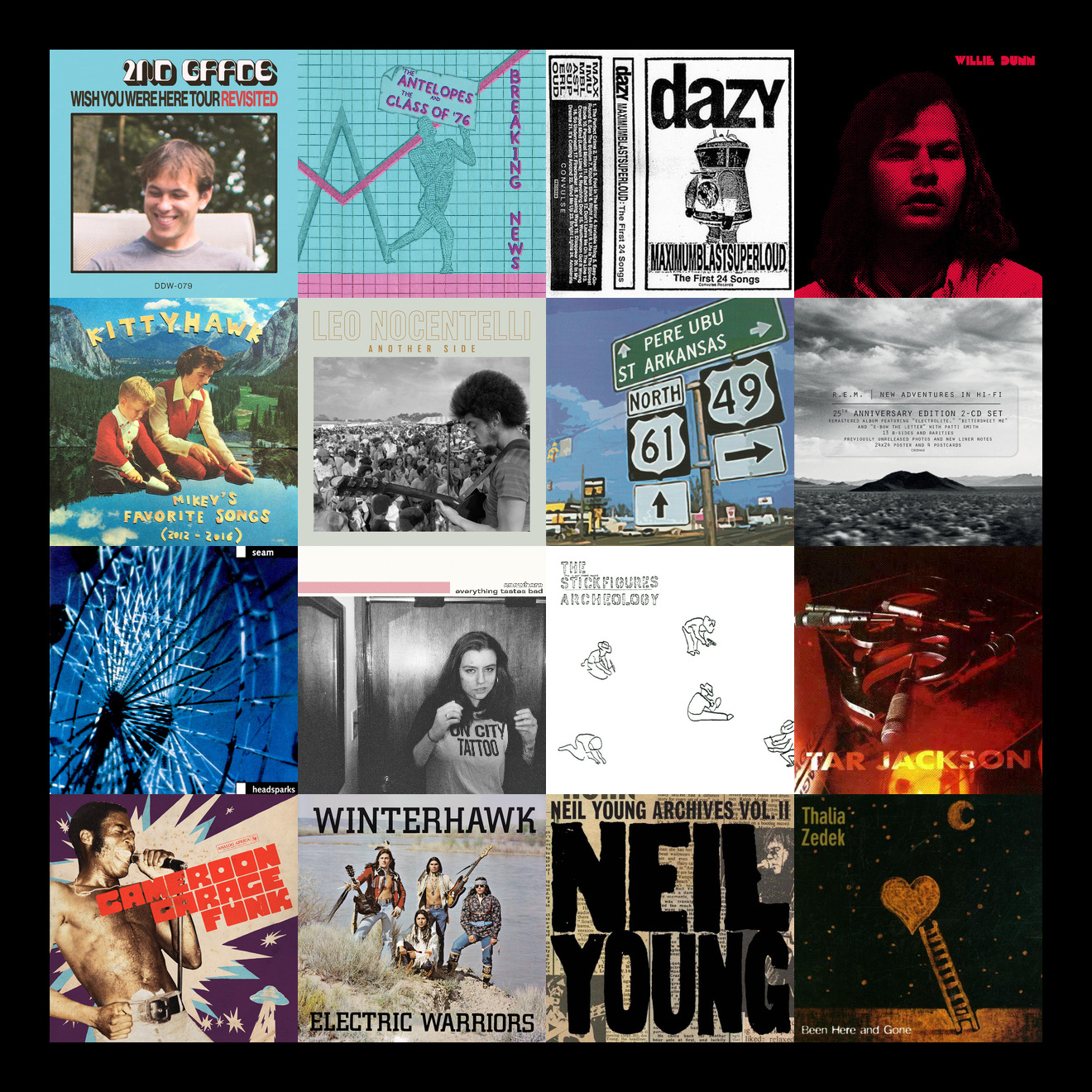





 Rosy Overdrive