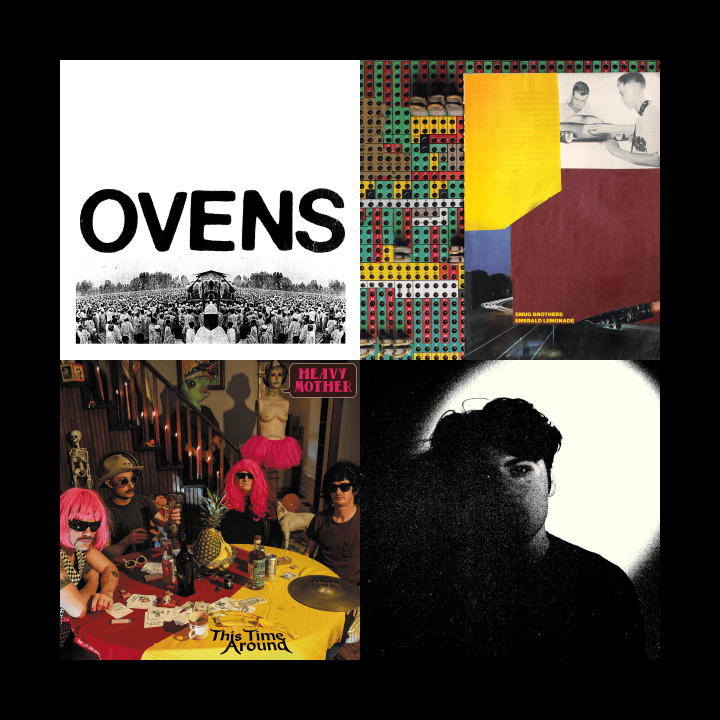
It’s mid-December, but I’ve still got new music to talk about in Pressing Concerns! Well, one of these is technically old music–today looks at a reissue from Tony Molina’s old band, Ovens, as well as new albums from Heavy Mother and Gabriel Bernini and a new EP from Smug Brothers. Rosy Overdrive’s Top 25 EPs of 2022 went up earlier this week, and the rest of the year will feature the reissue/compilation list (probably after Christmas) and one final edition of Pressing Concerns (probably early next week).
If you’re looking for more new music, you can visit the site directory to see what else we’ve written about lately. If you’d like to support Rosy Overdrive, you can share this (or another) post, or donate here (one fun thing that’s happened since I last wrote one of these is I’ve gotten laid off from my job, just in time for the holidays, so….)..
Ovens – Ovens (Vinyl Reissue)
Release date: December 2nd Record label: Tankcrimes Genre: Power pop, psych pop, alt-rock, lo-fi indie rock Formats: Vinyl, digital Pull Track: Punch You in the Face
Ovens is the birthplace of Tony Molina. Although I haven’t gotten around to covering the singer-songwriter’s solo career yet on Rosy Overdrive, he certainly fits right in around here: his discography is full of fuzzy power pop and psych pop in extremely short, digestible servings. Effectively every alley that Molina would eventually wander down in his solo records is present on Ovens–which I guess is not that surprising, as the self-titled Ovens album (originally released on CD in 2009) offers up 44 songs and an hour’s worth of strong guitar pop. More than an interesting early artifact, there are more than enough gems on Ovens to make this as key a part of Molina’s oeuvre as anything the Northern California musician has released since.
Ovens has two main modes that they meld together eagerly on their only release: loud and fuzzy power pop/alt-rock that evokes Weezer and Dinosaur Jr. with its triumphant guitar heroics, and an enthusiastic, jaunty acoustic pop sound that reminds me of early Of Montreal. With as many songs as Ovens contains, it’s a bit difficult to highlight every one that falls into either category, but tracks like “Same Shit Different Day”, “Punch You in the Face”, and “Everything’s the Same” kick up 90s alt-rock and grunge in their pursuit of heavy power pop, and the acoustic psych pop of songs like “Castillejo Scene” and “Song for Friends” show off Ovens’ Elephant Six side.
Not every song on Ovens falls cleanly into one of those categories, however–Molina and crew set the stage early on in “Fired from the Vogue Pt. 2”, where the song’s acoustic skeleton is doodled over with showy, over-the-top guitar soloing. As Ovens flies by, songs like “Lame Song #224” and “Waste of Time” also can’t commit to either quiet or loud, as well–there’s simply too much for Ovens to do, and only an hour and forty-four songs to get it done. (Bandcamp link)
Heavy Mother – This Time Around
Release date: December 16th Record label: Feel It Genre: Garage rock, proto-punk, garage punk Formats: Vinyl, digital Pull Track: I Know There’s No Answer
The latest (and final release from 2022) from Feel It Records is a scorching garage rock/proto-punk-inspired album straight out of Bloomington, Indiana. The four-piece band Heavy Mother is led by a real rock and roll veteran in Eddie Flowers, most notable for fronting 1970s Indiana punk group The Gizmos–in Heavy Mother, he’s backed by some newer faces, including a couple members of Bloomington Feel It staple The Cowboys (and, of, all things, a former member of Circuit Des Yeux–I guess the Bloomington scene is probably pretty small). Heavy Mother describe themselves as simply a rock and roll band, and their debut record, This Time Around, does anything but disappoint in this front.
Heavy Mother rip through fifteen tracks of pure garage rock that include standards like “Leavin’ Here” (originally written by Holland/Dozier/Holland and made famous by Motörhead) and “Louie Louie”–but This Time Around’s originals hold their own against the likes of these. Songs like opening track “I Know There’s No Answer” and “Eenie Meenie” feel ageless and incredibly energetic throughout. Even on the slower songs, This Time Around is amp-cranked to remind you of your favorite 70s Midwestern pre-punk fuzz rock group–at least, when they aren’t offering up the very much not timeless “Dicks in Space!”, a brief tune about everyone’s favorite billionaires taking a joyride out of this planet. It’s certainly not the best song on the album, but it’s in the spirit of This Time Around–fun and off-the-cuff. (Bandcamp link)
Smug Brothers – Emerald Lemonade
Release date: December 9th Record label: Gas Daddy Go Genre: Lo-fi indie rock, power pop Formats: Cassette, digital Pull Track: Pablo Icarus
Smug Brothers are not exactly indie rock superstars, but the Ohio four-piece band contains plenty to recommend for a certain lo-fi-devoted subset of the genre. Led by prolific singer/songwriter/guitarist Kyle Melton and also featuring onetime Guided by Voices drummer Don Thrasher and Columbus scene stalwart Kyle Sowash, Smug Brothers make the kind of bite-size, Robert Pollard-esque irreverent guitar pop that one might expect from their pedigree. Their latest record, the Emerald Lemonade cassette EP, highlights both the weird and the accessible side of Melton’s songwriting–there’s no shortage of melodies here, but, at seven songs and thirteen minutes, there’s plenty of “blink and you’ll miss it” moments as well.
Emerald Lemonade offers up multiple sides to Smug Brothers early on–the first three songs contain the crystal-clear guitar pop of “Midnight Tomorrow”, the busy, murky noise-pop of “Later Is Quad”, and opening track “Pablo Icarus”, which splits the difference with a charming melody delivered with a full-band sharpness. The second half of Emerald Lemonade particularly ups the skewed pop quotient, with a couple of one-minute tunes that are certainly catchy but don’t hold one’s hand in showing it (“Winter Swimmers”, “Aardvark Fusion”). Although the EP certainly has a lo-fi feel, it’s not minimalist–synths and jangly guitar leads populate these songs in a chaotic but catchy way, much like the rest of Emerald Lemonade’s ingredients. (Bandcamp link)
Gabriel Bernini – Up on a Hill
Release date: December 2nd Record label: Self-released Genre: Folk rock, piano rock, singer-songwriter Formats: Digital Pull Track: Up on a Hill
Gabriel Bernini has been a prolific folk rocker the last few years, making records both in his home state of Massachusetts and his current location of Los Angeles; Up on a Hill follows 2021’s You Got Me by about a year and a month. His newest album is still recognizably Bernini, with his relaxed vocals leading a stripped-down version of a sound that evokes 1970s singer-songwriter records, although one noticeable difference that Up on a Hill brings is that Bernini has moved to the piano for more of these tracks than his previous fare.
Bernini is adept enough at piano-first songwriting to try on a few different styles on Up on a Hill; he still writes bouncy, jaunty, poppy folk songs like “Hooked on Emotion”, “Love to Be Loved”, and “Man with No Head”, for one. The record has a couple of ballads, too—Bernini doesn’t overuse this mode, but these songs mark both the center (“Falling Again”) and end (“Harmony”) of Up on a Hill. Not everything is completely piano-centric, however; it has a presence but is merely one player in songs like “On Your Dial” and “To Know You”, and the title track is built off of a simple but pleasing guitar riff. All eleven of these songs end up falling well within Bernini’s folk rock wheelhouse, but the different touches help fill out Up on a Hill. (Bandcamp link)
You’re probably still making your way through Rosy Overdrive’s to Top 100 Albums of 2022, I know–but there were plenty of good EPs to come out this year, as well! Just like last year, I’ve put together a shorter but still substantial list of my twenty-five favorites for you all to check out. The EP is already an under-the-radar format, and most of these picks feel like they’ve been pretty under-discussed–I’m happy with this list, and I know you’ll find something new to you and very good here.
Here are links to the EPs on this list that are on streaming services: Spotify, Tidal. Look for a Best Compilations/Reissues of 2022 list and at least one more Pressing Concerns before the year’s out. To read about much more music beyond what’s on this list, check out the site directory, and if you’d like to support Rosy Overdrive, you can share this (or another) post, or donate here. Thank you for reading.
25. JUMBO – World As Bad Idea
Release date: July 1st Record label: Self-released Genre: Indie pop, lo-fi indie rock Formats: Digital
Bristol’s JUMBO is the latest project from duo Joe Sherrin and Kane Eagle (of SLONK, Milo’s Planes, and RADIATOR); their latest release sounds bigger than the work of two people, however. World As Bad Idea is made up of five songs of big, sincere, and accessible pop rock that isn’t dumbed down in any way, either. The EP opens with the maximalist seven-minute, horn-laden title track which reminds me a bit of Hallelujah the Hills and other driven, stuck-out-of-time indie rock groups–and the rest of the EP packs no less of a punch in its “normal” song lengths.
24. Big Big Bison – Big Big Bison
Release date: August 12th Record label: Self-released Genre: 90s indie rock/alt-rock, fuzz rock Formats: Digital
Chicago’s Big Big Bison is the trio of Matt Schwerin, Ben Grigg, and Kelly Johnson, who used to all play in a band called Geronimo!. Since then, Grigg has kept busy with Whelpwisher and Babe Report, and Johnson has the underrated Milked, and now they’re all together in a new band with a rock-solid six-song EP to their name. Songs like “Minor Fame” and “Native Sparrows” are loud but catchy alt-rock/power pop, sitting alongside the noise-punk “Blank Communication”, the pounding “Bruiser”, and the seven-minute Louisville-style post-rock closing track “Walking Tour”.
23. Ecstatic International – Ecstatic International
Release date: October 14th Record label: Sister Polygon Genre: Post-punk, dance punk Formats: Cassette, digital
Ecstatic International is a new Washington D.C.-based post-punk supergroup comprised of G.L. Jaguar (Ex-Priests), Laura Harris (Ex Hex), Anno (Olivia Neutron-John), Jacky Cougar Abok (Des Demonas), and Nikhil Rao (Bottled Up). The band’s self-titled debut EP delves into the same strain of groovy but smart post-punk music that Priests were exploring before their breakup; its five songs are all sleek, polished, brim-filled dance-punk tracks. Unemotional spoken-word vocals, bubbling Wire-esque synths, and occasional moments of 80s new wave melody all variously color Ecstatic International. (Read more)
22. Aluminum – Windowpane
Release date: October 7th Record label: Dandy Boy/Discontinuous Innovation Genre: Noise pop, shoegaze, experimental rock Formats: Vinyl, digital
The debut EP from San Francisco’s Aluminum is a compelling listen, finding the four-piece band hitting the ground running with a potent sound that pulls from dream pop, shoegaze, and psychedelia. Windowpane’s opening title track is a recognizable piece of Stereolab-esque noise pop in its steady, motorik tempo and the dual vocals of Marc Leyda and Ryann Gonsalves, and its “tuneful wall of sound” feel is rivaled by “Red & Gold” and “Solar” as well.
21. Fuvk – Goodnight, Moon
Release date: November 18th Record label: Z Tapes Genre: Indie folk, bedroom pop, lo-fi folk Formats: Cassette, digital
Austin’s Shirley Zhu has been reliably, consistently putting out quality indie folk through Z Tapes for several years now, but there’s something about November’s Goodnight, Moon EP in particular that caught my attention. Zhu’s second cassette of 2022 is a six-song collection that features several Fuvk hallmarks–sparse but beautiful acoustic guitar picking accompanied by Zhu’s straightforward but still quite emotional vocals and journal-entry lyrics. Goodnight, Moon follows Zhu through long trains of thought, occasionally poking her head out into the world to become demoralized at a first date or resolving not to wait for someone she knows won’t show.
20. Glazer – Civilian Whiplash
Release date: July 26th Record label: State Champion Genre: Garage rock, post-punk, noise rock Formats: Cassette, digital
The latest release from New Jersey’s Glazer is a six-song cassette EP on their longtime home of State Champion Records (Noun, Snakeskin) that delivers a brief but welcome dose of their heavy but frequently hooky fuzz rock. In a mere fifteen minutes, Civilian Whiplash bursts through blaring, dirty garage punk (“Fan of Violence”, “Excited Delirium”), anthemic, big-chorus alt-rock (“Channel Master”), stomping post-punk (“There’s No Lake”), and the surprisingly rootsy closing track.
19. Party’z – Party’z
Release date: January 14th Record label: Storm Chasers Ltd. Genre: Fuzz rock, noise pop Formats: Vinyl, digital
Party’z is the project of Kittyhawk guitarist/vocalist Mark Jaeschke, and it’s rounded out by bassist Clare Teeling (also of Kittyhawk), keyboardist Delia Hornik, and drummer Andy Hendricks. Very little of Kittyhawk’s Midwest emo sound is apparent in Party’z’s four-song debut EP–it’s a record of amp-cranked, fuzzy power pop. These songs are plugged-in and frequently reverb-fests; it sounds much closer to Times New Viking than any fourth-wave emo group. Still, there are four strong, earnest pop songs underneath the feedback. (Read more)
18.Supercrush – Melody Maker
Release date: June 3rd Record label: Debt Offensive/Flake/Erste Theke Tonträger Genre: Power pop, alt-rock Formats: Vinyl, CD, cassette, digital
On Supercrush’s latest EP, the Seattle group come off as totally devoted to fuzzy, power-chord-friendly 90s-style power pop. Being power pop scholars is all well and good, but Melody Maker works because it’s a product of enthusiastic believers—Supercrush’s strengths lie less in academically recreating or trying to create some kind of perfect lab mix of these sounds, and more in just letting their faith in these songs speak for itself. And Melody Maker‘s five songs songs are, first and foremost, catchy as hell–from the withering, Matthew Sweet-ish title track to the towering, “Hoover Dam”-esque closing statement of “Helium High”. (Read more)
17. The Sylvia Platters – Youth Without Virtue
Release date: June 24th Record label: Self-released Genre: Power pop, jangle pop, noise pop Formats: Cassette, digital
Youth Without Virtue is the first I’ve heard from British Columbia’s The Sylvia Platters, but they appear to have been around since 2015 at least. Judging from the five songs on their latest EP, however, they’re right up my alley—these tracks are expertly-written Teenage Fanclub-esque power/jangle pop touched (but never overwhelmed) by a bit of noise and dream pop distortion. “Blue Juniper” reaches for a bit of 60s psychedelia, closing track “No Quarter” drifts for five minutes, and the title track is nonstop pure, surging power pop–The Sylvia Platters are experts at this stuff.
16. Personal Space – Still Life
Release date: June 3rd Record label: Good Eye Genre: Indie rock, post-rock, math rock, soft rock Formats: Digital
On their follow-up to 2021’s A Lifetime of Leisure, Personal Space feel a little more pointed—they don’t have as much room to stretch out as they did on their last full-length, but Still Life makes the most of its time by covering a wide breadth of sonic and lyrical ground over its four songs. Their blend of “chill” vibes, unusual song structures, and left-wing political lyrics still feels unique—no one else could write a song like “Enron’s Trip”, which echoes Stereolab and Thrill Jockey while sketching its finance-bro subject. (Read more)
15. Ted Leo – For Coit and Killie / The Old 200 / Andy, Come Out
Release date: March 4th/April 1st/October 7th Record label: Self-released Genre: Punk rock, power pop, singer-songwriter Formats: Digital
This is a cheat, yes. I usually look down on those who combine several releases by one artist instead of considering each on its own merits. But the casual nature of the three Bandcamp-only EPs Ted Leo released this year makes it hard to choose one over the other, and the quality contained therein makes it even harder to ignore them entirely. Older, unreleased rarities, brand new Ted Leo songs both of the “rocking” and “acoustic” variety, three well-executed covers—put them all together, and you have…well, something that doesn’t exactly measure up to the lofty standard of the full albums Leo made with The Pharmacists, but something quite rewarding in its own right.
14. Buddie – Transplant
Release date: December 2nd Record label: Crafted Sounds Genre: Indie rock, power pop Formats: CD, digital
Buddie is an indie rock group founded by Philadelphian Dan Forrest; the appropriately-titled Transplant is the band’s first work since Forrest moved to Vancouver. The four-song EP continues Buddie’s distinct, sincere sound that’s both fuzzy and poppy and lands somewhere between a softer version of 90s indie rock groups like Built to Spill and a more rough-around-the-edges version of straight power pop. Forrest’s vocals are plainspoken but fully melodic as Transplant highlights the more accessible parts of 90s indie rock without losing the genre’s edge. (Read more)
13. Jobber – Hell in a Cell
Release date: October 21st Record label: Exploding in Sound Genre: Fuzz rock, punk rock, alt-rock Formats: Cassette, digital
The core of New York’s Jobber is guitarist/vocalist Kate Meizner and drummer/vocalist Mike Falcone, who also both play in Hellrazor, and those who enjoyed the noisy and catchy alt-rock of the former band’s Heaven’s Gate will find plenty to enjoy on Hell in a Cell as well. The group’s debut EP offers up nothing less than four incredibly strong wrestling-themed grunge-y fuzz rock tunes (and one amusing throwdown of an introduction track). “Entrance Theme” is the one that veers into straight-up power pop, but everything on Hell in a Cell’s got a tight hook. (Read more)
12. Posmic – Sun Hymns
Release date: March 11th Record label: Let’s Pretend Genre: 90s indie rock, psychedelia, indie punk Formats: Cassette, digital
Sun Hymns is the most substantial release thus far from Baltimore and D.C.’s Posmic—it’s an eight-track collection of brief, curious indie rock songs. The songs on Sun Hymns feel like mini-quests: they’re all trying to achieve a specific combination of sounds, and they bow out just as soon as it feels like they’ve gotten there. There aren’t many bells and whistles on Sun Hymns, either— it’s lifting music that’s confident enough to do what that genre does in the clothes of 90s indie rock and little else. (Read more)
11. Lawn – Bigger Sprout
Release date: July 15th Record label: Born Yesterday Genre: Jangle pop, post-punk Formats: Vinyl, digital
Bigger Sprout is comprised of three songs that were originally released early on in Lawn’s career (as Big Sprout), combined with four brand new ones. I thought about putting it on the reissue list, but since the majority of these tracks are new, it goes here. Wherever it is, it sounds great—the New Orleans band split themselves pretty evenly between sprinting post-punk (“Night Life”, “Medicine Forever”) and Flying Nun-esque sweet jangle pop (“Down”, “Running My Luck”) on the EP, and they’re adept at both.
10. New You – Candy
Release date: June 24th Record label: Lonely Ghost Genre: Power pop, fuzz rock Formats: Digital
Candy is the second EP from Seattle four-piece group New You, and as its name implies, it veers hard into a muscular power pop sound, evoking “Super-” bands like -Crush and –Drag. Bandleader Blake Turner remains interested in the hooky side of 90s alt-rock, and his newly-formed band (New You had previously been a solo project) gives an edge to these monsters of pop songs like “Listerine” and “Fairweather”. Laser-catchy lead guitars, big choruses, and Turner shining over blaring fuzzy rock abound throughout Candy. (Read more)
9. Quinn Cicala – Arkansas
Release date: September 23rd Record label: Self-released Genre: Alt-country, folk rock, country rock, “post-country”, emo-country Formats: Digital
I was a big fan of Cicala, last year’s self-titled release from Quinn Cicala and their South Carolina-based band. Since then, it appears that Cicala is a solo act now, and they’re based out of Atlanta, and they’re still making good music. Their latest is the five-song Arkansas EP, which continues Cicala’s streak of quality emotional alt-country-flavored (they call it “post-country”) tales. The breezy-sounding “Don’t Call Me” sweetens the dagger in its title, and “New York Times” and “I Wish Life Worked Like That” show that Cicala can deliver a good holler when the song calls for it.
8. Remember Sports – Leap Day
Release date: September 23rd Record label: Father/Daughter Genre: Indie pop, bedroom pop, lo-fi indie rock Formats: Digital
Remember Sports released one of the best albums of last year with Like a Stone—it was a nice surprise to hear from them again so soon, and Leap Day is another quality release from them, albeit one that sounds pretty different from their last full-length. The four-song EP is a low-key release, especially compared to Like a Stone—drummer Connor Perry is no longer in the band, and these songs recorded as a trio veer into synth-and-drum-machine-aided bedroom pop rather than attempting to seamlessly replace him. Still, songs like the slacker rock of the title track and the busy, sunny pop of “Supervise” capture the best in Remember Sports.
7.Old Moon – Under All Skies
Release date: September 16th Record label: Relief Map Genre: Post-punk, jangle pop, dream pop Formats: Cassette, digital
Old Moon is the project of Burlington, Vermont’s Tom Weir, and with his latest release, he fully commits to the sound of 80’s alternative rock. The six songs on the Under All Skies cassette EP fall between classic college rock and melancholic post-punk, and Weir’s writing takes advantage of the best of both styles. Old Moon’s embrace of reverb and Weir’s plainly emotive vocals conjure up dream pop, but these songs are (for the most part) more grounded and propulsive in a post-punk way. Under All Skies may be one of several Old Moon releases this year, but it feels like a fully-realized collection of multi-dimensional pop songs. (Read more)
6.Cashmere Washington – Almost Country for Old Men, Electro Country for They/Them
Release date: February 25th Record label: Self-released Genre: Lo-fi indie rock Formats: Digital
The second in Cashmere Washington’s debut trio of EPs continues Thomas Dunn’s blend of indie rock with “beat-making and lo-fi production”—think music made by somebody equally inspired by math rock and J. Dilla. Almost Country for Old Men… feels more relaxed and confident than last year’s The Shape of Things to Come, not reaching as far into the emo tinge that appropriately colored that EP’s formative recollection. Instead, the new EP casts a wide net, ranging from piano ballads to slacker rock to pop punk over the course of six songs. There’s been a lot of promise in Cashmere Washington since its inception, and it’s already being realized. (Read more)
5.La Bonte – Grist for the Mill
Release date: April 29th Record label: Anxiety Blanket Genre: Slowcore, alt-country, folk Formats: Cassette, digital
Los Angeles’ “quiet rock band” La Bonte is led by its namesake, singer-songwriter/guitarist Garrett La Bonte, and backed by a stable of musicians including Darto’s Nicholas Merz on pedal steel and Chase Petra’s Evan Schaid on drums. Their latest release, April’s Grist for the Mill EP, is emotional, widescreen California slowcore that also feels indebted to glacial-paced spaciousness of bands like Songs: Ohia and early Low. EP opener “Angel” is six minutes of pure sweeping beauty, and, somewhat paradoxically, it’s the record’s two covers (“Gracie Gray’s “Oregon in a Day” and Townes Van Zandt’s “Colorado Girl”) that sound the most intimate. (Read more)
4. Jon the Movie – A Glimpse That Made Sense
Release date: January 5th Record label: New Morality Zine/Cauldron of Burgers Genre: Lo-fi indie rock/punk Formats: Cassette, digital
Long Island, New York’s Jon Gusman is perhaps most notable musically as being the vocalist for hardcore group Rule Them All, but he debuted his solo project Jon the Movie at the beginning of the year with A Glimpse That Made Sense. Jon the Movie falls nicely into the category of “dude with hardcore background making more melodic alt-rock”—Gusman cites Fugazi, The Smashing Pumpkins, and Guided by Voices, and I’ll be damned if the first five songs on A Glimpse That Made Sense don’t sound like the exact center of that triangle. “I Can’t Help” is MacKaye and Jimmy Chamberlain-evoking, “Soul Tied to a Stranger” is particularly Pollardesque, and ten-minute closing track “Quest for Materiality” veers hard into prog opera. (Read more)
3. ME REX – Plesiosaur
Release date: June 17th Record label: Big Scary Monsters Genre: Indie pop, singer-songwriter, synthpop, folktronica Formats: Vinyl (with Pterodactyl EP), digital
Outside of last year’s Megabear (one of my favorite albums of 2021), ME REX has pretty much entirely operated in the realm of four-song EPs—and in that context, Plesiosaur is their strongest work yet. Songwriter Myles McCabe remains a compelling bandleader, sounding sometimes frantic, sometimes euphoric, and always passionate as he rushes to get out lyrics about “catatonic monuments” and other singular turns of phrase. The rest of the band really feel like they’re matching McCabe, exploding alongside him when the song calls for it and counterbalancing his outbursts with tightly-constructed piano pop rock when that’s what’s most effective.
2. Oblivz – Managers
Release date: May 23rd Record label: Self-released Genre: Synthpop, post-punk Formats: Digital
After over a decade of marking post-punk/power pop-inspired indie rock as half of Fox Japan, the duo of Charlie Wilmoth and Andrew Slater have formally forged something different with Oblivz. The group’s debut EP was 2021’s Uplifts, but its follow-up Managers sounds like a commitment to the newer group, the debut of Oblivz as something more than a “Fox Japan side project”. The songs sound fuller and denser, with Slater and Wilmoth finding a New Order-ish medium between guitar rock and electronic music. The black humor and undercurrents of corporate unrest and horror that marked Uplifts and Fox Japan are both present in Managers, particularly in the grim execution bureaucracy of “Out of Time” and the manic “Dr. Y”, and even in the disco-flavored synthpop banger “Up in the Air”, Wilmoth finds a way to touch on feeling isolated in the middle of the bustle. (Read more)
1. The Laughing Chimes – Zoo Avenue
Release date: November 18th Record label: Slumberland Genre: Jangle pop, lo-fi power pop Formats: Cassette, digital
The Laughing Chimes are comprised of Evan and Quinn Seurkamp, two brothers who play vintage-sounding jangle rock that recalls the best of classic Flying Nun Records and the mid-fi, wide-eyed sound of early Guided by Voices (which began a couple hours west of the duo’s home of Athens, Ohio). The guitars on their latest EP, Zoo Avenue, are always chiming; they soar in the record’s first two, single-ready songs, and they shade the more pensive songs as well, like the slightly-more-psychedelic “Airplane Under Water” and the closing acoustic ballad “King with the Hawthorne Crown”. Evan’s vocals are melodic and enthusiastic while wavering a little bit in a melancholic, wistful way that suits the “lost in nature” nature of The Laughing Chimes. (Read more)
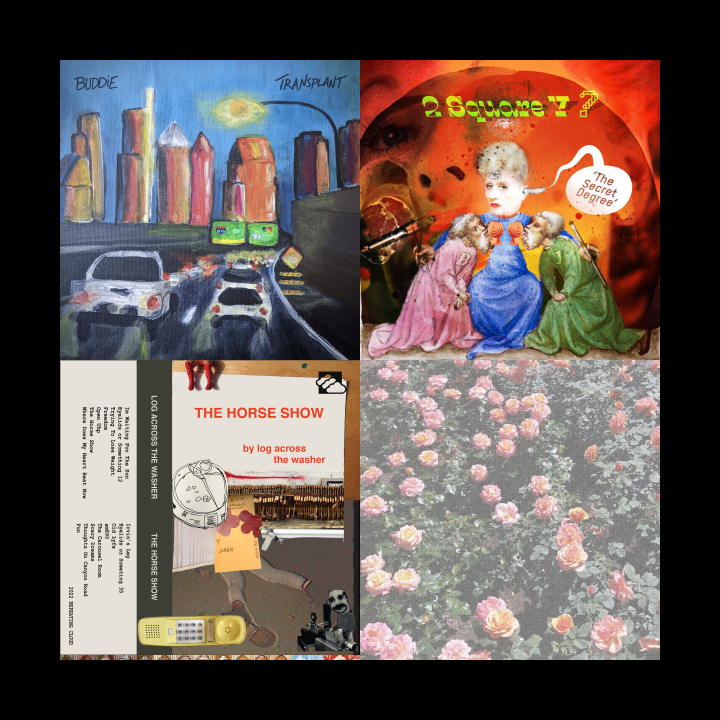
Welcome back to Pressing Concerns! It’s the first (probably out of two) Pressing Concerns in December, and it comes right on the heels of Rosy Overdrive’s Top 100 Albums of 2022 (maybe you missed it?). But there’s still more music to cover: today looks at new albums from Log Across the Washer and 2 Square Y?, and new EPs from Buddie and Lovewell. Look for Rosy Overdrive’s Favorite EPs of 2022 to go up next week.
If you’re looking for more new music, you can visit the site directory to see what else we’ve written about lately. If you’d like to support Rosy Overdrive, you can share this (or another) post, or donate here.
Buddie – Transplant
Release date: December 2nd Record label: Crafted Sounds Genre: Indie rock, power pop Formats: CD, digital Pull Track: Sunday Morning
Buddie is an indie rock group founded by Philadelphian Dan Forrest, who put out the band’s first EP and LP (2019’s Change of Scenery and 2020’s Diving) while living there. Now based in Vancouver, the appropriately-titled Transplant EP is Buddie’s first work since Forrest’s uprooting; it’s something of an announcement that Buddie will continue despite the move, with a full-length (Agitator) being announced for next year at the same time. The four-song EP continues Buddie’s distinct, sincere sound that’s both fuzzy and poppy and lands somewhere between a softer version of 90s indie rock groups like Built to Spill and a more rough-around-the-edges version of straight power pop.
Forrest’s vocals have a plainspoken but effortlessly melodic quality to them that reminds me of Lexington, Kentucky’s Andrew English (The Scourge of the Sea, Englishman), and the sleepy, not-yet-awake-enough-to-deal-with-dystopia opening track “Sunday Morning” really drives this home. Buddie’s determination to highlight the poppiest parts of 90s indie rock without losing its edge also reminds me of another likely influence on them, LVL UP. The midsection of Transplant isn’t as immediately grabbing as “Sunday Morning”, but the anticapitalist meditation “Take What’s Left” and the chilly “Northern Skies” both have plenty of meat on them. Closing track “Indecision” is the big finish, the hurricane-rocker that takes the titular uncertainty and spins it into a strong and firm declaration. (Bandcamp link)
Log Across the Washer – The Horse Show
Release date: November 25th Record label: Repeating Cloud Genre: Lo-fi indie rock, lo-fi pop, experimental pop Formats: Cassette, digital Pull Track: Eyelids or Something 35
Log Across the Washer is the project of Tyler Keene, who began it a decade or so ago while living in Portland, Oregon. Keene stopped making music for a few years, but reemerged as a New Jersey resident last year with October’s It’s Funny How the Colors, and last month’s The Horse Show continues the rebirth of Log Across the Washer. A classic kitchen-sink lo-fi pop record, It’s Funny How the Colors served up both sparkling, jangly psych-pop nuggets alongside tracks that reflected Keene’s experimental and jazz influences as well. The Horse Show leans even harder into accessibility; nearly every one of its fifteen tracks could accurately be described as a “pop song”.
The Horse Show opens with the barebones “I’m Waiting for the Sun”, which pulls off psychedelia with little more than an acoustic guitar, plodding bass, and Keene’s distorted vocals (he throws in a “woo-hoo” or two for good measure). Log Across the Washer also offer up pop highlights like the Robert Pollard-esque belter “Eyelids or Something” (which appears on the album twice, in a faster and slower version), the Elephant Six singalong “Where Does My Heart Beat Now”, and the brisk, acoustic-strummed “Irvin’s Leg”. Even at its most rickety (the one-minute “The Carousel Room”) or its weirdest (the vocal affect-laden ballad “AM890”), The Horse Show remains friendly and provides no shortage of strong songs. (Bandcamp link)
2 Square Y? – The Secret Degree
Release date: December 2nd Record label: Emotional Response Genre: Experimental pop, psych pop, post-punk Formats: Vinyl, digital Pull Track: The Secret Degree
2 Square Y? is the latest project from Jim Welton, aka Xentos Fray Bentos, who has played with The Homosexuals, Amos and Sara, and Die Trip Computer Die, and Ted Barrow (who played with Welton in the latter of those three bands). The members of 2 Square Y? have covered an enormous amount of musical ground over their decades of experience (Emotional Response is releasing their debut record along with a reissue of Amos and Sara’s Go Home Soldier, a fascinating artifact of 1980s disco-influenced dub), but with The Secret Degree, they land in the realm of bizarre, offbeat, but still catchy avant-pop music.
The Secret Degree certainly reflects Welton and Barrow’s post-punk and dub backgrounds—most of the songs feature live-wire, expressive and showy basslines that are as important to the catchiness of these songs as frequent exuberant instrumental interjections or Welton’s ageless trickster voice. The most straightforward pop songs on the record leap out immediately—the giddy opening title track, the snapping groove of “Morgan Drowning”, the slick retro pop throwback of “So Lo”. The weirder tracks still contain memorable moments, like the really bizarrely-sung chorus of “Inside”—and speaking of memorable, The Secret Degree closes with the sparse “I Set Fire to an Angel (The Grenfell Towersong)”, which cannot cloak its well-earned contempt in a pretty acoustic-guitar-picking instrumental. It’s not the only example, but it is the most obvious one—“whimsical” does not have to mean “empty”. (Bandcamp link)
Lovewell – Around the Flowers
Release date: November 11th Record label: Clever Eagle Genre: Shoegaze, alt-rock, dream pop, emo Formats: Cassette, digital Pull Track: Your Doubt
Lovewell is the duo of Mark Palladino and Joe Bradshaw–the Massachusetts and New Hampshire-based band has been making music together since 2018, and the six-song Around the Flowers cassette EP is their most substantial release yet. The story of Lovewell isn’t an unfamiliar one–Palladino and Bradshaw got their start as hardcore and metal players, but their latest project finds them making more accessible shoegaze-y, dream-y, emo-ish indie rock. Lovewell sticks out among several other ex-hardcore alt-rockers on the strength of their songs; Around the Flowers is relatively humble-sounding for ostensibly “heavy” music, but it’s a sturdy half-dozen songs without a weak spot or dud.
Although Around the Flowers is “dreamy”-sounding, for sure, it lets the guitars ring clear when it makes sense to do so, and the delicate vocals are always melodic and calm no matter what goes on around them. The first half of the EP hews closest toward a traditional alt-rock/emo sound–the punchy “Your Doubt” is my favorite, although mid-tempo opening track “See You Down” sets the tone nicely, too–and then Lovewell try out a few different turns in the final three songs. None of them are huge departures, but the new shades (the low-end-emphasis of “Burden”, the cinematic drama of “Unlikely”, the acoustic “August”) fill out Around the Flowers and help it feel like a full statement. (Bandcamp link)
Here it is! Rosy Overdrive’s 25 favorite albums of 2022, revealed today along with albums 50 through 26, and coming a day after albums 51 through 100. Needless to say, these are all great records. You simply can’t go wrong with any of them. It was a three-record race for number one; I’m satisfied with the one I ended up choosing, but all three of them occupied the top spot at various points. Once again, thank you for reading.
Release date: September 16th Record label: Self-released Genre: 90s indie rock, singer-songwriter, folk rock Formats: Vinyl, digital
Kevin Dorff is a Brooklyn-based, Des Moines-originating singer-songwriter and playwright whose debut record, Silent Reply, is a thematically heavy one. A meditation on death and those left behind, every track on the record is about a friend or acquaintance of Dorff’s who died between 2010 and 2015. The darker moments on Silent Reply are tempered by Dorff’s pleasing 90s indie rock, alt-country, and folk rock-indebted sound, and a writing style that declines to focus solely on these lows. Every track on the seven-song record contains an entire world, appropriate for capturing a life. (Read more)
24. Lou Turner – Microcosmos
Release date: September 2nd Record label: Spinster Genre: Folk rock, alt-country Formats: Vinyl, CD, digital
Microcosmos is Styrofoam Wino Lou Turner’s third solo album since 2017, and it’s absolutely the work of a skilled songwriter at the peak of their output. The album’s title is, for Turner, an attempt to give a name to the feeling of attaining adventure and motion in the domestic and fixed world (“a constellation of microcosms”) that is a (in fact, the) theme of the record. This is reflected in the way Microcosmos sounds like a contented, laid-back 70s folk-rock record, even as Turner’s lyrics and subjects probe and roam within their contexts. Microcosmos is, true to its title, a record that reveals both its ambition and its success in realizing it with closer and repeat listens. (Read more)
23. Upchuck – Sense Yourself
Release date: September 30th Record label: Famous Class Genre: Garage rock, garage punk, hardcore punk Formats: Vinyl, digital
Upchuck is a fierce five-piece band that hails from Atlanta, and their debut full-length record, Sense Yourself, is a fully-developed look at the group’s heavy but unique take on southern garage punk. The group show off their talents throughout the record, jumping from hardcore punk to zippy post-punk to slow, grunge-y tracks, and songwriter and vocalist KT manages both hardcore-esque barks and more “classic punk rock” sing-speaking with gusto. Upchuck are confident enough in their abilities throughout Sense Yourself to let these songs stretch out to five or so minutes, a rarity in this type of punk rock–and their belief is well-placed. (Read more)
22. First Rodeo – First Rodeo
Release date: April 15th Record label: Forged Artifacts Genre: Alt–country, country rock Formats: Cassette, digital
First Rodeo is the duo of Nathan Tucker and Tim Howe—the former makes experimental pop music as Cool Original, the latter plays No Depression country rock in Vista House. Their self-titled debut record together is a wellspring of excellent folk rock/alt-country songs, with Tucker and Howe’s songs sounding both fun and noticeably deep. Tucker’s singing injects a playfulness into songs like “Pucker Up, Amelia”, while Howe’s drawl gives tracks like “Didn’t It Rain Last Night” and “Patience” even more heft.
21.Bellows – Next of Kin
Release date: March 23rd Record label: Topshelf Genre: Indie pop, indie folk, art pop Formats: Vinyl, cassette, CD, digital
The latest album from Bellows, the project of New York’s Oliver Kalb, has grandiose ambitions, but Next of Kin seems equally concerned with not losing the plot at the record’s sturdy core. Kalb’s songs are dressed up in colorful, brimming palettes throughout the record, but his vocals are breathy and impassioned even in Next of Kin’s busiest moments, which preserves the songs’ intimacy. It’s an important wrinkle for Next of Kin, an album that sits with losses that are felt from the slight-remove of the title on down. (Read more)
20.Good Grief – Shake Your Faith
Release date: March 8th Record label: Everything Sucks/HHBTM Genre: Indie punk, punk rock, 90s indie rock Formats: Vinyl, digital
Good Grief are quite adept at making loud, punk-influenced hooky rock music that’s immediately familiar and recognizable to fans of 90s indie rock, and their long-awaited debut record (practically a decade in the making) reflects this. The Liverpool trio are extremely open Bob Mould disciples, songs like “The Pony Remark” could’ve come straight from Superchunk’s On the Mouth, and there’s a heart-on-sleeve earnestness that puts them into Samiam/Knapsack-esque emo-punk territory. No matter how many older groups Shake Your Faith evokes, it all sounds remarkably fresh and present.
19. Dogbreth – Believe This Rain
Release date: August 5th Record label: Phat ‘n’ Phunky Genre: Jangle pop, alt-country Formats: CD, cassette, digital
The fifth album from Tucson, Arizona’s Dogbreth (formerly of, at various points, Phoenix and Seattle) is a sincere, starry album that’s equal parts desert country and classic jangle pop. Believe This Rain takes inspiration from vintage college rock (think names like Tommy Keene and Teenage Fanclub), but there’s also a wide-openness to these songs’ sound that befits their Arizona home and distinguishes them from their influences. Tristan Jemsek’s songwriting gets dressed up in gorgeous jangly ballads, cinematic heartland rock, and amped-up fuzz rock throughout Believe This Rain—barely crossing the half-hour mark, the record feels more than full enough. (Read more)
18. Gordon M. Phillips – Seasonal
Release date: July 22nd Record label: Self-released Genre: Folk rock, singer-songwriter Formats: Digital
On his debut full-length solo record, Gordon M. Phillips does not attempt to recreate the baritone-guitar-led, cinematic emo sound that his band, Downhaul, has chased recently. Seasonal was recorded entirely by Phillips on a Tascam 4-track, and it’s subsequently a sparse-sounding album. While it’s certainly pared-down, Seasonal isn’t all quietness, either—songs like “Tarmac” and “The Fall” strain against their acoustic foundations and show Phillips’ penchant for big choruses. The record remains decidedly Phillips-sounding, whether he’s evoking the country-ish material he recorded with Maxwell Stern in “April” or the moodiness of the most recent Downhaul record with “At, At”. (Read more)
17. The Trend – Sgt. Pepper II
Release date: August 26th Record label: Good Soil/Yellow K Genre: Power pop, jangle pop Formats: Vinyl, digital
The Trend hail from the Maryland panhandle and have been around since the early 2000s—their Bandcamp page lists four and a half members, but their latest record Sgt. Pepper II was written and recorded entirely by two of them: Kenny Tompkins (aka Mr. Husband) and Brian Twigg. Sgt. Pepper II is squarely in the realm of 90s alt-rock-flavored power pop, legitimately earning a Blue Album-era Weezer comparison with grunge-influenced amp-cranking, wild catchiness, and Beach Boys-esque harmonies in songs like “Come Home” and “If Yr Leaving”, and also containing shades of other fuzzy, poppy alt-rock bands like Superdrag and Sloan. (Read more)
16. Jim Nothing – In the Marigolds
Release date: September 15th Record label: Meritorio/Melted Ice Cream Genre: Jangle pop, Dunedin sound Formats: Vinyl, digital
Christchurch, New Zealand’s Jim Nothing are a guitar pop trio whose latest record certainly recalls plenty of music from the original wave of Dunedin groups that put New Zealand on the map for indie rock—In the Marigolds pulls from the breeziness of The Bats, the haziness of The Clean, the fractured pop of Chris Knox, and the prominent violin from vocalist Anita Clark reminds me of music from Alastair Galbraith and the Jefferies Brothers. Most of the 28-minute record settles into breezy, jangle pop, although rockers like “Never Come Down” and “Yellow House” also showcase the band’s strengths. (Read more)
15. Norm Archer – Flying Cloud Terrace
Release date: August 9th Record label: Panda Koala Genre: Lo-fi indie rock, power pop Formats: Digital
Norm Archer is the new project of Portsmouth, England’s Will Pearce, and his debut record under the name, Flying Cloud Terrace, is a reflection of his recent interest in home-recording and one-man-band status in service of lo-fi pop music. Pearce cites many Rosy Overdrive-approved bands as inspiration for Flying Cloud Terrace—there’s Guided by Voices in the Who-indebted prog pop of “South Parade”, among other tracks, and there’s a lightly psychedelic haziness that recalls Flying Nun Records, even as plenty of these songs have a revved-up, indie punk tempo.
14. Mike Adams at His Honest Weight – Graphic Blandishment
Release date: September 9th Record label: Joyful Noise Genre: Power pop, pop punk, indie rock Formats: Vinyl, digital
The latest record from Bloomington, Indiana indie rock lifer Mike Adams and his backing band is a pretty undeniable, really-going-for-it pop rock album with a compelling personality at its front. Graphic Blandishment’s ten songs feature full-sounding but simple enough instrumentals that serve Adams’ huge choruses about…well, a bit of everything, really. Titles like “Arrow & Asa in the Year 3000” and “Tie-Dyed & Tongue Tied” deliver hooks that bely their wordy titles, not to mention the aw-shucks power pop of “How’s the Messes” (which turns “It doesn’t take a lot of shame to make a mess like the one I’m in,” into a kind of anthem).
13.Mo Troper – Mo Troper V
Release date: September 2nd Record label: Lame-O Genre: Lo-fi indie rock, power pop Formats: Vinyl, digital
Not only does Mo Troper V (aka MTV) continue Mo Troper’s foray into lo-fi, self-made recordings that began with last year’s Dilettante—it’s a full embrace of the inherent messiness by the Portland power pop musician. At its extremes, the fuzziness of MTV results in straight-up noise pop, although the majority of the record strikes a balance between in-the-red distortion and pop hooks: spare acoustic tracks sit unapologetically alongside disorienting, thornier songs. MTV is something of a dispatch from the world of Mo Troper—and there’s more going on there than ever. (Read more)
12. 2nd Grade – Easy Listening
Release date: September 30th Record label: Double Double Whammy Genre: Power pop Formats: Vinyl, digital
The third album from Philadelphia’s 2nd Grade, Easy Listening, may “only” have sixteen songs (as opposed to the twenty-four on 2020’s Hit to Hit), but the five-piece band make the record feel like 2nd Grade’s most diverse yet. Bandleader Peter Gill’s vocals are delicate and melodic as he steers 2nd Grade through amp-cranked, glam-influenced power pop, shining, effortless pop rock, and hissing lo-fi recordings. The crop of musicians Gill has assembled is effectively a supergroup ,comprised of members of Friendship, Remember Sports, The Fragiles, and Ylayali, among other acts, and they all help Gill realize the full potential of his excellent songwriting. (Read more)
11. Cheekface – Too Much to Ask
Release date: August 2nd Record label: Self-released Genre: Garage rock, post-punk, Cheekface Formats: Vinyl, digital
Cheekface’s third album picks up the thread where last year’s Emphatically No. (not to mention their 2019 debut, Therapy Island) left off; Greg Katz’s monotone vocals and flung-at-a-cultural-dartboard lyrics pared with pop-friendly instrumentals that are nonetheless somewhat hard to pin down musically yet again abound. On Too Much to Ask, however, the Los Angeles trio also show some willingness to stretch their sound, like the band speeding everything up on opening track “When Life Hands You Problems”, Katz absolutely shredding his vocals in the chorus to “I Feel So Weird!”, or the Cheekface-as-dance-music banger “Featured Singer”. (Read more)
10. Lee Bains III & The Glory Fires – Old-Time Folks
Release date: August 5th Record label: Don Giovanni Genre: Southern rock, country rock, folk rock Formats: Vinyl, CD, digital
Lee Bains III + The Glory Fires may slow things down, comparatively speaking, on their fourth record, but the fiery southern rock band has no intention of going “smaller”. Old-Time Folks doesn’t abandon the scope of 2017’s Youth Detention (which is on the shortlist for album of the last decade), nor do they forget that they were once the band that made 2014’s fuzz-fest Dereconstructed, as rockers “Done Playing Dead” and “Caligula” show. Still, Old-Time Folks embraces more acoustic guitars and elevates Bains’ vocals higher in the mix than they’ve been in their last couple of records, really helping out with the impact of songs like the breathtaking “Rednecks” and the massive “God’s A-Working, Man”.
9. Friendship – Love the Stranger
Release date: July 29th Record label: Merge Genre: Alt-country, folk rock Formats: Vinyl, CD, digital
Friendship may have been reduced to a four-piece band for the first time with Love the Stranger, but, if anything, the Philadelphia band’s fourth record is as full-sounding as they’ve been yet. Songs like “Hank” and “Ugly Little Victory” have surprisingly driving tempos for a band that has justifiably referred to itself as “ambient country” before, and Love the Stranger also has time for synth-based experiments (“Alive Twice”) and dramatic alt-rock (“Ryde”). Still, there’s no mistaking Love the Stranger for anything but a Friendship record—Dan Wriggins sounds just as in his element singing about ramekins with grape jelly remnants and red-tailed hawks over these instrumentals as any others.
8.Perennial – In the Midnight Hour
Release date: February 1st Record label: Self-released Genre: Post-hardcore, dance punk, garage rock Formats: Vinyl, CD, cassette, digital
The second album from New England’s Perennial feels like a completely inhibition-less rock record, where thrashing post-hardcore, expanded-palette art punk, and catchy garage rock all combine to make something unforgettably attention-grabbing. Vocalists Chelsey Hahn and Chad Jewett trade off their taunts and howls on pretty much every song on In the Midnight Hour, Jewett’s guitar and Wil Mulhern’s drums slice and punch through each track, and the entire Christ Teti-produced record sounds great. Perennial are pretty much always “on”—forget breather tracks, the only respites in In the Midnight Hour are a few tapering-off outros. (Read more)
7. Sadurn – Radiator
Release date: May 6th Record label: Run for Cover Genre: Alt-country, indie folk Formats: Vinyl, cassette, digital
Philadelphia’s Sadurn make a very intriguing and attention-grabbing version of alt-country—it’s sincerely devoted to the “country” aspect of the genre, but they still sound quite accessible and built to emphasize frontperson G DeGroot’s songwriting. Sadurn started as DeGroot’s solo project, but the full band that they’ve assembled for their debut record is an asset throughout Radiator, and it’s rarely guilty of overplaying. For every shuffling roots-rock anthem like opening track “Snake”, there’s something like the unflinching relationship analysis of “Icepick”, in which drum machines and synths are DeGroot’s main accompaniment. (Read more)
6.Ex-Vöid – Bigger Than Before
Release date: March 25th Record label: Don Giovanni Genre: Jangle pop, power pop Formats: Vinyl, CD, digital
There has been a lot of music to come from of the former members of Joanna Gruesome after the Welsh band broke up in 2015, but the debut album from Ex-Vöid might be the strongest single record from them yet. Bigger Than Before is the full-length reunion of Joanna Gruesome singer-songwriters Alanna McArdle and Owen Williams— they released an EP together under the Ex-Vöid name in 2018, and Williams has also been playing in The Tubs lately. Bigger Than Before is a big, hooky, indie pop record that’s got just a bit of an edge to it. It’s power pop at its wistful best, with McArdle and Williams’ harmonies being shot through with just enough noisiness to punch the songs up a tad.
5. MJ Lenderman – Boat Songs
Release date: April 29th Record label: Dear Life Genre: Alt-country, country rock Formats: Vinyl, CD, digital
At 34 minutes, Boat Songs is the most substantial album to come out of MJ Lenderman’s recent flurryof activity. In what has become a much-deserved breakout record for the Asheville alt-country musician (and member of Wednesday), Boat Songs should immediately grab any curious new listeners with the roaring country rock opener “Hangover Game” and the mid-tempo southern groove of “You Have Bought Yourself a Boat”. The rest of the record is a showcase for all of Lenderman’s talents, from the lo-fi fuzz-fests of “SUV” and “Dan Marino” to the affecting wrestling-themed ballad of “TLC Cagematch” to the “how-does-he-do-it” genius of “You Are Every Girl to Me”. (Read more)
4. Joyride! – Miracle Question
Release date: April 15th Record label: Salinas Genre: Power pop, pop punk, indie rock Formats: Vinyl, digital
Joyride! come from San Francisco, and they’ve been around for a decade or so, but I only heard of them after they released their fourth album, Miracle Question, earlier this year. But they’re quickly becoming one of my favorite new discoveries of 2022. Miracle Question is a classic 2010s lo-fi power-pop-punk album at heart, even as polished as it sounds at points (chalk it up to experience). Joyride! get all of this done in under a half hour, with most of these songs making their impression both musically and lyrically (there is a lot going on beneath the surface on Miracle Question) in about two minutes or so.
3. Emperor X – The Lakes of Zones B and C
Release date: April 10th Record label: Self-released Genre: Folk punk, electro-folk, experimental rock Formats: Digital
The first Emperor X album in a half-decade is certainly more than worth the wait. The Lakes of Zones B and C delivers on pretty much every front that Chad Matheny has explored over his career as Emperor X –surging modern folk anthems, quieter electronic explorations, and beautiful acoustic ballads. The Matheny that grappled directly with the last few years of chaos in 2020’s United Earth League of Quarantine Aerobics EP and last year’s “Sad React” single is present in highlights like “False Metal” and “Communists in Luxury”, as is the more pensive version of his songwriting in vaguer (but no less substantial) tracks like “Freeway in Heaven” and “The Crows of Emmerich”. And this isn’t even taking into account how The Lakes of Zones B and C finds some genuinely new areas for Emperor X to probe in its last few songs, ending with the pure catharsis of “Stars”.
2. Zinskē – Murder Mart
Release date: February 14th Record label: Self-released Genre: 90s indie rock Formats: Vinyl, digital
Everything’s tight and in its right place on Murder Mart, the debut album from Philadelphia’s Zinskē. It’s a sleek, well-put-together record that reminds me both of austere, controlled post-punk and mid-tempo 90s alt-rock. Singer/songwriter/guitarist Chris Lipczynski’s low, dry, and stoic vocals stick out throughout the record, as do Emily Cahill’s prominent and frequently melodic basslines. There’s a “sharp dullness” to Murder Mart—the songs might seem opaque at first, but there’s too much going on underneath the surface to ignore. Lipczynski and the band perform this balancing act of being a subtle band that yet always sounds animated by something—even in the lyrics (hell, whole songs) on Murder Mart that I can’t quite parse. (Read more)
1. Mister Goblin – Bunny
Release date: April 22nd Record label: Exploding in Sound Genre: Post-hardcore, alt-rock, indie folk Formats: Vinyl, digital
The third record from the Maryland-originating, Indiana-based Mister Goblin is the first to feature a full-on backing band–Sam Goblin is joined by bassist Aaron O’Neill and Options’ Seth Engel on drums. Mister Goblin was already one of the best under-the-radar indie rock acts of its time—if you’ll recall, 2021’s Four People in an Elevator and One of Them Is the Devil placed highly on last year’s list—but the upgrade to a three-piece gives Bunny a full-throated sound that adds another dimension to their sound. The band really go for it in the Brainiac post-hardcore opening track “Military Discount” and turn in invigorated versions of the Mister Goblin/Two Inch Astronaut sound in “Good Son/Bad Seed” and “Holiday World”, and (just as importantly) the trio still find room for Sam Goblin’s songwriting to breathe in the largely-acoustic final three songs on the record. Four People in an Elevator… was a big step forward for Mister Goblin from a songwriting perspective; Bunny matches it song for song while, at the same time, taking just as large of a musical leap. (Read more)
Hello! Welcome back (or just welcome) to Rosy Overdrive’s Top 100 Albums of 2022! Today reveals the top 50 albums on the list. Yesterday unveiled numbers 100 through 51, so be sure to check those out as well if you haven’t yet.
Release date: August 26th Record label: Good Eye Genre: 90s indie rock, indie pop Formats: Vinyl, digital
The fourth-full length record from Seattle’s Scarves points toward rainy, sprawling Pacific Northwest indie rock while retaining an indie pop simplicity as well. Guitarist/singer Niko Stathakopoulos’s high, comforting vocals evoke both Built to Spill’s Doug Martsch and John K. Samson of The Weakerthans on Delicate Creatures, and his songwriting veers between the found poetry that’s a hallmark of the latter and twee-indebted straightforwardness in which the former has dabbled. As tender as Delicate Creatures can sound, Scarves also probe the darker and deeper side of animal nature to striking effect. (Read more)
Release date: February 14th Record label: La Loi Genre: Jazz-pop Formats: Cassette, digital
Blanche Blanche Blanche is the duo of singer Sarah Smith and multi-instrumentalist Zach Phillips (also of Fievel Is Glauque and a bunch of other bands). The two have made a lot of music together; so far, I’ve only heard their latest record, 2022’s Fiscal, Remote, Distilled, but it rules. It’s a shiny, original record of jazzy pop marked by Smith’s clear vocals that are sung-spoken but still quite melodic and by Phillips’ arsenal of jazz and rock band instruments that can both overwhelm and draw back to fit the songs. Fiscal, Remote, Distilled is smart, but comes off straightforward—songs like “That’s Siberia”, “Overdry Sensation”, and “Only Yesterday” have been bouncing around my head since I heard them initially.
48. The John-Pauls –Bon Mots
Release date: November 18th Record label: Aagoo Genre: 90s indie rock Formats: Vinyl, CD, digital
It feels wrong to call The John-Pauls’ second album “stripped down”, given that it’s made with three guitar players and a keyboardist, but the Austin five-piece band has a straightforward, no-frills sound that compliments Bon Mots‘ ten strong 1990s-inspired indie rock tunes. The record bounces back and forth in terms of formality, from the regal “Didn’t I” to the exuberant “Same Dweller, Different Cave”, but Bon Mots is consistent in its offering of economic pop hooks. There’s precious little on Bon Mots that feels unearned or superfluous in any way. (Read more)
47. The Paranoid Style – For Executive Meeting
Release date: August 12th Record label: Bar None Genre: Country rock, folk rock, garage rock, singer-songwriter Formats: Vinyl, digital
The latest record from Washington, D.C. quintet The Paranoid Style is a particularly potent combination of long, unspooling lyricism, energetic garage rock, and rootsier influences. Lead singer Elizabeth Nelson is a singular songwriter and a conversational, compelling vocalist throughout For Executive Meeting—these songs remind me of the likes of John K. Samson, Christine Fellows, and Franklin Bruno, but with a full-band kick to them (aided in part by Rosy Overdrive favorite William Matheny on keyboards) that ensures that the album, is, above anything else, an incredibly fun listen.
46. Patches – Tales We Heard from the Fields
Release date: February 25th Record label: Self-released Genre: Post-punk, jangle pop Formats: Digital
Patches are a new remote-collaboration trio comprised of Evan Seurkamp (of The Laughing Chimes), RKC, and Aaron Griffin. Their debut release is the full-length Tales We Heard from the Fields, a generous 14-song collection that takes cues from all over the map of the past 40 years of alternative rock music. Several hallmarks of post-punk characterize songs like “Plastic and Gold” and “Revisitation”, and there’s also clear influence from classic guitar pop in the sunny “Parallel Mind” and the triumphant “Rosaley”. Plodding, expressive bass guitar tempers some of Tales We Heard from the Fields’ brighter moments, and hooks still mark the moodier ones. (Read more)
45.Oneida – Success
Release date: August 19th Record label: Joyful Noise Genre: Garage rock, psychedelic rock, krautrock Formats: Vinyl, CD, cassette, digital
Brooklyn’s Oneida has amassed a heady, intimidating discography of colossal, unpredictable masses of heavy psych, kraut, and experimental rock music over their twenty-five years as a band, but Success invites the listener to throw out one’s per-conceived ideas of what Oneida should sound like and just enjoy some roaring garage rock. While bursts of noise, feedback, and some long jams still populate Success, they sit alongside plainly-presented, three- (or even two-) chord euphoric rockers—declaring that the Oneida way is, in fact, consistent with rock and roll. (Read more)
44. Camp Trash – The Long Way, the Slow Way
Release date: July 1st Record label: Count Your Lucky Stars Genre: Power pop, emo, pop punk Formats: Vinyl, CD, digital
The first Camp Trash full-length record echoes and expands on the promise that their 2021 debut EP, Downtiming, showed. The sound that’s most recognizably Camp Trash (the end-of-the-20th-century pop rock that pulls from both the 90s underground and 00s pop culture) is here on tracks like “Weird Florida”, “Let It Ride”, and “Lake Erie Boys”, but they also find space in The Long Way, The Slow Way‘s dozen tracks for LVL UP-evoking fuzz-drone (“Another Harsh Toyotathon”) and power ballads (“Poured Out”). It’s a stubbornly timeless-sounding record for evoking such a specific era of guitar music. (Read more)
43. Near Beer – Near Beer
Release date: July 15th Record label: Double Helix Genre: Punk rock, alt-rock, power pop, college rock Formats: Vinyl, digital
Near Beer’s self-titled debut record is high-octane pop and punk that doesn’t sound like most “pop punk”—think something like a snottier Hüsker Dü, or even Hot Snakes trying to make power pop. They’ve also got a heartland sincerity to them (belying their hometown of Los Angeles)—a good portion of Near Beer has shout-along choruses, and the trio (particularly vocalist Joey Siara, who always sounds all-in on these songs) play like they want you to notice, get sucked in, and take part in the communal nature of music.
42. Office Culture – Big Time Things
Release date: September 30th Record label: Northern Spy Genre: Sophisti-pop, jazz rock, indie pop Formats: Vinyl, CD, digital
Over Office Culture’s first couple of records, the Brooklyn four-piece band have cultivated a distinctive sound that pulls from 80s sophisti-pop and jazz fusion, and their third full-length album is the sound of the Winston Cook-Wilson-led group getting comfortable with stretching this sound and stripping it down to its basic elements (frequently little more than melodic bass and keyboard). Cook-Wilson’s keyboard tones give Big Time Things an inviting and warm feeling, and Office Culture continuously feel like they’re locked into a groove throughout the record. (Read more)
41. Hellrazor – Heaven’s Gate
Release date: August 2nd Record label: Self-released Genre: Fuzz rock, grunge, punk rock Formats: Digital
Hellrazor’s Heaven’s Gate is blatantly indebted to classic alternative rock (you know, the underground version of it), but, as the album’s nine songs helpfully demonstrate, there’s a wide range of music within this field for Hellrazor to explore. Different songs on the trio’s record evoke everything from Nirvana’s intense pop music to Soundgarden riff rock to acid-fried Butthole Surfers punk, all shot through with a Dinosaur Jr.-esque fuzzy noise pop recording style. The group (whose core duo of Michael Falcone and Kate Meizner also play in Jobber) cover plenty of ground in a mere 26 minutes. (Read more)
40. Frank Meadows – Dead Weight
Release date: July 1st Record label: Ruination Genre: Folk, alt-country Formats: CD, cassette, digital
Frank Meadows’ fingerprints are all over Rosy Overdrive as one of the three co-founders of Dear Life Records (MJ Lenderman, Wendy Eisenberg, Trevor Nikrant), but as Dead Weight demonstrates, he’s no slouch when it comes to his own music as well. Meadows has probed some experimental climes in his prolific solo career, but the latest from the New York-via-North Carolina artist is a compelling piano-heavy folk-country record that radiates accessibility. Meadows’ lightly-accented vocals confidently hold the center of Dead Weight, over top of instrumentals that are notably layered but never feel like “too much”.
39. My Idea – CRY MFER
Release date: April 22nd Record label: Hardly Art Genre: Indie pop Formats: Vinyl, CD, digital
The debut full-length record from My Idea, the duo of Lily Konigsberg (Palberta, a solo career) and Nate Amos (Water from Your Eyes, This Is Lorelei) is predictably great, predictably full of intriguing and rewarding pop songs, and somewhat surprisingly dark underneath its surface. Konigsberg and Amos are both mainstays of Rosy Overdrive (This Is Lorelei has an album on this list, and both Konigsberg as a solo artist and Palberta made last year’s), but CRY MFER stands out among their respective discographies with its autobiographical relationship fracturing at the record’s center. This doesn’t stop songs like “I Should Have Never Generated You”, “Yr a Blur”, and the title track from being some of the best pop moments in either of their music careers, however.
38. Romero – Turn It On!
Release date: April 8th Record label: Feel It/Cool Death Genre: Power pop, garage rock, punk rock Formats: Vinyl, digital
The debut album from Melbourne, Australia’s Romero is a non-stop blast of classic punk rock-infused power pop that rips through eleven sturdy songs gleefully and deftly. Most of Turn It On! has a big, go-for-it kind of energy that evokes the 1970s as much as any of the deliberate “retro” flourishes in their music do—it reminds me of Sheer Mag’s starting points of influence, as well as the poppier moments of Screaming Females. Turn It On! demands to be played loud, and lead singer Alanna Oliver is more often than not belting out her lyrics—these are professionally-done pop songs that don’t let their foot off the gas for a second. (Read more)
37. Oso Oso – Sore Thumb
Release date: March 18th Record label: Triple Crown Genre: Pop punk, emo, power pop Formats: Vinyl, digital
Oso Oso’s latest release, Sore Thumb, is apparently comprised of what were supposed to be demos recorded together by Oso Oso bandleader Jade Lilitri and his frequent collaborator and cousin Tavish Maloney, and then left basically untouched after Maloney’s sudden death last year. The record sounds awesome (even without a “for demos” caveat), and as a collection of songs Sore Thumb approaches the exhilarating consistency of 2017’s The Yunahon Mixtape. From the absolutely stunning opening track “Computer Exploder” to less aggressive but equally potent album songs (“Describe You”, “Father Tracy”) to new weird places (the hypnotic “Pensacola”), it’s a complete triumph.
36. SAVAK – Human Error / Human Delight
Release date: April 15th Record label: Peculiar Works Genre: Post-punk, garage rock Formats: Vinyl, CD, digital
The members of Brooklyn’s SAVAK share a wealth of experience playing in several other notable bands, as well as a love for the less exploited (and subsequently more interesting) sides of punk and post-punk music. The SAVAK of their fifth record, Human Error / Human Delight, is the result of years of honing the friendlier sides of Wire, Sonic Youth, and Mission of Burma into something new and distinct, and seemingly guided by the principles of not only “making the music they want to make”, but “making what they’d want to listen to” as well. (Read more)
35. Motherhood – Winded
Release date: June 24th Record label: Forward Music Group Genre: Post-punk, art punk Formats: Vinyl, CD, cassette, digital
An “avant-punk” trio hailing from the rather unlikely location of New Brunswick, Fredericton’s Motherhood have been marching to the beat of their own drum for nearly a decade now. Their latest record, Winded, has a barebones, almost live-in-studio feel, with the core of guitarist/vocalist Brydon Crain, bassist/vocalist Penelope Stevens, and drummer Adam Sipkema tearing through both garage rock rippers and weirder turns. Crain’s delivery somehow sounds both lazy and rushed at the same time, which serves Motherhood’s revved-up but still frequently eerie and hypnotic take on post-punk. (Read more)
34. Jeff Tobias – Recurring Dream
Release date: January 7th Record label: Strategy of Tension Genre: Experimental pop, post-punk, synthpop Formats: Vinyl, digital
The debut “pop” record from New York multi-instrumentalist Jeff Tobias is something new for the Sunwatchers/Modern Nature saxophonist. Recurring Dream is an adventurous album—Tobias alone is credited with playing fourteen different instruments on the record—but it’s also a highly cohesive one. Tobias’ fervent yet intimate vocals help to ground Recurring Dream when it’s jumping from, say, the urgent chaos of opening track “Our Very Recent Past” to the minimalist funk rhythms of “We’re Here to Help”. Tobias has a lot to say on Recurring Dream, but this doesn’t get in the way of the “pop” side of things either—pretty much every song on the record has a strong hook, and it ends with “Self-Portrait in a Convex Mirror”, a shimmering piece of synthpop propulsion that feels like it could go on forever. (Read more)
33.Meat Wave – Malign Hex
Release date: October 14th Record label: Swami Genre: Noise rock, post-punk, punk rock Formats: Vinyl, digital
Five years after the release of their cult classic 2017 record The Incessant, Chicago’s Meat Wave has offered up an incredibly potent 35-minute document of their particularly lean brand of noise rock and post-punk with Malign Hex. It picks up the thread of last year’s excellent Volcano Park EP; hard-hitting garage rock, nervous, bass-driven post-punk, and chilly, subtle, more atmospheric moments all populate the album. From the opening horror tapestry of “Disney” through several moments of tension and release, Malign Hex feels like an album made up of pure cauldron-stewing.
32. Big Thief – Dragon New Warm Mountain I Believe in You
Release date: February 11th Record label: 4AD Genre: Indie folk, alt-country Formats: Vinyl, cassette, CD, digital
I had been on the Big Fence about Big Thief for years now, rolling my eyes at some of the hyperbolic praise they’ve gotten even as the electric catharsis of Two Hands scraped my 2019 year-end list and I’ve been impressed by the prolific nature of the band’s members. Dragon New Warm Mountain I Believe in You is the first time I’ve strongly felt that the group is where they should be musically—it sounds like a record made by four people in tune with themselves and no one else, giddily embracing all of their own ideas just to see where they go.
31. Oceanator – Nothing’s Ever Fine
Release date: April 8th Record label: Polyvinyl/Plastic Miracles/Disposable America Genre: Indie punk, alt-rock Formats: Vinyl, CD, cassette, digital
Elise Okusami’s follow-up as Oceanator to 2020’s Things I Never Said (one of my favorite albums of that year) delivers another collection of deep (in multiple ways) but frequently accessible songs, even as it forges ahead a bit in terms of advancing Okusami’s sound. Nothing’s Ever Fine doesn’t exactly hold the listener’s hand, giving the cold shoulder initially with thorny opening duo “Morning” and “Nightmare Machine”, but “The Last Summer” and “Beach Days (Alive Again)” eventually reveal Okusami’s urgent, frantic version of upbeat and catchy indie rock.
30. J. Marinelli – Putting the World to Rights
Release date: August 19th Record label: ORG Genre: Lo-fi indie rock, folk punk, country punk Formats: Vinyl, digital
Putting the World to Rights is far from the first record from Norway-by-way-of-West-Virginia’s James Marinelli, but the latest solo album from the lo-fi indie rock lifer feels like a major entry into his discography. Putting the World to Rights is “folk punk” in the sense that Marinelli uses an acoustic guitar, his Appalachian background, and no small amount of state-of-the-union invective to color his Guided by Voices-esque off-the-cuff pop music—the history lesson of “Antifa Grandpa” isn’t too difficult to grasp, but Marinelli is just as compelling spinning a more opaque yarn about “What Columbus Wants” or “Where They’d Have Us”.
29. Guided by Voices – Crystal Nuns Cathedral
Release date: March 4th Record label: GBV, Inc. Genre: Indie rock, post-punk, power pop Formats: Vinyl, CD, digital
Judging by both Crystal Nuns Cathedral and the also-on-this-list Tremblers and Goggles by Rank, Guided by Voices are in a heavier, denser mood as of late. I’m on board with it. While Crystal Nuns Cathedral does contain plenty of muscular guitar pop that this current iteration of Guided by Voices can easily churn out (see “Come North Together” and “Never Mind the List”, not to mention the title track), there’s a darkness to these dozen tunes that colors songs like towering opening track “Eye City” and the surprisingly dramatic “Climbing a Ramp”. As the band’s “new lineup” enters a half-decade of playing together, Robert Pollard and his collaborators sound as invigorated as ever.
28.Vintage Crop – Kibitzer
Release date: June 24th Record label: Anti Fade/Upset the Rhythm/Weather Vane Genre: Post-punk, garage rock Formats: Vinyl, digital
Geelong, Australia’s Vintage Crop have been tearing through their mix of ripping garage rock and talky post-punk since 2017, and their third full-length, Kibitzer, is perhaps their strongest collection of material yet. The band barrel through ten hooky but muscular pieces of egg punk over top of confident-as-ever observations from vocalist Jack Cherry. Kibitzer works as well as it does in large part because of how well-oiled Vintage Crop sound on these songs—particularly on rhythm-forward constructions like “Under Offer” and “Hold the Line”, kibitzing never sounded so good. (Read more)
27. The Beths – Expert in a Dying Field
Release date: September 16th Record label: Carpark Genre: Power pop, pop rock Formats: Vinyl, cassette, CD, digital
Consistency is the nature of The Beths—I mean this in terms of their career, which has now featured three incredibly solid pop-rock records, and I also mean this with regards to Expert in a Dying Field, a more-than-worthy addition into their relatively small but rich discography. The Auckland band offer up a dozen power pop hits that balance wistfulness and exuberance deftly, but Expert in a Dying Field doesn’t feel too same-y, either; they hit different sub-sections of their range with the acoustic-strummed “I Want to Listen”, the zippy “Silence Is Golden”, and the chilly, unanswered final question of “2am”.
26.Non Bruises – Non Bruises
Release date: October 21st Record label: Self-released Genre: Indie rock, garage rock, psych rock, post-punk Formats: Cassette, CD, digital
Non Bruises is a four-piece band comprised of a group of Cleveland music veterans, and their self-titled debut album does indeed sound like a record made by indie rock ringers. Non Bruises is the kind of humble but incredibly capable rock music that can shift from all-encompassing and wide-open to short and punchy without fundamentally changing its sound—fans of bands like Yo La Tengo, Silkworm, and Eleventh Dream Day will find a lot to appreciate here. The record casually, languidly moves through psychedelic workouts, breezy guitar pop, and lengthy slow-building jams with remarkable ease. (Read more)
Release date: July 22nd Record label: Wax Nine/Carpark Genre: Space pop, experimental pop, krautrock Formats: Vinyl, CD, cassette, digital
Spacemoth’s Maryam Qudus has amassed quite the resumé as a producer and engineer, interning at San Francisco’s Women’s Audio Mission and John Vanderslice’s Tiny Telephone before going on to produce everyone from Thao to Sad13. Her debut studio album as Spacemoth, unsurprisingly, has an excellent and unique sound—No Past No Future is a synth-heavy record that frequently rocks, dealing in hard-hitting programmed drums and Stereolab-esque analog “space pop” electronics but always serving Qudus’ pop songwriting.
74.Freakons – Freakons
Release date: March 25th Record label: Fluff and Gravy Genre: Folk, country Formats: Vinyl, CD, digital
Freakons is, naturally, a collaboration between Jon Langford and Sally Timms of The Mekons and Freakwater’s Catherine Irwin and Janet Bean (also of Eleventh Dream Day) with several ringers (Jean Cook, Anna Krippenstapel, Jim Elkington) getting in on the action as well. They have been playing together in some form for awhile now, but their self-titled debut record as a group is a must-listen for fans of protest folk music, as the two bands find solidarity in the shared coal-mining backgrounds of their states of origin (England and Kentucky). The American Chestnut Blight, railroad culture, deadly mining disasters, and organized labor all get their moment in the spotlight on Freakons.
73. Weak Signal – WAR&WAR
Release date: March 25th Record label: Colonel Genre: Psychedelic rock, garage rock, fuzz rock Formats: Digital
March’s WAR&WAR follows up Bianca, Weak Signal’s sophomore album (originally released in 2020 and reissued last year), and on their latest, the New York trio of Sasha Vine, Tran, and Mike Bones still have it—”it” being quality guitar-heavy, psych-infused indie rock. There’s a cavernous quality to these tracks and vocal interplay that makes WAR&WAR sound like a fuzzier, edgier Yo La Tengo at times, and there’s also straightforward garage rock stompers like “Poor People” and “Don’t Think About It” that feel loose in a new way for Weak Signal.
72. This Is Lorelei – Falls Like Water Falls
Release date: February 7th Record label: Self-released Genre: Indie pop, indie folk Formats: Digital
Nate Amos may have been slightly less prolific as This Is Lorelei in 2022 compared to last year (“merely” a full-length record, a couple of EPs, and some one-off singles), but Falls Like Water Falls is perhaps Amos’ biggest statement he’s made under the name yet. The record (which Amos apparently found time to make in between full-lengths from the two bands he’s also in, Water from Your Eyes and My Idea) is a mix of weird airy minimalism (“Woof!”), Elliott Smith indie-folk (“He Was Leaving”), and sharp pop songs (“He Loves Me”) that feels like fully-realized in spite of the jumping around.
71.Kiwi Jr. – Chopper
Release date: August 12th Record label: Sub Pop Genre: Jangle pop, power pop, 90s indie rock, synth rock Formats: Vinyl, CD, cassette, digital
Like many a guitar-forward 90s indie rock-inspired group does eventually, Kiwi Jr. have used their third record as their “pivot to synths” moment. It works better for them on Chopper than it has for most bands—instead of weakening and watering down their sound, their take on the genre is of the Cars-esque, garishly-accented new wave variety (probably aided by their producer, Dan Boeckner, no stranger to making forceful-sounding synth rock). The Kiwi Jr. songwriting of Cooler Returns and Football Money takes no hits here—“The Sound of Music” might be the most “Kiwi Jr.- sounding” song ever, and all ten of these songs feel fully realized.
70.Bad Heaven Ltd. – In Our House Now
Release date: January 28th Record label: Self-released Genre: Lo-fi indie rock, dream pop Formats: Cassette, digital
Bad Heaven Ltd. is the solo project of Pennsylvania-based John Galm, and In Our House Now is his third album under the name since 2016. Galm is probably most famous for his cult emo group Snowing, but In Our House Now falls squarely into the category of “hazy, downcast indie rock” and sounds more like Hovvdy, Sparklehorse, and Grandaddy than anything else. Like the best records in this genre of music, Bad Heaven Ltd. avoids the common pratfalls of grayness and facelessness with memorable melodies and inspired instrumental choices from the get-go. Galm’s tender voice is a highlight throughout In Our House Now—it’s striking despite sounding humble and breathy, and is an essential part of these songs. (Read more)
69. EggS – A Glitter Year
Release date: November 4th Record label: Prefect/Howlin Banana/Safe in the Rain Genre: Jangle pop, indie pop Formats: Vinyl, digital
Those of us who recall 1980s college rock fondly should do themselves a favor and check out A Glitter Year, the debut full-length record from Paris’ EggS. I read a Game Theory comparison for this band which intrigued me—I don’t really hear it, but the stuff it does actually remind me of (a louder Miracle Legion, Eleventh Dream Day with a saxophone) is all in the same ballpark and is bound to appeal to a similar audience (i.e., Rosy Overdrive readers). A Glitter Year is full of anthemic, loud indie guitar pop songs with just the right amount of vocal interplay.
68.Delivery – Forever Giving Handshakes
Release date: November 11th Record label: Feel It/Spoilsport/Anti Fade Genre: Garage rock, garage punk Formats: Vinyl, cassette, digita
The debut record from Melbourne, Australia’s Delivery is a garage rock tour de force, sounding sharp and well-honed with a live-in-studio feel that reflects the five-piece band’s heavy gigging that predated its recording. Forever Giving Handshakes demonstrates impressive range as well—it contains synths without it falling cleanly under “synthpunk” and offers up power pop and post-punk moments without either tipping the scales. It all adds up to a full-on forty-minute record with little-to-no fat on it, which is particularly impressive in a genre known for its brevity and brief spurts. (Read more)
67. Neil Young & Crazy Horse – Toast
Release date: July 8th Record label: Reprise Genre: Country rock, folk rock Formats: Vinyl, CD, digital
I suppose that Toast should go on the album proper list instead of the reissue/compilation one, considering as it was never issued in the first place and it isn’t a compilation. This “lost” Neil Young & Crazy Horse album was recorded and shelved in the early 2000s, with most of its songs eventually ending up on the not-very-good Are You Passionate?. Toast goes to show that Young was, in fact, on to something with these tracks after all, with the delicate opener “Quit”, blaring rocker “Standing in the Light of Love”, and the ten-minute, ascendant “Gateway of Love” all standing as 21st-century Neil highlights.
66. Big Nothing – Dog Hours
Release date: February 18th Record label: Lame-O Genre: 90s alt-rock, punk rock Formats: Vinyl, digital
The members of Philadelphia’s Big Nothing have put their time in with various bands for a few years now; that is to say, they’ve earned their “indie punk band goes mellow alt-rock” moment. The ten tracks of Dog Hours evoke a very specific period of beginning-of-the-90s “college rock”—bands like late-period Replacements/early Paul Westerberg’s solo material, The Lemonheads, and Buffalo Tom. There’s a weariness to Dog Hours, but it doesn’t sacrifice hooks or pop songwriting either—it makes messiness and uncertainty sound simple and breezy. (Read more)
65. Kids on a Crime Spree – Fall in Love Not in Line
Release date: January 21st Record label: Slumberland Genre: Noise pop, indie pop Formats: Vinyl, CD, cassette, digital
Bay Area noise pop trio Kids on a Crime Spree have been kicking around for a decade or so, but it took until 2022 for a full-length record of theirs to emerge, and Fall in Love Not in Line doesn’t disappoint. Plenty of fuzzy, reverb-y pop songs that reflect the Bay Area trio’s “singles band” past abound, including the opening one-two punch of “Karl Hardel Building” and the brisk “When Can I See You Again?”, although Mario Hernandez and crew also find time in Fall in Love Not in Line’s 25-minute runtime to expand their sound a little bit while still staying at the top of their loud indie pop game. (Read more)
64.Dazy – OUTOFBODY
Release date: October 28th Record label: Lame-O/Convulse Genre: Power pop, fuzz rock Formats: Vinyl, cassette, digital
James Goodson’s Dazy exploded onto the scene last year with the contents of the 24-song MAXIMUMBLASTSUPERLOUDcompilation, but OUTOFBODY is the one-man-power-pop band’s firstattempt to present their sound in a dozen-track, one-statement format. Dazy’s debut record offers up big, hooky fuzz rock from the get-go (the opening trio of songs is as good a pop run as anything else from this year), and it also makes the requisite “probing a bit beyond their one (admittedly very good) trick” moves with the quiet “Inside Voice”, the melancholic “Motionless Parade”, and the multi-layered closing track “Gone”, among others. (Read more)
63. Options – Swimming Feeling
Release date: July 1st Record label: Self-released Genre: Slowcore, emo-indie-rock Formats: Cassette, digital
The eighth album by Chicago’s Seth Engel under the Options moniker falls a bit closer to the chilly, serious indie rock of 2020’s Wind’s Gonna Blow and Window’s Open and further from the playful bedroom pop of 2021’s On the Draw, but there’s elements of that one here too, as well as songs that don’t fit neatly into either of those two camps. Swimming Feeling has a downcast but punchy alt-rock sound to it, with songs like “Toast” and “The Bend” chopping through solid Engel vocal melodies. Like most Options records, Swimming Feeling is a subtle one, but it reveals its distinguishing personality traits over time. (Read more)
62. Expert Timing – Stargazing
Release date: September 23rd Record label: Count Your Lucky Stars Genre: Power pop, emo, pop punk Formats: Vinyl, digital
Orlando, Florida’s Expert Timing make a version of self-described “bubble-grunge power pop” that’s emotional but catchy in a way that reminds me of 90s indie punk bands like Superchunk and Heatmiser. Stargazing is the group’s second album and first as a four-piece, and the group take advantage of the extra pair of hands to rocket through eleven sharp pop songs. Expert Timing remains led by the husband and wife duo of Jeff and Katrina Snyder, both of whom trade off on lead vocals and provide their share of highlights on Stargazing. (Read more)
61. Sarah Shook & the Disarmers – Nightroamer
Release date: February 18th Record label: Abeyance/Thirty Tigers Genre: Alt-country, country rock Formats: Vinyl, CD, digital
Sarah Shook & the Disarmers broke through in 2018 with the excellent Years, and after some label troubles and pandemic-related delays, Nightroamer picks up where the group left off four years ago. A lot of Nightroamer finds the North Carolina-based band allowing Shook’s songwriting to stretch out just a little more than in the past, but there’s no mistaking the record for anything less than the work of more-than-capable country rockers. It’s not exactly an uplifting record, but Nightroamer can be a comfort both in soundtracking darker moments (“It Doesn’t Change Anything”, “Stranger”) and in delivering genuine surprises (“I Got This”).
60. Joan Kelsey – Standing Out on the Grass
Release date: November 11th Record label: Dear Life Genre: Indie folk Formats: CD, cassette, digital
Seattle singer-songwriter Joan Kelsey’s newest album is an extraordinarily accessible and listenable indie folk record, carried heavily by their comforting, melodic vocals over top of humble-sounding but deftly constructed instrumentals. Standing Out on the Grass is openly a record about grief, written in the aftermath of Kelsey losing a loved one to suicide, the signs of which are present throughout the album—songs like opening track “Alone” are as pleasant of a listen as they are heavy lyrically and emotionally. Kelsey is the unambiguous center of the album, their voice always being complimented by the various instrumental flourishes rather than being drowned out. (Read more)
59. Young Guv – GUV III
Release date: March 11th Record label: Run for Cover Genre: Power pop, jangle pop Formats: Vinyl, digital
I greatly enjoyed GUV I and GUV II, the twin 2019 releases from Young Guv, the power pop project of former Fucked Up guitarist Ben Cook. I’m happy to report that GUV III is solid as well (as is its follow-up, GUV IV, which also could’ve made this list). Even for a record made by someone as clearly inspired by pop music as Cook, GUV III is wildly packed with could’ve-been hit singles. Every time I listen to GUV III, a different song sticks out—sometimes it’s the soaring chorus of “Only Wanna See U Tonight”, the melodic guitar washing-over of “Lo Lo Lonely”, or the zippy “Same Old Fool”.
58. Vundabar – Devil for the Fire
Release date: April 15th Record label: Gawk Genre: Post-punk, garage rock Formats: Vinyl, digital
I never think of Vundabar as one of my favorite bands or anything, but the Boston band deserve commendation for their recent string of solid post-punk-revival-indebted records delivered like clockwork every other year. The follow-up to 2020’s Either Light (which made my year-end list) finds Brandon Hagen, Zack Abramo, and Drew McDonald probing some surprisingly dark and atmospheric territory, but there’s plenty of classic Vundabar nervy pop music on Devil for the Fire, too. The opening duo of “Aphasia” and “Ringing Bell” starts the record off on a subtle note, but by the time “The Gloam” and “Nosferatu” roll around midway through the record, Vundabar are letting “loose” in the coiled way they do.
57. Superchunk – Wild Loneliness
Release date: February 25th Record label: Merge Genre: Power pop, indie rock Formats: Vinyl, CD, digital
Wild Loneliness is, unsurprisingly, a good Superchunk album (I don’t think they make any other kind). Its mid-tempo, Portastatic-y surface make it a bit less immediate than 2018’s What a Time to Be Alive, but I think this one will have even more long-term staying power. Its ten tracks take me back to Here’s to Shutting Up and (especially) Come Pick Me Up, and Mac McCaughan’s lyrics keep just enough of the political-mindedness of What a Time to Be Alive, but here they’re tempered with a distance and from-a-remove analysis that fits well with the rest of the record’s pensive atmosphere.
56. The Tisburys – Exile on Main Street
Release date: September 16th Record label: Sacks of Phones Genre: Power pop Formats: CD, digital
The third record from Philadelphia’s The Tisburys is an expansive album with a host of discernible influences that remains fresh-sounding. Containing shades of power pop, jangle pop, 90s radio-pop-rock, the heartland rock that seems to populate their home city, and Bruce Springsteen, Exile on Main Street (yes, they really called it that) provides an exciting backdrop for singer-songwriter Tyler Asay’s compelling lyrics. It’s an incredibly consistent record, with some of the less-showy, more-likely-to-be-overlooked songs popping out on repeat listens against the bigger, saxophone-aided “hits”. (Read more)
55. 40 Watt Sun – Perfect Light
Release date: January 21th Record label: Cappio/Svart Genre: Slowcore Formats: Vinyl, CD, digital
I was partially drawn to 40 Watt Sun’s Perfect Light because the album artwork and group name reminded me of Mark Eitzel’s 60 Watt Silver Lining, and, well—the record doesn’t disappoint on this front. Patrick Walker, the mind behind 40 Watt Sun, apparently has a doom metal past, but Perfect Light is all gorgeously ornate, heartbreaking slowcore. Most of the record’s eight songs stretch beyond eight minutes long, with Walker’s strong but vulnerable vocals finding and holding on to striking melodies over top of ebbing and flowing piano and guitar.
54. Guided by Voices – Tremblers and Goggles by Rank
Release date: July 1st Record label: GBV, Inc. Genre: 90s indie rock, post-punk Formats: Vinyl, digital
Tremblers and Goggles by Rank is the fourteenth Guided by Voices album since Robert Pollard re-revived the name in 2016, and it’s the third in a row to point in the direction of more focused, longer, and denser songs. Tremblers only has ten tracks (a GBV first), meaning several of them stretch into levels rarely seen on their records. The album contains plenty of proggy buildups and detours (closing track “Who Wants to Go Hunting?” is a six-minute iceberg), although as the opening two tracks show, Robert Pollard and crew can still be quite catchy in this mode.
53. The High Water Marks – Proclaimer of Things
Release date: February 4th Record label: Minty Fresh Genre: Power pop, shoegaze, noise pop Formats: Vinyl, digital
Proclaimer of Things came out less than a year and a half after late 2020’s Ecstasy Rhymes, but if The High Water Marks are trying to make up the thirteen year gap between that record and the one before it, then that’s fine with me. The Oslo and Kentucky band’s latest record is a spirited noise pop album, burying melodies in the lightly psychedelic fuzz of tracks like “We Are Going to Kentucky” and the title track. The High Water Marks’ two bandleaders, Hilarie Sidney and Per Ole Bratset, take turns delivering highlights in songs like “Jenny” and “The Best Day”. These original Elephant Six folks are still at it, and still have a lot left in them.
52. Russel the Leaf – My Street
Release date: January 22nd Record label: Records from Russ Genre: Power pop, indie pop Formats: Cassette, digital
Even though My Street commits towards more of a “rock band” sound, Russel the Leaf’s first of two 2022 records contains plenty of the Brian Wilson-esque studio pop that marked last year’s Then You’re Gunna Wanna. Album opener “Listen to Me” and the violin-aided “Little Italy, Again” are both piano-led baroque pop as clear-eyed as ever, although Russel the Leaf’s Evan Marré also pulls out bouncy acoustic, almost folk-pop songs like the exquisite title track or the incredibly catchy “Catch the Spell”. The ironic grin of highlight “Oh, No” is the best example of Marré’s lyrical gift of creating catchy nosedive scenarios. (Read more)
51. Tin-Ear – Cadastral Maps
Release date: September 9th Record label: Home Late/Gentle Reminder Genre: Noise pop, indie punk, emo, twee Formats: Cassette, digital
One of the more intriguing under-the-radar bands that Rosy Overdrive discovered this year, Tin-Ear is from Prince Edward Island (which is a very cool fact in its own right), and their debut record Cadastral Maps is a roaring, fuzzy emo record that could at various spots be called “math rock” and “twee”, not to mention the fact that it contains a nine-minute song at the end of the record. Tin-Ear’s pop songs are odd and unbalanced but still catchy—”Tin Life” gallops in a runaway manner, and “Fling Straw Man” opens up Cadastral Maps by sticking gems in its start-stop structure.
We’re finally here! Welcome to the third annual (and second annual ranked version of) Rosy Overdrive’s Top 100 Albums of the Year. Today, albums 51 through 100 are being posted, and tomorrow (Tuesday, December 6th), the top 50 will be revealed.
2021 was a successful debut year for Rosy Overdrive, and this year was even better. I wrote about 206 albums and EPs (so far, I’m not done yet) this year in Pressing Concerns, and again highlighted over 24 hours of individual songs in the monthly playlists. Considering just how many records I thought were worth writing about, there will be some good albums left off of this list; I’ll include some honorable mentions at the end, and browsing the archive will reveal even more worthwhile releases.
Here is a playlist featuring all of the records from this list that are available on streaming services: on Spotify, on Tidal. As with last year, separate lists for EPs and compilations/reissues will go up over the next month. To read about more music beyond what’s on this list, check out the site directory, and if you’d like to support Rosy Overdrive, you can share this (or another) post, or donate here. Thank you for reading, and, to anyone who has shared Rosy Overdrive with others or even just makes it a regular part of their music life–I’m truly grateful.
Release date: April 28th Record label: Pass Without Trace Genre: Alt-country, lo-fi indie rock, psych-country Formats: Vinyl, digital
Golden Boots’ core duo of Ryan Eggleston and Dimitri Manos cite both 70s country and 90s lo-fi indie weird pop (Pavement, yes, but also eyebrow-raising names like Bingo Trappers, Strapping Fieldhands, and Tall Dwarfs) as wells from which they draw their sound. Liquid Ranch is apparently the Tucson band’s seventeenth record, and while it’s the first Golden Boots album I’ve heard, I feel like I understand where they’re coming from just based on its contents. Liquid Ranch is a very accessible record at its core, but it isn’t without its share of odd, scenic-route detours as well. It has hooky alt-country tracks (“Lookout”, “Sedona”) as well as more cosmic moments like “Skylight” and “Chemical Burn”. (Read more)
99. Ace of Spit – Ace of Spit
Release date: July 29th Record label: Sophomore Lounge Genre: Garage rock, garage punk, surf rock Formats: Vinyl, digital
St. Louis’ Ace of Spit are runaway-train garage rockers who embrace a proto-punk wildness and maximum amp-cranked distortion on their self-titled debut record. The songs on Ace of Spit are fuzz-drenched, surf-rock-flavored lasers, shooting off hits like the scorching “Message for Ira Meg”, the creeping Cramps-esque opener “Apollo Bay”, and the barreling-forward power pop tune “Lonedell Wildflower” in quick succession—at least, until they uncork the eleven-minute journey of closing track “Kaw-Tikvah”.
98.Martha – Please Don’t Take Me Back
Release date: October 28th Record label: Dirtnap/Specialist Subject Genre: Power pop, pop punk, indie punk Formats: Vinyl, CD, cassette, digital
The fourth record from Durham, England’s power-pop-punk four-piece Martha is probably my second favorite album of theirs, behind 2016’s unbeatable Blisters in the Pit of My Heart. The band lets everyone know that they don’t intend to mellow out as they enter their second decade together with opening track “Beat, Perpetual”, one of their strongest tracks yet bar none, and they match the energy with highlights like “Hope Gets Harder” and “F L A G // B U R N E R” (with features some excellent chorus harmonies). The second half of Please Don’t Take Me Back remains sharp even as it lets the songs stretch out a bit more—the driving “I Didn’t Come Here to Surrender” in particular is a success.
97. Will Sheff – Nothing Special
Release date: October 7th Record label: ATO Genre: Folk rock, indie folk Formats: Vinyl, digital
Like a lot of Okkervil River fans, I’ve struggled a bit with their post-2000s output. This is the attitude with which I went into frontman Will Sheff’s debut solo album (which, considering the last couple of Okkervil River albums have been effectively Sheff solo efforts, wasn’t a distinction that really mattered to me). Nothing Special has really grown on me since its release, however—these songs feel full and welcoming, with tracks like “The Spiral Season” and “Like the Last Time” climbing to the heights of Sheff’s biggest successes, and its several ballads are given plenty of room to breathe musically.
96.Dot Dash – Madman in the Rain
Release date: November 5th Record label: The Beautiful Music Genre: Post-punk, jangle pop Formats: CD, digital
Dot Dash hail from Washington, D.C., and over the past decade or so they’ve been reliably putting out records with a familiar-sounding but welcome and distinct spin on mid-1980s college rock. On their seventh record, Madman in the Rain, the group prove that they know their way around a jangly power pop hook, and the album as a whole contains a lot of melodic and upfront bass work that nails a particular subset of 1980s new wave and post-punk. Although Dot Dash are a guitar pop band first and foremost, there’s some post-punk preoccupation with death and mortality throughout Madman in the Rain—and the trio don’t dampen their pop hooks when tackling these subjects. (Read more)
95.Ylayali – Separation
Release date: September 2nd Record label: Dear Life Genre: Lo-fi indie rock, slowcore Formats: CD, cassette, digital
Separation is Philadelphia singer-songwriter Francis Lyons’ fourth record under the Ylayali name since 2019, and it sounds like the work of somebody who’s developed a distinct sound—dreamy without being “dream pop”, “slowcore” that is only at times slow, “bedroom pop” with a host of other contributions from fellow musicians. Separation evokes the more humble side of 90s indie rock, with bands like Duster and Sparklehorse seeming to be touchstones. Separation moves through ambient pop, fuzz rock, and bass-driven indie pop, and the back half of the record features a few lengthy instrumentals that are meant to (and do) evoke the feel of dreaming. (Read more)
94.Non Plus Temps – Desire Choir
Release date: November 4th Record label: Post Present Medium Genre: Post-punk, dub, experimental rock Formats: Vinyl, digital
Non Plus Temps is a new Oakland, California duo made up of Andy Human (of Andy Human and the Reptoids) and music writer Sam Lefebvre, and with Desire Choir, they’ve made a potent record of kinetic, dub-influenced post-punk. It’s a solidly hypnotic record, featuring no shortage of captivating basslines, dub-like instrumental injections, and monotone vocals throughout its eleven tracks. Desire Choir features a host of guest instrumentalists and even vocalists beyond the founding duo (like Amber Sermeno, whose talk-singing anchors the groove of opening highlight “Continuous Hinge”, among other tracks).
93. Maneka – Dark Matters
Release date: March 11th Record label: Skeletal Lightning Genre: Experimental rock, lo-fi indie rock Formats: Vinyl, CD, cassette, digital
Dark Matters is either the second or third album from Maneka, the project of Brooklyn-based Devin McKnight (depending on how one views 2017’s Is You Is), and it’s certainly the most ambitious record I’ve heard yet from him. The album cycles through jazz interludes, lo-fi, slowcore-influenced indie rock, experimental pop, and guitar-rock workouts in a clean half-hour, resulting in several peaks throughout Dark Matter: the chaotic multi-part single “Winner’s Circle”, the mid-tempo middle of “The Glow Up”, and the propulsive closing track “Bluest Star”.
92. Long Neck – Soft Animal
Release date: June 21st Record label: Plastic Miracles/Specialist Subject Genre: Indie folk, lo-fi indie rock Formats: Cassette, digital
The appropriately-titled Soft Animal is the fourth Long Neck album, and it finds Lily Mastrodimos backing away from the rockier elements of 2018’s Will This Do? and 2020’s World’s Strongest Dog to lean on acoustic and folkier material. This side of Long Neck has always been present in their records, and Soft Animal shows that Mastrodimos is no less effective when being a big quieter. Even with its short 23 minutes and stripped-down sound, Soft Animal covers ground from beautiful fingerpicked folk (“Ants”) to piano balladry (“The Headwaters”) to lo-fi synthpop (“558”) to slow-burn, full-band indie rock (the title track).
91. Russel the Leaf – You Blocked the Light for Me
Release date: April 24th Record label: Records from Russ Genre: Power pop, indie pop, baroque pop Formats: Cassette, digital
Russel the Leaf’s Evan Marré trades in sparkling, Beach Boys-inspired pop songs, but despite the musical sunshine, his lyrics can range from bittersweet to downright sad. His second record of 2022, You Blocked the Light for Me, is, as its title suggests, a downer record even by Marré’s standards. It’s still a pop album, to be sure, but it seems like writing about fractured relationships knocked something loose musically as well—it’s a bit more off-the-cuff and frayed than the last couple of Russel the Leaf albums. Marré jumps from the pin-drop acoustic sound of “Flock Up to My Window” to the overly busy noise pop of “New Love”, and I’m not sure how he makes a pop song as pretty as “When I Take Out Both of My Eyes” sound like seething underneath (it probably starts with the title).
90.Chronophage – Chronophage
Release date: June 3rd Record label: Post Present Medium/Bruit Direct Disques Genre: Post-punk, college rock Formats: Vinyl, CD, digital
The third record from Austin’s Chronophage is a collaboratively-driven pop album that lets its charms sneak up on you. Chronophage has a looseness to it reflecting the band’s DIY punk background, and several of its songs hit immediately, like the breezy college rock single “Summer to Fall” and retro pop-rockers “Burst the Shell” and “Old City Back Again”. The other side of the band is found in the more intricate, multi-layered compositions like sleepy opener “Love Torn in a Dream”, charming ballad “Spirit Armor”, and sprinting post-punk closing track “Fear Agony”—but it all hangs together seamlessly.
89. Dear Nora – Human Futures
Release date: October 28th Record label: Orindal Genre: Indie folk, experimental folk, indie pop Formats: Vinyl, digital
Human Futures is the fifth record under the Dear Nora name, and is also, notably, the first album of theirs made in a recording studio. Singer-songwriter Katy Davidson still takes the lead and contributes all lyrics and vocal melodies, but increased contributions from the rest of the band result in an accessible but varied experimental pop record that veers between Dear Nora’s recognizable indie folk and some stranger moments. Tracks as disparate as the bright, minimalist synthpop “Sedona” and the gorgeous rambling folk song “Shadows” both feature excellent melodies and self-harmonies from Davidson, as they pull together a record that covers a lot of ground sonically and geographically. (Read more)
88.Stomatopod – Competing with Hindsight
Release date: January 29th Record label: Pirate Alley Genre: Punk rock, alt-rock, garage rock Formats: Vinyl, digital
Chicago trio Stomatopod fall under the umbrella of “Steve Albini-at-Electrical Audio-recorded 90s-inspired indie rock”, but the trio pull from just about every decade in rock music history throughout Competing with Hindsight. All six of the record’s songs have a grunge-y/Wipers dark undercurrent, John Huston’s clean everyman vocals are very 90s Matador indie rock, and the ever-present earnest guitar rave-ups that characterize the record catch the spirit of garage and hard rock, even if they’re not quite as sloppy as the former nor showy as the latter. Competing with Hindsight is consistent to the point where it’s hard to point to specific songs to highlight—it’s all just one great jam. (Read more)
87. Status/Non-Status – Surely Travel
Release date: September 23rd Record label: You’ve Changed Genre: Alt-rock, folk rock Formats: Vinyl, digital
Adam Sturgeon has had a busy past year and half. 2021 saw his band Status/Non-Status release the 1, 2, 3, 4, 500 Years EP, and he put out two full-length albums this year: Sewn Back Together, a collaboration with Daniel Monkman of Zoon as OMBIIGIZI that almost made this list as well, and Surely Travel. The Ontario-based Anishinaabe alt-rocker leads his band through ten inspired songs that range from dreamy and folky (the sleepy “Bineshiinh”, the lightly psychedelic “Mashkiki Sunset”) to swaggering and grunge-y (the band-on-the-road tale of “Mainly Crows”, the stomping opener “Blown Tire”), and the closing title track is a transcendent Canadian rock experience.
86.Dan Friel – Factoryland
Release date: August 19th Record label: Thrill Jockey Genre: Noise pop, experimental pop, electronic Formats: Cassette, digital
It seems like most musicians earmark their more pop material for their “rock band”, and save the really “out there” stuff for their instrumental, synth-based side projects. Not exactly the case with Dan Friel—he makes loud, catchy pop music with Upper Wilds, sure, but his latest solo record, Factoryland, features plenty of moments that rise to Friel’s high shrill pop music standard, all while staying firmly in the world of electronica. Songs like “Phantom Factory”, “Rust Clouds”, and “The Welder” are all melodic beasts with distinct personalities, to say nothing of the seven-minute, collapsing-in-on-itself “Trash Dunes”.
85. Booter – 10/10
Release date: September 9th Record label: Midwest Debris Genre: Power pop, indie pop, twee Formats: Vinyl, digital
Winnipeg, Manitoba’s Booter (a Canadian band name if I ever heard one) make rough-around-the-edges, poppy indie rock—one might actually miss how barebones the sound is on their debut record, 10/10, because these thirteen tracks are all sturdy songs led by singer-songwriter Alannah Walker’s full and confident vocals. 10/10 can do automatic, hooky rockers like “In Control” and “Time Warp”, but Booter also offer up some variety, like the bass-led “Know Completely”, or “Seventeen”, in which guitarist Brendon Yarish takes the lead and duets with Walker in the chorus.
84. Snow Coats – If It Wasn’t Me, I Would’ve Called It Funny
Release date: September 9th Record label: Alcopop! Genre: Indie pop, pop rock Formats: Vinyl, CD, digital
Snow Coats’ sophomore record, If It Wasn’t Me, I Would’ve Called It Funny, nails a very specific indie guitar pop sound very well—a little bit emo, a little bit jangly, and a hundred percent catchy. Singer/lyricist Anouk van der Kemp’s vocals match the band’s sparkling energy on infectious pop highlights like “Dinosaur” and “For a Moment”, even as, if one really listens to the words of If It Wasn’t Me, I Would’ve Called It Funny, you really start to pick up on the end-of-relationship sadness that permeates the record.
83. Ex-Gold – We Are Good
Release date: March 5th Record label: Pig Man Genre: Post-punk, garage rock, garage punk Formats: Digital
Ex-Gold hail from Knoxville, Tennessee, and they’re a fierce southern garage punk band on their second release and first-full length record, the accurately-titled We Are Good. The record’s eleven songs are all brief but hefty jolts of post-punk energy—the guitars (provided by Chris Rusk) roar and slice with equal measure, the rhythm section (bassist Kelsey Baby and drummer Sam Stratton) doesn’t stop punching, and the vocals (provided by everybody in the band) are delightfully wild in a basement new wave-y way.
82. Joe Kenkel – Naturale
Release date: January 13th Record label: Earth Libraries Genre: Folk rock, alt-country Formats: CD, digital
Rosy Overdrive is a noted fan of Nashville supergroup Styrofoam Winos, and the latest solo record from the trio’s Joe Kenkel is a record that holds up well against his band’s work. Kenkel’s songs are some of the lighter and spacier moments on the most recent Styrofoam Winos record, and Naturale inhabits a similar territory. Kenkel’s acoustic guitar and humble vocals are in a familiar dreamy country/folk style throughout Naturale, but there’s also a drum machine and synths hanging out in the background that reveals of another side of the singer-songwriter, that of an 80s sophisti-pop aficionado.
81.Noah Roth – Breakfast of Champions
Release date: September 16th Record label: Self-released Genre: Alt-country, indie folk Formats: Digital
Breakfast of Champions was recorded in several locations over three years, but it still retains a cohesive feeling due to Noah Roth’s consistent writing and presence. It’s a subtle alt-country- and folk-tinged indie rock record that reminds me of Slaughter Beach, Dog (whose Jake Ewald guests on the record), albeit with something of a studio experimentalist streak. Breakfast of Champions’ tracks take too many sonic turns to fall into the “easy listening” side of folk rock even as they remain pop songs, resulting in a compelling listen of a record that’s nevertheless unafraid to be challenging. (Read more)
80.The Bug Club – Green Dreams in F#
Release date: October 14th Record label: Bingo Genre: Pop rock, twee, indie pop, pop punk Formats: Vinyl, CD, digital
The Bug Club’s Green Dream in F# is a fizzy, excitable pop rock album from front to back, burning through fourteen sharp, electric indie punk-pop tracks in barely a half hour. The Welsh band certainly know how to rock, as early hits like the unstoppable “Only in Love”, the careening “Little Coy Space Boy”, and the triumphant “Love Is a Painting” show, but Green Dream in F# hits just as hard with its mid-tempo numbers—the payoff to “Going Down” more than justifies its four minutes, and the airiness of “Love Letters from Jupiter” is perhaps the most successful of the record’s handful of space songs.
79. Molly Tuttle & Golden Highway – Crooked Tree
Release date: April 1st Record label: Nonesuch Genre: Bluegrass, folk Formats: Vinyl, digital
Molly Tuttle is an acclaimed and seemingly busy banjoist who’s played with the likes of Old Crow Medicine Show, Billy Strings, and Béla Fleck, but her third solo record (and first with backing band Golden Highway) demonstrates Tuttle’s skill as a singer and songwriter as well. Crooked Tree is a fervent bluegrass record, with Tuttle and Golden Highway confidently believing in the power of banjo, fiddle, and acoustic guitar to carry everything from “Dooley’s Farm” (a, uh, modern take on the moonshining outlaw tune) to the dark shadow at the heart of “The River Knows” to the inarguable parable of the title track.
78. The Mountain Goats – Bleed Out
Release date: August 19th Record label: Merge Genre: Folk rock, alt-rock, singer-songwriter Formats: Vinyl, CD, cassette, digital
The best Mountain Goats studio album in at least a decade, Bleed Out finds John Darnielle and his band wandering out of the rewarding but occasionally frustrating “lost in the recording studio” sound of their last couple of albums and into a poppy alt-rock sound that…well, has never really been their “thing” either. Producer Alicia Bognanno guides them into this terrain effortlessly, however—it sounds like an extension of the band’s 2000s 4AD Records output, but fuller-sounding, kind of finally delivering on the promise of a two-guitar, four-piece Mountain Goats.
77.CLASS – Epoca de Los Vaqueros
Release date: October 28th Record label: Feel It Genre: Garage rock, power pop, punk rock Formats: Vinyl, digital
Epoca de Los Vaqueros is eight tracks and twenty minutes’ worth of exhilarating garage-y punk rock that show off the full range of CLASS, a wide expanse that contains nervy, Devo-core egg punk, rough-and-tumble, glam-inspired power pop, and sneering, dangerously-loitering 70s punk rock. “Box My Own Shadow” and “Left in the Sink” barrel forward with their hooks, “The Way It Goes” rides pent-up rage to a robotic chorus, and the whole thing ends on a note of despair and nihilism with “Unlocking Heaven’s Gate”, their own “Final Solution”. (Read more)
76.Sloan – Steady
Release date: October 21st Record label: Yep Roc/Murderecords Genre: Power pop Formats: Vinyl, CD, digital
Steady, Sloan’s thirteenth album together, is unsurprisingly quite good—but even considering their track record, the new LP sounds particularly energized and consistent. First track “Magical Thinking” is as catchy as any of their other openers, but it surges forward in a darker, not-as-familiar way. The record still nevertheless offers up plenty of their lightly-psychedelic guitar pop, power chord-infused glam-ish stompers, and baroque moments. Steady feels like a great place for Sloan to be at this stage in their career.
Welcome to the November edition of Pressing Concerns! This is the last post on Rosy Overdrive before year-end list time begins–yes, you’ll see some of the bands here again soon. Also present here are a few more selections from my 1997 deep dive, which should continue into next month as well.
Kevin Dorff is the only one with multiple tracks on the playlist this time around.
Here is where you can listen to the playlist on various streaming services: Spotify, Tidal, BNDCMPR (missing a couple songs). Be sure to check out previous playlist posts if you’ve enjoyed this one, or visit the site directory. If you’d like to support Rosy Overdrive, you can share this (or another) post, or donate here.
“The Wind Blew All Around Me”, The Bevis Frond From North Circular (1997, Woronzow/Flydaddy/Fire)
Even by The Bevis Frond’s heady standards, North Circular is a massive one. Over two hours of maximalist British guitar-hero psychedelic power pop—what are you waiting for? For me, it was worth wading into ten-to-twelve minute jam territory to find the hidden pop gems, of which “The Wind Blew All Around Me” is probably the best. Nick Saloman’s vocals remain forceful but can pull off tender here, and although the song does kick into gear, this is The Bevis Frond in “ballad” territory.
“Same Dweller, Different Cave”, The John-Pauls From Bon Mots (2022, Aagoo)
Bon Mots is a tour de force of an indie rock record, jumping from refined to freewheeling, retaining an economical sound while having three guitarists, two vocalists, and a keyboard player. Phillip John-Paul is the “looser” of The John-Pauls’ two singers—his palpable enthusiasm is easily enough to match the gleeful running-around of “Same Dweller, Different Cave”’s instrumental. Read more about Bon Mots here.
“Only in Love”, The Bug Club From Green Dream in F# (2022, Bingo)
The Bug Club’s Green Dream in F# is a fizzy, excitable pop rock album from front to back, and “Only in Love” kicks the record off with little preamble and plenty of hooks. Vocalists Sam and Tilly triumphantly sing over a barreling instrumental, chanting the title line just the right amount of times over the sub-two minute track. The Welsh band also offer up an excellent bass groove (provided by Tilly) on that track, which pops on repeat listening.
“Gay Space Cadets”, Lande Hekt From House Without a View (2022, Get Better/Prize Sunflower)
I’ve enjoyed songs by Lande Hekt before (such as “Lola”, which appeared on last month’s Typical Girls compilation), but “Gay Space Cadets” is the one that’s really gotten my attention. The instrumental is breezy, jangly indie pop that is enjoyable in its own right but primarily serves to accent Hekt’s ace songwriting (the mega-chorus is unstoppable, but she also offers up “I know that the trees change color when the seasons change / I’m not that fucking stupid, I know that my jokes get old” in the verses).
“Sinking”, Rhinestone Pickup Truck From Adore Me (2022, PNKSLM)
The latest EP from Tristen Colby’s Rhinestone Pickup Truck project was released by PNKSLM Recordings and mixed by Jake Orall of JEFF the Brotherhood—and yes, it does sound like an incredibly catchy mix of Weezer-esque loud power pop and garage rock, good guess. Adore Me’s opening track, “Sinking”, is basically two minutes of just hooks, and the strongest one of them (That’d be “A sinking feeling washes over me”) is a classic entry into the “making the downcast seem triumphant” part of the power pop genre.
“DABDA”, Kevin Dorff From Silent Reply (2022)
Kevin Dorff’s Silent Reply is a meditation on death and how the people left behind view those who’ve passed; every track is about a friend or acquaintance of Dorff’s who died between 2010 and 2015. The record opens, appropriately enough, with a song called “DABDA”, a multi-part tribute to a friend that soars when it reaches the specifics of its remembrances (“We drove like maniacs, like the park was our personal racetrack / And we were Dale Fucking Earnhardts”) and dives into the grief—as Dorff puts it, “a swimming pool of shit”—elsewhere. Read more about Silent Reply here.
“Sleep Like a Baby”, Dumb From Pray 4 Tomorrow (2022, Mint)
Pray 4 Tomorrow, the latest album from Vancouver’s Dumb, is a record jam-packed with eighteen songs of garage-y, droll post-punk that excels at nailing a very specific sound. Single “Sleep Like a Baby” is Dumb at their most accessible, adding a toe-tapping drumbeat to the verses before crash-landing into the chorus hook. And since it’s done in a minute and a half, they’ve got time for a trumpet outro as well.
“Entrance Theme”, Jobber From Hell in a Cell (2022, Exploding in Sound)
Jobber offer up nothing but incredibly strong grunge-y fuzz rock tunes throughout Hell in a Cell, their excellent debut EP. Even considering that, it’s surprising just how much “Entrance Theme” veers into straight power pop—Rentals-esque keyboards and handclaps are lobbed at the listener, even as it doesn’t lose any of the rest of the EP’s bite. Read more about Hell in a Cell here.
Coming out two days before Christmas, Dancing Dogs is effectively an alternate version of Nana Grizol’s 2010 sophomore record, Ruth. It was recorded earlier than the sessions that eventually comprised Ruth, and judging from the “Meigs Street” take of “Black Box”, Theo Hilton and company were playing looser and rougher here—although the core of this song is fully-formed already. The biggest difference between the two recordings to me is the instrumental refrain, which transforms from being led by a careening melodica here to a more refined, traditionally-Elephant Six-sounding horn chorus in the final version.
“In Space”, Connections From Cool Change (2023, Trouble in Mind)
I’m quite excited to see that Columbus, Ohio’s Connections are back—it’s been a while by their standards! The six-piece band produced excellent lo-fi power pop records at a brisk clip in the mid-2010s, but they’ve been dormant since their 2018 Trouble in Mind debut, the underrated Foreign Affairs. So, merely hearing that they have a new album coming out in 2023 is good news. But the record’s lead single is also very good, even considering the consistent quality of Connections—the five-minute “In Space” is familiar but probing new ground, really kicking things into overdrive with that busy, captivating chorus.
“I’d Bet My Land and Titles”, The Paranoid Style featuring Patterson Hood From For Executive Meeting (2022, Bar None)
I’d held off on checking out The Paranoid Style for a while now—I’m very glad that I finally got around to them, because their latest record, For Executive Meeting, is very much up my alley. Elizabeth Nelson is a singular songwriter and a conversational, compelling vocalist—these songs remind me of the likes of John K. Samson, Christine Fellows, and Franklin Bruno, but with a country garage rock sheen (aided in part by Rosy Overdrive favorite William Matheny on keyboards). “I’d Bet My Land and Titles” is a rambling roots rock song featuring vocals from none other than the great Patterson Hood of Drive-By Truckers (Key lyric for this one: “No one ever calls from Vegas just to wonder how you’re doing”).
“Her Clock Tower”, Ribbon Stage From Hit with the Most (2022, Perennial)
Hit with the Most is the aptly-titled debut record from New York’s Ribbon Stage—it’s a punchy, brief, and fun noisy indie pop album, and the driving “Her Clock Tower” is one of the clearest highlights to my ears. Despite running under two minutes, the song still takes its time to build itself up dramatically for about thirty seconds before delving into its understated but decidedly catchy pop rock center.
“Pachomius”, Joan Kelsey From Standing Out on the Grass (2022, Dear Life)
Standing Out on the Grass is as pleasant of a listen as its lyrics are heavy, with Joan Kelsey’s comforting, melodic vocals guiding the listener through a record explicitly about grief and loss. Kelsey’s lifting voice matches the gently flowing folk of album highlight “Pachomius”, with a wide-ranging lyric that touches on everything from the titular history figure to Kelsey breaking down outside a Trader Joe’s. Read more about Standing Out on the Grass here.
“You Said That Last Night”, The Apples in Stereo From Tone Soul Evolution (1997, Sire/spinART/Elephant 6)
I’m not sure if Tone Soul Evolution is the best Apples in Stereo album, but (at least of the ones I’ve heard so far), it’s certainly the fizziest. The two-and-a-half-minute “You Said That Last Night” is the sound of the band still working within the relatively lo-fi confines of their Elephant Six origins, but pushing—there’s a lot going on in this brief track, and even though there’s a layer of fuzziness here, it’s not hard to hear the intricate, 60s-inspired pop song hidden underneath.
“Forever Far Out”, Dot Dash From Madman in the Rain (2022, The Beautiful Music)
Washington, D.C.’s Dot Dash have been making an 80s college rock/post-punk/jangle pop triangulation over the course of a decade and seven records, and the opening track to Madman in the Rain is a massively successful example of their sound. “Forever Far Out” is triumphant guitar pop shot through with prominent, melodic bass, and singer/guitarist Terry Banks’ vocals are the song’s subtly emotional core. Read more about Madman in the Rain here.
“Air Guitar”, Sobs From Air Guitar (2022, Topshelf)
The title track to Sobs’ Air Guitar is one of the most immediate, attention-grabbing pop rock songs I’ve heard all year. The three-piece band hails from Singapore, and their full-length debut is being released by Topshelf (who’ve done a commendable job getting East Asian indie rock to an overseas audience in recent years). Some of the other tracks on Air Guitar show off Sobs’ more underground influences, but “Air Guitar” is three minutes of pure radio-ready, perfectly executed pop bombast (the way the song veers from the last chorus into that guitar solo outro—that’s how you do it).
The debut record from Melbourne’s Delivery keeps things high-energy throughout, and early album highlight “Baader Meinhoff” is a prime example of the five-piece band’s big, live-in-studio sound in full force. Forever Giving Handshakes’ lead single, “Baader Meinhoff” shows off Delivery at their pop best, barreling out of the gate with a big hook and congealing into a garage-y power pop hit. Read more about Forever Giving Handshakes here.
“The King of Soft Knocks”, Soft Screams From Dog Stays Dead (2022, Corrupted TV)
Connor Mac seems to have no interest in resting on their laurels. Fresh off May’s Diet DaydreamLP, Mac’s Soft Screams project released two EPs in October: Star Number One and Dog Stays Dead. The latter hews closer to the lo-fi power pop Mac has put out under Soft Screams and as half of Galactic Static; opening track “The King of Soft Knocks” is a two-minute stomp that’s also a great wimp rock anthem (“[I] come from the school of letting go”, in addition to the titular moniker Mac bestows upon themself).
“Continuous Hinge”, Non Plus Temps From Desire Choir (2022, Post Present Medium)
Oakland, California’s Non Plus Temps (the duo of Andy Human of Andy Human and the Reptoids and Sam Lefebvre) have made a potent debut record of dub-influenced post-punk with Desire Choir. Opening track “Continuous Hinge” brings in guest lead vocalist Amber Sermeno, whose talk-singing holds its ground nicely with the track’s hypnotic, bass-led instrumental.
“Ghetto Godot”, The Negro Problem From Post Minstrel Syndrome (1997, Aerial Flipout)
I’ve finally gotten around to listening to Post Minstrel Syndrome in full (another band/album I learned about through the great Scott Miller), and this feels like an album that really could have a second life in 2022 (take note, I know some Suits read this blog). It’s an incredibly accessible pop record that ambitiously drives through a handful of genres—album highlight “Ghetto Godot” is refined piano pop rock, directed deftly to accent a hell of a lyric from Mark “Stew” Stewart.
“Up on a Hill”, Gabriel Bernini From Up on a Hill (2022)
A little over a year after last October’s You Got Me (which snuck onto Rosy Overdrive’s 2021 Year-End list), Gabriel Bernini is already back with a formal follow-up in Up on a Hill. Although Up on a Hill (the record) is something of a departure from You Got Me, its title track and lead single contains the same off-the-cuff-but-smartly-written-sounding folk rock energy. Read more about Up on a Hill here.
“Laurel Heights”, The Laughing Chimes From Zoo Avenue (2022, Slumberland)
The latest EP from Athens, Ohio duo The Laughing Chimes is a six-song wonderland of vintage jangle pop that evokes both Dunedin and Dayton. Evan and Quinn Seurkamp show a surprising amount of world-building in Zoo Avenue, from the titular street to giddy highlight “Laurel Heights” (which is “a place for you, for me, for everyone”, Evan declares in the chorus). Read more about Zoo Avenue here.
“How It Was Before”, EggS From A Glitter Year (2022, Prefect/Howlin Banana/Safe in the Rain)
Alright—EggS’ A Glitter Year is another record that is very up Rosy Overdrive’s alley. A Game Theory comparison got me through the door, and I don’t really hear it, but the stuff it does actually remind me of (a louder Miracle Legion, Eleventh Dream Day with a saxophone) isn’t that far off. The Paris band apparently recently added multiple members of En Attendant Ana, and it definitely does sound like big-tent indie rock—but without losing the songs in the throng. “How It Was Before” is a particularly anthemic track off the record, with an excellent male/female dueling vocal structure.
“Grim Judy”, Fazed on a Pony From It’ll All Work Out (2022, Trace/Untrace)
Rosy Overdrive is writing about under-the-radar New Zealand bands again, big surprise. Fazed on a Pony isn’t the typical Kiwi pop that gets covered here, though—Peter McCall presents a humble but uplifting folk rock sound on It’ll All Work Out that lands somewhere in between the sparer side of Wild Pink and the busier side of Friendship. Album highlight “Grim Judy”—alright, alright, I guess you can call its twinkling verses “jangle pop” if you really want to. But that chiming guitar part is unmistakably dressing up what’s actually gorgeous mid-tempo country rock at its core.
“Just Like That”, Kevin Dorff From Silent Reply (2022)
The grunge-y, alt-rock-tinged “Just Like That” is just as impactful as some of the more ballad-like songs on Silent Reply, if not more so. The electric structure of the song (built around a simple but effective riff) causes Dorff’s unspooled lyrics to hit particularly hard, and Dorff deftly balances the “that’s just how it is” attitude of the titular sentiment with the song’s parting lines (“I wish that I had cared for you / I wish I could have caught you”). Read more about Silent Reply here.
“Sniveller”, The Tubs From Dead Meat (2023, Trouble in Mind)
Another month, another great song from an ex-Joanna Gruesome band. The Tubs released their solid debut EP, Names, last year, and “Sniveller” is the first taste of the first full-length from Owen Williams and George Nicholls’ latest band, although Williams is also in Ex-Vöid. Former Joanna Gruesome vocalist Lan McArdle is in Ex-Vöid, not The Tubs, but she sings harmonies with Williams here in the chorus to “Sniveller”, in which the song goes from a prowling post-punk instrumental to a soaring pop anthem. Got all that?
“Mother Nature Is Son”, The Smashing Times From Bloom (2022, Meritorio)
“Mother Nature Is Son” is something of the reward at the end of Bloom, the third album from Baltimore’s “psychedelic twee freakbeat” band The Smashing Times. Not that the rest of Bloom isn’t an accessible album, per se, but after pushing forward in terms of spaciness and patchy, sewn-together guitar pop, the group closes things out with a strong, three-and-a-half minute pure jangle pop single. When the song shifts to the refrain halfway through, and then filters it through that brief melodic guitar solo—there’s the payoff within the payoff.
“Norman 4”, The Sylvia Platters (2022)
I highlighted a song from The Sylvia Platters’ latest EP, June’s Youth Without Virtue, in last month’s playlist—the British Columbia jangle pop band are already back with “Norman 4”, an excellent one-off (for now, at least) single. If the harmonies and the song’s wistful, eternal-youth feeling weren’t enough to give it away, the title of “Norman 4” spells it out: the members of this band are big Teenage Fanclub fans. The song lands decidedly on the punchier side of the TFC spectrum—it’s gorgeous, sure, but it’s got the right amount of fuzz in its guitar tone.
“Julie K”, T54 From Drone Attacks (Remastered and Expanded) (2022, Ally)
Christchurch, New Zealand’s Joe Sampson is best-known to me as a member of the Salad Boys (along with, at various points, Brian Feary and James Sullivan from Jim Nothing, and Ben Woods). Before that group, he led the loud shoegaze/noise pop trio T54, whose 2011 EP Drone Attacks has recently been given an expanded reissue from Ally Records. The live-in-studio recordings and demos are interesting, but the EP’s six original songs, remastered here, still thunder satisfyingly, and the cascading “Julie K” particularly nails an excellent pop rock hook among the fuzz.
“Tyler”, dimber From Always Up to You (2022, Dead Broke)
I don’t know too much about dimber, a Los Angeles group that declares themselves to be “upbeat music for downbeat people”, promises “charged up rainbow sparkles”, and makes a fuzzy, revved-up, poppy version of trans punk rock on their debut record, Always Up to You. Plenty of the album’s dozen tracks do the job in terms of electrifying pop rock, not the least of which is “Tyler”. It’s anthemic, melodic punk at its core, featuring plenty of “oh-oh”s and triumphant guitar leads contrasting with the song’s lyrics (“I don’t think I ever wanna leave this house again / It’s far too sunny out”).
“Lay Low for the Letdown”, Beulah From Handsome Western States (1997, Elephant Six)
I’ve loved Beulah’s two “big” albums, 1999’s When Your Heartstrings Break and 2001’s The Coast Is Never Clear, for quite a while, but I wasn’t sure what to expect going into their less-discussed 1997 debut record. Well: it rules, and in its own way it’s just as good as those two. Its lo-fi sound is a shock relative to the shiny indie pop they’d settle on later—album highlight “Lay Low for the Letdown” finds the midpoint between The Apples in Stereo and Superchunk, which I didn’t know I needed until I heard it.
“Splintered”, Gordon M. Phillips (2022)
For the second time in as many years, Downhaul’s Gordon Phillips has released a one-off new song as the calendar winds down. While 2021’s “The Hotel” was reminiscent of the country-rock that Phillips has made with Signals Midwest’s Maxwell Stern, “Splintered” veers away both from that song and the sparse acoustic sound of his last solo album. Although Phillips’ unmistakable vocals anchor the song as well as ever, “Splintered” finds the singer-songwriter venturing into experimental territory—it has a kind of dark, bass-driven post-punk groove, and Phillips messes with his voice a bit. It’s not quite the cinematic emo-rock of Downhaul’s PROOF—it’s just another intriguing path for Phillips to venture down whenever he chooses.
“Yuma, AZ”, Damien Jurado From Waters Ave. S. (1997, Sub Pop)
I’ve finally gotten around to listening to Damien Jurado’s 1997 debut album, and I can confirm that he already sounded like Damien Jurado twenty-five years ago. Waters Ave. S. is, unsurprisingly, more barebones than some of his commercial-peak 2000s records—it reminds me of the first Richard Buckner album, which is an unhelpful pull, because if you know Richard Buckner you probably know Damien Jurado. Album highlight “Yuma, AZ” features horn and harmonium accents to its electric guitar skeleton.
“Spitfire Susie”, Starry Skies From Small Wonders (2022)
“Spitfire Susie” was a real person, apparently; Susie Ross was the neighbor and friend of Starry Skies frontperson Warren McIntyre, and she passed away last year at 99 years old. “Spitefire Susie” the song, then, is the Glasgow indie pop band’s tribute to Ross; effectively a century-spanning biography condensed into a four-minute guitar pop tune that’s incredibly infectious and undeniably tender.
“Puppy Island”, Zero Percent APR From Higher and Higher Forever (2022, Spared Flesh)
You know what, Zero Percent APR? Puppies do play on Puppy Island—you’re so right. “Puppy Island” is an album highlight hidden back in the second half of the appropriately-titled Higher and Higher Forever, a twenty-three song journey from the lo-fi psychedelic pop duo of Cody Dosier and Juli Keller. The song starts with a gentle, 60s-influenced guitar pop base before Zero Percent APR let it float off with synths and, yes, dog noises in the second half.
“Please Remember”, Subsonic Eye From Melt the Wax (2022, Topshelf)
Rosy Overdrive has been a fan of Subsonic Eye for this blog’s entire existence—last year’s Nature of Things was one of the first albums covered in Pressing Concerns and made the end-of-year list. Needless to say, the news that they’ve signed to Topshelf Records is very welcome in this household. While the Singaporean band have a new record coming, the brief three-song Melt the Wax EP contains plenty to enjoy in the meantime, particularly opening track and highlight “Please Remember”, an electric but pensive piece of jangle pop.
“Danny Green”, The John-Pauls From Bon Mots (2022, Aagoo)
Another Phillip John-Paul-led highlight from Bon Mots, the triumphant chugging sound of “Danny Green” effectively matches “Same Dweller, Different Cave” in its joyous 90s indie rock anthem striving. “Sometimes things in the garbage shine,” declares Phillip in the chorus, while sounding kind of like Calvin Johnson fronting a bar band. Perhaps someone with more knowledge of professional basketball can explain how that relates to the titular Danny Green, who currently plays for the Memphis Grizzlies. Read more about Bon Mots here.
“Thin As Flags”, Cindy From Typical Girls Vol. 6 (2022, Emotional Response)
The latest entry in Emotional Response Records’ Typical Girls compilation series continues to highlight vital and perhaps under-appreciated women and female-fronted bands in the punk, post-punk, and indie pop landscapes. The latter is fully on display with “Thin As Flags”, a sleepy, molasses-slow compilation highlight that’s another pop gem from Cindy, the solo project of Karina Gill (also of Flowertown). Read more about Typical Girls Vol. 6 here.
“Minor Fame”, Big Big Bison From Big Big Bison (2022)
Big Big Bison is the trio of Matt Schwerin, Ben Grigg, and Kelly Johnson, who used to play in a band called Geronimo!. Since then, Grigg has kept busy with Whelpwisher and Babe Report, and Johnson has the underrated Milked, and now they’re all together in a new band with a solid six-song EP to their name. Highlight “Minor Fame” sounds like a full-band version of the humble but loud and hooky alt-rock Grigg’s been putting out as Whelpwisher (see “Loud Wine Cult”, “Deaf to False Metal”).
“I’ve Got a Feeling”, Ivy From Apartment Life (1997, Bar None)
Yes, Ivy is very good and Apartment Life (which seems to be their most beloved album) is full of dreamy but incredibly sturdy indie pop songs. The trio, which included a still-establishing-himself-as-a-generational-songwriter Adam Schlesinger, nail a particular sound of the 90s with “I’ve Got the Feeling”, in which guitars and a drum machine comfortably, smoothly provide a backdrop for lead singer Dominique Durand.
Welcome to the last Pressing Concerns of November! This time, we look at new albums from Nightshift, Dot Dash, and Husbands, and a new EP from Evening Glass. This will be the last Pressing Concerns before Rosy Overdrive year-end season begins, but I plan to mix in a few of these in with the end-of-year list posts as well.
I’ll link the new Rosy Overdrive Discord server here again. If you’re looking for more new music, you can visit the site directory to see what else we’ve written about lately. If you’d like to support Rosy Overdrive, you can share this (or another) post, or donate here.
Nightshift – Made of the Earth
Release date: November 25th Record label: Trouble in Mind Genre: Post-punk, experimental rock Formats: Cassette, digital Pull track: Locked Out
In February of last year, Glasgow’s Nightshift released their second record and Trouble in Mind debut, Zoë. While that album clearly sounded put together by a group of musicians intimately familiar with no wave and the experimental end of post-punk music, it also had a minimalist indie pop accessibility to it. Made of the Earth is not the proper follow-up to Zoë; it features a collection of outtakes and unreleased tunes from the same era as their sophomore record. This cassette presents an alternate version of the band, not a completely different one, but the players—guitarist/vocalist/clarinet player Georgia Harris, keyboardist/vocalist Eothen Stearn, drummer/vocalist Chris White, bassist/vocalist Andrew Doig (also of Order of the Toad and Robert Sotelo), and since-departed guitarist David Campbell—feel a bit more tuned in to the weird and insular here.
Opening track “Hologram” reflects the minimalist, hypnotic post-punk of Zoë highlights like “Piece Together”, although its doggedly-repeated rhythm-based structure puts the song nearly into psychedelic territory—a side of Nightshift that is echoed one song later in the Stereolab drone-pop of “Flower”. The harmonies and strings in “Locked Out” make it one of the more outwardly beautiful songs on Made of the Earth, albeit in a downcast, un-flashy way. The other end of the spectrum is “Landlord”, in which the band decline to trade in any subtlety whatsoever, implore the listener to “know [their] rights and legislation”, and explicitly call for a rent strike (minimalist post-punk is, in fact, good for getting a clear message across, too!).
Made of the Earth surprises toward the end with the noisy “Stimuli”, whose instrumental threatens to eat itself alive in a surprisingly chaotic turn for Nightshift. Not as striking but still impressive is the pastoral, almost-Mekons-y violin post-punk of “The Painting You Live With”, in which the band close the record by amplifying the warmth in their sound. Made of the Earth is made from the same basic ingredients as Zoë, and is a good argument for, at least in Nightshift’s hands, the mutability and depths contained within them. (Bandcamp link)
Dot Dash – Madman in the Rain
Release date: November 5th Record label: The Beautiful Music Genre: Post-punk, jangle pop Formats: CD, digital Pull track: Forever Far Out
Dot Dash hail from Washington, D.C., and over the past decade or so they’ve been flying under the radar and reliably putting out records with a familiar-sounding but welcome and distinct spin on mid-1980s college rock. In short, they’re the kind of band I love to cover on Rosy Overdrive. On their seventh record, Madman in the Rain, the group (now a trio comprised of vocalist/guitarist Terry Banks, drummer Danny Ingram, and bassist Hunter Bennett) prove that they know their way around a jangly power pop hook, and the album as a whole contains a lot of melodic and upfront bass work that nails a particular subset of 1980s new wave and post-punk.
Although they may be more committed to straight guitar pop than Wire, Dot Dash earn their namesake with their evoking of the more accessible moments of that group, and also with Banks’ vocals, which feel subtly emotional in a Colin Newman-esque way. Madman in the Rain opens with a massive pop hit in “Forever Far Out”, and the Cars and Knack-referencing “Tense & Nervous” not long after rivals it with a roller-rink synth hook in the chorus. The 60s organs stabs of “Animal Stone” and the mid-tempo jangly title track reach into other eras of guitar pop to add some color to the record’s mid-section. Dot Dash sound energetic and excited to present their catchy melodies—this carries well over into the second half of Madman in the Rain, but there’s also an unmistakable theme of mortality hovering over the record’s flip side.
It peaks out a little bit in what feels like a power meditation in “Saints / Pharaohs” (“the lonely road narrows…paved with bones and marrow”) and it fully grips the final four songs, from the harsh realization that “Everything = Dust” (“A simple FYI would have sufficed,” mutters Banks) to the sleep-induced clarity of “Wokeupdreaming” (“I’m not afraid of dying, but I’m afraid of being dead”) to the cheerful sendoff of “Dead Gone”. The dozen songs on Madman in the Rain are all solid in their own right, but the way Dot Dash use them to touch on heavy, universal topics is, perhaps, the strongest demonstrator of their true devotion to this sound. To them, there’s nothing that can’t be tackled with jangly guitar pop. (Bandcamp link)
Husbands – A Diary Index
Release date: November 11th Record label: Exit Zine Genre: Slowcore, 90s indie rock Formats: Cassette, digital Pull track: Subject
Husbands are a Boston slowcore group that have been quietly releasing records over the past half-decade or so—A Diary Index is their fourth full-length album, in addition to a few EPs and singles. On their latest record, Husbands is still led by guitarist/bassist/vocalist Aiden Page, who also runs Candlepin Records (Garb, Poorly Drawn House, MX LONELY), and also features musical contributions from longtime collaborator Patrick Kenny, multi-instrumentalist Bradford Krieger (who also engineered, mixed, and mastered the album), and two different keyboardists/synth players (Logan Kramer and Katie Rose Byrne). A Diary Index is the kind of sparse, electric slowcore that fits in well with the relatively recent wave of Duster devotees, but there are a few other touchstones to Husbands’ sound.
Page’s voice isn’t buried throughout A Diary Index, letting the vocal melodies hold as much sway over the songs as the atmosphere the music conjures up, and the band (which calls themselves “slowgaze”) veers between simple and uncomplicated to beautiful wall-of-sound in a way that reminds me of Bedhead. The record starts off humbly enough, with the straightforward “Believe in Yrself” and the gorgeous piano ballad “Subject”. Songs like “Hanging Halo” and “Punchline” find Husbands with their amps cranked up a bit, although Page’s vocals and shimmery, floating guitar leads remain prominently in the mix. A Diary Index wanders between these poles through twelve tacks, favoring two-to-three-minute dispatches that flow into each other rather than trying their hand at six-plus minute “slowcore epics”—they’re brief but captivating journal entries. (Bandcamp link)
Evening Glass – Steady Motion
Release date: October 7th Record label: Crazy Ha! Genre: Jangle pop, folk rock Formats: Digital Pull track: Admiration, Envy, & Love
Steady Motion is the debut EP from Sonoma, California’s Evening Glass (and their second release total, following 2020’s “Lifelong Dream” single); like a good deal of new bands hailing from the Bay Area, the four-piece make themselves at home in the world of jangly, blissful guitar pop music. Evening Glass commit themselves to the quieter, subtler side of jangle pop throughout Steady Motion’s six tracks—lead singer and guitarist Zachary Carroll’s gentle vocals guide these songs through peaceful, pastoral instrumentals inspired both musically and lyrically by the vast, rolling ocean.
Opening track “Stomping Through the Cosmos” is not exactly a “stomp” per se, but the upbeat instrumental features prominent guitar leads and is one of the more outwardly propulsive tracks on Steady Motion. Evening Glass hone their languidity with the transfixing, rippling “On the Ocean” one song later, as well as with the dreamy ballad “Row Back” (which Carroll and Chris Miller nevertheless shade with some animated guitar play). “Admiration, Envy, & Love” has a mid-tempo, sticky guitar hook that, combined with Carroll’s sung-spoken words that strive to tackle universality in humanity in the form of a brief pop song, feels especially Flying Nun-esque. It’s true to say that a six-song jangle pop EP isn’t going to change the world, but what this particular one can do is make one take in and observe the world as it already is that much more keenly. (Bandcamp link)
Welcome to a special Monday Pressing Concerns! It appears that I haven’t bothered with an intro to these posts for a bit, so here’s some housekeeping: recent Rosy Overdrive highlights include Rosy Overdrive Label Watch, in which I choose favorite 2022 releases from a dozen of my favorite labels.
Oh, and there is now a Rosy Overdrive Discord channel: here is a link to join if you’re on Discord. It’s pretty simple at the moment–like your favorite DIY venue, we’ve gotta get a few more people in the door before things really get going. And I have created a Mastodon account for Rosy Overdrive: find it at https://mastodon.world/@rosyoverdrive if you’re on there. I may have never linked my Instagram in any of these posts, either, so: I’m @RosyOverdrive there too.
Anyway: today, Pressing Concerns looks at new albums from The John-Pauls, Staffers, Smirk, and Elk City. This is the only post for this week–Americans, enjoy your Thanksgiving, and we’ll be back soon after. If you’re looking for more new music, you can browse previous editions of Pressing Concerns or visit the site directory. If you’d like to support Rosy Overdrive, you can share this (or another) post, or donate here.
The John-Pauls – Bon Mots
Release date: November 18th Record label: Aagoo Genre: 90s indie rock Formats: Vinyl, CD, digital Pull track: Same Dweller, Different Cave
The John-Pauls are a five-piece, three-guitar, two-vocalist group from Texas who make a particularly welcoming version of the vintage 1990s-inspired indie rock that you, as a Rosy Overdrive reader, probably like. It feels wrong to call Bon Mots, the band’s second album, “stripped down”, given that it’s made with three guitar players and a keyboardist (Mikila John-Paul, also one of the band’s two lead singers). Nevertheless, the record has a straightforward, no-frills sound that can be very rewarding when one has the songs and energy to back it up—and with Bon Mots, The John-Pauls absolutely do. As I never miss a opportunity to compare a band to Silkworm, Bon Mots feels like the Italian Platinum era of the band, where they would dial up any of their favorite sub-genres of indie rock on any given track and nail it perfectly.
Bon Mots bounces back and forth in terms of formality, but stays steady in terms of pop hooks. Mikila gives a regal air to the easing-in of the opening title track, the timeless-sounding “Didn’t I”, and the gently shimmering “O.O.O.”; Phillip John-Paul, meanwhile, sings loose enough to match the gleeful running-around of “Same Dweller, Different Cave” and the triumphant chugging sound of “Danny Green” (which kind of sounds like Calvin Johnson fronting a bar band). The second half of Bon Mots messes with this formula a bit, but in a welcome way—Phillip and Mikila duet in the sweet, refreshing “Kindness”, and penultimate track “No Names” balloons itself up to seven minutes merely by expanding the frame of a typical John-Pauls song. The instrumental second half of “No Names” gives way to the brief “Forgetness” in a way that feels exactly right—there’s precious little on Bon Mots that feels unearned or superfluous in any way. (Aagoo link) (Bandcamp link)
Staffers – Asleep at the Wheel
Release date: October 14th Record label: Propane Exchange Genre: Alt-country, garage rock Formats: Vinyl, CD, digital Pull track: Crop Rot
Although Ryan McKeever is currently based in Washington, D.C., the fourth record from his Staffers project is one of the more Nebraska-sounding albums I’ve heard this year. The Omaha-originating singer-songwriter enlists Cornhusker State musicians including Anna McClellan (piano, drums, vocals), Megan Siebe (vocals), and The David Nance Group’s Jim Schroeder (mixing) on Asleep at the Wheel (as well as a host of other musicians that give the record a full-band sound), and the album’s weary country-rock lands somewhere between Nance’s blown-out Midwestern garage rock and Simon Joyner’s more homespun folk. Group effort or no, it’s still very much McKeever’s record, with Asleep at the Wheel’s various moods (jangle pop, alt-country, folk rock) all anchored by McKeever’s dry vocals and deceptively deep lyrics.
McKeever’s writing on Asleep at the Wheel feels personal in a less-than-refined way, seeming to track his thought process through up and downs. The sweet guitar pop of “Love You More” ping-pongs between professing and longing, giving voice to some of McKeever’s interpersonal doubts, and “The Bar Is Closed” also features McKeever making an effort to spend time with someone who, he wonders, may not be as fully committed (“How do you put up with me? Is there somewhere that you’d rather be?”). McKeever pulls himself out of these spirals—find him reaching zen while listening to “classic radio” or getting distracted by a partner while trying to read a book—only to declare “Saturday’s ruined” a few songs later. “You’ve got scars, at least you’re alive,” sings McKeever multiple times on the record (in both “Bent Out of Shape” and “Day of the Triffids”), sounding like he’s reaching a different conclusion on what it means to him each time. Asleep at the Wheel is an album for wonderers and wanderers. (Bandcamp link)
Smirk – Material
Release date: November 18th Record label: Feel It Genre: Garage punk, garage rock Formats: Vinyl, digital Pull track: Souvenir
Nick Vicario began making music as Smirk in 2020—his first two releases under the name, last year’s aptly titled EP and LP, became sleeper hits in the world of garage rock, and this year’s Material feels like a worthy continuation of what Vicario started a year ago. The record zips through ten raging but hooky tracks in 24 minutes; although Vicario gets vocal, instrumental, and even lyrical help on a few songs, Material has a “one-man-band” feel, with Vicario taking fairly minimalist structures and utilitarian percussion and infusing them with a blown-out, all-in energy. There’s a dark streak to Material—this is a West Coast, L.A. garage rock record, sure, but “Material World’s Unfair” opens the album on a pummeling post-punk, even somewhat goth note, and Smirk continues toeing the line from there.
Vicario’s vocals frequently sit a bit low in the mix throughout Material, but he’s still able to evoke paranoia and unease against the instrumentals of tracks like the torrential sprint of “Symmetry” and the careening “Living in Hell”. The record’s poppier, more “accessible” moments are also some of the most interesting ones—“Souvenir” contains 80s new wave flourishes, melodic bass hooks, and a Vicario vocal that flirts with fully embracing melody, and the mid-tempo, sauntering “Hopeless” pulls out call-and-response vocals and some nice, smooth guitar leads. “Revenge” features guest vocals from Iphigenia Foie (whose aural sneering, landing pretty far away from Vicario’s vocal style, suits the song well) and some car-alarm synths. Material signs off with “At the Pantomime”, getting some more stabbing guitars and a galloping drumbeat in one last time under the buzzer and summing Smirk up so far quite well. (Bandcamp link)
Elk City – Above the Water
Release date: October 21st Record label: Magic Door Genre: Folk rock, dream pop, jangle pop, psychedelic pop Formats: Digital Pull track: That Someone
New York and New Jersey’s Elk City have slowly but surely amassed an impressive discography, having released a half-dozen records since their debut in 2000. October’s Above the Water finds the band continuing to hone their deep, layered sound, mixing swirling, psychedelic folk rock and dream pop into their guitar-driven art pop in a way that somewhat belies their lean 1990s indie rock roots (the band features Versus guitarist Richard Baluyut on bass, Luna guitarist Sean Eden, and Above the Water was released via Magic Door, the imprint co-founded by Guided by Voices drummer Kevin March).
Lead vocalist Renée LoBue has a confidence that isn’t diminished or hidden by the rich instrumentals around her; opening track “That Someone” is a driving pop-rock tune that combines LoBue’s urgent singing with handclaps, careening organ, and a thick low-end for a hypnotic effect. The jangly folk rock of “Apology Song” is perhaps more “easy listening” in the traditional sense, blistering guitar solo aside. With only seven songs, the tracks of Above the Water really have space to stretch out—even the most “minimalist” song on the record, the mostly-acoustic “A Family”, still features violin and electric guitar flourishes. Nowhere is this more apparent than in six-minute closing track “Floating Above the Water”, which begins as an almost ambient, languid electric guitar piece before crescendoing into a crashing, post-rock finish to end the record. (Bandcamp link)