Today in Pressing Concerns, we’re looking at new albums from Fred Thomas’ Idle Ray, Keen Dreams, and tvfordogs, as well as the new Cusp EP. Between this and the April playlist post that went up earlier this week, I’m pretty exhausted. Look for one or two smaller posts later this month, and some bigger fish in early June. In the meantime, you can read earlier editions of Pressing Concerns for more new music.
Idle Ray – Idle Ray
Release date: May 7th Record label: Life Like Tapes/Half-Broken Music Genre: 4-track indie rock, power pop Formats: Vinyl, digital Pull track: Dreamed You Were a Dog
The last full-length record from Michigan’s Fred Thomas, 2018’s Aftering, was the third in a trio of (very good) albums released under his own name that constituted his musical output for the back half of the 2010s. Since then, the former Saturday Looks Good to Me frontman has been Idle Ray, quietly releasing a couple singles and a demo EP under the name since late 2019—quietly, that is, until Idle Ray’s self-titled debut album showed up out of nowhere (at least for me, maybe I’m out of the loop) last Friday. Even though some of those earlier Idle Ray demos show up in a more refined state on Idle Ray, the album feels like a cohesive piece, and its dozen songs stand up against anything else I’ve heard from Thomas. Even though Idle Ray comes under what’s ostensibly a band name, these songs were mostly recorded by Thomas alone on 4-track—the only other person credited on the album is his partner Emily Roll for her vocals on “Water Comes Through the Windows”, which would make Idle Ray more of a “solo” endeavor than the stacked-by-comparison Aftering. Perhaps because of this, Idle Ray is also a more straightforward sonic affair than the last couple Thomas solo albums—there’s no eight-to-nine minute spoken word pieces here, for instance.
What Idle Ray does have are great pop songs, and it begins delivering immediately on this front with the flagging synth-led, mid-tempo power pop of “Emphasis Locater” rolling right into “Dreamed You Were a Dog”. The latter is the platonic ideal of a Fred Thomas song—vaguely urgent-sounding, incredibly melodic, and smartly affecting lyrically, in this case by using the titular dog dream as a way to long for basic compassion and affection (“They’re never sure what’s happening / But everyone is so happy for you”). A few tracks later, the twin melodic guitar line and vocal of “Terms” nearly matches it in strength. The relatively-barebones structure doesn’t stop any of the previously-mentioned songs from rocking out, but elsewhere Idle Ray strips things down even further. The 90-second, entirely acoustic “Coastline” is the best song on the record’s entire second side, and the similarly sparse album closer “Last Show” brushes up against the current state of the world from the perspective of a touring musician by singing about just what its title suggests (“I can still remember, but it gets less vivid each time”).
IdleRay also explores what Thomas perceives as fractured and fading friendships, singing about feeling left behind by people who used to be genuinely interested in him in “Coat of Many Colors” (“Last year’s friends aren’t pretending they’re still listening”), worried about being forgotten in “Polaroid” (“I used to take pictures of people / So they’d remember I was there”) and feeling a disconnect between how people talk about and interact with him on “Friends (Standing in the Corner at Another Busted Function)”. It would be tempting to say that, like “Last Show”, these topics have been brought about by the last year’s prolonged isolation, and they probably are to some degree, but given some of Thomas’ other recent songs, the fixation here isn’t so much a new development but rather an exacerbation of it. It deserves reiteration that Thomas is working all of this out over some of the most effortlessly catchy pop music I’ve enjoyed this year—every song except maybe “Friends…” has an obvious and very effective hook. With Idle Ray, we’ve all been gifted the perfect soundtrack to what’s sure to be a weird, confusing, frustrating, but hopeful summer. (Bandcamp link)
Keen Dreams – The Second Body
Release date: May 14th Record label: Strange Daisy/Whatever’s Clever Genre: Dream pop, heartland rock Formats: Vinyl, CD, cassette, digital Pull track: Porchlight
The debut record from New Orleans trio Keen Dreams is a big, shiny pop album that doesn’t concern itself with sticking to the basics of what a “big shiny pop album” should be, but remains no less open and inviting for doing so. The Second Body begins both of its sides with formless, floating ambient tracks, and the “normal” songs often stretch into the six-to-seven minute bracket and are marked by lengthy instrumental passages featuring instrumentation well beyond that of the band’s trio of members (guitarist James Weber Jr., bassist Shana Applewhite, and drummer Eric Martinez). The songs bleed into one another, and the transition from one to the next might catch one off guard if not paying full attention. Despite refusing to hold the listener’s hand with friendlier structures, The Second Body is an undeniably catchy album with big choruses that burst through everything else going on in the music. When everything converges, Keen Dreams recalls the better moments of maximalist “heartland” rock like The War on Drugs, whereas everything in between these bursts of catharses is reminiscent of the likes of 1980s sophisti-pop, later-period Destroyer, and mid-period Talk Talk.
After the dreamy instrumental opener “Herons”, the first few songs on The Second Body offer up expansive but melodic walls of sound. The lengthy “Pasted” is a workout for the entire band, as well as guest saxophone player Jonah Parzen-Johnson. “Pinks & Reds” and “Big Gulps” both take this sound and run with it, but they don’t charge forward the entire time and take a few breaths that hint at The Second Body’s more eclectic second half. “Porchlight” introduces a synth line into the mix as well as what I’m pretty sure is Matt Lavelle’s bass clarinet, while “Unsubscribe” manages to condense The Second Body’s widescreen sound into three minutes and just might be the most straightforward pop song here. “Pressing Eyes” mirrors “Pasted” in length, but where the latter song was a virtually-nonstop rush, “Eyes” holds back a bit and makes something that’s still propulsive but (befitting of its lyrics) dreamier. Album closer “Immediate Tonight” also refines Keen Dreams’ sound for maximum effect, and ends the record with some more triumphant saxophone. While I did list some acts that could be mentioned in the same conversation as Keen Dreams earlier, one should note that none of those are fellow underground bands from mid-sized American cities that have only just put out their debut album. Merely shooting for something of this scale would be notable—Keen Dreams did not have to put together something that stands up against several records from festival-level “big indie” rock bands to impress, but that’s exactly where they end up with The Second Body. (Bandcamp link)
Cusp – Spill
Release date: May 7th Record label: Dadstache Genre: Fuzzy gnarly indie rock Formats: Digital, cassette Pull track: Spill
Spill, the debut release from Rochester, New York’s Cusp, is an impressive collection of songs from a new group that feels like anything but the product of inexperience. This might have something to do with the members’ background in other projects—half of Cusp comes from the shoegazers Full Body 2, and the other half from the post-hardcore band Rut, but even so, it sounds like all four members had been playing together long before this EP. Cusp is pure indie guitar hero rock that recalls both the Northwest and Northeast corners of the United States. From the former, it’s nineties groups like the obvious (Built to Spill), as well as plenty of bands who worked the heavier end of Kill Rock Stars and K Records, and for the latter, it’s the current crop of contemporaneous acts from New England and New York on newer labels like Exploding in Sound and Dadstache, Cusp’s current home.
Though Spill does lapse into noisy rock instrumentals, lead singer Jen Bender’s vocals are just as frequently pushed cleanly to the forefront of the mix, creating a sound that’s distinct from either of the members’ previous projects. The opening title track is their version of pop, getting a lot of mileage out of Bender’s repetitive vocals that press forward with and without the instrumental squall. The zippy guitar line running through “Not Certified”, as well as Bender’s vaguely pissed off lyrics (“It’s so fucking frustrating / Always needing somebody’s help”) make it the punchiest moment of Spill. The clearest example of Cusp’s duality is in the swirling “Illusion Controlling”, which is the closest Cusp get to math rock, and “Resume” is the EP’s slow-burner, featuring the quietest two minutes on the record before taking off in its final third. “Resume” also features some of Spill’s most interesting lyrics, and seeing where Bender goes from here as a lyric-writer as nearly as intriguing to me as the grasp Cusp already have on their music. (Bandcamp link)
tvfordogs – I Only Wanted to Make You Cry
Release date: May 14th Record label: Gare Du Nord Genre: Post-grunge, psych-pop-rock Formats: CD, cassette, digital Pull track: Heading for the Sea
My quest to write about every act on the 2003 After Hours: A Tribute to the Music of Lou Reed compilation continues—I covered The Crowd Scene a couple months ago; does anyone know what Brook Pridemore is up to now? Anyway, today we have the long-running London trio tvfordogs, who released their first album, Heavy Denver, back in 2002, and are now on their fifth LP with I Only Wanted to Make You Cry. Sonically, the band sounds somewhere between classic British psychedelic pop-rock and slick, American nineties alt-rock. They unapologetically cite Stone Temple Pilots as a touchstone for I Only Wanted to Make You Cry, and it certainly does sound like someone in tvfordogs has had Tiny Music…Songs from the Vatican Gift Shop, the Pilots’ own flirtation with psychedelia, in their frequent rotation (this is a good thing). I can pick up on this influence most readily in the straight-ahead rockers from I Only Wanted to Make You Cry, like the classic-rock red herring opener “I’m a Liar” or the glam-flavored “Lead Boots”.
I Only Wanted to Make You Cry really shines in its quieter moments, however—these are where they probe the other major touchstones for this record, the psych-pop music nerdery of XTC and Todd Rundgren. The mesmerizing “Heading for the Sea” in the center of the album sounds like a Skylarking song reimagined as a heavier, shoegaze-influenced track and proves that tvfordogs are onto something with their particular blend of influences, while the gorgeous ballad “Flags” is an early highlight as well. The title of the album is about songwriting and the desire to pen something that is genuinely emotionally affecting, upon which “I Only Wanted to Make You Cry” the song reflects. While I can’t say that it reduced me to tears, I can tell that I Only Wanted to Make You Cry is an album purely derived by passion. It exists because tvfordogs and the people around them still believe in their music after two decades and want to create and release it, regardless of where it might fit in with trends and movements in the larger “music world”. Give me that over the alternative any day. (Bandcamp link)
At long last, the Rosy Overdrive “songs I enjoyed listening to in April 2021, not necessarily released in April 2021 but obviously there’s a lot of overlap” overview has gone live. Featuring: plenty of songs from albums/EPs that I’ve already written about on this blog, new music from upcoming releases I hope to cover further in the future, songs from new albums I probably won’t get around to discussing but wanted to highlight here, and a handful of older songs that I have exhumed for your benefit.
Eleventh Dream Day, Dazy, Dinosaur Jr., Emperor X, and Proper Nouns all get two songs this time around. Remember Sports get three songs—it’s a Remember Sports world, and we all must accept this. Check out older playlist posts if you’re liking what you see and hear.
“Since Grazed”, Eleventh Dream Day From Since Grazed (2021, Comedy Minus One)
The title and opening track of Eleventh Dream Day’s latest triumph, Since Grazed, is an early sign that the band has taken a different route this time around. The song doesn’t greet the listener with EDD’s typical Crazy Horse-esque electric theatrics, but rather the muted strumming of an acoustic guitar. Lead singer Rick Rizzo doesn’t even begin his vocals until over a minute into the track, and the song only starts to take shape when the first chorus arrives a minute later. “Since Grazed” then takes off with incredible vocal harmonies, echoing drums, and a triumphant lead vocal from Rizzo. It’s expansive, it’s dramatic, it’s both like nothing I’ve ever heard from Eleventh Dream Day and instantly one of their best songs ever. Read more about Since Grazed here.
“Greatness Waitress”, Fishboy From Waitsgiving (2021, Lauren)
“Greatness Waitress” is not the opening act to Fishboy’s detailed, intricate indie rock opera Waitsgiving—that would be “The First Waitsgiving (Waitsgiving Founder)”, which does its scene-setting deftly in its own right—but it’s the moment when Fishboy’s latest record lets us know what we’re all in for as listeners. “Greatness Waitress” doesn’t let all the recurring people and objects it sets up for the album’s narrative (the sisters, the cassette tape diary, the record store) get in the way of one steamroller of a pop song. It’s ironic that a concept album about Waitsgiving serves up something so immediate and catchy as this. Read more about Waitsgiving here.
“Pinky Ring”, Remember Sports From Like a Stone (2021, Father/Daughter)
I fucking love the new Remember Sports album, and I’m making up for not formally reviewing it by throwing a good quarter of Like a Stone on this playlist. “Pinky Ring” was released as a single, and I must’ve heard it on its own, but hearing it kick off Like a Stone really made it click for me. The band roars through the song with a bite that’s like a sharper cousin of the sloppy indie punk that put them on my (and most Remember Sports fans’) radar, slowing down their tempo but not their intensity. Bandleader Carmen Perry is fully equipped to take advantage of the space opened up around her vocals—“I wanna be the girl that talks, makes you fall down to your knees” is just the kind of attitude “Pinky Ring” needs.
“See the Bottom”, Dazy From The Crowded Mind (2021, Very Loud Sounds)
The opening track to Dazy’s The Crowded Mind EP is an instant gratifier, blasting the listener with warm fuzz and wasting no time getting to the monster hook in its chorus. The band is actually the solo project of Richmond’s James Goodson, who delivers his short, sweet, revved up power pop over a drum machine and distortion. “See the Bottom” is the work of the one-man, lo-fi pop punk hero we need, if not the one we deserve. Read more about The Crowded Mind here.
“I Met the Stones”, Dinosaur Jr. From Sweep It into Space (2021, Jagjaguwar)
I’m not the first one to point this out, but the new Dinosaur Jr. album sounds like they decided to make a whole record out of the hooky alt-rock singles from their “reunion” albums—nothing but “Almost Ready”s, “Over It”s, and “Tiny”s. It’s too early to proclaim Sweep It into Space their best since You’re Living All Over Me or Bug or Where You Been, but that they pulled something like this off is worth celebrating. Take album track “I Met the Stones”, which starts off with mid-tempo, chugging power chords as J. Mascis sings about, well, the time he met the Stones (“I got excited, I got depressed”, in case you’ve forgotten what a genius lyricist J. can be) before unexpectedly delivering a classic Mascis-Dinosaur Jr. chorus featuring perfectly-deployed backing vocals. The blistering guitar solos are…less unexpected, but no less welcome.
“The Tyranny of Either/Or”, Evan Greer From Spotify Is Surveillance (2021, Get Better/Don Giovanni)
Activist, author, and singer-songwriter Evan Greer is no stranger to rolling the issues for which she fights and her experiences with them into her recorded output, whether it’s not letting institutional terror and fear win in “Last iPhone” from 2019’s she/her/they/them, or the other songs on Spotify Is Surveillance which tackle everything from digital invasion of privacy to the banal cesspool of modern liberal bullshit. “The Tyranny of Either/Or”, an angry fuck-off anthem to TERFs and other transphobes, is perhaps the most powerful message on Greer’s newest album. “Why can’t you see our liberation’s intertwined?” Greer pleads to someone using their own gender as an excuse to attack others merely for existing. Greer then offers a rebuke to the tyranny alluded to in the song’s title: “We refuse to comply / With your pathological need to categorize”. “The Tyranny of Either/Or” is also an incredibly catchy song, with roaring power chords and Greer’s defiant vocals making sure the lyric packs as much of a punch as it possibly could.
“Time Cop”, Oblivz From Uplifts (2021)
While Oblivz’s Uplifts EP doesn’t have a single dud, the treadmill-synthpop of “Time Cop” and its puzzle-piece lyrics make it a gem among gems. I asked my partner what they thought the titular phrase was, and it made them think of the voice inside one’s head that criticizes every moment that isn’t being spent on “productivity”. I was thinking more along the lines of how social media can destroy the idea of time in any meaningful sense of the word (key line: “I can’t live my life on the Internet / Because I can’t feel alive on the Internet”), and it probably has something to do with the pandemic too. Either way, the chorus hook of “Time Cop” has been lodged in my brain since I’ve heard it, and Oblivz co-creators Charlie Wilmoth and Andrew Slater have put together a song that’s as strong as anything from their main band, Fox Japan. Read more about Uplifts here.
“Donkey Kong”, Noods From Blush (2021, Get Better)
So, one of the best songs of the year so far is called “Donkey Kong”. It’s not about Donkey Kong, per se, at least not any more than it’s about cable TV, futons, and heartless bastards. There’s such a glorious separation between the music and lyrics to “Donkey Kong”, the best song on Noods’ promising indie pop debut LP, Blush. Singer Trish Dieudonne guides the song through three minutes of ups and downs, seemingly describing the end of a relationship but through Dieudonne’s train-of-thought lyrics instead of a clear narrative. Confident, self-critical, momentarily at peace—Dieudonne has tried all the moods on by the time “Donkey Kong” is over. As much as the words to “Donkey Kong” deal with inner and outer turmoil, musically Noods have it all together on the track. “Donkey Kong” is a perfectly-constructed song—the melodic bass plodding that undergirds the whole thing, the triumphant synth that guides the song to its emotional peak, Nick Seip’s backing vocals, and of course Dieudonne’s excellent voice of her own. Noods are now very much on my radar, and I would encourage everyone else to keep an eye on them too.
“Marionette”, Ross Ingram From Sell the Tape Machine (2021, Hogar)
“Marionette” is part of a biting one-two punch in the middle of Ross Ingram’s otherwise slower-paced and contemplative (but still very good) Sell the Tape Machine, along with the nearly-as-good “Oh You’re So Silent Now”. Ingram thunders “I am no cause, I’m no effect / This too shall pass, right through us” for the majority of “Marionette”’s length, his strained vocals reminiscent of the earlier, angrier work of fellow producer-songwriter John Vanderslice. Whether Ingram is trying to convince someone of the ephemera of the song’s lyric or repeating it to himself like a mantra, the emotional ups and downs throughout “Marionette” capture the entire essence of Sell the Tape Machine in under three minutes. Read more about Sell the Tape Machine here.
“The Dirt”, Nervous Dater From Call in the Mess (2021, Counter Intuitive)
I like Nervous Dater. I’m not sure why it took me a couple months to get to Call in the Mess—2017 feels like so long ago, maybe I forgot how solid Don’t Be a Stranger was, but Call in the Mess is a great album that was worth the (self-imposed on my part) wait. Drummer Andrew Goetz takes the vocal lead on “The Dirt”, with usual vocalist Rachel Lightner taking a backseat. Lightner’s still featured prominently on the song, being somewhat of a co-lead singer on the verses and taking part in the shout-along chorus. “The Dirt”, even without said shout-along chorus, is an incredibly catchy song, featuring one of those classic power pop synth hooks as well as plenty from both Goetz’s and Lightner’s vocals. I love Goetz’s rough voice on the song, it reminds me of Adam Solomonian from Needles//Pins in the way it stubbornly remains melodic in spite of itself. The lyrics to “The Dirt” are emo gold in its telling off of a bad partner (“Loving something’s always gonna hurt”…”I regret all the time I wasted / All the time I spent on you”) and complete the package.
“Sad React”, Emperor X (2020, Dreams of Field Recordings)
It’s hard to write a song about the fucking internet. All the examples I can think of (which I will graciously not name here) feel like they have to do it with a nod and a wink, like they’re saying “Oh, the novelty! A song about social media, how silly!” even when they have a real point they want to make. Emperor X’s Chad Matheny does not need these kinds of training wheels. This is the person who wrote “Allahu Akbar”, after all—he’s been thinking about the digital flow of information and rhetoric in a geopolitical context long before the current-day liberal panic about social-media radicalization. “Sad React” works because it’s serious as a heart attack. The titular phrase is played terrifyingly and hopelessly straight, while Matheny rattles off lyrics that perfectly capture the unavoidable feeling of ineptitude and helplessness that comes with watching every tragedy in the world unfold in real-time and being unable to do anything of consequence about it (“Somebody just stole my laundry: sad react / They threw our friends in a labor camp: sad react”) over a traditionally-Emperor X mix of acoustic guitar and electronic touches for a backing track. This song about the limits and consequences of “awareness” (as opposed to actual power) as a political solution are incredibly powerful after over a year of quarantine—surprisingly, the song actually pre-dates the pandemic by a month or two, but Emperor X also have some very good lockdown recordings that are worth checking out.
“Y2k”, Proper Nouns From Feel Free (2021)
I went on about the similarities between Game Theory’s Scott Miller and Proper Nouns’ Spencer Compton last time I touched Compton’s music, and it still stands, but this time I’ll bring up a new point of comparison: Ted Leo, with or without his Pharmacists. I know I’m not the first to bring up Leo while discussing Proper Nouns’ latest album, Feel Free, but go on, listen to “Y2k” and tell me you don’t hear the similarities. The Nouns even throw in a reverby-dub outro at the end of the song, just like Leo’s band were wont to do! (It also begs the question—Is Ted Leo just agitprop Scott Miller? But I digress). There’s clearly a lot going on in the lyrics to “Y2k” that I can’t quite parse but that hasn’t stopped a few of its memorable lines from lodging themselves into my head (For example: “Narrative, no big deal, re-sidled bore (??) / Side-by-side, left to right, that mirror we look for (??)” and “Taste is gone, vision’s cut, life smells like past / Now I see nostalgia for a rung (?) I couldn’t grasp”).
“Faustina”, John R. Miller From Depreciated (2021, Rounder)
The latest single from West Virginia’s John R. Miller is a rambling folk-country ode to both physical and internal restlessness. Nearly every line in “Faustina” is revealing, whether Miller’s singing about substance abuse, his inner fears, or his attempts to escape them. “[I’m] running from the deafening sound / Of a future with no one around”, he admits, accompanied by Russ Pahl’s the gorgeous pedal steel guitar—the way the instrument swells while Miller confesses “I’ve had friends, and I’ve let my friends down” couldn’t be any more lonesome. Miller’s wandering finds him name-checking both Vestal’s Gap (in northern Virginia, not too far from Miller’s hometown of Hedgesville) and the titular saint of divine mercy.
“Sentimentality”, Remember Sports From Like a Stone (2021, Father/Daughter)
“Sentimentality” just gets better every time I hear it. This album track doesn’t quite immediately grab you the way the previously-discussed “Pinky Ring” does, but it’s perhaps an even better example of how Remember Sports has grown from scrappy college rock band to the absolute beast of a group that laid down Like a Stone. It’s a mid-tempo number that lulls you into false security by flirting with reverb-y jangle rock, only to knock you out in the chorus. Carmen Perry’s vocal turn is strong enough on its own to turn pacing-back-and-forth lyrics about relationship angst (as cover for personal angst, I think) into an unlikely anthem, but the rest of the band sees no reason why they can’t go as hard as Perry and play the shit out of the song right below the surface in a way a lesser band couldn’t pull off.
“Margaret Middle School”, Guided by Voices From Earth Man Blues (2021, GBV Inc.)
While Guided by Voices’ 33rd album, Earth Man Blues, is ostensibly a linear rock opera, the pieces of evidence in favor of this—the many illusions to schooling and youth and the band sounding a lot like The Who—usually show up on “normal” Guided by Voices albums, too, so it’s hard to know what to make of this aspect of the record. Still, if going into Quadrophenia mode is what gets Robert Pollard to deliver songs like the 70-second sugar rush of “Margaret Middle School”, then I say: long live John H. Morrison Musical Productions! Read more about Earth Man Blues here.
The last time we heard from Richmond, Virginia’s Gold Connections on Rosy Overdrive, the Will Marsh project had just released the Ammunition EP, led by the shiny power pop single “Stick Figures”. Marsh’s latest, a one-off, represents more than a small left turn for those expecting more of the same. “Confession” features copious amounts of guitar reverb, atmospheric synths, a drum machine-led build-up, and low spoke-sung vocals from Marsh. The Gold Connections pivot to darkwave/post-punk has officially taken off. I don’t know whether this is a harbinger of future Gold Connections material to come or a stray exploration of Marsh’s other influences (Marsh explicitly cites Nick Cave, but I also hear more dancefloor-friendly acts like New Order). It’s not an entirely different world than previous Gold Connections releases, however—Marsh’s distinct vocal delivery and lo-fi guitar lines link the song to the band’s past, and both help guide “Confession” to a successful midpoint between their lo-fi indie rock and synthpop.
“Definite Darkness”, Cymbals Eat Guitars From Lenses Alien (2011, Barsuk)
I wrote about Cymbals Eat Guitars with Zach Zollo over at Osmosis Tones earlier this month, so if you want to hear more about my thoughts on this band I’d advise you hop over there (and enjoy plenty of other quality music writing from Zach and maybe even me too). My research led me back through the Guitars’ discography and I found myself particularly enjoying Lenses Alien, which is not their best album per se but it might be the most Cymbals Eat Guitars of all the Cymbals Eat Guitars albums. And “Definite Darkness” might be the most Cymbals Eat Guitars song ever, a mid-tempo number that allows John Agnello’s lyrics to truly shine. He gifts us “There are people who put dirty hypodermic needles / Beneath the seat cushions in the movie theaters” and “I’ve been hearing the soft step of the gray-eyed governess” in the same song, the latter coming in the midst of a musical break for maximum impact.
“Don’t Be Fooled”, Heavenly From Heavenly Vs. Satan (1991, Sarah)
I’m not sure why I never really got around to Heavenly until now—turns out they’re pretty good! The twee pop royalty group is of the Refined British Twee variety rather than the Sloppy American Twee, and while I don’t necessarily prefer the former over the latter, it works in the case of “Don’t Be Fooled”, where the clean guitar parts and bouncy bass work just as hard in service of getting the song lodged in your head as singer Amelia Fletcher’s airy vocals do. The lyrics to “Don’t Be Fooled” are as simple as they are inscrutable, with Fletcher imparting “When the one you love’s not the one that you’ve been dreaming of / Don’t be fooled by dreams” in the chorus—which, sure, but I’m not sure how this relates to the somewhat troubling verses.
“Hide Another Round”, Dinosaur Jr. From Sweep It into Space (2021, Jagjaguwar)
Let’s not get complacent. I know J. Mascis gives off the impression that he could churn out something like “Hide Another Round” in his sleep, and while it does sound a little like “Tiny” from Dinosaur Jr.’s last album at times, “Hide Another Round” is the kind of Dinosaur Jr. song that makes the world a better place by merely existing for us to hear. Mascis leans pretty heavily on drummer Murph for this song, who pounds the immortal chorus hook into one’s head while J. remains the master of infusing his vocals with subtle inflection and emotion, giving just enough to make “Hide Another Round” stick. Like I said when I talked about “I Met the Stones” earlier, Sweep It into Space is fully stocked with hits like this—narrowing it down to just two songs for the playlist was difficult. Dinosaur Jr. remains firing on all cylinders long after most reunited bands would’ve run out of goodwill, so here’s to them.
“Bloomsday”, Samantha Crain From I Guess We Live Here Now (2021, Real Kind)
The opening track from Samantha Crain’s latest EP, I Guess We Live Here Now, is a charming bit of folk-pop-rock and also doubles as the most uplifting song I’ve heard from Crain yet. The Oklahoma songwriter’s new record has been characterized as a positive epilogue to last year’s A Small Death, and “Bloomsday” (whose title is a reference to the day from Joyce’s Ulysses) certainly rises to the occasion. Crain interpolates “This Little Light of Mine”, of all things, to complement lyrics about agency and taking back control of one’s life (even if you are just, as Crain says, “making due with wax and pride”) accompanied by lilting country guitar and piano.
“Now”, Nomeansno From 0 + 2 = 1 (1991, Alternative Tentacles)
Supposedly Nomeansno are going to have their discography reissued by Alternative Tentacles soon, and while I considered holding this song back until that happens, I decided to just highlight it “now” because there’s no date attached at the moment and these kinds of dealings (which, from what I understand, have been brought forth due to malpractice on the part of Nomeansno’s previous label) can end up in purgatory for God-knows-how-long. While “Now” isn’t on Nomeansno’s best-known album (that would be 1989’s Wrong), it’s perhaps their signature song. Lyrically, “Now” is some sort of manifesto, its punk poetry verses giving way to the battle cry (“Let’s get started: now”) at its heart, and musically it showcases Nomeansno’s heavier-and-more-technical Minutemen sound that is a key puzzle piece in the shape of punk to come. Hopefully Alternative Tentacles is able to make Nomeansno’s music accessible again in the near future.
“Stupid Thing”, Swim Camp From Stupid Thing / First Day Back (2021, Know Hope)
The A-side to Philadelphia act Swim Camp’s latest single is a gorgeous piece of introspective pop rock. The creator of the project, Tom Morris, has a voice that reminds me of LVL UP/Trace Mountains’ Dave Benton, and “Stupid Thing” comes off as a more slowcore-influenced version of Benton’s nostalgic indie folk rock. It’s the kind of music that would get tagged as “bedroom pop” if it weren’t so immaculately produced, with violin performed by Molly Germer accenting Morris’ words. While “Stupid Thing” does reach back to childhood experiences at its outset, it doesn’t stay there, with Morris taking inspiration from his desire to collect “stupid things” as a kid to look inward as an adult (“Fixate on it / Dig it up now, let’s just make it whole”). “Stupid Thing” and its B-side, the musically heavier but similarly evocative “First Day Back”, have put Swim Camp firmly on the Rosy Overdrive radar.
“Laundry List”, Hit Like a Girl From Heart Racer (2021, Refresh)
The opening track to New Jersey emo-indie-rock band Hit Like a Girl’s third album, Heart Racer, starts off gently and acoustically and slowly builds into a full sound by the end of its four minutes. “Laundry List” is an affecting song about a long-distance relationship, with the titular list being comprised of everything frontperson Nicolle Maroulis wants to do with the subject of the song when they’re together in person again. Maroulis is deep in the throes of what I like to call “big feelings” throughout the song, which finds them wondering if they’re crazy for waiting all day to receive a text from a certain person (no, that’s something that just happens) and brainstorming the best time and delivery system in which to first say “I love you” to their partner (yeah, I dunno the answer to that one).
“Rumblestrip”, Mikey Erg From Mikey Erg (2021, Rad Girlfriend)
Pop punk ringer Mikey Erg’s latest self-titled album is 26 minutes of him excelling at what he does best, and the 90-second “Rumblestrip” is the most efficient hook delivery system on Mikey Erg. Erg has served us up a song that’s entirely just a chorus, all unnecessary fluff eliminated, aside from a brief but just-as-catchy guitar riff. “Rumblestrip” is ostensibly about being tired of touring, which makes me wonder if the “you” in the song is actually an “I”, but you can still pogo along either way. Erg also lays down a perfectly-executed cover of Green Day’s “Going to Pasalacqua” on the same record, and between that and Dazy’s lo-fi Billie Joe thing, I’m coming dangerously close to getting into that band again for the first time since high school. Can’t say I didn’t warn you.
“Thank You x3”, American Poetry Club From Do You Believe in Your Heart?! (2021, It Takes Time)
American Poetry Club makes maximalist, heart-on-sleeve indie rock for the fifth wave era. “Thank You x3” is actually one of the band’s simpler, more sparse numbers, but it works incredibly well as the opening track to their latest EP, Do You Believe in Your Heart?! the way it builds to that big cathartic, communal finish. The triumphant “Yeah we get sad, yeah we get lonely / Yeah we get scared, it might go slowly / But you should always call me” is earned after singer Jordan C. Weinstock (I think? Sorry, most everybody in this band has a “voice” credit) spends the majority of the song navigating an emotionally-fraught but ultimately rewarding situation in a friendship.
“Compressor Repair” (Live at a Farmhouse in Rural Massachusetts), Emperor X From Nineteen Live Recordings (2013)
I went down a minor Emperor X rabbit hole which led me to the Chad Matheny project’s live album, aptly tilted Nineteen Live Recordings, which I don’t believe had been widely available until Matheny co-founded the label Dreams of Field Recordings with Christian Holden of The Hotelier last year. Anyway, now we can all listen to it and appreciate it, especially the absolutely stunning version of “Compressor Repair” (originally from 2011’s Western Teleport) that opens the album. The song is classic Matheny, with lyrics that use the mundane machinery of a malfunctioning air conditioner in an emotional context that I probably wouldn’t have thought possible before hearing it. It’s one of the most pure love songs I’ve heard in awhile. When Matheny shifts from singing about BTUs and EnergyStar to the heart of “Compressor Repair” in the way only he can, the delicateness of the live performance only adds to its power. “I want you to be cool / I wanted you to be cool”—who wouldn’t try everything they could to meet a basic human need of someone they care about, even if it isn’t their skillset?
“Sick of Everything”, Gorgeous Bully From Sick of Everything (2021, GWR)
The A-side of the first single from the formerly-prolific Manchester bedroom pop act Gorgeous Bully in three years is a brief spurt of acoustic lo-fi fuzz that’s as jaunty musically as it is bleak lyrically. “I am bored, I’m confused, I have nothing left to lose / Sick and tired of this game, sick and tired of everything”, cheerily imparts Thomas Crang as a fast-strummed guitar and simple drumbeat barrel forward. Elsewhere, he ponders if he’s even still alive amongst his daily monotony. The foggy nihilist pop anthem we all deserve in 2021.
“Emma”, Proper Nouns From Feel Free (2021)
Another dangerously catchy pop rock track from Proper Nouns. Although I can’t say for sure who the Emma is in the title, the lyrical subject matter and the fact that I follow bandleader Spencer Compton on social media would suggest it’s Goldman (and that’s some nice wordplay in the song’s first couple lines if so), although I’m nowhere near smart enough to truly dissect how she relates to “Emma” the song, which I think is about academic leftism and its contradictions? Well, whatever it is, the part about the heart of the institution built on what one stands against is just a good pop hook, and I didn’t realize I needed Compton singing “Anarcho-capitalism / In your blood and on your dishes” in perfect falsetto until I heard it.
“Juno”, Spud Cannon From Good Kids Make Bad Apples (2021, Good Eye)
The first single from Spud Cannon’s upcoming album Good Kids Make Bad Apples is a formidable college rock party song. The Spuds’ rhythm section is firing on all cylinders with “Juno”, with an insistent bassline running under the whole thing and a quick and steady drumbeat that reminds me of basketball dribbling (although it was apparently recorded on Vassar College’s squash court). The biggest attention grabber in “Juno”, however, is lead singer Meg Matthews’ voice, which jukes and dives all around the song theatrically. In the verses she’s drawing out all kinds of lines for emphasis (“Gonna catch some eyes / Or at least I’ll tryyyy” or “Guess I’m not his type / Wonder what he liiiikes”) only to hop onto the song’s motor-mouth chorus just as easily (“Work! The! Crowd!”). The music of “Juno” captures pretty well the chaos of a college party while being guided deftly above the fray by Matthews, who rolls with every punch from a missed ride to spilled wine, all the while.
“Blind Faith”, Velvet Crush From In the Presence of Greatness (1991, Creation)
The troll in me wants to proclaim In the Presence of Greatness the best album released by Creation Records in 1991, and while I cannot go full Joker and claim that it’s better than Bandwagonesque, the two albums are a lot closer in quality than you nerds would like to admit. In some ways, Velvet Crush is the perfect 1991 British band, forging a middle ground between Teenage Fanclub’s wistful power pop and My Bloody Valentine’s wall of sound. That they were originally from Rhode Island is of no import to the matter, and I will not be discussing it any further. “Blind Faith” just might be my favorite song from the whole album—it may not be the most “in your face” number from …Greatness, but I don’t know how anyone could deny that chorus. Velvet Crush somehow hold off on busting it out until about halfway through the song, but once the cat’s out of the bag, the rest of “Blind Faith” is basically just them riding the hook off into the sunset.
“Weatherman Got It Wrong”, Dazy From Revolving Door (2021, Very Loud Sounds)
At around 90 seconds, “Weatherman Got It Wrong” is even shorter and sweeter than “See the Bottom” earlier on this playlist. This one’s from the three-song Revolving Door EP (single?) from the beginning of the year, but it feels of a piece with The Crowded Mind. It’s more…I’m not sure if “subtle” could ever be applied to this kind of hooky lo-fi pop, but it’s one of James Goodson’s more effortless-sounding numbers. Goodson lets his Billie Joe Armstrong flag fly with his lazily melodic delivery in the verses, and caps it all off with a positively groovy guitar solo. Read more about Revolving Door here.
“We Need a Bigger Dumpster”, Cheekface (2021, New Professor)
Good news, everyone: the somewhat regular occurrence of one-off Cheekface singles still appears to be on, even after the release of their sophomore record Emphatically No. in January, which collected a few of them as well as new material. Now a couple months later, we get “We Need a Bigger Dumpster”, which both continues vocalist Greg Katz’s somehow-incredibly-melodic talk-singing and functions as yet another Cheekface state of the nation whose conclusion about, you know, everything is: this is fine, actually. It’s cool. I could go on about “We Need a Bigger Dumpster”’s lyrics, but I would like to give a tip of the hat to the music, and how the band (Katz, bassist Amanda Tannen, and drummer Mark Echo Edwards) build up the chorus in a way that makes “We Need a Bigger Dumpster” sound, well, bigger and feels like a step forward for the trio.
“Like a Stone”, Remember Sports From Like a Stone (2021, Father/Daughter)
Now, here’s the Remember Sports song from Like a Stone that throws the band back to their breakneck, slop-pop punk days. Sort of. Sure, “Like a Stone” accomplishes a lot in two minutes and change, but what makes the song is how it goes about it. The title track builds up, slows down, and tosses off multiple movements, guitar explosions, and synths touches like a mini-opera. It reminds me of one of my favorite short songs, “Raging Bull” by Silkworm, the way it confidently packs all of this into its short length. And also, we all love to hear a Jack Washburn lead vocal, if only for a couple lines, and the way his and Carmen Perry’s voices link up right before the big finish is very Italian chef’s kiss emoji.
“Look Out Below”, Eleventh Dream Day From Since Grazed (2021, Comedy Minus One)
Tucked away at the bottom of Since Grazed’s Side Three, “Look Out Below” is both one of the largest departures from Eleventh Dream Day’s typical sound and sneakily one of the best songs on the entire album. A tender acoustic ballad, the song is enhanced by excellent backing vocals from drummer Janet Bean and what sounds like some studio wizardry from piano/synth player Mark Greenberg. I’m still not sure what the phrase “Michael came before me” in the second verse refers to exactly, but I can confirm that the line is not “my cocaine before me”, as I kept hearing initially. Read more about Since Grazed here.
“How Many Times”, That Hideous Sound From That Hideous Sound (2021, Repeating Cloud)
“How Many Times” leads off the debut, self-titled single from Portland, Maine’s That Hideous Sound, which is the solo project of Elijah Cressinger. The song kicks off with bass and a drum machine before launching into a lo-fi but still busy-sounding garage rocker. Cressinger pulls out all of the classic bedroom pop stops for “How Many Times”—the drum machine, of course, but also those synth accents, and plenty of self-harmonies and backing vocals. Like any worthwhile lo-fi pop-punk song, “How Many Times” is an earworm above all else—pretty much the whole song is the hook. Its title could be interpreted as “How many times can they sing that title line, and will it ever get tired?” It hasn’t yet, as for myself.
“Look the Other Way”, Sour Widows From Crossing Over (2021, Exploding in Sound)
The latest EP from the Bay Area’s Sour Widows is a solid collection of four casually beautiful indie rock songs that push the record past twenty minutes without overstaying their welcome. If “Look the Other Way” isn’t the best song on Crossing Over, it must be close, and it’s a good introduction to Sour Widows—I know this because it was the first song of theirs I heard, and it worked on me. The harmonies between co-lead-singers Susanna Thomson and Maia Sinaiko give the song an almost folk-rock feel, despite it being a fully electric guitar affair. “Look the Other Way” is too clear to be “dream pop” and too fast for “slowcore”, but evokes similar feelings to those genres, as well.
“Knock Out”, Xiu Xiu and Alice Bag From OH NO (2021, Polyvinyl)
Wow, I sure do enjoy putting quiet Xiu Xiu songs in the penultimate slot for these monthly playlists. If you’re looking for an OH NO take, I don’t really have one—I thought it was fine but it didn’t really grab my attention too much and I don’t know if I’ll go back to it. I liked “Knock Out”, though. Instead of Eugene Robinson, who guested the most recent time we talked about a Xiu Xiu song, here we get the equally-great but quite different Alice Bag duetting with Jamie Stewart. Bag steals the show with her final solo verse—“Killing a scorpion with an orthopedic tennis shoe against your hotel room tile” is the most immediately memorable line, but “A crude and inaccurate drawing of your feet and ankle and ankle brace” tops it.
“Love Song #2”, Upper Wilds From Venus (2021, Thrill Jockey)
Not only have Upper Wilds just announced the highly anticipated (by me) follow-up to 2018’s Mars, but they seem to be positioning it as a sequel of sorts to that record. They’ve stuck to a similar cover art motif, for one— oh, and also it’s called Venus. Bandleader Dan Friel and company (bassist Jason Binnick and drummer Jeff Ottenbacher, this time around) seem to be leaning in to the “named after the goddess of love” aspect of the planet, seeing as the track listing for Venus the album is Love Songs #1 through #10. The second Love Song is a classic Friel-led rocker—loud, fast, and incredibly catchy. It’s apparently about Friel’s cousin, a long haul trucker, and of being away from loved ones in, as he puts it, “plague times”. “This year turns to next year / Time ain’t on our side” bellows Friel in the middle of a song that makes four and a half minutes speed by in what seems like much less.
I’m capping off an incredibly busy week at Rosy Overdrive with four new records to discuss on this Bandcamp Friday. Here, I talk about new albums from Rosali and Mope City, Dan Wriggins‘ Utah Phillips cover EP, and the Ganser remix EP. Also out today (May 7th) are new albums from Jacober and Oblivion Orchestra, which I reviewed on Monday along with a couple others. I also wrote about the new Guided by Voices album on Wednesday–it was supposed to be part of this post, but, unsurprisingly, I went way too long on the subject at hand for it to fit here. Finally, part two of my collaborative post with Zach Zollo of Osmosis Tones is up today, and you can always check out Part I if you haven’t yet.
Rosali – No Medium
Release date: May 7th Record label: Spinster Genre: Folk rock, country rock Formats: Vinyl, CD, digital Pull track: Bones
No Medium, the third album from Philadelphia’s Rosali Middleman, is a folk rock record—in that it genuinely sounds like a rock band playing these songs, rather than a “roots” music group that just happens to utilize traditional rock instrumentation. Some of that can be attributed to Middleman’s backing band for No Medium, the Midwestern lo-fi garage rock David Nance Group. I’m a fan of David Nance’s albums with his own band, but I did have some trepidation that they might overwhelm Middleman’s songwriting. The record suffers from no such malaise, however—if anything, Middleman sounds sharper than ever. Of course, Middleman herself is no strange to the “rocking” music—check out her work with Long Hots, or even the guitar showcase midway through “I Wanna Know” from her 2018 solo album, Trouble Anyway, both of which help explain why the team-up makes more sense than it did to me at first blush. No Medium ends up a varied album, containing some of the most cathartic rock moments of Rosali’s solo career as well as stripped-down, mid-tempo breath-catchers.
Middleman and the band converge to make fireworks early on in No Medium with the back-to-back punch of “Bones” and “Pour Over Ice”. The former’s careening opening riff is an instant attention-grabber, and Middleman doesn’t let go while singing of extricating herself from an unpleasant relationship (“I’ll gather my bones and go back home / And be alone, be alone”). Middleman’s lead guitar in “Pour Over Ice” rivals the blast of “Bones” just one song later, propelling her lyrics grappling with substance abuse to that of a soaring anthem. “Whatever Love” isn’t as in-your-face as those two songs, but its smooth country-rock style is another full-band musical success, and Middleman’s poignant lyrics about resolving to be okay in spite of the swirling of emotions both within and around her is a theme that feels central to No Medium.
The slower moments on the record are just as impactful. The instrumentation on these songs is no less deft, and Middleman saves some of her best writing for them, such as in “Whisper”, which according to Middleman is about a psychic New York taxi driver she met on the way to a show, or her tale of grief on “Your Shadow”. “All This Lightning”, the album’s centerpiece, is a smoldering song about staring down the blossoming of an interpersonal relationship and taking joy in giving into wherever it goes without fear. While “Lightning” lands right in the heat of the moment, album closer “Tender Heart” comes across like its older, settled-down sibling. The former song’s radical honesty and openness that comes from rush of euphoria contrasts with that of the familiarity-birthed, long-term openness that “Tender Heart” has earned. “By and large, we’ve stormed this weather,” Middleman sings—she’s now conquered the lightning, and is able to look across everything with clarity and consider what comes next. Fascinatingly, “Tender Heart” actually predates “All This Lightning” by over a decade—it was written in 2006—but Middleman makes the right choice to finally give it a home on No Medium. It’s the perfect capstone for a record that grapples with some fairly universal themes in a confident and affirming way but, instead of giving into the shallow and cliché, works precisely because of how personally evocative Middleman makes these songs. (Bandcamp link)
Dan Wriggins – Still Is: Dan Wriggins Sings Utah Phillips
Release date: May 7th Record label: Orindal Genre: Folk, country Formats: Digital Pull track: I Think of You
Friendship’s Dan Wriggins is fresh off of his debut solo releases, the “Dent / The Diner” single and the Mr. Chill EP, and he’s back for a third time this year with a collection of covers from the songbook of folk singer and labor activist Utah Phillips. These five songs are (mostly) from the same recording sessions from the aforementioned EP and single, and have found a home as a digital-only Bandcamp release after Wriggins was unsure whether or not they’d ever be released. One doesn’t have to be familiar with Utah Phillips’ work to appreciate Still Is—that’s a testament both to Phillips’ original songs and how Wriggins performs them. Wriggins’ five selections reveal in Phillips a talented writer who could be bluntly, blisteringly political and just as affecting on the personal level.
“All Used Up”, which from what I understand seems to be one of Phillips’ signature songs, doesn’t sugarcoat the human effects of capitalist exploitation but remains defiant in its face, and it’s easy to see why it would resonate as a folk standard and how it helped earn Phillips his reputation. Wriggins adds updated lyrics to “This Land Is Not Our Land”, which itself is an update (but not a refutation!) of the Woody Guthrie song, and the drawn out punchline about investment bankers shows Wriggins gets the power of humor and of not being so deadly serious all the time in conveying these kinds of messages. The middle section of Still Is is made up of “I Think of You” and “Going Away”, a pair of more intimate songs that find Phillips ruminating on loneliness, love, and nature, among other topics. With slightly less references to trains, they could pass as Friendship or Wriggins solo songs, especially the heartbreaking “Going Away”, which was recorded by David Settle of The Fragiles on a porch in Philadelphia.
Still Is concludes with the nuclear dread of “Enola Gay”, a recording that I find genuinely difficult to listen to. Wriggins’ typically warm voice, the one that made him Mr. Chill, becomes transformed into a strained howl that grows more and more unhinged and troubled over cheerily-strummed cowboy chords. I don’t believe that I need to explain how such a performance is necessary to capture one of the most disturbing moments in all of human history, or how “Enola Gay” remains relevant in American politics in 2021, two things of which I’m sure Wriggins was cognizant when he chose this particular song. Indeed, Wriggins has said that the EP is called Still Is to emphasize that these songs are our present, not just the past. The pilot of the Enola Gay may sit in a far-off control room instead of in the cockpit, but he still is. However, the narrator of “All Used Up”, who uses what remains of his facilities to give back to those who deserve it, and the vow to organize in “This Land Is Not Your Land”—they still are, too.
All proceeds from this EP are being donated to the People’s Fridge in West Philadelphia. (Bandcamp link)
Ganser – Look at the Sun
Release date: May 6th Record label: Felte Genre: Post-punk, dance-punk, electronic Formats: Digital Pull track: Emergency Equipment and Exits (Bartees Strange Remix)
With all due respect, I cannot relate any less to the people who bemoan not being able to break out of the cycle of listening to the same three or four albums on repeat and never branching out musically. I have the opposite problem—I’m like a shark, always moving from new (to me) album to album, to the point where I know damn well I’m not giving everything I listen to the attention it probably merits. Starting Rosy Overdrive has helped with this, because now I’m always considering what, if anything, I want to say about a given album or EP or song and it helps me return to them. In November 2020, however—which is when my Notes App says I first listened to Ganser’s sophomore album, Just Look at the Sky—Rosy Overdrive was just a vague idea in my head, and I was just someone plowing through every album from The Hell Year that looked interesting and wanted to hear before the end of December (after which, I guess, I can’t listen to music from 2020 any more?).
Which brings us to Look at the Sun, an EP of remixes from JustLook at the Sky that not only is enjoyable in its own right but caused me to go back to last year’s Ganser record and appreciate that one more as well. These five revamped songs (constituting over half of Just Look at the Sky’s original track list) are helmed by an all-star cast of collaborators who interpret their tracks in fairly divergent fashion. Bartees Strange takes on “Emergency Equipment and Exits”, and he wisely keeps that song’s propulsive energy intact, kicking the song into an even higher gear. Meanwhile, Algiers’ take on “Told You So” converts the track to the dancefloor with surprising ease. Sadie Dupuis of Sad13 takes the opposite route from Bartees Strange in her remix of “Bad Form”. The original version was a slice of garage rock/post-punk that recalled Gang of Four and Wire and made for one of Just Look at the Sky’s more accessible moments, but in Look at the Sun, the song floats along, unmoored from its original musical grounding. I’d be disappointed if there wasn’t one remix here that’s absolutely bonkers, and thankfully Girl Band’s Adam Faulkner delivers by turning “Self Service” into a barrage of noise and percussion that renders the song’s vocals nearly inaudible. Perhaps I took the long way around with Ganser by getting into the original songs through their remixes, but it’s not like this was the “wrong” way to do it. Nothing wrong with Look at the Sun at all. (Bandcamp link)
Mope City – Within the Walls
Release date: April 30th Record label: Tenth Court Genre: Slowcore Formats: Vinyl, digital Pull track: Don’t Understand the Shorthand
The third album from the Sydney, Australia-based Mope City is a record of subtly beautiful, electric slowcore. The band’s two vocalists, Matthew Neville and Amaya Lang, frequently trade off between each other or harmonize together in a way that reminds me of Carissa’s Wierd, and both of them can trot out a flat vocal inflection that sounds at times like a less angry Unwound, without any of the screaming parts. This particular comparison is at its most prevalent in the nervy, thorny “Covered in Might”, but elsewhere, such as in early highlight “Don’t Understand the Shorthand”, Mope City opt for shimmering bursts of melody. That song’s tale of communication woes over languid guitar is vintage slowcore melancholy.
Within the Walls, somewhat surprisingly, seems to make an effort to not trade entirely in the homogenous sound of their chosen genre, throwing the claustrophobic, acoustic “Trapped as a Child” and the late-night, bass-driven jazz of “A Mannequin Head Smiled (A Mannequin Head Smile)” in the middle of the album, not to mention the minimalist album closer of “When X Means Y”. Still, Mope City always return to their (ahem) core sound, with songs like “Umbilichord” and “Figure in My Peripheral” populating the album’s second half with the kind of crescendoing, post-rock-evoking slowcore a la Bedhead. I love a lot of this kind of music, but bands that plant themselves firmly in the middle of it are playing a dangerous game—it’s just as easy to lapse into something generic and forgettable as it is to craft a surface-level imitation of the genre’s greats. Within the Walls threads this needle and creates a memorable collection of songs in the process. (Bandcamp link)
Release date: April 30th Record label: GBV, Inc. Genre: Power pop, post-punk Formats: Vinyl, CD, digital Pull track: How Can a Plumb Be Perfected?
When Guided by Voices announced a new album made up of “rejected songs” at the beginning of this year, I thought it was destined to go down as a minor release in their heady catalog, with that description handing an indie rock world drowning in Robert Pollard-led records an excuse to let one slip by and take a breath. For whatever reason, however, Earth Man Blues has been a relative hit, earning the “best album in decades” moniker from Rolling Stone and even inspiring Pitchfork to begrudgingly give it a 6.8 just like we’re all back in 2012. As someone who had two Guided by Voices records on my 2020 year-end list and would’ve put the third one on there had it not come out in mid-December, I was happy for them to be getting the press, albeit with a healthy degree of skepticism regarding the fanfare. Is Earth Man Blues truly the best of the band’s “new lineup” (which has put out ten albums in the half-decade since its formation) or is the music world just playing catch-up to Pollard and company’s breakneck pace, trying to make up for not properly appreciating the charms of the likes of Surrender Your Poppy Field and Styles We Paid For? Well, I don’t know, but I’d rather talk about the music itself than the reaction to it, so…
Pollard has presented Earth Man Blues as a cohesive rock opera of sorts, which would seem to contradict the “collage of rejected songs” description, but given that Pollard values the narrative power of sequencing and has been known to re-write lyrics to older songs, it’s not impossible. I won’t pretend to say I’ve been able to pick a throughline—the pieces of evidence in favor of Earth Man Blues as rock opera are the many illusions to childhood and schooling (including the reference to Pollard’s childhood elementary school on the record’s cover) and that the band sounds a lot like The Who, but they aren’t overly convincing, because both of these happen on all the “normal” Guided by Voices albums, too. Still, there are moments like the back-to-back 70-second sugar rush of “Margaret Middle School” and one of the band’s best ever Tommy moments in “I Bet Hippy” where Pollard is clearly reaching for an overarching story, and it works as a catalyst for an exciting run of songs if nothing else.
The album has a looseness to it that reminds me of my favorite of the recent Guided by Voices albums, August by Cake, but while that record’s grab-bag quality was a matter of circumstance (the transitioning of GBV from a Pollard solo endeavor to a full-band affair once again, plus the other members contributing songwriting), Earth Man Blues earns its dexterity by being the product of a band that’s only grown more comfortable and in tune with each other. They don’t need to stretch every Pollard idea into a three-minute plodder—opener “Made Man” and the aforementioned “Margaret Middle School” make their points and sink their hooks in quickly and effectively. This isn’t a short song “gimmick” album like Warp and Woof, however—the nearly six-minute “Lights Out in Memphis (Egypt)” stops and starts through one of the band’s longest runtimes ever, and feels like another step forward for the group.
Hidden near the end of Earth Man Blues, the half-demo quality of the chill-inducing “How Can a Plumb Be Perfected?”, captures the magic of spare poetic Pollard like “Learning to Hunt” and “Kiss Only the Important Ones” have in the past, but it’s updated musically with tasteful flourishes from the band. Similarly digging through Pollard’s past is “Sunshine Girl Hello”, which starts with a cut-and-pasted intro that sounds like someone scanning through stations on Alien Lanes, but the strutting power pop gem hidden between the bouts of electromagnetic interference sounds ripped not from that era of Guided by Voices but from Pollard’s late 2000s band, Boston Spaceships. One mark of this lineup’s records has been left-field album closers, and Earth Man Blues doesn’t disappoint with “Child’s Play”. The song starts off as a fairly mid-tempo Isolation Drills GBV-era rocker before guitarist Doug Gillard wrests control of the song’s entire second half to lay down a blistering solo, its prominence a rarity despite the band’s classic and hard rock influences.
In the time between me starting this review and finishing it, Guided by Voices announced the debut LP of their side project with the same lineup, Cub Scout Bowling Pins, which debuted in January with the great Heaven Beats Iowa EP. I know people who swear that Heaven Beats Iowa, with its lo-fi bubblegum pop charms, is Pollard’s Best Work in Decades, and when the full record comes out I’m sure it’ll spur the same kind of hyperbole. Just like how Earth Man Blues is Rolling Stone’s Best Pollard Album in Decades, and how August by Cake is my personal Best Pollard Album in Decades. I don’t begrudge the music press or fans of the band for talking about Guided by Voices this way—after making over thirty albums just with his main band and over a hundred in total, how do you compare Robert Pollard’s records to anything but the entire universe of music in which it resides? That these later-career records keep inspiring such language, however, suggests larger forces at work here than a band occasionally hitting the highs of its “heyday”. And while it’s fun to play the “what if this was the debut from a new buzz-band instead of the third Guided by Voices album in the past 12 months” game, it doesn’t work because nobody else could’ve made Earth Man Blues. It’s another Guided by Voices album, and a pretty damn good one too. (Bandcamp link)
Welcome to a special early-in-the-week edition of Pressing Concerns! Since we last spoke, a piece that I contributed to went up on the great Osmosis Tones blog. Zach Zollo (Mr. Tones himself) and I discuss a few bands we both think deserve more attention—in this issue, we discussed The Cleaners from Venus, Pere Ubu, Brainiac, and The Flaming Lips. I think there’s a lot of insightful commentary on these bands in the article (mostly from Zach but I do what I can) and if you enjoy Rosy Overdrive you should add it to your reading list. It’s a two-parter, and the second part goes up later this week.
Also going up later this week, assuming I have my shit together, is another Pressing Concerns. I have a lot of new music I want to talk about! Almost too much of it! And, hopefully, the next playlist post will go up sometime in the first half of May. In the meantime, peruse older Pressing Concerns posts for more new music.
Ross Ingram – Sell the Tape Machine
Release date: May 3rd Record label: Hogar Genre: Folk-tronica Formats: Vinyl, CD, digital Pull track: Marionette
Ross Ingram plays in the El Paso shoegaze band EEP and runs Brainville Recording Studio, where he frequently produces and engineers records for other bands. Sell the Tape Machine, partially recorded at Brainville, is Ingram’s debut solo full length, and it’s hard not to pick up on subtle sonic flourishes throughout the album and attribute it to his studio background. Even if he has more experience and notoriety as a producer, however, Sell the Tape Machine has a surprisingly songwriting-forward approach, with Ingram’s vocals and lyrics coming through crystal-clear at center stage. It’s clearly a deftly-crafted record, but Sell the Tape Machine treats this as a tool for the songs, rather than the entire point of the album. Early on in the record, “Home” is anchored by a strummed acoustic guitar and folk-rock instrumentation with with synth accents, whereas the synths and drum machines in the Postal Service-esque closer “Ashes” drive the entire song, but neither end of this spectrum feels incongruous with the other, because neither overwhelms Ingram. The most Ingram obscures himself on Sell the Tape Machine is on the hypnotic early highlight “Come Sunlight”, which glides along like something from Flotation Toy Warning and has a fogginess that services lyrics about the passage of time and how disorienting it can be these days.
Although a lot of the album is slower-paced and contemplative, Sell the Tape Machine musters up some bite with the one-two punch of “Oh You’re So Silent Now” and “Marionette” towards the middle of the LP. The panicked “Oh You’re So Silent Now” finds Ingram insisting “I’m still here” all the way to an unresolved conclusion, repeating it almost like a mantra. This frantic repetition continues with “Marionette”, with Ingram thundering “I am no cause, I’m no effect / This too shall pass, right through us” for the majority of the song’s length, his strained vocals reminiscent of the earlier, angrier work of fellow producer-songwriter John Vanderslice. Sell the Tape Machine cools off a bit after that with the dreamy “So Stay” and the sweet “I Like Having You Here”, both of which take the album back from the brink explored by its middle section. Ingram refuses to let the album float off quietly, however, by ending it with a peppy but morbid reckoning with death in “Ashes”.
Lyrically, Sell the Tape Machine is all over the place, as Ingram maps his own internal ups and downs. Sometimes, the highs and lows come in the same track, like in the internal fight song of “Marionette”. Sell the Tape Machine begins with a song (the title track) where Ingram considers giving up on making music, fantasizing about getting a boring office job or going back to school. Obviously, we know Ingram hasn’t sold his recording equipment, and in “Bookshelves”, near the end of the album, Ingram vows to continue to create music: “I’ll fill our home with warm sounds / Songs I’ll write for no one else”. But even then, he sounds far from as confident as his rising vocals would suggest (He follows this declaration with “And if you have your doubts, please don’t say it aloud”). Ingram opens “I Like Having You Here” by singing, “For the first time in years, I think I may have everything figured out”, and it feels so impactful because he spends so much of Sell the Tape Machine not having it figured out. People like to write about autobiographical music as “diary entries”, but of course, this isn’t entirely true. Some lyrics may start out that way, of course, but so much work happens between this point and the moment that you or I hear a finished product. What’s impressive about Sell the Tape Machine isn’t just that it’s “confessional” songwriting, but that Ingram builds something around this foundation that enhances these initiating emotions. He’s figured out how to convey not having it figured out. (Bandcamp link)
Jacober – Light Years
Release date: May 7th Record label: Crafted Sounds Genre: marimba-space-lounge-pop Formats: Vinyl, cassette, CD, digital Pull track: Once I Was
Although I hadn’t heard of David Jacober before his latest album was announced, it turned out that I had heard his music before. He also has recorded with the likes of Dan Deacon, Future Islands, and Ed Schrader’s Music Beat, but my familiarity lies with his work as the drummer for the quite good Baltimore noise rock band Dope Body. On his own, however, Jacober makes songs that sound, well, light years from that band’s post-hardcore bent. Light Years (the album) is marked by Jacober’s marimba playing, which features prominently on every song. Although this instrument’s use in indie rock might conjure up formless, long post-rock passages a la Tortoise (or even some of Jacober’s earlier work), most of Light Years’ songs are concise and structured, despite the non-traditional choice of lead instrument. It’s not as large a leap as one might think: the marimbas here don’t exactly stand out starkly the way they did on, say, that one Moonface album, but rather they form part of a woozy, psychedelic wall of sonic sound that includes more traditionally “rock-band” parts, synths, and Jacober’s hypnotic vocals.
As its title hints at, Light Years finds Jacober preoccupied with the concept of time. On the propulsive title track, it sounds like Jacober is the one that’s traveling across distance and time, admitting, “We don’t wanna fear the future, but we can’t help feeling alarmed”. Later on, “Time” finds him at peace with this force he can’t control: “Time moves so fast and we’re so slow / But all the highlights find the daylight, always worth the while”. “Like Stone” features guitar from Infinity Knives that makes it perhaps the most “rock” song on the album, but it doesn’t pivot to rock music so much as swallow it up and add it to the sounds already found on Light Years. Album closer “One Thing” similarly finds new ways to expand Light Years’ musical reach, and in this case it’s trombone and saxophone (from Sarah Manley and Matthew Pierce) and prominent female vocals (from Allison Clendaniel) that join Jacober and his marimba. “One Thing” is a gorgeous love song that ends the album on a high note, celebrating grabbing these moments (and the people at the center of them) when they come and truly appreciating them. (Bandcamp link)
Oblivion Orchestra – Scene to Scene
Release date: May 7th Record label: Self-released Genre: Orchestral indie folk Formats: Vinyl, digital Pull track: High/Low
Oblivion Orchestra is the solo project of New York’s Josh Allen. Allen plays every instrument on the project’s first album, Scene to Scene, which in this case means his voice, a guitar, and cello. Downer folk music from New York prominently featuring a cello would seem to invite Arthur Russell comparisons, and while I think fans of Russell’s music will find much to like in Scene to Scene, Allen’s cello playing is rarely as clear and sparse as Russell’s signature sound. The cello tracks on Scene to Scene have been meticulously layered upon each other (sometimes up to twenty layers, according to Allen), run through reverb, edited—tricks from Allen’s time as a film composer, apparently. While recognizable cello still features prominently on Scene to Scene, just as frequently the instruments pile up and the songs lapse into something else entirely: the Oblivion Orchestra.
This isn’t to say that all of Scene to Scene is a cacophony; just that Allen has a handle on when to dial the noise up or tone it down. “Lay You Down” is positively calming, with the cello forming a warm drone over which Allen convincingly sings the titular line over and over. The gorgeous opener “High / Low” is Allen’s strongest vocal turn as he floats over the orchestra, while on the other end of the spectrum is the sparse, haunting “Let You Down”, where Allen accompanies himself mainly just by knocking on the cello to turn it into a percussive instrument. Allen’s lyrics also seem to communicate with and acknowledge what’s going on beneath them. “In the middle of a sky blue / Yesterday’s clouds come rolling on through”, he sings in “Middle of the Night”, mirroring the ebb and flow of the cello tracks over Allen’s voice and guitar. The loosely-defined genre of “indie folk” in 2021 often uses traditional instrumentation as an excuse for dull songwriting and boring production, to the point where it’s tempting to reduce it to a creatively bankrupt brand of background muzak. Scene to Scene, which evokes the cinema soundtracks in which Allen is versed yet still grabs one’s full attention on its own, is a breath of fresh air. (Bandcamp link)
Birthday Ass – Head of the Household
Release date: April 23rd Record label: Ramp Local Genre: Post-punk, no wave, jazz-rock Formats: Vinyl, digital Pull track: Jello
Brooklyn/Boston’s Birthday Ass (yeah, I know) make wildly adventurous, jazz-rock music featuring a horn section and the equally wild vocals of bandleader Priya Carlberg. Their second album, Head of the Household, is a kinetic and chaotic affair that’s certainly informed by their New England Conservatory background, but both Carlberg’s vocals and the twists and turns of the band give the album a playful, and not infrequently pop-tuneful, vibe. Birthday Ass come off as a jazzier, bigger-band version of Editrix, another New England band with a music school background, or Squitch, who I seem to keep finding ways to bring up on Rosy Overdrive. “Blah” sets the tone for Head of the Household early on with music that starts, stops, and writhes around, as well as a spectacular motor-mouth vocal from Carlberg that evolves into a full-scale breakdown before the song runs its course. “Jello” holds itself together for the most part, the band playing melodically enough to turn the lyric “Oozing sugary glue, I can’t even conquer you” and Alex Quinn’s trumpet into hooks.
Carlberg’s interpretation of being “head of the household” seems to involve a lot of 1950s cuisine, which feature heavily in songs like “Jello” and “Broccoli Face”, among others. Key track “Spiced Twice” even mentions “cooking in the kitchen” and the seasoning to which the title alludes. While Birthday Ass’s twisted, skronky version of American nostalgia is in step with the ghosts of no wave bands past, this specific Cold War-era fixation reminds me of David Thomas’ brand of writing. Also Pere Ubu-esque are Carlberg’s vocal interjections—like how she wrings the maximum impact out of “blahs” in the opening track, or the almost-but-not-quite-nonsense of “Plubbage Blubbage”, or basically the entire second half of “Sunlit Toes”. All of these contributions work very much in tandem with the music; as much as they might sound “tossed off” or “random”, I’m sure a lot of work went into making these songs come off in such a way. There isn’t a dull moment on Head of the Household, and if you can learn to accept the Birthday Ass way of looking at the world, it can be quite rewarding. (Bandcamp link)
Pressing Concerns is back! Today I’m talking about new EPs by Olivia’s World, Dazy, and Expert Timing, the new old Ratboys album, and the latest from Squill. Not much in terms of housekeeping this time around, except to say that there may not be anything new on Rosy Overdrive next week, but several new posts are in development/planning. In the meantime, you can browse older editions of Pressing Concerns for more good music.
Olivia’s World – Tuff 2B Tender
Release date: April 23rd Record label: Lost Sound Tapes Genre: Twee pop Formats: Cassette, digital Pull track: Social Seagull (Ode to Friend)
Alice Rezende started Olivia’s World while living in the Pacific Northwest, recruited Rose Melberg (of Olympia’s Tiger Trap and The Softies, among other bands) to drum on the band’s first release, and has released everything under the name on Seattle’s DIY Lost Sound Tapes cassette label. Everything about the project screams “K Records-influenced twee pop”—right down to the childhood escapism of the band’s name and the amusing spelling choices in the title of their latest EP, Tuff 2B Tender. The second release by the now-Queensland-based band doesn’t just stick to the guileless indie pop that many modern twee-indebted acts hew to, however—Rezende’s songwriting seems to be bursting with big ideas, and Olivia’s World goes big musically to back them up. Now a four-piece, the band paints Tuff 2B Tender with a layered, full-band sound that evokes both the heavier end of 90s Seattle/Olympia indie rock and their stated influence of Exploding in Sound Records. That is, the EP’s five songs can do both “tuff” and “tender”.
Lead single and EP opener “Debutante” features a striking, classically twee vocal from Rezende, but the rest of the band clamors for the listener’s attention as well—by the three-minute mark, the song becomes a wall of sound, featuring cascading guitars from Tina Agic, ringing piano, a tight rhythm section, and full-on vocal harmonies. The band stomps through the majority of “Hell-Bent”, serving as a platform for Rezende’s stream of consciousness, half-sung, half-spoken lyrics. “What’s the point in being kind to a people that are never kind to you?” she asks, in what I assume is a swipe at those who weaponize “politeness” for personal gain—before she repurposes an entire verse of “Norwegian Wood (This Bird Has Flown)” for the bridge. “Hell-Bent” also sports Tuff 2B Tender’s tightest chorus, with the titular line sounding ripped straight from mid-90s Kill Rock Stars. “Social Seagull (Ode to Friend)” is perhaps the sweetest (dare I say—tenderest) moment on the EP, a bouncy pop song about, well, what its title suggests. Tuff 2B Tender ends with the pastoral fantasy of “Grassland”, which, like the band’s name, seeks comfort and strength in discovering and inventing new worlds. “Grassland” contributes to a sense of restlessness from Olivia’s World, a band that has already made several sonic strides and planted flags on two continents over its brief length. Alice Rezende’s journey with Olivia’s World is already an enjoyable one for the listener to follow, and hopefully it is only getting started. (Bandcamp link)
Ratboys – Happy Birthday, Ratboy
Release date: April 1st Record label: Topshelf Genre: Post-country flavored indie rock Formats: Vinyl, CD, digital Pull track: Collected
While Happy Birthday, Ratboy was released as a surprise at the beginning of this month, the songs featured on the record should be familiar to fans of the now-Chicago-based band. The majority of the album is made up re-recorded versions of Ratboys’ earliest-written songs: its first five tracks originally came out on the first-ever Ratboys release, the Bandcamp-exclusive RATBOY EP—the tenth anniversary of which is the occasion for the birthday celebration. The Ratboys of the RATBOY EP were the duo of founding members and Notre Dame students Julia Steiner and Dave Sagan, and the original RATBOY was a scrappy home- and dorm-room-recorded collection of songs that prominently featured Steiner’s ukulele playing. Ten years, two additional members, and three albums later, these tracks have been quite transformed for Happy Birthday, Ratboy. Their translation of folk-rocking opener “The Stanza” to the full four-piece band feels natural and automatic (I’ve definitely seen Ratboys play it live before, which probably helped), while the lazy mood of “Intense Judgment” belies its stealthily complex arrangements. The feedback at the end of “at 39 is annie the oldest cat?” becomes a full-blown post-rock instrumental to end side one—and why not? It works.
The second half of the album, featuring songs written around the same time as RATBOY but which never even got the humble Bandcamp release of the first five, is even more exciting. The sub-two minute “Space Blows” (another one I’m pretty sure I’ve heard them play) is one of the best examples of the band at its full force. “Collected” qualifies as such, too—and it represents a sort of lyrical leveling-up moment for Steiner, who wrote the song for a “Gender and Rock n Roll” course in college. The record ends with one sole “new” song, “Go Outside”, and its breezy country-folk instrumental and sweet, simple lyrics underscore just how deeply weird these old Ratboys songs are. Happy Birthday, Ratboy features all sorts of musical left-turns and plenty of fascinating head-scratchers for lyrics. Whether it’s because these songs originated from a band still congealing as musicians, writers, and collaborators, or because the band playing these songs now is so different from the one that wrote them, or some combination of the two, it’s hard to think of an album that sounds exactly like Happy Birthday, Ratboy. It all amounts to one of the top-two best surprise-release albums featuring reimagined songs from earlier in a band or artist’s career this month. Happy birthday, Ratboys—here’s to ten more. (Bandcamp link)
Dazy – Revolving Door & The Crowded Mind
Release date: January 22nd/April 2nd Record label: Very Loud Genre: Power pop, fuzz rock Formats: Digital Pull track: Weatherman Got It Wrong / See the Bottom
Dazy is the solo project of Richmond musician James Goodson (also of Teen Death and Bashful). Goodson’s been putting out one-off singles under the name since last year, but in 2021 Dazy seem to have higher ambitions. The three-song, six-minute Revolving Door EP turned up in January, and earlier this month Dazy released its fullest collection of songs yet—The Crowded Mind features eight entire tracks and crosses the 15-minute barrier. The Dazy of these EPs is pretty clearly a one-person operation: Goodson, accompanied by what sounds like a drum machine, lays down short, sweet, revved up power pop songs underneath a healthy amount of distortion. The nature of Dazy’s production and some surface-level sonic similarities might lead one to compare it to the likes of Wavves and other shitgaze/turn of the decade lo-fi pop rock acts. The fuzz never overwhelms the pop hooks, however, and Goodson does appear to be drawing from a wider net of influences with these songs.
In addition to playing in his handful of bands, Goodson also co-hosts a Green Day podcast. I do detect some Billie Joe Armstrong inflection in Dazy’s vocals, particularly in the music’s more measured moments—like the verses to “Revolving Door” and “Crowded Mind (Lemon Lime)”. He’s got that Armstrong-esque lazy-yet emotive style. I also read Jesus and Mary Chain comps when looking these Dazy EPs up, and I hear it, but it’s funny to me for the two big points of comparison to be one band who made their brand looking effortlessly cool to all, and another who have (although this is changing of late) long been unfashionable with the indie crowd. Guess it goes to show how arbitrary the marching of time makes everything! But I will say, tangentially to the JAMC thing, that there is a bit of a garage rock Madchester/Creation Records vibe going on with “Right as Rain”, helped in large part by that aforementioned drum machine. Along with the shotgun ballad “Don’t Leave Me on the Line”, it’s one of the stretch-out moments that The Crowded Mind’s (relatively!) expanded length affords it. These suggest that Dazy is more than just a one-trick pony, although I’m far from bored with the project’s main trick as of press time. (Bandcamp link 1) (Bandcamp link 2)
Expert Timing – Live in Stereo
Release date: April 2nd Record label: Count Your Lucky Stars Genre: Pop punk, power pop Formats: Digital Pull track: Cement
As they await the chance to play in front of people again, Orlando’s Expert Timing have offered up a live-in-studio EP to helpfully remind us all what live music sounds like. Live in Stereo features four songs recorded at Bethlehem, Pennsylvania’s Shards Recording Studio in 2019, plus a bonus cover song. As far as stopgap releases go, Live in Stereo is a blast, with the live setting providing a nice showcase for the beefier end of Expert Timing’s self-described “bubble-grunge power pop”. Co-vocalists Jeff (also playing guitar) and Katrina (also playing bass) Snyder switch off so effortlessly you’d almost think they were married or something (turns out they are! Guess the same last name should’ve given that away). Jeff S.’s vocals remind me of another Jeff—Rosenstock, that is—particularly on his biggest showcase, the anxious “Cement”. Katrina and drummer Gibran Colbert’s rhythm section, meanwhile, propel these songs into something even more rock-solid. The band’s power trio setup combined with plenty of hooks reminds me of the poppier moments from Superchunk, and I also found myself thinking of Portland’s Heatmiser (most famous for being Elliott Smith’s pre-fame band) in the fuzzy, pissed-off hooks of “Cement” and the dark “Classic Case of Narcissism”.
Most of the songs are taken from Expert Timing’s sole full-length album, 2018’s Glare—these recordings predate their newest release, last year’s Whichever, Whenever EP, so nothing from that one turns up. The last live cut is the only one from their debut EP, Selective Hearing—but it’s no slouch, as “Sleep” is one of their finest moments as a band. The EP ends with the only song not taken from the Shards sessions: a faithful cover of The Format’s “Wait, Wait, Wait” that, along with Worriers’ version of “Rollercoaster” by Bleachers, will perhaps begin a micro-trend of indie-pop-punk bands covering songs by the members of fun.’s other groups (who would be a good candidate to take on Steel Train?). Although the original versions of these songs might sound a little “cleaner”, the energy of Live in Stereo makes it a good an introduction as any to Expert Timing. (Bandcamp link)
Squill – Moon Sessions (physical release)
Release date: April 30th Record label: Lost Sound Tapes Genre: Indie folk Formats: Cassette, digital Pull track: Little One
Moon Sessions was released digitally via Bandcamp and streaming services late last year, but came to my attention due to an upcoming cassette release through Lost Sound Tapes. Squill (not to be confused with the also-from-Boston Squitch) is the project of Lily Richeson, who was in the Massachusetts punk band Parasol for the first half of the 2010s, moved to Olympia, and now fronts the riot grrl-influenced pop punk band Bad Sleep. Squill, however, explores entirely different territory than either of those groups. Moon Sessions is primarily based around Richeson’s singing, accompanied by acoustic guitar picking or strumming. It’s ostensibly a folk album, and while some of Moon Sessions’ songs don’t feature much more instrumentation than that guitar and vocal setup, the record doesn’t restrict itself. “Her Decline”, for one, is a challenging album opener and the record’s heaviest moment, starting off quietly before thunderous percussion and distortion roar into the mix.
The appropriate Pacific Northwest reference point for when Moon Sessions reaches for the atmospheric might be the elemental folk-noise glow of The Microphones, but regardless of whether the otherworldly is taking center stage or remaining an undercurrent on Moon Sessions, Richeson grounds the album with strong songwriting. Moments like “Her Decline” and the soaring instrumental in the second half of “Blind Whispers” give shading to this lunar song cycle, but the more straightforward acoustic folk songs are the ones I find myself coming back to the most. The steady strumming of “Little One” anchors the song’s unspooling fable, while “All This Moonlight” splits the difference between a lo-fi take on country music and ethereal folk (Chorus: “Oh, you sure look alright / In all this moonlight”) and also features an excellent melodica solo. If you’ve ever been so awestruck by the moon that it’s literally knocked you off of your feet, this album’s for you. (Bandcamp link)
Pressing Concerns is back, this time talking about four new releases. I’m covering the newest LP from Fishboy, as well as EPs from This Is Lorelei, Oblivz, and The Royal Arctic Institute.
As always, be sure to check out previous Pressing Concerns for more new music. Expect another one of these next week, and I’m also working on something else exciting that should be done soon.
Fishboy – Waitsgiving
Release date: April 2nd Record label: Lauren Genre: Power pop, twee pop, folk rock Formats: Vinyl, digital Pull track: Greatness Waitress
Waitsgiving, the latest album from Denton’s Fishboy, is an intricate, detailed work of indie rock storytelling that weaves a cohesive and unique narrative across ten songs, forty years, and three generations of characters. Singer and bandleader Eric Michener isn’t deterred at all by the fact that such unabashedly lyrical works are usually reserved for the likes of progressive rockers and other music genres noted for grandiosity. Instead, Fishboy gleefully marry their pop rock instrumentals to Michener’s grand tale. Musically, Fishboy recall the midpoint between Elephant Six orchestral pop and folk punk in which Nana Grizol often reside (another folk punker, Sean Bonnette of AJJ, makes a backing vocal appearance on “Snocone Creator”), and they use their relatively humble brand of folk rock as a launching pad for lofty ambitions like fellow Texans Okkervil River (particularly in the pivotal “Seventies Singer”). Meanwhile, the pontificating, limousine-commuting narrator of “Driver Choreographer” reads like a character John K. Samson would write.
It should be noted that those aforementioned acts are contemporaries of the long-running Fishboy project, rather than influences, and also that, for all those acts’ love of story-songs, none of them have ever made a record-long narrative as clear as that of Waitsgiving. It’s the first record I’ve covered here that could legitimately be described as needing spoiler warnings. With that in mind, I won’t go too heavily into the plot of Waitsgiving, except to say that one begins connecting the characters and threads together on the first listen and I was able to get the gist after a few times through, and also that Michener’s song-by-song discussions on the Fishboy website are helpful in filling any remaining gaps. Taking all of Waitsgiving in at once, it’s refreshing to hear a band just go for it like Fishboy have done here. Could the aggressive sincerity of record be read as “corny” for someone as “poisoned by irony” as this author is on occasion? Sure. But the album works for two reasons. One: the album’s celebration of the creation of art for art’s sake has been well-earned by Michener and Fishboy, who have been doing just that for nearly two decades. When Michener sings, “If no one hears, that don’t mean a song shouldn’t be sung”, he’s in character, but it’s clear that the author is right there with the Bass Digger. Second, and just as importantly: Waitsgiving has the songs to back up their conceptual moon-shot (and then some). It’s does seem little ironic that a concept album about waiting serves up songs as immediate and catchy as “Greatness Waitress” and “Drive Choreographer”. But irony doesn’t have anything to do with it—if there’s anything to take from Waitsgiving, it’s that these songs would be just as valuable if we weren’t hearing them. (Bandcamp link)
This Is Lorelei – Bad Forever
Release date: April 2nd Record label: Wharf Cat Genre: Pop punk Formats: Digital Pull track: Garbage
Nate Amos wants to be bad forever. His solo project, This Is Lorelei, has been churning out a steady stream of singles and EPs over the past few months (I’ve highlighted some songs from a couple of them) but the latest release under his moniker stands a cut above the others. Bad Forever, which plows through nine songs in about a dozen minutes, finds Amos with the guitars cranked up, in full pop punk mode. It’s (yet another) left turn for This Is Lorelei, but one that makes sense for the versatile yet typically hooky music made by Amos. The ripping, hard-charging rock band fare of Bad Forever is sloppier and, in a sense, trashier than the (relatively) more restrained, measured textures of the usual This Is Lorelei output—and Amos’ lyrics rise to the occasion. “I know that I’m garbage, but why the hell you throwing me out?” he cracks in “Garbage”, while the nightmare trip of “Unhappy/Acid” is effectively a Blink-182 song from a darker (in theme, not quality) timeline.
Amos gets an assist from Lily Konigsberg and Ani Ivry-Block of Palberta, who feature prominently throughout Bad Forever. Although at least one of them sings backing vocals on almost every song, the staggered a capella intro to “Another Banger” qualifies as the most Palberta moment on the EP. Elsewhere, they take on the function of a Greek chorus to some of Amos’ wilder lyrical moments: “You’re a shit talk man! Well, you’re not that bad…” they shout over the penultimate rave-up of “Crack”. Amos comes off as teetering on the edge of something throughout the frenetic pace of Bad Forever. That he broke out his pop punk banger persona for these songs in particular almost feels like he’s partying through it—when he says he “wants to fucking go” in the fuzz-fest “Laughing”, I wouldn’t test him. All of this gives the closing title track—an acoustic number whose reflective lyrics come in the form of a duet—a surprising weight. How unexpected, and beautiful. (Bandcamp link)
Oblivz – Uplifts
Release date: April 5th Record label: Self-released Genre: Synthpop Formats: Cassette, digital Pull track: Time Cop
Oblivz is Charlie Wilmoth and Andrew Slater, who are (slightly) more well-known as half of the Pittsburgh/Morgantown rock band Fox Japan. Their main project released the excellent album What We’re Not last year, but while that record recalled vintage guitar pop bands like The Chills and Teenage Fanclub, Oblivz veers headfirst into electronic territory. Slater does interject his guitar into Uplifts’ four tracks (his triumphant riff at the end of “Two Is Impossible” is a highlight), but there’s no mistaking this for anything but a synthpop EP through and through. Neither Wilmoth nor Slater live near each other anymore (the former is in Los Angeles and the latter in Bloomington, Indiana), so Uplifts was constructed remotely last year. Its existence is a product of the COVID-19 pandemic, and this is reflected in the opening track, “Eat Shit”. The song floats along over a mid-tempo drum machine and synths, which belie its scared and angry lyrics. It captures the feeling of helplessness in the face of an uncaring world that’s only been exacerbated since last March, and distracting oneself with mindless streaming content just to carry on. “Life is rough but entertainment’s cheap,” laments whichever of the two is singing at that point in the song.
Oblivz has admitted that the band’s lyrics don’t stray far from those of Fox Japan, and there’s certainly familiarity in the darkly humorous “Only the Weak Survive” (featuring the brag “You could knock me over with a feather duster, kid, so come on” over swelling synth strings) and in “Two Is Impossible”’s tale of struggle and futility. Most fascinating to me are the thorny words behind the treadmill-pop of “Time Cop”. I asked my partner what they thought the titular phrase was, and it made them think of the voice inside one’s head that criticizes every moment that isn’t being spent on “productivity”. I was thinking more along the lines of how social media can destroy the idea of time in any meaningful sense of the word (key line: “I can’t live my life on the Internet / Because I can’t feel alive on the Internet”), and it probably has something to do with the pandemic too, but either way, “Time Cop” has a chorus hook that rivals anything from Fox Japan. None of their main band’s wit has been lost in translation, and Wilmoth and Slater have proven themselves to be just as deft at constructing this kind of music with Oblivz. (Bandcamp link)
The Royal Arctic Institute – Sodium Light
Release date: April 2nd Record label: Rhyme & Reason Genre: Post-rock, jazz rock Formats: Cassette, digital Pull track: Tomorrowmorrow Land
New York’s Royal Arctic Institute are an instrumental group that makes “post-punk, cinematic jazz” and cites both Slint and Dick Dale as influences. The band’s various members all have impressive pedigrees, having shared stages or recording studios with the likes of Roky Erickson (guitarist John Leon), Townes Van Zandt (bassist David Motamed), and Arthur Lee (both Motamed and drummer Lyle Hysen). This collection of musicians (which, for this release, are rounded out by lead guitarist Lynn Wright and keyboardist Carl Baggaley) could probably play just about anything they wanted, which lends some extra weight to the deliberate musical choices they make and what they evoke on their latest EP, Sodium Light. “Tomorrowmorrow Land” opens the record up with some languid guitar work, but Hysen’s steady drumbeat doesn’t let the song drift off into “sleepy” territory—it’s all upbeat and alert. The track slowly builds to an eventful second half that features percussion crashes, keyboard stabs, and busy bass playing from Motamed underscoring it all.
Sodium Light’s middle section is where the band allow the songs to wander a bit. The relatively sparse percussion of “Different in Sodium Light” lets Wright fill the space with delicate solos, while Leon lets his guitar playing drift in and out of “13 Christmases at Sea”, content to let the instrument reverberate as the rest of the band leisurely move along. The strutting of closing track “Prince of Wisconsin” is the most overtly jazzy The Royal Arctic Institute get on this EP—it’s also the one song where Baggaley lets his playing loose, rather than showing restraint in service of the record’s overall atmosphere. If Sodium Light is the cinematic experience that The Royal Arctic Institute strive to evoke, then “Prince of Wisconsin” is the jaunty closing credits number that plays the audience out and lets them know that the long journey is now over. It’s an ending note of hope from the band, who created this EP in the midst of a global pandemic and I’m sure would love to get a chance to play these songs for an audience before the next Royal Arctic Institute release comes around. (Bandcamp link)
We’re back with two hours of nonstop hit singles that I enjoyed listening to over the last month. Most of these songs were either originally released or reissued this year, but there’s a bit of older music hidden down in there as well. For songs pulled from albums I’ve already written about, I’ve linked those old posts for your personal benefit. Russel the Leaf, Stoner Control, and MJ Lenderman are the only ones with multiple songs this time around. As always, be sure to check out previous playlist posts if you like this one, and you can follow the entire playlist on Spotify here.
Rest in power, Matt “Money” Miller and Tavish Maloney.
“Sailin’ Away”, Russel the Leaf From Then You’re Gunna Wanna (2021)
Producer-singer-songwriter Evan Marré starts off the latest album from his solo project Russel the Leaf with the positively stunning “Sailin’ Away”. The song is based entirely around a ringing piano and Marré’s high, youthful singing that’s backed by gorgeous vocal harmonies. The Beach Boys and Brian Wilson comparisons basically write themselves, but it’s one thing to take influence and another completely to make something as good as “Sailin’ Away” from those old bones. Read more about Then You’re Gunna Wanna here.
“Tumult Around the World”, Titus Andronicus From An Obelisk (2019, Merge)
I did that 2019 time machine playlist last month, and it got me to revisit a few albums from that year I remembered enjoying but maybe didn’t give enough attention to. That led me back to An Obelisk, a good Titus Andronicus album whose gimmick is that it’s just a good Titus Andronicus album, and to “Tumult Around the World”, which is Titus’s distressed, howling version of “Baba O’Riley”. It’d be easy to look at how simple this song is on the surface and say “What’s the big deal?” but Patrick Stickles and company really tap into something here over “Tumult Around the World”’s five minutes. Not that they really tell you what that thing is. Is it a fierce condemnation of Earth and its toil? Is it a plea for understanding? Surely any world that contains the guitar that kicks in roughly three minutes into “Tumult Around the World” can’t be that bad.
“Debutante”, Olivia’s World From Tuff 2B Tender (2021, Lost Sound Tapes)
The lead single from Olivia’s World’s upcoming Tuff 2B Tender EP is a surprisingly dense take on Pacific Northwestern twee pop. The band is now based in lead singer Alice Rezende’s native Queensland, Australia, but originally got its start in Vancouver, British Columbia—not too far from K Records and the International Pop Underground. However, while most of the bands arising from that scene repped musical simplicity and minimalism, “Debutante” is a multilayered composition that builds into a wall of sound against which Rezende’s distinct vocals fight for attention. The song is about the concoction of emotions that comes with starting a new project—something Rezende has direct recent experience with, as she had to rebuild the lineup of Olivia’s World after her latest cross-continental move.
“Sparkle Endlessly”, Stoner Control From Sparkle Endlessly (2021, Sound Judgment)
Every second of the title track from Stoner Control’s Sparkle Endlessly is immaculately executed—from the giddy “Flagpole Sitta”-esque opening drumbeat, the incredibly hooky guitar riff, singer Charley Williams’ absurd but somehow emotional chorus, and just the right amount of trumpet. Put on your best shit-eating grin and party all your stupid human emotions away with Stoner Control. Read more about Sparkle Endlessly here.
“What I See”, The Chisel From Enough Said (2021)
The Chisel are some angry Oi! punks, and they’re here to yell about you about some stuff with their latest EP, Enough Said. While this doesn’t sound on the surface like something I’d usually go for, The Chisel put together a positively anthemic chorus in “What I See” that elevates the song above your typical screed (not that there’s anything wrong with a screed here and there). “What I See” tilts against one of the most tilt-worthy targets of all time—the sensational, frenzied British press. The creeps that like to blame all of your problems on immigrants, minorities, et cetera. “What they print in the fuckin’ rag / We don’t believe it”, they carefully explain, before lifting the curtain for the listener: “This country’s brought to its knees / But not by the people in the paper you read”. Not sure what’s up with the hash browns, though.
“God’s Gift to Women”, Harmony Woods From Graceful Rage (2021, Skeletal Lightning)
Even taking into account just how much of an emotional rollercoaster the rest of Graceful Rage is, I still wasn’t prepared for “God’s Gift to Women”. It’s raw and unflinching, but in a different way than the rest of that album. Harmony Woods’ Sofia Verbilla paints an absolutely brutal sketch of a two-faced person who disguises their misdeeds under a neat, perfect public image, and channels her anger into the extremely potent power of pop punk catharsis. When the song ramps up into its chorus, it’s a “wow” moment that’s surpassed only moments later by that “haunted by the past” line that’s crammed between the bars. “God’s Gift to Women” only represents one pole of Graceful Rage—“Time to watch those skeletons fall / This is your wrecking ball” becomes “Now I’ll keep my mouth shut, baby / Save it for the ones who love me” merely a song later. Those thornier, more complex emotions that Verbilla explores elsewhere are no less powerful, but for one glorious moment, she leans fully into the “rage” side of Graceful Rage. No Infinite Jest discourse in the comments, please.
“Deliverance”, St. Lenox From Ten Songs of Worship and Praise for Our TumultuousTimes (2021, Don Giovanni/Anyway)
Although St. Lenox’s upcoming fourth album grapples extensively with Andrew Choi’s feelings towards Christianity, opening track “Deliverance” begins by referencing a secular holiday—Groundhog Day. “The Punxsutawney folktale was bullshit, you know / Well, that’s what I’ve always thought about religion” is how Choi starts to explain where he’s coming from, but, of course, “Deliverance” wouldn’t be worth a mention if he didn’t interrogate those thoughts further. Over simple piano chords and buzzing synths, Choi sings about how mortality—both his own and those around him—has forced him to confront heavy topics that, up until now, he’d been fortunate enough not to have to face. The song follows that thread and ends with Choi musing “I’m ready to believe in something these days / Maybe I can believe in deliverance now”. It makes one begin to understand why he has described Ten Songs of Worship and Praise for Our Tumultuous Times as “a progressive, queer, spiritual record”, and it makes one appreciate the path that Andrew Choi has taken to arrive here as well.
“Redeeming Qualities”, Proper Nouns From Feel Free (2021, Phone Booth)
I’ve said this on Twitter before, but, my goodness, does Proper Nouns’ Spencer Compton sound like the late Scott Miller of Game Theory and The Loud Family. It’s not just one aspect of Miller’s music that rings the bell for me—it’s the high tenor “miserable whine”, it’s the chip-on-shoulder vocal inflection, it’s the skewed pop sensibility that can turn something like the phrase “redeeming qualities” into something profound. In case it’s not clear, this is all a high compliment at Rosy Overdrive, but the second single from the upcoming Feel Free is a strong song in its own right. “Redeeming Qualities” is a slightly new wave-influenced jangle/power pop number that mostly sticks to traditional rock band instrumentation, other than letting the synths take front and center during the bridge, and it will not leave your head once entered.
“Strawberry Cough”, FACS From Present Tense (2021, Trouble in Mind)
The lead single from FACS’s fourth album, Present Tense, is a fuzzy blast of post-punk that’s also surprisingly catchier than the typical fare from the Chicago experimental/noise rock band. Despite being (presumably) named after the strain of marijuana, “Strawberry Cough” has a woozy, psychedelic undertone—almost like FACS took all those kaleidoscopic, fruit-themed songs of the sixties and filtered them through scary eighties American underground rock. The end result falls somewhere between “cool cat” and “paranoia”, or kind of like if Sonic Youth had tried to go commercial about five years earlier in their career than when they actually did.
“Someone Get the Grill Out of the Rain”, MJ Lenderman From Ghost of Your Guitar Solo (2021, Dear Life)
MJ Lenderman has a knack for Sparklehorse-esque beauty in the mundane, and it’s out in full force on the 70-second “Someone Get the Grill Out of the Rain”. Coming off as a brief but memorable scene sketch, the song quickly presents its thesis sentence and doesn’t overstay its welcome, preferring to fly by like a twangy Guided by Voices or Magnetic Fields album track. Still, Lenderman gets out the line “Precious memories are the ones that suck” before the song ends—he’s not playing around. Read more about Ghost of Your Guitar Solo here.
“Old Friend”, Worriers From The Old Friend EP (2021, Bruiser Worldwide)
The recent covers EP from Worriers is a really fun, light follow-up to 2020’s excellent You or Someone You Know. The Old Friend EP finds the band laying down worthy version of two songs that are near and dear to me (“Letter From an Occupant” by The New Pornographers and “That’s How I Escaped My Certain Fate” by Mission of Burma) but oddly enough it was the title track, a take on a Rancid song that I don’t think I’ve ever heard before, that made it to the playlist. The first ska song to make an appearance on Rosy Overdrive, Worriers’ cover of “Old Friend” best captures the spirit of the EP, which is that of a group of friends coming together to play music they love for the pure enjoyment of it.
“Crescent Bridge”, Joe Pug From The Diving Sun (2021)
“Crescent Bridge”, the opening track to Joe Pug’s latest album The Diving Sun, is everything I enjoy about his music—Pug’s soulful vocals are front and center, the instrumental is simple rootsy stuff that enhances but doesn’t distract, and his lyrics are as grandiose-bordering-on-corny as ever. Here we find Pug, ever the plucky underdog, waiting on the titular Crescent Bridge and trying with all his talent as a songwriter to sell a certain love interest on his troubadour, unglamorous lifestyle over an unnamed member of the upper crust. “He drives a dark car, no heart, rebel with a Gold Card” is such a great petty line, and “Your stomach’s always empty with a silver spoon” is a pretty good one-liner too.
“North Fork Wine”, Personal Space From A Lifetime of Leisure (2021, Good Eye)
Among the various character studies that permeate Personal Space’s A Lifetime of Leisure, “North Fork Wine” is one of the most complete and intriguing. The song’s verses paint the picture of a “conscious consumer” progressive liberal that fully embraces the mantle of purchasing habits as politics. “Fair trade, free range every day” proclaims our discerning narrator at the song’s climax, and elsewhere they take pride in boycotting XXXTentacion’s music and tracking down reclaimed pine. The song’s chorus is a pretty succinct dispatch, seemingly shaking its head both at this Vitruvian man’s internalization of the lack of societal change as a personal failure and his still-unshakable belief in his outlook. Also, the song’s extremely catchy and you don’t have to care about any of that to like it. Read more about A Lifetime of Leisure here.
“Surface Tension”, Leanne Betasamosake Simpson From Theory of Ice (2021, You’ve Changed)
Theory of Ice, the latest album from Michi Saagiig Nishnaabeg author and singer Leanne Betasamosake Simpson, is a strong collection of writing that draws inspiration from water and its forms, as well as her experiences as an indigenous North American. She and an all-star group of Canadian musicians steer the album deftly from a full-band folk rock update of Willie Dunn’s withering “I Pity the County” (Dunn will appear later in this playlist) to spare acoustic songs like “Failure of Melting” and “The Wake”. “Surface Tension” contains moments of both ends—although it eventually swells to a gorgeous musical climax, the way it slowly builds to its conclusion and its lyrics about “simple, stolen moments” make the song one of the more delicate tracks on Theory of Ice. Rosy Overdrive favorite John K. Samson joins Simpson on vocals to add an extra layer of warmth to the journey.
“Today’s the Day”, Herzog From Fiction Writer (2021, Exit Stencil)
I liked Fiction Writer as a whole album because it found Herzog tapping into a hard-earned well of maturity and depth in their songwriting. I like “Today’s the Day” because it fuckin’ rocks. It’s a hard-charging, fuzzy garage power pop song about getting out there in the street and clashing with the fuzz—uh, I mean, the authorities. Lyrically it’s a little vague as to what Herzog is protesting, but at least they’re very enthusiastic about it. Read more about Fiction Writer here.
“Kansas”, Neil Young and Crazy Horse From Neil Young Archives Vol. II (2020, Reprise)
I could’ve pulled several hidden gems from Neil Young’s 10-CD Archives II box set, but I went with an alternate, full-band version of a Neil song that I already liked before the box set came out here. A solo version of “Kansas” showed up last year on the unearthed release of the “lost” album Homegrown, but it’s given the mid-tempo country-rock treatment from Crazy Horse on the box set’s eighth disc, Dume (which is a reimagining of 1975’s Neil Young and Crazy Horse record, Zuma). The sparse Homegrown version fit well with that album’s bleak tone, and while this upbeat rendition emphasizes the song’s tender moments, it still can’t shake its sad and lonely undertones. If you’re looking for more Archives II highlights, a solo live version of “Midnight on the Bay” and the Tonight’s the Night outtake “Everybody’s Alone” were also on the shortlist for this playlist.
“L’exotisme Interieur”, Stereolab From Electrically Possessed [Switched On Volume 4] (2021, Warp)
As a casual Stereolab fan, it always blows my mind just how much Stereolab music is out there. Electrically Possessed is the fourth compilation of non-album Stereolab songs, it’s a triple album that’s nearly two hours long, and from what I understand there’s still a good deal of their music that’s relatively hard to find. I’m not sure what possessed (no pun intended, genuinely) me to listen to this whole album despite only really knowing their “classic” records (from Transient Random-Noise Bursts… to Cobra and Phases Group…) but Stereolab is Stereolab, and I found myself just putting it on when I wasn’t sure what to listen to frequently. “L’exotisme Interieur”, which as best as I can tell was originally the B-side to their 2008 “Explosante Fixe” single, is the tight three-minute pop song highlight, with Lætitia Sadier singing a melodic French vocal over a busy but warm instrumental.
“It’s Never Been a Fair Fight”, Craig Finn From All These Perfect Crosses (2020, Partisan)
“It’s Never Been a Fair Fight” has been kicking around for awhile now, but I only really appreciated it after it was included on the All These Perfect Crosses compilation, which finally got a non-Record Store Day release in February. Musically, it feels like a continuation of the lively version of his sound that Finn explored on 2019’s I Need a New War, with a soul-influenced groove and prominent horn section that would give the song a pretty wide appeal if it wasn’t Craig Finn singing. Speaking of Finn, the lyrics to “It’s Never Been a Fair Fight” find him operating squarely in his wheelhouse. Only he could sing about growing older and becoming disillusioned with the punk and hardcore scenes (“We said there weren’t any rules / But there were so many goddamn rules”) so naturally.
“Warm Storm”, Giant Sand From Ramp (1991, Rough Trade)
I’ve wanted to talk about Howe Gelb’s weirdo alt-country-roots-rock band Giant Sand on Rosy Overdrive for a while now, and the thirtieth anniversary of 1991’s Ramp is a good an excuse as any. “Warm Storm” is one of Giant Sand’s more straightforward, radio-friendly numbers, and that’s even accounting for the left-turn old-country banjo interlude roughly two minutes into the song. I believe that that’s frequent Gelb collaborator Victoria Williams singing the chorus—my apologies if I’m wrong there, but whoever it is, it’s a stroke of genius. It turns the song into a genuine anthem without Gelb having to stop doing his Dust Bowl vampire routine that gives “Warm Storm” its urgent undercurrent. The warm storm is coming, don’t spend your whole life waiting for it.
“Classic Like King Kong”, Russel the Leaf From Then You’re Gunna Wanna (2021)
“Classic Like King Kong” is perhaps the most pure pop moment on Then You’re Gunna Wanna, which as anyone who’s heard the whole album knows is very high praise. The song is a masterclass in turning heartache and hurt into something beautiful and comforting. Evan Marré sounds like he’s ruefully grinning throughout the whole thing, even during the moments when he’s not certain just how wounded he actually is. “I’m tossing about at night, wondering what the hell went wrong” never sounded so good. Read more about Then You’re Gunna Wanna here.
“Laughing Waters”, Snowhore From Everything Tastes Bad (2021, Devil Town Tapes)
Nostalgic sadness permeates most of Everything Tastes Bad, and even “Laughing Waters”, the upbeat album opener, isn’t spared. Snowhore’s Veronica Isley opens the song with “In laughing waters your skin is warm / Ain’t seen no trouble, can’t do no harm” and continues its summer childhood imagery by referencing the taste of artificial cherry—only to sucker punch us all at the end with “’Til your brain went numb / Until you weren’t young”. Read more about Everything Tastes Bad here.
“Oscar Wilde (Came Here to Make Fun of You)”, JohnMurry From The Stars Are God’s Bullet Holes (2021, Submarine Cat)
The first John Murry song I ever heard was “Under a Darker Moon” from 2017’s A Short History of Decay. I instantly was blown away with how the Mississippi-born, Ireland-based songwriter traded in gallows humor that could be both genuinely harrowing and funny, and how he could plumb these depths with incredibly sharp melodies. If that sounds intriguing to you, well, here’s “Oscar Wilde (Came Here to Make Fun of You)”. The song’s weapons of choice are a shuffling beat and an excellent bass groove, and Murry walks one of his most impressive lyrical tightropes over them. “Oscar Wilde” finds him thinking of paranoia, violence, and of course the titular author. “I’d rather be deemed a criminal that be a player in this nocturne,” mutters Murry in his distinctive baritone, before mustering up a challenge: “Take me to Reading Gaol with Oscar Wilde / I’ll get used to it”. The song’s video’s worth a watch, as well.
“Impossible Game”, Oso Oso From Basking in the Glow (2019, Triple Crown)
Basking in the Glow was another 2019 album that I enjoyed but maybe didn’t give enough attention to. Not that it needed my attention, mind you—Jade Lilitri was perfectly capable of breaking out on his own, and I remember Basking in the Glow cutting through the bullshit sometime during my personal haze of late 2019. A couple times I passed over “Impossible Game” on this playlist, thinking “Do I really need this here? A random 2019 Oso Oso song?” but every time the chorus kicked in it made my stray thoughts look like the fools they were. I am elastically, deliriously, just trying to stay in that lane, too, Jade.
“Season”, Dan Wriggins From Mr. Chill (2021, Orindal)
This makes three monthly playlists in a row for Mr. Chill himself, Dan Wriggins, and I can’t say he didn’t earn it. “Season” is an intriguing highlight from Wriggins’ latest EP, differentiating itself from that record’s other four songs by wading into darker territory and opting for “cold” rather than “chill”. Wriggins’ vocals are as striking as ever, here letting “How to keep doing the things you should /How to hang on to the days you felt good” hang there like the semi-questions they are. Also, I may be wrong about this, but I’m pretty sure I saw Friendship (Wriggins’ band) play this song live at the same show where they played the title track from Mr. Chill. Read more about Mr. Chill here.
“Live Jack”, MJ Lenderman From Ghost of Your Guitar Solo (2021, Dear Life)
This is a live version of the song “Gentlemen’s Jack” that also appears on Ghost of Your Guitar Solo. I probably should’ve included the cleaner-sounding “studio” version, but partially due to my high lo-fi tolerance I slightly prefer the, uh, spiritedness of this recording slightly more. “Live Jack” sports a singsong melody that reminds me of Simon Joyner and it features some of MJ Lenderman’s finest lyricism, regarding Jack Nicholson sitting courtside at a Lakers game of all things. “I found two trees with the nerve enough to hold me” is a hell of a closing line, too. Read more about Ghost of Your Guitar Solo here.
“Sunless Saturday”, Fishbone From The Reality of My Surroundings (1991, Sony)
I’ve been coming to terms recently with the fact that I don’t actually hate funk metal music—I just loath Anthony Kiedis’s vocals so much that I didn’t want anything to do with anybody ever mentioned in the same sentence as his band. “Sunless Saturday” is a lot more metal than funk, though, so perhaps this is me taking a baby step forward rather than a leap. The musical bombast of “Sunless Saturday” works well with its melodramatic lyrics, which capture the same defiant dread that “Tumult Around the World” did earlier in this playlist. It’s a harsh but undeniable closer for The Reality of My Surroundings, an overstuffed, head-spinning tour de force of an album that, as spotty as it can be at times, I’d still recommend for anyone curious about this strain of rock music. Just dive in—I did, and I’m fine. Shit, is Mike Patton’s music actually good too? Do I need to listen to his bands next?
“Elevator World”, Stoner Control From Sparkle Endlessly (2021, Sound Judgment)
“Elevator World” is Sparkle Endlessly’s (hypothetical) side two highlight. The fun descending riff that opens the song and the trampoline chorus play around with the song’s title and lyrical conceit to great effect. The song dethrones Fountains of Wayne’s “Elevator Up” for the title of best power pop elevator-based song the moment singer/guitarist Charley Williams stretches the “go” in the “You gotta let me know / You gotta let me go” section of the chorus into multiple syllable territory. Read more about Sparkle Endlessly here.
“World of Sand”, The Cakekitchen From World of Sand (1991, Homestead)
More gorgeous Kiwi pop from The Cakekitchen, who contributed something similar to February’s playlist. The title track from 1991’s World of Sand is an acoustic arpeggiated number that showcases the delicate end of bandleader Graeme Jefferies’ songwriting. His melancholic vocals and guitar picking are accompanied by swelling violin from Alastair Galbraith (“New Zealand’s only violin player”), which gives the song a simple elegance that sounds like a professionally-recorded continuation of the lo-fi pop that Graeme and his brother Peter were making in the 1980s with This Kind of Punishment. While much of World of Sand found The Cakekitchen gelling together as a three-piece band (with bassist Rachel King and drummer Robert Key forming Jeffries’ rhythm section), “World of Sand” the song isn’t constrained by lineup.
“Sun Ra Jane”, Lifeguard From Receiver b/w Sun Ra Jane (2021, Chunklet)
I enjoy both sides of the latest 7” by Lifeguard (not to be confused with the Robert Pollard/Doug Gillard project Lifeguards) but there’s something about the single’s tricky B-side that caused me to zero in on it in particular. Most of “Sun Ra Jane” is instrumental, highlighted by guitarist Kai Slater playing a mathy riff appearing at both the start- and endpoints, and then a middle section that slows everything to a halt only to build it all back up again. The song’s two vocals parts (not sure if they count as choruses) find all of Lifeguard on deck shouting along together, reminiscent of Unwound’s more punked-up moments.
“Flipping Shit”, Gaadge From Yeah? (2021, Crafted Sounds)
“Geisterwaltz”, Writhing Squares From Chart for the Solution (2021, Trouble in Mind)
I don’t have this problem but I imagine that, for some people, Writhing Squares’ space-psych-prog rock double album odyssey Chart for the Solution might be a tad overwhelming. Well, I’ve got good news for you: “Geisterwaltz” condenses everything great about that record into a totally reasonable four-minute package. The song is built off of a memorably psychedelic swirling riff and is punctuated by saxophone squalls that all come together to be bizarrely catchy—it’s not hard to imagine some mirror universe where “Geisterwaltz” is a number one hit single. I’d like that universe. Read more about Chart for the Solution here.
“Bucket Beach”, The Pretty Flowers From Listen Up! A Benefit for Democracy Now! (2021, The Stowaways)
“Bucket Beach” is going to show up on a benefit album later this year, but the song itself is out now and stands on its own quite nicely as a single showcase for Los Angeles’ Pretty Flowers. It sort of exudes a slacker vibe, but there are a lot of bells and whistles beneath the surface. It’s got some nice acoustic hits for an intro, and even an unabashed jangle pop chorus and full-on handclaps aren’t enough to pull “Bucket Beach” out of its unexplainably transfixing moody core. Singer Noah Green seems to flirt with both the irreverent and the sincere in his lyrics, perhaps in a nod to the nineties indie underground bands from which The Pretty Flowers undoubtedly have taken some influence.
“Avenue H”, Williamson Brothers (2021, Dial Back Sound/Janky Genius)
The Williamson Brothers are Adam and Blake, who I’m familiar with as the rhythm section for Birmingham’s excellent Lee Bains III & The Glory Fires. They’ve struck out on their own for this project, with Adam sliding from bass to guitar, Blake taking lead vocals, and Matt Patton stepping in on bass to complete the trio. According to Dial Back Sound, the band’s first single is “a tribute to the joys and frustrations of playing SXSW, skateboarding, and Austin punk power librarians Tim & Beth Kerr”. The song is oddly atmospheric in the verses before exploding into a big garage rock chorus about booking it to the titular avenue at South By. When people say something sounds like Teenage Fanclub they usually mean it’s wispy and jangly, but that band has plenty of distorted, feedback-heavy moments as well, and that’s where the Williamson Brothers land with “Avenue H”.
“The Ballad of Crowfoot”, Willie Dunn From Creation Never Sleeps, Creation Never Dies: The WillieDunn Anthology (2021, Light in the Attic)
You can consider “The Ballad of Crowfoot” the playlist’s “bonus track” if you’d like, as its ten-minute length sends it sailing way over the concise two-hour goal I always invariably miss. But that’s certainly not a knock on the song’s quality—the real reason it’s last here is that nothing could follow it. “The Ballad of Crowfoot” was famously the soundtrack for a short 1969 documentary of the same name about the Siksika chief, which is often cited as Canada’s first music video. The late Mi’kmaq folk singer Willie Dunn, who directed the documentary in addition to penning the song, built up a strong songbook that’s beginning to be more accessible thanks to a recent anthology from Light in the Attic Records. Light in the Attic has excelled in bringing this kind of music to the spotlight before, particularly with their 2015 reissue of Willie Thrasher’s Spirit Child. Dunn is in a class all his own, however—“The Ballad of Crowfoot” and its rolling timeline of treachery and atrocities committed by the Canadian government against various Indigenous peoples is all too relevant today, never mind the fact that its narrative “ends” in 1971.
Release date: April 2nd (digital), August 7th (physical) Record label: Comedy Minus One Genre: Indie goddamn rock Formats: Vinyl, digital Pull track: Since Grazed
Eleventh Dream Day have carried on. They spawned from the 1980s indie underground in the surprisingly fertile musical hotbed of Louisville, Kentucky. They survived the nineties and its alt-rock major label gold rush, coming away with a tale of bureaucratic incompetence and mismanagement to rival any other unfortunate band that got caught up in those indifferent gears. They’ve weathered the requisite lineup shifts (in the time between their most recent studio album and Since Grazed, one of those former members, Matthew “Wink” O’Bannon, passed on from this life). They confused fans by continuing to evolve their sound over a decade into their career, finding a home in the rich experimental music scene of their adopted hometown of Chicago. They influenced and were influenced by many of their Thrill Jockey labelmates, such as bassist Doug McCombs’ other band, Tortoise. In the 2010s, Eleventh Dream Day’s output slowed down but their new songs refused to slow down with it—in actuality, they roared as loudly as the records from the band’s heyday. Although their amps were too cranked up for them to slot comfortably into an “elder statesman” role, the band at least appeared to have settled into a lane. But then Since Grazed happened.
Since Grazed is a double album, clocking in at around an hour in length, which makes it Eleventh Dream Day’s longest record to date. One would assume that this means that they went even heavier on the Crazy Horse-style extended guitar freakouts this time around. But that’s not what makes up the bulk of Since Grazed. The opening title track doesn’t greet the listener with blasts of feedback, but rather the muted strumming of an acoustic guitar. Lead singer Rick Rizzo doesn’t even begin his vocals until over a minute into the track, and the song only starts to take shape when the first chorus arrives a minute later. At this point, finally, “Since Grazed” takes off with incredible vocal harmonies, echoing drums, and a triumphant lead vocal from Rizzo. It’s expansive, it’s dramatic, it’s both like nothing I’ve ever heard from Eleventh Dream Day and instantly one of their best songs ever. And it’s an early sign that I needed to throw out my pre-conceived notions of the band in order to properly take in this album.
Like the title track, the other giants of Since Grazed take a similar deliberate, skyscraping shape. “Just Got Home (In Time to Say Goodbye)”, the longest song on the album, is an immortal ballad that features haunting vocal harmonies from drummer Janet Bean and hints at a very deep well of emotion underneath its relatively simple instrumental and Rizzo’s lyrics. When Rizzo sings, “Guess that I just missed you, but it’s so much more than that”, he makes it sound like he has a thousand other things he wants to say but isn’t sure how. The appropriately regal-sounding “Tyrian Purple” does it one better, slowly building to a breathtaking climax of Rizzo declaring “I want to feel the power, bathed in moonlight” backed by the full strength of the entire band. “Take Care”, which opens up the album’s second record, similarly takes its entire length to unfurl. It’s notably undergirded by a sense of urgency that’s ushered along by a tick-tocking riff and brisk acoustic strumming—the creation of the atmosphere is so effective that I almost didn’t notice the lack of any percussion until it came crashing in nearly five minutes into the song.
The final two minutes of “Take Care” are one of the handful of moments where the band lets loose some semblance of the Eleventh Dream Day of old. Since Grazed’s other two “rockers” are “A Case to Carry On” and “Yves Klein Blues”. The titular message of the former song functions as a thesis statement for the whole album, while the latter is a joyfully short fuzz-romp that could’ve shown up on a number of past Eleventh Dream Day albums. But some of Since Grazed’s most effective moments are the biggest departures from this sound. “Look Out Below” is tucked away at the bottom of Side Three, but it’s sneakily one of the best songs on the album. A tender acoustic ballad, the song is enhanced by excellent backing vocals from Bean and what sounds like some studio wizardry from piano/synth player Mark Greenberg. Album closer “Every Time This Day It Rains” is, despite its six-minute length, a fairly straightforward mid-tempo song about the weather and watching sandhill cranes fly over a field, among other things.
“Every Time This Day It Rains” is, like most of Since Grazed, carefully crafted to evoke simple beauty. It almost feels like a photo negative of their hard-charging earlier material, in that it captures something primal just like Prairie School Freakout and Lived to Tell, but takes a completely different route to do so. It doesn’t sound like their “experimental” middle period, either—there are no Tortoise-esque post-rock interludes here. As stretched-out as some of these songs are, they’re all tightly-structured and composed. I can’t help but be reminded of Comedy Minus One labelmates and fellow Chicagoans Mint Mile’s recent double LP statement of their own, Ambertron. While there are clear differences between that record and this one, both of them are widescreen statements by artists who had been working towards them their entire musical careers, even if we (and they) didn’t realize it. It shouldn’t be a surprise that Eleventh Dream Day have turned in something as strong as Since Grazed after thirty years of musical vitality, but that they did it by expanding and reshaping their sound is remarkable in its own right.
New Pressing Concerns, just in time for Bandcamp Friday! Today I talk about new albums from Stoner Control, 7-11 Jesus, and Herzog, as well as a reissue of Snowhore’s debut EP. It’s a smaller edition this time around, but I wanted to spotlight these four under-the-radar releases for the big Bandcamp holiday rather than holding on to them and adding more later. Several of the “also notables” are albums that intrigue me and I reserve the right to write about later—normally I’d hold them back until then, but since I’ll probably take a week or two off before I do another full one of these, I wanted to mention them.
Also out today (4/2) is Eleventh Dream Day’s Since Grazed—which I will have more to say about early next week (hopefully). Check it out in the meantime. And as always, be sure to consult previous editions of Pressing Concerns for hours upon hours of good new music. Look for a March 2021 playlist post sometime in the next two weeks.
Stoner Control – Sparkle Endlessly
Release date: March 19th Record label: Sound Judgement Genre: Power pop, pop punk Formats: Digital Pull track: Sparkle Endlessly
Portland’s Stoner Control are a real power trio. Guitarist Charley Williams, bassist Sam Greenspan, and drummer Michael Cathcart all contribute vocals and songwriting to the hooky, shiny, and appropriately-titled Sparkle Endlessly, which sees the band confidently plows through ten remarkably well-written guitar pop songs in thirty minutes and change. Before the record runs its course, they’ve done variations on their open-minded blend of catchy power-pop-punk that skew breezy, caffeinated, wistful, snotty—all the songs have distinct personalities that make listening to Sparkle Endlessly in full just about as rewarding as you can get with this kind of music.
Either a testament to their individual skills or how well they all work together, there’s no weak link throughout Sparkle Endlessly, regardless of who’s on vocals or credited as penning the song. Greenspan’s carefree, aurally sunglasses-clad talk-singing in “Learning to Swim” is the record’s first “wow” moment, while every second of the title track is immaculately executed, from the “Flagpole Sitta”-aping opening to the literal aping in the chorus. The starry-eyed “Only” sounds like Nick Thorburn fronting a jangle pop band, and it pairs nicely with the earnest charms of the album’s next track, “Open Ocean”. “Elevator World” is the (hypothetical) side two highlight, which dethrones Fountains of Wayne’s “Elevator Up” for the title of best power pop elevator-based song the moment Williams stretches the “go” in the “You gotta let me know / You gotta let me go” chorus into multiple-syllable territory.
Williams’ vocals sound like the midpoint between Mo Troper (who co-produced and contributed some guitar to the album) and Doug Martsch of Built to Spill, and Sparkle Endlessly does take the smart pop sensibilities of the former and works them out in a tight band setting like the best moments of the latter. I’m thinking of songs like “The Best Thing”, which starts off simply with Williams singing and playing alone, but then morphs into a soaring alt-rock number in its second half. The record closes with “Ctrl-F”, a garage rocker that contains some of the album’s sharpest lyrics and works as a send-off despite not really sounding like any of the songs that came before it. But that’s the story with Stoner Control on Sparkle Endlessly, an album that never stops finding ways to impress for its entire runtime. (Bandcamp link)
7-11 Jesus – Tree Dream
Release date: February 12th Record label: Self-released Genre: Shoegaze, noise rock Formats: CD, cassette, digital Pull track: Tried So Hard
Tree Dream is the self-recorded and self-released second album by the San Francisco-based in-the-red fuzz rock trio 7-11 Jesus. The band’s guitarist and singer, August Darula, has a weary but still emotive voice that’s sure to garner J. Mascis comparisons—J’s band is a clear influence on 7-11 Jesus, whose members all originally hail from Boston. Nü-shoegaze-grunge bands like Ovlov also come to mind throughout Tree Dream (they have a song called “Where’s My Dimi”, I feel obligated to point out). However, other than some moments in the Dino Jr. pastiche “Kill Your Friends”, 7-11 Jesus doesn’t really soar like the revved-up sonic blast-offs that characterize those bands—Tree Dream prefers to lumber. Most of the album lodges itself firmly in mid-tempo territory, hammered into place by the pounding of drummer Kieran Gill. Lyrically it’s hard to tell what’s going on over the squall, but “Tried So Hard” and its message of futility (“Things that I do won’t add up to very much”) pop up again and again throughout the record, and “Talk Show Host” isn’t the only song where a talk show host pops up.
The record subsequently ends up with a dark, Pacific Northwest vibe despite its California origins. The lurching instrumentals, Darula’s Sisyphean laments while attempting the Sisyphean task of singing over the guitar and Emma Jacobson’s bass—it all contributes to a lost and confused feeling that permeates Tree Dream, like the album title, which to me conjures up wandering around in the forest with increasing franticness, thinking “have I passed that tree before?” The album’s last two songs are a nice pallet cleanser after the wall of noise—“Death of a Son” is an oddly eerie synth interlude, and “Time to Die” plays Tree Dream out with a clear ringing piano and acoustic guitar. They’re both certainly curveballs, but I like the choice—it’s almost a thank you note from 7-11 Jesus for cranking it up and circling the drain with them for the majority of Tree Dream. (Bandcamp link)
Herzog – Fiction Writer
Release date: March 19th Record label: Exit Stencil Genre: Power pop Formats: Vinyl, digital Pull track: Today’s the Day
Herzog have been making their fuzzy garage rock out of Cleveland, Ohio for a decade now, and an entire year of that decade has been spent slowly rolling out Fiction Writer—the band released one song a month, finally completing the 12-song record in March. I’m not sure if this had been their plan all along, or if it was an adaption to the havoc COVID wreaked upon the process of putting out music, but listening to all these songs in the same place has confirmed to me that they’re all very much of a piece with each other and form something greater than the sum of their parts. Fiction Writer is a frequently roaring but multi-layered collection of meta-rock anthems that find Herzog both playing with and taking literally the album’s title and how it relates to themselves as a band. And they have a blast playing along with it, too.
Lead singer Nick Tolar’s clear, affable voice combined with the band’s populist (“subtlety-free”) music reminds me of Boston’s Hallelujah the Hills, and like with that band’s last album, Herzog now seem more inclined to look in the mirror and self-reflect as they transition from being a new, young band to a longer-running institution. “Shadows” is about songwriter Tony Vorell’s time working at Cleveland’s Beachland Ballroom (and features an unexpected but welcome pedal steel guitar interlude courtesy of Stephen “Tebbs” Karney), while the title track and “If You’re Alone, You’re in Our Band” are both songs about being in bands and the strength Herzog take from this relationship, albeit in very different ways. They still indulge in the garage rock numbers that garnered them semi-accurate Cloud Nothings and Weezer comparisons back in the day (see “I’m Being Replaced” and “Money”), and “Wrong Way”’s instrumental is a pure classic rock pastiche, but all of these songs have a similar aging musician/songwriter narrator, and it’s hard not to take the retro feel of the latter in particular as a deliberate extra layer of subtext. However, you don’t really need to connect the dots to appreciate Fiction Writer and its impressive assortment of hooky pop songs that just happen to do all of the above. (Bandcamp link)
Snowhore – Everything Tastes Bad (Reissue)
Release date: March 29th Record label: Devil Town Tapes Genre: Bedroom pop, lo-fi indie rock Formats: Cassette, digital Pull track: Laughing Waters
Everything Tastes Bad, the debut EP from Philadelphia’s Snowhore, initially received a limited, Bandcamp-only release in 2018, but a recent cassette reissue from Devil Town Tapes will hopefully see these songs reach a wider audience. The band is led by Veronica Isley, who is backed for the majority of Everything Tastes Bad by bassist Katee Della Monica (from the Rosy Overdrive-approved No Thank You) and drummer Greg Mendez. Most of these songs hover around the two-minute mark, and if you blink you might miss the short but effective snapshots that characterize Isley’s lyrical style. “Bad Friend” is a slice of brutality from the self-described “sensitive with a capital ‘s’” Isley, and even the upbeat opener “Laughing Waters” has a nostalgic sadness to its summer childhood imagery. At least “Gwynnie” closes the original version of Everything Tastes Bad with its head held high. The new reissue of the album comes with the previously-unreleased tunes “Sad Song” and “Maybe When I’m Older” added to the end of the release. Both of these are sparse, acoustic numbers reminiscent of Waxahatchee’s American Weekend—particularly the latter song, which is built off a delicately played riff that mirrors its lyrical question mark. The intimacy of these bonus tracks is an appealing alternate look at Isley’s songwriting, although songs like “Field of Dreams” do show that Snowhore can translate this weight to a full-band setting, and perhaps hint at future heights for the band. (Bandcamp link)



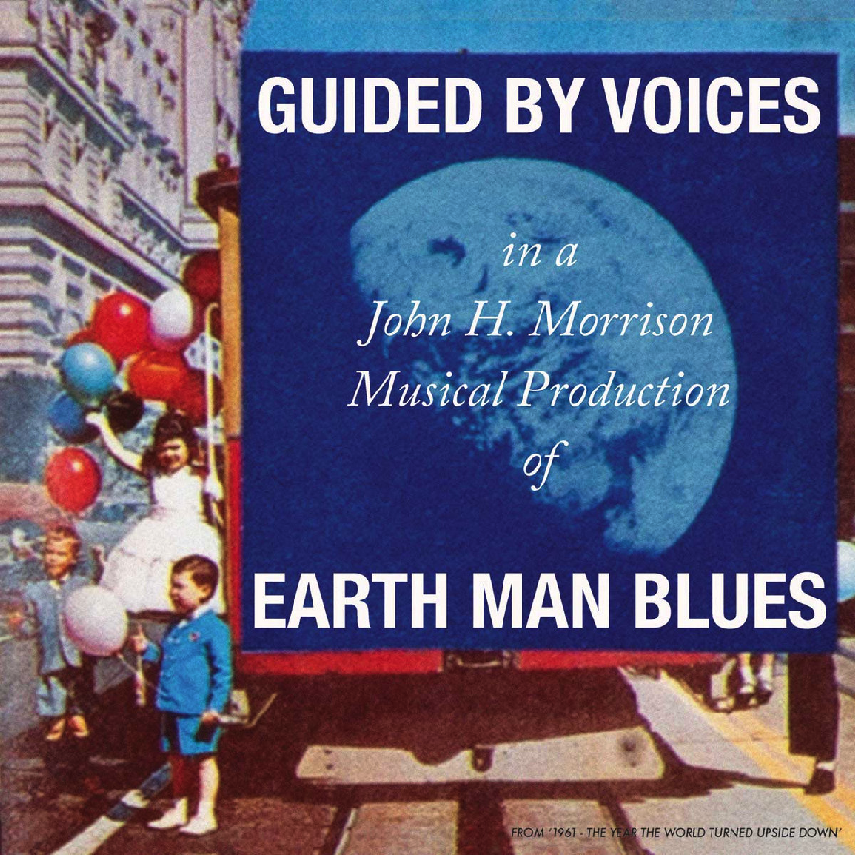
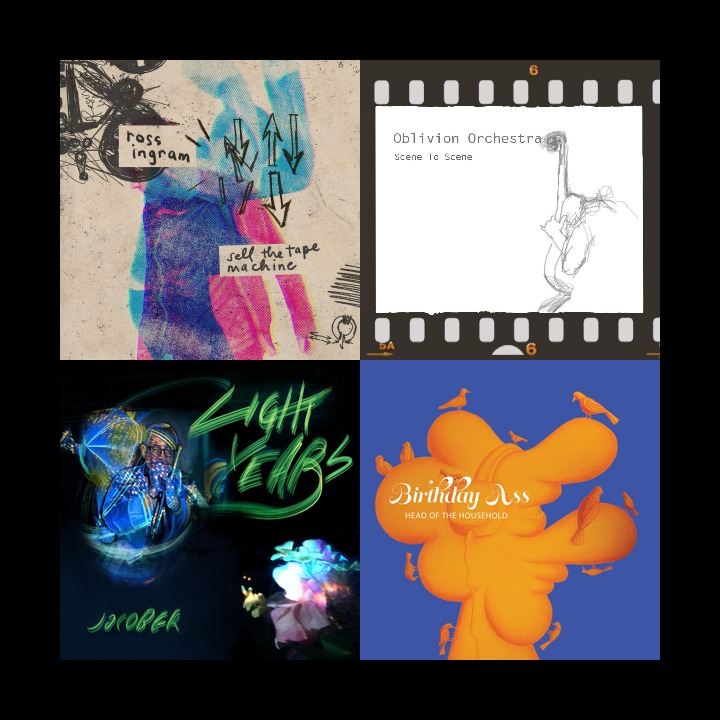
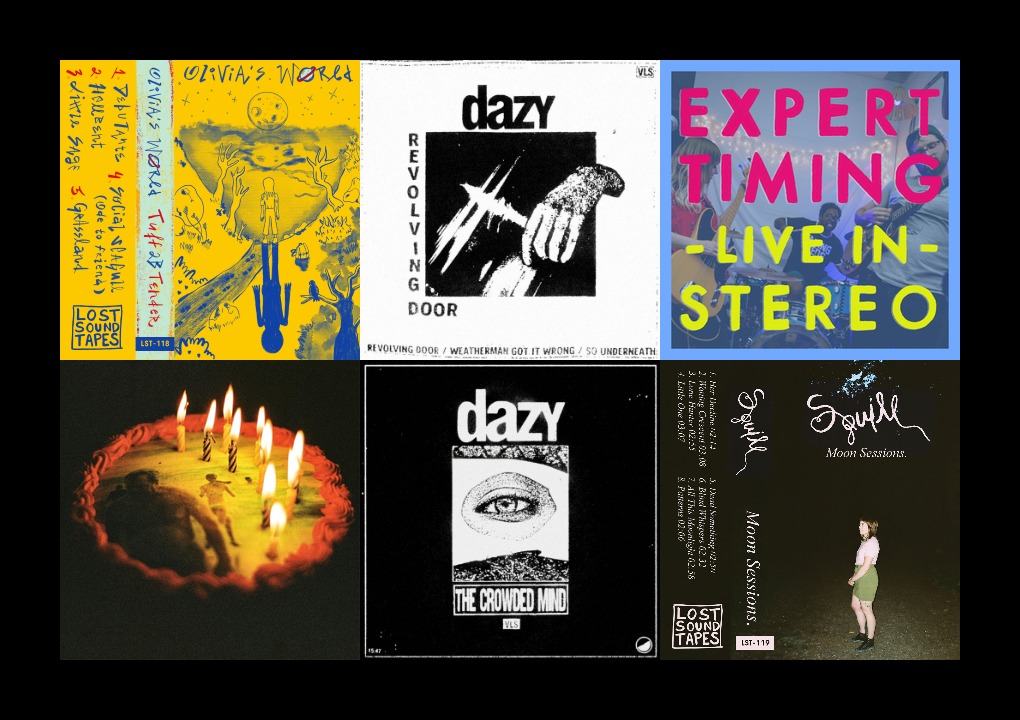
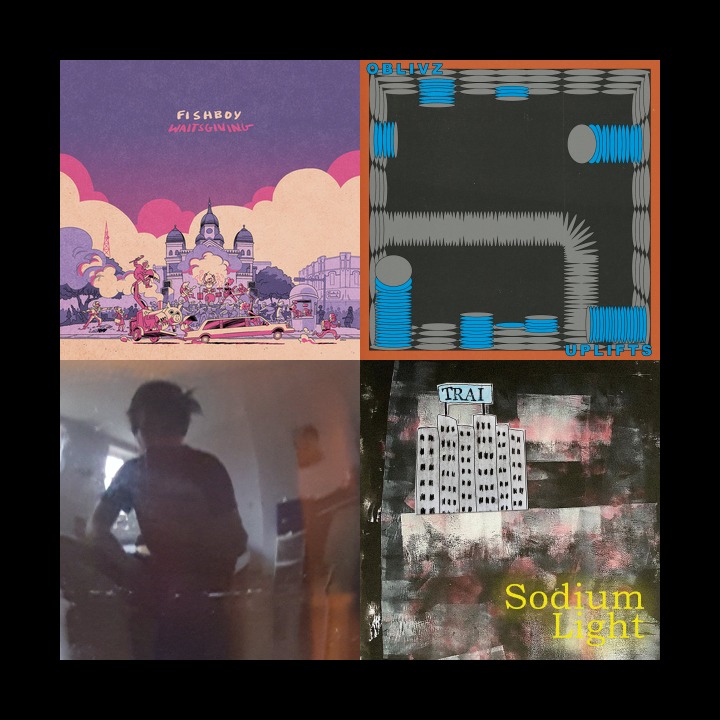


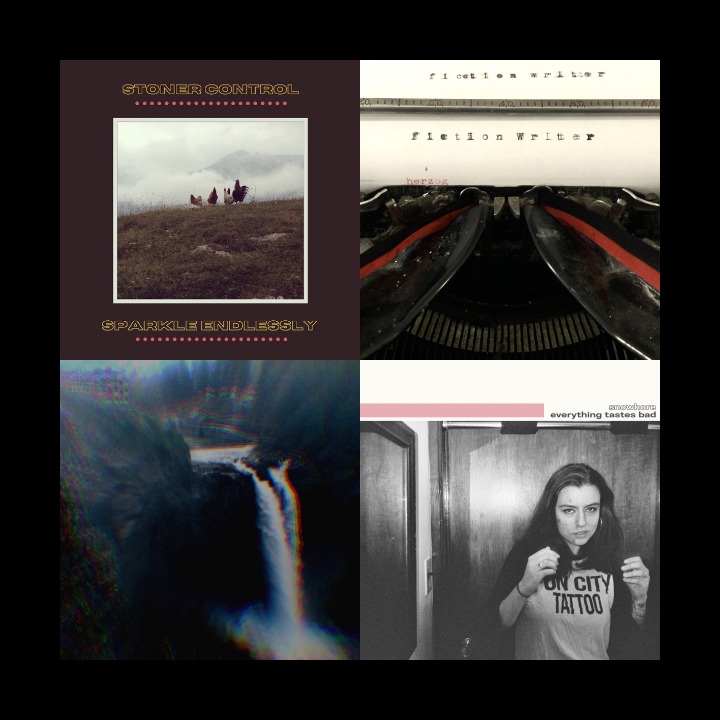
 Rosy Overdrive