In this week’s ahead-of-schedule edition of Pressing Concerns, I look at two albums I’ve been meaning to get to for awhile now (the debut from Brian Cook’s Torment & Glory and the re-released Supernowhere record) as well as two brand new releases from Man Random and Sweet Nobody.
Release date: August 27th Record label: Sargent House Genre: Blown-out folk, singer-songwriter Formats: Vinyl, digital Pull track: No Big Crime
The origin story of We Left a Note with an Apology is certainly intriguing. Brian Cook is most notable now for playing bass in the instrumental post-metal group Russian Circles and the sludge metal band SUMAC, and historically for occupying the same position in mathcore legends Botch. Torment & Glory is Cook’s first album as a solo artist, and he traces the moment of inspiration for the album to hearing a dust-covered record player attempting to play a beat-up copy of Bruce Springsteen’s Nebraska, resulting in “a wall of fuzz distortion” with glimpses of The Boss’ sparsest moments peaking through the haze; Cook then set out to make an album in the mold of this experience. I have seen We Left a Note with an Apology tagged as “post-rock” or “drone”, perhaps in an attempt to better connect it with Cook’s previous, heavier work, but to be clear: this is, more than anything else, a singer-songwriter folk album.
That isn’t to minimize the distortion and feedback that shade We Left a Note with an Apology, especially given how well Cook incorporates it into Torment & Glory’s sound. In moments like the transition between “Mexican Hat, Utah” and “All Men Are Forever”, the fuzz overwhelms everything, and even when Cook’s quiet singing and delicate acoustic guitar playing take center stage, it’s still lurking underneath. But these are songs first and foremost, not drone pieces with incidental vocals. The record begins and ends with its biggest blasts of feedback, but once accustomed to it, opening track “The Burning Car” reveals an excellent sketch of the image depicted on the record’s cover and song title. The instrumental closer should be considered a companion piece to “Mexican Hat, Utah”, a delicately-picked acoustic ballad whose windswept desert determination is more in line with the majority of We Left a Note with an Apology.
Elsewhere, the humming of “The Kick Drum” could only have been written by someone with Cook’s history; beginning with a vivid description of the power of loud live music before fast-forwarding to the denied dream of gentrification and disillusionment (“The neighborhood doesn’t want you anymore / They subsidize the trash sold at the store”) and concluding on a bittersweet note, with a hauntingly simple refrain that kind of reminds me of Eric Bachmann’s solo material. Cook doesn’t need to tackle such heady subjects to give the songs on We Left a Note with an Apology weight, however—single “No Big Crime” is effectively an ode to shoplifting cigarettes, and how it might be in the past tense for Cook but he sees no issue with the action. “No grand gestures now, just petty victories,” is how he summarizes learning how to stealthily sneak a pack. This is similar to the small victory in “Bolyston and Pike”, where Cook resolves to “Ignore the dust and stains and footsteps down the hall,” in a song about the quiet triumph of apartment living alone. Just another understated but compelling moment in a record that seems to exist for them. (Bandcamp link)
Supernowhere – Gestalt (Re-release)
Release date: August 11th Record label: Topshelf Genre: Shimmery indie rock Formats: Digital Pull track: Truly a Great Night Like Many Other Nights
Supernowhere’s debut album is one of the more subtle albums that has appeared in Pressing Concerns. Gestalt was originally self-released in 2018 before being remastered, remixed, and re-released by Topshelf Records last month, and though I knew I wanted to touch on it since I heard it, it’s taken awhile because I wasn’t sure how to talk about it. It has the off-kilter songwriting that could get flagged as “math rock”, but it feels languid and unhurried, for the most part. At the same time, it’s a little too jittery to be called “slowcore”, even as it has the same casual beauty as a lot of those bands. It’s got plenty of arpeggiated guitar playing, but doesn’t fit neatly under “jangle pop” or “twinkly emo”. Before the trio (bassist/vocalist Meredith Davey, guitarist/vocalist Kurt Pacing, drummer Matt Anderson) relocated to Seattle, Gestalt was written and recorded in Vermont, which seems about right.
Loosely speaking, the first half of Gestalt is the “pop” side, and the back half is a little more “jammy”. The bass-heavy “Truly a Great Night Like Many Other Nights” is an early “single” candidate and features Davey’s most arresting vocals and some controlled-demolition instrumental work, while “David” and “Paper” condense Supernowhere’s sound into pleasant breezy, pastoral portions. The one straightforward “rocker”, the driving “Fast Pilgrim”, also shows up early on Gestalt. The B-side finds Supernowhere stretching out a bit, with songs like “Darl” and “Cascade” pushing up against the five-minute mark and the latter appearing as a buffer between two more conceptual tracks called (appropriately) “Thaw” and “Unthaw”. Gestalt is entirely the work of a guitar, bass, and drums trio, and yet it still feels towering—which only underscores how well-served these songs are by Supernowhere. (Bandcamp link)
Man Random – Present Tense
Release date: September 24th Record label: Camp Random Genre: Pop punk, alt-rock, power pop Formats: CD, digital Pull track: Something Good
If you’re looking for the obligatory Rosy Overdrive 90s rock revival pick of the week, stop scrolling here. Milwaukee’s Man Random boldly describe themselves as “if Smashing Pumpkins were 5th wave emo”, and while I like their spirit, if pressed, I would contend that they fall somewhere around “millennial, Midwestern Billie Joe Armstrong with a Blue Album-esque wall-of-guitar sound punching him up”. Lead singer Steven Baird has a theatrical voice that pairs well with the existential, stream-of-consciousness lyrics that pour out of Present Tense. The album—Man Random’s debut LP, by the way—almost follows a linear theme, beginning with a trio of songs that are as confidentially hooky musically as they are dire thematically. Opener “Everything Gets Worse” cheerily asks “What’s the point of making long-term plans on a dying planet, in a society that’s set for self-destruction?”; the defeatist “Never Get It Right” and the self-explanatory “Full-Blown Existential Crisis” continue the endless grey (Oh, and the next song is called “Endless Grey”).
The midsection of Present Tense, while not exactly uplifting, at the very least is animated by a righteous indignation, like in the gang-vocal kiss-off of “Waiting for Apologies” and the requisite state-of-the-union “See No Evil”. Man Random save their half-fullest glasses for the end of the album, however. The bittersweet “Something Good”, even though it’s about a downer of a subject (the loss of a good relationship), chooses to reminisce on its peaks rather than mere wallowing. “Freezerburn” functions as a personal resolve from Baird (“I’m gonna make it through the winter if it kills me”), and closing track “…Before It Gets Better” (get it?) takes this and runs with it for a big, communal, upbeat send-off. Although I can trace a narrative throughline across Present Tense, the one static feature throughout the record is its fuzzy power pop enthusiasm—whether they’re accentuating the positive or the negative, Baird and Man Random feel like the best antidote or celebration is to belt it all out. (Bandcamp link)
Sweet Nobody – We’re Trying Our Best
Release date: September 17th Record label: Daydream/Relief Map Genre: Jangle pop, pop rock Formats: Cassette, digital Pull track: Five Star Diary
Long Beach, California’s Sweet Nobody had the release of their second record delayed due to the pandemic, but We’re Trying Our Best coming out four years since their debut album has done nothing to dampen these songs. The band float through ten tracks of confident, earnest guitar pop that feel like a logical step forward from 2017’s Loud Songs for Quiet People. The record’s brightest pop moments, like opener “Not a Good Judge” and lead single “Five Star Diary”, fall somewhere between jangly American college rock like 10,000 Maniacs and the C86 bands of which Sweet Nobody profess admiration. The band does shake things up a bit elsewhere, though—the light disco-accented guitar in the verses of “Why Don’t You Break My Heart?” reminds me of fellow pop-rockers Spud Cannon’s latest album, and while no one is mistaking Sweet Nobody for a punk rock band, songs like “Rhoda” and the one-two punch of “White Lies” and “Little Ghost” have a garage rock energy behind them.
Lead singer Joy Deyo’s vocals are front-and-center throughout We’re Trying Our Best, and help the album stand out among the crowd. Deyo sings her heart out on ballads and mid-tempo tracks like “Million Yard Stare” and “Young in Love” (“…and it’s so awful”, goes the chorus), and the way she turns lyrics about dealing with chronic pain and love into a song that should be immediately ushered into the Jangle Pop Singles canon with “Five Star Diary” is worth the price of admission alone. That this song comes immediately after the post-punk/surf rock groove of “Rhoda” is just one example of Sweet Nobody’s dexterity. (Bandcamp link)
The second September edition of Pressing Concerns takes on new albums from Telethon, Smoke Bellow, and Buffalo Daughter, as well as the debut EP from Cashmere Washington.
If you need more new music, you can browse previous editions of Pressing Concerns. Rosy Overdrive has also recently added a site directory, which will hopefully make navigating and accessing archival posts easier. We’ll be back in a week or two.
Telethon – Swim Out Past the Breakers
Release date: August 20th Record label: Take This to Heart Genre: Power pop, pop punk Formats: Vinyl, CD, digital Pull track: Positively Clark Street
There’s a moment a little over halfway through Telethon’s fifth album, Swim Out Past the Breakers, that I can only describe as “pure Counting Crows”—after the first chorus of “Positively Clark Street”, the keyboard fill that immediately grabs center stage would make any Crows aficionado swear that Charlie Gillingham was the featured musician on the track, instead of Gary Louris of The Jayhawks. Perhaps this very 90s interjection shouldn’t be so surprising in the midst of a record named for an Everclear song, but Swim Out Past the Breakers covers so much ground and stuffs so much into its 48 minutes that it’s easy to get lost in the indie rock star-studded, hook-heavy terrain. Seeing all the featured musicians listed on Swim Out Past the Breakers made me raise my eyebrows a bit, but it all hangs together as a whole work made by one band. It’s nice to hear the voices of Tiny Stills and Chris Farren singing on their respective featured tracks (“Shit (Jansport)” and “Matrix (One Down at Least)”), for example, but neither distract or overstay their welcomes.
Telethon are the true stars of Swim Out Past the Breakers, and they more than deliver throughout the record’s sixteen songs. They play an all-out, earnest brand of power-pop-punk that, in addition to their 90s alt-rock tribute-paying, calls up everything from Fishboy’s indie rock operas (on numbers like “Panorama (The Polynesian)”, Jeff Rosenstockian overflowing punk anthems (“Shit (Jansport)”), and even a bit of heartland emo on the mid-record breath-catcher “House of the Future, Pt. 4”. Hold Steady keyboardist Franz Nicolay also guests on the record, which underscores the similarities between Telethon and his band’s souped-up bar rock, although lead vocalist and lyricist Kevin Tully reminds me more of a young, pop punk misfit John K. Samson (who, I am old enough to remember, was once dismissed for trading in the perceived shallow waters of 90s alt-rock).
Tully’s voice is what helps anchor Swim Out Past the Breakers as the band barrel through one mini-epic after another. He firmly has his own style of singing, but gets plenty of mileage on subtle shifts to it. Two of the record’s biggest-sounding upbeat anthems are “Checker Drive” and “Travelator”, but Tully deftly switches between the sunglasses-mugging, radio-rock suaveness of the former and the insistent, worried timbre of the latter to give them completely different feelings. And then there’s “Positively Clark Street”. One part “One Great City!”, one part Suburban Indie Rock Star, Tully’s begrudging acceptance of his new adopted home of Chicago is some of the record’s most fertile lyrical ground (Key line: “It’s easy to play crank when you’re not the one having fun”). I’ve only really touched on a handful of songs on Swim Out Past the Breakers here—every time I go back to it, I find something else remarkable about its contents. (Bandcamp link)
Smoke Bellow – Open for Business
Release date: September 17th Record label: Trouble in Mind Genre: Post-punk Formats: Vinyl, CD, digital Pull track: Furry Computer 2
Smoke Bellow has been kicking around for a decade or so, formed in Australia by the duo of Meredith McHugh and Christian J. Best, and adding drummer Emmanuel “Manny” Nicolaidis upon settling in Baltimore, Maryland. Open for Business, their first album for Trouble in Mind, consciously shapes the band’s experimental rock into something more welcoming, dialing back the long instrumental breaks and eight-plus minute runtimes for a more song-based record. Like their label-mates Nightshift, they hone in on a brand of minimalist, almost no wave-influenced post-punk, but it’s nowhere near as “cold-sounding” as a lot of that music can be. The biggest reason for this is Smoke Bellow’s prominent use of keyboards and synthesizer blanketing, which provide a friendly contrast to the simple but sturdy rhythms that build up the songs’ backbones.
Songs like “Anniversary” and “Furry Computer 2” are draped in warm tones; the rumbling conclusion to the former is one of the most musically intense moments on Open for Business, but it reaches this endpoint so gradually that it doesn’t come off as jarring. “Hannan” opts for a whimsical take on the Smoke Bellow sound, as does the spoken-word “Night Light” to a lesser degree. The front-and-center keyboard drone and plain-spoken vocals are similar to yet another Trouble in Mind band, Dummy, in its Yo La Tengo and (especially) Stereolab evocation, but while that group hoovers those influences up as one part of their noisy psych-pop, Smoke Bellow take inspiration from those bands’ more economical choices in order to streamline Open for Business as much as possible. The band’s rhythmic senses shine particularly brightly in the record’s second half, where tracks like “Maybe Something” and “Take the Line for a Walk” walk across the tightrope of a single riff for pretty much their entirety, with only a couple strategically deployed additions (organ chords and what sounds like a guiro in the former, some strings and horn sounds in the latter). Open for Business is a deliberate, carefully-constructed album, and that it’s a joyful listening experience is the direct result of Smoke Bellows’ meticulousness. (Bandcamp link)
Cashmere Washington – The Shape of Things to Come
Release date: September 17th Record label: Fish People Birds/Black Ram Genre: Emo-indie-rock, R&B Formats: Cassette, digital Pull track: Cowboy Dan
Michigan has not traditionally been on my radar in terms of modern indie rock, but after strong releases from Idle Ray, Parting, and Matthew Milia this year, perhaps I need to start paying more attention to the Mitten. The latest example is Cashmere Washington, the solo project of Midland’s Thomas Dunn II. The formal debut from Dunn (who previously made music under the name Guero) is an EP that’s been placed in the realm of “post-emo” (by their tape label) and “bedroom punk/hip-hop” (by Dunn). This melding of emo-adjacent rock and rap bears some surface similitaries to one of last year’s breakout sensations, Bartees Strange, but The Shape of Things to Come distinguishes itself by committing to a lo-fi, fuzzy sound anchored by Dunn’s guitar playing (Dunn plays every instrument, except for drums on half of the EP). This isn’t to say the hip-hop influence isn’t felt; in particular, it features prominently in the basement R&B feel of “Last Year” and “Another Forest Drive”.
The soft, jazz-chord opening of “Another Forest Drive” counterbalances Cashmere Washington introducing themselves with heavy lyrics that touch on everything from gender identify and childhood trauma to debilitating depression. This confessional writing holds for the heart of The Shape of Things to Come, with more traditionally-rock songs like “Cowboy Dan” (in which Dunn seems to contrast their own personal rut with the unflappability of the titular local character) and “Second Wind (Coming Round the Bend)” (which hides a dark undercurrent below what could easily be mistaken for an upbeat, positive anthem). Cashmere Washington earns their place in the “emo-adjacent” world with ragged EP closer “Everything”—as in “You’re everything, I’m nothing”. Dunn sings of being stuck in what sounds like a terrible relationship, straining their voice over a rickety instrumental that feels like it could fall apart at any moment, only to give way to a scorching guitar solo that closes out the EP. Cashmere Washington declares that The Shape of Things to Come is the first in “a series of EPs” on their Bandcamp page—if they live up to the promise that The Shape of Things to Come demonstrates, then perhaps they’ll just be the beginning. (Bandcamp link)
Buffalo Daughter – We Are the Times
Release date: September 17th (digital)/October 15th (vinyl) Record label: Anniversary Group Genre: Experimental rock, art pop Formats: Vinyl, CD (Japan only), digital Pull track: Don’t Punk Out
The long-running Tokyo band Buffalo Daughter has been mining their psychedelic mix of electronic and experimental indie rock since the mid-90s; We Are the Times is their eighth record, and their first since 2014. The album’s 70-second opening track, “Music” is a bit of a red herring, more of a minimal techno introduction track that functions a bit as the thesis statement of the record (“Music is the vitamin to live under…Take some everyday, it won’t hurt you”) before the lengthy, kaleidoscopic “Times” reveals what the bulk of We Are the Times is going to sound like. “Times” is the first glimpse of the loopy, dance-funk influenced sound that they explore even more enthusiastically later on in “Loop” and “Don’t Punk Out”, sounding something like The B-52’s breaking up upon re-entry.
“Loop” devolves into a chaotic finish that’s one of the more discordant musical moments on We Are the Times; lyrically, however, “Global Warming Kills Us All” is the one that sticks out like a sore thumb. The song’s multi-lingual lyrics are opaque until a robotic voice broadcasts out the titlular line over a mechanical, almost industrial backing soundtrack. The other outliers aren’t quite as dire, at least not explicitly. Although “Jazz” doesn’t exactly sound like the genre after which it’s named, the spacious instrumentation and the open emotion depicted by the lyrics and mirrored in the music do end up justifying the nod. We Are the Times dips into full-on party mode and doomerism flirtation, but the propulsive “Everything Valley” sends everyone off on an uncertain note. The first half of the track describes feeling helpless and believing the present as we know it is destined to become lost, before a Black Lodge-esque distorted voice declares “Music ever played is still playing” in a mid-song break. Buffalo Daughter then take up the task one more time to close out We Are the Times. (Bandcamp link)
The August edition of the Rosy Overdrive playlist has landed, for all your reading and listening needs! You will find plenty of new music here, as well as a few discoveries from my 1996 deep dive, and a couple of miscellaneous tracks.
The Cocker Spaniels, MJ Lenderman, and Wednesday all have two songs on the list this time around. There are four Dazy songs on here, in an attempt to make sure you’re aware of Dazy.
“Cranes”, Thalia Zedek Band From Perfect Vision (2021, Thrill Jockey)
Rosy Overdrive will always be a safe haven for unfussy, speaks-for-itself, “workmanlike” indie rock. It’s why I was so high on the Eleventh Dream Day album earlier this year, it’s why Chris Brokaw got a similarly plum playlist spot at the beginning of the year, and it’s why if you ask me what the best American rock band ever was, there’s a good chance I’ll say “Silkworm”. Thalia Zedek was the bandmate of Brokaw in the great 90s band Come, which is in the midst of reissuing their second album, Don’t Ask Don’t Tell, and she has continued to make good music (solo and otherwise) in the two decades since that band’s dissolution. The opening track from her eighth album as Thalia Zedek is the singer-songwriter at her most sublime. If the soaring, pedal steel-aided instrumental isn’t sufficiently 90s-indie-by-way-of-Neil-Young for you, the wearily determined state-of-the-union lyrics should be more than enough to get you there (“The pride of a nation has been erased, drowned in waves of shame”).
“Thread”, Dazy From MAXIMUMBLASTSUPERLOUD: The First 24 Songs (2021, Convulse)
I’m really excited that there really seems to be an organic groundswell of goodwill towards James Goodson’s one-man-band Dazy project. I was on the Dazy Train back in April (when only obscure, ramshackle, deep-internet blogs like, uh, Stereogum were covering him), and the Revolving Door and Crowded Mind EPs have only sounded better in the time since. Goodson released a cassette of those EPs, some early singles, and five new songs last month called MAXIMUMBLASTSUPERLOUD: The First 24 Songs, and it’s 52 minutes of lo-fi-pop-punk-power-pop-fuzz bliss. If you don’t have that kind of time, “Thread” (one of the five new tracks) nails everything great about Dazy in less than sixty seconds, imagining a world where “Undone (The Sweater Song)” was nothing but a garage rock hook.
“Daffodils”, Dummy From Mandatory Enjoyment (2021, Trouble in Mind)
For fans of a certain vein of indie rock, Dummy should hit like a warm blanket. The bright droning synths that run throughout “Daffodils”, the lead single from their upcoming debut album Mandatory Enjoyment, evoke the steady hand of Stereolab’s shiniest pop numbers. The intertwined male/female vocals, as well as the amplifier-blasted closing moments of the song, are pure Yo La Tengo. “Daffodils” resists being merely hero worship, however—for one, the band are all functioning too well together here to be dismissed as a pale imitation of anything, and the jaunty energy that runs throughout “Daffodils” is a nice balance against the psychedelia that’s evoked by everything from the lyrics to the record’s cover art. Read more about Mandatory Enjoyment here.
“Snuff Film”, The Cocker Spaniels From The Cocker Spaniels Are Still Alive, and So Are You (2021, Evil Island Fortress)
The cassette and streaming release of The Cocker Spaniels Are Still Alive, and So Are You is more than enough occasion to revisit one of Rosy Overdrive’s favorite June releases. One of its most immediate highlights has to be “Snuff Film”, which introduces itself with what I’m going to call a “math-funk-rock” guitar riff and a synth jolt before getting to the track’s meat. Some of Cocker Spaniels vocalist and songwriter Sean Padilla’s strongest material comes from his attempts to address his white peers (see: “Racism Priest”, from last month’s playlist), and this song is the furious companion piece to “Priest”’s humor. Regarding the titular videos, Padilla’s point is simple: you shouldn’t need any more of them. We’ve seen enough. “Snuff Film” is also about how common sense gets lost in these debates (“Who believes that I am able to kill a heavily armed man / With nothing more than the strength of my skinny piano hands?”) and the fickleness of online activism (“Are you gonna wait for Shaun King to tweet the snuff film before you march for me?”) in just two minutes. Read more about The Cocker Spaniels Are Still Alive, and So Are You here.
“Walking at a Downtown Pace”, Parquet Courts From Sympathy for Life (2021, Rough Trade)
I’m not super plugged into the Parquet Courts fanbase, so I don’t actually know how “Walking at a Downtown Pace” has been received by the faithful, but I’ve seen enough comments to assume it’s at least a little bit “mixed”. I’ve always had an affection for the Courts, but I’d heard enough of their influences previously to the point where my mind wasn’t exactly blown by Light Up Gold or whatever. So, I’m not so attached to them that it’s going to bother me if they keep going down the dance-rock alleyway Wide Awake! hinted at, especially not if it means more songs like “Walking at a Downtown Pace” which, dare I say, is more successful at it than anything off of their last record. The quarantine-inspired lyrics are nothing special, but Andrew Savage sells them with a vocal that seems different despite still sounding exactly like A. Savage. And besides, the song still rocks. We’re all hearing the same guitar track, right?
“My (Limited) Engagement”, Guided by Voices From It’s Not Them. It Couldn’t Be Them. It Is Them! (2021, GBV, Inc.)
While Guided by Voices albums almost always start with a “hit”, closing tracks are more of a mixed bag. Robert Pollard is just as likely to end a GBV LP with the record’s most straight-up rocking moment (“With Glass in Foot”, “An Unmarketed Product”, “Captain’s Dead”) as he is to indulge the band’s left-turn, prog-aping tendencies with a head-scratcher (“Evolution Circus”, “Sons of the Beard”). “My (Limited) Engagement”, the lead single and final track off of the upcoming It’s Not Them. It Couldn’t Be Them. It Is Them! might be in a category of its own—it’s a bit more spirited than the mid-tempo, casual pop rock closers (“On the Tundra”, “Just to Show You”), but it’s nowhere near as souped-up as something like “No Transmission” or “Bomb the Bee-Hive”. It’s got an awesome “Exit Flagger”/”Echoes Myron” descending chord progression in the verses, and a casual, almost Todd Tobias solo album-esque chorus. I’m curious to hear the rest of the album with this as its first taste.
“Left Before Your Set”, Mister Goblin (2021, Exploding in Sound)
Towards the end of Mister Goblin’s latest album, Four People in an Elevator and One of Them Is the Devil, is a quiet, acoustic track called “Cover Song”, which appeared in one of these playlists in February. It’s a delicate tune in which Sam Goblin plays a song “everybody likes” while something nags at the back of his mind. “Left Before Your Set”, the Goblin’s latest single, is about as far away from “Cover Song” as one could get. Coming just as touring is winding back up again (or is it already going away again?), “Left Before Your Set” is a throaty post-hardcore chronicle of the heroic strength to go see a friend’s “shitty fucking band” and the high-level calculus undertaken to ascertain when it’s “safe” to duck out. We’re given a litany of potential reasons why Mister Goblin has to leave early: he’s got a meeting in the morning, he has to drive to Poughkeepsie, his dog is having a seizure (“You didn’t know he was epileptic? Well, ME EITHER”). The restraint in the bridge is the only trace of Four People in an Elevator…’s sensitive side, but I’m ready for wherever this one-off track leads.
“It’s Coming Around”, Dazy From MAXIMUMBLASTSUPERLOUD: The First 24 Songs (2021, Convulse)
Here is a sampling of song titles pulled from Dazy’s MAXIMUMBLASTSUPERLOUD cassette compilation: Easy-Go-Round. Perpetual Motion. Accelerate. Revolving Door. It’s Coming Around. When I Come Around (the last one is actually a famous song by Green Day, but you get my point). These titles, purposefully or not, get to the heart of what makes Dazy’s pop songs work as well as they do: comfort through repetition and being as loud n fast as necessary. Dazy could be the official lo-fi pop punk band of NASCAR, if there were such a thing. “It’s Coming Around” was originally released in September 2020 along with “Wind Me Up”, and the whole song seems to take place in between the few seconds between a lightning strike and thunderclap (“I saw the light but I heard no sound / I’ve been waitin’ on the thunder, it’s coming around) like a prequel song to Upper Wilds’ “Roy Sullivan”, one of the other best fuzz-pop-rock songs about lightning strikes.
“Thanksgiving Pt. II”, TIFFY From TIFFY (2021, Dollhouse Lightning)
About thirty seconds into “Thanksgiving Pt. II”, Boston’s Tiffany Sammy (aka TIFFY) yells “Yeah!”, the drums hit, and the song transitions from a quiet indie guitar pop tune to…a not-as-quiet indie guitar pop tune. This is, I believe, a defining example of the “soft punk” that Sammy uses to describe her music. The opening track to TIFFY’s second EP actually covers a lot of ground over its three minutes underneath its “indie rock singer-songwriter” sheen—it actually grinds to a stop another half-minute after its soft punk arrival, then slowly ramps up to a fuzzy conclusion that actually does rock. Lyrically, Sammy is in the middle of an internal pacing-around-the-room debate about her mental health (“They say you can’t change your brain, just be made aware…/ Well what’s the point if I can’t change?”), with the musical build-up at the end seeming to mirror her own brain as well (“My thoughts are so loud now / How can anyone not hear them”).
“More”, Low From HEY WHAT (2021, Sub Pop)
I think this should come out before HEY WHAT drops on the 10th. If this playlist shows up after that, I’ve probably set it to auto-publish, because this album is shaping up to, at the very least, knock me unconscious. The pixelated church choir-turned-to-ambient comedown workout of “Days Like These” caught my attention in June, but “More” cuts to the bone in (ironically, I suppose) less than half of that song’s runtime. Mimi Parker gives one of her most memorable vocal turns of the modern Low era here, over top of a churning industrial trash-compactor instrumental that remains stubbornly melodic and beautiful. Like “Days Like These”, I could imagine a slowcore-Low version of this song without too much squinting, although unlike “Days Like These”, I would put “More” up there with “Walk into the Sea” on the list of “Low songs that actually rock”.
“My Little Hell”, Unpheromones From Nerd (2021)
One of the many services Rosy Overdrive provides is that we will listen to your musical confessions (Rosary Overdrive?); whatever sins you need to get off of your chest, we’re here. Such is the case with Portland, Maine’s Unpheromones, whose members have committed the cardinal sin in the eyes of the Church of Hardcore—aging out of playing “fast music” and starting a slick Rentals-esque power-pop-punk band instead. That’s a bit of a fib, since the keyboard synths are not quite as prominent throughout Nerd as they are here in album opener “My Little Hell”, but Unpheromones put them to very good use in this song. There’s something very turn-of-the-century in Myles Simcock’s breathy, understated lead vocals, and I’m into it—but the eighth-note (sixteenth-note? this isn’t my area) power chords and melodic bass are timeless.
“Jean Paul Sartre”, The Crabs From Brainwashed (1996, K)
“Americans are not that smart, ‘cuz they know about Jean Paul Sartre / Everything they’ll ever know: football games and TV shows”. This is why I spend so much time listening to decades-old indie rock. There’s so much genius out there that I’ve never heard, and you probably haven’t either. 90s Portland, Oregon indie/twee pop band The Crabs are not new to me (“Swallow the Sea” from 1995’s Jackpot is a favorite song of mine), but having finally gotten around to the following year’s Brainwashed, I can report that it’s just as good, and if you’re into minimalist indie pop/rock it’s got everything one could possibly want. In the nearly percussionless “Jean Paul Sartre”, the utilitarian electric guitar playing of Jonn Lunsford and the vocal interplay between Lunsford and Lisa Jackson take center stage, both of which absolutely shine here. There’s a “ba ba ba” chorus and everything. Plus, the song is a history lesson, and the detail that Sartre “Took a chance with libations / All he sees are crustaceans” is more than just a band name reference.
“Knockin’”, MJ Lenderman From Knockin’ (2021, Dear Life)
In the midst of a prolific year from MJ Lenderman, the surprise digital-only EP Knockin’ might quietly be the strongest batch of songs from the Asheville songwriter yet. From the get-go of the record’s opening title track, we get the invocation of John Daly singing “Knockin’ on Heaven’s Door“, which is one of Lenderman’s most memorable images so far, and then he casually rhymes it with a line that’s nearly as good on its own (“Bird calls comin’ from the rafters at the hardware store”). The song takes off like a lo-fi country rocket in the last minute or so—watch the oddly stirring, cat-starring music video for maximum effect. Read more about Knockin’ here.
“Sandstorm”, Laura Stevenson From Laura Stevenson (2021, Don Giovanni)
I still need to give Laura Stevenson’s self-titled sixth album some more time to decide how it compares to her past work—I think it’s better than The Big Freeze, not sure if I like it more than Cocksure—but “Sandstorm” was an early highlight for me. It’s classic pop rock Stevenson, immediately trotting out its main hook and never losing its thread as it moves forward. The bridge brings a couple of piano flourishes that would almost be too much, but the song is just fun enough to incorporate them seamlessly. If lead single “State” was Stevenson evoking the angriest tension present in Kristin Hersh’s songs for Throwing Muses, “Sandstorm” is one of Tanya Donnelly’s cheery pop interjections. Underneath the brightness, Stevenson’s lyrics appear to be of the urging type (“Think of how many days that you wasted / Hurry up and break my heart” … “I’ve been twitching between days / For you to search your pretty thoughts”), but whether it’s the end of a relationship or something more obscure I couldn’t say. Sounds great, though.
“Winnebago Skeletons”, The Handsome Family From Milk & Scissors (1996, Carrot Top/Scout)
“Winnebago Skeletons”—now there’s a hell of a title. If you’re unfamiliar with The Handsome Family’s unique blend of gothic alt-country: jump on in, the water’s nice and murky. They’re a husband-and-wife duo, the Sparkses: Brett sings, plays guitar and writes the music, Rennie plays bass and writes the lyrics. Milk & Scissors is their second album of many—The Handsome Family were still in their fuzzy alt-rock phase musically (their best phase), and Brett’s just-enough-emotion baritone is as lonesome as ever. The detritus-describing Americana poetry is what really puts “Winnebago Skeletons” over the top, however. The banal beer can waste and “whiffle ball bats” rest alongside apocalyptic and suicidal imagery in the Handsome Family’s dark hall of curios, and they never explain who (or what) the entity narrating the song is supposed to be.
“Double Space”, Smaller Hearts From Attention (2021, √-1)
It appears that I’ve unwittingly put two husband-and-wife bands in a row in this playlist, but the dark goth-country of The Handsome Family is a pretty far cry from Smaller Hearts. The Dartmouth, Nova Scotia duo of Kristina Parlee and Ron Bates are starry-eyed synth-poppers through and through, their minimalist version of electronica giving their third album Attention an intimate feel through the machinery. Lead single “Double Space” is one of the record’s fuller moments, with a busy drum machine soundtracking one of their best vocal melodies—Bates gets to deliver it, with Parlee’s wordless backing vocals giving “Double Space” a sort of 80s dream pop edge. By the end of the song, where the synths, drums, and both vocalists are all singing over each other, it’s almost a lo-fi Madchester single.
“Gary’s”, Wednesday From Twin Plagues (2021, Orindal)
My favorite thing about “Gary’s” might be its title—“Gary’s” being short for “Gary is”, not “belonging to Gary”. I can’t think of another song that uses this particular naming convention! Most songwriters would just call the song “Gary”, but not Wednesday’s Karly Hartzman. The two-minute song is comprised of three scenes: a woman named Amanda yells at her boyfriend and breaks a screen door, Gary’s yelling outside the house with his cigarette in mouth and oxygen tank in tow, and a fight breaks out in a baseball game. In the context of Twin Plagues, it’s a respite from the fuzzy country-rock side of the North Carolina band, with even its closing guitar solo (possibly recorded by MJ Lenderman, who appears on this playlist as a solo artist as well) feeling lazy and sunburned. But it’s Hartzman’s vocals, particularly in Gary’s vignette, that pushes Wednesday above the current crop of dreamy indie rock acts.
“Living in the Good Times”, Naked Raygun From Over the Overlords (2021, Wax Trax!)
It seems like Naked Raygun’s first album in over thirty years should be a bigger deal than it is. Maybe it’s not the “classic” line-up, but the majority of the personnel that made their biggest albums are on Over the Overlords (including bassist Pierre Kezdy, who passed away in between recording and release). Maybe it’s just kind of hard to write about Naked Raygun; they’re “political”, but not always in a straightforward way. A song like “Superheroes” is fascinating, but I couldn’t tell you what it’s supposed to be from the perspective of: Greed? America? Capitalism? The military? “Living in the Good Times” I understand, however. It’s a punk anthem about just wanting all the dang fightin’ to stop. Jeff Pezzati is done with “all this talk of revolution”; he’d rather not get caught “in some asshole’s sightline” and ending up “on the wrong side of a police line”. It’s somewhere between “Revolution #1” and “Give a Fuck Fatigue” by Tropical Fuck Storm. Just another reason for Steve Albini to call them sellouts, I suppose. But I get it. Naked Raygun and Pezzati are still taking to the soapbox, even later on the same album. Just for a moment, though—can the man rescue raccoons in peace?
“Broca’s Ways”, Zumpano From Goin’ Through Changes (1996, Sub Pop)
Remove Zumpano’s second and final album to the “been meaning to get around to it” list. Goin’ Through Changes is a classic expansive sophomore record; where their debut, Look What the Rookie Did, brought power pop hit after power pop hit, Changes dove into classic pop song structures and instruments. It actually reminds me of Carl Newman’s solo career more than what he’d go on to do with The New Pornographers, but there are elements of both here (By the way, Newman is clearly the best New Pornographer. Maybe it’s a boring answer that exposes my biases, but as good as Neko Case and Dan Bejar can be, neither stack up to Carl’s oeuvre). “Broca’s Ways” is one of the most immediate songs on Goin’ Through Changes, with a bursting chorus that’s one of his best and a squiggly synth riff that’s oddly charming.
“Faking My Harlequin”, Robert Pollard From The Crawling Distance (2009, GBV, Inc.)
The Crawling Distance is a good album. Like the previous year’s (relatively) lauded Robert Pollard Is Off to Business, it’s ten tracks in 35 minutes, but it chafes at the notion of being as refined and stately as that one. Lumbering cock-rockers like “Cave Zone” and “Too Much Fun” sit alongside delicate songs like “It’s Easy” and “Imaginary Queen Ann” that would be easy to dismiss as “adult contemporary” if you have a Robert Pollard review that you don’t really want to write due in a couple hours. Even if you don’t have the patience to see The Crawling Distance for what it is, however, you can appreciate “Faking My Harlequin”. It’s an insistent, driving opener—the verses have a nice melody, sure, but Pollard’s rolling on pure vibes here. I know the drumming is a sticking point for some with the Todd Tobias-produced solo Pollard albums, but the thumping, robotic percussion here is perfect for the track. And that refrain! I dare you to get that one out of your head.
“Fool in the Mirror”, Dazy From MAXIMUMBLASTSUPERLOUD: The First 24 Songs (2021, Convulse)
Another new Dazy track, released for the first time on the MAXIMUMBLASTSUPERLOUD compilation. James Goodson’s vocals here are maybe one of his purest “pop” takes among the first 24 songs, even in the moments when the music washes over him. “Fool in the Mirror” is one of the songs that really justify the “lo-fi Fountains of Wayne/Teenage Fanclub/your favorite 90s power pop band here” comparisons, and the non-studio setting doesn’t prevent a terrific melodic lead guitar from guiding “Fool in the Mirror” along as well. I know about the fool in the mirror, Dazy, I’ve got one too. I wonder if they know each other?
“COLLAPSE!”, Jeff Rosenstock featuring Laura Stevenson & JER From 2020 DUMP (2020, Really)
I was hyped when Jeff Rosenstock shared his nine hour ska/reggae/dub playlist awhile back, so it shouldn’t be a surprise that “COLLAPSE!”, which leans heavily on that sound, is my favorite song off of 2020 DUMP, Rosenstock’s rolling collection of quarantine recordings that recently turned up (sans three covers) on streaming services. Although one might think I’m talking about a ska-punk song (in the vein of Ska Dream, one of my favorite albums of 2021 so far) here, “COLLAPSE!” actually finds Rosenstock venturing into dub-curious reggae rock territory here, a much less frequent alleyway for him. Musically it’s fairly “chilled” (for Rosenstock, at least), but it’s more “numb” than “good vibes”, a snapshot of a summer of intense protests. Rosenstock, I should say, gets some quality help on “COLLAPSE!” from trumpeter Jeremy Hunter (from Skatune Network and We Are the Union) and Laura Stevenson (from earlier in this playlist).
“Space Manatee”, Heavenly From Operation Heavenly (1996, Wiiija/K)
Heavenly and Heavenly-related bands have become something of a staple of these playlists, which on the one hand is a little odd because I didn’t really know much about Heavenly before starting these, but on the other hand, if you know anything about this band, it’s that they were good for an indie pop classic at any time. “Space Manatee” is the pull track from Operation Heavenly, their final record, released posthumously after the death of drummer Matthew Fletcher. It’s a bright, shiny pop creation that builds perfectly from its bass-driven opening to its exuberant chorus, and, as it came out in the midst of a time when British guitar pop bands just absolutely going for it was en vogue, it’s hard not to play the “what if” question. On a related note, here is an article written by Craig Finn (of Rosy Overdrive favorite The Hold Steady) that uses “Space Manatee” as a jumping-off point to talk about The Power of Music and other weighty topics (content warning for suicide).
“Blitzer”, Oscar Bait From Everything Louder Than Everything Else (2021, Little Elephant)
The title of the latest track from Chicago melodic punk band Oscar Bait is referring to NFL’s Blitz 2000, apparently. I don’t know, I’m out of my depth there. “Blitzer” is the second single from their upcoming EP Everything Louder Than Everything Else, and it’s a shining example of their gruff-but-catchy breed of anthem (we’re squarely in orgcore territory here). I would imagine the NFL video game has to do with the song’s lyrics, which deal with being disillusioned with the “grown up world” as an (increasingly less) young adult, although when the 90-second track is speeding by, it’s more about the feeling than what Jim Howes is belting. For your viewing pleasure, their label has premiered the song’s “smashing” music video—that is, they’re literally smashing things in the video. It looks cathartic. Read more about Everything Louder Than Everything Else here.
“The Margins”, Canandaigua From Slight Return (2021, Baja Dracula)
The Americana mythmaking examination of Canandaigua’s Slight Return EP is most explicit in “The Margins”, the record’s closing track. The chorus finds Canandaigua’s Raul Zahir De Leon proclaiming “I know who the heroes are supposed to be / the ones on which we always fixate,” and the rest of the song critiques De Leon’s observed reality. He expresses dissatisfaction as to how people like him are portrayed in the American canon (“I found there to be cast more a shadow than a reflection”) as well as his recognizing that while bigotry may only be pushed by a powerful few, it takes societal compliance to enshrine it as historical fact (“Will it be the wicked hand, or will it be the timid / Who does the most or does the least ensuring I’m not in it?”). That all this comes over a swelling country-rock instrumental only sharpens the effect. Read more about Slight Return here.
“Aunt Linda, c. 1989”, BRNDA From Do You Like Salt? (2021, Crafted Sounds)
“Aunt Linda, c. 1989” is a sore thumb, the eye in the middle of BRNDA’s zany stream-of-consciousness post-punk hurricane. Instead, the D.C. trio put on their best Pacific Northwest bummer pop faces (Girlpool come to mind) for a subdued musical still life about “Vanilla Aunt Linda and suburban TV”. The song’s three-minute world features long workdays, new suits, mall parking lots, slow-moving traffic, and potpourri. Aside from one reference to chopped and boiled liver, BRNDA’s food fixation is at a minimum, making “Aunt Linda, c. 1989” a nice breath of clean air in between workouts like “Year of the Hot Dog by Burger Gang” and “Wrong Taco”. Read more about Do You Like Salt? here.
“Love Special Delivery”, Los Lobos From Native Sons (2021, New West)
The new Los Lobos cover album is quite fun! It wasn’t exactly very high on my list, but I’m glad I threw it on on a whim—Los Lobos are the kind of band you can throw on on a whim and very rarely be disappointed, and Native Sons doesn’t disappoint. The conceit is that it’s a tribute to their home of Los Angeles, with twelve of the thirteen songs originating from L.A. bands and musicians (the title track is an original). Buffalo Springfield’s “From What It’s Worth” is probably the only household name here, but cuts from Jackson Browne, The Beach Boys, War, and The Blasters also feature. “Love Special Delivery”, which opens Native Sons, is an R&B-flavored tune originally released as a single in 1966 by Chicano rock band Thee Midniters, and its confident horn punches are the perfect way to start off a record.
“She Buys Herself Flowers”, The Umbrellas From The Umbrellas (2021, Slumberland)
I don’t know when the Bay Area became such a hub for modern jangle pop, but I’m certainly not complaining. The latest band to debut on the evergreen Slumberland Records, The Umbrellas are the latest San Francisco band to arpeggiate their way onto Rosy Overdrive with “She Buys Herself Flowers”, the lead single from their self-titled debut album. Singer Morgan Stanley’s front-and-center, plainly-delivered vocals and a chiming guitar that only gets bolder as the song goes on anchor a track that wouldn’t be out of place on any 1980s C86 compilation or, perhaps more accurately, Captured Tracks’ Strum & Thrum: The American Jangle Underground compilation from last year. Regarding the title, it sounds like the self-gifted flowers are part of a “learning to love one’s self” attempt, although it sounds more like one part of a personal journey than its end result.
“Cops Don’t Care About the Drip”, The Cocker Spaniels From The Cocker Spaniels Are Still Alive, and So Are You (2021, Evil Island Fortress)
Although “Cops Don’t Care About the Drip” is, like, “Snuff Film”, about racist police violence and murder, Cocker Spaniels frontman Sean Padilla is addressing a different audience here: fellow black men who believe (or at the very least hope) that they can use “respectability” to skip the effects of white supremacy via their wardrobe. Nearly every line in “Cops Don’t Care About the Drip” is sharp as a tack and infinitely quotable—“Your skin will still be black, your blood will still be red”; “Ain’t none of these crooked cops Mark Twain, they just don’t give a damn; “You’ll die watching the goalposts shift”. Read more about The Cocker Spaniels Are Still Alive, and So Are You here.
“Walking in Circles”, Chet Wasted From Raspberry (2021, Count Your Lucky Stars)
Chet Wasted is the alter (main?) ego of Jacob McCabe, most notably the vocalist and guitarist for emo band Perspective, a Lovely Hand to Hold. Like Perspective bandmate Jimmy Montague, McCabe has ventured outside of his main project to craft a record exploring a different side of his influences—60s baroque and psychedelic pop. While other songs on Raspberry delve into either the darker or more orchestral parts of this sound, the pastoral instrumentation and harmonica of “Walking in Circles” makes a breezy folk-pop song that’s one of the most successful tracks on the record. McCabe sings in a melodic croon that reminds me quite a bit of XTC’s Andy Partridge, and if it’s more Bob Dylan than Brian Wilson, the backing vocals in the chorus are a reminder that the middle ground here is larger than one might think. Read more about Raspberry here.
“Sacred Heart”, Mark Eitzel From 60 Watt Silver Lining (1996, Warner)
Mark Eitzel and his sometimes band, American Music Club, got retroactively put in the “slowcore” box presumably because of how liberally Red House Painters cribbed from them, but as a genre tag in 2021 it’s less than helpful in parsing Eitzel’s dramatically regal pop music. Not counting a self-released cassette and a live album, 60 Watt Silver Lining was Eitzel’s solo debut, and its edge-of-the-continent emotional-oil-tanker-spill ballads like “Mission Rock Escort” and “No Easy Way Down” would, I imagine, be quite a shock to anyone weaned on “indie rock”. “Sacred Heart” is one of the record’s “jauntiest” tracks, with mid-tempo acoustic guitar strums and a loping drumbeat perking up a classically Eitzel lyric and vocal. “Track me down and I’ll give you my pomegranate heart, my throwaway heart,” Eitzel more-than-asks at the song’s climax, and if that was too subtle for you, he ends “Sacred Heart” with a simply earnest “I’m always alone, and I don’t want to be always alone”.
“Somewhere Fast”, So Cow From Bisignis (2021, Dandy Boy)
Galway, Ireland’s So Cow have been at the lo-fi pop rock game for the majority of this century—Bisignis is the seventh record from the band (which seems to be at the moment solely comprised of founder Brian Kelly). “Somewhere Fast” is the most immediate attention-grabber on Bisignis, a gleeful hooky garage rocker hidden in the middle of the album’s second side. Classic pop song chords come barreling out of the gate, which combined with Kelly’s best sing-song vocal melody all give “Somewhere Fast” the quality of “song you could dance to in a basement somewhere” (or perhaps in a shed, which is apparently where all of Bisignis was recorded). “You are the reason I’m getting out of my own way” has to go down as an all-time slacker rock sentimental lyric, as well.
“Pretty Girl in the Rain”, Colm O’Mahony & the Hot Touches From Colm O’Mahony & the Hot Touches (2020, Mile 16)
Colm O’Mahony and his Hot Touches hail from Killarney, Ireland, although their self-titled debut album feels like it could’ve spawned from any sufficiently-stuck-in-time bar stage in middle America. The most obvious musical point of comparison for me would be Tom Petty and the Heartbreakers, especially on the breezy pop-rock of “Pretty Girl in the Rain”, my favorite track from last year’s Colm O’Mahony & the Hot Touches. The track (and much of the record as well) is so heart-on-sleeve that if O’Mahony didn’t come off as such a true believer, it wouldn’t work, but he’s dipping into the same stuff that made rock music shine before it was the domain of jaded burnouts (oh no, is that me?). It kind of reminds me of a rootsier version of the Benjamin Belinska album, a track from which I highlighted earlier this year.
“In My Dreams”, Dazy From MAXIMUMBLASTSUPERLOUD: The First 24 Songs (2021, Convulse)
Another older Dazy song, this one originally came out last October as a digital single with “Disappear”, and it’s another monster chorus that carves itself out a niche using pure inertia. “In My Dreams” is just as much a foot-on-the-gas track as the previously discussed tunes, with James Goodson declaring “We’re headed straight for power lines, going way too fast,” at the start of the two-line second verse, before taking us back to riding the hook for the majority of the song. I’m running out of things to say about Dazy by now, but this song is as good as anything else on MAXIMUMBLASTSUPERLOUD.
“All We Ever Got from Them Was Pain”, Alex Chilton From Free Again: The “1970” Sessions (2012, Omnivore)
In between Alex Chilton’s time in The Box Tops and Big Star, he recorded a record’s worth of songs on his own that went unreleased and unheard until a dozen of them were released in 1996 in an album titled simply 1970. Omnivore revisited this era of Chilton a few years after his death in 2012, releasing Free Again, which featured all of the 1970 songs, a few alternate versions and demos, and “All We Ever Got from Them Was Pain”, which was for whatever reason not originally included among these songs. Without a trace of R&B residue from his time with the Box Tops and not exactly Beatles-by-way-of-Memphis either, “All We Ever Got from Them Was Pain” is a fragile acoustic song that’s somewhere between 60s harmony-emphasizing folk and, say, “Thirteen”. I interpret the bitter, defeated lyrics as a reflection of Chilton’s disillusionment with the Top 40 hit-making machine that he fell into as a teenager with The Box Tops, but I’m just speculatin’.
“Minefield Searcher”, Boston Spaceships From Let It Beard (2011, GBV, Inc.)
“Nobody writes ‘Happiness Is a Warm Gun’-type songs anymore. So I figured I would. And for this record, I wrote a bunch of them.” It’s a tale as old as 1987: a Robert Pollard album that I’ve always viewed as “okay” unlocks itself, and that pulled quote is the key to understanding the overstuffed, thorny Let It Beard. It’s no hit factory like previous Spaceships records like Our Cubehouse Still Rocks and The Planets Are Blasted. I probably reduced it to “it’s got twice as many tracks and half as many pop songs as those two; what’s the point?” The point is songs like the under-the-radar “Minefield Searcher”. Unlike a lot of Let It Beard, it doesn’t really go through a “Happiness Is a Warm Gun”-type metamorphosis; rather, the entire song itself is a turn inward in between the J. Mascis-aided “Tourist U.F.O.” and the mid-tempo stomper “Make a Record for Lo-Life”. But, like “Happiness”-style songs, “Minefield Searcher” is a journey, with its low-key but satisfying payoff being the surprisingly emotional final refrain.
“Constance”, Mouth Washington From Remiss (2021, Repeating Cloud)
I’m not generally one to borrow from other music websites while I’m doing my own thing, but Sam Pfeifle of the Portland Phoenix got it too right with “Mouth Washington will not improve your mood with ‘Remiss’”. It’s a dark and frustrated post-hardcore record narrated by the alternatingly furious, pleading, and anxious vocals of singer/guitarist Max Hansen. The title of “Constance” nods to a particularly grim true crime story whose shadow looms over the record; I would call the song one of the “brighter” moments on Remiss. Musically, at least—big warning for harrowing child abuse both in that article and in the lyrics to “Constance”. Whether the track’s guitar bombast and backing “whoa-ohs” soften the blows or sharpen them depends on whether or not one gives into a false sense of security, which is sort of hard to do while taking in Remiss as a whole. Some of the six-string on “Constance” was presumably recorded by Mouth Washington’s second guitarist, Will Held, who unexpectedly passed away after the album’s recording in May—I can only imagine how difficult Held’s death has been for the remaining members of the band and the surrounding community, and I give them my deepest condolences.
“Handsome Man”, Wednesday From Twin Plagues (2021, Orindal)
We hit quiet Wednesday earlier on with the dirt road cruising of “Gary’s”; “Handsome Man” is Wednesday fully plugged in. I still think I prefer the band’s sparser moments, but “Handsome Man” makes it closer to a wash, proving that Karly Hartzman can toss off excellent lines even when the band’s threatening to overshadow her lyrics (maybe you’re of a “Holdin’ a crossbow in a family photo person” mind, or lean towards the “The only reason I’m coming home is for my second-hand handsome man” axis). Sonically, the push and pull between jagged alt-rock and insular singer-songwriter faire reminds me of Ratboys, but the distinctively southern Appalachian style of Hartzman stubbornly refuses to make this a slam-dunk comparison. The song’s music video prominently features Ring Pops and vans, two things that my market research tells me Rosy Overdrive readers enjoy disproportionately.
“TLC Cage Match”, MJ Lenderman From Knockin’ (2021, Dear Life)
“It’s hard to see you fall like that, though I know how much it’s an act,” begins “TLC Cage Match”, one of the most tender songs about wrestling that isn’t on Beat the Champ. The penultimate track of MJ Lenderman’s Knockin’ EP is the record’s “ballad”, sandwiched between the southern groove of “TV Dinners” and the rousing closing track “Tastes Just Like It Costs”. Lenderman does his most delicate Jason Molina voice, and this combined with the David Berman, Daniel Johnston, and Mark Linkous influence throughout the rest of Knockin’ makes the lines “I always believed it every time you said you were gonna be like our heroes somebody, well, baby / All our heroes now are dead” hit even harder. Read more about Knockin’ here.
“Dying to Believe”, Buck Gooter From Head in a Bird Cage (2021, Ramp Local)
“Dying to Believe” closes out Head in a Bird Cage, the final Buck Gooter album that Terry Turtle worked on before his death in November 2019. The “bird cage” is how Turtle referred to the neck brace that hung around him in his final, hospital-bound months, and many of Head in a Bird Cage’s vocals were recorded live from his bed. But according to Billy Brett, the other half of Buck Gooter, the band “will always have Terry in it”, thanks in part to a surplus of half-finished Terry Turtle songs that Brett intends to complete or incorporate in some way. So “Dying to Believe” isn’t some neat end to the “Terry Turtle era”. It is, at the very least, a mile-marker of some sort, beginning with the way that Brett and Terry rein in their “primal industrial blues” for a modern gothic folk hymn. The Kurt Cobain nod in the first line only underscores the hauntingly beautiful vibe that “Dying to Believe” shares with Nirvana’s MTV Unplugged session. “So today I will not leave,” Brett and Terry sing together, and Buck Gooter is still here.
“When Will the Sun Rise Again”, Simon Joyner From Songs for the New Year (1996, Sing, Eunuchs!/Team Love)
If you were rooting for another very long folk songs to close out the playlist (first since March, I believe), then you’re in luck. Simon Joyner has always been good for stretching out his Midwestern prairie epics past the six minute mark, and the late 1990s might’ve been his expansive heyday. Joyner followed up Songs for the New Year with the double CD Yesterday Tomorrow and In Between, which is just absolutely full of tracks like that, and I’d love to get to it someday, but New Year does just fine on its own. “When Will the Sun Rise Again” is that record’s centerpiece, an uncertain weather-watching song (“The parade had to be postponed, but we watched the balloons ascend / Though we all know that they explode as they got closer to Him”) that floats through seven minutes of Joyner’s four chords, Bill Hoover’s minimally uplifting accordion, and barely-there percussion. I don’t know when the rain will stop falling, or when the sun will rise again. Nor do I know if we’ll end up swimming around Noah’s boat while he and his circle float leisurely along as Joyner suggests, but…
This edition of pressing concerns covers new albums and EPs from MJ Lenderman, Carmen Q. Rothwell, and Grace Vonderkuhn, as well as the latest edition of the Under the First Floor podcast mixtape. You can browse previous editions of Pressing Concerns for plenty of new music, and the end-of-August playlist will hopefully go up later next week.
Various Artists – Under the First Floor Mixtape Volume 3
Release date: August 30th Record label: Living Lost Genre: Lo-fi, indie folk, noise rock, alt-country, post-punk… Formats: Cassette, digital Pull track: Radiator
The first various artist compilation featured in Pressing Concerns is certainly a heavy hitter. David Settle, who leads the bands Psychic Flowers and The Fragiles, has also hosted the Under the First Floor music podcast for the last three years or so, and the four track-recorded performances from Settle’s show make up Living Lost Records’ latest cassette release. The third “mixtape” culled from these sessions covers the latest twenty episodes of Under the First Floor, spanning from March 2020 to August 2021. Although the past two volumes featured a more geographically diverse selection of bands and musicians, most of these recordings were made in the shadow of the COVID-19 pandemic, meaning that for the most part Settle’s guests are restricted to those from his current home of Philadelphia. Thankfully (and this should come as no surprise to those who keep tabs on modern indie rock), Philly has more than enough working musicians to carry this cassette.
The cassette is split into a “quiet side” (which is more acoustic-based, with primarily folk and singer-songwriter content) and a “loud side” (full-band, electric recordings of hardcore punk, noise rock, garage rock, etc.). Regular Rosy Overdrive listeners will recognize a lot of these artists, particularly on the quiet side, where six out of the ten featured acts have been covered by Rosy Overdrive in some form. The cassette’s tagline is “shitty recordings of bands you should like”, but the lack of bells and whistles attached to these versions allows a lot of them to shine even brighter, particularly the “quiet ones”. Delicate contributions by The Goodbye Party and Michael Cormier enhance songs I already liked, and the front-porch version of “Lucinda on June Bug” by Dan Wriggins is from the same session as a song from his Utah Phillips covers EP Still Is, which I wrote about earlier this year. The biggest treat might be a slowed-down, bass-led version of “Making It Right” by Remember Sports that transforms the indie pop punk highlight from their 2018 album Slow Buzz into a different but still great track.
Some of the best songs on here are by acts I’d never heard of before: Amby Moho (who is most notably a guitarist in Speedy Ortiz) channels early, lo-fi Of Montreal in the folk-pop nugget “Open Corridor”, and the emo-country shuffle of “Radiator” by Sadurn…well, I would not be surprised at all if this band ends up “going places”, so to speak. The “loud” side of the album opens with the pure assaulting chaos of “Rolling Loud Hear My Cry” by Soul Glo, just to make sure that one understands the difference between the two halves. The rest of this side isn’t quite as intense—the garage-y post-punk selections from Mesh and Vacation in particular are highlights, and the pop hook of “Hole” by Gorgeous (one of the only non-Philly bands here) shines through the fuzz provided by the band and the recording. While I think it’s clear from the content and overall vibe of Rosy Overdrive that I tend to gravitate towards side “quiet” over side “loud”, I still must give credit to Ooloi for ending the whole tape with a blast of six minutes of improvised instrumental noise rock, which couldn’t have closed things out any better. Every U.S. city should be so lucky as to have a chronicle of its underground music talent that Under the First Floor Mixtape Volume 3 provides for Philadelphia. (Bandcamp link)
MJ Lenderman – Knockin’
Release date: August 20th Record label: Dear Life Genre: Lo-fi folk, alt-country Formats: Digital Pull track: Knockin’
Michael Jordan Lenderman is having a pretty eventful 2021. Knockin’ is the third release under his own name to come out this year, and that’s not even counting his other band Wednesday’s breakthrough album Twin Plagues (more on that one soon). January’s Guttering (credited to “MJ Lenderman and Wednesday”) combined the feedback-heavy country rock of his “main” band with hints of the songwriting of his recent solo career, and March’s Ghost of Your Guitar Solo fully embraced scuzzy alt-country. Knockin’, then, is Lenderman getting comfortable with his chosen style—there are none of Guitar Solo’s instrumentals, no “blink and you’ll miss it” 60 second tunes, just five full-fleshed out MJ Lenderman songs. By relying as fully on his songwriting as ever, Lenderman risks losing some of the spontaneous magic that made Ghost of Your Guitar Solo work, but Knockin’ only serves to affirm that Lenderman can write a hell of a song.
Like Ghost of Your Guitar Solo, Lenderman’s still wearing his influences on his sleeve—“TLC Cage Match” finds Lenderman sounding even more than usual like Jason Molina, the subject matter of “Happiness” recalls a certain Purple Mountains song while Lenderman’s delivery reminds me of Daniel Johnston above all else, and the the fuzz and distortion that fight for attention with the traditional songcraft throughout the EP is very Sparklehorse. Knockin’, however, is the work of somebody who’s constructing their own world with the medium. From the title track, John Daly singing “Knockin’ on Heaven’s Door” is nearly as effective an image as Jack Nicholson sitting courtside at Lakers game was for Ghost of Your Guitar Solo, and then he casually rhymes it with a line that’s nearly as good on its own (“Bird calls comin’ from the rafters at the hardware store”). The country groove of “TV Dinners” (featuring a guitar solo from 2nd Grade’s Jon Samuels) feels like another musical step forward. While “TLC Cage Match” is one of the most tender songs about wrestling this side of the Mountain Goats, to me at least there is an added significance to someone who’s taken inspiration from Molina, Berman, Linkous, and Johnston singing “All our heroes now are dead” in a song that wears its bittersweet nostalgia as well as that coat can be worn. Few are doing it better than MJ Lenderman at this moment in time. (Bandcamp link)
Carmen Q. Rothwell – Don’t Get Comfy / Nowhere
Release date: August 6thth Record label: Ruination Genre: Upright bass Formats: Cassette, digital Pull track: Will I Find
It’s been a fertile time for upright bassist/singer-songwriters as of late, apparently—last month, I wrote about Nat Baldwin’s Common Currents, and now I’m back to discuss the debut record from New York’s Carmen Q. Rothwell, which features six tracks where Rothwell is accompanied only by her bass. Music like this is by nature instrumentally sparse, but Don’t Get Comfy / Nowhere earns this distinction even in the context of entirely bass-led albums. While Common Currents was able to make fully fleshed out songs with warm bowing, Rothwell adds layers with her vocals. Unless you count background noise, “Don’t Get Comfy” and “Brain” are effectively nearly a capella, the former introducing the record on a floating but unsettling note, and the latter summing up Don’t Get Comfy /Nowhere’s themes rather bluntly with its “How do I get my brain to do what I want it to?” refrain.
Rothwell’s jazz background is most noticeable on early highlight “Blissful Ignore”, which has a beautiful vocal and instrumental melody and is lyrically the clearest example of the romantic frustration that Rothwell cites as side one’s biggest inspiration. The record’s other overtly melodic song, closing track “Will I Find”, is also about a relationship, but deals with Rothwell’s father, who passed away from cancer during the songwriting process. The song takes place before his death, and deals with Rothwell attempting to make peace with and find the strength to confront this inevitability. Rothwell also gets to distilling the therapeutic nature of these songs in “Will I Find”: she describes Don’t Get Comfy / Nowhere as comprised of “songs she wrote because she needed them”, and the song’s lyrics explain why: “With the ups and downs of days it’s been hard to feel / As though anything I’m saying is really real,” she confesses to herself. At the very least, Rothwell is able to end “Will I Find”, and therefore Don’t Get Comfy/ Nowhere as well, in a moment of clarity. (Bandcamp link)
Grace Vonderkuhn – Pleasure Pain
Release date: August 13th Record label: Sheer Luck Genre: Garage rock, psych-rock Formats: Vinyl, CD, digital Pull track: Deep Ends
The second album from Wilmington, Delaware group Grace Vonderkuhn is a godsend for anyone looking for loud rock music that can command one’s attention with just a no-frills, power trio setup. Lead singer Grace Koon is remains one of indie rock’s more compelling vocalists in the band’s follow-up to 2018’s Reveries, and she inhabits straight-up rippers like the pummeling “Put It on Me” and the galloping glam of “Rock & Roll Gary” in a way that more than injects the personality necessary for songs like these to fully hit. The band (Koon, drummer Dave McGrory, and bassist Brian Bartling) can also show the restraint necessary to make slow-burners like the title track and “Outside Girl” pop in their back halves, and the mantra/thesis that closes the title track in particular has just enough repetition to work.
Although Grace Vonderkuhn remain serious about rocking out, Pleasure Pain is a fun listen as well. The bouncy riff and pop hooks of “Deep Ends” remind me of the lighter end of a band that draws from the same well, Screaming Females. Along with “Things Are Changing”, it helps add some lighter colors to the album’s midsection. Elsewhere, “Rock & Roll Gary” mostly lives up to its title, which should immediately be enshrined in the “best song titles ever” Hall of Fame, and mid-tempo songs like “Defeat” and “To the Top” would be filler in the hands of a lesser group, but upon repeated listens, the details contained within them begin to show themselves. Pleasure Pain closes with the only song on the album that could really be described as a ballad, “Illuminated”, and although musically it is perhaps one of the record’s most subtle moments, its glowing lyrics clearly make the case for pleasure winning out in the end. (Bandcamp link)
It’s been about a month since we talked about some new records here on Pressing Concerns, so it’s nice to be back in the saddle, so to speak: today, I’m discussing new albums from BRNDA and Chet Wasted, the new Canandaigua EP, and a new record of re-recorded older songs from Pile. I have two more Pressing Concerns planned for the next 2-3 weeks, but in the meantime you can browse previous editions of Pressing Concerns for plenty of new music.
BRNDA – Do You Like Salt?
Release date: August 20th Record label: Crafted Sounds Genre: Post-punk Formats: Vinyl, CD, digital Pull track: Aunt Linda, c. 1989
Do You Like Salt?, BRNDA’s third record, doesn’t waste any time before placing itself squarely into the ever-growing arena of spoken-word vocals over post-punk music that’s reminiscent of acts like Parquet Courts, or fellow D.C. band Priests. In fact, Do You Like Salt? feels like it’s speaking on the same cultural wasteland that Priests’ 2019 opus The Seduction of Kansas explored, but BRNDA decide to spew their observations uncontrollably instead of mimicking academic study. Some songs, like the record’s first two, find the members of BRNDA (all of them share lead vocals) in carnival-barker-slam-poetry-free-association mode, and “Diner” is straight-up just a spoken word piece with mood music in the background. The band (the core trio of guitarists Dave Lesser and Torrey Sanders and drummer Leah Gage, aided by bassists Christian Whittle and Nick Stavely) have given themselves the task of making music that matches this energy, and they do it well. Songs like “Year of the Hot Dog by Burger Gang” and “Wrong Taco” keep time admirably while the respective vocalists go off on their tangents (the customer service nightmare patient in the latter, and god-knows-what’s-going-on in the former), only letting loose once the BRNDA member who’s stepped up to the microphone this time around has had their fill.
The aforementioned “Wrong Taco” and its follow-up, “The Avocado”, are where Do You Like Salt? doesits best to make its mark against the listener, with the record’s food fixation and irreverent ranting coming to a head. It’s almost too much, but Do You Like Salt? gets out from under itself in under 25 minutes, and also throws a couple of curveballs in during side two. The two biggest outliers are the lilting “Aunt Linda, c. 1989” and the closing shrug of “Red Iguana”. The mellow pop of the former, replete with actual singing and vocal harmonies, calls to mind Girlpool’s finalist moments, and while the goofy lyrics of the latter put it closer to the cholesterol-addled heart of Do You Like Salt?, it relies entirely on hammock-strummed acoustic guitar and Dave Lesser’s clarinet to spin its Technicolor warped Aesop fable. These detours are essential for the record as a whole, and “Aunt Linda” is a great pop song on its own, but most of Do You Like Salt?’s memorable moments to me are its most bizarrely relatable: the burden-of-being-conscientious intrusion of “Diner”, or the banal freak-out of “Wrong Taco”. Or maybe it’s that sick vibraphone slap in “Perfect World”. No, yeah, let’s go with that. (Bandcamp link)
Canandaigua – Slight Return
Release date: August 6th Record label: Baja Dracula Genre: Folk rock, alt-country Formats: Digital Pull track: The Margins
Washington D.C.’s Raul Zahir De Leon has been in several bands around the District area, but Slight Return is the most substantial release yet from his solo project, Canandaigua. Preceded last year by a single featuring John Prine and Songs: Ohia covers, this EP features six De Leon originals that show off his compelling, off-kilter interpretation of Americana. The music has a fairly ramshackle feel, but intentionally so—De Leon and his collaborators jump from ragged electric rock in the second half of “All of Us” to the more traditional sounds of harmonica and pedal steel in the first two tracks as befits the songs. None of the instrumental choices ever obscure De Leon’s unique, talk-singing vocal delivery, however. De Leon mentions “mythmaking” as a source of inspiration for Slight Return, and this is reflected by these songs’ elemental lyrics, which describe love, sadness, toil, and friendship in a way that refuses to date the songs. “Lament for John William Henry” features one of the few proper nouns on the EP, with De Leon following the lead of Jason Molina and countless others in finding inspiration in the story of the American folk hero. However, the modern is still visible in Slight Return— the song also contains the lines “Words penned by mortal men should deliver us from fear / And yet we do find so little room for us here,” in context nodding to the nativism practiced today in De Leon’s country.
Similarly, “Calm Through the Clearing” mentions hearing the news of “another child dead” on the radio, followed by the “sorrowful” but “enraged” crowded streets bracing for more senseless violence. The rumbling “All of Us” seems to grappling with difficult societal truths, both in facing them (“Daylight came so sudden, caught every last one of us off-guard”) and in making sure these unpleasant facts stay remembered (“The truth today inevitable, but tomorrow much the same”). The mythmaking is confronted most head-on in “The Margins”. De Leon proclaims “I know who the heroes are supposed to be / the ones on which we always fixate” in the chorus, and elsewhere he illuminates the flaws contained therein: his dissatisfaction as to how people like him are portrayed in the American canon (“I found there to be cast more a shadow than a reflection”) as well as his recognizing that while bigotry may only be pushed by a powerful few, it takes societal compliance to enshrine it as historical fact (“Will it be the wicked hand, or will it be the timid / Who does the most or does the least ensuring I’m not in it?”). That all this comes over a swelling country-rock instrumental only sharpens the effect. (Bandcamp link)
Pile – Songs Known Together, Alone
Release date: August 20th Record label: Exploding in Sound Genre: Slowcore, ambient rock Formats: Vinyl, digital Pull track: Mama’s Lipstick
I referred to Pile as my favorite noise rock band once upon a time, and I got a good rise out of a noise rock purist. If that was enough to miff them a few years ago, I can only imagine how apoplectic they’d be after the band’s twin 2021 releases: the improvised ambient In the Corners of a Sphere-Filled Room and Songs Known Together, Alone, a sparse reinterpretation of selections from the Pile songbook. Essentially a pandemic-induced Rick Maguire solo album, half of it was recorded using synthesizer and (mostly in the form of accents and flourishes) electric guitar, and the second half (beginning with “No Bone”) Maguire plays alone on piano. With a few exceptions, Maguire pulls from the moody and atmospheric side of his band—songs like “Hair” and “Milkshake” are translated fairly faithfully to the piano and are immediately recognizable, and even among the “spacier” synth-and-guitar tracks, “Keep the Last Light On” doesn’t undergo a radical transformation.
Perhaps unsurprisingly, then, the most remarkable “before and after photo” here is “Afraid of Home”, which goes from a post-hardcore thrasher to an ambient-industrial instrumental. Maguire doesn’t just follow this blueprint all the way through Songs Known Together, Alone, however—louder Pile songs like “Dogs” and “Mama’s Lipstick” still come through intact on the piano, and “I Don’t Want to Do This Anymore” actually is reconfigured from a short piano-led instrumental into a full-length song with a strong Maguire vocal. The record’s most transcendent moment comes with “Rope’s Length / My Employer” around the midpoint, which finds Maguire seamlessly interpolating the two previously-separate songs into a nine-minute experience. The former is a slow-burning track from 2017’s A Hairshirt of Purpose that rides itself to a cathartic ending, while the latter is perhaps the band’s most archetypical “tired” mood piece—on Songs Known Alone, Together, it all comes together as one piece of a unified whole. I’d like to see Unsane do that. (Bandcamp link)
Chet Wasted – Raspberry
Release date: August 27th Record label: Count Your Lucky Stars Genre: Baroque pop, indie folk Formats: Cassette, digital Pull track: Walking in Circles
Fourth-wave emo-ers Perspective, a Lovely Hand to Hold took their name from a lyric by Relient K, a Christian pop punk band that didn’t try to hide some of their older musical influences. Perspective’s vocalist and guitarist, Jacob McCabe, similarly has an appreciation for 60s harmony-heavy pop rock, and Raspberry, his solo debut as Chet Wasted, is a short, casual exploration of acoustic guitar and baroque pop that lands a world away from his “main” band. Despite McCabe’s interest in the flowery psych-pop of The Zombies and Brian Wilson, Raspberry isn’t wholly a bright affair. Although the opening title track could conceivably be called “lush”, its subdued undertones only grow in the following track, “A Moment Captured in Time in Space”, and the haunting echo of “Anybody Laughing” later in the record could pass as an Elliott Smith demo.
Despite Raspberry being a solo record, McCabe doesn’t feel the need to be front and center ever moment, like when his vocals take a backseat to the cascading orchestration in “Once in a While”. It’s not that he doesn’t have any presence, mind you—on Raspberry’s more spirited, upbeat numbers, like “The Noose and “Walking in Circles”, McCabe sings in a melodic croon that reminds me quite a bit of XTC’s Andy Partridge, and the pastoral instrumental and harmonica of the latter in particular is a good look for Chet Wasted. Although perhaps the best comparison is a much more recent one: Jimmy Montague, who helped out with the music video for “The Noose” and is also a member of Perspective, a Lovely Hand to Hold, released a Harry Nilsson-inspired solo album early this year, and while that isn’t enough data points to confirm a trend, Rosy Overdrive wouldn’t be upset at all if more emo musicians started leafing through their parents’ (grandparents?) record collections for inspiration. (Bandcamp link)
Calling Couples in Trouble a “left-turn” in the career of Robbie Fulks would be accurate, but not particularly useful, as his entire discography is comprised of left-turns. One can make a few connections—the irreverently reverent country of 1996’s Country Love Songs got a sequel in the following year’s South Mouth, and the sparse, traditional bluegrass-folk of 2013’s later-career highlight Gone Away Backward led to Fulks probing the same influences three years later with Upland Stories—but these are the exceptions to an oeuvre containing, among others, a record of sea-shanties recorded in Scotland with the Mekons, a vinyl-only reinterpretation of Bob Dylan’s Street Legal, and a collaborative album with Linda Gail Lewis. Still, Couples in Trouble is a notable mile marker in Fulks’ career, in that it wasn’t a country album like his first two records, nor was it a “country album” like 1998’s Let’s Kill Saturday Night, Fulks’ Geffen-released (and Geffen-botched) roots-power-pop shot at the mainstream.
The sources that didn’t stick to the catchall “alt-country” genre signifier deemed Couples in Trouble a “pop album”, and it is—in terms of hooks, it at the very least matches Let’s Kill Saturday Night. Couples in Trouble is also palpably dark album. The aforementioned few-and-far-between press quotes I could find for it online acknowledge it as a concept record about, well, what its title suggests it’s about. In every song, it feels like something bad has either happened, is happening, or is about to happen to the characters appearing therein. It was Fulks’ formal follow-up to the ill-fated Let’s Kill Saturday Night, and the focus on pop songcraft is still here, but this time it comes on Fulks’ own terms entirely, unable to be constrained by genre. In a (more just) universe where Let’s Kill Saturday Night ended up as Fulks’ Nevermind, Couples in Trouble would’ve been the In Utero—a sonic expansion that’s more difficult to swallow whole, but still contains much to remind one why they liked Fulks in the first place. Instead, however, the album was released in August 2001 to little fanfare through something called “Boondoggle Records” (which I believe means Fulks released it on his own), assisted in distribution in some capacity by Fulks’ most frequent label partner, Bloodshot Records.
The eerie opener “In Bristol Town One Bright Day” (written by Fulks, but originally recorded two years earlier by Sally Timms) is Fulks’ best approximation of an Appalachian folk song, although it’s so understated that it feels like the record really starts with the back-to-back punches of “Anything for Love” and “Dancing on the Ashes”. I’ve always grouped these two songs together in my head, although I’m not entirely sure why—the former is a slow-builder while the latter comes charging out of the gate. Both tracks mostly follow pop/rock structures musically, but contain at least one lightning-strike-illuminating-a-shadowy-figure moment. “Anything for Love” explodes midway through the song, with Fulks roaring “Stop talking about it!” before what sounds like a record skip attempts to move the track forward from that uncomfortable curtain peek. “Dancing on the Ashes”, a driving country-rock instrumental, is one of the most obvious callbacks to Let’s Kill Saturday Night, but this war-haunted track too has a moment where the guitars drop out and Fulks is accompanied by an alarm clock and clamoring strings, and the lyrics are appropriately spine-chilling.
In a way that reminds me of the Mountain Goats’ “Going to” series of songs, thematically-similar stories of people who travel to new cities and countries in the belief that it can solve their deep-set issues, Couples in Trouble has a traveling motif that recurs throughout the dozen songs. Some of these road sketches are fairly ominous, like the specter of “In Bristol Town One Bright Day” and the getaway car from god-knows-what in the smoky noir of “Real Money”, while the two-lane in “The Grip of Our Love” is something of a time-freezing Mobius strip and “She Needs You Now” feels like pure, uneasy escapism. In “Brenda’s New Stepfather”, it’s a lifeboat cruelly dangled in front of and denied to the song’s addressee. Fulks’ early work relied heavily on subtly playing within country music’s tropes to create funhouse mirror mutations, like in the haunting “Barely Human” and the over-the-top corn-pone character sketch of “Papa Was a Steel-Headed Man”. Even at his farthest from his country roots thus far, the futile, beckoning allure of “the road” remains as a reminder of his skill in this arena of songwriting.
The second half of the album contains Couples in Trouble’s most towering achievements, but also its toughest moments. The record’s climax, the stunning, cinematic “Banks of the Marianne” is followed by three minutes of ambient noise and then the deconstruction that is “The Grip of Our Love”. The album’s “single”, meanwhile, the self-effacing pop-rocker “Mad at a Girl”, precedes “Brenda’s New Stepfather”, one of the ugliest songs ever written. Fulks spends the entirety of “Stepfather” inhabiting the theatrical horror of the titular monster through a particularly harrowing tale of child abuse. Despite years of sitting with this song and coming to believe that Fulks executes it as well as anyone possibly could’ve, I remain ambivalent towards pop music as a vehicle for this kind of exploration—but I also caution against getting too caught up in debating the merits of a (presumably) fictional story in a way that can quickly become an exhausting but ultimately insulating and meaningless distraction from the buried well of real-world horrors into which the song taps.
“Love’s got to be limitless if love is to survive / But even love’s got to stop somewhere short of suicide,” roars the long-suffering, cuckolded main character in “I’ve Got to Tell Myself the Truth”, attempting to set a last-ditch boundary with a show-stopping vocal turn from Fulks. Couples in Trouble ends, however, without even that sliver of stability. The shit-eating grin of “Mad at a Girl”, the crowd-pleasing acoustic strumming of “Banks of the Marianne”, and the second-person narrative of “She Needs You Now” all converge in album closer “Never Could”, which functions as a jauntily-depressing end credits roll and a bit of an album autopsy of sorts. It’s a reminder of the human personality defect that’s at the root of so much of the mess depicted in the album’s previous eleven songs. “Love’s cruel, haven’t you heard? It gets them all in the end,” Fulks informs the hopeless, recently-abandoned subject.
Couples in Trouble is not a guiding philosophy of an album. The ever-expanding songbook of Robbie Fulks is not that of a nihilistic misanthrope, at least not to the degree that Couples in Trouble might suggest. What the album is, however, is a record that’s there for you (you, specifically, you sad bastard) whenever you need it to be. Like the Mountain Goats’ Tallahassee, another folk-adjacent fictional tale of relationship discord, Couples in Trouble is an album that grasps the value of telling stories that examine drama between characters in an almost literary sense. Robbie Fulks never made an album quite like Couples in Trouble again, and it remains somewhat of an enigma in his discography twenty years later. Even as a solitary gravel offshoot from the most tumultuous time in Fulks’ career, however, it remains a richly fascinating road to go down.
We’re back! The latest edition of the Rosy Overdrive monthly playlist covers the songs I enjoyed listening to in July. Plenty of new music here, but also a higher proportion of “archival” selections than the last couple of months—I’ve finished my 1991 deep dive and I’ve moved onto 1996, so there are several selections from 25 years ago within. I’m a little busier than normal at the moment, but I’m still hoping to have a couple of other posts go up in August.
Snakeskin, 2nd Grade, Matthew Milia, and Fountains of Wayne all have two songs on the list this time around. Chisel gets three! Chisel’s first album is very good!
“Heart Orb Bone”, Snakeskin From Heart Orb Bone (2021, State Champion)
The title track to Snakeskin’s Heart Orb Bone EP is an irresistible, unabashed piece of wide-open, grand scale indie rock—it’s the kind of thing New Jersey does very well. The picture disc EP’s three tracks are the band’s first original new music since 2018’s Hangnail, and Snakeskin sound as polished and clear-eyed as ever in their return. Lead singer Shanna Polley injects plenty of drama into the song’s nostalgic lyrics, as if the instrumental’s chopper-takeoff power chords and sparkly melodic guitar leads weren’t enough on their own. When everything clicks together for the going-for-broke chorus, all bets are off. The song’s music video, which is inspired by Warner Herzog and Baby Einstein and heavily features children’s toys, definitely adds something to the entire experience, although I’m not sure exactly what.
“8 A.M. All Day”, Chisel From 8 A.M. All Day (1996, Gern Blandsten)
This is not The Chisel, the British Oi! punk band that has shown up in these playlists before. This Chisel was the mod-influenced melodic punk band that was fronted by a pre-Pharmacists Ted Leo and lasted for the majority of the 1990s. Despite being a huge Leo fan, I’d never checked out this band before—the roughness of Leo’s first record under his own name, 1999’s tej leo(?) Rx / pharamacists, didn’t really inspire me to find out what he’d been up to before that. But I’ve finally gotten around to it, and 8 A.M. All Day is a really strong album. The title track could, other than Leo’s voice sounding noticeably younger, easily pass for something off of Hearts of Oak or Shake the Sheets—it bursts right out of the gate with its barebones but gripping punk instrumentation and Leo’s insistent bundle of impressive vocal hooks.
“Odoby”, Drinking Boys and Girls Choir From Marriage License (2021, Damnably)
Daegu City, Korea’s Drinking Boys and Girls Choir are a skate-punk trio that list NOFX and Sum 41 among their musical influences, as well as the social politics of their home country. Their latest record’s title, Marriage License, is a direct reference to a privilege that only heterosexual couples in South Korea are allowed to obtain. “Odoby” is another critique, but a deeply personal one—it’s a reference to a traumatic experience suffered by drummer and singer Myeong-jin (MJ) when she was hit by a taxi while riding a small scooter (an “odoby”) and was subsequently bedridden for months. MJ draws comparisons between the taxi driver attempting to place the blame for the incident on a small, injured woman riding a light scooter and the Korean government and society’s treatment of anyone who doesn’t “fit” into their culture. All of this is hard to grab onto during “Odoby”’s speedy tempo, but the brief snippet of tires squealing midway through the song is a reminder that it’s just not a fun gang-vocals punk track.
“Mirrorball”, The Catenary Wires From Birling Gap (2021, Shelflife)
Twee lives! Well, sort of. The Catenary Wires’ co-founders, Amelia Fletcher and Rob Pursey, were most famously part of the line-up of the iconic K/Sarah Records band Heavenly for the group’s run in the 90s—between that band, Talulah Gosh, Marine Research, and most recently Tender Trap, Fletcher and Pursey have been playing together for over thirty years. “Mirrorball”, the lead single and best song from Birling Gap, is a world away from, say, “C Is the Heavenly Option”, but they’ve kept plenty of aspects from their most well-known work intact over the decades. It’s a slick pop rock instrumental with a welcome synth horn (??) hook, and Fletcher and Pursey trade lead vocals to accommodate the lyric about a love story that begins at a disco. “We were far too young then, far too cool,” they sing in tandem, lived experience causing them to appreciate the records being spun in crowded clubs. The accompanying music from The Catenary Wires bears them out.
“Wish You Were Here Tour”, 2nd Grade From Wish You Were Here Tour Revisited (2021, Double Double Whammy)
I missed Hit to Hit, 2nd Grade’s 2020 breakout album that’s full of short, hooky guitar pop that falls squarely within the Rosy Overdrive purview. I’ll get to it eventually. Right now I’m enjoying Wish You Were Here Tour Revisited, which is a reissued version of 2nd Grade’s 2018 album Wish You Were Here Tour with a few of the songs re-recorded with a full band (the 2018 version of 2nd Grade was essentially just bandleader Peter Gill). The difference between the new version of the title track and the “demo” version is especially stark—the tender quietness of the latter is now essentially a power pop stomper. It still works, mainly because none of the emotion is lost with the amps turned up. “After so many years swimmin’ around, one of us got flushed down” and the titular line actually seem to pack more of a punch this time around.
“She Cannot Know”, Cub Scout Bowling Pins From Clang Clang Ho (2021, GBV Inc.)
Although Clang Clang Ho is the first Robert Pollard release to not get the Pressing Concerns treatment and isn’t a lock for the year-end list the way Earth Man Blues is, the record has definitely grown on me. I was a little disappointed that it wasn’t the loose but hook-centric jolt that the first Cub Scout Bowling Pins release, January’s Heaven Beats Iowa EP, was, but there’s something about it that keeps me going back to it in a way that, say, no Cash Rivers and the Sinners album ever has. The largely straightforward-ornamental music provided by the current Guided by Voices lineup combined with some of Pollard’s most bizarre vocal deliveries and lyrics make it one of the most oddly compelling Pollard albums since at least the final Circus Devils record. “She Cannot Know”, hidden midway through Clang Clang Ho’s B-side, has the pretty psych-pop instrumental, but Pollard’s understated delivery separates it from the rest of these songs. Why can’t she know that Pollard has blood and feels pain? Is it “cannot” in the “is not allowed to” sense or the “is not able to” sense? I cannot know.
“Stay Away Still”, My Idea From That’s My Idea (2021, Hardly Art)
My Idea is a new duo formed by Brooklyn’s Lily Konigsberg and Nate Amos. Both of them have popped up on Rosy Overdrive several times since its inception, Konigsberg through her band Palberta and solo, Amos through his prolific This Is Lorelei project. It’s no surprise, then, that something from their debut EP, That’s My Idea, ended up here. “Stay Away Still”, sung by Konigsberg, is a romp—it’s got This Is Lorelei-esque bouncy power chords and it’s pure pop like the more guitar-based tracks from Konigsberg’s recent collection, The Best of Lily Konigsberg Right Now. The chorus is as unfriendly as the music is welcoming—Konigsberg flatly intoning the title phrase and “leave me alone” over and over again while a different Konigsberg voice sort of argues with herself simultaneously. Some dizzy pop rock!
“Radiation Vibe”, Fountains of Wayne From Fountains of Wayne (1996, Atlantic)
You want the song of the summer? I will give you the song of the summer: it’s “Radiation Vibe” by Fountains of Wayne, for the 25th year in a row. If I ever get to the March and April 2020 playlists on Rosy Overdrive, there’s a lot of Fountains of Wayne to talk about there—this is the first time I’ve really gone back to them since Adam Schlesinger passed. While I still think Welcome Interstate Managers is their best album, the first half of Fountains of Wayne is absurdly stacked and set the bar high for this band from the get-go. So many Fountains of Wayne hallmarks are established in the first song off of their first record: the girl in a bad relationship (“Did you lose the monkey? He gave you backaches, and now you slouch”), the generically downtrodden American guy (“…Joined a pro team / Talk about a bad dream / I broke a knee”), and of course an all-time sunshine-y chorus with just the right amount of harmony. The random Pittsburgh shout-out is just a bonus.
“Love Song #6”, Upper Wilds From Venus (2021, Thrill Jockey)
Seven of Venus’ ten songs were released in advance of the full album, so it shouldn’t be too surprising that one of them slipped through the cracks for me. After taking in the excellent Venus as a whole, though, I don’t know how I couldn’t have thought “Love Song #6” was a pivotal song—to me, Upper Wilds bandleader Dan Friel’s simple shout-along refrain of “We know how to be alone now / We know how to be alone now” is as defining a moment as any other on the album. Oh, and also this song is about a married couple who are one of the few surviving adherents to the Heaven’s Gate “UFO cult” and to this day maintain the group’s website (“In the age of posts / You haunt the content of the ghosts”). Read more about Venus here.
“Keeling Curve”, Behavior and Mayako XO From Free World (2021, Post Present Medium)
I first became aware of Mayako XO (aka Los Angeles’ Sara Gernsbacher) through her 2020 album XO, which came out on the underrated Post Present Medium imprint. Released less than a year later, her collaboration with Behavior (another L.A. band about which I don’t know very much) caught my attention thanks to its casual, low-stakes feeling. Not every song on Free World “hits” to my ears, but Mayako XO and Behavior are clearly onto something as evidenced by the record’s best songs, such as “Keeling Curve”. It starts off with an almost-bluesy garage rock guitar intro before shambling together unhurriedly, and Gernsbacher doesn’t even start singing until over a minute into the track. “Keeling Curve” then morphs into a loose (very loose) pop song, with Gernsbacher turning “God damn it’s water, water / God damn it’s piss” into a legitimate song of the summer candidate.
“Autumn America”, Matthew Milia From Keego Harbor (2021, Sitcom Universe)
The toe-tapping piano rocker “Autumn America” is the perfectly-deployed mid-record pick-me-up track midway through Matthew Milia’s suburban Detroit concept album Keego Harbor. The present-tense relationship balancing beam depicted in the lyrics would seem to put it in a different vein than the reminiscences that make up the majority of the Frontier Ruckus frontman’s latest solo record, but the second verse threads both together. Milia takes a detour into an imagined future that imagines himself at “thirty-two” absentmindedly “flirting at the bar-and-grill” in his hometown and feeling sorry that the subject of “Autumn America” is nowhere to be found. Read more about Keego Harbor here.
“Animated Songs from a Lonely Planet”, Psychic Flowers From For the Undertow (2021, Living Lost)
“Animated Songs from a Lonely Planet” is part of For the Undertow’s opening one-two punch and, along with previous-playlist-appearer “Coming to Collect”, helps introduce the record as Psychic Flowers bandleader David Settle’s head-first foray into fuzzy, energetic garage rock, aided by the extra oomph from drummer Leo Suarez. It’s certainly an anthem—the way Settle turns that mouthful of a title to a killer hook in its entirety is remarkable on its own—but it might be a bit of a meta-anthem in its own way. Settle seems to be the one crafting these “animated songs”, perhaps as a way of making sense of the lonely planet: “I need to bring the fight to the damage eraser”. Read more about For the Undertow here.
“Hawks”, Jodi From Blue Heron (2021, Sooper)
The debut full-length from Jodi, aka ex-Pinegrove guitarist and wading bird appreciator Nick Levine, is a beautifully sparse indie folk record that’s a pretty convincing argument for a songwriter to watch in the genre moving forward. Blue Heron has plenty of moments on its own—although there are certainly shades of Levine’s former band throughout, the deployment of empty space in these songs reminds me a lot more of Songs: Ohia, or even slowcore bands like Idaho or Red House Painters at times. “Hawks” is one of Blue Heron’s more upbeat numbers, the music nearly resembling something of a “strut” over which Levine’s voice (the real star here) delivers a pastoral lyric that sends the song somewhere into “twangier Trace Mountains or Told Slant” territory, or even a less busy version of fellow Windy City songwriter Sonny Falls.
“Egregore”, Hello Whirled From History Worth Repeating (2021, Sherilyn Fender)
Hidden in the middle of History Worth Repeating, a place where pop songs zip by and dare you to grab onto them before they’re gone, “Egregore” sums up the best of the latest Hello Whirled album in the form of a downer two-minute lo-fi indie rock banger. “Egregore” (Wiktionary is free, folks) is the confluence of History Worth Repeating’s thoughts on mortality, the mundanity of eternity, and suffocating anxiety. It all comes to a head with Hello Whirled leader Ben Spicuzo quipping to a perhaps-imagined spiritual entity that “believing you is not the problem, but it’s a grief to believe in me,” but not before remarking that the titular apparition isn’t the least explainable thing he’s ever encountered. Read more about History Worth Repeating here.
“Good Medicine”, Stevie Weinstein-Foner From Wondering (2021, Wild Kindness)
Boston-originating folk singer Stevie Weinstein-Foner has described his latest record, Wondering, as a collection of “campfire rock songs”, inspired by his experience and upbringing in labor circles and camping sing-alongs. The understated, sublime album opener “Good Medicine” starts Wondering off by making a strong bid for timelessness on its own. The music around Weinstein-Foner’s acoustic guitar grows thicker and thicker throughout the song—some keyboard accents, Jared Samuel’s busy bassline, and triumphant saxophone courtesy of Blythe Gruda—but Weinstein-Foner is always front and center. “Our souls grow like square watermelon / Deprived of space and cut off from light,” memorably begins his plea for a reprieve from the toil of our lives.
“Systems Crash”, Guided by Voices From Plantations of Pale Pink (1996, Matador)
The Plantations of Pale Pink EP is, from my understanding, a collection of six songs that were in the running to be included in various versions of the famously belaboredUnder the Bushes Under the Stars. It’s hard to believe that any of these songs, as unfriendly and distant as they are, were ever thought by Robert Pollard to fit alongside the nearly all-hits that comprise UTBUTS, but the fact that these tracks all hang together well here suggests he might’ve been onto something. I’d never thought much of this release until I read someone make a strong case for it (thanks, The Constant Bleeder), but after giving it some time I’m glad I did. “Systems Crash” is the closest thing to a “hit” on the 12-minute record, with Pollard singing his heart out over 90 seconds and mixing in some vocal echoes that aren’t quite harmonies but aren’t quite discordant either. It reminds me of other classic Guided by Voices EP openers “Matter Eater Lad” and “My Impression Now”, but somehow both sloppier and more deliberate.
“Brick”, Snow Ellet From Suburban Indie Rock Star (2021, self-released/Wax Bodega)
I’m a little late to the whole “Snow Ellet” deal but I finally got around to the Suburban Indie Rock Star EP and am happy to report that the hype is justified. Although the Oso-Oso-via-Madchester “To Some I’m Genius” or the starry-eyed “Wine on the Carpet” might seem more like “Rosy Overdrive” picks (maybe next month RE: the latter), there’s something about the uneasily melodic “Brick” that keeps me coming back to it. It’s a modern blender pop punk anthem if I’ve ever heard one, all bedroom-recorded and getting as much mileage from frontperson Eric Reyes’ autotune vocals and synths as it does from the laser gun guitar riff that pops up again and again. Reyes has admitted that lyrics are less important to them than vocal melody and instrumental tracks, but the words to self-described “new wave inspired angst” of “Brick” are at the very least fitting to what’s going on around them, and the part where Reyes breaks a window with the titular object as neighbors look on horrified is very “suburban indie rock star” of them.
“Taverns of the Neo Subcortex”, John Vanderslice From John, I Can’t Believe Civilizations Is Still Going Here in 2021! Congratulations to All of Us. Love DCB (2021, Tiny Telephone)
“I Get a Strange Kind of Pleasure from Just Hanging On” from last month’s playlist might be the poppiest song on John Vanderslice’s latest EP, but “Taverns of the Neo Subcortex” is the song from John, I Can’t Believe Civilizations Is Still Going Here in 2021! Congratulations to All of Us. Love DCB that probably has the most appeal to fans of Vanderslice’s “classic” sound. “Taverns of the Neo Cubcortex” has the digital footprint that marks JV’s post-Dagger Beach output, but it also features Vanderslice harmonizing with himself in a tender way that recalls his 2000s solo records. Vanderslice has described his new EP as “an anti-suicide pact with myself” in addition to being a tribute to his late friend David Berman, and even without this context, this song’s refrain would still hit extremely hard: “Don’t leave a death a nice clean shot / ‘Cause he’s gonna give it all he’s got.” Even more dire is the song’s opening line: “When we met you were at the end of your rope / So I tied the other end around my throat”. As musically adventurous as he’s ever been and refusing to shy away from incredibly tough subjects, John Vanderslice is one of the most vital indie rock musicians to me at the moment.
“Still Flat”, Built to Spill From The Normal Years (1996, K)
Built to Spill is an easy band to take for granted, and sometimes it takes an uneven listen like The Normal Years to remind me of that. Not that it’s necessarily lacking quality-wise, it just occasionally slips my mind that the BtS that made Perfect from Now On was also the scrappy, crude-humorists that got their start on K Records (“Joyride”’s “I screwed her and she screwed me, but we never once had sex” is up there with “Fling”’s “And it takes me a long time to come…to the memory of us”). But hidden behind lo-fi pop anthems “Joyride” and “Girl” are a handful of forward-pointing, stratosphere-shooting Doug Martsch guitar adventure tracks; “Still Flat” is the best of these. Everything clicks here: the 90s-style bass-heavy verses, the triumphant horn that tries to outdo the distorted guitar on the chorus, an all-time vocal melody from Martsch, the restraint that forces the instrumental to wait until the three-minute mark to really let loose. References to a “Marxist celebration” and the titular line (“No matter how round it feels, it’s still flat”) make it one of the most accidentally-online Built to Spill songs, oddly enough.
“In the Stone”, The Goon Sax From Mirror II (2021, Matador)
Between The Catenary Wires, Ida later on, and this song, the July playlist has a solid collection of male/female vocal duet songs. Mirror II is the third record from the second-generation indie pop group, their debut for Matador, and their first since 2018’s We’re Not Talking (which garnered a mention in the early days of Rosy Overdrive). Mirror II finds The Goon Sax, which had previously been a relatively straightforward jangle pop concern, delving headfirst into 80s darker post-punk dressings and even synthpop, but the record’s best moments retain the hookiness that’s always permeated their songs. “In the Stone” is part of an excellent one-two punch (along with “Psychic”, which nearly made the cut here), opening the record with wobbily pensive power chords and a fairly dire emotional situation. Timeless gothic wallowing and turmoil gets sliced open by the jarring opening line of the chorus: “Didn’t have to sound so disappointed when I called / If you had ever saved my number in your phone”.
“What About Blighty?”, Chisel From 8 A.M. All Day (1996, Gern Blandsten)
How to write a perfect sub-two minute pop punk song, by Chisel and Theodore F. Leo:
Exactly thirty seconds of feedback noise to open. No more, no less. It builds tension (and character).
Once you start, grab ahold of the best melody you’ve got and don’t let go.
The titular phrase needs to be something that could mean anything, and it helps if it sounds vaguely British. Has to sound good shouted, a question is a smart bet.
Power chord and chant breakdown exactly one minute in. Don’t overdo it but especially don’t underdo it.
Four words: ascending wordless backing vocals.
Let everything ring out for an extra ten or so seconds at the end. Really, it just comes down to about a minute of actual music, any more’d be overkill.
“Racism Priest”, The Cocker Spaniels From The Cocker Spaniels Are Still Alive, and So Are You (2021, Evil Island Fortress)
The Cocker Spaniels Are Still Alive, and So Are You is getting a proper release (cassette via Evil Island Fortress) in August after Cocker Spaniels bandleader Sean Padilla self-released it earlier this summer, and the lead single is easily one of the record’s best moments. “Racism Priest” is one of a couple songs on The Cocker Spaniels Are Still Alive that finds Padilla addressing his white acquaintances—in this case, he’s politely declining to take on their white guilt at their past misdeeds or silence (“I’m gonna give it back to you to do what thou wilt”). Although he gets plenty of mileage out of explaining what, exactly, isn’t his obligation, Padilla does relent a bit and give a few suggestions for repentance toward the song’s end: attend some protests, call out bigoted family during holiday get-togethers, re-examine everything in life through new lenses. Also, even though Padilla seemingly has the keyboard set to “church organ” setting, that bass is positively sinful. Read more about The Cocker Spaniels Are Still Alive, and So Are You here.
“Contradicción”, Las Hiedras From Contradicciones (2021)
A punk song that comes barreling out of the gate with brass and cowbell—that’s what we like to hear! Las Hiedras are a five-piece Buenos Aires-based “sax punk” band that was a Bandcamp find for me. The sort-of title track to Contradicciones does prominently feature member Christian’s saxophone, particularly in a ripping solo midway through the song, but everyone else’s contributions to “Contradicción” are sharp as a tack, too: the low end from bassist Lau never lets up, the guitar riff is classic 70s punk, and whoever is singing (Lau, Mar, and Maru all have voice credits) does their best to hold the torrent above them together. My Spanish is not very good, but the song’s few lyrics seem to be about wanting more in life than their home city (“Buenos Aires no me alcanza”).
“Little Things”, Ida From I Know About You (1996, Simple Machines)
The reductive way to frame Ida would be that they’re a poppier Low. They have those male-female vocal harmonies, glacial paces, and notes that just kinda hang there for awhile, but “Little Things” is strummier than anything Low were making around the time, not to mention the cathartic crescendo that the song reaches in its second half. This is maybe useful as a rough description of this song’s sound, but considering how annoyed I get whenever someone describes one of my favorite 90s indie rock bands as “like Pavement, but more [fill in the blank]” I would like to emphasize that they’re a contemporary and it just shook out that that Low is more well-known today than Ida (the fact that they haven’t released any new music since 2008, despite their Facebook page emphatically declaring that they’re “THE BAND THAT’S STILL A BAND”, may have something to do with that). I Know About You is the album I’m most familiar with, and it’s a great place to start if you like the idea of slowcore but can’t tell Ida and Idaho apart (I’ve gotta get an Idaho song on here sometime).
“Survival Car”, Fountains of Wayne From Fountains of Wayne (1996, Atlantic)
With apologies to the perfectly fine “’92 Subaru”, “Survival Car” is Fountains of Wayne’s real “car song” (also not to be mistaken with their “Cars song”, which is clearly “Stacy’s Mom”). The make and model don’t matter for the purposes of the story—its key feature is “being able to be driven”. The music is perfect, classic propulsive pop-rock, and the moment the surf-rock backing vocals kick in when Chris Collingwood sings “doing like the young folks do in West Coast towns” is a rock and roll nerd’s wet dream. As timeless as it is, it had the misfortune to appear in 1996, just about the only moment in history when Billy Corgan’s “Hello, human resources?” growl of “Wanna go for a ride?” was a more commercially viable prospect than Fountains of Wayne cruising up with “Don’t you wanna ride, ride, ride, ride?”
“Degradation”, Michael Cormier-O’Leary From More Light!! (2021, Oof/Dear Life)
Michael Cormier-O’Leary isn’t the only member of Friendship to appear on this playlist, but the sound of his latest solo album is a little closer to his other band’s alt-country than Peter Gill as 2nd Grade’s power pop. Be that as it may, “Friendship-esque” is not entirely an accurate descriptor of More Light!! either—more than anything else, it’s in the same ballpark as delicate indie folk like Trace Mountains or Hovvdy, or even the Jodi album that showed up earlier on here. Album opener “Degradation” slowly layers various instruments from the record’s laundry list of collaborators over the initial simple acoustic guitar picking, creating a dreamy vibe for a song about waking up. “I am small and craven when faced with anything,” Cormier-O’Leary sings quietly early on in the song, but “Degradation” eventually pulls free of the mental and physical static of existing—Cormier-O’Leary then resolves to live to 188 years old and finds himself “singing ‘oh, elation’ in the face of degradation”.
“The Bear Song”, Signal Valley From Good Morning (2021)
I recently went on a camping trip, and I was promised bears in the vicinity, but sadly no bears were to be seen. In that, I can—up to a point—empathize with “The Bear Song” by Signal Valley, an over-the-top pop rock anthem about the lead singer’s insistent desire to be mauled to death by a bear. It begins understandably enough, with Signal Valley head Dan Spicuzo feeling overwhelmed by the world and fantasizing about escaping into the woods, only to take a less romantic and more, ahem, grisly direction from there on. Like “The World of Tomorrow”, the last Signal Valley (then known as Syntax Valley) song covered on Rosy Overdrive, “The Bear Song” is a classic upbeat music/dark lyrics number, but the subtle dread of the former song is replaced with delirious, glorious, petty self-destruction (“All my enemies will have nothing left to mock”). Although they have to mess around with the word order a bit to get everything to fit in the context of a simple pop song, I must give major props to Signal Valley for ending the song with the word “ursine”.
“Hot & Heavy”, Lucy Dacus From Home Video (2021, Matador)
“Album where singer-songwriter looks back at moments from their childhood and young adulthood with the benefit of their earned sage wisdom and, damn, don’t they make all these vignettes seem so poignant with their musicality” is not a particularly beloved subgenre of record for me, so I suppose it’s a testament to Lucy Dacus that I actually quite enjoyed Home Video. In fact, it’s probably my favorite of her albums—I already like it more than Historian (of which I struggle to remember anything beyond the first two songs) or No Burden (…beyond the first song). Still, the vagueness of “Hot & Heavy” might be why I gravitated towards this one for the playlist over some of the others. It’s apparently about feeling uncomfortable for the first time in her hometown (sort of the opposite of Keego Harbor, I suppose) and it taps into a strong “I don’t belong here” sentiment that works very well here.
“Every Kind of Music But Country”, Robbie Fulks From Country Love Songs (1996, Bloodshot)
I want to talk about Robbie Fulks again on this blog relatively soon, so I’m not going to dwell too much on this song here. I will say, first of all, that Country Love Songs is a hell of a debut album. It’s alternatively funny and sad, sometimes in the same song, gets a lot of mileage out of the chip on its shoulder, and above all it’s aggressively tuneful: that is to say, it’s everything a country album should be. Even though it came from the famously “insurgent” Bloodshot Records, there’s actually not very much “alt-“ about it, at least on its surface—explain to me how “The Buck Starts Here” incorporates punk rock, I’m waiting. “Every Kind of Music But Country” is pure country fantasy at its cleverest, in which Fulks takes its cliché of a title and turns it into a demonstration of the genre’s power (and of Fulks’ performing acumen, which, as someone who’s seen him live, I can confirm he’s not blowing any hot air there).
“T.V.”, Snakeskin From Heart Orb Bone (2021, State Champion)
If “Heart Orb Bone”’s widescreen sensibilities and music video hinted at a nostalgic period piece, “T.V.” is all of that on steroids. The song begins by placing us in 1983, and “Ceremony”, Big Star, and “Candy Says” are all namedropped by Snakeskin’s Shanna Polley. “Don’t turn off the TV / Listen to the white noise leaking,” is a strong of a chorus as “Heart Orb Bone”’s kicking rocks in a parking lot, but the song’s sweeping verses do just as much of the work here. Also like “Heart Orb Bone”, “T.V.” gets a music video—it’s heavily Star Trek inspired, tacks on an extra two minutes of exposition to the song’s length, and, to quote a line from it: “it could be a representation of our entire journey”.
“Stuck in a Spin”, Militarie Gun From All Roads Lead to the Gun (2021, Alternatives)
Militarie Gun vocalist (and noted Robert Pollard fan) Ian Shelton first came to my attention as the leader of the powerviolence band Regional Justice Center which, as should be obvious, is not generally the kind of music that Rosy Overdrive covers. When I heard that Shelton had another band that allegedly delved more into the RO-friendly indie rock side of his influences, I was intrigued and gave All Roads Lead to the Gun a spin. Although I did choose the song with the most Guided by Voices-esque instrumental in “Stuck in a Spin”, that’s not exactly what’s going on with All Roads Lead to the Gun—it’s more of the incredibly potent “hardcore pop” subgenre that’s the purview of Husker Du and, more recently, Drug Church (whose Nick Cogan is also in Militarie Gun). Shelton wrapping his hardcore growl around some actual legitimate vocal hooks reminds me of Hot Snakes, or maybe if Ben Cook got his Fucked Up bandmate Damian Abraham to sing on a Yung Guv song.
“Sunburnt Landscapers”, Matthew Milia From Keego Harbor (2021, Sitcom Universe)
Between Fountains of Wayne, Snow Ellet, and these Matthew Milia songs, I’ve really got the “paean to Suburbia” pop songwriting bases covered this month. “Sunburnt Landscapers” is anchored by a lilting country instrumental, with a tasteful amount of harmonica and pedal steel provided by Pete Ballard, setting the table for Milia’s on-the-scene observations: “dumb” vanity plates, tanning salons, McMansions, and “sad corporate climbers” all cross Milia’s mind as he travels to and from seeing a loved one in a hospital bed. “Sunburnt Landscapers” is a peaceful song, even when Milia is crying alone in a diner. Read more about Keego Harbor here.
“Suffer”, New You (2021)
The latest one-off single from Massachusetts’ New You is only the fourth track the project has ever released, but it’s already a bit of a stylistic shift. The self-titled debut EP from the band, which actually just one guy named Blake Turner, is fairly straightforward grungy fuzz rock (and also features a song that has the same name as a Rozwell Kid song, and sounds like Rozwell Kid, but is not a cover, which fascinates me). “Suffer” is both sunnier and also a little heavier than any of those songs, diving head-first into reverb and dreamy vocals that evoke shoegaze and, in an acknowledged influence, The Smashing Pumpkins. It reminds me a little bit of another one-man band I’ve covered on Rosy Overdrive, Dazy, and one could even draw a parallel to Velvet Crush’s In the Presence of Greatness, which similarly sits in the sweet spot between power pop and shoegaze.
“San Cristobal de Las Casas”, Swirlies From They Spent Their Wild Youthful Days in the Glittering World of the Salons (1996, Taang!)
Speaking of shoegaze-influenced rock music, here’s something for one of the heavy hitters of the genre. I’m not a huge Swirlies fan by any means (I know how some people get with them), but I thoroughly enjoyed They Spent Their Wild Youthful Days…. I think it’s more my speed than Blonder Tongue Audio Baton—I’ll have to give that album another shot at some point, but the (relatively) more straightforward Wild Youthful Days… has my attention at the moment. “San Cristobal de Las Casas” starts off with an awesome chugging heavy guitar riff before veering off into dreamy and noise pop territory, although it never loses the rock band fury that kicks off the track. It’s a little more chaotic than the Stereolab-y “Sounds of Sebring” or “Two Girls Kissing”, but all its detours are worth taking.
“Favorite Song”, 2nd Grade From Wish You Were Here Tour Revisited (2021, Double Double Whammy)
I didn’t get around to talking about the 2nd Grade band in the “Wish You Were Here Tour” entry, so I’ll shout them out here: guitarist Catherine Dwyer and bassist Jack Washburn also play in Remember Sports, who released one of the best albums of 2021, and guitarist Jon Samuels plays in the excellent alt-country band Friendship, as well as bandleader Peter Gill himself (only drummer Will Kennedy was unfamiliar to me beforehand). All of them play a hand in punching up “Favorite Song” from Gill’s guitar-and-vocals original take into shiny pop rock. Like “Wish You Were Here Tour”, “Favorite Song” plays with rock and roll artifacts to express something more personal, here using the conceit of “favorite songs” as a kind of mood ring (sample line: “Up in my room, I hid all June / My favorite song was ‘Sixteen Blue’”). It’s all relatively simple and straightforward, and it works because of how hard Gill sells it: he’s hitting high notes and dropping “uh huh”s and “okay”s to match his band by the end of the track.
“Kickboxer Lightning”, Robert Pollard and His Soft Rock Renegades From Choreographed Man of War (2001, Fading Captain)
We’ve had a couple playlists of little-to-no Robert Pollard—it was only a matter of time before I had one of my “only Guided by Voices-related albums” listening phases, and this month’s roundup reflects that (next month’s probably will too, honestly). Choreographed Man of War, which turned twenty last month, falls into the category of “Guided by Voices album in all but name”—it’s one of the few solo records that finds Pollard backed by an actual band (bassist Greg Demos and drummer Jim Macpherson), and also one of the few albums where Pollard plays all (or at the very least, most) of the guitar himself. It adds up to a nice, muscular garage rock feel, and album highlight “Kickboxer Lightning” wouldn’t be out of place on Isolation Drills or Universal Truths and Cycles. It’s incredibly poppy, but it doesn’t assault you with it like “Glad Girls” does—there’s no memorable chorus, but the entire song is one long beautiful vocal from Pollard, and the guitar playing is incredibly melodic as well. No, I don’t know what the title means.
“Your Star Is Killing Me”, Chisel From 8 A.M. All Day (1996, Gern Blandsten)
“Your Star Is Killing Me” isn’t quite as “flooring the gas pedal” as the two previous Chisel songs here, but it still “kicks”. In this case, it’s the stomping verses and the mini-tornados that form and dissipate in the instrumental breaks, but the band shows just a little bit of restraint in order to let the titular line hang in the air for a second. The lyrics seem to be about a parasocial relationship of some kind with a musician or band, beginning with “Here it hits home, even when I’m alone / With you in my headphones,” before the narrator goes on to lament that “You keep me out that much, ‘cause you don’t give me anything to hold on to,” and troublingly concluding that “If I die unfulfilled, I want you to know that it’s your star that’s killing me.”
“Let’s Get Lost”, Elliott Smith From From a Basement on the Hill (2004, ANTI-/Domino/Kill Rock Stars)
I almost put “Coast to Coast” here instead. I really love that song and how it opens From a Basement on the Hill, and it makes me all the more sad that we won’t ever hear Elliott Smith go further down that particular sonic avenue. But “Let’s Get Lost” is classic Elliott Smith, and it’s really hard to beat. Honestly, there’s not much to say about “Let’s Get Lost” except that everything that Smith did best is here: the intricate, melodic acoustic guitar that always works to only accent the song, a hauntingly beautiful vocal, and lyrics that made every depressed kid that could play three open chords believe that they, too, would create something transcendent by dressing up their inter- and intrapersonal woes as prettily and poetically as possible (and some of them did!).
“Promise Ring”, Midwife From Luminol (2021, The Flenser)
Props to Midwife’s Madeline Johnston for putting out two solid records in back-to-back years (three if you count her ambient split album with Amulets, Mark Trecka, and Susan Alcorn). Luminol is yet another showcase for Johnston’s self-described “heaven metal”, and that’s exactly what “Promise Ring” sounds like. The song begins as a minimalist piano track, only featuring spaced-out chords paired with Johnston’s singing-from-another-room reverby vocals, but then begins to ascend in its second half and positively takes off into a propulsive shoegaze-rocker in the final two minutes. Even as the guitars roar and the drums hit, “Promise Ring” retains a “behind glass” feeling, sounding like Johnston and her collaborators are playing somewhere just out of reach (like, oh, I don’t know, the cosmos?).
“NYC – 25”, The Olivia Tremor Control From Dusk at Cubist Castle (1996, Flydaddy)
And…roll credits. On this playlist, and on Music from the Unrealized Film Script: Dusk at Cubist Castle, which turns twenty-five on the exact day of this writing. I’ve listened to the first and best Olivia Tremor Control album tons of times, but for whatever reason, this song never stuck out to me until my most recent pass-through. Part of me wants to attribute that to just general fatigue after traversing through seventy minutes and ten “Green Typewriters” to get to it, but then that should make one even more receptive to the pure psych-pop of “NYC -25”. The Beatles harmonies that feature in the chorus are one of the greatest details from a record that’s full of great ones, not mention the way the lead vocalist (I don’t know if it’s Hart or Doss, any Elephant Six superfans out there?) shifts ever so slightly from disembodied psychedelic verse vocals to that little sliver of emotion in “Don’t sleep too long, ‘cause everything you need is right here”.
The latest edition of Pressing Concerns highlights new albums from Upper Wilds, Psychic Flowers, Hello Whirled, and Nat Baldwin. Plenty of familiar faces this time around! The next post on Rosy Overdrive should be the end-of-July wrap-up playlist, so look for that either next week or the week after, depending on time. Meanwhile, you can go back to previous editions of Pressing Concerns or June’s end-of-month post for plenty of new music.
Upper Wilds – Venus
Release date: July 23th Record label: Thrill Jockey Genre: Space rock, noise rock, noise pop Formats: Vinyl, digital Pull track: Love Song #5
New York’s Upper Wilds have slowly morphed into a band with an ambition that matches their galactic fixation. Formed by guitarist/vocalist Dan Friel because he missed being in a rock band after the breakup of the eternally underrated Parts & Labor, the project began rather unassumingly with the short but promising Guitar Module 2017. Merely a year later, however, Upper Wilds unveiled the science-fiction-interplanetary-colonialism concept album Mars with a muscular power-trio bombastic sound to match. Three years later, delayed by the forces that delay everything these days, Venus arrives with a similar title, album artwork, and sonic assault (bassist Zach Lehrhoff has been replaced by touring member Jason Binnick, but Friel and drummer Jeff Ottenbacher with still anchor things) that all position the record as a sequel of sorts to Mars. The second entry in Upper Wilds’ solar system series (which Friel has talked about as an ongoing project) doesn’t have a similar corkboard-inducing loose through-line, but Venus does find inspiration in the planet’s namesake: all ten of the LP’s tracks are designated a “love song”, and merely numbered to differentiate them.
Only the album’s opening track seems to actually take place on the titular planet (“They came and tried to see life at 800 degrees / But the cameras melt, the god of love cheers”)—if one is searching for similarities, the love song aspect is the more fertile soil on Venus. But what does a “love song” mean to Friel? Upper Wilds find inspiration both in the cosmos (“Love Song #7”, about the secret marriage of two astronauts before a mission together, and “Love Song #6”, about two surviving members of the Heaven’s Gate “UFO religion” cult who continue to tend to the group’s website) and close to home (“Love Song #2”, about Friel’s long-haul trucker cousin Amy who also co-stars in its music video, and “Love Song #3”, where the “new constellations” described therein are the freckles on Friel’s son). Centerpiece “Love Song #5” surveys all of this and lays out what might be the record’s thesis statement: two people who love each other remain mortal and are not, in a technical sense, stronger than the sun and the void of space—but that sure doesn’t seem to matter to them, no?
Musically, Venus is perhaps the most straightforward Upper Wilds have come across since their inception—there aren’t really any behemoths of noise like Mars’ “Ex-Frontiers” or Guitar Module’s “Black Holes”. Friel has always been an ace pop songwriter, but Venus is almost entirely in-the-red melodies: the album rollout’s six advance singles (seven if you count the bridge track “Love Song #4” which debuted alongside #5) seem a little bonkers, but all of these songs really could be the “single”. In the brief amount of time these songs have been in my life, I’ve already had “We know how to be alone now, we know how to be alone no-ow” from “Love Song #6” or the guitar riff from “Love Song #7” lodged in my head on countless occasions. The record’s left-field moments are basically restricted to the backwards-played verse tucked at the end of the lightly-psychedelic “Love Song #8” and the wordlessness of closing track “Love Song #10”, which centers a guitar solo the same way in which Friel’s solo albums do synths, and also sort of functions as the album’s “Alright”. Both of these come along at the exactly the right time and help Venus feel like 225 days around the sun in just over a half-hour. Looking forward to Mercury! (Bandcamp link)
Psychic Flowers – For the Undertow
Release date: July 30th Record label: Living Lost Genre: Garage rock, lo-fi rock Formats: Vinyl, digital Pull track: Coming to Collect
Any avid reader of Rosy Overdrive (if such a person does exist) should be familiar with the work of David Settle. His various projects have appeared in Pressing Concerns, on playlists, and our most recent year-end list. Settle seems to adhere to the Robert Pollard school of needing multiple bands to bear the brunt of his recorded output—Psychic Flowers are a little more ramshackle than the relatively measured psychedelia of The Fragiles, and both are hookier than the scuzzy post-punk of Big Heet, but the lines are a little blurry to my ears, and For the Undertow further muddies the waters by actually clearing up some of the muddiness. For the fourth record under the Psychic Flowers name, Settle has taken what had been his “loosest” project and turned in what feels like his cleanest, shiniest album yet. The fuzz is still there, but the assistance of real-live drummer Leo Suarez on the majority of these songs and a cleaner sound is unmistakable. Lo-fi pop bands like The Cleaners from Venus and Guided by Voices have always figured into Settle’s sound, but the percussion plus a heavier guitar sound make this more or less a straight garage rock record i.e. something off of Goner or In the Red Records.
For the Undertow barrels out of the gate with two absolute rippers in the whoa-oh-ing “Coming to Collect” and the punchy “Animated Songs from a Lonely Planet” (which manages to cram that mouthful of a title into an excellent hook), after which the astronomy-focused “Spaceboy” and the slick, glam-riff-led “Undoing” turn the dial down from “very loud” to merely “loud”. Most of the record then ping-pongs between these two moods (the curious, bouncy fuzzy acoustic “For the Record” is followed up by the grungy power chord workout of “Ten Sided”), although the penultimate track, “Gloves to Grand Air” (which is not on the album that shares its title) is a pensive number that recalls the most recent record by The Fragiles and presents the listener with a moment of introspective clarity before soaring in its second half. That song’s grand finale would be a great final send-off, but For the Undertow ends with the stream-of-consciousness epilogue “Wondering” that befits a musician that seems to always be moving forward. The song begins (on a relatable note) with Settle musing about Robert Pollard before moving onto his art (whether or not he will just be a “flicker” if no one hears his songs) and his interpersonal relationships (“When you need it, will I be able / To stay stable, and soothe your burn?”). No moment, it seems, is too large or too small to be captured in a song for Settle. (Bandcamp link)
Hello Whirled – History Worth Repeating
Release date: July 30th Record label: Sherilyn Fender Genre: Lo-fi, power pop Formats: Digital Pull track: Egregore
Release three good-to-great albums in seven months, kids, and you too can be a member of the Pressing Concerns three-timers club. At the moment, however, Hello Whirled is the only earner of such a distinction. Compared to the impressive scope of January’s Down on Sex and Romance covers album or the apocalyptic grandiosity of the “100th Hello Whirled release” No Victories, the (mostly) “short songs” of History Worth Repeating might seem slight, but this set of tracks is every bit as deliberate and cohesive as those two are. History Worth Repeating is a remarkably tired-sounding album—No Victories wasn’t really any less dark than this record, but while that album found Hello Whirled architect Ben Spizuco doing his best to burn along with the world around him, History Worth Repeating is resigned to its more insular fate of merely fading away. The beginning of the record finds Spicuzo at his most animated—album opener “Witness” is an uncharacteristic post-hardcore thrasher that finds Spicuzo shouting “You don’t have to look at me! You don’t have to look at me!” over an increasingly anxiety-inducing cacophony.
History Worth Repeating’s equally-uncharacteristic other bookend is the fourteen-minute closing track “Thousand”, which finds Spicuzo probing his deepest fears, anxieties, and desires over a slow-burning indie rock instrumental that stretches but never feels like it needs to showboat to make it across the finish line (it sounds like if Doug Martsch had started to fuck with long song lengths when Built to Spill was still a K Records band). “Thousand” emphasizes with a silent video game protagonist and ends with Spicuzo asking the listener to forget his name—it’s a bit of a, as the kids say, “downer ending”, and if there’s something positive to be found here in a sort of cathartic exorcism kind of way, Hello Whirled certainly aren’t handing it to us on a silver platter. However towering “Thousand” may be, it certainly doesn’t negate the rest of History Worth Repeating, which contains several lo-fi pop highlights: the agitated “Acquiesce” chugs along to its titular demand, the 60-second pop-punk rave-up of “Datura” distills that genre’s ennui better than entire bands’ careers, and the melancholy thesaurus-core of “Quaintrelle” is Hello Whirled at their Pollard-esque best. Perhaps most impressive is “Egregore”, in which History Worth Repeating’s themes of (im)mortality, the mundanity of eternity, and isolation all (literally!) manifest themselves in the form of Spicuzo quipping to a perhaps-imagined spiritual entity that “believing you is not the problem, but it’s a grief to believe in me,” in the middle of a classic bummer pop song. History Worth Repeating is certainly an album worth…listening to multiple times. (Bandcamp link)
Nat Baldwin – Common Currents
Release date: July 10th Record label: Dear Life Genre: Orchestral folk Formats: Cassette, CD, digital Pull track: All We Want Is Everything
Common Currents is the tenth record by double bassist Nat Baldwin under his own name, the latest in a nearly two-decade career. If you haven’t heard any of his solo material, Baldwin’s fingerprints are also all over the era of indie rock where it made sense for the biggest bands to employ a double bassist—his credits include Vampire Weekend, Deer Tick, and Grizzly Bear, and he was a full-time Dirty Projector for virtually their entire peak of relevance. A few of his solo albums have augmented Baldwin’s double bass and earnest vocals with percussion and more strings, putting it not in an entirely different world than the orchestral pop of Andrew Bird, while others find him piloting his main instrument into experimental noise range. Common Currents (which, at five songs and 24 minutes, is either a full-length or EP depending on one’s personal religious beliefs) splits the difference: these are traditionally-structured songs, to be sure, but they’re also very sparse, carried entirely by Baldwin’s voice and bass.
The gently-humming “All We Want Is Everything” starts off Common Currents as friendly as possible, and while “Communal Luxury” is a little darker with the rustling and squeaking of the bass on top of Baldwin’s bowing and crooning, it’s still a forward-pushing track that’s carried by a beautiful vocal melody. Between the two songs, however, is the most “difficult” song on the record—the 8 minute, glacially-paced “Abundance”. The song’s first half features a lot of sonic emptiness between the stabs of bass and Baldwin’s relatively sparse singing, before slowly building and giving way to two minutes of drone as the song fades away. There’s nothing else quite like it on Common Currents, but the closing track, a cover of Sibylle Baier’s “I Lost Something in the Hills” comes close with its cinematic feel and plodding tempo. All five of these songs come off as unique despite being created from the same toolbox, and I don’t think one has to have any particular fondness for upright bass to appreciate Common Currents. (Bandcamp link)
Welcome back to the first Pressing Concerns in a while! Today we’re covering new albums from Matthew Milia, Gnawing, John Murry, and o’summer vacation. Be sure to check out previous editions of Pressing Concerns for more recent albums and EPs that are worth your time.
Matthew Milia – Keego Harbor
Release date: July 16th Record label: Sitcom Universe Genre: Alt-country, singer-songwriter Formats: Vinyl, CD, digital Pull track: Autumn America
Detroit’s Matthew Milia has played in the band Frontier Ruckus for nearly two decades and a half dozen releases, and has simultaneously built up a couple albums’ worth of a solo career. Keego Harbor is either Milia’s second or third record (depending on whether one counts his 2015 “mixtape” Even Fuckboys Get the Blues), but I didn’t need any context to appreciate its ten songs. The album is a exploration of suburban Michigan, specifically the titular small town where Milia grew up. Keego Harbor is a parade of hyper-specific images and relics which, of course, have their mirror images beyond the outskirts of the Detroit metropolitan area. The pedal steel-heavy “Me and My Sweetheart” embellishes its tender chorus with references to Dairy Queen and Baskin Robbins’ 31 flavors, in addition to Ford Tauruses and Detroit Lions game-day traffic, “With the Taste of Metal on Its Tongue” features cars that “jump the gun” at stoplights and vibrate with cranked stereo systems, and “Home Improvement” references I-75, Franklin Cider Mill, and of course, the Tim Allen vehicle that looms large over the Mitten State.
Milia lets things stretch out in his album-length tribute to the site of his upbringing—songs frequently reach past the six-minute mark, but Keego Harbor is never a drag. Some of the aides towards this end are Milia’s melodic vocals (even when bemoaning his “Midwest nasality” in “Home Improvement”), frankly compelling lyrics, and a keen sense of sequencing—after the relatively sparse “With the Taste of Metal on Its Tongue” comes the toe-tapping piano rocker “Autumn America”, for instance. Keego Harbor is more than a simple collection of images from Milia’s past—they’re just one feature of this album’s charms. If one has a hard time picking up on how the Keego Harbor of which Milia sings is more than just “the third-smallest town in Michigan by area”, the closing and title track should make it clear. Milia describes a mid-thirties life adrift (“So you just re-sign the lease in perpetuity / You can do your grocery shopping in a blindfold with acuity”), admitting that “keeping alive’s hard” but not lapsing into total despair. Milia has “kept the sacred place safe inside of me” (“Like the robin’s nest nestled in the letter C / In the mini-mall sign for Nail City”, to quote one of the record’s best similes) in a way to keep the past and present in conversation.
I recently visited my hometown for the first time since the world got all shook up by a global pandemic. For the first time, I felt the pull that, when I tore out of there with my few possessions in tow to start the Brand New Next Phase of my life, I swore I would never feel. And that’s what Keego Harbor is about. (Bandcamp link)
Gnawing – You Freak Me Out
Release date: July 9th Record label: Refresh Genre: Alt-rock, grunge revival, fuzz rock Formats: Vinyl, digital Pull track: Blue Moon New
You Freak Me Out, the debut album from Richmond’s Gnawing, announces its intentions from the opening sound of an amplifier buzzing followed by a distorted guitar riff in all its ragged glory. The trio take influences from everything 90s-alt-rock-related, from kingpins like Pavement to relative obscurities like Australia’s Smudge to fellow Alternative Nation revivalists like Milk Music and their geographical neighbors Late Bloomer. Towering over all these contemporaries and forbearers, however, is Dinosaur Jr., who are evoked from the moment bandleader John Russel’s J. Mascis drawl is unleashed in “Contract”. Gnawing, which originated in North Carolina, clearly find kinship with J.’s love of the twangier side of alternative rock, with Russell shining on the strummy “Blue Moon New” and the downbeat “Crenshaw Ave.”, which are apparently about the same period of Russel’s life from different perspectives. More than just a vocal similarity, Russel also appears to take influence from Mascis’ pop songwriting style, which (despite his larger reputation as a guitar noodle-hero) centers around simple, rhyming melodic couplets that provide the foundation for everything else on You Freak Me Out.
Tracks like the aforementioned two give You Freak Me Out some shading, hint at future avenues for Russell’s writing and the band’s playing to wander down eventually, and provide the listener with a nice reprieve. A reprieve from what, you might ask? The Fuzz. Gnawing have a grunge anthem for every occasion: the joyous lead single “So Glad”, the towering, mid-tempo “Summer Heat”, and the aggrieved, accusatory “Happy for You” all rise to the occasion. The album’s two most aggressive moments actually follow the loping country-rockers: “Crenshaw Ave.” bleeds into the 90-second feedback assault of “F.A.B. – 1”, and as if refusing to let You Freak Me Out end on a cheery, hopeful note, Gnawing bang out the lacerating “Worst Person I Know” (as in, John Russel is the worst person he himself knows) to close things out after “Blue Moon New”. “Worst Person I Know” is the record’s “punk rock” moment–it’s as heavy as Gnawing get on You Freak Me Out, even before giving way to a torrent of noise in its final minute. Gnawing’s version of a freak-out apparently includes an LP’s worth of satisfying, hooky rock and roll music, but the band’s final message seems to be: it’s still a freak-out. (Bandcamp link)
John Murry – The Stars Are God’s Bullet Holes
Release date: June 25th Record label: Submarine Cat Genre: Folk rock, alt-rock, singer-songwriter Formats: Vinyl, CD, digital Pull track: I Refuse to Believe – You Could Love Me
You do not need to know John Murry’s backstory to enjoy The Stars Are God’s Bullet Holes. It doesn’t hurt, and in spots it can add some weight to the words of the Mississippi-raised, Ireland-based musician (content warning for sexual assault and drug abuse), but you don’t need to know John Murry. I didn’t know anything about Murry when I discovered his second album, 2017’s A Short History of Decay, but I knew he could write a hell of a song after listening, and his proper follow-up record is no different in that regard. The Stars Are God’s Bullet Holes is a big rougher around the edges than A Short History of Decay, and it finds some freedom in that roughness. It’s still recognizably Murry, but songs like the fuzz-heavy title track, the urgent “Time & a Rifle”, and the chugging “You Don’t Miss Me – So Long” have almost a tossed-off, garage-rocking feel to them. Legendary producer John Parish (PJ Harvey, Giant Sand, 16 Horsepower) probably had some influence on this part of The Stars Are God’s Bullet Holes, but it’s more “finding a sound that suits this edition of Murry’s writing” than “imposing one’s style on an already-established musician”.
The looseness befits a record of songs that are some of Murry’s most upbeat and least bleak yet. This isn’t to say the clouds have lifted and the heaviness is gone, however. Things are not “okay”, but there is hope—or at least a desire to move forward to a place where hope is possible. “I will prune this family tree, because there’s nothing left but greed,” sings Murry in “Di Kreuster Sonata”, resolving to leave behind an abusive childhood in the final verse of a delicate ballad that’s arguably the album’s emotional center. In terms of cover songs, the determination with which Murry imbues his version of Duran Duran’s “Ordinary World” makes it practically “Walking on Sunshine” compared to A Short History of Decay’s dire take on The Afghan Whigs’ “What Jail Is Like”. “Time heals nothing,” Murry states one song earlier in “Time & a Rifle” (and alludes to again in “You Don’t Miss Me – So Long”), but through the words of Simon Le Bon, Murry affirms that he doesn’t interpret this as a personal dead end: “I will learn to survive”. (Official link)
o’summer vacation – Wicked Heart
Release date: June 23rd Record label: Damnably Genre: Noise rock, math rock Formats: Vinyl, digital Pull track: 扁桃腺のモニーク
“There are no deep messages to read into in the lyrics. Google translate or Babbel will not help you. It is to be felt, rather than to be understood,” reads a warning in the press release for Wicked Heart, the debut album from Kobe, Japan’s o’summer vacation. It then goes on to quote the band’s lead singer, Ami, citing as examples the vocals of bands like Cocteau Twins and Ponytail (the latter of which is a pretty good reference point for the band’s sound as a whole). Perhaps that’s for the best, as the 19-minute record has more than enough going on without introducing punk poetry into the fray. o’summer vacation barrel through Double Nickels on the Dime-length mathy post-punk fragments with a couple of “normal-sized” songs peppered in (“DxOxN/Eight” is effectively a 90-second ripper with a just-as-long extended instrumental outro).
Bassist Mikiiii plays their four-string like a regular old guitar, which is good because the trio (Ami, Mikiiii, drummer Manu) don’t actually have a guitarist. It wouldn’t be inaccurate to compare them to Melt-Banana, one of the bands from their home country whom o’summer vacation reference, but Wicked Heart feels like a more pointedly Spartan affair—they allow themselves few luxuries other than mikiiii’s “arsenal” of bass pedals (they’re jamming econo, if you will). The record is also incredibly catchy in its own way, aided by both mikiiii and Ami’s ability to wring melody out of their chosen noisemakers. The bass proves it can carry a song early on with “Oilman” and Nuts”, while Ami is more than game to step up to the plate in songs like “Hommage” where mikiiii is more interested in kicking up some noise with Manu. (Bandcamp link)
The Rosy Overdrive Monthly Revue is back, with a (somewhat belated) rundown of songs old and (mostly) new that I thoroughly enjoyed in June! Even by the standards of these typically-unwieldy monthly playlist posts, this one feels extra long-winded to me. I took a week off to enjoy life and whatnot, and I had all sorts of things to say about these songs by the time I got back to the grind. So: bookmark it, leave the tab open, save the link in your Notes app…whatever people do these days.
The Glow, Options, and We Are the Union get two songs this time around. ME REX get four, sort of—it’ll make sense when I get to their entry.
“Love Only”, The Glow From Love Only b/w Heavy Glow (2021, Double Double Whammy)
This should’ve been on the May playlist, but somehow I missed it, which is odd because I was a huge LVL UP fan and had up until now done a fairly good job of keeping tabs on the members’ post-breakup endeavors (still eagerly awaiting that Spirit Was album). Of the three LVL UP songwriters, Dave Benton and his Trace Mountains project have created the most (and best) records thus far, but the latest single by Mike Caridi’s The Glow threatens to do something else entirely: create a whole new band that equals the power of his last one. The contributions of his surrounding cast of musicians (guitarist/vocalist Kate Meizner, bassist Nicola Leel, original LVL UP drummer Greg Rutkin) may be more noticeable on B-side “Heavy Glow” (which we will get to later on in the playlist), but “Love Only” is an achievement in its own right. It’s an earnest pop rock song that nearly goes off the rails and in theory sounds like Caridi’s old band, but is too meaty to have been on Hoodwink’d and too sparkly for Return to Love. It’s The Glow, and I’m looking forward to hearing more from them.
“Love Song #7”, Upper Wilds From Venus (2021, Thrill Jockey)
The hits keep coming from Upper Wilds. I’ve alreadyhighlighted a few of the tracks from their upcoming third record, Venus, and the album’s seventh love song (and fifth single) is yet another keeper. “Love Song #7” only slightly cracks the two-minute barrier, and it’s not quite as theatrical as, say Love Songs #2 or #5—it’s perhaps the album’s most straightforward pop offering so far. Bandleader Dan Friel wastes no time in grabbing the listener with the song’s twin hooks: an absolutely joyful opening guitar riff and Friel’s equally-infectious melodic vocal. The energy is appropriate for the song’s subject matter—the wedding between astronauts Jan Davis and Mark C. Lee, done covertly due to NASA’s “camp-counselor-ass” rules against married couples going on space missions together. “Down there they fight like animals, they fight like old friends … / Up here’s above it, and way beyond them” sings Friel, imagining a moment of ecstasy floating above the Earth in the middle of a story that seems tailor-made for Upper Wilds’ space rock tribute to the planet of Love. Read more about Venus here.
“Bitch Store”, Smol Data From Inconvenience Store (2021, Open Door)
Whenever I’m listening to it, I’m convinced that “Bitch Store” is the greatest song in the world (when I’m not, I just think it might be). Inconvenience Store as a whole is a fascinating album, and while part of that is because of how giddy it is musically, Karah Goldstein’s writing style is a good a reason to return to it as any. Goldstein’s prose is not exactly purple or flowery—each individual line is fairly straightforward and makes sense on its own, but the songs on Inconvenience Store resist being easily strung together to make a linear story. It’s much closer to my experience of “diary entries” than that of most lyrics that get hit with that description—not a neatly generous outpouring of secrets and confessions, but truths and experiences cathartically jotted down in a way that can only be really understood by their creator, but the emotion and meaning therein can readily be grasped by any. “Bitch Store” has this in spades (it starts with an extended metaphor that begins “I am not a piggy bank, however pink, round, and shiny”). Oh, and it’ll also kick your ass. The lyrics contain several (non-transparent, of course) allusions to the internet and Being Online, and musically “Bitch Store” similarly sucks up a bit of everything—dream pop, pop punk, show tunes, ska all wrest for control of the song’s mainframe over three minutes and help make “I won’t play house in a white van, or your sedan, or the police station” some of the hardest-hitting lines of the year.
“Morbid Obsessions”, We Are the Union From Ordinary Life (2021, Bad Time)
The announcement of ska-punks We Are The Union’s fifth album dovetailed as vocalist Reade Wolcott’s public coming-out as a trans woman, and lead single “Morbid Obsessions” was the song the band chose to soundtrack both. Like most of Ordinary Life, it’s a celebration of a song that flaunts its determination but doesn’t try to pave over Wolcott’s rough path to get to where she is now. Over Brandon Benson’s positively bouncy bass and insistent trombone from Jeremy Hunter (of Skatune Network), Wolcott recounts experiences with self-medication, self-harm, and a transphobic world (“She wanted a dress like all the other girls, a head full of curls / They said ‘Son, you can’t always get what you want in this world’”) before the simple vow of the chorus towers over everything else: “If I get one life, I’m gonna do what I want”.
“Hoper”, Options From On the Draw (2021)
Options is the solo project of Chicago’s Seth Engel, who has probably engineered a record by your favorite Windy City band, and has somehow found time to build a robust discography of his own at the same time. Last year Options released two records of chilly, slowcore and emo-shaded indie rock (one of which made the Rosy Overdrive Best of 2020 list), but On the Draw is a pretty sharp departure from the sound of Window’s Open and Wind’s Gonna Blow. The project’s eighth (I think?) record was quickly written and recorded at Engel’s home instead of Engel’s recording studio domain, and it embraces a lo-fi pop sound that reminds me of recent work by fellow engineer-songwriter Nate Amos of This Is Lorelei. The songs are short, too—On the Draw speeds through nine songs in under eighteen minutes, and “Hoper” doesn’t cross the 90-second mark. It doesn’t need much more—it’s all zippy power chords and melody, with Engel offering up either a vocal hook or guitar hook for the entire runtime.
“I Get a Strange Kind of Pleasure from Just Holding On”, John Vanderslice From John, I can’t believe civilization is still going here in 2021! Congratulations to all of us, Love, DCB (2021, Tiny Telephone)
John Vanderslice has been paying tribute to his friend and peer David Berman for over a decade now. His 2004 remix album was titled MGM Endings, a nod to a lyric in “Like Like the the the Death” by the Silver Jews, and Vanderslice sang to him directly in “Song for David Berman” from 2013’s haunting Dagger Beach. The poet and songwriter’s death in 2019 understandably hit Vanderslice hard, and his upcoming EP is his most explicit homage to Berman yet. The EP’s lengthy title is the entirety of a postcard that Berman sent to JV in 2008 with the year changed, and the title of its lead single is a nod to a Berman drawing. Although “I Get a Strange Kind of Pleasure from Just Holding On” isn’t about Berman, it takes what Vanderslice has gathered from him and repurposes it as a survival mantra for the early days of the COVID-19 shutdown. “Just go and walk around the park / And don’t ask me why or where, just do it, just do it until dark” is just one of the many commands Vanderslice gives himself, just to try to keep hanging on to something, anything. Musically, “I Get a Strange Kind of Pleasure from Just Holding On” is another success from Vanderslice’s unexpected second act that began with 2019’s The Cedars, when he returned from an indefinite hiatus with an updated sound that embraced glitchy electronics and experimental hip-hop beats over his formerly relatively austere indie rock. Vanderslice has promised the rest of the upcoming EP to be a “relentless synth assault”, but “I Get a Strange Kind of Pleasure from Just Holding On” is universal indie pop.
“Paladin”, Corvair From Corvair (2021, Paper Walls/wiaiwya)
Corvair’s self-titled album from February is a relatively recent discovery of mine that snuck its way onto the Rosy Overdrive mid-year best-of list. The Portland husband-and-wife duo of Brian Naubert and Heather Larimer have played in many Pacific Northwest bands over the years, but Corvair is their first album together, and it’s a superb tribute to big hooky guitar-and-synth pop-rock like Electric Light Orchestra and The New Pornographers. Album highlight “Paladin” is unabashedly classic-rock in the way it takes its time cycling through different movements over five and a half minutes—bouncy yet economical pop-rock, guitar heroics, and a long dream-psych outro all give it a memorable progressive pop sheen. It’s also distinctively collaborative, with Larimer taking lead vocals on the verses and bridge, but Naubert’s six-string and chorus vocals fighting for attention prominently throughout the song as well.
“White Lightning”, nasimiYu From P O T I O N S (2021, Figureight)
New York/New Orleans’ nasimiYu has played in bands you may have heard of if you read this blog, such as Sharkmuffin and Kalbells, and she also releases music under her own name. P O T I O N S, her second full-length and first in seven years, is a warm and bright pop record recorded entirely by nasimiYu herself during lockdown. To a lo-fi Luddite like myself it sounds like an international art pop overthrow, and the record is worth repeat listening to pick up on its various flourishes. The main part of the Wurlitzer-driven “White Lightning” was played directly into laptop speakers, which causes the keys to sound fuzzy and crackly when nasimiYu pounds them at their hardest. The song is titled after hard liquor, and it is about addiction, but in an interpersonal relationship sense (all that dopamine!). “How could I ever go without / If I know how to go within?” is, I think, a fairly universal chemical dependency lyric, whether it’s ingested or originating from chemical reactions in the brain.
“Where You Go, I Go”, Hurry From Fake Ideas (2021, Lame-O)
I want to talk about Tommy Keene a little bit here. I’ve been thinking about the late singer-songwriter in the context of Hurry’s latest album ever since Hurry bandleader Matt Scottoline mentioned him as an influence on Fake Ideas. Keene was a power pop artist who released his most well-known music in the 80s (but continued to make new material until his death in 2017), and if he’s ever mentioned at all these days it’s usually about how he “should’ve been bigger”. Few talk about the emotion and thematic throughlines that course through Keene’s music—songs like “Places That Are Gone” and “Run Now” grapple with isolation, feeling out of place against the backdrop of rock and roll bombast that exposed Bryan Adams, Rick Springfield, and all those other 80s pop rock hitmakers as two-dimensional in comparison. Those songs believed that if you ran long enough, if you burned bright enough, all your problems could be defeated. I say all this to posit Hurry’s Fake Ideas as an internal counterpoint to all of this. The record is more or less a concept album about Scottoline understanding the effects of mental illness and its accompanying “fake ideas” on his life and health. “Where You Go, I Go” is a wistfully melancholic pop song that plays right in the middle of this particular playground. Its verses almost obscure what’s on Scottoline’s mind with royal we’s and impersonal you’s (“We’ve all been there, life knocking at your door / And we’re not getting up for anyone”), and the wrecking ball of a refrain’s final line (“Where you go, I go / Completely miserable”) could get mistaken for a simple love song sentiment if one is only half-paying attention.
“Jupiter”, “Lead”, “Opus”, and “The Party Eating Its Own Tail”, ME REX From Megabear (2021, Big Scary Monsters)
So the thing about Megabear is it’s a fifty-two track, thirty-two minute album that’s made up of 30-60 second mini-songs that are designed to all bleed into each other and be listened to in any order. The best place to do this is the website specifically made to do this, but I’ve went and recreated about two-and-a-half minutes’ worth of the Megabear experience in the middle of this playlist (a Minibear, if you will), because Megabear rules and I’m now fully on the ME REX train after hearing but not really retaining a couple of their earlier releases. “Jupiter” introduces the lyrical motif that lead singer Myles McCabe returns to again and again on the album: “I want a river to run through me / Carve out a valley, deep, deep, deep / Make me shallow, make me empty, make me clean,” McCabe sings over simple piano chords, before “Lead” expounds on this personal geographic message over a busier arrangement and a twice-as-long runtime. “Opus” and “The Party Eating Its Own Tail” are also a solo-piano song into indie-pop-banger twosome. “These songs are never really ending / Even when it’s silent they will hang thick in the air,” McCabe sings in the latter, a nice wink at the camera before yet another offering from the deck emerges.
“Love Intervene”, Lou Barlow From Reason to Live (2021, Joyful Noise)
“Love Intervene” has been around for a while now—Lou Barlow has apparently been playing it live for years, and he released a full-band version of the song as a non-album single in 2018. The recording from May’s Reason to Live is stripped-down, mostly Barlow and his guitar with some backing vocals and quiet strings in the background, and though Lou’s called it the “definitive recording” of the song, he talks about it like he’s still not quite happy with it (“The sentiment seems almost out of my range sometimes”). I understand why Barlow would be so serious about getting this song right; it’s a really potent lyric and melody that builds up to its titular plea. But in this case, he shouldn’t be too hard on himself. His delivery is incredible, and a part of why this take of “Love Intervene” is so powerful. While Barlow spends a good deal of the vocal in his stately-indie-folk-singer modern comfort zone, he sounds reverent for its entirety and even pushes himself in the track’s second half. Between this and his contributions to the excellent new Dinosaur Jr. album, it’s been a banner year for Barlow.
“Savage Good Boy”, Japanese Breakfast From Jubilee (2021, Dead Oceans)
I know everybody has been waiting with bated breath for my Jubilee take, so without further ado: it’s good! It’s probably my favorite Japanese Breakfast album so far. Soft Sounds from Another Planet was impressive and all, but I never found myself eager to just throw it on and listen to it with the frequency with which I’ve been (virtually) spinning Jubilee since it came out. I am not sure if “Savage Good Boy” is my favorite song on the record, exactly, but for the purposes of playlist punching-up, Michelle Zauner couldn’t have given us anything more appropriate. It hits you immediately with that gleefully absurd opening distorted vocal right into one of the most strategically-deployed piano chords I’ve heard this year, if not ever. Zauner’s lyrics about the titular “good boy”, a billionaire cockroach who’s cheerily explaining how he and his beloved will survive the climate apocalypse together with his capital, do not exactly form the most subtle, nuanced character study—but they don’t need to. Zauner rightly zeroes in on the nihilistic fun of it all, the reason why characters like this populate society both real and imagined, and then lets the paint peel off on its own accord.
“Teenage Situation”, Rodeola From Arlene (2021)
Rodeola is the folk rock project of Bloomington, Indiana’s Kate Long, whose latest album Arlene features like-minded neighbors like Nathan Salsburg and Joan Shelley (to me, there is little difference between southern Indiana and Kentucky). “Teenage Situation”, the record’s best song, does feature Elephant Micah’s Joseph O’Connell, but it’s Long’s lyrics and vocals that are carrying this track as much as its complementary country-rock background. “Teenage Situation” grabs you from its simple-but-effective ascending chord progression introduction and then offers up Long’s lyrics, which are about just what the song’s title suggests. The song begins by setting up its two characters, Long’s narrator and an unnamed “you” that “anoint[s her] with some kind of queendom”. Long proceeds to swing wildly throughout the remainder of the song—“I feel reckless / I wanna live in this place” in one verse, “You ask me how I’m doing / Now I’m ruined” in the next, but what exactly has happened during and in between these extremes isn’t explained. It’s just a teenage situation.
“Coming to Collect”, Psychic Flowers From For the Undertow (2021, Living Lost)
Good news, everyone: David Settle is back! Mere months after the release of On and On by another of his bands, The Fragiles (which appeared on Rosy Overdrive’s Mid-Year best-of list) and a year removed from releasing two albums under the Psychic Flowers name (which appeared on the Rosy Overdrive Best of 2020 year-end list), the fourth Psychic Flowers album is slated to drop at the end of this month. For the Undertow is the most polished set of Psychic Flowers songs yet, with drummer Leo Suarez giving these basement recordings a full-band punch. I will have more to say about For the Undertow closer to its release, but for now I’ll leave you with opening track and lead single “Coming to Collect”, a fizzy lo-fi pop punk song that finds Settle in full-on “whoa-oh” vocal hook territory. The song needs to pull out all the stops to distract from the garage rock grim reaper vibe of some of the lyrics: “I am coming to collect / On debts unowed … / Smoke clouds suffocate the West / At best, we’ll cope”. Read more about For the Undertow here.
“Find a Home”, Status / Non Status From 1, 2, 3, 4, 500 Years (2021, You’ve Changed)
Anishinaabe musician Adam Sturgeon and his backing band made a name for themselves across Canada over the past few years as Whoop-Szo, before changing their name to Status / Non Status for their most recent record, May’s 1, 2, 3, 4, 500 Years EP. Sturgeon chose the new moniker to draw attention to the Canadian government’s absurd “Status” and “Non-Status Indian” designations—when most bands change their names, it’s either because a Grateful Dead tribute act with a similar moniker sends them a cease and desist, or because their original name was, uh, insensitive in some capacity, so this is already a remarkable decision. The EP itself is all over the place, from the Fucked Up psychedelic hardcore of “Genocidio” to the spoken-word closer “500 Years”, but the warm and meditative album opener “Find a Home” is the strongest moment yet in Status / Non Status’ brief career. Over a rhythm-heavy instrumental that’s not distorted enough to be “shoegaze” but too meaty for “dream pop”, Sturgeon sings a wistful, bittersweet lyric about traveling on a long road and feeling someone “in the stars” that’s “calling [him] home”.
“The Kind of Band That Wears Hats”, Lemon Pitch From Flat Black Sea (2020, Repeating Cloud)
Here’s what I know about Portland, Maine’s Lemon Pitch: the musicians behind the band really believe in what’s they’ve created thus far. When they couldn’t find a label to release their debut album, last year’s Flat Black Sea, the band’s Galen Richmond started his own important: Repeating Cloud Records, who have put out an impressive amount of music over their relatively short lifespan (Rosy Overdrive wrote about another Repeating Cloud release, That Hideous Sound’s “How Many Times” single, in our April wrap-up entry). When a global pandemic overshadowed the record’s arrival (release date: March 27th, 2020), Lemon Pitch has kept its spirit alive by planning much-belated release shows and submitting it to obscure music bloggers over a year from its release date. The band keeps a stable of three songwriters (Richmond, Brock Ginther, and Alex Merrill) so I’m not sure which of them is responsible for “The Kind of Band That Wears Hats”, but it’s an absolutely unhinged ripper of a song whose lyrics (the ones I can make out, at least) seem to get to the heart of being a completely unknown indie rock band in 2021. I suspect that at least one member of Lemon Pitch was taking heavy notes on the scene-politics diatribes that the likes of Eric Bachmann and Stephen Malkmus would lapse into in the nineties, but the song’s deranged maximalist instrumental is anything but “slacker”.
“Teenage Eyes”, St. Lenox From Ten Songs of Worship and Praise for Our Tumultuous Times (2021, Don Giovanni/Anyway)
The fourth and final single from St. Lenox’s fourth record finds Andrew Choi in his motor-mouth comfort zone, setting up shop at an open mic night to begin a series of semi-fictional, semi-autobiographic sketches of its patrons. Choi has spent the better part of the past decade balancing his music career as St. Lenox with his day job as an attorney, and “Teenage Eyes” seems to acknowledge those who gave up their youthful pursuits to “grow up”—as well as allowing Choi to imagine if he’d chosen the same path. “Tom laments with a strange expression, says he always wanted to be a rock star,” Choi sings before switching back into the first person, where he’s the one with a journal, a Fender, and dreams of being a writer. The song’s music video is the missing link between the song and the themes on the rest of Ten Songs of Worship and Praise for Our Tumultuous Times, expertly using Dungeons & Dragons to ruminate on death, reincarnation, and the afterlife. Read more about Ten Songs of Worship and Praise for Our Tumultuous Times here.
“Jackie”, Yves Tumor From The Asymptotical World (2021, Warp)
Usually when I get into a band or artist, they’re “in my wheelhouse” genre-wise and then sometimes I follow them out of my comfort zone with their subsequent releases (see: Low, later on in this post). Yves Tumor seems intent on taking the opposite route—my (and most’s) introduction to them, 2018’s Safe in the Hands of Love, was an intimidating mashup of industrial, noise, melody, electronics and more that nonetheless intrigued me, but then last year’s Heaven to a Tortured Mind (one of Rosy Overdrive’s favorite albums of 2020) surprisingly offered up slinky rock songs like “Kerosene!” and “Gospel for a New Century”. “Jackie”, Yves Tumor’s latest single, goes even further down their guitar-hero rabbit hole, with that fearless opening riff fighting with the synths and drum machine beat for control of the song. The track’s real heart is Tumor’s voice, which is as sweeping and confident as the rest of the project’s best songs, but never to the point of emotionlessness.
“Blue Moon New”, Gnawing From You Freak Me Out (2021, Refresh)
“Blue Moon New” is both a bit of an outlier on Gnawing’s debut album and also completely in line with their sound. This Richmond-based group of 90s-alt-rock enthusiasts describe themselves as a “loud rock and roll band that wishes they were a country band”, and lead singer John Russell’s J. Mascis drawl lets Gnawing fly close to that particular sun. Nowhere on You Freak Me Out is this more pronounced than on “Blue Moon New”, a jangly country-rock number that breaks out the pedal steel, troubadour acoustic strumming, and the comforting narrative lyrics. Read more about You Freak Me Out here.
“Lost and Found”, Leisure Sport From Title Card (2021)
Baltimore’s Leisure Sport are helmed by the two singer-songwriters Dana DiGennaro and Kyle Balkin, whose interplay as well as their own distinct voices help the band’s debut EP feel fresh throughout its five-song runtime. “Lost and Found” is a DiGennaro-led number, but the twinkly stately-emo guitar riff that runs throughout the entire song ends up being just as much of a player on the scene as her vocals. The first half of the track is a nice buildup, some uncomfortable power chords soundtracking DiGennaro’s journey to her confident vocal peak in the song’s mid-section. Then there’s the catharsis of the last minute of “Lost and Found”: DiGennaro asserting “You only bring me down!” as the previously-circling instrumental zeroes in on the kill and some Anniversary-esque carnival synths sneak into the fray.
“Only You and Your Ghost Will Know”, Mekons From Oooh! (2002, Quarterstick)
I’ve been slowly working my way through the Mekons’ vast discography over the past few years, and I’ve finally gotten to the pissed-off folk-post-punk of 2002’s Oooh! (apparently an acronym for “Out of Our Heads”, an apt description for the world at that time). I actually quite like the “elder statesmen” Mekons albums between which Oooh! is sandwiched, so I wouldn’t have minded at all if these songs were kin to the wearily urban melancholy of Journey to the End of the Night or the post-apocalyptic reggae-folk of Natural, and “Only You and Your Ghost Will Know” is not a big a departure from either as one might think. The track’s violin-led instrumental is one of the more anthemic 2000s Mekons moments I’ve heard, which brushes up against the lonely, solitary subject of the song’s lyrics (“The company you’re keeping’s / The same as when you’re sleeping”). “Only You and Your Ghost Will Know”’s refrain quotes one of the few Emily Dickinson poems I know, which seems like an appropriate touchstone for the type of isolation described therein.
“Concrete Jungle”, ODDLY From Odd Man Out (2021, Damnably)
Kyoto’s ODDLY (a “3 piece rock band with no bassist”) make heavy and dreamy indie rock that recalls 90s shoegaze-adjacent bands like Seam as well as modern acts like Singapore’s Subsonic Eye. Singer Naoko Yutani cites Fazerdaze as an influence, and while Odd Man Out’s six songs are louder than anything on Morningside, Amelia Murray’s knack for unfussy melody shines through in Yutani’s vocals, particularly the highlight “Concrete Jungle”. It’s a propulsive, jangly instrumental, and I love how the two main guitar parts—the woozy, high-on-the-neck main riff and those unpolished power chords that surface underneath the distortion several times throughout the song—compliment each other. If their 90s-influence bona fides weren’t strong enough already, “Concrete Jungle” is apparently a local-music-scene-critique lyric, flipping the song’s title (an allusion to giant urban apartment buildings) into a comment on the homogeneity they see in their hometown’s music.
“Gretchen Took a Ride”, Jack Habegger’s Celebrity Telethon (2021, Lung)
The latest song from the “quasi-solo” project of Olympia’s Jack Habegger travels somewhere between alt-country and dreamy folk, and also comes off as a full-band, widescreen expansion of the Celebrity Telethon’s debut EP, Oy Vey!. “Gretchen took a ride, she explained upon return with a smile in her eye / She had to clear her mind” begins Habegger’s lyrics, and the breezy instrumental that then kicks in invites the listener to do the same. Both lyrically and musically, “Gretchen Took a Ride” seems to walk the line between familiar intimacy and West Coast cosmic psychedelia. Read more about “Gretchen Took a Ride” here.
“Second That”, Pom Pom Squad From Death of a Cheerleader (2021, City Slang)
Pom Pom Squad deserve more than lazy Mitski comparisons—Mia Berrin, the artist behind the project, has spent the three years of Pom Pom Squad’s existence building a specific kind of inter-and intra-music world that omnivorously gobbles up David Lynch, John Waters, pre-rock-and-roll pop music, cheerleading and all the cultural baggage inherent therein into a unique presentation. Better writers than I have talked about this. I say all this because the song I’ve chosen from Death of a Cheerleader, the tension-hoarding acoustic-strumming “Second That”, would sound right at home on Bury Me at Makeout Creek-era Mitski. This is a huge compliment from Rosy Overdrive—I mean, that’s the best Mitski album by far (we’re all on the same page with that, right?)! Berrin gives the titular line a perfect amount of weight, but don’t sleep on the refrain’s initial setup-lyric (“She said ‘I can’t have this conversation’” / And now I know exactly what she meant”) because of what that’s able to capture.
“Tugboat”, Meat Wave From Volcano Park (2021, Many Hats/Big Scary Monsters)
Volcano Park is Meat Wave’s first record in over four years, and the Chicago trio just might be in the best musical shape of their career over the EP’s six songs. As an opening track, “Tugboat” more than does its part of setting the scene for a fiery rock band that’s pressing on through a fog of weariness and paranoia to make something vital. “You wanted it new / You wanted it back / It couldn’t be had / You’re used to it now,” roars vocalist Chris Sutter over a sharp, punchy post-punk instrumental. Read more about Volcano Park here.
“Palace of Oranges”, Supreme Joy From Joy (2021)
Supreme Joy’s Ryan Wong makes 60’s Nuggets-influenced garage rock with San Francisco’s Cool Ghouls, and the debut record from his new project Supreme Joy comes off as a casual, basement-recorded extended variation on his signature sound. Although the album starts off with some John Dwyer-esque psych-garage rockers, “Palace of Oranges” is part of Joy’s pleasantly-unexpected acoustic middle section. The languid stroll of “Palace of Oranges” plays in a few of Joy’s most prominent themes—the gardening devoutly practiced by Wong’s late grandmother, and the Japanese homeland from which her family is descended. A country shuffle, “Oranges” features inspired lap steel guitar from Wong and a Beatles-y lively melodic feel. Read more about Joy here.
“Days Like These”, Low From HEY WHAT (2021, Sub Pop)
I suppose I’m in the right demographic to long for the slowcore Low of the 90s and the lush orchestral Low of the turn of the century, and to bellyache about how they lost me when they started using “loops and shit”. But that hasn’t happened; I was totally down with Double Negative like all the cool kids, and I’m more than happy to keep following the Duluthians if they’re going to throw songs like “Days Like These” at me for my troubles (see the Yves Tumor section of this post for more ruminations on this aspect of my music listening). The lead single from the band’s upcoming 13th album starts off as the two-person Alan Sparhawk and Mimi Parker Gospel Choir in the first verse before the band and producer BJ Burton unleash their new favorite modes of glitch and distortion over the second go-around. Unlike a lot of Double Negative, though, the digital storm doesn’t deconstruct “Days Like These” so much as obscure it—the full power of the first verse is still there, just mutated. The entire second half of the song is an ambient outro, by the way—some time to reflect and get excited to hear the rest of HEY WHAT.
“Running Back”, Thin Lizzy From Jailbreak (1976, Vertigo/Mercury)
When Zach Zollo and I were planning the collaborative feature on Osmosis Tones where we talked about bands we thought were underrated, one of his suggestions was Thin Lizzy. I had a strong feeling that Mr. Zollo was onto something, but since I was only really familiar with the “hits” at the time, I demurred on them. And after spending the past month delving into some lesser-appreciated Thin Lizzy material, I can say definitively: yep, they rule. This isn’t to say that “Running Back” is a Thin Lizzy obscurity, exactly. It’s on their most popular album, after all. But it is a Thin Lizzy song I never really appreciated until now. I’d heard Jailbreak before, but that album to me was the title track (the song that best captures the “Thin Lizzy sound” as I understand it), “The Boys Are Back in Town” (a colossus that is completely unmoored from a band, album, era, etc for me), and “Cowboy Song” (secretly the best one). “Running Back” is as good as, if not better, than the singles, however. It’s not exactly a “rocker” in the same way as their signature songs, although it does rock. It’s about the finger-snapping piano motif, the joyous saxophone, and above all, Phil Lynott’s self-effacing, shit-eating grin of a lyric and delivery. It’s the Thin Lizzy song that Bright Eyes can cover and not sound absurd for doing so (well, okay, they sound a little absurd). It’s destined to never bring the house down the same way that the song about the boys being back in down does, but I can imagine it.
“Pasadena”, We Are the Union From Ordinary Life (2021, Bad Time)
“Pasadena”, the opening track from Ordinary Life, is not the explicit coming-out anthem that lead single “Morbid Obsessions” (discussed earlier) is, but it is an anthem of a sort. What it does is properly kick off We Are the Union’s fifth LP, which details Reade Wolcott’s experience of realizing and coming to terms with being a trans woman, but also deals with romantic uncertainty and doesn’t always follow a direct autobiographical path. Wolcott’s lyrics hop from first- to second- to third- person throughout the record, making it not clear whether or not “Pasadena” is a trans allegory, a romantic breakup, or somewhere in between (which would be where I’d place my money). Lines like “Underwater / You can’t breathe without her” and “It’s a shame, your secret smokes in the alleyway” could be read either way. It also functions as one bookend to the linear narrative that Ordinary Life does follow—to get to the confident, perfunctory resolution of “December” (the “killing” of Wolcott’s old self, the realization that “we are everything but ordinary”), we have to begin with the anxiety, confusion, and “everyday mundane” of “Pasadena”. Oh, and also this song rocks.
“Run Wild”, Options From On the Draw (2021)
The closing track from On the Draw is yet another short, catchy pop rock burst—not the kind of song I’d peg for a closer on its surface. Options’ Seth Engel might agree with me—on the record’s Bandcamp page, he makes sure to mention that the songs are “sequenced in the order they were made” and refers to the 18-minute collection of songs as a “mixtape”, so I’m not sure if I was accurate earlier when I called it the band’s “eighth album”. Still, it’s at the end of On the Draw, and the song seems to be (at least partially) about the act of songwriting itself (“Not tryna write nothing / Not tryna not sing in a key … / It’s bad attention now / Have fun just makin’ the track”) which leaves us on a curtain-pulled-back, meta note. More importantly, though, is that “Run Wild” slaps—Engel really runs wild with the auto-tuned vocal harmonies that make it even more susceptible to getting stuck in my head, and despite the mixtape’s overall brevity, Options still finds time for a nice instrumental outro.
“Sometimes”, Flour From Machinery Hill (1991, Touch and Go)
Flour’s Machinery Hill was a fun recent virtual-crate digging find for me. I mean, it came out on Touch and Go, so it’s not like I was doing some deep-diving excavation job here. But I’d never heard of Flour before, and I like this kind of shit. Anyway, Flour was (is?) Minneapolis’ Pete Conway, who played bass for notable weird underground 80s bands Rifle Sport and Breaking Circus, and Flour was his solo project. Machinery Hill, the only Flour album I’ve heard in full, is a dark industrial-noise rock-punk-drum machine mess of a record that falls somewhere between late 80s-Swans and Big Black (whose Steve Albini played in the live version of Flour along with Shellac’s Todd Trainer). Not exactly the warmest welcome, to be sure, but there’s a pop song buried underneath “Sometimes”. I can’t really make out what Conway is alternatively muttering and singing throughout the track, but I hear the final line of the refrain loud and clear: “She doesn’t listen anymore / Not gonna be somebody’s whore”. Not the worst use of this seething instrumental. The last Flour album came out in 1994; I have no idea what Pete Conway is up to now. I found a forum post from 2004 that claimed he was a carpenter and a chef in Minneapolis (which, I should point out, are two separate jobs with zero overlap) and I’ve heard someone else say he lives in Australia now, but I couldn’t find anything to verify this.
“Way Back to the World”, The Mountain Movers From World What World (2021, Trouble in Mind)
World What World is a shambling psychedelic guitar-fuzz-rock experience—The Mountain Movers have clearly listened to a lot of Neil Young and Crazy Horse, but perhaps more notably is that they seem to view Weld and Arc on equal footing with one another. Thorny workouts like “Final Sunset” sit on the same shelf as the cosmic rest-stop-Americana of “Haunted Eyes”. And rising above it all is “Way Back to the World”, a gloriously ragged country-rock anthem that’s as inviting as it is world-weary. Kryssi Battalene’s beast of a lead guitar eventually wrests control of the song in its second half, but not before vocalist Dan Greene gets in plenty of airtime for that sing-along of a titular refrain. The whole thing is undergirded by surprisingly melodic bass playing from Rick Omonte, which only adds to the charm of a song that manages to be both understated and in-your-face at the same time.
“Let Me Bathe in Demonic Light”, The Mountain Goats From Dark in Here (2021, Merge)
Last year’s Songs for Pierre Chuvin cassette notwithstanding, the Mountain Goats don’t really make the kind of albums that end up being my favorites of the year any more. And that’s totally fine. I can listen to Full Force Galesburg and Isopanisad Radio Hour whenever I want. I can appreciate the post-Beat the Champ albums for what they are, and be happy that they still resonate with a lot of people. Also, like I discussed with Okkervil River last month, I still spin every new release because I know there’s a good chance something on there will knock my socks off. Enter “Let Me Bathe in Demonic Light”, the superb closing track from last month’s Dark in Here. John Darnielle’s vocals are as front-and-center and showy as ever, with none of the restraint that plagued 2019’s In League with Dragons. The plodding instrumentals that made 2020’s Getting Into Knives a difficult personal listen are kept to a tasteful flute outro. If I wanted to, I could take my favorite tracks from the recorded-back-to-back Knives and Dark in Here and make a pretty good single album, or take my favorite half of Dark in Here (“Parisian Enclave”, “The Destruction of the Kola Superdeep Borehole Tower”, “The New Hydra Collection”, “The Slow Parts on Death Metal Albums, the long-titled one about David Berman, and this one, for those keeping track) and make a pretty good Mountain Goats EP. But I could also keep listening in full to see if, say, “When a Powerful Animal Comes” ever does anything for me.
“Heavy Glow”, The Glow From Love Only b/w Heavy Glow (2021, Double Double Whammy)
The song is called “Heavy Glow” by the band The Glow—and that’s exactly what it is. The seven-minute B-side to the band’s excellent new single feels sort of like an extension of the drawn-out, fuzz meditations that guitarist/vocalist Mike Caridi’s previous band, LVL UP, explored on their final album together, Return to Love (the Caridi-written “Pain” is the most obvious touchstone, but Nick Corbo’s “Naked in the River with the Creator” also feels relevant). Of course, one of the biggest departures from LVL UP and from previous output by The Glow is the vocals: instead of Caridi, Kate Meizer takes the lead for the first time in the band’s short history. Meizer’s voice is confident and clear, but she’s not any more of the “star” of the song than Caridi would be if it were him at the helm: “Heavy Glow”, the band’s “first entirely collaborative song”, is about the band’s four members gelling together as an equal-footing unit. This is exemplified best in the song’s back half, where Meizer’s singing drops out entirely and is replaced with what is apparently four different guitar solos contributed by everyone in the band. To me, it just sounds like one beautiful, continuous squall of noise.
“Eyesight”, Downhaul From PROOF (2021, Refresh)
Although “Dried” was a late addition to the May 2021 Rosy Overdrive playlist, I had a feeling that I wasn’t yet done with PROOF, and here “Eyesight” is to keep Downhaul on all of our minds over a month after the album’s release. The beginning of “Eyesight” eschews the heady emo-rock sound that characterizes most of PROOF, instead building up with some airy synths and a drum machine over which lead singer Gordon Phillips transcends the song. “Maybe all this means is we gave a little more / During the years we fought the sea, just to wash up on the shore,” muses Phillips at the song’s denouement, the message of futility brushing up against the closest the song gets to the summer storms alluded to earlier in the lyrics. Even so, however, “there’s not a second I would change”, says Phillips: “I would love you all the same”. “Eyesight” was originally going to be the closing track of PROOF, and it does have a finality to it, to the point where actual final track “About Leaving” might best be thought of as an epilogue. Something similar happened with its place in this playlist. Read more about PROOF here.
“Henry Needs a New Pair of Shoes”, Lowest of the Low From Shakespeare My Butt… (1991, Page)
Of all the songs on this playlist, “Henry Needs a New Pair of Shoes” is, by far, the one I’ve listened to the most over the past month. I became obsessed with it over the course of a road trip. My partner and I even came up with a Malcolm in the Middle-esque sitcom intro theme for the song, because it so clearly deserves one (I think it ended with Henry’s shoes somehow being launched into space). So what is this, exactly? Well, Lowest of the Low are a band that has a modest amount of notoriety in their native Canada, and 1991’s hour-long Shakespeare My Butt… seems to have amassed something of a cult following in the thirty years following its release. It’s got a user-friendly folk/college/jangle rock sound that could be described as in the same ballpark as the Spin Doctors (if you wanted to be a snobby music critic), R.E.M. (if you wanted to be respectable), or the Gin Blossoms (because the Gin Blossoms are a good band). Vocalist Ron Hawkins kind of reminds me of Bruce Cockburn, and although I couldn’t find a primary source on this, John K. Samson of The Weakerthans has apparently written about this album’s importance to his writing style. Canadians of a feather, etc etc. “Henry Needs a New Pair of Shoes” is the seventeenth track on an album that stretches over sixty minutes, and it’s the goofy, cathartic, extremely catchy big finish that Shakespeare My Butt… more than earns. And we’ve earned it too! Maybe just one more listen…
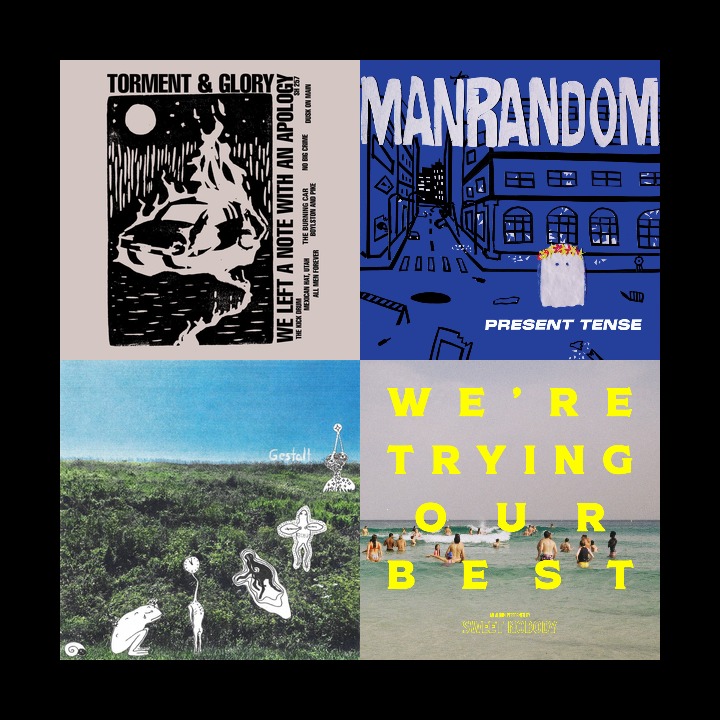
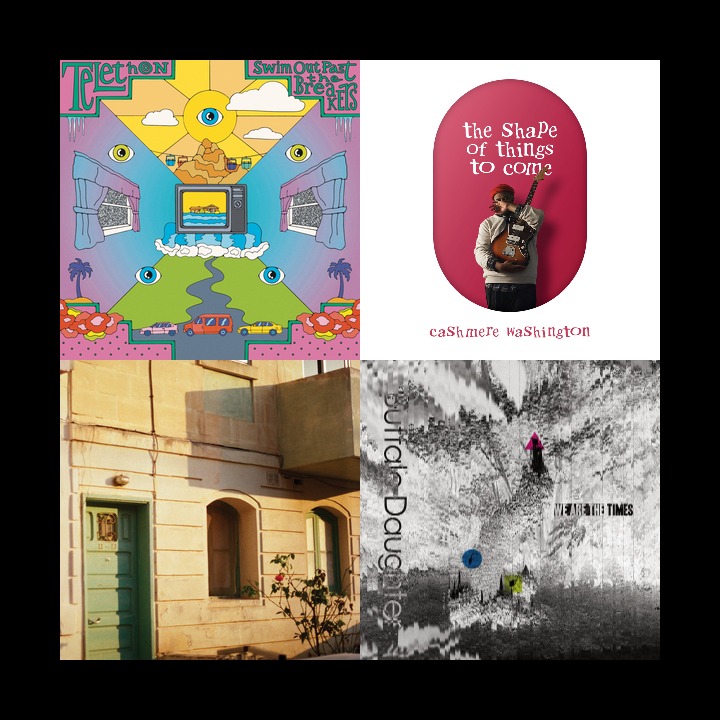

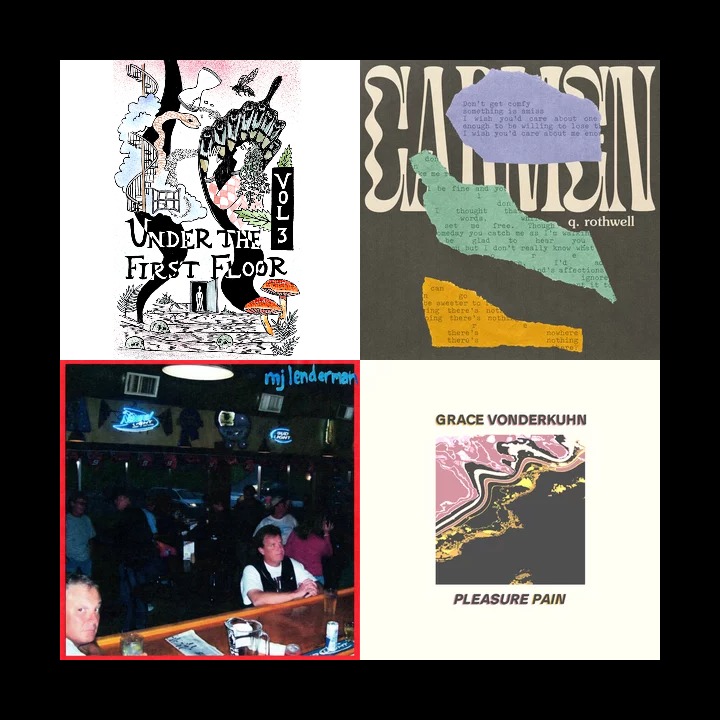
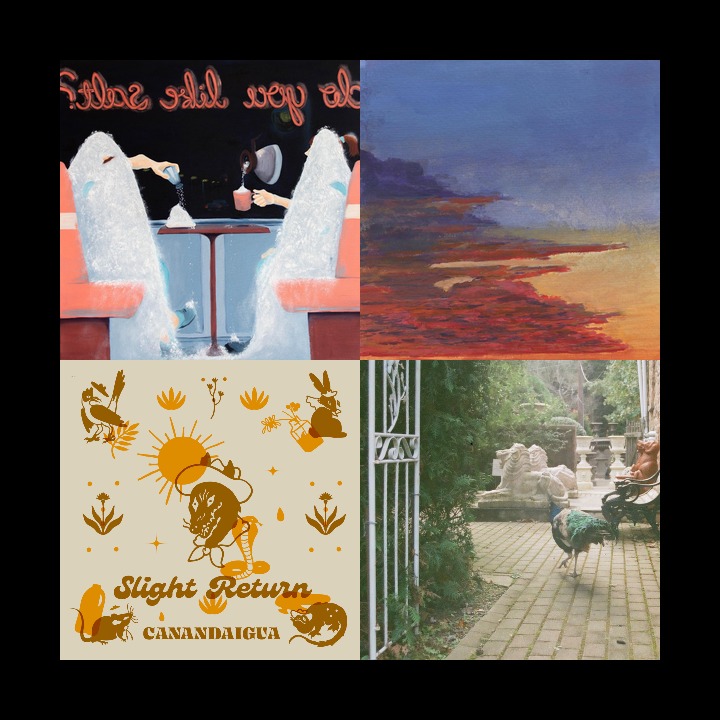
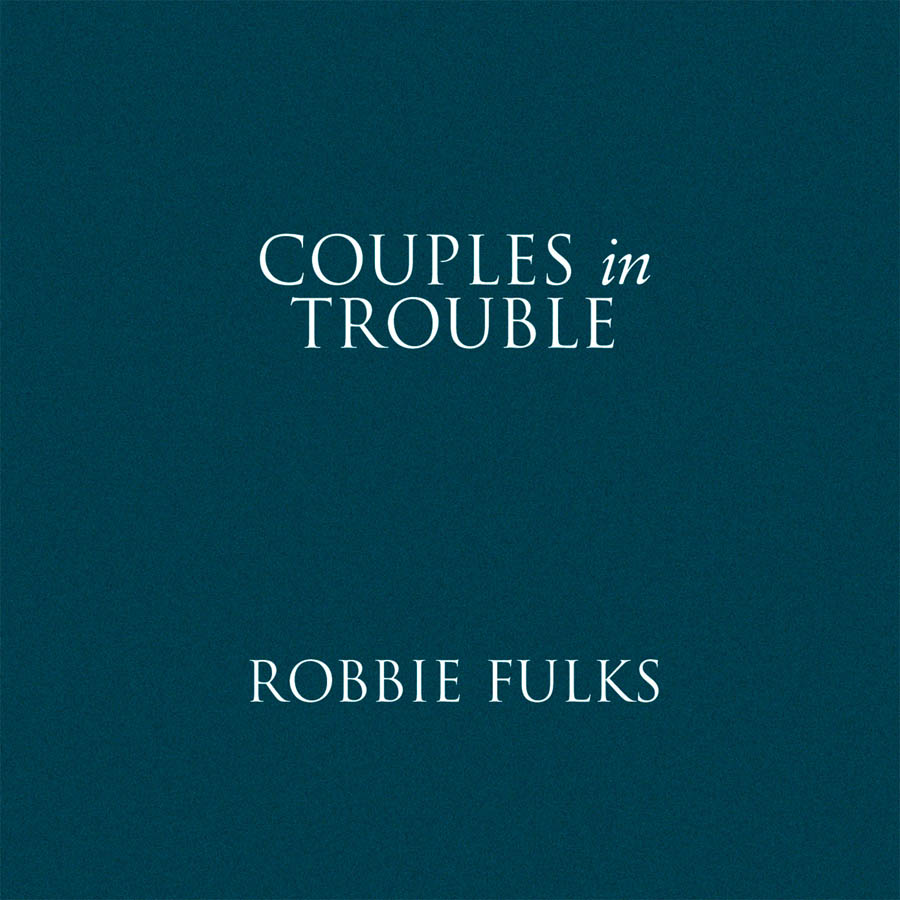

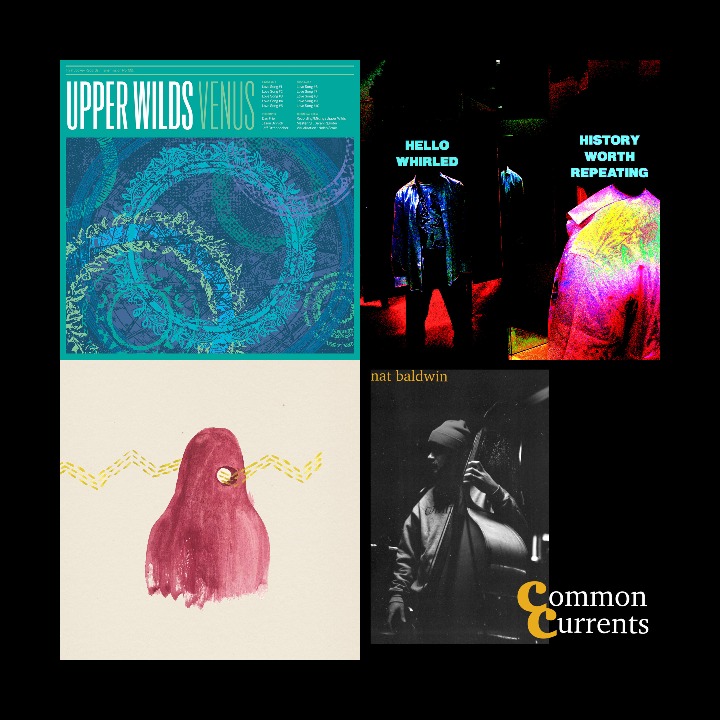
 Rosy Overdrive
