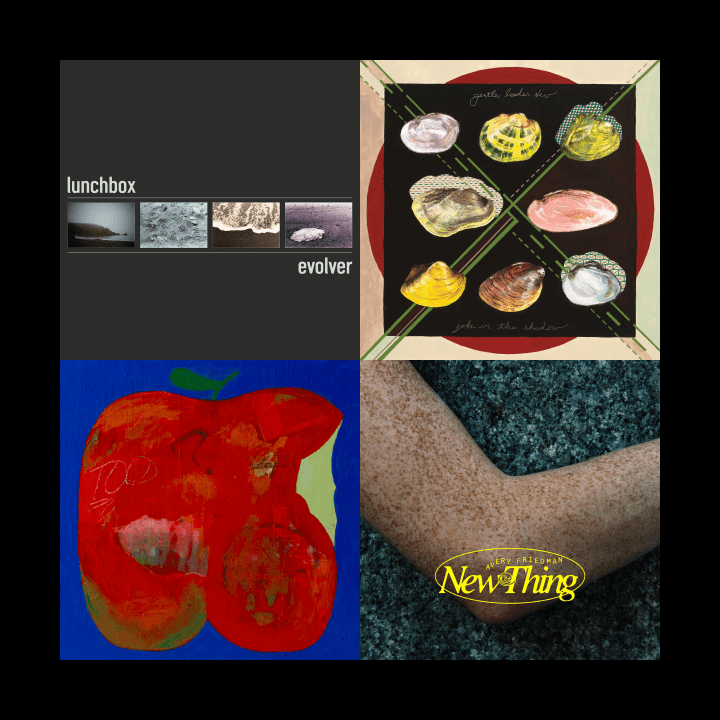
Four new albums that are coming out tomorrow (May 9th)? In Pressing Concerns today? It’s more likely than you think! New LPs from With Patience, Unwed Sailor, and IE, plus a collaboration between The Catenary Wires and Brian Bilston, are featured below. Also, check out Monday’s Pressing Concerns (featuring Flower Show, Tiny Vipers, Deep-Fried Butterfly, and GBMystical) and the April 2025 playlist (which went up Tuesday) if you missed either of ’em.
If you’re looking for more new music, you can visit the site directory to see what else we’ve written about lately. If you’d like to support Rosy Overdrive, you can share this (or another) post, or donate here.
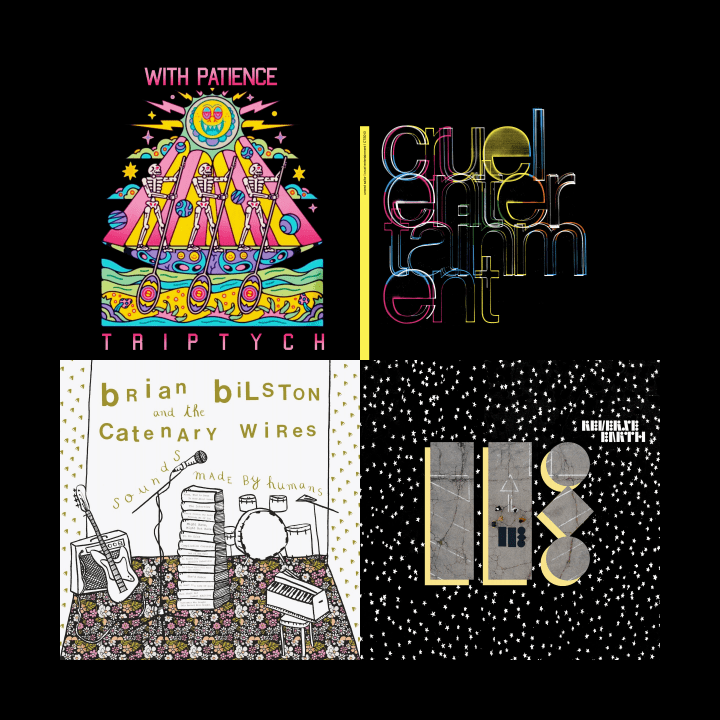
With Patience – Triptych
Release date: May 9th Record label: Self-released Genre: Noise rock, garage rock, post-hardcore, punk rock Formats: CD, digital Pull Track: Disco
Last year, I introduced the blog to With Patience, a Chicago trio made up of three longtime indie rock/punk/underground music veterans, by way of their three-song debut EP Three of Swords. Bassist/vocalist Lance Curran, drummer/vocalist Lee Diamond, and guitarist/vocalist Chris Wade have played in bands like Careful, Douglass Kings, Alkaloid, and hose.got.cable between the three of them, and their first EP displayed their love of noisy indie punk inspired by the likes of Dischord Records, Drive Like Jehu, and plenty of bands in their home city. They’ve now returned with their first full-length album, entitled Triptych (With Patience do love their threes, don’t they?), recorded in Diamond’s basement in Evanston and then handed off to the experts (J. Robbins, who mixed it, Bob Weston, who mastered it, and John Mohr of Deep Tunnel Project and Tar, who stars in a music video for one of the songs). Triptych expands on the brief promise of Three of Swords, staying in the realms of post-hardcore, punk, and noise rock but with some genuine surprises–there’s a sense of humor and funness to some of these songs that the EP didn’t really hint at, while, on the other hand, Diamond’s occasionally metal-influenced drumming takes With Patience to even heavier places.
There aren’t many chances to catch a breath in the opening section of Triptych between the high-flying garage-y punk rock of opening track “Let Bygones Bury the Hatchet”, the prowling hard rock of “Cobra”, and the art punk/post-punk combustion of “Flybuzz”.“Disco” is not a disco song (of course), but it does come out of the gate with a smooth bassline and brisk drumbeat that leads With Patience into previously-unexplored “toe-tapping” territory, and the cleverness of “False Memories” is in how it combines some of the most overt homages to their musical idols (in this case, MacKaye and Picciotto) with lyrics that explicitly reject and mock the allure of nostalgia (the titular “false memories”). Arguably the most catchy song on the album is called “It’s Time”, a bouncy little number whose lyrics are little more than the title line (“It’s time / We’re all / Gonna die”) and “Dip diddip, dip diddip / D-d-dystopia” (that’s actually how the band write that one out). While Diamond’s furious metal drumming punches up “It’s Time”, it really features prominently in “Temple”, a late-record explosion that might be the single heaviest moment on the album. It’s surrounded by a slow-crawling drama called “Heart Is a Pump” and the garage punk dynamite closing track “Exit As Instructed”, which are both “heavy” in their own ways, too. The latter song, the most “post-hardcore” track on Triptych, is about having a panic attack on the CTA and struggling to make it to one’s own stop. It sounds like With Patience just make it at the end of the record. (Bandcamp link)
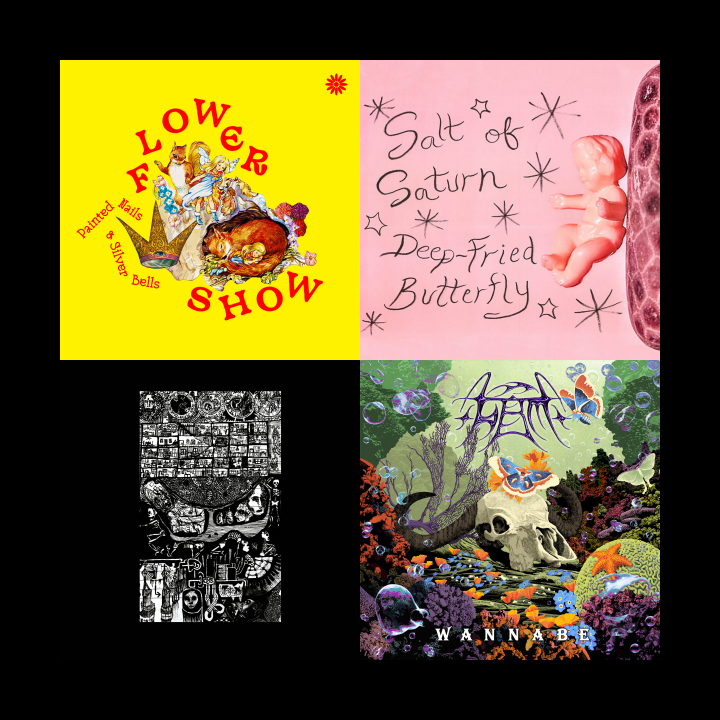
Brian Bilston and The Catenary Wires – Sounds Made by Humans
Release date: May 9th Record label: Skep Wax Genre: Indie pop, spoken word, twee, post-punk, jangle pop Formats: Vinyl, CD, digital Pull Track: Every Song on the Radio Reminds Me of You
The Catenary Wires are, effectively, right at the center of four decades of British indie pop–the album’s co-leading duo of Amelia Fletcher and Rob Pursey famously played together in the legendary band Heavenly in the 1990s (as well as a host of other Heavenly-associated bands from Talulah Gosh to Marine Research to Tender Trap to Swansea Sound) and they also co-run Skep Wax Records, which releases new indie pop records from both veterans and new faces. Despite all of this, it’s been four years since the group (currently a trio rounded out by Swansea Sound and Papernut Cambridge’s Ian Button on drums) has put out an album, and their newest release is a bit of a departure from their first three LPs. Brian Bilston is a pseudonymous poet (and noted Heavenly fan); after reaching out to each other in mutual admiration, a plan was formed for The Catenary Wires to adapt thirteen of Bilston’s poems as “pop songs”. Although the cores of these songs are Bilston’s poems, frequently read by Bilston himself, the artists sought to make themselves “equal partners” on Sounds Made by Humans, Pursey (the primary musical composer) carefully weaving in his signature indie pop with the help of the rest of the band (as well as occasional Catenary Wires member Fay Hallam on keyboards).
Bilston’s poems are fairly short, witty, and direct–if you’re going to combine a poet with a British twee band, he’s probably one of the best options out there. “Alexa, What Is There to Know About Love?” kicks off Sounds Made by Humans by balancing two artists with distinct, large styles precariously–Bilston is as an effective speaker as he is a writer, and The Catenary Wires meet his nervous energy with a surprisingly deep post-punk/dream pop instrumental and Fletcher’s haunting vocals (a nice counterbalance to the stoic-on-the-surface but somewhat shaken Bilston). “The Interview” shows that The Catenary Wires can make their mark on a song that’s almost entirely full of Bilston’s rambling (the power pop instrumental is just able to keep up with him) and “Every Song on the Radio Reminds Me of You” injects a chorus sung by Fletcher and Pursley effortlessly. Bilston seems to like his lists, as “To Do List” and “31 Rules for Midlife Rebellion” take this format, and “Compilation Cassette”, while not written as such, is about a list of songs (labored over and most likely discarded by its recipient). The majority of Sounds Made by Humans is soundtracked by Pursey and Fletcher’s indie pop bread and butter, but The Catenary Wires are game to match Bilston’s energy in, say, the almost Zeppelin-esque punchy rock of “As I Grow Old I Will March Not Shuffle” (in which Bilston declares his intent to be an “octogenarian obstructionist”). Sounds Made by Humans works because the openness of all parties is palpable, even as they retain their original forms. (Bandcamp link)
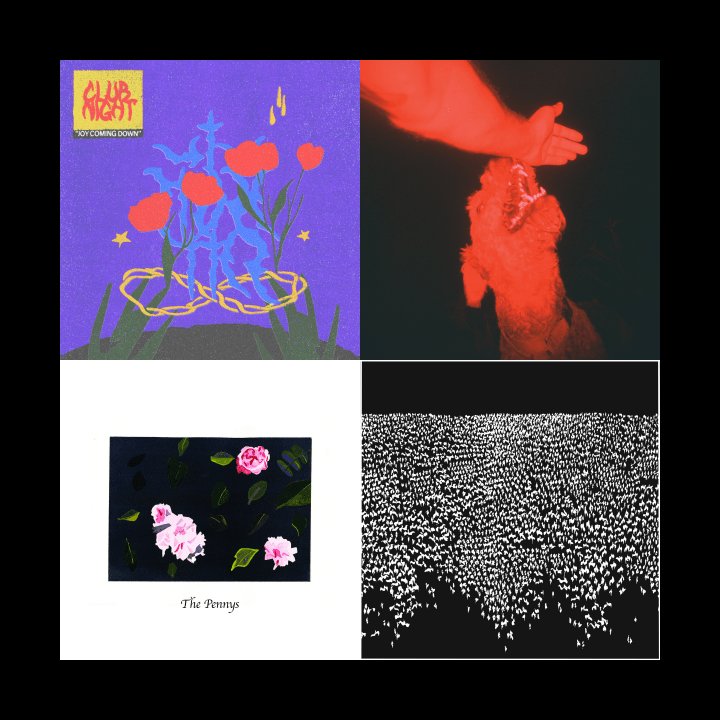
Unwed Sailor – Cruel Entertainment
Release date: May 9th Record label: Current Taste Genre: Post-punk, post-rock, noise rock, dream pop Formats: Vinyl, CD, digital Pull Track: Rock Candy
Jonathan Ford got his musical start in Seattle in the 1990s playing in the cult Tooth & Nail math rock band Roadside Monument, and not long after that he joined Pedro the Lion on bass guitar for a few years. Ford has remained quite busy ever since (you can hear him on a few Damien Jurado albums, for instance), but his longest project is Unwed Sailor, the instrumental post-rock group of which he is the only permanent member. Ford has kept Unwed Sailor active through lineup and geographical changes, eventually ending up back in Tulsa, Oklahoma (the state in which Ford was born) with a trio setup including drummer Matthew Putman and guitarist David Swatzell. After stints on Burnt Toast and Spartan Records, Ford debuted his own new label Current Taste with last year’s Unwed Sailor album, Underwater Over There, and Cruel Entertainment (the tenth Unwed Sailor LP) follows it almost exactly one year later. I’m admittedly not the most familiar with Unwed Sailor’s back catalog, but the “post-rock” tag feels strange to put on this one, as it feels like swinging, electric rock music that just happens to not have a vocalist for the most part. There are perhaps some swelling Mogwai-ish moments, but for the most part Cruel Entertainment feels more in the realms of post-punk, noise rock, and even new wave.
Perhaps it’s not so surprising that a bassist bandleader would make music that sounds a little like New Order. Ford certainly offers up plenty of melodic bass-led moments on Cruel Entertainment, but Unwed Sailor are interested in something darker and louder and therefore less prone to get overly wrapped up in excessive Peter Hook worship. “Rock Candy” feels like a mission statement of some sort–it comes bursting out the gate with a huge, noise rock-esque low end, and the three-minute opening song is a prowling ball of post-punk and fuzzed-out indie rock. Unwed Sailor might step back a little bit after “Rock Candy”–“Slab City” veers into dream pop territory, “Monster Collecting” into bright new wave, “Soft Copy” somewhere in between the two–but we haven’t heard the last of noisy Unwed Sailor, as the almost classic rock guitar riffs of “BODYMOD” assure us. Unwed Sailor close out Cruel Entertainment with some songs that try to balance the darkness and light–penultimate track “Sad Help” and its mix of Dischord-y post-punk and swooning 80s rock is quite successful, and the basement 90s indie rock attitude of the closing title track collides entertainingly with the band’s maximalist ambitions. Unwed Sailor have wound through a substantial history to get to Cruel Entertainment, but they’re still weaving as this record draws to a close. (Bandcamp link)
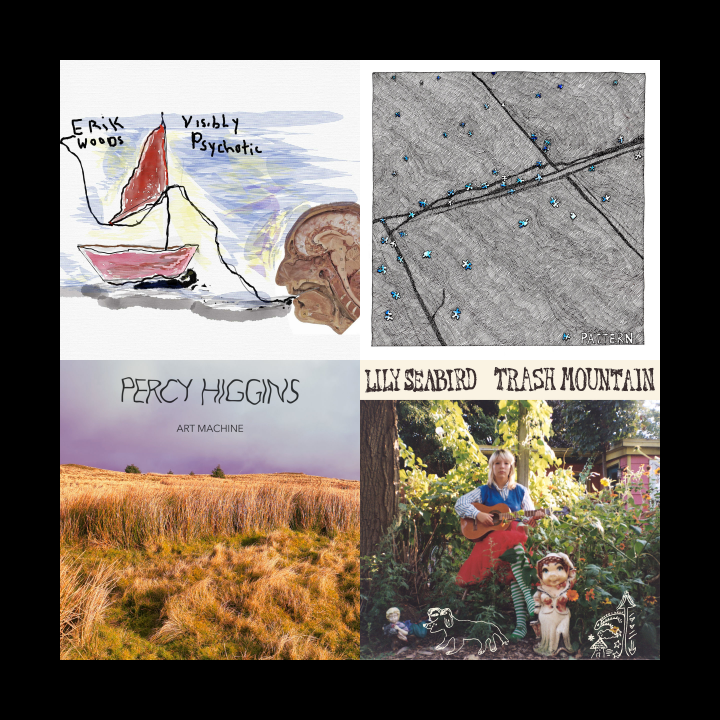
IE – Reverse Earth
Release date: May 9th Record label: Quindi Genre: Post-rock, art rock,psychedelia, dream pop Formats: Vinyl, digital Pull Track: Reverse Earth
The latest signee to Italian art rock label Quindi (Dead Bandit, Monde UFO, Fortunato Durutti Marinetti) is a Minneapolis group simply called IE that seems to fit well on their roster. Since their debut in 2016 with AAOA, the band have dabbled in a bunch of different subsets of experimental music, releasing records imbibed with bits of drone, doom, ambient, electronic, and slowcore. It seems like IE was founded by the trio of keyboardist Michael Gallope, drummer Meredith Gill, and guitarist/keyboardist Travis Workman–in the years between AAOA and their latest full-length, Reverse Earth, they’ve added guitarist/bongo player Sam Molstad and bassist/vocalist/flautist Mariel Oliveira to grow to a quintet. Spanning five songs in thirty-five minutes, Reverse Earth is perhaps not what one typically imagines as a “pop album”, but between Oliveira’s vocals, the band’s sturdy and reliable rhythms, and well-behaved synths, it does feel like a turn for the accessible for IE. It’s psychedelic, but in a sprawling, droning way rather than a sensory overload one–it’s some of the best sophisticated post-rock pop music delivered via a refined jam band that you’ll hear this year.
We begin Reverse Earth with the seven-minute title track, a confident and sleek synth-rock journey that displays both the outer vastness that IE can create and the subtly intricate interiors found within their music. The next song, “Divination Bag”, is even longer and weirder–for a lot of the track, Oliveria’s flute shadowboxes with the synths, and you’d best believe that Molstad’s breaking the bongos out for this one. Despite this, it’s a strong showcase for Oliveria as a pop vocalist, and Reverse Earth becomes easier to get a handle on with her voice as a guide. Compared to what came before them, the relatively brief (under six minutes, I mean) dream pop of “Simplify” and “Dark Rome” are child’s play, but IE pull them off too, the cavernous western guitars in the latter and spacey, brassy psychedelic synths of the former ensuring that the band are still going down as many paths (albeit leisurely) as possible. The only other song on the album is “Babel”, the penultimate denouement that sits a little uneasily between the two shorter tracks. Oliveira’s vocals are more spoken-word here than elsewhere on the album, the rhythms are a bit more “jazzy” than the rest of Reverse Earth, and the synths come and go, dropping in and out of view. It’s all very smooth nonetheless, though–it’s nothing that IE haven’t spent the first half of Reverse Earth preparing us for in one way or another. (Bandcamp link)
To be perfectly honest with you, readers, right now, this moment, is the busiest that I (the person behind this blog) have been in a very long time (in terms of things outside of the world of Rosy Overdrive, I mean). So far I’ve been able to keep the blog posts coming at a normal pace, but for the first time in quite a while I’ve had to consider the fact that I might not be able to at some point in the near future. Hopefully this doesn’t happen! There’s still a ton of good new music on which I’d like to put a spotlight. The good news is that the April 2025 playlist is here, though, and it features a ton of this aforementioned good, new music. Check it out!
Gum Parker, Bliss?, Craig Finn, and Fluung all have two songs on this playlist.
Here is where you can listen to the playlist on various streaming services: Spotify, Tidal (missing a song), BNDCMPR. Be sure to check out previous playlist posts if you’ve enjoyed this one, or visit the site directory. If you’d like to support Rosy Overdrive, you can share this (or another) post, or donate here.
“Not Breaking Rocks”, Gum Parker From The Brakes (2025, Repeating Cloud)
If you’re familiar with Galen Richmond’s previous band Lemon Pitch, then that’s roughly what his current one, Gum Parker, sounds like, but if you aren’t then they’re sneakily difficult to define. Their debut album The Brakes is “power pop” without that genre’s defining reverence, “pop punk” without a trace of what that term traditionally evokes, “slacker rock” made by people with the perpetual nervousness. Oh, and Richmond, despite being the primary songwriter, only sings about half the songs–bassist Kate Sullivan-Jones sings lead on a few tracks, including what is probably my favorite song on The Brakes, the catty, eminently quotable guitar pop drama of “Not Breaking Rocks” (sample line: “Valedictorian from a class of one throws devil horns as camera shutters shut”). Read more about The Brakes here.
“Living Well”, Bliss? From Pass Yr Pain Along (2025, Psychic Spice)
A bunch of punk musicians making power pop? Well, that’s one way to get my attention. Bliss? are a brand new band from Baton Rouge, Louisiana, and their debut album Pass Yr Pain Along is indeed a full exploration several strains of guitar pop formative to the band– Elvis Costello, post-Replacements pop rock and roll, and the Gin Blossoms all come to mind here. It’s not a “punk” record per se, but it absolutely benefits from a little roughness. “Living Well” is the “hit”, the classic short, punchy, giant-hook-featuring single in album tracklist slot number two. Read more about Pass Yr Pain Along here.
“Between GA”, Truth or Consequences New Mexico From This Time of Year (2025)
Following in the long-standing tradition of Chicago groups equally indebted to roots rock and alt-country as they are to indie rock and emo, Truth or Consequences New Mexico sound loud but crystal-clear on This Time of Year. The big, earnest-to-the-point-of-emo opening track “Between GA” is probably a good litmus test as to whether or not Truth or Consequences New Mexico are going to be up your alley. Co-bandleader Jack Parker is on vocals here, and the delivery is the “twangiest” thing on This Time of Year–they’re really straining their voice to live up to the surging country rock instrumental, and I will go ahead and say that they land it. Read more about This Time of Year here.
“Dub Vultures”, The Convenience From Like Cartoon Vampires (2025, Winspear)
Like Cartoon Vampires, the sophomore album from New Orleans’ The Convenience, is a headfirst dive into the world of “art rock”–snappy rhythms, splattered guitars, and strange psychedelic detours characterize the album. For a post-punk album, Like Cartoon Vampires is bright, shiny, and colorful, perhaps informed by the band’s core duo’s work in 80s-inspired synthpop band Video Age. The clattering, groovy art punk/garage rock of “Dub Vultures” reminds me of another great Southern post-punk band, Balkans–it sounds effortlessly cool, naturally alive, and secretly intricate. Read more about Like Cartoon Vampires here.
“Video Den”, The Blackburns (2025)
Oh, this is good. Who likes story songs? What about power pop story songs? That prominently incorporate synthesizers? Well, the latest single by the Philadelphia power pop quartet The Blackburns has all that, and more. Lead vocalist Joel Tannenbaum introduces us to a trio of characters connected by the titular video store, bound together by circumstance and boredom. The song takes a page out of those horror movies one might find in the back of a place called the “Video Den”, and abruptly ends on a cliffhanger. “It’s hard to explain how different things were back then / When you were working at the Video Den,” Tannenbaum sings at the end of the song, a platitude that rolls around in one’s head while trying to decipher what The Blackburns mean by all of this.
“Luke & Leanna”, Craig Finn From Always Been (2025, Tamarac/Thirty Tigers)
The music of Craig Finn (and his band, The Hold Steady) is already fairly…divisive for the fickle bunch known as indie rock fans, and even those who enjoy Finn’s most acclaimed works seem split on Always Been, his latest solo record. I, for one, am really into it–I’ve felt that Finn’s solo career has benefited from his attempts to grow his music palette (we already know he’s a great storyteller–what else you got?), and Always Been–produced by Adam Granduciel of The War on Drugs and leaning further into shined-up, 80s synth-rock than ever before–certainly qualifies. “Luke & Leanna” is the kind of Craig Finn song that would work no matter what was going on underneath him, though, I think–the story is a wrecking ball, and no amount of polished production will ever make it “easy listening”. But I still love Finn and Granduciel’s attempts to make it so.
“Starvin Heart”, Fluung From Fluung (2025, Den Tapes/Setterwind)
Seattle trio Fluung have been keeping Pacific Northwest indie rock loud, electric, and catchy since the mid-2010s. Fluung is pretty clearly the band’s best work yet–an ambitious rock record that nearly doubles their last one (2022’s The Vine) in length, the third Fluung album has enough time to spit out a handful of blissful, hook-laden lost 90s alt-rock classics and push further into feedback-heavy, exploratory, lumbering fuzz rock terrain, too. Fluung is a record that’s about the journey as much as anything else, and the band make sure to leave us with a memorable and complete one. “Starvin Heart” is certainly one of the peaks of this journey–it’s massive, fuzzed out pop rock in the vein of Dinosaur Jr., and done as well as anyone currently doing it. Read more about Fluung here.
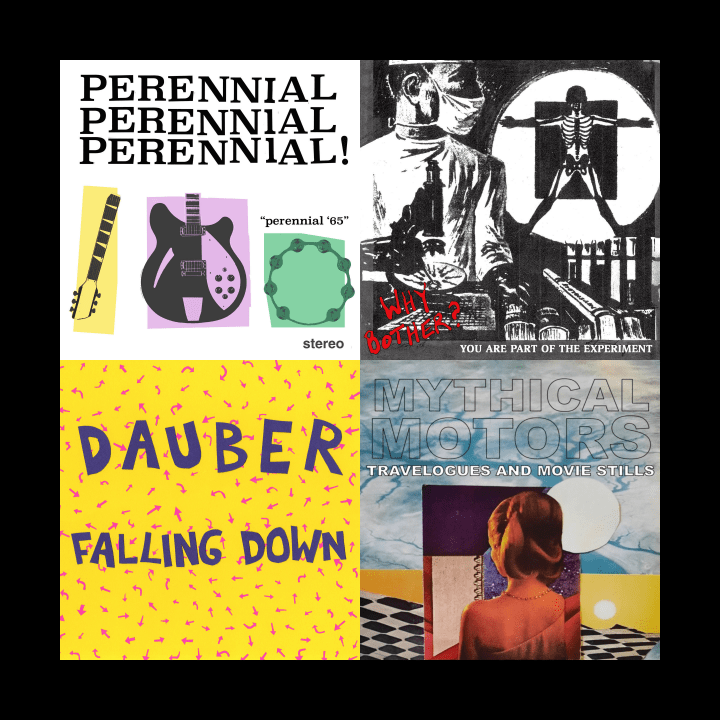
“This Kind of Rain”, Blue Cactus From Believer (2025, Sleepy Cat)
North Carolina’s Blue Cactus reference classic folk-country singer-songwriters Gillian Welch and Emmylou Harris as inspiration for their music, and their latest album Believer does its best to balance the simple intimacy of the former with the polish of the latter. Plenty of experienced Nashville-associated hands touched this record, but Blue Cactus’ writing is sufficiently far removed from the bright lights of the city on Believer, a delicate but confident Americana record. The country rockers on Believer all hit immediately–opening track “This Kind of Rain” is an alt-country classic, laid-back but electric in a way that’s in the same universe as the best of Lilly Hiatt and recent Waxahatchee, among others. Read more about Believer here.
“I Got Your Number”, Why Bother? From You Are Part of the Experiment (2025, Feel It)
The You Are Part of the Experiment EP is a dark, troubling trip into underground noise rock, art punk, and fuzzed-out rock and roll that seemingly allows Why Bother? to get even weirder and unhinged than the mysterious Iowa band’s “proper” (if anything about them can be called that) records. The catchiest thing on You Are Part of the Experiment is also the record’s biggest outlier, an exuberant and surprisingly faithful cover of Cock Sparrer’s “I Got Your Number” that proves that Why Bother?’s basement scuzz translates very well into power pop and first-wave punk rock hooks. The rest of the EP is a real freak show, though. Read more about You Are Part of the Experiment here.
“Everyone I Love Is Depressed”, Infinity Knives & Brian Ennals feat. Randi Withani From A City Drowned in God’s Black Tears (2025, Phantom Limb)
Apparently the Baltimore rap duo Infinity Knives & Brian Ennals have gained a reputation for experimental and political rap over their first couple of records, and, while A City Drowned in God’s Black Tears isn’t going to disabuse anybody of these notions, the two of them spend time out of these boxes on every account on this album. For instance, there are several moments that sound genuinely fun and pop-friendly–like “Everyone I Love Is Depressed”, an awesome groove of a funk-hop track about, of course, suicide. It’s dark, yes, but it’s also a party, the duo seemingly doing the best they can to aid their proclamation of “Don’t kill yourself! We love you too much!” in the chorus (and they can’t resist tacking an absurd skit onto the end of this one, too). Read more about A City Drowned in God’s Black Tears here.
Who else is bummed by Sam Woodring retiring the Mister Goblin project? I suspect his solo material will be rewarding as well once we hear some more of it, but in the meantime I’d like to introduce you to a band from Nakano City, Japan that hits the same spot for me. Texas 3000 is Jojo from Curling’s other band, and it seems like a more chaotic version of the studio-pop of that band’s most recent album, as well as one that deals in the mix of math rock, emo, post-hardcore, and guitar pop that makes Mister Goblin so great. “Universe Drawer”, my favorite song from their most recent EP, Weird Dreams, has all of that and then some–the subtle opening eventually transforms into a cacophony, but a tuneful one.
“Tender and Laughing”, Miscellaneous Owl From The Cloud Chamber (2025)
The Cloud Chamber displays a more thoughtful and subdued side to the writing of Huan-Hua Chye (aka Miscellaneous Owl). Last year’s You Are the Light That Casts a Shadow ran out to greet us with early Magnetic Fields-worthy bright synthpop instrumentals, and while The Cloud Chamber has its moments, on the whole it’s more of an album that one is “welcome to join in progress” than one that’s going out of its way to invite us inside. The first track on The Cloud Chamber is one of these friendlier moments–it’s a quiet, beautiful, synth-friendly indie pop song called “Tender and Laughing”, and while it never stops being “tender”, the chorus is a genuinely chaotic sensory overload that’s kind of surprising to hear from Miscellaneous Owl. Read more about The Cloud Chamber here.
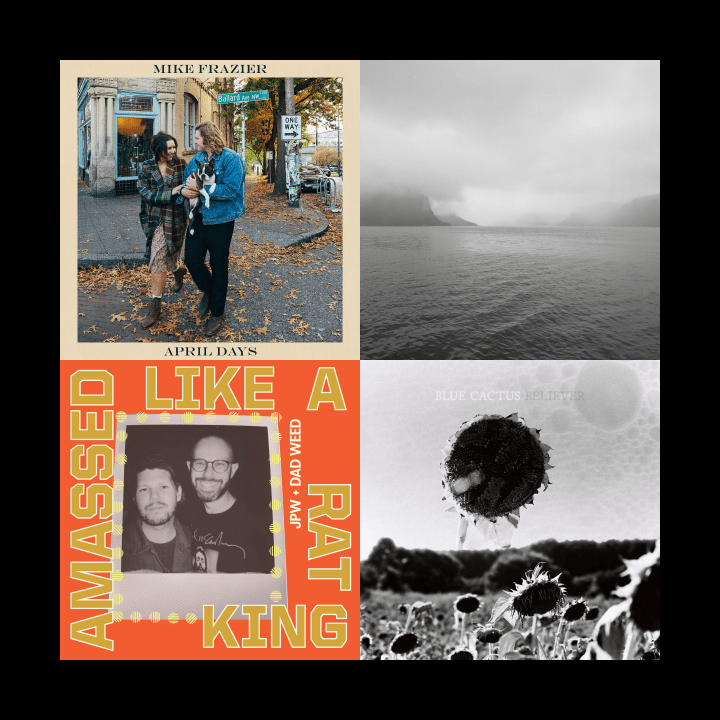
“Pyramids in the Sky”, Mike Frazier From April Days (2025, Geneva/Den Tapes)
There’s a refreshing directness to Mike Frazier’s latest record, April Days–recorded live, it’s a departure from the layered psychedelia of last year’s Secrets of Atlantis and a return to Frazier’s Appalachian folk-country roots even as he sets up shop in the Pacific Northwest as a recent Seattle transplant. April Days is about both Frazier’s new home and his health struggles–last year, he had brain surgery to repair the effects of a long-undiagnosed temporal lobe epilepsy. My favorite moment on April Days is “Pyramids in the Sky”, though, a raucous country rock tune about–what else?–aliens and their spaceships of choice. I could sit here and draw parallels between the extraterrestrial narrative of “Pyramids in the Sky” and the topographical, neurological, and pacifist themes of April Days all day, but it’s best to just take in the experience on your own. Read more about April Days here.
“No More Tears Pt. 2”, The Pennys From The Pennys (2025, Mt.St.Mtn.)
Ray Seraphin (R.E. Seraphin) and Michael Ramos (Tony Jay) are The Pennys, and the two Bay Area indie pop singer-songwriters’ distinct styles turn out to be a perfect match on their self-titled debut EP. “No More Tears Pt. 2”, the song that closes The Pennys, sums up everything about the duo both on their own and together–the chorus (“Every time I tell myself ‘no more tears’ / The clouds above begin to unleash all my fears”, accompanied by sparkling guitars) is probably the single most gorgeous moment on the entire EP, its perfect guitar pop containing both shades of Seraphin’s lost-in-time power pop and Ramos’ “prehistorical pop music slowed down and reverb-ed all up”. Read more about The Pennys here.
“Perennial ‘65”, Perennial From Perennial ‘65 (2025, Ernest Jenning)
Perennial ‘65 comes hot on the trail of last year’s Art History; this stopgap EP gives us one brand-new original Perennial rock and roll song, a cover of The Kinks’ “All Day and All of the Night”, two remixes from Cody Votolato and Chris Walla, and a track that continues the band’s exploration into experimental noise and electronic terrain. The opening title track is the “hit”–it’s as good as anything else the band have done, the now-classic combination of 60s garage rock/pop and furious post-hardcore dance punk hitting no less strongly than on their proper albums. Read more about Perennial ‘65 here.
“Forever”, The Tisburys From A Still Life Revisited (2025, Double Helix/SofaBurn)
On A Still Life Revisited, The Tisburys consciously sought to expand their sound beyond the power pop of their last album, name-dropping ambitious indie rock groups like Frightened Rabbit and The Hold Steady as their targets. This is a risky decision, but there was a Springsteenian largesse to 2022’s Exile on Main Street, and A Still Life Revisited subsequently comes off as more of a continuous journey down a familiar road for them. It helps that bandleader Tyler Asay and crew still know their way around a nice, big guitar pop hook too, of course. As scholars of classic rock and pop music, it’s not exactly surprising to me that The Tisburys identified the biggest “hits” to release as the album’s first two singles–the lethal power pop direct strike of “Forever” in particular is A Still Life Revisited’s most single effective pop moment. Read more about A Still Life Revisited here.
“Frozen Hearts”, Jerry David DeCicca From Cardiac Country (2025, Sophomore Lounge)
Jerry David DeCicca seems like somebody who’ll keep making music until his heart gives out–an outcome that he came frighteningly close to in 2023, when a leaky aortic valve led to the Texas songwriter receiving open heart surgery. Cardiac Country was (mostly) written and recorded before DeCicca’s diagnosis, but DeCicca clearly feels that his burgeoning heart problems influenced his writing, to the point of nodding to them in the album’s title. Cardiac Country is a much more streamlined and even traditional-sounding country record compared to his last solo album, which DeCicca and his collaborators utilize to rewarding ends–my favorite song on the album, the smartly saccharine “Frozen Hearts”, tries to recenter the more productive parts of human nature by brushing up against the organ that casts a shadow over this record. Read more about Cardiac Country here.
“Steamy Nights”, Mantarochen From Cut My Brainhair (2025, It’s Eleven)
Dark and gothic but minimal and catchy, Mantarcohen’s take on post-punk remains quite compelling throughout Cut My Brainhair. The bass is front-and-center, the guitar lines frantic but satisfying, the synths intermittent but always welcome, and the vocals understated but plenty capable for what the rest of the band are doing here. Mantarochen are skilled at tension and dread–they only rarely release the darkness they bottle up throughout Cut My Brainhair, but it’s fascinating no matter what they’re doing with it. “Steamy Nights” is just a little busier than the songs before it on the record, but it keeps the thickening tension coming nonetheless. Read more about Cut My Brainhair here.
“Bags for Life”, Flower Show From Painted Nails & Silver Bells (2025)
Painted Nails & Silver Bells is certainly a “British pop album”, although it’s a bit of a different sort than the kind of music I typically write about that fits this description. Craig Sinclair’s deep Bowie/Cocker/Nick Saloman-esque vocals are arguably the most foundational aspect of the album, and musically, Painted Nails & Silver Bells switches from 60s-style power pop and psychedelic, Paisley guitar pop to a murky, moody, post-Britpop haze. “Bags for Life” is probably the best song on Painted Nails & Silver Bells–this was Flower Show’s debut single, and it’s such a power move to start your career off with something this effortlessly catchy, clever in a naturally British way (sample lyric: “I need a place to rest my bones, anywhere will do / I’m a cunt and you’re a cunt and we’ve both had a few”), and sneakily quite dynamic. Read more about Painted Nails & Silver Bells here.
“Set Your Aim”, Miracleworker From Set Your Aim (2025)
New Jersey’s Miracleworker are always good for brief blasts of catchy basement pop punk/indie rock/power pop/“orgcore”; last year saw two quality three-song EPs in Arrowsand Upstate, and in 2025 the trio seem to have resolved to streamline things even further, with their first release of the new year being a two-song single. The A-side to the Set Your Aim single is my favorite of the two (B-side “Eyes” is also worth queuing up if this does it for you, though); heart firmly visible on sleeve and melodies bursting out of the hissing, slightly lo-fi recording, 90s punk rock and indie rock converge in this three-minute, Jawbreaker-reminiscent triumph.
“Carriers”, Ex Pilots From Carriers / Laundromat (2025)
Damn, I love Ex Pilots. It’s been a great few months for the Pittsburgh noise-pop/GBV-fi band, as they released the excellent Motel CableLP last August, dropped a version of Guided by Voices’ “Color of My Blade” at the beginning of this year, and celebrated the tenth anniversary of their debut album Findlay by re-recording two songs from it last month. I needed to conserve some space on this playlist so I have gone with the sub-two-minute “Carriers” rather than the five-plus “Laundromat”, but they both rule and are confirmations both of Ex Pilots’ long-term brilliance and their current hot streak. It’s just an absolute joy to listen to, an electric ball of squealing melodies, ace vocals from the incomparable Ethan Oliva, and superhero guitars.
“Deepend”, Gamma Ray From Gamma Ray (2025)
A Midwestern garage punk band called Gamma Ray, eh? This’ll probably be good. This self-described “snot rock” group has members based in both Columbus and Chicago, and their self-titled debut album is a twenty-four minute fuzzy and ramshackle indie rock record that pretty much always lands on a winning hook. Opening track “Deepend” is lo-fi fuzz rock party music–somewhere alongside the “power pop/slacker rock” axis, Gamma Ray’s first statement is that of a band who isn’t afraid to pull out all the stops underneath the distorted guitars. Read more about Gamma Ray here.
“Back in the Line”, B. Hamilton From B. Hamilton (2025)
A strange, meandering forty-eight minute experience, B. Hamilton is sometimes floating, unmoored post-rock, sometimes groovy, swinging classic rock–it’s something in between those two. Departure rock music? That’s perhaps an appropriate term for the latest album from the long-running Bay Area band, as it’s a record that bandleader Ryan Christopher Parks openly states is about grief. B. Hamilton is a “difficult” record–it’s too scattered to really be “stubborn”, but there’s a standoffishness to it. Very little of this is apparent from listening to “Back in the Line”, though–it’s a smooth 70s-style AOR rock and roller that comes completely out of nowhere, a jarring transition that becomes a theme throughout the rest of the record. Read more about B. Hamilton here.
“TV Dinner”, A Place for Owls From My Friends Were Here (2025, Refresh)
A Place for Owls and Birthday Dad are a pair of emo-y indie rock bands from west of the Mississippi (the former’s from Denver, the latter central California), and they recently released a split single together because that’s just what you do if you’re a small emo-y indie rock band. I’m only passingly familiar with both bands (my favorite thing related to either of them is the collaborative album that A Place for Owls vocalist Ben Sooy made with phoneswithchords in 2023), so while I do think it’s cool that they cover each other’s songs on the second half of this EP, “TV Dinner” would be new to me regardless. A Place for Owls give the Birthday Dad song a fairly unhinged reading–there’s a bit of that bookish Pedro the Lion version of emo-indie I’ve come to associate with them, yes, but they really let loose in an earnest emo-power-pop way across the track, too. Not bad!
“Semantics of Yet”, (T-T)b From Beautiful Extension Cord (2025, Disposable America)
Boston slacker rockers (T-T)b utilize chiptune and video game soundtrack instrumentationas an accent, the way one might use synths or horns. It seems impossible for this kind of thing to ever be “subtly” incorporated into one’s music, but if it can be, it probably sounds like their latest record, Beautiful Extension Cord–still quite visible, but integrated more seamlessly than ever into the group’s slacker rock, 90s alt-rock, and bedroom indie rock-evoking sound. Between the big old guitars, the chirping 8-bit sounds, and bandleader Nick Dussault’s plain but capable vocals, there’s somehow a cosmic element to (T-T)b’s indie rock, and “Semantics of Yet” is one of the biggest moments of this side of them. It starts very low but steadily rises to a huge alt-rock refrain, Speedy Oritz’s Sadie Dupuis joining Dussault to meditate on the wavering evoked by the adverb in the title. Read more about Beautiful Extension Cord here.
“Two Subarus”, Gum Parker From The Brakes (2025, Repeating Cloud)
Gum Parker bandleader Galen Richmond is a 90s indie rock devotee with (presumably) plenty of Archers of Loaf, Guided by Voices, and Silkworm albums in his record collection, but he comes off as much more interested in simply making loud pop music than trying to directly emulate his influences on his latest group’s debut LP. A speedy album, The Brakes zips through a few classic pop songs in its first half–the Archers-nodding, Superchunk-evoking opening anthem “Two Subarus” is a perfect first statement, with frantic power pop, punk, and indie rock coursing through its caffeinated veins. Read more about The Brakes here.
“Line of Best Fit”, Marshy From Light Business (2025, Marsh Slope)
There’s bits of power pop, dreamy/jangly indie pop, shoegaze-adjacent fuzz rock, and maybe just the smallest bit of emo on the debut EP from New York’s Marshy, Light Business–most importantly, though, it’s a collection of songs displaying that this group’s collaborative take on writing and playing just seems to work. “Line of Best Fit” opens the EP and is my favorite on the record by a fair amount–the other songs eventually grew on me enough to write about the whole record, though. Still, “Line of Best Fit” is clearly Light Business’ “hit”–ascending, triumphant power pop chords, sweeping, expertly-wielded distortion, and unbothered vocal melodies will all do that. Read more about Light Business here.
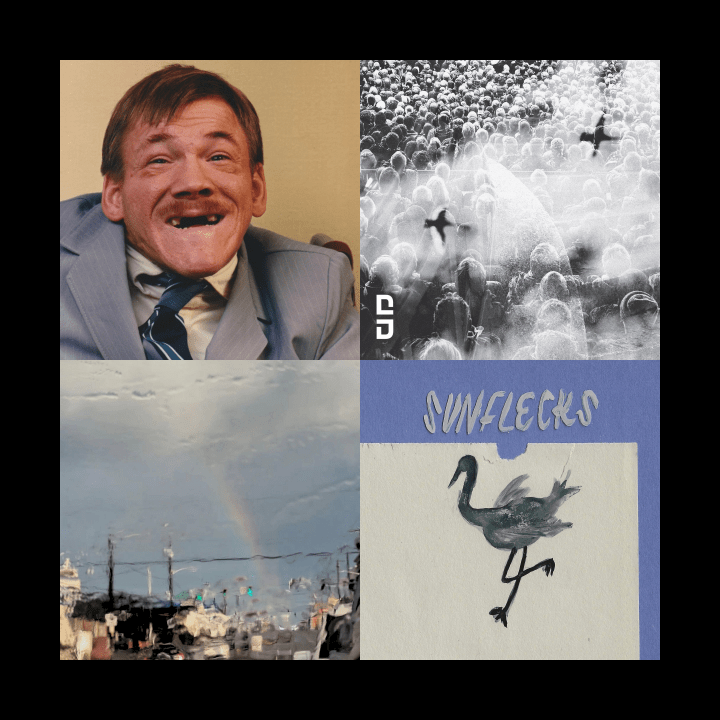
“Everybody’s Talking (Again)”, JPW & Dad Weed From Amassed Like a Rat King (2025, Fort Lowell)
Amassed Like a Rat King has a pretty metal title, but that couldn’t be further away from the music that Dad Weed (aka Zach Toporek) and JPW (aka Jason P. Woodbury) make together here–recalling power pop, jangle pop, and college rock of the 1960s through the 1980s and lightly baked by the southwestern sun, the Arizona duo’s first album together is a comfortable but undeniably hooky guitar pop LP. The no-bullshit, all-business jangle-power pop of my favorite song on the record, “Everybody’s Talking (Again)”, is a casual victory, crossing the economy of Dazy with the southwestern vibes of Dust Star and the most recent Young Guv album. Read more about Amassed Like a Rat King here.
“Pat’s Uninteresting Tours”, Pat’s Alternative Bus Tour From World to Rights (2025)
Scottish indie pop musician Andrew Paterson’s second act as Pat’s Alternative Bus Tour continues at a steady clip with World to Rights, his second album in as many years. Befitting the dramatic title, World to Rights sets its aim a bit higher–it’s a more conscious attempt to weave the interpersonal, political, and ecological together with breezy folk rock and C86-inspired pop music. The bright, memorable narratives of last year’s Virtual Virginsare still here, don’t get me wrong: there’s just more clear connecting threads. The titular tour company “operated in Sydney in the mid to late 1980s, offering tourists the chance to explore some of the more mundane attractions of the city”; Paterson only learned about them after naming his own project similarly, but he’s clearly found some kind of kinship with them, as this offbeat, belated tribute shows. Read more about World to Rights here.
“Arrow”, Lily Seabird From Trash Mountain (2025, Lame-O)
I found myself pretty surprised at where Vermont singer-songwriter Lily Seabird decided to go on her third LP, Trash Mountain. The explosive bursts of noisy country rock of last year’sAlas,are decentered for a quieter, more deliberate, and intimate record, but this pull-back (if anything) only makes Seabird’s writing and singing even more immediate. Trash Mountain is a gorgeously ragged collection of folk rock that finds avenues of contentment rather than searching feverishly for moments of catharsis. The probing electric alt-country rock of “Arrow” sits precariously right in the middle of the album, louder than most of the record but (like everything else on Trash Mountain) not in a jarring way. Read more about Trash Mountain here.
“Magic Glove”, GBMystical From Wannabe (2025, Bee Side Cassettes)
GBMystical has primarily been an outlet for Terrin Munawet’s experimental electronic beatmaking, but there have been hints at lo-fi indie folk and guitar pop sides in the past–sides that are fully explored on the latest GBMystical release, Wannabe. Munawet and their collaborators transform the project into a vehicle for folky, psychedelic indie pop/rock across a dozen brief tracks–it all comes in a casual but very well-crafted guitar pop package, delivering its version of psychedelia in brief, self-contained bursts.“Magic Glove” is a gorgeous ninety-second opener, sliding in some horns to introduce us to Wannabe in the form of lo-fi chamber pop and very nearly “jangle pop”. Read more about Wannabe here.
“Sve Yrself”, Impulsive Hearts From Sorry in the Summer (Remastered) (2025, Cavity Search)
The latest release from Chicago’s Impulsive Hearts is a remastered version of their 2016 debut album, Sorry in the Summer. Sorry in the Summer is certainly compelling enough in 2025–nine years later, it comes off as the missing link between the early 2010s buzzy, fuzzy indie-surf-pop wave and the earnest, “confessional/bedroom pop” era of indie rock that would dominate the latter half of the decade. Even more importantly, though, the songs are there–Impulsive Hearts don’t beat you over the head with them, but this is an excellent pop record upon a closer look. Sorry in the Summer has a sort of “guitar pop via controlled-intensity” attitude that reminds me of the Friko album from last year; “Sve Yrself” might start off with Beach Boys-esque “woo-ooh”ing, but it’s way too desperate to see the pastiche through without going off the deep end. Read more about Sorry in the Summer here.
“People of Substance”, Craig Finn From Always Been (2025, Tamarac/Thirty Tigers)
“Spent way too much time with people without any substance”–me too, Craig, me too. “People of Substance” is not quite as…musically intense as “Luke & Leanna” (discussed earlier) is, leaning into a nice, uplifting rootsy indie rock instrumental, but, of course, there’s an entire world contained herein. The double entendre of the title is just the tip of the iceberg for this one, a theatrical pop rock song where Craig Finn injects his delivery with enough dynamics to not sound totally out of place with the ringing pianos and the actual, real deal guitar solo found here, too.
“Raft Song”, Bliss? From Pass Yr Pain Along (2025, Psychic Spice)
Bliss? vocalist Josh Higdon isn’t at all shy about putting the vocals up front on Pass Yr Pain Along, and the band are loose but clear in a way that puts the spotlight on a collection of songs that really could’ve been shipped straight from Homestead Records to your local college radio station circa 1989. Everything is just right in the opening track, “Raft Song”, which captivates us with a tough rock and roll backbone cradling a basket of melodies–Higdon’s vocals are a delicate, earnest counterbalance to the punk-inspired instrumental. Oh, and that bass guitar is doing an insane amount of melodic heavy lifting, too. Really hyped about this album. Read more about Pass Yr Pain Along here.
“Too Vague”, Entrez Vous From Antenna Legs Hear Everything (2025)
North Carolina’s Entrez Vous debuted with a self-titled album in 2023, and the collaboration between Clark Blomquist and Kelly Reidy has remained fruitful, as they’re back a little under two years later with Antenna Legs Hear Everything. It’s fourteen tracks of garage rock-mussed-up power pop (or, if you prefer, garage rock with power pop hidden in the center) in twenty-seven minutes, putting garage rock, weird psych pop, and power pop in a blender to make something equally confusing and friendly (but always exciting). The kind-of-fuzzy opening track “Too Vague” is just a little psychedelic, just a little Southern, just a little Elephant 6, and much more than just a little compelling–all in under two minutes. Read more about Antenna Legs Hear Everything here.
“I’ve Been Looking Over My Shoulder for Too Long”, Sunny Intervals From Swept Away (2025)
The first Sunny Intervals record in eight years is friendly and familiar-sounding, a delicately beautiful LP of quiet indie folk, soft rock, chamber pop, and good old-fashioned indie pop. Bandleader Andy Hudson pulls a neat trick on Swept Away–these ten songs sound relaxed, unhurried, and content, but, at almost exactly half an hour in length, there’s not a wasted moment among the tasteful acoustic guitars and minimal but brisk percussion. The gorgeous 60s-style piano pop blossoming of “I’ve Been Looking Over My Shoulder for Too Long”, for instance, is about as forward as this kind of music can be. Read more about Swept Away here.
“The Whistleblower”, Fluung From Fluung (2025, Den Tapes/Setterwind)
“The Whistleblower” is the six-minute-long centerpiece of Fluung, but it’s also just as catchy as the shorter and punchier songs on the record in its own way. Dreams of dead animals and plane crashes populate the song, the trio reporting on the unreality with a grounded seriousness that rises and falls with the music. It’s a wild but inspired mix of Archers of Loaf-style noise pop, creepy Pacific Northwest psychedelia, and a bit of punk rock–it’s a masterpiece, clearly. Read more about Fluung here.
On this lovely morning in May (presumably it’s a lovely morning; I’m writing this ahead of time) we have four new records for you to peruse here in Pressing Concerns: new albums from Flower Show and GBMystical, a new EP from Deep-Fried Butterfly, and an archival release from Tiny Vipers.
If you’re looking for more new music, you can visit the site directory to see what else we’ve written about lately. If you’d like to support Rosy Overdrive, you can share this (or another) post, or donate here.
Flower Show – Painted Nails & Silver Bells
Release date: May 2nd Record label: Self-released Genre: Psychedelic pop, jangle pop, Britpop, indie pop Formats: Digital Pull Track: Bags for Life
It is time for us to meet Flower Show, a “queer six-piece indie band from Liverpool” who describe their music as “charity shop pop”. The sextet (led by Craig Sinclair and also featuring Simon Gabriel, Lloyd Gabriel, Dave Miller, Dom Price, and Terry Green) have just released their debut album, Painted Nails & Silver Bells, but some of the members previously played together in a band called Lovecraft over a decade ago. Painted Nails & Silver Bells, which also features arrangements from Jon Hering of Ex-Easter Island Head, is certainly a “British pop album”, although it’s a bit of a different sort than the kind of music I typically write about that fits this description. Sinclair’s deep vocals are arguably the most foundational aspect of this album–they certainly sound like somebody who learned to make and appreciate music through David Bowie and Jarvis Cocker, and I also hear a bit of The Bevis Frond’s Nick Saloman at times. Musically, Painted Nails & Silver Bells has two main “modes”–either Flower Show are bouncing through 60s-style power pop and psychedelic, Paisley guitar pop or they’re treading through a murky, moody, post-Britpop haze. The transitions ought to be jarring, but Flower Show are well-versed in drawing these connections in a way that makes sense as a record.
Opening track “Spitting at the Walls”, bile in the title aside, has enough joyous, exuberant power pop for the entirety of Painted Nails & Silver Bells. Flower Show deploy triumphant trumpets and insistent organ tones, which really place this flowery guitar pop tune right in the middle of the 1960s.It’s a good thing that Flower Show give us such a treat right at the beginning, because they trust us to follow them as they immediately meander into material like “The Macerator” (a strange psychedelic, key-heavy mood piece) and the vintage balladry of “I’ve Forgotten”. “Green Grows the Grass” has a nice jangly undercurrent, but the mid-section of Painted Nails & Silver Bells continues Flower Show’s “difficult” streak (check out the six-minute prog-folk-pop odyssey of “She Will Have Music”), and it’s not until the closing duo of songs that the pop side of the sextet starts to win out again. “Bags for Life” is probably the best song on Painted Nails & Silver Bells–this was Flower Show’s debut single, and it’s such a power move to start your career off with something this effortlessly catchy, clever in a naturally British way (sample lyric: “I need a place to rest my bones, anywhere will do / I’m a cunt and you’re a cunt and we’ve both had a few”), and sneakily quite dynamic. “Drink the House” starts off with our narrator falling down and hitting their head on the toilet in the midst of an eventful night out–there’s still darkness here, although Flower Show seem to find some kind of purpose in making their misery busy and dizzy. (Bandcamp link)
Tiny Vipers – Illusionz Vol. 1 (1997-2004)
Release date: May 2nd Record label: Self-released Genre: Lo-fi folk Formats: Vinyl, cassette, digital Pull Track: Billboards & Dumpsters
Jesy Fortino, aka Tiny Vipers, has been intermittently releasing experimental folk music in Seattle for over twenty years now. She’s perhaps most famous for a pair of folk albums released on Sub Pop in the late 2000s (2007’s Hands Across the Void and 2009’s Life on Earth) as well as a 2012 Kranky-released collaborative release with Liz Harris of Grouper (Foreign Body, under the name Mirrorring) which hinted at the more ambient but still folk-based sound Fortino’s later work would follow. Tiny Vipers releases have been fewer and far between in recent years, but they’re still coming–her most recent LP was 2017’s Laughter, she put out a three-song EP called American Prayer in 2022, and now we have the archival release Illusionz Vol. 1. Much more raw and direct than any of the other Tiny Vipers releases, Illusionz Vol. 1 collects nine songs that Fortino recorded on cassette recorders, ADAT decks, and boomboxes from 1997 to 2004, documenting an exciting, formative period for a developing songwriter. Lo-fi 90s indie folk acts like The Mountain Goats, Simon Joyner, and Cat Power come to mind (and there are moments that connect this compilation to the concurrent political indie/punk of the Pacific Northwest), although there’s already Tiny Vipers’ unique darkness in this music.
“Tired Horses” is an incredibly strong, transfixing opener–a loping, bleak, blues-informed folk song, it’s like a rougher version of early Nina Nastasia. The next song on Illusionz Vol. 1 is still dark and stark, but it’s of a different sort, marked by frantic acoustic strumming and a strained voice on the verge of breaking. There’s an agitated, spirited side to Fortino’s writing and playing here that might be surprising for those only familiar with her later work, particularly on highlight “Billboards & Dumpsters”. It’s a searing, seething indictment of some dipshit who thinks their politics compensates for their personal odiousness (“You say that there are more important things than me / Like spraypainting ‘Smash the state’ and ‘Anarchy’ / On the side of billboards and dumpsters and freight trains / Billboards and dumpsters and freight trains are more important”). “Something Wrong” is another folk song with this level of writhing liveliness, and it’s really not until the final two songs on Illusionz Vol. 1 that we get some real hints about where Tiny Vipers would end up going. But what strong indications “Watch My Body Die” and “Illusionz” are! The six-minute crawl of the former and the haunted eight-minute drone of the latter take Tiny Vipers to the next level suddenly and capably–but I’m still happy that we get to hear Fortino’s journey to get there on the rest of this album. (Bandcamp link)
Deep-Fried Butterfly – Salt of Saturn
Release date: March 31st Record label: Kitschy Spirit Genre: Fuzz rock, indie pop, dream pop Formats: Digital Pull Track: (Guess the) Age of the Aquarius
Deep-Fried Butterfly are a new quartet hailing from the Upper Peninsula of Michigan–specifically Schoolcraft Township (it’s on the Keweenaw Peninsula, near Houghton, I say as if this means anything to any of you). Their Bandcamp page gives the members all fun names–guitarist/vocalists Lio Coulter and Sean Stout are “Visor Stains” and “Bloomin Onion”, respectively, while bassist Chris Joutras and drummer Aidan Reilly are “Baron La Croix” and “Box of A.I.R.”. You’re probably thinking–“wait, the Upper Peninsula? That’s where Liquid Mike is, right? How are they involved in all this?” Well, Liquid Mike’s Mike Maple did indeed record the debut Deep-Fried Butterfly release, the four-song Salt of Saturn EP (and Joutras’ record label, Kitschy Spirit, has put out a few Liquid Mike records as well). I confess that I’m really not sure what to make of Salt of Saturn, but I do quite enjoy it–as one might expect from a Mike Maple-recorded EP, it’s nice and fuzzed-out, but otherwise it’s pretty far removed from punk-ish power pop. These four fairly disparate songs pull from dream pop, psychedelic pop, alt-rock, instrumental jazzy post-rock, and more–there are plenty of quality hooks in them, though, which is as good a unifying force as any.
“(Guess the) Age of the Aquarius” opens up Salt of Saturn with what I’d call the “hit” of the EP–that beginning guitar riff is probably the most “Liquid Mike” thing on the record, but the song that follows is more polished and refined version of indie pop ushered along by Reilly’s propulsive drumbeat and Coulter (I think?)’s stately vocals. “Super Fun Site” is also a journey into the realm of indie pop, although it’s an oddly disjointed one, its classic pop song core consistently distorted and reset by the band and the recording. “At the Drive In at the drive in” is easily the strangest thing on this EP–it’s an instrumental, and veers sideways into the realm of slightly chilled-out math rock and jazzy, guitar-led rock music (it’s surprising that something on this EP reminded me of The Royal Arctic Institute, but here we are). Salt of Saturn wraps up an eventful fourteen minutes with “It’s Just ‘Table’”, the most dramatic moment of their brief career yet. The low-key but somewhat dour guitar pop of the majority of the song floats in some kind of distorted ether, but the final minute and change of the track finds Deep-Fried Butterfly careening into a “big finish”, the vocals becoming increasingly yelled and frantic and the guitars launching into the sky. There goes the first record from a promising new band, fluttering away like some kind of winged insect. (Bandcamp link)
GBMystical – Wannabe
Release date: May 2nd Record label: Bee Side Cassettes Genre: Psychedelic pop, folk pop, jangle pop, lo-fi pop Formats: Cassette (forthcoming), digital Pull Track: Magic Glove
Terrin Munawet is a musician from upstate New York–they played in “math rock bands in high school”, drummed on an album from the then-Rochester-based Cusp, and started making beats solo as GBMystical before recently moving to Philadelphia. GBMystical has primarily been an outlet for Munawet’s experimental electronic beatmaking, but songs like “Little Dolphin” from 2020’s Planet GB hinted at lo-fi indie folk and guitar pop sides to Munawet–sides that are fully explored on the latest GBMystical release, Wannabe. Munawet and their new collaborators (including William Wilkinson on trombone and Soft Idiot’s Justin Roth on backing vocals) transform the project into a vehicle for folky, psychedelic indie pop/rock across a dozen brief tracks (it’s about twenty-five minutes long in total). Wannabe is being released through Albany label Bee Side Cassettes (with whom Munawet has collaborated before), and while GBMystical’s earlier material fit alongside the electronic side of that label, their newest record fits alongside the imprint’s guitar acts–there are bits of Another Michael, Bruiser & Bicycle, and Floral Print in here. It all comes in a casual but very well-crafted guitar pop package, delivering its version of psychedelia in brief, self-contained bursts.
“Magic Glove” is a gorgeous ninety-second opener, sliding in some horns to introduce us to Wannabe in the form of lo-fi chamber pop and very nearly “jangle pop”. The meandering, electric folk rock of “Remember” is a little bit more developed, but the laid-back charm of the opening track is hardly lost–the music reminds me a bit of the Meat Puppets, a touchpoint I hear again in the instrumental “Stirring Theme”. A lot of Wannabe is just good old-fashioned Philadelphia bedroom pop, somewhat dour but nonetheless beautiful music that recalls stuff like Ylayali, 22 Degree Halo, and the whole Sleeper Records discography (I’m thinking specifically of “Mist”, which goes from an intimate Greg Mendez-type thing to a soaring fuzzy rocker, but plenty more spots on the record apply, too). Wannabe leans into its brevity a bit–songs like the title track, “Starfish 2”, and “Stirring Theme” feel a bit like snippets, giving the record a collage-like tint that connects it with Munawet’s less pop-forward work. The only song on Wannabe that really sounds like those beat-centric records, however, is “Doesn’t Matter”, a synthpop collaboration with New York project Certain Self that places the busy drum machines front and center (but still has plenty of “pop”). “Doesn’t Matter” still fits naturally with the songs next to it (the dreamy pop of “Fairy Hour” and one last folk-pop heist in “GRIM”); it’s a nice addition to the strange and comforting quilt that is Wannabe. (Bandcamp link)
We’ve got a nice and weird Thursday Pressing Concerns up at bat, featuring three albums coming out tomorrow, May 2nd: new LPs from Club Night, Eli Winter, and Milkweed. Plus, we get an EP from The Pennys (a new band featuring some familiar faces) which is out today! We also had posts go up Monday (featuring Mike Frazier, JPW & Dad Weed, Chris Brokaw, and Blue Cactus) and Tuesday (featuring Erik Woods, Percy Higgins, Emma Munger, and Lily Seabird); check those out too!
If you’re looking for more new music, you can visit the site directory to see what else we’ve written about lately. If you’d like to support Rosy Overdrive, you can share this (or another) post, or donate here.
Club Night – Joy Coming Down
Release date: May 2nd Record label: Tiny Engines Genre: Art rock, math rock, emo Formats: Vinyl, digital Pull Track: Lake
I’m not sure why I like Wolf Parade so much more than all of those other big-tent 2000s indie rock bands. Maybe I just heard them at the right time and I could just as easily have fallen similarly into Arcade Fire or Broken Social Scene, but I’d like to think that there’s just a certain fire in those records, a post-punk chaotic anthem-writing ability that’s just not there in their peers. I find myself thinking about Wolf Parade and this question while listening to Joy Coming Down, the long-awaited sophomore album from the Oakland band Club Night. There were plenty of groups in the late 2010s making music that could be described as some combination of “math rock”, “indie rock”, and “emo”, but the way that Club Night do it–an overall hugeness, jittery art-punk instrumentation, strange but welcome synth-centric additions–just works better than the others. It was enough to keep the band regularly on my mind in the six-year gap between their first album, What Life, and this one–a gap that was enough time for their label, Tiny Engines, to shutter and relaunch, not to mention countless bands sharing space with them both geographically in the Bay Area and sonically. Joy Coming Down (which is named after a Fred Thomas lyric) picks up right where Club Night left off–not that a band like this can ever really be predictable, but their second album packs as much of what makes this group special as it can in its forty-two minutes.
Guitarist/vocalist Josh Bertram, bassist Devin Trainer, guitarist Ian Tatum, and drummer/synth player Nicholas Cowman alternate between sounding like a real, rumbling live rock band and a bunch of artists frantically sculpting something in a gigantic studio throughout the album. Like a good math rock record, a lot of these change-ups in Joy Coming Down happen in the same song–this is the case right from opening track “Expo”, which takes a minute before coming into focus and then really steps on the gas pedal. Club Night sound like they’re trying to traverse over hot coals in “Lake”, an emo-rock song with an inability to stay in any one place for more than a moment. If you can ignore the AutoTuned intro and occasional harmonics, “Palace” almost sounds like a normal post-punk song, but there aren’t any “normal” bands that have the ability to put stuff like “Dream” and “Judah” (the latter of which features guest vocals from somebody named Brijit Spencer) to tape. Everything on Joy Coming Down is a mountain, but if there’s a single summit, to me it’s “Station”–it’s probably the song that initially made me bring up Wolf Parade, but the six-minute journey sounds like a lot more than just that one band. Maybe it’s a more caffeinated Vulture Feather, or an emo band that knows how to show just a little fucking bit of restraint. I’ve enjoyed plenty of music that can be called “difficult” over the years, but nobody else can make it sound as exciting, feverish, and (yes) joyful as Club Night. (Bandcamp link)
The Pennys – The Pennys
Release date: May 1st Record label: Mt.St.Mtn. Genre: Jangle pop, indie pop Formats: Vinyl, digital Pull Track: No More Tears
The Pennys are the indie pop team-up that we didn’t know we needed. The band came together as a creative partnership between two San Francisco Bay Area titans in Michael Ramos and Ray Seraphin, later adding Yea-Ming Chen (Yea-Ming and the Rumors) on vocals, keyboards, and organ, Owen Adair Kelley (Sleepy Sun, R.E. Seraphin) on slide guitar, and Luke Robbins (R.E. Seraphin, Ryli, Yea-Ming and the Rumors) on vocals. Ramos and Seraphin have perhaps two of the most distinct styles of all the Bay Area pop revivalists–via his solo project Tony Jay (and to a lesser degree, his work as one half of Flowertown), Ramos embraces a slow-moving, unmoored, dreamy indie pop sound, while Seraphin’s quasi-solo project R.E. Seraphin embraces more full and grounded power pop/college rock (albeit tempered by his relatively gentle vocals). They’re clearly removed from one another, but compatible enough that it doesn’t surprise me that they blend well together on The Pennys, their new project’s debut 12-inch EP. Busier than Tony Jay but more subdued than R.E. Seraphin, The Pennys hit the jangle pop sweet spot for six songs and sixteen minutes on their first record (out via Mt.St.Mtn., which would be an indication of quality even if the co-bandleaders didn’t have plenty of work that speaks for itself).
Apparently The Pennys began with Seraphin asking Ramos to record an upcoming solo album of his, but their debut EP opens with a track that has Ramos’ creative input all over it in “Say Something”. It’s relatively lively for Ramos, yes, but that dream pop, Velvets-y ramshackleness and slowed-down pop charm all feel very Tony Jay-adjacent. “One Million Things” might as well be The Pennys’ “hit” (as if they’re not all hits); it’s very upfront with its jangly hooks and never falters from its strong start. The Pennys delve a little more into desert rootsiness with “Trilobytes” and 60s jangle-psych with “My World” while holding onto their direct pop instincts, while “Long in the Teeth”–an electric power pop tune destabilized and distorted by the recording and production–could be the most successful synthesis of the two bandleaders’ various styles on the EP. “No More Tears”, the song that closes The Pennys, might have something to say about that, though–the chorus (“Every time I tell myself ‘no more tears’ / The clouds above begin to unleash all my fears”, accompanied by sparkling guitars) is probably the single most gorgeous moment on the entire EP, its perfect guitar pop containing both shades of Seraphin’s lost-in-time power pop and Ramos’ “prehistorical pop music slowed down and reverb-ed all up”. They can’t keep getting away with this. (Bandcamp link)
Eli Winter – A Trick of the Light
Release date: May 2nd Record label: Three Lobed Genre: Jazz-rock, post-rock, experimental folk Formats: Vinyl, digital Pull Track: For a Fallen Rocket
The Houston-originating, Chicago-based guitarist Eli Winter has certainly accomplished quite a bit since the beginning of the decade. His 2020 debut solo album Unbecoming kicked off a productive period that’s included collaborative LPs with Jordan Reyes and Cameron Knowler, a steadily-growing collection of live records, and an acclaimed 2022 self-titled album that featured everyone from Yasmin Williams to jaimie branch to Ryley Walker. Winter’s latest album, once again released on Three Lobed Recordings (who put out Eli Winter), is an exciting six-song collection that weaves together rock, jazz, and folk music in an active and interconnected manner. Like Winter’s last “proper” album, A Trick of the Light features a variety of notable experimental and indie rock musicians–Mike Watt, David Grubbs (Gastr del Sol), and Kiran Leonard are some of the names appearing in the credits on this one. Some of these contributions were recorded remotely, added to the core of the album that was engineered by Cooper Crain at Electrical Audio, and Winter (as a songwriter, as a guitarist, as an arranger) does a satisfying job of making these instrumentals sound of a piece.
It’s a precarious setup for a record: six songs, two of which are covers, and the album opener (which is one of those covers) is sixteen minutes long. Eli Winter knows what he’s doing, though, and that includes the incredibly bold maneuver of beginning A Trick of the Light with a take on Don Cherry and Ed Blackwell’s “Arabian Nightingale”. It starts with some fearless electric guitar playing from Winter, but it’s Gerrit Hatcher’s tenor saxophone and Andrew Scott Young’s upright bass that turn the track (which takes up almost the entire first side of the record) into the most overtly “jazz” recording on A Trick of the Light. The comedown is the only other song on Side A of the album, “For a Fallen Rocket”, which explores a bit of the fabled “cosmic country” sound between Winter’s acoustic picking, Sam Wagster’s pedal steel, and Eli Schmitt’s harmonium. The second half of A Trick of the Light kicks off with what’s probably the most compact jazz-infused rocker on the album, “Cracking the Jaw”, and “Ida Lupino” (a Carla Bley cover) and the title track both lead Winter and his band into stranger, emptier, and more restrained climes before all hands return on deck for the swirling seven-minute post-rock, post-country finale of “Black Iris on a Burning Quilt”. Winter lets some explosive, squealing guitar solos fly in the second half of the closing track, but it all ends with two minutes of near-silence. It’s an expertly wild trip. (Bandcamp link)
Milkweed – Remscéla
Release date: May 2nd Record label: Broadside Hacks Genre: Experimental folk, traditional folk, sound collage, electronic, post-rock Formats: Vinyl, cassette, digital Pull Track: Exile of the Sons of Uisliu
London’s Milkweed are an experimental folk/“slacker trad” duo who’ve been doing their own thing since earlier this decade. The band (whose members seem to remain anonymous) put out their debut album, Myths and Legends of Wales, on Devil Town Tapes in 2022, and every year since then they’ve made an LP of crackling, warped, chopped-up folk and electronic music. The lyrics of every Milkweed album are drawn from historical source texts–their debut album comes from the 1984 book of the same name, last year’s Folklore 1979 comes from the ninetieth edition of The Folklore Society’s journal, and so on–and Remscéla is no different. Milkweed initially wanted to adapt the entirety of the 400-page Irish epic Táin Bó Cúailnge, but they were able to make an entire album just out of the “Remscéla”, a collection of backstories typically included alongside the epic’s main narrative but considered separate from it. Remscéla sounds like nothing else I’ve heard recently–the base of the record is traditional-sounding folk music, which Milkweed sometimes leave intact, sometimes distort slightly, and sometimes revamp entirely with industrial electronic and nearly trip-hop sounds. Banjos, beats, and dreamy vocals all float in Remscéla’s bizarre, intriguing atmosphere.
No part of Remscéla is all that “friendly”, but the beginning is particularly strange and difficult to grasp–“How the Táin Bó Cuailnge Was Found Again” is a spoken word intro obscured and shrunken, while “How Conchobor Was Begotten” (which is, I guess, the first “proper” song) adds a cavernous dread to the already-pretty-cavernous-and-dreadful base folk song (structurally, it’s largely left intact). Remscéla is a pretty brief listen–most of these tracks are fairly short, but all of the sub-two-minute songs feels pretty complete nonetheless. The trip-hop Irish folk of “Téte Brec, the Twinkling Hoard”, the eerie creep of “Drinking in the House of Fedlimid”, and the noisy folk cloud of “Imbas Forasnai, the Light of Foresight” are as potent as anything else on Remscéla–in fact, it’s the longer songs where Milkweed truly let the ambient and collage tendencies to take over, between “Noisiu’s Voice a Wave Roar, a Sweet Sound to Hear Forever” and (parts of) “The Pangs of Ulster”. “Exile of the Sons of Uisliu” is probably the closest thing to a “hit” on Remscéla–it’s almost like a lo-fi Portishead by way of “I Am Stretched on Your Grave”-era Sinead O’Connor, but also with a part that sounds like a multi-banjo pile-up. Irish folklore never sounded so good. (Bandcamp link)
The second Pressing Concerns of the week is here, and we’re popping in on new(ish) EPs from Erik Woods and Percy Higgins and new albums from Emma Munger and Lily Seabird here. Good! There’s also a Pressing Concerns from yesterday (featuring Mike Frazier, JPW & Dad Weed, Chris Brokaw, Blue Cactus), so check that one out if you missed it.
If you’re looking for more new music, you can visit the site directory to see what else we’ve written about lately. If you’d like to support Rosy Overdrive, you can share this (or another) post, or donate here.
Erik Woods – Visibly Psychotic
Release date: March 23rd Record label: 21st Century Lo Fi Genre: Folk rock, sadcore, lo-fi indie rock Formats: Digital Pull Track: Do You Ever?
I used to listen to a podcast by a guy named John Roderick (of the band The Long Winters). There was one episode where (and this was many years ago that I heard this, so forgive me if I’m misremembering any specifics) he talked about growing up in Alaska and the isolation that comes with that, a type of isolation incomparable to anywhere else in the United States…“except maybe, like, West Virginia,” he allowed. I’ve written about Mountain State acts who incorporate a fair amount of darkness in their songs before (like Tucker Riggleman and The Long Lost Somethins), but never more has that particular quote resurfaced in my mind than while listening to an EP from a Huntington-based singer-songwriter named Erik Woods. Woods has been putting out folk/lo-fi indie rock-type music on 21st Century Lo Fi, a label he appears to co-run, for a while now–his latest record is four songs recorded in Charleston over a period of six months with a handful of other West Virginians in guitarist Sean Knisely, bassist David Gravely, and drummer Seth Hughes. Visibly Psychotic is an aurally strange experience–these songs have a dramatic, almost gothic darkness to them, but Woods’ band play them with no inkling of that level of pretension. It ends up sounding like a more Appalachian version of song-forward electric-ish slowcore acts like American Music Club and Idaho.
Between the slow pace of these songs and repeated religious/divine references, Visibly Psychotic kind of feels like a collection of hymns–but certainly not like a trip to church. “Liberated” ought to be the catchiest song on the EP, a mid-tempo, acoustic guitar-led lilting thing with a clear refrain, but Woods’ uncomfortably-up-close vocals forcefully reject any kind of easy listening folk rock experience. The actual “catchiest” song on Visibly Psychotic is probably the closing track, “Do You Ever?”–Emmy Davis and Hank Berlin’s guest vocals help the song come off just a little friendlier than the rest of the record, like it’s drawn from a more recognizably human kind of sadness. On the other end of the spectrum, “My Turtle” is the most memorable track on Visibly Psychotic in its singular strangeness. Gravely’s bass inches along and the guitar floats around in almost a “dream pop” manner, but once Woods takes the mic, it’s hard to focus on anything other than what he’s singing. “Got a mental illness / Made my own mother cry / I’ve got a mental illness / Sometimes I’d rather just die,” Woods sings with frightening simplicity, and in the chorus he simply says “My turtle will live longer than me” (known to live longer than a hundred years in some cases, turtles are discouraged as pets by most animal welfare experts for this reason, a trait they share with certain frequently-caged birds). It’s not a feel-good listen, but I’m not sure why you’d expect that from an EP called Visibly Psychotic–and it’s good for us to get confronted with this kind of thing from time to time, I think. (Bandcamp link)
Percy Higgins – Art Machine
Release date: April 16th Record label: Self-released Genre: Lo-fi indie rock, experimental rock, noise rock, rap-rock Formats: Digital Pull Track: Sombre Phones of the Past
Percy Higgins is the alter ego of a musician from London named Adam Kingsley, who plays bass and/or drums for a few different noise rock, punk, and metal bands (Muscle Vest, Ishtar Terra, Cannabis Man). Percy Higgins arrived on the scene in 2023 with an EP called Don’t Rag on the Spider, and we’re fortunate enough to join Kingsley for his follow-up record under the name, another EP called Art Machine. Kingsley listed four influences when he sent me this record: Beck, The Birthday Party, Captain Beefheart’s Magic Band, and MF Doom. These are all artists who–full disclosure–I find myself “respecting” more than “liking”. I’m not even sure if Art Machine really sounds like a synthesis of them, but there’s something about the noisy, dissonant, pounding take on hip-hop and fuzz rock music found herein that has drawn me in for whatever reason. Aside from mastering (provided by Muscle Vest bandmate Charlie Webb), Kingsley played and recorded everything on Art Machine, and he sounds like a nervous, irritated mad scientist behind the controls. Maybe Percy Higgins is kind of like Beck, but with all the fun and “coolness” replaced by good old-fashioned British noise rock bile.
Art Machine is a brief jolt to the senses–Percy Higgins only gives us five songs, and only one of those five is over three minutes long (opening track “Creature Feature” comes in at a clean 3:12). It’s a clanging, busy cacophony pretty much from moment one–after a brief warm-up, Kingsley drops into “Creature Feature”, rattling off rattled lyrics (“Uncanny valley, image source: Getty / Wading through knee deep existential confetti”) alongside a rowdy bassline, bullying drums, and occasional blasts of megaphone-aping guitars. “Sombre Phones of the Past” is a snaking post-punk song that revs itself up into just as much chaos as the track before it; “Don’t Think So, Tim” is the closest thing that Art Machine gets to a dial-back, leaning on a nervous bassline for the majority of its length and never fully letting loose. It’s right back to the brittle and banging with “Big Splash in the Almanac”, though, and “Full Weird” lives up to its name (not that it’s any “weirder” than the rest of Art Machine, but the swinging, dizzy finale is the one song where Kingsley’s psychedelic side really comes through). I’m still not entirely sure what to make of Art Machine, but I do think it’s the work of somebody with a keen grasp on “groove, counterpoint, and energy” (as Kingsley puts it so well himself), and it’s quite gripping to hear these used towards these unusual ends. (Bandcamp link)
Emma Munger – Pattern
Release date: January 17th Record label: Self-released Genre: Folk, singer-songwriter Formats: Digital Pull Track: Glow
January’s Pattern may be Emma Munger’s first “solo” album, but the Brooklyn-based musician has a lot of experience in a part of the music industry that I interacted with a lot less frequently–music for podcasts. Munger worked at Gimlet Media composing and mixing music for their shows for seven years, and has done plenty of work outside that banner as well (“production, teaching, audio restoration, and sound design”, per their website) . The first Emma Munger album is decidedly song-based and “indie folk”, and it features a couple of established singer-songwriters in Fenne Lily (harmonies) and Margaux Bouchegnies (bass, harmonies). Pattern is rounded out by some more ringers in drummer Theo Munger (Sinai Vessel), producer/multi-instrumentalist Sam Skinner (Pinegrove) and another podcast musician in Bobby Lord (who also played with Milked at one point) on guitar; all hands work towards sharpening Emma Munger’s folk songwriting into bits of soft rock, chamber pop, and even a bit of electric indie rock territory. The music is soft and polished, but Pattern works for me because Munger declines to fade into the background–perhaps after making music designed not to take attention away from podcast hosts, the musician is relishing the chance to let their voice take center stage for an entire album.
Pattern has a pretty unified indie folk sound, although it allows itself a nice range within it–sometimes it’s quieter, sometimes it’s a bit twangy, sometimes it’s a little more electric. The opening title track is the kind of chilly, breathy folk/indie rock/pop music that Phoebe Bridgers has been known to do well on occasion, and “Listening” and “Thread” pick up on this thread while leaning a little more into sparse folk and piano-based pop, respectively. The choppy electric guitars and mid-tempo indie rock of “Glow” make it probably my favorite moment on Pattern–it’s the only song on the record that fully embraces having the might of a rock band behind its vocalist (although the second-half of the slow-burn “Change” also qualifies) and it’s something I think I’d like to see Munger explore more in the future. Pattern is a pretty brief album overall–only twenty-six minutes–but it’s hard to find fault in this, as there’s a relatively unadorned charm to second-half songs like “Heart Rate”, “Chemistry”, and “Nervous Driver” that probably would’ve been diminished by padding for the sake of padding. What Munger gives us on Pattern is sufficient for the album to stand on its own as an LP–and enough for me to mark them as somebody who could have a rewarding career making music outside of the kind that got them established, should they desire to do so. (Bandcamp link)
Lily Seabird – Trash Mountain
Release date: April 4th Record label: Lame-O Genre: Folk rock, alt-country Formats: Vinyl, digital Pull Track: Arrow
Lily Seabird’s 2024 sophomore album Alas, was an exciting and promising statement of “folk rock/alt-country-influenced indie rock” (as I called it at the time); it was great in its own right and suggested that Seabird might have a case to be seen new alongside fuzzed-out country rock royalty like Wednesday and their various associates. It’s no surprise that Lame-O scooped up Seabird and re-released Alas, later last year, but I wasn’t exactly expecting a full-on follow-up album just a year and change later in Trash Mountain. Trash Mountain does feature some of the same faces as Alas, (namely the acclaimed singer-songwriter Greg Freeman and Robber Robber/Dari Bay’s Zack James), but it was written and recorded much more quickly than Seabird’s previous two albums, and I found myself pretty surprised at where the Vermont singer-songwriter decided to go on her third LP. The explosive bursts of noisy country rock of Alas, are decentered for a quieter, more deliberate, and intimate record, but this pull-back (if anything) only makes Seabird’s writing and singing even more immediate. Trash Mountain is a gorgeously ragged collection of folk rock that finds avenues of contentment rather than searching feverishly for moments of catharsis.
“Harmonia” begins the record with Seabird pouring so much out with just an electric guitar and her voice, and while the band eventually does kick in, it’s not like a sudden jerk forward like on Alas, highlights like “Grace” but more a subtle building-up. “Trash Mountain (1pm)” is harmonica-heavy, strung-out alt-country/folk music–it and the album are both named after a real place, an artist-filled house on a “decommissioned landfill” site where Seabird lived while writing the album. It’s not hard to imagine the run-down but creatively-charged environment informing the framing of songs like the two “Trash Mountain”s, the string-aided acoustic folk of “Sweepstake”, the probing electric alt-country rock of “Arrow”, and the After the Gold Rush-ish piano ballad “How Far Away”. The biggest moment on the second side of Trash Mountain is the sprawling “Trash Mountain (1am)”, but its late-night triumph is only bolstered by the quieter “Albany” and “The Fight” surrounding it. Stripping away a layer of guitars and distortion doesn’t always equal “maturity”, but Seabird has responded to her new circumstances with what feels like her strongest writing yet–all of these nine songs, from the sparsest recordings to the most fully-realized rock songs, stand on their own even without the benefit of the towering, friendly, dilapidated vantage point from which they rest on Trash Mountain. (Bandcamp link)
New blog post! New albums from Mike Frazier, JPW & Dad Weed, Chris Brokaw, and Blue Cactus! They’re good! You should know this by now!
If you’re looking for more new music, you can visit the site directory to see what else we’ve written about lately. If you’d like to support Rosy Overdrive, you can share this (or another) post, or donate here.
Mike Frazier – April Days
Release date: April 25th Record label: Geneva/Den Tapes Genre: Alt-country, country rock, Americana, singer-songwriter, folk rock Formats: Vinyl, cassette, digital Pull Track: Pyramids in the Sky
Almost exactly a year ago, Mike Frazier put out an album called Secrets of Atlantis, a beautiful psychedelic pop LP that the singer-songwriter had recorded from 2020 to 2022 in his hometown of Winchester, Virginia, moving to Seattle shortly after its completion. Unbeknownst to me at the time I wrote about it, however, Frazier was also dealing with the debilitating effects of long-undiagnosed temporal lobe epilepsy, and in fact spent the day before Secrets of Atlantis‘ release getting brain surgery (a “right temporal craniotomy”, to be specific). Thankfully, Frazier’s surgery was a success, and was soon feeling well enough to begin working on his seventh album. Frazier’s writing in April Days is clearly informed by his health journey (“a record made out of necessity”, the Bandcamp page calls it), although this goes beyond the more obvious lyrical references to illness and recovery. There’s a refreshing directness to April Days–recorded live, it’s a departure from the layered psychedelia of Secrets of Atlantis and a return to Frazier’s Appalachian folk-country roots even as he sets up shop in the Pacific Northwest. It’s just as much of a “PNW album” as a “brain surgery album”, although perhaps it’s just an album about appreciating the most important things–nature, health, and peace.
“I’ve been feeling like something is wrong / The voice in my head has been here for too long / One day I will get / To live life again,” Frazier sings in the opening title track, a gorgeous Neil Youngian folk piano ballad, and he pleads for “a break in the pain” in the next track, “What’s Wrong with Me?”. Frazier also is a dead ringer for Young in Side Two’s “Humboldt County” (I’m not special for noticing this; there’s an amusing anecdote Frazier tells about his brain surgeon listening to his music and telling the singer-songwriter that it reminds him of Young), but the influence goes beyond the musical. Between the plea for peace in “April Days”, the fervent hope for a “World Without Empires” in a second half highlight, and the held-at-bay-for-now spectre of greed hovering over the beautiful green mountains of Cascadia in “Oregon Stars”, there’s a clear-eyed idealism in Frazier’s writing that only feels sharper after what he’s been through. My favorite moment on April Days is “Pyramids in the Sky”, though, a raucous country rock tune about–what else?–aliens and their spaceships of choice. I could sit here and draw parallels between the extraterrestrial narrative of “Pyramids in the Sky” and the topographical, neurological, and pacifist themes of April Days, but, really, more than anything, I think it rules that Mike Frazier went from somebody who held up a copy of his last LP from his hospital bed because he was too unwell to do any other kind of promotion to somebody jamming out with a bunch of country musicians in a basement via a song about UFOs, all in a few months. (Bandcamp link)
JPW & Dad Weed – Amassed Like a Rat King
Release date: April 22nd Record label: Fort Lowell Genre: Power pop, psychedelic pop, college rock Formats: Vinyl, digital Pull Track: Everybody’s Talking (Again)
Some of you may already be familiar with Jason P. Woodbury due to his work as a writer and interviewer for the great blog Aquarium Drunkard (among other places). Like many other music writers (i.e. Sam Sodomsky with The Bird Calls, Winston Cook-Wilson with Office Culture), Woodbury also makes music himself–he released an album called Something Happening / Always Happening in 2022 via Fort Lowell Records. Last year, the Phoenix-based Woodbury linked up with another Arizonian musician, Zach Toporek, who makes music under the name Dad Weed, and the two released a collaborative EP called Two Against Nurture. That record turned out to just be the start, as the duo have made an entire album together called Amassed Like a Rat King (credited to JPW & Dad Weed–who needs to come up with fancy side project names, anyway?). That album title is honestly pretty metal, but that couldn’t be further away from the music the two of them make here–recalling power pop, jangle pop, and college rock of the 1960s through the 1980s and lightly baked by the southwestern sun, JPW & Dad Weed’s first album together is a comfortable but undeniably hooky guitar pop LP.
Woodbury and Toporek couldn’t ease us more smoothly into the world of Amassed Like a Rat King if they tried–the opening title track is almost impossibly laid-back, an excellent chugging bass guitar setting the stage for a hazy, lazy desert pop introduction. “It’s Happening” is a little more lively and even a little bit nervous (in a Lowe/Crenshaw/Costello sense) at times, but the duo don’t forget to nail the power pop chorus. The no-bullshit, all-business jangle-power pop of “Everybody’s Talking (Again)” crosses the economy of Dazy with the southwestern vibes of Dust Star and the most recent Young Guv album. The quiet, lo-fi “Far Off Road” indulges the stranger sides of JPW and Dad Weed, and though they get back to power pop soon enough (check the floppy rock and roll of “Frightening” right afterwards), they return to the odd well for the alleyway country of “Not Sure What I’m Looking At” and the Segall-ish psychedelia of “Figure of Speech”–not to mention the record’s final two songs, both of which opt for minimalist instrumentation and simple drum machine beats. By the second half of Amassed Like a Rat King, the gap between songs like this and stuff like “Straight Lines” (a more obvious but nonetheless meandering pop song) starts to blur together, and the album starts to feel more and more like a friendly drive through the desert with some friends. It’s a party on the road, and oblivion on both sides of you. (Bandcamp link)
Chris Brokaw – Ghost Ship
Release date: April 25th Record label: 12XU Genre: Post-rock, slowcore, ambient Formats: Vinyl, digital Pull Track: Palatine Light
I could spend all the space I’ve allotted myself here going over everything that Chris Brokaw has done in his illustrious indie rock career–I won’t, but an introduction of some sort is in order for the Massachusetts-based guitarist. Brokaw formed part of two key 1990s indie rock groups–first Codeine in New York City, then Come in Boston–and continues to play intermittently with them today. The decade after that, he became the drummer for slowcore greats The New Year, and more recently he’s been playing in Lupo Citta and The Martha’s Vineyard Ferries as well as appearing on records by everyone from Hilken Mancini to Gramercy Arms to his Come bandmate Thalia Zedek. Oh, and he’s kept up with a prolific solo career for all of this century, too–his label 12XU says he’s put out “over two dozen solo albums”, as well as doing a fair amount of soundtrack work for films. So, while it’s been four years since the last Brokaw solo album, 2021’s Puritan, he’s hardly been idle in the intermittent time. Brokaw’s music really runs the gamut, so it’s not surprising that his latest LP, Ghost Ship, is a pretty stark departure from the electric, shambling Crazy Horse-reminiscent indie rock and roll of Puritan.
Comprised entirely of Brokaw and his electric guitar, Ghost Ship is a slow, quiet, and atmospheric (but nonetheless still mostly song-based) “landscape meditation (at sea)” across nine tracks. It’s a floating record, unbothered, unhurried, and unoccupied by anything other than trying to sculpt the image that Brokaw has in mind. And what is this image? The grey sea, clouds, and land formations on the album cover are probably a good start; Brokaw envisioned the record as an “8 song statement” that turned into nine and somewhat apologetically refers to it as “Twin Peaks-ish”. It’s three songs and nine minutes into Ghost Ship before we hit the only real choppy waters–the peaceful “Over My Body” and the mystical vibes of the title track give way to two minutes of turbulence in “Anything Anymore”, but “Palatine Light” and “Vampire of Rathmines” steady the ship (leaving us with an eeriness that might even be more unnerving than the chaos before it). The only other song on Ghost Ship that comes close to rousing us from our land-lost stupor is “8 or 9 Things”–there’s a nervousness in this somewhat-buried song, like a darker Yo La Tengo demo adrift without the collaborative aspect of the band to tether it. Brokaw will undoubtedly step off the Ghost Ship and onto something completely different soon, but his journey on it is one worth mapping. (Bandcamp link)
Blue Cactus – Believer
Release date: April 25th Record label: Sleepy Cat Genre: Country rock, folk rock, alt-country, Americana Formats: Vinyl, CD, digital Pull Track: This Kind of Rain
Vocalist/lyricist Steph Stewart and multi-instrumentalist Mario Arnez are a pair of Research Triangle ringers–the latter has played on records from H.C. McEntire and Chatham Rabbits, the former had a quasi-solo project called Steph Stewart & The Boyfriends (and also handles PR for her label, Sleepy Cat Records, so I’d received many emails from her before hearing her own music). They started making alt-country music as Blue Cactus in the mid-2010s, and they put out two records (2017’s self-titled album and 2020’s Stranger Again) before going quiet for a few years while Stewart dealt with chronic health issues. Blue Cactus are ready to return now, though, with a delicate but confident Americana album called Believer. The duo reference classic folk-country singer-songwriters like Gillian Welch and Emmylou Harris as inspiration for their co-written material, and Believer does its best to balance the simple intimacy of the former with the polish of the latter. Plenty of experienced Nashville-associated hands touched this record (singer-songwriter Erin Rae, Third Man jazz artist Rich Ruth, keyboardistRyan Connors), but Blue Cactus’ writing is sufficiently far removed from the bright lights of the city on Believer.
The country rockers on Believer all hit immediately–opening track “This Kind of Rain” is an alt-country classic, laid-back but electric in a way that’s in the same universe as the best of Lilly Hiatt and recent Waxahatchee, among others. “Bite My Tongue” is a mid-tempo country rock showcase for Stewart’s talents as a vocalist and lyricist–the chorus finds her pleading “When you gonna really hear me?” in a voice that should be unignorable. The title track is an electric ballad as well; it starts out fairly restrained, but the soaring guitar soloing to which the song builds up might be the most exhilarating thing on all of the album. The quieter, more acoustic songs on Believer aren’t any less well-executed, from the folk-pop of “Resolution” in the album’s first half to the quieter material that ends up closing out the album. “Kings” is patient, meandering cosmic folk rock that eventually (via the interlude “Counting the Days”) bleeds into the pindrop quiet “Paper Cup”. Classic country and pop music from long ago merge with something a little more dreamy and freer in the album’s final track, “Gone”; like most of Believer, it’s low-key and intuitive, the sound of two musicians traversing down a well-worn path they know quite well but never find themselves tired of traveling. (Bandcamp link)
It’s Thursday! We have four exciting albums that are coming out tomorrow, April 25th, in this edition of Pressing Concerns: new LPs from Colin Miller, The Tisburys, Jerry David DeCicca, and Johnny Maraca & The Marockers. If you missed either of this week’s earlier posts (on Monday, we looked at Perennial, Dauber, Why Bother?, and Mythical Motors, and on Tuesday, we were dropping in on My Wife’s an Angel, Fluung, Shuyler Jansen, and Sunflecks), check those out, too.
If you’re looking for more new music, you can visit the site directory to see what else we’ve written about lately. If you’d like to support Rosy Overdrive, you can share this (or another) post, or donate here.
Colin Miller – Losin’
Release date: April 25th Record label: Mtn Laurel Recording Co. Genre: Folk rock, alt-country, singer-songwriter Formats: Vinyl, digital Pull Track: Cadillac
There’s a lovely, understated song on Wednesday’s 2021 breakout album Twin Plagues called “Gary’s”–it might be my favorite Wednesday song, if I’m being honest–in which we get a glimpse of the titular character parking a car, “taking out his teeth”, and smoking a cigarette while on an oxygen tank. I never thought too deeply about Gary, but he’s a central figure in Losin’, the latest album from Asheville, North Carolina singer-songwriter Colin Miller. The same year that Twin Plagues came out, Miller quietly released an EP called Hook that was my introduction to him–and a lot has happened since then. Both Wednesday and their now-partial member MJ Lenderman (who also released a couple ofrecords in 2021 to relatively little fanfare) have both grown substantially in stature, with Miller serving as the drummer for Lenderman’s band The Wind. Miller put out a solo album called Haw Creek in 2023. Miller’s hometown and the surrounding region were ravaged by catastrophic flooding last year. And in 2022, Gary King, the former long-haul trucker and “father figure” to Miller (whose property Miller lived on, took care of, and made music on for many years), passed away. With help from Lenderman on guitar and drums as well as Wednesday members Xandy Chelmis (pedal steel) and Ethan Baechtold (bass, keys), Losin’ is Miller’s attempt to write about what was both the loss of an effective family member and a life-upending event.
As one might expect from a record made entirely by Wednesday and/or Lenderman band members (even the record’s co-producer, Alex Farrar of Drop of Sun Studios, has worked with both of them), Losin’ is solidly in the realm of folky country-rock music. Very little of Wednesday’s shoegaze-indebted sound is on this record, and even Lenderman’s solo records aren’t quite analogous–perhaps if Lenderman got even more insular and quieter after Ghost of Your Guitar Solo instead of leaning into the “rock” of country rock music, we’d have something like Losin’, a friendly, polished, but personable-above-all-else folk rock record. Miller gives us a lot of Gary throughout the record, offering up images of Pall Malls, Mustangs and Cadillacs, NASCAR on the TV, and burner phones. Miller is pretty open about himself and what he’s going through throughout Losin’, too: “I lost it at a Wendy’s,” he sings in “Hasbeen”, and “Excuse me for lookin’ like I lost my best friend,” in “Lost Again” (the emphasis on “friend” feels very intentional, as Miller expounds on it throughout “I Need a Friend” and shows us more in closing song “Thunder Road”). Losin’ is a genuinely comforting listen–as personal and direct as it is, Miller has seen fit to memorialize both King and an era of his life by leaning on friends and collaborators to make something built to reverberate well beyond them. (Bandcamp link)
The Tisburys – A Still Life Revisited
Release date: April 25th Record label: Double Helix/SofaBurn Genre: Power pop, Americana, heartland rock, college rock Formats: Vinyl, CD, digital Pull Track: Forever
I first heard about The Tisburys via their third album, 2022’s Exile on Main Street; I called it a mix of “power pop, jangle pop, 90s radio-pop-rock, and [Philadelphia] heartland rock”, and while I liked it a fair amount when I wrote about it, it only grew on me throughout the rest of that year. The band are back a little under three years later with a new one called A Still Life Revisited, and the quintet (which basically began as a solo project from singer-songwriter Tyler Asay) consider it their “most collaborative effort to date”. The Tisburys (Asay, guitarist John Domenico, keyboardist Jason McGovern, bassist Ben Cardine, and drummer Dan Nazario) consciously sought to expand their sound beyond the power pop of their last album, name-dropping ambitious indie rock groups like Frightened Rabbit and The Hold Steady as their targets. This is a bold (and, for most bands in the same boat, would be an ill-advised) decision, but there was a Springsteenian largesse to Exile on Main Street, and A Still Life Revisited subsequently comes off as more of a continuous journey down a familiar road for them. It helps that Asay and crew still know their way around a nice, big guitar pop hook too, of course.
As scholars of classic rock and pop music, it’s not exactly surprising to me that The Tisburys identified the two biggest “hits” to release as the album’s first two singles–the lethal power pop direct strike of “Forever” is A Still Life Revisited’s most single effective pop moment, but the more traditionally jangly power pop indulgence of “The Anniversaries” is arguably the most comforting one. The rest of A Still Life Revisited is more than capable of hanging with these early tastes of it, but the album tracks (and later singles, as there were four of ‘em) are where The Tisburys hint at their aims beyond them. “A Still Life Without You” name-drops Spoon, but the twangy country-power-pop tune looks to a figure closer to home (Philadelphia pedal steel wizard Mike “Slo-mo” Brenner) to complete itself, while opening track “By a Landslide” punches up its waterfalling maximalist indie rock with horns (and “Water in the Clouds” subsequently retains a darkness by opting for keys instead). “Wildfire” is perhaps the most interesting addition to The Tisburys’ toolkit–bubbling synths, guitar heroics, and a danceable beat have all shown up in the band’s music before, but this specific combination of them is the band at their most “new wave Tom Petty” yet. The stop-start guitar journey of “Lost in Electricity” and the six-minute synth-rock finale of “Here Comes the Lonesome Dove” ensure that A Still Life Revisited ends on a mountaintop somewhere, but what came before it did indeed prepare us for the climb. (Bandcamp link)
Jerry David DeCicca – Cardiac Country
Release date: April 25th Record label: Sophomore Lounge Genre: Country, folk rock, singer-songwriter Formats: Vinyl, digital Pull Track: Frozen Hearts
I first heard of Jerry David DeCicca thanks to his 2023 solo album New Shadows, which at the time was the latest record in a long string of them from the Texas-via-Ohio musician. New Shadows was a sneakily uncategorizable album that owed as much to soft rock and sophisti-pop as folk and country music, but it reflected the work of a lifer still exploring new terrain. DeCicca seems like somebody who’ll keep making music until his heart gives out–an outcome that he came frighteningly close to in 2023, when a leaky aortic valve led to DeCicca receiving open heart surgery. Cardiac Country was (mostly) written and recorded before DeCicca’s diagnosis, but DeCicca clearly feels that his burgeoning heart problems influenced his writing, to the point of nodding to them in the album’s title. DeCicca and his players (including legendary pedal steel guitarist BJ Cole, who recorded his parts remotely from England) make a much more streamlined and even traditional-sounding country record compared to his last solo album–DeCicca himself may not have known what was tying these songs together until after the fact, but Cardiac Country sounds like a record that knows something is up, and glances towards some well-worn terrain to try and make sense of it.
DeCicca is on Sophomore Lounge now, and he begins his debut on the imprint with a folk-country song that reminds me of labelmates Styrofoam Winos and their various projects in “Long Distance Runner”. There’s a bit of “easy listening” on Cardiac Country between the gentle “Good Ghosts” and the smartly saccharine “Frozen Hearts”, brushing up against death and the heart by revisiting records from musicians who’ve since departed from this Earth and by trying to recenter the more productive parts of human nature in the former and latter, respectively. These sit alongside darker fare like “Knives”, “My Friend”, and “Dripping Man” (which is literally about crying all the time), and somewhere in between them is the six-minute album centerpiece “Where Does My Empathy Go”. It’s about, of all things, feeling conflicted about eating meat while loving animals, a question without an answer delivered with the plainspoken directness of the rest of Cardiac Country. And speaking of “directness”, there’s nothing more direct than “Old Hat”, the final song on the album and the only one to be written and recorded after DeCicca found out what was ailing him. It’s a bleak solo recording, one man staring down his own mortality using the same tools he’s been using to do so in a much more abstract manner for decades. Thankfully it was only a brush with the inevitable this time, and DeCicca will get to put on that hat for a while longer. (Bandcamp link)
Johnny Maraca & The Marockers – Little Heart
Release date: April 25th Record label: K/Perennial Genre: Garage rock, punk rock, power pop Formats: Vinyl, digital Pull Track: And These Tears
Who here likes rock and roll music? Well, Johnny Maraca & The Marockers sure do. Johnny Maraca (and the Marockers, seemingly) is Ian McDonnell, an Oakland punk figure who’s been in bands like False Figure and Big Rat over the years. McDonnell wrote, played, and recorded everything himself on the debut Johnny Maraca & The Marackers album, 2022’s Last Call for Lovin’ (according to KALX, at least), but McDonnell decided to get just a little help for the sophomore Marockers LP, Little Heart–Perennial Records labelhead Hayes Waring recorded and produced the album (and co-released it with K Records), and Violeta Terroba of Rata Negra sings some backing vocals. Still, Johnny Maraca & The Marockers remains mostly a one-man-band on Little Heart (there’s a photo of a quartet on K’s website, so maybe there is a real Marocker band these days). Little Heart is nothing less than a dozen pop songs drawn from the early days of rock and roll and interpreted by somebody shaped by first-wave punk and garage rock. It’s “power pop”, to be sure. It’s romantic. It’s music by somebody who maybe put in a lot of effort trying to look, sound, and be “cool”, but the minute that the tape started rolling, he said “fuck it” and laid it all out there with maximum earnestness.
There’s never a dull moment on Little Heart. Johnny Maraca’s tears are like rain upon his face in “And These Tears”; he wants to be a hot boy on the dancefloor with his hot boy friends in “Hot Boy”; he’s hopelessly in love with a Bad Girl in “Bad Girl”. Almost everything on Little Heart is under three minutes long–the longest track on the album, “Nobody Else”, is positively epic at three minutes and thirteen seconds (it’s about masturbation, of course). I briefly entertained not writing about this album because some of the lyrics are kind of dumb, but fuck that–it’s not an issue. In fact, it’s probably an asset–you’re never going to get moments like McDonnell howling “The only thing I’d never steal is your love, sweet baby” (“Never Steal Your Love”) or “I am the love police, girl / You’re above to get served” (“Sunflower Kisses”) over triumphant garage rock power pop unless the artist is completely, utterly uninhibited. “I’m gonna be honest, maybe share too much,” McDonnell admits in the aforementioned “Nobody Else”, right before he makes it clear what he’s actually singing about. Between the surging power chords, Terroba’s perfectly-placed backing vocals, and the swooning keyboard hook, I’m growing to like the sound of Johnny Maraca oversharing. (Bandcamp link)
It’s another Pressing Concerns! This one has new albums from My Wife’s an Angel, Fluung, and Sunflecks, plus a “deluxe” reissue of an album from Shuyler Jansen. You’re bound to find something you enjoy in here, so take a look! And if you missed yesterday’s blog post (featuring Perennial, Dauber, Why Bother?, and Mythical Motors), check that out here.
If you’re looking for more new music, you can visit the site directory to see what else we’ve written about lately. If you’d like to support Rosy Overdrive, you can share this (or another) post, or donate here.
My Wife’s an Angel – Yeah, I Bet
Release date: April 18th Record label: Knife Hits/GRIMGRIMGRIM/Broken Cycle Genre: Noise rock, post-hardcore Formats: Vinyl, CD, cassette, digital Pull Track: Not Me
I know Rosy Overdrive has a certain reputation for jangly power pop and the like, but I have to confess that I’ve been more drawn to stuff like this as of late. Stuff like a chaotic, piss-taking noise rock band called My Wife’s an Angel, I mean. They’re a quartet from Philadelphia, although my intelligence suggests that they may have roots in the expansive wasteland known as “the rest of Pennsylvania”. Vocalist G, guitarist Boone, bassist Fancy, and drummer Ivy released their first album as My Wife’s an Angel, Don’t Fall Asleep, back in 2023, and for their second album they’ve linked up with Philadelphia heavy label Knife Hits Records (Leopard Print Taser, Thousandaire, Eyecandy) and enlisted a new drummer named Jagwah. Yeah, I Bet is positively a mess–it’s ugly, heavy noise-punk that sometimes doesn’t sound like any of those descriptors at all. The closest thing I can think to compare My Wife’s an Angel is, like, a more millennial and Appalachian version of Killdozer (if you understand what I mean by this, you’re probably going to hell, by the way)–the Midwestern classic rock devil worship subbed out for a big, wide, empty hollering against rock music simply played wrong.
The first track on Yeah, I Bet is a six-minute sneering noise rock journey called “Not Me” (first lyrics: “I don’t care how tough you think you are / You sing songs all alone in your car / … / Not me!”)–and I hope you enjoyed it, because it’s probably the most accessible thing on the entire album. We are eventually treated to a Butthole Surfers-worthy trash fire called “Ol’ Man Shleep” and “Good Advice”, in which G moans and croaks out lines attempting to live up to the song’s title (“Run red lights / Commit crime”). A confused and surreal cover of Willie Nelson’s “Funny How Time Slips Away” follows, but shit really gets real in the album’s second half. If you’re stuck in a room with the people who could come up with things like “Funny How That Works” and “Above It All”, I imagine you’ve got one eye on any exit within reach at all times. By the time we get to “EJABFJ” (which stands for “Everything’s Just a Big Fuckin’ Joke”) you may be wondering if you’ve trapped yourself in the palms of a bunch of nihilists (or worse), but there are some hints in G’s rambling about Isaac Brock and The Office and various uncles that the simmering rage is coming from somewhere more understandable (“Motherfuckers can’t go to space / But there ain’t no homes”), and the metamorphosis that My Wife’s an Angel make into a righteous, violent, anti-police sledgehammer in “Hey Jimmy” is beautiful, in a way (Bet you’ve never heard a song with the line “Shoot yourself in the dick until you fucking die” described like that before). Makes sense, right? Yeah, I Bet. (Bandcamp link)
Fluung – Fluung
Release date: April 7th Record label: Setterwind/Den Tapes Genre: 90s indie rock, punk rock, fuzz rock Formats: Vinyl, cassette, digital Pull Track: Starvin Heart
Seattle trio Fluung have been keeping Pacific Northwest indie rock loud, electric, and catchy since the mid-2010s. From 2017 to 2022, the band put out two albums and two EPs–their sophomore album, 2022’s The Vine, is the one that got me, balancing blistering guitars with clear-eyed melodies excellently. The band (founding vocalist/guitarist Donald Wymer and drummer Drew Davis, as well as bassist Joe Holcomb, who recently replaced Brad Blasini) remastered and reissued their first album, Satellite Weather, in 2023, and this year brings the third proper Fluung LP, a self-titled one this time. I did quite enjoy The Vine (“Decades” was probably one of my favorite songs of 2022), but Fluung is pretty clearly the band’s best work yet–an ambitious rock record that nearly doubles The Vine in length, the third Fluung album has enough time to spit out a handful of blissful, hook-laden lost 90s alt-rock classics and push further into feedback-heavy, exploratory, lumbering fuzz rock terrain, too. Like the region’s best rock bands–Built to Spill, Modest Mouse, and Silkworm a few decades ago, Sioux Falls and Milk Music and Mope Grooves more recently–Fluung is a record that’s about the journey as much as anything else, and the band make sure to leave us with a memorable and complete one.
Fluung sets off early on a distorted, cloudy morning–the first song is a four-minute collection of feedback and noise called “Tuning”, and, while “Puzzle Piece” is a “proper” song, it’s a dour one, the full might of the trio trained directly at staring at the ground. Just like that, though, Fluung are off into the cosmos with massive, fuzzed out pop rock: “Tear It Down” grabs us by the collar collectively, and while “Starvin Heart” is a little less directly forceful, the Dinosaur Jr.-inspired feet-sweeper-offer might actually be the more lethal of the early duo. “The Whistleblower” rivals these tracks in terms of catchiness, but it does so in a different way–it’s six minutes long and effectively the album’s centerpiece, merging an understated Archers of Loaf-style noise pop with PNW creepy psychedelia and even a punk rock attitude (it’s a masterpiece, clearly). Fluung were so excited about the massive guitar hook they discovered in “Riff 4” that they forgot to give the song a proper title, and the J. Mascis worship of “How Was It Out There?” is given a Dinosaur Jr.-evoking title (coincidence? I dunno, ask them). Fluung gets a little less friendly in the closing stretch but the energy is certainly still there in “Spirit Well (Joes Version)” and “Creeper”, and then it’s time to wrap it up with “Tuning Out” (reduced to ninety seconds on streaming services, but be sure to check out the full nine-minute version on Bandcamp). Fluung aren’t the first group to stumble onto something as fulfilling as this album, but it never gets old hearing a band figure it out like this. (Bandcamp link)
Shuyler Jansen – DIM=SUM (Deluxe)
Release date: April 4th Record label: Pseudo Sound Genre: Folk rock, country rock, post-rock, slowcore Formats: Digital Pull Track: The Stones Have All Been Turned
I spent a lot of time in church as a kid. I heard both kinds of music that you can typically expect to hear in a white American Protestant one–the organ-led hymns and the neutered-guitar-led “worship and praise/Contemporary Christian Music” songs. Even though I’ve always loved music, neither one of them really spoke to me. I guess what I’m saying is I would’ve been more interested in church music if it were devoted to spreading the gospel of Neil Young and Crazy Horse instead. This is where Shuyler Jansen and DIM=SUM come into play–true disciples of the Ditch Trilogy and the even more expansive, sprawling Crazy Horse-backed records that would come in the years and decades afterward. Jansen is based in Vancouver and has been making records of varying stripes since the 1990s–as of late, he’s been re-releasing some of his past work in “deluxe” format, like 2011’s Voice from the Lake, which was remastered and remixed last year. Next up is DIM=SUM, originally released in 2017 as the self-titled debut of a band led by Jansen and featuring some of his regular collaborators in bassist Chris Mason (Deep Dark Woods), drummer Mike Silverman (Kacy & Clayton), and acoustic guitarist/synth player Dave Carswell (Destroyer).
The original DIM=SUM is already an overwhelming beast of a double LP–seven songs in eighty minutes–and now there’s even more material in the form of demos and radio edits of some of the headier tracks. DIM=SUM as a whole is an expertly-curated journey, a reflective mix of long, simple rhythm section bedrock (I don’t know if the leisurely, steady drumbeat from Silverman or Mason’s always-pacing basslines are more impressive) with just enough ideas delivered in the form of guitar explorations by Jansen to keep these giant obelisks fresh-sounding. Mason’s backing vocals are another essential ingredient in the DIM=SUM cosmology–much higher-pitched and directly Neil-invoking, they come and go, seemingly encased in a “break in case of emotional emergency” glass whenever they’re absent. The shortest song on DIM=SUM is a nice, brief seven minutes, and the majority of these tracks are dragged out past the twelve-minute mark–this isn’t a record from which to select a couple of playlist highlights (though the radio edits might work), it’s something best taken in as a giant whole. Similarly, the lo-fi, acoustic demos have a haunted bedroom-folk charm to them (the prominent usage of synths rather than rock band instrumentation adds to this), but it’s even more impressive to me that Jansen’s band were able to use them as roadmaps to get to DIM=SUM. I hope you don’t mind the scenic route, though. (Bandcamp link)
Sunflecks – Fools Errand
Release date: March 28th Record label: Bud Tapes Genre: Folk rock, alt-country, singer-songwriter Formats: Cassette, digital Pull Track: Sunburst
Forrest Meyer is a Bellingham, Washington-based musician who’s been active for a while now, playing guitar on the most recent Jack Habegger’s Celebrity Telethon album and releasing a few odds and ends on Bandcamp under the name Sunflecks. 2025 is the year that Meyer formally debuts Sunflecks to a wider audience, however–he gathered up a band of a bunch of Bellingham-based musicians, went over to Anacortes-based studio The Unknown, recorded an album with Nicholas Wilbur of New Issue, and then linked up with Portland, Oregon cassette label Bud Tapes to release the final product, entitled Fools Errand. Bud Tapes’ releases run the gamut from traditionalist folk recreations to lengthy ambient/drone passages and everything in between, so I wasn’t entirely sure what to expect from Fools Errand, but I quite enjoyed what Meyer, drummer Amanda Glover, keyboardist Aiden Fay, violinist Harlow Isham, pedal steel player Logan Day, and bassist Augie Ballew (offspring of The Presidents of the United States of America’s Chris Ballew, fun fact) put together here. Fools Errand is a warm and slow collection of full-band but subdued folk rock and country music, led by a gifted songwriter who reminds me of greats like Friendship’s Dan Wriggins, State Champion’s Ryan Davis, and Simon Joyner.
A patient and unhurried listen, Fools Errand is of fairly “reasonable” length for this kind of music (nine songs, thirty-seven minutes), but it’s hard to figure out just how expansive it is once you’re inside of it. Meyer is always the center of these songs, and he sets the pace by drawing out his words and letting them reverberate in the midst of deftly-played but rarely showy instrumentation from the rest of Sunflecks. Early tracks like “Sunburst”, “Proximity”, and “Facet” are fully-developed but hardly aggressive–Sunflecks set the tone immediately, inviting us to slow down and take in their world alongside them, assuming you’ve got the capacity for pursuing such rewards. The second half of Fools Errand continues Sunflecks’ delicate folk rock composition-building–there’s nothing flagging about stuff like “Take Space” and “What’s Left”, I’ll tell you that much. The acoustic “Toss a Coin”, falling smack-dab in the middle of Fools Errand, is the only really “stripped-down” moment on Fools Errand–there’s a little bit of piano accompanying Meyer in the chorus, but otherwise it’s just pleasant folk guitars and kindly rambling vocals. It fits with the rest of Fools Errand because it’s in the same vein of Sunflecks following the songs down to where they lead–we could get lost in here if we wanted to. I don’t think anything bad would happen to us. (Bandcamp link)
Welcome to the first Pressing Concerns of the week! New EPs from Perennial and Why Bother?, as well as new albums from Dauber and Mythical Motors, appear below. Three of these acts have appeared in Pressing Concerns before, and the other one is the debut from a project connected to some Rosy Overdrive-adjacent acts. Read on!
If you’re looking for more new music, you can visit the site directory to see what else we’ve written about lately. If you’d like to support Rosy Overdrive, you can share this (or another) post, or donate here.
Perennial – Perennial ‘65
Release date: April 4th Record label: Ernest Jenning Record Co. Genre: Art punk, garage rock, post-hardcore, experimental Formats: Digital Pull Track: Perennial ‘65
I’ve already written about both of the Perennial albums that have come out during the lifespan of Rosy Overdrive, as well as their EP of reimagined versions of songs from their first album (the only one to come out before I started blogging). Do I really need to cover this brief, five-song stopgap release from New England’s favorite “modernist punk” trio? Yes, I think so. Perennial ‘65 comes hot on the trail of last year’s Art History, which I suppose was the trio’s “breakout album” (although to me they’ll always be huge rockstars, and to the general public they’ll–well, I haven’t heard them on my local alt-rock station yet). Perennial ‘65 (named as a nod to the mid-career Beatles ‘65 compilation) gives the trio a chance to try some things that they perhaps didn’t have time for in the tight, twenty-one minute Art History while still sounding very much like the Perennial we’ve all come to know and love. We get one brand-new original Perennial rock and roll song, a cover of The Kinks’ “All Day and All of the Night”, two remixes from Cody Votolato and Chris Walla, and a track that continues the band’s exploration into experimental noise and electronic terrain. It also apparently marks the debut of the band’s new drummer, Ceej Dioguardi, who joins founding members Chad Jewett (guitar/vocals) and Chelsey Hahn (electric organ/vocals) (I had listed Dioguardi as being on Art History, but this presumably means that Perennial recorded their last album with former drummer Wil Mulhern, so a belated correction is in order there).
The opening title track is the “hit”–it’s as good as anything else the band have done, the now-classic combination of 60s garage rock/pop and furious post-hardcore dance punk hitting no less strongly than on their proper albums. “All Day and All of the Night” is perhaps an obvious choice for Perennial to cover, and it does indeed sound like Perennial covering The Kinks, but what’s most remarkable to me is that it actually doesn’t sound like a “Perennial song”. It’s a great garage rock recording, don’t get me wrong, but it just goes to show how unique and hard-to-replicate the band’s original material sounds. The rest of the EP doesn’t quite “rock” in the same way, but don’t tune out just yet–the remixes (both of songs from Art History) take Perennial in opposite directions, with Votolato (The Blood Brothers) turning “Tiger Technique” into a slick, slippery, but still slightly dangerous dance track, while Walla (Death Cab for Cutie) stretches out and slows down “Up-Tight”, keying in on the psychedelic and even dub elements of Perennial’s sound. “C Is for Cubism” continues an experimental series begun last year with “A Is for Abstract” and “B Is for Brutalism”–like those tracks, it’s also a relatively brief snippet, but it’s also the busiest one of these songs yet, indicating a real path here beyond interstitial material for Perennial to pursue should they feel inclined. Not that being constrained has ever been a real problem for Perennial, of course. (Bandcamp link)
Dauber – Falling Down
Release date: April 4th Record label: Recess/Dromedary/State Champion Genre: Garage rock, power pop, punk Formats: Vinyl, CD, cassette, digital Pull Track: Falling Down
The beloved underground rock trio Screaming Females sadly broke up in 2023–and while they didn’t point to a single reason as to why they hung it up, the members’ various other projects probably helped contribute to the decision. Former frontperson Marissa Paternoster has stayed busy with her project Noun, and now former bassist Mike Abbate’s band Dauber has released their debut LP, Falling Down. The trio didn’t exactly come out of nowhere–they put out a couple of demos over a year ago, and all three of them (Abbate on guitar and vocals, drummer Jenna Fairey, and bassist Quinn Murphy) also play together in The Straps and possibly Abbate’s quasi-solo project KMES (Fairey for sure drummed on their album, at least). While Paternoster’s recent singles with Noun have explored the heavier and more classic rock-indebted side of Screaming Females’ music, Dauber chart a different path on Falling Down. Recorded with legendary Cincinnati producer John Hoffman, Dauber embrace the more off-the-cuff, looser side of Screaming Females, ripping through a baker’s dozen tracks that triangulate melodic punk, garage rock, and power pop like Hoffman’s own band Vacation, Midwest punk lifers ADD/C, or their new labelmates Night Court.
Descriptors like “no-frills” and “barebones” come to mind while listening to Falling Down, which does its business in under a half hour and features very little in terms of contributions outside of its power trio setup (the entirety of which is “additional synth and vocals” from Rebecca Borrer, who’s previously played with Fairey in something called “Chicken Run the Musical”). While Dauber claim Hudson, New York as their home, some of Hoffman’s Ohio charm must’ve rubbed off on the three of them when recording Falling Down, as there’s a real “hammering out massive pop songs in a Midwestern basement with garage rock as the medium” vibe throughout the record. Dauber renew their punk credentials with the self-explanatory “No Use for a Pig”, a song that’s as righteous as it is fun and catchy as hell–and “fun and catchy as hell” is the theme of Falling Down that wins out over and over again. Early highlights “Falling Down” and “Metal Rectangle” are huge balls of melodic punk-pop energy, and “Screaming at Orion” takes the tempo down just a little bit to nail a fuzzy college rock/power pop excursion. Maybe there are a little more obvious hits in the record’s first half, but it’s not entirely frontloaded–in particular, the closing trio of stop-start garage rock banger “Just Wanna”, slacker rock puncher “Sweet Tooth”, and fuzz-pop-punk finale “Memory Lane” are as good as anything else on the album. Dauber have come running right out of the gate–as they should. (Bandcamp link)
Why Bother? – You Are Part of the Experiment
Release date: April 18th Record label: Feel It Genre: Garage punk, garage rock, horror punk, art punk Formats: Vinyl, digital Pull Track: I Got Your Number
New music from Why Bother?? That’s always welcome. Mason City, Iowa’s premiere basement-garage-horror-punk-rockers have been regularly dropping solid collections of their stuff since 2021, but last October’s Hey, At Least You’re Not Me was a particularly strong one, and the quartet’s hot streak has continued with You Are Part of the Experiment. Terry (vocals/synths), Speck (guitar/vocals), Pamela (bass), and Paul (drums) sound like they’re auditioning for the current political administration’s Department of Health and Human Services with this EP’s description (“Why are young and old people getting sicker and weaker in the mind and body every year? What if we have all been lied to by governments, religious leaders, science and industry about our biology and the history of human kind?”), but I did say they were horror-inspired, and You Are Part of the Experiment is a dark, troubling trip into underground noise rock, art punk, and fuzzed-out rock and roll that seemingly allows Why Bother? to get even weirder and unhinged than their “proper” (if anything about this band can be called that) records. These five songs are all pretty distinct from each other, but Why Bother? have stitched them together with the skill of history’s most unethical surgeons nonetheless.
Let’s start with “Listen”, a track that begins with a commercial for corn flakes before launching into a classically Why Bother?-type garage rock ripper. It’s great! And it’s the second-catchiest moment on the EP, even though the dietary diatribe at the heart of the song is hardly pop music fodder. The first-most catchiest thing on You Are Part of the Experiment is the record’s biggest outlier, an exuberant and surprisingly faithful cover of Cock Sparrer’s “I Got Your Number” that proves that Why Bother?’s basement scuzz translates very well into power pop and first-wave punk rock hooks. The rest of the EP is a real freak show, though–“Inside the Medium” starts out recognizable enough, a Crampsian crawling thing that quickly folds in on itself and mutates into a cacophony of noise. “Speck’s Lament” does rock, but the instrumental does so in a heavy, explosive manner, combining lumbering hard rock riffs with a few simpler post-punk moments in between. And then there’s the closing song, “The Older Witness”, a true departure from the world of “rock music” for all of its three minutes except for a couple of seconds in the middle where (accidentally, it feels like) the band bleeds into the post-industrial sound collage. I suspect that the experiment isn’t yet over and that I’m still a part of it, although I’ve enjoyed taking part in Why Bother?’s clinical trial. (Bandcamp link)
Mythical Motors – Travelogues and Movie Stills
Release date: April 18th Record label: Repeating Cloud Genre: Lo-fi power pop Formats: Cassette, digital Pull Track: The Luck of Saints
It’s 2021, and I’m writing about the new Mythical Motors record. It’s 2022, and I’m writing about the new Mythical Motors record. It’s 2024, and I’m writing about the first Mythical Motors album of the year, and then the second one. As long as Chattanooga, Tennessee’s Matt Addison keeps making rock-solid, unimpeachable one-man lo-fi power pop and putting it out either on his own or via any record label that’ll have him, then I’ll keep writing about them. Travelogues and Movie Stills is the first Mythical Motors album of this year, and it reunites Addison with RO favorite Repeating Cloud Records, who put out last year’s Upside Down World (arguably the best Mythical Motors record of the last couple of years). Addison is unflaggingly devoted to Robert Pollard/Tobin Sprout-inspired guitar pop that’s surreal in its lyrics and cotton candy in its execution, and all his records have the same surface-level sound. Some of them are more electric, some a little more saccharine, some weirder, but it’s all coming from the same wellspring. Travelogues and Movie Stills feels a little more stripped-down–sometimes that means “more rocking”, but even the quieter moments are more streamlined on this LP.
Travelogues and Movie Stills skates through fifteen tracks in under half an hour–certainly well within Addison’s range, but it is pared down compared to his previous album’s twenty songs and thirty-seven minutes. “The Red Bank Balloon Race” is an instant classic Addison composition, a triumphant power pop ride much like the niche sport its title references–and one that’s over in a mere forty-five seconds. The mid-tempo, jangly “Finer Thrills” and the acoustic “Wild Souls Companion” showcase what I mean by stripped-down–neither of them are “bangers”, but both of them do exactly what they set out to do with virtually no frills. If you want upbeat power pop anthems, though, “The Luck of Saints”, “On New Wings”, and “The Chasing Fairground” will have you covered, but the songs in between them–like the jangly duo of “This Proud Moment” and “Hamilton’s Eyes”, both pulling their tricks off with different tempos–are more than just bridges between them. “Anne Eternally”, the final track on Travelogues and Movie Stills, is perhaps the record’s most “epic” track–one of the few moments where Addison gets a bit more exploratory structure-wise, the song stops and starts a bit in between the declaration in its title. After the prog-folk midsection detour, though, Addison finishes things off by returning to what this album does best. (Bandcamp link)
Welcome to the Thursday Pressing Concerns, featuring four records that shall be released tomorrow, April 18th. We’ve got a deluxe reissue of Lunchbox‘s “lost” album Evolver as well as brand-new albums from The Convenience, Gentle Leader XIV, and Avery Friedman below. If you missed Monday’s Pressing Concerns (featuring B. Hamilton, Truth or Consequences New Mexico, Rhymies, and Gamma Ray) or Tuesday’s (featuring Léna Bartels & Nico Hedley, Impulsive Hearts, Entres Vouz, and hairpin), check those out, too.
If you’re looking for more new music, you can visit the site directory to see what else we’ve written about lately. If you’d like to support Rosy Overdrive, you can share this (or another) post, or donate here.
Lunchbox – Evolver (Reissue)
Release date: April 18th Record label: Slumberland Genre: Indie pop, psychedelic pop, art rock, power pop Formats: Vinyl, CD, cassette, digital Pull Track: Satellite
If your first experience with the band Lunchbox was last year’s bright, fresh-sounding indie pop collection Pop and Circumstance, it’d be understandable if you surmised that the Oakland group was part of the current wave of new Bay Area guitar pop groups. Closer inspection to that LP reveals a time-honed skill, however, and indeed the band’s founding duo of Donna McKean and Tim Brown have been making music together for over three decades. Evolver came near the end of the band’s initial run–after putting out music fairly regularly in the second half of the 1990s, Evolver and the mini-album Summer’s Over (both initially released in 2002) were the group’s last releases before a silence of over a decade. Evolver, inspired by Brown’s time in Berlin a few years earlier, general dissatisfaction with the uniformity of the then-current Bay Area indie pop scene, and the technology found in the basement studio in which they were living, was something of Lunchbox’s swan song, a difficult-to-replicate statement that stood as the band’s final one until they were ready to re-emerge years later. Referred to by the band as a “lost album”, their current label Slumberland has not only made Evolver available again, but they’ve also “raided the band’s vaults” to add three bonus tracks to all editions of the album, as well as a vinyl-only fourth side of “beats, loops, interludes and puzzling aural ephemera” on the double LP version.
There’s a certain reverence for Lunchbox from modern pop bands like Perennial, and listening to Evolver makes it all the more clear that they’ve had an impact in a way that goes beyond surface-level measurements of their popularity. If you’ve only heard Pop and Circumstance, there are moments on Evolver that are genuinely shocking, but not in an unfamiliar way–I can think of plenty of newer bands, from Dummy to Outer World to Tomato Flower, that are tapping into this unique mix of 60s pop music and uninhibited experimental electronic music. Elephant 6 and Stereolab are some contemporaries that come to mind, although they’re so wide-ranging that they’re not particularly useful descriptors of this album on their own–the bright, trumpet-laden opening title track is very Apples in Stereo, the gliding “Letter from Overend” is the sort of bossa nova-flecked indie rock that reminds me of Stereolab or Yo La Tengo, and the hissing lo-fi guitar pop of “Temperature Is a Constant” and “Satellite” capture a Guided by Voices kind of thing. Aside from the fourth side of the physical 2LP, Evolver is still almost entirely a pop album, although it’s not really one for indie pop purists–sticking the six-minute backmasked psychedelic trip of “Particle Wave” second in the running order will see to that, and everything from the electronic touches of “Tone Poem” to the ambient instrumental choices of “.09”, “.12”, and “Sleeping Is Not Dreaming” (a post-new-wave epic in its own right) back this up. The strong pop statements and the subversions are both incredibly inspired, not sounding like polar opposites but as different stops on the Evolver road. (Bandcamp link)
The Convenience – Like Cartoon Vampires
Release date: April 18th Record label: Winspear Genre: Post-punk, art rock, art punk, psychedelic pop Formats: Vinyl, CD, cassette, digital Pull Track: Dub Vultures
Few people know this, but you can actually make post-punk in the year 2025 without trying to be as anxious as Kele Okereke or as spiteful as Mark E. Smith. You can actually sound cool while doing it! This is the less-traveled path–the Spoon path, more recently the Cola path, and now we can add the New Orleans duo The Convenience to this list, too. Nick Corson and Duncan Troast have been The Convenience for a while now–their first EP came out back in 2018, and they put out their debut album, the 80s-inspired synthpop/art pop collection Accelerator, in 2021. Like Cartoon Vampires, the second Convenience LP, is a pretty big departure–the duo have spent the last few years playing in indie pop group Video Age, and perhaps they no longer need their “main” band to be an outlet for their lighter side, too. Like Cartoon Vampires is a headfirst dive into the world of “art rock”–snappy rhythms, splattered guitars, and strange psychedelic detours characterize the album. Like Cartoon Vampires is grey in comparison to Troast and Corson’s other recent output, but for a post-punk album it’s bright, shiny, and colorful. The Convenience consider Like Cartoon Vampires a “return to their roots”, an album reflecting the music that Corson and Troast initially bonded over, but it sounds to me like they’ve been able to take parts of Accelerator and Video Age (at the very least, a certain attitude) and apply it here, too.
“I Got Exactly What I Wanted” is a bold opening track–The Convenience decided to go for “chugging” and “moody” in atmosphere, as if the shift to feedback-aided post-punk wasn’t a clear enough indication of where Like Cartoon Vampires is headed. The Convenience deliver it with an ice-cold precision, though, and when they let some more light poke through in the garage rock-indebted “Target Offer” and the clattering, groovy art punk of “Dub Vultures”, it’s a clean a transition as possible (these songs remind me of another great Southern post-punk band, Balkans). There are moments on Like Cartoon Vampires that sound like a soft rock-conscious band wrote them, although The Convenience largely restrict these to the shorter songs and interludes like “Opportunity” and “Rats”. For the most part, though, The Convenience just want to rock–and they give us track after track of it, from the underground speed-racing “That’s Why I Never Became a Dancer” to the rubber-band-jangle-punk of “2022” (fans of NE-HI and Dehd, take note) to the rockabilly rave-up of “Western Pepsi Cola Town” (alright, so there’s one song that sounds like The Fall on here). The Convenience wrap it all up neatly with a ten-minute noise/drone-rock track called “Fake the Feeling”, beginning as a slightly warped post-punk song before letting the feedback overtake everything. What’s more fun than that? (Bandcamp link)
Gentle Leader XIV – Joke in the Shadow
Release date: April 18th Record label: Feel It Genre: Post-punk, art rock, industrial, dream pop, synthpunk Formats: Vinyl, digital Pull Track: Pig Dream
The latest signee to the vaunted garage rock label Feel It Records is a band that’s new to me, but one whose members have been at it for a while now. Maria Jenkins (vocals/synth), Jeffrey Tucholski (guitar), and Matt Hallaran (vocals/bass/synth) split their time between Cincinnati and Cleveland now, but they originated in Chicago in the early 2010s, playing in bands like Hollows, Running, and Glass Traps. Gentle Leader XIV’s first album, Channels (featuring original bass player Lisa McDuffie) came out in 2018 on Windy City imprint Moniker Records (Dan Melchior, ONO, The Hecks), and they hadn’t released anything in the seven years since, so you’d be forgiven if you thought Gentle Leader XIV had petered out at some point, but they’re back in a new state with a new, Ohio-based label to put out a sophomore album entitled Joke in the Shadow. A post-punk record with prominent synthesizer, Joke in the Shadow doesn’t really fall under the purview of garage-y, Feel It-core “synthpunk”, nor is it polished new wave-y synthpop–it’s an interesting, difficult-to-grasp rock record made by a group of musicians who’ve probably heard it all and need to push things a little further to be truly excited about their craft.
The ten songs of Joke in the Shadow stretch past the forty minute mark, and each one takes exactly as much time as it needs to build the world that Gentle Leader XIV want it to house. Opening track “Pig Dream” is a beautiful but slow-moving ballad, a showcase for Jenkins’ vocals even as it feels like an unlikely choice to open an album like this one. Things get a bit busier with “Fawning” and “Serve the End”–still somewhat difficult, these statues are shaped by synthpop, new wave, industrial, and gothic rock music. The six-minute centerpiece “The Door” trudges along across a minimal synth beat and drum machines, a pop song that hardly feels like pop at all, and the second half of Joke in the Shadow features plenty of songs matching this description as well (like the minimal, floating dreamy synthpop of the title track, or the icy electronica of “Reverser”). The two final songs on Joke in the Shadow are both overloaded in their own way–“Bomb Pop” rides a marching drum machine beat and squealing guitars into oblivion, while “Consequences” dribbles its own mechanical percussion into a finale that becomes a wall of distorted noise. Joke in the Shadow isn’t going to be for everyone, sure, but it’s for Gentle Leader XIV and the people who think like them. (Bandcamp link)
Avery Friedman – New Thing
Release date: April 18th Record label: Audio Antihero Genre: Singer-songwriter, folk rock, slowcore, emo-y indie rock Formats: Vinyl, cassette, digital Pull Track: Photo Booth
We’ve got some more folky indie rock from Brooklyn on our hands! I get records that match this description emailed to me every day, so you can rest assured that I wouldn’t be writing about this one if it wasn’t a clear standout from that pack. New Thing, the debut album from Brooklyn singer-songwriter Avery Friedman, is indeed a strong and promising collection of music that’s a little emo, a little folky, and a little “arty” from someone who’s openly calling acts like Big Thief and Squirrel Flower influences and who’s played shows with the likes of Dead Gowns and h. pruz. I think that New Thing works so well because of how direct and electric it sounds–music like this often falls into the realm of “bedroom folk”, but Friedman and her collaborators give it a strong, confident, full band delivery. These collaborators–James Chrisman of Sister. and Ciao Malz on guitar and engineering, Felix Walworth of the sorely-missed Told Slant on drums, Ryan Cox on bass–deserve credit for how this album ended up, but, importantly, Friedman’s singing and playing at the center of it all are forceful enough not to get buried beneath them.
New Thing isn’t full-on “slowcore” and it’s certainly not “post-rock”, but fans of that kind of music will appreciate Friedman’s patient take on indie rock here. At eight tracks and under a half hour in length, New Thing doesn’t overstay its welcome, but in its brief time with us it stretches itself out and explores the edges a bit. Opening track “Into” is two minutes of slow-moving electric guitar and mumbled vocals, bleeding seamlessly into the deliberate, emo-y rock of the title track. “Flowers Fell” is subdued but highly charged between the lines, a quality shared by much of New Thing, particularly the slow-building “Finger Painting” and the quiet distortion of “Somewhere to Go”. Single “Photo Booth” is a surprise, incorporating synths and coming off a bit more openly “pop” than the rest of the record (although Friedman does quietly seethe and pine in the vocals in a way that connects it to the more…elemental rest of the album). New Thing starts to fade with “Biking Standing” and continues into the acoustic-led closing track “Nervous”–Friedman finally lets some air out after winding through the majority of the album, breathing a little more after turning down the tension from “suffocating” to merely “ambient”. There’s still a lot going on in these final two songs, to be clear–they’ll be there for us once we’ve gotten a handle on what came before them. (Bandcamp link)