Round two, on a Tuesday! Today’s Pressing Concerns brings us an archival album from The Stick Figures, a new EP from Docents, and new albums from Hectorine and Grey Causeway. If you missed yesterday’s blog post (featuring Six Flags Guy, Dave J. Andrae, Nac/Hut Report, and Peaceful Faces), be sure to check that one out, too.
If you’re looking for more new music, you can visit the site directory to see what else we’ve written about lately. If you’d like to support Rosy Overdrive, you can share this (or another) post, or donate here.
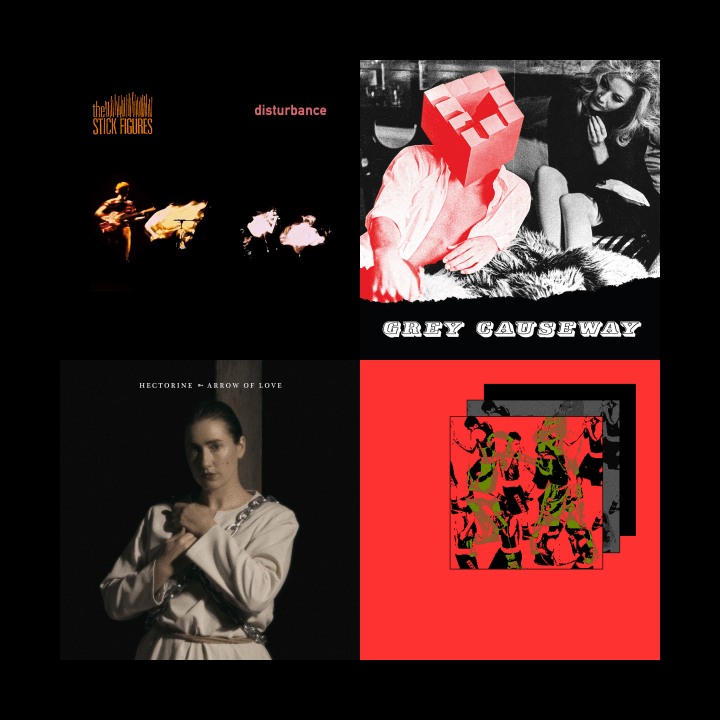
The Stick Figures – Disturbance
Release date: June 1st Record label: Self-released Genre: Post-punk, dance punk, art punk, college rock Formats: CD, digital Pull Track: The Other Myth
I wrote about The Stick Figures back in the early days of this blog on the occasion of the release of 2021’s Archeology, and I was happy to do so. An early-adopter post-punk band from the underheralded music scene of late-70s Tampa, Florida, the five-piece “collective” (David and Rachel Bowman, Bill Carey, Sid and Robert Dansby, all of whom were attending the University of South Florida at the time) only ever released one EP (a 1981 self-titled one) before Floating Mill Records released an expanded version of it featuring a full album’s worth of unreleased recordings forty years later. At the time, the band stated that they had a second album’s worth of entirely unreleased material that they hoped to release soon after Archeology, and while their initial targets of 2022 and 2023 didn’t come to fruition (which may have had something to do with unspecified issues with their erstwhile record label), Disturbance is finally here in 2025, and it was worth the wait. Work on these songs apparently began in Tampa and continued after the band moved to New York, leading to the eleven tracks finally unleashed here on one LP. Why The Stick Figures disintegrated and these songs sat unreleased for so long isn’t really given a satisfying answer by the liner notes (Carey admits to only having “patchy recollections” of their break-up, Robert Dansby mentions Sid and David Bowman leaving New York City at some point), it’s clear that the music was important for all five of them when the project was active, and Disturbance reflects a band hell-bent on pushing forward (in multiple senses) no matter what.
Recorded in places like Davis Island’s PMS and Noise New York in Manhattan between 1980 and 1982, Disturbance is not “high-fidelity” as we know it (there’s a swampy murkiness to these songs that harkens back to their southeastern origins), but it does bear the mark of songs labored over and teased out carefully. Sometimes, this is more obvious than other times (I’m thinking of the deconstructed post-punk of “14 Days”, the floating, polished art rock of “Zone”, and the muddy jangle-funk of “Loudspeaker”), but The Stick Figures know what to keep “immediate” and when. “The Other Myth” is a great lost college rock/post-punk/dream pop anthem, easily hitting the best parts of all of those genres with the skill of a band not confined by such labels, “Worried” and its absurd spoken-word ranting is the most “Athens, Georgia” moment on the album, stuff like “After Me”, “Dusseldorf – Gleis 9”, and “Notes from Now On” incorporate empty space, surf-synth-punk, and dub into their sound without going to overboard, and the violin in the Mekons-y “Oil Painting” is a welcome modest excess. Disturbance is probably the closest thing we’ll get to a Stick Figures “album”–we had to wait forty-five years, but now we can finally hear the band at their most focused and locked-in. (Bandcamp link)
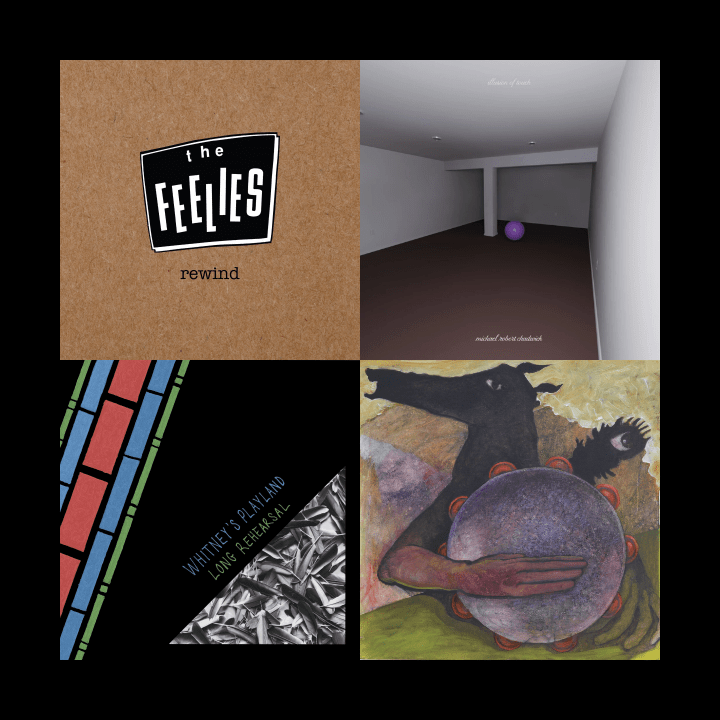
Hectorine – Arrow of Love
Release date: May 23rd Record label: Take a Turn Genre: Folk rock, soft rock, indie pop, singer-songwriter Formats: Vinyl, digital Pull Track: Heart of Stone
Hectorine–aka Sarah Gagnon–is an Oakland-based musician with some ties to the Bay Area indie pop scene–stalwart lo-fi pop label Paisley Shirt put out her 2021 album Tears (as well as a live cassette), Arrow of Love is being released by Take a Turn, the label co-run by Ray Seraphin and Luke Robbins (Ryli, Yea-Ming and the Rumours), and Matthew Ferrara of The Umbrellas and Magic Fig has mastered at least one of her albums. Assumed mutual admiration aside, Gagnon does something different from the majority of her peers with Hectorine, pursuing a sound drawn from classic folk rock and soft rock; names like Christine McVie, Leonard Cohen, Yoko Ono, and Bridget St. John (among others) have been thrown around in an attempt to describe her project. Arrow of Love is Gagnon’s third album as Hectorine and her first in four years, but she and her collaborators (returning contributors Betsy Gran and Max Shanley, new faces Geoff Saba, Jon Wujcik, Joel Robinow, and Lizzy Dutton) continue mining in Hectorine’s chosen corner of popular music history as if no time has been lost between Tears and now.
Arrow of Love is incredibly full-sounding throughout its ten songs and forty-one minutes–sometimes Hectorine tilts towards maximalism in its “easy-listening” (in theory) pop music, sometimes it attempts a more streamlined presentation, but everything on here sounds like Gagnon and Saba (who co-produced the album) really used the studio to sharpen and hone the songs down (or up) to their truest versions. I can hear the 80s influences in the synth-touched regal pop of “Is Love an Illusion?”, and this attitude bleeds into the more traditional piano-folk-pop balladry of “Everybody Says”. The organ-based polish of “No Hallelujah” and the cheerful indie pop of “Heart of Stone” (perhaps the most “Bay Area pop” moment on the LP by default) are some of Hectorine’s simplest pop moments, although the swooning studio pop of “Roses & Thorns” shows that Gagnon can still deliver strong pop hooks through the gauze of a little more studio glitz and tinkering. On the other hand, the title track sprawls to six minutes and “Throw Caution to the Wind” is content to wander around in its vintage folk-rock/soft-rock dressings without trying too hard to overly impress; Arrow of Love is equally at home catching a vibe and marinating thoughtfully in it. Saba adds a notable amount of harpsichord to Arrow of Love, which certainly helps the album feel lost in time, although she does her best to let it take its place alongside more “normal”-sounding synths and keys. Picking out individual elements of Arrow of Love can be fun and interesting to examine, but it’s the full-on blend that makes this album work as it does. (Bandcamp link)
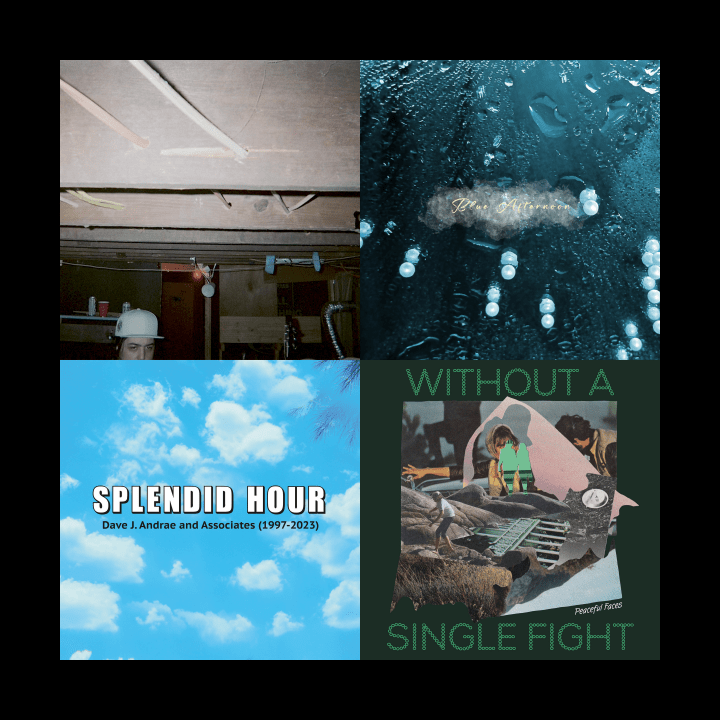
Grey Causeway – Grey Causeway
Release date: May 27th Record label: Dandy Boy Genre: Post-punk, college rock, garage rock Formats: Vinyl, digital Pull Track: No Condition
Grey Causeway are a new band made up of four veterans of the San Francisco Bay Area indie rock, garage rock, punk, and post-punk scenes. Vocalist/guitarist Andy Asp and guitarist/keyboardist Omen Starr are both ringers who’ve most recently been spotted in the dark early-punk/garage rock revivalists Smokers, bassist Frankie Koeller was a longtime member in dreamy indie pop group Papercuts, and Chris Appelgren played in countless Bay Area punk groups and co-owned Lookout Records until it folded. Grey Causeway arrived last year with two digital EPs released on Mouth Magazine Records, and these songs make up about half of their self-titled debut album (co-released by local scene chronicler Dandy Boy Records and Mouth Magazine). The Oakland band certainly are drawing from early punk and post-punk music on Grey Causeway, but there’s a delicate and hook-filled side to their songs that fits in well with the Bay Area’s bustling world of indie pop (in fact, it’s significantly more indebted to classic guitar pop music than the most recent Smokers record). Displaying their experience, Grey Causeway lock into their various roles easily–Asp’s punk rasp softens just a bit to fit the more college rock/jangle pop-evoking material, the guitars and keys neatly arrange themselves as needed, and Koeller’s bass playing displays all the skill one wants in a post-punk bassist.
Perhaps the most “punk” thing about Grey Causeway is its devotion to brief, perfunctory bursts of catchy but somewhat dark rock music–none of its thirteen songs are all that short, but the group only push things past the three-minute mark when it’s really necessary. Opening track “I-580” is not one of those moments (it’s a clean two-and-thirty), but it is one of the most complete-sounding songs on the album and a perfect introduction to Grey Causeway–slightly dark, slightly rough, slightly smooth, quite “pop”. “Lost Squadron” is arguably even more impressive, combining lost, wallflower-y British indie pop with a somewhat dangerous post-punk edge, and “Unsettled Weather” has the whole “melancholic” and “rhythm section-forward” thing down very well. Grey Causeway have arrived at their debut LP with a songbook full of tricks, and the record is full of striking moment after striking moment–the awash-with-synths crawl of “Narcolepsy”, the jangly cheeriness of “No Condition”, the creepy “Girlfriend’s Boyfriend” (it’s just so much more unsettling than that Killers song, somehow), the punk firecracker of “The Raft”. Grey Causeway is evidence of a band of musicians who know both how to make strong music together and how to harness that into a strong first statement. (Bandcamp link)
Docents – Shadowboxing
Release date: May 16th Record label: Ten Tremors Genre: Noise rock, no wave, post-punk Formats: CD, digital Pull Track: Garden
Alright, we’ve got some New York noise rock for you today! Specifically, we have the latest release from a quartet called Docents, a CD EP called Shadowboxing. These four (vocalist/guitarists Will Scott and Noah Sider, bassist Kabir Kumar-Hardy, and drummer Matthew Heaton) debuted back in 2021 with a self-titled cassette EP, returned in 2023 with a full-length called Figure Study, and released a pair of two-song singles last year. Like everything else that Docents have released, Shadowboxing is out via the New York “collective” label Ten Tremors, and it’s more than enough to get a solid handle on the kind of music in which Docents specialize. At a clean five songs in ten minutes, Shadowboxing is short and sweet (okay, maybe not “sweet”), delivering quick blasts of noisy rock music with bits of post-punk, no wave, and industrial clang in the mix. I hear the New York unflappability of SAVAK, the explosiveness of Open Head, and the dead-seriousness art-rock sensibilities of FACS in these songs; Shadowboxing may be over in the blink of an eye, but the quartet still have an ear for the dynamics here, as well as inflicting as much damage as they reasonably could in a limited amount of space.
Comparably speaking, Shadowboxing’s opening track, “Garden”, shows a bit of restraint–the instrumental is all frantically-paced garage-y post-punk, yes, but the vocals rest at a monotone, dryly observing the ensuing chaos. Things get just a little more dire in the title track, which tries to walk a similarly understated tightrope, but the vocal hollering wins out in the end and Docents whip up an instrumental storm to match it. “Double Fantasy” is where Shadowboxing truly goes off the deep end, a horrifying wasteland of industrial, static-y noise and blind-shooting, and the ninety-second in-the-red hammering of “Shouldn’t We” certainly doesn’t do anything to clean up the ever-increasing inferno. “Workout” ends Shadowboxing with one minute of pummeling noise-punk–the EP offered a few different pathways for Docents to traverse down, but by this point, the group have set fire to everything and charged into their wildest impulses head-on. The brevity of Shadowboxing starts to feel more and more like a feature rather than a bug upon repeated listening–if it was depicted in some kind of graphical analysis, it’s a steadily-increasing line that all of a sudden bolts off the charts, and we only have our imaginations to figure out where Docents have ended up after these recordings abruptly stop. (Bandcamp link)
This very hot Monday in June will soon be a little more bearable, thanks to the albums in this week’s first Pressing Concerns. We’ve got new albums from Six Flags Guy, Nac/Hut Report, and Peaceful Faces below, as well as a career-spanning compilation featuring the various bands and projects of one Dave J. Andrae. Read on!
If you’re looking for more new music, you can visit the site directory to see what else we’ve written about lately. If you’d like to support Rosy Overdrive, you can share this (or another) post, or donate here.
Six Flags Guy – You Look Terrible
Release date: June 6th Record label: 329 Genre: Post-rock, 90s indie rock, noise rock, post-hardcore, slowcore Formats: Digital Pull Track: Everything I’ve Ever Found Useful I’ve Stolen
Do you like the band Slint? Six Flags Guy sure do. In fact, they even sound like them sometimes! 2023’s And Nothing Did So What was the sleeper post-rock hit of that particular summer, a trio of indie rockers from central Ohio making “smoky, dingy soundscapes unmoored from recognizable structure”, as I referred to the record’s eight songs at the time. I think Six Flags Guy might’ve changed up their lineup between that album and their follow-up LP (founding members Jonah Krueger and RJ Martin are still here on vocals/guitar and guitar, respectively, but this time there are newcomers in drummer Sean Pierce and bassist Colton Hamilton), but You Look Terrible more or less picks up where the band’s first record left off. Like And Nothing Did So What, You Look Terrible is a difficult, not-so-friendly collection of lengthy songs indebted to 90s indie rock chronicled by Touch & Go & Quarterstick Records (is it more difficult and less friendly than their debut? I don’t know; I think you reach a certain threshold with this music where the squares are sufficiently repelled regardless). Six Flags Guy’s resting state on this album is one of eerie slowcore and guitar-based post-rock; if you’re looking for respectable indie rock and cathartic post-hardcore moments, they’re both here, but you’re going to have to get to them Six Flags Guy’s way.
You Look Terrible begins with its back to us, hunched over equipment and avoiding even a hint of eye contact–at the very least, that’s how I imagine Six Flags Guy putting together “I’m All Out of Sorts Bro (Not a Goodbye)”, the album’s first track and a four-minute piece of sustained, droning organ and whispered vocals. The next few songs on You Look Terrible bring a familiarity of sorts–Krueger’s voice is still at a low mutter for the most part, but the guitars are back, and there are a few moments in the seven-minute “Everything I’ve Ever Found Useful I’ve Stolen” that genuinely smoke (that’s a rock and roll term, I think). With “My Brother My Killer” and “Ikea Way Gemini Place”, Six Flags Guy follow the tried-and-true method of “post-rock-slowcore song that wakes up from its slumber to deliver a crashing crescendo”, but they decide not to get to predictable by zagging towards the steady “The Children Yearn for the Mines” and “Emerald” (which, lol). You may not be surprised to learn that a band that prefers long song lengths made a long album (51 minutes, in the no-man’s land between one and two LPs known as the “CD zone”), and it all comes to a peak with the eleven-minute penultimate track, “Sleepy Hollow Elementary School”. The guitars rumble and the band lies in wait as they incorporate the likes of “Silverfuck” and Crazy Horse into their mad science. For a band that’s pretty obvious about their influences, Six Flags Guy seem to enjoy tweaking them just enough time and time again. (Bandcamp link)
Various – Splendid Hour: Dave J. Andrae and Associates (1997-2023)
Release date: May 1st Record label: Kaji-Pup Genre: 90s indie rock, lo-fi indie rock, experimental rock Formats: CD, digital Pull Track: Sound of the Rain (Alternate Mix)
We have a career-spanning retrospective compilation from an unknown (to me, at least), underground longtime indie rocker here for you today. How exciting! Dave J. Andrae is many things, including a film writer and director (he has a BFA in film from the University of Wisconsin-Milwaukee, though he calls himself “semiretired” these days from the medium), a novelist (he put out a book called Rem’s Chance last year), and (most relevant to our interests here at Rosy Overdrive) a musician. Like I said, I wasn’t familiar with Andrae before hearing this compilation, but Splendid Hour: Dave J. Andrae and Associates (1997-2023) is enough to catch anyone up. It encompasses more than a quarter-century of various musical endeavors whittled down to twenty-five songs and sixty-six minutes, beginning in Andrae’s hometown of Milwaukee and ending in his current residence of southwest Florida, featuring both long-defunct bands and projects and Andrae’s still-active solo project Tired of Triangles. Andrae is the common link, of course, but these “associates” include other lead vocalists, writers, and all manner of musicians, certainly a key feature in these tracks’ ability to leap from 90s-style indie rock to “oddball novelty music”, “breezy funk”, and “abstract noise” (as Andrae himself puts it).
Splendid Hour is a lot to take in, but to me that’s part of its appeal. Not every song here is a lost underground classic, but there are plenty of moments on here that stand on their own as single triumphs–for example, Tired of Triangles’ unassuming, Yo La Tengo-ified cover of The Dils’ “Sound of the Rain” is a shining example of the blank-canvas brilliance of the indie rock of the 1990s. A lot of the songs on here are instrumental or pretty close to it, and Andrae shines in this context between off-the-cuff guitar brilliance like “Letraset To-Do List” and “Resolving the Calm”. On the other hand, a few selections from a project called “Astronaut Ice Cream Headache” veer into intentionally-obnoxious novelty fuckery, but I’m not kidding when I saw that “Dancing Cosmonauts” and “Let’s Be Carnies” help Splendid Hour feel like the archival deep-dive that it is (if Andrae spent a notable amount of time since the mid-90s making music like this, it should be represented here, after all). And then there’s everything in between–songs like “Matt Simmons” and “Underwater Cave Diving Stress”, both of which could be throwaways but there’s a weird brilliance to them, too. There’s too much on Splendid Hour for me to cover fully here (I haven’t even gotten to the psych-folk-tinged material that Andrae recorded with “Leila M.”, for instance), but that’s okay–much like Splendid Hour itself, this is just a relatively brief attempt to capture something larger and hypnotically inviting. (Bandcamp link)
Nac/Hut Report – Blue Afternoon
Release date: April 24th Record label: Enjoy Life Genre: Dream pop, ambient pop, lo-fi pop Formats: CD, digital Pull Track: Blinking
Nac/Hut Report are new to me, but the “Polish-Italian duo” (made up of two people known only to me as Jadwiga and Luca) have been around for quite a bit now–they have albums on their Bandcamp page dating all the way back to 2010. They’re currently based in Kraków, and their latest album, Blue Afternoon, appears to be their first for Warsaw’s Enjoy Life Records, who are putting the record out via CD. Nac/Hut Report traffic in the worlds of experimental but delicate pop music, and Blue Afternoon is a particularly delicate listen. According to Jadwiga, Nac/Hut Report wanted to make a “soundtrack to a sad, gloomy afternoon”, as well as something that they somewhat nebulously refer to as “dead music”. These ten songs are marked by crackling reminiscent of a “gramophone stylus eroding”, faded-sounding vocals, and distant orchestration and pianos–it’s all an attempt to evoke a look back into an era of music (both in terms of genre and in how we experience or “consume” it) that Nac/Hut Report view as now “dead”. However, there’s a line where the fuzz and distance stop being past-tense signifiers and start being deliberate choices in how to make music in the present day, and Blue Afternoon doesn’t sound completely dead (maybe undead?).
It’s hard to get a handle on Nac/Hut Report’s songwriting, as real as it is. There are quality dream pop melodies hidden beneath the gramophone sounds and sepia-toned instrumentation, but you need to pay close attention to these disintegrating tracks in order to tell where one ends and the other begins. Some of the songs on Blue Afternoon, like the opening duo of “Blinking” and “Always Watching”, let the pop cores show themselves a little more readily–other tracks, such as “Elements” and most of “Silver”, are basically noise pieces with a little bit of radio interference peeking through. Most of Blue Afternoon is somewhere in between, and it’ll take some time and tuning to see the beauty of “Screen Glow” and “Comet” and “Other Side” through the clouds. Both the difficulty in grabbing onto these moments in Blue Afternoon and the just-barely-enough hints beckoning at the listener to want to do so regardless are very intentional decisions on the parts of Jadwiga and Luca–more important than the music of Blue Afternoon being “dead” is that the experience of listening to it is still an alive and active one, and regardless of the big-picture societal questions about the role of music that led Nac/Hut Report to creating this record, it stands above all else as a roadmap to keeping this way of interacting with art alive. (Bandcamp link)
Peaceful Faces – Without a Single Fight
Release date: June 6th Record label: Glamour Gowns Genre: Indie pop, power pop, indie folk, chamber pop Formats: Vinyl, digital Pull Track: Freee
The Boston-originating, New York-based Tree Palmedo is a singer-songwriter, composer, and trumpet player for hire who’s been making music under a couple of different names for the better part of this past decade. Palmedo leads the instrumental ensemble Drinking Bird, but Peaceful Faces appears to be his “pop” project; Without a Single Fight is the third Peaceful Faces LP since Palmedo debuted it on-record with 2020’s Letters from Late Adolescence. I first heard Peaceful Faces via their 2023 sophomore album Sifting Through The Goo, Reaching For the Candlelight; I didn’t get around to writing about it, but I enjoyed its delicate, chamber-ish indie pop sound, and it was more than enough to get me to queue up the third Peaceful Faces album (and first for Glamour Gowns). Sifting Through the Goo… placed itself firmly on the “soft” side of indie pop music, so I was a bit surprised to press play on Without a Single Fight and immediately be greeted by the guitar distortion and bounding power pop tempo of opening track “Freee”. Not everything on Without a Single Fight is as much of a departure as this first statement, no, but there’s a concision to Peaceful Faces’ latest record that seems to be Palmedo’s driving force.
Co-produced by Dylan McKinstry, Nate Mendelsohn (Market), and Palmedo and featuring a bunch of outside instrumental help, Without a Single Fight nonetheless remains focused on fulfilling a singular vision of pop music across its brisk half-hour. The specific instrumentation and dressings of these songs vary quite a bit–they range from Sufjan Stevens/Elliott Smith-inspired folk-pop compositions in “Half a Secret” and “The Danger” to the full-on power pop of “Freee” and “Feel Around in My Heart” to the electric-based but comparably subdued “Doin’ It Wrong” to the romantic piano-accented “Union” and everywhere in between. The melodies delivered by Palmedo in his comforting, relaxed vocal style are as strong a binding force as anything else on Without a Single Fight–somebody has to hold all these rock, pop, and orchestral instrumentals together, and Palmedo seems up to the task. Without a Single Fight signs off with something called “She’s Getting Married”; from its Sgt. Pepper-evoking title to the tasteful piano that leads the majority of the song to a sudden, out-of-nowhere sweeping orchestral climax to a just-as-quickly-back-to-subtlety finish, we get the Without a Single Fight experience in miniature. (Bandcamp link)
Happy Juneteeth, everybody! Perhaps because of the holiday, it appears like this Friday (6/20) is a bit of a light week in terms of new music, but since there were enough upcoming releases I wanted to write about to make a full Pressing Concerns, we’re doing it anyway! We have an archival album from The Feelies, an EP from Whitney’s Playland, and new albums from Michael Robert Chadwick and Little Mazarn! If you missed Monday’s Pressing Concerns (featuring Hallelujah the Hills, Idiot Mambo, Drunken Prayer, and a compilation from Chapter Music) or Tuesday’s (featuring Emery/The Western Expanse, Nape Neck, W. Cullen Hart and Andrew Rieger, and Frizbee), check those out, too.
If you’re looking for more new music, you can visit the site directory to see what else we’ve written about lately. If you’d like to support Rosy Overdrive, you can share this (or another) post, or donate here.
The Feelies – Rewind
Release date: June 20th Record label: Bar/None Genre: Folk rock, post-punk, dad rock, classic rock, garage rock Formats: Vinyl, CD, digital Pull Track: I Wanna Sleep in Your Arms
Everybody shut up and pay attention: The Feelies are playing your favorite cool-dad rock classics. Well, I should say “played”, because Rewind is an archival compilation of cover songs that the legendary New Jersey post-punk/proto-indie rock group have recorded across their entire career. Of these nine songs, seven are from the band’s initial run from 1976 to 1992, and two of them from their “reunion” era in the 21st century (specifically the year 2016). But I do think “are playing” still makes sense when talking about these songs, as The Feelies are somewhat well-known for their affinity for playing cover songs live; indeed, judging by recent setlists, you’re likely to hear at least a few of these at a Feelies show in 2025. To me, the purpose of Rewind feels like cementing a key part of The Feelies’ whole deal that hadn’t really been properly documented (aside from their recently-released live album tribute to The Velvet Underground, which perhaps began setting this right on its own). Rewind may be a hodgepodge, but these recordings–forty-some years apart or not–have a unified feel to them. Veering away from the folky and pastoral side of the band, these nine recordings find The Feelies reveling in their love and understanding of electric, rollicking classic rock that’s just too simple and powerful to ever lose anything to time.
If you’re looking for “variety” or “obscurity”, Rewind may not be the covers album for you. There are two Beatles songs and two Neil Young songs, and the rest of the artists covered here are, in order: Patti Smith, Bob Dylan, The Doors, The Rolling Stones, and The Modern Lovers. The trick of Rewind is how the band take all these well-worn songs made by bands and artists with distinct auras and flatten them with their signature nervous-rocking steamroller into a single statement. The opening version of “Dancing Barefoot” is the biggest outlier simply because bassist Brenda Sauter sings lead vocals on it; otherwise, the band tune it to the key of the simple rock and roll rhythms and chords that they go on to hone for the rest of the album. Dylan’s “Seven Days” and The Doors’ “Take It As It Comes” are the newest recordings–if I don’t consider either a highlight of the album as a whole, that has more to do with the originals being my least favorites among their selections than with the band’s energy (which sounds no weaker here than it did decades previously). Including “Everybody’s Got Something to Hide Except Me and My Monkey” from their classic debut album Crazy Rhythms feels like cheating, but I can’t argue that it doesn’t fit on here, particularly in the extra-frantic second half of the album also marked by a wild “Paint It Black” and an explosive “Sedan Delivery”. And then off The Feelies go, uncoupled from time in more ways than one. (Bandcamp link)
Whitney’s Playland – Long Rehearsal
Release date: June 20th Record label: Meritorio/Dandy Boy Genre: Jangle pop, power pop, psych pop Formats: Vinyl, digital Pull Track: Long Rehearsal
One of my favorite debuts of 2023 was Sunset Sea Breeze by Whitney’s Playland, a San Francisco-based indie pop group co-founded by George Tarlson and Inna Showalter and whose first statement delivered several records’ worth of lo-fi power pop hooks. Apparently, the quartet (rounded out by Evan Showalter and Paul DeMartini, who had joined by the time of Sunset Sea Breeze’s release but didn’t play on it) took a “brief hiatus” after the release of their first record, although a little over two years is hardly too long for a follow-up release (and, plus, Inna Showalter put out an album with her other band, Magic Fig, in the meantime). Admittedly, the second Whitney’s Playland record, an EP called Long Rehearsal, is pretty short–three songs in about ten minutes. Still, this gives the quartet plenty of time to revisit and reaffirm their ability to hit all the high points they did on their last album–jangly, bubblegum-flavored guitar pop, electric and fuzzy power pop, and rainy, dreary, dreamy indie pop all make appearances on Long Rehearsal. The quick break, the doubling of their membership–neither seems to have caused Whitney’s Playland to deviate from their established talents for even a moment.
Long Rehearsal opens with the title track, which comes in at under two minutes and spends every second of it offering up melodies in its jangly guitars and Inna Showalter’s vocals. It’s a high point for a band that’s already collected several of them, and it should be pretty hard to top. “Only Daughter” follows and holds its own against “Long Rehearsal”–neither it nor the song after it are as concisely, immediately brilliant as the opening track, but they’re not exactly trying to best “Long Rehearsal” at its own game. “Only Daughter”, for one, is the most electric song on the EP, opening with a nice, coiling guitar solo and the guitars continue giving off static (albeit in a more backgrounded form) as the track advances. The B-side of Long Rehearsal, meanwhile, is occupied by “Talk”, a five-minute song that veers into the wilderness of Whitney’s Playland’s sound. Don’t expect anything as far-out as the psychedelia of Magic Fig, exactly, but the melancholic, mid-tempo guitar-led dream pop is fairly far removed from the rest of the EP and classic “B-side” fodder that eventually floats away in a blissed-out finale. I do hope that the next Whitney’s Playland release gives us more than three new songs, yes, but Long Rehearsal is a strong collection regardless of size. (Bandcamp link)
Michael Robert Chadwick – Illusion of Touch
Release date: June 20th Record label: Anxiety Blanket Genre: Synthpop, sophisti-pop, jazz-pop, soft rock Formats: Cassette, digital Pull Track: Dirt Nap
Michael Robert Chadwick is a Los Angeles-based visual artist who’s made music videos and/or album artwork for Stuck, Amby Moho, and Sam Wilkes, among others, according to his website. He has also been “prolifically making music for almost 20 years”, although I had to do some more digging to find that–if this Discogs page is to be believed, he played in the bands Plum Professional and The Armchairs as well as appearing on the three most recent Weyes Blood albums (playing synths, which seem to be his instrument of choice). He also put out two jazzy, synth-y indie pop albums in 2019 called Tourist and Salad, which seem to be his only solo releases before now. Illusion of Touch is Chadwick’s first album for Anxiety Blanket Records (La Bonte, Jac Aranda, Daniel Brouns), and while it’s been six years since those aforementioned solo records, this new one isn’t so far off from what he was doing with them. Made “over several years in several different places”, Illusion of Touch is a more polished, teased-out version of what I must assume is the “Michael Robert Chadwick sound”–synth-led pop music that recalls a nice bite-sized, portable version of soft rock and sophisti-pop.
The icy synths that kick off opening track “Dirt Nap” eventually give way to bass grooves, jazzy saxophones, and smooth indie pop vocals, setting up a lot of the key ingredients that go into Illusion of Touch. The squirmy jazz-pop of “Longing for Scissors” and the minimal synth balladry of “Vans of Desire” find Illusion of Touch stretching itself towards different extremes, although songs like singles “A Song for the Cows” and “Pleasure Picture” always return to a centering of sharp pop hooks. The latter of those two songs features a vibrant chorus where Chadwick sings “I don’t subscribe to the theory of friendship / It’s only a guess”; Illusion of Touch is a “solo album” in more ways than one, very much coming off as the work of a single artist tinkering away on his own. Chadwick is an animated leader, though, and both his friendly, pleasing arrangements and his unadorned emoting as a vocalist prevent Illusion of Touch from coming off as too much of an “exercise”. Maybe it is an exercise, though, and making intricate yet breezy one-man-show pop music is how Michael Robert Chadwick stays in shape. Whichever need or desire got us to Illusion of Touch is a productive one. (Anxiety Blanket link)
Little Mazarn – Mustang Island
Release date: June 20th Record label: Dear Life Genre: Folk rock, psychedelia, chamber pop Formats: Vinyl, CD, digital Pull Track: Dark Pleasure of Endless Doing
Perhaps the platonic ideal of a Dear Life Records band, the Austin experimental folk group Little Mazarn first became known to me via their 2022 sophomore album, Texas River Song. They were a duo then, with Lindsey Verrill on vocals and banjo and Jeff Johnston on singing saw; I called them “somewhat spacey” at the time and enjoyed how they were able to conjure up a cosmic, Lone-Star-big sound with simple and slow ingredients. Little Mazarn have been busy in the three years since Texas River Song–there’s been an EP, a live album, and Verrill helped organize two benefit compilations (for Los Angeles and western North Carolina). Still, it’s been a minute since the last Little Mazarn LP, which Mustang Island now rectifies. The third Little Mazarn album is their first as a trio, with the Chicago-based Carolina Chauffe (of Hemlock) officially joining the band on harmonies on every song. Synths and flutes join the familiar sounds of banjos and singing saw on Mustang Island, but while there are a few busy moments of psychedelic pop music, the trio’s expanded sound still frequently finds its way to the big wide empty.
Warm harmonies and Casios welcome us into Mustang Island on opening track “Crystal Cave”; it’s a smoother version of Little Mazarn than the one I heard on their last album, but it’s still incredibly intimate. The slow, loping “New New San Antonio Rose” injects just a bit more traditionalism into the mix, but the fluttering, synth-led dream pop of “Dark Pleasure of Endless Doing” comes out of nowhere to completely rearrange the whole Little Mazarn sound in a couple of sweet, bright minutes. There’s nothing else quite like “Dark Pleasure of Endless Doing” on Mustang Island, but that hardly means the rest of the record doesn’t keep expanding–“Remember the Night Rainbow” is some more nice, strange banjo-led art folk, the title track is a flute-heavy psychedelic odyssey, “The Gate” takes synthpop to minimalist, ambient places, and so on. The last couple of songs on Mustang Island are two of the most “folk” moments on the record, but closing track “The Golden Hour” quietly bows out with only a cello to accompany Verrill. Making transportive music with just singing saw and banjo is an impressive achievement, yes, but so is being able to return once again to these inaccessible heights from a different path. (Bandcamp link)
For the second Pressing Concerns of the week, we’re looking at a full-discography reissue of the intertwined bands Emery and The Western Expanse, an archival collaborative EP from Will Cullen Hart and Andrew Rieger, and new albums from Nape Neck and Frizbee. There’s something in here for you! Yesterday, the blog looked at new music from Hallelujah the Hills, Idiot Mambo, and Drunken Prayer, plus a compilation from Chapter Music; check that post out if you missed it.
If you’re looking for more new music, you can visit the site directory to see what else we’ve written about lately. If you’d like to support Rosy Overdrive, you can share this (or another) post, or donate here.
Emery / The Western Expanse – 94-96 / The Western Expanse EP / The Western Expanse LP
Release date: June 6th Record label: Dimensional Projects Genre: 90s indie rock, post-hardcore, post-rock, math rock Formats: Vinyl, digital Pull Track: Miracles / Featherweight Crown / Recolor
In the mid-90s in California’s Inland Empire, four teenage musicians, inspired by punk, hardcore, and underground rock music in general, began making noisy post-hardcore under the name Emery. Two years after Emery broke up–in the year 1998–the members reformed as The Western Expanse, and continued recording together for at least another year or so. Almost none of these recordings saw an official release during the bands’ lifespan–Emery’s only releases were a debut 7” and a split single with another obscure, long-forgotten band called Jimmy Eat World (both in 1995), and The Western Expanse only got one 7” out themselves (1999’s Hollywood Nights). As far as I know, the members of these bands (Aaron Wimberley, Chris Smith, Jae Rodriguez, and Kevin Adamson for Emery, and some combination of the four of them plus Eric Feezell, Richard Jones, and Scott Goldberg at various points for The Western Expanse) then went silent for a quarter-century, but Rodriguez recently started up a record label called Dimensional Projects for the purpose of finally getting these recordings to see the light of day (one LP’s worth from Emery, and an LP and EP from The Western Expanse).
Listening to the collected works of Emery and The Western Expanse is an incredibly rewarding experience–all three records are great, and we can follow along their trajectory from Dischord-worshipping punk kids to experimental, almost post-rock artists (one that parallels several other bands that existed more publicly at the same time as them). If those 90s Dischord Records records, early Unwound, or that Lync album are your bag, then the Emery LP (94-96) is exactly what you’re looking for–it’s an album of noisy, fiery, actively-disintegrating punk rock music. There are certainly hints that the members of Emery could make music beyond this kind of thing hidden in this album (there’s some weird, tinny ambience to stuff like “Miracles” and “Casino”, and the emo-y/Superchunk-y “K’s Joint / Cats” sticks out like a sore thumb), but if you just want to hear some great antisocial rock music, 94-96 more than has us covered in this department.
The two Western Expanse releases have different lineups–the EP features all of Emery plus Eric Feezell, but the LP features only two members of the original band (Wimberley and Smith) plus two new faces (Richard Jones and Scott Goldberg). I don’t know which of the two was recorded first (or if they’re even grouped in that way); the lineup similarities would suggest the EP came first, but it also feels like the culmination of everything else the band(s) recorded. Made up of the 1999 single plus two songs from “a 1998 practice recording”, the EP is probably the most “difficult” (or, for those who can’t deal with post-hardcore, the most “out-there”) of these records, the band’s indie rock foundation becoming cracked with post-rock synthesizers, math rock guitars, and wandering, meandering song structures. That being said, “Featherweight Crown” is quite catchy, and The Western Expanse turns a little more towards the concise with their self-titled LP. Combining the rock-band precision of Emery with the patient, measured outlook of the EP, The Western Expanse’s LP is the best, fullest collection that the band’s members would make. The Western Expanse lands on a sound that doesn’t sound unlike a lot of the “big name” 90s indie rock bands with which you’re likely already familiar, but since we get to hear the music that led up to it, it’s easier to understand this as a case of convergent evolution rather than a simple homework-copying. In fact, I think these albums are a great listen for anyone who wants to “understand” this era of indie rock. (Bandcamp link)
Nape Neck – Nape Neck
Release date: March 20th Record label: Dot Dash Sounds/Red Wig/OCCII Genre: Post-punk, art punk, noise rock Formats: Vinyl, digital Pull Track: Aim Slow
A new art punk/“neo-no wave” trio from Leeds, huh? One whose Bandcamp biography uses phrases like “clang and clamor” and “jabbing and scrabbling”? A band who not only has garnered comparisons to The Ex and Dog Faced Hermans, but actually got Arnold de Boer of the former band to master their most recent record? Okay, I’m listening. Nape Neck are bassist Claire Adams, guitarist Bobby Glew, and drummer Kathy Grey (“everyone sings”), who’ve played in a bunch of local bands like Objections, The Web of Lies, and Beards between the three of them; they debuted in 2020 with a self-titled eight-song cassette tape, and followed it up two years later with an EP called Look Alive. Earlier this year, Nape Neck linked up with a relatively new label from New York called Dot Dash Sounds (Leopardo, The Sheaves, C.A.D & The Peacetime Consumers) to put out their first-ever vinyl release, a self-titled compilation of all thirteen Nape Neck songs that were released in their first four years of activity. Nape Neck certainly does the trick as an introduction to the trio’s music–it’s loud, abrasive punk rock that’s both limber and heavy at the same time. These songs are all sledgehammers that hit the listener with their full force, and the way they do it is so mind-bendingly simple–a never-flagging power trio setup with regular vocal trade-offs.
Nape Neck combines the fire and collective feel of The Ex with the neat, tidy instrumental compartmentalization of another band of Ex acolytes, Shellac. The first track on the album, “You Stand, You Sit”, begins with a minute of tinkering and noise, but when Nape Neck begin, it’s a nonstop collision of bursting-out-of-the-recording bass guitars, repetitive vocals, metallic guitars, and a fair amount of math-y tempo shifts and lurches. “You Stand, You Sit” is a pretty good summation of what to expect on the rest of Nape Neck–“Job Club” is a little more noisy and strange, “No Platforming” a little more clear in its messaging, “Don’t Know” a little more obviously punk-indebted, but it’s all playing the same game. The songs from Nape Neck’s two records are mixed together here–the tight post-punk window from “Aim Slow” to “Demonstrations” is so of-a-piece that I was surprised to learn that they weren’t all on the same record, but that’s all the more reason to sum this entire period of Nape Neck up in a single compilation LP, I suppose. Less than two months after Nape Neck, the trio put out a live cassette called Live at Sonic Protest Festival 2023 which features nine of these thirteen songs (plus one new one). The quality of that one is pretty good, so I think either of these albums would be a reasonable starting point for Nape Neck. No need to overthink it, just dive in there. (Bandcamp link)
W. Cullen Hart and Andrew Rieger – Leap Through Poisoned Air
Release date: May 30th Record label: Orange Twin Genre: Psychedelic pop, lo-fi indie rock, experimental rock Formats: Vinyl, digital Pull Track: Treasures in the Magic Hole
Will Cullen Hart and Andrew Rieger have both appeared on this blog several times, as both of them led or co-led a band that looms large over the modern guitar pop music I write about on Rosy Overdrive (Hart alongside Bill Doss in The Olivia Tremor Control, Rieger as the founder and lead vocalist of Elf Power). Twenty-five years ago, the two key figures in the Elephant 6 movement/Athens, Georgia indie rock were roommates, and both were charting the history of their primary projects–Hart was in the process of developing his new band Circulatory System after the demise of Olivia Tremor Control, and Elf Power had effectively completed a metamorphosis from a lo-fi noise pop project to a vibrant psychedelic power pop rock band. Somewhere in this time period (“1999-2000”, per Orange Twin Records), Hart and Rieger made a bit of music together–short, curious, dark pop pieces largely made up of music from the former and lyrics and vocal melodies from the latter. The timeline is a little hazy to me, but I believe that Hart was involved in preparing to finally release these recordings before his sudden death last November; at the very least, the artwork on the 10” vinyl record is his, and he co-mixed the EP alongside Rieger and Jason Nesmith (Is/Ought Gap, of Montreal).
These four songs come in at under six minutes total in length–nothing here crosses the two-minute mark. The first three songs on Leap Through Poisoned Air all feature strange, minimalist instrumentals from Hart–they’re probably closer to the more abyss-facing material of Circulatory System than the dense pop music of The Olivia Tremor Control, but neither of them are totally accurate for what he did here. “Treasures in the Magic Hole” is a collision of Hart’s electronic tinkering and the darker side of 60s pop music, and Rieger is just the right person to helm it. “Through Poisoned Air” and “Three Seeds” are both distorted and slowed-down guitar pop songs, Dusk at Cubist Castle-style pieces stripped for parts and left to deteriorate. The biggest outlier on Leap Through Poisoned Air is the closing track, “The Breathing Universe”, which seems to be a complete Will Cullen Hart song featuring additions from Rieger. After a brief but fairly intense trip to a brutalist pop dungeon, “The Breathing Universe” features bright acoustic guitars and ascending melodies and harmonies, a brief and sudden exposure to blinding light, relatively speaking. It’s unfair to burden something this small with the legacy of Will Cullen Hart, even though it is the first “new” music of his we’ve heard since his passing. It certainly does add to it, though, and both transcends and gains power from its casual origins. (Bandcamp link)
Frizbee – Sour Kisses
Release date: May 9th Record label: Painters Tapes/Noise Merchant Genre: Garage punk, punk rock Formats: Cassette, digital Pull Track: Queen of the Hill
It’s punk rock from Indiana time! It it now the time for all of us to become intimately familiar with Frizbee, a quartet from Indianapolis who’ve just put out their first non-split release, a nine-song cassette called Sour Kisses on the cult Detroit label Painters Tapes and the new-to-me British imprint Noise Merchant Records. The all-female band is led by Maude Atlas on lyrics and vocals, joined by June Smith on guitar, Jacki Walburn on bass and occasional guitar, and Susie Slaughter on drums–as a unit, they are Frizbee, expert practitioners of fast-paced, furious (almost hardcore) Midwestern garage punk. On Sour Kisses, we get seven brand-new Frizbee tracks as well as fresh-sounding versions of a couple tracks from Splat, their debut split EP with Cleveland’s PAL. I’ve heard plenty of great music along these lines coming out of Detroit and Chicago in recent memory, and it kind of feels like Frizbee synthesizes the infinitely-cool, fuzz-rock-and-roll-reverent vibes of the former with the sarcastic punk-y irreverence of the latter. Look, regardless of where Sour Kisses falls on your imagined egg/chain punk spectrum-graphics, it’s a really cool seventeen-minute rock record from a new band that’s already operating at a high and lethal level.
“I’m in my bitch era / I’m in my selfish era,” is how Atlas kicks off Sour Kisses’ first track, “Me Time”. It’s a great establishing moment, a compelling performance that has me fully believing and going along with every word she says until the (barely longer than sixty-seconds) song goes off the rails and intentionally loses the plot. You’re probably wondering if Sour Kisses has any more ripping, pulverizing, fuzzed-out rock songs with a runtime of somewhere between one and two minutes, and I’ve got some good news for you on that front. That describes about 78 percent of these songs, actually. Cathartic, funny, actually kind of catchy–all of this and more describes my favorite songs on Sour Kisses, from the stomping, bouncing “Glitz & Glamour” (great, appropriate title) to the garage punk tornado of “Tiny Jumping Spider” (a subject I’d love to see more bands tackle in 2025) to “Queen of the Hill” (the fuzz-pop excoriation we didn’t know that we all needed). The riveting “Off My Collar” is a little longer than two minutes, but the real black sheep is the closing track, “Clue”, which stretches to nearly five minutes. Look out, we’re in My War Side Two territory here–this is the sound of Frizbee getting into fuzzed-out, drain-circling sludge punk. And why not? They’re pretty good at that, too. And, besides, Sour Kisses already gave us everything we wanted and then some. (Bandcamp link)
Hey there, welcome to the first Pressing Concerns of the week! It’s a big one; we have a new album that’s actually four albums by Hallelujah the Hills, a compilation of early Australian post-punk music from Chapter Music, and new LPs from Idiot Mambo and Drunken Prayer. This should keep you busy!
If you’re looking for more new music, you can visit the site directory to see what else we’ve written about lately. If you’d like to support Rosy Overdrive, you can share this (or another) post, or donate here.
Hallelujah the Hills – DECK
Release date: June 13th Record label: Best Brother/Discrete Pageantry Genre: 2000s indie rock, folk rock, heartland rock Formats: Vinyl (Diamonds only), playing cards, digital Pull Track: Burn This Atlas Down
Boston’s Hallelujah the Hills have been a stalwart “if you know, you know” indie rock band for twenty years now. They burst onto the scene in the 2000s with a 90s-style lo-fi, quick-hook attitude combined with a largess and sincerity from a different world entirely, and their career has been marked by a focused consistency ever since, from their 2007 breakout record Collective Psychosis Begone to 2019’s I’m You, their most recent LP up until now. The Ryan H. Walsh-led band has spent the 2020s working on a project called DECK: four albums, fifty-two songs (and two “jokers” as bonus tracks), with every track corresponding to a card in a traditional deck of playing cards (with an actual deck designed by Walsh available for purchase with the albums). Stephin Merritt must be furious he didn’t come up with this one! Six years is a bit of time to go between releases, but when one considers the heft of DECK (I’m actually trying to condense four full albums into one of these capsules), it’s not so long at all–especially when one considers that Hallelujah the Hills seem to have taken great care not to shortchange any card. Every single song feels fully developed, the band doing their damndest avoiding anything that could get tagged as filler (a frequent occurrence in sprawling projects like these, and something I’ve come to accept as a byproduct of this kind of ambition).
DECK is a pure reflection of what I interpret as the Hallelujah the Hills ethos–it’s highly collaborative (guests include Craig Finn, John Vanderslice, Lydia Loveless, Titus Andronicus, and plenty more), it’s incredibly earnest and adventurous in both its writing and arrangement, it’s dream-like despite a very grounded execution from the players. When I’ve been listening to it, I’ve been taking it in as one large statement, so (with a couple exceptions) the individual albums don’t have different “feels” to me, and every one of them has a claim to be the best collection here. Clubs has “Burn This Atlas Down”, a surging melancholic-rocker that does its best to live up to the “featuring Craig Finn” tag (it does) and the strange psychedelic chant-banging of “I’m Your Meteorite”; on Diamonds, the acidic “Joke’s on You”, the Cassie Berman-featuring heart-beating “Fake Flowers at Sunset”, and the classically Hallelujah the Hills metatext “This Is a Song” stick out; over on Hearts, we’ve greeted with a more subdued feel, but that doesn’t stop “The Night Machine”, “Something Great”, and “Scream into the Void” from being as rich as anything on this collection. I kind of hinted at it earlier, but Spades is kind of the sore thumb of the set to me; it’s a lot looser and offbeat, allowing oddities like “The World Is Not What You Think It Is”, “No One Remembers Their Names”, and “I Did My Own Stunts” (featuring none other than Clint Conley on vocals) to creep into the until-now fairly buttoned-up project. Even on Spades, though, “A Lot of Super Weird Stuff Went Down Before I Met You” and “Places, Everybody” are titans of the Deck. I’m necessarily leaving out a lot of stuff here, but scratching the surface ought to be enough for you to want to flip over a couple more cards from the Deck. (Bandcamp link)
Various – Can’t Stop It! Australian Post-Punk 1978-82 (Deluxe Edition)
Release date: June 6th Record label: Chapter Music Genre: Post-punk, garage punk, art punk, synthpunk Formats: Vinyl, digital Pull Track: Help
Not only has Chapter Music has been documenting Australian independent music in several forms for more than thirty years now, but the Perth-originating, Melbourne-based record label has devoted a significant amount of resources to reissuing material that came before its inception, as well. For instance, one of their most notable releases was a 2001 compilation CD called Can’t Stop It! Australian Post-Punk 1978-82, a collection that did everything its title purported it to do, and then some. The CD did well enough to get a second pressing and even a sequel compilation, but it had never been released on vinyl until now–this newly-issued “deluxe edition” puts Can’t Stop It on four sides of vinyl for the first time and it piles on six bonus tracks that add to the Australian post-punk story that Chapter’s clearly intent on telling. “Post-punk” is at its best when it’s a wide-ranging term for a host of good, boundary-pushing rock music, and Australia must’ve gotten this memo–this compilation ranges from sparkling indie pop, bizarre synth experiments, fiery garage-y rock, rhythmic “art punk”, and everything in between (sometimes more than one in a single track!).
Between classic guitar pop heroes The Apartments’ contribution “Help” and the dreamy, jangly folk-pop of The Particles’ “Apricot’s Dream”, Can’t Stop It! makes a strong case that the story of the catchier side of early indie rock doesn’t end with Flying Nun Records in nearby New Zealand or C86 in the United Kingdom. These are the most effortlessly “pop” songs, but hardly the only ones–Ash Wednesday, Ron Rude, and The Fabulous Marquises are just a few of the acts featured on Can’t Stop It! to seek to smash pop hooks together with then-novel synthetic instrumentation and “lo-fi” recording. “Post-punk” purists will have plenty to enjoy on this compilation, too–the eerie, primitive “Summer” by The Take is all spoken vocals and prominent bass guitar, Xero’s “The Girls” is nice and elastic in its structure, and The Limp’s “Pony Club” attempts to join the nascent goth movement with synths and horses. “We Can Do” by Wild West adds some Pere Ubu-style buzzsaw sounds over top of a punk-ish garage rock song, and the horn-punched-up “One Note Song” by a band called “→↑→” is exactly what its name suggests. The “bonus tracks” are certainly worthy additions, and they also help Can’t Stop It! expand its range even wider–among my favorites of these new-old songs are “Knots” by *****,*****, a screaming Aussie garage punk track that could come out for the first time in 2025 and fit right in, the Siouxsie-ish dark pop “Garden of Uluru” from Electric Fans, and the six-minute “The Path” from The Plants, a gigantic Comsat Angels/The Sound kind of thing that’s a great closing track. All in all, this time capsule’s well-worth digging up another time. (Bandcamp link)
Idiot Mambo – Shoot the Star
Release date: May 30th Record label: Strange Mono Genre: Folk-pop, power pop, indie pop Formats: Vinyl, digital Pull Track: Lockjaw
It is time for all of us to do the Idiot Mambo. There’s a married couple from Philadelphia named Benji Davis and Leah G. who’ve been doing said mambo for a couple of years (at least) now–they linked up with Strange Mono Records to introduce the Idiot Mambo to the wider world in 2023 with their debut album, Flamingo in Limbo, a strange and bright collection of fractured new wave and lo-fi bedroom pop. After a self-released EP called Last Summer that came out last year, Idiot Mambo are back with Strange Mono for their sophomore album, Shoot the Star, which is their most ambitious and best release yet. The band’s core duo sought and received more outside help on this one than ever before–Jared Brey is on bass for these songs, Dan Angel (who’s been involved with a lot of Strange Mono and adjacent acts including Bungler, Luna Honey, and Webb Chapel) recorded it and played drums, and Strange Mono labelhead Dan Timlin gets in on the action by contributing percussion and pedal steel. Idiot Mambo lose none of their vibrancy by adopting a higher level of production, and Shoot the Star only enhances their skewed indie pop music–indeed, it only helps Davis and Leah G. bring the attitude of They Might Be Giants, Sparks, and the more pop side of Thinking Fellers Union Local 282 to the world of modern-day Philadelphia guitar pop.
The addition of a full band doesn’t result in any bloating from Idiot Mambo–in fact, the ten songs of Shoot the Star, at a clean 22 minutes, are a significantly shorter trip than Flamingo in Limbo was. It’s plenty of time for Idiot Mambo to present their ideas fully, though–surreal yet crystal-clear power pop songs like “Lockjaw” and “Lightbulbs” both only need two minutes (if that) to firmly lodge their way into one’s head. Shoot the Star is limber enough to easily swing down towards the worlds of breezy folk rock and minimal country balladry with “Tailchase” and “Deathdriver”, respectively–they’re streamlined in this setup, but it’s no less polished and pop-focused than some of the more developed songs like the new wave-y riff rock of “Pillowcase” (just trust me on this one, it rocks) and the somewhat hazy synth-y indie pop of “R U Dumb”. It’s one of the most “immediate” records I’ve heard from the frequently experimental-leaning Strange Mono’s discography thus far, but there’s a studied, “pop music as art” approach to Idiot Mambo’s work that makes it make some sense in the context of their label’s roster. Not that any hints or whispers of a dreaded “high-concept” version of indie pop music impact Shoot the Star’s technicolor core, though. (Bandcamp link)
Drunken Prayer – Thy Burdens
Release date: June 6th Record label: Dial Back Sound Genre: Gospel, country, soul, southern rock Formats: Vinyl, digital Pull Track: I’ve Just Seen the Rock of Ages
Really, this is quite good. I can tell you’re a bit hesitant looking at that “gospel” genre tag and the tracklist full of songs proclaiming the glory of the Lord. Maybe you weren’t raised in the Church and the idea of “gospel music” is foreign to you. Maybe you were raised in the Church and are hesitant to go back in the building you worked so hard to escape. Maybe you’re a sinner in the eyes of the Church (okay, you’re reading Rosy Overdrive, so you’re definitely a sinner in the eyes of the Church). Morgan Geer–the Asheville musician who goes by Drunken Prayer–surely knows all of this, and, with Thy Burdens, he’s attempted to make a gospel record for all of us. Geer conceived the project with Drive-By Truckers bassist Matt Patton, agreeing with a desire to shine a light on the “core values” of gospel songs: “the incontrovertibly true and inconceivably vast principles of kindness, right and wrong, and social justice”. That’s all noble and good, of course, but Thy Burdens wouldn’t be able to reach across the aisle so effectively if Drunken Prayer’s self-described “snarling country-soul” sound wasn’t so immaculately-executed.
I don’t know the hearts of Geer, Patton, and drummer Bronson Tew. I don’t know if they expect to enter the Pearly Gates when they pass on from this life. But I do know that there is a real reverence to Thy Burdens that’s palpable and infectious–whether it comes from the same divine inspiration as the writers of these songs must’ve felt or if it’s drawn from their clear admiration and respect for the music and musicians of the Church is immaterial for the time being. It’s apparent from the first song on the album, a version of Leon Payne’s “The Selfishness in Man”, that Drunken Prayer are true believers (and Wednesday’s Xandy Chelmis on pedal steel and Squirrel Nut Zippers’ Henry Westmoreland on horns are more than enough to make me a believer in “snarling country-soul”). Country-rock shuffles in “Bedside of a Neighbor” (originally by blues-gospel pioneer Thomas Andrew Dorsey) and “Ezekiel Saw the Wheel” (that’s a traditional) are fun as hell (ah, shit, I mean…); never before has sitting at your neighbor’s deathbed or witnessing bizarre, striking Old Testament hallucinations been such a hoot. “I’ve Just Seen the Rock of Ages” might be the best of Thy Burdens distilled into four heat-packing minutes–it’s country music, it’s folk music, it’s the blues. It’s the Gospel, delivered by a bunch of southern rock-and-rollers who–despite what they might say–are the exact right people for the message. (Bandcamp link)
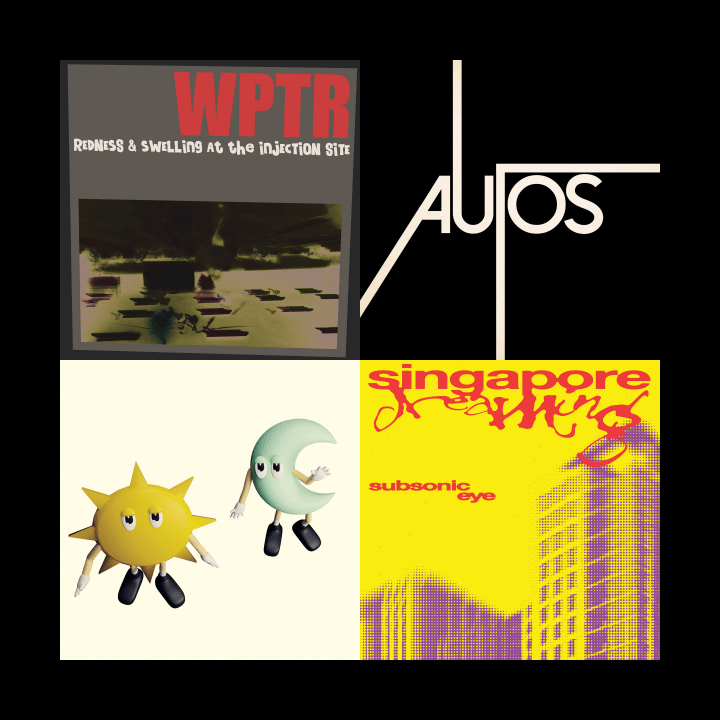
Welcome to the Thursday Pressing Concerns, which also happens to be the first Pressing Concerns of the week (an uncommon occurrence)! We have new albums from WPTR, Graham Hunt, and Subsonic Eye, plus the debut EP from Autos, below. The first half of this week was devoted to unveiling Rosy Overdrive’s Top 40 Albums of 2025 So Far, so check those picks out if you haven’t yet.
If you’re looking for more new music, you can visit the site directory to see what else we’ve written about lately. If you’d like to support Rosy Overdrive, you can share this (or another) post, or donate here.
WPTR – Redness & Swelling at the Injection Site
Release date: June 13th Record label: Lame-O Genre: Lo-fi power pop, bedroom pop Formats: Cassette, digital Pull Track: In Bruges
Whenever a musician who’s the unquestioned leader of one band starts a solo project, there’s always the “well, what makes it different?” question. Peter Gill has put out two great albums in the past three years as the lead singer and songwriter of Philadelphia power pop band 2nd Grade–he could’ve put Redness & Swelling at the Injection Site out as a 2nd Grade album and nobody could have stopped him. Hell, some of the best moments on the most recent 2nd Grade album, Scheduled Explosions, were recorded entirely by Gill himself. Gill (who can also be heard playing in Friendship and Hour) has christened his solo output “WPTR”, an inspired name that reminds me of the quote about how Guided by Voices’ Alien Lanes is intended to evoke flipping through radio stations in an alternate universe. Redness & Swelling at the Injection Site stands out from those 2nd Grade albums by following a more personal, insular brand of pop music–lo-fi, outsider bedroom pop and jazz/bossa nova-influenced instrumentals replace the full-band power pop rock and roll of 2nd Grade. Gill’s almost entirely on his own here, with guest vocals on “Deep Blue” by Heeyoon Won (Boosegumps) and Buzz Lombardi (Pacemaker, occasional contributor to 2nd Grade) being the only others. It’s a weird one, but I recognize Peter Gill the familiar songwriter all over Redness & Swelling at the Injection Site.
To be clear, I’m not saying that 2nd Grade isn’t weird. There’s some really strange writing in Scheduled Explosions, which is part of why I love it so much. But it’s certainly easier to push the odd yet evocative lyrics to the side when one isn’t in the mood for them when it’s accompanied by full-band (or full-band-aping) power pop. Redness & Swelling at the Injection Site, meanwhile, starts with “If the Wind Could Talk”, and there’s nothing for us to do but think about “If the wind could talk / It wouldn’t talk” over and over again until Gill moves onto the next song. And move on he does, and quickly–as laid-back and casual as Redness & Swelling at the Injection Site feels, it’s also a restless album, as it feels like Gill is looking for something in (via?) these songs. If WPTR is looking for number one hit singles from a distant galaxy, Redness & Swelling at the Injection Site has ‘em–there’s a song in the middle of the album called “In Bruges” that’s sixty seconds of absolutely perfect lo-fi power pop, like, genuinely up there with the best 2nd Grade songs (I assume it’s named after the 2008 Colin Farrell/Brendan Gleeson movie I saw once and don’t remember very well; the obsession with zeitgeist-removed film and pop culture is another Gill-ism that’s very present in 2nd Grade but becomes more prominent by default here). The closing track, “No Star General”, is another one, less frantic and more “aw, shucks” in terms of power pop archetypes. Redness & Swelling at the Injection Site has its immediate rewards like those two tracks, but it is, of course, also about the journey to get to (and away from) them. I’ve followed the Fading Captain on enough such voyages to recognize a good trip when I see them; Redness & Swelling at the Injection Site has me ready to do the same with the No Star General. (Bandcamp link)
Graham Hunt – Timeless World Forever
Release date: June 13th Record label: Run for Cover Genre: Indie pop, psychedelic pop, power pop, Madchester, post-punk, trip hop Formats: Vinyl, CD, digital Pull Track: Frog in the Shower
Graham Hunt is a longtime Wisconsin indie rock musician, but the past few years he’s been tossing out solo albums at a steady clip, with LPs like 2022’s If You Knew Would You Believe It and 2023’s Try Not to Laugh slowly growing the Graham Hunt cult and beguiling music writers with an ability to write winning power pop hooks (and subsequently win over the modern power pop scene) without cleanly fitting into that box. It’s like an intricate and smooth version of “slacker pop”, the Graham Hunt sound, indie rock with bits of 90s alt-pop as well as electronic and dance touches delivered in a skewed but ultimately sincere fashion. Timeless World Forever might be the most “Graham Hunt” Graham Hunt album to date, and I think that might make it his best work so far. The instrumentals are bright, precise, and adventurous, Hunt’s vocals are all over the place from “burnout” to “soaring emo guy” to basically rap-singing; Hunt approached the album like a “modern pop record”, and there’s plenty of the hazy psychedelia and hip hop structure I’d associate with that kind of world here. Even among the various acts that merge power pop with electronic music and the like, Timeless World Forever feels ambitious; I kept thinking that the next album on my playlist started throughout the second half of the LP, but that’s just Graham Hunt trying on some new hats.
What it comes down to most of all, though, is that Timeless World Forever might just have the best pop hooks of any Graham Hunt album yet. “I Just Need Enough” and “East Side Screamer” are so much more than their choruses, and the winding roads they take to get there are just right, but it’s those huge refrains that’ll stick with me most of all. “Spiritual Problems” is a jaw-dropper; that chorus is sweeping and mountain-summiting, and Hunt just puts so much into the lines that end with “This weight is a gift that you’ve given to me” that it feels like whatever healing he’s talking about here is just within reach. If It wasn’t for “Frog in the Shower”, “Spiritual Problems” would be the crown jewel of Timeless World Forever, but as it is, Hunt sticks what’s probably my favorite pop song of the year in the album’s second half. It’s just immaculate fuzzy power pop, stitched together with the skill of somebody who’s spent enough time outside the world of straight-ahead guitar pop to find a little extra gas (and, going back to what I said earlier, it’s still kind of hard for my brain to wrap around the fact that the chill R&B-esque “Been There Done That”, the trash compactor dance-punk “Power Object”, and “Frog in the Shower” are not only on the same album, but back-to-back-to-back on it). I haven’t even talked about “Robot World”, which sounds like if the Dismemberment Plan tried to write a sellout anthem, or the bow-tying closing track “Movie Night”, yet. Timeless World Forever is a lot, but the weight of it is a gift, indeed. (Bandcamp link)
Autos – Autos
Release date: June 13th Record label: Dandy Boy Genre: Power pop, college rock, garage rock Formats: Vinyl, digital Pull Track: Breakin the Ice
What you got there, Dandy Boy Records? Another power pop band from the Bay Area, eh? That makes sense. Well, “the Bay Area” might be a bit of a stretch for Autos–they’re from Santa Cruz, although vocalist/guitarist and songwriter Brandon Tomovic did spend some time in San Francisco–but “power pop” certainly isn’t. The four members of Autos (Tomovic, guitarist Andrew Coonrad, bassist Rachael Chavez, and drummer Lex van den Berghe) have played in “countless” Santa Cruz bands over the years, but when they get together, they apparently hone in on a West Coast-specific, early punk rock-indebted version of guitar pop. That’s exactly what you’ll hear in the band’s debut release, a six-song self-titled 12” EP from the ever-reliable Dandy Boy. Tomovic kind of reminds me of a more “punk” Ray Seraphin–they’re both frequently-understated vocalists that are nonetheless unafraid to pursue big hooks in vintage college rock/new wave/power pop style. Autos aren’t a “punk rock” group by today’s standards, but (like other Bay Area groups led by aging punks such as Grey Causeway and Smokers) it’s a key part of their sound, at least as much as the chiming guitar melodies are.
Autos break the ice with an opening track called “Breakin the Ice”–our introduction to the quartet is a perfect power pop greeting, bounding through all the melodies a song like this could possibly need in under two minutes (with Tomovic singing about “an awkward fucking handshake”, among other things). If “Stay Clean” and “Into the Grey” have a little bit of a darker post-punk vibe to them, it’s hardly overwhelming and doesn’t get in the way of Autos’ power pop mission statement, and the second half of the EP might actually one-up the A-side in terms of immediate catchiness. At the very least, side two of Autos kicks off with “Spark in the Dark”, a giddy rock and roll song that grabs us by the collar more forcefully than anything else on the EP (not that it’s a competition). The beginning of “Arturo” might be the best instrumental moment on the EP–it takes nearly a minute for the vocals to kick in, and the entire time before that is spent exploring a giant college rock opening that reminds me of guitar work by the dB’s and Game Theory, among others. It falls on “Drive” to keep the momentum going and send Autos off on a high note, and the quartet close things out with nothing less than an instant-classic “car song” that pays tribute to the healing powers of the titular activity. (Bandcamp link)
Subsonic Eye – Singapore Dreaming
Release date: June 11th Record label: Topshelf/Kolibri Genre: Jangle pop, power pop, dream pop, indie pop Formats: Vinyl, CD, cassette, digital Pull Track: Why Am I Here
The Singaporean indie pop quartet Subsonic Eye have been steadily been releasing solid records since 2017’s Strawberry Feels–2021’s Nature of Things was my personal onboarding point, 2023’s All Around You(their first LP for Topshelf Records) was that for a lot of others, but there’s no bad way to join them. The band (vocalist Nur Wahidah, guitarists Daniel Borces and Jared Lim, bassist Samuel Venditti, and drummer Lucas Tee) have really honed in on a specific style of guitar pop that’s snappy and hooky but simultaneously expansive and frequently nature-inspired. The band’s fifth album, Singapore Dreaming, doesn’t reinvent the Subsonic Eye formula, but, considering how energized and focused they sound on this LP, there’s no need to worry about them running out of steam. As per usual with Subsonic Eye, Singapore Dreaming is a brief, sub-thirty minute listen; the band say it’s inspired by their hometown city-state, and while it might be a little more uptempo, busy, and/or direct than their last album, the threads that went into creating this album aren’t easy to differentiate from their earlier ones on the surface.
Singapore Dreaming hits the ground running (or maybe skipping) with “Aku Cemas”, in which we join Subsonic Eye in the midst of an excellent example of their typical smooth, polished, wistful pop rock. From there, Subsonic Eye ask “Why Am I Here”, a song that takes a minute to really get going but which eventually builds into a triumphant, explosive guitar tangle in its final minute or so–for them, it’s quite “jammy”. Songs like “Being Productive” and “Situations” are, perhaps, Subsonic Eye’s version of “city” rockers–they’re still quite electric but a little more subdued than I’ve come to expect from the quintet. Maybe Subsonic Eye can still reach the sky in these songs, but the airspace has gotten a lot more crowded. Those who prefer that Subsonic Eye remain fully immersed in the wilderness will still find a lot to enjoy on Singapore Dreaming, and particularly in “Blue Mountains”, the album’s nearly-five-minute (an eternity for them!) closing track. The band sprint up the mountain in the first half of the song before jerking to a halt and slowing things down enough to appreciate the majesty of the titular Australian mountain range. “Blue Mountains” tapers off and disappears somewhere in the alpine mist, a reassurance that Subsonic Eye can never be contained entirely no matter where they situate themselves. (Bandcamp link)
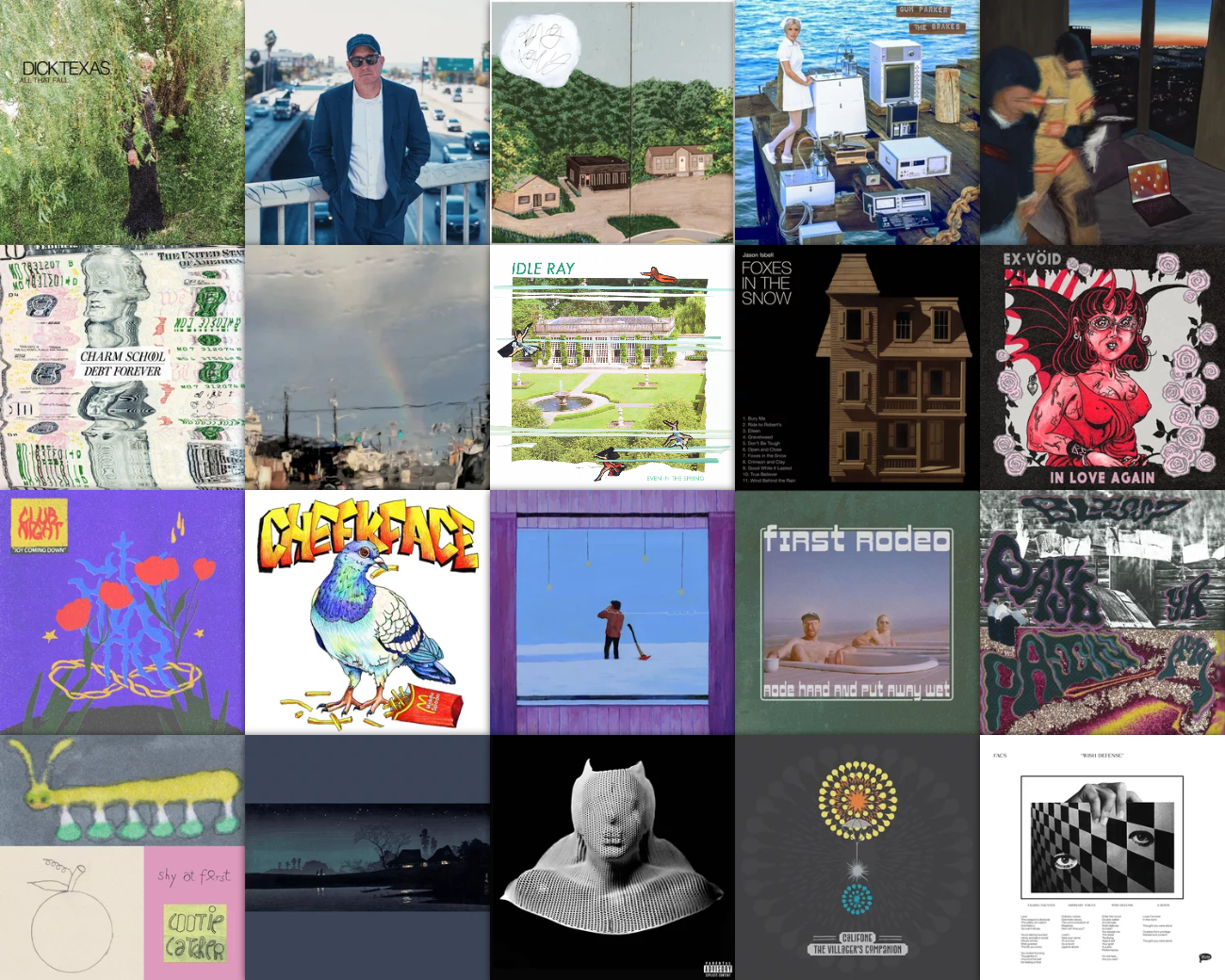
If you’re only just now joining us: this is part two of my list of my favorite forty albums of 2025 thus far, presented in reverse alphabetical order. Thanks for reading!
Here are links to stream a playlist of these selections via Spotify and Tidal (Bandcamp links are provided below for all records).
Kinski – Stumbledown Terrace
Release date: March 7th Record label: Comedy Minus One Genre: Post-rock, 90s indie rock Formats: Vinyl, digital
Kinski are an experimental post-rock band from Seattle, forming at the tail end of the 1990s and spending this century steadily releasing albums on storied indie rock labels like Sub Pop and Kill Rock Stars. Stumbledown Terrace is the group’s tenth album, their first in nearly seven years, their first for Comedy Minus One, and their first as a power trio in over twenty-five years. Clearly this paring down hasn’t slowed Kinski, though–their latest LP is a nice, electric jolt of a reminder of how cool guitar music is. On Stumbledown Terrace, Kinski walk the tightrope between instrumental, sprawling post-rock and punchy rock and roll like the best of their influences and peers like Sonic Youth, Trans Am, and Oneida. It has a live feel to it, certainly–and this applies to the moments in between the most kinetic ones, too. (Read more)
Jason Isbell – Foxes in the Snow
Release date: March 7th Record label: Southeastern Genre: Folk, country, singer-songwriter Formats: Vinyl, CD, digital
Foxes in the Snow is a tough one, the “divorce album” that Jason Isbell recorded entirely on his own with just his acoustic guitar partly so he could just get the songs out and not have to dwell on them. 2023’s Weathervanes was my favorite Isbell album in quite some time, and while Foxes in the Snow isn’t an LP to “throw on” frequently like that one is, I do get the sense that it’s built to stand beyond the circumstances of its creation. Isbell’s separation from his wife and former bandmate Amanda Shires colors these songs, certainly, although one would have to have one’s head in the clouds not to recognize Foxes in the Snow’s ability to glance beyond that just frequently enough.
Idle Ray – Even in the Spring
Release date: June 6th Record label: Life Like Genre: Lo-fi pop Formats: Vinyl, digital
This one might be a little premature, because I only heard it for the first time the day before I’m writing this. But this Idle Ray album is sounding really good to me right now, and I had to make some space for it here. When the self-titled first Idle Ray album came out back in 2021, the Michigan “band” was pretty much entirely a Fred Thomas solo project; in the four years since, they’ve become a solid power trio with bassist Devon Clausen and guitarist Frances Ma joining Thomas, and the new members even wrote a few of the songs on Even in the Spring. Ma and Clausen’s contributions fit right in with Thomas’ lo-fi power pop/indie rock style, and the three of them zip through ten songs in a mere twenty-four minutes on this one.
Gum Parker – The Brakes
Release date: April 11th Record label: Repeating Cloud Genre: 90s indie rock, power pop, garage rock Formats: Vinyl, digital
If you’re familiar with Galen Richmond’s previous band Lemon Pitch, then that’s roughly what his current one, Gum Parker, sounds like, but if you aren’t then they’re sneakily difficult to define. Richmond’s a 90s indie rock devote, but with Gum Parker he comes off as much more interested in simply making loud pop music than trying to directly emulate his influences. The Portland, Maine group’s debut album The Brakes is “power pop” without that genre’s defining reverence, “pop punk” without a trace of what that term traditionally evokes, “slacker rock” made by people with the perpetual nervousness. Oh, and Richmond, despite being the primary songwriter, only sings about half the songs–bassist Kate Sullivan-Jones sings lead on the rest of ’em. (Read more)
Good Flying Birds – Talulah’s Tape
Release date: January 2nd Record label: Rotten Apple Genre: Lo-fi pop, jangle pop, psychedelic pop Formats: Cassette, digital
NOTE: Well, it looks like Rotten Apple has un-released this album with a cryptic note hinting at a possible re-pressing or new version of it coming next month. Good for the Flying Birds, but I don’t want to put an album that you can’t hear except through an unofficial YouTube upload on this list (Read more)
Fust – Big Ugly
Release date: March 7th Record label: Dear Life Genre: Alt-country Formats: Vinyl, CD, digital
At this point, I’m ready to declare Aaron Dowdy’s Fust the best band making country-influenced indie rock in North Carolina (and yes, I’m aware of what kind of competition that description pits them against). I’ve loved everything that this band has done thus far, but it didn’t take long before it became clear to me that Big Ugly is the band’s masterpiece. In what I can only assume is directly pandering to the author of this blog, Big Ugly is an album-length journey to Dowdy’s roots in southern West Virginia, drawing its name and much of its imagery from the shadow of the Guyandotte River in Lincoln County. The record’s scenes of corner stores and cinderblock-propped-up cars are much more than cheap signifiers, and I don’t really have the space and time here to get into everything going on in it, but that just leaves more for you to discover.
Friendship – Caveman Wakes Up
Release date: May 16th Record label: Merge Genre: Alt-country, ambient country Formats: LP, CD, digital
The more anthemic, immediately-gripping songs of Friendship’s 2022 triumph Love the Stranger are gone on Caveman Wakes Up, and the Philadelphia alt-country group have replaced them with more ambient, vibes-based music. I compared Love the Stranger to Lambchop, without properly appreciating the kind of range that “Lambchop-esque” would end up giving them. Perhaps the die was cast for how this album would be perceived when they released a song called “Free Association” as the lead single. Frontperson Dan Wriggins, who recently released his first book of poetry, does seem more “poetic” on Caveman Wakes Up than he’s been in the past, but he’s also quite direct in his own way. I didn’t need the press pack to infer that a breakup was involved in the composition of these songs, for instance. (Read more)
Fluung – Fluung
Release date: April 7th Record label: Setterwind/Den Tapes Genre: 90s indie rock, punk rock, fuzz rock Formats: Vinyl, cassette, digital
Seattle trio Fluung have been keeping Pacific Northwest indie rock loud, electric, and catchy since the mid-2010s, but Fluung is pretty clearly the band’s best work yet. An ambitious rock record that nearly doubles their last one in length, the third Fluung album has enough time to spit out a handful of blissful, hook-laden lost 90s alt-rock classics and push further into feedback-heavy, exploratory, lumbering fuzz rock terrain, too. Like the region’s best rock bands, Fluung is a record that’s about the journey as much as anything else, and the band make sure to leave us with a memorable and complete one. Fluung aren’t the first group to stumble onto something as fulfilling as this album, but it never gets old hearing a band figure it out like this. (Read more)
First Rodeo – Rode Hard and Put Away Wet
Release date: May 16th Record label: Bud Tapes Genre: Alt-country, country rock, folk rock Formats: Cassette, digital
Tim Howe (Vista House) and Nathan Tucker (Cool Original) are accomplished artists in their own rights, but the 2022 album they made together as First Rodeo is some of the finest work by either of them, so I was pleased to hear about Rode Hard and Put Away Wet, the duo’s second album together. Their new label Bud Tapes boasts that First Rodeo have “moved beyond genre constraints to explore collaborative songwriting and arranging”, and there are certainly moments (like “Nothing”) that back this up, but Rode Hard and Put Away Wet isn’t a huge departure–it’s still grounded in the roots, country, and folk rock on which First Rodeo built their initial foundation. (Read more)
Craig Finn – Always Been
Release date: April 4th Record label: Tamarac/Thirty Tigers Genre: Singer-songwriter, heartland rock, synthrock Formats: Vinyl, CD, digital
The music of Craig Finn (and his band, The Hold Steady) is already fairly…divisive for the fickle bunch known as indie rock fans, and even those who enjoy Finn’s most acclaimed works seem split on Always Been, his latest solo record. I, for one, am really into it–I’ve felt that Finn’s solo career has benefited from his attempts to grow his music palette (we already know he’s a great storyteller–what else you got?), and Always Been–produced by Adam Granduciel of The War on Drugs and leaning further into shined-up, 80s synth-rock than ever before–certainly qualifies. As always, the narratives are dense and no amount of polished production will ever make it “easy listening”. But I still love Finn and Granduciel’s attempts to make it so.
FACS – Wish Defense
Release date: February 7th Record label: Trouble in Mind Genre: Noise rock, experimental rock, post-punk Formats: Vinyl, CD, cassette, digital
Wish Defense was the last-ever album recorded by Steve Albini before his sudden passing last year, but its tragic circumstances do not obscure the fact that this LP is actually a rebirth and revitalization of FACS. The Chicago art rock trio welcome back original guitarist Jonathan Van Herik for the first time since their 2018 debut Negative Houses, now playing bass after founding bassist Brian Case moved over to guitar to replace him. 2023’s Still Life in Decay found FACS pushing and probing their sound to the outer margins of “rock music”, a direction seemingly necessary for the band to continue to sound inspired and forward-glancing. The reintroduction of Van Herik seems to have changed this calculus, allowing FACS to find heretofore undiscovered life in the realms of (relatively) brief bursts of power trio post-punk and noise rock. (Read more)
Ex-Vöid – In Love Again
Release date: January 17th Record label: Tapete Genre: Power pop, jangle pop Formats: Vinyl, CD, digital
Yes, I know, we all love The Tubs, but have you been listening to their sibling band, Ex-Vöid? You know, the one that’s even better than The Tubs (although, to be fair, Cotton Crown is a gap-closer)? Lan McArdle and Owen Williams (who first debuted as members of Joanna Gruesome in the 2010s) singing together is one of the greatest sounds one can hear in all of indie pop/power pop/jangle pop/et cetera, and Ex-Vöid’s sophomore album In Love Again certainly delivers on that front. Perhaps a little less punchy and more refined than 2022’s Bigger Than Before, the latest from Ex-Vöid is as natural-feeling a guitar pop album as any of those to which its members have lent their talents.
Dick Texas – All That Fall
Release date: March 7th Record label: Life Like/Tortilla Flat Genre: Alt-country, country rock, post-rock, slowcore, art rock, folk rock, psychedelia Formats: Vinyl, digital
All That Fall, the first Dick Texas album, has been over a half-decade in the making, but it’s pretty believable that letting this music marinate for as long as it did helped make the album as special as it turned out to be. Loosely speaking, All That Fall is a country rock record–and “loose” is the right word to use here, as Dick Texas’ lost, woozy, incredibly slow playing style really does sound on the verge of falling apart more often than not. The songs–all seven of ‘em, that’s all we need–sprawl out in their self-contained desert worlds, and Valerie Salerno is the steady center with vocals that murmur along with the music’s psychedelic haze, declining to hog the spotlight but still leaving a distinct mark on Dick Texas’ landscapes. (Read more)
Cootie Catcher – Shy at First
Release date: March 14th Record label: Cooked Raw Genre: Indie pop, twee, electronica, bedroom pop, experimental pop Formats: Vinyl, cassette, digital
As one might expect from a band with a “DJ scratcher” enlisted, Toronto’s Cootie Catcher have a foot in the world of electronic music (largely due to the wobbly, wavering synths that Sophia Chavez injects over top of more typical indie pop instrumentals). The group strike a balance between tweeish guitar pop and the aforementioned synth touches on their sophomore album, Shy at First–sometimes Cootie Catcher lean more into guitar pop, sometimes into the stranger electronic impulses, and sometimes both flare up notably in the same song. Shy at First has a ton of obvious “hits”, but even the more curious moments on the album are still “pop songs”, just presented in a somewhat hazier fashion. (Read more)
Club Night – Joy Coming Down
Release date: May 2nd Record label: Tiny Engines Genre: Art rock, math rock, emo Formats: Vinyl, digital
There were plenty of groups in the late 2010s making music that could be described as some combination of “math rock”, “indie rock”, and “emo”, but the way that Club Night do it–an overall hugeness, jittery art-punk instrumentation, strange but welcome synth-centric additions–just works better than the others. It was enough to keep the band regularly on my mind in the six-year gap between their first album, What Life, and Joy Coming Down, which picks up right where Club Night left off–not that a band like this can ever really be predictable, but their second album packs as much of what makes this group special as it can in its forty-two minutes. Club Night alternate between sounding like a real, rumbling live rock band and a bunch of artists frantically sculpting something in a gigantic studio throughout the album. Like a good math rock record, a lot of these change-ups in Joy Coming Down happen in the same song. (Read more)
Cheekface – Middle Spoon
Release date: February 25th Record label: Self-released Genre: Power pop, indie pop, post-punk, Cheekface Formats: Vinyl, CD, digital
For the better part of a decade now, Los Angeles trio Cheekface have been making an incredibly specific type of music, a proprietary blend of power pop, dance-punk, and Television combined with Greg Katz’s everyman talk-singing vocals mixed up in a way scientifically guaranteed to garner Cake comparisons. The orations of Katz, a state-of-the-union collection of one-liners and fake-outs from somebody who has incomplete knowledge of every subject, have always been the immediate draw, but the band behind him and their mastery of “groove” have been an increasingly potent weapon. This growth is present on the fifth Cheekface LP, Middle Spoon, featuring more big-chorus power pop slingers than ever before. You can still dance to it, of course, but somehow it’s a more cathartic hip-swaying. (Read more)
Charm School – Debt Forever
Release date: January 24th Record label: Surprise Mind Genre: Noise rock, post-punk, garage punk Formats: Vinyl, digital
The 2023 Finite Jest EP introduced Louisville’s Charm School as devotees of Touch & Go Records-influenced post-punk, garage rock, and post-rock. On their first LP, Debt Forever, Charm School haven’t completely shaken up their sound, but they’re doing something a little different here. It’s somehow both looser and angrier; there’s still plenty of that modern Fall-influenced post-punk sound here, but there’s also some San Diego-style post-hardcore/garage rock and turn-of-the-century Washington, D.C. art punk in the mix, too. As the title hints at, Debt Forever spends a good deal of time focusing on financial anxiety and insecurity–whether the alternatively brooding and seething music drew this all-American fear out of frontperson Andrew Sellers or whether his preoccupations with such matters informed the music, there’s no denying the synergy here. (Read more)
Califone – The Villager’s Companion
Release date: February 21st Record label: Jealous Butcher Genre: Folk rock, post-rock, art rock, blues rock, 90s indie rock Formats: Vinyl, CD, digital
As the name implies, The Villager’s Companion is linked to the Califone record before it, 2023’s The Villagers:it was recorded around the same time and is augmented by a couple of covers that have been previously released over the past few years. Califone bandleader Tim Rutili referred to these songs as “misfit toys” when the album was announced, but The Villager’s Companion is just further confirmation that Califone thrives in a less formal environment. It gives Rutili and company a chance to both spin some simple blues-folk numbers and to journey beyond them right next to each other, to interpret other people’s songs and incorporate them into the Califone songbook like they’ve always belonged there. (Read more)
Bliss? – Pass Yr Pain Along
Release date: March 21st Record label: Psychic Spice Genre: Lo-fi power pop, garage rock, jangle punk, mod revival Formats: Cassette, digital
The debut from a new power trio straight out of Baton Rouge, Louisiana, Bliss?’s Pass Yr Pain Along is a full exploration of the strains of guitar pop (“REM, power pop, and all varieties of jangly 80s college rock”) formative to the band–Josh Higdon’s vocals are incredibly Elvis Costello-reminiscent, while the band’s somewhat jangly post-Replacements pop rock and roll sounds like the Gin Blossoms as interpreted by basement punk musicians. It’s not a “punk” record per se, but it absolutely benefits from a little roughness–Higdon isn’t at all shy about putting the vocals up front, and the band are loose but clear in a way that puts the spotlight on a collection of songs that really could’ve been shipped straight from Homestead Records to your local college radio station circa 1989. (Read more)
The Bird Calls – Melody Trail
Release date: February 7th Record label: Ruination Genre: Folk rock, soft rock, singer-songwriter, synthpop, sophisti-pop Formats: CD, digital
2025’s album from Sam Sodomsky’s prolific project The Bird Calls has arrived already, and I’m pleased that the New York singer-songwriter (and music writer) has put together something a bit different this time with Melody Trail. The album was assembled entirely by Sodomsky and producer Ryan Weiner, and while these songs certainly sound like they were written and sung by the same artist who made last year’s casual country-folk Old Faithful, the duo give Melody Trail a more polished pop reading. It’s a path down which many of Sodomsky’s influences–Dan Bejar, Elvis Costello, Bruce Springsteen–have wandered to rewarding ends, but Melody Trail retains the greatest strength of Sodomsky’s previous work: namely, that he’s able to evoke the art of such idiosyncratic, larger-than-life figures while coming off more or less as a regular guy. (Read more)
Alex Orange Drink – Victory Lap (#23)
Release date: May 9th Record label: Million Stars Genre: Garage punk, power pop, folk punk, singer-songwriter Formats: Vinyl, digital
Alex Zarou Levine didn’t choose to pigeonhole himself as the punk rock musician who writes about his experiences living with and battling various medical ailments; he’s just attempting to live his life, I think. 2021’s Everything Is Broken, Maybe That’s O.K. is about Levine’s long-term metabolic genetic disorder homocystinuria, and this year’s Victory Lap (#23) came about after the So So Glos frontperson was diagnosed with adenoid cystic carcinoma and subsequently went through intense chemotherapy and radiation treatments. Victory Lap (#23) is as defiant and fiery as one would hope from its title, an excellent collection of Levine’s signature New York City power pop rock, slapdash, garage-y punk, and folk punk-adjacent singalongs.
Hello there, and welcome to the midway mark of 2025, I suppose (basically, I noticed other websites putting up their mid-year favorites and thought “well, guess I better start getting mine together now!”). Below, you’ll find forty records that RO loved more than anything else so far this year. Of course, there’s a bunch of good music I wasn’t able to fit on here (check the site directory for other records we’ve written about recently), but I’m quite happy with this list. I think you will be, too!
The list is unranked, ordered reverse-alphabetically by artist name (last year I did it alphabetically, and I alternate it every year).
Thanks for reading, and here are links to stream a playlist of these selections via Spotify and Tidal (Bandcamp links are provided for all records).
Release date: February 14th Record label: Felte Genre: Post-punk, art rock, art punk Formats: Vinyl, digital
Vulture Feather have such a distinct sound–Colin McCann’s otherworldly yowling vocals and chiming guitar, the steady, glacial movement, a rapturous devotion to minimalism and repetition–that they really only sound like themselves at this point. Like last year’s Merge Now in Friendship and 2023’s Liminal Fields, It Will Be Like Now is a powerful-sounding record, but I didn’t come away from it thinking “Vulture Feather just made the same album again”. The fact that they recorded the album after a bunch of touring might explain the subtle difference I hear–“looser” isn’t exactly the right descriptor…maybe “more alive”? Liminal Fields sounded like it just came into being one day, but I can actually imagine Vulture Feather playing the songs of It Will Be Like Now live, in person, in-studio. This is their punk album, maybe. (Read more)
The Tubs – Cotton Crown
Release date: March 7th Record label: Trouble in Mind Genre: Jangle pop, power pop, indie pop Formats: Vinyl, CD, cassette, digital
You probably don’t need me to tell you that Cotton Crown is good if you’re tapped into the worlds of jangle pop and power pop that are this blog’s bread and butter–The Tubs have been one of the few such bands that regularly get lauded outside of our bubble, and I can’t even be hipstery about the praise that’s been bestowed upon them because this new album is the (already quite good) band’s best work yet. If you’re interested in learning about the personal nature of frontperson Owen Williams’ writing on this album, there are interviews (not to mention Williams’ own Substack) about it, but suffice it to say that the group’s sparkling, bright guitar pop collides with some tough, complex kinds of grief throughout Cotton Crown.
(T-T)b – Beautiful Extension Cord
Release date: April 4th Record label: Disposable America Genre: Fuzz rock, synthpop, power pop, chiptune, slacker rock, 90s indie rock Formats: Vinyl, CD, cassette, digital
Boston’s (T-T)b incorporate chiptune and video game soundtrack instrumentation into their music as an accent, the way one might use synths or horns. Beautiful Extension Cord is the band’s second album and first new music of any kind in four years, and (T-T)b have evolved in the meantime, I’d say. It seems impossible for chiptune to ever be “subtly” incorporated into one’s music, but if it is, it probably sounds like this album–still quite visible, but integrated more seamlessly than ever into the group’s slacker rock, 90s alt-rock, and bedroom indie rock-evoking sound. Between the big old guitars, the chirping 8-bit sounds, and JM Dussault’s plain but capable vocals, there’s somehow a cosmic element to (T-T)b’s indie rock. (Read more)
Telethon – Suburban Electric
Release date: March 6th Record label: Halloween Genre: Power pop, pop punk Formats: Vinyl, CD, cassette, digital
Suburban Electric certainly sounds like a Telethon album, but it also sounds like a conscious attempt not to repeat their previous LP, the sprawling, overstuffed, guest musician-heavy Swim Out Past the Breakers. If it’s possible for Telethon’s blend of maximalist power pop, Midwestern workhorse pop punk, and dashes of ska and emo to ever be “streamlined”, Suburban Electric is it. Suburban Electric is still a rich and stuffed-to-the-gills record in its own way, though–every song on this album is a wild self-contained narrative (the lyrics are presented as paragraphs on the album’s Bandcamp page, which seems right to me), and Telethon set their punk rock theater energy towards building lengthy, almost prog-pop Jenga towers. (Read more)
Star 99 – Gaman
Release date: March 7th Record label: Lauren Genre: Power pop, pop punk Formats: Vinyl, digital
A year and a half after Bitch Unlimited (my second favorite album of 2023), San Jose power pop group Star 99 are back with a fifth bandmember, a more wide-ranging sound, and a sophomore album called Gaman. I’d be despondent if Star 99 completely abandoned the sugary power-pop-punk that they’d mastered on their last album, and thankfully Gaman is not a reinvention so much as an expansion. Star 99 have once again put together a blink-and-you’ll-miss-it (twenty-five minutes, actually shorter this time around) collection of tour-de-force songs with plenty of knockout punches; they’ve merely diversified the way that they go about landing these blows, is all. (Read more)
Spring Onion – Seated Figure
Release date: March 14th Record label: Anything Bagel Genre: Lo-fi pop, bedroom pop Formats: Vinyl, cassette, digital
I’ve listened to the music of Catherine Dwyer extensively thanks to her work as the bassist of Remember Sports, but this year I learned that she’s more than capable of making a great lo-fi/bedroom pop record on her own (well, with the assistance of many great Philadelphia DIY musicians and her Remember Sports bandmates, but Spring Onion is “her” project). Seated Figure, the sophomore Spring Onion album and the first since 2018, is about the death of Dwyer’s father, and her vibrant, meditative version of sunny guitar pop is a surreal but deeply-felt tribute and crystallization of a foggy, difficult-to-describe experience.
Alan Sparhawk & Trampled by Turtles – Alan Sparhawk with Trampled by Turtles
Release date: May 30th Record label: Sub Pop Genre: Folk rock, singer-songwriter, slowcore Formats: Vinyl, CD, cassette, digital
Alan Sparhawk with Trampled by Turtles is as tough of a listen as anyone familiar with the tragedy experienced by the former of the two artists would expect, although it’s “tough” in an entirely different way than last year’s confrontational electronic Sparhawk solo album White Roses, My God. An unlikely but ultimately very fitting team-up between two of Duluth’s most prominent acts, this album ends up synthesizing the glacial-paced, beautiful slowcore of the early work of Sparhawk’s Low and the more traditional folk music of Trampled by Turtles. The latter band’s bluegrass-trained sound is well-equipped to take these songs to the brink of the abyss, but Sparhawk steadies the ship with (one imagines) everything he’s got in him.
Silo’s Choice – Liberals
Release date: March 7th Record label: Obscure Pharaoh Genre: Indie pop, sophisti-pop, jazz pop, soft rock Formats: Digital
Liberals is a pretty clear departure from the meandering, John Fahey-influenced acoustic guitars and upright bass explorations of 2024’s Languid Swords–Silo’s Choice mastermind Jon Massey mentions The Left Banke, early Destroyer, and Belle & Sebastian as touchpoints for this one, and he’s kind of right. At its most animated, Liberals has the same kind of jazzy, whip-smart pop rock that Massey had previously explored in the band Coventry, and even the slower numbers on this album display a renewal of vows with concise pop music. Liberals’ default mode of polished piano-led pop doesn’t come even close to getting stale, and there are plenty of deviations from it, dropping a bit into everything from folk music to disco. (Read more)
Lily Seabird – Trash Mountain
Release date: April 4th Record label: Lame-O Genre: Folk rock, alt-country Formats: Vinyl, digital
Trash Mountain was written and recorded much more quickly than Lily Seabird’s previous two albums, and I found myself pretty surprised at where the Vermont singer-songwriter decided to go on her third LP. The explosive bursts of noisy country rock of last year’sAlas,are decentered for a quieter, more deliberate, and intimate record, but this pull-back (if anything) only makes Seabird’s writing and singing even more immediate. Trash Mountain (named after an artist-filled house on a “decommissioned landfill” site where Seabird lived while writing the album) is a gorgeously ragged collection of folk rock that finds avenues of contentment rather than searching feverishly for moments of catharsis. (Read more)
SAVAK – SQUAWK!
Release date: May 30th Record label: Peculiar Works/Ernest Jenning Genre: Garage rock, post-punk Formats: Vinyl, digital
I’m pleased to report that Brooklyn’s finest prolific veteran-studded indie rock group SAVAK still sound exactly like themselves on their seventh album, SQUAWK!. A tight ten songs and thirty-five minutes, the album finds Sohrab Habibion, Michael Jaworski, and Matt Schulz continuing to hammer out their by-now quite recognizable style of college rock, post-punk, and garage rock–tough but polished, familiar but surprising, catchy as ever. Detours into New York electric noise rock collages, a more overt kind of Lou Reed worship, and atmospheric pieces are infrequent but always done well. If you’re already part of the SAVAK society, I doubt you’ll need more convincing that they’ve done it yet again–but there’s always room for more. (Read more)
Saoirse Dream – Saoirse Dream
Release date: February 28th Record label: Lauren Genre: Hyperpop, synthpop, indie pop, bedroom pop, noise pop, chiptune, pop punk Formats: Vinyl, CD, digital
Since the beginning of this decade, Catherine Egbert has been connected to “hyperpop” as a movement, both through her work as Saoirse Dream and as part of collectives like webcage and User-177606669. Her debut album for Lauren Records is indeed a charged mix of chiptune pop blasts, pop punk guitars, emo angst, and lo-fi bedroom pop intimacy. Saoirse Dream isn’t as sonically chaotic as a lot of hyperpop I’m familiar with–I could imagine more typical pop punk/indie pop versions of most of these songs (in fact, they might already be in there somewhere), but Egbert has such a handle on these extra touches and tools that they pretty much always feel like they add to the music. Saoirse Dream has a ton of ideas in any case, and most of these are executed in the context of sweeping pop music. (Read more)
Pigeon Pit – Crazy Arms
Release date: January 17th Record label: Ernest Jenning Record Co. Genre: Folk punk, folk rock Formats: Vinyl, CD, cassette, digital
In the three years since their breakout album, 2022’s Feather River Canyon Blues, Olympia folk punk rockers Pigeon Pit have solidified into a six-piece “country/punk maximalist” group led by former sole member Lomes Oleander and featuring a bunch of Olympia-area ringers. Crazy Arms is both a culmination of “Pigeon Pit the Band” and a statement of their current power; Oleander is still a “folk punk” frontperson, yes, but her vocals and writing have evolved to also encapsulate the kind of world-reverent folk-y indie rock practiced by heroes like the Mountain Goats, The Weakerthans, and certain eras of Against Me!–and, of course, the band is key in helping her realize a more expansive sound for these songs, too. Pigeon Pit is always giving about 120 percent on Crazy Arms, even (perhaps especially) when Oleander is singing about being run-through and tired. (Read more)
Pacing – Songs
Release date: January 7th Record label: Asian Man Genre: Anti-folk, indie pop, bedroom pop, singer-songwriter, indie folk, twee Formats: CD, digital
San Jose anti-folk/bedroom pop act Pacing have been working on a proper follow-up to their 2023 album Real poetry…for a while now, but that’s not what their first new music on Asian Man Records, Songs,is. Songs is twelve minutes long. It’s a “mini-album” if it has to be called anything, or maybe it’s just “songs”. Most of these are written and played by entirely bandleader Katie McTigue herself. Only one of these songs is more than two minutes long. The naming conventions are aggressively low-key and casual. If Songs is a hot dog-esque byproduct of the sessions for Pacing LP2, it functions very well as a teaser for it. It’s a throwaway release that’s too good to be a throwaway release, and instead just ends up being the latest reminder that McTigue is still one of the sharpest and most unique songwriters operating in the present. (Read more)
Options – Beast Mode
Release date: June 6th Record label: Self-released Genre: Lo-fi pop, bedroom pop, synthpop Formats: Digital
This one is a last-minute addition after I had to strike something else from this list, but I’m secretly happy that a spot opened up for this brand-new Options album. Chicago recording engineer and musician Seth Engel was incredibly active as Options in the late 2010s and early 2020s, but Beast Mode is his solo project’s first record in three years (in the meantime, he’s been playing with Mister Goblin and Patter and recording music from Nature’s Neighbor, Cusp, and Joey Nebulous, among others). Beast Mode is slick, snappy, heavily AutoTuned bedroom pop music (indeed, Engel writes that it was recorded “in my room 2021-2024”) that reminds me of a more fully-developed version of 2021’s On the Draw. It hits the same “fucking around and making timeless pop songs” sweet spot that, like, early This Is Lorelei did.
Open Head – What Is Success
Release date: January 24th Record label: Wharf Cat Genre: Noise rock, post-punk, art punk, no wave Formats: Vinyl, digital
Kingston art punk group Open Head had grand ambitions for their second LP, naming hip hop and electronic music as equally influential on it as punk and art rock. Of course, any adventurous and forward-thinking band ought to be looking outside their own genre for ideas, and just because the resultant What Is Success is “merely” a rock album doesn’t mean that Open Head weren’t successful in making something that genuinely feels informed by things other than “merely” post-punk and noise rock. Although, to be clear, I do hear a lot of good noise rock and post-punk bands in What Is Success’ sound, too–New York no wave, Exploding in Sound-associated post-hardcore, and Rust Belt noise rock all likely had a hand in where Open Head end up here. (Read more)
Now – Now Does the Trick
Release date: May 16th Record label: K/Perennial Genre: Jangle pop, psychedelic pop, lo-fi pop, power pop Formats: Vinyl, digital
The second album from the difficultly-named Bay Area trio Now and their first for their new label is called Now Does the Trick, and it’s a different beast than their debut but no less strong of an LP. The psychedelic, kraut-y mud of 2023’s And Blue Space Is Burning Noon is turned down and the jangle pop guitars and hooks are turned up–Now sound like they’re aiming for the little big-time here. Now are still a bunch of weirdos, though–lo-fi, sparkling jangle can’t paper over all of that. Even though the dozen songs of Now Does the Trick total just a bit over a half-hour, it feels like they encompass so much more than that; Now eat their craft-sharpening cake and get to keep some skeletons in their collective closet, too. (Read more)
My Wife’s an Angel – Yeah, I Bet
Release date: April 18th Record label: Knife Hits/GRIMGRIMGRIM/Broken Cycle Genre: Noise rock, post-hardcore Formats: Vinyl, CD, cassette, digital
My Wife’s an Angel are a chaotic, piss-taking noise rock band from Philadelphia, although my intelligence suggests that they may have roots in the expansive wasteland known as “the rest of Pennsylvania”. The quartet’s second album, Yeah, I Bet, is positively a mess–it’s ugly, heavy noise-punk that sometimes doesn’t sound like any of those descriptors at all. The closest thing I can think to compare My Wife’s an Angel is, like, a more millennial and Appalachian version of Killdozer (if you understand what I mean by this, you’re probably going to hell, by the way)–the Midwestern classic rock devil worship subbed out for a big, wide, empty hollering against rock music simply played wrong. (Read more)
Miscellaneous Owl – The Cloud Chamber
Release date: March 7th Record label: Self-released Genre: Bedroom pop, synthpop, indie folk, lo-fi pop Formats: Digital
This year’s Miscellaneous Owlbum is called The Cloud Chamber, and Madison, Wisconsin singer-songwriter Huan-Hua Chye promises something “folkier, quieter, and dreamier” this time around, as well as “1000% more theremin” than on her last record (You Are the Light That Casts a Shadow, one of my favorites of 2024). While the exact specifics of this description (other than the theremin part) are up for debate, I do agree that The Cloud Chamber displays a more thoughtful and subdued side to Chye’s writing. You Are the Light That Casts a Shadow ran out to greet us with early Magnetic Fields-worthy bright synthpop instrumentals, and while this new one has some such moments, on the whole it’s more of an album that one is “welcome to join in progress” than one that’s going out of its way to invite us inside. (Read more)
Mekons – Horror
Release date: April 4th Record label: Fire Genre: Post-punk, art punk, folk rock Formats: Vinyl, CD, digital
The Mekons are forty-nine years old this year. I’m not even going to try to figure out what number LP they’re on at this point. And yet here is Horror, an album that purports to “[look] at history and the legacies of British imperialism with mashed up lyrics” and that sounds a hell of a lot like the great Mekons records littered throughout history before it. Post-punk artsiness, alt-country rock-and-rolling, traditionalist folk instrumentation, reggae rhythms, and a good old communal feeling all permeate Horror, an album that keeps one foot in the past only to mainline all the power and humanity and bullshit that’s still ever-so-relevant today, always forging some kind of connection or another.
Lùlù – Lùlù
Release date: June 6th Record label: Howlin Banana/Taken by Surprise/Dangerhouse Skylab Genre: Power pop, garage rock Formats: Vinyl, digital
The self-titled debut album from Lyon/Marseille-based Lùlù is power pop in its most freewheeling, energetically fun form. Bandleader Luc Simone and his collaborators gleefully roll around in the histories of garage rock and punk rock to make ten massively hooky rock and roll knockout punches. Far removed from the refined, cosmopolitan sound that I associated with French indie pop, Lùlù has more in common with Australian garage-power-poppers like The Unknowns and Romero, American retro-pop groups like Sheer Mag and Free Energy, and, honestly, even a little bit of melodic lifer “orgcore” punk rock groups. (Read more)
The Thursday Pressing Concerns is here, and it’s an instant classic! New albums from Smug Brothers, Career Woman, and Lùlù! A career-spanning retrospective compilation from Salem 66! And more! Well, I guess not really “more”, unless you count the also notable section. But, regardless, this is a great edition! Also, we had a Pressing Concerns go up (featuring John Galm, Now, Grant Pavol, and The Lilas) on Monday, and the May 2025 playlist arrived on Tuesday, so check those out if you missed them.
If you’re looking for more new music, you can visit the site directory to see what else we’ve written about lately. If you’d like to support Rosy Overdrive, you can share this (or another) post, or donate here.
Salem 66 – SALT
Release date: June 6th Record label: Don Giovanni Genre: Post-punk, college rock, jangle pop Formats: Vinyl, CD, digital Pull Track: Secret
Let me tell you some facts about a band from Boston called Salem 66. They were formed (by Judy Grunwald, Beth Kaplan, and Susan Merriam) in 1982. They released all four of their albums (and a few singles) on Homestead Records. They played shows with Butthole Surfers, Flipper, Big Black, Mission of Burma, and Dinosaur Jr., among others. A song of their was featured on 2020’s Strum & Thrum: The American Jangle Underground 1983-1987, perhaps the greatest compilation of the decade so far, alongside bands like The Springfields, The Windbreakers, Great Plains, and 28th Day. The liner notes for SALT, a newly-issued career-spanning compilation of Salem 66’s work, were written by Franklin Bruno of The Human Hearts and Nothing Painted Blue. Judging by all that, I’d say they’re probably pretty good! Don Giovanni Records also thought so, as they went and made Salem 66’s entire discography available digitally earlier this year as well as putting together this physical LP/CD as a concise entrypoint. And SALT is, indeed, pretty good. It’s enough to make it clear that Grunwald and Kaplan (the band’s two songwriters and only consistent members) were two great lost college rock greats, and it’s much more than enough to make one wonder what took so long for something like this to come together in the first place.
Like I said, Salem 66 are perhaps most easily defined as “college rock”–hardly “power pop”, “jangly” enough to fit in with Strum & Thrum, early R.E.M., and their ilk, marked by a guitar-led psychedelic sound, that presumably coincidentally, fits alongside the Paisley Underground happening on the other coast of the United States. They’re a band that carried themselves like they were fluent in the heavier strains of indie rock practiced by the bands they associated with when they were active but weren’t interested in doing much more than refracting it as part of a larger, less categorizable form of music that I would call “doing their own thing”. The bands they remind me the most of are other underground rock iconoclasts like Scrawl and Tsunami (the latter of which also received the Franklin-Bruno-liner-notes-treatment recently); the fact that Salem 66 came earlier than both of those bands (as well as just about any I could think to name in the same vein) is impressive and not lost on me at all. I haven’t said a whole bunch about the individual songs on SALT yet, but rest assured they’re great–the compilation is (I believe) chronological, it starts off strong (see the jangle pop “Across the Sea” and the post-punk “Playground”) and it only gets better. The selections from their final two albums–1988’s Natural Disasters, Natural Treasures and 1990’s Down the Primrose Path–are my favorites, displaying a band who’d fully synthesized their parts into something confident, smooth, and heavy. I don’t think I’m done revisiting Salem 66, but SALT does exactly what it should to get us on board. (Bandcamp link)
Smug Brothers – Stuck on Beta
Release date: June 6th Record label: Anyway Genre: Lo-fi indie rock, power pop, psych pop, garage rock Formats: Vinyl, CD, digital Pull Track: Prank Editions
You might’ve heard about this already, but Guided by Voices are not breaking up. They’re supposedly not going to play live any more, but rumors of a work stoppage at the Robert Pollard LP factory have proven to be unfounded. Even if this October’s Thick Rich and Delicious ends up being Guided by Voices’ final chapter, however, I’m not worried, as we’ve got plenty of other prolific Ohio lo-fi indie rock bands waiting in the wings. Well, I mean we have Smug Brothers at least. Vocalist/guitarist Kyle Melton and (ex-Guided by Voices) drummer Don Thrasher have been making Midwestern rock music that’s equal parts dark post-punk and bright, jangly college rock since 2004, and over the course of their past couple of albums, a new lineup featuring bassist Kyle Sowash and guitarist Ryan Shaffer has congealed. Stuck on Beta is Smug Brothers’ first album with Shaffer (who first appeared on last year’s Another Bar Behind the Night EP) on board, and while it seems like this ought to have led to a smooth continuity for Smug Brothers, the album actually became marked by “the death of an old friend”–the band’s twenty-year-old Tascam 424 MKIII 4-track, which had recorded “virtually every Smug Brothers track” up until that point (and a demise that led to Melton having to re-record many of his guitar parts).
As with Smug Brothers have done in the face of lineup changes and a move from Dayton to Columbus, however, they kept pressing forward, and Stuck on Beta is anything but a slowdown. Although the band have released a few brief, concise EPs in recent years, Stuck on Beta is (like 2023’s In the Book of Bad Ideas LP) for the true believers. Regardless of what the album was recorded on, the quartet still maintain their signature mix of lo-fi casualness and rock-and-roll exuberance, and Melton still certainly “has it”–“it” being the ability to make us really believe in the significance of phrases like “Paper Jane”, “Voltaire Basement”, “Ozone Bunker, and “Sidetrack Ghosts” (and I could go on–“Arcade Strange”, anyone?). So many songs on Stuck on Beta start with an undeniable guitar riff and go from there–the especially Guided by Voices-tinged “Prank Editions”, the chopping-starting of “Take It Out on Me”, the somersaulting solo of “Sidewalk Champagne”, the big, meaty power chords of “Flushing James”. Sowash plays saxophone on “Noble Harper”, which is pretty weird, but that’s a pretty weird and chilly song even without the saxophone, so the Smug Brothers were onto something with that choice. They procure an actual string section (well, violinist Sam Kim and Lung’s Kate Wakefield on cello) for “Cheers to Everything We Used to Do”, but they don’t dwell on the bite-sized balladry, as then it’s back to the grind for two more unflagging mid-tempo indie rockers. Up, up we go now. (Bandcamp link)
Career Woman – Lighthouse
Release date: June 6th Record label: Lauren Genre: Pop punk, power pop, emo-y indie rock Formats: Vinyl, CD, digital Pull Track: Hit and Run
It’s strange to call the debut album from a twenty-one-year-old singer-songwriter as “long-awaited”, but when you’ve been putting out music since you were fourteen, I guess it makes some sense. Melody Caudill started releasing songs on her own as Career Woman in Los Angeles in 2018, and has continued to do so as she’s moved to Santa Cruz for college, signed to Lauren Records (who put out the 2023 Grapevine EP and everything she’s done since), and put together a full Career Woman band (that’d be guitarist Allen Moreno, bassist Joey Chavez, and drummer Jackson Felton). I had previously only really been familiar with Caudill via her two collaborations with blog favorite Pacing–the excellent one-off single “Boyfriends” (which gets re-recorded for Lighthouse) and “New Song with Mel” from this year’s Songs mini-album. I suppose I was expecting Career Woman to sound more or less like Pacing’s anti-folk/bedroom pop sound, but that’s not what Career Woman LP1, Lighthouse, does at all. These songs are massive and polished, gigantic indie pop rock anthems that balance the clear might of the Career Woman Band with the just-as-obvious spotlight on Caudill herself (and it’s a truly collaborative enterprise that’s led to the songs ending up this way, as Felton is credited with arranging them and Moreno with recording them).
Lighthouse is world-conquering music. It’s the sound of a young songwriter and band excitedly reaching new heights together. Career Woman certainly aren’t the first band to put alt-country, Phoebe Bridgers-core indie pop, power pop, pop punk, and emo into a blender, but listening to Lighthouse is to be taken in by a powerful universality that can only really be achieved by saying “fuck it” and just putting everything “you” that you can fit into your music. “Piano Song” is “college rock” in a literal, messy sense, “Can You Tell Me?” really gains something from Chavez’s leading bassline, “Nosebleed” bounces along awkwardly but gracefully somehow nonetheless, “Hit and Run” is restless to the point of catastrophe (“This morning, we fucked up / And not Walgreens, Target, Best Buy, or Wal-Mart could pick us back up” might be my favorite lyric on this entire album). These are Lighthouse’s “anthems” (the re-recorded version of “Boyfriends”, which I’ve written about plenty before but sounds every bit as sharp and bittersweet as a power pop song, also qualifies)–but there’s more to Career Woman here between the power balladry of “Mel’s Drive In” and the sudden restraint of the record’s final three songs. I can confirm that Lighthouse sounds great in the car, but if you have somewhere to be you might not want to place yourself in the hands of a record that so confidently proclaims that it doesn’t know where it’s going to end up. (Bandcamp link)
Lùlù – Lùlù
Release date: June 6th Record label: Howlin Banana/Taken by Surprise/Dangerhouse Skylab Genre: Power pop, garage rock Formats: Vinyl, digital Pull Track: Tous les Etes
Hey, we’ve got some French power pop on the blog today! I’ve written about my fair share of French bands in Pressing Concerns recently, and while groups like Cathedrale, EggS, and Pretty Inside can be described as some combination of “college rock”, “garage rock”, and “jangle pop”, the Lyon-Marseille-based Lùlù is something different. Led by vocalist Luc Simone and completed by bassist Sabrina Duval, guitarists Simon Perrin and Théo Serre, and drummer Fanny Bouland, the self-titled Lùlù debut album is power pop in its most freewheeling, energetically fun form. Simone and his collaborators gleefully roll around in the histories of garage rock and punk rock to make ten massively hooky rock and roll knockout punches. Far removed from the refined, cosmopolitan sound that I associated with French indie pop, Lùlù has more in common with Australian garage-power-poppers like The Unknowns and Romero, American retro-pop groups like Sheer Mag and Free Energy, and, honestly, even a little bit of the brighter side of melodic lifer punk rock groups (“orgcore”, as it’s called). The album artwork for Lùlù (a drawing by Simone) is perfect–it’s undeniably cartoony and it looks like it belongs in a different decade (though it’s hard to place which one, exactly), but there’s a clear edge to it nonetheless.
We might as well jump right in–it’s not like Lùlù are going to wait for us before kicking out some tunes. I should mention that Lùlù is entirely in sung in French, a language that I don’t speak but, as it turns out, actually sounds really good in power pop form.Lùlù kick off their first album with–what else?–a song called “Lùlù”, and they barrel through four minutes of rock-and-roll hooks that assure that their title-song lives up to their reputation (at least, the reputation that they’ll surely have after some more people hear Lùlù). “Lùlù” isn’t even the best part, though–I actually think that the two songs that follow it, the cowbell-heavy classic rock throwback “Ma Si Ma Io” and the earnest poppy punk rock of “Sonic, Lyon” are even better. If “Sogni d’Oro” is a little more subdued, Lùlù immediately come roaring back with “Tous les Etes” (the moment when the guitar riff suddenly kicks back in with about a minute left in the song might be my favorite moment on the entire record), and they never slow down again, as the entire second half of the album is made-up of quick-tempoed, guitar-showcase power pop rock and roll. You only need to sample a little bit of Lùlù to get what this band is capable of, but, if you’re like me, you certainly won’t want to stop there. (Bandcamp link)
Hey folks! Below we have the May 2025 playlist here for you, featuring a bunch of great new music that’s either recently been featured on the blog or is appearing on the website for the first time. No matter what, everything here is quality and has that “Rosy Overdrive seal of approval”.
Labrador, Pacing, Friendship, The High Water Marks, and Now have two songs apiece on this playlist.
Here is where you can listen to the playlist on various streaming services: Spotify, Tidal (missing a song), BNDCMPR. Be sure to check out previous playlist posts if you’ve enjoyed this one, or visit the site directory. If you’d like to support Rosy Overdrive, you can share this (or another) post, or donate here.
“Dogs”, Cash Langdon From Dogs (2025, Seasick/Well Kept Secret)
Some really solid stuff from Cash Langdon, Birmingham, Alabama’s finest purveyor of fuzzy alt-country rock with classic power pop sensibilities baked into the mix as well. “Dogs” is the title track to his latest album (which follows up 2022’s sublime Sinister Feeling), and what an introduction it is–nearly a minute of droning, clanging guitars and train horns, and another thirty seconds before Langdon’s voice jumps into the fray. In the wrong hands this could all be tedious, but there’s just enough of the ragged melodicism that marks the meat of “Dogs” to be found in this introduction to make it engaging and just the right amount of anticipatory.
“Changes”, Alien Boy From You Wanna Fade? (2025, Get Better)
The people who love Alien Boy seem to really love Alien Boy. I can’t say that has ever described my relationship with the fuzzed-out Portland pop rock group, but their most recent album, You Wanna Fade?, is my favorite of theirs thus far, and songs like “Changes” certainly help me to understand their appeal. In some ways, “Changes” peaks right at the beginning–the reverb-y, dream poppy guitars and Sonia Weber’s earnest vocals kick things off before the full band kicks in to take us the rest of the way. Combine that with a few other admitted bangers (check out “Pictures of You”) and–well, while I’m not exactly on the Alien Boy train yet, I’m looking up routes and ticket prices.
“Dry Out in June”, Labrador From My Version of Desire (2025, No Way of Knowing/Safe Suburban Home)
The latest album from Philadelphia alt-country concern Labrador, My Version of Desire, just casually has an all-time power pop song sitting pretty in the number two slot. Apparently “Dry Out in June” has been kicking around for the better part of the decade, but Labrador finally fully realize it here–they turn frontperson Pat King’s frantic, fumbling reaches towards sobriety into maximum pop rock and roll gold with everybody on handclaps, Kris Hayes on squealing lead guitar, and Ther’s Heather Jones delivering a knockout massive keyboard hook (it’s, like, the midpoint between Jason Isbell and Perennial that I probably wouldn’t expect anyone other than Labrador to hit). Read more about My Version of Desire here.
“Nothing! (I Wanna Do)”, Pacing From Pl*net F*tness (2025, Asian Man)
Another month, another great new Pacing single. “Nothing! (I Wanna Do)” was released (alongside another good one called “Uno!”) as part of the official announcement for the group’s Asian Man Records debut album, PL*NET F*TNESS, and it continues Katie McTigue and company’s ascent into a more polished and full-band-focused sound. It’s not as much of a blunt-force punch of the album’s first single and title track, but “Nothing! (I Wanna Do)” (a “classic upbeat depression banger” according to McTigue) might actually be the catchier one. That’s Pacing’s version of a surf rock riff at the start of the song, and the pounding, brisk drum machine keeps McTigue hurrying along in her vocals even as the song trudges through (or perhaps revels in) monotony.
“Things I Do”, Pretty Rude From Ripe (2025, SideOneDummy)
James Palko and Matt Cook are Pretty Rude, a new duo from New York who embrace power pop and catchy radio-ready alt-rock quite readily on their first album. Fuzzed-out power chords and hooky riffs, suave vocals, and even some classic rock guitar heroics mark Ripe, a record that, at its most immediate, is right up there with Supercrush and The Trend in terms of modern Weezer-inspired giant power pop. Sometimes their version of catchy rock music is limber and targeted, other times it’s a wall of sound that leans on some of Pretty Rude’s less “punk” influences, but Ripe establishes its own language soon enough. “Things I Do” comes cruising into the picture in the track number two slot, and its windows-down collapsing euphoria harbors what’s actually the sneakily best hook on Ripe (not that there isn’t quite a bit of competition). Read more about Ripe here.
“Nothing”, First Rodeo From Rode Hard and Put Away Wet (2025, Bud Tapes)
Their new label Bud Tapes boasts that alt-country duo First Rodeo have “moved beyond genre constraints to explore collaborative songwriting and arranging” on their second album, Rode Hard and Put Away Wet–I’m not entirely sure what they mean by that, but there’s a song on this album where they’re basically rapping, so I can see from where they’re coming. “Nothing” is that song, coming out of nowhere with drum loops, “Steal My Sunshine”-esque guitars, and sung-spoken (very nearly rapped) vocals from Nathan Tucker and Tim Howe. It took me a bit of time to adjust to it, but I’m fairly certain that this nearly six-minute journey is a masterpiece and exactly what First Rodeo should be doing (in particular, the switch from Howe narrating the later verses to Tucker singing the hook is very inspired). Read more about Rode Hard and Put Away Wet here.
“Left That Party”, Grant Pavol From Left That Party (2025, Sonder House)
January’s Collegewas a foray into stripped-down, quiet folk music featuring viola from Sloppy Jane’s Isabella Bustanoby, but Left That Party–Grant Pavol’s second EP out of four planned ones for 2025–switches gears towards power pop and the hooky side of guitar-driven indie rock. The title track is worth the price of admission alone–Pavol and his rhythm section announce their new sound with fuzzed-out guitars, surf-rock backing vocals, handclaps, and a tractor trailer truck of a melody and hook. Pavol’s tale of an unfortunate night out (with the song’s title referring to what he should’ve done, with you) is the one that really earns the Tony Molina and Weezer references in the record’s bio, and Pavol does the power pop balancing act as a frontperson who’s in shit-eating-grin, out-of-his-depth mode thematically but suavely in command of the tight pop song at the same time. Read more about Left That Party here.
“Similar”, Push Puppets From Tethered Together (2025, Flowering Tree)
I really like this one, and I’m not entirely sure why. Push Puppets are a group from Chicago, and frontperson Erich Specht says that their latest album, Tethered Together, takes inspiration from “the artistic excesses of the 70s”. “Similar” certainly does that–it sounds huge, an expansive orchestral indie-power-pop type thing with a killer refrain that the band don’t overuse. I think that Specht’s unusual writing is what makes this one so memorable–it’s not that strange for a songwriter to write about “universal connections”, but to turn the phrase “We’re similar / But not the same” into a huge anthemic refrain? There’s something weirdly religious about “Similar”, and Specht is always gesturing at something that he’s sure we’ll understand but I’m not sure we do (at least, not in a literal sense).
“Tree of Heaven”, Friendship From Caveman Wakes Up (2025, Merge)
The more “anthemic”, immediately-gripping songs of 2022’s Love the Stranger are gone on Caveman Wakes Up, the latest album from Philadelphia supergroup Friendship–they’ve been replaced with ambient, vibes-based music, and the skills of Peter Gill, Jon Samuels, and Michael Cormier-O’Leary are put to a different kind of use. I’m not sure if Friendship ever quite “get it together” on Caveman Wakes Up, but there’s some livelier moments that do a little more damage on first glance–“Tree of Heaven” is one of those, relying on a pained, worried guitar riff and clipped lyrics from frontperson Dan Wriggins, daring to look backwards for seconds at a time before coming up for air (“You know you changed me, babe” sums it all up). The hardiness of the titular tree has made it both the bane of countless arborists and landscapers as well as inspiring A Tree Grows in Brooklyn; like the memories hovering in the song, it’s a blessing and a curse. Read more about Caveman Wakes Up here.
“Peonies”, Rodeo Boys From Junior (2025, Don Giovanni)
Coming not so long after their debut album, 2023’s Home Movies, Junior is the classic leveling-up sophomore LP–Rodeo Boys enlisted The Menzingers’ Tom May to record it, and it’s hard to argue with what the Midwestern punks put to tape with him. Junior balances “polished” with “ragged”–frontperson Tiff Hannay’s impactful vocals (they’re always “giving their all” in that department) collide with huge-sounding, shined-up guitars, initiating some sort of chemical reaction the final product of which is a forty-minute cathartic punk rock record. My favorite track on the album, “Peonies”, kicks itself off with just Hannay delivering a dark and huge melody over electric guitar chords, which is a big “hell yes” moment in my book–and the rest of the song lives up to that exciting beginning. Read more about Junior here.
“The Works”, The High Water Marks From Consult the Oracle (2025, Meritorio)
Consult the Oracle is business as usual at this point–a dozen indie power pop songs recalling both co-leader Hilarie Sidney’s previous band (The Apples in Stereo) and early High Water Marks material completed in a little over half an hour, featuring cameos from notable names like Rebecca Cole (Wild Flag, Pavement, The Minders) and Jennifer Baron (The Ladybug Transistor, The Garment District), among others. I don’t take Consult the Oracle for granted, though. After all, how could I do such a thing with an album that has highs as high as “The Works”, which is an absolute masterclass in the usage of power pop guitar riffs and handclaps? Read more about Consult the Oracle here.
“Grey to Green”, Strange Devotion From A Demonstration of Devotion (2025, Fabulous Things)
The debut EP from London’s Strange Devotion is a well-informed and trickily-difficult-to-categorize record; there’s certainly a post-punk and even goth darkness hovering over these four songs, but it’s still a guitar-led experience and the six-strings feel equally informed by jangle pop and C86-associated indie pop as by these greyer areas. The single most thrilling moment on A Demonstration of Devotion for me is the beginning of the second song, “Grey to Green”–out of nowhere, Strange Devotion begin to sound like a classic Flying Nun/Dunedin Sound guitar pop group, the guitars running in a melodic circle and the synths taking on a Clean-like organ quality. “Grey to Green” resolves back into synth-y post-punk eventually, but the jangly catchiness is still there. Read more about A Demonstration of Devotion here.
“Stop Lion 2”, Mourning [A] BLKstar featuring Lee Bains III From Flowers for the Living (2025, Don Giovanni)
Seven-piece Cleveland “Afrofuturist collective” Mourning [A] BLKstar are a little more sprawling and slow-moving on the forty-five minute Flowers for the Living than on their last LP. “Stop Lion 2” is, on its surface, quite simple, but the first song on Flowers for the Living is (perhaps appropriately) hard to categorize. There’s a drum machine beat, gospel ambience, funk bass, and piercing trumpet–it’s not particularly busy, but it doesn’t slot neatly into any of the boxes evoked by those pieces. Oh, and there’s guest vocals from Lee Bains III of the great southern rock group Lee Bains III & The Glory Fires (who’ve toured with Mourning [A] BLKstar and share a label with them); the southern rocker really pushes his vocals to fit in on the track, but something tells me that he didn’t have to try that hard given his background. Read more about Flowers for the Living here.
“Circles”, Artificial Go From Musical Chairs (2025, Feel It)
Musical Chairs recalls plenty of offbeat, strange guitar pop artists of previous decades, from Flying Nun Records in New Zealand to The Raincoats in England to the general vibe of Athens, Georgia in the early 1980s. Angie Willcutt, Artificial Go’s vocalist and lyricist, is pretty clearly one of a kind–not content to simply compliment the tuneful instrumentals that the trio whip up, her cutting remarks, non-sequiturs, and frequently…unique delivery are the defining features of Musical Chairs. That isn’t to denigrate the rest of the band–her performances would be wasted without the talents of a group that can turn “Circles” into fluffy, bounding jangly indie pop (the way Willcutt says various dog breeds in the verses is the first thing that stuck with me in this one, but that chorus is the real gem of the song). Read more about Musical Chairs here.
“Rat Man”, Festiva From Everything in Moderation (2025, Repeating Cloud)
A few members of Portland, Maine’s Festiva have played in Rory Strong’s band, and the most recent Festiva album, Everything in Moderation, might be the missing link between the emo-punk-tinged songwriting of Rory Strong and the guitar pop that more frequently characterizes their label Repeating Cloud’s roster. Carter Arena-Bruce is certainly an interesting writer, but the punchy garage rock instrumentals ensure that the vocals and lyrics don’t have to carry the entire record anyway. The trio clean up their sound just enough on “Rat Man” to pull off something a little dynamic and post-punk-influenced–there’s, like, fucked up Elvis Costello and surf rock in this one. It’s definitely a highlight. Read more about Everything in Moderation here.
“The Ballad of Joy Bang”, Now From Now Does the Trick (2025, K/Perennial)
The second album from the difficultly-named Bay Area trio Now and their debut for their new label is called Now Does the Trick, and it’s a different beast than their debut but no less strong of an LP. The psychedelic, kraut-y mud of 2023’s And Blue Space Is Burning Noon is turned down and the jangle pop guitars and hooks are turned up–Now sounds like they’re aiming for the little big-time here, hitting the same highs as their now-labelmates Sharp Pins and The Smashing Times. Plenty of these hits are right up front–the lurching acoustic guitar and pop rock charms of “The Ballad of Joy Bang” are quite exuberant, serving as the perfect opener for the next chapter of Now. Read more about Now Does the Trick here.
“It’s Been a Landline Kind of Winter”, Hamlet From Light Under Repair (2025, Subjangle)
Hamlet’s Chris Wales emailed me his latest EP and mentioned that he found my blog through my writing about lo-fi power pop group Mythical Motors; judging from Light Under Repair, that seems about right. Wales leads a trio from Cincinnati (if you doubt their southern Ohio credentials, let me tell you that Kate Wakefield from Lung plays cello on a song on their new record and Wales plays in a Guided by Voices tribute band) with jangle pop and power pop coursing through its veins; my favorite song from Light Under Repair is “It’s Been a Landline Kind of Winter”, which lets the choppy power chords lead the way in the verses and brings bright “jangle pop” guitars in the refrain (sample lyric: “It’s been a four-track kind of winter / My drum machine lost one arm”).
“Disney Girls”, Kilynn Lunsford From Promiscuous Genes (2025, Feel It)
Promiscuous Genes is on the more oddball side of the Feel It Records spectrum, choosing to roll with a rank mix of skronky no wave, primordial funk crawling, creepy spoken-word, unusual synth odysseys, rhythmic art punk, and, well, more. Promiscuous Genes is hardly the kind of record that those looking for catchy, pop-fluent rock music would gravitate towards, but those willing to listen in on what Kilynn Lunsford (with the help of longtime collaborator Donald Bruno) is attempting to communicate will find something striking nonetheless. I have chosen Lunsford’s version of “Disney Girls” by The Beach Boys for this playlist, and how could I not–the two of them turn the piano ballad into a nervous post-punk toe-tapper featuring prominent use of some kind of referee whistle. Read more about Promiscuous Genes here.
“Unpopular Parts of a Pig”, Mclusky From The World Is Still Here and So Are We (2025, Ipecac)
Well, yeah, of course I love Mclusky Do Dallas (The Difference Between Me and You Is That I’m Not on Fire might actually be slightly better, but we’re not here to have this conversation today). I don’t subscribe to the train of thought that reunion albums are a serious threat to a “band’s legacy”, but I do find myself susceptible to the idea of unrealistic expectations and subsequent disappointment. This is all to say–I did my best to approach the first Mclusky album in over twenty years, The World Is Still Here and So Are We, on its own terms and not try to expect another Do Dallas. “Unpopular Parts of a Pig”, the opening track on the album, is a really great garage rock song that kind of sounds like Mclusky but doesn’t sound like a band trying too hard to retrace their steps. It’s still all kind of fucked, of course.
“Wilt”, Press Club From To All the Ones That I Love (2025)
New to me, Press Club are a Melbourne-based quartet (vocalist Natalie Foster, guitarist Greg Rietwyk, bassist Iain Macrae, and drummer Frank Lees) who’ve toured their home country and Europe extensively and have just put out their fourth album, To All the Ones That I Love. I’ve seen Press Club referred to as a “punk band”, and maybe they were at first, but To All the Ones That I Love is something different–heart-on-sleeve, wide-open, power pop, heartland rock, Big Indie, “The Beths-core”, whatever you want to call it. “Wilt”, my favorite song on the album, just flat-out rules–it’s sparkling, soaring, ambitious guitar pop with a chorus that goes for it and lands it.
“1997, the End or the Beginning”, Thanks for Coming From The IRS No Longer Has My Address, and Neither Do I (2025)
I don’t care anymore. I’m fully and loudly proclaiming that Thanks for Coming is my favorite Rachel Brown project. I’m aware that I might be alone in preferring them over indie darlings Water from Your Eyes (I don’t even think Brown themself would agree with me), but there’s just something to Brown’s less-frequent-these-days but always-welcome missives in the form of quick, earnest, and typically oddly catchy bedroom pop. A new EP entitled The IRS No Longer Has My Address, and Neither Do I was a nice surprise, and my favorite track on it, “1997, the End or the Beginning” needs little more than some frantically-strummed guitar, Brown backing themself on vocals, and some well-timed angst to work.
“Super Dilla Cancer Killah”, Alex Orange Drink From Victory Lap (#23) (2025, Million Stars)
Alex Zarou Levine didn’t choose to pigeonhole himself as the punk rock musician who writes about his experiences living with and battling various medical ailments; he’s just attempting to live his life, I think. 2021’s Everything Is Broken, Maybe That’s O.K. is about Levine’s long-term metabolic genetic disorder homocystinuria, and this year’s Victory Lap (#23) came about after the So So Glos frontperson was diagnosed with adenoid cystic carcinoma and subsequently went through intense chemotherapy and radiation treatments. As it happens, Levine’s stepmother was also being treated for cancer at the same time, and this leads to my favorite moment on the record, “Super Dilla Cancer Killah”. I didn’t quite understand this song until I did a bit more research; Levine writes that he was listening to 90s gangster rap while undergoing treatment and that “Super Dilla Cancer Killah” conveys the necessary defiant optimism in an “almost cartoon-like fashion”; his stepmother, Sadhis Rivas, sings the chorus with Levine and the outro in her native Spanish.
“Mist (Surrounds Me)”, Living Dream From Absolute Devotion (2025, Inscrutable)
Living Dream are keeping the dream of hazy, dreamy guitar pop alive in none other than Indianapolis, Indiana. While their peers in Good Flying Birds got a bit of attention at the beginning of this year, Living Dream seems determined to continue to fly under the radar with their psychedelic, murky take on jangle pop, as heard on their brand-new EP Absolute Devotion. And yet, “Mist (Surrounds Me)” is an undeniable pop song, and I think you all should hear it. The mysterious group honestly might even be a little more accessible here than on their 2023 self-titled debut album (which snuck onto my year-end list and has only risen in my esteem since), so now’s a great time to get on board the Living Dream train.
“Resident Evil”, Friendship From Caveman Wakes Up (2025, Merge)
Half of Caveman Wakes Up feels like it could be the “climax” of the album, and “Resident Evil” is one of the strongest contenders. It’s a raw one, and it takes a while to really boot up. Dan Wriggins is “on one” from the start, of course, but it’s not until the ninety-second mark when he exclaims “Some shithead in my room / Playing Resident Evil,” with all his strength that the song really makes it mark. Your mileage may vary on that line, I suppose–I think it’s brilliant in three or four different ways, and adds a bit of surrealism to the otherwise fairly brutal self-excoriation. Read more about Caveman Wakes Up here.
“Company’s Eyes”, Ryan Allen From Livin’ on a Prayer on the Edge (2025, Setterwind)
Longtime Michigan indie rocker Ryan Allen played and recorded almost everything on Livin’ on a Prayer on the Edge himself, and he calls it a record for “that 15-year-old kid inside of me”–formative alt-rock groups like Guided by Voices, Dinosaur Jr., and Swervedriver are mentioned as influences. Livin’ on a Prayer on the Edge is above all else a power pop album, and the names that come to mind are the ones who’ve made great records in this field–Matthew Sweet, Teenage Fanclub, Tommy Keene, Fountains of Wayne, Daniel Romano. Livin’ on a Prayer on the Edge has its share of gorgeous jangle pop, and “Company’s Eyes” is perhaps the best example of it. The instrumental is soaring, and the awkward corporate preoccupations (the title is preceded by “fail in the” when it appears in the chorus) really remind me of the aforementioned Fountains of Wayne. Read more about Livin’ on a Prayer on the Edge here.
“Better Life”, My Raining Stars From Momentum (2025, Shelflife/Too Good To Be True)
Another new record from a longtime indie pop musician, eh? Well, let’s see what My Raining Stars (the nearly three-decade-old solo project from Thierry Haliniak, formerly of Nothing to Be Done) has to offer on their latest album, Momentum. Haliniak claims by equally influenced by Creation Records and Sarah Records; my favorite song on it, “Better Life”, hews towards the former. It’s got a nice beat to it and a psychedelic streak; it’s not exactly full-on Madchester/“alternative dance”, but it’s certainly close enough for me.
“Sunny <3”, Pacing From Hatemail (2022)
I’m throwing an old Pacing song on this playlist, too, because 1) I didn’t know Pacing when Hatemail came out and so I didn’t write about it then and 2) I got to see Pacing live recently and it was great (they were opening for Cheekface, who were also great) and they played this one. “Sunny <3” is a Pacing classic and certainly holds its own against the really great records that have followed since Hatemail came out; the anxiety, jealous, “fomo”, and obsession that shade Katie McTigue’s writing are all well-worn subjects for Pacing songs by now, but the bursting, floating refrain is evidence that Pacing, from the beginning, had designs greater than the lo-fi bedroom anti-folk sound they’re often reduced to in descriptions.
“Follow You Where You’re Talking”, Coffin Prick From Loose Enchantment (2025, Temporal Drift)
Receiving help from members of Tuxedomoon, Tortoise, and LA Takedown (among others), the latest release from Ryan Weinstein’s shapeshifting Coffin Prick project is a slinky, wobbly, dubby collection of Los Angeles art rock and post-punk. Often danceable but rarely forthright about it, Loose Enchantment is a record that believes that having fun should be complicated. From the brightly-colored guitars that start off the album, it’s hard to tell where, exactly, Coffin Prick are going with all of this, but the rest of “Follow You Where You’re Talking” resolves this noise into a minimal post-punk bass riff and welcomes us to the Loose Enchantment show with a propulsive, low-end-led dance-punk introduction. Read more about Loose Enchantment here.
“Burn Me”, Salt From The Books Are Blue (2025, ERASED! Tapes)
A demo version of “Burn Me” by Salt was featured on the True NamesTrans Youth Emergency Project compilation that I wrote about last month; I didn’t talk about it at the time (in fairness, there were a lot of good songs to talk about on that one), but the studio version is out now (as part of a whole new Salt album, in fact!) and so we are hearing “Burn Me” as it was meant to be heard. The now Queens-based Salt goes way back in the world of lo-fi Philadelphia indie rock (they put out music on Sleeper Records alongside early stuff from Friendship, 2nd Grade, and Joey Nebulous) and it’s nice to get a new release from them; “Burn Me” has that mid-2010s kind of greyscale bedroom pop sound, the charms subtle but still very there.
“Casual Cruelty”, SAVAK From SQUAWK! (2025, Peculiar Works/Ernest Jenning)
A tight ten songs and thirty-five minutes, SQUAWK! finds the longtime indie rock veterans of SAVAK continuing to hammer out their by-now quite recognizable style of college rock, post-punk, and garage rock–tough but polished, familiar but surprising, catchy as ever. If SQUAWK! is on the whole a little bit trickier and thornier than their lastcouple of records, it’s not apparent from upbeat, rollicking highlights like “Casual Cruelty”, whose propulsive garage-y power pop might actually be the biggest “hit” on it. Read more about SQUAWK! here.
“Princess Road Surgery”, Alan Sparhawk & Trampled by Turtles From Alan Sparhawk with Trampled by Turtles (2025, Sub Pop)
Alan Sparhawk with Trampled by Turtles is as tough of a listen as anyone familiar with the tragedy experienced by the former of the two artists would expect. An unlikely but ultimately very fitting team-up between two of Duluth’s most prominent acts, this album ends up synthesizing the glacial-paced, beautiful slowcore of the early work of Sparhawk’s Low and the more traditional folk music of Trampled by Turtles. “Princess Road Surgery” is, relatively speaking, one of the liveliest songs on the album–apparently it’s over a decade old, and Sparhawk had co-written it and played it in concert with his late wife and bandmate Mimi Parker in Low. It’s still heartbreaking, intentionally or otherwise (“So much for saving the world / I thought you’d make it for sure / Too much for one little girl”), and Trampled by Turtles’ unself-conscious folk dressings combined with Sparhawk’s strong voice helps it all kind of remind me of Richard Dawson, of all people.
“Pretty Eyes Lorraine”, Florry From Sounds Like… (2025, Dear Life)
Florry bandleader Francie Medosch has recently moved from Philadelphia to Burlington, Vermont, but thankfully the band (whose members are already spread out between Pennsylvania and North Carolina) are still going strong and met up in Asheville to record Sounds Like… with Colin Miller. Medosch is a smart songwriter and lyricist, but Florry separate themselves from the alt-country pack by emphasizing the group jamming around their wise and trusting bandleader. Even when the music of Sounds Like… veers away from showiness, it’s still key in its success–see highlight “Pretty Eyes Lorraine”, where the band dial up a 70s-style pop rock sound that really goes well with Medosch’s (more emphasized than on most of the rest of the record) vocals. Read more about Sounds Like… here.
“FUA”, The Mary Column From Very Sparrow (2025, Errol’s Hot Wax)
A jangle pop song called “Fuck You All”, huh? That’s got my attention. Jack Mellin played in the Glasgow indie pop group Spinning Coin in the late 2010s, and while I’m not sure if that band is defunct now, Mellin has gone ahead with a project called The Mary Column (which I initially thought was a new band but appears to actually predate Spinning Coin). Three-fourths of Spinning Coin contribute to Very Sparrow, a record that explores guitar pop both simple and streamlined and noisy and busy. “FUA” probably sports the best hook of the entire album–it’s simple and triumphant, conjuring up early Flying Nun-era noise pop in its blasts of tuneful noise. “Fuck you all / You’re all creeps / And you make my skin crawl / … / What’s it called / When all the creeps / Control the whole world?”–Mellin could be talking about any number of things here, but the fire these creeps have lit under The Mary Column burns all the brighter for it.
“People Like You and Me”, Labrador From My Version of Desire (2025, No Way of Knowing/Safe Suburban Home)
Labrador bandleader Pat King has always been a vocal supporter of music far beyond his alt-country pigeonhole, and while I can’t say that, for instance, his love of metal is reflected in My Version of Desire, plenty of other threads are–power pop and college rock, certainly, as well as classic rock and 60s pop and soul and Roy Orbison (and so on). You’ll find laid-back AOR and soulful guitar pop on My Version of Desire, but Labrador are still plenty capable of knocking out streamlined pop rock–see first-half highlight “People Like You And Me”, whose simplicity has its own breezy charms, too (the first lines: “People like you and me / Will never smash guitars on stage”). Read more about My Version of Desire here.
“(My Girl’s a) Hologram”, The Rabies From Dumb It Down (2025, Presidential/Bolt)
Dumb It Down is the first-ever Rabies full-length album, some forty years in the making–their initial incarnation ended in the early 1980s with only a single and an EP to their name, but the New York power pop/punk quartet reformed at the beginning of this decade. A new recording of that debut single, “(My Girl’s a) Hologram”, opens the album, and it’s easy to hear how this one (via a re-pressing) kickstarted the modern Rabies revival–it’s awesome Ramones-y surf-punk that plenty of new bands still love to make, and thematically it remains wildly relevant today (perhaps even more so, weirdly enough). Read more about Dumb It Down here.
“Noise”, Forty Winks From Love Is a Dog from Hell (2025, Crafted Sounds)
Based off of their debut EP, Love Is a Dog from Hell, I certainly can see why Crafted Sounds refers to their latest signee, Forty Winks, as “riff evangelists” and “zoomer rock”–they fall somewhere in between textured, shoegaze-originating experimentation and fuzzed-out rock and roll, eagerly mixing chaotic noise, roaring guitars, and pop hooks together in a brief but memorable package. “Noise”, an advance single and quite possibly the best pop song on the EP, is saved for last–it comes to save the day with a huge noise-pop (no pun intended) conclusion. Punchy and fuzzed-out and delivering the goods in a straightforward way that Forty Winks hadn’t quite hinted at up until now on their debut EP, “Noise” is another reason to keep this band on our collective radar. Read more about Love Is a Dog from Hell here.
“I Just Want You (To Show Me How)”, Daphne’s Demise From The Heart Is a Garden (2025, Orange Horse/Perpetual Doom)
The latest pickup from cult cosmic country record label Perpetual Doom is a low-key but quality addition to their roster. Zoë S-Bouffard has been making dreamy, folky indie rock from Sarnia, Ontario as Daphne’s Demise since the beginning of this decade, but their latest EP, The Heart Is a Garden, showcases how the project has grown into sporting “a rotating cast of collaborators and a full-band studio sound”. My favorite song on The Heart Is a Garden, “I Just Want You (To Show Me How)”, certainly doesn’t suffer from too many cooks or too much polish–somewhere between vintage, jangly dream pop and the laid-back side of Yo La Tengo, “I Just Want You (To Show Me How)” is gorgeous, plain and simple, and a stark display of S-Bouffard’s talents.
“1 Way to Go”, Now From Now Does the Trick (2025, K/Perennial)
Now Does the Trick is a jangle/power pop album made by a bunch of weirdos, and the second half of the record in particular feels like it has its third eye on occasional lookout. That being said, Now are still good for no-strings-attached punchy power pop anthems even in the thick of their increasingly-recognizable “Now mire”; “1 Way to Go”, the penultimate song on the record, certainly does the trick. Vocalist and guitarist Will Smith really does continue to remind me of a young Scott Miller on songs like this, and the eager, sloppy, but always held-together instrumental of the song brings an unvarnished kind of excitement often missing from vintage-looking indie rock bands. Read more about Now Does the Trick here.
“Consult the Oracle”, The High Water Marks From Consult the Oracle (2025, Meritorio)
In between the louder moments of Consult the Oracle are the songs that give the album its personality, the ones that make it a distinct entity from stuff like 2023’s fuzz-hook-fest Your Next Wolf. The title track certainly qualifies as one of these–it’s one of the catchiest songs on Consult the Oracle, yes, but instead of barreling right out of the gate, it builds a bit to its fuzz-pop refrain. The whole song is a lovely piece of twee pop featuring co-bandleaders Per Ole Bratset and Hilarie Sidney trading off lead vocals, an almost nursery-rhyme-like verse melody skipping lightly into the distorted guitars and nonetheless-still-saccharine melodies in the chorus. Read more about Consult the Oracle here.
“Multitap”, Captain Frederickson From Introverts Unite (2025)
“I have a Multitap, but I don’t have multi-friends”–Jesus, that might be the saddest lyric I’ve heard this year. It’s been a while since we’ve checked in on the Buffalo-based noise rock/post-punk/drum-machine-hop duo Captain Frederickson (one of the first bands I ever wrote about on this blog), but they’re in rare form on Introverts Unite, pushing lo-fi, abrasive noise pop rock songs about topics including the Dyson Airblade, the mental health costs of driving a minivan, and extreme hoarding. I wouldn’t call Introverts Unite a concept album, but “Multitap” is perhaps the other side of the coin of the album’s introvert-call-to-arms title track; Captain Frederickson reach into their bag of tricks and pull out some mournful British jangly indie pop to maximize the emotional heft of “Multitap”, in which its narrator realizes that the titular contraption for playing video games with others will “sit and rust” on a shelf, unused forever.