Today’s Pressing Concerns looks at a new album from The Rosie Varela Project, a new EP from Personal Space, a re-released album from TJ Douglas, and an album from Teenage Tom Petties that’s actually shorter than the Personal Space EP.
Rosy Overdrive’s May Playlist also went up this week, which I’d recommend checking out as well. If you’re still looking for more new music, you can browse previous editions of Pressing Concerns or visit the site directory.
Personal Space – Still Life
Release date: June 3rd Record label: Good Eye Genre: Indie rock, post-rock, math rock, soft rock Formats: Digital Pull track: Long Live the New Flesh
Personal Space’s second album, 2021’s A Lifetime of Leisure, was a subtly-crafted record that steadily wormed its way into being one of my favorites of last year. Their songs are comprised of familiar indie rock ingredients, but no one band quite provides the template for their unique blend of “chill” vibes, unusual song structures, and left-wing political lyrics. A Lifetime of Leisure ebbed and flowed across ten tracks, so it’s interesting that the Brooklyn four-piece have chosen to follow up the record with a four-song EP that gives them a lot less room to leisurely stretch out. Still Life is not a world away from the Personal Space of last year, but it feels a little more pointed, and makes the most of its relatively short length by covering a wide breadth of sonic and lyrical ground.
The EP’s first two tracks (“Enron’s Trip” and “Long Live the New Flesh”) find Personal Space dipping their toe into the worlds of Stereolab-esque krautrock chugging and Thrill Jockey-adjacent post-rock accents. The latter’s lyrics describe a tightrope-walking-act of trying to feel okay surrounded by bad vibes in what feels like a callback to their last album. Similarly, “Enron’s Trip” also feels like vintage Personal Space with its mixture of compassion and contempt for its finance-bro subject, finding him somewhat pathetic but knowing that he’ll always have some kind of advantage over the rest of us due to his lack of morals.
After those two songs, Personal Space lob “Ceviche from Kew Gardens” at you, in which Sam Rosenthal delivers a more straight insecurity/anxiety-laden song about infatuation and not being able to stop thinking about one person. It’s not completely uncharted territory for Personal Space (see “Overture”) but just how fully Rosenthal veers into it (“You take me back to when crushing on the AIM was new / Now it’s something kind of blue”) is kind of jarring, and intriguing. Still, the ending refrain sounds like chill-math-rock-Personal Space at its most classic, reinforcing the fact that nobody else is doing it like them. (Bandcamp link)
The Rosie Varela Project – What Remains
Release date: June 3rd Record label: Hogar Genre: Dream pop, psych pop Formats: Vinyl, CD, digital Pull track: Louise
Readers of this blog may recall Rosie Varela as the lead singer of El Paso shoegaze band EEP, whose Winter Skin was one of my favorite records of last year. That album, the band’s sophomore record, found the five-piece group incorporating influences (electronic, psychedelic, funk) beyond shoegaze, but even considering that expansion, Varela still had an entire record’s worth of songs she felt didn’t fit in with EEP’s sound. Every member of EEP contributes musically to What Remains and it’s being released by EEP’s home label of Hogar Records (which also released EEP member Ross Ingram’s Sell the Tape Machine last year). Nevertheless, the resultant product isn’t really something that I’d easily mistake for “EEP LP3”, and one gets why Varela chose to release the record under her own name.
What Remains has been described as an “avant-pop/dream pop” record, and I’d emphasize the avant- and the dreaminess over the pop—it feels like a more subtle, less immediate record than Varela’s past work. That’s not to say What Remains is devoid of pop songwriting, which becomes apparent early on as Varela takes us through the massive-sounding opening track “Louise” and the slow-burning, acoustic “Wound”, which sounds like ghostly 90s-esque dream pop shot through with the sounds of Varela’s desert home. Both of these songs contain ace melodies, but I’ll emphasize the “slow burn” here—songs stretch out, and various instruments drop out and reappear throughout the lengths. Songs like the rollicking psych-rock of “My Sunshine” keep the energy up in the second half, but I believe that the core of What Remains is the pairing of the lounge-y title track and “Leave Me Alone”. The former is haunted and urgent, the latter confident and in control, but both find Varela rejecting and tossing off the sinister and the degrading, and urging the listener to do the same. (Bandcamp link)
TJ Douglas – Lo 2.0
Release date: June 10th Record label: Beach Plum Tapes Genre: Indie folk Formats: Cassette, digital Pull track: Evelyn
TJ Douglas’ Lo was initially self-released as a digital-only album in March 2020, in the midst of everything that was going on back then. The original version of Lo—seventeen songs and nearly an hour long—flew a bit under the radar (for instance, I greatly enjoyed Douglas’ previous record, 2017’s Our Lady Star of the Sea, Help and Protect Us, but didn’t find Lo until months after its release). Douglas wrote Lo while attending a seminary, training to become a hospital chaplain, and they view those songs as particularly confessional, even considering that “all [their] albums are personal”. Deciding that these songs were worthy of a wider release, Douglas chose ten of them (plus one new song) to re-release on cassette as Lo 2.0 with Beach Plum Tapes, and the result is an intimate-sounding but varied collection of indie rock and folk songwriting.
The simply-strummed acoustic guitar chords that mark the first half of album opener “Take Heart” eventually give away into a full-band climax, while the more urgent-sounding electric guitar that guides Douglas’ vocals throughout “You Are Not” actually ends up being their only accompaniment. Douglas’ “comfort zone” is slow-burning, guitar-led indie rock, and they put together really moving songs in this fashion like “Evelyn” (my personal favorite from the original Lo, happy to see it made the cut) and “Friend Breakup” (which is about exactly what it says it is). Still, Douglas works in some other methods in Lo 2.0, like the piano hymn-sounding “Anywhere Everywhere”, the hazy synths of “Catholic Radio”, and the curious electronic-organ sound of closing track “House on a Hill”. Douglas’ lyrics, which frequently reference their faith and struggles with sobriety, are serviced well by this collection of music, and one doesn’t need to be grappling with either of those subjects to get something out of Lo 2.0. (Bandcamp link)
Teenage Tom Petties – Teenage Tom Petties
Release date: June 3rd Record label: Repeating Cloud/Safe Suburban Home Genre: Lo-fi power pop Formats: Cassette, digital Pull track: Lambo
Tom Brown is a bit more well-known as one-half of the English indie rock duo Rural France, but less than a year after that band’s latest record (October’s RF), he’s debuted a new solo project called Teenage Tom Petties (named after a Rural France song, or maybe the song is named after the project). Teenage Tom Petties is pure lo-fi power pop, similar to Brown’s band but perhaps a bit more direct and fuzzier. At eight songs and 14 minutes long, the record wastes not a minute, kicking off with two incredibly infectious noise pop songs in “Boatyard Winch” (which buries something of a glam strut in its chorus) and “Lambo” (a dingy piece of suave power pop). The only somewhat kinetic “Boxroom Bangers” is something of Teenage Tom Petties’ version of “pensive”, or maybe that label best applies to “Last Starfighter”, which marries its pop to rather sad lyrics (“I don’t care if you love me, my heart’s not in it now”).
Songs like “My Name Is Chaos” and “Boxroom Blues” are both would-be killer singles, even though their function here is just to punch up the middle and closing sections of the record. Even though Brown calls Bath, England home, most of his musical touchstones seem to be 90s American indie rock and punk. Teenage Tom Petties subsequently comes off like a weird mix of British landmarks and Americana—multiple songs taking place in “boxrooms”, cool car vibes, references to the Beastie Boys, James Brown, and Wu-Tang, not to mention Brown’s chosen moniker. “I met a girl in America / But America won’t let her go,” sings Brown at the end of a hidden acoustic closing song. It’s not exactly an endorsement of the cultural soup in which Teenage Tom Petties gestated, but if songs like the ones on this record can come out of it, there must be something worthwhile there. (Bandcamp link)
Another monthly playlist is here! It’s a weird one! A lot of stuff from this year, of course, a few selections from 1980 (the year I’m currently digging into), and a good deal of miscellaneous songs! But they’re all good!
The only band with multiple songs on the playlist this time around is this up-and-coming new group called, uh, Squeeze (although there are also two Bob Mould appearances between multiple projects).
Here is where you can listen to the playlist on various streaming services: Spotify, Tidal, BNDCMPR. Be sure to check out previous playlist posts if you’ve enjoyed this one.
“Hank”, Friendship From Love the Stranger (2022, Merge)
I liked “Ugly Little Victory”, the first song from Friendship’s upcoming Merge Records debut, Love the Stranger. Its sped-up tempo combined with the unmistakable voice of lead singer Dan Wriggins made me curious to hear more of where the band is going. However—I love “Hank”, the second single. Wriggins’ voice and lyrics are perfect—it’s far from his most overtly emotional or expressive performance, but his build-up to the song’s simple yet effective refrain (“What an ugly thought / IiiiiI was thinking”) couldn’t fit the song better. And the percolating electric guitar lead that basically runs through the whole song is a nice surprising edition, evoking their new labelmates in Lambchop and even Crooked Fingers (didn’t think you’d read a Crooked Fingers comparison today, did you?).
“I Don’t Want Hope”, Cave People From Wind Burn (2022, Disposable America)
I’m sure anyone reading this blog is familiar with the concept of a song providing a mirror to something going on with you internally. Unfortunately for me, today that song is “I Don’t Want Hope” by Cave People. “I don’t want hope, I don’t need it in my indecision,” sings the band’s Dave Tomaine over a cheerful country-rock instrumental that pretty much accomplishes everything it needs to in 90 seconds but keeps going for the fun of it. “I was told so many things would come with patience / So I waited like a dog for a bone,” he recalls at another point in the track, tacitly acknowledging the error of his past ways. In the song’s most memorable moment, Tomaine declares “I’m a piece of shit / And you’re an asshole”…maybe that’ll do it. Maybe that’ll make the distance uncrossable.
“Irl”, Peaness From World Full of Worry (2022, Totally Snick)
Chester, England indie pop trio Peaness (yeah yeah I know) has been around for a nearly a decade, but World Full of Worry (which they released on their own record label, Totally Snick) is only their debut full-length record. It’s a smooth album with plenty of guitar-pop hooks, but “Irl” in particular is a beast of a single. “Irl” is, I think, about the disconnect between how one can present oneself in a carefully-curated digital environment and What’s Actually Going On, which is probably why it can get away with a joyous, dance-friendly energy while asking “What if I told you lies? … / …. What if I said I’m fine?” in its chorus.
“Trophy”, Supercrush From Melody Maker (2022, Don Giovanni)
A highlight among the supremely solid Melody Maker EP, “Trophy” is a power pop stomper where Supercrush let their Matthew Sweet flag fly proudly. The band say that the song originates from their attempt to conjure up the spirit of 1990s one-hit wonder guitar bands, and they pull out all the stops (crunchy power chords, a cranked-up key change) to get there. Read more about Melody Maker here.
“Coronet”, Oblivz From Managers (2022)
“Coronet” closes Oblivz’s Managers EP, a step forward in their synthpop/post-punk sound in which Andrew Slater’s guitar duels with electronic elements and Charlie Wilmoth unspools opaque but evocative lyrics. The opening guitar riff kicks off an instrumental that feels particularly inspired by escape, of leaving all the garbage behind in the dust. “Made to play make-believe,” Wilmoth declares curiously toward the end of the song. Read more about Managers here.
“Training Montage”, the Mountain Goats From Bleed Out (2022, Merge)
I don’t want to do the “best album/single since ______” thing, but I will say that “Training Montage” makes me feel how Mountain Goats songs felt when they were my favorite band, something I haven’t been able to say about a lead single from one of their records since the better part of a decade. “Training Montage” and the record from which it comes, Bleed Out, were produced by Bully’s Alicia Bognanno (a name I never thought I’d see associated with the Mountain Goats), and it sounds like what I would’ve initially thought “the Mountain Goats as a quartet” would sound like: an extension of the band’s 2000s 4AD Records output, but fuller-sounding.
“Clean Getaway”, Caroline Spence From True North (2022, Rounder)
I’ve been aware of Caroline Spence for a while, even as she has traditionally operated in a different sphere of music than the one in which I usually immerse myself. I was somewhat surprised to see True North get some attention in my circles, but after spending some time with it, I’m happy to report that it deserves it. It’s not a showy record overall, but “Clean Getaway” is a killer roots-pop song that pulls out all the stops. Eager to please, easy to grasp with coming off as dumbed-down or sanded-away—there’s always a place for songs like this.
“Empathy”, SAVAK From Human Error / Human Delight (2022, Peculiar Works)
On their fifth album together as a trio, Brooklyn’s SAVAK make music that’s informed by decades of experience and appreciation of underground indie rock, but that doesn’t sound bogged down by all this theoretical weight. The group seem to make music that they would want to hear, and while sometimes this veers into scorching post-punk, they can also turn in something more tender—like “Empathy”, which is catchy in a straight-up power pop fashion. Read more about Human Error / Human Delight here.
“Pulling Muscles (From the Shell)”, Squeeze From Argybargy (1980, A&M)
I don’t know why I’d never really given Squeeze a shot until last month (probably because there’s just too much music out there?), but Argybargy was easily my favorite older music discovery of May. It’s hard for someone of my cohort to hear a song like “Pulling Muscles (From the Shell)” without thinking man, Ted Leo was heavily influenced by these guys—music writers love to list the “cooler” Pharmacists touchstones like The Clash and Thin Lizzy, but this song sounds more actually like Leo than any in those two bands’ discographies. As for the song itself—Wikipedia says that the title is supposed to be a sexual metaphor, but I like to imagine it’s just about a nice time at the beach.
Some of you are probably aware that I’ve been on a big Bob Mould kick lately. It’s hard to stay away from any artist who’s capable of making something as singular and towering as Copper Blue is in my estimation. It’s such a great record that Sugar didn’t even have room for “Needle Hits E”, a vintage hard-charging Mould pop song that could only ever really be outshone in the context of an album that also contains “The Act We Act”, “A Good Idea”, “Helpless”, “If I Can’t Change Your Mind”, etc. So instead it was sent to B-side-dom, appearing on the “Changes” single (that’s double A-side quality as far as I’m concerned) for people like me to rediscover years after the fact.
“I Just Need a Second”, Cool Original From Outtakes from “Bad Summer” (2022, Topshelf)
In “I Just Need a Second”, everything swirling around throughout Outtakes from “Bad Summer” comes together to create a dagger of a five-minute pop song. Cool Original is the vehicle of Strange Ranger drummer Nathan Tucker, and his band’s blend of catchy alt-rock with more experimental fare is a good reference point for Cool Original, as is fellow Philly studio projects Russel the Leaf and Thank You Thank You. There are all sorts of touches to “I Just Need a Second” that give it a being-viewed-from-underwater haziness, but Tucker lets the song speak for itself for the most part, lets the melody worm its way into your head on its own.
“Dream City”, Free Energy From Stuck on Nothing (2010, DFA)
Hey, anyone remember these guys? Free Energy? Anyone? They released their debut album on DFA at the height of LCD Soundsystem’s power, leading to a funny indie music moment where critics were hailing a 70s-worshipping power pop dude band in a way that very rarely happens (the inevitable backlash was quite harsh). Blissfully unaware of who Tim Goldsworthy was, I discovered Free Energy because I heard “Bang Pop” at a Dick’s Sporting Goods once. That’s still one of my go-to pop songs, but the rest of Stuck on Nothing holds up quite well, particularly the swaggering “Dream City”, one of the half-dozen tracks that could’ve been the “Free Energy theme song”.
“Didn’t Come Here to Count ‘Em”, The Best Around (2022)
I’ve previously written about The Best Around’s synthpop-influenced cover of Silkworm’s “Young”, but the Austin band’s latest (original) song is perhaps something one might be more inclined to expect from a Texas group. “Didn’t Come Here to Count ‘Em” is a rollicking country-rock tune recounting an alcohol-fueled misadventure (the follow-up to the title line: “I came here to drink ‘em”). Singer Camron Rushin gets plenty of mileage from familiar milestones—mistaking his own wife for another woman through “beer goggles”, tangling with law enforcement, you know—all while the band (aided by trumpet from Jon Merz and a lot of touches from multi-instrumentalist Todd Pruner) adds a lot of depth to the tune.
“Twin Coasts”, No One Sphere From Isn’t Everything About Something (2022, Too Much Fun)
No One Sphere is the project of Washington, D.C.’s Dave Mann, and he and his group of collaborators (multi-instrumentalist Jarrett Nicolay, violinst/vocalist Emily Chimiak, vocalist Adrienne Kennelly) have put together a frequently rocking but always hooky debut record in Isn’t Everything About Something. “Twin Coasts” kicks off the album with fuzzy power pop, keyboards and guitars punching up Mann’s blatantly catchy chorus and sneakily just-as-catchy verses.
“The Amarillo Kid”, Craig Finn From A Legacy of Rentals (2022, Positive Jams/Thirty Tigers)
It’s not exactly surprising that Craig Finn’s solo material has been good of late, but the Hold Steady frontman is still surprising me with just how he succeeds on A Legacy of Rentals. Album highlight “The Amarillo Kid” is vintage Finn lyrically—either you’re into it or you’re not, it comes highly recommended from me personally—but, like the best moments from 2019’s I Need a New War, it’s delivered over a spirited instrumental. Don’t get me wrong, I still prefer The Hold Steady musically, but that weird little intro and interlude synth/bass thing is, surprisingly, just as memorable as Finn’s words.
“Around You”, Say Sue Me From The Last Thing Left (2022, Damnably)
The third album from South Korea’s Say Sue Me is an impeccable indie rock record, in great part due to tracks like “Around You”. It’s not an overly flashy song, but it’s sneakily incredibly-written and executed, and by now it’s maybe one of my favorite songs I’m highlighting in this post. Say Sue Me aren’t really a straight dream pop band, and “Around You” has way too much energy to be mistaken for that genre, but there is an airiness to the song that puts it somewhere other than “retro pop rock run through an indie filter”.
“Chelsea Encounter”, John Jody From Crooked Star (2022, Ramp Local)
With Crooked Star, New York’s John Jody veers hard into acoustic, singer-songwriter folk music, fairly far removed from the more experimental fare he’d been making under the name Black Nash. Jody is quite good at writing sparse songs, as Crooked Star’s first track and lead single “Chelsea Encounter” reveals. The wide-eyed song features pedal steel flourishes and a siren going off faintly in the background in the midst of a captivating three minutes. Read more about Crooked Star here.
“Happy Woman Blues”, Lucinda Williams From Happy Woman Blues (1980, Smithsonian Folkways)
Long before Car Wheels on a Gravel Road, there was Happy Woman Blues, released by Smithsonian Folkways nearly two decades before Lucinda Williams’ magnum opus. Perhaps unsurprisingly, it’s a much more traditional-sounding record than what would come later, but it’s Williams’ first record of all-original material, and she’s already got “it” (it’s already got a version of “I Lost It”, which would become arguably the best song on Car Wheels). The record’s title track is a slide guitar-enhanced blast, and an early peak for Williams in terms of vocal performance.
“I Wanna Hold Your Electric Hand”, Oneida From Success (2022, Joyful Noise)
You don’t need to be familiar with the wide discography of New York’s Oneida to appreciate “I Wanna Hold Your Electric Hand”, the lead single to the band’s upcoming record Success (I think it’s their thirteenth, but it varies based on what you count). Befitting its simple title, “I Wanna Hold Your Electric Hand” is a euphoric two-chord rocker that’s immediately charming. It reminds me of the more transcendent moments of studious rock bands like Yo La Tengo, Silkworm, and Eleventh Dream Day, and its energy evokes the perpetually underrated Parts & Labor. I’ll have more to say about Oneida in the future.
“Wait in the Car”, The Breeders From All Nerve (2018, 4AD)
Am I a morning person? Relative to other parts of the day, I suppose I am, but I don’t really fit the bill of how a “morning person” acts. Anyway, I have a job that starts pretty early, and when I find myself interacting with other people at that hour, I find myself thinking of the song which features the most effective use of “good morning!” in music. The first five seconds of “Wait in the Car” feature a brief guitar riff and Kim Deal rather, um, forcefully uttering the aforementioned greeting. It’s up there with the “Cannonball” intro as far as I’m concerned. So, there, [co-worker name redacted], here’s some fucking morning cheer for you.
“Cop Just Out of Frame”, Propagandhi From Victory Lap (2017, Epitaph)
Oh, goodness. There is a lot I could say about this song, much of which falls outside the direct purview of these (allegedly) brief song entries. Oh, also, suicide content warning for this one. The title of “Cop Just Out of Frame” does not actually refer to the shocking but sadly unsurprising display of pure cowardice we all had the misfortune of witnessing in southern Texas recently, but rather an odd detail about the 1963 self-immolation of Vietnamese monk Thích Quàng Dúc (you know, the one on the Rage album cover). It’s something of a meditation by singer Chris Hannah on the disconnect between his beliefs and his (self-perceived) inaction, but the line that sticks with me is about what would actually happen if he followed in Quàng Dúc’s footsteps (“The only tale that would be told / Would be that it was me, not them, who was insane”).
“Dominoes”, Shoulder Season From Not the Time (2022)
Not the Time is a nice, solid EP from Nova Scotia’s Shoulder Season. The quartet hits on something right off the bat with the record’s opening track, the anxious 90s alt-rock “Dominoes”. The song zips along to a brisk drumbeat provided by Meg Yoshida (also of Dog Day), while Mel Sturk’s power chords pace back and forth to soundtrack a lyric that features an appropriate amount of trepidation about the state of things and whatnot. The band (also featuring keyboardist/vocalist Karen Foster and bassist Kristina Parlee of Smaller Hearts) gets in and out in under two and a half minutes, as it should be.
“Hawks Don’t Share”, Carson McHone From Still Life (2022, Merge)
The latest record from Austin-originating singer-songwriter Carson McHone is out on the great Merge Records, and was produced by her husband, Daniel Romano. Still Life is, predictably, a quality album, but it’s still very much McHone’s show, and she supplies the best parts of the record. Opening track and lead single “Hawks Don’t Share” features some very Romano-esque maximalist horn-and-keyboard accents, but the swelling country-rock tune at the heart of it is what pulls everything up with it.
“Look Back”, The Boys with the Perpetual Nervousness From The Third Wave of… (2022, Bobo Integral)
The only fault I could really find with Songs from Another Life, the 2021 sophomore record from The Boys with the Perpetual Nervousness, is that it was too short. Thankfully, the duo of Andrew Taylor and Gonzalo Marcos are already rolling out its follow-up, this September’s The Third Wave of…. Single “Look Back”, as its title implies, continues the band’s streak of nostalgia-tinged, bittersweet songwriting from a thematic perspective. Musically, meanwhile, it’s bright, shiny, harmonious jangle pop at its finest, just as we’ve come to expect from TBWTPN.
“Live This Way”, Gorgeous Bully From Am I Really Going to Die Here (2022)
In what I’ve come to recognize as vintage Gorgeous Bully fashion, “Live This Way” is a catchy, hooky lo-fi indie rock song with unavoidably sad lyrics. “Live This Way” is more subdued than, say, Am I Going to Die Here’s lead-off track “Sick of Everything”, but when it comes down to it, it’s a weary song about Thomas Crang observing to whoever cares to listen that he can’t, in fact, live this way. Read more about Am I Really Going to Die Here here.
“Playing House”, R.E. Seraphin From Swingshift (2022, Mt. St. Mtn./Dandy Boy/Safe Suburban Home/Tear Jerk)
The Bay Area’s R.E. Seraphin recorded the core of his Swingshift EP in his bedroom, with other musicians’ contributions later overdubbed. Despite these homespun origins, Swingshift reaches for the more spirited, full-band version of power/jangle pop on “Playing House”. The opening track features a thumping drumbeat and a blaring guitar line, and at one point lets loose a triumphant guitar solo that justifies Seraphin’s citing of Cheap Trick as an influence on its own. Read more about Swingshift here.
“My Living Wage”, Tiers La Familia From Active Cultures/Active Couture (2022, Strategy of Tension)
Tiers La Familia is the project of New York’s Joe Sidney, and Active Cultures/Active Couture finds Sidney exploring a chaotic, frequently abrasive style of electro-punk. The album was released on cassette by Jeff Tobias’ Strategy of Tension label (Tobias himself plays on a few songs), although Sidney’s blend of synths and rock band elements is a world away from Tobias’ pristine Recurring Dream. “My Living Wage”, tucked away near the end of the tape, is the album’s biggest “pop” moment, a blaring fuzz-rock tune that has some beauty buried underneath.
“The Crunch”, Toy Love From Toy Love (1980, Deluxe)
I’ve been a fan of Tall Dwarfs and Chris Knox’s solo career for quite awhile now, but last month marked the first time I’d really listened to the band that started it all for Knox and Tall Dwarf co-leader Alec Bathgate. The 1980 Toy Love album is mostly what I expected to hear (which is a good thing)— more in line with the then-current wave of punk rock happening in much larger countries than their home of New Zealand, but with Knox’s sharp songwriting already peaking through the snotty cracks. “The Crunch” is a particularly curious one, with hard-charging verses attached to something of a meditative chorus.
“19”, Snow Ellet From Glory Days (2022, Wax Bodega)
Chicagoland’s Snow Ellet (the solo project of Eric Reyes) is already prepping the follow-up to last year’s Suburban Indie Rock Star (which was one of my favorite EPs of 2021); hell, at the pace I’m doing these, Glory Days might already be out by the time this goes up. Lead single “19” is Snow Ellet’s entry into the world of “songs about being a certain age”, and it immediately goes up there with the best of those—Reyes’ killer vocal hooks, the power-pop-emo sheen, and the budget-but-great-sounding drum machine backing all make it one of their best songs yet.
“Another Nail in My Heart”, Squeeze From Argybargy (1980, A&M)
Squeeze had already caused some consternation by giving their new record such a British title, and as catchy as “Pulling Muscles (From the Shell)” is, it seems like an odd hit single. There’s no mystery as to why “Another Nail in My Heart” succeeded, though. It feels like an important milestone on the pub rock-punk-new wave continuum: chugging guitar, unrestrained synth coloring, and, I mean, come on: “Here in the bar / The piano man’s found / Another nail for my heart”. That’ll be more than enough.
“Are You Terrified?”, J. Marinelli From Putting the World to Rights (2022, ORG)
Last month, the Scandinavian-based, Appalachian-originating singer-songwriter James Marinelli announced the follow-up to last year’s Fjorden & Fjellet EP (one of my favorite EPs of 2021). Putting the World to Rights will feature those four songs, as well as “Are You Terrified?”, the record’s “official” lead single. “Are You Terrified?” continues Fjorden & Fjellet’s mission of cleaning up Marinelli’s lo-fi fuzz-folk-punk just enough to not lose its immediacy, and like some of the songs on that EP, it reads like it could be a grand global statement or an inner personal monologue.
“Heartbreak a Stranger”, Bob Mould From Workbook (1989, Virgin)
Thirty-something years later, Workbook is still a pretty weird and fascinating album in the Bob Mould canon. It’s not my favorite record of his, but it’s really great for what it is, and it reaches successfully for something that Mould generally doesn’t reach for in his music. “Heartbreak a Stranger” is probably my favorite song from Workbook, its six minutes traveling across all sorts of assembled parts (that jangly guitar riff intro, a spare handclap, Mould really pushing himself vocally) to make a unique and memorable whole.
“Lambo”, Teenage Tom Petties From Teenage Tom Petties (2022, Repeating Cloud/Safe Suburban Home)
Like lead single “Boatyard Winch”, “Lambo” is an absolute blast of lo-fi punk/power pop from Tom Brown’s Teenage Tom Petties project. It rips through two minutes of basically nonstop hooks filtered through a fuzzy roar—the track’s inherent coolness has very little to do with the titular luxury care. I’ll have more to say about Teenage Tom Petties soon.
“Rud Fins”, Robert Pollard From Our Gaze (2022, GBV, Inc.)
I’m of two minds about Our Gaze, the recent compilation of two Robert Pollard solo records (2007’s Standard Gargoyle Decisions and Coast to Coast Carpet of Love) into one album. On the one hand, both of those albums are good enough to stand on their own, and culling the “best” from both of them leaves out many worthy songs. On the other one, though, both of those albums are underappreciated and largely forgotten, so if this is what it takes for them to get some kind of attention, I’ll take it. “Rud Fins” was never my favorite track on Coast to Coast Carpet of Love, but it shines enthusiastically in Our Gaze (Pollard superfans will also note the reference to a “Captain Hudson Rake” over a decade before said figure gets his own Guided by Voices song).
“Turn My Way”, Jeremy Scott From Bear Grease (2022, Back to the Light)
Memphis’ Jeremy Scott is most well-known as a part of garage rockers Reigning Sound (he was an original member, left for awhile, and now is back in the band), but it’s his less raucous record under his own name that has caught my attention as of late. Despite being a musician for two decades or so, Bear Grease is Scott’s first solo album, but it’s a good argument for the guy to make a few more of them. Album opener “Turn My Way” is a subtle but really accessible mid-tempo country-rock tune—if you’re a fan of Jeff Tweedy, for instance, you’ll probably like it.
“Tooth & Nail”, Flamingo Rodeo From Pontoon (2022, Shuga)
The second record from Flamingo Rodeo looks to be some of the finest Midwest country-rock Chicago has to offer. The project is spearheaded by Mikey Wells, best-known to me as a guitarist for the singular and dearly-departed NE-HI, and later as part of Spun Out. Pontoon and its lead single, “Tooth & Nail”, don’t compare neatly to either of those acts, with Wells instead veering much further into Americana and classic rock moves. I’ll have more to say about Pontoon eventually.
“Searching for a Former Clarity”, Against Me! From Searching for a Former Clarity (2005, Fat Wreck Chords)
I’m too casual of an Against Me! fan to really wade into the very exhausting-seeming debates about when they stopped being good, what still holds up, why they left Fat Wreck Chords, etc. But I do like Searching for a Former Clarity—something I have reaffirmed recently—and the closing title track has been sticking with me as of late. Laura Jane Grace’s recent turn towards Mountain Goats-influenced storytelling in her recent solo work shouldn’t be surprising to anyone who paid attention to early Against Me!, but “Searching for a Former Clarity” in particular is an excellent specimen—as well as previewing another subject that Grace would, famously and historically, tackle with Against Me! a decade later.
This week’s Pressing Concerns covers a new EP from Supercrush, plus new albums from Kamikaze Nurse, Gabriel’s Dawn, and Soft Screams. Look for more albums out this week to show up in next week’s edition of Pressing Concerns. And the May playlist will go up…at some point.
Release date: June 3rd Record label: Debt Offensive/Flake/Erste Theke Tonträger/Don Giovanni Genre: Power pop, alt-rock Formats: Vinyl, CD, cassette, digital Pull track: Trophy
Supercrush and I are fluent in the same language, so to speak. In their latest EP, the Seattle group come off as totally devoted to fuzzy, power-chord-friendly 90s-style power pop. I can fairly easily name a dozen bands or acts whose sonic or songwriting styles Supercrush evoke throughout Melody Maker. Wait, you actually want me to do it? Fine: Sloan, Teenage Fanclub, The Lemonheads, Sugar, Superdrag, Jawbreaker, The Posies, Matthew Sweet, Velvet Crush, Tommy Keene, Dinosaur Jr., Ride. There you go. Being power pop scholars is all well and good, but Melody Maker works because it’s a product of enthusiastic believers—Supercrush’s strengths lie less in academically recreating or trying to create some kind of perfect lab mix of these sounds, and more in just letting their faith in these songs speak for itself.
Out of all those acts I mentioned earlier, the one that hovers over Melody Maker the most is one of the least “cool”/hip namedrops to make in 2022—Matthew Sweet. The more I think about it, though, the more it pops out to me—the guitar hero attitude, the soft but empathic lead vocals of Mark Palm, the lyrics that veer from romanticism to cynicism quickly but deftly. I hear it the most in the back-to-back punch of the title track and single “Trophy”, both of which are withering character studies that may or may not reflect a little bit of the performer in them (particularly the former, which declares “You’re no idiot savant, you’re an idiot” to a self-aggrandizing singer-songwriter). Of course, the most important thing about these songs to Supercrush is that they’re both catchy as hell, especially “Trophy”, which stomps its way through an attempt to recreate a lost 90s one-hit wonder single that’s almost too successful. As is the rest of the EP, mind you—from the barreling giddiness of opening track “Perfect Smile” to the towering, “Hoover-Dam”-esque closing statement of “Helium High”. It’s all a treat. (Bandcamp link)
Kamikaze Nurse – Stimuloso
Release date: June 3rd Record label: Mint Genre: Post-punk, noise rock, psychedelic rock, shoegaze Formats: Vinyl, CD, digital Pull track: Boom Josie
The sophomore record from Vancouver’s Kamikaze Nurse can hit like a blunt object while still feeling intricately-crafted. The quartet (guitarist/lead vocalist KC Wei, guitarist Ethan Reyes, bassist Sonya Eui, and drummer John Brennan) make full-sounding music on Stimuloso that evokes dense shoegaze, rhythmic post-punk, and Sonic Youth-inspired art rock. In the face of the record’s instrumental onslaught, Wei’s vocals could have very easily ended up buried anonymously or treated completely like an afterthought; instead, they’re one of the most immediately memorable features of the album. Stimuloso begins with single “Boom Josie”, which sports a strong, off-kilter vocal performance from Wei over top of a shifting musical stage—Kamikaze Nurse probably can’t boil everything they pull from in Stimuloso down to one song, but it’s a good a starting point as any.
Moments in Stimuloso like “Boom Josie” are tempered by more refined, static songs that emphasize the band’s ability to construct quality shoegaze and post-punk backbones. “P&O” rides a beautiful, steady melody over a utilitarian beat for six minutes, “Never Better” features a revved-up rhythm section punching up the simple structure at the heart of the song, and dense album centerpiece “Dead Ringers” features pretty much every aspect of Kamikaze Nurse firing on all cylinders. These shining moments are as much the “true” Kamikaze Nurse as the ones in which things go off the rails—the glorious, screeching mess that is the title track, true album outlier “Pet Meds” (in which the band combine no wave and droll spoken-word sections to let their Whitey Album appreciation fly), and “Work – Days” (in which they rip through one more quick rocker towards the end of the album). I enjoy when Stimuloso jumps from end to end, but I appreciate even more that I can enjoy both sides of their coin. (Bandcamp link)
Gabriel’s Dawn – Gabriel’s Dawn
Release date: May 30th Record label: Loose Canyon Genre: Jangle pop, indie pop Formats: Vinyl, CD, digital Pull track: You, Your Favourite Subject
The debut record from Gabriel’s Dawn—an English four-piece group featuring members from Leicester and Newcastle-under-Lyme—is a confident record of breezy and melodic guitar pop music that is happy to reflect several points upon the lineage from which they’re drawing (the Laurel Canyon sound, the Paisley Underground, C86). Lead singer Kate Gudgin has a clean, high-in-the-mix melodic voice that’s reminiscent of clear-eyed, sober indie pop, while the music of Gabriel’s Dawn starts itself off with straightforward jangle pop and explores more dense, 60s-psychedelic-influenced textures from this jumping-off point.
Bright, pristine guitar leads and arpeggios mark almost every track on Gabriel’s Dawn—on basically every song on the first half of the record, these are both the opening and defining moments of the tracks. Gabriel’s Dawn pull no punches coming out of the gate—songs like “Loose Canyon”, “You, Your Favourite Subject”, and “We” are all satisfying pop songs in both concept and execution. Side two of Gabriel’s Dawn might be a hair less energetic, but the hooks are not lost in transition—the way that Gudgin sings the title line of “24 Hours from Heaven” is as catchy as anything else on the record, and the appropriately-titled “Gentle Chimes” ends the record with a jangle that’s no less effective for being somewhat muted. (Bandcamp link)
Soft Screams – Diet Daydream
Release date: May 27th Record label: Corrupted TV Genre: Lo-fi rock, power pop Formats: Digital Pull track: Dopamine Drain
Connor Mac is one-half of Galactic Static (which released the under-appreciated Friendly Universe late last year) and is also behind the Connecticut-based record label Corrupted TV. A few months after Friendly Universe, Corrupted TV and Mac are back with Diet Daydream, a full-length record from Mac’s solo project Soft Screams. Diet Daydream is actually a more expansive showcase than Galactic Static—while their band mostly stuck to lo-fi power pop with only hints of weird darkness underneath, Mac roams more freely with Soft Screams. At nineteen songs and fifty minutes long, it’s a bit daunting, but that’s fine—something else will stick out every time you listen.
Diet Daydream is still a lo-fi indie rock record at its core, and there’s plenty of ramshackle pop music contained therein. Single “Dopamine Dream” rivals anything on Friendly Universe in terms of pure catchy power pop, and “Train of Thought” is a show-stealing mid-tempo ballad that turns up halfway through the record. Several songs on Diet Daydream find Mac experimenting with reverby, bare-bones Martin Newell-esque transmissions, like the bass-driven “Sugarfree Sadness” and the drum machine stomp of “Life’s Different Now”. Elsewhere, the lo-fi and the darkness give a decidedly early Sebadoh edge to Diet Daydream (particularly the stretch late in the record from “The Kingdom of Punishers” to “Toxic Turn”). It always comes back to the lo-fi pop, though. Diet Daydream ends with the sleepy but jaunty acoustic-based “Return to Eggs”—whatever Mac means when they ask “Do you play God in your sleep?”, it’s quite catchy. (Bandcamp link)
The last Pressing Concerns of May hits on four solid, sturdy records out this week: new EPs from Oblivz, R.E. Seraphin, and John Jody, as well as a reissue from Abby Gogo. This week and June 3rd are both “big” Fridays in terms of music I want to highlight on Rosy Overdrive, so I’m not done with the week of the 27th yet.
Release date: May 23rd Record label: Self-released Genre: Synthpop, post-punk Formats: Digital Pull track: Coronet
On its surface, Managers isn’t a world away from Oblivz’s previous release, 2021’s Uplifts—both EPs find the duo of Charlie Wilmoth and Andrew Slater exploring a more electronic and synth-based sound after years of making up half of indie rock group Fox Japan. There’s a different feeling to the two records, however—Uplifts was something of a curiosity, the product of two familiar collaborators trying something new after a over a decade of making a decidedly different style of music. Managers, meanwhile, sounds like a full-throated commitment, the debut of Oblivz as something more than a “Fox Japan side project”. The songs sound fuller and denser, with Slater and Wilmoth finding a New Order-ish medium between guitar rock and electronic music. Slater’s six-string slices through the blaring alt-rock of “Dr. Y” and duels with several synths in “Coronet”, while the percussive dance-funk of opening track “Up in the Air” rumbles along belying the complexity that’s been constructed underneath.
Managers also represents a recommitment in terms of Oblivz’s subject matter. The black humor and undercurrents of corporate unrest and horror that marked Uplifts and the most recent Fox Japan record, 2020’s What We’re Not, are present in Managers from its title on down. Album centerpiece “Out of Time” finds Wilmoth and Slater delving even deeper into the darkness than before, cutting out the soul-sucking middleman and straight-up depicting the bureaucracy of execution (“We’ll confirm you’re gone and we’ll wipe your blood from the guillotine,” sings Wilmoth matter-of-factly over a swirling, somewhat deconstructed instrumental). Basically tied with “Out of Time” would have to be “Dr. Y”, in which Wilmoth crawls into the skin of a modern mad scientist, pushing past all reasonable restraint while attempting to dress it in a thin, unconvincing layer of progress and innovation.
Wilmoth doesn’t always play the villain in Managers, though—at least not the obvious one. At various points in the EP, it feels like he and Slater are kicking against the dystopia they’ve constructed (well, excellently mirrored at least). The chorus of “Up in the Air” alludes to “a better way”, and finds Wilmoth pleading to the addressee of the song that “It’s not like we’re stars, so let’s find somewhere that’s ours…/ …we’re not in the shot, this ain’t no biopic”. Meanwhile, good luck trying to pull a cohesive narrative out of closing track “Coronet” (no, seriously, let me know if you can do it), but Slater’s propulsive guitar riff kicks off an instrumental that feels particularly evocative of escape, of leaving all the garbage behind in the dust. “Made to play make-believe,” Wilmoth declares toward the end of the song, although who’s trapped in whose fantasy isn’t clear. (Bandcamp link)
R.E. Seraphin – Swingshift
Release date: May 27th Record label: Mt. St. Mtn./Dandy Boy/Safe Suburban Home/Tear Jerk Genre: Jangle pop, power pop Formats: Vinyl, cassette, digital Pull track: Playing House
The latest release from the Bay Area’s R.E. Seraphin is a seven-track EP that’s more than enough to showcase the singer-songwriter’s talent. Seraphin has been circling the San Francisco area jangle pop scene for a couple years now, releasing an EP and a record on Paisley Shirt Records in 2020, and this month’s Swingshift (which is, between international and cassette editions, being co-released by four different labels) should be enough to get him in the conversation with some of the area’s more well-known guitar pop revivalists. The bones of Swingshift were recorded by Seraphin alone in his bedroom before a wide range of collaborators contributed several more layers to these songs. These homespun origins, plus Seraphin’s quiet, low-in-the-mix vocals would suggest that Swingshift ought to fall on the dreamier, sleepier end of the jangle pop spectrum, but interestingly enough, the EP has other ideas.
Opening track “Playing House” drives up with a thumping drumbeat and a blaring guitar line, and at one point lets loose a triumphant guitar solo that justifies Seraphin’s citing of Cheap Trick as an influence on its own. Although “Playing House” is probably the most massive power pop moment on Swingshift, the rest of the EP stays in the saddle and delivers one spirited guitar pop tune after another. “Big Break” is the bass-driven one, bouncing along with melodies sailing over top of it, while the center of the EP (specifically “Stuck in Reno” and “The Virtue of Being Wrong”) stretches out with some beautiful arpeggiated guitar showcases. Towards the end of the EP, Seraphin pulls out a somewhat lesser-known Wipers song (“I’ll Be Around” from 1999’s The Power in One) to take on, and while his cover version doesn’t sound like Wipers, the way Seraphin throws everything into chanting the title of the song suggests he and Greg Sage might have more in common than things might seem on the surface. (Bandcamp link)
Abby Gogo – Abby Gogo (Reissue)
Release date: May 27th Record label: Double Phantom Genre: Shoegaze, psych rock Formats: Vinyl, CD, digital Pull track: Louder Than Dreams
Atlanta’s Abby Gogo released two albums and a couple of singles during their decade (2005 to 2015) of recording activity, although for whatever reason it appears that the group (led by twin brothers Bon and Jon Allinson and also featuring drummer Puma Navarro) didn’t quite get the attention that the material merited. At the very least, that’s clearly the opinion of Double Phantom Records, who, fresh off of re-releasing a more well-known relic of early 2010s Atlanta alternative rock in Balkans’ 2011 self-titled record, have now turned their attention to Abby Gogo. Abby Gogo, originally released in 2010, is a loud and heavy shoegaze-inspired rock record. It feels like there’s a lot more heavy shoegaze-inspired music today than a dozen years ago, but usually it’s in the form of shoegaze shot through with grunge, emo, or post-hardcore influences—Abby Gogo instead reach for straight-up psychedelic rock music to beef up their reverb-drenched tunes.
Abby Gogo starts off pop-friendly enough, with the swirling guitar riffs and pounding percussion of opening track “Louder Than Dreams” harkening back to the initial wave of shoegaze, and the heat haze-evoking “The Lost Song” throwing western desert psychedelia into the mix. Abby Gogo hit these sweet spots again on the record (namely in “Feelin’ Slow” and “Come On”), but they begin to explore denser, headier climes immediately after Abby Gogo’s relatively welcoming beginning. The seven-minute, towering “Torpedo” carefully stacks tension only to blaze it down in its final third, and the dense “Guitar #0” is basically Abby Gogo going drone. It’s a catchy enough record to get attention from modern pop-shoegaze aficionados, but with more going on to pull in other guitar music fans—Abby Gogo is definitely a record worthy of a second look. (Bandcamp link)
John Jody – Crooked Star
Release date: May 27th Record label: Ramp Local Genre: Folk, alt-country Formats: Digital Pull track: Chelsea Encounter
Last year, New York singer-songwriter John Jody released a record of slippery, somewhat deconstructed indie rock under the alias Black Nash, which fit in perfectly alongside his record label, the experimental rock-friendly Ramp Local. Jody is still on Ramp Local, but his first record under his own name is a surprising left turn in the form of sincere, straightforward acoustic folk. The four-song Crooked Star EP is stark both in terms of its arrangements—where pedal steel flourishes are frequently the most notable addition to Jody’s voice and guitar—and its lyrics, which Jody describes as “lasers” (meant to be direct and clear in terms of subject matter).
Crooked Star doesn’t need weird mid-song tempo shifts to make a mark—look no further than the juxtaposition between its first two tracks: the wide-eyed daydream of “Chelsea Encounter” and the reality-check put-down of “Nothing to Me” one song later. Delivering divergent stories and feelings, both songs rely equally on barebones folk-country arrangements, although Jody can’t resist a bit of oddness in the bizarre background vocal effects applied to the latter. Jody’s decision to aim for simplicity on Crooked Star shouldn’t be mistaken for an attempt at pastiches of the genres in which he’s working. Instead, we get something more interesting and unique, like a wistful country ballad with the refrain “God, I wish I was in Tokyo”. (Bandcamp link)
Pressing Concerns is back, and a day earlier than usual! It’s kind of an odds-and-ends week, as I look at some albums from the past month or so that I either missed initially or didn’t have time to get to earlier–specifically, new records from SAVAK, Gorgeous Bully, Elephant Gym, and Mace.
Release date: April 15th Record label: Peculiar Works Genre: Post-punk, garage rock Formats: Vinyl, CD, digital Pull track: No Blues No Jazz
Brooklyn’s SAVAK is usually introduced by way of naming other notable bands in which its members have played (Obits, Holy Fuck, Edsel, The Cops), but the trio, now on their fifth album together, have now eclipsed or matched their earlier groups in terms of output. Human Error / Human Delight sounds like the work of a band that’s automatically in tune with each other—I imagine that’s due to a combination of their decades of experience in those other, previously-mentioned bands, their ever-growing repertoire as a unit, and a shared love of the less exploited (and subsequently more interesting) sides of punk and post-punk music.
Drummer Matt Schulz and vocalist/guitarists Sohrab Habibion and Michael Jaworski make what actually constitutes “no-bullshit rock band music”—instead of nicking a couple of tricks from Unknown Pleasures or Entertainment! or whichever one of those records is currently en vogue, present-day SAVAK is the result of years of honing the friendlier sides of Wire, Sonic Youth, and Mission of Burma into something new and distinct. I doubt SAVAK has ever done anything other than make exactly the music they want to make, but Human Error / Human Delight marks an even greater step towards complete independence; it was released on their own label, Peculiar Works Music (which also released a very good album by French noise rock band Pays P. last year). Like I alluded to earlier, though, these songs are still fairly accessible to people other than alt-music historians—to me, it reads as SAVAK not only being guided by “making the music they want to make”, but by “making what they’d want to listen to” as well.
Opening track “No Blues No Jazz” is a scorcher, a blaring saxophone-punk tune that’s catchy in a sloganeering (maybe anti-sloganeering, in this case?) way, but then the sugary melody of second song “Empathy” is just catchy in a “that’s a really good pop song” way. One of the most exemplary songs on Human Error / Human Delight is “Baltimore Moon”, which effectively has two back-to-back choruses—a bouncy, melodic power pop one and then a stomping post-punk one. Even the smaller moments on the simpler-seeming songs, like the various guitar flourishes and flare-ups throughout “Trashing the Ghost”, speak to a band understanding that wrinkles and “minor” touches can make or break a record, as does their ability to turn their basic ingredients into a suspenseful ballad in “Recanted (Free the Singer)”. Album closer “Dumbinance” (one of two tracks on the record to feature bass from Tortoise/Eleventh Dream Day’s Douglas McCombs) floats alongside its low-end anchor; as driven as Human Error / Human Delight is, it ends by letting go just enough. (Bandcamp link)
Gorgeous Bully – Am I Really Going to Die Here
Release date: May 6th Record label: Self-released Genre: Lo-fi indie rock, indie folk Formats: Cassette, digital Pull track: Live This Way
After a flurry of activity in the mid-2010s, Manchester’s Gorgeous Bully had gone quiet in recent years. However, a steady stream of singles that began about a year ago has culminated in Am I Really Going to Die Here, the project’s first full-length album since 2018. Only some of 2021’s singles ended up on the album, including opening track “Sick of Everything”, which I wrote about last April. It’s a cheery, acoustic lo-fi indie rock song that introduces a bleak lyrical sensibility (sample: “I am bored, I’m confused, I have nothing left to lose / Sick and tired of this game, sick and tired of everything”) that is perhaps the defining trait of Am I Really Going to Die Here. Sometimes Gorgeous Bully (the solo project of Thomas Crang) matches the upbeat musical energy of “Sick of Everything” on Am I Really Going to Die Here and sometimes the songs are more hushed, but the lyrics are always going to be a downer.
Second track “Live This Way” follows in “Sick of Everything”’s footsteps as a more subdued but no less catchy bummer anthem (“I can’t live this way”, sings Crang), but the one song on Am I Really Going to Die Here that truly goes all-out in the same way is “Ugly Baby”, which is effectively a Gorgeous Bully pop punk anthem (“If I die in my sleep, I couldn’t care less / Nothing good about me, I have nothing left” are the opening lines). Lest one should get a little burned out on the twisted juxtaposition of upbeat music and sad words on Am I Really Going to Die Here, not to worry—the album has plenty of quiet sad songs as well. These more acoustic-based tracks largely find Crang a little more contemplative, digging a little deeper than the pop songs’ pure angst spillage. “Wasted” (which we also heard last year) hangs on the somewhat double entendre of its title and “Docile” finds Crang particularly reflective—although “Parasite”, one of the quietest songs on the album, is also one of Crang’s more brutal self-assessments. I don’t enjoy Am I Really Going to Die Here because it feels hopeless, nor do I enjoy it in spite of this feeling; I find Gorgeous Bully compelling enough that I am willing to follow it wherever Thomas Crang leads it. (Bandcamp link)
Elephant Gym – Dreams
Release date: May 11th Record label: Topshelf Genre: Math rock, jazz rock, post-rock, dream pop Formats: Vinyl, cassette, CD, digital Pull track: Shadow
Dreams is the third record from Kaohsiung, Taiwan’s Elephant Gym, and it’s certainly an ambitious effort from the trio of Tell Chang, KT Chang, and Cia-Chin Tu. Although generally described as “math rock”, the inventive guitar riffs and percussion intervals are merely one element comprising Dreams’ atmosphere. A host of orchestral instruments, jazz-inspired compositions, and busy piano are just a few more of the touches that mark the record’s dozen songs. Occasionally, Elephant Gym guide these tracks into the world of three-member rock and roll, but just as frequently (in fact, probably more so) they drive past that exit in search of something new. Dreams covers a good deal of ground early on in its runtime—opening track “Anima” begins the record peacefully with a flute-driven soft rock tune that’s nevertheless played with virtuosic vigor, “Go Through the Night” pulls a similar truck with a piano-based instrumental, and then “Shadow” veers hard left with its opening off-kilter funk drumming.
The jazzy second half of “Shadow” is one of Elephant Gym’s best “rock group” moments, as is the straight math rock ending to the following track, “Witches”. Instead of locking into this particular groove, however, Dreams continues exploring in its second half—including the driving orchestral rock of “Wings”, the exhilarating percussion-fest of “Deities’ Party” (featuring the Chio Tan Folk Drums and Art Troupe), and the synth-heavy pop of closing track “Dream of You”. The interpolation of more of their typical math rock moments (“Dear Humans” and “Gaze at Blue”, as well as in a few sections of other previously-mentioned songs) keeps Dreams from feeling disjointed; Elephant Gym’s foray into the non-waking world is a refreshing and uninterrupted one. (Bandcamp link)
Mace. – Unclothed & Unbothered
Release date: May 13th Record label: Freakazoid Genre: Punk rock, alt-rock, pop punk, emo Formats: Digital Pull track: Water’s Fine
Listening to Unclothed & Unbothered, it’s not too hard to pick up on from where Boston’s Mace. are coming. A bit of mid-period Joyce Manor hooky alt-rock-punk here, some orgcore-indebted throaty vocals and weariness there, and frequent unadorned, quote unquote slacker guitar moves learned from 90s indie rock. All microgenres that didn’t exactly play nice and intermingle with each other at their times of inception, but bands like Mace. have the clarity of hindsight, and Unclothed & Unbothered is all the better for it.
Unclothed & Unbothered is the first full-length from Mace. (who use the amusing variation “Mace Like Windu” to differentiate themselves from similarly-named bands on social media) after a couple of EPs, and the four-piece group stuff the album with forty-five minutes of ideas, hooks, and a couple of (thankfully brief) skits. The first proper track, “Water’s Fine”, shows off Mace.’s ability to put together a full-on catchy alt-rock single, and it’s actually built a bit more complex than the breezy refrain (“Come on in, the water’s fine”) would suggest. The ambition of Unclothed & Unbothered is also seen in the way several of its songs sprawl past five minutes—while I’m not sure all of these songs justify their length, the tracks that do (like mid-tempo album centerpiece “Treble Dead”) make up for any trepidation I might have about the others. Considering the energy behind their first record, I look forward to seeing where Mace. goes from here. (Bandcamp link)
This week’s Pressing Concerns looks at new records from Flight Mode, Spread Joy, and Turbo World, as well as a new compilation from Devil Town Tapes. Somewhat shorter this week, as I’ve had less time to work on Rosy Overdrive of late. I may need to take next week off as well, but I’ll see if I can get something up.
Release date: May 6th Record label: Devil Town Tapes Genre: Lo-fi indie rock, bedroom pop Formats: Cassette, digital Pull track: Ok
Leeds’ Devil Town Tapes may not be the biggest cassette label in the world (if the term “big cassette label” isn’t an oxymoron by itself, but I digress), but label head Jack Laurilla and a disparate group of musicians and artists have spent the last three years or so building a notable discography, and just as impressively, a discography that gives Devil Town the distinction of having a defined “sound”. This unified front helps explain why Welcome to…, Devil Town’s first compilation, works as well as it does. The tape features contributions from the first five artists to release music on Devil Town (Cult Film, Omes, Dilary Huff, Greg Mendez, and Bedtime Khal); the first five songs are new originals from all the participants, and the cassette’s second side finds each covering a song initially written and recorded by another one of the five.
Devil Town Tapes lands squarely on the bedroom pop/lo-fi indie rock spectrum, but as the “originals” side makes clear, that’s a pretty wide category in which to explore and create. Cult Film’s “Trash” is an intriguing mix of slowcore and spirited synth/instrumental flourishes to start the record, while Dilary Huff’s “Mouth Shut” is content to stay in the Fuvk-esque indie folk lane. Bedtime Khal (the Devil Town artist with which I was the most familiar going into Welcome to…) contributes the downcast “4 Wheels (Don’t Cry)”, a fully-developed tune that’s “lo-fi” in attitude more than anything else. The “covers” side isn’t a huge sonic departure, unsurprisingly—everyone is game to turn these songs into their own. Cult Film adds reverb-y, shoegaze-y textures to the acoustic skeleton of Khal’s “Black Tears”, Greg Mendez (also of fellow Devil Town band Snowhore) floats through Huff’s “I Need to Hear That”, and Omes’ “Ok” surprisingly becomes a bass-driven post-punk revival tune in Khal’s hands. That’s plenty to celebrate on its own. (Bandcamp link)
Flight Mode – Torshov, ‘05
Release date: May 6th Record label: Sound as Language Genre: Emoish indie rock Formats: Cassette, digital Pull track: Blinks
Oslo’s Flight Mode fits into the category of new-ish, emo-ish, sincerity-forward indie rock bands to come out of Norway (like Spielbergs and Onsloow), although I believe that this three-piece group, led by singer/guitarist/bassist Sjur Lyseid, is a bit more directly inspired by emo music than the others mentioned. Not that Torshov, ’05 is filled with mathy, Midwestern twinkly guitar riffs or anything like that—I mean that the four-song EP is pretty explicitly about revisiting feelings and events from Lyseid’s mid-20s, living in the record’s titular neighborhood, around the record’s titular year. It’s a conceit that also marked Flight Mode’s last EP (2021’s TX, ’98, which took inspiration from Lyseid’s time in Austin as a teenager), but with Torshov, ’05, the Lyseid of the past is older, and the Lyseid of the present sounds appropriately more languid and introspective.
Death Cab for Cutie’s Chris Walla was involved in the mixing of Torshov, ’05, which Lyseid makes clear is an accurate reflection of where he was at in the mid-2000s. The band (also featuring guitarist Andres Blom and multi-instrumentalist Eirik Kirkemyr) ebb and flow throughout the EP (from the sweeping, towering rock of “Blinks” and “Dö Yoü Rëmëmbër” to the delicate touches of “Togetherness”), but Lyseid rarely rises above his whispery disposition in Torshov, ‘05. “How do you shake that restless feeling when you’re 24?” he asks in “Twentyfour”, letting the question itself do the heavy lifting, and if he reaches a little more in “Blinks”, it’s just to be heard over the song’s crescendo. For the climax of “Dö Yoü Rëmëmbër”, Flight Mode enlist Keith Latinen (Parting, Mt. Oriander) for an extra punch. But the last thing we hear is Lyseid quietly imparting “I used to know how a memory slips / Now I just can’t remember it”. (Bandcamp link)
Spread Joy – II
Release date: May 13th Record label: Feel It Genre: Post-punk, garage punk, no wave Formats: Vinyl, digital Pull track: Repetition
Spread Joy burst onto the scene last year with their self-titled debut, which blazed through ten garage-y post-punk tunes in less than fourteen minutes. The Chicago group returns little over a year later with the appropriately-titled II, and it doesn’t lose any of the band’s momentum—it’s kinetic, it’s explosive, but it’s also weirdly hypnotic and memorable. A lot of the “memorability” of II has to do with the performance of vocalist Briana Hernandez. That includes the absurd, really out-there moments, like her sobbing through “Discomfort Is Palpable” and her babbling in “Chatter”, but even the “normal” Hernandez vocal tracks are done quite deftly—there’s everything from the playfulness in single “Repetition” to the dry drama of “Ich Sehe Dich” (Hernandez has previously lived in Germany, by the way).
Most of the songs on II are in and out in under two minutes—and they form complete thoughts in this amount of time. Early Wire is an obvious influence, and there’s an enjoyable emphasis on busy, front-facing bass guitar that evokes Gang of Four. II is full of all-out moments, not the least of which is the cacophonous no wave opener “Ow”, but plenty of other tracks on the record (“Spa Schedule”, “Dry”, “Contrition”) come barreling out the gate at full energy and don’t let up. Somewhat surprisingly, though, Spread Joy have multiple modes on II—the aforementioned “Repetition” and “Ich Sehe Dich” have something of a suave middle gear, and closing track “Language” stretches itself out to a prog-like three-and-a-half minute runtime. That song starts out a trot, revs up in its second half, only to shift back down to a closing groove. I’d consider that an appropriate flex for a potent band on their second record—Spread Joy are right on track. (Bandcamp link)
Turbo World – My Challenger
Release date: May 6th Record label: Ramp Local Genre: Avant-prog, psych pop Formats: CD, cassette, digital Pull track: Mambo 62
Turbo World is the duo of Stephen Cooper of “avant-prog” group Cloud Becomes Your Hand and Caroline Bennett of “digital hardcore” band Stice, and their first record together is a colorful prog-pop collection of songs with a decidedly unique source of inspiration. The nine tracks of My Challenger come from the world of (supposed) mafia hitman Max Kurschner, author of the memoir Killer. High stakes shade the lyrics of My Challenger, as Bennett and Cooper call up images of violence, money, and the threat of the law over odd but friendly synth-heavy music.
My Challenger drops the listener into the world of assassins immediately with “20K”, in which Bennett drolly inhabits the character of a particularly skilled one (enough to command the titular sum of money for their services) over a waiting-room instrumental. Bennett’s vocals are the key tenant of much of My Challenger, especially the (relatively) less adorned songs like the title track, “Greek Vase”, and “Shylocking”. In addition to handling most of the music, Cooper also contributes a couple of lead vocals, perhaps most memorably on “Cards”, the obligatory gambling-based number. The foundational elements of My Challenger are an odd mix, but (perhaps because of this) it comes off as a compelling tale. (Bandcamp link)
Also notable:
Yawners – Duplo
Peaness – World Full of Worry
Steve Hartlett – 1/2
We Are Joiners – EP 4
Praise – All in a Dream
Cliffdiver – Exercise Your Demons
Otoboke Beaver – Super Champon
Brennen Leigh & Asleep at the Wheel – Obsessed with the West
The Stroppies – Levity
Dälek – Precipice
The Future Dead – Planet Milk and the Non Stop Rain Dance
Dungeon Item – 1-1
Dama Scout – Gen Wo Lai (Come With Me)
Tomberlin – I Don’t Know Who Needs to Hear This
Death Hags – Big Grey Sun #4
The Aluminum Group – The Aluminum Group
Sonica – Inception EP
Stöner – Totally…
Honeyglaze – Honeyglaze
Diane Coffee – With People
The Builders and the Butchers – Hell & High Water
Hater – Sincere
LEEEKS – l e e e k s EP
Various – Another Distance to Fall: A Tribute to Sebadoh
Welcome to the April 2022 edition of the Rosy Overdrive playlist, which presents to you more than two hours’ worth of good, mostly new (but with some exceptions) music. Glad you could make it!
Joyride!, Golden Boots, MJ Lenderman, and Sadurn get multiple songs on the playlist this time around (Oceanator and Allison Crutchfield also make multiple appearances in various forms here).
Here is where you can listen to the playlist on various streaming services: Spotify, Tidal, BNDCMPR (every song on this playlist is available on Bandcamp, which I don’t think has happened before). Be sure to check out previous playlist posts if you’ve enjoyed this one.
“St. Mary’s”, Joyride! From Miracle Question (2022)
I don’t know much about the band Joyride!. They’re from San Francisco and have been around for a decade or so, but I only heard of them after they released their fourth album, Miracle Question, last month. But they’re quickly becoming one of my favorite new discoveries of 2022. Miracle Question is a classic 2010s lo-fi power-pop-punk album at heart, even as shiny as it sounds. I’ve been on a Swearin’/Crutchfields kick lately, and it sounds like a full-on power pop version of that kind of music. Miracle Question gets it done in 27 minutes, and album opener “St. Mary’s” needs only a little over two of those minutes to lodge itself firmly in the head of anyone who listens.
“Expatriate”, Allison Crutchfield From Tourist in This Town (2017, Merge)
I do appreciate Allison Crutchfield. P.S. Eliot means a lot to me, of course, but I also appreciate Swearin’ and Tourist in This Town, her (as of now) sole full-length record under her own name. The album came out a little over five years ago, in the midst of Swearin’s hiatus—I’m not sure if we’ll get another Swearin’ record again, but another Allison Crutchfield solo album would be no mere consolation prize. I don’t know if “Expatriate” is about the circumstances that led to Swearin’ taking an extended break or about another fractured relationship, but it does feel key to Tourist in This Town (the lyrics contain the album’s title, after all, in one of its several gut-punches). It’s distinctly Crutchfield, even as its piano pop rock background doesn’t really overlap with the punk-pop that put her on the map other than the two’s shared scrappiness.
“10 Things to Know Before Visiting Transylvania”, Golden Boots From Liquid Ranch (2022, Pass Without Trace)
Liquid Ranch does sound a bit frayed around the edges, like it’s been touched by nuclear fallout originating in the desert somewhere outside Golden Boots’ home of Tucson, Arizona. At its core, however, it’s a record of hooky alt-country singles, and the curious “10 Things to Know Before Visiting Transylvania” is perhaps its most successful pop moment. Steel guitar dances around an instrumental that hops between traditionalism and psychedelia, and the golden-voiced, cheerfully profane chorus only emphasizes the duality. Read more about Liquid Ranch here.
“Snowing (Alien vs. Bandana Man)”, Telethon (featuring Oceanator) From Swim Out Past the Breakers (2022, Take This to Heart)
I know that you readers view Rosy Overdrive as this objective oracle that regularly spits out only the most correct music opinions, but the truth is I’m just one person and I doubt myself sometimes. When I named Telethon’s Swim Out Past the Breakersmy favorite album of 2021, I felt strongly that it was at the time, but I had no idea how I’d feel about it months or years later. Well—it’s April 2022, and I still fucking love this album and I’ve only grown more certain that I made the right call. Every time I listen to it there’s a new highlight—lately it’s been “Snowing (Alien vs. Bandana Man)”, an extremely sugary Alien-inspired fever dream of a song that has more than enough going on in it for an entire record—and Swim Out Past the Breakers is 16 songs and 48 minutes of stuff like this. Read more about Swim Out Past the Breakers here.
“You Are Every Girl to Me”, MJ Lenderman From Boat Songs (2022, Dear Life)
Hidden away near the end of Boat Songs is a perfect song from MJ Lenderman. Music-wise, it’s a nice piece of sleepy fuzz-country, even as Lenderman sounds wide awake while offering up lines like “Jackass is funny like the world is round,” and “The dinners are great, if only for being homemade,” snippets from a sharper universe. I don’t know what the title line means, but to me personally it sounds like a more traditional phrase of affection translated incorrectly from English and back again, which only makes the location at which it’s uttered (an airport) make more sense. Either way, it sounds great. Read more about Boat Songs here.
“I Should Have Never Generated You”, My Idea From CRY MFER (2022, Hardly Art)
The debut full-length record from My Idea, the duo of Lily Konigsberg (Palberta, a solo career) and Nate Amos (Water from Your Eyes, This Is Lorelei) is predictably great, predictably full of intriguing and rewarding pop songs, and somewhat surprisingly dark underneath its surface. “I Should Have Never Generated You” shows up towards the end of CRY MFER, a place where a lot of the album’s most accessible songs ended up, oddly enough. The song’s title is an all-timer, and while I don’t know exactly what it means to Konigsberg and Amos, I can guess approximately (“I’m on the road, you’re on a trip / And heaven knows it makes me sick,” is how Konigsberg begins the song, and things don’t look up from there).
“Good Son/Bad Seed”, Mister Goblin From Bunny (2022, Exploding in Sound)
“Good Son/Bad Seed” is a spirited version of the sound that Sam Goblin has been mining since his days as the lead singer of Two Inch Astronaut, the side of him that emphasizes the “originally from the Maryland/D.C. area” and “produced by J. Robbins” aspect of his sound. At this point, however, Goblin’s take on the sound is so recognizable that I’d rather just compare it to other points in his music career. It’s not as full-out an assault as Bunny’s opening track, “Military Discount”, but the acquisition of a full-time band for the first time under the Mister Goblin moniker helps the artist get back in touch with Can You Please Not Help-era Two Inch Astronaut, particularly reminding me of that album’s title track. Read more about Bunny here.
“Ugly Little Victory”, Friendship (2022, Merge)
A few notes on this one. First of all, congratulations to Philadelphia’s Friendship on signing to Merge Records, and big ups to Merge for bringing Friendship to a wider audience. Shock Out of Season remains one of the best albums of the 2010s (maybe I’ll have something to say on it for its fifth birthday later this year?), and Dan Wriggins’ Mr. Chill EP last year proved that he’s still on the top of his game as a songwriter. The Merge announcement also revealed that the band is down to a four-piece, but the four remaining—Wriggins, Michael Cormier-O’Leary, Peter Gill of 2nd Grade, and Jon Samuels—all bring a lot to the table. As for the song itself—who knew that when I saw Friendship live in 2019, I was not only previewing songs from their then-upcoming record Dreamin’, but also Mr. Chill and the next (unnamed, un-dated, but confirmed for later this year) Friendship record? “Ugly Little Victory” has a surprisingly driving drumbeat but is otherwise vintage Friendship, and I can’t wait to hear how the rest of the record sounds.
“She’ll Change”, Molly Tuttle & The Golden Highway From Crooked Tree (2022, Nonesuch)
Oh, here’s some modern bluegrass for you all. Molly Tuttle is an acclaimed and seemingly busy banjoist (she took on The National, Yeah Yeah Yeahs, and Arthur Russell on a recent covers album, so she’s indie-approved or whatever), but her latest solo record is the first thing that’s caught my attention. “She’ll Change” kicks off Crooked Tree with barreling-out-of-the-gate energy; her new band the Golden Highway sounds quite invigorated, and Tuttle mines a lot of vocal and lyrical gold by creating a profile of a woman who’s just, like, really cool and stuff.
“Beach Days (Alive Again)”, Oceanator From Nothing’s Ever Fine (2022, Polyvinyl)
When Elise Okusami tells you to grab a towel and get in the car, you do it. You do! Okusami’s follow-up as Oceanator to 2020’s Things I Never Said (one of my favorite albums of that year) delivers another collection of accessible but deep (in multiple ways) songs, even as it forges ahead a bit in terms of advancing Okusami’s sound. As it’s on an album called Nothing’s Ever Fine, it’s not exactly shocking that “Beach Days (Alive Again)” isn’t quite the sunshine-y good times anthem one might expect from the title. Don’t get me wrong, it’s upbeat and catchy, but it’s shot through with a dire sense of urgency—Okusami needs to get to the beach in order to feel alive again, perhaps.
“Get Me Out”, Jacky Boy From Mush (2022, Darling)
The latest record from Bloomington, Indiana’s Jacky Boy is an inspired blend of various styles of turn-of-the-century alt-rock with no shortage of radio-ready (or, what would’ve been radio ready a couple of decades ago) hooks. The short, sweet “Get Me Out” finds Jacky Boy picking up the pace a bit more than the rest of Mush, shifting up into pop-punk mode. Lead singer Steve Marino’s vocals come off slightly urgent, but still sound as welcoming and melodic as the other highlights from the record. Read more about Mush here.
“Dogpile”, Swearin’ From Fall into the Sun (2018, Merge)
A couple of Allison Crutchfield-related things (a P.S. Eliot song coming up on shuffle, the fifth anniversary of her solo album Tourist in This Town) converged to get me back into Swearin’, but it’s one of Kyle Gilbride’s songs that makes an appearance on this month’s playlist. I read somewhere that he is (or was) a big Silkworm fan, and I’m so biased in favor of Silkworm that it caused me to look at his songs in a new light. “Dogpile” is probably more Doug Martsch/Jason Lytle than Tim Midyett/Andrew Cohen, but it’s still an incredible song, and that prominent plodding bassline deserves plenty of commendation on its own.
“Special Power”, Sadurn From Radiator (2022, Run for Cover)
There are plenty of highlights on Radiator, but “Special Power”, coming at the record’s midway point, is a triumph even among others. It’s one of the greatest examples of Sadurn the band at their full power, not because it’s the “loudest” song on Radiator, but because of how the music rises and falls to fit Genevieve DeGroot’s stark songwriting. DeGroot sounds incredibly weary throughout “Special Power” (whether they’re halfheartedly postponing dealing with a leaky tire or breaking down in the shower), but the band punctuate the song’s climax (“If you think that means that I’m over you, you’re dreaming”, declares DeGroot in the final line) in a breathtaking manner. Read more about Radiator here.
“Astral Plane”, Brush From Cabeza (2022)
Brush is a new-ish band from New York formed by former members of Adult Dude and Katie Ellen, and they’ve just put together the first full-length record under their name. Cabeza is a record inspired by the world-weary side of heartland punk and 90s alt-rock; highlight “Astral Plane” finds the band deep in the dressing of the latter, committing wholly to post-grunge quiet-loud dynamics with dreamy verses shot through with a “Brain Stew”/Blue Album-esque stomping chorus. Read more about Cabeza here.
“Pickets”, Annie Blackman From All of It (2022, Father/Daughter)
Father/Daughter Records has been slowly rolling out songs from Annie Blackman’s All of It for pretty much a year now, and they saved the best for (almost) last with “Pickets”. The song’s shimmering, mid-tempo folk rock backdrop works well with Blackman’s strengths as a writer. “Pickets”, to me, is a song about letting one’s mind wander while in transit, and landing on rather elaborate interpersonal imagined scenarios, for better or worse. “If you say sorry, I’ll ask what you mean, how casual and cool of me,” Blackman sings in the chorus (before admitting “Just the way I practiced”). Perhaps “’God, it sounds romantic, but the logic’s fucking flawed” is the actually relevant lyric, though.
“The Gloam”, Vundabar From Devil for the Fire (2022, Gawk)
Hey, Vundabar are back! I never think of the Boston group as one of my favorite bands or anything, but they deserve commendation for their recent string of solid post-punk-revival records delivered like clockwork every other year. The follow-up to 2020’s Either Light (which made my year-end list) finds Brandon Hagen, Zack Abramo, and Drew McDonald probing some surprisingly dark and atmospheric territory, but there’s plenty of classic Vundabar nervy pop music on Devil for the Fire, too. “The Gloam” starts off a little rickety before both Hagen’s vocals and the backing music begin to confidently hammer the refrain into one’s skull.
“Dopamine Drain”, Soft Screams From Diet Daydream (2022, Corrupted TV)
“Dopamine Drain”, the latest single from New York’s Soft Screams, is anything but a drain to me. It perks the listener up from the moment the infectious hook kicks off the two-minute track. Soft Screams is the solo project of Connor Mac of Galactic Static, and if you recall their 2021 album Friendly Universe, mixing darker lyrics with upbeat pop is nothing new for them, and maybe that’s where the dopamine drain comes in. “I don’t have to defend my pain,” cheerfully proclaims Mac over a zippy power pop chord progression. I’ll have more to say about Diet Daydream soon.
“Shuck & Jive”, Proper. From The Great American Novel (2022, Father/Daughter/Big Scary Monsters)
If you’re one of those people who are suckers for grand-scale records that are, ah, “in communication with” the worlds of emo and punk rock, then you’ll probably want to wade into Proper.’s The Great American Novel. Single and early album highlight “Shuck & Jive” finds lead singer Erik Garlington in full orator mode, raging against the dark side (is there any other?) of the music industry as the rest of the band (bassist Natasha Johnson, drummer Elijah Watson) whips up a storm to match him. “Is it a noose if it’s made from sparkling twine?” rhetorically asks Garlington as he weighs the implications of signing over his own art to a suit. As one can probably guess, “Shuck & Jive” is not the story of an unqualified triumph (“Just hand me the rope / How could I say no?”).
“Golden Surf II”, Pere Ubu From Carnival of Souls (2014, Fire)
2014’s Carnival of Souls is one of the four under-discussed Pere Ubu records spotlighted in Fire Recordings’ Nuke the Whales 2006-2014 boxset, which features remixed versions of those albums courtesy of Ubu frontman David Thomas. “Golden Surf II” has always stood as one of the immediate highlights from this era of Pere Ubu, and the revamped Carnival of Souls (thankfully) does nothing to change this. It’s still an exciting full-throttle, full-band rocker of an opening track that sets up an album that’s unpredictable even by Ubu standards. Read more about Nuke the Whales 2006-2014 here.
“Angel”, La Bonte From Grist for the Mill (2022, Anxiety Blanket)
The latest record from Los Angeles’ La Bonte (fronted by its namesake, Garrett La Bonte) is a five-song EP of insular, glacial-paced alt-country-influenced slowcore that evokes fellow California bands like American Music Club and Red House Painters as well as the quieter side of Songs: Ohia. Grist for the Mill’s opener “Angel” is about as “immediate” as this genre of music can be, finding its sweeping beauty-evoking sweet spot early on and launching directly into space for six minutes. Read more about Grist for the Mill here.
“Rain, Rain”, Anton Barbeau From Power Pop!!! (2022, Big Stir)
Last month’s playlist highlighted a couple of selections from the recently reissued What It If Works?, Anton Barbeau’s 2006 collaboration with Game Theory/Loud Family frontman Scott Miller. However, What If It Works? wasn’t the only punctuation-punctuated Barbeau album to come out on March 25th, 2022—that date also saw the release of Power Pop!!!, a brand new Barbeau solo record. It’s an eclectic mix of everything from psychedelia to synthpop to rockabilly to, yes, the genre of its title. “Rain, Rain” was (rightly) chosen as a single—it’s a chugging synth-built tune that Barbeau delivers with more traditional power pop energy, brightening the back stretch of the record.
“Birthday”, Joyride! From Miracle Question (2022)
I didn’t even talk about the lyrics to “St. Mary’s” when I hit on that song earlier, but both it and “Birthday” have a lot going on underneath their hooky pop rock sheens. Both the chorus and the instrumental bookends to “Birthday” are catchy as hell, and the rest of the song is a quite captivating stream-of-consciousness delivery from vocalist Jenna Marx. Her lyrics drift away from and back to relevance to the birthday in question, and the train of thought’s destination (“I didn’t ask for much—doesn’t everybody want what I want?”) sounds quite profound in context.
“One of Those People”, Eve’s Twin Lover From Stop Sending People to Kill Me (2022)
Chicago’s Eve’s Twin Lover is the project of one Tim Flood, and the group’s latest record, Stop Sending People to Kill Me, is a casual but thoughtful pop rock record that has its share of earworms. My personal choice for best moment on Stop Sending People to Kill Me (great title by the way) would have to be “One of Those People”, a bouncy, mid-tempo song about divorce and relationship struggles. The song is a duet (With whom? I’m not sure, I don’t have that info, but I’d love to credit them) apparently about Flood’s inability to sustain a relationship: that’s what “one of those people” means. The finished product is incredibly breezy and oddly triumphant sounding, nevertheless.
“Al”, Bad Heaven Ltd. From In Our House Now (2022)
Pennsylvania’s John Galm has spent time in several bands over the past decade (most notably cult emo group Snowing), but his Bad Heaven Ltd. solo project and its warm and inviting blend of melodic 90s lo-fi indie rock, dream pop, and shoegaze caught my attention last month. In Our House Now is highly recommended for fans of bands like Hovvdy, Sparklehorse, and Grandaddy, and opening track “Al” is a shining example of its charms. It’s a strong yet subdued start, in which Galm’s tender vocals glide over synths and programmed drums. Read more about In Our House Now here.
“Churn It Anew”, String Machine From Hallelujah Hell Yeah (2022, Know Hope)
String Machine is a seven-piece indie rock band from Pittsburgh that hews towards the more emotional and widescreen side of the genre. I don’t always go for these kinds of bands, but as big as Hallelujah Hell Yeah is, the group keep things grounded with good, discrete songwriting and the stabilizing vocals of frontman David Beck. Beck can work his voice up into a holler when the mood calls for it, like some of the peaks in album highlight “Churn It Anew”, and he harmonizes well with other vocalist Laurel Wain, but there’s just enough going on in the song, and nothing gets oversold.
“Wishing Well”, Jeanines From Don’t Wait for a Sign (2022, Slumberland)
The second full-length record from Brooklyn’s Jeanines packs thirteen impeccable indie guitar pop tunes in a package that runs only a little over twenty minutes. Don’t Wait for a Sign naturally contains several highlight candidates, but there is a strong argument that the duo of Alicia Jeanine and Jed Smith saved the best for last with “Wishing Well”. The record’s final song jauntily toe-taps both its and Don’t Wait for a Sign’s way out the door, and it functions very well as a “well, let’s just listen to this whole thing again, it’s pretty short after all” trigger. Read more about Don’t Wait for a Sign here.
“Too Much Feeling (Not Enough Screaming)”, Yes Kid From Lighten Up (2022)
The latest release from Los Angeles’ Yes Kid is quite brief (three songs, under eight minutes), but Lighten Up packs plenty of personality into its limited time with the listener. The EP’s final two songs find singer-songwriter Yael Kaufman trying on a few different moods, but opening track “Too Much Feeling (Not Enough Screaming)” is the pop single. Lighten Up was produced by Sarah Tudzin of Illuminati Hotties, which is a good reference point for “Too Much Feeling”’s dramatic poppy indie-punk (the Smol Data album from last year would also be one). The track delivers a bouncy catharsis—“I can’t stop feeling everything,” frets Kaufman, before the song’s refrain attempts to correct the imbalance alluded to in its title.
“Under Control”, MJ Lenderman From Boat Songs (2022, Dear Life)
One of the hallmarks of MJ Lenderman’s songwriting thus far has been hyper-specific images that somehow serve as a stand-in for something deeper—Jack Nicholson courtside at a Lakers game, a grill rusting in the rain, Dan Marino at the Harris Teeter. “Under Control” is, in this way, something of an outlier on Boat Songs. It’s two and a half minutes of Lenderman offering up something as straightforward and universal-sounding as possible (“I had it under control / And then it snowballed, and rolled and rolled and rolled”). And yet, it sounds like vintage Lenderman—on Boat Songs, he sounds equally at ease whether he’s postulating on Michael Jordan lore or simply shrugging and saying “Ain’t that a bitch”. Read more about Boat Songs here.
“Long Live the New Flesh”, Personal Space From Still Life (2022, Good Eye)
Personal Space’s indie soft rock opus A Lifetime of Leisure was one of my favorite albums of 2021, so I’m more than happy that I get to talk about them again so soon. There was a five-year gap between the two Personal Space full-lengths (Leisure and 2016’s Ecstatic Burbs), but we don’t have to wait nearly as long this time around, with the four-song Still Life EP due out in June. Half of it has already been released as a single—the hypnotic “Enon’s Trip” is also good, but I’m particularly hyped about “Long Live the New Flesh”, a very musically interesting tune that balances both 90s post-rock-y vibraphone accents and more “normal rock band”-sounding power chords in its mix. I’ll have more to say about Still Life next month.
“Woodwork”, Football, Etc. From Vision (2022)
Reliable Houston emo trio Football, Etc. quietly dropped their first new music in five years last month, and the four-song Vision EP is as solid as anything I’ve heard from the group so far. The EP (recorded by J. Robbins of Jawbox) is remarkably consistent, but I think I’ll go with the gliding, bass-driven “Woodwork” to highlight here. Linday Minton’s vocals come through the music loud and clear, starting with rather plain sing-speaking but stretching and soaring to fit the building music, which executes a big finish flawlessly.
“I Saw the Country”, Ezra Cohen From The Sweet Million (2022, Dead Broke/Relief Map)
The debut full-length solo record from Ezra Cohen (also of the New Hampshire band Notches) is a low-key but well-executed collection of Americana and indie folk-indebted tunes. The Sweet Million scores a big hit early on in its runtime with “I Saw the Country”, a fully-realized country rock tune built around Cohen’s acoustic strumming and a rolling band sound (although I think Cohen plays most of the instruments on the record) behind him.
“If You Will”, Russel the Leaf From You Blocked the Light for Me (2022, Records from Russ)
Sparkling Beach Boys-inspired pop songwriting aside, Russel the Leaf’s Evan Marré doesn’t come off to me as a pure sunshine-and-good-times merchant; the best songs on his last two albums (“Oh No” from My Street and “Classic Like King Kong” from Then You’re Gunna Wanna) combined great hooks with, at best, bittersweet lyrics. Still, as its title suggests, You Blocked the Light for Me is, as a whole, a downer record even by Marré’s standards. Opener “If You Will” is one of the album’s more upbeat moments, but Marré’s sweetly-sung words mope along with the cheerful arrangements (“Know what? I’m done / And I wouldn’t even call this fun,” he says, assessing the mess in which another person has left him).
“Could It Be You”, Cisco Swank & Luke Titus From Some Things Take Time (2022, Sooper)
Chicago’s Sooper Records is no stranger to multi-genre experimental and collaborative releases, and the latest record from Cisco Swank & Luke Titus feels right at home in their stable. Some Things Take Time is built around the vocals and instrumentation of Brooklyn’s Swank, plus the kinetic drumming of Chicago’s Titus. R&B and jazz both figure heavily into album highlight “Could It Be You”, where Titus’ insistent snare juts up against a more laid back groove contained in Swank’s contributions.
“Electrolyte Sunrise”, Silo’s Choice From Priorities USA (2022, Obscure Pharaoh)
Jon Massey’s latest album as Silo’s Choice is a record that has a lot to say and no shortage of ways and methods of delivering its ideas. I saw Priorities USA compared to Emperor X (which of course got my attention) and that’s not wrong, but songs like “Electrolyte Sunrise” remind me a little more of people like John Vanderslice and other practitioners of the 2000s, tinker-heavy, expansive-in-search-of-striking-a-nerve version of indie rock.
“Cutting Up Sound”, Guy Capecelatro III From Heading North Again (2022, Dromedary)
Heading North Again is a companion piece of sorts to North for the Winter, a 2012 record by New Hampshire singer-songwriter Guy Capecelatro III. The nineteen songs of Heading North Again originated from the former record’s sessions, and have been tinkered with by Capecelatro and his collaborators and released for Winter’s tenth anniversary. “Cutting Up Sound” is an intriguing 90-second mini-song that stands out in a sea of them, a simple chord progression and vocal from Capecelatro that has just the right amount of harmony and percussion accents.
“Waiting”, PUP From The Unraveling of Puptheband (2022, Rise/BMG)
I don’t know if PUP will ever again put together a record that knocks me out front-to-back like 2016’s The Dream Is Over did, but The Unraveling of Puptheband already feels like an improvement over the somewhat-disappointing Morbid Stuff, and even if it doesn’t make the year-end list for me, the Toronto group are still good for a killer track now and then. Take “Waiting”, for example, a memory-searer of a song in which Stefan Babcock does his best post-hardcore Craig Finn impression in the verses and then everything comes together for a monster power pop chorus hook.
“Brad Haunts a Party”, Nina Nastasia From On Leaving (2006, Fat Cat/Temporary Residence)
Nina Nastasia recently announced the upcoming release of her first record in over a decade (lead single “Just Stay in Bed” is solid, as well), which was preceded by her signing to Temporary Residence Ltd. and the subsequent transferring of a few of her out-of-print records to her new label. 2006’s On Leaving is now available on streaming services and Bandcamp for the first time, and it’s full of deceptively simple, compelling tracks like “Brad Haunts a Party”. Nastasia walks the song through bluntly strummed guitar and piano chords, alongside slowly cascading percussion (something she’d explore more fully on her 2007 collaboration with drummer Jim White, You Follow Me). All in under two minutes, another Nastasia hallmark.
“Odd Essay”, Golden Boots From Liquid Ranch (2022, Pass Without Trace)
“Odd Essay” comes near the end of the strange desert trip that is Liquid Ranch. It’s a twangy pop song, in a way, but it also feels touched by the radioactive core that defines the odd turns in the midsection of Liquid Ranch. A strange robotic voice introduces the song, before Golden Boots start a travelogue chant of a tune that lives up to the wordy hypnosis implied by its title. Read more about Liquid Ranch here.
“Icepick”, Sadurn From Radiator (2022, Run for Cover)
Walking the tightrope of bright, melodic pop songwriting and the naked emotion of folk music is as difficult as it is rewarding when done right, and it isn’t done better than “Icepick”, the last song on Sadurn’s Radiator to feature vocals. The song’s unflinching relationship analysis is quite compelling—both lines about meeting family come to mind, as well as the part from which the song takes its title—to the point where it might be difficult to pull back just a little bit and catch just how much lead singer Genevieve DeGroot’s delivery adds to the lines. Read more about Radiator here.
This week’s Pressing Concerns highlights new albums from Sadurn, Erica Eso, and Jacky Boy, as well as a vinyl re-release of a cassette from Tony Jay that originally came out last year.
If you’re looking for more new music, you can browse previous editions of Pressing Concerns or visit the site directory. Look for the April playlist to go up early next week, as well.
Sadurn – Radiator
Release date: May 6th Record label: Run for Cover Genre: Alt-country, indie folk Formats: Vinyl, cassette, digital Pull track: Snake
Philadelphia’s Sadurn has been kicking around for a few years, first releasing a couple of EPs as singer-songwriter Genevieve DeGroot’s solo project, then developing into a full band, recording a session for the Under the First Floor podcast and having their debut delayed by the pandemic. I was intrigued by Sadurn’s version of alt-country when I heard those still-unreleased songs—sincerely devoted to the country side of things, but still quite accessible and built to emphasize DeGroot’s songwriting—and I’m pleased to say that Radiator is a strong document of this new band. Throughout the record, I hear a mix of Magnolia Electric Co.-era Songs: Ohia (who they have covered) and country-adjacent singer-songwriters, both in the form of their predecessors (like Lucinda Williams) and contemporaries (like Jodi and Waxahatchee). In fact, Radiator sounds something like if Katie Crutchfield had been embracing the twang of Saint Cloud when she was making the intimate American Weekend.
The full band is an asset throughout Radiator, and it’s rarely guilty of overplaying. They’re invaluable in elevating songs like the shuffling roots rock of album opener “Snake” or the mid-record drama of “The Void / Madison”, but they hang back in the acoustic folk of “Moses Kill” and let drum machines and synths take over in “Icepick”. Musical variations aside, DeGroot’s vocals are steady throughout Radiator, and their lyrics are enough to establish them as an upcoming and worthwhile songwriter to watch. These songs play back moments that seem to cycle through DeGroot’s head, coming off as oddly calming except for the occasional line that reaches out and smacks you, like when DeGroot backs out from a commitment to zone out in the title track, or when they punctuate the slow-building “Special Power” with “If you think that means that I’m over you, you’re dreaming”.
Walking the tightrope of trading in bright, melodic pop songwriting while also committing to the at-times naked emotion of folk music is as difficult as it is rewarding when done right, and it isn’t done better than “Icepick”, the last song on Radiator to feature vocals. The song’s unflinching relationship analysis is quite compelling, to the point where it might be difficult to pull back just a little bit and catch just how much DeGroot’s delivery adds to the lines. Not that pulling back is necessary for appreciating Radiator, mind you—it’ll meet you wherever you are. (Bandcamp link)
Tony Jay – Hey There Flower (Vinyl release)
Release date: May 6th Record label: Mt. St. Mtn. Genre: Lo-fi indie rock, bedroom pop, psych pop Formats: Vinyl, digital Pull track: Hey There Flower
Earlier this year, Mt. St. Mtn. reissued Oh Boy, the debut album from Los Angeles’ Massage, with a vinyl re-pressing. Their next re-release project also sees a West Coast indie pop record see a wider release, but Tony Jay’s Hey There Flower is a decidedly different strain of guitar pop than Massage’s. The latest album in a long string of releases from the project of San Francisco’s Michael Ramos (who also plays in the bands Flowertown and April Magazine), Hey There Flower saw a limited cassette release last year on Paisley Shirt Records, and while the faded, lo-fi sound of the album might feel like it fits the tape medium more than anything else, Mt. St. Mtn. and Ramos correctly saw something in these songs that merited a second life for them.
Ramos’ breathy vocals are the most obvious throughline in Hey There Flower, often accompanied by little more than a simply-strummed guitar or two and minimal percussion, not unlike an even more stripped-down version of Flowertown’s most recent album, 2021’s Time Trials. Sometimes the layers of these songs create a sort of cavernous echo, like in “Another Time” or parts of “Deep in Squalor”; in other tracks like “Melted Car” and “Say It Now”, Ramos keeps the music to a low hum and his voice to a hushed whisper. A few of these songs are more “neatly” put together than the rest: the hazy jangle pop of the title track moves forward confidently through the record’s molasses, and the bittersweet indie pop “Unled Lives” features inspired vocals from Hannah Lew in its captivating chorus. These more lucid moments are nice pace-changers for Hey There Flower, but they’re just enough to not overwhelm the record at its core—they don’t distract from the wealth of highlights that feature just Ramos and a couple of acoustic chords. (Bandcamp link)
Erica Eso – 192
Release date: April 29th Record label: Hausu Mountain Genre: Experimental pop, art pop, alt-R&B Formats: CD, cassette, digital Pull track: O Ocean
192 is the third album from Kingston, New York group Erica Eso, and their first for Chicago’s Hausu Mountain Records. It becomes apparent from the soft opening of first track “Y.L.M.E.” that this record skews more pop-friendly than the majority of their new home label’s releases, but 192 slowly reveals itself as a fitting addition to Hausu Mountain’s experimental/free-form oeuvre. The band is a quintet led by vocalist/synth player Weston Minissali (also of prog-pop weirdos Cloud Becomes Your Hand), and while his gentle singing and synth washes are two of the most prominent features of 192, the contributions of the other members make it feel more like a band/collective than a solo endeavor. “Y.L.M.E.” is marked by the dueling vocals of Minissali and Angelica Bess (of Kalbells)—a feature that pops up throughout 192, to its credit—but it’s also just as notably anchored by the drums and bass of Rhonda Lowry and Nathaniel Morgan, respectively, which help the song glide along for seven minutes without dragging.
Erica Eso get “locked in” like they do in “Y.L.M.E.” throughout 192—the propulsive bass-led “O Ocean” might be the record’s finest moment, and they slow the groove down just a bit in closing track “Acclaimed Evacuation (Part 2)” for maximum hypnotic effect. These long-stretch-of-highway songs are very rewarding avenues for Erica Eso, but they’re split up by more “searching” moments—“O Ocean” wanders off into the weeds a bit before regrouping at the finish, and “Acclaimed Evacuation (Part 2)” is preceded by an ambient-ish intro in “(Part 1)”. These moments also encompass 192’s more R&B-indebted moments, like “Home Is a Glow” (which jumps between an easy listening rollout and weird prog-pop moments), and “YOLK” (a minimal synth-based number that should feel like something of an outlier but fits in nicely). 192 is a comfortable-sounding album, but it’s not content to coast off of that, and reaches all the further for it. (Bandcamp link)
Jacky Boy – Mush
Release date: April 29th Record label: Darling Genre: Power pop, alt-rock, pop punk Formats: Vinyl, digital Pull track: Get Me Out
The second record from Bloomington, Indiana’s Jacky Boy feels familiar in a more-than-welcome way. Mush follows the trio’s 2017 debut record, On Good Terms with Everyone You Know, and from the chunky mid-tempo guitar riff that kicks off opening track “Live It Up”, they make it clear what era of rock music from which they take the most inspiration. The record’s nine songs would feel right at home in the parade of permutations of pop rock music that marked the late 1990s—there’s some straight power pop, some of the lighter side of post-grunge radio pop a la Third Eye Blind and Everclear, and, in a couple of the more upbeat tracks, something that isn’t a world away from pop punk. At times it reminds me of last year’s Telethon record, which is big praise from me. Guitarist/vocalist Steve Marino is currently a touring guitarist for power pop enthusiasts Angel Du$t, which is another indication of from where he and his bandmates are coming.
Any of Mush’s first four songs could’ve been the lead single and made perfect sense. The aforementioned “Live It Up” and “Good Enough” (which actually was the lead single) both find Jacky Boy in 90s alt-rock mode, with Marino’s conversational everyman sung-spoken vocals adding to the songs’ musical friendliness. “Get Me Out” picks things up with a pop-punk urgency, although Marino’s vocals still come off as affable. If there’s a fault with Mush, it’d be that it can’t help but feeling slightly frontloaded off of the strength with which it comes out of the gate, but there’s plenty of like in its second half as well. There’s a weariness and a darkness (at least, “dark” graded on the curve of power pop) to Side B that sacrifices a bit of immediacy for depth, but it’s not like the Lemonheads-y jangle of “If You Mean It” (where they also bust out the strings, courtesy of Diederik van Wassenaer) or the killer fuzz-drenched melody in the title track are hard to grasp. There just happens to be a couple different handles from which to choose. (Bandcamp link)
This week on Pressing Concerns, we’ll look at new albums from MJ Lenderman, Golden Boots, and Ali Murray, and a new EP from La Bonte. If you like alt-country and/or slowcore, then this is the week for you.
I also wrote about Bunny, the latest record from Mister Goblin, earlier this week. If you’re looking for more new music, you can browse previous editions of Pressing Concerns or visit the site directory.
MJ Lenderman – Boat Songs
Release date: April 29th Record label: Dear Life Genre: Alt-country, country rock Formats: Vinyl, CD, digital Pull track: Hangover Game
If you’re reading this website, you probably already know about and hopefully enjoy the music of MJ Lenderman. If not, I’ve cleared failed you in some way, because Rosy Overdrive has been on him since his Dear Life debut last March with Ghost of Your Guitar Solo. Since then, Lenderman has released the Knockin’ EP, as well as a cover album and an original album as part of the band Wednesday (Lenderman and Wednesday also released the Guttering EP together in early 2021). It’s tempting to view Boat Songs as the culmination of Lenderman’s recent run (as I imagine many do); at 34 minutes, it’s the most substantial record to come out under his name in this flurry of activity. It’d be especially easy to slide into a “Boat Songs is the realization of Lenderman’s scattershot, lo-fi earlier releases” narrative after hearing its first two tracks: “Hangover Game”, a roaring country rock anthem that’s the most immediately attention-grabbing song Lenderman has ever put out, and “You Have Bought Yourself a Boat”, a mid-tempo southern groover that feels like Lenderman has fully unlocked something.
Here’s what I view Boat Songs as above everything else, though: another piece in the puzzle of MJ Lenderman. It’s a major one, to be sure, but it fits right in with what’s come before. The relative gloss of “Hangover Game” and “You Have Bought Yourself a Boat” are what MJ Lenderman sounds like now, but so are the record’s lo-fi fuzz-fests like “SUV” and “Dan Marino”—these are just as vital songs, not half-formed ideas for him to motor past eventually. To further the connective strings between releases, I don’t know if you get “You Have Bought Yourself a Boat”, for instance, without Knockin’’s “TV Dinners. Speaking of Knockin’, two of its five tracks (“TLC Cage Match” and “Tastes Just Like It Costs”) thankfully get a wider release here.
The two re-recorded songs are polished up to better fit on Boat Songs, but if you think the arc of MJ Lenderman is pointing unilaterally in a shinier direction, I’ll point out that the latter of the two is followed up by “Six Flags”, a dense six-minute closing track that’s maybe the toughest thing to swallow from Lenderman yet. As eerie as “Six Flags” is sonically, there’s no denying that the theme park observations contained therein are vintage Lenderman, something Boat Songs has in spades—hungover Michael Jordan, Dan Marino at the Harris Teeter, the unpretentious straightforwardness of all of “Under Control”, and the curious shouted title of “You Are Every Girl to Me”, which is a perfect song. Great artists build up formidable back catalogs—at his current rate, MJ Lenderman is creating an entire world. (Bandcamp link)
Golden Boots – Liquid Ranch
Release date: April 28th Record label: Pass Without Trace Genre: Alt-country, lo-fi indie rock, psych-country Formats: Vinyl, digital Pull track: 10 Things to Know Before Visiting Transylvania
There’s an overused quote about Lambchop that calls them “Nashville’s most fucked-up country band”. Replace Nashville with Tucson, Arizona and you’ve got a working starting point for Golden Boots, the Grand Canyon state’s long-running desert country duo. Liquid Ranch is apparently the group’s seventeenth album in twenty years (they could be bullshitting me about that, I suppose), and while it’s the first Golden Boots album I’ve heard, I feel like I understand where they’re coming from just based on its contents. The band’s core duo of Ryan Eggleston and Dimitri Manos cite both 70s country and 90s lo-fi indie weird pop (Pavement, yes, but also eyebrow-raising names like Bingo Trappers, Strapping Fieldhands, and Tall Dwarfs) as wells from which they draw their sound. Liquid Ranch “celebrates…20 years of being a band” and showcases two extremes—it’s a very accessible record at its core, but it isn’t without its share of odd, scenic-route detours as well.
Liquid Ranch comes out of the gate eager to please, with a host of fine hooky alt-country tracks stacked one after another. Album opener “Lookout” finds Golden Boots setting off on a propulsive and upbeat note, and while the next two songs are a bit hazier, they’re both friendly: “Sedona” is reminiscent of mellow Ty Segall and a lot of the recent West Coast lightly-psychedelic garage rock scene, while “Party USA 666” is jammy noise pop in something of a Shrimper Records way. Oddly enough, the most triumphant pop song is “10 Things to Know Before Visiting Transylvania”, a rolling country-rocker singalong that seems to only sort of be about vampires.
Liquid Ranch gets a little restless after rolling out the red carpet early on, though—that’s where we get tracks like the odd digital-only interludes, the deconstructed “Chemical Burn”, and “Sky Light”, where the record’s cosmic and extraterrestrial undertones saunter into the limelight. Liquid Ranch ends with a couple more twangy pop songs, but both seem touched by the record’s radioactive center: the travelogue chant of “Odd Essay” lives up to the wordy hypnosis implied by its title, and closing track “Suicide Electric” sounds defiant in a uniquely western way—even if its weariness sounds like it’s aware of the reasons why it maybe shouldn’t be. (Bandcamp link)
La Bonte – Grist for the Mill
Release date: April 29th Record label: Anxiety Blanket Genre: Slowcore, alt-country, folk Formats: Cassette, digital Pull track: Angel
Los Angeles’ “quiet rock band” La Bonte is led by its namesake, singer-songwriter/guitarist Garrett La Bonte, and backed by a stable of musicians including Darto’s Nicholas Merz on pedal steel and Chase Petra’s Evan Schaid on drums. Their latest release, April’s Grist for the Mill EP, is the follow-up to the group’s debut full-length, last year’s Don’t Let This Define Me. Featuring five songs, two of which are covers, La Bonte’s latest might seem a minor release in comparison to their last one, but Grist for the Mill doesn’t sound that way, nor does it seem like an EP of leftovers and outtakes. Don’t Let This Define Me is a record of emotional, widescreen California slowcore that evokes American Music Club and Red House Painters; Grist for the Mill is not a major departure from this sound, but it feels a little more insular, more indebted to glacial-paced spaciousness of bands like Songs: Ohia and early Low.
EP opener “Angel” is about as “immediate” as this genre of music can be, finding its sweeping beauty-evoking sweet spot early on and launching directly into space for six minutes. It’s the fullest-sounding song on Grist for the Mill by some distance, but it feels of a kind with the rest of its songs. “15 North” in particular feels like it could match the ambition of “Angel” if it wanted to, but instead opts for the odd feeling of building up to something it never quite reaches (it sounds almost like a Wrens song towards the end, with La Bonte and Janey Riech’s voices intertwining). Somewhat paradoxically, it’s the songs that La Bonte didn’t write that lend Grist for the Mill its most intimate qualities. The band chooses one somewhat-contemporary song (Gracie Gray’s “Oregon in a Day”) and one older selection (Townes Van Zandt’s “Colorado Girl”) to make into their own, and they do so delicately and reverently. Like the great Joel R.L. Phelps (who covered Van Zandt multiple times himself), La Bonte seems to have the gift of being able to completely inhabit these songs, letting himself, and subsequently the listener, get lost on a level deeper than the specific geography mapped in both tracks. (Bandcamp link)
Ali Murray – Wilderness of Life
Release date: April 17th Record label: Self-released Genre: Indie folk, slowcore, dream pop Formats: Digital Pull track: Nectarine
Wilderness of Life is a gently chaotic listen. Singer-songwriter Ali Murray hails from the Isle of Lewis in the Hebrides of northern Scotland, and is actually quite prolific between his solo career and severalsideprojects. For the latest record under his own name, Murray has decided to offer up a little bit of every one of his genres of choice—throughout Wilderness of Life, one will find everything from shimmery slowcore to Celtic-inspired folk to upbeat indie rock to reverb-y, drum machine-aided dream pop. From the opening title track and the faded photo of a Ferris wheel on the record’s cover, one might get the impression that Wilderness of Life is going to be a dreamier version of nostalgic, Red House Painters-esque slowcore, but the stark banjo stomp of “The Burning Skies” one song later burns down any sense of predictability early on in the record.
Murray embraces the electric guitar on several cuts from Wilderness of Life to different ends—on one side, the roaring “Nectarine” rivals “The Burning Skies” in terms of surprises, embracing the kinetic spirit of 90s indie rock and even throwing out an inspired solo towards the end. Meanwhile, songs like “Rain Box” and “Twilight Hill” probe the more lonesome end of the instrument, with unadorned playing accompanying Murray’s voice along with various accents and flourishes from piano and synths. “Baby Dove” is one of the more shoegaze-inspired songs on the record, with the amped-up guitar not quite overwhelming Murray’s vocals enough to be purely shoegaze, but, aided by its drum machine background, ends up fitting well into modern reverb-y indie rock. Murray also offers up dreamy, acoustic-based lost 4AD-sounding cuts like “Wasted Eden” and “Never Get Old”. Wilderness of Life navigates through these various detours and straits deftly, presenting a portrait of an intriguing under-the-radar songwriter. (Bandcamp link)
Release date: April 22nd Record label: Exploding in Sound Genre: Post-hardcore, alt-rock, indie folk Formats: Vinyl, digital
This was supposed to be alt-country week on Pressing Concerns (and we’ll still get to it), but I cannot ignore Bunny any longer. The third Mister Goblin full-length record comes a little more than a year after 2021’s Four People in an Elevator and One of Them Is the Devil(which, if you will recall, I named one of the best albums of last year), and what a difference 14 months can make. Four People in an Elevator was largely recorded by Mister Goblin mastermind Sam Goblin alone; Bunny is the first Mister Goblin record featuring a full-on band (bassist Aaron O’Neill and Options’ Seth Engel on drums), and it shows. Sam Goblin wrote of the album that it was his first made “without cutting corners…because of time constraints, money, inferiority complex, whatever” and while (clearly) I don’t think any of his previous work sounds half-finished or uninspired, Bunny in particular sounds like a record made in a full-throated manner.
You might be forgiven for thinking that “no cutting corners” means “embracing being a loud, shouty post-hardcore band” based off of opening track and single “Military Discount”. Although the song definitely features a melody buried in the verses and somewhat uncovered in the chorus, Goblin and the band rip their way through the track with Brainiac-esque reckless showmanship. This is at best an oversimplification and at worst a just plain wrong way to look at Bunny, though—I think Goblin’s quote just means that when the band wants to go for it, like in the desperate-for-musical-fireworks “Military Discount”, they can really go for it.
Other tracks on the record, like “Good Son/Bad Seed” and “Safe Words”, come off as invigorated versions of hard/soft balanced sound that Sam Goblin has been pursuing since his Two Inch Astronaut days, and there are several songs on Bunny that wouldn’t have been out of place in Four People in an Elevator’s more subdued, chillier, indie folk-adjacent climes. That includes the closing acoustic trio of songs (such as the Sadie Dupuis-featuring “Red Box”, which is, to misquote the song, something of a non-shitty sequel to Elevator’s Dupuis duet, “Six Flags America”), but this also applies to the mid-tempo perfect pop song “Holiday World” and album midpoint “Temporary Light”, a curious mortality rumination in which Goblin pulls off “weary” and “spirited” in a way that reminds me of why he’s one of my favorite vocalists.
The other thread of Bunny I find particularly enjoyable is Sam Goblin embodying his new identity as an Indiana Guy. Don’t get me wrong, the D.C.-area transplant to Bloomington is still making Dischord-influenced spiky rock music, and similarly-minded Jawbox’s J. Robbins co-produced it. It comes out in Goblin’s lyric-writing a bit, though—obviously “In Indiana” is the most overt one (“You have the right of way if you’ve got a car or a truck,” he observes at one point, and then later “The land is endless—there’s no one all the way out here to hear you scream”), but you’ve also got “Holiday World” embracing (in a somewhat troubling manner) a piece of local color, “Military Discount” reacting to the Krazy Kaplans Fireworks state line industrial complex in the only sane way possible, and “Red Box”—well, I’m sure they have Red Boxes in states other than Indiana, but I feel like they’re probably somehow more culturally important in the Hoosier state than elsewhere.
The hushed “Red Box” is breathtaking and it’s a gold-star edition to a certain growing subset of Sam Goblin’s songwriting, but it’s the less transparent final two songs of the quiet Bunny closing trilogy that might represent the pinnacle of this side of Mister Goblin. “I’m Out” feels like it’s got the toughest lyrics on Bunny (hell, of the entire Mister Goblin experience); it reminds me of last year’s “At Least”, but at least “At Least” had a big, classic post-hardcore Goblin finish—“I’m Out” offers no such relief, and the rest of the record clues you in on just how intentional that must be. Closing track “One Year Dark” feels a little more generally relatable, speaking to a more widespread shitty feeling, but that doesn’t really make the song go down any easier. Beautiful lap steel from Andrew Krull colors Sam Goblin’s attempts to wring something out of “this mess” (“A rotting piñata, a clogged up artery / All the worst things are free too” is the line I keep thinking about, although the simplicity of ones like “You can’t fall farther than the shoe already dropped” and “It was possible once and now everything’s fucked” is sadly beautiful too).
Four People in an Elevator and One of Them Is the Devil excited me about the future of Mister Goblin because it felt like a showcase for the growing acumen of Sam Goblin the songwriter (and he was already a pretty good one in the first place). Bunny hasn’t deviated from the trajectory one bit, and has added another wrinkle: a full band that is capable of realizing and elevating Goblin’s ambitions for his songs without homogenizing them or stunting their evolution. That, combined with Mister Goblin conquering the Midwest…what’s next?


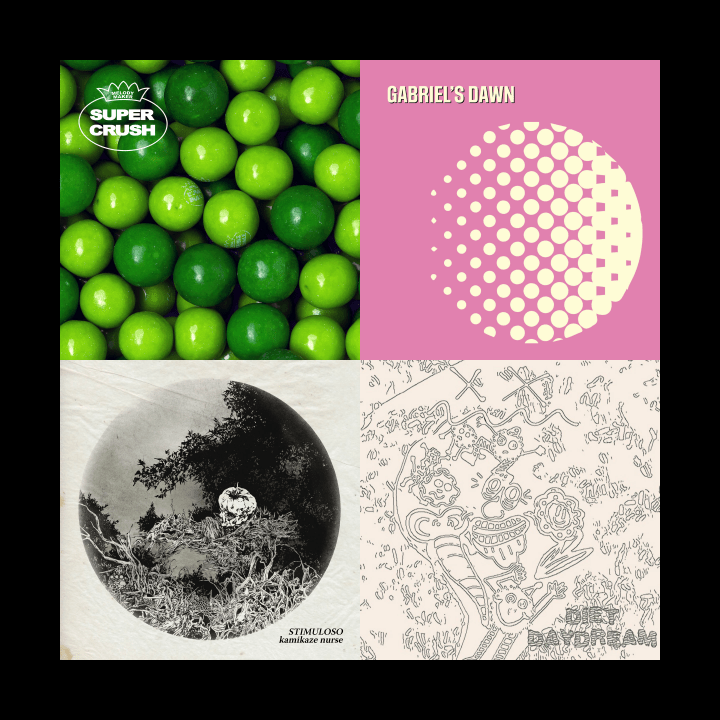


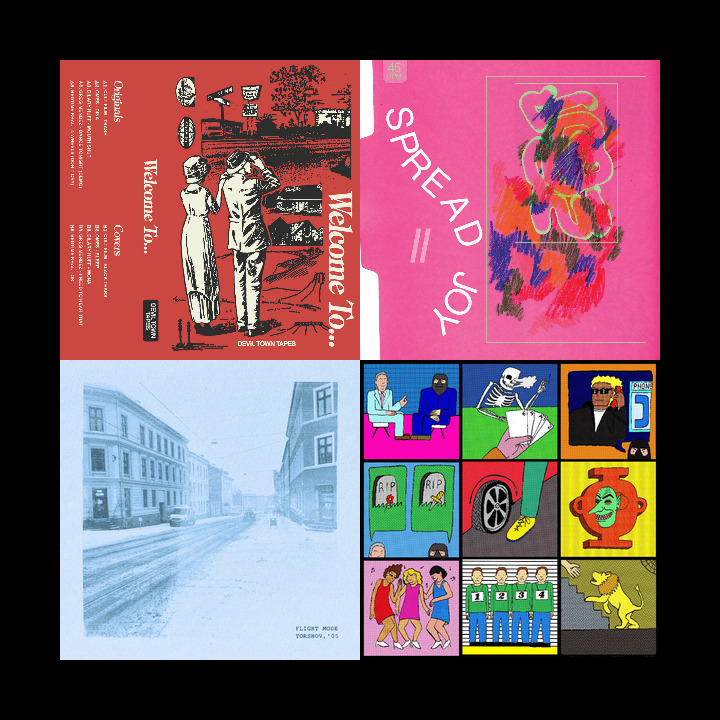

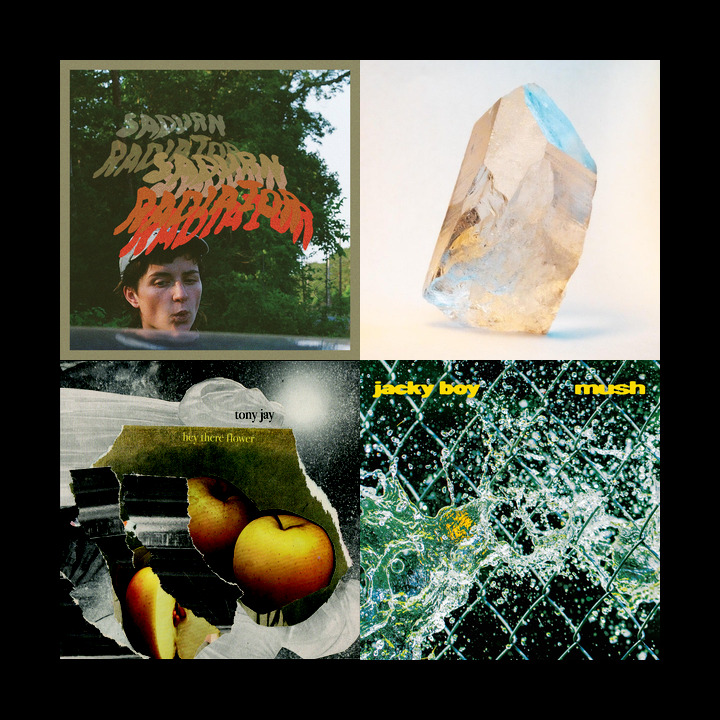
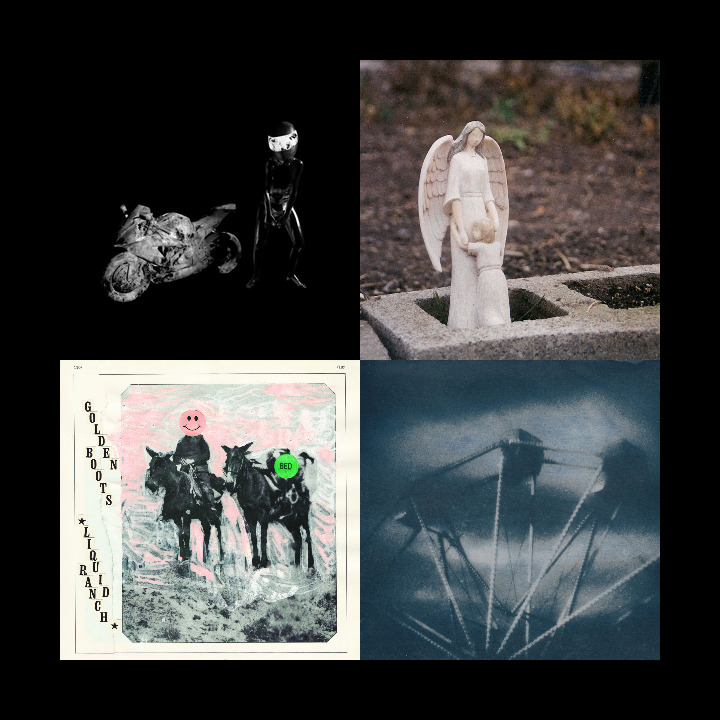

 Rosy Overdrive