It’s the first Pressing Concerns of August, and it is a big one! Here, we look at new albums from Cheekface, Kal Marks, and Hellrazor, and a new EP from Tomato Flower. For the first time in what feels like forever, all four selections came out/will come out this very week (and there are a couple other albums from this week that I didn’t get to but plan to cover in the near future).
If you’re still looking for more new music, you can browse previous editions of Pressing Concerns or visit the site directory.
Cheekface – Too Much to Ask
Release date: August 2nd Record label: Self-released Genre: Garage rock, post-punk, Cheekface Formats: Vinyl, digital Pull track: When Life Hands You Problems
Another year, another quality Cheekface album. January 2021’s Emphatically No. was probably the first great record of last year, and the surprise-released Too Much to Ask ensures that the Los Angeles trio won’t be left out of the 2022 discussion either. Like Emphatically No. before it, the band’s third album is partially made up of singles that steadily appeared over the past year and a half: “We Need a Bigger Dumpster” showed up in a post here last April, and “Next to Me (Yo Guy Version)” and “Featured Singer” have been out since 2021 as well. If Too Much to Ask was just a compilation of songs at that level it would still be worth discussing, but it also hangs together quite well as a whole album.
To be sure, the cohesion of Too Much to Ask has to do with the vintage Cheekface sound and feel—Greg Katz’s monotone vocals and flung-at-a-cultural-dartboard lyrics pared with pop-friendly instrumentals that are nonetheless somewhat hard to pin down musically. But it also has to do with the record’s willingness to stretch their sound. Even as Too Much to Ask opens with three pure Cheekface anthems, “When Life Hands You Problems” speeds everything up to a surprising and rewarding degree. And that’s only the start of it: “I Feel So Weird!” veers hard immediately after the opening trio, featuring Katz straining his vocals in a way that’s completely opposite of a typical Cheekface tune (fear not, the verses still deliver excellent lines like “It’s the ten year anniversary of everything from ten years ago / Think about it, just think about it”).
Meanwhile, the jaunty “You Always Want to Bomb the Middle East”, the groovy “Friends” (shout-out to the rhythm section of bassist Amanda Tannen and drummer Mark Echo Edwards for that one), and the roundabout sincerity of “Next to Me (Yo Guy Version)” all feature some unabashed guitar heroics, and “Featured Singer” completes the most daring idea on the record (Cheekface explicitly as dance music) in a completely appropriate way. There’s no song on Too Much to Ask that feels out of place on the record, and none of the moves within the songs feel like wrong turns either. So, come on: let yourself feel Cheekface’s energy. (Bandcamp link)
Kal Marks – My Name Is Hell
Release date: August 5th Record label: Exploding in Sound Genre: Noise rock, punk rock Formats: Vinyl, digital Pull track: Everybody Hertz
My Name Is Hell is the fifth record by Boston’s Kal Marks, but it’s the first one featuring the band’s new four-piece lineup, comprised of founding guitarist/vocalist/lyricist Carl Shane and entirely new members otherwise. While the band’s new players (guitarist Christina Puerto of Bethlehem Steel, bassist John Russell, and drummer Dylan Teggart) haven’t taken Kal Marks in a radically different direction, the expansion to a quartet from a trio ironically seems to have cleaned the band up a little bit. Shane’s vocals are cleaner, and the four of them all seem game to put to tape what ends up being a straightforward meaty rock record.
Like any good noise rock album, My Name Is Hell leans quite a bit on its rhythm section—songs like “Shit Town” and “Who Waits” come alive because of notable low ends and pummeling percussion. However, Kal Marks make it clear that they can use their other tools in key moments in My Name Is Hell as well— opening track “My Life Is a Freak Show” introduces a theatrical lead vocal from Shane that steals the proverbial freak show, and his howls in the title track compete with a dueling lead guitar for the starring role of the song. In the mid-section of the record, songs like “New Neighbor” and “Ovation” prove that “atmospheric” tracks can still be quite noisy and rocky.
Of the two biggest departures for the band, “Everybody Hertz” is the more familiar one sonically—it’s basically just a friendlier version of the loud rock that typifies Kal Marks—but despite its titular wordplay, the sincerity buried underneath is surprising in its bluntness. The other outlier is closing track “Bored Again”, a mid-tempo slow-builder that features Shane vowing that “We’ll find a way” towards its end. Kal Marks did find a way to go on, and My Name Is Hell makes it clear that it was the right call. (Bandcamp link)
Hellrazor – Heaven’s Gate
Release date: August 2nd Record label: Self-released Genre: Fuzz rock, grunge, punk rock Formats: Digital Pull track: Globbed
New Haven’s Hellrazor is led by Michael Falcone (currently of Speedy Ortiz, formerly of Ovlov), and the version of the band one hears on Heaven’s Gate also features bassist/vocalist Kate Meizner (of The Glow) and drummer Michael Henss (who has since left the band “under friendly circumstances” to focus on his solo material). Heaven’s Gate is Hellrazor’s first record in six years (following their 2016 debut Satan Smile), and the band describes it as a “best of” album culled from everything Falcone and company had been working on in the gap between releases. Heaven’s Gate is indebted to classic alternative rock (you know, the underground version of it), but, as the album’s nine songs helpfully demonstrate, there’s a wide range of music within this field for Hellrazor to explore.
The record opens with two incredibly hooky loud-pop tunes that are dead ringers for Bleach-era Nirvana (“Big Buzz” is the more consistently Cobain-esque, but the chorus to “Globbed” is the clearest single moment). From there, Hellrazor serve up acid-fried, Butthole Surfers-esque punk (“Demon Hellride”), Soundgarden-evoking downtuned riff rock (“Lanscaper”), and 1995 Modern Rock Radio-ready catchy singles (“Jello Stars”). Heaven’s Gate comes off noisier and more sonically busy than fellow Dinosaur Jr./Nirvana revivalists like Late Bloomer and Gnawing, but it’s not any more of a straight shoegaze record than, say, You’re Living All Over Me is. Heaven’s Gate is on the shorter side (it’s 26 minutes and change, and that’s counting closing track “All the Candy in the World”, a Henss creation that is…decidedly an outlier), but both in hooks and breadth, it covers plenty of ground. (Bandcamp link)
Tomato Flower – Construction
Release date: August 5th Record label: Ramp Local Genre: Psychedelic pop, space pop Formats: Cassette, CD (with Gold Arc), digital Pull track: Aparecida
Only a few months after their debut release (February’s Gold Arc EP), Baltimore’s Tomato Flower are already back with a second six-song record in Construction. Not so much a sequel to Gold Arc as a companion piece, the two EPs were recorded simultaneously, but the staggered release makes sense, as they feel like two separate statements. Construction is not an entire world away from the colorful psychedelic pop of Gold Arc, but it feels a bit darker and, somewhat appropriately, more visibly displaying its base elements than the previous record’s more frequent sensory overload.
The spacey, lounge-y pop of Gold Arc is still there—“Aparecida”, for one, might be the strongest version of it that Tomato Flower have put together yet, and the harmonies of closing track “Taking My Time” also evoke the previous EP’s best moments—but Construction opens with the curveball of “Bug”, which stops and starts for three minutes hypnotically, and also offers up the languid, stretched-out “Blue”. The EP’s title track is perhaps the best synthesis of Tomato Flower’s multiple sides—it contains moments of kaleidoscopic, kitchen-sink-instrumentation indie pop, but (in a reflection of Construction as a whole), this is merely one section of a larger, multi-part structure. (Bandcamp link)
New music? Yes! This week’s Pressing Concerns looks at new albums from Gordon M. Phillips, Nina Nastasia, and Ben Woods, and a new EP from New You.
If you’re still looking for more new music, you can browse previous editions of Pressing Concerns or visit the site directory.
Gordon M. Phillips – Seasonal
Release date: July 22nd Record label: Self-released Genre: Folk rock, singer-songwriter Formats: Digital Pull track: Tarmac
Gordon M. Phillips is probably best-known as the lead singer of Richmond’s Downhaul, whose PROOF was one of my favorite records of last year (or maybe you know him as a very good music writer in his own right). It is, perhaps, not a huge surprise that Phillips does not attempt to recreate the baritone-guitar-led, cinematic emo sound of PROOF on Seasonal, the first full-length released under his own name. However, Phillips’ solo debut album also doesn’t quite sound like the material he’s released under his own name thus far—the relatively slick country-ish songs of the You Are With Me EP he made with Maxwell Stern, and the one-off single “The Hotel”. Seasonal was recorded entirely by Phillips on a Tascam 4-track, and it’s subsequently a sparse-sounding album.
The pared-down sound doesn’t mean Seasonal is all quietness, however—it’s recognizably Phillips-sounding, which means I can hear echoes of Downhaul and his other solo material in these songs. Opening track “Tarmac” and mid-record highlight “The Fall” both strain against their acoustic foundations, recalling some of the big choruses of Phillips’ past (the titular strip of the former joins the train stop of “Brushstrokes” and the docks of “Dried” as transportation-based fertile songwriting locations for Phillips). The twangy “April” could’ve been adapted to fit into Phillips’ more country endeavors, and the moody “At, At” feels like something from PROOF stripped to its barest elements.
Even the songs on Seasonal that sound the most like the product of a home-recording session all take different paths on this journey. For one, there’s the drum-machine and sample-aided “On Purpose”, which would feel completely out of place if it wasn’t for the familiarity of Phillips’ vocals throughout, and then immediately after it, the minimalist acoustic guitar that marks “I.N.T.L.” is necessary to quietly and unobtrusively give the heartbreaking story at the center of the song some space. “I.N.T.L.” looks down a bleak abyss and ends with Phillips quietly resolving “What I know is this: I need to live”, something that gets echoed in “Somebody”, another Seasonal song that’s well-served by the spareness of the record. Over just a casually-strummed guitar and ample background noise, Phillips cycles through a litany of experiences, distractions, and circumstances before shrugging and saying “Somebody’s gotta do it, I guess”. (Bandcamp link)
New You – Candy
Release date: June 24th Record label: Lonely Ghost Genre: Power pop, fuzz rock Formats: Digital Pull track: Listerine
I first heard of New You last year through their one-off single “Suffer”, a Smashing Pumpkins-indebted piece of hooky alt-rock that put them somewhere between the one-man power fuzz of Dazy and the more melodic side of New Morality Zine’s roster. Last month’s Candy EP is the Seattle group’s most substantial release yet, and as its name implies, it veers hard into a muscular power pop sound, evoking “Super-” bands like -Crush and –Drag (who they’ve covered before). The fuller sound is no accident—after beginning as guitarist/vocalist Blake Turner’s solo project in Massachusetts, his move back to the Pacific Northwest has resulted in the band growing to a four-piece, and Candy sounds like it.
Opening track “Listerine” is a monster of a loud pop song, with Turner’s melodic vocals steadying the exuberant instrumental, and when he matches it in the chorus (with “They’re playing our song on the radio,” aided by some excellent backing vocals), it’s just the right amount of familiarity. The EP’s other bookend is “Fairweather”, which finds New You rising and falling to meet the song—the first minute is just Turner’s voice accompanied by some choppy power chords, before it soars in its second half. Although those two tracks are the biggest personal standouts, the middle of Candy doesn’t really fall under the realm of “album tracks”—hooky lead guitar parts, big choruses, and Turner shining over blaring fuzzy rock abound throughout. (Bandcamp link)
Nina Nastasia – Riderless Horse
Release date: July 22nd Record label: Temporary Residence Ltd. Genre: Folk Formats: Vinyl, CD, digital Pull track: This Is Love
Nina Nastasia’s sparse folk music has always existed in the realm of noise rock, metal, and just generally “heavier” genres—she regularly records with Steve Albini, has released records on Touch & Go, and toured with Mogwai this year. This heaviness associated with her music feels especially relevant with the release of her seventh record, Riderless Horse. Both the dozen-year gap that separates it from her most recent album and the actual contents of Riderless Horse are linked inextricably to Kennan Gudjonsson, her longtime romantic and musical partner who died by suicide in 2020 and with whom she had a difficult relationship until his death.
Riderless Horse sounds like a Nina Nastasia record in that it’s marked only by Nastasia’s voice and acoustic guitar, presenting these songs as simply as possible. With nowhere to hide, the record dives into the relationship at its core from the beginning—the understated “Just Stay in Bed” frets around the corners and gives into the unblinking account of “You Were So Mad”. The bleak “This Is Love” is perhaps the most ear-catching example on Riderless Horse (“I guess I’ll just stay in hell with you if this is love”), but Nastasia examines everything up to the last track with lyrics, “Afterwards”, which acknowledges the loss of Gudjonsson before closing with Nastasia’s assessment of herself: “I want to live / I am ready to live”. (Bandcamp link)
Ben Woods – Dispeller
Release date: July 15th Record label: Shrimper/Melted Ice Cream/Meritorio Genre: Experimental rock, slowcore, chamber pop Formats: Vinyl, CD, digital Pull track: Trace Reel
Christchurch’s Ben Woods has played in notable New Zealand bands Wurld Series and Salad Boys, but since the theme of today’s post seems to be “solo artists making different music than they’ve made with bands”, Dispeller is pretty far removed from either of those groups’ jangly guitar pop. The wide sonic palette of the record—one that frequently hovers away from traditional guitar-based music—makes it seem like an odd surface fit for lo-fi indie rock haven Shrimper Records, but a close listen reveals Dispeller mixes pop music and experimental fare in equal measure, much like Shrimper’s flagship band, Refrigerator.
Take “Trace Reel”, which floats a ringing piano part around in the first half of the song, and then congeals around it for a rousing finish. Elsewhere, “The Strip” is a sleepy dream pop ballad evoking Mellon Collie and the Infinite Sadness of all things, and “Punishing Type” builds something warm and welcoming out of intrusive noises and a molasses tempo. The shuffling “White Leather Again” closes out the record in slow-moving pop mode as well, an appropriate ending for an album that has a lot to appreciate, but only if one is willing to meet it at its own, unhurried pace. (Bandcamp link)
This week’s Pressing Concerns is comprised of new(-ish) records from Perennial, Hello Whirled, Frances Chang, and Anne Malin.
If you’re still looking for more new music, you can browse previous editions of Pressing Concerns or visit the site directory.
Perennial – In the Midnight Hour
Release date: February 1st Record label: Self-released Genre: Post-hardcore, dance punk, garage rock Formats: Vinyl, CD, cassette, digital Pull track: Perennial in a Haunted House
In the Midnight Hour has been out a while (since February), but it’s new to me and this is my blog and I do what I want, so we’re talking about Perennial today. The New England band’s second album feels like a completely inhibition-less rock record, where thrashing post-hardcore, expanded-palette art punk, and catchy garage rock all combine to make something unforgettably attention-grabbing. Vocalists Chelsey Hahn and Chad Jewett trade off their taunts and howls on pretty much every song on In the Midnight Hour, Jewett’s guitar and Wil Mulhern’s drums slice and punch through each track, and the entire record sounds great, thanks in part to production from Chris Teti of The World Is a Beautiful Place & I Am No Longer Afraid to Die.
In the Midnight Hour immediately barrels through the opening duo of “The Skeleton Dance” and the title track, both of which come off as demented, demonically-possessed surf rock tunes that are carried by Mulhern’s pounding percussion. Although the dance-punk of third track “Soliloquy for Neil Perry” is slightly tamer by comparison, respites in In the Midnight Hour mostly have to be found within individual tracks, like when “Food for Hornets” and “Melody for a New Cornet” just kind of fade away after letting off steam. Other than “Hey Eurydice”, every song on the record finds the band “on”, with both of the album’s singles (“Tooth Plus Claw” and “Perennial in a Haunted House”) showing up on a side two that loses no steam whatsoever. (Bandcamp link)
Hello Whirled – Hoping for a Little More…Pizzazz
Release date: July 22nd Record label: Repeating Cloud Genre: Lo-fi indie rock Formats: Cassette, digital Pull track: Holding Back the Water
The CliffsNotes version of 90s indie rock is that it was populated with chronic irony peddlers, led by bands who simply could not communicate anything remotely sincere without obscuring and meta-writing. Hello Whirled’s Ben Spizuco does not strike me as someone who takes his cues from CliffsNotes. There’s the work ethic, for one—if you read Rosy Overdrive regularly, you’re familiar with the prolificoutputofHello Whirled (whose records are always written and performed almost entirely by Spizuco). For another, Spizuco’s music is aggressively, confrontationally sincere, digging down to the bedrock of lo-fi music—dudes expressing their emotions in the only way they know how (Lou Barlow is the patron saint of this, but far from the only one).
Hello Whirled’s long-awaited first full-length record of 2022 continues this trend from the get-go with “When Can I Admit I Miss You”, whose refrain begins with “I wanna cry in the shower / But then I’d have to learn how to,” only to be upstaged two lines later with “I wanna die in the sense / That everyone forgets who I am and leaves me alone”. Hoping for a Little More…Pizzazz then jumps to “Holding Back to the Water”, reminding the listener of Spizuco’s pop songwriting, the other main Hello Whirled hallmark. Hoping for a Little More…Pizzazz feels a little more sonically heavy than the 2021 Hello Whirled albums—not that those records didn’t have loud moments, but perhaps the longer gestation time allowed Spizuco to really punch up songs like “Ruins”, “Nothing Changes”, and the droning album closer “A Cathedral Repeatedly Falling Apart”. Still, the pop Spizuco comes through on single “Cheerleader” and “20 Minute Saxophone Solo”, among other songs, giving Hoping for a Little More…Pizzazz a rounded-out feeling. (Bandcamp link)
Frances Chang – Support Your Local Nihilist
Release date: July 22nd Record label: Destiny Is a Dog Genre: Experimental indie rock, slowcore Formats: Cassette, digital Pull track: Support Your Local Nihilist
Brooklyn’s Frances Chang has been in several bands and released music under various project names, but Support Your Local Nihilist is the first record she’s released under her own. Chang has made music that falls under the banners of ambient, musique concrète, and electronica, but Support Your Local Nihilist is clearly an indie rock record, if a decidedly asymmetrical one. The song’s nine tracks do not end up where they start, instead forming mazes of guitars, synths, and percussion that are held together by Chang’s centered vocals. Album opener “P Much Deranged” and the record’s title track both start off as guitar pieces—the former slips into a minimal presentation of Chang’s voice and guitar while “Support Your Local Nihilist” jumps into alt-rock—but both deconstruct themselves in the second half into synth-based soundscapes.
The quieter songs on Support Your Local Nihilist don’t have as far to travel—the acoustic-based “Escapism” carefully steps forward, although the reverb-y slowcore of “Flower Childs” starts vibrating towards its end. “Headless” is perhaps the most “normal” song on Support Your Local Nihilist—there are moments of noise, but these are around the edges of a weary, mid-tempo indie rocker. Closing track “Solo Tripping in the Deathverse” floats along, Chang draping a melody over synth washes and bursts of drumming. Support Your Local Nihilist drifts to an impressive degree, but there remains plenty to hold onto on the record. (Bandcamp link)
Anne Malin – Summer Angel
Release date: June 17th Record label: Dear Life Genre: Folk rock, freak folk, alt-country Formats: Vinyl, CD, digital Pull track: Pink Blur
Anne Malin is a Nashville-based poet and singer-songwriter, and her latest album Summer Angel is a folk- and country-indebted record that centers Malin ably. Malin and her band (featuring, among others, Trevor Nikrant of Styrofoam Winos on drums, organ, synthesizer, and vibraphone) color the songs of Summer Angel but leave plenty of empty space in a way reminiscent of the work of Nina Nastasia or Jason Molina. It’s an electric album, but a restrained one—the foot-tapping, cyclical guitar riff that opens first track “Pink Blur” sets the stage nicely for a set of sparse ballads and steady-footed mid-tempo folk rock.
Malin isn’t constrained by the traditionalism of the genres in which she’s operating—the saxophone in songs like “Mary (Dear God Please Help Me)” and “Burdens” feels as natural as the “normal” instrumentation, and mid-record highlight “Roses” imagines a middle ground between the country rock of Rosali’s No Medium and the hushed psychedelia of Spencer Krug’s recent solo material. Elsewhere, the organ-led “Destroyer” is Anne Malin’s run at star-driven, unstuck-from-time pop music—like the rest of Summer Angel, it takes familiar ingredients on a leisurely path to a memorable final product. (Bandcamp link)
Pressing Concerns is back after a brief hiatus. Today, we hit on new records from Vintage Crop, Flowertown, Options, and Fiver.
If you’re still looking for more new music, you can browse previous editions of Pressing Concerns or visit the site directory.
Vintage Crop – Kibitzer
Release date: June 24th Record label: Anti Fade/Upset the Rhythm/Weather Vane Genre: Post-punk, garage rock Formats: Vinyl, digital Pull track: Drafted
Geelong, Australia’s Vintage Crop have been tearing through their mix of ripping garage rock and talky post-punk since 2017, with vocalist Jack Cherry frenetically but smartly caricaturizing mundanity and corporate nonsense in releases like 2019’s Company Man EP and 2020’s Serve to Serve Again (one of Rosy Overdrive’s favorite records of that year). Their third full-length, June’s Kibitzer, delivers on both fronts, with the band barreling through hooky but muscular pieces of egg punk over top of confident-as-ever Cherry observations.
“It’s me, I’m the Duke / It’s me, it’s not a joke,” Cherry crowns himself in “The Duke”, which adds keyboard accents to push the song into synthpunk territory, even as it forms part of an opening garage rock salvo along with the show business-mining “Casting Calls” and the stomping “Double Slants”. Elsewhere on Kibitzer, Vintage Crop get their Naked Raygun on with the military-minded “Drafted” and “The Bloody War”—the former features insistent bass and scribbled guitar for instant gratification, the latter giving Cherry’s close-to-spoken vocals space to reverberate. Kibitzer works as well as it does because of how well-oiled the band sounds on these songs—particularly on rhythm-forward constructions like “Under Offer” and “Hold the Line”, kibitzing never sounded so good. (Bandcamp link)
Flowertown – Half Yesterday
Release date: July 8th Record label: Mt. St. Mtn./Paisley Shirt Genre: Jangle pop, dream pop, slowcore Formats: Vinyl, cassette, digital Pull track: The Intersection
Flowertown are a dreamy and leisurely San Francisco duo made up of Karina Gill (of Cindy) and Michael Ramos (of Tony Jay, whose Hey There Flower just got reissued by Mt. St. Mtn. as well). Although Gill and Ramos have only been making music together since 2020, Half Yesterday is their fourth record together, following two EPs (later compiled together) in their first year as a band and 2021’s Time Trials. Time Trials already landed squarely on the quiet and slow end of guitar pop, and with Half Yesterday, Flowertown sound even more determined to let these songs take their time.
Opening track “Buttercream” has a bit of a propulsive drumbeat, even as the warm guitar reverb and Ramos’ whispered vocals are the most prominent aspects of the song, while the title track casually adds a lilting organ tone into the mix. Elsewhere on Half Yesterday, the duo approach the starkness of Tony Jay by offering up little more than electric guitar and vocal trade-offs, like in “The Evergiven” and the pin-drop closing track “Gaper’s Delay”. Like a lot of the best slowcore, Half Yesterday’s appeal isn’t so much in the technical playing (the best song, “The Intersection”, features simple chord changes and a very basic drumbeat), but in how Flowertown present and put together their building blocks. (Bandcamp link)
Options – Swimming Feeling
Release date: July 1st Record label: Self-released Genre: Slowcore, emo-indie-rock Formats: Cassette, digital Pull track: Toast
In addition to being one of the more accomplished recording engineers in recent memory and the new drummer for Mister Goblin, Chicago’s Seth Engel is fairly prolific on his own as Options. Swimming Feeling is at least his eighth record under the name, and it’s a strong entry into an already-impressive body of work. On the whole, I would put Swimming Feeling closer to the chilly, serious indie rock of 2020’s twin Options releases of Wind’s Gonna Blow and Window’s Open and further from the playful bedroom pop of 2021’s On the Draw, but there’s elements of that one here too, as well as songs that don’t fit neatly into either of those two camps.
Swimming Feeling’s opening track, “Toast”, has an alt-rock punchiness to it, chopping through a solid melody from Engel. Not long after, “The Bend” starts in what has become a familiar way for Engel—a downbeat power chord stomp. The middle of the record finds Options rocking in a 90s indie rock way not unlike Mister Goblin’s invigorated sound on earlier-this-year’s Bunny, with the stretch from “Take Time” to “Take It Tough” sounding particularly electric. Like most Options records, Swimming Feeling is a subtle album, but the distinguishing touches—like, say, the double-tracked vocals and two seconds of AutoTune in “Breaker”—reveal themselves. (Bandcamp link)
Fiver – Soundtrack to a More Radiant Sphere: The Joe Wallace Mixtape
Release date: July 8th Record label: You’ve Changed Genre: Folk Formats: Cassette, digital Pull track: Rosemary & Rue
Joe Wallace was a Cold War-era “Communist poet, activist, and Canadian political prisoner”, as well as the subject of A More Radiant Sphere, a documentary film by Sara Wylie. Simone Schimdt, who makes versitile folk-based music as Fiver, is an inspired choice to soundtrack Wallace’s life story. The first five songs on Soundtrack to a More Radiant Sphere are comprised of Wallace’s poems set to music by Schmidt, and they are given as much care and dressing as Fiver’s wholly original songs. While “Song of the Mournful Millionaire” gets more or less a straight protest folk reading, Schmidt isn’t content to just adapt Wallace’s poems in this fashion.
“Sacco & Vanzetti” and “Rosemary & Rue”, for instance, prominently feature violin courtesy of John Showman, and opening track “Your Arm Is Strong Enough” is marked by leisurely piano playing from Nick Dourado. The full range of Schmidt and her collaborators is even more apparent in the instrumental second half of Soundtrack to a More Radiant Sphere, which hops from Nathan Doucet’s percussion-led “Cargo of Hollywood Stars”, to the ambient “If It Does Spread” to the full-sounding “Wallace Goes to Russia”. Even without words, Fiver find ways to communicate in these songs as well, such as the music callback to “Song of the Mournful Millionaire” in the piano of “Stuff My Vaults”. (Bandcamp link)
Welcome to the June 2022 Rosy Overdrive playlist! There are many good songs from the past month on here, as well as some songs not from 2022 that are still good and worth your time. You’ll see!
ME REX, Motherhood, and Wire get two songs on this playlist. Guided by Voices get three (I’m back on my bullshit).
Here is where you can listen to the playlist on various streaming services: Spotify, Tidal, BNDCMPR. Be sure to check out previous playlist posts if you’ve enjoyed this one.
“Ants”, Long Neck From Soft Animal (2022, Plastic Miracles/Specialist Subject)
The appropriately-titled Soft Animal is the fourth Long Neck album, and it finds Lily Mastrodimos backing away from the rockier elements of 2018’s Will This Do? and 2020’s World’s Strongest Dog (which was one of my favorite albums of that year) to lean on acoustic and folkier material. This side of Long Neck has always been there, and songs like “Ants” prove that Mastrodimos is no less effective with it. Mastrodimos harmonizes and duets with herself as her acoustic guitar (the only other accompaniment on the song) soundtracks the ticking away of months and seasons.
“The Perfect Crime”, Dazy From MAXIMUMBLASTSUPERLOUD: The First 24 Songs (2021, Convulse)
Zipping back to 2021 for a moment, I can still confirm that Dazy’s MAXIMUMBLASTSUPERLOUD is as fresh and exhilarating as I (and surely the rest of you) remember it. The twenty-four-song compilation (one of my favorites of last year) begins with “The Perfect Crime”, which is the “perfect” introduction to James Goodson’s incredibly captivating mix of mid 90s pop-punk/power pop fascination with late 80s/early 90s drum-machine-aided dance-friendly noise pop (whew!). I’ve talked about several songs from MAXIMUMBLASTSUPERLOUD on here before; the fact that I am only now just getting to this one is a testament to the comp’s overall quality.
“Lizard on the Red Brick Wall”, Guided by Voices From Tremblers and Goggles by Rank (2022, GBV, Inc.)
Tremblers and Goggles by Rank is the fourteenth Guided by Voices album since Robert Pollard re-revived the name in 2016, and it’s the third in a row to point in the direction of more focused, longer, and denser songs. Tremblers only has ten tracks (a GBV first), meaning several of them stretch into levels rarely seen on their records. Album opener “Lizard on the Red Brick Wall” is a “mere” four and a half minutes—it’s meaty, it’s explosive, it’s incredibly catchy, it’s an instant classic.
“Crawly I” and “Crawly II”, Motherhood From Winded (2022, Forward Music Group)
Winded, the latest record from New Brunswick’s Motherhood, roars out of the gate with the opening duo of “Crawly I” and “Crawly II”. Both “Crawly”s are revved-up post-punk garage numbers, although they accomplish their wild energy in different ways—the formers speeds along at a breakneck pace, while the latter stomps around intensely. Guitarist/vocalist Brydon Crain adopts a nervous reporter tone in the first “Crawly”, and a deranged bark in the latter. Read more about Winded here.
“Pledge Drive”, Cheekface (2022)
The latest Cheekface song is pretty much everything one could want in a Cheekface song—the band cites Television as an inspiration for “Pledge Drive”, and I can hear it, but mostly it just sounds like Cheekface and only Cheekface, which is a good thing. The title line (“I called the pledge drive / I got the suicide hotline”) is merely one of several lines delivered by Greg Katz that could have only been delivered by him, and the surprise acoustic guitar in the pre-chorus sounds very cool.
“Toilet of Venus”, ME REX From Plesiosaur (2022, Big Scary Monsters)
I like ME REX—I thought their Megabear LP from last year was a successful experiment of a release, and I usually find something to enjoy on the band’s constant output of EPs. Their latest one, the four-song (as always) Plesiosaur, is I think the strongest of them yet, and “Toilet of Venus” is the band’s greatest song thus far. Myles McCabe’s vocals are passionate and frantic, rushing to get out everything he wants to say in classic ME REX fashion, but the rest of the band basically explode alongside him in what feels like a big step forward of a moment.
“Con Art”, Smart Went Crazy From Con Art (1997, Dischord)
I’m sure several of you know about the recent health problems of Chad Clark (currently of Beauty Pill, formerly of Smart Went Crazy), and Rosy Overdrive certainly wishes him well and hopes with him that the most harrowing moments are now in the past. I’d be revisiting Con Art even if Clark wasn’t in my thoughts recently—I do this from time to time, because it rules. The record’s title track isn’t primarily sung by Clark—rather, it’s a spotlight moment for cellist Hilary Soldati, who jumps between stoicism and a slight grin to deliver the song’s blunt line after blunt line. Clark does get to echo Soldati toward the end of the song (the particularly creepy “If you’re such a….such a badass” part).
“Sirens and Thunder”, Kasey Anderson and the Honkies From Heart of a Dog (2011, Red River)
An older song I recently rediscovered for the first time in nearly a decade, “Sirens and Thunder” is country rock at its populist best. Kasey Anderson affects his best Steve Earle for the song’s roughly familiar vocals, the guitar parts (both the revved-up rhythmic parts and the absolutely explosive lead parts in between the verses) are just as memorable, and the absolute wrecking ball of a chorus puts the whole thing into classic territory. It doesn’t even need the kicker of the final few lines (“It ended with sirens and thunder, and nobody’s bed to crawl under / We were dogs howling back at each other and it was getting loud”) to do it.
“The New Booze”, This Is Lorelei From This Is Lorelei 1 (2022)
When This Is Lorelei’s Nate Amos released Falls Like Water Falls (one of my favorite albums of 2022 so far) in February, he alluded to his new sobriety in its creation. This Is Lorelei’s latest single, “The New Booze”, seems to be explicitly about this. From the cheery “pop off” double-meaning opening, Amos continually references cola (the titular new booze) as he wades through a nearly five-minute three-chord pop song about missing someone (in a rather ambiguous way) that somehow makes an Adam Levine/Avril Lavigne/Richard D. James-referencing chorus work.
“Summer to Fall”, Chronophage From Chronophage (2022, Post Present Medium)
The latest record from Austin’s Chronophage is an even-split mix of jangle pop and post-punk (really, one of the best genre combinations out there). Single “Summer to Fall” is, as its breezy title implies, one of the more openly poppy moments on Chronophage, with singer Sarah Beames’ grounded vocals anchoring a mostly simple but effective song foundation—there’s something that sounds like a buried roller-rink organ in the chorus, which works very well.
“Oh No Not So (Save the Bullet) [4th Demo]”, Wire From Not About to Die (Studio Demos 1977-1978) (2022, Pinkflag)
The least surprising revelation of the June playlist is that I’m quite into the formal release of Not About to Die (Studio Demos 1977-1978), a widely-bootlegged collection of early Wire recordings that serves as a wonderful companion to (and, perhaps, in its own way, equal of) the band’s first three records. The first half of Not About to Die in particular is Wire as a curious punk band, bashing out songs that would either mutate on later recordings or become forgotten. “Oh No Not So (Save the Bullet)” is a brief shot of poppy punk that could’ve been something big, but it works just fine in its “demo” form here as well.
“Mulholland Dr.”, Bartees Strange From Farm to Table (2022, 4AD)
Parts of Bartees Strange’s sophomore record, Farm to Table, are very good—and “Mulholland Dr.” by itself is enough to make the occasional bumpy rest of the album worth it to me. Unlike the face-slapping clear highlight from 2020’s (Rosy Overdrive-approved) Live Forever, “Boomer”, “Mulholland Dr.” represents a more subtle merging of Strange’s pop/R&B-influences with his beloved emo and stately National-inspired indie rock. The soaring chorus (“I don’t believe in the bullshit…”) is too slick for the DIY/underground world from which Strange emerged, but it makes sense and sounds completely in line with the best of Bartees’ brief but already memorable solo career.
“Middle of a Cloud”, Diners From Four Wheels and the Truth (2022, Lauren)
Four Wheels and the Truth is a gleeful-sounding pop rock record that is right up the alley of anyone who enjoys groups like Russel the Leaf and Cool Original, and the brief but sweet “Middle of a Cloud” couldn’t present the album’s charms any clearer. Blue Broderick’s lyrics and delivery are both subtle enough to mirror the track’s pop-song-power-chord progression—just try to get “Middle of a Cloud” out of your head.
“I Just Want to Touch You”, Utopia From Deface the Music (1980, Bearsville/Rhino)
So, Deface the Music is Todd Rundgren (under the banner of his band, Utopia) doing his best Beatles impression for an entire record’s length. Utopia do it all—psychedelia, orchestral, folk rock—but opening track “I Just Want to Touch You” is Rundgren and crew’s most obvious attempt to recreate the Beatles’ early-sixties crowd-pleasing pop rock. And it’s quite successful—Utopia (at this point a far cry away from their prog-rock roots) throws in handclaps, harmonicas, bouncy bass guitar, all to make “I Just Want to Touch You” land as strongly as possible.
“Mono Retriever”, Dummy From Mono Retriever (2022, Sub Pop)
The first new music from Dummy following their debut full-length record, last year’s Mandatory Enjoyment, consists of two songs for Sub Pop’s Singles Club. Both of the tracks on Mono Retriever are vintage-sounding Dummy; neither would have been out of place on Mandatory Enjoyment, but they both carve out identities of their own. B-Side “Pepsi Vacuum” is the headier one, the one that’s several sounds stitched together to form a single giant cloud overhead, while “Mono Retriever” is the short and punchy one. If you liked the more Stereolab-y moments on their last record, it hits the same marks as those, but it also feels even more revved-up than pretty much anything off of Mandatory Enjoyment.
“Thick and Thin”, Guided by Voices From Suitcase 4: Captain Kangaroo Won the War (2016, GBV Inc.)
Songs like “Thick and Thin” are why people like me care about Guided by Voices and Robert Pollard to the degree that I do. It’s why Pollard can release a fourth 100-song “Suitcase” compilation and still garner significant interest around it. Because “Thick and Thin” rules. It’s a perfect lost 60s pop-rock sounding nugget with the kind of “upbeat sad” Pollard vocal he did a lot in his early recordings. According to GBVDB, it was recorded in 1983—this song sat unused and unheard on some tape for over thirty years, which is nuts.
“Drafted”, Vintage Crop From Kibitzer (2022, Weather Vane/Anti Fade/Upset the Rhythm)
Australian post-punk/garage rock experts Vintage Crop have delivered another hit with their fourth record, Kibitzer, and second-half highlight “Drafted” is pretty much everything you’d want in a Vintage Crop song. The bass is frantic and busy pretty much entirely throughout, the guitar barrels through your typical four chords gleefully, and the talk-singing in the verses gives away to, uh, a different kind of talk-singing in the chorus that fits the song perfectly. I’ll have more to say about Kibitzer soon-ish.
“Mother’s Records”, Katie Bejsiuk From The Woman on the Moon (2022, Double Double Whammy)
Katie Bejsiuk has been operating on her own basically ever since she ended her curiously-named but very good Free Cake for Every Creature project in 2019, so I’d figured we’d get an album under her name for a while now. The Woman on the Moon picks up where the last Free Cake album, 2018’s underappreciated The Bluest Star, left off, with opening track “Mother’s Records” relying on Bejsiuk’s quietly passionate voice and minimally-accompanied acoustic guitar strums. The rest of The Woman on the Moon delves a little further into how a Katie Bejsiuk record differs from a Free Cake for Every Creature record, but here, it’s just good to hear her voice again.
“Soft”, Camp Trash From The Long Way, the Slow Way (2022, Count Your Lucky Stars)
I didn’t even talk about “Soft” when I wrote about The Long Way, the Slow Way for its release week; the debut record from Florida’s Camp Trash just had too many contenders of pop songs. Let’s not overlook it here, though: it’s a brilliant second-side shiner, jumping from section to section deftly: the tension-building intro, the well-oiled, percussion-first “main bit”, and the big-finish that lets the emo side of Camp Trash out for a bit. Read more about The Long Way, the Slow Way here.
“Alive Twice”, Friendship From Love the Stranger (2022, Merge)
The latest single from Philadelphia’s Friendship (the third from their upcoming Love the Stranger) is the first one that really harkens back to the band’s “ambient country” roots. In fact, it might even earn that descriptor more than 2017’s Fender Rhodes-and-drum machine-aided Shock Out of Season—lead vocalist Dan Wriggins sings accompanied by a simple synth part that comes and goes throughout the song, and virtually nothing else. It works.
“Jangle Manifesto”, Nana Grizol From South Somewhere Else (2020, Arrowhawk/Don Giovanni)
Going back a couple of years to 2020 and the most recent (very good) Nana Grizol record, the provocatively yet appropriately-titled “Jangle Manifesto” is up there with the title track for providing the heart of South Somewhere Else. “If there was something called ‘my country’ / It’s not a thing that I would save,” begins Theo Hilton after a typical Elephant Six horn intro, and then continues making quick work of rejecting several tenets of American culture that in a better world (not this one) would be rejected by all out of hand.
“Everybody’s Birthday”, Frank Meadows From Dead Weight (2022, Ruination)
I (and, presumably, several other Rosy Overdrive readers) know Frank Meadows as the co-head of the great Dear Life Records (MJ Lenderman, Wendy Eisenberg, Trevor Nikrant), but like theother Dear Life co-runners, Meadows makes his own music as well. Dead Weight is a compelling piano-led folk-country record that I only first heard two days ago as of writing this, but the album has already grown on me significantly. Opening track “Everybody’s Birthday” is an understated tune—or at least, it would be, if Meadows’ vocal performance (really nailing the “NYC via NC” part of his Bandcamp bio) didn’t spend the entire song subtly but evermore convincingly stealing the show.
“Leigh Can’t Leave”, DiskothiQ From Waterworld (1996, Shrimper)
Now, here’s one from the archives: DiskothiQ was a classic Inland Empire Shrimper Records band—never quite having even the limited cache that groups like Refrigerator and Nothing Painted Blue did, and is probably best remembered today as “the band Peter Hughes was in before he became the bassist for the Mountain Goats”. Still, they were quite good, and 1996’s Waterworld was the band’s greatest record. I could’ve chosen several songs from the album, but today I’m feeling the travelogue of “Leigh Can’t Leave”, which just kind of sounds like driving down the highway.
“Holding Back the Water”, Hello Whirled From Hoping for a Little More…Pizzazz (2022, Repeating Cloud)
Hoping for a Little More…Pizzazz will not be Hello Whirled’s firstrelease of 2022, but considering that it’s the project’s inaugural release with Repeating Cloud Records and will be released physically via cassette, it carries a certain weight (hence the self-deprecating title, perhaps). My favorite of the advance singles thus far has been “Holding Back the Water”, a blaring rocker featuring a high-energy chorus delivered by Ben Spizuco. I’ll have more to say about Hoping for a Little More…Pizzazz soon-ish.
“Mechanics”, The Bye Bye Blackbirds From August Lightning Complex (2022)
The Bye Bye Blackbirds is a true-believing guitar pop band led by singer/songwriter Bradley Skaught (and also featuring former Game Theory/Loud Family drummer Jozef Becker—true heads know the significance of this). By my count, August Lightning Complex is the band’s sixth album, and fans of song-first power/jangle pop in the vain of groups like The Crowd Scene could do a lot worse than to seek it out. Highlight “Mechanics” has an understated 70s power pop-ish verse groove before jumping up into a starry chorus.
“Can’t Hear the Phone”, Snow Ellet From Glory Days (2022, Wax Bodega)
“Can’t Hear the Phone” has been out for a while, but it was hearing it in the context of Snow Ellet’s recent Glory Days EP that really sold the song for me. The final track on the record, “Can’t Hear the Phone” is a two-point-five minute mix of several Snow Ellet hallmarks—the grounding drum machine, alt-rock guitar lines, just a hint of melodramatic synths, a big chorus, and lyrics that can go from zero to “thwack” in moments (“I mean, I wrote this song / I guess I write a lot,” they shrug at one point).
“Excuses”, Grass Jaw From Circles (2022, Habitforming)
“I asked you to compromise / You told me to go fuck myself,” begins “Excuses”, a highlight from Circles, the latest record from Grass Jaw. Like a lot of the record, Grass Jaw leader Brendan Kuntz sounds particularly worn-out and weary, even as Kuntz and his collaborators make the song sound full-bodied and spirited. Read more about Circles here.
“Kimberly”, Patti Smith From Horses (1975, Arista)
Part of me took perverse delight in Patti Smith being primarily “the woman from the Tom Scharpling elevator story” until this month, but I’m not one to deprive myself of good music to keep up weird quirks, and Horses, which I listened to for the first time a week or so ago, is indeed quite good. People a lot more eloquent than I have talked on length about that album, so I’ll try to keep this brief. I could’ve chosen several songs from the record for this playlist (indeed, it was almost “Free Money”), but “Kimberly” in particular plays to Smith’s strengths: the band locking into a pretty simple pop progression and letting Patti just do her thing (in this case, apparently she’s writing about her sister) over top of it.
“Jupiter Pluvius”, ME REX From Plesiosaur (2022, Big Scary Monsters)
A second highlight from Plesiosaur, which I can say by this point is pretty firmly my favorite ME REX EP thus far, single “Jupiter Pluvius” is another great example of the rest of the ME REX lineup providing the means for Myles McCabe to aggressively do his thing over tightly-constructed piano pop rock. “Jupiter Pluvius, flood me with all good shit,” pleads McCabe at the beginning of the track, and that line might be the least notable one in the opening paragraph (there’s also a bit about “catatonic monuments”, and of course “He’s one of the pantheon / He fucks like a champion”).
“Vanderbilt”, Hit From Vanderbilt/Great Conjunction (2022)
The impossibly-named Hit is led by Brooklyn’s Craig Heed, who also notably wrote an essay for Talkhouse about Brainiac around the time the group’s latest single was released. “Vanderbilt”/”Great Conjunction” is only the four-piece band’s second single, and yes, there’s a clear Brainiac influence in these two songs, but it’s not pastiche either. For one, Heed is no Tim Taylor, nor does he attempt to be –in “Vanderbilt”, his clear vocals are the calm at the center of the rest of the band’s storm, and the song also feels looser and more psychedelic than your typical Brainiac fare.
“I’m the One You Want”, Sob Stories From Fair Shakes (2022, Dandy Boy)
It’s a familiar story that hasn’t gotten old yet: Bay Area band led by a single singer-songwriter puts together a record of jangly power pop featuring several familiar faces—in this case, Joel Cusumano is the bandleader, and Rosy Overdrive readers will recognize drummer Phil Lantz (of Chime School) and Ray Seraphin (of R.E. Seraphin, who gets a co-songwriting credit). “I’m the One You Want” is not the only killer pop tune on Fair Shakes, but its classic college rock intro combined with almost Replacements-y power chord verses gives it a unique energy.
“I Can Hear It”, Editrix From Editrix II: Editrix Goes to Hell (2022, Exploding in Sound)
Editrix II: Editrix Goes to Hell (one of my favorite records of 2022 so far) feels more insular and more focused than last year’s Tell Me I’m Bad, although the band still captures the zany energy of their debut in songs like “I Can Hear It”. Guitarist Wendy Eisenberg, bassist Steve Cameron, and drummer Josh Daniel tumble through the first half of the song until pulling out of a tailspin into the triumphant, swinging alt-rock of “I Can Hear It”’s second half.
“Trying to Get Over”, The Dream Syndicate From Ultraviolet Battle Hymns and True Confessions (2022, Fire)
The unexpected but rewarding revival of The Dream Syndicate over the last half-decade or so has led the flagship Paisley Underground group to some pretty out-there locations, but their latest record, Ultraviolet Battle Hymns and True Confessions, falls firmly in line with the spirit of their original 1980s material. Perhaps the recent reissue of 1986’s Out of the Grey has the band back in a rollicking desert rock mood, but either way, the stomping “Trying to Get Over” charges its way into “classic Dream Syndicate song” status quite easily.
“Moving On”, Green/Blue From Paper Thin (2022, Feel It)
The modern post-punk stomp of “Moving On” doesn’t deviate from the main formula of Paper Thin, but it shines as a particular triumph of the record all the same. Jim Blaha and Annie Sparrows’ intertwined vocals are haunting, neither towering over nor being buried by the reverb and fuzz that gets expertly wielded across the music of “Moving On”. Read more about Paper Thin here.
“Baltimore Moon”, SAVAK From Human Error / Human Delight (2022, Peculiar Works)
“Baltimore Moon”, aside from merely being a highlight on Human Error / Human Delight, is also a key track in exemplifying SAVAK’s approach on their fifth record together. The song synthesizes the more straightforward and “artier” sides of SAVAK as well as any one song could. “Baltimore Moon” effectively has two back-to-back choruses—a bouncy, melodic power pop one and then a stomping post-punk one. Read more about Human Error / Human Delight here.
“Love Ain’t Polite [4th Demo]”, Wire From Not About to Die (Studio Demos 1977-1978) (2022, Pinkflag)
Another early, punk-Wire highlight from the first half of Not About to Die, the one-minute “Love Ain’t Polite” is as good and rewarding as any pop song by a 70s punk band. The Pink Flag-esque touchstones are there—the matter of fact chord changes, the animated bass, Colin Newman’s nervy yet confident vocals—and yet it’s a different path than their first proper LP entirely.
“Too Far Gone”, Young Guv From GUV IV (2022, Run for Cover)
“Too Far Gone” opens up GUV IV by announcing what the listener is in for, exactly: a mix of the straight-ahead power pop that marked the first three Young Guv records and a shimmery desert psychedelia. The song sports confident handclaps and a very catchy chorus, while Ben Cook’s vocals waver and stretch over the song’s hypnotic music. Read more about GUV IV here.
“Who Wants to Go Hunting?”, Guided by Voices From Trembles and Goggles by Rank (2022, GBV Inc.)
Another song that has been out for a while but I didn’t fully appreciate until I heard it in an album context, “Who Wants to Go Hunting?” ends Trembles and Goggles by Rank with a rarely-seen-by-Robert-Pollard-bands six minute iceberg. Although the song (originally released as a B-side to “Unproductive Funk” in May) contains proggy buildups and at least one instance of acoustic noodling, it doesn’t feel any more stitched-together or disjointed than your three-to-four minute modern Guided by Voices song: Pollard and the band just stretch out a bit more here.
“Hard Reset”, The Zells From Ant Farm (2022, Crafted Sounds)
“Hard Reset” comes at the end of Ant Farm, a frequently messy and earnest record of all the bombast 90s indie rock and punk-inspired music can provide. In context, “Hard Reset” is the “breather”, the quiet and meditative closer to the louder songs that came before it, but the song’s shrug-and-grin mid-tempo pop rock works just fine on its own. Bassist/singer Roman Benty gives a sneakily-powerful vocal performance over a straightforward instrumental—by the time the final “It was only just to show me she don’t owe me anything” comes around, the only appropriate response is “ah, yes, of course she don’t”.
This week’s Pressing Concerns looks at new albums from Camp Trash, Flamingo Rodeo, and Hurry Up, and a new EP from Careen. Good records!
If you’re still looking for more new music, you can browse previous editions of Pressing Concerns or visit the site directory.
Camp Trash – The Long Way, The Slow Way
Release date: July 1st Record label: Count Your Lucky Stars Genre: Power pop, emo, pop punk Formats: Vinyl, CD, digital Pull track: Weird Florida
Camp Trash and Rosy Overdrive are effectively the same age. The first person to ever contact the blog about submitting new music to it was Keith Latinen of Count Your Lucky Stars regarding the group’s debut EP, January 2021’s Downtiming. It feels like some kind of milestone to now be talking about the Florida four-piece band’s first full-length album, The Long Way, The Slow Way—one that would be basically ruined if the record wasn’t any good, but thankfully it echoes and expands on the promise that Downtiming showed. The sound that’s most recognizably Camp Trash is here—you know, the end-of-the-20th-century pop rock that pulls from both the 90s underground and 00s pop culture. Last year’s “Weird Florida” graces The Long Way, The Slow Way with its sugary harmonies—on the album, it’s part of a power pop opening trio that also includes the nervous earnestness of “Mind Yr Own” and “Pursuit”.
Not that the rest of The Long Way, The Slow Way isn’t full of emo/pop punk-tinged power pop, either—the second half of the record features the bouncy, economical, Oso Oso-evoking “Lake Erie Boys” and the 90s alt-rock loud guitar pop of “Let It Ride”. Camp Trash do take advantage of having a full dozen tracks to work with in order to explore a bit in the middle of the album, however: the fuzz-drone, LVL UP-ish “Another Harsh Toyotathon” is the one that immediately comes to mind, but there’s also a power ballad center of the record in “Poured Out” and “Enough Explaining”. The Long Way, The Slow Way is more of a “band” record than Downtiming, but like that EP, it’s still clear-sounding pop music. The vocals are front and center, and each song has at least one line that benefits from this positioning (from the insistence of “I’m not sad, I’m quiet sometimes” in “Enough Explaining” to “When I’m not making noise, I feel small” in “Church Bells”), and it’s stubbornly timeless-sounding for evoking such a specific era of guitar music. (Bandcamp link)
Flamingo Rodeo – Pontoon
Release date: June 30th Record label: Shuga Genre: Folk rock, alt-country Formats: Vinyl, digital Pull track: Mexico
Chicago’s Mikey Wells first became known to me as a guitarist for the now-defunct NE-HI, a band whose coiled-up garage rock energy still makes them stand out as under-appreciated and singular. Flamingo Rodeo has a little more in common with Wells’ post-NE-HI group, the chiller and lightly psychedelic Spun Out, but Pontoon occupies a different space than either of those bands. The project’s second record finds Wells fully embracing twang, hopping from tender folk rock to boisterous Midwestern alt-country over the course of ten tracks. Opening track “Tooth and Nail” is laid-back but driven, sliding through easygoing verses to get to a pumped-up chorus, establishing a country rock side to Flamingo Rodeo that shines throughout the record—namely, in the toe-tapping “Bacalar”, the woozy singalong “Sweet Serene”, and the rousing send-off of “Homily”.
The guitar effects, cosmic lyrics, and haphazardly-applied traditional elements of “Null Eternity” make it a great twisted country tune that harkens back to some of the more “out there” elements of Wells’ past bands. As attention-grabbing as that song is, though, there is notable growth in the sheer number of subtler moments scattered throughout Pontoon. The harmonica-aided “Sorrowflown” anchors the center of the record in thoughtful Americana, while plenty of the second half of the record drifts off like the boat in the record title—the spoken-word piano-led “El Nuevo”, the soundscape of the title track, and the pastoral folk of “Mexico”. Some of the information regarding Pontoon seems to imply that Mikey Wells will be focusing on other bands and projects rather than Flamingo Rodeo following its release; whether or not the country embrace of this record finds its way into Wells’ other music, Pontoon is a sturdy trip on its own. (Bandcamp link)
Hurry Up – Dismal Nitch
Release date: June 24th Record label: Comedy Minus One Genre: Punk rock Formats: Vinyl, digital Pull track: Days of Our Love
Hurry Up is a fierce Pacific Northwest punk rock trio made up of guitarist Westin Glass, drummer Kathy Foster (both formerly of The Thermals), and bassist Maggie Vail (Bangs). Dismal Nitch, the band’s sophomore record, is the first full-length by the band in seven years, and it appears to have been in the works for quite a while (“You Just Wait” showed up as a single back in 2018), but the record sounds anything but “over-labored”. The band play together deftly but not showily, ripping through thirteen tracks that evoke the spirit of West Coast garage punk—recalling everything from X to vintage Kill Rock Stars groups to Dead Moon (whose “Fire in the Western World” gets a scorching cover on Dismal Nitch).
The gleeful middle fingers of “No!” and “Oh Screw It” tear right into the more fun moments of 90s riot grrl, and tracks like opener “American Weirdos” and “Invasive Species” are just runaway trains of fuzzy pop songs. Dismal Nitch consistently sounds like a blast, which helps keep some of the heavier and less immediate moments from sticking out too much in the context of the album. The sharp-edged “Death Puberty” features dart-and-dash guitar playing and a dynamic vocal performance, while the blistering “You Just Wait” with its “you’ll get yours” message to an unnamed powerful individual (I wonder who it could be—there are so many possibilities) hits with a full-on assault. Dismal Nitch can be serious without being exhausting about it, and the three band members all make the most of their turns at frontperson without ever tipping the balance of an equal-on-all-sides trio. (Bandcamp link)
Careen – Careen Love Health
Release date: June 24th Record label: Self-released Genre: Post-hardcore, post-punk, noise rock Formats: Digital Pull track: Spit Choke
Bellingham, Washington’s Careen make an insular, noisy brand of post-hardcore and indie rock that evokes enigmatic 90s underground groups like Unwound and Polvo. The group—which recently expanded to a four-piece, adding drummer Neto Alvarado and guitarist Aiden Blau in addition to bassist Bryan Foster and guitarist/vocalist Desi Valdez—has released four EPs counting June’s Careen Love Health; although at 28 minutes, it’s a nearly full-length statement.
Half of Careen Love Health’s length is made up of its two bookend tracks—the six-minute opener “In the Light Of” and eight-minute closing track “Longest Piss” are both noise rock odysseys, veering from tense post-punk to feedback-and-hollering rave-ups on multiple occasions. Those two towering tracks are the immediate attention-grabbers, but the middle of Careen Love Health is where the group explore the edges of their sound a bit—particularly in the noise piece “Swallow”, but they also turn in the swirling instrumental “Slacker” and the slowcore/Slint-esque exercise in restraint that is “Unalloyed”. Not that bands like Careen are overly committed to “friendliness” in their music, but if you’re looking for a squall, Careen Love Health is a fairly rewarding one. (Bandcamp link)
If you’re still looking for more new music, you can browse previous editions of Pressing Concerns or visit the site directory.
Motherhood – Winded
Release date: June 24th Record label: Forward Music Group Genre: Post-punk, art punk Formats: Vinyl, CD, cassette, digital Pull track: Crawly I
An “avant-punk” trio hailing from the rather unlikely location of New Brunswick, Fredericton’s Motherhood have been marching to the beat of their own drum for nearly a decade now. Their latest record, Winded, has a barebones, almost live-in-studio feel, with the core of guitarist/vocalist Brydon Crain, bassist/vocalist Penelope Stevens, and drummer Adam Sipkema tearing through both garage rock rippers and weirder turns. Crain’s vocals have a really pleasing sung-spoken quality to them, especially in songs like single “Shepherd”, in which his delivery somehow sounds both lazy and rushed at the same time.
Winded roars out of the gate with the opening duo of “Crawly I” and “Crawly II”, both of which are revved-up post-punk garage numbers, although they accomplish this in different ways—the former speeds along at a breakneck pace, the latter stomps around intensely. Although Motherhood do rave up later on in Winded (see mid-record workout “Ripped Sheet”), the heart of the record is a more mid-tempo but still rather thumping version of prog-punk-pop. “Tabletop” is a hypnotic rhythm section workout, and the eerie “Handbrake” introduces the idea of a Motherhood ballad (explored further in “Shuttered Down”). The stop-start of closing track “Trees” slowly takes the shape of something akin to 60s pop-rock, a clear an example as any of Motherhood making something inviting out of unlikely beginnings. (Bandcamp link)
Young Guv – GUV IV
Release date: June 24th Record label: Run for Cover/Hand Drawn Dracula Genre: Power pop, jangle pop, psych pop Formats: Vinyl, digital Pull track: Too Far Gone
GUV IV is Young Guv’s second record of 2022, and it comes from the same origins as did March’s GUV III (one of my favorite records of the year so far). The impetus for both records began during an extended stay by Young Guv leader Ben Cook and his bandmates in the New Mexico desert in 2020, and they were both recorded in Los Angeles the next year. The short way to differentiate between the two is that GUV III was the more “traditional” power pop one, while GUV IV is airier and more psychedelic, but because it’s still Young Guv we’re talking about, these songs still strongly evoke the “pop” side of psych pop.
Cook’s foray into desert psychedelia is unsurprisingly deft, calling to mind both the Laurel Canyon sound and more modern practitioners of similar music like Ty Segall and Cool Ghouls. Songs like “Change Your Mind” float along lazily and hazily, and the multi-layered “Overcome” particularly feels like a trip. Most of GUV IV is more of a mix between the pure psych embrace and more traditional GUV pop fare—the confident handclaps of opening track “Too Far Gone”, the jangle pop heart of “Sign from God”, the brisk indie pop of “Cold in the Summer”, the surprising but quite accessible country rock of “Maybe I Should Luv Somebody Else”. Young Guv records have traditionally held a lot in which to get lost; it makes sense that Cook would eventually settle on evoking a whole desert for an album. (Bandcamp link)
Pet Fox – A Face in Your Life
Release date: June 17th Record label: Exploding in Sound Genre: Math rock, 90s indie rock Formats: Vinyl, digital Pull track: Checked Out
Pet Fox feels almost like the quintessential Exploding in Sound Records band—to the point where it feels strange that A Face in Your Life is only their first full-length record for the label. Just their connections to other EIS bands alone could qualify them: vocalist/guitarist Theo Hartlett and bassist Morgan Luzzi also play drums and guitar, respectively, in Ovlov, while drummer Jesse Weiss played in Grass Is Green and Palehound. But the music contained within A Face in Your Life also makes the case—the trio play a welcome math-y strain of 90s-influenced indie rock that’s well in line with the core of their label’s roster.
Opening track “Settle Even” eases into the Pet Fox experience with its slow-burn, five-minute runtime, before presenting the listener with some more Dischord-influenced songs (“A Face in Your Life”, “Undeserving You”, both of which also remind me of another Dischord-influenced EIS band, Two Inch Astronaut). “Checked Out” taps into the indie rock-by-way-of XTC nervous pop that’s one of my favorite sub-sub-genres in this type of music. Hartlett’s guitar leads continuously stick out on A Face in Your Life—chiming and melodic, they give the record the unique feeling of austere indie rock, but with bright marks and accents drawn over it. (Bandcamp link)
Grass Jaw – Circles
Release date: June 17th Record label: Habitforming Genre: Alt-country, fuzz rock, folk rock Formats: Vinyl, digital Pull track: Excuses
“All I want is to never have to do anything again,” sings Brendan Kuntz at the beginning of “Deer Song”, which comes midway through Circles, the latest record from his project Grass Jaw. Kuntz has been developing his own particular mix of slowcore/indie rock with folk and alt-country for a while now (Rosy Overdrive wrote about Grass Jaw’s Anticipation last November), but Circles in particular feels like a weary record. That doesn’t make it a depressing album on the whole, however—“Deer Song”, for instance, leads Kuntz to think “Maybe my life isn’t so hard” after seeing the titular animal, and songs like “Start Over” (featuring Pet Fox’s Theo Hartlett on guitar) are positively uplifting.
Although Kuntz’s Brett Sparks-esque stoic holler and rickety guitar are constants throughout Circles, the record features a somewhat-surprisingly adventurous assortment of other instrumentation, most prominently saxophone at the end of “Dopamine” (played by Tom Yagielski), but also trombone (Egor Remmer) and melodica (Kuntz himself). In addition, the “traditional” rock band instruments find time to let loose on the record (like in “Mules”), giving Circles a full and frequently loud sound, which suits these odd country tunes just fine. (Bandcamp link)
Welcome to a special Monday edition of Pressing Concerns! Today, we’re looking at new albums from Green/Blue, Hazy Sour Cherry, and Wowza in Kalamazoo, and a new EP from Interior Geometry. Last week I was too busy putting together Rosy Overdrive’s Top 40 Albums of 2022 So Far to get one of these up, but I’m planning on getting two shorter Pressing Concerns up this week to catch up on new music.
If you’re still looking for more new music, you can browse previous editions of Pressing Concerns or visit the site directory.
Green/Blue – Paper Thin
Release date: June 10th Record label: Feel It Genre: Post-punk, garage rock Formats: Vinyl, digital Pull track: Moving On
Minneapolis post-punk group Green/Blue is comprised of four veterans of the Twin Cities music scene. Led by the founding/songwriting duo of Jim Blaha and Annie Sparrows and rounded out by Daniel Henry and Dustin James, Paper Thin is Green/Blue’s second record of 2022 (following January’s Offerings) and finds the band absolutely nailing a particular subset of modern post-punk music. It’s unabashedly guitar-forward in a garage rock way that puts them squarely in line with the record labels that have put out their two most recent records (Hozac and Feel It), but it also embraces a dark, reverb-heavy sound that gives it an unexpected but welcome weight.
Opening track “In Lies” features urgent-sounding but quite melodic guitar leads and harmonies between Blaha and Sparrows—it is, beneath its buttoned-up surface, an incredibly catchy pop song that doesn’t suffer for not appearing obviously as one. Although the first aspect of Paper Thin I noticed is just how sharp and distinct it sounds, the record is full of music moments that make these songs pop and become quite memorable. Blaha’s surprisingly soaring falsetto in “Away”, the pulverizing bass in “In Time”, the stomping energy of “Moving On”, and the stunning minimalism of “Floating Eye” all give Paper Thin color without shaking up the singular, sleek vibe of the record. It’s a record that only gains esteem in my eyes the more I hear it. (Bandcamp link)
Interior Geometry – Tore Through the Sky
Release date: June 10th Record label: Self-released Genre: Lo-fi indie rock, garage rock, fuzz pop Formats: Cassette, digital Pull track: What Have You Done?
Jared Sparkes may be more known to some as a member of Michigan fuzz rock group don’t, but they recently stepped out on their own as Interior Geometry with last year’s How to Be Invisible EP, and the just-released five-song Tore Through the Sky continues Sparkes’ solo career. I say solo career because this is clearly Sparkes’ project, but contributions from collaborators prominently mark Tore Through the Sky, from Mitten State great Fred Thomas providing bass guitar on multiple songs to the excellent lead vocal turn from Mary Fraser on “Tender Terrible”. Sparkes’ distinct version of poppy lo-fi, 90s-style indie rock comes through on this relatively brief EP, most clearly in the fuzzy twang of opening track “What Have You Done?” and the barreling “Wet Swans On & On”, but the brief (45 second) LVL UP-esque blast that is “Holy Water” suggests that Sparkes is also interesting in the fraying that frequently comes with this kind of music. (Bandcamp link)
Hazy Sour Cherry – Strange World
Release date: June 15th Record label: Damnably Genre: Pop punk, power pop, indie pop Formats: Vinyl, digital Pull track: Strange World
The Tokyo four-piece group Hazy Sour Cherry have returned with Strange World, a sophomore record that comes off as an enthusiastic mix of power pop, 70s punk, and indie pop. The opening and title track sets up a format at which Hazy Sour Cherry excel throughout Strange World: pure pop music vocally and musically accented with revved-up punk-inspired guitar riffs and leads by guitarist Jun. I imagine Hazy Sour Cherry could’ve turned in a dozen songs like “Strange World”, but the rest of the record features just the right amount of adventurousness—the light, danceable guitar pop of “The City”, the found sounds in “Tsuzumi Q”, and the Mekons-esque violin rock of “Vampire”, to name a few of the more prominent examples. “Hot Dub Summer Night” is a dub remix of an existing Hazy Sour Cherry that doesn’t strip away the energy of the band but rather twists it a bit in a new direction—right in line with the rest of Strange World. (Bandcamp link)
Wowza in Kalamazoo – Why You Don’t Come Around
Release date: June 3rd Record label: Self-released Genre: Psychedelic rock, krautrock Formats: Digital Pull track: Nightly Commute Overhead
Michigan’s Wowza in Kalamazoo (or just Wowza) is a five-piece group comprised of some adventurous musicians who’ve played in bands like Minutes, OUT, and The Revelators. Why You Don’t Come Around is the band’s second full-length album together, and it drops in on a group comfortable swinging from extremes. The accordion-tinged, Yo La Tengo-esque restraint of opening track “Oh Hell” is a delicate mix of musical improvisation and Franki Hand’s melodic vocals, something they explore again late in the record with “Pedigo”. Energetic wall-of-noise psych freakouts like the ten-minute “Welcome In” and “Stella Rondo” grab one’s attention, as does the beautifully lilting mid-tempo indie rock of “Nightly Commute Overhead” and—oh, there’s also a straight-up hardcore punk track in the sixty-second “Overtime”. (Bandcamp link)
If you’re only just now joining us: this is part two of my list of my favorite forty albums of 2022 thus far, presented alphabetically. Thanks for reading!
Here are links to stream a playlist of these selections via Spotify and Tidal (Bandcamp links are provided for all records that have one below).
Mister Goblin – Bunny
Release date: April 22nd Record label: Exploding in Sound Genre: Post-hardcore, alt-rock, indie folk Formats: Vinyl, digital
The third record from the Maryland-originating, Indiana-based Mister Goblin is the first to feature a full-on backing band–Sam Goblin is joined by bassist Aaron O’Neill and Options’ Seth Engel on drums. I don’t know if Bunny is the best Mister Goblin album yet, but it’s certainly the most full-throated-sounding one of them. The band go for it in the Brainiac post-hardcore opening track “Military Discount” and turn in invigorated versions of the Mister Goblin/Two Inch Astronaut sound in “Good Son/Bad Seed” and “Holiday World”, and (just as importantly) the trio still find room for Sam Goblin’s songwriting to breathe in the largely-acoustic final three songs on the record. (Read more)
My Idea – CRY MFER
Release date: April 22nd Record label: Hardly Art Genre: Indie pop Formats: Vinyl, CD, digital
The debut full-length record from My Idea, the duo of Lily Konigsberg (Palberta, a solo career) and Nate Amos (Water from Your Eyes, This Is Lorelei) is predictably great, predictably full of intriguing and rewarding pop songs, and somewhat surprisingly dark underneath its surface. Konigsberg and Amos are both mainstays of Rosy Overdrive (this is not the only album featuring at least one of them that appears on this list), but CRY MFER stands out among their respective discographies with its autobiographical relationship fracturing at the record’s center. This doesn’t stop songs like “I Should Have Never Generated You”, “Yr a Blur”, and the title track from being some of the best pop moments in either of their music careers, however.
Oblivz – Managers
Release date: May 23rd Record label: Self-released Genre: Synthpop, post-punk Formats: Digital
After over a decade of marking post-punk/power pop-inspired indie rock as half of Fox Japan, the duo of Charlie Wilmoth and Andrew Slater have formally forged something different with Oblivz. The group’s debut EP was 2021’s Uplifts, but its follow-up Managers sounds like a full-throated commitment, the debut of Oblivz as something more than a “Fox Japan side project”. The songs sound fuller and denser, with Slater and Wilmoth finding a New Order-ish medium between guitar rock and electronic music. The black humor and undercurrents of corporate unrest and horror that marked Uplifts and Fox Japan are both present in Managers, particularly in the grim execution bureaucracy of “Out of Time” and the manic “Dr. Y”. (Read more)
Oceanator – Nothing’s Ever Fine
Release date: April 8th Record label: Polyvinyl/Disposable America/Plastic Miracles Genre: Indie punk, alt-rock Formats: Vinyl, CD, cassette, digital
Elise Okusami’s follow-up as Oceanator to 2020’s Things I Never Said (one of my favorite albums of that year) delivers another collection of deep (in multiple ways) but frequently accessible songs, even as it forges ahead a bit in terms of advancing Okusami’s sound. Nothing’s Ever Fine doesn’t exactly hold the listener’s hand, giving the cold shoulder initially with thorny opening duo “Morning” and “Nightmare Machine”, but “The Last Summer” and “Beach Days (Alive Again)” eventually reveal Okusami’s urgent, frantic version of upbeat and catchy indie rock.
OMBIIGIZI – Sewn Back Together
Release date: February 10th Record label: Arts & Crafts Genre: Indie rock, “Moccasin-gaze” Formats: Vinyl, digital
OMBIIGIZI is a collaboration between Adam Sturgeon of Status / Non Status and Daniel Monkman of Zoon, two Anishnabee artists who already sound in tune to one another on their debut record as a duo, Sewn Back Together. The album covers a lot of ground, from psychedelia to post-rock to dream pop and shoegaze, although as sonically interesting as Sewn Back Together is, the record still feels lyrics-forward—or, at least, message-forward. Some of the songs (“Ookwemin”, “Yaweh”) repeat a line or two hypnotically to drive things home, and some of the record’s wordier tracks (“Residential Military”, “Birch Bark Paper Trails”) necessitate (and are granted) breaks in the clouds. (Read more)
Oso Oso – Sore Thumb
Release date: March 18th Record label: Triple Crown Genre: Pop punk, emo, power pop Formats: Vinyl, digital
Oso Oso’s latest release, Sore Thumb, is apparently comprised of what were supposed to be demos recorded together by Oso Oso bandleader Jade Lilitri and his frequent collaborator and cousin Tavish Maloney, and then left basically untouched after Maloney’s sudden death last year. The record sounds awesome (even without a “for demos” caveat), and as a collection of songs Sore Thumb approaches the exhilarating consistency of 2017’s The Yunahon Mixtape. From the absolutely stunning opening track “Computer Exploder” to less aggressive but equally potent album songs (“Describe You”, “Father Tracy”) to new weird places (the hypnotic “Pensacola”), it’s a complete triumph.
Patches – Tales We Heard from the Fields
Release date: February 25th Record label: Self-released Genre: Post-punk, jangle pop Formats: Digital
Patches are a new Austin-based trio comprised of Evan Seurkamp (of The Laughing Chimes), RKC, and Aaron Griffin. Their debut release is the full-length Tales We Heard from the Fields, a generous 14-song collection that takes cues from all over the map of the past 40 years of alternative rock music. Several hallmarks of post-punk characterize songs like “Plastic and Gold” and “Revisitation”, and there’s also clear influence from classic guitar pop in the sunny “Parallel Mind” and the triumphant “Rosaley”. Plodding, expressive bass guitar tempers some of Tales We Heard from the Fields’ brighter moments, and hooks still mark the moodier ones. (Read more)
Pedro the Lion – Havasu
Release date: January 20th Record label: Polyvinyl Genre: Indie rock Formats: Vinyl, CD, cassette, digital
The list of singer-songwriters who I will allow to transport me back in time to middle school is very short indeed. If David Bazan wasn’t on it before Havasu, he’s probably somewhere near the top of it now. His latest record with Pedro the Lion sketches the titular Arizona military town in which he lived for a small but pivotal time in his youth. Like 2019’s Phoenix, Pedro mostly sticks to an austere rock band sound to call up the desert, but the music (played mostly by Bazan himself) is inspired and Bazan’s narration is able to take the listener both to the exact moment these old memories happened and to look at them with some remove.
Romero – Turn It On!
Release date: April 8th Record label: Feel It/Cool Death Genre: Power pop, garage rock, punk rock Formats: Vinyl, digital
The debut album from Melbourne, Australia’s Romero is a non-stop blast of classic punk rock-infused power pop that rips through eleven sturdy songs gleefully and deftly. Most of Turn It On! has a big, go-for-it kind of energy that evokes the 1970s as much as any of the deliberate “retro” flourishes in their music do—it reminds me of Sheer Mag’s starting points of influence, as well as the poppier moments of Screaming Females. Turn It On! demands to be played loud, and lead singer Alanna Oliver is more often than not belting out her lyrics—these are professionally-done pop songs that don’t let their foot off the gas for a second. (Read more)
Russel the Leaf – My Street
Release date: January 22nd Record label: Records from Russ Genre: Power pop, indie pop Formats: Cassette, digital
Even though My Street commits towards more of a “rock band” sound, Russel the Leaf’s first record of 2022 (out of two, so far) contains plenty of the Brian Wilson-esque studio pop that marked last year’s Then You’re Gunna Wanna. Album opener “Listen to Me” and the violin-aided “Little Italy, Again” are both piano-led baroque pop as clear-eyed as ever, although Russel the Leaf’s Evan Marré also pulls out bouncy acoustic, almost folk-pop songs like the exquisite title track or the incredibly catchy “Catch the Spell”. The ironic grin of highlight “Oh, No” is the best example of Marré’s lyrical gift of creating catchy nosedive scenarios. (Read more)
Sadurn – Radiator
Release date: May 6th Record label: Run for Cover Genre: Alt-country, indie folk Formats: Vinyl, cassette, digital
Philadelphia’s Sadurn make a very intriguing and attention-grabbing version of alt-country—it’s sincerely devoted to the “country” aspect of the genre, but they still sound quite accessible and built to emphasize frontperson Genevieve DeGroot’s songwriting. Sadurn started as DeGroot’s solo project, but the full band that they’ve assembled for their debut record is an asset throughout Radiator, and it’s rarely guilty of overplaying. For every shuffling roots-rock anthem like opening track “Snake”, there’s something like the unflinching relationship analysis of “Icepick”, in which drum machines and synths are DeGroot’s main accompaniment. (Read more)
SAVAK – Human Error / Human Delight
Release date: April 15th Record label: Peculiar Works Genre: Post-punk, garage rock Formats: Vinyl, CD, digital
SAVAK’s fifth record, Human Error / Human Delight, sounds like the work of a band that’s automatically in tune with each other—I imagine that’s due to a combination of the members’ decades of experience in bands like Obits, Edsel, and Holy Fuck, their ever-growing repertoire together, and a shared love of the less exploited (and subsequently more interesting) sides of punk and post-punk music. Present-day SAVAK is less about imitation and more the result of years of honing the friendlier moments of Wire, Sonic Youth, and Mission of Burma into something new and distinct. Human Error / Human Delight comes off as SAVAK not only being guided by “making the music they want to make”, but by “making what they’d want to listen to” as well, with an accessible but meaty collection of songs resulting. (Read more)
Sarah Shook & the Disarmers – Nightroamer
Release date: February 18th Record label: Abeyance/Thirty Tigers Genre: Alt-country, country rock Formats: Vinyl, CD, digital
Sarah Shook & the Disarmers broke through in 2018 with the excellent Years, and after some label troubles and pandemic-related delays, Nightroamer picks up where the group left off four years ago. A lot of Nightroamer finds the North Carolina-based band allowing Shook’s songwriting to stretch out just a little more than in the past, but there’s no mistaking the record for anything less than the work of more-than-capable country rockers. It’s not exactly an uplifting record, but Nightroamer can be a comfort both in soundtracking darker moments (“It Doesn’t Change Anything”, “Stranger”) and in delivering genuine surprises (“I Got This”).
Stomatopod – Competing with Hindsight
Release date: January 29th Record label: Pirate Alley Genre: Punk rock, alt-rock, garage rock Formats: Vinyl, digital
Chicago trio Stomatopod fall under the umbrella of “Steve Albini-at-Electrical Audio-recorded 90s-inspired indie rock”, but the trio pull from just about every decade in rock music history throughout Competing with Hindsight. All six of the record’s songs have a grunge-y/Wipers dark undercurrent, John Huston’s clean everyman vocals are very 90s Matador indie rock, and the ever-present earnest guitar rave-ups that characterize the record catch the spirit of garage and hard rock, even if they’re not quite as sloppy as the former nor showy as the latter. Competing with Hindsight is consistent to the point where it’s hard to point to specific songs to highlight—it’s all just one great jam. (Read more)
Superchunk – Wild Loneliness
Release date: February 25th Record label: Merge Genre: Power pop, indie rock Formats: Vinyl, CD, digital
Wild Loneliness is, unsurprisingly, a good Superchunk album (I don’t think they make any other kind). Its mid-tempo, Portastatic-y surface make it a bit less immediate than 2018’s What a Time to Be Alive, but I think this one will have even more long-term staying power. Its ten tracks take me back to Here’s to Shutting Up and (especially) Come Pick Me Up, and Mac McCaughan’s lyrics keep just enough of the political-mindedness of What a Time to Be Alive, but tempers this focus with a distance and from-a-remove analysis that fits well with the rest of the record’s pensive atmosphere.
This Is Lorelei – Falls Like Water Falls
Release date: February 7th Record label: Self-released Genre: Indie pop, indie folk Formats: Digital
Nate Amos may not be churning out music as This Is Lorelei at the ridiculous pace he was setting in the middle of last year, but his first release under the moniker in 2022 more than compensates for that. Falls Like Water Falls (which Amos apparently found time to make in between full-lengths from the two bands he’s also in, Water from Your Eyes and My Idea) is a mix of weird airy minimalism (“Woof!”), Elliott Smith indie-folk (“He Was Leaving”), and sharp pop songs (“He Loves Me”) that feels like fully-realized in spite of the jumping around.
Jeff Tobias – Recurring Dream
Release date: January 7th Record label: Strategy of Tension Genre: Experimental pop, post-punk, synthpop Formats: Vinyl, digital
The debut “pop” record from New York multi-instrumentalist Jeff Tobias is something new for the Sunwatchers/Modern Nature saxophonist. Recurring Dream is an adventurous album—Tobias alone is credited with playing fourteen different instruments on the record—but it’s also a highly cohesive one. Tobias’ fervent yet intimate vocals help to ground Recurring Dream when it’s jumping from, say, the urgent chaos of opening track “Our Very Recent Past” to the minimalist funk rhythms of “We’re Here to Help”. Tobias has a lot to say on Recurring Dream, but this doesn’t get in the way of the “pop” side of things either—pretty much every song on the record has a strong hook, and it ends with “Self-Portrait in a Convex Mirror”, a shimmering piece of synthpop propulsion that feels like it could go on forever. (Read more)
Vundabar – Devil for the Fire
Release date: April 15th Record label: Gawk Genre: Post-punk, garage rock Formats: Vinyl, digital
I never think of Vundabar as one of my favorite bands or anything, but the Boston group deserve commendation for their recent string of solid post-punk-revival-indebted records delivered like clockwork every other year. The follow-up to 2020’s Either Light (which made my year-end list) finds Brandon Hagen, Zack Abramo, and Drew McDonald probing some surprisingly dark and atmospheric territory, but there’s plenty of classic Vundabar nervy pop music on Devil for the Fire, too. The opening duo of “Aphasia” and “Ringing Bell” starts the record off on a subtle note, but by the time “The Gloam” and “Nosferatu” roll around midway through the record, Vundabar are letting “loose” in the coiled way they do.
Young Guv – GUV III
Release date: March 11th Record label: Run for Cover Genre: Power pop, jangle pop Formats: Vinyl, digital
I greatly enjoyed GUV I and GUV II, the twin 2019 releases from Young Guv, the power pop project of former Fucked Up guitarist Ben Cook. I’m happy to report that GUV III is solid as well (as is its follow-up, GUV IV, but you’ll have to wait for more on that one). Even for a record made by someone as clearly inspired by pop music as Cook, GUV III is wildly packed with could’ve-been hit singles. Every time I listen to GUV III, a different song sticks out—sometimes it’s the soaring chorus of “Only Wanna See U Tonight”, the melodic guitar washing-over of “Lo Lo Lonely”, or the zippy “Same Old Fool”.
Zinskē – Murder Mart
Release date: February 14th Record label: Self-released Genre: 90s indie rock Formats: Vinyl, digital
Everything’s tight and in its right place on Murder Mart, the debut album from Philadelphia’s Zinskē. It’s a sleek, well-put-together record that reminds me both of austere, controlled post-punk and mid-tempo 90s alt-rock. Singer/songwriter/guitarist Chris Lipczynski’s low, dry, and stoic vocals stick out throughout the record, as do Emily Cahill’s prominent and frequently melodic basslines. There’s a “sharp dullness” to Murder Mart—the songs might seem opaque at first, but there’s too much going on underneath the surface to ignore. Lipczynski and the band perform this balancing act of being a subtle band that yet always sounds animated by something—even in the lyrics (hell, whole songs) on Murder Mart that I can’t quite parse. (Read more)
It is mid-June, which means it is now time for Rosy Overdrive to choose forty records that have stood out in the first six (or so) months of 2022. As per usual, there were more than forty good records to come out this year, many of which I’ve written about elsewhere on the site, so this isn’t comprehensive by any means. It’s also not as comprehensive as the end-of-year list will be; there’s some stuff out now that’ll probably end up there, I just haven’t given it enough attention yet.
The list is unranked, alphabetical by artist name. Last year I did reverse-alphabetical order for the mid-year list, so I guess we’ll just alternate from here. Like last year, I mostly stuck to full-lengths, but readers will notice a couple of EPs in here as well.
Thanks for reading, and here are links to stream a playlist of these selections via Spotify and Tidal (Bandcamp links are provided for all records that have one below).
Release date: January 21th Record label: Cappio/Svart Genre: Slowcore Formats: Vinyl, CD, digital
I was partially drawn to 40 Watt Sun’s Perfect Light because the album artwork and group name reminded me of Mark Eitzel’s 60 Watt Silver Lining, and, well—the record doesn’t disappoint on this front. Patrick Walker, the mind behind 40 Watt Sun, apparently has a doom metal past, but Perfect Light is all gorgeously ornate, heartbreaking slowcore. Most of the record’s eight songs stretch beyond eight minutes long, with Walker’s strong but vulnerable vocals finding and holding on to striking melodies over top of ebbing and flowing piano and guitar.
Bad Heaven Ltd. – In Our House Now
Release date: January 28th Record label: Self-released Genre: Lo-fi indie rock, dream pop Formats: Cassette, digital
Bad Heaven Ltd. is the solo project of Pennsylvania-based John Galm, and In Our House Now is his third album under the name since 2016. Galm is probably most famous for his cult emo group Snowing, but In Our House Now falls squarely into the category of “hazy, downcast indie rock” and sounds more like Hovvdy, Sparklehorse, and Grandaddy than anything else. Like the best records in this genre of music, Bad Heaven Ltd. avoids the common pratfalls of grayness and facelessness with memorable melodies and inspired instrumental choices from the get-go. Galm’s tender voice is a highlight throughout In Our House Now—it’s striking despite sounding humble and breathy, and is an essential part of these songs. (Read more)
Bellows – Next of Kin
Release date: March 23rd Record label: Topshelf Genre: Indie pop, indie folk, art pop Formats: Vinyl, cassette, CD, digital
The latest album from Bellows, the project of New York’s Oliver Kalb, has grandiose ambitions, but Next of Kin seems equally concerned with not losing the plot at the record’s sturdy core. Kalb’s songs are dressed up in colorful, brimming palettes throughout the record, but his vocals are breathy and impassioned even in Next of Kin’s busiest moments, which preserves the songs’ intimacy. It’s an important wrinkle for Next of Kin, an album that sits with losses that are felt from the slight-remove of the title on down. (Read more)
Big Nothing – Dog Hours
Release date: February 18th Record label: Lame-O Genre: 90s alt-rock, punk rock Formats: Vinyl, digital
The members of Philadelphia’s Big Nothing have put their time in with various bands for a few years now; that is to say, they’ve earned their “indie punk band goes mellow alt-rock” moment. The ten tracks of Dog Hours evoke a very specific period of beginning-of-the-90s “college rock”—bands like late-period Replacements/early Paul Westerberg solo material, The Lemonheads, and Buffalo Tom. There’s a weariness to Dog Hours, but it doesn’t sacrifice hooks or pop songwriting either—it makes messiness and uncertainty sound simple and breezy. (Read more)
Big Thief – Dragon New Warm Mountain I Believe in You
Release date: February 11th Record label: 4AD Genre: Indie folk, alt-country Formats: Vinyl, cassette, CD, digital
I had been on the Big Fence about Big Thief for years now, rolling my eyes at some of the hyperbolic praise they’ve gotten even as the electric catharsis of Two Hands scraped my 2019 year-end list and I’ve been impressed by the prolific nature of the band’s members. Dragon New Warm Mountain I Believe in You is the first time I’ve strongly felt that the group is where they should be musically—it sounds like a record made by four people in tune with themselves and no one else, giddily embracing all of their own ideas just to see where they go. This artistic confidence is a great trait for making ambitious double albums—so long as one doesn’t let it go unchecked to the point where one thinks they can start “healing” ethnic persecution with it, but I digress.
Release date: February 14th Record label: La Loi Genre: Jazz-pop Formats: Cassette, digital
Blanche Blanche Blanche is the duo of singer Sarah Smith and multi-instrumentalist Zach Phillips (also of Fievel Is Glauque and a bunch of other bands). The two have made a lot of music together; so far, I’ve only heard their latest record, 2022’s Fiscal, Remote, Distilled, but it rules. It’s a shiny, original record of jazzy pop marked by Smith’s clear vocals that are sung-spoken but still quite melodic and by Phillips’ arsenal of jazz and rock band instruments that can both overwhelm and draw back to fit the songs. Fiscal, Remote, Distilled is smart, but comes off straightforward—songs like “That’s Siberia”, “Overdry Sensation”, and “Only Yesterday” have been bouncing around my head since I heard them initially.
Julia Blair – Better Out Than In
Release date: February 24th Record label: Crutch of Memory Genre: Roots rock, alt-country Formats: Vinyl, digital
I’ve known Julia Blair as a member of Appleton, Wisconsin’s country rock group Dusk, contributing piano, violin, and vocals on highlights like “Done Nothin’”. Her debut solo record, the amusingly-titled Better Out Than In, will appeal to Dusk fans, even as Blair takes strides in establishing her own sound on the album. Dusk have a classic retro pop-rock streak to them, and Blair explores this fully on Better Out Than In. A lot of the songs on the record excel at finding a groove and riding it out, with Blair repeating a few key lyrics and the music form-fitting to them, like enthusiastic highlights “Make the Darkness Go Away” and “Just a Cue”.
Cashmere Washington – Almost Country for Old Men, Electro Country for They/Them
Release date: February 25th Record label: Self-released Genre: lo-fi indie rock Formats: Digital
The second in Cashmere Washington’s debut trio of EPs continues Thomas Dunn’s blend of indie rock with “beat-making and lo-fi production”—think music made by somebody equally inspired by math rock and J. Dilla. Almost Country for Old Men… feels more relaxed and confident than last year’s The Shape of Things to Come, not reaching as far into the emo tinge that appropriately colored that EP’s formative recollection. Instead, the new EP casts a wide net, ranging from piano ballads to slacker rock to pop punk over the course of six songs. There’s been a lot of promise in Cashmere Washington since its inception, and it’s already being realized. (Read more)
Editrix – Editrix II: Editrix Goes to Hell
Release date: June 3rd Record label: Exploding in Sound Genre: Experimental rock, math rock Formats: Vinyl, CD, cassette, digital
The second record from Boston’s Editrix comes a year and change after 2021’s superb Tell Me I’m Bad, and it finds the group’s talented trio advancing even further together. Editrix II: Editrix Goes to Hell feels more insular and more focused than the “zanier” Tell Me I’m Bad, with guitarist Wendy Eisenberg’s vocals falling in line with the musical storm cooked up by them, bassist Steve Cameron, and drummer Josh Daniel (although their singing still sticks out in poppier highlights like “I Can Hear It” and “Queering Ska”). It’s all still recognizably Editrix—a band that’s the crowning achievement of one of the most prolific and intriguing frontpeople in indie rock currently, and a force in its own right as well.
Ex-Vöid – Bigger Than Before
Release date: March 25th Record label: Don Giovanni Genre: Jangle pop, power pop Formats: Vinyl, CD, digital
I’m not really familiar with Joanna Gruesome, the Welsh band that rose and fell in the early 2010s, but I’m fully on board with Ex-Vöid after hearing their debut album. Bigger Than Before is the full-length reunion of Joanna Gruesome singer-songwriters Alanna McArdle and Owen Williams—their first band disintegrated after McArdle stepped away from it in 2015, although they released an EP under the Ex-Vöid name in 2018 and Williams has been playing in The Tubs lately. Bigger Than Before is a big, hooky, indie pop record that’s got just a bit of an edge to it. It’s power pop at its wistful best, with McArdle and Williams’ harmonies being shot through with just enough noisiness to punch the songs up a tad.
Freakons – Freakons
Release date: March 25th Record label: Fluff and Gravy Genre: Folk, country Formats: Vinyl, CD, digital
Freakons is, naturally, a collaboration between Jon Langford and Sally Timms of The Mekons and Freakwater’s Catherine Irwin and Janet Bean (also of Eleventh Dream Day) with several ringers (Jean Cook, Anna Krippenstapel, Jim Elkington) getting in on the action as well. They have been playing together in some form for awhile now, but their self-titled debut record as a group is a must-listen for fans of protest folk music, as the two bands find solidarity in the shared coal-mining backgrounds of their states of origin (England and Kentucky). The American Chestnut Blight, railroad culture, deadly mining disasters, and organized labor all get their moments in the spotlight on Freakons.
Golden Boots – Liquid Ranch
Release date: April 28th Record label: Pass Without Trace Genre: Alt-country, lo-fi indie rock, psych-country Formats: Vinyl, digital
Golden Boots’ core duo of Ryan Eggleston and Dimitri Manos cite both 70s country and 90s lo-fi indie weird pop (Pavement, yes, but also eyebrow-raising names like Bingo Trappers, Strapping Fieldhands, and Tall Dwarfs) as wells from which they draw their sound. Liquid Ranch is apparently the Tucson band’s seventeenth record, and while it’s the first Golden Boots album I’ve heard, I feel like I understand where they’re coming from just based on its contents. Liquid Ranch is a very accessible record at its core, but it isn’t without its share of odd, scenic-route detours as well. It has hooky alt-country tracks (“Lookout”, “Sedona”) as well as more cosmic moments in “Skylight” and “Chemical Burn”. (Read more)
Good Grief – Shake Your Faith
Release date: March 8th Record label: Everything Sucks/HHBTM Genre: Indie punk, punk rock, 90s indie rock Formats: Vinyl, digital
Good Grief are quite adept at making loud, punk-influenced hooky rock music that’s immediately familiar and recognizable to fans of 90s indie rock, and their long-awaited debut record (practically a decade in the making) reflects this. The Liverpool trio are extremely open Bob Mould disciples, songs like “The Pony Remark” could’ve come straight from Superchunk’s On the Mouth, and there’s a heart-on-sleeve earnestness that puts them into Samiam/Knapsack-esque emo-punk territory. No matter how many older groups Shake Your Faith evokes, it all sounds remarkably fresh and present.
Guided by Voices – Crystal Nuns Cathedral
Release date: March 4th Record label: GBV, Inc. Genre: Indie rock, post-punk, power pop Formats: Vinyl, CD, digital
Judging by both Crystal Nuns Cathedral and the advance singles from July’s Tremblers and Goggles by Rank, Guided by Voices are in a heavier, denser mood as of late. I’m on board with it. While Crystal Nuns Cathedral does contain plenty of muscular guitar pop that this current iteration of Guided by Voices can easily churn out (see “Come North Together” and “Never Mind the List”, not to mention the title track), there’s a darkness to these dozen tunes that colors songs like towering opening track “Eye City” and the surprisingly dramatic “Climbing a Ramp”. As the band’s “new lineup” enters a half-decade of playing together, Robert Pollard and his collaborators sound as invigorated as ever.
The High Water Marks – Proclaimer of Things
Release date: February 4th Record label: Minty Fresh Genre: Power pop, shoegaze, noise pop Formats: Vinyl, digital
It’s only been a year and a half since late 2020’s Ecstasy Rhymes, but if The High Water Marks are trying to make up for the thirteen year gap between that record and the one before it, then that’s fine with me. Proclaimer of Things is a spirited noise pop album, burying melodies in the lightly psychedelic fuzz of tracks like “We Are Going to Kentucky” and the title track. The High Water Marks’ two bandleaders, Hilarie Sidney and Per Ole Bratset, take turns delivering highlights in songs like “Jenny” and “The Best Day”. These original Elephant Six folks are still at it, and still have a lot left in them. (Bandcamp link)
Jon the Movie – A Glimpse That Made Sense
Release date: January 5th Record label: New Morality Zine/Cauldron of Burgers Genre: Lo-fi indie rock/punk Formats: Cassette, digital
Long Island, New York’s Jon Gusman is perhaps most notable musically as being the vocalist for hardcore group Rule Them All, but he debuted his solo project Jon the Movie at the beginning of the year with A Glimpse That Made Sense. Jon the Movie falls nicely into the category of “dude with hardcore background making more melodic alt-rock”—Gusman cites Fugazi, The Smashing Pumpkins, and Guided by Voices, and I’ll be damned if the first five songs on A Glimpse That Made Sense don’t sound like the exact center of that triangle. “I Can’t Help” is MacKaye and Jimmy Chamberlain-evoking, “Soul Tied to a Stranger” is particularly Pollardesque, and ten-minute closing track “Quest for Materiality” veers hard into prog opera. (Read more)
Joyride! – Miracle Question
Release date: April 15th Record label: Salinas Genre: Power pop, pop punk, indie rock Formats: Vinyl, digital
I don’t know much about the band Joyride!. They’re from San Francisco and have been around for a decade or so, but I only heard of them after they released their fourth album, Miracle Question, earlier this year. But they’re quickly becoming one of my favorite new discoveries of 2022. Miracle Question is a classic 2010s lo-fi power-pop-punk album at heart, even as shiny as it sounds. Joyride! get all of this done in under a half hour, with most of these songs making their impression both musically and lyrically (there is a lot going on beneath the surface on Miracle Question) in about two minutes or so.
Joe Kenkel – Naturale
Release date: January 13th Record label: Earth Libraries Genre: Folk rock, alt-country Formats: CD, digital
Rosy Overdrive is a noted fan of Nashville supergroup Styrofoam Winos, and the latest solo project from a member of the group is a record that holds up well against his band’s work. Joe Kenkel’s songs are some of the lighter and spacier moments on the most recent Styrofoam Winos record, and Naturale inhabits a similar territory. Kenkel’s acoustic guitar and humble vocals are in a familiar dreamy country/folk style throughout Naturale, but there’s also a drum machine and synths hanging out in the background that reveals of another side of the singer-songwriter, that of an 80s sophisti-pop aficionado.
MJ Lenderman – Boat Songs
Release date: April 29th Record label: Dear Life Genre: Alt-country, country rock Formats: Vinyl, CD, digital
At 34 minutes, Boat Songs is the most substantial record to come out of MJ Lenderman’s recent flurryof activity. Something of a breakout record for the Asheville alt-country musician (and member of Wednesday), Boat Songs should immediately grab any curious new listeners with the roaring country rock opener “Hangover Game” and the mid-tempo southern groove of “You Have Bought Yourself a Boat”. The rest of the record is a showcase for all of Lenderman’s talents, from the lo-fi fuzz-fests of “SUV” and “Dan Marino” to the affecting wrestling-themed ballad of “TLC Cagematch” to the “how-does-he-do-it” genius of “You Are Every Girl to Me”. (Read more)
Maneka – Dark Matters
Release date: March 11th Record label: Skeletal Lightning Genre: Experimental rock, lo-fi indie rock Formats: Vinyl, CD, cassette, digital
Dark Matters is either the second or third album from Maneka, the project of Brooklyn-based Devin McKnight (depending on how one views 2017’s Is You Is), and it’s certainly the most ambitious record I’ve heard yet from him. The album cycles through jazz interludes, lo-fi, slowcore-influenced indie rock, experimental pop, and guitar-rock workouts in a clean half-hour, resulting in several peaks throughout Dark Matter: the chaotic multi-part single “Winner’s Circle”, the mid-tempo middle of “The Glow Up”, and the propulsive closing track “Bluest Star”.
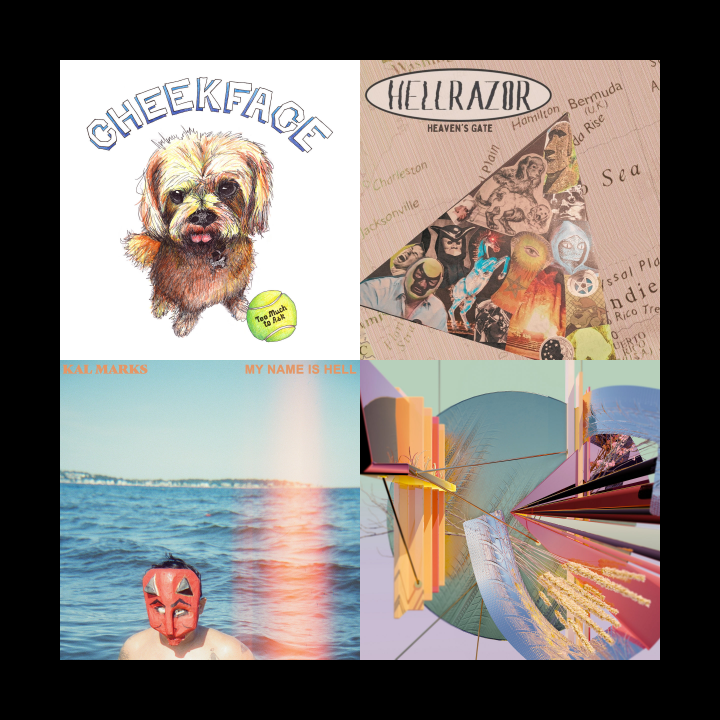



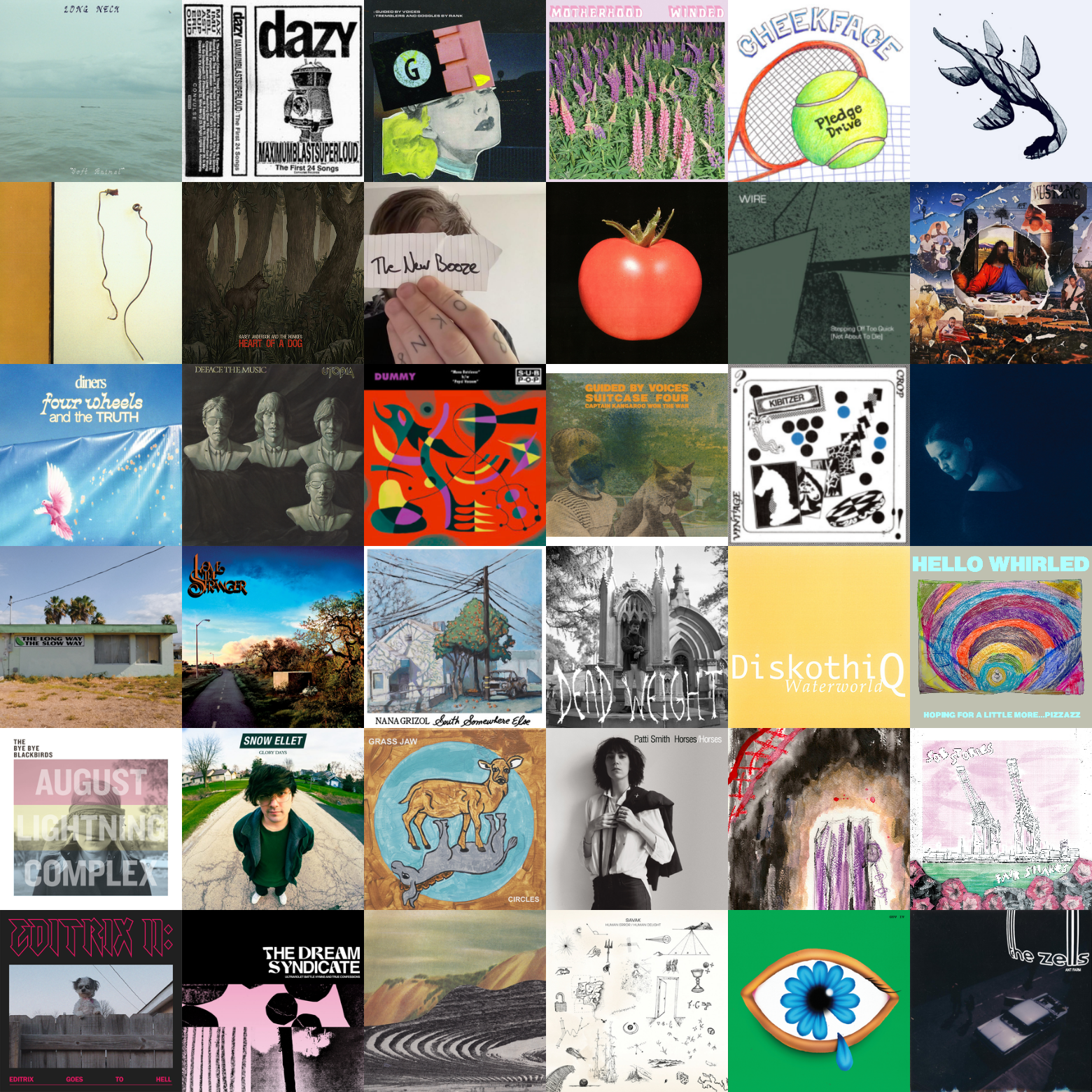
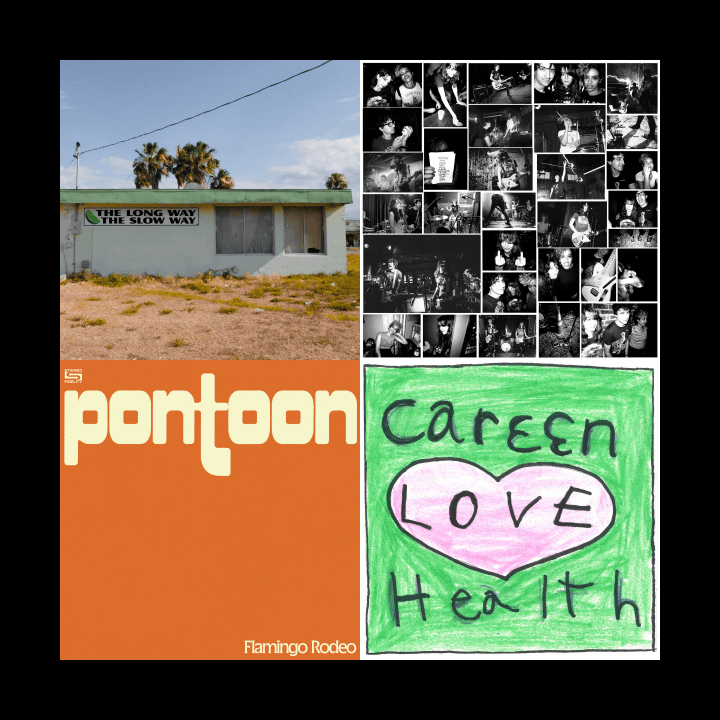
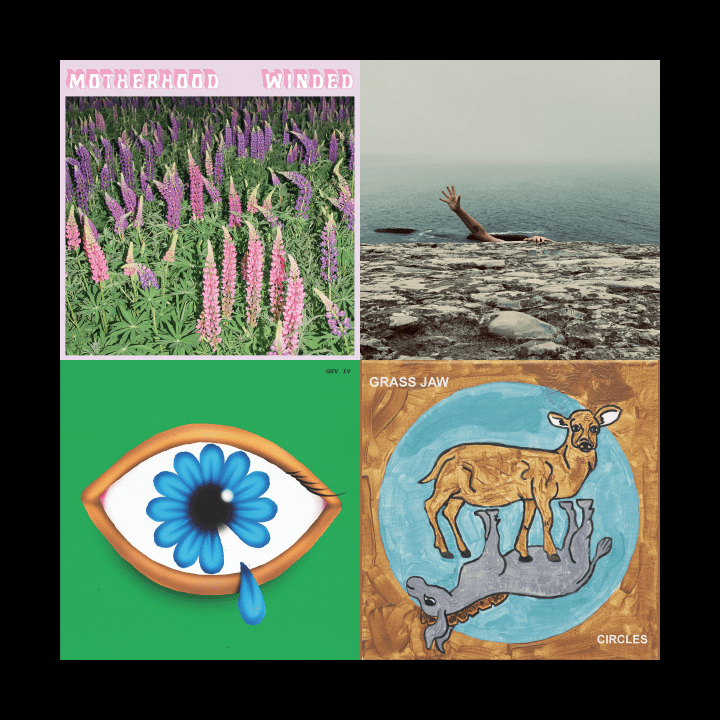
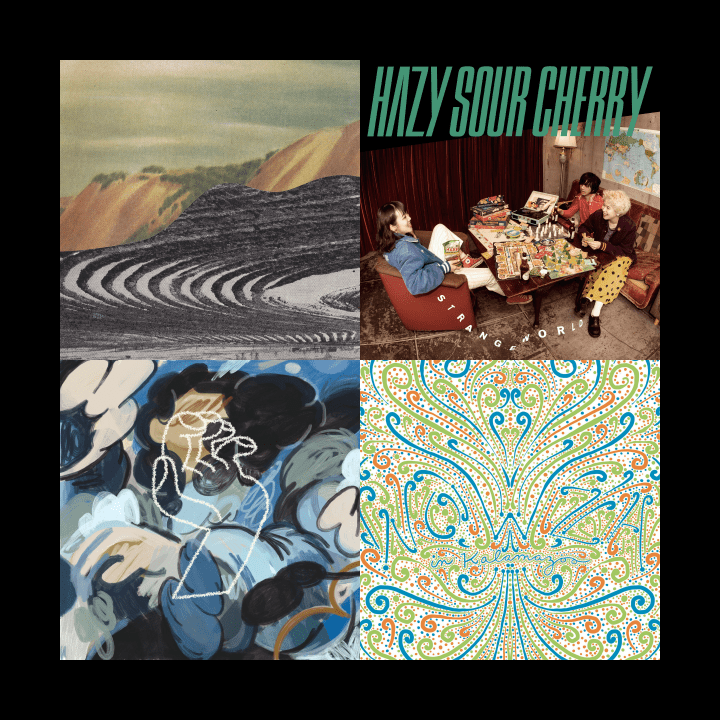

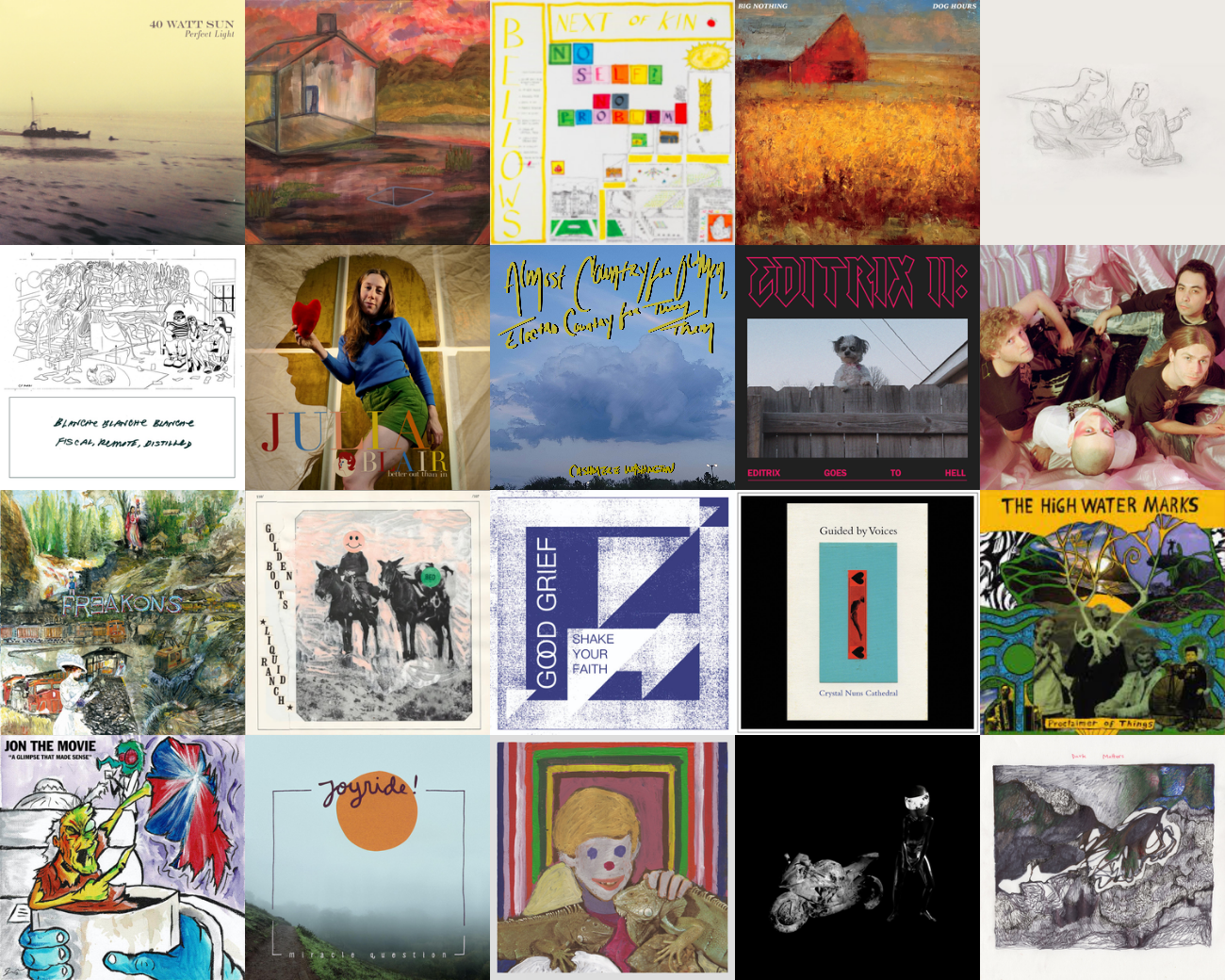
 Rosy Overdrive