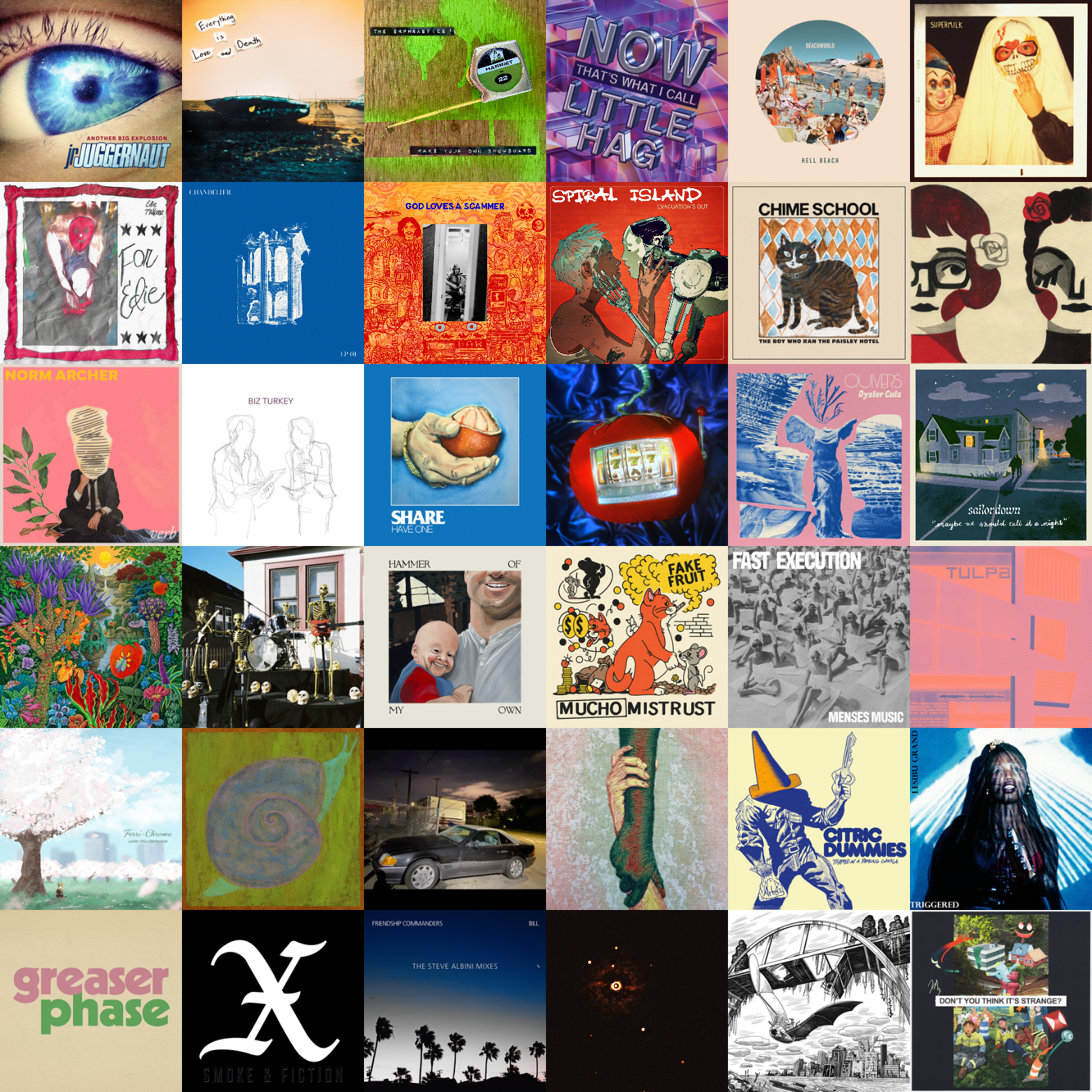
Pressing Concerns: The Noisy, Alice Kat, Drug Country, Dog Park

I asked some readers of the blog whether or not they wanted a post on Memorial Day, and the answer seemed to be mostly “yes”, so here we are on a federal holiday (in the United States, at least), looking at four new records. We’ve got new albums from The Noisy, Alice Kat (of fine.), and Dog Park, plus a new EP from Drug Country (John Russell of Gnawing) all ready for you below. Listen to these records at your cookout, or for non-Americans, whatever your normal Monday routine looks like.

If you’re looking for more new music, you can visit the site directory to see what else we’ve written about lately. If you’d like to support Rosy Overdrive, you can share this (or another) post, or donate here.

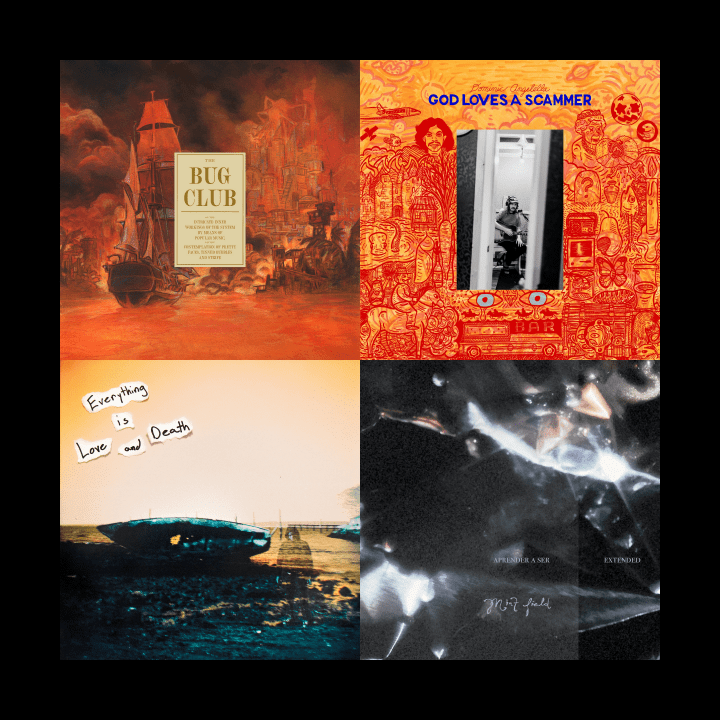
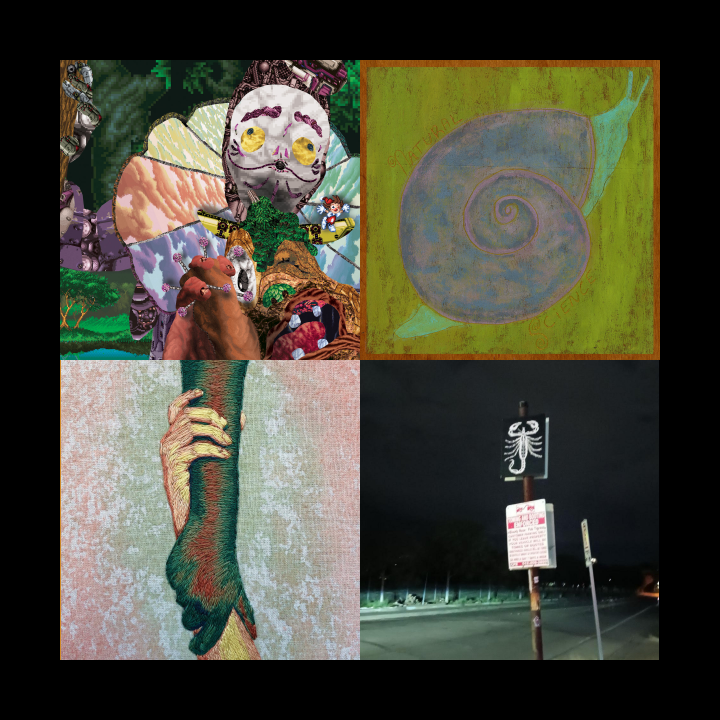
The Noisy – The Secret Ingredient Is More Meat

Release date: May 24th
Record label: Self-released
Genre: Dream pop, indie pop, pop rock
Formats: Digital
Pull Track: Grenadine

Here’s a fun game: take a drink every time singer Sara Mae mentions a different type of alcohol on their debut album as The Noisy, The Secret Ingredient Is More Meat. We get our start with the vermouth in “Ballerino” and the “two glasses of sweating white” in “Twos”, barrel through the “fire escape beer” and “rooftop champagne” in “Grenadine” and the Tom Collins in “Violent Lozenge”, and the “whisky background noise” in “Morricone” has us on the floor (get up, though, we’ve got a dirty martini coming up in “Glass of Olives”). Believe it or not, the high ABV is actually only one of the several memorable aspects to Mae’s writing through The Secret Ingredient Is More Meat, which they describe as a record about “queer metabolism”. Mae, who is also a poet, began making music as The Noisy in Knoxville a few years ago, releasing an EP in 2021 and recording what would become their debut album there before moving to Philadelphia last year (and enlisting Heather Jones of Ther to master the record). Mae’s voice and lyrics are clearly the star of The Secret Ingredient Is More Meat, although the music is hardly an afterthought, as they and their collaborators (Josh Sorrells, Ash Baker, and Nyleen Perez) give the record a rich, polished pop-rock sound with pieces of dream/chamber pop, synth pop, and even a bit of electric alt-rock thrown in.

The Secret Ingredient Is More Meat is an ear-catching record, one that’s hard for me to listen to anything but actively. Opening track “Little Grill” is a stage-setter, skipping delicately in its first half (“Drank propane and swilled / Grease stains, spent hours / At the waists of fathers”) before bursting with Mae’s declaration (“Tell me you want something more / than American cheese”) as the music rises. “Ballerino” is a huge pop song that sets up The Noisy’s perspective fascinatingly (“Frivolity, ephemerality, femininity, hot pants pretty”), and the chugging grunge-pop of “Twos” thoroughly explores its aforementioned sweating white duo. If there’s a breather in the record it’s the lo-fi dream pop of “Tony Soprano”, an open-ended moment before The Noisy take on two of the thorniest and best songs on the album, the horn-laden, back-glancing “Grenadine” and the retro, refined-sounding clueless dizziness of “Violet Lozenge”. The messiness of the situations and relationships described by Mae over and over again is clearly contrasted with the expertly-crafted music and fine dining contained within The Secret Ingredient Is More Meat; Mae answers their question about American cheese in “Little Grill” with “If it were up to me / I’d cut my teeth on brie”. In this way, The Secret Ingredient Is More Meat is an aspirational record, but it’s also a present-tense evaluation, an assertion of the vitality and richness of the world Mae and anyone who can relate to these experiences inhabit. (Bandcamp link)

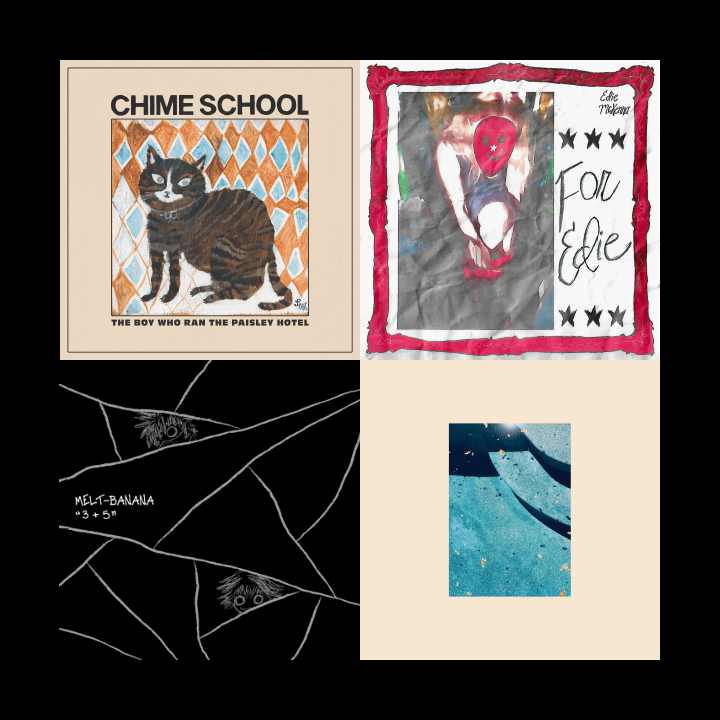
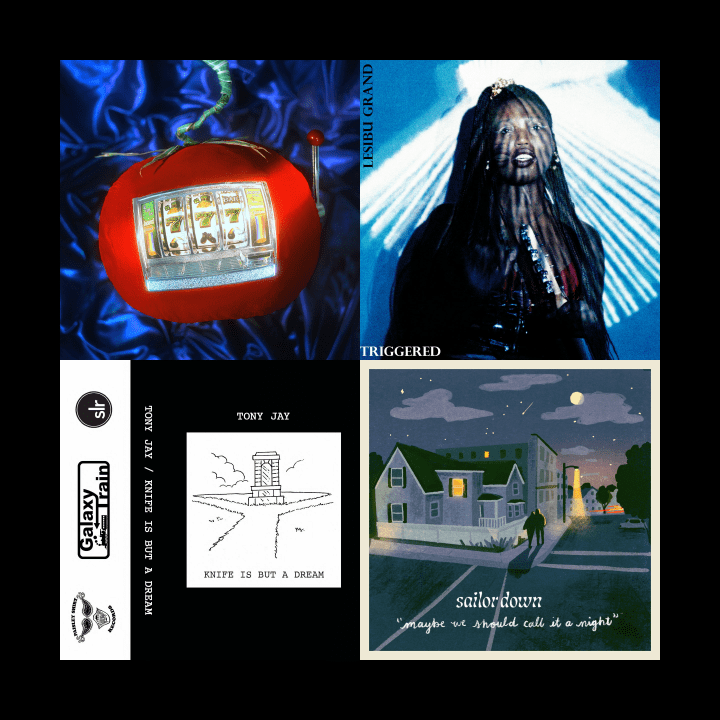
Alice Kat – Around the World & Back to You

Release date: March 10th
Record label: Subjangle
Genre: Power pop, indie pop, alt-rock
Formats: CD, digital
Pull Track: Pretty Blue 108

Alice Katugampola is a Boston, England-based singer-songwriter who I first became aware of via fine., the jangle/indie pop duo that she started with Kid Chameleon’s Liam James Marsh. Fine. had a big 2022, releasing a massive double album called Love, Death, Dreams, and the Sleep Between as well as a just-as-large self-titled compilation of previously-released material. However, Katugampola has been making music as Alice Kat for significantly longer than fine. have been around, releasing three different solo albums from 2016 to 2020. Fine. are still going strong (they put out a Bandcamp-only EP in May), but Katugampola has returned to the Alice Kat moniker for Around the World & Back to You, her fourth solo LP. After making some sprawling guitar pop music the past couple of years, it’s nice to hear Katugampola knock out a twelve-song, 30-minute single album–and “knock out” feels like the right term for what she does on Around the World & Back to You, which has a punchier alt-rock sound than I was expecting (not quite “pop punk”, but closer to that than fine.’s ever come).

That’s not to say that Around the World & Back to You isn’t an ambitious record. I’ve written about plenty of concept albums on this blog, but I can’t recall another one that actually takes an entire song (the sixty-second “That Was Day Time, This Is Night Time”) to explain what the concept is supposed to be, and how the two sides of the record and even the album title relate to it. The conceit is simple enough–the album is split into “day time”, which hews closer to huge-sounding power pop, and the chillier alt-rock of “night time”–although there’s plenty of overlap. There’s a palpable melancholic streak to even some of the catchiest songs on the album (the soaring “Get High Feel Alive” and “Sun Goes Down”, which mixes icy post-punk with jangly indie rock as the sunlight fades), while Katugampola never abandons high-flying power chords (“Younger Life”), rumbling riffs and choruses (“Fear”) and synth-power pop hooks (“Rush”) in the record’s second half, either. Katugampola is an excellent lead singer, and Around the World & Back to You feels as cohesive as it does because she has complete faith in her vocals, placing them front and center and letting the emotion and melody come naturally. With that in mind, Katugampola can’t resist putting a cap to it all in the form of “Seasons”, the one song that embraces sunny, strummed jangly indie pop–seeing Around the World & Back to You to its complete conclusion. (Bandcamp link)

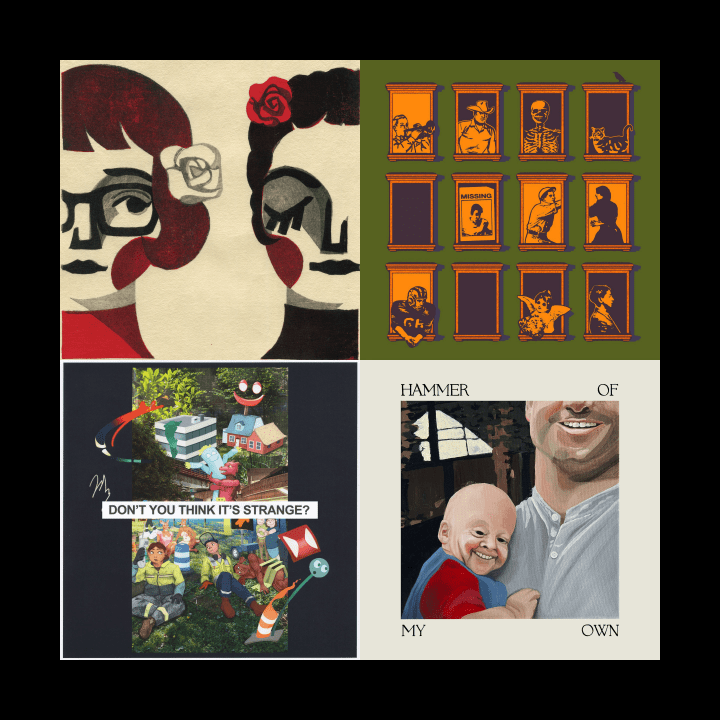
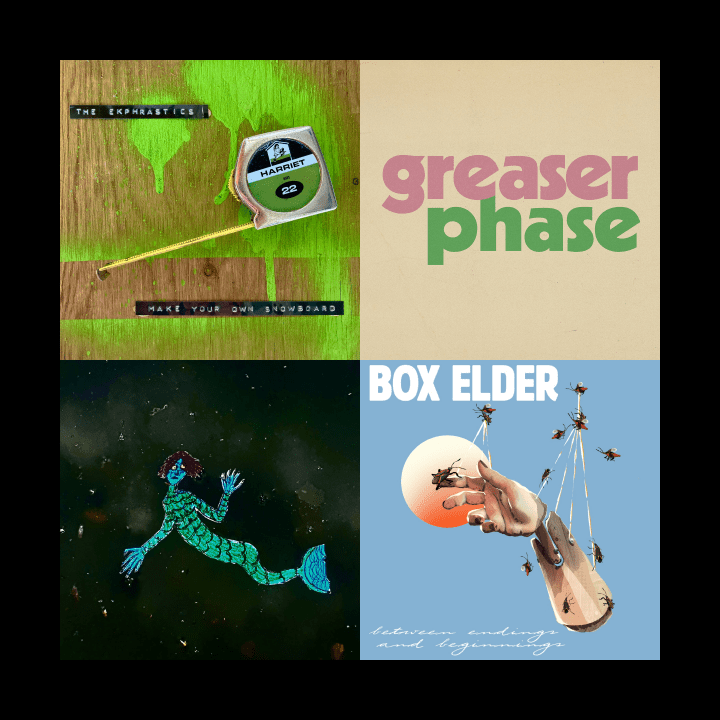
Drug Country – How to Keep a Band

Release date: May 24th
Record label: Hilltop Recordings
Genre: Fuzz rock, lo-fi indie rock, garage rock
Formats: Cassette, digital
Pull Track: Wellbutrin Blues

I’ve written a few times about Richmond rock band Gnawing on the blog before, and both of their albums (2021’s You Freak Me Out and 2023’s Modern Survival Techniques) are solid collections of Dinosaur Jr./early Nirvana-inspired fuzz rock. Gnawing frontperson John Russell let just a bit more of his sharp songwriting stick out among the distortion of his band’s most recent album, although it was a subtle change between two fairly similar-sounding records. This latest batch of songs that Russell has written, however, ended up far enough away from Gnawing that he decided they were a different thing entirely, and thus his Drug Country solo project was born. Russell’s first record as Drug Country is a six-song self-recorded and self-released cassette tape called How to Keep a Band, and it’s a strong lo-fi rock opening statement–sometimes it sounds like a more ramshackle and subdued version of Gnawing, but elsewhere Russell’s writing and recording wander into new territory entirely.

How to Keep a Band kicks off with Russell doing what he does best in “Wellbutrin Blues”, hammering out fuzzy, punchy, and loud pop music. Between the lo-fi sheen and the lengthy intro, Drug Country finds itself taking a bit more influence from their Virginia forbearers in Sparklehorse, although Russell’s pop sledgehammer writing style still is more in line with Cobain and Mascis. The other unqualified rocker on How to Keep a Band, “Karma Laundering”, is just a bit more restrained, with Russell’s drive-thru-speaker vocals steadily helming a mid-tempo alt-rock barge of an instrumental. The rest of the EP is where Russell lets Drug Country wander a bit in various directions–single and second track “Bird Patterns” (featuring harmonies from a fellow Russell, Russell Edling of Golden Apples) is a clear success story, merging his signature alt-rock with a dreamy, almost psychedelic sensibility that thrives in this lo-fi environment. The two quietest songs on the EP are the final two–“Foolish Acrobatics” is the full-band one, molasses-slow folk rock that echoes like a cave (I believe this is Drug Country’s take on “slowcore”), and “Orange Trees and Pipe Tobacco” closes out How to Keep a Band with a straight-up acoustic ballad. Russell is no stranger to the acoustic guitar (my favorite song from the first Gnawing album, “Blue Moon New”, embraced their alt-country side), but this is his clearest foray into haunted-sounding, desolate southern folk music–we’re way out in the Drug Country now. (Bandcamp link)

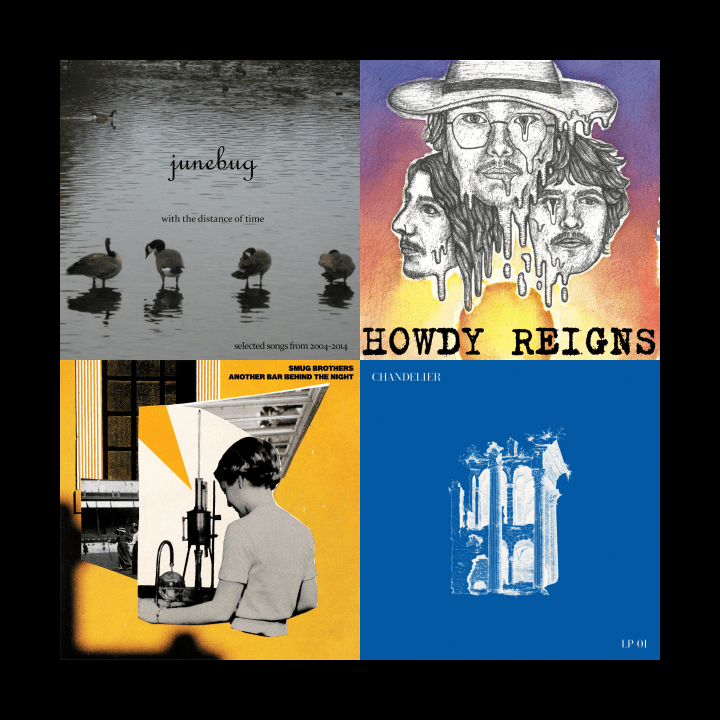
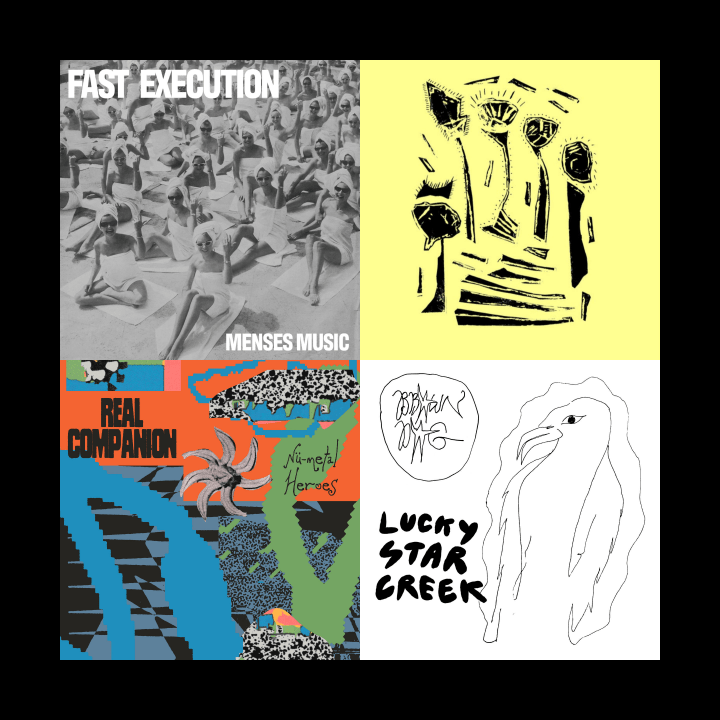
Dog Park – Festina Lente

Release date: April 19th
Record label: Géographie
Genre: Dream pop, psych pop, indie pop
Formats: Vinyl, digital
Pull Track: Sunny Decadence

Dog Park are a quartet from Paris with a sound that evokes dreamy, jangly guitar pop bands of several different decades (they specifically namecheck “early 2010s Captured Tracks” as an influence on them) throughout their debut album, Festina Lente. The band (Erica Ashleson, Isabella Cantani, Sarah Pitet and Jean Duffour) released their first single in 2022, a year after the geographically disparate members (Pitet and Duffour are originally from Paris, while Ashleson is from the United States and Cantani is Brazilian) first started playing together. The ten songs of Festina Lente collect the handful of songs the band had already released plus some new material, and the group (whose members trade songwriting and instrumental duties) meld together excellently on their first extended outing together, creating a record that incorporates psychedelic pop, British C86 indie pop, rainy Pacific Northwest guitar pop, and synth-shaded dream pop in a way suggesting that Dog Park are operating in unison with a singular shared goal in mind.

It’s hard to think of a better way for a band like Dog Park to introduce themselves than with “Sunny Decadence”, a song that’s relatively subtle but at the same time lives up to its name by offering up bright, jangly, warm hooks and a passionately catchy chorus. The song flirts with wandering off as it adds some hazy synths in its second half, but Festina Lente waits until the next track, “Time”, to get a little looser with, well, time. “Lalala” and “Stimulation” are still pop songs, but they sound particularly unhurried, and it’s a mode that suits Dog Park well–although “Goldfish” and “Trial and Error” have busier rhythm sections than the tracks before them, they still find time to meander and let the band’s pop moments show up along the way. By the time we’ve gotten to “Kaleidoscope” and especially the strange penultimate track “Head in the Clouds”, Dog Park are just as interested in layering their sound with guitar and synth textures as they are with melodies (but they never abandon the latter, and the vocals are never buried by the instrumentals). “Mirror” caps off the album with one last guitar-based dream pop anthem–perhaps a little bit more focused than some of the other selections on Festina Lente, but it’s still one strong pop moment of many. (Bandcamp link)

Also notable:

Pressing Concerns: Yea-Ming and the Rumours, Aluminum, Motorists, Mui Zyu

The third Pressing Concerns of the week looks at four albums that are coming out tomorrow, May 24th: new LPs from Yea-Ming and the Rumours, Aluminum, Motorists, and Mui Zyu. Just really great stuff all around, here. We had two posts go up earlier in the week; on Monday, we looked at Magic Fig, Crumbs, New Issue, and Masonic Wave, while Tuesday was Female Gaze, 2070, Sugar Candy Mountain, and The Wendy Darlings. Check those out, too!

If you’re looking for more new music, you can visit the site directory to see what else we’ve written about lately. If you’d like to support Rosy Overdrive, you can share this (or another) post, or donate here.

Yea-Ming and the Rumours – I Can’t Have It All

Release date: May 24th
Record label: Dandy Boy
Genre: Indie pop, jangle pop, folk rock
Formats: Vinyl, CD, digital
Pull Track: I Can’t Have It All

Oakland musician Yea-Ming Chen isn’t exactly a newcomer to the Bay Area music scene–she’s been releasing music as Yea-Ming and the Rumours since the mid-2010s, and played in San Francisco’s Dreamdate before that. The second Rumours full-length and their debut for Dandy Boy Records, 2022’s So, Bird…, is what put them on my radar initially–it’s a guitar pop record that fits in well with their record label and the larger Oakland-San Francisco jangle pop/indie pop movement at large, even as it set itself apart by letting the steady, stable, yet fresh-sounding personality of its primary singer-songwriter peak through. I enjoyed So, Bird…, so I expected to like its follow-up, I Can’t Have It All, as well–even so, I was pleasantly surprised by just how much of a leap forward it feels like for Chen and the Rumors. I Can’t Have It All certainly doesn’t reinvent the Yea-Ming and the Rumors “sound”–Chen is still a sharp, 60s pop-inspired songwriter and a striking vocalist, and the band (longtime collaborators Eóin Galvin on lead guitar and lap steel and Sonia Hayden on drums and percussion, as well as newcomers Jen Weisberg on bass and R.E. Serpahin’s Luke Robbins on drums) give these songs a polished but utilitarian reading, recalling the calm end of Yo La Tengo and classic college rock.

What makes I Can’t Have It All feel so full-sounding is the well-earned, quiet but palpable confidence Yea-Ming and the Rumors display throughout the entire record. Every song on the first half is a “hit” in its own way–from opening track “Pretending”, which expertly says and does everything that it needs to in just over a minute, to the gorgeous simplicity to the title track’s Kaplan/Hubley-recalling refrain and plainspoken verses, to the zippy, heavenly twee-pop-rock of “Ruby”, to detours into folk-country (“I Tried to Hide”), winding dream pop (“Big Blue Sea”), and slowed-down girl-group-influenced pop a la Cindy and Tony Jay (“Can We Meet in the Middle”). I Can’t Have It All loses not an ounce of steam as it moves along to the second side–“Before I Make It Home” and “Somebody’s Daughter”, for two, are as fully-developed indie pop songs as anything else on the album. Chen also offers up a couple of “late-record gems” in the more classical sense–sparser and quieter than some of the more immediate tracks on the record, but with the ability to grow with time. “How Can I Leave”, which opens the B-side with a thorny, messy relationship set to some of the simplest, bluntest pop music on the record, is one such song, as is the acoustic folk-breather “Old Frog”. “If that water keeps rushing down, well that’s just the way it goes,” sings Chen-as-the-titular frog over a chorused keyboard and peacefully-plucked guitars. It’s a testament to the power of Chen and the Rumors that the babbling brook in the song feels very real–and even when the images aren’t so vivid, I Can’t Have It All is a transportive album. (Bandcamp link)

Aluminum – Fully Beat

Release date: May 24th
Record label: Felte
Genre: Shoegaze, noise pop, Madchester, fuzz rock
Formats: Vinyl, digital
Pull Track: Everything

San Francisco’s Aluminum are a quartet made up of a bunch of notable Bay Area musicians–I’ve covered the other projects of vocalist/bassist Ryann Gonsalves (Torrey, a solo album) and drummer Chris Natividad (Marbled Eye, Public Interest) in Pressing Concerns before, while vocalist/guitarist Marc Leyda and guitarist Austin Montanari have played together in Nothing Natural and Wild Moth. Aluminum themselves have shown up on the blog before, too, as I named their debut EP, 2022’s Windowpane, one of my favorites of that year, finding myself impressed with their ability to whip up both Stereolab-eque motorik indie rock and wall-of-sound shoegaze in short order. Despite all the members’ other projects, Aluminum is back about a year and a half later with Fully Beat, their debut full-length. Released on their new home of Felte Records (Vulture Feather, Mint Field, Ganser), Fully Beat is a huge leap forward for Aluminum, both sharpening and expanding their sound to create some of the most exciting, spirited, and downright fun rock music I’ve heard this year. 

Aluminum are still a “shoegaze” band, although the studied, carefully-constructed version of the genre that I heard on Windowpane has been replaced with a commitment to loud, bursting-at-the-seams rock music throughout Fully Beat. From the unspooling opener “Smile” to the hard-charging noise pop of “Pulp” to the massive-sounding dream-pop-as-stadium-rock “Everything” to the speedy, somewhat greyscale closing track “Upside Down”, Aluminum have a strong argument for being one of the most impactful rock bands in any genre at the moment when they want to be (and it helps that, while not overly showy vocalists, Gonsalves and Leyda both hover above the swirling instrumentals even at their most tempestuous). The guitars are set to overdrive, surging forward with textured melodies above the tracks’ fuzzed-out foundations–while “Smile” and “Everything” have up-front, melodic vocals, the guitars threaten to steal the show in the former, and they do outright swipe it in the latter. 

When Aluminum aren’t trucking the listener with this side of them, they’re incorporating new avenues to their sound–most obviously, there’s a delirious-sounding, alternative dance (arguably even trip hop) streak to the album, arriving with a bang in Gonsalves’ first lead-vocal song on the album, the precise rhythms of “Behind My Mouth”. Aluminum nail it again in “Beat” (in which the reverb-soaked instrumental gets a danceable, Madchester backbeat) and “Call An Angel” (a strangely-inverted-sounding tune that feels like the late 90s in the best way). Elsewhere on Fully Beat, Aluminum find time to flirt with overwhelming psychedelia in the form of “Always Here, Never There” and a different, chamber-pop version of psych pop in “HaHa”. Fully Beat is the result of a band taking a big swing on their first full statement–it comes at you like a stampede in its loudest, most chaotic moments, but devotes plenty of time to filling in the gaps that Aluminum blast into their foundation, as well. (Bandcamp link)

Motorists – Touched by the Stuff

Release date: May 24th
Record label: Bobo Integral/We Are Time
Genre: Power pop, jangle pop, college rock
Formats: Vinyl, digital
Pull Track: Decider

Toronto guitar pop trio Motorists released their debut album, Surrounded, back in 2021, and the band (co-led by vocalist/bassist Matt Learoyd and vocalist/guitarist Craig Fahner) made their first impression with an impressive collection of college rock and jangle pop-inspired music with a surprisingly tough post-punk backbone frequently rearing its head, too. They came off as punchy understudies in a vibrant Toronto power pop scene (featuring Kiwi Jr., Ducks Ltd., and Young Guv, among others), and Surrounded snuck onto my best-of list for the year. For their sophomore album, Touched by the Stuff, Motorists have changed drummers (Nick MicKinlay replaces Tough Age’s Jesse Locke, although given that Locke’s We Are Time imprint is co-releasing the record, one must imagine the split was amicable), and the group display a subtle but palpable sonic evolution as well. The post-punk edge is less pronounced and more seamlessly baked into the sound, as Motorists embrace being a straight-up, rollicking power pop group more than ever across Touched by the Stuff’s dozen tracks.

When you’ve got a song like “Decider” in your pocket, that’s a no-brainer for Side A, track 1,  and Motorists don’t miss the layup to kick Touched by the Stuff off. The all-in power pop fervor is straight out of the 1970s, a slight 90s alt-rock kick to it being the only thing marking it as something more recent. Between “Decider” and the slightly psychedelic-yet-chunky power chords of “Barking at the Gates”, Motorists have never sounded more like Sloan, but this only describes a portion of what the band have to offer on Touched by the Stuff. The quick tempos of “Phone Booth in the Desert of the Mind”, “Call Control”, and “Back to the Queue” bear more than a little bit of the band’s post-punkier debut, although they’re primarily bouncy pop rock tunes with laser-precise melodic guitars on display. Motorists lock into some kind of guitar pop zen throughout Touched by the Stuff, polishing and teasing out these songs to where all of them sound like “hits”. The “extremes” of the record aren’t huge departures, but when Motorists want to sharpen up their alt-rock crunch (see “L.O.W.”) or deliver a delicate, Teenage Fanclub-esque ballad (“Embers”), they’re able to guide Touched by the Stuff toward those ends with just as much smoothness. Really, the only outlier on the record is closing track “Light Against the Shade”, which leans on mechanical drums, woozy synths, and falsetto vocals to take a fascinating detour into their version of dream pop. It’s something of an aural runaway truck ramp, three minutes to let Motorists’ power pop engines cool down as the record draws to a close. Once we’ve come to a stop on top of the mountain, it’s the perfect time to queue up “Decider” again. (Bandcamp link)

Mui Zyu – Nothing or Something to Die For

Release date: May 24th
Record label: Father/Daughter
Genre: Art pop, indie pop, dream pop, synthpop
Formats: Vinyl, CD, digital
Pull Track: Everything to Die For

Last year, I wrote about Rotten Bun for an Eggless Century, the debut album from London-based, Hong Kong-originating musician Eva Liu’s solo project Mui Zyu. Liu, who also plays in indie rock group Dama Scout, embraced a large-but-sparse ambient pop sound on her first solo LP, which was inspired by an insular examination of her own Chinese heritage. I wasn’t expecting a second Mui Zyu album hardly a year later, but with Nothing or Something to Die For, Liu expands her discography by fifteen tracks, forty minutes, and one huge step forward. Recorded by Liu and producer (and Dama Scout bandmate) Luciano Rossi at Middle Farm Studios in Devon, this is the first Mui Zyu release assembled outside of their home studio, and it sounds like it. Nothing or Something to Die For is somehow Mui Zyu at its fullest and most streamlined–rather than the buzzing ambience of Rotten Bun for an Eggless Century, Liu and Rossi shoot for crystal clear-sounding indie pop. Synths and strings are deployed strategically and, while Liu’s writing isn’t going to be mistaken for a top 40 hitmaker, the extra polish further illuminates her sense of melody.

Nothing or Something to Die For takes us all on a journey in the first couple of minutes, as the swelling strings that kick off the record with “Satan Marriage” give way to “The Mould”, a piece of minimalist synthpop which keeps its odder side in check with a strong and sturdy foundation. This propulsive version of Mui Zyu pops up a few more times on the record to varying degrees (I hear it in the expansive “The Rules of What an Earthling Can Be”, and especially in the slow-building, refined “Sparky”, which features fellow British-Chinese musician Lei,e of Emmy the Great), although it’s the rich balladry of Nothing or Something to Die For that ended up hooking me. Coming after “The Mould”, the twin successes of “Everything to Die For” and “Donna Like Parasites” really blow the album open–the gorgeously simple “Mui Zyu as a folk artist” of the former is impressive, and “Donna Like Parasites”, which combines nervous, skipping verses with a suspended-animation refrain, does it one better. Nothing or Something to Die For impressively hangs onto this spirit through highlights like “What’s the Password Baby Bird?” (which is positively hypnotizing) and “Cool As a Cucumber” (a piano-led track that sounds like its title suggests it should). Nothing or Something to Die For is the rewarding sound of a talented, wide-ranging artist taking a step back and letting everything come into focus together. (Bandcamp link)

Also notable:

Pressing Concerns: Female Gaze, 2070, Sugar Candy Mountain, The Wendy Darlings

Hey there! Welcome to the second Pressing Concerns of the week! This is a good one; we’ve got new albums from Female Gaze, 2070, and The Wendy Darlings to examine below, as well as a ten-year-anniversary reissue of an album from Sugar Candy Mountain. If you missed yesterday’s post, featuring Magic Fig, Crumbs, New Issue, and Masonic Wave, you’re gonna wanna check that one out, too.

If you’re looking for more new music, you can visit the site directory to see what else we’ve written about lately. If you’d like to support Rosy Overdrive, you can share this (or another) post, or donate here.

Female Gaze – Tender Futures

Release date: May 17th
Record label: Fort Lowell/Totally Real
Genre: Psychedelic rock, art rock, desert rock, post-rock, jazz rock
Formats: Vinyl, cassette, digital
Pull Track: Severance

Tucson trio The Rifle debuted about a decade ago, releasing three records in six years and growing from the solo project of guitarist/vocalist Nelene DeGuzman (2014’s Rib to Rib) to a 60s-tinged guitar pop act (2017’s Anababis) to incorporating a bit of desert psychedelia into their sound (2020’s Honeyden). Honeyden would prove to be The Rifle’s last album, but they didn’t break up, exactly–DeGuzman and bassist Kevin Conklin continued on as Female Gaze, with drummer Nicky David Cobham-Morgese replacing The Rifle’s Randy Rowland. Female Gaze debuted in 2021 with the one-off garage-indie-pop single “The Joy of Missing Out”, and while there’s a shade of darkness to that song, it doesn’t prepare one for the huge leap that the trio make on Tender Futures, the trio’s debut album. Stretching five songs across thirty-two minutes, Tender Futures is an expansive, vast record, with DeGuzman and her band embodying the American southwest more than they ever have before. Inspired in part by DeGuzman’s chronic health issues that had left her in a “painful limbo”, Tender Futures does with garage rock what Itasca’s Imitation of War did with folk music–it explores the desert using empty space and towering nothingness as its language.

Tender Futures intentionally evoke haziness and disorientation and, according to the band, can be started from any song and played “on a loop”. Female Gaze choose to begin the “proper” version of the album off with the sparsest moment on the record in “Ghosts”–it’s not the most accessible moment on Tender Futures, no, but there’s a captivating quality to how it sounds, a simple guitar part echoing cavernously with only DeGuzman’s, well, ghostly vocals as accompaniment. “Ghosts” also prepares one to expect extremes throughout the album, which the next song does as well, in a different way. “Broadcast” slides into focus by introducing us to Female Gaze the three-piece rock band, with elements of psychedelia and pop in their sound. It’d be a good choice for the “single”–if it wasn’t ten minutes long, expanding and probing all the while. The middle of the record is completely instrumental, most of which is comprised of the nine-minute title track, an impressive song that slouches towards post-rock and even a bit of jazz-rock (Conklin’s bass gets a nice showcase here), while the echoing piano of “In the Mezzanine” serves as a three-minute coda. By this point, the disorientation is at a high, as we’re feeling lost out in no-man’s land somewhere–but the last song on Tender Futures is its clearest olive branch. “Severance” is not a departure from the rest of the album, but it’s where everything snaps into focus, as the trio set their sights on fluttering guitar pop for six minutes. Ending with the triumphant is Tender Futures on easy mode, though–let’s see how quickly we get lost if we start with the title track… (Bandcamp link)

2070 – Stay in the Ranch

Release date: May 3rd
Record label: Free World Vessel
Genre: Lo-fi indie rock, garage rock, shoegaze, noise pop
Formats: Digital
Pull Track: Ratbike

I hadn’t heard of Los Angeles’ 2070 before Stay in the Ranch, their sophomore album, appeared in my inbox a couple of days before its release, but it wasn’t long before I was fully on board with their brand of noisy, fuzzy indie rock. A quartet, 2070 is led by vocalist and guitarist Trevor Coleman II and rounded out by drummer Rogers DeCoud Jr., guitarist Khari Cousins, and bassist Danny Rincon (although they frequently switch instruments throughout Stay in the Ranch, and original bassist Tchad Cousins plays on several of the songs as well). Their debut album, Shordy, came out on Already Dead Tapes back in 2022, and it’s a sprawling hourlong, twenty-four-song collection of lo-fi pop and blown-out, shoegaze inspired rock music. With Stay in the Ranch, 2070 have trimmed things down to a tidy sixteen songs in 35 minutes, and the band embrace both their “humble fuzzy pop” and “noisy and experimental” sides on their second record. Citing lo-fi pop outsiders both well-known (Guided by Voices, The Cleaners from Venus) and lesser known (Doug Hream Blunt, Dwight Sykes), 2070 hone in on a sound somewhere between the foggy, offbeat pop music of Cherub Dreams Records bands like Sucker and Buddy Junior and the experimental, shoegaze/“noise pop” of Julia’s War/Candlepin acts like Saturnalias and Guitar.

Despite its similarities with more than a few “bedroom pop” projects, Stay in the Ranch has plenty of moments where an honest-to-god rock band emerges from the static. After an intro track, “Ratbike” kicks off the record properly with a blown-out piece of tuneful, almost post-punk racket, and “Je Vais Aller Dormir” is a blast of fuzz-punk not long later. “Macho Man Confusion” adds a lumbering, mid-tempo garage rock dimension to 2070’s sound, while “Larf Finds Away” is a spirited, bashed-out guitar pop belter that reinvigorates things around halfway through the album. In between these tracks are the less immediate moments on Stay in the Ranch, but stuff like the gray slowcore of “IG Post”, the uncertain timbre of “Fan Reel (Tonite I Might)”, and the basement groove of “My City Punch” aren’t filler–they’re key to the makeup not just of Stay in the Ranch, but 2070 as a whole. When the record gets especially wobbly in the second half with songs like “Beem Ja’s Last Mistake”, “Bronze”, and “Never Had That”, it’s gripping–and when they crank it up again in “Uh Oh, I’m Yawning” and then ride off into the sunset with “Operator”, Stay in the Ranch makes its strong closing statement as a document of an exciting new band realizing a bunch of ideas all at once. (Bandcamp link)

Sugar Candy Mountain – Mystic Hits (Reissue)

Release date: April 12th
Record label: Sugar Candy Mountain/Royal Oakie
Genre: Psychedelic pop, garage rock
Formats: Vinyl, CD, cassette, digital
Pull Track: Soak Up the City

Sugar Candy Mountain came out of the Bay Area’s thriving psychedelic rock and pop scene around a decade ago, with the duo of Will Halsey and Ash Reiter self-releasing their first record together in 2011. Mystic Hits followed in 2013, released through Oakland’s Royal Oakie Records and beginning a streak of popular psychedelic records that’s lasted into the 2020s. Out of print for several years now, Royal Oakie and Sugar Candy Mountain are marking Mystic Hits‘ 10th anniversary by reissuing it on vinyl (on the band’s own self-titled imprint) and cassette (via Royal Oakie). Although Sugar Candy Mountain occasionally have an electric edge that puts them in conversation with the more garage-y/heavier In the Red/Levitation Sessions end of psychedelic rock, Mystic Hits is more interested in taking that attitude and incorporating a different side of the genre. Long influenced by Tropicália and Brazilian pop music, the duo traveled to São Paolo to record the album, finishing it back in Oakland. The result is a record that’s both “California” and “Os Mutantes”, slippery synths and rock-solid rock-and-roll both populating and fleshing out these thirteen (fourteen on the cassette) pop songs.

“Uva Uvam Vivendo Varia Fit” opens Mystic Hits with an instant success, with mid-tempo, horn-laden pop rock easing us into the record, only for just a bit of electric guitar-led psych rock to show up in the song’s second half. “Soak Up the City” is a great 60s-influenced psychedelic pop rock tune that continues the guitar-led moments, but much of the first half of Mystic Hits dives into something a bit hazier, with “I’m a Tiger”, “Echopraxia”, and “Caroline Mountain” all couching their pop hooks in slow tempos and swirling instrumental structures. “Saudade Love” is a relaxed underwater sunshine pop ballad stuck right in the middle of the record, while “Lovely Time” marks Mystic Hits’ second half with some pitch-perfect 60s pop energy. The B-side of the record might actually be a bit stronger, as the duo offer everything found in the album’s first half but also break into some new terrain with “Some Body” (rhythmically and structurally one of the band’s most overtly “Tropicália” moments) and “Hot Topics, Hot Tropics” (which is smart, slick indie pop that closes the record proper without completely losing the psychedelia). The cassette bonus track “Copacabana” was recorded during Mystic Hits’ sessions, and its cavernous, psych-dripping feel is a nice coda to a record that has a specific sound in mind but gives itself a lot of leeway in how it goes about achieving it. (Bandcamp link)

The Wendy Darlings – Lipstick Fire

Release date: April 11th
Record label: Lunadélia/Influenza
Genre: Twee, jangle pop, power pop, indie pop, bubblegum pop
Formats: Vinyl, digital
Pull Track: Go Away

Although it’s tempting to slot Clermont Ferrand-based trio The Wendy Darlings into the current wave of French indie pop alongside bands like En Attendant Ana, EggS, and Hobby, the group has actually been around since 2008. Vocalist/guitarist Suzy Borello, drummer Baptiste Fick, and bassist Sylvain Coantic spent the first few years of their music career together putting out singles and EPs, eventually moving onto full-lengths in 2014 (The Insufferable Fatigues of Idleness) and 2019 (Against Evil). They’re back with a third LP, Lipstick Fire, and the thirteen-song, 31-minute record paints a portrait of a band devoted to both vintage indie pop and the genres from which it was initially derived. The trio cite bands like Comet Gain and The Shop Assistants as inspiration and recently toured with Nervous Twitch, but Lipstick Fire reminds me more than anything else as a more rough-around-the-edges version of the most recent Lunchbox album. The Wendy Darlings attack a classic bubblegum pop sound with the twee and punk-pop energy of a band absolutely thrilled to be making music together.

The Wendy Darlings reintroduce themselves by offering up two of the strongest pop hooks I’ve heard this year in the ones that grace “Cowboy” and “Go Away”, Lipstick Fire’s first two songs. The former is bubblegum pop punk at its finest, a sugary revenge anthem that sets itself apart from the 1960s mostly due to its charming explicitness. “Go Away” isn’t as much of a runaway train, but it saunters up to its cathartic, shout-along chorus with just enough confidence to pull it off. Lipstick Fire doesn’t exactly let up from there, with “Ridicule” and “Devil” giving “Cowboy” a run for its money in terms of ramshackle, zippy pop music. Obviously, there are multiple songs on the album that start with the “Be My Baby” drum part–“Don’t Flirt” is my favorite of the two, a nice slow-builder in an instant-gratification record, but “Kisses” is impossible to dislike as well. Lipstick Fire doesn’t lose any steam, with the last four songs on the record comprising one of the most spirited, strongest streaks on the album–in particular, “A Ok Telephone” is a late-record highlight that stretches The Wendy Darlings’ indie pop out to a gargantuan three and a half minutes and still finds catchiness and melody all the way through. This kind of music is baked into our culture at this point, so to really make it work in 2024 you’ve got to feel it–and The Wendy Darlings clearly do. (Bandcamp link)

Also notable:

Pressing Concerns: Magic Fig, Crumbs, New Issue, Masonic Wave

Starting off the week with an all-timer of a Monday post, today we’ve got three albums that came out last Friday, May 17th (new LPs from Magic Fig, Crumbs, and New Issue), and an album from Masonic Wave that came out last month. If you like pop, psychedelia, noise rock, folk rock, or some combination thereof, you’ll definitely want to keep reading! Also, sorry if you got a rough draft version of this blog post via email a couple of days ago. Pressed the wrong button!

If you’re looking for more new music, you can visit the site directory to see what else we’ve written about lately. If you’d like to support Rosy Overdrive, you can share this (or another) post, or donate here.

Magic Fig – Magic Fig

Release date: May 17th
Record label: Silver Current
Genre: Psychedelic rock, psychedelic pop, indie pop, prog pop
Formats: Vinyl, digital
Pull Track: PS1

One of my favorite albums of last year was Sunset Sea Breeze by Whitney’s Playland, the debut record from a quartet co-led by San Francisco’s Inna Showalter and George Tarlson that combined sleepy, dreamy Bay Area jangle pop with a lo-fi power pop energy. So I was pleased to hear that Showalter is the lead vocalist of a new band called Magic Fig, and that the quintet’s lineup is rounded out by other Bay Area ringers–The Umbrellas’ Matthew Ferrara plays bass, Emmet “Muzzy” Moskowitz of Almond Joy and Froogie’s Groovies is on guitar, Healing Potpourri’s Jon Chaney provides keys and synths, and Taylor Giffin is on drums. The first Magic Fig record is a self-titled debut album produced by Once and Future Band’s Joel Robinow and released by Oakland’s Silver Current Records (Sonic Youth, Wooden Shjips, Howlin Rain). Considering the lineup’s indie pop pedigree, it’s not surprising how catchy Magic Fig is, but the band are shooting for something a little different with this project.

Showalter describes the album as “progressive psychedelic pop” and mentions the Canterbury scene, among other touchstones, as an influence on its sound, and all of this is borne out in Magic Fig’s six songs and twenty-eight minutes. Featuring an overwhelming blanket of all-in, overstuffed psychedelia, the album merges pop and excess in a way that skips the current wave of Bay Area indie pop and goes all the way back to 1960s San Francisco psych rock–and it’s also more reminiscent of landmark Elephant 6 records from The Olivia Tremor Control and The Apples in Stereo than any of their current geographic peers. Speaking of Elephant 6, the latest album from Jennifer Baron’s The Garment District feels like the closest modern analogue to opening track “Goodbye Suzy”, a huge piece of impressively-done-up 60s pop music.

“PS1” does “Goodbye Suzy” one better a track later–it more openly incorporates jangly indie pop while still keeping one foot in psychedelia, resulting in a careening, ballooning six-minute pop behemoth that never loses its foundation. After closing side one with one last retro rocker, Magic Fig are certainly going to stretch out a bit on the B-side. That includes kicking things off with “Distant Dream”, a hazy, dreamy ballad that shifts the band’s focus into something softer but still massive, and that also entails upping the stakes yet again in the form of the seven-minute climax of “Obliteration”. The multi-movement penultimate track begins as a languid, mid-tempo polished indie pop piece before transforming into a galloping, thundering “big finish” track. Technically, the last song on the album is the spare acoustic “Departure”, which functions as a cooldown after what came before it. Even in “Departure”, though, Magic Fig still embrace progressive and psychedelic touches, as the song shifts from gently picked six-string to a flute-heavy ambient postscript. (Bandcamp link)

Crumbs – You’re Just Jealous

Release date: May 17th
Record label: Skep Wax
Genre: Post-punk, punk, garage rock, indie pop, dance punk
Formats: Vinyl, CD, digital
Pull Track: You’re Just Jealous

Skep Wax Records first came onto my radar as the label for its co-founders (Amelia Fletcher and Rob Pursey of Heavenly) to re-release their older records, as well as the imprint for putting out new music from their current bands and their ex-Sarah Records contemporaries. However, the label has also been putting out records from relatively new faces for the entirety of their brief existence as well, and while I’ve enjoyed some of their more recent finds before (such as last year’s Special Friend album), they’ve found a real gem with Leeds’ Crumbs. The post-punk quartet (vocalist Ruth Gilmore, bassist/vocalist Jamie Wilson, drummer Gem Prout, guitarist Stuart Alexander) actually put out their debut album, Mind Yr Manners, on Everything Sucks back in 2017, meaning that their sophomore record, You’re Just Jealous, took about seven years to come about. Their second album is lean-sounding but fully-developed–coming in at a dozen tracks in under 30 minutes, every song on the record goes on for exactly as long as it needs to, and not a second further. Crumbs cite bands like Gang of Four, Delta 5, and Chic as influences, and it’s apparent that You’re Just Jealous was made with the perspective that post-punk can and should be catchy and fun to listen to.

You’re Just Jealous ends up equally combining the danceability of 80s post-punk, the hooks of classic indie pop, and the sharp edges of 90s Kill Rock Stars indie rock groups. The record has a “locked-in” sound from the get-go, with the punchy rhythms of the opening title track providing the runway for Gilmore’s vocals to put on a show. Crumbs never let the balance tip too far in one direction–in the more “jangly indie pop” moments like “Dear Deirdre”, Wilson and Prout are still holding up the song’s foundation with a steady, forceful rhythm, while the Dischord/Kill Rock Stars post-punk of “DIY SOS” doesn’t forget to keep the portions of pop hooks the same as in the rest of the record. The entire album is pretty breathless-sounding, but the middle of You’re Just Jealous in particular is Crumbs’ “lightning round”–blink and you’ll miss the agit-punk brilliance of “Let’s Not”, Alexander’s spot-on guitarwork in “4291”, the sleek bluntness of “Call Now”, and the zippy, accusatory punk-pop of “What’s It Means”. The record’s final two songs are the longest two, and the two where Crumbs most clearly indulge (if the word “indulge” can even be used in any context for an album like this) in letting the groove go for a little bit. The nervous-sounding “Mambo No. 6” and their fiery cover of Bush Tetras’ “Too Many Creeps” are still both very tight, however–it’s bullseye vocal melodies, Andy Gill guitar licks, and rumbling rhythms right up to the end. (Bandcamp link)

New Issue – Diminished & Transmitting

Release date: May 17th
Record label: Anything Bagel/Fontee Fount
Genre: Dream pop, slowcore, folk rock
Formats: Vinyl, cassette, digital
Pull Track: New Solution

New Issue is an Anacortes, Washington-based trio made up of three Pacific Northwest indie rock veterans in Nicholas Wilbur, Allyson Foster, and Paul Frunzi. Between the three of them, they’ve played on records from Your Heart Breaks, Generifus, Mount Eerie, Hoop, and Alien Boy, among many others–and that’s in addition to Wilbur’s production work as the owner and operator of recording studio The Unknown (where the entire band lives, as well). The trio made a few records in the early 2010s as Hungry Cloud Darkening, most recently 2014’s Glossy Recall, but (most likely being busy with other projects) it’d been a decade since Wilbur, Foster, and Frunzi had made an album together. I don’t know what spurred the three of them to get back to it, but recently they chose a new name (New Issue) and “quickly” recorded what became Diminished & Transmitting at The Unknown. The resultant album is a sublime collection of minimal indie rock that sounds both like a vintage Pacific Northwest record and like the work of three people incredibly in tune and comfortable with each other. The proximity to Mount Eerie is felt in Diminished & Transmitting’s thirteen songs, and New Issue’s stark folk music approaches Carissa’s Wierd-reminiscient slowcore as well.

The glacial-paced drone pop of “Cue” that opens Diminished & Transmitting is a strong declaration of a first statement–minimal percussion, plain but dreamy vocals, eerie synths, but somehow welcoming in spite of all that. Not everything is so dramatically bare on Diminished & Transmitting–the rhythm section that marks the slow but full-sounding dream pop of “New Solution” and the steady backbone of “Ginger” shows that New Issue have plenty of discipline when the moment calls for it–but it’s a good primer for some of the depths the record goes onto explore. On the record’s folkier songs like “Curb” and “Busted”–and even on “Itchy Void”, which is technically rock music–there’s an ambient quality to their shaped emptiness, reminding me a bit of Dave Scalon’s recent solo material. If any of this sounds lulling or head-nodding to you, New Issue take a page from the “fuzzed-out” end of the Phil Elverum handbook mid-record with “Vision Limited”–and now that you’re awake, you can appreciate late-record adventurousness with the widescreen folk rock of “Loose Structure” and the warehouse pop of “Bad Dream”. The record ends with “I Broke a Lamp” and “Faking It”, two very quiet and intimate-feeling tracks that almost seem like secrets for those still paying attention. A comfortable and safe-feeling record, it makes sense that Diminished & Transmitting ends with New Issue’s members embracing it in every aspect of their writing. (Bandcamp link)

Masonic Wave – Masonic Wave

Release date: April 12th
Record label: War Crime
Genre: Noise rock, post-hardcore, art punk
Formats: Vinyl, digital
Pull Track: Bully

As long as the greater noise rock community of Chicago, Illinois insists on starting new bands and making good music together, I will continue to write about it in Pressing Concerns. This time around, we’ve got Masonic Wave, a Windy City quintet featuring a bunch of longtime musicians–vocalist/saxophonist Bruce Lamont, bassist Fritz Doreza, drummer Clayton DeMuth, and guitarists Scott Spidale and Sean Hulet. The five of them have played in an absurd number of Chicago bands over the years (between them, they’ve spent time in Yakuza, Naked Raygun, Sybris, God Damn Your Eyes, Land of the El Caminos, and Sünken Ships), but Masonic Wave is a brand new endeavor–their self-titled debut album is their first record of any kind. I enjoy bands like this because they exist against the forces of entropy–playing in an anti-commercial genre and lacking any members with even cult fame, it’d be assuredly much easier for the members of Masonic Wave to hang it up. They’re entirely in it for the love of the game at this point.

Masonic Wave is inspired and dangerous to touch, coming off as a radioactive swill of the music the band’s members have enjoyed over the years–there’s a Kowloon Walled City-type almost-metal-edge, the sheer exhilarating nature of the Rick Froburg/John Reis universe, some 80s underground sludginess, and–while they don’t overuse Lamont’s saxophone–just a bit of Chicago jazz-y noise sprawl. Masonic Wave advances and retreats with all their might, with opening track “Bully” flitting between committing to post-rock/math rock atmospherics and noise rock aggression, before “Tent City” absolutely lets loose with blunt force post-hardcore-punk power in a potent two-minute burst. Masonic Wave is a warped punk-prog album in its own way–three different songs slip past the six minute mark, and “Idle Hands” spends almost all of its eight minutes building up the tension that the heavy metal-punk of its final 60 seconds finally releases. It’s a bit too metal and maybe not enough “caveman rock” to slot into the Jesus Lizard/Scratch Acid/Swans/Daughters continuum, but people who’ve enjoyed that offshoot of noise rock would, I think, enjoy the heights that Masonic Wave climb to in “Justify the Cling”, “Mountains of Labor”, and “Bamboozler”. It’s an album for people who want to be taken somewhere scary and fascinating that only this kind of music can transport them to–it’s why Masonic Wave do what they do, and it’s why I enjoy Masonic Wave. (Bandcamp link)

Also notable:

Pressing Concerns: Zero Point Energy, Ahem, System Exclusive, Lightheaded

What a huge release week it is! I’ll be talking about the albums that come out this Friday (May 17th) for a while in Pressing Concerns, and we’ll be kicking it off with four great ones: new albums from Zero Point Energy, Ahem, System Exclusive, and Lightheaded appear below. It’s been a busy week here, so if you missed any of the blog’s earlier posts (on Monday we had Death by Indie, Bibi Club, Saturnalias, and Kill Gosling, on Tuesday it was R.J.F., Aerial, Pretty Inside, and Lowe Cellar, and on Wednesday it was an in-depth look at Micah Schnabel’s The Clown Watches the Clock), I’d recommend queuing those up, too.

If you’re looking for more new music, you can visit the site directory to see what else we’ve written about lately. If you’d like to support Rosy Overdrive, you can share this (or another) post, or donate here.

Zero Point Energy – Tilted Planet

Release date: May 17th
Record label: Danger Collective
Genre: Post-punk, art punk, college rock
Formats: Vinyl, CD, cassette, digital
Pull Track: Disintegration

In the mid-2010s, there was this band from Atlanta, Georgia called Warehouse–they put out two albums for Bayonet in 2014 and 2016 before breaking up a year after the sophomore one, Super Low. I heard Super Low when it was new, and while it wasn’t my favorite album in the world, it stuck with me–Georgia art punk in the vein of Pylon, meaty but not unfriendly, topped off by the unique, striking vocals of frontperson Genesis Edenfield (who, more likely than not, is the main reason why Warehouse continued to rattle around in my brain for years after their dissolution). As it turns out, the end of Warehouse was not the end of Edenfield’s music career–he self-released a couple of solo records as Rug, came out as trans, moved to Brooklyn, and has now linked up with former Warehouse guitarist Ben Jackson to start Zero Point Energy. Jackson went through something similar himself (minus coming out as trans, I think), as he’d started a project called Tilted Planet upon his arrival to New York a few years earlier. 

Zero Point Energy ended up taking Tilted Planet as the name of their debut album, and it’s a collaborative reintroduction to Edenfield and Jackson–both of them play guitar, both sing, and both wrote material for the twelve-song, forty-two minute record. Aided by the rhythm section of bassist Jimmy Sullivan and drummer Nick Corbo (LVL UP, Spirit Was), Tilted Planet reinvents Edenfield and Jackson’s sound into something more polished and restrained, but still quite unique. American post-punk and garage rock still abound, but Zero Point Energy also adopt a mellow pop rock attitude that puts them towards the jammier end of classic college rock (perhaps bridging the gap between R.E.M. and Pylon). From the tuneful Sonic Youth/Yo La Tengo guitar tangle of opening track “I’m Receiving Downloads”, Tilted Planet is discernible as a well-crafted, sharply-honed indie rock record–it’s immediate and it’s not at the same time, inviting further listening to figure out just what Zero Point Energy are on about here.

Zero Point Energy aren’t afraid of leaning into their “pop” side, and putting the Jackson-sung summertime jam “Recurring Dream” and the ball of melody that is “Disintegration” back to back early on in the record goes a long way towards giving it the momentum it needs. The latter song reestablishes Edenfield as a generational vocalist–even if he’s not as confrontational-sounding as he was in Warehouse, there’s no restraining that voice, and as delicate as the last couple of songs on the record are, Edenfield’s raggedness ensures there’s no mistaking Zero Point Energy for anyone else. For his part, Jackson makes the most of the four songs he sings–mid-record standout “All That You Want” is a wobbly but assured-sounding college rock hit that’s the best pop moment on the album, and “Hyperquality” and “Negative Shape” let him show that he’s got a bit of range, too. The best thing about Tilted Planet, however, is how transparent any line between its two primary architects are–it’s a beautiful, obstinate, simple, complex melting pot of a debut album. (Bandcamp link)

Ahem – Avoider

Release date: May 17th
Record label: Forged Artifacts
Genre: Power pop, pop punk, jangle pop
Formats: Vinyl, digital
Pull Track: Waterlogged

Minneapolis power trio Ahem showed up in the back half of the 2010s, releasing a couple of EPs and an album in 2019 before going into hibernation for a half-decade. The typical pitfalls kept Ahem away for five years–marriage, raising children, band members moving, a global pandemic–but guitarist Erik Anderson, drummer Alyse Emanuel, and bassist Courtney Berndt kept at it, eventually recording their sophomore record in Cannon Falls, Minnesota and Minneapolis (with Nick Tveitbakk and Jordan Bleau, respectively). The resultant album, Avoider, is a massive collection of loud guitar-based pop music–you can call it power pop, pop punk, alt-rock, or college rock, but it’s got more than enough in its ten songs to please fans of any of those genres. The obvious old-guard influence (your Superchunks, Bob Moulds, Paul Westerbergs) is certainly there, and it’s got an off-the-cuff “indie punk” style reminiscent of the more tuneful style of mid-2010s “Salinas Records-core” groups like Big Nothing, Dogbreth, Swearin’, and Joyride!. Last but not least, I hear a bit of folksiness/rootsiness in Avoider–maybe it’s their proximity to Canada, but there’s a bit of The Rural Alberta Advantage in these songs, as well as more traditional alt-country rock.

Avoider opens with a barnburner in “Lapdog”, a song that sounds like it was forcibly ripped from somewhere, aggressively dragging Ahem back into the fold. It’s built of strong, muscular hooks and it shares Mould’s penchant for frantically hammering the catchiness out of the track for all its worth. The triumphant-sounding “Waterlogged” is no less of a success, from the blaring guitars that kick the song off to the roaring catharsis of the chorus (which is little more than the song’s title). “Leap Year” shifts gears to Ahem’s lighter, breezier side–but their jangly college rock mode is no less catchy, as it and fellow sunset-strummer “Sunroof” are both clear highlights as well. “Better” starts in similar territory, but the huge, starry-eyed power pop core of that sound is impossible to restrain, with the “Yeah!”s in the cautious-but-giant refrain blooming among the traded-off vocals and melodic guitars. If the quieter musical moments on Avoider let Ahem’s hooks shine through, the louder ones only punch them up–the chugging punk rock of “Old Hell” has plenty going on in between (and within) its twisting instrumental, while the fuzzed-out power ballad of “Pressed Flowers” balances subtlety with roaring guitars impressively. Avoider closes with a mini-epic in “Pinwheel”, which goes from catchy power pop to harder-hitting alt-rock to a big, dramatic finish in under two minutes. You don’t have to chart the song’s entire course to appreciate how fun it is to listen to it–Ahem know what they’re doing and where they’re going, and that’s what matters. (Bandcamp link)

System Exclusive – Click

Release date: May 17th
Record label: Mt.St.Mtn./Le Cèpe
Genre: Synthpunk, post-punk
Formats: Vinyl, digital
Pull Track: 2 Little 2 Late

System Exclusive are a Pasadena, California duo (Ari Blaisdell and Matt Jones) who make synth-based music that also features sharp live drums and some excellent electric guitar shading. They began their career in 2022 with an LP on garage rock legend John Dwyer’s Castle Face imprint, and last year they put out a three-song EP called Party All the Time which, indeed, contained a cover of the Eddie Murphy synthpop hit. In short: they’re one of the more intriguing rock bands going at the moment. Blaisdell and Jones have remained busy, touring heavily since their inception but still finding time to put together Click, their sophomore full-length. System Exclusive sound as potent as they’ve ever been on their latest album–falling right between “synthpunk” and “synthpop”, Click is bright and expansive without leaning on pastiche, and it’s able to sound rough-edged and surprising without being tossed-off. The synths are all over the place and painstakingly arranged, the guitars just as much so, and Blaisdell’s vocals sound impossibly strong–the sheer weight of Click would be remarkable for any band, let alone an underground post-punk duo from southern California. 

Single “2 Little 2 Late” opens Click with System Exclusive at their most streamlined–of course, this is all relative, as the song’s new wave-y punk skeleton still finds time for all sorts of synth diversions in between the punch-in-the-face lyrics from Blaisdell (“I want to see regret in your eyes!”). The record dives headfirst into layered synth-rock from this moment forward, but Click is still a punk record on some level–while the heavy synthpop assault wins out on tracks like “Fashion Island” and “Tower”, there’s no denying the classic post-punk influence on the guitars fighting for a spot on “Carry On”. “Song With a Hangover” shows that Click has even more surprises–although the sparkling, Martian synths are the first thing you’ll notice, the song eventually develops into a huge-sounding post-apocalyptic ballad that’s Blaisdell’s finest moment as a vocalist on the record. The second half of the record is where System Exclusive let the groove take the reins a little more openly, whether that means the all-in 80s-rock of “Can’t Stand 4 It”, the bizarre ringtone synth-rock of the title track, or the slow-moving but confident closing track “Lose Control”. By the end of “Lose Control”, System Exclusive have molded the song into a full-scale constellation of sounds, percussion, synths, and guitars all flying around each other in orbit. Paradoxically, System Exclusive don’t sound like they’ve lost control of anything here, but does anyone have a real handle on the universe anyway? (Bandcamp link)

Lightheaded – Combustible Gems

Release date: May 17th
Record label: Slumberland
Genre: Dream pop, indie pop, jangle pop, synthpop
Formats: Vinyl, CD, digital
Pull Track: Moments Notice

Last year, Slumberland Records introduced us to New Jersey’s Lightheaded with an excellent five-song EP entitled Good Good Great!. Their Slumberland debut established the young group (vocalist/bassist Cynthia Rickenbach and guitarists Sarah Abdlebarry and Stephen Stec) as classic indie pop devotees, a bunch of kids who unabashedly love The Aislers Set, The Clientele, and The Go-Betweens and fit perfectly on Slumberland’s roster. The first Lightheaded album for Slumberland (and second LP overall) has followed barely six months later, and while it’s not that much more substantial than Good Good Great! (eight songs in twenty-four minutes compared to five in fifteen), any and all new Lightheaded music is welcome in my book. Combustible Gems offers this, of course, but it’s also not merely a repeat of their last release–compared to the punchy, something-to-prove indie pop of their EP, Lightheaded sound more smooth and natural this time around, letting the songs unfurl on their own and claiming the extra record space as breathing room. Rickenbach and Stec (who share songwriting duties) are still writing sharp pop songs into the foundation of their sound, regardless of its textures.

“Always Sideways” functions as something of a statement opener for Combustible Gems, with its cavernous dream pop feel and tasteful synths leaning hard into the “regal” side of Lightheaded’s sound. No one’s going to mistake it for krautrock or anything, but it’s a superb way for the band to branch out while still keeping one foot on the ground–and by “ground”, I mean “bouncy, jangly, guitar-based indie pop”, which Lightheaded immediately offer up in the record’s first half with the twin hookfests of “Dawn Hush Lullaby” and “Moments Notice”. In addition to the hits up front, Lightheaded still find time for a few more instant pop winners in “Bright Happy Girls” (busting out some “retro” moves but still freewheeling on its own) and “You and Your Mother” (which balances its giddiness with just enough restraint to deliver maximum impact), although the rest of Combustible Gems is where the band really let the big, dreamy open hover over their pop music. “Still Sitting Sunday” flits between jangle pop and synth-heavy dream rock, while “Hugging Horizons” completely dispenses with any ballast and embraces being lighter than air. Foggy but clear-eyed, humble but undeniable–inspiring stuff from an inspiring band throughout Combustible Gems. (Bandcamp link)

Also notable:

Pressing Concerns: Micah Schnabel, ‘The Clown Watches the Clock’

Release date: May 15th
Record label: Self-released
Genre: Country punk, alt-country, Americana, cowpunk
Formats: Vinyl, CD, digital 

I’m not like the other girls. The kids these days are into alt-country because Katie Crutchfield of Waxahatchee or Karly Hartzman of Wednesday or whatever other indie rock sensation put them onto it. I’m into alt-country because those bands were the only non-Christian ones that would tour the flyover state I grew up in, so I had to get into it in order to see live music (I’m just built different, et cetera, et cetera). One of those bands that found their way to me in this manner was Columbus, Ohio’s Two Cow Garage, a country rock/cowpunk group co-led by singer-songwriters Micah Schnabel and Shane Sweeney that put out seven albums (and played countless live shows) from 2002 to 2016. A lot of Two Cow’s appeal is their perennial younger sibling status–they’re a lot scrappier and more down-to-earth-feeling than the reverent, untouchable aura surrounding your Drive-By Truckers and your Jason Isbells (even Lucero has a sort of cigarette-choked mystique to them). 

Two Cow Garage is still around, but their output has slowed as of late (this decade, it’s been three one-off singles thus far). Schnabel, the more prolific of the two Two Cow frontpeople, subsequently picked up where he left off in his solo career–he’d put out a couple of solo albums concurrently with his band, but towards the end of the 2010s he fired off two LPs (2017’s Your New Norman Rockwell and 2019’s The Teenage Years of the 21st Century) and the very bleak 2018 EP Winter. I’d kind of lost track of Schnabel since his last proper album, but he, too, had continued to release one-off singles, some of which are collected on The Clown Watches the Clock, Schnabel’s fifth solo album and first in five years. The record’s ten songs took shape during the pandemic, and its credits certainly are apt for somebody who’s existed in the realms of Midwestern country, punk, and indie rock for a long time now–in addition to vocals from Schnabel’s partner, Vanessa Jean Speckman, longtime Lydia Loveless sideman Jay Gasper plays lead guitar (Loveless themself sings on “CoinStar”), The Black Swans/Scioto Records’ Keith Hanlon engineered the album, Frank Turner mixed and mastered it, and Ohio ringers like Jason Winner (drums), Todd May (bass), and Bob Starker (saxophone) appear here, too.

Micah Schnabel’s version of alt-country songwriting can be a bit of a difficult listen, sometimes–not because he’s writing harrowing, vividly descriptive, but ultimately triumphant tales of the common American man, but because it’s decidedly not that. Ohio is the land of J.D. Vance and Hillbilly Elegy, the true heartland of America–according to him and other such men with something to sell you and an exploitative streak as long as the stretch of Route 35 from Dayton to Point Pleasant. Schnabel’s Ohio is horrific and dire, too, yes, but in a much more mundane way than the snake oil salesmen and clowns would paint it. “I am rural American trash, and it’s not funny or cute like a country song,” Schnabel sings in early highlight “Get Rich Quick”. It’s a track that gets to the heart of The Clown Watches the Clock, a record about the ambient sights and sounds of middle America: guns, Jesus, and debilitating, humiliating, irritating poverty. Not everyone in Schnabel’s America is some kind of Sisiphisuan noble savage trying to fight valiantly against the waning vestiges of an empire in decline–sometimes they’re just ordinary people trying to make their way through the detritus of babies with rifles, Christian cover bands, and buildings that are, were, and one day will again be Pizza Huts. It’s been “done before”, nobody’s going to option a Netflix special out of it, but it’s no less real than it has always been.

Schnabel has always come off as somebody with a lot to say in his lyrics–one of the reasons he hasn’t put out an album in a while is possibly due to his recent turn as a novelist, releasing a book that shares the same name as this album last year. The Clown Watches the Clock balances Schnabel’s long-winded tendencies with his punk rock instincts admirably–he wanders a fair bit in the songs’ verses, but there’s a conscious effort to return to clear, catchy, and concise refrains again and again on the record. “Get Rich Quick” is the first of several songs that explicitly grapple with having hardly a dollar to one’s name–Schnabel’s narrator, a rebel without a dental plan, declares “I don’t wanna die a victim of my aw-shucks humility,” and makes a perfectly coherent argument for petty crime (which is socially constructed, by the way) in doing so. The chorus of that song nakedly longs for financial capital to eliminate the tangible issues in the narrator’s life (“…and don’t give me that shit about money not solving problems”), while the two separate refrains of “Real Estate” respectively function to lament the humiliation of jumping through infinite-seeming hoops for a “simple operation” in a job interview (“I just wanted to wash the dishes,” he grouses) and fantasize about taking back a bit of control (“Thinking about sobering up, getting into real estate…”).

When you’re living paycheck to paycheck (or heist to heist), it’s not something you can deal with neatly and move on–The Clown Watches the Clock continues to check how much money is in its bank account, flex its morals as necessary to deal with it, and daydream of ways out through songs like “COINSTAR” (Starker’s saxophone illuminating a chorus that states, plain and simple, “I don’t want to be poor anymore”) and “Happy Birthday, Baby!”.  I haven’t talked too much about the music of The Clown Watches the Clock (such it is when the lyrics give you so much to discuss), but it’s the secret ingredient in turning the album into something more than a cathartic but…not particularly fun thing to listen to. Schnabel is still a master of tossing country, punk, and folk together in anthems like “Get Rich Quick” and “COINSTAR”, while his forays into huge-sounding, singalong balladry (record centerpiece “#33 Dryer”, which displays remarkable restraint) and scorched-earth acoustic folk (“Land of Impending Doom”, where Schnabel embraces his inner Mike Cooley and sketches a late capitalist disaster scene breathlessly) are just as successful. 

In “Christian Band”, Schnabel, sweating through a fever, witnesses the titular band play a Stone Temple Pilots song with the lyrics changed to be vaguely Jesus-related (“Didn’t know that was legal!”) and observes, contemplatively, “I guess I’ll never be good at fooling people for money”. “If you’re willing to sacrifice who you really are, people will pay you money to not make them uncomfortable,” he says nonchalantly in the song’s bridge. In certain hands, the song would be pretty self-righteous-sounding, but Schnabel doesn’t come off as somebody completely above it all (“If I ever get the opportunity to sell out, I’m gonna kiss it long and deep in the mouth,” he declares in “COINSTAR”), he’s just like this. He’s just somebody who wants to not have to add water to his shampoo to make it last a little longer, and maybe a break from the “unrequested intimacy” of the laundromat every week. He’ll settle for doing the dishes, if you let him, as long as he can keep writing his songs in the cracks. He’s one of the best to do it, too (the songwriting, I mean, I haven’t seen his dishwashing work). (Bandcamp link)

Pressing Concerns: R.J.F., Aerial, Pretty Inside, Lowe Cellar

In the Tuesday edition of Pressing Concerns, we’re shining a light on four great records from April: new albums from R.J.F., Aerial, Pretty Inside, and Lowe Cellar. Read on to find out how many of these bands I compare to Teenage Fanclub! Also, be sure to check out yesterday’s edition of Pressing Concerns (featuring Death by Indie, Bibi Club, Saturnalias, and Kill Gosling) if you missed it.

If you’re looking for more new music, you can visit the site directory to see what else we’ve written about lately. If you’d like to support Rosy Overdrive, you can share this (or another) post, or donate here.

R.J.F. – Strange Going

Release date: April 26th
Record label: Digital Regress/Industry Standards
Genre: Post-punk, slowcore, art rock
Formats: Vinyl, digital
Pull Track: Danger in Freedom

Last year I wrote about Going Strange, the debut album from R.J.F., aka San Francisco-originating, Los Angeles-based musician and poet Ross J. Farrar. Farrar made a name for himself in music fronting longrunning punk group Ceremony, but Going Strange was his debut both as a solo artist and as a musician in general (previously having only handled vocal duties as a frontperson). An intriguing debut, Going Strange found R.J.F. exploring a minimal, bass-driven, rhythmic post-punk that sounded pretty far removed from any of his previous work, and there were even hints of other sides of the musician (lo-fi pop, spoken word) there too. Going Strange got a vinyl release later in the year via Digital Regress (Marbled Eye, Cindy, April Magazine), and the label has teamed with Industry Standards to release a second R.J.F. LP, Strange Going, a year and a month later. As the title suggests, it makes some sense to view the second R.J.F. album as a sequel or even continuation of the first–like Going Strange, it’s presented as one long track everywhere but on Bandcamp, and it’s also basically entirely the product of Ross J. Farrar (with Public Interest’s Andrew Oswald providing mixing and mastering).

I listened to Strange Going as two mp3s (one for each side of vinyl), so I’m learning the tracklist as I write this. The slow, probing, Velvet Underground-esque sound of R.J.F.’s last album welcomes the listener in the opening of this one, too–the five-minute “Man Dies” and the nearly-as-long “Sonny John” feel of a single minimal piece, the only real dividing line between the two being when the drums finally kick in during the latter. When Strange Going first mixes it up, it’s actually to get even more quiet with the cavernous, almost-ambient feel of “Warm Alone”–although the rhythmic post-punk of “Caterpillar” offers up a faint heartbeat, and the fascinating spoken word piece “Swamp” ends the first half of the record on a decidedly unique note (especially considering its abrupt ending). The second half of Strange Going is the more experimental yet possibly more accessible side–synths, pianos, and captivating rhythms mark the stretch from “Halloween in Florida Part II” to “Illusion of Control”. “Danger in Freedom” is even R.J.F.’s version of a party song–a seven-minute (relatively) uptempo post-punk song, very nearly ready to crawl smoothly onto the dancefloor. With two records in as many years, R.J.F. deserves to be seen as more than a curiosity or a side project–it’s the sound of a talented artist finding a new, fertile avenue to create. (Bandcamp link)

Aerial – Activities of Daily Living

Release date: April 5th
Record label: Signalsongs/Flake Music/Kool Kat
Genre: Power pop, indie pop, jangle pop, alt-rock, pop punk
Formats: Vinyl, CD, digital
Pull Track: Pixelated Youth

Aerial are a Scottish power pop group–originally from Aberdeen and currently based out of Glasgow–who seem to average about one album a decade. They formed in the late 90s, released Back Within Reach in 2001, and broke up not long after. The group–co-led by songwriters Colin Cummings & Mackie Mackintosh–reunited a decade later, putting out Why Don’t They Teach Heartbreak at School? in 2014, but Aerial went radio silent until this year’s Activities of Daily Living, their third LP. The record came out of the pandemic, and its title refers to the mundanity of lockdown that Cummings and Mackintosh sought to break with creative work–that being said, there’s nothing rote or dull about how Aerial sound here. This is best-foot-forward, eager-to-please power pop, full of energy and eagerly-delivered hooks–perhaps unsurprisingly for a Scottish guitar pop band, there’s a lot of Teenage Fanclub in these songs (the record’s producer, Duncan Cameron, has worked with them, in addition to bands like The Trash Can Sinatras, The Orchids, and The Wake), but they certainly hew to the more upbeat and rousing side of their fellow countrymen, and there’s even a bit of electric, guitar-heavy Matthew Sweet-esque pop music too.

Activities of Daily Living reintroduces Aerial with several songs that sound huge and single-ready–the power chords and backing “oohs” in the verses of the opening title track are an exciting first move, and the soaring, just-so-slightly-melancholic chorus sticks the song’s landing, while the crunchy, 80s-synth-featuring “Pixelated Youth” is an absurdly catchy tribute to vintage video games (show me another power pop song that turns “Shigero Miyamoto” into a vocal hook, please), and the central metaphor of “I Bet You Know Karate” doesn’t even have to be as weirdly memorable as it is given the amount of other great stuff going on in it (did you hear those handclaps?). The jangly, syrupy ballad “Run These Lights” and the spare piano-led “Debutante” are Activities of Daily Living’s mid-record gut checks, but don’t fret–the second half of the album features just as many immediate rockers. “An Encore and a Cover Song” might be the most “power” pop moment on the record, while the synth hook of “Cadence” is massive to match an instrumental that demands it. Aerial kind of remind me of a Scottish Dot Dash, a band that’s been at it for a while but are still churning out workmanlike but smart, catchy but multi-faceted guitar pop music. I wouldn’t mind getting a second Aerial record this decade, but Activities of Daily Living will do for the moment. (Bandcamp link)

Pretty Inside – I Care About You

Release date: April 5th
Record label: Flippin’ Freaks/Les Disques du Paradis/Permanent Freak
Genre: Jangle pop, indie pop, power pop
Formats: CD, digital
Pull Track: Raised Like a Woman

I’ve written about a good deal of French indie rock on the blog before–bands like SIZ, Opinion, and TH Da Freak, labels like Flippin’ Freaks and Howlin’ Banana–and it seems like that “scene” is a hotbed for bands taking inspiration from classic garage rock, 90s alt-rock, and modern bedroom rock. Bordeaux’s Pretty Inside are the latest group to appear on my radar with I Care About You, their sophomore full-length album (following 2021’s Grow Up!). The group is led by singer-songwriter Alexis Deux-Seize (co-founder of Flippin’ Freaks and a member of plenty of other Bordeaux bands), and Pretty Inside differentiate themselves from their peers on their second record with a more apparent devotion to wistful yet electric power pop in their song construction. After touring their first album, Pretty Inside became more of a full-fledged “band” than a Deux-Seize solo project, and they bring a big-sounding energy to I Care About You–but not enough that the frequently delicate pop hooks get lost in the record’s mix.

I Care About You has a distinct “feel” throughout its dozen songs, one that’s familiar to guitar pop aficionados but difficult to exactly pin down (aside from “Teenage Fanclub-influenced”, yes). It’s power pop, but (with the exception of second-half breakdown “Scream for Love”) it’s closer to the rainy, less aggressive side of the genre. Opening track “Life Inside a Jelly Bean” has some soaring guitars and synth hooks, but still manages to sound dreamy and forlorn, while the melancholic jangle of “Morning Comes” musters up a light stomp in its chorus but is much more pensive otherwise. Pretty Inside mess with the ratio a little bit–“Like It When It Rains”, “Raised Like a Woman”, and “Candles Are Burning” lean a little more into fuzzy garage rock than the majority of the record but still keep their eyes on the melody above all else, single “Big Star” and the closing title track are the “acoustic song” and “solo piano song”, respectively, while the penultimate “Drown in Love” makes good on its title by being I Care About You’s clearest foray into heavier psych-tinged rock music. Regardless of the tweaks in presentation, there isn’t a song on the record that doesn’t have a strong moment of excellently-harmonized vocal hooks or a just-as-memorable melodic guitar part–I Care About You might be a little sneaky in its pop strengths, but Pretty Inside have left them all over for us to find. (Bandcamp link)

Lowe Cellar – TAGU

Release date: April 7th
Record label: Cinder Arts Collective/Outcast Tape Infirmary
Genre: Post-hardcore, art rock, noise rock, folk rock, post-rock
Formats: Cassette, digital
Pull Track: Ash Wednesday

Lowe Cellar are a self-described “experimental post-hardcore” group from Seattle whose core quartet includes Jacob Kelly (vocals/guitar/piano), Sam Leon (bass/piano), John Jarman (drums), and Cody Schuman (production/mixing). The group have put out a couple of EPs since they formed in 2017, but TAGU (“To a God Unknown”) appears to be Lowe Cellar’s first full-length record. Lowe Cellar list both heavier post-hardcore/emo (Cursive, Balance and Composure, mewithoutYou) and softer (but still “heavy” in a different way) indie folk (Mount Eerie, Smog, Jason Molina) as influences, and the ten songs of TAGU oblige in the wide-ranging sonic terrain they encompass. TAGU (which features guest musicians on viola, violin, and cello, among other instruments) certainly sounds like a record out of the Pacific Northwest, as it veers from the noisier end of K/Kill Rock Stars-esque post-hardcore-punk a la Unwound and Lync to moments of static-y, Phil Elverum-reminiscent skeletal structures while displaying a high comfort level in either skin. There’s an intensity to TAGU, yes, but even when it runs white-hot or ice-cold it’s still an approachable, dynamic rock album.

The opening track to TAGU, “Ash Wednesday”, is the “prettier” side of Lowe Cellar, although it still has plenty of electricity and full-band drama to it as well. It’s “Escaping the Swaddling of Skin” one song later, however, where the band fully embrace 90s noisy indie rock–it’s a screamed-out punk anthem that feels like a more fiery and less insular version of early Unwound. I hear a bit of Unwound in the record’s other two biggest “rockers” as well, although the spikey, doom-y post-hardcore of “Scorched Earth” and the truly curious-sounding “Passing Through” (shades of screamo, rhythmic post-punk, and even more traditional-sounding 90s indie rock in that one) are both distinct creatures. On the other end of the spectrum, “Eyes Are Mine” is a pin-drop quiet piece of minimal folk rock, but TAGU’s subtler songs generally take the form of distorted, downcast rainy indie rock (“Colander”) or folky, dreamy, almost post-rock structures (“TAGU”, “Two Roads”). It’s a journey of a record, and the ending of it–the clear-sounding but still somewhat dark-feeling “Postlude to an Elegy”–is one last surprise. Volatile beauty isn’t going to be everyone’s thing, but if you’re drawn to this kind of music, Lowe Cellar have zeroed in on it with TAGU. (Bandcamp link)

Also notable:

Pressing Concerns: Death by Indie, Bibi Club, Saturnalias, Kill Gosling

I overheard some people talking at a hipster coffee shop about how this week wasn’t going to be a big week for Pressing Concerns. Well: they were wrong! The Monday Pressing Concerns is here, featuring new albums from Death by Indie, Bibi Club, and Saturnalias, and a new EP from Kill Gosling. Read on to find out how many of these bands I compare to Yo La Tengo and Sonic Youth!

If you’re looking for more new music, you can visit the site directory to see what else we’ve written about lately. If you’d like to support Rosy Overdrive, you can share this (or another) post, or donate here.

Death by Indie – 7 Day Farmers Market

Release date: May 4th
Record label: Self-released
Genre: 90s indie rock, lo-fi indie rock, experimental rock
Formats: CD, digital
Pull Track: Contract Expand Inhale Exhale

Death by Indie are a fairly prolific indie rock trio from Wilmington, Delaware–the band (drummer Mike Edwards, bassist/vocalist Isa Teixeira, and guitarist/vocalist Declan Poehler) have put out a bunch of music since they debuted in 2020, most of it in the form of EPs. Despite this, they’d only put out one full-length album, 2022’s Paeonia—until this month’s release of 7 Day Farmers Market, their sophomore LP. Considering that they’re an East Coast band who released an EP last year called No Wave Veggie Dogs–and, I suppose, the threat of “indie” contained in their very name–it probably won’t shock you to learn that there’s a good deal of Yo La Tengo and Sonic Youth influence to be found on 7 Day Farmers Market. There’s more to Death by Indie than their combination of noisy indie-punk, wobbly-but-compelling guitar pop, and occasional sonic wanderings, however–for one, the album’s title is a statement against corporate greed and gentrification by invoking the bygone Wilmington grocery store, and it’s not hard to spot the environmentalism in songs like “Taking Off” and (of course) “Treehugger”.

7 Day Farmers Market excels at threading the needle between Edwards, Teixeira, and Poehler’s weirder impulses and their clear ability to write a hook–often, both sides of the group pop up in the same song. The first half of the record contains at least three “hits” of the slacker-y, Barlow/Malkmus school of pop music–“Taking Off”, listless-feeling at first, eventually turns into an unlikely triumph, while “Contract Expand Inhale Exhale” is a bit more ornery structure-wise, taking a few twists and turns but still hovering in the pop realm. Depending on your perspective, “Hummus on My Thumb” either wastes or expertly deploys the most beautiful chorus on the record in a truly absurd fashion. Like vintage Yo La Tengo, Death by Indie can go from delicate to chaotic in a moment’s notice, and their noisy garage-punk side surfaces admirably on “Fallen Angel Begonia #2” and “Sunny the Horse (Mike’s Version)” (and if you don’t like them, they’re done in under two minutes). “Treehugger” is in a similar vein, although the song (presented here in a somewhat muddy live recording) shows the band as surprisingly deft at rhythmic post-punk as well. I haven’t really touched on some of the weirdest moments on 7 Day Farmers Market, but I do appreciate them, too–after all, plenty of bands could write a song as catchy as closing track “Broom Closet”, but to have it fit alongside stuff like “Flansong” by being offbeat in its own way is distinctly Death by Indie. (Bandcamp link)

Bibi Club – Feu de garde

Release date: May 10th
Record label: Secret City
Genre: Post-punk, indie pop, psych pop, art rock
Formats: Vinyl, CD, digital
Pull Track: Parc de Beauvoir

Bibi Club are a Montreal-based indie pop duo made up of Adèle Trottier-Rivard (vocals/keyboard) and Nicolas Basque (guitar), who debuted in 2019 with a self-titled EP and put out their first full-length album, Le soleil et la mer, in 2022. Both Basque and Trottier-Rivard have connections to long-running Canadian indie rock group Plants and Animals (the former as a full-fledged member, the latter as a collaborator), but rather than the widescreen Arcade Fire/folk rock-indebted sound of that band, Bibi Club seems to be a vehicle for the real-life couple to explore a different set of influences. Feu de garde, the band’s sophomore album, is a polished but not overstuffed pop record that evokes the delicate side of omnivorous indie rock groups like Stereolab and Yo La Tengo, and even the minimalist, dreamy side of post-punk (putting them in the same category as modern groups like En Attendant Ana and Nightshift). Trottier-Rivard (who sings in both French and English) can pull off a more grounded indie pop singing style as well as a spacier dream pop-indebted one, but her melodies are always presented at the front, or at the very least on equal footing with the inspired instrumental display going on around her.

Bibi Club have given themselves a lot to work with on Feu de garde, and their pop music takes turns with regards to which parts of their sound it emphasizes. The subdued, minimal opening track “La terre” is led by Trottier-Rivard’s voice interacting with a steady drum machine and plodding bass notes, while “Parc de Beauvoir” is happy to let a steady, late-era Sonic Youth guitar line take the lead before blossoming into colorful dream pop. Songs like the warbly “Les guides” and the brightly-strummed “Nico” wouldn’t be out of place on an early 2010s Captured Tracks release, while Bibi Club are able to wring pop music just as easily out of orchestral, almost psychedelic backdrops (“You Can Wear a Jacket or a Shirt”) as well as straight-up fast-paced, rhythm-section-workout post-punk (“Le feu”). Trottier-Rivard and Basque aren’t the first musicians to look towards “French pop” to grow and expand their sound–the otherworldly nature of the best of the genre must be tantalizing. Feu de garde is a strong, successful record because of its devotion to the “pop” half of that sound–rather than the genre signifiers being strewn about the album haphazardly, everything that Bibi Club adds to the record is pointed towards it with a compass-like accuracy. (Bandcamp link)

Saturnalias – Bugfest

Release date: May 10th
Record label: Candlepin
Genre: Lo-fi indie rock, shoegaze
Formats: CD, digital
Pull Track: JSUK

Saturnalias began as the solo project of Durham, North Carolina’s Alex Tung, who released two albums under the name (2021’s Planet Philistine and 2022’s Saturnalias) via local label 47 Eyez on Me before linking up with Candlepin Records for Bugfest, the latest Saturnalias record. Bugfest also appears to be the first album from Saturnalias as a full band (featuring bassists Connor Vaselovic and Elijah Hasskamp, guitarist Luca Moreno, and drummer Isa Pietrosemoli), although the record (partially recorded in Tung’s apartment, partially in Raleigh’s Found After Dark Studio) still has a lo-fi feel to it. The messy, noisy basement shoegaze sound of Bugfest is a great fit for Candlepin Records’ roster–Saturnalias clearly belong right in the current wave of new and exciting shoegaze-inspired bands, from groups like Guitar on the West Coast to more geographically-similar acts (Asheville’s Tombstone Poetry, Tennessee’s Carry Ripple, Atlanta’s Hill View #73). Saturnalias may have something of an “experimental” sound, but Bugfest is still solidly a rock record–just a chaotic one. Sometimes the guitars are clean and bright, other times a wall of distortion, but they’re always doing something on Bugfest.

After the noise-collage vibes of opening track “Renaissance Fair”, the first “full” song on Bugfest is “Borrowing”, a mess of guitars that buzz and chime, pulling together bits of math rock and even slowcore before skating to a full-on noisy conclusion. Saturnalias seem to delight in being a bit unpredictable–“JSUK” has an energy and occasional accessibility that makes the choice to make it a single understandable, but the song (which features guest vocals from Rayna Phillips) is hardly linear, jumping through a few different modes (downcast 90s indie rock, pummeling fuzzed out shoegaze, and then repeat) over its four minutes. If the first half of Bugfest is dynamic but consistently rocking out, the second half is just as dynamic and even looser. The B-side is where you’ll find the experimental, flute-heavy instrumental “Voluntary Pinael DMT”, as well as a few songs (“Formant Character”, “Window VI”) that stretch Saturnalias’ sound out into a distorted, unmoored haze of noise. On closing track “New Feel”, Saturnalias are able to hold it together for three whole minutes–a deliberately-stepping, clear-feeling piece of indie rock–before the tempo picks up and the assault of fuzz kicks in right as the song ends. “Control” isn’t the word that comes to mind when listening to Bugfest, but it’s not like its crashing waves are happening accidentally. (Bandcamp link)

Kill Gosling – Waster

Release date: April 24th
Record label: We’re Trying
Genre: Pop punk, emo-punk, power pop
Formats: Cassette, digital
Pull Track: Impatient

If I were a pop punk band whose sound was clearly indebted to Weezer, I don’t know if I’d be confident enough to open my record with a song called “Bobby Hobby” that borrows the “Buddy Holly” riff at its climax. Columbus, Ohio’s Kill Gosling have done just that, however, and I can’t fault the quartet for it, because they clearly know how to incorporate their influences without getting stuck on them. Kill Gosling (guitarist/vocalist Chandler, bassist/vocalist Walter, guitarist Violet, and drummer Marcus) are just too busy to try to recreate their past–Waster is the band’s third EP, and they zip through a half-dozen songs in under ten minutes with speed, energy, and a lot of ideas they want to get through before time’s up. Nothing on Waster is over three minutes (and only one song is over two), but there are more than enough hooks here, displaying an eagerness to channel punk rock into bite-sized pop pieces like two other acts they evoke and cite as influences, Joyce Manor and Jeff Rosenstock.

“Bobby Hobby” is a pure sugar rush no matter what its exact lineage is, and the chugging, Weezer-y power chords and Rentals synths that soundtrack “Untitled” would hardly be worth a mention if the song didn’t have a huge chorus to match them. The first half of Waster is rounded out by “Cow Tools”, a nice piece of emo-tinged power pop punk reminiscent of bands like Camp Trash (with one good moment of screaming for good measure), but the second half of the EP might stealthily be my favorite half. The transition between the sub-60-second Green Day-esque melodic punk of “Forget” and the dramatic punk showtune “Impatient” is second-half-of-Worry.-worthy, and the latter song in particular is some of Kill Gosling’s best writing. “What’s the point in learning something I know / Where’s the joy if you can never let go?” goes the chorus of “Impatient”, and I enjoy how the refrain takes on a different meaning between the first time around (in euphoria at a show) and the next one (at home, crashing and expelling alcohol from one’s body involuntarily). Kill Gosling might sound like they’re just reveling in their favorite music throughout Waster, but they’re all too aware of all the baggage the party brings with it. (Bandcamp link)

Also notable:

Pressing Concerns: Climax Landers, Lunchbox, Seasonal Falls, Lane

It’s a Thursday Pressing Concerns! If you’re looking for new music that’s coming out tomorrow (May 10th), you’ll find it here in the form of new albums from Climax Landers, Lunchbox, and Seasonal Falls (as well as a record from Lane that came out earlier this week). If you missed Monday’s post (featuring VACATION, Nihiloceros, Leah Callahan, and Jon McKiel) or Tuesday’s (featuring The Conformists, Quiz Show, Carry Ripple, and Mike Frazier), I’d recommend checking those out, too.

If you’re looking for more new music, you can visit the site directory to see what else we’ve written about lately. If you’d like to support Rosy Overdrive, you can share this (or another) post, or donate here.

Also: I am adding this after the fact, but I wanted to acknowledge the passing of Steve Albini, one of the best to do it, ever. His fingerprints are all over this blog, from the most popular post on the website (about Silkworm, whose discography was almost entirely recorded by him) to literally two days ago, when I wrote about The Conformists’ Midwestless, which he engineered. My thoughts are with everyone who knew the man personally, and, as for myself, I don’t have much else to say at this time except that I dealt with the news by making a 100-song Bandcamp playlist of songs he recorded, and you can check that out if you’d like to be blown away by what he accomplished.

Climax Landers – Zenith No Effects

Release date: May 10th
Record label: Gentle Reminder/Home Late/Intellectual Birds
Genre: Art rock, post-punk, indie pop, college rock, folk rock
Formats: Vinyl, digital
Pull Track: Play It Cool

Although Brooklyn’s Climax Landers are new to me, the quartet has been around for a bit (they put out two albums in the late 2010s) and are comprised of musicians I’m familiar with in other contexts as well. The group is led by guitarist/vocalist Will Moloney, but it’s his backing band–drummer Ani Ivry-Block of Palberta, guitarist Paco Cathcart (aka The Cradle), and bassist Charlie Dore-Young who I all recognize from their work with various Brooklyn acts (in addition to Palberta and The Cradle, they’ve also contributed to This Is Lorelei, Kolb, My Idea, Thanks for Coming, and Lily Konigsberg’s solo work, among others). Although Moloney, as the lead vocalist/carnival barker and primary songwriter, is clearly at the helm, Zenith No Effects (their third LP and first in over a half-decade) is just as palpably a record made with full collaboration welcomed. As a frontperson, Moloney frequently offers up his lyrics in a conversational talk-singing fashion–he’s got a little bit of the Minutemen-esque “post-punk as folk music” attitude towards things–but he’s hardly a one-note leader. Zenith No Effects is an offbeat but sincere guitar pop record at its core, with classic pop rock and college rock (aided by Cathcart’s violin and Ivry-Block’s accordion) shading the record, and Moloney ups his game to match the rest of the Climax Landers.

Climax Landers bookend Zenith No Effects with “CL: Into the Quantum Static” and “CL: Sacrosanct Dimension”, two fantastical spoken-word post-punk songs (whose events are depicted in the album’s cover art)–even at their strangest and most high-concept, however, there’s still a lot of melody and brightness contained in these tracks. In between these twin pillars, the Climax Landers run through a bunch of pop songs brimming with instrumental ideas and inspired executions of them. It’s hard to think of a more pleasing way to break open your record than with the retro-tinged guitar heroics of “My Loving Sister” and the restrained, violin-featuring indie pop of “Clear/Bright”. One of Zenith No Effects‘ biggest and most immediate moments is “Play It Cool”, a swooning pop song whose looseness and stream-of-consciousness feeling reminds me of the effortless-sounding pop music of Nate Amos’ This Is Lorelei and My Idea. Although Moloney isn’t the most transparent writer, one can pick out where the agitation of early folk music has influenced his lyrics–specifically in the stretch from “Jailbreak” to “The Judge”, where the references to prison, judgment, and a desire to rise above both of these structures are all noticeable.  It all comes to a head in the dismantling found in “CL: Sacrosanct Dimension”, but what really sums up Zenith No Effects is the richness that accompanies it–jangly, melodic guitars, bouncy bass guitar, tasteful accordion. And then–just as the album draws to a close–Moloney steps away from the mic and lets his saxophone do the talking. (Bandcamp link)

Lunchbox – Pop and Circumstance

Release date: May 10th
Record label: Slumberland
Genre: Indie pop, power pop, twee
Formats: Vinyl, CD, digital
Pull Track: Different Tune

It took a couple of decades for the rest of the Bay Area to catch up with Oakland’s Lunchbox–but when their moment came, Donna McKean and Tim Brown were ready. When the duo started making music together in the mid-90s, San Francisco wasn’t exactly the epicenter of retro-flavored indie pop–not that there weren’t other practitioners of it nearby (like Rose Melberg over in Sacramento), and twee was certainly taking hold a couple of states north in Olympia, Washington, but Lunchbox’s 60s-indebted sound feels specifically more in line with what was going on in England around the same time, or in Athens, Georgia. Lunchbox went away for a bit in the 2000s, but resurfaced with an album in 2014, and have since been even more active, with both members playing with other bands (like Artsick) and joining with Slumberland Records (at the center of the Bay Area’s current sprawling indie pop scene) for 2020’s After School Special. McKean and Brown’s latest as Lunchbox is called Pop and Circumstance, and it’s an immediate record of vintage pop rock made by people who live and breathe this kind of music. 

The dozen pop songs on Pop and Circumstance were clearly authored by people devoted enough to the music of the 1960s and 70s to be able to pull several different stripes of it together (you’ll hear bits of bubblegum pop, mod, psychedelic pop, and soul at different points on the album)–but while their influences might be worn a little more on their sleeves than those of their C86/twee/indie pop peers, Lunchbox certainly don’t come off as stiff genre reenactors. Part of how they avoid this is that McKean and Brown clearly know their way around a pop hook, and they know how to use their knowledge to deliver it smartly–the way the record starts out with two pure-sugar, horn-laden hits in “Dinner for Two” and “I’m Yours, You’re Mine” is quite charming (particularly when they break out the organ and handclaps for the latter). Pop and Circumstance continues to offer up–well, it keeps offering up exactly what its title describes. Pop song after pop song follows–“Summer’s Calling” adds a bit of sunkissed haziness, “Different Tune” a noisiness that’s nevertheless, well, tuneful, “Love for Free” a smooth operator-coolness. McKean and Brown are masters of instrumental catchiness–the horns in “Is This Real?”, the keyboards in “Heaven Only Knows”–these aren’t merely adding character to the vocal melodies, they’re fighting to claim the “central hook” mantle for themselves. It’s the experience and honed knowledge that make Pop and Circumstance sound fresh and free. (Bandcamp link)

Seasonal Falls – Happy Days

Release date: May 10th
Record label: Self-released
Genre: Folk rock, chamber pop, indie folk
Formats: Vinyl, CD, digital
Pull Track: Used to Be Fun

A new transcontinental project, Seasonal Falls is a duo made up of Switzerland’s Roman Gabriel (who’s also played in The Kind Hills and The Dentals) and Los Angeles-based Andrew Pelletier (who released a pretty good album earlier this year as Fur Trader). Gabriel writes the songs and Pelletier sings them, a process that resulted in a couple of non-album singles last year and a full-fledged debut album, Happy Days, this month. On the latest Fur Trader album, Pelletier impressed me with how he combined Sufjan Stevens-esque orchestral indie folk with brighter-feeling chamber pop, and as it turns out, his sensibilities are a good fit for Gabriel’s songwriting, too. Happy Days feels a lot more laid-back than Fur Trader–its songs are looser than the other project’s concise pop instincts, embracing folk rock and dreamy alt-country slowly but firmly. Still, Gabriel is drawing from vintage “indie pop” music of the past in his writing just like Pelletier does, and at the very least, they both seem to agree on Sufjan, going as far as to enlist Ben Lester–who played pedal steel on Carrie & Lowell–to color Happy Days with lap steel.

Another key aspect of Gabriel’s songwriting is the darkness lurking under the polished soft-rock surface of his music. It’s a facet of Happy Days that becomes apparent from the opening title track, whose refrain becomes ironic after the verses position it against a backdrop of global climate change and pharmaceutical industry evil (at some point, “blissful guitar pop” starts to feel like “self-medicated to the point of numbness”). Elsewhere, the half-awake folk-country stumble of “Used to Be Fun” reflects on getting older and becoming less good of a hang, while “Girlfriend” slowly but clearly takes the shape of a toxic, controlling relationship (“I am a lucky guy / To have a girl like her / … / That’s what she says to me”). From a certain vantage point, Happy Days starts looking like a pretty bleak album, but it’s not necessary to read the whole record in this context. The clearest way out would be through “You’re Not Alone”, which is the one song that explicitly finds connection through struggle (“…we’re also weird” is the answer to the song’s title). But there’s also “I Wish You All the Rest” (another rough relationship-based song that almost says more by what it doesn’t say) and the fed-up rejection of closing track “Hey Girl” (a cover of a song from Japanese/Australian punk rock group Mach Pelican). Like I said–pretty bleak from a certain angle, but in an album whose narrators frequently feel like they’re passively floating through life, moments of lucidity and clear-eyed assertiveness could also be seen as small victories. (Bandcamp link)

Lane – Receiver

Release date: May 6th
Record label: Illegally Blind
Genre: Math rock, post-punk
Formats: CD, cassette, digital
Pull Track: Everybody’s Finding Out

Lane is a math rock band from Boston, Massachusetts that showed up around the beginning of the decade, built around frontperson Wes Kaplan (guitar/vocals). The first run of Lane (spanning an album in 2020, as well as a couple of EPs and singles in the following year) featured contributions from Jesse Weiss (Pet Fox, Grass Is Green), Ian Kovac, and Peter Negroponte (both of Guerilla Toss). After that initial flurry of activity, Lane went a bit dormant, but Kaplan is back this year with the group’s sophomore record and a new backing band in Julian Fader (Sweet Dreams Nadine, Ava Luna) and Jolee Gordon (Houndsteeth). Receiver is a brief record–eight songs in seventeen minutes–but if you’re familiar with math rock, you’re aware of just how much of a time warp this kind of music can be. Lane consciously sought to make a streamlined, “interplay-heavy” version of math rock on Receiver, which can be felt in how happy it is to embrace a simple “power-trio” setup and how these songs feel balanced, without one aspect of them (Kaplan’s impressive but not overly so guitarplay, the stealthily catchy vocals, the steady rhythm section) overpowering the other.

Receiver comes out of the gate incredibly strong with the opening duo of the title track (which rides a choppy riff to some art-damaged alt-rock without losing the “prettier” aspects of their music) and “Everybody’s Finding Out” (a laid-back, XTC-evoking math-prog-pop tune that reminds me of an even more streamlined version of this Exploding in Sound-adjacent sound practiced by bands like Pet Fox and Hammer No More the Fingers). Although “Judy and Jackie” and “I Become Your Vision” aren’t quite as chaotic as Kaplan’s stated influence of Palm, they find Lane upping the “thorny, tangled guitars” quotient of their sound, frequently obscuring (but not fully hiding) their melodic side. With relatively little time to spare, Lane aren’t interested in repeating themselves–as the record’s second half begins, they continue forging forward with “Surfer Girl” (a break from the guitar squalls, it’s a strut anchored by a suave drumbeat) and “Genius of Love” (quite possibly the weirdest song on the record, adding robotic handclaps and slightly processed vocals to the equation). Although Kaplan, Fader, and Gordon are decidedly not overly showy about it, after a couple of listens it becomes apparent that there’s no weak link on Receiver–it’s some of the most consistent, enjoyable, and revisitable rock music I’ve heard this year. (Bandcamp link)

Also notable:

Pressing Concerns: The Conformists, Quiz Show, Carry Ripple, Mike Frazier

It’s a Tuesday Pressing Concerns, and it’s time to get a little weird with it. A varied edition, we’ve got recent albums from The Conformists, Carry Ripple, and Mike Frazier in this one, as well as a new-ish EP from Quiz Show. If you missed yesterday’s blog post, featuring new music from VACATION, Nihiloceros, Leah Callahan, and Jon McKiel, check that one out here.

If you’re looking for more new music, you can visit the site directory to see what else we’ve written about lately. If you’d like to support Rosy Overdrive, you can share this (or another) post, or donate here.

The Conformists – Midwestless

Release date: April 5th
Record label: Computer Students
Genre: Noise rock, math rock, post-hardcore
Formats: Vinyl, digital
Pull Track: Mr. Biron

Who are The Conformists? Well, they’re a band that formed in November 1996 and are based out of St. Louis. For most of their existence, they’ve been a quartet, but in recent years they’ve pared down to a three-piece featuring founding member Chris Dee along with Pat Boland (since 2009) and Chris Boron (since 2011). Not exactly the most prolific band, The Conformists have moved steadily at their own pace–they put out their first album in 2004, and their most recent one before now, Divorce, came out in 2016. Midwestless is the fifth Conformists full-length, recorded by Steve Albini at Electrical Audio and released via Computer Students, a label I’d been primarily familiar with for their reissues before now. As one might expect from a band who’ve recorded the majority of their records with Abini–and who once appeared on a Dazzling Killmen tribute album–The Conformists are Midwestern noise rockers at their core, and that’s baked into Midwestless’ DNA. Much like Shellac, however, The Conformists have kept things interesting into their later years by getting weirder and spacier–jarring math rock construction, empty space, and a heavy emphasis on rhythm all mark their latest record.

Midwestless only has six songs on it, and one of those is a ten-second intro track before the stopping and starting starts (and stops, and starts again, and stops again…) with “Song for Rincón Pío Sound”. The other bookend of the record is a long, simple instrumental that eventually just cuts off mid-note at the end of a twelve-minute song called “Five-Year Napsence”–all of this ends up lending a quality of excerption to Midwestless, like Dee, Boland, and Boron have spent the eight years since their last record hoarding a stockade of riffs, rhythms, and noisy rock music and then pulled a selection together as an overview of their work. Much of the record’s 28 minutes are instrumental–when the vocals finally show up towards the end of “Song for Rincón Pío Sound”, they’re a tortured post-hardcore howl. The Conformists don’t end up letting loose in that kind of way again on the album–the meat of Midwestless, “Psh Psh”, “Wrong Off”, and “Mr. Biron,” finds the band settling into an uneasy-feeling but not overly fiery brand of sinewy math rock and post-punk. The latter of those three songs is at least affixed with an eerie noise rock sneer, and The Conformists threaten to really fire things up as the song builds to a climax…only for “Five-Year Napsence” to turn things into chilly yet beautiful indie rock and eventually lapse into the extended jam session that ends the record. The Conformists do what they have to to survive and advance–I wouldn’t be surprised if they’re still playing “Five-Year Napsence” right this moment. (Bandcamp link)

Quiz Show – Flotsam

Release date: March 29th
Record label: Magic Door
Genre: Post-punk, punk, alt-rock
Formats: Digital
Pull Track: Super Concrete

Last year I wrote about the self-titled debut album from New Jersey’s Quiz Show, a record several years in the making. Chris Matthews, who co-founded the incredible Dischord group Shudder to Think in the late 80s, returned from a multi-decade hiatus from music in the late 2010s with a steady stream of Quiz Show singles that culminated in a full-length featuring twelve songs of weird but accessible art punk reminiscent of–but distinct from–his old band. Quiz Show was made with help from Guided by Voices drummer Kevin March and bassist Frank Gibbons, but Matthews had been playing live shows with bassist Jesse Krakow (who played in Shudder to Think during their 2000s reunion tour, as well as being a member of The Shaggs’ Dot Wiggin’s band) and drummer Joe Billy III at the time of its release, and now the new lineup has put out their first record together in the form of the three-song Flotsam EP. Despite the new band members, Flotsam picks up where Quiz Show left off, balancing the punk anthem-penning side of Matthews with his (and, likely, his co-conspirators’) more offbeat tendencies quite gamely.

Flotsam is a brief record, but it’s a rock-solid one, with each of its three songs being strong enough to stand on its own (and they’re all fairly different from one another, too). It’s easy to see why “Super Concrete” is the leadoff track and the lead single–it’s Dischord-adjacent music at its catchiest, walking the tightrope in between “post-punk” and just straight-up punk rock by switching together several different subsections into a continuous and catchy whole. The title is apparently inspired by Matthew’s deceased brother (it’s the name of a company for which he worked), but it’s hardly overly sentimental, with opaque but deeply-felt ideas (the bizarre language shift, the incredibly creepy delivery of the line about changing the locks, the huge chorus that just might hint at the sibling in question) crashing together all at once. The speedy punk bass and gang vocals of “Packing ‘Em In” probably makes it the biggest throwback on the EP, even throwing in a Shudder to Think-esque theatrical half-time slowdown halfway through the track. The relatively polished “China Glaze” starts with a college rock/Buffalo Tom-esque first half, kind of feeling like Matthews’ stab at late 90s “adult alternative” (which goes hand in hand with that extremely 90s cut-out bin-evoking artwork) before devolving into a hazy mess of dub and haphazard percussion but then landing the thing in a major-label-era Dinosaur Jr.-esque big alt-rock finish. It’s a strong conclusion for a record that, Flotsam or no, hardly sounds like it passively washed up on shore. (Bandcamp link)

Carry Ripple – Carry Ripple

Release date: March 21st
Record label: Public Interest
Genre: Lo-fi indie rock, fuzz country, experimental rock
Formats: CD, cassette, digital
Pull Track: Velma

I’m definitely intrigued by this current wave of weirdo lo-fi indie rock that’s been coming out of the American South in recent years. The most prevalent example of it is Asheville’s MJ Lenderman and those associated with him, but I’m also thinking about Chapel Hill’s Trash Tape Records and their recent release from Atlanta’s Hill View #73, as well as bands like Louisville’s Parister and Asheville’s Tombstone Poetry that have been chronicled by Candlepin Records. It’s more than time to add Knoxville-based, Memphis-originating Carry Ripple to that list. Citing acts like Lenderman, Feeble Little Horse, and Spirit of the Beehive as influences, the group (led by singer-songwriter Carter Earheart-Brown) has just put out its self-titled first record through Memphis label Public Interest, and it’s a brief but compelling collection of offbeat but substantial fuzz rock. Earheart-Brown even enlists frequent Lenderman collaborator Colin Miller on drums (in addition to Kaleb Collins on bass), but Carry Ripple isn’t a roaring country rock record, sounding more in line with the new wave of experimental, kitchen-sink shoegaze that’s being pioneered by labels like Julia’s War, and there’s also a lo-fi, 90s-style “slacker” indie rock core to these songs hidden beneath some of the wilder choices.

Running only 22 minutes in length, Carry Ripple nonetheless feels like a “full-length” due to the ground it covers in its eleven tracks. Sure, some of the songs–the sound collage-influenced opening dream pop “Blessed Memory”, the breakbeats interlude of “Feefo”, and the thirty-second blues junk of “Aced It”–are more like snippets, but they add shades to the album, and plenty more of the record’s shorter moments–such as the woozy, lumbering mid-tempo distorted indie rock of “Velma” and the hushed but passionate “Stop Drop & Roll”–feel as fully-developed as they need to be, “basement rock” sound or no. “Velma” is a brilliant piece of teetering-on-the-edge lo-fi pop that’s probably Carry Ripple at their most “Lenderman-esque”, but the record’s other high points end up in fairly different territory–“Jawbreaker” is an incredibly spirited but tired-sounding five-minute song that displays the band’s ability to cycle through distinct “subsections” within a single track and still hold it all together, while “Jigsaw” ups the distortion without losing the intriguing pop song at its core. It all amounts to an incredibly strong opening statement for Carry Ripple, a band that I expect will be worth watching in the near future. (Bandcamp link)

Mike Frazier – Secrets of Atlantis

Release date: April 26th
Record label: WarHen
Genre: Folk rock, psychedelic rock
Formats: Vinyl, digital
Pull Track: Secrets of Atlantis

Mike Frazier is a singer-songwriter from Winchester, Virginia–for the past half-decade or so, he’s been averaging an album a year and operating in the greater folk-country realm. I was only passingly familiar with Frazier’s music before now, but I’d heard enough of it to initially be surprised at what I heard when I listened to his sixth album and first for WarHen Records (Tucker Riggleman & The Cheap Dates, Dogwood Tales, Elkhorn). Secrets of Atlantis finds Frazier embracing 60s-inspired psychedelia in an enthusiastic and uninhibited way, with snaking guitars, bright and unhurried melodies, and an ever-present bass groove all featuring heavily into the record’s sound–reminiscent of the most well-known records from Daniel Romano, among others. Traces of Frazier’s country tinge are still present here and there, but he and his band (keyboardist Mark Masefield, bassist Danny Gibney, and string player Jenn Fantaccione) pull off an impressively complete transformation into a West Coast psychedelic pop/folk rock act on the brief but substantial 28-minute album. 

The busy “City of Telos” sets the stage for Secrets of Atlantis by veering in between polished pop rock and almost sound-collage-like sections of psychedelic interludes. “Disciple of Your Love” is Frazier’s version of straightforward psychedelic rock and roll, leaning heavily on the keys to add a bit of spice around its inner groove. After the quieter studio pop of “Love You Forever”, Secrets of Atlantis really starts scaling the walls with “Age of Ascension”–which comes storming out of the gate, feigns a retreat, and then rolls back in for a huge psych-rock conclusion–and the mess of shining instruments and melodies that is “Palm of the Sphinx”. Even in its most ambitious moments, Secrets of Atlantis is still a smart pop record, but some of the most straight-up “pop moments” come in some of the simpler songs on the second half of the record–the soaring, mid-tempo title track and the jangly folk rock of “Life of Aquarius” are two true late record gems. Frazier only really embraces his “folk troubadour” side with the acoustic closing track, “Many Lifetimes of Love”, but even so, he chooses to end that one with a sustained echo of the final guitar chord and then some fluttering strings– Secrets of Atlantis never misses a chance to do just a little more. (Bandcamp link)

Also notable: