Hello again, readers! This Thursday Pressing Concerns looks at three albums that are coming out tomorrow, November 22nd, provided to us by Vista House, Unlettered, and Luna Honey. We also look at a new album from Orillia that came out earlier this week. Nice! If you missed either of this week’s earlier blog posts (on Monday, we looked at new records from Casual Technicians, Sexores, Dogwood Gap, and Morpho, and on Tuesday we examined new ones from Grey Factor, Red Pants, DUNUMS, and Bondo), check those out, too.
If you’re looking for more new music, you can visit the site directory to see what else we’ve written about lately. If you’d like to support Rosy Overdrive, you can share this (or another) post, or donate here.
Vista House – They’ll See Light
Release date: November 22nd Record label: Anything Bagel Genre: Country rock, alt-country Formats: Cassette, digital Pull Track: A Lightning Bird Emerges
Tim Howe has been responsible for some of the best alt-country rock of this decade between First Rodeo (his collaboration with Cool Original’s Nathan Tucker) and Vista House, his solo project (although the most recent Vista House photo includes three other people, so maybe there’s a full band behind Howe by now). In particular, last year’s Oregon III was an excellent and adventurous take on alt-country, Americana, indie rock, and power pop, among other diversions, and was in the blog’s top ten favorite LPs of 2023. I wasn’t expecting a full-length follow-up this year, but here we are in late November with They’ll See Light, which Vista House cut at New Issue’s The Unknown recording studio in Anacortes and released (like the last Vista House album) on cassette via Butte, Montana label Anything Bagel. They’ll See Light is far from a departure from Oregon III–once again, Howe is leading the band through loud, rambling country rockers and softer, still-rambling folk-indebted music, but there are differences between the two records. On their newest album, Vista House sound focused and streamlined–Oregon III had the feeling of a record that had been cobbled together and tinkered with for a while, allowing for some surprising choices, while They’ll See Light sounds like the work of a well-oiled rock band recording a bunch of great songs in short order because they know that they’re on a roll.
That being said, They’ll See Light isn’t a solely-barnburners affair; Howe and crew let the album come into focus subtly and casually with the brief “Intro To Heaven” and the mid-tempo “Amber Born Pheasant”, both of which hold back a bit of energy (but not in terms of hooks–they’re both nonetheless quite catchy). It makes “Change The Framerate (Gloria)”, the moment where Vista House fully lean into dizzying, bouncy country-power pop, all that more exciting, and the band has plenty of momentum as they charge into the middle of the record with the electric, rowdy “Appeal to Heaven”, the Crazy Horse-like bluster of “A Seat Behind the Wing”, and the sprawling folk rock of “Retribution Blues”. Vista House also end They’ll See Light in fiery and/or rambunctious mode–the five-minute slow-burn alt-country of “Outta Sight” eventually kicks up plenty of dirt, and “Straight Out the Box” adds horns to the grand power pop finale to make Vista House’s own “Can’t Hardly Wait”. But my favorite song on They’ll See Light is actually the acoustic folk tune that bridges the middle and home stretch of the LP–“A Lightning Bird Emerges”, in which Howe hides some of his best writing yet. The lyrics are surreal depictions of death, fire, folklore, sunlight, soil, animals eating other animals, and cycles thereof, but the simple refrain (which first appeared in “Intro to Heaven”) is all Howe needs to tie everything together: “I keep on coming back again / Yeah, but it’s not like the first time”. (Bandcamp link)
Unlettered – Five Mile Point
Release date: November 22nd Record label: Self-released Genre: Noise rock, post-punk Formats: Vinyl, digital Pull Track: Dither
I’m always happy to spotlight new projects by 90s indie rock veterans on Rosy Overdrive, and Mike Knowlton’s Unlettered certainly fits the bill. Although he’s currently based in Englewood, Florida, Knowlton is originally from New York, where he played in the noisy indie rock bands Gapeseed and Poem Rocket in the 90s and 2000s. After seemingly stepping back from music for a while, though, the 2020s have been a pretty busy one for Knowlton so far–he’s put out three EPs since 2021 as Unlettered, and Poem Rocket have recently reunited and in fact just released a shelved EP, Lend-Lease, that was recorded in 1999. Even with Poem Rocket now back on the docket, however, Unlettered isn’t slowing down, as they’re gearing up to release their first full-length album, Five Mile Point. The first Unlettered LP is also the formal introduction to Kelly Grimm, Knowlton’s wife and, now, Unlettered’s co-lyricist and co-lead vocalist. Not that Grimm changes the trajectory of Unlettered all that much–if you enjoyed the dark, low-end heavy, noisy post-punk of their last EP (last year’s New Egypt), then Five Mile Point offers a whole album of such things. No matter who’s singing on the album, they’re soundtracked by music that’s straight-up suffocating, threatening to consume and overwhelm either of the stoic bandleaders at any moment.
Unlettered gets right to the hazy, confusing noise rock with “Dither”, a song that feels lost in itself and thus makes it a bizarre (but appropriate) choice to open Five Mile Point. There’s a spirited, sharp rock song buried underneath the mechanical clanging in “Dither”, and that goes double for the second song and lead single “She Is Inside You”, which lumbers and collapses its way into a roaring Sonic Youth-esque final section (while still sounding somewhat buried, yes). Grimm’s spoken-word vocals on “Median Coverage” are given just enough breathing room by the guitars to be discernible, but this relative parting of the clouds doesn’t last–the fuzzed-out “The Great Dwindle” and the glacial post-punk “About Time” are up next, and by the time we get to “12:49”, Unlettered are more or less just lobbing a wall of noise at us with moments of indie rock audible through the cracks. I’m probably making Five Mile Point sound a little taxing (hey, we’re talking about noise rock here), but I remain captivated by Unlettered throughout the album, between the strong, tough sounds of Knowlton’s bass landing blow after blow, the disorienting but beautiful guitarplay, and, of course, the whirlwind of noise. It’s all there in the nearly seven-minute closing track, “Services Rendered”, which even finds some space for odd experimental undercurrents in between the song’s more “rock” sections. “Services Rendered” eventually draws to a stop via the final instrumental echoes and Grimm’s distorted, uncanny voice–but Five Mile Point will be reverberating for a while. (Bandcamp link)
Orillia – Orillia
Release date: November 19th Record label: Magic Mothswarm Genre: Folk, alt-country, singer-songwriter Formats: Digital Pull Track: Pontoon Boat
Ohio-originating singer-songwriter Andrew Marczak has only lived in Chicago since 2020, but he’s already fully immersed himself in the Windy City’s alt-country scene. He’s the co-frontperson of The Roof Dogs and the lead vocalist of Toadvine, two bands who’ve turned up on this blog in thepast; he’s more than earned a run at a solo album, which is where Orillia comes into the picture. Like the most recent Toadvine EP, Orillia’s self-titled debut album was recorded by Doug Malone at Jamdek, but it’s significantly more stripped down than Toadvine’s sextet lineup; a couple of Marczak’s bandmates contribute to these songs (Tristan Hugyen on vocals, guitar, and dobro, Trevor Joellenbeck on vocals, harmonica, mandolin, and piano), but nobody’s crowding anybody else on Orillia. Despite the relatively minimal arrangement, the songs of Orillia are noticeably varied–there’s some traditional folk music, some classic country-indebted songwriting, pin-drop quiet ballads, and sunny anthems in the brief (eight songs and twenty-five minutes, not counting an alternate take of “Cannery Row”) LP. Even though only five of the record’s songs are originals, Orillia nonetheless serves as a strong advertisement for Marczak’s songwriting, and the record feels like a small group of people eager to get a collection of songs they’re excited about down to tape.
The ambient sounds of rain and thunder roll underneath Orillia’s soft-launch opening track, a version of the song “My Rifle, My Pony, and Me” from the 1959 western Rio Bravo. As insular as “My Rifle, My Pony, and Me” is, the first original song “Pontoon Boat” is in another world entirely–we’re greeted by Joellenbeck’s bright mandolin playing and some excitedly-strummed acoustic guitar to launch us into what’s just an excellent song (I’m torn between “There’s a cave in Kentucky where the snakes all know my name” and “Gonna get a big-girl job at the hotel bar, it’s gonna make my life so easy” for my favorite part of the track). “Things” first appeared on Toadvine II, but that song’s dramatic folk-country balladry is still quite strong in a leaner package, and the two Marczak compositions in the second half (the hazy, dazy, but still dangerous “Shrimp Shack” and the beautiful, regal folk of “Tonight We Sleep Like Kings”) also benefit from this kind of reading. The latter in particular–which ends with “I saw you crawl underneath that truck / Looking for shelter”–is a new high for the quieter end of Marczak’s writing. Orillia isn’t the only Chicago alt-country band to use a pontoon boat as an effective vessel in their writing in recent memory, nor are they the only quasi-solo indie folk group to say the quiet part out loud and cover a Songs: Ohia song on their most recent release (in this case, it’s an excellent take on “Whip-poor-will”). This is country music–it’s about being in good company and finding new ways to walk down these well-trod avenues. (Bandcamp link)
Luna Honey – Bound
Release date: November 22nd Record label: Self-released Genre: Noise rock, art rock, post-punk, experimental, avant-prog Formats: CD, cassette, digital Pull Track: Kerosene
Luna Honey are a trio of Philadelphia-based weirdos who started making music together in 2017 in Washington, D.C., and have put out five full-lengths (plus a collaborative LP with longtime Swans guitarist Norman Westberg) since then. The band’s core is vocalist/tenor baritone guitarist Maura Pond, bassist Levi Flack, and guitarist Benjamin Schurr, although the three of them play all sorts of instruments on their sixth album, Bound. As one might expect from a band who made a record with a former member of Swans, Bound is a noisy, experimental, and dark art rock album, taking nearly an hour to get everything it can out of its ten tracks. Bound was partially recorded by prolific Philadelphia engineer Dan Angel (Bungler, Webb Chapel, Slaughter Beach, Dog) and it represents the first record Luna Honey has made since 2019 with all its members living in the same city (they’d been split between D.C., Philly, and Richmond until recently). It’s an intense listen; there’s a lot going on in Bound, with the band seemingly taking advantage of their close proximity to keep adding and expanding to their music (a good portion of the record was recorded in the band members’ various homes).
Luna Honey don’t make the same song twice–this is one of those “check to make sure I’m still listening to the same record” kinds of albums. I will also say that it’s incredibly bold to start off your record with a mechanical-sounding noise rock song called “Kerosene”–but it’s not like Luna Honey aren’t equipped to light the kind of fire necessary to pull that move off. Nothing on Bound is quite as fiery as “Kerosene”, but then, there’s nothing on the record that’s quite as catchy as the groovy, warped post-punk dance number “Barbie Cake”, and nothing embraces clanging industrial music as much as the title track does. The first half of Bound is the most immediately taxing side, I think–it’s also made up of a prog-folk slow-burner called “Lead” and “Vacuum Cleaner”, an eight-minute experimental, shrill Frankenstein’s monster that’s probably the most cursed-sounding thing on the record–but the second half doesn’t exactly offer up “relief”. “Snarge” and “Lemons” pull back the reins a bit but maintain at least some structure, which can’t really be said for the final three tracks on the record. By the end of the lengthy ambient studio piece “Gravity”, the amount of silence that’s crept into Bound is unnerving, given how much noise the group had been making just minutes previously. Luna Honey never return to it, though–the final song is called “Shore”, and it’s six minutes of minimal and droning but still somewhat “pop” music in there somewhere. At least, I think there’s a little bit of pop music in there–hard to say after listening to Bound for an hour. (Bandcamp link)
A good, old-fashioned Tuesday Pressing Concerns! It’s here! It features an archival live album from Grey Factor, a new EP from Red Pants, and brand new full-lengths from DUNUMS and Bondo. It’s a good one, and it pairs well with yesterday’s post (featuring Casual Technicians, Sexores, Dogwood Gap, and Morpho), which you should check out if you missed.
If you’re looking for more new music, you can visit the site directory to see what else we’ve written about lately. If you’d like to support Rosy Overdrive, you can share this (or another) post, or donate here.
Grey Factor – A Peak in the Signal: Live 1979-1980
Release date: October 23rd Record label: Tiny Global Productions/Damaged Disco Genre: Synthpunk, experimental, synthpop, post-punk Formats: Vinyl, digital Pull Track: Everything
At the beginning of last year, I wrote about1979-1980 A.D., an archival release from Los Angeles synthpop/post-punk group Grey Factor that collected the band’s entire recorded output, put together by Dave Trumfio (Pulsars, Mekons) and his new label Damaged Disco. By definition, all of Grey Factor’s studio recordings have been reissued already, but the band were able to find enough live recordings from their initial two-year run to make A Peak in the Signal: Live 1979-1980, an entire new full-length. Drawn from across the “around twenty live shows” that Grey Factor played in their initial incarnation, A Peak in the Signal features six tracks that I don’t believe ended up recorded on 1979-1980 A.D (if they were, they were significantly reworked). Their studio compilation hinted at the band’s range, but A Peak in the Signal blows it wide open–there are a couple of “pop songs” on here, but the majority of the LP’s thirty-seven minutes is significantly more experimental and out-there than almost everything that the band formally recorded. A Peak in the Signal almost sounds like it’s degrading and disintegrating in real time, as the more recognizable post-punk and synthpop moments of the first couple of tracks give way to pure electronic dadaism and lengthy ambient moments.
The most accessible moment on A Peak in the Signal belongs to “Everything”, a chirping, relatively crystal-clear synthpop track found in the third track slot. “No Time”, the five-minute synth-led post-punk song that precedes it, is the clear runner-up, as it’s the only other song on the LP I can imagine being enjoyed by people whose musical adventurousness doesn’t go far beyond, say, the Talking Heads. A Peak in the Signal’s opening track is a cutting darkwave song called “Why Me”–there’s a muddled darkness to it that obscures the pop song that’s struggling somewhere underneath, hinting at the chaos that’s to come later on in the album. Grey Factor really lean into it with the six-minute industrial electronic noise-pop collage of “Won’t Have to See You”; there’s a song barely contained within it, although Grey Factor aren’t overly committed to seeing it through (there’s a memorable moment where the synth just starts playing “Twinkle Twinkle Little Star” for a bit as the rest of the instrumentation continues stumbling around). “Every Five Minutes”, the final song on the LP, returns to this head-spinning well; between the two of them, it reminds me of the more confrontational moments of Pere Ubu and Wire (and their side projects), drilling and piercing sounds obscuring everything else about the music. Ironically enough, the most peaceful moment of A Peak in the Signal is also probably the most “difficult” track on the record–the thirteen-minute ambient hard-stop of “Inja”. For most bands, I can’t imagine needing more than their entire recorded studio output, but A Peak in the Signal makes a strong case that there’s more to Grey Factor than what we’d previously heard. (Bandcamp link)
Red Pants – Pale Shadows
Release date: October 25th Record label: Painted Blonde Genre: Lo-fi indie rock, fuzz rock, lo-fi pop, 90s indie rock Formats: Digital Pull Track: To the Deep End
As long as the band Red Pants keeps putting out quality new music, I’ll keep writing about them on this blog. This is the fourth record from the Madison, Wisconsin duo of Jason Lambeth and Elsa Nekola that I’ve written about ever since I first heard of them in early 2022–for the two LPs they’ve put out in that timespan (2022’s When We Were Dancing and 2023’s Not Quite There Yet), they linked up with established indie labels Paisley Shirt and Meritorio, while both Red Pants EPs (2022’s Gentle Centuries and now the brand-new Pale Shadows) have come out via Lambeth’s own Painted Blonde imprint. Regardless of who’s putting out their music, Red Pants have retained their charmingly distinct brand of lo-fi Midwestern basement indie rock, which incorporates bits of Yo La Tengo-esque fuzzy noise pop, Sonic Youth-style drone-y rock, and even a touch of Stereolab-like dusty indie pop. Pale Shadows is no exception; comprised of five songs from the Not Quite There Yet sessions that were believed to be lost on “dead 2009 MacBook” only to be rediscovered and finished a few months ago, these tracks are good enough to stand up against any of their previous work. Unlike Gentle Centuries, which felt like a consistent, singular listen, Pale Shadows is more varied, but that’s hardly a complaint, as we get a brief but complete sampling of Red Pants in these five songs.
We join Red Pants in the middle of a four-minute instrumental basement jam called “Into the Deep End”, in which Nekola steadily marches along to Lambeth’s increasingly bold guitar playing–both of them are mostly restrained for the majority of the track, almost hypnotic-sounding, with Lambeth only kicking up some real fuzz-rock in the final few seconds. The sub-ninety-second “Proto Punk” doesn’t quite sound like the MC5, but it’s the most spirited and electric moment on the record, and the refrain does muster a bit of the garage-punk one might imagine based on the song’s title. Hopefully you’re ready for droning synthesizers after that one, because that’s what “Underneath the Sun” brings–the vocals are barely above a whisper, and a drum machine is the only other accompaniment to the track’s ghostly synthetic pop. The final two songs on the EP are, if anything, even more subtle than what came before them, but I also view “One More Ghost” and “Sunset Hill” as a culmination of sorts–the former track starts off as a wobbly lo-fi indie rock/slowcore tune that eventually adds louder guitars and synths as the track takes off, and the Nekola-sung latter is the dreamy organ-led benediction. It all adds up to a welcome dispatch from the world of Red Pants, and it leads one to wonder just what other gems they’ve got hidden away on old hard drives. (Bandcamp link)
DUNUMS – I Wasn’t That Thought
Release date: October 4th Record label: Sleepy Cat Genre: Psychedelia, noise pop, art folk, shoegaze Formats: Vinyl, CD, digital Pull Track: Mouthful of Pears
Sijal Nasralla most notably plays in Durham, North Carolina punk group The Muslims (they use aliases but I believe he’s Ba7Ba7, the drummer), but the Palestinian-American’s solo-ish project DUNUMS actually predates that band’s founding, with records dating back all the way to 2011. The music of DUNUMS (which they helpfully describe as “arty, noisey, post-rock, bedroom fake-jazz”) has been driven by the settler colonialism that has ravaged Nasralla’s home country for much longer than the year and change that many of his white indie rock music peers have been paying attention–the project’s name is Arabic for an “arbitrary unit of land measurement, approximately 1 Hectare, used differently to quantify space among villages throughout Palestine”–and it’s marked DUNUMS’ music through their 2015 self-titled album, 2022’s Where’s My Eidi?, and a few EPs and splits. It’s no surprise, then, that the third DUNUMS album, I Wasn’t That Thought, is shaded by Israel’s ongoing genocide in Gaza, but do not expect this album to sound like the kinetic punk music of Nasralla’s other band. I Wasn’t That Thought is also inspired by the birth of Nasralla’s daughter, Tasneem, and Nasralla has written much of this album as though through her eyes–“Palestine-centric Toddler-core anthems”, is what he calls them.
I Wasn’t That Thought reminds me a bit of the band OMBIIGIZI–that group’s co-leaders also make 90s indie rock, folk rock, and noise pop/shoegaze with a different perspective than the majority of groups in those genres (for them, it’s an Anishnaabe-Canadian vantagepoint). There is a spoken word “story” from Tasneem and there are jazz-rock flare-ups in the record’s title track and “The Portal”, but I Wasn’t That Thought’s primary mode is adventurous, multi-layered, melodic indie rock. DUNUMS sound thoughtful and measured throughout songs like “Mouthful of Pears” (featuring vocals from Catherine Edgerton), they make noise sound regal on “Honeycomb Art on a Billion Twins”, there’s interesting dream pop, folk, and experimental touches across the middle of the album in “Butt Parade”, “When We Ate the World and Its Wars”, and “Holding the Cake Up to the Sky”. These moments are all strong, but I Wasn’t That Thought might be the most effective as it comes to a close and invents new ways to deliver its messages; Nasralla’s final lyrical statement is the quiet hope of “There Are Dreamlands”, which DUNUMS immediately follow with two jazz-flecked instrumentals (“USA Ain’t Shit” and “The Portal”), and the last thing we hear on the album is a lullaby sung by Nasralla’s “co-parent”, Rakhee Devasthali. I Wasn’t That Thought is a pointed album, even when (perhaps especially when) Nasralla expresses himself in a way that might make more sense to a child than us adults. (Bandcamp link)
Bondo – Harmonica
Release date: October 18th Record label: Day End Genre: Post-rock, 90s indie rock, slowcore, noise rock Formats: Vinyl, digital Pull Track: Enter Sand
Bondo are a quartet from Los Angeles who first came to my attention via their debut album, Print Selections, which came out last year on Quindi Records (Monde UFO, Dead Bandit, American Cream Band). The quartet (Cook Lee-Chobanian, Andrew “Gerry” Dykes, Brian Bartus, and Nikolas Escudero) played an intriguing, band-centric version of post-rock on that album, with a mostly-instrumental, downbeat sound that captured both the low-key and experimental sides of 90s “Numero Group-core” indie rock groups like Slint, Duster, and Unwound. The second Bondo full-length arrives a year and a half later via Day End Records–with the band in a self-proclaimed “creative stride”, they went ahead and recorded Harmonica live to tape even with Lee-Chobanian (the band’s drummer) nursing a torn ACL (“from playing basketball at LA Fitness”). Harmonica can feel like a more polished and even accessible version of Bondo, but only sometimes–there are more songs with vocals this time around, and we can recognize somewhat jagged but still structured “indie rock” compositions throughout the album, yes, but the careening punk-informed musicianship, the probing post-rock guitars, and the experimental track-jumping of their previous LP are all still characteristic of Harmonica, too.
The first two songs on Harmonica are wordless indie rockers, picking up the instrumental thread of Print Selections and shaving it down to mid-tempo, melodic Duster-esque slowgaze (“Enter Sand”) and a contained burst of post-punk circle-chasing (“Bibbendum”). It’s something of a feint; not that Bondo switch things up in any extreme way in terms of the music, but the plodding lo-fi indie rock “Sink” introduces vocals into the mix–mumbled and downcast-sounding, but still quite audible–and it’s far from the last time we hear them on Harmonica. After getting some more noisier instrumentals out of their system, Bondo start to hit a subdued stride between the title track, “Blinko”, and “Headcleaner”, which slow and tone the music down enough for the vocals to once again feel like a key part of the compositions. By the latter of those three songs, Bondo have found something of a second wind, with spindly post-rock guitars marking the song–the group finally strole a balance and let the six-strings and the singing share the limelight. Not that Bondo have ever been a particularly loud band, but the back half of Harmonica is really no-man’s land, with only “Porchetarian” really showing off Bondo’s tougher instincts. As they mumble and drift their way through “Paul Gross” and “Triple Double”, Bondo’s attitude on Harmonica crystallizes–exploratory, but cautiously and with one foot on solid ground. (Bandcamp link)
On this fine Monday morning in November, the acclaimed music blog Rosy Overdrive and its Pressing Concerns column is looking at three records that came out last Friday: the second Casual Technicians LP of 2024, as well as new EPs from Dogwood Gap and Morpho. We’re also looking at a reissue of an album from Sexores that originally came out a decade ago. A bunch of quality below!
If you’re looking for more new music, you can visit the site directory to see what else we’ve written about lately. If you’d like to support Rosy Overdrive, you can share this (or another) post, or donate here.
Casual Technicians – Deeply Unworthy
Release date: November 15th Record label: Repeating Cloud Genre: Lo-fi pop, psych pop, jazz-pop, psych folk Formats: Cassette, digital Pull Track: Nothingland
The Casual Technicians have been called up for an encore. Tyler Keene, Boone Howard, and Nathan Baumgartner are a trio of Portland, Oregon-originating musicians now (partially) based in New Jersey and upstate New York–the latter of those two locations is where the three of them gathered last year to record their self-titled debut album, which came out this March. I called Casual Technicians a “perfectly imperfect melding of three distinct pop weirdos”, like a more communal version of Keene’s lo-fi psych pop solo project Log Across the Washer, and I was far from the only one charmed by the group’s bursting, buzzing, catchy music. The people have demanded a second Casual Technicians album of 2024, and they’ve obliged, once again meeting at Howard’s farm in Chittenango to put together Deeply Unworthy. Noticeably less zany than their first album, Deeply Unworthy is a little sleepier and subdued, like a band that was ready to pack it in, genuinely not expecting the ensuing “one more song!” chant. The writing on this one is no less effective, though–and this helps ease us into this new era of Casual Technicians. It takes a few listens for it to become apparent just how much of a forward step it is for them–the songs, on closer inspection, are no less complex than the bells-and-whistles-fest of their debut, the increased prominence of Fraser A Campbell’s saxophone veers us into straight-up jazz-pop territory, and the Casual Technicians themselves sound as cohesive as they’ve ever been. It’s an impressive feat given everything about Deeply Unworthy.
I wouldn’t have called Casual Technicians “relaxing”, but Deeply Unworthy pulls it off, believe it or not. The Technicians set the tone right at the beginning by giving Campbell’s saxophone the lead-off prime slot in opening intro track “Lord’s Valley”, and we’re greeted with several songs in the vein of psych-folk-pop-jazz campfire soundtrackers from “You Carry Me Away” to “Overdrive” to “Everyone Is Lonely”. There are less out-of-nowhere moments of aggressive pop brilliance on Deeply Unworthy, but the Casual Technicians’ pursuit of a Vibe has resulted in a singularly smooth and even seventeen-song album. And it’s not like these songs aren’t immediately-hitting too in their own way–drum-circle vibes and prominent saxophone don’t stop “Locally Hated” from being an infectious early highlight, “Dark Matter Falling” injects a bit of the first album’s wobbly chaos into the mix, and the fervent, dramatic “Nothingland” might be the most affecting thing that the Casual Technicians have put to tape yet. “Nothingland” lapses into a psychedelic finale, and they follow it up with what’s probably the most bizarre song on the album, “Dunking”–but the trio clean up their act to close things out with the acoustic strummer “This Emotion”. If “This Emotion” seems a bit woozy at times, there’s no reason to worry–after flying off the handle right out of the gate on their first album, the Casual Technicians have learned to land on Deeply Unworthy. (Bandcamp link)
Sexores – Historias de frío (Reissue)
Release date: November 1st Record label: Buh Genre: Shoegaze, dream pop Formats: Vinyl, digital Pull Track: Historias de frío
Regular readers of the blog will remember Sexores, the Buh Records-associated dream pop/shoegaze band from Ecuador and currently based in Mexico City who put out their fifth LP, Mar del Sur, about a year ago. That was the first I’d heard of Sexores, but the group has had a notable history spanning four full-lengths, a dozen years, and three continents before that record, a significant part of which is Historias de frío, their sophomore album they originally self-released in 2014. Recorded while Sexores were in the process of relocating from Quito to Barcelona (where they’d reside until moving to Mexico City in 2018), Historias de frío was the band’s breakthrough of sorts, garnering some attention and leading to an eventual partnership with Peruvain label Buh Records, who’ve released all their albums since then and are also releasing Historias de frío on vinyl for the record’s tenth anniversary. Jumping back from Mar del Sur’s electronic, synthpop-shaded dream pop sound, Sexores sound more like a typical indie rock group here, earning the “shoegaze” label that’s been attached to them even as they’ve branched out more in recent years. Comprised of Historias de frío’s eight original songs and augmented by the 2013 non-album single “Titán”/ “Dopplegänger”, this new version of the album is a holistic picture of a pivotal time in the band’s history.
Plenty of Sexores’ polished dream pop side is visible on Historias de frío, but it sits alongside expansive, layered, guitar-heavy rock music for the majority of the album. The title track is an understated opener, taking its time to rattle through an odyssey of reverb, melodic but low-key vocals, and steady, stoic percussion. “Below the Rainbow” is a bit more upfront and upbeat, but given that it’s six minutes long, there’s plenty more to the track than its loudest and highest moments. The twin pillars of Historias de frío seem to be its prominent rock-forward rhythm section and the band’s more exploratory instincts–it’s hard to know where songs like “Dahmer” and “Eli” will end up just based off of their inceptions, but one thing we can count on is that the drums will ground the tracks as they move along. The finale of the original version of Historias de frío is a six-minute toe-tapping, swirling indie rock song called “Shinigami”, and that song still feels like a worthy cap, although the two “bonus” tracks aren’t exactly afterthoughts. “Titán” in particular is a seven-minute kaleidoscopic dream pop song that’s unlike anything on the album proper, even as it still has that cavernous, trusty drumbeat kicking along beside it. It may not sound exactly like the Sexores of 2024, but Historias de frío on its own still sounds fresh today. (Bandcamp link)
Dogwood Gap – House Sounds
Release date: November 15th Record label: Revelator Genre: Alt-country, folk rock, singer-songwriter Formats: CD, digital Pull Track: Mommy Knows Best
Patrick Murray is a singer-songwriter from Massachusetts who’s living in Brooklyn these days; a couple of years ago, he started making music as Dogwood Gap, releasing an EP (2022’s More from the Cellar), an album (last year’s Winesburg), and a two-song single (“Class Clown” b/w “Short Sheet”, also last year) in short order. The latest record from Dogwood Gap is a CD EP called House Sounds, which also serves as the debut release from Revelator Records, a new imprint started by Murray himself to release music from him and his New York peers. If you’re already decently familiar with the worlds of alt-country and indie folk rock, the first thing you’ll notice about Murray is that he’s a big Songs: Ohia fan–his project is named after a song from their debut album, and House Sounds features a pretty faithful cover of Jason Molina’s signature song, “Farewell Transmission”. So yes, Dogwood Gap sound a good deal like Songs: Ohia on House Sounds, but aside from their “Farewell Transmission”, Murray (who, aside from guest vocals on the cover by Carlie Houser, is the only musician on the EP) hews towards earlier Molina material–cavernous, almost slowcore-like folk music, technically delivered in “rock band” format but a particularly winding and snaking version of it.
Despite having only four tracks, House Sounds is nearly thirty minutes long–“Sicario” and “Farewell Transmission” both cross the seven minute mark, and there’s a hidden track after the latter. Dogwood Gap stretch out a lot over the course of the EP–opening track “Mommy Knows Best” is their version of country rock, shambling and rambling across four minutes of intermittently strong guitars and a plodding, leisurely beat. The lengthy “Sicario” is a bit quieter, but it’s not exactly a dirge–steady and patient, the song eventually reaches something that’s recognizably lively folk rock, too. Of the record’s proper songs, it’s “By Design” that has the most pronounced silence, but like “Sicario”, it builds to something more concrete–except “By Design” feels bleak the entire way through, and the (relatively brief) climax doesn’t shake the darkness so much as give a stronger voice to it. Covering “Farewell Transmission” is cheating, but Dogwood Gap don’t fuck it up and it doesn’t overshadow the rest of the EP too much, so that’s a success in my book. Murray’s “Farewell Transmission” might just be a way to bury the final hidden track, the actual sparsest, most ghostly thing on the record. House Sounds is a record made with close proximity to its architect’s heroes, but Murray ends it entirely on his own and sounds perfectly capable of doing so. (Bandcamp link)
Morpho – Morpho Season
Release date: November 15th Record label: Hit the North Genre: Folk rock, fuzz rock, singer-songwriter Formats: Vinyl, digital Pull Track: Half of Two
Kristyn Chapman has been making music in Chicago for a while now, most notably as the lead guitarist in the band Waltzer, who put out an album back in 2021 and were most recently seen releasing a split single with Tea Eater last year. In fact, three-fourths of Waltzer appears on Morpho Season, the debut EP from Chapman’s new project Morpho–Waltzer’s bassist Kelly Hannemann and drummer Sarah Weddle are Chapman’s backing band for the majority of the record. The five-song EP (which also features instrumental contributions from co-producers William Erickson and Joey Lemon) is a soft but strong launching pad for Morpho–Chapman’s songwriting gives these tracks a firm foundation, and Morpho have a familiar, warm, and pleasing sound that mixes classic indie rock with folk rock and a Crazy Horse-like relaxed fuzziness. It’s not quite Wednesday levels of country-gaze, but if you liked the last record from fellow Windy City post-alt-country-rockers Ratboys or what Lily Seabird has been up to in New England, Morpho Season might have just the right ingredients.
Throughout Morpho Season, Chapman and her band have the dynamics on lock–songs effortlessly go from breezy, airy folk-influenced tunes to roaring rockers so subtly that it always feels natural. Morpho sound comfortable on their first statement–opening track “Prism” is quite catchy, but not overly showy about it, and while it gets a little more rousing as it goes on, it’s hardly the EP’s “biggest” moment. Morpho’s strongest song in terms of pure electricity is “Half of Two”, which has some nice, chunky guitar to rest upon–to say nothing of the soaring, satisfying solo that Chapman unleashes in the second half of the track. Although Morpho don’t quite hit that high again, the meat of Morpho Season is clearly made by a band with that ability–“Morpho Friend” and “Blue Light” are both deliberately more low-key, steadily trekking and wobbling their ways to well-earned guitar theatrics as they draw to a close. The only track that doesn’t do this at all on Morpho Season is the EP’s closing track, “The End”, in which Chapman stubbornly resists adding anything more than minimal bass and keys to the song’s acoustic foundation. It’s a strong indie folk conclusion, but to me it sounds more poignant thanks to the heights that Morpho scale before they wind up there. (Bandcamp link)
This is a classic Thursday Pressing Concerns here, looking at three albums that will be coming out tomorrow, November 15th, plus one LP that came out yesterday. Brand-new full-lengths from Bedtime Khal, Sunnsetter, and Mud Whale are featured below, as well as an archival compilation featuring the work of legendary producer Dennis Bovell. Be sure to peek this week’s earlier blog posts too if you missed them; Monday’s post featured Sassyhiya, p:ano, Smoker Dad, and Blank Banker, and Tuesday’s featured Ylayali, Good Energy Crystal, Gentleman Speaker, and Megan from Work.
If you’re looking for more new music, you can visit the site directory to see what else we’ve written about lately. If you’d like to support Rosy Overdrive, you can share this (or another) post, or donate here.
Bedtime Khal – Eraser
Release date: November 15th Record label: Devil Town Tapes Genre: Lo-fi indie rock, bedroom pop, fuzz rock Formats: Cassette, digital Pull Track: Dumb Stuff
East Lansing bedroom rock musician Khal Malik, aka Bedtime Khal, was one of the first artists to release a record on Leeds’ Devil Town Tapes–they put out Malik’s Fog EP in 2020, reissued the Hard to Find and Wake Up EPs as a single cassette in 2021, and he appeared on a compilation celebrating five years of the tape imprint in 2022. Despite all this, Bedtime Khal had still never released an album until now with Eraser, his first full-length record and first new record of any kind in four years. Those Bedtime Khal EPs might be fairly obscure, but they’re quite good, and fairly unique-sounding, too–Malik has an interesting take on “bedroom pop” on those releases, sounding more indebted to the 2000s post-punk revival than your Alex Gs and Sebadohs. It worked very well in short bursts, so I was naturally curious to hear what Malik would do with a larger canvas–in this case, one that’s nine songs and twenty-six minutes in size. It shouldn’t be surprising but it’s still remarkable that Eraser sounds like nothing else Bedtime Khal has done before–it reminds me of other bedroom pop projects, like Portland’s Guitar, that start to sound larger and louder when they get the means to do so. Guitar went full-on shoegaze on their most recent album, but Bedtime Khal’s evolution isn’t so linear–there’s bits of fuzzed-out basement indie rock, slowcore, emo, and bright pop music throughout the album. Eraser isn’t “more of” any one thing so much as it’s just “more”.
Like his previous records, Malik sings and plays most of what you’ll hear on Eraser aside from some guitar and vocals from Noah Kim (who plays with Malik in the emo duo Sideria) and a couple of guest vocalists. Whether or not Malik is on his own doesn’t seem to correlate with how “fully-developed” a song sounds–the huge opening track “Dumb Stuff” and its roaring wall-of-fuzz chorus is all Malik, while I don’t know if I would’ve pegged the relatively chilly, downbeat mid-tempo bedroom rock of “Blood Bucket” as one of the ones featuring Kim. The tougher, more ambitious version of Bedtime Khal is out in full force with “Dumb Stuff”, and while the rest of the cassette’s first half doesn’t quite go all-in like the opening track, there’s still plenty of hefty moments to be found in tracks like “Halo”, “Something Like That”, and “Fruit Snacks” (the latter of which is a noisy basement-punk instrumental). Another nice surprise from Bedtime Khal is that they take advantage of a full-length album runtime by shifting the vibe noticeably in the record’s second half. The final four tracks on Eraser are all significantly subtler and more contemplative, the heaviness more frequently coming from what Malik and Kim let hang in the air rather than loud guitars. Nonetheless, some of Malik’s strongest writing is back here–“Blood Bucket” and the (previously heard as a demo on the aforementioned Welcome to… compilation) “4 Wheels (Don’t Cry)” are both hushed but substantial pop songs, and “I’ll Let You Ask Me a Question” indulges in the tinny, reverb-touched side of “bedroom pop” to deliver some nice bittersweet hooks. The talent and promise of Bedtime Khal were apparent before Eraser, and the LP confidently takes a step beyond that firm foundation. (Bandcamp link)
Dennis Bovell – Sufferer Sounds
Release date: November 15th Record label: Disciples Genre: Dub, reggae Formats: Vinyl, CD, digital Pull Track: Dub Land
You may not know Dennis Bovell’s name, but there’s a good chance you’ve heard something the man’s been involved with if you like the kind of music Rosy Overdrive covers. Not only is he a prolific reggae and dub musician (on his own, with the band Matumbi, and with Linton Kwesi Johnson), he also wrote the U.K. lovers rock/disco hit “Silly Games” and worked with several legendary British post-punk groups (Orange Juice, The Slits, The Pop Group). His biography is both impressive and beyond the scope of this blog post–most of it I was unfamiliar with before the Sufferer Sounds compilation caught my ear. Sufferer Sounds is a new double LP/CD out via Disciples (Charlène Darling, Phew, Special Interest) that zeroes in on a specific era of Bovell’s career, largely drawing from recordings he made from 1976 to 1980. It took the better part of a decade for Disciples and Bovell to track down the original recordings, remaster them, and properly present the compilation in what would become its final form, but it’s hard to argue with what we hear on Sufferer Sounds. Comprised of fifteen songs from various Bovell projects and collaborations (but with everything other than a dub version of “Take Five” written or co-written by Bovell himself), Sufferer Sounds is nonetheless a cohesive, transportive hour-long dub and reggae journey that spotlights a talent that more often than not operated away from the center of attention.
We’re thrown right into dub land at the beginning of Sufferer Sounds–literally, the first song is a seven-minute track credited to The Dub Band called “Dub Land”. It rules–it’s still recognizably dub, but it’s busy, sprawling, and surprising, streaming through locked-in rhythms, crisp echoes, and bursts of melodies. “Blood Dem” (credited to Dennis Matumbi) is a more minimalist version of dub, but there’s still a bite around the edges of the track, and the smooth, horn-laden “Suffrah Dub” presents yet another distinct version of Bovell’s sound. The towering dub selections are the bread and butter of Sufferer Sounds, with more focused reggae moments peppered in here and there for variety’s sake (“Come With Me” is the most obvious example of this, while Africa Stone’s “Run Rasta Run” and Errol Campbell’s “Jah Man” tilt in this direction, too). There’s a ton to take in on Sufferer Sounds–I’ve already alluded to “Take Dub”, but there’s also “Game of Dubs”, an alternate version of the song that Janet Kay took all the way to Top of the Pops in 1979, and the record’s closing duo of “Cry” (by Angelique) and “Crying” (a different version of the song by “DB at the Controls”). A quick “ctrl + F” tells me I’ve never covered anything I’ve labeled as “reggae” in Pressing Concerns before, but my ears tell me one doesn’t need to be an expert to appreciate Sufferer Sounds. (Bandcamp link)
Sunnsetter – Heaven Hang Over Me
Release date: November 15th Record label: Paper Bag Genre: Noise pop, shoegaze, fuzz rock, art rock Formats: Vinyl, CD, digital Pull Track: Fear It Comes in Waves
I’ve written a bit on this blog about OMBIIGIZI, Status / Non Status, and Zoon, a group of interconnected Canadian indie rock bands featuring a lot of shared personnel (Adam Sturgeon and Daniel Monkman being the two most prominent creative heads) but whose records cover everything from fuzzed-out, experimental 90s-style indie rock, folk, psychedelia, and electronica. One musician who’s been a key part of this cluster of bands is Andrew McLeod, who plays in both OMBIIGIZI and Zoon as well as making music on their own as Sunnsetter. As Sunsetter, McLeod is a prolific self-recorder/self-producer, steadily putting out music on Bandcamp since at least the late 2010s. McLeod has expressed a desire to make “heavier” music, and the latest Sunnsetter album, Heaven Hang Over Me, represents a step in that direction in multiple ways. For one, it features the debut of a new Sunnsetter live band (guitarist Cole Sefton, bassist Hannah Edgerton, drummer Trevor Cook, and keyboardist Kyle Gottschalk), who play on a re-recorded version of an old Sunnsetter song, “I ACTUALLY DON’T WANT TO DIE”. And for another, Heaven Hang Over Me is indeed a heavy record in its own way–while the album (whose title comes from a misheard lyric from Nirvana’s “Dumb”) doesn’t deviate too far from the folk and psych-influenced indie rock of McLeod’s other bands, they use an intense devotion to noise to push and stretch this sound into something new.
The core tenets of Heaven Hang Over Me are all sturdy, welcome pillars of rock music–between an emotional, uninhibited lead vocal performance from McLeod and the roaring, shoegaze-influenced alt-rock guitars, this is a record that shoots for stadiums without trying to smooth down or sand off the edges of its creative head. Sunnsetter sound just as at home pulling off these sweeping, go-for-broke anthems like “Fear It Comes In Waves” as they do in the more low-key, folk/pop-indebted tracks (“Try Again”, “Bittersweet”). Heaven Hang Over Me weaves deftly through the midsection–featuring the first really challenging moment on the record, the eight-minute post-hardcore scream/noise-fest of “I Want to Live (The Body Is a Place of Rest)” and the relatively restrained but still quite-a-lot-to-take in, six-minute “Never Forget”–and comes out the other side even stronger with the crunchy fuzz-pop “Take a Shot” and the gorgeous Modest Mouse-indebted Big Sky indie rock of “I Feel Everything”. Heaven Hang Over Me feels even grander than its overstuffed fifty minute runtime (the dreamy folk of “Nothing to Fear” is cut from the vinyl edition); it makes perfect sense that Sunnsetter need a six minute instrumental called “The Moon, and in the Water” in order to cool down and bring the album to a final halt. This all certainly bodes well for McLeod’s ambitions. (Bandcamp link)
Mud Whale – Humans Pretending to Be Human
Release date: November 13th Record label: Self-released Genre: Post-hardcore, emo-punk, alt-rock, pop punk Formats: Vinyl, CD, digital Pull Track: Checking In
Mud Whale are a Cleveland-based “emo grunge” quartet who showed up in 2021 with a debut album called Everything in Moderation. Since then, the band (vocalist/guitarist Michael Morris, guitarist Justin Cheuvront, bassist Joe Hanson, and drummer Avery Sylvaine) have been riding the Midwestern emo circuit, playing Fauxchella and touring around the region, and have now released their sophomore full-length, Humans Pretending to Be Human. Mud Whale’s second album is an inventive and overeager punk rock record–the group can and frequently do smoothly transition between blistering, raging post-hardcore and slick emo-y alt-rock, sometimes within the same song. Morris’ evocative screaming often serves as the more harrowing end of Mud Whale’s sound, and the rest of the band temper him with catchy, almost pop punk guitars sprinting alongside. Of course, Morris’ voice can also take a shape more conducive to polished emo-pop, and the instrumentalists can be tough, meaty noise-punk merchants, too. Throw in a couple of additional genuine genre-lurches liberally sprinkled throughout Humans Pretending to Be Human, and you’ve got yourself a strong second statement of an LP.
The first two songs on Humans Pretending to Be Human, “Checking In” and “Smoke Signals”, don’t cover the entire ground that Mud Whale traverse on the album, but they’re a pretty good litmus test for if you see the same vision that the band does. “Checking In” marries a triumphant emo-power-pop instrumental with an unhinged vocal delivery from Morris, bounding around excitedly as it blows Humans Pretending to Be Human right open. “Smoke Signals” brings the “grunge” part of “emo grunge” with a choppy, heavy-feeling alt-rock instrumental that Morris takes some time to really match (but he gets there, don’t worry). The similarly-minded emo-punk of “Figure Out” and “Sacrifice” might lull us into a false sense of…discomfort? (I guess?) but then Mud Whale decide to throw some bossa nova-influenced emo-pop at us with “Little Place” (it feels very natural!) and a random trap outro to the dream-punk-emo sprint of “Fluorescent” (it feels…less natural, but not necessarily in a bad way!). These detours are nice (and probably helped draw me, who doesn’t really write about this kind of music all that much, in to the album), but Mud Whale find their way back to dynamic, dramatic, emo/post-hardcore/punk rock to finish Humans Pretending to Be Human off with “Part of Me”. Mud Whale sound great when they’re sketching out the song in its first half, and when Morris and the band both roar as the song and album draw to a close, everything that’s gone into Humans Pretending to Be Human seems right at home with each other. (Bandcamp link)
The second Pressing Concerns of the week gathers up four quality under-the-radar LPs from the past month or so–specifically, new albums from Ylayali, Good Energy Crystal, Gentleman Speaker, and Megan from Work. And it’s the second great blog post in as many days, too; if you missed the Monday Pressing Concerns (featuring Sassyhiya, p:ano, Smoker Dad, and Blank Banker), check that one out as well.
If you’re looking for more new music, you can visit the site directory to see what else we’ve written about lately. If you’d like to support Rosy Overdrive, you can share this (or another) post, or donate here.
Ylayali – Birdhouse in Conduit
Release date: October 16th Record label: Circle Change Genre: Fuzz rock, experimental, lo-fi indie rock, lo-fi pop Formats: Vinyl, digital Pull Track: Birdhouse
When he’s not drumming in power pop group 2nd Grade, Philadelphia’s Francis Lyons makes music on his own as Ylayali, a prolific solo-ish project with an impressive back catalog of fuzzed-out, lo-fi indie rock. I wrote about the last Ylayali album, Separation, which came out on Dear Life Records back in 2022 and is probably a fairly accessible entry point into Lyons’ dreamy, layered music. Birdhouse in Conduit is Lyons’ newest album as Ylayali; it was quietly self-released by his own Circle Change imprint in October and does…something different than Separation. Lyons pieced this album together from 2022 to 2024 at home, mostly on his own but with a few regular collaborators popping up (Katie Bennett of Free Cake for Every Creature on vocals, Will Kennedy of 22° Halo on guitar/drum machine, Jack Washburn of Remember Sports on guitar, Ben Lovell and Jason Calhoun with some more esoteric contributions), and it’s Ylayali at their most exploratory. There’s still pop music to be found in Birdhouse in Conduit, but it sits alongside ambient and droning fuzz passages, experimental electronic instrumentation, and blasts of noise. None of this gets in the way of the “core” sound of Birdhouse in Conduit and is in fact a key part of it–distortion and static have always been important to Ylayali, and this record is no different in shaping these elements into something just as emotional-sounding as the indie and folk rock hidden intermittently between them.
Keep everything I just said in mind when embarking on the journey that is Birdhouse in Conduit’s first track, “Francis Funeral Home”. The majority of the nearly ten-minute song is a wall of distortion, and it’s only after the seven-minute mark that Lyons’ voice appears and whispers some lyrics as the track takes the form of a low-key but buzzing pop song. “Francis Funeral Home” is probably the most “difficult” part of Birdhouse in Conduit, but it’s hardly the only time Ylayali challenges us–even the more recognizably-structured songs that immediately follow it, “Devil Dog” and “Birdhouse”, both find some surprising moments in their five-minute allotted timeslots. The relatively clean “Birdhouse” is jarring in its own right, and between it, in “Joy” and (ironically) “Fuzz”, Lyons is just as successful at shaping quieter sounds. I’m not sure what I’d call the most “accessible” moment on Birdhouse in Conduit, although Lyons surprisingly saves some contenders for the album’s second half between “Shadow Play” (a gorgeous gliding synth-pop instrumental, albeit with very buried vocals from Lyons) and “Spacebar” (led by a hypnotic drumbeat and some subtle, uplifting instrumentalism). I can’t emphasize enough how rewarding it is to meet Birdhouse in Conduit where it’s at–Lyons is probably one of the most trustworthy people to make a record like this deserving of one’s full attention and patience, but it’s still surprising to hear this album take shape over time. (Bandcamp link)
Good Energy Crystal – Good Energy Crystal
Release date: November 8th Record label: Self-released Genre: Art punk, post-punk, no wave, egg punk, jazz-punk, lo-fi punk Formats: Cassette, digital Pull Track: Welcome the Feeling
Evan Asher may be known to some readers of this blog as the drummer in Kalamazoo experimental/math rock group Memory Cell, but they’ve got a pretty impressive back catalog on their Bandcamp page, a pile-up of records from projects with names like A Really Big Horse, MILK KEG, and Evan11111. Their latest moniker is called Good Energy Crystal, which Asher has debuted with an eight-song self-titled album available via cassette. It appears that Asher plays everything we hear on Good Energy Crystal–the only outside contribution is vocals from Shady Bug’s Hannah Rainey on two songs. The stately, spindly indie rock of Memory Cell is nowhere to be found on Good Energy Crystal, which is some kind of weirdo lo-fi basement art punk record or something. It reminds me of weird jazz-inspired SST groups like Saccharine Trust–Asher’s flat, somewhat agitated-sounding monotone vocals are accompanied by messy, confrontational music (both Asher and their instruments sound just a bit too close for comfort)–it should be a fairly typical Midwestern post-punk/egg punk album, but there’s just something off about everything on Good Energy Crystal.
The off-kilter, slapdash jazz-punk sound marking Good Energy Crystal introduces itself in the record’s opening track, “The Swing of Things”–like in most of the album, the bass is way too prominent in the mix, the instrumentation swerves in and out of jazzy ditches, and Asher sounds rambling and angry about it. The song does in fact have something of a refrain though, and the guitar part in it is actually kind of catchy. Rainey shows up on the deconstructed, stop-start ballad “Good Energy Crystal”, duetting with Asher to sing inspirational lines like “I’m no good / I’ll never learn”, and she sticks around for the incorrect-sounding dance-funk corpse of “Me2You”. Good Energy Crystal is just getting started, though–things really get out there with the psychedelic ambient electro-pop vibes of “Head”, and the second half of the album even brings the closest thing Good Energy Crystal have to a punk song in “Days Grow Longer”. In the latter, Asher speeds up the music until it sounds like a facsimile of all those new-fangled post-punk/garage rock groups, all the while grousing “This new arrangement / Seems to be killing me” over the speedy, mechanical track. Good Energy Crystal is only about twenty-two minutes long, with the lackadaisical post-punk skittering of “Welcome the Feeling” closing the curtains of Good Energy Crystal’s first act. This kind of thing doesn’t have, let’s say, “universal” appeal, but Asher has a pretty interesting and unique take on it, and Good Energy Crystal is a worthwhile adventure for those of us who’re open to it. (Bandcamp link)
Gentleman Speaker – Hell and Somewhere Else
Release date: October 18th Record label: Self-released Genre: Indie pop,post-punk revival, power pop, emo-pop Formats: Digital Pull Track: Rise of the Hens
I’m not sure if Saint Paul, Minnesota’s Gentleman Speaker are huge Dismemberment Plan fans or if the similarities I hear between the two bands primarily have to do with the similar tone of lead singer Tim Brecht’s vocals to the unmistakable voice of Travis Morrison on those canonical indie rock LPs. Compared to the D-Plan’s bizarre new wave/post-hardcore sound, Gentleman Speaker are more clearly indebted to guitar pop and even power pop, but I think the acts share a nervousness and occasional impishness in their songs. Hell and Somewhere Else is the band’s third LP since debuting with a self-titled record in 2019 and following it up with 2021’s The Well Between Continents, and the quartet (Brecht on vocals and guitar, Adam Fekete on guitar, Jim DeYoung on bass, and Brian Dendy on drums) infuse this one with stop-start alt-rock and post-punk catchiness, equal parts offbeat new wave and sprawling guitar-centric 90s indie rock in its sensibilities. Hell and Somewhere Else comes from a group of musicians with a clear vision of “pop music” on their minds, although Gentleman Speaker’s version of it seems to come from the worlds of emo-y catharsis and pop punk steam-letting-off (even as it’s not cleanly “part” of either of those genres).
It took me a little longer to get into Hell and Somewhere Else than one would normally expect because I think opening track “Anemic Alaska” threw me a little bit. Not that its minimal “showtune opening” sheen isn’t without its charms, but it didn’t exactly prepare me for what Gentleman Speaker proceeded to put together in the tracks immediately following it–specifically the emo-y power pop of “Rise of the Hens” (featuring a surprisingly strong bassline) and the strangely catchy “dark polka” vibes of “Scratch the Surface” (again, Dismemberment Plan shades in this one). Hell and Somewhere Else is a sneakily consistent album, with nearly every song making a case for the standout on any given listen–in the more “showy” department, we’ve got “Tire Worth Kicking”, which marries its lean verses with a huge group chorus, and “Solar System”, a toe-tapping anthem that’s Gentleman Speaker at their most “indie pop”. The chilly balladry of “Epiphany” is the closest thing that Hell and Somewhere Else gets to a “subtle” moment, and the tangled-up emo guitars of “Cat Like Me” falls somewhere in between this and the more aggressive numbers. Hard-working until the end, Gentleman Speaker close things out with a big finish in “Wait for Autumn”, a song featuring a go-for-broke, all-in refrain that only grows in size–it’s maybe the most memorable moment on Hell and Somewhere Else, though it certainly has competition. It’s not “too much”, but it is much. (Bandcamp link)
Megan from Work – Girl Suit
Release date: October 4th Record label: Self-released Genre: Pop punk, power pop Formats: Digital Pull Track: City Streets and Highways
A brand new pop punk band from New England with high-energy hooky songs reminiscent of early Charly Bliss, Chumped, and All Dogs–this is the good stuff. I’m talking about Megan from Work, a quartet from Manchester, New Hampshire led by vocalist/guitarist Megan Simon and rounded out by guitarist Luis Hernandez, bassist Joey Martin, and drummer Steve Aliperta. Aside from an acoustic demo EP last year, Girl Suit is the debut release from Megan from Work, and the group have put together a confident ten-song, twenty-five minute first statement. Simon called their band “soft punk” when they emailed me this album, a descriptor that Boston’s TIFFY also uses–it’s accurate, but Megan from Work favor a more robust power pop sound, with more power chords than dreamy pop rock to be found on Girl Suit. Simon’s vocals are urgent, piercing and almost emo–they’ve got pop punk showmanship down on their first record, and the rest of Megan from Work chug along with the strength to counterbalance their ringleader. Between the band name, album title, and their entire presentation, there’s an interesting overarching examination of identity and perception permeating the entire project–but most importantly, Girl Suit rocks.
Girl Suit has more than its fair share of jolts–there’s the desperate all-on assault of opening track “WAISTD”, the slightly more restrained but even more anxious “The PIMS” (that’s “pit in my stomach”), and the crunchy, power chord-heavy the title track (which climaxes with Simon memorably declaring “I’d rather be honest than consistent”). Girl Suit is just as strong in its second half, with “City Streets and Highways” and “Mouth Breathing” being just as strong power pop singles as anything else on the record (and the latter even features a wild, show-stopping finale to close the record out). The skill of the Megan from Work band is arguably more present on some of the record’s subtler numbers–a more solo-based project might turn “I’m in I Am” and “Real Life” into quieter ballads, but with Simon’s band punching up these tracks, they end up being just as impactful as the more straightforward pop punk anthems. Of course, Megan from Work also pull off the extra-showiness of “Mouth Breathing” just as impressively–really, just about all of the brief whirlwind that is Girl Suit is a strong argument for keeping an eye on Megan from Work from here on out. (Bandcamp link)
There’s still a bunch of great new music to discuss here in mid-November. Today we’ve got new albums from Sassyhiya, p:ano, Smoker Dad, and Blank Banker to look at below; there’s something for everyone in these records, I’d say!
If you’re looking for more new music, you can visit the site directory to see what else we’ve written about lately. If you’d like to support Rosy Overdrive, you can share this (or another) post, or donate here.
Sassyhiya – Take You Somewhere
Release date: November 8th Record label: Skep Wax Genre: Post-punk, indie pop, twee, power pop, art punk Formats: Vinyl, CD, digital Pull Track: On Our Way
Over the past few years, Helen Skinner has played in the bands Basic Plumbing, Boys Forever, and Barry, with the latter of the three also featuring her real-life partner Kathy Wright. The two of them started making music together as Sassyhiya around the end of last decade, with a live EP and a demo EP (both released in 2022) eventually culminating in the addition of guitarist Neiloy Mookherjee and drummer Pablo Paganotto and the release of their debut album, Take You Somewhere. The first Sassyhiya album affirms that they’re right at home on their new label Skep Wax (Heavenly, Crumbs, Swansea Sound)–it’s just about everything one could want in a new British guitar pop band. It’s incredibly, unashamedly twee (how else could one possibly describe an album featuring odes to puppets, gardening, and the co-bandleaders’ pet cat?) that, at the same time, is a record made by a legitimate rock band that has an equal appreciation for arty, rhythmic post-punk. There’s even bits of dream pop, jangle pop, and psychedelia in Sassyhiya’s first dozen songs, and Wright and Skinner’s writing is equal parts immediately emotional and thoughtfully reserved.
It’s not a perfect division, but Take You Somewhere falls roughly into the “catchy, single-ready pop music first half, more laid-back second half” archetype. If you’re a fan of “indie pop” at all, odds are something in the first half-dozen tracks will hook you–and at the very least, you’re going to remember their perky queer-post-punk-pop tribute to “Kristen Stewart”, their handclap-featuring, lethally catchy tribute to Wright and Skinner’s cat “Crayon Potato” (“She doesn’t like you / She doesn’t like me / She only likes ocean fish”), or their outing at the “Puppet Museum” (“They’ve got Kermit and I want you to meet him”). Nonetheless, there’s a less cheery, more post-punk-friendly sound hinted at in the escape-from-society opening track “Boat Called Predator” and the wobbly “I Had a Thought”, and Sassyhiya really try their hand at stretching out their songs in the second half. The stop-start psychedelic pop of “Perennial” is a pretty big departure, and the hypnotizing guitar leads and locked-in rhythm section in “On Our Way” is another exciting new moment for Take You Somewhere. By the time we get to “Try Try Try”, the “Raincoats-esque” undercurrent isn’t really “under” anymore, with the song’s minimal, deconstructed indie pop/post-punk skeleton hitting just all the right notes. After floating through the B-side, Sassyihya rally for one last upbeat song in “You Can Give It (But You Can’t Take It)”–big guitars and a sharp drumbeat greet us for the grand finale. It’s Sassyhiya at their most “punk”, sneering “When you try to dish it out / You’re gonna get some right back,” right before the title line. But Sassyhiya do it their way–rather than transforming into a vehicle of raw aggression, they still sound limber, smart, and fun. (Bandcamp link)
p:ano – ba ba ba
Release date: September 17th Record label: C.O.Q. Genre: Indie pop, soft rock, chamber pop, fuzz pop Formats: Vinyl, digital Pull Track: Mariko
Vancouver singer-songwriter Nicholas Krgovich has been busy pretty much this entire century–there’s his ever-expanding solo career, there’s his time in bands like No Kids and Gigi, and he’s also played with everyone from Dear Nora to Rose Melberg to Mount Eerie. Before any of that, though, there was p:ano, the band Krgovich formed with Larissa Loyva in 1999, when the two of them were still in high school. Eventually joined by Julia Chirka and Justin Kellam, the four of them made four albums from 2001 to 2008 before Loyva left and p:ano was retired (the remaining three members put out an EP and an album as No Kids). Zum Records, who put out the first two p:ano records, asked Krgovich if he’d contribute a song to an anniversary compilation last year, and this led to a p:ano reunion–first just for their Zum Audio Vol. 5 appearance, but eventually leading to an entirely new p:ano LP. The writing and instrumentation on ba ba ba is inspired by the members’ roots–they specifically mention formative indie pop/rock bands like Yo La Tengo, Belle & Sebastian, and The Magnetic Fields that were key in bonding the group together twenty years ago, and much of Krgovich’s writing is drawn from his experiences growing up in the Vancouver suburb of Coquitlam, where p:ano originally formed (I would have to guess that “C.O.Q. Records”, a new label seemingly launched to release ba ba ba, is similarly a nod to their hometown).
ba ba ba is a warmly familiar-sounding indie pop record, reaching ten songs and forty-five minutes in length by gliding along humbly but purposefully. The soft-touch guitar pop of Belle & Sebastian is probably the closest of those canonical influences to what p:ano sound like on this album, but Krgovich and Loyva’s lyrics (for the former) and vocals (for the both of them) have a grounded, suburban realism to them that feels pretty distinct from their influences (that’s the Coquitlam touch, I suppose). For a group of musicians who haven’t played together in quite some time, ba ba ba is impressively coherent–it’s best taken in as an entire record in my opinion, but there are some immediately obvious standouts. The fluttering, conversational indie pop of “Mariko” is an attention-grabber, while the Stereolab-evoking drone-pop of “Mikey’s New House” and the slightly fuzzed-out “Old Shoe” emphasize that p:ano is a fully-developed band, not just another Krgovich solo project. p:ano’s minimal, time-warp version of indie pop isn’t totally out of line with the rest of their Pacific Northwest peers, but it’s a fairly unique one in the midst of this scene, and it’s certainly strong enough to shine in 2024. (Bandcamp link)
Smoker Dad – Hotdog Highway
Release date: October 24th Record label: Self-released Genre: Country rock, alt-country, garage rock Formats: Vinyl, digital Pull Track: Part 2
Oh boy, we get to talk about a six-piece country rock band from Seattle called Smoker Dad today. After a few singles, the sextet (vocalist/guitarist Trevor Conway, vocalist/keyboardist Chris King, guitarist Teagen Conway, pedal steel guitarist Chris Costalupes, bassist Derek Luther, and drummer Adam Knowles) burst onto the scene with a self-titled album in 2022, and they’re back two years later with a sophomore LP entitled Hotdog Highway. Like many classic second albums, Hotdog Highway is greatly informed and shaped by Smoker Dad touring their first album on the road–even the title is a reference to the feeling evoked by seven or eight people crammed into a tour van rolling its way across the western United States. That’s all well and good, but it wouldn’t amount to much if Hotdog Highway didn’t rock–which it does, enthusiastically and expertly. This is hard-charging country rock-and-roll, road-tested and successfully captured by Garrett Reynolds at Seattle’s Electrokitty Sound Studio. In ten songs and forty minutes, Hotdog Highway never flags–every time Smoker Dad bust out a boozy country ballad, there’s a revved-up rocker coming just around the bend.
If you aren’t charmed by the alt-country party anthem “Part 2” that kicks off Hotdog Highway, then there’s no way Smoker Dad are the band for you. If it hits, though, there’s plenty more where that came from–for one, there’s the western garage rock speediness of “Armadillo” one track later, there’s the rambling rock and roll of “Rollin’ On”, and there’s the unhinged “Thinkin’ Bout Drinkin’” (if only the recent Japandroids song on the same subject was half as spirited as this). Like Smoker Dad on their last record, they dredge up one old blues song and turn it into a psychobilly freakout (this time it’s Kokomo Arnold’s “Milk Cow Blues”, which is excellently…well, I already used “unhinged”, but Smoker Dad are no less hinged on this one). In between these fiery bursts are the thinking person’s Smoker Dad songs, like “On My Mind” and “Tonight”, both of which push past four minutes, and “Smoke When I’m Drinkin’” (“I’m only happy when I’m stoned / And I only smoke when I’m drinkin’”, sounding like the world’s saddest logic puzzle). The final stretch of Hotdog Highway is the closest thing to a “breather”–“Smoke When I’m Drinkin’” and “Back Around” pull back just a bit, and the whole record closes with the title track, which has a bit of everything. There’s some bits of polished piano balladry, some smooth-ride country rock, and, of course, wild guitar meltdowns before “Hotdog Highway” comes to a close. Send Smoker Dad out on another cross country van trip; I want to see what they come back with next. (Bandcamp link)
Blank Banker – Intervallic Travails
Release date: September 17th Record label: Silent Co-op Genre: 90s indie rock, noise rock, math rock Formats: Vinyl, digital Pull Track: Tollund Blues
Blank Banker are a band from Chicago made up of five noisy indie rock veterans–guitarist/vocalist Orion Layton, guitarist Andrew Rench, bassist Jon Strasheim, drummer Neal Markowski, and vocalist Ellen Layton, who’ve played in groups like Daddy’s Boy, Rectangle, Burn Permits, and Ancient Greeks between them. As it turns out, I’ve actually covered Blank Banker on this blog before, but I didn’t remember until Markowski reminded me in the email alerting me to this album (I called their version of “Don’t Let It Bring You Down” “lumbering” when I reviewed every single Neil Young cover compilation on Bandcamp). Blank Banker’s most recent album is also their first release since 2016, and Intervallic Travails certainly sounds like a group of 90s indie rock refugees that have washed up on the shores of Electrical Audio (where the LP was recorded by Jon San Paolo last September). The biography for the album helpfully references Polvo and Sonic Youth, and fans of those bands will indeed find plenty to appreciate in the controlled-chaos basement rock of Intervallic Travails. Blank Banker are all over the place, but they never don’t sound like they have a vision in their head–they never go full Beefheart, but they’re never a straight-up Crazy Horse tribute act, either.
Blank Banker is split between Chicago and Montana these days, but the geographical and temporal gap doesn’t keep Intervallic Travails from sounding like a symphonic wave of underground rock music for its entire thirty-one minutes. If you’re curious, Blank Banker tack on a brief description of what every song on the album is about at the end of their Bandcamp page (the blustering noise-punk of “Ientaculum” is “Cthulhu’s attitude toward climate change”, the quick-footed “Tollund Blues” covers “laying in a peat bog on purpose”), although what Intervallic Travails is really about to me is hearing a bunch of musicians swerve and careen through indie rock-as-a-second-language, ripping through PRF-core unadorned-rock-fests like “Theme from BB” and “Ientaculum”, turning up the math rock dials on “School” and “Can’t Even”, and even showing off a bit of tenderness in “Anna’s Laminate” (in between the hurricane-force guitar freakouts) and “Tomcats” (a quiet song that doesn’t even have a single tinnitus-inducing moment in it). As tranquil as “Tomcats” sounds, Blank Banker are a band that doesn’t need to use their inside voices as a shorthand for deepness and sentimentality–as closing track “Cairn” demonstrates, the group are just as easily able to take hold of rumbling, yes, lumbering noisy rock to pay tribute to a lost loved one. Intervallic Travails goes out with torrents of guitars lapsing into fuzz, as it should. (Bandcamp link)
Wrapping up the first full week of November, we’ve got four releases coming out tomorrow, November 8th, for the Thursday Pressing Concerns. It’s a reissue-heavy edition, as we look at an expanded version of The Ladybug Transistor‘s 1999 third album and an entire-discography-spanning box set from Tsunami. We’ve got new-new music covered, too, with new albums from Chimers and Tófa detailed below as well. Earlier this week, we looked at new records from The Triceratops, wilder Thing, EEP, and Tess Parks on Monday, and Tuesday brought the October 2024 playlist/round-up, so check those out too if you haven’t already.
If you’re looking for more new music, you can visit the site directory to see what else we’ve written about lately. If you’d like to support Rosy Overdrive, you can share this (or another) post, or donate here.
The Ladybug Transistor – The Albemarle Sound (25th Anniversary Expanded Edition)
Release date: November 8th Record label: HHBTM/Merge Genre: Psychedelic pop, chamber pop, orchestral pop, indie pop Formats: Vinyl, CD, digital Pull Track: Meadowport Arch
Trumpet player and singer Gary Olson founded The Ladybug Transistor in Brooklyn in 1995, and by the time their third album, The Albemarle Sound, came around in 1999, the band was made up of six people living together at Olson’s Flatbush home studio (known as “Marlborough Farms”)–The Essex Green’s Jeff Baron and Sasha Bell on guitar and keyboards/flute, respectively, Baron’s sister Jennifer on bass, San Fadyl on drums, and Julia Rydholm on violin. Both The Essex Green and The Ladybug Transistor are perhaps (unfairly) more well-known for their notable associations (Merge Records, who’ve put out the majority of both band’s outputs, and Elephant 6, who put out an Essex Green EP and whose Derek Almstead recently joined The Ladybug Transistor on tour) than their own music, but if there’s a canonical record between the two of them, it’s probably The Albemarle Sound. The heavily 1960s-inspired baroque pop music of The Ladybug Transistor fully blossoms on this LP–it’s easy to see why they got along with the Elephant 6 crew, but the group’s approach is notably different than their peers in Athens upon a closer look at the album. And it’s a good time to take a close look at The Albemarle Sound, as HHBTM Records (who also put out the most recent album by Jennifer Baron’s current band, The Garment District) has reissued it on vinyl and CD with a dozen bonus tracks of demos, B-sides, and rough takes (physically on the latter format, digitally on the former).
Like a bunch of those Elephant 6 albums, The Albemarle Sound bears the mark of an album made in a “live-in studio”, but while, say, The Olivia Tremor Control’s records sounded like the work of mad pop scientists tinkering away in their laboratory, The Ladybug Transistor’s version of layered, psychedelic pop music is much more relaxed and serene-sounding. Who knows whether or not it was actually the case, but The Albemarle Sound makes it feel like Marlborough Farms was some kind of lovingly-tended Eden-esque garden for music that sounds like Brian Wilson at his most stately, occupied by a group of like-minded and cheerful musicians. Most of these songs are built on the foundation of pianos and horns rather than guitar–it’s not precisely a “sleepy” album, but if it’s any kind of “rock” music, then it’s soft rock. The original dozen songs of The Albemarle Sound still stand as a polished and strong door-shutting of 21st century pop music, keenly and carefully excavating the past to make transportive psychedelic pop like “Six Times”. The particularly jaunty “Meadowport Arch” is still my favorite song, but its energy is hardly an outlier, and when the band do let the guitars sit a bit more prominently (like the Byrds-y folk-pop of “Like a Summer Rain”) it’s a welcome addition.
The crown jewel of the bonus material is “Massachusetts”, a cover of a Bee Gees song that was originally the B-side to the 1998 “Today Knows” single. It fits The Ladybug Transistor like a glove, with more straightforward (and more overall) lyrics being the only really noticeable difference between it and their original material. The various instrumentals and rough mixes are interesting additions, although the four 4-track demos tacked on at the end sound the best to me (particular the version of “Today Knows”, which has a molasses-slow indie pop feel to it that almost sounds like modern slow-pop groups like Cindy and April Magazine). Between the original, the “full length” version, and the demo version, there’s three different full takes of “Six Times” on here, but it’s hard to fault that because each version brings out something new in the song. What more could you want from an anniversary reissue of an already-great album? (Bandcamp link)
Tsunami – Loud Is As
Release date: November 8th Record label: Numero Group Genre: 90s indie rock, noise pop, fuzz rock Formats: Vinyl, digital Pull Track: Unbridled
The appeal of Tsunami is a bit more difficult to explain than a lot of their more renowned 1990s indie rock peers (unfortunately for me, though, I have an agreement with myself that “it’s too hard” is never a legitimate reason to pass on writing about a band). Jenny Toomey and Kristin Thomson formed the band at the beginning of the 90s, first with drummer John Pamer and bassist Andrew Webster and eventually adding Luther Gray, Amy Domingues, and Bob Massey and putting out three albums (and one compilation) before they ceased being a full-time band in 1998. Like some of their more comparable peers–Scrawl, Barbara Manning, Helium–they were undeniably a key fixture in the underground rock scene of their time without being defined by it sonically. They put out all their music on their own label, Simple Machines, they associated with indie pop from both coasts of the United States, and they made music that doesn’t fit neatly into categories like “punk”, “twee”, “riot grrrl”, “grunge”, et cetera. I first knew of Toomey through her collaborations with Franklin Bruno (who’s playing in the current iteration of Tsunami that reformed last year), who similarly spent the 1990s trying to make timeless pop music out of the “basement indie rock” stone. Tsunami went on their own journey of cleaning and teasing out their own sound, but it’s not super obvious from a glance–like everything about them, you have to actually pay attention.
So, maybe they’re a hard sell, is what I’m saying. They’re indie rock music for adults, is how I would put it personally. Either way, the Numero Group is giving you all the chance to give Tsunami a chance with Loud Is As, a five-LP, sixty-one-song collection of the band’s entire output from the 1991 Cow Arcade demos to their 1997 final record, A Brilliant Mistake. The compilation puts their three studio albums back to back to back, suggesting we chart the evolution of Tsunami through their biggest statements–and it really is a clean and strong story when presented thusly. 1993’s Deep End is the messy, noisy torrent of a rock record made by a band that nonetheless was hardly “punk” in the way people mean the word, 1994’s The Heart’s Tremolo is the transitional second album that really stretches towards something, and A Brilliant Mistake is the patient, labored-over realization of Toomey and Thomson’s furthest ambitions–a success that they took as a cue to close up shop. A Brilliant Mistake particularly sounds even stronger in this context, as we can hear how Tsunami kept their bright-burning core but stripped away just about everything else from their earlier music on those thirteen songs. Loud Is As is necessarily a lot to take in at once, especially given the grab-bag nature of the final two LPs (largely comprised of World Tour & Other Destinations, a B-sides/rarities compilation originally released in 1995)–but Tsunami make it tricky to dismiss the World Tour tracks, given that they’re comparable (if not stronger) than the two proper albums released contemporaneously with them. Start with A Brilliant Mistake and work backward if this is all intimidating to you, but if you’re open to it, you’ll get something more out of letting Loud Is As reveal itself as is. (Bandcamp link)
Chimers – Through Today
Release date: November 8th Record label: 12XU/Poison City Genre: Noise rock, post-punk, garage rock Formats: Vinyl, CD, digital Pull Track: Timber
Chimers are the husband-and-wife duo of Padraic Skehan and Binx based out of Wollongong, Australia (although Skehan is originally from Ireland). Between the two of them, they’ve both drummed for a bunch of local garage rock bands (The Pink Fits, The Drop Offs, Evol), but Chimers finds Skehan playing guitar and singing (and joined by Binx in the latter of the two activities). Chimers arose during the pandemic, with the two of them stuck at home together, and they put out a self-titled album in 2021. For their second LP, Through Today, Chimers wanted to capture the “energy and intensity” that they bring live on the album, enlisting Jono Boulet of Party Dozen to record the album and linking up with American underground rock stalwart 12XU (John Sharkey III, Lupo Citta, Mope Grooves) to release it outside of Australia and New Zealand (where Poison City are handling things). I’ve seen Chimers described as “garage rock”, but that doesn’t quite do justice to the pummeling and pounding you’ll hear on Through Today. It’s a record that does indeed sound like it was made by two musicians who are drummers by trade–the unflagging high-wire-act pulled off by the band rhythmically (led by Binx’s drums, of course, but Skehan’s guitar does it too) gives it a post-punk feel, while the duo and Boulet also give it the blunt edge of classic noise rock.
Through Today sounds exquisite–Binx’s drums and Skehan’s six-string feel like they’ve lost no potency from Boulet’s home studio to tape, rumbling and slicing merrily (well, stonily) along for virtually the entire album. Skehan’s vocals aren’t an afterthought, exactly, but they’re lower down in the mix, a ghost haunting Chimers’ mechanical, rusted-out rock and roll. Songs like “Timber”, “Everything’s Green”, and “Gossip” are Through Today’s bread and butter–Binx is cold water to the face behind the kit but also provides a firm anchor, giving plenty of cover for Skehan to slice and dice and drone. Still there are a few surprises on the album–guest saxophone player Kirsty Tickle (Party Dozen) shows up in “People Listen (To the Radio)”, the oddest of the record’s first few songs in no small part due to the squall that the brass instrument spearheads. Violinist Jordan Ireland shows up in “An Echo”, Through Today’s penultimate track and the one true black sheep on the LP. Binx quietly sing-speaks on this one, and the duo dial back their instruments to make something more reminiscent of 90s Quarterstick Records-style post-rock (again, the violin helps by swelling and dispersing along with the core duo). For us, it’s a bit of a rest before the band launches into one last rocker in “Common”, but it almost feels like it takes more effort for Chimers to pull back like they do in “An Echo” than to just follow the rhythm downstream. (Bandcamp link)
Tófa – Mauled
Release date: November 8th Record label: Damnably Genre: Post-punk, noise rock, punk rock, garage rock Formats: Vinyl, digital Pull Track: Hot Tears
Icelandic noise punk group Tófa dropped a couple of albums and a split EP in the mid-2010s, but the quartet had been quiet as of late up until this year. Now linked up with Damnably Records (Say Sue Me, Hazy Sour Cherry, o’summer vacation), the quartet (vocalist Allie Doersch, bassist Andri Freyr Þorgeirsson, baritone guitarist Árni Þór Árnason, and drummer Jóhannes Ólafsson) have finally returned to release a third album, christened Mauled. Despite hailing from a country most people in the West consider to be idyllic and peaceful, it turns out that Tófa can make angry, pummeling, low-end-heavy rock music as well as the bands from burned-out American cities. Doersch is an intense punk frontperson, dynamically swerving from a yell to a bitter sing-speaking tone (and even a couple of poetry readings), and the down-tuned, rumbling music accompanying her is cold and harsh. Like a lot of great noise rock, Mauled is about helplessness and evil, and feeling the former in the face of the latter (one imagines that in some ways this feeling is amplified, not dampened, by living in a remote country with little global power, even as one gets a front seat to climate catastrophe and Western genocide).
So Tófa have plenty to rage for, against, and about, and Mauled does so. Careening into focus, the album starts off with the noisy, driven post-punk of opening track “Hot Tears”, the sixty-second clamoring garage punk explosion of “Clogging”, and the heavy, chugging noise rock of “Revenge”. The album features two spoken-word passages, memorably titled “Fancy Poetry I” and “Fancy Poetry II”; the only one that I can understand, the former (I think the latter is in Icelandic), has to do with the mundane repetitiveness of world destruction no one can fully opt out of even as disaster hovers over all of our heads. The fire of Mauled only burns brighter as it inches forward–“Power” and “Letter Home” towards the end of the album are two of the angriest tracks on the album, Doersch practically spitting out her lyrics as the band spirals down and out. Tófa bring everything into focus on the album’s closing track, “It Happens Again”–like the “Fancy Poetry” recordings, Doersch is basically just speaking for the majority of the song, but rather than minimal ambient instrumentation, the rest of Tófa take the form of sturdy, tough post-punk. “What’s a black smear to the endless night?” Doersch actually sings in the chorus, painting a picture of endless, repeating insignificance. What did you expect, a fairytale ending? (Bandcamp link)
Come with us as we wrap up October! This monthly playlist has a bunch of great new music on it, featuring a bunch of bands that I’m probably going to be thinking about as I try to put together my favorite albums of 2024 in list form in the coming month. Plenty of good choices below, that’s for sure.
2nd Grade, Toby the Tiger, and Humdrum have multiple songs on this playlist (two apiece).
Here is where you can listen to the playlist on various streaming services: Spotify, Tidal, BNDCMPR (missing two songs). Be sure to check out previous playlist posts if you’ve enjoyed this one, or visit the site directory. If you’d like to support Rosy Overdrive, you can share this (or another) post, or donate here.
“Limbo Land”, Dancer From Split (2024, HHBTM)
Dancer and Whisper Hiss are both post-punk bands that know their way around a pop hook, but they’re fairly distinct to me–the former are the irreverent, offbeat Brits who mix new wave-y art punk with fluffy indie pop, and the latter are the heavier, more serious Americans who certainly have listened to their fair share of Dischord and Kill Rock Stars records. Both bands bring their A-game to their recent split LP on HHBTM Records, but it’s the Glasgowians (whose entire discography I’ve written about on this blog at this point) who win the day for me with “Limbo Land”. “Limbo Land” closes Dancer’s half of the album with some tightrope-walking power chords and eventually builds to a fuzzed-out power pop conclusion–it’s a bit heavier and blunter, almost like they’re trying to meet Whisper Hiss halfway. Read more about Split here.
“Big End”, Dazy From IT’S ONLY A SECRET (If You Repeat It) (2024, Lame-O)
Opening track “Big End” is the most obvious “hit” to me on IT’S ONLY A SECRET (If You Repeat It), the latest three-song EP from James Goodson’s one-man power pop project Dazy. It’s the one “vintage Dazy” classic song on the EP–it’s got a bit of alt-dance energy to it, but it’s primarily a power pop guitar assault that just happens to have a beat. Goodson’s unflagging, almost robotic high energy is so strong here that his performance alone is ample reassurance that Dazy’s still “got it”–“it” being the ability to write a scorching anthem for staring directly at the sun and sounding incredibly cool while doing it. Dazy’s release rate has slowed down over the past year or so, but Goodson’s been clear that he’s still working (and reworking) on new music all the time. Open the vault, James. It’s time. Read more about IT’S ONLY A SECRET (If You Repeat It) here.
“Out of the Hive”, 2nd Grade From Scheduled Explosions (2024, Double Double Whammy)
Like any power pop band with a penchant for shorter songs, 2nd Grade have been blessed or cursed with Guided by Voices comparisons pretty much since their inception as a Peter Gill solo project, but Scheduled Explosions is the first 2nd Grade album that actually sounds like Guided by Voices does to my ears. A lot of this record was recorded by Gill alone, stitched together with full band recordings to create an exciting patchwork. Even on the homespun recordings, though, 2nd Grade don’t abandon the “power” side of power pop–take early highlight “Out of the Hive”, for example, a blustering piece of GBV-esque revved-up, fuzzed-out guitar pop. Gill–on everything here–stumbles through the track, speeding up and slowing down as he does everything in his power to get this winner out of his mind and onto tape as soon as possible. Read more about Scheduled Explosions here.
“We Will Shatter”, The Triceratops From Charge! (2024, Learning Curve)
Brooklyn’s The Triceratops deliberately and intentionally walk the line between “pop” and “heavy” rock music on their debut album Charge!’s fifteen songs. It reminds me of, more than any other band, the Archers of Loaf–huge and catchy without being dogmatically “punk” or “noise rock”. Charge! is an urgent-sounding album–it does feel like the work of a couple of people who haven’t gotten to make a full-length statement of an LP in a while and maybe don’t know when or if they’re going to get to again, so they’ve put as much as they can into it. It’s no wonder that the most rousing moments on Charge! are the most destructive–single “We Will Shatter” is maybe the catchiest song I’ve heard this year, jumping from the slick verses to an exorcism of a refrain (that’s just the title line). Read more about Charge! here.
“Ballad of Two Stubborn Men”, The Dumpies From Gay Boredom (2024, Dirt Cult)
There’s this great song called “The Ballad of Two Stubborn Men” by the underrated Bay Area garage/punk group The Younger Lovers (Brontez Purnell’s band since the early 2000s, haven’t released much lately but hopefully still active). Like a lot of Purnell’s greatest songs, it could be described as “queer slacker guitar pop”, and it’s probably my personal favorite Younger Lovers track. There’s also this really fun band from Oregon called The Dumpies–seen earlier this year releasing a split 7” with Night Court and more recently putting out an entire album called Gay Boredom. Nineteen songs in nineteen minutes, Gay Boredom hops from lo-fi garage pop to hardcore punk, and their seventy-eight second version of “Ballad of Two Stubborn Men” is my favorite thing on it. The Dumpies speed the track up, finding a hair-pulling, foaming pop punk anthem in the original version somehow. It rules! It sounds like Green Day!
“Come and Get Me”, Humdrum From Every Heaven (2024, Slumberland)
Chicago’s Loren Vanderbilt has a keen grasp on a very specific time and place in the history of indie rock as Humdrum, carefully and devotedly pulling together jangle pop, new wave, college rock, and dream pop from the 1980s and early 90s to make Every Heaven’s warmly familiar sound. Although it does feature some guitar contributions from Vanderbilt’s former Star Tropics bandmate Scott Hibbitts, Every Heaven is largely the work of a singular pop-minded visionary, with everything from its prominent, pounding mechanical drumbeats to its New Order-y synth washes to sprinkled guitar arpeggios all working in tandem to service the melodies and hooks, all unfailingly upbeat but also unafraid to turn up the “wistful” dial. On late highlight “Come and Get Me”, the emotional cracks and visible wear and tear only enhance the great New Romantic performance given by Vanderbilt and guest vocalist Melissa Buckley. The titular plea sounds desperate and time-sensitive–but still hopeful!–in the hands of these two. Read more about Every Heaven here.
“New Years Day Blues”, The Great Dying From A Constant Goodbye (2024, Dial Back Sound)
Loosely speaking, A Constant Goodbye is a “country-punk” album, although The Great Dying frontperson and songwriter Will Griffith stamps his writing with a pronounced dour streak compared to peers like Drive-By Truckers (with whom they share a sometimes-member in Matt Patton) and Lee Bains III & The Glory Fires. The songs on A Constant Goodbye generally hew towards the darker end of the spectrum, but it’s a pleasingly varied-sounding album nonetheless, with outliers like “New Years Day Blues” almost being the norm rather than exceptions. “New Years Day Blues” closes A Constant Goodbye with a perfect starry-eyed ballad, a lost college rock anthem unlike anything else on the record. Except in the sense that it’s incredibly lonely-sounding–in that way, it’s right at home. Read more about A Constant Goodbye here.
“Apartment 3”, Naked Giants From Shine Away (2024, DevilDuck)
Naked Giants decide to start their third album, Shine Away, in media res: “As I was saying, it was 1964 / They put a color television on the second floor / Didn’t that change everything?” It’s an offbeat but welcoming introduction to the band’s familiar-sounding, well-worn, lived-in mixture of the poppier side of 90s indie rock a la Pavement/Archers of Loaf, garage rock, and power pop. There’s a bit of whiplash throughout Shine Away as Naked Giants dart from different ideas, but “Apartment 3”–a piece of slacker-pop ear candy that features the line “Put me in that television like I’m Tom Verlaine” immediately followed by a Marquee Moon guitar lick–is the band at their easiest to grasp and appreciate. Read more about Shine Away here.
“Brand New TV”, Porcine From Something’s Dawning (2024, ART TNEET)
Barnsley trio Porcine released a really solid self-titled record of indie pop earlier this year via Safe Suburban Home, and last month they quietly followed it up with a five-song EP called Something’s Dawning (the only reason I even know about is because Jim Quinn of Safe Suburban Home sent it to me, wanting to make sure I heard it even though he didn’t have space on his label to release it). Something’s Dawning is some more excellent jangly/dreamy guitar pop from the group, and “Brand New TV” (a song about buying a brand new TV) might be my favorite Porcine song yet. Giannis Kipreos’ vocals, the cheerily-strummed acoustic, the laser-precise lead guitar melodies–they’re all in the right place on this one.
“Never Been a Problem”, Podcasts From Supreme Auctions (2024, Omegn Plateproduksjon)
The latest release from Oslo indie pop quartet Podcasts is a “3.5 song” EP called Supreme Auctions. The “0.5” is the brief “Intro (For Supreme Auctions)”, which blends seamlessly into “Never Been a Problem”, not allowing us to take much of a breath before Supreme Auctions is already halfway over. “Never Been a Problem” is a polished, sugary piece of power pop that grinds to a complete halt halfway through, only to jam the keys back in the ignition and soar yet again (and then pull a slightly smaller version of the same trick one more time before the song ends)–there’s a bit of the tricky guitar pop that was found all over Podcasts’ 2023 self-titled debut album, but “Never Been a Problem” keeps the hooks even closer to the forefront than the band have ever done before. Read more about Supreme Auctions here.
“It Wasn’t Me”, Russel the Leaf From Thought to an End (2024, Records from Russ)
Thought to an End, the first Russel the Leaf album of 2024, is Evan Marré’s return to pop music after spending last year dabbling in the realms of experimental, jazz, and improvisational, and it’s a triumphant one. Spanning twenty-one songs and seventy-five minutes, we’re quite possibly dealing with Russel the Leaf’s magnum opus here; it has the feel of a classic double LP, with everything from streamlined, breezy pop rock to layered orchestral and psychedelic passages to heady art rock to, indeed, the experimental/jazz moments of the last couple of Russel the Leaf records featuring on the album. Coming about a third of the way through Thought to an End, the joyous-sounding tinker-pop of “It Wasn’t Me” might be the single greatest triumphant on the album, with Marré sounding locked in with a stop-start instrumental–but thankfully, there’s a lot of competition on this album. Read more about Thought to an End here.
“Detour”, La Sécurité (2024, Bella Union/Mothland)
Things are looking bright for Montreal art punk/post-punk group La Sécurité. They put out their debut album, Stay Safe!, last year on local label Mothland, and they’ve been picked up by Bella Union for their next album (as of yet unannounced). The first new music from the five-piece (six if you count Emmanuel Éthier, credited for “hand claps”) is the one-off “Detour” single, and it’s as good as La Sécurité have sounded yet. They keep hewing towards the “danceable” side of post-punk music, with everything from the rhythm section’s prominent groove to the blaring synths to the skipping and flashing guitars all working towards the beat. Not that I’d forgotten about La Sécurité, but “Detour” will keep the band squarely on my radar.
“Your Local Neighborhood Bar”, St. Lenox From Ten Modern American Work Songs (2024, Don Giovanni/Anyway)
Penultimate track “Your Local Neighborhood Bar” is one of the most upbeat, jubilant songs on St. Lenox’s Ten Modern American Work Songs, finding singer-songwriter Andrew Choi stepping back into the world of Joe Peppercorn’s open mic nights at Andyman’s Treehouse in Columbus, Ohio, where he lived before moving to New York for work (“Last week, down at your neighborhood bar / I heard that it was some kind of legendary / … / I gotta go there and sing you a song”). As the modern-day Choi sits on the subway and reminisces, however, he goes beyond the rose-tinted, Cheers-evoking glasses with which he begins (“Seven years ago stuck on the ivories / It reveals explicit themes / Seven years yeah, stuck in the brain”). All the while, Choi’s huge voice–the one that first got him noticed at by Anyway Records at those open mics a decade ago–is just as incredible as ever. Read more about Ten Modern American Work Songs here.
“Someone Else’s Enemies”, Stomatopod From DrizzleFizzle (2024, Pirate Alley)
Streamlined but expansive, unmistakably Midwestern, punk-y and garage-y, dark but “pop music”–this is rock and roll according to Chicago trio Stomatopod. DrizzleFizzle is their fourth album, and it’s a doozy, nearly twice as long as their last one and made up of ten enormous songs–the snapshot of brilliance that was their last album, Competing with Hindsight,is blown up onto the big screen here, and Stomatopod are ready for primetime. “Someone Else’s Enemies” was instantly my favorite song on the record; it’s a big, angry Andy Cohen-type beast that benefits from its players’ experience (Stomatopod know they’re onto something here, and they’ve got the clarity to embrace it seriously and without any self-consciousness). “You should never go to war with someone else’s enemies,” frontperson John Huston ominously thunders–a piece of obvious advice that nonetheless ends up unheeded all around us. Read more about DrizzleFizzle here.
“Bones”, Toby the Tiger From Demapper (2024, Peligroso es Mi Nombre Medio)
Brock Ross and his solo project, Toby the Tiger, are squarely in the realm of “emo-adjacent” indie rock; the Boise-based musician is adept at writing delicate pop melodies, but there’s an electric side to Demapper as well. The first Toby the Tiger album takes great pains to reveal itself in the sturdiest, most arresting fashion possible; “Bones” is one of the best album openers I’ve heard this year, starting off simple with just electric guitar and Ross’s vocals. However, given the literal Biblical torrent of emotion and violence he eventually gets around to depicting, it can hardly be described as a low-key or “soft” launch. Read more about Demapper here.
“If I Could Take It Back”, Cast of Thousands From Third House (2024)
On their first full-length, Austin’s Cast of Thousands pick up the thread they started with First Six Songs, although Third House continues to add dimensions to the group’s sound–in particular, new member Ali Ditto’s organ-toned keys add a The Clean-esque indie pop element to the band’s college rock, power pop, and jangle pop (delivered with just the right amount of Lone Star garage rock energy). Max Vandever remains a sneakily stellar rock and roll frontperson in his ability to sound believably conversational even when I have no idea what he’s talking about; “If I could, I’d buy you every star in the sky / Well, what are the stars worth / And what do they even do,” he rambles in the excellent “If I Could Take It Back”, which opens the LP. “If I Could Take It Back” is so catchy and enthusiastic it makes me want to grab the nearest tambourine and keep time myself. Read more about Third House here.
“Your Purse or Your Life”, Tony Vaz From Pretty Side of the Ugly Life (2024, Jubilee Gang)
The first Tony Vaz LP is a constantly surprising pop album–self-recorded in Vaz’s home studio, Pretty Side of the Ugly Life is rooted in mid-2010s “bedroom pop” and “lo-fi indie rock”, with regular detours into everything from orchestral pop to folk and alt-country to electronic music. Pretty Side of the Ugly Life starts in indie rock territory and gets more adventurous as it progresses, but there are inspired, intriguing choices right up front on the album, too. “Your Purse or Your Life” opens the record with some strong country-rock guitar-play merged with a greyscale 90s indie rock foundation, soaring violin from Camellia Hartman, and Alena Spanger’s backing vocals–it’s a somewhat confusing combination, but it works, and it opens up a bunch of possibilities that the rest of Pretty Side of the Ugly Life continues to probe. Read more about Pretty Side of the Ugly Life here.
“Got U (Reprise)”, Drinking.Bleach From Arrive Alive (2024, Pill Mill)
Drinking.Bleach are a “slacker-folk” trio from Portland, Oregon who’ve been kicking around since the mid-2010s, and the latest release from the group (guitarist/vocalist James VonUrchin, upright bassist Ross Fish, and percussionist Pepper Smithereenz) is a five-song EP called Arrive Alive. The trio mention being inspired by Beat Happening–the Violent Femmes are another obvious point of comparison, and I’d even list the lo-fi folk side of Beck, too. My favorite song on Arrive Alive is pretty easily “Got U (Reprise)”, a weird but incredibly catchy piece of hypnotic alt-folk. The upright bass and the “found” percussion (“things like sheet metal, crates and chains”) create a strong rhythm, and VonUrchin’s strong, droning vocals are striking in their own right.
“We Used to Build Things”, Office Culture From Enough (2024, Ruination)
For the fourth Office Culture album, Winston Cook-Wilson decided to try something different–he decided to make a CD. The seventy-three minute, sixteen-song Enough was deliberately inspired by “the CD era”, when artists blew their work up to previously-unmatched proportions without any heed as to how they were going to pare it down to some forty-odd minutes. Enough sees just how many directions Office Culture can stretch Cook-Wilson’s distinct sophisti-pop songwriting at once, with the help of twenty-something collaborators and a buffet of pop, jazz, and electronic ideas. The five-minute jazz-funk-groove of “We Used to Build Things” is much more showy than anything on Office Culture’s last record, the soft rock/jazz-pop Big Time Things, and it might just be the most satisfying thing on the entire album. Read more about Enough here.
“Sunday”, Cinéma Lumière From Wishing It Was Sunday (2024, Subjangle/Catshelf)
I haven’t gotten to write about it as much as I’d like, but there’s a burgeoning guitar pop scene going on in East Asia, and a lot of it is headquartered in none other than Manila, the capital of the Philippines. The five-piece dream/jangle pop group Cinéma Lumière put out their debut EP in 2020, and their first album, Wishing It Was Sunday, arrived earlier this year (initially given a digital release via Catshelf in August and picked up by international guitar pop label Subjangle for an “extended” CD release two months later). Cinéma Lumière’s two co-lead vocalists, Jon and Mary, duet on my personal favorite track on the record, “Sunday”, which is a classic twee-pop celebration of having no obligations other than lazing around and enjoying the world on the titular day.
“Foot in the Grave”, Blue Zero From Colder Shade Blue (2024, Lower Grand Tapes)
Oakland, California indie rock busybody Chris Natividad fronts two bands already–so why does he need Blue Zero, his latest quasi-solo project? Well, I’m not sure exactly, but Blue Zero’s debut LP Colder Shade Blue is pretty distinct from his other groups–while Public Interest and Marbled Eye both trade in the worlds of sharp, tough, and rhythmic post-punk and garage rock, Blue Zero is more at home in the world of shoegaze-adjacent, fuzzed-out pop. The album is somewhat torn between jangly guitar pop and basement-evoking noisy indie rock, and “Foot in the Grave” is the clearest example of the former on the record. Natividad’s opening guitar line packs enough “jangle” for the entirety of Colder Shade Blue, and while the following song has plenty of psychedelia and dreaminess baked into it, it never lets go of the sharp pop writing that’s apparent from the get-go. Read more about Colder Shade Blue here.
“Rattrapez-moi”, Coeur à l’Index From Adieu Minette (2024, La Vida Es un Mus)
Coeur à l’Index put out their first demo at the beginning of last year, and renowned European punk label La Vida Es Un Mus (Straw Man Army, The Chisel, Home Front) have scooped the Brussels/Marseille-based band up for Adieu Minette, their debut album. Adieu Minette is a lot more pop-friendly than a lot of La Vida Es Un Mus’ output–guitarist/vocalist Julia Stravato, bassist Charlotte Lobert, and drummer Pogy clearly have listened to their share of classic C86, power pop, and, as their bio says “French Chanson from the 60’s onwards”. Coeur à l’Index’s confident, high-flying energy helps them fit in with their louder, more aggressive peers, though–for example, take “Rattrapez-moi”, a bouncy, brilliant power pop anthem that opens Adieu Minette with a whirlwind of hooks.
“The Shimmering”, Jim Nothing From Grey Eyes, Grey Lynn (2024, Meritorio/Melted Ice Cream)
Grey Eyes, Grey Lynn continues to mine the rich veins of classic Flying Nun-inspired jangle pop, psychedelic pop, and noise pop that Jim Nothing so effectively explored on 2022’s In the Marigolds, but this one feels like a more wide-ranging take on this kind of music. Sometimes, the Jim Nothing of Grey Eyes, Grey Lynn feels like a sturdier, louder rock band than ever before, other times like the home-recorded solo project of bandleader Jim Sullivan. Sullivan’s songwriting is still sublime, though, and more than capable of weathering a more involved journey. “The Shimmering” is a classic late-album hidden gem–it’s absolutely brimming with melody in every aspect of the recording, the one track that truly rivals album opener “Hourglass” for the album’s immortal heavenly pop hit throne. It feels much greater than its relatively brief two-minute lifespan. Read more about Grey Eyes, Grey Lynn here.
“Based on the Comedy of Ray Romano”, Recalculating From Do You Like to Laugh? (2024, Band Dinner)
Recalculating make skittering, talk-singing punk rock and garage rock that can go from minimal to noisy at the drop of a hat in the vein of classic alt-rock groups like the Minutemen, Mission of Burma, and Nomeansno, and their songs will appeal to the contingent of post-punk revivalists that don’t take themselves too seriously. Do You Like to Laugh? opens with one hell of a mission statement in “Based on the Comedy of Ray Romano”, an absolutely wild punk rock exploration of comedy and fiction and the performance of life (“Ladies and gentlemen, be gentle with comedians / For while they are blessed with prodigious download metrics / They endure life defenseless / Unarmed with guitars!” roars whichever one of them is on the mic as the song comes to a head–it’s hard not to imagine the album’s engineer, Steve Albini, enjoying that part). Read more about Do You Like to Laugh? here.
“Bent”, Black Ends From Psychotic Spew (2024, Youth Riot)
Black Ends are a new trio from Seattle who refer to the music they make as “gunk pop”, and the core of their debut album Psychotic Spew’s sound is the stripped-down, heavy-duty punk rock that Black Ends hone across the record’s ten tracks. Bits of grunge, psych-rock, and even blues rock shade Psychotic Spew, as Black Ends grab onto any and every corner of rock and roll they can get their hands on to further their self-proclaimed gunk-pop mission. Sitting in the album’s second slot, “Bent” takes the spark that opening track “She Speaks of Love” provides and creates a garage-punk wildfire with it. Black Ends only need two minutes and change to charge through “Bent”, whose choppy, showy guitar playing never feels too distracting from the lockstep feeling that vocalist/guitarist Nicolle Swims, bassist Ben Swanson, and drummer Billie Jessica Paine evoke together. Read more about Psychotic Spew here.
“Ridley and Me After the Apocalypse”, The Armoires From Octoberland (2024, Big Stir)
Burbank, California’s The Armoires are the flagship act of Big Stir Records, and their fourth album, Octoberland, showcases the quintet’s penchant for vintage college rock, jangle pop and power pop–while Larysa Bulbenko’s string playingadds some psychedelia and perhaps even a bit of Eastern European folk traditionalism to the mix. Octoberland is an incredibly rich collection of music both from a lyrical and instrumental perspective, all of which is on display in my favorite song on the album, “Ridley and Me After the Apocalypse”. Musically, it’s a truly infectious piece of jangly power pop–The Armoires can basically do whatever they want after that opening guitar line and it’d still sound great. Band co-leaders Christina Bulbenko and Rex Broome choose a sprawling, high-concept post-apocalyptic story to sketch, imagining themselves as artists providing “Copium for trying times / Just to mitigate the rancid vibes” in this dystopian setting. Read more about Octoberland here.
“Alone”, Greg Mendez From First Time / Alone (2024, Dead Oceans)
Sometimes the world is just. Greg Mendez broke out in a major way with last year’s self-titled album, and now he’s a household name and playing stadiums (I think). Unlike most people that this kind of thing happens to, Mendez’s last album was very good, and his first widely-released new music since then is a very strong follow-up, too. Mendez quietly moves through four folk-pop ideas in seven minutes on First Time / Alone–the organ-led “First Time” is great, but I had to go with Mendez’s strongest six-string moment here with “Alone”. It sounds just about how one would expect a just-acoustic-guitar Greg Mendez song called “Alone” to sound, although it’s one of the singer-songwriter’s more spirited (speaking very relatively here!) moments. “I’m a lonely winter away from punishment,” he sings amidst the cold–he sounds alive enough to know something isn’t right.
“Co-Stars”, Anna McClellan From Electric Bouquet (2024, Father/Daughter)
For nearly a decade now, Anna McClellan has been a key part of the Omaha, Nebraska indie rock, folk, and alt-country scenes, both in her solo output and via her contributions to fellow Nebraskans’ records–most notably, the work of Ryan McKeever of Staffers and Workers Comp. McKeever, in turn, contributes heavily to McClellan’s latest album, Electric Bouquet, and even duets with her on “Co-Stars”, my favorite track on the record. “Co-Stars” is a bit more jaunty and (dare I say) twee than the rest of Electric Bouquet’s more standard folk rock, but it’s a lovely change of pace, with the organ (also provided by McKeever) turning the song into a lo-fi, off-the-cuff version of what feels like a timeless pop song (McClellan even sticks a “shoo bop shoo wah” in towards the end of the song, and it totally fits).
“Set My Sights”, Hilken Mancini Band From Hilken Mancini Band (2024, Girlsville)
In the mid-90s, Hilken Mancini co-led the Boston alt-rock/pop group Fuzzy, who toured with Buffalo Tom and Velocity Girl and released two albums for Atlantic before fizzling out before landing a “proper” radio hit at the end of the decade. I admittedly haven’t kept up with all of Mancini’s output since the dissolution of her most well-known band, but the self-titled debut album from the Hilken Mancini Band arrives with a bang, embracing sugary, hooky, fuzzy guitar pop music like 1994 never fully left us. The ten songs of Hilken Mancini Band practically helicopter in with their loud, unmistakable catchiness front and center. Album opener “Set My Sights” would already be a classic just based on the strength of the verses and instrumental alone, but Mancini somehow finds a classic 90s alt-pop-rock chorus that nobody’d thought to use yet to really push the song over the top. Read more about Hilken Mancini Band here.
“Airplane”, Color Temperature From Here for It (2024, Developer)
Based on who I’d seen extolling the virtues of Color Temperature and its mastermind, Brooklyn’s Ross Page, I’d assumed that the project fell somewhere on the “emo-punk” spectrum. Nothing wrong with that, but I was pleasantly surprised to listen to Here for It and hear something else entirely–it’s a low-key, vaguely dark mix of psychedelic pop and folk music, with some classic indie rock thrown in, too. My favorite song is called “Airplane”, which I would consider a “banger”–it’s an inspired concoction from Page, who merges a mid-period of Montreal-esque vocal with a vintage Spoon rhythm section/beat. Like a lot of Here for It, it manages to be toe-tapping and propulsive without sounding too “upbeat”–there’s something shady going on here, somehow, but that only enhances the experience.
“Bureau of Autumn Sorrows”, 2nd Grade From Scheduled Explosions (2024, Double Double Whammy)
Scheduled Explosions is such a good album that I didn’t even find the time to talk about one of my favorite songs on the record when I wrote about it. That would be “Bureau of Autumn Sorrows”, a weird electric-guitar-and-vocals-only composition buried in the middle of the second half of the record. Unlike “Out of the Hive”, it wasn’t recorded by Gill alone–it’s a studio track also featuring Jon Samuels (Gill’s bandmate in Friendship, and recently a part of MJ Lenderman & The Wind) on guitar, too. Gill delicately weaves his way through a tender guitar pop song, with Samuels interjecting some strange, arresting moments of guitar noise at the end of each refrain. I couldn’t really tell you what “Bureau of Autumn Sorrows” is about between its incredibly Robert Pollard-esque title and Gill’s simple and opaque lyrics (“All my friends are on the moon now / The news nearly killed me / But then I put on my ten-gallon hat / And I I got over it”). Great stuff, though. Read more about Scheduled Explosions here.
“Demande spéciale”, Bon Enfant From Demande spéciale (2024, Duprince)
Montreal’s Bon Enfant apparently simply refer to their sound as “Québécois rock”, which is a good a term as any to describe what I hear on their third album, Demande spéciale. It’s an incredibly fun-sounding rock album, with bits of psychedelic pop, power pop, post-punk, dream pop, and plenty more influences sparkling around the record’s dozen tracks. The group are pretty much always putting something hooky to tape, but Bon Enfant aren’t afraid to take different routes to get there–sometimes they’re groovy, suave, and rhythmic, other times they go all-in with the “big” guitars and vocals. Mélissa Fortin’s synths get their moment in the sun with the album’s new wave-y title track, but the guitars remain huge, too–this is probably what “French-Canadian power pop” is, and it’s an excellent argument in favor of Montreal getting a little more into Shoes (or at least Blondie). Read more about Demande spéciale here.
“Pump Fake”, Jake McKelvie From A New Kind of Hat (2024)
Ah, there’s some great folk rock songwriting on A New Kind of Hat, the latest album from longtime troubadour Jake McKelvie. Wish I had the space to do the full record, but I’ll settle for highlighting “Pump Fake”, my favorite track on the album. A New Kind of Hat is McKelvie’s first record in eight years, and the songs all sound impeccable, like they’ve been honed over the long gap between releases, and “Pump Fake” is no exception. McKelvie’s writing is more classic country than his music would suggest, a collection of quips and one-liners that add up to greater than the sum of its parts (“When there’s a fire that burns in your belly / It’s not like others can gather around it and feel the warmth” … “And if you’re learning the world’s smallest fiddle / You’ve gotta practice it in your spare time” … and so forth).
“T.B.W.T.P.N.”, The Boys With the Perpetual Nervousness From Dead Calm (2019, Pretty Olivia/Bobo Integral)
One simply must respect a band with a theme song. That’s what the first song on the debut album from Spanish/Scottish duo The Boys With the Perpetual Nervousness is–the initials of “T.B.W.T.P.N.” spell out the band’s admittedly wordy moniker, and song itself immediately gets to work in displaying Andrew Taylor and Gonzalo Marcos’s incredibly strong knack for achieving the platonic ideal of jangle pop. Dead Calm came out in 2019 on Pretty Olivia Records, and we have their current home of Bobo Integral to thank for reissuing it in “deluxe” format (featuring a bonus track and a bunch of demos). The Boys With the Perpetual Nervousness have a reputation as one of the most consistently great modern jangle pop bands, and a revisitation of Dead Calm does little to dispute this–especially when Taylor and Marcos need only the first few seconds of “T.B.W.T.P.N.” to deliver a killer hook.
“Colonial Lanes”, American Motors From Content (2024, Expert Work/The Ghost Is Clear)
Lancaster, Philadelphia noise rock group American Motors understand that the monster you can’t see is even scarier, and their debut album Content utilizes a huge amount of empty space to hover around the edges of its songs. Engineer J. Robbins helped the trio zero in on a Rust Belt-inspired post-punk/noise rock/post-rock sound, keenly sharpened and hammered out much more finely than a lot of bands in their shoes would dare to even attempt. Content’s opening track, “Colonial Lanes”, is a shapeless, formless post-noise rock soundscape, the narration getting overtaken by moments of atmospheric instrumentals and a few genuine “rock” sections. Read more about Content here.
“Wave Goodbye”, Humdrum From Every Heaven (2024, Slumberland)
I view Loren Vanderbilt’s Humdrum project as somewhere between a more melancholic version of bands like Chime School and Ducks Ltd. and a more peppy Lost Film or Old Moon–but Vanderbilt’s writing is fresh and features a unique feeling of yearning, so it doesn’t feel like a retread of other jangle pop hitmakers. Every Heaven is a steady stream of rock-solid, fully-teased-out jangly/dreamy guitar pop anthems, although some moments stand out as being especially immediate and sugary. “Wave Goodbye” is a modern jangle pop classic, with legitimate rushes of melodies and propulsion with hooks in every crevice. Read more about Every Heaven here.
“In a Dream”, Trace Mountains From Into the Burning Blue (2024, Lame-O)
There are days where I lament that Dave Benton left LVL UP, arguably the best band of the 2010s, to make Steve Hyden-core heartland indie rock as Trace Mountains. But god damn, Trace Mountains is very good Hyden-core heartland rock at its best. Who else but Benton could pull off something like “In a Dream”, the opening track from the latest Trace Mountains album Into the Burning Blue? The seven-minute mutant heartland-pop-folk-electronic-rock creation merges just a bit of the Americana/alt-country of the past couple of Trace Mountains records with the synthpop-curious nature of early Trace Mountains, and it doesn’t really sound like anything else going on right now. Into the Burning Blue isn’t my favorite Dave Benton record, but I’ll probably think it’s brilliant in a year or two. I still have plenty of faith in Trace Mountains. And at the very least, “In a Dream” is an instant classic.
“Letter to Screwtape”, Toby the Tiger From Demapper (2024, Peligroso es Mi Nombre Medio)
Brock Ross enlists his brother Mitch to play trumpet on “Letter to Screwtape”, and the orchestral-folk touches help make the acoustic guitar-led track a highlight of Demapper, Toby the Tiger’s debut album. “Letter to Screwtape” sits right in the middle of Toby the Tiger’s “emo/pop/folk” Venn diagram, sure to please fans of the likes of Death Cab for Cutie, Bright Eyes, and/or Pedro the Lion. It’s Biblical from the song’s C.S. Lewis-referencing title on down–between that, the song’s enthusiastic acoustic guitar flourishes, the horns, and Ross’ thoughtfully petulant delivery, it’s got just about everything one could want in this kind of music. Read more about Demapper here.
“Tired All the Time”, Mope Grooves From Box of Dark Roses (2024, 12XU/Night School)
I wrote a lot about Box of Dark Roses, the final album from Portland lo-fi pop project Mope Grooves, and I’m not going to try to rehash everything about it here. Suffice it to say there’s a lot of heaviness surrounding and permeating the 90-minute double LP–but there’s also a lot of beauty on Box of Dark Roses, probably more than anything else. Sometimes, the darkness of Box of Dark Roses is softened by the music; that’s the case with “Tired All the Time”, the record’s penultimate track. A couple of Mope Grooves contributors–Cap and Lee–sing lead vocals aided by Ray Aggs on violin and plenty of instrumental touches provided by the band’s ringleader stevie. The violins make the song seem like a folk lullaby, the duo singing “I’m tired all the time and I don’t know why / Someone take this memory from my mind,” coming at the end of a taxing album that answers this question for them. Read more about Box of Dark Roses here.
It’s November already, which is hard to believe. In fact, three of the albums in this Monday Pressing Concerns came out last Friday, the 1st of the month: new LPs from The Triceratops, wilder Thing, and EEP (plus an album from Tess Parks from late October). This is a nice and weird one!
If you’re looking for more new music, you can visit the site directory to see what else we’ve written about lately. If you’d like to support Rosy Overdrive, you can share this (or another) post, or donate here.
The Triceratops – Charge!
Release date: November 1st Record label: Learning Curve Genre: Punk rock, noise rock, power pop, alt-rock, fuzz rock, grunge Formats: Vinyl, digital Pull Track: We Will Shatter
The Triceratops are a new Brooklyn-based duo formed by two indie rockers who go way back together–vocalist/guitarist John Van Atta and drummer/vocalist Melvin Monroe met as stagehands working at CBGB in the 1990s, and after falling out of touch for a few years, reconnected at a recent Future of the Left show and decided to make music together. The first record called The Triceratops is called Charge!, and it feels like a special one to me. The Triceratops deliberately and intentionally walk the line between “pop” and “heavy” rock music on Charge!’s fifteen songs–it was recorded by a producer (Andrew Schneider) who’s worked with noise rock bands like Unsane and KEN Mode and was made by a band who has recently played noise/punk rock festival Caterwaul, but Van Atta also has history playing in a Beatles cover band and Charge! is a strong argument for more hooks in this confrontational indie rock subgenre. It reminds me of, more than any other band, the Archers of Loaf–this kind of music, which is huge and catchy without being dogmatically “punk” or “noise rock”, is kind of a lost art, largely the domain of Electrical Audio-core lifers like The Rutabega and These Estates, but the potency that The Triceratops are able to get out of it suggests that there’s a lot to dig into for those that find their way to it.
Charge! is an urgent-sounding album–it does feel like the work of a couple of people who haven’t gotten to make a full-length statement of an LP in a while and maybe don’t know when or if they’re going to get to again, so they’ve put as much as they can into it. Van Atta and Monroe sound gritty as they fly through these songs, which are intended to reflect “the struggles and joys of working-class life in 21st-century America”. The highs on Charge! are euphoric, led by the trio of lethally-catchy alt-rock songs that lead off the record between the pumped-up introduction of “Can’t Take You”, the mid-tempo ripper “The Saddest Story in Science”, and the soaring “I’ll Go If You Go”. “Efficiency Expert” introduces some New York City post-hardcore into the mix, fiery and heavy but still with a “rock and roll” sheen–it’s the acoustic “Neoliberal Bedtime Routine” (which is given an electric reprise later in the album) that really blows the record open, though. The one-minute gut check ends with “Sorry kid / I know how much you hate / That your family leaves you,” a brief but cutting reminder of the never-ending toll of what The Triceratops rage against. It’s no wonder that the most rousing moments on Charge! are the most destructive–single “We Will Shatter” is maybe the catchiest song I’ve heard this year, jumping from the slick verses to an exorcism of a refrain (that’s just the title line). And then there’s penultimate track “Something Done Right”, a primordial mess of caveman noise rock, mythology, evolution, and revolution. “So–monkeys ready on three, throw your wrench in the gears,” yells Van Atta at the song’s climax. A cornered creature will strike, especially if it’s got something like Charge! to hype it up for that moment. (Bandcamp link)
wilder Thing – I Have My Mother’s Eyes and I’m Not Giving Them Back
Release date: November 1st Record label: Repeating Cloud Genre: Lo-fi pop, experimental folk, psychedelic pop Formats: Cassette, digital Pull Track: I’m Done Falling Over You
Who likes when a punk musician has a weird lo-fi psychedelic side project? I sure do, and I suspect that Repeating Cloud Records does, as well. That’s who’s putting out I Have My Mother’s Eyes and I’m Not Giving Them Back, the latest from wilder Thing, aka Wes Sterrs. Sterrs is the drummer for Portland, Maine post-punk trio FonFon Ru, but before that band even formed, he self-released four records as wilder Thing from 2013 to 2015. I Have My Mother’s Eyes and I’m Not Giving Them Back is the first wilder Thing release in nearly a decade, and it’s also the most substantial one yet, spanning seventeen songs and forty minutes of fractured but melodic bedroom psychedelic pop. There’s folk music, hooks, dreaminess, and pure psych throughout I Have My Mother’s Eyes and I’m Not Giving Them Back, reminding me a bit of labelmates Log Across the Washer or a more ramshackle version of The Olivia Tremor Control and other song-forward Elephant 6 groups (Repeating Cloud’s Galen Richmond mentioned Chad VanGaalen in his email about this record, which I’m tacking on here because I think it’s pretty accurate, too). We’re left with something that balances intimacy with adventurousness, an album that invites you in to watch it go to work.
The catch is that you’ll have to do a bit of work yourself–for instance, are you willing to navigate the swirling, layered soundscapes of opening track “He Used to Be Beautiful” to get to its moments of eerie but potent beauty? Are you able to accept that Sterrs takes some of the best melodies on the entire record and sticks them in brief transitional songs like “Sorry I Missed You, Happy Birthday” and “It’s Too Cold for the Roof”? Are you down with a singing-saw-heavy instrumental track (skip “Luno” if not)? If you’ve made it this far, I’d imagine that the answer to all of these questions (whether you know it or not) is “yes”, and I Have My Mother’s Eyes and I’m Not Giving Them Back has plenty of gems for you to peruse. The gorgeous minimalist psych pop of “The Gardener” and “The Flower” break open the infinite possibility machine early on in the record, and if you decide to embark on the journey after that, you’re rewarded with a nearly-perfect fuzzy lo-fi pop song called “I’m Done Falling Over You”. wilder Thing invites you to handle them at their trippiest (“Technicolor Psychoscapes”) and noisiest (“Big Twitch”) as I Have My Mother’s Eyes and I’m Not Giving Them Back advances, but the pop never stops, both hidden in songs like those and slightly more out-in-the-open with tracks like (the still pretty psychedelic) “Horn of the Moon”. The presentation of I Have My Mother’s Eyes and I’m Not Giving Them Back might feel like it caps how many people it can reach, but it’s also a key part of its charm, I think; after all, I’m sure In the Aeroplane Over the Sea felt destined to be bound for obscurity at some point too. (Bandcamp link)
EEP – You Don’t Have to Be Prepared
Release date: November 1st Record label: Hogar Genre: Dream pop, art pop, synthpop, psych pop Formats: Vinyl, CD, digital Pull Track: Ghost
The beginning of this decade was a very fertile time for the El Paso, Texas group EEP and its members–they put out two full-lengths (2020’s Death of a Very Good Machine and 2021’s Winter Skin), while members Rosie Varela and Ross Ingram also released solo albums. The EEP albums used the band’s robust quintet lineup to create distorted, layered, shoegaze-influenced indie rock, while Ingram and Varela experimented with electronica, art pop, and psychedelic pop on their own records, although there was an understandable amount of overlap between the various projects. Things have been relatively quiet on the EEP front for the past couple of years–as it turns out, two-fifths of the band departed after Winter Skin, and Varela, Ingram, and Sebastian Estrada had to retool themselves as a trio. You Don’t Have to Be Prepared, the third EEP album, is a concept record–by chance, the band found a voicemail from about forty years ago taped via a “dictaphone, reel-to-reel tape recorder” in an organ at the band’s home studio, and the story of a woman moving across the country for a romantic partner hinted at by the recording served as the inspiration for the album. Intentionally or otherwise, this record themed around departure and major life changes is soundtracked by a band that’s reinvented themselves musically, debuting a new sound on their latest collection of music.
The differences are apparent with even just a cursory listen to You Don’t Have to Be Prepared–instead of being almost entirely led by Varela, she and Ingram are now effectively co-lead vocalists on these songs, and there’s almost none of the shoegaze influence that permeated EEP’s last album. It’s been replaced by a much more open, subtler, more electronic-tinged dream pop sound–creep from Ingram and Varela’s solo music, perhaps, but more like a band that’s playing to different strengths with a different lineup. The band no longer has a permanent drummer, and You Don’t Have to Be Prepared is given a certain freedom by this fact–sometimes, one of the trio will step behind the kit for the more “rock”-based songs that need a proper drumbeat (the lilting opening pop of “Ghost”, the jazz-influenced art rock of “Here’s What I Want You to Forget”), but songs like “14 Days” and “Clay Center” are free to explore new terrain for the band via floating, drum machine-paced synthpop tunes. “On Tenterhooks” is a post-rock/jazz-rock instrumental song that might be my favorite recording on the entire album, pushing the band into Thrill Jockey/Quarterstick territory effortlessly–it’s up there with “Always”, a driving piece of dreamy indie rock that’s maybe the closest thing to “classic-sounding” EEP on You Don’t Have to Be Prepared. Still, the song has a sparkly 80s synthpop/new wave sheen to it that’s not exactly in the same ballpark as Winter Skin–like the album’s main source of inspiration, it uses parts of the past as a way to focus on what’s as of yet unwritten. (Bandcamp link)
Tess Parks – Pomegranate
Release date: October 25th Record label: Fuzz Club/Hand Drawn Dracula Genre: Psychedelic pop, dream pop, psych rock, psych folk Formats: Vinyl, CD, digital Pull Track: Surround
Toronto psychedelic pop singer Tess Parks has had an interesting career. Her debut solo album, Blood Hot, came out back in 2013, but she became more well-known in the following years after releasing two collaborative albums with The Brian Jonestown Massacre’s Anton Newcombe in 2015 and 2018. Parks never stopped working on a proper follow-up to Blood Hot, although health problems and eventually a pandemic slowed progress before And Those Who Were Seen Dancing came out in 2022 on Fuzz Club (The Men, DAIISTAR, The Jesus and Mary Chain) and Hand Drawn Dracula. Thankfully, we didn’t have to wait another nine years for the third Tess Parks album, as Pomegranate follows just two years removed from her last one. Although it’s a “solo” LP in name, Pomegranate wouldn’t be what it is without Parks’ longtime collaborator Ruari Meehan, who produced the album and co-wrote every song. The psychedelic music that Parks and Meehan create on Pomegranate (with assistance from organist/bassist Francesco Perini, drummer Marco Ninni, and flutist Kira Krempova, among others) is subdued but adventurous, sounding like the work of collaborators who know how to get the most out of each other without abandoning the album’s singular groove.
Ninni’s hypnotic, almost trip-hop drumbeat, the grooving bass, and Krempova’s flute all ensure that “Bagpipe Blues” opens Pomegranate with a low-key but wild psychedelic experience, and Parks doesn’t slow things down as “California’s Dreaming” embraces more straightforward 60s pop and “Koalas” goes down the road of psychedelic folk. There’s some Paisley Underground psychedelia a la Mazzy Star–or even offbeat lo-fi folk musicians like Lisa Germano–in stuff like “Lemon Poppy” and “Sunnyside”, which gives Pomegranate a nice extra layer to go along with the more traditional psychedelic pop. At the album’s most exploratory, we get the six-minute “Charlie Potato” and “Running Home to Sing”, both of which aren’t afraid to try everything from spoken word passages to electronic touches. Pomegranate only have nine songs, so every one of them has to bring something substantial to the table for the album to work, and indeed the LP is a consistent listen; even as it stretches from one side of Parks’ sound to the other, everything’s working together to get the record across the finish line. The closing track is called “Surround”, and it almost feels like a victory lap–there’s a sunny groove to it that isn’t too prevalent elsewhere in the album, perhaps hinting at Newcombe’s influence. It sounds like Tess Parks, though, the same as the rest of Pomegranate. (Bandcamp link)
It is Thursday, and we’re here to look at some great new music that’s coming out tomorrow, November 1st. New LPs from The Declining Winter, Charlie Kaplan, The Smashing Times, and Market get the spotlight this time around. Check them out, and be sure to check out all of this week’s earlier blog posts (Monday’s featured 2nd Grade, THEMM!, Dazy, and Podcasts, Tuesday’s was Hell Trash, Recalculating, Testbild!, and Grapes of Grain, and Wednesday was on Mope Grooves’ Box of Dark Roses) if you haven’t yet.
If you’re looking for more new music, you can visit the site directory to see what else we’ve written about lately. If you’d like to support Rosy Overdrive, you can share this (or another) post, or donate here.
The Declining Winter – Last April
Release date: November 1st Record label: Second Language Music Genre: Folk, singer-songwriter, slowcore, orchestral folk Formats: Vinyl, CD, digital Pull Track: Last April
Richard Adams established himself in the realms of slowcore and post-rock by co-leading the cult Leeds group Hood throughout the 1990s and early 2000s, and he’s continued to follow this path via his long-running solo project The Declining Winter. Last year’s offering from The Declining Winter, Really Early, Really Late, was a breathtaking and ornate confirmation that Adams’ music has, if anything, benefited from the experience and age of its creator, and the months following its release have reassured us of the continuation of another key aspect of Adams–his prolific nature. Since Really Early, Really Late’s release last March, he’s put out an album as one half of Great Panoptique Winter (his electronic-ambient duo with Jason Sweeney) and a collection of recent castoff material called Buried Songs 2018-2021. This all brings us to Last April, which is I believe the ninth Declining Winter album, and one that immediately stands out in the midst of a vast body of work. The six (non-bonus) songs of Last April were written on the same night, in a period of “shock, grief and trauma” brought upon by the loss of Adams’ mother (Last April refers to the month of her passing). Musically, it’s a stark departure from the skillfully orchestrated Really Early, Really Late, as Adams’ voice is accompanied only by his acoustic guitar and Sarah Kemp’s violin, and Adams’ writing is unmistakably, entirely drawn from a place of mourning.
Discounting the two Bandcamp-only bonus tracks, Last April spans only a half-dozen songs and barely over a half-hour in length, but there’s no mistaking it for a minor entry in Adams’ oeuvre. Adams and his guitar step lightly through the opening track, “Eyes on Mine”–he almost sounds like he’s learning to walk, talk, and play music again as the minimal guitar playing gets a much-welcome boost from Kemp’s sweeping violin. About a minute into the song, Adams finally begins singing, and he steps into his mother’s shoes with a mixture of pain, reference, and disbelief. “All I want is to hear your voice,” Adams urgently whispers in the nearly eight-minute title track, which continues the bare, plodding pace of the record, the aural equivalent of an extraordinarily heavy walk alone through the chilly British autumn. Those familiar with The Declining Winter shouldn’t be surprised that Last April finds particular feelings and lingers on them at length, but the ones that Adams and Kemp find on this record are singularly stinging. “Mother’s Son” is a reworking of sorts of Purple Mountains’ “I Loved Being My Mother’s Son”; the music is pretty different, and so are some of the lyrics, but the inspiration is clearly there, and the solace is felt in the link to the former song, if not in this particular recording itself. The guitars and strings in “My Greatest Friend” feel just a little more hopeful, the relatively brief track reminding me a bit of a “slowcore-folk” version of Martin Phillipps’ writing, and the record leaves us with another song with just a bit of brightness peeking through, “August Blue”. The last words Adams sings on the song, however, are “You’re not here, and I’m to blame”; Last April absolutely sounds like an album that came tumbling out of its creator at once, but its recording–with even the bare minimum of accompaniment–adds another shade to that painful, fruitful evening. (Bandcamp link)
Charlie Kaplan – Eternal Repeater
Release date: November 1st Record label: Glamour Gowns Genre: Folk rock, psychedelic rock, art rock, singer-songwriter Formats: Vinyl, digital Pull Track: Everyone Calling Your Name
I actually wrote about Charlie Kaplan not that long ago, due to his work as the bassist in New York art pop/soft rock trio Office Culture, who released their fourth album mere weeks ago. As it turns out, Kaplan is also a solo artist who’s put out just as much music on his own–since 2020, there have been three Charlie Kaplan LPs and two EPs, all via the Glamour Gowns imprint. Although Office Culture bandleader Winston Cook-Wilson contributes piano to Eternal Repeater, Kaplan’s latest solo album is pretty distinct from his other band–it’s much more based in the realm of folk rock, ranging from the “ornate and beautiful” to the “swirling and psychedelic” ends of the genre. It’s the work of a well-seasoned group of collaborators who’ve all played on each other’s records–Kaplan, Cook-Wilson, lead guitarist Andrew Daly Frank, bassist Frank Meadows, drummer Ben Wagner, and producer Nico Hedley. Together, they give Eternal Repeater a joyfully comfortable feeling–on the record’s quieter moments, Kaplan’s subtly attention-commanding vocals help the group sound like a dead ringer for vintage Red House Painters (a comparison that, understandably, Andy Cush’s well-written essay accompanying the album leaves out) and the more busy moments collide psychedelia, indie rock, and folk like the best Wilco albums (a comparison Cush is more than happy to make, as he should).
The first proper song on Eternal Repeater is one of its best, the gorgeous “Everybody Calling Your Name”, which is more than content to leave empty space up until Daly Frank starts shredding as the song draws to a close. Things get a bit more cosmic with “Mescarole”, a rhythmic track in which Kaplan intones “Asshole / asshole / You spilled my drink, spilled my drink, yeah,” over top of the band’s smooth, smoky delivery (it’s a song about a bad experience at a concert, yes, although the Charlie Kaplan band doesn’t really do “bad vibes”). The middle of Eternal Repeater is where Kaplan and his collaborators sound the most “focused”–not that “Feelin Alright” doesn’t have a loose, jammy undercurrent to it, but the band commit just enough to seeing the song’s ragged country rock core through, and the euphoric “Edie Got Away” is the record’s version of breezy, rambling rock and roll. The momentum is strong enough to lead us into two seven-minute songs back to back in the record’s second half–one could get lost in “Idiot” and “Now That I’m Older” if they aren’t careful. Not that that would be a bad thing–the latter one in particular features Kaplan and the band really giving it their all. On the other side of the mountain is “In a Little Bit of Time”, an out-of-nowhere garage-fuzz-rock closing song. “In a little bit of time, I will be waiting at your door / In a little bit of time, you’ll see that justice has been served,” Kaplan sings quietly but confidently. Oh, shit. You know that folk band in the back of the bar that you thought were just playing merrily along and not paying attention? They’re looking right at you. (Bandcamp link)
The Smashing Times – Mrs Ladyships and the Cleanerhouse Boys
Release date: November 1st Record label: K/Perennial Genre: Jangle pop, psychedelic pop, psychedelic folk, twee Formats: Vinyl, digital Pull Track: Wednesday, on a Hummingbird’s Wing
Mrs Ladyships and the Cleanerhouse Boys is the fifth album from The Smashing Times, and it’s the fourth in as many years. The calendar flips, summer turns to fall, and Baltimore’s premier mod revival quintet return with another collection of gloriously fractured and free-ranging guitar pop. 2022’s Bloom got the group on my radar, vocalists Thee Jasmine Monk and Zelda-Anais trading off on scattershot, scrambled 60s melodies while bassist Britta Leijonflycht, drummer Paul Krolian, and guitarist Blake Douglas amble along gamely. Last year’s This Sporting Life took a step forward, congealing just enough into something a little more solid and song-focused, resulting in their best record yet. Mrs Ladyships and the Cleanerhouse Boys doesn’t reverse this step, per se–but it is a bit more offbeat than The Smashing Times’ last album. All the blissful psychedelic jangle-beat melodies are still here, yes, but (as one might gather from its title, which verges on self-parody) Mrs Ladyships and the Cleanerhouse Boys leans into the eccentricities of British pop of the past across its fourteen tracks. It’s more obvious in some places (the dry intro and outro of “I Paint the Pictures”, the children’s-show goofiness hijacking “Rupert Tingle”) than others, but the whole record is clearly indebted to the weirdest detours from some of the most classic rock albums.
I wouldn’t expect anything other than pop music on The Smashing Times’ terms with Mrs Ladyships and the Cleanerhouse Boys, but the band’s latest album really does introduce itself by emphasizing the unhurried, leisurely snaking version of their jangle-folk-rock. The opening title track and “Rabbit of June” right after it both qualify, although in different ways–the former by locking onto a classic pop song structure and giving it a classically shambling reading, the latter by waiting until the song is nearly done to get itself together and deliver a big finish. There are always moments on Smashing Times records that go a little “out there”, but between the backmasking “Can I Have Some Tea” and the ambient glow of “Moon Viewing Party” (both full-length songs), there seems to be more real estate given to these than in the rest of their recent output. On the other end of the spectrum, the aforementioned “Rupert Tingle” is The Smashing Times at their most pure pop, but it’s hardly the only winner in that department. I don’t know if “Wednesday, on a Hummingbird’s Wing” is The Smashing Times’ best song yet, but it’s certainly on the short list for the most straight-up gorgeous thing the band have put to tape–it’s five-and-a-half minutes of wobbly but perfect pastoral guitar pop. Plenty of other tracks rise to the occasion, but “Tarts and Vicars” is the one that comes the closest to “Wednesday…” for me personally. I enjoy the nicking from “You Won’t See Me” at the beginning of the lyrics, but I enjoy the bumpy but propulsive, familiar but original pop song that follows even more. (Bandcamp link)
Market – Well I Asked You a Question
Release date: November 1st Record label: Western Vinyl Genre: Soft rock, folk rock, chamber pop Formats: Vinyl, digital Pull Track: Sertraline
As a producer and multi-instrumentalist, Brooklyn musician Nate Mendelsohn has contributed to records from a bunch of notable indie rock acts, including Office Culture, Wendy Eisenberg, and Max Blansjaar, among others (he even mixed the Charlie Kaplan LP that appears earlier in this blog post!). All the while, he’s been making music as Market with a cast of frequent collaborators like Stephen Becker and Katie Von Schleicher, both of whom appear on the latest Market record, Well I Asked You a Question (and the former of which even plays in the “core” Market band alongside Natasha Bergman and Duncan Standish). In 2022 Mendelsohn linked up with Western Vinyl (Young Moon, Wilder Maker, Nat Baldwin) to put out The Consistent Brutal Bullshit Gong, and despite seemingly working with increasingly more high-profile acts in recent years (Frankie Cosmos, Yaeji, Sam Evian), Market is still going strong, back two years later with another full-length LP. Well I Asked You a Question is a relaxed but intricate art pop album, with Mendelsohn and his collaborators consistently meeting each other in just the right places to best serve these tracks. Mendelsohn is a low-key vocalist but never too small for Well I Asked You a Question, whose keys and strings ensure a rich but form-fitting tapestry over which the bandleader sings amiably.
Well I Asked You a Question never feels overloaded, but there’s a lot going on in it–the record’s baseline sound of soft rock and indie folk can feel like a gently-rocking lullaby, but Market slowly, steadily take the record to unexpected places before it’s all said and done. The chamber pop opening title track and the psychedelic, seam-bursting “Apple” have their own interesting charms, but the six-minute almost ambient-pop excursion of “Around” really turns Well I Asked You a Question into something more, and the dark, relatively zippy folk rock of “Sertraline” seizes on the opportunity to find even more surprises. There’s a liveliness to songs like “Rachel Getting Married” and “Bigger Problem” that keep the strong pop rock moments coming well into Well I Asked You a Question’s second half and even gives Mendelsohn some cover to pull the band into quieter corners with the spare folk of “On the Barn” and the slow-moving drone-pop of “Fantasy”. Market confidently, humbly roll all the way up to closing track “Reason to Shout”, whose foundational strings and drums are, again, just right in the mix. Like any good producer-by-trade-made record, Well I Asked You a Question bears the mark of its creator’s comfort in the studio but doesn’t forget to take this advantage and do something with it. (Bandcamp link)
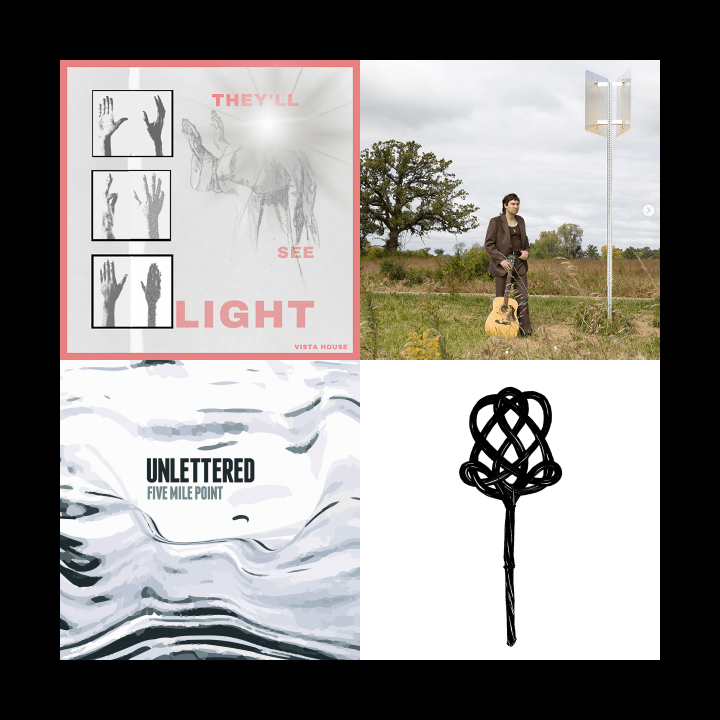
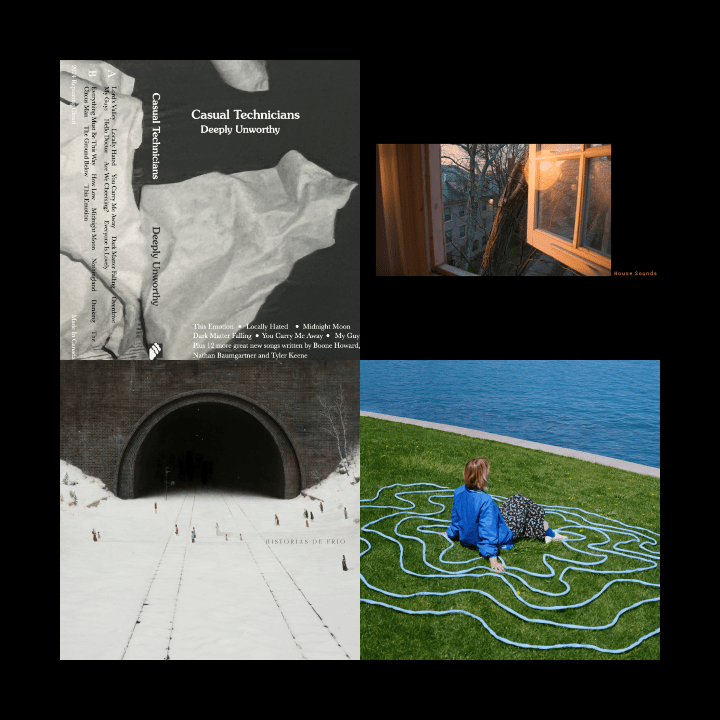

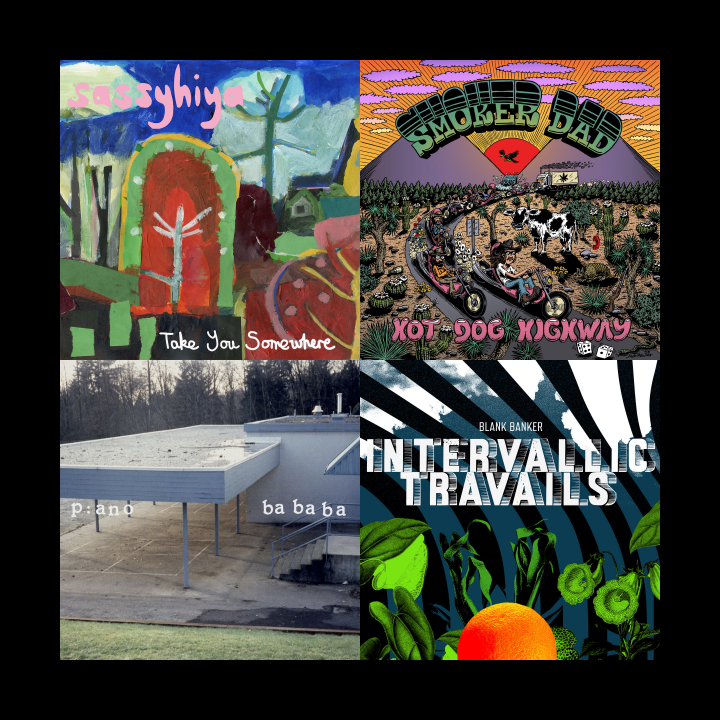
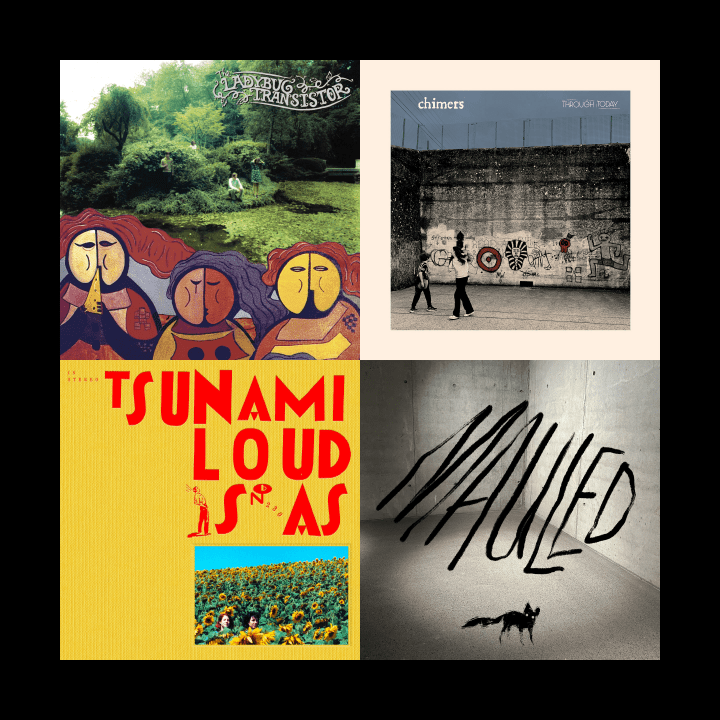
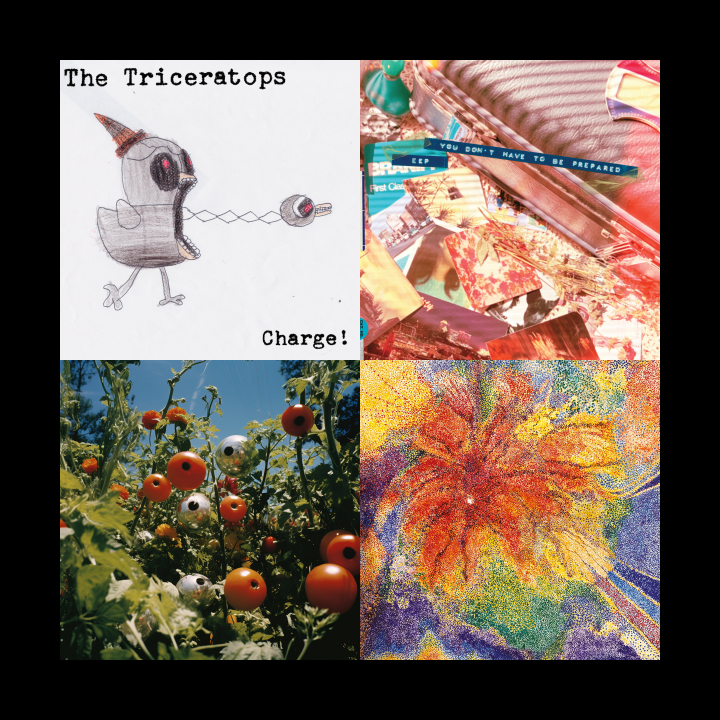
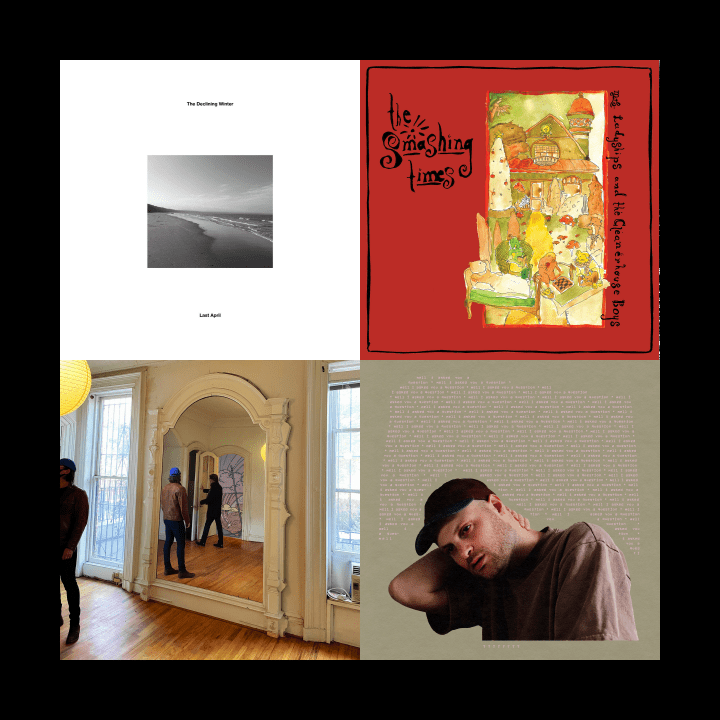
 Rosy Overdrive