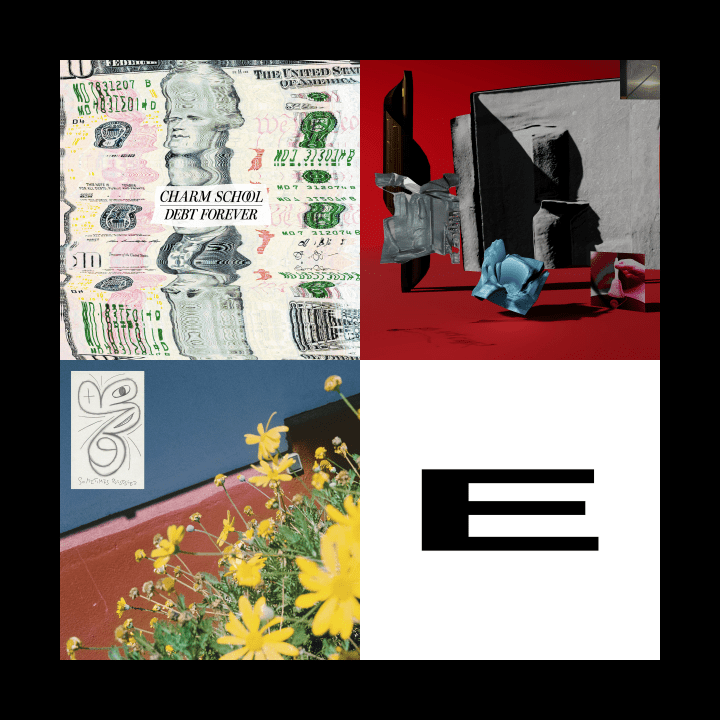
Pressing Concerns: Hilken Mancini Band, Hit, Onsloow, Miranda and the Beat

On this Thursday Pressing Concerns, a bunch of new albums out tomorrow (October 25th) await us below: new LPs from Hilken Mancini Band, Hit, Onsloow, and Miranda and the Beat. It’s been an eventful week on Rosy Overdrive, so if you missed any of this week’s earlier posts (Monday looked at records from Langkamer, Seafoam Walls, Humdrum, and Ironic Hill, Tuesday’s post featured American Motors, The Low Field, Jealous Yellow, and Puddled, and on Wednesday I went long on St. Lenox’s Ten Modern American Work Songs), check those out, too.

If you’re looking for more new music, you can visit the site directory to see what else we’ve written about lately. If you’d like to support Rosy Overdrive, you can share this (or another) post, or donate here.

Hilken Mancini Band – Hilken Mancini Band

Release date: October 25th
Record label: Girlsville
Genre: Power pop, pop punk, fuzz rock
Formats: Vinyl, digital
Pull Track: Set My Sights

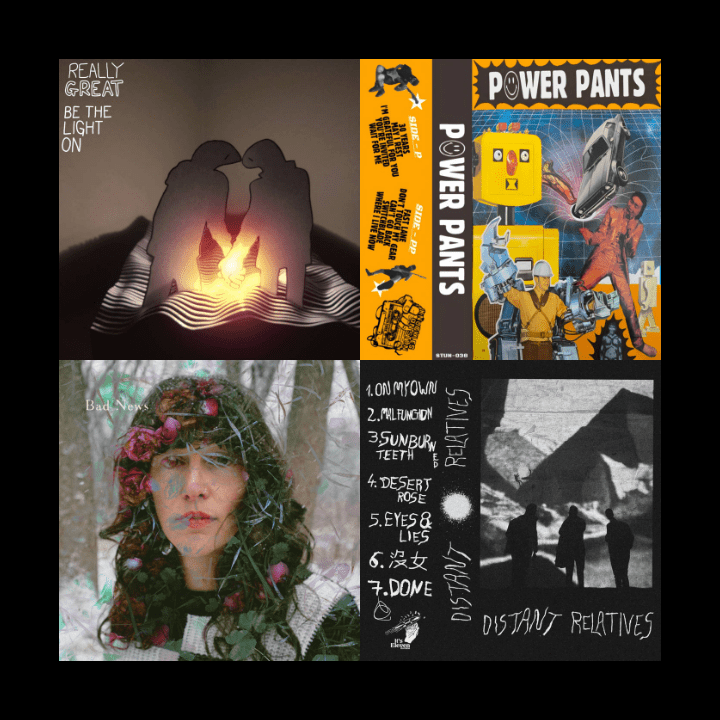
It’s certainly not uncommon these days to hear a new indie rock band that sounds like Juliana Hatfield, Tanya Donelly, and that dog. The difference between your typical buzzy “bubblegrunge” group and the Hilken Mancini Band, however, is that the latter is fronted by someone who can count the aforementioned acts as peers rather than formative influences. In the mid-90s, Hilken Mancini co-led the Boston alt-rock/pop group Fuzzy, who toured with Buffalo Tom and Velocity Girl and released two albums for Atlantic before fizzling out before landing a “proper” radio hit at the end of the decade. Mancini never went away, though, playing in bands like Gramercy Arms, Shepherdess, and The Monsieurs, and most recently starting up a quasi-solo project backed by bassist Winston Braman (formerly of Fuzzy and a longtime Thalia Zedek Band member), drummer Luther Gray (Tsunami), and guitarist Melissa Gibbs (Heavy Stud). I admittedly haven’t kept up with all of Mancini’s output since the dissolution of her most well-known band, but the self-titled debut album from the Hilken Mancini Band arrives with a bang, embracing sugary, hooky, fuzzy guitar pop music like 1994 never fully left us. Although Boston indie rock veterans from J. Mascis to Chris Brokaw to Zedek to the majority of Buffalo Tom apparently guest on this record, Mancini is unambiguously the star of Hilken Mancini Band, and she excels in the role.

The ten songs of Hilken Mancini Band practically helicopter in with their loud, unmistakable catchiness front and center. Album opener “Set My Sights” would already be a classic just based on the strength of the verses and instrumental alone, but Mancini somehow finds a classic 90s alt-pop-rock chorus that nobody’d thought to use yet to really push the song over the top. “Set My Sights” is hard to top in terms of pure immediate energy, but that doesn’t mean the Hilken Mancini Band don’t try–punchy first half highlights “Up 2 11” and “Blackout” similarly violently beat their hooks into the listener with a club, and second half kickoff “Anniversary” leads with a riff that’s so huge-sounding that Mancini’s lyrical reference to You’re Living All Over Me is plenty justified (is that you squealing along, Mr. Mascis?). These are the most obvious head-turners on the record, but Hilken Mancini Band is just as catchy in the “album tracks”, too–right up until the album’s end, where the band surprisingly but welcomely try on a bit of acoustic-led post-Replacements, Lemonheads-y college rock/power pop for size with “Thru 2 U” and then bring it all together for a wobbly but full-throated conclusion in “Let U Go”. The latter song also has some fun and explosive guitar soloing, but whoever’s supplying the fireworks doesn’t interrupt the main show. (Bandcamp link)

Hit – Bestseller

Release date: October 25th
Record label: One Weird Trick
Genre: Experimental pop, noise pop, art rock, art punk, prog-pop, psych pop
Formats: CD, digital
Pull Track: Chumbox

Vocalist/guitarist Craig Heed and guitarist Justin Mayfield have spent the last ten years as one half of New York psychedelic/prog-pop quartet Miracle Sweepstakes, but earlier this decade, the duo joined with bassist Charles Mueller and drummer Cameron LeCrone to form a different quartet called Hit (not to be confused with Hits with an “s”, the Bay Area trio). Taking a page from Big Star, their debut album is called Bestseller, and it’s been in the works for a bit now–two songs from the album, “Vanderbilt” and “Great Conjunction”, came out back in 2022, and “Nu Jangle” showed up in February of this year. I enjoyed the layered, polished sound of Miracle Sweepstakes’ last record, Last Licks, but the chaotic pop rock of “Nu Jangle” and “Vanderbilt” felt fairly distinct from Hit’s sibling band, and it’s no less exciting to hear the group in a larger setting. The advance singles merged Brainiac-like noisy post-punk with snatches of heavenly guitar pop that worked well in short bursts–to translate this attitude to an LP, Hit have to get even more creative, pushing further into the depths of what their previous material had hinted at to turn Bestseller into something just as exhaustive and adventurous as Last Licks was in its own way.

“Arite” is a real, proper introductory track–four minutes long, but never quite letting go of its hesitant, tense “prelude” vibe, even when the refrain turns into a torrent as the song draws to a close. Bestseller provides plenty of release, of course–the three older singles all follow “Arite”, and get right to work at establishing Hit’s debut record as an ace pop album, and then some. In particular, “Nu Jangle”’s combination of a zany, bonkers prog-pop instrumental with some really sweet, arresting vocals from Heed is still one of the most thrilling things I’ve heard this year (is this what Ween sound like to people who like Ween?). The underwater-sounding “Chumbox” is an unlikely early Guided by Voices-esque psych-pop triumph, and “Inner Critic” marks the midpoint of Bestseller by going all-in on what I can only really describe as “jangle-prog”.  Bestseller never really gets “predictable”, but Hit at least sound a bit more comfortable in the second half, settling in to make offbeat but excellently-crafted pop music in a way not unlike Miracle Sweepstakes or peers like Curling. “The Spot” and–in particular–the sugary guitar pop of penultimate track “I Hadn’t Noticed” ensure that Bestseller actually leaves more shined-up and sparkly than it arrived. I’m not sure if there’s a side of Hit that I “prefer” over the other, and that’s entirely due to how smooth the band make the journey feel. (Bandcamp link)

Onsloow – Full Speed Anywhere Else

Release date: October 25th
Record label: Tiny Engines
Genre: Power pop, emo, pop punk
Formats: Vinyl, digital
Pull Track: Taxi

Onsloow are an emo-tinged indie rock, power pop, and punk group from Scandinavia, the unofficial homeland for modern emo-tinged indie rock, power pop, and punk groups (more specifically, they’re from Trondheim, Norway). I was drawn in by Onsloow’s self-titled debut album that showed up at the beginning of 2022, and I wasn’t the only one, as the band caught the attention of Tiny Engines (the unofficial home label for modern emo-tinged indie rock, power pop, and punk groups from Scandinavia). Before putting together what would become their sophomore album, Full Speed Anywhere Else, though, Onsloow faced a problem–their lead singer, Johanne Rimul, was too busy pursuing a master’s degree and a “growing family” to continue to front the group. Guitarist Mathias Nylenna, drummer Morten Samdal, and bassist Lasse Berg recruited Helene Brunæs (of Lille Venn) to take her place–while Onsloow are admittedly far from a household name, Brunæs nonetheless had some large shoes to fill, as Rimul’s strong, confident pop vocals were a huge part of Onsloow’s appeal. Brunæs is close enough to her predecessor for Onsloow to pick up right where they left off on Full Speed Anywhere Else, but distinct enough that she doesn’t fall into the trap of just doing a less-impressive imitation of Rimul’s vocals, either.

There’s still a shift from S/T to Full Speed Anywhere Else–the songs have less of a serious, torrential emo-rock tinge and more of a power pop warmth to them. Whether that’s a change brought on by the new vocalist or from the songwriting level seems impossible to pinpoint–regardless, it’s a sheen that feels just as natural on the band as their previous record’s did. The mid-tempo, four-minute opening track “Riding on Lies” wrings just about every bit of catchiness it can from its ingredients, from Brunæs’s ascendent power pop vocals to the shimmering guitar leads to heavy-duty power chords. As the quartet wistfully bounce through the synth-colored “Taxi”, they feel closer to Dutch indie pop group Snow Coats or even a more electric version of Fuvk’s bedroom pop than their louder peers in Spielbergs. Although there are a few real-deal “rock” moments on Full Speed Anywhere Else, the emotional heart of the album to me feels more visible in the less breakneck, more thoughtful pop tunes like “Body Parts”, or the closing duo of “Muscle Memory” and “Now I Get It”. It’s been a couple of years since their first album, Onsloow have weathered a major lineup change, and landed with a label that potentially gives them a wider audience. Full Speed Anywhere Else isn’t a step down (or even a tonedown), but it does sound like a band that allows themselves a breath every once in a while. (Bandcamp link)

Miranda and the Beat – Can’t Take It

Release date: October 25th
Record label: Ernest Jenning/Khannibalism
Genre: Garage rock, punk rock
Formats: Vinyl, digital
Pull Track: Can’t Take It

After years of putting out standalone singles, New York/New Orleans quartet Miranda and the Beat finally dropped their self-titled debut album last year via Ernest Jenning and Khannibalism. Thanks to everything from frontperson Miranda Zipse’s vocals to Dylan Fernandez’s Farfisa organ to the group’s propensity for strong grooves, Miranda and the Beat was an impressive collection of Detroit-style soulful garage punk with bits of classic pop music and new wave in the mix, too. Since that album’s release in May of last year, Miranda and the Beat have toured it extensively, dropped down to a trio (Zipse on guitar and vocals, Fernandez on Farfisa and guitar, and Alvin Jackson on bass), and put an entire second album, Can’t Take It, to tape. Written and recorded in just a few days at King Khan’s Moon Studios Rock n Roll Vortex in Germany, Can’t Take It is the lean, immediate, punk rock counterpart to Miranda and the Beat’s more measured, restrained take on rock and roll. Not that there aren’t subtler moments on this album, but Miranda and the Beat are more laser-focused than ever on their garage-punk bread and butter and getting just about everything they can out of it over the record’s dozen songs. 

The opening title track does an incredible job of setting the stage for what to expect on Can’t Take It–the guitars, Zipse’s voice, and the Farfisa are given roughly equal weight, all working together to create something satisfying yet slightly unnerving-sounding in its dead-serious rock and roll attitude. Don’t mistake “streamlined” for one-note, though–there’s plenty to differentiate songs like the ninety-second deranged garage-pop of “Earthquake Water” from the three-minute over-the-top breakdown of “Anxiety” and the Return of the Groove in “El Lobo Negro”. If there’s a “chill” section of Can’t Take It, it’s probably the middle–that’s where we get the record’s sole acoustic track, “The Last Time”, an inspired take on Dead Moon’s “I Tried” that introduces a bit of noir to the mid-tempo garage rock, and the relatively contemplative retro-pop of “In My Life”. The momentum of Can’t Take It is such that the trio can dip into these reserves and come out the other side in basically a single motion, picking up the garage rocking thread with “New York Video” and “Manipulate Me” like it’s no one’s business. The spectre of 1980s goth-infused rock and roll has always hovered over Miranda and the Beat’s music, but the trio make it as explicit as ever in the dramatic closing track “The Secrets”, writhing and skulking for four electric minutes before the record comes to a close. It’s a fitting wrap on a successful sophomore album, one that retains the signature of its group while doing something palpably different. (Bandcamp link)

Also notable:

Pressing Concerns: St. Lenox, ‘Ten Modern American Work Songs’

Release date: October 25th
Record label: Anyway/Don Giovanni
Genre: Indie pop, singer-songwriter, synthpop
Formats: Vinyl, digital

I believe that Andrew Choi’s previous album as St. Lenox, 2021’s Ten Songs of Worship and Praise for Our Tumultuous Times, still holds the record for “most words I’ve written about a single album for this blog” to this day. St. Lenox’s music brings that out of me (and, anecdotally, plenty of other writers)–Choi’s writing, ambitious, autobiographical, stream-of-consciousness-feeling but always circling its way back to whichever theme he’s zeroed in on for a given record, is particularly welcoming to dissection, discussion, and other “dis-” words. The first decade of Choi’s music career followed him from central Ohio to New York City and brought four rich records in this vein–2016’s Ten Hymns from My American Gothic, a meditation on Choi’s upbringing as a first-generation Korean-American in Missouri and Iowa, might be his “best” album, although following Choi’s writing across several subjects in records up to last year’s religion-inspired LP is a reward in itself. The fifth St. Lenox album, Ten Modern American Work Songs, looks at a key aspect of Choi’s life that has undoubtedly shaped the trajectory of St. Lenox even as it’s mostly been on the periphery of his writing thus far. Somewhat jokingly dedicated in honor of the “10-year Reunion of the NYU Law Class of 2014” (in lieu of the “financial gift” the university had suggested to mark the occasion instead), Ten Modern American Work Songs traces Choi’s journey from a graduate student and aspiring philosophy professor at Ohio State University to a JD program in Manhattan to his current status as a lawyer.

Listen, I’m no big-shot corporate lawyer in New York City (or whatever Andrew Choi is these days), and I’m guessing you aren’t either, but–and maybe you’re aware of this–it’s a pretty long road for anyone to get to that point, and there’s probably something that Choi experiences along the way that doesn’t quite seem as foreign to you. Maybe it’s the grinding in grueling, low-paying jobs with a distant goal on the horizon, maybe it’s the crushing student debt he takes on because received wisdom says it’s a good idea, maybe it’s the white collar job workaholic cultural death spiral, maybe it’s a career/life goal change that requires him to leave a place that truly felt like “home”.  These are some of the clearest mile markers on Ten Modern American Work Songs, delivered in a way that will be eminently familiar to anyone who’s experienced St. Lenox’s previous work. Musically, Choi’s distinct style of indie pop is as bright as ever, corralling piano pop, synthpop, and occasional folk and violin touches into something that never threatens to distract from the lyrics but sharp enough to compliment them. Choi’s huge voice–the one that got him noticed at Joe Peppercorn’s open mic in Columbus over a decade ago, leading to a long partnership with Anyway Records–is just as incredible, and his pointed ramblings remain pointed and rambling (I mentioned John Darnielle, Craig Finn, and Michael Stipe last time–as well as comparing Choi to an “over-excited professor”, which I wrote before I even knew that was his original ambition).

Even for St. Lenox, Ten Songs of Worship and Praise for Our Tumultuous Times was sprawling and overflowing–graded on Andrew Choi’s curve, Ten Modern American Work Songs is a bit more “pop”, the songs a bit more upbeat and the instrumental hooks a little more prevalent. Combined with some moments where Choi’s voice sounds higher and even younger than he has of late in “Kalahari” and “Your Local Neighborhood Bar”, it feels like he’s tapping into the energy that colored his relatively “rough draft” first album, 2015’s Ten Songs About Memory and Hope–which indeed coincided with a lot of the events depicted in this record. “Courtesan”, the first proper song on the album, combines the giddy (the instrumentation, the “Victory! After seven years of agony!” declaration) with the sarcastic self-congratulation of the song’s title. “Lust for Life”, the musically-minimal follow-up track that feels more in line with Choi’s more recent work, is a more clear-eyed look at this moment, with its refusal to romanticize the previous track’s dizzying experience and pull up the ladder (“I hear the people are starting a union, Jesse / I hope if we work together, we can make this school a better place”) complimenting it satisfyingly. 

Like “Courtesan”, the most triumphant-sounding, pop-forward moments on Ten Modern American Work Songs combine genuine elation with a three-dimensional attitude that deepens the foundation of the tracks, if not outright contradicting them. The most fun-sounding song on the record is arguably “Quasi-Nichomachean Ethics (Drunk Uncle Advice)”, the parenthetical qualifying the full-throated stream-of-consciousness pointers Choi gives to a nephew on his twenty-first birthday (“Don’t check your emails after 7pm, dear God / ‘cause ignorance is the the better part of valor,” Choi sings early in the song, and later says the subtext out loud with “That’s why I am telling you to learn from my mistakes in this life”). The penultimate song “Your Local Neighborhood Bar” rivals “Quasi-Nichomachean Ethics” in terms of pure jubilation, as Choi steps back into the world of Peppercorn’s open mic nights at Andyman’s Treehouse in Columbus (“Last week, down at your neighborhood bar / I heard that it was some kind of legendary / … / I gotta go there and sing you a song”). As modern-day Choi sits on the subway and reminisces, however, he goes beyond the rose-tinted, Cheers-evoking glasses with which he begins (“Seven years ago stuck on the ivories / It reveals explicit themes / Seven years yeah, stuck in the brain”).

The flip side of this is that Ten Modern American Work Songs’ subtler, less outwardly triumphant moments contain a hint of that “victory” in them, even as one might need to lean on greater context to see them. Choi’s letter to the titular character of “Rudy” might feel like a backhanded compliment (“Did you know that I’ve been inspired by you / To give up on my dreams and be a family man”), but both the rest of the song (“Sad sack institution salaryman / Overtime stuck on the dashboard”) and the album as a whole reveal the sincerity of the remark. Meanwhile, “The House I Left for Work in New York” is shot through with a very real sense of loss, the feeling like Choi is giving up the tangible manifestation of the American dream for something much less certain in the future–but the entire song sounds different after reading that the cover of Ten Modern American Work Songs depicts Choi’s current home, which he put a down payment on last year at the age of 43. And then there’s the final song on the record, “On Fulfillment”. Taking the form of a conversation at a wedding, Choi finishes the record by saying “Did you know ive been up at night, screaming curse words in the dark? / As if the whole of my career has been a big mistake”–that’s a hard note to end on no matter how you slice it. Salvation from this creeping feeling can only be won by taking a wider view of both Ten Modern American Work Songs and St. Lenox’s oeuvre as a whole, which makes the case that, even in this worst-case scenario, one’s work “career” is (or, at least, can be) just one piece of something larger. (Bandcamp link)

Pressing Concerns: American Motors, The Low Field, Jealous Yellow, Puddled

On this fine Tuesday, a brand new Pressing Concerns looks at new albums from the likes of American Motors, The Low Field, and Jealous Yellow, as well as the debut EP from Puddled. It’s a great and eclectic set, and if you missed what we looked at yesterday (Langkamer, Seafoam Walls, Humdrum, and Ironic Hill), check that post out, too.

If you’re looking for more new music, you can visit the site directory to see what else we’ve written about lately. If you’d like to support Rosy Overdrive, you can share this (or another) post, or donate here.

American Motors – Content

Release date: October 4th
Record label: Expert Work/The Ghost Is Clear
Genre: Noise rock, post-hardcore, post-rock, post-punk
Formats: Vinyl, digital
Pull Track: Colonial Lanes

Those of you who are here for the times when Pressing Concerns covers upbeat, catchy guitar pop records are permitted to skip this one. American Motors are from Lancaster, Pennsylvania, but that’s not important–they could be from anywhere in the United States that’s far away enough from bustling urban centers but close enough that the ruins of something once more lively hover around unavoidably. They’re a trio, led by the songwriting duo of Dustin Travis White (guitar) and Alex Steward (drums), with Brad Williams joining them on bass for their first album, Content. American Motors recorded the album with J. Robbins, who helped them zero in on a Rust Belt-inspired post-punk/noise rock/post-rock sound, keenly sharpened and honed much more finely than a lot of bands in their shoes would dare to even attempt. White and Steward apparently reworked the songs several times before finally going in to record them, referring to the process as “noise rock Steely Dan”–whatever they had to do to get there, though, it’s hard to argue with how immaculately Content works as a sum of its parts. 

American Motors understand that the monster you can’t see is even scarier, and Content utilizes a huge amount of empty space to hover around the edges of these songs. Williams’ bass is essential for that notes that do get played, while the record’s characters always seem to be in real, palpable danger, running from something or provoking someone or something they shouldn’t have (and, if they’re not, they’re dispassionately watching the plights of those who are, not even bothering to muster up a “whew, glad that isn’t me”). Opening track “Colonial Lanes” is a shapeless, formless post-noise rock soundscape, the narration getting overtaken by moments of atmospheric instrumentals and a few genuine “rock” sections. If you’re looking for more pyrotechnics, American Motors eventually offer a few more up in “(A Billboard Reading) Dissolve Jefferson”, which eventually burns up over its six-minute length, and the bass-anchored “Three Crosses”, which is the American Motors’ minimal version of heavy alt-rock like Failure and Hum.

Not that Content is ever not dark, but the clearer its surroundings come into focus, the bleaker it feels. In the frantic “Tamarack”, the titular off-Interstate tourist trap becomes just another place for the song’s subject–doomed by an unseen, unknown force to a life on the run–to hide until it’s time to move on yet again. The closing sucker punch of “The Former Mall Anchor Store Call Center Blues”, which traces the lifespan of the mall-turned-call center-turned-“closed”, says all you need to know about that one, and in “There Is a Twin”, paranoia and confusion finally bubble up to the surface in the form of plowing-forward alt-rock riffs and some creepy, Pile-esque imagery and storytelling. The cavernous emptiness falls away on Content’s closing track, “Statues”, replaced by a wave of static and fuzz that accompanies the band’s hammering away at more noise rock/post-punk infrastructure. “We need more blood from the host,” American Motors ominously intone over and over again in “Statues”, expertly mimicking the forces of extraction that created the world around them. (Bandcamp link)

The Low Field – The Low Field

Release date: October 18th
Record label: Self-released
Genre: Emo, slowcore, post-rock
Formats: Vinyl, digital
Pull Track: Heaviness

The Low Field are a new band from Limerick, Ireland made up of musicians from the city’s other groups–one of the two vocalist/guitarists, Diarmuid O’Shea, plays in Casavettes, the other one, Danny O’Shea (I don’t know if they’re related or if it’s just a common Irish surname) plays in Deadbog, and both members of the rhythm section (drummer Brendan McInerney and bassist Mícheál Keating) are from Bleeding Heart Pigeons. The band first came together in 2021 “as a direct result of” a shared admiration for the album Ground Aswim by North Carolina emo project Sinai Vessel, and this reference point puts us at least somewhat close to what we hear on the group’s self-titled debut album (following the “Heaviness / Tachycardia” single last year, both sides of which ended up on the LP). “Limerick based quiet then loud then quiet” reads The Low Field’s Bandcamp description, an accurate summation of their record’s sweeping sound that incorporates a bit of chilly, emo-ish indie rock, but also a bit of slowcore and even orchestral post-rock (thanks to Keating’s violin). The guitars display a minimal, decorative touch, then roar into full force and then recede, all the while the O’Sheas guide the songs from understated to full-on emo-rock territory with their vocals.

Everyone loves a good pin-drop-quiet six-minute opening track, and The Low Field are more than happy to oblige with “Heaviness”. In terms of pure noise, it’s certainly not the “heaviest” moment on The Low Field, but its crushing, slow-crawl attitude for the majority of its runtime ensures that it does in fact live up to its title in its own way. “Heaviness” does build to a crescendo, but it steps back almost as soon as it reaches it, so it’s still a bit of a jolt when the mid-tempo electric guitars introduce “Stomach Ache” (even though the track largely still finds The Low Field in “meandering” mode, just with the volume raised a little bit). As the record progresses, we start to get a handle on The Low Field, a band that indeed loves to begin in a dingy basement of languid guitar leads only to charge into something louder and stormy by the end of the track (see “The Urgency” and “Gather”). The five-minute emo overload of “Tachycardia” injects just a bit of post-hardcore messiness into The Low Field’s refined sound, although this second-half highlight is soon tempered by a (equally strong) diversion into lengthy shimmering instrumentals with “Reuntied”. It’s a really solid first record on the whole–listening back to it, I think I find the “quiet” parts on The Low Field the most rewarding, but, the moments where the band snap into the “loud” portion of their sound are key to underscoring the true range of what The Low Field are pulling off here. (Bandcamp link)

Jealous Yellow – Czech Vampires

Release date: October 14th
Record label: Erste Theke Tonträger/Sifter Grim
Genre: Synthpunk, art punk, garage punk, post-hardcore, post-punk, noise rock
Formats: Vinyl, digital
Pull Track: Hypotenuse

Benjamin Rea has played in a bunch of bands in his native Seattle (Laminate, Diirt, Reverse Death, and Soda Gumball), the majority of which are associated with local labels Sifter Grim and Half Shell. The former of those two imprints also released the debut album from Rea’s solo project, Jealous Yellow–2021’s Sugarweeper, which was the result of Rea being stuck in his studio apartment during the early stages of COVID-19. The second Jealous Yellow LP, Czech Vampires, is the product of the pandemic too, in a way–while touring the first record in Europe, Rea caught the virus and subsequently had to quarantine in a hostel in Prague for two weeks, leading to the conception of most of these songs. Co-released by Sifter Grim and Erste Theke Tonträger (Public Interest, Dr Sure’s Unusual Practice, Supercrush), Czech Vampires is a classic freak punk LP–it’s synth-punk but with plenty of interesting guitarplay, equally likely to lapse into a tortured Brainiac-like post-hardcore flameout or a curious, arty no wave disintegration like a more irritated Pere Ubu. The fourteen-song, forty-two minute record is an exhaustive journey, continually chipping away at a punk rock mountain and dropping bizarre but potent nuggets right up until the noise collage that closes the album.

Not that Czech Vampires is going to be recognized as “pop music” by most people, but opening track “Hypotenuse” is a welcome mat for those open to the contradiction, offering up a propulsive piece of garage-y egg punk that’s about as pleasing-sounding as this kind of thing comes. “Pop Fiction!” does a similar thing but with minimal synthpunk, letting Rea go absolutely wild over top of a slick, minimal groove. Almost every moment on Czech Vampires feels like a reset of some kind–“Sweat Our Yr Good Clothes” lives up to its title by introducing the idea of slow-burning, steadily-building post-punk to the mix, “Baker’s Dozen” suggesting that Jealous Yellow can be just as potent by dropping the outward aggression and embracing their insular weirdness. The only rule of Czech Vampires is that there aren’t any rules, which starts to make stop-and-start warped journeys like “Sticky Plate/Tired of Being Good” and the title track as well as the no wave horns of “Perms for Pearl” make more sense. Of course, Jealous Yellow pretty much always approach Czech Vampires like it’s the most natural thing in the world, which goes a long way towards the coherence of the album (and, you know, throwing in cathartic punk rippers like “Dirty Hand” throughout the record helps, too). The aforementioned closing jumble of “Let’s Lay an Egg” is the final boss, layering discordant synths, manipulated vocals, and rhythmic excerpts together with a clear-eyed sense of purpose that Jealous Yellow have spent an entire album honing. (Bandcamp link)

Puddled – Puddled

Release date: September 26th
Record label: Crafted Sounds
Genre: Fuzz rock, noise pop, 90s indie rock, alt-rock, grunge-gaze
Formats: CD, cassette, digital
Pull Track: Bleed

Puddled are a new band out of Philadelphia formed by a couple of ex-Baltimore rockers–vocalist/guitarist Naomi Davidoff played in Spooled Up, and Kyle Balkin in Leisure Sport. For their self-titled debut EP, they’re a quartet joined by the rhythm section of Laura Banner (bass) and Jesse Hutchison (drums), while Samuel Acchione (of Alex G’s band), who they tapped to produce the record, also contributes keyboard and guitar. Puddled is out via stalwart shoegaze/noise pop label Crafted Sounds, and it’s a natural fit, although Puddled are not quite as interested in textured guitar layers as some of their peers. The seven-song introduction to the quartet is full-on fuzz pop at its most electric and catchy, feeling closer to bands like Superchunk, The Breeders, or even Screaming Females than your canonical shoegaze acts. Davidoff is a strong and attention-grabbing vocalist, holding her own among the rest of the band’s spirited blasts of noise. Though it’s only eighteen minutes long, Puddled finds space for both power-punk bullet trains and some more contemplative moments, too, providing examples of the full range of Davidoff’s songwriting in a fuzzed-out but easy-to-digest package.

Puddled kick off their on-record debut with their version of a slow burn in “This Time”. The song, which does seem to draw from the disintegration of a relationship, isn’t quite the band’s own “Like a Fool”, but it does take about a minute to properly kick in and let the cathartic fuzzed-out melodies flow. “Bleed” is the sound of the dam fully breaking, an all-in fuzz-pop-rocker that demonstrates that, while Puddled may love distorted guitars, they’re hardly gazing down at their feet when it comes to energy. A sturdy and consistent debut record, just about every song on Puddled is worth a mention–it’s hard not to root for a band that pulls together a stretch like the melodic tornado of “Bleed”, the dreamy, propulsive “Same”, and the fuzz-punk-in-a-blender “Between”.  Puddled call themselves a “grunge and alternative rock band”, which is probably more accurate than shoegaze–even on the lighter songs on the EP, like the (initially) low-key “Tides”, there are both kinetic guitars and powerhouse drumming from Hutchinson to continue Puddled’s impressive streak. Our clearest glimpse at Puddled might come in the EP’s final track, “Space”, which leaves just enough of the absence implied by its title around Davidoff’s vocals to present a transparent picture. Of course, Puddled end the song (and subsequently the record) by launching into a huge, instrumental, melodic outro, so don’t worry about any deficiencies in that department, either. (Bandcamp link)

Also notable:

Pressing Concerns: Langkamer, Seafoam Walls, Humdrum, Ironic Hill

You don’t even know it yet, but this week in late October is going to be a great one for Rosy Overdrive readers. We’re starting with the Monday Pressing Concerns, featuring new albums from Langkamer, Seafoam Walls, Humdrum, and Ironic Hill (three of which came out last week, and one of which is from back in August).

If you’re looking for more new music, you can visit the site directory to see what else we’ve written about lately. If you’d like to support Rosy Overdrive, you can share this (or another) post, or donate here.

Langkamer – Langzamer

Release date: October 16th
Record label: Breakfast
Genre: Indie pop, folk rock
Formats: Vinyl, CD, digital
Pull Track: Heart of Tin

I first came across Bristol quartet Langkamer when they released an EP called Red Thread Route in late 2022, and kept up with them as they put out The Noon and Midnight Manual, their sophomore album, the following year.  I enjoyed the sound that the four of them (drummer/vocalist Josh Jarman, guitarists Ed Soles and Dan Anthony, and bassist Tom Kelly) had hit on as a unit, bits of post-90s “slacker rock”, classic British guitar pop, folk rock, and even a bit of alt-country delivered in a breezy package. I’m not all that shocked that their third album, Langzamer, is a great LP–all the ingredients for Langkamer to pull it off were already visible. Langzamer itself, however, is a bit of a surprising turn for the band–it’s a more serious and darker record than the previous ones I’d heard from them, with Jarman’s lyrics dwelling heavily on death and loss and the music dampening down their past brightness a bit to follow suit (it’s worth noting that, rather than just being a nonsense take off of their band name, “langzamer” is actually Dutch for “slower”). The quartet went to Falmouth to record Langzmer with Ben Woods of The Golden Dregs, and while the group’s guitar pop instincts remain intact, the muted presentation clearly best suits these songs.

“Do you want the good news or the bad news first? / They’re both bad news, but the bad is worse,” is how Jarman starts “Heart of Tin”, Langzamer’s opening track and a really key mood-setter. Langkamer unsteadily march into a mid-tempo indie rock song that matches their lead singer’s uneasy and small-sounding vocals, but the guitars find a lot of melodic lines within the song’s nooks and crannies, and Jarman eventually manages a half-rousing refrain. The balance continues to be struck throughout Langzamer, indie pop delivered deliberately and thoughtfully–the sweeping instrumental of “Aberfan” can’t fully escape the melancholy at its core, while the bright folk-country “Movement” and the buzzing pop rock of “Richard E Grant” help the first half of the record give off some semblance of “upbeat”. The blunt, intent chorus of the former (“If you gotta do it / You can’t go through it / Go around / Go around”) is illustrative of how jarring Langzamer can be, something that also shades album centerpiece “Salvation XL” (a hallucinogenic ballad about religion at “a Burger King in Marrakesh” that is funny, but not a joke). The lightness is furthest away in the late-album quiet tracks, though, with “At the Lake” and “Bluff” really leaving nowhere for Jarman’s heavy voice to hide. The latter song in particular is a tough one–it’s the last song on the album, and it’s a real “sit in your car for a minute after it ends” kind of closer. I wasn’t really expecting Langkamer to make something like this, and I’m not sure the band themselves planned on it either. These songs are what they had, though, and Langzamer does exactly what it must. (Bandcamp link)

Seafoam Walls – Standing Too Close to the Elephant in the Room

Release date: October 18th
Record label: Dion Dia
Genre: Art rock, noise pop, electronic rock, shoegaze, dream pop, jazz-pop
Formats: Digital
Pull Track: Cabin Fever

Miami quartet Seafoam Walls came together in the late 2010s and got a bit of attention via their debut album, 2021’s XVI, which came out on Thurston Moore’s Daydream Library label. The band (guitarist/vocalist Jayan Bertrand, guitarist Dion Kerr, bassist Joshua Ewers, and electronic drummer/percussionist Josue Vargas) describes their music as “Caribbean jazzgaze”, and that’s admittedly a succinct summation of XVI, which does indeed combine elements from jazz, Caribbean music, indie rock, and electronica in an intriguing way. If you liked XVI (or are even just curious based on that description of it), you’ll be pleased to hear that Seafoam Walls are still building from the same ingredients on their sophomore album, Standing Too Close to the Elephant in the Room. Not that XVI was an extremely difficult listen, but the band’s follow-up seems to emphasize the “pop” side of Seafoam Walls’ experimental pop, retaining the offbeat jazz and electronic elements but, for the majority of Standing Too Close to the Elephant in the Room, introducing them as supporting elements to the record’s more structured, recognizable indie rock core. Though I still wouldn’t call Standing Too Close to the Elephant in the Room a straight-up shoegaze album (if for no other reason than to avoid the wrath of “pure” shoegaze fans), the psychedelic, layered haze over top of Seafoam Walls’ pop music is at the very least a clear link to the genre.

Bands like Seafoam Walls probably can’t ever be “streamlined”, but the eight-song, thirty-five minute structure of Standing Too Close to the Elephant in the Room feels just about as focused as this kind of music can get. The first two tracks on the record, “Humanitarian, Pt. I” and “Humanitarian, Pt. II” are Seafoam Walls as a dynamic, dreamy indie rock band, slowly and methodically building things up in the former and letting loose in the form of breezy indie pop in the latter. Seafoam Walls’ jazz-rock instincts creep in during the outro to the latter song, but this turns out to be a feint, with “Cabin Fever” actually upping both the volume and the experimentation in a way that puts them in line with the current Julia’s War/Candlepin wave of “new” shoegaze/noise pop. Those looking for the jazz attitude to return will be pleased to hear sprawling second half highlights like “Hurricane Humble” and “Sad Bop”–the latter of the two actually embraces the sparser, more thoughtful end of the jazz-pop spectrum, marrying Seafoam Walls’ restlessness with an audible peace. Of course, Standing Too Close to the Elephant in the Room still ends with “Ex Rey”, a dizzying seven-minute Jenga tower of noises and ideas–when every piece of that song is as satisfying and captivating on its own, though, it’s almost just as tranquil to watch the tower wobble. (Bandcamp link)

Humdrum – Every Heaven

Release date: October 18th
Record label: Slumberland
Genre: Jangle pop, power pop, new wave, post-punk, dream pop
Formats: Vinyl, CD, digital
Pull Track: Come and Get Me

Humdrum may be a brand-new project, but its leader, Loren Vanderbilt, is a veteran of guitar pop. The Chicago-based Vanderbilt spent most of the 2010s making indie pop as one-third of Windy City group Star Tropics, releasing a LP and a few singles together before breaking up at the end of last decade. Vanderbilt began work on Humdrum not long afterwards, eventually resulting in Every Heaven, the project’s ten-song debut album. Vanderbilt has a keen grasp on a very specific time and place in the history of indie rock as Humdrum, as he carefully and devotedly pulls together jangle pop, new wave, college rock, and dream pop from the 1980s and early 90s to make Every Heaven’s warmly familiar sound. Although it does feature some guitar contributions from Vanderbilt’s former Star Tropics bandmate Scott Hibbitts, Every Heaven is largely the work of a singular pop-minded visionary, with everything from its prominent, pounding mechanical drumbeats to its New Order-y synth washes to sprinkled guitar arpeggios all working in tandem to service the melodies and hooks. Unfailingly upbeat but also unafraid to incorporate the more wistful side of Vanderbilt’s influences, Humdrum is somewhere between a more melancholic version of bands like Chime School and Ducks Ltd. and a more peppy Lost Film or Old Moon.

Perhaps reflecting its nature as a solo project begun during the pandemic, the writing throughout Every Heaven feels very yearning. Salvation and bliss are glimpsable, but out of reach, coming an unspecified time “soon” or “one day”. Whatever was on Vanderbilt’s mind while putting together this record, it led to some powerful pop songs, with even the instrumental opening track giving off so much vibrancy that it’s easy to miss that it’s a wordless song before it ends abruptly before the two-minute mark. From that moment on, the rock-solid, fully-teased-out jangly, dreamy guitar pop anthems become a steady stream, although some moments stand out as being especially immediate and sugary. “Wave Goodbye” and “See Through You” are both modern jangle pop classics, legitimate rushes of melodies and propulsion with hooks in every crevice. Humdrum does this same trick one more time in “Come and Get Me”, the emotional cracks and visible wear and tear only enhancing the great New Romantic performance given by Vanderbilt and guest vocalist Melissa Buckley. Come for these explosive moments, yes, and stay for the rest of the record and the rest of its dimensions, from more labor-intensive pop music like the particularly New Order-esque charms of “Eternal Blue” and the relatively calm waters of “Test of Time” and “Ultraviolet”. Every Heaven is crystalline, both in how it reflects a bygone era of “indie music” and how it freezes its leader in his own moment in time. Oh, and because it’s very sparkly and shiny, too. (Bandcamp link)

Ironic Hill – Alone in a Field

Release date: August 28th
Record label: Self-released
Genre: Indie pop, folk rock, lo-fi pop, singer-songwriter
Formats: Cassette, digital
Pull Track: Partying

Last year I wrote about a self-titled cassette from Ironic Hill, an anonymous United Kingdom-based bedroom pop project that gathered up ten “humble, no-frills, but nevertheless quite compelling” pop songs in one place after steadily releasing them as singles over the course of 2023. There’s also been a steady stream of Ironic Hill music since the release of that cassette, most of it in the realms of field recordings, ambient guitar, and improvisational (in the form of the SAND, BREAK, and PROCESS EPs). Alone in a Field is the first song-based collection from the project since Ironic Hill, primarily recorded “on a solitary five day trip to Norfolk in July 2023”. The eleven-song, twenty-six minute record (once again self-released on cassette) features plenty of the stream-of-consciousness melancholic guitar pop that can be found on Ironic Hill, but also reflects how the project has grown in the months since. Instrumental tracks (both “full band” and solo piano in nature) bridge the “pop” songs, and the tracks with vocals feel more fully-developed, with more instruments and sections applied to the skeletal cores. Part of Ironic Hill’s appeal was its no-frills presentation, but Ironic Hill adds just a bit more oomph to these songs without losing anything in the process.

Alone in a Field begins with an unusual sound for Ironic Hill–the squealing of electric guitar feedback. The track it eventually launches into, “Dusk”, is an odd one for the project too, but its low-key, almost psychedelic instrumental doesn’t really turn out to be out of place on Alone in a Field at all. The electric guitars continue to flash just a bit in proper pop songs like “Partying” and “Funfair”, but the tracks themselves are vintage Ironic Hill–wearily, the project leader declares “When I was young, I had some fun / But now my partying days are fun,” in the former, and in the latter he sings “I wanna sing happy songs / I wanna dance all night long / Like I’ve never done before / I wanna believe in something,” like somebody who could really use a nice day at the fair. Only five songs on Alone in a Field have lyrics, but Ironic Hill make them count–there are plenty of memorable moments to be found in “Indoors” (“I’ve seen a lot of the world / But I don’t wanna see any more / I only want to see the same old things”) and “Dogshow” (containing the title line: “Do horses get depressed / Standing alone in a field?”). When Ironic Hill breaks their piano-led, meandering wordlessness to observe “The world is a dog show / And everything is no-go”, it’s clearly a meaningful feeling to them–enough to have me nodding along knowingly, somehow. (Bandcamp link)

Also notable:

Pressing Concerns: Office Culture, Jim Nothing, Why Bother?, Bon Enfant

It’s a Thursday, and we’ve got a great blog post for you below. This edition of Pressing Concerns looks at three albums coming out tomorrow, October 18th, from Office Culture, Jim Nothing, and Why Bother?, plus an LP from Bon Enfant that came out earlier this week. Speaking of earlier this week, if you missed Monday’s blog post (featuring Cast of Thousands, The Armoires, Black Ends, and Plastic Factory) or Tuesday’s (featuring Russel the Leaf, OOF, Khartomb, and Blue Zero), check those out, too.

If you’re looking for more new music, you can visit the site directory to see what else we’ve written about lately. If you’d like to support Rosy Overdrive, you can share this (or another) post, or donate here.

Office Culture – Enough

Release date: October 18th
Record label: Ruination
Genre: Art pop, jazz-pop, art rock, experimental rock
Formats: CD, digital
Pull Track: We Used to Build Things

Winston Cook-Wilson and his project Office Culture first appeared on this blog back in 2022, when I had the pleasure of writing about Big Time Things, the third Office Culture LP. The warm, sprawled-out soft rock and jazz-pop leanings of that album made it one of the best-sounding records of that year, Cook-Wilson and his collaborators allowing themselves to fully immerse themselves in the gentle grooves. For the fourth Office Culture album, though, Cook-Wilson decided to try something different–he decided to make a CD. The seventy-three minute, sixteen-song Enough was deliberately inspired by “the CD era”, when artists blew their work up to previously-unmatched proportions without any heed as to how they were going to pare it down to some forty-odd minutes. Says Enough: bring on the guest vocalists. Bring on a larger focus on experimental electronic instrumentation. Bring on songs that cross the five-minute barrier without breaking a sweat. And above all else, bring on the variety–for a band that spent their last record extending one vibe as far out as it could go, Enough sees just how many directions Office Culture can stretch Cook-Wilson’s distinct sophisti-pop songwriting at once. It’d be too much to list the twenty-something collaborators that show up Enough (peruse the album’s credits, you’ll see some names you’ll recognize if you read this blog regularly), but suffice it to say that Office Culture (the core of which here is Cook-Wilson, bassist Charlie Kaplan, and guitarist Ryan El-Solh) are incredibly serious about building something multifaceted.

Aiming for “experience”, Enough takes its time getting to some of Office Culture’s biggest departures. The low-key jazz, R&B, and pop rock that shade “Hat Guy” and “Counting Game” would imply that we’re in for yet another smooth ride from Cook-Wilson and company, and though “Imabeliever” does throw some prominent electronic touches into the mix, Nate Mendelsohn’s effects jut up against an otherwise pretty recognizable Office Culture creation. Cook-Wilson hands off lead vocal duties three times on the record–Alena Spanger takes on “Secluded”, a creation equally led by synthesizers and folk music that sounds like Office Culture attempting to make (or, maybe more accurately, accidentally stumbling into) a more zeitgeisty kind of indie pop. Armed with Sam Sodomsky of The Bird Calls’ folk storytelling voice, Office Culture pull off marrying it with dream pop fluttering in the title track, and Jackie West’s jazz-psych-pop closing “Everything” is a success, too. Cook-Wilson isn’t afraid to keep some of the more out-there moments on Enough for himself, though–the dizzying electronic rock of “Like I Was Different” stands out to me, and the five-minute jazz-funk-groove of “We Used to Build Things” (much more showy than any such material on Big Time Things) might just be the most satisfying thing on the entire album. There’s a certain amount of faith required to take a swing at making one’s own Enough–Cook-Wilson, a music writer himself, surely must be aware of the possibility of subtler moments of brilliance like “Was I Cruel” getting overlooked in this ocean. There’s the hope that listeners will stick with it for the long haul, long enough to let all these moments reveal themselves. Office Culture did the hard part–all we have to do is refrain from hitting the eject button. (Bandcamp link)

Jim Nothing – Grey Eyes, Grey Lynn

Release date: October 18th
Record label: Meritorio/Melted Ice Cream
Genre: Jangle pop, Dunedin sound, fuzz rock, lo-fi indie rock
Formats: Vinyl, digital
Pull Track: The Shimmering

Christchurch-originating, Auckland-based Jim Nothing came to my attention via 2022’s In the Marigolds; there have been a lot of great records out of New Zealand the past few years, but that brief collection of breezy but substantial guitar pop might be my personal favorite in recent memory. When they made In the Marigolds, Jim Nothing were a trio, but the materials for Grey Eyes, Grey Lynn use the name as a pseudonym for James Sullivan (also of Salad Boys), vocalist and songwriter. Drummer Brian Feary (Wurld Series) from In the Marigolds is still in the fold (and in fact co-produced and co-recorded this LP), and newcomers Paul Brown (bass) and Frances Carter and Adele Andrews (guest vocals) also appear on the album. Grey Eyes, Grey Lynn continues to mine the rich veins of classic Flying Nun-inspired jangle pop, psychedelic pop, and noise pop that Jim Nothing so effectively explored on In the Marigolds, but this one feels like a more wide-ranging take on this kind of music. Sometimes, the Jim Nothing of Grey Eyes, Grey Lynn feels like a sturdier, louder rock band than ever before, other times feeling like a home-recorded Sullivan solo project (and, given that it was half studio-recorded and half garage-recorded, this makes sense). Sullivan’s songwriting is still sublime, though, and more than capable of weathering a more involved journey.

The blissful, note-perfect power pop/college rock of opening track “Hourglass” blew me away as a standalone single and it’s certainly up to the task of opening Grey Eyes, Grey Lynn. The momentum keeps flowing with the feisty (for Jim Nothing, at least) garage-pop of “First Bite” and “Wildflowers”, a jangly tune that’s still got an upbeat swing to it. The next section of Grey Eyes, Grey Lynn slows down a bit and opens up some more space–in particular, “Easter at the RSC” is full-band guitar pop at its simplest and most streamlined, while the minute-long “Can’t Find It Now” lets Sullivan’s acoustic guitar make up the bulk of the instrumentation. Grey Eyes, Grey Lynn doesn’t really peter off–both the more electric and more insular sides of Jim Nothing show up in its second half, resulting in some of the project’s best material yet. My favorite moment on the album might be the back-to-back punches of “The Shimmering” and “The Present” in the ninth and tenth slots–the former is absolutely brimming with melody in every aspect of the recording, the one track that truly rivals “Hourglass” for the album’s immortal heavenly pop hit throne, and “The Present” is Jim Nothing’s best “contemplative” moment. Accompanied by Andrews, Sullivan sings “You are the present / I’m the afternoon,” in the chorus–and only that. The core of “The Present” is greatly enhanced by the musicians keeping things simple–somehow, Jim Nothing always finds the right meeting spot on Grey Eyes, Grey Lynn. (Bandcamp link)

Why Bother? – Hey, At Least You’re Not Me

Release date: October 18th
Record label: Feel It
Genre: Garage punk, punk rock, horror punk, lo-fi punk
Formats: Vinyl, digital
Pull Track: Chasing the Skull

The last time I wrote about Mason City, Iowa’s Why Bother? on this blog was a little over two years ago, when I looked at their first “proper” full-length record Lacerated Nights. For plenty of bands, that’d be about the time between albums, but not for the somewhat-shadowy quartet of Terry (vocals/synths), Speck (guitar/vocals), Pamela (bass), and Paul (drums). They put out one more cassette in 2022, unleashed two LPs in 2023, and Serenading Unwanted Ballads arrived in March of this year. Why Bother? have put something out in October of every year since 2021, and this time the group have brought forth their second LP of 2024, Hey, At Least You’re Not Me. All of the Why Bother? experiences are worth checking out for those who like their garage/punk rock spooky, macabre, and/or horror-inspired; there’s something about this one, though, that stands as a particularly strong singular argument in favor of Why Bother?’s whole “thing”. It’s a dozen basement garage punk tunes in a little over a half-hour, catchy and barebones but still creepy-feeling even beyond the lyrical subject matter (Terry’s synths are, as always, a key contributor to the “haunted” aspect of the band’s sound).

Between “Down in the Vault” and “Chasing the Skull”, Why Bother? kick off Hey, At Least You’re Not Me with two strong contenders for their “signature song” (the second one in particular is just as lethal from a pop-song perspective as it is aesthetically). If you make it out of the catacombs, the bright (for Why Bother?, at least) synthpunk of “The Wayside” is your reward, but don’t let your eyes get accustomed to the daylight just yet. Many of the most vivid moments on Hey, At Least You’re Not Me, while not being explicitly Halloween-like in structure, retain the cobwebs and eeriness that always permeates Why Bother?, from the imbalance of “Out of Tune” to the snotty misanthropy of “(I’m Gonna) Pin It on You” to the frantic “Tag the Train” to the five-minute penultimate lumbering dirge “I Fall Down”. The semi-title track “At Least You’re Not Me” does bring some horror movie elements into the record’s second half, jumping into the skin of “test subject number three” (possibly the mouse on the album cover, but you can imagine that it’s who- or whatever you like, I suppose). “You say you’re tortured at your day job / You get so angry at your phone / You feel so cheated stuck in traffic / As I lay dying all alone,” growls Terry before reaching the chorus (something tells me that Why Bother? think Black Mirror sucks, if they even know about it). It’s old-fashioned, analog terror all the way down for Why Bother?. (Bandcamp link)

Bon Enfant – Demande sp​é​ciale

Release date: October 15th
Record label: Duprince
Genre: Art punk, post-punk, power pop, new wave, art pop, garage rock
Formats: Vinyl, CD, digital
Pull Track: Demande sp​é​ciale

I hadn’t heard of Bon Enfant before the advent of their brand-new third album, Demande spé​ciale, but the quintet seem to be doing fairly well for themselves in their home city of Montreal, as well as over in Europe, where they’re set to tour this new record. Bon Enfant apparently simply refer to their sound as “Québécois rock”, which is a good a term as any to describe what I hear on Demande sp​é​ciale. It’s an incredibly fun-sounding rock album, with bits of psychedelic pop, power pop, post-punk, dream pop, and plenty more influences sparkling around the record’s dozen tracks. The French-language group (made up of vocalist Daphné Brissette, guitarist Guillaume Chiasson, drummer Étienne Côté, keyboardist Mélissa Fortin, and bassist Alex Burger) will occasionally evoke the polished indie pop of fellow Montreal group Bibi Club or the catchy art rock of Parisians En Attendant Ana, but Bon Enfant’s version of pop and rock music is especially wide-ranging and vibrant. The group are pretty much always putting something hooky to tape, but Bon Enfant aren’t afraid to take different routes to get there–sometimes they’re groovy, suave, and rhythmic, other times they go all-in with the “big” guitars and vocals. It’s an album that feels grander than its forty minutes, but never in a tiring way.

Demande sp​é​ciale starts off in a relatively low-key manner with the streamlined post-punk of “Trompe-l’oeil”–at least it seems like it at first, but eventually a sharply-deployed refrain from Brissette and Chiasson matches the power of Côté and Burger’s rhythm section. Fortin’s synths get their moment in the sun with the new wave-y title track, but the guitars remain huge, too–this is probably what “French-Canadian power pop” is, and it’s an excellent argument in favor of Montreal getting a little more into Shoes (or at least Blondie). Even if these opening tracks are hard to beat, Demande sp​é​ciale remains a catchy and friendly listen, offering up excellent moments from the jangly guitars of “Oiseau rare” to the five-minute dream pop haze of “Minimum” to the art-punk-funk of “Passion rock”. It takes no small amount of skill to pull together the songs of Demande sp​é​ciale into a coherent record, but Bon Enfant are up to the task, molding the soft rock of “Enfant de l’air” to the melancholic indie pop of “Bouquet” and the swooning garage-pop of “Gardienne de nuit” with the two-minute psych-folk comedown of “Décollage”. The artists behind Bon Enfant throw a lot against the wall on Demande sp​é​ciale, but the results are much too harmonious and entire to be realistically called “experimental”. “Art pop” it is, then. (Bandcamp link)

Also notable:

Pressing Concerns: Russel the Leaf, OOF, Khartomb, Blue Zero

Humming along swimmingly, we’re back on a Tuesday with our second blog post in as many days. This time, we’ve got new albums from Russel the Leaf, OOF, and Blue Zero to look at, as well as a reissue of an EP from Khartomb. And if you missed yesterday’s blog post, featuring Cast of Thousands, The Armoires, Black Ends, and Plastic Factory, check that one out here.

If you’re looking for more new music, you can visit the site directory to see what else we’ve written about lately. If you’d like to support Rosy Overdrive, you can share this (or another) post, or donate here.

Russel the Leaf – Thought to an End

Release date: September 1st
Record label: Records from Russ
Genre: Art pop, indie pop, experimental pop, psychedelic pop
Formats: CD, digital
Pull Track: It Wasn’t Me

I’ve written a fair deal about Troy, New York-based producer and musician Evan M. Marré and his Russel the Leaf project on this blog before. 2021’s Then You’re Gunna Wanna hooked me with its 60s-style Brian Wilson-indebted studio pop sound, and Marré’s twin LPs as Russel the Leaf the following year (My Street and You Blocked the Light for Me) cemented him as one of the best pop singer-songwriters currently operating. It’s been a bit since I’ve written about Russel the Leaf in Pressing Concerns, but they haven’t gone anywhere–last year, Marré released Midnight Studio and Expressionate, both of which took his project into the realms of experimental, jazz, and improvisational music. Thought to an End, the first Russel the Leaf album of 2024, is Marré’s return to pop music, and it’s a triumphant one–spanning twenty-one songs and seventy-five minutes, we’re quite possibly dealing with Marré’s magnum opus here. Even though Marré is putting it out on CD (through his own Records from Russ imprint), Thought to an End has the feel of a classic double LP–it’s got room for everything, from streamlined, breezy pop rock to layered orchestral and psychedelic passages to heady art rock to, indeed, the experimental/jazz moments of the last couple of Russel the Leaf records.

One indulgence Thought to an End sports that I appreciate is that it doesn’t just put the “hits” up front, instead layering them throughout the journey. Sure, opening track “I’m Calling the Artist” is one of the catchiest songs on the album (if you’ve got patience for six-minute progressive pop songs, which you should), but “Oh, the Plan” and “You Win Again” are Russel the Leaf at their most insular and “arty”, getting to the point but only when they’re satisfied with everything else about the song. “My Condition Is This!” is another early pop highlight, but it’s not until about a third of the way into Thought to an End that Russel the Leaf consistently sound like a pure pop band (not that “Accident Going Southbound”, “It’ Wasn’t Me”, and “Straight With Your Head” don’t have their quirks, too, but the pop cores of these tracks are so strong that they’d be undeniable even if Marré and his collaborators didn’t take steps to emphasize them). I’ve kind of been dragging my feet about writing this record up because I know I’m not going to do it justice–such is the nature of an incredibly long and rewarding record like Thought to an End. As I’m listening to it now, late-record low-key pop highlights “Sing Like You Talk” and “Is It Wrong to Be So Matter of Fact?” definitely seem worth pointing out, but I’d wager that if I was writing this on a different day, there’d be other tracks sticking out to me on a re-listen. Thought to an End is a record worth investing serious time into–if it seems insurmountable, throw on some of the songs that I’ve mentioned as the more pop-forward selections (oh, put closing track “Go!” in there too) and investigate further from there. (Bandcamp link)

OOF – Mirror Mirror

Release date: August 30th
Record label: 20/20
Genre: No wave, art punk, art rock, post-punk, noise rock
Formats: Cassette, digital
Pull Track: Even My Therapist Wants to Be an Artist

OOF are a New York-based “skronky post-punk no-wave” trio who have been inflicting their gruff, saxophone-based sound on the masses since the late 2010s. Founding members Anna Hochhalter (vocals/baritone saxophone) and Peter Joseph (vocals/guitar) were joined by drummer Linda Casey sometime earlier this decade–this is the lineup responsible for Mirror Mirror, the fifth album to bear the OOF name. Within a few seconds of the record’s opening track, “Even My Therapist Wants to Be an Artist”, one will already have a firm answer as to whether Mirror Mirror is “for them” or not–Casey’s drumset pounds, Hochhalter’s saxophone squeals, and Joseph begins rattling off a straightforward train-of-thought lyric about whether or not the creative aspirations of his psychiatrist should bother him with the gruff, growling attitude of a Michael Gerald with somewhat more pep. This more or less describes the bulk of Mirror Mirror–Hochhalter and Joseph do swap vocals sometimes, the former occasionally serving as a more polished counter to the latter and other times sounding just as wild in her own way, and Joseph even deigns to play some notes on his guitar every now and then, but the album’s bread and butter is abrasive but compelling storytelling delivered with the aid of brass and steady rhythms.

All of this sounds very “New York no wave”, yes, but the reason I tend to think of OOF as more in the realms of the weirder sides of early SST and Touch & Go Records is their sense of humor with regards to their art. And I do say art intentionally, because there’s plenty of purpose and sharp points to be found on Mirror Mirror–for all of its wandering detours into George W. Bush and Koko the Gorilla and “a sale on brushes at Blick”, “Even My Therapist Wants to Be an Artist” is ultimately a piece of self-reflection. One of their most compelling moments is “Fat Gold”, a classic noise rock/post-punk instrumental that’s smart and incisive, sounding more industrial than a lot of actual “industrial music”. Hochhalter’s voice is arguably Mirror Mirror’s secret weapon–while Joseph sounds like he’s winking very obviously more often than not, Hochhalter’s lead vocals go a long way towards turning songs like “I Caught a Mouse”, “Add to Cart”, and “My Mind Is Revolting” into the sound of pure, uncut anxiety. Like a good noise rock band, rot and failure are also undercurrents of Mirror Mirror, from the smug denial of “Running Out the Clock” to the dreams deferred of “Let the Dream Die” (“Never gonna murder a Midwestern family / And get away with it”) to the self-explanatory “Money Pit”. These subjects are all “real shit”–the things you (yes, you) will see in the mirror more often than you’d like to. OOF probably have the right idea to package it up all volatile-like. (Bandcamp link)

Khartomb – Swahili Lullaby/Teekon Warriors/Daisy High

Release date: July 20th
Record label: Before I Die
Genre: Post-punk, dub, experimental punk
Formats: Vinyl, digital
Pull Track: Swahili Lullaby

Sometime in the early 1980s, a group of young London musicians recorded a couple of songs that would come out on Television Personalities’ Whaam! Records in 1983 and constitute an interesting part of early post-punk history. Vocalist/lyricist/bassist Caroline Cakebread, vocalist Paula Crolla, guitarist Ian Christie, and drummer Ali Barnes were active as Khartomb from 1981 to 1986, recorded a Peel Session, were written about favorably by Melody Maker, and played shows with the Television Personalities and The Jesus and Mary Chain, among others. Despite this, Khartomb only released the one 7” single during their initial run–proud of their work, however, Christie and Cakebread kept the original Khartomb recordings available digitally via Bandcamp and even recorded some new material together in the 2010s. It was through this caretaking endeavor that Manchester’s Before I Die Records stumbled upon the original Swahili Lullaby/Teekon Warriors single, and set about reissuing it on vinyl for the first time in forty years alongside a previously unreleased song called “Daisy High” and two brand-new remixes on a single 12” record. As the reissue notes, Khartomb were contemporaries with The Slits and The Raincoats, and their incorporation of reggae and dub into their version of post-punk is key to the sound of this single.

“Swahili Lullaby” and “Teekon Warriors” sound incredibly fresh in 2024, standing as two shining examples of the fruits of one of the most exciting eras of rock music that many bands are still trying to recapture to this day. Both tracks are relatively minimal post-punk songs built on heavy rhythmic emphasis, with the in-control bass and flourishing drums in the former bouncing nicely off of Cakebread’s psychedelic pop vocals (which do most of the song’s “pop” work). “Teekon Warriors” is even more out-there in its hypnotic, marching drumbeat and sparingly-used but always expertly-deployed stabs of electric guitar (and flute!). The newly-unearthed “Daisy High” is a wild departure from the two previous songs, but still incredibly present-sounding–it effectively becomes proto-dream pop by mixing in minimal, fluttering dub-pop and post-punk in a much more laid-back way than “Swahili Lullaby” or “Teekon Warriors” does. If the three 1980s recordings didn’t make the case cleanly enough on their own, the two modern remixes of “Swahili Lullaby” underscore just how timeless Khartomb sound here–Synkro’s version is the total reinvention, turning it into an ambient electronic dub-informed construction, while Talking Drums keeps the original recording mostly intact and instead expands it, which the rhythms allow quite easily. As is the case with most now-canonized rock and roll movements, it’s always interesting and even important to hear less-remembered but vital takes on it, lest we simplify and reduce a vibrant scene down to its two or three most famous acts. (Bandcamp link)

Blue Zero – Colder Shade Blue

Release date: October 11th
Record label: Lower Grand Tapes
Genre: Alt-rock, shoegaze, noise pop, fuzz rock, psychedelia
Formats: Vinyl, digital
Pull Track: Foot in the Grave

Although I haven’t yet written about Oakland distortion-pop group Blue Zero yet on this blog, the project is linked to several bands from the Bay Area that have graced the digital pages of Pressing Concerns before. It began as the solo project of key local fixture Chris Natividad, who also leads the bands Marbled Eye and Public Interest and drums in Aluminum, and the project’s debut LP was recorded by Andrew Oswald (also of Public Interest and formerly of Marbled Eye) and features guest vocals from Lauren Melton (of Sucker). Natividad plays all the instruments on Colder Shade Blue, the first Blue Zero record, but the project already has a solid live trio lineup featuring Melton and Rick Altieri (who plays in Blue Ocean and on the most recent Ryann Gonsalves album). Natividad has already done the “solo project that turns into a full band” thing with Public Interest, so why does he need another one? Well, I’m not sure exactly, but Colder Shade Blue is pretty distinct from the other bands Nativdad helms–while Public Interest and Marbled Eye both trade in the worlds of sharp, tough, and rhythmic post-punk and garage rock, Blue Zero is more at home in the world of shoegaze-adjacent fuzzed-out guitar pop. They’re more in line with bands like Sucker, Nothing Natural, or a more subdued version of Aluminum.

Colder Shade Blue seems to be torn between wanting to tilt its sound towards jangly guitar pop and firmly staying in the basement and recalling many an insular, Sonic Youth-informed 90s indie rock group. Natividad has always been a fairly subtle vocalist–on Colder Shade Blue, he lets his guitar handle its fair share of the melodies, with soaring six-string forming the hooks in the sweeping opening track “Broken by a Glance” and (at least partially in) the more Aluminum-y drone-pop of “Lemon Year”. The fuzzed-out slacker pop of “Clownin’” is a grower, and Blue Zero actually reveal a more confident embrace of pop music as their debut LP goes on between mid-to-late-record highlights “Scar” (which starts off as Pavement-esque fractured indie pop/rock and congeals into something more solid), “Foot in the Grave” (which is where Blue Zero keep the bulk of their “jangle” sound), and “Gone Again” (which is “just” mid-tempo indie rock at its all-around smartest and most well-executed). There are shades of Natividad’s other bands in Colder Shade Blue, and there are shades of other Bay Area bands in Colder Shade Blue, but Blue Zero sounds fresh and distinct on their first album–it’s a good argument for letting its architect start up as many new quasi-solo projects as he wants. (Bandcamp link)

Also notable:

Pressing Concerns: Cast of Thousands, The Armoires, Black Ends, Plastic Factory

We’re back! Welcome to a Monday Pressing Concerns, populated with great records that have come out recently: new albums from Cast of Thousands, The Armoires, and Black Ends that came out last week, and an LP from Plastic Factory from back in August. There are multiple references to making lemons out of lemonade in this blog post, for some reason. Normally I’d try to remove one of them, but I like them both too much to edit them out.

If you’re looking for more new music, you can visit the site directory to see what else we’ve written about lately. If you’d like to support Rosy Overdrive, you can share this (or another) post, or donate here.

Cast of Thousands – Third House

Release date: October 10th
Record label: Self-released
Genre: Power pop, garage rock, college rock
Formats: Cassette, digital
Pull Track: If I Could Take It Back

Hopefully you were paying attention to Rosy Overdrive in late December, but if you weren’t, you might’ve missed the blog’s introduction to Cast of Thousands, a new band out of Austin, Texas. Max Vandever led the power-pop-punk group Flesh Lights for several years before they broke up in 2019; Cast of Thousands is his return to music, starting with a six-song debut cassette called First Six Songs late last year. The first Cast of Thousands full-length arrives about a year later and it’s called Third House (I would’ve called it Second Eight Songs, but that works too, I suppose), and the band have grown to a quintet in between releases. Drummer Luis Herrera and bassist Rex Rimato were on board for the debut EP, but Third House brings in a new second guitarist (Zach Wood) and a keyboardist (Ali Ditto). The band (which have also joined Wishy, Dazy, and Ex Pilots in the prestigious “opening for Guided by Voices on a recent tour date” club) pick up the thread they started with First Six Songs, although the full-length continues to add dimensions to Cast of Thousands’ sound–in particular, Ditto’s organ-toned keys add a The Clean-esque indie pop element to the college rock, power pop, and jangle pop (delivered with just the right amount of Lone Star garage rock energy) to the mix.

Vandever, of course, is at the helm, and he remains a sneakily stellar rock and roll frontperson in his ability to sound believably conversational even when I have no idea what he’s talking about (“If I could, I’d buy you every star in the sky / Well, what are the stars worth / And what do they even do,” he rambles in excellent opening track “If I Could Take It Back”). Each of these eight tracks feels like its own little distinct, self-contained trip–I loved “Sway” when it was released as a single earlier this year, and it sounds just as brilliant here, Ditto’s keys and the haggard power pop guitars colliding as Vandever attempts to lyrically disappear. Stuff like “You Wonder” and “A Little More Time” are great in a less showy way, Cast of Thousands establishing early on in their run that they aren’t always a punk band, perfectly able and willing to pull out pristine jangle pop in the former and subdued guitar pop wistfulness in the latter. The most “power pop” instrumental on the record, “So Much Better”, is also one of the most interesting performances from Vandever, who is pretty straightforwardly addressing someone who’s recently shed a toxic relationship (“You are so much better than her!”).

I don’t quite know what to make of the title track and its multi-part, prog-garage-pop ambitiousness, but it’s great, and the climax (“And if you find yourself in a bad spot / Well the stars could help, but they’d rather not / It would be so fine if they would just align”) is maybe the best moment on Third House. It seems odd to notice that a bunch of slacker-poppers from Texas are preoccupied with space and time on their latest record (right up until the last track, “Patience”, in which Vandever asks for more of the title). Perhaps it’s a bit of lemons-into-lemonade attitude for Cast of Thousands, who come off like they’re always either staring out into the former or running out of the latter. (Bandcamp link)

The Armoires – Octoberland

Release date: October 11th
Record label: Big Stir
Genre: Folk rock, jangle pop, power pop, psychedelic pop
Formats: Vinyl, CD, digital
Pull Track: Ridley & Me After the Apocalypse

You may not know the names of Christina Bulbenko and Rex Broome, but they’re a big deal within a small subset of the modern pop rock landscape. The record label they co-founded in 2017, Big Stir, has facilitated the release of new music from a large stable of “lifers” in the worlds of power pop, psychedelic pop, and retro 60s-esque folk rock–everyone from Graham Parker to Anton Barbeau to The Spongetones have put something out on the imprint. Bulbenko and Broom also have their own band called The Armoires–the former plays keys, the latter guitar, both of them sing, and they’re joined by bassist Clifford Ulrich, drummer John M. Borack, and violin/viola player Larysa Bulbenko. The fourth Armoires album is called Octoberland, and it’s an incredibly rich collection of music both from a lyrical and instrumental perspective. The string playing from the latter Bulbenko adds some psychedelia and perhaps even a bit of Eastern European folk traditionalism to The Armoires’ penchant for vintage college rock, jangle pop, and power pop, a key layer that goes a long way toward meeting Octoberland where it’s at thematically. The trick that the former Bulbekno and Broome pull as lyricists is in how they take the contents of the month they’ve chosen to immortalize–folkloric tales of harvest and seasonal change, the “witchy” world of the thirty-first, and the more modern prelude to Election Day–and make utopian lemonade out of the jumble.

“The sky is full of portents, and there’s harbingers on the wing,” Bulbenko sings in “Ouroboros Blues (Crow Whisperer)”, which presents itself as something of Octoberland’s centerpiece. The core duo actually incorporate the 12-bar blues into their folk rock here, as their writing finds plenty to appreciate in the world of “bad luck” animals like snakes, ravens, and black cats (“Looks like corvids, cats, and reptiles might outlive us and outsmart us yet,” they sing together). It’s a rich track, but if you’re looking for more immediate pop impact, The Armoires have you covered via their quasi-theme song “We Absolutely Mean It” that opens up the record (“We mean it in tandem / We mean it times two / First person plural and the third part is you”), the truly infectious jangly power pop of “Ridley & Me After the Apocalypse” (“Copium for trying times / Just to mitigate the rancid vibes”), and the toe-tapping psych-folk-pop of “Green Hellfire at the 7-11” (They let the genie out of the bottle / And man was that genie a dick”). The Armoires may enjoy a good clever joke, but they’re not not serious, and Octoberland makes sure to wrap things up neatly–“Snake Island Thirteen” may be inspired by Russia’s invasion of Ukraine (a personal subject for the Bulbenkos, first generation Ukrainian-Americans), but its mythical, psychedelic jangle and lyricism is well in line with the rest of the record, while “It’s a Good Time to Come Back Down from the Cold” is an explicit call for community and “Music & Animals” closes out the record by paying tribute to two of the finest pleasures in life. There’s a lot going on in Octoberland, but The Armoires get around to making sense of it all. (Bandcamp link)

Black Ends – Psychotic Spew

Release date: October 11th
Record label: Youth Riot
Genre: Garage rock, punk rock, psych rock, blues rock, gunk pop
Formats: Vinyl, CD, cassette, digital
Pull Track: Bent

Black Ends are a new trio from Seattle who refer to the music they make as “gunk pop” (they’re pretty serious about it; they’ve even snagged gunkpop.com for their band website). Psychotic Spew may be the band’s first full-length album, but they’ve been putting out EPs and singles since at least 2018 and have generated a bit of local buzz (which, in “Pacific Northwest indie rock” terms, means they’ve done a KEXP session and played shows with Hardly Art and Kill Rock Stars-associated bands). Vocalist/guitarist Nicolle Swims, bassist Ben Swanson, and drummer Billie Jessica Paine sound like a real power trio on their first LP–even though all three of them provide additional instrumentation (not to mention Lori Goldston’s cello and Eric Padget’s french horn on a couple of tracks), the core of Psychotic Spew’s sound is the stripped-down, heavy-duty punk rock that Black Ends hone across the record’s ten tracks. Bits of grunge, psych-rock, and even blues rock shade Psychotic Spew, as Black Ends grab onto any and every corner of rock and roll they can get their hands on to further their gunk-pop mission.

Swims drops a satisfying, impactful guitar riff to begin the record at the onset of opening track “She Speaks of Love”–the blues-y garage rock groove that follows is the perfect way to ease us into Psychotic Spew while still hinting at the edge Black Ends possess and are willing to unleash at any moment. “She Speaks of Love” builds to a big psych-punk conclusion, setting the stage for the trio to plow through the garage-punk wildfire of “Bent” and the slick, almost glam-tinged “Pour Me” and blow this whole thing wide open less than one-third of the way through the album. Black Ends are rowdy in these songs, but the “pop” element of their sound shouldn’t be overlooked, either–between the rollicking, at-times positively bouncy rhythm section of Paine and Swanson and Swims’ in-control, smooth vocals, both the aforementioned opening statements and noise-punk highlights to follow like “My Own Dead” and “Suppin’ on Strange” have plenty of hooks, too. As lean as Psychotic Spew can be, it still finds time for some interesting diversions–mid-tempo, mid-record single “Pretend 2 Be (Protect Me)” is the record’s first left turn, the band shambling through an offbeat art-punk tune that nonetheless gets its together for the refrain, and the back end of the album brings with it “Red Worry” (an explosive rocker that somehow roars its way near to the five-minute mark confidently) and closing track “Bye-Bye!” (which begins with over a minute and a half of exploratory, laid-back guitarplay). Black Ends end “Bye-Bye!” with a perfunctory psych-rock march and Goldston’s cello stabs, effectively wrapping up a strong and commanding debut. (Bandcamp link)

Plastic Factory – Forgotten Dreams

Release date: August 28th
Record label: Self-released
Genre: Indie pop, jangle pop, folk rock
Formats: Digital
Pull Track: The Entitled

Stuart Carroll is a professor of Early Modern History at the University of York, as well as the author of last year’s Enmity and Violence in Early Modern Europe, 1500-1800. In addition to his academic exploits, he appears to be the leader of the guitar pop band Plastic Factory–at least, he’s the person who sent me the band’s latest record via email, calling it “The Best Album of the Year”. Forgotten Dreams is the first release of any kind from Plastic Factory, and Carroll clearly isn’t lacking in confidence to back up his assertion–spanning nine songs across about forty-five minutes, the collection is an expansive record informed by college rock, folk rock, and indie pop of both the British and American varieties. Armed with jangly, Byrds-style guitar, harmonicas, and a charmingly sloppy attitude towards full-band rock and roll, Forgotten Dreams falls somewhere between pastoral British folk rock and irreverent American garage rock. Although perhaps not on the level of historical tomes, Carroll has plenty to say on Forgotten Dreams, filling these songs with freewheeling but incisive writing on everything from structural racism to the class divide to perpetual crises in British health care.

Carroll begins Forgotten Dreams with a welcoming opening salvo–in his own way, at least. The wistful, nostalgic jangle pop of the opening title track is bittersweet in its construction but blissful in its delivery, while the sneering hubris of “The Entitled” is given a classic C86-style indie pop refrain that turns it into one of the most fun moments on the entire record. The self-styled American Heart of Darkness detour of “The Bluest Eye” is the clearest signal yet that Plastic Factory have perhaps grander ambitions than your average York indie pop group, and the timeless meandering of songs like “Why Did You Set Me Free?” requires a bit of patience but is hardly impenetrable. The second half of Forgotten Dreams offers up the relative extremes of the record–the sub-two-minute glam rocker “Tough Decisions” is Plastic Factory’s Velvet Underground/Lou Reed tribute, while the seven-minute “The Past Is a Foreign Country” is an even-keeled demonstration of the band’s long-term vision and stamina. Perhaps the most immediately memorable track on Forgotten Dreams is the single “Hollow Gesture”–in an album hardly pinned down by any specific movement or moments, it’s actually somewhat jarring to hear a song that’s a clear rebuke of the U.K.’s handling of COVID-19 from the perspective of a nurse. For a British historian like Carroll, though, I suppose it’s just another tale of ruling-class greed, exploitation of low-class “essential” workers, and, of course, the plague.

Also notable:

Pressing Concerns: Toby the Tiger, The Submissives, Jamison Field Murphy, o’summer vacation

Come one and come all to the Thursday Pressing Concerns! Today we’ve got three new albums that are coming out tomorrow, October 11th–new LPs from The Submissives, Jamison Field Murphy, and o’summer vacation–plus a new album from Toby the Tiger that is out today! It’s a great post, and if you missed either of the posts from earlier this week (Monday’s Pressing Concerns featuring Dancer/Whisper Hiss, Stomatopod, The Great Dying, and Bandy or the September 2024 playlist/round-up from Tuesday), be sure to check those out, too.

If you’re looking for more new music, you can visit the site directory to see what else we’ve written about lately. If you’d like to support Rosy Overdrive, you can share this (or another) post, or donate here.

Toby the Tiger – Demapper

Release date: October 10th
Record label: Peligroso es Mi Nombre Medio
Genre: Emo-y indie rock, singer-songwriter, folk rock, bedroom pop
Formats: Digital
Pull Track: Bones

One aspect of running a music blog that I do love is being sent random albums from across the world on a regular basis. Sure, it can get overwhelming sometimes, and a lot of them don’t make it past an initial cursory listen, but every now and then I’ll hear something that really resonates with me, which makes it more than worth it. I’m filing Demapper, the debut album from a Boise, Idaho musician named Brock Ross who makes music under the moniker Toby the Tiger, under “transcendent”. Demapper is the debut Toby the Tiger album; we don’t know much about Ross’ musical history before this, but we can infer from the lengthy thank-you section on the record’s Bandcamp (which includes his wife of twelve years, his two kids, plenty more family and friends, and the host of a local open mic) that it was a long road for Ross to finally arrive at recording and releasing original music out into the world. As a writer, Ross is squarely in the realm of “emo-adjacent” indie rock–he specifically cites Kevin Devine, Pedro the Lion, and Pinback in his email to me, and there’s a good deal of Death Cab for Cutie in here too. Ross is adept at writing delicate pop melodies (any time I hear something that reminds me of the obscure Kentucky guitar pop group The Scourge of the Sea, I feel like I have to point it out), but there’s an electric side to Demapper, too, with Ross using as wide a spectrum as he can to capture what he’s composed for the record.

Demapper takes great pains to reveal itself in the sturdiest, most arresting fashion possible. “Bones” is one of the best album openers I’ve heard this year, starting off simple with just electric guitar and Ross’s vocals–but, given the literal Biblical torrent of emotion and violence he eventually gets around to depicting, it can hardly be described as a low-key or “soft” launch. “Do Not Go Gentle” is the first real rocker on the album, sounding almost out of Dischord Records with its mix of choppy, meaty guitar and dynamic vocals. Toby the Tiger settle into something of a groove with the next few songs, although Ross enlists his brother Mitch to play trumpet on “Letter to Screwtape”, and the orchestral-folk touches help make the acoustic guitar-led track into a mid-record highlight. It almost seems like Demapper gets a bit more ambitious as it goes on, with a couple of around-six-minute tunes in “Oldest Friend” and “Verdure & Neon” stretching the project’s sound out in sensible but still novel ways. Demapper comes full circle with closing track “Boardroom”, which returns to the stripped-down, emphatic emo-folk-rock sound of “Bones” to end the record. The dry, corporate setting of the final song is a sharp contrast with the much more elemental “Bones”, but it’s clear which realm is more captivating to Ross as he tunes out the droning “J Crew”. “I got nothing to say in your dialect / so I’m closing the door,” Ross declares in “Boardroom”, in the midst of speaking an alternate language quite well. (Bandcamp link)

The Submissives – Live at Value Sound Studios

Release date: October 11th
Record label: Celluloid Lunch/Rotten Apple
Genre: Art punk, post-punk, indie pop, twee
Formats: Vinyl, cassette, digital
Pull Track: Perfect Woman

Montreal’s Deb Edison began making music as The Submissives in the mid-2010s–from 2015 to 2021, she released four albums under the name featuring material recorded and written entirely on her own. The fifth Submissives album is their first for Celluloid Lunch (Laughing, Feeling Figures, Rose Mercie) and also the first to be made by a full band, with a full cast of vocalist Talia Boguski, guitarist/trumpet player Christina Bell, bassist Emily Gray, drummer Marissa Cytryn, and flautist Olivier Dumont joining Edison for Live at Value Sound Studios. It appears that Edison has taken the opportunity of a proper band and studio to re-record some very early Submissives recordings, but given that it’s my introduction to the band (and will probably be the same for most readers), that’s hardly a complaint. Live at Value Sound Studios nails a hyper-specific type of indie rock/indie pop/punk music across its thirteen tracks, combining the expansive, spacious, uncertain art punk/post-punk of classic groups like The Raincoats with a clear interest and fluency in 60s pop music, in line with acts like The Roches as well as plenty of the original practitioners. The Submissives snake through a baker’s dozen love songs, crush songs, and break-up songs on Live at Value Sound Studios, the guidance of Edison and her backing band ensuring these tracks have an impact going significantly beyond their aged surface.

Live at Value Sound Studios is a warped record–in the “offbeat” sense of the word, yes, but also in a transportive way, too. Edison’s ability to conjure up legitimate approximations of popular culture from the better part of a century ago and deliver them in fresh, appealing, but removed packaging is the main strength of The Submissives. They’re clearly not a nostalgia act, but I don’t really view The Submissives as rejectors of their music of inspiration so much as repositioners. One can view the confused, disoriented readings that The Submissives give ageless pop songs like “He Wanted Her” and “Do You Really Love Me” (or, conversely, the confident desperation of “Perfect Woman”) as an accurate reflection of the youthful feelings that the Beach Boys and contemporary girl groups sought to capture at the time, or also as a darker, more complete exploration of the reality of both the generation depicted in these songs and of the people making the soundtrack for them. One could read “Betty Told Me” as a subversion of the band and era’s typical subject matter, but this (admittedly reductive) reading gets shattered by the companion track “Friend Named Betty” not long afterwards. The Submissives let you figure these things out for yourself, although whether that reflects confidence in the listener or a lack of answers from the band’s brain trust is left open, too. (Bandcamp link)

Jamison Field Murphy – It Has to End

Release date: October 11th
Record label: Ramp Local
Genre: Bedroom pop, lo-fi pop, psych pop, slowcore
Formats: Cassette, digital
Pull Track: Ermine Cloak

I’ve had the pleasure of charting the progression of Baltimore quartet Tomato Flower since their debut in 2022 with a pair of EPs up to the release of their first full-length album, No, earlier this year, and in the process watching the group evolve from fluttery psychedelic pop and airy space pop to incorporating some darker prog-pop and art rock influences. Along with Austyn Wohlers, Jamison Field Murphy is one of the band’s two singer-guitarists, meaning that It Has to End–Murphy’s debut solo album–is the second record this year to feature him as (at least) a co-leader. Given that No was made in the shadow of Wohlers’ and Murphy’s romantic break-up, it’d be tempting to attach a similar narrative to this quieter, more introspective solo release, but It Has to End isn’t a clean reflection of that particular moment in time–featuring recordings dating all the way back to 2016, the genesis of the album predates not only the recent breakup, but the beginning of Tomato Flower itself. I’m sure it’s felt in some of It Has to End’s more recent recordings, and sure, it’s not inaccurate to call the album “insular” or “intimate”, but it’s bigger than any one moment, capturing eight years of ideas, thoughts, and mile markers from a talented pop musician.

The fifteen songs of It Has to End float by quickly (largely staying in the one-to-three minute range), but the record as a whole hardly sounds hurried. It’s largely Murphy on his own, with a couple of outside contributions (Wohlers plays flute on three songs and Tomato Flower bassist Ruby Mars plays saxophone on “Queen View”, which also features violin from Miranda Sullivan), resulting in something of a photo negative of his main band’s busy, buzzing take on pop music. Yes, “Ermine Cloak”, “Fool to Ride”, and “That Boy” are slower and starker than anything we’ve heard from Murphy before, so it’s impressive that the musician is still able to conjure up similar sonic touchpoints (60s pop, Elephant 6, and, uh, Tomato Flower) with little more than just intermittent electric guitar, detached but melodic vocals, and even-more-intermittent percussion. It Has to End has an experimental streak and occasionally feels like it wasn’t recorded for public consumption, but it’s still almost entirely a “pop” album–the ambient “Señal” is the one exception, as even the drone-fuzz of “God on the Hill” contains shades of Phil Elverum-esque folk music. The distinction, I suppose, is that it’s perhaps not a song album–the Bandcamp description uses the word “collage” to describe this record, and that’s a good way to approach It Has to End, I think. Although, for me, the “greater than its parts” nature of It Has to End was apparent from the moment I was able to get a holistic look at it. (Bandcamp link)

o’summer vacation – Electronic Eye

Release date: October 11th
Record label: Alien Transistor
Genre: Noise rock, noise punk, art punk
Formats: Vinyl, digital
Pull Track: 宿​痾​(​Shuku​-​a)

Way back in 2021, I wrote about Wicked Heart, the debut album from Kobe, Japan noise rockers o’summer vacation. The guitarless trio (members Ami, Mikiiii, and Manu are on vocals, bass, and drums, respectively) whipped through eleven songs in under twenty minutes of pummeling noisy, math-y punk rock in a way I compared to Ponytail and Melt-Banana. After putting out a three-song EP called Anti Christ 大体 Super Star the following year, o’summer vacation have jumped to Alien Transistor Records for their sophomore full-length album, Electronic Eye. The trio aren’t shying away from inviting classic Japanese noise rock comparisons on their new album, working with producer Shinji Masuko (who’s also worked with DMBQ and the Boredoms) and enlisting former Melt-Banana member Masaki Oshima to master the record. Once again, o’summer vacation insist that the lyrics are meaningless (Ami “does not like to communicate her thoughts through her music,” say the band), and once again this hardly matters–we can all get the gist of o’summer vacation without “coherent” “language”. Once again, o’summer vacation deliver a brief record of abrasive, stripped down bass-and-drums punk rock, this time coming out to thirteen tracks in twenty-three minutes.

Nearly a quarter of Electronic Eye is taken up by “宿​痾​(​Shuku​-​a)”, an uncharacteristically lengthy six-minute odyssey. As it turns out, o’summer vacation’s sound translates well to the bigger screen, starting off in the world of weirdo, art-y post-punk and eventually settling into a pummeling noise-punk groove in its second half. It almost makes me wish o’summer vacation had pursued this expansiveness more on Electronic Eye–but, alas, none of the rest of the songs on the album are longer than three minutes, and only one of them is over two. Nevertheless, I’m here to judge the album o’summer vacation made, not the one I wish they did–and, bite-sized though they are, the rest of Electronic Eye adds up to a substantial meal on the whole. Picking highlights here feels like a fool’s errand, but on this particular listen, the thumping post-punk of “Poodle”, the explosive, almost dance-punk “vs I”, and the careening, explosive “Aloooooone” stand out to me. o’summer vacation seem to sum up the majority of Electronic Eye via the title of “Days Go By Fast”, which, ironically, starts with a rare ten-second breather–Mikiiii plays a simple, unadorned bass riff for a third of song’s half-minute runtime, leaving only twenty seconds for o’summer vacation to let loose before the song comes to a close. As it turns out, that’s all that they need. (Bandcamp link)

Also notable:

New Playlist: September 2024

Alright, it’s a little later than normal, but the Rosy Overdrive September 2024 playlist is here! You’re going to find a ton of great new music on it, trust me–some of it from bands I’ve written about on the blog before, some from new faces, but all quality. That’s the Rosy Overdrive guarantee!

Best Bets, Guidon Bear, Downhaul, and Mister Data have multiple songs on this playlist (two apiece).

Here is where you can listen to the playlist on various streaming services: Spotify, Tidal (each missing a song), BNDCMPR (missing three). Be sure to check out previous playlist posts if you’ve enjoyed this one, or visit the site directory. If you’d like to support Rosy Overdrive, you can share this (or another) post, or donate here.

“Pillory Parade”, Best Bets
From The Hollow Husk of Feeling (2024, Meritorio/Melted Ice Cream)

I want to be clear: I fucking love this song. All the threads from Best Bets’ The Hollow Husk of Feeling come to a head here–huge power pop hooks, withering lyrical invective, post-ironic showmanship, pop punk snottiness, garage rock fuzz. “Pillory Parade” hits the sweet spot that maybe only the Teenage Tom Petties are also achieving in 2024. This would’ve killed on 120 Minutes; imagine these Kiwi power-punk-poppers running around accompanied by these apocalyptic lyrics that are just as serious/cutting as you want them to be. If the exhilaration of The Hollow Husk of Feeling feels drawn from frantically attempting to outrun something, the wind at its back for forty minutes blows all the same. Read more about The Hollow Husk of Feeling here.

“TV Screen”, Guidon Bear
From Internal Systems (2024, Antiquated Future)

Olympia indie pop duo Guidon Bear (Mary Water and Pat Maley, both of Little Red Car Wreck) began to incorporate a bit more synth/electronic elements on their 2022 record Unravel, and this side of the band blossoms fully on Internal Systems. The buzzing and chiming synths added by Maley to these songs fit perfectly alongside their guitar-based indie rock sound–it doesn’t reduce Guidon Bear’s “old” style so much as add to it, and it’s no less devoted to enhancing Water’s incredible songwriting. The record’s six-minute opening track “TV Screen” is a half-asleep jumble of images glimpsed on the titular object (as well as one’s phone), fiction and reality blurring much like watching videos on Instagram tends to do, the simple synth backgrounds soundtracking Waters’ train of thought and guitars only showing up on the sparingly-used chorus–it’s maybe the best song I’ve heard all year. Read more about Internal Systems here.

“College Jeopardy”, Upstairs
From Be Seeing You (2024, Obscure Pharaoh)

Upstairs are a quintet of art pop/rock mad scientists from Cincinnati and Chicago who’ve recently put out their excellent sophomore album, Be Seeing You. Their latest record alternatively embraces electronics, strings, and “rock” instrumentation across its dozen tracks, veering into several ditches but also using “pop music” as a jumpscare tactic (in the form of swooning, swelling indie folk rock or relatively humble piano-pop). “College Jeopardy” is the catchiest thing on Be Seeing You to my ears; I just haven’t been able to shake that refrain ever since I’ve heard it. Whichever member of Upstairs is on lead vocals here really gives it their all–it’s not Rosy Overdrive favorite Jon Massey, although I’m fairly certain I hear him joining in on that monster jangly/power pop chorus, and he might be the one mumbling the spoken-word bridge that sounds like Bent Shapes if they liked Stereolab a little too much. Read more about Be Seeing You here.

“Silver Sword”, Ex Pilots
From Motel Cable (2024, Smoking Room)

On Ex Pilots’ Motel Cable, the Pittsburgh sextet do what they do best–kick out fifteen songs and thirty-seven minutes of hook-laden, shoegaze-informed indie rock shot through with a sense of Robert Pollard-esque propulsive melancholy that’s equally present on the loud, punk-y rave-ups and the record’s more pensive moments. There’s plenty of highlights from the fidgety, punchy side of the band, where it seems like the group can’t help from throwing moments of noise and aggression in the middle of perfect guitar pop. The absolutely wild “Silver Sword” is my favorite song in this vein–the guitars seem like they’re just not on the same page as Ethan Oliva’s vocals, but that doesn’t slow the track down at all. It’s a song that makes me want to go crazy and hurt myself and others (yes, I’m proud of that meme, I wasn’t going to pass up another opportunity to use it again). Read more about Motel Cable here.

“Voyeur/Liverwalk”, Wavers
From Wavers (2024, Musical Fanzine)

An excellent debut record from earlier this year that I want to make sure you didn’t miss is the self-titled first cassette EP from Olympia quartet Wavers. In under ten minutes, the four of them (vocalist Rosie, guitarist Josh, bassist Jake, and drummer Charlie) sketch out their sound–a little bit of emo, some 90s indie rock, lo-fi indie pop, and even a bit of punk attitude in between the cracks. The EP’s lead single and my favorite song on the record is “Voyeur/Liverwalk”, which just barely crosses the two-minute mark in order to deliver an unlikely Pacific Northwest guitar pop anthem in its aimless, late-night wandering. The pop music of Wavers is delicate and wobbly but quite powerful regardless of its trappings; I’m eager to hear their debut full-length, which I’ve heard rumors could be out sometime next year. Read more about Wavers here.

“YCBTT”, Downhaul
From How to Begin (2024, Self Aware/Landland Colportage)

My favorite moment on How to Begin, the third album from Richmond rock band Downhaul, comes about a minute into the song “YCBTT”. The entire track is impressive, of course–Andrew Seymour’s skipping drumbeat and Robbie Ludvigsen’s classic rock opening riff are perfect out of the gate, singer Gordon Phillips’ distinctive long-steady-gut-punch is in vintage form, and when he trades off lead vocals with Seymour for a few lines, it’s an inspired, unorthodox decision. The moment I’m thinking of happens after that, though, in what I guess is the pre-chorus–Phillips grinds the song to a halt with a whammy of a realization (“Well I guess I just thought / About you more than you thought about me”) and Seymour answers by beginning a bright, almost cartoon-like percussive roll. Phillips rattles off hyper-specific, esoteric lines that are nonetheless quite evocative (“But the branch cracked like rock candy / And the devil is left-handed / Came down in a panic to / To the place we both were planted”), sidestepping the music without breaking eye contact. It’s emblematic of the slick movie-musical that is How to Begin. Read more about How to Begin here.

“Glad You’re Doing Well”, The Meeks
From People Don’t Talk (2024, The Butter)

This is a brilliant song. The Meeks are a power pop band from Brooklyn or something, whatever–let’s talk about “Glad You’re Doing Well”, a real gem hidden in the second half of their sophomore album People Don’t Talk. As simple as “Glad You’re Doing Well” is in terms of instrumentation, there’s a ton of stuff going on in the song–it starts with the rhythm section tapping along to Michael Donovan’s engrossing vocals, the guitars eventually start trickling in, Donovan hits a Jason Lytle-like quiver with the word “clarify”, and then eventually there’s a big pop chorus, too. And then the song grinds to a start (Donovan hand-waving and chiding “guys, guys, guys”) and does the entire trick again, to no less great effect. It sounds like if The Weakerthans were obsessed with writing the perfect pop song or something (not that Donovan’s lyrics, a scattered relationship-disintegration thing, aren’t great, too).

“Crash”, Hey I’m Outside
From Hey I’m Outside (2024, Archival Workshop)

Although it’s still home-recorded, Hey I’m Outside’s self-titled debut album is the band’s most polished work yet, and the meandering country rock sound hinted at in their earlier EPs blossoms and takes full control on the LP. Both Patrick McPherson as a vocalist and the band as players sound like relaxed storytellers throughout Hey I’m Outside, an earnest but not overly-sentimental mix of folk, country, and rock. The upbeat country-folk of “Crash”, my favorite song on the album, may start with a literal accident, but it shrugs off the mess to run away gleefully to the tune of what I believe is guest musician Timothy McPherson’s dobro. Read more about Hey I’m Outside here.

“Pigsville”, Waco Brothers
From Wacoworld (1999, Bloodshot)

“How did a random Waco Brothers song from 1999 end up on this playlist?” you might ask. Well, blame Ted Leo. I saw him and The Pharmacists play Shake the Sheets in its entirety recently (great album, by the way), and afterwards he covered this song solo with just his electric guitar. I hadn’t heard the song before (I’ve listened to a few Waco Brothers albums in my day, sure, but not this one, I don’t think) and was blown away, and sought out the original version not long after the show. It wasn’t just Leo’s performance–the Wacos’ version is just as great, a brooding but huge-sounding folk-punk-rock anthem that still sounds jaw-dropping to me. The verses are the setup and the chorus the huge payoff–other bands would try to come up with something more than the single line Jon Langford repeats over and over again in the refrain, but that’s where “Pigsville” turns into something wild and immortal. 

“Toynbee Tiles”, The Paint Splats
From Amusing Ourselves to Death (2024, Magnaphone)

A power pop song about the Toynbee tiles, huh? Hey, sure, why not. First off, if you’re unfamiliar, it’s a fun Wikipedia rabbit hole do go down, and Dayton, Ohio sextet The Paint Splats use them to make an excellent album closer. I’d recommend listening to Amusing Ourselves to Death in its entirety if “Toynbee Tiles” does it for you, but regardless, this hook-laden tribute to “[riding] the bus to Philadelphia” to “stand on the sacred tile” is a winner. There are a few songs on this playlist about escaping or going on impromptu trips/vacations; perhaps that says something about where I’m at mentally. Either way, Brandon Berry and Rachel Rosen deliver a charming duet about trying to locate a newly-dropped tile and coming away empty-handed. Maybe the real Toynbee tiles were the friends we made along the way?

“Big Wave Surfer”, Slacker Key
(2024)

Regular Rosy Overdrive readers will recognize Portland’s Sam Greenspan as one of the two vocalists in the excellent power pop trio Stoner Control, who’ve released two great records during this blog’s lifespan. Greenspan has a new solo project called Slacker Key, which originated after Greenspan spent two years doing “clinical fieldwork” on the Hawaiian island of Kauai and witnessed the tradition of slack-key guitar. The cleverly-named Slacker Key has two songs out so far, and while I’m not going to pretend that the introduction of slack-key has dramatically shifted Greenspan’s songwriting and playing away from his signature power pop/slacker rock, anything that sparks inspiration for something like “Big Wave Surfer” is a-okay in my book. It’s a charming and none-too-serious exploration of the culture clash implicitly depicted in the project (“I lied when I said I could surf / I lied about being a big wave surfer”).

“Doors Wide Open”, Feeling Figures
From Everything Around You (2024, K/Perennial)

Everything Around You is the second full-length to come from Montreal indie rockers Feeling Figures, but it was actually recorded before their debut release, last year’s Migration Magic. It’s a deeper and more deliberate version of Feeling Figures on this one–the jams are heavier and jammier, the pop songs more polished and poppy, and the garage punk moments come with a bit more of an audible snarl. “Doors Wide Open” is an easy early highlight, bringing vamping indie-pop-punk bounding right through that unobstructed barn gate, the band breathing incredible life into a song that feels like it contains much more than its sub-two-minute runtime ought to allow. Read more about Everything Around You here.

“Master of Time”, Styrofoam Winos
From Real Time (2024, Sophomore Lounge)

On their long-awaited sophomore album, Nashville supergroup Styrofoam Winos don’t sound particularly hurried. It’s not like “laid-back country rock” is new territory for Lou Turner, Trevor Nikrant, and Joe Kenkel, but the way that they do it here–effortlessly passing the torch between the three of them, creating a singular vibe across these ten songs–is a palpable leap. On one of the best songs on the record, “Master of Time”, the Winos embrace their relaxed relationship to this eternal element to great effect. Nikrant’s delicate but deft talk-singing is perhaps the most “Lambchop-esque” moment on Real Time, although 1990s Kurt Wagner didn’t have two more of him backing himself up like Nikrant does with Turner and Kenkel. Read more about Real Time here.

“Mercury Girl”, Chime School
From Tales of a Kitchen Porter: A Tribute to Cleaners from Venus (2024, Dandy Boy)

Tales of a Kitchen Porter is lovely both in concept and execution: Dandy Boy Records having fifteen modern indie pop bands record songs from across the discography of The Cleaners from Venus and releasing them via a vinyl record and a “special edition” extra 7″. Given the amount of head Cleaner Martin Newell’s DNA that can be found in the current jangle/guitar pop renaissance, it’s not surprising that a lot of these covers are fairly faithful–but there’s plenty new to enjoy here, too. Chime School’s version of “Mercury Girl” was always going to take the cake for me, though–perhaps my favorite of the San Francisco power pop practitioners taking on one of the best Cleaners songs, and turning it into a more upbeat jangle pop tune but without losing the delicate core of the track? Well, there’s a reason I said it was “better than sex” when I wrote about the compilation. Read more about Tales of a Kitchen Porter: A Tribute to Cleaners from Venus here.

“Transporter Room 3”, Mister Data
From Missing the Metaphor (2024, Little Lifeforms)

Austin’s Mister Data keep it simple on “Transporter Room 3”, perhaps the best song on their brilliant new EP Missing the Metaphor. In the track, Austin Sepulvado’s guitar and vocals sit largely unadorned while unspooling a genuinely affecting and powerful modern folk song about organized labor, ancestral pride, and belief in a shared humanity that extends beyond one’s own lifespan. Oh, and it’s about Star Trek, too–the whole thing is based on a minor plot point from an episode of Deep Space Nine (look, the band is called Mister Data, there’s no getting around it). This is one of the ones where me describing it just isn’t going to adequately do it justice; you don’t have to know anything about Ferengi in order to appreciate “Transporter Room 3”. Read more about Missing the Metaphor here.

“Missing the Metaphor”, Mister Data
From Missing the Metaphor (2024, Little Lifeforms)

The aforementioned “Transporter Room 3” bleeds into Missing the Metaphor’s title track, a rude awakening after the previous song’s interstellar utopianism. Probably the catchiest song on the EP, “Missing the Metaphor” is a just-as-beautiful portrait of the indignity of it all–scraping by in a dreadful job in order to pay the bills and “keep [one’s] dog alive”. We all want “Missing the Metaphor” to be an uplifting “quit your shitty job” anthem, and there’s enough in that chorus to give us something to hang onto, but it doesn’t exactly lend itself just to that reading. This limbo is given a beautiful and, yes, dignified depiction by Mister Data nonetheless, though. Oh, and it’s probably the best song ever to include the phrase “ecclesiastical evermore”. Read more about Missing the Metaphor here.

“Hooks”, The Blackburns
From The Blackburns (2024, Sell the Heart)

The Blackburns aren’t interested if you don’t have a hook. “They’ve got these songs that if you listen, it’s like trying to read a book / All I know when I hear ‘em though is that they got no hook,” they memorably declare in “Hooks”, the opening song to their self-titled debut album. Thankfully, the Philadelphia-based songwriting duo of Nick Palmer and Joel Tannenbaum practice what they preach on The Blackburns, particularly in that opening track. The chorus trends towards 90s radio-rock–hardly a bad thing, especially when paired with Lynna Stancao’s keyboard playing and some ace vocal trade-offs in the verses. It all makes sense for a band that claims the Angus soundtrack as an inspiration.

“Radio King (Stereo)”, Curling
From Radio King/Mallow (Stereo) (2024, Royal Oakie)

Berkeley/Tokyo duo Curling made one of my favorite albums of last year with No Guitar, an exhilarating mix of power pop, math rock, and prog-pop made with a studio rat attitude (rattitude?). However, the album that initially got Curling on my radar was the previous one, 2018’s Definitely Band, which contained plenty of the hallmarks that populated the eventual follow-up, too. For the album’s sixth anniversary, Curling have looked back and put out stereo mixes of two songs from Definitely Band, “Radio King” and “Mallow”, on their new label Royal Oakie. These new reimaginings “from the ground up” sound great, particularly the emotional 60s pop tapestry of “Radio King”; I wouldn’t expect less from a band that named this song after the snare drum they used on the original recording.

“I Used to Feel Different”, MAITA
From Want (2024, Fluff & Gravy)

Portland singer-songwriter Maria Maita-Keppeler and her eponymous project MAITA got a bit of attention for 2022’s Kill Rock Stars-released I Just Want to Be Wild for You. MAITA’s proper follow-up, Want, seems to have flown under the radar a bit (at least it did for me), but it’s my favorite of Maita-Keppeler’s works yet. There’s plenty to recommend among Want’s dozen tracks, but single “I Used to Feel Different” is practically crying out for playlist/mixtape representation. It’s guitar-based indie pop at its most streamlined and maximally-effective, with Maita-Keppeler’s voice, the confidently chugging guitar lines, and the smartly-deployed synths all serving to deliver hooks.

“Boulder Toss”, HEDGE
From Better Days (2024, Midnight Werewolf/Bloated Kat)

Ah, I love a good all-in Bob Mould-style aggressive power-pop-punk record, don’t you? Statistically speaking, you probably do, and you’ll probably want to give the debut album from Worcester, Massachusetts’ HEDGE a spin if so. Better Days rushes through eleven fully-developed pop songs in twenty minutes–the title track nearly became my pick, but “Boulder Toss” sets such a high bar opening the record that it became the one that made the cut here. The verses are where HEDGE do some Lemonheads-esque revved-up alt-rock and the chorus is the punk barnburner, but both sections of the track are equally catchy–they’re burning through hooks like there’s no tomorrow on Better Days, and there’s no arguing with the finished product.

“What If I Like It?”, Pacing
From Pretty Filthy (Covers) (2024)

Here’s a rough timeline of events: in January 2015, the off-Broadway musical Pretty Filthy–featuring lyrics and music written by the late Michael Friedman–debuted, with content based on the adult film industry and drawn from interviews from people in the field. Around 2018 or 2019, Katie McTigue of the band Pacing became obsessed with Pretty Filthy to the point of proselytizing to co-workers about “the porn musical”. Now jump to 2024, where McTigue, emboldened by the strides she’s made as a musician and arranger in Pacing (including releasing one of the best albums of last year), decides to record a covers EP, and she’s got the perfect song to open it up. The whole EP is great (seriously, I came this close to putting it in Pressing Concerns), but Pacing’s take on “What If I Like It?” from the previously-discussed musical is just something else. McTigue does the “theatrical” part with her voice (eventually singing over a few versions of herself), and the “Pacing-esque” folk-pop instrumental (there’s some nice bass on this one) is a winning combination. I like it even more than Pacing’s shockingly intimate take on “Stacy’s Mom”!

“Oh No! I Forgot My Chill Pill”, Addicus
From Addicus (2024, Acid Punk/Leave It at That)

Addicus are a new-ish band from Michigan’s Upper Peninsula with a penchant for 2010s-style scrappy indie pop punk and even a bit of emo mixed in, too.  Addicus is a strong introduction to the band, evoking groups like Remember Sports, Chumped, and Camp Cope but with their own nervous, melancholic stamp on the songwriting. The best song on Addicus is the first one–“Oh No! I Forgot My Chill Pill” is just about perfect, an unhinged, sugary pop punk tune that would’ve been right at home on Remember Sports’ Sunchokes or All of Something, with lead vocalist Lex laying out an engrossing mess in the lyrics before summing it all up with “I guess it’s just my normal mood swings”. Read more about Addicus here.

“Cloud or Mountain”, Wild Pink
From Dulling the Horns (2024, Fire Talk)

My favorite Wild Pink album is still their self-titled debut. John Ross and friends have gone further and further away from my “kind” of music since then, but I’ll always give their records a listen because something always blows me away on them. Dulling the Horns might actually be my favorite of theirs since Wild Pink–teaming up with Justin Pizzoferrato to capture a live-in-studio sound will do that, yes. The more stripped-down, blustery country-rock sound of this record is a great fit for them, but Ross hasn’t simplified his writing down to match–look at my favorite song on the record, “Cloud or Mountain”, which shifts from a roaring folk-rock anthem to a more mid-tempo heartland rock exploration and eventually building to a big, all-hands-on-deck finish. I love the sauntering title track, too, but the ambitious-but-cathartic nature of this track makes it one of Wild Pink’s best songs ever–no qualifier there.

“Blue Flame”, Downhaul
From How to Begin (2024, Self Aware/Landland Colportage)

“Blue Flame” is the track that opens Downhaul’s How to Begin, and like the other song of theirs on this playlist, it also has a moment about a minute into the song that blows me away. It’s when the band slips into power chords and steady percussion to launch Gordon Phillips’ most memorable line of the song (“California funeral – it oughta be raining, shouldn’t it?”) streaming through the air. The trick of “Blue Flame”, though, is that it eats its cake and has it too–it leans into automatically-pleasing moments like that, but it’s so much more than them, with Phillips’ elemental writing doing the less-obvious but arguably even more important work of shading the song and situating us for Downhaul’s latest show. Read more about How to Begin here.

“Mystery”, Rose Melberg
From Things We Tried to Hide (Selected Songs, 1993-2023) (2024, Antiquated Future/Two Plum Press)

Portland-based Antiquated Future Records has a series of cassettes called “Selected Songs” where they compile music from across an artist’s career in one cassette tape–Rose Melberg, an indie pop legend with a sprawling discography stretched across several projects, is a great subject for this kind of project. I’m mostly only familiar with Melberg’s more well-known work, so finding a bunch of great lesser-known recordings on Things We Tried to Hide has been very rewarding–for example, I didn’t know I needed to hear Melberg cover “Mystery” by the Wipers, but her solo version is one of my favorites on the entire compilation. It’s originally from a twenty-two song covers collection from 2012 (also featuring Melberg’s takes on The Clean, Thin Lizzy, and Sebadoh, among others), so now I have yet another Rose Melberg album I’m keen to listen to. Not streaming; listen on Bandcamp. Read more about Things We Tried to Hide (Selected Songs, 1993-2023) here.

“Union Bust”, Neato
From Future Stunts (2024)

Do you like bands that sound like Pavement with a bit of a louder garage rock-y edge? If so, you might want to queue up the latest EP from Burlington, Vermont quartet Neato. And even if charged-up slacker rock isn’t your thing, you still might be swayed by the crunchy power pop of my favorite song on Future Stunts, “Union Bust”. The debut EP from Ayden Flanigan (guitar) Lily Kulp, (drums) Mason Kosman (guitar), and Adam Morenberg (bass) is a blast, and nowhere is that more apparent than the 2.5 minute jolt of “Union Bust”, a jumble of guitars and hooks. Malkmus had his Stone Temple Pilots-as-elegant bachelors, Neato give us the random Fontaines D.C. namedrop in the midst of this scurrying rocker.

“I Know I Know”, Bad Moves
From Wearing Out the Refrain (2024, Don Giovanni)

“I Know I Know” is the shortest song on Bad Moves’ third album, Wearing Out the Refrain, clocking in at under two minutes–and it’s also one of the record’s best. “I Know I Know” has the unenviable task of following up “Hallelujah” (which was in an earlier one of these playlists and is on my shortlist for best song of the year); it takes the “just don’t look down” route straight ahead by speeding through one long, continuous hook that doesn’t allow for a moment’s peace before crossing the finish line. Bad Moves’ unique take on boisterous, rambunctious guitar pop music is always exhilarating on impact and leaves plenty to chew on after that initial rush–even on songs like “I Know I Know” that come crashing through breathlessly. Read more about Wearing Out the Refrain here.

“Heaven (Yet)”, Steve Slagg
From I Don’t Want to Get Adjusted to This World (2024)

The folk contingent of this blog’s readership will find a lot to like in I Don’t Want to Get Adjusted to This World, the third full-length from Chicago singer-songwriter Steve Slagg. Slagg plays in the band Mooner and has collaborated with Erin McKeown and members of Chaepter, but it’s a song from his recently-released solo record that really caught my ear. It’s one of the busier moments on a largely peaceful and pastoral-sounding record, swinging from straightforward folk-pop to orchestral chamber pop to a big psychedelic pop finish (Slagg mentions XTC as a touchpoint for this one, and it’s not not in line with Mummer as well as Andy Partridge’s most recent project, The 3 Clubmen). “Guys like us don’t go to Heaven yet / But I don’t wanna die in Provincetown,” Slagg declares, a fitting climax for a song that shoots for something grand.

“Pascal and Sabine”, Lost in Society
From The Distribution of Comfort (2024, Wiretap)

Sometimes a good song is just a good song. Lost in Society knows this–the Spotify bio for the New Jersey-based group simply reads “Rippers only.”, and their Bandcamp page identifies them only as a “3 piece punk band from Asbury Park, NJ”. It appears that, since 2012, the band has put out three albums and a handful of EPs, with the four-song The Distribution of Comfort becoming the latest addition to the latter category. The whole thing rocks (I wish I could’ve fit “Skeleton Painting” on here, too), but I’m giving a nod to the EP’s opening track, “Pascal and Sabine”, here. The song appears to be named after a French restaurant/brewery in their hometown–don’t know how it relates to the rest of the track, which is a classic, vintage-style melodic power-pop-punk banger that pulls out all the stops in terms of pure catchiness (the “IIIIII-” in the sweeping chorus, the zagging backing vocals, and, of course, plenty of power chords).

“Justice”, Big Ups
From Eighteen Hours of Static (2014, Dead Labour/Tough Love)

Big Ups’ debut album, Eighteen Hours of Static, came via Tough Love in the U.K. and Dead Labour in the U.S., the latter of which has reissued it for its tenth anniversary and has also put together a supplemental remix album called Eighteen Hours of Static (Hxπ Decoded), featuring a bunch of artists who were a part of the same movement. The original album still sounds monumentally fresh in its live-wire mixture of meaty noise rock, sinewy, claustrophobic 90s post-hardcore/post-rock, and Black Flag-like self-combusting punk rock–it’s the work of a quartet made up of exactly the right players at the right time. “Goes Black” ended up being the most well-known song from Eighteen Hours of Static, but in another world, the blistering, warped punk of “Justice” is Big Ups’ signature song–the way it scurries towards a surprising pop-punk progression as Joe Galarraga howls for justice is just so pleasing. Read more about Eighteen Hours of Static here.

“Three Dykes in a White Pacifica”, Allie
From Every Dog (2024, Anxiety Blanket/Snack Shack Tracks)

Well, well, well, if it isn’t another great folk rock song about traveling and exploring and transcendence and whatnot. This one comes to us via Detroit-originating, New York-based singer-songwriter and producer Allie Cuva, who goes by Allie for her musical exploits. Every Dog is only her second solo album, but Allie’s been busy over the past few years, collaborating with Quarter-Life Crisis, touring as the drummer for Cavetown, and co-hosting a production/songwriting-themed podcast with Sarah Tudzin of Illuminati Hotties (who co-released Every Dog on her Snack Shack Tracks label). Oh, right, “Three Dykes in a White Pacifica”–beautiful, gorgeous song of sweeping desert-folk and indie rock, exploring the Western United States in a way reminiscent of the more pop-friendly moments of Dear Nora

“Tunnel Song”, Pulsars
From Pulsars (1997, Almo/Tiny Global)

Newly reissued for its twenty-fifth anniversary, the only record from Chicago duo Pulsars remains a singular album, equal parts Cars-y new wave/synthpop homage and irreverent Windy CIty power pop–it doesn’t sound like the late 1990s, but it’s a product of the era. Dave Trumfio sings about robots, technology, and aliens in a way that updates the original 80s paranoia for the era of both slacker and geek rock. He’s pretty unpredictable, too–take early highlight “Tunnel Song”, for instance, which is a buzzing, absurdly catchy synthpop tune about various tunnels in the United States. “Tunnels can be dark or bright,” Trumfio explains–and, of course, Pittsburgh gets a prominent mention. Read more about Pulsars here.

“Locked and Left Behind”, Yon Loader
From Yon Loader (2024, Tiny Engines)

I first heard of New Zealand’s James Stutley via his longrunning duo Carb on Carb, but–mere months after the most recent Carb on Carb album–he’s now debuted a new project titled Yon Loader. Although Stutley is the creative head of Yon Loader, a “cast of rotating collaborators” help give the project’s self-titled debut record a full-sounding, chilly emo-y indie rock sheen. Released on Tiny Engines, Yon Loader is in line with a lot of the label’s discography, particularly the wistful journal entry-rock of Norway’s Flight Mode and their Scandinavian emo-rock associates. I don’t know who’s singing the lead vocals on “Locked and Left Behind”, the first song on Yon Loader, but they do a great job and are key to setting the stage for the entire record: matter-of-fact and melancholic, they sound strong enough to carry the polished, mid-tempo sad-rock instrumental up to the next level. Read more about Yon Loader here.

“XTC 1000”, Slippers
From So You Like Slippers? (2024, Lame-O)

Madeline BB lives in Los Angeles, but she also spent time with New York’s Yucky Duster and grew up in Atlanta. The Bandcamp page for her debut album as Slippers lays out an interesting array of Georgia music that inspired her–Atlanta garage rockers like the Black Lips and Balkans, Elephant 6 in nearby Athens, and (perhaps not as intuitively, but making a lot of sense) the music of Cartoon Network, particularly the Powerpuff Girls. So You Like Slippers? is a brief indie pop jolt, tossing off ten guitar pop gems in seventeen minutes, and my favorite of them is the opening track, “XTC 1000”. Even though it’s over in under two minutes, “XTC 1000” has enough time to add some offbeat touches to its offbeat power pop, particularly the drum-led introduction and stop-start new wave-y attitude (the title isn’t inaccurate, no).

“Ode”, The Gabys
From The Gabys (2024, Fruits & Flowers)

Though they may be across the globe in the United Kingdom, The Gabys fit very well among the quieter side of the current guitar pop revival happening in the San Francisco Bay Area, with the duo honing in on a similar ability to make timeless-sounding pop songs from the most basic of ingredients. Their third record and their second vinyl release, The Gabys (self-titled like their first two releases) has a few hallmarks–simple chord progressions delivered with as much feeling as possible, wispy, gazing-out-the-window dream pop-style vocals, unobtrusive drum machines, classic rock and roll slowed to a crawl. “Ode” opens the EP with The Gabys at their best, plugging away at a sub-two-minute song that features all the previously-mentioned aspects for their version of a pop hit. Read more about The Gabys here.

“Heaven”, Best Bets
From The Hollow Husk of Feeling (2024, Meritorio/Melted Ice Cream)

On most indie rock albums, “Heaven” would be the unquestioned best track–Best Bets are college rock carpenters here, hammering out every pop detail for four minutes and giving us an indie pop sensory overload. If you insist on a Flying Nun comparison for these New Zealanders, it kind of reminds me of The 3D’s at their most “anthemic”. Of course, The Hollow Husk of Feeling also just happens to have the song I chose to lead off this monthly playlist with amongst its tracks as well, so “Heaven” has some pretty steep competition. Nevertheless, “Heaven” has to get The Hollow Husk of Feeling’s apocalyptic party started, and in that task it is highly successful–things are now in full swing. Read more about The Hollow Husk of Feeling here.

“LA Vibes”, Shredded Sun
From Wilding (2024)

If you enjoyed Each Dot and Each Line and Translucent Eyes, the twin 2023 releases from Chicago’s Shredded Sun, you’ll be pleased to hear that the trio pick up right where they left off on their latest album, Wilding. Now, some of the tossed-off psych-garage energy of their last two records gives way to something just a little more deliberate and measured, but it’s not a huge departure, and highlights like “LA Vibes” recapture a lot of what makes Shredded Sun’s recent records so great. Guitarist Nick Ammerman, the more subtle of the band’s two vocalists, gets to do his best “Yo La Tengo but cool-sounding” loiter-drone-pop impression on this sun-drenched track, chugging smoothly, slickly, and deftly with assistance from drummer Ben Bilow and bassist Sarah Ammerman. Read more about Wilding here.

“Anaheim”, Alejandro
From Anaheim (2024, Good Eye)

Alejandro arose from the now-on-hiatus Brooklyn quartet Personal Space, known (by me, at least) for their unique mix of shining indie pop, languid soft rock, and relaxed but still sharp math rock. Personal Space frontperson Alex Silva and drummer Jesse Chevan joined with Charlie Hack (bass) and Justin Gonçalves (guitar) for Alejandro, and their first release is a low-key three-song EP called Anaheim. It’s hard to think of a better introduction to Alejandro than the EP’s opening title track, a gorgeous piece of guitar pop that eagerly serves the whirlwind, confusing story that Silva delivers in the song’s lyrics. Silva sounds surprisingly messy on “Anaheim”, allowing Alejandro to be straightforward in a way Personal Space tended to avoid. In the interest of presenting both sides, however, I should also present a more mixed review of the song that my co-worker gave to me: “He’s giving us way too much detail. I don’t need to know that he went to his cousin’s place”. Read more about Anaheim here.

“Animal Child”, Guidon Bear
From Internal Systems (2024, Antiquated Future)

I’ve hidden it near the end of this playlist, but “Animal Child” is one of the most beautiful and moving pieces of music I’ve heard this year (tied with a couple of other songs on Guidon Bear’s Internal Systems, yes). Mary Water and Pat Maley compliment each other with the skill of two long-term collaborators–Maley’s polished synths shade the folk rock/indie pop core of the track, and Water’s vocals and lyrics are the work of an empathetic, engrossing genius. Her depiction of a problematic but beloved figure is touching in its combination of hyper-specificity and universality, an unapologetic tribute to someone that doesn’t fit in with our “proper” world for better and for worse (“Go to your fake friends for nods and for smiles / Animal child”). Read more about Internal Systems here.

“On My Knees”, MJ Lenderman
From Manning Fireworks (2024, Anti-)

Sure, I’ll write about another song from the new MJ Lenderman album. Why not? It’s good! And “On My Knees”, the penultimate track on Manning Fireworks, isn’t just good, it’s positively great. I’ve had the pleasure of watching Mr. Lenderman explode in popularity in real time, and Manning Fireworks, the first album made with any kind of expectations for the singer-songwriter, feels like a transitional one for me (not a criticism, no). I see a few different paths that Lenderman could end up taking throughout Manning Fireworks, but let me make the case for “On My Knees” here. It’s what I would call a “slab” of rock music, rock-solid Drive-By Truckers-core southern rock that serves as a tapestry for Lenderman to rattle off some writing that’s more subtle and a little richer than a lot of the rest of the album. It’s a nice mix of stark simplicity and Lenderman “offbeatness”, with the most memorable lyric drops being just a bit too weird to be memeable (“Burdened by those wet dreams / Of people having fun”; “A bee’s nest nestled in a hole in the yard / Of Travolta’s bald head”).

“Ocean Imagery”, Wifey
From Just a Tease (2024, Mt Crushmore)

It took me a while to decide how I felt about Brooklyn theater kid power pop/pop punk group Wifey and their debut EP, Just a Tease. The high school torrent of “Mary Ann Leaves the Band” was a head turner, but I think “Ocean Imagery” is the one that convinced me of the brilliance of vocalist/songwriter Teddy Grey and their backing band of bassist Carly Kerr, guitarist Mickey Blurr, and drummer Harley Cox. “Ocean Imagery” is a power pop meltdown, bemoaning the personal and artistic regression caused by having a crush (“But you make me feel like I’ve turned fourteen again / Tripping over my words every time I hold a pen”). “I swear at one point I was lyrical,” Grey vows before finally giving into the siren’s song of the titular cliche as “Ocean Imagery”…washes ashore.

Pressing Concerns: Dancer/Whisper Hiss, Stomatopod, The Great Dying, Bandy

I seem to have come down with something as I’m writing this, but here’s hoping by the time this goes up on Monday morning I’ll be feeling better. I imagine you, the reader, will be feeling great after checking out the records featured in this edition of Pressing Concerns: new albums from Stomatopod, The Great Dying, a split LP from Dancer and Whisper Hiss, and a new EP from Bandy.

If you’re looking for more new music, you can visit the site directory to see what else we’ve written about lately. If you’d like to support Rosy Overdrive, you can share this (or another) post, or donate here.

Dancer / Whisper Hiss – Split

Release date: October 4th
Record label: HHBTM
Genre: Post-punk, indie pop, dance-punk, punk rock
Formats: Vinyl, digital
Pull Track: Limbo Land

Split LPs aren’t quite as prevalent as they used to be, but don’t tell that to HHBTM Records. I believe that they were responsible for the last full-length split album I wrote about on this blog, a cassette that connected two southeastern U.S. lo-fi guitar pop projects in Mythical Motors and Antlered Auntlord. HHBTM is back at it again with a split 12” record, this time with two more geographically-separated bands–one from the Pacific Northwest, one from Scotland. They’re also two bands I’ve written about in Pressing Concerns before–Glasgow’s Dancer, in fact, have had their entire discography appear in this column, two EPs last year and their debut album, 10 Songs I Hate About You, earlier this year. Dancer have become a regular fixture on this blog, it’s true, but Portland’s Whisper Hiss also appeared here in July 2023 on the occasion of the release of their own debut LP, Shake Me Awake. Both groups are post-punk bands that know their way around a pop hook, but they’re fairly distinct to me–Dancer are the irreverent, offbeat Brits who mix new wave-y art punk with fluffy indie pop, and Whisper Hiss are the heavier, more serious Americans who certainly have listened to their fair share of Dischord and Kill Rock Stars records. Both of them get six songs to make the case for their version of indie rock, and both bring strong material to the table. 

The biggest departure on the Dancer side of the record is that Gemma Fleet is no longer announcing each song title before the band kick in–otherwise, these half-dozen tracks sound just like the powerhouse “mutant disco post-punk” group that hasn’t missed a step yet. If anything, these songs are even catchier than the ones on their own LP, Dancer showing no heed for the “save the ‘hits’ for the proper albums” conventional wisdom. Opening track “Priority Girl” distills Dancer down to its purest elements–tight, dance-friendly rhythms, occasional siren synths, guitar stabs, Fleet doing Fleet things. It’s great, but the more full-bodied “Didn’t Mean To” (an infectious, bounding piece of twee…post-punk…something) and “Paging Planet Earth” (Dancer as jangle pop) are perhaps even more rewarding. “Limbo Land” closes the first half with some tightrope-walking power chords and eventually builds to a fuzzed-out power pop conclusion–almost like they’re trying to meet Whisper Hiss halfway. The Oregonians are in rare form with “Fawn”, an energetic Side-B opener that recalls kinetic, electric early 80s post-punk and even a bit of goth rock. Whisper Hiss return to this well on the closing track, “Envision Another”, which is two minutes of classic death rock in an indie pop package. The middle of Whisper Hiss’ side is a bit more upbeat and less spooky, but Rhiannon Flowers’ organ-keys remind us of the catacombs even as the quartet dance through the Pylon-punk of “Moveable Objects” or strut through their rainy but confident Cascadian take on indie pop with “Never Twice”. I’d like to see more bands try split albums, although Dancer and Whisper Hiss have set a high bar together with this one. (Bandcamp link)

Stomatopod – DrizzleFizzle

Release date: October 4th
Record label: Pirate Alley
Genre: Garage rock, punk rock, 90s indie rock
Formats: CD, digital
Pull Track: Someone Else’s Enemies

I first encountered Chicago’s Stomatopod in early 2022, when I wrote about their six-song, Steve Albini-recorded Competing With Hindsight–as one might guess from the engineer and locale, the power trio (guitarist/vocalist John Huston, bassist/vocalist Sharon Maloy, and drummer Elliot Dicks) could be reasonably described as “noise rock”, but it’s their own version of it–streamlined but expansive, unmistakably Midwestern, punk-y and garage-y, dark but “pop music”. DrizzleFizzle is their fourth album and the follow-up to Competing With Hindsight–and it’s a doozy, nearly twice as long as their last one and made up of ten enormous songs. The snapshot of brilliance that was Competing with Hindsight is blown up onto the big screen here, and Stomatopod are ready for primetime. Recorded earlier this year at Electrical Audio with Jon San Paolo, is a dizzyingly complete, uncomfortably-up-close version of Stomatopod–three rock and roll veterans hammering out songs because they must be hammered out. There have been some heavy losses in the world of Stomatopod-rock in between Competing With Hindsight and DrizzleFizzle–Albini, Froberg, Romweber–but Stomatopod are still here, still alive, and sounding as driven as ever.

As tempting as it would be to compare Stomatopod to other veteran Windy City PRF-core bands like Eleventh Dream Day and Deep Tunnel Project, Huston and his rhythm section inject DrizzleFizzle with much more nervousness and runaway-train energy than most of their peers deal in these days. One thing that’s really struck me about this album is how it just doesn’t let up–“Spatchcocked” is the four-minute attack-helicopter opening track, while the club-evoking (“club” as in the weapon) “Tiger Rider” is even more lethal and razor-sharp. Depending on which unfashionable aspects of indie rock you prefer, there will be different “wow” moments on DrizzleFizzle–for me, it was love at first listen with the revved-up power-punk chorus of “Someone Else’s Enemies”, a big, angry Andy Cohen-type beast that benefits from its players’ experience (Stomatopod know they’re onto something here, and they’ve got the clarity to embrace it seriously and without any self-consciousness). As I emphasized earlier, DrizzleFizzle does not quit–the second half isn’t short on thrillers between the alleyway-pop of “Take Me With You”, the surprisingly delicate, misleadingly-named “Instrumental”, the Greg Sage-isms of the title track, and the haunted, rhythm section-led closing track “Backwards to Infinity”. It’ll take a few listens to take all of this in, especially with the middle of the album containing the twin summits of “Someone Else’s Enemies” and “Ocean Slider”. The latter of those two is heavy in a different way than most of DrizzleFizzle– it’s the deep fissure that wrenches Stomatopod right open for four minutes. “We know / Not everything works as a metaphor” murmurs Huston at the beginning of the song. That doesn’t stop “Ocean Slider” from being as potent as it is, nor does it stop DrizzleFizzle or Stomatopod. (Bandcamp link)

The Great Dying – A Constant Goodbye

Release date: August 30th
Record label: Dial Back Sound
Genre: Alt-country, country rock
Formats: Vinyl, digital
Pull Track: New Years Day Blues

Will Griffith grew up in the Mississippi Delta in the town of Cleveland, eventually ending up in Oxford after gigging around the area’s “D.I.Y. punk house shows”. The first album from his project The Great Dying, 2018’s Bloody Noses & Roses, was co-produced by Water Valley’s Matt Patton and Bronson Tew and was one of the first records released on Patton’s Dial Back Sound imprint. It’s been a bit since their debut, but The Great Dying hasn’t been idle, with Griffith touring heavily with multi-instrumentalist Craig Pratt and recording with Patton and Tew–together, these four musicians form the core of A Constant Goodbye, the project’s second album. Loosely speaking, A Constant Goodbye is a “country-punk” album, combining the two genres in a way that Patton’s other band, the Drive-By Truckers, have been known to do, although Griffith stamps his writing with a pronounced dour streak. The songs on A Constant Goodbye generally hew towards the darker end of the spectrum, but it’s a pleasingly varied-sounding album nonetheless–sometimes The Great Dying band does its best to summon up their traditionalist country side, but we also get moments of southern rock and roll, orchestral folk, and even a bit of gothic synthpop.

“Blood” is one of the most striking opening tracks I’ve heard in a bit–it’s a percussionless song where Griffith is accompanied just by a couple of guitars (frantically strummed acoustic, dramatically roiling electric) and strings. The Great Dying let the song’s desperation sit front and center, with guest vocalist Schaefer Llana in the chorus only underscoring the harsh, vicious world depicted in the track. The polished string accents on “New Meithico” hardly dampen the bleakness of the situation the song’s characters find themselves in, and the rocker “Ride” holds on with a white-knuckle grip. After such an opening trio, I wasn’t expecting an old-fashioned country ballad, but that’s exactly what “Arterial Rain” is. “Arterial Rain” is an excellent performance, but the other straight-up country songs on A Constant Goodbye do it even better–the masochistic singalong “Hurt Me” is a winner, and “The Sky Over Tennessee” is a great song to lose your shit in an airport bar to near the album’s end. On the other end of the spectrum, the whirring synths, programmed drums, and deep country vocals of “Truck Stop” make it easily the oddest thing on the album, but it works, especially with the help of other oddballs like the dark-mariachi-horn-aided “Hard Few Days” and the power pop of “New Years Day Blues” to help it seem less alone. The latter song closes A Constant Goodbye with a perfect starry-eyed ballad, a lost college rock anthem unlike anything else on the record. Except in the sense that it’s incredibly lonely-sounding–in that way, it’s right at home. (Bandcamp link)

Bandy – VOID

Release date: August 23rd
Record label: Bandyco
Genre: Garage rock, post-punk, punk rock
Formats: Vinyl, digital
Pull Track: Cog in a Machine

Bandy are a trio from Chicago made up of a couple of former members of Windy City group MAMA (drummer/vocalist Ross Howard and bassist/vocalist Paul Parts) with Adam Cohen-Leadholm rounding things out on guitar and vocals. Bandy have put out a handful of albums, most recently 2021’s Surf Down, but they’ve never released anything on vinyl until VOID, their latest EP and first new music in three years. VOID, released on their own new label Bandyco, is a quick dispatch from the world of Bandy–just four songs and eight minutes long, the 7” EP reintroduces a group that, in accordance with their shrug of a band name, is pretty much only interested in pumping out lean, punchy Chicago-style punk rock without any of those fancy bells and whistles (like, you know, songs longer than three minutes). I don’t mean to paint Bandy as troglodytes or the like–the group’s clear biggest influence, Mission of Burma, was known for their inventive and skewed take on aggressive rock music, and behind Bandy’s clean guitars and “normal guy” vocals is a subtle but noticeable offbeat streak. It’s maybe not pronounced enough to make Bandy a full-on “egg punk” group–but they aren’t squares, either.

Bandy know how to make a swell first impression with “Cog in a Machine”–the melodic, almost jangle pop instrumental introduction gives way to Howard’s punk-agitating vocal performance, but he’s not so ornery that the chorus doesn’t have a sharp hook to it, too. Cohen-Leadholm takes the mic for the post-punk gallop of “Breezes”, which is probably the most Devo-core song on VOID (Parts, credited to “effects” on the EP, slips in some Martin Swope-esque fuckery via an odd synth undercurrent)–even the guitar is chained to the rhythm here. On “I’m Stuck”, it’s Parts’ turn behind the mic, and the song the bassist helms is the most “Electrical Audio/PRF-core” track on the EP–it’s a garage rocker that’s got a bit of that old Silkworm-y understated charm, the pile-up in the chorus jerking us back just enough to get our attention. And just like that, VOID is over (well, almost over–blink and you’ll miss 90-second closing track “In the Grotto”, which manages to triangulate the sounds of the three tracks that came before it in a flash). The only bone I could possibly have to pick with VOID is its brevity, but at the end of the day, it’s a record of four finely-tuned indie rock songs that didn’t exist before Bandy put them to tape–and the three of them deserve props for making that happen. (Bandcamp link)

Also notable: