We’ve got four albums in today’s Thursday Pressing Concerns! These four albums are coming out tomorrow, August 22nd! These four albums are by the bands Jobber, Tullycraft, Winter, and Spaceface! Read all about ’em! And check out this week’s earlier blog posts (Monday: P.G. Six, Friend’s House / MyVeronica, DÄÄCHT, and Awkward Ghosts; Tuesday: Supreme Joy, Tony Jay, The Moment of Nightfall, and TTTTURBO) if you missed them.
If you’re looking for more new music, you can visit the site directory to see what else we’ve written about lately. If you’d like to support Rosy Overdrive, you can share this (or another) post, or donate here.
Jobber – Jobber to the Stars
Release date: August 22nd Record label: Exploding in Sound Genre: Fuzz rock, alternative rock, grunge-pop, power pop Formats: Vinyl, digital Pull Track: Nightmare
We’ve been waiting for this one for a while now. Just under three years, in fact, which was when Brooklyn quartet Jobber released their debut EP, Hell in a Cell, on Exploding in Sound Records. Co-founded by a couple of members of the underrated Hellrazor–guitarist/vocalist Kate Meizner and drummer Mike Falcone–and quickly joined by Miles Toth on bass and Michael Julius on guitar and keyboard, Jobber’s first record was an exciting and inspired combination of 90s alt-rock fuzz, huge pop hooks, and professional wrestling-themed writing, all of which continue to be found on the band’s first LP. Jobber to the Stars is the first Jobber record featuring all four members, and it was recorded by Justin Pizzoferrato in Massachusetts and Aron Kobayashi Ritch in New York over two and a half years; there are a lot of unknowns going into this record, but the quartet pull off the challenge admirably. Jobber are a band that really know how to put a bigger stage to use, keeping the smart hooks intact but adding heavy lumbering alternative rock moments and zippy, jagged Exploding in Sound-style underground rock into their sound.
Stuff like opening track “Raw Is War” is just straight-up impeccable–if this is the result of Jobber spending multiple years hammering out an album, I encourage them to keep on taking their time. Meizner’s larger-than-life guitar chops and slices through taut verses, and her voice ascends in the sweeping, surprising chorus. The biggest pop moments on Jobber to the Stars seem to take full advantage of Julius’ ability to pull out huge, Rentals-like keyboard hooks–the previously-released five-minute masterpiece “Summerslam” and the melodic meltdown of “Nightmare” are the most obvious examples, but the blaring “Clothesline from Hell” and even the bizarro, warped alt-rock of “GoInG InTo bUsinEsS FoR MySeLf” qualify too. But we knew Jobber were good at this kind of thing already thanks to Hell in a Cell; what else do they got? Well, there’s a slow-moving heaviness to power ballad “Pillman’s Got a Gun” and a mid-record unresolved-tension piece called “Jobber to the Stars Pt. I” (and “Jobber to the Stars Pt. II”, which closes the record, is far from the pure-catharsis big finish one might expect). “Extreme Rules” is a more subtle version of Jobber’s pop music–there are parts that might even pass as “slacker” or “twee” with a different cast of musicians. It’s Jobber behind the wheel on Jobber to the Stars, though, and we’re all going up. (Bandcamp link)
Tullycraft – Shoot the Point
Release date: August 22nd Record label: HHBTM Genre: Twee, indie pop Formats: Vinyl, CD, digital Pull Track: The Ledge
Calling all twee fans: the long-running Seattle indie pop quartet Tullycraft is back with a new album. Vocalists Sean Tollefson and Jenny Mears and multi-instrumentalists Corianton Hale and Chris Munford have been at it for thirty years now; Shoot the Point is their eighth full-length album since 1996, and their second for indie pop sanctuary HHBTM Records after 2019’s The Railway Prince Hotel. I admit to Tullycraft being mostly a blind spot for me before now (I’m actually more familiar with Tollefson’s first band, the noise pop group Crayon), but I feel like I understand their music-nerdy, hyper-referential style of twee just by virtue of knowing “Pop Song’s Your New Boyfriend’s Too Stupid to Know About” and the like. Based on that, I’m not sure I would’ve pegged Tullycraft as the 90s indie pop band to still be going strong in the year 2025, but here we are with Shoot the Point, a very strong collection of pop music that might be “mature” in some ways but without “slowing down” in any. Bouncing power pop hooks, tambourine-shaking barebones 60s throwbacks, two wisened but still animated personalities at the reins–it’s hard to find any fault with where Tullycraft are at these days.
“The Ledge” opens Shoot the Point with a well-timed wink, but it’s easy to miss between Tollefson and Mears’ vocal tradeoffs and that eagerly slapdash rhythm section. When we get to “Love on the Left Bank”, we’re greeted with muttering verses from Tollefson giving way to a big power pop chorus, a piece of whiplash that both explains how Tullycraft could reasonably be seen as “outsider music” and makes it feel impossible that this label could ever be affixed to them. It wouldn’t be a Tullycraft record without songs with titles like “Jeanine’s Up Again and Blaring Faith by The Cure”, “Street Hassle Plays on the Repeat”, and “Modern Lovers”–the (ironic, yes, to a degree) handclap-fest of the first one is the biggest “hit”, but it’s the chilly, undersold melodies of “Street Hassle…” that make it the big winner for me (yes, that’s definitely the guy from Crayon in there). There are just way too many big pop home-runs on Shoot the Point–lesser bands have built entire albums around mid-record stocking-stuffers like “Rhinestone Tease” (surf rock!) and “Tarrytown” (nursery rhyme-level cadence and advanced storytelling–I mean, come on, this shit rules). So here’s to Tullycraft, a band thankfully eager to prove that they are, right now, at the top of their complicated game. (Bandcamp link)
Winter – Adult Romantix
Release date: August 22nd Record label: Winspear Genre: Dream pop, indie pop, shoegaze, jangle pop Formats: Vinyl, CD, cassette, digital Pull Track: Just Like a Flower
I only first touched on the dream pop/shoegaze project Winter earlier this year, when Samira Winter released a collaborative EP with Philadelphia duo Hooky. Winter may have been hooking up with a relatively new indie rock group there, but she’s been making music on her own for a good deal longer: the Brazil-originating musician started releasing albums under-the-radar in the mid-2010s in Boston, eventually linking up with Bar None Records for 2020’s Endless Space (Between You & I) and 2022’s What Kind of Blue Are You?, gaining international popularity, and moving to New York City (oh, and she lived in Los Angeles somewhere in between residences in those two East Coast cities, too). Winter’s shoegaze-touched indie/dream pop feels ahead of the curve, as plenty of festival-tier “indie” musicians have found great success making some version of this sound in recent years, and it feels just that Winter’s been able to experience some success in its wake. Her first album for Anti-, Adult Romantix, was recorded in Los Angeles by Joo-Joo Ashworth (Dummy, Spiral XP, Mo Dotti), features members of Horse Jumper of Love, Tanukichan, and Alex G’s band, and ends up being an odd but undeniably strong pop reintroduction album.
“Just Like a Flower” affirms Winter’s ability to pen and perform a monster truck of a jangly guitar pop anthem which is absolutely dripping with melodies, hooks, and exuberance. As one might expect from some of Winter’s previous collaborators, she’s not afraid of mixing in electronic and 90s alternative-dance elements into her music, and Adult Romantix has a lot of winners in this department from the Tanukichan-featuring dance-gaze of “Hide-a-Lullaby”, the downcast trip-hop-influenced backbeat of “Existentialism”, and the minimal dream pop floating of “Candy #9”. The common thread is strong pop writing, whether Winter is letting cult slowgaze act Horse Jumper of Love inject a bit of their greyscale New England personality into “Misery”, chugging through the fuzz-pop forest of “Like Lovers Do”, or drifting through the murky, acoustic-and-static maze of “Running”. Winter fits in well with the current cast of modern dream pop acts, but Adult Romantix, upon a close listen, isn’t easy to mistake for the work of a newcomer–only somebody who’s been sculpting this kind of music for a decade can make it this streamlined and effortless-sounding. (Bandcamp link)
Spaceface – Lunar Manor
Release date: August 22nd Record label: Mothland Genre: Psychedelic pop, neo-psychedelia, space pop Formats: Vinyl, digital Pull Track: Look into the Sky
Spaceface formed in 2012, but their roots go back even further than that–the band’s two co-leaders, Jake Ingalls and Eric Martin, met in elementary school. The duo formed the band while attending the University of Memphis, and over the next dozen years they moved to Los Angeles, added a rhythm section (bassist Marina Aguerre and drummer Garet Powell), and released LPs in 2017 and 2022. Spaceface’s biggest claim to fame was happening concurrently with all of this–Ingalls was a member of The Flaming Lips for nearly a decade, playing guitar and keyboard for the legendary neo-psychedelia band before departing “amicably” in 2021. 2010s Flaming Lips is probably a good starting point for how to describe Lunar Manor, the third Spaceface LP–rubby, synth-heavy psychedelic pop music that also reminds me of other psych bands from around that time period like Unknown Mortal Orchestra and Pond. This kind of sound doesn’t always “hit” with me, but I like Spaceface’s version of it because it feels pretty authentic and rooted in the same 90s post-pop and 60s studio rock of a lot of their peers–Ingalls and Martin were making music like this before it became all zeitgeisty, and they’re still here chasing the sound in 2025.
A lovely chamber pop vocal and a synth-funk instrumental collide in “Be Here Forever”, a fitting opening to Lunar Manor. As adventurous as Spaceface get with their musical ingredients (there’s a sizeable list of guest musicians in addition to everything Ingalls and Martin are doing on the album), most of Lunar Manor is pop-forward to the point of being effectively streamlined. Plenty of instrumental choices in the slick groove of “Acceleration” stick out, but none are stickier than the song’s core hook, for instance. Some of the most rewarding moments on Lunar Manor come at the end of the album (and I’m not talking about their wonky cover of “Bittersweet Symphony”, though there’s nothing wrong with that). “Look into the Sky” is as beautiful as anything else on Lunar Manor, and the subdued “All We Have” and the surprisingly instrumental piece “Watching You Watch the Moon” let the glitz fade into the background for just a few minutes. The shiny psych-pop instincts never fully disappear on the album, though, nor should they: it’s an essential part of what makes Spaceface enjoyable and, in fact, real. (Bandcamp link)
The Tuesday Pressing Concerns is back (for this week, at least)! We have new albums from Supreme Joy, Tony Jay, The Moment of Nightfall, and TTTTURBO below. If you missed yesterday’s blog post (featuring P.G. Six, Friend’s House / MyVeronica, DÄÄCHT, and Awkward Ghosts), check that one out too.
If you’re looking for more new music, you can visit the site directory to see what else we’ve written about lately. If you’d like to support Rosy Overdrive, you can share this (or another) post, or donate here.
Supreme Joy – 410,757,864,530 Dead Carps
Release date: July 11th Record label: VOD Genre: Garage rock, noise rock, experimental rock, post-rock Formats: Vinyl, digital Pull Track: Ottawa
I wrote about Supreme Joy way back in the year 2021, when Ryan Wong (fresh off a move to Denver from San Francisco, where he played in the band Cool Ghouls) released the project’s first album, Joy. It was a really nice and loose listen, a lo-fi/basement record clearly made by a devoted garage rocker but with bits of acoustic psychedelia and really intriguing explorations of family and heritage hidden within as well. Wong made a solo country record in 2023 (appropriately titled The New Country Sounds of Ryan Wong), but he wasn’t done with Supreme Joy, as the incredibly-titled 410,757,864,530 Dead Carps demonstrates. In fact, 410,757,864,530 Dead Carps goes places that Joy hadn’t even hinted towards; Supreme Joy appear to be a four-piece band now (at least, their photo seems to have four people in it), and they’ve taken the opportunity of a bigger and louder sophomore album to become a straight-up wild noisy experimental rock group. Every person who’s written about 410,757,864,530 Dead Carps has compared it to Sonic Youth, and I’m not going to break that streak, but its New York art rock moves are filtered through the lens of a West Coast punk rocker (and his associates).
Somehow 410,757,864,530 Dead Carps is only twenty-six minutes long, but it feels like a long, arduous, and exhilarating journey nonetheless. The cacophonous instrumental clang of the opening title track should be a good indication that Supreme Joy have something strange in mind from the get-go, and while the fuzzed-out “Into the Mirror” is at the very least a “rock” song, the breakneck punk tempo and attitude means we aren’t slowing down yet. “Ottawa” is probably the closest thing to a “single” on 410,757,864,530 Dead Carps; it’s kind of catchy garage rock in a Ty Segall vein, injecting the same shaggy 60s/70s pop rock energy into its core (assuming one ignores the increasingly frequent noise bursts appearing alongside this part of the song). Songs in the second half of 410,757,864,530 Dead Carps both loud (“Dead Mice”, “No Peace”) and weird (“Nebula”, “Novum Stomp”) seem to shorten themselves to make way for the nine-minute freakout of “Does It Explode?”–and explode it does, combusting into white heat in its first half and floating aimlessly and hauntedly in its second. As much as I enjoyed Joy, I really didn’t see this coming from Supreme Joy–it’s nice to be really surprised by a band like this. (Bandcamp link)
Tony Jay / The Moment of Nightfall – Faithless / Memories Disappear in Echoes
Release date: June 13th / July 18th Record label: Self-released/Paisley Shirt Genre: Dream pop, slowcore, indie pop, jangle pop Formats: Cassette, digital Pull Track: Pray for Light / Blue Moon
I’ve written about a bunch of albums by San Francisco’s Tony Jay (aka Michael Ramos), including Winter Dream, a late 2024 LP that Ramos recorded as a collaboration with Tokyo band The Moment of Nightfall. The two acts made a lovely collection of slowcore-ish dream pop together, and while I expected a follow-up release from the prolific Tony Jay not too long after Winter Dream’s release, I was also pleased to learn that The Moment of Nightfall, who were previously unknown to me, also work quickly on their music. And so we find ourselves in summer 2025, with both a new self-released Tony Jay cassette (which was initially released as a Japanese tour tape and features the current five-piece Tony Jay band lineup) and a new Moment of Nightfall album (released on San Francisco label Paisley Shirt Records, who’ve put out plenty of Tony Jay records in the past). I’m covering both Faithless and Memories Disappear in Echoes in the same blog post entry because these two remain a great match, even when apart, and I feel absolutely confident that if you like one of these albums, you’ll find the other one enjoyable too (I’m also doing this because I’ve been having less time to write lately–I’d devote more words to each of these if I could!).
I’ll start with the more familiar one: Faithless may feature a new lineup, but the Tony Jay band (made up of two frequent Ramos collaborators in Kelsey Faber and Cameron Baker, Katsy Pline’s Evie Brown, and new face Ida Belisle) make Ramos’ molasses-slow indie pop compositions feel like a natural progression from his other recent solo records. It’s more grounded in a full-band “indie rock” setup than, say, Knife Is But a Dream or Perfect Worlds, but Faithless has its share of full-on spaciness and quiet ambience. Memories Disappear in Echoes is the one with the broader instrumental palette, but that doesn’t always equate to the “louder” album–the sweeping keys and synths of “Over the Rain” only end up being an accent to the subtle core of the track, while “Everyday Rehome” takes the extra instruments and turns a quiet indie pop song into a sustained drone piece. The Moment of Nightfall remain a bit harder to pin down than Tony Jay (I’ve had less chances to try thus far, anyway), but any band that can jump from slow-twee indie-folk pop like “Taking Tiger Mountain” (a fascinating Brian Eno reinterpretation) to ringing, jangly guitar pop like “Blue Moon” fits in with both Tony Jay and Rosy Overdrive. (Bandcamp link 1) (Bandcamp link 2)
TTTTURBO – Modern Music
Release date: August 4th Record label: It’s Eleven Genre: Synthpunk, garage punk, power pop, egg punk, lo-fi punk Formats: Cassette, digital Pull Track: My Heart
German lo-fi rock group TTTTURBO (or TTT-Turbo; whichever you prefer, I suppose) appears to be the project of one Jannes Elkner, or at least I think so: their record label, It’s Eleven, merely refers to them as being from Leipzig, and the biography for Modern Music (written by Australian garage rocker Billiam) paints them as extraterrestrials beaming down DIY synth punk to us mere Earthlings. In any case, TTTTURBO put out two self-released cassettes in 2023 before partnering with It’s Eleven (Ambulanz, Mantarochen, Fotokiller) for what ought to be their breakout release: an eight-track, sixteen-minute tape called Modern Music. It’s a bit of a departure from It’s Eleven’s more typical muscular-sounding, goth-tinged post-punk, but it’s abundantly clear from this brief, murky record that Elkner’s operating with a cohesive vision in mind. Specifically, TTTTURBO exist in a realm where nervous egg punk, lo-fi, drum machine one-man-band synthpunk, and muddled but gripping hooks all get equal playing time. It reminds me a bit of those Power Pants cassettes, although it’s an even more sonically fucked up take on this type of music.
If you like your pop music to be shrill, tinny, and sounding like absolute shit, then Modern Music is the punk record for you. The hits start coming right at the beginning with “Modern Sound”, a garage rock stomp with a gargantuan synth hook, and the parade continues with the garbled guitar pop of “Motorbike” (which kind of sounds like if The Cleaners from Venus were “egg punk”) and “My Heart” (a surprisingly full-sounding power pop/punk rock song that only needs about forty-five seconds to do everything it needs to do). “Lassie Shirt” and “Words, Notes, Songs” might be a little weirder than the opening tracks, but they’re still catchy in their own ways, and they’re sandwiched by a few more go-ahead lo-fi pop-punk jolts in “Dear God” and “Chainmailed Dreams”. Sixteen minutes may seem short for squares like you and me, but to TTTTURBO it’s a fully-fleshed-out LP–they even take sixty seconds at the end to mess around with something called “Rock Outro” (ironically one of the less “rocking” songs on the cassette, but I can’t fault those bass runs). If this sounds like a grand statement to you, then you may be able to understand TTTTURBO. (Bandcamp link)
For the first Pressing Concerns of the week, we have a new album from DÄÄCHT, a new EP from Awkward Ghosts, a reissue from P.G. Six, and a split EP between Friend’s House and MyVeronica. I can confirm that there will be a Tuesday blog post, but you should sit with these and enjoy them for now.
If you’re looking for more new music, you can visit the site directory to see what else we’ve written about lately. If you’d like to support Rosy Overdrive, you can share this (or another) post, or donate here.
P.G. Six – The Well of Memory (Expanded Edition)
Release date: August 8th Record label: Amish Genre: Experimental folk, art folk, traditional folk Formats: Vinyl, digital Pull Track: Old Man on the Mountain
P.G. Six is Pat Gubler, a New York musician who came up in the 1990s playing in free folk band The Tower Recordings. Since that jumping-off point, Gubler has played with Azalia Snail, Wet Tuna, and Garcia Peoples (among others), and has put out P.G. Six albums intermittently on labels like Drag City, Feeding Tube, and Amish since 2001’s Parlor Tricks and Porch Favorites. The Well of Memory is the second P.G. Six album, originally released by Amish Records in 2004, a particularly fertile period for strange, experimental, and freewheeling folk music in “indie rock”. This was the era of “freak folk”, and Gubler is often mentioned alongside many of those acts, although there’s a more clear traditional side to P.G. Six’s 60s outsider folk-influenced sound on The Well of Memory; it’s still very “out there”, but in a way that draws heavily from all over folk music’s past. The ukelin, a “bowed instrument from the 1940s”, features on the album, as well as folk harp, tenor banjo, tin whistle, harmonica, pianos, organs, and electric guitars. There’s a lot of digging that went into making The Well of Memory, and Amish Records has done some digging of their own for this expanded reissue of it, putting together an entire second album made up of six songs from The Well of Memory’s sessions and four contemporaneous live recordings.
The original The Well of Memory is still a great folk record in 2025, one with enough space for more traditional compositions like “Come in/The Winter It Is Past”, “Old Man on the Mountain”, and “The Weeping Willow” to sit alongside odd snippets like “Considering the Lateness of the Hour” and “Evening Comes”, not to mention “Three Stages of a Band”, which genuinely rocks, wielding big riffs alongside (what I think is the) tin whistle. The bonus studio recordings are interesting in a behind-the-scenes way–they’re much more ambient-sounding and formless than most of the final album; one imagines that Gubler had to work through challenging pieces like “From My Window” and “A Song Is But a Song” (the latter of which is still the most “song”-like of these extra tracks) to get to what made the album proper. The live recordings at the end of the second album are probably my favorite of the previously-unreleased material–they’re from four different shows in 2004 and 2005, and aside from Tim Barnes’ percussion on one of them, they’re entirely made up of Gubler’s voice and electric guitar. These raw, winding live versions of The Well of Memory’s most “folk”-like songs effectively reinvent part of that album into a different kind of “folk music”. It’s a compelling appendix to an album that had already more or less done everything else. (Bandcamp link)
Friend’s House / MyVeronica – Farewell Skylines
Release date: August 8th Record label: Self-released Genre: Emo, slowcore, 90s indie rock Formats: CD, digital Pull Track: College Radio Static
MyVeronica and Friend’s House are a pair of intertwined Los Angeles indie rock bands–they’ve both been putting out material since at least the early 2020s, with a handful of singles and one EP apiece to their names. The former began as the solo project of singer/guitarist Mia Lin but are now a quartet rounded out by guitarist Tristin Souvannarath, bassist Hovhannes Tamrazyan, and Rah Kanan, while the latter is the aforementioned Souvannarath’s solo project (in-studio, at least). Both acts draw influence from 1990s emo, slowcore, and indie rock with traces of emo and/or slowcore–even the format of this four-song split EP is something of an homage to their forbearers, with the musicians mentioning Mineral, Jimmy Eat World, and Christie Front Drive as acts who’d put out similar collections in the past. We get two songs from each band on Farewell Skylines, and while there may be slight discernible differences between the two groups (MyVeronica is a little more “emo-y indie rock”, Friend’s House a little more “slowcore-y indie rock”), the EP hangs together as a coherent release and makes me interested in hearing more from both bands.
Friend’s House may be the slower and less “band”-like of the acts, but they get the biggest chorus on Farewell Skylines, and everyone made the right choice to have “College Radio Static” lead off the EP. For over a minute, “College Radio Static” is a steady, subtly beautiful slowcore tune, but the electric guitars take off like a rocket around the ninety-second mark and Souvannarath delivers a really passionate couple of lines with the platform. MyVeronica are in the second and fourth slots, and both of their contributions are awesome, melodic emo-ish indie rockers–“Sleepless” is equal parts jagged punk guitar chords and chiming, clear indie pop leads, while the shuffling drumbeat of “Sacred Heart” becomes the driver of a thoughtful and downcast closing statement. Sandwiched in between the two MyVeronica songs is Friend’s House’s “Alright”, the longest track on the EP (a little over five minutes) and a patience-inviting journey through lo-fi indie rock, slowcore, and melancholic manipulated vocals a la early Trace Mountains. To sum it up: there are no skips or filler on this EP at all, and it feels wrong that neither of these bands have put out an LP yet. Hopefully we can hear one from at least one of them soon–they’re welcome to make one together if they’d like, too. (Bandcamp link)
DÄÄCHT – Crying Houses
Release date: July 11th Record label: Beta Cult Genre: Garage punk, noise rock, punk rock Formats: Digital Pull Track: Maybe Later
Oh, sick, new noisy German garage punk. Allow me to introduce DÄÄCHT, a quartet from Regensburg who apparently used to be known as Kolossus Däächt and who put out an album called Lipstick Love back in 2020. We’ve been overdue for a second album from the group (vocalist Clement Hoffer, guitarist Dennis Scheffer, bassist Benedikt Bartl, and drummer Simon Schuster), all of whom are apparently part of a local group called the “VOID Collective” (it seems like the members are perpetually busy with other projects). Crying Houses is a triumphant return for DÄÄCHT, a garage punk album that puts its foot on the gas and balances heaviness with a commitment to fun rock and roll much like the late, great Hot Snakes. It’s psychedelic rock made by a punk rock band, or a punk album with a heavier, metallic shadow cast over it. Post-punk and goth are in Crying Houses’ mix too, but it’s a more subtle, attitudinal addition to the limber, dark, and loud sound the album hones in on for a nice clean ten tracks and twenty-nine minutes.
DÄÄCHT get right to it with “Notopia”, an attack-mode opening track that marries the Sabbath-influenced delirium of Ty Segall with a speedy punk performance. “Maybe Later” is a dance song if you squint, an excellent garage rock hook in the refrain and a galloping drumbeat carrying the entire thing. The dark post-punk guitars splattered all over “Phantom” recall the German underground chronicled by It’s Eleven Records, although this one has a pretty solid hook, too. There’s no respite in Crying Houses, which roars into its second half with more all-in rockers like the power-punk pogo-ing of “Eden”, the big, crunchy riffs of “Ticket”, and “Mirror”, the most openly psychedelic moment on the album. “Mirror” lurches and prowls for an unthinkable four minutes, slicing through the murk it creates and retreating over and over again for a much more surreal experience than the rest of Crying Houses. Closing track “Smile” is also a four-minute tune, but the fuzzed-out garage punk returns on this one–it’s one last, extended bonfire before the LP bows out. Whatever it takes to make music like this sear itself into one’s brain, DÄÄCHT are wielding it without prejudice. (Bandcamp link)
Awkward Ghosts – Awkward Ghosts
Release date: July 21st Record label: Self-released Genre: Post-punk, indie pop Formats: Digital Pull Track: Sink the Sails
Sometimes we only need to hear a little bit from a band to get the feeling like they’ve hit the ground running. Introducing Awkward Ghosts, a six-piece band from Asheville, North Carolina who’ve just released their first record, a three-song, nine-minute self-titled EP. The sextet is made up of vocalist Nick Hubbard, synth player/vocalist Catherine Anderson, bassist Andrew Clyde, drummer Andy Culbreath, and guitarists Cole Cremen and Dave Harris, and all six of them piled into the place every Asheville or Asheville-adjacent band records at, Drop of Sun Studios (Florry, Colin Miller, Truth Club), to have Seamus Rooney and Lawson Alderson (The Silver Doors, Rain Recordings) put their first songs to tape. It’s difficult to pinpoint exactly what Awkward Ghosts “sounds like”–there’s an offbeat post-punk revival side to them and a maximalist 2000s-style indie rock one too, and it’s all delivered with some excellent guitar pop hooks and just a hint of Carolinian rootsiness baked into the mix, as well.
There are only three songs on here, so let’s look at each of them. The track order is different on Bandcamp than on other streaming services; on the former, the stop-start post-punk anthem “Sink the Sails” is the opening track, while on the latter it closes things out. Its focused, intense plodding and nervous but catchy hook make it a very solid opener, in my opinion, but then “Thoughts Are Blocks” and “Smell the Flowers (Keep Together)” tread in similar terrain and probably could’ve introduced us to Awkward Ghosts just as successfully. “Thoughts Are Blocks” is Awkward Ghosts at their most “yelpy”, with chilly verses swelling to a synth-led new wave-y chorus, while “Smell the Flowers (Keep Together)” (which closes the Bandcamp version of Awkward Ghosts) is perhaps the group at their most relaxed-sounding (as low of a bar as that is). Awkward Ghosts at their “smoothest” and “nervous-est” aren’t all that far from each other, though, to the point where “Sink the Sails” and “Smell the Flowers” feel like equally-apt ornate indie pop bookends to the EP. Like I said, it’s just a small sample of a band, but it’s enough to start to feel good about Awkward Ghosts. (Bandcamp link)
Thursday! Time for a new Pressing Concerns. We’ve got new albums from Shaki Tavi, Kind Skies, Street Fruit, and Joseph Decosimo in this edition, all of which are out tomorrow (August 15th). We only had one other blog post this week: on Monday, the blog looked at new records from The Chop, K9, Knowso, and Clifford, so check that out if you missed it.
If you’re looking for more new music, you can visit the site directory to see what else we’ve written about lately. If you’d like to support Rosy Overdrive, you can share this (or another) post, or donate here.
Shaki Tavi – Minor Slip
Release date: August 15th Record label: Felte Genre: Shoegaze, noise pop, psychedelia Formats: Vinyl, digital Pull Track: Lip
The main thing I remember about Shaki Tavi’s self-titled debut album was that it was loud. 2022’s Shaki Tavi was the work of a six-piece band with three guitarists and a keyboardist making as much noise as a half-dozen shoegaze musicians could possibly make together, although I did note occasional oases from the sonic barrage when I wrote about it. Three years later, Shaki Tavi have signed with Felte (Vulture Feather, Mint Field, Ganser) for their sophomore album, and while the group now seems to be more framed as the solo project of guitarist/vocalist Leon Mosburg, guitarists Nick Logie and Dylan Freeman, bassist Dane Meyer, drummer Marcos Plata, and keyboardist Cara Salimando all help out on Minor Slip. Mosburg describes “burnout and disillusionment” in the gap between albums, and a desire to do something “fun” with his music brought him back from the brink. Minor Slip doesn’t abandon the hard-hitting wall-of-sound of Shaki Tavi, precisely, but the melodic and pop undercurrents of their first LP are closer than ever to the surface now. With dream pop, psychedelia, and electronica all sitting next to the blasts of guitars, Mosburg and company are now ready to explore an exciting style of “pop music”.
Minor Slip starts on a mountain called “Lip”–Mosburg’s vocals glide steadily over a giant monolithic instrumental that pummels without detracting from the blooming melody at its core. It’s one way to make heavy pop music, but it’s hardly the only one, as the quick tempos and more delicate distortion of “Sunscreen” make clear immediately afterwards (now that’s what I call “good shoegaze”). If you’re waiting for the wonky dance beats to kick in, the middle of Minor Slip has plenty of ‘em–songs like “Breaker”, “Foam”, and “Infinity Trim” all have moments (to varying degrees) that put Shaki Tavi more in line with their labelmates Aluminum or fellow Los Angeles associates Dummy. Last but not least, Shaki Tavi also show off a more direct, burnt out, psychedelic haze of a side in songs like “Trees” (the first half of which is more or less just a glacial electric guitar and Mosburg’s voice) and six-minute dream pop floating benediction “Tilted”. Shaki Tavi display a whole lot of trust in themselves and their listeners by taking a break from their normal sound for as long as “Tilted” runs–or maybe they’re just having fun. It sounds like it, at least. (Bandcamp link)
Kind Skies – Echo
Release date: August 15th Record label: Self-released Genre: 90s indie rock, lo-fi indie rock, post-punk, garage rock Formats: Vinyl, digital Pull Track: Crooked Teeth
Rewind things back to early 2024, when I introduced the readership of Rosy Overdrive to an indie rock band from Lexington, Kentucky called Kind Skies (who remain, I believe, the only band from Lexington who’ve ever appeared in Pressing Concerns). It was the occasion of the group’s second record, a four-song cassette EP called Tower, and I used names like “Sebadoh”, “Pavement”, and “Electrical Audio” to describe the unvarnished indie rock sound of the band (vocalist/guitarist Chris Boss, bassist Stephen Boss, drummer Austin Adkins, guitarist Mitch Snider). Kind Skies have remained busy since we last checked in on them, releasing an EP of re-recorded older material called Long Distance later last year and readying a full album called Echo for 2025. Echo is only two songs longer than Tower was, but if the band consider the twenty-six minute collection an LP (which, literally speaking, it is–and their debut on vinyl to boot), that works. Kind Skies haven’t reinvented themselves for Echo–it’s not “cleaned up”, “heavier”, or “more accessible”, it’s just a slightly longer collection of the slightly shambling, slightly rambling, amply melodic 90s-style indie rock at which the band clearly excel.
That being said (RE: accessibility), opening track “Crooked Teeth” is certainly in the running for the best pop song that Kind Skies have put to tape thus far. It takes a lot from the nineties without sounding like rote recreation–Kind Skies just have the right ingredients to pull off something with this specific type of languid, casual, borderline-unprofessional jangly “slacker pop” vibes. The rockers on Echo are slightly unglued and still catchy–“Enough” is the overly earnest lo-fi pop plea, “Prothombin Pleasure Screen” is surprisingly smoking in parts, and the towering closing track “Ollie” is Kind Skies at their most ambitious. The uncertain, cyclic post-punk of “Unrest” is the song that reminds me of the most of Kind Skies’ last EP (maybe there was some evolution between releases after all, if I can still pinpoint the most “Tower-esque” song on here), and the one song that gets closest to the pop success of “Crooked Teeth” is “Charlie Watts”, another effortless-sounding slacker pop melody flying right off of the band’s collective cuffs. It’s somewhat reassuring that there are still bands like Kind Skies making this kind of music work out there in mid-sized American cities–it helps keep Pressing Concerns alive, if nothing else. (Bandcamp link)
Street Fruit – Strange Tanks
Release date: August 15th Record label: Slouch Genre: Garage rock, psychedelic rock Formats: Vinyl, digital Pull Track: Back of the Line
I heard about the Los Angeles quartet Street Fruit a little while after they put out their debut album, Beneath the Screen, in late 2022. Some of the band (vocalist Hans Dobbratz, guitarist Philipp Minnig, drummer Tiffanie Lanmon, and bassist Cyrus Gengras) have a history of playing together dating back to the 1990s, and their take on West Coast garage rock, punk, and slacker rock was worn but still fresh enough to sound like a “new band”. The sophomore Street Fruit album is called Strange Tanks, and it’s out via a new label called Slouch Records. Strange Tanks feels like a departure from Beneath the Screen, although it’s hard to pinpoint why, exactly–everything I said about their last album applies to this one too, yet there’s also some kind of seediness, some kind of darkness that’s taken a stronger hold on Street Fruit this time around. Bits and pieces of blues, psychedelic rock, and AOR float around in the very southern California concoction that Street Fruit have put together this time around; if anybody else remembers the freakish boogie-rock of the most recent Advertisement album, Strange Tanks is more or less in the same vein.
I don’t want to make it sound like Strange Tanks isn’t fun; Dobbratz is anything but stonefaced as a frontperson, the backing “hey-hey”s and whatnot from the rest of the band are always welcome, and there are some great cartoonish guitar moments throughout the album. It’s a very freewheeling and real trip, starting with the stalwart groove of opening track “Drug Face” (of course), continuing into the speeding rocker “Back of the Line”, and rolling into a strange midsection made-up of the swampy blues rock of “Guts”, the odd jazz chords and atmospheres of “Hey Operator”, and whatever it is that they chose to open “Anthony and Me”. By the time we get to “Specular Moons”, there are moments where Street Fruit kind of sound like they’re doing a Red Hot Chili Peppers ballad but in a not-awful way (which is something I never really expected to write on this blog), and then that strange mix gives way to one last runaway classic rock song in “Hand Work”. Street Fruit are taking us on a ride whether or not we want to go; thankfully, it’s pretty easy to enjoy it. (Bandcamp link)
Joseph Decosimo – Fiery Gizzard
Release date: August 15th Record label: Dear Life Genre: Folk, old time Formats: Vinyl, CD, digital Pull Track: Ida Red
Joseph Decosimo is a Tennessee-originating, Durham, North Carolina-based fiddler and banjo player who’s lent his talents to plenty of local artists like Gibson & Toutant, Jake Xerxes Fussell, and Hiss Golden Messenger, among others. As a North Carolinian musician with an interest in exploring the lesser-traveled corners of Appalachian folk and old-time music, it’s probably not surprising that Decosimo has struck up a relationship with Dear Life Records–last year, they put out Beehive Cathedral, a full-length collaboration between Decosimo, Luke Richardson, and Cleek Schrey that was comprised of “resonant, thoughtful, and expansive explorations of Appalachian and American music”, and they’re also putting out his latest solo album, Fiery Gizzard. Decosimo’s fiddle and banjo (and occasional vocals) are the stars of Fiery Gizzard, of course, but here’s far from on his own here–he’s backed up by an impressive collection of “mostly” North Carolina-based musicians, including fiddler Stephanie Coleman, guitarist Jay Hammond, multi-instrumentalist Libby Rodenbough (Fust), and bassist/producer Andy Stack (Wye Oak), among others. I don’t know the history of most of Fiery Gizzard’s tracks–it apparently “reimagin[es] songs both old and new”, although it’s a pretty seamless journey across time if so.
Decosimo’s banjo rings out all alone at the onset of opening track “Ida Red”, but the song slowly fills out with strings, percussion, bass, and, eventually, Decosimo’s laid-back voice. It eases us into Fiery Gizzard, but before we know it, we’re swept along into the swirling fiddle of “Glory in the Meetinghouse”. Decosimo and his chosen collaborators shapeshift subtly but noticeably like this throughout Fiery Gizzard, going from the breezy, percussive march of “Flowery Girls” to the quietly intense drama of “Shady Grove” to minimalist folk pieces like “I Had a Good Father and Mother” and “Pretty Fair Maid”. The latter of those tracks features a languid electric lead guitar that arises into the mix so casually that it doesn’t even register as anything different than the more blatantly traditional moments before its appearance. Regardless of its technological or instrumental makeup, Fiery Gizzard is a “traditional” folk album in that it’s recognizable and enjoyable to adherents of that kind of music, which, really, is just about the only thing that ought to matter in this case. The language that Decosimo and the rest of Fiery Gizzard’s participants are speaking is equally understood among and beyond them. (Bandcamp link)
Welcome to the Monday Pressing Concerns! There are four quality albums to be found in this issue from The Chop, K9, Knowso, and Clifford. Some familiar faces, some new ones, but all worth checking out.
On a less exciting note, I unfortunately have to report that there will be no blog post on Tuesday this week; in fact, Rosy Overdrive may have to be going back down to a “Monday/Thursday” only schedule for the foreseeable future. I wish I had more time to devote to the blog, there’s still a bunch of great music to write about, but right now it’s not really in the cards.
If you’re looking for more new music, you can visit the site directory to see what else we’ve written about lately. If you’d like to support Rosy Overdrive, you can share this (or another) post, or donate here.
The Chop – It’s the Chop
Release date: August 1st Record label: Wrong Speed Genre: Post-punk, indie pop, art pop, no wave Formats: Cassette, digital Pull Track: Out of Every Night
From (some of) the minds who brought you Dancer, It’s the Chop! Indeed, Gemma Fleet and Andrew Doig (aka Robert Sotelo) are most well-known these days for making up one-half of the scrappy Scottish indie pop/post-punk quartet Dancer, which have been going strong ever since their early 2023 debut EP. To me in my small corner of the music world, Dancer are superstars, garnering acclaim and notoriety outside the “Rosy Overdrive-core” bubble from which they arose, so it feels surprising to me that a brand-new Dancer side project (that actually sounds like Dancer, to a degree) hasn’t gotten more attention. Perhaps it’s intended to be a more low-stakes output source for Fleet and Doig (who, according to the album’s Bandcamp page, are a husband-and-wife duo, which I didn’t know before now); even compared to the more streamlined side of Dancer’s art pop, It’s the Chop is a minimal affair, with simple drum machines, bass riffs, and synth interjections all used fairly sparingly. Fleet’s vocals are much less inclined to go “off the rails” here; she’s still doing that conversational thing she does very well, but it’s less “mile a minute” and more “pensive” (one gets the sense that her trains of thought aren’t any less expansive, they just happen to be more internal with The Chop).
Gemma Fleet’s vocals and Andrew Doig’s basslines are two of the most important (perhaps the two most important) ingredients of Dancer, and they’re both right up front in It’s the Chop’s opening track, “Out of Every Night”. There are some Magnetic Fields-esque synth chimes in “Set the Bridge Alight”, but everything else about the song is much more dour and worrisome, grooves aside (a qualifier that can very well be applied to most of It’s the Chop anyway). The Chop quietly urge and cajole us throughout It’s the Chop, from Fleet and Doig joining forces to exhort us to “remember the good times” in “End of the Pier” to the surprisingly gentle “here we fucking go” in “Here We Go”. “The Trailer Was Better” continues this side of The Chop in the extreme; it’s everything that Dancer isn’t, subdued and opaque and leaving plenty of empty space right there on the table. Doig and Fleet can’t help themselves but to close out their latest album with another strong pop song in “Purely Incidental”, but the chilly undertones of the final track are harder to ignore in the aftermath of what The Chop explore in the nine songs before it. The duo have never been one to hide any aspect of their art completely, even at their oddest. (Bandcamp link)
K9 – Thrills
Release date: July 21st (Digital)/October 3rd (Vinyl) Record label: Who Ya Know Genre: Garage rock, power pop, punk rock Formats: Vinyl, cassette (partial), digital Pull Track: Arms Fall Off
Another good underground rock band from the great city of Richmond, Virginia! This time we’ve got a five-piece group simply called K9, co-led by vocalists Brenna and Jake (who also plays guitar) and also featuring guitarist Ian, bassist Evan, and drummer Christian. The quintet caught my attention last year on the strength of a three-song demo cassette called In Blistering Stereo, which came hot on the heels of their 2023 debut EP, Harmony Kills!!. Thrills is the group’s first full-length album, and the twenty-minute collection delivers on the potential that K9 have been flashing. This is a group that isn’t shy at all about their love of classic college rock and jangle pop, but they carry themselves like a bunch of garage rockers (or even, at time, punks)–the final product is somewhere around the midpoint between Lame-O and Feel It Records. On one end of the spectrum, the vocal interplay between Jake and Brenna and the zippy guitar melodies help K9 pull off “indie pop” or perhaps even twee pop, and on the other side of things, the six-strings are lobbing punk slingshots and the ferocious drumming approaches hardcore tempos.
I hear everything from the rootsy Texas power pop of Cast of Thousands, the sloppy, tinny college rock revivalism of Silicone Prairie, and countless casual-pop K Records alumni in Thrills’ opening track, “Arms Fall Off”, and the garage rock runaway train of the first song gives way to a straight-up punk rock foundation in “Who Ya Know”. Pretty much everything on Thrills can be categorized as “explosive pop music” in some form–“The Island” is perhaps the album’s clearest merging of beautiful and snotty (it sounds kind of like the Meat Puppets), “Shades of Red” adds some post-punk confusion to the melodies, “A Race” is K9’s version of “pop punk”, and “Neurotic Break” gets just a little bit psychedelic with it. Every once in a while, K9 will drum up another punk song just to prove that they can–aside from Christian’s pummeling drums, “95x” and “Bootstraps” have just enough flexibility and hooks to fit in with the rest of Thrills. If you stick around until the end, you’re rewarded with a strange, quiet ballad called “This World” and “We All Feel the Same”, a concoction that closes the LP by whipping up just a bit of Guided by Voices-like bite-sized prog-rock in its extended intro. If you read this blog regularly, you’re well aware of my fondness for bands like this, and K9 are some of the freshest practitioners of this kind of music I’ve heard in recent memory. (Bandcamp link)
Knowso – Hypnotic Smack
Release date: August 1st Record label: Sorry State Genre: Garage punk, post-punk, egg punk, noise rock, no wave Formats: Vinyl, digital Pull Track: Club Music Is the Soundtrack
Last January, I set the tone for all of 2024 by choosing an album called Pulsating Gore by a bunch of punk freaks from Cleveland as one of the first records I wrote about that year. At the time of Pulsating Gore’s release, Knowso were a trio led by Nathan Ward (also of Perverts Again and Cruelster); I called the group’s third album “serious-feeling, blunt garage-post-punk” at the time, complimented Ward’s “horrifying, mundane, disquieting version of Americana”, and did indeed get around to using the terms “egg punk” and “Devo-core”. Much of this applies once again to the fourth Knowso album, Hypnotic Smack, which comes a year and a half after Pulsating Gore. Knowso apparently are down to a duo for this one, with longtime drummer Jayson Gerycz (Cloud Nothings) being the only other member now. Does Knowso’s violent, dead-eyed version of egg punk accordingly sound more stripped-down on Hypnotic Smack? I mean, kind of, but it’s not overly noticeable–Ward and Gerycz are, apparently, more than capable of whipping up something as chaotic as Pulsating Gore on their own. Ward isn’t any less potent of a writer and performer, and Knowso don’t sound any less like music made by and for goblins on this record, either.
Knowso jerk and writhe their way through “You Climb the Sphinx”, a frantic, incomprehensible dissection of religion that gives way to a really disorienting piece of goblin-y post-punk called “Blue”. If there’s a theme to Hypnotic Smack, it’s probably to be found within the duo of “There Is No Connection” (a quick alienated mental breakdown about “primitive times”) and “Perfect for Bleach” (the first lines of which are “The car was optimized / Smart technology / Straight off a cliff”). Hypnotic Smack is never really “on the rails”, but the second half of the record is where Knowso really push the boundaries of what their sound can be between the synthpunk capitalist kaleidoscope of “Consumer Talk”, the rumbling, dramatic “Panopticon”, and the record’s “epic”, the five-minute fever dream impressions of “Club Music Is the Soundtrack”. The body horror and unreality of the latter ensure that “Club Music Is the Soundtrack” hits as hard as anything on Pulsating Gore, even as it’s an incredibly stretched and deconstructed mess of a song. Knowso, having stretched themselves sufficient for one go-around, close out Hypnotic Smack with a couple more freaky rockers in “Sin of Property” and “Blood in Your Memory”. It’s equally uneasy-feeling no matter how the duo present their findings. (Bandcamp link)
Clifford – Golden Caravan
Release date: July 25th Record label: Sipsman Genre: Slowcore, 90s indie rock, art rock, noise rock Formats: Vinyl, digital Pull Track: Ink Blot
Boston indie rock band Clifford have been around since the beginning of this decade, at least. Led by vocalist/guitarist Miles Chandler and rounded out by drummer Ben Curell, guitarist Danny Edlin, and bassist Nate Scaringi, the quartet have put out a couple of EPs as well as an album called Projections of a Body Electric in 2021. For their second album, Golden Caravan, they’ve linked up with Sipsman (Krill, Truth Club, Katie Von Schleicher) and they’ve gotten a bit of help, too–Mei Semones (who has appeared on previous Clifford releases) contributes backing vocals, and Mairead Guy, Maddy Simpson, and Zack Wiggs contribute banjo, fiddle, and pedal steel, respectively. Clifford claim inspiration from local heroes like Pile and Horse Jumper of Love, and Golden Caravan sounds like a chilly version of that kind of New England underground rock music. Despite drawing from bands known for pursuing a single, unified sound, Clifford don’t necessarily constrain themselves to one lane on Golden Caravan–a lot of the album is “slowcore”, but sometimes it’s the slow-moving, rickety electric variety and sometimes it’s more folky, and every once in a while the quartet swing out a genuine hard-hitting rocker, too.
“Trackstarr” is hardly the most immediately attention-grabbing song on Golden Caravan, but it’s a good opener for the album, steadily and slowly moving through a song that never exactly “goes” anywhere but still sounds very good doing it. Chandler lets some anxiety and horror creep into their performance in “C Song”, roaring “I know it’s sick / But I can’t look / I can’t look away,” over lumbering electric guitars. Between “C Song” and “Ink Blot”, Clifford seem to be setting themselves up as noisy indie rock guitar heroes, but the more subdued, lost-sounding midsection of tracks like “Gifthorse” and “Dearest One” end up more reflecting of Golden Caravan’s core. Songs like the freaked-out alt-country of the title track eventually end somewhere loud and rocking, but it’s not until the pummeling post-punk of “Exaltation Forms” in the penultimate slot that Clifford fully break out of their possessed funk for an entire full-on rock song. These gear shifts are just frequent enough to ensure that Golden Caravan never settles into a clear rhythm or groove; like their influences, Clifford like to keep us on our toes. They’re well on their way to solidifying their own unique ways of doing so, too. (Bandcamp link)
This whirlwind week on Rosy Overdrive comes to a close with four records coming out tomorrow, August 8th: new LPs from No Joy, Wombo, and Chris Staples, and a reissue of Bunnygrunt‘s first album. Earlier this week, we had a Monday Pressing Concerns (featuring Jacob Perez, Salty Greyhound, Lake Ruth, and FOND) and on Tuesday, the July 2025 playlist went live; check those out, too.
If you’re looking for more new music, you can visit the site directory to see what else we’ve written about lately. If you’d like to support Rosy Overdrive, you can share this (or another) post, or donate here.
Release date: August 8th Record label: HHBTM/Silly Moo/Jigsaw Genre: Power pop, indie pop, twee, pop punk, 90s indie rock, noise pop Formats: Vinyl, CD, digital Pull Track: Superstar 666
Bunnygrunt are indie rock for the real indie rock fans. The group came out of St. Louis, Missouri in the early 1990s, co-led by guitarist Matt Harnish and drummer Karen Ried and with a relatively revolving door of third members. They’ve been intermittently active for three decades now, buoyed by multiple record labels associated with band members (The Bert Dax Cavalcade of Stars, Silly Moo) as well as regular support from cult indie pop imprint HHBTM. Bunnygrunt’s longevity and consistency would be enough reasons to look back at their debut album, 1995’s Action Pants, on their own, but this thirtieth anniversary of the first Bunnygrunt LP also restores the original intended tracklist for the album–bassist Renee Dullum abruptly left the band right before its release, and so the three songs she contributed to the album were just as quickly cut at the last minute. Presumably time has healed all wounds, and so now we’re finally able to take in Action Pants (recorded by Pulsars’ Dave Trumfio, who also contributes sitar and percussion) as it was initially intended. Like I said at the beginning, this is indie rock for people who like “indie rock” and all that entailed in 1995: there are bits of twee indie pop, scrappy indie punk, and even “motorik” moments here.
There are a lot of 90s indie rock bands that Action Pants reminds me of at different points–bands like Sleepyhead, Nothing Painted Blue, and Sebadoh, who could be “pop” and “noisy” at the drop of a hat and whose lack of an obvious gimmick perhaps has led to them not being as well-remembered as some of their more genre-devoted peers. It’s not too surprising that a band that got tagged as “cuddlecore” and recorded songs with names like “Eggy Greggy” would have plenty of moments that fit right in alongside the twee pop that K Records was chronicling further west. At the same time, though, there’s an oddly droning, humming quality to songs like “Superstar 666” and “I Am Curious Partridge”; I’m not saying that they were making Stereolab-level krautrock/indie pop (with one exception), but Action Pants is at the very least on the same level as the frantically-strummed clean electric chords of Unrest. The resting state of Bunnygrunt is somewhere between meditation and exuberant indie pop songs, but there’s plenty of deviation from the mean between the curious, two-part power pop experimentation of “Maude”, the sudden punk firebomb of “G.I.2.K.”, and the previously-alluded-to twelve-minute closing track “Open Up and Say Oblina”, which stretches Bunnygrunt’s sound out into a forever-seeming highway of indie pop patience. It does make me a little hopeful about the state of things that enough people remembered that Action Pants rocks for this re-release to happen; maybe we still deserve good indie rock music after all. (Bandcamp link)
No Joy – Bugland
Release date: August 8th Record label: Hand Drawn Dracula/Sonic Cathedral Genre: Shoegaze, experimental rock, dream pop, electronica Formats: Vinyl, digital Pull Track: My Crud Princess
Montreal group No Joy showed up at the beginning of the 2010s, riding that particular wave of shoegaze-y, noise pop-ish indie rock bands that honestly still sounds pretty good and relevant today. No Joy weren’t exactly the buzziest or biggest of their cohort, but the group (which started out as a full band but has more or less morphed into a solo project led by Jasamine White-Gluz) has proven to be one of the more sturdy and forward-facing ones, expanding their sound to incorporate electronic elements and collaborating with the likes of Sonic Boom into the 2020s. For Bugland, the fifth No Joy album, White-Gluz continues to push the boundaries of “shoegaze” by enlisting the prolific experimental/electronic musician Angel Marcloid (aka Fire-Toolz) as her main collaborator. Combine that with the fact that it’s the first proper No Joy album in a half-decade, and it’s hard to predict just where Marcloid and White-Gluz are going to go with Bugland. The resulting album is just as notable for what it reaches towards (which is electronic, “dreamy” rock music) as for what it retains (that is, still being very much a rock record, whether it’s in a straight-up shoegaze direction or somewhere more odd).
I like that whoever wrote the bio for Bugland was bold enough to reference Zooropa as a sonic touchpoint (although they do pull their punches a bit by distancing it from U2’s “ego”). It’s not as far off as one might initially think, as opening track “Garbage Dream House” demonstrates. It’s maximalist “dream pop” music made without any proper dream pop lineage, just happening to shake out that way between the distorted guitars, insistent but somewhat obscured vocals, and high-flying noises of all kinds strewn about. Highlight “Bits” is perhaps the best “pop song” on Bugland–it’s hard to pinpoint what about it makes it so catchy, other than it somehow uses both shoegaze (in the first half of the song) and synth-y dream pop (parts of the second half) to make its mad-scientist creation. The fuzz revs up again for a couple excellent rock songs in the record’s second half–the quick-tempoed, speedy dream-gaze-pop of “My Crud Princess” and the curious “Bather in the Bloodcells”, which combines huge guitars with an almost funk-like groove hidden in the sprawl. “Jelly Meadow Bright” closes out Bugland with an eight-minute trip, and it’s the closest that No Joy come to leaving their past fully behind. However, even in the psychedelic electronic new age-y reaches of the track’s final push, Marcloid and White-Gluz fit some nice rock guitars into the tapestry, too. (Bandcamp link)
Wombo – Danger in Fives
Release date: August 8th Record label: Fire Talk Genre: Post-punk, art rock Formats: Vinyl, CD, cassette, digital Pull Track: Danger in Fives
Who wants to listen to some post-punk music from Kentucky? I am specifically talking about Louisville trio Wombo, a band who’ve exemplified the American rock underground since they initially came together in 2016. Ever since linking up with Fire Talk (a Brooklyn label that, to its credit, knows to look inland from time to time), bassist/vocalist Sydney Chadwick, guitarist Cameron Lowe, and drummer Joel Taylor have set to work building a sturdy, rewarding, and inviting (as far as these things go) discography; albums Blossomlooksdownuponus and Fairy Rust came out in 2020 and 2022, while EPs Keesh Mountain and Slab filled gaps in 2021 and 2023. Last year was the first one this decade not to feature any kind of new Wombo record, but the trio taking their time (comparatively, at least) has paid off with Danger in Fives, the third (or fourth, depending on how you count) Wombo LP. Compared to other great Fire Talk post-punk bands, Danger in Fives is more tranquil than the nervousness of Patio, but hardly the same type of suaveness practiced by Cola; there’s a tension between Chadwick’s grounded basslines and her dreamy, ascendant vocals, and the rest of the band–which alternate between trying to make a brief but searing mark and fading into the vibe–match this intriguing dichotomy, as well.
Danger in Fives isn’t exactly a “minimalist” album so much as an album carefully built and executed to avoid any excess. Pretty much everybody in Wombo is doing something interesting and non-intuitive in the opening title track, but the band still manage to wrap the song up in two-and-a-half minutes with little more than Chadwick’s ghostly melody seemingly designed to stick with us. Wombo don’t sound like Pile, per se, but there’s a similar commitment to making music that consistently sounds surprising and engaging with little care for jamming obvious “hooks” into the mix–this lack of an obvious central point becomes the bait to return to the songs over and over again, at least for me. What’s up with the Lonesome Crowded West-esque turntable scratches in “A Dog Says”, for instance? What about the strict, plodding rhythm-keeping of “Neon Bog”? How did Wombo get “Reveal Dusty” to sound so…rubbery? And is the penultimate track “Common Things” really as much of a “beautiful ballad” as I remember it sounding, coming at the end of a bunch of less tangible recordings? Well, it’s all worth looking into. (Bandcamp link)
Chris Staples – Don’t Worry
Release date: August 5th Record label: Hot Tub Recordings Genre: Indie folk, folk rock, singer-songwriter Formats: Vinyl, CD, digital Pull Track: A Cold New York Morning
It’s been a long and fruitful road for Chris Staples. He hails from Pensacola, Florida, where he played in the Tooth & Nail emo band Twothirtyeight in the 1990s and early 2000s, after which he moved to Seattle where he pursued a solo career, recorded for Barsuk Records, and associated with fellow fringes-of-Christian-music figures like David Bazan and Jeremy Enigk. Recently, Staples moved to Richmond, Virginia, and that’s where he recorded his seventh solo album, Don’t Worry. Staples invited a couple of well-traveled session musicians to Richmond in pedal steel/lead guitarist Alan Parker and drummer Kyle Crane to help put this album together, and finished it off with remote piano and vocal contributions from Daniel Walker and Kylie Dailey, respectively. Don’t Worry is a very deliberately-paced, peaceful folk album that seeks to live up to its title without taking any cheap shortcuts to get there, and Staples’ decades of experience surely came in handy while making something that remains compelling while pursuing subtlety. Don’t Worry may sound sleepy at times between Staples’ subdued vocals, Crane’s slow beat-keeping, and hazy moments of piano and pedal steel, but the mind writing these songs and words is very much an active one.
“I have so much on my mind / And so much underneath,” Staples quietly sings in “Doesn’t Matter”, Don’t Worry’s opening statement. Staples’ muted manifesto is easy to miss if one isn’t listening closely, as the album opener is much too absorbed in thought to welcome us into the fold (memorable Lemonheads name-checking aside). “A Cold New York Morning” is appropriately chilly, raising the tempo and the stakes slightly but palpably to soundtrack a momentous occasion of some kind (“I know what I’m about to do is wrong / But so is standing by and looking on / As you play God”). As I’m writing this, I still feel like there’s a lot more to Don’t Worry than what I’ve gotten from it so far, but what’s most connected with me so far is more than enough to recommend it–between the country-ish, breezy contentment story of “Good Enough for Now”, the curious, woozy, piano-and-percussion-built “Open Mind”, and the economical, self-contained, cheerfully dreary folk-pop closer “Two Carat Diamond”, Staples sounds like someone with a lot still in the tank in his third decade of making music. (Bandcamp link)
The July 2025 playlist is here, and it’s a great one! It’s full of hit singles, both from albums I’ve written about recently and some from albums I’m looking forwarding to hearing later this year.
Julian Cubillos, Gosh Diggity, Beauty, Mal Blum, and Walter Mitty and His Makeshift Orchestra have two songs on this playlist.
Here is where you can listen to the playlist on various streaming services: Spotify, Tidal. Be sure to check out previous playlist posts if you’ve enjoyed this one, or visit the site directory. If you’d like to support Rosy Overdrive, you can share this (or another) post, or donate here.
“Grass”, Abel featuring Cornfed From How to Get Away with Nothing (2025, Julia’s War/Candlepin/Pleasure Tapes)
Inspired by slowcore, noisy indie rock, and 90s emo, Abel’s How to Get Away with Nothing is frequently loud but even more consistently insular and introverted. The album’s dozen tracks and forty-five minutes are an overwhelming, greyscale listen, more adventurous and sprawling than last year’s Dizzy Spell yet with that record’s scattered moments of beauty still intact. The Columbus group make the bold choice to start How to Get Away with Nothing with what’s easily the catchiest and most accessible song in “Grass”–and it’s also a red herring, as the slightly twangy (reminiscent of fellow Columbus act and previous collaborator Villagerrr) country rock of the opener doesn’t really come up again for the rest of the album. Read more about How to Get Away with Nothing here.
“Fruit Stripe”, Julian Cubillos From Julian Cubillos (2025, Ruination)
Julian Cubillos is just an absolute blast of pop music–it’s short and pretty straightforward in its instrumental choices, but the Queens-based musician has jammed so much stuff into it nonetheless. Cubillos has the touch of a studio rat and auteur (Wilson, Rundgren, Prince, et cetera), and though he’s an understated frontperson, he has the material and attitude to justify a mini-whirlwind through funk, folk, psychedelia, and R&B (among other stops). Julian Cubillos finds an impressive second wind in its B-side, featuring (among other highlights) something called “Fruit Stripe”, which is 60s pop sped up and slightly distorted to create something sugary and intoxicating out of nowhere. Read more about Julian Cubillos here.
“I Can’t Believe It’s Not Butter!”, Gosh Diggity From Good Luck! Have Fun! (2025, Worry)
As one should be able to surmise for the album’s cover art, Good Luck! Have Fun! is absolutely loaded with bright colors, quick energy, and 8-bit/chiptune hooks strewn all over the place. Gosh Diggity’s co-lead vocalists CJ Hoglind and Joe Marshall are an excellent tag-team, both displaying the ability to emote like proper emo/pop-punk frontpeople while not sounding absurd with the technicolor, digital symphony going on around them. I think that that’s Hoglind on lead vocals on second-half highlight “I Can’t Believe It’s Not Butter!”; whoever it is, it might be my favorite vocal performance of the year thus far, expertly guiding the rest of Gosh Diggity through a synth-pop-punk sing-speaking extravaganza. Read more about Good Luck! Have Fun! here.
“This ‘n’ That”, Mint Mile From andwhichstray (2025, Comedy Minus One)
Mint Mile recorded andwhichstray with Steve Albini at Studios de La Fabrique in Saint-Rémy de Provence, France in late April and early May of last year; it is, I believe, the last recording session Albini finished before his passing (he was in the midst of finishing up FACS’ Wish Defense at the time). Jeff Panall’s drums do sound a bit more “Albini-like”, but otherwise the first single from andwhichstray, “This ‘n’ That”, sounds like the Mint Mile of last year’s Roughrider. We’ll see if the Crazy Horse-type (but tighter) country rock sound of “This ‘n’ That” simply rolls confidently into the next Mint Mile LP or if this isn’t the complete picture yet, but it’s already a strong entry into Mint Mile’s songbook. “It’s about freedom. The real kind, though,” writes bandleader Tim Midyett, and if the song’s lyrics don’t make it clear he’s talking about queerness in a society bent on destruction (“Do whatever / With whomever / Whenever you can / Whichever way it lands”), he goes on to make that clear, too.
“Polar Bear Ice Cream”, Beauty From I’d Do Almost Anything for You (2025, Strange View)
Beauty’s first LP is nothing less than some of the finest 90s power pop revivalism I’ve heard in recent memory, harkening back to a time where acts like Sloan, Teenage Fanclub, Matthew Sweet, and Fountains of Wayne were able to smuggle Cheap Trick/Beatles-level hooks and huge guitars onto the periphery of the mainstream of so-called “alternative rock”. Beauty don’t overthink it, but they don’t miss anything either: where there should be harmonies, there are harmonies, where there ought to be a nice big guitar riff, a sharp solo, or some well-placed handclaps, they’re all right on time. “Polar Bear Is Cream” is a slam-dunk Sloan-style groovy rock-and-roll rave-up; it’s not the first great song on I’d Do Almost Anything for You, but it cements the album’s excellent early on in Side A. Read more about I’d Do Almost Anything for You here.
“Must Get Lonely”, Mal Blum From The Villain (2025, Get Better)
The New York-originating, Los Angeles-based singer-songwriter Mal Blum has always displayed flashes of brilliance, but The Villain is, for me, where they’ve finally “put it all together” and made a cohesive, potent, front-to-back classic album. It’s Blum’s first album made entirely with their “lower register after several years on testosterone” (their first LP in six years, in fact), and they’ve embraced their new voice’s ability to sell a specific kind of low-key, muttering darkness. As understated as Blum’s direness comes off from their perspective, the Mal Blum band and producer Jessica Boudreaux don’t lay down with them–“Must Get Lonely”, one of my favorites on the album, is as breezy as it is uncomfortable. Read more about The Villain here.
“Even Stephen (Ludic Realm Adventures)”, Higher Selves Playdate From The New Apocalyptic (2025, Olly Olly)
The New Apocalyptic is a colorful and glitzy pop album, equally anchored by sparkling synthesizers, taut and rhythmic basslines, and delirious sugar-high tempos. Higher Selves Playdate name Devo, Grace Jones, and the B-52s as some of their favorite acts, and while The New Apocalyptic doesn’t precisely sound any of those artists, it certainly sounds like an album made by people with a deep understanding of the freakier sides of dance music, the transformative power of new wave, and the rich inner mythologies suggested by those names. “Even Stephen (Ludic Realm Adventures)” is the closest thing that Higher Selves Playdate have to a straight-ahead pop rock track, but even this one has some exciting sped-up dub influence baked into it, too. Read more about The New Apocalyptic here.
“The End of Your Empire”, Peter Peter Hughes From Half-Staff Blues (2025, Tired Media)
I didn’t see this one coming, but in hindsight I probably should’ve. After stepping down from his position as the longtime (we’re talking since the 1990s, more or less) bassist for the Mountain Goats last year, Peter Hughes was finally faced with the time to make his first solo album in a decade and a half. After the dour The One Hundred Thousand Songs of Peter Peter Hughes in 2004 and the New Order-inspired Fangio in 2010, I wouldn’t have expected Flying Nun-esque organs and motorik tempos, but here we are–clearly I forgot that he used to play in a band with indie pop scholar Franklin Bruno, for one. “The End of Your Empire” was recorded in Australia with members of The Ocean Party and Pop Filter, and, indeed, is an awesome excursion into Aussie guitar pop. The cheerful gravedancing of “The End of Your Empire” only makes me more excited for Half-Staff Blues (what will songs like “Two-Stroke Solution” and “Barack Obama Playlist” bring?).
“Heaven All the Way”, Ali Murray From The Summer Laden (2025, Dead Forest)
The Summer Laden has plenty of detours, but it’s primarily an album fully re-embracing the kind of folky, slowcore-inspired indie rock of both the acoustic and electric varieties that originally got northern Scotland’s Ali Murray on my radar. Sometimes The Summer Laden is pin-drop quiet, sometimes it’s relatively amped-up, but it pretty much always feels like a delicate, thoughtful thirty-minute journey through the world of a talented and somewhat iconoclastic singer-songwriter. The range of Murray is on full, constant display in The Summer Laden’s first half–he begins the record with the title track, a carefully-arranged chamber pop exercise that folds unexpectedly into the fuzzed-out indie rock of “Heaven All the Way”, the record’s loudest song and the one with the most divergent vocal performance from Murray. Read more about The Summer Laden here.
“Afterlife”, Alex G From Headlights (2025, RCA)
I think I really like this new Alex G album! I’ve always thought the guy’s records were worth a listen even if I’ve never been fully on-board with the excessive adoration he’s gotten (there are far worse subjects of such treatment, to be sure). The last LP of Alex’s that I remember fully enjoying front-to-back was 2017’s Rocket, but I think Headlights is better than that one based on my initial impressions (that in and of itself is remarkable, because Alex G’s music usually takes some time to grow on me). “Afterlife” is some pretty solid polished 80s-influenced pop music, but I think that it really just comes down to “I like the mandolin playing on this one” that gives it the edge over “Louisiana” and “Logan Hotel”.
“My Diving Board Game”, Walter Mitty and His Makeshift Orchestra From Yikes Almighty (2025, Lauren/Making New Enemies)
Dubbed “a calming existential crisis set to children’s toy instruments”, Yikes Almighty is low-key folk-pop music that’s about as “relaxed” and “chill” as its creator could reasonably allow it to be. Like a lot of “cult”-ish-type bands, it’s hard to say what, exactly, Walter Mitty and His Makeshift Orchestra is. Are they a vehicle for a uniquely talented singer-songwriter? A bunch of quirky, lo-fi, underground outcast punks (in attitude, if not in genre)? Classic pop music nerds tinkering away at their own personal Pet Sounds? The post-“adult alternative” party-acoustic-rock of “My Diving Board Game” is a bit of everything. After a brilliant aw-shucks chorus, Dustin Hayes declares “I don’t know what it is I’m trying to find / But I’m diving in, without a deep breath”–and then a kazoo rises up to meet him. Read more about Yikes Almighty here.
“Tricky Questions”, Allo Darlin’ From Bright Nights (2025, Slumberland/Fika)
On their first album in more than a decade (and following a lengthy hiatus), Allo Darlin’ do indeed sound like an indie pop band who’ve allowed themselves to age. Somewhere between the stalwart folk rock of The Innocence Mission and the elder-statespeople twee pop of The Catenary Wires, Bright Nights is the record that the British indie pop quartet needed to take some time off to make. Frontperson Elizabeth Morris sings thoughtful, vibrant, slow-moving folk-pop songs yet is also able to put on a show to the tune of busier but still unhurried indie pop hits like “Tricky Questions”; it just takes time to develop this kind of subtle range. Read more about Bright Nights here.
“Forgotten Generation”, Williamson Brothers From Aquila (2025, Dial Back Sound)
Led by Lee Bains III + The Glory Fires’ rhythm section and featuring help from members of Drive-By Truckers, Model Citizen, and The Great Dying, this group of Alabama “alt-country”/rock-and-roll professionals pick up right where their first LP left off. Bits and pieces of punk rock and power pop/college rock shade these dozen songs, but Aquila is first and foremost a ripping, roaring collection of fuzzed-out southern garage rock. On the “pop” end of the spectrum, the bottle-rocket “Forgotten Generation” finds the Williamson Brothers putting all they’ve got into a massive hook-heavy chorus to create an amped-up southern power pop singalong. Read more about Aquila here.
“Advertising”, Pacing From PL*NET F*TNESS (2025, Asian Man)
Aside from the advance singles (both of which turned up on earlier monthly playlist), my favorite song on Pacing’s PL*NET F*TNESS is called “Advertising”. Of all the album tracks, it’s the one that benefits the most from the sophomore album’s musical toolkit–it’s hard to imagine Katie McTigue and company pulling something like this one off on 2023’s more patchwork Real Poetry…. The production forms itself around McTigue’s subdued but clear vocals, which deliver a desperately confused plea for some kind of meaning. “I guess I don’t mind / Being lied to / I don’t see what’s wrong with / Wanting everyone to like you,” McTigue confesses about the titular well-despised field, and then “I’m not so sure where / I’m supposed to get my cues / Now that I don’t believe in you”. Read more about PL*NET F*TNESS here.
“Better If You Make Me”, Ryan Davis & The Roadhouse Band From New Threats from the Soul (2025, Sophomore Lounge/Tough Love)
I don’t need to sing the praises of Ryan Davis as fervently these days, because the rest of the “music writing world” has finally caught up to his brilliance (I only jumped on board with the final State Champion album, 2018’s Send Flowers, so it’s not like I can claim to be a day-one supporter anyway). If you liked the expansive alt-country sagas of 2023’s Dancing on the Edge, I’ve got good news with regards to what you’ll hear on New Threats from the Soul. I think I still prefer the debut Roadhouse Band album over this one so far (not that Davis is someone whose music lends itself to easy first impressions), but it’s a worthy sequel to the unlikely breakout alt-country hit record of the post-MJ Lenderman era. Normally I’d chew out “the media” here for not giving Davis the credit he deserves here, but–good job, everyone!
“Still I Wonder”, The Queen & I From At Peace (2025)
The Queen & I’s version of pop music is distorted and electric but immaculate and polished, with bits of psychedelic pop, shoegaze, and Britpop sneaking into material that could’ve just as easily been read as more traditional jangle pop and/or power pop. At Peace feels like a classic rock album, in a way. It’s eight songs long and only a little over a half-hour, and bloated six-minute rockers sit right next to concise pop rock pieces because “rock music” can and should take us anywhere. In The Queen & I’s punchier moments, the Bay Area group feels like a more overtly-psychedelic-indebted version of the Guided by Voices-influenced shoegaze-pop of Ex Pilots and Gaadge–and the jangly fuzz-pop rave-up of “Still I Wonder” certainly qualifies. Read more about At Peace here.
“Thrill Eater”, Pretty Bitter From Pleaser (2025, Tiny Engines)
Pretty Bitter’s debut album, Pleaser,feels like a real group effort, the result of a bunch of talented artists getting together and working towards something. Take “Thrill Eater”, which begins with a strange banjo part and acoustic guitar strumming from Zack Be, and then frontperson Mel Bleker’s first words are “My brother’s baking bread / The call to 911 dropped and I felt like a child again”. I could call either one of their contributions the centerpiece of the song, but I point them both out to emphasize the symbiosis going on here (perhaps “A dead kid owes me favor / And I’m younger when I’m sober” would’ve haunted me regardless, but the subtle synth touches that Be adds at the end of the line certainly help). Read more about Pleaser here.
“Quiver and Quill”, Rip Van Winkle From Blasphemy (2025, Splendid Research)
A promising new Guided by Voices side project–what else is new? The lo-fi, clanging experimental EP The Grand Rapids introduced us to Rip Van Winkle last year with a brief but tantalizing offbeat teaser, and now the project’s first album, Blasphemy, is here to deliver on the promise. On the surface, Blasphemy has the same sloppy, surprising qualities of Robert Pollard’s albums where he himself plays (nearly) everything, but there’s a secret polish to the playing of the rest of Rip Van Winkle (members of the band Joseph Airport) that provides a link to Pollard’s more obviously pop-forward material. “Quiver and Quill” hides the best pop song on the record–a timeless jangle pop warbler–behind a psychedelic spoken-word introduction. Read more about Blasphemy here.
“Be Right Down”, The Telephone Numbers From Scarecrow II (2025, Slumberland)
There’ve been a bunch of exciting new albums and announcements of albums in the past month, but I don’t want the news of the first new Telephone Numbers LP in four years to fly under the radar. I don’t know if Thomas Rubenstein is my favorite San Francisco indie pop songwriter, but he’s probably the one I’m most excited to hear new music from–2021’s The Ballad of Doug has only grown on me, and every non-album song in between them and the announcement of Scarecrow II has been increasingly excellent. “Be Right Down”, the album’s first single, is an instant Telephone Numbers classic, more brilliant Game Theory-informed jangle pop with just the right amount of polish.
“MRI”, The Symptones From Ricardo Papaya (2025)
In my experience, a lot of modern rock groups who try to graft soul and R&B into their music come off gimmicky and/or totally unequipped to do so, but The Symptones make it sound easy and natural on Ricardo Papaya, an obvious-in-hindsight extension of their foundational power pop reminiscent of formative acts like Big Star and NRBQ. The best track on the four-song EP, “MRI”, is right up front–when you have a pop rock song this strong and triumphant, there’s no point in trying to bury it. There are bits of The Replacements and even Wilco in the slightly rootsy Midwestern power pop of “MRI”, although neither act ever really made something this cleanly, unreservedly big and retro-polished. Read more about Ricardo Papaya here.
“To My Zombie”, Uniflora From More Gums Than Teeth (2025, Shuga/Charm Co-Op)
Uniflora’s first LP is crisp-sounding, guitar-forward Chicago indie rock through and through–if I didn’t know better, I’d think it was recorded by a group of unfashionable music lifers at Electrical Audio two decades or so ago. More Gums Than Teeth is a record made by people who’ve spent plenty of time with the spacier, jammier side of 90s indie rock as well as the “art rock”/punk groups who inspired them. These songs, which are dead-serious, laser-focused, ever-so-jazz/“math rock”-y post-punk dispatches, don’t really sound like a band trying to imitate their influences (in fact, I’m not sure what Uniflora are trying to do, exactly, which makes More Gums Than Teeth such an interesting listen). Uniflora kick things off with the low-key, chugging indie rock of “To My Zombie”, a song that stubbornly refuses to tip its hand and sounds great while doing so. Read more about More Gums Than Teeth here.
“Young & Dumb”, Jacob Perez From There’s So Many Ways to Live a Life (2025)
Cincinnati’s Jacob Perez calls his music “alt-country”, although maybe it’s closer to “roots rock” or “Americana” depending on one’s perspective–it’s a plain and refreshing singer-songwriter album made by an artist who writes with a Midwestern earnestness and doesn’t sound like he’s trying to sound like any one of his idols in particular. Perez also calls his music “bookish”, and I think what he means by that is that there aren’t really any “rockers” on There’s So Many Ways to Live a Life; it’s not until track number three, “Young and Dumb”, that we learn that Perez is perfectly capable of writing a “heartland rock anthem”. Read more about There’s So Many Ways to Live a Life here.
“Cherry Pit”, Salty Greyhound From Alligators (2025, Dog’s Mouth)
It’s a bit difficult to pinpoint exactly what Allston’s Salty Greyhound “sound like” on Alligators–if I wanted to be not specific at all, I’d call them “folk-influenced New England indie rock”; in relation to their peers, they’re less rootsy than Hey I’m Outside and less medieval than The Croaks. Alligators does sound like an album made by a band with multiple creative heads–Salty Greyhound are just as likely to rip through an electric rocker as twist their way through an oddball folk track, or even occasionally just drop a solid, unfussy pop song. The opening track, “Cherry Pit”, is worth the price of admission alone–it’s one of the best indie pop songs I’ve heard this year, nailing a certain subset of twee “disaffecting but bouncy” brilliance. Read more about Alligators here.
“The Season”, Gosh Diggity From Good Luck! Have Fun! (2025, Worry)
Every part of Gosh Diggity is doing the absolute most on Good Luck! Have Fun!–take lead single “The Season”, which features everything from a sprawling sing-song manifesto of a lyric and vocal performance that reminds me of the great Bad Moves (another band who have managed to wade into well-worn critiques of organized religion in their music while still sounding fresh), bouncing and bounding 8-bit touchstones, and nice, big, shiny guitars. I’m not even sure if it’s the biggest wrecking ball of a pop song on Good Luck! Have Fun!, but it’s certainly a strong and powerful one. Read more about Good Luck! Have Fun! here.
“Alien”, Beagle Scout From Beagle Scout (2025)
On their debut EP, 90s indie rock-inspired trio Beagle Scout mix everything together: noisy, stumbling guitars, gentle, almost whispered vocals, and diamond-in-the-rough melodies all present as one. There’s a bit of an early Built to Spill (or even early Modest Mouse) thing going on in Beagle Scout’s writing, with its casual, kind of shy version of lo-fi guitar pop/weirdness; the trio mention being influenced by shoegaze, and while Beagle Scout is plenty noisy, I’d say that the downward-staring attitude of the name of the genre is a better fit for them than the bands most prominently associated with it. “Alien” is, for Beagle Scout, pretty dramatic, steadily-creeping guitars and quite sad-sounding vocals nonetheless sending the track on an exciting, sprawling journey. Read more about Beagle Scout here.
“Let It Ring!”, Beauty From I’d Do Almost Anything for You (2025, Strange View)
I can’t entirely put my finger on what exactly makes something like “Let It Ring!” (probably my favorite song on the B-side of I’d Do Almost Anything for You) work, other than that it’s a prime example of the tension that goes into all great power pop–cliche-risking lyrical (and musical) choices delivered with the passion to pull them off, an extremely tightly-constructed pop creation played with just enough looseness to make it feel off-the-cuff. Read more about I’d Do Almost Anything for You here.
“Omfg”, Walter Mitty and His Makeshift Orchestra From Yikes Almighty (2025, Lauren/Making New Enemies)
Dustin Hayes’ project(s) (Walter Etc., Walter Mitty and His Makeshift Orchestra) have always been “the band with the silly name(s)” in the periphery of my mind until I gave Yikes Almighty a shot; they get referred to as a “folk punk” act, and I can hear how they might’ve initially been one, but Yikes Almighty is in the realm of underground iconoclasts falling somewhere between “lo-fi pop” and anti-folk/folk punk. I’m not sure what the single greatest moment on Yikes Almighty is, but the striking, somewhat alarming slacker pop of “Omfg” is a great candidate. “Oh my fucking God / I can’t believe she died / She hung herself in the living room of her ex-husband’s bride”–Jesus Christ, why does this sound so peppy? Read more about Yikes Almighty here.
“Use a Friend”, Josh Halper From Schlemiel (2025, Glamour Gowns)
Schlemiel, Josh Halper’s first solo album in five years, is a charmingly freewheeling listen–sometimes, Halper sounds like spacey, jazz-influenced, “cosmic Americana” guitar explorers, other times like he just wants to make offbeat alt-country rock. The common denominator is Halper himself, taking a break from playing lead guitar for hire to make–well, pretty much whatever kind of music he wants to make at any given moment, it seems. Halper and his players aren’t above embracing a great alt-country tune every now and again, though–there’s certainly nothing wrong with the fluttering folk rock pick-me-up of “Use a Friend”. Read more about Schlemiel here.
“Drunk on Leaving”, Pat Hatt From Pat Hatt (2025)
Pat Hatt, the titular artist’s first new music in a decade after a stint as a professional barber and a cross-country relocation from Lancaster, Pennsylvania to California, ends up landing in the rootsy, earnest, post-Replacements no-man’s land between punk and classic rock in which fellow Pennsylvanians The Menzingers also live. There’s also a jovial, focused aspect to the EP, however, reflecting somebody who’s been newly reinspired. Pat Hatt sounds like perfect summer windows-down guitar music, allowing the singer to indulge in some classic imagery of bars and deserts and nomadic behavior. The opening track is called “Drunk on Leaving”, and its huge sound does everything you’d want a song combining these motifs to do. Read more about Pat Hatt here.
“Legends of the Niche”, Karl Frog From Yes, Music (2025, Spoilsport)
I’m new to the world of Karl Frog, but my impressions of Yes, Music are that of a wholly agreeable, odd, but understandable pop album. It’s indie pop music that cheerfully merges the “orchestral” and “digital” sides of it together; it’s “sophisti-pop” with virtually no hint of pretense. It took me a few listens to Yes, Music to fully get on board with it not because the pop songwriting isn’t immediate (it is), but because Frog delivers it in such a low-key manner that the album really benefits from a consciously-trained ear. “Legends of the Niche” is the Canberra-originating artist’s clearest foray into Aussie guitar pop, but it still finds a way to fit under the Karl Frog umbrella effortlessly. Read more about Yes, Music here.
“I’m So Bored”, Mal Blum From The Villain (2025, Get Better)
The press release implies that The Villain isn’t entirely a break-up album, but there’s a lot of relationship ugliness in here, and the character that Mal Blum adopts throughout the album–passively, sardonically observing one royal mess after another as if they aren’t even there at all–ends up being a very fascinating byproduct of a major personal transition. The Villain is marked by moments of realization, but Blum is even more committed to demonstrating how awareness can only get one so far–there’s an inevitability, even a fatalism to stuff like “I’m So Bored”, which shrugs and continues down the pothole-filled path it’s been down before and will go down again. Read more about The Villain here.
“The Big E”, Editrix From The Big E (2025, Joyful Noise)
Despite all three members’ other projects, Editrix still seems to be going strong and the group was able to put together a new album called The Big E, adding a third LP to a discography of bonkers, topsy-turvy math rock. The Big E doesn’t precisely pick up where their previous album, 2022’s Editrix II: Editrix Goes to Hell, left off–Editrix still primarily sound like themselves, true, but The Big E is the album of theirs that’s the most comfortable being a “rock record”. Classic rock guitar riffs, blistering solos, low-end-heavy noise rock rumbling–you’re gonna find all of this on The Big E. In fact, you’re going to hear it all on “The Big E”, the opening title track to Editrix LP3. Read more about The Big E here.
“Talking to Myself”, Julian Cubillos From Julian Cubillos (2025, Ruination)
Julian Cubillos starts with a two-minute acoustic folk-pop song that, while quite compelling in its own right, also kind of feels like it exists to set us up for “Talking to Myself”, a stunning 80s synth-funk pop creation that is just executed perfectly. It’s sophisti-pop synth selections delivered with a Prince-like attitude and groove; Cubillos sounds laid-back and overtly casual for most of the track, but when it’s time to push himself and hit some higher notes, he’s right there, too. Read more about Julian Cubillos here.
“(That’s Just My) Dream Girl”, The Wind-Ups From Confection (2025, Dandy Boy)
If you’ve enjoyed the incredibly lo-fi/fuzzed out sound, one-man-garage-band energy, and big hooks of previous Wind-Ups records, I’ve got good news with regards to what you’ll find on Confection–it’s comparatively more collaborative than the previous Wind-Ups releases (which were mostly Jake Sprecher solo affairs), but Confection still sounds as crunchy and clanging as ever. The no-fi, scuzzy garage punk side of The Wind-Ups never quite goes away on Confection, but single “(That’s Just My) Dream Girl” moves things closer to the world of straight-up jangle pop (through a hazy lens, of course). Read more about Confection here.
“It’s About the Money”, Robbie Fulks From 50-Vc. Doberman (2009, Boondoggle)
Something short-circuited in my brain last month and I found myself needing to listen to almost every album by alt-country veteran Robbie Fulks in order. That’s how I ended up fixating on “It’s About the Money”, a song I’d never previously thought twice about from a release that nobody outside of serious Robbie Fulks-heads know about. 50-Vc. Doberman was a fifty-song digital data dump (kind of before that became a known category in music) that I don’t believe you can hear or purchase anywhere anymore in 2025, but there’s a “sampler” on streaming services that contains “It’s About the Money” and a few other highlights (“Coastal Girls”, “Little Brother”, and “Arthur Koestler’s Eyes” all rule). “It’s About the Money” is an awesome electric, dirty, sleazy country rocker about–well, you can read the title. Fulks’ career is littered with gems like this, but this time around it’s the money’s turn in the spotlight.
“Still It’s News to Me”, West Coast Music Club From Poppelganger (2025, 72rpm)
From January to May, West Coast Music Club released four EPs, all of which were conceived as teasers for an eventual full-length LP. If you’ve been keeping up with those EPs as I have, it won’t come as a surprise that Poppelganger is made up of enjoyably fuzzed-out, crunchy, quite British guitar pop music; the group put together a collection of meandering but electric fuzz-pop that hangs together very well as an album. Poppelganger runs the gamut from simple and straightforward to muddy and distorted, but the pop side of West Coast Music Club comes through crystal clear even at their muddiest. The sugar-blast indie pop refrain of “Still It’s News to Me” is perhaps the best hook on Poppelganger, but there’s plenty of competition. Read more about Poppelganger here.
“Never Never”, Lammping & Bloodshot Bill From Never Never (2025, We Are Busy Bodies)
Toronto’s Lammping are a psychedelic duo comprised of drummer Mikhail Galkin and producer Jay Anderson, and Bloodshot Bill is a one-man rockabilly machine from Montreal who has been reliably releasing albums since the late 2000s. Never Never has a really wild sound, but it’s a natural and pretty intuitive one, too–it really does feel like the synthesis of its three creators. It’s very psychedelic and experimental hip-hop-focused, a vibe that is equally due to Galkin’s rock-band-evoking samples and Anderson’s live-wire, shuffling drumbeats. The freaky, muddy blues-funk of the title track kicks off Never Never with some pretty aggressive mood-setting between the cartoonishly warped instrumental and a Bill performance to match it. Read more about Never Never here.
“Safety Car”, OK Cool From Chit Chat (2025, Klepto Phase/Take a Hike)
Windy City duo OK Cool confidently take their place in the middle of a very specifically “Chicago” style of indie rock that’s equal parts “folky” and “Exploding in Sound-inspired guitar explorations”, somewhere in between Ratboys, Moontype, Patter, and Morpho, among others. OK Cool have always had a bit of a “playful” side to their music, and while it’s still there in Chit Chat (their debut LP after a collection of EPs and singles), the duo sound locked-in and focused on making a palpable step forward in the form of a coherent long-player. “Safety Car” comes after a couple of more dramatic tracks and shrinks OK Cool down to the world of a more personal, grounded style of guitar pop (which, as it turns out, sounds good when practiced by the duo, too). Read more about Chit Chat here.
On this Monday morning, we’re looking at four recent records: new albums from Jacob Perez, Salty Greyhound, and Lake Ruth, plus a new EP from FOND. Let’s get into it!
If you’re looking for more new music, you can visit the site directory to see what else we’ve written about lately. If you’d like to support Rosy Overdrive, you can share this (or another) post, or donate here.
Jacob Perez – There’s So Many Ways to Live a Life
Release date: August 1st Record label: Self-released Genre: Folk rock, singer-songwriter, alt-country Formats: Vinyl, digital Pull Track: Young and Dumb
Hailing from Cincinnati, Ohio, Jacob Perez showed up in 2022 with an album called Get Well that was made in collaboration with producer and multi-instrumentalist Jonah Thornton (Kin & Company). The partnership must’ve been fruitful, as Perez returned just a year later with another album made with Thornton called Signs, and for the third Perez LP in four years–There’s So Many Ways to Live a Life–he enlisted Thornton once again. Perez calls his music “alt-country”, although maybe it’s closer to “roots rock” or “Americana” depending on one’s perspective–it’s a plain and refreshing singer-songwriter album made by an artist who writes with a Midwestern earnestness and (unlike a lot of people working in these genres) doesn’t sound like he’s trying to sound like any one of his idols in particular. Perez also calls his music “bookish”–I think what he means by that is that there aren’t really any “rockers” on There’s So Many Ways to Live a Life. The quieter side of modern, geographically-near troubadours like Micah Schnabel, Tucker Riggleman, and Hello Emerson comes to mind, as well as at least one big alt-country name (Jason Isbell), but it’s the individual voice holding this well-worn sound together that makes this record stand out in a crowded field.
Jacob Perez is not going to be the next Noah Kahan, and probably not even the next Conor Oberst either. Choosing to start your album with a chilly, somewhat atypical piano ballad like “Betting Man” is the work of somebody who’s focused on something more insular than “wide appeal”. Any momentum the eventual crescendo of “Betting Man” starts rolling is rolled back by the bleak acoustic folk ballad “115”–it’s not until track number three, “Young and Dumb”, that we learn that Perez is perfectly capable of writing a “heartland rock anthem”. The more upbeat side of There’s So Many Ways to Live a Life contains a few songs that could’ve been sharpened into “hits”–the gritted-teeth of “Ditch” (the closest thing to a real rock song on the album), the breezy folk-ish pop rock of “Daily Driver”, the interstate-traveling “U-Haul”–they’re even better as they are, though, delivered by an unassuming Ohioan lifer who, it slowly becomes more and more apparent, has nothing to lose in his writing. I don’t think that the quieter songs on There’s So Many Ways to Live a Life necessarily are a “truer” reflection of their author, but it’s a little easier to hear him in the pin-drop ambience of “Mercy”, “Part-Time Job”, and “Bill Withers”. The latter of those three songs is the finale of There’s So Many Ways to Live a Life, name-checking Vic Chesnutt and Lucinda Williams in addition to the titular singer. Perez sings all three names without sounding much like any of them, and the unresolved cadence with which he sings the final line (“For once I have the feeling that everything will be just fine”) ends with one last conundrum, one more indication that things aren’t quite as simple as they seem on the surface. (Bandcamp link)
Salty Greyhound – Alligators
Release date: June 21st Record label: Dog’s Mouth Genre: Folk rock, art rock, fuzz rock Formats: Digital Pull Track: Cherry Pit
I don’t know all that much about Salty Greyhound, a band from Allston, Massachusetts. According to this person’s Substack, they used to be called Brazil and the members are Alex Judd (guitar/vocals/banjo), Maria Cuneo (guitar/vocals), Susie Blair (bass), and Joel DeMelo (drums); according to Allston Pudding, Judd and Cuneo are the “co-leaders”; their Linktree page proclaims “We use musical saws and banjos”. They put out an EP called Birds in 2019, but, interestingly, they took a decade to follow up their sophomore album (2014’s Ghost Machine) with a third LP (last year’s self-titled album). Salty Greyhound clearly decided time wasn’t going to get away from them again, because a fourth Salty Greyhound LP, Alligators, has shown up hardly more than a year after their last one. It’s a bit difficult to pinpoint exactly what Salty Greyhound “sound like” here–if I wanted to be not specific at all, I’d call them “folk-influenced New England indie rock”; in relation to their peers, they’re less rootsy than Hey I’m Outside and less medieval than The Croaks. Alligators does sound like an album made by a band with multiple creative heads–Salty Greyhound are just as likely to rip through an electric rocker as twist their way through an oddball folk track, or even occasionally just drop a solid, unfussy pop song.
I’m not sure if Salty Greyhound intended Alligators as a companion to their previous album or something independent of it–it’s noticeably shorter than Salty Greyhound, but there’s plenty here for it to stand on its own nonetheless. The opening track, “Cherry Pit”, is worth the price of admission alone–it’s one of the best indie pop songs I’ve heard this year, nailing a certain subset of twee “disaffecting but bouncy” brilliance. Surprisingly, though, Salty Greyhound veer far away from “Cherry Pit” quickly–we get an acoustic guitar-led instrumental called “In All Seriousness”, the freaky banjo-folk-rock of the title track, and “Eyes in My Eyes in My Eyes in My Eyes”, which is very nearly a math rock song. There’s a creaky, Pacific Northwest indie rock kind of catchiness to plenty of the electric songs, though–“Fascinating” has a great hook to it, and “Your Tree” and “Honeybee” both have strong melodies in their centers (banjo explorations of the former and guitar wanderings of the latter aside). The closing track, “Monsters”, is positively crunchy, but the delicate touch that Salty Greyhound give most of these songs is present in the noise here, too. I still don’t know entirely what to make of Salty Greyhound, but whatever it is that they’re doing here is working pretty well. (Bandcamp link)
Lake Ruth – Hawking Radiation
Release date: June 6th Record label: Feral Child/Dell’Orso Genre: Psychedelic pop, jazz-pop, space pop, post-punk Formats: Vinyl, CD, digital Pull Track: An Offering
First of all, I heard of this album due to Tracy Keats Wilson’s Turntable Report newsletter, so I want to acknowledge that right off the bat (it may not be very active any more, but, as you’re going to find out, it’s still worth reading every time an update does show up). Still, I find it fairly surprising that this New York psychedelic pop trio (multi-instrumentalist Hewson Chen of The New Lines, drummer Matt Schulz, and vocalist Allison Brice) hadn’t been on my radar until now–Schulz has played with important (to me) names like Savak and Enon, and the trio put out a 7” on Rosy Overdrive favorite Slumberland Records back in 2019. After releasing two albums in the late 2010s, Lake Ruth had been pretty quiet this decade (partially explaining my unfamiliarity with them), but Hawking Radiation is a great reintroduction (or, for me, introduction) to a high-quality indie rock band. Recorded by the band themselves with help from Savak’s Sohrab Habibion & Michael Jaworski, among others, Hawking Radiation is a sparkling example of “Turntable Report-core” music–adventurous, psychedelic, synth-led “space pop” with debts to Stereolab and many of the 60s pop albums from which Stereolab drew (Wilson’s own band, Outer World, does indeed fit this description, too).
Lake Ruthdifferentiate themselves from their like-minded peers on Hawking Radiation via a palpably-embraced jazz side. Plenty of bands like this dabble in “jazz-pop”, yes, but rarely is it so thoroughly a part of a record’s makeup as this–everything from Schulz’s tireless drumming to Brice’s striking vocals to, well, everything that Chen is doing is completely in tune with it. Although the big-screen synth-pop adventure of opening track “A Diamond on Its Side” is quite impressive, it’s the stopping and starting of “An Offering”, the second song on Hawking Radiation, that sets the tone for the album and starts the building of something intricate and long-lasting. The task Lake Ruth create for themselves is wrangling an expansive sound that ranges from perky synth farms like “Potalaka Listening Station” and “From Erika” to guitar-led jazz like “The Next Level” and “An Offering” and everything in between. Lake Ruth end up making dizzy jazzy indie pop (“To Erika”), groove-led chamber pop (“Angels of History”), and propulsive synth-rock glitz (the title track) before Hawking Radiation is all said and done, all of which go a long way in turning the album as a whole into a tuneful, confusing, but obviously well-designed maze. (Bandcamp link)
FOND – Complacent
Release date: August 1st Record label: Slepping In Genre: Punk rock, fuzz rock, power pop, slacker rock Formats: Digital Pull Track: Dig
It seems like the coastal Southeastern United States has a nice little 90s alt-rock revival thing going on at the moment between the fuzzed-out 120 Minutes hooks of Late Bloomer and the Dinosaur Jr.-inspired assault of Gnawing (and, to a lesser degree, the Madchester-influenced power pop punk of Dazy and the ever-snappier emo-alt-rock punch of Downhaul). The newest addition to this scene is a little closer to the nation’s capital, a quartet from Alexandria, Virginia known simply as FOND. FOND are a bunch of D.C.-area musicians (guitarist/vocalists Chris Issa and Steve Grosso, bassist Matt Carrier, and drummer Rob Seaver) who debuted last year with a three-song EP called Black Sand and two-song single called True Blue; Complacent, at six songs and nearly fifteen minutes, is the band’s most substantial release yet. FOND are a little more melodic punk-influenced than their peers, based on this EP–they also reference names like Iron Chic, Tigers Jaw, and Drug Church as points of reference alongside the more traditional (and “respectable”) ones like Teenage Fanclub, Sugar, and Weezer. Too gruff and emotional to satisfy power pop purists (or even “slacker rock” devotees) but too slow and hooky to land in the garage punk camp, FOND are well on their way to locking down a sound that’s entirely their own.
“Dig” kicks off Complacent with a giant alt-rock hook, establishing FOND as kin to Waiting-era Late Bloomer and plenty of other small bands who sought to make post-Paul Westerberg “heartland” power pop (albeit with a sharper edge). After that starting gun, FOND then try on a few different ideas between the “Say It Ain’t So”-esque tense mid-tempo alt-rock of the title track, the brisk-tempoed, pop punk-hinting “Hooking Up”, the drawn-out power pop twinkling of “Rosaline”, and the emo-y alt-rock of “Pulmonary”. “Shackled by Stoke” is a strange closing track, but the combination of audibly shrugging slacker rock vocals and sneakily polished instrumental work is a pretty solid summation of FOND’s whole deal thus far. “Would you check out my brand new song? / It’s not punk but not too long,” sings whichever guitarist is on the mic in the refrain of this one; if FOND themselves can’t pinpoint their sound better than that, then I’m not sure how helpful my meandering is going to be. They’re certainly trying on Complacent, though, so I’m giving it a shot, too. (Bandcamp link)
This Thursday Pressing Concerns is taking a look at three albums that come out tomorrow, August 1st (new LPs from Beauty, OK Cool, and Josh Halper), plus a new album from Higher Selves Playdate that came out earlier this week. Check them out below, and if you missed either of this week’s earlier blog posts (Monday’s featured Karl Frog, Fortunato Durutti Marinetti, Williamson Brothers, and Perfect 100, and Tuesday’s had The Symptones, Anton Barbeau, Material Objects, and Beagle Scout), check those out, too.
If you’re looking for more new music, you can visit the site directory to see what else we’ve written about lately. If you’d like to support Rosy Overdrive, you can share this (or another) post, or donate here.
Beauty – I’d Do Almost Anything for You
Release date: August 1st Record label: Strange View Genre: Power pop Formats: Vinyl, cassette, digital Pull Track: Polar Bear Ice Cream
This is a good one. I’d been in a bit of a new music rut for a few days before hearing this one and it kicked me right out of it. Who do I have to thank for providing such a service? Apparently, a power pop trio from Red Bank, New Jersey simply called Beauty. Guitarist/vocalist Deaglan Howlett, bassist/vocalist Nic Makoto Palermo, and drummer Owen Flanagan have been making music together for quite some time now–their first single came out all the way back in 2018–but I’d Do Almost Anything for You is the group’s first proper album, out on vinyl and cassette via Baltimore’s Strange View Records (Powerwasher, Robber Robber, 9Million). Beauty’s first LP is nothing less than some of the finest 90s power pop revivalism I’ve heard in recent memory, harkening back to a time where acts like Sloan, Teenage Fanclub, Matthew Sweet, and Fountains of Wayne were able to smuggle Cheap Trick/Beatles-level hooks and huge guitars onto the periphery of the mainstream of so-called “alternative rock”. Beauty don’t overthink it, but they don’t miss anything either: where there should be harmonies, there are harmonies, where there ought to be a nice big guitar riff, a sharp solo, or some well-placed handclaps, they’re all right on time.
“I want to be with you tonight,” Beauty sing over and over again in “Alive Tonight”, I’d Do Almost Anything for You’s opening track, and the excitement and euphoria with which the trio imbue this line (and everything else about the song) make it the perfect setup. It turns out that Beauty have plenty to be excited about on I’d Do Almost Anything for You–I’d be ecstatic too if I had songs like “Acid Baby Girl” (a beautiful piece of Sweet/Fountains of Wayne-esque melodic brilliance drenched in just enough fuzz) and “Polar Bear Ice Cream” (a slam-dunk Sloan-style groovy rock-and-roll rave-up) sitting in the pocket ready to go. Beauty keep the momentum going even when they break out the acoustics for the requisite mid-record ballad “Cherry Red”–of course, it helps to have something like “You Always Take Me” to kick off your album’s second half, too. I can’t entirely put my finger on what exactly makes something like “Let It Ring!” (probably my favorite song on the B-side of I’d Do Almost Anything for You) work, other than that it’s a prime example of the tension that goes into all great power pop–cliche-risking lyrical (and musical) choices delivered with the passion to pull them off, an extremely tightly-constructed pop creation played with just enough looseness to make it feel off-the-cuff. (Strange View link) (Bandcamp link)
Higher Selves Playdate – The New Apocalyptic
Release date: July 30th Record label: Olly Olly Genre: Psychedelic pop, indie pop, synthpop, power pop, new wave Formats: Digital Pull Track: Tiltawhirl
Jessica Kallista and Steve Fitzpatrick are a pair of musicians based in Fairfax, Virginia who make music together as Higher Selves Playdate. Higher Selves Playdate has been around and steadily releasing singles since 2020, but, as far as I can tell, The New Apocalyptic is the duo’s first full-length album. Glancing at the artwork for their various singles reveals a band whose name, image, and music are all in sync–images of toys and dolls presented in bright, garish, psychedelic hues certainly seems in line with the name they gave their project, and The New Apocalyptic sounds like how those pictures feel, too. The New Apocalyptic is a colorful and glitzy pop album, equally anchored by sparkling synthesizers, taut and rhythmic basslines, and delirious sugar-high tempos. The duo name Devo, Grace Jones, and the B-52s as some of their favorite acts, and while The New Apocalyptic doesn’t precisely sound like any of those artists, it certainly sounds like an album made by people with a deep understanding of the freakier sides of dance music, the transformative power of new wave, and the rich inner mythologies suggested by those names (and it’s spiritually “Athens, Georgia”, even if Higher Selves Playdate call the D.C. metro area their home).
The New Apocalyptic is a glorious mess of glitter, danceable beats, and great pop smarts–it has the same bonkers, unhinged pop rock quality of bands like The Apples in Stereo and The Mae Shi, but with a more obvious post-punk-influenced sense of rhythm. “Tiltawhirl” and the title track are a pair of pedal-flooring hooks and infinite energy–the former is pure cotton candy, while the verses of the latter sound like a sped-up mid-period Pere Ubu song grafted onto a twee-noise-pop-punk chorus. Going through the tracklist, it kind of feels like all of The New Apocalyptic deserves a shout-out–the psychedelic rumble of “Orion’s Belt” finds the duo mastering a different kind of music entirely, the spoken-word new wave Sonic Youth vibes of “Another Fake Rebellion” ought to make it a throwaway but it isn’t, and “Even Stephen Adventures in the Ludic Realm” is the closest thing that Higher Selves Playdate have to a straight-ahead pop rock track (so, of course, I hear some dub influence in it, too). Higher Selves Playdate shake and vibrate their way through “Keeping Things Sunny”, “Keep Me Lite Brite”, and “The Million Year Picnic”, while the fuzzed-out noise pop of “Cafe Baudrillard” offers up the unofficial motto of The New Apocalyptic: “Our simulacrum’s better than your simulacrum”. When Higher Selves Playdate put it that way, it’s hard to argue with them. (Bandcamp link)
OK Cool – Chit Chat
Release date: August 1st Record label: Take a Hike/Klepto Phase Genre: Alt-rock, fuzz pop, math rock, noise pop, emo-punk Formats: Vinyl, digital Pull Track: Safety Car
Chit Chat is OK Cool’s debut album, but I feel like I’ve been hearing updates about the Chicago-based duo ever since I started this blog at the beginning of the decade. Bridget Stiebris and Haley Blomquist Waller put out their first release (a three-song EP called Anomia) in 2020, and they’ve been regularly active ever since–two more EPs followed in 2021 and 2023, and they released a two-song single in 2022, too. In addition to that, the duo co-run Take a Hike Records, which has put out music by good Windy City bands like Nora Marks in addition to all of OK Cool’s records. With all that in mind, Chit Chat is a “debut” by a pair of musicians with plenty of experience under the belt already, and it sounds like it–OK Cool confidently take their place in the middle of a very specifically “Chicago” style of indie rock that’s equal parts “folky” and “Exploding in Sound-inspired guitar explorations”, somewhere in between Ratboys, Moontype, Patter (and Seth Engel’s other bands), and Morpho, among others. OK Cool have always had a bit of a “playful” side to their music, and while it’s still there in Chit Chat, the duo sound locked-in and focused on making a palpable step forward in the form of a coherent long-player.
“Intro” (despite the name, it’s a full-on song, if only a ninety-second one) captures the spirit of OK Cool in miniature–a spare, chilly, folky opening moves into a wistful acoustic rocker which then finishes in the realm of huge electric catharsis. It’s not emo, precisely, but it feels emo. Chit Chat’s lead single, “Waawooweewaa” (yeah, I know), is positively grandiose, reminding me of the “widescreen”-style indie rock of earlier Wild Pink and a bunch of other Tiny Engines bands, while the other single, “Safety Car”, shrinks OK Cool down to the world of a more personal, grounded style of guitar pop (which, as it turns out, sounds good when practiced by the duo, too). Whether OK Cool are busting out the jagged, revved-up indie rock of “Splitting”, the delicate, piano-shaded folk-pop balladry of “Loop”, or the mid-tempo, early Strange Ranger alt-rock chugging of “Sledding”, everything on Chit Chat has a similar feel, which I attribute to the strength of the personalities that built the album (and the merging thereof on-record). Perhaps Chit Chat will win the Midwest indie-emo lottery, perhaps not, but it’s built to last regardless. (Bandcamp link)
Josh Halper – Schlemiel
Release date: August 1st Record label: Glamour Gowns Genre: Folk rock, folk, alt-country Formats: Cassette, digital Pull Track: Use a Friend
Josh Halper’s debut album, Alrightnik, came out back in 2020, an early release on the ever-increasingly-powerful Dear Life Records. The Nashville-originating guitarist has been busy in the five years between solo albums playing with everyone from Lilly Hiatt to Tommy Prine to MJ Lenderman, but Schlemiel finds the sideman returning to the mic once again for an intriguing collection of curious, skewed folk rock and “Americana”. Now based in New York and linked up with local imprint Glamour Gowns, Halper gathered a ton of like-minded talents together–Cameron Carruss (Rich Ruth, Nicki Bluhm) on bass, Simon Knudtson (Oginalii, Olivia Jean) on drums, Ross Collier (Katy Kirby, Lou Turner, Trevor Nikrant) on “gong”, and many more. Schlemiel is a charmingly freewheeling listen–sometimes, Halper sounds like spacey, jazz-influenced, “cosmic Americana” guitar explorers like William Tyler, Ryley Walker, and Steve Gunn, other times like he just wants to make offbeat alt-country like fellow Dear Life-associated acts Styrofoam Winos, Ryan Davis, and Michael Cormier-O’Leary. The common denominator is Halper himself, taking a break from playing lead guitar for hire to make–well, pretty much whatever kind of music he wants to make at any given moment, it seems.
The beginning of Schlemiel should be catnip for those who love their folk and Americana music weird, with the jaunty, jazzy instrumental “For Chavah” and the slightly jammy, slightly psychedelic, jazz-folk-pop creation “And How” subverting what you’d expect from a Nashville hired gun’s solo album. Halper and his players aren’t above embracing a great alt-country tune every now and again, though–there’s certainly nothing wrong with the fluttering folk rock pick-me-up of “Use a Friend”, and while the meandering “Paul and Jane” is a little less in-one’s-face with it, it has the same mix of country-rock drama and pensive inner monologue that recent music from Friendship has nailed so well. Halper doesn’t abandon the sun-drenched, trippy side of folk music (see “Schlemiel” and “Schlimazel”, among others), but Schlemiel works as well as it does because he isn’t afraid to veer from this kind of material to songs like “Sorry in B Major”, a song that manages to capture the brilliance of “traditional” folk and country music without being overly reverent towards either. “Sorry in B Major” is cleverly-written (I don’t mean, like, it winks at you every once in a while–it’s like actually clever), as is the rest of Schlemiel; it doesn’t fit itself together for us neatly on first listen, but the pieces are all laid out for us. (Bandcamp link)
We’re still getting three Pressing Concerns a week for the time being! I’ve been pretty busy outside of the blog as of late, but today we’re still taking the time to look at new albums from Anton Barbeau and Material Objects and new EPs from The Symptones and Beagle Scout. If you missed yesterday’s blog post (featuring Karl Frog, Fortunato Durutti Marinetti, Williamson Brothers, and Perfect 100), check that one out too.
If you’re looking for more new music, you can visit the site directory to see what else we’ve written about lately. If you’d like to support Rosy Overdrive, you can share this (or another) post, or donate here.
The Symptones – Ricardo Papaya
Release date: July 8th Record label: Self-released Genre: Roots rock, power pop, pop rock Formats: Digital Pull Track: MRI
I first heard the Minneapolis five-piece group The Symptones in 2023 via their self-titled sophomore album. Highlighting my favorite song from The Symptones (“Is It in My Head”) in a monthly playlist, I wrote that the band’s second LP incorporates “power pop, soul, R&B, and Springsteenian heartland rock” and that, while “not everything on [it] is ‘up my alley’”, “when it hits…it’s undeniable”. The group (vocalist/guitarist Taylor Tuomie, drummer Steven George, guitarist Andrew Polski, bassist Jeremy Gullikson, and trumpet player/percussionist Jake Nemec) are back a little under two years later with a new record called Ricardo Papaya–the four-song EP may be a smaller statement from The Symptones, but it does a great job of highlighting the group’s strengths and pulling a front-to-back rock-solid record together out of them. In my experience, a lot of modern rock groups who try to graft soul and R&B into their music come off gimmicky and/or totally unequipped to do so, but The Symptones make it sound easy and natural on Ricardo Papaya, an obvious-in-hindsight extension of their foundational power pop reminiscent of formative acts like Big Star and NRBQ (see also The Tisburys, the modern band that seems to understand this linkage the most thoroughly).
That being said, Ricardo Papaya isn’t exactly beating the “first song is the best one” allegations. I can’t really fault The Symptones for putting “MRI” right at the top of the EP, though–when you have a pop rock song this strong and triumphant, there’s no point in trying to bury it. There are bits of The Replacements and even Wilco in the slightly rootsy Midwestern power pop of “MRI”, although neither act ever really made something this cleanly, unreservedly big and retro-polished. “Wind Up Toy” is the only song on Ricardo Papaya that’s under three minutes long, and it’s the other unrestrained power pop hit single on the EP. The Symptones kick up the tempo a little more than normal–it’s effectively a more buttoned-up Telethon song, just as Midwestern and earnest in its construction. The rest of Ricardo Papaya indulges the other sides of pop music that The Symptones have been known to explore–I have to give it up for the closing track, “Palace of Straw”, in particular, which introduces guest musician David Klein on saxophone to complete the maximalist combination of jazz-y pop bass grooves, yacht rock polish, and Springsteenian excess. It all amounts to a brief, shiny record that has enough going on underneath the glitz to make sure The Symptones stand out in the crowd. (Bandcamp link)
Anton Barbeau – Glitch Wizard / Dig the Light
Release date: July 11th Record label: Think Like a Key Genre: Psychedelic pop, art pop, pop rock, post-punk Formats: CD, digital Pull Track: Nightcrawler / Dogstar
Did somebody order two new Anton Barbeau albums? Well, if you did–first of all, you probably didn’t need to formally request them, as the California-originating, Berlin-dwelling pop oddball has made it clear over and over again that he’s going to continue to release records at a furious clip (said clip being the only thing about Barbeau’s music that could realistically be called “furious”). Ever since the monster 2023 double album Morgenmusik/Nachtschlager, Barbeau has still been active but working more informally–records like Ras!, Ambient 1: Music for Entities, and In His Own Image found the artist reimagining/re-recording his old material and embarking on unusual genre excursions. It was high time for all-new Anton Barbeu pop music, and Glitch Wizard and Dig the Light are two new albums of it, released on the same day by Think Like a Key. Receiving help from notable names like XTC’s Dave Gregory, The Soft Boys’ Andy Metcalfe, and Julian Cope collaborator Donald Ross Skinner, Barbeau sculpts two different moods on his latest two LPs: Glitch Wizard is moodier and more meditative, inspired by the death of Barbeau’s father, while Dig the Light seeks–as the name implies–something brighter.
Glitch Wizard is my favorite of the two, and the one more likely to stick out in Barbeau’s vast discography. The album’s Bandcamp page calls it “krautfolk”, and that’s pretty accurate to what this album sounds like: Metcalfe’s bass is the glue holding everything together, leading everyone else on a post-punk psychedelic journey that somehow feels low-key and (occasionally) somber nonetheless. “Nightcrawler” lodges itself into our brains with its practically danceable groove, and “Off the Hook” gets a little showy with Barbeau’s prog-pop smarts, but Glitch Wizard is best experienced as a steady, deliberate wave washing over us. Listening to Dig the Light, I’m struck by Barbeau’s ability to sound like the same old Barbeau while making self-evidently different music; he’s like Mark E. Smith or Robert Pollard in that way, I suppose. There’s nothing on Glitch Wizard like the electric strut of “Dogstar”, for instance, but it sounds just as much like an “Anton Barbeau song” as the best ones on Glitch Wizard do. Dig the Light’s surrealist Barbeau-isms of “Come the Hummingbird”, “Mushroom Madness”, and “Life Gives You Lemons” are more obviously “him” than the ones on Glitch Wizard, but you’ll hear him say sentences that have never before been uttered on both albums. In this way, there’s really no wrong way to enter Barbeau’s world; every record seems to offer the same full experience, just different takes on it. (Bandcamp link)
Material Objects – In Revision
Release date: June 1st Record label: Resident Recordings Genre: 90s indie rock, post-punk, noise rock Formats: Vinyl, CD, digital Pull Track: Dreaming Outside
Over the past few years, I’ve discovered that Ithaca, New York is something of a sanctuary city for modern 90s noise rock-inspired underground bands. In the past year or two, I’ve written about new albums from Eighteen Hundred and Froze to Death and Chimes of Bayonets, and now we can add Material Objects to the list. This power trio (guitarist/vocalist Domenic Gagliano, drummer Tre Berney, and a different bassist each time) formed in 2019 and introduced themselves with EPs in 2022 and 2023 (which were collected together on one CD earlier this year)–In Revision is their first full-length album. Like a good noise rock-influenced band, In Revision was partially recorded at Electrical Audio with Greg Norman (the rest of it was recorded closer to home, by Chris Ploss at Sunwood Recording in Trumansburg, New York), and it also serves as the introduction to their latest bass player, Matt Gordon. Cellist Gabriella Evergreen is the only outside musician to play on In Revision, though former bassists Elsy Murphy and Adam Southard receive composition credits–reflecting how long Material Objects have been working on this long-form debut.
In Revision is anything but the caveman, low-end-worshipping style of “noise rock”; more post-punk-influenced and dynamic, Material Objects have a sound much more reminiscent of Silkworm or even electric slowcore groups like Bedhead and Idaho than Shellac or The Jesus Lizard. Opening track “Wakes and Cells” is effectively a more sturdy version of a vintage Lou Barlow rocker, opening up an album that is equally comfortable veering into drilling, harrowing post-punk seethers (“Working on My Act”), capital I-Indie rock noise pop tunes (“Dreaming Outside”), and sprawling, multi-part odysseys (“Easy Out”). I wouldn’t precisely call Material Objects “post-rock”, but they’re not overly constrained by “normal” song lengths and structures, letting “Making the Case” chime and creak to six minutes in length and allowing the last two songs in particular to turn into towering, sprawling, rock music. “Stay Seated”, the penultimate one, has a perfectly gripping climax, but Material Objects save their full might for closing eight-minute track “Augment Center”–it’s a build-up and then it’s a burn-down, long mazes of confusing but scorching psychedelic rock riffs and surprisingly intricate corners. “Augment Center” kind of “fades away” as the thick, meaty, torrential rock and roll fades to a cello-touched, parachute-deployed finale, but Berney’s continually energetic playing even as In Revision rides off into the horizon is a good sense of Material Objects’ level of commitment. (Bandcamp link)
Beagle Scout – Beagle Scout
Release date: July 11th Record label: Self-released Genre: 90s indie rock, lo-fi indie rock, slacker rock Formats: Digital Pull Track: Alien
What’s that? A debut EP from a 90s indie rock-inspired power trio from New York City? Alright, let’s check Beagle Scout out. The band is Alex Anastos on vocals and guitar, Justin Tramonti on bass, and Zach McCollum on drums, and they played their first show earlier this year–Beagle Scout follows just a few months later. When they sent me their EP, Anastos mentioned learning about Rosy Overdrive through Ian Donohue of Slake/Thirst, a band with similar influences. Slake/Thirst’s debut EP was crystal-clear both in its exploration of pop music and spacey indie rock, but Beagle Scout is a muddier affair. On these four songs, Beagle Scout mix everything together: noisy, stumbling guitars, gentle, almost whispered vocals, and diamond-in-the-rough melodies all present as one. There’s a bit of an early Built to Spill (or even early Modest Mouse) thing going on in Beagle Scout’s writing, with its casual, kind of shy version of lo-fi guitar pop/weirdness; the trio mention being influenced by shoegaze, and while Beagle Scout is plenty noisy, I’d say that the downward-staring attitude of the name of the genre is a better fit for them than the bands most prominently associated with it.
Look, it’s four songs of catchy, slacker-y golden-era indie rock, what more do you want? Everything sounds good on Beagle Scout–Anastos’ voice is low-key, high-pitched, and always with just the right amount of emotion injected into it, the guitars have just as many smart, secretly-brilliant melodies hidden in them, the rhythm section holds the show together by the skin of its teeth. “Alien” is, for Beagle Scout, pretty dramatic, steadily-creeping guitars and quite sad-sounding vocals nonetheless sending the track on an exciting, sprawling journey. “Sneeze” takes a second to get rolling but when it finally reveals itself as a brisk, intent lo-fi Pavement-ish pop song, it feels like the “hit” of the EP. That is, until we get to “Marbles”, which is very nearly “jangle pop” between its chiming guitars and jump-rope drumbeat (at the very least, it sounds a hell of a lot like something from 90s K Records). “Codeine Dustbowl” is the big conclusion, one last trip to the fuzz rock/noise pop comfort zone that finds Beagle Scout losing themselves in a way that they hadn’t really done up until that point. Seems like a band to keep an eye on! (Bandcamp link)
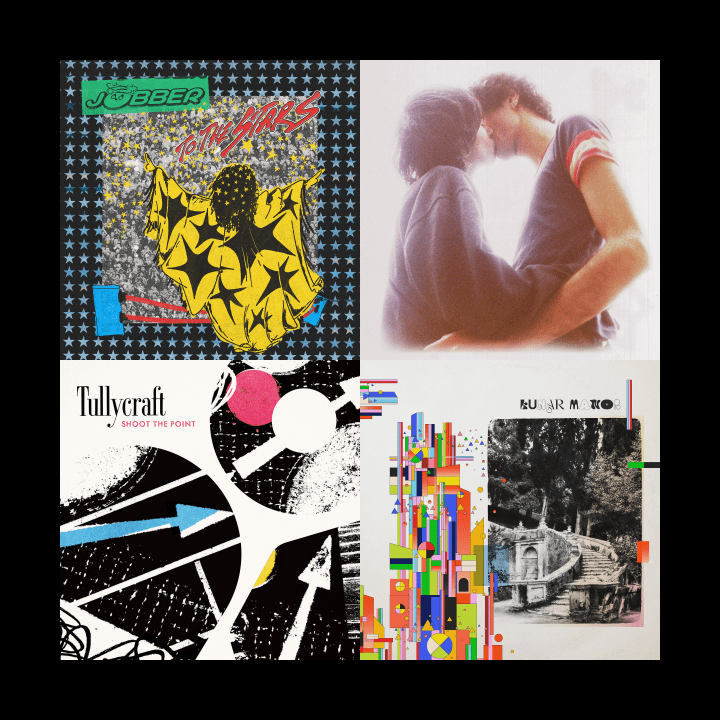
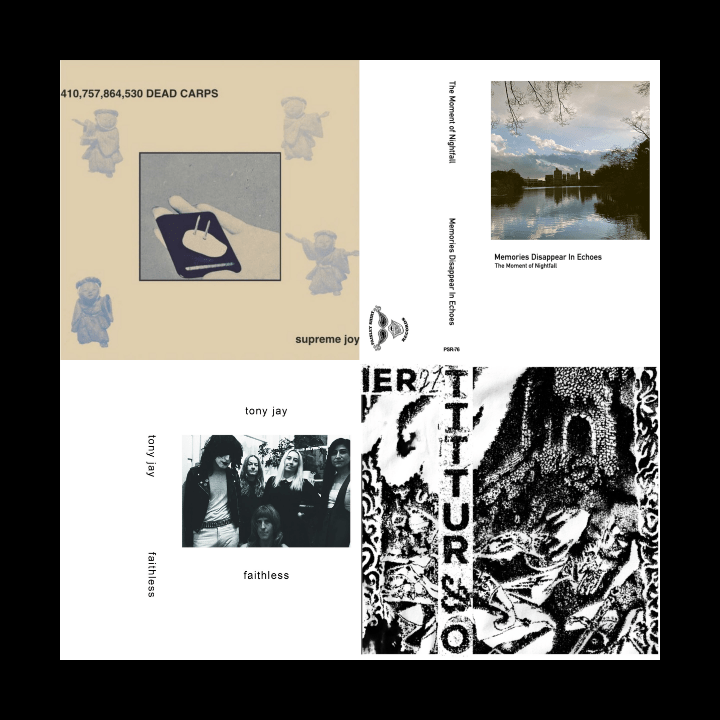
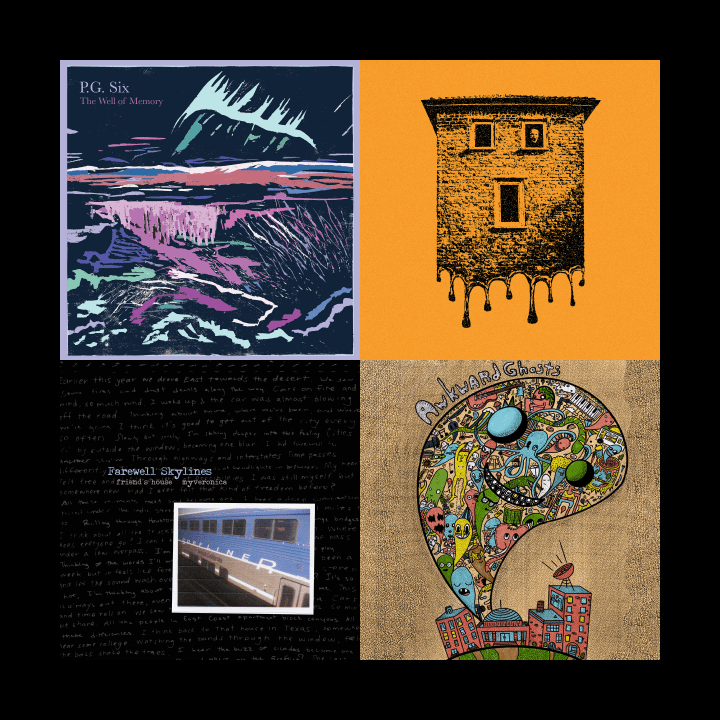

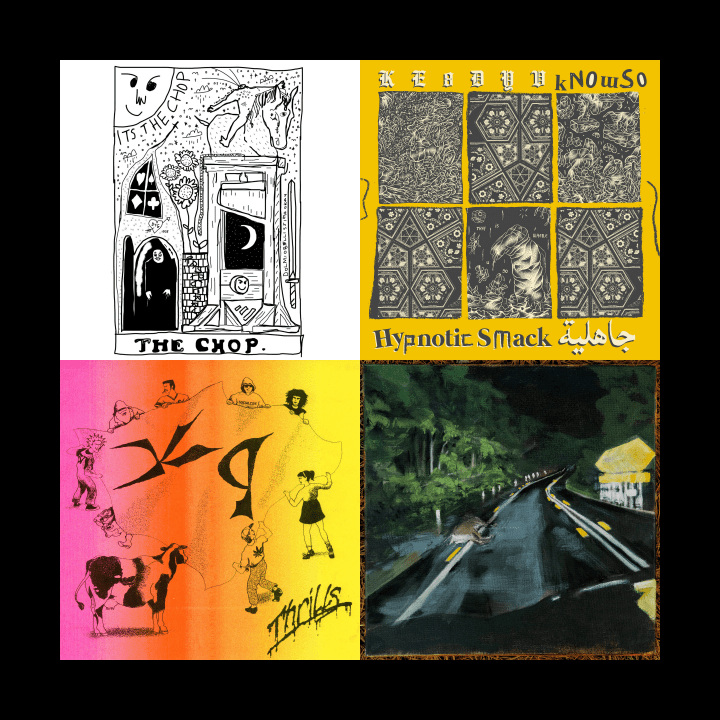
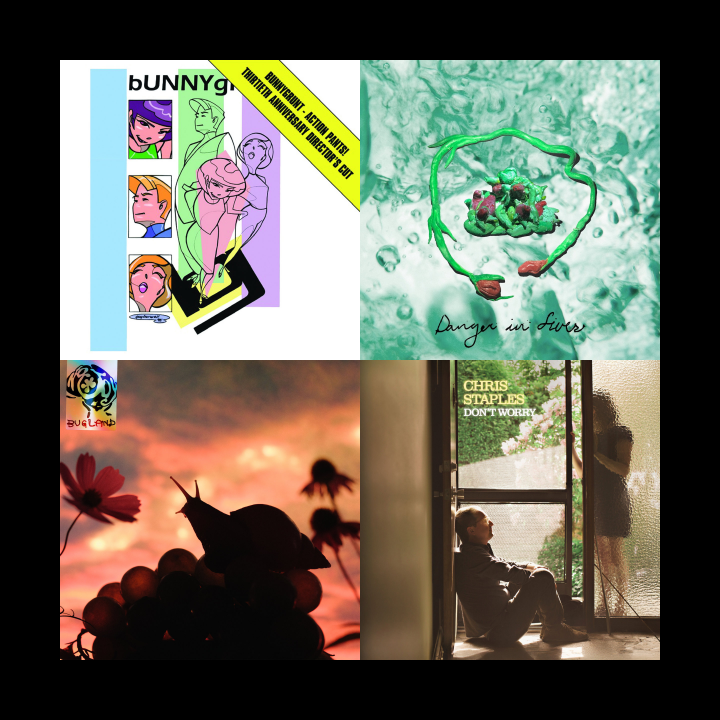

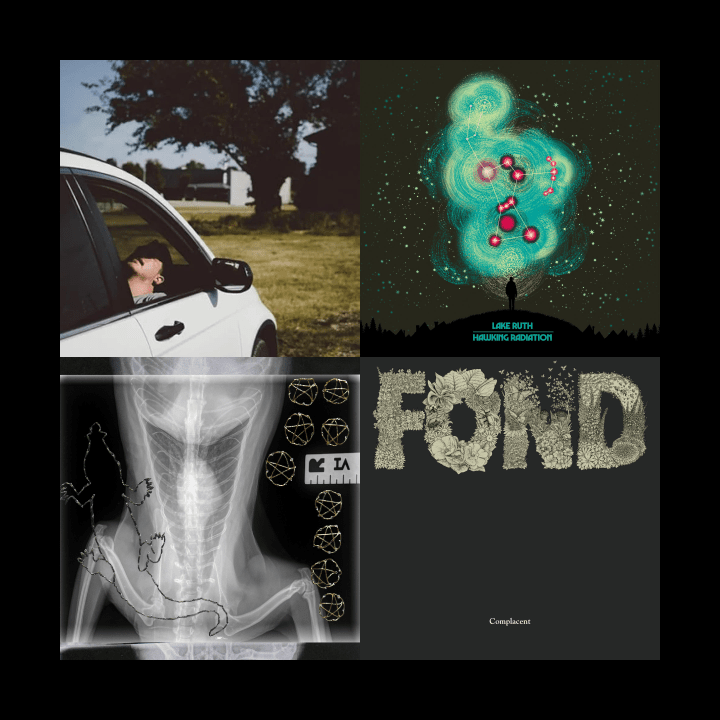
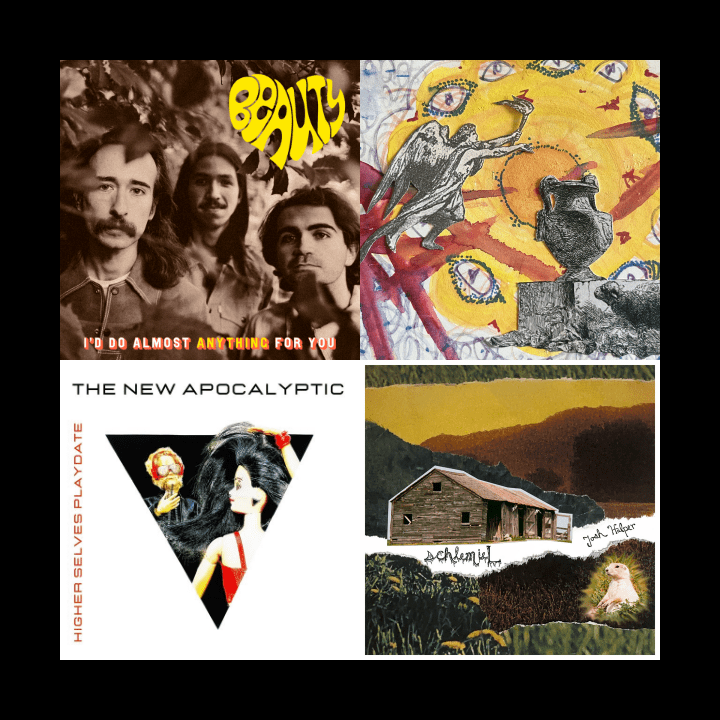
 Rosy Overdrive