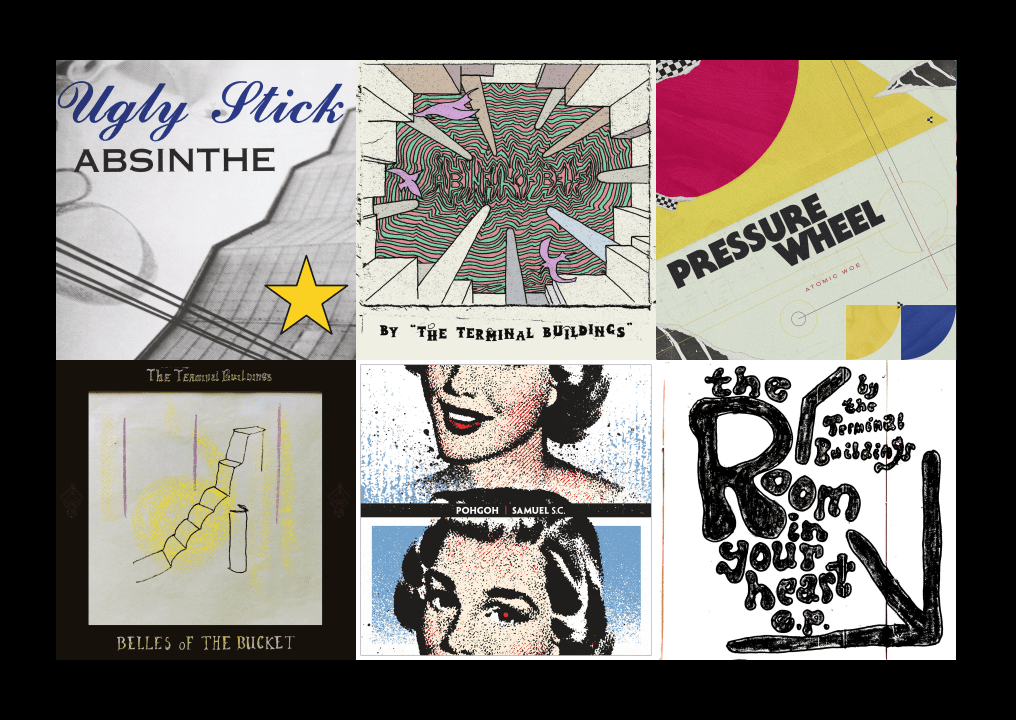
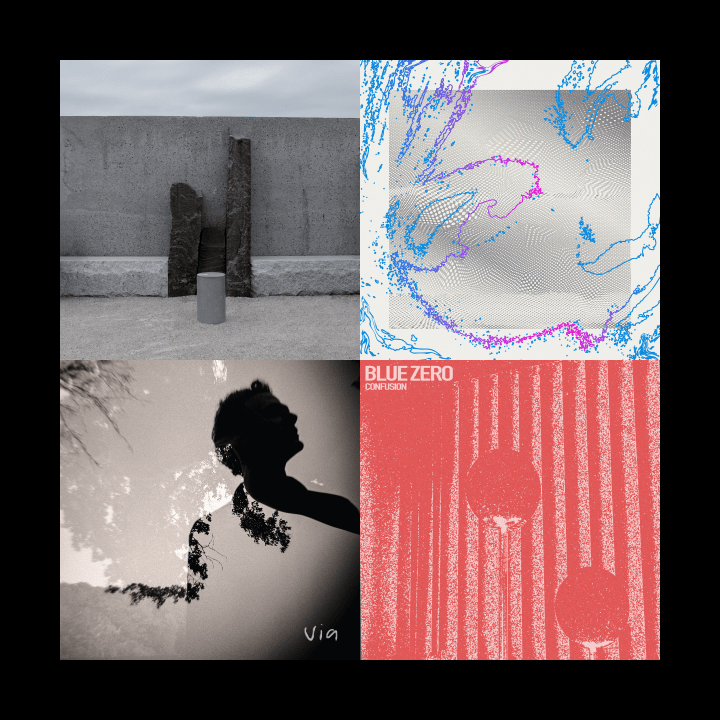
The Tuesday Pressing Concerns is a pretty chaotic one this week. We have an expanded reissue of an album from Ugly Stick, a new EP from Pressure Wheel, a split EP between Pohgoh and Samuel S.C., and four new records in one from The Terminal Buildings. There’s something for everyone here! If you missed yesterday’s blog post (featuring Dogwood Gap, Via, Gazed and Bemused, and Blue Zero), check that out here.
If you’re looking for more new music, you can visit the site directory to see what else we’ve written about lately. If you’d like to support Rosy Overdrive, you can share this (or another) post, or donate here.
Ugly Stick – Absinthe (Vinyl Release)
Release date: October 16th Record label: Hovercraft Genre: Cowpunk, alt-country, college rock, garage punk Formats: Vinyl, digital Pull Track: Wild Men of Borneo
Who were Ugly Stick? The four-piece “cowpunk” band rose out of Delaware, Ohio (that’s a little north of Columbus) in the late 1980s and released a few records before initially breaking up sometime in the 1990s. The group (drummer Jeff Clowdus, guitarists Al Huckabee and David Holm, and bassist Ed Mann) seem to have been sporadically active this century–they put out a new album in 2008, they play live shows on occasion, and they’ve reissued some of their earlier material, too. The latest of these reissues, through Hovercraft Records, is a double-vinyl release of Absinthe, an album that originally came out only on CD in 1993. It’s hard to find much info on Ugly Stick out there, but I believe Absinthe was their third album following a self-titled debut and a sophomore record called Shaved; the Bandcamp page for the original version of the album lists seventeen songs compared to the reissue’s twenty-three, which would suggest that the final six are the “bonus tracks” that the reissue proclaims to provide.
So, what does Absinthe sound like? It’s an undeniably weird mix of roots rock, punk rock, and “college rock” that doesn’t really fit with anyone I can think of–more countrified than Great Plains (the band I think of when I think of “central Ohio underground college rock”), wilder than the likes of Guadalcanal Diary and other college radio hitmakers, more punk than NRBQ, not as traditionalist as Uncle Tupelo, and not quite as psychedelic as the Meat Puppets. But those are the names we’ll have to start with, and it’s good enough to describe the strong opening stretch of Absinthe: the stoner-blues-psych-garage opening thing “Serpent Mound”, the careening garage punk “Move”, the surprising acoustic country “Crib Death Reel”, and the awesome college rock hook found in “Wild Men of Borneo”. Most of my favorite songs on Absinthe are found in the opening half, but digging through the C-side and the bonus tracks turns up plenty of intriguing curios, too. I’ve written about reissues of albums that have earned canonization or at least “sizeable cult following” status, and I’ve been happy to do so, but reissues like this one–the ones that encourage further digging–are the most important ones. (Bandcamp link)
The Terminal Buildings – A Binful of Bells / Belles of the Bucket / Further Transcriptions: A Binful of Bonus / The Room in Your Heart
Release date: August 8th / August 29th / September 1st / September 5th Record label: Self-released Genre: Lo-fi power pop, bedroom pop, indie pop, jangle pop, power pop Formats: Digital Pull Track: Time Travelin’ /A Beer and Play Guitar / Sorry Suzanne / Waiting at the Lights
The home-recorded project of a Scottish musician known only to me as Finlay, The Terminal Buildings arrived on my radar thanks to a digital compilation called Coming to Terms with the Terminal Buildings: Best Ones 2021-2023. Coming to Terms was not only an excellent collection of low-key indie pop/power pop/jangle pop etc., but it also ended up being the capstone for a prolific two-year period for the project. After a quiet 2024 (partially due to Finlay moving from Glasgow to Aberdeen, apparently), though, the next era of The Terminal Buildings starts now with a slew of new releases: two new LPs, an EP, and a collection of “covers and demos” released over the span of one month. Belle of the Bucket is maybe the “star” of these records, the closest thing to a power pop parade of the set thanks to “A Beer and Play Guitar”, “That Wheel”, and “Big Hat”, among others. There’s still a bit of bedroom folkiness to that one, though, and this is explored even more thoroughly in the dreamy, psychedelic-tinged indie pop of A Binful of Bells (there are plenty of hooks in this Martin Newell-esque wandering excursion too, of course). A Binful of Bonus may only be for the real Terminal Buildings heads out there, but more covers of The Bats are always welcome, and all three tracks on The Room in Your Heart are good enough to have been on the full albums (perhaps these are songs that were penned in between the previous records’ completions and release; quality-wise, there’s no reason to separate them). Upon The Room in Your Heart’s release, Finlay wrote that the EP would be the last Terminal Buildings record for “a wee while at least”–oh, is that all, then? (Bandcamp link)
Pressure Wheel – Atomic Woe
Release date: October 17th Record label: Alchemy Hours Genre: Punk rock, garage rock, post-hardcore, power pop, noise rock Formats: Digital Pull Track: Heat Death
The Philadelphia supergroup Pressure Wheel don’t neatly slot into the “punk rock musicians’ power pop side project” archetype, but it feels like a spiritually similar endeavor. The quartet’s debut EP, Atomic Woe, is the result of members of Restorations (bassist Dan Zimmerman and drummer Jeff Meyers), Signals Midwest (guitarist/vocalist Maxwell Stern), and Timeshares (vocalist/guitarist Jon Hernandez) zeroing in on the catchier sides of punk rock, garage rock, emo-punk, and even post-hardcore. “A little less scalpel, a little more sledgehammer,” claims the band’s bio, and indeed, Atomic Woe eschews the more high-concept aspects of the members’ other bands to land a half-dozen blunt-force rock and roll blows. “Economy of Lies” is Dischord Records/Hot Snakes fodder with a Guided by Voices– (or top-tier Militarie Gun-, if you prefer) level hook, “Cut It” and “Don’t” are slick, emo-tinged fuzz rock/punk-pop hits, and my favorite track on the EP, “Heat Death”, marries the heart-on-sleeve earnestness of all three of the members’ other bands with precision guitar pop. There’s a tug-of-war between “just rocking out” and delving just a little deeper throughout Atomic Woe, and Stern and Hernandez’s contributions both play the game. All of Pressure Wheel seem on the same page as to what kind of band they want to be, and even if Atomic Woe doesn’t fully reveal what all that might entail, it’s a high-speed journey to wherever that may be. (Bandcamp link)
Pohgoh / Samuel S.C. – Split
Release date: October 8th Record label: New Granada/Waterslide Genre: Emo, punk rock, pop punk, 90s indie rock, twee-punk Formats: Vinyl, digital Pull Track: Evergreen
I’ve written about Samuel S.C. (previously just known as Samuel) before on this blog; the State College, Pennsylvania-originating emo band released three EPs and singles in the mid-90s, reunited in 2021, and put out an LP featuring new and “reimagined” old material in 2023. I’m less familiar with Tampa, Florida’s Pohgoh, but they have a similar story: they also made music combining Superchunk-esque indie-punk-rock with emo in the mid-1990s, and they also reunited over the past decade, putting out new albums in 2018 and 2022. A four-song split EP makes plenty of sense for the two bands, and both of them brought very good material to the table for this one. Pohgoh’s “I’m a Fan” is a lovely punk-pop song that should win anyone unfamiliar with them over, and despite being the EP’s only “slow” song, the appropriately-titled “The Interlude” is beautiful in a sparse way, too. The Samuel S.C. songs are nothing short of some of their best material yet: “Evergreen” is tough, fevered, and surging anthem-emo-rock with a scorching refrain, and “A Serious Sound” is similarly animated and finds another gear with its chorus, too. Bands hiding their best songs on stopgap between-album split singles? It feels like the mid-90s all over again. (Bandcamp link)
We roll into mid-November with a steady supply of new music; this Monday Pressing Concerns features a new album from Dogwood Gap, a new EP from Blue Zero, an archival EP from Via, and a compilation of Brisbane shoegaze from 4000 Records. Pretty neat!
If you’re looking for more new music, you can visit the site directory to see what else we’ve written about lately. If you’d like to support Rosy Overdrive, you can share this (or another) post, or donate here.
Dogwood Gap – Probably Not Enough
Release date: November 14th Record label: Revelator Genre: 90s indie rock, slowcore, folk rock, emo-y indie rock, alt-country Formats: CD, digital Pull Track: Something Here
Late last year, I wrote about House Sounds, the debut EP from a Brooklyn project called Dogwood Gap. At the time, Dogwood Gap was effectively the solo project of Massachusetts-originating singer-songwriter (and founder of Revelator Records) Patrick Murray, and House Sounds was a promising debut of Jason Molina-influenced folk rock and alt-country. Fast forward a year later, and Dogwood Gap are now a sturdy quartet, with Murray sharing lead vocal duties with Carlie Houser and the both of them backed by bassist Evan Tannenbaum and drummer Hayden Carr-Loize. Dogwood Gap’s debut album, Probably Not Enough, is also their first record as a full band, and it’s a reinvention of the project’s sound, too. Although the Songs: Ohia influence is still there, it’s a lot less alt-country or folk-inspired, with a quiet but electric 90s indie rock sound now presenting as the dominant strain. Dogwood Gap reference bands like Pile and Unwound as touchpoints, and while they’re not a post-hardcore group now, there’s an exploratory aspect to Murray’s guitar playing that fits well with this kind of electric, slowcore-evoking indie rock (it’s more Idaho and Bedhead, although those aren’t quite right either).
The most “folk” thing about Probably Not Enough is probably Houser’s vocals, which give a traditional slant to the otherwise fairly grungy basement rock of “Red Ribbon” (we’ve stumbled onto the “PJ Harvey combination” here, it seems), as well as the penultimate “Mother Has Closed Her Eyes”. If you’re wondering when the Unwound influence kicks in, I’d point you to the nice circular guitar riff and rumbling bass that co-lead “Changes”, and even the more delicate songs (like, say, “Something Here”, which comes right after it) have a post-punk edge at moments. Call it “slowcore”, “sadcore”, “post-rock”, or even “emo”–none of them fully fit, but I recognize the melancholic, empty-space-heavy sound of songs like “Owl Bridge” via plenty of bands who’ve tread in these waters before. It’s harder to boil Probably Not Enough down to one forebearer like House Sounds could’ve been with Molina–whether that’s attributable to a greater number of creative minds involved in Dogwood Gap or merely more instrumental freedom at Murray’s disposal as a bandleader, the leap that this project has taken in a year is palpable and bodes well for Dogwood Gap in the future. (Bandcamp link)
Via – Via
Release date: November 14th Record label: Dromedary Genre: Noise rock, art punk, proto-“indie rock” Formats: Vinyl, CD, digital Pull Track: Cell
Two live shows, six basement-recorded songs, and “one gig flyer”. This was all that the five-piece underground band Via amounted to during their late-1980s period of activity. The band’s two guitarists, Thalia Zedek and Jerry di Rienzo, went on to have pretty notable indie rock careers afterwards–the former with Come and Live Skull (as well as a bunch of solo records), and the latter with Cell. This alone would be enough to make Via a notable part of Boston music history, but Via is still held in as much regard as their members’ more well-known bands by the people who had been there at the right time to witness them (such as Chris Brokaw, who alerted Dromedary Records to these recordings’ existence in 2024). Finally given a proper release by Dromedary after nearly forty years in obscurity, the six-song Via EP is a still-sharp-sounding brief jolt of noisy underground 80s indie rock.
Via moved from Boston to New York during their brief lifespan, which makes the Sonic Youth comparisons too easy (Brokaw himself acknowledges them in the liner notes to Via). At the same time, a noisy rock band from Boston employing a “tape loops” provider (Phil Milstein of Uzi, who rounded out the band alongside bassist James Apt and drummer Adam Gaynor) also brings to mind Mission of Burma. You could call Via a synthesis of the two, but there’s also plenty of the intense, dark, blues-tinged rock music that Zedek would later go on to explore in Come as well. The shorter songs on Via (“JJ”, “1,000 MPH”, “The Other”) are all pummeling noise punk, and the longer ones are just as punishing in a more difficult-to-understand manner (the six-minute “Cell” is Milstein’s tape-loop showcase, and “Way You Say You Feel” closes the EP with a musical exorcism). It’s hard to believe that this almost stayed in the vault forever, but now’s a good a time as any for Via. (Bandcamp link)
Various – Gazed and Bemused: Hazy Sounds from the Meanjin Underground
Release date: October 23rd Record label: 4000 Genre: Shoegaze, dream pop Formats: Vinyl, digital Pull Track: Broken Walls
Beginning in the late 2010s, the Brisbane (Meanjin), Australia label 4000 Records has been documenting its city’s underground music scenes–everything from jazz to electronic to post-rock has been featured on the imprint’s sixty-something releases. Their latest album is a various-artist compilation, Gazed and Bemused: Hazy Sounds from the Meanjin Underground, which zeroes in on Brisbane’s practitioners of “shoegaze, dreampop, post-punk, alt. rock and myriad sub-genres awash with heavy reverb, cymbal storms, and atmospheric vocals” (couldn’t have said it better myself, 4000!). I don’t write about them all that often, but there’s a certain romantic appeal to this kind of “time capsule”/scene documentation album; I’m thinking of historical ones like Chapter Music’s one for early Australia post-punk, or what Third Man’s Southeast of Saturn did for a different shoegaze scene (Michigan). Could Gazed and Bemused be held up in a few decades similarly? No idea, but we can imagine. Hearing a dozen (in some cases, starkly) different bands held together by a love of distortion getting one chance to make an impression with a song actually works pretty well for this kind of music–we get slow, percussionless dream pop (from Relay Tapes) and tight shoegaze-y alt-rock (from Wasted) back-to-back to start the album, and all of the most obvious standouts from that point on (DARLING.’s starry-eyed guitar pop, the dour goth-tinged contribution from The Double Happiness, the nervous static of Ultra Material) aren’t all that similar, either. It’s a fun journey, and now we’re all intimately familiar with modern southeastern Queensland shoegaze to boot. (Bandcamp link)
Blue Zero – Confusion
Release date: October 29th Record label: Self-released Genre: Fuzz rock, 90s indie rock, shoegaze, noise pop, post-punk Formats: Cassette, digital Pull Track: Confusion
Blue Zero’s debut record, Colder Shade Blue, came out about a year ago, and Oakland musician Chris Natividad played every instrument on the album. If there’s one thing about Natividad I know, though, it’s that he loves playing in bands–he leads Marbled Eye and Public Interest and drums in Aluminum and Tanukichan–so it’s not so surprising that Blue Zero are a solid quartet on their next record, the four-song Confusion EP. Lauren Melton (Sucker), who contributed some vocals to Colder Shade Blue, is now bassist and co-vocalist, with drummer Rick Altieri (Blue Ocean, Above Me) and guitarist Maddy Allard rounding out the lineup. This self-released cassette is a big step forward for Blue Zero, with the shoegaze-y fuzz pop of their debut exploding into an intense, focused, but still quite catchy brand of Sonic Youth-style indie rock. The opening title track is the biggest hit the band have put together yet, a wall-of-sound hurricane with Pixies-level pop instincts, and “Rotten Angel” (where Melton holds her own as co-leader) is nearly as exciting. The second half of Confusion is only “subdued” in comparison to the first half, and closing track “Don’t Be Long” in particular is a smooth, Ride-like marriage of timeless pop rock and strong guitars. A welcome check-in from a band on an upward trajectory. (Bandcamp link)
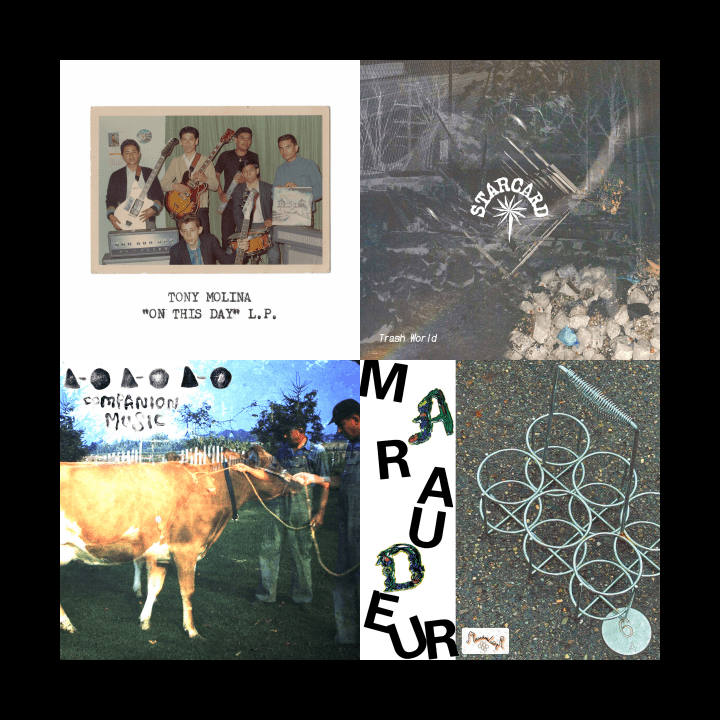
The Thursday Pressing Concerns is made up of four albums that are coming out tomorrow, November 14th. We’ve got new ones from Tony Molina, Chaepter, Star Card, and MARAUDEUR below, and if you missed either of this week’s earlier blog posts (Monday’s featured Swearing at Motorists, Night Court, A Fish in the River, and The Cindys, and Tuesday’s featured The Maple State, Ivy Boy, Hyperviolets, and Xay Cole), check those out too.
If you’re looking for more new music, you can visit the site directory to see what else we’ve written about lately. If you’d like to support Rosy Overdrive, you can share this (or another) post, or donate here.
Tony Molina – On This Day
Release date: November 14th Record label: Slumberland/Speakeasy Studios SF/Olde Fade Genre: Folk rock, jangle pop, indie pop, lo-fi pop Formats: Vinyl, CD, digital Pull Track: Livin Wrong
The two Tony Molina-related albums I’ve written about in Pressing Concerns before are the self-titled album from his old band Ovens, which features a lot of “loud and fuzzy power pop/alt-rock…with…triumphant guitar heroics”, and In the Store by his project The Lost Days, which dealt in “homespun-sounding, lo-fi, acoustic-based pop”. The common denominator with those two records (and, indeed, Molina’s discography as a whole) is strong guitar pop music–if you know anything about Tony Molina’s music, it’s probably that this is his specialty, typically delivered in sub-ninety-second nuggets. And that’s precisely what we get when we join the San Francisco singer-songwriter on On This Day, Molina’s first solo album in three years (which is also a return to Slumberland Records, who put out a couple of his releases in the late 2010s). On This Day, twenty-one songs in twenty-three minutes, was recorded by Molina and collaborators (Alicia Vanden Heuvel of Speakeasy Studios SF and The Aislers Set on piano and organ, drummer Steve Kerwin, guitarist Stephen Oriolo, Rachel Orimo on vocals, and Gary Olson of The Ladybug Transistor on trumpet) at home in an “unhurried” manner.
On This Day is subsequently on the “acoustic” and “laid-back” ends of the Tony Molina spectrum, leaning into his 60s folk-pop influences (the biography mentions The Byrds, as well as Bill Fox, one of the few “indie” musicians who feels similar to where Molina is at here), and the more languid side of Elephant 6 feels apt too (Olson couldn’t have picked a better record to show up on the horn). Aside from the fifteen-second instrumental title track, On This Day spends virtually every moment building a perfect pop song (jangle-, folk-, indie-, psych-; whatever qualifier suits you best), and then flitting to the next one as soon as the foundation is sturdy enough to stand. The fuzzy guitars of “Have Your Way” herald the only real electric Tony Molina moment here; it’s one of the highlights, but it’s far from the sole one, and I’m more likely to point to something like the blissful jangle pop creation “Livin Wrong”, the slightly-polished mid-tempo pop rock “Lie to Kick It”, or even the tactfully giddy cover of Eric Andersen’s “Violets of Dawn” as the standout of standouts. It’s a Tony Molina album, so we’ve plenty of options. (Bandcamp link)
Chaepter – Companion Music
Release date: November 11th Record label: Self-released Genre: Art punk, post-punk, garage punk Formats: Vinyl, digital Pull Track: Lock the Door
Chicago-based art rock weirdo Chaepter Negro (aka Chaepter) has been on a tear lately. I first heard him thanks to last year’s Candlepin-released LP Naked Era, and he returned earlier this year with an EP called Empire Anthems. Companion Music is the third Chaepter record since the beginning of 2024, and it is “one of two records we have in the works”, according to the musician. All three records have honed in on a hard-to-describe sound that’s very “post-punk” while also keeping one foot in distorted, shoegaze-influenced indie rock. Companion Music is perhaps Chaepter’s clearest record yet, with a more tangible debt to garage rock, punk, and classic post-punk across its dozen tracks.
“Muses” may open Companion Music with a kind-of-dreamy chilliness, but Chaepter begins to get more confrontational and up-close with the Brainiac-ish skronk punk of “Lock the Door” and the dance-punk groove of “Dance Dance Die”. In the record’s midsection, “Cruisin’” and “Funny Living” combine prominent, sturdy rhythms with bursts of electric noise, but just when Companion Music seems to hesitantly embrace being an off-the-rails but boisterous rock and roll record, Chaepter veers into a different kind of strangeness in the record’s final third. The artist behind everything from “Melting Man” to “The Hope Collector” might as well have been a different one entirely, one inspired by dreamy, freaky basement folk more than tight indie/alternative rock. Companion Music hangs together because Chaepter stays front-and-center through the whole thing, guiding us from sharp guitars to disoriented strings and odd atmospherics. It’s enough to sell us on what seems to be a multi-record-spanning vision. (Bandcamp link)
Star Card – Trash World
Release date: November 14th Record label: Already Dead Genre: Art rock, noise pop, fuzz rock, 90s indie rock Formats: Cassette, digital Pull Track: Even the Sun Can Hurt You
The Queens group Star Card started as the solo project of Calley Nelson, and Nelson played almost everything on the debut Star Card release, 2023’s Freak World EP. Fast forward two years later, and Star Card is now a quartet also featuring drummer Brendan Landis (of Receive, in which Nelson also plays), bassist Jackson Tarricone (Voicemail) and guitarist Jake Whitener (Sunshine Convention). The first Star Card LP and first Full Band Star Card release, Trash World, is a big one–it’s forty-seven minutes of greyscale but animated indie rock and noisy pop music. Opening track “Flowers” is one of the weirdest things on the whole album, a confrontational beginning before the propulsive indie rock and roll of “Even the Sun Can Hurt You” puts them closer to the realms of 90s acts like Superchunk, Versus, and Scrawl. Star Card differentiate themselves from the average “modern indie rock band with a familiarity with Kim Deal’s entire discography” by Nelson’s boisterous, larger-than-life lead vocals–we just don’t get dynamic, unpredictable vocal performances like the ones we hear in “One Hit Wonder” and “Ambitious Guy” enough these days. Trash World hits as hard as it does because it’s a full band tearing into these songs with the zeal to match their frontperson, I think.Star Card are hitting on something good here; let’s hear them out. (Bandcamp link)
MARAUDEUR – Flaschenträger
Release date: November 14th Record label: Feel It/Kakakids/Red Wig Genre: Post-punk, art punk, no wave, garage punk Formats: Vinyl, digital Pull Track: Syncope
An art punk band from eastern Germany? Yes, sure, I’m interested. Leipzig sextet MARAUDEUR have actually been around for a while now–they put out an album on Bruit Direct Disques in 2017, and somehow I missed their Feel It Records debut, 2022’s Puissance 4. I’m well on board for their latest album, Flaschenträger, though. The group (Bob Siegrist, Charlotte Mermoud, Camille Barth, Morgane Adrien, Lise Sutter, and Isumi Grichting) have a strong grasp on this incredibly specific sound that feels ripped from an uncertain and chaotic time in underground music–phantom rhythms and synths playing tug of war with more recognizable post-punk, garage rock, and even pop music. Flaschenträger lurches into focus between stop-start opening material like “EC Blah.Blah”, “La Jaguar”, and “ah”, and though this marks pretty much the rest of the LP, too, MARAUDEUR have put together a fairly surprising collection of this kind of thing. The skittering melodic guitar line is what puts “Syncope” over the top, “Clever Sneaker” has an out-of-place noise rock riff thrown in there, and closing track “Hollow” is surprisingly delicate. It feels light without being slight, and it’s a fun listen without sounding like a conscious attempt to be so. (Bandcamp link)
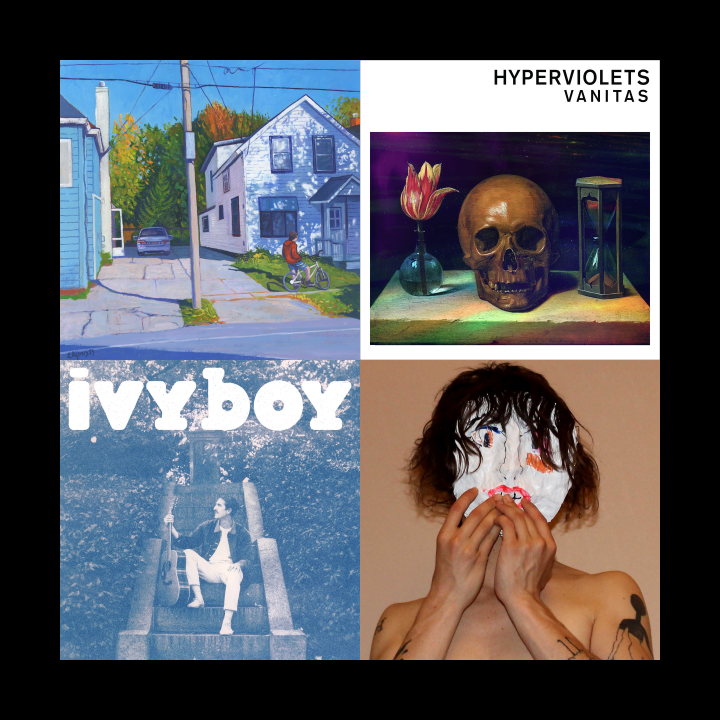
For the Tuesday Pressing Concerns, we have four albums that have come out in the past month or so: new LPs from The Maple State, Ivy Boy, Hyperviolets, and Xay Cole. If you missed yesterday’s blog post (featuring Swearing at Motorists, Night Court, A Fish in the River, and The Cindys), check that out here.
If you’re looking for more new music, you can visit the site directory to see what else we’ve written about lately. If you’d like to support Rosy Overdrive, you can share this (or another) post, or donate here.
The Maple State – Don’t Take Forever
Release date: November 7th Record label: Self-released Genre: Power pop, pop punk, emo-y indie rock Formats: Vinyl, digital Pull Track: Willow
The Maple State are new to me, but the Manchester quartet have been around for a while–they put out a couple of records in the mid-2000s (2005’s At Least Until We’ve Settled In, 2007’s Say, Scientist EP) before breaking up in 2008. Some combination of members released an album called The Things I Heard at the Party under The Maple State name in 2018, but the “original lineup” of the group (bassist/vocalist Greg Counsell, keyboardist William Pearson, guitarist Christian Counsell, and drummer John Goodwin) never reunited until a single called “Zero Days Since Last Incident” last year. It turns out that “Zero Days Since Last Incident” was just the beginning, as The Maple State have put out an entire album entitled Don’t Take Forever.
The Maple State came up in the early 2000s’ “emo-punk” scene, but Don’t Take Forever thankfully doesn’t sound like a band trying to recreate 2005. I certainly believe that American emo was an influence on this band, although these are big, catchy, and (yes) emotional pop songs of the sort that British bands from Frightened Rabbit to ME REX have made in The Maple State’s absence. “Winner Part II” breaks from tasteful piano about a minute into its runtime to open Don’t Take Forever with (still relatively tasteful) pop punk, and there’s some more traces of their roots throughout the album (like the “whoa-oh”s in “No Time to Waste”, or the folk-punk (in a British sense) found in “Dead Beneath the Stars”). Still, plenty of the rockers (“Zero Days Since Last Incident”, “Settle Down”, “Vacancy”) don’t slot neatly into pop punk or emo, and one of the best songs on the album comes when The Maple State bust out the dreaded acoustic guitar (“Willow”). Maybe it’s been awhile since The Maple State have been a “band”, but Don’t Take Forever is a pretty impressive way to return. (Bandcamp link)
Ivy Boy – Ivy Boy
Release date: October 24th Record label: Self-released Genre: Folk-pop, indie pop, jangle pop, singer-songwriter Formats: Digital Pull Track: Poppyseed
After a six-year gap, Boston jangle pop group Beeef returned with their long-awaited third album, Somebody’s Favorite, last year–hopefully we don’t have to wait another half-dozen years for the next Beeef album, but in the meantime, we have Ivy Boy. It’s a new project from Beeef’s lead vocalist and songwriter Perry Eaton, and he recorded their self-titled debut album with a handful of non-Beeef musicians (guitarist/bassist Aaron Brown, drummer Ryan Katz, and pianist/synth player Elio DeLuca). As a pop songwriter and vocalist, Eaton remains recognizable as the “guy from Beeef” on Ivy Boy, which begs the question: what makes Ivy Boy different from Eaton’s more well-known band? There’s certainly overlap, but Ivy Boy is more laid-back than the relatively tight jangle-rock of Somebody’s Favorite. The hummable “Honeybee” and the bright “Poppyseed” are, unambiguously, “infectious indie pop”, although the former is more of the folk rock variety (to say nothing of another one of the album’s catchier songs, the acoustic folk-pop “The Littlest Birds”). The second half of Ivy Boy leans even harder into the well-developed, even slightly twangy folk rock of decades past (with the possible exception of “‘80s Babies”, which I could imagine Beeef playing if it was sped up a bit). Leading two similar indie pop bands is hardly a “problem”, but Eaton starts to separate Ivy Boy by the time its first record wraps up. (Bandcamp link)
Hyperviolets – Vanitas
Release date: October 31st Record label: Born Losers/Good Soil Genre: Lo-fi pop, indie pop, synthpop, folktronica, dream pop Formats: Cassette, digital Pull Track: Shadow Connected
I’ve written a few times about Frederick, Maryland musician Kenny Tompkins on this blog, via his indie pop/folk rock solo project Mr. Husband and as part of the power pop group The Trend, but Hyperviolets is a brand new collaboration from the prolific musician. For this project, Tompkins has partnered with Brendan Ekstrom, most famous for spending nearly twenty years as the lead guitarist for Philadelphia post-hardcore group Circa Survive–it may seem like an odd pairing, but western Maryland is a small place, and Ekstrom first started playing music in that area as a member of bands like Cumberland’s 200 North. Vanitas came about after Circa Survive went on indefinite hiatus in 2022, and, while you’d be disappointed if you expected the duo to make punk rock together, there’s a certain…weight to this strange, offbeat pop music. It’s a collision of disparate elements that nonetheless work together–drum machine beats, Tompkins’ always-melodic vocals, acoustic guitars, “spooky” synths, and more. At its brightest, Vanitas offers up sparkling synthpop songs like “Writing on the Wall” and “Shadow Connected”, while elsewhere, “Lost in the Fire” and “Prelude to Void” embrace hypnotic rhythms to shade their (still very apparent) pop cores. I’m not sure if either of these musicians have made anything quite like Vanitas before, but they’ve entered this new terrain deftly. (Bandcamp link)
Xay Cole – Lucy Birthday Black Hole
Release date: October 3rd Record label: Cherub Dream/Dolphin Bomb Genre: Experimental pop, noise, sound collage, lo-fi pop, electronic, outsider stuff Formats: CD, cassette, digital Pull Track: Brooklyn Hype (Not Me)
The San Jose-originating, San Francisco-based experimental musician Xay Cole has made a ton of music either as part of bands or under various aliases since the “early-mid 2010s”; see Discogs for a list of their two dozen apparent monikers. They joined Bay Area shoegaze label Cherub Dream for last year’s 21st Century Wrist, a partnership that has continued this year with an album called Lucy Birthday Black Hole. The fourteen-song, fifty-one minute album (released on CD and cassette) is an adventurous, abrasive, and wildly divergent listen–in addition to the lo-fi indie rock more typical of their record label and the bedroom pop that I’m prone to writing about on this blog, Lucy Birthday Black Hole features lengthy forays into experimental electronic, kitchen-sink industrial, noise, and post-rock. Some of the more pop moments (like opening track “Fight Night” and the genuine earworm “Brooklyn Hype (Not Me)”) kind of remind me of Mope Grooves’ posthumous magnum opus, though Xay Cole doesn’t seem like a musician who’s prone to thinking in terms of “pop music” all that often. With Lucy Birthday Black Hole, we’re faced with a “challenging” listen–sometimes we’re “rewarded” with softer moments, but just as often it’s the bumpy ride that’s the point. (Bandcamp link)
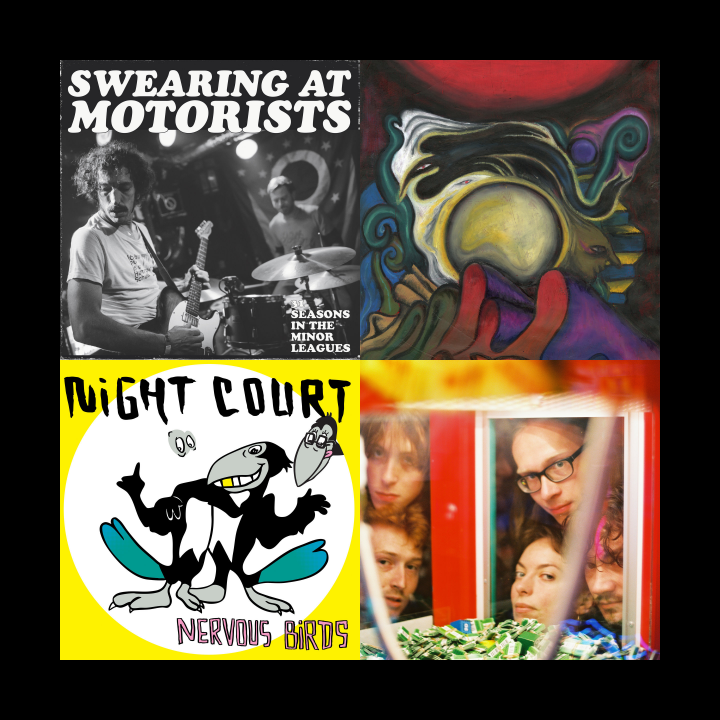
Welcome to the first Pressing Concerns of the week! We have new albums from Swearing at Motorists and A Fish in the River, a compilation from Night Court, and a “mini-album” from The Cindys this time. Read below!
If you’re looking for more new music, you can visit the site directory to see what else we’ve written about lately. If you’d like to support Rosy Overdrive, you can share this (or another) post, or donate here.
Swearing at Motorists – 31 Seasons in the Minor Leagues
Release date: October 24th Record label: BB*ISLAND/Bone Voyage Genre: Garage rock, art rock, folk rock, lo-fi indie rock, 90s indie rock Formats: Vinyl, CD, digital Pull Track: Italian Wine
Is there a better title for a new album from a long-running underground indie rock band than “31 Seasons in the Minor Leagues”? If there is, I haven’t heard it, and it’s probably attached to an album that isn’t as good as Swearing at Motorists’ latest LP, anyway (it’s named after a Magnolia Electric Co. song that they do indeed cover on the album). Dave Doughman started the band in the mid-90s in Dayton, Ohio, and a revolving door of drummers and occasional other instrumentalists has been stabilized by Martin Boeters ever since Doughman relocated to Hamburg, Germany sometime before 2014. That’s the year Swearing at Motorists put out While Laughing, the Joker Tells the Truth, which was the band’s most recent album until 31 Seasons in the Minor Leagues broke an 11-year hiatus.
Self-recorded by the band “in a Bundesliga soccer stadium”, 31 Seasons in the Minor Leagues is a barebones, blunt-force indie rock “duo” album (additional electric guitar by Florian Dürrmann on two songs being the only outside contribution). It’s neither a “roots rock” or “garage rock” record, but it will appeal to fans of either of those genres (Swearing at Motorists leave just enough blank space that you can fill it in with whatever you’d like in your head). There’s quite a bit of death on 31 Seasons in the Minor Leagues–I’m not familiar enough with Swearing at Motorists to know if that’s par for the course or not, but it’s right front and center in “All That I Have”, “Naked and Famous”, and their cover of Scout Niblett’s “Your Beat Kicks Back Like Death” (and that’s not even including stuff like the wage-slave blues of “Didn’t Cross the Ocean”, which is also about death in a way). Swearing at Motorists are not dead, though, and, if anything, being intimately familiar with death only seems to have helped them in creating an experienced but lively indie rock record. (Bandcamp link)
Night Court – Nervous Birds
Release date: October 17th Record label: Snappy Little Numbers/Debt Offensive/Drunk Dial/Shield Genre: Pop punk, garage rock, power pop Formats: Vinyl, digital Pull Track: Bride of Frankenstein
The Vancouver trio Night Court have made a name for themselves in recent years via albums stuffed to the gills with brief, energetic bursts of punk-pop (as in “it’s punk, it’s pop, but I’m not sure if it’s ‘pop punk’”) like 2023’s HUMANS! and last year’s $HIT MACHINE. I suppose it makes sense that the band (whose members are known to me only as “Dave-O, Jiffy, and Emilor”) began their work together with a pair of twin cassettes stocked almost exclusively with sub-two-minute garage-pop jolts. 2021’s Nervous Birds! One and 2022’s Nervous Birds Too have since been released together on CD and cassette, but Nervous Birds is the collection’s first vinyl release: twenty-six songs shoved together on one thirty-eight minute LP (“as originally intended”, per the band).
It’s maybe a little more sloppy than the records that would follow these songs, but it sounds like Night Court arrived more or less fully-formed on Nervous Birds. They aren’t really orthodox punks or garage rockers–it’s in their DNA, to be clear, but your average two-minute-men garage band isn’t going to have the patience to churn out mid-tempo, Guided by Voices-ish hooky indie rock like “Boat in Idle” or the post-Sugar Ray fuzz-pop of “Fractions”. This hypothetical garage band might be able to put together the horror-themed power-pop-punk of “Bride of Frankenstein” (inexplicably opening the compilation with a song from the 2023 Frater Set EP, the only track not originally from one of the Nervous Birds cassettes) or the snotty fuzz-punk swagger of “Diagnosis – Weirdo” or even the slow rollout of “Johnny Rocket”. Could they do it all, though? If so, they might have a Night Court-level journey ahead of them. (Bandcamp link)
A Fish in the River – Glimmers
Release date: October 17th Record label: Bud Tapes Genre: Doom folk, experimental rock, fuzz rock, metal Formats: Cassette, digital Pull Track: Glimmers
Portland, Oregon trio A Fish in the River have been a solid addition to Bud Tapes’ eclectic roster ever since last year’s Forest God EP, a wide-ranging record with bits with “traces of art rock, prog, and folk” (as I wrote at the time) in its five songs. I would expect a full-length from the band (bassist/vocalist John Durant, drummer Steven Driscoll, and guitarist Cole Gann) to be similarly all over the map and Glimmers, A Fish in the River’s debut LP, delivers on that front. Bud Tapes writes that the record combines “elements of doom and death metal with the melodies and sensibilities of pnw indie rock”, which doesn’t tell the whole story but does help one wrap one’s head around the makeup of tracks like “Uniformity” and “Check Out the Big Rock”, which graft earnest melodies and shimmering guitars on top of heavier instrumentals. While penultimate track “Wire” is genuinely death metal (at least partly), most of Glimmers is indeed a cavernous Cascadian rock album, with highlights like the title track and “Putrid Slop” maintaining their heaviness in a more Exploding in Sound-ish post-hardcore direction. There’s even a song called “Beach Day” that sort of doesn’t completely not sound like the Beach Boys. Glimmers isn’t compromising in its ambition, but it does feel like A Fish in the River meet us halfway. (Bandcamp link)
The Cindys – The Cindys
Release date: November 7th Record label: Ruination/Breakfast Genre: Indie pop, jangle pop, power pop Formats: Cassette, digital Pull Track: Dry TV
Not to be confused with Cindy or Cindy Lee, The Cindys are a band from Bristol, England founded by Jack Ogborne, who’s previously made art rock under the name Bingo Fury. The Cindys arose out of a desire by Ogborne to make music inspired by 80s guitar pop (touchstones like C86 and Flying Nun have been thrown around), and he enlisted Naima Bock, Finlay Burrows and “members of Belishas” to help him make the project’s self-titled debut record. The Cindys is a pretty unimpeachable debut, a twenty-one-minute, seven-song “mini-LP” that’s nonetheless stocked with fully-fleshed-out ideas and confident pop performances. The majority of the album may have been recorded on 8-track cassette in a basement, but it’s on the more polished, stately side of the “indie pop spectrum”. The melodies that practically fall out of “Eternal Pharmacy” and “Dry TV” are as catchy as they are deliberate, and “If It’s Real” and “Marble Lobby” slow things down to a nearly challenging level (without abandoning “pop” in either case). “Isaac’s Body” and “Liquid Stitch” are the album’s “rockers”, but The Cindys end their first statement with one last curiosity in “Dish Water”; even before it, though, they’d already established themselves as a band inclined to wrap things up neatly. (Bandcamp link)
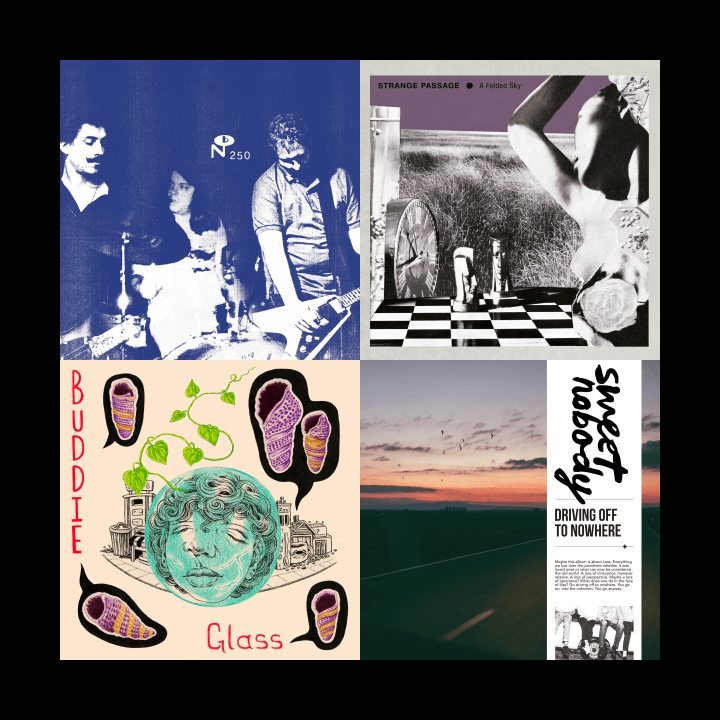
The Thursday Pressing Concerns, as per usual, features four records coming out tomorrow (that’s November 7th): we have new albums from Buddie and Sweet Nobody, an album that I think is an EP from Strange Passage, and an archival live collection from Hüsker Dü (yes, that Hüsker Dü). If you Missed Monday’s Pressing Concerns (featuring Dazy, Orillia, Weird Magazines, and Glo-worm) or the October 2025 Playlist/Round-Up (which went up on Tuesday), check those out, too.
If you’re looking for more new music, you can visit the site directory to see what else we’ve written about lately. If you’d like to support Rosy Overdrive, you can share this (or another) post, or donate here.
Hüsker Dü – 1985: The Miracle Year
Release date: November 7th Record label: Numero Group Genre: Punk rock, hardcore punk, alternative rock, power pop Formats: Vinyl, CD, digital Pull Track: Everything Falls Apart
An acquaintance of mine who enjoys plenty of punk and noise rock told me that he listened to Hüsker Dü for the first time recently, and he was decidedly unimpressed. “‘‘I-I-I Apologize’…” he mimicked in an exaggerated whiny voice. “…what the hell is that?” As somebody who takes all this stuff way too seriously, it’s funny to take a step back from a canonized Alternative Rock band and think “you know, maybe the speed freak punks with a flowery pop streak aren’t for everyone”. For those of us who aren’t hung up on asking “what was their deal?”, said deal was in full swing in 1985. That’s where we join the Minneapolis trio for The Miracle Year, an archival 4-LP/2-CD live collection from Numero Group capturing an entire January 1985 Hüsker Dü concert as well as twenty other live recordings from the same year. For a band whose “official” recordings often come with an asterisk due to fidelity and availability issues, 1985: The Miracle Year could be seen as the definitive single document of Hüsker Dü at their best–and while I wouldn’t go so far as to say that it supplants Zen Arcade or New Day Rising, it’s a pretty solid recording of something not exactly captured by those LPs either.
Zen Arcade less than a year old, New Day Rising a couple of weeks young, Flip Your Wig coming later that year, and a major label debut on the horizon. This is the backdrop for the first half of 1985: The Miracle Year, a twenty-three song set from January 30, 1985 at First Avenue in Minneapolis. I’m not going to spend too much time talking about how great these songs are (if you don’t know them, there’s no better time to learn ‘em than right now), except to say that hearing Hüsker Dü sprint from the hardcore-punk “Everything Falls Apart” to the power pop cuts from Flip Your Wig in a single stride rules. The second half of 1985: The Miracle Year may not be from a single concert, but it’s structured like one, starting with a bunch of new songs (from the upcoming Candy Apple Grey) before the rest of the album fills in the gaps of classic Hüsker songs missing from the Minneapolis set (“Celebrated Summer”, “In a Free Land”, “Chartered Trips”). Candy Apple Grey has, for me, always been a perfectly fine album diminished by coming right after three classic ones, but hearing “Hardly Getting Over It” and “Eiffel Tower High” right next to those aforementioned giants (and played with just as much fervor) helps bridge the gap. “Bridging the gap” is exactly 1985: The Miracle Year’s purpose. Or, maybe it’s just a good live album featuring a good band playing a bunch of good songs in a very good manner. Both, I guess. (Bandcamp link)
Buddie – Glass
Release date: November 7th Record label: Crafted Sounds/Placeholder Genre: Power pop, fuzz pop, 90s indie rock Formats: Vinyl, CD, cassette, digital Pull Track: In the Glass Shell
Buddie’s second album, 2023’s Agitator, was one of my favorite LPs of that year and cemented the project (led by Daniel Forrest, then a new transplant to Vancouver from Philadelphia) as one of the best “indie rock” acts currently active. A frequently loud pop record that encompassed “Built to Spill-esque 90s indie rock, fuzz rock, and power pop” (as I wrote at the time), Agitator nonetheless centered Forrest’s charismatic, intimate, and impactful songwriting. Two years later, we’ve gotten Glass, the third Buddie album and the first recorded with the band’s new Canadian lineup (lead guitarist Patrick Farrugia, drummer Natalie Glubb, and bassist Lindsay Partin). The eight-song, twenty-five minute LP sounds almost exactly like the Philadelphia version of Buddie (and that’s a good thing); if there’s a difference, it’s a slightly more “rocking” record, probably due to the consistent lineup (only the four Buddie members, no guest musicians this time around) and the all-too-brief runtime.
Buddie start Glass by literally cowering: opening track “In the Glass Shell” is a monster truck of a fuzz pop song about hiding in the midst of creature comforts (“I can forget that / Out there in the world / I’m a fish / And there’s grizzlies”). Glass is Buddie’s first vinyl release, and they’ve responded to this development by making an old-school album where every track seems built to stand on its own. The first four songs all could be the record’s biggest “Buddie-style anthem”–the heavier alt-rock of “Impatient”, the breezy reality-check of “Stressed in Paradise”, and “Golden” (which is kind of the best parts of the three songs before it mashed together). Buddie push things to (for them) extremes on the second side, with two of their loudest songs yet (the punchy “Antarctica, 2005” and the near-shoegaze wall of sound “No Fun”) bookending Glass’ clearest forays into subtlety (the two-minute indie pop zipper “Crow” and “Blackout”, which breathes in a way the rest of the album doesn’t, really). Like I said, it all sounds like the same Buddie I’ve been enjoying these past few years, but Glass feels like a distinct version of this band and, I suspect, will continue to assert itself in Buddie’s discography regardless of what the group do next. (Bandcamp link)
Strange Passage – A Folded Sky
Release date: November 7th Record label: Meritorio Genre: Post-punk, jangle pop, college rock, power pop Formats: Vinyl, digital Pull Track: Palace Behind the Shade
The Somerville, Massachusetts trio Strange Passage formed in 2016, and released an EP (2016’s Shine and Scatter) and LP (2019’s Shouldn’t Be Too Long) before seemingly disappearing at the beginning of this decade. Thankfully, guitarist/vocalist Renato Montenegro, guitarist Greg Witz, drummer Ricky Hartman, and bassist Andrew Jackmauh (who’ve played in bands like The Spatulas, Invisible Rays, and Magic Circle, among others, between the four of them) never stopped making music together, leading to their Meritorio Records debut, A Folded Sky. Now split between Boston and New York, Strange Passage have nonetheless convened to make a six-song, nineteen-minute record (which to me is an EP, but some of the members’ hardcore punk backgrounds may explain why they’ve christened it an “album”) of classic garage-y jangle pop and college rock.
A guitar pop band who mentions names like The Church, The Feelies, and Neu! as influences, it’s probably not surprising to learn that A Folded Sky is both incredibly catchy and built with a noticeably tough post-punk backbone (for newer bands, maybe try “janglier Parquet Courts” or “more motorik Kiwi Jr.”). Strange Passage tackle “Palace Behind the Shade” and “Hunter’s Fancy” with a freewheeling garage punk energy, even if the songs themselves are nervy post-punk/college rock chimers, and even the most unvarnished “jangle pop” moment on A Folded Sky (“Daylight Savings”) has a bit of a darker streak hidden somewhere in there. I like a lot of bands whose primary purpose seems to be chasing power pop hooks for their own sake, but Strange Passage is something else: listening to the dense but ramshackle closing track “Golden Rule” and its frayed but passionate narrative diatribe, the winning melodies feel like a pleasant coincidence. (Bandcamp link)
Sweet Nobody – Driving Off to Nowhere
Release date: November 7th Record label: Repeating Cloud Genre: Indie pop, dream pop, synthpop, jangle pop Formats: Vinyl, digital Pull Track: Revenge
I wrote about Los Angeles indie pop group Sweet Nobody in 2021, when they released their sophomore album, We’re Trying Our Best. That LP came four years after the quartet’s 2017 debut album, and, another four years later, here we are with the third Sweet Nobody album (and their first for Repeating Cloud), Driving Off to Nowhere. Vocalist/guitarist/keyboardist Joy Deyo, drummer Brian Dishon, guitarist Casey Snyder, and bassist Adam Nolan haven’t completely abandoned the straightforward jangly guitar pop of We’re Trying Our Best, but Driving Off to Nowhere represents something markedly different for Sweet Nobody. Opening track “I Don’t Know When I’ll See You Again” is a bold first statement, a four-minute glitzy indie pop track cobbled together from bits of dream pop, synthpop, and new wave. Not everything is as stark as “I Don’t Know When I’ll See You Again” (hell, “Revenge” in the track two slot takes us right back to “jangle”), but there’s a hazy, reverb-touched quality to just about everything on Driving Off to Nowhere, from electric power pop (“Making It Right”) to 60s girl-group-influenced dream pop (“The Lasting Kind”). It feels like Sweet Nobody really labored over these songs, possibly tweaking them here and there until, say, “Finally Free” began riding an electronic groove and “Could You Be the One” gained a heartland rock grandiosity. They were just fine where they were before, yes, but expansion sounds good on Sweet Nobody. (Bandcamp link)
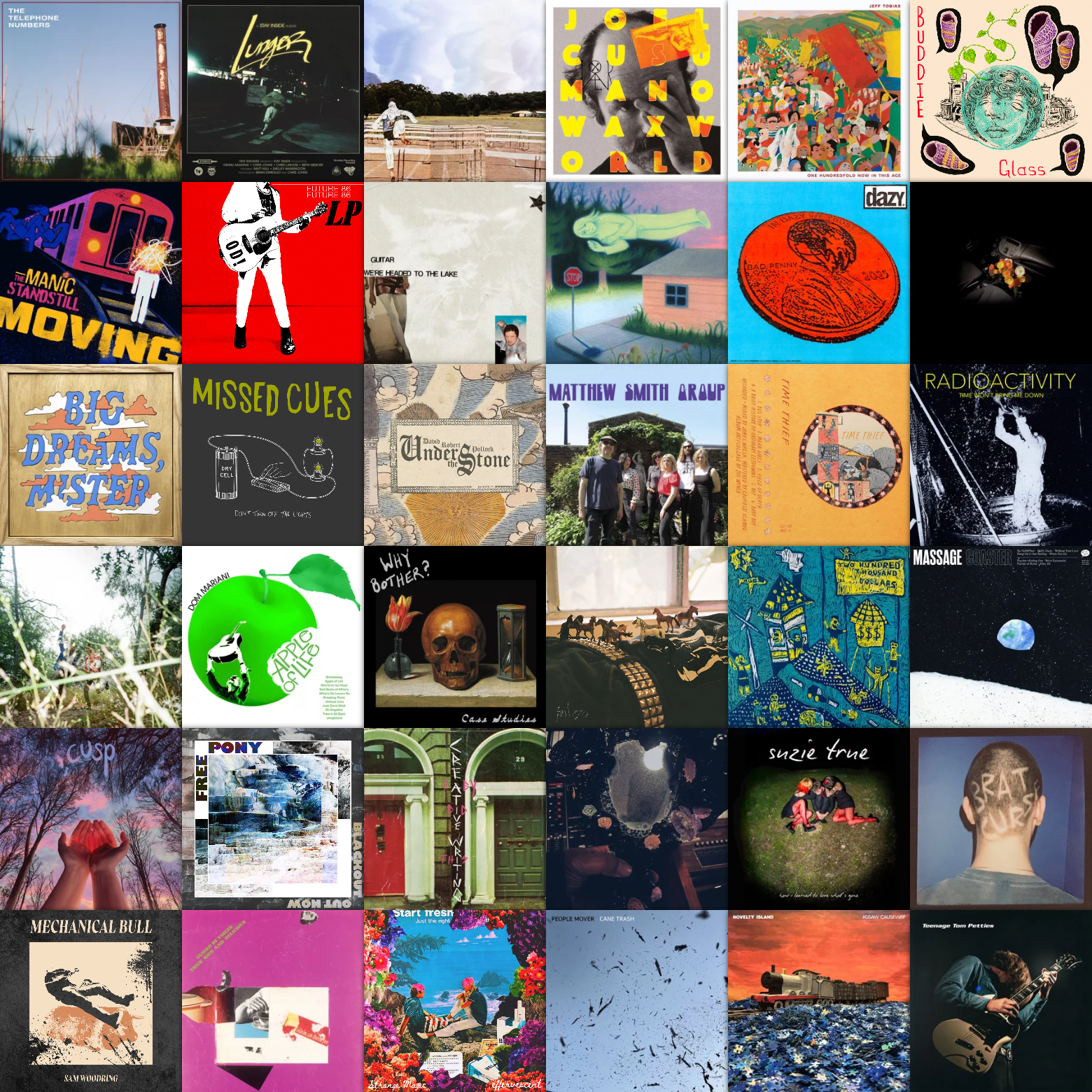
This is the Rosy Overdrive October 2025 playlist. Most of you know the drill already, but if you’re new here, here’s the deal: there’s a lot of good music below.
Joel Cusumano, Alex Orange Drink, and Guitar have two songs on this playlist.
Here is where you can listen to the playlist on various streaming services: Spotify (missing a song), Tidal. Be sure to check out previous playlist posts if you’ve enjoyed this one, or visit the site directory. If you’d like to support Rosy Overdrive, you can share this (or another) post, or donate here.
“Telephone Numbers Theme”, The Telephone Numbers From Scarecrow II (2025, Slumberland)
The Telephone Numbers’ Thomas Rubenstein is a remarkable singer-songwriter, and it’s worth noting that, for his band’s long-awaited sophomore album, the group has now rounded out into a solid quartet. The Telephone Numbers save one of their best tricks for Scarecrow II’s penultimate slot, giving guitarist Morgan Stanley (also of The Umbrellas) the lead to sing “Telephone Numbers Theme”, a triumphant indie-power-pop track that’s every bit good enough to be the group’s theme song. Stanley’s voice is pretty far removed from Rubenstein’s vocals, but the trick of Scarecrow II, like all the Telephone Numbers numbers before it, is that it hangs together. Read more about Scarecrow II here.
“Ain’t That a Daisy?”, Stay Inside From Lunger (2025, Tiny Engines)
I enjoyed last year’s Ferried Away, but it now feels like it was a warm-up for Lunger, Stay Inside’s third and best LP. Lunger is fourteen songs of the New York quartet delivering a emo-rock blow informed by heavy-gravity groups like mewithouYou and The World Is a Beautiful Place & I Am No Longer Afraid to Die, only chiseled down to punchy, poppy emo-rock songs. Stay Inside do their best to outrun a sense of decay through sweeping rockers like “Ain’t That a Daisy?”, which is, incidentally, one of the catchiest songs I’ve heard this year in any genre. Read more about Lunger here.
“Akimbo”, Possible Humans From Standing Around Alive (2025, Hobbies Galore)
Possible Humans’ 2019 album Everybody Split (released in the United States by the recently-defunct and already-sorely-missed Trouble in Mind) was one of my favorite albums of that year, establishing the Melbourne-based group as one of the best garage-tinged jangle pop groups currently active. It took a half-dozen years to get another Possible Humans album, but Standing Around Alive sounds just like that band that grabbed me at the end of last decade. “Akimbo” is the final track on Standing Around Alive and it’s also my favorite–apparently the group saved their catchiest (and most effective, on a per-note basis) guitar riff for last.
“Two Arrows”, Joel Cusumano From Waxworld (2025, Dandy Boy)
Power pop fans who read this blog may have heard Oakland musician Joel Cusumano via his work as the guitarist in R.E. Seraphin, or maybe they’re familiar with him as the frontperson of Sob Stories. His debut solo album, Waxworld,is a great spotlight-earning debut for a consistent indie pop practitioner, confirming that Cusumano can write jangle pop as well as his associates but revealing he has his own distinct take on this kind of music as well. The mythology, art history, and religious references dotted throughout Waxworld reflect somebody alight with the kind of inspiration that, while far removed from Cusumano’s direct musical influences, has historically resulted in some of the most interesting “college rock” and/or indie pop music. Just try and keep up with the images dotted throughout “Two Arrows”–or don’t, and just enjoy a killer power pop song. Read more about Waxworld here.
“Gimme Coherence”, Jeff Tobias From One Hundredfold Now in This Age (2025, Repeating Cloud)
Musically speaking, One Hundredfold Now in This Age is more orchestral and jazz-indebted that 2022’s Recurring Dreamwas, but if you enjoyed that album’s smooth yet dense take on pop music, Brooklyn multi-talented artist Jeff Tobias does it again here, more or less. In “Gimme Coherence”, the exhilarating, deteriorating “hit” of One Hundredfold Now in This Age, Tobias conjures up a blunt and bright pop instrumental to declare, soberly, “No one gets to go home” (although “What’s the paperwork I gotta sign so I don’t die?”, just as straight and to the point, might be an even more telling line). Read more about One Hundredfold Now in This Age here.
“In the Glass Shell”, Buddie From Glass (2025, Crafted Sounds/Placeholder)
Two years after Agitator(one of my favorite albums of 2023), we’ve gotten Glass, the third Buddie album and the first recorded with the band’s new Canadian lineup. Buddie start Glass by literally cowering: opening track and advance single “In the Glass Shell” is a monster truck of a fuzz pop song about hiding in the midst of creature comforts (“I can forget that / Out there in the world / I’m a fish / And there’s grizzlies”). I’ll have more to say about Glass soon.
“Go Away”, The Manic Standstill From Moving (2025, Wiretap/Double Helix)
Rosy Overdrive runs on finding brilliant, buried songs like this one, simple as that! If you like Juliana Hatfield or Tanya Donelly or “pop music” played by capable rock bands, “Go Away” by The Manic Standstill is exactly what you need. It’s the project of a Los Angeles pop punk/alt-rock ringer named Adam Bones, but it’s guest vocalist Nicolette Vilar (Go Betty Go) who elevates Moving’s final and best song. The two of them trade off lead vocals, adding one final flourish to a monster power pop song that’s one of the most exciting things I’ve heard this year.
“O.D. (3am)”, Alex Orange Drink From Future 86 (2025, Million Stars)
In September, Alex Orange Drink (aka Alex Zarou Levine of The So So Glos) announced plans to release four albums by the end of this year. Add May’s Victory Lap (#23) to that, and you get five LPs in 2025, each apparently based on the five stages of grief (written and recorded parallel to Levine’s battle against cancer). As of this writing, three of the five have been released, but I’m still stuck on the second one, Future 86, a “power pop album about the bargaining stage”. Levine does a great Elvis Costello-Kinks-Clash-Ramones synthesis on this entire album, and nowhere is this more apparent than the anti-drug (well, anti-O.D.) anthem “O.D. (3am)”.
“A+ for the Rotting Team”, Guitar From We’re Headed to the Lake (2025, Julia’s War)
After dabbling in shoegaze-infused noise-fuzz and lo-fi post-punk, Portland, Oregon project Guitar are now making exquisite 90s-influenced indie rock that reminds me quite a bit of Guided by Voices, Pavement, and Silkworm. These elements were there in Guitar’s earlier, more chaotic material, but it’s still a shock to the system when their third record, We’re Headed to the Lake, opens with tinny but otherwise clearly-delivered Robert Pollard-level guitar pop in “A+ for the Rotting Team” (and if the instrumental veers into a weird ditch at one point–well, it’s not like Guided by Voices never did that, either). Read more about We’re Headed to the Lake here.
“Me Time”, Fanclubwallet From Living While Dying (2025, Lauren)
The title of Living While Dying refers to Hannah Judge’s experience being diagnosed and living with chronic illness, and the vehicle with which her band Fanclubwallet tackle this hurdle is with their by-now-recognizable dreamy, vibrant, but somewhat chilly kind of indie pop. After a few diversions into stranger synth-scape territory, Fanclubwallet regroup for one last pounding indie pop closer in “Me Time”. “Me Time” is an abrupt ending, both musically and thematically–Judge is “setting up for…a little downtime”, but it’s clear from the rest of the song that she hasn’t done it yet. And so it (it being life, death, various struggles, Fanclubwallet, a growing list of indie pop bangers) continues. Read more about Living While Dying here.
“I Don’t Wanna Think About the Money”, Dazy From Bad Penny (2025, Lame-O)
Every time Dazy puts out something that sounds like Dazy, I’m once again forced to marvel at how obvious James Goodson makes mixing power pop, pop punk, Madchester/alt-dance, Britpop, and fuzzed-out garage rock together seem. Who knew there was a huge vacancy right at the midpoint of Green Day and Primal Scream? Bad Penny is their latest, a surprise-released twenty-two-minute EP that manages to be both low-key and the most substantial Dazy record in two years. My favorite song is probably “I Don’t Wanna Think About the Money”–I’m not sure what’s making the hook (a synth?), but it sounds like a dolphin to me. Read more about Bad Penny here.
“Green Drag”, Verity Den From Wet Glass (2025, Amish)
Wet Glass picks up where Verity Den’s 2024 self-titled debut album left off, more or less, merging odder instrumental turns with catchy Yo La Tengo/Sonic Youth-esque fuzz rock and dream pop, once again taking a journey ranging from pop-forward shoegaze to post-rock and ambient territory. The underwater fuzz-pop of “Green Drag” is perhaps the North Carolina quartet’s catchiest individual song yet, although it still fits nicely among Wet Glass’ trickier material. Read more about Wet Glass here.
“No T-Shirts”, Good Luck From Big Dreams, Mister (2025, Lauren/Specialist Subject)
The Bloomington, Indiana trio Good Luck released two albums before breaking up in 2012, quietly bowing out of the indie rock/punk underground right before the “scene” began to be dotted with bands making some similar combination of earnest Midwestern indie rock, pop punk, and power pop. I’ve only seen the band grow in stature in their absence, but the first Good Luck album in fourteen years doesn’t really feel burdened with that (admittedly still relatively niche) weight. The lean power pop of the Ginger Alford-sung “No T-Shirts” is my favorite song on Big Dreams, Mister, but there are no letdowns on this return. Read more about Big Dreams, Mister here.
“Don’t Turn Off the Lights”, Missed Cues From Don’t Turn Off the Lights (2025)
I’ve got good news for those of you who enjoy the more haggard side of pop punk. It’s called Missed Cues, a new quartet from New Haven and Middleton, Connecticut who’ve just put out their debut album, Don’t Turn Off the Lights.Words like “workmanlike” and “unassuming” come to mind with regards to Missed Cues, but don’t let that fool you–they’re very good at bashing out frayed power-pop-punk hits. It takes true devotees to rip through stuff like the album’s bouncy 90s gruff-punk opening title track, among other hits. Read more about Don’t Turn Off the Lights here.
“Tin Fish”, David Robert Pollock From Under the Stone (2025, Anxiety Blanket)
David Robert Pollock is a singer-songwriter and variety show host based out of Los Angeles who’s linked up with Anxiety Blanket (Daniel Brouns, La Bonte, Michael Robert Chadwick) for his debut album, Under the Stone. The song on the album that caught my attention immediately is called “Tin Fish”, a heart-on-sleeve alt-country/folk-rock-tinged song that sounds kind of like the Conor Oberst songs that I actually like. There’s banjo, pedal steel, and country desperation in “Tin Fish”; it’s probably the earnest, broken indie pop vocals that prevent it from sounding like anything “traditional”, but what David Robert Pollock ends up with is something quite potent in its mismatched way.
“Others”, Matthew Smith Group From Matthew Smith Group (2025, Tall Texan)
Cult Detroit group Outrageous Cherry put out over a dozen records of psychedelic pop, power pop, and all the detours entailed within those genres before the death of lead guitarist Larry Ray put an end to the band in 2017. Thankfully, vocalist/guitarist Matthew Smith has continued on via the aptly-named Matthew Smith Group; if Matthew Smith Group still sounds quite a bit like Outrageous Cherry, that’s hardly a bad thing. Opening track “Others” is perfect guitar pop no matter what you call it, calling to mind the lighter side of The New Pornographers (who, it should be noted, once recorded a 7” of Outrageous Cherry covers). Read more about Matthew Smith Group here.
“Mean Girls”, Time Thief From Time Thief (2025, Musical Fanzine/Lost Sound Tapes)
Time Thief are a new band from Providence, Rhode Island made up of two familiar faces in Zoë Wyner (Zowy) and James Walsh (Musical Fanzine Records). The first Time Thief release is a self-titled 10” record and cassette tape that introduces an even-keeled duo with a clear, wide-ranging love of lo-fi indie rock and pop music. Over the course of fourteen minutes, Time Thief masters several styles of music contained within the aforementioned genres, including but not limited to melancholic but wired Pacific Northwestern-style indie rock like that of highlight “Mean Girls”. Read more about Time Thief here.
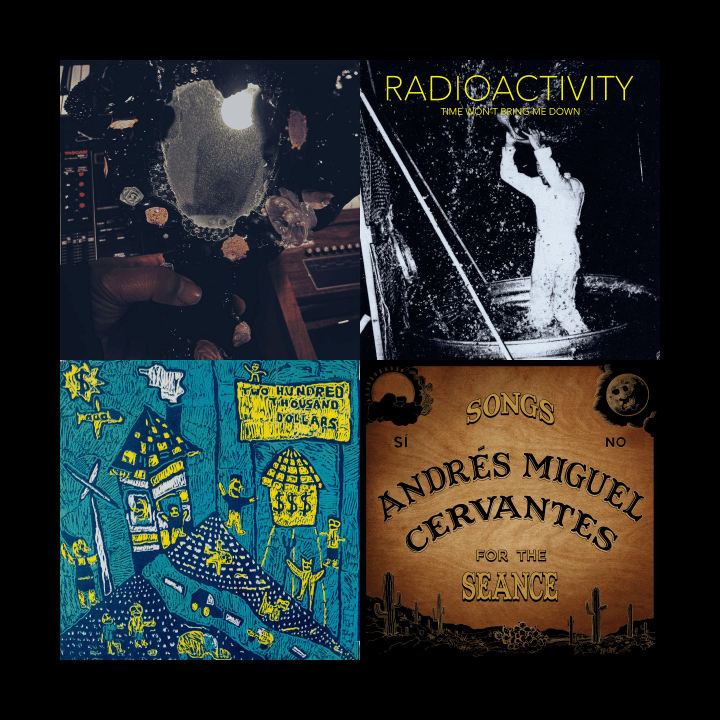
“Time Won’t Bring Me Down”, Radioactivity From Time Won’t Bring Me Down (2025, Dirtnap/Wild Honey)
Austin musician Jeff Burke has consistently pursued an incredibly pleasing mixture of garage rock, power pop, and punk rock over the course of multiple bands and twenty-odd years now. It’s been a decade since the last album from his group Radioactivity, but Burke and his team of fellow longtime Texas garage rockers pick things up effortlessly on Time Won’t Bring Me Down, their long-awaited third LP. There’s a workmanlike quality to this eleven-track album, the band playing these songs in a straightforward manner and letting them speak for themselves. The title track has the propulsion and energy of punk rock to be sure, but there’s something a little more reserved about it, too. Read more about Time Won’t Bring Me Down here.
“I’m Gone”, Left Tracks From LT2 (2025)
The appropriately-titled LT2 is the second release from California duo Left Tracks (Kabir Kumar and Phil Di Leo), following a five-song EP in 2023 called End Times Hauling, and the record contains plenty of the vibrant, colorful indie pop that I’ve enjoyed via Kumar’s solo project Sun Kin. LT2 is both streamlined and weird, hopping from dream folk to spoken word to “I’m Gone”, a bright, sunny two-minute guitar pop song. Read more about LT2 here.
“Breaking Point”, Dom Mariani From Apple of Life (2025, Alive Naturalsound)
Western Australia musician Dom Mariani has been making guitar pop since the late 1980s in groups like The Stems, DM3, and Datura4, so Apple of Life is just the latest in a long, sprawling discography. Nonetheless, my favorite song on Apple of Life, “Breaking Point”, doesn’t sound like anybody who’s run out of steam or ideas as the years have dragged on: it’s classic, desperate, crumbling-relationship power pop with a massive synth hook arising just in time.
“In Between the Distance”, Why Bother? From Case Studies (2025, Feel It)
Mason, City Iowa basement rockers Why Bother? have been on a tear lately–Case Studies is the group’s third release in under twelve months, and all of them have been quality rock and roll records. Believe it or not, Case Studies contains some of Why Bother?’s most outwardly pop moments yet–“In Between the Distance” is straight-up tinny, hissing, lo-fi jangly/power pop (or, at least, as close to it as these dark, horror-infused garage-punks could reasonably ever get). Read more about Case Studies here.
“Washed Up”, Marni From fml era (2025)
The Palm Springs-originating, Los Angeles-based band Marni has settled in nicely with West Coast groups playing some mixture of slowcore, shoegaze, and fuzz-punk (they opened for Idaho last year, if that helps), and that’s what you’ll hear on their latest EP, fml era. Bandleader Nicolas Lara namechecks the late great Ohioan Jason Molina in “Washed Up”, although the wide-open, star-filled indie rock of the track in question betrays Marni’s southwestern desert origins; maybe you’ll find a band seeing how their heroes play in new environments as worthwhile as I do. Read more about fml era here.
“Bigger Better Drug”, Camp Trash From Two Hundred Thousand Dollars (2025, Count Your Lucky Stars)
On their second album, Two Hundred Thousand Dollars, Florida pop punk/power pop/etc band Camp Trash continue to steer their ship into the familiar waters of “indie rock” with bits of poppy alt-rock and guitar pop of several stripes. If Two Hundred Thousand Dollars differs from its predecessors, it probably has to do with cohesion; supposedly, it’s a “loosely connected collection of stories” about “hapless con men, gamblers, low level mobsters, and cult members”, (this is a band with a love of Mountain Goats and Hold Steady-style storytelling, if you couldn’t tell). The Sugar-flavored “Bigger Better Drug” sticks out as an immediate highlight for me, although for the most part Two Hundred Thousand Dollars flows together neatly and consistently. Read more about Two Hundred Thousand Dollars here.
“No North Star”, Massage From Coaster (2025, Mt.St.Mtn./Bobo Integral/Prefect)
Los Angeles group Massage fit right into the current West Coast jangle pop revival, but they’ve gotten there by doing their own thing, one that pulls together pastoral folk rock, New Order-influenced melodicism, and plenty of “college rock”. On their third LP, Coaster, it’s apparent that the group (vocalist/guitarists Alex Naidus and Andrew Romano, vocalist/keyboardist Gabrielle Ferrer, bassist David Rager, and drummer Natalie de Almeida) have yet to miss a beat, and the sprawling jangle pop “No North Star” is the perfect opening hook. Read more about Coaster here.
“Give Up Your Garden”, Cusp From What I Want Doesn’t Want Me Back (2025, Exploding in Sound)
It’s been a steady progression, but jumping into What I Want Doesn’t Want Me Back (the first album made entirely by the Chicago iteration of Cusp) reveals a different band entirely than the math-y, noisy group of their first records–this Cusp has immersed themselves in the world of kind-of-“poppy”, kind-of-“arty” Windy City indie rock. The breezy folk rock of “Give Up Your Garden” is maybe my favorite song on What I Want Doesn’t Want Me Back–as odd as it is in comparison to the rest of the album, it fits on a disparate but very solid LP. Read more about What I Want Doesn’t Want Me Back here.
“Out Now”, Free Pony From Blackout / Out Now (2025, F I R S T I N H U M A N)
Free Pony are a new-to-me band from Charlottesville, Virginia who make “noisy and melodic post-punk”, according to themselves; they released a debut EP in late 2023, and the two song “Blackout”/“Out Now” single is the quartet’s first release since then. I like the single’s (digital) B-side the best–I see why they call themselves a post-punk group with their emphasis on rhythms, but between the lead singer’s high, melodic vocals and the steadily-unfolding studio-pop instrumental, it reminds me more of progressive power pop groups like Curling, or a nervier version of the likes of Jellyfish or Jon Brion. Pretty solid if you ask me.
“Memory Light”, Creative Writing From Baby Did This (2025, Meritorio)
Meritorio Records’ latest guitar pop procurement is a quartet from western Massachusetts made up of a bunch of indie rock veterans. Creative Writing’s Baby Did This continues a strong start that owes as much to the psychedelic and more classic rock-focused sides of “college rock” as the light and jangly ones. Fans of bands like The Vulgar Boatmen and fellow New Englanders Miracle Legion (not to mention the Paisley Underground) will find plenty to enjoy on Baby Did This; not everything is as “sunny power pop” as highlight “Memory Light”, but the more greyscale moments are very catchy as well. Read more about Baby Did This here.
“Future 86”, Alex Orange Drink From Future 86 (2025, Million Stars)
I still haven’t even really dug into Alex Orange Drink’s Good Old Days (released October 31st) yet; maybe once the excitement of hearing Alex Zarou Levine tearing through pop/punk-tinged power pop songs like the title track of Future 86 (released October 3rd) wears off, I’ll get to it. For now, though, we’re going to keep dialing up “Future 86”, a sub-two-minute mod-punk tune with early Ted Leo energy to it.
“Yung Yeller”, Maneka From bathes and listens (2025, Topshelf)
Devin McKnight’s newest album as Maneka, bathes and listens, was recorded with modern slowcore and/or shoegaze go-to producer Alex Farrar, and it subsequently finds the unclassifiable Philadelphia musician making a renewal of vows with distorted, 90s-influenced indie rock. After a few “rockers” to open up the album, bathes and listens gets a little more reserved, but the harmonics in the mid-tempo “Yung Yeller” are some of the most pleasing sounds I’ve heard this year regardless. Read more about bathes and listens here.
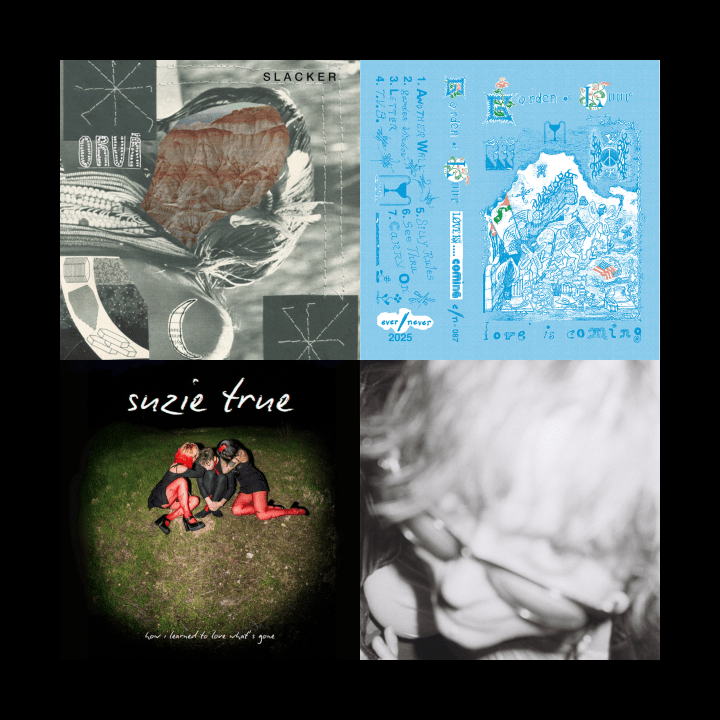
“Leeches (Play Dead!)”, Suzie True From How I Learned to Love What’s Gone (2025, Get Better)
Los Angeles pop punk group Suzie True (bassist/lead vocalist Lexi McCoy, guitarist/vocalist G Leonardo, drummer Sarah Pineapple) are just as likely to mention The Powerpuff Girls or Sailor Moon as influences as they are “alt-rock” acts like Hole and The Breeders; as one might expect, their latest album, How I Learned to Love What’s Gone,is marked by a dogged pursuit of pop hooks and a boundless energy. Suzie True are refreshingly unconstrained by their various influences’ orthodoxies, as this album jumps from post-hardcore to twee to 60s girl group with ease; the cheerleader backing vocals proclaiming “Leeches!” is perhaps the most attention-grabbing moment in highlight “Leeches (Play Dead!)”, but the writing found in the rest of the song lives up to this high as well. Read more about How I Learned to Love What’s Gone here.
“Spring Break Reagan II”, Brat Curse From Rock & Roll Freaks (2025)
Columbus, Ohio quartet Brat Curse (guitarist/vocalist Brian Baker, bassist Justin Baker, guitarist Joe Camerlengo, and drummer Chris Mengerink) have been around for a bit, but the three-song Rock & Roll Freaks single is the group’s first release since 2019, I believe. They’re a very “Ohio” group, fitting in with bands like Smug Brothers, Brian Damage, and Connections who add a Guided by Voices basement pop element to fuzzy garage rock and power pop. Judging by the title, “Spring Break Reagan II” is a sequel to a noisy garage instrumental from 2019’s Brat Curse LP, but the lo-fi power pop of this one (it’s really Connections-esque!) is in a pretty different universe.
“Mary Katherine”, Joel Cusumano From Waxworld (2025, Dandy Boy)
The more immediate songs on Waxworld are some of the best guitar pop I’ve heard this year, and that certainly includes the triumphant Martin Newell-worthy jangle of “Mary Katharine”. Joel Cusumano’s writing is perhaps a bit more skewed and (sigh) “challenging” than most of his Bay Area power pop contemporaries, but there’s nothing to qualify about “Mary Katherine”. It’s quite impressive to hear Cusumano and his band land a somewhat unwieldy refrain, ending with “All I want is to dazzle in the eyes / Of Mary Katherine” and then smoothly sail into the main hook in the form of an all-time jangly guitar riff. Read more about Waxworld here.
“Back Then”, Sam Woodring From Mechanical Bull (2025, Pretzle)
After putting out some of the best albums of the 2020s as Mister Goblin, Sam Woodring announced he was retiring the name earlier this year. Mechanical Bull is the first record Woodring has ever put out under his own name (well, first and middle name, apparently), and it’s certainly the furthest he’s wandered yet from his punk/math rock/Exploding in Sound-core roots. It’s five stark songs, recorded by Woodring’s Deady bandmate Chyppe Crosby and featuring nothing but Woodring’s voice and acoustic guitar. Mechanical Bull takes us on a flatly un-nostalgic trip down memory lane in highlight “Back Then”, Woodring plainly stating that “Back then they didn’t want me / Now I’m old / … / I don’t want them either now / It’s just a circle jerk of jerk offs anyhow”. Read more about Mechanical Bull here.
“(You Can’t Go Back to) Oxford Talawanda”, Guided by Voices From Thick Rich and Delicious (2025, Guided by Voices, Inc.)
There should be more songs about not being able to go back to Oxford Talawanda. Guided by Voices have that covered on their second album of 2025, Thick Rich and Delicious (the song’s titular location appears to be a southwestern Ohio reference, because of course it is). There’s some good stuff on Thick Rich and Delicious–for instance, there’s a new song built from “At Odds with Dr. Genesis” (aka the “Jimmy was a fly / Got sucked in by an actor” bit from the beginning of “Ester’s Day”), and that’s pretty good, but I’m going with this one. It keeps things simple (for later-day Guided by Voices, at least), and the refrain is just the title flogged to anthem status.
“Busted Fire Hydrant”, Strange Magic From Effervescent (2025, Mama Mañana)
New Mexico musician Javier Romero has been toiling away making homespun power pop as Strange Magic since at least the early 2010s, but the prolific artist’s latest record is something of a departure for him. Romero declares Effervescent to be inspired by “New Jack Swing, the golden age of hip-hop, and early, true alternative stylings”–I wouldn’t say that Strange Magic is now closer to those aforementioned genres than the Elvis Costello-ish guitar pop of his past records, but there’s definitely some fun and unusual things going on in these songs. “Busted Fire Hydrant” manages to be both “dreamy” and grounded in a sturdy backbeat at the same time, and it’s as catchy as anything that Romero has recorded in the past, too.
“James St”, People Mover From Cane Trash (2025, Little Lunch)
They’ve still got good indie pop down in Australia! People Mover’s record label, Little Lunch, refers to the Brisbane trio as “nonchalant Australian indie-punk”, which is accurate enough that I’m reprinting here; Lu Sergiacomi’s vocals are droll but melodic, the instrumentals are capable, barebones, and just a little roughed-up, and the songwriting is subtle but sneakily quite strong. Opening track “James St” is People Mover at their cleanest and most buttoned-up, but there’s still a bit of the charming slapdash energy that marks most of Cane Trash. Read more about Cane Trash here.
“Chance to Win”, Guitar From We’re Headed to the Lake (2025, Julia’s War)
Maybe the relative clarity of We’re Headed to the Lake will finally get Portland musician Saia Kuli and his difficultly-named project Guitar the notoriety he’s been due for a hot minute. Frequent Kuli collaborator Jontajshae Smith sings “Chance to Win”, an awesome dreamy jangle-rock song that keeps the momentum of guitar pop opener “A+ for the Rotting Team” going strong in the album’s second slot. Read more about We’re Headed to the Lake here.
“Jigsawy Causeway”, Novelty Island From Jigsaw Causeway (2025, 9×9/Ripe)
Liverpool group Novelty Island is the project of Tom McConnell, who seems to be a fan of meticulous but subtle artistry. The foundation of Novelty Island’s latest record, Jigsaw Causeway, is British guitar pop, but bits of tasteful glam, synthetic touches, jangle pop, and folk rock are all baked into the mix in a very natural manner.The opening title track more or less pulls all of the above together into one pop song, and incredibly smoothly to boot. Read more about Jigsaw Causeway here.
“East Coast Comebacks”, Teenage Tom Petties From Rally the Tropes (2025, Repeating Cloud/Safe Suburban Home)
It may seem like there’s a steady stream of new power pop music from Teenage Tom Petties mastermind Tom Brown that he just can’t turn off, but he specifically wrote the songs of Rally the Tropes with a full-band recording session in mind–after a pair of self-recorded albums last year, Brown is ready to once again put his songs in his friends’ hands to elevate them. The album’s final song, “East Coast Comebacks”, really sells Rally the Tropes as a mini-masterpiece–it starts with some arena rock-style Guided by Voices chords and pumped-in cheers (and Brown soaks the lyrics in beer to boot). It’s about as “indulgent” as a group like the Teenage Tom Petties can get–and though it may be Brown’s pen to paper, it’s the rest of his band giving him the freedom to fly on Rally the Tropes. Read more about Rally the Tropes here.
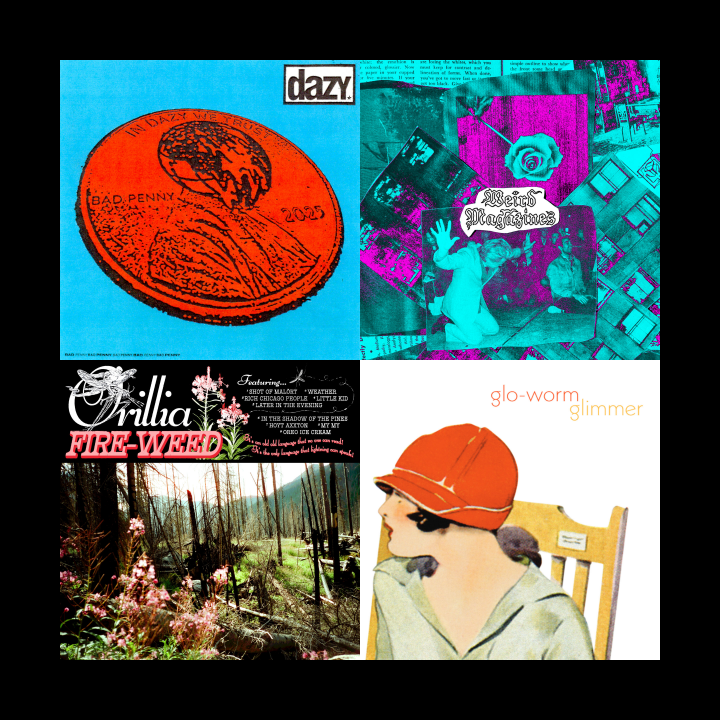
The first Pressing Concerns of the week! On a Monday, even! We’ve got a new album from Orillia, new EPs from Dazy and Weird Magazines, and a reissue from Glo-worm below. Check ’em out!
If you’re looking for more new music, you can visit the site directory to see what else we’ve written about lately. If you’d like to support Rosy Overdrive, you can share this (or another) post, or donate here.
Dazy – Bad Penny
Release date: October 21st Record label: Lame-O Genre: Power pop, Madchester, alt-dance, fuzz pop, pop punk Formats: Digital Pull Track: I Don’t Wanna Think About the Money
Dazy’s James Goodson releases music on his own timeline, one must respect that. After building a lot of anticipation via earlier digital singles, Dazy did do the “long-awaited debut album” thing with 2022’s OUTOFBODY, but since then the Richmond fuzz-pop legend has gone back to the realms of surprise-releases, EPs, and outtake collections. It makes it hard to keep up with Dazy as an album-centric blog sometimes, but I’m certainly not ignoring Bad Penny, a seven-song, twenty-two minute EP that’s Goodson’s most substantial release in over two years. Every time Dazy puts out something that sounds like Dazy, I’m once again forced to marvel at how obvious Goodson makes mixing power pop, pop punk, Madchester/alt-dance, Britpop, and fuzzed-out garage rock together seem. Who knew there was a huge vacancy right at the midpoint of Green Day and Primal Scream?
Look, it’s all good. My favorite song is probably “I Don’t Wanna Think About the Money”–I’m not sure what’s making the hook (a synth?), but it sounds like a dolphin to me. “Delusions of…” might be the most impressive “more with less” moment on Bad Penny–it’s less than two minutes long, and needs little more than a simple sunshine pop structure and some batshit percussion. “Bull Around the Porcelain” and “Straight 2 You” are classic Dazy songs I don’t take for granted, both matching their undeniable rock guitar riffs with the laser-precision of electronica. Most of the obvious highlights are in the EP’s first half, I suppose, but the closing title track makes up for any frontloaded tendencies. At about six and a half minutes, “Bad Penny” is Dazy’s longest song thus far (and I don’t even think it’s particularly close), a long-overdue embrace of electronic-tinged pop music’s ability to stretch things out and go from on a journey from “simple” to “disorienting sensory overload”. It’s neat that we get to hear new versions of this stuff pretty regularly. James Goodson doesn’t sound tired of it, and I’m certainly not either. (Bandcamp link)
Orillia – Fire-Weed
Release date: October 24th Record label: Far West/Magic Mothswam Genre: Country rock, folk rock, singer-songwriter Formats: Vinyl, digital Pull Track: My My
We got a good look at Chicago folk rock singer-songwriter Andrew Marczak late last year thanks to his solo project Orillia’s self-titled debut album, which itself came hot on the heels of new music from his bands The Roof Dogs and Toadvine. Orillia was a fairly stripped-down sampler of Marczak the songwriter and performer, quickly skipping through traditional folk, bright alt-country, and a few nicely-chosen covers adeptly. Less than a year later we get the second Orillia LP, Fire-Weed; like Orillia, it’s pretty short (just under thirty minutes) and isn’t entirely new material (there’s a recording of a traditional folk song here, as well as a reworking of a Roof Dogs track), but it feels like a more clear attempt at creating a coherent “album” this time around. The full-band songs feature a more stable line-up (rhythm section Nico and Matt Ciani on drums and bass, lead guitarist Lucas Chamberlain, fiddle player Lydia Cash, banjo player Dylan Sage, and Nicole Murray on Wurlitzer), leading to a comfortable country rock sound permeating the majority of the album (“Weather”, “Rich Chicago People”, and “Oreo Ice Cream” most prominently). Some of the best songs on the album are still lo-fi, mostly Marczak recordings–“Hoyt Axxton” and “My My”, which he hides towards the end of the record’s second side, and the quite brilliant sixty-second “gaff piano” opening track “Shot of Malört”–but they’re natural breathers in between the “hits” and the grand finale of “Oreo Ice Cream”. None of that, of course, shakesFire-Weed’s strong foundation. (Bandcamp link)
Weird Magazines – Out of Faith
Release date: October 3rd Record label: Self-released Genre: Post-punk, dream pop, indie pop Formats: Digital Pull Track: Talk About Debord
The Brooklyn group Weird Magazines debuted in 2023 with a single called “Yves Klein Blue”; at the time they were a duo featuring vocalist/guitarist Sean Earl Beard and guitarist Arun Marsten, but they added bassist Jon Rocha and drummer Akul Penugonda sometime between then and the release of their debut EP, Out of Faith. The band (who have since added keyboardist Chantal Marie Wright to their lineup) helpfully describe their sound as “jangly post punk”, and that’s fairly accurate to these four songs. Perhaps even more accurate would be “dour, propulsive, guitar-led dream pop”–the key elements of Out of Faith are Beard’s deep, murmured vocals, reverb-heavy guitars, and pop hooks that prefer to sneak up on us in the midst of Weird Magazines’ 80s-indebted haze. “Dress Nicely” is a languid and low-key introduction, and while “Ugly Jazz (Out of Faith)” does have some guitar parts that could be called “ugly jazz” if one squints, it’s still pretty subdued. The second half of Out of Faith is peppier (almost by default, but still); the incredibly catchy “Talk About Debord” is very nearly a send-up of classic indie pop’s bookish/academic tendencies (“Yeah, he’s read DuBois / Shit, I mean Debord”), and “Get Some Action!” does just enough to justify that exclamation mark in its title. It’s all enough for me to keep an eye on Weird Magazines now. (Bandcamp link)
Glo-Worm – Glimmer (Vinyl Release)
Release date: September 19th Record label: K Genre: Indie pop, twee, folk-pop Formats: Vinyl, digital Pull Track: Change of Heart
Like so many indie pop bands from the 1990s, Washington D.C. trio Glo-Worm lasted for just under three years (approximately early 1993 to late 1995) and left behind only a smattering of singles and EPs before disbanding. K Records released Glimmer, a fourteen-song CD and cassette compilating Glo-Worm’s discography, in 1996, but it had never been available on vinyl until now, thirty years after the dissolution of the group. Vocalist Pam Berry (Black Tambourine, The Shapiros), drummer Dan Searing (Whorl, The Saturday People), and guitarist Terry Banks (Dot Dash, St. Christopher) put out singles on K and Slumberland, and Glimmer shows that they brought an East Coast sophistication to the 90s indie pop underground–Banks cites Tracey Thorn’s guitar playing as an influence for these songs, and it’s not hard to hear her rainy, somewhat jazzy folk-pop stylings on early highlights like “Travelogue” and “April Street” (originally released together on a 7” in 1995). I tend to enjoy Glo-Worm’s original songs more than their handful of covers (in addition to the aforementioned, “Change of Heart” and “Holiday” are perfect indie pop songs), but I do like their version of Velocity Girl’s “Crazy Town”, which links them to some of their contemporaries (another band featuring former members of Whorl and Black Tambourine). Glo-worm made enough great music for this record to hold its own three decades after their initial run. (Bandcamp link)
Welcome to the Thursday Pressing Concerns, featuring three albums coming out tomorrow, October 31st (from Camp Trash, Radioactivity, and Andrés Miguel Cervantes), plus one album that came out yesterday (Maneka). If you missed either of this week’s earlier blog posts (Monday’s featured Sam Woodring, Cusp, E.R. Visit, and Leanne Betasamosake Simpson, and Tuesday’s featured Oruã, Suzie True, Garden of Love, and Six Flags Guy), check those out, too.
If you’re looking for more new music, you can visit the site directory to see what else we’ve written about lately. If you’d like to support Rosy Overdrive, you can share this (or another) post, or donate here.
Maneka – bathes and listens
Release date: October 29th Record label: Topshelf Genre: Art rock, slowcore, experimental rock, fuzz rock, 90s indie rock, math rock, Maneka Formats: Vinyl, CD, cassette, digital Pull Track: Yung Yeller
The Washington, D.C.-originating, Philadelphia-based musician Devin McKnight has been making music as Maneka since the mid-2010s; I’ve long associated him with the noisy, fuzzed-out indie rock of Exploding in Sound Records (who put out the first two Maneka records, as well as music from other bands McKnight has played in like Speedy Ortiz and Grass Is Green). Much of Maneka lands in the realms of slowcore-ish, greyscale indie rock, but the project has always been a bit more than that, and 2022’s Dark Matters reflected that by incorporating jazz and experimental pop. McKnight’s newest album as Maneka, bathes and listens, was recorded with Alex Farrar, who’s becoming the go-to producer for modern slowcore and/or shoegaze-inspired bands (Wednesday, Shallowater, Colin Miller), and is subsequently a renewal of vows with distorted, 90s-influenced indie rock.
bathes and listens doesn’t feel like a retreat from Dark Matters’ stranger impulses–it’s still kind of hard to get a handle on Maneka, even though it’s pretty easy to understand that “Shallowing” and “Dimelo” are supposed to rock, so they rock (the former in a slow-burn kind of way, the latter a blazing inferno from the get-go). As McKnight moves past that initial gauntlet-throwing, we get a bit more reserved with some acoustic/folk-y-touched tracks (“Sad Bot”, “Pony”), and the harmonics in the mid-tempo “Yung Yeller” are some of the most pleasing sounds I’ve heard this year. The wild, dreamy, saxophone-infused “5225” and “Why I Play 2K/Land Back” ensure that bathes and listens is an interesting and lively record right up to the end, the surprising atmospherics of the former giving way to an almost metal introduction to the closing track. The nature of the music Devin McKnight makes will probably keep him “underappreciated” territory, but bathes and listens can certainly hold its own against some of the biggest names currently making music that is (correctly or otherwise) called “shoegaze”. (Bandcamp link)
Camp Trash – Two Hundred Thousand Dollars
Release date: October 31st Record label: Count Your Lucky Stars Genre: Pop punk, power pop, emo Formats: Vinyl, digital Pull Track: Bigger Better Drug
I’ve been enjoying the musical stylings of Florida pop punk/power pop/etc band Camp Trash for the entirety of Rosy Overdrive’s run–I highlighted their first EP Downtiming in 2021 and first LP The Long Way, the Slow Way in 2022, but they also had a good song on a four-song split last year and they put out a split EP with Dowsing earlier this year. On their second album, Two Hundred Thousand Dollars, founding members Bryan Gorman, Levi Bradford, and Keegan Bradford are joined by new drummer Kyle Meggison (Worst Party Ever), but the four of them (with help from Pretty Rude/Taking Meds’ James Palko, who recorded the album) continue to steer the Camp Trash ship into the familiar waters of “indie rock” with bits of poppy alt-rock and guitar pop of several stripes.
If Two Hundred Thousand Dollars differs from its predecessors, it probably has to do with cohesion; supposedly, it’s a “loosely connected collection of stories” about “hapless con men, gamblers, low level mobsters, and cult members”, and while I couldn’t tell you any plot points or anything, the images we get glimpses of are certainly befitting of a band with a love of Mountain Goats and Hold Steady-style storytelling. The tracks flow into each other in a way that the overexcited The Long Way, the Slow Way didn’t necessarily do–it’s hard to pick out highlights, but the Sugar-flavored “Bigger Better Drug” and requisite jangler “Alibi” both stick out. I’m also quite into the closing track, “Heaven or Wisconsin”, which starts out with an arena rock-riff (or, at least, a riff I’d want to hear in an arena). The song that follows that attention-grabbing opening is vintage Camp Trash though, a serious pop band first and foremost no matter how many squealing guitars they sneak into their hooks. (Bandcamp link)
Radioactivity – Time Won’t Bring Me Down
Release date: October 31st Record label: Dirtnap/Wild Honey Genre: Garage punk, garage rock, power pop Formats: Vinyl, CD, cassette, digital Pull Track: Time Won’t Bring Me Down
Jeff Burke is revered in certain circles for the music he’s made via a collection of bands since the early 2000s, perhaps most famously The Marked Men (four albums in the 2000s) and Radioactivity (two LPs in the 2010s). The Austin-based musician’s groups have consistently pursued an incredibly pleasing mixture of garage rock, power pop, and punk rock that we maybe take for granted now, but was hardly all that common when those bands were getting started. It’s been ten years since the last Radioactivity album, but Burke and his team of fellow longtime Texas garage rockers (Mark Ryan, Daniel Fried, and Gregory Rutherford) pick things up effortlessly on Time Won’t Bring Me Down, their long-awaited third LP. There’s a workmanlike quality to this eleven-track album, the band playing these songs in a straightforward manner and letting them speak for themselves. The title track and “Watch Me Bleed” have the propulsion and energy of punk rock to be sure, but there’s something a little more reserved about them that only gets more pronounced in the less-speedy tracks like “This One Time” and “I Thought”. Radioactivity could be a beloved power pop band or a punk band, but Time Won’t Bring Me Down is clearly the album they wanted to make themselves–one that gives them the freedom to jump from no-fat quick pop hits like “One Day” to the nearly-five-minute garage rock odyssey of “Shell”. They know that there are those of us who can hang with that. (Bandcamp link)
Andrés Miguel Cervantes – Songs for the Seance
Release date: October 31st Record label: Speakeasy Studios SF Genre: Folk, blues, country, singer-songwriter Formats: Vinyl, CD, digital Pull Track: Omen
Andrés Miguel Cervantes’ first album, 2022’s The Crossing, was the first album released by Speakeasy Studios SF, the record label founded by founded by producer and Aislers Set member Alicia Vanden Heuvel that has gone onto put out records from The Lost Days, Galore, and The Softies, among others. I missed The Crossing when it came out, but I’m fully on board with Songs for the Seance, Cervantes’ second full-length. Like The Crossing,Songs for theSeance was recorded with a healthy list of instrumentalists (Heuvel on bass and percussion, Jacob Aranda on pedal steel and violin, Hall McCann and Graham Norwood on guitar, Raphi Gottesman on drums, and Jessie Leigh Smith on harmonica), but it’s still an intimate country-folk record that emphasizes the singer-songwriter at the center. At his folkiest, Cervantes combines the stark, steady atmosphere of Leonard Cohen with something more “western”, and on the other end of the spectrum (seen in the LP’s first three songs), there’s a more full-sounding country-blues practitioner. I get a glimpse of empty-country folk singers like Damien Jurado and Richard Buckner in songs like “A Silver Wind”, although the musician who’s singing “A Thing for Charge” (for instance) is drawing from something older than them (probably even earlier than Townes Van Zandt, of whom that song reminds me the most). Songs for the Seance, indeed. (Bandcamp link)
It’s the second Pressing Concerns of the week, featuring new albums from Oruã, Suzie True, and Garden of Love, and a new EP from Six Flags Guy. Check them out below, and if you missed yesterday’s blog post (featuring Sam Woodring, Cusp, E.R. Visit, and Leanne Betasamosake Simpson), dial that one up, too.
If you’re looking for more new music, you can visit the site directory to see what else we’ve written about lately. If you’d like to support Rosy Overdrive, you can share this (or another) post, or donate here.
Oruã – Slacker
Release date: October 24th Record label: K Genre: Psychedelic rock, garage rock, post-punk Formats: Vinyl, digital Pull Track: Marejar
Half of the Rio De Janeiro psych rock quartet Oruã (guitarist/vocalist Lê Almeida and synth player João Casaes) were members of the ever-changing latter-day Built to Spill lineup for a few years, co-producing and playing on the Idaho indie rock institution’s latest album, 2022’s When the Wind Forgets Your Name. One imagines that this Pacific Northwest connection is how stalwart Olympia, Washington label K Records came to signing the Brazilians (Almeida, Caseas, bassist Bigu Medine, and drummer Ana Zumpano) for their latest album, Slacker, but that’s hardly Oruã’s only accomplishment: they’re important figures in their home city’s music scene, with Almeida running Transfusão Noise Records (Gueersh, Disco Doom, Retrato) for over twenty years. It’s not even the group’s first Washington State collaboration, as they put out a split LP with Seattle act Reverse Death earlier this year.
That split LP featured some songs that would go on to be reworked for (or cut from) Slacker, and if you enjoyed that record, Oruã’s version of psychedelia remains in familiar terrain on this more formal exploration of it. The rhythm section is still the bedrock of the quartet’s sound, with Zumpano and Medine providing the foundation on songs like “Deus Dará” and “De se Envolver” for Almeida and Caseas to intone and accent these tracks with their voices and instruments. They’re still an incredibly electric band, as the Big Riffs anchoring tracks like “Slave of the Golden Tooth” and “Marejar” make clear, but Oruã are remarkably even-keeled in their division of the spotlight–the album’s centerpiece, the nearly nine-minute “Inaiê”, is an exercise in tension and subtlety, and the pensive “Soft” has languid guitar lines relying on the rest of the band to carry them. Oruã might be new to North Americans, but they’ve been at this thing for a while, and it shows with Slacker. (Bandcamp link)
Suzie True – How I Learned to Love What’s Gone
Release date: October 17th Record label: Get Better Genre: Pop punk, indie pop, garage punk, twee, power pop Formats: Vinyl, digital Pull Track: Leeches (Play Dead)
After releasing a debut EP in 2018, Los Angeles pop punk group Suzie True has put out three records on indie punk veterans Get Better Records–How I Learned to Love What’s Gone follows in the footsteps of 2020’s Saddest Girl at the Party and 2023’s Sentimental Scum. The trio (bassist/lead vocalist Lexi McCoy, guitarist/vocalist G Leonardo, drummer Sarah Pineapple) are just as likely to mention The Powerpuff Girls or Sailor Moon as influences as they are “alt-rock” acts like Hole and The Breeders; as one might expect, How I Learned to Love What’s Gone is marked by a dogged pursuit of pop hooks and a boundless energy. Produced by Chris Farren, How I Learned to Love What’s Gone sounds at home evoking 60s girl groups (“Oh, Baby!!!”), interpolating “Cherry Bomb” (“Get Prettier Overnight!!!”), and doing a blistering Veruca Salt impression (“Love Like Cement”), and McCoy’s slick but very open writing hits as hard as fellow pop-ish punk-ish labelmates like Bacchae and Cowboy Boy. Suzie True are refreshingly unconstrained by their various influences’ orthodoxy–we wouldn’t get a song that verges towards post-hardcore (“So Blame Me”), a really good twee-punk number hidden towards the end of the record (“Love for Nihilists”), or cheerleader backing vocals proclaiming “Leeches!” (that’d be in “Leeches (Play Dead)”) otherwise. If you’re going to try to make this kind of pop music, it requires the kind of ambition Suzie True bring nonstop on How I Learned to Love What’s Gone. (Bandcamp link)
Garden of Love – Love Is Coming
Release date: September 26th Record label: Ever/Never Genre: Lo-fi pop, garage rock, psychedelic pop, experimental pop, lo-fi punk Formats: Cassette, digital Pull Track: Another Wall
Garden of Love are a new trio formed by a few Montreal indie rock/punk ringers, specifically vocalist/guitarist synth player Jane Harms (Donna Allen), drummer Cole Woods (Laughing, Faze), and bassist Sony (Cheap Wig, Ursula). Garden of Love’s debut album, Love Is Coming, is delivered to us via cult label Ever/Never Records (Workers Comp, Ryan Davis & The Roadhouse Band, Kilynn Lunsford), who proclaim it to be (via a quote from WFMU DJ Erick Bradshaw) “miniature prog-pop suites condensed into radio-friendly runtimes”. At its most accessible, Love Is Coming sits comfortably amongst tinny, lo-fi guitar pop acts like Home Blitz, Silicone Prairie, and much of the Inscrutable Records catalog, although Garden of Love are just as apt to veer into noisy chaos as to deliver spindly, jangly guitar lines. There’s no denying the pop cores at the hearts of psych-prog-trash creations like “Another Wall” and “Garden Window”, and “Letter” ups the ante by coming out the other side into straight-up slapdash surf rock. The noise punk “T.V.B.” is the record’s first really off-the-rails moment, but it’s not the last, as Garden of Love continue embracing their wild side right up into the four-point-five-minute prog-blues-punk-pop suite “Carry On”, which puts a cap on the too-brief twenty-one minute cassette. Whether it’s the tossed-off collaboration between three busy musicians or the start of something larger, Love Is Coming holds its own. (Bandcamp link)
Six Flags Guy – In Texas, We Hang Horse Thieves and Let Murders Go
Release date: October 2nd Record label: 329 Genre: Post-rock, noise rock, post-hardcore, math rock Formats: Digital Pull Track: Yow Tools
Columbus, Ohio quartet Six Flags Guy are one of the strongest bands sitting at the corner of post-rock and post-hardcore in recent memory, and their sophomore album, You Look Terrible (which came out in June), only cemented the mantle they claimed with 2023’s And Nothing Did So What. After releasing a sprawling fifty-minute album of “eerie slowcore and guitar-based post-rock” (as I said at the time), it’s surprising to have Six Flags Guy back again so quickly, but here we are with a four-song EP called In Texas, We Hang Horse Thieves and Let Murders Go. You Look Terrible had some kinetic moments, but In Texas… is a lot punchier, landing just as many blows in fifteen minutes between the EP’s twin pillars of “Concrete Beach” and “Yow Tools”. The former starts off in Spiderland and builds to a tense, fiery art-punk conclusion, while the latter (after the requisite meandering introduction) is straight-up squealing in its fury. Bookending these songs are a noise-piece introduction called “I Bought a Dream Journal” and a surprising seventy-second retreat into Duster-esque slowcore called “Planning My Exit”; it’s nearly a photo-negative of their last album, the dominant elements reduced to the periphery and vice versa. Either seems to look good on Six Flags Guy. (Bandcamp link)