In this here Thursday Pressing Concerns, we’re featuring four albums coming out tomorrow, January 23rd: new ones from Place Position, Jo Passed, T. Gold, and Subtle Body. Check ’em out, and if you missed Tuesday’s blog post (featuring Top Jimmy and the Rhythm Pigs, Fuzzy Feelings, Storm Boy, and Ace of Spit), load that one up, too.
If you’re looking for more new music, you can visit the site directory to see what else we’ve written about lately. If you’d like to support Rosy Overdrive, you can share this (or another) post, or donate here.
Place Position – Went Silent
Release date: January 23rd Record label: Sweet Cheetah/Poptek/Bunker Park/Blind Rage Genre: Post-punk, post-hardcore, math rock Formats: Vinyl, digital Pull Track: Chaos Herder Pt. 2
Here we are with Place Position, a trio from Dayton, Ohio evidently named after a Fugazi song, and who make music one might expect a trio evidently named after a Fugazi song to make. Bassist Chip Heck, Jesse Mays, and guitarist/vocalist Josh Osinkosky are probably all “lifers”; the first Place Position album came out in 2014, and all three of them have played in other bands in southwestern Ohio (The 1984 Draft, Shadyside, Landfilth…). Aside from a three-song single in 2020, Place Position had been pretty quiet since their first album, but the dozen-year wait for Place Position LP2 has finally ended with Went Silent. Those paying attention are rewarded with ten slow-moving but still frequently fiery post-hardcore/post-punk songs well-versed in the intricacies of the history of Dischord Records and its flagship bands; while it’s not as zen-like as Lungfish (or their best modern analogue, Vulture Feather), it does sound like a record that has benefited from its creators getting long(er) in the tooth.
Those who enjoy the “flag-planting anthem” side of post-hardcore punk rock will be drawn in immediately with “Chaos Herder Pt. 2”, a stalwart, unflappable post-punk opening statement. Like many a great Dischord record, however, Went Silent is also sneakily quite weird and subversive–this is apparent from the tense atmospheres propping up “Camber” in the first half, and it really comes to a head near the center of the album with strange art punk tangents “Buy Here, Pay Here” and “NO401OK”. Most everything on Went Silent is, to some degree, a “rocker”, but it’s to Place Position’s credit that they have a pretty wide-ranging and open attitude as to how (and when and where) to do that. If you want to know how to make music like this for the better part of twenty years, Place Position have put on a pretty good demonstration on keeping it fresh with Went Silent. (Bandcamp link)
Jo Passed – Away
Release date: January 23rd Record label: Youth Riot Genre: Art punk, psychedelia, post-punk Formats: Vinyl, CD, cassette, digital Pull Track: Alright
I remember the first Jo Passed record, which came out on Sub Pop back in 2018. It was a weird, jagged art rock album called Their Prime; I don’t think I was ready for it at the time, but listening back to it now, it sounds pretty good. It took Jo Hirabayashi, the leader of Jo Passed, eight years to follow up Their Prime, and he alludes to mental health problems in the interim–the previous, Vancouver-based version of Jo Passed dissolved, Hirabayashi moved to Toronto, and worked and reworked what eventually became Away. Aided by a new group of backing musicians (vocalist Téa Mei, drummers Mac Lawrie and Justin Devries, Meredith Bates on strings, and saxophonist/woodwind player Andromeda Monk), Hirabayashi sounds more driven and intense than ever on Away, a gorgeous, tangible pop album in the realms of post-punk, psychedelia, and 70s studio-heavy rock.
Everything on Away has its own personality–just running through the first half, there’s the woozy psych-pop opening track “brb”, the propulsive avant-garage art pop rock of “Precious Word”, the dreamy jangle of “Ico” (about Mei’s cat, apparently), the skronky horn-fest of “339”, and the delicate mid-tempo ballad at the core of “Dizzy Izzy”. My favorite song on Away is in the second half, though: “Alright” is a fully-committed, kaleidoscopic power pop curveball like nothing else on the album. Jo Passed really throw everything they can spare into “Alright”, but Away is as strong as it is on the whole because they give just as much to everything else on the album, from the nearly-percussionless minimal trip of “Too Much Thought” to the sprawling, triumphant deconstructed girl-group-pop of “J Walking”. Jo Passed may not have a clearly “straightforward” album in them because that’s not really what they do, but for a “challenging” band like this, Away is as good as it gets. (Bandcamp link)
T. Gold – Life Is a Wonder and It’s Cruel
Release date: January 23rd Record label: Sleepy Cat Genre: Folk rock, alt-country, art rock, synthrock Formats: Digital Pull Track: New Land
Gabriel Anderson and Saman Khoujinian are a pair of musicians from Miami who are now based in Carrboro, North Carolina, where they co-founded Sleepy Cat Records in 2019 to release their band T. Gold’s self-titled debut album. Seven years later, Sleepy Cat has released a bunch of good records from North Carolina musicians like Lonnie Walker, DUNUMS, and Gibson & Toutant, and the label’s founding duo have finally returned as T. Gold with Life Is a Wonder and It’s Cruel, the project’s second album. A warmly familiar but nonetheless unique lesson, Life Is a Wonder and It’s Cruel is a friendly, accessible folk-pop album made by a duo who are clearly immersed in their state’s alt-country scene but also have a “quadraphonic improvisational synthesizer collective” called Delver. The production (from both members of T. Gold as well as Dylan Turner and Alex Bingham) is immaculate, and Khoujinian’s lead vocals are crystal clear, setting up Life Is a Wonder and It’s Cruel to be a nice, smooth folk-country-rock listen–except for all the electronic tinkering. It’s right up front and center from the synthesizers whirring along with opening track “Getting to Know the End”, and the extra instrumentation (provided by both Anderson and Khoujinian) adds another dimension to both rockers like “Jewel” and “slow ones” like “Speak with Spirits”. T. Gold truly shine at the intersection of the traditional and synthetic, as highlights like the mountain folk-tinged “New Land” and closing ballad “Wagoner’s Lad” make clear. Looking at what they’re able to do here, the Research Triangle’s music world is evidently all the richer for having T. Gold and its twin minds at the center of it. (Bandcamp link)
Subtle Body – Subtle Body
Release date: January 23rd Record label: Strange Mono Genre: Post-punk, lo-fi punk, synthpunk, goth, no wave Formats: Cassette, digital Pull Track: Infinite Casualties
A new quintet from Philadelphia made up by a bunch of “punk, hardcore, and grind” veterans, Subtle Body are the latest group to throw their hats in the realms of muddy, spooky, lo-fi post-punk and synthpunk. The group (vocalist Bo, synth player Rachel, drummer Mike, guitarist Chips, and bassist Dave) have linked up with prolific local label Strange Mono (Idiot Mambo, Snow Caps, Webb Chapel) to release their self-titled debut cassette, a twenty-three-minute descent into the gothic side of basement punk. Dave’s bass swims in a murky sea of haunting vocals, freaked-out drums, and plenty of synths in “The Body”, the first non-intro track, and most of Subtle Body’s rockers (“Infinite Casualties”, “Social Dispute”, “Stolen World”) follow in much the same fashion. Nevertheless, Subtle Body still have the capability to swerve into a strange synth ambient piece right in the middle of the album (“Eyes on the Ground”), and are even able to more or less successfully merge their weird and punk sides with “Estrangement”. Subtle Body wrap up their first album about as quickly as possible, but there’s still time for one five-minute epic in “Black Candle”, which is effectively four minutes of pounding garage-post-punk and then a weird electronic outro; altogether, the future is looking nice and bleak for Subtle Body. (Bandcamp link)
The blog was inactive yesterday in observance of Martin Luther King Jr. Day in the States, but we’re back today with a brand-new Pressing Concerns featuring new albums from Fuzzy Feelings, Storm Boy, and Ace of Spit, plus a reissue of Top Jimmy and the Rhythm Pigs‘ sole LP. Check ’em out below!
If you’re looking for more new music, you can visit the site directory to see what else we’ve written about lately. If you’d like to support Rosy Overdrive, you can share this (or another) post, or donate here.
Top Jimmy and the Rhythm Pigs – Pigus Drunkus Maximus
Release date: January 16th Record label: Blind Owl/East of Lincoln Genre: Rock and roll, blues rock, R&B, bar rock Formats: Vinyl, CD, digital Pull Track: Dance with Your Baby
It’s not hyperbole in the slightest to refer to Top Jimmy and the Rhythm Pigs as legends of the Los Angeles punk underground. The rock and roll/R&B group were led by the late “Top Jimmy” Koncek, a Kentucky transplant who has a song on a Van Halen album named after him, and the equally memorable Carlos Guitarlos featured on lead guitar. They associated with everyone from X to The Doors to Tom Waits in their heyday, and Steve Wynn of The Dream Syndicate released the band’s only recorded output, Pigus Drunkus Maximus, in 1987. The LP–which was actually recorded in 1981–has been out of print for decades, leading to Blind Owl Records and East Of Lincoln Productions partnering for its first ever reissue nearly forty years after it initially came out. Pigus Drunkus Maximus is a one-way ticket back to the Los Angeles chronicled by John Doe and Exene Cervenka in their contemporaneous records, although Koncek and his band preferred to survey the landscape via a collection of electric blues rock versions of songs collected from across rock and roll’s history. We start at 150% with the saxophone-heavy bar rock of “Dance with Your Baby” (one of the relatively few originals on the album), and the party continues through numbers like the garage rock strut of “Homework”, the blues-punk of “Obviously Five Believers”, and the soulful fire of “Hole in My Pocket”. Pigus Drunkus Maximus bears the burden of being the only recorded document of something that almost certainly couldn’t have been defined by one album, but thankfully the attempt to do so still sounds very good today. (Bandcamp link)
Fuzzy Feelings – Under the Pit
Release date: January 13th Record label: Self-released Genre: Lo-fi pop, power pop, fuzz pop Formats: Digital Pull Track: 50 Takes
“Fuzzy Feelings” is a fairly apt band name for the latest project of Joseph Weber, a London-based musician who previously played in the early-2010s Brooklyn fuzz-pop group Gross Relations. After putting out an EP under the name Joey Relations in 2024, Weber began rolling out this latest band with a string of singles late last year (initially under the name Funny Feelings; wonder what’s up with the name change) leading up to Under the Pit, a twelve-song, twenty-one-minute exercise in lo-fi power pop that is indeed of both the “fuzzy” and “feelings” variety. Imagine a “slacker”, more bummed-out version of Mythical Motors’ bite-sized one-man-electric-power-pop records, and that’ll get you in the ballpark of Under the Pit. Fuzzy Feelings chug indifferently through amplified-to-rock hooks in “Powerline” and “Down & Sideways”, and an intense streak of lo-fi, minimal, drum-machine-aided garage-rock-guitar-pop remains essentially unbroken from there on: maybe “Hey” and “Soul Seeker” are a little softer, but they don’t cause the middle to drag. Aside from the twin thirty-second experiences of “Sludge Mains” and “Pink Sun”, the “outliers” are probably “50 Takes” (a two-minute song that starts with a keyboard hook so great that Weber waits until the song is half over to even start singing) and “Campaign” (okay, so here’s the ballad, right in the penultimate slot where it belongs). It’s everything you could want in one of these kinds of albums, in the least amount of time necessary to do it. (Bandcamp link)
Storm Boy – Beast Machine Theory
Release date: January 15th Record label: Self-released Genre: Punk rock, post-hardcore Formats: CD, digital Pull Track: Tiny Fists
The Olympia-based “post-hardcore rock n roll” group Storm Boy was formed by guitarist/vocalist Chas Roberts and drummer Jeremy Anderson (who’d played together previously in the band Voycheck), and they quickly added guitarist/vocalist Charli Beaumont and bassist/vocalist Kuba Bednarek before their first EP, Superposition!, came out in late 2024. We’re joining the quartet on the occasion of their debut full-length, Beast Machine Theory, which is indeed a trip directly into the gruff, garage-y worlds of post-hardcore, punk rock, and even “orgcore”. They may be from the West Coast, but Storm Boy have clearly listened to a good deal of the Dischord Records discography, as first-half post-hardcore punk rock cuts like “Tiny Fists” and “Always Bet on Black (and Pink)” make clear. The beer-soaked anthem “From Your Mouth” lands closer to Hot Water Music, and Storm Boy indeed inject the necessary melodic punk energy and catchiness into that one to make it work. Unlike a lot of bands in this mold, Storm Boy really develop and tease these songs out; there’s only eight songs on this thirty-plus minute LP, meaning they’ve got the time to start “…And Then Four” with a spare, noir-ish opening minute and turn closing track “The Minute We’re Born” into a six-minute endurance-test finale. There’s a lot on Beast Machine Theory, and a lot to like on it, an encouraging sign for a band on their debut album. (Bandcamp link)
Ace of Spit – Ace of Spit II
Release date: January 3rd Record label: Sinkhole/Wombat Cock Genre: Garage rock, punk rock, surf rock Formats: Vinyl, digital Pull Track: Weapons Down
I first heard about St. Louis garage rockers Ace of Spit in 2022 thanks to their Sophomore Lounge-released self-titled debut album, a wild punk rock LP that sucked up and spat out surf rock, proto-punk, and even a bit of power pop on us all (it snuck onto my year-end list and everything). Four years later, Ace of Spit kicked off 2026 by releasing their sophomore album Ace of Spit II, this time co-released by legendary St. Louis music venue The Sinkhole’s record label and something called “Wombat Cock”. If anything, Ace of Spit II is an even greater commitment to the twin tornados of freewheeling garage punk and “spaghetti western” vibes; with one major exception, the quartet (Brett, Scott, Steve, and Gabe) spend all of this LP’s twenty-seven minutes prowling the fabled “Cramps to MC5” spectrum. The album’s first three songs are all “rippers”, to be sure, but the ever-so-subtle desert-rockabilly sound is already there, and it only gets more obvious in “Diaspora Rock”, “Road to Reno”, and the genuinely-Western-evoking “Past Continuous”. That one “major exception” I mentioned earlier is “Parts List”, a bizarre excursion into fuzzed-out, fried electronica (with Link Wray riffs over top of it, of course) for three minutes; no idea why that’s smack dab in the middle of the record, but I don’t mind it–and besides, everything else rocks, so who cares? (Bandcamp link)
The second Pressing Concerns of the week (and third of 2026) features four records coming out tomorrow, January 16th: new albums from Peaer and Wormy, a reissue from Cub, and the wider release of an album by Eleven Plus Two = Twelve Plus One. Earlier this week, we looked at new records from Celebrity Telethon, Dish Pit Violet, Rotundos / Vatos Tristes, and Joe Glass; check that post out, too.
If you’re looking for more new music, you can visit the site directory to see what else we’ve written about lately. If you’d like to support Rosy Overdrive, you can share this (or another) post, or donate here.
Cub – Come Out Come Out (30th Anniversary Edition)
Release date: January 16th Record label: Mint Genre: Twee, indie pop, cuddlecore, power pop, pop punk Formats: Vinyl, digital Pull Track: Ticket to Spain
The Vancouver, British Columbia indie pop group Cub are probably most well-known for their 1993 debut album Betti-Cola, a classic in twee (and self-described “cuddlecore”) that put Mint Records (now a Canadian institution) on the map. Come Out Come Out was the sophomore record (out of three; they broke up in 1997), originally released in 1995 as a triple 7” (of course) and reissued on CD in 2007. This vinyl edition is the first time that Come Out Come Out has been released on a boring-old 12-inch record, and it also marks the first time I’ve heard this record in full. Here, original members Lisa Marr (vocals/bass) and Robynn Iwata (guitar/backing vocals) are joined by new drummer Lisa G, and the three of them pick up the irresistible twee-pop thread that Cub began with Betti-Cola two years previously.
Come Out Come Out is probably a more polished and “professional”-sounding album than Betti-Cola (if nothing else, it features a stable core trio, with guest musicians like organist Lorraine Finch and percussionist Marc L’Esperance only used as additions to the main three). Cub aren’t a “punk band” and wouldn’t be called “power pop” by that genre’s gatekeepers, but opening track “Ticket to Spain” is great, loud, “rocking” pop music no matter what we call it. “My Flaming Red Bobsled”, “Voracious”, and “Life of Crime” are the work of a genuine garage rock band (imagine the intermittent “prowling” vibes of one of Cub’s biggest influences, Beat Happening, but with better musicianship), “Everything’s Geometry”, “Your Bed”, and “So Far Apart” are Cub at their fluffiest, and “New York City” (famously covered by Cub tourmates They Might Be Giants) ought to be an indie pop standard. Speaking of covers, there’s a Yoko Ono one and a Go-Go’s one (I’m partial to the latter, “Vacation”, but they both work as “Cub songs”), and there’s a bonus live version of Beat Happening’s “Cast a Shadow” (which they also did on Betti-Cola; it’s one of my favorite ones from that album) featuring an “Italian harmonica man”. In between wild harmonica solos and cringeworthy banter (Cub did their best with what the Italian harmonica man gave them, I admit), an all-time great indie pop song is performed. Marr sings “Cast a Shadow” with an audible big grin on her face, which sums up all of Come Out Come Out very well. (Bandcamp link)
Peaer – Doppelgänger
Release date: January 16th Record label: Danger Collective Genre: Math rock, indie pop, 90s indie rock, slowcore Formats: Digital Pull Track: Just Because
The SUNY Purchase-originating trio Peaer were one of the great indie rock bands to emerge from the American Northeast in the mid-2010s, going from a Peter Katz solo project to a full-fledged band who put out two albums on Tiny Engines (their 2016 self-titled album and 2019’s A Healthy Earth). Although Katz, bassist Thom Lombardi, and drummer Jeremy Kinney spent the first half of this decade in relative silence, they continued work on a third proper Peaer album, finally arriving at the beginning of 2026 as Doppelgänger. The first song from Doppelgänger we heard, “Just Because” (released last year as a standalone single), was a sparkling missive right out of the more melodic end of the “Exploding in Sound math rock” heyday; it’s a bit perkier than Doppelgänger as a whole, but it’s the kind of well-crafted, sleek, friendly-but-not-overly-so indie rock that populates the record.
For a band who hadn’t been afraid to get pretty noisy in the past, Doppelgänger represents a clear shift into more “refined”, “restrained”, “reserved” and other such “re”-word-territory. The “rocking” side of Peaer is largely confined to wonky guitar solos in “Part of the Problem” and “Bad News”, as well as the trash-compactor-ending to “Rose in My Teeth”; they’re exciting moments, to be sure, but the less-explosive bridges in between them are what make up Doppelgänger’s foundation. “End of the World” opens the album with Peaer’s clearest foray yet into “guitar pop” (it’s damn-near toe-tapping!); if they don’t quite do anything like that again, “Part of the Problem” and “Just Because” at the very least form an undeniably catchy opening trio. “No More Today” is catchy too, I suppose, but it has a dour streak that’s apparently Doppelgänger’s final missing piece: from there, Peaer make songs like “Button” and “Bad News” sound like the most natural things in the world. Nonetheless, it took six years and (one imagines) a great deal of tinkering to get to Doppelgänger, and I don’t take this “effortless”-seeming final product for granted. (Bandcamp link)
Eleven Plus Two = Twelve Plus One – Antenna
Release date: January 16th Record label: The Forever Exploding Dynamo Genre: Post-rock, 90s indie rock, experimental rock, noise rock, ambient Formats: CD, digital Pull Track: Touché
The intriguingly-named Eleven Plus Two = Twelve Plus One are a new band from Columbus made up of three longtime central Ohio indie rock musicians in drummer/keyboardist Keith Hanlon (The Black Swans, Orchestraville), guitarist/vocalist Keith Novicki (Closet Mix), and bassist Joel Walter (who’s put out a few solo albums). The trio’s first album, Antenna, appeared on Bandcamp last October, but Novicki has given it a wider release this month via his new record label, The Forever Exploding Dynamo. Antenna, a thirty-five-minute LP made up of only five songs, is “indie rock” for those of us who enjoy music that veers between the accessible and the challenging. Long-running groups like Oneida and the similarly-named Eleventh Dream Day come to mind–opening and closing your album with twin eleven-minute pillars of Sonic Youth-style art rock is a pretty inarguable “statement”, as is sticking a nice, dirty garage punk song right in the middle of your LP (“Touché”, which holds the center in between a meandering five-minute dream-rock song called “Keyhole” and the ambient piece “Defeated Lions”). It’s those opening and closing tracks that really cement Eleven Plus Two = Twelve Plus One as true professionals in this arena (and, given that they together make up the majority of the album, that’s a good thing). “Dissolve Me Now” condenses from noise into something melodic, while “Dilly Dally” closes the album by effectively doing the reverse. There’s an art to making this kind of thing, and Eleven Plus Two = Twelve Plus One have hit the ground sculpting with Antenna. (Bandcamp link)
Wormy – Shark River
Release date: January 16th Record label: Rose Garden Genre: Singer-songwriter, folk rock, indie folk Formats: Vinyl, digital Pull Track: Cocaine Bear
Brooklyn musician Noah Rauchwerk has been quite active over the past decade, whether he’s been playing alongside his brother in the folk duo The Lords of Liechtenstein, drumming for Samia (among other acts) on tour, or guesting on the most recent Little Hag album. He’s nonetheless found time for his solo project Wormy in recent years, releasing an album called I’m Sweating All the Time in 2022 (with a companion version featuring Another Michael, Dogwood Tales, and Medium Build following not long afterwards). The sophomore Wormy album, Shark River, is another chance for Rauchwerk to call in a bunch of musicians he’s crossed paths with in his line of work–it features contributions from members of Remo Drive, Another Michael, Little Hag, and Samia, among others. With the kind of comfy indie folk Rauchwerk makes as Wormy, having too many cooks in the kitchen is a real concern, but Shark River walks the line very well, balancing Rauchwerk’s delicate, intimate obvious influences (Bright Eyes, mid-period Mountain Goats) with the polish some of his collaborators have pursued in their own music. Rauchwerk’s emotive singer-songwriter style is at the core of Shark River both in its most gigantic heartland-pop moments (“I Hate You”, “Old Dog”) and its simplest, quietest ones (“Cocaine Bear”, effectively a minimal-electric version of the best Slaughter Beach, Dog songs, and “Give Up”, featuring a great Hovvdy name-drop). Sometimes, it’s just as simple as this: the songwriting on Shark River is better than that of most of its peers, so it stands out. (Bandcamp link)
The second Pressing Concerns of 2026 is a survey of good new music that came out around New Years’: we have new albums from Celebrity Telethon, Dish Pit Violet, and Joe Glass, plus a split EP from Rotundos and Vatos Tristes. The blog is still on a two-posts-a-week schedule for now, but I think these will tide you over until Thursday.
If you’re looking for more new music, you can visit the site directory to see what else we’ve written about lately. If you’d like to support Rosy Overdrive, you can share this (or another) post, or donate here.
Celebrity Telethon – Celebrity Telethon
Release date: December 31st Record label: Self-released Genre: Garage rock, cowpunk, country rock Formats: Vinyl, digital Pull Track: Film Noir
We either ended 2025 or began 2026 with a major twist. I first heard Portland, Oregon group Jack Habegger’s Celebrity Telethon back in 2021, when the alt-country band released “Gretchen Took a Ride”; I called the single a combination of “dreamy folk” and “West Coast cosmic psychedelia” at the time. 2023’s The Knockout Game leaned a bit more into outlaw country-punk, but even so, that was a small change compared to where the Celebrity Telethon ended up on their latest album. Released on New Year’s Eve 2025 (necessitating me treating it like a 2026 release for blog purposes), Celebrity Telethon finds Habegger dropping his name from the project; whether intentional or not, the spotlight is now equally shining on players like bassist Jack Moriarty, drummer Isaac Beach, guitarist Addison Clark, saxophonist Tax Coffey, and everyone else who drops by to lay something down throughout these eleven songs.
There’s nothing neat and tidy about Celebrity Telethon: this is a seedy, sleazy West Coast punk-garage-rock album. When Habegger croaks about “watching skin flick movies with [his] motherfucking mother-in-law” over a runaway rock-and-roll instrumental, it’s a disconcerting warning to buckle up, and, not long afterward, “Neighborhood Regulars” takes the Celebrity Telethon into terrain closer to Midwestern freaks like Amphetamine Reptile and Touch & Go Records than anywhere near the Laurel Canyon. When the Celebrity Telethon dial up a dark, noirish country-punk sound on “The Rumors Are True” and “(A Return to) Salem’s Lot”, it’s a thin enough link to their previous work, although real Jack Habegger’s Celebrity Telethon throwbacks are here and there, too. There’s a mid-tempo slacker-pop song called “Film Noir” that finds Habegger embracing his inner Craig Finn, a nice cowpunk exercise called “How’d You Get Here from So Far?”, and then the closing track is a blistering version of the old country song “I Washed My Hands in Muddy Water”. The grand finale gets pretty batshit and absurd as it nears the five minute mark, a compelling argument that there’s plenty of fun to be had on the wrong side of town. (Bandcamp link)
Dish Pit Violet – Dish Pit Violet
Release date: January 1st Record label: Self-released Genre: Indie pop, chamber pop, twee, orchestral pop, synthpop, dance-punk Formats: Digital Pull Track: You Are My American Dream
Dish Pit Violet is a new indie pop project from Saint Paul, Minnesota’s Violent Fink, and her self-titled debut album is a bright and vibrant pop album borne from a tumultuous time in her life–coming out as transgender, the subsequent estrangement from her immediate family, leaving a “toxic” band she co-founded and played in for several years. Fink’s first statement of her new life is defiantly committed to “dance rock grooves” and “cutie-pie sentiments” (as she puts it); these are appropriate descriptors for Dish Pit Violet’s synth- and horn-laden, danceable indie pop, which reminds me of the pop-forward side of Elephant 6 (of Montreal, of course, being the biggest one) and the queer pop of Pelvis Wrestley. Fink’s background is in post-punk, and that assuredly helps with the strong grooves and 80s synthpop tones of “Nobody’s Better”, “I Hope I’m Ready for You”, and “I Hate It When I Do That”, but the embrace of twee-pop directness is where Dish Pit Violet asserts a new, distinct identity.
This works very well for Dish Pit Violet’s love songs (“You Are My American Dream”, “Tip-Top-Drop-Dead-Knock-Out”, “Sweetheart”…look, there are a lot of ‘em), but Fink wields the gaudy, sequined blunt-force hammer when dealing with the heaviness at the heart of Dish Pit Violet, too. “Rough String” and “You Picked Jesus Over Me” do in fact come right out and say it (“Just because somebody loved you then / Doesn’t mean you owe them anything” in the former and, ah, the title line of the latter), and “Hi I’m Violet” opens the album with an unapologetic personal introduction. It’s the “simplicity” of “twee-pop” that makes it possible to bound across an eternity like this; it’s why that label gets applied to some of the most powerful music in the world to me, and it’s a power that Dish Pit Violet harnesses for an entire debut album. (Bandcamp link)
Rotundos / Vatos Tristes – Para Siempre
Release date: January 1st Record label: 7Songs Genre: Punk rock, post-hardcore, emo Formats: Digital Pull Track: Upside Down
For the third January in a row, Chicago emo-punk group Rotundos have opened the year with new music: their Fragments EP got them on my radar in January 2024, their self-titled debut album followed almost exactly twelve months later, and this year they’ve invited another Windy City group, Vatos Tristes, to join in the fun via a split EP called Para Siempre. Featuring three songs from each band plus one collaborative finale, Para Siempre confirms that Rotundos (Jose Israel, Jacob Padilla-Caldero, Henry Speer, and new member Eric King) are one of the most explosive bands in Chicago post-hardcore/punk rock and introduces a band operating in similar terrain in Vatos Tristes (whose output up until now consisted of only a couple of singles and a live session). The former band continues to showcase their range, pulling out a blistering post-hardcore punk opener in “Upside Down”, turning to a skewed post-punk touch with “Late Nights”, and finishing with 90s emo atmospherics in “And You Know I…”. Vatos Tristes’ first two songs paint them as a classic Hum-esque “heavy shoegaze/alt-rock” group, but the trumpet, scatting, and overall Latin touches of “My Way” are a surprise and, as it turns out, help set up closing track “Pure Nieve”. The finale, described by the bands as a trip into Regional Mexican music, is a complete embrace of acoustic guitars and horns unlike anything else on Para Siempre. Given how in-sync Rotundos and Vatos Tristes sound out on this limb, however, the team-up feels automatic. (Bandcamp link)
Joe Glass – Snakewards
Release date: January 3rd Record label: Hallogallo Genre: Power pop, jangle pop, lo-fi pop, mod revival Formats: Cassette, digital Pull Track: Man Who Lost His Diamond
The Rockford-originating, Chicago-based musician Joe Glass has been playing bass guitar in the live version of Kai Slater’s acclaimed mod revival/power pop project Sharp Pins as of late, but he’s a singer-songwriter in his own right as well, releasing a collection of lo-fi, psychedelic guitar pop called Slither in 2022. His second solo album, Snakewards (good thematic titling we’ve got here), is perhaps the result of playing in what is by all accounts a very tight live trio in Sharp Pins; Glass has landed himself directly in the world of brisk, mid-fi, early Guided by Voices-evoking power pop that Slater (who put out the album on his Hallogallo label) has also been pursuing. Snakewards is not precisely on the same level of otherworldly retro-pop-adhering discipline as Sharp Pins’ Balloon Balloon Balloon; it’s a little looser and garagier in places still, but it’s cut from the same cloth. Perfect jangle-power pop like “Dust on Your Halo”, “Man Who Lost His Diamond”, “All About You”, “Tied Tight”, and “New Pose” (what a rave-up in that one!) don’t grow on trees, and the songs in between them aren’t throwaways, either; when the stocking-stuffers are as well-thought-out and -performed as “Buck Wild” and “Candy Blowout 2”, we’re set up for a rewarding front-to-back listen of a pop album. Thirty-one minutes never went so fast. (Bandcamp link)
Are you ready? Well, whether you are or not, we’re starting off 2026 in Pressing Concerns today. We’ve got four albums coming out tomorrow, January 9th: new LPs from The Fragiles, Winged Wheel, Six Going on Seven, and Clémentine March. “With a bang”, indeed. The actual first blog post of 2026 was the December 2025 playlist, which went up on Monday, so check that one out too if you missed it.
If you’re looking for more new music, you can visit the site directory to see what else we’ve written about lately. If you’d like to support Rosy Overdrive, you can share this (or another) post, or donate here.
The Fragiles – Sing the Heat of the Sun
Release date: January 9th Record label: Living Lost Genre: Jangle pop, lo-fi indie rock, psychedelic pop, dream pop Formats: Cassette, digital Pull Track: Broken Pendulum
Philadelphia musician David Settle ruled the realms of lo-fi indie rock in 2020 and 2021, putting out a slew of albums via his aliases The Fragiles, Big Heet, and Psychic Flowers (on his own Living Lost label) before they all went silent for the past couple of years. It’s not like Settle hasn’t been busy in the meantime–he’s playing bass for the great 2nd Grade, and I believe he’s been raising a kid–but his bands have been missed as of late, so it’s nice to start off 2026 with the first album from The Fragiles in five years. While Big Heet deals in noisy post-punk and Psychic Flowers in shit-fi fuzz pop, The Fragiles has always been where Settle explores dreamier, almost psychedelic indie-gaze, and Sing the Heat of the Sun offers a strong collection of such material.
With a capable band behind him (Remember Sports/Spring Onion’s Catherine Dwyer on bass, Gavin Perez-Canto of DRILL on drums, and Ylayali’s Francis Lyons on occasional synth), Settle is able to give the songs of Sing the Heat of the Sun delicate but forceful readings. There are a handful of instant-classic guitar pop songs on here (the jangly, Flying Nun-ish opening track “Broken Pendulum” and the bouncy, scuzzy lo-fi pop of “Dig for Now” both fit), and The Fragiles hold together in the greyer, more challenging material that’s the heart of the record, too. On the one hand, you’ve got the quiet ballads of “River’s Roll” and “Drugstore Winner”, and on the other, a wall-of-sound shoegaze influence on the likes of “Unglued”–but songs like the thrilling fuzz-noise-pop “Hell Or” and the slowcore crescendo of “Fall into Gray” demonstrate that it isn’t an “either/or” proposition. Whether Sing the Heat of the Sun marks the return of David Settle to his trio of projects or if it’s just a one-off for now, it’s a strong reminder how good this guy is in this particular sandbox. (Bandcamp link)
Winged Wheel – Desert So Green
Release date: January 9th Record label: 12XU Genre: Post-rock, psychedelia, post-punk, art rock Formats: Vinyl, digital Pull Track: Speed Table
The “creatively and geographically scattered” indie rock supergroup Winged Wheel emerged in 2022 as a quartet with their remote-created first album and 12XU debut, No Island, and the album’s success led to an expanded lineup, in-person live shows and recording sessions, and a sophomore album called Big Hotel in 2024. After touring in support of that album last year, the now-sextet, which consists of Matchess and Circuit des Yeux’s Whitney Johnson, Spray Paint’s Cory Plump, Powers/Rolin Duo’s Matthew J. Rolin, Sonic Youth’s Steve Shelley, Water Damage’s Lonnie Slack, and Idle Ray/Saturday Looks Good to Me’s Fred Thomas, began recording Desert So Green in Chicago. The resultant record is an overwhelming, beautiful, “collective” art rock album, checking the “post-rock”, “post-punk”, and “psychedelia” boxes at different intervals.
Desert So Green opens with what I’d call a “vibe”; specifically, a six-minute shimmering post-rock instrumental deemed “Canvas 11”. Winged Wheel flex their “far-reaching” muscles soon after that, though, as the empty-space and violin-aided “Canvas 2” imagines a deconstructed post-rock Mekons, and the pummeling, ethereal “Speed Table” kind of feels like their take on mid-period Swans. An album that can regularly veer into out-there moments like the collage of “Canvas 8” can’t really “settle in” to anything, but there’s a comfort to Winged Wheel’s dream-psych rhythm-forward moments like “Beautiful Holy Jewel Home” and “Bird Spells” (and “I See Poseurs Every Day” is damn near a pop song made out of the stuff). Desert So Green may be Winged Wheel’s best work yet (time will tell and whatnot), but I can already confidently say that it sounds like a band with infinite possibilities between their members continuing the work of pursuing new ones. (Bandcamp link)
Six Going on Seven – Human Tears
Release date: January 9th Record label: Spartan Genre: Art rock, new wave, synthpop, sophisti-pop Formats: Vinyl, digital Pull Track: Jack Jones
Six Going on Seven emerged in the mid-1990s from Boston’s post-hardcore/emo underground, playing shows with bands like Braid, The Promise Ring, and Elliott and putting out music on Hydra Head and Doghouse Records. When they reunited in 2024 after being split up for over twenty years, they signed with Spartan Records, who’ve recently worked with notable 90s emo bands like Boys Life, Knapsack, and The Van Veldt. So, when I pressed play on their fourth LP and first since 2021, Human Tears, I was of course expecting it to sound like Peter Gabriel. Kidding! But that’s indeed what comes to mind listening to “Jack Jones”, the first non-intro song on Human Tears.
The trio may not be the first emo-originating band to draw inspiration from 80s art rock (it is, in effect, trading in one “emotional” genre of music for another), but, to be clear, we’re talking about a full-on immersion in the decade and its array of new wave, synthpop, prog-pop, sophisti-pop, and so on and so forth. One thing that Six Going on Seven do leave behind in the 1980s is excess; this is a more streamlined take on this kind of music, with a few songs wrapping things up in around two minutes and even the longer ones feeling like they go on for only as long as they need to. That doesn’t stop Human Tears from being just as fun and awe-inspiring as the music Six Going on Seven have chosen to evoke, however. (Bandcamp link)
Clémentine March – Powder Keg
Release date: January 9th Record label: PRAH Genre: Art pop, chamber pop, indie pop, post-punk, psychedelic pop, synthpop Formats: Vinyl, digital Pull Track: Upheaval
The French-British (currently London-based) musician Clémentine March began putting out records of Brazil-influenced orchestral art pop in the late 2010s, releasing two EPs and two LPs from 2017 to 2023. Powder Keg is March’s third solo album, and it features contributions from an impressive array of musicians she’s connected with touring and recording across Europe (Naima Bock, Sophie Jamieson, Katy J Pearson, Alabaster DePlume, Dana Gavanski, and members of Tapir!). Nonetheless, Powder Keg lands on the more laid-back side of French (or, I guess, part-French) indie pop; the album’s core trio of March, bassist Ollie Chapman, and drummer Sophie Lowe leisurely wander through a collection of pop songs where strings and horns jump in and out as the feeling strikes. Of course, they cover quite a bit of ground through their meandering; the sprawling, six-minute dream pop of opening track “After the Solstice” switches gears into the perfunctory horn-tinged indie pop of “Lixo Sentimental”, and then “Upheaval” surprisingly moves into electric alt-rock. “Fireworks”, “Symtomatique”, and “Lucie” all prove that March can make groovy post-punk pop gems, but Powder Keg is too ambitious to be content to ride the rhythms for all too long. Regardless of where Powder Keg ends up on any of its dozen tracks, though, deft pop touches are never too far away. (Bandcamp link)
We’re slowly easing into 2026; last week, we crammed threedifferentPressing Concerns in before the New Year and revealed the results of the Rosy Overdrive Reader’s Poll. The December 2025 playlist is a bit of a grab-bag, pulling stuff from all over last year and some odds and ends, too. There won’t be a Tuesday post this week; we’re probably looking at two a week for at least part of January.
Laika Songs, The Michael Character, and Moviola all have two songs on this playlist.
Here is where you can listen to the playlist on various streaming services: Spotify, Tidal (I added a couple of extra songs to the streaming versions this time, because this month was unusually heavy for non-streaming picks). Be sure to check out previous playlist posts if you’ve enjoyed this one, or visit the site directory. If you’d like to support Rosy Overdrive, you can share this (or another) post, or donate here.
“Little Act”, Izzy Oram Brown & The Bird Calls From Little Act (2025, Rock for Sale)
Nico Hedley and Léna Bartels launched a series called “Splits for Sale” last year, in which their record label Rock for Sale “pair[s] artists who have previously never worked together and invite[s] them to collaborate”. The second Splits for Sale EP links together two New York City folk acts: The Bird Calls, aka the solo project of Sam Sodomsky, and Izzy Oram Brown, a Brooklyn guitarist and songwriter who also played on Bartels’ most recent solo album. Little Act’s title track, in which Brown and Sodomsky share lead vocals, is a late entry for the best pop song of 2025: it’s the best of “lo-fi, drum machine indie pop” and “folk rock” all in one. Read more about Little Act here.
“Days of the Atom Bomb”, Endless Mike and the Beagle Club From The Forest Is the Trees (2025, Sidewalk Chalk)
Endless Mike and the Beagle Club are new to me, but I feel like I immediately understood the Johnstown, Pennsylvania act’s whole deal after just one listen to their latest album, The Forest Is the Trees. Endless Mike, aka Mike Miller, is a Rust Belt troubadour making alt-country, cowpunk, folk rock, “Americana”, “heartland rock” and touring the underground circuit for two decades. The Forest Is the Trees has a lot to like on it, but it boldly starts with its best song, a bottle rocket cowpunk/country punk rocker called “Days of the Atomic Bomb” that burns brighter than anything on the LP. Read more about The Forest Is the Trees here.
“Mario Party Crashout!”, Addicus From A Story About… (2025, Acid Punk)
Over ten scrappy indie-pop-punk songs, Addicus made their case as a notable name in the Upper Peninsula music scene with their 2024 self-titled debut album. The trio didn’t wait long to return, as we were given a sophomore Addicus album, A Story About…, a year and change later. It’s a shorter record than Addicus, but it’s their strongest one yet. Their bread and butter is still three-to-four-chord wreckers of punk-pop songs: see “Mario Party Crashout!”, a shining example of the form hidden in A Story About…’s second half. Read more about A Story About… here.
“Over & Over”, Summer Blue From Summer Blue (2025, New Morality Zine)
I associate Chicago label New Morality Zine with a certain muscular kind of music sitting at the intersection of hardcore punk, alt-rock, and shoegaze, but recent signee Summer Blue don’t quite fit the mold. The San Jose-based quartet (“Victoria, Matthew, Eric, and Syed”) call themselves a power pop band and reference groups like The Sundays and Velocity Girl as inspiration for their self-titled debut EP. I’m happy to report that Summer Blue nails this sort of wistful but euphoric dreamy 90s power pop sound, and the bursting-with-hooks “Over & Over” is one of the best pop songs I’ve heard in recent memory.
“A Little a Lot”, Dan Darrah From Vacationland (2025, Sunday Drive)
Toronto’s Dan Darrah ended 2025 by quietly dropping his second album of the year, Vacationland; unlike his lastcouple of LPs, this one is digital-only, and it doesn’t appear that his regular backing band The Rain play on this one. Maybe Vacationland is subsequently supposed to be a more casual or lower-stakes Darrah record, but there isn’t a drop-off in quality compared to his last few albums here. Vacationland is pretty laid-back and meandering as a whole, but the drum-machine-propelled opening track “A Little a Lot” is a lively exception. Read more about Vacationland here.
“Friendly Competition”, Constant Greetings From Good Sports (2025, Retriever)
I called New Brunswick indie rock group Constant Greetings’ sophomore album an “intriguing collection of somewhat hazy, somewhat dark, yet fairly catchy 90s-indebted indie rock” at the time, and I’m pleased to report that Good Sports, their third LP, lives up to and even expands upon that record’s foundation. Constant Greetings favor a relatively unadorned setup, but their songs are sneakily quite layered, and there’s a throughline from more garage-y indie-punk-rock to hook-y, melodic, punched-up pop rock like “Friendly Competition”, maybe the best song on the album. Read more about Good Sports here.
“Anxiety”, The Max Levine Ensemble From Sad State (2025)
Before his work in Rosy Overdrive fixtures Bad Moves and Dim Wizard, Washington, D.C. musician David Combs led the pop punk trio The Max Levine Ensemble alongside bassist Ben Epstein and drummer Nick Popovici in the early 2000s (a bygone era in which figures like “Plan-It-X Records” and “Ben Weasel” carried now-unthinkable weight). The first Max Levine Ensemble record in ten years isn’t “new music”, per se, but it’s three newly-recorded versions of previously-unreleased Max Levine Ensemble songs from the 2010s put to tape as an acknowledgement of the group’s 25th anniversary. The Ensemble is also playing a show with The Ergs as part of the anniversary commemoration, which saves me the trouble of making up a more tenuous excuse to reference The Ergs as a band to whose fans these songs will also appeal.
“Break It Down Again”, Sting Pain Index From The Revolution Somewhere Else (2025)
Sting Pain Index are a self-proclaimed “punk rock supergroup”, and I suppose that their newest EP, The Revolution Somewhere Else, is punk rock–sometimes of a noisy, abrasive, and “post-” variety, and sometimes not like that at all. The Revolution Somewhere Else ends with a shockingly faithful cover of Tears for Fears’ “Break It Down Again” (if the title of the EP sounded familiar but unplaceable to you–it’s a paraphrased lyric from this one). Sting Pain Index clearly saw something in this also-ran pop song that speaks to their agitated underground Americana, and its inclusion on The Revolution Somewhere Else is, ironically, successful at building this connection up. Read more about The Revolution Somewhere Else here.
“Optimism Shame”, Laika Songs From I Can Feel an Ending (2025, Two Worlds/Galaxy Train)
I Can Feel an Ending, Laika Songs’ second album in as many years, is an incredibly comfortable one: it’s just as large as 2024’s Slowly Spiraling Towards the Lightis and has at least as many great pop moments, but it’s even less concerned with presenting them punctually or linearly. So many of the most immediate tracks on I Can Feel an Ending come in its second half, including the gentle power pop charms of “Optimism Shame”, which is my favorite song on the LP at this exact moment. Read more about I Can Feel an Ending here.
“Telling You Nothing”, Moviola From Glen Echo Autoharp (1998, Spirit of Orr)
I took a trip over twenty-five years back to listen to an early album by the long-running Columbus, Ohio alt-country group Moviola, whose most recent album, Earthbound, appeared on this blog in 2025. Glen Echo Autoharp is a distorted, fuzzy example of Midwestern 90s indie rock that has legitimate twang in some places and sounds more like Guided by Voices, Sebadoh and the like in others. “Telling You Nothing”, the album’s opening track, is the “hit” of Glen Echo Autoharp if it has such a thing; it’s a beautiful, earnest pop rock ballad run through a substantial number of filters in between inception and appearance on-record.
“Sydd”, Pelted From Effort (2025, Broken Cycle)
One of the countless bands currently making music that features some degree of shoegaze and alt-country influence in Philadelphia is called Pelted (they call it “horse rock”), but there’s just something to their debut EP Effort that kept me returning to it as 2025 wound to a close. I think the third track, “Sydd”, is my favorite. It’s (I believe) the only song that band co-leader Dan Hanna sings; the vocals remind me a lot of Lambchop’s Kurt Wagner, and the lyrics–an offbeat character study of the titular unsavory figure–enhance the comparison in my mind. Read more about Effort here.
“Old Friend”, Erie Choir From Golden Reviser (2025, Potluck Foundation)
Eric Roehrig is a North Carolina indie rock veteran, probably most well-known as one of the two singer-guitarists in the late 90s/early 00s Saddle Creek group Sorry About Dresden (alongside the late Matt Oberst). Roehrig’s quasi-solo project Erie Choir has existed for nearly as long, though, and the group returned last year with an album called Golden Reviser (featuring contributions from ex-Sorry About Dresden members and other Saddle Creek-associated acts). It’s a solid record of relaxed folk rock and indie pop, but the rest of Golden Reviser didn’t prepare me for how much I ended up loving its closing track, “Old Friend”. It’s a really captivating roots/country rock finale, something that owes more to names like Robert Earl Keen and Lyle Lovett than Bright Eyes (but with a little bit of Saddle Creek edge to it, still, sure).
“Quit with Suzy (75K)”, Humbug From Open Season (2025)
Pasadena’s Humbug bill themselves as a “new power pop band”, but they don’t really slot into the jangly, wistful version of the genre happening upstate in San Francisco, nor are they necessarily really loud Weezer-worshipping alt-rockers, either. On Open Season, Humbug really sound like a band out of time, landing closer than anything to offbeat, catchy turn-of-the-century indie rock; not really 2000s “post-punk revival”, aware of XTC and The Beach Boys but not directly imitating them. This adds some dimension to Open Season–for instance, how many other bands would write about middle-class angst so directly and melodically as “Quit with Suzy (75K)”? Read more about Open Season here.
“Scared to Dance”, Hermetic Delight From Vagabond Melodies (2025, Facultative/October Tone)
The Turkish/French trio Hermetic Delight (currently based in Strasbourg) checked in last year with Vagabond Melodies, which is I believe their third LP since 2012. It’s a solid album sitting at the corner of “art pop” and “indie rock”, exploring the realms of synthpop, post-punk, and dream pop over its nine songs. My favorite song on Vagabond Melodies is a six-minute wrecking ball of a dance-pop song called (of course) “Scared to Dance”; the trio keep the energy steady, slick, and undeniable for the entirety of the track.
“Start Making Sense”, The Kyle Sowashes From Start Making Sense (2025, Anyway)
Kyle Sowash is a Columbus, Ohio indie rock institution who’s been stubbornly leading his eponymous band in gruff, punk-adjacent underground rock music for coming up on twenty years now. Start Making Sense, the Kyle Sowashes’ first LP in six years, is thirteen songs of The Kyle Sowashes experience, which can be described in loose genre-based terms (pop punk, “orgcore”, 90s-style indie garage rock) or more basic, kind-of-backhanded-sounding descriptors (“no-frills”, “workmanlike”, “everyman”, “barebones”). The title track is my favorite one; its beleaguered chorus feels like the big cathartic moment towards which it feels like the entire record was building up. Read more about Start Making Sense here.
“Mind Like a Tool”, Caution From Peripheral Vision (2025, Dust’s Delight)
I’ve written about Birmingham, Alabama musician Cash Langdon’s solo records before, but this is the first time I’ve touched on his duo with Nora Button, Caution. Following an EP in 2021 and an album in 2022 on the sorely-missed Born Yesterday Records, Button and Langdon have closed 2025 out with a new one called Peripheral Vision. It’s an impressive collection of fuzzy, distorted pop music, too sleazy and scuzzy for “dream pop” but too casual for “shoegaze”. Maybe just queue up “Mind Like a Tool”, the enthralling, somewhat hypnotic opening track, to get an idea of what Caution are up to here.
“The Impermanent Coffee Can”, The Michael Character From The Impermanent Coffee Can (2025)
On their eighteenth LP, The Impermanent Coffee Can, the vibrant, sweeping Michael Character sound is used to tackle the “divorce album”, with bandleader James Ikeda taking us to some understandably difficult places in his writing. The prolific Boston project’s rollicking folk rock/folk punk/somewhat jittery singer-songwriter material remains intact for this journey, but Ikeda and his collaborators veer away from it in the right places, too. The title track is the most beautiful song on the album, an unflinching and subtle account of what it’s like to have permanency blink out in front of one’s self along with all its taken-for-granted mundanity. Read more about The Impermanent Coffee Can here.
“Choices”, Fust & Merce Lemon From Cup of Loneliness / Choices (2025, Trouble Chair)
I’m not sure if you heard, but North Carolina alt-country stalwarts Fust made the best album of 2025, according to the influential music blog Rosy Overdrive. The Durham group spent some time on the road this year with similarly-minded Pittsburgh folk rock musician Merce Lemon, and they commemorated their time together by recording and releasing a 7” of George Jones covers. Fust take the lead on “Choices”, although Lemon does provide backing vocals–there’s not a whole lot for me to say about this cover other than it’s very well-done and shows how seamlessly the traditional side of country is sewn into Fust’s sound (which, of course, is more so than a lot of their peers, but it’s easy to take it for granted with how recognizable Aaron Dowdy and his band have made their “style” over three albums).
“Lace”, Boreen From Heartbreak Hill (2025, Bud Tapes)
The Portland, Oregon project Boreen had an impressive ten-year history leading up to Heartbreak Hill, their fifth and final album. I don’t know why bandleader Morgan O’Sullivan decided to end Boreen now, but I do know that the fourteen-song, fifty-minute Heartbreak Hill is an impressive send-off of adventurous and wide-ranging indie rock, folk, and pop music. There are lovely, sweet indie/jangle/power pop songs hidden in the midst of this tape, if you’re a fan of the diamond-in-the-rough experience; my favorite song on the album, “Lace”, is a second-half gem of the sort. Read more about Heartbreak Hill here.
“Go Home”, Space Jaguar From Every Room Is an Escape Room (2025, Subjangle)
Earlier in 2025, Ireland’s Mark Grassick debuted his new power pop project Space Jaguar with its debut album, If You Play Expect to Pay, which nailed the 90s-inspired jangly-power pop sweet spot. We didn’t have to wait too long for the second Space Jaguar record, thankfully, as Grassnick (once again with The Boys with the Perpetual Nervousness and Dropkick’s Andrew Taylor on production) put out a surprise seven-song EP called Every Room Is an Escape Room in the middle of December. Every Room Is an Escape Room is every bit as capable at throwing out perfect power pop as its predecessor was; see “Go Home”, perhaps my favorite Space Jaguar song yet. Read more about Every Room Is and Escape Room here.
“Pleasant Obstacle”, Vulture Feather From Craving and Aversion (2025, Felte)
The vocals don’t kick in on Vulture Feather’s latest EP, Craving and Aversion, until nearly three minutes into the first track. Colin McCann, Brian Gossman, and Eric Fiscus take their time in setting up “Pleasant Obstacle”, giving the opening instrumental a lackadaisical undercurrent that nonetheless oddly retains a bit of the power trio’s trademark quiet intensity. At around the two-minute-thirty mark, though, Vulture Feather get serious, lock into a groove, and McCann’s intonation begins not long afterwards. They’ve done this for four records since June 2023, and it hasn’t gotten old a bit. Read more about Craving and Aversion here.
“Last Night on Planet Earth”, Pigeon Pit From Leash Aggression (2025, Ernest Jenning)
Last January, Olympia folk punk group Pigeon Pit released Crazy Arms, a triumphant culmination of all that Lomes Oleander and her band had been working towards that was one of my favorite albums of 2025. Leash Aggression, surprise-released in November and featuring a more stripped-down sound, seems designed to comparatively fly under the radar, but these ten songs are ten more examples of Oleander’s songwriting strengths and Pigeon Pit’s exuberant skills (even in a more barebones package, sure). “Last Night on Planet Earth” kicks off Leash Aggression with a pretty undeniable, infectious folk punk anthem–it may be a more subdued experience than Crazy Arms overall, but that’s a very relative descriptor.
“Thank God for Keepin’ Me Sane”, Baby Grand From Check’er Lee (2025, PorchDog)
The Virginia-originating sibling folk duo Baby Grand (Haley and Colby Ellis) welcome drummer Cody Wade to the group for their fourth album, Check’er Lee, and the three of them have put together a charming fourteen-song collection of laid-back but clever banjo-led folk-country music. Haley, who wrote and sings the majority of Check’er Lee, gives us a folk-y whirlwind to start the album with “Thank God for Keepin’ Me Sane” (first lines: “I bought a coffee for an arm and a leg / And now I’m alright because I don’t have the left”). Read more about Check’er Lee here.
“Miss Sweet Missives”, Friends of Cesar Romero From Spider Dreamer Sweet Tooth (2025, Fluorescent Brown/Doomed Babe)
One-man South Dakota power pop machine J. Waylon Porcupine has stayed busy into the close of 2025, putting out a solid three-song EP called Cars, Guitars, Girls, but the selection for this playlist comes from an earlier Friends of Cesar Romero release: Spider Dreamer Sweet Tooth, which came out back in April. I overlooked it at the time, but there’s some classic garage-power-punk-pop Friends of Cesar Romero material on this record, not the least of which is the sub-two-minute piano-banging “Miss Sweet Missives”.
“Butchery”, Wave Generators From Run Away with a Wild and a Rare One (2025, Fused Arrow)
I stole Run Away with a Wild and a Rare One from Zachary Lipez’s year-end list, which I always make a point to inspect sometime in late December or early January. Here we have a new punk-rap duo from New York comprised of Nosaj New Kingdom and Height Keech; they put out an album in 2024 called After the End, and they’re on their sophomore one already. There are a lot of these quick really crunchy, punk-pummeled rap tracks on Run Away with a Wild and a Rare One (“Bonjour” and “Beyond Beyond” are a couple other good ones), but the sub-two-minute rush of “Butchery” is probably my favorite here.
“Take It to the Night”, Rocket Bureau From Party Armz (2025)
Rocket Bureau is a band from Madison, Wisconsin, although the recorded version of Rocket Bureau is the one-man project of one Kyle Urban. The latest Rocket Bureau record is a five-song EP recorded entirely on an “analog tape machine from the early 1970s” called Party Armz, and it is a seasoned, expertly-wielded collection of classic power pop touched with bits of early punk rock, garage rock, and straight-up rock and roll. My favorite song on the EP is the closing track, “Take It to the Night”, which sends us out with surging, windows-down retro summertime power pop. Read more about Party Armz here.
“50s Song”, Dorothy From Sea Songs (2025, Fire Talk/Angel Tapes)
Dorothy are a new trio from London whose members are all pretty accomplished artists running the gamut from folk to ambient to slowcore to electronic music; Jude Woodhead, Marco Pini, and Francesca Brierley do their best to make a coherent five-song pop EP out of that spectrum. I suppose you could loosely call Sea Songs “dream pop”, although it’s on the more scattershot side of Dreamland, if that. The glitzy, (relatively) maximalist retro-pop of “50s Song” is a highlight, evoking acts like Flotation Toy Warning in its distorted but intense pursuit of pop music. Read more about Sea Songs here.
“Coast”, Snocaps From Snocaps (2025, Anti-)
Rosy Overdrive readers really liked the Snocaps album, ranking it in their collective top five; while it wasn’t quite that high up for me, I still did enjoy Katie Crutchfield’s long-overdue return to making music with her sister, Alison (Swearin’), as well as a return to making actual rock music again instead of perfectly fine Americana. Snocaps doesn’t meet the impossibly high bar of P.S. Eliot and those early Waxahatchee albums, but as a casual collaboration between two talented siblings (and also MJ Lenderman is there); well, I’d rather it exist than not exist, I can say that. Snocaps peaks with its opening song, “Coast”; it has the somehow-dramatic-but-barebones flourishes of the best Crutchfield material (like Swearin’’s “Big Change”, another classic opening track), but it’s a more low-key take on that kind of thing.
“That Was Yesterday”, Silk Daisys From Silk Daisys (2025)
Silk Daisys are the Atlanta-based duo of Karla Jean Davis and James Abercrombie, who made the jump from “occasional Soundcloud project” to “full-fledged rock band” in 2025 with their self-titled debut album. Pick your favorite dream pop/shoegaze-straddling band to compare them to–Silk Daisys is a nice, even-keeled survey of a wide array of fuzzed-out, poppy indie rock. Some of Silk Daisys is effectively just straight-up jangle/power pop, including “That Was Yesterday”, a gorgeous jangly guitar pop song hidden away in the second half of the album. Read more about Silk Daisys here.
“One Weird Trick”, DANA From Clean Living (2025, Budget Living)
The Columbus group DANA appeared on a few year-end lists by people whose taste I respect; maybe they were already on my list to check out, maybe not, but I think it was settled when I saw that they’re a post-punk/“egg punk”/self-described “avant-garage” group from Ohio. Apparently they’ve been around for a while: Clean Living, which came out back in June, was their first album in six years. And, yes, if you like weird, garage-y, offbeat, “Devo-core” rock and roll, Clean Living provides–“One Weird Trick” sums it up pretty well, marrying dark, rhythmic, muttering verses with a new chorus yelp.
“Forget the Tradeoffs”, Daddy Fell Through From Daddy Fell Through (2025, Olly Olly)
As one-half of Higher Selves Playdate, Fairfax, Virginia musician Steve Fitzpatrick enthusiastically melds “Athens, Georgia sound”, new wave, psychedelia, and synthpop together in glitzy pop songs; Fitzpatrick now has a new project called Daddy Fell Through, and it’s just about as far away from Higher Selves Playdate as he could get, stylistically at least. The self-titled Daddy Fell Through EP is five songs and eight minutes of Fitzpatrick strumming pop songs alone on an acoustic guitar. It’s acoustic, yes, but it’s not really “folk”–I can hear Fitzpatrick writing pop music for Higher Selves Playdate here, reaching for ideas that he and Jessica Kallista can tinker around with eventually. At the same time, though, I like the simplicity of songs like “Forget the Tradeoffs”, which can certainly stand on their own. Read more about Daddy Fell Through here.
“Malagradecido”, CuVa Bimö From Malagradecido (2025, Cuva Groove)
It’s been about a year since I first heard of Oakland punk group CuVa Bimö; the trio dropped their debut album, CB Radio, back on January 3rd of 2025. The “Bay Area garage punk”, “dark and distorted post-punk”, and “trashy noise rock” band decided to end the year with Malagradecido, a new EP (well, a new song and some live versions) that picks up where their first LP left off. Aside from being in Spanish, “Malagradecido” fits well with the leaner, more punk end of CB Radio; whether CuVa Bimö’s sophomore album (supposedly coming this year sometime) leans harder into this sound or if it’s similarly a grab bag remains to be seen, but it’s a pretty strong start.
“2024 Anecdote (The Strangest Places)”, The Michael Character From The Impermanent Coffee Can (2025)
The Impermanent Coffee Can speedruns the set-up to the breakup at the album’s emotional core–we aren’t given a chance to breathe until the middle of the album. As it turns out, slowing down there is a pretty uncomfortable place to be for James Ikeda, and he subsequently takes The Michael Character through the three “Anecdote” songs that flash away from the present. The jolt of the moody “2024 Anecdote (The Strangest Places)”, however, leads us right back to the current status of The Impermanent Coffee Can. “Feeling sentimental / Everything was ten years ago / People who I don’t see anymore / Show up in the way I play guitar / Show up in the way I say most words / Show up in the strangest places,” Ikeda sings, enjoying the gift of hindsight one last time. Read more about The Impermanent Coffee Can here.
“Press Coverage”, Laika Songs From I Can Feel an Ending (2025, Two Worlds/Galaxy Train)
This Laika Songs album is growing on me. I liked last year’s Slowly Spiraling Towards the Light, and I Can Feel an Ending felt like its equal as I was initially listening to and writing about it, but here in January I’m pretty sure now that it’s Evan Brock’s best work yet. “Press Coverage” was my first favorite song, and while it may have gotten outpaced by “Optimism Shame”, I still really like it; specifically, I like how it goes from a laid-back guitar pop strummer in its first half to a fuzz-pop Sparklehorse-type soaring number in its second half, and that it does so casually in just over two minutes. Read more about I Can Feel an Ending here.
“Stelissi”, Capsuna From Can’t Versus Can’t (2025)
I first wrote about Capsuna at the beginning of 2024–the Brussels-based quintet had just released their self-titled debut album of “charmingly fuzzy and lo-fi” indie pop rock. They’ve experienced some lineup changes since then, but their sophomore album Can’t Versus Can’t more or less picks up where Capsuna left off. It’s perhaps a bit more subdued, but Capsuna still pull out effortless-sounding jangly indie pop with stuff like closing track “Stelissi”, which is as bright and sparkly as anything on their first LP. Read more about Can’t Versus Can’t here.
“Tonight’s the Night – Live”, Neil Young & Crazy Horse From Neil Young Archives Vol. III (1976-1987) (2024, The Other Shoe/Reprise)
I’ve had Neil Young’s Archives Vol. III on ambiently over the holidays a lot this year; there were times where I thought about switching away from it permanently (I think I’m full-up on live versions of “Cortez the Killer” for this life and the next by now), but I’m glad I pressed on long enough to get absolutely rocked by this live version of “Tonight’s the Night”. Apparently this is the one from Live Rust, which I know I’ve heard before, but it really shines here, on Disc Number 10 (Sedan Delivery, which is mostly made up of live recordings from 1978). I made it through all 17 discs eventually.
“Pigeon Shot”, Moviola From Glen Echo Autoharp (1998, Spirit of Orr)
A second song from this Moviola album, because I’m really enjoying it and I can do weird things like this in the December and January playlists. “Pigeon Shot” is a little clearer than “Telling You Nothing”; it could very nearly be called an “alt-country ballad” if you were so inclined. It’s got a bit of “slacker” energy to it; imagine a more Midwestern, rusted-through version of Grandaddy’s shiny defeatism.
“Round These Walls”, Tall Dwarfs From Fifty Flavours of Glue (1998, Flying Nun)
I’m pretty sure I called this song the greatest song of all-time at one point recently, and I’ve never put it on a playlist, so I guess I have to make room for it here. This is one of these Tall Dwarfs songs that comes out of nowhere with simplicity and beauty and timelessness and a discipline for which the New Zealand duo aren’t typically known. Chris Knox has moments of this in his solo work too, and there are a couple other Flying Nun-associated acts that can pull it off, but this is still a rare thing. Appreciate it!
“Whistle and I’ll Come to You”, Soft on Crime From Noz Mat (2025, Eats It)
Dublin trio Soft on Crime have been one of the most reliable purveyors of power, jangle, and psychedelic pop ever since their debut album, 2023’s New Suite. The five-song Noz Mat cassette EP is slighter than the last couple of Soft on Crime records, sure, but that doesn’t lessen the thrill of hearing a handful more bursts of guitar pop straight from the garage. Noz Mat actually seems to get stronger and more solid as it goes on, right up to closing track “Whistle and I’ll Come to You”. It’s the only thing on the EP that could even be partially described as a “ballad”; it’s “pastoral’’, but only because that’s what makes sense for that hook. Read more about Noz Mat here.
The third annual Rosy Overdrive Reader’s Poll has now been summed, tallied, and assembled! We asked you about your favorite albums, songs, EPs and label of the year, and we got sixty-four different responses (which is a new record)! These ballots included 448 different albums, 386 different songs, 70 different EPs, and 29 different record labels. There is a lot of great music on this list (big surprise, I know), and, just like I did last year, I look forward to checking out the records on here I missed when they came out.
Your top choices are revealed below; for more detailed and complete results, here’s a spreadsheet with everything that got at least one vote on it. For albums, your top choice got ten points, second place got nine, et cetera (for songs, it was twelve points for first place); ties were broken via number of ballots something appeared on and number of first-place votes received.
Here’s a playlist of every song that either A) appeared on multiple ballots and/or B) got a first-place vote (Spotify, Tidal).
If you’re looking for more new music, you can visit the site directory to see what else we’ve written about lately. If you’d like to support Rosy Overdrive, you can share this (or another) post, or donate here. To anyone who participated in this poll, or even if you didn’t, if you shared the blog or even just regularly read it in 2025: thank you very much. Time for 2026!
Your Top 50 Albums of the Year:
50. The New Eves – The New Eve Is Rising (Transgressive)
49. Nourished by Time – Passionate Ones (XL)
48. Water from Your Eyes – It’s a Beautiful Place (Matador)
It’s New Year’s Eve, and that means it’s time for the final Pressing Concerns of 2025! To wrap up this year, we’re looking at new EPs from Space Jaguar, Steatopygous, and Barpinson, and a new album from Save My Skin. Be sure to check out Monday and Tuesday’s blog posts (featuring Izzy Oram Brown & The Bird Calls, Humbug, Capsuna, and Super Pattern and Constant Greetings, Pelted, Baby Grand, and Blood Cannery, respectively), if you haven’t yet, and check back soon for the results of the 2025 Rosy Overdrive Reader’s Poll.
If you’re looking for more new music, you can visit the site directory to see what else we’ve written about lately. If you’d like to support Rosy Overdrive, you can share this (or another) post, or donate here.
Space Jaguar – Every Room Is an Escape Room
Release date: December 14th Record label: Subjangle Genre: Jangle pop, indie pop, power pop, folk rock, college rock Formats: CD, digital Pull Track: Go Home
This July, Irish musician Mark Grassick debuted his new power pop project Space Jaguar with its debut album, If You Play Expect to Pay, receiving help from producer and multi-instrumentalist Andrew Taylor (The Boys with the Perpetual Nervousness, Dropkick) and bassist Michael Wood (Whoa Melodic). If You Play Expect to Pay nailed the 90s-inspired jangly-power pop sweet spot, earning its place next to records by Taylor’s bands and Hurry (whose Matt Scottoline also guested on the album). We didn’t have to wait too long for the second Space Jaguar record, thankfully, as Grassnick (once again backed by Taylor and Wood) put out a surprise seven-song EP called Every Room Is an Escape Room in the middle of December.
It’s a little more like a “grab-bag” than the LP–see opening track “Red Rain” (which transforms from a minimal acoustic folk rock tune to signature Space Jaguar guitar pop in under two minutes), “Question” (another acoustic one, this one stubbornly sticking to its stripped-down setup), and the closing track (a cover of Freedy Johnston’s “Bad Reputation”, which admittedly sounds a lot like a “Space Jaguar song”). On the whole, though, Every Room Is an Escape Room is every bit as capable at throwing out perfect power pop as its predecessor was–the breezy, effortlessly-simple-sounding “She Goes” just might be their best song yet, and “A Bright Future” and “Go Home” can’t be far behind. It’s a nice appendix to a promising debut, and it has more than enough to stand on its own, too. (Bandcamp link)
Steatopygous – Songs of Salome
Release date: November 7th Record label: Sketch Book Genre: Post-hardcore, riot grrl, garage punk, screamo Formats: Cassette (forthcoming), digital Pull Track: Wallplug Slug
Hailing from Trowbridge, Wiltshire, Steatopygous are a quartet of teenagers (Poppy, Eliza, Ewan and Rufus) who got their start not so long ago live playing Bikini Kill covers and riot grrl-inspired original material, eventually opening for bands like Other Half, Perennial, and Teenage Tom Petties. Their first release, a three-song demo cassette, came out on local label Sketch Book last December (the imprint’s debut release, in fact), showcasing the band’s explosive punk rock inception. All three of those songs are on Steatopygous’s first proper EP, the six-song Songs of Salome, alongside three new tracks suggesting that the group have grown and evolved quite a bit over the past eleven months.
The older Steatopygous songs are fun, violent blasts of classic riot grrl and I’m glad they’re included here, although they’re a world away from “Wallplug Slug”, the new song that opens the EP. A meandering, sludgy trip into screamo and post-hardcore, “Wallplug Slug” doesn’t quite herald an entirely new direction for Steatopygous (one of the new songs, “Female CD”, is every bit the punk whirlwind that older tracks “Cassowary” and “Maries Wedding Song” are), but there’s something tougher and heavier about them now (“Septic”, the final new song, is the other really off-the-rails moment in this regard). I wouldn’t have been disappointed if Steatopygous had held more firmly to their original sound, but it bodes well for them that they weren’t content to stay there for long. (Bandcamp link)
Save My Skin – Different Bubble
Release date: November 15th Record label: Chrüsimüsi Genre: Garage rock, post-punk, fuzz rock, 90s indie rock, psychedelia Formats: Vinyl, digital Pull Track: Different Times
The Swiss band Save My Skin was formed in Biel about a decade ago by guitarist/vocalists Chri Frautschi and Nicolas Raufaste, and, after putting out a bunch of self-released digital albums on Bandcamp from 2018 to 2023, they’ve linked up with Chrüsimüsi Records (Dom Sensitive, Spllit, Leopardo) to release their newest album, Different Bubble, on vinyl. Now a quartet featuring bassist/vocalist Marie Rebmann and drummer/vocalist Vera Trachsel, Save My Skin recorded Different Bubble live last year with prolific Swiss producer Louis Jucker, and the four of them came up with eight songs of garage-y, post-punk-y, ultimately difficult-to-classify indie rock. If they were from the States, we’d probably call Save My Skin “Americana” of some sort; it’s a European version of the blustery, wandering barebones-country-rock practiced by David Nance and other distorted Neil Young disciples overseas. Nonetheless, the listlessness of Different Bubble also feels very continental Europe, from the aimless, nearly psychedelic six-minute mid-tempo opening track “Different Times” to the Sonic Youth-esque chug of “Bubbles” to the vaguely toe-tapping political statement of some kind “The Candidate”. The second half of Different Bubble continues to be a strong, belated bid to open the tour that produced Arc and Weld, halfheartedly pushing on their four-piece limits up to similarly sighing closing track “The Beauty of Life”. It’s a perfect album-length retreat for the dead of late December. (Bandcamp link)
Barpinson – Population
Release date: December 12th Record label: Lisdia Genre: Power pop, garage rock, pop punk, new wave, jangle pop Formats: Cassette, digital Pull Track: Dance Off!
Indonesian musician Prabu Pramayougha is new to me, but not to making music–he’s been the vocalist and guitarist of the Bandung-based punk group Saturday Night Karaoke since 2008. With Saturday Night Karaoke, Pramayougha has pursued speedy, hooky, Ramones-inspired pop punk, and his new solo project, Barpinson, reflects this, too. The first-ever Barpison release is a four-song EP called Population that keeps up the infectious energy of Pramayougha’s past but seeks to inject an even more prominent new wave/power pop sound (influenced by names like Elvis Costello, Wreckless Eric, and Nick Lowe) into his songwriting. Quick-paced, punk-infused power pop is what indeed greets us with opening track “Freaky Adoration”, a topsy-turvy motor-mouth performance but one in which Pramayougha sticks the landing. The appropriately-titled “Dance Off!” throws some Attractions-style keyboards into Barpinson’s power pop rock and roll, but it’s the second half of Population where Pramayougha reveals there’s a life for his music after “punk rock” after all. A cover of British new wave act The Tours’ “Foreign Girls” is light on its feet, and the EP ends with a song called “Mid 30s” that surprisingly veers into mid-tempo, jangly pop rock; in terms of 90s alt-rock bands, it’s closer to the Gin Blossoms than Green Day for the first time in Barpinson’s history. I’m guessing it won’t be the last, though. (Bandcamp link)
I said yesterday that I had a big week planned for Rosy Overdrive, and I was not kidding around! Today, we’ve got new albums from Constant Greetings, Baby Grand, and Blood Cannery, plus a new EP from Pelted. Oh, and if you missed yesterday’s post (featuring Izzy Oram Brown & The Bird Calls, Humbug, Capsuna, and Super Pattern), check that out too. And guess what: we’ll be back tomorrow, too!
If you’re looking for more new music, you can visit the site directory to see what else we’ve written about lately. If you’d like to support Rosy Overdrive, you can share this (or another) post, or donate here.
Constant Greetings – Good Sports
Release date: December 19th Record label: Retriever Genre: 90s indie rock, garage rock, alt-country Formats: Digital Pull Track: Friendly Competition
I first heard the Rothesay, New Brunswick indie rock band Constant Greetings in early 2024, when they’d just released their sophomore album Showpony. I called that record an “intriguing collection of somewhat hazy, somewhat dark, yet fairly catchy 90s-indebted indie rock” at the time, and I’m pleased to report that Good Sports, the third Constant Greetings LP, lives up to and even expands upon that record’s foundation. It really came down to the wire, but Constant Greetings completed the “three albums in three years” benchmark with Good Sports; they’ve “pared down” from a sextet to quintet for this one, with vocalist/guitarist JP Lewis backed by guitarist/lap steel player Stephen Robinson, bassist Jeff Melanson, keyboardist/guitarist James Lea, and drummer Peter Wallace now, and, like all their records so far, Good Sports was recorded and produced by Corey Bonnevie.
Good Sports has an excellent sound–it’s not cleanly “college rock” or “noise rock”, just guitar-driven indie rock with an understanding of everything from the Paisley Underground to Eleventh Dream Day to Silkworm and the Touch & Go Records catalog (it fits in well with modern bands drawing from similar sources like Stomatopod, Outro, and Deep Tunnel Project). Constant Greetings favor a relatively unadorned setup but their songs are sneakily quite layered, and there’s a throughline from garage-y indie-punk-rock stuff like opening track “Little R&R” to hook-y, melodic, punched-up pop rock (“Company Line”, the title track, “Friendly Competition”) to more sprawling, atmospheric pieces (“False Spring”, “Shining Waters”). It’s easy to miss new albums that drop in the “dead zone” of late December, but if any of the abovementioned acts are up your alley (and if you’re reading Rosy Overdrive, they probably are), then this is one to find some time for in between holiday festivities and the year-end-list deluge. (Bandcamp link)
Pelted – Effort
Release date: December 5th Record label: Broken Cycle Genre: Fuzzy indie rock, dream pop, shoegaze Formats: Cassette, digital Pull Track: Sydd
Do you have any idea how many bands in Philadelphia are currently making music that features some degree of shoegaze and alt-country influence? Well, me neither, but it’s probably a lot. One of these bands is called Pelted, a quartet co-led by guitarist/vocalists Dan Hanna and Katie Hanford and rounded out by drummer Jimmy McKenney and bassist Roya Weidman. They’ve even got their own name for this recognizable kind of music they make: they call it “horse rock”. They’ve just put out their debut EP, Effort, on cassette via Broken Cycle Records (My Wife’s an Angel, Tlooth, Pale Fang), and there’s just something to these five songs that keeps me returning to them as 2025 winds to a close.
I like the two greyscale, slowcore-y indie rock songs that open the EP (“Dog”, which starts with a delicate f-bomb, and “Hash”, which slowly but surely lets the fuzz take over), but I think the third track, “Sydd”, is my favorite. It’s (I believe) the only song that Hanna sings; the vocals remind me a lot of Lambchop’s Kurt Wagner, and the lyrics–an offbeat character study of the titular unsavory figure–enhance the comparison in my mind. Effort wraps up with two more really solid ones–the recursive “Sulk” is the band at their spaciest and subtlest, and roaring closing track “Apology Tour” lets the guitars speak in a way they hadn’t done up until that point. Everything on Effort is good, and it’s just odd enough that I can see Pelted getting even better and more interesting from here. (Bandcamp link)
Baby Grand – Check’er Lee
Release date: December 13th Record label: PorchDog Genre: Country-folk, folk-country, folky country, country-y folk, honky-tonk Formats: Digital Pull Track: Thank God for Keepin’ Me Sane
The Virginia-originating sibling folk duo Baby Grand released their first album, 50¢ Songs All About Death and Other Life Lessons, back in 2018; seven years later, they’re on their fourth one, Check’er Lee. For this LP, co-leaders Haley Ellis (keys, banjo, and bass) and Colby Ellis (guitar, lap steel, and keys) welcome drummer Cody Wade to the group, and the three of them have put together a charming fourteen-song collection of laid-back but clever banjo-led folk-country music (I’m not really an expert on this kind of music, but it reminds me of Kym Register’s old band Midtown Dickens, if anyone remembers them). Haley, who wrote and sings the majority of Check’er Lee, gives us two folk-y whirlwinds to start the album between “Thank God for Keepin’ Me Sane” (first lines: “I bought a coffee for an arm and a leg / And now I’m alright because I don’t have the left”) and “Lapse of Luxury” (an old-timey tour through Baby Grand’s interpretation of “high society”). In the second half of the album, the barroom piano of “Lower Management” is an equal match for the opening duo, as is Colby’s most impressive moment in “The Fisherman’s Wife” (who doesn’t love a good fishing metaphor delivered via honky tonk piano?). There are ample surprising and funny moments strewn about Check’er Lee, and just about all of it is a treat to listen to. (Bandcamp link)
Blood Cannery – Olympic Blood
Release date: October 4th Record label: Knuckles on Stun Genre: Garage punk, noise rock Formats: Cassette, digital Pull Track: Virginia
Here’s some batshit noisy garage-punk out of Idaho for you. Blood Cannery is the project of an Idaho Falls-based musician named Cole Foster, who appears to have been feverishly making records under this name since the beginning of the decade. The first Blood Cannery album I heard was this April’s Cannery Not Canary, a chaotic, distorted hardcore-verging-on-grindcore assault; it was fascinating but maybe not my thing, so I’m really enjoying Olympic Blood, where Blood Cannery have “turned things down” to “merely” Lightning Bolt-esque pummeling noise-punk. Foster and MVP drummer Eli Andersen tackle a dozen songs in a gargantuan thirty-two minutes on this one; after thirty seconds of feedback, Anderson crashes into focus in opening track “Virginia” and we don’t get a reprieve until another feedback break four songs later in “Blackout”. Heavy distortion and distantly-shouted vocals color all of Olympic Blood, although there are layers underneath the torrent, like the post-punk rhythms holding together “Get In” or the metallic rumble of “Stir Your Spurs”. I suspect Blood Cannery will keep moving, and the next album is unlikely to sound much like Olympic Blood (in fact, as of this writing, Foster has already followed it up with a twenty-minute ambient-guitar post-rock piece called “China Blue”). Thankfully, Blood Canary were able to capture this craziness for a half-hour on tape. (Bandcamp link)
This between-holiday week is actually shaping up to be a large one on Rosy Overdrive; I’m doing my best to clear out the 2025 coffers so we can start fresh next year. To that end, today we’re hitting up new albums from Humbug, Capsuna, and Super Pattern, plus a collaborative EP between The Bird Calls and Izzy Oram Brown. Check back tomorrow for more!
If you’re looking for more new music, you can visit the site directory to see what else we’ve written about lately. If you’d like to support Rosy Overdrive, you can share this (or another) post, or donate here.
Izzy Oram Brown & The Bird Calls – Little Act
Release date: December 12th Record label: Rock for Sale Genre: Folk rock, folk-pop, alt-country, singer-songwriter, indie folk Formats: Cassette, digital Pull Track: Little Act
Back in February, the New York singer-songwriters Nico Hedley and Léna Bartels co-launched a new label called Rock for Sale Records with It’s Gonna Be a Wonderful New Year, a split/collaborative EP between the two musicians. As it turns out, It’s Gonna Be a Wonderful New Year was also the launch of a series called “Splits for Sale”, in which Rock for Sale “pair[s] artists who have previously never worked together and invite[s] them to collaborate”. The second Splits for Sale EP links together two more New York City folk acts: The Bird Calls, aka the solo project of Sam Sodomsky, and Izzy Oram Brown, a Brooklyn guitarist and songwriter who also played on Bartels’ most recent solo album.
Not only had Sodomsky and Brown never collaborated with each other previously, but, as Bartels writes on Little Act’s Bandcamp page, neither of them “had ever written music with another person” before this record. Little Act is enjoyable and impressive even without this context, to be clear: the title track, in which Brown and Sodomsky share lead vocals, is a late entry for the best pop song I’ve heard this year, for one. “Little Act”, the best of “lo-fi, drum machine indie pop” and “folk rock” in one, is a lot more immediately attention-grabbing than the rest of Little Act, but the duo continue to excel in the realms of (relatively) subtle folk-pop, too. The brisk melancholy of “Rose Petals in a Lava Pit” (great title) sounds like a Bird Calls song with extra lead vocal power, the quiet “I Know You Gotta Go (But I Want You to Stay)” is a lovely folk-country ballad, and “Rock Bottom (Is Just a Phone Call Away)” caps the EP with one last timeless-sounding composition. As I was already a fan of The Bird Calls, I’m not surprised that Little Act is a solid record, but Brown’s voice and writing undoubtedly add something to Sodomsky’s work–the best-case scenario for a collaboration like this. (Bandcamp link)
Humbug – Open Season
Release date: September 17th Record label: Self-released Genre: Indie pop, power pop, alt-rock, jangle pop Formats: Digital Pull Track: Quit with Suzy (75K)
Pasadena’s Humbug bill themselves as a “new power pop band”, but they don’t really slot into the jangly, wistful version of the genre happening upstate in San Francisco, nor are they necessarily really loud Weezer-worshipping alt-rockers, either. On their debut album, the quartet (bassist Ryan Bouimad, vocalist/guitarist Aidan Cole, guitarist Alex Cubillos, and drummer Ardem Gourdikian) really sound like a band out of time, landing closer than anything to offbeat, catchy turn-of-the-century indie rock. I have to pull out obscure names like early Barsuk band MK Ultra and the underrated Fox Japan for soundalikes here–they were a departure from the dominant indie rock strains of the 1990s, they weren’t dogmatic enough for the 2000s “post-punk revival”, they’re aware of like, XTC and The Beach Boys, but they aren’t trying to sound like either of them overtly, either. These are fun little wrinkles that add some dimension to Open Season (how many other bands would write about middle-class angst so directly and melodically as “Quit with Suzy (75K)”?), but the most important thing about this album is that it’s full of strong pop music. Produced by Ryan Slegr (Ozma), there’s occasionally more recognizably West Coast power pop moments (“Can’t Read Velvet”, “Nina”), but Humbug are just as catchy and even more memorable when they embrace the dread at the heart of songs like the title track and “Quit with Suzy”. It seems unusual for a band to start where Humbug have with their debut album, so I’ll be interested to see where they go from here. (Bandcamp link)
Capsuna – Can’t Versus Can’t
Release date: October 3rd Record label: Self-released Genre: Indie pop, lo-fi pop, power pop, jangle pop, dream pop Formats: Digital Pull Track: Stelissi
I first wrote about Capsuna at the beginning of last year–the Brussels-based indie pop quintet (formed by Cincinnati transplant David Enright on guitar and vocals and joined by lead vocalist Louise Crosby and bassist Pierre Meremans, among others) had just released their self-titled debut album of “charmingly fuzzy and lo-fi” indie pop rock. Over the course of 2024, Capsuna put out a two-song single and an EP called One Hit for Trainwreck, and 2025 saw the release of their sophomore LP, Can’t Versus Can’t. They’ve experienced some lineup changes (welcoming Petros Makris on drums and Ben Leclerc on guitars, while former member Damien Rixhon still appears on keyboards on a couple of songs), but Can’t Versus Can’t more or less picks up where Capsuna left off. It’s perhaps a bit more subdued, but the quintet’s mixture of Flying Nun-esque guitar pop, melancholic French indie pop, and Subsonic Eye-esque dream pop (aided in large part by Crosby’s strong vocals) is completely intact. Opening track “Headstand”, “Ventilator”, and “Red Flag” are a little more refined or “high-concept”, but Capsuna still pull out effortless-sounding jangly indie pop with stuff like “Stoker”, “Celluloid Saturday”, and “Stelissi”, all of which are as bright and sparkly as anything on their first LP. It’s nice to close out 2025 with the knowledge that Belgian indie pop is alive and well as long as Capsuna are still at it. (Bandcamp link)
Super Pattern – SPII
Release date: December 5th Record label: Self-released Genre: Indie pop, synthpop, psychedelic pop, prog-pop, kraut-pop Formats: Digital Pull Track: Unusual Power
Who are Super Pattern? They’re a trio from Edinburgh and London, for one. They call themselves “nu-croon” on their Bandcamp page, and when they emailed me about their latest record, they labeled it “FFO Stereolab / The Who” (which is, I believe, a completely novel combination). That record is SPII, which–despite its name–appears to be Super Pattern’s first album. Quietly self-released by the band in early December, SPII nonetheless does a good job of introducing a new group with grand indie pop ambitions: organs, synths, and saxophones (provided partially by guest musician Euan Hinshelwood) feature prominently throughout this LP of at-times-motorik, at-times-gentle pop music. I guess if there really is a midpoint between The Who and Stereolab, it’s probably the punchy analog synth opening to “Unusual Power” (“Laundry Pops” isn’t a bad approximation of this either), and “Vigilante” deftly nails the motorik-pop side of their sound, but the more delicate synth-heavy soft rock of the album’s mid-section is more like Switched-On Belle and Sebastian (which I guess is sort of Peel Dream Magazine, but Super Pattern feels a little more…muscular, comparatively speaking). SPII doesn’t flag in the home stretch between the adventurous synth-rock landscapes “Forever” and “Winner”, unsurprisingly; it’s a smooth, blissful journey for the entirety of its ten songs and thirty-two minutes. (Bandcamp link)



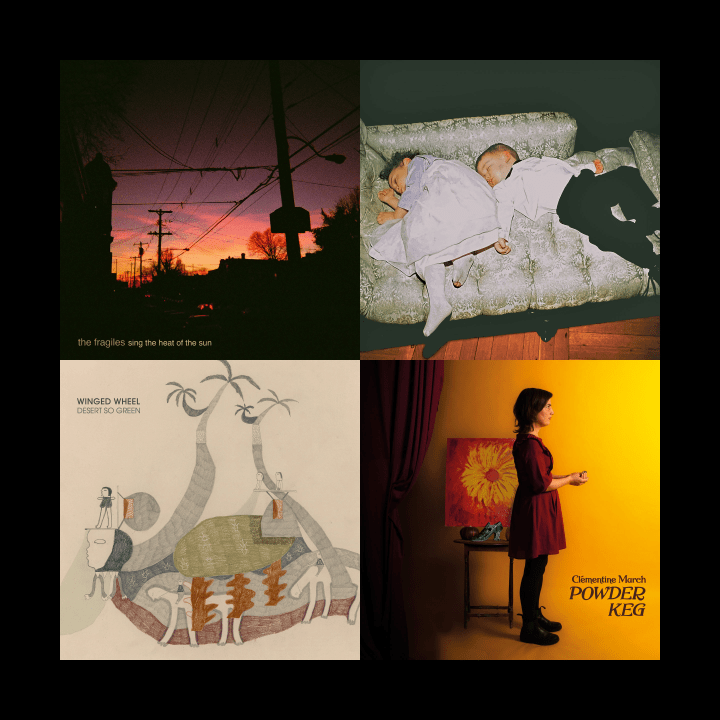
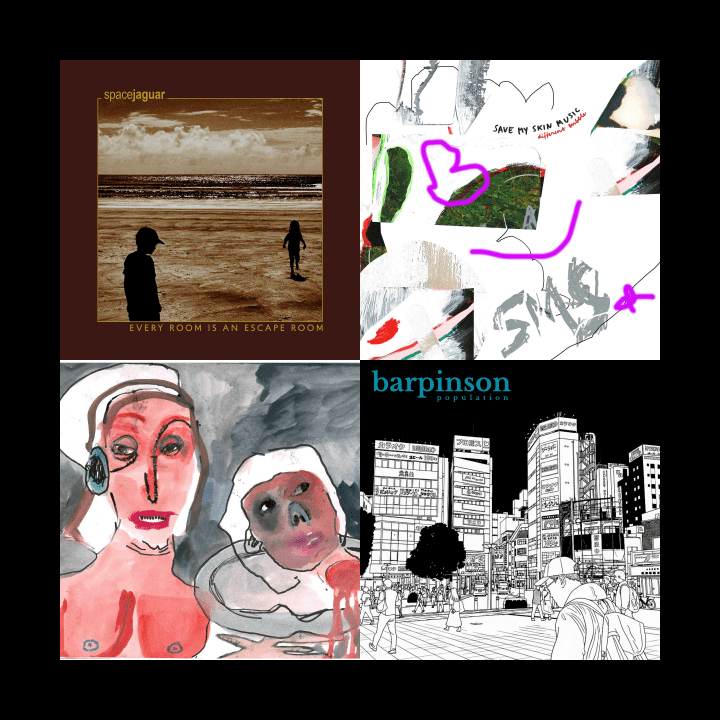


 Rosy Overdrive
