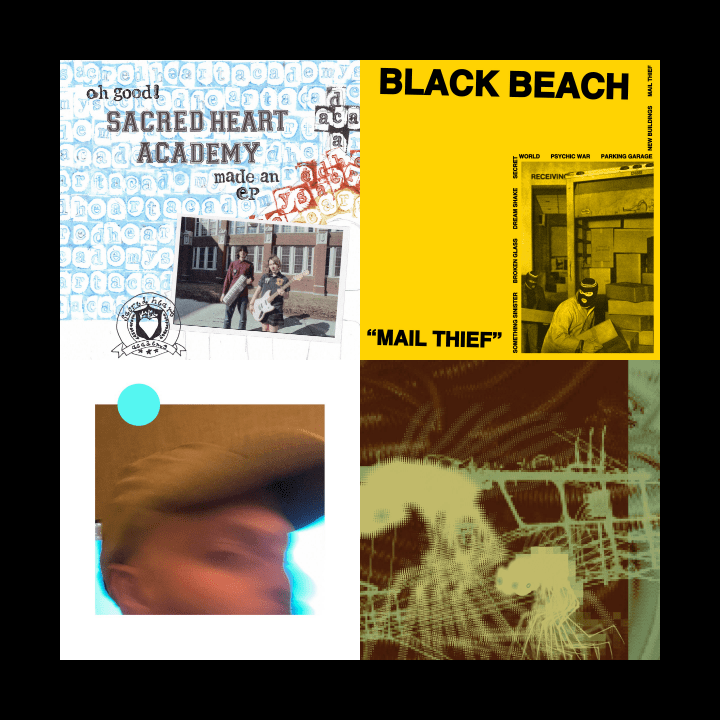
In the first Tuesday Pressing Concerns in a “hot minute”, the blog is looking at new albums from Loto and Shapes Like People, a compilation from Softjaw, and a new EP from Big Bluestem. Check ’em out, and if you missed yesterday’s blog post (featuring TV Star, Urq, Dipper Grande, and Lupo Citta), load that up too.
If you’re looking for more new music, you can visit the site directory to see what else we’ve written about lately. If you’d like to support Rosy Overdrive, you can share this (or another) post, or donate here.
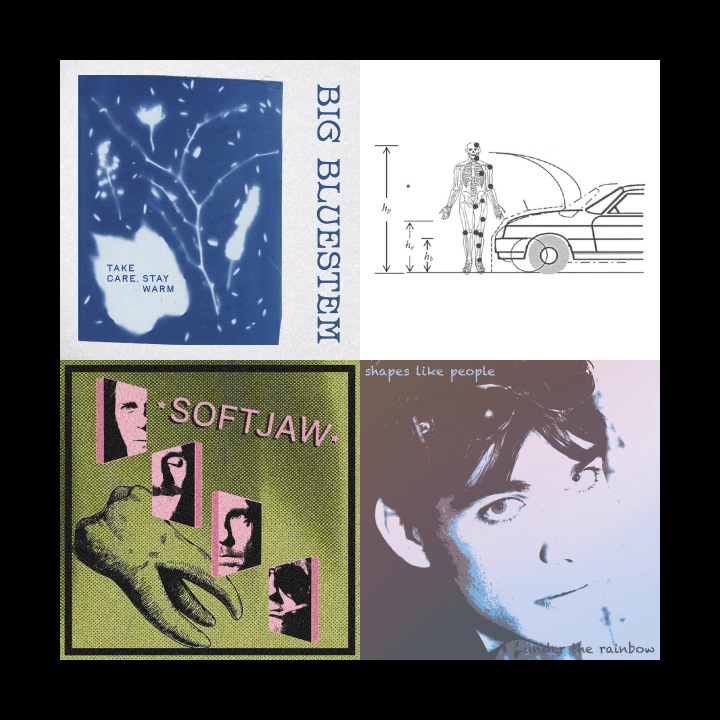
Big Bluestem – Take Care, Stay Warm
Release date: April 14th Record label: Midewin Genre: Singer-songwriter, indie folk, lo-fi folk Formats: Digital Pull Track: Where Our Rivers Meet
Back in 2023, I wrote about Mike Fox’s music via his work as one-half of the Chicago folk rock/studio pop duo Coventry alongside Jon Massey of blog favorite Silo’s Choice. It’s a beautiful record–one of my favorites from that year–so I was excited to hear that Fox has (after releasing an intriguing electronic album in 2024) returned to folk-based songwriting with a new project called Big Bluestem (named after the iconic native Midwestern prairie grass, of course). The six-song, twenty-five minute Take Care, Stay Warm (is it an EP or album? Not sure) is nonetheless pretty different from Coventry, and in fact can be seen as a reaction to the polish of that band’s debut album: it was recorded “on a handheld recorder with a hard three-take limit”, the instruments (baritone guitar, piano, and Wurlitzer) are all played by Fox himself, and the songs themselves are hushed and intimate in a way that clearly benefits from the recording style. I compared Fox’s voice to Bill Callahan when I wrote about Coventry, but this is the first time that the songs actually sound Smog-like.
Opening track “Where Our Rivers Meet” does actually feel Coventry-like in its comfortable, jazzy piano playing, but that instrumental is slowed to a crawl and accompanied only by Fox’s whispered vocals, welcoming us into the world of Take Care, Stay Warm while giving us a realistic picture of where Fox is at on this record. Fox pulls out the guitar for a trio of sparse songs in the center of Take Care, Stay Warm; the sendoff of the title track and its repeated refrain give way to thornier laments in “Is It Worth It?” and “Dead on the Vine”. The six-minute “Portraits” feels like the most complex song on the record in multiple ways, the opening lyrics (“We can’t rely on our memories / Images fade into mystery”) effectively mirrored by the recording itself. The grand finale is the one song on Take Care, Stay Warm that takes on a classicist version of folk music, the John Prine-ish epilogue of “Root for You”. The limited palette isn’t at all a hindrance for the journey on which Big Bluestem take us on their debut record. (Bandcamp link)
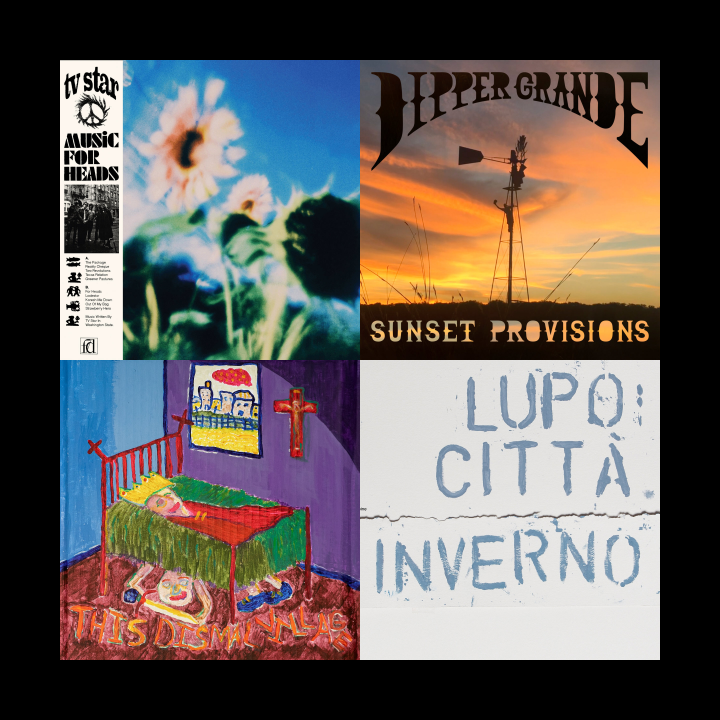
Softjaw – Softjaw
Release date: April 1st Record label: Dandy Boy/Bachelor Genre: Power pop, jangle pop, college rock Formats: Vinyl, CD, digital Pull Track: Undercover Lover
We’re always able to count on Dandy Boy Records to deliver the finest West Coast power pop. The Oakland label’s latest acquisition is a quartet from Long Beach called Softjaw, co-led by singer-songwriters Dustin Lovelis and Tanner Duffy. On the group’s self-titled debut EP in 2024 they were joined by drummer Vinny Early and bassist Daniel Michicoff; on subsequent recordings, Graeme Whynot has replaced the latter. Those “subsequent recordings” are two original singles released last year and two covers from early this year; Softjaw, their debut for Dandy Boy, collects all nine Softjaw tracks thus far in one handy vinyl and/or CD package. The group’s first physical release is a twenty-five minute tribute to classic 1970s power pop–hooks, harmonies, and guitars, not “punk” or “garage rock” precisely but certainly knowledgeable about “rock and roll” enough to give these songs an extra kick.
Lovelis and Duffy are kindred spirits as songwriters; I don’t think I could differentiate them if the credits didn’t clue me in as to who did which one. Both of them can do really fun rave-ups; “I Need You” and “Undercover Lover” back to back give each of them a chance to helm one (and, given that these are the two newest original Softjaw songs, suggests they’re hitting some kind of stride). The original EP has something of a “flow” to it, with (relatively) mid-tempo guitar pop like “Dragging My Feet” and “Don’t Go Walking Out” hanging out with explosives like “Pleased With Me”. The first cover is “Working Too Hard” by The Paul Collins Beat, which Softjaw give a weird but rocking reading that reminds me of the dB’s (not a bad reference point for Softjaw as a whole), and they end with a version of “Playing Bogart” by the short-lived new wave group 23 Jewels. “Playing Bogart” is as fun as anything else on Softjaw, which makes sense–they are clearly a band who understands good power pop, then and now. (Bandcamp link)
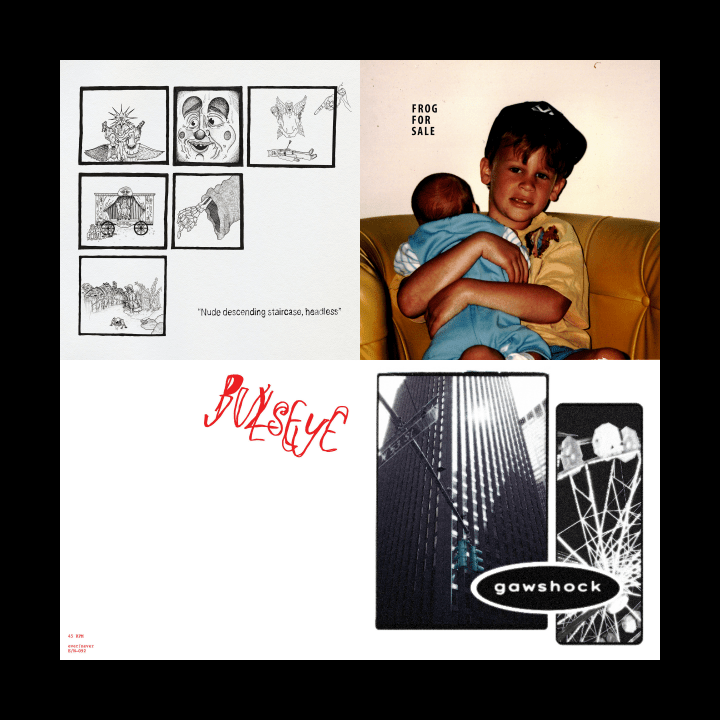
Loto – _____
Release date: April 17th Record label: Self-released Genre: Art rock, soft rock, chamber pop, indie pop Formats: Digital Pull Track: A Home Until Something Better Comes Up
Towards the beginning of 2024 I heard A Year in Review, an intriguing four-song EP from a musician from Montreal named Lautaro Akira Martinez-Satoh, aka Loto. Martinez-Satoh’s work is wide-ranging and fairly experimental, but something about those four songs in particular stuck with me–the push-and-pull between emotional, insistent lo-fi indie rock and polished art pop, perhaps. Martinez-Satoh released a “beat tape” under the name HJKHLHL last year, but the first Loto release since A Year in Review is a six-song album labeled “_____” (officially speaking, it’s untitled). Despite only having two more songs than their last EP, this album is a much grander-feeling affair. Some of that likely has to do with the length–thirty-six minutes long, with the majority of tracks pushing past six minutes–but it’s also in the kind of music Loto pursue in the LP.
Martinez-Satoh and a rotating cast of musical guests (saxophonist Maya Hoss, guitarist Jonathan Theriault, drummers Seyjii Schultz, Michael Jalil Khayat, and Michael Tomizzi, flautist Riley, and bassist Rayne) throw themselves headfirst into art pop, chamber pop, and soft rock, bravely looking beyond “Bandcamp experimentalism” to “60s/70s studio-pop wizardry” for inspiration. The beautiful six-minute opening track “Worst Case Scenario” (title notwithstanding) is all smooth sailing, while “A Home Until Something Better Comes Up” lets a little more “rock” creep into the soft (it’s not quite as electric as their similarly-minded peers in Curling, but it’s in that direction). Loto then drift towards jazzy indie-folk-pop in “Come Back in the Winter” and echoing, dreamy chamber pop in “ttm” before ending everything on a true “noise” note with the eight-minute soundscape “30minstoprovo”. It’s kind of a testament to Loto that they transition out of pop music entirely without it feeling too jarring, and that this still feels like a “pop” album regardless of how it ends. Loto is as compelling a project as ever with this one. (Bandcamp link)
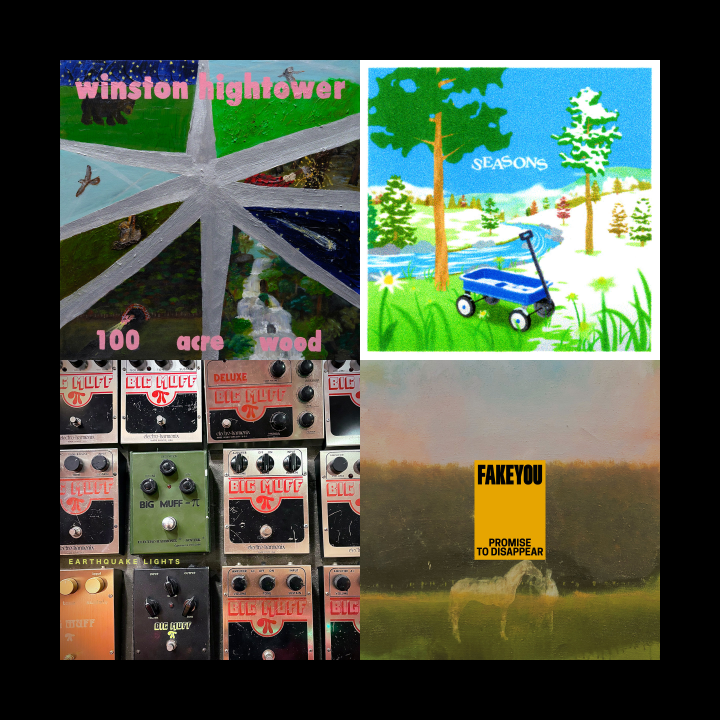
Shapes Like People – Under the Rainbow
Release date: April 17th Record label: Jangleshop/Subjangle Genre: Indie pop, dream pop, jangle pop, college rock Formats: Vinyl, CD, digital Pull Track: First Version of You
The British indie pop duo Shapes Like People debuted last year with an album called Ticking Haze, introducing us to the husband-and-wife duo of Carl and Kat Mann (the latter on vocals, the former providing the instrumentals) with a very solid collection of guitar pop of both the “dream” and “jangle” varieties. Merely a year after Ticking Haze, the Manns have returned with yet another twelve songs and forty minutes’ worth of pop music melding Carl’s seasoned songwriting (as the leader of The Shop Windows earlier this decade, and as a songwriter-for-hire before that) with Kat’s knack for dream pop melodic delivery. The 1980s-evoking artwork for Under the Rainbow feels right; it’s not a huge departure from Ticking Haze or anything, but it’s a cleaner amalgamation of new wave, C86-ish indie pop, and jangly, folky indie rock that sounds even more directly of that era. Carl also contributes more vocals this time around, melding his voice with Kat in early highlights like the title track and “Lately”. I tend to hew towards janglier material in general, and the polite power pop of “First Version of You” and the more leisurely “Life of Time” are two excellent examples of the form–but their forays into dream pop (“Be OK”) and post-punk (“Crushing Silence”) are welcome as well. The second entry in their discography finds Shapes Like People being just as impressive at what they do. (Bandcamp link)
In this Monday Pressing Concerns, we’ll be looking at brand-new albums from TV Star, Urq, Dipper Grande, and Lupo Citta. That’s a good haul, so be sure to check them out below.
There will be a Tuesday post this week (yay!), so load up “Rosy Overdrive dot com” in your browser of choice tomorrow morning, too.
If you’re looking for more new music, you can visit the site directory to see what else we’ve written about lately. If you’d like to support Rosy Overdrive, you can share this (or another) post, or donate here.
TV Star – Music for Heads
Release date: April 24th Record label: Father/Daughter Genre: Indie pop, shoegaze, fuzz pop, dream pop Formats: Vinyl, CD, digital Pull Track: Reality Cheque
The debut album from Washington indie pop quintet TV Star has been a few years coming now. The group (vocalist/keyboardist Ashlyn Nagel, guitarists Bryan Coats and Che Hise-Gattone, drummer Tucker Devault, and Supercrush frontperson Mark Palm on bass) put out two EPs in 2023 and a collaborative release with similarly-minded Seattle group Spiral XP in 2024 before signing with Father/Daughter Records (The Softies, Mui Zyu, Remember Sports) for Music for Heads. TV Star’s first album is the latest example of the strong shoegaze/dream pop-inspired indie rock scene in the band’s home cities of Seattle and Tacoma (chronicled on the 2024 compilation From Far It All Seems Small, on which they appeared). Compared to some of their noisier peers, TV Star’s take on the genre is more crystal-clear and pop-forward, with a psychedelic and even “alt-country” bent that claims Mojave 3 and The Brian Jonestown Massacre as influences (I’m not sure how large the Paisley Underground looms over this record, but I’d imagine it would appeal to fans of those acts, too).
Music for Heads doesn’t hide its penchant for jangly, dreamy, often acoustic-heavy indie pop, as the majority of the LP’s first half indulges in it to some degree. “The Package” is an easing-into-things opening track, “Two Revolutions” turns towards anthemic folk-dream-indie-rock, “Texas Relation” adds strings from Spiral XP’s Max Keyes into the mix, and the two-minute “Greener Pastures” streamlines things to little more than acoustic strumming and Nagel’s vocals (helped out by harmonies from, I believe, Lena FM of Coral Grief). Fans of more electric, perhaps even “power pop”-curious indie pop will enjoy “Reality Cheque” and “Lodestar”, as well as “Out of My Bag”, which adds just a bit of the Madchester/Primal Scream-indebted sound to the mix. TV Star may not “rock out” or hide behind walls of sound as frequently as their shoegaze-revivalist peers, but their pop songwriting and infectious confidence ensure their place in the scene is well-earned. (Bandcamp link)
Urq – This Dismal Village
Release date: April 24th Record label: Exploding in Sound Genre: Post-punk, math rock, art punk, egg punk, psychedelic punk Formats: Vinyl, digital Pull Track: We Don’t Need This Song
Matthew Urquhart may be known to blog readers and general music weirdos as one-half of Spllit, the New Orleans-based avant-post-punk duo who put out an album on Feel It Records in 2023. Now known simply as Urq, the Louisiana artist has entered the “solo project” sweepstakes with This Dismal Village, an art punk/psychedelic concept album (of a sorts) recorded entirely on cassette Portastudio. The album’s Bandcamp page mentions that “all songs except track nine utilize a custom tuning: C# A C# E F# C#” and that the design of the physical record’s lyric sheet is inspired by the quilt artist Susan Shie; for the album itself, Urq lists everything from a 1960s instrument called the Optigan to Mellon Collie and the Infinite Sadness to Fitzcarraldo to math rock weirdos Palm as influences.
While This Dismal Village bears the mark of an “egg punk”-associated artist (just check out the trebly, noodly guitars and rickety tempos of “Another Mystery” and “Airs of the Sledgehammered”), Urq is beautifully unrestrained by garage rock parameters: This Dismal Village hops from the math-pop/soft rock-esque “Glutton’s Coupon” to the towering, Ty Segall-esque psych-rock title track to the creepy-crawling “An Honest Film” to the lovely Elephant 6-esque dream-psych-pop piece “Kings in Bed” at lightning speed. The whole thing is over in a mere twenty-three minutes; before we know it, Urq is waving goodbye from This Dismal Village via the tape-warped guitar pop finale “We Don’t Need This Song”, straight out of the Bee Thousand cutting room floor (another one of This Dismal Village’s myriad influences, by the way). With This Dismal Village, Urq makes a bid for one of the most innovative guitarists in the wider indie punk underground and has some head-scratching fun with it, too. (Bandcamp link)
Dipper Grande – Sunset Provisions
Release date: April 10th Record label: Self-released Genre: Cosmic country, alt-country, psychedelia, college rock Formats: CD, cassette, digital Pull Track: Sunset Provisions
Dipper Grande are an “alt-cosmic bootgaze” quintet from Athens, Georgia, made up of a bunch of veterans of other local bands in bassist Mark Callahan, drummer Rick Field, and vocalist/guitarists Iain Cooke, Jackie Hales, and Jesse Wooten. Their first release was a three-song live EP last December, previewing their debut LP, Sunset Provisions. The five of them headed to Watkinsville, Georgia to record Sunset Provisions with engineer Matthew Greer at Full Moon Studio, and they received help from guitarist Hampton Campbell and vocalist Julia Barfield on some of these eight songs. Dipper Grande pull together several strains of “alt-country” and “Americana” on Sunset Provisions; there’s undoubtedly the Rust Belt country rock traditionalism of Magnolia Electric Co. here, with a Deep South molasses-slowness and, indeed, a cosmic side reminiscent of the spacier aspects of their hometown college rock.
“Well, they shut down the power plant / Guess they couldn’t keep the lights on,” goes the first line of the opening title track, a motif that returns in the psychedelic country rock of penultimate song “Decommissioned” (“Sundown over the decommissioned power plant,” Dipper Grande set the scene for us). While parts of “Decommissioned”, “Bodies”, and “Tape Tricks” are genuine rockers, Dipper Grande typically practice a sunny, lackadaisical version of psychedelia/cosmic country, aided by unhurried tempos and Cooke’s pedal steel. With Sunset Provisions, Dipper Grande effectively survey an expanse of industrial decay and decide to take their time with their art, giving it a better chance at outliving the manmade ruins around them. (Bandcamp link)
Lupo Citta – Inverno
Release date: April 24th Record label: 12XU Genre: Garage rock, 90s indie rock, fuzz rock Formats: Vinyl, digital Pull Track: Profile
Boston’s Lupo Citta made an intriguing debut at the beginning of 2024 with their first LP, Lupo Cittá, which found three longtime indie rockers (guitarist/vocalist Chris Brokaw, guitarist/bassist Sarah Black, and drummer/vocalist Jenn Gori) making “ragged garage rock with plenty of impressively screeching guitars” (as I said at the time). The second Lupo Citta album, Inverno, continues Lupo Cittá’s trend of mixing crashing rock and roll numbers with more pensive material, and, like a good sophomore record should, reflects a band getting more comfortable and automatic in traversing the different waypoints of their sound. The almost-dub influenced drone-rock of opening track “Wandering Eyes” and the quiet “Something Else” are a bold duo with which to lead off your indie rock record, but you’re rewarded with fuzzed-out garage rockers “Can’t See” and “Southern Forests” if you can hang with them (particularly in the former, they sound like their 12XU labelmates Weak Signal). For such a jagged-sounding band, Inverno is a smooth journey–the closing stretch is perhaps the trio’s most impressive work yet, moving from the dreamy “Red & Yellow” to the noisy indie pop of “Profile” to the minimalist, witchy title track to the perfunctory fuzz-rock closing track “Nap at Dawn” with ease. Lupo Citta have a very nice “greater than the sum of their parts” thing going on with Inverno. (Bandcamp link)
In what should go down as an all-time classic edition of Pressing Concerns, we have new albums from The Blackburns, Doug Gillard, and My Wife’s an Angel, plus a mini-album from The Chop, for you below. Check them out, and if you missed Monday’s blog post (featuring Winston Hightower, Eighteen Hundred and Froze to Death, The Clearwater Swimmers, and FakeYou), check that out too.
If you’re looking for more new music, you can visit the site directory to see what else we’ve written about lately. If you’d like to support Rosy Overdrive, you can share this (or another) post, or donate here.
The Blackburns – Alternative Rock
Release date: April 24th Record label: Sell the Heart Genre: Power pop, college rock, Alternative Rock Formats: Vinyl, CD, digital Pull Track: Video Den
The Blackburns are a 90s power pop revival band from Philadelphia co-led by the songwriting duo of Nick Palmer (vocals/guitar/drums) and Joel Tannenbaum (vocals/bass) and rounded out by vocalist/keyboardist Lynna Stancato and vocalist/guitarist Abe Koffenberger. After a couple of singles, The Blackburns’ self-titled debut album came out back in 2024, a promising collection that paid tribute to the Angus soundtrack and other mid-90s Buzz Bin ephemera. A couple of very good singles last year indicated that The Blackburns were ready to level up, and their sophomore album delivers on that promise. It’s called Alternative Rock, and that’s what we get: post-Paul Westerberg guitar pop hooks with Weezer guitars, Rentals keyboards (or The Cars keyboards, if you want to look in other decades), and a Fountains of Wayne outlook on life. Everything on Alternative Rock is written like it could be the focal point of the entire album, and The Blackburns are rewarded for their ambition with a transcendent record that juggles nostalgia and pastiche and develops its own style in defiance of all of that.
“I wanna hear new music / Come on, I’m trying to do this,” goes the chorus of “New Music”, the opening track to Alternative Rock, a surging power pop song that takes its grappling with losing touch with the present and makes sharp, catchy art with it (the vocal trade-offs are a really nice touch). I loved “Video Den” when The Blackburns released it last year, and I am fully convinced that it’s a modern masterpiece at this point–I’m not sure there’s another “power pop” song quite like it. The other singles live up to that status–the title of “ASM KoP” stands for “Assistant Store Manager, King of Prussia” and the song contained therein is some of the best Fountains of Wayne worship I’ve heard in a while, and “Two People Running in the Rain” is a Springsteen-level heartland rock revival piece that hurtles headlong into its anticlimactic finale (the lampshade here–how could it live up to the buildup?–is a recurring theme of Alternative Rock).
Speaking of Fountains of Wayne, the Stancato-sung “Ceteris Paribus” evokes a different kind of 90s alternative music by floating more in the direction of Adam Schlesinger’s other band, Ivy–it’s a nice break from the chunky power chords, but I get the sense that The Blackburns could bash out plenty of songs like “A Reunion Show” without getting stale. “A Reunion Show” can’t help being self-effacing (it hits close to home, as Tannenbaum’s old band, Plow United, does indeed have a reunion show on the books for later this year); like a lot of Alternative Rock, it could’ve stopped once it made its “point”, but “A Reunion Show” is way too well-written and -executed to be constrained by that. “They say you can’t duplicate the magic from back in the day / They say there’s something that’s mildly tragic about trying to anyway,” The Blackburns observe as “A Reunion Show” catches a breath, only to plow forward anyway. “Mild” or not, tragedy has been one of the most enduring forms of art throughout civilization for a reason. If we’re lucky, “alternative rock” as The Blackburns practice it will join the pantheon too one day. (Bandcamp link)
Doug Gillard – Parallel Stride
Release date: April 24th Record label: Dromedary Genre: Power pop, college rock, psychedelic pop, Guided by Voices Formats: Vinyl, CD, digital Pull Track: Saving My Life Every Day
It’s been too long since we’ve heard new music from Doug Gillard, the solo artist. Of course, the Cleveland-originating guitarist has been quite busy over the past decade playing in Guided by Voices, the group he initially played in from 1997 to 2004 and then rejoined in 2016. He’d previously put out three solo albums, the most recent of which, Parade On, came out in 2014, right before he signed up again for a band famous for releasing several albums’ worth of music a year (if you’ve heard August by Cake, the 2017 Guided by Voices album featuring two Gillard-penned songs, you know that he still had some good material floating around). With Guided by Voices’ touring schedule finally slowing down, Gillard apparently had time to return to solo act mode–aside from Danny Lipsitz’s saxophone and a parade of guest drummers (including Guided by Voices engineer Travis Harrison), Parallel Stride is written, sung, and played by Gillard himself. The fourth Gillard solo album is unmistakably him, a strong collection of songs that emphasize his pop songwriting, art rock fluency, and, of course, renowned guitar playing.
Gillard is a much more low-key vocalist than his longtime collaborator Robert Pollard; maybe he sounds like somebody who’s more used to the sideman role than the spotlight, but it’s the right tone for the subtle, workmanlike beauty of Parallel Stride. “Face of Smiles” opens the album with an irresistible guitar riff, setting the stage for an automatic power pop hit that, along with the slightly-garage-rock-tinged title track, is just rousing enough for a one-two punch. Parallel Stride doesn’t falter, but it settles in nicely into a groove of Gillard songs with unusual but engrossing melodies, guitar flourishes, and subtle twists by somebody who knows his way around progressive rock but isn’t trying to work out those muscles directly. The anxious “My Friends” and the taut “Saving My Life Every Day” are standouts in the second half; both of them feel “heavier” than most of Parallel Stride, but they’re also both some of the best pop songs on the album (particularly the latter, which has a propulsion and tension to it that very few people who haven’t been in Guided by Voices can pull off). Hard to believe it’s been a dozen years since Gillard has made one of these; he sounds great here. Parallel Stride is an instant high point in an illustrious career. (Bandcamp link)
My Wife’s an Angel – Keep Honking I’m About to Fucking Kill Myself
Release date: April 24th Record label: Knife Hits/GRIMGRIMGRIM/Broken Cycle Genre: Noise rock, post-hardcore, noise punk Formats: Vinyl, CD, cassette, digital Pull Track: Goz Chile
My Wife’s an Angel get it. Last year I wrote about Yeah, I Bet, the Philadelphia quartet’s second album, using phrases like “ugly, heavy noise-punk” and “big, wide, empty hollering against rock music simply played wrong” (and bands like “Butthole Surfers” and “Killdozer”) to describe it. Like the best of their predecessors, My Wife’s an Angel (vocalist G, guitarist Boone, bassist Fancy, drummer JAGWAH) wield shock value imagery, assaulting music, and straight-up funny shit in a tasteless but hardly pointless manner; they don’t beat us over the head with it, exactly, but it’s understood that Yeah, I Bet is fucked up for plenty of good reasons. All that applies once again for the third My Wife’s an Angel album, Keep Honking I’m About to Fucking Kill Myself (Jesus Christ, lmao–I can’t even explain what I felt when I got sent that album title).
I cannot imagine listening to songs like “Goz Chile” and “Karaoke” without feeling insane to some degree, and those are the “rockers” on Keep Honking I’m About to Fucking Kill Myself–elsewhere, “Bowser’s” more or less sneers at the idea of “music” and “PAUSE!” and “Help the Homeless” dissolve into noise. Keep Honking I’m About to Fucking Kill Myself is such that the noisy, industrial post-punk piece “Doom Scroll” starts to sound like a reprieve–at least its subject and point is fairly straightforward, no? My Wife’s an Angel can pull something like that off, but the closing track, “American Dream”, is their real bread and butter. Apparently, most of the lyrics to “American Dream” are taken “verbatim” from billboards seen by the band on tour–with them, My Wife’s an Angel make a terrifying, noisy hell of lawyers, sports gambling, questionable medical advice, and other such American topics. I’m not sure if there’s any other way for “Americana” to sound in this present moment. (Bandcamp link)
The Chop – Third Window
Release date: April 24th Record label: Lost Sound Tapes Genre: Post-punk, indie pop, minimalism Formats: Cassette, digital Pull Track: Urban Myth
Third Window is yet another record by Gemma Fleet and Andrew Doig to add to the pile they’ve amassed over the past few years: a couplealbumsand a coupleEPs as one-half of the Glasgow indie pop/post-punk quartet Dancer, the debut album from their duo together The Chop last year, not to mention other acts in which they’ve been involved like Nightshift and Current Affairs. It’s the Chopfound Fleet and Doig exploring a more minimal and quieter sound than they’ve done in Dancer; the obvious Young Marble Giants comparison isn’t inaccurate, for instance. Third Window, a six-song “mini-album” coming less than a year after their debut, continues the duo’s journey into more subdued indie pop; combine the brief length, sparse arrangements, and ever-expanding discography, and you’ve got a recipe for a record destined to be “unfairly overlooked”.
Aside from the typical Moxham brothers, Life without Buildings, and Raincoats influences, Third Window was inspired by the “brutal Glasgow winter of 2025/2026” and Doig’s diagnosis of SCDS (a “rare hearing and balance disorder” originating from the inner ear). Personal disorientation and an underlying uncertainty regarding a future in music at all shade these half dozen-songs, although this doesn’t mean that Fleet hasn’t remained an engrossing yarn-spinner (see “Urban Myth”, “Deserter 1940”, and “First Contact”, all of which satisfyingly elaborate on their titles). The slide whistle-like sound in the otherwise very delicate “Ok Kid” is a headscratching addition, which I suppose is the point (the dolphin-synths in “The Auditor”, while still being decidedly odd, do sound a little more in line with the uneasy rest of the track). Whatever the future holds for Fleet and Doig’s music, Third Window is a particularly strong document of the present. (Bandcamp link)
Welcome to the Monday Pressing Concerns! It’s got new albums from Winston Hightower, Eighteen Hundred and Froze to Death, and FakeYou, plus a new EP from The Clearwater Swimmers! Check them out below. The next blog post will be on Thursday.
If you’re looking for more new music, you can visit the site directory to see what else we’ve written about lately. If you’d like to support Rosy Overdrive, you can share this (or another) post, or donate here.
Winston Hightower – 100 Acre Wood
Release date: April 17th Record label: K/Perennial Genre: Lo-fi indie rock, indie pop, post-punk Formats: Vinyl, digital Pull Track: High School
Winston Hightower spent a decade in the background of the Columbus indie rock scene playing with a bunch of recognizable names in the city and quietly self-recording and self-releasing a bunch of solo records before K and Perennial Records signed him in 2024 and put out Winston Hytwr, a compilation of songs from across his discography. Hightower’s hometown is known for Guided by Voices-influenced guitar pop and 90s indie rock, but the wide-ranging Winston Hytwr was just as likely to pay respect to those influences as wander into minimal art punk, experimental noise, or even psychedelic hip hop. 100 Acre Wood is the first album of new material of Hightower’s K/Perennial era, and while it certainly sounds like the eclectic artist of Winston Hytwr, this album finds the musician honing in on a more cohesive set of post-punk and lo-fi pop-influenced indie rock.
Aside from bass on closing track “Circling the Dream” by Mystic 100’s’ Charles Waring, the fourteen songs of 100 Acre Wood are all Winston Hightower. The Ohioan comes out swinging after the relatively restrained opening track “Moonside”; from “On Our Own Time” to “Virtue Signaling”, Hightower is snapping, garage-rocking, and econo-jamming his way through some strong pop songs. Hightower takes us on a surprising detour into early Modest Mouse-style wonkiness with “Help Is on the Way” (hey, it is a K Records album) and “High School” is just as surprising in its guitar pop sweetness. For the most part, though, 100 Acre Wood really rocks, with electric material like “Me Time (I Need Some)”, “Beyond the Thicket”, and “The Me I Know” all showing up well into the record’s second side. Perhaps the percussionless, hazy psychedelia of “Circling the Dream” is Hightower’s way of reminding us that he’s capable of a lot more than ripping lo-fi rockers as 100 Acre Wood comes to a close; it’s a beautiful finale, but it doesn’t lessen the excitement we get in the thirteen songs before it. (Bandcamp link)
Eighteen Hundred and Froze to Death – Earthquake Lights
Release date: March 13th Record label: Resident Recordings Genre: Noise rock, post-punk, post-hardcore, 90s indie rock Formats: CD, digital Pull Track: Spirit of the Radio
The upstate New York noise rock supergroup Eighteen Hundred and Froze to Death was formed in the late 1990s by guitarist/vocalist David Nutt (why+the+wires), bassist Tom Yagielski (The 1,000 Year Plan), guitarist Joe Kepic (Chimes of Bayonets), and drummer Brendan Kuntz (Grass Jaw). The Ithaca-originating quartet’s existence has been characterized by wide gaps in between releases, so it’s a pleasant surprise that, merely two years after a third album called Thirds, Eighteen Hundred and Froze to Death have offered up a fourth LP entitled Earthquake Lights. Last year, the four of them returned to Chris Ploss’ Sunwood Recording in Trumansburg, NY (where they’d recorded Thirds) to lay down nine more blunt-force post-punk tracks inspired by noisy 90s indie rock from Washington, D.C. and Chicago.
From the big muff-adorned cover to the studious gear-listing on the Bandcamp page’s credits to, well, pretty much everything about the music, Eighteen Hundred and Froze to Death fit in pretty well with modern “lifer”-piloted, Electrical Audio-inspired “PRF-core” acts like Stomatopod, Blank Banker, and Constant Greetings, although that doesn’t mean Earthquake Lights has to be completely predictable. The forty-five minute runtime means that several of these songs stretch out extensively, and Eighteen Hundred and Froze to Death are able to indulge Sabbath-inspired heaviness and occasional lighter, melodic bouts, too. As Dischord-friendly as opening track “Joe Sabbath” is, “Comet Flasher” and “Spirits of the Radio” delve into less-easy-to-classify corners of 90s indie rock in their not-so-flashy but clearly present pop attributes. The second half of Earthquake Lights is where the “heavy” is concentrated (“Sleeper Holds” hits like a brick wall, and “Into the Totality” and “Untitled” get there eventually, too), although the heaviness of “Pacific Paving” has less to do with the music and more with its overall atmosphere. That’s the kind of twist that you go to the experts in Eighteen Hundred and Froze to Death to experience. (Bandcamp link)
The Clearwater Swimmers – Seasons
Release date: March 20th Record label: New Martian Genre: Slowcore, 90s indie rock, folk rock Formats: Cassette, digital Pull Track: Engine
The Clearwater Swimmers are a folk- and slowcore-influenced indie rock band split between New York and New England, initially more or less a solo project for frontperson Sumner Bright (vocals/guitar) but now a full-fledged quartet featuring multi-instrumentalist Connor Kennedy, guitarist Sander Casale, and drummer Timothy Graff. After recording a self-titled debut album with Bradford Krieger in 2024, The Clearwater Swimmers’ second record, the Seasons EP, is their first with all four members prominently contributing to songwriting. The band, after writing these four songs (five on the cassette edition) collaboratively, went to Morrill, Maine to record Seasons with Garrett Linck (Boreen, Lily Seabird, Strange Ranger) and came out of the experience with a collection of deliberate, delicate, electric folky indie rock.
Although there’s a clear Songs: Ohia influence on Seasons, these northeasterners haven’t taken that as an excuse to do alt-country drag–it’s not any more close to Molina than it is to a host of other 1990s slowcore bands, or even to meandering, Real Estate-esque pastoral guitar pop. Seasons opens with the starkest song on the EP with its title track, a three-minute crawl to cavernous empty space that ends with a (relatively) upbeat trip into electric folk rock with “Landline”. “Engine” and “Radio” continue The Clearwater Swimmers’ journey into louder climes, the former succeeding as an early Wild Pink-esque glacial heartland rock piece and the latter being the closest the quartet get to truly “rocking out”. Don’t miss out on bonus track “Branches”, either; if you liked the quieter side of The Clearwater Swimmers in “Seasons”, this is the one song that goes down that road yet again (and to an even further degree than the title track). It’s a nice little addition to Seasons, though the four songs on the “proper” EP are enough to make the record stand out in the vast expanse of “folk-y indie rock”. (Bandcamp link)
FakeYou – Promise to Disappear
Release date: April 3rd Record label: 59 X Genre: Pop punk, punk rock, orgcore Formats: Vinyl, digital Pull Track: Solace
Hailing from Montreal, the punk quartet FakeYou released their debut EP back in 2024, and they’ve linked up with Atlanta pop punk label 59 X Records to put out a debut LP called Promise to Disappear. The band (vocalist/guitarist Guillaume Ménard, drummer Frank ”kickup” Lessard, bassist Phil Archambault, and lead guitarist Ben Pommier) take us back to the world of late-1990s emo-tinged melodic punk rock for an entire LP of the “orgcore” experience: raspy melodies, bursting, anthemic guitars, a palpable earnestness that will be an immediate turnoff to some and the core of FakeYou’s appeal for others. FakeYou recorded Promise to Disappear with fellow Montreal punk revivalist Max Lajoie of Spite House, and while they aren’t quite as heavy as Lajoie’s post-hardcore-ish band, that’s a good starting point for this album (some more clues would be Off With Their Heads, Hot Water Music, Leatherface, and, of course, Jawbreaker). Over the course of ten songs and thirty-five minutes, FakeYou bash out one dire-feeling pop punk song after another; if opening track “Wanderlost” feels oddly subdued, “Tieluck”, “100 Million Sheep”, and “Solace” are evidence enough that they aren’t half-assing this thing. I’m not sure if it is possible to make music like this half-assed; I’m sure FakeYou don’t think so, at least. (Bandcamp link)
Hey folks! Brand new Pressing Concerns! New albums from Teen Suicide, Frog, and Gawshock, and an EP from Bullseye. Check’ em out, and if you missed Monday’s blog post (featuring Sacred Heart Academy, Market, Black Beach, and Cashier), check that out too.
If you’re looking for more new music, you can visit the site directory to see what else we’ve written about lately. If you’d like to support Rosy Overdrive, you can share this (or another) post, or donate here.
Teen Suicide – Nude descending staircase headless
Release date: April 17th Record label: Run for Cover Genre: Fuzzy indie rock, art rock, alt-rock, shoegaze Formats: Vinyl, CD, cassette, digital Pull Track: Suffering (Mike’s Way)
The narrative’s there for the taking when it comes to Nude descending staircase headless, the latest from Sam and Kitty Ray’s Teen Suicide project. After Sam spent the 2010s making his band nearly synonymous with that decade’s strain of “lo-fi indie rock”, this is the first studio-recorded Teen Suicide album (Mike Sapone, who’s been at the controls for many successful post-hardcore and pop punk albums, recorded it). It’s “accessible” in its willingness to embrace bowling ball alt-rock and, occasionally, big pop hooks. It’s a full-fledged comeback after Sam and Kitty both dealt with physical illnesses at the beginning of this decade, returning to an audience that has only grown thanks to the eternal appeal of lo-fi, opaque, challenging indie rock music with “the youths”. With Nude descending staircase headless, Teen Suicide make a bid to join their more polished peers, the ones against which Sam Ray had been content to position himself as a scrappy underdog in the past.
The effort that Sam and Kitty Ray put into sharpening up Nude descending staircase headless (title comes from a David Berman poem, of course) is quite impressive, and it’ll probably be one of my most listened-to Ray-related records for this reason. It’s when we get to track three, “Suffering (Mike’s Way)”, when it becomes apparent just how successful Teen Suicide can be at making straight-up power pop, and, with “Spider”, Nude descending staircase headless establishes a more sustainable way for an “accessible Teen Suicide album” to sound. To be clear, though, we are still talking about a band called Teen Suicide here, one founded and co-led by one of the most divisive and chaotic figures in the last decade of indie rock. I have to thank “Everything in My Life Is Perfect” for not letting me totally lose track of who I’m dealing with, here (that song begins with “The day Luca Magnota got arrested / I was getting head outside of Denny’s / A new folk hero for the nihilists”, sung like the most wounded Will Sheff performance). Even after a few grunge-gaze instrumentals in the middle of the record, Nude descending staircase headless ends with some classically odd Teen Suicide recordings (“Hypnotic Poison” and its noise pop overload, the acoustic psychedelia of “Kindnesses”, and the epilogue “Come and See the Clown”). It all just happens to be a lot more clear this time around. (Bandcamp link)
Bullseye – Bullseye
Release date: April 17th Record label: Ever/Never Genre: Power pop, jangle pop, college rock, roots rock Formats: Vinyl, CD, digital Pull Track: Angel’s Share
We’re getting some good old-fashioned guitar pop from the eclectic New York label Ever/Never Records (Workers Comp, Split Apex, Garden of Love). Their latest signee is Bullseye, a Brooklyn band with roots in Minnesota and Texas who’ve followed up four-song EPs in 2024 and 2025 with a self-titled six-song EP (the CD edition comes with six more bonus tracks, apparently). Beginning in 2020 as the solo project of guitarist/vocalist/songwriter Jake Barczak, Bullseye are now a solid quartet featuring guitarist Oliver Ohaver, drummer Humberto, and bassist Clara, and their Ever/Never debut is a compelling mix of power pop, garage rock, roots rock, college rock, and 90s indie rock that sounds like a band still in touch with Texas and Minnesota alt-rock/punk history.
Jangly guitars, “slacker rock” vocals, and a winning power pop chorus greet us in opening track “Angel’s Share”, a declaration that Bullseye isn’t beating around the bush when it comes to crafting guitar pop hooks. “Blue Eyes Blue” features just a touch of Dinosaur Jr./Meat Puppets-y rootsiness without taking too hard of a left turn away from the opener (we’re in Late Bloomer territory here), and “Dangers of the Heart” bravely tries to find middle ground between Elvis Costello and Pavement (it also sounds a little alt-country). “Papillyou Papillons” and “Kid” close out the “proper” part of Bullseye with a pair of vintage power pop throwbacks, both making great use of power chords and meandering vocals that nonetheless get it together for the hook. I haven’t heard all the bonus tracks, but “Tell Tale Signs” is jangly college rock at its finest and “Everything Is True” has a Guided by Voices-style melancholy to it, both indicating that Bullseye have an excess of worthy material with which to work. With this record, Ever/Never have really hit the…jackpot. (Bandcamp link)
Frog – Frog for Sale
Release date: April 17th Record label: Tapewormies/Audio Antihero Genre: Indie pop, piano pop, folk-pop Formats: Vinyl, digital Pull Track: Max von Side-Eye
Breaking news: Frog are back with their fourth album in under three years, and their eighth overall. Ever since the New Rochelle, New York duo of Daniel Bateman (vocals and most instruments) and Steve Bateman (drums) returned from a hiatus in 2023 with Grog, they’ve been hard at work pumping out their distinctive mixture of prominent pianos, falsetto vocals, and bedroom pop hooks evoking everything from Alex G to hip hop to classic country to 70s singer-songwriter LPs. After getting progressively wonkier and weirder with their twin 2025albums, Frog for Sale is probably their most immediate album since the hit parade of Grog; the highs hit in these dozen songs are ample assurance that Frog aren’t running out of steam in the middle of their stride. The toe-tapping, nearly twee “Bad Time to Fall in Love Again” and the R&B organs of “Best Buy” ease us into Frog for Sale by leaning on what the Batemans do best, and the exuberant “Dark Out” and the surprising acoustic yarn of “Yonder This Way Comes” knock it right out of the park from that tee-up. It really can’t be emphasized enough how excitable, bouncy, and upbeat Frog come off on “Max von Side-Eye”, “All the Things You Get”, and “Je Ne Sai Pas”. Their most recent album, The Count, was confident in its oddness and eccentricities; Frog for Sale is confident too, cocky but friendly enough that it’s hard not to be taken with it anyway. Frog continue to feel themselves on Frog for Sale, and it’s pretty contagious. (Bandcamp link)
Gawshock – Leaves to the Sun
Release date: April 17th Record label: Patchwork Genre: Slowcore, 90s indie rock, lo-fi indie rock Formats: Digital Pull Track: Heat Lightning
Gawshock began in 2021 as the bedroom pop/lo-fi indie rock project of Huntsville, Alabama musician and aerospace engineer David Broome, quickly releasing three albums of chilly, greyscale indie rock in four years (2021’s Friendship 7, 2023’s Gawshock, and 2024’s Unless If). Broome cites classic 90s folk/slowcore acts like Idaho and Acetone as well as the delicate underground pop music of Sparklehorse as influences, and the fourth Gawshock LP, Leaves to the Sun, bears this out. It’s a brief record, around twenty-five minutes long, but Gawshock don’t hurry through these eleven songs. “Brighter Hue” sets the tone with a slow-moving, deliberate, and intricate piece of Mark Linkous-inspired indie rock, and the lilting, warm title track is Broome’s version of a “rocker”. “Heat Lightning” is Gawshock’s turn at electric, crawling, empty-space slowcore a la Bedhead, while “Everything I Want” and “What Do You Dream About” lean a bit more on acoustic instruments and subsequently explore the folkier side of slowcore. Like a lot of this kind of music, Leaves to the Sun enters and exits the picture quietly, but there’s plenty to appreciate upon returning to it (in the second half, the dreamy “Great Outdoors” and the sharp “Still Shining” currently stick out to me). There is, in its own way, a lot of beauty in Leaves to the Sun.
We’ve got new EPs from Sacred Heart Academy and Cashier and new LPs from Market and Black Beach in the Monday Pressing Concerns! Check them out below!
We’ll be back on Thursday.
If you’re looking for more new music, you can visit the site directory to see what else we’ve written about lately. If you’d like to support Rosy Overdrive, you can share this (or another) post, or donate here.
Sacred Heart Academy – Oh Good! Sacred Heart Academy Made an EP
Release date: March 17th Record label: Self-released Genre: Power pop, indie pop, bedroom pop, folk rock, lo-fi pop Formats: CD, digital Pull Track: Give It a Little More Time
Eilee and Evren Centeno are a sibling duo from North Carolina who’ve appeared on the blog before thanks to their record label, Trash Tape Records, which has released albums from Tombstone Poetry, Hill View #73, and Rain Recordings (the latter of which is also co-led by Evren). Lately, both of them have moved from Chapel Hill to Chicago, where they started making music together as Sacred Heart Academy sometime around late 2024 or early 2025, leading to shows in North Carolina and Chicago, a three-song Christmas EP, and Oh Good! Sacred Heart Academy Made an EP, the group’s first record (that isn’t just them singing Christmas classics, I mean). Sacred Heart Academy have added two new members in recent times, but Oh Good! is almost entirely the work of the Centenos; they both sing, play various instruments, and Evren engineered and mixed it (except for the drums on “Give It a Little More Time”, where the third co-founder of Trash Tape, Nathan McMurray, stepped in to engineer them).
Oh Good! Sacred Heart Academy Made an EP is an instantly likeable six-song introduction; these songs are all great, and the Centenos both establish themselves as compelling bandleaders. Evren is the “slacker”-adjacent alt-country/folk rocker, landing somewhere between their home state hero MJ Lenderman and Windy City pop tinkerer Noah Roth, and they’re countered nicely by a more openly expressive/heart-on-sleeve performance from Eilee (they both get three songs, and they both establish impressive range within them). They don’t come off as guitar pop-history nerds like some of their Chicago peers, but there’s a Hallogallo/New Now-like power pop undercurrent on some of the material, particularly “You Will Never Be That Free” and “Give It a Little More Time”, the EP’s two “hits”. I was lucky enough to catch one of those early Sacred Heart Academy shows, and I came away from it looking forward to hear the alt-country/power pop anthem of “Give It a Little More Time” on-record; it doesn’t disappoint, ending up one of the best pop songs I’ve heard this year. Despite Evren leading that one, they also helm the quietest moments on the album, “Piece of My Heart” and “Free Fallin’ II” (the former makes great use of Eilee’s clarinet and the latter, which reminds me of an old Okkervil River ballad, lives up to its title). The lo-fi pop of the Eilee-led “4,5 Seconds” and “Chicago” feels notably distinct from the Evren-led folk rock tracks, but there’s enough overlap to make Oh Good! work, and, more importantly, both members sound on the same page and in-sync no matter which “side” of their sound they’re exploring. (Bandcamp link)
Market – Cleanliness 2: Gorgeous Technologies
Release date: February 27th Record label: Western Vinyl Genre: Art pop, art rock, synth-rock, sophisti-pop Formats: Digital Pull Track: The Visitors
I wrote about Brooklyn musician Nate Mendelsohn and his project Market in late 2024, when he released his fourth album, Well I Asked You a Question. I called it a “relaxed but intricate art pop album”, built from soft rock, indie folk, chamber pop, and psychedelia. A year and change later, Mendelsohn released the fifth Market album, Cleanliness 2: Gorgeous Technologies. A digital-only record released fairly quietly, it’d be easy to miss Cleanliness 2 even if it wasn’t seemingly committed to being a much more low-key album sonically than its predecessor. Although once again featuring many frequent Mendelsohn collaborators (Stephen Becker, Katie von Schleicher, Natasha Bergman, and Duncan Standish, among others), Mendelsohn’s voice on Cleanliness 2 is often accompanied by little more than minimal synths and percussion. It feels like a “bedroom pop” album in how it pulls together pop, electronic, and even R&B into an assuming but transfixing package.
The vibrant, bizarre art pop of opening track “The Visitors” is classic Market, although Cleanliness 2 mostly declines to make itself as busy as it is in that one. A good portion of Cleanliness 2 is actually percusionless, giving songs like “Tripping Wire”, “Neighbor”, and “Fuck Famous People” trippy suspended-in-amber feelings. The pop rock second half of “Yenylpines” and the piano ballad “40 Years” change things up a bit in on the album’s B-side, as does Mendelsohn’s ceding of the lead vocals to Rose Droll in “Church”. I’m still not entirely sure what to make of Cleanliness 2, but I do keep returning to it. Part of that has to do with some memorable train-of-thought lines from Mendelsohn (“I’m a hetero man, but I’ve got feelings though / What a novel idea like forty years ago” from “40 Years”, “You ate the sticker right off of the apple / I mean who does that when you’re upset?” from “Tripping Wire”), but the non-lyrical choices are just as baffling and intriguing. (Bandcamp link)
Black Beach – Mail Thief
Release date: March 20th Record label: Best Brother Genre: Noise rock, post-punk Formats: Vinyl, digital Pull Track: Something Sinister
The Boston noise rock trio Black Beach have been around for a decade now–they put out LPs in 2016 and 2019, along with a handful of EPs, most recently Giallo in 2021. Mail Thief is the long-awaited third LP from the group (guitarist/vocalist Steve Instasi, bassist Ben Semata, and drummer Ryan Nicholson) and their first for the (relatively) new high-batting-average New England label Best Brother (Rick Rude, Hallelujah the Hills, Be Safe). Continuing to take their cues from classic early noise rock, Mail Thief is a bleak, dark-sounding post-punk record; it’s like Meat Wave minus the garage rock side, or if Pissed Jeans tried to make a record of “dirges”. These eight songs and thirty-two minutes aren’t all that linked to the modern “post-punk” revival, though I’m sure they can be enjoyed by fans of Protomartyr and whichever British band is currently getting accolades for cribbing from the Touch & Go catalog.
“Something Sinister” and “Broken Glass” start Mail Thief with competing definitions of “dour”; the former is a circling-the-drain post-hardcore song somewhere along the Unwound-FACS axis, while the latter continues the Birthday Party-Cramps-Swans tradition of dark gothic-country in their post-punk. If you’re starting to get depressed, fear not, because there’s some fun stuff in Mail Thief’s mid-section–“Dream Shake” has a nice Stuck-ish garage-post-punk bent to it, “Secret World”, quite nearly an anthem, sounds like U2 from hell, and “Psychic War” is a surprisingly straightforward trip into dance-punk. I’m not even really sure what to categorize “Parking Garage” as, but that’s one for the art punk weirdos, for sure. It’s a tricky tightrope to walk, making greyscale music with a vibrant streak, but Mail Thief is a very good example of how to make it work. (Bandcamp link)
Cashier – The Weight
Release date: March 13th Record label: Julia’s War Genre: Shoegaze, noise pop, alt-rock, fuzz rock, noise punk Formats: CD, cassette, digital Pull Track: Same Mistakes
Cashier are a new grunge-gaze quartet out of Lafayette, Louisiana, led by vocalist/guitarist/songwriter Kylie Gaspard and rounded out by guitarist Joseph Perillo, bassist Austyn Wood, and drummer Zachary Derouen. A handful of singles in 2023 and 2024 led to the group signing with Philadelphia label Julia’s War and recording their debut EP, The Weight, in Lafayette with engineer Chad Viator (who co-produced the record with the band). Julia’s War has, in recent years, established themselves as the vanguard of the abrasive, confrontational, and experimental extremes of what can still be called “shoegaze” (aided by their founding band, They Are Gutting a Body of Water), so it’s nice to see that they can still appreciate a good shoegaze-pop group when they hear them.
Cashier have more in common with mainstream 90s alt-rock like The Smashing Pumpkins or even punky indie rock like Dinosaur Jr. than they do with the “ethereal”. “A Curse I Know So Well” kicks off The Weight with a polished mess, lumbering and tumbling through killer riffs and jerky tempos; in “Like I Do” and “Part from Me”, Cashier embrace full-on heavy, distorted pop rock hooks. After a screeching interlude called “For I Never Knew You” (there’s the Julia’s War we all know and love), Cashier fit in one more grunge-pop anthem (“Same Mistakes”) before the eighteen-minute EP closes with the title track, the closest thing to “pure” shoegaze on the record. Cashier slow the tempo down just a little bit on “The Weight”; if anything, this shines an even greater spotlight on their pop writing. It’s a warmly familiar debut from a band that sounds greater than the sum of their parts. (Bandcamp link)
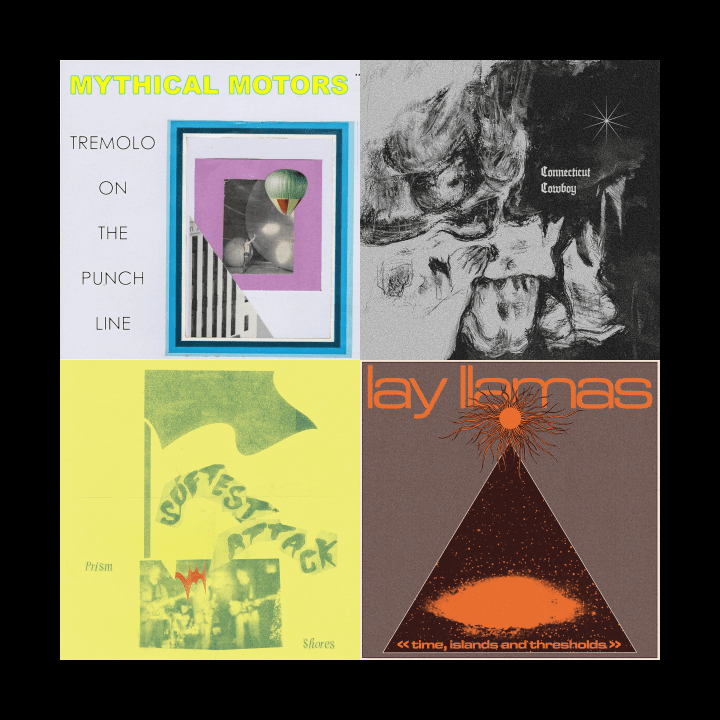
Only one Pressing Concerns this week, but it’s no slouch, looking at a bunch of new albums coming out tomorrow, April 10th. We’ve got blog regulars Mythical Motors, as well as Prism Shores and Paul Bergmann making their second Pressing Concerns appearances and the debut of Lay Llamas below. Earlier this week, we put up the March 2026 playlist; check it out if you haven’t yet.
If you’re looking for more new music, you can visit the site directory to see what else we’ve written about lately. If you’d like to support Rosy Overdrive, you can share this (or another) post, or donate here.
Mythical Motors – Tremolo on the Punchline
Release date: April 10th Record label: Best Brother/Repeating Cloud Genre: Lo-fi power pop Formats: Vinyl, digital Pull Track: Mass Attraction
Tremolo on the Punchline is the eighth Mythical Motors album I’ve written about in Pressing Concerns (Hello Whirled, currently at nine, is the only one I’m aware of that’s higher). There’s another dozen or so Mythical Motors albums that either predate this blog or I didn’t get around to covering, as they’ve been averaging more than one a year for a minute now. Along the way, Matt Addison’s one-man lo-fi power pop project has become a cult favorite for a certain kind of music fan, the kind that believes that the best pop music in the world came from basements in Dayton, Ohio and Dunedin (a school of thought welcomed at Rosy Overdrive). Despite all this, Mythical Motors have never put any of their music out on vinyl before now–but a couple of Rosy Overdrive mainstays in Repeating Cloud (who’ve put out two Mythical Motors records, Travelogues and Movie Stillsand Upside Down World, on cassette) and Best Brother Records have teamed up to press Tremolo on the Punchline, the first Mythical Motors album of 2026 (and their first record of any kind since last October’s The Painted Unseen compilation) on LP.
If Addison felt like he had to approach Tremolo on the Punchline differently than previous digital or cassette-only Mythical Motors releases, it doesn’t sound that way–it’s seventeen songs of exuberant, unflappable guitar pop music combining the angelic vocals of Tobin Sprout with the mysticism of Robert Pollard and a bit of college rock (even occasionally new wave) sheen. Addison sings “The queen of fleeting moments / Will shine for you in time,” in “The Queen of Fleeting Moments” like it’s a life or death situation, which, for all we know, could very well be in Mythical Motors’ native dialect. “The Queen of Fleeting Moments” kicks off my favorite stretch of Tremolo on the Punchline, also featuring the automatic power pop of “Mass Attraction” and jumpy, jangly single “Dismantled Man Tell You”, but I could see just about anything off of this album being the one that resonates with any given listener in particular. Mythical Motors are built to do that, regardless of the format. (Bandcamp link)
Prism Shores – Softest Attack
Release date: April 10th Record label: Meritorio/Having Fun Genre: Power pop, jangle pop, fuzz pop, college rock Formats: Vinyl, digital Pull Track: I Didn’t Mean to Change My Mind
At the beginning of last year, the Montreal quintet Prism Shores released Out from Underneath, their second LP and first for Meritorio Records. Guitarist Jack MacKenzie, bassist Ben Goss, drummer Luke Pound, and guitarist Finn Dalbeth revealed themselves as strong practitioners of fuzz-drenched indie pop and college rock, claiming a spot for themselves at a Montreal guitar pop table that’s been impressively crowded as of late. The four of them got back to work almost immediately after Out from Underneath, recording Softest Attack with prolific producer Scott “Monty” Munro (Laughing, Chad VanGaalen, Preoccupations) at Studio St. Zo. It’s a classic leveling-up moment, taking the spirited energy of Out from Underneath and marrying it with larger, more confident hooks and a studio polish designed to accentuate them.
If you’re familiar with Out from Underneath (or with any number of Prism Shores’ Meritorio labelmates), you won’t be surprised to learn that Softest Attack is stuffed with C86 and Flying Nun-influenced power pop and “fuzz pop”; even with that in mind, I was still surprised by how many of these tracks immediately jumped out at me as top-notch examples of the form. We get “Idle Again”, “Gossamer”, and “Resigned to the Fact” in the “foot-on-gas punky indie pop” department, two note-perfect jangle pop/college rock tributes in “Magical Thinking” and “Precarity”, a timeless-sounding rollout of an opening track in “Kid Gloves”, and “I Didn’t Mean to Change My Mind”, a massive-sounding, achingly earnest, top-of-the-mountain guitar pop anthem that sounds like a larger version of the most recent (Meritorio-released) Fazed on a Pony album, itself one of the best “power pop” albums of the year so far. Despite the quick turnaround, Softest Attack is an incredibly generous and stacked pop album that sounds anything but rushed (though it is indeed a sugar rush to listen to). (Bandcamp link)
Paul Bergmann – Connecticut Cowboy
Release date: April 10th Record label: Self-released Genre: Art rock, folk rock, dreamy-indie-rock, post-punk Formats: Digital Pull Track: Smaller
Towards the beginning of last year, the New Haven singer-songwriter Paul Bergmann released an EP called Long Island Sounds; recorded live with Justin Pizzoferrato at his Sonelab Studio, the six-song EP served as a nice showcase for Bergmann’s current band (bassist Scott Lawrence and drummer Cameron Brown) as well as establishing Bergmann himself as an intriguing artist in the realms of indie, folk rock, and even a bit of post-punk (I compared Long Island Sounds to mid-period The National at the time). Bergmann’s latest record is a seven-song, thirty-four minute album called Connecticut Cowboy, once again recorded with Brown and Lawrence (with extra lead guitar provided by Stephen Heath and organ by Scott Amore, who also engineered the album).
Connecticut Cowboy begins in similar terrain to Long Island Sounds, with “Smaller”, “Vacant Green Eyes” (an alternate version of a song from Bergmann’s 2023 album No Masters in Paradise), and “It” all floating in the ether of gothic-folk-tinged, somewhat fuzzy indie rock. Connecticut Cowboy gets odder from that point forward; I wouldn’t say that Bergmann embraces alt-country to the degree one might expect from the album title, but the angsty gothic country of “West Rock” is new, and “Appalachian Mountains” incorporates a little more obvious folk influence (although it’s still a Paul Bergmann song). Bergmann and his band close out Connecticut Cowboy with back-to-back six minute tracks; “Desert Man” is, like its title evokes, a vast Western psychedelic expanse, while “Blue Light Cowboy” returns to the buttoned-up vibes of the beginning of the LP only to strain and push against them as the song comes to a close. Although it starts to have an “odds and ends” vibe in the second half, Connecticut Cowboy ultimately comes full circle. (Bandcamp link)
Lay Llamas – Time, Islands and Thresholds
Release date: April 10th Record label: Zel Zele Genre: Psychedelia, experimental rock, post-rock, dub Formats: Vinyl, digital Pull Track: Mystical Journey
Good news, everyone! I’ve got some weird psychedelic stuff for you today. Lay Llamas is Nicola Giunta, an Italian musician who has some pretty impressive bona fides in the realms of experimental and art rock, having collaborated with Can’s Damo Suzuki, The Pop Group’s Mark Stewart, and Swedish psych rock group Goat in the past. The latest Lay Llamas record comes to us via the cosmic record label and NTS radio show Zel Zele–Time, Islands and Thresholds is for those who like their “psychedelic rock” to be vast, meandering, full of empty space, and fluent in dub and post-rock. The LP starts with a minimal, transfixing groove in “Up Your Hands in Front the Sun”, and the deconstructed “Surfers’ Black Mass” continues Time, Islands and Thresholds’ path down odd trails. The dusty “Mystical Journey”, with its propulsion, floating keyboards, and vague melodies, feels like a warped lot piece of 60s psychedelia, a trait that describes Time, Islands and Thresholds at its most accessible, relatively speaking (see also “Night Time History” and “Disguise You by Animal” in the album’s second half). These tracks are still fairly odd, but, conversely, there’s something of their friendliness in the strange sections of the album (like the dubby “Island” or the molasses-slow beat of “Bees in the Holy Box”). Everything flows together correctly and seamlessly, which is exactly what you want in a record like Time, Islands and Thresholds. (Bandcamp link)
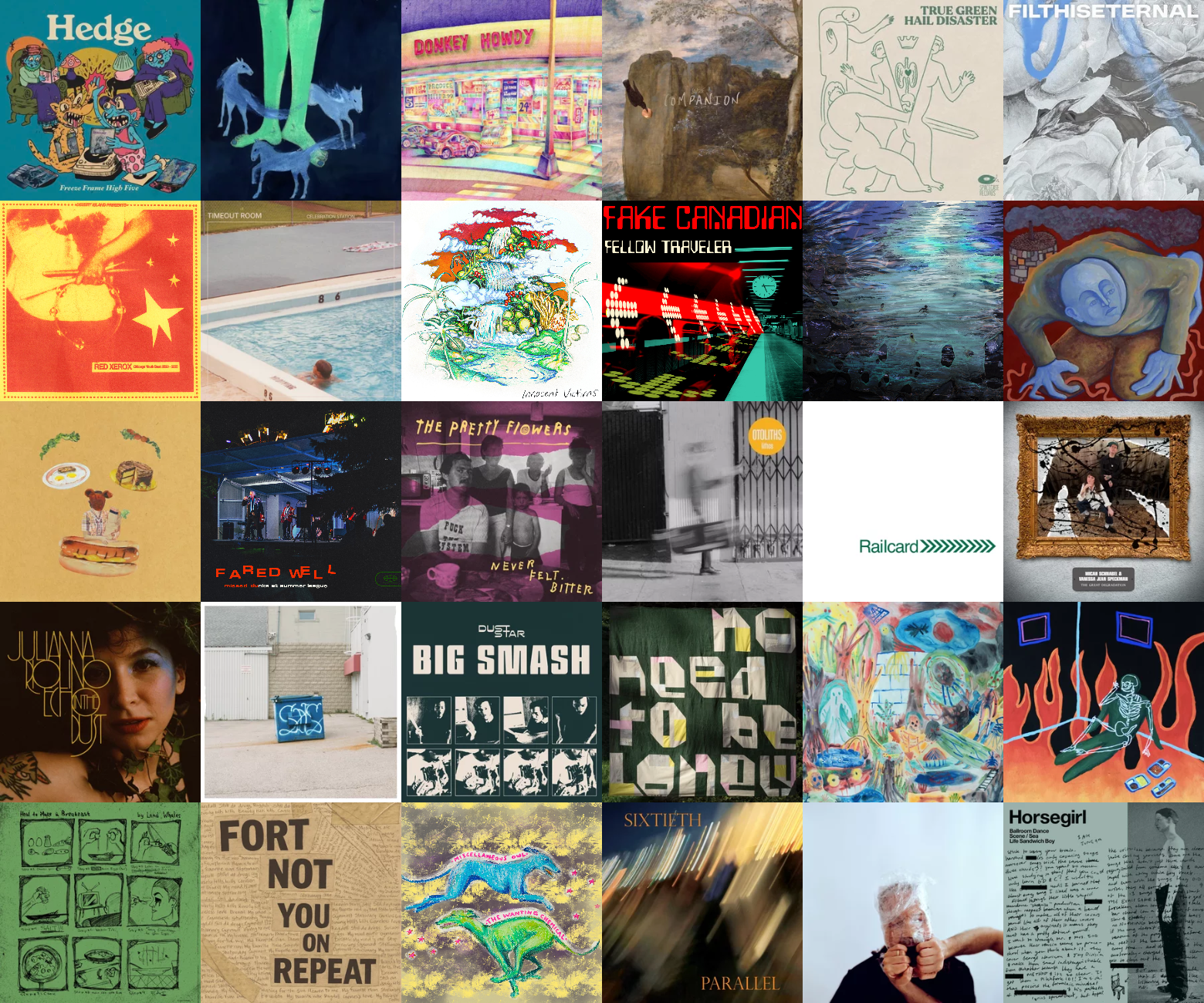
Hey there! This is the March 2026 playlist, featuring a bunch of great music I’ve been enjoying recently (mostly from the last month or so).
Miserable chillers, Sluice, Timeout Room, and It’s All You, Cowboy have two songs apiece on this playlist. True Green has four.
We’ll be back on Thursday!
Here is where you can listen to the playlist on various streaming services: Spotify (missing three songs), Tidal (missing two). Be sure to check out previous playlist posts if you’ve enjoyed this one, or visit the site directory. If you’d like to support Rosy Overdrive, you can share this (or another) post, or donate here.
“Hey Dude”, HEDGE From Freeze Frame High Five (2026, Best Brother)
HEDGE are a pop punk trio from Worcester, Massachusetts who caught my attention with their 2024 debut album, Better Days. On the group’s brand new EP Freeze Frame High Five, the band take us on a foot-on-gas journey through post-Jawbreaker 90s “indie punk” energy and intensity with a power pop sensibility, sprinting through a half-dozen songs in under ten minutes. Opening track “Hey Dude” is just a monster truck of a pop song, and lead singer Christopher’s deep, almost conversational voice and vocal melodies make him feel like a pop punk version of The Bevis Frond’s Nick Salomon. Read more about Freeze Frame High Five here.
“It Really Never Did”, Helicopter Leaves From Sabrina Nickels (2026, Noyes)
Chicago musician Anthony Vaccaro has been widely heard this decade as part of the wildly popular Beach Bunny; Vaccaro first stepped out on his own in 2023 with Get Stuck In, the home-recorded debut album from his power pop solo project Helicopter Leaves, but it’s the second LP under the name that has fully realized the guitar pop potential that Vaccaro clearly possesses. Vaccaro’s relatively delicate vocals keep Sabrina Nickels with one foot in the worlds of twee and indie pop, but the big guitars and even bigger refrains are hardly bashful. Sabrina Nickels is a whirlwind; this feeling is greatly enhanced by “It Really Never Did”, a starry-eyed power pop opening track that’s as good as any guitar pop I’ve heard this year. Read more about Sabrina Nickels here.
“Sunny Boy”, Dialup Ghost From Donkey Howdy (2026)
The goofy title of Dialup Ghost’s Donkey Howdy is “an attempt to free the band from over-seriousness and over-thinking” per the band, and these eleven songs also represent an attempt by the Nashville group to incorporate musical ideas beyond their alt-country roots (synthesizer and trumpet feature prominently in a few songs, for instance). Both vocalist/guitarist/songwriter Russ Finn’s writing and his Nashville drawl help Dialup Ghost stay squarely in the big-tent version of “alt-country”, but Donkey Howdy is a subsequently adventurous and weird album reflecting a band still restless after several records together. I’d direct any skeptics to the power pop/alt-country synthesis of “Sunny Boy”; if that hits, then maybe you’re ready for the weirder moments. Read more about Donkey Howdy here.
“Vegas”, Sluice From Companion (2026, Mtn Laurel Recording Co.)
With “Vegas”, Sluice pull the trick of saving the catchiest song on Companion for last. It’s an exhilarating, whirlwind country-rock flashback to bandleader Justin Morris’ time touring with Angel Olsen as her merch guy in the 2010s, an up-close experience with “indie stardom” that nearly made him quit music and that really wouldn’t have worked anywhere else in the album’s sequencing. After an album of thoughtful, fully-alive country-rock, “Vegas” is one final curveball suggesting that Morris and Sluice had to burn a bunch of things down to get where they got to on Companion. Read more about Companion here.
“Italian Lightning”, True Green From Hail Disaster (2026, Spacecase)
“You quit the family business, and hopped on a plane / To root through Roman trash and study ancient slang”–so begins my favorite album of 2026 so far, to the tune of lilting, lackadaisical guitar pop. True Green’s Dan Hornsby continues to be one of the best storytellers in “indie rock” music on his project’s second album, Hail Disaster–there’s a reason I put four songs from it on this playlist. Well, several reasons, actually. “Italian Lightning” is about as catchy as Hail Disaster gets, its cheerful R.E.M.-ish folk rock obscuring some pretty dark undercurrents. “You beat me to the punch, and then you punched me to the beat,” indeed. Read more about Hail Disaster here.
“How to Draw Hands”, True Green From Hail Disaster (2026, Spacecase)
One of my favorite songs on Hail Disaster is about how to draw hands. It’s called “How to Draw Hands”. In “How to Draw Hands”, Hornsby sings “Go slow, it’s no race,” from the perspective of his mother giving him artistic advice on the subject. The more time I spend with Hail Disaster, the more I’m drawn in by its overwhelming calmness, a rejection of calamity drawn from what I must assume is Hornsby taking that aforementioned advice. The final verse is the perfect cherry on top, drawing us closer without overdoing it; it’s a masterclass, in drawing hands and writing songs, too. Read more about Hail Disaster here.
“Long Way”, Filth Is Eternal From Impossible World (2026, MNRK Heavy)
Filth Is Eternal’s fourth album, Impossible World, throws itself headfirst into the realm of meaty, muscular, punk-heavy alt-rock. It hits like a tractor-trailer: a dozen short, serious, grey, loud bursts of heavy metal/hardcore-tinged grunge-pop songs in just under a half-hour. Lead vocalist Lis DiAngelo is clear and unwavering over top of guitars set to “rumbling down the highway” and rhythms doing their requisite pounding. It’s hard to pick highlights because Impossible World is an incredibly even listening experience–you can’t go wrong with any of the first four songs, including the one I chose for this playlist, “Long Way”. Read more about Impossible World here.
“Sea Life Sandwich Boy”, Horsegirl From Red Xerox (2026, Desert Island/New Now)
Chicago indie rockers Horsegirl have turned buzz into a Matador record deal and Pitchfork hype, but they’ve always been adamant that they’re part of a larger scene–a bunch of teenagers in the Windy City making underground indie rock music inspired by varying combinations of early Guided by Voices, Flying Nun, Elephant 6, 1960s psychedelic pop, shoegaze, and their home city’s noise rock. Red Xerox, assembled by local chronicler and TV Buddha drummer Eli Schmitt, is a well-earned and useful five-year marker for this scene, and Horsegirl are represented on the compilation via one of their their earliest songs, “Sea Life Sandwich Boy”. Chamber pop and Yo La Tengo-ish noisy hooks collide in a song that’s a very good choice to sum up everything on Red Xerox. Read more about Red Xerox here.
“Night Eye”, Timeout Room From Celebration Station (2026, Tough Gum)
Timeout Room crash-landed into view back in 2023 with an album called Tight-Ass Goku Pictures, a brilliant, skewed, and bizarre collection of guitar pop that was like The Cleaners from Venus as interpreted by a lo-fi punk from Baton Rouge, Louisiana. LP2, Celebration Station,is a fantastically frayed collection of jangle pop, power pop, and garage punk that meets that high bar; some of the more overtly silly aspects of Tight-Ass Goku Pictures are absent, leading to a tighter, more rocking collection of tracks that is nonetheless still very fun. Early highlight “Night Eye” continues bandleader S.T. McCrary’s mission to shove pop punk-level hooks and attitude into lo-fi guitar pop. Read more about Celebration Station here.
“The Big Guitar”, Miserable chillers From Innocent Victims (2026, Baby Blue)
Two years after the eclectic art pop “mixtape” Great American Turn Off, Miguel Gallego is back with the first proper song-based Miserable chillers album since 2020, Innocent Victims, which offers a very different listening experience than his previous release. Gallego continues to mine soft rock, art pop, and 60s/70s studio-auteur-type music for inspiration, but it’s a more muted, pensive version of it than on Great American Turn Off, evidently due to the personal tragedy behind this record’s creation. The titular Thin Lizzy worship of “The Big Guitar” is one of the most electric and immediately catchy moments on Innocent Victims; dropping in the guitars is an odd choice, but there’s no arguing with the result. Read more about Innocent Victims here.
“Please Stop Moving to Philadelphia”, Fake Canadian From Fellow Traveler (2026, Daylight Headlight Section)
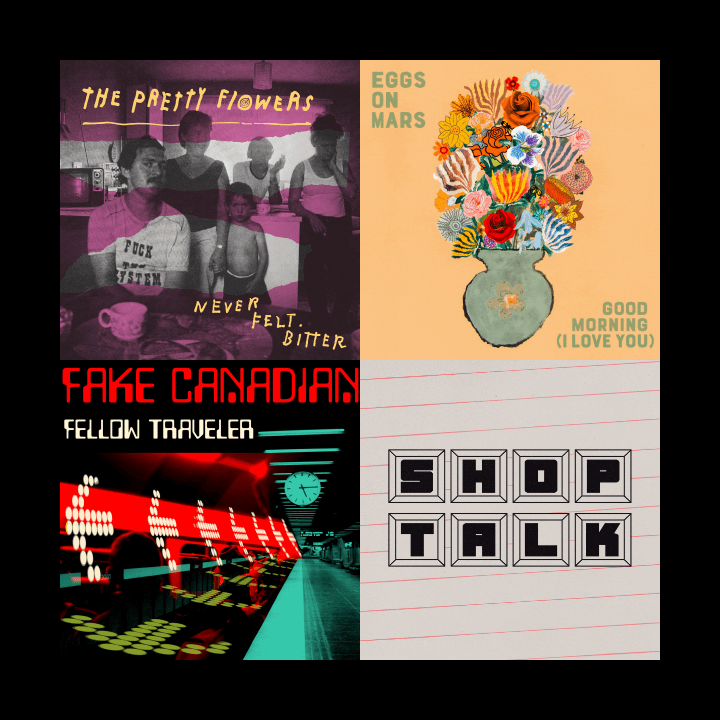
The second Fake Canadian album and first as a full-on band is called Fellow Traveler, recorded by Cameron Karren at Sacramento’s renowned Pus Cavern studio, and it’s large enough to contain several more hits from the self-described “angular power pop” band as well as push some of their (already fairly loose) boundaries. Whip-smart, wordy (read: “nerdy”), punched-up by the rhythm section, and quite catchy, the hits of Fellow Traveler reap the rewards of Christopher Casuga’s decision to bring bassist Howard Ingerman and drummer Jordan Solomon into the fold. The surging power pop of “Please Stop Moving to Philadelphia” sports Silkworm’s Lifestyle-esque guitar-lead spatter, a surefire way to get me to enjoy a song. Read more about Fellow Traveler here.
“Comedy Gold”, Stimmerman From Challenging Music for Difficult People (2026)
Interesting stuff here from Stimmerman, aka Brooklyn guitarist Eva Lawitts (who’s played with Oceanator, Allegra Krieger, and Vagabon, among others). After a solid album in 2023 called Undertaking, Stimmerman returned this year with Challenging Music for Difficult People, which is probably the best album title of the year. I’ll just go ahead and say that while it doesn’t entirely live up to the impossible expectations I’d have for an album called that, it’s an admirable attempt in which Lawitts collides emo-y indie rock with bizarre prog- and math rock excess and ambition. “Comedy Gold” is probably the closest thing to a “hit” on this album; “Am I a clown or am I man?” asks Lawitts over a tuneful cacophony.
“Where Did All the Fruit Go?”, The Foot & Leg Clinic From Sit Down for Rock and Roll (2026, Bingo)
For their debut album, the Glasgow band formerly known as “The Wife Guys of Reddit” have rechristened themselves The Foot & Leg Clinic (a marginally better name, I suppose) and asked us to Sit Down for Rock and Roll with an offbeat, catchy, and surprising collection of British indie-art-rock (“wonk rock”, they call it). The catchy, pop-forward garage rock of “Where Did All the Fruit Go?” imagines a more polite version of their Bingo Records labelmates in The Bug Club; elsewhere on Sit Down for Rock and Roll The Foot & Leg Clinic get much odder, but this is the “hit”. Read more about Sit Down for Rock and Roll here.
“Crack Skinny”, It’s All You, Cowboy From I Can’t Eat (2026, Crutch of Memory)
This It’s All You, Cowboy record might be the greatest album of all time. Probably not, but it might be. I Can’t Eat has an absurd but deadpan vibe to it that could only possibly come from a Midwestern “experimental grindcore” musician’s minimalist 80s art pop side project. That’s Frankie Furillo, a guy from Stoughton, Wisconsin who also plays in The Central and who’s just put out a second album on Crutch of Memory (Dusk, Julia Blair, Amos Pitsch). “Crack Skinny” is a wildly catchy indie pop song about–well, I’ll just let Furillo explain it, as he’s quite direct about it.
“Bodysurfing”, True Green From Hail Disaster (2026, Spacecase)
“Bodysurfing” is probably the most beautiful song on Hail Disaster (and there’s a lot of competition for that title), Dan Hornsby and Tailer Ransom giving the sparkling, polished, dreamy guitar pop treatment to the former’s tale of a family’s home getting robbed while they’re having “the time of [their] lives” at the beach. “The first half of your life is Tetris / And the second half is Jenga,” Hornsby sings, towards the end of “Bodysurfing”, suggesting a loss of innocence, but he just as immediately shrugs the conclusion off: “But maybe it’s all just / Bodysurfing”. Read more about Hail Disaster here.
“Missed Dunks at Summer League”, Missed Dunks at Summer League From Fared Well (2026, Machine Duplication)
Jordan Petersen-Kamp began Missed Dunks at Summer League not long after landing in Memphis from Grand Rapids, Michigan, and his debut album under the name, Fared Well, is largely a solo effort. Compared to the bands around them in their adopted hometown, Missed Dunks at Summer League’s influences are a bit more…esoteric? The dominant sound of Fared Well is greyscale, chilly, introverted 90s indie rock–their label, Machine Duplication, mentions Built to Spill and the Mountain Goats as ingredients, though they don’t particularly sound like either one of those acts. Fared Well does rock in its own way, though–the opening title track features a nice bass groove and a hypnotic guitar riff, for instance. Read more about Fared Well here.
“Came Back Kicking”, The Pretty Flowers From Never Felt Bitter (2026, Forge Again)
Never Felt Bitter, The Pretty Flowers’ third full-length and first for Forge Again Records, finds the southern California power pop group back in their Paul Westerberg- and Lemonheads-influenced element. Bandleader Noah Green writes that he was inspired by moving out of Los Angeles to the more spacious and quiet town of Sierra Madre, but Never Felt Bitter doesn’t abandon what The Pretty Flowers started in the city–it’s just more. The rockers really do feel like they are able to take up space and stretch out more than the band had done so previously; I count several could’ve-been-hits on Never Felt Bitter, not the least of which is the triumphant “Came Back Kicking”. Read more about Never Felt Bitter here.
“Bi-Weekly Lady”, Otoliths From Lithos (2026)
The Chicago-originating, Oakland-based musician Tom Smith has been in a bunch of different bands; his latest project, Otoliths, debuted in 2024 with a song on a compilation, and their next release is a full-fledged debut album called Lithos. It fits right in with the jangly indie pop/college rock revival happening across the San Francisco Bay Area, which they’ve acknowledged in a somewhat roundabout way by calling themselves a “post-punk band” influenced by Emmett Kelly and Martin Newell. Lithos comes out swinging early with hits like the massive fuzz-pop hooks of “Bi-Weekly Lady”. Read more about Lithos here.
“Born in ‘62”, Railcard From Railcard (2026, Skep Wax/Slumberland)
Railcard is a new indie pop supergroup featuring members of Heavenly, Dolly Mixture, and Would-Be-Goods, and their self-titled debut record is very much in line with those groups’ pursuit of timeless-sounding pop music. Loosely speaking, Railcard have two different modes: a triumphant, confident, often horn-aided 60s-style pop rock side, and a softer, more pensive take on indie-soft-folk-rock-pop; “Born in ‘62” (named after the year in which three of the band’s four members were indeed born) is a shining example of their direct side. Read more about Railcard here.
“Bongos”, Micah Schnabel & Vanessa Jean Speckman From The Great Degradation (2026)
Two Cow Garage co-leader and central Ohio cowpunk poet laureate Micah Schnabel is about two years removed from The Clown Watches the Clock, a smart, catchy, and funny opus of Midwestern desperation, poverty, and general ambience that stands as one of the long-running musician’s best works. The cult alt-country lifer is back with a record called The Great Degradation, made with his partner, poet and musician Vanessa Jean Speckman, and partially spurred on by the two of them getting priced out of their Columbus apartment. Like most Schnabel-helmed records, The Great Degradation is a rollercoaster, and we’re rewarded with moments of country rock catharsis like the transcendent hackeysack/drum circle anthem “Bongos”. Read more about The Great Degradation here.
“Like a Rembrandt”, Julianna Riolino From Echo in the Dust (2025, MoonWhistle)
A desire to more fully focus on her solo career led to Julianna Riolino leaving Daniel Romano’s Outfit shortly after Too Hot to Sleep, and she self-released a sophomore album called Echo in the Dust late last year. Though I missed Echo in the Dust on the first go-around, a “deluxe” re-release of it (featuring three additional songs) caught my ear, and I can say now that the Canadian musician has successfully carved out her own style honed from classic 60s folk rock, bits of 70s and even 80s singer-songwriter touches, and snatches of Romano-esque energetic power pop. Opening track “Like a Rembrandt” in particular is the kind of polished, exuberant, poppy country rock I’d expect from a “Daniel Romano-associate solo album”. Read more about Echo in the Dust here.
“Good Enough”, Status / Non Status feat. Julie Doiron From Big Changes (2026, You’ve Changed)
Anishinaabe indie rocker Adam Sturgeon has been busy with his two bands Status / Non Status and OMBIIGIZI in recent years, but Big Changes, an overwhelming, emotional Canadian rock album, already stands out in his discography. Sturgeon has the gift of pulling together blunt alt-rock with the mistiness of dream pop, and Big Changes has moments of confrontation and beauty. “Good Enough”, a six-minute Canadian rock hymn featuring Julie Doiron, is a stark example of the latter–and it’s worth noting that anyone who’s heard Sturgeon’s music knows how much of an influence Doiron’s old band Eric’s Trip has been on it. Read more about Big Changes here.
“Keep It Heavy”, Dust Star From Big Smash (2026, Hilltown/Storm Chasers LTD)
Has it really been nearly four years since Open Up That Heart, the Lame-O Records-issued debut album from California power pop duo Dust Star? Apparently so, but Dust Star LP2 is here now with Big Smash, and Cameron Wisch and Justin Jurgens still have plenty of garage-y, desert-sunburned power pop hooks between them on this one. Storm Chasers LTD, who are putting this one out on vinyl, reference names like Sheer Mag, Tenement, and Radioactivity for what to expect on Big Smash, and opening track “Keep It Heavy” marries classic power pop triumph with garage rock energy.
“Push Me Down”, Gladie From No Need to Be Lonely (2026, Get Better)
Augusta Koch, the former frontperson of the now-defunct 2010s indie punk band Cayetana, has kept the slightly-emo, slightly pop-punk flame alive with Gladie for three albums now. The Jeff Rosenstock-produced No Need to Be Lonely is immediate, hard-hitting, and raw because that’s what it should be–that’s how Koch writes, plays, and sings. The revved-up, huge guitars make themselves known before anything else on the album, but Koch’s frayed, cracking voice isn’t far behind–both feature heavily on “Push Me Down”, a wrecking ball of an opening track. Read more about No Need to Be Lonely here.
“Beadie”, Sluice From Companion (2026, Mtn Laurel Recording Co.)
Listening to Companion by Sluice, I couldn’t help but thinking about the North Carolina group’s sister act, Fust, and how their 2025 album, Big Ugly, seized the little “moment” that their scene is having by polishing their music into vibrant, immediately-grabbing country rock. Companion is a different beast: it’s a more challenging, wide-ranging “folk rock” album, with plenty of accessible moments and just as many I would hardly describe as such. The wobbly, steady country rock of opening track “Beadie” is, nonetheless, a strong example of the former; it’s as warm an opening to Companion as one could hope for. Read more about Companion here.
“X-Ray”, The Notwist From News from Planet Zombie (2026, Morr Music)
News from Planet Zombie, The Notwist’s tenth album and first in five years, was recorded by the septet in their “home base” of Munich; the resulting album subsequently has a strong foundation in solid indie rock music, even if I’d characterize it as largely “unclassifiable” beyond that. Sometimes quick and straightforward, sometimes symphonic and patient, News from Planet Zombie sounds like a veteran band confidently going wherever their ideas happen to take them. Single “X-Ray” grabs us early on with garage rock structure, post-punk rhythms, and a melancholic vocal melody from Markus Acher. Read more about News from Planet Zombie here.
“Halo”, Star Moles From Highway to Hell (2026, Historic New Jersey)
Star Moles is Emily Moales, a prolific Philadelphia-based singer-songwriter who’s been putting out music under the name since 2017 and as of late has been averaging at least one record per year. Moales has described Star Moles’ music as “medieval-via-1960s folk-troubadour” before, and that’s not far off from the offbeat, transcendent, marching-to-the-beat-of-her-own-drum singer-songwriter I hear on Highway to Hell. It’s a well-executed and disciplined album, but the vision that Moales and producer Kevin Basko have in mind with these songs is something beautiful in a more challenging way than most “indie folk”. The ever-so-slightly “Philly alt-country”-curious closing track “Halo” is just one of the moments on Highway to Hell that’ll stick with me. Read more about Highway to Hell here.
“Little Glow”, Land Whales From How to Make a Breakfast (2026, Buh)
Martín Schellekens recently relocated from Cuba to The Netherlands, but not before recording How to Make a Breakfast, the second Land Whales album, with regular collaborator Martín Espinosa in Havana. How to Make a Breakfast is an abrasive, maxed-out noise rock record; more accessible influences like Sonic Youth and shoegaze are present, but Schellekens and Espinosa are truly committed to making challenging pillars of noise music as well. After starting their LP with droning feedback and sludgy noise punk, “Little Glow” is a relatively reprieve via distorted but more or less straightforward indie rock in a Sonic Youth vein. Read more about How to Make a Breakfast here.
“Still Do Drugs”, Fort Not From You on Repeat (2026, Meritorio)
Meritorio Records certainly releases a lot of good jangly indie pop music; it’s entirely possible that you might’ve missed Kungälv, Sweden project Fort Not’s 2023 sophomore album, Depressed for Success. The quintet (songwriters Robert Carlsson and Fredrik Söderström, plus Philip Gates, David Hansson, and Joakim Björnberg) shoot for a mix of classic guitar pop and 90s lo-fi indie on their third LP, You on Repeat, most impressively exemplified by the low-key but masterful highlight “Still Do Drugs”. It’s the midpoint between Sebadoh and Teenage Fanclub, polished but earnest in its titular question (as in, “Do you?”).
“Walling Up the Train”, Miscellaneous Owl From The Wanting Chemical (2026)
This is the third year in a row that I’ve found myself writing about an album from Miscellaneous Owl (aka Madison, Wisconsin indie pop musician Huan-Hua Chye) that came out in March. This newest one, The Wanting Chemical,isn’t quite full-band power pop, but perhaps the return of Chye’s band Gentle Brontosaurus has trickled into Miscellaneous Owl’s latest album–there’s a bit more electric guitar, some of which I’d even describe as “chugging”. “Walling Up the Train” is one of these pop-rockers; in this one, you may catch a few literary references (or, as I assume is the case with the title, a reference to a literary reference). Read more about The Wanting Chemical here.
“Thirty Years”, Sixtieth Parallel From Sixtieth Parallel (2025)
The Long Beach, California post-punk trio Sixtieth Parallel formed forty years ago; they released an EP called Into Bliss in 1988 and, for a long time, that was that. Nonetheless, two of the members (guitarist/vocalist Kevin Bartley and drummer Damien Murray) and longtime friend and occasional collaborator Wes Jackert (bass) found themselves playing in a cover band together in the late 2010s, which eventually led to a brand-new self-titled Sixtieth Parallel EP (of original material, no less). Sixtieth Parallel does sound like the work of musicians who came together via a love of acts like Echo & The Bunnymen, Joy Division, The Sound, and The Psychedelic Furs, although the pensive, languid collection of songs isn’t overly concerned with trying to perfectly recreate the past. “Thirty Years” is great post-punk music–it would be in 1986, and it is in 2026.
“Domino”, Timeout Room From Celebration Station (2026, Tough Gum)
A second Timeout Room song! What can I say, S.T. McCrary has a finger on the pulse of excellent lo-fi guitar pop. Celebration Station is as good as it is in large part due to a strong second half, featuring hits like “I Hope It Didn’t Take Long”, “All Away”, and this one, the breezy indie pop of “Domino”. The juxtaposition of McCrary’s weary, punk-influenced vocals with one of the more polished instrumentalist Timeout Room has put together yet (that’s also all McCrary, even though he does get instrumental help elsewhere on the album) is enough to make “Domino” arguably Celebration Station’s greatest success. Read more about Celebration Station here.
“Parachute”, Powerwasher From Pressure (2026, Strange View)
Almost exactly two years after Everyone Laughs, Baltimore post-punk group Powerwasher are back with Pressure, an EP that condenses their whole deal into five songs and fifteen minutes. The band are still very much the explosive, fun, hardcore-ish punk rock group of their past work (you’ll hear bits of classic SST Records, Nomeansno, and, of course, Dischord here), but Powerwasher have taken this between-album release to get a little weird, too. “Parachute” is a hard-charging, electric punk opener, but the no wave-y horns and strange whirring sounds hint at some of Pressure’s odder undercurrents. Read more about Pressure here.
“If I Was Your Dad”, It’s All You, Cowboy From I Can’t Eat (2026, Crutch of Memory)
A second It’s All You, Cowboy song that’s also brilliant in a headscratching way. Crutch of Memory calls I Can’t Eat “23 infectious yacht/boogie influenced pop tracks”, and Frankie Furillo himself cites Michael McDonald as an influence. Just the kind of thing I’d expect a grindcore musician to release on a Midwestern alt-country label, of course. Okay, I’ll stop harping on this point and highlight “If I Was Your Dad”, another awesome key/synth indie pop song about what it would be like if Furillo was your dad. (“You could stay up as late as you want to / Just make sure to get some rest” … “If all you want to eat is pizza / I’ll be sure to cook that”).
“Terry’s Parrot”, True Green From Hail Disaster (2026, Spacecase)
True Green’s Hail Disaster was preceded a year ago by a two-song single; both “Consider the Priesthood” and “Falconry” ended up making the album, and the quieter, more pensive side of True Green displayed on those songs was, as it turns out, an apt preview of the band’s second album. Not everything on Hail Disaster is such a clear turn into sparse, spacey folk-rock, but there’s a subdued, adrift nature throughout the entire album spurred by both bandleader Dan Hornsby’s delivery and True Green’s musical choices. “Terry’s Parrot” is, I think, the emotional core of Hail Disaster; the story isn’t entirely complete without extra context (according to Hornsby, it’s about his uncle who died of AIDS), but we just need to understand the idea of heavy loss to feel the full impact of that song’s final verse. Read more about Hail Disaster here.
“En Utero”, Dwaal Troupe Red Xerox (2026, Desert Island/New Now)
Before Kai Slater became a power pop critic’s darling with his excellent Sharp Pins project and even before the Chicago musician turned some heads in the noise rock trio Lifeguard, he was in a band called Dwaal Troupe. Effectively a looser, more New Zealand-influenced version of the guitar pop he’d later tidy and polish up with Sharp Pins, the Dwaal Troupe records still stand up with Slater’s later, more well-known work; “En Utero” is originally from 2020’s To Swallow a Sea, and its six-minute underwater Guided by Voices vibes are an inspired choice to represent the project on the scene-snapshot Red Xerox compilation. Read more about Red Xerox here.
“Hoping for Snow”, Miserable chillers From Innocent Victims (2026, Baby Blue)
“I was hoping for the snow / So I wouldn’t have to go / To the hospital where your / Hands were swollen and cold,” sings Miserable chillers’ Miguel Gallego in the opening verse of Innocent Victims, the song tasked with closing a beautiful and emotional thirteen-track journey. Like the rest of the album, the musical choices of “Hoping for Snow” are sublime; the jaunty bass guitar and cool keyboards that greet Gallego’s voice in the beginning are perfect, and there’s a really nice guitar solo that’s short and sweet. “But the weather doesn’t see me at all / Doesn’t miss the weight of whatever falls,” Gallego sings in response to his initial hope. Read more about Innocent Victims here.
The Thursday Pressing Concerns features three albums coming out tomorrow, April 3rd (LPs from Miserable chillers, Wendy Eisenberg, and Robber Robber), plus one album that came out yesterday, April 1st (from Wax Head). It’s been a busy week on Rosy Overdrive, so if you missed Monday’s (featuring Stuck, Miscellaneous Owl, The Disassociation, and Louisa Bénâtre & Barbara Bessac) or Tuesday’s (featuring The Pretty Flowers, Fake Canadian, Eggs on Mars, and Shop Talk) blog posts, check those out too.
If you’re looking for more new music, you can visit the site directory to see what else we’ve written about lately. If you’d like to support Rosy Overdrive, you can share this (or another) post, or donate here.
Miserable chillers – Innocent Victims
Release date: April 3rd Record label: Baby Blue Genre: Soft rock, indie pop, art pop, sophisti-pop, singer-songwriter Formats: CD, digital Pull Track: The Big Guitar
I wrote about Miguel Gallego and his long-running project Miserable chillers back in 2024; he’d just put out Great American Turn Off, an eclectic self-described “mixtape” of art pop with plenty of help from various guest vocalists and musicians. Two years later, Gallego is back with the first proper song-based Miserable chillers album since 2020, Innocent Victims, which offers a very different listening experience than Great American Turn Off. Musically speaking, we’re still in the same ballpark, do not get me wrong–Gallego continues to mine soft rock, art pop, and 60s/70s studio-auteur-type music for inspiration, and his referencing of Paul Simon, Judee Sill, and Burt Bacharach (among others) checks out. It’s a more muted, pensive version of it than Great American Turn Off was though, a feeling inseparable from the tragedy behind its creation–the unexpected death of Gallego’s partner and bandmate Sarah Goldfarb in late 2019. Innocent Victims took shape slowly over the next five years, with help from frequent Gallego collaborators like Kabir Kumar, Dylan Balliett, Megan Braaten, and Kate Ehrenberg, finally presented to us here as a forty-five minute, thirteen-track package that gives an ironic twinge to the term “easy listening”.
“Telling the Bees” and “Song for Ivy” are the contradiction manifest–beautiful, lush, Rundgren/Partridge-y songs with horns (provided by Rick Rein) and vibrant basslines nonetheless frozen in a skipping moment of time. Innocent Victims floats aimlessly along through these gorgeous dioramas, reaching out and grabbing us on a whim with the plainspoken doom of “The Crater” and its tale of a meteor strike (“We rebuilt the house on the lip of the crater / I see it through every window of our home”), the titular Thin Lizzy worship of “The Big Guitar”, the hopping bass of “Dumb Kingdom”, and the truly, truly devastating “Tybee”. Innocent Victims remains a lot to take in, and there are parts of it I’m still wrapping my head around for one reason or another–for an album that is undeniably heavy no matter how much light it’s dressed in, this makes sense to me. For instance, “Last Lights” and “Hoping for Snow” are lovely pop songs on their own whose tenors change when one is able to connect them together via the weather and the deer in both of them. At this point, I can never return to the times where I listened to Innocent Victims and primarily found myself appreciating the fretless bass, but that doesn’t mean that they didn’t happen. Maybe that’s what the album is about. (Bandcamp link)
Wendy Eisenberg – Wendy Eisenberg
Release date: April 3rd Record label: Joyful Noise Genre: Folk rock, singer-songwriter, art pop, jazz-pop, alt-country Formats: Vinyl, CD, digital Pull Track: Another Lifetime Floats Away
Rosy Overdrive has tons of respect for Wendy Eisenberg, as should anyone who enjoys good rock and/or experimental music. I’ve written about their solo output and their math rock trio Editrix on the blog before, and they’ve also been performing as part of Bill Orcutt’s Guitar Quartet as of late. Needless to say, they’ve been quite busy in recent years (and I haven’t even gotten into Squanderers, Eisenberg’s newest experimental group with Gastr del Sol’s David Grubbs), but it’s still been a minute since we’d gotten a song-based Eisenberg solo album. Enter Wendy Eisenberg, an album of self-proclaimed “folk songs” made by someone whose definition of practitioners of the form includes Michael Hurley, John Prine, and Willie Nelson but also Van Dyke Parks, Richard Dawson, and the Mekons (although the LP’s biggest influence, hinted at by Joyful Noise Recordings’ bio, is the western Massachusetts-originating artist’s relocation to Brooklyn and subsequent desire to hang onto their more pastoral past in some way).
Wendy Eisenberg was co-produced by Eisenberg’s partner, Mari Rubio (aka More Eaze), who also provides string arrangements. Eisenberg, Rubio, bassist Trevor Dunn (Mr. Bungle), and drummer Ryan Sawyer (Weak Signal) are the players here, and the four of them create a record that combines the conversational, wandering jazz-ish folk stylings of Eisenberg’s past solo work (and, in a more math rock way, Editrix) with ornate, string-laden country-folk backdrops. Do not worry, Wendy Eisenberg is still pretty weird–for varying reasons, I don’t really see “Old Myth Dying” and “Vanity Paradox” crossing over to the “Rumours on $50 vinyl” crowd, but Rubio and crew are able to guide Eisenberg into some polished, structured territory without sacrificing that side of their leader. Wendy Eisenberg feels like it waits until the right moment to fully take advantage of the tools at its disposal–like when opening track “Take a Number” lets the strings kick in after a friendly acoustic-folk opening, or how they indulge in some “lush jazz” in “The Ultraworld”, or how they wait until the penultimate song, “Will You Dare”, to play their “full-on embrace of classic country” card (the payoff is worth it). It’s impressive how Wendy Eisenberg, despite existing in completely different genres from Editrix and Eisenberg’s more experimental work, bears its namesake’s unmistakable mark just as clearly. They’ve done it yet again! (Bandcamp link)
Robber Robber – Two Wheels Move the Soul
Release date: April 3rd Record label: Fire Talk Genre: Post-punk, art rock, no wave, noise rock Formats: Vinyl, CD, digital Pull Track: Talkback
The Burlington, Vermont quartet Robber Robber debuted in 2024 with an album called Wild Guess, although the group’s founding duo of vocalist/guitarist Nina Cates and drummer Zack James have been making music together since 2017. Wild Guess set the band (Cates, James, guitarist Will Krulak, and bassist Carney Hemler) apart in a folk/alt-country-inspired Vermont music scene by instead taking inspiration from more New York-y post-punk and experimental (“arty”) indie rock. They signed to Fire Talk (Wombo, Cola, PACKS) and re-released their debut album the following year, and they’re back with a sophomore album still less than two years removed from Wild Guess. Despite (or perhaps because of) the quick turnaround, Two Wheels Move the Soul was made during a tumultuous time for Robber Robber–Cates and James were evicted from their longtime home and had to rely on that aforementioned Burlington community (like associates Lily Seabird and Greg Freeman) for stability.
Nonetheless, Two Wheels Move the Soul is every bit Wild Guess’ equal, both more ambitious and smoother than its predecessor but still cut from the same cloth. The first half of the album is teetering noise-punk; “The Sound It Made”, “Avalanche Sound Effect”, and “Watch for Infection” are all warped post-punk scorchers (imagine a more garage-y Water from Your Eyes, perhaps). Cates’ vocals work well as a unifying force as things get more or less wonky, which is important because the LP ends on a different note than how it begins. Amusingly, the final four songs on Two Wheels Move the Soul are arguably the most “pop” ones; sticking the motorik charms of “Talkback” on Side Two is a self-sabotaging sequencing decision, but I do see the vision in sticking the (relatively) mellow trio of “Enough”, “Again”, and “Bullseye” at the end of the LP. The “vision” is key to Two Wheels Move the Soul, as controlled chaos is looking more and more like Robber Robber’s specialty. (Bandcamp link)
Wax Head – GNAT
Release date: April 1st Record label: Sour Grapes Genre: Garage punk, noise punk, psych-punk Formats: Vinyl, digital Pull Track: Clatter Coats
Wax Head are a punk quartet from Manchester that nonetheless have clearly spent time with American and Australian garage rock. GNAT is their first album following an EP in 2023 and a handful of singles, and with it, the band (drummer/vocalist Lewis Fletcher, guitarist Harry Bunker, keyboardist Archie Jones, and bassist Evan Chase) have given us a nine-track, twenty-seven-minute foot-on-gas debut LP. Wax Head do a great job of evoking the witchy, sometimes psychedelic garage punk of Thee Oh Sees and the faster side of Ty Segall as they plow through a whirlwind of punk music with images of body horror, violence, blood and the like (or so I’ve been told; it’s not like I can make out what Fletcher’s actually saying most of the time). Take a minute to steel yourself before putting on GNAT, because you won’t get a break once it starts–before you know it, Wax Head have raced through the 90-second metallic punk title track, the wild synth-hardcore-punk of “Bug Doctor” and “Clatter Coats”, and the classic punk throwback “Terminal Sinker”. Things might get a little more unpredictable with the Sabbath-like second half of “Takeover”, the Crampsian garage rock of “Rusty Cutter”, and the five-minute synth-punk-prog odyssey of “Resin214”, but it’s not like GNAT settles down at all. You’re going to have to wait until closing track “Clamp” gets its final blows in before you can start to recover. (Bandcamp link)
It’s the return of the Tuesday blog post! In this edition of Pressing Concerns, we’re looking at new albums from The Pretty Flowers, Fake Canadian, Eggs on Mars, and Shop Talk. It’s a great set; check them out below, and, if you missed Monday’s blog post (featuring Stuck, Miscellaneous Owl, The Disassociation, and Louisa Bénâtre & Barbara Bessac), check that one out too.
If you’re looking for more new music, you can visit the site directory to see what else we’ve written about lately. If you’d like to support Rosy Overdrive, you can share this (or another) post, or donate here.
The Pretty Flowers – Never Felt Bitter
Release date: March 27th Record label: Forge Again Genre: Power pop, college rock, heartland rock Formats: Vinyl, CD, cassette, digital Pull Track: Came Back Kicking
Longtime blog readers may recognize Los Angeles-based quartet The Pretty Flowers from their 2023 sophomore album A Company Sleeve(or, perhaps, the 2024 non-album single “Police Me”). I called that LP a “very strong collection of earnest guitar rock that incorporates bits of slacker rock, jangle pop, college rock, power pop, pop punk, and heartland rock all led charismatically by [frontperson Noah] Green’s clear, everyman vocals”; I enjoyed it at the time and, frankly, it sounded even better than I remembered when I put together my year-end list six months later. Never Felt Bitter, their third full-length and first for Forge Again Records, finds the group (Green on vocals and guitar, bassist Sam Tiger, guitarist Jake Gideon, and drummer Sean Christopher Johnson) back in their Paul Westerberg- and Lemonheads-influenced element; Green writes that he was inspired by moving out of Los Angeles to the more spacious and quiet town of Sierra Madre, but Never Felt Bitter doesn’t abandon what The Pretty Flowers started in the city–it’s just more.
The sprawling, fifty-minute Never Felt Bitter is “larger” for The Pretty Flowers in a strictly literal sense (that’s a dangerous runtime for a power pop band), but the rockers really do feel like they are able to take up more space and stretch out more than the band had done so previously. Gideon, who produced and engineered the album, probably deserves a fair amount of credit for that, but everyone aboard The Pretty Flowers sounds game to fill in this extra space from the overwhelming big-sky opening track “Thief of Time” to the ripping garage-power-pop-rock “To Be So Cool”. I count at least four power pop could’ve-been-hits in “Convent Walls”, “Came Back Kicking”, “Ocean Swimming”, and “Tough Love”; they could’ve bashed out another four almost-as-good-but-not-quite cuts and called it a day, but The Pretty Flowers instead spend their time loitering in the realms of darker (but still poppy) rock and roll with “Never Felt Bitter (We Burn)” and “Big Dummy”, rolling around the six-minute Western punk landscape of “Ring True”, and fading away with the somewhat-ironically titled “Not Dissolve”. Maybe this is just what moving out of the city in California does to you; The Pretty Flowers wear it well, regardless. (Bandcamp link)
Fake Canadian – Fellow Traveler
Release date: March 6th Record label: Daylight Headlight Section Genre: Pop punk, power pop, post-punk, new wave, 90s indie rock Formats: Digital Pull Track: Please Stop Moving to Philadelphia
Fake Canadian began in San Jose late last decade as the solo project of one Christopher Casuga, who released a single, EP, and album under the name before relocating to Sacramento in 2021 and recruiting bassist Howard Ingerman and drummer Jordan Solomon to turn Fake Canadian into a power trio. The full-band era of Fake Canadian began in 2022 with an EP called Fleeting Moments; when I heard it belatedly in 2024, I called it “one of the more unique-sounding things I’ve heard in recent memory” and put them somewhere on a three-dimensional axis of “clean, Steve Albini/Silkworm-influenced ‘PRF-core’ indie rock”, bratty, nasally power-pop-punk, and “Devo-y nerve-y post-punk/new wave”. The second Fake Canadian album and first as a full-on band is called Fellow Traveler, recorded by Cameron Karren at Sacramento’s renowned Pus Cavern studio, and it’s large enough to contain several more hits from the self-described “angular power pop” band as well as push some of their (already fairly loose) boundaries.
Whip-smart, wordy (read: “nerdy”), punched-up by the rhythm section, and quite catchy: if opening track “What Will Rational Actors Do?” doesn’t grab you, then Fake Canadian is hopelessly out of your reach. The nervous pop-punk cautionary tale of “Timothy Is in Danger” and the surging power pop “Please Stop Moving to Philadelphia” (ah, somebody’s listened to Silkworm’s Lifestyle a fair amount judging by that guitar-lead spatter) are every bit as strong pop tracks; it’s not until the groggy, hungover six-minute alt-country-tinged “Wednesday” that Fake Canadian tap the brakes just a little bit. “Wednesday” and the instrumental surf-punk “The Ballad of Justin Queso” serve to separate the opening pop trio from another pop-punk undercard threesome (“Comet, Come Back to Me” is positively jangly!); oh, and Fake Canadian end Fellow Traveler with one last curveball in the eight-minute, slouching-towards-heaviness finale of “Midnight Giants”. “Midnight Giants” and “Wednesday” don’t end up derailing any of the runaway-train momentum of the rest of Fellow Traveler; the bite that Casuga, Ingerman, and Solomon give even the record’s weirdest moments ensures that Fake Canadian remain on the more ornery side of whatever they’re doing. (Bandcamp link)
Eggs on Mars – Good Morning, I Love You
Release date: March 3rd Record label: Enigmatic Brunch Genre: Indie pop, dream pop, jangle pop, psychedelic pop Formats: CD, cassette, digital Pull Track: Takes Time
I first heard the Kansas City indie pop quartet Eggs on Mars back in 2023 when they released Warm Breakfast, but the band (currently vocalist/guitarist Brad Smith, bassist/keyboardist/vocalist Doug Bybee, guitarist/keyboardist Joel Stratton, and drummer Mason Potter) have been putting out albums since at least 2014. Three years (and one Stratton solo album) later, western Missouri’s preeminent guitar pop group are back again with a ten-song, twenty-seven minute collection called Good Morning (I Love You), which is by my count their seventh album. The group’s self-described “Midwestern soft psych” is intact here, as Eggs on Mars have once again pulled together a bunch of confident-yet-delicate, straightforward-but-full-sounding pop rock.
As I’m beginning to understand, Eggs on Mars albums are unhurried, relaxed affairs–there’s a lot to like in the jangly indie pop of opening track “Inconsistent Cowpoke” and the slightly psychedelic soft rock of the title track, but Eggs on Mars don’t sound anxious to land a memorable, collar-grabbing first impression with them. Bybee sings lead on two songs, but only one of them–the Apples in Stereo-lite power pop diversion of “Takes Time” (featuring lyrics written by Justin Longmeyer, the band’s founding bassist who now lives in Japan)–even suggests that the undercard vocalist isn’t on the same page as Smith (of course, it’s good enough that this mid-record wake-up call is a welcome one). Good Morning (I Love You) remains a gentle, deliberate ride; the songs generally hover a little over the two-minute mark, but they (and, subsequently, the sub-thirty-minute LP) feel complete nonetheless. The exception to the rule is the five-minute closing track “I Came Home 2 Find Nothing Had Changed Except Me”, which pushes the lackadaisical, plodding tendencies of Eggs on Mars to extremes (the title line is, in fact, the only one). As different as it is on the surface, though, “I Came Home 2 Find Nothing Had Changed Except Me” is right in line with the rest of Good Morning (I Love You). (Bandcamp link)
Shop Talk – Shop Talk
Release date: March 13th Record label: One Track Mind/Revolver USA Genre: Garage punk, punk rock Formats: Vinyl, digital Pull Track: SOS
After a couple of singles and an EP, we now join Brooklyn punk trio Shop Talk (vocalist/guitarist Jon Garcia, bassist Tristan Griffin, and drummer Alexander Perrelli) as they release their self-titled debut album. Recorded in Nashville with The Sleeveens’ James Mechan and released via a new New York label called One Track Mind, Shop Talk is fiery, muscular, yet slapdash garage-punk-rock-and-roll at its finest. Garcia’s glammy one-man-show Ty Segall-esque vocals collide with a well-oiled power trio sound that owes plenty to the realms of first-wave punk rock and decades of garage rock underground that followed it. These ten songs wrap up in under thirty minutes, so Shop Talk waste no time in tossing out quick-moving punk rockers (“Ramona”, “Peddlers of Hope”) and dark-undercurrent garage rock tunes (“Black Friar”, “SOS”). The second of Shop Talk brings the gothic undertones of “Saltillo”, the three-minute punk workout “Golden Afternoon” (that’s long for Shop Talk!), and the absolutely frenetic “Mirage of Life”. For a modern garage punk album featuring little to no overlap with modern power pop, Shop Talk has an impressive number of quite memorable moments. Shop Talk can hang their proverbial hats on that accomplishment. (Bandcamp link)