It’s the Thursday edition of Pressing Concerns! Today we look at three albums coming out tomorrow (Dazy, CLASS, and Emotional Response’s latest Typical Girls compilation), plus the Fluung record from two weeks ago. If you missed Tuesday’s Pressing Concerns, featuring Dear Nora, Mt. Oriander, Puppy Angst, and Austin Leonard Jones, you can catch up here.
If you’re looking for more new music, you can browse previous editions of Pressing Concerns or visit the site directory. If you’d like to support Rosy Overdrive, you can share this (or another) post, or donate here.
Dazy – OUTOFBODY
Release date: October 28th Record label: Lame-O/Convulse Genre: Power pop, fuzz rock Formats: Vinyl, cassette, digital Pull track: Asking Price
2021 was truly the year of Dazy. Although James Goodson began the project the year before, last year was the one where it truly came to a head, resulting in a couple of substantial EPs and culminating in MAXIMUMBLASTSUPERLOUD, which compiled Goodson’s first 24 songs as Dazy. MAXIMUMBLASTSUPERLOUD served, among other things, as proof of the potency in the familiar yet singular sound Goodson developed as Dazy—an enthusiastic and (yes) loud form of power pop that’s equally driven by pop punk, Madchester, Britpop, and fuzzy noise pop. That compilation is better than many bands’ debut records, but it isn’t one—that would be this year’s OUTOFBODY, Goodson’s first attempt to present Dazy in a dozen-track, one-statement format.
It doesn’t take long for OUTOFBODY to establish that Dazy is still at the top of their game. The first three songs on the record all offer up big, hooky fuzz rock, even as they sound fairly distinct from one another—the opening title track holds back enough to feel like a dramatic, even cinematic starting point, the driving “Split” has a breezy jangle pop core underneath the distortion, and the effortless cool of “On My Way” is a bit of every part of Dazy’s influences. The rest of OUTOFBODY keeps the hooks coming, but seems more interested in spreading out over the course of an LP and less concerned with delivering a pure sugar rush (although if you want that, “Choose Yr Ramone” and “AWTCMM?” are there as well).
Goodson’s sound is unique enough that an entire record embracing it wholeheartedly would feel far from stale, and while OUTOFBODY doesn’t deviate from it wildly, it also finds different corners of it to lean into, like the melancholy of mid-record highlight “Motionless Parade” or the extra Madchester touches in “Ladder”. The biggest departure is the acoustic-and-synths pin-drop sound of the delicate “Inside Voice”—if Goodson wanted to make more songs of that nature, it’d be fine by me; as it would be if he went the other direction, as he does in closing track “Gone”. The latter is particularly multi-layered, but Goodson’s voice and the jaunty core of the song aren’t lost in the noise that is still somehow only being made by one person. It’s all still exciting. (Bandcamp link)
CLASS – Epoca de Los Vaqueros
Release date: October 28th Record label: Feel It Genre: Garage rock, power pop, punk rock Formats: Vinyl, digital Pull track: Left in the Sink
Epoca de Los Vaqueros is the debut full-length record from Tucson’s CLASS, following a cassette EP that came out in June, and it’s eight tracks and twenty minutes’ worth of exhilarating garage-y punk rock that show off the full range of the band (guitarist-vocalists Andy and Rick, bassist-vocalist Jim, and drummer Ryan). Are CLASS a nervy, Devo-core egg punk group? Are they a rough-and-tumble, glam-inspired power pop group? Are they sneering, dangerously-loitering 70s punk devotees? Epoca de Los Vaqueros has a little bit of all of it.
Album opener “The Way It Goes” in particular rides pent-up rage in its verses up to a robotic, Q: Are We Not Men?-worthy chorus, and the dark “Incomplete Extraction” matches it for post-punk atmospherics. Elsewhere, CLASS offer up high-octane, barreling-forward power pop with “Box My Own Shadow” and “Left in the Sink”, and the mid-tempo “Light Switch Tripper” takes their pop skills even further, sounding like Flying Nun Kiwi pop filtered through the most accessible moments of 90s indie rock bands like Pavement and Guided by Voices.
The punk rock of Epoca de Los Vaqueros is probably best exemplified in “Cockney Rebel”, a seething put-down of a number, but also in true original punk fashion, CLASS end the record on a note of despair and nihilism. “Unlocking Heaven’s Gate” is their “Final Solution”, an alarm-sounding empty tune describing a deadly, destructive virus (well, I guess that’s a reasonable substitute for 70s punk’s Cold War-era nuclear dread). What more could you want? (Bandcamp link)
Various – Typical Girls Volume 6
Release date: October 28th Record label: Emotional Response Genre: Indie pop, post-punk, hardcore punk, synthpop Formats: Vinyl, digital Pull track: Thin As Flags
Arizona’s Emotional Response Records initiated their Typical Girls series in 2016 with the simple yet welcome goal of highlighting vital and perhaps under-appreciated women and female-fronted bands in the punk, post-punk, and indie pop landscapes. The sixth volume of Typical Girls features sixteen bands from seven different countries, and it’s geographical diversity is matched by that of genre as well. On the heavier end of the spectrum, we have the garage rock/classic punk bands that are perhaps closest in spirit to the Slits song for which the series is named (Fake Fruit, Sweeping Promises, Luu Kurkkuun, Squid Ink), not to mention the couple of hardcore songs that appear on the compilation as well.
The other, softer extreme of Typical Girls Volume 6 is its indie pop side—Cindy’s sleepy-sounding “Thin As Flags” is another gem from the Karina Gill (Flowertown) project, Lande Hekt’s “Lola” is a slice of emo-tinged indie rock from the British songwriter, “Abraxas” by New Zealand’s Wet Specimen is a thorny but accessible piece of 90s-inspired indie rock, and Ukraine’s Glass Beads offer up the goth-adjacent dark pop of “Music Box”. It’s a fairly packed compilation—some of the less flashy contributions (specifically a couple of skewed indie rock tunes from Persona and Body Double and a minimalist synthpop track from Naked Roommate) didn’t grab me at first but stuck out on multiple listens. Effectively, if you like the kind of music Rosy Overdrive covers, you will find a new band to like here, and most likely multiple ones. (Bandcamp link)
Fluung – The Vine
Release date: October 14th Record label: Setterwind/Den Tapes Genre: 90s indie rock, fuzz rock Formats: Vinyl, cassette, digital Pull track: Decades
Seattle three-piece band Fluung are an electric-sounding group whose recently released second record, The Vine, features eight tracks displaying the best-case scenario for a band making 90s alt/indie-rock-inspired music today. Effectively trading in loud pop songs, Fluung offer up fuzz and hooks in equal measure, and it’s a toss-up whether guitarist Donald Wymer’s clear, melodic vocals or blistering solos are the attention-grabbers at any given point in The Vine.
The Vine fails to let up or take a breather throughout its first half—it stomps through crunchy opening track “Hold On”, it slides into the sun-drenched “Run with You”, and then unleashes the choppy, power chord-driven “Truck Song”. “Decades” is in some ways the perfect Fluung song, in that it maxes out both the loudness and catchiness for a completely unforgettable mid-record song. The second half of The Vine is, perhaps, slightly less immediate and more moody, but songs like the title track and “Sunburnt” rival the record’s poppiest moments in the midst of their maelstroms. And Fluung offer up a genuine mountain-scaler of a closing track in the weary but determined “Crooked Road”, making the whole thing seem bigger than it relatively modest sub-30-minute runtime. (Bandcamp link)
It’s a Tuesday, and we’ve got four new records to look at today, by Dear Nora, Mt. Oriander, Puppy Angst, and Austin Leonard Jones. We’ll have four more on Thursday.
If you’re looking for more new music, you can browse previous editions of Pressing Concerns or visit the site directory. If you’d like to support Rosy Overdrive, you can share this (or another) post, or donate here.
Dear Nora – Human Futures
Release date: October 28th Record label: Orindal Genre: Indie folk, experimental folk, indie pop Formats: Vinyl, digital Pull track: Shadows
Human Futures is the fifth record under the Dear Nora name, which singer-songwriter Katy Davidson has been using to make music since 1999. It is also, notably, the first album of theirs made in a recording studio, and subsequently features a more collaborative approach between Davidson and the other current members of Dear Nora (drummer Greg Campanile, piano/synth player Nicholas Krgovich, and bassist/drummer/synth player Zach Burba). Davidson still takes the lead and contributes all lyrics and vocal melodies, which results in an accessible but varied experimental pop record that veers between Dear Nora’s recognizable indie folk and some stranger moments.
Human Futures displays its studio origins in the opening of the record—the first two tracks are the bizarre stop-and-start “Scrolls of Doom” and the bright, minimalist narrative synthpop of “Sedona”. Both of these songs work in no small part due to Davidson’s vocal melodies and self-harmonies, which are equally centered in the album’s various musical detours—from the gorgeous folk of the rambling “Shadows”, the piano ballad “Mothers and Daughters”, or the surprising groove of “Flowers Fading”. Davidson’s lyrics also work towards connecting the various moods of Human Futures. Their original home state of Arizona is all over the record, from Lake Havasu and Tucson in “Shadows” to the title town of “Sedona” and eatery in “Sinaloan Restaurant”.
As much as Arizona factors into Human Futures, the record isn’t stuck in one place, either—traveling and transience also factor heavily into the album (hotels pop up multiple times, and one of the songs is called “Airbnb Cowboy”). It serves the purpose of reminiscing (“Five Months on the Go”, in which Davidson’s family travels from San Francisco to El Paso to across an ocean, sees hoodoo goblins, and eats disappointing pizza) or is very much meant in the present tense (“Shadows”, which contains the realization “What was once America is now just a place to drive”). Towards the end of the record, Davidson quietly sings “I think I know it all, but I don’t know,” in “Flag (Into the Fray)”—Human Futures covers more than enough ground to shine a light on everything we all don’t know. (Bandcamp link)
Mt. Oriander – Then the Lightness Leaves and I Become Heavy Again
Release date: October 21st Record label: Count Your Lucky Stars/Friend Club Genre: Midwest emo, slowcore Formats: Vinyl, cassette, digital Pull track: Lilliput Steps
Keith Latinen has done more than enough to make his mark on emo music between running Count Your Lucky Stars Records and his time in Empire! Empire! (I Was a Lonely Estate). 2021 found Latinen asserting he still had more to say, however, debuting a new band in Parting and a new solo project, Mt. Oriander. Latinen introduced Mt. Oriander with the appropriately low-key This Is Not the Way I Wanted You to Find Out EP, a record that emphasized the project’s downcast, slowcore-influenced side. Coming almost exactly a year later, Then the Lightness Leaves and I Become Heavy Again, the debut LP from Mt. Oriander, appropriately feels like a bigger and grander statement. It’s more wide-ranging—at times it’s louder in a way more reminiscent of Parting, while songs like “A Drawing of a Bird You Have Never Seen Before” wouldn’t have been out of place on the debut EP.
Then the Lightness Leaves and I Become Heavy Again begins as fully as possible—“What We Have Is You”, the record’s first non-instrumental song, tumbles out of the starting gate with Midwest emo horns and math rock riffs, and the sturdy alt-rock background of “We Measure Our Distance in Time” rises and falls under Latinen’s voice. Latinen’s distinct, eternally youthful-sounding vocals sound as good as ever leaping from world-weary to on-the-brink-emotional from song to song, and one can tell he’s re-energized even without “We Should Get Out of Here Before Something Goes Terribly Wrong!”, an autobiographical story of how Latinen dug himself out of the ashes of the end of his last band to become an active singer-songwriter again.
Then the Lightness Leaves… is compelling throughout; later track “Lilliput Steps” finds Latinen in less-is-more mode, as guitar leads drift in and out of the bass-driven song. Guest vocalists and musicians pop up throughout the record, perhaps most prominently in the last two songs: Brian Carley’s voice on the dramatic-building “We Are Not in This Alone”, and Elliott Green’s in the final exhale of “You Don’t Have to Keep Trying Anymore”. Between the appearances of Latinen’s peers and the range of musical styles, a lot of what’s special about Then the Lightness Leaves… is right there in those two final tracks. (Bandcamp link)
Puppy Angst – Scorpio Season
Release date: October 24th Record label: Self-released Genre: Indie rock, dream pop, power pop Formats: Cassette, digital Pull track: Yellow Paint
Philadelphia four-piece band Puppy Angst have a sound that’s an amalgamation of reverb-heavy, cranked up guitars, the emotional vocals and lyrics of frontperson Alyssa Milman, and plenty of pop hooks. Their debut full-length record, Scorpio Season, subsequently has one foot in both the hazy shoegaze/dream pop and emo/indie punk sides of their city’s music scene (and indeed, the various members’ pedigrees reflect this dichotomy, having played with everyone from Kississippi to Alex G). Frequently, the songs on Scorpio Season begin with a somewhat subdued dreamy rock instrumental, and then simply get louder and bigger as they go. Milman is an unafraid and commanding singer, and even in the most reverb-heavy moments of the record, Scorpio Season correctly places their voice front and center.
Puppy Angst really go for it early on in the record with the hard-charging power pop punk of single “Yellow Paint”, with both Milman’s vocals and the rest of the band soaring and also featuring a ripping guitar solo. The synth-colored “In Sensitivity” and “Bedhead” start off less overtly noisy before adding plenty of in-the-red fuzz and, for the latter, a big, multi-layered finale featuring impressive bass work from John Heywood. “Bedhead”’s giant sound contrasts with Milman’s lethargy-inspired lyrics—Milman’s writing rarely gets lost among the loudness. Their performance comes to a head in the frantic “Eternal (Stream of Consciousness)”, in which Milman delivers an increasingly unmoored spoken word vocal over a boiling instrumental. Scorpio Season then ends with one last all-in pop statement, “The Pattern”—and one last moment of realism from Milman, who repeats “I keep repeating all the patterns / I’m in a loop of my bad habits,” eternally as the rest of the band act out this circular motion with them. (Bandcamp link)
Austin Leonard Jones – Dead Calm
Release date: July 29th Record label: Perpetual Doom Genre: Country rock, singer-songwriter, folk rock Formats: Vinyl, cassette, digital Pull track: Don’t Cry Sylvio
Austin Leonard Jones is a Texas-based singer-songwriter whose latest record, Dead Calm, both evokes its title and finds some intriguing depths behind its titular sentiment. Jones and his band have clearly taken inspiration from traditional country music; every song on the record features prominent pedal steel and Jones’ gentle crooning vocals. Jones’ songwriting is too potent to get bogged down in any kind of stale reverence, however.
Early highlight “Night Parrots” drives forwards cautiously but confidently, with Jones suggesting “Pick yourself back up and move along,” amidst lyrics populated by golf courses, Cadillacs, drug dealers and someone getting shot “right between the balls”. “The Australia Song” alone is responsible for knocking Dead Calm out of the past and into the present day, with Jones weaving an autobiographical, sung-spoken tale about traveling through the titular continent and being disillusioned by songwriters who’d rather cosplay decades past to the point of becoming a “weak and watered-down Ian MacKaye” than forge ahead.
Jones can be a witty songwriter, to be sure, but that doesn’t detract from the rest of his craft on Dead Calm. When he hits the chorus of “Don’t Cry Sylvio”, it’s as moving as any country ballad one could name, and his humble declaration that “My life has been exotic after all” in “Exotics” is delivered with the pure sincerity (and an organ as punctuation, as well) that it needs to fully blossom. (Bandcamp link)
It’s a classic Thursday edition of Pressing Concerns! Today, we look at albums coming out tomorrow from Jordaan Mason & Their Orchestra and Non Bruises, plus recent records from Noah Roth and Peel Dream Magazine.
If you’re looking for more new music, you can browse previous editions of Pressing Concerns or visit the site directory. If you’d like to support Rosy Overdrive, you can share this (or another) post, or donate here.
Jordaan Mason & Their Orchestra – Rewrite the Words Again
Release date: October 21st Record label: Unelectric Sounds Genre: Experimental folk, singer-songwriter, orchestral folk Formats: Vinyl, CD, digital Pull track: No More Metaphor
Jordaan Mason has carved out a place for themselves in indie music. They’ve been making records for most of this century, with their sound taking shape in the mid-2000s—2009’s Divorce Lawyers I Shaved My Head is their most well-known one, although it took a few years after its release for it to get there. Their most recent album, Rewrite the Words Again, takes me back to that wide-eyed, big-tent era of indie folk and rock in which Mason got their start—it evokes, at various points, the expansive-Neutral Milk Hotel-adjacent sound of early John Vanderslice, the anti-folk of Jeffrey Lewis, and the delicate steady-building of The Microphones. But it sounds, first and foremost, like Jordaan Mason album.
Rewrite the Words Again is an hour of stretched-out odysseys of songs brightened and elaborated upon by their “Orchestra”—an appropriate term for the twenty-something musicians and vocalists that contribute to the record, featuring everyone from Chad Matheny of Emperor X to Sean Bonnette of AJJ. Rewrite the Words Again truly sounds massive, and the record’s opening songs really set the tone, although in different ways. The piano-pounding, seven-minute opening track “No More Metaphor” starts the record by hitting the ground running, while the drum machine backbeat and triumphant guitar leads of “The City We Loved In” make it one of the record’s most “pop” moments, even as pushes towards six minutes.
As packed as Rewrite the Words Again is with capable musicians, Mason doesn’t overwhelm for the sake of overwhelming—a few songs lean on just one instrument, particularly the accordion in “Another Storm”, but the harp in (of course) “Play the Harp Badly” towers over the rest of the instrumental as well. Some parts of Rewrite the Words Again trend towards ambient music, like parts of album centerpiece “Hot Burning Stove” (serving as a gentle counterpart to the song’s heavy, suicide-referencing lyrics) and the end of the eight-minute “Temporary Wild”.
The traumatic event at the center of “Hot Burning Stove” is an integral part of Rewrite the Words Again, to be sure, but it’s just one end of the record’s range, which also features the deliberate joy in the reminiscing of “The City We Loved In”, the more measured but still palpably warm “Amsterdam”, and the cartoonish but incredibly sincere closing vow of “No More Trauma”. The latter—the final song on Rewrite the Words Again—makes explicit Mason’s desire for all of us to “build a future that is better, can’t do nothing about the past”, a reflection of the community-based worldview that’s both necessary in breaking the chain of marginalized artists only being allowed to speak through suffering and, frankly, is exemplified in this record’s very DNA. (Bandcamp link)
Non Bruises – Non Bruises
Release date: October 21st Record label: Self-released Genre: Indie rock, garage rock, psych rock, post-punk Formats: Cassette, CD, digital Pull track: Our Intentions Are Good
Non Bruises is a four-piece band comprised of a group of Cleveland music veterans—guitarist-vocalists Mike Uva (who released the very good Are You Dreaming last year) and Andy Stibora, bassist-vocalist Carol Yachanin, and drummer Elliott Hoffman. Their self-titled debut album does indeed sound like a record made by indie rock ringers—the kind of humble but incredibly capable rock music that can shift from all-encompassing and wide open to short and punchy without fundamentally changing its sound. Fans of bands like Oneida, Yo La Tengo, Eleventh Dream Day, and Silkworm will find a lot to appreciate in Non Bruises. Opening track “Housebroken” is a particularly Kaplan/Hubley-esque exercise in restraint, letting a simple, minimalist pop song unfold itself without any kind of rush.
From there, Non Bruises then barrels into the psychedelic workout of “Full Flask”, which remains an instrumental for almost its entire length until giving way to a captivating refrain towards its end. In its more accessible moments, Non Bruises offers up “Our Intentions Are Good”, a breezy, Flying Nun-evoking tune that’s easily the most straightforward pop song on the record, as well as the swirling melancholy of “Everyday” (one of the two Stibora-penned songs, along with the subtle pop charms of “Fainter”), which still finds time to let a meandering guitar solo ride over much of its length. These songs are mixed in which the likes of the six-minute, bass-heavy, slow-building “Cracker Jack”, as well as closing track “Audubon Tim”, another lengthy number which ends up mirroring the rest of the record as a whole—it paces itself languidly, casually slipping in and out of an unhurried, almost folk-rock structure and extended instrumental jams. (Bandcamp link)
Noah Roth – Breakfast of Champions
Release date: September 16th Record label: Self-released Genre: Alt-country, indie folk Formats: Digital Pull track: Candlewax
Chicago-originating, Philadelphia-based singer-songwriter Noah Roth has been putting out music under their own name for several years now, but September’s Breakfast of Champions feels like a particularly well-realized introduction to a promising up-and-coming songwriter. The record was recorded in several locations over a period of three years, but it still retains a cohesive feeling due to Roth’s writing and presence. It comes off as a subtle alt-country- and folk-tinged indie rock record; the most obvious comparison point for Breakfast of Champions to me is fellow Philadelphia solo project Slaughter Beach, Dog. Roth embraces an unadorned, talk-singing vocal style that’s reminiscent of Jake Ewald—and this is driven home by none other than Ewald himself contributing vocals and drums to Breakfast of Champions (among other notable faces such as Greg Mendez of Devil Town Tapes and Glenn Kotche of Wilco).
Speaking of Wilco, they are another useful point of comparison for Breakfast of Champions. It’s a singer-songwriter album first and foremost, and while Roth never gets in the way of the songs with too much studio meddling, they do make some interesting choices that stubbornly let the record settle into “chill” or “easy listening” territory. As much of a pop song “Command Performance” is, Roth steers it all over the place, adding and dropping a host of instrumentation to the track as it twitches in between the (mostly) soft opening of “Cold Revenge” and the lilting folk of “Goodnight”. “No God” similarly veers into experimental sonic climes after beginning as a fairly typical alt-country number. But the voice of Roth themselves is what leaves the biggest impression on Breakfast of Champions—whether they’re singing about waking up with someone whose middle name they don’t know, hanging out in dimly-lit bars, or blowing $400 on who-knows-what, they’re leading a compelling listen of a record that’s nevertheless unafraid to be challenging. (Bandcamp link)
Peel Dream Magazine – Pad
Release date: October 7th Record label: Slumberland/Tough Love Genre: Baroque pop, chamber pop Formats: Vinyl, CD, digital Pull track: Jennifer Hindsight
I’ve always thought of Peel Dream Magazine as a nü-shoegaze band, and while this hasn’t been wrong necessarily up until now, it hasn’t exactly told the whole story either—for every “Pill” and “New Culture”, records like Agitprop Alterna and Moral Panics have songs like “Brief Inner Mission” and “Life at the Movies” as well. It’s this quiet, warm, minimalist pop side of Peel Dream Magazine that the Los Angeles project has embraced with their third record, Pad. The Stereolab comparisons that the act previously garnered still make sense on Pad, but now it’s more thanks to retro, bossa nova pop stylings than fuzzy krautrock—and, combined with Joseph Stevens’ delicate voice and an instrumental arsenal of strings, chimes, and flutes, the record is squarely in Belle & Sebastian territory as well.
Songs like “Wanting and Waiting” flutter about incredibly lightly in bright synths and vibraphones, while “Self Actualization Center” adds banjo to a cult-leader-inspired tune (“easy listening”, “good vibes” music—good for indoctrination, no?). Several songs on Pad are instrumentals, but the record floats along with such singular casualness that trying to neatly sort songs like the underwater-sounding “Walk Around the Block” into an “interlude” pile seems like missing the point—and tracks like the hypnotic “Reiki” are as substantial as anything else on Pad. “Jennifer Hindsight” is a second-half highlight thanks to a toe-tapping tempo, but it doesn’t betray the minimalist pop charms of the whole of Pad. (Bandcamp link)
We’re back on a Tuesday with Pressing Concerns, looking at four brand new records–debut EPs from Ecstatic International and Private Lives, a half-reissue, half-previously-unreleased album from The Reds, Pinks & Purples, and the latest full-length from Brat Sounds.
If you’re looking for more new music, you can browse previous editions of Pressing Concerns or visit the site directory. If you’d like to support Rosy Overdrive, you can share this (or another) post, or donate here.
The Reds, Pinks & Purples – They Only Wanted Your Soul
Release date: October 14th Record label: Slumberland Genre: Jangle pop Formats: Vinyl, digital Pull track: I Should Have Helped You
Followers of modern jangle pop music have most likely encountered the work of Glenn Donaldson before—perhaps via his collaborative efforts The Skygreen Leopards, Painted Shrines, and The Art Museums, but as of late, he’s gained notice with The Reds, Pinks & Purples, his prolific solo project. By my count, They Only Wanted Your Soul is Donaldson’s sixth album under the name since 2019, and his third of this year, following February’s Summer at Land’s End and July’s Bandcamp-only Still Clouds at Noon. They Only Wanted Your Soul is technically not a “proper” record—the album’s first four tracks originally comprised the I Should Have Helped You EP, and Slumberland has combined them with some previously-unreleased tracks to create a “mini-LP length grab bag” of, well, something that sounds as good as anything else I’ve heard from Donaldson.
It’s easy to hear why the previously under-the-radar tracks from the EP were selected for reissuing—it begins with an instant classic in the aching, wistful “I Should Have Helped You”, in which Donaldson captures a world of emotion with the simple title statement. All of the other I Should Have Helped You songs shine too, from the bright “Keep Your Secrets Close” to the sparse, mostly-acoustic “They Only Wanted Your Soul”. The new (to us) songs are strong enough to resist the “bonus/extra” label as well, continuing Donaldson’s humble, drum machine-aided guitar pop in no less compelling fashion. The breeziness of “Poems & Pictures” works in tandem with a particularly heartfelt, emotional delivery from Donaldson to create what ends up as a pleasingly archetypal Reds, Pinks & Purples song.
Right after “Poems & Pictures”, however, is a genuine surprise in “Workers of the World”, both in its musical structure (in which Donaldson, instead of obscuring the “machine” part of his drum machine, embraces it and places its beat prominently in the track) as well as in Donaldson’s fervent belief in indie pop as a vehicle for a radical pro-labor message (To those workers, he says: “Don’t give it all away—it’s not theirs to take”). From there, They Only Wanted Your Soul veers into a Christmas-themed song—so, sure, maybe it’s not a traditional full-length statement of an album, but “We Won’t Come Home at Christmas Time” is excellent, and earns its place as one of ten gleaming pop songs. (Bandcamp link)
Ecstatic International – Ecstatic International
Release date: October 14th Record label: Sister Polygon Genre: Post-punk, dance punk Formats: Digital Pull track: High Violence
Ecstatic International is a new Washington D.C.-based post-punk supergroup headlined by G.L. Jaguar, formerly of the sorely missed Priests, and Laura Harris of Ex Hex, and also featuring Anno (Olivia Neutron-John), Jacky Cougar Abok (Des Demonas), and Nikhil Rao (Bottled Up). Released on Priests’ Sister Polygon label, Ecstatic International’s self-titled debut EP delves into the same strain of danceable but smart post-punk music that Jaguar’s former band seemed to be sauntering towards before their breakup—there’s more groove to Ecstatic International, perhaps suggesting and predicting where Priests may have gone had they stayed together after their underrated 2019 swan song The Seduction of Kansas.
The five songs of Ecstatic International are all sleek, polished, brim-filled dance-punk tracks. “High Violence” kicks off the EP driven by a simple but effective rhythm and spare, unemotional spoken vocals, and then “Disrupter” laughs off the subtlety of the opening track by accelerating the vocals, lyrics, and the music almost (but not quite) into parodic levels. The frantically bubbling prominent synths that ride along the rumbling bass groove of “Corridor” recall the best of new wave-era Wire, but the music is counterbalanced by surprisingly soulful vocals. Closing track “Premium Vision” feels particularly 80s-inspired with its liberal synth coloring and its occasional bursts of wide-eyed melody in the midst of jerky post-punk. Ecstatic International is sturdy to a tee, but it knows when to bend just enough as well. (Bandcamp link)
Brat Sounds – Nothing
Release date: October 14th Record label: Gain Castle Genre: Power pop, alt-rock Formats: Digital Pull track: Every Worry Like a Pet
Milwaukee’s Brat Sounds have been around for the better part of a decade at this point—Nothing is the four-piece group’s fourth (and, unfortunately, possibly final) record, not counting a covers collection from late last year. The record sounds like the band has grown quite comfortable in settling into a blend of slacker rock and power pop—Nothing is a very hooky record, but it isn’t overly showy about it. Brat Sounds have a “typical” two-guitar, bass, and drums setup, and lead singer Scott Cary has a deceptively straightforward, unadorned voice, which makes it all the more effective when he pushes out of his “zone”. Similarly, Corbin Coonan’s lead guitar parts subtly fade into the songs of Nothing as well, primarily serving the tracks rather than grabbing attention on their own.
Album opener “Every Worry Like a Pet” is a flawless pop song, like the platonic ideal of a lost 90s pop rock one-hit wonder, and Nothing is packed up front with the surprisingly bass-led “You Do As You Like” (in which Cary really lets loose towards the end), the vintage slacker ballad “King of the Mountain” (“…eating hot Cheetos on the throne” follows the title line), and the bouncy “The Hollow Men”. Nothing is far from a “punk “album, but Brat Sounds do zip through fast, sub-two minute pop songs very well, as the motor-mouth “Comedy” and the retro-flavored “Shakedown Shimmy” demonstrate, and closing track “Never Over” has a fuzz rock heaviness that isn’t really present on the rest of the record (and features another ace performance from Cary, who again pushes himself to match the music). “Never Over” ends with the amps dropping out, followed by a callback to the beginning of the record—it’s one of Nothing’s most obvious flourishes, but far from the only one. (Bandcamp link)
Private Lives – Private Lives
Release date: October 11th Record label: Feel It Genre: Garage rock, post-punk Formats: Cassette, digital Pull track: All the Queen’s Men
The latest addition to the Feel It Records roster is a new band, but one that’s comprised of members of several notable Montreal garage rock and punk groups—singer Jackie is from Pale Lips, guitarist Chance is from Priors, and drummer Frankie plays in Lonely Parade. The resultant Private Lives is a pandemic-originating four-piece which sounds energetic and locked-in on their five-song, self-titled debut EP. Private Lives begins with the barreling “Misfortune”, a blatant garage rock ripper reflecting the band’s pedigree.
There are already signs of the band’s depths in “Misfortune”, however—Jackie’s vocals are clear and melodic and Chance’s guitar tone is surprisingly chorused, recalling a different side of post-punk. Private Lives moves into a mid-tempo strut with “All the Queen’s Men” and the title track, with Josh’s bass noticeably helping the latter achieve its bouncy sound. The final two tracks on the EP match the opener in terms of rock; “Get Loose” is probably the clearest reflection of the band’s surf influences on the record, although it’s the moody closing track “Head/Body” that best combines the band’s punk energy with the darker, subtler edges of their sound. (Bandcamp link)
The second Pressing Concerns of the week looks at two albums that come out on Friday, October 14th (Cash Langdon and Cozy Slippers), and two different covers EPs (Picastro and Say Sue Me).
If you’re looking for more new music, you can browse previous editions of Pressing Concerns or visit the site directory. If you’d like to support Rosy Overdrive, you can share this (or another) post, or donate here.
Cash Langdon – Sinister Feeling
Release date: October 14th Record label: Earth Libraries Genre: Folk rock, psych pop, power pop Formats: CD, cassette, digital Pull track: That Kid
I’d previously been aware of Cash Langdon as one half of the D.C./Baltimore shoegaze-ish noise pop duo Caution (along with vocalist Nora Button), although Langdon (who’s now moved back to his native Birmingham, Alabama) has dabbled in everything from power pop to straight-up electronica. Sinister Feeling seems to be Langdon’s first full-length under his own name, and it’s a more singer-songwriter-based effort that takes inspiration from Langdon’s return to his home state of Alabama. The album does feel like Langdon embracing his version of southern music, even if it’s not the “stereotypical” variety—I hear the power pop of Big Star and Alex Chilton’s solo work, the jangly college rock of bands like The Windbreakers and Primitons, and the breezier parts of the Elephant Six collective in Sinister Feeling.
Although Sinister Feeling is loosely a folk rock record, it retains the pop sensibilities that shone through the reverb of Caution and the rock band setup of Saturday Night. “That Kid” opens the record with a sweet, jangly sound, and Langdon’s vocals deliver a gorgeous melody. The power pop strut of “Ten” doesn’t feel out of place on the record, with Langdon’s voice shifting only slightly to match the soaring alt-rock of the track—it sits nicely along the indie pop stroll of “Birds” and the rambling southern rock of “Magic Earth”. “Hate Is an Object” swirls through trippy psychedelic folk rock, practically ascending in its second half. The rockier songs on Sinister Feeling are the immediate attention-grabbers, but the record is balanced by acoustic ballads “Dichotomy” and “Etowah”, and mid-tempo melodic vessels like “Hearts Feel Wild” and “A Certain Place”. It equals out to a complete-sounding, smartly-written pop record. (Bandcamp link)
Cozy Slippers – Cozy Slippers
Release date: October 14th Record label: Kleine Untergrund Schallplatten/Subjangle Genre: Indie pop, jangle pop Formats: Vinyl, CD, digital Pull track: Bee Sting
The debut full-length from Cozy Slippers has been several years in the making—their first EP came out in 2017, and I wrote about a song that ended up on this record when it was initially released as a single last May—and they’ve put together an indie pop record that pulls from several distinct guitar pop groups and genres but still sounds confident and original in its own right. Vocalists Barbara Barrilleaux and Sarah Engel are prominent throughout the record, allowing the hooks shine through the already-sunny instrumentals. Cozy Slippers recalls the cleanest and most melodic moments from college rock like The Sundays, American indie rock like The Spinanes and Velocity Girl, and the polished end of twee like Heavenly.
Album opener “Haunting Her” and second track “When Will When Come” both feature something of low-key, laid-back verses before shifting into explosive pop choruses—impressive bass work is not frequently something that sticks out in this kind of music, but both songs have that working in their favor. “Underneath Us All the Time” and “Boat House” add bright power chords somewhat subtly to the jangling guitar and Engel and Barrilleaux’s harmonies; “Remi”’s secret weapon is a mid-tempo, jaunty acoustic guitar. It’s hard to pick a single defining feature for a song like “Bee Sting”, which just sounds natural and hits the nostalgic beat at its center perfectly. By the time the album gets to the curious synth wash-led closing track “First a Girl”, it feels like its earned a subdued moment. (Bandcamp link)
Picastro – I’ve Never Met a Stranger
Release date: January 7th (digital)/October 7th (cassette) Record label: Stoned to Death Genre: Slowcore, folk rock Formats: Cassette, digital Pull track: Hangman
Quietly flying under the radar for the entirety of this century, Toronto’s Picastro have been making stark, beautiful slowcore music marked by the distinct vocals of singer/guitarist Liz Hysen, who is the one person who appears consistently on the group’s latest record. I’ve Never Met a Stranger was self-released by the band at the beginning of the year, and the five-song EP of cover songs has been given a recent cassette release by Czech label Stoned to Death Records. All songs on the record have Picastro’s sprawling folk-orchestral instrumental sound—with one exception, the five songs chosen by the band to cover here are fairly obscure, but I feel confident in saying that Hysen and her collaborators have put their own spin on these tracks.
Opening track “Hangman” (originally by Fire on Fire) is probably the sparest track on the EP, a hauntingly simple tune that really lets the refrain from Hysen (“Even the worst of men has friends / Even the hangman has friends”) impact the listener. The band trend a little bit towards more traditional folk rock with “Tell Me White Horses” (The Slit) and “Man Has Been Struck Down by Hands Unseen” (Richard Dawson, whose loose-fitting songwriting style suits the band well). The one recognizable song on I’ve Never Met a Stranger is its centerpiece, a seven-minute version of The Velvet Underground’s “Pale Blue Eyes”, which feels like it needs its whole time to both pay tribute to the pop nature of the original song and give it a Picastro-style feel—a wholly welcome addition. (Bandcamp link)
Say Sue Me – 10
Release date: October 10th Record label: Damnably/Beach Town Genre: 90s indie rock, shoegaze, noise pop Formats: Digital Pull track: Season of the Shark
Let’s do a second covers EP in this edition—why not? Busan, South Korea’s Say Sue Me have been having a 2022 to remember—they released their third record, The Last Thing Left, in May, they’re touring North America, and it’s the tenth anniversary of their formation as a band. Their eight-song 10 EP is a victory lap of sorts that updates two older Say Sue Me songs and also features six covers—and, unlike the Picastro EP discussed above, all of these songs will likely be familiar to Rosy Overdrive’s core demographic. If their 90s indie rock influences weren’t abundantly clear from their original material, 10 makes it even more explicit—indie royalty Yo La Tengo, Pavement, Guided by Voices, Grandaddy, Silver Jews, and Daniel Johnston comprise Say Sue Me’s selections for the EP.
Even though they’ve effectively chosen indie rock standards to cover, 10 doesn’t feel redundant thanks to Say Sue Me’s fresh reading on these songs. The EP opens with two rockers—an inspired take on Yo La Tengo’s “Season of the Shark” from the under-discussed Summer Sun record that reimagines it as one of the band’s “Sugarcube”-esque fuzz pop numbers, and a pop punk reading of their own “Bad Habit”. The one other song they shift into “ripper” status is, surprisingly, Silver Jews’ “Honk If You’re Lonely”—and just as surprisingly, it works. Because this isn’t just “punk goes 90s Matador Records bands”, 10 also goes the other way, turning Pavement and Grandaddy songs into slow, jazz- and bossa nova-influenced tunes, and ending with an acoustic version of Guided by Voices’ “Smothered in Hugs”, instead of taking the obvious route and embracing the original’s basement-shoegaze sound—one last fresh read. (Bandcamp link)
There will be two Pressing Concerns again this week! You cannot stop it! This is a bit of an odds-and-ends one–we look at new albums from Jim Nothing and Corrosion., a new EP from My Favorite, and a cassette reissue of Self Improvement‘s debut record.
A couple of housecleaning things: one, you may have noticed that I finally just dropped the .wordpress from the blog, which has been long overdue. And second, Rosy Overdrive now has a Ko-fi page, where you can tip the author of this blog. I expect nothing, and Rosy Overdrive will continue to exist regardless; but if you’d like to see Rosy Overdrive update more regularly, or add more features, or just want me to be compensated in some way for the work I put into this (which is, uh, a lot), this is a way to tell me/do that. Also, the site has a new header, which is pretty cool.
Release date: October 6th Record label: Floating Mill Genre: Post-punk Formats: Cassette, digital Pull track: Visible Damage
Self Improvement is a Long Beach, California-based post-punk group made up of British expat Jett Witchalls on vocals, Jonny Rza on guitar, Patric “Pat” Moonie on bass, and Reuben Kaiban (who joined after the recording of their debut album) on drums. Visible Damage was quietly self-released by the band on Christmas Eve last year, but Pittsburgh’s Floating Mill Records (who, up until now, had been known for re-releases of a morearchivalnature) are bringing it into the physical world via cassette. It’s a compelling debut record of the garage rock side of post-punk—it’s on the Wire/Pylon side of things in terms of the genre’s original wave, and in line with modern labels like Feel It Records—but it still has an unmistakable post-punk, bass-led groove.
Self Improvement emerge fully-formed on the record’s opening track, which is also called “Self Improvement”—Jonny and Pat put together a barreling egg punk instrumental, and Jett’s mantra-like sung-spoken vocals go from robotic to unhinged and back again in the song’s under-90-second runtime. Jett also takes up this mode in “Filling Time”, in which she declares “I will not be bored / I will be happy” until it sticks. The rumbling title track is a showcase for both the band’s dexterity in delivering a dark surf rock instrumental and for Jett’s vocals, which go from a whisper to a shout on a dime.
The mid-tempo, crawling “Shapes” also features an ace performance from Jett, who practically spits out the lyrics at points. The atmospheric “Ashes” shows that Self Improvement can be subtle, and the delightfully weird “Asylum Seeker” (which features Pat on lead vocals) is another intriguing left turn. The songs zip by at around two minutes, with the exception of closing track “Fetishes” which lists off a few of what its title suggests before ending the record with a cacophony of noise. Visible Damage takes plenty of steps like that to ensure that it’s a memorable entry into the world of modern post-punk, even as the core trio’s performance is enough to guarantee that on its own. (Bandcamp link)
Jim Nothing – In the Marigolds
Release date: September 15th Record label: Meritorio/Melted Ice Cream Genre: Jangle pop, Dunedin sound Formats: Vinyl, digital Pull track: Never Come Down
Upon seeing that Jim Nothing hail from Christchurch, New Zealand and make guitar pop music, one might be inclined to make some assumptions about how they sound—and that would land you in the right ballpark, at the very least. The trio certainly recall plenty of music from the original wave of Dunedin groups that put New Zealand on the map for indie rock—they pull from the breeziness of The Bats, the haziness of The Clean, the fractured pop of Chris Knox, and the prominent violin from vocalist Anita Clark reminds me of music from Alastair Galbraith and the Jefferies Brothers. Jim Nothing also puts itself in line with modern Kiwi bands taking inspiration from this music, even discounting their pedigree—both guitarist/vocalist James Sullivan and drummer Brian Feary play in Salad Boys, and Feary also plays in Wurld Series.
In the Marigolds clocks in at under 28 minutes, and it doesn’t waste time in its dozen pop songs. Jim Nothing hit both ends of their sound in the LP’s opening duo—the dreamy, psychedelic, expansive-sounding “It Won’t Be Long”, and the in-your-face, Pixies-esque pop stomp of “Never Come Down”—but the rest of the record settles in somewhere between the two, in a catchy but unhurried way. The band breeze through pleasing mid-tempo tunes like “Seahorse Kingdom”, “Nowhere Land”, and “Fall Back Down”, and even when they crank up the amps a bit more in “Yellow House” and “Borrowed Time”, the songs retain a melancholic vibe, and only come off as slightly busier. The record doesn’t lose steam, with the chugging “Only Life” featuring a particularly inspired violin part from Clark, and “Back Again” saving one of the best melodies on the album for the near-end. (Bandcamp link)
My Favorite – Tender Is the Nightshift: Part One
Release date: August 5th Record label: HHBTM/wiaiwya Genre: Synthpop, post-punk, New Romantic, new wave Formats: Vinyl, digital Pull track: Dean’s 7th Dream
Michael Grace Jr. has been leading the New York-based indie pop group My Favorite since the mid-1990s, and the band (who now features pianist/synth player Kurt Brondo and bassist Gil Abad, as well as a host of collaborators) is still ambitious and full of musical ideas, as evidenced by their latest release, Tender Is the Nightshift: Part One. That it features only five songs (one of which is a dub version of a track earlier on the record) plus its tentative place as the first in an upcoming trilogy makes the “EP” label make sense—although, at nearly a half an hour, it could pass for a full-length.
Tender Is the Nightshift: Part One opens with the eight-minute “Dean’s 7th Dream”, a massive number that contains moments of synthpop, guitar-based new wave, sophisti-pop saxophones, and Grace’s distinct, emotive New Romantic vocals. Starting with something of that magnitude risks overshadowing the rest of the EP, but the remaining tracks acquit themselves nicely as well—the soulful 80s pop of “Princess Diana Awaiting Ambulance” nearly matches the opener, and Jaime Allison Babic’s vocals on the downcast jangly “Second Empire (Second Arrangement)” and the drum machine-led “Blues for Planet X” add welcome shades and touches to the rest of the record. In the third decade of their music career, My Favorite are beginning something with Tender Is the Nightshift. (Bandcamp link)
Corrosion. – Pinhead
Release date: September 8th Record label: Stotrojka Genre: 90s indie rock, fuzz rock Formats: Digital Pull track: Daisy
I wrote about Macedonian jangle pop group Rush to Relax last month, and it appears that this has brought the Macedonian indie rock world out of the woodwork, because I learned about Corrosion. not long after. The Bitola-based band appears to be part of a new generation of bands like their American counterparts in Horsegirl and Lifeguard—teenagers making music directly inspired by 1990s indie rock. They describe themselves as a “noise pop” band, and they do hit both sides of that from a rock standpoint: the one end of Pinhead is tuneful, upbeat light indie rock, and the other is loud, amp-cranked fuzz rock.
The band’s mixture of pop and loud rock, combined with as Andrej Siveski’s casual vocals, sounds particularly Dinosaur Jr.-esque. Opening track “Daisy” is alt-rock power pop in a Weezer-y way, and songs like “4600” jump between loud and soft excitedly. Although they are firstly a tuneful, pop-structure band, Corrosion. can also wade into extended jam territory—it shows up in the first half of Pinhead with the winding “P.E.D.S.”, and they then stretch out in the second half with “Холандија” and (especially) the title track. Corrosion. already have their sound down with Pinhead, and are even reaching beyond it at points. (Bandcamp link)
Welcome to the first Pressing Concerns of October! In a nice mixture of pop and weirdo music, we’re looking at new albums from Nervous Twitch, The Intelligence, and Fat Randy, and a new EP from Air Devi. We’re coming off the September Rosy Overdrive playlist that went up on Monday this week–there’s a lot more new music I haven’t gotten to in Pressing Concerns to explore there.
If you’re still looking for more new music, you can browse previous editions of Pressing Concerns or visit the site directory.
Nervous Twitch – Some People Never Change
Release date: October 5th Record label: Reckless Yes Genre: Indie pop, power pop Formats: Vinyl, CD, digital Pull track: The History of the Wild West
On their fifth album since 2015, Leeds’ Nervous Twitch offer up thirteen tracks of energetic guitar pop that contain shades of punk, new wave, twee, girl group and garage rock, adding up to a record that feels eternally catchy and breezy without sacrificing on substance. Lead singer Erin Hyde’s vocals are clear and melodic throughout Some People Never Change, sounding completely comfortable with the spotlight, and her bass work is frequently just as prominent and key to the sound of the album. The rest of the band (guitarist/songwriter Jay Churchley and drummer Ashley Goodall) are instrumental in developing the shape of Some People Never Change—an indie pop record that sounds made by a real, solid rock band. The trio’s abilities are on full display in the runaway train of an opening track, “The History of the Wild West”, which is indie pop punk at its finest—but it reveals just one facet of the record.
Nervous Twitch aren’t afraid to be simple, like in “You Never Let Me Down”, in which the trio let Hyde’s vocals (successfully) do the bulk of selling the song, or in the acoustic “This Mad at the World” and the slowly-unfolding closing track “Snowball”. On the other hand, “It’s Going to Be OK” adds a few more layers (a surprisingly noticeable organ part in the chorus and a showy bass groove) for maximum 60s revival impact, and single “Forgive Yourself” uses all five minutes of its runtime for melodic perfection, from the dramatic bass-led introduction to the triumphant guitar leads that close the track. Hyde remains a compelling vocalist throughout Some People Never Change, selling the scolding “More Than Enough Warning”, the emotionally knotted “Forgive Yourself”, and the sneering fuzz rock “If You Don’t Wanna Know Me (I’m Happy on My Own)” equally well—no element of Some People Never Change is shortchanged by these pop tunesmiths. (Bandcamp link)
The Intelligence – Lil’ Peril
Release date: September 30th Record label: Mt.St.Mtn./Vapid Moonlighting Genre: Garage rock, experimental rock, synthpunk Formats: Vinyl, digital Pull track: My Work Here Is Dumb
The Intelligence has been the long-running Seattle-originating, California-based project of the prolific Lars Finberg, and with the band’s eleventh album Lil’ Peril, they continue to occupy a unique, dynamic position within the frequently limiting world of garage punk. The record’s nine songs flirt with synths and electronics, hit as hard as anything in the rhythm section, and play with minimalism and open space in a way that reflects Finberg’s dub influences. I don’t want to say that Lil’ Peril sounds like a Game Theory album—it’s still clearly more of a warped San Francisco garage rock record than a warped college rock/power pop record—but it shares a conviction not to be bogged down in its main genre’s noted orthodoxy.
Lil’ Peril is loosely a pop record in its first half before giving way to some of Finberg’s more out-there ideas in its second, but there’s plenty of overlap going on throughout the album. The self-aware fractured glam rock of “70’s” has an undeniable garage rock hook, and “Maudlin Agency” and lead single “Keyed Beamers” let uncanny synths lead their most memorable moments before giving way to guitar- and saxophone-led endings. Centerpiece “My Work Here Is Dumb” is probably the most “traditional” garage rock song on the album, even as it stomps and twitches its way to a creepy ambient outro. The last four tracks of Lil’ Peril sound like the first half of the album put into a blender—if you can hang with it, the sung-spoken second half of “Portfolio Woes” and the eight-minute kraut-inspired trip of “Soundguys” are your rewards. “If I left them puzzled, that would leave me pleased /And I’d remain a mystery, tugging my own sleeve,” Finberg declares in the latter—I’d say mission accomplished. (Bandcamp link)
Air Devi – Rooting for You
Release date: October 7th Record label: Devil Town Tapes Genre: Indie pop, jangle pop, dream pop Formats: Cassette, digital Pull track: Rooting for You
Air Devi is a Philadelphia four-piece band led by singer-songwriter, guitarist, and sitarist Devi Majeske, and rounded out by guitarist/trumpeter Jacob Hershman, drummer Jay Fein, and bassist Seth Fein. Majeske’s group has put out a handful of singles and EPs over the past few years, and their latest, the Rooting for You cassette EP, sounds like a band that’s honed in on “their” sound—in this case, melancholic, bittersweet jangly indie rock that incorporates Majeske’s background in Indian classical music in a seamless manner, occasionally obviously but just as frequently in a subtle manner.
Upbeat album opener “Ashrita” most prominently incorporates Majeske’s sitar playing, letting it jump right into the middle of an infectious indie pop song about taking inspiration from her musical peers and influences (the titular “Ashrita” is Ahrita Kumar from Pinkshift). The violin (provided by Siddharth Ashokkumar) on “Dharti”, along with Majeske’s particularly stretched vocals, also take the song beyond its dream pop core. The songs on the EP that hew more towards “standard” indie rock differentiate themselves pleasingly as well. This is aided by elements like the trumpet in the yearning title track, the synths washing over the soaring “Fatal Flaw”, and the sparse acoustic route taken by closing track “It’s Over” that hearkens back to the project’s bedroom pop roots—adding up to a well-rounded five-song collection. (Bandcamp link)
Fat Randy – Slow, Incremental Change
Release date: October 3rd Record label: Little Miss Clackamas Genre: Avant-prog, math rock, noise rock, post-hardcore Formats: Digital Pull track: Connecticut
Fat Randy doesn’t seem interested in making it easy for you. That’s true musically of the Connecticut- and Boston-based band’s latest record, Slow, Incremental Change—the album’s ten songs are a heady mix of jazz- and prog-influenced indie rock which contain plenty of the left turns inherent in those genres. It’s also true of the subject matter of Slow, Incremental Change—for instance, after an instrumental intro, the band dive directly into “Walgreens”, a song about the greed that drives the opioid crisis and pulls no punches in its description.
Vocalist Stephen Friedland’s preoccupations grow no lighter from that point. In album centerpiece “Smarter Child”, saxophones and grunge-y alt-rock fight for control underneath Friedland’s lyrics, in which images of pain, needles, and hell flash, and the record’s closing trio of songs up the heaviness for a particularly harrowing noise rock finish (seven-minute closing track “I’m Going to Do It” is the most impressive, but the hypnotic “Soup for My Family” might be the best). Still, Slow, Incremental Change is anything but grey and overly-serious— the bouncy “Connecticut” is prog-pop at its finest, and “Steve Jobs Didn’t Believe in Charity and Used to Double-Park in Handicapped Spaces” shows that even when Friedland has overarching ideas to deliver, he’s still finding amusing and interesting ways to say them. (Bandcamp link)
Welcome to the September edition of Rosy Overdrive’s monthly playlist! This month in particular was hard to whittle down to two hours–I wrote about 28 different records in Pressing Concerns over the past month, which probably had something to do with it.
Emperor X and Mike Adams at His Honest Weight have three songs on the playlist; 2nd Grade and Norm Archer have two.
Here is where you can listen to the playlist on various streaming services: Spotify, Tidal, BNDCMPR. Be sure to check out previous playlist posts if you’ve enjoyed this one.
“Expert in a Dying Field”, The Beths From Expert in a Dying Field (2022, Carpark)
The Beths are three for three in terms of perfect album openers. The title track to Expert in a Dying Field might even best “Great No One” and “I’m Not Getting Excited”, which is high praise coming from me. The Auckland band balance wistfulness and exuberance as well as ever on “Expert in a Dying Field” (if you weren’t sure if they actually count as a power pop band, that spiritually puts them right there), in which Elizabeth Stokes’ vocals and the band’s playing defaults to restraint, then lets loose.
“Special Hell”, Expert Timing From Stargazing (2022, Count Your Lucky Stars)
Expert Timing’s second record and first as a quartet opens with a scorcher in “Special Hell”. The husband and wife duo of Jeff and Katrina Snyder trade lead vocals throughout Stargazing; Jeff takes the lead for most of “Special Hell”, although Katrina unmistakably pops up in the bridge. Either way, it’s a spiky pop-punk tune that twitches itself into an all-timer of a chorus. Read more about Stargazing here.
Easy Listening is a record completely loaded with effortless pop rock, and “Teenage Overpopulation” is the maybe the shiniest pop song on the entire album. The song’s conceit (“There’s too many teens in the world, ruining the human experience,” is how 2nd Grade’s Peter Gill begins the song, and goes from there) is so goofy that it should be something of a throwaway, but the band commit hard to it. Read more about Easy Listening here.
“Communists in Luxury”, Emperor X From The Lakes of Zones B and C (2022)
It feels like Chad Matheny has been building up to writing “Communists in Luxury” for a while now. It lives in the same realm as the direct and occasionally rabble-rousing nature of 2020’s United Earth League of Quarantine Aerobics EP (not to mention its preoccupation with the pandemic and its impact on labor; the song references mass-quitting and Omicron directly), but it also twists and turns like vintage Emperor X. A lot of the hard-hitting lines are delivered by Matheny secondhand through “a friend”, and as desperate he is to hammer home the titular point, he can’t help but pack in asides like the final line (“No CCP / Quit!”).
“Tell That Girl”, The Trend From Sgt. Pepper II (2022, Yellow K/Good Soil)
The Trend’s excellent Sgt. Pepper II is (among many other things) something of a game of “spot the 90s power pop band that influenced this song”. The strutting “Tell That Girl” reminds me of, above anything else, Sloan, although the Blue Album influence that runs throughout Sgt. Pepper II is clearly here as well, as are the likes of Superdrag and Matthew Sweet. Read more about Sgt. Pepper II here.
“Leap Day”, Remember Sports From Leap Day (2022, Father/Daughter)
The Leap Day EP was a nice little surprise from Remember Sports, a band who released one of the best albums of last year with Like a Stone. Leap Day is a low-key release, especially compared to their last record—drummer Connor Perry is no longer in the band, and these four songs recorded as a trio veer into synth-and-drum-machine-aided bedroom pop rather than attempting to seamlessly replace him. “Leap Day” is still vintage Remember Sports, however—it’s a mid-tempo, kind-of-emo track featuring Carmen Perry in her best form (opening lines: “Face is hot / You call me dumb again, I know I’m not”).
“Me & Tammy”, Mike Adams at His Honest Weight From Graphic Blandishment (2022, Joyful Noise)
“Me & Tammy” is a fascinating song to me because Mike Adams delivers a chorus that’s pure conviction, even as the song is not exactly about something that inspires a lot of devotional pop music, and also because Adams delivers it in the capsule of humble, aw-shucks power pop. Graphic Blandishment is full of catchy tunes, but the refrain to “Me & Tammy” is maybe the top one, and Adams rides it for all it’s worth. Nobody can change Adams’ mind, nobody can make him doubt it…the it being that things are “just fine”.
“Worry”, Green/Blue From Worry / Gimme Hell (2022, Feel It)
Oh, wow, what a song. Green/Blue has had a busy 2022; the Minneapolis trio has already put out two records (Offering and Paper Thin) this year, and if the two-track Worry / Gimme Hell single seems slight by comparison, well—the A-side might just be the group’s strongest song yet. The hazy, reverb-accented post-punk of Paper Thin is shockingly cleared up on “Worry”, and in its place we get a shout-along, absolutely stomping piece of punk rock. Green/Blue are doing hype songs now, and they’re very good at it apparently.
“Big School”, Guided by Voices From Scalping the Guru (2022, GBV, Inc.)
Alright, so “Big School” was originally on 1993’s Static Airplane Jive EP, which has long been absent from streaming services and digital retailers. It’s the lead-off single for the upcoming Scalping the Guru compilation, in which Robert Pollard has combined and sequenced songs from that EP and a handful of others from the same time period into a single LP. I have some mixed emotions on the project as a whole, but bringing the Static Airplane Jive songs to a wider audience is an objective good, and none of them are stronger than “Big School”, the “hit” from the EP and a shortlist performance from this era of Pollard vocals.
“Tin Life”, Tin-Ear From Cadastral Maps (2022, Home Late/Gentle Reminder)
Tin-Ear is a cool band that I didn’t know existed until recently. They’re from Prince Edward Island, for one, which is very cool on its own, but Cadastral Maps is an emo record that could at various spots be called “math rock” and “twee” (and also there’s a nine-minute song on here). “Tin Life” is a weird but extremely catchy pop song—it gallops from the beginning, and Helaina Lalande’s vocals keep up with the runaway tempo pound for pound.
“I Wish Life Worked Like That”, Quinn Cicala From Arkansas (2022)
I was a big fan of Cicala, last year’s self-titled release from Quinn Cicala and their South Carolina-based band. Since then, it appears that Cicala is a solo act now, and they’re based out of Atlanta, and they’re still making good music. The Arkansas EP was basically slowly rolled out over the past few months, and my favorite song from it, closing track “I Wish Life Worked Like That” hits the emotional “post-country” highs of their past work. Cicala sounds both ruminative and strained in the verses, and the way they holler the chorus (which is also the title of the song) is pure catharsis.
“Hunch”, Nora Marks From The Buzzing of Flies (2022, Take a Hike)
The lead single from The Buzzing of Flies picks up gamely where Nora Marks left off with last year’s Opt Out LP. The Chicago trio’s debut record sounded fun and off-the-cuff even when Michael Garrity’s lyrics veered toward the serious, and with “Hunch”, Nora Marks is as anthemic as they are grouchy. Garrity barks the chorus (in a literal sense, a non-sequitor) over a pop punk stomp, and he gives the rest of the lyrics (“Sucked into chasing tedious stagnation / Authentically arranging your personal mythmaking,” is the territory we’re in here) an appropriately tired read. Oh, and I like the music video for this one too.
“The Seatbelt Won’t Release”, Norm Archer From Flying Cloud Terrace (2022, Panda Koala)
Norm Archer was a quality find for me this past month. It’s the new project of Portsmouth, England’s Will Pearce, who has played in bands for most of this century but has embraced home recording recently, and Flying Cloud Terrace is the result. Pearce cites plenty of Rosy Overdrive-core underground pop bands as influences—The Bevis Frond, Guided by Voices, The Cleaners from Venus—and he certainly has an ear for melody, although the high-flying “The Seatbelt Won’t Release” cranks things up a bit, almost in the realm of lo-fi pop punk.
“Poor People”, Weak Signal From WAR&WAR (2022, Colonel)
I thoroughly enjoyed Weak Signal’s second record, Bianca (originally released in 2020 and reissued last year), but it took me a while to get to its follow-up, March’s WAR&WAR. The trio of Sasha Vine, Tran, and Mike Bones still have “it”—it being quality guitar-heavy, lightly psychedelic indie rock. It’s not a huge departure of a record, but there are moments in WAR&WAR that feel looser than Bianca, like “Poor People”, which stomps its way through three minutes of fuzzy garage rock.
“Tie-Dyed and Tongue Tied”, Mike Adams at His Honest Weight From Graphic Blandishment (2022, Joyful Noise)
If Graphic Blandishment is any way representative of the rest of his discography, I’m going to have to get into Mike Adams at His Honest Weight, because this is a beast of a pop record. “Tie-Dyed and Tongue Tied” is maybe the biggest song on the record—because it’s what I come to music for, the mid-tempo bass chugging along with Adams’ insistent vocals is actually my favorite part of the song, but I can hand it to a huge chorus when I see one as well, and “Tie-Dyed and Tongue Tied” certainly has one.
“Slime”, Golden Apples From Golden Apples (2022, Lame-O)
Yeah, there’s something about “Slime”. The closing track to Golden Apples’ self-titled second album sounds like 90s-inspired indie rock at its simplest and most casual, building off a downstrummed acoustic guitar riff that revs itself into power pop. Oh, and also the song is about being covered in slime. Pretty much all of the lyrics reference it. “I’m covered in slime at a table for two,” has to be a metaphor for some kind of body appearance issues or social anxiety or something, right? Or maybe I’m projecting. Maybe Russell Edling is actually “Fuckin’ covered in slime, baby, how about you?”
“Terminal Love”, More Kicks From Punch Drunk (2022, Dirtnap/Stardumb)
Punch Drunk, the latest record from London’s More Kicks, is a blast of 70s punk, power pop, and garage rock. There’s a clear love for multiple decades of guitar music throughout the record, but the one influence I hear loud and clear on “Terminal Love” is that of Ted Leo. Singer James “Sulli” Sullivan is very adept at the Leo-esque “speak-singing while still delivering the melody” kind of vocals, and the rest of the band give him the runway to take off.
“Facecard”, Upchuck From Sense Yourself (2022, Famous Class)
The debut record from Atlanta’s Upchuck is made of up fierce garage punk, but moments like single “Facecard” are unambiguously accessible in a pop way. The song, which comes squarely in the middle of Sense Yourself, finds Upchunk embracing zippy garage-y post-punk, and vocalist KT moves into full motor-mouth mode. Read more about Sense Yourself here.
“Stars”, Emperor X From The Lakes of Zones B and C (2022)
Fuck “stars” this song made me cry. I don’t want to be sung to, not tonight, Chad Matheny.
Alright, alright, I’ll say a little more. It’s musically gorgeous, for one—I love the music of Emperor X, but I’m not used to this. The saxophone solo is the obvious one, but the slick, metro vibe going on here just in general sends me. I listened to Emperor X a lot a few years ago when I was living something of a transient life, and the verse about the airlines and DHL losing all of our furniture put me right back into the thick of all that. So that, plus the chorus, which also just happens to be where I’m at in my life right now—again, not tonight.
“Big Time Things”, Office Culture From Big Time Things (2022, Northern Spy)
Warm-sounding keyboard tones abound throughout Big Time Things, which give the record an inviting and comforting sound. The record’s title track offers up a slow but steady drumbeat and a memorable keyboard hook—the left-turn is in the lyrics, where all of this is to accentuate Office Culture’s Winston Cook-Wilson (aided by Carmen Q. Rothwell and Caitlin Pasko’s backing vocals) singing the decidedly not relaxed refrain of “Stop, I feel nervous”. Read more about Big Time Things here.
“On Warmer Music”, Chisel From Set You Free (1997, Gern Blandsten/Numero Group)
I talked about a Ted Leo-inspired song earlier in the playlist, so why not drop in on the man himself? I wrote about Leo’s 90s mod revival/power pop band Chisel last year on the blog, and while the bad news is that some of their music has been removed from streaming services since then, the good news is it’s part of a reissue campaign from Numero Group. Set You Free, the band’s second and final album, resurfaced earlier this year, so you can enjoy the album in full, beginning with the completely perfect opening track “On Warmer Music”. It’s a killer power pop song, to be sure, but the way the song is half buildup and half release weirdly shows off a D.C. influence.
“Cambrian Age”, Bed Bits From Bed Bits (2022, Plastic Response)
Bed Bits opens with the animal noises and steady drumbeat of “Cambrian Age”, which then morph into a jangly pop tune that introduces the key aspects of Bed Bits head Alex Edgeworth’s project perfectly. A simple but effective guitar riff and bouncy bass circle around Edgeworth’s psychedelic, transportive lyrics that reference (among other things) Gondwana and the trilobites of its titular age. Read more about Bed Bits here.
“Hot Water”, Red Pants From Gentle Centuries (2022, Painted Blonde)
The latest EP from Madison, Wisconsin’s Red Pants finds the duo exploring some territory that feels akin to Stereolab or the spaceier parts of Yo La Tengo, but Gentle Centuries also finds time for the 60-second lo-fi pop of “Paper Moon”, in which Jason Lambeth and Elsa Nekola bash out their best Guided by Voices-esque ramshackle hooks. Read more about Gentle Centuries here.
“Nowhere, LA”, Why Bonnie From 90 in November (2022, Keeled Scales)
Why Bonnie are a band that I’ve been aware of as part of the dreamy-indie-folk-alt-country scene for a while now, but 90 in November has really stood out to me amongst a genre that I can enjoy but can also get same-y. Part of it is just that songs like “Nowhere, LA” simply rock—Blair Howerton’s lyrics are appropriately road-bound, and her vocals are appropriately wistful, but the rest of Why Bonnie (guitarist Sam Houdek, keyboardist Kendall Powell, bassist Chance Williams, drummer Josh Malett) give the song a full-band punch.
“Flaming Television”, Graham Repulski From Zero Shred Forty (2022, Shorter Recordings)
Graham Repulski has been making his brand of Guided by Voices-esque lo-fi pop for over a decade at this point, and Zero Shred Forty shows that he remains inspired. Songs like “Flaming Television” call up the best parts of the GBV’s hungry, lo-fi era, with Repulski’s vocals reaching emotional, melodic heights that a lot of Robert Pollard imitators don’t quite reach. Read more about Zero Shred Forty here.
“Know Completely”, Booter From 10/10 (2022, Midwest Debris)
“Know Completely” is the kind of sneaky powerful pop song that can only be bashed out by a rough-around-the-edges indie rock group. The Winnipeg quartet of Booter (I don’t know about that name, apparently it’s some kind of Canadian slang—it certainly sounds Canadian) is led by singer-songwriter Alannah Walker, whose vocals enthusiastically bound over the bouncy, bass-led instrumental that feels controlled but still energetic.
“Candle”, Old Moon From Under All Skies (2022, Relief Map)
Under All Skies, the latest EP from the prolific Tom Weir’s project Old Moon, falls somewhere between jangly college rock and melancholic post-punk, and “Candle” is the best of both worlds. The song starts out with a synthpop intro, but it eventually rolls into a big New Order-esque chorus that evokes the more guitar-based tracks from that band. Read more about Under All Skies here.
“Mainly Crows”, Status/Non-Status From Surely Travel (2022, You’ve Changed)
Adam Sturgeon has been busy as of late. Surely Travel is the follow-up to his band Status/Non-Status’ 2021 EP 1 2 3 4 5000 Years, and he also released the very good album Sewn Back Together as half of the duo OMBIIGIZI in February. Single “Mainly Crows” is reminiscent of “Find a Home” from 1 2 3 4 5000 Years thematically, in that it’s something of a road anthem, but while the EP’s song was a peaceful rumination, “Mainly Crows” is all swaggering alt-rock. Sturgeon makes it sound like a lament with regard to those who flee their small towns for the city, but he also throws himself into the middle of it as a guy with a band.
“Dinosaur”, Snow Coats From If It Wasn’t Me, I Would’ve Called It Funny (2022, Alcopop!)
Snow Coats are a Dutch indie pop band whose second album, If It Wasn’t Me, I Would’ve Called It Funny, is really packed with hooks, and “Dinosaur” stands out among them. The way Anouk van der Kemp’s vocals spill out over a quickly strummed acoustic guitar is a striking intro even without that memorable first line (“Jurassic Park dinosaur, now I can’t sleep anymore”), and it blooms into a sunny sheepish grin of a pop song from there.
“O Anna”, Wilder Maker featuring Adam Duritz From Male Models (2022, Western Vinyl)
Wilder Maker are a Brooklyn trio led by singer-songwriter Gabriel Birnbaum, and their latest record Male Models features a host of—okay, let me cut to the chase: that’s Adam Duritz on lead vocals for “O Anna”. The guy from Counting Crows. I have a lot of fondness for the Crows, and I generally don’t get to talk about them on Rosy Overdrive, so I’ll just point out that Duritz is a really inspired choice for this song, whose groovy 90s alt-pop instrumental already puts it in the Crows ballpark, and Duritz is certainly good at singing a chorus with a woman’s name in it.
“Your Fucking Sunny Day”, Lambchop From Thriller (1997, Merge)
I heard this song for the first time in a while recently, and I knew almost instantly that I couldn’t leave it off the next playlist. “Your Fucking Sunny Day” is the sound of everything Lambchop had done up until that point converging to make their best pop song yet—and then them throwing an f-bomb in the title just for the fuck of it. I don’t even know how to describe what Kurt Wagner is doing with his vocals here, but it works (“Bend the hose to stop the sprinkler” never sounded so memorable).
“Cruising”, Kolb From Tyrannical Vibes (2022, Ramp Local)
Tyrannical Vibes is a welcoming but smart pop album, operating in the same sphere as Water from Your Eyes (of which the titular Mike Kolb is a touring member) and its various members’ side projects (This Is Lorelei, Thanks for Coming), as well as recalling contributing vocalist Ani Ivry-Block’s main band, Palberta. The record’s most accessible moments are carried by sheer exuberance, like opening track “Cruising”. Read more about Tyrannical Vibes here.
“Rosey”, New Junk City From Beg a Promise (2022, A-F)
“Beg a promise: When I die, please don’t bury me in this town,” goes the final line of the chorus of “Rosey”, the lead single from New Junk City’s upcoming Beg a Promise LP. It’s a sincere and satisfying record of Menzingers-esque heartland punk, and the Atlanta trio sound particularly adept at it on “Rosey”, in which the quoted, album-title-birthing line is the culmination of one weary declaration after another.
“A Human Not”, Norm Archer From Flying Cloud Terrace (2022, Panda Koala)
“A Human Not” is more of a mid-tempo number than “The Seatbelt Won’t Release”, and its reverb-y guitar lead hook does somewhat approach Martin Newell territory, although Will Pearce still retains a lo-fi punk gruffness throughout the song. The cadence of the title sentence (“A human not for sale”) feels Pollardesque, and the weariness in the verses feels Westerberg-ian to me.
“Scars”, New Age Healers From Demolition Stories (2022)
New Age Healers seem to be generally labeled as a “shoegaze” band, but to me they sort of occupy the “heavy pop music” end of that spectrum and throw psychedelia, grunge, and industrial into the mix as well. They cite FACS as an influence, which got my attention, and “Scars” is an incredibly crunchy and busy but still quite tuneful highlight from Demolition Stories that wouldn’t have sounded out of place on Present Tense.
“Mayonnaise”, Courtney and Brad From A Square Is a Shape of Power (2022, Dear Life)
One thing you’ll pick up on quickly listening to A Square Is a Shape of Power is just how many genres and styles that Courtney and Brad (the duo of Courtney Swain of of Bent Knee and Bradford Krieger of Big Nice Studio) can throw at one another. The pedal steel-heavy “Mayonnaise” is a gorgeous and shockingly-straightforward folk-country tune, especially coming after the icy synthpop of opening track “You Must Be Asleep Now”. Read more about A Square Is a Shape of Power here.
“Natural”, Ylayali From Separation (2022, Dear Life)
Separation is a record that falls on the modern “lo-fi indie rock”/”bedroom pop”/”slowcore” continuum, but Ylayali (aka Francis Lyons, who also plays in 2nd Grade and Free Cake for Every Creature) hops several more genre fences to get there. “Natural” is a rickety shoegaze/noise pop song that’s almost bouncy and one of the clear “hits” from the record, even as it contains a lot of the dreaminess that marks the rest of Separation. Read more about Separation here.
One of my favorite aspects of Wish You Were Here Tour-era 2nd Grade is Peter Gill’s ability to grab onto a simple-sounding sentiment and make it something profound (“Work Til I Die”, “Wish You Were Here Tour”), and he still does that on Easy Listening with “Hands Down”, one of the most moving moments on the record that gets a lot of mileage out of simply repeating “I’m your biggest fan, hands down”. It’s very sweet, as is Gill’s request to the recipient of the song to “remember [it] when you’re shooting off flares and nobody cares”. Read more about Easy Listening here.
“How’s the Messes”, Mike Adams at His Honest Weight From Graphic Blandishment (2022, Joyful Noise)
“How’s the Messes” is a bit more low-key of a pop song than either “Me & Tammy” or “Tie-Dyed & & Tongue Tied”—but, when not graded on the curb of Graphic Blandishment, it’s still a monster of a catchy one. “It doesn’t take a lot of shame to make a mess like the one I’m in,” Mike Adams confesses in the chorus, turning something pretty rough into a pretty effortless hook.
“The Crows of Emmerich”, Emperor X From The Lakes of Zones B and C (2022)
We’ll do a third The Lakes of Zones B and C song—what can I say, that record is really good. “The Crows of Emmerich” falls into the genre of “beautiful Emperor X ballad”—the plucked acoustic guitar and piano chords put it somewhere between “Canada Day” and “Compressor Repair”, and considering that those are two of the finest songs Chad Matheny has ever written, that’s high praise. And like “Compressor Repair”, Matheny takes unorthodox routes to get at love—in this case, it’s even more harrowing (clinging to the landing gear, that poor football captain falling to her death) and more direct (“I still love you!”).
“I Was Here But I Disappear”, Bent Shapes From Feels Weird (2013, Father/Daughter)
Every few months I listen to the two Bent Shapes albums and get bummed out that the band no longer exists (and also that Ben Potrykus’ post-Bent Shapes band, Fruiting Body, has still only released one song). For now, I must be content with “I Was Here But I Disappear”, the closing track to 2013’s Feels Weird. The song was actually originally by Portykus’ pre-Bent Shapes band, Girlfriends, but it gets a fizzy pop read here, and it is probably my favorite song that mentions getting kicked in the testicles.
Welcome to Pressing Concerns! Today’s looks at four records that come out tomorrow: 2nd Grade, Upchuck, Courtney and Brad, and Aarktica. This is the second Pressing Concerns this week: if you missed Tuesday’s, which covered new albums from The Trend, Office Culture, Kolb, and Coughing Dove, you can read it here.
If you’re still looking for more new music, you can browse previous editions of Pressing Concerns or visit the site directory.
2nd Grade – Easy Listening
Release date: September 30th Record label: Double Double Whammy Genre: Power pop Formats: Vinyl, digital Pull track: Hands Down
Philadelphia’s 2nd Grade have relatively quickly established themselves as one of the top purveyors of modern guitar pop. Their second album, 2020’s Hit to Hit, broke them in the indie rock sphere, and the group kept their momentum going last year with Wish You Were Here Tour Revisited, a reissue of their debut record that featured some re-recordings showing the band’s growth from a Peter Gill solo project to a full five-piece band. The group’s lineup has shifted somewhat since their last record, but if anything, 2nd Grade is now more of a Rosy Overdrive-approved-band supergroup: Gill and guitarist Jon Samuels both play in Friendship, guitarist Catherine Dwyer is also a member of Remember Sports, and the two newcomers, bassist David Settle (The Fragiles, Psychic Flowers, Big Heet) and drummer Francis Lyons (Ylayli), have plenty going on as well.
Easy Listening may feature “only” sixteen songs, but the band make the record feel like 2nd Grade’s most diverse yet. Gill’s vocals are still delicate and melodic, but the band aren’t afraid to crank up the amps a bit with “Cover of Rolling Stone” and “Beat of the Drum”, and the slightly-singed glam rock vibes going on in “Controlled Burn” are a new and interesting sound for the group. 2nd Grade can still churn out effortless pop rock—examples like “Strung Out on You” and “Keith and Telecaster” make up the backbone of Easy Listening, not to mention “Teenage Overpopulation”, a song whose conceit is so goofy it should have been a throwaway but Gill and co. turn it into maybe the shiniest pop song on the record (and the actual goofy throwaway, “Kramer in LA”, is an amusing and well-earned breather).
“Poet in Residence” and “Hand of the Brand” both feature a lo-fi sound, but also contain melodies popping out through the hiss of the full-band recordings, while the brief electric-guitar-and-Gill-only “Planetarium” is one of the biggest callbacks musically to the relatively barebones Wish You Were Here Tour. One of my favorite aspects of early 2nd Grade was Gill’s ability to grab onto a simple-sounding sentiment and make it something profound (“Work Til I Die”, “Wish You Were Here Tour”), and he still does that here with “Hands Down”, one of the most moving moments on the record that gets a lot of mileage out of simply repeating “I’m your biggest fan, hands down”. Gill begins “Hands Down” by singing “The back half of the B-side is where we belong,” a humble opening for a song that, like virtually all of Easy Listening, is deserving of A-side status. (Bandcamp link)
Upchuck – Sense Yourself
Release date: September 30th Record label: Famous Class Genre: Garage rock, garage punk, hardcore punk Formats: Vinyl, digital Pull track: Facecard
Upchuck is a fierce five-piece band that hails from Atlanta, and their debut full-length record, Sense Yourself, is a fully-developed look at the group’s heavy but unique take on southern garage punk. Upchuck’s musicians (guitarists Mikey and Hoff, bassist Armando, and drummer Chris) show off their talents throughout the record, jumping from hardcore punk to zippy post-punk to slow, grunge-y tracks. Songwriter and vocalist KT, meanwhile, is every bit the performer required to stand out among the noise of Sense Yourself—she can belt out a hardcore-esque bark when the songs call for it, and she frequently adopts a sing-speaking style reminiscent of classic, early punk rock to me.
One thing that sticks out on Sense Yourself is how “long” these songs are, despite the brevity typically found in this genre of music—it speaks to Upchuck’s confidence that there are as many five-minute songs here as there are ones under two minutes. Sense Yourself speeds up and slows down frequently, with moments of tension helping the subsequent punches land harder. Album opener “Upchuck” is a multi-part odyssey, lumbering its way to a final sprint. The six-minute “Wage for War” plods along with the low end up front for most of its length, but it also lets loose eventually as well.
The two most accessible songs on Sense Yourself land right in the middle—“Facecard” rides a melodic lead guitar across a fizzy pop punk instrumental, and the garage-post-punk of “Boss Up” finds Upchuck purely “flooring it” and KT in full motor-mouth mode. The few shorter songs on Sense Yourself make their marks as well: “Leech” and “In the Wire” flirt with surf and glam, respectively, but still sound like full-throttle Upchuck songs—and this is to say nothing of the noise punk of “Perdido”, sung by Chris in Spanish but coming off just as energetic and packed-full as anything else on the record. It’s all Sense Yourself, and it’s all Upchuck. (Bandcamp link)
Courtney and Brad – A Square Is a Shape of Power
Release date: September 30th Record label: Dear Life Genre: Experimental rock, art pop, folk rock, electronic Formats: CD, cassette, digital Pull track: Mayonnaise
Bradford Krieger is a prolific recording engineer (Friendship, Horse Jumper of Love, Joyer) and owner of Big Nice Studio, and Courtney Swain is best known as the singer and keyboardist for art rock group Bent Knee. Krieger has recorded Bent Knee and some of Swain’s solo albums before, but the duo of Courtney and Brad is their first creative collaboration. Their first full-length, A Square Is a Shape of Power, was recorded at the same time as their debut EP (appropriately titled Our First EP), which came out in April. All of the Courtney and Brad recordings thus far are the result of the duo improvising in the studio with no fully-formed songs prepared in advance, and A Square Is a Shape of Power feels like two people exploring wildly different genres with exciting results.
The pedal steel-heavy “Mayonnaise” is a gorgeous and shockingly-straightforward folk-country tune—it’s as peaceful as the following track, “Hand Cream”, is jarring—it jumps from minimalist pop to a loud, distorted hardcore punk finish. Swain’s vocals are all in Japanese, and the duo cite Japanese genres like J-pop and Enka as influences—the latter particularly shows in the intentionally retro-sounding “New Onion Smile”. The genre-hopping and restlessness continues throughout A Square Is a Shape of Power, as the band move from electronic/dance (the title track) to ambient (“Moongazing”) to slowcore (“The Whale and the Scorpion”). Beyond being impressive as a whole, the songs on A Square Is a Shape of Power stand on their own as well, with even the shorter tracks (like the 90-second folk rock of “I gotchu”) feeling self-contained—it’s an intriguing, continuously surprising song collection. (Bandcamp link)
Aarktica – We Will Find the Light
Release date: September 30th Record label: Darla Genre: Slowcore, indie folk, ambient, post-rock Formats: Vinyl, CD, digital Pull track: Can’t Say I’ve Missed You
Aarktica is the long-running solo project of New Jersey-originating, Los Angeles-based musician Jon DeRosa. Working in the spheres of ambient and post-rock, albums like 2000’s No Solace in Sleep garnered attention in those circles and praise from musicians like Alan Sparhawk of Low. Aarktica has been quieter this past decade—DeRosa did release the digital-only Mareación in 2019, but We Will Find the Light is his first music available physically since 2009. We Will Find the Light’s songs can be divided into two categories: long, slow-moving folk songs marked by DeRosa’s clear vocals, and instrumental ambient pieces connecting them. Together, they make a gigantic double album that feels like a rebirth.
The “traditionally structured” songs on We Will Find the Light regularly reach into the six- and seven-minute range, calling to mind the gorgeous full-bodied slowcore of groups like American Music Club, while DeRosa’s matter-of-fact speak-singing can recall Leonard Cohen—especially in string-laden tracks like the breathtaking “Goodnight”, or darker, whispered songs like “Bridge of Fire”. Other songs rely more traditionally on folk and acoustic guitar, like the rippling “Can’t Say I Missed You” and the record’s two covers, “Ohla o Sol Que Vai Nascendo” (by Portuguese singer Mariana Root) and “Sirenita Bobinsana” (by Peruvian songwriter Artur Mena). DeRosa’s performances in these songs alone would be enough to make We Will Find the Light feel profound, but the ambient bridges between them help the record feel even more like an experience. (Bandcamp link)
Alright, we’re doing two different Pressing Concerns issues this week again. It’s just how it is–how it’s gotta be, actually. The Tuesday one gives us new albums from The Trend, Office Culture, Kolb, and Coughing Dove. Will there be another one on Thursday? You bet. What will it cover? Well, just wait a couple of days. Sheesh.
If you’re still looking for more new music, you can browse previous editions of Pressing Concerns or visit the site directory.
The Trend – Sgt. Pepper II
Release date: August 26th Record label: Good Soil/Yellow K Genre: Power pop, jangle pop Formats: Vinyl, digital Pull track: Tell That Girl
I wasn’t initially planning on writing about this album, but I’ve come to feel like I’d be derelict in my duties if I did not—Sgt. Pepper II is both a very good album and also very in line with the core of Rosy Overdrive. So, The Trend is a band from the Maryland panhandle, and it appears that they released an album back in 2004, and a second record not too long afterwards. Their Bandcamp page lists four and a half members, but Sgt. Pepper II was written and recorded entirely by two of them: Kenny Tompkins and Brian Twigg. Tompkins is known to me for his prolific solo work as Mr. Husband and Kenny Husband, as well as co-running Yellow K and Good Soil Records, both of which released Sgt. Pepper II.
There is currently a power pop revival going on, a lot of which I’ve covered on this website. If that’s the side of Rosy Overdrive you’re interested in—particularly the fuzzier bands on this spectrum, your New Yous, your Dazys, your Supercrushes—I’m here to tell you that this record is as good as anything in the genre. Sgt. Pepper II is squarely in the realm of 90s alt-rock-flavored power pop—there are a lot of bands that get saddled with Blue Album-era Weezer comparisons, but The Trend actually sound more like it more than anything I’ve heard in quite a while (Tompkins’ solo music as Mr. Husband has skewed towards Beach Boys-esque baroque pop, which probably helps in that regard).
Songs like “Come Home” and “If Yr Leaving” are very Weezer-y in several aspects: the grunge-influenced amp-cranking, the wild catchiness, and Tompkins’ vocals, and “I’m Not Leaving” is the platonic ideal of a “Beach Boys as 90s power pop” song. It’s not that it’s entirely a Blue Album pastiche—check the screaming in “Dancing Shoes” that notes that the Rival Schools homage in the album art isn’t for nothing, for one. The strutting “Tell That Girl” reminds me of another big 90s power pop group—Sloan—and Tompkins and Twigg have clearly listened to a lot of Superdrag and Matthew Sweet as well. There’s a jangly-ness to songs like album closer “Talk About Love” and “I Don’t Know Why” that doesn’t get in the way of The Trend’s alt-rock leanings, but rather operates alongside it. It’s a short record (22 minutes, eight songs), but not a moment of Sgt. Pepper II is wasted. (Bandcamp link)
Office Culture – Big Time Things
Release date: September 30th Record label: Northern Spy Genre: Sophisti-pop, jazz rock, indie pop Formats: Vinyl, CD, digital Pull track: Big Time Things
Office Culture are a Brooklyn-based four-piece band that’s led by vocalist, songwriter, and keyboardist Winston Cook-Wilson. Over the quartet’s first two records, they’ve cultivated a distinctive sound that pulls from 80s sophisti-pop and jazz fusion, in addition to more modern bands coming from a similar place (namely Kaputt-era Destroyer). Their third record, Big Time Things, is no major departure from that sound, but it does feel like the band is getting comfortable with stretching it and stripping it down to its basic elements (often, the songs are basically just being carried by a simple keyboard part from Cook-Wilson, or melodic bass from Charlie Kaplan). In terms of bands I write about regularly on Rosy Overdrive, it falls somewhere between the “ambient country” era of Friendship and the leisurely pop rock of Personal Space.
Cook-Wilson chooses warm-sounding keyboard tones throughout Big Time Things, which give the record an inviting and comforting sound regardless of where he is at lyrically. This accentuates the moments when the record pushes a little bit out of its groove—the triumphant, string-aided chorus of “Little Reminders”, and the directness with which Cook-Wilson delivers the title line of “Things Were Bad” (“…but they’re better now”). The keyboard is also instrumental in leading off the record, where Cook-Wilson eases us into it with the slow-moving “Suddenly”, which is maybe the most in-the-zone moment on Big Time Things. The title track offers up a slow but steady drumbeat and memorable keyboard hook—the left-turn is in the lyrics, where all of this is to emphasize Cook-Wilson (aided by Carmen Q. Rothwell and Caitlin Pasko’s backing vocals) saying “Stop, I feel nervous”. Big Time Things is expansive enough to contain whatever Cook-Wilson has on his mind throughout the record. (Bandcamp link)
Kolb – Tyrannical Vibes
Release date: September 30th Record label: Ramp Local Genre: Indie pop, experimental pop Formats: Vinyl, digital Pull track: Cruising
Mike Kolb has been a touring member of Water from Your Eyes for several years now, and has self-released a good deal of music under his name in the meantime, but Tyrannical Vibes is something of his formal debut as Kolb. Although it’s the Brooklyn-based songwriter’s last name on the cover of the record, and although Kolb wrote, recorded, and played nearly every instrument (save bass on one song and saxophone) on the album, the vocal contributions of Ani Ivry-Block and Carolyn Hietter make this something other than a typical “solo album”. Ivry-Block and Hietter trade lead vocals with Kolb throughout Tyrannical Vibes, making them as prominent-seeming on the record as Kolb himself.
Tyrannical Vibes is a welcoming but smart pop album, operating in the same sphere as Water from Your Eyes and its members’ side projects (This Is Lorelei, Thanks for Coming), as well as recalling the most recent record from Ivry-Block’s band, Palberta. The record’s most accessible moments are carried by sheer exuberance, like the opening duo of the Kolb-led “Cruising” and Hietter’s saxophone aided-performance in “I Guess I’m Lucky”. Tyrannical Vibes is something of a restless record, playing with post-punk/new wave sounds (“Internal Affairs”, “The Answer”), electronic elements (“Ectoplasm”, “Weather Synchronized”), and R&B (“Jean-Luc”) but hanging on to pop hooks through the various zigs and zags. Kolb’s songwriting strength is on display throughout Tyrannical Vibes, and Ivry-Block and Hietter’s contributions work very well to underline it. (Bandcamp link)
Coughing Dove – You & Me Lee
Release date: September 16th Record label: Self Aware Genre: Alt-country, folk rock Formats: CD, digital Pull track: You & Me Lee
Coughing Dove is the Charlotte-based project of Nicholas Holman, and his second album under the name and first for Self Aware Records (Late Bloomer, Faye) is a quiet record of folk rock and alt-country that manages to sound both dusty and polished at the same time. With only seven songs, You & Me Lee stretches out a bit, with Holman exploring both straightforward, acoustic folk and expansive cosmic country over 27 minutes. The first half of You & Me Lee gives us the gently loping “Spoonbender”, which has something of a toe-tapping tempo, and guest vocals from Madison Lucas and Brooke Weeks aiding Holman’s gentle singing, as well as the pedal steel-aided drinking ballad “Lights Go Down at the Bar”, both of which find Coughing Dove putting forth fully-developed, emotional songs that hover around two minutes.
The bulk of You & Me Lee, however, is comprised of the three songs that immediately follow these numbers. The drum-led, beautifully swirling instrumental “Spirit Dance” is the record’s biggest left turn, and then You & Me Lee veers into the seven-minute speak-singing folk rock of “Year of the Year”, which reminds me of everything from Kurt Vile to Bill Callahan to Jeff Tweedy. The title track has a joyousness to it, particularly when Holman delivers the title line as the track winds itself deep into childhood nostalgia. As much as Coughing Dove roam in the back half of You & Me Lee, though, it still feels like a country record—an album-closing cover of Waylon Jennings’ “Dreaming My Dreams with You” isn’t necessary to confirm this, but it’s certainly a welcome and fitting cap to the record. (Bandcamp link)
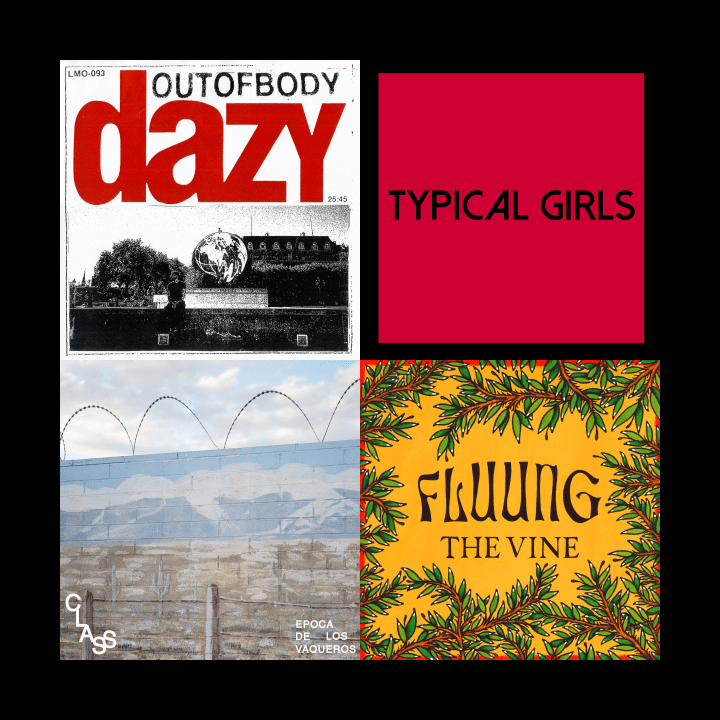
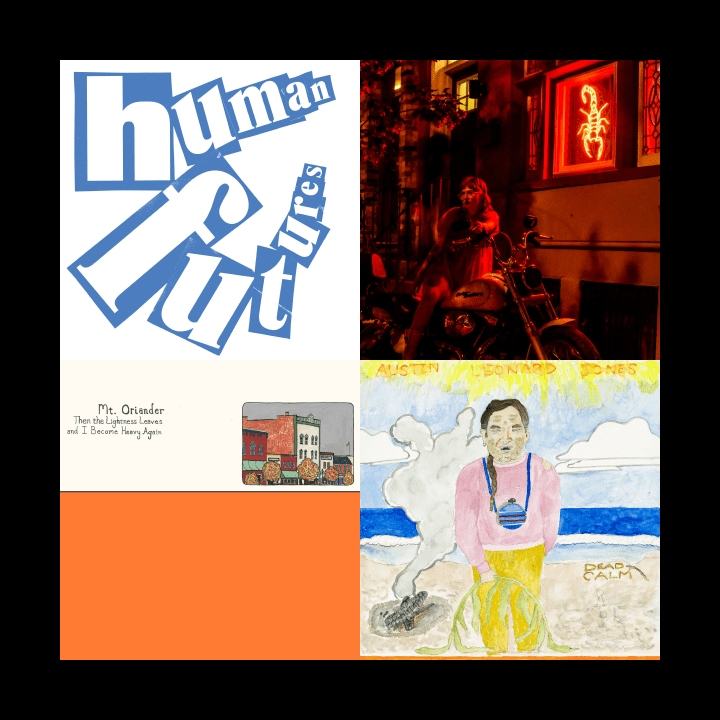
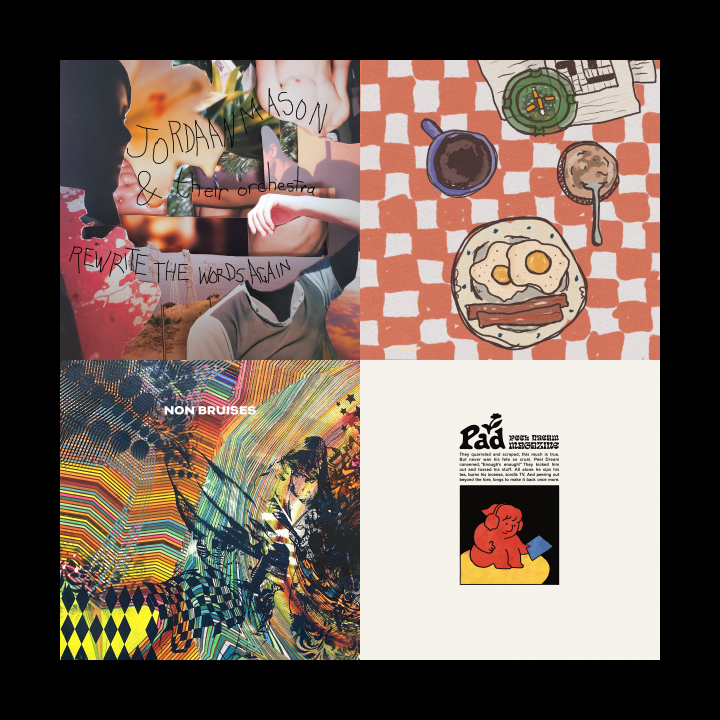
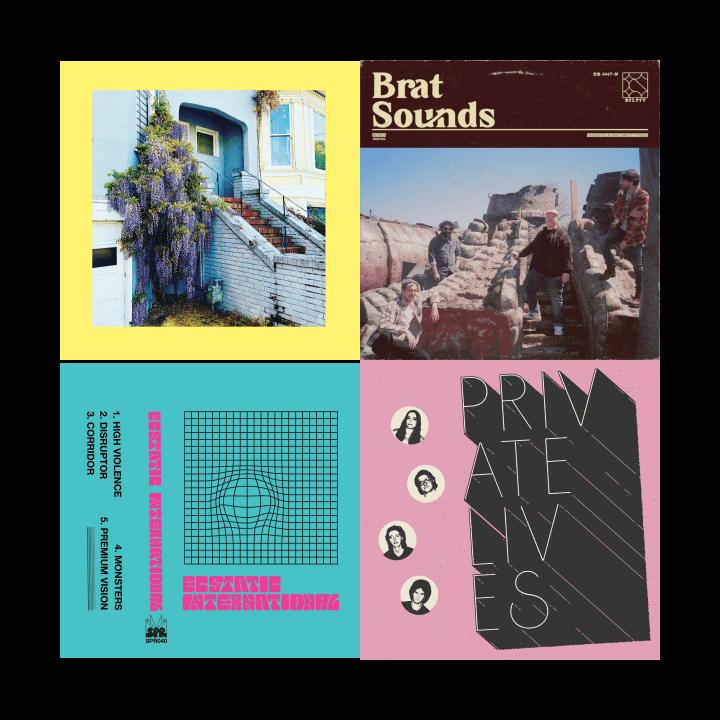
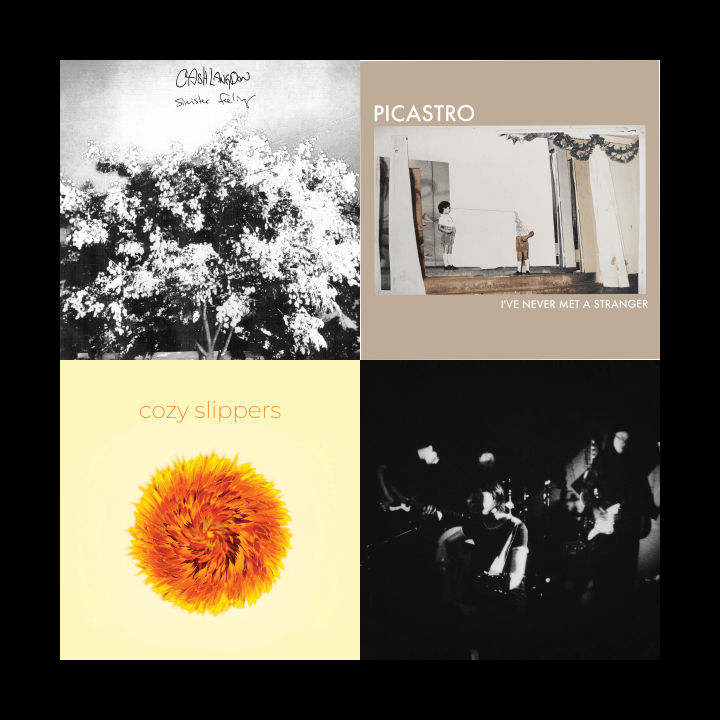
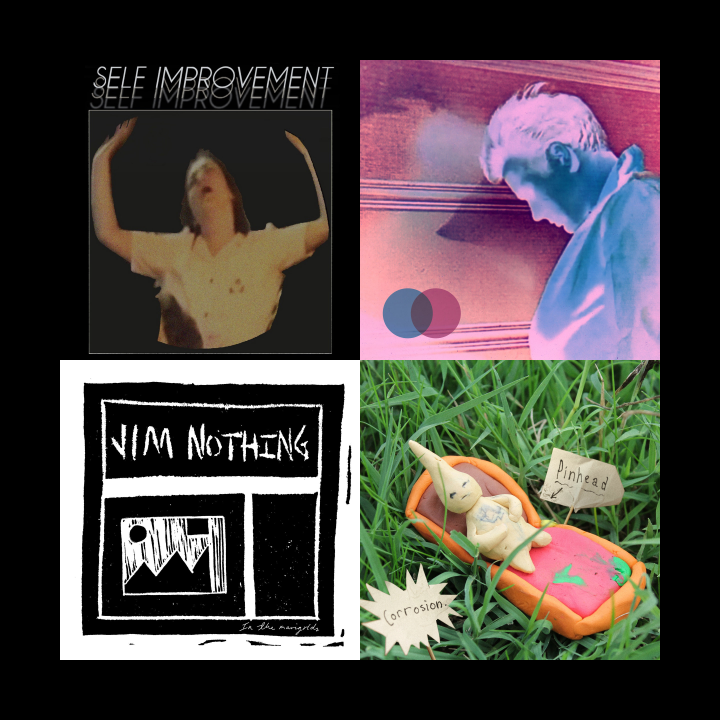
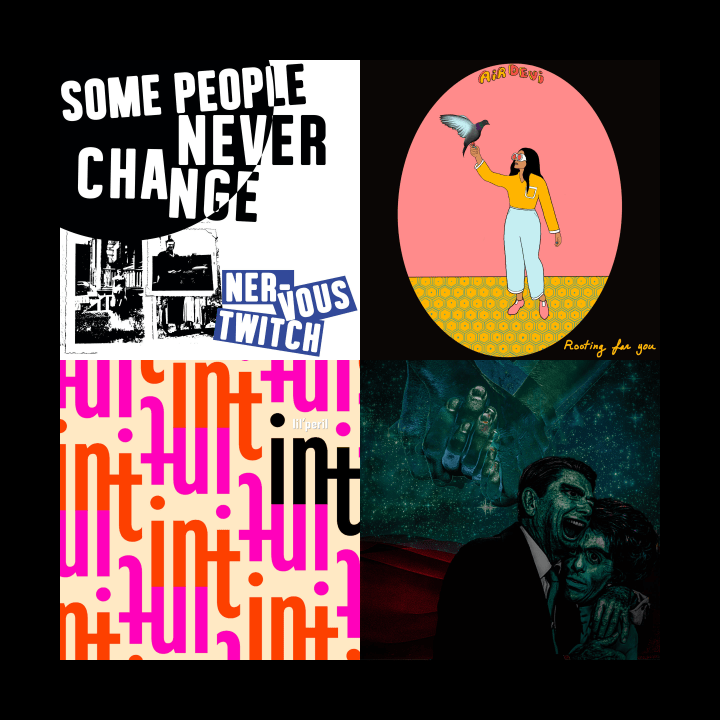

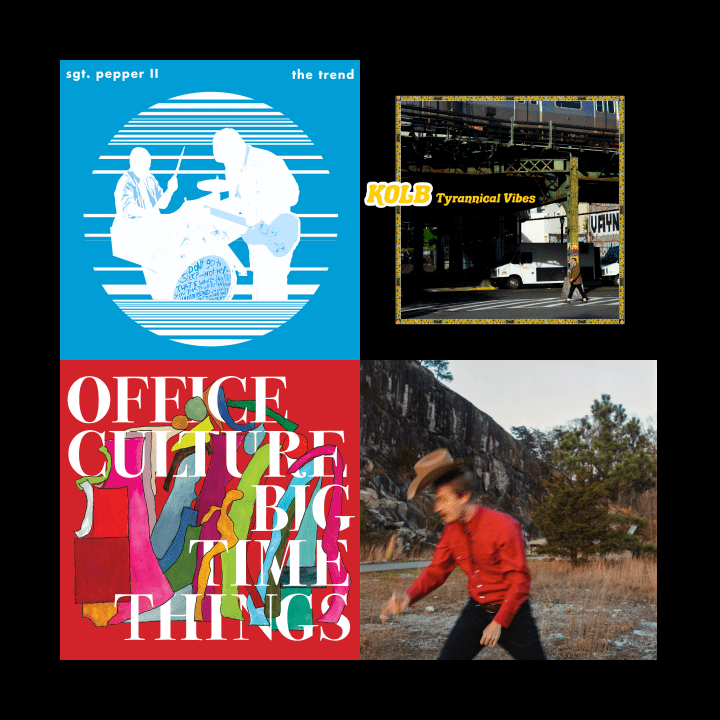
 Rosy Overdrive