On this Thursday edition of Pressing Concerns, we’ll be looking at two records that’ll be coming out tomorrow, July 28th (new albums from Silicone Prairie and Steve Marino), a new EP from Nate Dionne that came out on Tuesday, and an album from Six Flags Guy that came out a couple weeks ago. Earlier this week, I wrote about records from Sunshine Convention, Mopar Stars, Hello Whirled, and James Sardone, and I also went long on the new Upper Wilds album on Tuesday.
If you’re looking for more new music, you can visit the site directory to see what else we’ve written about lately. If you’d like to support Rosy Overdrive, you can share this (or another) post, or donate here.
Silicone Prairie – Vol. II
Release date: July 28th Record label: Feel It Genre: Garage rock, post-punk, punk rock, power pop, jangle pop Formats: Vinyl, digital Pull Track: Serpent in the Grass
Silicone Prairie is the project of Kansas City’s Ian Teeple, who burst onto the scene in 2021 with My Life on the Silicone Prairie, a weirdo lo-fi punk record that zipped frantically between twisted jangle pop, roaring garage rock, and post-punk. Since then, Teeple has joined rising egg punks Snõõper, but Silicone Prairie is still going strong, as evidenced by the imminent release of their sophomore album, the appropriately-titled My Life on the Silicone Prairie Vol. II (or just Vol. II). Although Vol. II still very much feels like a bedroom rock record, it’s polished in comparison to the first Silicone Prairie album. Some of this new feel can probably be chalked up to differences in recording style, or some choice guest musical contributions, but the success of Vol. II comes first and foremost due to Teeple’s songwriting, which is wide-ranging beyond the vast majority of lo-fi garage rockers.
Underneath the Tascam-recorded sheen is a vintage college rock-inspired record, one that reminds me of a more off-the-cuff version of early Game Theory (this is the same territory in which garage pop iconoclast Daniel DiMaggio has been mining), while the psychedelic and country collide in “Victorian Flame” and “Cows” in a distinctly Meat Puppets fashion. Furthering Vol. II’s offbeat pop charm is flute contributed by Lina Dannov on the warped soft rock of “Mirror on the Wall”, and Leslie Butsch’s saxophone on the downcast but catchy “Neon Moon” and the joyous racket of “Elysian Fields”. Although Vol. II clocks in at slightly under a half hour, that’s more than enough time for Silicone Prairie to make their mark–from the intense art punk of opening track “Serpent in the Grass” to the bizarre synth-led psychedelic pop experimentation of album closer “The Minotaur”, there’s no shortage of fully-developed and executed ideas on the record. (Bandcamp link)
Steve Marino – Too Late to Start Again
Release date: July 28th Record label: Pop Wig Genre: Power pop, alt-rock Formats: Vinyl, digital Pull Track: Tune You Out
Steve Marino will be familiar to regular readers of Rosy Overdrive as the lead vocalist and guitarist of Bloomington, Indiana’s Jacky Boy, who released the solid Mush last year, and as the rhythm guitarist for punk-goes-power-poppers Angel Du$t (recently upgraded from touring to full-time member). As of late, Marino (who’s originally from Florida) has relocated from Bloomington to Los Angeles, and now has a full-on solo album to deliver as well. Too Late to Start Again is Marino’s second album under his own name (following 2019’s Fluff), and it continues exploring power pop like Marino’s bands do, albeit from a more wistful and “singer-songwriter”-based perspective. Marino grabs onto the floating sounds of Teenage Fanclub (he even covers “I Don’t Want Control of You” on the album, to say nothing of the record’s title’s evocation of TFC’s “Start Again”) as well as Britpop and 90s adult alternative in order to complete this album’s sonic range.
Marino eases Too Late to Start Again in with the low-key jangle of “Satisfy You”, a song that builds slowly and patiently to its ace chorus. The record then offers up a couple of smooth pieces of alt-rock in “Comedown” (which wields its late-90s drumbeat and three-chord hook expertly) and “Got You (In My World Now)” (a downbeat number with just a hint of Britpop contained therein). The peppy “Tune You Out” kicks off side two of Too Late to Start Again with the album’s biggest power pop moment, sounding like a lost Gin Blossoms or Lemonheads single, although the more subtle charms of the fuzzy “Blue” and the acoustic-rocking “Love You More Than Before” stick out towards the end of the album as well. Marino’s sparse “I Don’t Want Control of You” cover ends the record even more humbly than it begins, its eternal melody sitting along with the rest of Too Late to Start Again as if it’d always been there. (Bandcamp link)
Nate Dionne – Fantasy
Release date: July 25th Record label: Gentle Reminder/Home Late Genre: Lo-fi indie rock, garage rock, fuzz rock Formats: Cassette, digital Pull Track: In Blood
Although I hadn’t heard of Nate Dionne by name before now, the Philadelphia-based musician has been in a ton of noteworthy bands over the past decade and a half: Snowing, Glocca Morra, Dogs on Acid, Yankee Bluff. Dionne’s debut under his own name came with 2020’s Love Is Always Worth It, and he’s followed it up three years later with a new five-song EP, Fantasy. Although Dionne’s past credits hew towards the emo side of the spectrum, this doesn’t really describe Fantasy, which instead dives headfirst into fuzzy, lo-fi, noisy 90s-inspired indie rock. There’s nary a trace of twinkly math rock on this EP, which ranges from anarchic garage punk at its loudest to sleepy bedroom pop at its quietest. Perhaps the clearest connection to Dionne’s past work here is that, despite it being abrasive on the surface, there’s plenty to like going on underneath.
Fantasy kicks off on a relatively friendly note despite the fuzz with opening track “Delta”, a five-minute, multi-part indie rock statement of a beginning, and continues to welcome with the lo-fi pop of “In Blood”, an in-the-red hook-y tune that gets it done and two and a half minutes. Don’t get too comfortable with this side of Nate Dionne, however; the assaulting noise punk of “SWP” then comes swooping in to shake any of that complacency out of you. The rest of Fantasy brings back the pop, albeit in different ways–the ramshackle fuzz-rock of “Drawn On” is one last successful attempt at recreating the opening two songs, while the closing title track surprisingly veers into synth-drone bedroom pop that’s reminiscent of Ylayali, or what his former Snowing bandmate John Galm is doing in Bad Heaven Ltd. “Fantasy” hangs around for a couple minutes after the synths end, knowing full well that it’s already given more than enough for a five-song lo-fi indie rock EP. (Bandcamp link)
Six Flags Guy – And Nothing Did So What
Release date: July 14th Record label: 329 Genre: Post-rock, noise rock, 90s indie rock, post-hardcore, slowcore Formats: Digital Pull Track: Work Song
Six Flags Guy are an Ohio band–I believe they’re based in Columbus, although they have some connection to Athens as well. The three full members seem to be Jonah Krueger, RJ Martin, and Collin Kelley, although a few other people contribute to the recordings you hear on And Nothing Did So What, the band’s first album. The band refers to themselves as a post-rock group, and their debut record bears this out–specifically of the Slint/Unwound/Touch & Go/Quarterstick version of this genre of music, the kind that grew out of post-hardcore and American indie rock in the nineties. The album’s eight songs wander through smoky, dingy soundscapes unmoored from recognizable structure, with subtle vocals and guitar work both ready to launch into a frenzy of noise at any given moment.
Every song on And Nothing Did So What feels like a journey, even the ones that clock in at “only” four minutes or so. Opening track “John Wayne” and its muffled but aggrieved spoken-word vocals are hardly the most welcome opening to the world of Six Flags Guy, but the song certainly works as a tone-setter, and perhaps prepares you for the way “Hunger Art” coils and strikes and coils up again. “Albert Sleeps in the Drivers Seat” features an instrumental that stays “pretty” throughout, although the second side of And Nothing Did So What is perhaps the more accessible one. Helena Karlstrom’s vocals on “Yeah Right Okay” helps deliver an eerily beautiful post-punk-tinged tune, while both “XXXX-XXXX-XXXX-XXXX (Credit Card Guy)” and “Work Song” are massive, multi-movement songs that stand as guitar-based post-rock achievements–particularly the latter’s matter-of-fact post-hardcore finale. And Nothing Did So What strongly evokes a specific era of indie rock, although it does so with a host of new ideas and well-built songs. (Bandcamp link)
Release date: July 21st Record label: Thrill Jockey Genre: Fuzz rock, space rock, noise pop Formats: Vinyl, digital
Upper Wilds continue to storm through our Solar System loudly and grandly with their fourth album. Jupiter is the Brooklyn trio’s third entry that started with 2018’s Mars, a science fiction concept album inspired by imagined future attempts to colonize the Red Planet, and continued with 2021’s Venus, which took inspiration from that planet’s namesake Roman goddess to present a collection of love songs. Dan Friel, Jason Binnick, and Jeff Ottenbacher’s planetary albums have always been ambitious, so it’s no surprise that their album based upon the largest planet in Earth’s neighborhood rises to the challenge. Jupiter perhaps has the loosest theme of the three, but it’s still very much there–Friel’s writing draws from the titular planet’s overwhelming mass to explore “scale and perspective” over the record’s eleven songs. With this in mind, Jupiter is effectively a distillation of what Upper Wilds has done for its entire existence–its songs mix transmissions from the vastness of space with Earth-bound stories of humans that, in one way or another, come close to transcending their terrestrial limits.
One major throughline of Jupiter is NASA’s Voyager space probes, and specifically the 1977 probe that contained the “Voyager Golden Record” intended to be played by any extraterrestrials that might stumble upon it (indeed, the physical vinyl record of Jupiter is “Voyager golden”). The record opens with the fifteen-second “Greetings”, taken from that Voyager record, and songs like “Drifters” and (of course) “Voyager” seem to ride along in space with the probes, soundtracked by Upper Wilds’ typically loud and catchy fuzz rock. Throughout Upper Wilds’ exploration of the cosmos, possible alien life has never figured heavily into Friel’s writing, and despite the purported mission of the Voyager Golden Record, Jupiter is no different. Friel’s perspective on the probe is one that is perhaps more interested in the achievements and characteristics of a humanity that would create such a vessel and choose to include in it the specific things in which they did, and the rest of the album explores a similar train of thought.
After the greeting, Jupiter opens with “Permanent Storm”, a song that begins on the planet’s Great Red Spot but (like Venus’ “Love Song #1”) it functions more as a thematic scene-setter than a physical one. Friel acknowledges that the eternal storm on Jupiter will exist long after him and that outer space contains “things that you and I will never see”, but the latter line shifts to “places I know I would like to see” in the next verse (but not before Friel acknowledges that space also features “so much there to kill us”). This juxtaposition between humanity’s inherent structural limits and whatever desire drives us to eternally push against them is what’s at the heart of Jupiter. Throughout Upper Wilds’ run, much of Friel’s songwriting has drawn from people he finds interesting and/or remarkable (“Roy Sullivan”, “Love Song #7”, “Love Song #6”), and at the heart of Jupiter is a pair of songs that reflect this particular well.
Although they may be the two most sonically distinct songs on the record, “Short Centuries” and “10’9”” are linked by Friel’s writing. Both are inspired by real people who, one way or another, etched themselves into history. “Short Centuries” is about Julio Mora and Waldramina Quinteros, the oldest married couple on Earth–on its surface, it feels like a more fitting subject for Venus than Jupiter, but the title of the song acknowledges the link. Friel reflects on how a human bond can, in its small way, mimic the eternity of space, over an instrumental that is relatively uncharted waters for Upper Wilds in its slow, deliberate, hymn-like march. The nearly seven-minute “10’9””, on the other hand, is the other end of Upper Wilds’ musical spectrum–a massive, towering piece of riff-heavy rock inspired by the tallest man in recorded history, Robert Wadlow. 10’9” was the necessary size of Wadlow’s coffin–a staggering number to imagine for a person, but, as the song acknowledges, it’s still paltry in comparison to the ever-expanding universe.
The song on Jupiter that most explicitly discusses extraterrestrial life isn’t penned by Friel–it’s an inspired take on Hüsker Dü’s “Books About UFOs”, one that the band both wholly makes into a clear “Upper Wilds song” but also gives an outlying twist with a blistering saxophone solo from Jeff Tobias. A cover of a band that was instrumental in combining loud noise, high energy, and massive pop hooks in indie rock is a no-brainer for Upper Wilds, although the swinging bar-rock of the original “Books About UFOs” is hardly the purest example of that side of Hüsker Dü–it’s the subject matter that makes it the right choice for Jupiter. Continuing the album’s theme, it should be noted that “Books About UFOs” is not a song about UFOs, but rather about a person obsessed with learning about and finding UFOs (and, mostly implicitly, the speaker’s infatuation with this person). This passion for discovery of the unknown and how it intersects with our human desires and wants is what puts “Books About UFOs” in line with the rest of Jupiter (and the cover also functions as a celebration of another of humanity’s great achievements: New Day Rising by Hüsker Dü).
Songs like “Radio to Forever” and “Infinity Drama” attempt to sprint out to eternity, even as the futility of this seems to hover over both of them–“Time is gonna sell us down the river,” Friel acknowledges in the former, and his plea of “Just don’t try to tell me how it ends” in the latter is, of course, pregnant with the knowledge that no one possesses that true answer. The album presses on, however. The title track to Jupiter begins with Friel staring at it all and observing “It’s bigger than our minds could know / So heavy that our hearts explode”. What follows is a relatively simple but undeniably huge song, featuring a massive hook in the chorus and an equally massive guitar riff–if you were going to choose one Upper Wilds song to preserve in order to explain this band long after the world as we know it disappears, it’d be hard to argue with this one. “We scratch our names into the dark / Just making sure to leave our mark,” Friel sings in the song’s next line, launching his golden record into the void for whomever to find. (Bandcamp link)
Good morning! It’s nice to see you! I’ve got two great new albums and two great new EPs to talk about today: long-players from Sunshine Convention and Hello Whirled, and extended plays from Mopar Stars and James Sardone.
If you’re looking for more new music, you can visit the site directory to see what else we’ve written about lately. If you’d like to support Rosy Overdrive, you can share this (or another) post, or donate here.
Sunshine Convention – The Sunshine Convention
Release date: July 21st Record label: Cardinal Telephone Genre: Lo-fi indie rock, power pop, fuzz rock Formats: CD, digital Pull Track: Penny Lids
The Sunshine Convention has been gestating for three years or so. The Brooklyn-based band is the project of one Jake Whitener, who’d been working since 2020 on his first record in his bedroom, recording songs via Garageband and Tascam 424, and is now presenting a dozen of them on an excellent debut CD. As Sunshine Convention, Whitener has a sound that will be familiar and pleasing to a lot of regular Rosy Overdrive readers–fuzzy, lo-fi, loud, but above all massively pop-friendly. Nevertheless, The Sunshine Convention doesn’t feel played out at all due to Whitener’s sharp songwriting skills, the album’s excitable energy, and the fact that there’s still plenty of room to explore in the space of these genre labels. The obvious touchstone of Vampire on Titus-era Guided by Voices is here, of course, but so is the high-energy pop of Bob Mould, the fuzzy psychedelic garage rock of early Elephant 6 bands, the charming underdog rock of Sparklehorse, and the more modern experimentation of Mo Troper.
The Sunshine Convention opens with an undeniable noise-pop hit in “Penny Lids”, which wears its Sparklehorse influences quite proudly from the “pennies on his eyelids” title line to the similarities with “Rainmaker”, one of Mark Linkous’ most straightforward fuzz-rock songs. “The Spark” cranks up the amps even more, Whitener’s voice fighting to deliver the melody over the roar, while the humble but loud-sounding power pop of “Dawned on Me” feels particularly Troper-esque. Whitener recalls some more disparate acts during some of The Sunshine Convention’s less in-your-face songs: “Jars of Stars (The Ballad of Sudden Organ)” pulses and drones in a way that earns the Yo La Tengo nod in its title, and the simple piano ballad of “A Soft Bullet In” reminds me more than anything of Vic Chesnutt. The album doesn’t lose any steam in its second half, with the shoegaze-crawl of “Sister Judy”, the explosive “Fall Away”, and the brief but memorable moments of “101” and “Albatross” all sticking out. There are plenty of bands making this brand of indie rock these days, but few hit the ground running so completely as Whitener has on The Sunshine Convention. (Bandcamp link)
Mopar Stars – Shoot the Moon
Release date: July 19th Record label: Furo Bungy Genre: Lo-fi indie rock, power pop, fuzz rock Formats: Digital Pull Track: Waiting for the Man
Philadelphia’s Mopar Stars began as the project of Nao Demand, who plays in garage rock/post-punk group Poison Ruïn and metal band Zorn, and now features Bill Magger, Alex Karraba, and Evan Campbell, who have played in bands like Sheer Mag, TVO, and (again) Zorn (all of this information comes from the good music blog Add to Wantlist, who got it by emailing the band directly, as there’s precious little information on them available on the Internet). Mopar Stars is decidedly different than Demand’s heavier fare in that their four-song debut EP is pure, catchy power pop. There are traces of some garage rock, fuzz rock, and alt-rock in Shoot the Moon, to be sure, although these songs sound more similar to The Replacements and The Lemonheads than anything even remotely metal.
There isn’t a dud on Shoot the Moon, although opening track “Waiting for the Man” is hard to beat. Demand’s humble vocals, a healthy amount of distortion, and the band’s workmanlike power chords land the song somewhere between vintage 70s power pop and the friendlier side of Pavement-esque 90s indie rock. There’s a guitar solo here that should be “showy”, but it sounds a lot more modest in Mopar Stars’ hands. “Five Grand” has a little bit of tension, feeling like it builds up to the release of the “Why is it sometimes like that?” refrain, while the jagged edges of “Straight Piped Dodge” don’t dampen its catchiness. “Cold and Loud” rides some more power chords into a slick garage-power-pop anthem–or at least, as “slick” as this casually-presented EP can possibly sound. Hopefully Shoot the Moon augurs more for Mopar Stars than just a one-off side project, as there’s clearly something potent here. (Bandcamp link)
Hello Whirled – Questions for Concerned Citizens
Release date: July 7th Record label: Sherilyn Fender Genre: Lo-fi indie rock, fuzz rock Formats: Cassette, digital Pull Track: Winner
We last visited the world of Ben Spizuco at the beginning of 2023, when Pressing Concerns discussed the prolific lo-fi indie rocker’s trio of records that spanned a three-month period from November to January. As readers of the blog have surelycometoexpect, Spizuco has hardly been idle in the intervening months, putting out (among other things) the “label pitch EP” of live recordings Where Were You When We Made It Big?, the album Fuck Your Process Throw Your Life At Wall(made on unfamiliar equipment with nothing written in advance), and Undreamed Limbs, the debut from Embalming Druid (an intriguing collaboration between Spizuco, Joe Physarum, and Rectangle Creep’s Dan Jircitano). This brings us to Questions for Concerned Citizens, the first Hello Whirled album to be recorded by a full band playing non-remotely, and I believe the second Hello Whirled album (after last year’s Hoping For A Little More…Pizzazz) to be released on cassette.
Spizuco has gotten fairly good at imitating a full band on his recordings in terms of sheer might, but the sense of propulsion that guitarist Danny Loos, bassist Evan White, and drummer Nick Bsales lend Questions for Concerned Citizens is palpable. Hello Whirled is still very much a stage for Spizuco to wring out the tools of 90s indie rock for all they’re worth, but now he’s got a gang of hoodlums to help him pulverize this corpse. “Must We Take Advantage?” is actually led by an electrifying guitar riff as much as Spizuco’s vocals, while “Wood Anniversary” shows the band can present a typical Spizuco lyric in a way that lets it shine when it should. Songs like the stop-start “An Old Darkness” and the loopy “Recoveries” sound like the band feeling their way to potential new avenues for Hello Whirled to explore (and one of these avenues, per “Winner”, is a brand of jangly power pop that Spizuco has frequently circled around but rarely given into completely). I suspect that Ben Spizuco will continue to release music at a clip that will eventually turn Questions for Concerned Citizens into just one chapter of several to follow, but that certainly doesn’t mean it isn’t an exciting one. (Bandcamp link)
James Sardone – Colors
Release date: July 21st Record label: Fort Lowell Genre: Synthpop, new wave, indie pop, post-punk Formats: Vinyl, digital Pull Track: Colors of Your Brain
Fans of a certain strain of underground indie rock music will recognize North Carolina’s James Sardone as the guitarist of Brickbat, the Wilmington-originating noise rock band that released three records in the 1990s and toured with the likes of Jawbox and The Jesus Lizard. Sardone’s music has certainly evolved since those days, as evidenced by the latest release under his own name, Colors. The five-song EP runs over half an hour in length, although half of that is devoted to a dancefloor-friendly remix of opening track “Colors of Your Brain” and its truncated “radio edit”, meaning that there’s about fifteen minutes and three songs of “new” music, one of which is a cover song. That said, Sardone offers up plenty to enjoy in these three tracks.
Opening track “Colors of Your Brain” is vintage new wave/college rock at its best, with Sardone’s clear vocals leading an instrumental brimming with New Order-esque bass melodies and swooning synths. It’s a sharp pop song that is too strongly-written to fall victim to any sort of mindless retro fetishism, and while follow-up track “Life of Love” isn’t as immediate, it’s arguably even more sonically interesting. Its post-punk influences lurk a bit more under the surface as it adopts a tougher alt-rock posture (even as its lyrics are aggressively optimistic) and even throws in a surprisingly heavy guitar solo. Sardone then pulls into the EP’s centerpiece–a six-and-a-half minute version of Blondie’s “Dreaming”, slowing down the original’s giddy new wave into a slow, deliberate but still starry-eyed synthpop ballad. Sardone incorporates it into Colors’ light-seeming but deep sound effortlessly. (Bandcamp link)
It’s a Thursday! It’s Pressing Concerns! Today, we’ve got four brand-new records to talk about: albums from Landowner, Whisper Hiss, and Bedroom Eyes, and an EP from Charm School. Earlier this week, I wrote about new music from Teen Driver, Stuart Pearce, Iffin, and Lost Ships–check that one out if you missed it, too.
If you’re looking for more new music, you can visit the site directory to see what else we’ve written about lately. If you’d like to support Rosy Overdrive, you can share this (or another) post, or donate here.
Landowner – Escape the Compound
Release date: July 21st Record label: Born Yesterday Genre: Post-punk, art punk Formats: Vinyl, digital Pull Track: Witch Museum
This week on Rosy Overdrive seems to be pretty Massachusetts-heavy, although “New England” feels like an incomplete description of the world in which Holyoke’s Landowner reside. The band began as lead singer Dan Shaw’s solo project in 2016–Escape the Compound is the band’s fourth album, and the third recorded as a five-piece band (also featuring bassist Josh Owsley, guitarists Elliot Hughes and Jeff Gilmartin, and Editrix’s Josh Daniel on drums). On Escape the Compound, Landowner are serious devotees to true oddball punk music–if you’re interested in bands like the Minutemen, Pere Ubu, Alice Donut, or any “punk band” that “doesn’t sound very punk rock”, this album is speaking in the same language. Even though Landowner are a five-piece band, they have a very minimal sound–on no small amount of occasions, there’s little more happening than a tapping bassline and a simple drumbeat.
Over this barebones structure, Dan Shaw absolutely lets loose as a vocalist throughout Escape the Compound. The fact that he’s a singular performer is apparent by the first song, “Witch Museum”, a chaotic snapshot of the history of Massachusetts that features Shaw memorably delivering lines like “Whaling center! Take the kids to the whaling center!” and frantic depictions of Governors William Weld and Charlie Baker. Songs like “Victim of a Narcissist’s Tactics” and “Nineties” zip by in a minute and change, but Shaw imbues the brief pronouncements of both with enough personality to ensure that they end up fully developed. The eight-minute title track is the other end of Landowner’s spectrum, presenting itself in several parts as it unspools a vaguely taunting first third, an excited, fast-paced middle, and an ending that just kind of slinks away. The band do indeed match Shaw’s performance–the guitars in songs like “Floodwatch” manage to sound just as alarmed as Shaw does, for instance. Everything combines to make something quite captivating and unique–I can make comparisons, but I don’t expect to hear another album like Escape the Compound anytime soon. (Bandcamp link)
Charm School – Finite Jest
Release date: July 21st Record label: sonaBLAST! Genre: Post-punk, noise rock Formats: Cassette, CD, digital Pull Track: Finite Jest
Louisville, Kentucky’s Andrew Sellers has been making music under the name Andrew Rinehart for over a decade now, in addition to playing in the projects Splash and Saredren Wells. While most of the music Sellers has made under his own name reflects the folk-y side of his home state, his newest band, Charm School, represents a different kind of Louisville music–that of dark, Touch & Go-influenced post-punk, noise rock, and post-rock. The five-song Finite Jest EP introduces Charm School (Sellers plus Matt Filip, Drew English, and Jason Bemis Lawrence) as skilled practitioners of controlled aggression–Sellers’ voice sounds measured, only straining at the right moments, while the entire band sounds like they’re intently, singularly focused on drilling their instruments into these grooves.
Finite Jest kicks off with “Non Fucking Stop”, a smooth piece of loud-ass buzzsaw garage rock that’s possibly the EP’s friendliest moment. The ice-cold, ugly post-punk of “Simulacra” follows it up–Sellers’ dismissive “But I’m not listen-ing” contains no mercy. It’s the Albini-sounding bass and chaotic guitar squall of “Year of the Scorpion” that earns the distinction of the most “classic noise rock”-sounding song on the EP, while “Face Spiter” has some surprisingly restrained moments and settles for just “undercurrent of danger”. The whole thing ends with the eight-minute title track, an ambitious final statement that gets a lot of mileage out of its doom-foretelling march of a drumbeat and droning guitars. “Finite Jest” storms undaunted to its conclusion, the moment on the record where Charm School’s post-rock influences (Swans, Slint) most show themselves–I’d be interested to hear Charm School explore this direction further in future releases, but Finite Jest is more than enough for now. (Bandcamp link)
Whisper Hiss – Shake Me Awake
Release date: July 21st Record label: Self-released Genre: Post-punk, 90s indie rock, indie pop Formats: Cassette, digital Pull Track: Coming Attractions
Whisper Hiss is a post-punk quartet from Portland, Oregon that display a fair share of the “Pacific Northwest sound” on their debut album, Shake Me Awake. The band (vocalist/keyboardist Rhiannon Flowers, guitarist Jenny Rahlf, bassist Meredith Butner, and drummer Mary Esquivel) recall both the pop hooks of K Records and the edge of Kill Rock Stars, but there’s also a precision to the group that doesn’t fit neatly under “riot grrl” or “twee” (in fact, their measured post-punk is perhaps most reminiscent of 90s Dischord Records bands over on the other side of the country than anything else). Flowers’ prominent, new wave-y keyboards are the final ingredient that gives Shake Me Awake a familiar but distinct sound.
Shake Me Awake opens with a pair of big, fun poppy songs that both feature memorable choruses and roller-rink keyboards, although they pull this off in different ways–opening track “Coming Attractions” has a sweeping power pop chorus and the punchy “Harsh Lights” is the “angular” one, reminding everyone that “post-punk” doesn’t have to be a joyless exercise. Flowers’ voice cuts like a knife in “Alarm Bells”, and Butner’s bass is no less sharp–in fact, the impact of the bass playing throughout Shake Me Awake can’t be overstated. A couple of chilly, haunted-sounding tunes in “From Where There’s None” and “Trouble in the Mansion” populate the second half of the record, before Whisper Hiss end things on a surprising note with the penultimate garage-pop of “Party Dress” and the (ironically) sweet-sounding synthpop ballad “A Bitter Goodbye”, keeping Shake Me Awake intriguing all the way through. (Bandcamp link)
Bedroom Eyes – Turned Away
Release date: July 18th Record label: á La Carte Genre: Shoegaze Formats: Vinyl, digital Pull Track: Portraits
Boston shoegazers Bedroom Eyes have been around for over a decade at this point, putting out an album every few years starting with their 2012 debut, What Are You Wrong With. Turned Away is their fourth album, and the quartet’s first since 2019’s Nerves. The band (vocalist/guitarist RJ Murphy, bassist/guitarist Adam Meran, guitarist Mike Spires, and drummer Rob Skelly) hew toward the heavier end of their genre on their latest record, with the rhythm section kicking up some tough-sounding alt-rock, even as the layered guitars and Murphy’s floating vocals certainly put it squarely in the “shoegaze” category. There are shapes clearly visible underneath the distortion–bright pop songs sketched by roaring guitars.
Turned Away opens with a couple of lighter (at least, lighter for Bedroom Eyes) songs in the jangly, dreamy post-punk of “Portraits” and the brisk “Planted”. The storming “Around” is the album’s first full foray into their “heavier” sound, but it is far from Turned Away’s only such moment. Songs like “Through Nights” and “Brood” contain multiple sections and slowly build toward buzzing riff-rock conclusions, while the title track takes its rumbling feedback and tries to push ahead with it smoldering in the background. Bedroom Eyes let their melodies peek out throughout the record, whether it’s in the bright guitar leads of “Portraits” or in the way Murphy’s vocals get pushed a little higher in the mix in closing track “Iris”. Turned Away will hit you with a wall of sound, to be sure, but it’s a dynamic one as well as a formidable one. (Bandcamp link)
Welcome to an especially fun Monday edition of Pressing Concerns! If you like weirdos making pop music (and if you read this blog, you probably do), then you’ll enjoy this entry. This time, new EPs from Teen Driver and Iffin and new albums from Stuart Pearce and Lost Ships are on the docket.
If you’re looking for more new music, you can visit the site directory to see what else we’ve written about lately. If you’d like to support Rosy Overdrive, you can share this (or another) post, or donate here.
Teen Driver – Learner’s Permit
Release date: July 14th Record label: Self-released Genre: Post-punk, art punk Formats: Digital Pull Track: Clang Clang
From the desolate, Mad Max wasteland (I assume, I’ve never been there) of western Massachusetts, an intriguing new post-punk group has emerged. Teen Driver are a quartet based out of Northampton, led by vocalist/lyricists Mark Gurarie (who also plays guitar) and Riley Hernandez (who also plays synths), and rounded out by bassist Kevin Sun and drummer Matthew Liebowitz. Teen Driver’s debut release, the aptly-titled Learner’s Permit EP, is five songs of energetic rock music that can be loosely filed under post-punk, although there’s plenty of new wave, 90s indie rock, dance punk, garage rock, and good old-fashioned punk rock in there as well. If the notion of the Minutemen trying to play songs by The Cars while also being huge krautrock fans is up your alley, I’d recommend giving Learner’s Permit a listen.
Learner’s Permit only runs about a dozen minutes in length–Teen Driver don’t waste any time getting started with “Neu! Driver 1”. The soaring mission-statement opening song features dueling synths and guitars, evoking the krautrock-loving driver the song imagines. The “hit” of the EP follows in “Clang Clang”, a power pop tune with a big-old-synth hook that feels like something off of the last Kiwi Jr. album with the “jittery” and “slacker” levels inverted. Learner’s Permit isn’t content to just coast from there, as the next two songs–the dance-friendly post-punk of “Sadvertising” and the electronic hardcore-influenced synthpunk tune “Range Rover”–both sound like nothing else on the album. Although “Neu! Driver 2” doesn’t exactly sound like a krautrock song, the four-minute track moves forward steadily in a way clearly influenced by the genre, giving Learner’s Permit one last twist before motoring off into the night. (Bandcamp link)
Stuart Pearce – Red Sport International
Release date: July 14th Record label: Safe Suburban Home Genre: Post-punk, punk, garage rock Formats: Vinyl, cassette, digital Pull Track: Forza Garibaldi
York-based label Safe Suburban Home has been on a roll lately, putting out quality indie rock records from the likes of Dignan Porch, Wandering Summer, and Sewage Farm over the course of the past few months. Their latest release, Red Sport International by Stuart Pearce, may be something of a black sheep among their recent catalog in several ways, but in one aspect it fits right in: it’s an incredibly British-sounding album. Specifically, the Nottingham group have a sound that’s certainly indebted to the collar-grabbing post-punk of The Fall on their debut studio album. Being a modern post-punk group influenced by The Fall isn’t unique these days, but Stuart Pearce succeed more than most by (instead of parking themselves in the drab, one-note noise rock-y heaviness that most groups favor) emphasizing the more flexible end of the band, taking a well-worn toolkit and turning it into something dynamic while still maintaining a righteous fury.
The frantic, motormouth spoken-word garage rock of “Forza Garibaldi” opens Red Sport International with a real scorcher, a synth–aided stomper that uses football as a catalyst to lambast right-wing anti-immigration rhetoric, among other topics. Tracks like the almost-bouncy “Naar de Stad” and the stomping “Failing Sovjet State” invoke Stuart Pearce’s rollicking, Mark E. Smith side, while the dramatic “Badd Hunterr” and breakneck “New Cod War” immediately following them emphasize the band’s high-flying garage rock tendencies. At fourteen tracks and nearly 45 minutes, Stuart Pearce make sure they put everything they’ve got into their opening statement of a record. Red Sport International might not land as many immediate punches in its second half, but more subtle tracks like “Future-Now” and “Red Harvest” are rewarding in their own right. And plus, Stuart Pearce certainly aren’t going out on a whimper–the glam racket of “Colonia” and red-hot bass-driven post-punk of “Union Man” send the album out with just as much force as it carried in its beginning. (Bandcamp link)
Iffin – Picaro 1: As the Crow Fights
Release date: July 11th Record label: Self-released Genre: Post-punk, indie pop Formats: Digital Pull Track: Julian Was Here
Seattle’s Mira Tsarina has played in the bands Day Sleeper, Boy Friends, and Cfcq + The Piss of Assurance, with the latter of the three eventually turning into Iffin, her current project. Iffin has steadily been putting out solid singles and EPs for the past couple of years; the most recent Iffin release is the four-song Picaro 1: As the Crow Fights. This EP continues the Iffin exploration of pleasing guitar pop of releases like earlier this year’s “Another Deepish” single. Shades of new wave, college rock, and lo-fi indie rock color Picaro 1–I hear everything from Guided by Voices to Game Theory to Nothing Painted Blue in these tracks (not coincidentally, Tsarina is particularly inspired by The Verlaines, and Flying Nun Records is a common touchpoint for all those aforementioned groups).
Picaro 1: As the Crow Fights opens with the nervous-sounding guitar-chiming of “Julian Was Here”, a classic Scott Miller/Bob Pollard-esque skewed pop tune that doesn’t lose anything as it makes a few left-turns and surprising chord changes. The light jangle of “Girls Like Us” also feels a little dark underneath its bright arpeggio, but if anything it’s more of a pop success than the song immediately preceding it. The second half of Picaro 1 is the more Flying Nun-indebted side, albeit in different ways–the acoustic-led “My Majesty” feels pastoral and about as peaceful as Iffin get, while “A Paean Away” closes the EP with Tsarina’s version of a cacophony–busy-sounding but still pretty tuneful. (Bandcamp link)
Lost Ships – Atoms Collide Forever
Release date: June 30th Record label: Subjangle Genre: Jangle pop, indie pop Formats: CD, digital Pull Track: Brittle Heart Foundation
Rare is it that a band releases their debut full-length album some thirty years after forming, but that’s what we have here with Lost Ships’ Atoms Collide Forever. The British indie pop band weren’t called Lost Ships when they formed in the late 1980s, however–during their initial run, they were known as The Kites, and they released a couple of EPs on the label Happy Accident before fading into obscurity, seemingly forever. However, the four members of the band reunited in the late 2010s, rechristened themselves to the slightly more Googleable Lost Ships, and set to work making new music, putting out three EPs between 2018 and 2021 on Subjangle (Cozy Slippers, The National Honor Society, The Ashenden Papers). Still without a long-player to their name, last month’s Atoms Collide Forever finally rectifies this.
Like the Stuart Pearce album, Atoms Collide Forever is fourteen songs and about forty-five minutes in length–they may have waited a while to make a full album, but they certainly didn’t hold back once they finally got there. Enjoyable, catchy, breezy and jangly guitar pop can be found throughout the record, although the opening two tracks set a high bar: the brisk, effortlessly melodic “The Brittle Heart Foundation” and the big-chorus heartache of “I’m in Love with Your Girlfriend” both are instantly memorable. Taken as a whole, the album feels like one long pop meditation, and different songs peek out from the lapping waves on each listen–the lilting showtune/road song “Highway 62”, the fizzy mid-record highlight “Derek from Domino’s”, the handclap-aided “Toaster Song”. As a long overdue debut, Atoms Collide Forever more than acquits itself. (Bandcamp link)
Hi, how are you? Today’s blog post looks at three albums that are coming out this Friday (new ones from The Pretty Flowers, Private Lives, and Josaleigh Pollett) plus an album from The Fruit Trees that came out last month. Flowers? Trees? Gardens? Weeds? Indeed.
If you’re looking for more new music, you can visit the site directory to see what else we’ve written about lately. If you’d like to support Rosy Overdrive, you can share this (or another) post, or donate here.
The Pretty Flowers – A Company Sleeve
Release date: July 14th Record label: Double Helix Genre: Power pop, alt-rock Formats: Vinyl, CD, digital Pull Track: Baby Food
The Pretty Flowers are a Los Angeles-based quartet led by singer/guitarist/lyricist Noah Green and also featuring multi-instrumentalist Jake Gideon, drummer Sean Christopher Johnson, and bassist Sam Tiger. The band’s debut album, Why Trains Crash, came out back in 2018, followed shortly by the covers collection Golden Beat Sessions a year later. Although it took a half-decade for their second full-length, A Company Sleeve, to finally materialize, songs from the record had slowly been trickling out over the past three years (one of them “Bucket Beach”, appeared in an early post on this blog). The album is more than worth this wait–it’s a very strong collection of earnest guitar rock that incorporates bits of slacker rock, jangle pop, college rock, power pop, pop punk, and heartland rock all led charismatically by Green’s clear, everyman vocals.
The Pretty Flowers kick off A Company Sleeve by offering up a couple of tunes in their most frequent mode–that of later Replacements-indebted, big-chorus-featuring power-pop-punk. “Young Gray Enemies” takes a second to fire up, but it certainly does so, and the band rip through songs like “Another Way to Lose” and “Baby Food” in the first half of the record with speed and catchiness. The album’s A-side is stuffed with hits–it also features two successful deviations from the Pretty Flowers sound, the floating jangle pop of “Bucket Beach” and the breathtaking synth-aided centerpiece “Agendaless”. “Wildflowers” and “Doughboy Pool” keep the energy up into the back end of A Company Sleeve–although most of my immediate favorites came from early on in the record, a closer inspection reveals the quality doesn’t really decline. The giddy power pop of “Sit Right With You” lies in wait as track number ten, ready to become your favorite song on any given repeat listen–and A Company Sleeve is a record that invites such wearing out. (Bandcamp link)
Private Lives – Hit Record
Release date: July 14th Record label: Feel It Genre: Post-punk, garage punk Formats: Vinyl, CD, digital Pull Track: Anything for Love
Montreal’s Private Lives debuted in late 2022 with a self-titled EP that introduced the band (comprised of members of groups like Pale Lips, Priors, and Lonely Parade) with five songs of energetic, punk-y and post-punky garage rock– the group hit the ground running. All five of the tracks from Private Lives reappear on Hit Record, the band’s full-length debut, in addition to an equal number of brand new tunes that live up to their first EP’s promise. The new songs on Hit Record lock into place quite nicely with the older ones, although one does detect some movement from Private Lives between the two releases. Private Lives balanced both ripping garage rock and sharp post-punk, while Hit Record’s newer offerings find the quartet embracing their power pop undercurrent.
Hit Record opens up with two new incredibly catchy offerings–the clap-along glam-punk of “Trust in Me” and the bouncy “Anything for Love”–both of which hold their own against some of the darker material that immediately succeeds them. The brisk drumbeat of the title track guides it to the buzzsaw guitars that excitedly punch up its chorus, and the flying rhythm section of “Dead Hand” is the one new track that embraces Private Lives’ post-punk tendencies. The one new song that truly bucks the trend is closing track “Dark Spots”, which starts in typical Private Lives fashion only to build to a pounding, frantic conclusion. Although the repurposed Private Lives songs largely offer up the heavier end of the spectrum here, “Dark Spots” shows that Private Lives certainly haven’t lost that dexterity–they remain an exciting new band in their year two. (Bandcamp link)
Josaleigh Pollett – In the Garden, By the Weeds
Release date: July 14th Record label: Lavender Vinyl Genre: Experimental pop, indie folk, indie pop Formats: Vinyl, digital Pull Track: Empty Things
Josaleigh Pollett is a Salt Lake City-based singer-songwriter who’s been making and/or playing music in some form for the past decade and a half. For the past four years, they’ve been doing it with collaborator Jordan Watko, a partnership that began with 2020’s No Woman Is the Sea and continues onto their newest record, In the Garden, By the Weeds. Although Pollett’s new album is, in a literal sense, a bedroom pop record (recorded by the duo in a bedroom over the course of two years), it’s worth defining the fractured melodies of In the Garden, By the Weeds more clearly. What Low (a band Pollett cites as an influence) did to slowcore and 90s indie rock in their last few albums feels analogous to what Pollett and Watko seek to do with the indie folk and more modern kinds of indie rock on their newest album.
That is to say, In the Garden, By the Weeds starts from the foundation of familiar and recognizable genres and takes some sharp turns from this point. The first three songs on the album are all as catchy as they are intricate–“YKWIM” starts off as unassuming folk-pop before launching into the stratosphere, while “The Nothing Answered Back” wisely refuses to crack the tension that it hoards over its four-and-a-half minutes. “Empty Things” takes it a step farther–a massive piece of synth-aided pop married to stark singer-songwriter vocals and lyrics, it sounds like a Julien Baker song disintegrating upon reentry. Pollett is a force of a vocalist, this is very much apparent–whether they’re presenting the worry in “Jawbreaker” or the determination of “Earthquake Song”, the strength of their voice regularly pushes these songs over the edge. It’s a key ingredient to In the Garden, By the Weeds, but equally important are Pollett and Watko’s adventurous arrangements and the strong cores of the tracks themselves. (Bandcamp link)
The Fruit Trees – Weather
Release date: June 23th Record label: Flower Sounds Genre: Lo-fi indie rock, folk rock, slowcore Formats: Cassette, digital Pull Track: Sophie (Sludge)
The Fruit Trees is the southern California-based project of singer-songwriter Johnny Rafter, who released his debut album under the name last month via cassette label Flower Sounds (The Lentils, Wendy Eisenberg). Although Rafter plays over a dozen instruments throughout Weather’s fourteen songs and forty-six minutes, the album is far from a completely solo affair, also featuring vocal and/or instrumental contributions from eight others. One would guess that the expanded cast and stuffed runtime reflects a debut album pieced together over several years finally seeing the light of day. In that way, Weather is a grand statement, albeit a subtle one, in which Rafter keeps the songs spare enough to give off an impressively hushed tone.
Weather is both lo-fi and beautiful; it’s reminiscent of the fuzzy folk rock of groups like The Microphones in how Rafter straddles the line between rock band and solo project. Early on in the album, “Sophie (Sludge)” is a fully-realized version of the maximalist end of The Fruit Trees, blooming into a wide-ranging chamber folk sound. Although many more songs on Weather build like “Sophie (Sludge)” does, plenty of the album moves in a quieter way. These numbers, like the banjo-aided “Table”, the psychedelic “A Rainbow”, and the mostly-instrumental “Moth”, embrace an acoustic, slowcore-esque sound that reminds me of Dave Scanlon, and the pretty duet “Blue Eve” is almost in Belle & Sebastian territory. Weather is an album to get lost in, and before you know it, “Spoken (Spring)” is drifting off to put a cap on the record. (Bandcamp link)
Welcome to Pressing Concerns yet again! If you like EPs, this is the issue for you: new ones from Hell Trash, Other Houses, and Alpha Strategy grace this edition. For long-player fans, we’ve also got a new album from No Metal in This Battle to discuss.
If you’re looking for more new music, you can visit the site directory to see what else we’ve written about lately. If you’d like to support Rosy Overdrive, you can share this (or another) post, or donate here.
Hell Trash – Live at Home
Release date: June 30th Record label: Self-released Genre: Lo-fi indie rock Formats: Digital Pull Track: Violence
The band called Hell Trash is a Philadelphia-based duo comprised of vocalist, guitarist, and keyboardist Rowan Horton and guitarist/vocalist Noah Roth. Horton and Roth are also half of the excellent new band Mt. Worry, and I’ve writtenabout Roth’s solo albums before too. Hell Trash appears to be primarily Horton’s project, as they wrote four of the five songs on their debut release and handle lead vocals as well. Speaking of said “debut release”, Live at Home wasn’t intended to introduce Hell Trash to the world, but Dan Jordan and Stuart McKean decided to record a set the band played at the Treehouse of Horror on June 8th, 2023, and Horton liked how it came out so much that a mere three weeks later, these five songs inaugurated the band as a standalone EP.
I’d already gathered that Horton was a solid songwriter based on the strength of the Mt. Worry EP, and Live at Home only confirms that their songs stand on their own as well. Horton’s four songs are presented fairly stripped down here, either played with just an acoustic and electric guitar or keyboard and guitar–there’s nothing for them to hide under, and they don’t need to. The various moods and modes of the four originals come through regardless of medium–the slightly dangerous-sounding, 90s alt-rock-indebted opening track “Violence”, the chilly “Gold Little Things”, the overburdened “Chemical Road” all make their marks.
Live at Home‘s songs are interspersed with moments of sincerity caught by the recording–Horton joking about how the final track sounds like a certain Gym Class Heroes song, Roth mentioning that Facebook told them it’s the ten year anniversary of them buying their guitar. Perhaps the greatest example of this is Hell Trash’s cover of “Shrieking Matter”, a song from the recently-released and very good Eternal Bliss Now! by Leor Miller’s Fear of Her Own Desire. Live at Home was recorded right after Mt. Worry and Leor Miller toured together, and as Horton explains, they wanted to play the song because they miss hearing their friend play songs they loved every night. Hell Trash may be a new band led by a principal singer-songwriter, but their cover of “Shrieking Matter” is a strong reminder that this kind of music thrives when the people who make it don’t treat it as a pure exercise in individualism and instead pay attention to what’s happening around them. (Bandcamp link)
Other Houses – Didactic Debt Collectors
Release date: July 7th Record label: Aagoo Genre: Power pop, indie pop Formats: CD, digital Pull Track: Swine Among the Relics
New Jersey’s Morgan Enos began making music as Other Houses in the mid-2010s, and he managed to put together a fairly robust discography in a short amount of time before his own music got put on the backburner in recent years as he became a full-time music writer. Indeed, I was familiar with Enos’ writing on Guided by Voices (among others) from Grammy.com, and he’s also a prolific jazz writer. The five-song Didactic Debt Collectors EP is Enos’ most substantial release since 2019, and it’s a charming collection of power pop-flavored indie rock that shows that Enos has learned a lot from both Robert Pollard’s bands and from the vintage power pop/pop rock that inspired Pollard himself. Didactic Debt Collectors was recorded by Enos alone in his “tiny home office”, and it strikes a nice balance between studiousness and lo-fi–the arrangements and writing feels deliberately-placed, but the relatively barebones recording style ensures the songs don’t come off as too labored-over.
Other Houses displays a knack for both a Pollardesque warped but pleasing melody and curiously memorable turns of phrase on Didactic Debt Collectors. Both of these tendencies are perhaps best expressed by closing track and highlight “Swine Among the Relics”, a relatively lo-fi and chilly song featuring chiming melodic guitar playing and a chorus in which Enos triumphantly sings of “Reliquary swine / With articulating spines”. The twisting structure of “Jacket’s Creed” also feels Guided by Voices-indebted, but Didactic Debt Collectors pulls from other kinds of guitar pop as well, from the deliberate acoustic pacing of opening track “Captive Audience” to the Jon Brion-esque straight-ahead power pop of “Drab Vocabulary”. The percussionless “Arc of the Arrow” layers the electric and acoustic guitars, but not distractingly enough to mute Enos’ wistful melody and lyrics. All of Didactic Debt Collectors ends up shining under this kind of presentation. (Bandcamp link)
Alpha Strategy – Staple My Hand to Yours
Release date: July 8th Record label: Self-released Genre: Noise rock Formats: Vinyl, digital Pull Track: Mr. Wobbles
Alpha Strategy emerged out of Canada in the mid-2010s as practitioners of a specific low-end-heavy brand of Jesus Lizard-esque controlled-chaos noise rock, recording albums like 2016’s Drink the Brine, Get Scarce and 2018’s The Gurgler with Steve Albini at Electrical Audio. In the five years since their last album, Alpha Strategy bandleader Rory Hinchey relocated to Berlin and later to Prague–while Hinchey originally kept the previous lineup of the band together, it eventually ceased being possible and he assembled a new band, featuring guitarist Martin Doležal, drummer Filip Miškařík, and bassist Ondřej Červený. This is the version of the band that made their first record since 2018, the four-song Staple My Hand to Yours EP, also with Albini at Electrical Audio.
As one might expect, Staple My Hand to Yours is ten minutes of vintage, beefy, scuzzy noise rock. The band offer up every necessary tenet of this sound–prominent and aggressive bass playing, frantic-sounding guitar leads, and insistent drumming. Hinchey is a natural noise rock vocalist, hollering, wailing, screaming, and muttering in a way showing he’s been to the school of David Yow (and I hear a bit of David Thomas in there, too). There’s some sharp and surprising structural choices on the EP, as well–the disorienting opening track “Mr. Wobbles” just straight-up stops for a few seconds, showing that Alpha Strategy aren’t just interested in blowing off steam and can pull off subtlety. The twisting blues rock of “Steel Hair” and the minimal post-punk zippiness of “Mosquito Generation Point” feel self-contained as well; Staple My Hand to Yours may be relatively brief, but it makes its mark nevertheless. (Bandcamp link)
No Metal in This Battle – Wie Kraut Und Ruben
Release date: June 16th Record label: Muaaah!/A tant Rêver Du Roi/Don’t Trust a Bear Genre: Post-punk, dance punk, krautrock, psychedelic rock Formats: Vinyl, digital Pull Track: Lightrider
When Luxembourg’s No Metal in This Battle formed over a decade ago, the trio (now a quartet) came from various European math rock and emo bands, but their latest album demonstrates a group that has come a long way from their genres of origin. Wie Kraut Und Ruben is a six-song album comprised of two brand-new songs and four songs that had initially been released as singles over the past couple of years. The record’s songs are, by and large, the sound of slickly-played, groove-heavy post-punk and dance punk: No Metal in This Battle’s influences on Wie Kraut Und Ruben sound like krautrock, psychedelic rock, and afrobeat above anything else.
Wie Kraut Und Ruben comes out blazing with “Lightrider”, one of the two new tracks, which offers up a slick piece of synth-colored, new wave-y funk rock, and the dancing guitar leads of “Shimokita” one song later keep its initial takeoff speed rolling along quite pleasingly. The other new track, “Lord of Fuzz”, is the record’s heaviest song, diving head-first into (as the title implies) fuzzy, smoking psychedelic rock. Two songs on Wie Kraut Und Ruben balloon to krautrock length–the seven-minute “Zeitzonensynchronisationmechanismus” and nine-minute “Fano”. Both of these songs show off No Metal in This Battle’s interest in Fela Kuti and afrobeat more generally, from the former’s swinging rhythm section and ticking-time-bomb structure to the latter’s Farfisa-aided explorations. The band steer through these turns deftly, but just as importantly, it sounds like they’re enjoying themselves as well. (Bandcamp link)
Welcome, welcome to a Thursday Pressing Concerns! Today’s post covers three records that are coming out tomorrow: new long-players from 12 Rods and Fort Not and a new EP from Wandering Summer, plus an EP from The Illness that came out a couple of weeks ago. If you missed Rosy Overdrive’s June 2023 Playlist with the holiday weekend and all, I’d recommend checking that out too!
If you’re looking for more new music, you can visit the site directory to see what else we’ve written about lately. If you’d like to support Rosy Overdrive, you can share this (or another) post, or donate here.
12 Rods – If We Stayed Alive
Release date: July 7th Record label: American Dreams/Husky Pants Genre: Indie-alt-pop-new-wave-rock Formats: Vinyl, digital Pull Track: Comfortable Situation
Minneapolis’ 12 Rods are from a different era of indie rock, one in which the ascendent world of music blogging and the declining but still real power of record labels created an environment where a band could experience a palpable “rise and fall” that moved beyond idle internet chatter. The Ryan Olcott-led band rose on the strength of acclaimed pop rock records like 1996’s Gay? EP and 1998’s Split Personalities, got turned on hard by critics with 2000’s Todd Rundgren-produced Separation Anxieties, and got dropped by their label and subsequently petered out a couple years later. Ryan Olcott (who, along with his brother Ev, had been the only consistent member of the band during its initial run) discovered a few unfinished 12 Rods demos during the pandemic and finished them himself, resulting in the fifth 12 Rods album and first in twenty-one years: If We StayedAlive. If We Stayed Alive certainly sounds like 12 Rods–its seven songs evoke the turn-of-the-century moment that bands like them and the Dismemberment Plan were cracking open indie rock to evoke new wave and prog-pop influences like XTC and Rundgren.
Perhaps reflecting the solo nature of the album as well as the passing of time, If We Stayed Alive is a lot more mellow than the louder, full-band sound of their older records. This doesn’t blunt the pop impact of these songs, however–in actuality, it leads to an album that feels like how a “2023 12 Rods album” should sound like, in conversation with their earlier work but not coming off as an attempt to recreate the past. Subtle opening track “All I Can Think About” and the two tracks that immediately follow it put 12 Rods to work immediately in creating layered, smart, and engaging pop songs, and when Olcott deploys a bit of fuzz and distortion in “Comfortable Situation” it’s just another tool to serve the song rather than overwhelming it. The post-punk-indebted first half of “Hide Without Delay” is probably the most “classic 12 Rods”-sounding moment on If We Stayed Alive, and even that devolves into a floating, dream pop second half (and what’s more, it comes right after the rocksteady-evoking “The Beating”). Incredibly accessible but not without sonic depth, If We Stayed Alive is a welcome return from a pop songwriter who’s been away for too long. (Bandcamp link)
Wandering Summer – Wandering Summer
Release date: July 7th Record label: Repeating Cloud/Safe Suburban Home Genre: Noise pop, 90s indie rock, fuzz rock Formats: Digital Pull Track: Show Me the Way
Earlier in the year, Safe Suburban Home introduced us to the fuzzy but poppy indie rock of York’s Sewage Farm, and for their latest release, they’re hopping over to Leeds to present another winning practitioner of this kind of music. The self-titled debut EP from Wandering Summer is being co-released with Repeating Cloud Records, and it’s a collection of vintage indie rock landing somewhere between the louder end of C86/indie pop and the friendlier side of Sonic Youth noisy indie rock. The four-piece Wandering Summer (led by guitarist/vocalist Geddy Laurance and also featuring guitarist Luke Wheeler, drummer Jamie Deakin, and bassist Niall Kennedy) contains enough might to truly pull off some noisy freakouts while squarely keeping one foot in pop rock as well.
Wandering Summer opens with the triumphant-sounding fuzz-pop of “Show Me the Way”, a song which ends up setting the stage for the rest of the record. It is perhaps the EP’s most straightforward and accessible moment, but it’s not the only song that qualifies as such–both the stomping “Kick In” and the almost jangly “Ghost in Your House” rival the opening track in terms of pure catchiness, directing their noise and distortion to the hookiest possible end result. The other two songs on Wandering Summer are a bit more exploratory, although they’re not impenetrable either– “A New Mastery” is a sprint of a song, offering up a pleasing Stereolab/Yo La Tengo-esque propulsion, while closing track “Hexagons” is the band at their most Sonic Youth-evoking, tiptoeing forward uncertainly before exploding into a noise rock squall of a finish. (Bandcamp link)
Fort Not – Depressed for Success
Release date: July 7th Record label: Meritorio Genre: Lo-fi indie pop, twee Formats: Vinyl, digital Pull Track: Ringo Starr
Fort Not are a Kungälv, Sweden-based indie pop duo, and Fredrik Söderström and Robert Carlsson make a kind of lo-fi, rickety version of indie rock with a long and storied history. They cite (and their music reflects) decades of offbeat music, from The Velvet Underground to 80s “outsider” artists like Half Japanese to classic twee bands like Beat Happening to more “traditional” (but still weird) 90s flagship indie rock. Depressed for Success is their second full-length album, and it contains thirteen pop songs dressed simply in pop structures and basic indie rock instrumentation, but delivered with a conviction essential for making this kind of music work.
As simple as Depressed for Success’ songs may sound, there’s a desperation to the songwriting (sometimes provided by Söderström alone, sometimes in collaboration with Carlsson)–Fort Not’s narrators are preoccupied with unstable, waning, and perhaps unrequited love, a pop subject as old as time. Songs like “Longing” hit on universal “big feelings”, sporting a timeless melody over lyrics that very much tackle the titular subject. Throughout Depressed for Success, no matter where Fort Not are in regards to their relationships, they offer up catchy indie rock, either as a celebration or a balm. The optimistic uncertainty of “Ringo Starr” (“Do you wanna be my girlfriend…I don’t know for sure”), the complete dependence of “Candy Crush” (“Without you, I’m so stupid I can’t talk”), the disturbingly cheery suicidal ideation of “Stop Mclovin” (“If you don’t want me, I’ll go [varying measures of offing one’s self]”)–Fort Not don’t see why one can’t dance through it all. (Bandcamp link)
The Illness – Summerase
Release date: June 23rd Record label: Sea Genre: Indie pop, 90s indie rock, baroque pop Formats: Vinyl, digital Pull Track: Summerase
The Illness are a British-based “collective” that apparently have no set lineup but feature members of several groups I don’t know too much about (Ambulance, Wolf Solent, Broken Arm, Alisia Casper). Their debut single (2020’s “The Illness”) featured contributions from Pavement’s Steve West and Bob Nastanovich, although their first record, the Summerase EP, doesn’t exactly sound like that band’s brand of indie rock–at least, not exclusively so. Truthfully, the four songs of Summerase are all over the map–all of them are varying degrees of “pop song”, although The Illness take a few different tacks over the EP’s 13 minutes in presenting them.
The casual pop rock of “Everybody Knows That I’m a Fool” opens Summerase with the closest the EP comes to “slacker rock”, its staggered delivery failing to mask its charms. The Illness then immediately veer into their weirdest moment, the spoken word post-punk-y “Alone/Aline”, which is effectively an instrumental with some muttered vocals on top of it. The second half of Summerase offers up as many surprises as the first half, in the form of the sparse, slowcore beauty of “I Was a Quarrelsome Youth” (the band bio mentions Smog and Papa M for this one, which is on the money to my ears) and the gorgeously full-sounding baroque pop of the closing title track. Summerase is an intriguing debut from a band that is perhaps mysterious, but not difficult to listen to. (Bandcamp link)
Welcome to a weird sort-of holiday weekend–tomorrow’s the fourth of July, and I’m pleased to present Rosy Overdrive’s June 2023 playlist for you to throw on while you grill your various foods (for the Americans among us, at least). A lot of great brand new selections on this one!
Jason Isbell and the 400 Unit and Tough Age have multiple songs on this playlist.
Here is where you can listen to the playlist on various streaming services: Spotify, Tidal, BNDCMPR (missing two songs). Be sure to check out previous playlist posts if you’ve enjoyed this one, or visit the site directory. If you’d like to support Rosy Overdrive, you can share this (or another) post, or donate here.
“Country Roads”, Spirit Night From Bury the Dead (2023)
Spirit Night is the project of West Virginia-originating, Brooklyn-based singer-songwriter Dylan Balliett, whose last full-length album, Shame, came out back in 2015. I’ve liked Spirit Night for a while (the title track from Shame made an early appearance on this blog), but Balliett’s long-awaited fourth Spirit Night album and its lead single both represent a huge leveling-up moment for him. “Country Roads” is not the John Denver song (although Spirit Night do cover it for the single’s B-side), but an original fiery, massive alt-rock anthem that I never quite expected from Spirit Night, but one that makes perfect sense. Baillett digs deep here, repurposing the albums of his youth (“emo, punk rock, early 2000s Saddle Creek and Dischord Records”) and connecting the 17 year old driving around the Eastern Panhandle hanging onto music desperately with the thirty-something expat who’s “still back there all the time”.
There are thousand hometown-hating pop punk bands who’d kill to have come up with “Country Roads”’ vicious, stomping chorus (I can’t stop thinking about the guitar line that rushes up to the front when Balliett singes “at least I’m finally gone”), and Dane Adelman’s trumpet is a reminder that Balliett has plenty of emo tricks up his sleeve too. I do think that one can appreciate “Country Roads” without growing up in the same state that Balliett did, although realistically, being from West Virginia is a stamp that for whatever reason is hard to explain to anyone from the rest of the continental United States. There’s both an isolation and a pull to it that necessitates “Country Roads” being as strong-sounding as it is, like it would’ve been swallowed whole by John Denver and Spruce Knob and Walmart parking lots and “BBs under the skin” if it was any less firm in its rebuke of Balliett’s state of origin. And then you can see the nuance in between the grand, sweeping gestures, both in the lyrics of “Country Roads” and in Spirit Night’s accompanying completely sincere cover of the John Denver song as well (considering that Balliett is originally from Jefferson County, he hails from one of the few places in West Virginia that actually is reflected in “Take Me Home, Country Roads”). I’ll have more to say about Bury the Dead next month.
“Avid”, Faunas From Paint the Birds (2023, Shitbird)
On their newest EP, Washington, D.C.’s Faunas reinvent themselves compellingly as a clean-sounding folk rock band and turn away from their noisy garage rock roots. On album highlight “Avid”, the duo of Genevieve Ludwig and Erin McCarley take this even further–it’s a piece of grand, sweeping heartland rock. Even with the muted power chords and jangly leads, the close-sounding vocals ground “Avid” and help it fit in with the quieter, more intimate side of Paint the Birds. Read more about Paint the Birds here.
“Give It a Day”, Tough Age From Waiting Here (2023, Bobo Integral)
The Vancouver-based jangle pop trio Tough Age are a fairly versatile group. One of their most comforting modes on Waiting Here, their fifth album, is when they’re exploring the moments of guitar pop euphoria that have long marked New Zealand bands like The Clean and The Chills. The runaway hit of “Give It a Day” is perhaps the best example on record–it’s a song that is bursting at the seams with hooks and pure excitement. Read more about Waiting Here here.
“Short Centuries”, Upper Wilds From Jupiter (2023, Thrill Jockey)
“Short Centuries” isn’t exactly a typical Upper Wilds single, but it feels just right for the Dan Friel-led power trio. For one, it’s just as catchy as any of their explosive noisy pop tunes are, but instead of belting out the winning melody, Friel and the band let “Short Centuries” unfold slowly and deliberately–it’s Upper Wilds’ version of a hymn. Friel is aided by vocals from Katie Eastburn and Jeff Tobias, adding up to something that matches the power of Upper Wilds’ “louder” songs. On Jupiter, Upper Wilds are inspired by “scale and perspective”, appropriate for an album named after our solar system’s largest planet–on “Short Centuries”, Friel’s subjects are apparently Julio Mora and Waldramina Quinteros, the oldest married couple on Earth.
“Days Move Slow”, Bully From Lucky for You (2023, Sub Pop)
I’ve liked a Bully song here and there before, and I still think their debut album is pretty good, but Lucky for You is the first time that they’ve moved the needle for me in a full-length context since 2015’s Feels Like. Lucky for You is hooky in a way that Alicia Bognanno’s previous work would circle around but wouldn’t always reach for me, and the edginess is still there. “Days Move Slow” is like one huge chorus, a massive lost 90s alt-rock hit.
“Eat Sleep”, Deady (2023)
Deady are a new band based in Louisville, Kentucky featuring Mister Goblin/Two Inch Astronaut’s Sam Goblin on guitar, which is how I found them. “Eat Sleep” is the band’s debut single, and it’s a very catchy and bonkers piece of blaring, weirdo indie rock that sounds more like an Ohio crop than the Bluegrass State’s variety. My co-worker who knows who The Jesus Lizard are agreed with me that it sounds like Brainiac (although he also said Mister Goblin sounds like Sufjan Stevens, which feels a little less on the mark).
“This Is Gonna Change Your Mind”, Martin Frawley From The Wannabe (2023, Trouble in Mind)
Martin Frawley is an Australian singer-songwriter who gained notoriety as the leader of the band Twerps, although I discovered the Melbourne-based musician with his 2019 solo debut, Undone at 31. That album was full of effortless-sounding jangly guitar pop that evoked neighboring New Zealand, and his follow-up album, The Wannabe, offers up a collection of songs that won’t disappoint anyone who enjoyed his first record. Opening track “This Is Gonna Change Your Mind” is perhaps my favorite song on it, a casual-sounding song that still manages to ascend to “anthem”.
“When We Were Close”, Jason Isbell and the 400 Unit From Weathervanes (2023, Southeastern/Thirty Tigers)
Jason Isbell has said that “When We Were Close” isn’t about anyone specifically, but I immediately thought of Justin Townes Earle when I heard it, as did seemingly everybody else who cares about interpreting Jason Isbell songs. It’s a howling rocker (written in the style of the Drive-By Truckers) about being the only one left standing among two once equally-self-destructive musician friends. Like most of Isbell’s songs, it’s just about as simple as it can get away with structure-wise, and infinitely complex everywhere else.
“Carl St. Bernard, Pt. 1”, Noah Roth From Don’t Forget to Remember (2023, Devil Town Tapes)
Don’t Forget to Remember is an interesting follow-up to last year’s Breakfast of Champions for Philadelphia’s Noah Roth. Their newest album was recorded quite quickly while visiting family in the Chicago suburbs, as opposed to their last album’s years-long gestation time. Songs like “Carl St. Bernard, Pt. 1” don’t show any signs of being tossed off, however–Roth messes around with effects and distortion like they do elsewhere on the album, but this song is as catchy and poppy as anything on Breakfast of Champions. Read more about Don’t Forget to Remember here.
“Part Time”, Oceanator (2023, Polyvinyl)
I can’t say enough about the talents of New York’s Elise Okusami, whose two most recent albums as Oceanator (2020’s Things I Never Said and 2022’s Nothing’s Ever Fine) were both one of my favorites from their respectiveyears. “Part Time” is a one-off single, and it’s one of the Okusami’s most straightforward and poppy moments yet, contrasting with the more inward turn of last year’s Nothing’s Ever Fine. “Part Time” was co-written with Cheekface’s Greg Katz, which might explain the bounciness a bit, but it’s still unmistakably an Oceanator track.
“Voices”, All My Friends Are Cats From The Way I Used to (2023, Grey Cat)
All My Friends Are Cats are a vaguely feline-themed pop punk/power pop/slacker rock trio from Pittsburgh led by vocalist/guitarist Dave Maupin and also featuring guitarist Patrick Roche and drummer Charlotte Pyle. “Voices” leads off their debut album, The Way I Used to, and it’s a really compelling opening statement–it sounds very casual, a mid-tempo track featuring Maupin talk-singing over some shaky but catchy guitar chords, and it slowly sneaks up on you from that foundation.
“Vanish”, Scrunchie From Scrunched (2023, Candlepin)
You can always count on an under-the-radar Candlepin Records release to show up on one of these playlists somewhere. This month, it’s a selection from Scrunched, the debut album from Los Angeles’ Scrunchie (which is an un-Googleable band name, by the way– “scrunchie band” is beyond useless as a search term). Scrunched is a modern shoegaze record if I’ve ever heard one, with Scrunchie’s Danny Rincon layering on the effects like no one’s business. “Vanish” has an incredibly catchy chorus underneath the fuzz nevertheless, even offering up some slick “ooh ooh oh”s.
“Etched You In”, FOOTBALLHEAD From Overthinking Everything (2023)
FOOTBALLHEAD’s debut album, Overthinking Everything, is a collection of thirteen power pop/alt-rock tunes run through in under half an hour. Chicago’s Ryan Nolen and his collaborators balance heaviness and hookiness quite nicely throughout the album, particularly on “Etched You In”, an exhilarating side two highlight that combines punk speed with jangly guitars and an all-time pop punk chorus. Read more about Overthinking Everything here.
“Forgiving Ties”, Deer Tick From Emotional Contracts (2023, ATO)
Deer Tick are another band that I’ve liked a song from every once in a while (I still get “Jumpstarting” from 2017’s Deer Tick Vol. 2 stuck in my head with some frequency), but I don’t think I’ve been taken with a song of theirs the way I have been with “Forgiving Ties”. The Emotional Contracts highlight is effectively a vintage roots rock/college rock throwback from the alt-country band, basically sounding like a modern version of Los Lobos or The Silos or even Miracle Legion. Who else is making music with these touchstones right now?
“Mostly Roses”, Long Odds From Fine Thread (2023)
I wrote about Connections’ new album, Cool Change, earlier this year–it’s one of this year’s best and a welcome return from the Columbus band. Although Cool Change was the first Connections album in a half-decade, there was a Connections-related album that came out last year: the debut album from Long Odds, the new project of former Connections and Times New Viking member Adam Elliott (and also featuring Connections bassist Philip Kim). “Mostly Roses” opens Fine Thread with a low hum, a sneakily catchy piece of lo-fi indie rock that will grow and grow on you.
“Pearl”, Empty Country (2023, Get Better/Tough Love)
I’ve long been an open fan of the dearly departed Cymbals Eat Guitars, and frontman Joseph D’Agostino’s self-titled debut as Empty Country was a highlight of 2020 for me. Empty Country’s first new music since then is “Pearl”, a single that for now stands on its own but hopefully augurs the advent of more music to come from the project. “Pearl” is an impressive statement on its own, twisting and turning and layering on itself over five minutes–it really feels like Empty Country is developing into something distinct (but not removed) from Cymbals Eat Guitars, and my curiosity is certainly piqued.
“The Candlemaker”, Stoner Control From Glad You Made It (2023, Sound Judgement)
“The Candlemaker” is possibly the first-place song on Glad You Made It, a rock-solid five-song guitar pop EP from Portland’s Stoner Control. The trio give the track a jangly sheen and also lead it down a few surprising left turns, but “The Candlemaker” nevertheless feels like it hits every right note. Sam Greenspan’s melodic vocal delivery is key for selling “The Candlemaker” (“Guided by candle, guided by candlelight” won’t leave my head). Read more about Glad You Made It here.
“Sixers”, The Hold Steady From The Price of Progress (2023, Positive Jams/Thirty Tigers)
I saw The Hold Steady live recently. It was great! They’re a great band! Maybe I’ll write more about it sometime, but for now I’ll just say that I came away from it really appreciating “Sixers”, a song I hadn’t really given a second thought to beforehand. I’m slowly coming around to The Price of Progress after being a little disappointed in it initially, and “Sixers” is a brilliant track that shows that the band still very much “have it”. Craig Finn’s lyrics here are as engrossing as anything he’s written, and if he feels a little muted, well, this story isn’t exactly a triumphant one.
“Aujourd’hui”, Savak From Rotting Teeth in the Horse’s Mouth (2020, Ernest Jenning Record Co.)
Brooklyn’s Savak recently recorded what will become their sixth album, but before that comes out, I have gone back and really checked out 2020’s Rotting Teeth in the Horse’s Mouth for the first time (long overdue, considering how much I enjoyed its follow-up, 2022’s Human Error / Human Delight). In addition to having one of the best album titles ever, Rotting Teeth in the Horse’s Mouth also contains “Aujourd’hui”, one of the best entries to the pop end of the Savak sound spectrum. The titular French phrase becomes an unlikely but undeniable hook as it repeats again and again over the soaring instrumental.
“China Aster”, The High Water Marks From Your Next Wolf (2023, Minty Fresh)
Your Next Wolf is a really stacked album–over seventeen songs and forty minutes, The High Water Marks deliver highlight after highlight of bright, hooky fuzzy pop rock. The album’s A-side has a bunch of hits, but, hidden away towards the end of the record, “China Aster” might sneakily be Your Next Wolf’s best song. Hilarie Sidney’s vocals are somewhat restrained, but the rest of the band give her plenty of space, only roaring into fuzz-pop in the breaks between. Read more about Your Next Wolf here.
“Dog Leg”, Rodeo Boys From Home Movies (2023, Don Giovanni)
Rodeo Boys are a garage-y, grunge-y, punk-y indie rock group that hails from Lansing, Michigan, and they tear through their second album, Home Movies, with appropriate ferocity. The catchy but still beefed-up-sounding “Dog Leg” is my favorite song from the album, and it takes me back to the vintage messy but determined sounding rock music from the 2010s that bands like Swearin’ and Screaming Females were making. Tiff Hannay sells the song completely, and there are also some legit guitar heroics towards the song’s end.
“Callin’ Out”, Paint Fumes From Real Romancer (2023, DIG!/Bachelor)
Paint Fumes is a practitioner of what we can perhaps go ahead and call Rosy Overdrive’s bread and butter–garage rock/power pop. The Charlotte-based band has actually been around a while–Real Romance is their fourth album since 2012 or so, and it’s a blast. “Callin’ Out” is the biggest highlight to my ears–that chorus hook is undeniable and the quartet get everything they can out of it, and there’s a big old guitar solo sticking out of its midsection too.
“Never Fucked Up Once”, Militarie Gun From Life Under the Gun (2023, Loma Vista)
I was moderately excited for the debut Militarie Gun album–I enjoyed some songs off the EPs, but I wasn’t a full acolyte of Ian Shelton’s music like others seem to be. Life Under the Gun was a pleasant surprise–it’s not my favorite album of the year or anything (yet), but it’s the band’s most fully-realized work to date and balances edginess and catchiness quite well. Shelton’s voice is probably still a deal-breaker for more traditional guitar pop fans, but he delivers the bittersweet “Never Fucked Up Once” about as well as one could hope.
“Sun Don’t Shine”, Luke and the Second Coming From Luke and the Second Coming (2023, Mossdeep)
“Sun Don’t Shine” is the lead single and opening track off of Luke and the Seconding Coming’s self-titled debut album, and it introduces the Pittsburgh-based band (led by Luke Crouse) on a high note. “Sun Don’t Shine” is a shimmery, jangly piece of mid-tempo alt-rock with a beast of a chorus: it’s got that “90s adult alternative” sheen that evokes singles from bands like the Goo Goo Dolls and Gin Blossoms, although it’s a little more electric when that chorus kicks in.
“The Version”, The Radio Field (2023, Less)
Dusseldorf, Germany’s The Radio Field is a new project from musician Lars Schmidt–I wasn’t familiar with Schmidt before now, but he’s been leading the Germany indie pop group Subterfuge for thirty years. The Radio Field only have five songs to their name so far, but if “The Version” is any indication, it appears that Schmidt has plenty of good guitar pop music left in him. “The Version” is aided by Max von Einem’s trumpet and trombone, a triumphant-sounding piece of jangle pop that is eager to please.
“Toothache”, Lydia Loveless From Nothing’s Gonna Stand in My Way Again (2023, Bloodshot)
New Lydia Loveless? That’s effectively a lock for the playlist, yes. “Toothache” leads off the announcement of Nothing’s Gonna Stand in My Way Again, Loveless’ first album since 2020’s excellent Daughter. Loveless is back with a rebooted Bloodshot Records for their new album, and if “Toothache” is any indication, it’ll continue their long winning streak. “Toothache” has one foot in the more atmospheric indie rock touches that colored Daughter, but it’s also a fairly grounded tune and it’s not hard to hear the “classic Lydia Loveless rock and roll” contained herein as well.
“Haunted”, Big Blood From First Aid Kit (2023, Ba Da Bing!/Feeding Tube)
I’ve vaguely heard of Big Blood before, but I think that First Aid Kit is the first time I’ve really checked out this Portland, Maine band, and it wasn’t quite what I expected. I knew that the band was in some way connected to 90s post-rock group Cerberus Shoal, but First Aid Kit is a pretty accessible, poppy post-punk/new wave record that feels right out of the early 80s. “Haunted” is a six-minute college rock anthem, plodding along with its bass triumphantly like a brighter Siouxsie and the Banshees cut.
“King of Joy”, Pickle Darling From Laundromat (2023, Father/Daughter)
Christchurch, New Zealand’s Pickle Darling is the project of Lukas Mayo, who’s been making their delicate, twee indie pop on small labels like Z Tapes since the mid-2010s. Laundromat is their first record for Father/Daughter Records, but it sticks to Mayo’s enjoyable, humble lo-fi pop roots. “King of Joy” is under 90 seconds long–you’ll miss it if you blink–but it sports what might be my favorite Pickle Darling melody, slowly working its way up to a hushed electro-pop lullaby.
“Cast Iron Skillet”, Jason Isbell and the 400 Unit From Weathervanes (2023, Southeastern/Thirty Tigers)
I’m thinking of that one Mountain Goats lyric– “I turned it over in my mind, like a living Chinese finger trap” (from “Pale Green Things”). This lived-in complexity, the kind that keeps your mind coming back to something and sifting through it, is why Jason Isbell is as good a songwriter as he is. The way that the title line of “Cast Iron Skillet” and a few similar ones invert typical “country wisdom” songwriting cliches to drive its points home is remarkable enough on its own, but there’s more and more to come back to even beyond a single clever subversion of expectations.
“Hideaway”, Tough Age From Waiting Here (2023, Bobo Integral)
“Hideaway” is another great example of Tough Age’s kiwi-flavored power/jangle pop, rivaling the undeniable energy of “Give It a Day” earlier in the playlist. The track runs around in circles giddily, with Jarrett Evan Samson’s excellent vocals throwing out melody after melody and the playing of the rest of the band being more than punchy enough to match him. Read more about Waiting Here here.
“Whale Party”, John R. Miller & The Engine Lights From The Trouble You Follow (2018, Emperor)
John R. Miller has a new album coming out in October, and I’m sure I’ll have something to say about it at some point, but this month I want to reach back to 2018’s The Trouble You Follow, an album I hadn’t really appreciated until recently. Miller is a great songwriter, and the loose but substantial The Trouble You Follow is a good example of it as any– “Whale Party” is one of the more fun songs on the album, a swinging piece of string-heavy folk-country with plenty of meat on it.
“Daytona 500”, Home Is Where From The Whaler (2023, Wax Bodega)
The new Home Is Where album certainly sounds a lot like Neutral Milk Hotel, doesn’t it? Not that that’s a bad thing–tons of bands claim In the Aeroplane Over the Sea influence but they somehow miss on actually creating something reminiscent of it, but Home Is Where bandleader Brandon Macdonald and her crew have definitely hit on something here. And “Daytona 500” is a pretty singular creation–if anyone were to question Home Is Where’s Florida bona fides, this is quite possibly one of the most Sunshine State songs to exist.
“Were”, Pretty Matty From Heavenly Sweetheart (2023, Self Aware)
Pretty Matty ends their latest album, the power pop hookfest of Heavenly Sweetheart, with the sweet and sour “Were”. It’s undeniably an anthem to send the record off with a bang, and lyrically it pulls no punches. In it, Matty Morand excoriates and sets the record straight about a one-sided relationship–Morand declares they have no intention whatsoever to return to “the good old days” of the addressee of the song enjoying themselves at Morand’s expense. Read more about Heavenly Sweetheart here.
“Sweet”, Feeble Little Horse From Girl with Fish (2023, Saddle Creek)
The Horse is back! I’m not sure yet how their breakout album, Girl with Fish, stacks up against their earlier work for me, but at the very least I can already put “Sweet” up there with their best songs so far. It’s an excellent piece of fuzzy noise pop, with the opening blaring piece becoming a dizzy hook, and Lydia Slocum and Sebastian Kinsler’s vocals playing off each other quiet nicely. It’s all over in two and a half minutes, but Feeble Little Horse make enough racket and excitement for “Sweet” to work perfectly.
“Big, Strange, Beautiful Hammer”, U.S. Highball From No Thievery, Just Cool (2023, Lame-O)
The British indie pop duo U.S. Highball have followed last year’s sublime A Parkhead Cross of the Mind with No Thievery, Just Cool, another solid collection of breezy guitar pop tunes whose surface simplicity doesn’t hinder their catchiness one bit. I could’ve chosen several from this album, but the verse melody of “Big, Strange, Beautiful Hammer” is so good that I have to go with this one.
“Huntin’”, Slander Tongue From Monochrome (2023, Alien Snatch)
Here’s another one of these garage rock power pop hits! I’m not sure if there’s much to say about “Huntin’”, which is just an excellent snotty piece of rock and roll that pulls from early 70s punk and power pop brilliantly and undeniably. Sometimes a good song is just good, and I’m not going to pass on “Huntin’” just because I can’t think of any cool hook to put in this little paragraph. They’re from Berlin, that’s kinda unusual for the music I write about?
“Homebound”, Grapes of Grain (2023, Drag Days)
Back in January 2023, Grapes of Grain released the Getaways EP, and I highlighted that record’s “In This Moment” in a previous playlist. The Utrecht-based band are back a few months later with a new two-song single (recorded during the sessions for an upcoming full-length album), and the A-side, “Homebound”, rivals anything from the group’s last record. It contains Grapes of Grain’s recognizable blend of vintage jangle pop and alt-country, with singer-songwriter Alexis Vos’ vocals rolling gently along the music provided largely by multi-instrumentalist Berend Jan Ike.
“Rockfort Bay”, Fust From Genevieve (2023, Dear Life)
I could’ve chosen plenty of songs from Genevieve to put here (one of them, single “Trouble”, already appeared on an earlier one of these playlists), but I keep coming back to the short and sweet “Rockfort Bay”. The roaming and displacement at the heart of Genevieve is quite present on this sub-two minute tune: it’s a song about thinking and hoping that still ends with Fust’s Aaron Dowdy feeling that he’s “never gonna change” as he heads out of the titular town. Read more about Genevieve here.
“Smoky”, Alright From Breaking Down (2023, Self Aware/Tor Johnson)
Charlotte, North Carolina’s Alright is the project of Sarah Blumenthal, who also co-runs Self Aware Records and co-leads the band Faye. “Smoky” was originally released as a part of a split single with Late Bloomer (whose Josh Robbins is a frequent contributor to Alright’s music, although Blumenthal recorded all of this single herself) along with “Pebbles”, another good track. “Smoky” shows off Blumenthal’s more pensive side, with synths and prominent bass guitar shading a wistful pop ballad.
About two years ago, Rosy Overdrive premiered “Gretchen Took a Ride”, a one-off single from Jack Habegger’s Celebrity Telethon. “Gretchen Took a Ride” was a warm and promising song, a piece of dreamy folk and indie-country that walked the line between familiar intimacy and West Coast cosmic psychedelia quite nicely. The song was recorded by the Portland, Oregon-based Habegger, multi-instrumentalist Jordan Krimston, and cellist Addison Clark, and came with the tentative promise of more material to come.
It took a couple years for Jack Habegger to follow up “Gretchen Took a Ride”, but he and the Celebrity Telethon were hardly idle in the meantime. The Celebrity Telethon bloomed into a five-piece band (Habegger, Clark, Isaac Beach, Skyler Pia, and Emmet Martin), played some shows backing up the late great Lavender Country, and signed to Portland’s Lung Records. All the while, they were working on a brand-new full-length album–the Celebrity Telethon’s first.
The Knockout Game comes out August 25th, and single and opening track “End Over End” is the first taste of the upcoming record. Whereas “Gretchen Took a Ride” merely flirted with alt-country, “End Over End” finds the Celebrity Telethon diving headfirst into cowpunk and countrified rock and roll. Habegger’s vocals still sound calm and friendly, but here they’re at the center of a western dust storm–the galloping rhythm section and toe-tapping guitar lines help “End Over End” land somewhere between a sped-up traditional country tune and a kinder, gentler version of the Meat Puppets. The song’s video leans into this sound, functioning both as an introduction to The Celebrity Telethon and as a repository for a bunch of images and clips that echo what we hear in “End Over End”.
“End Over End” is available now for pre-ordering as an 8″ (!?) single with “So Easy”, another song from their upcoming album, as the B-side, and with artwork from Mary Fleener and Pat Moriarity. The Celebrity Telethon are playing an album release show for The Knockout Game at Portland’s Clinton Street Theater on Thursday, August 24th, also featuring Laith & The Texas Birds, Nick Normal, and Scorch.
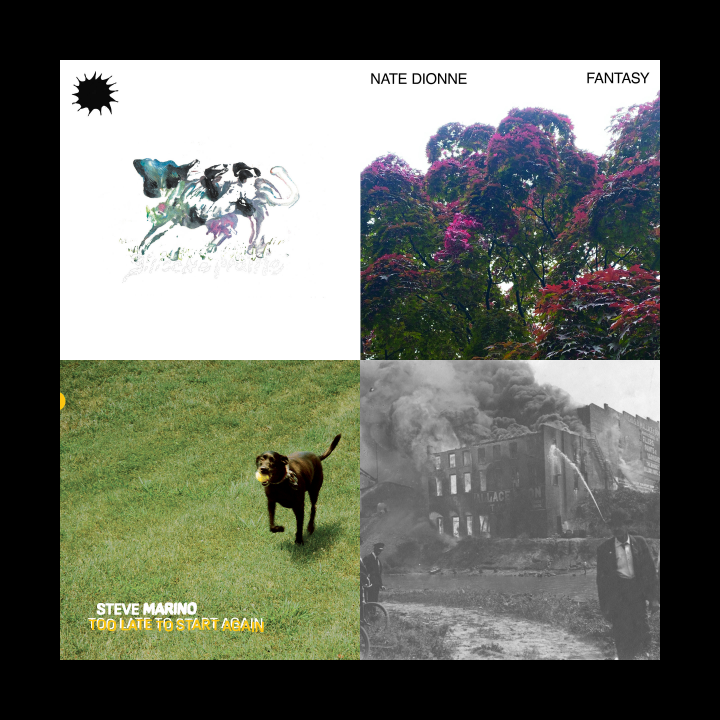
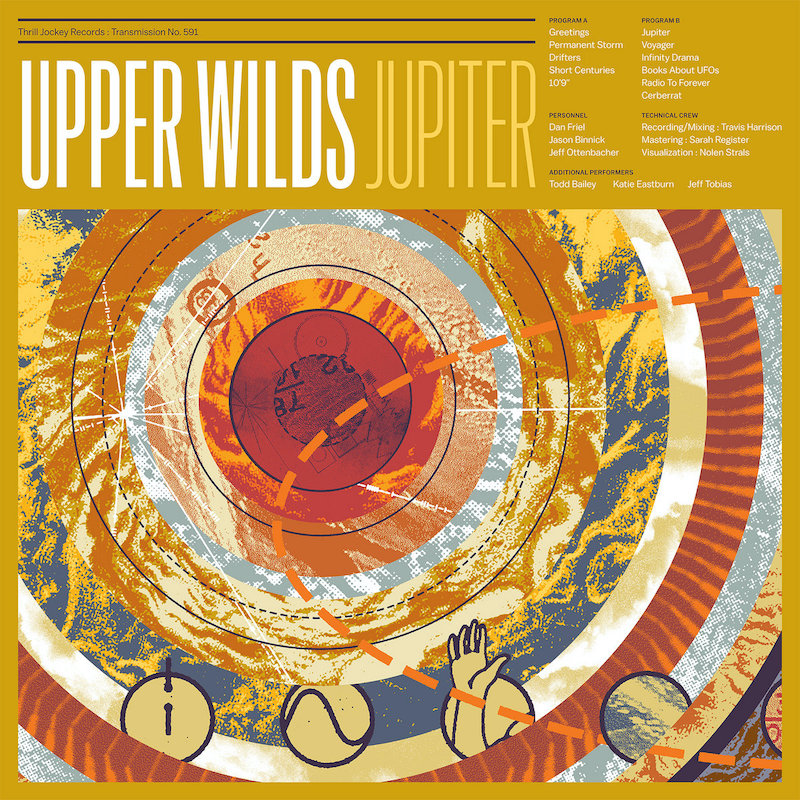

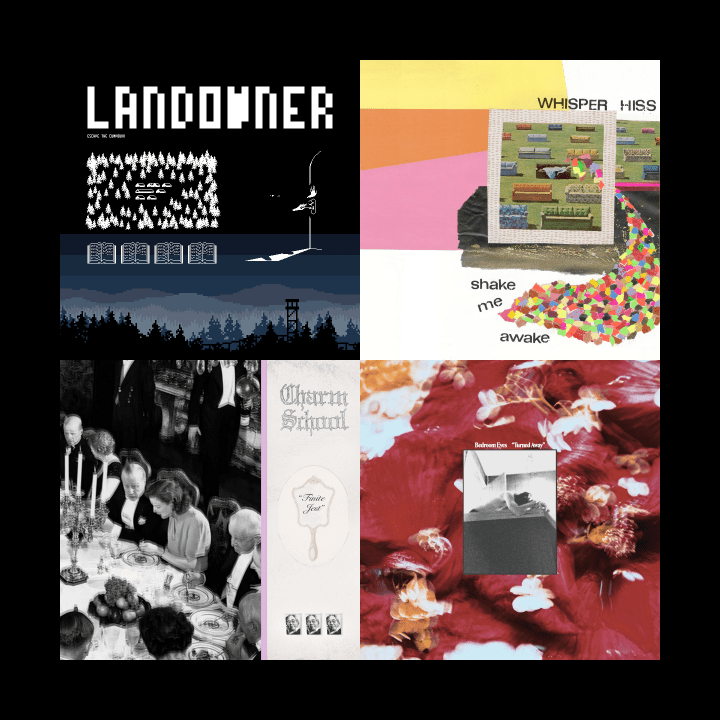
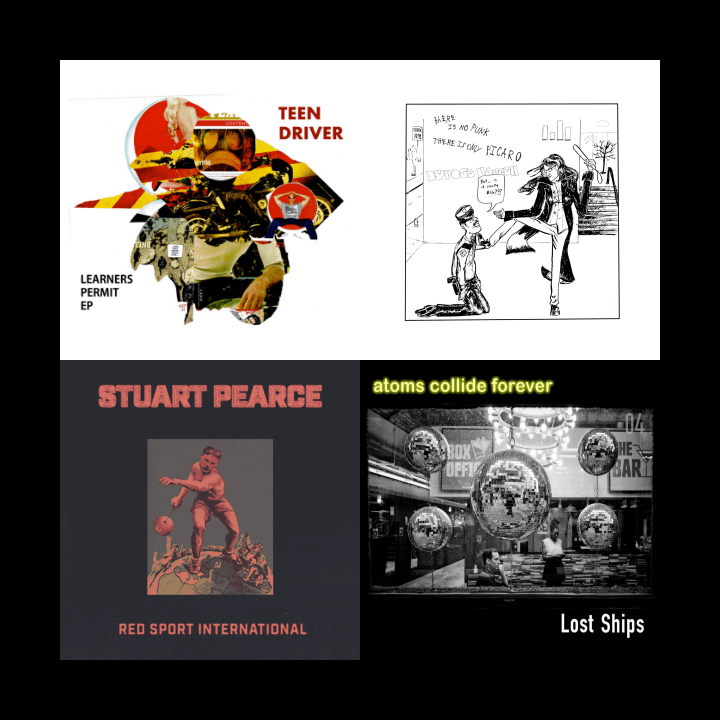
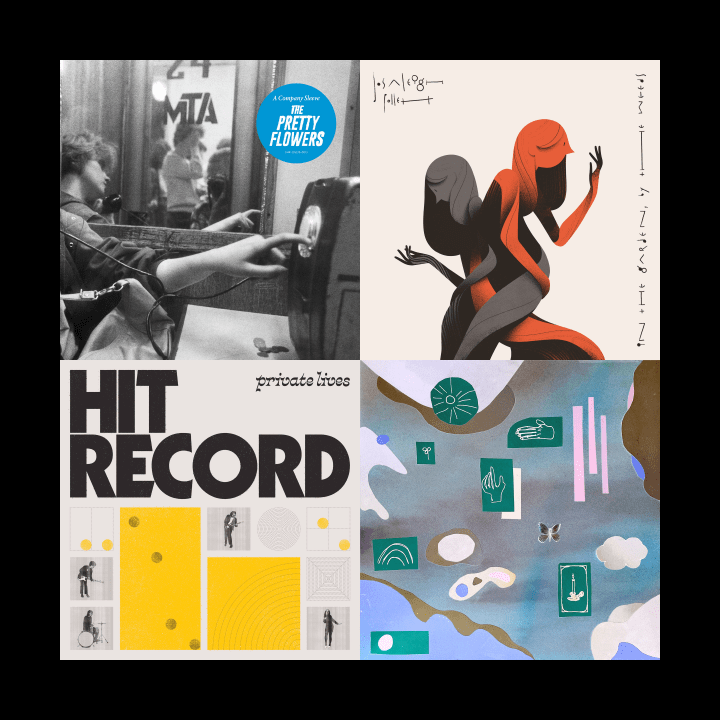



 Rosy Overdrive