Welcome to the Thursday edition of Pressing Concerns! Today we’ve got four brand new records to talk about: albums from Leor Miller’s Fear of Her Own Desire, Low Praise, and Dan Lurie, and an EP from Charles the Obtuse. It’s been a busy week on Rosy Overdrive: on Monday, we looked at new albums from Daisies and The Ashenden Papers as well as reissues from Heavenly and Pigeon Pit, and on Wednesday I shared my thoughts on a bunch of albums from 1981 that I listed to for the first time ever last month.
If you’re looking for more new music, you can visit the site directory to see what else we’ve written about lately. If you’d like to support Rosy Overdrive, you can share this (or another) post, or donate here.
Leor Miller’s Fear of Her Own Desire – Eternal Bliss Now!
Release date: May 19th Record label: Candlepin Genre: Experimental pop, lo-fi indie rock, dream pop Formats: Cassette, digital Pull Track: We Don’t Fuck
I’ve written a lot about Candlepin Records on this blog over the past year, as the cassette label has put out a lotof greatcontemporary 90sindie rock-inspired music as of late. Their latest release is maybe the most adventurous one I’ve heard yet from them. Leor Miller is a New York-based singer-songwriter who’s been making noisy, hazy rock music on her own for several years now–there’s a ton of EPs and albums on her Bandcamp page dating back a decade. Eternal Bliss Now! is mostly a guitar-based album, but it’s not one that lives entirely in the world of indie rock. I can hear how Miller has been inspired by non-rock genres (hip hop, electronica, and hyperpop, per her bio) in presenting these songs, even as she approaches them from an indie rock perspective.
“Crown of Thorns / Cacophony of Birds” opens Eternal Bliss Now! with one of the most electronic moments, a blaring piece of psychedelic synthpop that nevertheless features Miller’s surreal words front and center. Single “We Don’t Fuck” follows it up with an eerie, frayed take on bedroom rock (it feels wrong to call a song that opens with “We don’t fuck / But I give birth to myself in your truck” a pop song, but that’s what it is). Miller explores some lo-fi indie rock in the middle of the record with the slowcore-ish “Shrieking Matter” and the wobbly “Marijuana Goldmine”. “Sunrise” is the song that rivals the album opener in its use of electronic elements–Miller’s AutoTuned vocals and piano-synths place this somewhere between today’s pop music and that of the 1980s.
It’s towards the end of Eternal Bliss Now! that I think Miller really hones in on what the record’s title is doing (and it seems, at this moment, that it’s also key to note that her moniker is “Leor Miller’s Fear of Her Own Desire”). “I Don’t Wanna” is the album’s quiet, acoustic sort-of-title track, and the way Miller lets the song float on for five minutes really allows the unapologetic nature of her simple realizations be understood. The song begins with Miller discussing what she wants and doesn’t want for herself (like the line that gives the album its title), and she ends by landing on “We need freedom”. Miller closes the album by continuing this thread on “Become One”, a song that encourages, and in fact argues for the necessity of, probing beyond one’s self in order to realize one’s self. “You and I are gonna find the truth / One day you and I’ll become one from two”. (Bandcamp link)
Charles the Obtuse – Charles the Obtuse
Release date: May 15th Record label: Self-released Genre: Synthpop, indie pop Formats: Digital Pull Track: I’m Glad He’s Dead
Charles the Obtuse is Charlie Wilmoth, the West Virginia-originating, Los Angeles-based professional gambler whom Rosy Overdrive’s readers will know from his work with power pop group FOX Japan and synthpop duo Oblivz. The five song Charles the Obtuse EP is his first work as a solo artist, and his first entirely electronic project. It picks up the more synth-based thread that Wilmoth had been exploring on his last two records (Oblivz’s Uplifts and Managers EPs), but he doesn’t have guitarist Andrew Slater to lean on here. Charles the Obtuse’s songs are brief (they range from about one-and-a-half to two-and-a-half minutes), and Wilmoth’s stated influence of The Magnetic Fields’ The Wayward Bus is borne out here–these are not dense psychedelic soundscapes so much as discreet synth-based pop songs that get busy, but not overwhelmingly so.
Wilmoth may be experimenting with the instrumental side of his songwriting, but Charles the Obtuse’s songs are packed with plenty of lyrical subjects and themes that will be familiar to longtime listeners–soulless capitalism, suburban decay, paranoia, and at least one potential horror movie plot. “Gated Community” is a Wilmoth all-timer, the narrator observing a ritual sacrifice while mainly feeling glad that it’s not his lawn that’s getting messed up (“What happens in our gated community / Stays inside our gated community”), and the way-too-catchy “James from the Suburbs” is a slightly-more-direct excoriation of a Type of Guy who holds all the power and capital in the world and still finds a way to whine about it (the last non-chorus line, which I’m absolutely not going to quote here, is my favorite one).
The always-moving scammers in “Better Come Up” are served well by that instant, over- the-top synth explosion in the chorus, while the curious, drum machine-pounding “Feeling My Way Around” is the one song where Wilmoth hints at what a Charles the Obtuse record that wasn’t as intently focused on being immediate might sound like. Still, the EP ends on one last killer pop song, the impossibly cheery “I’m Glad He’s Dead”, which has lived in my head rent-free ever since I first heard it. Wilmoth ends Charles the Obtuse by explicitly encouraging the listener to cheer, celebrate, and toast the death of some asshole (deliberately kept vague, so you can break this one out on any number of occasions). It’s both a good argument and a good soundtrack for such a party. (Bandcamp link)
Low Praise – Dressing
Release date: May 19th Record label: Medium Friends Genre: Post-punk Formats: Vinyl, digital Pull Track: Forget That It’s Summer
Low Praise are an Oakland-based post-punk trio made up of guitarist/vocalist Chris Stevens, baritone guitarist/vocalist Warren Woodward, and drummer Andrew Marcogliese. The band released a couple of EPs in the late 2010s, but Dressing is their COVID-delayed full-length debut album, and what they’ve finally put out is a lean piece of post-punk-influenced rock music that flexes its power trio muscle. Dressing has a garage band energy, and it doesn’t fall cleanly into the “Devo-core/egg punk” or “low-voiced guy with brute force backing music” camps that mark most modern post-punk groups. Dressing is pleasingly varied, jumping from downcast 90s indie rock-sounding moments to perky, locked-in dance punk, but the band don’t lose their energy throughout the album.
Dressing kicks things off with the rhythmic “Forget That It’s Summer”, a rhythmic, hypnotic, and inspired piece of post-punk that sets a high opening bar. Although Low Praise don’t revert to dance-punk that cleanly again on the record, it informs some of the other tracks, like the glam-flavored “Supermind” or the nervous-sounding closing track “Entertainment”. Elsewhere on the album, Low Praise show off their garage rock side, like in the roaring “Gate”, and the mid-tempo “Angela” is probably what their idea of pop music is. Some of Dressing’s best moments come in some of the less immediate songs, like “Time Is Calling” and “No Way”, which are really just some rock-solid indie rock guitar jams. These songs don’t go out of their way to be accessible, but Low Praise do have a way of wringing melody out of what they’re playing. (Bandcamp link)
Dan Lurie – Making Life Worthwhile
Release date: May 16th Record label: Literal Gold Genre: Folk rock, lo-fi indie rock, psychedelic pop Formats: Vinyl, digital Pull Track: New Order of Living
Dan Lurie is a Minneapolis-originating, Portland-based singer-songwriter who’s been making home-recorded solo albums for over a decade now. Making Life Worthwhile, his latest record, is his first made in a recording studio and with an outside producer–Cameron Spies (The Shivas, Reptaliens), who also contributed synths and bass guitar to the album. Making Life Worthwhile sounds like a record really made in the studio–Lurie’s background is as a folk-influenced bedroom rocker, and that sound is present on the album, but the record also incorporates lush, vintage pop rock and even some 80s synth-led pop music.
Making Life Worthwhile starts off brilliantly with a slow-building, bubbling synth-aided indie rock anthem in “Applying the Rule of Reason”, which sets the scope for the record. The excited, bursting earnestness of “New Order of Living” continues the album’s hot opening and also features an infectious refrain. “Feeding the Intellect” is the first big left-turn moment on Making Life Worthwhile with its grooving bassline, slick delivery from Lurie, and some well-placed synth accents. On floating pop songs like “Regeneration” and “Little Grains of Sand”, Spies’ arrangements are on full display, adding several more dimensions to Lurie’s songwriting. Spies’ assistance also enables some of the weirdest moments on Making Life Worthwhile–the oddball studio pop of “Superior Superiority Super” and the synth-funk of “Exalting the Ego”. Lurie has put together a record that skillfully avoids any dull moments. (Bandcamp link)
Back in January, I listened to one new-to-me album from 1997 every day for the entire month, and posted a few sentences about each one in the Rosy Overdrive Discord channel. When I was done, I cleaned it up a bit and put it on the blog, with a mention that I was planning on doing a different year soon. I ended up doing 1981, and, partially because I’m significantly less familiar with the 1980s than I am the 1990s, this one has gone on even longer than my 1997 project. So, I’m splitting it up into two parts, with part one going up today, and the second part (which is still in progress and you can see early if you join the Discord channel) going up probably next month (edit: view part two here).
Keep in mind, these records are all ones that I’d never listened to in full before. There are plenty of great albums from 1981 (Solid Gold, Stands for Decibels, Re*ac*tor, Black Snake Diamond Role, Youth of America, Odyshape, and at least a dozen more) I already know and love and thus do not appear here.
Bandcamp embeds are provided when available, but most of these albums aren’t on there, so I’ve created a playlist (Spotify, Tidal) of a song from each one of these records you can use to listen along if you’re so inclined. So, without any more ramblings from me, let us dive deeply into music from over four decades ago.
March 25th: The Gordons – The Gordons (self-released)
So this is the New Zealand band that eventually became noise pop/shoegaze group Bailter Space at the end of the decade. Given some of the other underground NZ music I’d heard from this time, I thought this might be some really ramshackle noise, but it’s actually relatively clear-sounding (if lo-fi and somewhat meandering) post-punk. Not going to get mistaken for Joy Division or The Cure audio quality-wise, sure, but it’s closer to that world than, say, the Dead C. There are some instrumental rave-ups here that prefigure Sonic Youth, wonder if Thurston Lee and Kim were listening. They save the real chaotic, almost Birthday Party kind of stuff for “Laughing Now” at the end. Really solid record, sounds better today than a lot of the “big stuff”.
March 26th: Siouxsie and the Banshees – Juju (Polydor)
This is a very good album. I don’t wanna say that you don’t hear music like this any more because that’s obviously not true, but it’s instructive in how it pulls together different kinds of rock music from around the time. Siouxise and the Banshees were “goth” and rightly described as so, but “Spellbound” is equally jangly proto-college rock. “Monitor” is, like, jammy swirling psych rock. “Sin in My Heart” goes harder than pretty much anything any contemporary punk group was doing. The rhythm section gets a post-punk workout throughout but they get mileage out of all kinds of guitar textures and styles as well. It all coheres, and it’s just more fun to listen to something like this than a “post-punk” band that’s just a Fall/Joy Division clone or an “indie pop” band that’s just recreating the Smiths or whoever.
March 27th: Thin Lizzy – Renegade (Vertigo)
Going to try to spread all these post-punk records out a bit, so we’re listening to Thin Lizzy today. Lizzy had a full-time keyboard player at this point in their career which is…not a great sign for them, and the record kicks off with a big old synth—but this turns out to be something of a fake-out. For the most part, this sounds like a 70s Thin Lizzy album. “Angel of Death” is one of the wildest Thin Lizzy songs I’ve heard—the rest of the album doesn’t go that hard but it’s a lot stronger and more consistent than most bands would be on their eleventh album. Other than “Angel of Death”, this feels like a record of album-track-quality Thin Lizzy songs (which is certainly fine, since their vintage album tracks are great). It does lose a little bit towards the end (“Fats” is boring and let’s just gloss over “Mexican Blood”) but “It’s Getting Dangerous” is a solid send-off.
March 28th: Josef K – The Only Fun in Town (Postcard)
A British post-punk record that’s highly acclaimed and I’ve always meant to check out but never got around to (get ready for a lot of albums that match this description to some degree). Josef K were a band, not a guy (named after a Kafka character apparently), this was the only album they released during their three years as an active band. It’s on the agitated and caffeinated end of post-punk, but not smooth in a Gang of Four way, much more shambolic (both have great bass work, though). Over in under 30 minutes. Everything feels a little off musically, especially on the fast ones, but even the “hits” are like interestingly disjointed. Certainly feels like it was destined to wind up in the “cult undercard” part of this whole movement.
March 29th: Minutemen – The Punch Line (SST)
The first Minutemen album, which I’ve never heard despite liking the two biggest albums and most of the EPs/Post-Mersh stuff I’ve heard. It’s certainly no Double Nickels, it’s not What Makes a Man Start Fires, but that has to do with its brief length as much as anything else. If you thought their other albums had short songs, how’s 18 in 15 minutes? It’s also just not as refined as where they’d end up-they were definitely already weirdos, but they’re still holding onto a lot of the hardcore punk aggression that they’d mostly shed on their best work. This is maybe their darkest album, although it’s not completely black. D. Boon only has time to deliver a couple of lines in most of these songs, but songs like “History Lesson” and the title song are arguably enhanced by this. Also, RIP Spot
March 30th: The Church – Of Skins and Heart (Parlophone)
It’s pretty cool that I get to do one of these for a band whose new music I’d write about forty-plus years later on the blog. Anyway, Of Skins and Heart was the debut Church album, and it’s pretty far away from the dense psych rock that The Church are making now—it’s an incredibly shiny, friendly guitar-forward new wave/post-punk album. Choppy power chords, big choruses, a bit of a New Romantic attitude. They’d have to mellow out a bit to become the US college rock staples they’d be later this decade, but they were already ace pop songwriters, and stuff like the jangly “Bel-Air” shows off just a little bit of subtlety. The darker second half of the album hints at what depths The Church were capable of exploring, but the massive pop of the opening three tracks mostly set the tone for this album as a whole.
March 31st: Rosanne Cash – Seven Year Ache (Columbia)
And…now for something completely different! Funny how a lot of modern “alt-country” kind of sounds like mainstream country from forty years ago. At least (given that I’m hardly an expert on the subject), it sounds kind of like this album. Texas country rock ringer Rodney Crowell produced and contributed musically to this album, which I imagine helped shape this record’s rock edges (check opening track “Rainin’”, for one). It’s a bit all over the place, and it’s not just “the rockier ones are my favorites”—the title track and “Only Human” are both really nice mid-tempo piano pop, while on the other hand “What Kinda Girl?” is just….yeah, I have no idea what to say about that one.
April 1st: The Cure – Faith (Fiction)
Here were are on the silliest of days, listening to the most serious of albums. I’ve liked a Cure song here and there, but this is perhaps my most prolonged exposure, diving headfirst into what seems like one of the most Cure-y albums to ever Cure. I’m not going to try to wring fantastical takes out of every one of these for the sake of being fantastical; this is just to say—I thought this album was pretty fine. It’s about what I expected an early 80s Cure album to sound like. It’s definitely “good”, although I didn’t really connect with it in a major life-changing way. I feel like it deserves more listens at some point; I may just need to be more in the “Cure mindset” to be fully on board with it. Still, even if it’s just “above average dour 80s post-punk album” to me that’s nothing to dismiss.
April 2nd: Girls at Our Best! – Pleasure (Happy Birthday)
Flash-in-the-pan British indie pop (with power but not “power pop”) group—lasted long enough for a handful of singles and this, their only album. The punk/post-punk of the era are there, absolutely, but this is a pretty timeless-sounding record, which is nice to hear amidst the (still mostly good) music I’ve been listening to that sounds very ‘81. Extroverted, right-up-in-there record—it’s got a never-flagging pop energy but the impressive rhythm section that stands up against more “serious” bands of the time. A bit frontloaded (those first four songs are a high bar, sure), but there are highlights all the way through (“Fast Boyfriends” is one of their best). Definitely an undersung group/album—h/t Dan Gorman of The Discover Tab for putting this one on my radar.
April 3rd: MX-80 Sound – Crowd Control (Ralph)
So I’ve heard MX-80’s 1980 album Out of the Tunnel and it’s great—weirdo “art” punk album that prefigured a ton of stuff that was to come on SST/Touch and Go/Dischord etc. Crowd Control is the second half of this, and it kind of follows the “jammier, stranger follow-up” trajectory a la Up on the Sun or Solid Gold (although it’s still punk-y, and OOTT was decently jammy and weird). Regardless it’s a great, adventurous punk album, quite possibly as good as OOTT. Maybe a little less “out there” than contemporary Pere Ubu and Flipper, but it’s in this world.
April 4th: New Order – Movement (Factory)
Another big one—at least big in my circles. I’m a very staunch New Order > Joy Division person, so it makes some sense that the only pre 21st-century New Order album I hadn’t gotten around to is the one that’s thought of as their most Joy Divisiony. Listening to it in full pretty much bears this out; this band was about to advance light-years with their next few of albums and singles. This is like the definition of a transitional album. It’s dark and hard to grab onto anything here immediately, but still, I think there’s something to it (it’s another one where it’d benefit for me personally ignoring the name on cover).
April 5th: Suburban Lawns – s/t (I.R.S.)
Oh, yes, this is good. This is certainly not the most well-known album on this list, but it IS one of the most “surprised I’d never listened to this in full” ones before in hindsight. Its influence on a lot of the modern garage punk/post-punk/“egg punk” that I listen to feels pretty obvious. Suburban Lawns would be a contemporary RIYL Devo and (especially) Talking Heads band, but they have a looseness and a garage-y feel to them that those other, more buttoned-up groups don’t (which is why this record feels arguably more “current” than any of those other bands’).
April 6th: Public Image Ltd. – The Flowers of Romance (Virgin)
So—never cared about The Sex Pistols in any way, really, but I’ve always been intrigued by PiL. And “intriguing” is the right word for The Flowers of Romance, I’d say. It blows up one aspect of punk/post-punk to the point where most of the record is a thundering rhythm section with occasional caterwauling over it by John Lydon. Certainly one of the least immediate records I’ve done in this (unless the previous description is your definition of “immediate”, somehow). I am into it, though. It works—none of it would really work on its own (cough cough later PiL), but together it makes something nice, cold and energetic. Obligatory John Lydon is a twat, also.
April 7th: Lizzy Mercier Descloux – Mambo Nassau (Philips)
This is an interesting one. Mercier Descloux comes from the big post-punk hotbed of France, released a couple records and kind of disappeared and died in the mid-2000s (there’s a good Pitchfork piece about her from a decade ago that I read if anyone’s more curious about her). Mambo Nassau is a fun funk/afrobeat-influenced dance punk album that holds up pretty well to my ears. It’s more minimal/no-wave than what the Talking Heads were doing around this time (maybe we made a mistake of only canonizing one band’s style of this kind of music?) but certainly not any less legit-sounding because of it. Shoutout bassist Philippe Le Mongne, who seems to have only ever played on French things I’ve never heard of.
April 8th: Echo & the Bunnymen – Heaven Up Here (Korova)
Maybe they added more of the new wave/college rock sound I always assumed they had later, but this is purely a post-punk record. It reminds me of (but isn’t quite) Joy Division in how it sounds driven and intense. It’s a very tight-sounding record also, with the rhythm section being locked in—it stays in its post-punk lane very carefully. I’ll admit though that, while it does sound impressive, I’m not really connecting to this one very much. Perhaps I’m just tired of this type of post-punk, both in terms of modern bands who are doing something similar, and in the context of this project, where the last few have all broadly been post-punk. I have some decidedly non post-punk things lined up for the next few days, though, so stay tuned.
April 9th: Peter Tosh – Wanted Dread and Alive (EMI/Rolling Stones)
And with that, we veer into reggae. Peter Tosh was fairly accomplished at this point—he was in The Wailers and this is his fifth solo album—and this album feels like an attempt to reach out beyond his reggae roots. This is most obvious with single “Nothing But Love” (which incorporates R&B and 70s pop) and the piano ballad “Fools Die (For Want of Wisdom)”, but as a whole it feels very polished and some of-the-time horns and keyboards are applied to the whole record. Definitely mixed results here, and the more purely reggae tracks (like “Coming in Hot” and “Guide Me from My Friends”) feel like the highlights here. The European and North American editions of the album are different, listening to everything that was on either runs about an hour and there are highlights exclusively on both versions (“Guide Me…” and “That’s What They Will Do”).
April 10th: Electric Light Orchestra – Time (Jet)
Whoa, this is actually very good. Not that I expected it to be bad, mind you—I like plenty of ELO singles and this album is fairly well-regarded—but I didn’t expect what I’m pretty sure is the first ELO non-greatest hits album I’ve ever listened to in full to be one of the biggest highlights of this so far. It has the big welcome orchestral Beatles pop sound of all their 70s hits just about equally merged (shockingly well) with a pretty timeless version of contemporary synthpop. The sci-fi concept stuff isn’t exactly the draw for me but it was clearly a great source of inspiration for Jeff Lynne. Later Apples in Stereo and New Pornographers were clearly massively influenced by this record.
April 11th: Joan Jett & the Blackhearts – I Love Rock ‘N’ Roll (Boardwalk)
Ay, this one’s real fun. I’ve heard the first Joan Jett album and it’s fine, but this is a much more solid front-to-back record. I don’t ever need to hear the title track again, but at least it’s first so we get it out of the way. “(I’m Gonna) Run Away” and “Love Is Pain” are some still-great sounding punk/power pop, and while doing “Crimson and Clover” I’d consider pretty cliche now I have no problem with this version (hell, this is probably a big part of why it’s a cliche). Second half of the album is pretty solid as well, with only the “Little Drummer Boy” cover feeling inessential—and at least it’s at the end, so I can dip out early.
April 12th: Split Enz – Waiata/Corroboree (Mushroom/Polydor)
Alright, time to see what the Finn brothers were up to in 1981. This is not the most well-known Split Enz record (in fact, it’s sandwiched between arguably their two biggest ones), but I’m enjoying it. It has an interesting sound—it’s got the keyboards and excited energy of “new wave” but it’s less polished than a bunch of stuff that came to define that genre. Not a punk album, but I could believe “punk” mutated into this. I know these guys were big influences on Ted Leo (who I’m a big fan of); it particularly shows on “History Never Repeats”.
April 13th: Ramones – Pleasant Dreams (Sire)
Sounds like a Ramones album.
Alright alright I’ll say a little more. Already knew the well-known songs from this one, “She’s a Sensation” (great), “We Want the Airwaves” (okay), and “The KKK Took My Baby Away” (fascinating, beyond the scope of this exercise). It comes right after the Phil Spector album, and it feels like a compromise w/r/t that album’s mixed success—definitely higher production values than the first few Ramones albums, but not as much as End of the Century. Truthfully I don’t think any of this matters too much—like I said, it’s a Ramones album, it’s got a bunch of catchy pop punk songs and I enjoyed it but it didn’t shatter my world or anything.
April 14th: Colin Newman – Provisionally Entitled the Singing Fish (4AD)
Colin Newman’s first solo album, A-Z, is basically a lost fourth Wire album, comprised of songs that were slated to follow up 154. A real hidden gem. This album is…not like that. Twelve (mostly) instrumental tracks (titled “Fish 1” through “Fish 12″) that certainly fall under the “experimental” end of Newman’s work. If they were just Wire-esque songs without vocals, that’d be one thing, and some of the songs sort of approach that, but mostly it alternates between a minimalist post-punk sound and more ambient-atmospheric stuff. Not quite as out there as what his former and future Wire bandmates were doing in Dome, but far from Pink Flag as well.
April 15th: The Go-Go’s – Beauty and the Beat (I.R.S.)
I’m not sure why this was never really on my radar until now. Maybe I dismissed it because of its massive pop success, but I like The Bangles and Blondie and this is pretty clearly in the same category as those bands. I’m on my second listen and enjoying it more this time—I guess I need to be in the California pop rock mood. I get that this is a big “80s pop album” and I’m sure that it’s influential for…several reasons, but it’s also striking to me how far off this sounds from the synth-pop-rock that defined this decade’s mainstream “alternative” music. This is almost all guitars! Good stuff, too, if a little frontloaded.
April 16th: The Cramps – Psychedelic Jungle (I.R.S.)
Hey, it’s The Cramps! Another band I certainly enjoy/respect but have never been in a hurry to hear their full albums. This is their second album, the one with Kid Congo Powers on second guitar. I was surprised by just how much of the album is covers—the two “Cramps classics” I already knew here, “Goo Goo Muck” and “The Crusher”, both are. Truly masters at making songs their own. Like the Ramones, you pretty much know what you’re going to get with a Cramps album, but unlike Pleasant Dreams, they’re clearly at their peak here. Front to back quite strong, I think I enjoyed this more than Songs the Lord Taught Us. Do the hammer lock, you turkey necks—the vampire lesbos are after me.
April 17th: Yellow Magic Orchestra – BGM (Alfa)
This one was already on my list before Ryuichi Sakamoto’s death last month—now it feels as right as ever to finally give Yellow Magic Orchestra some attention. It seems that BGM, the fourth YMO album, is an important electronic rock/synthpop work—genres that I’m not super familiar with. It sounds very cool and ambitious—these songs all stretch out and it’s impressive how they develop stuff this early in the history of this genre. Still not exactly my “thing” but glad I heard it. Not really about individual songs here, but the “hit” is “Cue” (キュー).
April 18th: Fela Kuti – Coffin for Head of State (Kalakuta)
Like YMO yesterday, Fela Kuti put out (at least) two albums in 1981. Unlike YMO, I’ve already heard the other one, Original Sufferhead, but Coffin for Head of State I’m fairly certain I’ve never listened to. I do know the story behind it, which definitely adds a lot to the single 22-minute song (it involves the murder of his mother by the Nigerian government). Like most Kuti albums/songs, its starts with a lengthy jam, before Kuti begins singing. The topic is hardly unique for him, but he is understandably quite single-minded here, focusing entirely on the corrupt, destructive, and violent regime of his home country.
April 19th: The Cars – Shake It Up (Elektra)
The Cars—that’s a good band. The short version of their career is that after their debut album they were on a downward trajectory until Heartbeat City revived them, but this one actually did a little better than the previous one, 1980’s dark and underrated Panorama. Shake It Up is fine—you can certainly do a lot worse with new wave/power pop—but it does suffer a bit in comparison to their other albums. It’s not wall to wall hits, nor does it have much of a unifying theme. The singles are the first four songs, and for the most part (nods to “Think It Over”) they’re the best ones, so it’s pretty frontloaded. Again, not an issue for most bands, but this IS The Cars.
April 20th: Rickie Lee Jones – Pirates (Warner Bros.)
Another left-turn here with an album that doesn’t sound like anything else that I’ve done in this exercise yet. Piano-based singer songwriter pop rock album with a bit of jazz influence (yes, Donald Fagen is a contributing instrumentalist). This isn’t my primary musical area (I remain ambivalent about Steely Dan), but Jones seems like an interesting songwriter. A couple songs don’t really grab me at this point, but there are compelling songs both in the pop-friendly areas (the title track) and weirder ones (“Woody and Dutch on the Slow Train…”, a jazz-funk song that works better than it should). Also, according to Wikipedia this is a breakup album about Tom Waits. Wild!
April 21st: Monitor – Monitor (World Imitation/Ata Tak)
This is definitely one of the most interesting things I’ve found by doing this. Monitor lasted for one record and were a mostly-unremembered California experimental punk band (their drummer is probably the most well-known member; he went on to play with Mazzy Star and Opal). It’s pretty clearly the work of a rock/post-punk group, although it’ll veer into weirder corners quite a bit. It’s somewhere between the more accessible side of This Heat and the less accessible side of Pere Ubu. The Meat Puppets play a proto hardcore punk song toward the end of the record. I pretty much immediately liked this, even though it feels like an album that asks for patience a little bit. Recommended!
April 22nd: Shoes – Tongue Twister (Elektra)
Ah, Shoes. The pride of Zion, Illinois. I listened to Black Vinyl Shoes forever ago and it didn’t do much for me, but maybe I need to give it another go, because this album is some solid power pop. It has a very interesting sound in that it “rocks” but is somehow a little muted about it—Shoes didn’t self-produce this, but they are studio rats, so I bet they had an intentional hand in that. Some good, hooky rock songs like the first couple and the last one, but also pulls out 60s pop (“Karen”) and jangly stuff (“Yes or No”, “Only in My Sleep”).
April 23rd: Godley & Creme – Ismism (Polydor)
Good lord, this album. When the great 10cc fractured in the mid-70s, the more pop half of the band kept the name and the two “weirdos” (Kevin Godley and Lol Creme) started their own group. And Ismism is certainly the work of uninhibited weirdos. It veers from the extremely goofy novelty of “Snack Attack” (which is actually pretty good for what it is, if entirely too long) to the dark, serious, and minimal “Under Your Thumb”. This is a very British album—“Joey’s Camel” sounds like one of those weird XTC/Martin Newell songs that most people skip to get to the ones that sound like The Beatles, but it fascinates me. I thought I was going to pan this at first, and there’s still rough stuff (“Ready for Ralph” feels like purgatory in a bad way) but it’s just too interesting for me to dismiss.
Welcome to Pressing Concerns! Today’s issue touches on two vinyl reissues from Heavenly and Pigeon Pit and two new albums from Daisies and The Ashenden Papers. Every record here is either from an Olympia, Washington band or has some kind of connection to Olympia, so that’s kind of neat!
If you’re looking for more new music, you can visit the site directory to see what else we’ve written about lately. If you’d like to support Rosy Overdrive, you can share this (or another) post, or donate here.
Heavenly – Le Jardin de Heavenly (Vinyl Reissue)
Release date: May 12th Record label: Skep Wax Genre: Indie pop, twee Formats: Vinyl Pull Track: So Little Deserve
The news that Heavenly were reissuing all four of their albums through band members Amelia Fletcher and Robert Pursey’s label, Skep Wax, was certainly received warmly by Rosy Overdrive when it was announced last year. The vinyl re-pressing of their debut album, 1991’s Heavenly Vs. Satan, kicked off the campaign last November, and I was happy to write about that album in Pressing Concerns. This May sees the second album in the chronology come back into print, 1992’s Le Jardin de Heavenly. I’ve always had a fondness for both of the first two Heavenly albums, but they’ve always kind of run together in my mind, so it was nice to listen to and appreciate Le Jardin de Heavenly as a unit in the leadup to the reissue. Heavenly were always more “polished” sounding than a lot of other twee bands–they were, in a way, fully formed by the time their first album came out–but Le Jardin de Heavenly is the first album they did with keyboardist/vocalist Cathy Rogers, who adds another dimension to the Heavenly sound.
The edges to Heavenly’s sound are still present on Le Jardin de Heavenly–these songs are massive pop hits to their cores, but they also all rock. Songs like opener “Starshy” and the stop-start “Tool” have several layers to them, although not enough to obscure Fletcher’s vocal melodies. The simply excellent guitar hook on “Orange Corduroy Dress” similarly sticks out against Heavenly’s more noise-pop leanings, and the band explores an intriguing balance of busyness and simplicity on some of the more melancholic tracks on the record (like “Different Day” and the particularly sublime “So Little Deserve”, originally a non-album single that is a bonus track here). Heavenly also get up to bashing out a genuine fuzz-pop-punk song in “Sort of Mine”, and, oh–this is the album that has “C Is the Heavenly Option” on it. I’ve probably heard that song a million times, and it sounds as good as it ever has to me (I’m not even a big Calvin Johnson fan, but I can’t imagine anyone else doing the other part to the track better).
In addition to “So Little Deserve”, the bonus tracks on Le Jardin de Heavenly also include that single’s B-Side (“I’m Not Scared of You”) and the K Records “She Says” / “Escort Crash on Marston Street” single. “So Little Deserve” is, of course, one of Heavenly’s best songs, but the rest of the bonus tracks also serve as reminders that this band didn’t always put their greatest songs on proper albums (or even as the A-sides to singles, as the sharp “Escort Crash on Marston Street” shows). Like the Heavenly Vs. Satan bonus singles, they do nothing but add to an already great pop album, and certainly earn their place at the table. (Bandcamp link)
Pigeon Pit – Treehouse (Vinyl Reissue)
Release date: May 19th Record label: Ernest Jenning Record Co. Genre: Folk punk Formats: Vinyl, digital Pull Track: Peach
I became aware of Pigeon Pit at the beginning of last year, when I heard their song “Milk Crates” from Feather River Canyon Blues–an album that ended up catching the attention of Ernest Jenning Record Co. (Beauty Pill, Blunt Bangs, SAVAK), who put it out on vinyl. Although I’m not exactly a ritualistic listener of folk punk at this point in my life, there was something about “Milk Crates” (and the rest of that album) that I found undeniably captivating. Pigeon Pit lives in the folk punk world, clearly, but they fall on the (earlier) Mountain Goats side of a fervent belief in unadorned simplicity and immediacy, and in the power of frontwoman Lomes Oleander’s voice. Ernest Jenning is now putting out Pigeon Pit’s 2017 Treehouse cassette tape out on vinyl, and this reissue stands as proof that Oleander was already penning strong songs at this point in Pigeon Pit’s life.
Treehouse is a short record–seven songs, eighteen minutes–and it sounds like everything on the album was recorded by Oleander herself, too. She presents these songs completely on their own, and from the giddily-strummed acoustic opening track “Peach” onward, it’s more than enough. “Hot Knives” rides itself out to four minutes, starting off relatively subtly before Oleander makes “I’m just falling apart on the back porch” part of an inarguable acoustic anthem. Although the rest of the record contains some more “classic”-sounding folk punk (the second half of “Tall Cans”, “Take Out”) Oleander has the range to pull off some beautifully delicate Pacific Northwest indie folk-type songs in “Black Metal” and “Plum” as well–both of these songs help make Treehouse feel significantly more substantial than its sub-twenty minute runtime would suggest. Whether or not we’ll hear something this stripped-down from Oleander again (and, wherever she goes from Feather River Canyon Blues, I’m interested in hearing it), Treehouse stands as a sturdy testament to the power of this kind of music. (Bandcamp link)
Daisies – Great Big Open Sky
Release date: May 12th Record label: K/Perennial Genre: Indie pop, electronic, psych pop, dream pop, trip hop Formats: Vinyl, digital Pull Track: Is It Any Wonder?
Daisies is a quartet from Olympia, Washington that I’ve only recently heard of, but who have been making music pretty consistently–Great Big Open Sky is their fifth full-length album since 2019. The band’s Bandcamp refers to them as “purveyors of the electronic Paisley Underground”, and that’s a solid (if incomplete) starting point for Daisies’ familiar-in-places, unique-as-a-whole sound that they explore throughout Great Big Open Sky. The album harkens back to the 90s, a time when both mainstream and indie music were flirting with incorporating electronic elements into their sound–Great Big Open Sky’s songs feel adventurous in this fashion, even as they’re, at their base, wildly friendly pop-rock tunes.
The vocals throughout Great Big Open Sky are expressive, friendly, but distinct–the Bjork and trip hop comparisons in the press for this record are not far off, especially over top of the inventive, bright, and varied music conjured up by Daisies throughout the album. Great Big Open Sky serves up floating pop songs early on–the hushed, understated opening track “Glistening”, the confidence of “We Don’t Need Money”, and the steady “Down in the Keys”. “Blue Cowboy” introduces industrial flourishes into the mix, and “Goin’ in Circles” rides a top-tier vocal performance into some psych-rock grooves. The acoustic, Mazzy Star-esque dreamy country of closing track “Is It Any Wonder?” doesn’t sound like anything else on Great Big Open Sky–it’s a great single in its own right; here, it’s just another piece of pop to cap the record off. (Bandcamp link)
The Ashenden Papers – Night Walk
Release date: May 5th Record label: Secret Center/Lost Sound Tapes/Subjangle Genre: Jangle pop, indie pop Formats: Vinyl, CD, cassette, digital Pull Track: Summer’s Coming On
Jason Dezember has been a part of the Sacramento music scene for three decades or so now, playing in bands like Nar, The Ski Instructors, and The Bright Ideas. The now-Concord-based musician has also been leading The Ashenden Papers for a decade and change–that group released their debut album in 2011, and the last couple years have seen a steady stream of singles from the band. Night Walk, released earlier this month, compiles the Ashenden Papers’ eight recent digital singles for a physical release (CDs through Subjangle, vinyl through Secret Center, and cassettes through Lost Sound Tapes), creating a pleasant listen of jangly, thoughtful indie guitar pop from a veteran on the subject.
Plenty of indie pop fans will recognize Tiger Trap/Go Sailor’s Rose Melberg’s voice singing along with Dezember on opening track “Summer’s Coming On” (and later on in “Little Jumpy T” as well)–it’s a nice bonus, but as the rest of Night Walk demonstrates, Dezember can deliver indie pop capably on his own as well. The Ashenden Papers do breezy jangle pop very well on the record’s first two songs, both of which are extremely well-put-together collections of hooks. The five-minute, probing, noisy pop rock of “Your Starlit Eyes” reminds me of Yo La Tengo, while the fuzzy, jaunty “Left on Henderson” pushes The Ashenden Papers towards something louder and cockier. The record ends with “The Margins”, a deft exercise in expanding the band’s sound into something jammy and psychedelic without losing too much pop–it feels like the work of somebody who’s been at it for a while but is still inspired by it all. (Bandcamp link)
Welcome to Thursday’s Pressing Concerns. Today, we have new albums from Rob I. Miller and Autoescuela, a new EP from Downhaul, and a pair of new EPs from Dogwood Tales. If you missed Monday’s post (featuring Michael Cormier-O’Leary, Gueersh, BIKE, and Alien Eyelid), I suggest checking that out too.
If you’re looking for more new music, you can visit the site directory to see what else we’ve written about lately. If you’d like to support Rosy Overdrive, you can share this (or another) post, or donate here.
Rob I. Miller – Companion Piece
Release date: May 12th Record label: Vacant Stare Genre: Lo-fi indie rock, jangle pop, singer-songwriter, power pop Formats: Cassette, digital Pull Track: Wedge
One of the best records of the year so far by my estimation is Blues Lawyer’s All in Good Time, an incredibly sharp, catchy, and weighty album from the Bay Area power pop quartet that came out in February. Little did I know at the time that one of the band’s two principal songwriters, Rob I. Miller, had an entire solo album in the works as well–Companion Piece, out this Friday on cassette via his own label, Vacant Stare. It was a little surprising to me that Miller had a solo album ready to go concurrently despite having a (very good) full band outlet for his songwriting, but one listen to Companion Piece makes one hear why it’s a “Rob I. Miller” album and not a Blues Lawyer one. For one, it’s a full-on breakup album, with the album’s eleven songs focusing intently on a disintegrating (and subsequently disintegrated) relationship. And, befitting of the solo nature, Companion Piece is a lot more humble-sounding than All in Good Time’s relative polish, mostly recorded at home by Miller himself (with drums from Marbled Eye/Public Interest’s Andrew Oswald and a couple guitar contributions from Blues Lawyer’s Ellen Matthews).
But in a formal studio or at home, alone or with others, Miller is still the same songwriter, and his pop instincts are no less potent on Companion Piece. Miller starts the record on a subtle note with “Clean”, an understated song whose chorus (“We couldn’t clean, we could only move the dirt around,”–Miller says a lot with a little here) nevertheless sticks with you. A lot of these songs fall on the sparser end, like the ruminative “Capacity”, or are otherwise less friendly, like the cold noise pop/shoegaze of “Bloodlust”. Miller still exercises his power pop muscles throughout Companion Piece, however, and the sweetness sharpens some of the tougher lyrics–“In Circles” stomps around a relationship that’s clearly doomed but still chugging along, “Hide” sends “I wish I didn’t have a clue” into the stratosphere, and “Wedge” is a massive piece of Teenage Fanclub fuzz-pop that glazes over some lyrics that…well, they sound like what I imagine a San Francisco-area breakup sounds like. Companion Piece ends with a pretty brutal moment of clarity in “Wrong for Us” and the curious “The One”, which is as catchy as it is uncertain. “The One” decidedly doesn’t wrap up the album cleanly, although Miller makes the ending sound great. (Bandcamp link)
Downhaul – Squall
Release date: May 10th Record label: Self-released Genre: Alt-rock, emo Formats: Cassette, digital Pull Track: Fracture
Back in 2021, I wrote about Downhaul’s PROOF on this blog–a massive, towering record of emo, alt-rock, and post-rock from the Richmond band, it ended up being one of my favorite albums of that year. Since then, Downhaul’s singer Gordon M. Phillips has kept himself busy with a solo album, a collaborative EP, and some one-off singles, while the band themselves roared back into the picture in February with their standalone song “The Riverboat”. Yesterday, Downhaul surprise-released their most substantial offering since PROOF, a four-song EP called Squall. Released all at once, these four tracks are all in the same key, bleed into each other, and can be thought of as “one 12-minute song with four suites”, according to the band. I personally think the tracks are distinct enough to be considered on their own, but either way, it’s a dozen minutes of Downhaul doing what they do best without sounding complacent at all.
The Downhaul of the past few years has such a recognizable sound–rising and falling emo-tinged alt-rock (or alt-rock tinged emo) guided by Phillips’ distinct vocals–that it takes a second to realize just how weird they get on Squall. The EP opens with “Fracture”, the song on the record that makes the biggest bid for “big-chorus anthem” status, but by the time that blistering guitar solo kicks in at the end of the song, the band have already moved on towards trying some other things. “Sink” is, for most of its runtime, Downhaul at their most restrained–they can’t resist ending it with a really triumphant-sounding dueling vocal, however. “Autumn” might be the weirdest one here–it starts in a vintage Phillips-esque way (when the music drops out and he sings “You want something beautiful and all I want is quiet”–nobody else does it quite like him) before basically deconstructing itself in its second half. The minimal “Up” is a closing sigh in comparison. At four songs, it feels all too brief, but Downhaul make the most of Squall’s dozen minutes. (Bandcamp link)
Dogwood Tales – 13 Summers 13 Falls / Rodeo
Release date: November 18th / May 12th Record label: WarHen Genre: Alt-country, country rock, folk rock Formats: Vinyl, CD, digital Pull Track: 13 Summers 13 Falls / Rodeo
Dogwood Tales is a five-piece group that hails from Harrisonburg, Virginia, and they make an intriguing blend of folk and country music that’s befitting of their scenic, relatively isolated home. The band has grown from the founding duo of singer-songwriters Kyle Grim and Ben Ryan to also include bassist Danny Gibney, drummer Jake Golibart, and pedal steel player Stephen Kuester, which is the lineup that contributed to the most two recent Dogwood Tales releases: last November’s 13 Summers 13 Falls and this week’s Rodeo EPs. Coinciding with the release of Rodeo, Charlottesville’s WarHen Records is also putting out an LP and CD featuring both of the EPs. Both EPs are excellent country-folk; 13 Summer 13 Falls might place a bit more emphasis on dreamy, reverb-y folk rock and Rodeo is more of a country-rocker, but there’s overlap between the two and they work well together.
13 Summers 13 Falls captivated me immediately with its lost-in-time folk rock sound, captured excellently by the blurry Ferris wheel on the record cover. “Hard to Be Anywhere” is a weary but rousing opener with a big chorus, and the EP also offers up emotional ballads (“25”) and the band’s clearest foray into dream pop (“Since Yesterday”). The title track’s casual alt-country is both a great sendoff to the first EP and a solid transition to Rodeo, which opens with the instrumental twang of “GRVANGL”. Songs like “Stranger” and “Only Want Out” have an Anywhere, USA Americana feel to them that reminds me of Matthew Milia’s Keego Harbor, and the breathtaking title track and “Paul’s Valley” find Dogwood Tales practicing their restraint and letting these songs fully develop from their pin-drop quiet beginnings. Whether you take in 13 Summers 13 Falls and Rodeo as two separate EPs or one album, there’s a lot to appreciate here. (Bandcamp link)
Autoescuela – Mal
Release date: March 31st Record label: Humo Internacional Genre: Lo-fi indie rock, lo-fi pop Formats: Vinyl, digital Pull Track: Bien Ho
Autoescuela are an indie rock duo from northwestern Spain who have been at it since the mid-2010s. The band (“David y Santi”, per their Bandcamp page) have put out a lot of music–their latest album, Mal, is being released through Humo Internacional, a label I hadn’t heard of but seems to put out a lot of Spanish indie/alternative/punk music (I’ll have to keep an eye on them in the future). Although it doesn’t come from any of the areas I’m used to it coming from, Autoescuela make a familiar kind of music to me on Mal–barreling through fourteen songs in twenty-five minutes, David and Santi are clear aficionados of Guided by Voices-esque lo-fi pop, and they’re also definitely inspired by a sort of early Wire-esque guitar-forward, post-punk informed pop music (which also brings to mind Guided by Voices, notably big Wire fans).
Mal is sort of a choose your own adventure–though brief and relatively simple, these songs all “hit”, it’s just which version of Autoescuela’s minimal, drum machine-riding pop rock feels better to you at any given time. The album opens with a couple of weirder tunes in the atmospheric “Vs.” and the crunchy “Muay Thai”; “Arthur” is a no-nonsense, mid-tempo earworm that works almost perfectly. Mal really shines in its mid-section–the fuzz rocker “Colloto Dax” into the acoustic, lo-fi Pollardesque “Mos Eisley” into the big alt-rock anthem “Bien Ho” is an incredible streak. Mal ends where it begins–with the weirder, more experimental side of the band rearing its head, even more so than before: “7up” is a woozy, swaggering piece of psych-fuzz, and “Radiotaxi” closes the record with a noise piece. (Bandcamp link)
It’s a Monday, and we’ve got four more great new albums to talk about on Pressing Concerns. Today deals with new records from Michael Cormier-O’Leary, Gueersh, BIKE, and Alien Eyelid.
If you’re looking for more new music, you can visit the site directory to see what else we’ve written about lately. If you’d like to support Rosy Overdrive, you can share this (or another) post, or donate here.
Michael Cormier-O’Leary – Anything Can Be Left Behind
Release date: May 5th Record label: Dear Life Genre: Folk rock Formats: CD, cassette, digital Pull Track: Letter from Alan
Michael Cormier-O’Leary has appeared on this website quite a bit as the drummer for Philadelphia’s Friendship, not to mention as a guest contributor to a ton of Philly-area bands and artists as well. He is also a very good singer-songwriter in his own right, as his latest solo album, Anything Can Be Left Behind, demonstrates. Like his three albums before this one, it’s out on the record label he co-founded (Dear Life Records), and the dreamy folk-rock that marked his last record, 2021’s More Light!!, is present here as well. Anything Can Be Left Behind takes an interesting step forward for O’Leary, however, in its embrace of full-sounding, studio-intensive-feeling pop rock. O’Leary assembled an impressive crew (Bradford Krieger and Courtney Swain of Courtney and Brad, fellow Dear Life co-founder Frank Meadows, prolific engineer Lucas Knapp, and longtime collaborators Erika Nininger and Sam Sonnega) to record Anything Can Be Left Behind in one three-day session in southern Massachusetts, and this combination really works for realizing these songs.
Anything Can Be Left Behind opens with two immaculately-executed pieces of music, the wide-eyed quiet wonder of “Here Comes Spring” and “The Tyranny of Our Beating Hearts”, a song that intriguingly melds Cormier-O’Leary’s folk-country side with 80s sophisti-pop. Even the simple-on-its-surface “Impossible as a Postcard” is polished well with plenty of musical bells and whistles–it’s not until “Letter from Alan”, in which Cormier-O’Leary takes a page from his Friendship bandmate Peter Gill’s band, 2nd Grade, that the album loosens up a little. Anything Can Be Left Behind‘s second half follows the record’s sound to some surprising and new places–“Obtain” and “Newest Oldest Punk” are genuine rockers, the former teetering and the latter swaggering. Cormier-O’Leary hides one more excellent keys-and-country track toward the end of the record (“The Door”), but he closes the album with “Old Mike”, a song whose relative sparseness aptly makes it feel the most his previous solo material. Like the rest of the album, however, it’s about capturing one specific moment in a lifetime in motion (“For one minute, and then it’s gone / Our lives keep ending up redrawn”). (Bandcamp link)
Gueersh – Tempo Elástico
Release date: March 30th Record label: Feitio/Transfusão Noise Genre: Psychedelic rock Formats: Digital Pull Track: A Curtinha
Gueersh are a Brazilian quintet hailing from the states of Rio de Janeiro and Minas Gerais, and currently based in Campos de Goytacazes. The band (singer/guitarist Lívia Gomes, guitarist David Dinucci, singer/guitarist Guilherme Paz, bassist Thomaz Alves, and drummer Phill Fernandes) released their debut EP, Fogo Amigo, last year, although I believe some members of Gueersh have been playing together in some form for a while now. Tempo Elástico, the band’s debut full-length, came out at the end of March, and it’s an excellent and dynamic psychedelic rock album. A lot of this album was recorded by the band live, and its seven tracks vary pleasingly from towering, extended psych jams to friendly and brief indie rock songs, always sounding alive and fresh.
The five-minute title track opens the album by displaying both sides of Gueersh in an enticing way–it’s unhurried and contains plenty of lengthy instrumental passages, but it’s clearly a stretched-out pop song led by Gomes’ vocals for plenty of its runtime. “A Curtinha” features melancholic vocals and guitar lines–it wouldn’t sound out of place on several landmark 90s indie rock albums, a trick they pull again in “Praião”, a shimmering pop rock instrumental that could pass as vintage slowcore if it was, you know, a little slower. On the other end of Tempo Elástico’s spectrum, of course, we have the eleven-minute centerpiece of “Luz Guia” and the eight-minute closing track “Corta/Quebra”. The former is a lumbering psych-noise-rock jam that still finds plenty of beautiful moments to present in its inundation, while the latter starts as a more “typical” Gueersh-sounding song that goes off-road and drifts from our sight to end the record on a expertly-piloted note. (Bandcamp link)
BIKE – Arte Bruta
Release date: May 5th Record label: Before Sunrise/Quadrado Mágico Genre: Psychedelic rock Formats: Digital Pull Track: Santa Cabeça
Arte Bruta is BIKE’s fifth album since 2015, and the São Paulo-based band (vocalist/guitarists Julito Cavalcante and Diego Xavier, drummer Daniel Fumega, and bassist/synth player João Gôuvea) are seasoned veterans at making psychedelic music at this point. BIKE are not as prone to lengthy jam sessions as the other psychedelic band in this blog post, Gueersh, preferring to deal out their songs in two-to-three minute intervals for the most part–but that doesn’t necessarily make them more “pop” friendly. Arte Bruta’s thirteen songs still find plenty of room for swirling guitar riffs, prog-like synth odysseys, and hypnotic percussion that demonstrate that the band’s traditional Brazilian influences (“post-Tropicalia”, they refer to themselves) are as prominent as ever.
Arte Bruta’s psychedelia feels more of a subtle, Brazilian variety than your traditional American hard rock style–not that it’s not a “rock” album, as there is plenty of fuzziness, noisiness, and remarkable guitarplay throughout the record. On the record, though, BIKE are most notably concerned with crafting a widescreen, expansive vibe throughout. Sometimes that’s accomplished by letting the percussion run wild, like in “Além-Ambiente”, or laying down a killer bass groove (“O Torto Santo”). The second half of the record is where the band really jettison themselves from “normal” song structures, with the six-minute, krautrock-inspired “Santa Cabeça” surprisingly coming off as the most accessible side-B moment. Unlike the retro fetishism that (ironically) timestamps a lot of modern psych bands, BIKE’s multi-layered but comparatively simple setup makes their music feel fairly unmoored from any era. (Bandcamp link)
Alien Eyelid – Bronze Star
Release date: May 5th Record label: Tall Texan Genre: Alt-country, folk rock, country rock Formats: Vinyl, digital Pull Track: $9 Dollars
Alien Eyelid is a new band from Houston, with some members who have played with Lower Dens (guitarist Will Adams) and Buxton (drummer Justin Terrell). The band–led by vocalist/guitarist Tyler Morris and also featuring bassist/guitarist Brett Taylor and saxophonist/vocalist Mlee Marie–put together a casual but full-sounding collection of Texas alt-country on Bronze Star, their debut full-length. The record’s eight songs incorporate more traditional country songwriting, breezy, Woodsist-esque folk rock, and a few genuinely weirder turns as well. Pedal steel (provided by Will Van Horn) shades most of these tracks, whether Alien Eyelid are putting together a three-minute ballad or a six-minute psych-Americana journey.
Bronze Star eases us into the Alien Eyelid experience with “Easy Times”, an understated, mid-tempo country rock opener in which Morris sings along with lifting pedal steel, keyboards, and a chorus behind him. “Where Elgin Bends” finds Alien Eyelid winding through a five-minute, bass-heavy piece of folk rock, a mode that the band also use to slowly build up “Bull in a Ring”, the six-minute centerpiece of the record’s second side. Alien Eyelid pull off relatively straightforward country/roots rock in tracks like “$9 Dollars” and “Lemons”, which are both sharply-written tunes that hold their own against the album’s more exploratory fare (like the saxophone-and-bass number “Wicked Mind”, which is held down by a typically excellent vocal performance from Morris). No matter where Alien Eyelid end up on Bronze Star, the end result is an enjoyable listen. (Bandcamp link)
If you like good music, tomorrow is pretty big Friday. Today we’re looking at four records that come out tomorrow: albums from Poppy Patica, Greg Mendez, Soft Walls, and Bluest. Also out tomorrow is the Lynx reissue (with a newly-recorded bonus EP), which I wrote about along with Mister Data, Unlettered, and The National Honor Society earlier this week. Also, the Rosy Overdrive April 2023 playlist went up earlier this week, too. Definitely check that one out.
If you’re looking for more new music, you can visit the site directory to see what else we’ve written about lately. If you’d like to support Rosy Overdrive, you can share this (or another) post, or donate here.
Poppy Patica – Black Cat Back Stage
Release date: May 5th Record label: House of Joy Genre: Power pop, 90s indie rock, indie pop Formats: Vinyl, digital Pull Track: Awful Sound
Peter Hartmann currently lives in Oakland, and spent some time in Ohio and New York as well, but the latest record from his band Poppy Patica deals with his original home of Washington, D.C. Hartmann has been making music as Poppy Patica for about a decade, but the current iteration of the band (also including drummer/synth player Nikhil Rao, organist/vocalist Chloe M, and bassist Jeremy Ray) took shape over the past five years. Black Cat Back Stage (which, as any longtime D.C. music fan will probably be able to recognize, is named for a now-defunct local venue), coming after a string of self-recorded and -released records, takes advantage of full band backing. Although these recordings place Hartmann’s songwriting front and center, the songs are dressed up with a style that combines Hartmann’s 90s indie rock musical style with deep, layered synths and organs brought forward by the other members.
Black Cat Back Stage opens with a perfect indie-pop-rock tune in “Awful Sound”, a track that excellently synthesizes the ramshackle poppiness of Stephen Malkmus at his most accessible with some sparkling new wave-y synths. The rest of the record is no less catchy, but it pulls this off in a less straightforward manner. Poppy Patica seem to take influence from D.C.-area bands like Dismemberment Plan and Q and Not U who would twist their pop songs into multiple movements–it also reminds me of Personal Space’s math-pop-rock touches. Even the briefer songs like “Top” and “Mystery Meat” zip from one part to another (the one non-Harmann-penned song, the excellent M-led “Band Aid”, is one of the more immediate songs, but it also stops and starts in a way that makes it fit in with the others).
“Sweetest Song” rides some wrinkly fuzz rock for Hartmann to deliver a sprawling lyric over which the national’s capitol (and, yes, the capital that flows through it) hovers. D.C. pops up again and again throughout Black Cat Back Stage, although it’s the climax of “Demolition Order” that finds Poppy Patica really locking into it. The bio for this record refers to it as a “mini-opera”; in this case, in “Demolition Order”, Hartmann wanders the city, staring down its buildings while following a long train of thought about what it’s becoming (“Displacement’s not development….It’s just a new colony / Bulldozing through the city”). Poppy Patica excel at stretching the track out, which they do again well in closing track “Kiwi”, a song that starts out in a weird new wave-y place and somewhat morphs into a golden pop chorus. It’s complex in form, but not to take in. (Bandcamp link)
Greg Mendez – Greg Mendez
Release date: May 5th Record label: Forged Artifacts/Devil Town Tapes Genre: Indie folk, slowcore Formats: Vinyl, cassette, digital Pull Track: Best Behavior
I’ve never written about a Greg Mendez album before on Rosy Overdrive, but the Philadelphia singer-songwriter has appeared on this website before as a member of Snowhore and as a contributor to Welcome To…, a various-artists compilation from Devil Town Tapes. Devil Town Tapes is co-releasing Greg Mendez, the artist’s third full-length record (although Mendez’s Bandcamp illustrates that he’s made a lot more music beyond his “proper” albums). Greg Mendez has been getting some really organic-feeling hype recently, and part of why it feels like that is because it doesn’t sound like a traditional hype-getting record–it’s a lot subtler, quieter, and less openly concerned with being immediately liked. Greg Mendez is, loosely, an indie folk record with some classical pop touches and some moments (like the organ-and-vocals “Sweetie”) that sound a little Jeff Mangum-influenced–but mainly, the album sounds like whatever Greg Mendez thinks serves the song best.
“Rev. John / Friend” opens the record by building into something befitting its bittersweet refrain, and “Maria” and “Goodbye / Trouble” shuffle into pleasing lo-fi indie rock. Greg Mendez hides a shocking amount of its best moments towards the end–the final three songs are my favorites. “Clearer Picture (Of You)”, “Best Behavior”, and “Hoping You’re Doing Okay” are all really raw, close-cutting songs that very bluntly deal with the hurt that can only arise from being intimate (in some form another) with someone. It’s not exactly similar songcraft-wise, but “Clearer Picture (Of You)” hits on Exile on Guyville-level subject matter, and “Hoping You’re Doing Okay” genuinely does sound like Elliott Smith. The pin-drop quiet of “Best Behavior” is the best of the bunch–hearing Mendez sing “I’m on my best behavior, do you like it?” feels chilling in a too-personal way. There are a lot of good songs about sad subject matter, but Greg Mendez is a truly masterful example of spinning ugliness into prettiness. (Bandcamp link)
Soft Walls – True Love
Release date: May 5th Record label: Self-released Genre: Psych rock, post-punk, shoegaze, garage rock Formats: Cassette, digital Pull Track: Waking
Dan Reeves was in the Brighton post-punk group Cold Pumas, and he has more recently made music on his own as Soft Walls. With Soft Walls, Reeves is a deft practitioner of a recognizable strain of indie rock–fuzzy and warm-sounding, lightly psychedelic, folk- and shoegaze-sounding without falling cleanly into any of those genres, informed by krautrock and post-punk but still pop-friendly at its core (an earlier Soft Walls album was released by Trouble in Mind, which feels like a good a reference point as any for Reeves’ music). True Love is the fourth Soft Walls full-length, and it’s fully committed to mining this fertile niche of music Reeves has carved for himself. Tracks flow into one another cleanly–I’m as likely to come away with a favorite guitar or harmonic “moment” than I am with a favorite song on any given listen to the record.
True Love opens with “A Whisper in Your Ear”, a mid-tempo, distorted rocker that’s kind of Soft Walls’ version of garage rock (a mode that Reeves returns to later in the just-as-good “Calling Out Your Name”). “How Long Am I Waiting” kicks off side two with the biggest krautrock-influenced moment, barreling through an alt-rock instrumental that rises and falls along with Reeves’ relatively quiet vocals. True Love’s forays into lazy-sounding but substantial folk rock are equally rewarding– “It’s Not Complicated” and the title track nail this sound early on, and “Goodbye Harmony” also climbs into this mode before descending into pure psychedelia. The psychedelic feeling shades pretty much all of True Love (I’m particularly partial to the Meat Puppets-y riff that colors “Waking”), and it’s a nice companion to Reeves’ more grounded, steady-tempoed influences. (Bandcamp link)
Bluest – Cold Sweat
Release date: May 5th Record label: Anything Bagel Genre: Folk rock Formats: Cassette, digital Pull Track: Talk Soon
Anything Bagel is a pretty neat cassette label based out of Missoula, Montana–they’ve already put out one of my favorite albums of the year so far (Oregon III by Portland’s Vista House), and their latest record is a solid offering that also originates from the Garden City. Bluest is a Missoula band led by Noelle Huser, a sharp pop singer-songwriter who makes music incorporating 90s alt-rock, indie pop, alt-country, and “adult alternative”–they cite Sheryl Crow, whose influence I do hear on Cold Sweat, their debut record. The album’s eight songs are melancholic pop rockers–fully-developed, but never too busy to detract from Huser’s words and voice.
Cold Sweat has dreamy pop rock tunes in spades–it opens with the bright and shiny “Sagittarius”, and Husey really throws everything they’ve got into the earworm of “Anemic”. The first half of Cold Sweat goes does easy in this fashion, although I have to commend Bluest for mixing it up a bit on the second side. “Ghosts” and the title track find the band getting louder, trending towards distorted fuzz rock (especially in the latter) while still being pretty poppy, and “Practical Magic” closes the album on a really surprising turn towards synthpop/sophisti-pop. My favorite song on Cold Sweat is the sparsest one, musically–penultimate track “Talk Soon” is a mostly-acoustic piece of folk-country that hits the specific area that usually only Waxahatchee can reach for me. Overall, it’s an eminently likable record from an artist with a lot of promise. (Bandcamp link)
Well, well, well. If it isn’t the Rosy Overdrive April 2023 Playlist. And would you look at that, it features a ton of great songs from this year, a handful of tracks from 2022 that I am just now discovering, and a couple of songs from 1981 (more on what I’m doing back in 1981 in a future blog post).
Buddie, Mt. Worry, and Bell and the Ringers all get multiple songs on the playlist this time.
Here is where you can listen to the playlist on various streaming services: Spotify, Tidal (missing a song), and BNDCMPR (missing a couple songs). Be sure to check out previous playlist posts if you’ve enjoyed this one, or visit the site directory. If you’d like to support Rosy Overdrive, you can share this (or another) post, or donate here.
“Gazer”, Negative Glow From VOLUME 1 (2023, Let’s Pretend/RTR Tapes)
Bloomington, Indiana’s Negative Glow have an excellent debut record on their hands with the five-song VOLUME 1 cassette EP. It takes me back a bit to the mid-2010s era of punk-y indie rock revivalists, but with a tougher alt-rock (and even shoegaze-sounding at some point) edge. “Gazer” is a hell of a first song, a big distorted fuzzfest with crystal-clear vocals and legitimate guitar heroics. Read more about VOLUME 1 here.
“Rocket”, Mt. Worry From A Mountain of Fucking Worry (2023)
Mt. Worry is a Philadelphia four-piece band featuring some recognizable names to Rosy Overdrive readers–I’m familiar with Noah Roth and John Galm as songwriters (the former with their solo work, the latter as Bad Heaven Ltd.), and Nick Holdorf plays drums with No Thank You. I don’t recognize the singer of “Rocket” (perhaps it’s the only member I didn’t previously know, Rowan Horton), but whoever it is, they helm an excellent noise-fuzz-pop song that only gets better the more I listen to it. The first few seconds of the track, in which an acoustic guitar gives way to a thundering full-band arrangement, is just indie rock perfection.
“Never to Be Seen Again”, Bell and the Ringers From Bell and the Ringers (2023)
Bell and the Ringers is the work of Melbourne’s Lucas Bell and Toronto’s Brent Vipond, a duo who make a certain brand of earnest but energetic indie-pop-punk that triangulates Death Cab for Cutie, The Thermals, and Relient K. Bell and the Ringers really sell their songs–opening track “Never to Be Seen Again” is massively infectious with its power pop keyboard hook, Blue Album guitars in the chorus, and Vipond’s self-call-and-response vocals. Read more about Bell and the Ringers here.
“Backwards, Behind”, Buddie From Agitator (2023, Crafted Sounds)
“Backwards, Behind” was the song from Agitator that immediately hit me, and it’s not hard to hear why. On this track, Buddie keep it relatively simple, with the punchiness of the chorus really landing its sentiment (“When you’re backwards, a little behind / You couldn’t be wrong”). Musically, it reminds me in a weird and good way of “The Middle” by Jimmy Eat World, but there’s some troubling stuff going on beneath the positive surface of “Backwards, Behind” (“Isn’t it ironic we’d evolve to behave like this / Now we’ll be our own end”). Read more about Agitator here.
“Death of an Empire”, Washer From Improved Means to Deteriorated Ends (2023, Exploding in Sound)
I’ve said a lot about Improved Means to Deteriorated Ends on this website already, so let me just summarize: Washer’s third album was worth the wait. “Death of an Empire” sticks out in particular, a jaunty but deeply-felt song. In it, Mike Quigley cheerfully suggests that “maybe we should be lighting things on fire,” and points out the irony that “all the wrong people love themselves” (in the context that, in this dying empire, the ones holding onto and believing they’re deserving of the waning power are the ones making the rest of us miserable). Read more about Improved Means to Deteriorated Ends here.
“Fired, Walk with Me”, The Collect Pond From Underwater Features (2023, Candlepin)
The latest record from Boston’s The Collect Pond, Underwater Features, splits the different between dark-post punk and catchy 90s indie rock jams, all presented with a lo-fi basement rock sheen. Single “Fired, Walk with Me” is in the latter camp–Danny Moffat and his new band bash out pure, giddy pop rock for two sharp minutes on the track. That opening guitar lead ends up doing the most in terms of hooks, but Moffat’s understated but melodic vocals do their job quite well too. Read more about Underwater Features here.
“Love Beyond the Grave”, Crocodiles From Upside Down in Heaven (2023, Lolipop)
It seems like Crocodiles were one of those bands that showed up towards the end of the 2000s as part of that surf rock/lo-fi indie rock/reverb-y garage rock revival thing, but I’d never checked them out. “Love Beyond the Grave” caught my attention, though, and I can report that their latest album, Upside Down in Heaven, is a pretty fun pop rock record. The opening track is my favorite one, zipping through a slick garage-pop-punk instrumental with understated but still hooky vocals.
“New Age Love Song”, Living Dream From Living Dream (2023, Long Gone Sound System)
I don’t know too much about Living Dream–they’re a four-piece group from Indianapolis whose debut self-titled record is an intriguing album that presents a bunch of lo-fi, hazy, but frequently accessible indie rock and also features a surprising amount of flute. “New Age Love Song” is the biggest highlight–it starts out at full force, with a chiming, lo-fi psych guitar part that twists into something weirder and almost proggy towards its end–but it never stops being catchy and fascinating.
“You Turned Off the Light”, Sharp Pins From Turtle Rock (2023, Hallogallo)
Sharp Pins is the solo project of Chicago’s Kai Slater, who also plays in good bands like Dwaal Troupe and Lifeguard. Sharp Pins’ latest album, Turtle Rock, hews closer to Dwaal Troupe’s lo-fi, poppy indie rock than Lifeguard’s post-hardcore sound, especially on “You Turned Off the Light”, a hell of a song. Slater puts together a bouncy, fluffy-sounding track that still has a bit of meat on it–every lo-fi pop song will get Guided by Voices comparisons, but Slater really does evoke Robert Pollard’s songwriting here.
“Won’t Be Coming Back”, Black Thumb From The Flying Propeller Group (2023, Dandy Boy)
Black Thumb’s The Flying Propeller Group is an intriguing, adventurous indie rock album that probes spacey, psychedelic, and dreamy territory. Even with that, however, the album doesn’t quite prepare you for “Won’t Be Coming Back”, a massive sounding, frenetic, noise-pop-rock song that comes out of nowhere midway through the record. San Francisco’s Colin Wilde (who, fun fact, used to live in Appleton, Wisconsin and played with the underrated country-rock group Dusk) throws everything he’s got into this song–a gas-floored rhythm section, frantic piano playing, organs, and, of course, loud guitars.
“For You to Sing”, Mo Troper From MTVI (2023, Lame-O)
“For You to Sing” is the first song from Mo Troper’s MTVI (the follow-up to last year’s excellent MTV)–there’s no release date or official announcement for the album yet, but the lead single is more than enough to get everyone excited about where Troper is headed. Apparently Troper labored over this song extensively, spending months and recording tracks upon tracks for it–the end result is something that feels “cleaner” than the majority of his recent output, but still retaining a lot of the Dilettante/MTV-era’s home-recorded, commercially-agnostic charm.
“Twin Flame”, Amanda X From Keepsake (2023, Self Aware)
The five-song Keepsake EP is Amanda X’s first record in a half-decade, but it contains everything you’d want the Philadelphia 90s indie rock revivalists to offer up: a few single-ready alt-rock bangers, a couple less immediate, mid-tempo tunes, and “Twin Flame”, the big-finish closing track. The song starts off unassumingly, but the trio work their way up to an eternal-sounding, massive pop rock chorus. “Wild horses run the path to pasture / If I told you that I loved you, would it even matter?”, now there’s a lyric. Read more about Keepsake here.
“Beneath the Screen”, Street Fruit From Beneath the Screen (2022, Waste Management)
Street Fruit are a new Los Angeles-based punk group (although half of the band played together in the nineties band Dura-Delinquent, so they’re hardly neophytes) who released their debut album, Beneath the Screen, last November via Waste Management Music. The title track is my favorite song off the record–an excellent slice of casual, West Coast indie-punk-rock that’s got a bit of slacker DNA in it. “There’s no room for expertise here,” offers vocalist Hans Dobbratz toward the end of the song–Street Fruit are quite good at what they do, regardless.
“Buried Alive (Too Tired)”, Brian Mietz From Wow! (2023, Sludge People)
The song is called “Buried Alive (Too Tired)”, and it sounds like it. Brian Mietz is an excellent penner of downcast power pop tunes, and “Buried Alive (Too Tired)” is three minutes of pure, weary pop rock. Mietz packs a lot of fun and interesting songs in his latest album, Wow!, but he keeps it pretty simple here–the chorus is colored by some synths and its catchiness almost gains power from being underplayed (in a way that reminds me of my favorite Mietz song, “Hollyweed”). Read more about Wow! here.
“Big Papi Lassos the Moon”, Ther From A Horrid Whisper Echoes in a Palace of Endless Joy (2023, Dead Definition)
Ther open up their second album, A Horrid Whisper Echoes in a Palace of Endless Joy,with a brief introduction track and follow it immediately with the arresting “Big Papi Lassos the Moon”, a soaring folk tune that builds, speeds up, and crescendos in an unexpected but very welcome way. Heather Jones puts on an excellent vocal performance, rising and falling to meet the musical waves accompanying them. Read more about A Horrid Whisper Echoes in a Palace of Endless Joy here.
“Hot Seat”, Empire From Expensive Sound (1981, Dinosaur Discs/Munster)
Empire were a solid recent discovery of mine. Apparently they were related to Generation X somehow, although Expensive Sound, their only album, doesn’t sound that much like them. This entire record is great and accessible, but in a skewed way–it jumps around from dark post-punk to straight power pop. The second song on the record, “Hot Seat”, has a big pop chorus, although it grooves on some darker material in between different hits of it.
“Belts and Braces”, Smaller Hearts From Rock and Roll Was Here to Stay (2023, Noyes)
Smaller Hearts are a synthpop duo from Nova Scotia, and their latest record, Rock and Roll Was Here to Stay, follows 2021’s solid Attention. Kristina Parlee and Ron Bates offer up something of a surprise on “Belts and Braces”, one of the advance singles from Rock and Roll Was Here to Stay–it’s still a synth-heavy tune, but the band let it take more of a guitar rock shape. It’s all too brief (80 seconds), but that’s enough time to get the job done here.
“The Storm”, Interbellum From Our House Is Very Beautiful at Night (2023)
Our House Is Very Beautiful at Night is a deftly-crafted indie folk-rock record from Beirut’s Karl Mattar. Mattar effectively and frequently uses the Microphones-esque tool of mixing shiny pop songs with noisy, fuzzy material on the record, and one of the best examples of it is when the interlude track “The Storm (Detail)” parts to reveal the sunshine of “The Storm”, the brightest pop song on the record. Of course, this song works on its own (which is why it’s on the playlist), but it gains even more in context. Read more about Our House Is Very Beautiful at Night here.
“Virtue”, Tucker Riggleman & the Cheap Dates (2023, WarHen)
The debut full-length from Tucker Riggleman & the Cheap Dates, 2021’s Alive and Dying Fast, was one of my favorite albums of that year, so I’m happy to hear that Riggleman is back with the first taste of the group’s upcoming follow-up record. “Virtue” continues the strengths of Alive and Dying Fast, with The Cheap Dates offering up a spirited but relatively measured country rock backbone, and Riggleman offering up a lyric that’s honest and fairly unsparing on a personal level. “I’m just practicing my sorrow / Like it’s another virtue that I’ve earned,” he remarks in the chorus (and if that’s a bit too abstract for you, he also offers up “I’m just working on my downfall / Like it’s another tractor in my barn”).
“Coming to Your Town”, Chime School From Coming to Your Town (2023, Slumberland/Meritorio/FastCut)
Chime School’s self-titled debut album was one of my favorite records of 2021, so it’s a pleasure to welcome Andy Pastalaniec’s San Francisco-based project back with a new single. The A-side, “Coming to Your Town”, is another jangle pop classic, with Pastalaniec’s peppy and hook-stuffed songwriting out in full force here. “Coming to Your Town” is darker than most of the Chime School album, though–at least lyrically, where Pastalaniec grapples with the darker forces at work in the Bay Area. The chorus, in which Pastalaniec rhymes “monetize” with “terrorize”, makes it clear just who the source of all this is.
“How Much More”, The Go-Go’s From Beauty and the Beat (1981, Capitol)
I like The Bangles and Blondie and stuff like that, so I’m not sure why I’d never really been keen to check out The Go-Go’s until now. Well, that’s past me’s loss and present me’s gain, because Beauty and the Beat is a really solid 80s big pop rock album. “How Much More” is hardly the only “hit” on the album, but I’ll go with this one, with the chiming guitar play and the every-note-is-catchy vocals.
“Give Me Therapy”, Bell and the Ringers From Bell and the Ringers (2023)
The bouncy “Give Me Therapy” keeps the runaway train, catchy pop energy of the first half of Bell and the Ringers going. Singer Brent Vipond does some interesting sing-song vocal work while the guitars both take the form of choppy power chords and melodic leads. The (admittedly at times hard to hear) big-picture-sketching that Vipond is doing with the lyrics here feels particularly Ben Gibbard-esque (perhaps a bit more profane, but that’s hardly a bad thing). Read more about Bell and the Ringers here.
“Small Talk”, Sumos From Surfacing (2023, Meritorio/Safe Suburban Home)
Hey! Here’s a new jangle pop band for you to get into. They’re called Sumos, they’re from Manchester, and their first full-length album, Surfacing, comes out in May on a couple of labels that are stalwarts of the genre (Meritorio and Safe Suburban Home). Single “Small Talk” is note-perfect indie pop, jangling and gliding its way through three minutes of easy-to-take-in hooks. Looking forward to hearing more from them.
“Aviatrix”, The 3 Clubmen From The 3 Clubmen (2023, Burning Shed/Lighterthief)
This is an unexpected but very welcome treat. Andy Partridge of XTC (perhaps unsurprisingly, a foundational band for me) has not been completely quiet as of late, but he’s busied himself with smaller-scale projects that have flown under the radar in recent years. Perhaps his new band, The 3 Clubmen, will end up in the same way, but judging from their debut single, this could be Partridge’s most promising new music in quite some time. “Aviatrix” is a beautiful pastoral piece of folky-pop that evokes his old band’s Mummer era, and the other members of the band (Jen Olive and Stu Rowe) feel very much in tune with Partridge’s writing style.
“Your Head’s a Cathedral”, Glow in the Dark Flowers From Glow in the Dark Flowers (2023, Born Yesterday)
Glow in the Dark Flowers is the duo of Jessee Rose Crane and Philip Lesicko, who gained notoriety over the past decade for their work in Chicago group The Funs. The self-titled Glow in the Dark Flowers album is some very good sleepy, fuzzy late-night indie rock, with elements of slowcore, post-rock, fuzz rock, and dream pop, but without slotting neatly into any of those. The two-minute-or-so “Your Head’s a Cathedral” is one of the more immediate songs on the album, hitting with a big, fuzzy, lifting chorus.
“You’re the One”, Odd Duck From You’re the One (2023, Cruisin’)
I think that this playlist might have the highest concentration of Indiana bands that I’ve ever put together for this website. Anyway, Odd Duck are a DIY indie pop punk band from Bloomington, and their debut EP You’re the One (out on Cruisin’ Records, co-run by Nana Grizol’s Theo Hilton) is a really fun and hooky collection of songs. The title track is my favorite, I think–it pulls off sounding wistful, giddy, noisy, and incredibly catchy all at once.
“Dejected”, Provide From For Me (2023, Lame-O)
Provide’s debut record, For Me, is a snappy and brief record of punk-y power pop that nails a particular niche of this kind of music very well. Evan Bernard has been playing in Philly-area bands for quite a while now (including being in No Thank You along with Nick Holdorf of the also-appearing-on-this-playlist Mt. Worry); he’s more than capable of making hits on his own, clearly, as well. “Dejected” is my favorite song on the album–it hits the ground running, and also offers up some big synth hooks despite being still relatively ramshackle-sounding.
“Walk Away from You”, The Age of Colored Lizards From Hang On (2023, Sotron)
Oslo’s Christian Dam has been consistently putting out music as The Age of Colored Lizards for a while now–last year saw an EP and LP released under the name, and another Age of Colored Lizards full-length, Hang On, came out last month. Dam (with his band, bassist Anders Bøe and drummer Cato Holmen) makes beautiful guitar pop that reminds me in places of a more rough-around-the-edges Teenage Fanclub. “Walk Away from You” is on the sparse end, carried almost entirely by a jangly electric guitar and Dam’s melancholy voice.
“Hate to Run”, Shoes From Tongue Twister (1981, Elektra)
Tongue Twister is a good album, and makes me want to go back to those other Shoes albums that never quite resonated with me when I gave them a shot a while back. “Hate to Run” closes the record out on a simple but very effective pop rock note, with the Zion, Illinois power pop band probing some classic power pop lyrical themes (confusion in love, you know) over a brief, two-minute instrumental which features some nice power chords and vocal harmonies.
“The Way You Set Me Straight”, Amos Pitsch From Acid Rain (2022, Crutch of Memory)
Last year, I wrote a bit about Better Out Than In, a solo album from Julia Blair of Wisconsin country band Dusk. Somehow, though, I missed that another member of Dusk also released a solo album last year–vocalist/bassist Amos Pitsch. His Acid Rain is a casual but full collection of music that will be very much up the alley of anyone into Dusk–my favorite track is the brief roots rock of “The Way You Set Me Straight”, featuring a very memorable vocal delivery from Pitsch.
“A Part of It”, Piner From A Netherworld (2023)
Piner is the country rock project of Claya Way Brackenbury, who originated in Kingston, Ontario and currently lives in Nova Scotia. As her latest album, A Netherworld shows, she’s adept at writing plenty of songs under the widely-defined “folk/Americana” umbrella, such as the excellent “A Part of It”. It’s a soaring, keyboard-aided anthem in which Brackenbury sings with a lot of emotion and energy, really making the track come alive.
“City at Eleven”, The Hold Steady From The Price of Progress (2023, Positive Jams/Thirty Tigers)
The Price of Progress hasn’t hit for me in the same way that the last couple of Hold Steady albums have, as a whole. Musically, it reminds me more and more of Craig Finn’s recent solo material, which is fine, but not exactly what I want from them. “City at Eleven”, however–this song reminds me of Finn’s underrated and all-but-disavowed debut solo album, Clear Heart Full Eyes, and I’ll happily take more of that. It’s more than the Hawaii setting (which calls to mind Finn’s “Honolulu Blues”), it’s the surprising roots rock swagger, too.
“Neil & Joni”, K. Campbell From Heart Shaped / K. Campbell Split (2023, Poison Moon)
I just wrote about a K. Campbell single in the February playlist, but the Houston-based power pop artist is already back with another one, and it’s very good, too. “Neil & Joni” is part of a split single with Heart Shaped (who I’ve also written before on this blog, and whose contribution to the single is also quite good), but I want to highlight “Neil & Joni”, an ace example of Campbell’s penchant for big-sounding choruses. Campbell duets in the refrain with Mandy Kim Clinton, which is a nice touch in the context of the song’s title.
“Knucklen’”, Country Westerns From Forgive the City (2023, Fat Possum)
Country Westerns’ self-titled 2020 record was one of my favorites from that year, and it’s nice to hear that they’ve still got it on Forgive the City, their sophomore album. It feels like it picks up the thread the Nashville band left off on with their last album–it might be a little more southern rock-influenced, but as a whole it’s still an excellent collection of weary roots rock/country punk. Opening track “Knucklen’” is some excellent and gruff stuff, with Joseph Plunket’s vocals breaking a bit in a Two Cow Garage way in the chorus.
“Seven Year Curse”, Shasta Esprit Gilmore From l’esprit de l’escalier (2023, Kiwi Bear)
Shasta Esprit Gilmore has been making music in bands around San Diego and Los Angeles for several years now, but l’esprit de l’escalier, recorded by Gilmore herself on 4-track while studying Russian Studies at UC Irvine, is her debut solo album. l’esprit de l’escalier is an intriguing record of lo-fi pop of several stripes–my favorite track on it, “Seven Year Curse”, is a downcast and melancholic but incredibly catchy piece of pop rock in which Gilmore declares “I’ve got a problem with you / Yeah, I mean you,” and lays out some very specific-seeming but universal-feeling lyrics from there.
“Salt the Sea”, Lowercase Roses From Ordinary Terror (2022, Slush Unlimited)
Ordinary Terror, the latest record from Philadelphia’s Lowercase Roses, is a delicate album of fuzzy, dreamy indie folk music with a bit of electronic elements as well. “Salt the Sea” is something of an outlier, but I can’t shake this one. Over a steady pounding drumbeat, Matt Scheuermann lays down a mid-tempo noisy pop/fuzz rock song with some chanting vocals. It’s transfixing even before Scheuermann pushes his vocals and adds some harmonies in the bridge.
“キュー”, Yellow Magic Orchestra From BGM (1981, Alfa)
“キュー” (“Cue”) is the obvious big pop song/”hit” from BGM, the first Yellow Magic Orchestra album I’d ever listened to in full. The whole record is an interesting foray into some genres I don’t know too well (early electronic rock/synthpop), but “Cue” is pretty immediate and I don’t think you have to be into this kind of music to be taken with it. The lyrics are in English and beg for the titular sign to end a personal rut, but it’s the soaring synths that really stick out on this song.
“Centerpiece”, Mt. Worry From A Mountain of Fucking Worry (2023)
I’m going to do a second Mt. Worry song because it’s as good as “Rocket” and I hate having to choose between the two. Noah Roth is definitely singing lead on this one, and the song as a whole evokes their last solo album, Breakfast of Champions, in its balance of accessible pop rock and weird studio-creation touches (albeit in a more shoegaze-y/fuzz rock way, reflectant of Mt. Worry’s style). I keep coming back to the noise clearing up just in time for Roth to deliver “I’ve never been my first choice, either” (same, Noah, same).
“I Want to Live There with You”, Your Mom’s Car From I Want to Live There with You (2022)
Your Mom’s Car is the San Diego-based project of Seb Oliva, and their latest album, December’s I Want to Live There with You, follows in the grand tradition of massive, noisy, personal, lo-fi bedroom indie rock records that spans 90s basement recorded-bands, 2000s wide-eyed fuzz-folk, and 2010s Bandcamp-core. Some of the record is fairly abrasive and experimental, but the title track is pure, accessible, earnest fuzz rock, Oliva’s emotional lyrics and vocal delivery matching the roaring music.
“I See You There”, The Sprouts From Eat Your Greens (2023, Tenth Court)
The Sprouts are the latest Australian guitar pop band to come across my radar, and the Melbourne-based four-piece fall on the loose, casual end of the spectrum, a la Perth’s Spice World. Their debut album, Eat Your Greens, is a thoroughly enjoyable effort, and it’s the quiet, subtle “I See You There” that’s my favorite one off of it. It’s based almost entirely on a gently-played electric guitar and a pair of vocalists (one of which is guest Vivienne Remedios).
“Restive Summer”, Buddie From Agitator (2023, Crafted Sounds)
Buddie’s latest record, Agitator, closes with a gigantic song in “Restive Summer”. It starts as a solo electric guitar number whose first section culminates with singer Dan Forrest singing “We worked ourselves up to the point where we broke”. The rest of the track covers a wide swath of Agitator’s feelings in one song, from Forrest’s determined “We’ll have to work like twice as hard” to the closing wonderment of “And I wonder how we’ll go to sleep?” Buddie know that there’s work to be done, but they are cognizant of the tolls of it. Read more about Agitator here.
It’s the first Pressing Concerns of May! Today, we’re looking at new albums from Mister Data and The National Honor Society, an upcoming reissue from Lynx, and a new EP from Unlettered.
If you’re looking for more new music, you can visit the site directory to see what else we’ve written about lately. If you’d like to support Rosy Overdrive, you can share this (or another) post, or donate here.
Lynx – Lynx (Reissue) / Human Speech
Release date: May 5th Record label: Computer Students Genre: Math rock, experimental rock Formats: Vinyl, digital Pull Track: Mrs. Lynx/ Human Speech
Lynx were an instrumental rock band from Boston who initially lasted for one self-titled album, originally released on CD in 2000. The band was comprised of guitarists Mike Hutchins and Dave Konopka, bassist Paul Joyce, and drummer Dale Connolly–Konopka later went on to play in beloved math rockers Battles for fifteen years as Lynx went dormant. Computer Students reissued a similarly overlooked record in French math rockers Cheval de Frise’s self-titled album last year, and they’ve now given the same treatment to Lynx. With this one, however, there’s an added bonus–the (first ever time on vinyl) reissue of Lynx comes with Human Speech, a three-track, fifteen-minute EP of songs written by the band during their initial run but recorded just two years ago, with the members of Lynx reuniting for the first time in over twenty years to capture these previously-unrecorded songs.
Twenty-three years from its outset, Lynx stills sounds like an excellent rock record, jagged around the edges but with all four members sounding in sync with each other. The record kicks off with “Look at That Table and Make It Spin in Your Head”, a thundering opening statement, and the punchy, spiked “Mrs. Lynx” one song later continues the record’s strong beginning. The record’s first side ends with two linked songs, the percussion-less, hovering “In Snow” which flows into “In Sand”, a dramatic-sounding tune that takes a while to develop into its galloping final form. The second half of Lynx is where the band stretch out a bit–see multi-part tracks like “Aries”, “Prynx”, and “Raisins”, which speeds its way to a big finish. The best thing I can say about Human Speech is that it sounds like an extension of the album, and doesn’t show any of the signs of dust one might fear based on the long gap. It sounds like it was recorded a little differently (a more…cavernous sound), but all three of these songs writhe and twist and explode like the best of Lynx. (Computer Students link)
Mister Data – Pleasure in a Fast Void
Release date: April 19th Record label: Self-released Genre: Pop rock, power pop Formats: Digital Pull Track: I’m a Sensation
Hailing from Houston Texas, Mister Data is a five-piece guitar pop band that makes music that’s on the more laid-back side of the genre, but their debut full-length album, Pleasure in a Fast Void, is still full of both attention-grabbing hooks and musical surprises. The band is led by vocalists Austin Sepulvado (who also plays guitar) and Ellen Story (also a pianist), and is rounded out by Marshall Graves on guitar, drummer Gus Alvarado, and bassist Jack Gordon. I’ve seen a couple of New Pornographers comparisons for Mister Data, and while I think that their style is more casual and patient than that band’s frequently more hurried, chaotic attitude, I won’t deny that the vocal interplay between Sepulvado and Story in songs like “Bad Actors” give off just a bit of Neko Case/A.C. Newman energy.
“I’m a Sensation” opens Pleasure in a Fast Void with a pop classic that sets the tone for the record–it starts as standard, unassuming (but very good) indie rock, before veering into an out-of-nowhere big chorus. “Bad Actors” continues Pleasure in a Fast Void’s momentum with some churning, slick power pop, and the mid-tempo title track works its way up deliberately and rewardingly to its soaring chorus. Mister Data surprisingly reveal themselves as skilled in stretching their pop songs out a bit after the first few hits–the minimalist “The Measure of a Man”, the Lambchop-esque cavern country of “Odd Feelings”, and the layered “Bird in Hand” all stretch beyond five minutes and feel at home doing so. “Life Ordinary” pleasingly sniffs a little bit at 90s radio-ready alt-pop-rock, but by and large the eight shining guitar pop songs in Pleasure in a Fast Void feel unhooked from any specific time or place. (Bandcamp link)
Unlettered – New Egypt
Release date: April 18th Record label: Self-released Genre: Post-punk, noise rock Formats: Vinyl*, digital Pull Track: Group of Compilers
If Mike Knowlton sounds particularly inspired by a specific strain of underground 90s indie rock, that’s probably because he’s from right in the thick of it. The Bandcamp page for his latest project, Unlettered, lists groups like Unwound, Sonic Youth, and Polvo as inspiration for his sound, but he also had his own 90s band–Gapeseed, a New York group that released two albums on Silver Girl Records in 1994 and 1997. Knowlton began making music as Unlettered in 2021, and New Egypt is the project’s third EP since its inception. On the latest EP, Knowlton explores a dark post-punk sound, with the record’s five songs trudging through some low-end-heavy explorations in a hypnotic and captivating way.
“Malfroid Archives” opens New Egypt with a slow, measured Unwound-esque echoing guitar line and downcast vocals, and it never quite shakes its eerie, crawling feeling. “Too Good to Be True” and “D>B>H” pick up the pace just a little bit, with the former’s bell-tolling-guitar-riff being accompanied by a more brisk drumbeat, and the latter cranking up the distortion over top of the song’s body. “Group of Compilers” (which, along with “Malfroid Archives”, makes up the 7” single that is the only physical release related to this EP) is something of a drain-circling singalong with its clearly-defined chorus. The shady “Sin Sip” closes New Egypt with a lyric “inspired by a recent trip to Atlantic City” per Bandcamp, and its grotesque, decaying Americana imagery proves Unlettered’s noise rock bona fides if nothing else had already. (Bandcamp link)
The National Honor Society – To All the Distance Between Us
Release date: April 21st Record label: Subjangle/Discos de Kirlian/Shelflife Genre: Jangle pop, indie pop, power pop Formats: Vinyl, CD, digital Pull Track: When the Lights Go Down
The National Honor Society are an indie pop four-piece from Seattle, Washington who take influence from 80s post-punk, new wave, and college rock groups, but don’t come off as merely trying to recreate a decade long past. Instead, the quartet (vocalist/guitarist Coulter Leslie, guitarist Jerry Peerson, bassist Andrew Gaskin, and drummer Will Hallauer) absorb lessons from these bands and incorporate them merely as one element of their shiny, wide-ranging power pop. Their second album, To All the Distance Between Us, features ten well-crafted guitar pop tunes that vary from wistful to peppy, from slow-building to immediate, and from straightforward to multifaceted.
To All the Distance Between Us’ first three songs all have massive hooks, but present them in different skins–opening track “As She Slips Away” is the tightly-constructed, almost baroque-classical pop tune, “Control” is the brisk, blooming “rocker”, “In Your Eyes” is the melancholic, jangly-college radio-esque one. The National Honor Society’s devotion to mining this area of pop music recalls The New Pornographers–most obviously on “Jacqueline”, which nails that band’s sound shockingly well, but A.C. Newman’s songwriting is evoked prominently on “Remember the Good Times” and “The Following”, among others. To All the Distance Between Us saves a few surprises towards the end–the Sloan-esque swaggering power pop of “The Trigger” and the light Andy Partridge touches of closing track “When the Lights Go Down”–but both of them are well in line with the overall world of The National Honor Society. (Bandcamp link)
We’ve almost made it to the end of the week, and what a week it was! Today, Rosy Overdrive is looking at new records from Negative Glow, Morwan, John Andrews & the Yawns, and Miscomings. Yesterday, I wrote about Improved Means to Deteriorated Ends, the new record from Washer that’s out tomorrow, and on Monday I covered new records from Patches, Amanda X, Monde UFO, and Triple Fast Action. That’s a lot of music, but it is all worth checking out!
If you’re looking for more new music, you can visit the site directory to see what else we’ve written about lately. If you’d like to support Rosy Overdrive, you can share this (or another) post, or donate here.
Negative Glow – Volume 1
Release date: April 20th (digital) Record label: Let’s Pretend/RTR Tapes Genre: Fuzz rock, punk rock, 90s indie rock Formats: Cassette (forthcoming), digital Pull Track: Gazer
Bloomington, Indiana has a legitimate case for being one of the best Midwestern music towns–it’s the home of bands like Mister Goblin, Mike Adams at His Honest Weight, and Jacky Boy, in addition to Let’s Pretend Records, which has put out great records by Posmic, Meat Wave, and Tetnis, among others. Let’s Pretend is also co-releasing (along with RTR Tapes) the debut cassette EP from an exciting new Bloomington band, Negative Glow. Negative Glow is a four-piece group led by singer-songwriter-guitarists Tina Lou Vines and Tommy Beresky, and also featuring the rhythm section of Noah Ketchem (drums) and Cyan Carey (bass), and their first record together is an incredibly strong opening statement. Volume 1 is five songs and 13 minutes of incredibly catchy fuzz rock that’s a mix of 90s indie rock, power pop, and pop punk with zero fat.
Volume 1 takes me back a bit to the mid-2010s era of punk-y indie rock revivalists–bands like Swearin’, Chumped, and Screaming Females–but with a bit of a tougher alt-rock edge (less “scrappy”, with a layered-enough sound that the “shoegaze” tag on their Bandcamp makes some sense). “Gazer” is a hell of a first song, a big distorted fuzzfest with crystal-clear vocals and legitimate guitar heroics. “Hover” is more mid-tempo and features co-lead vocals from Vines and Beresky, trending into Samuel S.C.-esque emo-punk territory. All five of these songs land incredible hooks–the sprint-to-strut “F.S.” pulls off its trick slickly, “Lite-Brite” roars behind a pummeling drumbeat, and closing track “Dissolve” sends us all off with a big slacker rock finish. As new as they are, Negative Glow already sound great on Volume 1–urgent but cool, loud but catchy as anything, aware of the past but very much alive in the present tense. The physical edition of Volume 1 isn’t even out yet, but it’s never too early to start thinking about Volume 2. (Bandcamp link)
Morwan – Svitaye, Palaye
Release date: April 28th Record label: Feel It Genre: Post-punk Formats: Vinyl, cassette, digital Pull Track: Сяєш
Ukrainian post-punk band Morwan have been around for a half-decade or so–Svitaye, Palaye is their third full-length album, and their second for Cincinnati garage rock imprint Feel It Records, following 2020’s Zola-Zemlya. The Kyiv band had planned on attempting to make a “lighter” and “somewhat danceable” follow-up record to their previous work, but, as I would imagine is obvious and understandable to all reading this blog, Russia’s invasion of their home country impacted both the development of and the content within Svitaye, Palaye. Eastern Europe has long had a reputation for offering up the gloomiest and darkest sides of post-punk, and Morwan certainly find themselves in the realm of this territory with their latest album. Svitaye, Palaye is not, however, a listless and formless dark cloud of a record –Morwan sound driven, animated, and purposeful as they move through these seven living rock songs.
There are traces of Morwan’s original concept for Svitaye, Palaye on opening track “Журба”–atmospheric interludes eventually give way to a bit of New Order flexibility and a drumbeat that, yes, could conceivably be danced to. Although this ends up being the brightest moment on Svitaye, Palaye, the band’s rhythm section continues to operate at full force as the record advances. “Сяєш” stomps through both minimalist, skeletal post-punk and some noisy sections, while the awestruck-sounding “Полетіли” takes a few minutes to build to its determined conclusion. Songs on Svitaye, Palaye stretch out to six minutes or so, Morwan hammering every bit of emotion and catharsis out of them until they move on. The record’s closing two tracks both feature characteristic pounding percussion, but to different ends–“Відчуваєш” is built almost entirely around the drums for the majority of its runtime, sounding primal before morphing into an intense rock conclusion, while “Земля палає” introduces some synths as warning sirens, letting their resonances close out the record on a frantic but beautiful-sounding note. (Bandcamp link)
John Andrews & the Yawns – Love for the Underdog
Release date: April 28th Record label: Woodsist Genre: Folk rock, orchestral pop Formats: Vinyl, digital Pull Track: Walking Under My Love’s Ladder
Singer-songwriter John Andrews has been active in the northeastern American folk rock scene for several years at this point–he’s played in the band Quilt, contributed to records from the likes of Woods and Kevin Morby, and his band The Yawns contains members of Cut Worms, to list a few connections. Andrews has been slowly but steadily building a following over the course of three full-length records for stalwart label Woodsist, and the fourth album from the New Hampshire-originating, New York-based musician continues his mission of crafting subtle but friendly music. On Love for the Underdog, Andrews reaches into the past to grasp some tried-and-true methods for dressing up his songwriting. The eight-song album offers up gentle vocal melodies, lush string arrangements, and some Woods-y light-psych bass grooves, all conjuring up pop rock auteurs of the 1970s and even earlier.
Love for the Underdog eases us into things with the slow-building baroque pop of “Checks in the Mail”, a song that takes over a minute to truly bloom into its bright chorus. Even if it’s not the most immediately attention-grabbing way to start off the album, it’s representative of the record as a whole in how it rewards patience. The mid-tempo trot of “Never Go Away” and the multi-part folk rock of closing track “I Want to Believe” might pick up the pace a little bit, but the album as a whole doesn’t go out of its way to grab the listener by the collar. That being said, after having spun this album a few times, it’s hard not to hear the multitude of great moments that Love for the Underdog has to offer, like the seven-minute soft rock suite of “Fourth Wall”, or the organ-led humble pop of “”Walking Under My Love’s Ladder”. Once Love for the Underdog comes into focus, there’s no shaking John Andrews’ charms. (Bandcamp link)
Miscomings – Hat
Release date: April 14th Record label: Sixwix Genre: Post-punk, egg punk, no wave, punk rock, noise rock Formats: Cassette, digital Pull Track: Sativa
Seattle’s Miscomings are new to me, but they’re not exactly new at this whole music thing–their latest, Hat, is their fourth full-length record since their debut in 2016. Still, the four-piece band is kind of starting anew on their new album–it represents a line-up change (according to Bandcamp, the band is now comprised of Crow, Chani, Ziam, and Sid), and their sound has evolved to match. Based on my sampling of their previous material, Miscomings have morphed from an experimental synthpunk/new wave band to a much tougher, louder, and more frantic-sounding noise-punk group on Hat. They rip through a dozen songs in twenty minutes, with a full-powered rhythm section, coiled and chaotic guitars, and in-your-face vocals all grabbing the listener practically the entire way through.
Miscomings stomp through opening track “Anxiety” (featuring some lasers of guitar lines), and offering up an excellent post-punk/egg punk bassline on “Sativa”. The vocals are certainly memorable throughout Hat–the musicians of Miscomings deserve credit for cooking up instrumental firestorms in noise-punk tracks like “Dilly Bar” and “Saviour Self”, but whichever member of the band is singing does everything possible to match the musical intensity (to say nothing of that delivery of “Beverly wants…to kill someone!” in “Beverly”). Songs like “3R” and “Stoned Soup Self” are fascinating, rubbery-sounding egg punk, showing that while Miscomings never let up on the intensity, they’re frequently declined to deliver it in a skewed fashion. That, in a nutshell, is who Hat is for–those of us who like our punk rock to always have its foot on its gas, but never to travel in a straight line. (Bandcamp link)
Release date: April 28th Record label: Exploding in Sound Genre: Garage rock, post-punk, punk Formats: Vinyl, digital Pull Track: King Insignificant
I’ve never talked about Washer on Rosy Overdrive before, but then, the Brooklyn/Philadelphia-based duo of Kieran McShane and Mike Quigley had been pretty quiet for the duration of this blog’s existence up until quite recently. A few years prior, they’d established themselves as one of the key bands on Exploding in Sound Records’ roster with their superb debut album, 2016’s Here Comes Washer, and they followed it up a year later with All Aboard, a record that kept the great parts of their last one and expanded on them, making it one of the best albums of the decade. The third Washer album has been one of my most anticipated records for some time now, even before it became apparent that it was (partially due to the pandemic, as well as the realities of its members being split between two cities) going to take over a half-decade to be released.
Six years later, though, we have Improved Means to Deteriorated Ends, and the first seconds of opening track “King Insignificant” immediately hit on the feeling of listening to a Washer album in a way that instantly bridges the gap. Washer have always been a duo, and they’ve always sounded like it–they certainly fit in well with their labelmates like Pile, Kal Marks, and Rick Rude, but they’ve always been more stripped-down than any of those acts. They’ve made up for it with an intense energy and strong songwriting; All Aboard experimented just a bit with opening things up and letting their music hang out, going out on a limb to snag another dimension to their sound. Improved Means to Deteriorated Ends is not a radical departure for Washer–the instruments were still entirely played by McShane (drums) and Quigley (guitar), with a few guest vocalists (from Rebecca Ryskalczyk of Bethlehem Steel and Dana Murphy) being the only outside contributions.
On Improved Means to Deteriorated Ends, they’re still an indie rock band that takes influence from punk, post-punk, post-hardcore, and noise rock but with an undeniable pop aspect to most of their songs. So, Washer haven’t abandoned their core sound–what they’ve been working on, it seems like, is packing it with as much as possible. Lyrically, Improved Means to Deteriorated Ends puts Washer in step with some more of their big-picture indie rocker peers–what Bad History Month does with sprawling post-rock and Knot has done with jittery math rock, Washer roll out in bite-sized, two-minute indie punk songs. Tons of songs on the album–“The Waning Moon”, “Threadbare”, “The Itch”, “Blammo”, and “Grift on Repeat” are perhaps the more obvious ones–grapple with thoughts on the passage of time, difficulties in holding on to motivation, and failing to meet one’s own expectations and live up to one’s self-image. I wouldn’t go so far as to say that Improved Means to Deteriorated Ends is an album about making an album, but I have to imagine these themes were on the band’s mind in the interstitial time between records.
Quigley can still work himself up to a holler over the course of a song, and Washer are adept as ever at creating a runway for this, from the slow-building opening track “King Insignificant” to the wheels-off “Not Like You” to the out-of-nowhere final refrain of “False Prize”. Washer combine their jaunty pop side with some of the record’s deeper concerns throughout Improved Means to DeterioratedEnds, with “Death of an Empire” sticking out in particular. In this tune, Quigley cheerfully suggests that “maybe we should be lighting things on fire,” and points out the irony that “all the wrong people love themselves” (in the context that, in this dying empire, the ones holding onto and believing they’re deserving of the waning power are the ones making the rest of us miserable).
Washer save their most musically dour moment for “Answer to Hell”, which is a harsh look inward of a song (“I’m alive, I’m alive / I’m a decomposing shell,” Quigley sings soberly). Even ugly reminders that one is still alive count–Quigley hits on this again in “Blammo”, where he’s an old man watching time “slither, shake and writhe past [his] eye”. “It’s how I ease the doubt that I’m alive,” he remarks upon this sight. The parts of Improved Means to Deteriorated Ends that aren’t dedicated to fumbling toward this realization are dedicated to fumbling forward armed with it, and figuring out what that means. Maybe it means that you embrace failure because it can’t wink out your existence (“Fail Big”). Maybe it means that you try to reach out to other living beings even though you know you’re not so good at it (“Cheap Therapy”). Maybe you write a record about all of this, showcasing exactly what its title describes. (Bandcamp link)
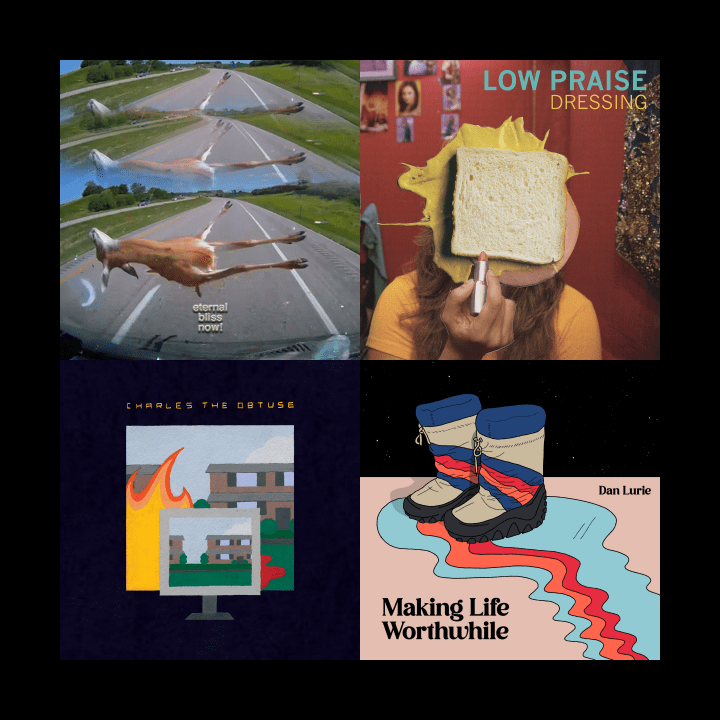
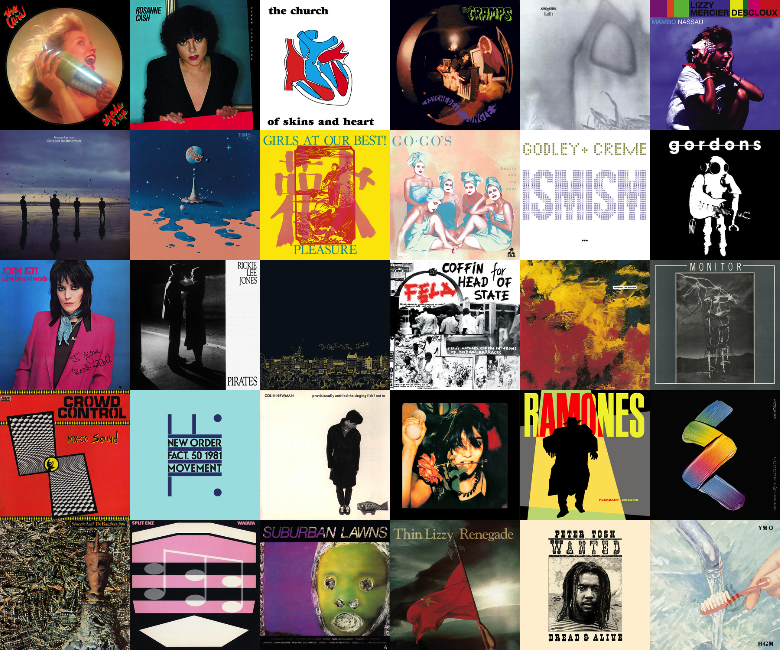

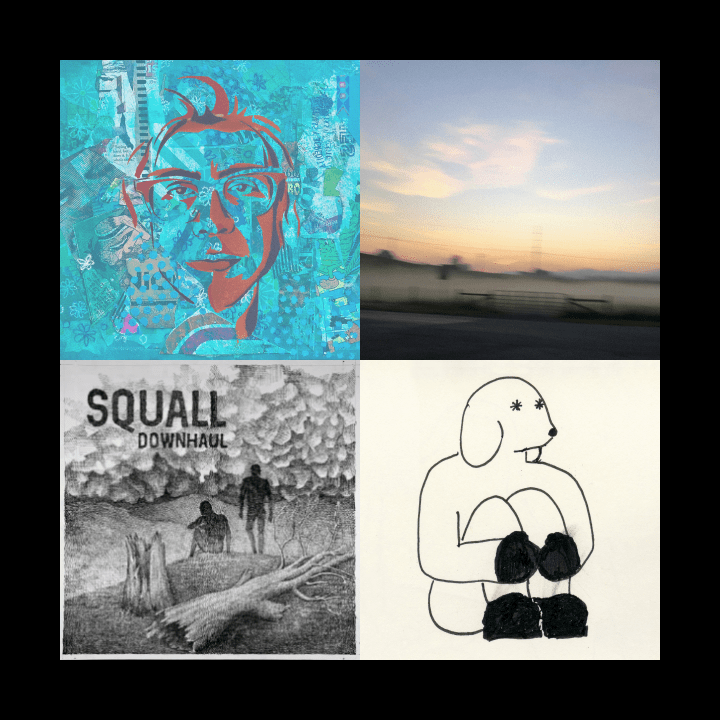
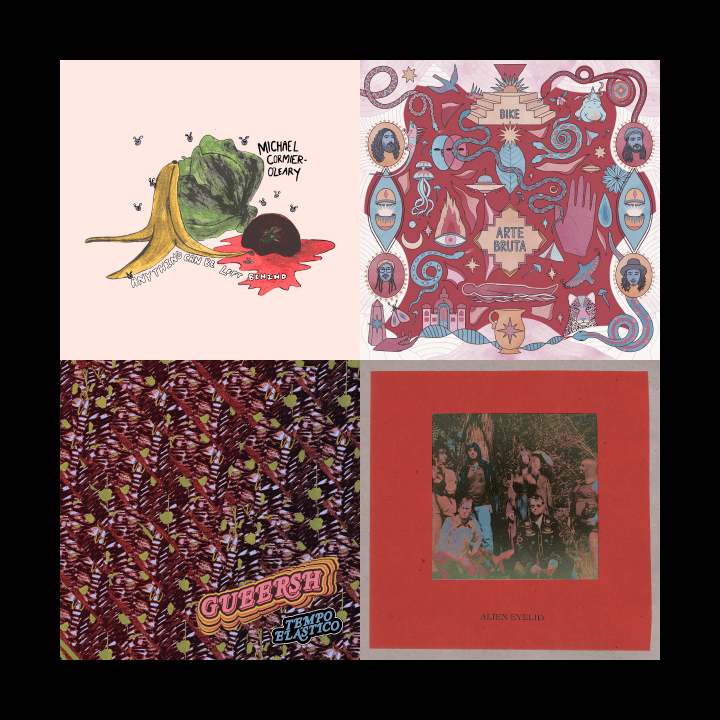
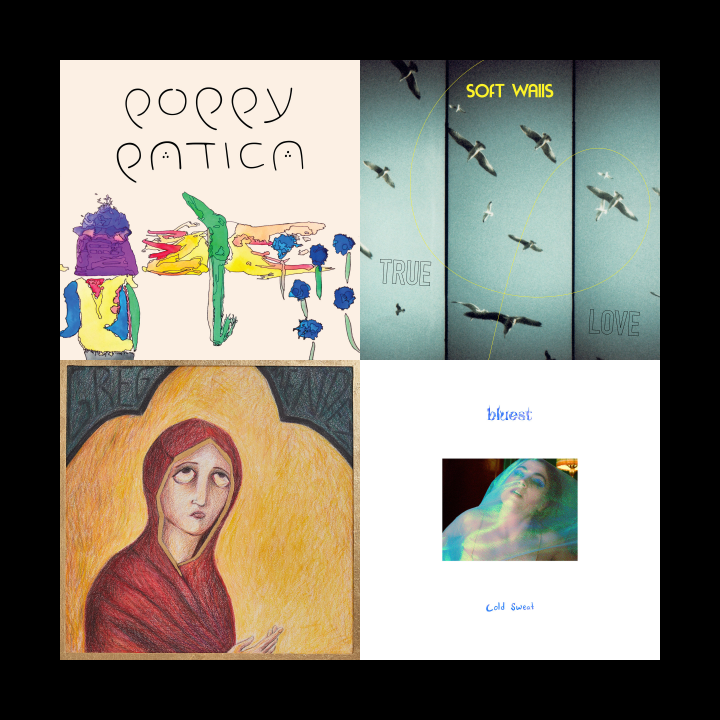
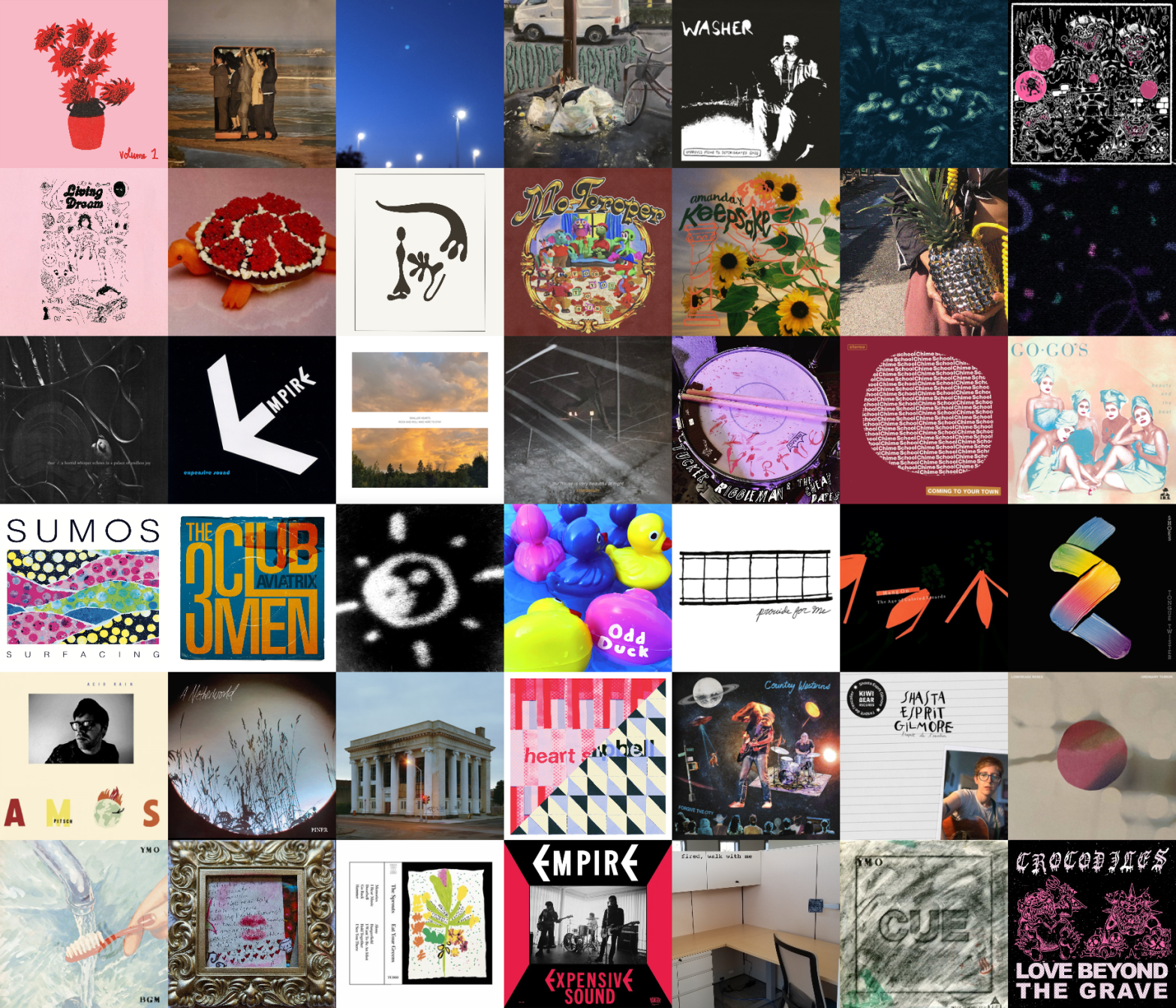
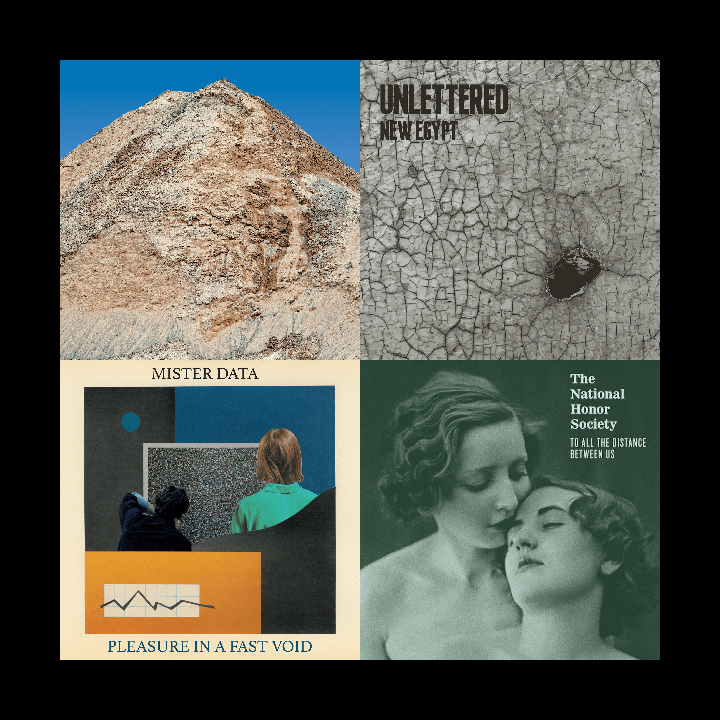
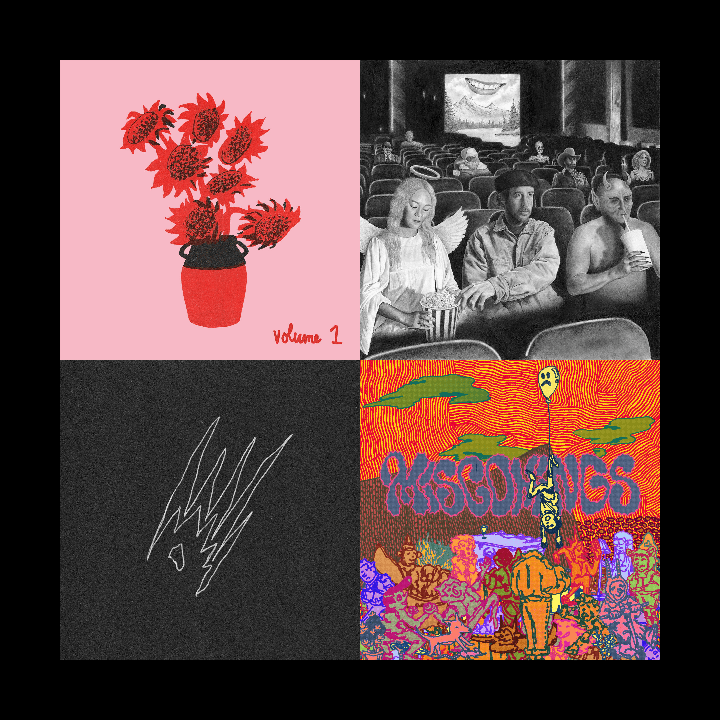
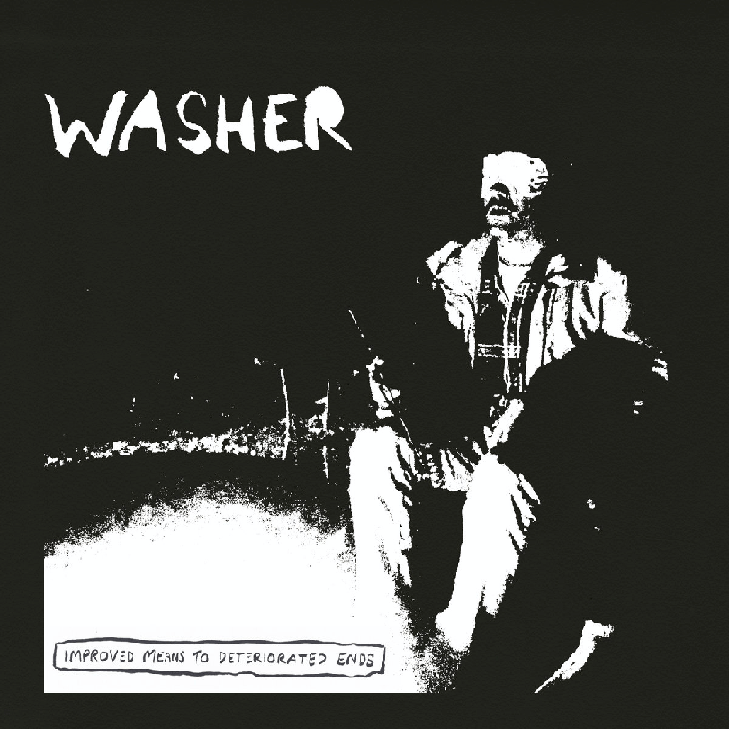
 Rosy Overdrive