Welcome, friends, to a Monday Pressing Concerns. It’s a good one! We’ve got new albums from William Matheny and Jason Allen Millard, a new EP from Perfect Angel at Heaven, and a cassette reissue of a decade-old Sundays & Cybele album to discuss today.
If you’re looking for more new music, you can visit the site directory to see what else we’ve written about lately. If you’d like to support Rosy Overdrive, you can share this (or another) post, or donate here.
William Matheny – That Grand, Old Feeling
Release date: August 4th Record label: Hickman Holler Genre: Alt-country, singer-songwriter Formats: Vinyl, CD, digital Pull Track: Stranger’s Voice
The church of William Matheny is made up of drifters, prodigal sons, and people who will have the money next week, they swear. It meets every day at truck stops and roadside crosses, reading scripture scrawled on motel notepads and pens. Lent is a cross-country road trip on an empty stomach, while hazy Biblical cities float by the tour van’s passenger window. Six years after his last full-length album, West Virginia’s William Matheny has returned with a collection of songs that drip with these images and hallmarks as much as ever. Matheny has not reinvented his sound on That Grand, Old Feeling; if you liked the sharp alt-country tunes of his last album, 2017’s, Strange Constellation, you won’t be disappointed in these nine songs. Even so, there’s a difference in the two albums–Strange Constellations jumped around excitedly in its storytelling and music, while That Grand, Old Feeling feels like one long exhale. It takes a step back from the action and the movement–not to abandon it, to be clear, but to get a good look at where it has led its various narrators.
The traveling of That Grand, Old Feeling is not aimless, although it might look that way to one who doesn’t understand Matheny’s goal–he’s bent on capturing the feeling that the record’s title describes, and upon which its title track expands. That Grand, Old Feeling begins with Matheny on the cusp of something in “Late Blooming Forever” (“I think it’s gonna happen any day”)–with self-transformation within arm’s reach. Maybe he reaches it with the aid of “bossa nova and Bud Light lime” in “Bird of Youth”. But even if he’s able to grab onto it, there’s still the problem of holding onto it, trying to fight against the tide of “Heartless People” (a song aided greatly by its go-all-the-way heartland rock instrumental).
Matheny and his band certainly have range, but That Grand, Old Feeling is particularly sharp at making everything sound like part of the whole–technically, the earnest country of “If You Could Only See Me Now”, the adderall-addled sin-rocker “Christian Name”, and the piano hymn “Down at the Hotel Canfield” are all pretty different, but there’s no bumps on the connector roads between them. The sharp, energetic music to closing track “Stranger’s Voice” almost obscures the weariness that Matheny displays throughout the song– “A man can only stay so strong so long,” he sings. Matheny and his band hold it all together for a whole album; maybe there’ll be some time to rest before the next hole-in-the-wall. (Bandcamp link)
Perfect Angel at Heaven – Imploder
Release date: August 11th Record label: Self-released Genre: 90s indie rock, noise rock, no wave Formats: Cassette, digital Pull Track: Imploder
Back in January, in the first Pressing Concerns of 2023, I wrote about Perfect Angel at Heaven’s self-titled debut EP. With Perfect Angel at Heaven, the Indianapolis trio of vocalist/guitarist Casey Noonan, bassist Alex Grove, and drummer Daniel Thacker honed in on a sound that balanced clarity and noisiness, pulling from no wave, thorny indie rock, and post-punk to make guitar music with a distinct perspective. Striking while the iron is hot, Perfect Angel at Heaven’s second EP adds five original songs and a cover to the band’s repertoire. Imploder continues to explore similar sonic territory as their first record, although there is a slight but noticeable turn towards cleaning up some of the extended noisiness and focusing a little more intently on melody in these half-dozen songs.
Noonan’s vocals, quite expressive and crystal-clear throughout the EP, continue to be a key aspect of Perfect Angel at Heaven’s sound. Noonan’s voice is the defining feature of “Pastoral” and “Desire’s Opening”, although the increasing importance of the band’s rhythm section shouldn’t be overlooked in these songs, either. On “Whiter Than a Bathtub”, the trio indulge in anti-rock experimentation, but then immediately follow it up with the title track, a curiously captivating Noonan/Grove duet that is the band’s hardest turn into pop-friendly territory thus far. However, they can still conduct a noisy rock-and-roll rave-up when the moment calls for it, as the EP’s closing, fairly faithful cover of Sonic Youth’s “Catholic Block” demonstrates (although the trio flirt with flying too close to the sun by choosing their most obvious influence to cover, their take on the song gets by on pure enthusiasm). Imploder continues to develop the world of Perfect Angel at Heaven, and it’s a promising and intriguing one. (Bandcamp link)
Jason Allen Millard – The Truth Is Always Changing
Release date: July 19th Record label: Self-released Genre: Folk, country, lo-fi, singer-songwriter Formats: Cassette, digital Pull Track: Way Out and Down the Road
I hadn’t heard of Jason Allen Millard until recently, but the Minneapolis musician has apparently been playing in bands around the Twin Cities for quite a while now. Away from rock-and-roll, however, Millard has concurrently built up a solo discography of experimental folk music, releasing a few records where he’d take acoustic songs and add to or just flat-out deconstruct them with synths and other editing tricks. Millard’s latest solo album, The Truth Is Always Changing, however, is just about entirely comprised of the singer-songwriter’s voice, guitar, and some background white noise–originally intended as demos, Millard decided that what he’d recorded stood well on its own.
Millard’s assessment is correct–The Truth Is Always Changing has a compelling haunted and dug-up quality to it, pleasingly mirroring his stated influence of Folkways’ Anthology of American Folk Music (it also reminds me of the scorched blues of Spencer Dobbs’ If the Moon Don’t Turn Its Back on You). The album opens slowly and deliberately with “Strung Up Like a Deer”, the fuzzy quality of Millard’s voice and guitar only enhancing the recording. “Way Out and Down the Road” takes The Truth Is Always Changing to a dark place early on with its harrowing take on the “childhood friend who’s slowly faded from one’s life” story. The album finds Millard tilting towards “enjoyable folk troubadour” with “Don’t Look into the Sky” and a cover of “Wasn’t Born to Follow”, although other moments on the record (the echoing title track, the discordant “Evening Raag for Steel and Amp Hum”, and the corrupted “Shake Loose”) display Millard’s experimentalist streak, alive and well. With The Truth Is Always Changing, Millard has put together an album intimate-sounding enough that one wonders if other people were meant to hear it, but fascinating enough to make one glad it’s out there in the world nonetheless. (Bandcamp link)
Sundays & Cybele – Tsubouchi (Reissue)
Release date: August 1st Record label: Eye Vybe Genre: Psychedelic rock, psychedelic folk, baroque pop Formats: Cassette, digital Pull Track: Medicine Man (Cybernetic Animism)
Chicago’s Eye Vybe Records is an under-the-radar but prolific imprint that has put out over a hundred records over the past thirteen years. For the second half of its existence, Eye Vybe’s focus has shifted towards Japanese experimental and psychedelic music, and over the past month they’ve crossed the hundred-releases threshold with a trio of such albums–Mitsuru Tabata’s Musica Non Grata, Acid Mothers Guru Guru’s Three Islands, and this one, a reissue of Sundays & Cybele’s Tsubouchi. Sundays & Cybele (led by Kazuo Tsubouchi, the band’s only consistent member) have been putting out records at a steady clip for most of this century; Tsubouchi originally came out on CD in 2014 and is now available on cassette through Eye Vybe.
On Tsubouchi, Sundays & Cybele are a psychedelic band of several stripes–heavy but melodic, overwhelming but friendly. Although the album opens with the particularly busy sensory overload of “Medicine Man (Cybernetic Animism)”, the bells and whistles are kept in relative check, and as a whole, Tsubouchi keeps the front half of the record pretty accessible. Tsubouchi offers up the fluttering baroque pop of “R.U.I.N.” and the bass-driven, slightly offbeat “Marginal Man” immediately afterward, and the gorgeous pastoral 60s folk-pop of “Working Days” and its dreamy counterpart “Sleeping Days” take up the album’s midsection. Sundays & Cybele save their wild psychedelic rock for the second side, which is bookended by the twin seven-minute journeys of “Seven Mornings” and “Paradise Lost (Inside O = Outside 0)”–the freewheeling former track has its charms, but I’m more drawn to the laser-focused latter one. It’s chaotic, but, like the rest of Tsubouchi, it’s an orchestrated chaos. (Bandcamp link)
It’s a Thursday, which means that tomorrow is Friday, which means that these four records in this edition of Pressing Concerns will be out in one day! This is a good one, too, even graded on our high curve. Today, we’re looking at new albums from Curling, Hurry, and Sargasso, and a new EP from Kolb. If you missed Monday’s post (featuring Annie Hart, Maple Stave, Podcasts, and Shredded Sun), check that one out too.
If you’re looking for more new music, you can visit the site directory to see what else we’ve written about lately. If you’d like to support Rosy Overdrive, you can share this (or another) post, or donate here.
Curling – No Guitar
Release date: August 11th Record label: Self-released Genre: Prog-pop, power pop, math rock Formats: Vinyl, digital Pull Track: Shamble
I first discovered Berkeley/Tokyo’s Curling through their 2018 sophomore album, DefinitelyBand, a fairly unclassifiable “math rock” album featuring plenty of intriguing, fractured pop songs from the songwriting duo of Jojo Brandel and Bernie Gelman. Listening to it now, Definitely Band still sounds just as fresh as it when it was brand new–which is a good thing, since we didn’t get any new music from Curling for the next half-decade. However, Curling have now returned with No Guitar, an incredibly strong third album that takes a confident leap forward in a way suggesting that Brandel and Gelman took full advantage of the relatively long gap between records. No Guitar was assembled “bit by bit” over the past five years, as the Pacific Ocean-separated Brandel and Gelman slowly but surely built an album that reflects their love of vintage 60s-esque, heavily-tinkered-with studio pop rock, without straying too far from the sound of their previous music. What Curling end up with is a unique combination of Game Theory, XTC, Jon Brion, progressive pop, power pop, and math rock (with, yes, a little bit of emo in there too).
Not only does No Guitar corral a disparate collection of influences enthusiastically and cleanly, it does so in an orchestrated manner that causes the album to ebb and flow in the same way their multi-part pop songs do. At the beginning, Brandel, Gelman and drummer Kynwyn Sterling all co-anchor a somewhat offbeat but still incredibly catchy power pop group–once “Shamble” kicks in, everyone is working in lockstep to land hooks, while the appropriately-titled “Pastoral” is just as deft at it while doing so in a laid-back fashion. Although “Pop Song” eventually blooms into what its title describes, its acoustic-based first half foreshadows the Curling of the center of No Guitar–a haunted, empty-space-embracing emo-folk-math band. The stretch from “Reflector Mage” to “Majesty” reflects this sudden but skilled turn–with the string-aided melody of the latter of the three, the connective tissue between this and the previous stretch of songs shows itself. The second half of the record rides a similar wave, with the jangly “Hi Elixir” and the heavy “Patience” building No Guitar up before drifting off into the ether with “Husk”, “Hotel”, and the title track. Although Brandel and Gelman’s influences are apparent in their work, they’ve put together a record that transcends any one genre movement and stands completely alone in 2023 with No Guitar. (Bandcamp link)
Hurry – Don’t Look Back
Release date: August 11th Record label: Lame-O Genre: Jangle pop, indie pop, power pop Formats: Vinyl, digital Pull Track: Didn’t Have to Try
Over the past decade, Hurry’s Matt Scottoline has established himself as one of the best modern power pop songwriters. It started in 2012’s self-titled Hurry debut, when “power pop” was far off indie rock’s radar, and as the genre began experiencing its recent revival, Scottoline was putting out consistently great records like 2018’s Every Little Thought and 2021’s Fake Ideas that landed him squarely in the middle of a new old movement. Don’t Look Back is the fifth Hurry album, and it contains plenty of what one has come to expect from Scottoline–heart-on-sleeve, bittersweet melodies, gorgeous guitar work, middling tempos and four-minute runtimes galore, and, of course, undeniable hooks. Perhaps appropriate given the record’s contradictory title (which violates its own command by being a Teenage Fanclub reference), Don’t Look Back is both a subtle record and an immediate one. Scottoline doesn’t favor the louder, more distorted end of the power pop spectrum, instead trending towards intricate, deliberate song structure–but never at the expense of passing up an excellent chorus (it reminds me more than a little bit of Steve Marino’s recent Too Late to Start Again, another record with a notable Teenage Fanclub bent).
To some bands, the “power” in power pop is perhaps the deployment of Blue Album-esque guitar fuzz to punch up the “pop” part–to Hurry, the “power” of power pop is, I think, a doubling down on the strength of the “pop” aspect. The ten songs of Don’t Look Back don’t go out of their way to differentiate themselves from one another, but they all reveal themselves distinct creatures in their own way. Some of the record embraces the electric guitar a little more than the rest of the album, from mid-record highlight “Something More” to the bouncy “No Patience”, although not in a way that distracts from Scottoline’s vocal melodies. The slow-moving, slow-revealing brilliance of “Beggin’ for You” and the horn-aided “Parallel Haunting” contain most of the same ingredients as the two aforementioned songs, but shift the emphasis just a little bit to come off as more big picture-embracing creations. Don’t Look Back is marked by a belief in pop music on its own–the relative lack of bells and whistles means that something different from the record will bubble to the surface for me on each listen. Whether it’s the gorgeous earnestness of the chorus of “Little Brain” or the tension-release final song “The Punchline”, Don’t Look Back is full of tracks built to last for the long haul. (Bandcamp link)
Sargasso – Further Away
Release date: August 11th Record label: Dead Definition Genre: Folk rock, indie folk Formats: Cassette, digital Pull Track: Emily
Sargasso are a four-piece band made up of Maria Campos Saadi, Noah Goodman, Thomas Hagen and Soledad Tejada, who all came together in New Haven in 2017. The band has been steadily putting out music since their inception, even after the members have become split between New York, Philadelphia, and Connecticut, with their debut full-length As It Surfaces to Meet Me coming out in 2021. Further Away, released by Dead Definition (Ther, The Human Fly, Sadurn) is the second Sargasso album–and quite possibly the final one, as three of the band’s members plan to move out of the United States not long after its release. Although I hadn’t heard of Sargasso before Further Away, I can say after spending some time with the album that something very real would be lost with the demise of this band–they’re a truly collaborative group, with all four members singing and contributing songwriting in a particularly balanced-feeling way.
With its acoustic, folk-inspired instrumentation, hints of bossa nova, and pop structures, Further Away is a gentle-sounding record, but it’s never boring–it contains far too many ideas and too much energy across its thirteen tracks to fall into any potential “easy listening” pitfalls. The extraordinarily friendly, almost campfire-ready folk rock of “Emily” kicks off the album, a mode that Sargasso continue to excel at (see “How to Reach Me”). “Teardrops in the Ocean” incorporates synths and electronic elements into their sound seamlessly, while quieter songs like “Witty Future Diss” and “Sleep/Fallacy” show the band stretching out and letting the songs take their time. The synth-driven future pop of “Embers” and the dreamy jangle of “If I Could” mark the highlights of Further Away’s second half, but Sargasso also take take the record’s homestretch as a chance to strip things down with the back-to-back “Sun So Low” and “Beauty Is Free”. Sargasso close things out with the ambient improvisation of “Narrows”, disappearing quietly in a haze of piano flourishes–but not before making one last mark. (Bandcamp link)
Kolb – Power of Thought
Release date: August 11th Record label: Ramp Local Genre: Indie pop, jazz-pop Formats: Digital Pull Track: Power of Thought
Water from Your Eyes touring member Mike Kolb has been releasing music under his last name for a while now, a prolific streak that culminated with last year’s Tyrannical Vibes, an album that saw Kolb embracing collaboration in service of his welcoming but smart pop music. Kolb is back less than a year after Tyrannical Vibes with the six-song Power of Thought EP, and while Kolb sings lead vocals on every song here (unlike on his last album), in some ways his newest record is his most collaborative yet. While Kolb recorded most of the instrumentation on Tyrannical Vibes himself, Power of Thought was taped reel-to-reel with a live band, giving these half dozen songs a loose energy that counterbalances Kolb’s tight melodies and composition.
The Kolb of Tyrannical Vibes hopped around quite a bit genre-wise–on Power of Thought, he and his band (featuring Palm’s Hugo Stanley on drums, among others) zero in on a breezy jazz-pop sound. The contributions of clarinetist Hillai Govreen (felt from instrumental opening track “The Key” on forward) certainly aid this feeling, although everything from Kolb and Eamonn Wilcox’s guitar chords to the keyboards and microkorg of Kolb and Jack Sanders works towards it. Kolb’s expressive falsetto is on full display here and he acquits himself nicely, selling the jazz-rock of the title track, the synth blast of “Mighty Fine”, and the slick ballad “Dark and Light” in equal measure. Still, the opening and closing instrumental tracks (prominently featuring Govreen’s clarinet, but not in a way that completely overshadows the rest of the players) serve as reminders that “Kolb” is more than just its namesake figure on Power of Thought. (Bandcamp link)
Welcome to Pressing Concerns Monday! Last Friday was such a big release day that even though I’ve already writtenabout five albums that came out last week, today we’ve got four more records from the first week of August to discuss: new albums from Annie Hart, Maple Stave, and Podcasts, and a new EP from Shredded Sun.
If you’re looking for more new music, you can visit the site directory to see what else we’ve written about lately. If you’d like to support Rosy Overdrive, you can share this (or another) post, or donate here.
Annie Hart – The Weight of a Wave
Release date: August 4th Record label: Uninhabitable Mansions Genre: Synthpop, indie pop Formats: Vinyl, digital Pull Track: Boy You Got Me Good
New York’s Annie Hart has had a busy and full music career over the past twenty years. From 2005 to 2013, she put out four albums as part of synthpop trio Au Revoir Simone, and she’s also released a solo album every other year since 2017. At the same time, Hart has developed a parallel career scoring films that led to her entering the world of modern music composition, working with the likes of the Atlantic Center for the Arts. With all this going on, Hart’s fourth album, The Weight of a Wave, makes it clear that the singer-songwriter is still in touch with her synthpop roots. These ten indie pop tunes sound sharply-written and -recorded but not overly labored-on or too busy-sounding–Hart cites krautrock as an influence, and the minimal presentation of these pieces of synthesizer-driven songs bear this out.
The Weight of a Wave opens with a golden pop tune in “Boy You Got Me Good”, a beautiful, bass-driven display of 80s new wave/synthpop with a killer but still somewhat understated hook from Hart. The zippy tempo and distorted guitar of “A Crowded Cloud” isn’t exactly “punk rock”, but it adds some extra “oomph” to Hart’s disorienting power pop. The mid-tempo chant of “A Lot of Thought” dives head-first into big old pure synthpop, once again offering up a key melodic hook to push this one over the line. The Weight of a Wave might sneakily have a stronger side two than side one–at least three of Hart’s best pop songs come in the second half. The chiming, wide-open pop of “What Makes Me Me” polishes a lyric that, perhaps intentionally, adds an extra shade of depth to the entirety of the album’s embrace of brightness and catchiness, while the sharp and peppy “Stop Staring at You” is undeniable in its own right and the disembodied, floating, analog synth-led dream pop of “Nothing Makes Me Happy Anymore” makes a strong statement with its bare structure. The similarly simple-but-heavy “While Without” closes the album with a sense of finality and survival, capping what ends up as a full-realized pop record. (Bandcamp link)
Maple Stave – Arguments
Release date: August 1st Record label: Self-released Genre: Noise rock, post-hardcore Formats: Vinyl, CD, digital Pull Track: Indian Ocean, Present Day
Vocalist/baritone guitarist Chris Williams, baritone guitarist Andy Hull, and drummer Evan Rowe formed Maple Stave in Durham, North Carolina in 2003. Throughout the 2000s and early 2010s, the trio put out two albums and four EPs of 90s Touch and Go-inspired noise rock, but they’d been quiet since 2016’s V. In the seven years between records, Maple Stave added a new member for the first time–bassist Chris Rasmussen (of Racetrack) joined in 2019, and while the Seattle-based fourth member doesn’t join them for all live shows, his presence is felt on Arguments, the long-awaited third Maple Stave album. Recorded at Electrical Audio, their new album is nine songs and thirty-three minutes of low-end heavy, downtuned, but still limber noise rock/post-hardcore, the darkness of the music countered by Williams’ high, clear, and dramatic vocals.
Arguments kicks off with “Indian Ocean, Present Day”, a song with an icy, pounding, Swans-esque opening that morphs into a sharp, bass-driven post-punk/alt-rock anthem with a soaring chorus. This dynamic continues in the first half of the record with “The French Song”, another song that balances catchiness, heaviness, and pure drama. Of the album’s three instrumental tracks, two of them are among the first four songs on the record–a bold move, but the tough fuzz of “Good Luck in Green Bay” and the math-y “Downtown Julie Brown” are both quality additions to the record. In the middle of Arguments, the post-hardcore tension of “Cincinnati Hairpiece” is the band’s most Dischord-y moment, while the second half of the album plows on full steam ahead with “Thunderkiss ‘85” and “I’m Not Tied to Pretty”, two of the biggest-sounding songs on the record. Twenty years into their career, Maple Stave are still on the offensive. (Bandcamp link)
Podcasts – Podcasts
Release date: August 4th Record label: Prefect Genre: Indie pop, post-punk, jangle pop Formats: Vinyl, digital Pull Track: Summerland, 1992
The annoyingly-named Podcasts are an Oslo-originating four-piece band made up of Ellis Jones, Kyle Devine, Tore Størvold and Emil Kraugerud, who all apparently met as co-workers in 2018 (Jones is perhaps most well-known for leading the Bristol band Trust Fund, a group I know a lot of people love but with whom I’m mostly unfamiliar). Work on their self-titled debut album began in late 2019 following the release of their first single–delayed by COVID-19, Podcasts finally arrives this month via Prefect Records (The Telephone Numbers, Ex-Vöid, EggS). Loosely speaking, Podcasts fit well on Prefect’s roster of British (and British-inspired) guitar-based indie pop groups, although there’s a trickiness to their debut album as well, displaying the band’s fondness for unexpected twists and turns in their pop songs.
Although it’s only their first album, Podcasts clearly shows the band has gelled as a four-piece with the way they pull off some of the more complex turns on the record with confidence. Opening track “Stor lordags kveld / No Singing in the Gym” displays this from the get-go, darting from the first to the second half of the title by completely changing up the song. Tracks like “Summerland, 1992” and “Cockatoos” have a bit of jangle pop in them, with the former also exploring the fractured pop world of 90s American indie rock and the latter delivering its guitar melodies as straightforwardly as Podcasts can allow. Podcasts moves forward as the album goes on, with the second half of the album feeling more post-punk-indebted, from the garage-y new wave of “Dragging the Lake” to the repetition of the title track to the fuzzy sing-speaking of “The Unbearable Lightness of Being Drunk”. One of the more intriguing new(ish) bands I’ve heard lately, I guess what I’m saying is: listen to Podcasts. (Bandcamp link)
Shredded Sun – Translucent Eyes
Release date: August 4th Record label: Self-released Genre: Garage rock, psychedelic pop Formats: Digital Pull Track: The Dark at the Top of the Stairs
Back in February, Chicago’s Shredded Sun released Each Dot and Each Line, an incredibly enjoyable mix of fuzz rock, garage-punk, psych pop, and power pop that ended up being one of my favorite albums of the year so far. The trio of bassist/vocalist Sarah Ammerman, guitarist/vocalist Nick Ammerman, and drummer Ben Bilow have played together a long time (in Fake Fiction in the 2000s, in this band for the better part of the past decade), a chemistry that’s apparent both on Each Dot and Each Line and its follow-up, the surprise-release four song Translucent Eyes EP. Nick Ammerman has described the record as “one psychedelic summer ballad, three trashy stompers”, and the EP does indeed continue to reflect the dexterity of Shredded Sun in this fashion.
The opening title track is the longest song on the EP by a good measure, stretching nearly to five minutes–I believe this would be Translucent Eyes’ “psychedelic summer ballad”. It’s a gorgeous and restrained song, with Nick’s vocals and the guitar accents giving it something of a “looser Yo La Tengo” feeling. Sarah takes the lead for the EP’s two middle songs, the snotty surf-punk of “Tough Love” and the sneering garage-punk swagger of “Sick Inside”, both of which back up their energy with inspired performances from the band. Shredded Suns save the best pop moment on Translucent Eyes for last with “The Dark at the Top of the Stairs”, with Sarah joining Nick in the chorus to cap an exciting three-minute carousel ride of bashed-out chord progressions, a sing-song melody, and a weirdly captivating keyboard hook. It’s nice to have new music from Shredded Sun again so quickly, especially when Translucent Eyes lives up to the highs of their last release. (Bandcamp link)
It’s another busy week at Rosy Overdrive, capped off by a Pressing Concerns that looks at four records out tomorrow: new albums from Gaadge, Florry, and Computerwife, and a new EP from The Wind-Ups. Early this week, the Rosy Overdrive July 2023 Playlist/Round-Up went live, and I also wrote in-depth about Spirit Night’s Bury the Dead (which is also out tomorrow); check those posts out, too.
If you’re looking for more new music, you can visit the site directory to see what else we’ve written about lately. If you’d like to support Rosy Overdrive, you can share this (or another) post, or donate here.
Gaadge – Somewhere Down Below
Release date: August 4th Record label: Crafted Sounds/Michi Tapes Genre: Shoegaze, noise pop Formats: Vinyl, cassette, digital Pull Track: Nanty Glo
Anyone paying attention to the musiccoming out of Pittsburgh lately knows that it’s a–maybe the–central hub for everything loud, distorted, and reverb-heavy–and right in the middle of that music scene lies Gaadge. The quartet was founded by Mitch Delong nearly a decade ago and has expanded to include bassist/vocalist Nick Boston, drummer/vocalist Ethan Oliva, and guitarist Andy Yadeski–a lineup that overlaps heavily with the bands Barlow and Ex Pilots, with both of whom Gaadge has put out a split record. 2021’s Yeah? (one of my favorite records of that year) was the sound of Gaadge moving from a Delong solo project into a real-live band, and their sophomore album, Somewhere Down Below, is the sound of them embracing this. Instead of the songs being credited to Delong and sometimes Boston, the record’s fourteen tracks were all “written by Gaadge”, and it certainly feels like a group effort.
For one, Somewhere Down Below is a varied-sounding record–Gaadge equally takes influence from Guided by Voices’ hooky lo-fi basement pop and heavy-duty shoegaze like Lilys and My Bloody Valentine, and the record is also in conversation with the more electronic and experimental version of shoegaze practiced by their present-day peers. The record throws curveballs from the beginning with the atmospheric opener “In Levitation” and the trip hop beat of “No Go”–it takes until “Candy Colored” for the band to launch into a fuzzy noise pop tune that confirms that they still do that quite well. The vocals on the pop-punk-y “Nanty Glo” are surprisingly clean, while the Oliva-led “Don’t Go There” uses little more than a single electric guitar and a Pollard-worthy melody to be a sneaky highlight. Songs like “Mundy’s Corner” keep the shoegaze quotient high, and the torrential “Komarov” is maybe the heaviest the band have sounded, but the surprises are just as frequently on the gentler side, like the nervous bedroom pop of the title track, or Boston’s downcast “Strok”. Somewhere Down Below is the best kind of record from a creative team–one that’s full of ideas, where one can find something new and great with each listen. (Bandcamp link)
Florry – The Holey Bible
Release date: August 4th Record label: Dear Life Genre: Alt-country, country rock Formats: Vinyl, CD, digital Pull Track: From Where You Are
Philadelphia’s Florry is led by Francie Medosch, who’s been making music under the Florry name since at least 2018, when she was still a teenager, putting out records on labels like Sister Polygon and 12XU. The Holey Bible, the third Florry album, is their first one for Dear Life (following January’s Sweet Guitar Solos EP), and the massive seven-piece group (also featuring guitarist John Murray, bassist Jared Radichel, drummer Joey Sullivan, vocalist Victoria Rose, fiddle player Will Henriksen, and lap steel player Sam Silbert) are gelling into a real (country) rock band on these eleven songs. Medosch is still the songwriter, but Florry isn’t just her show on The Holey Bible–for one, it’s not until the third song on the record that she’s the sole lead vocalist on a track. For another, the band is balanced throughout the record, equally likely to lean into their rock and roll instincts as their earnest country side.
Some of the songs on The Holey Bible have been around for a while (this is the third version of “Big Fall”, by my count), but Florry inject all of them with an energy that helps everything feel fresh and coherent. The casual country rock of “Drunk and High” and “Take My Heart” kick off the record on a welcoming, laid-back note, before tearing into the roaring “Hot Weather”, a display of the band’s full power. The Holey Bible is a loose-feeling record throughout, but it certainly takes craftsmanship to make songs like “Cowgirl in a Ditch” and “Say It Again” sound as carefree and fun as they do. And that’s not even taking into account Medosch’s sharp work as a lyricist and frontperson–certainly present on the upbeat songs, but truly shining when things slow down on the twin six-minute tracks “Big Winter” and “Song for My Art”. The tricky interpersonal situation in the former is engrossing enough, but it’s the latter, where every line feels like it could be taken five different ways, that’s really stuck with me. And then the band closes it with one more excellent country rocker in “From Where You Are”–no matter where Florry roam, something exciting is lurking around the corner. (Bandcamp link)
Computerwife – Computerwife
Release date: August 4th Record label: Danger Collective Genre: Shoegaze, noise pop, experimental pop Formats: Vinyl, CD, digital Pull Track: Vacation
New York’s Computerwife is the project of Addie Warncke, who’s been making music under the name since 2018, with Soundcloud demos and a self-released EP culminating in her Danger Collective-released self-titled debut album. Computerwife certainly contains enough fuzz and distortion to qualify as a shoegaze album, but it’s in line with the modern strain of the genre practiced by bands like They Are Gutting a Body of Water and Feeble Little Horse, in which flirtation with electronics and other sources of noise are explored as well. Warncke recorded this album with fairly limited equipment and while still learning how to use Ableton, and there’s a sense of experimentation and discovery in these songs that’s enhanced, not hindered, by Warncke’s work-in-progress attitude.
Just as intriguing as Warncke’s skill with recording is her pop songwriting, and the songs on Computerwife shine at their cores despite whatever sonic collisions are happening around them. “Vacation” opens the album in a surprising bass-led, almost post-punk way, with Warncke’s clear vocals delivering a winning melody. One track later, “You Make It Look So Easy” is full-on distorted fuzziness, but it’s even more of a massive pop song than the one before it. The second half of Computerwife has less immediate hits, but there’s plenty of nonetheless interesting material here–the disorientingly straightforward “I Get Better Everyday” moves into the industrial pop of “Starchild” into the wall-of-sound noise rock of “Eascore”, and the record ends with what I can only describe as a “romp” in “Oops”, a fitting end to the Computerwife experience. (Bandcamp link)
The Wind-Ups – Jonathan Says
Release date: August 4th Record label: Blue Arrow Genre: Lo-fi indie rock, garage punk Formats: Vinyl, digital Pull Track: Jonathan Says
California lo-fi punk group The Wind-Ups are led by singer-songwriter Jake Sprecher, who has notably been playing as a multi-instrumentalist for Jonathan Richman since 2016, as well as being a member of the bands Smokescreens and Terry Malts. Sprecher struck out on his own in 2021 with the Mt.St.Mtn.-released debut Wind-Ups album, Try Not to Think, on which Sprecher played every instrument. Discounting a split single with The Out-Sect, the four-song Jonathan Says EP is the second Wind-Ups release–coming in at under ten minutes, the songs are again played by Sprecher with a few notable exceptions, but he and these couple of guests make their mark throughout these songs. The Wind-Ups of Jonathan Says are making a racket, but it’s a purposeful one–all four of these songs wind up sounding pretty distinct from one another.
The opening title track to Jonathan Says is indeed inspired by Richman–the song transports us to a Jonathan Richman show (featuring Richman’s partner Nicole Montalbano on tamboura) and Sprecher sneaks in a few Richman titles into the lyrics–and it’s also the record’s biggest power pop moment, as distorted as it may be. “Medusa’s Spell” (a cover of a song originally written by The Electric Pie Band’s Marty Parker) is the seedy, dark tune that explodes into a huge chorus, while the chugging “Coffee Cup” (featuring Jaed Garibaldi on cello) is all speedy simplicity. “Little Boy Blue” ends the EP by probing garage-y no wave/post-punk territory, evoking monotone groups like Public Interest before ending with a sharp guitar solo (played by none other than the EP’s namesake)–hard to come up with a better cap to Jonathan Says. (Bandcamp link)
Release date: August 4th Record label: Self-released Genre: Emo-y indie rock Formats: Digital
There’s a moment in “Country Roads”, a song about Dylan Balliett’s complicated and activating relationship with his home state of West Virginia, where the Spirit Night frontman sings “Now I’m carrying with me /The rapid river / And the people it claimed / Who I can’t forget”. If I were choosing one lyric to distill Bury the Dead, I think it would have to be this one: we freeze on Balliett, very much still alive, but still incredibly conscious of and stuck on the memories of the people he’s outlived and the places he’s outran. Trailing out from this state of mind are the ten songs of Bury the Dead, an album that navigates a complicated tightrope soundtracked by the sounds of classic, spirited indie rock.
Spirit Night began in Shepherdstown, West Virginia in the early 2010s, with Balliett putting out three solid albums over a five-year period that culminated with Balliett moving to New York and joining emo titans The World Is a Beautiful Place & I Am No Longer Afraid to Die. The fourth Spirit Night album, Bury the Dead, comes eight years after 2015’s Shame, and six years after Balliett left The World Is a Beautiful Place after contributing to one album (2017’s underrated Always Foreign). Although a few of these songs have been kicking around for several years, the bulk of the recording for the album was done last year when Balliett returned to the Eastern Panhandle–specifically, to Jordan Hudkins of Rozwell Kid’s basement in Ranson, West Virginia, where Balliett, Hudkins, Ryan Hizer (Good Sport, Librarians), and Trey Curtis laid down what would become Bury the Dead.
Revisiting a place “fifteen minutes from [his] childhood home” is appropriate for the content of Bury the Dead–although “Country Roads” is the one song that explicitly grapples with his West Virginia upbringing (unless one counts the cover art, a photo depicting both the Blue Ridge Mountains and the Shenandoah River), Balliett’s past is all over Bury the Dead. When discussing the influences for Bury the Dead (specifically, early 2000s Dischord and Saddle Creek Records bands), Balliett said “I wanted to make an album that would have saved my 17-year-old life,” and the content of the album makes it clear that the person who lived these events did, in fact, need the help of things like indie rock to make it to 2023.
Several songs on Bury the Dead are about people in Balliett’s life who did not survive, and the album takes an uncomfortably close look at death on multiple occasions. “In this life, ruin comes at random / While you’re smiling, laughing, with your closest friends,” Balliett sings in the painfully conflicted-sounding “Pulse”, and the five-minute album centerpiece “Different Bodies” addresses a friend who “gained [their] membership” to the 27 Club, with Balliett switching between “you” and “we” in his reminiscences.
There’s a contradiction at the heart of Bury the Dead–it’s an album made by the living, but one with a thorny relationship with the concept of “alive”. The opening track is called “Left Behind”, where Balliett says that he’s “came out the other side, awake and wide-eyed, with some storytelling scars,” but in the chorus he says “we’re all left behind”. Balliett’s heartbreaking dream at the center of “Different Bodies”–that he and his departed friend will meeting again “in different bodies, working different part-time jobs, with different hobbies” is just that, a dream. The dead that populate Bury the Dead are gone, while Balliett is still here–and as depression anthem “So Long” elucidates, the mere passage of time doesn’t automatically heal everything, and it’s not always so simple as being on “the other side” of past difficulties in one’s life.
Still, the Balliett of “So Long”, while sad, is not hopeless–“Change comes slowly and I’m still working toward a time / When I might feel fine,” he says, both acknowledging the long road to go and reaffirming a commitment to following it in one breath. It’s a tricky, complex thing to pull off, as the album’s other centerpiece (it can have two, it’s got an even number of tracks), “Any Way I Am”, also acknowledges. The song repeats its title like a mantra, discusses “acceptance”, and features Balliett watching sunsets and oceans, but it’s not so clean of an aural motivational poster as this would suggest–acceptance is “not [his] thing”, and the sunset and the ocean are on Balliett’s TV. Nevertheless, Balliett intently stares at the screen, allowing it to wash over him, finding reassurance in how small he is in comparison to such things.
Balliett’s lyrics are engrossing, but Bury the Dead wouldn’t work nearly as well if it wasn’t also accompanied by some pretty great music, driven purposefully by Balliett more intentionally diving back into the emo and punk music of his youth (although it’s not restrained by either of those genres, either). I’ve already written in-depth about how “Country Roads” both aces and expands upon the “hometown-hating pop punk song” trope, but there are several other impressive, “leveling-up” moments of pop songwriting on Bury the Dead, from the opening sprint of “Left Behind” to the bouncy power pop of “So Long” to “Angelica”, an incredibly interesting-sounding piece of noisy catchiness with a smooth chorus (it’s Spirit Night’s version of the “song with a girl’s name as the title”, which of course means it’s a song about loving someone who’s in a relationship with someone else, ending with Balliett shrugging and saying “These things happen all the time”).
The music accompanying closing track “Memorial Day” also elevates the song, in the way that it suddenly swells from its acoustic foundation to a crescendoing, orchestral emo-rocking conclusion as Balliett delivers the final lines. In the song’s first half, Balliett wonders aloud where he’d be if things had turned out differently, before resolving to “not worry about what’s already been set in stone”. Then the band kicks in, Dane Adelman’s trumpet joined by crashing drums, guitars, and “The Memorial Day Choir” (featuring Fred Thomas, Mo Troper, and Bertie, among others) as Balliett sings: “I can see us in the distance, rising from our beds / Climbing from the holes we dug, and burying the dead”. It’s in the distance, but it’s in sight.
Welcome to the July 2023 Rosy Overdrive playlist! There’s a ton of great music from this year in this one (I think that there’s only one song on here that didn’t originally come out in 2023, so you can’t accuse Rosy Overdrive of not being hip and current. Well, you can’t accuse RO of not being current, at least).
Who gets multiple songs on the playlist this time around? That’d be Your Heart Breaks and Guided by Voices. And while they have exactly zero songs on this playlist, I compare multiple bands to Belle & Sebastian in this post, so that’s something.
Here is where you can listen to the playlist on various streaming services: Spotify, Tidal, BNDCMPR (missing two songs). Be sure to check out previous playlist posts if you’ve enjoyed this one, or visit the site directory. If you’d like to support Rosy Overdrive, you can share this (or another) post, or donate here.
“Sheep on Mars”, Dagwood From Worse for the Wear (2023, Model City)
Shout out to Dagwood, the New Haven-based power-pop-punk band that’s put out one of my favorite singles in recent memory. Fans of the Dazy school of pop songwriting, in which massive melodies get punched up with 90s alt-rock and plenty of fuzz power, would do well to give the two-minute “Sheep on Mars” a spin. One of three songs they’ve put out this year, “Sheep on Mars” is all hook–the verse melody, the chorus, the Rentals synths, and the power chords are all competing for the title of “catchiest part of the song”, and we’re all winners here.
“Snow Dusted Ponies”, Your Heart Breaks featuring Christine Fellows and John K. Samson From The Wrack Line (2023, Kill Rock Stars)
I’ve known about Your Heart Breaks for a long time (they covered “First Few Desperate Hours” on Tallahassee Turns Ten for Christsakes!) but The Wrack Line is I believe the first full-length I’ve listened to from the Clyde Peterson-led project. Spanning over an hour and nineteen songs in length (not to mention the appearance of several guest stars), The Wrack Line is a lot to take in, but its best songs hit immediately. Peterson gets an assist from Rosy Overdrive favorites John K. Samson and Christine Fellows on “Snow Dusted Ponies”, a heartland folk rocker with some inspired lyrics “about life in a northern town”.
“Rudolph”, MJ Lenderman (2023, Anti-)
I got to see MJ Lenderman and the Wind in concert a couple weeks ago (with the excellent Styrofoam Winos), and it was perhaps the best show I’ve seen this year. Lenderman played several as-of-yet unreleased songs, all of which were great, as well as opening with the brand-new “Rudolph”, his debut single for Anti- Records. First off, it rules that Lenderman is now on the same label that’s posthumously releasing an album from what I’d imagine is one of his biggest influences, Sparklehorse. And, of course, the song rules too. Other than Xandy Chelmis’ pedal steel, Lenderman plays everything on this one–lyrically, it’s sparse, but every line lands, as does the massive fuzz-country sound that he’s been perfecting. Already with severalgreatrecords under his belt, it feels like the dude’s still just getting started.
“Waiting for the Man”, Mopar Stars From Shoot the Moon (2023, Furo Bungy)
I’ve been really enjoying Shoot the Moon, the debut EP from Mopar Stars, the Philadelphia power pop offshoot from Poison Ruïn/Zorn’s Nao Demand. The whole thing’s good, but opening track “Waiting for the Man” is hard to beat. Demand’s humble vocals, a healthy amount of distortion, and the band’s workmanlike power chords land the song somewhere between vintage 70s power pop and the friendlier side of Pavement-esque 90s indie rock. There’s a guitar solo here that should be “showy”, but it sounds a lot more modest in Mopar Stars’ hands. Read more about Shoot the Moon here.
“Backdrop Painters”, Dream Version From Dream Version (2021)
I recently learned about Chicago’s Dream Version–their self-titled third record came out a couple years ago, but it’s new to me. It’s a pretty varied album, but my favorite track on it, “Backdrop Painters”, hits on a very specific brand of smart but accessible indie rock that I’ve long enjoyed (it’s a nebulous concept, but I’m thinking of power pop-adjacent groups like Hallelujah the Hills and Mike Adams at His Honest Weight). Alec Harryhausen’s lyrics are all over the place, although his line about imagining a utopian future where record labels “churn out Pavement sound-alikes” (and then immediately walking it back) is a nice moment of self-awareness.
“Brotigan”, Joyce Delaney From Gently But Firmly (2023, GoldMold/Common)
Say hello and also goodbye to Joyce Delaney, the Glasgow “DIY bubblegum punk band” led by guitarist/vocalist Chrissy Barnacle and bassist/vocalist Nyla Ahmad and rounded out by drummer Barry Carty. I learned about Joyce Delaney via the release of Gently But Firmly, which appears to be the band’s first, last, and only full-length album (they played a farewell show not long after it came out). I’m glad they got an album out before ending, especially considering that it includes “Brotigan”, an incredibly compelling piece of offbeat, twee-friendly indie punk, which is loose-sounding but plenty catchy as well.
“Permanent Storm”, Upper Wilds From Jupiter (2023, Thrill Jockey)
After the fifteen-second “Greetings”, Jupiter opens with “Permanent Storm”, a thundering fuzz rock song that begins on the titular planet’s Great Red Spot but functions more as a thematic scene-setter than a physical one. Upper Wilds’ lead singer, Dan Friel, acknowledges that the eternal storm on Jupiter will exist long after him, and that outer space contains “things that you and I will never see”, but the latter line then shifts to “places I know I would like to see” in the next verse (but not before Friel acknowledges that space also features “so much there to kill us”). Read more about Jupiter here.
“Why Won’t You Kiss Me”, Guided by Voices From Welshpool Frillies (2023, GBV, Inc.)
Hey, it’s time for Welshpool Frillies, kids! Guided by Voices’ varied and limber second album of 2023 is maybe the most excited I’ve been about a new release of theirs since 2021’s Earth Man Blues (and considering that La La Land was one of my favorite records of 2023 so far, that’s not faint praise). Songs like the Wire-y post-punk pop-hopper “Why Won’t You Kiss Me” are a huge part of why–there’s some of the orchestration and prog moves of the band’s recent output here, but it’s all part of a tighter, sharper package. And I don’t like when songwriters break the fourth wall (it screams “bereft of ideas” generally to me), but Robert Pollard’s “I’m wondering why motels [are] no longer providing pens” feels like a subtle enough glimpse into his constant creativity.
“Wrong”, Hey I’m Outside From Smile (2023, Archival Workshop)
Hey I’m Outside (good band name) are the duo of Patrick McPherson and Hannah Fletcher and they hail from Medford, Massachusetts–May’s four-song Smile EP seems to be their second release, after a three-song self-titled EP a couple months previously. My favorite song from Smile is the imminently enjoyable “Wrong”, a nice piece of lo-fi indie rock with a bit of rootsiness to it. The acoustic instrumentation and McPherson’s vocals trend “Wrong” towards alt-country territory, but it’s first and foremost a downbeat but catchy piece of indie rock, suggesting Hey I’m Outside is a project worth keeping an eye on.
“Tangled in Joy”, Temple of Angels From Endless Pursuit (2023, Run for Cover)
Temples of Angels’ debut album is a throwback with the songs to back it up. Endless Pursuit is a “dream pop” album, but it’s less of the sleepy modern variety and more of the genre’s origins as part of post-punk, new wave, and college rock. “Tangled in Joy” is a beautiful single that could’ve been a lost 80s alt-rock hit, with Bre Morell’s clear and centered vocals delivering one hell of a melody, and the rest of the band shine and soar along with her–it’s “ethereal”, sure, but it also rocks in a way that feels at home on Run for Cover Records.
“Outside”, Taking Meds From Dial M for Meds (2023, Smartpunk)
I kind of missed the boat on Taking Meds, the New York four-piece who’ve been slowly growing in popularity over the course of three albums and the better part of a decade. Still, “Outside”, the second song from their upcoming fourth record, Dial M for Meds, has my full attention. The band evokes the poppier side of 90s indie rock/punk on this track, containing shades of Archers of Loaf and Superchunk in the song’s simple but effective structure. Eager to hear more from Taking Meds soon.
“French Girls”, Sandra’s Wedding From The Hopeful Boy Replacement Service (2023, Subjangle)
I keep collecting songs like “French Girls”; I don’t think I’ll ever truly get tired of this sound. Sandra’s Wedding are British, and this comes off on a lot of The Hopeful Boy Replacement Service, but on album highlight “French Girls”, they hit on a specifically American (and maybe Canadian too) brand of post-grunge alt-rock-tinged power pop (“adult alternative”, twas called at the time), humbly swaggering through deceptively catchy verses before launching into a lost-radio-hit chorus.
“Clean Slate”, the Mountain Goats From Jenny From Thebes (2023, Merge)
The Mountain Goats really are back, huh? 2022’s Bleed Out got me excited for the band’s studio output in a way that I hadn’t been for their last few records (2020’s pandemic-recorded Songs for Pierre Chuvin notwithstanding), and the lead single from their next suggests a winning streak bound to continue. Jenny from Thebes is something of a sequel to John Darnielle’s boombox swan song All Hail West Texas (nerds like me remember Jenny from the songs “Straight Six”, “Night Light”, and the song titled after her), and the showtune-inspired “Clean Slate” sounds like nothing the band’s done before (well, maybe a little bit like a couple of recent tracks) but is a perfect fit for Darnielle’s songwriting.
“Independence Day”, Palehound From Eye on the Bat (2023, Polyvinyl)
Palehound! A band that I’ve long viewed as “just okay”, enjoying a song here and there but never being wowed by El Kempner’s songwriting the way some others have. Has Eye on the Bat changed my perception of them? Not entirely, but it does feel like their strongest record yet, and it does feature “Independence Day”, a pretty unimpeachable piece of pop rock. It’s quite hooky, but Kempner declines to sand the edges off their sound here, instead having the confidence that their writing will shine through either way (and it does).
“Dead Ahead”, Oxbow From Love’s Holiday (2023, Ipecac)
Let me tell you–the first Oxbow album in six years sounds an awful lot like an Oxbow album. Although it’s streamlined in comparison to some of the San Francisco quartet’s earlier work, an “easy listen” it is not–there’s some stuff on Love’s Holiday it’ll take me a while to figure out. Opening track “Dead Ahead” is not part of that–it’s a blistering piece of noise rock featuring a characteristically wild performance from Eugene S. Robinson and an uncharacteristically smooth chorus that nevertheless fits the song well.
“Tune You Out”, Steve Marino From Too Late to Start Again (2023, Pop Wig)
The peppy “Tune You Out” kicks off side two of Steve Marino’s Too Late to Start Again with the album’s biggest power pop moment, sounding like a lost Gin Blossoms or Lemonheads single. The Jack Boy bandleader and Angel Du$t member turns in a song that’s still very much a downer lyrically despite the upbeat tempo that Marino gives the track. It’s a classic power pop trope–to quote Marino himself in the chorus: “You know how it is”. Read more about Too Late to Start Again here.
“Comfortable Situation”, 12 Rods From If We Stayed Alive (2023, American Dreams/Husky Pants)
Although If We Stayed Alive, the first 12 Rods album in twenty-one years, is a bit more restrained and casual-sounding than the band’s “classic” work, Ryan Olcott still knows how to rock in his own way. “Comfortable Situation” deploys a bit of fuzz and distortion, but it’s just another tool to serve the song rather than overwhelming it. As it is, it’s a loud power pop song–Olcott standing firm in the middle of the storming guitar chords, finding a midpoint between playful and serious. Read more about If We Stayed Alive here.
“Walk Like the Devil”, Sorry Machine (2023, YGTM)
I believe we’re talking about a debut single with Sorry Machine’s “Walk Like the Devil”; it’s always cool when Rosy Overdrive finds a new band to spotlight in this way (and even more cool when I find it organically rather than through a PR email, but I digress). According to their Spotify bio, they’re a four-piece group from Madison, and their first song contains shades of math rock, post-punk, noise rock, and post-hardcore–but it’s also weirdly catchy. I’m interested to hear more from Sorry Machine soon.
“Dear Angeline”, The Goods From The Goods (2023, Dandy Boy)
Dandy Boy Records’ recentwinningstreak continues with the release of The Goods, the debut self-titled EP from the Oakland duo of guitarist/vocalist Rob Good (also of Sob Stories) and drummer Paul Wiseman. The Goods’ first four songs present a band that have already got their grip on what makes a good power pop hit single–“Dear Angeline” isn’t the only massive tune on The Goods, but Good’s enthusiastic delivery of the title line just might push this one a cut above the others.
“Swine Among the Relics”, Other Houses From Didactic Debt Collectors (2023, Aagoo)
On their latest EP, Didactic Debt Collectors, Other Houses displays a knack for both a Robert Pollardesque warped but pleasing melody and curiously memorable turns of phrase. Both of these tendencies are perhaps best expressed by closing track and highlight “Swine Among the Relics”, a relatively lo-fi and chilly song featuring chiming melodic guitar playing and a chorus in which Morgan Enos triumphantly sings of “Reliquary swine / With articulating spines”. Enos seemed genuinely surprised when I chose this song as my favorite from this EP, but to me it’s a distillation of the charm of Didactic Debt Collectors. Read more about Didactic Debt Collectors here.
“SlowLeak.wav”, Superdestroyer From SoakedInSynth.Zip (2023, Lonely Ghost)
Columbus, Ohio’s Superdestroyer is an anonymous solo project that’s been putting out short, intriguing records of experimental, electronic-tinged emo music at a steady clip the past few years (in addition, the mind behind Superdestroyer is also the founder of Lonely Ghost Records). The appropriately-titled SoakedInSynth.Zip delivers successes like “SlowLeak.wav”, a synth-and-drums-led pop song with a classic melodic emo vocal that restrains itself in service of evoking the leak to which its title refers.
“Eutherians (Ultramarine)”, ME REX From Giant Elk (2023, Big Scary Monsters)
ME REX–there’s no one else doing it quite like them, huh? Following a ton of EPs over the past few years, they’re presenting October’s Giant Elk as their debut album (even though I consider the 52-track Megabear one of my favorite LPs of 2021, that project is so unique I have no qualms considering it something other than an “album”). Now a trio (vocalist/guitarist Kathryn Woods contributes to the upcoming album but appears to no longer be a full-time member), Myles McCabe leads “Eutherians (Ultramarine)” towards a classic ME REX-sounding, emotionally brimming indie pop rock tune with help from Phoebe Cross’ drumming and bass and synth from Rich Mandell. Excited to hear the rest of this one.
“Weather”, The Roof Dogs From Here You Are (2023, Earth Libraries)
The Roof Dogs have become subservient to the weather. Whom amongst us can’t relate to that? The Chicago four-piece band offer up plenty to like on their second album, Here You Are, not the least of which is the five-minute bliss-out-fest of “Weather”. The mid-tempo garage plodder gets a lot of mileage out of its titular line, but the repetition is aided by some inspired playing by the band, including a triumphant, explosive outro featuring trumpet provided by Tommy Creighton.
“So Long”, Spirit Night From Bury the Dead (2023)
Another winner from Dylan Balliett and crew with “So Long”, the second single from upcoming Spirit Night LP4 Bury the Dead. Although I don’t quite have as much to say about this one as I did with “Country Roads” last month, that doesn’t mean it’s not a “hit” in its own right–it’s an excellent, upbeat piece of pop rock about long-term depression. “Never thought I’d be sad so long, never thought it’d be bad so long,” Balliett sings in the chorus, “But I guess I was wrong”. I’ll have more to say about Bury the Dead very soon.
“Wings”, Cory Hanson From Western Cum (2023, Drag City)
I’ve liked a song from Cory Hanson’s main band, Wand, here and there, but it’s safe to say that his latest solo album, Western Cum, is the thing that’s caught my attention more than anything else I’d heard from him before. Like Hanson’s other work, it’s got plenty of psychedelia hanging over it, but the best songs on Western Cum incorporate Crazy Horse-esque rocking and rolling and some straight-up power pop, like “Wings”. The guitars soar and strut on this one, counterbalanced by Hanson’s laid-back but not too-laid back vocals.
“Dysthymia”, Mia Antifa From Coming Home (2023, Hogar)
Mia Antifa are a punk rock group from El Paso, Texas–tag them skate punk, pop punk, ska punk (particularly on the sharp rebuke of “ACAB”), their songs are catchy and enjoyable, frequently heavy but not overly self-serious. Although the title refers to a kind of depression and the lyrics reflect this, it’s a melodic punk anthem nevertheless, with lead singer Joshua Zermeño delivering plenty of hooks even as he’s tackling some rough thoughts.
“Wesley Crusher”, Your Heart Breaks featuring Kimya Dawson From The Wrack Line (2023, Kill Rock Stars)
Another star-featuring song from The Wrack Line, Clyde Petersen gets help from Kimya Dawson on “Wesley Crusher”, although the latter’s vocals stay in the background pretty much entirely. That’s probably a good thing, because Peterson has a lot to say on “Wesley Crusher”, a breathless power pop song that uses the titular character to beam back to Peterson’s childhood and as something as a stand-in for Peterson himself (this is aided by how Peterson plays Crusher in the song’s charming music video).
“Sleeping Sideways”, Andrew Huston From Outward Kid (2023, Buzzer Beater)
Andrew Huston used to drum for Philadelphia group The Tisburys before leaving to pursue a solo career–clearly the departure was amicable, as The Tisburys’ Tyler Asay and Doug Keller contribute to his latest record, Outward Kid. Furthermore, Huston’s writing on album highlight “Sleeping Sideways” is in line with Asay’s brand of heartland rock/power pop/90s mid-tempo alt-rock. Huston and his collaborators go for a big sound throughout the song, but the title line is appropriately left simple.
“Blue Eve”, The Fruit Trees From Weather (2023, Flower Sounds)
Southern California’s The Fruit Trees cover a lot of ground on Weather, their debut full-length album, even as they do so in a subtle way. Album highlight “Blue Eve” would be easy to miss if one wasn’t paying enough attention to the record, but its charms are undeniable–it’s a beautiful, acoustic, folk-slowcore duet with a keen sense of melody that almost puts it in Belle & Sebastian territory. Synths lift the song to a surprisingly busy conclusion that sneaks up after its humble initial period. Read more about Weather here.
“Summerase”, The Illness From Summerase (2023, Sea)
The debut EP Summerase from Britain’s The Illness offers up four songs with four distinct styles, all executed impressively. Still, the closing title track feels like the biggest success on the EP–it’s a piece of gorgeously full-sounding baroque pop, with strings and woodwinds accompanying the work of this somewhat amorphous “collective” of musicians. Read more about Summerase here.
“Crepe Myrtle”, Hearts of Animals (2023)
Hearts of Animals is the project of Houston, Texas’ Mlee Marie, who also contributed saxophone and vocals to the latest album from the country oddballs of Alien Eyelid. Marie’s latest single as Hearts of Animals, “Crepe Myrtle”, is a sparse piece of acoustic-based baroque folk: for the most part it’s just Marie’s delicately-played guitar and Erin Rodgers’ clarinet accompanying the vocals. The song is an ode to the titular genus of tree, a southeast Asia/Australia-originating tree that, it seems based on the song’s video, has been planted around Houston.
“Tower”, Cammy Cautious and the Wrestlers From Cammy Cautious and the Wrestlers (2023, Warttmann Inc./Noise Merchant)
Hey kid, want to hear some good Australian garage punk? Well, Cammy Cautious and the Wrestlers have you covered. The latest EP from the Sydney trio is four songs and ten minutes of such music, being put out by Warttmann Inc., a fine purveyor of such things. “Tower” is my favorite tune on Cammy Cautious and the Wrestlers, a dirty-sounding but sharply-written piece of vintage punk rock that builds deliciously into a fuzz rock anthem. Lead singer Sarah’s shout of “noise, noise, noise” is appropriately distorted, but the message comes through.
“Wash Me”, CS Cleaners From Drolomon (2023, DIM Things/Spirit Lust)
CS Cleaners are a New York-based four-piece with a really intriguing sound (to me, at least)–they’re certainly in the wider world of “egg-punk”/”Devo-core”, to be sure, but they’ve also got a darker undercurrent of post-punk, noise rock, and even a bit of New York no wave mixed in for good measure. My favorite song from their debut EP, Drolomon, has to be “Wash Me”, a song that feels like it’s about to break apart from the tension between the two vocalists playing off each other in the chorus, but it nevertheless soldiers on.
“There’s No Place in This World for Me”, The Menzingers (2023, Epitaph)
I like The Menzingers a fair deal, although their last proper album, 2019’s Hello Exile, was a swing and a miss for me. I’m pleased to report, then, that “There’s No Place in This World for Me” is a strong statement of a lead single for their (as of now) unannounced follow-up record. The Scranton four-piece definitely get a lot of mileage out of the song title, which is just right for their brand of world-weary “heartland punk” music. Greg Barnett still sounds great–he’s really giving it his all here, and the music does enough to stay interesting without overshadowing him.
“Lightsleeper”, The Merrier featuring Equipment From If We Fall Asleep Too Early (2023, Lonely Ghost)
The Merrier is a Cleveland-originating project that’s very collaboration-centric–every song on their latest EP, If We Fall Asleep Too Early, features a different lead vocalist. “Lightsleeper”, my favorite song on the EP, features vocals from Nick Zander of Toledo emo-punks Equipment, whose emo-tinged delivery contrasts with the minimal synth-dream-pop instrumental offered up by The Merrier. One of the more intriguing combinations I’ve heard recently, I’d say this experiment is a success. “I’m thunder, you’re a light sleeper”–hell of a one-liner, that.
“Reactor”, Current Affairs From Off the Tongue (2023, Tough Love)
Although Current Affairs are a new band to me, they’ve been a part of the fertile modern Glasgow scene for a while, and now feature Gemma Fleet of Dancer and Order of the Toad, so it’s no surprise that I’ve found plenty to enjoy in their long-overdue debut full-length, Off the Tongue. “Reactor”, my favorite song on the album, is a piece of vintage post-punk with more than a bit of Siouxsie-esque goth-pop applied to its sharp foundation. The rhythm section is on point, but there’s plenty more going on here too.
“Dream”, Rainwater From Wave (2023, Furious Hooves)
Seattle’s Rainwater has been steadily putting out music since about 2015–the six-song Wave EP is the Blake Luley-led project’s first release since 2021’s In-Between. Everything on EP opener “Dream” was recorded by Luley himself–a sleepy drum machine combines with guitars and synths that land somewhere between dream pop and indie folk, aided in no small part by Luley’s gentle vocals. “Dream” gets busier towards its ending, but it never stops evoking the surreal beauty its title suggests.
“Mother Mirth”, Guided by Voices From Welshpool Frillies (2023, GBV, Inc.)
“Mother Mirth” (along with the equally-as-good “Chain Dance”) is a genuine surprise on Welshpool Frillies. Even though the new record was recorded by the full band live-to-tape, “Mother Mirth” keeps it simple and lo-fi, a pleasing acoustic guitar strum and little else accompanying Robert Pollard’s enjoyable vocals. Interpreting Guided by Voices songs can be a fool’s errand, but I got it in my head that this one is about 9/11 somehow, and I think too many lyrics hit on this for me to discount this thought. Do what you will with this.
“Beautiful Praise”, Grand Drifter From Paradise Window (2023, Subjangle)
“Beautiful Praise” is the first single from Paradise Window, the upcoming third album from Grand Drifter. Italy’s Andrea Calvo leads the project, and he plays everything on this song, a gorgeous piece of pastoral, guitar-led indie pop that evokes a slightly more lo-fi version of Belle & Sebastian in its bedroom baroque sound. The acoustic guitar and piano accents keep it relatively upbeat throughout, despite its inner wistfulness. Curious to hear more from Grand Drifter.
On this Thursday edition of Pressing Concerns, we’ll be looking at two records that’ll be coming out tomorrow, July 28th (new albums from Silicone Prairie and Steve Marino), a new EP from Nate Dionne that came out on Tuesday, and an album from Six Flags Guy that came out a couple weeks ago. Earlier this week, I wrote about records from Sunshine Convention, Mopar Stars, Hello Whirled, and James Sardone, and I also went long on the new Upper Wilds album on Tuesday.
If you’re looking for more new music, you can visit the site directory to see what else we’ve written about lately. If you’d like to support Rosy Overdrive, you can share this (or another) post, or donate here.
Silicone Prairie – Vol. II
Release date: July 28th Record label: Feel It Genre: Garage rock, post-punk, punk rock, power pop, jangle pop Formats: Vinyl, digital Pull Track: Serpent in the Grass
Silicone Prairie is the project of Kansas City’s Ian Teeple, who burst onto the scene in 2021 with My Life on the Silicone Prairie, a weirdo lo-fi punk record that zipped frantically between twisted jangle pop, roaring garage rock, and post-punk. Since then, Teeple has joined rising egg punks Snõõper, but Silicone Prairie is still going strong, as evidenced by the imminent release of their sophomore album, the appropriately-titled My Life on the Silicone Prairie Vol. II (or just Vol. II). Although Vol. II still very much feels like a bedroom rock record, it’s polished in comparison to the first Silicone Prairie album. Some of this new feel can probably be chalked up to differences in recording style, or some choice guest musical contributions, but the success of Vol. II comes first and foremost due to Teeple’s songwriting, which is wide-ranging beyond the vast majority of lo-fi garage rockers.
Underneath the Tascam-recorded sheen is a vintage college rock-inspired record, one that reminds me of a more off-the-cuff version of early Game Theory (this is the same territory in which garage pop iconoclast Daniel DiMaggio has been mining), while the psychedelic and country collide in “Victorian Flame” and “Cows” in a distinctly Meat Puppets fashion. Furthering Vol. II’s offbeat pop charm is flute contributed by Lina Dannov on the warped soft rock of “Mirror on the Wall”, and Leslie Butsch’s saxophone on the downcast but catchy “Neon Moon” and the joyous racket of “Elysian Fields”. Although Vol. II clocks in at slightly under a half hour, that’s more than enough time for Silicone Prairie to make their mark–from the intense art punk of opening track “Serpent in the Grass” to the bizarre synth-led psychedelic pop experimentation of album closer “The Minotaur”, there’s no shortage of fully-developed and executed ideas on the record. (Bandcamp link)
Steve Marino – Too Late to Start Again
Release date: July 28th Record label: Pop Wig Genre: Power pop, alt-rock Formats: Vinyl, digital Pull Track: Tune You Out
Steve Marino will be familiar to regular readers of Rosy Overdrive as the lead vocalist and guitarist of Bloomington, Indiana’s Jacky Boy, who released the solid Mush last year, and as the rhythm guitarist for punk-goes-power-poppers Angel Du$t (recently upgraded from touring to full-time member). As of late, Marino (who’s originally from Florida) has relocated from Bloomington to Los Angeles, and now has a full-on solo album to deliver as well. Too Late to Start Again is Marino’s second album under his own name (following 2019’s Fluff), and it continues exploring power pop like Marino’s bands do, albeit from a more wistful and “singer-songwriter”-based perspective. Marino grabs onto the floating sounds of Teenage Fanclub (he even covers “I Don’t Want Control of You” on the album, to say nothing of the record’s title’s evocation of TFC’s “Start Again”) as well as Britpop and 90s adult alternative in order to complete this album’s sonic range.
Marino eases Too Late to Start Again in with the low-key jangle of “Satisfy You”, a song that builds slowly and patiently to its ace chorus. The record then offers up a couple of smooth pieces of alt-rock in “Comedown” (which wields its late-90s drumbeat and three-chord hook expertly) and “Got You (In My World Now)” (a downbeat number with just a hint of Britpop contained therein). The peppy “Tune You Out” kicks off side two of Too Late to Start Again with the album’s biggest power pop moment, sounding like a lost Gin Blossoms or Lemonheads single, although the more subtle charms of the fuzzy “Blue” and the acoustic-rocking “Love You More Than Before” stick out towards the end of the album as well. Marino’s sparse “I Don’t Want Control of You” cover ends the record even more humbly than it begins, its eternal melody sitting along with the rest of Too Late to Start Again as if it’d always been there. (Bandcamp link)
Nate Dionne – Fantasy
Release date: July 25th Record label: Gentle Reminder/Home Late Genre: Lo-fi indie rock, garage rock, fuzz rock Formats: Cassette, digital Pull Track: In Blood
Although I hadn’t heard of Nate Dionne by name before now, the Philadelphia-based musician has been in a ton of noteworthy bands over the past decade and a half: Snowing, Glocca Morra, Dogs on Acid, Yankee Bluff. Dionne’s debut under his own name came with 2020’s Love Is Always Worth It, and he’s followed it up three years later with a new five-song EP, Fantasy. Although Dionne’s past credits hew towards the emo side of the spectrum, this doesn’t really describe Fantasy, which instead dives headfirst into fuzzy, lo-fi, noisy 90s-inspired indie rock. There’s nary a trace of twinkly math rock on this EP, which ranges from anarchic garage punk at its loudest to sleepy bedroom pop at its quietest. Perhaps the clearest connection to Dionne’s past work here is that, despite it being abrasive on the surface, there’s plenty to like going on underneath.
Fantasy kicks off on a relatively friendly note despite the fuzz with opening track “Delta”, a five-minute, multi-part indie rock statement of a beginning, and continues to welcome with the lo-fi pop of “In Blood”, an in-the-red hook-y tune that gets it done and two and a half minutes. Don’t get too comfortable with this side of Nate Dionne, however; the assaulting noise punk of “SWP” then comes swooping in to shake any of that complacency out of you. The rest of Fantasy brings back the pop, albeit in different ways–the ramshackle fuzz-rock of “Drawn On” is one last successful attempt at recreating the opening two songs, while the closing title track surprisingly veers into synth-drone bedroom pop that’s reminiscent of Ylayali, or what his former Snowing bandmate John Galm is doing in Bad Heaven Ltd. “Fantasy” hangs around for a couple minutes after the synths end, knowing full well that it’s already given more than enough for a five-song lo-fi indie rock EP. (Bandcamp link)
Six Flags Guy – And Nothing Did So What
Release date: July 14th Record label: 329 Genre: Post-rock, noise rock, 90s indie rock, post-hardcore, slowcore Formats: Digital Pull Track: Work Song
Six Flags Guy are an Ohio band–I believe they’re based in Columbus, although they have some connection to Athens as well. The three full members seem to be Jonah Krueger, RJ Martin, and Collin Kelley, although a few other people contribute to the recordings you hear on And Nothing Did So What, the band’s first album. The band refers to themselves as a post-rock group, and their debut record bears this out–specifically of the Slint/Unwound/Touch & Go/Quarterstick version of this genre of music, the kind that grew out of post-hardcore and American indie rock in the nineties. The album’s eight songs wander through smoky, dingy soundscapes unmoored from recognizable structure, with subtle vocals and guitar work both ready to launch into a frenzy of noise at any given moment.
Every song on And Nothing Did So What feels like a journey, even the ones that clock in at “only” four minutes or so. Opening track “John Wayne” and its muffled but aggrieved spoken-word vocals are hardly the most welcome opening to the world of Six Flags Guy, but the song certainly works as a tone-setter, and perhaps prepares you for the way “Hunger Art” coils and strikes and coils up again. “Albert Sleeps in the Drivers Seat” features an instrumental that stays “pretty” throughout, although the second side of And Nothing Did So What is perhaps the more accessible one. Helena Karlstrom’s vocals on “Yeah Right Okay” helps deliver an eerily beautiful post-punk-tinged tune, while both “XXXX-XXXX-XXXX-XXXX (Credit Card Guy)” and “Work Song” are massive, multi-movement songs that stand as guitar-based post-rock achievements–particularly the latter’s matter-of-fact post-hardcore finale. And Nothing Did So What strongly evokes a specific era of indie rock, although it does so with a host of new ideas and well-built songs. (Bandcamp link)
Release date: July 21st Record label: Thrill Jockey Genre: Fuzz rock, space rock, noise pop Formats: Vinyl, digital
Upper Wilds continue to storm through our Solar System loudly and grandly with their fourth album. Jupiter is the Brooklyn trio’s third entry that started with 2018’s Mars, a science fiction concept album inspired by imagined future attempts to colonize the Red Planet, and continued with 2021’s Venus, which took inspiration from that planet’s namesake Roman goddess to present a collection of love songs. Dan Friel, Jason Binnick, and Jeff Ottenbacher’s planetary albums have always been ambitious, so it’s no surprise that their album based upon the largest planet in Earth’s neighborhood rises to the challenge. Jupiter perhaps has the loosest theme of the three, but it’s still very much there–Friel’s writing draws from the titular planet’s overwhelming mass to explore “scale and perspective” over the record’s eleven songs. With this in mind, Jupiter is effectively a distillation of what Upper Wilds has done for its entire existence–its songs mix transmissions from the vastness of space with Earth-bound stories of humans that, in one way or another, come close to transcending their terrestrial limits.
One major throughline of Jupiter is NASA’s Voyager space probes, and specifically the 1977 probe that contained the “Voyager Golden Record” intended to be played by any extraterrestrials that might stumble upon it (indeed, the physical vinyl record of Jupiter is “Voyager golden”). The record opens with the fifteen-second “Greetings”, taken from that Voyager record, and songs like “Drifters” and (of course) “Voyager” seem to ride along in space with the probes, soundtracked by Upper Wilds’ typically loud and catchy fuzz rock. Throughout Upper Wilds’ exploration of the cosmos, possible alien life has never figured heavily into Friel’s writing, and despite the purported mission of the Voyager Golden Record, Jupiter is no different. Friel’s perspective on the probe is one that is perhaps more interested in the achievements and characteristics of a humanity that would create such a vessel and choose to include in it the specific things in which they did, and the rest of the album explores a similar train of thought.
After the greeting, Jupiter opens with “Permanent Storm”, a song that begins on the planet’s Great Red Spot but (like Venus’ “Love Song #1”) it functions more as a thematic scene-setter than a physical one. Friel acknowledges that the eternal storm on Jupiter will exist long after him and that outer space contains “things that you and I will never see”, but the latter line shifts to “places I know I would like to see” in the next verse (but not before Friel acknowledges that space also features “so much there to kill us”). This juxtaposition between humanity’s inherent structural limits and whatever desire drives us to eternally push against them is what’s at the heart of Jupiter. Throughout Upper Wilds’ run, much of Friel’s songwriting has drawn from people he finds interesting and/or remarkable (“Roy Sullivan”, “Love Song #7”, “Love Song #6”), and at the heart of Jupiter is a pair of songs that reflect this particular well.
Although they may be the two most sonically distinct songs on the record, “Short Centuries” and “10’9”” are linked by Friel’s writing. Both are inspired by real people who, one way or another, etched themselves into history. “Short Centuries” is about Julio Mora and Waldramina Quinteros, the oldest married couple on Earth–on its surface, it feels like a more fitting subject for Venus than Jupiter, but the title of the song acknowledges the link. Friel reflects on how a human bond can, in its small way, mimic the eternity of space, over an instrumental that is relatively uncharted waters for Upper Wilds in its slow, deliberate, hymn-like march. The nearly seven-minute “10’9””, on the other hand, is the other end of Upper Wilds’ musical spectrum–a massive, towering piece of riff-heavy rock inspired by the tallest man in recorded history, Robert Wadlow. 10’9” was the necessary size of Wadlow’s coffin–a staggering number to imagine for a person, but, as the song acknowledges, it’s still paltry in comparison to the ever-expanding universe.
The song on Jupiter that most explicitly discusses extraterrestrial life isn’t penned by Friel–it’s an inspired take on Hüsker Dü’s “Books About UFOs”, one that the band both wholly makes into a clear “Upper Wilds song” but also gives an outlying twist with a blistering saxophone solo from Jeff Tobias. A cover of a band that was instrumental in combining loud noise, high energy, and massive pop hooks in indie rock is a no-brainer for Upper Wilds, although the swinging bar-rock of the original “Books About UFOs” is hardly the purest example of that side of Hüsker Dü–it’s the subject matter that makes it the right choice for Jupiter. Continuing the album’s theme, it should be noted that “Books About UFOs” is not a song about UFOs, but rather about a person obsessed with learning about and finding UFOs (and, mostly implicitly, the speaker’s infatuation with this person). This passion for discovery of the unknown and how it intersects with our human desires and wants is what puts “Books About UFOs” in line with the rest of Jupiter (and the cover also functions as a celebration of another of humanity’s great achievements: New Day Rising by Hüsker Dü).
Songs like “Radio to Forever” and “Infinity Drama” attempt to sprint out to eternity, even as the futility of this seems to hover over both of them–“Time is gonna sell us down the river,” Friel acknowledges in the former, and his plea of “Just don’t try to tell me how it ends” in the latter is, of course, pregnant with the knowledge that no one possesses that true answer. The album presses on, however. The title track to Jupiter begins with Friel staring at it all and observing “It’s bigger than our minds could know / So heavy that our hearts explode”. What follows is a relatively simple but undeniably huge song, featuring a massive hook in the chorus and an equally massive guitar riff–if you were going to choose one Upper Wilds song to preserve in order to explain this band long after the world as we know it disappears, it’d be hard to argue with this one. “We scratch our names into the dark / Just making sure to leave our mark,” Friel sings in the song’s next line, launching his golden record into the void for whomever to find. (Bandcamp link)
Good morning! It’s nice to see you! I’ve got two great new albums and two great new EPs to talk about today: long-players from Sunshine Convention and Hello Whirled, and extended plays from Mopar Stars and James Sardone.
If you’re looking for more new music, you can visit the site directory to see what else we’ve written about lately. If you’d like to support Rosy Overdrive, you can share this (or another) post, or donate here.
Sunshine Convention – The Sunshine Convention
Release date: July 21st Record label: Cardinal Telephone Genre: Lo-fi indie rock, power pop, fuzz rock Formats: CD, digital Pull Track: Penny Lids
The Sunshine Convention has been gestating for three years or so. The Brooklyn-based band is the project of one Jake Whitener, who’d been working since 2020 on his first record in his bedroom, recording songs via Garageband and Tascam 424, and is now presenting a dozen of them on an excellent debut CD. As Sunshine Convention, Whitener has a sound that will be familiar and pleasing to a lot of regular Rosy Overdrive readers–fuzzy, lo-fi, loud, but above all massively pop-friendly. Nevertheless, The Sunshine Convention doesn’t feel played out at all due to Whitener’s sharp songwriting skills, the album’s excitable energy, and the fact that there’s still plenty of room to explore in the space of these genre labels. The obvious touchstone of Vampire on Titus-era Guided by Voices is here, of course, but so is the high-energy pop of Bob Mould, the fuzzy psychedelic garage rock of early Elephant 6 bands, the charming underdog rock of Sparklehorse, and the more modern experimentation of Mo Troper.
The Sunshine Convention opens with an undeniable noise-pop hit in “Penny Lids”, which wears its Sparklehorse influences quite proudly from the “pennies on his eyelids” title line to the similarities with “Rainmaker”, one of Mark Linkous’ most straightforward fuzz-rock songs. “The Spark” cranks up the amps even more, Whitener’s voice fighting to deliver the melody over the roar, while the humble but loud-sounding power pop of “Dawned on Me” feels particularly Troper-esque. Whitener recalls some more disparate acts during some of The Sunshine Convention’s less in-your-face songs: “Jars of Stars (The Ballad of Sudden Organ)” pulses and drones in a way that earns the Yo La Tengo nod in its title, and the simple piano ballad of “A Soft Bullet In” reminds me more than anything of Vic Chesnutt. The album doesn’t lose any steam in its second half, with the shoegaze-crawl of “Sister Judy”, the explosive “Fall Away”, and the brief but memorable moments of “101” and “Albatross” all sticking out. There are plenty of bands making this brand of indie rock these days, but few hit the ground running so completely as Whitener has on The Sunshine Convention. (Bandcamp link)
Mopar Stars – Shoot the Moon
Release date: July 19th Record label: Furo Bungy Genre: Lo-fi indie rock, power pop, fuzz rock Formats: Digital Pull Track: Waiting for the Man
Philadelphia’s Mopar Stars began as the project of Nao Demand, who plays in garage rock/post-punk group Poison Ruïn and metal band Zorn, and now features Bill Magger, Alex Karraba, and Evan Campbell, who have played in bands like Sheer Mag, TVO, and (again) Zorn (all of this information comes from the good music blog Add to Wantlist, who got it by emailing the band directly, as there’s precious little information on them available on the Internet). Mopar Stars is decidedly different than Demand’s heavier fare in that their four-song debut EP is pure, catchy power pop. There are traces of some garage rock, fuzz rock, and alt-rock in Shoot the Moon, to be sure, although these songs sound more similar to The Replacements and The Lemonheads than anything even remotely metal.
There isn’t a dud on Shoot the Moon, although opening track “Waiting for the Man” is hard to beat. Demand’s humble vocals, a healthy amount of distortion, and the band’s workmanlike power chords land the song somewhere between vintage 70s power pop and the friendlier side of Pavement-esque 90s indie rock. There’s a guitar solo here that should be “showy”, but it sounds a lot more modest in Mopar Stars’ hands. “Five Grand” has a little bit of tension, feeling like it builds up to the release of the “Why is it sometimes like that?” refrain, while the jagged edges of “Straight Piped Dodge” don’t dampen its catchiness. “Cold and Loud” rides some more power chords into a slick garage-power-pop anthem–or at least, as “slick” as this casually-presented EP can possibly sound. Hopefully Shoot the Moon augurs more for Mopar Stars than just a one-off side project, as there’s clearly something potent here. (Bandcamp link)
Hello Whirled – Questions for Concerned Citizens
Release date: July 7th Record label: Sherilyn Fender Genre: Lo-fi indie rock, fuzz rock Formats: Cassette, digital Pull Track: Winner
We last visited the world of Ben Spizuco at the beginning of 2023, when Pressing Concerns discussed the prolific lo-fi indie rocker’s trio of records that spanned a three-month period from November to January. As readers of the blog have surelycometoexpect, Spizuco has hardly been idle in the intervening months, putting out (among other things) the “label pitch EP” of live recordings Where Were You When We Made It Big?, the album Fuck Your Process Throw Your Life At Wall(made on unfamiliar equipment with nothing written in advance), and Undreamed Limbs, the debut from Embalming Druid (an intriguing collaboration between Spizuco, Joe Physarum, and Rectangle Creep’s Dan Jircitano). This brings us to Questions for Concerned Citizens, the first Hello Whirled album to be recorded by a full band playing non-remotely, and I believe the second Hello Whirled album (after last year’s Hoping For A Little More…Pizzazz) to be released on cassette.
Spizuco has gotten fairly good at imitating a full band on his recordings in terms of sheer might, but the sense of propulsion that guitarist Danny Loos, bassist Evan White, and drummer Nick Bsales lend Questions for Concerned Citizens is palpable. Hello Whirled is still very much a stage for Spizuco to wring out the tools of 90s indie rock for all they’re worth, but now he’s got a gang of hoodlums to help him pulverize this corpse. “Must We Take Advantage?” is actually led by an electrifying guitar riff as much as Spizuco’s vocals, while “Wood Anniversary” shows the band can present a typical Spizuco lyric in a way that lets it shine when it should. Songs like the stop-start “An Old Darkness” and the loopy “Recoveries” sound like the band feeling their way to potential new avenues for Hello Whirled to explore (and one of these avenues, per “Winner”, is a brand of jangly power pop that Spizuco has frequently circled around but rarely given into completely). I suspect that Ben Spizuco will continue to release music at a clip that will eventually turn Questions for Concerned Citizens into just one chapter of several to follow, but that certainly doesn’t mean it isn’t an exciting one. (Bandcamp link)
James Sardone – Colors
Release date: July 21st Record label: Fort Lowell Genre: Synthpop, new wave, indie pop, post-punk Formats: Vinyl, digital Pull Track: Colors of Your Brain
Fans of a certain strain of underground indie rock music will recognize North Carolina’s James Sardone as the guitarist of Brickbat, the Wilmington-originating noise rock band that released three records in the 1990s and toured with the likes of Jawbox and The Jesus Lizard. Sardone’s music has certainly evolved since those days, as evidenced by the latest release under his own name, Colors. The five-song EP runs over half an hour in length, although half of that is devoted to a dancefloor-friendly remix of opening track “Colors of Your Brain” and its truncated “radio edit”, meaning that there’s about fifteen minutes and three songs of “new” music, one of which is a cover song. That said, Sardone offers up plenty to enjoy in these three tracks.
Opening track “Colors of Your Brain” is vintage new wave/college rock at its best, with Sardone’s clear vocals leading an instrumental brimming with New Order-esque bass melodies and swooning synths. It’s a sharp pop song that is too strongly-written to fall victim to any sort of mindless retro fetishism, and while follow-up track “Life of Love” isn’t as immediate, it’s arguably even more sonically interesting. Its post-punk influences lurk a bit more under the surface as it adopts a tougher alt-rock posture (even as its lyrics are aggressively optimistic) and even throws in a surprisingly heavy guitar solo. Sardone then pulls into the EP’s centerpiece–a six-and-a-half minute version of Blondie’s “Dreaming”, slowing down the original’s giddy new wave into a slow, deliberate but still starry-eyed synthpop ballad. Sardone incorporates it into Colors’ light-seeming but deep sound effortlessly. (Bandcamp link)
It’s a Thursday! It’s Pressing Concerns! Today, we’ve got four brand-new records to talk about: albums from Landowner, Whisper Hiss, and Bedroom Eyes, and an EP from Charm School. Earlier this week, I wrote about new music from Teen Driver, Stuart Pearce, Iffin, and Lost Ships–check that one out if you missed it, too.
If you’re looking for more new music, you can visit the site directory to see what else we’ve written about lately. If you’d like to support Rosy Overdrive, you can share this (or another) post, or donate here.
Landowner – Escape the Compound
Release date: July 21st Record label: Born Yesterday Genre: Post-punk, art punk Formats: Vinyl, digital Pull Track: Witch Museum
This week on Rosy Overdrive seems to be pretty Massachusetts-heavy, although “New England” feels like an incomplete description of the world in which Holyoke’s Landowner reside. The band began as lead singer Dan Shaw’s solo project in 2016–Escape the Compound is the band’s fourth album, and the third recorded as a five-piece band (also featuring bassist Josh Owsley, guitarists Elliot Hughes and Jeff Gilmartin, and Editrix’s Josh Daniel on drums). On Escape the Compound, Landowner are serious devotees to true oddball punk music–if you’re interested in bands like the Minutemen, Pere Ubu, Alice Donut, or any “punk band” that “doesn’t sound very punk rock”, this album is speaking in the same language. Even though Landowner are a five-piece band, they have a very minimal sound–on no small amount of occasions, there’s little more happening than a tapping bassline and a simple drumbeat.
Over this barebones structure, Dan Shaw absolutely lets loose as a vocalist throughout Escape the Compound. The fact that he’s a singular performer is apparent by the first song, “Witch Museum”, a chaotic snapshot of the history of Massachusetts that features Shaw memorably delivering lines like “Whaling center! Take the kids to the whaling center!” and frantic depictions of Governors William Weld and Charlie Baker. Songs like “Victim of a Narcissist’s Tactics” and “Nineties” zip by in a minute and change, but Shaw imbues the brief pronouncements of both with enough personality to ensure that they end up fully developed. The eight-minute title track is the other end of Landowner’s spectrum, presenting itself in several parts as it unspools a vaguely taunting first third, an excited, fast-paced middle, and an ending that just kind of slinks away. The band do indeed match Shaw’s performance–the guitars in songs like “Floodwatch” manage to sound just as alarmed as Shaw does, for instance. Everything combines to make something quite captivating and unique–I can make comparisons, but I don’t expect to hear another album like Escape the Compound anytime soon. (Bandcamp link)
Charm School – Finite Jest
Release date: July 21st Record label: sonaBLAST! Genre: Post-punk, noise rock Formats: Cassette, CD, digital Pull Track: Finite Jest
Louisville, Kentucky’s Andrew Sellers has been making music under the name Andrew Rinehart for over a decade now, in addition to playing in the projects Splash and Saredren Wells. While most of the music Sellers has made under his own name reflects the folk-y side of his home state, his newest band, Charm School, represents a different kind of Louisville music–that of dark, Touch & Go-influenced post-punk, noise rock, and post-rock. The five-song Finite Jest EP introduces Charm School (Sellers plus Matt Filip, Drew English, and Jason Bemis Lawrence) as skilled practitioners of controlled aggression–Sellers’ voice sounds measured, only straining at the right moments, while the entire band sounds like they’re intently, singularly focused on drilling their instruments into these grooves.
Finite Jest kicks off with “Non Fucking Stop”, a smooth piece of loud-ass buzzsaw garage rock that’s possibly the EP’s friendliest moment. The ice-cold, ugly post-punk of “Simulacra” follows it up–Sellers’ dismissive “But I’m not listen-ing” contains no mercy. It’s the Albini-sounding bass and chaotic guitar squall of “Year of the Scorpion” that earns the distinction of the most “classic noise rock”-sounding song on the EP, while “Face Spiter” has some surprisingly restrained moments and settles for just “undercurrent of danger”. The whole thing ends with the eight-minute title track, an ambitious final statement that gets a lot of mileage out of its doom-foretelling march of a drumbeat and droning guitars. “Finite Jest” storms undaunted to its conclusion, the moment on the record where Charm School’s post-rock influences (Swans, Slint) most show themselves–I’d be interested to hear Charm School explore this direction further in future releases, but Finite Jest is more than enough for now. (Bandcamp link)
Whisper Hiss – Shake Me Awake
Release date: July 21st Record label: Self-released Genre: Post-punk, 90s indie rock, indie pop Formats: Cassette, digital Pull Track: Coming Attractions
Whisper Hiss is a post-punk quartet from Portland, Oregon that display a fair share of the “Pacific Northwest sound” on their debut album, Shake Me Awake. The band (vocalist/keyboardist Rhiannon Flowers, guitarist Jenny Rahlf, bassist Meredith Butner, and drummer Mary Esquivel) recall both the pop hooks of K Records and the edge of Kill Rock Stars, but there’s also a precision to the group that doesn’t fit neatly under “riot grrl” or “twee” (in fact, their measured post-punk is perhaps most reminiscent of 90s Dischord Records bands over on the other side of the country than anything else). Flowers’ prominent, new wave-y keyboards are the final ingredient that gives Shake Me Awake a familiar but distinct sound.
Shake Me Awake opens with a pair of big, fun poppy songs that both feature memorable choruses and roller-rink keyboards, although they pull this off in different ways–opening track “Coming Attractions” has a sweeping power pop chorus and the punchy “Harsh Lights” is the “angular” one, reminding everyone that “post-punk” doesn’t have to be a joyless exercise. Flowers’ voice cuts like a knife in “Alarm Bells”, and Butner’s bass is no less sharp–in fact, the impact of the bass playing throughout Shake Me Awake can’t be overstated. A couple of chilly, haunted-sounding tunes in “From Where There’s None” and “Trouble in the Mansion” populate the second half of the record, before Whisper Hiss end things on a surprising note with the penultimate garage-pop of “Party Dress” and the (ironically) sweet-sounding synthpop ballad “A Bitter Goodbye”, keeping Shake Me Awake intriguing all the way through. (Bandcamp link)
Bedroom Eyes – Turned Away
Release date: July 18th Record label: á La Carte Genre: Shoegaze Formats: Vinyl, digital Pull Track: Portraits
Boston shoegazers Bedroom Eyes have been around for over a decade at this point, putting out an album every few years starting with their 2012 debut, What Are You Wrong With. Turned Away is their fourth album, and the quartet’s first since 2019’s Nerves. The band (vocalist/guitarist RJ Murphy, bassist/guitarist Adam Meran, guitarist Mike Spires, and drummer Rob Skelly) hew toward the heavier end of their genre on their latest record, with the rhythm section kicking up some tough-sounding alt-rock, even as the layered guitars and Murphy’s floating vocals certainly put it squarely in the “shoegaze” category. There are shapes clearly visible underneath the distortion–bright pop songs sketched by roaring guitars.
Turned Away opens with a couple of lighter (at least, lighter for Bedroom Eyes) songs in the jangly, dreamy post-punk of “Portraits” and the brisk “Planted”. The storming “Around” is the album’s first full foray into their “heavier” sound, but it is far from Turned Away’s only such moment. Songs like “Through Nights” and “Brood” contain multiple sections and slowly build toward buzzing riff-rock conclusions, while the title track takes its rumbling feedback and tries to push ahead with it smoldering in the background. Bedroom Eyes let their melodies peek out throughout the record, whether it’s in the bright guitar leads of “Portraits” or in the way Murphy’s vocals get pushed a little higher in the mix in closing track “Iris”. Turned Away will hit you with a wall of sound, to be sure, but it’s a dynamic one as well as a formidable one. (Bandcamp link)


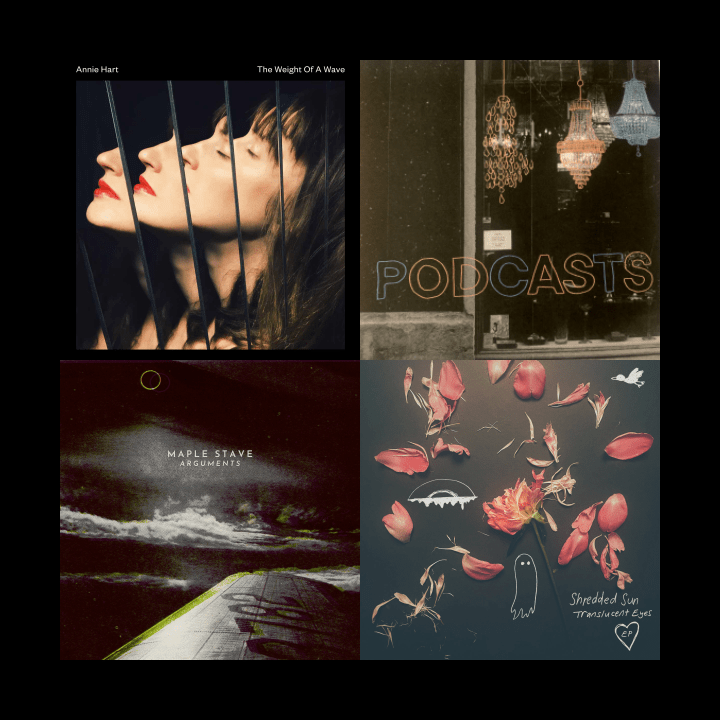
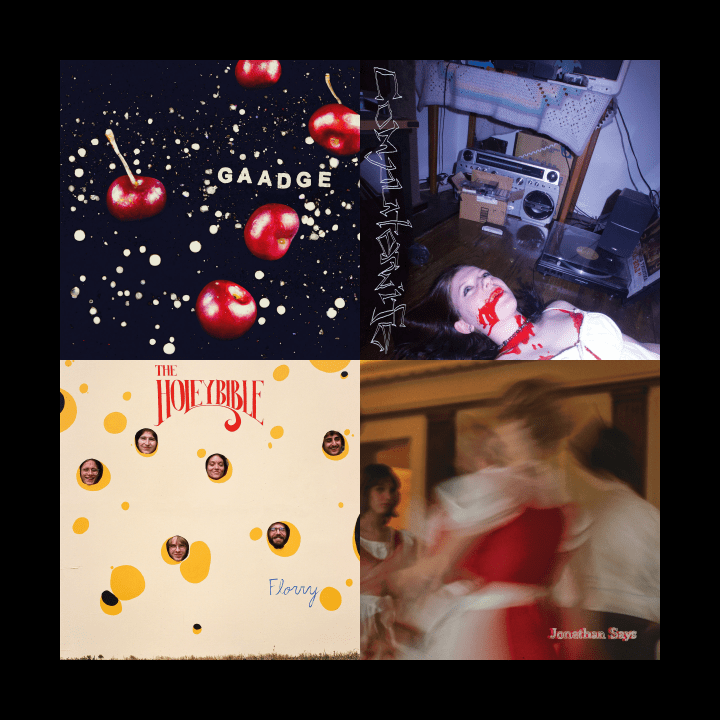


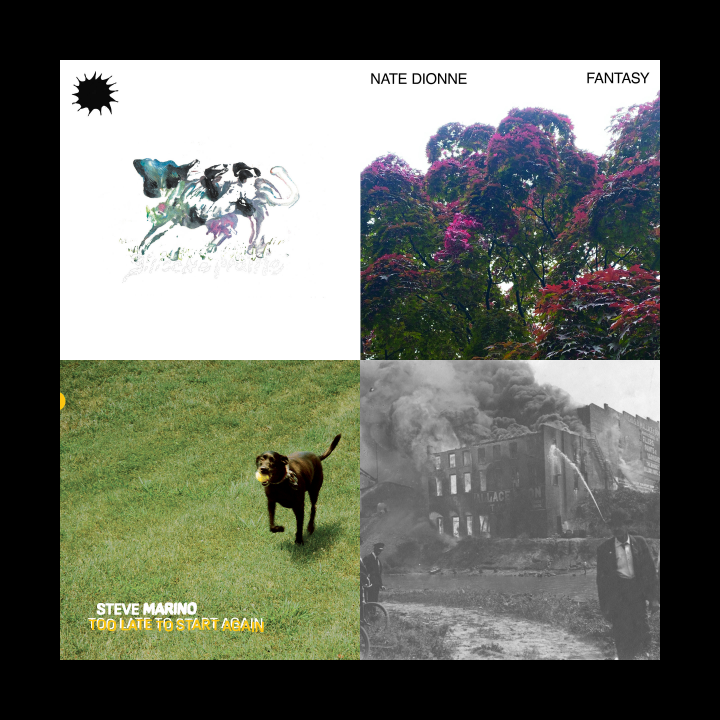
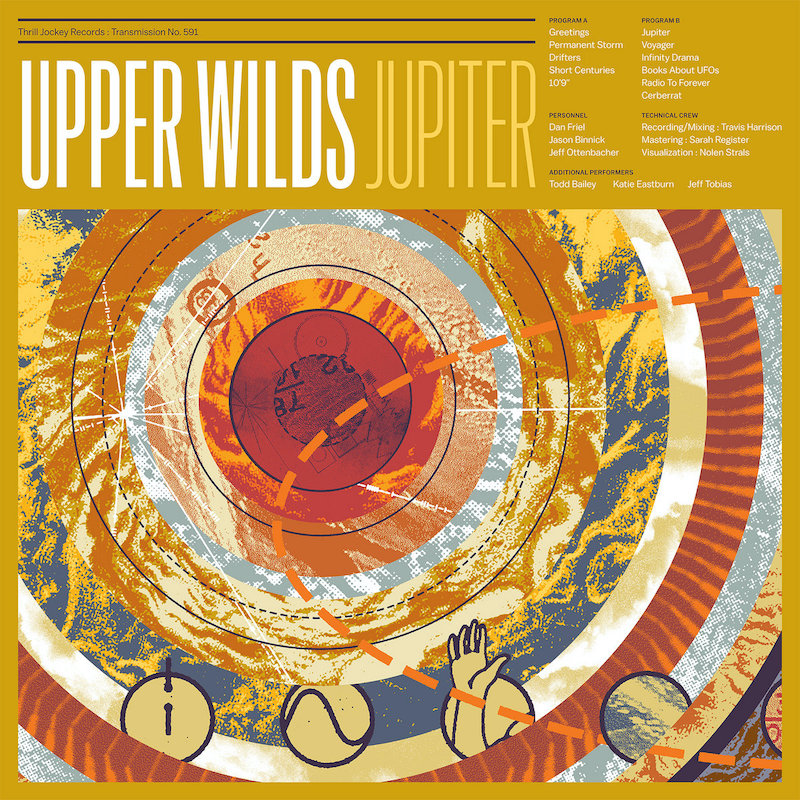


 Rosy Overdrive