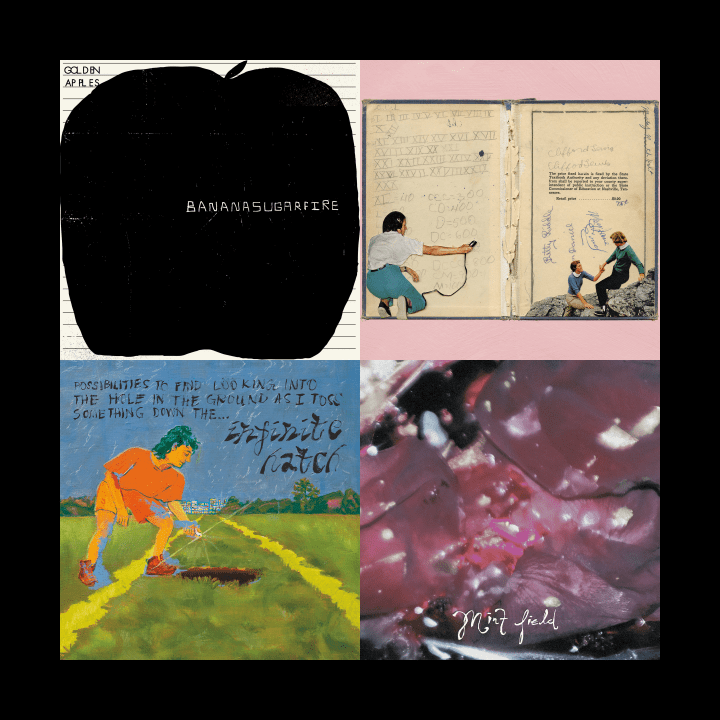
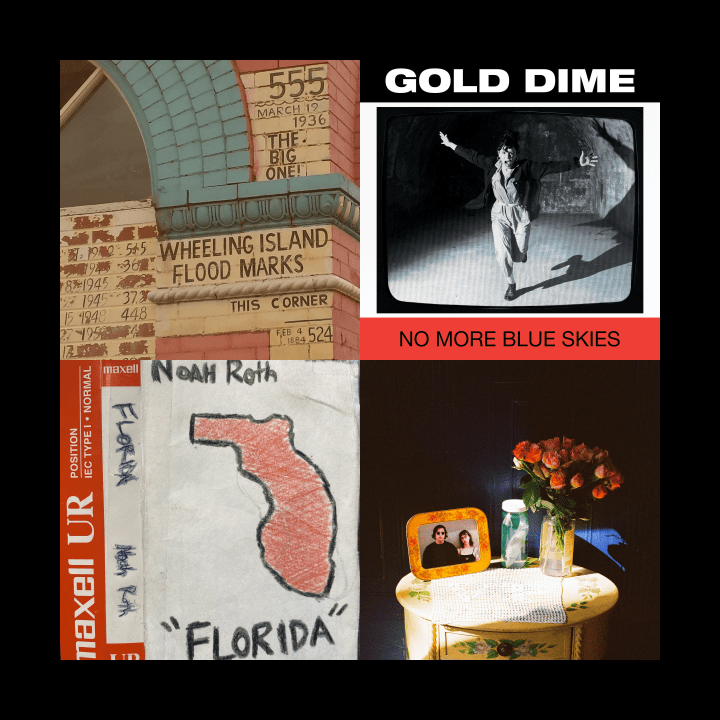
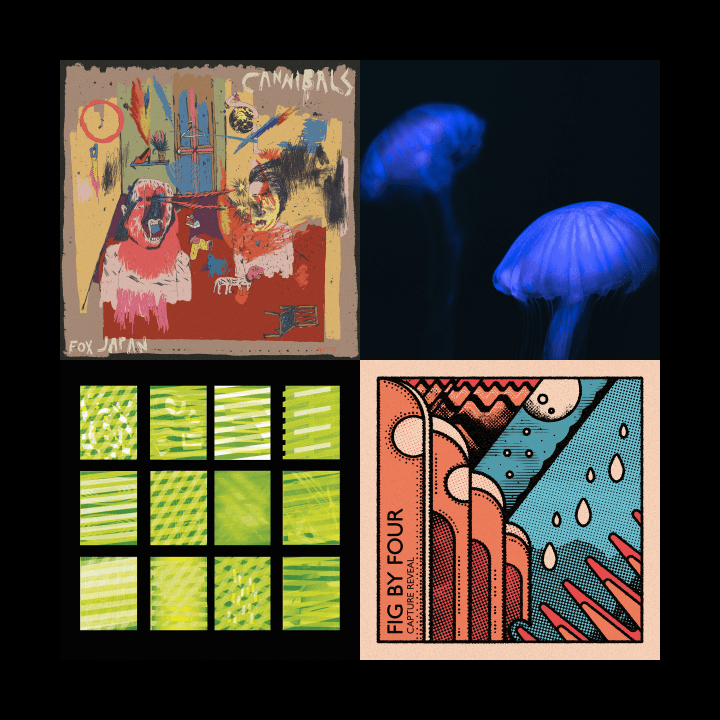
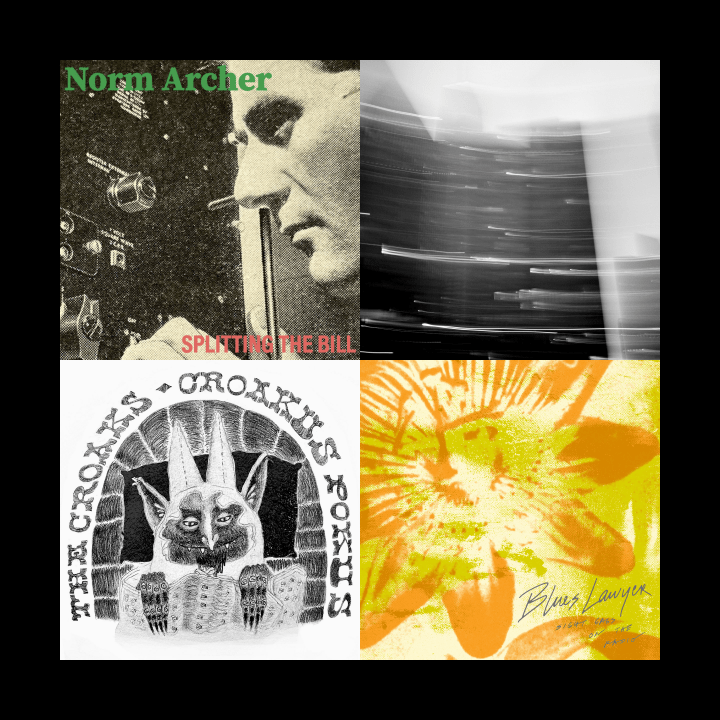
Pressing Concerns: Swansea Sound, Proper., Melancolony, Bark

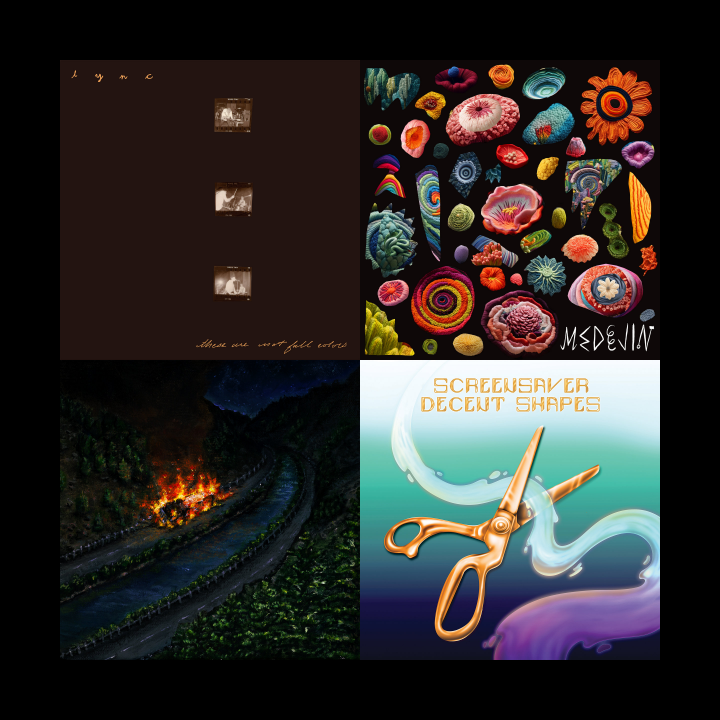
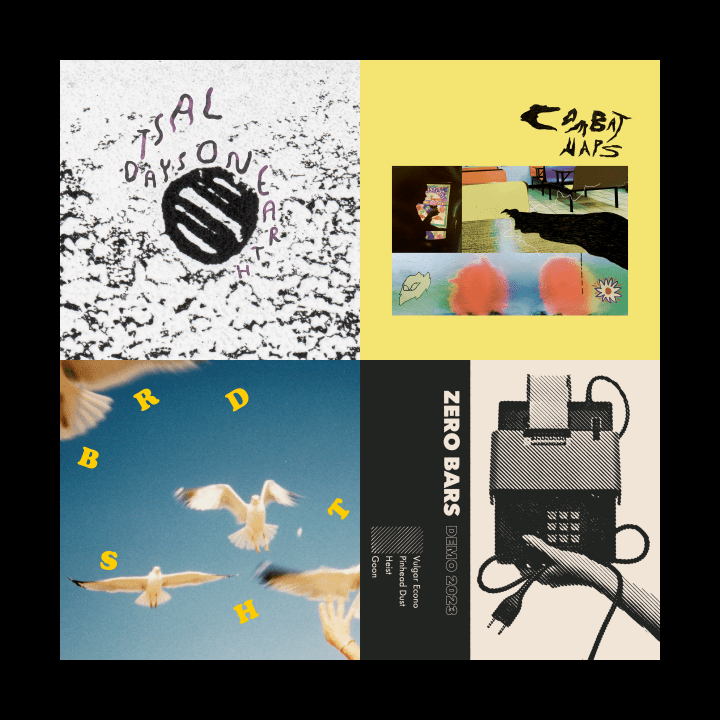
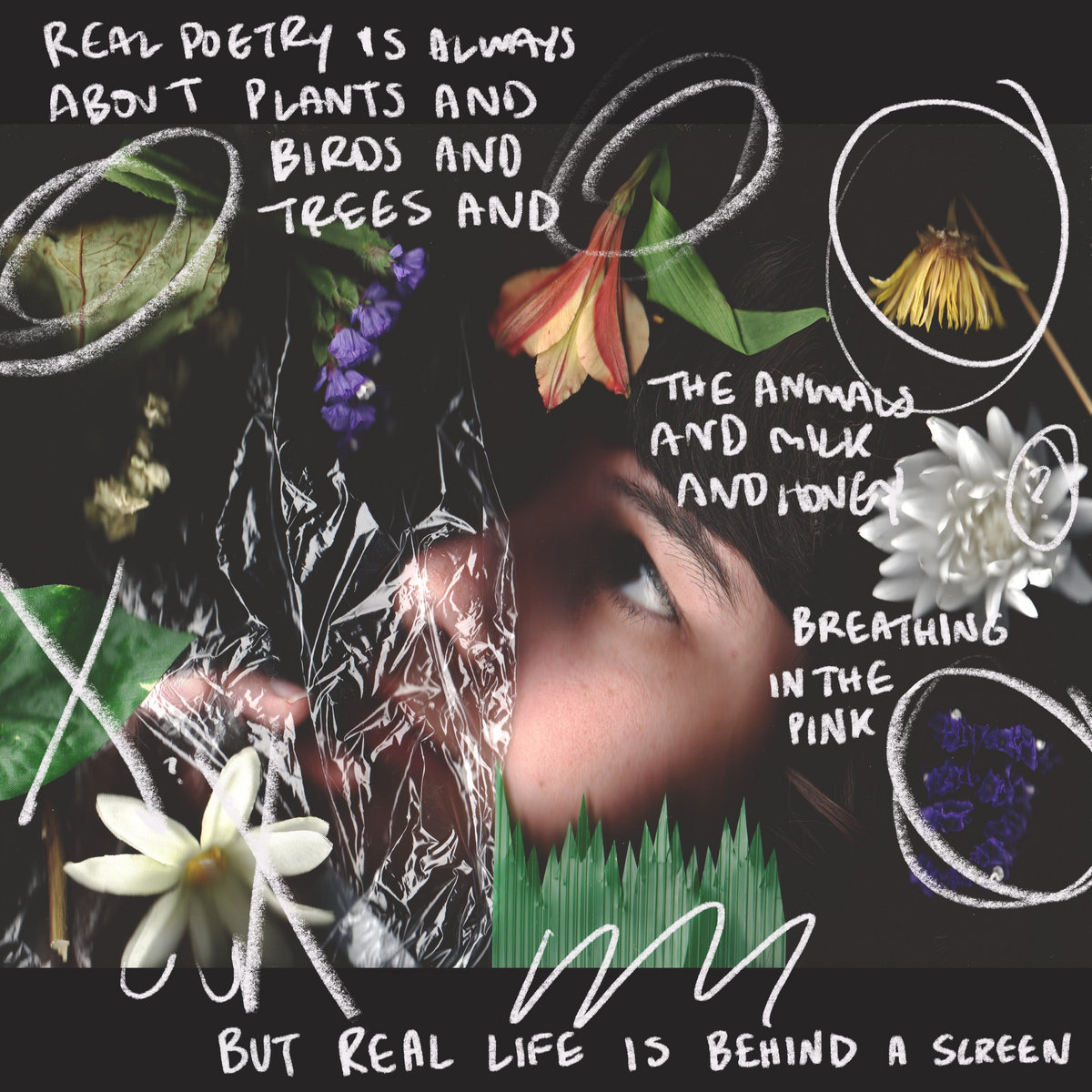
Good morning, all! This Monday’s Pressing Concerns rounds up four great records from the past couple of weeks: new albums from Swansea Sound, Melancolony, and Bark, and a new EP from Proper.. Look for the August playlist to go up later this week, and the normal Thursday Pressing Concerns as well. For now, though, enjoy the four that I write about below.

If you’re looking for more new music, you can visit the site directory to see what else we’ve written about lately. If you’d like to support Rosy Overdrive, you can share this (or another) post, or donate here.

Swansea Sound – Twentieth Century

Release date: September 8th
Record label: Skep Wax
Genre: Indie pop, power pop, twee
Formats: Vinyl, CD, digital
Pull Track: I Made a Work of Art

Over the past couple of years, Skep Wax Records has released indie pop records from new faces (Special Friend’s Wait Until the Flames Come Rushing In), reissued old classics (Heavenly’s Vs. Satan and Le Jardin de Heavenly), and facilitated the release of new music from longtime indie pop stalwarts (The Orchids’ Dreaming Kind, the Under the Bridge compilation). Swansea Sound is a five-piece group that falls into the latter of those three categories–the band is co-led by Heavenly’s Amelia Fletcher and The Pooh Sticks’ Hue Williams, and also features Heavenly’s Rob Pursey on guitar and bass, The Dentists’ Bob Collins on guitar, and Death in Vegas’ Ian Button on drums. Over the course of one full-length album and a handful of singles/EPs (including late 2022’s bilious Music Lover EP), Swansea Sound presented themselves as musicians who, “experience” be damned, have no interest in slowing down or settling into soft rock. Which leads us to their sophomore album, Twentieth Century, a spirited collection of energetic indie-pop-punk.

Swansea Sound undeniably have a sound right out of the late twentieth century–the members’ twee, jangle pop, and post-punk backgrounds pretty much guarantee this from the get-go. With a British sense of irony, Twentieth Century also looks askance at several developments from the time period immediately following it via surf-pop (“Paradise”) and groovy 60s-influenced music (“Greatest Hits Radio”). Lesser bands would take the position of “old folks complaining about the youth”, but songs like “Punish the Young”, “I Don’t Like Men in Uniform”, and the title track flip this on its head by painting flawed portraits of twentieth century-bred people making their way in the modern world, sometimes maliciously, sometimes cluelessly. In “Keep Your Head On”, Fletcher and Williams play a pair of students who seem all too aware of the nefariousness around them (“Keep your head on,” they sing to each other, “‘Cause they will do / Anything to gaslight you”). That these observations are interspersed between songs like “Seven in the Car” and “Pack the Van”, which portray Swansea Sound finding real, genuine inspiration in music, community, and nature, only serve to illustrate that Twentieth Century isn’t interested in being stuck in the past any more than decades of lived experience force its creators to be. (Bandcamp link)

Proper. – Part-Timer

Release date: September 8th
Record label: Father/Daughter
Genre: Emo, punk
Formats: Digital
Pull Track: Middle Management

My favorite song on last year’s The Great American Novel, Proper.’s third full-length record, was “Shuck & Jive”, a towering and raging piece of emo-punk in which the band’s lead singer, Erik Garlington, rages against the still-pernicious corpse of the music industry over an instrumental storm. With that in mind, I was predisposed to like Part-Timer, the New York band’s follow-up EP that fully explores this avenue of songwriting. “A band writing about being in a band” is a topic that falls flat for me more often than not, but Proper. (Garlington, bassist Natasha Johnson, and drummer Elijah Watson) are clearly animated and driven by what they’ve experienced over the past few years. Calling a record a “snapshot” is a cliche by now, but Part-Timer deserves the designation–it captures a band on the upswing, experiencing new heights and asking questions you’re not necessarily supposed to ask (How much bigger are they going to get? Do they *want* to get any bigger?).

The bookends to Part-Timer are the two most restrained songs musically, even as “Marquee” is Proper.’s version of a boast (to those nitpicking at their success: “I agree but wouldn’t change a thing if I could”, they’re “your favorite band’s favorite band with barely 10K listeners”). The three central songs of the EP are more indebted to louder emo-punk, although the PUP-esque aggression of “Middle Management” is the one song where the band truly let loose (What’s triggered this? Well, “More money would be nice, yeah, but I always refuse to play the fucking game” is a key line here). “Potential” is a slick emo-y indie rock tune that’s appropriately pensive, watching someone they “regarded as a peer” in Bartees Strange blowing up. Garlington seems repelled by the idea of getting as big as Strange (like Garlington sings in “Middle Management”, in response to fans telling him his band should be bigger: “I thought we were where we’re supposed to be”). Proper. end by singing “Fuck it, what’s the worst that could happen? / See y’all for LP4 next year” in “Lull”, and it’s anyone’s guess what things will look like for them by then. (Bandcamp link)

Melancolony – Qualia Problems

Release date: September 1st
Record label: Louder Than Milk
Genre: Dream pop, indie pop, post-punk, new wave, synth pop, jangle pop, college rock
Formats: Digital
Pull Track: Pebbles to Throw

Justin Loudermilk first appeared on my radar back in March of this year, when his project Melancolony released Dreaming Backwards, a brief but compelling EP of jangle pop, dream pop, and synthpop. As it turns out, the Santa Cruz-based musician had something even more substantial up his sleeve–a nearly fifty-minute full-length record stuffed full of the same kind of music that graced Dreaming Backwards. The first Melancolony album in three years, Qualia Problems repurposes one of Dreaming Backwards’ five songs (the sublime “Colorless”) and adds eleven brand new Melancolony tracks to create an immersive 80s indie pop-inspired experience. Loudermilk, a middle school teacher, was inspired by being around teenagers to revisit the music of his own youth, citing The Church, The Cure, and R.E.M., among others, as inspiration for Qualia Problems’ sound. 

Qualia Problems begins with the dreamy, textured “Maysong”, before offering up a more pop-based number in “Misophonia”. The brisk “Pebbles to Throw” incorporates synthpop and jangle pop in equal measure, using both to dress up what’s probably the most hummable melody on the record’s first side. The ambitious “Disconnection” blooms into a multilayered, post-punk/new wave explosion in its second half, signaling where the B-side of Qualia Problems aims to travel. The final half-dozen songs stretch out to longer lengths, exploring lengthier instrumental breaks and asking for a little more patience. There’s still plenty of “hits” in the back end–see the fuzzy pop of “Watch Out for the Quiet Ones”, the bright, new wave-y “First Song of Summer”, and closing synthpop piece “Fight or Flight (It’s Over)”. Qualia Problems is an album to get lost in, to be sure, but there’s plenty of memorable markers along the way. (Bandcamp link)

Bark – Loud

Release date: September 5th
Record label: Dial Back Sound/Cool Dog Sound
Genre:
Garage rock, southern rock, power pop, alt-country
Formats: Vinyl, CD, digital
Pull Track: Love Minus Action

One of the great undersung bands of the 1980s was Jackson, Mississippi’s The Windbreakers, an excellent jangle pop/college rock/power pop group co-led by Tim Lee and the late Bobby Sutliff. Maybe you heard “All That Stuff” on the 2020 compilation Strum & Thrum: the American Jangle Underground 1983-1987; if you haven’t heard their 1985 album Terminal, do yourself a favor and seek that one out. Lee began a solo career while The Windbreakers were still a going concern, and when their output slowed after the 80s, his own albums became his primary creative outlet. One fixture in Lee’s solo material for two decades has been his wife, Susan Bauer–it’s no surprise, then, that they eventually began a collaborative duo, Bark, in the mid-2010s. Loud is the band’s fourth full-length album, and it’s a sharp collection of Mississippi rock and roll from Tim (on the six-string bass) and Susan (on drums; they both sing lead).

On Loud, the band (featuring a host of guest musicians, including Drive By Truckers’ Matt Patton on bass and Jay Gonzales on keys) marry Tim’s power pop roots with deep southern rock with the skill of seasoned veterans. The record opens with a big hook in “Love Minus Action”, with sharp garage rock guitars filling the space in between repetitions of said hook. “Radar LUV” is humble, handclap-aided roots-y power pop track reminiscent of The Bottle Rockets, and crunchy rockers like “Work in Progress” and “Gutters of Fame” give Loud a sturdy backbone throughout. Still, Bark have plenty in the tank in terms of variety–they’re not going to get fancy, but they can still shape their sound into scorching, country-folk-rock in a cover of David Olney’s “James Robertson Must Turn Right”, twangy new wave/glam in “Rock Club”, and exploratory, cavernous indie rock in closing track “Present Tense”. Pretty much the whole way through, though, the rumbling tones of Bark demand to be played Loud. (Bandcamp link)

Also notable:

Pressing Concerns: Smug Brothers, Squiggly Lines, DAIISTAR, Soft Science

Welcome to this Thursday’s Pressing Concerns! Four great new albums will shortly be introduced to you, the reader–and all of them come out tomorrow, September 8th. We’ve got new ones from Smug Brothers, Squiggly Lines, DAIISTAR, and Soft Science in this edition. If you missed Tuesday’s post featuring Star 99, Onesie, Pretty in Pink, and Telemarket, I’d recommend sidling up to that one as well.

If you’re looking for more new music, you can visit the site directory to see what else we’ve written about lately. If you’d like to support Rosy Overdrive, you can share this (or another) post, or donate here.

Smug Brothers – In the Book of Bad Ideas

Release date: September 8th
Record label: Anyway
Genre: Lo-fi power pop, post-punk
Formats: Vinyl, digital
Pull Track: Mistaken for Stars

Columbus’ Smug Brothers are true lo-fi indie rock lifers, with the Kyle Melton-led band having been at it for nearly twenty years (almost all of it also with drummer, “co-pilot”, and former Guided by Voices member Don Thrasher). The group has been putting out records of mid-fi bite-sized power pop at a steady clip and haven’t slowed down in recent years (see the three albums they released in 2019, for example). Their newest album, In the Book of Bad Ideas, is yet another collection of distorted, hooky fare that puts them in line with bands like fellow Ohioans Connections and Tennessee’s Mythical Motors, but with a hint of the post-punk darkness that frequently lurks outside of Smug Brothers’ jangle. The new album sports the same lineup as last year’s Emerald Lemonade EP–Melton, Thrasher, bassist Kyle Sowash and lead guitarist Scott Tribble–although the latter of the four left the band amicably mid-recording, leaving Melton to supply a good portion of the record’s leads.

While they’re not exactly a full-on punk rock group, the three-and-a-half Smug Brothers give full-band weight to Melton’s pop songs. It might’ve been easy for Thrasher and Sowash to step back a bit given that Melton has embraced synths and vintage, new wave-y college rock on In the Book of Bad Ideas, but instead we get songs like “Helium Drag”, a classic Smug Brothers tune, just with some synths laid over it. And “classic Smug Brothers” really does describe this album as a whole–one hit after another, from the stop-start laser melodies of “Stiff Arm at the Still Water” to the sub-two minute subtle beauty of “Mistaken for Stars” to the bouncy power pop of “Let Me Know When It’s Yes” (I love how this one sounds like Connections). If you stick around for the second half of In the Book of Bad Ideas, you’re rewarded with Smug Brothers at their most offbeat–the sixty-second “Knee-High by the Fourth of July” dispenses with percussion entirely, “An Age in an Instant” meditates in a pastoral field but still can’t help sticking in a soaring guitar solo, and “Enceladus Lexicon” is like if The Cars were a computer program that got corrupted by a virus. In the Book of Bad Ideas certainly defies its title with a collection of songs built out of good ones. (Bandcamp link)

Squiggly Lines – Re: Love Songs

Release date: September 8th
Record label: Sun Bear
Genre:
Folk rock, singer-songwriter, indie pop
Formats: Digital
Pull Track: We’re in a Mouth and It’s Chewing

The person behind Squiggly Lines seems like somebody who’s compelled to just make music. I’m talking about Toronto’s Rob McLay, who has a nice, big back catalog on Bandcamp as Squiggly Lines, in addition to playing drums for Westelaken and having a host of other projects (Daffodil, Made of Moss, The Sweetheart Vine) going on at the same time under the umbrella of Sun Bear Records. Re: Love Songs is the first Squiggly Lines release in three years or so, and it seems to be McLay’s attempt to make a proper album rather than releasing tracks in steady drips. Aiding in this endeavor is a solid lineup of Westelaken’s Alex Baigent on drums, Nicole Cain on bass, and Dan McLay on guitar, in addition to several guest contributions (including keyboard from another Westelaken member, Lucas Temor). More than anything else, though, across its eight tracks Re: Love Songs just feels like a front-to-back album rather than a collection of songs. 

This coherence stems both from the playing of the band and McLay’s writing. For the former, Squiggly Lines contains some of the folk rock of their sibling band in Westelaken, but there’s an offbeat, almost experimental indie rock/pop side to them on Re: Love Songs (see the saxophone breakdown in “I Wanted This to Be a Love Song” and the noisy conclusion to “Woke Up Wearing a Wedding Dress”) that evokes everything from Nature’s Neighbor to Nick Thorburn to plenty of their bedroom pop peers. For McLay’s part, the lyrics to Re: Love Songs circle around the concept named in the title, whether it’s the “putting the cart before the horse” of “Woke Up Wearing a Wedding Dress”, the control-costing lovesickness in “That Ain’t Saying Much”, or the blunt takedown in “All of Our Fucking Friends” whose intricacies can only be developed by observing someone closely and intimately. McClay comes off as exhausted throughout Re: Love Songs, particularly on closing track “Daily”. McClay captures a feeling of overwhelmingness as the song’s narrator mulls canceling plans and wonders if this self-destructive cycle is all that’s on the horizon–one gets the sense that the writer wouldn’t be trying to break said cycle and move forward if they weren’t being driven by something as strong as love. (Bandcamp link)

DAIISTAR – Good Time

Release date: September 8th
Record label: Fuzz Club
Genre: Fuzz pop, shoegaze, dream pop
Formats: Vinyl, CD, digital
Pull Track: Star Starter

Austin quartet DAIISTAR formed in early 2020, although it took until this year for any recorded music to surface under their name. Good Time, their debut album, has been preceded by three singles, one of which was paired with a version of Primal Scream’s “Burning Wheel” as a B-side. Their choice in cover songs is a pretty good indicator of where DAIISTAR (guitarist/vocalist Alex Capistran, drummer Nick Cornetti, bassist Misti Hamrick, and keyboardist Derek Strahan) are coming from musically–they’re drawing inspiration from British bands from the late 1980s and early 90s who combined loud, fuzzy guitars with a palette that reached beyond rock music. Primal Scream is, of course, an obvious one, as are names like Spacemen 3 and Loop. While other modern bands like Dazy use distortion and Madchester in service of punk-y power pop, DAIISTAR leans into psychedelia with their sound–although there’s plenty of pop hooks on Good Time too. 

“Star Starter” does what its title suggests–it opens Good Time with a massive song that could’ve been a lost college rock hit from 1989, putting its best foot forward with a dancing beat, cruising guitars, and Capistran’s melodic vocals. “Star Starter” is perhaps the most “alternative dance” that DAIISTAR get on Good Time, but prominent drum machines and grooves mark even the songs that revel in more guitar-forward, shoegaze-y textures. On Good Time, DAIISTAR either rock right out of the gate (as heard on fuzz-fests like “LMN BB LMN” and the heavy floating of “Repeater”) or they build to their finalized walls of sound (like they do in “Purified” and “Say It to Me”). The guitars swirl around the shuffling beat in “Tracemaker” to make a particularly kaleidoscopic highlight, and they do something similar but in a more stretched-out fashion towards the end of the record with “Speed Jesus”. It’s a polished and fully-formed debut from a band that feels like they’ve got a lot ahead of them. (Bandcamp link)

Soft Science – Lines

Release date: September 8th
Record label: Shelflife/Spinout Nuggets/Fastcut
Genre: Dream pop, indie pop, shoegaze, jangle pop, fuzz pop, synthpop
Formats: Vinyl, CD, digital
Pull Track: Kerosene

Soft Science’s origins date back to 2009, but the Sacramento sextet is comprised of musicians that have been at it for even longer–the members’ credits include California Oranges, Holiday Flyer, The Sinking Ships, English Singles and Forever Goldrush, to name an incomplete list. Lines is the fourth album from the band (vocalist Katie Haley, guitarist/synth player Ross Levine, guitarist Matt Levine, drummer Tony Cale, bassist Becky Cale, and “electronics” player Hans Munz), and their first in five years. Soft Science have put together a heavy indie pop record with Lines, one that mixes in distortion and fuzz with a palette ranging from guitar-forward jangle pop to layered synthpop–it sure sounds like the work of a half-dozen collaborators hammering away at these songs for nearly a half-decade, although, importantly, without lapsing into “too much”.

A lot of the balance struck on Lines is achieved by keeping the songs grounded despite all that’s going on in them–opening piece “Low” is the band at their most maximalist and unmoored, but the rest of the first side of the album is laser-focused pop songs, from the brisk fuzziness of “Grip” to the light groove of “Deceiver” to the dreamy jangle of “Sadness”. It’s hard to top the stratosphere-launch of “Kerosene”, in which Haley delivers a hook every bit deserving of its grandiose backing music, although the band don’t stop trying on side two–particularly in the wide-eyed, sweeping synthpop of “True”. They do take a couple detours in Lines’ back half (the psychedelic “Hands” wouldn’t be out of place on that DAIISTAR album I wrote about earlier, and the minimal percussion on “Zeroes” also makes it stick out), and they mirror the record’s opening in final track “Polar” with another noisy excursion. It feels appropriate that Lines ends by closing that particular circle, driving home its full, self-contained feeling. (Bandcamp link)

Also notable:

Pressing Concerns: Star 99, Onesie, Pretty in Pink, Telemarket

Ah, the rare Tuesday Pressing Concerns! I hope you had a nice Labor Day weekend; here’s some good music to take with you back into the working week. New albums from Star 99, Onesie, Pretty in Pink, and Telemarket are featured here today, and I must say, this is a really strong one. If you don’t know these albums yet, get ready. You’re gonna enjoy them!

If you’re looking for more new music, you can visit the site directory to see what else we’ve written about lately. If you’d like to support Rosy Overdrive, you can share this (or another) post, or donate here.

Star 99 – Bitch Unlimited

Release date: August 4th
Record label: Lauren
Genre: Power pop, pop punk, twee
Formats: Vinyl, digital
Pull Track: Vegas

I don’t know too much about Star 99, although I can recognize a winner when I hear one. I do know that they’re a San Jose-based quartet made up of vocalist/guitarist Saoirse Alesandro, vocalist/guitarist Thomas Romero, bassist Chris Gough, and drummer Jeremy Romero (thanks, BrooklynVegan). I also know that Bitch Unlimited is their debut album (following EPs in 2021 and 2022), but that the members have played in Bay Area bands for a while, which makes sense, given how the album sounds. I’m not the first person to point this out, but Bitch Unlimited has that unmistakable sound of early 2010s indie-pop-punk, the stuff that was spreading organically across the United States via bands like Cayetana, Lemuria, P.S. Eliot, Chumped, and countless others (such as fellow Bay Area group Joyride!) that will probably never get enough recognition for how they shaped the state of indie rock today.

Bitch Unlimited is ten songs and 26 minutes long, and just about every second of it is crammed with hooks. Star 99’s philosophy seems to be that there’s nothing that can’t be made into excellent, catchy, fizzy, and quite memorable power pop. Of course, this is certainly aided by the band being well-stocked in the “compelling frontperson” department–Alesandro is the more expressive of the two, and seems to deliver the greater share of the most quotable lines (“To the human condition, I stand in regular determined opposition” in “Cosmic Glue”, and “Poured a glass of water out, it was calcium and lead / An opportunity to recognize that my brain’s a harbinger of death” in “Vegas”, there’s a couple), but Romero’s four songs are made of the same catchy DNA and contain no dips in quality. No matter who’s at the helm, Bitch Unlimited rolls through moments of indie pop rock bliss without fail–the guitar solo reflecting Alesandro’s frustration in “Cosmic Glue”, the dual vocals and keyboard hook in “Jackie”, the way that Alesandro pauses in the middle of singing “small town aristocracy” in “Girl”. All of these wrinkles give Bitch Unlimited an outsized personality, landing punch after punch the whole way through. (Bandcamp link)

Onesie – Liminal Hiss

Release date: August 18th
Record label: Totally Real/Pillow Sail/Kool Kat Musik
Genre: Jangle pop, power pop, psych pop
Formats: Vinyl, CD, cassette, digital
Pull Track: Anemone in Lemonade

Brooklyn quartet Onesie has been at it since 2017; last month’s Liminal Hiss is their third full-length album, but the first one I’d heard from them. Based on their latest record, however, this is a group that’s incredibly up my alley–bandleader Ben Haberland immediately establishes himself as an ace pop songwriter, and the band (also featuring guitarist Lori Bingel, drummer Will Whatley, and bassist Chris Bordeaux) deftly steer his songs through dazzling arrangements of jangle pop, power pop, and psychedelic pop. Onesie have a rock edge to them, although they deploy it strategically–sometimes the ornate touches let the band’s love of 60s/70s studio-based pop rock come through, while some of the looser moments on Liminal Hiss imagine The Chills as a more freewheeling, 90s indie rock-inspired group (like if the Flying Nun bands had taken influence from Pavement and Guided by Voices, instead of the other way around).

The first half of Liminal Hiss is a barrage of warped pop hooks that nevertheless comes through loud and clear. “Permaspring” contains both lethal doses of jangling guitars and stomping power pop, and the swerving chord changes after the chorus reflect the oddball side of Onesie as well as anything. “Cash for Trash” and “Rat Island” also effortlessly stitch together a few different exciting ideas to make multifaceted, captivating pop songs, while “What You Kill” holds back just enough to let its post-chorus guitar stabs hit even harder. The guitar heroics of “Anemone in Lemonade” remind me a bit of the math rock-adjacent latest album from Curling, another band great at finding pop music in unexpected places. Liminal Hiss’ B-side is only “calmer” in comparison to Side A–all these songs still have strong melodies, with “Another Day in the Experiment” and “Let Me Guess” in particular acquitting themselves as top-tier jangle pop, and the whole thing ends with “Live Yuppie Scum”, a piece of prog-pop where Onesie really test the limits of their sound, with fascinating results. Of course, there’s still plenty of hooks in “Live Yuppie Scum”; Onesie never stop delivering those. (Bandcamp link)

Pretty in Pink – Pillows

Release date: September 1st
Record label: Hidden Bay/Subjangle/Little Lunch
Genre: Indie pop, lo-fi pop
Formats: CD, cassette, digital
Pull Track: Pressure Socks

Pillows is the sophomore album from Pretty in Pink, a Hobart-originating, Melbourne-based Aussie trio who make charming, minimal edge-of-the-world guitar pop. Guitarist/vocalist Claire McCarthy, guitarist Lauren Mason, and bassist/drummer Elliot Taylor unite various strains of indie pop from multiple continents with their deceptively humble but deep sound—there’s a melancholy streak to them that reminds me of their Melbourne forebearers in The Cat’s Miaow, their lo-fi attitude reflects both U.S. Pacific Northwest twee and New Zealand’s Flying Nun, and their spare arrangements make it unsurprising that Cardiff’s Young Marble Giants are a frequent point of comparison. Nevertheless, Pillows isn’t weighed down by indie pop history, cultivating a distinct sound led by McCarthy’s aching, bare lyrics and vocals left hanging out in the ether by sparse instrumentals.

“Pressure Socks”, the song that opens up Pillows, is something of a red herring in its particularly Colossal Youth-esque exercise in timing and sharply-deployed, minimal but quite catchy guitar leads–the rest of the record comes off much more loose. The album follows that up with “Pale Blue”, a truly despairing piece of music, and the creeping “No One Else” also marks a highlight of the record’s first side. The second half of Pillows moves forward uneasily, while containing some surprises as well, like the way McCarthy’s vocals take an unexpected turn in the chorus of “Radishes”. The album sneakily has one of the better B-sides that I’ve heard this year–the incredibly sparse “Turtles” is the most haunting song on the album, while “Butterflies” arranges Pretty in Pink’s base elements into a perfect indie pop song that most bands only dream of writing. “Star” ends the record with just a bit of fuzzy guitar over top of a typical Pretty in Pink instrumental–like the rest of Pillows, it remains eye contact until the very end. (Bandcamp link)

Telemarket – Ad Nauseam

Release date: August 25th
Record label: Cloud Recordings/Science Project
Genre: 90s indie rock, noise pop
Formats: Vinyl, digital
Pull Track: Who Was in My Room Last Night?

Telemarket is an indie rock quintet led by singer-songwriter-guitarist Adam Wayton, and rounded out by several members of the Athens, Georgia music scene in guitarist/vocalist Will Wise, bassist Hunter Pinkston, drummer Jack Colclough, and vocalist/keyboardist Josie Callahan. The band’s been kicking around for a while (their first EP came out in 2018) but Ad Nauseam is their proper full-length debut, and it’s an intriguing record of warped 90s-inspired indie rock (their Bandcamp description: “phone scam slacker rock”). Although I hear more of The Grifters, Sebadoh, and even Swirlies than their hometown scene of Elephant 6, the weirder moments from that collective certainly bubble up on a few of Ad Nauseam’s thirteen songs (to the point where its release on Elephant 6 veteran John Kiran Fernandes’ Cloud Recordings makes perfect sense).

As soon as the bizarre snippet of the opening title track gives way to the record’s dozen “proper” songs, Telemarket make it clear that we’re in for some fuzzy, distorted pop music. “Who Was in My Room Last Night?” is a weird but welcoming piece of warped, layered lo-fi psychedelia reminiscent of early Olivia Tremor Control, making it one of the most overtly Elephant 6 tracks on Ad Nauseum. The revved-up tones of “How’s About Now” flirt with shoegaze, while “In the Morning” is weirdo-noise-cow-punk at its finest. Ad Nauseum keeps the offbeat energy up throughout the album, whether it’s the heavy textures of “Under the Sun”, the Ramones-in-a-basement thrashing of “Through My Head”, or the multilayered psychedelia of “Big Bend”. Wayton and the band do offer up a few breaks in the noise, like the acoustic pop of “Lies We Tell Ourselves”, the ambient folk of “The Way That Things Are”, and the solo, Mangum-esque strumming of “Hanged Man”. Still, for the most part Ad Nauseum dresses up its songs in ample distortion, trusting the listener to meet them through the noise. (Bandcamp link)

Also notable:

Premiere: Tucker Riggleman & the Cheap Dates, “Queen of Diamonds”

One of the first records I wrote about on this blog was Alive and Dying Fast, the debut full-length album from West Virginia’s Tucker Riggleman & The Cheap Dates, which ended up being one of my favorite albums of 2021. Riggleman has been playing in bands around Appalachia for over a decade now–he led the grunge-rock power trio Bishops, as well as playing in Prison Book Club along with John R. Miller and William Matheny, and The Demon Beat along with Rozwell Kid’s Jordan Hudkins. Alive and Dying Fast was Tucker Riggleman’s first major solo statement, and it’s an excellent, fully-realized display of his experience-gained skill as a songwriter.

The Cheap Dates (Riggleman, along with bassist Mason Fanning and drummer M Tivis Clark) have been putting the finishing touches on their sophomore album, due out in early 2024 on WarHen Records (Dogwood Tales, Phil Cook, The Dexateens). We’ve already heard one song slated to appear on the as-of-yet untitled new album, “Virtue”, a great tune that I wrote about back in April. Riggleman and his band are now back with the second single from their next record, “Queen of Diamonds”, a song that expands the upcoming album’s scope beyond the country-rocking “Virtue” but hangs together with the previous single thanks to Riggleman’s lyrics.

The Cheap Dates are no strangers to rootsy rock music, but “Queen of Diamonds” hews closer to straight-up country than their typical fare, both in its instrumental and in Riggleman’s writing. The song’s music heavily features organ by guest player Lee Carroll (longtime keyboard player for The Judds), while Fanning and Clark’s rhythm section settles into a simple trot across the song’s three minutes, allowing for Carroll’s showy playing and Riggleman’s singing to take the main stage.

The lyrics of “Queen of Diamonds” are country music at its best as well, conveying deep longing economically with some well-put metaphors. “She’s the queen of diamonds, and I’m just another broken heart,” begins Riggleman, and later, “She’s a blooming lily, and I’m just an old sticker bush”. Although Riggleman’s closing conclusion is “I guess I was barking up the wrong tree,” with an audible shrug, that doesn’t take any of the sting out of the questions Riggleman asks in the refrain. Maybe he’s being rhetorical when he asks “How do you find something so pure?”, but I’m sure he’d listen if you had any leads.

The Cheap Dates’ M Tivis Clark created the single’s artwork, and he’s also behind the song’s video, which you can view below. The visuals are quite striking, as it takes the song’s title as literally as possible (if playing card-featuring content is your thing, the “Queen of Diamonds” video has it in spades. They’re all decked out in red, white, and black. They aced it.)

The Cheap Dates celebrate their new single with a couple of shows in the Upland South–catch them on September 2nd in Lexington, and on the 3rd in Nashville. They’re playing Clientele Art Studio in Wheeling, West Virginia on October 13th as well.

Pressing Concerns: Perennial, Ironic Hill, Corker, The Natvral

Hello, readers! Today is the Thursday edition of Pressing Concerns, and this one’s got four records that come out tomorrow for you to get extremely excited about–we’re talking about new albums from Ironic Hill, Corker, and The Natvral, and a new EP from Perennial. If you missed the Monday edition of Pressing Concerns, which covered new records from Helpful People, Ovef Ow, Wandering Years, and Dabda, check that one out too.

If you’re looking for more new music, you can visit the site directory to see what else we’ve written about lately. If you’d like to support Rosy Overdrive, you can share this (or another) post, or donate here.

Perennial – The Leaves of Autumn Symmetry

Release date: September 1st
Record label: Self-released
Genre: Post-hardcore, art punk, dance punk
Formats: Vinyl, digital
Pull Track: Hippolyta!

Like many (but not nearly enough) others, my introduction to Perennial was last year’s In the Midnight Hour, an excellent art punk album that ended up being one of my favorites of 2022. It’s an “a-ha moment” record, zeroing in on a relatively forgotten time in indie rock history two decades ago when bands were tossing fiery garage rock, thrashing post-hardcore, and sassy dance punk together and making aural fireworks. In the Midnight Hour balanced the raw kinetic energy of the trio (vocalist/multi-instrumentalists Chelsey Hahn and Chad Jewett plus drummer Wil Mulhern) with a full, clear recording produced by The World Is a Beautiful Place & I Am No Longer Afraid to Die’s Chris Teti–a combination so successful that Perennial decided to revisit some of their earlier material with the same setup. The Leaves of Autumn Symmetry is a five-song EP containing “reworkings” of select songs from their 2017 self-recorded debut, The Symmetry of Autumn Leaves.

Since I came to Perennial before its time, I wasn’t familiar with the original versions of these songs beforehand, but listening back to them, I can say that the band keep their initial structures fairly intact on the new recordings. The Leaves of Autumn Symmetry, then, seems to exist to both give the band a chance to redo these songs after growing as a group, and to shine a light on their lesser-known material with the help of Teti’s production. It succeeds on both counts–Perennial have clearly taken leaps forward since 2017, and it comes through on these spirited, full-steam-ahead readings (a revolution that is again aided by the record’s clear sound). The band leaves a trail of destruction in under ten minutes–several songs on here, most notably the no-fat chant-punk of “Hippolyta!” and the scorching “Dissolver”, would’ve been right at home on In the Midnight Hour. The post-hardcore screaming of “Fauves” is perhaps more reflective of the early Perennial, but rather than drop it in the re-recording, the band embrace it and make it work–and even though they’ve only got a short amount of time to work with, they still start off the one-minute “The Leaves of Autumn Symmetry” with an intro that ends up taking about half the song. Perennial continues to impress me with the amount of stuff they jam into their relatively short records–as a stopgap between In the Midnight Hour and their in-progress third album, it more than provides enough. (Bandcamp link)

Ironic Hill – Ironic Hill

Release date: September 1st
Record label: Self-released
Genre: Lo-fi indie pop, singer-songwriter
Formats: Cassette, digital
Pull Track: Wish

Ironic Hill is an anonymous United Kingdom-based singer-songwriter who’s been steadily releasing singles for the majority of 2023. This has culminated in the first collection of Ironic Hill’s music, a self-titled cassette featuring ten examples of the songwriter’s humble, no-frills, but nevertheless quite compelling take on guitar pop music. The songs on Ironic Hill are recorded about as barebones as something that could conceivably be described as “pop music” can be, the titles are all one-word, and both the lyrics and their vocal delivery feel stream-of-consciousness, like (to use an actually fitting cliche) diary entries set to music. Ironic Hill sounds like the result of someone working things out in real time, and the person behind it is a compelling enough writer to let this process lead an entire record and have it be a success. 

Uncertainty is a theme throughout Ironic Hill, from the various “maybe”s in closing track “Fine” to the thought of “Maybe it’s okay to guess” in “Easy” to the final couplet of “Wish”, in which the singer reflects on his dreams without being able to decide if he should let them go or not. Embracing the wavering in a climate that increasingly demands certainty and confidence in everything one says and does is exciting in its own way–Ironic Hill offers up the contradictions inherent to a wandering mind and declines to neatly wrap them up for the listener. Ironic Hill is a personal writer (not just of music) who sings a song about how “maybe it’s better to repress” (“Easy”), and of the instrumental track “None”, he writes “sometimes I just don’t want to say anything”. The observations of Ironic Hill aren’t “behind the curtain” so much as the result of an absence of one–when the narrator sings “I don’t know why I feel this way / So don’t ask me to explain,” in “Nothing”, we don’t learn what’s going on, just that he’s thinking about what’s going on. This continues all the way to the end of Ironic Hill. The last line in “Easy” is “Maybe I need to end what I’ve begun”–it has the shape of a “normal” closing line, but nothing has actually ended–it’s just a thought drifting through Ironic Hill’s mind. (Bandcamp link)

Corker – Falser Truths

Release date: September 1st
Record label: Feel It/Future Shock/Urticaria
Genre: Noise rock, post-punk
Formats: Vinyl, cassette, digital
Pull Track: The Cold Air

Another week, another exciting new garage punk group from Cincinnati. This one, Corker, is not a completely new face–they debuted on Future Shock (the label at the epicenter of the city’s burgeoning scene) with 2021’s A Bell That Seems to Mourn EP, and they partnered with Feel It (the label who’s recently taken to shining a larger spotlight on said scene since relocating there) for last year’s “Lice” single. The quartet of vocalist/guitarist Luke Corvette, guitarist/synth player Cole Gilfilen, bassist/synth player Ryan Sennett, and drummer Alex Easterday have thus been building up to their full-length debut for a couple years now, and with Falser Truths, they deliver an excellent document of underground rock and roll music. While there are certainly traces of fellow Cincy bands like the dubby, deconstructed post-punk of The Drin or the basement-rock coldwave of Crime of Passing, Falser Truths owes just as much to blunt noise rock as the art punk of their peers.

Corker come out swinging with the pummeling “The Cold Air”, with a frantic drumbeat anchoring a just-as-frantic performance from the rest of the band that builds to a controlled chaotic conclusion, while “Anomie” and “Edge of Teeth” both contain plenty of bite as well in the form of jagged guitar lines and distorted, prominent basslines. Starting with “Seeking, Marching”, Corker start to populate their version of punk rock with a bit more nuance–both it and the two songs immediately after it show a hint of restraint, rocking out but not just rushing to the finish line. Closing Falser Truths with the seven-minute “Sour Candy” is their boldest choice, but one that pays off, because that song–a post-punk garage tune that works itself up into a squall of pounding, hailing noise as it draws to a close in its final minute or so–is a capstone track if I’ve ever heard one. (Bandcamp link)

The Natvral – Summer of No Light

Release date: September 1st
Record label: Dirty Bingo
Genre: Folk rock, alt-country, country rock
Formats: Vinyl, digital
Pull Track: Carolina

Kip Berman is and probably always will be most famous for fronting The Pains of Being Pure at Heart, the New York fuzz-dream-pop group that put out four records from 2009 to 2017 before calling it quits. Over the past couple of years, however, Berman has reinvented himself as The Natvral, a project that leans into roots rock, folk rock, and Americana. The Natvral’s first album, 2021’s Tethers, was a perfectly fine record, but their sophomore album, Summer of No Light, feels like a step forward for Berman. It’s the sound of Berman finding his footing and settling in comfortably in his new sound–one that’s in the realm of “alt-country” and is plenty folky, sure, but also one cognizant of rock and roll and guitar pop in a way reminiscent of troubadours like Daniel Romano and Hiss Golden Messenger. 

Although it was written under the shadow of the pandemic and the album title references the 1816 “year without a summer”, Summer of No Light is the most spirited and freewheeling that The Natvral have sounded yet. “Lucifer’s Glory” and “Carolina” come storming right out of the gate, electric-sounding pieces of power-pop-country-folk that announce that Berman’s really “hit on” something with this combination. The handclap-aided “Summer of Hell” is maybe a little more subtle, but it’s just as catchy (if not more so), and the swinging “A Glass of Laughter”, the cruising “Your Temperate Ways”, and the smooth “Wait for Me” keep the record’s energy up throughout its middle and back half. Even the slower songs on Summer of No Light are boosted by the band’s energy–“The Stillness” and “Wintergreen” both creep past five minutes, but contain plenty of exciting rock moments as they expand from their relatively quiet beginnings. The takeaway from Summer of No Light seems to be that if something does blot out the sun, The Natvral will go dancing in the dark. (Bandcamp link)

Also notable:

Pressing Concerns: Helpful People, Ovef Ow, Wandering Years, Dabda

On this Monday in August, we have once again gathered here to discuss, consider, and listen to new music. Specifically, new albums from Helpful People, Ovef Ow, and Wandering Years, and a new EP from Dabda. Those are the ones for today. If you don’t like them–well, first of all, you’ve probably got bad taste, but just wait a few days and we’ll have four other ones instead.

If you’re looking for more new music, you can visit the site directory to see what else we’ve written about lately. If you’d like to support Rosy Overdrive, you can share this (or another) post, or donate here.

Helpful People – Brokenblossom Threats

Release date: August 27th
Record label: Tall Texan/Burundi Cloud
Genre: Jangle pop, indie pop
Formats: Vinyl, digital
Pull Track: You Don’t Have to Know Where to Go

As if Glenn Donaldson didn’t have enough going on with the near-continuous stream of new music he’s releasing as The Reds, Pinks & Purples (which just this year has included the excellent The Town That Cursed Your Name and a handful of EPs), the San Francisco jangle pop artist has also been known to take part in other, more collaborative projects from time to time. The most recent one had been Painted Shrines, a 2021 project with Jeremy Earl of Woods, but this month sees the debut full-length album from Helpful People, the duo of Donaldson and Carly Putnam (The Ollies, The Mantles, Art Museum). Five of the dozen songs from their first album, Brokenblossom Threats, had been released digitally by Burundi Cloud last year–2023 sees the record get a vinyl release via Tall Texan (Alien Eyelid, Idle Ray, David Nance), complete with seven new songs to turn it into a well-rounded full-length album.

Putnam sings lead vocals throughout Brokenblossom Threats but the two split music and lyric writing, something that is immediately apparent as the record kicks off with “You Don’t Have to Know Where to Go”. The track begins with a fuzzy melodic electric guitar line riding alongside a gentle acoustic strum–it has Glenn Donaldson written all over it, and indeed it hits the same mark as some of the more “electric” material on The Town That Cursed Your Name. What follows are eleven more songs that fully embrace guitar pop, sometimes also in a very Reds, Pinks & Purples way (particularly in the low-key “Bugs from Below” and “To Live with Yourself”, although the chorus to closing track “Wrong Way Rainbow” is also quite Donaldson-esque). Whether it’s Putnam’s influence or Donaldson probing new territory, however, Helpful People also explore some louder areas–the power chords of “Empty Heads” is the most obvious one, but several songs on the album punctuate their indie pop foundations with amplifier fuzz. Putnam’s vocals are less wistful than Donaldson’s and a bit more matter-of-fact, which fits this looser style. As a whole, Brokenblossom Threats is a seamless and effortless-sounding pop album, a successful collaboration between two artists in sync with each other. (Bandcamp link)

Ovef Ow – Vs. the Worm

Release date: August 25th
Record label: What’s for Breakfast?/Oort Cloud
Genre: Post-punk, dance punk, garage punk
Formats: Vinyl, CD, digital
Pull Track: Fauxtography

Chicago’s Ovef Ow has been kicking around since 2015, and they put out three EPs in the second half of the last decade, but Vs. the Worm is the quartet’s first full-length album. The band (bassist/vocalist Marites Velasquez, drummer/vocalist Sarah Braunstein, synth player Kyla Denham, and guitarist Nick Barnett appear to fall on the new wave-y end of the modern post-punk spectrum, sporting a fun, synth-colored sound that reflects their stated love of The B-52’s. At the same time, though, there’s a garage-y edge to their sound that puts them not too far from fellow Windy City punk bands like Cel Ray and Abi Ooze–as well as Sweeping Promises, at whose home studio Ovef Ow recorded their debut album. Beneath Vs. the Worm’s shiny surface lurks a tough art punk group, one that finds room for experimentation in their sound but also delivers it with a full band might.

After the future-synth sounds of the 30-second “Moonbeams”, Ovef Ow kick off their first album with a few tunes that work best played loud. “MAD” is a synthpunk prowler, letting its instrumental rise and fall excitingly, before the surf-punk of “Fauxtography” finds the band hitting the gas pedal even harder. Ovef Ow excel in the world of distorted, scorching post-punk tunes–the slow-burn “First Day”, the murky but still sharp “Daylight”, and the big riff of “Anatomy” all find the band cruising through a genre of music that seems to come naturally to them. The offbeat dance-punk of “Big Black and the Preacher” kicks off side two of Vs. the Worm with a welcome curveball, and while neither “Time Zones” nor “Makibaka” are huge departures from the record, the drama of the former and subtlety of the latter lend further variety to the album’s back end. Still, Ovef Ow wrap up their opening statement with “Do the Wurm!”, a meaty piece of “Devo-core” punk that finds Ovef Ow fully in their element. (Bandcamp link)

Wandering Years – Mountain Laughed

Release date: August 25th
Record label: Candlepin
Genre: Slowcore, 90s indie rock
Formats: Cassette, digital
Pull Track: Two Days

Brooklyn’s Wandering Years have put out a couple of home-recorded releases since their debut in 2021–the first I’d heard of them was last year’s Wandering Years Retirement Community EP, their first release on Candlepin Records. Mountain Laughed is the first full-length studio album from Wandering Years, and its slowcore, fuzzy indie rock, and space-y folk rock-influenced sound is right at home on Candlepin’s roster. Wandering Years remains the project of Gene Stroman, but both the recording of the album (made with Bradford Krieger of Courtney and Brad at his Big Nice Studio) and the participation of other musicians (a half-dozen other people are credited with instrumental contributions on the album) push Mountain Laughed beyond the modern lo-fi, downcast bedroom indie rock boilerplate album. 

Stroman and the rest of the album’s contributors aim high on Mountain Laughed’s thirteen songs and fifty minutes, and they end up with an album that summits these peaks and then some. The album is a lot to take in, but the range that Wandering Years displays helps one grab ahold of it–there are great, big displays of electric indie rock in songs like the twin-six-minute pair of “New Year Song” and “House Party”, but these are complimented by shorter and quieter valleys of tracks that connect them. The sub-two minute acoustic “Rained Today” buffers the upbeat, fuzzy “Morning” and the curious spoken-word atmospheres of “Satori”. In Mountain Laughed’s second half, the lightly-twangy rock of “News from Outside” peeks out in between “Tabebuia” and the title track, while the pedal-steel-featuring “Nashville, Etc” rises and falls all on its own.  Wandering Years use whatever they have to create this feeling–one of the best songs on the album, the wide-eyed heartland rock of “Two Days”, gets so much mileage out of getting two days off work in September. The mountain is made up of small things like that. (Bandcamp link)

Dabda – Yonder

Release date: August 25th
Record label: Electric Muse
Genre: Math rock
Formats: CD, digital
Pull Track: Playing with Fire

Dabda are an explosive math-y indie rock band from Seoul, South Korea who have an album and an EP under their belt since they began in the mid-2010s. The quartet (vocalist/guitarist Jiae Kim, drummer Seunghyun Lee, bassist Keohyun Noh, and guitarist Joseph Lee) sound sharp and in tune with one another on their third record, the five song Yonder EP. Released on Seoul’s Electric Muse (who have also put out music from Say Sue Me and Drinking Boys and Girls Choir, among others), Yonder finds the band stretching out and exploring subtlety while also putting together an excellent rock band performance, frequently within the same song.

Yonder kicks off with “Playing with Fire”, a true math rock barnburner of a track if I’ve ever heard one. The guitars rage and spiral, the percussion hits with full force, and the band break it down in the song’s second half only to let loose even more intently as the song comes to a close. Although Dabda prove they can rock again on the EP (closing two tracks “Cloud City” and “One, World, Wound” both have their moments, they take the rest of Yonder to push outwards in a couple directions. “Flower Tail” is Dabda’s version of a pop song–there’s some guitar heroics and odd chord changes here and there, but also one hell of a melody. The languid “Origin” is Dabda at their most unhurried, letting the song reveal itself on its own timeline, while “One, World, Wound” unexpectedly builds to a big, wide-eyed conclusion to wrap Yonder up. (Bandcamp link)

Also notable:

Pressing Concerns: The Cowboys, Sonny & the Sunsets, Prewn, Ruth Garbus

Welcome to a Thursday Pressing Concerns! This is a really cool and good one! New albums from The Cowboys, Sonny & the Sunsets, Prewn, and Ruth Garbus are here on these digital pages! All of these come out tomorrow!

If you’re looking for more new music, you can visit the site directory to see what else we’ve written about lately. If you’d like to support Rosy Overdrive, you can share this (or another) post, or donate here.

The Cowboys – Sultan of Squat

Release date: August 25th
Record label: Feel It
Genre:
Power pop, garage rock
Formats: Vinyl, digital
Pull Track: Sour Grapes

Bloomington, Indiana garage punk stalwarts The Cowboys put out five albums between 2015 and 2020, gracing the rosters of garage punk stalwarts Lumpy, HoZac, and Feel It Records, before taking a “brief hiatus” for a couple of years. Although I’d heard some of their past material, I actually fully entered the world of The Cowboys earlier this year through Confirmed Bachelor, the debut album from frontman Keith Harman’s other band, Good Looking Son. As it turns out, Confirmed Bachelor’s jaunty piano-led pop rock is an excellent primer for the sixth Cowboys album and first in three years, Sultan of Squat. Hartman and the band’s reunited original lineup (guitarist Mark McWhirter, bassist Zackery Worcel, and drummer Jordan Tarantino) dive further into polished, gleaming power pop on these thirteen songs, although they do it with an exuberance and energy that reflects their garage rock roots.

The record’s opening title track is a power pop classic, a vintage ode to losing and emptyhandedness (hence the titular “squat”) that lobs baseball organs, “bah bah bah”s, and even a bit of the Star-Spangled Banner at the listener in under two minutes. “Raining Sour Grapes” arguably bests it in the number two slot–it’s a rock and roll rave-up of a song brought over the finish line by a particularly showy performance from Harman. These two are a high bar with which to start the record, but The Cowboys don’t rest on their laurels–the band play on, swinging on chandeliers and twirling microphones all the way through. “Sick High Heels” and “Johnny Drives a Beater” most reflect the garage rock side of the group, but they also offer up everything from the Clean-esque Kiwi pop of “McClure” to the slide guitar-featuring “She’s Not Your Baby Anymore” to the bizarre cavernous cabaret of “Phoebe from HR”. There’s not a dud in Sultan of Squat’s baker’s dozen–nothing but a band launching themselves forward, full steam ahead. (Bandcamp link)

Sonny & the Sunsets – Self Awareness Through Macrame

Release date: August 25th
Record label: Rocks in Your Head
Genre: Folk rock, guitar pop, singer-songwriter
Formats: Vinyl, digital
Pull Track: Shadow

Sonny Smith has been putting out music for over two decades now, with the San Francisco-based musician amassing a fairly large discography under his own name and as the leader of Sonny & the Sunsets. Smith is also the founder of Rocks in Your Head Records (Fake Fruit, Ryan Wong, Galore), under which the newest Sonny & the Sunsets album, Self Awareness Through Macrame, is being released. On his latest album, Smith sounds like somebody who’s been honing his craft for a long time–it’s one thing to be inspired by 60s pop and folk music, Jonathan Richman, and Michael Hurley, but it’s another thing entirely to cut through pastiche and window dressing to deliver music that says and does so much so succinctly in the same way as those sources of inspiration. Yet, this is what Self Awareness Through Macrame’s ten songs achieve.

Self Awareness Through Macrame is staunchly breezy and enjoyable, a West Coast guitar pop record if I’ve ever heard one. Songs like “Waiting” and “Shadow” are just fun-sounding, no matter how one slices it, captivating both in the charming music and Smith’s storytelling. The songs where Smith takes an unambiguous central role give the album a fair bit of personality, from the acoustic slice-of-“City Life” and the amusing attempted meditation of “How to Make a Ceramic Dog” (both of these songs mention fascism–it’s not surprising that a songwriter as observant as Smith wouldn’t have his head in the clouds). Everything on Self Awareness Through Macrame feels layered, despite how casually it’s presented–everything from Smith’s voice rising while singing “It’s alright!” in “Androids” to the arm-swinging reminiscing title line of “Memory Lane” feels like the culmination of something meaningful. As light-sounding as Self Awareness Through Macrame comes off, it has plenty of weight to it. (Bandcamp link)

Prewn – Through the Window

Release date: August 25th
Record label: Exploding in Sound
Genre: Experimental indie rock, slowcore, indie folk
Formats: Cassette, digital
Pull Track: Sheila

The newest edition to Exploding in Sound Records is Prewn, a Northampton-based four-piece group led by singer and multi-instrumentalist Izzy Hagerup and also featuring bassist Mia Huggs, guitarist Calvin Parent, and drummer Karl Helander. However, Prewn existed as a solo project several years before the current full-band line-up solidified, and everything you hear on Through the Window, Prewn’s debut album, is played by Hagerup herself. These eight songs were recorded in isolation during the pandemic at Kevin McMahon’s Marcata Studio, and the album does sound like Hagerup took advantage of being alone in the studio to flesh these songs out and stretch them to odd places even as they more or less maintain a rock band structure.

The album opens with “Machine”, a sparse acoustic song featuring just Hagerup’s guitar and vocals. It’s a familiar but solid sound, perhaps priming the listener to settle in for a nice, peaceful indie folk singer-songwriter record. The five-minute country rock dirge of “But I Want More” ups the ante but it isn’t until its noisy final section that Through the Window’s true ambitions begin to come into focus. The album only gets odder and rockier from there, with Hagerup building these songs across rickety foundations that wobble but never break. “Alive” probes similar territory to “But I Want More”, although the casualness of the previous track gets replaced with steely determinedness. The record’s second half feels like an even sharper blade, between the thumping, lo-fi post-punk slouch of “Sheila”, the hypnotic “I’m Gonna Fry All the Fish in the Sea”, and closing track “Burning Up”, which mixes the rawness of Hagerup’s primary style with synthetic elements in an intriguing way. It’s a great collection of songs delivered in a package indicating their songwriter already has developed a distinct style. (Bandcamp link)

Ruth Garbus – Alive People

Release date: August 25th
Record label: Orindal
Genre: Folk, singer-songwriter
Formats: Vinyl, CD, digital
Pull Track: Mono No Aware

Brattleboro, Vermont’s Ruth Garbus has released a half-dozen or so albums and EPs since their 2006 debut album, Ruthie’s Requests. Their newest record, Alive People, is their first since 2019’s Kleinmeister, and (reflectent of its title) was record live last year at 10 Forward in Greenfield, Massachusetts. With help from bassist/synth player elie mcafee-hahn, guitarist Julie Bodian, and vocalist Julia Tadlock, Garbus performs a set of slow-moving, synth-and-guitar-led songs containing elements of folk and pop but without cleanly falling into either category. Interspersed between nine “proper” songs, improvisational pieces of music and a brief spoken word piece from Tadlock round out Alive People by particularly capturing the live and public nature of its initial recording.

The first voice heard on Alive People is Tadlock, offering up a six-second quote before Garbus begins the record with a couple of mountains of songs. “Mono No Aware” and “Healthy Gamer” both come out at around the six-minute mark, and each of them contains plenty in which to get lost, even as the music is carried entirely by Garbus’ guitar in the former and mcafee-hahn’s synths in the latter. Garbus and their collaborators float through the rest of the record in a similar manner–the songs become actually a little bit less imposing after those two, but they’re still quite interesting. “Reenchantment of the World” and “Whisper in Steel” aren’t exactly rock songs, but they do show that letting a little more instrumentation through the door doesn’t dampen Garbus’ voice, and the vocal expressivism in “Rubber Tree” is a nice contrast to the subtle delivery of “Mono No Aware”. Still, the album ends with something that doesn’t sound like anything else on the record–the frantic strums and wordless vocals of “Jessie Farms Nothing”. Garbus’ guitar scurries across the stage and their singing, seemingly manipulated by mcafee-hahn, comes to a head before stopping suddenly, ending this document of a performance built to last beyond one night. (Bandcamp link)

Also notable:

Pressing Concerns: The 1981, Cime, House & Hawk, Knife the Symphony

Happy Monday! In a particularly eclectic edition of Pressing Concerns, today’s post looks at new albums from The 1981, House & Hawk, and Knife the Symphony, and a new EP from Cime. There’s something for everyone here–even you!

If you’re looking for more new music, you can visit the site directory to see what else we’ve written about lately. If you’d like to support Rosy Overdrive, you can share this (or another) post, or donate here.

The 1981 – Move On

Release date: August 18th
Record label: Dandy Boy
Genre: Jangle pop, indie pop, post-punk, dream pop
Formats: Vinyl, digital
Pull Track: Capture My Condition

The 1981, who are probably the best band going that’s named after a year, are the Oakland-based duo of Adam Widener–who released a solid album earlier this year as Pure Material–and Bobby Martinez–who runs Dandy Boy Records (Weird Numbers, Forest Bees, R.E. Seraphin). The hazy bedroom pop of Pure Material’s Orange Whip Licorice is a good starting point for how Widener’s other project sounds, although The 1981 (who have been slowly trickling out music since 2018, including two COVID-era covers EPs) offers more of a robust, full-band take on this sound. The 1981 sport a distinct sound throughout their debut full-length record, with Widener and Martinez pulling from several areas of alternative music history to make up the instrumentals of Move On–C86 indie pop, Flying Nun lo-fi, dream pop, 80s new wave and post-punk all feel incorporated here.

Move On has been a while in the making. Three songs from the record previously appeared on last year’s Polaroids EP, and the oldest of these, “Easy (It’s Not)”, dates all the way back to 2019 (“Nelson’s Camera” sounds pretty different from its earlier version, although the others are, I believe, the original recordings). Widener’s calm-sounding vocals help Move On feel like it’s on the quieter and more pensive side of guitar pop, although he and Martinez sneakily make a lot of noise on a few of these songs–the opening trio of the stomping “Capture My Condition”, the melodic-guitar-stuffed “Easy (It’s Not)”, and the post-punky “Mona Lisa” sound particularly spirited. The 1981 have effectively deemed Move On a breakup album, and while for the most part the music feels more emphasized than the lyrics, there are moments when the themes become more visible (like the slippery “I Love You”, which follows up its titular line with “…but I kinda hate you, too”). Changes throughout Move On are small, but noticeable–as the record progresses, side two highlights like “Expiration Date”, “Empty Eyes”, and “Moving On” feel a little looser, perhaps mirroring the unraveling at the heart of the album. Either way, The 1981 find a way to present a full picture over the course of Move On. (Bandcamp link)

Cime – Laurels of the End of History

Release date: August 18th
Record label: Syzygy/BSDJ
Genre:
Art punk, post-punk, noise rock, experimental rock
Formats: Cassette, digital
Pull Track: The Lost Last Man

One of the most unique-sounding records I’ve heard this year has to be Laurels of the End of History, the latest EP from Cime. Cime is the project of one Monty Cime, a southern California-based Honduran trans woman who released her debut album, The Independence of Central America Remains an Unfinished Experiment, last year. Cime’s one-sentence description of their latest release is “a 20-minute Latin megamix cassette you found unlabelled in a garage sale being performed by a noise rock band”, and while I’m not sure that’s entirely an accurate pitch, it’s also not wrong, and it does get at the fact that the EP sounds like nothing else I’ve heard in recent memory. Laurels of the End of History throws a lot at the listener both thematically and instrumentally–Cime plays no less than seventeen instruments on the EP, and there’s about a dozen guest musicians credited here in addition to her. 

Cime embraces the “mixtape” aspect of the record by rolling together a half-dozen songs that are all pretty different from each other in a way that locks them into one piece. In particular, the way the EP’s middle four songs bleed into each other is satisfying–the bass-driven “La Granadera”, the corrupted-sounding “City on a Hill”, the one-minute gallop of “Yoro”, and the horn-heavy “Spectres of Che” end up sounding like one giant beast of a song. Even as the instrumentals dart from style to style, the tracks are held together by Cime’s folk music-esque lyrics that call for casting off the baggage and exploitation of the past in order to build a better and brighter future. And while the album’s final track certainly continues this thread, the eight-minute “The Lost Last Man” demands to be taken on its own. Cime builds tension and releases it–the first five minutes are noisy, cacophonous free-jazz punk, as Cime paints a dire picture before erupting into a searing cowpunk conclusion: “The cowboys died alone and divided / The natives died alone and divided / Our spirit dies alone when divided”. It’s a warning, but Laurels of the End of History and its array of musical ideas is also a declaration that these aforementioned groups are, in some way, still very much alive and with us. (Bandcamp link)

House & Hawk – 4

Release date: July 13th
Record label: Heavy River
Genre:
Synthpop, sophisti-pop, new wave, indie pop
Formats: CD, digital
Pull Track: I Need a Friend

I hadn’t heard of them before now, but the Pittsburgh duo of Alexander Strung and Steve Ninehouser have been making music together as House & Hawk for a decade. House & Hawk has been putting out a steady drip of singles and records since 2013; the aptly-titled 4 is their fourth full-length album, which makes sense, because I doubt many bands start out sounding like the band do here. 4 is a fascinating pop album–everything from 80s sophisti-pop, turn-of-the-century indie rock, synthpop, psychedelia, and prog color these eleven songs. Ninehouser cites Pinback, New Order, and Steely Dan (among others) as points of reference, a grouping that kind of feels like a “random influence generator”, and yet the album does sound like all of these in various parts. I’d throw in Peter Gabriel (and Genesis in general) in there as well–in no small part due to Strung’s voice, but also in House & Hawk’s ability to hit the pop bullseye in the midst of the grandiose.

The steady drumbeat of “Awestruck” gives way to a kaleidoscopic environment of synths with plenty of melodies contained therein–although none are as captivating as the one delivered by Strung’s voice. This sets the stage for much of 4–musically ambitious, but with Strung’s vocals always leading the way from the center. The brisk percussion and circular keyboards that compose “Resistance (Tribute)” continue the record in the same vein, but then “I Need a Friend” sends the band surprisingly into chugging mid-tempo indie rock territory (without sounding out of place). The golden chorus of “Forever Hot” rises up from the minimalist electronica of its verses, while the slow-moving “Private Elevator” shows off some of the band’s “studio pop” influences. The one song that really leans into the loose, fuzzy guitar-rock of House & Hawk’s past comes on the record’s second side–“That’s Rich” nevertheless has a darker undercurrent that lets it fit in with the rest of 4. Still, the record ends with the duo of “Let’s Make a Movie” and “Just a Million Miles”, two songs that reflect what House & Hawk do best on 4: combining expressive vocals and the sound of machines to make something emotionally resonant and real-sounding. (Bandcamp link)

Knife the Symphony – All the Wrong Turns Taken to Get Here

Release date: June 30th
Record label: Phratry
Genre:
Noise rock, post-hardcore
Formats: Vinyl, CD, digital
Pull Track: Wildling I / Islands

There’s some very good rock music coming out of Cincinnati these days, and it’s time to add noise rock trio Knife the Symphony to the list. Not that they’re a new band–their first album came out all the way back in 2008, and although they put out a handful of split releases in the 2010s, All the Wrong Turns Taken to Get Here actually appears to be the first new music from the group in six years. Still, their new album has the energy and fire of a young and hungry group–one that’s still invigorated by 80s underground rock and punk (if you like all things Touch & Go, Amphetamine Reptile, and Dischord–well, Knife the Symphony do, too). It’s risky business comparing an album to Yank Crime, but between the shredded-but-focused vocals and the propulsive power-trio format that guitarist Jeff Albers, bassist Seth Longland, and drummer Jerry Dirr frequently assume throughout All the Wrong Turns Taken to Get Here, I’m going to go ahead and say I’m allowed to do it here.

All the Wrong Turns Taken to Get Here opens with Knife the Symphony in full “pummel” mode with “Wildling I / Islands”, an excellent little piece of some Unwound-esque circling the drain. The band then step on the gas with the garage-punk/post-hardcore showdown of “Boulevard Inn”, a mode that they lock into several more times on All the Wrong Turns Taken to Get Here to great effect (particularly in “Gouge” and “Causation”). Don’t get too comfortable with Knife the Symphony’s tinnitus-baiting main gear, however; the first sonic surprise is the winding, nearly-two minute post-rock intro to “Sequestered”, and then “Mile Marker” does it one better by being an entirely acoustic-based song. This range shades the rest of the album–the six-minute “A Light Withheld / Thermo-Man” similarly wanders the depths before exploding into a fiery noise rock conclusion, and the album ends with “Wildling II”, a banjo-led instrumental that veers even further into folky ambience–an unorthodox conclusion for this kind of album, but perfectly in line with Knife the Symphony. (Bandcamp link)

Also notable:

Pressing Concerns: Diners, Sonic Youth, Leopard Print Taser, Big Bliss

Welcome to Thursday’s Pressing Concerns! Today, we’ve got four albums that come out tomorrow, August 18th: new full-lengths from Diners, Leopard Print Taser, and Big Bliss, and a live album from Sonic Youth. If you missed Monday’s post, featuring William Matheny, Perfect Angel at Heaven, Jason Allen Millard, and Sundays & Cybele, check that one out too.

If you’re looking for more new music, you can visit the site directory to see what else we’ve written about lately. If you’d like to support Rosy Overdrive, you can share this (or another) post, or donate here.

Diners – Domino

Release date: August 18th
Record label: Bar None
Genre: Power pop, indie pop
Formats: Vinyl, cassette, digital
Pull Track: Someday I’ll Go Surfing

For over a decade, Diners’ Blue Broderick has been putting out her version of pop music, one that pulled from 60s studio pop rock but in a way that reflected Diners’ lo-fi, casual roots. Domino is the prolific Broderick’s seventh full-length album, and the first since she moved from Phoenix to Los Angeles. The album represents another first for Diners–working closely with producer, multi-instrumentalist, and power pop scholar Mo Troper, Broderick takes a turn for the louder, rockier, and full-band-embracing on her latest record. Although pulling a more pronounced influence from 70s power pop was Troper’s idea (and his forceful drumming certainly aids it as well), Broderick describes Domino as “the rock record that [she] always wanted to make”. Indeed, the Diners of Domino (Broderick, Troper, and guitarist Brenden Ramirez) consistently put together songs that don’t abandon the project’s previous sound so much as punch it up.

Domino opens with a song that displays this clearly in “Working on My Dreams”, a track that sports both a simply yet effective catchy melody from Broderick and a slick rock band backing that excitedly ushers the song forward. Domino might not get mistaken for a punk record, exactly, but it’s certainly in a higher gear–the breezy “Someday I’ll Go Surfing” and the cruising title track are power pop in its purest form, hooky and sturdy, while the Troper-esque “The Power” and the almost-new-wave-y “So What” further expand the scope of Diners. Like a lot of the 60s music that forms the starting point for Broderick’s sound, Domino feels like it has a clearly-defined Side A and Side B. The second half of the record is subtler and quieter–but that doesn’t mean that Broderick isn’t still taking advantage of the full band. The lazy-sounding but deft guitar work on “Painted Pictures” and the meandering tempo of “I Don’t Think About You” are just as invigorated as the louder tracks (and the flip side’s one real rocker, “From My Pillow”, is as strong as anything in the first five). Broderick had apparently considered changing the name of the project from Diners to something else for the album’s release, and while I do think Domino makes sense as a Diners album, it’s exciting that she sees it as the beginning of something new as well. (Bandcamp link)

Sonic Youth – Live in Brooklyn 2011

Release date: August 18th
Record label: Silver Current
Genre: Noise rock, experimental rock
Formats: Vinyl, CD, cassette, digital
Pull Track: Death Valley ‘69

One classic enrichment activity for music writers, musicians, and music nerds in general is the endless debate over “the greatest rock band of all-time”, or “the greatest American band of all-time”. It’s not about your “favorite” band, you see–you’re supposed to find the band that most meets some nebulous objective criteria that earns them this prestigious award. Listening to the Sonic Youth of Live in Brooklyn 2011, however, makes these arguments feel like the hollow time-killers that they are. On this recording of the quartet’s last-ever North American show, you get to hear a band ripping through seventeen songs and 90 minutes’ worth of a thirty-year career with a confident energy that, if anything, had gotten stronger with time, and in a way that bridges the gap between the Sonic Youth of 1983 and 2009 seamlessly–what more could you possibly want?

Although Sonic Youth followed through and played five November 2011 festival shows in South America that had been scheduled before Thurston Moore and Kim Gordon’s separation the previous month, the August 12th show at Brooklyn’s Williamsburg Waterfront is sort of viewed by the band as the last “true” Sonic Youth show. The Steve Shelley-developed setlist is a brilliant showcase, beginning with several old Sonic Youth “classics” that sound absolutely vital here (“Brave Men Run (In My Family)” and “Death Valley ‘69” in particular), and the songs from 2009’s The Eternal (“Sacred Trickster”, “Calming the Snake”) get incorporated in a way that makes me realize I’ve never appreciated that record enough. The band pull heavily from their canonical 1980s years here, although the DGC-era cuts (a sprawling, eight-minute “Sugar Kane”, an inspired noisy deep pull in “Starfield Road”, and a sharp version of the title track from Moore’s Psychic Hearts solo album) sound like the band holds just as much fondness for them. There are bursts of noise throughout the recording, but Live in Brooklyn 2011 underscores just how tuned-in they were as a rock and roll band, a force of nature that was almost (but unfortunately, not entirely) unstoppable for their three-decade reign. (Bandcamp link)

Leopard Print Taser – Existential Bathroom Graffiti

Release date: August 18th
Record label: Knife Hits
Genre: Noise rock, post-punk
Formats: Cassette, digital
Pull Track: Esta Festa Me Molesta

Boston’s Leopard Print Taser have been around since 2017, touring heavily and releasing two EPs, but the Existential Bathroom Graffiti cassette is the quartet’s first-ever full-length album. The record certainly shows a band (made up of Leila Bower, Reid Calkin, Shannon Donahue, and Nicholas Wolf) that’s locked in together over the past half-decade of their existence. The group don’t put too much stock in bells and whistles, preferring to use a two-guitar rock band attack on each song, as they swerve between Sonic Youth-esque noise rock, meaty post-punk, fast-paced garage rock, and even a bit of snotty hardcore influence here and there. The band’s sound is indebted to 90s indie rock in a way that puts them in line with fellow Knife Hits bands like Thousandaire and Rid of Me, though Bower’s vocals certainly help the band stand out among this pack.

Leopard Print Taser hit the ground running with “One Inch Gut Punch”, a pounding indie-noise-rock tune with the band firing on all cylinders. Songs like “Esta Festa Me Molesta” and “Otherside” showcase the band’s poppier side, even though the former’s lyrics are quite blistering and the latter features a nice, deep low-end. On the other end of the spectrum, the band delve into dirty punk rock with the accusatory “Y U Lie” and the lean “Big Shot”. Most of Existential Bathroom Graffiti falls between these two extremes, including highlights like the chugging “India Ink”, which marries a light-sounding vocal with a pulverizing instrumental, the prowling post-punk of “Deep Dive”, and the propulsive garage rock of “Lead the Charge”. The album ends with the blistering “Family LLC”, a song that lambasts the manipulative power of small businesses who claim to treat their employees “like family”, as well as actual family members who use blood relation as a weapon. Rejecting these false structures as a four-piece band that sounds completely in sync with one another is a sharp closing statement. (Bandcamp link)

Big Bliss – Vital Return

Release date: August 18th
Record label: Good Eye
Genre: Post-punk, alt-rock, college rock
Formats: Vinyl, digital
Pull Track: Tether

Brooklyn group Big Bliss formed in the mid-2010s, and the trio of Cory Race, Tim Race, and Wallace May put out an EP and album on Exit Stencil Recordings in 2016 and 2018, respectively. The five-year gap between their first album and their aptly-titled sophomore record, Vital Return, seems to have been an eventful one for the band. Tim and Cory (who are brothers) dealt with the loss of their father, at least one member of the band began the long road to sobriety, original attempts to record the record were scuttled by the pandemic, and May eventually moved across the country to California, leaving the band (but not before contributing to the recording of Vital Return). The record finally emerges on Good Eye (Personal Space, Scarves, Zoo), and the Races have recruited bassist Rose Blanshei and guitarist Dan Peskin to round out the live band and keep Big Bliss active in their new era.

Vital Return is a post-punk album, although it’s neither of the dance-y Gang of Four variety nor the noisy Fall-esque kind that dominate the modern post-punk landscape. The band is inspired by the slow-moving, anthemic beauty of bands like Echo & the Bunnymen, early U2, and the parts of Joy Division that don’t get ripped off as much to make a sound that pulls from the sweeping, serious end of college rock. “A Seat at the Table” opens the record by building its chanting vocals to an emphatic chorus, while “Sleep Paralysis” mixes darkness and light in a big-picture-thinking way. Tim’s writing matches the grandiosity of the band, particularly in the addiction struggle of “Tether” and in “Sediment”, a song about the Races’ late father’s struggle with PTSD after his time in Vietnam. Vital Return is an album with plenty of ambition, but Tim’s lyrics ensure that these songs connect on a reachable level as well. (Bandcamp link)

Also notable:

Premiere: Deady, “Uneeda”

Regular readers of Rosy Overdrive know of the blog’s appreciation of Mister Goblin, whose 2022 album Bunny was my favorite album of last year. In addition to his work with Mister Goblin, however, bandleader Sam Goblin has joined a new band, with the Bloomington, Indiana-based musician swinging down to Louisville to play guitar in the five-piece group Deady (also comprised of vocalist Mandy Keathley, guitarist Chyppe Crosby, bassist Clayton Ray, and drummer KJ Bechtloff—pictured in the above photo by Mat Schladen).

The first half of 2023 saw the release of two Deady songs, “Eat Sleep” and “Knock” (the former of which I wrote about in June). I’m pleased to report that Deady shares Mister Goblin’s love of 1990s post-hardcore, noise rock, and indie rock, although the quintet have a bit of a Midwestern/Rust Belt edge compared to the Maryland-originating Mister Goblin’s D.C. vibes–a little less Jawbox, a little more Brainiac.

Today, Rosy Overdrive is premiering “Uneeda”, the third-ever Deady song, and the band’s hot start continues with this one. Although the track isn’t a world away from their last two songs, it feels a little different–instead of fully embracing the new wave-y playfulness of the other singles, “Uneeda” gets a little heavier and blunter. The sub-two minute track is a math-y squall of shredding guitars and pummeling percussion, taking a slight breather before ending in a big noisy conclusion.

Over top of all the chaos, Mandy Keathley is, of course, singing about zombies. According to Keathley, her lyrics here are inspired by The Return of the Living Dead, the 1985 horror-comedy film that’s apparently set in Louisville (a fact of which I imagine Deady are quite proud). Her vocals are just as impressive as the rest of the band’s contributions, managing to shout along loudly with the musical storm while at the same time incorporating a hint of post-punk/death-rock-singer gravitas that feels appropriate for the track (yes, I’m hearing lines about bones and brains throughout the lyrics of “Uneeda”).

“Uneeda”, along with “Knock” and “Eat Sleep”, will appear on Deady’s debut EP, which comes out at the end of next month via Never Nervous Records. Both Deady and Mister Goblin will be playing in Chicago this Friday, August 18th, with the also-great Sonny Falls, and those in Indianapolis and Louisville will have a chance to see Deady this Thursday and Saturday respectively, as well. Furthermore, Louisvillians can also catch Deady at Never Nervous’ Plunder Over Louisville music fest on the EP’s release date, September 30th. Listen to “Uneeda” below: