Welcome to the second Pressing Concerns of the week! In this issue, we look at four records that have come out or will come out this week: new albums from True Green, Liquid Mike, and Sea Dramas, and a new EP from Flight Mode. It’s been an eventful week for Rosy Overdrive; if you missed the January 2024 wrap-up/playlist post or Monday’s Pressing Concerns (featuring Heavenly, Cheekface, Girls Know, and Fantastic Purple Spots), check those out, too.
If you’re looking for more new music, you can visit the site directory to see what else we’ve written about lately. If you’d like to support Rosy Overdrive, you can share this (or another) post, or donate here.
True Green – My Lost Decade
Release date: February 1st Record label: Spacecase Genre: Lo-fi indie rock, lo-fi pop, psych pop, singer-songwriter Formats: Cassette, digital Pull Track: Polycarp
If I took every word of My Lost Decade at autobiographical face value, I’d have to conclude that True Green’s Dan Hornsby has lived a thousand lives. He’s danced every dance. He’s a ruthless self-made businessman. He’s “actually Elvis”, and his roommate is Jesus Christ. He owes you $3,000 and “eleven years of unconditional love”, but he’s good for it, he swears. I didn’t know it before I sat down to write this, but it doesn’t surprise me at all to learn that Hornsby is also a novelist. What does surprise me is how the Minneapolis singer-songwriter chooses to dress his storytelling–namely in lo-fi, reverb-y psychedelic guitar pop. There are acoustic guitars, but Hornsby isn’t a folk troubadour, rather making music that’s generally thought of as the domain of Beatlesesque bashers like The Cleaners from Venus and Guided by Voices. My Lost Decade is a pleasingly varied-sounding record, but Hornsby and multi-instrumentalist Tailer Ransom develop a distinct musical style, a busy, kitchen-sink pop attitude that reflects True Green’s confidence that Hornsby’s striking songwriting will shine even if they whip up an instrumental storm around it. And it does.
The first half of My Lost Decade is one “statement song” after another, different stories in different genres held together by Hornsby’s writing. The opening title track is lo-fi retro rock and roll, its attitude blunted by the narrator who’s spent the last ten years doing everything he shouldn’t have been doing and knows it. “Buzzerbeater” is gorgeous, trebly lo-fi guitar pop at its best, simple and warped in a way that is only enhanced by how simple Ransom and Hornsby make it sound. The next trio of tracks keep one-upping themselves–“My Peccadilloes” and “Midtown Matt” are both genuinely stunning in wildly different ways. The boisterous, cape-twirling pop rock of the former is a coming-in-hot tale of greed and throat-cutting that feels like a kid brother to Malkmus, Bejar, and Berman, while the mid-tempo, cold-air ballad of the latter sounds like if Alex G tried to write a Hold Steady song, its looseness married to some sharp observations worthy of fellow Twin Citean Craig Finn. In these moments, I see glimpses of Slaughter Beach, Dog’s Jake Ewald and (especially) Noah Roth–people who have taken “literate indie rock” as an influence and attempted to do something just as ambitious musically with it.
And similarly to Noah Roth and Slaughter Beach, Dog, True Green aren’t averse to a big pop hook–“My Peccadilloes” is an earworm of the most dangerous sort, and the middle of the record even has “Hopeless Diamond”, in which Hornsby and Ransom do their best to deliver a piece of all-in, straightforward power pop (if they’re not entirely successful, it’s because they ended up creating something even more interesting). And yet, my favorite song on My Lost Decade comes in the second half, and Hornsby doesn’t even sing it. Someone named Alice Bolin who I hadn’t heard of before sings a song called “Polycarp”, a beautiful piece of dream-y pop/folk rock, a song where every single lyric is deserving of an entire analysis of its own. After a record full of songs where Hornsby excels at situating us right in the middle of a certain character’s life (the Elvis-wannabe in “Comeback Special”, the Coors Light-light-bathed “Midtown Matt”), True Green just as effectively depict a complete unmooring (“You make me feel like a fishbowl in the ocean / I can’t tell the water from the glass”). I need all of the ambient-country closing track “Bugbomb” to decompress–although when I did finally focus on that one, there’s a lot floating in its ether to grab onto, too. Intermittent banjo picking closes out the record as Hornsby sings about dogs barking at ghosts and hearts the size of small cars. It feels like the sound of nowhere, but also arriving right where you’re supposed to be. (Bandcamp link)
Liquid Mike – Paul Bunyan’s Slingshot
Release date: February 2nd Record label: Self-released Genre: Power pop, pop punk, fuzz rock, alt-rock Formats: Vinyl, digital Pull Track: Mouse Trap
The breakout act of 2023 was a punk band from the upper peninsula of Michigan called Liquid Mike. The band has been putting out music at a steady clip for most of the 2020s, but it was their fourth full-length–last year’s self-titled album–that got them a fair amount of buzz. There’s so much to like on that eleven-song, 18-minute record–a pop punk energy, power pop hooks, a 90s indie rock sense of driven listlessness–and I was pleased to see it show up in the top ten of the Rosy Overdrive Reader’s Poll (by a fair amount, the smallest band to make the top ten). Liquid Mike took eleven months to follow up S/T with Paul Bunyan’s Slingshot, and I can’t help drawing a comparison with another forward-motion-themed fifth album from a band from a Midwestern state who released a few albums before getting much attention. When Guided by Voices released Propeller in 1992, it was to be the Ohio band’s final album, and they put everything they had into it–against all odds, it slingshotted them into the indie rock canon.
Obviously, this is not a perfect comparison, but one thing feels right on the money: with Paul Bunyan’s Slingshot, Liquid Mike are giving it all they’ve got. It’s the sound of a band completely rising to the occasion–they’ve turned around and made a record that feels like a huge step forward from the (quite good, mind you) music that got them the modicum of attention in the first place. For one, it’s longer–sure, 25 minutes is still short for a full-length, but these thirteen songs are developed and lethally effective on their own and when grouped together. There are songs on here that power pop bands would kill to write that Liquid Mike didn’t even release as singles, and the songs that were singles sound even better in context (I’m particularly thinking about the 90s alt-rock wrecking ball “Mouse Trap”, a towering piece of guitar power that flexes even harder amongst poppier fare).
As good as the opening two songs are, “Town Ease”–with its buzzing synths, thump-thump rhythm, and aggressively delicate vocals from singer Mike Maple–is where I started to get the sense that this was a special album. Paul Bunyan’s Slingshot is basically a murderer’s row of guitar pop from that point forward–there’s the aforementioned “Mouse Trap”, whose dead-serious cartoon violence imagery and dramatic pauses take up so much real estate in my head these days, there’s the laser-precise, bouncy slacker pop rock of “Drug Dealer” and “Pacer”, a song that rides its jangly intro into a six-string-fireworks chorus. The two lo-fi snippet songs “AM” and “-” remind me of a certain lo-fi indie rock band I’ve already spent too much of this review talking about, and the latter is particularly welcome in the LP’s second half, where songs like the almost-contemplative “Small Giants” and the slow-burn “American Caveman” offer up stabs at what a more pensive Liquid Mike might sound like (it sounds pretty similar to normal Liquid Mike at this point, not that that’s a bad thing). Every second of Paul Bunyan’s Slingshot sounds exciting for several reasons, not the least of which is that it feels like it’s breaking something wide open, like it’s unlocking an exciting new Liquid Mike future. (Bandcamp link)
Flight Mode – Tøyen, ‘13
Release date: February 2nd Record label: Sound As Language/Tiny Engines Genre: Emo-y indie rock Formats: Vinyl (as part of The Three Times), cassette, digital Pull Track: Thirtysomething
Oslo’s Flight Mode first showed up on my radar in 2022, when I wrote about their Torshov, ‘05 EP. I enjoyed that record’s emo-adjacent indie rock sound, which was an apt vessel for bandleader Sjur Lyseid’s reminiscent, introspective songwriting. Torshov, ‘05 was a sequel to 2021’s TX, ’98, and, as it turns out, was also to be the middle of a trilogy which sees its conclusion with Flight Mode’s third EP, Tøyen, ‘13. The release of Tøyen, ‘13 also marks Flight Mode’s move from Sound As Language to its sister label, the recently-rebooted Tiny Engines (and a more fitting home for their sound, anyways); Tøyen, ‘13 is technically being released through Sound As Language, but Tiny Engines is putting out The Three Times, a vinyl compilation of all three EPs on one record. Lyseid continues to chronicle moments of his past–rather than his time as a teenager in Texas or a jaded young adult in Torshov, Tøyen, ‘13 finds the singer-songwriter losing his father and becoming a parent in the same year, certainly two defining adulthood moments.
Lyseid the subject has grown older, but the Flight Mode telling the story (guitarist Anders Blom, also of the similarly-minded Neighboring Sounds, drummer Eirik Kirkemyr, and bassist Rudi Simmons) sound as sharp as ever, their large-sounding, polished emotional indie rock ebbing and flowing as necessary to match. “For future reference, I’ve stopped counting the years,” Lyseid confesses in opening track “Thirtysomething”, a song that opens Tøyen, ‘13 with weighed-down, contemplative verses before launching into a cathartic chorus. The middle of the EP contains the two biggest rockers–single “Hyperventilate”, a living, heavy-breathing example of how age doesn’t always necessarily bring tranquility, and the big-picture uneasiness of “Surprised At All”. Lyseid closes Tøyen, ‘13 and this entire chapter of Flight Mode with “My Brothers & My Sister at the Funeral”, an explicit rumination on the death of his father–when he sings “I am not here, these are not my tears / Spaced out and sad as fuck, something got stuck,” one can either interpret it as an attempt at capturing real-time feelings or that of attempting to revisit them a decade later. What Tøyen, ‘13 and The Three Times as a whole seem to suggest, however, is that this isn’t such a clean dichotomy. (Bandcamp link)
Sea Dramas – Escape Scenes
Release date: February 2nd Record label: Royal Okie Genre: Folk rock, psychedelic pop, jangle pop, dream pop Formats: CD, cassette, digital Pull Track: Long Goodbye
San Francisco’s Sea Dramas are a new-to-me group, but they’ve been around for a while, releasing three full-length records in the 2010s as well as a few more recent, pandemic-era home recordings uploaded to their Bandcamp page. It appears that plenty of musicians have played with and/or in Sea Dramas over the years, but the band is led by singer-songwriter Scott Pettersen, and the majority of what you hear on the fourth Sea Dramas album was recorded by Peterson himself. On Escape Scenes, Sea Dramas make a beautiful version of guitar pop that fits both their band name (somewhere between “unsettled” and “tranquil”) and their Bay Area home; Petterson is an ace songwriter of vintage college rock, containing shades of folk rock, C86 indie/jangle pop, and dream pop across the record’s ten songs. Escape Scenes feels in line with yet distinct from a lot of California jangle pop I’ve covered, coming off as a folkier version of Melancolony’s 80s-revival college rock or a more polished version of Evening Glass’ nautical, Dunedin-inspired pop.
Aside from a few remote contributions (violin and vocals from Sara Mohan on “No Poetry” and percussion from David Brandt on “Daybreak”), Escape Scenes was recorded by Petterson at his Livermore home studio. With plenty of home recording experience, Sea Dramas sound anything but “lo-fi” here–Petterson manages to turn these songs into fully-fleshed-out pieces of baroque, psychedelic pop music with a toolkit far beyond his languid guitar playing and wistful vocals. The instrumental folk of “Daybreak” is a disarming opening statement, setting the scene for the listener to become fully engrossed in the lush psychedelic folk rock of “Long Goodbye” and the smooth, dreamy pop feeling of “Nite Passengers”. The busy bassline and slightly-sped-up tempo of “Running Thoughts” helps it earn its “single” status without disrupting the record’s main vibe, and although the album flows from one song to the next seamlessly, instrumental choices in “Moon Breaks” and “No Poetry” are attention-grabbing second-half choices. By the titles alone, it’s clear that Sea Dramas are wrapping things up with the final two tracks on Escape Scenes (“Sundown” and “Turn the Tide”), although these songs will stick with you after the waves have receded and night has fallen. (Bandcamp link)
Hello, and welcome to the first 2024-based edition of Rosy Overdrive’s monthly playlist and round-up! The December/January ones are always fun because they’re the most random of these: you’ve got stuff from January releases, singles from records coming out later in the year, a bunch of songs from 2023 that I found through other people’s year end lists, and a few old songs from my 1993 project. It rules. If you missed yesterday’s Pressing Concerns, featuring new records from Cheekface, Girls Know, and Fantastic Purple Spots plus the most recent Heavenly reissue, you oughta check that one out, too.
Fust and Now have two songs on the playlist this time.
Here is where you can listen to the playlist on various streaming services: Spotify, Tidal (missing two songs), BNDCMPR (also missing two songs). Be sure to check out previous playlist posts if you’ve enjoyed this one, or visit the site directory. If you’d like to support Rosy Overdrive, you can share this (or another) post, or donate here.
“Maybe”, Rotundos From Fragments (2024)
“Shoulda never said ‘I love you’ if I didn’t mean it,” and then the guitars kick in–now that’s how you start a pop punk song. Chicago’s Rotundos are decidedly more than just that–their latest EP, Fragments, is only four tracks but it covers art punk, garage rock, post-punk, and maybe even a bit of mathy post-hardcore–but they make their opening statement with their catchiest side. “Maybe” is excellently ragged power poppy-punk rock that still finds some time to stop and start and rip thorough long, guitar-hero instrumentals in between the verses and chorus. I don’t know too much about this band, but they’ve left a strong impression on me, and I’ll be keeping my eye on Rotundos in the new year.
“Pink Slip / White Truck”, Dead Billionaires From Disaster Preparedness Coloring Book (2023, Possum Lick Farms)
Dead Billionaires are a pop punk/90s alt-rock/power pop trio from Richmond, zippier, scrappier, and maybe a bit more theatrical than the grunge rock of the other such RVA band I know about, Gnawing. “Pink Slip / White Truck” is two minutes of careening, hooky pop rock and roll music, a brief highlight on their brief debut album, Disaster Preparedness Coloring Book. As one might guess from their name, Dead Billionaires are “punk” in more ways than just chord choices, and while “Pink Slip / White Truck” isn’t as explicit about it as, say, “15 Words” from the same album is, frontperson Warren Campbell has a lot to run through before letting it all out in the chorus (“I don’t wanna be a pawn anymore”).
“Asymmetrical”, Capsuna From Capsuna (2024)
Capsuna are a Belgian band formed by former Cincinnati resident David Enright and fronted by lead vocalist Louise Crosby, and they just released their debut cassette at the beginning of the year. The first ten Capsuna songs are vintage guitar-forward indie pop at its best, with Crosby’s vocals maximizing these songs’ melodies over top of instrumentals that can be somewhat charmingly fuzzy and lo-fi, but not overwhelming so. The garage-y “Asymmetrical” kicks off Capsuna with arguably its loudest moment, but the distorted guitars chug along to a catchy pop song progression and Crosby’s vocals, while somewhat buried, are prominent enough to deliver hooks in that form as well. Read more about Capsuna here.
“Grace”, Lily Seabird From Alas, (2024, Bud Tapes)
Burlington, Vermont’s Lily Seabird is responsible for the first great “folk rock/alt-country-influenced indie rock” record of the year; throughout Alas,, Seabird offers up both laid-back folk rock and explosive, wall-of-sound country rock reminiscent of both the genre’s heavy hitters (Big Thief, Wednesday) and lesser-known peers (GracieHorse, Florry). My favorite song on Alas, is part of a particularly strong opening punch–“Grace” is a Cheshire Cat grin of a country song that roars into its fuzz rock chorus in a way that ought to make you throw your fist up. The cheery verses that introduce us to “Grace” (the song and the subject) are all the more effective when chased with such bombast. Read more about Alas, here.
“Roses After H.D.”, Now From And Blue Space Is Burning Noon (2023, Sloth Mate)
There is a lot of great music coming out of the Bay Area (to state the obvious to anyone who reads this blog regularly), so it’s not surprising that a couple of good such bands would escape my notice in this recent flurry of activity. I didn’t know about the trio of Now until Rosy Overdrive favorite Chime School listed And Blue Space Is Burning Noon as one of their top albums of last year–and while it’s still new to me, I can safely say it’s–at the very least–one of the most intriguing albums from 2023 that I’ve heard. Singer-songwriter Will Smith (who, of course, also plays in Cindy, because all these Bay Area bands bleed into each other) sounds like a young Scott Miller (or The Telephone Numbers’ Thomas Rubenstein), but the rest of the band are groovier, more psychedelic, and…more rubbery than either of those singers’ bands, exemplified but the excellent exploratory dream-prog-psych-pop of highlight “Roses After H.D.”.
“Armchair”, Yungatita From Shoelace & a Knot (2024)
On their debut album, Los Angeles’ Yungatita remind me a bit of bands like The Beths–ace creators of pop hooks delivered in indie rock form. That being said, Shoelace & a Knot is more all over the place: messy, energetic, noisy, and, above all, entertaining. “Armchair” is a nervous-sounding power pop song that rides an exploratory indie rock instrumental introduction into a giant-sounding anthem that blows the entire record wide open. Bandleader Valentina Zapata is just as compelling a performer (changing their inflection and delivery in unexpected ways throughout the song) as they are a lyricist (not that “Armchair” is the most straightforward song, but lines like “It’s one thing to call me crazy / But it’s just weird, you’re the one that raised me” offer hints). Read more about Shoelace & a Knot here.
“Heavy Hauler”, KNOWSO From Pulsating Gore (2024, Sorry State)
Cleveland garage punk group Knowso’s latest album, Pulsating Gore, is inspired by singer Nathan Ward’s day job as a trucker–the way Ward pairs his horrifying, mundane, disquieting version of Americana writing with his dead-eyed, lucid vocal delivery is transfixing and effective. The influence of Ward’s line of work is made explicit in “Heavy Hauler”, an early highlight on the record. It’s recognizably garage punk in its structure, as Ward depicts vehicles careening off ledges and futile struggles with nature in the lyrics, and the eerie chorus that answers Ward in the song’s refrain pushes an already-memorable track even further. Read more about Pulsating Gore here.
“Nuclear Football”, Stuart Pearce From Nuclear Football (2024, Safe Suburban Home)
Last year, I wrote about Red Sport International, the debut studio album from Nottingham’s Stuart Pearce. They’re a band with a clear debt to The Fall, but they succeed more than most Fall imitators in making fresh-sounding music by emphasizing the more flexible and fun end of the band rather than the drab, one-note side (which you realistically need to be a Mark E. Smith to pull off). Nothing emphasizes the appeal of Stuart Pearce better than “Nuclear Football”, the opening track of an EP of the same name (which is otherwise made up of live recordings) and the band’s best song yet. On “Nuclear Football”, Stuart Pearce have their foot on the gas from the get-go–they’ve got plenty to say, some of it quite sharp, but they sound like they’re having a blast while doing so.
“Belt of Orion”, Crystal Canyon From Stars and Distant Light (2023)
They seem to have a pretty impressive “dream pop bands per capita” ratio going on in Portland, Maine. In last month’s playlist, I highlighted a song from Maine group Little Oso, and Crystal Canyon have made it two in a row this time around with “Belt of Orion”, my favorite track from their 2023 album Stars and Distant Light. They’re more shoegaze-indebted than Little Oso’s indie pop, but “Belt of Orion” in particular has a classic jangly, dreamy, almost college rock-y sound that is the recipe for one hell of a guitar pop song. It’s got a tough-feeling backbeat that’s perhaps the greatest evidence of their ability to get heavier, but on “Belt of Orion”, Crystal Canyon train their might on filling out the song with chiming guitars and sparkling harmonies.
“Mother Mary”, Late Bloomer From Another One Again (2024, Dead Broke/Self Aware)
It feels so good to have “rock” Late Bloomer back. I thoroughly enjoyed their introspective turn on 2022’s Where Are the Bones EP, but it was the catchy but loud stylings of 2018’s Waiting that initially won me over, so it’s quite exciting that we’re finally getting its follow-up in Another One Again. Of the two singles the Charlotte alt-rock revivalists have released from it, the one I love the most is “Mother Mary”, a five-minute song that’s a bit more restrained and even alt-country-indebted compared to the other one, “Self Control”. What really puts “Mother Mary” over the top is the second half, where its slow build starts to pay off in the form of transfixing guitar soloing and excellent, passionate dueling vocals. I’ll have more to say about Another One Again soon.
“Here”, Texas 3000 From tx3k (2023)
One of my favorite albums from last year was No Guitar by Curling, a trans-Pacific duo made up of Berkeley’s Bernie Gelman and Tokyo’s Jojo Brandel. However, Brandel has a completely different band that also released an entire album in 2023–Nakano City’s Texas 3000, in which he sings and plays guitar along with drummer Hirotaka Sakiyama and bassist Hiro Tamang. Although No Guitar is hard to beat, tx3k has a lot to love on it as well–it’s more emo-indebted than Curling are at this point, but it does feature plenty of Brandel’s other band’s experimental, studio-friendly pop side. The gorgeous guitar pop of penultimate song “Here” is as good as anything by Curling–Brandel is a triumphant, timeless-sounding rock bandleader when delivering the line the entire song leads up to (“All cops die here”).
“Kill Your Body, Metaphor”, Uncouth (2024, Ratbag)
One of my favorite new bands of the past couple of years has been Athens, Ohio jangle pop group The Laughing Chimes, so when I heard that the Chimes’ core duo of Evan and Quinn Seurkamp were part of a brand new quintet that had just released its debut single, I was keen to spin it. Uncouth (also featuring Chason Anthony, bassist Scott Moore, and drummer Casey Rees) are a bit darker than The Laughing Chimes’ sparkling sound, although “Kill Your Body, Metaphor” is still quite catchy. Uncouth is an attempt to merge the Seurkamps’ guitar pop influences with emo and post-hardcore brought forth by the rest of the band, and what they’ve created is something that isn’t quite either of them. “Kill Your Body, Metaphor” is a weird convergent evolution version of post-punk, one that is both poppier and angrier than the wild-type variety of it. It’s very good!
“Mock the Hours”, David Nance From David Nance & Mowed Sound (2024, Third Man)
Anyone who’s been following his Bandcamp page hasn’t exactly been hurting for new David Nance material as of late (his album-length cover of Devo’s Duty Now for the Future is certainly worth a listen, as is an alternate version of his 2018 album Peaced & Slightly Pulverized called, naturally, Pulverized & Slightly Peaced). Still, it’s been over three years since the last “proper” album from the Omaha garage rocker (2020’s Staunch Honey)–but he’s now with Third Man Records, and judging by the first single from the upcoming David Nance & Mowed Sound, the man hasn’t lost a step in the time since. “Mock the Hours” is an excellent fuzz-roots-Americana-whatever anthem–I hear all kinds of inspired instrumental choices going on underneath the surface, but it still has that hot-to-the-touch quality of earlier Nance.
“Burned”, Veruca Salt From Cinnamon Girl: Women Artists Cover Neil Young for Charity (2008, American Laundromat)
I listened to a lot of Neil Young covers compilations in January, but Cinnamon Girl: Women Artists Cover Neil Young for Charity is the only one of them that’s streaming, so I’m choosing my favorite cover from this one for the playlist. That would be by none other than Veruca Salt, who make the inspired choice to turn Buffalo Springfield’s 1966 song “Burned” into a ripping alt-rocker. Appearing on a compilation that features a lot of folk rock and adult alternative, their version of “Burned” immediately sticks out, both by being a somewhat less-obvious song to cover and because Veruca Salt turn it into a “Veruca Salt song” with amazing ease. Read more about Cinnamon Girl: Women Artists Cover Neil Young for Charity here.
“Leash Biter”, Savak From Flavors of Paradise (2024, Peculiar Works)
I saw Savak live when they were fresh off recording Flavors of Paradise–I didn’t know the name of the album, let along any of the songs on it, but they played just about everything that ended up on the record that night and I thoroughly enjoyed hearing them. “Leash Biter” (which in my notes from that concert I decided to call “Dogs on Every Corner” in honor of its first line) is classic Savak, somewhere between garage rock, post-punk, and catchy alt-pop-rock in a way that’s distinctly them. It’s got a loitering sleaziness to it–it wouldn’t have struck me as the lead single when I heard it live, but it’s both representative and a strong track on its own as a finish product. I’ll have more to say about Flavors of Paradise soon.
“The Rougarou”, Field Studies From The Rougarou (2024)
Well, well, well, if it isn’t another pretty-sounding indie pop band with “Field” in their name. It’s not Field Guides nor Field School nor The Field Mice–it’s Field Studies, and the Maine quartet (again, Maine with the vintage guitar pop music!) just put out their first non-demo release, the three-song EP The Rougarou. The opening title track is the best song on the record–it’s an incredibly strong statement of purpose, singer/keyboardist Bekah Hayes sounding confident up front while the rest of the band (guitarist Zach Selley, drummer Tim Scanlon, and bassist Josh Denk) put forth a gently rolling but still relatively “brisk” instrumental. Selley’s guitar reaches for a winning dream-jangle combination, while Denk’s low-end is prominent enough to feel a little post-punk inspired.
“Battering Ram”, Fust From Songs of the Rail (2024, Dear Life)
Before North Carolina’s Fust was a full band releasing great alt-country records, songwriter Aaron Dowdy put out seven EPs (featuring four songs each) in 2017 and 2018. The new digital-only Songs of the Rail compiles all seven EPs–nearly 90s minutes of music–in one place. Dowdy’s intimate, lo-fi bedroom pop take on folk/country is pretty far from where his band ended up, but it’s a brilliant and singular documentation of a productive time period. My favorite song on Songs of the Rail, “Battering Ram”, has an oddness to it that feels like a half-remembered dream, especially when Dowdy is repeatedly spelling out “Cabbagetown” as the song winds down. Read more about Songs of the Rail here.
“Paul’s Song”, Arcwelder From Continue (2024)
The trick to making good “funny” music is to not put all your eggs in that particular basket, no matter how good the joke is. For instance, I’d been listening to Continue (the first new album from Minneapolis Touch & Go legends Arcwelder in over twenty years, by the way) for quite some time and enjoying “Paul’s Song” in particular even before I listened closely enough to understand what the song’s actually about. The conceit and execution of “Paul’s Song” are both genuinely hilarious, but everything from Scott Macdonald’s stoic swagger to the (explicitly) McCartney-influenced songwriting are key to both selling the song and having it stand on its own as a piece of hooky indie rock. Read more about Continue here.
“Sunny”, Flesh Tape From Flesh Tape (2024, Power Goth)
Flesh Tape are a new shoegaze-y quartet from Fort Collins, Colorado who’ve been getting a bit of buzz lately around the release of their self-titled debut album (mastered by Heather Jones of Ther). The whole thing is worth a listen–some of the songs are full-on, wall-of-sound noisy shoegaze, others have a more downcast 90s indie rock feel to them, but of course the song I liked the most from Flesh Tape is the least representative one. The bright guitar pop of “Sunny” doesn’t exactly discard the heaviness of the rest of the album, but it pushes it to the periphery for three vibe-y minutes, revealing the band (Larson Ross, Nick Visocky, Jae Smith and Jake Lyon) as bittersweet but potent pop songwriters beneath the distortion.
“The House That I Grew Up In”, Loto From A Year in Review (2024)
Loto is Lautaro Akira Martinez-Satoh, a Montreal-based musician who seems to be quite busy and juggling several different projects at the moment but still found time to put out A Year in Review, a brief but impressive collection of lo-fi music that’s surprising and all-over-the-place but quite accessible when it wants to be. “The House That I Grew Up In” reflects both Loto’s penchant for storing pop melodies inside of slapdash-feeling and chaotic packages and their frequently dark and pained writing. When they sent me the lyric sheet to A Year in Review, they purposefully left this one out–beneath the charging, lo-fi indie fuzz rock, the chorus (“I think I’m gonna die inside the house that I grew up in”) says more than enough to understand where the track’s mind is at. Read more about A Year in Review here.
“Shotgun”, Tucker Riggleman & The Cheap Dates From Restless Spirit (2024, WarHen)
Three years in the making, the second full-length from West Virginia country rockers Tucker Riggleman & The Cheap Dates is just a few weeks away, but you can hear “Shotgun”, possibly my favorite song from the record, already. One of Restless Spirit’s rockers, “Shotgun” is one of the most complete-sounding songs from Riggleman yet, glomming onto a polished, swaggering country-rock-power-pop tune and letting Riggleman’s self-effacing side battle it out with a less-frequently-seen confidence (for a lifer like Riggleman, it’s fitting that the key line in the chorus is “I let the music bring me back around”). I’ll have more to say about Restless Spirit soon.
“Understand”, Twikipedia From Still-Life (2024)
Twikipedia is a “19 year old experimental artist and producer” from Rio de Janeiro, per their Bandcamp page. They’ve put out a couple of records, most recently the six-song Still-Life EP at the beginning of this year (Small Albums shared this one, is how I found it). Still-Life is a charming lo-fi bedroom pop EP that’s primarily built around guitars but with some electronic and synth touches throughout. My favorite song on the EP, “Understand”, is one of the more low-key songs in terms of instrumentation, but don’t mistake that for something lightweight–the two-minute, acoustic guitar-based track is a muted but brilliant pop song, and by the end of its runtime it feels like an anthem in spite (or maybe, somehow, because of) Twikipedia’s insular delivery of it.
“Hazy Road”, Bong Wish From Hazy Road (2023, Feeding Tube)
I found this album and band through Post-Trash’s best of 2023 list–that’s probably my favorite music blog, so most of the records on that list I’d already heard or at least heard of, but somehow Bong Wish’s Hazy Road slipped by me. Rest assured, though, it’s an excellent collection of Feelies-ish indie rock that’s deserving of “best of year” honors, merging jangly guitar pop with psychedelia, folk rock, and dream pop in a really friendly and welcoming way. The title track hits on a bright, sunny guitar riff and rides it out for over four minutes, never losing steam as it adds in some arresting bass playing and unpredictable synth touches throughout its length.
“The Shopkeeper”, Healing & Peace From Healing & Peace (2023)
So there was this band from Columbus called Kneeling in Piss who released an album and a few EPs’ worth of garage-y post-punk from 2019 to 2021 on Anyway Records (St. Lenox, Smug Brothers, Joe Peppercorn). Apparently, head piss-kneeler Alex Mussawir got tired of being in a band called “Kneeling in Piss”, so last year he rechristened the project Healing & Peace and debuted it with a self-titled EP. Healing & Peace actually does reflect the new name, offering up a casual, lo-fi, and friendly collection of folk-y indie rock. “The Shopkeeper” opens the EP with a slow, deliberate vignette that’s also a pretty catchy piece of Pavement-ish indie pop. It’s quite good, and I’m ready for the Healing & Peace era.
“Prose Kaiser”, Rip Van Winkle From The Grand Rapids (2024, Splendid Research)
I’ve liked-to-loved every Guided by Voices album that the band’s most recent, surprisingly stable lineup has put out, but Robert Pollard is always at his most brilliant with a little bit of unpredictability. This is why I’m particularly excited for whatever his Rip Van Winkle project is–of course, it helps that the first single from the upcoming EP, “Prose Kaiser”, rules. It’s got a lo-fi brittleness to it that harkens back to the underappreciated Please Be Honest or even Plantations of Pale Pink, but what’s different from those two is that Pollard appears to be plowing through a multi-part, nü-Guided by Voices-esque prog-pop skeleton of a song with a relatively rudimentary setup (sounding kind of like the transitional but brilliant August by Cake). Whatever The Grand Rapids EP ends up sounding like, it’s already got one winner on it.
“Uranium Baby”, Christy Costello From From the Dark (2024, Hollander)
I hadn’t heard of Minneapolis’ Christy Costello (aka Christy Hunt) before this year, but she’s been playing in bands since the 1990s–leading or co-leading Ouija Radio and Pink Mink, and playing guitar in The Von Bondies. From the Dark is surprisingly her first solo album, but it rocks–it’s an excellent and spirited collection of garage-y power pop which also includes a girl-group-influenced cover of the Smoking Popes’ “Need You Around”. Hard-charging single “Uranium Baby” is my favorite song from the record, a massively catchy piece of new wave-y power pop (Matt Pahl is credited with “Elvis Costello Style keys” on the track, and lives up to the billing).
“When You Find Out”, The Umbrellas From Fairweather Friend (2024, Slumberland/Tough Love)
In between their first and second albums, San Francisco jangle pop quartet The Umbrellas toured with Fucked Up and Ceremony, and while I’m not going to say I heard any hardcore in Fairweather Friend, it does “rock” a bit more than the pure platonic indie pop of their debut record. There’s more than a bit of fuzzy punk-pop and quick tempos on Fairweather Friend, although it comes in bits and pieces for the most part–my favorite track on the album, “When You Find Out”, is pretty clean-sounding, but its giddy energy takes it beyond its guitar pop foundation. Read more about Fairweather Friend here.
“Drop Me Anywhere”, The Bear Quartet From Cosy Den (1993, A West Side Fabrication)
This was a highlight from my 1993 deep dive that I completed at the beginning of the year. It turns out, Sweden had some good indie rock happening around this time too–at the very least, they had The Bear Quartet. Cosy Den (one of, it looks like, two different albums they put out in 1993) is some excellent melodic indie rock music that’s right up my alley—if you like the more “polished” sides of Pavement and Dinosaur Jr., this is a 16-song, 50-minute treat, and my favorite song from the album, “Drop Me Anywhere”, sounds like a refined reunion Dino-era J. Mascis song before that band had even gotten there. There’s a little bit of distortion, but for the most part this falls under “indie rock as power pop”, which is perfectly fine by me.
“Axe Falls”, Be Safe From Unwell (2024, Count Your Lucky Stars)
Frostburg, Maryland’s Be Safe are a new band comprised of several indie rock and emo veterans–together, the quartet meet at the intersection of thorny but oddly tranquil math rock, chilly emo, vintage slowcore, and the golden era of basement indie rock on their debut album. Unwell does “rock” on occasion, but Be Safe rarely ride this side of them for an entire song, and the band’s ability to sharpen their sound a bit makes the quieter moments of Unwell hit even harder. The instrumental outro to “Axe Falls” comes after some all-in emo-rock in its first half, and it subsequently feels like the aftermath of its own title. Read more about Unwell here.
“Crazy Man”, Freakwater From Feels Like the Third Time (1993, Thrill Jockey)
Freakwater’s Feels Like the Third Time was one of the many new-to-me 1993 albums to appear in my most recent listening log post, and even though my impressions of it at the time were somewhat mixed, “Crazy Man” is easily one of the best songs I heard through that project. As I said previously, the album as a whole is a successful re-creation of traditional, bluegrass-y folk-country, but it’s at it’s best when it sounds particularly inspired by its subjects, which “Crazy Man” achieves effortlessly. Hearing Catherine Irwin and Janet Beveridge Bean sing “I won’t have far to go when I go crazy” with the kind of zeal they bring to the song is the kinda thing that country music is all about.
“No Connection”, Power Pants From PP5 (2024)
Power Pants is a new-to-me band, but they were all over the place last year, releasing four full-length albums in 2023. The Winchester, Virginia-based band kicked off 2024 with their fifth album (PP5), and that record’s opening track, “No Connection”, does a pretty good job of summing up Power Pants’ whole deal in under two minutes. Lo-fi, punky, and catchy, “No Connection” is right in the center of “egg punk”, “power pop”, and “synthpunk”, with worried-but-hooky guitars and synths intertwining over top of nervous-sounding lyrics whose Internet-inspired poetry would make Devo proud. It’s a pleasant surprise to find an Appalachian band making this kind of music, and, even more pleasantly, Power Pants seem like they’ve become quite good at it, too.
“Muriel’s Big Day Off”, Being Dead From When Horses Would Run (2023, Bayonet)
Being Dead’s When Horses Would Run showed up on quite a few “best of 2023” lists, including a few by people/organizations that I actually trust, so I added it to the “check out during the early January lull” pile. It’s pretty dang good—all-over-the-place poppy indie rock that’s not always my thing but hitting on plenty of moments of brilliance. One of these moments is the entirety of “Muriel’s Big Day Off”, which cycles through different moments of indie pop, trippy indie rock, and jazz-rock, but is always catchy, energetic, and transfixing. Congratulations to Being Dead, who made something that I have no problem at all with being “critically acclaimed”, even though it’s not something that’d be on my personal list.
“Eu Não Existo”, Fantasma From Demo 2023 (2023)
I discovered Demo 2023 through the year-end list of Zachary Lipez’s Abundant Living newsletter–realistically, if you’re looking for good demo EPs from underground punk bands, there’s probably not a better follow out there. The six-song EP from the New York-via-Brazil duo is some excellent blunt-object-post-punk, with monotone vocals perching threateningly over top of instrumentals that can feel immovable and surprisingly liquid at various points. “Eu Não Existo” is my favorite of the three, a sub-two-minute piece of dead-eyed punk rock that gets a lot of mileage out of a frightening guitar lead accompanying its title line.
“Cocteau Jetplane”, Now From And Blue Space Is Burning Noon (2023, Sloth Mate)
I had to throw another one from the Now album on here, because it’s just that good. “Cocteau Jetplane” is one of the shorter tracks on And Blue Space Is Burning Noon but it’s still quite substantial–it starts off as scampering, rhythmic indie pop and it blossoms into a chaotic piece of orchestrated but ramshackle psychedelic pop in its second half. The Bay Area group made something that’s worth taking in as a full statement with this record, but the smart, unpredictable, and overflowing-with-ideas energy of songs like “Cocteau Jetplane” ensure that it’s got plenty of “single-worthy” moments as well. Definitely a band on my radar now.
“Scaling Walls”, Pile From Hot Air Balloon (2024, Exploding in Sound)
There’s nothing like a good Pile song, and the band’s latest EP has plenty of them. Hot Air Balloon kicks off with “Scaling Walls”, a song that’s both fairly unclassifiable and recognizably Pile–laser-precise drumming, Rick Maguire’s weary, haunting vocals, eerie, dramatic synths, and a weird, distorted, almost country-ish guitar line come together in a way that only would ever make sense for this band. Although Maguire isn’t yelling like on earlier Pile records, he’s still a dynamic vocalist–as “Scaling Walls” builds to a chaotic crescendo, he’s more than able to deliver a performance matching it. Read more about Hot Air Balloon here.
“Härvest”, Poison Ruïn From Härvest (2023, Relapse)
I came to Philadelphia’s Poison Ruïn all backwards–at first I heard Mopar Stars, Poison Ruïn band member Nao Demand’s independent power pop side project, and from there I’ve gone on to check out his more well-known, Relapse-signed garage punk/post-punk group. Härvest is not as much “my thing” as Mopar Stars’ Shoot the Moon EP is, sure, but I’m enjoying its title track quite a bit. It’s got a one-minute atmospheric instrumental opening which then kicks into a catchy piece of post-punk that kind of sounds like if the Ramones were dead serious all the time. It also reminds me of the most recent Flat Worms album, which is high praise because I think they’re one of the best modern post-punk bands going.
“Gloom and Doom”, Raul Gonzalez Jr. From Wanderer (2023)
Another discovery from Small Albums, Raul Gonzalez Jr. appears to be a prolific bedroom rocker from Austin, Texas–last year, there were two different Gonzalez Jr. LPs and three EPs. The Wanderer full-length was the first of these, coming out last January, and it seems to have a lot of gorgeous, lo-fi guitar pop on it. There are some moments on the album that are more “rock”, but my favorite is the dream pop/post-punk “Gloom and Doom”, which polishes up Gonzalez Jr.’s sound and deploys prominent bass guitar to create a complete four-minute indie pop picture that I find quite impressive.
“Beware Magical Thinking”, Zowy From Beware Magical Thinking (2024, Lost Sound Tapes)
As Zowy, Zoë Wyner embraces electronics and synths in a way that her previous bands (Halfsour, Temporary Eyesore) didn’t even really hint at, although the Beware Magical Thinking EP remains accessible both due to her strong pop songwriting and due to how similarly Wyner seems to approach making guitar- and synth-based music. There’s a rock band exuberance and energy to be found within its four songs–the drum machine backbeats are hard-hitting, not in a cold, industrial way but rather a punchy rock-and-roll kind of way, and the synths rise and fall and drop in and out like guitar leads would. The EP’s title track begins with a lo-fi chamber pop instrumental, eventually beginning to march forward alongside some dreamy guitar playing that works well alongside swooning synths. Read more about Beware Magical Thinking here.
“Cow Calls”, Fust From Songs of the Rail (2024, Dear Life)
I wouldn’t necessarily say that Songs of the Rail is my favorite Fust release at this point (those two proper albums are going to be very hard to beat), but it’s a fascinating compilation that I just keep coming back to and finding new things to enjoy. “Cow Calls” is a beautiful piece of Lambchop-esque ambient country rock, with Aaron Dowdy’s low, possibly manipulated vocals gliding over slow, choppy electric guitar and saxophone from Ryan Hoss, one of the few non-Dowdy musicians on the record. When Dowdy pushes himself in the chorus, it’s very recognizable as the Fust we all know and love, however. Read more about Songs of the Rail here.
Welcome to the last Pressing Concerns of January, and the first of the week! We’ve got a big couple of days ahead of us, starting off with today’s post, which looks at the new Cheekface album, new EPs from Girls Know and Fantastic Purple Spots, and a reissue of Heavenly‘s third album (which also includes that “Atta Girl” and “P.U.N.K. Girl” singles/EPs).
If you’re looking for more new music, you can visit the site directory to see what else we’ve written about lately. If you’d like to support Rosy Overdrive, you can share this (or another) post, or donate here.
Heavenly – The Decline and Fall of Heavenly (Reissue)
Release date: February 2nd Record label: Skep Wax Genre: Indie pop, twee, jangle pop, power pop, pop punk Formats: Vinyl Pull Track: Me and My Madness
The year is 2024, and I have to say that I like the band Heavenly more right now than I ever have before. To be clear, I’ve always enjoyed and appreciated the music of the British indie pop legends, but the recent entire-discography reissue campaign from Skep Wax (run by the band’s Amelia Fletcher and Robert Pursey, who also use it to release music from their currentprojects) has caused me to look closer at their short but hefty discography and realize just how well it holds up under scrutiny. After their first two records, 1991’s Vs. Satan and 1992’s Le Jardin de Heavenly, saw vinyl re-pressings in 2022 and 2023, respectively, Skep Wax has moved onto 1994’s The Decline and Fall of Heavenly this year. Although all the vinyl reissues have featured bonus tracks drawn from non-album singles released concurrently, this reissue’s extra material is particularly notable–1993’s “P.U.N.K. Girl” and “Atta Girl” singles and their B-sides (also released together as an EP in 1995) both appear on side two of The Decline and Fall of Heavenly, ensuring that those five songs–regarded as some of the best the band ever put to tape–aren’t left out of this reissue series.
Even for a Heavenly album, the proper The Decline and Fall of Heavenly is a short one (about twenty-five minutes), but the band’s momentum hadn’t slowed down a bit on the original eight songs. The band continued to get more polished and impressive in their song construction–songs like “Me and My Madness” and “Skipjack” in the first half of the album are giant-sounding, fully teased-out pop songs, and there are plenty of moments–the strings in the former of the two mentioned tracks, the horns punching up “Modestic”, the guitar solo in “Itchy Chin”–that show just how hard the band were trying to pack every song with just about everything they could. The vocal interplay between Fletcher and guitarist Cathy Rogers is a more important part of the band than ever here, both in the rockers (the chaotic pop chorus of “Me and My Madness”, answering each other in the retro romp of “Sperm Meets Egg, So What?”) and even on the relatively subtler songs (like “Three Star Compartment”, where they drift into and out of each other).
Fletcher and Rodgers singing over each other is also a key component of the “P.U.N.K Girl” / “Atta Girl” songs, particularly the A-side of the latter. These five songs are clearly of a piece, loosely and deftly weaving a narrative around some pretty heady topics together. The assault at the center of the EP is explicitly described in “Hearts and Crosses”, but the rest of the EP doesn’t shy away from it–with “Atta Girl”, the way Fletcher and Rodgers sing completely different lyrics is a compelling portrait of conflicting emotions, while on the other hand, the a cappella “So?” delivers its final verdict with pure certainty. What strikes me about these songs is that Heavenly neither tone down their “twee” indie pop side while writing about “serious” subjects, nor do they “play it up” in some sort of twisted, ironic way. They approach it the same way they would anything else, which shouldn’t be surprising when looking at “Atta Girl” and “P.U.N.K. Girl” in the context of Heavenly’s body of work (and, hell, the various other bands the members have formed after this one’s dissolution). Heavenly were true believers in the power of this kind of music–indie pop, twee, whatever you’d like to call it–and its ability to tackle anything head-on, and they left behind four albums that only proved them right. (Bandcamp link)
Cheekface – It’s Sorted
Release date: January 22nd Record label: Self-released Genre: Dance-punk, post-punk, art punk, Cheekface Formats: Vinyl, digital Pull Track: Life in a Bag
We know the drill with Cheekface by now, right? The Los Angeles trio release strong one-off singles whenever they feel like it, and then around once a year, with no pre-release or fanfare, an album shows up containing a few of those singles as well as some new material. That was the case with 2021’s Emphatically No. (the lead-off album of the first-ever issue of Pressing Concerns), that was how it went with 2022’s Too Much to Ask (their first self-released album and one of my favorites from that year), and now we’re back again in early 2024 with It’s Sorted, the fourth Cheekface LP. All four original songs they put out as singles last year make the cut (I’m not counting their cover of “(What’s So Funny ‘Bout) Peace, Love and Understanding”), plus six new ones. The band still largely sound like Talking Heads, Elvis Costello, and Television devotees, and frontman Greg Katz is still sing-speaking and delivering line after quotable line to a degree that makes it difficult not to turn this writeup into a recounting of my favorite ones.
And yet, It’s Sorted is something different than anything Cheekface has done up to this point. I went into the album blind, and, after a couple of listens, became struck with just how groovy it is. I dug around for the press release, and I found Katz talking about how the band decided not to worry about how they were going to play the album live while putting it together in the studio (apparently a departure for them). For Cheekface, this new approach resulted in something a little less “rock” and more rhythmic and dancefloor-ready. When they flirted with this kind of thing in previous songs (“Featured Singer”, “Vegan Water”) it was something of a novelty for them–this time around, it’s songs like the zippy punk of “Trophy Hunting at the Zoo” and the power poppy “Popular 2” that are the outliers. Call it Cheekface’s Berlin era, or say It’s Sorted is their Wide Awake!–either way, the trio are quite good at it.
Bassist Amanda Tannen and drummer Mark Echo Edwards can lock in with the dance-punkiest of them, transforming songs like “Grad School” and “Largest Muscle” into a completely new kind of Cheekface anthem, and adding a new dimension to more recognizably-Cheekface tracks like “I Am Continuing to Do My Thing” and “Life in a Bag”. Katz still sounds likes Katz, of course, but he’s also shifting his approach to meet the band’s new sound, juking, dodging, and stuttering his way through his lyrics (“I contain multitudes! I contain multiple dudes!”) like a millennial Max Headroom as necessary. It’s Sorted’s biggest surprise might be penultimate track “Don’t Stop Believing”, a guitar ballad unlike anything else in the band’s catalog. Katz actually sings in a way he doesn’t typically do on this one, and even though the lyrics aren’t exactly a departure from typical Cheekface fare, the change in delivery seems to unlock something the band hadn’t yet offered. Sure, Katz nicks one of the most iconic song titles of all-time to make his statement, but to paraphrase the song’s most memorable lyric–who can blame him? He lives in a society. (Bandcamp link)
Girls Know – All This Love Could Kill Me!
Release date: January 26th Record label: Friend’s House Genre: Fuzz rock, noise pop, lo-fi indie rock, garage rock Formats: Digital Pull Track: Stranger
Girls Know are a Bellingham, Washington-based indie rock band started in 2022 by main songwriter Paul Sawicki, and they released their debut single “Some Words” the same year. They’ve since grown into a full band and have played a good deal of live shows in northern Washington, and have kicked off 2024 with the release of All This Love Could Kill Me!, their debut EP. Listening to the EP’s distorted, fuzzy rock music with a few electronic elements thrown in, it’s tempting to lump Girls Know in with the current wave of experimental shoegaze/dream pop groups, although they’re coming at it from a different angle than a lot of those bands. Underneath the waves of fuzz, Sawicki’s songwriting hews towards post-Strokes poppy garage rock more often than not, and there’s also a bit of early Car Seat Headrest-era lo-fi Bandcamp rock coming through on All This Love Could Kill Me! and even some emo-punk (notably, it also reminds me of fellow Washingtonians Enumclaw, another omnivorous rock group that uses copious distortion to color their guitar pop).
Girls Know take their time getting to their hooky side–“What a Horrible Night to Have a Curse…” is a bizarre introduction, found-sound spoken-word vocals over top of a synth-heavy soundscape, and “Stranger” glitches out before the curtain is finally pulled back and the band launch into a catchy fuzz-pop anthem. The “noise” and “pop” continue to stand side by side in “Ruin” (which starts off as the EP’s clearest moment before distorting itself just so) and “Lovesick” (whose reverb and special effects can’t obscure the mid-tempo ballad at the center of the song). The most urgent-sounding, quickest-paced moment on All This Love Could Kill Me! comes with “All That I Do”, a foot-on-the-gas rocker that steers itself into post-punk revival territory with its hard-hitting nervousness. Girls Know close the EP right where they started–“Girls3xxx”, All This Love Could Kill Me!’s closing track, is another sound collage-esque piece of experimental pop that bookends the record’s more familiar-sounding middle section. It gives the sense that Sawicki is working with an overarching vision in mind, making me intrigued for future Girls Know material–but, more importantly, All This Love Could Kill Me! is a blast to listen to. (Bandcamp link)
Fantastic Purple Spots – Vibrations Now
Release date: January 26th Record label: ATHRecords Genre: Indie pop, fuzz pop, twee, psychedelic pop, psychedelic rock Formats: Digital Pull Track: Vibrations Now
Fantastic Purple Spots are an Austin-based psychedelic pop group co-led by Barrett Jones and Dave Junker. They debuted with a self-titled album in 2022, which was impressive enough to shake local indie rock chronicler ATHRecords (Flesh Lights, Pelvis Wrestley, Swansea Sound) out of a semi-hiatus to put out their follow-up record, the five-song Vibrations Now EP. Judging by this EP, Jones and Junker are fans of vintage indie rock and indie pop–they bring a Yo La Tengo-esque noise-pop dichotomy, a Guided by Voices-ish sense of melodic guitar playing, and a Flying Nun/K Records-y looseness and irreverence to their songwriting. All of this is shot through across Vibrations Now with psychedelic sensibilities that are, indeed, right out of the 1960s, whether it’s achieved through the instrumental textures, lyrics, or both.
Vibrations Now starts off with the hypnotizing, catchy, and melodic guitar riff that introduces opening track “Wondering, Wandering”, a piece of echo-y chamber pop that’s a fittingly low-key beginning for the EP. Second track “All Beings Happy and Free” ups both the band’s “psychedelic” and “pop” dials–the friendly acoustic strumming that anchors the track feels right out of Dunedin, while the mantra-like repetition of the titular line and the fractured guitar solo break that happens in the song’s second half both turn the song into something that floats cheerily above its simple pop structure. “Flyways of the Purple Spotted Tern” goes even further, a spoken-word piece of bright indie pop about the titular (fictional) bird and “the swift, imminent collapse of human civilizations”. The two more electric-sounding songs on Vibrations Now are the title track and closing number “You Can Always Come Down”–the former is a gently chugging tune that’s dripping with both fuzz and pop, and the latter is an indie pop skeleton that echoes via the cavernous-seeming recording and sails into backmasking drone-pop oblivion. It’s an enjoyably confusing punctuation mark to an enjoyably confusing record. (Bandcamp link)
Welcome! The final full week of January is upon us, and this edition of Pressing Concerns looks at four records that either have already come out this week or will come out on Friday. New albums from The Umbrellas, Radical Kitten, and Yama Uba, as well as a new EP from Honeypuppy, appear in this blog post. If you missed Monday’s Pressing Concerns (featuring Be Safe, Loto, Zowy, and Capsuna), check that one out here. Also this week, I explored the world of various-artist Neil Young cover compilations on Bandcamp, which is hopefully as fun for you to read as it was for me to put together.
If you’re looking for more new music, you can visit the site directory to see what else we’ve written about lately. If you’d like to support Rosy Overdrive, you can share this (or another) post, or donate here.
The Umbrellas – Fairweather Friend
Release date: January 26th Record label: Slumberland/Tough Love Genre: Jangle pop, indie pop, power pop Formats: Vinyl, CD, digital Pull Track: When You Find Out
When I think of “modern jangle pop”, the song that comes to mind almost immediately is “She Buys Herself Flowers” by San Francisco quartet The Umbrellas, off of their 2021 self-titled debut album. It’s just such a well-crafted, instantly-memorable piece of guitar pop in the middle of a record that, in some ways, feels like the platonic ideal of C86-inspired indie pop. Just about the only knock one could have on The Umbrellas is that it’s so laser-focused on recreating a previous era of pop music that it might not exactly have a distinct personality of its own, but this is the arena the band have turned to conquer next with their sophomore album, Fairweather Friend. Vocalist/guitarists Matt Ferrara and Morgan Stanley feel more intertwined than ever across these songs, and rhythm section Nick Oka (bass) and Keith Frerichs (drums) are sharper, too. One interesting footnote is that The Umbrellas toured with both Fucked Up and Ceremony–two bands rooted in hardcore punk but make music that expands beyond that genre–in between their two albums, and while I’m not going to say I heard any hardcore in Fairweather Friend, it rocks, on average, more than The Umbrellas did.
Fairweather Friend kicks off with “Three Cheers”, a song that’s not as fast-paced as other moments on the record but, thanks to the band’s performance, is a Heavenly example of indie pop played deftly by a full-on rock band. When they want to make a fuzzy, downhill-sledding punk-pop song, they set their mind to it with “Toe the Line”, a surprisingly noisy rocker, and while The Umbrellas don’t put all that together in the exact same way again on the record, there are pieces of that side of them throughout Fairweather Friend–the distortion in “Say What You Mean”, the bursting energy of “When You Find Out”, and the giddy bassline and guitar soloing in “Gone” and “Games”. Even something like “Goodbye”, which has all the makings of wistful autumnal indie pop, starts off as a power pop single and gets punched up by a brisk drumbeat throughout its entire runtime. When The Umbrellas have a song on their hands that’d be best served by the quartet holding back a bit–like the penultimate “Blue”–they still do so, grinding the high-flying side of the band to a halt for nearly four and a half minutes to let the acoustic folk-pop track do everything it’s capable of doing. It’d be a strong, stark closer, but The Umbrellas instead cap off Fairweather Friend with the triumphant power pop of “PM”, a song that keeps finding another gear in which to shift to push against its quite melancholic core. It’s both a nod to the classic indie pop from which they arose and a demonstration of just what the band can do with it. (Bandcamp link)
Radical Kitten – Uppercat
Release date: January 26th Record label: Araki/Attila Tralala/Contraszt/Coolax/Domination Queer/Dushtu/Gurdulu/Hidden Bay/La Loutre par les cornes/Cartelle/Seitan’s Hell Bike Punks/Stonehenge/Tomaturj/Uppercat Genre: Post-punk, noise rock, punk Formats: Vinyl, CD, cassette, digital Pull Track: Never on Time
A week after looking at Petit Bureau’s Bear’s Brain, we’re back again this time with yet another French band who are releasing a record on a comically large number of record labels. Like Petit Bureau, Radical Kitten are from Toulouse, and are putting out their second album, Uppercat, through Hidden Bay–as well as a dozen other imprints. Radical Kitten are a “rrriot postpunk meow” trio made up of bassist/vocalist Marin, guitarist/vocalist Iso, and drummer Lambert (although the drums on these recordings are by founding member Marion, who departed the band soon thereafter). Compared to their debut, 2020’s Silence Is Violence, Uppercat is shorter (seven songs, twenty minutes and available as a 12” max single, compared to the twelve-track, 35-minute debut LP), but Radical Kitten manage to pack plenty of energy and fury in the form of noisy punk and post-punk within these confines. It’s easy to cite Sonic Youth as an influence, but Radical Kitten incorporate elements of that band in an intriguing way–they take Sonic Youth’s penchant for ear-splitting guitar feedback and apply it to turn-of-the-century garage-y post-punk in a manner that can be both heavy and fun-sounding.
Opening track “Never on Time” distills Radical Kitten down to their base elements pleasingly–a runaway post-punk bass girds the low-end of the track, marked by the rise and fall of generous levels of distorted guitar. The vocals on that one veer between post-punk restraint and riot grrrl belting, and on the punkier “Mouse Trap”, the vocalist leans into the latter to go with the instrumental’s noisy, new wave-y stutter. Radical Kitten don’t separate out their playful side and their heavy-duty noise rock side throughout all of Uppercat–closing track “Worst Friend”, for instance, opens with a colorful splatter of a guitar riff and closes with a cathartic, noisy chewing-out of the titular ex-friend. The middle of the record is where Radical Kitten come off the most as straight-up “riot grrrl punks”, with “No Means No” and “Fake As Fuck” selling their relatively simple punk rock foundations with an energy to match the (just as present) noisy guitar assault. That being said, my favorite moment on the record just might be penultimate track “Afraid to Die”, a song where Radical Kitten take their energy and focus it on blowing out a post-punk chant into something harrowing. True to their name to the end, Radical Kitten sound friendly and dangerous in equal measure throughout Uppercat. (Bandcamp link)
Honeypuppy – Nymphet
Release date: January 24th Record label: Indecent Artistry Genre: Indie pop, twee, fuzz rock, power pop Formats: Cassette, digital Pull Track: Kerosene
Last year, I wrote about Ad Nauseum by Athens, Georgia’s Telemarket, a warped collection of 90s-inspired indie rock that fit in well with the quintet’s hometown. This year sees the introduction of Honeypuppy, a new group featuring four-fifths of the Telemarket lineup. While guitarist/bassist Adam Wayton was the lead songwriter of Telemarket, Honeypuppy is the project of Telemarket keyboardist Josie Callahan–for the new band, Callahan is the lead vocalist, songwriter, and rhythm guitarist, Wayton is on bass, and Telemarket’s Will Wise and Jack Colclough round out the band on lead guitar and drums, respectively. The five-song (seven if you count two bonus demos) Nymphet EP is our first glimpse of Honeypuppy, and they seem more like straight shooters than Telemarket–Callahan is an excellent pop songwriter, as all of these songs boast big hooks. And yet, Honeypuppy still find time to break out some noisy, speedy, guitar-freakout indie rock in their opening statement, almost certainly benefiting from the quartet’s previous experience playing together.
“Penny Press” opens Nymphet with a fluffy, retro-sounding twee/indie pop song that’s about midway between C86 and Elephant 6 and featuring a winking chorus (“When she was good, she was very very very good / When she was bad, she was horrid”) that does a great job of establishing Callahan’s voice as a songwriter. The one thing “Penny Press” doesn’t prepare the listener for is the louder side of Honeypuppy, which rears up in every subsequent song on the EP, albeit some (the punk-pop attitude-heavy sprint of “Suck Up” and fiery garage rock closer “Kerosene”) more than others (the title track and “Thrum a Thread”, both of which start off as low-key pop rock before building to big conclusions). Nymphet is always a pop record, whether it’s via the girl-group-on-Kill Rock Stars vibes of “Suck Up”, the subtly toe-tapping title track, or the laid-back sunny flower-garden pop of “Thrum a Thread”. This feeling extends into the two “bonus tracks” at the end of the EP, demo versions of “Penny Press” and “Nymphet”. The former sounds pretty damn close to the final product, but the early version of the title track is a surprising piece of dreamy folk that sounds pretty far removed from anything else on Nymphet. It’s a testament to what the collaboration of the members of Honeypuppy can accomplish but also evidence of an interesting core. (Bandcamp link)
Yama Uba – Silhouettes
Release date: January 24th Record label: Ratskin/Psychic Eye Genre: Darkwave, synthpop, post-punk, goth Formats: Vinyl, CD, digital Pull Track: Disappear
Yama Uba is an Oakland-based darkwave/goth rock duo made up of vocalist/bassist/synth player Akiko Sampson and vocalist/guitarist/saxophonist Winter Zora. Sampson and Zora play together in post-punk quartet Ötzi; Zora also plays in Mystic Princess, while Sampson is the founder of Psychic Eye Records. Psychic Eye is co-releasing Yama Uba’s debut album along with Ratskin Records–after a string of singles and compilation appearances dating back to 2018, Silhouettes is the culmination of a half-decade of the band, collecting a few of their previously-released tracks and pairing them with plenty of new material. On Silhouettes, Zora and Sampson do their best to transport us all back to the early 1980s, marrying a Siouxsie and the Banshees-esque “dark, but pop” attitude with an early synthpop or even industrial-pop reliance on drum machines to hammer out their tunes.
It becomes very clear from the opening moments of “Disappear”, a dark new wave pop song with a pounding drum machine backbeat, that Yama Uba aren’t dealing in half-measures–Silhouettes is all-in on this kind of music. The synthpop of “Shapes” is punched up by some dramatic vocals and Zora’s saxophone, and “Shatter” moves sleekly and slowly before, ahem, shattering in the chorus. Yama Uba pull out a cover right in the middle of the record–The Passions’ “I’m in Love with a German Film Star” is a classic of the genre, but it’s also not the most obvious choice, and the band’s increasingly-busy-sounding synth-rock take on it fits in well with the rest of Silhouettes. I wouldn’t say that there are many big surprises throughout the record–you’re going to get plenty of full-sounding, confident goth-pop anthems, from “Facade” to “Laura”–although it does get a little frayed at the end between the somewhat-psychedelic “Claustrophobia” and closing track “Angel”. The latter track was the first song Yama Uba ever released, and this recording of it sounds looser and more lo-fi than the rest of the record, almost industrial in its noisiness. Even so, Zora and Sampson hold the song together until the end. (Bandcamp link)
Is there anyone more influential on modern indie rock than Neil Young? Maybe there is, but it’s hard to argue he isn’t a central figure in shaping the current landscape. For one, there’s the way that plenty of modern alt-country/indie folk bands adhere to his style of veering between ragged-but-unhurried, noisy country rock and quiet, intimate acoustic folk, and there’s also an undeniable indirect influence if you consider how much Young and Crazy Horse influenced the guitar-hero side of 90s indie rock that informs much of the genre today (Martsch? Mascis? Malkmus? Ranaldo, Moore, and Gordon?).
I’m not exactly sure when I noticed that there were several different Neil Young cover compilations on Bandcamp, but at some point I got the idea to listen to all the ones that were on there. I discovered there were five such compilations, ranging from a 2008 one that was put on there retroactively to two that materialized over the pandemic in 2020 and 2021. This only includes the ones on Bandcamp, so I didn’t do the legendary 1989 The Bridge compilation, which included notable Young disciples The Flaming Lips, Pixies, and Dinosaur Jr., but there are plenty of notable names to be found here (notable to someone who likes the kind of music Rosy Overdrive covers normally, sure, but a few actual Names do pop up as well). What follows are my thoughts on all five of them, presented in the order in which I checked them out. I’ll try to touch on notable appearances, highlights, and interesting choices both in terms of song selection and adaptation. Without any further ado, let’s “walk on” before “time fades away”, because “tonight’s the night” to listen to 138 different Neil Young covers. You’d have to be a “crazy horse” not to enjoy this one. Oh, let’s just get to it.
If you’re looking for music that wasn’t necessarily written by Neil Young, you can visit the site directory to see what else we’ve written about lately. If you’d like to support Rosy Overdrive, you can share this (or another) post, or donate here.
To Sample & Hold – A Benefit Tribute to the Songs of Neil Young (2021)
We begin with what appears to be the most recent Neil Young cover compilation on Bandcamp. I actually remember this one coming out, although I don’t believe I ever listened to it in full. This is one of the longer compilations, as it’s 27 songs long. According to the album artwork, it was organized by Albany’s Blue Ranger, the project of ex-Pinegrove guitarist Josh Marre, as a benefit for Free Food Fridge Albany (“an anonymous & direct food access point to food insecure neighborhoods, systemically oppressed and marginalized neighborhoods”). Reflecting of the kind of music that Marre makes and the larger makeup of Albany’s indie rock scene, To Sample & Hold is heavy on bedroom pop, lo-fi folk, alt-country, and soft-sounding singer-songwriter type music. It’s a lot to wade through, but there’s maybe more gems here than any of the other compilations.
There are plenty of recognizable faces on To Sample & Hold, including a couple of other Pinegrove-associated acts—Nick Levine’s Jodi contributes a gorgeous version of “Only Love Can Break Your Heart”, and while Evan Stephens Hall’s “Long May You Run” isn’t as overly impressive, it’s a nice song selection from the former Pinegrove frontman. On the less “alt-country” and more “pop” side, Rosy Overdrive favorite Russel the Leaf (led by Josh Marre’s brother, Evan) offers up a beautiful synth-ballad take on “The Bridge”, and similar lo-fi Beach Boys devotee Thank You Thank You actually attempts to merge folk rock and lo-fi pop in a brisk, drum machine-heavy take on “Walk On”. Albany’s Another Michael (who fall somewhere between “studio pop” and “folk rock”) take on “Lotta Love”, sounding subdued but spirited enough to turn it into an “another Another Michael song”. Last but not least, Ben Seretan helms maybe the most rocking moment on To Sample & Hold, a fuzz-dance-pop-punk take on “Fuckin’ Up” that works shockingly well.
I’d put Ben Seretan, Jodi, and Russel the Leaf’s contributions near the top of To Sample & Hold’s highlights, but plenty of bands I’m not as familiar with have highlights on the album as well. In the “country rock” department, Coupons’ soaring take on “Borrowed Tune”, Zena Kay’s steady “Out on the Weekend”, and the gently rolling “Unknown Legend” provided by Will Brown all fall under “not reinventing the wheel, but really enjoyable takes on the songs nonetheless” territory. Eliza Niemi takes a Casio-shaped sledgehammer to “Mellow My Mind”, dialing up a prominent drum machine beat but, impressively, keeping the song’s delicate nature intact. Andrew Young Stevens actually ends up fleshing out the previously-skeletal sounding “Will to Love” into blooming (but still meandering) folk rock, while Whitney Ballen’s “Love in Mind” is all stark piano.
Let’s say we define “classic Neil Young” as everything up to and including Rust Never Sleeps, plus Freedom, Ragged Glory, and Harvest Moon. In that case, I must give credit to Blue Ranger themselves, as they’re the only ones to venture out of this familiar zone with their selection by taking on “Bandit” from 2003’s Greendale. If you hadn’t already heard “Bandit”, you’d be forgiven for thinking that their lo-fi, spoken word, almost ambient-folk take on the song is some kind of radical reinvention, but it’s actually a lot closer than you’d think (“Bandit” is my favorite song from Greendale and probably on the shortlist for favorite 21st century Young song). It’s not as good as the original version, but I do appreciate it showing up here. (Bandcamp link)
Look Out for My Love: A Neil Young Covers Album to Benefit RAICES (2020)
My first instinct was to call this one of the many pandemic-era covers compilations, but it actually predates lockdown by a couple of weeks. This one was put together by Shayla Riggs of the Richmond band Yeehaw Junction (between recent ones from WarHen and SPINSTER Records, the Virginias have continued to keep their various-artist-compilation game up as of late), and it’s to benefit RAICES (“a nonprofit that provides free and low-cost legal and social services for immigrants”). Compared to To Sample & Hold, it’s on average less quiet indie folk and more fuzzy country rock, although there’s some overlap in the two genre-wise. If you like the more electric side of Young and Crazy Horse, there’s plenty of highlights on this one for you (even as it’s only a “mere” eighteen songs compared to To Sample & Hold’s twenty-seven).
If you’re into modern bands that are doing the 90s indie rock thing, there’s a good chance you’ll recognize some of these acts, as I do—even though I was surprised to realize that I’ve only ever actually covered one of them on the blog before (note: we can up this to one and a half, because after I wrote this, I covered a new EP from Zowy, side project of Halfsour, who contributed a version of “Words (Between the Lines of Age)” to the compilation). Richmond’s Gnawing are a perfect fit for the ragged garage-y rock and roll side of Neil Young and Crazy Horse, so it’s kind of surprising that the band offer up a mostly-acoustic take of “Walk On” for Look Out for My Love. It’s got a lo-fi, almost demo-y quality to it that’s still pretty charming in its own right. I also recognize a few other bands here—orchestral grunge rockers Lung offer up a characteristically heavy and dramatic take on “Don’t Let It Bring You Down”, Adult Mom adds a simple but pleasant acoustic “Harvest Moon”, and Anna Mcclellan’s lo-fi piano pop version of “Out on the Weekend” is oddly transfixing. I’m also familiar with the pair of explosive rockers that close out the album—Exploding in Sound alumni Rick Rude bash out a six-minute, fiery “Everybody Knows This Is Nowhere”, and Sophomore Lounge scuzz-rockers Wren Kitz one-up them by crawling through a heavy, distorted, psychedelic eight-minute take on “Cortez the Killer”.
There are also more “deep cuts” on Look Out for My Love than To Sample & Hold—we can debate whether or not “Transformer Man” from 1983’s cult classic Trans counts as such, but it’s more obscure than most of the songs here, and I really love Spit Take’s power-poppy-garage-punk performance of it here. The other odd selections here don’t blow me away as much, but Bunny Boy’s new age-y take on “Philadelphia” is intriguing, and Pressed Orchid’s deconstructed version of “Are You Passionate?” might be the most interesting choice I’ve encountered yet. I’d definitely consider Lung’s contribution one of my favorites on the album, although for the most part it’s new-to-me faces who offer up my favorite tracks here.
Aside from the previously-mentioned Spit Take, Adult Magic’s garage rock/fuzzy power pop version of “Don’t Cry No Tears” is another great moment on Look Out for My Love that’s in a similar vein. Yeehaw Junction themselves actually offer up another of my favorites, a lo-fi pop take on “Only Love Can Break Your Heart” that works a lot better than most of the other attempts to do this I’ve heard on these compilations. Winter Jogger, Donna Geese, Zoe Stone, & Cali Serino bring some wonderful, personable harmonies to their otherwise barebones acoustic version of “Love Is a Rose”, and, last but not least, I do need to commend Julie Karr for finding new life in a song whose original version I’ve heard so many times I have no need of ever hearing again (“Rockin’ in the Free World”). (Bandcamp link)
Headed for the Ditch – A Michigan Tribute to Neil Young (2012)
The previous two compilations have done a very good job of illustrating just how pervasive Neil Young’s influence is in present-day “indie rock”. Both the electric, sprawling country-infused rock music of the Crazy Horse albums and the intimate, polished but personal-feeling folk music of his solo ones are well-represented in the current landscape. In 2012 this was not so much the case—indie music was in its woozy synth-y, lightly R&B-flecked phase, more modern pop-curious than in the past, and the underground was more straight-up punk and the burgeoning emo revival. This is the backdrop for Headed for the Ditch, a perhaps appropriately-named album-length compilation of Michigan indie rock bands covering Neil Young. Headed for the Ditch was actually put out on vinyl by Lower Peninsula Records (a seemingly-inactive Lansing label most notable for putting out a couple of records from Frontier Ruckus, Matthew Milia’s band), but only a digital copy is available here on Bandcamp.
There’s only one band I recognize on here, but it’s a good one. Saturday Looks Good to Me—the longtime band led by Fred Thomas, currently of Idle Ray—does a weary, twitchy “See the Sky About to Rain”, layering guitars and synths over top of Thomas’ subtle but more-than-sufficient vocals. Headed for the Ditch as a whole vacillates between kinda loose, punk-y indie rock and acoustic folk, putting it in similar territory as Look Out for My Love, although the “rockers” here are on average less heavy fuzz-rock and more casual pop-punk-adjacent material. Not that the album doesn’t get loud—in particular, The Casionauts’ dire, screeching “Southern Man” and The Hard Lessons’ chaotic closing version of “Hey Hey, My My” are some fine examples of Michigan garage rock, while New Granada’s version of “Barstool Blues” reminds me of another artist who’s covered Neil Young, Jeff Rosenstock, but with more distortion. The overall relaxed nature of the album is a boon when it comes to The Drinking Problem’s absolutely wild, free-wheeling country rock take on “Saddle Up the Palomino”, a song I never thought too much about, and to a lesser degree, the imminently enjoyable acoustic folk rock of Dave Lawson’s “Lookin’ for a Love” that opens the compilation.
The two weirdest selections on Headed for the Ditch are polar opposites—on the one hand, we’ve got The Rick Johnson Rock and Roll Machine charging through a synthpunk/dance-punk take on “We R in Control” (Neil Young—egg punk icon?), and on the other hand, Ian Saylor offers up a version of “Soldier” (a song that originally appeared on Journey Through the Past) that’s all incredibly stripped down, skeletal acoustic folk. This is maybe the most consistent of these compilations—I’m not sure what the best track is on here, but The Drinking Problem, The Casionauts, Dave Lawson, Saturday Looks Good to Me, and Edward (who does a nice version of “Birds” that takes off into soaring alt-rock) all come to mind. (Bandcamp link)
Cinnamon Girl – Women Artists Cover Neil Young for Charity (2008)
This was initially released as a double vinyl album by American Laundromat Records in 2008, and it’s pretty easily the compilation with the most notable names to appear on it. American Laundromat does a lot of these cover compilations—I remember their Elliott Smith one featuring J. Mascis, Julien Baker, and Waxahatchee from a few years ago, and they’ve also done The Smiths, Pixies, and The Cure, among others—but they’ve also released full albums from Tanya Donnelly and Juliana Hatfield. Donnelly appears on Cinnamon Girl, along with other indie/alt/folk rockers like Britta Phillips (of Luna), Veruca Salt, Kristin Hersh, Elk City, Lori McKenna, and Jill Sobule. That list should give you an idea of the kind of music to be found on here—less garage-y/punk-y than Headed for the Ditch or Look Out for My Love, less lo-fi than To Sample & Hold, we’re in the realm of refined, polished singer-songwriter-y folk rock and “adult alternative”. Also, as the title implies, everything on this album is either by a female solo artist or a band led by a woman. The charity for this one is Casting for Recovery (“whose mission is to enhance the quality of life of women with breast cancer through a unique retreat program that combines breast cancer education and peer support with the therapeutic sport of fly fishing”). I feel like Neil Young would approve of that.
The established names mostly offer up quality recordings, although some work better than others. Veruca Salt rip through “Burned”, probably the best “rocker” on Cinnamon Girl, while Jill Sobule (with an assist from X’s John Doe) takes “Down by the River” and deconstructs it into a borderline freak folk masterpiece. Tanya Donnelly and Elk City offer up pretty versions of “Heart of Gold” and “Helpless”, respectively, but both of those songs I’ve heard so many times and I don’t think either really added anything to the songs (okay, okay, the version of “Helpless” is pretty enjoyable nonetheless). Kristin Hersh’s “Like a Hurricane” is maybe not the most essential, but listening to it really elucidates just how much she and her bands have been inspired by Young’s music over the years. Phillips’ “I Am a Child” and Louise Post’s “Sugar Mountain” are both forgettable. This is the first compilation to feature multiple versions of the same song—Dala and Darcie Miner both do “Ohio” for some reason, the latter as a rocker and the former as a piano ballad.
Dala has more success taking on “A Man Needs a Maid” elsewhere on the album, the eerie folk-rock-drama gaining another layer sung through her voice. Some of my favorite songs on Cinnamon Girl are the rockers—the previously-mentioned “Burned”, plus Heidi Gluck’s big, friendly power pop take on “Walk On” which closes the album and Euro-Trash Girl’s ripping version of “Cinnamon Girl”. Julie Peel’s cover of “I Believe in You” isn’t as much of a straight up rocker, but it balances delicateness and electricity quite nicely, and in terms of the quieter tracks, Kate York puts together a gently rolling version of “Comes a Time” that shines a light on a song that maybe should be ranked higher among Young’s folk songs (it should be noted that at this point I’m almost certainly getting fatigue in hearing the most frequently-covered songs, including “Tell Me Why”, “Only Love Can Break Your Heart”, and “Powderfinger”). (Bandcamp link)
PRF Monthly Tribute Series – May 2016: Neil Young (2016)
Alright, we’re closing this out with a pure free-for-all. The PRF Monthly Tribute Series arose out of the forums for Steve Albini’s Electrical Audio Recording Studio and the idea is fairly straightforward: each month, as many people from the forum as want to record a song from a previously-chosen artist, and the results are compiled on Bandcamp to listen to (the forum members then vote on the best cover, the creator of which gets to choose the next month’s artist as a reward). The Monthly Tribute Series archives on Bandcamp stretch all the way back to 2014, and it’s still going strong today (for January 2024, it’s Todd Rundgren). In 2016, they did Neil Young, and the artists of the PRF really showed out for this one—at sixty-one songs, this is easily the longest Neil Young cover compilation on Bandcamp, featuring a couple of names I recognize and a few more (“Uncle Shakey and the Honey Slides”, “The Ragged Glory Holes”, “Crazier Horse”) that were monikers presumably created solely for this project.
If all you’ve got to go on is the Albini association, you’d be forgiven for anticipating a bunch of Jesus Lizard-worshipping noise rock bands throughout this compilation, but it’s a pleasingly diverse array—just among the first three songs, we get “Kneel Young” and his deconstructed post-rock take on “Harvest Moon”, Absolutely Nothing’s straight-up acoustic folk “Birds”, and a garage-punk-pop “After the Goldrush” from Neutron-X. Interestingly enough, I do actually recognize a couple of these bands, and they offer up a few highlights. If you enjoy the heavy-but-catchy punk of bands like Militarie Gun and Drug Church, you might enjoy long-running Pacific Northwest group The Bismarck’s take on “Don’t Cry No Tears”, which ups the noise but also hones in on the pop song at the core of the track. Chicago noise rockers Nonagon contribute a fidgety, fiery post-punk take on “Revolution Blues”, and Light Coma choose to lock into a groove on “Dirty Dirty”, a song that’s just by Crazy Horse (I find this an incredibly enjoyable pick, because just a year later Light Coma would be the Crazy Horse to Silkworm guitarist Andrew Cohen by backing him on his solo album, Unreality).
Light Coma going for a Crazy Horse track is just one of the many, ah, “creative” choices to be found on this compilation. I guess for regular contributors to these compilations, just doing a “straight” cover each time gets a bit stale. Some of these work very well–The Bismarck incorporate a bit of The Jesus and Mary Chain’s “Head On” into their cover, Black Sabbatical turns “The Needle and the Damage Done” into a Black Flag song in a way that makes a shocking amount of sense, and to a lesser degree, Joe Sepi’s Bill Callahan-esque “Mr. Soul” and Luff’s fuzz rock “Tell Me Why” are also nice reinventions. I don’t even remember how “Pressure” from Landing on Water originally sounded, but I’d imagine that Ossifer’s chugging alt-rock version of it (complete with a freaky, disconnected chorus) is pretty different.
Just as many highlights don’t reinvent the wheel so much–The Five Mod Four faithfully trudging through ten minutes of “Over and Over”, Dave N. crawling through “On the Beach”, the (sigh) Ragged Glory Holes’ version of “Country Home”, The Dank Brothers’ “Kinda Sorta Like a Hurricane”–just good stuff. I’d also count “just like the original, but more Albini-y” tracks in this category: Crazier Horse’s “White Lines”, Blank Banker’s lumbering “Don’t Let It Bring You Down”, four o’clocker 2’s absolutely awesome version of “Heavy Love”, and the Nonagon song all qualify. Actually, my favorite thing on this whole damn compilation might be “Side 2 of Time Fades Away” by Gwen Glass and Her Boy Gang. Glass and the boys do, indeed, rip through “Don’t Be Denied”, float through “The Bridge”, and then burn everything down with “Last Dance” over the course of eighteen minutes. Is there also some stuff on this compilation that’s not very good? Sure. But if you like Neil Young it’s more than worth spinning it for moments like this. (Bandcamp link)
As we enter into the second half of January, the end-of-year dead zone is trickling into what looks to be a busy February. Today’s post rounds up a few odds and ends from the first couple weeks of the year: new albums from Be Safe and Capsuna, and new EPs from Loto and Zowy. This is a weird one, and a strong one.
If you’re looking for more new music, you can visit the site directory to see what else we’ve written about lately. If you’d like to support Rosy Overdrive, you can share this (or another) post, or donate here.
Be Safe – Unwell
Release date: January 19th Record label: Count Your Lucky Stars Genre: 90s indie rock, slowcore, emo Formats: Cassette, digital Pull Track: Axe Falls
Frostburg, Maryland is decidedly not considered a hotbed for emo and indie rock (I think The Trend are the only band from there I’d ever written about before now), but don’t tell that to the members of Be Safe, all of whom have been making music in Appalachian Maryland for some time now. Guitarist/vocalist Matt Wojcik has played in fourth-wave emo band (and OG Count Your Lucky Stars signees) Perfect Future, as well as post-hardcore group Jorne and West Virginia power pop punks Aloner. Be Safe bassist Shane Sours also played in Jorne and guitarist Geoff Minnear was also a part of Aloner, while drummer BJ Lewis is most notable for playing in folk rock group Page France (whose frontman Michael Nau has gone on to have a successful solo career). Together, the four of them make something of a Maryland panhandle supergroup, creating a new sound that isn’t quite like any of their previous projects. Unwell is closest to the more contemplative moments of Perfect Future, taking a trip back to the late 1990s and visiting the intersection of thorny but oddly tranquil math rock, chilly emo, vintage slowcore, and the golden era of basement indie rock.
Unwell doesn’t exactly come barreling out of the gate, but there’s still something engrossing about opening track “Thursday, 9 AM”. Fans of downcast, Numero Group-adjacent 90s indie rock will be immediately hooked by it, with gorgeous guitars lightly fluttering around lyrics that make me want to commit the music writer sin of calling them “confessional” (“I’m still in therapy, working on my DBT…I hope you’re still proud of me”). Unwell does “rock” on occasion, but Be Safe rarely ride this side of them for an entire song–“In the House” starts off as mid-tempo alt-rock before drifting off into itself, while “Ghosts” takes off halfway through its probing instrumental. The band’s ability to sharpen their sound a bit makes the quieter moments of Unwell hit even harder–the instrumental outro to “Axe Falls”, coming after some all-in emo-rock in its first half, feels like the aftermath of its own title. Albums like Unwell, the ones that already feel like hidden discoveries, have plenty of nooks and crannies within themselves–once you make it past the dramatic, six-minute “Dark Cloud”, the two closing songs, the title track and “Without Love”, are the band at their most subtle and also their best. While Unwell hit immediately for me, I’d imagine it’d take some time to grow on others–whatever the record needs from you to get there, I recommend giving it. (Bandcamp link)
Loto – A Year in Review
Release date: January 12th Record label: Self-released Genre: Lo-fi indie rock, experimental rock, bedroom pop, folk rock Formats: Digital Pull Track: The House That I Grew Up In
Loto is Lautaro Akira Martinez-Satoh, a Montreal-based musician who appears to be pretty busy as of late. Their Bandcamp page lists several projects–in addition to Loto, they’ve also made music as HJKHLHL, BlueTintedGlass, and Purple Chank, and they’re a member of the bands Death As It Shook You and Antenna93 to boot. They’ve already put out two releases this year, a 20-minute ambient/experimental piece called “This Deserves No Title or Fanfare” and A Year in Review, a four-song EP that, according to Loto, sums up their 2023 (“It sucked”). Despite such a dour point of origin, A Year in Review is a quite beautiful record, even as a close reading of Loto’s lyrics reveal images of torment, despair, and pain among their lo-fi but full-sounding pop music. Assisted by contributions from Sean Hoss (soprano sax), Monty Cime (theatre organ), and Alma (djembe, cassette dubbing, “screaming”), Loto pull together a small but substantial collection of music that’s surprising and all-over-the-place but quite accessible when it wants to be.
A Year in Review was initially to be a two-song single featuring “Age of Slop” and “I’m Never Coming Back”; “Another Future” and “The House That I Grew Up In” were written while waiting for Alama’s contributions to be completed. Perhaps because I’m aware of this, the outer two and inner two songs seem to connect with each other–the middle of the EP is more lo-fi and folk/rock based, while the opening and closing tracks are a bit more experimental and “art pop”. That being said, “Age of Slop” and “I’m Never Coming Back” approach this in different ways–the former takes a pop core and gives it a dreamy, submerged-sounding coat to make it more ephemeral-seeming, while the latter is friendly bedroom pop for its first half before transitioning to an ambient conclusion. In between these songs, “Another Future” is a surprisingly smooth-sounding take on baroque saxophone-heavy indie folk, while “The House That I Grew Up In” is a charging, lo-fi indie fuzz rocker. Both of these feel intricate and beautiful despite feeling quite haunted lyrically (“Sell me another future, where I can feel more safe,” Loto pleads in the former, and they pointedly refused to even print the lyrics for the latter), although one hopes that the declaration of no return in the title of the closing track is a portent of a 2024 that sucks less. (Bandcamp link)
Zowy – Beware Magical Thinking
Release date: January 12th Record label: Lost Sound Tapes Genre: Synthpop, art pop, experimental pop, indie pop Formats: Cassette, digital Pull Track: Beware Magical Thinking
Rhode Island’s Zoë Wyner spent the second half of the 2010s making loud but hooky indie rock with Halfsour, keeping one foot in the world of indie pop and another in thorny, noisy New England rock (they were/are a band that could release records on both Fire Talk and Jigsaw and not sound out of place on either). Wyner also released a one-off EP as part of Temporary Eyesore in 2018, a duo with Catylyn Finlay that allowed Wyner to embrace a more casual, quieter sound while still remaining in the realm of lo-fi indie rock. The Temporary Eyesore record was put out by Lost Sound Tapes, who are also releasing Beware Magical Thinking, Wyner’s debut solo record (as “Zowy”) and the first new music from her in any form in nearly a half-decade. Aside from a couple of instrumental contributions from Big Nice Studio/Courtney and Brad’s Brad Krieger (who also mixed and mastered the cassette), everything on this four-song EP was written, performed, and recorded by Wyner herself, and it represents a pretty big departure from her typical styles of music.
As Zowy, Wyner embraces electronics and synths in a way that her previous bands didn’t even really hint at, although Beware Magical Thinking remains accessible both due to her strong pop songwriting and due to how similarly Wyner seems to approach making guitar- and synth-based music. There’s a rock band exuberance and energy to be found within these four songs–the drum machine backbeats are hard-hitting, not in a cold, industrial way but rather a punchy rock-and-roll kind of way, and the synths rise and fall and drop in and out like guitar leads would. Speaking of guitars, six-strings aren’t exactly absent from Beware Magical Thinking–Krieger punctuates the bubbling electronica of “Found” with a remarkable solo, and the title track marches forward alongside some dreamy guitar playing that works well alongside swooning synths. Just as strong a link to Wyner’s previous work is the big pop song moments throughout the EP, particularly in the trudging, busy “Harbored” and the mid-tempo, flagging but still incredibly memorable title track. Even though Beware Magical Thinking is under fifteen minutes in length, it still takes its time–the vocals in “Beware Magical Thinking” take nearly a minute to kick in, and it’s nearly two in “Found”. It’s worth sticking around to hear them though, and, after a while, you might find yourself appreciating the lo-fi chamber pop instrumental introduction of the title track just as much as the rest of it. (Bandcamp link)
Capsuna – Capsuna
Release date: January 1st Record label: Self-released Genre: Indie pop, jangle pop, fuzz pop, dream pop, lo-fi indie rock Formats: Cassette, digital Pull Track: Asymmetrical
I have to credit Add to Wantlist for bringing this one to my attention; I do love a blog that doesn’t take time off in late December and early January. Capsuna are a Brussels-based indie rock group formed by former Cincinnati resident David Enright (guitar/vocals), who’s amassed a five-piece band since moving to Belgium–lead vocalist Louise Crosby, drummer Moria Crowley, bassist Pierre Meremans, and guitarist/keyboardist Damien Rixhon. There’s been a steady drip of Capsuna material for the past few months–an EP last September, singles in November and December, culminating in a self-titled debut cassette that arrived on New Year’s Day. The first ten Capsuna songs are vintage guitar-forward indie pop at its best, with Crosby’s vocals maximizing these songs’ melodies over top of instrumentals that can be somewhat charmingly fuzzy and lo-fi, but not overwhelming so. Capsuna comes off as a more barebones version of poppy French indie rock bands like En Attendant Ana, EggS, and Hobby, with a pop ambition stretching beyond their guitar/bass/drums setup.
The garage-y “Asymmetrical” kicks off Capsuna with arguably its loudest moment, but the distorted guitars chug along to a catchy pop song progression, an aspect of the cassette that only gets more pronounced with the melancholic indie pop of “Methdreams” one song later. Somewhat muted but still memorable guitar riffs mark these ten songs, from the stop-start beginning of “Horrorscope” to the subtly triumphant Flying Nun-esque intro to “Le Toit”. The first half of Capsuna is fairly strong, but the back end of it might be more consistently impressive (which is a good sign for the band’s future–the cassette is sequenced chronologically, with the older, previously-released songs in the front). Two of the strongest tracks on the record are found towards the conclusion of Capsuna–the acoustic, dreamy jangle pop of “Sync With” (which reminds me a bit of Singaporean indie pop group Subsonic Eye) and the rainy but nevertheless toe-tapping “Storm”. Capsuna are now solidly in my “band to watch” pile; I’m interested in hearing their next ten songs. (Bandcamp link)
Welcome to Pressing Concerns, this fine Thursday in January. Today we’ve got four great albums hitting the shelves (physical, digital, or both) this week: new ones from Petit Bureau, PACKS, Heat Wrays, and Swimming Bell. If you missed Tuesday’s post, featuring Fust, Arcwelder, Knowso, and Still Ruins, check that one out here.
If you’re looking for more new music, you can visit the site directory to see what else we’ve written about lately. If you’d like to support Rosy Overdrive, you can share this (or another) post, or donate here.
Petit Bureau – Bear’s Brain
Release date: January 19th Record label: Hidden Bay/Les Disques Roblo/Dushtu Records/Epicericords/No Way Asso/Table basse Records/Skank Bloc Records/Le Celtic Pub Genre: Post-punk, experimental rock, art punk Formats: Vinyl, digital Pull Track: Matthew White
Toulouse duo Petit Bureau appeared on my radar because Hidden Bay–an imprint that appears in Pressing Concerns with regularity–is putting out their sophomore album, but as it turns out, they’re sharing the honor of releasing Bear’s Brain with seven other record labels. What’s caused the French underground to so thoroughly hitch their wagon to Petit Bureau? Well, Bear’s Brain is certainly a great example of the best of French indie rock–bassist/synth player/vocalist Stéphanie Marchesi and drummer/vocalist Laetitia Dutech apparently don’t even need guitars to make their brand of skewed but not-impenetrable post-punk. Bear’s Brain was mixed by Greg Saunier of Deerhoof (with whom the band had previously collaborated on 2021’s “The Tiny Desk Is Weak” single), and there’s more than a bit of the experimental “art punk” that’s long characterized Saunier’s band here–perhaps unsurprisingly due to the instrumental makeup of the band, they do a great job of getting the rhythmic side of Deerhoof-ish indie rock down pat.
Bear’s Brain starts off with Dutech’s drums right in the front of the mix on “Automaton”, hammering out a deliberate beat for about a dozen seconds before Marchesi’s bass slinks into the picture. Eventually, Marchesi starts flinging bass notes at the listener and Dutech bashes along to match–the song, coiled in its first half, strikes confidently after it’s satisfied with where it’s ended up. The first half of Bear’s Brain gets plenty of mileage out of the bass and drums setup, from the smoking, almost psychedelic rock and roll of “The Red Spot Cave” to the more traditionally post-punk “The Ninkasi Road”, but it also knows when to add another shade–the synth playing in the new wave-y “Matthew White” and in the eerie, minimalist “Who Has Seen the Wind” is a welcome addition. Bear’s Brain only gets sharper as the record goes on–the lean, dueling-vocal post-punk that marks the second half of the album in “The Swallow”, “Roasted Freak”, and the title track is the sound of Petit Bureau locking in and rolling out song after song of what they do best. The oddest turn on Bear’s Brain’s B-side is “Peurs”, a piece of atmospheric noise-art rock that somehow feels like it can’t be doing all that with just percussion and bass. It’s just Petit Bureau continuing to excel at their format of choice, however. (Bandcamp link)
PACKS – Melt the Honey
Release date: January 19th Record label: Fire Talk Genre: Lo-fi indie rock, garage rock, fuzz rock, folk rock Formats: Vinyl, CD, digital Pull Track: HFCS
PACKS is the project of Toronto’s Madeline Link, who has been steadily releasing music on Fire Talk Records for as long as Rosy Overdrive’s been around–2021’s Take the Cake, 2022’s WOAH EP, and last year’s Crispy Crunch Nothing. I hadn’t been able to get around to any of those albums on the blog even though I’d enjoyed them (particularly Take the Cake), but PACKS have started off 2024 by giving me another chance to talk about their music in the form of Melt the Honey, a brand-new full-length. On its surface, the record has the look of a vintage basement/“lo-fi” rock record–downbeat but fuzzed-out guitars, casual sung-spoken vocals, short song lengths (and short as a whole; the album comes in at under a half-hour). However, the sonic and structural choices of the record aren’t by happenstance or accident–Link has been working with the same backing band (guitarist Dexter Nash, bassist Noah O’Neil, and drummer Shane Hooper) for a while now, and they actually all traveled to Mexico City to record what would become Melt the Honey’s eleven songs.
One such choice that PACKS make is to open the record with “89 Days”, a song that’s a lot more restrained and deliberately-paced than most of the band’s other material. Link’s voice throughout the record can go from flat and emotionless to packed with feeling in a way that reminds me of Rachel Brown from Thanks from Coming/Water from Your Eyes, and it’s just as effective whether she’s wading through the observations of “89s Days” or twisting and turning a bit more to fit the active, nervously-pacing “Honey”. “HFCS” (standing for “high-fructose corn syrup”) is a clear side one standout, a messy but catchy fuzz rocker with a belting chorus, and if “AmyW” follows it up with a psychedelic-flavored instrumental, it’s one that nevertheless keeps the Melt the Honey’s energy up. Even though it doesn’t feel like a fast-paced album, Melt the Honey is over before you know it–you might have to give it a couple listens before fully appreciating what’s going on in the back half of the album, like the lilting guitar pop of “Paige Machine”, the brisk “Missy”, and the psych-folk exploration of “Trippin”. It’s pleasingly off-the-cuff-sounding, but Melt the Honey is the work of a committed and driven group of musicians. (Bandcamp link)
Heat Wrays – Drip Down
Release date: January 17th Record label: Self-released Genre: Garage rock, post-punk, garage punk, fuzz rock Formats: Cassette, digital Pull Track: On Notice
Heat Wrays are a quartet that hail from Leeds–they put out a three-song demo EP back in 2022, but they’re starting off this year by taking a huge leap forward in the form of an eleven-song, 45-minute debut album. On Drip Down, Heat Wrays are a bit hard to categorize–they’re one part fuzzed-out garage rock, another part blunt post-punk, and another part of them just wants to make loud, distorted pop music. One thing that strikes me upon listening to Drip Down is just how fully-developed these songs are–one of the reasons that it’s difficult to label Heat Wrays a pure “garage punk” act is their aversion to brevity and complete confidence in letting their songs stretch out to four and even (gasp) five minutes. The album was recorded at Stationhouse Studio, and part of why it works as well as it does is it sounds great–the bass is more than substantial, sounding like a post-punk/noise rock low-end, while neither the guitarwork–frequently thorny, reminiscent of 90s indie rock–nor the post-punk, sung-spoken vocals get shortchanged.
“Heat Ring” kicks Drip Down off with a runaway electric guitar riff before launching into some spirited garage-post-punk that just…never runs out of steam. “Professional Conduct” one track later similarly rolls forward for five minutes, but isn’t above adding in a few tricks–some vocals that sound about as animated as this kind of music gets, plus some melodic guitar leads that get a little buried but not enough to be obscured amidst the torrent of distortion. The hidden, bouncy riffs are the secret weapon of Drip Down, punching up workouts like “Atomic Football” and “Clairvoyant” (and singing right along with everything else in the seemingly-out-of-nowhere glam-power-punk anthem “On Notice”). Another thing I’ll say about Drip Down is that it does not let off the gas–just when you think you might need a breather, the guitars come crashing in on “Weaver St” and “Grapevine Cross”, or the drumbeat sprints out in “Buffet Memorial”, and we’re off to the races yet again. Drip Down is an ambitious debut, and it’s got more than enough energy to see it to its conclusion. (Bandcamp link)
Swimming Bell – Charlie
Release date: January 19th Record label: Adventure Club/Permanent Genre: Folk rock, country rock, singer-songwriter Formats: Vinyl, CD, digital Pull Track: I Believe in Us
Charlie is the sophomore album from Swimming Bell, the project of Los Angeles-based Katie Schottland, and it becomes apparent from the opening notes of “I Believe in Us” that Schottland and her collaborators (including producer/multi-instrumentalist Oli Deakin, horn player Kyle Resnik, pedal steel guitarist Tim Kelly, and drummer Morgan Karabel) have put together a collection of songs inspired by the Laurel Canyon sound that originated in their city of residence decades ago. However, the journey to Charlie is a bit more winding than “southern Californian folk artist makes southern Californian folk music”–it began five years ago when Schottland was still living in Brooklyn, and a look through her history reveals a singer-songwriter just as versed in indie rock as in classic folk (she’s covered Love as Laughter and Wand, and contributed to music from Savak). While Charlie certainly isn’t a post-punk or heavy psychedelic rock album, I do appreciate that Schottland lets these songs have a wide-open, full-band sound that’s within the Laurel Canyon guidelines but not sounding hamstrung by them.
Charlie’s opening shot, the immaculately-designed “I Believe in Us”, is as well-executed as its core is simple–Schottland’s endless chorus melody and simple pop song chord structure get slowly draped in Resnik’s horns, Allison Robinson’s harmonies, and extra guitar lines to immediately hook the listener. The rest of Charlie isn’t quite as immediately attention-grabbing, but it’s still got a palpable energy–check album midpoint “Ash in the Jar”, a winding, generous country rocker that has no shortage of impressive moments sewn into it, and even the quieter songs like “Company” and “Take It Easy” are fleshed-out in a way that other folk records might balk at. Schottland pulls out a curiosity in Charlie’s second half in her cover of 70s psych-folk-rock duo Curtiss Maldoon’s “Fly Like an Eagle”, finding a maximalist smoothness in it that turns the track decidedly into her own. Album closer “Just Begun” is perhaps the only moment where Swimming Bell really relents and lets Schottland carry a song with (mostly) just an acoustic guitar; after building something impressive, Charlie is content to end by finally trailing off into silence. (Bandcamp link)
We’ve got two different Pressing Concerns going up this holiday-shortened week, and the first one’s a heater, featuring new albums from Arcwelder and Knowso, a compilation of EPs from Fust, and a new EP from Still Ruins. In other news, you can now browse the website by record label, which is a neat new feature to start off the year.
If you’re looking for more new music, you can visit the site directory to see what else we’ve written about lately. If you’d like to support Rosy Overdrive, you can share this (or another) post, or donate here.
Fust – Songs of the Rail
Release date: January 5th Record label: Dear Life Genre: Alt-country, folk rock, lo-fi folk, singer-songwriter Formats: Digital Pull Track: Battering Ram
Most people’s introduction to North Carolina alt-country band Fust was last year’s Genevieve, an incredible collection of songwriting from bandleaderAaron Dowdy, realized with the help of plenty of collaborators. For me, the introduction was 2021’s just-as-good Evil Joy, the first “full band” Fust record and their Dear Life debut, but Dowdy had been making music under the name even earlier than that, too–on his own, he put out seven EPs (featuring four songs each) in 2017 and 2018. When Fust became more than Dowdy and his computer (adding bassist Frank Meadows, guitarist John Wallace, and drummer Avery Sullivan), Dowdy began writing for a full band and decided to “leave the computer songs alone”, shelving his initial desire to expand these twenty-eight songs beyond their initial, raw forms. After Genevieve brought a certain amount of spotlight on the band, however, Fust and Dear Life put together Songs of the Rail, a digital compilation of all seven EPs–nearly 90 minutes of music–in one place.
The Fust of Songs of the Rail is something that feels very different than what the group would become in the 2020s–not worse, not better, just different. It’s reminiscent of the jump from drum-machine era Friendship to full band-era Friendship, except even more pronounced. Speaking of Friendship, that band circa Shock Out of Season is a good starting point for Dowdy’s intimate, lo-fi bedroom pop take on alt-country that’s found throughout Songs of the Rail, and I also hear a bit of Lambchop and Bill Callahan in these recordings. The nature of these tracks–mostly recorded solely by Dowdy at home, with scattered contributions from Meadows, drummer James Gibian, saxophonist Ryan Hoss, and guitarist Sasha Popovici–results in a blurry picture, with songs running into each other as Fust moves from one sleepy-sounding idea to the next. I never listened to those early Fust EPs when they were on Bandcamp, so I can’t compare, but it does feel right to take in all of these songs (which were mostly recorded over two separate two-week periods in mid-2017 and early 2018) as part of–not necessarily an album, but a collection, a full documentation of a productive time period that nevertheless leaves plenty of unanswered questions.
Songs of the Rail begins strongly with the relatively upbeat “Leave the Forest” and the slow-moving, scenery-imbibing “Rolling Prairie”. Popovici’s saxophone colors “Cow Calls”, an otherwise steady, pacing piece of electric bedroom-country-rock. There’s no shortage of pretty folk-country songs throughout Songs of the Rail (“New Morning Clover” is another such first-half highlight), although my favorite moments on the record are the ones where Dowdy marries this side of Fust with an oddness that feels like a half-remembered dream–where he’s spelling out “Cabbagetown” in “Battering Ram” or when he makes his voice sound like an incantation while singing “Here in Midas / There in Medusa” in “Dark One”. Dowdy appears to have resequenced these songs from their initial release order rather than just presenting them all chronologically–“Abandon”, the first song he wrote in the collection, appears towards the end of Songs of the Rail. It’s a beautiful and strange song, aching but seemingly ripped from whatever context could’ve made its lyrics all click into place. Dowdy was right to follow where it led. (Bandcamp link)
Arcwelder – Continue
Release date: January 5th Record label: Self-released Genre: 90s indie rock Formats: Digital Pull Track: Paul’s Song
Anyone who reads Rosy Overdrive regularly is aware of just how important the indie rock music of the 1990s is to this blog, including many, many bands who released music on Touch & Go Records (Silkworm, Brainiac, The Ex, Nina Nastasia, Shellac, Bedhead/The New Year…the list goes on). Despite this, I don’t have a similarly long history with Arcwelder–in fact, I only just listened to their most popular album, Pull, last year. Unsurprisingly, I enjoyed it a good deal and was impressed with how the Minneapolis trio merged the “Touch & Go sound” with that of the Twin Cities’–distinct from the way many alt-rock bands watered down The Replacements and Hüsker Dü for radio-ready singles, Arcwelder found a way to slow down the “punk” aspects of those bands while, if anything, turning their version of pop music into something even heavier. Although their most recent album had come out in 1999, Arcwelder never broke up, and, right on cue, they quietly put out their first new music in over twenty years, Continue, at the beginning of 2024.
If you wanted to call Continue a “mature Arcwelder album”, I wouldn’t disagree. They still rock here, although it’s in a more laid-back way, only occasionally rising to the level of “noise rock” across these eight songs. With some of the louder aspects of the band drawn back, Bill Graber, Rob Grabe, and Scott Macdonald’s pop song construction skills come clearer into focus here than in the past. I’m not even just talking about how the band incorporate it into their lyrics (see “Lafayette”, which begins the record with a surprisingly sentimental trip back in time to listening to rock radio in the 1970s, and “Paul’s Song”, a genuinely funny piece of power pop about a piece of writing advice that goes absurdly off the rails), but also of the harmonies and hooks that mark highlights like “Take It Slow” and “Swimming”. Although Continue is a digital-only release, it has a nice vinyl-ready sequencing, with many of the “hits” in the first half and getting slowly “heavier” in the second–“State of Decay” and “Borrowed” transitioning things into the closing duo of “Rooting for You” and “Integration”, which sound the most like Arcwelder of old, albeit wisened, and with writing that very much sounds like that of a three-decade old band. “As we move along and our gulf becomes wider / My last link to you is as content provider,” goes the surprisingly-affecting chorus of the former, and, in the latter, “Every mountain is Everest to climb, and to live I have to summit the peak”. In a way, it’s the heaviest Arcwelder has ever been. (Bandcamp link)
Knowso – Pulsating Gore
Release date: January 5th Record label: Sorry State Genre: Garage punk, post-punk Formats: Vinyl, digital Pull Track: Heavy Hauler
Garage punk trio Knowso have been skulking around the Cleveland underground for nearly a decade at this point. Bandleader Nathan Ward previously played in Cruelster and Perverts Again (at least one of which also featured current bandmate Mike Gill), and Jayson Gerycz drums in Cloud Nothings. They’ve put out a single on Total Punk Records and dropped two LPs on Drunken Sailor at the beginning of the 2020s; Pulsating Gore is their third album and first for Sorry State. All things (album title, artwork, label history) considered, one would be forgiven for expecting something significantly more hardcore- or metal-indebted than what Knowso actually offer up in Pulsating Gore. It’s a dark-sounding take on “egg punk” or “Devo-core” or whatever you want to call it–serious-feeling, blunt garage-post-punk in the Public Interest/Marbled Eye or DIÄT vein, yet more streamlined-sounding. The record’s Bandcamp page mentions that the lyrics are inspired by Ward’s day job as a trucker, which is the key to understanding Pulsating Gore: the way Ward pairs his horrifying, mundane, disquieting version of Americana writing with his dead-eyed, lucid vocal delivery is transfixing and effective.
It’s easy to imagine a good deal of Pulsating Gore originating as trains of thought in Ward’s head as he drives across the country, particularly the appropriately-pulsating title track and the cyclical preoccupations of “Do the Work” (“All of this work is for the cycle of decay…/ Leave me alone and I’ll become eternal rot,” Ward deadpans, observing his eventual fate with a chilly remove). The eerie chorus that answers Ward in “Heavy Hauler” pushes an already-memorable track even further–it’s recognizably garage punk in its structure, as Ward depicts vehicles careening off ledges and futile struggles with nature in the lyrics. Ward also mentions an unsuccessful attempt to unionize his workplace as fodder for Pulsating Gore, and “Be Your Own Killer” and “Drink from the Lake” both take an appropriately dim view of powerful figures, the workplace, and American culture in general (although they both seethe with enough of a purpose to suggest that Knowso isn’t just the work of pure nihilists). “Where Do You Fit” closes the album with a pointed question (“Where do you fit, fit in the grid?”) and answers it with a simple, despairing refrain: “I wish they liked the circle, but they only like the square”. We’ll all lose our shapes eventually, but it’s cold comfort for those of us still having to make due with the hand the universe dealt us in the meantime. (Bandcamp link)
Still Ruins – S/T
Release date: January 12th Record label: Smoking Room/Cercle Social Genre: Synthpop, sophisti-pop, new wave, New Romantic, post-punk Formats: Vinyl, cassette, digital Pull Track: Perfect Blue
Still Ruins are an Oakland-based trio who’ve just released their self-titled debut EP, but the band have actually been around for a while now, forming as the duo of Frankie Soto and Jose Medina in 2018 and adding Cyrus VandenBerghe (of Welcome Strawberry) two years later. Although it may have taken a bit to get here, Still Ruins arrives fully-formed, with the trio nailing a sound straight out of the 1980s. These five songs find the band exploring polished, dreamy New Romantic pop music, confidently making their way through melodic, melancholic new wave and post-punk with the help of reverb-y guitar leads, synths, and vocals with an aching to match the instrumentals. Still Ruins recalls vintage dream pop, the more rock-based nascent version of the genre that still prioritized post-punk rhythm sections and strong songwriting instead of adhering to the vibe above all else.
“Silhouette” and “Perfect Blue”, the EP’s first two songs, introduce Still Ruins by showing off the band’s ability to create and present quite compelling pop music. “Silhouette” actually comes off as a bit understated and muted, even as the classic 80s-sounding synths and sweeping vocal melodies ensure that this song makes an impression. “Perfect Blue” is propulsive post-punk-pop, with the trio zipping through the track but not so fast that the core beauty of it gets lost. If you enjoy big 80s drum sounds, “Until Then” and “Of Devotion” lean on them to create the foundations of the dramatic center of Still Ruins, although the latter of the two in particular grows and expands to a busy-sounding piece of maximalist pop rock of which the drums are but one element. The reverb-y guitar flourishes that mark closing track “Left Against” help the track ensure that Still Ruins goes out on an upbeat note–and it also ensures that there are no duds on what ends up being a strong debut release. (Bandcamp link)
It’s the second week of January, and it’s time for the second Pressing Concerns of the new year! The first edition that entirely features music from 2024, today we’ve got new albums from Tristan Dolce, Lily Seabird, and Marking & Plating, plus an EP from Les Ailes, to look at. Monday’s blog post was the conclusion of my 1993 deep-dive; if you missed it, why not have some older music to go with today’s new music?
If you’re looking for more new music, you can visit the site directory to see what else we’ve written about lately. If you’d like to support Rosy Overdrive, you can share this (or another) post, or donate here.
Tristan Dolce – Medium True
Release date: January 12th Record label: I Love Camping! Genre: Folk rock, alt-country, indie pop, singer-songwriter Formats: Cassette, digital Pull Track: Willow Springs
Tristan Dolce is a Los Angeles-based musician and recording engineer, having amassed technical credits on recent records from Califone, Psychic Temple, and Alex Dupree, among others. Other than a couple of singles in 2020, however, the eight-song Medium True cassette is his first solo release. It’s hardly a one-man effort–Dolce is backed by a full band, guitarist Max Knouse (a good singer-songwriter in his own right), drummer Christian Orozco, and bassist Anthony Beville, as well as nine other guest musicians and vocalists credited (including, presumably, several family members–Trevor Dolce contributes vibraphone, Anthony Dolce contributes guitar, and Megan Dolce vocals). Dolce reveals himself to be an engrossing and striking singer-songwriter on Medium True, using folk and country rock to dress his occasionally long-winded but overtly friendly pop songs. One hardly feels shortchanged by the eight-song-length of the album, and that has just as much to do with how Dolce and his band make every song feel like a self-contained world than the fact that a few songs stretch into the six-minute range.
The first Tristan Dolce song I heard was the album’s lead single, “Willow Springs”, an incredibly catchy piece of Death Cab for Cutie-ish breezy but substantial guitar pop. Dolce’s high, Ben Gibbard/John K. Samson-reminiscent vocals are a feature throughout Medium True, both holding together the record as a whole and allowing for Dolce to keep one foot in the world of pop hooks as the music wanders elsewhere in the record. The vivid storytelling in the lyrics of “Willow Springs” is more than matched by the rest of Medium True–the backing music isn’t as propulsive in opening track “Alaska”, but it makes sense for the uncertain, frozen-in-time energy with which Dolce chooses to begin the album. The variety throughout the record is also key in how memorable it is–Dolce chooses to keep “The Reservoir” and “Ring Ring” spare, almost entirely acoustic guitar-based, while letting his studio pop-side take over in “Digging Too Deep” and “Facts in the Case of M”, and both are effective backdrops for Dolce’s lyric-spinning. The twin six-minute songs that end Medium True mirror each other impressively to push the record a step further–“King of the Arroyo” is a rolling country-rocker that drifts off in its final minutes, while “I Went Up” is vintage big-tent, slow-burn indie rock that builds from its modest beginnings to a giant, horn-laden crescendo. I’d have to credit Dolce’s production work with how inviting Medium True feels on its surface, but the writing beyond that is what makes the record worth returning to. (Bandcamp link)
Lily Seabird – Alas,
Release date: January 12th Record label: Bud Tapes Genre: Country rock, folk rock, alt-country Formats: Cassette, digital Pull Track: Grace
The latest singer-songwriter to throw their hat in the “folk rock/alt-country-influenced indie rock” ring is Lily Seabird, a Burlington, Vermont-based musician who put out her debut album, Beside Myself, back in 2021 and has returned with a strong follow-up this month with Alas,. Throughout Seabird’s sophomore album, I hear both moments of laid-back folk rock that should appeal to fans of Big Thief and stretches of explosive, wall-of-sound country rock that’ll be up the alley of Wednesday-heads, and while Alas, is out via Bud Tapes (Layperson, Jack Habegger’s Celebrity Telethon, Generifus) instead of 4AD or Dead Oceans, it sounds just as big as those “big ticket” indie rock records. Part of that must be attributed to the all-star cast with which Seabird has surrounded herself on the album, including longtime collaborator Greg Freeman, drummer Zack James (aka Dari Bay), and Noah Schneidman (aka Noah Kesey), as well as Benny Yurco’s production work. But it certainly doesn’t work without Seabird, who co-produced the album and offers up songs and performances that refuse to fade into the background like modern “indie folk” too frequently ends up doing.
At the risk of stating the obvious, Wednesday and Big Thief didn’t invent this strain of rootsy indie rock. It’s something that’s been in the air for a while–Lily Seabird is their peer, as are less-massive alt-country rockers whose music I also hear in Alas, like GracieHorse and Florry. Alas, is something of a gauntlet-throwing record in the genre, all things considered, a bold statement by someone making a case to be thought of as one of the most exciting and intriguing voices currently doing it. Alas, has one of the strongest opening duos of the year thus far–“Take It” is balance-beam country rock that is sold heavily by Seabird’s distressed but oddly in-control-sounding voice, while “Grace” is a Cheshire Cat grin of a country song that roars into its fuzz rock chorus in a way that ought to make you throw your fist up. The agreeably chiming electric folk rock of “Twenty” follows gamely, and the stunning acoustic-based “Angel” also shows up in Alas,’s first half–with such a strong first side, the record flirts with being too frontloaded, but the less-immediate B-side of Alas, starts to come into focus as a vintage “grower” back half over time (not that “Cavity” isn’t imminently pretty folk rock, but Seabird and her band also take the opportunity to really explore on the six-minute “Waste”). Thus ends Alas, and the bar for good indie-country-rock has been raised yet again. (Bandcamp link)
Marking & Plating – Zéro Vague
Release date: January 9th Record label: Strange Mono Genre: No wave, experimental rock, lo-fi indie rock, noise rock, post-punk Formats: Cassette, digital Pull Track: Space X Blow Up
A new band featuring a familiar face to Rosy Overdrive readers, Marking & Plating are a “Lo-Fi French No Wave” duo formed in Austin, Texas by Harold Whit Williams (longtime guitarist for Cotton Mather, and as of late a prolific lo-fi power pop artist in his own right as Daily Worker) and poet/translator Michael Perret. They became acquainted as library co-workers, discussions eventually leading to the creation of Zéro Vague, a bizarre and unique debut album recorded in Williams’ home studio and available on cassette via Philadelphia’s Strange Mono. On Zéro Vague, Marking & Plating take both rock and electronic music and shove them together to the point where it’s hard to tell the difference–guitars, drum machines, and synths are all funneled into a four-track and distorted to an eardrum-damaging level, and the songs’ droll, spoken-word French vocals do their best to make themselves heard over the cacophony. I hardly speak a word of French, but the song titles (here are three of them: “Space X Blow Up”, “Joe Rogan”, and “False Flag, TX”) give plenty of hints as to where Marking & Plating’s ammunition is aimed.
The rumbling “Space X Blow Up” opens up Zéro Vague with some ear-splitting, pressurized rock and roll, sounding like something akin to fractured surf-punk with some surprising lead guitar work making itself known in the second half of the song. The minimal synth-bounce of “Joe Rogan” is pretty far from rock music but still pretty damn catchy, although by “South of Hugo”, Williams and Perret have mostly dispensed with hooks in favor of noise. The post-punk crawl of “Drag Queen, TX” is some vintage Lone Star experimental rock that’s the only other song on Zéro Vague with prominent guitar–the rest of the record cycles between whirlwind drum-machine forward pop assaults (“Loner Star”, “Castroville”) and industrial noise collages that are only sort of grounded by the vocals (“Chez Joe Rogan”, “Spanish Dog”). The one song that doesn’t feel like an outright attack is the eerie closing track “Starbucks Gun”–all we get in this sub-two-minute outro is some words in French about Starbucks and creepy synths that roll in and out as the vocals become increasingly manipulated and edited. It’s maybe more disorienting than the in-the-red no wave drum machines. (Bandcamp link)
Les Ailes – How to Greet a Praying Mantis
Release date: January 12th Record label: Self-released Genre: Indie folk, singer-songwriter Formats: Digital Pull Track: Comedown
Les Ailes is Rylie DeGarmo, a Seattle-originating, Portland-based singer-songwriter who’s been recording music since at least 2015 (first as The Rue with her father Chris, a metal/alt-rock lifer who’s played with Jerry Cantrell and Queensrÿche among others), and has been putting out a steady stream of singles, EPs, and even one full-length (2021’s Tennessee) for the entirety of this decade. As Les Ailes, DeGarmo has synthesized her jazz background with hushed but full-sounding indie folk, a combination that’s on full display on How to Greet a Praying Mantis, her latest EP. DeGarmo went overseas to record the EP, making it at Analogue Catalogue Recording Studios in Northern Ireland with musicians Declan Legge and Brian McClintic and producer Julie McLarnon–together, the group put together an EP of five songs that don’t go out of their way to be particularly showy but are more than strong enough to shine in How to Greet a Praying Mantis’s bare presentation.
How to Greet a Praying Mantis is a slow-moving EP–there is minimal to no percussion on these tracks, and DeGarmo never sounds hurried as a frontperson. “I Am Bad” is not the most attention-grabbing song on the record, but as an opener it’s a strong tone-setter–it sounds like whoever’s playing the electric guitar is trying to make as little noise as possible while still playing full chords, and DeGarmo’s voice, jumping from transportive high notes to nearly spoken-word simplicity, is just about the only other noticeable aspect of the song. “Comedown” and “In Stride” are a bit more built-out, and these are the songs where Les Ailes’ vocal jazz-pop influences make themselves the clearest; the former is a timeless-sounding, emotional ballad, while the latter is a bit more probing but still engrossing. Not wanting to get too busy, How to Greet a Praying Mantis ends with its sparsest moment in “San Francisco”, with nothing but a simple percussive beat (which could be little more than somebody lightly banging on an acoustic guitar) and what sounds like DeGarmo harmonizing with herself closing the record. It’s all Les Ailes need to make something worthwhile. (Bandcamp link)
This is part two of an exercise I started last September in the Rosy Overdrive Discord and published the first half of in October. In said exercise, I listened to one new-to-me album a day from 1993 every day for a month and wrote a paragraph about it, and I was so enthused about what I discovered that I decided to extend it to a second month. After slowing down and eventually taking a break due to year-end list season cranking up, I started up this project again over the holidays and have wrapped it up in one easy-to-read blog post here for you, the readers.
I actually went a bit overboard this time; my goal was a second set of thirty albums, and there are thirty-six here. These are always really fun to do; hopefully you find something enjoyable contained herein!
Bandcamp embeds are included when available.
October 1st: Tindersticks – Tindersticks (This Way Up)
I need a stamp that says something to the effect of “there’s no way I can reasonably figure out how I feel about this one after just one day”. For one, I didn’t realize this thing was 77 minutes long when I started listening to it, so I wasn’t prepared for that. Secondly, Tindersticks are clearly a very interesting and multi-talented band, and there’s definitely good songwriting going on here, but this also isn’t the most….personality-driven album. So what I’m saying is I can’t really tell the songs from one another at this point. Not necessarily a bad thing; turns the album into an “experience”. There’s some dark post-punky stuff that feels out of place in ‘93, some orchestral stuff that…well, that’s kind of out of place here also. Maybe the best album ever—probably not, but anything’s possible.
October 2nd: Edsel – The Everlasting Belt Co. (Grass/Stained)
DC post-hardcore band. Sohrab from SAVAK, who I have always liked, co-founded this one. One listen to The Everlasting Belt Co, seemingly their most popular album, reveals why this one doesn’t have the following of a Repeater or For Your Own Special Sweetheart or even, like, Smart Went Crazy’s Con Art. The songs are unfriendly—hardly angry post-hardcore punk anthems, there are few catchy choruses or slogans to grab onto here. You can just hear the band turning away from you and towards their equipment in these 18 songs. It’s almost like Bedhead tried to make a Dischord album or something. This is another too long one, it’s an hour, yet there’s something about this one, too.
If this record had a cult following or a vocal indie celebrity booster or a gaudy PR-driven reissue campaign, its lack of immediacy would be spun into part of its appeal. It’s a “grower”, not for casual indie rock fans, etc. But it doesn’t, so it’s just another indie rock record with some interesting moments to spend a moment on before continuing to flip through the digital filing cabinet.
A piece of self-advice I hold onto when listening to new-to-me music, especially “lost” older stuff, is to try to imagine someone in my ear telling me that it’s the greatest album of all-time. That it was the work of geniuses, that you can hear its influence all over today’s music, that it topped whatever critics’ poll. Bands like Unwound, Sonic Youth, Stereolab—even, like, Prince and Radiohead to an extent—they hardly did anything for me personally at first. But I kept trying those records because people and organizations I trusted told me they were good, that they were indirectly responsible for a bunch of music I knew was good, again and again until I got something out of them. If I’d just listened to New Plastic Ideas or Kid A once and never again, I wouldn’t have thought of them in years.
If you’re a person who fancies themselves as someone who “likes” music, who therefore is interested in it beyond what’s served up to us by the institutions at the top, why wouldn’t you at least strive to approach every album with this same sense of dogged persistence? If you’re somebody who is not hypnotized or obsessed with the idea of an objective “indie canon” (or rock, or music canon) and understands that the approximation of this is just an ephemeral cloud of opinions developed by humans with their own biases, contexts, and, above all, personal preferences, why wouldn’t I ascribe the contours of somebody’s basement/garage-recorded album to the same sort of casual brilliance bestowed upon Alex G or Guided by Voices? Why wouldn’t I approach The Everlasting Belt Co. like it’s been treated the same way that Crooked Rain Crooked Rain has been by the critical world? You start to view things differently, let yourself see things according to someone else’s view.
So yeah. The Everlasting Belt Co. by Edsel. Decent album. It’s better than Loveless and OK Computer but not Mezcal Head by Swervedriver or Bunny Gets Paid by Red Red Meat. 6/10
October 3rd: Lois – Strumpet (K)
If Cub is the sunny end of Pacific Northwest indie pop, Lois hews towards the rainier side. A little less aggressive in their pop hooks, a little more melancholy—they’re somewhere on a spectrum between The Softies (for their quieter songs) and The Spinanes (for their louder ones). After back-to-back hourlong albums, Strumpet being under 30 is both a relief and also leaving me feeling a little slighted. It didn’t blow me away to be sure, although what’s here is pretty solid and I can see the appeal more after starting a second listen. A respectable entry into a subgenre of music that I like a lot.
October 4th: Bailter Space – Robot World (Flying Nun/Matador)
I really like Bailter Space’s next album, Wammo, but I’d never heard this one which seems to be the closest thing they have to a “consensus” album. Unsurprisingly it’s solid stuff from the New Zealanders—it’s got some of the prettier shoegaze sound that marked Wammo but still dealing in the noisier sound that marked their earlier work/pre-Bailter Space band the Gordons. My first impression is that it doesn’t match Wammo but it’s also more interesting than your typical shoegaze album; recommended if any of this sounds relevant to you.
October 5th: PJ Harvey – 4-Track Demos (Island)
I’m no Elvis Costello. Rid of Me is my favorite PJ Harvey album, and how it sounds is, to me, a big part of that. I’ve never felt the need to hear those sounds in a different context. That being said, 4-Track Demos is quite strong in its own right. Harvey is of course more than capable of making a great-sounding and great-feeling rock record on her own. I didn’t realize that almost half of this album is songs that never got released, which helps it be more of its own thing and less of a curiosity (even if the Rid of Me songs are on average quite superior, the exclusive tracks don’t sound out of place, and a few of them, like “M-Bike” and “Reeling”, rise to the occasion). Maybe not “essential” but if you know Harvey’s more renowned work you’ll enjoy this.
October 6th: Strawberry Story – Clamming for It (Vinyl Japan)
British indie pop band, a little twee but with a lo-fi punk-pop streak to them also. Discogs calls this a compilation but what that exactly means is unclear to me. I was kinda feeling burnt out on this kind of music until I got to “Caroline” about halfway through which shook me from this stupor hard. “Finally I’ve got a weakness that doesn’t take a toll on my smile,” what a beautiful chorus. Music is magic. Anyway, the rest of the album sounded great after that, so either it’s backloaded or I just needed an indie pop sleeper cell within me to be activated this morning to enjoy it. Most likely the latter.
October 9th: Seaweed – Four (Sub Pop)
Alright, we’re fully into the world of 90s punk right now. It’s kind of surprising to me that, with all the 90s revivalism/fetishism and the continuing popularity of these genres, that these 90s emo-punk-y bands don’t seem to get much present day love. Like, people know Jawbreaker, but outside of small circles Samiam, Knapsack, and Seaweed don’t get much shine (even accounting for the fact that I’d guess today’s emopoppunk and Seaweed’s emopoppunk are more a case of parallel thinking than direct influence). Anyway this is some perfectly fine post-Husker Du punk rock; the first song rules, there’s some other ones that stick out (“Oversight”, “Kid Candy”) but it all does kinda blend together for me.
October 10th: The Mad Scene – A Trip Thru Monsterland (Flying Nun)
Some of you might complain that I’m covering too many New Zealand albums in this exercise, and to this guy I just made up, I’ll say: Actually, The Mad Scene was the band that The Clean’s Hamish Kilgour played in with his then-wife Lisa Siegel while they lived in New York. That being said, it’s still a Flying Nun album and certainly sounds like one-Kilgour is exploring the more low-key side of The Clean’s hazy indie rock here, and when Siegel takes the lead, her vocal melodies feel more like the straightforward indie pop that the Dunedin bands were adjacent to but never quite a part of. There’s some overlap, sure, and also a pretty psychedelic mid-section. If it’s a minor Kilgour/Clean-related release, it’s also one that does everything you want from a Flying Nun album.
October 11th: Arcwelder – Pull (Touch & Go)
Known about Arcwelder for a long time as “one of those Touch & Go” bands; this is my first time really checking them out. My impression of their “thing” after hearing Pull is “too obscure to be remembered by the Pavement-worshippers, too poppy to have a cult following from the insufferables”. We’re in a sweet spot here that’s very much my thing. The Husker Du comps that this fellow Minneapolis band has gotten aren’t wrong, but they’re the noise rock/90s indie rock version of it to the Huskers’ hardcore punk. No amount of pounding rhythm section can turn “It’s a Wonderful Lie” into anything but power pop; the messy “Criminal” comes close to reinventing grunge. “You” kicks ass to close things. Not sure if it’s a front to back classic or anything but I’m pro-Arcwelder after this.
October 12th: Kowtow Popof – Songs from the Pointless Forest (Wampus)
Hey, wait, we’re still in 1993, right? We’re taking a break from basement indie rock and shoegaze textures today to instead hear the folk rock of one Kowtow Popof. Mr. Popof has put out a bunch of albums since his ‘93 debut, which sounds like a folkier Elvis Costello and also like a lot of the more laid-back side of 80s college rock. This is another one where it didn’t exactly blow me away but I would recommend checking it out if this sounds like your area. Maybe start with the second half, though; this one is weirdly backloaded and my six favorite songs are quite possibly the last six.
October 13th: Suede – s/t (Nude)
Alright, we’re in the Britpop now, folks. Here’s where I stand for those who don’t remember—Oasis are monkeys bashing out garbage on the typewriter who did make a couple of okay songs, Blur are consistently interesting and just as consistently tedious, I’m sympathetic to the “actually Pulp is the best of them” big-brain take but I end up feeling the same way I do about Blur about them. The race is wide open for Suede to take the lead here, and while I’m not sure the self-titled Suede album does that immediately, there are certainly a good deal of hits on here. The first couple of songs, “The Drowners”, “Metal Mickey”, “Animal Lover”—just great pop music, no baggage on them at all for me. Is the other half of the album chaff? Maybe not, but let’s not get ahead of ourselves.
October 16th: The Verlaines – Way Out Where (Slash/Liberation)
If I had to choose a single Flying Nun record as “the one”, The Verlaines’ Juvenilia comp would be on the shortlist, if not the actual choice. Despite this, I haven’t heard most of their proper albums (probably due to a combination of not being moved by their most recent album and their presence on streaming services being rather spotty). That being said, Way Out Where is sounding pretty good via first impression, even as The Verlaines, especially after their earliest material, are not exactly a “first impressions” band (at least as much as a pop band can’t be). It takes a couple songs for this one to get going but the midsection (starting with “Cathedrals Under the Sea”) is fantastic; they do this subtle but noticeable thing where they’re both chaotic-sounding and refined at the same time. This one’s rising up the rankings as we speak.
October 17th: Seefeel – Quique (Too Pure/Astralwerks)
We’re listening to some electronic ambient music this morning. I’m on a Seefeel diet—I see music, I feel it! Hahaha. Anyway—we’re way, way out of what I normally listen to with this, but I thought I’d give this a try because Seefeel makes this kind of music while also loosely coming at it from a rock band perspective. Maybe this could be the entry point for me. The verdict? Not really. Ambient electronic stuff will elude me yet another day. I do find some moments on this album interesting, to be sure, but, well—I get tired of them significantly before Seefeel do.
October 18th: Karl Hendricks Trio – Sings About Misery and Women (Fiasco/Peas Kor/Fire)
Surprisingly, I’m pretty certain I’ve never heard this one. I’ve heard a few Karl Hendricks albums (I think I only really discovered him after his death in 2017), but this one which seems like it might be his most popular one slipped by me. I think Hendricks’ work would conjure a “what’s the big deal?” for people who don’t really look at it the right way (the boilerplate indie-punk music, Hendricks’, ah, “unprofessional”-sounding vocals) but the man could write a song like few others when you really zero in on them. Needed a second listen to actually do this, but I can already put this one up with the ones I already liked (For a While It Was Funny, Declare Your Weapons). I’m half asleep but maybe Hendricks and Car Seat Headrest have similar appeals. Just gonna throw that out there.
October 19th: Harry Pussy – s/t (Siltbreeze)
There are a lot of bands in the world, but there’s only one named Harry Pussy. Siltbreeze experimental noise rock with emphasis on the noise. This was guitarist Bill Orcutt’s band before he reinvented himself as a solo artist. This one makes me regret doing these early in the morning, because I probably needed to play this one complaint-level loud to really “get” it. Anyway, this makes Royal Trux and Trumans Water sound like the Beach Boys. A lot of it was just straight-up unlistenable to me, frankly. Sometimes the cloud takes a more enjoyable shape to me of crazy but still, like, discernible noise rock.
October 23rd: Pond – s/t (Sub Pop)
This is the 90s Sub Pop Portland Oregon Pond, not the 2010s Aussie Tame Impala understudies Pond (no shade to them, they’re fine). No mainstream success + lack of narrative hook (unless you count 2/3 of the band being from Alaska) = a band mostly remembered by the Gen Xers who were there in real-time. Is this a lost grunge classic? You could call it that, sure, although its ragged, psych-strained sound is closer to, like Screaming Trees and Love Battery than any of the A-listers (although there’s also some Jimmy Chamberlain-level drumming going on here). As for the “classic” part—well, it’s growing on me, although there do seem to be a few filler tracks (ironically, the album closer, actually called “Filler”, is pretty good).
October 24th: The Auteurs – New Wave (Hut/Virgin/Caroline)
Hey, I actually really enjoyed this one! I swear, it’s always the British records I least expect that actually hold up to some semblance of hype. In a time of excess (even more so than usual) The Auteurs succeed by just sounding…normal. Or, rather, the dressing is straightforward enough to see just how weird the center is. “Show Girl” and “Bailed Out” are transfixing openers, really really interesting and attention-grabbing. Not everything on New Wave is quite that stark but there’s still plenty of enjoyable headscratchers here from “Starstruck” to “Housebreaker” to “Valet Parking”.
October 25th: Cypress Hill – Black Sunday (Columbia/Ruffhouse)
Okay, alright. Black Sunday is not as…uh….timeless-sounding as the Digable Planets album, to be sure. This is a Big Mainstream 90s rap album, and with it come more of the things that prevent me from fully getting into it. That said, this feels like a more me-friendly version of that kind of thing, from the distinct rapping of both of the emcees to the weird psych/bass-heavy instrumentals (is this the Latin rap influence? Not versed enough to say for sure). Also, bless them for keeping it under 45 minutes.
October 26th: Two Pound Planet – Songs from the Hydrogen Jukebox (Alternative)
I wish I remembered where I initially heard of this one; this is a pretty cool under-the-radar find. Two Pound Planet is a power pop/college rock group from North Carolina, this is their Mitch Easter-produced debut. A bunch of slightly jangly pop rock hits here, FFO the Strum & Thrum compilation and, like, Guadalcanal Diary. I’m not ready to declare it a Windbreakers’ Terminal-level lost southern rock masterpiece at this point, but…this should probably be more well-known than it is. Significant overlap between regular blog readers and people who’d dig this, I think.
October 30th: The Walkabouts – New West Motel (Sub Pop)
Discovered this band two years ago with 1996’s Devil’s Road, an album I thought was okay but whose opening track “The Light Will Stay On” won me over. Gothic, string-heavy alt-country stuff. It was enough for me to give one of their two different 1993 albums a shot. New West Motel isn’t any more consistent than the last Walkabouts album I tried—there are maybe more songs I enjoyed on this one, but there’s also definitely several that did nothing for me which, on an hour-plus record, really didn’t need to remain on the final version of this album. Will probably be skipping their other ‘93 record, the also-hourlong Satisfied Mind.
October 31st: Royal Trux – Cats and Dogs (Drag City)
Royal Trux albums I’d heard before: Accelerator, a grotesque funhouse mirror version of glam rock and Twin Infinitives, which is purely alien music. Cats and Dogs is the most “normal” one by default—Accelerator might be more catchy on average but this is the one that at the very least feels like it’s speaking the same language as bands like The Grifters, Polvo, Smog, and Pavement. That is to say it’s the most “Drag City”-sounding album I’ve heard from them. That’s a good place to be—that label has more than earned its distinguished status. Obviously I’m not that familiar with Royal Trux but of what I’ve heard from them I think it’s the best one.
[November and most of December: Extended break to make all the blog’s year-end lists and such]
December 25th: The Hang-Ups – He’s After Me (Clean)
Debut from Minneapolis college rockers. Associated with Soul Asylum, later recorded an album with Don Dixon and Mitch Easter—and does indeed sound like it. Jangle pop with an alt-rock backbone to it. The first song on here is a great single, they were probably just a little too late for it to get its proper due. What follows is a kinda weird album; the production’s a bit excessive throughout but these are good songs, if a bit meandering. A few more upbeat songs in the first half also might’ve helped their case but if you stick with it it’s pretty consistent with maybe a stronger back half overall.
December 26th: Mercy Rule – God Protects Fools (Caulfield)
Some indie rock that actually rocks from [checks notes] Lincoln, Nebraska. A bit post-grunge, a bit punk, a bit glam—this kind of reminds me of a scrappier version of fellow Great Plains rockers Chainsaw Kittens. Add to all that a compelling, attention-grabbing frontperson in Heidi Ore and one begins to wonder why this stuff didn’t take off at least across the underground circuit. If there’s a knock on it it’s that it’s a bit one-note, for me at least—taking this whole thing in at once is a lot—but it’s an admittedly pretty strong note. Bet they killed live.
December 27th: The Bevis Frond – It Just Is (Woronzow)
Time to check in on an old, reliable standby for Rosy Overdrive’s bread-and-butter music—Nick Salomon’s The Bevis Frond. There was always (at least) one Bevis Frond album a year during this time period, and It Just Is doesn’t seem to be one of the more beloved ones, but there’s plenty of good stuff on here. Salomon’s albums are long odysseys, but on this one he cuts down on the lengthy prog-psych and offers up eighteen tracks, only one of which crosses the six-minute mark. Plenty of blistering guitar solos and gritty rockers, but beautiful guitar pop all around (“Everyday Sunshine”, “Not for Now”, “Time – Share Heart”, and “Day One” would be candidates to pull for a “best of” playlist/compilation).
December 28th: Dirt Fishermen – Vena Cava (C/Z)
We’ve really been hopping all over the US with these last few—here we have Boise’s Dirt Fishermen, who were signed to C/Z and are proof there was more than just Built to Spill and Treepeople going on in Idaho indie rock at the time. Like the Mercy Rule album this is some punky 90s indie rock stuff, although this one isn’t quite as heavy—adept bass playing, some splattered melodic guitar lines, while the vocals sound more indebted to 80s post-punk/college rock. Not exactly Earth-shattering but solid stuff nonetheless and worth checking out if any of this sounds relevant to you; it got reissued back in 2020.
December 29th: The Shadow Ring – City Lights (Dry Leaf)
Veering hard into left field today with The Shadow Ring, a side project from The Dead C’s Graham Lambkin. Just by virtue of being “minimalist” and having (for the most part) rather traditional 2-4 minute song lengths, this album is more “accessible” than Lambkin’s main band, although we’re grading on a very steep curve here. It lands somewhere between Beefhearty deconstructed indie rock like US Maple and the more experimental side of post-punk—the majority of songs here have vocals, almost entirely of the gruff, spoken-word variety. I don’t always gel with this sort of thing but I found this one compelling overall—even the ten-minute racket of “Faithful Calls” (which sounds like if Tall Dwarfs didn’t know what pop music was for most of its length) I don’t find too tedious.
December 30th: Angel’in Heavy Syrup – II (Alchemy)
Well, well, well. If it isn’t our old friend, Japanese psychedelic rock. A lot of the psych music from Japan from around this time is of the incredibly noisy, wall-of sound assault variety; I chose this one in part because it seems a little bit on the “chiller” side. Compared to High Rise and the Boredoms, it is, although there are plenty of fiery electric guitar moments on II (it’s heavier than, like, Fishmans). The bulk of the album is the first three songs, which are a combined 26 minutes—an admittedly quite impressive journey (although it took me a second listen to get sucked in). After all that, their inexplicable decision to cover “I Got You Babe” fairly faithfully feels pretty inessential but at least it’s only three minutes of my time.
December 31st: Freakwater – Feels Like the Third Time (City Slang/Thrill Jockey)
Been circling around Freakwater for a while—obviously I love Janet Bean’s work in Eleventh Dream Day, and enjoyed the Freakons album (with, naturally, the Mekons) from 2022. I’m pretty sure this is the first album of theirs I’ve heard in full, and it’s…alright. It’s definitely a successful re-creation of traditional, bluegrass-y folk-country—honestly, at times, it feels a bit too devoted to authenticity and not enough towards fleshing out the songs beyond that. I like quite a bit of it, though— “Crazy Man” is a great song, “You Make Me” is a really interesting low-key track, and the duo sound great even on the songs that don’t really stick with me.
January 1st: Wimp Factor 14 – Ankle Deep (Harriet/Little Teddy)
I swear to God, this band only exists for me to confuse with Milky Wimpshake. A lot of wimpy music going on in the 90s. Anyway: I actually really enjoyed this one! It’s some classic 90s underground indie rock (Pittsburgh band, with connections to Tullycraft, Karl Hendricks Trio, and Vehicle Flips), “lo-fi” more by loose attitude and barebones band structure more than “sounding like shit” or anything like that. Hendricks’ earnest brand of indie rock is a good starting point for this, but it’s not as loud and more twee-indebted (although it’s not really straight-up indie pop). This stuff would decidedly Not have been called any variety of “emo” at the time, but with the benefit of hindsight, the line feels fairly thin in places here.
January 2nd: The Bear Quartet – Cosy Den (A West Side Fabrication)
We all know that 1993 was a great time for American indie rock, with the underground ballooning and expanding all over the country. Here’s some evidence that it wasn’t confined to just the States, in the form of Sweden’s The Bear Quartet. They were a fairly prolific group (apparently this isn’t even the only full-length they put out in ‘93) I only just heard about, but Cosy Den is some excellent melodic rock music that’s right up my alley—if you like the more “polished” sides of Pavement and Dinosaur Jr., this is a 16-song, 50-minute treat (note that “polished” Pavement didn’t really exist as of this time, suggesting that THAT band probably get too much credit for a sound that was all over the zeitgeist at the time, but that’s a different discussion). This might feel too smooth/sweet for some but I’m a power pop fan, I’ll eat dessert for breakfast.
January 3rd: Prisonshake – Roaring Third (Scat/1 + 2/Shake the Record Label)
A lot of the indie rock from this era has a defined sound and aesthetic apart from the rock music that came before it—this on the other hand is “indie rock” by necessity and nothing else. This is sleazy Midwest garage punk—not of the blistering Detroit variety; Prisonshake are pulling from hard rock, power pop, the Ramones etc here. I do feel the need to take a shower after some of these lines—questions of intent arise, but they’re deep into kayfabe here regardless. Lines like “You know I hate the skinny girls with their pretty little feet / I let my dog have the bones, but a man likes meat” walk a very fine line; others obliterate it entirely (though “Irene” and “Quits” try to make it seem like a two-way street). Robert Griffin is fond of absurd, cataclysmic, empire-level metaphors (see “Carthage Burns”!) for his exploits. “Every word I say is true /This time it’s quits for me and you” Griffin sings in “Quits”—he’s lying, he knows he’s lying, and he expects you to know it, too.
January 4th: Pram – The Stars Are So Big the Earth Is So Small…Stay As You Are (Too Pure)
Pram is another band I’ve been meaning to listen to for a long time, and I’m glad I got around to it because I enjoyed this one a good deal. The closest reference point for this that’d make sense is Stereolab although that doesn’t really capture this—Pram are looser, less drone-y, less committed to analog synth worship. It sounds more human and less alien/robotic. Maybe the way they sound most like Stereolab is that they both sound like bands in spite of themselves. It’s kind of inverted post-rock; instead of using rock instruments to make non-rock music, it’s pop rock made with kitchen-sink instrumentals. Oh, and also there’s a random sixteen-minute song in here too, which, maybe it didn’t need to be doing all that but it doesn’t derail things either.
January 5th: The Lucksmiths – s/t (AKA First Tape) (Banana)
Now this is indie pop. This is twee. This is…a pretty solid debut release. There’s a lot to like here, definitely— “Weatherboard” is genuinely stunning, there’s plenty of very fun pop songs and lines that make me go “ah, that was a good one, The Lucksmiths” (sample line: “I’d like to throw the switch on the nuclear family” from “Remote Control”). It’s quite short (twenty-some minutes) and tempered with a couple of “joke” songs where we’re just waiting around to get to the punchline (which is a different thing than being clever or even funny—some songs, like “English Murder Mystery”, thread the needle better than others). I’m weak for this kind of music and it’s a pretty enjoyable take on it; should probably check out some of their later albums.
January 6th: Hammerbox – Numb (A&M)
We’re headed back to Seattle! Thanks to their city of origin, Hammerbox has been given the “grunge” tag which, based on Numb, feels fairly inaccurate. They at times share a “Pixies gone punk” attitude with Nirvana, otherwise I don’t see any similarities (actually, their love of blunt, one-word titles is also pretty era-reminiscent). This big, loud, catchy alt-rock—poppy and punky, not really “pop punk”. Combined with the full, commanding lead vocals I get a real Screaming Females vibe here, never a bad thing. Shockingly catchy and fresh-sounding; just about every song on this one could’ve been a single. Would recommend.
January 7th: Stick – Heavy Bag (Arista)
Some more Great Plains rock music, but this time we are in straight-up grunge territory. Lawrence, KS’s Stick are heavy and have got catchy riffs; they’re sort of doing an early Soundgarden thing with the punky, sludgy, meaty, smoky-guitar alt-rock. Before this sound got all mealy-mouthed and interchangeable big burly crying man. The members used to be in a band called Kill Whitey (judging by their Spotify photo they were at least a mixed-race group); not that I’ve conducted a deep analysis on Stick’s lyrics but I do hear a couple lines that might’ve been in the same vein of their old band’s sentiment. Really fun, great sounding rock music for the most part regardless, if a bit top-heavy.
January 8th: Th Faith Healers – Imaginary Friend (Too Pure)
This is an intriguing one to close with. Recognized the band name (it’s a memorable one, “Th” and all) but didn’t know a thing about them—English indie rock here. They covered CAN on their other album and their drummer played with Stereolab, which explains their drone-y kraut-y side but unlike those bands, Th Faith Healers do it in the guise of barebones 90s indie rock. It’s ramshackle electric guitars propelling these songs to their six and seven minute conclusions over the rhythm section, and vocals that are closer to indie punk than any kind of retro pop. Seems like a band that in the right context could and should get some attention in present times.


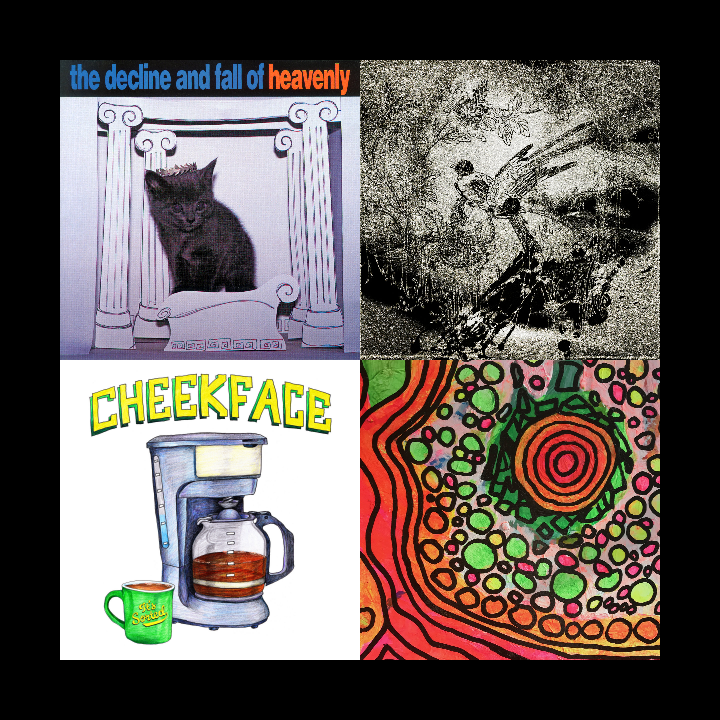


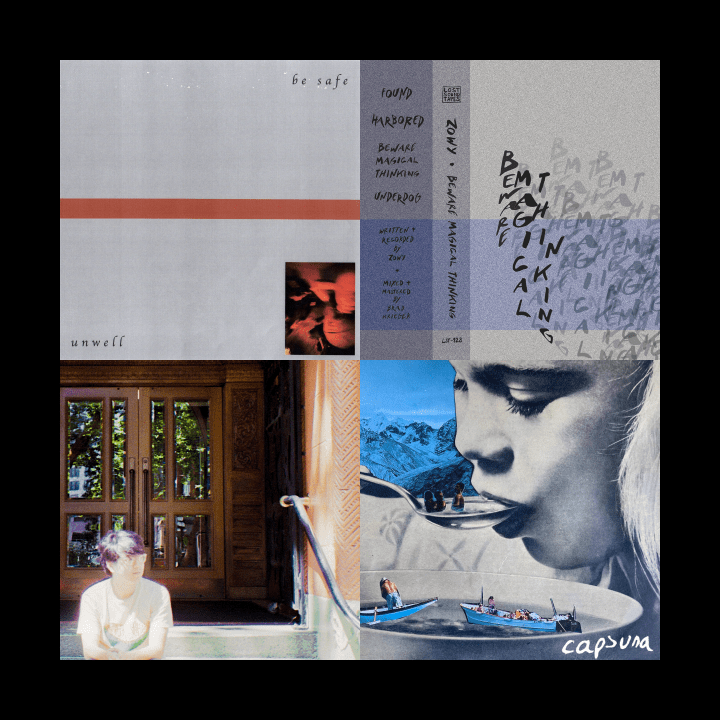


 Rosy Overdrive