Rosy Overdrive has already chosen its favorite albums, EPs, and compilations/reissues of 2023, but we’re closing out our year-end list season by handing it over to you, the readers. We asked you about your favorite albums, songs, EP, and label of the year, and you certainly answered–we received 61 different ballots from November 27th to December 26th. You voted for 397 different albums, 356 different songs, 44 different EPs, and 29 different record labels. Some of these results surprised me, but the biggest takeaway from this poll isn’t shocking at all: Rosy Overdrive readers have great taste. Pat yourselves on the back.
Your top choices are revealed below; for more detailed and complete results, here’s a spreadsheet with everything that got at least one vote on it. For albums and songs, your top choice got ten points, second place got nine, et cetera; tiebreakers were broken via number of ballots something appeared on and number of first-place votes received.
Of course, I’m not going to pass up an opportunity to turn these results into a playlist, so here’s one of every song that either A) appeared on multiple ballots and/or B) got a first-place vote (Spotify, Tidal).
If you’re looking for more new music, you can visit the site directory to see what else we’ve written about lately. If you’d like to support Rosy Overdrive, you can share this (or another) post, or donate here. To anyone who participated in this poll, or even if you didn’t, if you shared the blog or even just regularly read it this year: thank you very much. I’ll see you all in 2024!
Well, here we are. The final Pressing Concerns of 2023. We’re nearing the end of what’s been a banner week for the blog (featuring Rosy Overdrive’s Favorite Reissues and Compilations of 2023 on Tuesday, and a Pressing Concerns featuring Axis: Sova, Sugardeer, Cast of Thousands, and a Guided by Voices cover compilation on Wednesday), as well as what’s been a banner year for Pressing Concerns. Over the course of 103 blog posts, Pressing Concerns has covered exactly 400 albums and EPs this year. That’s more than one a day! Not bad for an unknown music blog. Anyway, here is post number 103, featuring records 397 through 400: new albums from Gumfairy and Witching Waves, and new EPs from Mystery Danse and Postal Blue. We’ve still got the Rosy Overdrive Reader’s Poll to get to this week, but in terms of Pressing Concerns, we’ll see you in 2024!
If you’re looking for more new music, you can visit the site directory to see what else we’ve written about lately. If you’d like to support Rosy Overdrive, you can share this (or another) post, or donate here.
Mystery Danse – Fuck Fascism ‘23
Release date: December 13th Record label: Model City Genre: Lo-fi indie rock, lo-fi punk Formats: Digital Pull Track: Seasons Change
One of my favorite EPs of 2023 was Everything Turned Out Alright by New Haven, Connecticut power-pop-punk group Dagwood. That record cranked out one giant alt-rock-tinged hook after another across its all-too-short dozen minutes, so I was intrigued to hear that Dagwood’s bassist, Tim Casey, has a new solo project which just put out its debut EP. With Mystery Danse, Casey (who also used to play in defunct Connecticut melodic punk band Hostage Calm) is clearly embracing something more lo-fi and casual than Dagwood’s spit-polished sound. “Many of the ‘solo project’ tropes apply,” Casey self-consciously acknowledges about Fuck Fascism ‘23–presumably, he’s referring to the kind of messy, off-the-cuff home-recorded feeling that’s prevalent throughout these five tracks. As different as it is from Everything Turned Out Alright, though, I can see the links between the two–Casey brings a big, all-in energy to this seemingly low-key EP, practically willing big choruses and a dramatic flair into existence throughout the record.
“Summer Falls” kicks off the EP with some disorienting, loud pop music–there’s an odd but palpable melody at the heart of the track, but Casey layers a loud, distorted rhythm section on top of it, and then puts some smoking guitar leads on top of that. “She Sings With the Choir” is similar to the first song on Fuck Fascism ‘23 but is somehow even further into overdrive–it’s a power pop track that’s bursting at the seams, with Casey pushing through the carnage falling from the rafters to croon the titular line for all its worth. “Seasons Change” is lo-fi acoustic “side project” pop at its finest. The somewhat fuzzed-out guitar-and-vocals take of the sub-two minute song is not really any functionally different than a demo–credit to Casey for recognizing that “Seasons Change” didn’t need anything more than that. The crunchy acoustic guitar also features prominently in Fuck Fascism ‘23’s closing track, “Jewett City Vampires”, although Casey breaks out the full-band arrangement for this one as well. Mystery Danse closes out their debut EP with a piece of dynamic noise pop, vacillating between all-out instrumentation and plainer acoustic passages before actually getting a big finish together. I’ve been listening to this EP a lot over the holidays. There’s definitely something to this Mystery Danse. (Bandcamp link)
Gumfairy – We Said Bye to Kitty
Release date: November 3rd Record label: Call Call Genre: Lo-fi indie rock, 90s indie rock Formats: Digital Pull Track: Hi/Bye
Rosy Overdrive doesn’t take days off. Boston musician Christian Locke emailed me on Christmas Day about We Said Bye to Kitty, their debut release as Gumfairy, on Christmas Day–I threw it on, I started it again once the album had played through, and quickly came to the conclusion that I wanted to write about this one in Pressing Concerns before the year was out. On Gumfairy’s Bandcamp page, the record is referred to as a “personal album about [Locke’s] summer and winter after graduating high school”–given that it was recorded and written between 2021 and 2023, I’m to assume that Locke is fairly young, but they’ve got an excellent handle on making underground 90s indie rock on We Said Bye to Kitty–Modest Mouse is definitely the biggest influence on this album, but fellow Massachusettsans J. Mascis and Lou Barlow hover over these songs at times as well, plus more modern indie rock revivalists like Gnawing (and weirdly enough, I’m actually reminded of the rockier moments from the most recent Frog record on this one, too).
We Said Bye to Kitty is impressively fully-formed and developed for a debut release (ten songs, 37 minutes), and it’s got a sharp sense of both melody and dynamics that are good weapons to have in one’s arsenal when making at-times thorny-guitar-heavy indie rock. The subtle opener of “Action Figure” (which leans heavily on melodic but simple guitar lines) gives way to the explosive, Dinosaur Jr.-esque “Hi/Bye” one song later. Songs like “Umm Umm Umm” and the banjo-sporting “Go Kitty” are dead ringers for The Lonesome Crowded West-era Modest Mouse, although Locke tapers tracks like “Yesteryay” with a more 2010s-bedroom-rock sense of odd effects and suspended anonymity that help the record feel like more than just hero worship. And although We Said Bye to Kitty is far from the first such indie rock record to end with a bang, its is no less impressive of one–the pin-drop quiet “Who Let It Get So Cold?” rolls into the eight-minute, multi-movement all-out rock of “I’ll Be Alright” to cap off the album. It’s a very strong introduction to a new project, and I suspect we’ll hear more music that’s just as worthwhile from Gumfairy in the future. (Bandcamp link)
Witching Waves – Streams and Waterways
Release date: December 1st Record label: Specialist Subject Genre: Indie punk, alt-rock, post-punk, emo-rock Formats: Vinyl, digital Pull Track: Everytime
I’d vaguely recognized the band name “Witching Waves”, but I’d never really listened to them–which, after some further investigation, seems to have been an oversight on my part. The London trio have been around for a decade now, putting out albums on labels like HHBTM (My Favorite, The Garment District, The Primitives) and Specialist Subject (Long Neck, Martha, Supermilk). The latter of those two imprints is responsible for the release of Streams and Waterways, the band’s fourth full-length; on this one, founding members and band co-leaders Emma Wigham (drums) and Mark Jasper (guitar) are joined by new bassist Will Fitzpatrick (of Good Grief). Streams and Waterways is, at its core, a great power trio rock album–there’s a bit of punk, post-punk, 90s indie rock, and emo in the foundation of Witching Waves’ sound, but they’re not overly committed to the frequently suffocating orthodoxy of any of those genres, and the album resists easy categorization.
I’m struck by just how consistently hard-hitting Streams and Waterways is, particularly in its first half–“The Valley” is a fiery piece of punk-shaded alt-rock that ensures the record hits the ground running, and the chilly “Everytime” sports a thirty-second restrained intro before it gets right back into making captivating emo-y, rhythmic rock music. I think part of the reason why I hesitate to call Witching Waves a straight-up post-punk band is Wigham’s vocals–the instrumentals to “Choice You Make” and “Vessel” could easily pass as thought-up by the bands of the current revival of the genre, but Wigham’s melodic, dramatic contributions are pretty far from the droll monotone that’s currently in favor among their British peers. That being said, the Jasper-led “It’s a Shame” steers the record into new wave and almost Cure-ish territory to start to give the record some variety, and the band does relent and offer up a few relatively quiet songs (the acoustic “Open a Hole”, the restrained “Vision of You”) before closing things out with one last rocker in “Chemistry”. Brisk, efficient, and unimpeachable rock music from start to finish on this one. (Bandcamp link)
Postal Blue – Anxiety of Influence
Release date: December 7th Record label: Self-released Genre: Indie pop, jangle pop, C86, post-punk, college rock Formats: Digital Pull Track: Quiet Heart
Brazilian indie pop group Postal Blue has been around since the late 1990s, although they’ve only put out two full-lengths, 2004’s International Breeze and 2015’s Of Love & Other Affections. The band (which has become a solo project by bandleader Adriano do Couto after the initial four-piece lineup went on indefinite hiatus) had previously filled in the gap between records with EPs and singles, but they went away entirely for eight years after their last LP’s release, only resurfacing with last month’s “Chance Occurrence” single. Do Couto is planning on releasing more Postal Blue music in 2024, and he’s gotten an early jump on it with Anxiety of Influence, a five-song EP of covers that’s only available as a free download after signing up for the band’s mailing list (it’s a very 2000s-era move, but considering the current state of digital music and social media, it is, potentially, a pretty savvy one as well).
Looking at Anxiety of Influence’s tracklist, it’s abundantly clear that do Couto is paying homage to a bygone era of guitar pop music that is reflected in Postal Blue’s entire sound. The EP opens with “Brighter”, a song originally by vintage college rock group The Railway Children–do Couto begins the song with some hypnotizing synths before transitioning to a more traditional post-punk/new wave structure to communicate the earnestness at the heart of the track. Postal Blue’s version of “Quiet Heart” by The Go-Betweens (which is the only song available on streaming services as a sampling of the collection) is a balance of tuneful guitars, with steady power chords, pleasantly strummed acoustic chords, and jangly, rippling melodic leads all making up the track (plus some harmonica–why not?). Do Couto balances “wistful” and “upbeat” in a way reflecting many college rock “hits” of the past on Anxiety of Influence–his version of Wild Swans’ “Northern England” is all New Order-y propulsive new wave, while “Josef’s Gone” (originally by June Brides) sends the EP off with a big, stuffed finish, featuring prominent melodic bass, upfront percussion, and soaring violins. For fans of this strain of indie pop and rock music, checking out Anxiety of Influence is worth letting Postal Blue into your inbox. (Mailing list link)
Also notable (Stolen from Other People’s Year-End Lists Edition):
Even though it’s the final week of 2023, we’ve got a surprisingly full schedule on the blog this week. Yesterday, we unveiled Rosy Overdrive’s Favorite Reissues and Compilations of 2023, and today we get another Pressing Concerns, featuring a new album from Axis: Sova, new EPs from Sugardeer and Cast of Thousands, and a Guided by Voices cover compilation from Rusted Gear Records. And we’ve still got more to come this week! Stay tuned!
If you’re looking for more new music, you can visit the site directory to see what else we’ve written about lately. If you’d like to support Rosy Overdrive, you can share this (or another) post, or donate here.
Various – An Academy of Lies: A Guided by Voices Cover Compilation
Release date: December 22nd Record label: Rusted Gear Genre: Lo-fi indie rock, power pop, fuzz rock, garage rock Formats: Digital Pull Track: Dust Devil
Eric Gaines is a Tampa-based singer-songwriter who’s released a good deal of music via his solo project, Nova Robotics Initiative–typically of the lo-fi indie rock variety, with hints of punk, emo, and folk in the mix. Like any good bedroom rocker, Gaines has started a record label to release his various projects, and he’s launching Rusted Gear Records with a Guided by Voices cover compilation. I’m of the opinion that there can never be too many Guided by Voices cover compilations in the world, and I’m happy to report that Nova Robotics Initiative and the seven other artists that Gaines recruited for An Academy of Lies are well-stocked with the most important ingredient in making these things work–an excited, all-in energy. The song selection is concentrated from the early-to-mid-90s “golden era” of Guided by Voices, although there are still a couple of surprising choices within this context–but whether they’re playing what are effectively indie rock standards or more off-the-beaten-path material, everyone sounds driven to do these songs justice.
As a nice bonus to regular Pressing Concerns readers, there are a few bands here who’ve shown up in this column before, and all three of them offer up highlights. Soft Screams, a tireless lo-fi power popper in their own right, crunches their way through a power-chord-led version of “Don’t Stop Now”, speeding up the song but keeping its core fragility intact. Post-punk-tinged college rock revivalists Patches are uniquely equipped to take on the bass-led “The Best of Jill Hives”–the original version is one of Robert Pollard’s finest moments as a vocalist, and Evan Seurkamp’s performance is able to hang with it. Iffin’s take on “Dust Devil” might be the most impressive thing on the whole compilation–Mira Tsarina extracts the song’s early-Pollard wistful melody with surgical focus and grafts it seamlessly onto a dramatic, sweeping, Koji Kondo-inspired instrumental. The new-to-me bands acquit themselves nicely here, as well–Tonsil Hockey don’t fuck with “Game of Pricks” too much, because why would you, but Total Vacation’s garage-y power pop version of “Jar of Cardinals” is an inspired revision (as is With Willows’ slow-moving, synth-y ballad version of “Awful Bliss”, maybe the one true “breather” on the album). I think we can close 2023 out by taking some valuable lessons from An Academy of Lies–namely, that Guided by Voices are a good band, and if you put together a cover compilation of their music, I’ll probably write about it, especially if you invite artists I already like to participate. (Bandcamp link)
Axis: Sova – Blinded by Oblivion
Release date: October 6th Record label: GOD?/Drag City Genre: Garage rock, glam rock, psychedelic rock Formats: Vinyl, cassette, digital Pull Track: Hardcore Maps
Drag City has done a lot of good things over the years, but letting Ty Segall run his own imprint as a sub-label (GOD? Records) is probably one of their better recent moves. I’ve been a fan of one of GOD?’s most prominent bands (Flat Worms) for a while now, but the latest album from another of the label’s flagship acts has caught my attention as of late. Blinded by Oblivion is Axis: Sova’s fifth album, but its first in half a decade–whether they’re reintroducing themselves to you or you’re hopping aboard for the first time (like me), though, the Chicago garage rock trio sound as fresh as anything on their new Segall-produced LP. Rather than Flat Worms’ caustic post-punk, Axis: Sova (led by Brett Sova, backed by bassist Jeremy Freeze and drummer Josh Johannpeter) explore a different side of the Segall spectrum, cruising through loose psychedelic rock and vintage glam-inspired fare in a way that’s heavy, fun, and lively enough to never get stuck in neutral.
It becomes apparent early on in Blinded by Oblivion that Sova is both a sharp pop songwriter and that he has an ace rhythm section backing him–opening track “People” walks a fine line between being a song-length introduction and an interesting tune in its own right in large part to Sova’s melodies and the restrained but forceful instrumental behind him. “Hardcore Maps” is the subsequent payoff, a blistering behemoth of glam-garage sporting a riff worthy of another modern garage rock titan, Cory Hanson. A lot of Blinded by Oblivion works because the songs are, at their core, vintage 60s and 70s pop rock (dare I say power pop?), but punched up by Axis: Sova’s collective might. “Trend Sets” and “Plastic Pageant Show” are both incredibly catchy but also full-on, no-well-of-energy-left-untapped rockers, and even when the band gets more into heavy psychedelic rock in the record’s second half, it’s never completely at the expense of giving up melody. As long as Sova is at the head of the band, they’re going to have one foot in the world of pop music–but as long as Freeze and Johannpeter are behind him, Axis: Sova could end up anywhere from that starting point. (Bandcamp link)
Sugardeer – Good Names for Strays
Release date: November 17th Record label: Race to the Finish Genre: Piano rock, pop rock, singer-songwriter Formats: CD, digital Pull Track: Papercup
Danny Kit Boyle is a Cleveland-based musician with a background in classical and orchestral music, but as of late they’ve been trying their hand at pop rock with their new project Sugardeer. Since 2021, Sugardeer have put out a couple of singles and a brief live recording, but Good Names for Strays is the project’s debut EP, and it’s a fairly substantial opening statement. Perhaps unsurprisingly, it’s a fairly musically busy record, although it’s also very much a “pop” one (one of Sugardeer’s first recordings was a Death Cab for Cutie cover, and while they don’t exactly sound like that band, they sit at a similar intersection of “pop music”, “indie rock”, and “emotional, not necessarily emo” music). Boyle’s instrument of choice is the piano, although that’s hardly the only one you’ll hear on Good Names for Strays (Boyle alone is credited with clarinet, synth, guitar, and bass, and drummer Ben Wolgamuth and violinist Micaela Murphy also contribute heavily to the EP).
Opener “Papercup” showcases Boyle’s sense of dynamics and song-building–they hold back in the song’s first half before allowing the track to blossom into a full-on orchestral, piano-led rock song about midway through its runtime. Boyle’s vocals are impressive throughout Good Names for Strays, although “Cherry Picker” (an emotional rocker with some choice guest guitar work from Jennifer Weathers) is perhaps their most standout moment as a frontperson. In addition to the in-song ups and downs, Good Names for Strays also rises and falls as a whole–the hushed piano-and-violin ballad “Creek 232” gives way to “Callie” and “The Tower, inverted”, two lengthy, intricate pieces of chamber pop that reach thrilling climaxes before trailing off into the quiet clarinet-led “Wishes” to close the record. One can tell that Good Names for Strays is a pop rock record made by someone coming at it from a different field, and that’s a good thing–the frequently personal writing throughout Sugardeer’s debut EP calls for a similarly human performance to match, without any sanded-down edges. (Bandcamp link)
Cast of Thousands – First Six Songs
Release date: October 17th Record label: Self-released Genre: Power pop, college rock Formats: Cassette, digital Pull Track: I Need
If Rosy Overdrive had been around in 2019, I assuredly would’ve been telling you all about Never See Snow, the third album from Austin trio Flesh Lights. The band had been hanging around the Austin scene for a while (Never See Snow came out on Austin Town Hall Records, the one before it on 12XU, and they started playing together in the late 2000s), but that album was the first I’d heard of them, and I was very taken with Flesh Lights’ high-energy, high-speed take on garage-y power pop. Unfortunately, Never See Snow also proved to be the final Flesh Lights album–they broke up the same year–and while I never completely forgot about them, the band faded somewhat from my memory. That is, until I found out about frontperson Maxwell Vandever’s new band, Cast of Thousands, a couple of months ago. The quartet has been playing a lot of shows locally (with Touch Girl Apple Blossom, Class, and Lewsberg, among others) and rolling out singles since late last year, culminating in October’s First Six Songs cassette EP.
On their debut record, Cast of Thousands proves to be no less of an effective power pop group than Flesh Lights were. Vandever is still quite adept at writing and delivering hooks, and while I would’ve accepted a carbon copy of Never See Snow no questions asked, Cast of Thousands are not just a recreation of the former trio. First Six Songs is less garage-y, and a bit more deliberate, polished, and refined–we’re still in upbeat and propulsive territory here, although decidedly closer to “later Replacements” than “early Replacements” this time around. The half-dozen songs on this cassette offer up timeless, just-a-bit-rootsy power pop (“Mari”, “Hard to Read”), jangly college rock (“New Band in Town”), and a couple of bold slowdowns (“Out in the Streets”, “Is It Really the End?”). One of the most striking moments on First Six Songs might also be the catchiest one–“I Need”, a chugging power chord anthem that surprisingly lasts for five and a half minutes without losing steam. It’s a well-rounded debut, and I’m curious to see where Cast of Thousands go from here. (Bandcamp link)
Today, we’re closing out Rosy Overdrive’s 2023 editorial lists with my favorite reissues and compilations from this year. As this list encompasses a fairly wide range of releases, it is unranked, unlike my Top Albums and Top EPs lists. This isn’t the end of all year-end lists on the site, however: the results of the 2023 Rosy Overdrive Reader’s Poll will go up later this week. Plus, there’ll be one last Pressing Concerns before the New Year.
Here are links to stream this list on various services: Spotify, Tidal. To read about much more music beyond what’s on this list, check out the site directory, and if you’d like to support Rosy Overdrive, you can share this (or another) post, or donate here. Thanks again for reading.
Beauty Pill – Blue Period
Release date: January 20th Record label: Ernest Jenning Record Co. Genre: Experimental indie rock, post-punk Formats: Vinyl, digital
In 2004, Beauty Pill put out The Unsustainable Lifestyle, the first full-length record from Chad Clark since the dissolution of his previous band, Smart Went Crazy. The Unsustainable Lifestyle retained many of the great qualities that marked Clark’s past work while at the same time establishing Beauty Pill as a separate and unique entity, although it’s taken the rest of the music world nearly twenty years to catch up. Blue Period compiles the first Beauty Pill album, 2003’s You Are Right to Be Afraid EP, and a few outtakes and demos to finally give the era of the band its due, and, while this music doesn’t exactly hold one’s hand, there’s a lot to love in here to those willing to give it proper attention. (Read more)
The Chills – Brave Words (Expanded)
Release date: October 13th Record label: Fire Genre: Dunedin sound, jangle pop, indie pop Formats: Vinyl, CD, digital
There’s been no shortage of interesting New Zealand reissues this year, from Bilderine’s Split Seconds to Gate’s The Numbers, but it’s hard to top The Chills. Despite their beloved status in their particular corner of indie rock, Martin Phillipps and crew’s first album, 1987’s Brave Words, has been long overdue for a remastered reissue–thankfully, their recent home of Fire Records has finally done so. The band would go on to make refined guitar pop masterpieces with Soft Bomb and Submarine Bells, but Brave Words is an album-length snapshot of early The Chills that’d previously only been widely available on compilations–almost perfect pop magicians, but still holding onto a Flying Nun-ish oddball, “zany” streak.
Drive-By Truckers – The Complete Dirty South
Release date: June 16th Record label: New West Genre: Southern rock, country rock, alt-country Formats: Vinyl, CD, digital
I’m inclined to give the slight edge to Southern Rock Opera, but the Drive-By Truckers could do no wrong during this time period, and this expanded reissue of 2004’s The Dirty South reflects this. When you have three singer-songwriters writing some of the best material of their respective careers, why not make a seventy-minute album, and why not re-release it as a ninety-minute one when you’ve got the cachet to do so? Patterson Hood’s “Puttin’ People on the Moon” is still a singular raw distillation of American hopelessness, Mike Cooley’s “Carl Perkins’ Cadillac” is one of his best straight-up country rock anthems, and there’s a reason why “Danko / Manuel” and “Goddamn Lonely Love” are still revered in Jason Isbell’s catalog even after he’s had a historically fruitful solo career.
Dwaal Troupe – Lucky Dog
Release date: February 10th Record label: Ally Genre: Lo-fi indie rock, jangle pop, psychedelic pop Formats: Vinyl, digital
Chicago’s Kai Slater released the excellent lo-fi pop record Turtle Rock as Sharp Pins earlier this year, but another Slater-centric record that initially came out towards the tail end of 2021 deserves our collective attention as well. Dwaal Troupe (also featuring Charlie Johnston and Desi Kaercher, with the bulk of the songs written by Slater) is yet another side to Slater (who also makes noisy post-hardcore in Lifeguard), but one that has quite a bit in common with Sharp Pins’ tuneful but lo-fi 90s-style indie rock. Lucky Dog is a sprawling record that has more of a Flying Nun/Elephant 6 psychedelic tinge to it compared to Sharp Pins, but, unsurprisingly, just about any type of guitar pop skin sounds great on Slater’s songwriting.
Ex Pilots – Ex Pilots
Release date: January 20th Record label: Smoking Room Genre: Shoegaze, noise pop, lo-fi indie rock Formats: Vinyl, cassette, digital
Ethan Oliva has recently been an increasingly prevalent member of Pittsburgh’s Gaadge and has long been the frontperson of Barlow–that’s more than enough shoegaze-y, noise poppy indie rock involvement for most people, but Oliva has also been leading the band Ex Pilots (also featuring contributions from other Gaadge and Barlow members) for just as long as any of those other bands have been around. Ex Pilots’ self-titled debut record was released four years ago, and has now gotten a remastered release from Oakland’s Smoking Room Records. Ex Pilots slots right in comfortably to the rest of the Pittsburgh “scene”, with noisier, more shoegaze-invoking songs sitting alongside pretty pieces of reverb-dressed indie pop.
The Exploding Hearts – Guitar Romantic (Expanded)
Release date: May 26th Record label: Third Man Genre: Power pop, garage rock, punk rock Formats: Vinyl, CD, digital
It’s got a reputation, and it more than deserves it. Along with Ted Leo and The Pharmacists, Portland’s The Exploding Hearts led the “punk-y” side of the 2000s indie power pop revival, with their 2003 debut Guitar Romantic standing as a more pure, substantial version of the garage rock revival playing out concurrently on a more major stage. Guitar Romantic is a completely timeless-sounding record–there are several indie labels today primarily focused on trying to capture this kind of sound (including the one this originally came out on, Dirtnap), and it’d fit right in on any of them. If you know anything about this band, you’re aware of their tragic end that resulted in Guitar Romantic becoming their sole full-length–time and time again, though, these songs have continued to ensure that The Exploding Hearts will be remembered for what they accomplished while they were still around.
Flotation Toy Warning – I Remember Trees / The Special Tape
Release date: March 21st Record label: Talitres Genre: Chamber pop, space pop Formats: Vinyl, digital
One of the great cult bands of the 21st century, London’s Flotation Toy Warning have been making sprawling, transfixing chamber pop at a sadly irregular pace for quite some time now–their debut, the underappreciated classic Bluffer’s Guide to the Flight Deck, came out back in 2004, and their even-more-underappreciated follow-up The Machine That Made Us arrived in 2017. The Special Tape and I Remember Trees actually predate either, with the twin EPs first appearing in 2002, but the band already had their formula down on both of these records. The Special Tape is a little more fractured and friendly, I Remember Trees more of a singular post-rock pop odyssey, but they’re both memorable, generous, and sturdy pieces of music.
Grandaddy – Sumday Twunny
Release date: September 1st Record label: Dangerbird Genre: 90s indie rock, power pop, indie pop, art rock Formats: Vinyl, cassette (Sumday: The Cassette Demos only), digital
Like with the Drive-By Truckers album discussed above, Sumday might fall slightly below a more-ambitious record that preceded it (in this case, The Sophtware Slump), but this is, twenty years later, far from a settled question, as this reissue successfully argues. Everything great about Grandaddy–sonically, lyrically, thematically, aesthetically–is present on Sumday, and Jason Lytle has his best moments as a pop writer here, easily. Sumday Twunny also offers up forty-five minutes of outtakes and incidental music in Excess Baggage (a reminder that Grandaddy continue to have a wealth of great music aside from their proper LP tracks) and an intriguing collection of cassette demos.
Gut Health – Singles ‘23
Release date: November 24th Record label: Marthouse Genre: Post-punk, art punk, dance-punk, egg punk Formats: Vinyl, digital
Ah, let’s put a 7” single on here, why not. This probably could’ve fit on the EP list too, but I discovered it after that one went live, so we’re filing Gut Health’s Singles ‘23 under “compilation”. The Melbourne five-piece band burst onto the scene with last year’s Electric Party Chrome Girl, and they followed it up over the course of this year with three different perfect pieces of sharp, garage-y post-punk, all of which are collected on this record. The quintet certainly ascribe to the idea that post-punk can and should be incredibly fun and danceable–the new-wave-punk “Uh Oh” in particular exemplifies this brilliantly, but it (and, even more so, hard-charging opening track “The Recipe” and the bass showcase “Juvenile Retention”) also prove that they don’t have to give up their edge to get there.
The Human Hearts – Viable
Release date: October 20th Record label: Open Boat Genre: Indie pop, power pop, 90s indie rock Formats: Vinyl, digital
Franklin Bruno is a songwriter who doesn’t always save the “hits” for the albums, be it with his 90s indie rock group Nothing Painted Blue, his solo material, or his new(ish) band The Human Hearts. The strength of Viable, a compilation which collects non-album Human Hearts material from 2011 to 2015, only confirms this. Viable is a bit all over the place, but Bruno’s songwriting feels instantly recognizable, whether he’s leading his band in “rockier” power pop or offering up smoother indie pop. For those unfamiliar with Bruno’s work, Viable is as good a place to start as any, and for those of us already on board, the gathering of some not-so-easy-to-find material on this record is a welcome development. (Read more)
Hydroplane – Selected Songs 1997-2003
Release date: September 1st Record label: World of Echo Genre: Indie pop, ambient pop, experimental pop, dream pop, jangle pop Formats: Vinyl, digital
The reissue campaign centered around Melbourne’s Andrew Withycombe, Bart Cummings, and Kerrie Bolton has continued into 2023. Last year saw Songs ’94-’98, a compilation from their first band, The Cat’s Miaow, appear on Rosy Overdrive’s Best Reissues list, while Hydroplane (the debut record from the band the three of them formed after The Cat’s Miaow’s drummer, Cameron Smith, moved out of country) was also re-pressed that year. While I’ve been more inclined to appreciate the laid-back but still succinct guitar-based indie pop of their previous band, Selected Songs 1997-2003 makes a strong argument for the more experimental, ambient, and synth-based textures that Hydroplane would go on to explore. The 70-minute compilation is a peaceful, tranquil listen of intermittent pop music–sometimes just as friendly as The Cat’s Miaow, sometimes probing but still linked by Bolton’s melodic vocals, and sometimes something else entirely.
Inu – Don’t Eat Food!
Release date: October 6th Record label: MESH-KEY Genre: Punk rock, post-punk, art punk Formats: Vinyl, digital
I’d never heard of Inu before encountering this reissue–apparently, Don’t Eat Food! is one of the most revered and acclaimed punk albums in Japan, but the Osaka band are little-known outside of their home country. Their sole album, Don’t Eat Food!, came out in 1981 and the band broke up almost immediately after, but thankfully this stands as a potent document to their time together all these years later. Don’t Eat Food! certainly has its fiery first-wave punk rock/garage punk moments, but it’s also a little more adventurous than a lot of landmark Western punk albums, with a lot of music that we’d call post-punk, art punk, or noise rock over here–no matter what, though, it’s done with a decidedly blunt punk rock energy.
Ivy – Apartment Life (25th Anniversary Edition)
Release date: March 3rd Record label: Bar/None Genre: Indie pop, dream pop Formats: Vinyl, digital
Ivy emerged from New York in the mid-90s, a trio made up of Andy Chase, Adam Schlesinger, and Dominique Duran whose lineup stayed consistent until their final album in 2011. The three of them combined their love of 1980s jangle pop with 90s dreaminess and electronic influences to make some of the best indie pop music of their era. Apartment Life was the band’s sophomore record and, quite possibly, their best–the entire album is a winning mix of breezy French pop, synth-accented dream pop, and more traditionally guitar-based alt/indie rock, and while they’re a pretty different strain than Schlesinger’s other band, those looking for pop hooks of comparable quality to the best of Fountain of Wayne will not be disappointed by Apartment Life. (Read more)
Lync – These Are Not Fall Colors
Release date: October 20th Record label: Suicide Squeeze Genre: Post-hardcore, 90s indie rock, noise rock Formats: Vinyl, digital
The fertile Pacific Northwest indie rock scene was a perfect environment for creating one-album wonders like Olympia’s Lync, who released These Are Not Fall Colors on K Records as well as a handful of singles in their two years of activity in the early 90s. Their lone proper album has been given an overdue vinyl reissue by Suicide Squeeze after being out of print for over a decade, and it sounds about as fresh as you could imagine something like this could. It exists in the middle of an underground music crossroads–if you like Dischord Records’ agitated post-punk, the punky-post-hardcore of Drive Like Jehu, the still-congealing sound of “emo”, or sloppy early Built to Spill lo-fi pop, you can find something to enjoy on this one. (Read more)
R.E.M. – Up (25th Anniversary Edition)
Release date: November 10th Record label: Craft Genre: Art rock, alt-rock Formats: Vinyl, CD, digital
Up has to be up there with Monster as the most misunderstood, unfairly dismissed R.E.M. record–it’s always had its believers, but it’ll probably never be treated by the critical consensus the same way their IRS albums and Automatic for the People are. And yet, when I listen to Up, I hear one of the best albums of the late 90s pop moment–exploratory but without losing itself to trends, plenty of dark undercurrents but still friendly, rock-solid song after rock-solid song. Maybe Up is the sound of R.E.M. getting “lost” after losing drummer Bill Berry, but if you don’t try to take this as evidence of its flaws and instead view it as merely a condition of its creation, it sounds perfect.
The Replacements – Tim (Let It Bleed Edition)
Release date: November 3rd Record label: Rhino Genre: Punk rock, power pop Formats: Vinyl, CD, digital
I wasn’t going to consider this one because I kind of got burnt out on the Replacements retrospective/reissue/re-imagining industrial complex a while back, but I finally got around to listening to it, and there’s no way I could leave it off here. Tim is the stout middle section to one of rock music’s great three-album runs–its highs are maybe a little less showy than Let It Be or Pleased to Meet Me’s, but it just might be the most consistent of the three. I mean, what else is there to say–the original version of Tim sounded just fine to me, but, yes, the correction to its long-maligned production does uncover something to these songs that might’ve been lost. You know, “Little Mascara” is a brilliant song, we don’t talk about that one enough. And between “Left of the Dial”, “Here Comes a Regular”, and “Bastards of Young”–did I really say that its highs aren’t as high as the albums buffering it? How could that be?
Seablite – Grass Stains and Novocaine
Release date: November 3rd Record label: Dandy Boy Genre: Shoegaze, jangle pop, indie pop, dream pop Formats: Vinyl, digital
San Francisco noise pop quartet Seablite released their second album Lemon Lights back in September, and, just two months later, their 2019 debut album Grass Stains and Novocaine saw a remastered vinyl reissue through Dandy Boy Records. If you liked the follow-up record, you’ll find plenty to enjoy on their first full-length, but Grass Stains and Novocaine has a more straightforward indie pop/power pop sound upon which the band have gone on to expand. With Lemon Lights indicating that Seablite has no intention of attempting to recreate their debut faithfully over and over again, it’s worth appreciating Grass Stains and Novocaine as a singular entry into what one hopes will grow to be a large discography. (Read more)
Release date: October 27th Record label: Merge Genre: 90s indie rock, pop punk, power pop Formats: Vinyl, CD, digital
Back in February (was it really only earlier this year?), drummer Jon Wurster stepped away from Superchunk after 31 years. Wurster also drums for the high-flying Bob Mould Band, the ever-prolific Mountain Goats, and appears on The Best Show with Tom Scharpling most weeks to do a telephone-based comedy skit–I had subconsciously viewed Superchunk as the least strenuous of his commitments. However, Misfits & Mistakes, the fourth non-album-tracks Superchunk compilation, shows just how active the North Carolina indie rock heroes have been in their “middle-aged” era. Since they returned from their hiatus in 2007, they’d put together two-and-a-half hours of outtakes, alternate versions, and covers in addition to the four full-lengths and a re-recording of 1994’s Foolish–Misfits & Mistakes, then, both wraps up the Wurster era of the band and argues that the post-hiatus era has been their strongest yet.
Bobby Sutliff – Only Ghosts Remains Plus
Release date: September 22nd Record label: Jem Genre: Jangle pop, college rock, power pop Formats: CD, digital
Bobby Sutliff will be remembered first and foremost for his work with The Windbreakers, the 1980s Jackson, Mississippi jangle pop/college rock group he co-led with Tim Lee (currently of Bark). The Windbreakers broke up in the early 90s, but both Lee and Sutliff continued to make solo material reflecting their songwriting talents–Sutliff’s solo debut, Only Ghosts Remain, actually came out in 1987, when The Windbreakers were still active. Sutliff passed away last year, but he left behind plenty of under-appreciated gems of guitar pop songs, including the eleven tracks that originally appeared on Only Ghosts Remain, and the extra eleven that appear on Only Ghosts Remain Plus, an expanded CD reissue of the record. In an unusual move, the “bonus” tracks are all selections from Sutliff’s other solo albums, both an acknowledgement that they were under-heard at the time of their releases and a reminder that he continued making sublime music decades into his career.
Two Inch Astronaut – Bad Brother (10th Anniversary Mix)
Release date: June 10th Record label: Lonely Ghost Genre: Post-hardcore, noise rock, post-punk Formats: Cassette, digital
Before he was conquering the world with Deady and Mister Goblin, Sam Goblin was the leader of a Maryland Dischord/post-hardcore/post-punk trio called Two Inch Astronaut. My position has long been that Two Inch Astronaut got better as they went along, with their final album, 2017’s Can You Please Not Help, being their masterpiece, but a tenth anniversary remix and remaster of 2013’s Bad Brother shines a light on one of their earliest releases. The band’s signature combination of melody and skewed, noisy indie rock was already quite potent on Bad Brother, and the remix work from K. Nkanza of Spring Silver (who has taken a Two Inch Astronaut-esque sound and done new and interesting things with it in their solo work) emphasizes the link between this album and the band’s later records (as well as Sam Goblin’s Mister Goblin material). True Maryland excellence all around, here.
Various Artists – 14
Release date: February 23rd Record label: Prefect Genre: Jangle pop, indie pop, power pop Formats: Vinyl, digital
Prefect Records is a Northeast England-based label co-founded by Owen Williams of Joanna Gruesome and Mark Dobson of The Field Mice around 2019, and they have found themselves squarely in the center of the international guitar pop scene ever since. As the title implies, their 14 compilation features fourteen contributions from fourteen different jangle pop groups–Prefect Records alumni (EggS, The Telephone Numbers, The Natvral), like-minded groups, and plenty of bands with whom regular Rosy Overdrive readers will be familiar (Chime School, Massage, The Reds, Pinks & Purples). The bands with which I was less familiar–The Kitchenettes, Semi Trucks, Dressed Like Wolves–also take this moment to put a solid foot forward on 14. (Read more)
Various Artists – Bee Side Beats 2: For Gaza
Release date: October 19th Record label: Bee Side Cassettes Genre: Lo-fi indie rock, experimental rock, electronic, ambient, shoegaze, indie folk, hyperpop, R&B, post-rock, hip hop, punk, screamo, singer-songwriter… Formats: Digital
Bee Side Beats 2: For Gaza is a 106-song compilation (referencing the 106 years that have passed since the Balfour Declaration) assembled by Albany’s Bee Side Cassettes, only available via digital download and from which all the proceeds go towards The Palestine Children’s Relief Fund. You should absolutely care about this underlying cause, but even if you don’t, you should still donate, because it contains a ton of great music. The meat of this compilation is the kind of music in which labels like Candlepin and Julia’s War (both of whom teamed up with Bee Side trade to source bands for the compilation) trade–lo-fi indie rock, bedroom pop-rock, folk rock, shoegaze, indie punk, and slowcore–and there’s shining examples of all of these genres here (although one can also find everything from screamo to J Dilla-esque instrumental hip hop to dub to ambient to video game music on For Gaza). (Read more)
Various Artists – Cool English Jumpsuit: A Tribute to Guided by Voices, Circa 20 Something 13 and 14 / Poor Substitutes: A Tribute to Ricked Wicky
Release date: March 27th / August 4th Record label: Silly Moo Genre: Lo-fi indie rock, power pop, post-punk, garage rock, noise rock, indie pop Formats: Vinyl, digital
Last year, Bunnygrunt’s Matt Harnish put together Keep It in Motion, a covers compilation featuring songs selected from Guided by Voices’ three 2012 albums. Harnish has continued to mine this era of Robert Pollard and company this year by assembling Cool English Jumpsuit (covering Guided by Voices’ 2013 and 2014 output) and Poor Substitutes (which pulls from the three 2015 albums from Robert Pollard and Nick Mitchell’s short-lived group Ricked Wicky). Although the material is obscure, Cool English Jumpsuit is very user-friendly, with great-in-their-own-right acts like Strapping Fieldhands, Mythical Motors, Posmic, Joseph Airport, and Jonny Swift ripping through songs that deserve to be thought of among the best power pop, garage rock, and indie rock of the era. Poor Substitutes might be more “for the heads” (even I, an aficionado of this sort of thing, scarcely recognize any of the bands here), but for those open to such a thing, it’s also a very fun romp through an underrated era of the greatest rock songwriter of all-time.
Various Artists – STOP MVP: Artists From WV, VA & NC Against the Mountain Valley Pipeline
Release date: December 1st Record label: WarHen Genre: Folk, country rock, bluegrass, experimental, ambient, hip hop Formats: CD, digital
WarHen Records, based out of Charlottesville, Virginia, has curated an impressively stacked compilation in support of the effort to stop the destructive Mountain Valley Pipeline from wreaking havoc across Appalachia. Over the course of two CDs, forty musicians from Virginia, West Virginia, and North Carolina offer up a wide variety of songs for a collection whose proceeds go to the Appalachian Legal Defense Fund, specifically for “bail, legal defense and defendant support”. Those expecting to find traditional “Appalachian music” here will certainly not be disappointed–folk, bluegrass, and country feature heavily into this lineup, but this only scratches the surface of the diversity showcased on STOP MVP, a compilation full of artists who brought their best in service of a cause that merits it. (Read more)
In what I believe will be the penultimate Pressing Concerns of 2023, we look at two albums that are out this week from Lee Baggett and Haint, as well as two recent LPs from Friends of Cesar Romero and Lose a Leg. We’ll be back with the results of the reader’s poll, Favorite Reissues of 2023, and one more Pressing Concerns after Christmas!
If you’re looking for more new music, you can visit the site directory to see what else we’ve written about lately. If you’d like to support Rosy Overdrive, you can share this (or another) post, or donate here. And last but not least: don’t forget to vote in the 2023 Rosy Overdrive Reader’s Poll by Christmas!
Friends of Cesar Romero – Queen of All the Parliaments
Release date: December 13th Record label: Doomed Babe Series Genre: Power pop, pop punk, garage rock Formats: Digital Pull Track: Blackfeet Death Eyes
Our latest entry in Pressing Concerns’ quest to cover every prolific power pop artist out there takes us to Rapid City, South Dakota. That’s the city where J. Waylon Porcupine moved after leaving the Northern Cheyenne Indian Reservation in the mid-1990s, and where he co-founded garage rock group The Reddmen with Miyo One Arrow shortly thereafter. The Reddmen have been mostly inactive since the early 2010s, but Porcupine has since begun to occupy himself with his Friends of Cesar Romero project–on its Bandcamp page, one can find forty-something different records that have come out between 2011 and now, a pace that’s only increased in recent years. Porcupine has been favoring brief two-to-three-song EPs and singles as of late (see Temporary Anne, Gameboy America, and Spiral Eye Roll, among others, from this year alone), but Friends of Cesar Romero have decided to cap off their 2023 with their most substantial of the year. Queen of All the Parliaments bashes through fifteen four-track-recorded pieces of garage-y, punk-y power pop in about twenty minutes. Several of these songs don’t even last for sixty seconds, but that’s more than enough time for each of them to get their kicks and hooks in–there’s hardly a wasted moment here.
I’d recommend taking a deep breath before putting on Queen of All the Parliaments, as the opening one-two punch of “Blackfeet Death Eyes” and “A Better Who” doesn’t really offer any opportunities to catch a break. The Ramones-y first-wave pop punk of the former song and the snotty, messy vintage power pop of the latter are both nonstop hook fests, and the garage rock stomp of “Kicking the Eternal Flame” is only “tame” in comparison to what it immediately follows. There is a bit of variety on Queen of All the Parliaments after the initial barrage–“Psych Trials” indeed throws a bit of psychedelic noisiness into its garage rock, the mid-tempo “Bleach Tears” is some excellent Guided by Voices-core lo-fi pop rock, and “Tomorrow’s Weather Girl” is a forceful Friends of Cesar Romero take on Strum & Thrum jangle pop (of course, these are all interspersed with minute-long pop ragers like “Pantheon Restroom Riots” and “Jennifer Echoes”). If the hooks weren’t enough to remember him by, Porcupine delivers plenty of lyrics that’ll stick with me throughout the album, either by subverting traditional power pop fare (“Doomsday Hotties”, which is positively Cramps-ian in its prose) or ignoring it entirely (“Atheist Mantis”, which is a Robert Pollard title if I’ve ever heard one). Queen of All the Parliaments likely won’t be the last chance to hop aboard the Friends of Cesar Romero train, but it’s hard to imagine a more inviting one. (Bandcamp link)
Lee Baggett – Echo Me On
Release date: December 21st Record label: Perpetual Doom/Curly Cassettes Genre: Folk rock, alt-country, singer-songwriter Formats: Vinyl, cassette, digital Pull Track: All Star Day
Although Echo Me On is only the third proper Lee Baggett solo album, the Philippines-born, West Coast-based singer-songwriter has been hovering around the Cosmic Americana/psychedelic folk/alt-country/whatever you like to call it world for two decades now. Perhaps you’ve heard his Lee Gull solo project, or his guitar work in long-running folk rock group Little Wings, or seen him be championed by musicians like Phil Elverum. Last year, Baggett put out Anyway, a sublime collection of relaxed, vintage, wisened folk music that I unfortunately didn’t have time to get to on this blog, but Baggett is back a year and three months later with Echo Me On, which matches his previous work in charm, in personality, and in unhurried, rambling songwriting. There’s no question that Baggett’s voice is the star of Echo Me On, but he’s got a wide cast of musicians and vocalists behind him throughout the record–the keyboards provided by Zeb Zaitz and Nick Aives, Amanda Lawrence’s violin, Emma Wood’s cello, and Cory Gray’s various arrangements are all key pieces of this record as well.
“Nature’s Vagabond” begins Echo Me On with some horns and piano, and also features some excellent upright bass from Anthony Zaitz–appropriate for the endlessness and transience evoked by the title, it feels like we’re dropping into the middle of something already in progress (but a program that is nevertheless welcoming to those of us streaming into the building late). Single “All Star Day” is throwback 60s folk rock at its best, albeit a version of it that’s been slowed down, stopping to view the scenery instead of racing to its conclusion. In “Zipper Ride”, the electric guitar becomes just another instrument in coloring Baggett’s molasses carnival rides, while “Simmer Down” and “Hideaway with Me” both build their timeless pop songwriting around jaunty piano playing. By the time we get to the keyboard-heavy southern rock grooves of penultimate track “Little Soggy”, Echo Me On feels like it could go on forever, but “Weeds & Flowers” is a “wrap-up song” if I’ve ever heard one. Baggett’s singing is even more deliberate here than elsewhere, the backup singers (both Zaitzes, Aives, Judy Butterfield & Anya Rome) helping to emphasize his lyrics. In the midst of chronicling various life cycles, Baggett offers up some advice: “Give off a good vibration / On this trail you’re traveling on”. This line resonates precisely because he’s spent an entire album practicing what he’s preaching. (Bandcamp link)
Haint – RZRGRL
Release date: December 21st Record label: Self-released Genre: Industrial pop, dance-pop, post-punk, synthpop, darkwave, experimental pop Formats: Digital Pull Track: Higher Than Love
Stone Irvin, aka Haint, is an Atlanta-based musician who’s been at it since at least 2016–a self-titled Haint record showed up back in 2017, the Drain EP followed in 2019, and now RZRGRL, her second full-length, slides in under the wire in late December of 2023. Judging by RZRGRL, Haint is an adventurous project, in more ways than one. Instrumentally, I’d describe it loosely as “industrial pop”–it sounds streamlined but unpredictable, relatively guitar-forward but still falling under the larger “dance music” umbrella, and containing more than its fair share of catchy riffs and refrains. Conceptually, RZRGRL continues Irvin’s interest in high-concept, heady, even dystopian territory–the “garx” in “All the Garx” being short for “oligarx”, fascism hovering over the album when it isn’t being displayed in the open, and the “razor” of the title being invoked both for its ability to cut and the thin margin it represents (and although the tool’s hair-shearing purposes are never explicitly referenced, one could see its relevance in the idea of “New Flesh” around which the album circles).
RZRGRL begins in full force between its opening title track and “Been Dead”, two immediately-attention-grabbing songs. “RZRGRL” is an incredibly sharp structure of drum machines, synths, and big, bold guitars that’s just about as catchy as this kind of music gets, while “Been Dead” shoots for something eerier and darker despite using the same ingredients, and its warning-tone chorus might actually trump the previous song’s hooks. Irvin backs off the guitars a bit in the record’s midsection, although they’re seething under the surface of shrieking highlight “Laydown”, and “Balance Beam” needs its kitchen-sink electronic makeup to really convey its high-stakes uncertainty. Just when things start to think about spinning completely out of control, “New Flesh” throws some lost but fiery guitarplay into the mix, and then the sweet “Higher Than Love”, out of nowhere, gives RZRGRL a perfect pop song in the penultimate track slot. Instead of ending the record there, though, Haint closes things out with “All the Garx”, a jaunty piece of deconstructed industrial rock that crashes us back down to a harsher reality. Stone Irvin hardly sounds frightened about it at this point, though. (Bandcamp link)
Lose a Leg – Lose a Leg
Release date: November 24th Record label: Self-released Genre: Post-rock, 90s indie rock Formats: Digital Pull Track: The Tunnel
David Roy is a Glasgow-based multi-instrumentalist who’s been making music since at least the beginning of the 21st century–he’s played in plenty of bands over the years, including Sputniks Down, Multiplies, Dananananaykroyd, Text Adventure, and Alarm Bells, and since 2020, he’s been putting out instrumental rock records as Lose a Leg. Roy considers Lose a Leg to be the project’s fourth album (he’s not counting a “rarities” compilation and five different “drone or noise or weird” records released under the name Balaclavichord during the same time period) in as many years, and it represents something of a “back to basics” moment for the musician. Although it’s remained guitar-based, Lose a Leg has explored orchestral post-rock over its first three records, peppering Roy’s compositions with strings and horns–with Lose a Leg, the project downsizes a bit. Inspired by revisiting and subsequently disposing of the tapes he made as a teenager, Roy decided to make an album using only electric guitar, bass, and drums, inspired by the 90s indie rock bands of his youth.
Lose a Leg, while certainly invoking some of the more exploratory rock music of the 1990s, doesn’t slot neatly into any particular subgenre–it’s too pretty to be Touch & Go-related, not ornate enough to hang with Mogwai or the other British practitioners, too guitar-based to be compared to either the Tortoise or Godspeed! You Black Emperor strains, and not consistently subdued enough to be fully “slowcore”. What it is is a very capable collection of guitar music–often tranquil but not “chill”, frequently finding melody but never vainly attempting to do so in the same way bands with vocalists do, flowing together effortlessly but also being just about as “song-based” as something like this can be. Just in the first half, the welcoming, shimmering “The Tunnel”, the lurching, rhythmic “Put Josh On”, and the expansive “The Irish Sea” all distinguish themselves from each other. Lose a Leg takes its time but remains strong up to the end with the bright but hefty “Crabtree” and plodding, downcast closing track “ttaped Over”–all told, the album is a fruitful visit to the beginning of David Roy’s musical journey. (Bandcamp link)
Rosy Overdrive isn’t done yet! We’re kicking off the second half of December with a brand-new Pressing Concerns featuring new albums from phoneswithchords and Ben Sooy, Charlène Darling, Ambulanz, and Labasheeda. We’ve still got the reissue/compilation list, the results of the Reader’s Poll (still open until Christmas), and at least one more Pressing Concerns to look forward to before you have to get a new calendar.
If you’re looking for more new music, you can visit the site directory to see what else we’ve written about lately. If you’d like to support Rosy Overdrive, you can share this (or another) post, or donate here. And last but not least: don’t forget to vote in the 2023 Rosy Overdrive Reader’s Poll!
phoneswithchords & Ben Sooy – phoneswithBen
Release date: November 17th Record label: Start-Track Genre: Slowcore, indie folk, emo-folk Formats: Cassette, digital Pull Track: Why Can’t I Slow Down?
Arthur Alligood and Ben Sooy are both accomplished artists in their own right. Sooy has made a name for himself as of late by being one fifth of A Place for Owls, a Denver Pedro the Lion-core emo-indie rock group who released their debut album last year, while Nashville’s Alligood has established himself as part of the Start-Track/Z Tapes world with a handful of releases from his indie/bedroom folk project phoneswithchords. They’ve been on my radar before now, but phoneswithBen, their new album together, is my favorite thing I’ve heard from either of them so far. It’s a truly collaborative record, with both Alligood and Sooy providing instrumentals and vocals, and it feels at once intimately familiar and lost and unpredictable. The mix of aching slowcore, minimalist folk, and subdued piano that populates phoneswithBen is incredibly haunted sounding, and when either of them take the mic (or, in Sooy’s case, the iPhone), it’s completely gripping.
Alligood and Sooy talk about phoneswithBen as if it’s just something that kind of…happened. It truly feels like a natural connection; it’s hard to tell where one’s contributions end and the other’s begin at any point. Alligood and Sooy are both from decidedly non-central upbringings (the former grew up in rural Tennessee, the latter West Virginia), and there’s an out-of-the-way, hidden feeling to these songs that feels perhaps informed by this. Although it’s not primarily an “emo” album, there are traces of it here–on some of the more deliberate, mundanely despairing songs like “Why Can’t I Slow Down?” and “If Time” I hear a bit of Keith Latinen’s Mt. Oriander in the vocals and instrumentals. phoneswithBen does get into some genuinely bleak territory (it’d almost be a shame if they didn’t, given just how perfect this kind of music is for that sort of thing) with the unbearably bright emptiness of “Hell Is Lit with Fluorescent Lights” and the frozen reminiscences of “The Last Thing I Heard”. That being said, phoneswithBen isn’t without a warmer kind of light–the synth touches that Alligood adds to “Shoulder” and “To Be Found” indicate that he’s still burning, and the two of them close the record as one with a cypher in “Love on the Other Side”. (Bandcamp link)
Charlène Darling – La Porte
Release date: November 3rd Record label: Disciples Genre: Experimental rock, art pop, post-punk Formats: Vinyl, digital Pull Track: Disparais
Charlotte Kouklia first became known to me as a member of Rose Mercie, a French post-punk/art punk quartet who’ve put out two albums since 2018 (including last year’s ¿Kieres Agua?). However, the Paris-born, Brussels-based Kouklia has also been making music via her solo project, Charlène Darling, for significantly longer–she’s been putting out CD-Rs since the late 2000s, before having something of a breakout with 2019’s Saint-Guidon. The most recent Rose Mercie album is the sound of a band excitedly stretching the limits of punk and indie rock music while still keeping a foot in “pop”, and Kouklia brings a similar energy to La Porte, the latest record from Charlène Darling. Without being constrained by a four-piece rock band, however, Kouklia is even less tethered to reality here–these songs wander and experiment in heedless fashion, but La Porte is never lost in itself.
La Porte throws the gauntlet down early by way of opening with a somewhat-disorienting-to-listen-to voice memo, but eventually relents and welcomes the listener in with the fractured pop music of “Disparais” (reminiscent of a big influence on Kouklia, The Raincoats, as well as modern empty-space-post-punk groups like Nightshift). This probably ends up being La Porte’s most accessible moment, although “Au fleuve” (which plays like a more frantic version of “Disparais”) and “Les gros chevaux” (the most “garage rock” moment on the record, even as it can’t resist cluttering itself with all sorts of interjections) also light up the record’s first half. The song that most prepares the listener for what to expect on the flipside of La Porte is the six-minute, leisurely-plodding “Tout s’efface”; between “Abril Terra”, “Out at Sea”, and “Encore un soir”, Charlène Darling certainly asks for one’s patience multiple times on the album. This patience is rewarded, however–none of these longer songs are the same, with some rising and falling along the way and others hanging on a few notes in search of something greater, sketching out a good summary of La Porte as a whole. (Bandcamp link)
Ambulanz – II
Release date: December 15th Record label: It’s Eleven Genre: Garage punk Formats: Cassette, digital Pull Track: Slipping
Back in October, I wrote about the latest album from Leipzig, Germany’s Onyon, a fiery declaration that noisy, no wave-y punk rock was alive and well in eastern Germany. Not two months later, another excellent record of garage punk by a Leipzig quartet has landed in my inbox, this one from Ambulanz (led by guitarist/vocalist Felix Bodenstein and also featuring synth player/vocalist Saskia, bassist Jonas, and drummer Claus). II is the group’s second record following a self-titled cassette EP last year–at seven songs and 21 minutes, it’s the band’s biggest statement yet. II is a sharp and straightforward record–it’s quite hooky, although it retains a post-punk edge, it’s “synthpunk” but with a fairly guitar-forward sound, and the band feels loose and unhinged on occasion, but never “sloppy”.
Opening track “Slipping” is perhaps Ambulanz distilled into two minutes–the song begins as your typical shouty egg-post-punk-garage workout, but then Saskia’s synth playing begins to make itself known quite early on, almost functioning in a new wave, hook-delivering way, fighting against the runaway six-string tide. Claus then slips off beat in the chorus, but it doesn’t come off as an accident, but rather a clever way for the band to punctuate Bodenstein’s lyrics (“Reality is slipping!” he barks in the chorus–I can’t make out every line, but he’s a compelling enough lead singer that I can get the gist). The high-flying “Hours” is a layup the band make easily, while they also pull off a detour into more “writhing, angry garage punk” territory with “Labyrinths”–but Ambulanz are only getting started. The rest of the cassette is full of surprises–with “Run Run Run”, they prove they can run headlong into a four-minute song without losing steam, and then they do it again on “Missing C@t”, but add some weirdo Pere Ubu art punk stuff to the mix this time around. The Super Mario synths that start “Race Horse” give way to the most “typical Ambulanz” song on II’s second half, but then they end the tape with a three minute piece of synth-led ambience. It’s a head-scratching conclusion, but by that point, I’m already fully on board the Ambulanz. (Bandcamp link)
Labasheeda – Blueprints
Release date: November 3rd Record label: Drums & Wires/Presto Chango Genre: Post-punk, noise rock, 90s indie rock Formats: Vinyl, CD, digital Pull Track: Sparkle
Labasheeda are an Amsterdam-based trio who are new to me, but apparently have been around awhile–their first album came out back in 2006. Their latest album, Blueprints, is the band’s sixth full-length, and it’s a collection of relatively difficult-to-classify indie rock. The three members of the band (Saskia van der Giessen, Arne Wolfswinkel, and Bas Snabilie) certainly sound like they’ve been playing together for some time now; they move as a single unit throughout Blueprints. Labasheeda shift around to fit these songs–loosely, van der Giessen is the vocalist and violin player, Wolfswinkel the guitarist and bassist, and Snabilie the percussionist, but all three of them play a variety of instruments throughout the record. This is “for the love of the game” indie rock, with hints of noisy 90s Touch & Go/Quarterstick bands, sharp post-punk, and even a bit of post-rock (primarily aided by van der Giessen’s violin), but without neatly slotting into any clearly defined subgenre.
Opening track “Fossils” establishes the core tenets of Labasheeda right off the bat–plodding, prominent post-punk bass, fractured yet melodic lead guitar reminiscent of Archers of Loaf, and van der Giessen’s forceful, dynamic vocals above it all. Blueprints doesn’t veer too far away from this formula, although the trio certainly have plenty of room to maneuver within it–the first half features highlights “Sparkle”, which transforms the band into high-flying, Sebadoh-ish indie rock anthem writers, and the brief, seething “Curiosity”, which puts the band in Come or Geraldine Fibbers territory. Another sign that Labasheeda is a veteran band is their confidence in slowing things down a bit–Side A ends with the marimba-heavy ballad “Vanity”, and the second half features “Tigre Royal” (which needs five minutes to crescendo to its conclusion) and “Volatile” (a slowcore-ish track that never truly takes off). Bands like Labasheeda are destined to be under-the-radar–but you, the person who is reading a virtually unknown music blog in mid-December, certainly know that that’s where the best music is, anyway. (Bandcamp link)
It’s time to wrap up yet another busy week in December. This edition of Pressing Concerns features two records that come out tomorrow (a new album from Graham Hunt and a new EP from Wishy), and two EPs from the past couple of weeks in Aunt Katrina and Phantom Signals. Rosy Overdrive’s Top 25 EPs of 2023 went up earlier this week, and I implore you to check out the selections there, and you should also dig into Monday’s Pressing Concerns (featuring The Human Hearts, Dan Darrah & The Rain, The Age of Colored Reptiles, and Bounaly) if you haven’t yet.
If you’re looking for more new music, you can visit the site directory to see what else we’ve written about lately. If you’d like to support Rosy Overdrive, you can share this (or another) post, or donate here. And last but not least: don’t forget to vote in the 2023 Rosy Overdrive Reader’s Poll!
Graham Hunt – Try Not to Laugh
Release date: December 15th Record label: Smoking Room Genre: Power pop, alt-rock, pop rock Formats: Vinyl, digital Pull Track: Emergency Contact
Madison’s Graham Hunt has been playing in various Wisconsin bands for a while now, but he’s been a prolific solo artist as of late, putting out Painting Over Mold in 2021 and If You Knew Would You BelieveIt last year. I first heard about Hunt because he was playing a show with Dazy, a band that’s a good starting point for what his solo material sounds like. Although, whereas James Goodson would cut his power pop, pop punk, and alt-rock with “classically cool” genres of music like Jesus and Mary Chain-esque noise pop, Hunt dares to ask the question: what if you did this, but only with the historically lame stuff? As it turns out, you can pull it off, but you’d better be able to write a damn good hook. On his third album in as many years, Try Not to Laugh, Hunt pulls together the unserious attitude of pop punk with the energy of late 90s “alt-pop” groups like Third Eye Blind and even Sugar Ray, creates something undeniably new and weird, and wipes the floor with “respectability”.
Try Not to Laugh is presented in a pretty dangerous format–eight songs in about a half-hour, meaning that Hunt rides several of these songs out for over four minutes. The opening title track is one of the shorter ones, although it’s a highlight, with its wobbly chorus still standing on its own two legs. Hunt sounds practically frantic on “Taste”, trying to get absolutely everything he can out of the title line, although the biggest moments on the album come in the center, between “Emergency Contact” and “Zoomed Out”. The former is a brilliant lost-pop-hit single just about packed with hooks in every aspect, and the latter nearly matches it by the strength of its title line alone (“I’m not dumb, baby / I’m just zoomed out,” a slacker rock motto if I’ve ever heard one). The second half of Try Not to Laugh doesn’t quite beat the listener over the head quite as much–“Tasmere Anthill” carefully seeds its hooks evenly across the song’s four minute runtime, while the rough-around-the-edges “Seein’ the World” and the acoustic “Options in Community Living 23” present a couple different sides of Graham Hunt. That being said, it’s no less robust than Try Not to Laugh’s ironclad A-Side; Hunt got one more great album in before the buzzer in 2023. (Bandcamp link)
Wishy – Paradise
Release date: December 15th Record label: Winspear Genre: Dream pop, shoegaze, indie pop, noise pop Formats: Cassette, digital Pull Track: Donut
Wishy are new dream poppy, shoegaze-y indie rock group from Indianapolis who’ve received a fair amount of buzz ahead of the release of Paradise, their five-song debut EP. Bands with this kind of profile admittedly have a solid track record of failing to impress me much, but Paradise is a promising first record that lives up to the hype accompanying it, thanks in large part to the pair of singer-songwriters at the helm of Wishy. It should be noted that this band didn’t exactly come out of nowhere–for fans of hazy, dreamy indie rock, co-leader Kevin Krauter is perhaps a familiar name between his solo career and his work in Hoops. Although the other half of Wishy’s songwriting duo, Nina Pitchkites, may not have the same pedigree, her contributions to Paradise (Krauter penned three of these songs, Pitchkites the remaining two) are no less impressive pieces of laid-back distorted guitar pop.
The title track (written by Krauter, primarily sung by Pitchkites) opens Paradise on a high note, with a sleepy but still driven mid-tempo piece of deliberate indie pop. Having eased us into the EP, Wishy then rip into the most straight-up shoegaze moment on the record with Pitchkites’ “Donut”, with its wall-of-sound and revved-up guitars declining to drown out the track’s soaring chorus. “Spinning”, which immediately follows it, showcases the other side of Pitchkites as a songwriter, riding a 90s alt-poppy drumbeat into a transfixing piece of vintage, smooth dream pop–it pairs nicely with Krauter’s “Blank Time”, which fights hard to be the most low-key song on the EP. This rock-solid introduction to an intriguing new band ends with “Too True”, a track that does a good job of summing up Wishy to date–it’s got the full band energy of “Donut”, but it’s a bit more casual and freewheeling like the EP’s midsection (and excellent lead guitar from Jacky Boy’s Steve Marino doesn’t hurt, too). Wishy has grown to a quintet since the recording of Paradise, and I will be interested to see what the next step for this band will look like. (Bandcamp link)
Aunt Katrina – Hot
Release date: December 8th Record label: Crafted Sounds Genre: Noise pop, experimental pop, bedroom pop, lo-fi indie rock Formats: Cassette, digital Pull Track: Optimistically
A couple of years ago in Pittsburgh, Ryan Walchonski co-founded a good shoegaze-noise-pop band you may have heard of called Feeble Little Horse. Feeble Little Horse is still going strong–you probably have seen their Saddle Creek debut, Girl With Fish, on some best-of lists this year–but Walchonski now lives in Washington D.C., and a desire to keep playing locally despite being separated from his main band has led to the creation of Aunt Katrina. Aunt Katrina began as a Walchonski solo project, and most of what you’ll hear on Hot, their debut EP, was recorded by Walchonski himself, aside from drums provided by Snail Mail’s Ray Brown and guest vocals from Laney Ackley on “Let Me Go” (Brown and Ackley have since become a part of the Aunt Katrina live lineup alongside Eric Zidar, Emma Banks, and Connor Peters).
For those of us who enjoyed the off-the-cuff, surprising, noisy bedroom pop of Feeble Little Horse’s earliest recordings, Walchonski is operating in this vicinity throughout Hot. Although there are moments of fuzzed-out guitars at various points on Aunt Katrina’s debut release, it’d be somewhat of a stretch to label the EP as “shoegaze”. That being said, it’s a primary ingredient in the opening punch of “Sunday” and “Obsessed”, two songs that flit between soaring, electric guitar-forward rock music and stranger, more insular bedroom experiments. The weirder side of Aunt Katrina appears to win out in “Choir”, which takes its titular sound and musses it up, but the guitars come screaming back to life in “When I Go Away”. The back half of Hot is less immediate, but sneakily contains some of the most intriguing material–“Optimistically” takes a minute before fully committing to its chilly lo-fi pop sound, the post-punk mumble of “Get Me Out of Bed” is an interesting outlier, and “Let Me Go” quietly sends Hot out in a haze of pianos and buzzing guitars. Hot is the sound of Ryan Walchonski working out something familiar but new, and the process’ results are compelling in their own right. (Bandcamp link)
Phantom Signals – Phantom Signals
Release date: December 1st Record label: Self-released Genre: Emo-y indie rock Formats: Digital Pull Track: Basement
Phantom Signals are a Brooklyn-based quartet that have been putting out singles throughout 2023, culminating in their self-titled debut EP that came out at the beginning of December. Phantom Signals’ opening statement is a half-dozen songs and twenty-one minutes of incredibly spirited, earnest indie rock with an alt-rock crunch to some parts of it and an emo-ish energy to others. There’s no obvious interesting “narrative hook” accompanying Phantom Signals–they aren’t from some far-flung outpost of the world, the members aren’t part of more famous, well-known bands, and if there’s some exciting backstory to how this band formed or how these songs were written, Phantom Signals aren’t telling. Sometimes, a band is just four people who are, together, very good at what they do, and that’s exactly what vocalist/lyricist Melody Henry, guitarist Joey Russo, bassist Mike Petzinger, and drummer John Morris are on Phantom Signals.
The first impression we get of Phantom Signals is “Basement”, a piece of well-crafted but humble-sounding indie rock song that is immediately lovable. It works both as an introduction–building slowly but confidently across its two-and-a-half-minutes–and also as a subdued but potent pop song in its own right. From that moment on, Phantom Signals are off and rolling, with “Full Stop” and “Swimming” presenting themselves as multi-faceted, dynamic rock songs–in particular, the former song stops and starts alongside Henry’s impressive lead vocal performance. Henry’s voice, confident and arresting, is the most striking piece of Phantom Signals, but the rest of the band’s performance in presenting it–rushing up to meet her in “Play Out”, punching alongside her in “Breakdown”–shouldn’t be overlooked. Phantom Signals doesn’t need a big-finish, slow-burn closing track in order to be a successful first entry, but nevertheless, the quartet set their sights on putting together the five-minute, crescendoing (aptly-titled) “Slow Burn” to send off their debut statement with one last impressive gasp. (Bandcamp link)
We’re still only a week out from the music world-shattering publication of Rosy Overdrive’s Top 100 Albums of 2023, but now it is time to take a look at a shorter but still very substantial list/release format. 2023 was another great year for EPs, and I’ve done my hardest to narrow my favorites down to a top twenty-five. There are a lot of wildly overlooked records and bands here; I know you’ll find something new to you and very good on this list.
Here are links to the EPs on this list that are on streaming services: Spotify, Tidal. Look for a Best Compilations/Reissues of 2023 list and at least two (possibly three!) more Pressing Concerns before the year’s out. To read about much more music beyond what’s on this list, check out the site directory, and if you’d like to support Rosy Overdrive, you can share this (or another) post, or donate here. Thank you for reading, and, last but not least: don’t forget to vote in the 2023 Rosy Overdrive Reader’s Poll!
25. Touch Girl Apple Blossom – EP
Release date: August 29th Record label: Self-released Genre: Jangle pop, indie pop, power pop, twee Formats: Digital
Touch Girl Apple Blossom are a new Austin-based group (with a great name) who have been playing around their home city for a while, but only just put out their debut release. The Touch Girl Apple Blossom EP is vintage C86-inspired jangly guitar pop through and through–there’s just a bit of dreaminess, but it’s pretty peppy and uptempo as well. Opening track “Sidewalk” is the kind of song that instantly puts a smile on my face, and the pop music found throughout the EP as a whole is punched-up by an impressive full-band energy, one that suggests Touch Girl Apple Blossom are already in lockstep with each other.
24. Charles the Obtuse – Charles the Obtuse
Release date: May 15th Record label: Self-released Genre: Synthpop, indie pop Formats: Digital
The five song Charles the Obtuse EP is Charlie Wilmoth’s first work as a solo artist, and his first entirely electronic project. It picks up the more synth-based thread that Wilmoth had been exploring on his last two records with Oblivz (the Uplifts and Managers EPs), but he doesn’t have guitarist Andrew Slater to lean on here. Charles the Obtuse’s songs are brief, and Wilmoth’s stated influence of The Magnetic Fields’ The Wayward Bus is borne out here–these are not dense psychedelic soundscapes so much as discreet synth-based pop songs that get busy, but not overwhelmingly so, and the EP is thematically packed with classic Wilmoth subjects (soulless capitalism, suburban decay, paranoia, horror movies). (Read more)
23. Mulva – Seer
Release date: January 20th Record label: Self-released Genre: Noise rock, alt-rock, post-rock, sludge metal Formats: CD, cassette, digital
Mulva is a new Providence-based band led by Christina Puerto, guitarist in Kal Marks and Bethlehem Steel, and also featuring Carl Shane (of the former of Puerto’s bands), Patrick Ronayne (of the latter), and Adam Berkowiz (of Ex-Breathers). Based on their lineup, it’s no surprise that their debut EP, Seer, is an intriguing record of heavy-leaning alt-rock. There’s an impressive range on the EP, with the first two songs presenting this sound in an accessible, hook-featuring package, before “Futuremind” and (especially) “Melpomene” dive headfirst into lumbering, wandering drone. Looking forward to seeing where Mulva goes from Seer.
22. The Reds, Pinks & Purples – Unloveable Losers
Release date: June 16th Record label: Burundi Cloud Genre: Indie pop, jangle pop Formats: Digital
Glenn Donaldson had a great year in long-players in 2023 (both Helpful People and The Reds, Pinks & Purples made my year-end list), but his EP output this year actually rivals it. The subdued Build Love, the more collaborative Murder, Oral Sex & Cigarettes, and the covers-only You Know You’re Burning Someone all merit a mention, but my personal favorite is Unloveable Losers, which contains a high percentage of the best songs Donaldson put out this year in its six tracks. The title track and “Cleaner City Streets” are gigantic guitar pop songs that are impressive as anything else he’s done, and “Richard in the Age of the Corporation” is something that I wouldn’t expect from anyone but Donaldson at this point.
21. Amanda X – Keepsake
Release date: April 21st Record label: Self Aware Genre: Alt-rock, indie punk Formats: Digital
Philadelphia’s Amanda X were one of the more underappreciated practitioners of the punky, 90s-influenced indie rock that populated the second half of the 2010s, but they’d been fairly silent since 2017’s solid Giant. Keepsake is their triumphant return, and it’s a record that shows that the group still have plenty of hooky rock songs left in them. Amanda X sounds like a real power trio on Keepsake, with all of these tracks utilizing a tough rhythm section and pleasing guitar play to sound fully-developed. Having Amanda X back in general is worth celebrating, let alone the fact that they’ve returned with a release as strong as Keepsake. (Read more)
20. Wish Kit – Guitars Take Flight
Release date: November 17th Record label: Chillwavve Genre: Power pop, pop punk Formats: Digital
Denton, Texas’ Wish Kit are a band that have been slowly growing in my esteem–late last year, I stumbled upon their solid Hot Gold EP, they upstaged established Rosy Overdrive favorites Mo Troper, New You, and Gnawing on the Rock Against Bush split EP at the beginning of this year, and just last month they put out Guitars Take Flight, their strongest record yet. Wish Kit combine laid-back 90s alt-pop-rock energy with hard-charging power pop on the EP’s first two songs, and even closing track “Yesterdayman” with its contemplative, restrained opening eventually builds to a big finish with guitars, indeed, taking flight.
19. The 3 Clubmen – The 3 Clubmen
Release date: June 30th Record label: Lighterthief/Burning Shed Genre: Psychedelic pop, psychedelic folk Formats: CD, digital
The post-XTC music career of Andy Partridge is vast, nonlinear, and full of detours, but through it all, two regular Partridge collaborators have been Swindon producer/multi-instrumentalist Stu Rowe and Albuquerque-based singer-songwriter Jen Olive. The idea for the three of them to form a band together dates back over a decade, finally becoming realized in the self-titled, four-song 3 Clubmen CD EP. The three clearly work well together, as they explore pastoral folk-pop and groovy, trippy electric psychedelia over these four disparate but unified tracks. (Read more)
18. Thanks for Coming – What Is My Capacity to Love?
Release date: September 29th Record label: Danger Collective Genre: Lo-fi indie rock, singer-songwriter, bedroom pop Formats: Digital
Rachel Brown is, these days, pretty well-known for fronting hit indie rock group Water from Your Eyes, but I’ve always had a particular affinity for their lo-fi pop solo project, Thanks for Coming. Thanks for Coming has slowed down a bit as Water from Your Eyes has taken off (peruse their extensive Bandcamp back catalog if you’ve been missing them), but we did get the eight-song, twenty-one minute What Is My Capacity to Love? this year. I’m pleased and unsurprised to say that the immediacy and casual-yet-substantial feel of the project hasn’t been lost in the interim. What Is My Capacity to Love? is a “working things out” record from someone who seems to always be on the move; thankfully, they put a pause on things long enough to put these songs together. (Read more)
17. Shredded Sun – Translucent Eyes
Release date: August 4th Record label: Self-released Genre: Garage rock, psychedelic pop Formats: Digital
The Chicago-based trio of Sarah Ammerman, Nick Ammerman, and Ben Bilow have played together a long time (in Fake Fiction in the 2000s, as Shredded Sun for the better part of the past decade), a chemistry that’s apparent both on Each Dot and Each Line(one of my favorite albums of 2023) and its follow-up, the four song Translucent Eyes EP. Nick Ammerman described the record as “one psychedelic summer ballad, three trashy stompers”, and the EP does indeed continue to reflect the dexterity of Shredded Sun in this fashion–garage-punk, surf-punk, power pop, and floating psychedelia all mark this brief dispatch. (Read more)
16. Ted Leo – Heaven’s Off
Release date: April 7th Record label: Self-released Genre: Power pop, punk, singer-songwriter Formats: Digital
Although Ted Leo didn’t quite release Bandcamp-only EPs at the same clip he did in 2022, April’s Heaven’s Off is more than enough to get the power pop/punk icon back on this list for the second straight year. Heaven’s Off mixes new Leo and old; the title track and “Coming Back to Bloom” were written days before the EP came out and show that the singer-songwriter is still in peak form, while the two songs resuscitated from out-of-print B-sides and one pledge-drive only tune are certainly welcome additions as well (Leo’s The Both bandmate Aimee Mann even pops up on “Gideon Gray”).
15. Mt. Worry – A Mountain of Fucking Worry
Release date: February 3rd Record label: Mountain of Worry Genre: Fuzz rock, noise pop, shoegaze Formats: Cassette, digital
Mt. Worry is a Philadelphia four-piece band featuring some recognizable names to Rosy Overdrive readers–Noah Roth, Bad Heaven Ltd.’s John Galm, Hell Trash’s Rowan Horton, and No Thank You’s Nick Holdorf. They’ve all released a ton of impressive music on their own (some even this year), and, pleasingly, they excel just as well together. A Mountain of Fucking Worry is a glorious mess of fuzz rock, shoegaze, and noise pop–glimpses of, say, Roth’s solo records or Bad Heaven Ltd. occasionally peak through, but the band is, on the whole, making a unique racket.
14. Mopar Stars – Shoot the Moon
Release date: July 19th Record label: Furo Bungy Genre: Lo-fi indie rock, power pop, fuzz rock Formats: Digital
Philadelphia’s Mopar Stars began as the project of Nao Demand, who plays in garage rock/post-punk group Poison Ruïn and metal band Zorn, although they’ve since morphed into a full band. Mopar Stars is decidedly different than Demand’s heavier fare in that their four-song debut EP is pure, catchy power pop. There are traces of some garage rock, fuzz rock, and alt-rock in Shoot the Moon, to be sure, although these songs sound more similar to The Replacements and The Lemonheads than anything else. Hopefully Shoot the Moon augurs more for Mopar Stars than just a one-off side project, as there’s clearly something potent here. (Read more)
13. The Croaks – Croakus Pokus
Release date: July 28th Record label: Self-released Genre: Folk rock, progressive folk, baroque folk Formats: CD, digital
The Croaks are a Boston-based prog-folk-rock band led by the duo of Anna Reidister and Haley Wood, who have been making music together since 2017–the nine-song, thirty-minute Croakus Pokus is their first record, following a couple of single. One of the most fascinating-sounding releases of the year, The Croaks are quite serious about incorporating the baroque and medieval into their music (armed with dulcimer, flute, harp–the works), but they’re just as likely to emphasize the rock end of folk rock, with some guitar soloing, feedback, and a sharp rhythm section characterizing more than a bit of Croakus Pokus. (Read more)
12. Blues Lawyer – Sight Gags on the Radio
Release date: September 29th Record label: Dark Entries Genre: Noise pop, power pop, indie pop, fuzz pop Formats: Vinyl, digital
2023 was the year of Blues Lawyer. In addition to their third album, All in Good Time (one of the best LPs of the year), coming out in February, the Oakland power pop group got back together a few months later to put out the four-song Sight Gags on the Radio seven-inch EP. On their latest record, Blues Lawyer are as catchy as ever, but they’re also louder than ever–the band embrace distortion and fuzz in their pop songs in a way that even the more rock-based power pop of All in Good Time hadn’t quite suggested. Twee and jangle pop collide with amplifier fuzz and a shoegaze level of reverb in a short, strong punctuation mark to Blues Lawyer’s 2023. (Read more)
11. Dagwood – Everything Turned Out Alright
Release date: August 2nd Record label: Self-released Genre: Power pop, pop punk Formats: Digital
New Haven power-pop-punk quartet Dagwood were busy churning singles out throughout 2023 (including a few that came out after the release of this EP). Back in August, however, they gathered up the three singles they’d released this year up to that point, tacked on three brand-new songs, and, viola, the Everything Turned Out Alright EP was born. “Sheep on Mars” is genuinely one of my favorite songs this year, and the rest of the EP offers up a similar fuzzy 90s alt-rock energy. A dozen minutes, a half-dozen songs, energy and pop smarts everywhere–Everything Turned Out Alright, indeed. (Read more)
10. Downhaul – Squall
Release date: May 10th Record label: Self-released Genre: Alt-rock, emo Formats: Cassette, digital
Squall constitutes the most substantial release from Richmond’s Downhaul since 2021’s PROOF. The four-song EP was released without any advance singles–the songs are all in the same key, bleed into each other, and can be thought of as “one 12-minute song with four suites”, according to the band. I personally think the tracks are distinct enough to be considered on their own, but either way, it’s a dozen minutes of Downhaul doing what they do best (putting forth rising and falling emo-tinged alt-rock–or alt-rock tinged emo–guided by frontperson Gordon M. Phillips’ distinct vocals) without sounding complacent at all. (Read more)
9. Perennial – The Leaves of Autumn Symmetry
Release date: September 1st Record label: Self-released Genre: Post-hardcore, art punk, dance punk Formats: Vinyl, digital
Last year’s In the Midnight Hour was a revelation from Perennial–a fiery mix of garage rock, thrashing post-hardcore, and sassy dance punk, captured in a full, clear recording by producer Chris Teti. Their follow-up, The Leaves of Autumn Symmetry is a five-song EP containing “reworkings” of select songs from their 2017 debut, The Symmetry of Autumn Leaves. Itseems to exist to both give the band a chance to redo these songs after growing as a group, and to re-present these songs with Teti’s production. It succeeds on both counts–Perennial have clearly taken leaps forward since 2017, and it comes through on these spirited, full-steam-ahead readings. (Read more)
8. Cal Rifkin – Better Luck Next Year
Release date: May 30th Record label: Really Rad Genre: Power pop, pop punk, jangle pop Formats: Cassette, digital
Cal Rifkin is a Washington, D.C. power pop trio who’ve been kicking around since 2018–Better Luck Next Year is their second EP, following a self-titled one in 2020. Their latest five-track record serves as an excellent introduction to the intriguing style of guitar pop that the group makes. Better Luck Next Year strikes a balance between the music–which cranks up the amps to evoke the fuzzier, louder end of the power pop spectrum–and lead singer Erik Grimm’s vocals, which are gentle, melodic, and frequently harmonized, sitting on the “quietly pretty” end. In a short amount of time, Cal Rifkin recall the best of Teenage Fanclub, Superdrag, 2nd Grade, and Matthew Sweet. (Read more)
7. Stoner Control – Glad You Made It
Release date: June 2nd Record label: Sound Judgement Genre: Power pop Formats: Digital
Glad You Made It is Stoner Control’s first new original material since 2021’s Sparkle Endlessly (one of my favorites from that year), and this five-song EP finds the Portland trio putting together songs that hold up against their previous best work, even as it has its own personality separate from their last full-length. Stoner Control sound a bit looser and less polished here, with producer Matt Thomson letting the band’s slacker, 90s alt-rock side shine through a bit more, but they’re no less catchy here. (Read more)
6. Cel Ray – Cellular Raymond
Release date: February 20th Record label: Self-released Genre: Garage punk, egg punk Formats: Cassette, digital
Cellular Raymond is the debut release from Chicago’s Cel Ray, and this six-song cassette EP is fifteen minutes of full-force Windy City punk rock at its finest. The sound of the quartet certainly has traces of the egg-punk, Devo-core sound that the band’s name, album title, and cover art all would suggest, but one should definitely file Cellular Raymond first and foremost under “ripping, guitar-forward garage punk”. Maddie Daviss’ vocals are the work of an instantly compelling punk frontperson, while the rest of Cel Ray are crisp and tight, playing as fun or as heavy as best fits each song with the ease of a band far beyond its debut EP. (Read more)
5. Dancer – Dancer
Release date: February 10th Record label: GoldMold Genre: Post-punk, indie pop Formats: Cassette, digital
Glasgow’s Dancer are a new group featuring members of bands like Order of the Toad, Nightshift, and Robert Sotelo, and their first record together, a self-titled EP, came out in February (followed mere months later by the just-missing-this-list As Well). The Dancer EP is a half-dozen tracks that straddle bright indie pop and sharp post-punk; I certainly hear traces of the members’ other bands on these songs, as well as fellow Glasgow band Life Without Buildings and indie pop godfathers XTC, but Dancer takes its various building blocks to make a distinct “Dancer sound” that sounds fresh and snappy over its six songs. (Read more)
4. Fox Japan – Cannibals
Release date: October 16th Record label: Self-released Genre: Power pop, post-punk Formats: Digital
West Virginia-originating quartet Fox Japan began in the late 2000s making sharp, nervous-sounding post-punk revival-ish music, but have aged gracefully into a classic guitar pop sound in recent years. Cannibals picks up where the quartet left off with 2020’s What We’re Not–sort of. If anything, Fox Japan sound looser here than they have of late–almost like, after a couple years experimenting away from indie rock with his Oblivz and Charles the Obtuse side projects, vocalist Charlie Wilmoth (and subsequently the rest of the band) are enthused to be inhabiting this skin yet again. (Read more)
3. Deady – Deady
Release date: September 29th Record label: Never Nervous Genre: Post-punk, math rock, post-hardcore Formats: Cassette, digital
Louisville, Kentucky’s Deady roared to life this year, with guitarists Sam Goblin and Chyppe Crosby joining forces with rhythm section Clayton Ray and KJ Bechtloff and vocalist Mandy Keathley to create one of the most exciting new bands of 2023. On their debut cassette EP, the quintet make weirdo, blaring, catchy egg punk that’s a potent Brainiac-ian mix of post-punk and post-hardcore noisiness. Sometimes new wave-y and playful, sometimes loud and crushing, and even with a little bit of slowcore mixed in with “Sad Sack”, Deady captures what the band do best and hints at where more long-form Deady material might go. (Read more)
2. Negative Glow – Volume 1
Release date: April 20th (digital) Record label: Let’s Pretend/RTR Tapes Genre: Fuzz rock, punk rock, 90s indie rock Formats: Cassette, digital
Negative Glow is a Bloomington, Indiana four-piece group led by singer-songwriter-guitarists Tina Lou Vines and Tommy Beresky, and their first record together is five songs and 13 minutes of no-fat, incredibly catchy fuzz rock by way of 90s indie rock, power pop, and pop punk. Volume 1 takes me back a bit to the mid-2010s era of punk-y indie rock revivalists–bands like Swearin’, Chumped, and Screaming Females–but with a bit of a tougher alt-rock edge. As new as they are, Negative Glow already sound great on Volume 1–urgent but cool, loud but catchy as anything, aware of the past but very much alive in the present tense. (Read more)
1. Emperor X – Suggested Improvements to Transportation Infrastructure in the Northeast Corridor
Release date: March 9th Record label: Self-released Genre: Lo-fi indie rock, folk punk, electro-folk, experimental rock Formats: Digital
Emperor X’s six-song Suggested Improvements to Transportation Infrastructure in the Northeast Corridor EP is, more or less, what its title suggests–each of the half-dozen tracks is rooted in the transit systems of one of a city in the American Northeast, and all of them are, as Emperor X mastermind Chad Matheny says, pulled from “transit policy and 30 years of public infrastructure memories” from an American expat currently living in Berlin. If anyone could write emotionally-resonating songs grounded in transit policy, it’s Matheny, who’s rung pathos out of and achieved universality with everything from air conditioners to Facebook statues. Eschewing the relative polish of his last album, The Lakes of Zones B and C, Suggested Improvements… was recorded via four-track, aiding its feeling of scribbled observations by Matheny made while riding the mobile town halls of the American Northeast. It’s a dispatch from somebody who’s lived and experienced what’s he’s singing about–he’s right there, riding the rails. (Read more)
We’re in the middle of year-end season on Rosy Overdrive: our 100 favorite albums of 2023 went up last week, and a smaller but still gobsmacking list of EPs will be going up later this week. Pressing Concerns presses on nonetheless, and today’s entry is anything but a postscript: this is a classic one, absolutely full with music you’re going to like. A compilation of non-album tracks from The Human Hearts, as well as new albums from Dan Darrah & The Rain, The Age of Colored Lizards, and Bounaly appear in today’s post.
If you’re looking for more new music, you can visit the site directory to see what else we’ve written about lately. If you’d like to support Rosy Overdrive, you can share this (or another) post, or donate here. And last but not least: don’t forget to vote in the 2023 Rosy Overdrive Reader’s Poll!
The Human Hearts – Viable
Release date: October 20th Record label: Open Boat Genre: Indie pop, power pop, 90s indie rock Formats: Vinyl, digital Pull Track: Inland Valley Water Table Blues
Inland Empire-originating singer-songwriter Franklin Bruno has an impressive resume–his 90s indie rock group Nothing Painted Blue was one of the great undersung acts of that era, the two albums he made with the Mountain Goats’ John Darnielle as The Extra Lens (formerly The Extra Glenns) stack up against the best of Darnielle’s other band, and he’s got plenty of great solo records as well. Bruno’s current band, The Human Hearts, has been around for about as long as Nothing Painted Blue was by now, although it still feels like his “new” band. Part of that might be that there are only two Human Hearts albums (the long-awaited follow-up to 2012’s Another, previewed in 2020’s Day of the Tiles EP, does finally seem around the corner), but, as demonstrated by Viable, Bruno and his collaborators have put out plenty of other Human Hearts material in the form of EPs, singles, and compilation appearances. This new compilation collects non-album material from 2011 to 2015 on one LP–although it’s not the third Human Hearts full-length I was expecting, it’s a record that holds its own against Bruno’s “proper” albums.
As anyone who has heard Nothing Painted Blue’s Emotional Discipline or Bruno’s Local Currency compilations can attest, he’s a songwriter who doesn’t always save the “hits” for the albums. Viable confirms this remained true into the 2010s–the alt-rock meditation of “Flag Pin” (originally from the 2012 EP of the same name) and its lilting defiance is one of The Human Hearts’ finest moments. In my head, I’ve viewed The Human Hearts as less of an “indie rock” band than Nothing Painted Blue, and more of Bruno exploring pop music of several bygone eras (more attuned with his solo career), but with the help of a backing band. The Human Hearts offer several such selections on Viable (see the Jenny Toomey-sung “Loyal Opposition”, “Sell Pile”, and “Last Words of Her Lover”, sung by Bree Benton), but between the opening track, the firecracker power pop of “Inland Valley Water Table Blues”, the speedy “Plot of a Romance”, and the saxophone-aided sleaze of “Art Books”, The Human Hearts also rock a fair bit more than I remembered them rocking here.
Viable is a bit all over the place, as can be expected for a compilation, but Bruno’s songwriting feels instantly recognizable. “Distracted” bridges the gap between the rockier songs and the poppier ones on the compilation, with Toomey’s effortless-sounding vocals sliding alongside a brisk drumbeat from David Brown. “Top of My Lungs” is a breathtaking throwback to Bruno’s solo work, just his vocals and an electric guitar spilling out the kind of song that most would only dream of penning, and the piano-and-strings “Nick Cave” is a rumination on celebrity and fandom that’s moved me more than anything by its titular artist. Really, it’s the interspersed cover songs that mark Viable as a compilation above anything else. Not that that’s a bad thing–The Human Hearts’ takes on others’ songs result in both the most straightforward moment on the album (a pure jangle pop version of The Everly Brothers’ “June Is As Cold As December”) and its weirdest ones (“Business”, a frothing fifty-second thing apparently written by Pete Seeger, and “Terrible Criminal”, an interpretation of an unreleased song from Shrimper Records mainstays Wckr Spgt that’s sort of like…dub?). For those unfamiliar with Franklin Bruno, Viable is as good a place to start as any, and for those of us already on board, the gathering of some not-so-easy-to-find material on this record is a welcome development. (Bandcamp link)
Dan Darrah & The Rain – Rivers Bridges Trains
Release date: October 27th Record label: Sunday Drive Genre: Indie pop, jangle pop, folk rock, power pop Formats: Vinyl, digital Pull Track: Blue
I associate San Antonio record label Sunday Drive with punk and emo music, although they have, at the very least, dipped their toes into the world of breezy guitar pop this year with Rivers Bridges Trains. Dan Darrah is a Toronto-based singer-songwriter who’s been putting out music for a while–he released two albums in 2016, and another one in 2020–but his fourth full-length seems like a milestone for him. It appears to be his first record on vinyl, his first recorded in a studio, and the first record credited to “Dan Darrah & The Rain”, a backing band made up of Scott Downes, Jacob Hellas, Darian Palumbo, and Danielle Clarke. The five musicians of The Rain dress Darrah’s songs up in a blissful and wistful version of power pop, drawing on the more melancholic side of Teenage Fanclub in a way that tapers some of the album’s grander moments and bolsters some of its quieter ones.
Darrah sings in a gentle tone throughout Rivers Bridges Trains–the central voice of the record sounds so humble that it almost masks just how big these songs are. Nevertheless, these ten songs aren’t ones to fade into the background–opener “Charade” is all hooks, from its instrumental to every line, and the jaunty “Look Away” continues the strong rollout. Whether it’s Darrah or The Rain, the guitar melodies throughout Rivers Bridges Trains are some of the most captivating I’ve heard this year, stealing the show on highlights like “Rule of Three” and “Blue”. Darrah is also influenced by folk rock and 60s psychedelia, but Rivers Bridges Trains is such a pop-focused record that he and The Rain can only give these sides of his songwriting a few glimpses. They primarily come in the second half in the form of acoustic-based “I’ll Be Surprised” and “High Note” as well as the backmasked interpolations of “May Moon Interlude”, but even then Darrah and the Rain intersperse them with the soaring, maximal power pop of “Thorn” and the sweeping chorus that marks “Rivers Without Swimmers”. Rivers Bridges Trains is an impressive statement of an album, establishing Dan Darrah & The Rain as quite skilled at writing and executing pop songs. (Bandcamp link)
The Age of Colored Lizards – Diver
Release date: November 16th Record label: Sotron Genre: Jangle pop, bedroom pop, lo-fi pop Formats: Digital Pull Track: Don’t Say Goodbye
Here at Rosy Overdrive, we love a good prolific lo-fi jangle pop project, and so it was only a matter of time before we shone the spotlight on Oslo’s The Age of Colored Lizards. The band is led by singer/guitarist Christian Dam, sometimes with a backing band, sometimes on his own; on Diver, the third Age of Colored Lizards album of 2023, Dam is assisted on bass by Anders Bøe and on drums by Håvard Berstad. Back in April, Dam put out Hang On, an album that contained a solid amount of noisy, distorted indie pop songs as well as some quieter moments; it appears that the trio are zeroing in on the project’s sparser, more subdued side to close out the year. The louder guitars are in the minority this time, with the bulk of Diver’s 26 minutes taken up by deliberate, delicate pop songs that even trend towards slowcore territory in some places.
“Another Sorrow” is an impressively low-key opener, relying on little more than whispered vocals and heavily-reverbed guitar strumming to ease us into Diver just about as leisurely as possible. In the second slot, “Don’t Say Goodbye” is a sleepy but fuzzier piece of jangle pop with a hook that perhaps cements it as the album’s “hit”. The only other real rocker on the record, “All My Friends Are Gone”, also occurs in the first half, although it has a darkness to its noise pop that fits its title. Songs like the acoustic-based “Heaven” and “Winter” represent the other end of The Age of Colored Lizards–skeletal, unconcerned with meeting the “pop” side of the band halfway at all. Somewhere in the middle is the title track and “Sirens”, which give the second side of Diver a mellow but still jangly feeling. There are moments of warmth throughout Diver, but it certainly feels like a winter record–the haunted “I Will Never See Tomorrow” is a pretty dark send-off for something that can be as friendly as Diver is in its catchiest moments, but it’s far from out of step from The Age of Colored Lizards as a whole. (Bandcamp link)
Bounaly – Dimanche à Bamako
Release date: November 17th Record label: Sahel Sounds Genre: Electric desert blues Formats: Vinyl, digital Pull Track: Wato To
A few years ago, one of my cousins got married, and I couldn’t attend the wedding in Pittsburgh because I was out of the country for an extended period of time. When I got back, my entire family kept telling me what a great, exciting, exhilarating event I’d missed out on–knowing the bride and groom, I was skeptical, but if they’d told me that they had flown out Ali “Bounaly” Traore from Mali to play their wedding, there’d certainly be no question about it. Dimanche à Bamako is the full-length debut from the guitarist–from Niafounke in central Mali, currently living in the country’s capital–and it was indeed recorded live at a wedding performance, with Bounaly accompanied by vocalists Alousseyni Maïga and Abdoulaye Touré (aka DJ Sali), drummer Mahamadoun Samba (aka Sangho), and calabash player Ibrahim Cissé. For 45 minutes and a half-dozen songs, Bounaly gets absolutely everything he can out of his guitar, shredding through noisy and kinetic rock-and-roll informed by the desert sound of his place of origin.
The title of Dimanche à Bamako refers to Sunday, the day of celebration in Mali, and Bounaly and his band–playing to a crowd of Northern Mali diaspora–conjure up just that with their set. Bounaly’s guitar screams throughout the eight-minute opening track “Wato To”, punctuated by shouts from Alousseyni Maïga and DJ Sali as well as Sangho’s frantic percussion. “Ma Chérie” only lets up on the gas a little bit–every inch of empty space opened up in this song is filled by Bounaly’s playing–then it’s back to noisy, rocking blues with “Touré Iseye”. The nine-minute “Mali Mussow” is perhaps the climax of Dimanche à Bamako, with Sangho pounding out a steady, sprinting beat for the first half, and Bounaly’s guitar absolutely exploding in the second half, swirling and smoldering in the form of a never-ending, transfixing solo. Closing track “Tamala” is the exclamation mark, a concise, five-minute take on Bounaly’s sound that starts to resemble a blues rock stomp. It only tilts in that direction, however–Bounaly is just as impossible to corral on that one than he is throughout Dimanche à Bamako. (Bandcamp link)
Yesterday and the day before, Rosy Overdrive published its Top 100 Albums of 2023. There’s a good chance you’ve read it; it’s a great list, so be sure to catch up on what you missed (unless you’ve already heard all 100 albums on there, in which case, reach out for a Rosy Overdrive commemorative plaque). However, bands and labels have stubbornly continued to release new music in December, and here we are to look at some of it: a new album from Bory (which actually appeared on Rosy Overdrive’s year-end list earlier this week), a reissue of a thirty-year-old album from Common Thread, and two new compilations from WarHen Records and SPINSTER Sounds.
If you’re looking for more new music, you can visit the site directory to see what else we’ve written about lately. If you’d like to support Rosy Overdrive, you can share this (or another) post, or donate here. And last but not least: don’t forget to vote in the 2023 Rosy Overdrive Reader’s Poll!
Bory – Who’s a Good Boy
Release date: December 8th Record label: Earth Libraries/Earth Worms Genre: Fuzz rock, power pop Formats: Vinyl, CD, digital Pull Track: Our New Home
Who’s a Good Boy feels like the missing piece of a certain corner of indie rock. Bory is Brenden Ramirez, a Portland, Oregon-based singer-songwriter and guitarist who’s established himself as a part of the exciting new wave of power pop over the past few years. He’s associated with the great Mo Troper–Ramirez has played in Troper’s band, and he contributed guitar to Domino by Diners, an album that Troper produced. All the while, he’s done this without a full-length album–the sole Bory release, until this week, had been 2021’s Sidelined EP. Troper also produced Who’s a Good Boy, and like on Domino, he plays drums–everything else you hear on this record is played by Ramirez. Although shades of Troper and Diners’ Blue Broderick can certainly be heard in this album’s songwriting, Ramirez develops a style distinct from the sharp concision of Domino and the pop explosions of the last couple of Troper records.
Who’s a Good Boy is a comparatively cooler record–it’s a bit more muted, low-key, “slacker rock”-y in parts–which, in a way, makes the giant power pop choruses that Bory nonetheless offer up throughout the record hit even harder. The album is a pleasingly asymmetrical journey–a somewhat odd but transfixing beginning, a pure power pop center, and a muted but still quite potent conclusion. Album opener “The Flake” is a fuzzed-out piece of noise pop that’s far from the most immediate song on the record, and “Five-Course Meal” is a mid-tempo lo-fi rocker that feels like a strange choice for a single, but there’s a lot to like in both of them, and their warped catchiness makes it even more thrilling when Ramirez and Troper rip through three golden, straight-up power pop songs in the middle of the record in “Our New Home”, “North Douglas”, and “We Both Won”. Even at its most euphoric, Who’s a Good Boy has a bittersweet feeling, so it’s not surprising that Bory find plenty of melancholy to accompany the pacing tones of “Sidelines” and the acoustic “Take It from Me” to close the record. Does Ramirez still write great pop hooks into these final two songs? Well, have you even been paying attention? (Bandcamp link)
Common Thread – Fountain (30th Anniversary)
Release date: December 8th Record label: Fort Lowell Genre: Noise rock, shoegaze, 90s indie rock, post-punk Formats: Vinyl, digital Pull Track: Template
This year, Wilmington, North Carolina’s Fort Lowell Records have put out new music from a couple of longtime indie rockers in James Sardone and Summer Set, but for their final release of 2023, they’ve gone even further and grabbed a lost southeastern-U.S. indie rock record to hoist from relative obscurity in Common Thread’s Fountain. Common Thread originated in the late 1980s in the suburbs of Jacksonville, Florida, putting out Six Marbles and a Bowl of Mud in 1990 and following it up with Fountain, released only on cassette, in 1993. The band–guitarists Joe Parker and Travis Taylor, bassist Joey Zimmerman, and drummer Craig Parlet–toured the East Coast extensively, making an impression on the co-founders of Fort Lowell Records with their noisy but melodic mix of 1980s post-punk, noise rock, and shoegaze. The label’s James Tritten and Tracy Shedd have made it clear that this reissue campaign is especially personal for them–but, as someone who hadn’t heard of Common Thread at all before this year, I can confidently say that one didn’t have to “be there” at the time to appreciate their sophomore album.
Last month, I wrote about The Veldt, another band who was making loud, layered indie rock at the same time in the same part of the country. It’s enough to suggest that the American Southeast is an underappreciated part of this era of underground music–not the least of which is because Fountain sounds so different from The Veldt’s Cocteau Twins-indebted sound. Common Thread were certainly influenced by Sonic Youth, as they had a similar attitude with regards to wringing noise out of their guitars, but they also brought a British sense of dour melody to their music that Parker, Taylor, and Zimmerman (all singers and songwriters) hid underneath their instruments. At the same time, the prominent, rumbling bass that marks songs like “Sesame” and “Digit” feels very American noise rock–coupled with Parlet’s tireless drumming, Common Thread boasted a rhythm section that a lot of contemporary “amplifier worship” guitar-heavy bands didn’t really have. Fitting of a band with three different leaders, Fountain feels like a lot–it’s absolutely a statement worth shining some more light on after three decades. (Bandcamp link)
Various Artists – STOP MVP: Artists From WV, VA & NC Against the Mountain Valley Pipeline
Release date: December 1st Record label: WarHen Genre: Folk, country rock, bluegrass, experimental, ambient, hip hop Formats: CD, digital Pull Track: The Coal Tattoo
As if the people and environment of Appalachia have not already experienced enough destruction at the hands of extraction capitalism from the fossil fuel industry (an industry whose profits never seem to reach the people whose livelihoods are most impacted by it), the Mountain Valley Pipeline is on track to weave a trail of damage through Virginia and West Virginia by next year (with bipartisan support, mind you). As with anything with this kind of money behind it, the government is fully on the side of capital, and courts have been utilized to harass, intimidate, and imprison activists for exercising their First Amendment rights. WarHen Records, based out of Charlottesville, has curated an impressively stacked compilation with this in mind–over the course of two CDs, forty musicians from Virginia, West Virginia, and North Carolina offer up a wide variety of songs for a collection whose proceeds go to the Appalachian Legal Defense Fund, specifically for “bail, legal defense and defendant support”.
Although Stop MVP showcases a host of genres, those expecting to find traditional “Appalachian music” here will certainly not be disappointed–folk, bluegrass, and country feature heavily into this lineup, in the form of everything from Joe Bachman’s smoldering acoustic blues-folk “The Coal Tattoo”, Jimmy Costa’s rendition of “old railroad song” “The Dolly Womack Wreck”, and instrumental exercises like Joseph Decosimo’s banjo-heavy “Mulberry Gap” and Rosy Overdrive favorite Yasmin Williams’ joyous-sounding “Hawksbill Summit”. Other familiar faces to Pressing Concerns readers here are two WarHen artists in Dogwood Tales and Tucker Riggleman & the Cheap Dates, both of whom combine traditional country with rock and roll on their selections, the former from a new EP and the latter from an upcoming LP. STOP MVP also finds plenty of other types of music reverberating in these hills, from conscious rap (geonovah’s “STAY Alive” and Prolo’s “John Brown”) to psychedelic (Høly River’s “Spirit Riot”) and garage rock (New Boss’ “Frantic”) to experimental fare from Tallulah Cloos and Dog Scream (as well as selections from modern folk darlings Nathan Bowles and Daniel Bachman which remind us that “experimental” and “folk music” don’t have to be oppositional). I’ve really only scratched the surface of STOP MVP, a compilation full of artists who brought their best in service of a cause that merits it. (Bandcamp link)
Various Artists – Measure, Pour & Mixtape: Music for Cooking
Release date: December 1st Record label: Spinster Genre: Folk, experimental, ambient, country, bluegrass, singer-songwriter Formats: Cassette, digital Pull Track: Whistlin’ Down the Rows
We’re two for one on loosely Appalachian/folk music-based various-artists compilations this week, as we’re also going to be looking at North Carolina/West Virginia-based SPINSTER Sounds’ Measure, Pour & Mixtape: Music for Cooking. The label refers to the cassette release as an “auditory cookbook”, made up of exclusive tracks inspired by eating, kitchen maintenance, recipes, cooking, and anything in this realm. SPINSTER has enlisted an impressive array of musicians to contribute to Measure, Pour & Mixtape, including their own Lou Turner, folk legend Michael Hurley, Texas folk experimentalists Little Mazarn, and, (somewhat oddly, albeit not in a bad way) Animal Collective’s Avery Tare (if you’re thinking “this feels like very similar territory to the WarHen compilation”, you’d be right–in fact, multiple artists have contributed a song to both albums, including SPINSTER co-founder Sally Anne Morgan).
Some of the artists on Measure, Pour & Mixtape offer up selections that are recognizably structured as folk songs, while others interpret the assignment in a more deconstructive manner, although in both cases it’s not difficult to make the connection between cooking and what they’ve put together for the compilation. The album begins with the gorgeous “Whistlin’ Down the Rows”, a deep but immediate piece of folk songwriting from Sarah Bachman and Andy McLeod that’s so striking that it’s hard to believe that it’s the first ever piece of recorded music from the former. Measure, Pour & Mixtape has plenty of music that excels in this vein–Turner and Morgan both offer up folk highlights, and Little Mazarn and Lavender Blue’s contributions keep one foot in this world while probing a bit outside of it. The leisurely pace of Hurley’s “Clatskanie” and the way it deals in repetition without ever tiring (in actuality, getting more spirited as the song crawls along) particularly feels like a capturing of the singer-songwriter’s attitude towards cooking. The second half of the cassette steps into the world of improvisation, ambient, and experimental electronic music, but comes full circle with the quiet acoustic “Folly of Tomato” by Ziona Riley as its final course. SPINSTER hit on something here by asking artists to step out of the box and into the kitchen. (Bandcamp link)
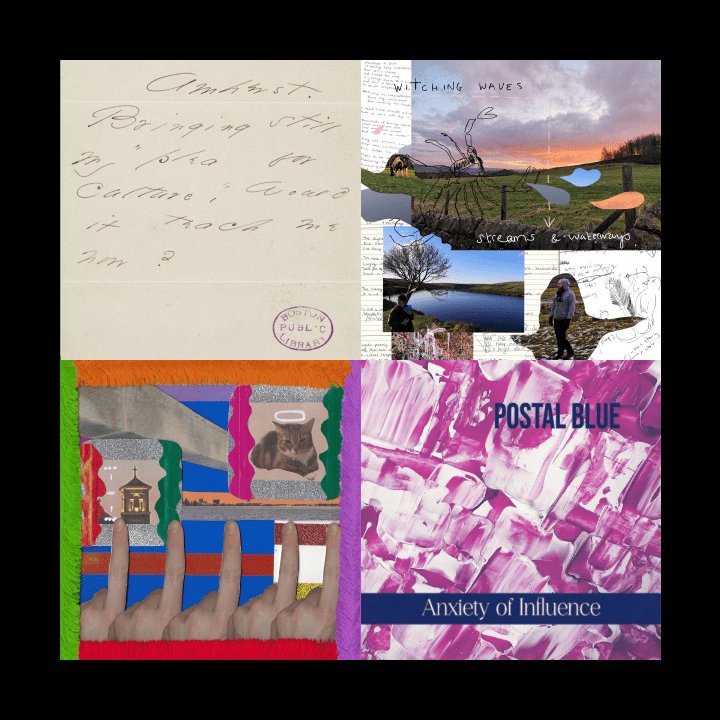
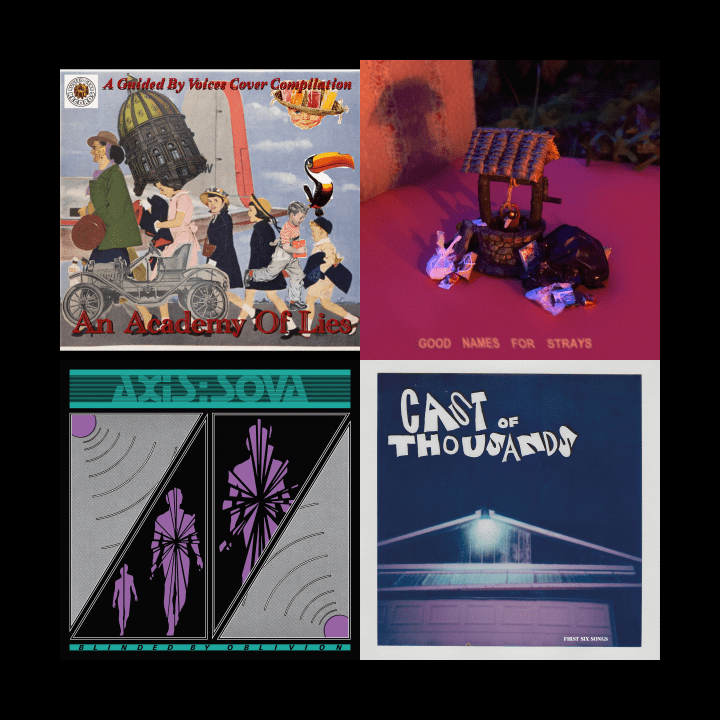


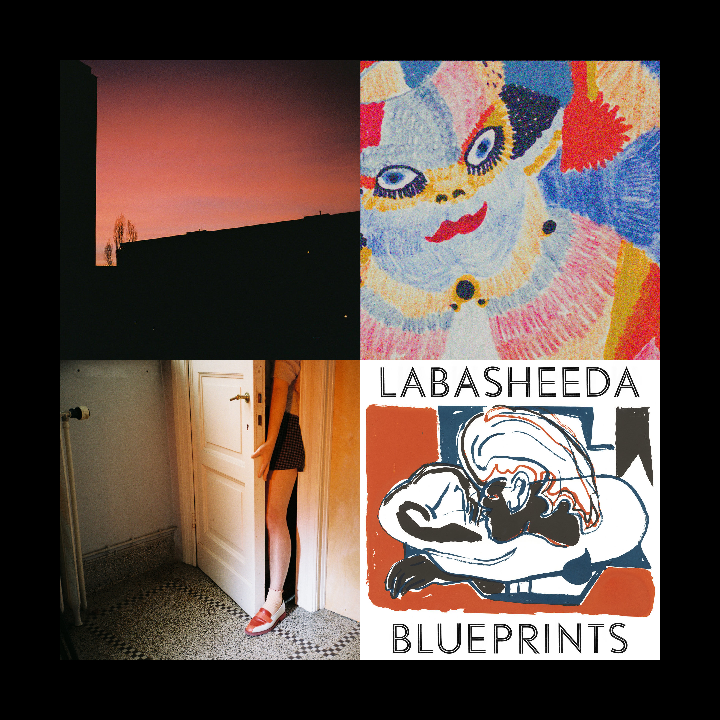


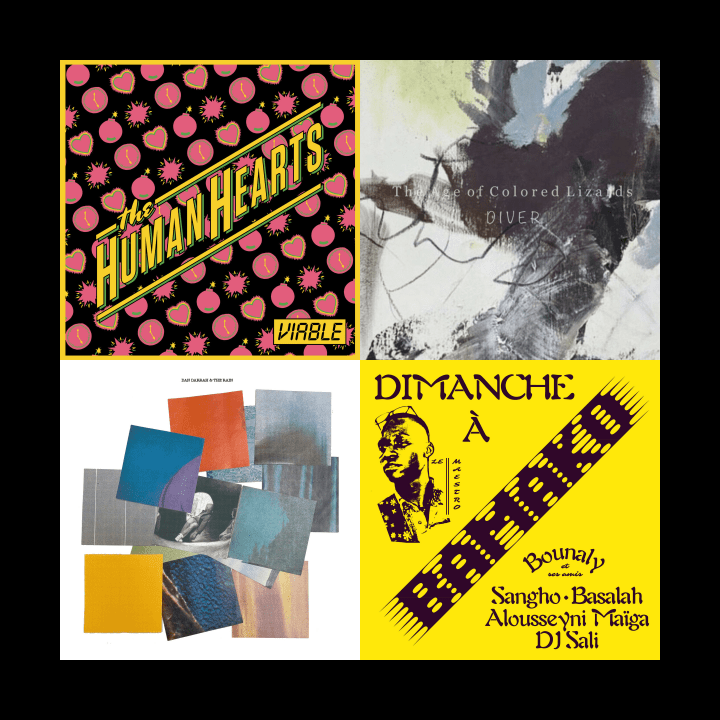
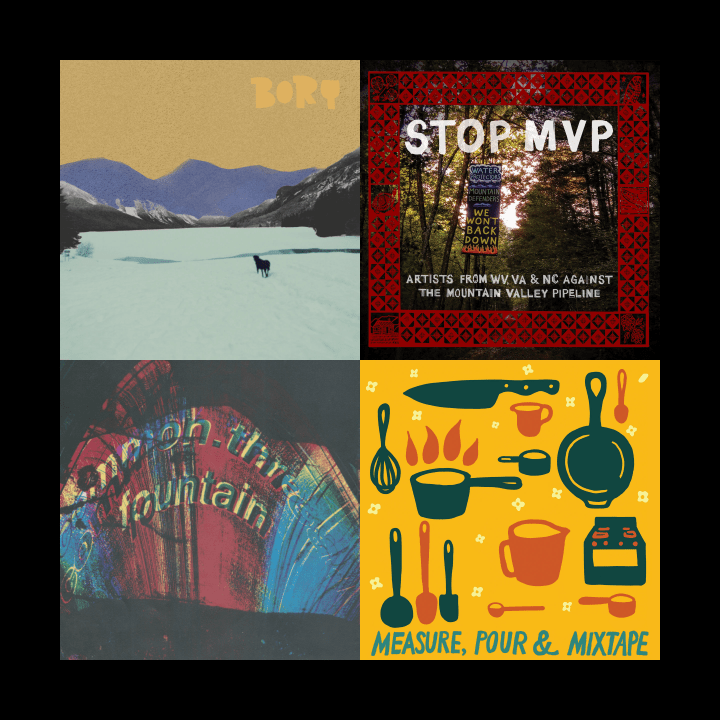
 Rosy Overdrive