New Playlist: August 2024

Well, I hope everyone in the United States had a wonderful Labor Day Weekend (and to those outside of it, I hope you had a nice one, too). I’m sorry I didn’t have the Rosy Overdrive August 2024 playlist ready for you to blast with your relatives and friends as you enjoyed the nice or bad weather, but it’s here now to soundtrack the rest of your week! And it’s a great one, featuring a bunch of great new music.

Supermilk, Jr. Juggernaut, and Hell Beach have two songs on this playlist each.

Here is where you can listen to the playlist on various streaming services: Spotify, Tidal, BNDCMPR. Be sure to check out previous playlist posts if you’ve enjoyed this one, or visit the site directory. If you’d like to support Rosy Overdrive, you can share this (or another) post, or donate here.

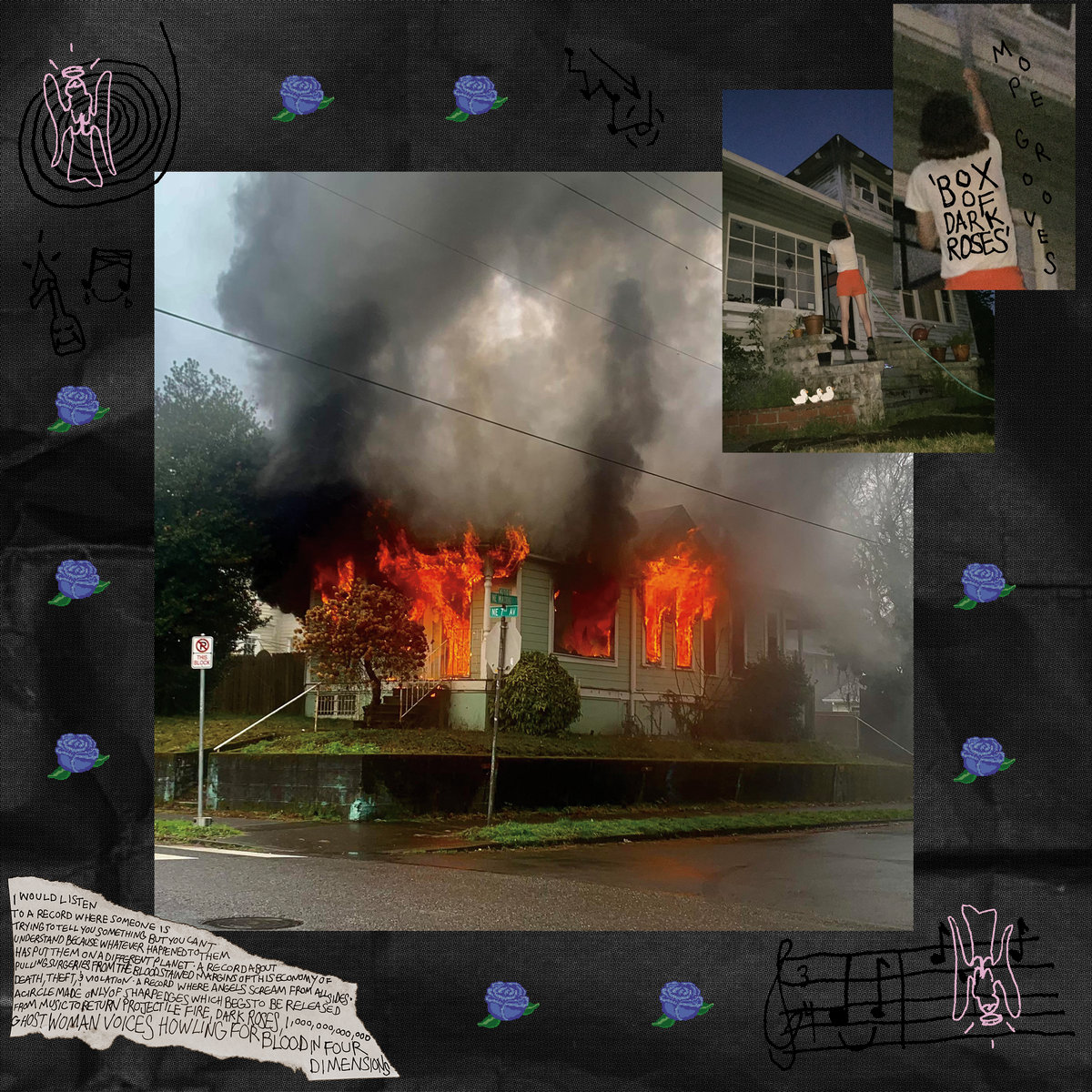
“Come Break My Heart”, Jr. Juggernaut
From Another Big Explosion (2024, Mindpower/Nickel Eye)

Jr. Juggernau are a Los Angeles-based alt-rock/power-punk trio who’ve clearly worn out their CDs of Sugar’s Copper Blue. There’s nothing on Another Big Explosion that could be described as “slacker” or halfhearted, from Mike Williamson’s 110% all-the-time vocals to the Modern Rock Radio-ready hooks to the cranked-up, heavy-duty alt-rock sheen of the music. There’s a Bob Mouldian “pop music as endurance test” element to Another Big Explosion–the ten songs are almost all in the four-to-five minute range, and they’re roaring at full blast pretty much the entire time. It’s a key ingredient in making the album feel like a towering mountain, but Jr. Juggernaut summit it nonetheless, from the triumphant yet chilly all-in opening of “Come Break My Heart” onwards. Read more about Another Big Explosion here.

“First Time”, Oceanator
From Everything Is Love and Death (2024, Polyvinyl)

I really liked Oceanator’s sophomore album, 2022’s Nothing’s Ever Fine, even as it emphasized the moody and insular sides of bandleader Elise Okusami’s writing. Their follow-up, the Will Yip-produced Everything Is Love and Death, lets loose with a distinct but fiery mix of emo, power pop, and even grunge-y 90s alt-rock. Opening track “First Time” pulls no punches–Okusami’s occasional tendency to favor big, bursting chord progressions pays off big time here, as the band pound through an undeniably huge power pop starting blast that should get everyone’s full attention trained on Everything Is Love and Death. Read more about Everything Is Love and Death here.

“The Arrival of the Graf Zeppelin”, The Ekphrastics
From Make Your Own Snowboard (2024, Harriet)

“Always remember where you were on this date / October 16th, 1928 / The arrival of the Graf Zeppelin”. With only a passing familiarity with longtime indie pop musician Frank Boscoe’s previous work, I was immediately drawn in by his latest album as leader of The Ekphrastics, a fantastic exercise in storytelling with laid-back, folk-y indie pop as the fruitful vessel. “The Arrival of the Graf Zeppelin” is the perfect distillation of Boscoe’s writing on Make Your Own Snowboard–musically, it’s smart and catchy (I hear a bit of Lou Reed in this one), and lyrically it shines a light on Boscoe’s greatest strength. That is, he’d rather pull out semi-lost artifacts from history to meditate upon than lean on what we already know and understand to be common reference points–and it works because of his sincere, unpretentious approach to it all. Read more about Make Your Own Snowboard here.

“Oops!”, Little Hag
From Now That’s What I Call Little Hag (2024, Bar None)

Just a superb pop song, this one. New Jersey’s Little Hag (a five-piece led by singer-songwriter Avery Mandeville) has been around since the late 2010s, and their third album, Now That’s What I Call Little Hag, suggests that they can pull off several different styles of indie rock and pop–but “Oops!” hooked me in a way that their previous work hadn’t. How could it not grab me, with lyrics like “If I don’t get attention things are gonna get ugly / Look at me and love me and then don’t ever look back”? Mandeville gives this song the whirlwind of a performance that it deserves, staring dead-eyed through the song’s frenetic, warped pop-rock with gale force winds swirling around the eye of the storm (“I wanted to feel something / Oops, all nothing”). My attention is firmly fixed on Little Hag–although, from the sounds of it, things have already gotten pretty ugly.

“Poison Mind”, Hell Beach
From BEACHWORLD (2024, Uncle Style/Bad Time)

Dan Gorman of The Discover Tab was hyping this one up–er, sorry, I mean I found this album completely on my own and loved it. I associate Bad Time Records with ska punk, but Hell Beach’s BEACHWORLD is all snotty, hooky, golden-age pop punk from none other than Manchester, New Hampshire. This is one of the albums where I could’ve thrown a dart and hit a song good enough to be on this playlist, but the one that drew me in–“Poison Mind”–was the one I went with (well, the first one, at least–read on!) this time. “Poison Mind” isn’t the quickest song on BEACHWORLD, but it more than makes up for it with a nonstop power pop hook parade delivered with a punk-fluent flair. It’s a winning song about being fucked up, but at least it’s honest about it (“I’d like to attribute this to drugs that I did in high school / It’s not true”).

“Robot Talk”, Supermilk
From High Precision Ghosts (2024, Specialist Subject)

Jake Popyura has been leading Supermilk for a while now (since 2017, and really kicking into gear when his old band, Doe, broke up at the end of last decade), but it’s the London band’s third album, High Precision Ghosts, that has found the quartet truly making themselves known as a contender for the best band whose name starts with “Super-” currently going. Supermilk has morphed from a solo project to a proper band, and it’s the contributions of Em Foster, Charlie Jamison, and Jason Cavalier that really take “Robot Talk” to the next level. Rich Mandell of ME REX and Happy Accidents pops up on keys on this one, but his work as a producer on the album might be more key–despite being clearly the work of a raw and kickass rock band, the metallic sheen, tight rhythms, and Popyura’s stuttering vocals all contribute to the offbeat vibe worthy of a song with “robot” in its title.

“Kick in the Shin”, Edie McKenna
From For Edie (2024, Devil Town Tapes)

“Kick in the Shin” was Edie McKenna’s first solo single, originally released last year and reappearing on her debut EP For Edie in “remastered” form–and it’s a hurricane of a first impression. Musically, the lethal pop chord progression and alt-country bent make it reminiscent of her band, Modern Nun, but the incredibly blunt and personal lyrics, excoriating a terrible parental figure (“For what it’s worth, I think your pictures looked like shit / And you charged way too much for it”), certainly help make it an “Edie McKenna song” (I don’t know how to say this delicately, but if I ever fucked up so badly that somebody wrote something like the chorus of “Kick in the Shin” about me, I don’t think I’d be able to continue on as a person). Read more about For Edie here.

“Enemy”, Chandelier
From Chandelier (2024)

The instrumentals on Chandelier’s self-titled debut are crystal clear, mid-tempo post-punk/noise rock, while vocalist Karl Green is an underground punk oddball in the vein of Al Johnson or Daniel Higgs who sing-speaks rhythmically, form-fitting himself to the rest of the band. The most surprising moment on Chandelier is easily “Enemy”, in which the group pull off a legitimate dance-punk song by shifting their sound up just a little bit. In the song’s chorus, Green stutters his way through declaring war on time, an explicit proclamation borne out by the rest of Chandelier, a record that suggests infinite diverging possibilities in its practice of imperfect, slightly-altered repetition. Read more about Chandelier here.

“Lace Monitor”, Dominic Angelella
From God Loves a Scammer (2024, Dumb Solitaire)

God Loves a Scammer, the fifth LP from Philadelphia fixture Dominic Angelella, is a refreshingly timeless-sounding record, one that balances a predilection for offbeat, attention-grabbing songwriting from its frontperson with a casual, laid-back vibe from its players (who’ve played with everyone from Boygenius to Illuminati Hotties). One of my favorite songs on the album is “Lace Monitor”, which keeps things deceptively simple as it sketches a path to suave, steady insanity in the lyrics. For me personally, I’m always happy to hear large lizards mentioned in music, and Angelella plays around with the word “monitor” while singing about recharging one’s cold blood and surveillance. Read more about God Loves a Scammer here.

“I’m Gonna Sleep”, Spiral Island
From Evacuation’s Out (2024)

I really like this song about skipping out on a friend’s show to get a good night’s sleep. Not that I relate to it personally or anything. Anyway, Madison, Wisconsin’s Nick Davies plays in Gentle Brontosaurus with Huan-Hua Chye of Miscellaneous Owl and also makes music on his own as Spiral Island. Evacuation’s Out appears to be the third Spiral Island LP, and it’s an intriguing listen–the project seems to be where Davies can explore more dance and electronic influences, and it pays off when he combines them with power pop in “I’m Gonna Sleep”. There’s plenty of bad Autotuned pop punk in the world, but “I’m Gonna Sleep” is the furthest thing from it–as infectious as it is, I’m convinced I would love it even if it didn’t contain lines like “I’m gonna sleep and it’s gonna be / The highlight of my week” and another one about not wanting to feel “jetlagged without a vacation”.

“Desperate Days”, Chime School
From The Boy Who Ran the Paisley Hotel (2024, Slumberland)

The Boy Who Ran the Paisley Hotel is only really “mellow” compared to the last Chime School album‘s nonstop jolt of jangle pop electricity, but it does nonetheless find a few moments of musical subtlety in the midst of its jangling barrage. Some of the deepest moments on The Boy Who Ran the Paisley Hotel are in the middle of the shiniest pop songs–the best one on the album, “Desperate Days”, marries pep with sole member Andy Pastalaniec’s whip-smart social commentary, walking the streets of San Francisco all-too-vividly aware of what’s going on around him (“All the color’s gone away / From streets of houses painted gray / Cuz that’s what the markets say / In a couple of years they’ll wash away”). Read more about The Boy Who Ran the Paisley Hotel here.

“California Highway 99”, The Softies
From The Bed I Made (2024, Lost Sound Tapes/Father/Daughter)

The Bed I Made is a reminder of why The Softies specifically have endured, even as their music is deliberately less immediate than most of Rose Melberg and Jen Sbragia’s other projects. When the duo sing together and play the guitars together, they don’t need any additional accompaniment–these songs don’t seek the spotlight, but neither do they shrink from the light shone upon them. As always, “pop music” supports The Softies through these moments–just listen to “California Highway 99”, which is probably the most musically “immediate” song on the record. While Melberg and Sbragia lean into the minimalism elsewhere on the album, this immortal car-as-escape song is one that makes us question just how The Softies can do so much with just guitars and vocals. Read more about The Bed I Made here.

“The Weaver”, Norm Archer
From Verb (2024, Panda Koala)

Everything great about Norm Archer (the mostly-solo project of Portsmouth, England’s Will Pearce) appears on Verb–huge power pop anthems, Guided by Voices-esque arena pop rock, relaxed, 60s-esque jangly guitar pop, and multi-part prog-pop workouts all abound. Those who are looking for the latter should dive into the album’s twin ten-minute closing tracks, but the instant-gratification side of Verb fits a bit better on this playlist. “The Weaver” is one such song, a piece of no-holds-barred power pop candy that’s aggressively catchy in its backing “whoooos”, Pearce’s dramatic vocal take, and of course a ton of melodic guitars. Read more about Verb here.

“Dylan Goes Electric”, Biz Turkey
From Biz Turkey (2024, Third Uncle)

If you like the less jammy side of Built to Spill and the more guitar-based music of Grandaddy, I’ve got great news for you with regards to what Biz Turkey sounds like. Biz Turkey captures the moment where the basement indie rock of the 90s started transforming into something larger and more aware of the concept of “the outdoors”. Vocalist Graham Wood sounds lost but still alert in the midst of these wandering instrumentals–every musician on any given track sounds like they’re following something different, but they’re all so in tune with each other that the puzzle pieces fit nonetheless. “Dylan Goes Electric” is a compelling first song–it captures pretty much everything I mentioned earlier, and together it gives the feeling that we’ve just stepped aboard a sinking ship. Read more about Biz Turkey here.

“County Lines”, Share
From Have One (2024, Forged Artifacts)

Share is a new band made up of three Bay Area indie rock veterans, giving Jeff Day, Peter Kegler, and Dylan Allard a place to bring all their ideas to the table as “creative equals”. The three-headed composition is perhaps why Have One is such an odd-sounding record–it’s a repository for all sorts of rock and roll explorations, from garage rock to post-punk to psychedelic alt-country. “County Lines”, as one might be able to gather from its title, is on the country rock side of the spectrum, but it’s quite purposeful in its twang–it’s a piece of four-point-five-minute windows-down ecstasy that pulls together enough “power pop” for the entire record. Read more about Have One here.

“Sick Sweet”, Wishy
From Triple Seven (2024, Winspear)

Even as Wishy embrace louder guitars and longer song lengths on their first full length, it’s somehow even more of an effective pop record than last year’s debut EP, Paradise. Any trepidation about Wishy’s continued success one might have is immediately put to rest by Triple Seven’s opening track “Sick Sweet”, in which the band absolutely knock “maximalist first statement” out of the park. It’s one part distorted, punk-y power pop (this is a band that’s played shows with Dazy and Guided by Voices recently, after all), but there’s a huge Mellon Collie-like grandiosity to the track as well (there’s just a hint of “Tonight, Tonight”-like swelling strings underneath the noise, and one needs a Corganesque confidence to sing “You’re like an afterlife and I really wanna die tonight,” as a chorus like co-bandleader Kevin Krauter does). Read more about Triple Seven here.

“Pink Smoke”, Quivers
From Oyster Cuts (2024, Merge)

On their third album of original material, Melbourne’s Quivers are dogged pursuers of perfect guitar pop–their mix of college rock, C86, power pop, and new wave is as shined up and sparkly in its presentation as Sam Nicholson and Bella Quinlan’s vocals are intimate and distinct. Oyster Cuts stubbornly declines to embrace anonymity–it doesn’t hide the fact that it was made by Australian lifers who love The Chills and Pavement, nor does it stop at that surface-level descriptor. Early highlight “Pink Smoke” recalls the more low-key, laid-back side of Aussie guitar pop, but when Quivers sing “People go together ‘til they’re intertwined” as a unit, it feels huge and ambitious nonetheless. Read more about Oyster Cuts here.

“I Can’t Make You”, Sailor Down
From Maybe We Should Call It a Night (2024, Relief Map)

Sailor Down’s second EP, Maybe We Should Call It a Night, is its first as a proper quartet, and it’s pleasing to hear that the group already have a distinct sound down as a unit on the record. The EP’s six songs pull together 90s Midwest emo, no-frills indie rock, and the more melancholic sides of twee and indie pop for a nostalgic, accessible, but hardly surface-level record. “I Can’t Make You” kicks off this era of Sailor Down with emo-y indie rock’s version of a pop anthem–Chloe Deeley’s vocals (joined by bassist Kevin McGrath and guitarist Ben Husk’s, too) hug a simple pop melody and lean heavily into earnestness, and the chorus sounds on the brink of falling apart in the best way possible. It’s hardly the mightiest moment on Maybe We Should Call It a Night, but I would argue its 90s-indie-rock looseness is a large part of its appeal. Read more about Maybe We Should Call It a Night here.

“Clowning Around”, Energy Slime
From Planet Perfect (2024, We Are Time)

To some degree, Planet Perfect sounds like giving a couple of 80s pop wizards the keys to the recording studio and letting them cook–with the lack of excess or obviously dated production choices being the primary timestamp suggesting otherwise. Jay Arner and Jessica Delisle are offbeat (psychedelia, prog-rock, and synth-funk shade these ten songs) but never not “pop’, leading to a a home-recorded synthpop album that isn’t at all constrained by the circumstances of its creation, doling out maximalist yet streamlined arrangements with a steady but playful hand. The synth-led power pop of “Clowning Around” combines that robotic main riff with propulsive verses and an almost prog-pop chorus–it shouldn’t be on paper, but it’s one of the most immediately accessible songs on Planet Perfect. Read more about Planet Perfect here.

“All of My Love”, Oso Oso
From Life Till Bones (2024, Yunahon)

Oh, wow, the new Oso Oso album is very sugary. Not that I’ve got a problem with that–I’m happy enough that Jade Lilitri and crew (on this record, Eddy Rodriguez, Jordan Krimston, and Billy Mannino) are back just two years after the sneakily brilliant Sore Thumb, and while Life Till Bones might not top that album, it’s quite good for what it is. And what it is is Oso Oso completing the emo-to-power-pop transformation (just like likeminded Long Island group Macseal just did), pulling off gleeful pop rock treasure troves like “All of My Love” with no strings attached. There’s handclaps, soaring guitars, lyrics about love–you’d be forgiven for missing what the song’s actually about (“I’m not trying to say that a moment can’t survive / But I can’t give you all of my love all of my life”) in the barrage.

“Sweat”, Supermilk
From High Precision Ghosts (2024, Specialist Subject)

Most of the lyrics of “Sweat” by Supermilk are just the line “Sweat gets in my eyes” repeated over and over again. Hearing Jake Popyura give everything he’s got to that single line so many times over top of a soaring, high-flying British rock-and-roll instrumental starts to become meditative, hymn-like after a while. It’s a three-minute tune, and it’s not until nearly two minutes into it that Popyura offers up a couple of other lines: “Onomatopoeia / Living off the fear / Sleeping at the wheel / Is it everything you’ve asked for?” Supermilk aren’t really a “post-punk” band, but it’s hard to describe the groove of “Sweat” as anything else as it careens into this differently-worded bridge. And then the sweat gets in his eyes again. Sweat gets in my eyes. Sweat gets in my eyes. Gets in my, gets in my.

“Hammer of My Own”, Closebye
From Hammer of My Own (2024)

Produced by bandmember Ian Salazar, Hammer of My Own introduces a clear early-90s alt-dance-pop influence into New York indie folk quintet Closebye’s sound, but it’s not a departure from their previous style so much as an addition. If anything, the band are even more committed to making wistful, acoustic-guitar-based folk-and-soft rock on their sophomore album, too. The record’s title track, coming near the end of the record, is one of the brightest and most immediate examples of Closebye’s new sound–it’s an incredibly bright, maximalist cloud-breaking art-pop anthem with more than a bit of mid-90s, psych-dance “oasis pop” in it, but not so wild that its relatively humble verses don’t fit alongside the folkier moments on Hammer of My Own. Read more about Hammer of My Own here.

“Gory Days”, Hell Beach
From BEACHWORLD (2024, Uncle Style)

The line between this one and “The Fool” was so thin for the second Hell Beach song on this playlist, but I think it was the delivery of “2000 Dodge Avenger” in the first verse that got “Gory Days” the nod. Every bit as catchy as “Poison Mind”, with a truly accursed subject matter–being a teenager. It’s just as honest as “Poison Mind”, too–“It was no fun / Being young sucked” goes the refrain, and the verses provide examples by dint of crashing the aforementioned Dodge Avenger into an electric generator and getting “the living shit” kicked out of one’s self by a football player. Also, this is not really relevant to this song, but I really get a kick out of a band from New Hampshire riding the “beach” motif like Hell Beach seem to be doing. I’ve never been up there, but is “hell beach” really an accurate phrase for what goes on on its eighteen-mile shoreline?

“Ponies”, Fake Fruit
From Mucho Mistrust (2024, Carpark)

If you liked the garage-y take on post-punk revival of Fake Fruit’s 2021 self-titled debut album, there’s plenty of that to go around on the Oakland group’s follow-up, Mucho Mistrust. However, my favorite moments on this record come near its end–specifically, the final four tracks, where Fake Fruit take a step out of their comfort zone and try some different styles of indie rock and indie pop. “Ponies” is a bittersweet-sounding guitar pop tune–it sounds vaguely Australian to me, I’m not sure why. It’s an almost-sleepy song at first, drifting in and out of some thoughts about betting at the racetrack, but eventually launches into a fuzz-rock chorus (but Hannah D’Amato’s vocals still sound weary, dragging the melodies out).

“All You See Is Weather”, Fast Execution
From Menses Music (2024, Dandy Boy)

From the title on down, it’s not hard to gather that Oakland’s Fast Execution are drawing from classic riot grrl on their debut record Menses Music, although it’s firmly on the more polished and tuneful side of the subgenre–the trio make their brief but memorable first impression to the tune of garage rock, power pop, and West Coast pop punk. The second song on the record, “All You See Is Weather”, is incredibly catchy in a casual way–its hook is a distorted but quite pleasing guitar riff, suggesting a lighter version of the proto-grunge surf punk of one of their biggest stated influences, Wipers. Read more about Menses Music here.

“Dismantler”, Tulpa
From Dismantler (2024)

I’m not entirely sure how Dismantler, the debut EP from Leeds’ Tulpa, got on my radar. Looks like they’ve played shows with some bands I like (Lightheaded, 2nd Grade), and the token British member of the Rosy Overdrive Discord seems to have sung their praises–whatever it was, this is a very strong indie pop record. I could’ve gone with just about any of the EP’s six songs, but in the end the opening title track is too good to pass up. It eschews some of the noisier, almost shoegaze-y aspects of some of the later songs and locks into a slick, polished power pop groove–the vocalist (I don’t know their name, sorry) is key to the dreamy guitar pop track’s success, sounding like a more twee/indie pop Neko Case (so like early Neko Case, I guess, but more dream pop) in the song’s huge chorus.

“Another Space-Time”, Ferri-Chrome
From Under This Cherry Tree (2024)

Another quite good guitar pop band that wasn’t on my radar until now is Ferri-Chrome, a jangly/dreamy quartet from Tokyo who’ve put out three records (two LPs and and EP) since 2020. Their sophomore album, Under This Cherry Tree, really hits the sweet spot, with a singular melancholy underlining their writing as they move through power pop, dream pop, and alt-rock with undeniable skill. It’s probably not surprising that my favorite song on the album, “Another Space-Time”, is the song that leans into jangly guitars more than the rest of the record–the melodic guitar parts come out the door swinging, although the distortion and sweet but forceful vocals eventually rise to carry the song alongside them.

“Red Flowers”, Lindsay Reamer
From Natural Science (2024, Dear Life)

The lineup on Lindsay Reamer’s debut album, Natural Science, is a real who’s who of Philadelphia indie rock/country/folk, featuring members of Friendship, Hour, Ther, 2nd Grade, Thank You Thank You, and Florry, among others. Reamer, at the helm, leads her collaborators through an impressively-orchestrated, polished record that takes advantage of the tools at its disposal but still comes off as breezy and pop-forward. It’s one of the most “instant-gratification” alt-country records to come out of Dear Life Records in a while–but Reamer isn’t put into a box by that at all, gleefully hopping from upbeat country rock to dreamy, layered folk music throughout Natural Science. Early highlight “Red Flowers” feigns a slow start before launching into a jaunty but laid-back electric country tune, streamlined but substantial. Read more about Natural Science here.

“Re-Materialize”, Google Earth
From Street View (2024, Tiny Telephone)

I’m always happy to drop in and see what John Vanderslice is up to these days, even if it’s not always “my thing”. His latest project is called Google Earth, and their debut record (named Street View because of course it is) is an intriguing collaboration between Vanderslice and James Riotto (and Vanderslice’s wife, Maria, who wrote half of the album’s lyrics, with Riotto contributing the rest). Street View balances the truly wild electronic stuff Vanderslice has been into lately with a low-key pop side, and the minimal synth-ish pop-ish ballad “Re-Materialize” is my favorite thing he’s been involved with in a while. Even though he didn’t write the lyrics, the subject matter (about “standing on the brink”, described in fairly vivid detail) is in line with Vanderslice’s recent work, and the vocals, which go from casually spoke-sung to a sweeping chorus, recall his more formative records.

“Everything I Touch”, Jr. Juggernaut
From Another Big Explosion (2024, Mindpower/Nickel Eye)

“Everything I Touch” was the lead single from Another Big Explosion, and while I think the entire record is overflowing with brilliant pop hooks, I do see why this one got the nod. Jr. Juggernaut train their cranked-out, power pop overdrive into the form of a beastly alt-rock could’ve-been-hit here. It packs a punch musically, of course, but it also benefits from the record’s secret weapon–that is, Williamson being able to tap into something primal and emotional to match the strength of the instrumentals. “Everything I touch turns black and blue,” is both constructed and delivered with the heft to match Jr. Juggernaut, the rock anthem machine, and is a perfect ambassador for Another Big Explosion, a record that would’ve been worth fishing out of the bargain bin thirty years ago and worth taking in as a whole now. Read more about Another Big Explosion here.

“Never Better”, Pretty Bitter
From Take Me Out (2024)

Pretty Bitter and Flowerbomb are a pair of like-minded Washington, D.C.-based indie rock groups–both of them have a sound that blends the more stripped-down side of “stately” 2000s indie rock with emo and just a hint of indie pop/power pop/pop punk. They’re natural partners for a collaborative/split EP (featuring two songs from each band and one credited to the both of them), and emo busybody Evan Weiss is a just-as-natural choice for co-producer. Pretty Bitter kick off Take Me Out with an instant hit in “Never Better”, an earnest, propulsive song whose gigantic emo-synth hook from Zack Berman hints at a way to tell the two bands apart (although Flowerbomb, perhaps emboldened by Pretty Bitter, try their own hand at synthesizers later with “I Always Knew”). Read more about Take Me Out here. 

“Trapped in a Parking Garage”, Citric Dummies
From Trapped in a Parking Garage (2024, Feel It/Saalepower 2)

Bad news, everyone–the Citric Dummies are Trapped in a Parking Garage. Just a few months after the Minneapolis garage punks bravely took on their hometown heroes in Zen and the Arcade of Beating Your Ass, they’re back with another record, this time a four-song 7” assault that continues their steamrolling balance of raw rock aggression and an irreverent, charmingly goofy side. “I can’t be saved / I can’t go home” howls whichever Citric Dummy is on the mic, running around their concrete prison as the paranoia festers and grows over the song’s minute-forty-five runtime. Pay no attention to the frothing man with the giant orange cone, don’t make eye contact…

“Emotional Disguise”, Lesibu Grand
From Triggered (2024, Kill Rock Stars)

You can call Atlanta’s Lesibu Grand a “punk band”, and sonically and attitude-wise you wouldn’t be wrong, but it’s hardly an orthodox exercise in the genre with its equal love of new wave, power pop, and indie pop. There are plenty of punk throwbacks on Triggered, but I find myself being drawn to the other tenets of Lesibu Grand’s sound, where they get a bit subtler and less in-your-face. The melancholic, jangly indie pop of “Emotional Disguise” is one of the strongest moments on the entire record, even as one might need to be paying attention to catch it in between “showier” moments. It’s a K/Sarah Records-type song from a modern Kill Rock Stars band, and I’m here for it–some of Lesibu Grand’s best work is done on the periphery of their sound. Read more about Triggered here.

“Lonely Hearts Killers”, Greaser Phase
From Greaser Phase (2024, Shambotic)

On Greaser Phase, the New York band’s core duo (vocalist Jonny Couch and bassist/guitarist Benny Imbriani, assisted by Kevin Shea on drums) barrel through ten electric power pop songs in twenty-nine minutes, and the group’s barebones instrumental setup doesn’t stop Greaser Phase from incorporating early punk rock, mod, 60s pop rock, and even rockabilly into their pop music. There’s a certain pleasing immediacy to the record’s opening few songs that will undoubtedly particularly appeal to those of us who like their guitar pop short, strong, and sweet, particularly the first track–“Lonely Hearts Killers” is a brilliant opener, a power pop propeller in love with rock both classic and punk in a way that recalls the more bite-sized moments of Ted Leo and the Pharmacists. Read more about Greaser Phase here.

“Face in the Moon”, X
From Smoke & Fiction (2024, Fat Possum)

I generally take band break-ups, especially ones packaged with a “final” album and tour, with a grain of salt, but it would make sense for X to bow out right about now. They aren’t getting any younger, and they’ve had a well-earned victory lap that actually added to their legacy in the form of a couple records that really did capture what the band had going during their classic era. It might be a bit early to lump Smoke & Fiction in with 2020’s Alphabetland in that department, but it sounds pretty good so far, both in terms of “X, the all-time punk rock group” and in terms of songs like “Face in the Moon”, where they slow it down and make a good case for themselves as the quintessential American rock band–no “punk” qualifier needed.

“Outlive You” (Steve Albini Mix), Friendship Commanders
From BILL (The Steve Albini Mixes) (2024, Trimming the Shield)

BILL was tracked live to tape by Steve Albini in late 2017 and eventually mixed by Friendship Commanders’ Jerry Roe, but the band held onto Albini’s original mixes and planned to release them at some point–Albini’s sudden and unexpected death became the impetus for the mixes to finally see the light of day. On BILL, Albini captured the moment in between the loose punk rock of Friendship Commanders’ debut and the heavy stoner rock they’d go on to make–these songs rush by in a blur, whirlwinds of crushing rhythm sections, loud guitars, and Buick Audra’s commanding, centered vocals. The punk-powered “Outlive You” sticks around just long enough to sear an impression into one’s brain–there’s a pop sensibility in its refrain, neither outshining nor being swallowed up by the instrumental might found elsewhere in the track. Read more about BILL (The Steve Albini Mixes) here.

“Pemulwuy”, 2070
From Rabies Shot $5 (2024, Free World Vessel)

Back in May, I wrote about the sophomore album from Los Angeles’ 2070, Stay in the Ranch. It’s a strong collection of fuzzed-out shoegaze and noise pop, so I was pleasantly surprised to see the band put out a second record of 2024, Rabies Shot $5, a mere four months later; even though it’s not a proper follow-up album (“Demos and songs that were left off” of their first two albums, per Bandcamp), there’s still plenty to enjoy here. Perhaps unsurprisingly, Rabies Shot $5 sounds looser and more casual than their noisier, more shoegaze-influenced proper records, letting 2070’s pop songwriting stick out a little more; opening track “Pemulwuy” is their version of 60s garage rock, a somewhat muddy but infectious mix of tambourines and ramshackle melodies.

“Worst Time”, Bats & Mice
From PS: Seriously (2024, Lovitt)

I don’t know too much about Bats & Mice–well, I do know that they’re from Chapel Hill, and that despite having ties to some of the most abrasive underground rock music I know of (Men’s Recovery Project, Rah Bras), their sound is of the more sensitive and arty indie rock variety. PS: Seriously has been in the works since the early 2010s (their last full length album, Believe It Mammals, came out all the way back in 2002), and it’s a bit all over the map sonically. My favorite song on the album is the last one, “Worst Time”, which is a simple melodic ballad with a bit of an edge to it, reminding me of the more tender moments on classic 90s indie rock albums from bands like Pavement and Archers of Loaf. There’s even some swooning synths that kick in as the song draws to a close!

“How Quaint”, Spring Silver
From Don’t You Think It’s Strange? (2024)

Even though it was recorded entirely by Maryland musician K Nkanza alone, Don’t You Think It’s Strange? actually sounds like the most “rock-band-focused” version of their project Spring Silver yet. Still recognizably themself, Nkanza takes on the difficult task of making lengthy (five-to-seven-minute), rumbling, but still pop-focused rock songs on Don’t You Think It’s Strange?, and sticks the landing right up up to the end of the record. “How Quaint” ends the album with a calamitous, industrial-bubblegum pop anthem that reminds me a bit of the art pop of the last Spring Silver record, but with the grandiosity of Don’t You Think It’s Strange? in tow as well–and to bring it all together, there’s a damaged but palpable emotional core to it, too (“How quaint of the beast / She wishes to be pure / She scrubs her matted fur / And holds herself, unsure”). It’s a good sign for Nkanza that they’ve already covered so much ground while hammering out a distinct style this early in their musical career. Read more about Don’t You Think It’s Strange? here.

Pressing Concerns: The Bug Club, Oceanator, Dominic Angelella, Mint Field

The Thursday Pressing Concerns is a big one, featuring four records that shall be coming out tomorrow, August 30th (new albums from The Bug Club, Oceanator, and Dominic Angelella, plus an EP/mini-LP from Mint Field). If you’ve missed either of this eventful week’s earlier blog posts (Monday’s featured Chime School, Melt-Banana, Edie McKenna, and Giant Day, and Tuesday’s had Norm Archer, New Math, Hits, and Kevin Robertson), check those out, too.

If you’re looking for more new music, you can visit the site directory to see what else we’ve written about lately. If you’d like to support Rosy Overdrive, you can share this (or another) post, or donate here.

The Bug Club – On the Intricate Inner Workings of the System

Release date: August 30th
Record label: Sub Pop
Genre: Power pop, garage rock, pop punk
Formats: Vinyl, CD, digital
Pull Track: On the Intricate Inner Workings of the System

Rosy Overdrive has been supporting the rise of Welsh indie-garage-power-pop group The Bug Club for a couple of years now–their 2022 full-length Green Dream in #F was one of my favorite albums of that year, and 2023’s double LP Rare Birds: Hour of Song was even better. The prolific group–co-led by the duo of Sam Willmett and Tilly Harris–kept putting out music even beyond their “one proper album a year” pace last year with a reissue of 2021’s “mini-LP” Pure Particles, a live album of all-new material called Mr Anyway’s Holey Spirits Perform! One Foot in Bethlehem, and the non-album Picture This single. Even with all their accomplishments, it was a bit surprising that a band combining the simple melodies of The Modern Lovers, fuzzed-out power pop, and droll British guitar pop was picked up by Sub Pop Records–but The Bug Club haven’t kept us waiting for their debut release on their new home, putting together a brand-new full-length called On the Intricate Inner Workings of the System by Means of Popular Music or the Contemplation of Pretty Faces, Tinned Bubbles and Strife (or merely On the Intricate Inner Workings of the System if you’ve got somewhere to be). Rising to the indie rock big leagues doesn’t seem to have changed The Bug Club one bit–the eleven-song, twenty-eight minute record contains all the hallmarks that have made the group such a recognizable and distinct act despite cooking their songs up with well-worn ingredients.

All of the singles from On the Intricate Inner Workings of the System are classic Bug Club–we get Willmett ranting and raving (“Quality Pints”), dryly opining (“Lonsdale Slipons”), and cracking a bit of a smirk (“A Bit Like James Bond”) accompanied by Harris racing to catch up, all over catchy, electric rock and roll music. If there’s anything separating On the Intricate Inner Workings of the System from previous Bug Club records, it might be a heavier, more stoic instrumental sound–between the blunt opening track “War Movies” and the snaking six-string of “Actual Pain”, there’s perhaps a bit less in terms of musical whimsy on this LP. Of course, this is all relative–there’s probably no other band I’d feel comfortable describing like that while still making songs like “Pop Single”, “Cold. Hard. Love.”, and (especially) “Best Looking Strangers in the Cemetery” (“We’re not dead, we’re just dead gorgeous!”). “Better Than Good” also contains a lot of great Bug Club-isms, and in the midst of a hard-charging album, it draws attention to itself by dialing up a simple drum machine beat for a Jonathan Richman/Lou Reed laid-back guitar pop presentation. The blissed-out zen of that song (“Nothing’s really, really good / Because you can’t get better than good”) is almost the inverse of the other ear-catching tune towards the end of the record, the ninety-second fret-fest of the title track. A pissed-off, angry shrug of a closer in the vein of Guided by Voices’ “An Unmarketed Product”, “On the Intricate Inner Workings of the System” suggests something substantial at the root of The Bug Club’s carefree, flippant attitude. It’s just a suggestion, though–they’re too busy to spell it out for us. (Bandcamp link)

Oceanator – Everything Is Love and Death

Release date: August 30th
Record label: Polyvinyl
Genre: Alt-rock, punk rock, fuzz rock, emo, power pop
Formats: Vinyl, CD, cassette, digital
Pull Track: First Time

I’ve had a strong feeling that Elise Okusami is going to become a bona fide indie rock star ever since I heard Things I Never Said, her 2020 debut as Oceanator (not that I was alone in thinking this–that LP was slated to come out on tastemaking indie label Tiny Engines before their extended hiatus, and I remember Pedro the Lion’s David Bazan being a huge booster of her music around the same time). Linking up with A-list label Polyvinyl, 2022’s Nothing’s Ever Fine should’ve been Oceanator’s breakout album on paper–but as great as I think that album is, it’s not surprising that that LP, which emphasized the moody and insular sides of Okusami’s still-fiery alt-rock writing, largely kept the band to those of us “in the know”. With the third Oceanator album, Everything Is Love and Death, however, there’s no excuse for the rest of you. In a move that makes too much sense, Okusami has linked up with renowned Philadelphia producer Will Yip, and Yip (who also plays drums and keys on the record) helps Oceanator (here, Elise and her brother Mike, alongside guest musicians Andrew Whitehurst, Eric Sherman, David Haik, and Megan Siebe) accentuate the anthemic, immediate aspects of their sound–hard to categorize, but containing a distinct mix of emo, power pop, and even grunge-y 90s alt-rock.

Opening track “First Time” pulls no punches–Okusami’s occasional tendency to favor big, bursting chord progressions pays off big time here, as the band pound through an undeniably huge power pop starting punch that should get everyone’s full attention trained on Everything Is Love and Death. Oceanator are a hard-hitting rock band throughout the first half of Everything Is Love and Death, even as they don’t quite repeat themselves in how they do it–“Lullaby” is the thorny, tricky jungle of guitar riffs and percussion, “Cut String” is the fast-paced but chilly one that tries to outrun the feelings at its heart with briskness, “Happy New Year” is a mid-tempo ballad brought to the next level with its power pop trappings, “Get Out” the fuzzed-out, dead-serious indie punk rager. Apparently, Okusami and Yip spent a month in the studio working on Everything Is Love and Death–with that in mind, it’s impressive how streamlined the album sounds, containing few moments of the lengthy rock journeys found on Things I Never Said. Even as the record gets a little more exploratory in its second half, it’s still offering up concise pop and rock tunes (“Be Here” and “All the Same”), and the most experimental moments (the tension of “Drain the Well”, the distorted, stoner rock-esque “Drift Away”) are relatively brief. The only song on Everything Is Love and Death longer than five minutes is closing track “Won’t Someone”, which starts out with just Okusami and her guitar before building slowly. The sparse beginning is a rare moment on Everything Is Love and Death, but Oceanator let it longer just long enough before initiating their grand finale. (Bandcamp link)

Dominic Angelella – God Loves a Scammer

Release date: August 30th
Record label: Dumb Solitaire
Genre: Folk rock, power pop, alt-country, country rock, singer-songwriter
Formats: Vinyl, CD, digital
Pull Track: Lace Monitor

It’s people like Dominic Angelella who form the backbone of “indie rock”. While staying largely under the radar, he’s played supporting roles in two different canonical Philadelphia bands (Hop Along and mewithoutYou), as well as making his own music as Lithuania (with Dr. Dog’s Eric Slick), Drgn King, and under his own name over the past decade. As of late, Angelella’s primary creative output seems to be his solo career–from 2017 to 2022, he put out four albums through Philly institution Lame-O Records, and it took him less than two years from his last one to produce a fifth LP, the independently-released God Loves a Scammer. Angelella wrote a lot of God Loves a Scammer while he was busy being indie rock (playing in Lucy Dacus’ band, touring with Foxing side project Smidley) and summoned a handful of like-minded ringers to realize what he’d put together (the core of the record’s music comes from Jacob Blizard, Sarah Goldstone, Lilah Larson, and Noah Hecht, who have credits for Boygenius, Dacus, Illuminati Hotties, and Cassandra Jenkins between them). For an album made by a group of people who could reach out and touch the zeitgeist if they wanted to, God Loves a Scammer is a refreshingly timeless-sounding record, one that balances a predilection for offbeat, attention-grabbing songwriting from its frontperson with a casual, laid-back vibe from its players.

It’s incredibly bold to claim to be inspired by David Berman and John Darnielle as Angelella does with God Loves a Scammer, but he’s wise enough to understand that these writers can’t be emulated and the lessons to be gleaned from them are primarily attitudinal. Like early Mountain Goats and Silver Jews records before it, God Loves a Scammer comes from an artist steeped in a world where indie rock is supposed to “sound” a certain way (Pavement then, P. Bridgers now) but who is able to fully uncouple himself from that. Angelella makes the decision to put his vocals high and clear in the mix, a confident choice in line with fellow iconoclastic singer-songwriters from Fred Thomas to David Dondero (it also reminds me a bit of the most recent Slaughter Beach, Dog album, whose Jake Ewald is well on his way to joining that list). The Dominic Angelella band are far from an afterthought even as their frontperson wisely emphasizes his writing–whether they’re rambling alt-country slingers (“Satellite Telephone”, “Dirty Mattress”), unrestrained rockers (“Short End of the Stick”, Babylon Working”), or quiet and tasteful (“Analog Circuit”, “Paul Schrader”), the musicians are more than up to the task of fleshing out these dozen songs so that they’re ready to fly. Two of my favorite songs on the album are “Lace Monitor” and “Headway”, both of which keep things deceptively simple to disparate ends (suave, steady insanity in the former, ragged, messy peace in the latter, which subsequently ends the record). God Loves a Scammer does an impeccable job of keeping us hanging on the line. (Bandcamp link)

Mint Field – Aprender a Ser: Extended

Release date: August 30th
Record label: Felte
Genre: Dream pop, psych pop, ambient pop
Formats: Vinyl, digital
Pull Track: Sensibilidad dormida

Last year, I wrote about Aprender a Ser, the third LP from Mexico City dream pop/shoegaze trio Mint Field. The ten-song album ranged from quiet dreamy psychedelia to loud distorted guitar-driven pop music–really, it covered just about everything you’d want in a modern dream pop record. Given how fruitful the sessions for Aprender a Ser were, I suppose it isn’t surprising to learn that the trio (co-leaders Estrella del Sol and Sebastian Neyra, plus drummer Callum Brown) recorded more than enough material for one album when putting it together. Mint Field decided that these songs would best be served as two separate releases, and the second of those is a seven-song EP (or “mini-LP”) christened Aprender a Ser: Extended which arrives ten months after its sibling record. Although the first Aprender a Ser cast a wide net sonically, Aprender a Ser: Extended feels more cohesively mellow and insular, zeroing in on hazy, even minimalist dream pop, psychedelia, and ambient pop. Shoegaze guitars still factor in the equation, but they’re fairly sidelined, appearing as distinct moments in a couple of these songs rather than overpowering them, and allowing Mint Field to probe different territory.

From its title to its relatively quick release, Mint Field don’t shy from encouraging us to fold Aprender a Ser: Extended into its predecessor, either as an appendix or a sequel. The twenty-two minute record is strong enough to stand on its own, however, and one doesn’t need to already be a fan of Mint Field to get something out of these tracks. One does, however, need to be something of a patient consumer of indie rock, as “Hasta el anochecer” sets the stage with four minutes of exquisite but spaced-out layering, displaying Mint Field’s cavernous approach to pop music immediately. “Sensibilidad dormida” introduces a constant, grounding bassline into the mix, but its fuzzed-out guitars only show up for a few seconds–as they also do in “Recuerdo de los días”, which is nonetheless still doing enough to be the most upbeat moment on the EP thus far. Between the amped-up drone rock of the second half of “Una flor sin interior” and the shy but firm first half of “Ve hacia la ventana”, there’s about one full shoegaze song on Aprender a Ser: Extended total, although the record closes with a more accurate summation of its sound in “El mar me veía”. Mint Field enlist cellist Mabe Fratti to soundtrack a piece of ambient pop that morphs into something more concrete but still subtle by its conclusion–by now, it’s a familiar destination, but it’s still welcome. (Bandcamp link)

Also notable:
Pressing Concerns: Norm Archer, New Math, Hits, Kevin Robertson

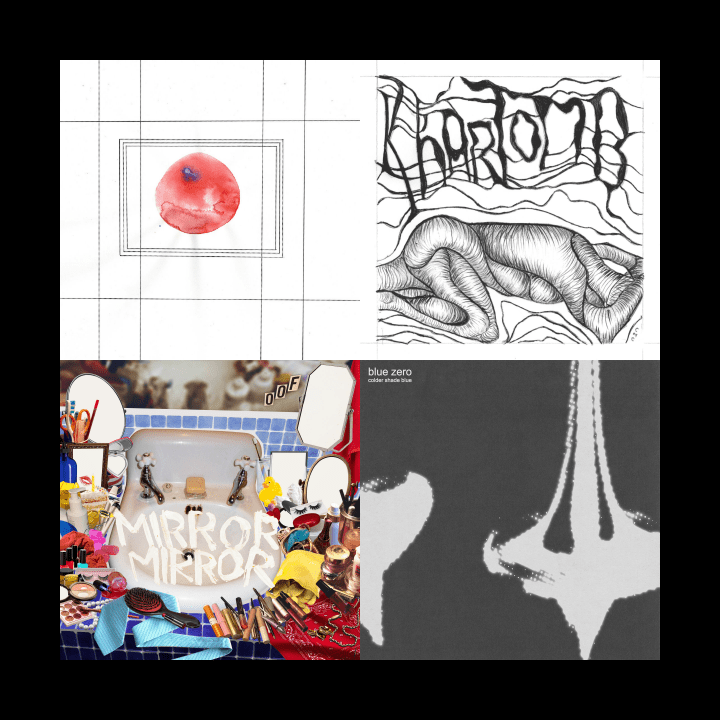
Hello, again! The Tuesday Pressing Concerns is another classic, looking at three records that came out last Friday (new LPs from Norm Archer and Hits and a reissue of New Math’s debut EP), plus an album from Kevin Robertson that came out last month. Great stuff, and there’s even more in yesterday’s blog post (featuring Chime School, Melt-Banana, Edie McKenna, and Giant Day) if you missed that one, too.

If you’re looking for more new music, you can visit the site directory to see what else we’ve written about lately. If you’d like to support Rosy Overdrive, you can share this (or another) post, or donate here.

Norm Archer – Verb

Release date: August 23rd
Record label: Panda Koala
Genre: Power pop, garage rock, prog-punk, college rock
Formats: Digital
Pull Track: The Weaver

It’s a good time to be a fan of Norm Archer. Frontperson and sometimes sole member Will Pearce started up the project a mere two years ago–after a stint fronting Portsmouth, England punk group Misgivings, Pearce explored his home-recorded power pop side with Flying Cloud Terrace, which ended up being one of my favorite albums from 2022. A sophomore Norm Archer LP, Splitting the Bill, appeared last year and only continued to sharpen up Pearce’s college rock/guitar pop hook-spinning, being every bit the worthy follow-up. Pearce appears to have Norm Archer on the “one album a year” track, as 2024 has brought Verb, the project’s third long-player. And here I am writing about it, because it’s pretty easily as good as the first two Norm Archer albums, at least. Everything great about Norm Archer (who on this record is mostly Pearce, with “some drums” from Ben Whyntie) appears on Verb–huge power pop anthems, Guided by Voices-esque arena pop rock, relaxed, 60s-esque jangly guitar pop, and multi-part prog-pop workouts all abound. Of course, part of the reason why Verb is able to fit all of this in one album is that it’s also the longest Norm Archer record to date–after two albums that would easily fit on one vinyl record apiece, Verb is pushing an hour.

Norm Archer don’t sound like they’re gearing up to surrender to the world of excess as they begin Verb–“The Hell of Neighbours” is an instant classic Pollard-esque garage-pop number that gets the job done in two minutes, and the punchy title track and the no-holds-barred power pop candy of “The Weaver” find Norm Archer practicing precision quite energetically. On the other hand, “Sea Still There” and “Sundry Man” are less frantic but no less catchy–the even-keeled psychedelic pop of the former and mid-tempo college rock of the latter are both album highlights. Pearce can’t help but titling Verb’s biggest ballad “It’s Maudlin”, but while the title might come with a wink, the song is anything but self-conscious–Pearce steps into a rich tradition of melancholic British jangle pop with the song and pulls out something quite beautiful of his own. Effectively, the first eleven songs on Verb are a “normal” Norm Archer album (with the jangle-punk “Million” being a late-record highlight), and then Pearce and Whyntie take the project into completely uncharted territory with the closing duo of “Roaming” and “Wicked Ray”. 

Both ten minutes long, these final two tracks are the entire reason Verb reaches its unwieldy-seeming length–impressively, though, Norm Archer create these twin epics out of fairly disparate ingredients. The former one, “Roaming”, is the classic multi-section prog rock suite, gleefully tossing out a half-dozen songs’ worth of ideas to create an overwhelming sensation. The ghosts of Daltrey and Townshend (well, of their talent, I guess) must be looking down pleasingly as Pearce “wastes” some of the catchiest moments of 60s pop pastiche and world-beating rock and roll on the record by folding them into this garishly bright patchwork. “Wicked Ray”, meanwhile, rejects any common ground with The Jam for the jam. That is, Verb closes with a ten-minute instrumental jam session between Pearce and Whyntie that’s the polar opposite of the orchestrations of “Roaming”. Velvet Underground-baiting title aside, “Wicked Ray” is a bit more laid-back, although there’s enough darkness in its opening salvo to properly earn that “wicked”. Whether you wanted Norm Archer to stay the course, flex their rock opera muscles, or lapse into smoky basement explorations on their third album, Verb decides to just do it all. (Bandcamp link)

New Math – They Walk Among You (Remastered & Expanded)

Release date: August 23rd
Record label: Propeller Sound Recordings
Genre: Post-punk, goth, punk, horror rock
Formats: Vinyl, CD, digital
Pull Track: They Walk Among You

New Math are a piece of early American punk rock history. More specifically, they were a key component of upstate New York’s contributions to said landscape, forming in Rochester in 1976 and opening for bands like the Ramones, The Cramps, and The Gun Club whenever they’d come to town. In the mid-1980s, they’d change their name to The Jet Black Berries and gain some notoriety in that iteration, but their work as New Math represents a snapshot of a band in a mid-sized American city that was nevertheless keyed into an internationally volatile era of rock music. Chapel Hill’s Propeller Sound Recordings (who have also reissued music from The Feelies, Too Much Joy, and Love Tractor) kicked off a revisitation of New Math last year with Die Trying and other Hot Sounds (1979-1983), a compilation of early singles and unreleased material from the band, and they’ve continued the campaign this year with an expanded reissue of their debut EP, 1981’s They Walk Among You. Now the length of an LP, the new version of They Walk Among You collects the original five songs of the EP plus six unreleased studio and live recordings, adding some previously-lost and unheard New Math originals and cover versions to their repertoire. 

With songs like “They Walk Among You”, “Dead of Night”, and “American Survival”, it becomes clear that New Math had become fully swept up into the world of the macabre by the time of their first EP. The keyboard-aided sound of They Walk Among You lands right in between the American horror-rock bands like Roky Erickson and the Aliens and The Cramps and a darker, gothic post-punk attitude. The EP was actually originally released on Erickson-associated 415 Records, and it’s not hard to hear his influence on songs like “Invocation”, but between the post-punk propulsion of the title track, the gothic synth-rock of “Garden of Delight”, and primal garage rock of “American Survival”, New Math were too busy exploring new and exciting rock and roll possibilities to be a pastiche of any one band. The record’s bonus material is a worthy addition to the original EP–although it does seem like New Math made the right decisions when it came to assembling They Walk Among You, outtakes “Dead of Night” and “Two Tongues” would’ve fit right on the record, too. Other unearthed curiosities include a psychedelic cover of “We Love You” by The Rolling Stones and “Second Language”, an original song supposedly inspired by the former. The latter is represented by a live recording, one of several live versions that suggest New Math had plenty to offer on the stage at this time, too. The rock band captured on this version of They Walk Among You was one that was pulling itself in several different directions, but it was always going somewhere. (Bandcamp link)

Hits – World of Dirt

Release date: August 23rd
Record label: Paisley Shirt
Genre: Lo-fi pop, lo-fi indie rock, post-punk, noise pop, indie pop
Formats: Vinyl, digital
Pull Track: Totally Bereft

Another key Bay Area indie pop group that I haven’t gotten to talk about on this blog until now, Oakland’s Hits (not to be confused with Hit, the New York experimental pop group) are a group of regional veterans who have been rolling out their version of offbeat rock and roll music together for about a decade now. Led by Jen Weisberg (of formerly of Ruby Pins, and as of late part of Yea Ming & The Rumours) and also featuring Max Nordile (aka Hair Clinic) and prolific engineer Brian Tester, Hits put out a split with Ruby Pins in 2014, linked up with Paisley Shirt Records for 2020’s Sediment Seen, and followed that with Cielo Nublado a year later. Although the members of Hits have all been busy with other projects as of late, the trio found time to make World of Dirt, their fourth album and third for Paisley Shirt. World of Dirt is twenty minutes long and made up of two noise pieces and six warbly pop songs–on the latter, Tester and Nordile tease out Weisberg’s songs with bits of post-punk, psychedelia, garage rock, and twee-pop in a way not unlike other Paisley Shirt-affiliated groups like Sad Eyed Beatniks and Red Pants. Hits have a satisfyingly distinct personality on World of Dirt nonetheless–although the band gleefully clangs along to Weisberg’s singing, the instruments never overpower her.

Although World of Dirt can be a bit messy at times, it opens with a superb first statement in “Plate of Cookies”, an eager piece of propulsive indie pop that sounds somewhere between the post-punk hooks of Dancer and the deconstructed indie pop of the most recent Palberta album. The fuzzed-out melancholy of “Across Town” and the halfheartedly-committed-to-noir vibes of “Purple Noon” are a little less immediate, but they’re still clear and strong pop songs, and the electric, sugary jolt of “1-5-8” at the beginning of World of Dirt’s second side affirms that Hits aren’t just going to trail off into noisiness. “1-5-8” comes immediately after “Future Tense 3”, a genuine piece of formless, instrumental noise rock in which the trio jam assertively. It’s a jarring way to close World of Dirt’s first half, but I suppose it primes us for a return to the well in “Future Tense”, the record’s closing track. The band (alongside guest Steve Whitwill) bang on their instruments for three minutes, finishing off World of Dirt as far away from “pop” as they can get. “Future Tense” comes not long after second half highlight “Thorn By My Side”, a four-minute guitar pop ballad in which the members of Hits seem to take pains to leave the core of Weisberg’s song intact. It all adds up to a record made by collaborators with an “anything goes” attitude, trusting us to come with them on a brief but eventful ride. (Bandcamp link)

Kevin Robertson – The Call of the Sea

Release date: July 8th
Record label: Subjangle/Futureman
Genre: Jangle pop, power pop, psych pop
Formats: CD, digital
Pull Track: Ghosting

Over the past half-decade or so, Aberdeen, Scotland’s Kevin Robertson has been one of the most active and consistent forces in the wider world of guitar pop. First, his band The Vapour Trails released three albums from 2019 to 2021, and his 2021 solo album Sundown’s End kicked off a streak of one LP a year that continued with 2022’s Teaspoon of Time and last year’s Magic Spells Abound. Once again out via Futureman (which has released all of his and Vapour Trails’ music) and Subjangle (who’ve put out his solo records), The Call of the Sea is the fourth Kevin Robertson solo LP, and continues his fruitful journey into the world of 1960s-inspired jangle pop, psychedelic pop, and folk rock. Although there are several guest contributions to The Call of the Sea, the core of the record is Robertson, his son Scott, and drummer/producer Nick Bertling, a trio who help aid the casual brilliance of the elder Robertson’s songwriting. Partially recorded at home and partially at Bertlin’s “DIY recording studio”, The Call of the Sea feels like a glimpse into the world of a musician who’s always (quite expertly) tinkering away at his craft of writing timeless-sounding guitar pop songs.

The name and album artwork of The Call of the Sea evokes the more tranquil side of jangly indie rock, although those who enjoy the more upbeat, power pop side of Robertson’s influences like Teenage Fanclub and contemporaries like The Boys with the Perpetual Nervousness will have plenty to enjoy here, too. The first two tracks on the record, “Ghosting” and “The Guilt Trip”, are bright, vibrant hook-fests, and though “Subway Hold” sounds like it wants to relax just a little bit, there’s no restraining the power of that huge chorus. The Call of the Sea eventually eases into something more directly evoking its title, although it’s not a clean separation–the middle of the record is perhaps its most variable part between the plodding, country-esque “Search for Replies”, the 60s-keyboard-heavy “Rain Again”, and the guitar-led psychedelia of “Ode to Stephen” (perhaps the only jangle pop song that has ever quoted Pennywise the Clown). Penultimate track “Fortune Teller Lied” is another electric one that Robertson and his band sneak in over the wire as the record comes to a close, while the closing title track finally, cathartically does finally embrace the ocean. The acoustic strumming and pedal steel ensure that The Call of the Sea is still sailing steadily off into the sunset as it draws to a close nonetheless. (Bandcamp link)

Also notable:
Pressing Concerns: Chime School, Melt-Banana, Edie McKenna, Giant Day

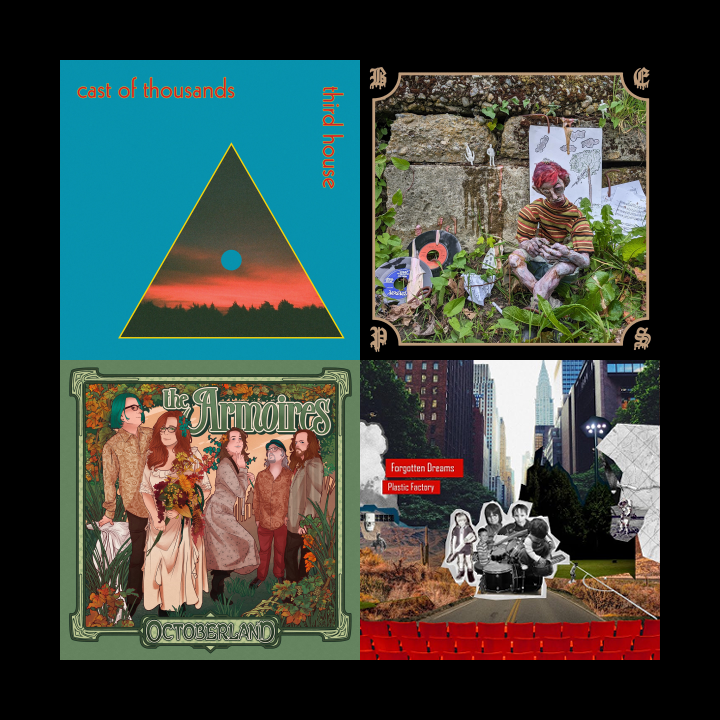
Hello, everyone! As I said last Thursday, last week was a huge one for new music, and we’re starting off Monday with a Pressing Concerns featuring four records that came out last Friday (August 23rd). New albums from Chime School, Melt-Banana, and Giant Day, plus a new EP from Edie McKenna, appear below.

If you’re looking for more new music, you can visit the site directory to see what else we’ve written about lately. If you’d like to support Rosy Overdrive, you can share this (or another) post, or donate here.

Chime School – The Boy Who Ran the Paisley Hotel

Release date: August 23rd
Record label: Slumberland
Genre: Jangle pop, power pop
Formats: Vinyl, CD, digital
Pull Track: Desperate Days

Back in late 2021, I heard the self-titled debut album from San Francisco’s Chime School and instantly knew there was something special about it. The solo project from Seablite drummer Andy Pastalaniec, Chime School introduced its sole member with a jolt of jangle pop electricity, zipping through one sugary, energetic guitar pop song after another unfailingly. The sophomore Chime School LP has been one of my most anticipated records ever since, and nothing that’s happened in the intermittent three years (Pastalaniec appearing on another Seablite album, Chime School putting out the excellent “Coming to Your Town” non-album single) has dampened that enthusiasm. The Boy Who Ran the Paisley Hotel, once again self-recorded and largely piece together by Pastalaniec himself, is anything but a disappointment–those who simply want more hard-hitting pop music will find plenty of twelve-string jangle and quick tempos, but those who didn’t want just a carbon copy of Chime School will see plenty of development. It’s only really “mellow” compared to the last Chime School album, but it does find a few moments of musical subtlety in the midst of its jangling barrage. At the same time, though (as hinted at by the brightly acidic “Coming to Your Town”), some of the deepest moments on The Boy Who Ran the Paisley Hotel are in the middle of the shiniest pop songs.

Pastalaniec’s decision to open The Boy Who Ran the Paisley Hotel with “The End” feels like a calculated brake-tapping–one of the (relatively) slower songs on the record, Chime School take their time to accentuate every polished guitar melody across the track. “Why Don’t You Come Out Tonight?” is a reminder that Chime School can still rev up their motors and lay down something this speedy, but “Give Your Heart Away” and “Another Way Home” feature a push-and-pull between cannon-deployed blunt force power pop and more melancholic indie pop–and the latter fully wins out by the time we get to mid-record ballad “Words You Say”. If pushed, I’d say that The Boy Who Ran the Paisley Hotel is still at its best on the more upbeat tracks–the stretch from “Wandering Song” to “Desperate Days”, which fully embraces that side of Chime School, is probably my favorite run on the album. That being said, the best song on the album, “Desperate Days”, marries pep with Pastalaniec’s whip-smart social commentary, walking the streets of San Francisco all-too-vividly aware of what’s going on around him (“All the color’s gone away / From streets of houses painted gray / Cuz that’s what the markets say / In a couple of years they’ll wash away”). In the gorgeous closing track, “Points of Light”, Pastalaniec sings of  “A place where we can go…there’s no need for compromise”. Chime School may be informed by the compromises one has to make every day when living somewhere like the Bay Area, but it isn’t constrained by them. (Bandcamp link)

Melt-Banana – 3+5

Release date: August 23rd
Record label: A-Zap
Genre: Noise rock, noise pop, art punk, post-hardcore
Formats: Vinyl, CD, digital
Pull Track: Code

As is the case with a lot of aggressively abnormal rock bands, the idea of Melt-Banana maybe overshadows the band’s actual music at this point in their career. The legend of the long-running noise punks from Tokyo who recorded with Steve Albini in the 90s, shaped the sound of offbeat rock music for the following decade, and soldiered on despite steadily losing members (since 2013, it’s been the duo of vocalist Yasuko Onuki and guitarist Ichiro Agata)–it threatens to outshine the real, impressive story that one gets when you actually listen to their albums. Those paying attention know how Melt-Banana went from completely bonkers noisemakers in their first few albums to creating a blistering, warped version of pop music on mid-career highlights like 2003’s Cell-Scape and 2013’s Fetch, the latter of which was also their most recent album until now. Melt-Banana never stopped pummeling, but they clearly excelled at this hyperactive take on pop music (I’m going to call this kind of music “hyperpop”; I just thought of that!), and their records have been reverberating around in my head so confidently that I didn’t realize it’d been over a decade since they’d put an album out. But it indeed has been that long–and along comes the appropriately-titled eighth Melt-Banana album, 3+5, to add to an already impressive catalog.

I’m not sure if the kind of music that Melt-Banana make could ever be called “effortless”, but 3+5 feels like Onuki and Agata effortlessly picking up where they left off. It’s a nine-song, twenty-four minute trip, with nothing in the way of fat or “rest” to be found anywhere on it–it might actually be a step away from the (again, very relatively) ornate Fetch, but the duo still have a deathgrip on pop music on this one, too. Opening song “Code” is probably the most dramatic, intricate song on the album, both in its skronky intro and in the choral noise punk that it eventually shifts into–it’s an orchestrated, tuneful drilling session. From there, Melt-Banana hunker down and do what they do best, with “Puzzle” and “Case D” featuring drums flying off the handle, Onuki verbally sprinting to keep up, and the entire structures careening but never toppling. “Stopgap” isn’t really what its title suggests (there’s no time for that), while “Scar” does have a few moments where the song briefly comes to a halt, but in a cartoon-like, Wile E. Coyote-freezing-before-falling-off-a-cliff way, and then it’s immediately back to the grind. It’s not until closing track “Seeds” that Melt-Banana call back to the grandeur of “Code”, although they, of course, deconstruct it, the holy-sounding opening half turning into Melt-Banana’s take on riff-rock before closing with the synths and guitars rising in chaotic harmony. It sounds just like Melt-Banana. (Midheaven link)

Edie McKenna – For Edie

Release date: August 23rd
Record label: Devil Town Tapes
Genre: Folk, alt-country, singer-songwriter
Formats: Cassette, digital
Pull Track: Kick in the Shin

Chicago’s Modern Nun only have one four-song EP and a couple of non-album singles to their name thus far, but when I encountered them in early 2022 with Name, it already felt like the group was onto something. The trio (now a quartet) earnestly and skillfully married electric alt-country folk rock with uncontrollable queer pop energy on that EP, and vocalist Edie McKenna’s delivery and voice was a huge part of what makes Name work as well as it does. Although we’ll have to wait a bit longer for more music from Modern Nun, McKenna has linked up with Devil Town Tapes (Conor Lynch, Greg Mendez, Noah Roth) to release her first-ever solo record, the four-song For Edie cassette EP. Modern Nun fans will be pleased to hear that, on her own, McKenna largely retains the rootsy sound of her main band, although it’s also not hard to see why she felt that these songs (the writing of which dates back to her teenage years) might be best served under her own name (and released as an EP whose title nods to the personal nature of them, as well). Recorded with producer Seth Beck in Chicago’s Future Rat Recordings, McKenna and her collaborators (including the aforementioned Beck, Zack Peterson, and Eric Beck) pull from upbeat alt-country, breezy folk-pop, and electric indie rock to compliment her writing.

“Kick in the Shin” was McKenna’s debut solo single, originally released last year and reappearing on For Edie in “remastered” form, and it’s a whirlwind of a first impression. Musically, the lethal pop chord progression and alt-country bent makes it the most “Modern Nun”-like song on this EP, but the incredibly blunt and personal lyrics, excoriating a terrible parental figure (“For what it’s worth, I think your pictures looked like shit / And you charged way too much for it”), certainly help make it an “Edie McKenna song” (I don’t know how to say this delicately, but if I ever fucked up so badly that somebody wrote something like the chorus of “Kick in the Shin” about me, I don’t think I’d be able to continue on as a person). The other single from For Edie, “Hail Mary”, is arguably even more sweeping and electric, although its hymn-like repetition of the song title isn’t a weapon trained on an individual but rather a reminiscence and rumination. Interspersed among these attention-grabbers is the more subtle half of For Edie, made up of the sweet, whistle-aided acoustic folk of “Swingin’” and still life of “Lava Lamp”. There’s plenty to like in these songs two, particularly the latter. It’s Edie McKenna’s world, and she’s still onto something singing about faded lava lamps and unused telescopes. (Bandcamp link)

Giant Day – Glass Narcissus

Release date: August 23rd
Record label: Elephant 6
Genre: Psychedelic pop, art rock, dream pop, post-punk
Formats: Vinyl, digital
Pull Track: Walk with a Shadow

Derek Almstead moved to Athens, Georgia in the mid-1990s and quickly became one of the most key members of the Elephant 6 Collective–he has, at various points, played in of Montreal, Elf Power, Marshmallow Coast, The Olivia Tremor Control, and Circulatory System. Vocalist Emily Growden also showed up on several recordings from those bands over the years, as well as contributing to Almstead’s solo project, Faster Circuits–it’s no surprise that the couple, who’ve recently moved to a “historic farm” in southwestern Pennsylvania, have started up a band together while they live their new rural Appalachian life. The debut from Giant Day, Glass Narcissus, is largely built from the duo’s contributions–Almstead wrote the songs (with Growden having a co-write on “Patience”), they both sing, Growden contributes synth and melodica while most of the other instrumentals are handled by Almstead. Glass Narcissus displays “tinkering” touches like a lot of Alsmtead’s other bands, although the dense electronic, post-punk, and futuristic synth-rock found here is clearly distinct from those acts’ canonical output from thirty years ago. The duo get plenty of help in sculpting this sound, from fellow Elephant 6 artists (Bablicon’s Dave McDonnell, The Instruments’ Heather McIntosh), associates (Deerhunter’s Josh McKay), and newer faces (Sunwatchers’ Jeff Tobias), but Glass Narcissus puts its core duo front and center.

Almstead has played with The Olivia Tremor Control since 2010, and it’s hard not to think of that band–particularly their darker, more layered sophomore album, Black Foliage–when reading about what influenced Glass Narcissus (krautrock, 60s psych pop, Broadcast). In practice, Giant Day are sleeker and more languid, following a long trail of arty pop music and ending somewhere near modern Elephant 6-associated groups like The Garment District. Whether the lead vocalist is Almstead (like in opening future-funk track “I Can Take It”) or Growden (the psychedelic washing-over of “Ignore the Flood”), Giant Day skillfully place just enough instrumentation on the songs to give them significant heft without overloading them. The middle of Glass Narcissus seems to have a bit more breathing room–the trio of krautrock/post-punk cruiser “Walk With a Shadow”, the somewhat underwater-sounding 60s pop of “Overtone”, and the slightly robotic pop balladry of “Suspended Animation” are all (relatively) streamlined selections. Don’t worry, though–Giant Day ramp up their sound again towards the end of the LP, with the tinge-darker “We Were Friends” and the seven-minute lush art pop of “Patience” being more secretive with their (still very present) strengths. Glass Narcissus ends with one last left turn in “Reflections on Kettle Black”, a two-minute piece of various synth pads, electronic drums, and other assorted computer sounds bouncing off of each other. I wouldn’t expect anything less. (Bandcamp link)

Also notable:

Pressing Concerns: The Softies, Spring Silver, The Medium, Closebye

It’s the Thursday Pressing Concerns, which means that it’s time to take a look at some albums that are coming out tomorrow (Friday, August 23rd). This upcoming release day is one of the biggest in recent memory (at least, in terms of music I want to write about), so you’ll be hearing about more albums coming out tomorrow next week on the blog as well. For now though, we’re starting with excellent new albums from The Softies, Spring Silver, The Medium, and Closebye. If you missed either Monday’s post (featuring BBsitters Club, Flowerbomb, Pretty Bitter, Lindsay Reamer, and Obscuress) or Tuesday’s (featuring Junebug, Smug Brothers, Captain Howdy & The Sunset Serenaders, and Chandelier), be sure to check those out, too.

If you’re looking for more new music, you can visit the site directory to see what else we’ve written about lately. If you’d like to support Rosy Overdrive, you can share this (or another) post, or donate here.

The Softies – The Bed I Made

Release date: August 23rd
Record label: Father/Daughter/Lost Sound Tapes
Genre: Twee, indie pop, indie folk
Formats: Vinyl, CD, cassette, digital
Pull Track: California Highway 99

They may not be playing arenas, but The Softies are about as towering of a name as there can be in the worlds of American indie pop and twee music. Chances are, if one is familiar with this kind of music at all, they know multiple bands featuring the group’s two members, Rose Melberg and Jen Sbragia. Melberg in particular has played in over a dozen bands over the years–for as long as I can remember, I’ve considered Tiger Trap’s 1993 self-titled album as my favorite “twee” album of all-time, not to mention her work with Go Sailor, Imaginary Pants, PUPS, and so on–but Sbragia’s All Girl Summer Fun Band shouldn’t be forgotten, either. For both of them, though, The Softies have been their most enduring group–they put out three full-lengths from 1995 to 2000, and though their activity decreased after that, they still played the occasional show, stayed in touch, and formally began putting together what would become The Bed I Made in 2022. Now based in Vancouver and Portland, respectively, Melberg and Sbragia met in the middle at The Unknown, Nicholas Wilbur of New Issue’s Anacortes recording studio (Wilbur co-produced the record with Melberg), and picked up as if it hadn’t been over two decades since their last album together.

The Bed I Made is a reminder of why The Softies specifically have endured, even as their music is deliberately less immediate than most of Melberg and Sbragia’s other projects. When the duo sing together and play the guitars together, they don’t need any additional accompaniment–these songs don’t seek the spotlight, but neither do they shrink from the light shone upon them. And The Bed I Made is a heavy album–there are twenty years of emotion in these fourteen songs, and there’s nowhere on the album for Melberg and Sbragia to hide that side of their writing even if they wanted to do so. When the duo reach a particularly resonant moment in one of their songs– “Anywhere can become just somewhere / And anyone can become just someone,” in “Just Someone”, “I wake up early sometimes, tiptoe through the hall / Think about the people I can no longer call,” in “Dial Tone”, “It was you, then it wasn’t / I thought this would get easier, but it hasn’t,” in “23rd Birthday”–the words just hang there, Melberg and Sbragia taking no measures to shield themselves from their impact. As always, “pop music” supports The Softies through these moments–any initial thoughts of indie pop playing a peripheral role on The Bed I Made is just a reflection of how the duo naturally use it. From the immortal car-as-escape song “California Highway 99” to the comforting zen of “When I Started Loving You” to the rueful grin of “Sigh Sigh Sigh”, every listen to the record reveals a new Softies classic to me. And then there’s “Headphones”, which distills The Softies down to their essence in sixty seconds: “Plug your headphones straight into my heart / Listen / Listen / I love you”. Transcribing those words out doesn’t capture what it’s like to hear that song, but at the same time, that’s really all there is to it. (Bandcamp link)

Spring Silver – Don’t You Think It’s Strange?

Release date: August 23rd
Record label: Self-released
Genre: Fuzz rock, experimental rock, noise pop, art punk
Formats: Digital
Pull Track: Another Perfect Day, Another Perfect Night

Maryland’s Spring Silver came across my radar in early 2022 thanks to I Could Get Used to This, their intriguing and adventurous sophomore album. Although Spring Silver is the solo project of South Dakota/D.C.-suburb-originating artist K Nkanza, they pulled together a bunch of contributors for that album, including likeminded Maryland-originating musician Sam Goblin of Mister Goblin. The Spring Silver-Mister Goblin association (Nkanza also remixed a recently-reissued version of Bad Brother, an album from Goblin’s old band, Two Inch Astronaut) makes a lot of sense, as they both make music that combines tough-edged D.C.-area post-hardcore/art rock with shined-up power pop, although Nkanza’s version of it seemed more keen to embrace experimental electronics and synths as well. With that in mind, I found myself quite surprised by what Nkanza has turned in with Don’t You Think It’s Strange?, the third Spring Silver LP. Even though it was recorded entirely by Nkanza themself, these eight songs veer away from synthpop and actually sound like the most “rock-band-focused” version of Spring Silver yet. Still recognizably themself, Nkanza takes on the difficult task of making lengthy (five-to-seven-minute), rumbling, but still pop-focused rock songs on Don’t You Think It’s Strange?–approaching all this from a unique vantage point, it’s not surprising that the latest Spring Silver album is a singular listen, but it’s equally impressive how accessible it is in spite of all this.

Don’t You Think It’s Strange? kicks off with “Another Perfect Day, Another Perfect Night”, a wall-of-sound alt-rock tune in its first configuration that then becomes an all-in power pop anthem, rides the wave for a couple of minutes, and then ditches into something stranger as it comes to a close. This is a theme from Nkanza throughout the album–even within the confines of rock music, they’re always looking for new corners. The D.C. turn-of-the-century dance punk of “The Well Mother” and the more light-on-its-feet bounce of “It’s Imperative” are a few more shades in the first half of Don’t You Think It’s Strange?, while the electronic touches that show up in the eight-minute “Gold Star” are the clearest mark of Spring Silver’s previous work (although they eventually give way to the guitar-led prog-punk bulk of the song). With seven proper songs and an interlude, there’s not really anywhere to hide filler on Don’t You Think It’s Strange?–mid-record tracks “The Utility Models” and “She Transports Me” add lumbering, heavier alt-rock into the mix, but just when it seems like Spring Silver is going to burn out in this post-grunge wasteland, “She Transports Me, Continued” returns the electronics to the fray, and “How Quaint” ends the album with a calamitous, industrial-bubblegum pop anthem that reminds me a bit of the art pop of the last Spring Silver record, but with the grandiosity of Don’t You Think It’s Strange? in tow as well. It’s a good sign for Nkanza that they’ve already covered so much ground while hammering out a distinct style this early in their musical career. (Bandcamp link)

The Medium – City Life

Release date: August 23rd
Record label: Earth Libraries
Genre: Folk rock, 60s pop, psych pop, alt-country, power pop
Formats: Vinyl, CD, digital
Pull Track: Sellout City

Nashville pop rock quartet The Medium debuted in 2019 with Get It While It’s Hot, and “longtime friends” Sam Silva, Shane Perry, Michael Brudi, and Jared Hicks followed it up in 2022 with For Horses. The third Medium album, City Life, is their first with a lineup change–Brudi appears to have departed, and multi-instrumentalist and producer Peter Brooks has stepped in to round out the band’s sound on their latest LP. If this was a transitional period for The Medium, it’s a seamless one–although they’re not exactly a “country band”, there’s a Nashville smoothness to City Life. Perry, the primary songwriter, isn’t shy about incorporating his influences–namely, classic, harmony-heavy folk rock, 60s studio-tinkering pop, and power pop (evoking both originals like Neil Young, The Kinks, and The Beach Boys and later practitioners like 10cc and Todd Rundgren). The ten-song, twenty-seven minute LP is casual-sounding but brightly polished, demure but unabashedly enthusiastic. Instead of sweating the details, City Life tackles the task of making new music in this well-trod terrain without a care, and lets the turns and twists subsequently come naturally.

It’s hard to overstate just how breezy the opening title track to City Life is–as it turns out, it’s a great primer on what to expect from The Medium in the record’s next nine songs, nestled comfortably in between their big-aiming power pop and intricate, soft folk rock sides. Those inclined to gravitate to the former of those two subgenres will be most drawn towards the sparkling “Sellout City” (I’ve got to imagine there are plenty of unknown Nashville songwriters who’ve tried their hand at something like this one, although I doubt most of their finished products sound half as good as The Medium do here), as well as “Golden Angels”, the one song on the record that could non-ironically be mentioned in the same sentence as “punk rock” (in a Cheap Trick kind of way, although that excellent riff is a bit more surf rock), and the sneakily great Who-by-way-of-dB’s “Name of the Game”. Of course, what makes The Medium stand out from a lot of these other guitar pop pastiche groups is that they’re just as excited about the slower, less “cool” sides of this kind of music. You hear it all over the album–there’s the snail-slow, almost pre-rock-and-roll supernatural balladry of “Ghost in the Garden”, the mid-tempo Village Green Society town hall of “Frown Town”, the way-better-than-it-should-be alt-country tearjerker “The Day Dale Died” (“My friends, NASCAR fans aren’t supposed to cry,” sings Perry as he begins his tribute to The Intimidator), and the After the Gold Rush/Harvest falsetto hayride of “Horse in Heart”. Seeing these glimmers of the past is part of the fun of City Life–and the key word here is fun, which is what The Medium practice on the album with no strings attached. (Bandcamp link)

Closebye – Hammer of My Own

Release date: August 23rd
Record label: Self-released
Genre: Folk rock, soft rock, psychedelic pop, art rock
Formats: Vinyl, digital
Pull Track: Hammer of My Own

New York quintet Closebye released their first album, Lucid News, in 2022, a sometimes-spirited, sometimes-delicate collection of folky indie rock music. The band’s undergone a lineup change since then–vocalist/songwriter Jonah Paul Smith still leads the band, and multi-instrumentalists Julian Paint Smith and Ian Salazar are still there, too, but they’re joined by a new rhythm section of bassist Margaux Bouchegnies and drummer Simon Clinton on their sophomore album, Hammer of My Own. From the first time I heard Hammer of My Own, I’ve been drawn to its distinct sound, one that teases and stretches out the folk rock of their debut in some surprising ways. Produced by Salazar, Hammer of My Own introduces a clear early-90s alt-dance-pop influence into Closebye’s sound, but it’s not a departure from their previous style so much as an addition–if anything, the band are even more committed to making wistful, acoustic-guitar-based folk-and-soft rock on this album, too. The new touches Closebye explore here will either come all of a sudden, veering away from the band’s more peaceful side quickly but deftly, or so subtly that one might not even perceive them without a close listen.

“Lucky Number” opens Hammer of My Own by combining a bunch of different threads oh-so-casually–the sound effects and dramatic drumbeat that kick off the record are a small slice of screamadelica, but the song that begins once Paul Smith starts singing and strumming is an incredibly laid-back, dreamy, psychedelic folk pop introduction to Closebye (but, nevertheless, the elements hinted at in the song’s opening attempt to rear up during the instrumental breaks). After “Lucky Number”, Closebye seem to retreat into the world of more traditional (but still quite spirited) indie rock, with “Fortress” and “Two Knocks” sounding smooth and reverent, while the rhythms and wide-eyed chorus of “Power Trip” don’t rock the boat too much. Closebye really get inventive on the second half of Hammer on My Own, though, between songs like single “Pilates” (a dance-friendly pop-rock tune with a bit of Spoon to it, earning a title that’s a form of exercise) and the oasis pop of the title track, an incredibly bright, maximalist cloud-breaking art-pop anthem. “Hammer of My Own” would be a triumphant send-off for the album, but Closebye actually wrap it up with “Corridor”, a more subtle, folk-based finale. “Corridor” is a more restrained take on Hammer of My Own’s sound, pulling in bits of soft rock and sophisti-pop over Paul Smith’s sturdy skeleton. Hammer of My Own has moments that feel like a rush, but Closebye wield their new weapons with the experience of veterans who know when to add a softer touch, too. (Bandcamp link)

Also notable:

Pressing Concerns: Junebug, Smug Brothers, Captain Howdy & The Sunset Serenaders, Chandelier

Welcome to the Tuesday Pressing Concerns! In this edition, we’ve got new albums from Captain Howdy & The Sunset Serenaders and Chandelier, a new EP from Smug Brothers, and an archival release from Junebug below. If you missed yesterday’s blog post (featuring BBsitters Club, Flowerbomb, Pretty Bitter, Lindsay Reamer, and Obscuress), check that one out here.

If you’re looking for more new music, you can visit the site directory to see what else we’ve written about lately. If you’d like to support Rosy Overdrive, you can share this (or another) post, or donate here.

Junebug – With the Distance of Time

Release date: July 21st
Record label: Subjangle
Genre: Indie pop, twee, jangle pop, lo-fi pop
Formats: CD, digital
Pull Track: Town and Country

Indie pop singer-songwriter Teresa Daniele first gained notoriety in the early 2000s as one-half of the duo Sarah, Plain and Tall along with Ian Jackson (Persian Rugs); over the course of that decade and the first half of the next, the Ontario-based artist showed up in groups like The Haircuts, Two If By Sea, Paint Your Wagon Red, and Seashells, all of which were long-distance collaborations between Daniele and another musician. Daniele hasn’t been releasing new music to my knowledge over this past decade, but thanks to a recent retrospective compilation of the work of The Haircuts (Words to Remember Me By on Boring Spaghetti Records), she ended up unearthing a collection of recordings from Junebug, her solo project, from around the same time period. With the Distance of Time: Selected Songs from 2004-2014 is the first time Daniele’s work as Junebug has seen a proper release–a CD via indie pop stalwart Subjangle–and features members of Seashells, The Haircuts, and Two If By Sea aiding the singer-songwriter across its eight tracks. The recordings range from entirely constructed by Daniele to full-blown postal collaborations, the songs are mostly originals with a couple of covers–but all of With the Distance of Time points toward the work of a low-key but undeniable indie pop talent.

The first half of With the Distance of Time is made up of songs recorded by Daniele alone on a four-track in 2004 (mixing from The Haircuts’ Ryan Marquez being the only outside contribution). Lo-fi and twee, these songs have a K Records-esque ramshackle charm to them, and despite (or, realistically, because of) the homespun nature of the tracks, they’re the most immediately welcoming material on With the Distance of Time. The combination of primitive percussion, bright guitar chords, and shy-sounding, somewhat unpredictable vocals makes the first half of the CD oddly memorable (and when Daniele needs to clean up the sound a bit to pull off the runaway train instrumental of “Town and Country”, she proves she can do that, too). The back end of With the Distance of Time features the collection’s two covers–Marine Girls’ “A Place in the Sun” and the Grateful Dead’s “Box of Rain”, with the worried undertones of the former and the dreariness of the latter (which is a duet with guitarist John McLoughlin) being the first major shifts in mood on the record. The final two songs on With the Distance of Time are collaborations between Daniele and her erstwhile Two If By Sea bandmates–Lisle Mitnik contributes all the music on the reverb-y dream-folk of “Tomorrow”, and Kevin Clark helms the lo-fi, 80s-indebted “A Promise”. These are the two most “produced” tracks on the compilation, but they, just like the covers and the solo recordings, are held together by Daniele’s voice. (Bandcamp link)

Smug Brothers – Another Bar Behind the Night

Release date: July 12th
Record label: Just Because/Anyway
Genre: Lo-fi power pop, jangle pop, psych pop
Formats: Cassette, digital
Pull Track: Javelina Nowhere

When we last checked in on Columbus’ Smug Brothers, it was fall of 2023, and the Kyle Melton-led power pop group was gearing up to release the most recent of their many full-length records, In the Book of Bad Ideas. That LP itself followed late 2022’s Emerald Lemonade EP by less than a year, and the quartet keep their prolific streak alive with Another Bar Behind the Night, their latest record. Despite the constant stream of new music, it’s actually been a time of turnover for Smug Brothers–lead guitarist Scott Tribble left in the middle of recording In the Book of Bad Ideas, and Another Bar Behind the Night is the first record to feature the band’s newest member, Ryan Shaffer (of Stark Folk Band). Other groups might’ve taken some time to retool in the midst of all this, but not Smug Brothers–Kyle Melton’s got hooks to deliver. He finished In the Book of Bad Ideas as a trio along with drummer Don Thrasher and bassist Kyle Sowash, and the newly-minted quartet roll through six songs in ten minutes on their most recent EP like a well-oiled machine. Smug Brothers have always been a “low-fat” kind of band, but the format of Another Bar Behind the Night gives the band no breathing room, with even the relatively small excesses of their last LP shaved off here.

Only two of Another Bar Behind the Night’s six songs go on for longer than two minutes–one of them is opening track “Javelina Nowhere”, which features what’s easily the most indulgent moment on the entire EP (a brief, fifteen-second mellotron-led instrumental intro). Eventually (about at the seventeen-second mark if you’re impatient), “Javelina” blooms into a jangly, Guided by Voices-fluent mid-tempo anthem that’s carried over the top with Melton’s melodies. “Seamus the Younger” is the first side’s “rocker”–it’s also the first of several “blink and you’ll miss them” flyby tracks, but it gets an entire spirited idea across before the curtains close. The midsection of Another Bar Behind the Night is its delicate part, with “Alexander for Two” offering up an off-the-cuff lo-fi power ballad and “The Seven-Year Inch” being the token moment of instrumental minimalism. After the sixty-one second basement twirling pop of “Cricket Blessings” (now there’s a Robert Pollard-influenced title if I’ve ever heard one), “Shedding Polymer” closes the EP with Smug Brothers as smooth classic rock operators. At least, that’s what the song’s main guitar riff gives off, but Melton’s lead vocal is as earnest and Midwestern-garage-pop as it always is. I don’t know if it’s ever “easy” to get up and make art over and over again, but being driven without being overly precious about it probably helps. (Bandcamp link)

Captain Howdy & The Sunset Serenaders – Howdy Reigns

Release date: August 2nd
Record label: Sunset Serenade
Genre: Psychedelic rock, garage rock, alt-country
Formats: Digital
Pull Track: Shady Grove

Captain Howdy & The Sunset Serenaders are a new psychedelic garage rock trio from Lawrence, Kansas (I’m fairly certain I’ve never written about any bands from there until now) who made their debut last year with the LIVE/HOWDY live album. Their first studio album, Howdy Reigns, follows less than a year later, giving the songs that appeared on the live record a proper reading. Bassist James Barnett, drummer Jon Chappell, and guitarist Keller Welton have clearly worked these songs out while gigging, as they come into Howdy Reigns ready to rip through blistering, unhinged rock and roll that comes off as a more Midwestern take on freewheeling West Coast psych rock from acts like Ty Segall and Thee Oh Sees. Although Captain Howdy & The Sunset Serenaders filter everything through a fuzzed-out lens, their stated Western, country, and folk influences do come through, both in their ability to swerve into psychobilly/cowpunk musical detours and in the writing hidden underneath the music, which seems to key in on the darker horrors of “Americana” and the less valiant reality of western male archetypes like cowboys and frontiersmen.

If we assume “Captain Howdy” is the person singing these songs, he’s certainly not the friendly character one might want to attach to the name. It doesn’t take long for the restless narrator of opening track “Cold Rain” to move from his grousing to staging a murder ballad–no matter that the “ballad” in this instance is a six-minute high-octane psych-trasher that’s almost entirely moved on to “instrumental jam” territory after ninety seconds. “Shady Grove”, smack dab in the middle of Howdy Reigns, marries their most overtly cowpunk instrumental with a particularly unhinged vocal take that assures us that not only is Captain Howdy destructive to his surroundings, but entirely self-destructive as well. The creepy-feeling “You Can’t See Me” is a slower, more deliberate version of fuzz rock, with the ominous chorus (“I can take you, I can take you / Far away from here, far away from here”) sounding anything but comforting and reassuring. There’s a palpable darkness throughout Howdy Reigns to be sure, although Captain Howdy & The Sunset Serenaders are good enough storytellers to ensure the record doesn’t become a slog. Sure, there’s obvious stuff like the goofy “La Llorona”, but I also mean that it’s enjoyable to listen to the band locking together in songs like the blues-garage “All for You” and penultimate slowburn explosion “Pass Me By”, too. Captain Howdy & The Sunset Serenaders certainly have a fair bit of ambition for an unknown psych rock band from Kansas, but so far they’re wearing it well. (Bandcamp link)

Chandelier – Chandelier

Release date: July 12th
Record label: Self-released
Genre: Post-punk, art punk
Formats: CD, digital
Pull Track: Enemy

Chandelier are a new post-punk quartet from Atlanta who put out their debut self-titled album last month, and it’s a memorable one. The group (vocalist/lyricist Karl Green, guitarist/drummer Dennis Bowen, guitarist Bryan Scherer, and drummer Thomas Martino) refer to themselves as an “esoteric guitar band”, a description I could imagine grating on me in the wrong context–but here, they’re just being honest. The instrumentals on Chandelier are crystal clear, mid-tempo post-punk/noise rock that tread into Lungfish territory on the slower numbers and evoke other Dischord groups when they pick up the pace a little bit. The guitars and drums feel laser-focused and all business–when they kick up the noise for a couple seconds in an instrumental break, it’s simply because it’s the best thing to do. Green, meanwhile, is an underground punk oddball in the vein of Al Johnson or Daniel Higgs, although not overly similar to the exact style of either of those vocalists. He’s speak-singing, yes, but neither in a yell-y monotone or an ignoring-the-music ramble–he speaks rhythmically, his opaque (and, yes, esoteric) lyrics form-fitting to the rest of Chandelier.

The riff that opens “Straddle the Line” sounds ready to go, even as Green does his best to temper Chandelier’s opening track–and as the rest of the band add to the instrumental, it works, ending up with a final product that sounds kind of like a tranquilized Landowner. Chandelier is a record of subtle shifts–it’s not like “Pleasure Zone” is a huge departure, but the extra low-end in the instrumental and a slight change in Green’s voice (Listen to the way he almost taunts “Echoes from the velvet womb, emerging from the pleasure zone”) give it a completely different feel. Eventually some more of Chandelier begins to seem concrete, aided by moments like the pummeling drums in “Naught”, the eerie spoken word outro of “Palace”, and the stuttered vocals in “Mirror Calling”. In “Disco Columbine”, Green seems positively bored in the verses before becoming the most animated he is on the record in the chorus, which sounds kind of like Wall of Voodoo if Stan Ridgeway had even worse vibes. The most surprising moment on Chandelier is easily “Enemy”, in which Chandelier pull off a legitimate dance-punk song by, again, shifting their sound up just a little bit. In the song’s chorus, Green stutters his way through declaring war on time, an explicit proclamation borne out by the rest of Chandelier, a record that suggests infinite diverging possibilities in its practice of imperfect, slightly-altered repetition. (Bandcamp link)

Also notable:

Pressing Concerns: BBsitters Club, Pretty Bitter & Flowerbomb, Lindsay Reamer, Obscuress

It’s a great Monday here at the Rosy Overdrive music blog. Why? Well, because we’ve got four superb records for you to enjoy right below this introduction. New albums from Lindsay Reamer and Obscuress, a split/collaborative EP from Pretty Bitter and Flowerbomb, and a live compilation from BBsitters Club are all featured in Pressing Concerns today. Read on!

If you’re looking for more new music, you can visit the site directory to see what else we’ve written about lately. If you’d like to support Rosy Overdrive, you can share this (or another) post, or donate here.

BBsitters Club – Joel’s Picks Vol. 2

Release date: August 16th
Record label: Hausu Mountain
Genre: Jam band, experimental rock, country rock, funk rock
Formats: CD, cassette, digital
Pull Track: Party in My Chevy

Doug Kaplan and Max Allison co-run Hausu Mountain Records, a Chicago-based imprint that’s on the frontlines of some of the wildest experimental electronic music out there–it’s not the kind of fare I typically cover on Rosy Overdrive, though they did put Erica Eso’s R&B-tinged art pop/rock record 192. Kaplan and Allison, perhaps unsurprisingly, are just as into the weirder corners of punk and rock music (in fact, I first heard of them when they guested on the And Introducing podcast to talk about the Minutemen), and BBsitters Club is their outlet for their “rock and roll” instincts. Kaplan’s on MIDI guitar and vocals, Allison plays bass, and they’re joined by guitarist/vocalist Charlie Olvera and drummer Paul Birhanu to round out the versatile core quartet. They’ve only put out one studio album, but they gig pretty regularly around Chicago and embrace their inner Grateful Dead by engaging in lengthy jams and encouraging live taping of their shows. Joel’s Picks Vol. 2 (named after prolific taper and friend of the band Joel Berk) is the second in a series of compilations of these live recordings, following Vol. 1 in 2020, and the hourlong tape (recorded at various shows at Cafe Mustache, Cole’s Bar, and Sleeping Village) has everything one could want in such a record–absurdly long classic rock explorations, previously unreleased gems, and even a Captain Beefheart cover.

Of the tape’s eight tracks, three of them stretch over ten minutes in length, and all three of them seem to be staples of the BBsitters Club repertoire. One of these, “Joel Reprise > Told Ya”, kicks the record off with the explosive opening reprise (whose lyrics are just “Joel!” shouted over and over) and the sprawling country-rock second half serving as the real hook. The other lengthy songs find BBsitters Club delving into funky swamp rock and the capital-B Blues, respectively, continuing the chameleonic nature of the group found throughout Joel’s Picks Vol. 2. On the other end of the spectrum, the record’s two most obvious “hits” to my ears are the relatively brief “Party in My Chevy” and “Cutie Girls”, the former being a previously-unreleased four-chord southern-style rocker that’s full steam ahead for its entire five minutes, and the latter (which appeared on their sole studio album, 2020’s BBsitters Club & Party) shooting for garage rock, early punk, and even a bit of power pop in its urgent catchiness. BBsitters Club somehow get the Red Hot Chili Peppers themselves to appear on the tape, playing their unreleased funk-rock anthem “West of Your State”, which has the potential to be their best single since “Scar Tissue”, and the BBsitters Club return to give Captain Beefheart’s “Kandy Korn” an appropriately noisy freakout of a reading. Part of the charm of Joel’s Picks Vol. 2 is that it’s primarily made up of audience recordings–like many tape-friendly bands before them, it’s thrilling to peek in on something from a somewhat muddy (but just clear enough) remove. (Bandcamp link)

Pretty Bitter & Flowerbomb – Take Me Out

Release date: August 1st
Record label: Self-released
Genre: Emo-y indie rock, alt-rock, indie pop
Formats: Digital
Pull Track: Never Better

Pretty Bitter and Flowerbomb are a pair of like-minded Washington, D.C.-based indie rock groups–the former is a quintet led by vocalist/lyricist Mel Bleker and also featuring Ekko Astral drummer Miriam Tyler on bass, Zack Berman on guitar and keyboard, Chris Smith on guitar, and drummer Jason Hayes, while the latter is a power quartet led by vocalist Rachel Kline and rounded out by Dan ABH (drums), Connor White (guitar), and Abby Rasheed (bass). Both bands have been around since late last decade (Pretty Bitter put out LPs in 2019 and 2022, Flowerbomb put out an album in 2020 and two EPs earlier this year), and both of them have a sound that blends the more stripped-down side of “stately” 2000s indie rock with emo and just a hint of indie pop/power pop/pop punk–one of them cites Rilo Kiley as an influence, and the fact that I can’t remember which one of them it was is pretty telling. All things considered, the two bands are natural partners for a collaborative/split EP (featuring two songs from each band and one credited to the both of them)–I imagine very little onboarding was needed to turn Take Me Out into a success.

Take Me Out was co-produced by emo busybody Evan Weiss, and the EP sounds at home in this world from the get-go. Pretty Bitter kick the record off with an instant hit in “Never Better”, an earnest, propulsive song whose gigantic emo-synth hook from Berman hints at a way to tell the two bands apart. Flowerbomb have an anthem of their own with “Nothing to Do With Me”–the guitars crash and Kline soars, but between the less-obvious chorus and the thematic mess at the center of the track, this one is more rewarding with repeat listens. Both bands get a little more experimental on their second songs–on “Youbuiltafinelife”, Pretty Bitter try a dance-friendly bassline and bubbling synthpop on for size, while Flowerbomb embrace synthesizers themselves on the curious “I Always Knew”. When two bands who are collaborating sound as similar as Flowerbomb and Pretty Bitter do, Take Me Out benefits from both of them bringing such an openness to the table–and the closing title track, featuring writing credits from members of both bands and credited to both of them, continues this thread. Nothing on the EP leads us to expect country guitars and banjo, but that’s what “Take Me Out” puts forward, with Bleker leading a combination Pretty-bomb band in an upbeat alt-country-folk-emo conclusion. Everyone on the last track sounds equally comfortable in this guise–it sounds natural even as it’s pretty different than everything else on Take Me Out. (Bandcamp link)

Lindsay Reamer – Natural Science

Release date: August 16th
Record label: Dear Life
Genre: Alt-country, country rock, folk rock, singer-songwriter
Formats: Vinyl, CD, digital
Pull Track: Red Flowers

Alt-country/folk rock singer-songwriter Linsday Reamer is from Massachusetts and lives in Philadelphia, although up until last year she worked as a field scientist, taking her across the United States. Her debut EP, Lucky, was recorded during this stint and released in February 2021 by Dear Life Records (right before that label got on my radar, actually; their following release, MJ Lenderman’s Ghost of Your Guitar Solo, was the first record of theirs I wrote about in Pressing Concerns). The lineup on Reamer’s debut album, Natural Science, is a real who’s who of Philadelphia indie rock/country/folk–Lucas Knapp recorded it, Ther’s Heather Jones mastered it, Thank You Thank You’s Tyler Bussey plays guitar and banjo, Florry’s Will Henriksen is on the fiddle, and Eliza Niemi plays the cello, among others. Reamer, at the helm, leads her collaborators through an impressively-orchestrated, polished record that takes advantage of the tools at its disposal but still comes off as breezy and pop-forward. It’s one of the most “instant-gratification” alt-country records to come out of Dear Life in a while–but Reamer isn’t put into a box by that at all, gleefully hopping from upbeat country rock to dreamy, layered folk music throughout Natural Science.

That being said, Natural Science opens with a curveball with the lush cosmic folk-rock of “Today”. Bussey, Henriksen, and Niemi’s instruments swirl together hypnotically for three and a half minutes–and then Reamer’s off to the streamlined folk-pop vibes of “Spring Song” and “Red Flowers”, which feigns a slow start before launching into a jaunty but laid-back electric country tune. The turn towards acoustic and more traditional folk in “Sugar” doesn’t dent the record’s momentum, nor does the grand mid-record “Lucky” (I’d consider the latter the record’s centerpiece, which means the heart of the album is the moment where Reamer wakes up next to last night’s takeout food, says “‘fuck it’ and [takes] a bite”). If “Lucky” isn’t as immediately accessible as “Spring Song” or “Red Flowers”, Reamer’s writing ensures that it’s just as memorable–although it’s not an “either/or” proposition on Natural Science, as the two tracks with my favorite lyrics in the record’s second half (“Necessary” and “Figs and Peaches”) are both pleasing and upbeat numbers. The latter finds Reamer digging deep to pull something worthwhile out of a landscape of invasive species and power plants, while the former gets by with a plainspoken truism for a refrain (“It’s okay to depend on somebody / Not just okay, but necessary”). Natural Science more than earns its epilogue, a star-studded (Michael Cormier-O’Leary, Peter Gill, Frank Meadows, Jon Samuels) cover of Townes Van Zandt’s “Heavenly Houseboat Blues”. (Bandcamp link)

Obscuress – Namesake

Release date: July 26th
Record label: Texas Archives
Genre: Post-rock, slowcore, ambient, folk
Formats: CD, digital
Pull Track: Five Names

Obscuress is a new collaboration between two longtime Texas music oddballs. In the early 1990s, Christina Carter co-founded Houston’s longrunning experimental folk/psych band Charalambides, which has released music on labels like Kranky and Siltbreeze over the past thirty years. Spencer Dobbs has stayed a bit more under the radar, but he’s been putting out solo albums of lo-fi, sparse folk music for a couple of decades, as well (the electric blues-tinged If the Moon Don’t Turn Its Back on You, which surfaced on Bandcamp and streaming services last year, is my personal favorite). Released under Dobbs’ Texas Archives imprint, Namesake is their first record as a duo, and the five-song CD is something distinct from either musician’s most well-known works. It’s a full-length album, with the tracks ranging from five to ten minutes long apiece, and its crawling minimalist instrumentals put it in the worlds of post-rock, ambient, and slowcore. Although there are guitars in this ether, keys and “sampled noise” contribute to Namesake being less easily to categorize as “folk” music than Dobbs’ solo albums, while Carter’s beautiful, traditional lead vocals are the album’s clearest structural force, preventing Obscuress from fully feeling like a free-form project.

About half of Namesake is taken up by its opening and closing tracks, the eight-minute “Nemesis” and ten-minute “Obscure Consensus”, respectively. If everything else about Obscuress–from the previous work of its two members to the record’s haunting cover–wasn’t already clue enough, the glacially wandering opening track is more confirmation that Namesake isn’t going to provide much instant gratification. “Nemesis” builds to nothing–Carter perhaps sounds a little more insistent as the song draws to a close, but little else has changed in the world of Obscuress. The middle three songs of Namesake are the most “accessible” merely by being under six minutes long, although there’s also traces of folk and jazz-influenced slowcore in “Uniform” that reminds me a bit of a more stripped-down Hannah Marcus. The guitars and piano in “Five Names” flirt with sounding a little warm, but “Carousel of Voices” gets Obscuress back into worried and paranoid territory both in the stretched tension of the instrumental and in Carter’s voice. Even as it crosses ten minutes, “Obscure Consensus” closes Namesake with arguably the record’s simplest track–the guitar and Carter’s voice are more constant than most of the album here, the former ringing for just long enough before the next note comes and the latter taking the shape of a slow but steady stream of consciousness. Against all odds, Namesake ends with us fully hooked and engrossed. (Bandcamp link)

Also notable:

Pressing Concerns: Wishy, Tony Jay, Lesibu Grand, Sailor Down

The Thursday Pressing Concerns is here, and it’s got four records coming out tomorrow, August 16th, for you to check out below (new LPs from Wishy, Tony Jay, and Lesibu Grand, and a new EP from Sailor Down). Earlier this week, we looked at Fast Execution, Real Companion, Cowgirl, and Brown Dog (on Monday) and The Ekphrastics, Purseweb, Greaser Phase, and Box Elder (on Tuesday), so check those ones out if you missed ’em.

If you’re looking for more new music, you can visit the site directory to see what else we’ve written about lately. If you’d like to support Rosy Overdrive, you can share this (or another) post, or donate here.

Wishy – Triple Seven

Release date: August 16th
Record label: Winspear
Genre: Noise pop, shoegaze, dream pop, fuzz rock
Formats: Vinyl, CD, cassette, digital
Pull Track: Sick Sweet

Towards the end of last year, Indianapolis’ Wishy debuted with a promising five-song EP called Paradise. Co-led by singer-songwriters Kevin Krauter and Nina Pitchkites, Wishy’s first impression was that of a band who already knew their way around a nice guitar pop song, as well as how to use dream pop and fuzzed-out 90s rock music as vessels. Krauter and Pitchkites eventually added guitarist Dimitri Morris, bassist Mitch Collins and drummer Conner Host to the fold and, just a few months after Paradise, already have a full-on Wishy LP in the form of Triple Seven. Triple Seven is, above anything else, a loud pop album–effectively, it’s like the Wishy of Paradise, but more. Wishy aren’t a “shoegaze band” in the same way that they aren’t a dream pop band or a 90s radio-rock band–these genres are tools to be picked up and wielded throughout Triple Seven, and Wishy clearly know how to use their weapons of choice. The towering pop moments are the throughline on Triple Seven–whether Wishy are being suave and slippery or blunt and pummeling, the record’s ten songs fit together under that particular banner. I’m not sure if Wishy could turn off this part of their DNA even if they wanted to; even as Triple Seven embraces louder guitars and longer song lengths, it’s somehow even more of an effective pop record than their debut.

Any trepidation about Wishy’s continued success one might have is immediately put to rest by opening track “Sick Sweet”, in which the band absolutely knock “maximalist first statement” out of the park. It’s one part distorted, punk-y power pop (this is a band that’s played shows with Dazy and Guided by Voices recently, after all) but there’s a huge Mellon Collie-like grandiosity to the track as well (there’s just a hint of “Tonight, Tonight”-like swelling strings underneath the noise, and one needs a Corganesque confidence to sing “You’re like an afterlife and I really wanna die tonight,” as a chorus like Krauter does). After that, Pitchkites brings the band’s bright mid-tempo, turn-of-the-century pop rock instincts to the forefront with the title track, a mode in which Wishy still excel. Pitchkites also helms another one of Triple Seven’s most casual indie pop moments, second half highlight “Just Like Sunday”–but she also sings co-lead on the massive-sounding shoegaze-fluent alt-rocker “Persuasion”, and Krauter gets a delicate moment of his own in the first half of single “Love on the Outside”, which surprisingly flirts with emo pop before the cranked-up guitars kick in after a minute or so. After a varied assortment of recordings, Wishy pleasingly close Triple Seven like they’ve got a surplus of decibels they need to burn through–“Honey” is a piece of peeling beauty that’s probably the closest thing to a “pure” shoegaze song on the record, and “Spit” closes things out with an all-or-nothing five-minute grunge-gaze finale. Most bands wouldn’t create something as fun-sounding and catchy as “Spit” out of its greyscale ingredients, but Wishy sound great going against the grain on Triple Seven. (Bandcamp link)

Tony Jay – Knife Is But a Dream

Release date: August 16th
Record label: Slumberland/Paisley Shirt/Galaxy Train
Genre: Lo-fi indie rock, experimental folk, indie pop, bedroom rock
Formats: Cassette, digital
Pull Track: The World in Julia’s Eyes

Over the handful of years that this blog has existed, few people in the world of guitar pop have been more prolific than Mike Ramos. I’ve written about multiple records from Flowertown, his duo with Cindy’s Karina Gill, multiple LPs from his solo project Tony Jay, and just this year he’s contributed to new albums from Sad Eyed Beatniks and Chime School. With several irons in the fire, I suppose it’s not a big surprise that Ramos saves his quieter and more experimental moments for Tony Jay, whose records are generally home-recorded by Ramos himself. Tony Jay’s debut for Slumberland Records, last year’s Perfect Worlds, took a hesitant step towards cleaning up and refining the project’s sound, but 2024’s offering from Tony Jay is not so compromising. Knife Is But a Dream was recorded in May of this year at home, like most Tony Jay albums, but while Perfect Worlds featured a handful of human guest musicians, the only other being credited on Ramos’ latest record is his fourteen-year-old cat, Penny. According to Ramos, Penny’s declining health is reflected in Knife Is But a Dream, which even by Tony Jay standards is a tricky one. It’s quite insular, can be standoffish and abrasive at times, and makes one work for the warmth eventually revealed throughout the record in spades–much like a cat, I suppose.

Two of Knife Is But a Dream’s first three songs–“Ancient Slice” and “Cool Beat”–are noise pieces, the former a chaotic collage all the way through and the latter primarily an ambient rhythm that gets thornier and louder over two and a half minutes. In between the two is a pin-drop quiet acoustic recording called “Something Kind”. This kind of barely-there, drawn-out version of pop music feels like all Ramos can muster across the first half of Knife Is But a Dream–“Grey Is the Night” is similarly drab, although the title track and “Doubtfully Yours” are, at the very least, a little lighter (Ramos duets with white noise in the former, and the twinkling guitars in the latter are the brightest moment on the record up until that point). Knife Is But a Dream seems to warm up to the listener as it goes on–an intriguing cover of Todd Rundgren’s “A Dream Goes on Forever” near the midpoint is a clue, and while “The World in Julia’s Eyes”, “Water in a Cage”, and “The Darkest Corner” aren’t individually huge departures in tone, Knife Is But a Dream offering three pop songs of any kind in a row feels like a concession. The final two songs on Knife Is But a Dream are called “This Sux (Amen)” and “It Destroys Me”–it’d be a lie to say Ramos closes the album on an upbeat note, but at least he’s feeling something. (Bandcamp link)

Lesibu Grand – Triggered

Release date: August 16th
Record label: Kill Rock Stars
Genre: Power pop, punk rock, new wave, art rock
Formats: CD, digital
Pull Track: Emotional Disguise

Lesibu Grand was formed in Atlanta in 2018 by longtime friends Tyler-Simone Molton and John Renaud–the former is the band’s vocalist, the latter plays bass, and the duo are the band’s primary songwriters. Their first record, the Legend of Miranda EP, came out the following year, and the band became a quintet with the addition of  Lee Wiggins on drums, Brian Turner on guitar, and Warren Ullom on keyboards. Songs that would eventually wind up on Triggered, the first Lesibu Grand full-length, started showing up as singles in 2020–about half the record looks to have been released in some form in the years leading up to the album. Even those already hip to Lesibu Grand still have plenty of new material to sift through on Triggered, however–their Kill Rock Stars debut is a sixteen-song CD-length album that stretches to nearly an hour and is unlikely to leave anyone feeling shortchanged. Lesibu Grand sound right at home in the expansiveness of Triggered–it’s an adventurous rock and roll album that pulls together tons of different ideas and influences excitedly. 

You can call Lesibu Grand a “punk band”, and sonically and attitude-wise you wouldn’t be wrong, but it’s hardly an orthodox exercise in its equal love of new wave, power pop, and pop punk (I wasn’t sure if comparing them to Blondie would be too reductive, but the band do it themselves on their Bandcamp page, so I can say “Lesibu Grand remind of Blondie” with no hesitation now). Those looking for punk throwback anthems will find them via appropriately-titled songs like “Anarchy”, “Pull the Trigger”, and “We Fuckin’ Suck”, but I find myself being drawn to the other tenets of Lesibu Grand’s sound, whether it’s eager-to-please power pop/new wave (the compelling synth/power chord weapon “Ordinary Girl”, the equally-bursting penultimate party track “Friends with My Friends”, the excellent car song “Heartbreak Blue”) or subtler, less in-your-face moments (the impressively restrained five-minute opening track “Scary Mary”, the low-self-worth power ballad “I’m Not Sorry”, the melancholic, jangly indie pop of “Emotional Disguise”). One really gets the full range of Molton and Renaud’s writing on Triggered–on “Not Sweet Enough” and “We Fuckin’ Suck”, Lesibu Grand is excoriating evil (on an individual level for the former, and societally for the latter) with white-hot punk rage, while the band that’s playing songs like “Jennifer, My Girl” and “Emotional Disguise” sounds like they’d be more at home on K or Sarah Records than Kill Rock Stars. I for one am grateful to get so much of Lesibu Grand on Triggered–some of this band’s best work is done on the periphery of their sound. (Bandcamp link)

Sailor Down – Maybe We Should Call It a Night

Release date: August 16th
Record label: Relief Map
Genre: Midwest emo, indie folk
Formats: Cassette, digital
Pull Track: I Can’t Make You

Sailor Down began at the beginning of the decade as the solo bedroom folk project of Northampton, Massachusetts’ Chloe Deeley–her first EP under the name, 2021’s Skip the Line, was one of the first releases on New England label Relief Map Records (Convinced Friend, Old Moon, Kitner). Although Deeley began to expand Sailor Down’s sound on her first LP (last year’s Lookout Park), the project’s second EP is its first as a proper quartet. On Maybe We Should Call It a Night, Sailor Down is Deeley, drummer Nat Peirce, bassist Kevin McGrath, and guitarist Ben Husk (also of Lost Film), and it’s pleasing to hear that the group already have a distinct sound down as a unit on the record. The six songs of Maybe We Should Call It a Night pull together 90s Midwest emo, no-frills indie rock, and the more melancholic sides of twee and indie pop for a nostalgic, accessible, but hardly surface-level record (if you’re into the emo-indie rock-indie pop midpoint that Count Your Lucky Stars’ releases have explored lately, particularly on Polkadot’s album from earlier this year, Sailor Down are speaking a similar language).

“I Can’t Make You” kicks off this era of Sailor Down with emo-y indie rock’s version of a pop anthem–Deeley’s vocals (joined by McGrath and Husk’s, too) hug a simple pop melody and lean heavily into earnestness, and the chorus sounds on the brink of falling apart in the best way possible. Those waiting for Sailor Down to fully display their emo colors will be increasingly satiated as Maybe We Should Call It a Night advances–in particular, the run from the hard-fought “Vacation (Forgive Me Evan)” to the gorgeous dizzy guitars of “Locals Night” (with the plodding, contemplative “I Am the News” hanging out in between) contains some of the best “emo-adjacent” moments I’ve heard this year. Deeley’s songwriting, as it turns out, is well-suited for this type of music, as Maybe We Should Call It a Night is disproportionately full of memorable lyrics and lines for a small release. The writing in these songs feels drawn from imagined conversations and late-night pacing sessions, which makes the realizations and punchlines (“Some of us were made just to melt into water / But that’s a heavy thing to say when we’re out on a Friday,” from “Locals Night”, “I went to the ocean / It made me feel worse,” from “Last One Sober”) feel stumbled-upon and thus land even harder. Of course, this is all balanced by Sailor Down the band, whose gait feels firm, even, and purposeful. (Bandcamp link)

Also notable:

Pressing Concerns: The Ekphrastics, Purseweb, Greaser Phase, Box Elder

This Tuesday Pressing Concerns is an exciting one, collecting some LPs (from The Ekphrastics and Greaser Phase) and EPs (from Purseweb and Box Elder) that have come out over the past month and a half. If you like great under-the-radar indie rock, indie pop, emo, et cetera, you’ll find something here. And if you missed yesterday’s post, featuring Fast Execution, Real Companion, Cowgirl, and Brown Dog, check that one out here.

If you’re looking for more new music, you can visit the site directory to see what else we’ve written about lately. If you’d like to support Rosy Overdrive, you can share this (or another) post, or donate here.

The Ekphrastics – Make Your Own Snowboard

Release date: August 3rd
Record label: Harriet
Genre: Indie pop, 90s indie rock, singer-songwriter
Formats: CD, digital
Pull Track: The Arrival of the Graf Zeppelin

Fans of a certain style of 1990s American indie pop/lo-fi indie rock/twee will fondly remember the early work of Frank Boscoe, a Pittsburgh-originating singer-songwriter who led bands like Wimp Factor 14 and The Vehicle Flips in the nineties who released the bulk of their material on recently-revived indie pop label Harriet Records (Linda Smith, The Extra Glenns, Tullycraft). Like an unfortunately large number of 90s underground greats, Boscoe slowly retreated from making music in the following years (his post-Vehicle Flips band, The Gazetteers, seemed to peter out at the beginning of the 2010s), but like a fortunately substantial number of said greats, the pandemic kicked off a new era in the world of Boscoe. Now based in Maine, the musician began collaborating with his ex-Vehicle Flips bandmate Johnny Lancia (drums) and Sinkcharmer’s Paul Coleman (bass), with Mark Wolfe joining on guitar when The Ekphrastics became a real-world band in 2022. The first Ekphrastics album, Special Delivery, showed up the following year, and their sophomore LP, Make Your Own Snowboard, has materialized a mere sixteen months later. With only a passing familiarity with Boscoe’s previous work, I was immediately drawn in by his latest album, a fantastic exercise in storytelling with laid-back, folk-y indie pop as the fruitful vessel. 

Described as “a collection of short stories about doing one’s level best”, the eleven songs with words on Make Your Own Snowboard are all self-contained works that encourage close listening. Some songs on the album are pretty straightforward narratives (like the handyman movie theater employee who hacks a pinball machine in “The Intrepid Concessionaire” or the human enigma who’s the titular character of “Superbarista”), while songs like “Amy and Jens” (based on an essay Amy Rigby wrote about the song “Black Cab” by Jens Lekman) and “Keys to My Heart” (a brilliant metatextual piece) gain something with a bit of digging and context. Make Your Own Snowboard is refreshing in its ability to unpretentiously step into the world of nerdy, bookish 90s indie pop, recalling it both in its subject matter (looking at you, “The Arrival of the Graf Zeppelin” and “Searching for Lillian Gatlin”) and when The Ekphrastics explicitly nod to their own small corner of the world with “A Good Day for Sailing”, which begins with “I traded my Mountain Goats records for a small sailboat” and a clip of the familiar whirring of that band’s Panasonic RX-FT500 (Incidentally, the similarities between Boscoe and John Darnielle don’t go unnoticed by me, even as I’d personally suggest that Franklin Bruno and DiskothiQ would be equally correct touchpoints if we’re talking about early Shrimper Records/Inland Empire bands). 

There’s something very inspiring about Boscoe’s writing, the casualness with which he performs the public service of pulling things like the Graf Zeppelin and Lillian Gatlin from history rather than lean on what we already know and understand to be common reference points. It’s an antidote to the navel-gazing attitude I’ve come to detest from countless writers and culture vultures, the ones who spend more time debating whether people will “remember” a given album or movie in a hundred years than actually engaging with art. I don’t know or particularly care about how many people will remember Make Your Own Snowboard in 2124, but if they do, it’ll be because it’s an album that stubbornly refuses to dwell on this op-ed, horse-race mindset, rolls up its sleeves, and gets its hands dirty. As Boscoe sums things up the titular character in “The Intrepid Concessionaire”: 

“Hail to those who open the backs of things
And make the necessary hacks to things
Sometimes they are promoted
Other times they’re fired
Mostly all are unaware
What has transpired”

(Bandcamp link)

Purseweb – From Your Tears Came This Aquarium

Release date: June 29th
Record label: Self-released
Genre: Lo-fi indie rock, bedroom pop
Formats: Digital
Pull Track: Souls Attend

Jake Gascoyne is a Manchester-based musician who began releasing music as Purseweb in late 2022 with an EP called Come to Me With Every Hour. A few standalone singles have followed since that point, as well as another EP, The Cars and Birdsong Are Changing Me, in February of this year. The third Purseweb EP overall and second of 2024 came out at the end of June–continuing the tradition of heady and evocative titles, this one’s named From Your Tears Came This Aquarium. Running through four songs in fourteen minutes, From Your Tears Came This Aquarium reflects Gascoyne’s stated appreciation of dream pop, emo, and indie pop, sounding a lot like the greyscale, chilly mid-2010s era of lo-fi bedroom pop (Gascyone mentions one of the most prominent of these acts, Teen Suicide, as an influence, though he also reaches further back to classic indie pop group Rocketship and sad rock music godfathers The Cure). Gascoyne’s downcast, mumbled vocals and the dour streak to the instrumentals threatens to land From Your Tears Came This Aquarium on the bleaker end of the “bedroom pop” spectrum, but a layered pop attitude and upbeat moments turn the EP into something more than practiced wallowing.

From Your Tears Came This Aquarium starts with what’s probably its brightest moment–the brisk guitar pop instrumental that marks the beginning of “Souls Attend”. The track eventually cools its jets, but it never loses its edge, and the brakes squeal as Gascoyne murmurs “I’ll be availed always / A hundred times more so / Carry me wherever I go,” and the song bows out. The five-minute “Pylon Tower” is more of a slow burn, starting as sparse bedroom folk before the percussion arrives about a minute in and turns the track into something propulsive as well. The title track is both the shortest on the EP and the one that feels the most “classic lo-fi bedroom pop”–it wastes no time before jumping into a distorted vocal and a utilitarian indie rock backdrop, delivering a hefty portion of deeply-felt, dramatic opacity (“Croak my worth / Hide my feelings / When I think of you I start bleeding from my eyes”) in about two minutes. Closing track “Butter Knives” was released as an advance single, which feels strange to me, as it takes the “Pylon Tower” route of taking time to build on its acoustic foundation (over two minutes of ramping up, in fact), and even when it reaches the mid-tempo final swoon, it’s hardly the most accessible moment on the EP. If you’re making something like From Your Tears Came This Aquarium, though, I supposed that’s not foremost in your mind. You’re making something curious for the curious, something worth figuring out for the people who want to figure it out. (Bandcamp link)

Greaser Phase – Greaser Phase

Release date: June 28th
Record label: Shambotic
Genre: Power pop, garage rock, rock and roll
Formats: CD, digital
Pull Track: Lonely Hearts Killers

I’m not exactly sure what I was expecting a New York-based rock and roll duo named Greaser Phase to sound like, but their self-titled debut album feels like it’s probably the best-case scenario for such an act. On Greaser Phase, the band’s core duo (vocalist Jonny Couch and bassist/guitarist Benny Imbriani, assisted by Kevin Shea on drums) barrel through ten electric power pop songs in twenty-nine minutes, and the group’s barebones instrumental setup doesn’t stop Greaser Phase from incorporating early punk rock, mod, 60s pop rock, and even rockabilly into their pop music. Greaser Phase seem to get more confident in stretching out their material in real-time: every one of the first four songs are under three minutes long, and the last six are all longer than three minutes. There’s no dip in quality across the world of Greaser Phase, however–like The Cars’ self-titled record without any of those fancy synths, the duo’s debut album plays like an unearthed greatest hits from a band fully-formed at birth.

Although I certainly meant it when I said Greaser Phase retains its quality throughout its entire length, there’s a certain pleasing immediacy to the record’s first three songs that will undoubtedly particularly appeal to those of us who like their guitar pop short, strong, and sweet. “Lonely Hearts Killers” is a brilliant opener, a power pop propeller in love with rock both classic and punk in a way that recalls the more bite-sized moments of Ted Leo and the Pharmacists, while “Back in California” is Greaser Phase’s sunny, groovy entry into the “surf rock songs about the Golden State” sweepstakes, and “Believe It” has just a hint of country-rock-and-roll in its laid-back lead guitars. As Greaser Phase get into their longer material, even more shades to their sound are unlocked–sometimes they’re content to just ride out the power pop-rock and roll dragon for an extra minute or two (“Knockin on Your Window”, “False Paradise”), but we also get “The Belle of Clarksville Mississippi”, a song in which Imbriani dares to indulge in some vox combo organ to enhance Couch’s pop frontperson storytelling, and “Nervous Minds”, a somewhat faded-sounding power (pop) ballad that doesn’t overdo the modulating guitars and vocals too much. Greaser Phase closes with a song called “Over and Out”–yet again, it’s incredibly catchy, but the song feels jagged and dissonant around the edges like a lot of inventive “classic rock era” music. It’s hard to say what exactly makes it work as well as it does, other than “it keeps doing what Greaser Phase clearly excel at doing”. (Bandcamp link)

Box Elder – Between Endings and Beginnings

Release date: July 31st
Record label: Wheelbite
Genre: Pop punk, emo, emo-punk
Formats: Digital
Pull Track: Bug

I’m not sure what malady causes someone to form an emo band in Wyoming, but Box Elder has a clear case of it. The quintet from Jackson was founded by singer/guitarist Christopher Archuleta in the early 2020s, and a couple of Box Elder EPs (2021’s These Distractions Are Constant, 2022’s Sell the Heart Records-released Minimums) surfaced as an Archuleta solo project with some guest contributions. A couple of these collaborators (drummer Oscar Garcia-Perez, synth player Claire Holden) soon became full members, guitarist Ian Tompkins and bassist Wil Ziegler joined the fray, and a proper full-band Box Elder began touring the Western U.S., playing shows with bands like Bug Seance. The six-song Between Endings and Beginnings EP is Box Elder’s first as a five-piece, featuring three new songs and three reworkings from their previous releases. Archuleta’s new bandmates instantly get to work polishing and expanding his emo-shot songwriting, giving Between Endings and Beginnings a loud but still somewhat downcast reading that incorporates bits of pop punk and chilly alt-rock. It comes out to a record that recalls the turn-of-the-century moment where emo went “pop” into the mainstream–but still with an underdog charm to it.

“The devil’s taking notes on you / Seeing through the person that he thought he knew,” is how Archuleta chooses to start “Takes One to Know One”, the EP’s lead-off track. What follows is a four-something-minute-long track in which Box Elder lean hard on their emo and melodramatic tendencies, but Between Endings and Beginnings doesn’t just keep trying to get more juice out of that combination. “Bug”, on the other hand, is a big alt-rock/power pop anthem, dealing in soaring instrumentals marked by guitar heroics–the earnestness of Archuleta’s vocals being the biggest “emo” marker on the track. There are no “down moments” on Between Endings and Beginnings–“Clarity” is a little bit “dreamo”, but in a “cavalcade of guitars” way, while “Minimums” turns its refrain into, improbably, the most memorable hook on the record. After the brisk, swinging backbeat of “Arrows” injects even more life into a record hardly suffering for lack of it, “Keeper” closes the EP out with the classic slow burn final track. Even in its first, quietest minute, though, the guitars are still doing tricks and the drums sound pretty tough–I can’t imagine anyone being surprised that Box Elder eventually charge into an all-hands-on-deck crescendo. Seeing it on the horizon doesn’t lessen the impact once we get there, though. (Bandcamp link)

Also notable:

Pressing Concerns: Fast Execution, Real Companion, Cowgirl, Brown Dog

The first Pressing Concerns of the new week looks at three records that came out last Friday, August 9th (new LPs from Real Companion and Cowgirl, and an EP from Fast Execution), as well as an album from Brown Dog that came out back in May. A bunch of great music below!

If you’re looking for more new music, you can visit the site directory to see what else we’ve written about lately. If you’d like to support Rosy Overdrive, you can share this (or another) post, or donate here.

Fast Execution – Menses Music

Release date: August 8th
Record label: Dandy Boy
Genre: Punk rock, pop punk, fuzz rock, riot grrl
Formats: Vinyl, digital
Pull Track: All You See Is Weather

Oakland’s Fast Execution are a new punk rock group led by guitarist/vocalist Alex Velasquez (also of Smile Too Much) and featuring her husband, cinematographer Paul Abueg-Igaz, on drums. Their debut record is a six-song 10” vinyl EP out through Bay Area stalwarts Dandy Boy Records called Menses Music, recorded with Dylan Plisken on bass (The 1981’s Alex Halatsis has since joined the band on the four-string, permanently filling the slot). From the title on down, it’s not hard to gather that Velasquez (the band’s main songwriter) is drawing from classic riot grrl on Fast Execution’s first record, although it’s firmly on the more polished and tuneful side of the subgenre–the trio make their brief but memorable first impression to the tune of garage rock, power pop, and West Coast pop punk on Menses Music. As a frontperson, Velasquez does indeed pull off riot-punk sloganeering, but for a record whose press bio says it was inspired by “ire” (at the male-dominated nature of rock music) and “hatred” (of “patriarchal machinations in rock music/modern society at large”), she displays range beyond the anger one would expect across the sub-fifteen minute EP.

Menses Music opens with a song called “Don’t Give Up (Pt. 2)”, which could also be called “the Fast Execution mission statement”. After an audio clip discussing the “hostility” of rock music towards women, the punk guitars launch in a most satisfying manner and Velasquez begins with “I’ve got a message to say, but it’ll probably go unheard / Who’s ever listened to a woman when she’s in rock and roll?”. “Don’t Give Up (Pt. 2)” pulls out all the “punk anthem” stops, but Fast Execution don’t just repeat themselves on Menses Music. The next song on the record, “All You See Is Weather”, is just as catchy but in a more casual way–its hook is a distorted but quite pleasing guitar riff, suggesting a lighter version of the grunge-soaked surf punk of one of their biggest stated influences, Wipers. “What’s Wrong with Me?” is even more of a departure from the opening statement, with the Weezer-esque fuzzy power chords soundtracking a song where Velasquez sounds much more understated, possibly even shy (“Is there something wrong with me? / Why can’t I let it be? / I think I annoyed you once again”). The other sweeping punk anthem on the EP is “Examine Yourself”, which kicks off the record’s second side and revitalizes the acid-tongued punk side of the band. Songs like this one and “Don’t Give Up (Pt. 2)” are clearly the “headlines” of Menses Music (and considering how Velasquez begins the record by speculating she won’t be heard, it makes sense that Fast Execution throw all they’ve got into songs like these)–but what the band are doing below them is almost more compelling. (Bandcamp link)

Real Companion – Nü-metal Heroes

Release date: August 9th
Record label: Primordial Void
Genre: Country rock, folk rock, alt-country
Formats: Vinyl, cassette, digital
Pull Track: Painted Hammer

Seth Sullivan is “a sober dad who owns a cheeseburger restaurant”, and he’s also the lead singer and songwriter of Boone, North Carolina group Real Companion. After a demo EP last year, the project properly debuts this year with their first album, Nü-metal Heroes. Along with the other member of Real Companion, multi-instrumentalist/producer Derek Wycoff, the duo create a rich record of alt-country and folk-tinged rock music that’s an inspired choice to dress up Sullivan’s writing. Sullivan grew up in nearby Burke County, and much of Nü-metal Heroes is drawn from recollections and stories from earlier in his life, when he was still traversing down the path that would eventually lead to sobriety, child-rearing, and sliders. Recorded at Wycoff’s “backyard studio”, Nü-metal Heroes feels off-the-cuff but fully developed–whether the duo are trying their hand at spirited country-rockers or more streamlined, almost dreamy folk-pop, their instrumental contributions are pleasing but never taking away from the yarns Sullivan spins at the center of the songs. It all amounts to a palpably Appalachian rock record–one that isn’t constrained by its roots, but that bears the marks of them nonetheless.

Opening track “Painted Hammer” is a keyboard-aided alt-country triumph, its laconic lyrics living up to the music (“My boss was an asshole when I was 21 / I’m almost 40 now and I ain’t got one”), but Nü-metal Heroes doesn’t wait too long to display its other side with the contemplative small town reminiscing of “Amy Lynn” (“Wet swimsuits in an empty grocery bag / Six grandkids all squeezed into the back”). The record’s “rockers” are some of Real Companion’s most immediately impactful moments–the breezy, traditional southern rock of “Great Valley” is a blast, while the psych-tinged “Liberty Dreams” (with poignant lyrics about rural North Carolina teenage goths) and the six-minute “Piedmont Reason” (which is perhaps the western Carolinian version of krautrock) both register as highlights. On the other end of the spectrum, the drum machines and synths placed prominently in tracks like “Weekend Ritual” and “Wild Oak Love Song” give these tracks a more casual, almost bedroom pop feeling (even as the extra instrumental touches the duo give them ensure that there’s a bit more going on under their surfaces). Somewhere between these two ends is “Hometown Snakes”, a slow-moving country-folk shuffle in which Sullivan’s sung-spoken observations conjure up the work of Bill Callahan. “Optimism is at an all time low / But Oxycodone keeps the living slow,” sings Sullivan at the beginning of the track, and while I wouldn’t reductively call the song’s one-word refrain (“Hosanna”) “ironic”, it’s clearly shaped by the lines before it (“A decade of rope / A decade of chains / It’s all the same”). (Bandcamp link)

Cowgirl – Cut Offs

Release date: August 9th
Record label: Safe Suburban Home
Genre: Power pop, fuzz rock
Formats: Vinyl, digital
Pull Track: Fading Lights

After a handful of singles and EPs, York quartet Cowgirl made their full-length debut back in 2021 with a seven-song, nineteen-minute self-titled record. Short and sweet, Cowgirl put the band in line with a secretly strong York guitar pop scene also populated by Sewage Farm, The Illness, and their own record label, Safe Suburban Home. For their second album, the band (co-led by singer/guitarists Danny Trew Barton and Sam Coates and rounded out by bassist Jack Jewers and drummer Jack Holdstock) have decided not to fix what isn’t broken–Cut Offs once again spans seven tracks and finishes in slightly under twenty minutes. Nonetheless, Cut Offs (recorded by Euan Hinshelwood at London’s Vacant TV Studios, same as Cowgirl) has plenty of time to impart several albums’ worth of fuzzed-out power pop hooks before it’s all said and done. The record veers from messy garage rock to (relatively) polished college rock throwbacks, but just about everything on Cut Offs is a pop success that ensures the short runtime doesn’t leave anyone feeling shortchanged. With multiple songwriters in the group, it’s perhaps not surprising that the record ranges from “basement Weezer/Velvet Crush ambitions” and “leisurely following pop melodies wherever it takes them”, but Cowgirl ensure that this becomes one of their most endearing qualities.

Cowgirl hit the ground running–the insistent drumbeat of “Against the Night” and the aural coolness of the verses of “Wake Up” start Cut Offs with the quartet at their zippiest. The energy is already there, but the middle of the record is where the band really launch themselves into the power pop stratosphere–between “Fading Lights” (a genuine slacker-pop anthem that pulls together the best of Evan Dando and Gerard Love in its jangly college rock construction and go-for-broke chorus) and “Adeline” (an easy entry into the “power pop songs whose titles are just a girl’s name” hall of fame), some of the best guitar pop music I’ve heard this year is right in the center of this little album. The Flying Nun-tinged guitar-hook excellence of “Out of Place” would be a clear highlight in most places, but here it merely keeps the massive momentum Cowgirl have conjured up rolling steady. With no space for “weak spots”, the stop-start, distortion-laden “Nobody Cares” is probably the closest thing Cut Offs has to an “album track”, but there’s still plenty of catchiness strewn about that one, and “Wasting Time” indulges just a bit in dramatics to create a memorable final rock and roll sendoff. It’s a strong final statement–but once again, it’s just Cowgirl keeping things consistent. (Bandcamp link)

Brown Dog – Lucky Star Creek

Release date: May 28th
Record label: River House
Genre: Alt-country, folk rock
Formats: CD, digital
Pull Track: Auditorium

Back in 2021, Berkeley’s Brown Dog released See You Soon, the act’s first record. At the time, the band was a duo made up of singer-songwriter Milo Jimenez and multi-instrumentalist Haniel Roland-Holst, but in the past few years a live lineup has congealed featuring bassist Stew Homans, pedal steel player Jeff Phunmongkol, and drummer Elihu Knowles, all of whom (along with backing vocalist Sayler McBean) contribute to Lucky Star Creek, the second Brown Dog LP. As the presence of pedal steel suggests, Lucky Star Creek does indeed fit comfortably into the worlds of alt-country and twangy folk rock, but what the expanded lineup does not portend is loud, electric country rockin’. There are a few noisier moments on the album, sure, but on the whole Lucky Star Creek is a restrained and pensive listen, the extra instruments being more likely to dress up a song indebted to bedroom folk and even slowcore than they are to launch a rambling rocker. Jimenez sounds weary as a writer and vocalist throughout Lucky Star Creek, and the rest of Brown Dog manage to sound full and clear while still matching (or, at the very least, not contradicting) their frontperson.

Brown Dog move through a dozen songs in 34 minutes in Lucky Star Creek–a lot of these songs are on the brief side, and along with their laid-back delivery, require a couple of listens to really reveal themselves. One such song is “Red Teeth”, the minimal, pin-drop quiet opening track, a Sparklehorse-esque piece of rural creek folk music that never gets louder than the mandolin, banjo, and harmonica-led introduction of the song. If that doesn’t hook you immediately, there’s a good chance you’ll perk up with the advent of the record’s next couple of tracks, the pedal steel-heavy alt-country of “Auditorium” and the deliberate but fully-developed country rock of “No Answers”. The majority of Lucky Star Creek falls somewhere between these two tentpoles–the chilly “Estuary Sara” and (especially) the downcast drama of “Shoulders” bring the electric side of Brown Dog to the forefront later on in the record, but they still sit nicely alongside quieter fare like “Apartment 12” and “Four Miles”. Lucky Star Creek departs just as quietly as it came into frame–the instrumental, ambient-country “Leaving Words” gives way to one last acoustic folk song, in this case the title track. “Lucky Star Creek” ends with a little bit of post-song noise–maybe it’s the band shutting off the recording and leaving the room to let you sit with the album alone. (Bandcamp link)

Also notable: