Hey, folks. It’s the first Pressing Concerns of the week. Thanks for joining us. We’ve got new albums from Charlie Kaplan, Aarktica, Friendship Commanders, and People Mover below, which I think you’ll enjoy.
If you’re looking for more new music, you can visit the site directory to see what else we’ve written about lately. If you’d like to support Rosy Overdrive, you can share this (or another) post, or donate here.
Charlie Kaplan – A Hat Upon the Bed
Release date: October 10th Record label: Glamour Gowns Genre: Art rock, folk rock, psychedelia Formats: Vinyl, digital Pull Track: No More Mistakes
I introduced the blog to New York musician Charlie Kaplan with his 2024 LP Eternal Repeater. In addition to his work running Glamour Gowns Records and playing bass in sophisti-pop group Office Culture, he’s also a heady and accomplished folk-indie-rock singer-songwriter in his own right, and those who enjoyed Eternal Repeater should be overjoyed to learn that Kaplan is back less than a year later with a sprawling fourteen-song, fifty-minute album partially inspired by the 2013 death of his father. Well, maybe “overjoyed” isn’t the word, but A Hat Upon the Bed is an exciting leap forward for the already fairly ambitious musician, as Kaplan and his recognizable group of collaborators (including pianist Winston Cook-Wilson of Office Culture, bassist Julian Cubillos, guest guitarist Nico Hedley, and Nate Mendelsohn of Market in the engineer’s chair) trust us to keep up with a sneakily grandiose LP.
We’re kind of thrown right into it at the beginning between the stark orchestral folk of the title track, the noisy torrent masking “Halley”, and the five-minute, meandering “Transmission”. “Have a Nice Day”, while still fairly intense, is the first relatively sunny moment on A Hat Upon the Bed, and the six-minute “Is It Gonna Be Alright” is large enough to incorporate some of those moments, too. Stick with Kaplan and you’ll find a couple of strong pop songs hidden in the middle of A Hat Upon the Bed’s morass–the back-to-back “Top of the Tree” and “No More Mistakes” land somewhere between the polished studio pop of Office Culture and Wilco, another studio-wielding band I’ve compared Kaplan to in the past. If A Hat Upon the Bed comes across as a little more “challenging” overall than Eternal Repeater, it’s in an organic way. It’s where the material took Charlie Kaplan and his band, and we’ve come all this way with them. (Bandcamp link)
Aarktica – Ecstatic Lightsongs
Release date: October 3rd Record label: HanaqPacha Genre: Dream pop, slowcore, post-rock, post-punk, experimental Formats: Vinyl, CD, digital Pull Track: Trick of the Light
I wrote about Aarktica in 2022, when the group (largely the project of Los Angeles’ Jon DeRosa) released a gigantic double album called We Will Find the Light. It followed a relatively quiet period for Aarktica, but it was far from their first release–they’ve been making records in the realms of post-rock, ambient, and slowcore since 1999. Aarktica has thankfully stayed active in the wake of We Will Find the Light–they released the instrumental album Paeans in 2023, and they’re back with another (loosely-speaking) “rock” album called Ecstatic Lightsongs this month. With the help of cellist Henrik Meierkord, drummer Mike Pride, bassist Lewis Pesacov, and vocalist Britt Warner, Ecstatic Lightsongs is DeRosa’s attempt to make an album inspired by “classic darkwave and art-rock”, naming uncategorizable iconoclasts like Hood, The Durutti Column, and (perhaps most importantly) Talk Talk as touchpoints.
Compared to We Will Find the Light, in which slow folk songs were (more or less) cleanly separated by ambient pieces, Ecstatic Lightsongs is a more holistic mix of folk, rock, post-rock, and ambient music. The record’s first two songs are both overwhelming pieces of slowcore/art rock, and while “Why Say Anything?” and “Ecstatic Light Transmission” can be described as folk and ambient music respectively, the cavernous acoustic sound of the former and the twinkling instrumental melodies of the latter muddy the waters just a little further. The slightly psychedelic swirl of the bleary-eyed orchestral folk rock “Laughing in the Rain” is a beautiful closer, although the “bonus track”–an Aarktica-fied version of The Chameleons’ “Second Skin”–works as a coda as well. There’s a weight to all of Ecstatic Lightsongs, but not one that makes it a chore to pick up. (Bandcamp link)
Friendship Commanders – BEAR
Release date: October 10th Record label: Magnetic Eye Genre: Hard rock, stoner rock, noise rock, alt-rock Formats: Vinyl, CD, digital Pull Track: Dripping Silver
Buick Audra and Jerry Roe are plenty busy on their own (the former with a genre-spanning solo career, the latter as a prolific session drummer), but the work the Nashville duo do together as Friendship Commanders is for what they’re best-known (or it ought to be if it isn’t). The duo have evolved from a scrappy, punk-influenced alt-rock group to a heavy and melodic stoner/sludge rock band (something underscored by a recent remixed re-release of their 2018 sophomore album, BILL). Audra’s writing tends towards the opaque and vague, real emotions but without obvious receipts to their origins–this contrasts with her quite visceral and specific quotes about what inspired her lyrics on BEAR, the latest Friendship Commanders album. It’s effectively a furious concept album about women who devote themselves to upholding patriarchal societal norms at the expense of their own gender and a vow by Audra not to be “one of them”. It’s a heavy and complex subject that permeates some really great rock music from opening track “Keeping Score” (“I’m not seventeen anymore, but I’m keeping score” is, I imagine, a dispatch from a life of witnessing the kinds of actions that inspired BEAR) to closing song “Dead & Discarded Girls”, which is about as evocative as Friendship Commanders get. It’s something to reflect on and an antidote to the all-pervasive black-and-white mentality we’d all do well to challenge, but, just as importantly, it rocks. (Bandcamp link)
People Mover – Cane Trash
Release date: September 12th Record label: Little Lunch Genre: Indie pop, jangle pop, lo-fi indie rock, garage rock Formats: Vinyl, digital Pull Track: James St
We’ve got some good news: they’re still making good indie pop down in Australia. People Mover are a trio from Brisbane made up of siblings Lu Sergiacomi (vocals/guitar) and Dan Sergiacomi (drums) along with “good mate” Billy McCulloch on bass; their first release was a three-song self-titled 7” back in 2021 on Little Lunch Records (Olivia’s World, Soft Covers, Pretty in Pink), and four years later we get Cane Trash, their first LP. Little Lunch refers to the album’s sound as “nonchalant Australian indie-punk”, which is accurate enough that I’m reprinting here; Lu’s vocals are droll but melodic, the instrumentals are capable, barebones, and just a little roughed-up, and the songwriting is subtle but sneakily quite strong. They’re not as “twee” as some of Little Lunch’s other bands, instead adding a garage-y propulsion to their music that reminds me of acts like The Small Intestines and The Courtneys (whom People Mover mention as an influence). Opening track “James St” is People Mover at their cleanest and most buttoned-up, but there’s plenty of “pop” in the sloppier, fuzzier material that follows it. Occasional slapdash vibes aside, though, I never believe that People Mover don’t know what they’re doing on Cane Trash. (Bandcamp link)
It’s time for Pressing Concerns of the week number three! We’ve got brand-new albums from The Telephone Numbers, Guitar, Giant Day, and Massage for you to peruse below. Mark my words, this one’s going down as a classic. Also, if you missed either of this week’s earlier blog posts (on Monday, we looked at new ones from Kilkenny Cats, Matthew Smith Group, Why Bother?, and Novelty Island, and on Tuesday it was Ambulanz, Creative Writing, Time Thief, and Nape Neck), check those out, too.
If you’re looking for more new music, you can visit the site directory to see what else we’ve written about lately. If you’d like to support Rosy Overdrive, you can share this (or another) post, or donate here.
The Telephone Numbers – Scarecrow II
Release date: October 10th Record label: Slumberland Genre: Jangle pop, power pop, college rock Formats: Vinyl, CD, digital Pull Track: Telephone Numbers Theme
The San Francisco Bay Area is full of interesting, distinct singer-songwriters at the moment–Yea-Ming Chen, Michael Ramos, and Glenn Donaldson all come to me right off the dome–but The Telephone Numbers’ Thomas Rubenstein is remarkable in how he manages to carve out his own signature style while giving so much of himself over to the towering jangle pop, college rock, and power pop that’s shaped the entire scene around him. Andy Pastalaniec and Rob I. Miller have done it to some degree, but Rubenstein has been the king of it since 2021’s breakthrough LP The Ballad of Doug. The one-off singles and compilation appearances in the intervening four years have only increased my anticipation for Scarecrow II, the second Telephone Numbers LP and the first one for Slumberland Records. A lot of familiar faces have popped up on Telephone Numbers recordings over the years–Scarecrow II is no exception, but it’s worth noting that the band are now a solid quartet featuring Rubenstein’s longtime collaborator Charlie Ertola (The Love-Birds) on bass, mercenary Phil Lantz (Neutrals, The 1981, Chime School) on drums, and Umbrellas co-leader Morgan Stanley on guitar and vocals.
Scarecrow II may be The Telephone Numbers’ coming-out party, but the quartet sound pretty unhurried as they take the stage for the big show. “Goodbye Rock n Roll” is a minimal first statement, allowing us to take in Rubenstein’s striking, Scott Miller-esque vocals and a simple, brilliant jangle before lead single “Be Right Down” sweeps us all away. The mid-record ballad “Falling Dream” injects a bit of Tommy Keene into Rubenstein’s performance, and it gives way to a keyboard-infused rave-up called “Pulling Punchlines” (judging by the album credits, that one’s been in Rubenstein’s arsenal for a long time now). The beautiful music industry disillusionment anthem “This Job Is Killing Me”, originally the B-side to the 2023 “Weird Sisters” single, is re-recorded here, slowed down and given strings to draw out the titular expiration even more dramatically. The Telephone Numbers save one of their best tricks for the penultimate slot, giving Stanley the lead to sing “Telephone Numbers Theme”, a triumphant indie-power-pop track that’s every bit good enough to be the group’s theme song. Stanley’s voice is pretty far removed from Rubenstein’s vocals, but the trick of Scarecrow II, like all the Telephone Numbers numbers before it, is that it hangs together. (Bandcamp link)
Guitar – We’re Headed to the Lake
Release date: October 10th Record label: Julia’s War Genre: Lo-fi indie rock, lo-fi pop, fuzz pop, garage rock Formats: CD, cassette, digital Pull Track: A+ for the Rotting Team
Three Guitar records, three reinventions. And We’re Headed to the Lake might be the one that finally gets Portland musician Saia Kuli the notoriety he’s been due for a hot minute. The sophomore Guitar LP ditches both the lo-fi post-punk of the 2022 self-titled EP and the shoegaze-infused noise-fuzz assault of 2024’s Casting Spells on Turtlehead and embraces clarity and pop songwriting like never before. All of a sudden, Kuli and some familiar collaborators (drummer Nikhil Wadhwa and vocalist Jontajshae Smith) are making exquisite 90s-influenced indie rock that reminds me quite a bit of Guided by Voices, Pavement, and (maybe because I just saw them live) Silkworm.
These elements were there in Guitar’s earlier, more chaotic material, but it’s still a shock to the system when We’re Headed to the Lake opens with tinny but otherwise clearly-delivered Robert Pollard-level guitar pop in “A+ for the Rotting Team” (and if the instrumental veers into a weird ditch at one point–well, it’s not like Guided by Voices never did that, either). The Smith-sung “Chance to Win” is legit dreamy jangle-rock, and songs like “Cornerland”, “Every Day Without Fail”, and “A Toast to Tovarishch” may have some garage-punk roughness around the edges, but they’re clearly pop music. Almost as if to reassure us that Guitar is still a bizarre project at its core, We’re Headed to the Lake closes on a song that’s as melodically beautiful as it is headscratching (“The Chicks Just Showed Up”) and a multi-part rocker called “Counting on a Blowout”. If we’re lucky enough to see Guitar pick up some steam in 2025, it’ll be due to the same Saia Kuli instincts that got them to We’re Headed to the Lake in the first place. (Bandcamp link)
Giant Day – Alarm
Release date: October 10th Record label: Elephant 6 Genre: Art rock, art pop, psychedelia, synth-rock, dream pop Formats: Vinyl, digital Pull Track: Out of Hand
Derek Almstead and Emily Growden are a pair of longtime Elephant 6 musicians who, upon leaving Athens for rural Pennsylvania and becoming “caretakers of a family farm”, started up a new project called Giant Day. The debut Giant Day album, last year’s Glass Narcissus, sported a “dense electronic, post-punk, and futuristic synth-rock” sound (as I said at the time) that wasn’t totally out of line with, say, the darker side of The Olivia Tremor Control (in which Almstead has played), but was still fairly distinct from the majority of “Elephant 6 bands”. Merely a year later, Giant Day are back with Alarm, a sophomore album that doubles down on dark synth-based indie rock music with copious electronic elements.
The pop moments are there, albeit often in unusual ways–“Out of Hand” kicks off the album with a jangly, college rock-style guitar riff, but the song that follows is a much more nervous post-punk creation. Almstead references Cocteau Twins as an inspiration for “Golden Times”, an influence I hear throughout the record (aside from the aforementioned song, perhaps most obviously in “Back to the Corner”). The funk-post-punk of “Devil Dog” and the minimal synthpop “Spite 28” are a little brighter, although the inspired groove-based instrumentals undergirding nearly all of Alarm help bridge the lighter and darker moments. Giant Day may not be plugging in and churning out “classic Elephant 6 music”, but they’re pushing boundaries decades after the label’s most canonical works, which seems even more appropriate. (Elephant 6 link)
Massage – Coaster
Release date: October 10th Record label: Mt.St.Mtn./Bobo Integral/Prefect Genre: Jangle pop, power pop, college rock, folk rock Formats: Vinyl, cassette, digital Pull Track: No North Star
It’s been a minute since we’ve heard from the Los Angeles indie pop quintet Massage–specifically, the year 2021, in which they put out both an LP and an EP (though they did reissue their debut album, 2018’s Oh Boy, in 2022). They fit right into the current West Coast jangle pop revival (that impressive lineup of labels teaming together to put out Coaster should give that away), but Massage have gotten there by doing their own thing, one that pulls together pastoral folk rock, New Order-influenced melodicism, and plenty of “college rock”. On their third LP, Coaster, it’s apparent that the group (vocalist/guitarists Alex Naidus and Andrew Romano, vocalist/keyboardist Gabrielle Ferrer, bassist David Rager, and drummer Natalie de Almeida) have yet to miss a beat–Massage deliberately unfold their jangle pop flag on sprawling opener “No North Star” only to veer right into the synths and Peter Hook basslines of “Daffy Duck”. There are bands who’ll spend their entire career trying to nail the Teenage Fanclub guitar pop sound as neatly as Massage do on “Hang on to That Feeling”–and it’s not even one of my favorite tracks on Coaster. Not that it really matters–I’m equally likely to be impressed by the simple jangle of “Psychic”, the “big music” vibes of “Fading Out”, or the melancholy melodies of “We’re Existential” on any listen. (Bandcamp link)
The day is Tuesday. That means it’s time for the second Pressing Concerns of the week, featuring new albums from Ambulanz, Creative Writing, and Nape Neck, plus the debut EP from Time Thief. Check ’em out below, and if you missed yesterday’s blog post (featuring Kilkenny Cats, Matthew Smith Group, Why Bother?, and Novelty Island), peep that here.
If you’re looking for more new music, you can visit the site directory to see what else we’ve written about lately. If you’d like to support Rosy Overdrive, you can share this (or another) post, or donate here.
Ambulanz – III
Release date: September 26th Record label: It’s Eleven Genre: Garage punk Formats: Vinyl, digital Pull Track: Flowers
Call an Ambulanz! But not for me. Well, maybe for me after all–I first heard this Leipzig quartet in late 2023 thanks for their sophomore album II, and their spirited version of garage punk (“quite hooky, although it retains a post-punk edge…‘synthpunk’ but with a fairly guitar-forward sound…loose and unhinged on occasion, but never ‘sloppy’”, I said at the time) quickly made them my favorite act on upstart east Germany post-punk label It’s Eleven. The third Ambulanz album is called (of course) III, and the five-song album (half of which is taken up by a ten-minute closing track) picks up right where the band left off.
“Joy” and “Flowers” both come right out of the gate with catchy, kinetic, somewhat unpredictable post-punk/garage punk hybrid creations, and “Number” and “Repetition”–despite both leaning towards the darker ends of Ambulanz’s sound–still keep the immediately-hitting momentum going strong. Which leads us to the prog-punk epic (at least, by Ambulanz standards) “Slime”: four minutes of classic Ambulanz punk ripping, a few minutes of ambient scraping, and then surfy garage punk once again bubbles up into the mix (and fades in and out until closing time). The strange detours are a nice compliment to the main appeal of Ambulanz for me, and I don’t mind them tweaking their formula like this if they bring the right amount of energy to it. (Bandcamp link)
Creative Writing – Baby Did This
Release date: October 3rd Record label: Meritorio Genre: College rock, jangle pop, psychedelia Formats: Vinyl, digital Pull Track: Memory Light
Meritorio Records’ latest guitar pop procurement is a quartet from western Massachusetts made up of a bunch of indie rock veterans. Wes Nelson, Patrick Battleship, Jeffrey Morkeski, and Jedediah Smith have played in groups like Huevos II, Luxor Rentals, Sore Eros, Jeanines, and Estrogen Highs between the four of them, and Creative Writing is a chance for Nelson and Battleship to co-helm a group. Their debut album, Baby Did This, follows an EP called True 90s that came out in January, and continues a strong start that owes as much to the psychedelic and more classic rock-focused sides of “college rock” as the light and jangly ones. Fans of bands like The Vulgar Boatmen and fellow New Englanders Miracle Legion (not to mention the Paisley Underground) will find plenty to enjoy on Baby Did This, which starts with a four-minute meandering introduction called “I Love You” and continues into jangle pop hits like “Hallway” and “Sister” with a casual indifference. The haze attached to songs like “Can’t Thank You Enough” and “Glass Days” doesn’t diminish their pop appeal, though–it’s only when the clouds part for sunny power pop like “Memory Light” that Creative Writing’s greyscale streak appears in hindsight. And then you’re ready for the seven-minute psychedelic-Paisley-fog pop song called “Rain” that closes out Baby Did This. (Bandcamp link)
Time Thief – Time Thief
Release date: September 12th Record label: Musical Fanzine/Lost Sound Tapes Genre: Lo-fi indie rock, indie pop, 90s indie rock, post-punk Formats: Vinyl, cassette, digital Pull Track: Mean Girls
Time Thief are a new band from Providence, Rhode Island made up of two familiar faces in Zoë Wyner and James Walsh. The latter previously played in the band Dump Him and currently runs Musical Fanzine Records (most recently seen releasing an album and an EP from the excellent Olympia group Wavers), while the former was in Halfsour and currently has a solo project named Zowy (and, apparently, was briefly in Dump Him with Walsh). The first Time Thief release is a self-titled 10” record and cassette tape that introduces an even-keeled duo with a clear, wide-ranging love of lo-fi indie rock and pop music. Over the course of fourteen minutes, Time Thief masters melancholic but wired Pacific Northwestern indie rock like that of their aforementioned labelmates (“Mean Girls”), unabashed jangly indie pop (“A Brief History of Ordinary Letdowns”), slightly psychedelic, 60s-ish folk-rock (“Baby Boy”), and choppy, bass-led, post-punk-influenced indie pop (“Field of Depth”). Compared to the most recent Zowy EP, Time Thief has a nice, full-band sound, but the instrumentals (recorded entirely by Wyner and Walsh themselves) are hardly overly polished or showy. The main draw of Time Thief is something a little trickier to pinpoint, but palpable nonetheless. (Bandcamp link)
Nape Neck – The Shallowest End
Release date: September 19th Record label: Dot Dash/OCCII, Amsterdam/Red Wig Genre: Noise rock, art punk, post-punk Formats: Vinyl, digital Pull Track: The Floor of the Forest
2025 appears to be the year of Nape Neck. The Leeds-based trio have been around for a few years, but this March saw the release of a self-titled LP compiling the group’s entire recorded output up until that point, June saw a live cassette called Live at Sonic Protest Festival 2023, and now September has brought The Shallowest End, the band’s first “proper” full-length studio album. A metallic, drilling art punk/noise rock band I was all too happy to compare to The Ex when I wrote about Nape Neck, the trio (bassist Claire Adams, drummer Kathy Gray, and guitarist Bobby Glew) haven’t slowed down a bit on The Shallowest End, a ten-song torrent of noisy, communal, and ferocious rock and roll music. The three instrumentalists of Nape Neck (they share lead vocal duties) remain equally important to the band’s sound–it’s a primal, active-listening endeavor where somebody is always taking command of something. The energy level of The Shallowest End is at a constant high, with pummeling rhythms, scratchy guitar attacks, and vocals that range from “sneer” to “dread” never flagging. 2025 won’t be the only year of Nape Neck if they’re able to keep this up. (Bandcamp link)
Rosy Overdrive is back this week with a full slate of new blog posts, and we’re starting today by looking at new albums from Matthew Smith Group, Why Bother?, and Novelty Island, plus an expanded reissue from the 1980s group Kilkenny Cats. Read on!
If you’re looking for more new music, you can visit the site directory to see what else we’ve written about lately. If you’d like to support Rosy Overdrive, you can share this (or another) post, or donate here.
Kilkenny Cats – Hammer + Echo
Release date: September 26th Record label: Propeller Sound Recordings Genre: College rock, alternative rock, post-punk Formats: Vinyl, CD, digital Pull Track: To Speak To
Killkenny Cats were a key part of the Athens, Georgia alternative rock underground in the 1980s, releasing an album in 1984 and an EP in 1988 before eventually fading away sometime in the 1990s. Half of Kilkenny Cats’ “core” lineup (Tom Cheek and Allen Wagner) were previously in another Athens band that’s seen a reissue campaign recently, Is/Ought Gap–unlike that band, Kilkenny Cats did see a bit of press and notoriety in their heyday (their LP was released by Twin/Tone, after all), but given that they still remain absent from local retrospectives focusing on the likes of R.E.M., Pylon, and The B-52’s, Propeller Sound Recordings’ reissue series of their music seems like an important endeavor. Kilkenny Cats were a bit “heavier” than their contemporaries, mixing classic rock guitars with their southern “college rock” and post-punk, and it all peaked with Hammer, the 1988 EP that was their final release as an active band. Hammer + Echo collects the original EP’s five songs plus eight “outtakes, demos, and deep cuts” from across the group’s career (“Echo”).
Hammer stands out today as a distorted, electronic take on college rock–opening track “To Speak To” is nearly proto-grunge, and “Nervous Neville” is the unlikely midpoint between glam and harmonious folk rock. The extra recordings paint a fuller picture of Kilkenny Cats, a band that could hop from lo-fi jangle pop to southern garage rock to moody post-punk with seeming ease. One of the most impressive things about Hammer + Echo is that it’s able to both present an unsung masterpiece in its original form (there’s no need for messing with the initial version of Hammer, no) as well as pull back the curtain and reveal something beyond the final product Kilkenny Cats released in 1988. That’s on Propeller Sound for putting Hammer + Echo together this way, as well as on Kilkenny Cats themselves for leaving plenty behind all those years ago. (Bandcamp link)
Matthew Smith Group – Matthew Smith Group
Release date: September 26th Record label: Tall Texan Genre: Psychedelic pop, indie pop, power pop, jangle pop Formats: Vinyl, digital Pull Track: Others
Beloved in the worlds of underground American guitar pop and Detroit indie rock, Outrageous Cherry put out over a dozen records of psychedelic pop, power pop, and all the detours entailed within those genres before the death of lead guitarist Larry Ray put an end to the band in 2017. Thankfully, vocalist/guitarist Matthew Smith has continued on via the aptly-named Matthew Smith Group and has taken the chance to bring some new faces into the fold–Outrageous Cherry’s rhythm section (drummer Maria Nuccilli and bassist Colleen Burke) are still here, but are now joined by new lead guitarist Ava East (of Shadow Show), Chris Pottinger on Moog synthesizer, and Molly Jones on saxophone. And if Matthew Smith Group still sounds quite a bit like Outrageous Cherry, that’s hardly a bad thing. Opening track “Others” is perfect guitar pop no matter what you call it, calling to mind the lighter side of The New Pornographers (who, it should be noted, once recorded a 7” of Outrageous Cherry covers) and the more Beach Boys-indebted side of Elephant 6. Pottinger’s Moog and Jones’ saxophone do push Matthew Smith Group into strange territory on occasion, but this album is eleven pop songs first and foremost–sometimes “jangly”, often psychedelic, occasionally offbeat, but clearly the work of professionals who know how to veer all over the place without losing the plot. (Bandcamp link)
Why Bother? – Case Studies
Release date: October 3rd Record label: Feel It Genre: Garage rock, garage punk, lo-fi punk Formats: Vinyl, digital Pull Track: In Between the Distance
Mason, City Iowa basement rockers Why Bother? have been on a tear lately–Case Studies is the group’s third release in under twelve months, and all of them have been quality rock and roll records. After getting even weirder with April’s You Are Part of the ExperimentEP, vocalist/synth player Terry, guitarist Speck, bassist Pamela, and drummer Paul start Case Studies by mostly hewing to the classic dark, horror-infused Why Bother? garage-punk sound, although the LP’s dozen tracks allow plenty of odder moments as well. Believe it or not, Case Studies contains some of Why Bother?’s most outwardly pop moments yet–sure, “I Take Back” does it in a familiar garage rock and roll way, but “In Between the Distance” and “Destruction by Design” are straight-up tinny, hissing, lo-fi jangly/power pop (or, at least, as close to it as Why Bother? could reasonably ever get). To make up for it, Case Studies goes nuclear in its closing quarter–the workout “Indoctrination” and punk-furious closing track “Galaxy Eyes” border two of the wildest entries into the Why Bother? canon yet in the six-minute multi-part basement prog of “Still Remain / Back in Sleep Paralysis” and “The Past Makes Me Sad / Behold! The Great War of 12 Realms”, a rather disconcerting devolution into noise. Another successful creation from Why Bother?’s laboratory. (Bandcamp link)
Novelty Island – Jigsaw Causeway
Release date: October 3rd Record label: 9×9/Ripe Genre: Indie pop, folk rock, psychedelic pop, Britpop Formats: Vinyl, CD, cassette, digital Pull Track: Jigsaw Causeway
Jigsaw Causeway is an interesting proposition–a British kid who grew up on The Beatles and Oasis attempts to make an album incorporating a more disparate collection of influences, including Grandaddy, Beck, and Boards of Canada. Liverpool musician Tom McConnell doesn’t seem like one to do things half-assed, if the painstakingly-created puzzle art of Jigsaw Causeway, the far-flung locales in which the album was recorded, and an accompanying gallery exhibition featuring “surreal papier-mâché props” and “handmade detritus” are any indication. And yet, musically speaking, Jigsaw Causeway is a fairly subtle listen–as far as these things go, anyway, I suppose. Its foundation is British guitar pop (if only there was a way to shorten that term) with bits of tasteful glam, synthetic touches, jangle pop, and folk rock baked into the mix in a very natural manner.The opening title track more or less does it all incredibly smoothly, and from there Jigsaw Causeway cleanly clears slightly synthetic indie pop (“Foam Animals”), slightly folky psychedelia (“I’m Glad It’s Not Sunny”), and bullseye-nailing Beatles-XTC-Britpop hits (“Rainy”). McConnell’s Jigsaw Causeway is an enjoyable jaunt regardless of which element of its patchwork it’s hewing towards at any given time. (Bandcamp link)
The Thursday Pressing Concerns is the first one of the week, featuring three albums coming out tomorrow (October 3rd) from Stay Inside, Prewn, and Rainwater, plus a Mythical Motors compilation from earlier this week. Earlier this week, we had the September 2025 playlist plus a rundown on the recent Silkworm reunion shows, so check those posts out if you haven’t yet.
If you’re looking for more new music, you can visit the site directory to see what else we’ve written about lately. If you’d like to support Rosy Overdrive, you can share this (or another) post, or donate here.
Stay Inside – Lunger
Release date: October 3rd Record label: Tiny Engines Genre: Emo, art rock, alt-rock Formats: Vinyl, CD, digital Pull Track: Ain’t That a Daisy?
Stay Inside became one of the best emo bands currently active so naturally and quietly that I didn’t even notice until now. The quartet (guitarist/vocalist Chris Johns, bassist Bryn Nieboer, guitarist Chris Lawless, and drummer Vishnu Anantha, with saxophonist Shelley Washington and trumpet player Matt Hull now billed as “sometimes” members) put out a very good post-hardcore album in 2020 called Viewing and then followed it up four years later with the more polished alt-rock of the independently-released Ferried Away. I enjoyed Ferried Away and I know I wasn’t alone in doing so, but it now feels like it was a warm-up for Lunger, their third and best LP (coming merely months after their last album). Lunger is fourteen songs of Stay Inside delivering a emo-rock blow informed by heavy-gravity groups like mewithouYou and The World Is a Beautiful Place & I Am No Longer Afraid to Die, only chiseled down to punchy, poppy emo-rock songs. Stay Inside do their best to outrun a sense of decay through sweeping rockers like “Wish It Away”, “Monsieur Hawkweed”, and “Ain’t That a Daisy?” (the latter of which is one of the catchiest songs I’ve heard this year in any genre)–really, just about every song on Lunger feels like it’s in motion in some form. Stay Inside’s progress had largely flown under radar until now, but I’m at least listening after Lunger. (Bandcamp link)
Mythical Motors – The Painted Unseen: Selected Singles and EPs
Release date: October 1st Record label: Subjangle Genre: Lo-fi power pop, indie pop, psychedelic pop Formats: CD, digital Pull Track: Alive in Wildness
Yes, we do need more Mythical Motors records, thank you very much. Matt Addison’s Chattanooga, Tennessee-based lo-fi power pop project is one of the most prolific bands to regularly appear on Rosy Overdrive; typically, we get multiple Mythical Motors albums a year. In addition to a plethora of CD and cassettes, however, there’ve been a ton of digital-only Mythical Motors EPs and singles over the years, and that’s where The Painted Unseen comes in, collecting five such releases on one CD courtesy of Subjangle Records. A couple of these songs (“Omega Highway”, “Shadow That Comes from Nothing”) ended up on proper albums, but the vast majority of these twenty-seven songs are making their physical debut on The Painted Unseen. Addison’s proper albums find him more often than not laser-focused on punchy Guided by Voices hooks and guitars, and this applies to much of The Painted Unseen (hard to believe “Alive in Wildness” got “left off” anything), but we also get oddities like the garage-junk “Pinpoint Nosedives” and psychedelic debris “Someone Has Been Eating the Red Ribbon” (both of which are from 2018’s Negative Eleven EP, arguably the highlight of the whole collection). Mythical Motors’ music has a crate-digging appeal, and, with that in mind, The Painted Unseen is as an enjoyable a listen as their “normal” albums. At the very least, it’ll keep us busy for a few months until the next one. (Bandcamp link)
Prewn – System
Release date: October 3rd Record label: Exploding in Sound Genre: Art rock, experimental rock, folk rock Formats: Vinyl, digital Pull Track: Dirty Dog
Exploding in Sound Records introduced us to Prewn in 2023 with Through the Window, the debut album from the Northampton, Massachusetts-based project of one Izzy Hagerup. On Through the Window, Hagerup’s intense and odd mixture of slow, electric indie and folk rock felt a bit hard to categorize, and she hasn’t made it any easier on me with the sophomore Prewn album, System. System feels nearly psychedelic in its construction, with a sound (played entirely by Hagerup once again) that feels both cavernous and uncomfortably up-close (a trick perfected by Prewn’s onetime labelmates Pile). Hagerup is pleading, nearly desperate in opening track “Easy”, a PJ Harvey-esque collision of strings, dread, and little else, but not even this scorcher prepares us for just how “widescreen” System is capable of getting. “Commotion” gets little more synthetic, “My Side” a little more string-heavy, “Dirty Dog” a little more deconstructed, but all of System is equally held together by Hagerup’s voice and her just-as-striking musical decisions. If a lot of System sounds like it’s being held together by little more than a thread, it should be pretty clear by now that that’s a feature of Prewn’s records. (Bandcamp link)
Rainwater – Yesturday & Tamarlow
Release date: October 3rd Record label: Self-released Genre: Folk rock, singer-songwriter, 2000s indie rock, dream pop Formats: Vinyl, digital Pull Track: Shadow
Seattle’s Blake Luley has been making music as Rainwater since the mid-2010s, and the impression I’ve gotten of the project via releases like 2021’s In-Between and 2023’s Wave EP is that of a sleepy Pacific Northwest dream-folk act. Rainwater’s latest record, Yesturday & Tamarlow, is largely inspired by Luley becoming a new father, so we should expect the extremely gentle vibes to continue, right? Well, yes and no. Earlier this year, Rainwater put out an EP called A Tired Light featuring re-recorded versions of a young Luley’s more post-punk/alt-rock-influenced writing, and Yesturday & Tamarlow, picking up the thread to a degree,isn’t afraid to get a little loud and “sweeping” itself. There’s still plenty of dream pop and indie folk throughout Yesturday & Tamarlow, but wide-eyed 2000s indie-style rockers like “Baby’s Alright”, “Shadow”, and “Bluebelly” are now a central–perhaps the central–part of Rainwater’s sound. Opening track “Cottonwood Snow” clings to its acoustic guitar foundation even as Luley and his collaborators turn it into something larger, and songs like “Visiting” and “Goosebump Skin” are intricate, soaring ballads that feel like they’d be entirely different (and more insular) experiences had they been recorded for an earlier Rainwater record. Instead, though, Rainwater made something just a bit different with Yesturday & Tamarlow. (Bandcamp link)
Happy Tuesday! Time for the September 2025 Playlist. It’s yet another edition featuring two hours of mostly-new, all-great music. Of course.
Lawn, Miss Bones, and Golden Apples have two songs on this playlist. Silkworm and Liquid Mike have three.
Here is where you can listen to the playlist on various streaming services: Spotify, Tidal. Be sure to check out previous playlist posts if you’ve enjoyed this one, or visit the site directory. If you’d like to support Rosy Overdrive, you can share this (or another) post, or donate here.
“Youth Unit”, Pea Sea From A Pyke of Patina Slate (2025, Sea)
I don’t really know anything about whatever “Pea Sea” is, but this song rules. Well, after doing some research, I’ve learned that apparently Chris Rollen has been making music under the name since 1997, and A Pyke of Patina Slate is the third in a “trilogy” of LPs that began in 2013 with The Debatable Land. Rollen has some connections to Peter Brewis of the art-pop group Field Music (Brewis contributes production to this latest LP), and together with Maximo Park drummer Tom English, Pea Sea veer all over the place on A Pyke of Patina Slate. “Youth Unit” is some great polished anthemic power pop with just a bit of a new wave slant to it; whatever it is, Pea Sea have nailed it.
“Davie”, Lawn From God Made the Highway (2025, Exploding in Sound)
New Orleans’ Lawn remain one of the most interesting bands in indie rock today (it makes sense that they found a home at Exploding in Sound after their previous label, Born Yesterday, folded up). Nobody is as committed to veering between noisy, knucklehead post-punk and angelic jangly guitar pop as Rui DeMagalhaes and Mac Folger–I recommend listening to the entire of God Made the Highway to get the entire “Lawn experience”, but the jangle pop moments are perfect to cut and paste into this playlist (listen to “Davie” and try to tell me any different, I dare you).
“Crop Circles”, Liquid Mike From Hell Is an Airport (2025)
If a tad less grandiose than last year’s Paul Bunyan’s Slingshot, Hell Is an Airport is the smoother and tighter Liquid Mike album: fourteen songs of 90s-fuzz-laden, pop punk-baiting power pop in under thirty minutes. Everything on Hell Is an Airport feels like a hit, and the songs bleed and squeal into each other like the Marquette, Michigan group are running frantically from one idea to the next before the fire burns out. “Crop Circles” initially came out as a standalone single last year, but hearing it in the context of Hell Is an Airport is what sold me on it. Read more about Hell Is an Airport here.
“Double Dutch”, Liquid Mike From Hell Is an Airport (2025)
I like the transition between “Crop Circles” and “Double Dutch” so much that I decided to preserve it on this playlist. It’s a pretty stupid thing to try to pick favorite hooks on Hell Is an Airport, but bandleader Mike Maple and his associates (synthesizer player/backing vocalist Monica Nelson, drummer Cody Marecek, bassist Zack Alworden, and guitarist Dave Daignault) don’t let up at all throughout the massive “Double Dutch”. Read more about Hell Is an Airport here.
“Happy Halloween”, Dancer From More or Less (2025, Meritorio)
More or Less is Dancer’s first album with new drummer Luke Moran, but despite the lineup change, More or Less has the Glasgow quartet sounding more fluid and locked-in as a band than ever before. The jerky post-punk/offbeat indie pop structures from previous records are still part and parcel of More or Less, yes, but they’ve been more effectively ironed into a wider tapestry of expansive, exploratory art rock and (for Dancer, at least) more laid-back pursuits of pop music. There’s still boundless energy in songs like “Happy Halloween”, but this track’s almost late-period Sonic Youth-esque fuzz rock displays a bit of patience, too. Read more (or less) about More or Less here.
“Everyone Chicago”, BRNDA From Total Pain (2025, Crafted Sounds)
BRNDA’s Total Pain both re-ups the Baltimore group’s penchant for bizarre, groovy art-dance-punk-whatever stuff and expands their range beyond that. Even the hilarious and absurd “Everyone Chicago”, a post-punk rant-raver that sounds just like a slightly darker cut from 2021’s Do You Like Salt?, distinguishes itself thanks to what I can only call “blistering noise rock flute soloing” (credit Mike Gillispie, who also plays on the album’s “A Little Balloon”). Read more about Total Pain here.
“Fantasia”, Golden Apples From Shooting Star (2025, Lame-O)
Pieced together in a handful of different locales by bandleader Russell Edling with various contributors, Golden Apples’ Shooting Star pulls off the trick of sounding more like an insular folk-influenced record while at the same time retaining the bright, distorted, kaleidoscopic, psychedelic power pop of 2023’s Bananasugarfire. There are too many great pop moments on Shooting Star to highlight all of them, but if I had to choose just one, the roaring power pop of “Fantasia” would be my selection. Read more about Shooting Star here.
“Bad Feeling”, Absolute Losers From In the Crowd (2025, We Are Busy Bodies/Having Fun)
Many of us know about Canada’s rich tradition of power pop music, but I can’t think of much of it that came from Prince Edward Island (unless we count Alvvays, I suppose). Don’t tell that to Absolute Losers, though, a trio from Canada’s smallest province who’ve just dropped their sophomore LP, In the Crowd. Much like peers on the mainland Kiwi Jr. and Motorists, Absolute Losers (guitarist Josh Langille, bassist Sam Langille, and drummer Daniel Hartinger) have mixed post-punk into their jangly guitar pop before, but my favorite song on their newest album, “Bad Feeling”, is pure bubblegum. It’s half Spoon-Cola-Strokes-kinda indie garage rock, half chiming melodies–it won’t leave my head!
“Garden City Blues”, Silkworm From In the West (1994, C/Z/Comedy Minus One)
I saw my favorite band, Silkworm, three times last week. I’ve been unable to stop thinking about Silkworm ever since then, unsurprisingly, so there are a handful of Silkworm songs strewn throughout this playlist. All three songs on this playlist were played during their Chicago shows, and there’s one apiece from the band’s three lead vocalists (I had to have some kind of parameters, lest this just become “Silkworm: the playlist”). “Garden City Blues” was, I believe, the earliest Tim Midyett song to show up during the shows, but his Missoula-inspired opener to In the West is one of his best. Read more about those Silkworm shows here.
“Precious Coffee Moments”, Curling (2025, Royal Oakie)
It’s been about two years since guitar pop trio Curling’s most recent album, No Guitar(one of my favorites of 2023), but the bi-Pacific-Coastal group (co-founders Bernie Gelman & Joseph Brandel, now featuring drummer Kynwyn Sterling) have stayed active in the interim. Last year they signed to Royal Oakie Records, released a “deluxe version” of No Guitar, and remixed a few cuts from their 2018 album Definitely Band. Looks like we’re getting at least one brand-new Curling song this year, too, with the (thus-far) non-album single “Precious Coffee Moments”. It’s a Curling classic, combining their penchant for labored-over, prog/math-influenced “studio pop” music with an almost breezy jangly power pop attitude.
“I-93”, Miss Bones From Sap Green (2025)
“Ooh, shoulda taken care of that / Ooh, how’d you let it get so bad?” This is a song about car troubles, kind of. Miss Bones take several shapes throughout their debut LP, but one of the most rewarding moments on Sap Green is when the band (bandleader June Isenhart, Eugene Umlor on synths, Jasper Park on bass, Mat Bloomfield on drums, Melisande Pope on guitar, and Rachel Eber on vocals) go full roots-pop mode on “I-93”. The good news is that this song sounds great and Miss Bones has a bright future ahead of them if they’re already pulling something like this off, but the bad news is that I just remembered I need to get my brake pads replaced. Read more about Sap Green here.
“Townies”, Wednesday From Bleeds (2025, Dead Oceans)
Rosy Overdrive was an early MJ Lenderman adopter, but I have to confess that I’ve never loved Wednesday as much as the hype suggested I ought to have (a familiar story, yes). I like plenty of moments on Rat Saw God and (especially) Twin Plagues, but Bleeds is pretty easily their best one yet and the first one where I can fully see “it”. The band finally got their promising, inspired mix of Drive-By Truckers southern rock bravado, nu-shoegaze noiseiness, and Appalachian folk rock songwriting to the perfect levels. The proof of concept is called “Townies”, a relatively simple song in which Karly Hartzman sounds completely prepared to pull off her lofty ambitions as a frontperson and the band ready to shape themselves around someone who demands it.
“Why I Bought the House”, Asher White From 8 Tips for Full Catastrophe Living (2025, Joyful Noise)
Asher White’s 8 Tips for Full Catastrophe Living is one of the wildest albums I’ve heard this year. Do I like every second of this album, which is an unholy (actually, no, pretty holy) mixture of experimental electronica, industrial, heaviness, and pop music? Well, no, but quite a bit of it sounds brilliant to my ears, and that includes all of “Why I Bought the House”. White displays an aptitude for Beach Boys-y/Jon Brion-esque studio power pop throughout 8 Tips for Full Catastrophe Living, but “Why I Bought the House” is the one song where she fully embraces it, 60s pop piano and power pop guitar meanderings doing heavy lifting (alongside her excellent, capable guidance as lead vocalist).
“Pulling Teeth”, Bones Shredder From Morbid Little Thing (2025, Sunken Teeth)
You’ll hear a bit of that darker Chicago pop punk sound–Smoking Popes and Alkaline Trio, the latter of which Bones Shredder’s Randy Moore has been linked to multiple times in the past–in Morbid Little Thing’s ten songs, but no amount of “dark cabaret” vibes can cover up the other source material: suburban Fountains of Wayne-esque power pop and big old Blue Album power chords. The ascendent power pop of “Pulling Teeth” is probably my favorite song on Morbid Little Thing, but it’s far from the only piece of evidence that Bones Shredder may possibly be the best new power pop band of 2025. Read more about Morbid Little Thing here.
“You-Shaped Forever”, Dan Darrah & The Rain From There’s a Place (2025, Sunday Drive)
There’s a Place features the same backing cast as the last Dan Darrah record (bassist/producer Scott Downes, guitarist Darian Palumbo, vocalist Danielle Clark, and drummer Jacob Hellas) and, much like 2023’s Rivers Bridges Trains, it’s nothing less than forty-six minutes of sprawling, unhurried, melancholic guitar pop. The record’s entire opening trio is a (relatively speaking) tight parade of pop hits, with first track “You-Shaped Forever” in particular standing out as a masterclass in jangly power pop from the Toronto group. Read more about There’s a Place here.
“October”, The Cords From The Cords (2025, Slumberland/Skep Wax)
A new indie pop band on Slumberland Records, huh? The Cords’ sound should be a recognizable one for guitar pop fans–it’s an amalgamation of groups like The Vaselines, Heavenly (who’ve signed The Cords to their label Skep Wax in the U.K.), and Tiger Trap. They fit right in with current labelmates like The Umbrellas and Jeanines, and (like these acts) they stick out on a crowded and well-traveled road due to unflagging energy and pretty unimpeachable songwriting. The Cords cram a baker’s dozen indie pop nuggets into their first impression–blink and you’ll miss “October”, a highlight in which The Cords crank up the electricity just a bit to rip through some quick indie-pop-punk. Read more about The Cords here.
“Treat the New Guy Right”, Silkworm From Lifestyle (2000, Touch & Go)
“Treat the New Guy Right” was probably the first Silkworm song that I heard, and it was definitely the first Silkworm song that I loved. It was a free mp3 on the Touch & Go Records website (as well as “(I Hope U) Don’t Survive” and maybe one other one I can’t remember). I think this is one of the few Silkworm songs that can be enjoyed casually (maybe even more than “Couldn’t You Wait?” or “Nerves”), although in hindsight I don’t know how someone could hear a song about how “Motorhead is coming for you” and not want to figure out exactly what this Andy Cohen guy’s whole deal is. I really loved Tim Midyett’s addition of a different inflection of “Ain’t you ever been alone in your life?” in the chorus when they played it all three nights that I saw them in Chicago. Read more about those Silkworm shows here.
“Angus Valley”, Thomas Dollbaum From Drive All Night (2025, Dear Life)
I hadn’t really connected with New Orleans singer-songwriter Thomas Dollbaum’s work in the past, but I’m glad I gave Drive All Night a shot–it’s very good! Drive All Night is more stripped-down than Dollbaum’s previous music, and its writing is quite personal, but the hushed folk music of the majority of the EP doesn’t feel any more intimate than the bombast of the album’s one rocker, “Angus Valley”. This impact is something Dollbaum and his collaborators pull off throughout the entirety of Drive All Night. Read more about Drive All Night here.
“Passenger Princess”, Cheerbleederz From (Prove Me Wrong) (2025, Alcopop!)
Fans of the uniquely British, Martha-ish style of “indie pop punk”/power pop will find Cheerbleederz’s latest EP (Prove Me Wrong) much to their liking, and no previous knowledge of the myriad other London bands in which the members have played is necessary to appreciate this loud, cathartic-sounding pop music. (Prove Me Wrong) skips along across four songs all too briefly but not without leaving a trail of bubblegum-flavored carnage in its wake. “Passenger Princess” might be the best one, a song about learning to drive as an adult that, I suspect, is about a little more than even that insurmountable-feeling topic. Read more about (Prove Me Wrong) here.
“Alta Vista”, Dragnet From Dragnet Reigns! (2025, Spoilsport/Idiotape)
I’ve enjoyed the stylings of Geelong, Australia garage punks Vintage Crop for a while now, but it’s taken me all too long to get around to checking out lead singer Jack Cherry’s other group, Dragnet. As it turns out, Dragnet sounds a lot like Vintage Crop: Aussie garage rock and thumping post-punk in the instrumentals, Cherry talk-singing like a madman on top of them. Dragnet Reigns! is less than twenty minutes of tension being hastily built up and then torn down ad nauseum–the garage rock joyride “Alta Vista” is just one piece of the chaotic tapestry, but it’s an incredible one. Read more about Dragnet Reigns! here.
“Quiet Storm King”, Fig Dish From That’s What Love Songs Often Do (1995/2025, Polydor/Forge Again)
Recorded by Lou Giordano and originally released on Polydor, Fig Dish’s 1995 debut album That’s What Love Songs Often Do is a mid-90s “alternative rock gold rush” classic, fifty minutes of “slacker” fuzzed-out power pop now available as a double LP for the first time thirty years later thanks to Forge Again Records. The 90s indie rock underground collides with Midwestern power pop a la Cheap Trick and Material Issue and post-grunge bluntness on That’s What Love Songs Often Do, but the Chicago group still found time for deviations like “Quiet Storm King”, a surprisingly baggage-free piece of garage-pop. Read more about That’s What Love Songs Often Do here.
“What’s the Story, Mother?”, Miss Bones From Sap Green (2025)
Miss Bones is part of a nice little indie folk/folk rock/pop rock scene in Boston alongside acts like James Ikeda’s longrunning project The Michael Character and Amanda Lozada’s Lonesome Joan. More pop-forward than the latter act, more laid-back than the former one, Miss Bones’ debut album Sap Green is a rock-solid coming-out party from the could’ve-been adult alternative/folk rock hit “What’s the Story, Mother?” (in which frontperson June Isenhart pleads “I’ll split my head wide open just to prove / That you and I share the same skull”) on down. Read more about Sap Green here.
“Force Fed”, Sunnyboyy From Sunnyboyy (2025, RTF)
Jersey City, New Jersey’s Sunnyboyy are a new practitioner of a genre that’s received plenty of shine on Rosy Overdrive in recent years. On their five song self-titled EP, band founder Patrick DeFrancisci and his crew (guitarist Robert Scheuerman, bassist Pete Wilderotter, and drummer Steve Cerri) adhere to the fuzzed-out, alt-rock inspired side of 90s power pop (names like Sugar, Superdrag, Matthew Sweet, and Weezer from then, acts like Dazy, New You, and Supercrush for now). Not only that, but Sunnyboyy have the “bitter and jaded” aspect of 90s power pop down too, as they sing an ode to being force-fed bullshit and a request to fuck off with incredible polish on “Force Fed”, the EP’s opening track.
“If I Ever Ever Needed You”, Grant Pavol From Save Some Time (2025, Sonder House)
Save Some Time is the third Grant Pavol EP of 2025, and it’s the hardest of the three to categorize thus far. Pavol names Yo La Tengo, The Velvet Underground and Women as influences for this EP, and that’s a pretty wide range of possible sounds–nonetheless, it’s a pretty accurate list of sources for Save Some Time’s opening track and “hit”, the fuzz-country-tinged pop song “If I Ever Ever Needed You”. Read more about Save Some Time here.
“Taxi2”, Understanding From The Joy of Living (2025, Cooked Raw)
Understanding may be fresh out of the gate, but the majority of the Toronto band has been featured on this blog as members of Westelaken and Cootie Catcher. The Joy of Living, for the most part, pursues a rambling, keyboard-heavy indie rock sound that streamlines the sprawling folk rock of the former associated band and/or mellows out the chaotic, electronic-tinged twee pop of the latter. Recorded by Squiggly Lines’ Rob McLay, The Joy of Living is six songs of Understanding locking into place and riding a low-key but fervent vibe to a memorable debut. The swiftly humming “Taxi2”, like the rest of the EP, keeps the ivories front and center. Read more about The Joy of Living here.
“Unreal Cities”, OUT From Billie (2020, Comedy Minus One)
I saw the band OUT from Kalamazoo open up the first night of Silkworm’s three-night stand in Chicago (read more about that here). Though I’d written about OUT-related acts Future Living and Wowza in Kalamazoo, I hadn’t gotten this quartet on the blog before now. I heard several good songs I could’ve put on this playlist on that Tuesday night (“Wound Up”, “Rashomon”), but I’m going with the exasperated garage rock of “Unreal Cities” from their 2020 sophomore album Billie. It seemed like the right performance to reintroduce Silkworm (and Ike Turner’s delivery of “I’m forty-two years old / With forty-one records sold / In the last ten years or so, I am told” is pretty unbeatable).
“Why Won’t You Let Me Keep It”, Léna Bartels From The Brightest Silver Fish (2025, Glamour Gowns)
I enjoyed Léna Bartels’ intimate bedroom folk-style half of It’s Gonna Be a Wonderful New Year (her split EP with Nico Hedley) earlier this year, but as it turns out, they were hardly sufficient to prepare me for the full range of her sophomore LP, The Brightest Silver Fish. It’s (loosely speaking) a “folk rock” album that explores either end of that spectrum as well as other avenues entirely across its thirty-four minutes. On the rock side we have fuzzed-out, soaring alt-rock stuff like “Why Won’t You Let Me Keep It” that will appeal to fans of Lily Seabird’s Alas, or even Wednesday, but lo-fi bedroom pop, rootsy alt-country, and even synthpop have their moments on The Brightest Silver Fish too. Read more about The Brightest Silver Fish here.
“To Voicemail”, Big Cry Country From Something Blue (2025)
If you’ve enjoyed what fellow D.C. bands like Pretty Bitter and Flowerbomb have been doing (not to mention the 2010s Midwestern indie rock bands that inspired them like Remember Sports and Ratboys), the sophomore EP from the District’s Big Cry Country will be a satisfying and promising listen. Despite being a relatively barebones group, the pop punk bass and (relatively) subtle keyboard hook of Something Blue’s opening track, “To Voicemail”, feel as grand as the most polished arena “indie” rock could be. Read more about Something Blue here.
“Barroom Wonder”, Lawn From God Made the Highway (2025, Exploding in Sound)
Yes, a second Lawn song, because “Barroom Wonder” is neck-and-neck with “Davie” for the best Flying Nun-inspired jangle pop tune on God Made the Highway. To be clear, though, “Barroom Wonder” isn’t merely a repeat of the aforementioned other song–it’s a more distinctly American take on guitar pop music, as I can hear everything from Big Star to 80s southern college rock to 2010s “lo-fi”/“bedroom” pop stuff in its genesis. I kind of wish every Lawn song sounded like this, true, although one also must respect their devotion to doing the incredibly specific thing they do without flagging.
“The Days We Had Each Other”, Prathloons From Breadbox (2025)
Even for a Prathloons album, Breadbox is pretty hushed and low-key–it largely eschews the swooning crescendos in which 2022’s The Kansas Wind occasionally indulged and instead seeks to expand and open up the space around frontperson Colin Dall’s voice even further. The most upbeat song on the album, “The Days We Had Each Other”, is just a little perky in an early Death Cab for Cutie way, but it doesn’t derail Breadbox from pursuing some immaculate slowcore-infused vibes. Read more about Breadbox here.
“All Over Again”, Tanner York From Welcome to the Shower (2025, Trash Tape)
I’m deep into power pop subgenres you haven’t even dreamt of. “Jangly power pop with high-pitched chipmunk vocals” is a surprisingly prolific one (there’s one practitioner of it in particular who used to appear on this blog a lot)–I’m not sure what the appeal of it is for creators, exactly, but (like most other strange subsets of pop music) it hardly matters when the songs are good enough. Tanner York’s Welcome to the Shower, out via Trash Tape (Rain Recordings, Hill View #73, Tombstone Poetry), is a promising debut of such music, and my favorite song on the album, “All Over Again”, is a beautiful jangly chimer made by somebody who can trace a straight line from Big Star to Teenage Fanclub to Jon Brion to Sharp Pins.
“Grand Am”, Liquid Mike From Hell Is an Airport (2025)
A third Liquid Mike song, huh. Well, it’s a short one–around ninety seconds–so I think we’ve got room for “Grand Am”. While not a full-on lo-fi detour, “Grand Am” finds Liquid Mike channeling their inner Alien Lanes and seemingly dropping us right in the middle of a pop song from another universe. “Grand Am” is arguably a tease, never fully wringing everything it can out of its main hook and even cutting out mid-guitar-solo (?!), but what’s here is more than enough to make it one of the best tracks on Hell Is an Airport. Read more about Hell Is an Airport here.
“Dream Destroyer”, Sloan From Based on the Best Seller (2025, Two Minutes for Music/Yep Roc)
“Yeah, yeah, yeah, dream destroyer”. Aside from the obvious, has there been another band that’s been more dangerous with the “yeah, yeah, yeah”s than Sloan? Time will tell how the Nova Scotian power pop legends’ fourteenth album will stack up to the rest of their discography (including 2022’s late-career highlight Steady), but Based on the Best Seller sounds pretty good to me on first blush. “Dream Destroyer” is the early highlight for me, a swinging party penned by Patrick Pentland that struts onto the scene in the LP’s second slot.
“Downhill”, Carson McHone From Pentimento (2025, Merge)
I first heard of Carson McHone thanks to her work in the Canadian phenomenon Daniel Romano’s Outfit, but the Austin, Texas-originating, Ontario-based singer-songwriter has been making folk-country records under her own name for a decade as well. Carson McHone LP number four, Pentimento, is an album that could look intimidating from a distance (between the rambling, sixteen-track length and the spoken-word interludes which regularly crop up) but is quite friendly at its core. McHone’s music isn’t nearly as boisterous as Romano’s, but it’s “Americana”-tinged folk rock with a pulse and a more-than-passing interest in pop music. The electric jangle of “Downhill” in particular is a first-half winner. Read more about Pentimento here.
“Breeze”, Golden Apples From Shooting Star (2025, Lame-O)
I mentioned Sparklehorse two times when writing about Golden Apples’ Shooting Star, although no comparison I could make is as clear as the power of listening to “Breeze” with even a passing familiarity with Mark Linkous’ music. The point of comparison isn’t meant to imply that Russell Edling is just a homework-copier, to be clear–Sparklehorse didn’t invent this specific, wide-eyed combination of delicate and noisy, they’re just the most obvious example of it in our corner of the music world, and it’s useful for describing what, exactly, Golden Apples have tapped into throughout Shooting Star. But, I mean, that opening guitar riff is also pure Good Morning Spider, right? Read more about Shooting Star here.
“Yen + Janet Forever”, Silkworm From Libertine (1994, El Recordo/Comedy Minus One)
I never thought I’d hear “Yen + Janet Forever” live–or any of Joel Phelps’ songs from Libertine, for that matter. As much as I love “Pilot” and “Raised by Tigers” from In the West, Phelps’ greatest moment as a member of Silkworm to me was his three-song-stretch in the middle of Libertine: the six-minute, tortured “Yen + Janet Forever”, the uneasy breeze of “Oh How We Laughed”, the white-hot fury of “The Cigarette Lighters”. Silkworm played “Yen + Janet Forever” twice in Chicago, and each time Phelps’ simple, haunted lyrics in between an instrumental torrent (as well as the climax, of course, perhaps my favorite Joel Phelps moment in the entire Silkworm catalog) hit very hard. Read more about those Silkworm shows here.
“Hard to Love a Man”, Friendship From I Will Swim to You: A Tribute to Jason Molina (2025, Run for Cover)
Despite arguably shaping the current sound of “indie rock” more than any other indie musician, there’s a surprising lack of curiosity around huge swaths of Jason Molina’s work at this present moment. I Will Swim to You, a new Molina covers compilation from Run for Cover,isn’t equipped to change this, but it understands this, and it’s a good deal of how it stays interesting for its entirety. My favorite band who appears on the compilation, Friendship, are in particular up to the task with their choice of a relatively obscure Molina track: they offer up a hypnotic, dark version of the Magnolia Electric Co. song “Hard to Love a Man” that lands somewhere between the coverer and the covered, somehow. Read more about I Will Swim to You: A Tribute to Jason Molina here.
“Maldição”, Oruã From Reflectors, Vol. I (2025, Half Shell/Dead Currencies)
Nashville experimental label Dead Currencies have recently announced a split LP series called “Reflectors”, and they’ve kicked off this new project with two titans of modern psychedelic music in Seattle’s Reverse Death and Brazilian Built to Spill associates Oruã. For the latter band, they’ve offered up a handful of demos and outtakes from Oruã’s upcoming K Records debut, Slacker, featuring a more rock-focused psychedelia than their Pacific Northwest counterparts. Even so, the nine-minute electric guitar explosion of “Maldição” sticks out like a sore thumb–it’s worth the price of admission on its own. Read more about Reflectors, Vol. I here.
I saw the band Silkworm live in Chicago, Illinois. Three times, in fact. The first three shows of the group’s mini-tour from The Windy City to Tolono, Illinois (that’s Champaign-Urbana, effectively), and then Gonerfest in Memphis. Originally, they’d only announced one Chicago show, and my plan had been to hit Sleeping Village and then drive down to Matt Talbot of Hum’s bar in Tolono, the Loose Cobra, but after three Chicago shows eventually showed up (“Sorry about the Tuesday night,” Andy Cohen said on the first night at The Chop Shop, the final show of the three to be added, “…but, due to overwhelming demand…”), cooler heads prevailed (note: I’ve yet to see the Loose Cobra setlist at the time of this writing, so the regret factor has probably yet to fully kick in). I took off work and prepared myself for a three-night stand in the greatest city in the world with Tim Midyett, Andrew Cohen, Joel R.L. Phelps, and Jeff Panall.
There was a different opening act every night. Tuesday night brought OUT from Kalamazoo, made up of members of bands you might have read about on this blog like Wowza in Kalamazoo and Future Living (including Isaac Turner, who, like me, contributed a chapter to Lay It Down in Full View: Collected Writings on Silkworm and Their Music–but I’m getting ahead of myself). The “rocking in spite of themselves” vibe of OUT was markedly different from Pittsburgh’s The Gotobeds on Wednesday, who brought their renowned (in certain circles) sense of chaos to Sleeping Village (“They’ve cleaned their act up a little bit over the years,” Moon Orchids’ Jacob Simons told me after their set, implying that they must diligently rehearse their desecration of venue lighting fixtures and messing with the tuning on each others’ instruments). The Thursday opener, Dianogah, peers of the members of Silkworm for thirty years, brought to the table their two-bass guitar attack and something completely different: a Chicago post-rock (or math rock, whatever) stillness.
So: Silkworm. Aside from the four songs they played at Steve Albini’s memorial service (the entire impetus for this reunion), these were the first “Silkworm shows” in twenty years, and the first ones with Joel Phelps in (I believe) around thirty. They were as good as I could have hoped. Andy Cohen and Tim Midyett played songs from across their entire time as Silkworm co-leaders, and Phelps was there on second guitar for a bunch of songs he’d never played on before those shows. Phelps sang lead vocals on two of Midyett’s songs (“Swings” twice and “The Bones” every night) and two of Cohen’s (“White Lighting” and “Severance Pay” once apiece) over the course of the three nights, and while these were all chill-inducing, his guitar contributions were equally impressive (and despite all of the above, my favorite “Phelps on a later Silkworm song” moment might’ve been him standing up from his chair to shout “Whenever you might think it’s over” alongside Midyett during “‘Don’t Look Back’”).
(photos are by me; there are much better ones out there–plus whole videos of a lot of the shows!–if you look on social media)
The first night started with “Couldn’t You Wait?”, of course, and then “Treat the New Guy Right” and (in an inspired choice) “Insomnia”. Every song knocked my proverbial socks off: A show-stopping performance of “Raging Bull”. Andy giving his all to canonical Silkworm classics (“Don’t Make Plans This Friday”) and to songs that should be (fucking “The Old You”). Closing the non-encore set with an electric “Dirty Air” (jeez, Italian Platinum is so good), and breaking out the posthumously-released “Bar Ice” in the encore. Midyett dedicating “Clean’d Me Out” to Gerard Cosloy, who he admitted probably wasn’t there (“He’ll probably be at Gonerfest”).
They played at least one song from every album, including L’ajre (Phelps’ “Little Sister”, believe it or not). Every time Joel stepped up to the mic, the air changed and shit “got real”: this, unsurprisingly, happened with Silkworm’s performances of all three of his In the West songs, but it was no less palpable when he sang Midyett’s “Swings” (a song written in the aftermath of Phelps’ initial departure from Silkworm in the mid-90s, and the performance of that night seemed to bring something full circle). To Jeff Panall, tasked with the impossible, I bestow the highest possible compliment: he did it.
Night two at Sleeping Village couldn’t possibly top the rush of night one, right? If it could’ve though, it probably would’ve went something like how Wednesday night went. A solid third of the setlist (eight out of twenty-two songs) were songs that hadn’t been played the previous night, quite impressive given everything about the circumstances (I would’ve been happy with one or two new additions!). In the main set, we got “The City Glows” (holy shit), “Grotto of Miracles” (holy shit), and “Ritz Dance” (truly one of the last songs I would’ve expected them to pull out, good on them), among others. The first encore was almost entirely new additions, featuring two Lifestyle selections and perhaps the biggest treat of the entire night, Joel Phelps’ “Yen + Janet Forever”.
(As a sidebar: everyone seems to love Phelps’ In the West songs, and of course I do too, but I’ve always believed that his Libertine tracks were even better, even though I rarely hear anyone talk about them. Perhaps because he left the band around that time, I don’t think they were played live contemporaneously very much (certainly not in comparison to the In the West ones), and I wasn’t sure if I’d ever hear any of them live. It was amazing, and if anyone from Silkworm is reading this, please learn “Oh How We Laughed” and/or “The Cigarette Lighters” and play them next time you play in Chicago. )
It’s night three and Silkworm are still pulling out surprises. It was a great night for those of use who love Italian Platinum (which, I would hope, included everybody in the room), as “The Third”, “LR72”, and “White Lightning” (as previously mentioned, with Joel singing) all made appearances. Cohen trotted out “Sheep Wait for Wolf” and “Tarnished Angel” for the first time this tour, but a lot of the highlights from night three were Silkworm’s performances of the run’s staples. I was listening to “‘Don’t Look Back’” before the show and had the thought that, despite hearing it two nights in a row, I would be disappointed if it didn’t show up the third night (I needn’t have worried). Ditto to “Treat the New Guy Right” (which they saved for the second encore that time), and repeat performances of “Yen + Janet Forever”, “Pilot”, and “The City Glows” all seemed to gain something.
And then there’s “The Bones”, which ended all three nights. It was actually one of the few Silkworm songs I’d seen live before this tour–it’s a staple of Midyett’s solo shows, along with “Young”–but given that it’s possibly my favorite Silkworm song, I was still very stoked to hear it every night. That’s not even taking into account the fact that Joel Phelps sang it: like “Swings”, there’s some incredible subtext to the performance (Midyett has said the song is “partially” about Phelps, as well as Midyett’s wife), but the emotions stirred out by the two of them singing “The Bones” together are of a different sort (the kind that unambiguously end the show–there’s nowhere to go after that).
At The Chop Shop, Phelps sang “The Bones” off-mic, and though the first half was marred by chatter from the bar and the shushing thereof, I didn’t find myself wanting him to move any closer to the microphone. The third night’s performance of “The Bones” was my favorite, though. Tuning issues threw the band for a loop, with Midyett informing Phelps and Cohen that they’d have to sing and play the song (respectively) higher than they’d previously been doing at the last minute. It turned into a duet between Midyett and Phelps–the former perhaps trying to guide the now-in-unfamiliar-territory song and the latter absolutely nailing the challenge with, if anything, even more flair (needless to say, the Hebrew Hendrix had no problem with his role either).
I’m leaving a bunch of stuff out, but I do want to acknowledge that it was nice to meet a bunch of people in person that I’d only talked to on the internet beforehand. Thanks to Paul and Jane Duffus for everything they did in putting Lay It Down in Full View together, a book I’m eager to read (finally!). Did you know they came all the way from England to see the shows (and hawk their book, I suppose, but still)? You can still purchase the book from Comedy Minus One in the States and from Jane Duffus herself in the U.K., by the way. Also, hello to Jon Solomon (who studiously refused to look at my real name when I was buying a T-shirt and tote bag so as to “not ruin the mystique”), Jacob from Moon Orchids and Dori, Galen from Repeating Cloud and Gum Parker, and Joni Elfers.
Slightly before this current run of shows commenced, Silkworm announced three more upcoming gigs in Louisville, Atlanta, and Columbia, South Carolina. As someone who grew up in Appalachia and currently lives in the Midwest, the locations of these shows warm my heart: fuck off, Coastal Elites. Hey New Yorkers, Philadelphians, Californians, etc–if you want to see Silkworm, you’re going to Kentucky or South Carolina (yes, I figure these show locations were chosen based on logistics more than anything else, I’m just having fun). The fact that these shows were announced before they’d even played the first run bodes well, I’d think. I hope to see everyone listed above (and some more of you) at a Silkworm show again sometime soon.
We’ve got four records coming out tomorrow (Friday, September 26th) in the Thursday Pressing Concerns! A new EP from Thomas Dollbaum and new albums from The Cords, Studio Electrophonique, and Technopolice. Also, if you missed Monday’s blog post (featuring Léna Bartels, Bones Shredder, Baltimore at an Angle, and Big Cry Country) or Tuesday’s (Fig Dish, Closed Quarters, Grant Pavol, and Wide Orbit), check those out, too.
If you’re looking for more new music, you can visit the site directory to see what else we’ve written about lately. If you’d like to support Rosy Overdrive, you can share this (or another) post, or donate here.
Thomas Dollbaum – Drive All Night
Release date: September 26th Record label: Dear Life Genre: Folk rock, alt-country, singer-songwriter Formats: Digital Pull Track: Angus Valley
The New Orleans singer-songwriter Thomas Dollbaum put out an album in 2022 called Wellswood that I didn’t really connect with, but I’m glad I gave Dollbaum another shot with Drive All Night, because I really like this one. Dollbaum has recently been touring the country playing shows with the likes of Tony Jay, Lily Seabird, and Cash Langdon and his latest record is out via the always great Dear Life Records, so he’s been on my radar, and Drive All Night is a really lovely six-song folk rock EP that delivers on a fair amount of potential. The Bandcamp page for the EP mentions heady names like Damien Jurado and Richard Buckner; it’s not wrong to, and I hear David Bazan and Owen Ashworth in Dollbaum’s voice, too. Dollbaum reaches back to his Florida upbringing in these six songs, with guitar from Josh Halper and backing vocals from Kate Teague aiding the singer-songwriter through acoustic folk pieces like “Whippits/Trailer Lights”, “Lives of Saints”, and the title track, the EP’s one rocker (the sadness-tinged ecstasy of “Angus Valley”), and the alt-country-dressed “Warlock’s House”. Drive All Night is more stripped-down than Wellswood, and its writing is quite personal, but the hushed closing track “William Duffy’s Farm” doesn’t feel any more intimate than the bombast of “Angus Valley”, per se. It’s something Dollbaum and his collaborators pull off throughout the entirety of Drive All Night. (Bandcamp link)
The Cords – The Cords
Release date: September 26th Record label: Slumberland/Skep Wax Genre: Indie pop, power pop, jangle pop Formats: Vinyl, CD, digital Pull Track: October
A new indie pop band on Slumberland Records, huh? Eva Tedeschi and Grace Tedeschi are The Cords, a duo from Greenock, Scotland who are now about to release their debut LP after a stream of singles that began last year. The Cords’ sound should be a recognizable one for guitar pop fans–they’ve built their self-titled first album via an amalgamation of groups like The Vaselines (for whom they’ve already opened), Heavenly (whose members’ current label, Skep Wax, is releasing The Cords in the United Kingdom), and the roster of K Records (in particular, I hear a bit of Tiger Trap here). They fit right in with current labelmates like The Umbrellas and Jeanines, and (like these acts) they stick out on a crowded and well-traveled road due to unflagging energy and pretty unimpeachable songwriting. The Cords cram a baker’s dozen indie pop nuggets into their first impression, doing their absolute best to seize their moment. For “October”, “Vera”, and “You”, The Cords crank up the electricity just a bit to rip through some quick indie-pop-punk, “Doubt It’s Gonna Change” leans heavily on prominent handclaps, “Yes It’s True” is very nearly noise pop in its distorted main riff, and “When You Said Goodbye” ends things on a dreamy note. The Cords gives us the grand tour, and it could very well just be the beginning. (Bandcamp link)
Studio Electrophonique – Studio Electrophonique
Release date: September 26th Record label: Valley of Eyes Genre: Indie pop, soft rock, jangle pop, dream pop Formats: Vinyl, digital Pull Track: David and Jayne
James Leesley spent the 2010s fronting Sheffield guitar pop group High Hazels, though in recent years he seems to be putting out music via a solo project called Studio Electrophonique. After EPs under the name in 2019 and 2022, Leesley is finally releasing the first Studio Electrophonique full-length, a self-titled LP on new imprint Valley of Eyes Records. Like the old analog recording studio from which the project takes its name, Studio Electrophonique’s influences come from decades past: Leesley talks about writers and performers like Carole King, Burt Bacharach, and Dusty Springfield, as well as “60s French cinema”. It’s all presented in a distinctly “British indie pop” way: soft rock built from delicate vocals, drum machines, and lots of Casio keyboards (“Pipe Organ mode”). I can’t get away with not mentioning Belle & Sebastian here, although the bossa nova-influenced indie pop of recent Peel Dream Magazine is probably a more accurate comparison. Studio Electrophonique moves through eleven songs at a leisurely pace, the opening lazy indie pop of “David and Jayne” beginning a collection of sleepy, floating melodies and writing that does indeed feel in conversation with “pop music” from a half-century or more ago. There’s a lot worse you could than to listen in on the discussion. (Bandcamp link)
Technopolice – Chien De La Casse
Release date: September 26th Record label: Howlin Banana/Idiotape/Ganache Genre: Garage rock, power pop, garage punk, synthpunk Formats: Vinyl, digital Pull Track: Regretter Après
Nothing wrong with a bit of French garage rock, certainly. Today we’ve got a quartet from Marseille (members: Léo Joussellin and Charles Priem on guitar and vocals, Zacharie Capitant on bass, and Jules Massa on drums) who’ve played in local bands like La Flemme, Flathead, and Avenoir before coming together and dropping a pair of EPs in 2022 (Technopolice) and 2024 (In Your Pocket). Technopolice and its members already have a bit of history of their own, true, but they also come off as true fans of current garage rock/power pop/“egg punk”, naming everyone from Prison Affair to Gee Tee to R.M.F.C. as influences for their music. There’s a bit of that “Australian sound” in Chien De La Casse, their debut full-length–it’s really catchy, high-speed garage rock where the hooks are just as likely to come from squealing keyboards as Joussellin and/or Priem’s vocals, but it also certainly fits in with what’s been coming out on their local(ish) label, Paris’ Howlin Banana (Lùlù, TH Da Freak, Cathedrale). Choppy post-punk, garish synths, and garage rock energy collide obviously in the biggest hits like “Regretter Après” and “Hellastic Mr Pox”, and aside from the lo-fi psychedelic pop turn of closing track “Puke”, Technopolice are masters of brevity. These are quite good students. (Bandcamp link)
Pressing Concerns #2 (of the week) brings us new albums from Closed Quarters and Wide Orbit, a new EP from Grant Pavol, and a reissue of Fig Dish‘s first album. Read on, and if you missed yesterday’s blog post (featuring Léna Bartels, Bones Shredder, Baltimore at an Angle, and Big Cry Country), check that out too.
If you’re looking for more new music, you can visit the site directory to see what else we’ve written about lately. If you’d like to support Rosy Overdrive, you can share this (or another) post, or donate here.
Fig Dish – That’s What Love Songs Often Do (Vinyl Release)
Release date: August 1st Record label: Forge Again Genre: Alternative rock, power pop, post-grunge Formats: Vinyl Pull Track: Seeds
Last year I wrote about Feels Like the Very First Two Times, the long-lost third album from cult Chicago alt-rock band Fig Dish, which finally saw the light of day twenty-five years after its recording thanks to Forge Again Records. I described the band’s sound at the time as “a mix of Midwestern power pop a la Cheap Trick and Material Issue with some 90s indie rock-like irreverence and just a bit of post-grunge bluntness”; needless to say, it sounds great in 2025 and I’m pleased to see that the Fig Dish/Forge Again partnership has now resulted in the release of the band’s first album, 1995’s That’s What Love Songs Often Do, on vinyl for the first time. Recorded by Lou Giordano and originally released on Polydor, That’s What Love Songs Often Do is a mid-90s “alternative rock gold rush” classic, fifty minutes of “slacker” fuzzed-out power pop now available as a double LP. My favorite song on the album, “Seeds”, kind of sounds like Archers of Loaf trying to make a post-grunge hit, while “Weak and Mean” and “Wrong Nothing” are nice and crunchy alt-rock wrecking balls and “Quiet Storm King” is a surprisingly baggage-free piece of garage-pop. Admittedly, That’s What Love Songs Often Do still feels like a “CD album”, but I’ll happily take this occasion as an excuse to revisit a thirty-year-old LP that’s as fresh as this. (Bandcamp link)
Closed Quarters – The Pagan’s House of Leaves
Release date: August 8th Record label: Gothic Death Genre: Lo-fi indie rock, experimental rock, goth-folk, lo-fi pop Formats: Digital Pull Track: The Sphere
Closed Quarters are a “lofi emo/goth/punk” group from Kansas City, Missouri whose only constant member appears to be a musician named Tim Kruse. The project was fairly active in the late 2010s, releasing three EPs from 2017 to 2020 before going quiet for a half decade. A compilation called Hollow Days (which collected miscellaneous material from the aforementioned period) appeared earlier this year, and it turns out that it prefigured a brand-new Closed Quarters LP called The Pagan’s House of Leaves. Aside from Tyler Perryman playing guitar on two tracks, The Pagan’s House of Leaves was entirely self-recorded and played by Kruse; as a mostly-solo project, Kruse’s Closed Quarters display a knack for the darker corners of lo-fi indie rock, indeed jamming bits of goth and doom-folk into what’s more or less a “bedroom rock” foundation. At Closed Quarters’ friendliest, “The Octopus” and “The Sphere” are fuzzed-out indie rock/pop songs with as many hooks as moments of darkness, but even most of the “pop” moments are unmistakably goth-tinged (the dread-filled “Big Surprise”, the fuzz rock “The Crimson Pagan, Thick in the Pudding, Calls the Rams to Fix My Blood”). Those expecting a “normal” bedroom pop album or gothic-folk LP won’t find it in The Pagan’s House of Leaves, but Closed Quarters made something for the adventurous basement-dwellers here. (Bandcamp link)
Grant Pavol – Save Some Time
Release date: August 22nd Record label: Sonder House Genre: Fuzz folk, bedroom pop, psychedelic folk Formats: Digital Pull Track: If I Ever Ever Needed You
Grant Pavol is three for three with his 2025 EPs so far. Save Some Time is the third of four EPs planned by the New York singer-songwriter and frequent Shamir collaborator throughout the year; January’s Collegekicked the project off with some viola-laden folk music, and Left That Party veered into the realms of fuzzed-out power pop in May. Save Some Time was recorded with “several members” of the band Sloppy Jane (one of whom, Isabella Bustanoby, has played on all three Pavol EPs now) and is the hardest of the three to categorize thus far. Pavol names Yo La Tengo, The Velvet Underground and Women as influences for this one–needless to say, there’s a lot of ground contained within those three acts, and Save Some Time reflects this between the fuzz-country-tinged “hit” “If I Ever Needed You”, the sparkling, cavernous studio pop creation “Save Some Time”, the distorted, hushed dirge “Don’t Forget”, and the relatively straightforward dream-folk closer “I Wanna Be Like You”. I can hear moments that wouldn’t have been out of place on either of Pavol’s earlier two EPs in these four songs, a sign that we’re dealing with somebody who’s able to keep himself intact while genre-hopping. Save Some Time is the sound of the pieces coming together. (Bandcamp link)
Wide Orbit – Introducing… Wide Orbit
Release date: September 5th Record label: 22TWENTY Genre: Indie pop, pop rock, jangle pop Formats: Digital Pull Track: What’s the Point?
We’ve got a new indie pop band from Chicago for you today. Introducing… Wide Orbit, a six-piece group from the Windy City led by one Ryan Tuohy that have just released their debut record. Introducing… Wide Orbit is a generous first statement, a dozen songs in a little over thirty minutes recorded “in a cramped room outside the city”. While it can be pretty neatly labeled “pop rock”, Wide Orbit’s debut has a pretty wide-ranging definition of the term that goes back to the 1960s to present day–bits of jangly indie pop, roots rock/alt-country, psychedelic pop, and power pop shade these tracks, though I’d decline to file the LP cleanly under any of those genres. Wide Orbit are at their best when they really go for it with these songs–the most obvious highlights include the sunny, piano-aided guitar pop of “Full of Feathers”, the alt-country-infused “He’s a Wizard”, the psychedelic, almost jazzy “Soil”, and the jangle pop bubblegum of “What’s the Point?” The songwriting on Introducing… Wide Orbit feels fairly polished but the band’s performances are fairly loose, giving a bit more color to an already pretty strong debut release. Wide Orbit should feel good about their first impression. (Bandcamp link)
First Pressing Concerns of the week! New albums from Léna Bartels, Bones Shredder, and Baltimore at an Angle! New EP from Big Cry Country! Let’s go!
If you’re looking for more new music, you can visit the site directory to see what else we’ve written about lately. If you’d like to support Rosy Overdrive, you can share this (or another) post, or donate here.
Léna Bartels – The Brightest Silver Fish
Release date: September 12th Record label: Glamour Gowns Genre: Fuzz rock, alt-country, bedroom rock, art rock Formats: CD, digital Pull Track: Why Won’t You Let Me Keep It
Léna Bartels put out her first album, Preservation, in 2022, but she first got onto my radar earlier this year thanks to a split EP with Nico Hedley called It’s Gonna Be a Wonderful New Year. I enjoyed Bartels’ intimate bedroom folk-style contributions to that EP, but as it turns out, they were hardly sufficient to prepare me for the full range of her sophomore LP, The Brightest Silver Fish. Featuring Izzy Oram Brown and members of Youbet and The Big Net and coming out via Glamour Gowns (Charlie Kaplan, Peaceful Faces, Josh Halper), The Brightest Silver Fish is (loosely speaking) a “folk rock” album that explores either end of that spectrum as well as other avenues entirely across its thirty-four minutes. On the one hand we have fuzzed-out, soaring alt-rock stuff like “Amber” and “Why Won’t You Let Me Keep It” that will appeal to fans of Lily Seabird’s Alas, or even Wednesday, while we also get the rootsy alt-country breathers of “Bad Sugar” and “Give Myself A Way”, pin-drop quiet lo-fi bedroom pop recordings “Lead Me On” and “Nothing Makes Me Feel Touched”, and a kind of freaky synthpop song called “I Knew” that reminds me of Laurie Anderson (with the vocal manipulations and all, I suppose). The Brightest Silver Fish won’t bore you, but it’ll do just about everything else. (Bandcamp link)
Bones Shredder – Morbid Little Thing
Release date: September 19th Record label: Sunken Teeth Genre: Pop punk, power pop Formats: Digital Pull Track: Pulling Teeth
Oh, great, here comes Mr. Bones Shredder. A pop punk artist with a dark cabaret aesthetic, eh? A horror-themed musical vampire-mad-scientist whose Frankenstein’s monster is a Morrissey that only knows how to write Ramones/Misfits songs? Yes, he has played in multiple Alkaline Trio side projects, good on you for asking. No, it’s not 2007–it’s 2025, and I’m writing about the debut album from a San Jose musician named Randy Moore called Morbid Little Thing that happens to be everything I described above and one of the best power pop albums I’ve heard this year, too. You’ll hear a bit of that darker Chicago pop punk sound–Smoking Popes and, yes, Alkaline Trio–in Morbid Little Thing’s ten songs, but no amount of blonde-streaked dark hair can cover up the other source material: suburban Fountains of Wayne-esque power pop and big old Blue Album power chords. Kicking the thing off with lean pop punk attention-grabbers “There You Are” and “Daylight” works, and Bones Shredder is streaking through stuff like the ascendent power pop “Pulling Teeth”, the refreshingly-simple belter “Stay Away”, and the earthquaking fuzz-grunge-pop of “Who Cares” in no time. Stick around to the end for the chugging power chords that construct an otherwise pretty faithful Beatles cover (“Baby’s in Black”) and the five-minute closing track, too–both are black sheep, true, but that’s Morbid Little Thing’s thing. (Bandcamp link)
Baltimore at an Angle – I Thought
Release date: August 1st Record label: Self-released Genre: Indie pop, jangle pop, lo-fi pop Formats: Digital Pull Track: Sky Blue Sky
Last year, I wrote about an album called Once Upon a Time in Battersea by Grr Ant, which is the new solo project of a London musician named Grant Gillingham. Once Upon a Time in Battersea, an excellent collection of confident jangly guitar pop, was the debut Grr Ant release, but it turns out that Gillingham has been putting out music under a different project called Baltimore at an Angle since 2020. I Thought is actually the fourth Baltimore at an Angle LP, and appears to have been recorded entirely by Gillingham himself–what precisely differentiates it from Grr Ant isn’t entirely clear, but more music from the apparently fairly prolific musician is welcome. I Thought retains the jangle pop and classic C86-inspired indie pop side of Once Upon a Time in Battersea, although it’s perhaps more laid-back, meditative, and a little more openly “British” in its execution. “Starting Again” is a practically pastoral opener, and the slightly-post-punk-influenced “KIA” has the most polite “I hate you / You stupid cunt” I’ve ever heard. It’s an economical ten songs in thirty minutes, but its unassuming packaging doesn’t make highlights like “Sky Blue Sky” any less impressive. Grant Gillingham, under whatever name he chooses, knows how to make songs like that click. (Bandcamp link)
Big Cry Country – Something Blue
Release date: September 5th Record label: Self-released Genre: Indie punk, power-pop-punk, emo-y indie rock Formats: Digital Pull Track: To Voicemail
A power pop/pop punk/emo-indie band from Washington, D.C. called Big Cry County? Seems like they should fit right in here in Pressing Concerns. This quartet (Roxanne Bublitz, Jill Miller, JP Salussolia, and Jarrod Brennet) have been around since the beginning of the 2020s but, after a few one-off singles, they got my attention via their debut EP, 2023’s Living Conditions. If you’ve enjoyed what fellow D.C. bands like Pretty Bitter and Flowerbomb have been doing (not to mention the 2010s Midwestern indie rock bands that inspired them like Remember Sports and Ratboys), the sophomore Big Cry Country EP will be a satisfying and promising listen. Something Blue is admittedly more barebones than many of the names mentioned above, but that doesn’t stop Big Cry Country from putting on a memorable show nonetheless–both the pop punk bass and (relatively) subtle keyboard hook of opening track “To Voicemail” feel as grand as the most polished arena “indie” rock could be. They may not be a straight-ahead “punk” group, but all six of these pop songs have foot-on-gas energy, even (perhaps especially) when Bublitz’s lyricism is a bit of a bummer. I respect the ethos. (Bandcamp link)

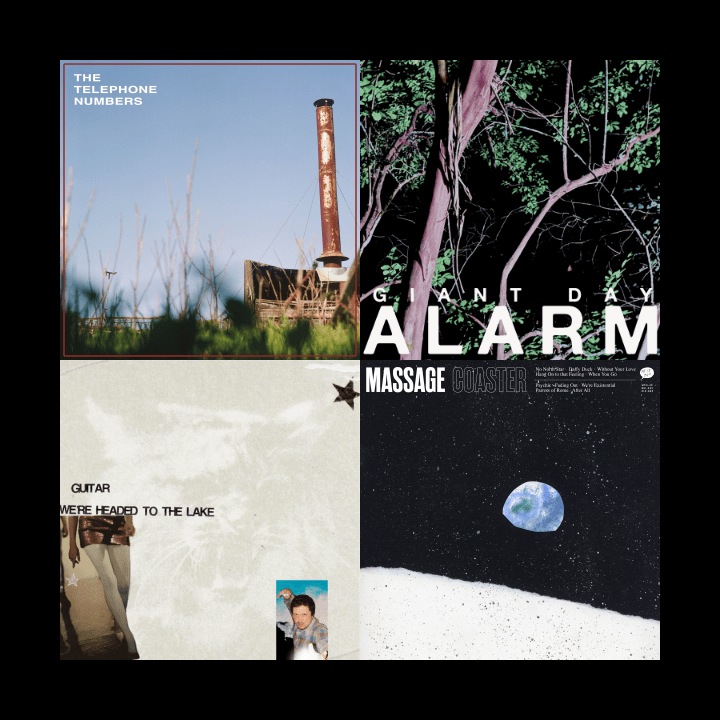
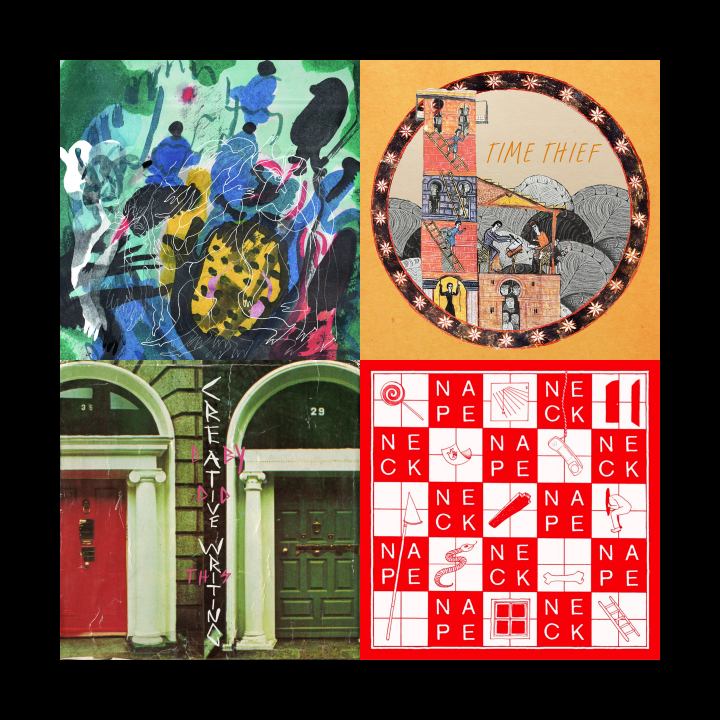
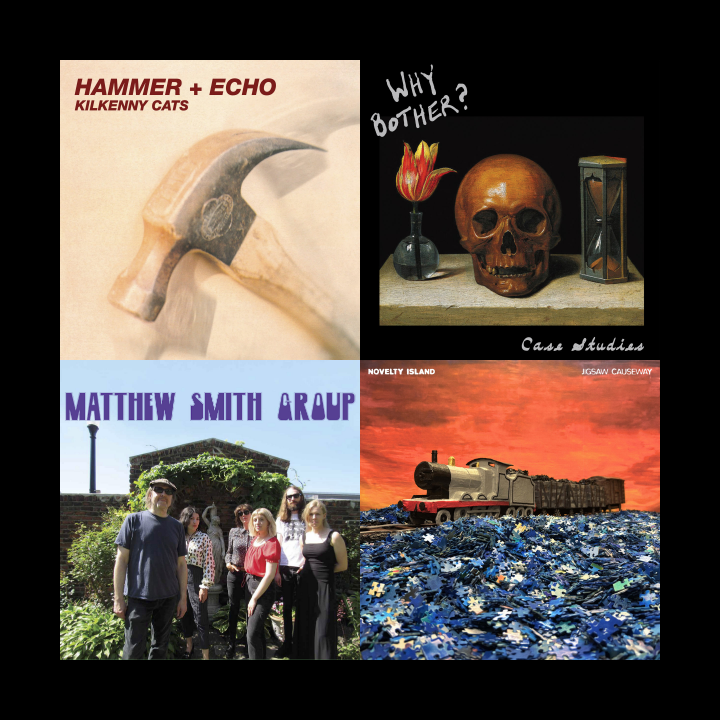
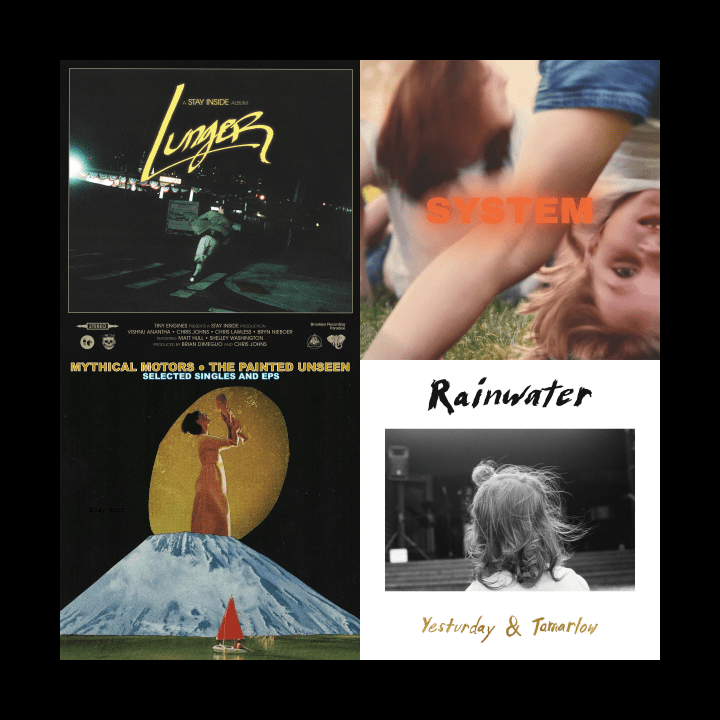

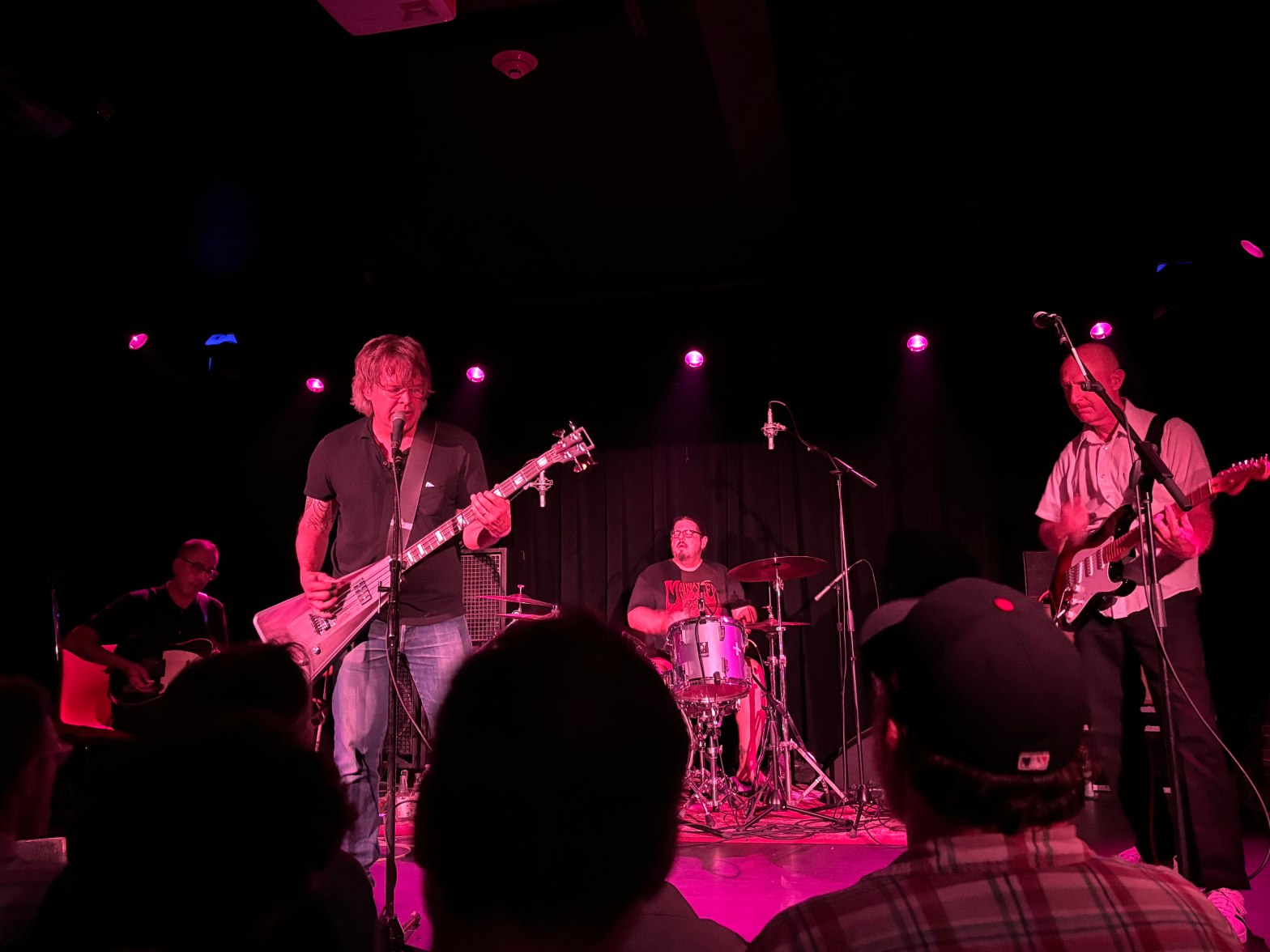
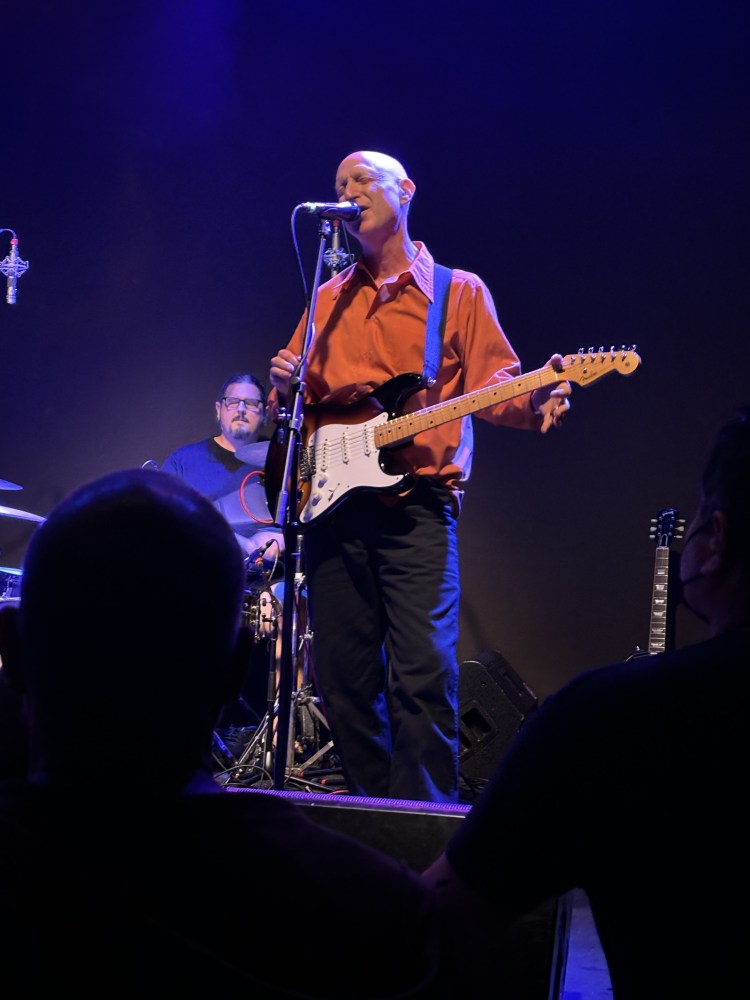
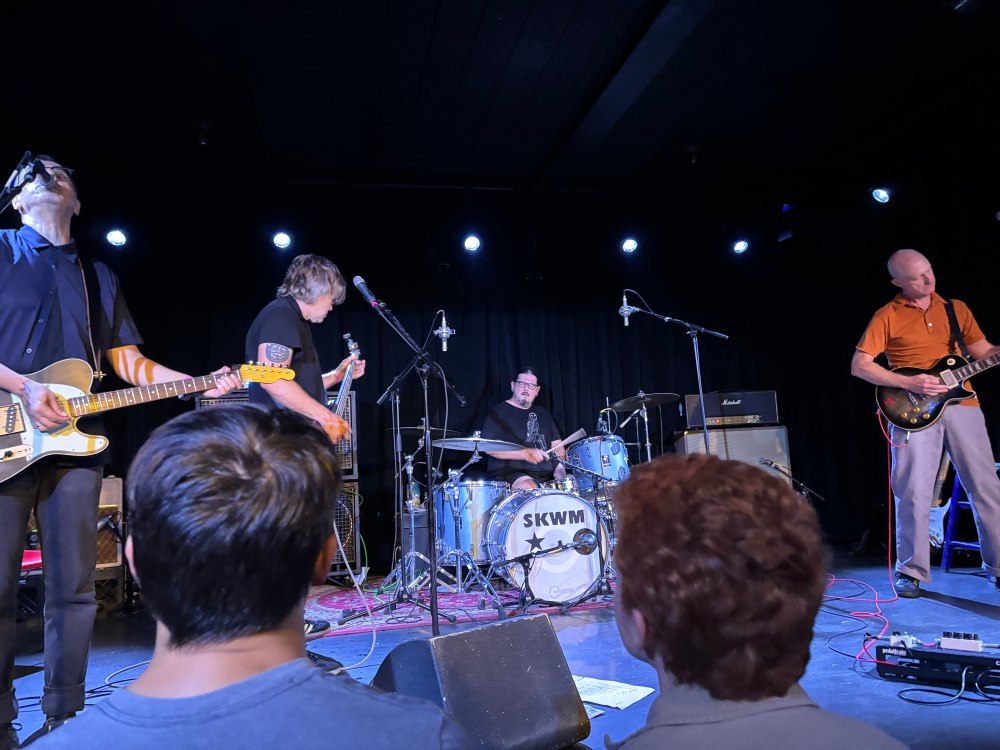


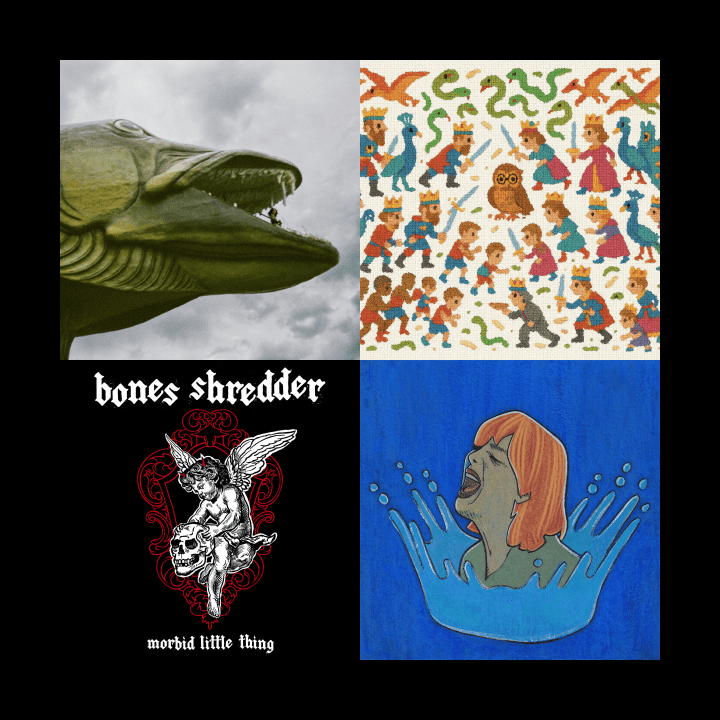
 Rosy Overdrive