I overheard some people talking at a hipster coffee shop about how this week wasn’t going to be a big week for Pressing Concerns. Well: they were wrong! The Monday Pressing Concerns is here, featuring new albums from Death by Indie, Bibi Club, and Saturnalias, and a new EP from Kill Gosling. Read on to find out how many of these bands I compare to Yo La Tengo and Sonic Youth!
If you’re looking for more new music, you can visit the site directory to see what else we’ve written about lately. If you’d like to support Rosy Overdrive, you can share this (or another) post, or donate here.
Death by Indie – 7 Day Farmers Market
Release date: May 4th Record label: Self-released Genre: 90s indie rock, lo-fi indie rock, experimental rock Formats: CD, digital Pull Track: Contract Expand Inhale Exhale
Death by Indie are a fairly prolific indie rock trio from Wilmington, Delaware–the band (drummer Mike Edwards, bassist/vocalist Isa Teixeira, and guitarist/vocalist Declan Poehler) have put out a bunch of music since they debuted in 2020, most of it in the form of EPs. Despite this, they’d only put out one full-length album, 2022’s Paeonia—until this month’s release of 7 Day Farmers Market, their sophomore LP. Considering that they’re an East Coast band who released an EP last year called No Wave Veggie Dogs–and, I suppose, the threat of “indie” contained in their very name–it probably won’t shock you to learn that there’s a good deal of Yo La Tengo and Sonic Youth influence to be found on 7 Day Farmers Market. There’s more to Death by Indie than their combination of noisy indie-punk, wobbly-but-compelling guitar pop, and occasional sonic wanderings, however–for one, the album’s title is a statement against corporate greed and gentrification by invoking the bygone Wilmington grocery store, and it’s not hard to spot the environmentalism in songs like “Taking Off” and (of course) “Treehugger”.
7 Day Farmers Market excels at threading the needle between Edwards, Teixeira, and Poehler’s weirder impulses and their clear ability to write a hook–often, both sides of the group pop up in the same song. The first half of the record contains at least three “hits” of the slacker-y, Barlow/Malkmus school of pop music–“Taking Off”, listless-feeling at first, eventually turns into an unlikely triumph, while “Contract Expand Inhale Exhale” is a bit more ornery structure-wise, taking a few twists and turns but still hovering in the pop realm. Depending on your perspective, “Hummus on My Thumb” either wastes or expertly deploys the most beautiful chorus on the record in a truly absurd fashion. Like vintage Yo La Tengo, Death by Indie can go from delicate to chaotic in a moment’s notice, and their noisy garage-punk side surfaces admirably on “Fallen Angel Begonia #2” and “Sunny the Horse (Mike’s Version)” (and if you don’t like them, they’re done in under two minutes). “Treehugger” is in a similar vein, although the song (presented here in a somewhat muddy live recording) shows the band as surprisingly deft at rhythmic post-punk as well. I haven’t really touched on some of the weirdest moments on 7 Day Farmers Market, but I do appreciate them, too–after all, plenty of bands could write a song as catchy as closing track “Broom Closet”, but to have it fit alongside stuff like “Flansong” by being offbeat in its own way is distinctly Death by Indie. (Bandcamp link)
Bibi Club – Feu de garde
Release date: May 10th Record label: Secret City Genre: Post-punk, indie pop, psych pop, art rock Formats: Vinyl, CD, digital Pull Track: Parc de Beauvoir
Bibi Club are a Montreal-based indie pop duo made up of Adèle Trottier-Rivard (vocals/keyboard) and Nicolas Basque (guitar), who debuted in 2019 with a self-titled EP and put out their first full-length album, Le soleil et la mer, in 2022. Both Basque and Trottier-Rivard have connections to long-running Canadian indie rock group Plants and Animals (the former as a full-fledged member, the latter as a collaborator), but rather than the widescreen Arcade Fire/folk rock-indebted sound of that band, Bibi Club seems to be a vehicle for the real-life couple to explore a different set of influences. Feu de garde, the band’s sophomore album, is a polished but not overstuffed pop record that evokes the delicate side of omnivorous indie rock groups like Stereolab and Yo La Tengo, and even the minimalist, dreamy side of post-punk (putting them in the same category as modern groups like En Attendant Ana and Nightshift). Trottier-Rivard (who sings in both French and English) can pull off a more grounded indie pop singing style as well as a spacier dream pop-indebted one, but her melodies are always presented at the front, or at the very least on equal footing with the inspired instrumental display going on around her.
Bibi Club have given themselves a lot to work with on Feu de garde, and their pop music takes turns with regards to which parts of their sound it emphasizes. The subdued, minimal opening track “La terre” is led by Trottier-Rivard’s voice interacting with a steady drum machine and plodding bass notes, while “Parc de Beauvoir” is happy to let a steady, late-era Sonic Youth guitar line take the lead before blossoming into colorful dream pop. Songs like the warbly “Les guides” and the brightly-strummed “Nico” wouldn’t be out of place on an early 2010s Captured Tracks release, while Bibi Club are able to wring pop music just as easily out of orchestral, almost psychedelic backdrops (“You Can Wear a Jacket or a Shirt”) as well as straight-up fast-paced, rhythm-section-workout post-punk (“Le feu”). Trottier-Rivard and Basque aren’t the first musicians to look towards “French pop” to grow and expand their sound–the otherworldly nature of the best of the genre must be tantalizing. Feu de garde is a strong, successful record because of its devotion to the “pop” half of that sound–rather than the genre signifiers being strewn about the album haphazardly, everything that Bibi Club adds to the record is pointed towards it with a compass-like accuracy. (Bandcamp link)
Saturnalias – Bugfest
Release date: May 10th Record label: Candlepin Genre: Lo-fi indie rock, shoegaze Formats: CD, digital Pull Track: JSUK
Saturnalias began as the solo project of Durham, North Carolina’s Alex Tung, who released two albums under the name (2021’s Planet Philistine and 2022’s Saturnalias) via local label 47 Eyez on Me before linking up with Candlepin Records for Bugfest, the latest Saturnalias record. Bugfest also appears to be the first album from Saturnalias as a full band (featuring bassists Connor Vaselovic and Elijah Hasskamp, guitarist Luca Moreno, and drummer Isa Pietrosemoli), although the record (partially recorded in Tung’s apartment, partially in Raleigh’s Found After Dark Studio) still has a lo-fi feel to it. The messy, noisy basement shoegaze sound of Bugfest is a great fit for Candlepin Records’ roster–Saturnalias clearly belong right in the current wave of new and exciting shoegaze-inspired bands, from groups like Guitar on the West Coast to more geographically-similar acts (Asheville’s Tombstone Poetry, Tennessee’s Carry Ripple, Atlanta’s Hill View #73). Saturnalias may have something of an “experimental” sound, but Bugfest is still solidly a rock record–just a chaotic one. Sometimes the guitars are clean and bright, other times a wall of distortion, but they’re always doing something on Bugfest.
After the noise-collage vibes of opening track “Renaissance Fair”, the first “full” song on Bugfest is “Borrowing”, a mess of guitars that buzz and chime, pulling together bits of math rock and even slowcore before skating to a full-on noisy conclusion. Saturnalias seem to delight in being a bit unpredictable–“JSUK” has an energy and occasional accessibility that makes the choice to make it a single understandable, but the song (which features guest vocals from Rayna Phillips) is hardly linear, jumping through a few different modes (downcast 90s indie rock, pummeling fuzzed out shoegaze, and then repeat) over its four minutes. If the first half of Bugfest is dynamic but consistently rocking out, the second half is just as dynamic and even looser. The B-side is where you’ll find the experimental, flute-heavy instrumental “Voluntary Pinael DMT”, as well as a few songs (“Formant Character”, “Window VI”) that stretch Saturnalias’ sound out into a distorted, unmoored haze of noise. On closing track “New Feel”, Saturnalias are able to hold it together for three whole minutes–a deliberately-stepping, clear-feeling piece of indie rock–before the tempo picks up and the assault of fuzz kicks in right as the song ends. “Control” isn’t the word that comes to mind when listening to Bugfest, but it’s not like its crashing waves are happening accidentally. (Bandcamp link)
Kill Gosling – Waster
Release date: April 24th Record label: We’re Trying Genre: Pop punk, emo-punk, power pop Formats: Cassette, digital Pull Track: Impatient
If I were a pop punk band whose sound was clearly indebted to Weezer, I don’t know if I’d be confident enough to open my record with a song called “Bobby Hobby” that borrows the “Buddy Holly” riff at its climax. Columbus, Ohio’s Kill Gosling have done just that, however, and I can’t fault the quartet for it, because they clearly know how to incorporate their influences without getting stuck on them. Kill Gosling (guitarist/vocalist Chandler, bassist/vocalist Walter, guitarist Violet, and drummer Marcus) are just too busy to try to recreate their past–Waster is the band’s third EP, and they zip through a half-dozen songs in under ten minutes with speed, energy, and a lot of ideas they want to get through before time’s up. Nothing on Waster is over three minutes (and only one song is over two), but there are more than enough hooks here, displaying an eagerness to channel punk rock into bite-sized pop pieces like two other acts they evoke and cite as influences, Joyce Manor and Jeff Rosenstock.
“Bobby Hobby” is a pure sugar rush no matter what its exact lineage is, and the chugging, Weezer-y power chords and Rentals synths that soundtrack “Untitled” would hardly be worth a mention if the song didn’t have a huge chorus to match them. The first half of Waster is rounded out by “Cow Tools”, a nice piece of emo-tinged power pop punk reminiscent of bands like Camp Trash (with one good moment of screaming for good measure), but the second half of the EP might stealthily be my favorite half. The transition between the sub-60-second Green Day-esque melodic punk of “Forget” and the dramatic punk showtune “Impatient” is second-half-of-Worry.-worthy, and the latter song in particular is some of Kill Gosling’s best writing. “What’s the point in learning something I know / Where’s the joy if you can never let go?” goes the chorus of “Impatient”, and I enjoy how the refrain takes on a different meaning between the first time around (in euphoria at a show) and the next one (at home, crashing and expelling alcohol from one’s body involuntarily). Kill Gosling might sound like they’re just reveling in their favorite music throughout Waster, but they’re all too aware of all the baggage the party brings with it. (Bandcamp link)
It’s a Thursday Pressing Concerns! If you’re looking for new music that’s coming out tomorrow (May 10th), you’ll find it here in the form of new albums from Climax Landers, Lunchbox, and Seasonal Falls (as well as a record from Lane that came out earlier this week). If you missed Monday’s post (featuring VACATION, Nihiloceros, Leah Callahan, and Jon McKiel) or Tuesday’s (featuring The Conformists, Quiz Show, Carry Ripple, and Mike Frazier), I’d recommend checking those out, too.
If you’re looking for more new music, you can visit the site directory to see what else we’ve written about lately. If you’d like to support Rosy Overdrive, you can share this (or another) post, or donate here.
Also: I am adding this after the fact, but I wanted to acknowledgethe passing of Steve Albini, one of the best to do it, ever. His fingerprints are all over this blog, from the most popular post on the website (about Silkworm, whose discography was almost entirely recorded by him) to literally two days ago, when I wrote about The Conformists’ Midwestless, which he engineered. My thoughts are with everyone who knew the man personally, and, as for myself, I don’t have much else to say at this time except that I dealt with the news by making a 100-song Bandcamp playlist of songs he recorded, and you can check that out if you’d like to be blown away by what he accomplished.
Climax Landers – Zenith No Effects
Release date: May 10th Record label: Gentle Reminder/Home Late/Intellectual Birds Genre: Art rock, post-punk, indie pop, college rock, folk rock Formats: Vinyl, digital Pull Track: Play It Cool
Although Brooklyn’s Climax Landers are new to me, the quartet has been around for a bit (they put out two albums in the late 2010s) and are comprised of musicians I’m familiar with in other contexts as well. The group is led by guitarist/vocalist Will Moloney, but it’s his backing band–drummer Ani Ivry-Block of Palberta, guitarist Paco Cathcart (aka The Cradle), and bassist Charlie Dore-Young who I all recognize from their work with various Brooklyn acts (in addition to Palberta and The Cradle, they’ve also contributed to This Is Lorelei, Kolb, My Idea, Thanks for Coming, and Lily Konigsberg’s solo work, among others). Although Moloney, as the lead vocalist/carnival barker and primary songwriter, is clearly at the helm, Zenith No Effects (their third LP and first in over a half-decade) is just as palpably a record made with full collaboration welcomed. As a frontperson, Moloney frequently offers up his lyrics in a conversational talk-singing fashion–he’s got a little bit of the Minutemen-esque “post-punk as folk music” attitude towards things–but he’s hardly a one-note leader. Zenith No Effects is an offbeat but sincere guitar pop record at its core, with classic pop rock and college rock (aided by Cathcart’s violin and Ivry-Block’s accordion) shading the record, and Moloney ups his game to match the rest of the Climax Landers.
Climax Landers bookend Zenith No Effects with “CL: Into the Quantum Static” and “CL: Sacrosanct Dimension”, two fantastical spoken-word post-punk songs (whose events are depicted in the album’s cover art)–even at their strangest and most high-concept, however, there’s still a lot of melody and brightness contained in these tracks. In between these twin pillars, the Climax Landers run through a bunch of pop songs brimming with instrumental ideas and inspired executions of them. It’s hard to think of a more pleasing way to break open your record than with the retro-tinged guitar heroics of “My Loving Sister” and the restrained, violin-featuring indie pop of “Clear/Bright”. One of Zenith No Effects‘ biggest and most immediate moments is “Play It Cool”, a swooning pop song whose looseness and stream-of-consciousness feeling reminds me of the effortless-sounding pop music of Nate Amos’ This Is Lorelei and My Idea. Although Moloney isn’t the most transparent writer, one can pick out where the agitation of early folk music has influenced his lyrics–specifically in the stretch from “Jailbreak” to “The Judge”, where the references to prison, judgment, and a desire to rise above both of these structures are all noticeable. It all comes to a head in the dismantling found in “CL: Sacrosanct Dimension”, but what really sums up Zenith No Effects is the richness that accompanies it–jangly, melodic guitars, bouncy bass guitar, tasteful accordion. And then–just as the album draws to a close–Moloney steps away from the mic and lets his saxophone do the talking. (Bandcamp link)
Lunchbox – Pop and Circumstance
Release date: May 10th Record label: Slumberland Genre: Indie pop, power pop, twee Formats: Vinyl, CD, digital Pull Track: Different Tune
It took a couple of decades for the rest of the Bay Area to catch up with Oakland’s Lunchbox–but when their moment came, Donna McKean and Tim Brown were ready. When the duo started making music together in the mid-90s, San Francisco wasn’t exactly the epicenter of retro-flavored indie pop–not that there weren’t other practitioners of it nearby (like Rose Melberg over in Sacramento), and twee was certainly taking hold a couple of states north in Olympia, Washington, but Lunchbox’s 60s-indebted sound feels specifically more in line with what was going on in England around the same time, or in Athens, Georgia. Lunchbox went away for a bit in the 2000s, but resurfaced with an album in 2014, and have since been even more active, with both members playing with other bands (like Artsick) and joining with Slumberland Records (at the center of the Bay Area’s current sprawling indie pop scene) for 2020’s After School Special. McKean and Brown’s latest as Lunchbox is called Pop and Circumstance, and it’s an immediate record of vintage pop rock made by people who live and breathe this kind of music.
The dozen pop songs on Pop and Circumstance were clearly authored by people devoted enough to the music of the 1960s and 70s to be able to pull several different stripes of it together (you’ll hear bits of bubblegum pop, mod, psychedelic pop, and soul at different points on the album)–but while their influences might be worn a little more on their sleeves than those of their C86/twee/indie pop peers, Lunchbox certainly don’t come off as stiff genre reenactors. Part of how they avoid this is that McKean and Brown clearly know their way around a pop hook, and they know how to use their knowledge to deliver it smartly–the way the record starts out with two pure-sugar, horn-laden hits in “Dinner for Two” and “I’m Yours, You’re Mine” is quite charming (particularly when they break out the organ and handclaps for the latter). Pop and Circumstance continues to offer up–well, it keeps offering up exactly what its title describes. Pop song after pop song follows–“Summer’s Calling” adds a bit of sunkissed haziness, “Different Tune” a noisiness that’s nevertheless, well, tuneful, “Love for Free” a smooth operator-coolness. McKean and Brown are masters of instrumental catchiness–the horns in “Is This Real?”, the keyboards in “Heaven Only Knows”–these aren’t merely adding character to the vocal melodies, they’re fighting to claim the “central hook” mantle for themselves. It’s the experience and honed knowledge that make Pop and Circumstance sound fresh and free. (Bandcamp link)
Seasonal Falls – Happy Days
Release date: May 10th Record label: Self-released Genre: Folk rock, chamber pop, indie folk Formats: Vinyl, CD, digital Pull Track: Used to Be Fun
A new transcontinental project, Seasonal Falls is a duo made up of Switzerland’s Roman Gabriel (who’s also played in The Kind Hills and The Dentals) and Los Angeles-based Andrew Pelletier (who released a pretty good album earlier this year as Fur Trader). Gabriel writes the songs and Pelletier sings them, a process that resulted in a couple of non-album singles last year and a full-fledged debut album, Happy Days, this month. On the latest Fur Trader album, Pelletier impressed me with how he combined Sufjan Stevens-esque orchestral indie folk with brighter-feeling chamber pop, and as it turns out, his sensibilities are a good fit for Gabriel’s songwriting, too. Happy Days feels a lot more laid-back than Fur Trader–its songs are looser than the other project’s concise pop instincts, embracing folk rock and dreamy alt-country slowly but firmly. Still, Gabriel is drawing from vintage “indie pop” music of the past in his writing just like Pelletier does, and at the very least, they both seem to agree on Sufjan, going as far as to enlist Ben Lester–who played pedal steel on Carrie & Lowell–to color Happy Days with lap steel.
Another key aspect of Gabriel’s songwriting is the darkness lurking under the polished soft-rock surface of his music. It’s a facet of Happy Days that becomes apparent from the opening title track, whose refrain becomes ironic after the verses position it against a backdrop of global climate change and pharmaceutical industry evil (at some point, “blissful guitar pop” starts to feel like “self-medicated to the point of numbness”). Elsewhere, the half-awake folk-country stumble of “Used to Be Fun” reflects on getting older and becoming less good of a hang, while “Girlfriend” slowly but clearly takes the shape of a toxic, controlling relationship (“I am a lucky guy / To have a girl like her / … / That’s what she says to me”). From a certain vantage point, Happy Days starts looking like a pretty bleak album, but it’s not necessary to read the whole record in this context. The clearest way out would be through “You’re Not Alone”, which is the one song that explicitly finds connection through struggle (“…we’re also weird” is the answer to the song’s title). But there’s also “I Wish You All the Rest” (another rough relationship-based song that almost says more by what it doesn’t say) and the fed-up rejection of closing track “Hey Girl” (a cover of a song from Japanese/Australian punk rock group Mach Pelican). Like I said–pretty bleak from a certain angle, but in an album whose narrators frequently feel like they’re passively floating through life, moments of lucidity and clear-eyed assertiveness could also be seen as small victories. (Bandcamp link)
Lane – Receiver
Release date: May 6th Record label: Illegally Blind Genre: Math rock, post-punk Formats: CD, cassette, digital Pull Track: Everybody’s Finding Out
Lane is a math rock band from Boston, Massachusetts that showed up around the beginning of the decade, built around frontperson Wes Kaplan (guitar/vocals). The first run of Lane (spanning an album in 2020, as well as a couple of EPs and singles in the following year) featured contributions from Jesse Weiss (Pet Fox, Grass Is Green), Ian Kovac, and Peter Negroponte (both of Guerilla Toss). After that initial flurry of activity, Lane went a bit dormant, but Kaplan is back this year with the group’s sophomore record and a new backing band in Julian Fader (Sweet Dreams Nadine, Ava Luna) and Jolee Gordon (Houndsteeth). Receiver is a brief record–eight songs in seventeen minutes–but if you’re familiar with math rock, you’re aware of just how much of a time warp this kind of music can be. Lane consciously sought to make a streamlined, “interplay-heavy” version of math rock on Receiver, which can be felt in how happy it is to embrace a simple “power-trio” setup and how these songs feel balanced, without one aspect of them (Kaplan’s impressive but not overly so guitarplay, the stealthily catchy vocals, the steady rhythm section) overpowering the other.
Receiver comes out of the gate incredibly strong with the opening duo of the title track (which rides a choppy riff to some art-damaged alt-rock without losing the “prettier” aspects of their music) and “Everybody’s Finding Out” (a laid-back, XTC-evoking math-prog-pop tune that reminds me of an even more streamlined version of this Exploding in Sound-adjacent sound practiced by bands like Pet Fox and Hammer No More the Fingers). Although “Judy and Jackie” and “I Become Your Vision” aren’t quite as chaotic as Kaplan’s stated influence of Palm, they find Lane upping the “thorny, tangled guitars” quotient of their sound, frequently obscuring (but not fully hiding) their melodic side. With relatively little time to spare, Lane aren’t interested in repeating themselves–as the record’s second half begins, they continue forging forward with “Surfer Girl” (a break from the guitar squalls, it’s a strut anchored by a suave drumbeat) and “Genius of Love” (quite possibly the weirdest song on the record, adding robotic handclaps and slightly processed vocals to the equation). Although Kaplan, Fader, and Gordon are decidedly not overly showy about it, after a couple of listens it becomes apparent that there’s no weak link on Receiver–it’s some of the most consistent, enjoyable, and revisitable rock music I’ve heard this year. (Bandcamp link)
It’s a Tuesday Pressing Concerns, and it’s time to get a little weird with it. A varied edition, we’ve got recent albums from The Conformists, Carry Ripple, and Mike Frazier in this one, as well as a new-ish EP from Quiz Show. If you missed yesterday’s blog post, featuring new music from VACATION, Nihiloceros, Leah Callahan, and Jon McKiel, check that one out here.
If you’re looking for more new music, you can visit the site directory to see what else we’ve written about lately. If you’d like to support Rosy Overdrive, you can share this (or another) post, or donate here.
The Conformists – Midwestless
Release date: April 5th Record label: Computer Students Genre: Noise rock, math rock, post-hardcore Formats: Vinyl, digital Pull Track: Mr. Biron
Who are The Conformists? Well, they’re a band that formed in November 1996 and are based out of St. Louis. For most of their existence, they’ve been a quartet, but in recent years they’ve pared down to a three-piece featuring founding member Chris Dee along with Pat Boland (since 2009) and Chris Boron (since 2011). Not exactly the most prolific band, The Conformists have moved steadily at their own pace–they put out their first album in 2004, and their most recent one before now, Divorce, came out in 2016. Midwestless is the fifth Conformists full-length, recorded by Steve Albini at Electrical Audio and released via Computer Students, a label I’d been primarily familiar with for theirreissues before now. As one might expect from a band who’ve recorded the majority of their records with Abini–and who once appeared on a Dazzling Killmen tribute album–The Conformists are Midwestern noise rockers at their core, and that’s baked into Midwestless’ DNA. Much like Shellac, however, The Conformists have kept things interesting into their later years by getting weirder and spacier–jarring math rock construction, empty space, and a heavy emphasis on rhythm all mark their latest record.
Midwestless only has six songs on it, and one of those is a ten-second intro track before the stopping and starting starts (and stops, and starts again, and stops again…) with “Song for Rincón Pío Sound”. The other bookend of the record is a long, simple instrumental that eventually just cuts off mid-note at the end of a twelve-minute song called “Five-Year Napsence”–all of this ends up lending a quality of excerption to Midwestless, like Dee, Boland, and Boron have spent the eight years since their last record hoarding a stockade of riffs, rhythms, and noisy rock music and then pulled a selection together as an overview of their work. Much of the record’s 28 minutes are instrumental–when the vocals finally show up towards the end of “Song for Rincón Pío Sound”, they’re a tortured post-hardcore howl. The Conformists don’t end up letting loose in that kind of way again on the album–the meat of Midwestless, “Psh Psh”, “Wrong Off”, and “Mr. Biron,” finds the band settling into an uneasy-feeling but not overly fiery brand of sinewy math rock and post-punk. The latter of those three songs is at least affixed with an eerie noise rock sneer, and The Conformists threaten to really fire things up as the song builds to a climax…only for “Five-Year Napsence” to turn things into chilly yet beautiful indie rock and eventually lapse into the extended jam session that ends the record. The Conformists do what they have to to survive and advance–I wouldn’t be surprised if they’re still playing “Five-Year Napsence” right this moment. (Bandcamp link)
Quiz Show – Flotsam
Release date: March 29th Record label: Magic Door Genre: Post-punk, punk, alt-rock Formats: Digital Pull Track: Super Concrete
Last year I wrote about the self-titled debut album from New Jersey’s Quiz Show, a record several years in the making. Chris Matthews, who co-founded the incredible Dischord group Shudder to Think in the late 80s, returned from a multi-decade hiatus from music in the late 2010s with a steady stream of Quiz Show singles that culminated in a full-length featuring twelve songs of weird but accessible art punk reminiscent of–but distinct from–his old band. Quiz Show was made with help from Guided by Voices drummer Kevin March and bassist Frank Gibbons, but Matthews had been playing live shows with bassist Jesse Krakow (who played in Shudder to Think during their 2000s reunion tour, as well as being a member of The Shaggs’ Dot Wiggin’s band) and drummer Joe Billy III at the time of its release, and now the new lineup has put out their first record together in the form of the three-song Flotsam EP. Despite the new band members, Flotsam picks up where Quiz Show left off, balancing the punk anthem-penning side of Matthews with his (and, likely, his co-conspirators’) more offbeat tendencies quite gamely.
Flotsam is a brief record, but it’s a rock-solid one, with each of its three songs being strong enough to stand on its own (and they’re all fairly different from one another, too). It’s easy to see why “Super Concrete” is the leadoff track and the lead single–it’s Dischord-adjacent music at its catchiest, walking the tightrope in between “post-punk” and just straight-up punk rock by switching together several different subsections into a continuous and catchy whole. The title is apparently inspired by Matthew’s deceased brother (it’s the name of a company for which he worked), but it’s hardly overly sentimental, with opaque but deeply-felt ideas (the bizarre language shift, the incredibly creepy delivery of the line about changing the locks, the huge chorus that just might hint at the sibling in question) crashing together all at once. The speedy punk bass and gang vocals of “Packing ‘Em In” probably makes it the biggest throwback on the EP, even throwing in a Shudder to Think-esque theatrical half-time slowdown halfway through the track. The relatively polished “China Glaze” starts with a college rock/Buffalo Tom-esque first half, kind of feeling like Matthews’ stab at late 90s “adult alternative” (which goes hand in hand with that extremely 90s cut-out bin-evoking artwork) before devolving into a hazy mess of dub and haphazard percussion but then landing the thing in a major-label-era Dinosaur Jr.-esque big alt-rock finish. It’s a strong conclusion for a record that, Flotsam or no, hardly sounds like it passively washed up on shore. (Bandcamp link)
Carry Ripple – Carry Ripple
Release date: March 21st Record label: Public Interest Genre: Lo-fi indie rock, fuzz country, experimental rock Formats: CD, cassette, digital Pull Track: Velma
I’m definitely intrigued by this current wave of weirdo lo-fi indie rock that’s been coming out of the American South in recent years. The most prevalent example of it is Asheville’s MJ Lenderman and those associated with him, but I’m also thinking about Chapel Hill’s Trash Tape Records and their recent release from Atlanta’s Hill View #73, as well as bands like Louisville’s Parister and Asheville’s Tombstone Poetry that have been chronicled by Candlepin Records. It’s more than time to add Knoxville-based, Memphis-originating Carry Ripple to that list. Citing acts like Lenderman, Feeble Little Horse, and Spirit of the Beehive as influences, the group (led by singer-songwriter Carter Earheart-Brown) has just put out its self-titled first record through Memphis label Public Interest, and it’s a brief but compelling collection of offbeat but substantial fuzz rock. Earheart-Brown even enlists frequent Lenderman collaborator Colin Miller on drums (in addition to Kaleb Collins on bass), but Carry Ripple isn’t a roaring country rock record, sounding more in line with the new wave of experimental, kitchen-sink shoegaze that’s being pioneered by labels like Julia’s War, and there’s also a lo-fi, 90s-style “slacker” indie rock core to these songs hidden beneath some of the wilder choices.
Running only 22 minutes in length, Carry Ripple nonetheless feels like a “full-length” due to the ground it covers in its eleven tracks. Sure, some of the songs–the sound collage-influenced opening dream pop “Blessed Memory”, the breakbeats interlude of “Feefo”, and the thirty-second blues junk of “Aced It”–are more like snippets, but they add shades to the album, and plenty more of the record’s shorter moments–such as the woozy, lumbering mid-tempo distorted indie rock of “Velma” and the hushed but passionate “Stop Drop & Roll”–feel as fully-developed as they need to be, “basement rock” sound or no. “Velma” is a brilliant piece of teetering-on-the-edge lo-fi pop that’s probably Carry Ripple at their most “Lenderman-esque”, but the record’s other high points end up in fairly different territory–“Jawbreaker” is an incredibly spirited but tired-sounding five-minute song that displays the band’s ability to cycle through distinct “subsections” within a single track and still hold it all together, while “Jigsaw” ups the distortion without losing the intriguing pop song at its core. It all amounts to an incredibly strong opening statement for Carry Ripple, a band that I expect will be worth watching in the near future. (Bandcamp link)
Mike Frazier – Secrets of Atlantis
Release date: April 26th Record label: WarHen Genre: Folk rock, psychedelic rock Formats: Vinyl, digital Pull Track: Secrets of Atlantis
Mike Frazier is a singer-songwriter from Winchester, Virginia–for the past half-decade or so, he’s been averaging an album a year and operating in the greater folk-country realm. I was only passingly familiar with Frazier’s music before now, but I’d heard enough of it to initially be surprised at what I heard when I listened to his sixth album and first for WarHen Records (Tucker Riggleman & The Cheap Dates, Dogwood Tales, Elkhorn). Secrets of Atlantis finds Frazier embracing 60s-inspired psychedelia in an enthusiastic and uninhibited way, with snaking guitars, bright and unhurried melodies, and an ever-present bass groove all featuring heavily into the record’s sound–reminiscent of the most well-known records from Daniel Romano, among others. Traces of Frazier’s country tinge are still present here and there, but he and his band (keyboardist Mark Masefield, bassist Danny Gibney, and string player Jenn Fantaccione) pull off an impressively complete transformation into a West Coast psychedelic pop/folk rock act on the brief but substantial 28-minute album.
The busy “City of Telos” sets the stage for Secrets of Atlantis by veering in between polished pop rock and almost sound-collage-like sections of psychedelic interludes. “Disciple of Your Love” is Frazier’s version of straightforward psychedelic rock and roll, leaning heavily on the keys to add a bit of spice around its inner groove. After the quieter studio pop of “Love You Forever”, Secrets of Atlantis really starts scaling the walls with “Age of Ascension”–which comes storming out of the gate, feigns a retreat, and then rolls back in for a huge psych-rock conclusion–and the mess of shining instruments and melodies that is “Palm of the Sphinx”. Even in its most ambitious moments, Secrets of Atlantis is still a smart pop record, but some of the most straight-up “pop moments” come in some of the simpler songs on the second half of the record–the soaring, mid-tempo title track and the jangly folk rock of “Life of Aquarius” are two true late record gems. Frazier only really embraces his “folk troubadour” side with the acoustic closing track, “Many Lifetimes of Love”, but even so, he chooses to end that one with a sustained echo of the final guitar chord and then some fluttering strings– Secrets of Atlantis never misses a chance to do just a little more. (Bandcamp link)
We’re beginning the week with a Pressing Concerns full of records guaranteed to improve your Monday morning. New albums from Vacation, Nihiloceros, Leah Callahan, and Jon Mckiel (all of which came out last Friday, May 3rd) await you below. All four of these artists are new to Pressing Concerns, but they’re all great additions.
If you’re looking for more new music, you can visit the site directory to see what else we’ve written about lately. If you’d like to support Rosy Overdrive, you can share this (or another) post, or donate here.
Vacation – Rare Earth
Release date: May 3rd Record label: Feel It Genre: Power pop, punk rock, garage rock Formats: Vinyl, CD, cassette, digital Pull Track: Sanity’s Sake
Something of a missing-puzzle-piece band for this blog, Vacation are a quartet out of Cincinnati that have been making their brand of rock and roll to the tune of a decade and a half and nine LPs at this point. Between the four of them (Jerome Westerkamp III, Evan Wolff, John Hoffman, and John Clooney), they’ve played in several Feel It Records groups (including Good Looking Son, Motorbike, and BEEF), so I was surprised to see that Rare Earth is actually their first album for the Cincinnati-based label. They’ve hopped from Let’s Pretend to Don Giovanni to Salinas Records throughout their career, but the garage rock, power pop, and punk rock concoction of Rare Earth fits just fine on their new home. They have the same urge to play pop music loud and fast that Feel It flagship group The Cowboys have, but Westerkamp (the group’s primary songwriter) also reaches over to neighboring Dayton for inspiration, as there is a mid-period Guided by Voices “meaty but hooky” attitude to a lot of this record as well. Add in a dash of Midwestern, blue-collar pop punk (not unlike former labelmates ADD/C, who not coincidentally recorded their most recent album with Hoffman), and you’ve got one of the most inspired-sounding rock records I’ve heard in quite a bit–huge-sounding, catchy, with the edges anything but sanded off.
“Worlds in Motion” kicks Rare Earth off with a proof of concept–anyone can write the “rock and roll song that’s about rock and roll”, but Vacation display a feverish devotion to the song’s concept in its execution, something that only becomes more apparent as the record advances. The first half of Rare Earth backs the opening salvo up with a varied collection of excited ideas–the glam-influenced classic rock revival of the title track, the zippy power-pop-punk of “Kink”, the eager-to-please showstopping pop of “Big Hat World”, and the garage-y purgatory of “Cheap Death Rattle”. The mid-tempo lurch of the latter song feels of a kin with Robert Pollard’s songwriting post-“lo-fi” era, and the second half of Rare Earth explores this with an incredible array of Guided by Voices-esque rockers. In particular, the power chord punch of “Life Beyond Eceladus” sounds like a thundering TVT-era fuzz-rock tune (and with a title to match, too!), and the earnest, chugging “Sanity’s Sake” captures Pollard’s ability to imbue his lyrics and vocals with both triumph and melancholy. “Sanity’s Sake” is an obvious success as a pop song, and it’s no small feat that Vacation turn a song with lyrics like “Corrosion of a paradise / A patina that shines / Let your theories oxidize” into not only a hit, but a deeply felt one, too. The album ends with a woozy, lo-fi song called “Sailing”, and it’s a case of the casual, less-polished presentation making the beauty at its core more obvious. The trick to Rare Earth is that, behind the loud guitars, every other song on the record is just as strong and fragile as “Sailing”. (Bandcamp link)
Nihiloceros – Dark Ice Balloons
Release date: May 3rd Record label: Totally Real Genre: Punk rock, power pop, alt-rock, pop punk Formats: Vinyl, cassette, digital Pull Track: Purgatory (Summer Swim)
I recently heard a cool new band from Brooklyn called Nihiloceros. Except they’re not new–they put out an album called Samantha in 2016, and EPs in 2017 and 2021. And the co-leaders of the band, guitarist/vocalist Mike Borchardt and bassist/vocalist Alex Hoffman, apparently have an even longer history together, playing in bands in Chicago and Alaska before moving to New York and beginning Nihiloceros (along with a couple of different drummers–German Sent plays on Dark Ice Balloons, and Glenn Gentzke is currently playing with the band). So, the minds behind Nihiloceros have been around for awhile–that’s something to keep in mind going into their latest record, Dark Ice Balloons, a punk album about death. At least, that’s what Borchardt refers to Dark Ice Balloons as, and it’s not like the black-balloon-clutching ghosts on the album cover, the ferries of death and purgatory references in the lyrics, and the dark alt-rock guitars all prove him wrong. Dark Ice Balloons is also, however, a beast of a pop album–admittedly Jawbreaker and Husker Du devotees, Borchardt and Hoffman stack their record with huge melodic punk/pop punk hooks strong enough to stay intact as the band crank up the loudness and drama.
It becomes apparent from the beginning of Dark Ice Balloons that Nihiloceros have appropriately brought their populist instincts for this universal topic–opening track “Penguin Wings” is as revved up as it is nervous-sounding, a sledgehammer-esque refrain wielded to maximum effect, while “Killing Ghost” colors things a shade darker but without losing the “full-throated punk chorus” side of the band, and by the time we’ve gotten to “Krong”, Nihiloceros have decided to see what Green Day would sound like if they weren’t afraid of extended passages of noisy but hooky guitar playing (pretty good!). Dark Ice Balloons’ secret is that the second half might actually be better, between the weird power pop mad scientist creation “Skipper” (the way the vocalist switches and the synths come alive in the chorus requires a strong navigator, indeed), the no-expenses-spared pop punk rager “Martian Wisconsin” (joining the pantheon of “great punk songs about aliens”, no less), and “Purgatory (Summer Swim)”, the last and best song on the record. “Purgatory” (co-written with someone named Amanda Gardner, per their Bandcamp) sounds like a lost radio-ready punk single from the 90s, from the way the melody and electric guitar spill out at the beginning of the song to the basketball dribble beat to the esoteric fist-pump of the chorus. Nihiloceros try natural disasters and weapon-fellating on for size, but it’s the open-ended question in the song’s refrain that defines Dark Ice Balloons. (Bandcamp link)
Leah Callahan – Curious Tourist
Release date: April 29th Record label: Self-released Genre: Art rock, dream pop, 90s indie rock, alt-rock Formats: Digital Pull Track: Ordinary Face
Leah Callahan is a Boston-area music veteran–from the mid-90s to mid-2000s, she played in the bands Turkish Delight, Betwixt, and The Glass Set, in addition to releasing a solo album in 2003. After The Glass Set’s last album in 2007, it appeared that Callahan was done with recording music, but she’s recently broken a 13-year hiatus with a prolific streak–she released two full-length albums (Simple Folk and Short Stories) in 2021, and followed them up with 2022’s Cut-Ups. Curious Tourist, therefore, is the fourth Leah Callahan album in about three years, and its ten songs feel like the work of seasoned professionals. It’s Callahan’s name on the cover, but it’s far from a “solo” effort–the contributions of multi-instrumentalist and co-songwriter Chris Stern are particularly felt, but the rest the record’s musicians (drummer Alex Brander and viola player Jeremy Fortier) make their contributions known as well. Callahan mentions Britpop and shoegaze as touchstones for Curious Tourist–she and Stern specifically bonded over Lush, and she also recalls experiencing Swirlies and Medicine firsthand during her stints in 90s indie rock groups.
The resultant album is a robust indie rock record that actually rocks, while still retaining a relatively straight-laced, song-forward approach. Curious Tourist reminds me of recent albums by Phosphene and Guest Directors, records that could be loud and distorted but without being overly committed to recreating shoegaze moments of the past. “Nowhere Girl” is a huge opening statement, an orchestral, all-in six-minute rocker, while songs like “No One” and “Ordinary Face” find Callahan and her collaborators sharpening their claws and banging out rock music that capture both the darker (the former) and bouncier (the latter) sides of post-punk. These larger instrumental showcases contain plenty of catchy moments, but Curious Tourist really shows off its pop songwriting when it’s more streamlined–the skipping, toe-tapping retro pop of “Super” is perhaps the most well-rounded “pop song” on the record, but both “Social Climber” and “Wish” deploy especially strong guitar-based melodies that give it a run for its money. The record ends with a cover of “You Don’t Love Me (No No No)”, a blues song that has been adapted into a rocksteady-influenced tune over the years (which is the version Callahan and her band play). It’s a huge left turn to end Curious Tourist, but it works as a statement from a reawakened artist unwilling to restrict herself in her second act. (Bandcamp link)
Jon Mckiel – Hex
Release date: May 3rd Record label: You’ve Changed Genre: Lo-fi indie rock, folk rock, psychedelic pop Formats: Vinyl, digital Pull Track: The Fix
It’s been a minute since we’ve heard from New Brunswick-based singer-songwriter Jon Mckiel–four years, to be exact, which was when he released his most recent album, 2020’s Bobby Joe Hope. That album was one of my favorites of the year, and I called it “a record of wonderful snake-curled-in-the-grass-by-the-campfire Canadian psychedelic indie folk” (which I stand by), and if that sounds appealing to you, you’re likely going to find plenty to enjoy on its follow-up, Hex. It’s his sixth album and third for You’ve Changed (Daniel Romano, Fiver, Leanne Betasamosake Simpson), once again recorded and produced entirely by Mckiel and his longtime collaborator, JOYFULTALK’s Jay Crocker (saxophone on the record’s first song by Nicola Miller is the only outside musical contribution). Hex is yet again a success as a pop record, and it also has a pleasingly keen sense of rhythm that crops out throughout the album, giving these songs a strong foundation while Mckiel and Crocker seek to balance sharp melodies, folk intimacy, and psychedelic expanse.
Hex’s opening title track is an attention-grabber–at least, as much as this kind of music can be considered “attention-grabbing”. The smooth, minimal lo-fi sophisti-pop instincts of the song are completed by Miller’s saxophone–although it’s the record’s next few songs that really ended up winning me over. I really like Mckiel’s choice to stick “String”–a tangled but mesmerizing mess of low-to-the-ground psychedelic guitars and rhythms–so early in the tracklist, and it feels like Hex is blown wide open when he and Crocker embrace a murky, looping, almost-dub-influenced side in “Still Life” and “Under Burden”, two strong highlights of the record’s first half. Songs on Hex seem to float by, but not without leaving an impression–stuff like the reverb-y, lightly-shined-up “The Fix” and the clear-eyed, synth-touched “Everlee” are guitar pop songs first and foremost and act accordingly. Hex’s sparest moment is the only one not written by Mckiel–the penultimate track is a cover of “Concrete Sea”, a song you could’ve convinced me was a lost Neil Young classic but is actually by 70s Manitoba folk singer and environmental activist Terry Jacks. It’s an inspired song imagining a world beyond the West’s destructive tendencies (perhaps illustrated no more strongly than in his native country). It’s not unreasonable to say that Hex resonates in part because Mckiel is clearly guided by a compass that stretches far beyond the world of lo-fi folk music. (Bandcamp link)
Another solid week for new music comes to a close with the Thursday Pressing Concerns, looking at three great albums coming out tomorrow (May 3rd) from American Culture, S. Raekwon, and The Ar-Kaics, as well as an EP from ME REX that came out earlier this week. If you missed Monday’s Pressing Concerns (featuring The Sylvia Platters, Rural France, Writhing Squares, and The Goalie’s Anxiety at the Penalty Kick) or the Rosy Overdrive April 2024 Playlist/Round-Up that went up on Tuesday, be sure to check both of those out too.
If you’re looking for more new music, you can visit the site directory to see what else we’ve written about lately. If you’d like to support Rosy Overdrive, you can share this (or another) post, or donate here.
American Culture – Hey Brother, It’s Been a While
Release date: May 3rd Record label: Convulse Genre: Punk rock, Madchester, power pop, jangle pop, noise pop, college rock, psychedelic rock Formats: Vinyl, digital Pull Track: Survive
Denver’s American Culture have been around for a decade or so, and while they aren’t precisely rock stars, I’m surprised I hadn’t heard of them before–they released a split a few years back with Boyracer, and their third album, 2021’s For My Animals, came out via HHBTM. American Culture’s sound has a lot of familiar ingredients, but it’s a unique and captivating blend that’s found on Hey Brother, It’s Been a While–they’re “punk rock” in a loose sense, yes, although in the older underground version of the term (fellow Four Corners band the Meat Puppets clearly have influenced the group, and they namecheck J. Mascis in one of these songs), while also leaving room for indie rock and pop of several different stripes (mid-to-late Replacements jangly power pop, and even some psychedelic Madchester influences like their Convulse labelmate, Dazy, have dabbled in). Some of the variety of Hey Brother, It’s Been a While can be explained by the band having two main singer-songwriters, Chris Adolf and Michael Stein (who are aided by Lucas Johannes on bass and drummer Scott Beck to complete the quartet).
The context behind Hey Brother, It’s Been a While is key, so I’ll try to get into it a bit–Stein, a longtime heroin user, fell deep into drug use during the pandemic, culminating in him living homeless in Las Vegas for three months after a failed attempt to get sober, all the while with his friends and family (includes his bandmates) unsure whether he was even alive. I didn’t actually know all of this the first few times I listened to this record in full, but I loved how it sounded without any of that information (and am only now piecing together how everything from the title of the record on down deals with a community-level traumatic event from two different perspectives in Stein’s and Adolf’s songwriting). The first voice you hear on Hey Brother, It’s Been a While is actually neither of the bandleaders, however–it’s Madeline Johnston of Midwife, who might seem like an odd fit for anyone familiar with her “heaven metal” slowcore music, but it’s a perfect anchor for a song in “Let It Go” that leans hard into alt-dance and Madchester.
Hey Brother, It’s Been a While is a reunion, but more than anything else, it’s a union–everything I’ve addressed in the past two paragraphs locks in together in a way that makes perfect sense, to the point where Stein and Adolf’s songwriting feels like it overlaps significantly. The former might lean into psychedelia and distortion more than the latter’s penchant for guitar pop (see “Circle the Drain” and “Human Kindness”), but at the same time, Stein’s “Survive” is catchy punk-pop as hooky as anything else on the record (the refrain, “I still don’t wanna live forever, but I think I’d like to survive,” being Stein’s biggest mark on the track). Meanwhile, the bridge between the rock-and-roll and “baggy” ends of the band is built with songs like “Body Double” (a noisy, fuzzed-out, incredibly-damn-cool sounding pop tune) and “Break It Open” (which brings back Johnston on vocals for an uplifting but more streamlined take on the album opener’s sound). Closing track “Two Coyotes” is also somewhere between the two ends, but it’s also on a psychedelic desert oasis of its own, letting flutes and a bit of cosmic country play the record out on a previously-unheard note. It gets there by crystallizing a single moment in the back of a van, from the melted plastic on the dashboard to the air flowing from the windows–the elements are listed individually, but at this point American Culture don’t need to explain how they add up to something more than that. (Bandcamp link)
ME REX – Smilodon
Release date: May 1st Record label: Self-released Genre: Indie pop, synthpop, folktronica(?) Formats: Digital Pull Track: Canada Water
One of my favorite bands going, Mint Mile, once said, “We like four-song EPs because we cannot bury a song in the middle of Side B. Nothing is transitional. Everything either leads off or finishes an experience.” With that in mind, the discography of London trio ME REX starts to look more and more impressive. The majority of their releases at this point have been four-song EPs, and even though they’ve branched out with longer-form releases in recent years (2021’s “shuffle album” Megabear and the proper full-length Giant Elk last year), they haven’t abandoned their roots (2022’s Plesiosaur, for instance, was one of my favorite EPs of that year). Their first release since Giant Elk returns to the preferred format of the band (vocalist/guitarist/pianist Myles McCabe, drummer Phoebe Cross, and bassist/synth player Rich Mandell) in the form of Smilodon. The digital-only, self-released EP feels like a conscious attempt at a “lower-key” release–only, the songs didn’t seem to get the memo. If you’ve enjoyed the band’s unique sound on previous records–smartly-written indie folk rock in the vein of the Mountain Goats or Frightened Rabbit but with a wholehearted embrace of synths and sparkling pop music–you will find plenty to enjoy on Smilodon, an EP that does everything you’d want a ME REX record to do in ten minutes and change.
Smilodon is bookended by a pair of huge-sounding anthems that should take their place in the pantheon of “classic ME REX performances”. “Goodbye Forever” kicks the record off with a runaway synth line and McCabe at his emotional motormouth best, then the trio all gel together at the thumping chorus, and they save just enough energy to burst out from underwater when they get to the part where McCabe sings “I see you becoming viscous, turning to liquid…” In comparison, closing track “Canada Water” comes out of the gate roaring with its roller-rink synth hook and full-band lurch–the band keep the energy at this high opening level until the second half of the song, which slows down into an exercise of handclaps, restrained synths, and a call and response from McCabe to the rest of the band (Cross and Mandell’s Greek chorus “We cannot wait!” response is a reminder that, even though ME REX began as a McCabe solo project, the tightness of the full band is their secret weapon). The two middle songs on Smilodon, while not as giant-sounding, still have a lot to commend–“Hale-Bopp” is another kind of classic, the mid-tempo, rousing singalong, a church choir singing about comets and relationships passing in the night. “Fleck” is the weirdest song on Smilodon, a dark-seeming, percussionless ballad in which McCabe’s vocals are AutoTuned for much of its brief (90 second) runtime. In its own way, it’s as memorable as the huge conclusions of “Goodbye Forever” and “Canada Water”–at this point, that shouldn’t be surprising from a ME REX record. (Bandcamp link)
S. Raekwon – Steven
Release date: May 3rd Record label: Father/Daughter Genre: Indie pop, bedroom pop, R&B/soul, jazz-pop Formats: Vinyl, CD, digital Pull Track: Steven’s Smile
Buffalo-originating, New York City-based singer-songwriter Steven Raekwon Reynolds (aka S. Raekwon) first came to my attention via his 2022 EP I Like It When You Smile, a brief but strong collection of sunny pop music built around R&B, bouncy pianos, and a bit of dream pop. It was an extension of the sound found on the musician’s debut LP, 2021’s Where I’m at Now, but I suspected that Raekwon wasn’t going to be content to just hit those same beats over and over again based on the impressiveness of his 2022 non-album single “Single Mom’s Day” and some interesting choices at the margins of his last EP. Now we’ve got Steven, Raekwon’s sophomore album and his strongest work yet–it focuses his disparate tendencies into a single coherent statement without losing any depth. Raekwon and longtime drummer Mario Malachi recorded the album in a “makeshift studio” at his in-laws’ house in southern Illinois, seeking to balance craft (Raekwon composed the songs on guitar completely ahead of time, instead of producing and recording while still in the writing stages as per his “normal” creative routine) and spontaneity (the duo focused on single takes, and the material was completely new to Malachi before recording began).
Vintage soul and R&B has certainly shaded Raekwon’s pop music in the past, but it’s refreshing to hear him and Malachi fully embrace this side and open up Steven with a handful of tracks that absolutely lock into this groove (“Steven’s Smile”, a song that juxtaposes a full-blooming instrumental with Raekwon’s lyrical interjections that contain a barely-papered-over darkness, the slick, timeless pop of “Old Thing”, and the minimal, piano-based, yet quietly seething “Winners & Losers”). Steven doesn’t abandon this sound as the record progresses, but its primary takeaway from that era of LPs is a subtler one–using the sides of a record and a tracklist to chart a journey. This is apparent in just how Raekwon and Malachi give us the sweeping “If There’s No God…” as the record’s centerpiece (its towering zen seeming to answer the quaking, uncertain grooves of “Steven’s Smile”), and the beautifully sparse indie folk of “Does the Song Still Sound the Same?” comes spilling out once he’s got the previous track off of his chest. Peace is a moving target, and Raekwon gives us the six-minute “It’s Nothing”–whose electric climax is the biggest “rock” moment on the entire record–after that before allowing “What Love Makes You Do” and “Katherine’s Song” to offer a bit of respite. It’s only after the latter song trails off that I realized that Steven covers just as much musical ground as Raekwon has in the past–it’s just an incredibly smooth ride. (Bandcamp link)
The Ar-Kaics – See the World on Fire
Release date: May 3rd Record label: Feel It/Dig!/Bachelor Genre: Garage rock, southern rock, fuzz rock, psychedelic rock, blues rock Formats: Vinyl, CD, digital Pull Track: Chains
If you’ve been paying attention to this blog over the past couple years, you’re aware that Feel It Records has been the premier label for punk and garage rock as of late. They’ve championed several shades of that kind of music, from Midwestern Devo-core/“egg-punk” (much of it from their current home of Cincinnati) to West Coast-indebted psychedelic garage fuzz to catchy and snotty first-wave punk sounding straight out of New York in the 70s. However, Feel It is originally from Richmond, Virginia, and while the label’s early releases reflected that, not too much of their recent output has recalled the Appalachian and Southeastern environments that are the closest in proximity to their first home. Enter The Ar-Kaics, a Richmond quartet (Johnny, Jake, Kevin & Tim) who put out two albums in the 2010s and have linked up with Feel It for their six-years-in-the-making third full-length, See the World on Fire. To be clear, The Ar-Kaics’ latest LP fits quite well alongside the Segall-esque psych-garage side of Feel It, but there’s also a southern expansiveness to See the World on Fire’s eight songs, a blues-y, swamp-y attitude that seeks to cover vast emptiness with electric guitar jams.
Even when The Ar-Kaics are gazing into the branches of a hemlock tree in opening track “Chains”, they sound haunted and pained, shackled by the song’s titular object. It’s a harrowing opening statement, but it’s one that gets one ready to See the World on Fire. The Ar-Kaics do let themselves embrace the friendlier side of this classic-rock-shaded sound throughout the album–the first half of the record contains the mid-tempo psych grooves of “Fools Are Gone” and the wandering rock and roll of “Stone Love”, while the southern rock singalong of “Cornerstone” and the messy but spirited “Dawning” are the second half’s most accessible moments. These lighter moments bridge the gaps between See the World on Fire at its most intense, particularly at the closing of both of the record’s sides. The six-minute slow-burn of “Land of the Blind” ends the first half by steadily and confidently demolishing their sound into a white-hot tornado, but even that doesn’t quite prepare us for the nine-minute closing song “Never Ending”. Effectively a two-part track, the first half of the song is perhaps the most “peaceful” moment on the record, only to kick up a sudden summer storm of an instrumental as it draws towards the finish line. I wouldn’t expect See the World on Fire to burn itself out any other way. (Bandcamp link)
Another month wrapped up neatly in a bow, thanks to the Rosy Overdrive April 2024 Playlist/Round-Up. There’s a ton of new music here: some of which are from records I’ve written about on the blog already, some are from records I will write about on the blog, and some are completely new faces. Fun fact: the first five songs on this playlist are all from bands I’ve never written about before. I’m guessing it’s been a while since that’s happened.
Ther, Sun Kin, and Mister Goblin have multiple songs on this playlist (two each).
Here is where you can listen to the playlist on various streaming services: Spotify, Tidal (missing one song), BNDCMPR (missing one song). Be sure to check out previous playlist posts if you’ve enjoyed this one, or visit the site directory. If you’d like to support Rosy Overdrive, you can share this (or another) post, or donate here.
“Bare Minimum”, Alexander From Lucky Life (2024, 4711 Idaho)
I’d been vaguely aware of Alexander (the very-difficult-to-look-up project of Boston’s Alex Fatato) for a few years now, but Lucky Life is the first album of his I’ve heard in full. It features some notable guests–Bradford Krieger on guitar and keyboard, Mulva/Kal Marks’ Adam Berkowitz on drums, cellist Eliza Niemi–but I didn’t know that when I first heard (and was immediately blown away by) “Bare Minimum”. It’s an absolutely gorgeous piece of ragged indie rock, as Alexander and his band make self-excoriation (“I look for loops of applause for doing the bare minimum / I congratulate myself for syncing my body with the sun”) sound aching but beautiful. Fatato sings his head off in a vintage Conor Oberst fashion, although the shambling, electric backing band tempers the bite of “Bare Minimum”.
“Heavy Drinker”, Snarls From With Love, (2024, Take This to Heart)
“Heavy Drinker” is one of my favorite songs of the year so far, simple as that. It’s a single and a highlight from With Love,, the sophomore album from a Columbus-based band called Snarls whose name I recognized vaguely before hearing this one. Based on the rest of their album, Snarls are pretty good at this indie-alt-rock game, but “Heavy Drinker” is a massive song, a career-defining piece of music where, for two and a half minutes, everything lines up perfectly. The guitars are arranged just right, fuzzed out, restrained, or bursting with melody as needed (Chris Walla produced With Love,, by the way), the lyrics are captivating in how they overshare but remain a sense of mystique, and who doesn’t love a classic call-and-response chorus?
“I Don’t Care What Gilchrist Says”, Soup Activists From Mummy What Are Flowers For? (2024, Inscrutable)
Let’s all give a warm welcome to Inscrutable Records, a new label from the mind of St. Louis’ Martin Meyer (who’s played with Lumpy & The Dumpers, among other bands). Meyer debuted Inscrutable with the release of four intriguing and exciting underground rock and roll records, but the best of the bunch just might be his own music. Mummy What Are Flowers For?, the latest from Meyer’s Soup Activists solo project, scoops up classic indie pop/college rock for the lo-fi garage rock revolution in the vein of acts like Silicone Prairie and Home Blitz. My favorite song from Mummy What Are Flowers For? has to be “I Don’t Care What Gilchrist Says”, a song that takes nearly a minute to get going but is a non-stop hookfest from the moment Meyer begins singing (and the instrumental beforehand is pretty damn catchy, too).
“Lapdog”, Ahem From Avoider (2024, Forged Artifacts)
“Lapdog” is the opening track and second single from Avoider, the upcoming second album from Minneapolis power-pop-fuzz-punk band Ahem. Kicking off their first new music in five years, “Lapdog” sounds forcibly ripped from somewhere–it’s built of strong, muscular hooks in the vein of Superchunk or fellow Minneapolis-originating alt-rocker Bob Mould, and the song also shares Mould’s penchant for frantically hammering the catchiness out of the track for all its worth. It’s certainly got the mid-2010s “scrappy” indie punk attitude to it, but there’s also an all-in grunginess to the chorus–it’s not “heavy”, but it sure comes off that way. I’ll have more to say about Avoider soon.
“Tidal Wave”, Alana Yorke From Destroyer (2024, Paper Bag)
Halifax singer-songwriter Alana Yorke released her first album, Dream Magic, in 2015–Destroyer, her second, comes nearly a decade later, and in the aftermath of a hemorrhagic stroke she suffered in 2022. This experience is all over the ten songs of Destroyer, an art pop record that starts off accessible and gets more inscrutable and experimental as it goes on. “Tidal Wave” opens the record with a perfect synthpop single, with Yorke’s vocals absolutely soaring over a sharp, fleshed-out-but-not-overwhelming instrumental (courtesy of both Yorke and her partner, Ian Bent). “Tidal Wave” sounds huge enough to contain entire worlds but Yorke never sounds like she’s doing anything but exactly what the song calls her to do.
“I’m in the Band”, Sun Kin & GUPPY From Sunset World (2024)
As a songwriter and frontperson, Sun Kin’s Kabir Kumar has a wide-encompassing nature that finds them jumping across genres (folk, pop, and electronica among the most prominent) with confidence and enthusiasm. “I’m in the Band” is one of my favorite songs on their latest album, Sunset World, and it features contributions from Kumar’s bandmates in GUPPY (Miguel Gallego wrote the music, J Lebow co-wrote the lyrics and sings on it) as well as Illuminati Hotties’ Sarah Tudzin. Compared to some of the more grandiose moments on Sunset World, “I’m in the Band” is decidedly lower-stakes in its depiction of awkwardness and minor indignities that come with being a musician, but Kumar doesn’t approach the song like that’s the case at all–that soaring chorus (“In my defense…”) has gotta be one of the best “indie pop” moments of the year thus far. Read more about Sunset World here.
“Lost Data”, Mister Goblin From Frog Poems (2024, Spartan)
Of the three f-bombs on Frog Poems, my favorite is probably the one in mid-record highlight “Lost Data”, a roaring mix of post-hardcore, pop music, and slick alt-rock that’s marked Sam “Mister” Goblin’s music since his days leading Maryland’s Two Inch Astronaut. “I don’t need a fucking job or retirement plan,” he sneers, a moment of defiance in the midst of a mundane workplace horror anthem that’s decidedly light on answers. The “underworked, overpaid” narrator of “Lost Data” is “old enough to be / dying of liver failure, cancer, or my injuries”, as he admits in the song’s bridge, which trades venom for pensiveness just for a moment. Read more about Frog Poems here.
“Piece of Mind”, Rain Recordings From Terns in Idle (2024, Trash Tape)
Previously only a remote collaborative duo, Carrboro-based Evren Centeno and Stockholm, Sweden’s Josef Löfvendahl met up last year in Asheville to make an album together in person for the first time. The resultant record, Terns in Idle, contains plenty of the underground 90s indie rock influence that seems to mark their record label, Trash Tapes, although the duo do take advantage of a proper studio to develop and expand these songs. Throughout the record, there’s some Neutral Milk Hotel-ish folk ambition, as well as the earnest, wide-eyed 2000s version of indie rock mixed in–one of my favorite songs, “Piece of Mind”, is an Elephant 6-curious modest pop tune that (like a lot of the tracks on Terns in Idle) excitedly builds to something huge and all-in. Read more about Terns in Idle here.
“Ghost Ship”, ADD/C From Ordinary Souls (2024, Let’s Pretend)
ADD/C’s first new music in over a decade is a sweeping, wide-ranging punk rock record featuring seventeen songs in under forty minutes. One of the best tracks on Ordinary Souls is “Ghost Ship”, a mid-tempo pop punk power chord-heavy anthem about the deadly San Francisco warehouse fire. “I’ve got no right to remember it / Wasn’t my people who were lost in there / But that was only due to random chance,” is the empathetic and contradictory heart of the song, acknowledging both that it’s strange for a punk band to be ruminating on an electric/house music tragedy while at the same time being perfectly lucid about the thin line between the people at punk basement shows and the Ghost Ship (and, really, just about every community below the surface of society). Read more about Ordinary Souls here.
“Matthew”, Ther From Godzilla (2024, Julia’s War)
“The book of Matthew is open on the couch,” observes Heather Jones with a quiet intensity, and then the band roars up to swallow up the rest of the song with alarm-blaring guitars (massive yet workmanlike-sounding) and Max Rafter’s frantic saxophone (finally let loose after lurking underneath the surface). Thus ends “Matthew” by Ther, an indescribable highlight of Godzilla, their latest and best record yet. Both Jones and their backing band are tapping into something powerful and elemental here (it reminds me of Joel R.L. Phelps & The Downer Trio in a way that very few bands have ever done)–Jones’ vocals hold their own in a swirling sea, and the verse that begins with “I was a sinking stone in a pond full of water” is a really vivid allegory. And as for the music, the pure catharsis that the band embraces as “Matthew” draws to a close is…well, I already said “indescribable” earlier, and I wasn’t kidding around with that. Read more about Godzilla here.
“Astronaut”, Jay Alan Kay From Songs Before Work (2024, Setterwind)
Steeped in lo-fi power pop, with just a bit of twang and the punk rock of his main band Singing Lungs also discernible–the debut album from Jason Kotarski (aka Jay Alan Kay) clearly belongs in the “indebted to Guided by Voices” world. The first Jay Alan Kay record is full of strong pop songs, simply adorned and enthusiastically delivered, all captured on a Tascam 238 cassette–it feels like the work of someone freshly inspired. Songs Before Work is a rich and generous album–it’s thirteen songs and nearly 45 minutes long, but feels consistent and lacking in filler. It’s difficult to choose a single best song on the record, but the messy, slapdash power pop of “Astronaut” in particular walks a very difficult tightrope between looseness and punchiness. Read more about Songs Before Work here.
“New Guy”, Sea Urchin From Destroy! (2024, Ba Da Bing!)
Just a fucking brilliant song. Sea Urchin is a person from New Jersey named Matthew Strickland, and the Bandcamp description for their latest album, Destroy!,sums up that record better than anything I’d be able to write here. For “New Guy” in particular–it’s a batshit opening statement for the record, a massively catchy piece of power pop that’s also a perfect send-up of “power pop” (particularly the 50s-influenced, “dead teenager songs” that Strickland cops to being influenced by). Imagine if the roster of Alternative Tentacles was set loose on the Brill Building in its heyday, as Sea Urchin take the obsessive and repressed-macho undercurrents of this kind of music to its sociopathic, divorced-from-reality, and downright gory conclusions (content warning for murder and…cannibalism?).
“Front-load the Fun”, Greg Saunier From We Sang, Therefore We Were (2024, Joyful Noise)
One thing that stuck out to me reading about We Sang, Therefore We Were was Greg Saunier (of Deerhoof, whose band was on Kill Rock Stars in the 1990s, by the way) mentioning being inspired by Kurt Cobain, both melodically and lyrically, when making the album. Saunier’s musings have a Cobain-esque sardonic, detrital quality to them amidst the chaos of the record, to be sure, particularly in the otherworldly swagger of “Front-load the Fun”, which repeats with a sincere deadness lines like “We care for each other, and it didn’t make the news / Celebrities I agree with”. Like most of his debut solo album, Saunier’s music is recognizably “Deerhoof-esque”, throwing jagged, catchy guitar riffs and shapeshifting, form-fitting vocals over top of everything in a keen manner. Read more about We Sang, Therefore We Were here.
“Auzzy’s Song”, Townies From Of This I Am Certain (2024, We’re Trying)
Do you like emo-y pop punk? Well, I do–when it sounds like “Auzzy’s Song” by Townies, that is. Of This I Am Certain (produced by Joe Reinhart) is the long-in-the-making debut album from the Boston-originating, Los Angeles-based trio, and Townies take the opportunity to fully embrace making emotional and huge-sounding punk music and nothing less. “Auzzy’s Song” is my favorite song on the record–it’s one of the songs where their stated Menzingers influence shines a bit more brightly, as its earnestness and power chords are both uncontainable (although, singing “And we’re hanging in the living room / May as well be called a dying room / Cause with how little we’re contributing to society / We may as well be dead,” as the bass plods along melodically is a very Green Day move).
“Highway Song”, Soup Dreams From Twigs for Burning (2024, BabyCake)
I’m surprised as you are that there are multiple bands with “soup” in their name on here, but “Highway Song” clearly belongs on this playlist. It opens the latest EP from Soup Dreams, a Philadelphia quartet who’ve been around for a few years and are made up of Emma Kazal (bass/vocals), Nigel Law (drums/keyboard), Isaac Shalit (guitar/vocals/songwriting), and Winnie Malcarney (guitar). “Highway Song” is rickety but beautiful folk rock that does indeed describe driving on the highway (and a near-miss with a truck early in the morning), rolling along slowly but steadily picking up speed. Enter the sudden backing vocals that show up in “It’s a long drive from Ohio to New Jersey” into the Indie Folk Harmony Hall of Fame, by the way.
The five-song Our Bodies Paint Traffic Lines EP is the first “full band” Fanclubwallet record, expanding from a solo project helmed by Ottawa, Ontario’s Hannah Judge. The dream-y bedroom pop sound of Fanclubwallet is still intact on Our Bodies Paint Traffic Lines, but there’s definitely a hefty backbone to these songs that helps this EP stand out in a crowded scene. After the slow-moving synth-dream-pop title track, the band launch into the starry-eyed, big-chorused indie rock of “Complex Weather”, a song that manages to sound huge while at the same time feeling almost like a secret in how Judge delivers the refrain (“Complex weather / Get your shit together / No one feels bad for you anymore”). Read more about Our Bodies Paint Traffic Lines here.
“Hourglass”, Jim Nothing (2024, Melted Ice Cream/Meritorio)
One of my favorite albums from 2022 was In the Marigolds, a classic New Zealand guitar pop record from Christchurch’s Jim Nothing–familiar ingredients, but executed just about perfectly. With that in mind, I’ve eagerly been keeping an eye on the singles slowly trickling out from the group (featuring members of Wurld Series and Salad Boys)–last year’s “Raleigh Arena”, March’s “Easter at the RSC”, and April’s “Hourglass”, my favorite of the three yet. Taken from an album (as of yet unannounced) expected to come out later this year, “Hourglass” polishes up Jim Nothing’s sound a bit but doesn’t lose the simple pop charm of their previous work–this time around, the hooks are just as likely to be delivered by soaring, melodic guitars as by James Sullivan and Frances Carter’s vocals.
“Thank Me for Playing”, Cloud Nothings From Final Summer (2024, Pure Noise)
Cloud Nothings have been churning out loud, pummeling, hooky rock music at a steady clip for a decade and a half now, and they haven’t lost a step on their first proper album in three years. To me, Final Summer sounds like Dylan Baldi, Jayson Gerycz, and Chris Brown at their most comfortable, trying out little detours but without losing their ability to crank out classic, fizzy power-pop-punk in the vein of “Thank Me for Playing”. It’s classic Cloud Nothings, even as it might be a little friendlier and polished-sounding than some of their most famous work–built on the twin pillars of punchy, hooky verses and a chorus that rides one line into the ground until it loses all meaning and then regains all of that meaning and then some (“I’m done with your game / Thank me for playing”). Read more about Final Summer here.
“Smokescreen”, Nisa From Shapeshifting (2024, Tender Loving Empire)
Shapeshifting is the debut album from Brooklyn-based singer-songwriter Nisa Lumaj (although she’s put out several EPs, including one produced by This Is Lorelei/Water from Your Eyes’ Nate Amos). Single “Smokescreen” caught my attention immediately–it’s not incongruous with the more synth-based art pop of the rest of the record, but for this song, Nisa adopts a punchy, guitar-forward alt-pop-rock sound with ease and flair. The understated but polished verses give way to a huge-sounding chorus, a confident solo-chant from a pop songwriter who I’ll be watching from this moment forward.
“As Simple Goes”, Blue Ranger From Close Your Eyes (2024, Ruination)
I touched on Blue Ranger a bit when I wrote about To Sample & Hold, the Neil Young benefit covers compilation that the Albany-based band organized a couple of years ago. After hearing their most recent album, last month’s Close Your Eyes, I’m pleased to say that there’s more than a bit of Neil Young in their original material, too. At least, I hear it in album highlight “As Simple Goes”, a piece of Crazy Horse-touched fuzzy, lightly psychedelic country rock. The band (led by Joshua F. Marré, brother of Russel the Leaf’s Evan Marré, who is also in the quartet along with Connor Armbruster and Matt Griffin) buzz through “As Simple Goes” with a breeziness befitting its title (“As simple as simple goes / You do this to do that,” now that’s a line), and I hear a little bit of Friendship’s Dan Wriggins in Marré’s vocals in the bridge.
“Center of the Universe”, Faulty Cognitions From Somehow, Here We Are (2024, Dirt Cult)
A Texas-based power-pop-punk band whose debut record just came out on Dirt Cult Records? I’m listening…San Antonio’s Faulty Cognitions aren’t just a Dirt Cult band, they’re the newest band from Dirt Cult founder and punk lifer Chris Mason, formed after he moved to the Lone Star State from Portland, Oregon. Somehow, Here We Are balances melodic punk and garage rock with the skill of someone who’s been doing it for a long time now, but my favorite song, “Center of the Universe”, is a low-key piece of college rock/alt-rock that contains giant hooks in its (relatively) subtle guise. “Center of the Universe” looks back on a few key memories, with the titular phrase seeming to serve a more reflective, vastness-evoking purpose than its typical associations in pop punk music (i.e. narcissism). It’s catchy as hell, too, of course.
“Precious Cargo”, Melkbelly From KMS Express (2024, Exploding in Sound)
It’s been a busy month for Chicago’s Miranda Winters, who just released an album as Mandy called Lawn Girl and also saw her band, Melkbelly, return with their first new music in four years via a two-song single (both released via Exploding in Sound). “KMS Express” and its b-side, “Precious Cargo”, both reminded me just how much I enjoy Melkbelly’s frantic noisy alt-rock (if you like The Breeders but always wished they sounded even more fucked up, have I got some records for you). After the pummeling noise rock of the A-side, “Precious Cargo” is the more immediate of the two, a really weird but bizarrely catchy math-y punk track. Winters gives an all-time vocal performance on this one (from the scale-singing about toilet snakes to the spilling-out of the “come on come on come on come on” part), and the guitars are just as aggressive but hooky.
“Kool Aid Blue”, The Sylvia Platters From Vivian Elixir (2024, Grey Lodge)
Vancouver’s The Sylvia Platters continue to assert themselves as one of the best guitar pop bands going with Vivian Elixir, offering up power pop songs of varying stripes but consistent in quality and catchiness. At least half of the eight-song record has a claim as “maybe the biggest pop song on the album”, but closing track “Kool Aid Blue” is the one I’m giving the nod to on the playlist. It’s a positively gorgeous piece of jangle pop that could only have been made by a band that loves Teenage Fanclub but is strong enough at songcraft to where the finished product easily steps out of the long shadow cast by their idols. The chorus glides with a fascinating ease, and the rest of the song is certainly more than just a journey to get to their moment of zen. Read more about Vivan Elixir here.
“Nothing at All”, Schedule 1 From Crucible (2024, Council/Mendeku Diskak)
Vancouver’s Schedule 1 mix goth-y post-punk with a harder-edged, almost hardcore-indebted punk rock sound, and their hard-hitting debut full-length album Crucible is a good a reminder as any that, while The Cure and Joy Division have reputations as mopey sad-boys, those bands still could deliver intense and heavy rock music. The smoking punk rock guitar riff that slams into the listener at the beginning of “Nothing at All” is particularly exhilarating, but the geared-up, gritty roaring post-punk song that follows fits right in with the record–like the rest of Crucible, it understands that the best 80s post-punk records balanced real beauty with the ugliness and darkness with which they’ve become synonymous. Read more about Crucible here.
“Court of the Beekeeper”, Mythical Motors From Upside Down World (2024, Repeating Cloud)
Chattanooga lo-fi power pop enthusiast Matt Addison brings a lot of energy and consistency with him to his latest as Mythical Motors, Upside Down World. At this point, I expect a certain baseline of quality from his records, but some of the project’s strongest moments can be found within this 27-minute, fourteen-song collection. Right in the middle of Upside Down World lies the chaotic, synth-heavy power pop single “Court of the Beekeeper”, a huge-sounding song that isn’t dampened a bit by the electronic discord around it. It rides a spirited delivery from Addison, sweeping guitars, and some superb “ooh oohs” hidden throughout the song straight to being an instant Mythical Motors highlight. Read more about Upside Down World here.
“Lost Appeal”, Vessel From Wrapped in Cellophane (2024, Double Phantom)
For a debut record, Vessel’s Wrapped in Cellophane is impressive in its cohesion–the Atlanta quartet already sound solidly in command of their sound, and are able to swing between urgent post-punk, big-sounding party music, and laid-back grooves that cede ground to vocalist Alex Tuisku’s vocals. My favorite song on the album, “Lost Appeal”, veers away from their stoic art-punk side into a dramatic, beautiful pop chorus that’s maybe Tuisku’s single best moment as a vocalist (and in terms of saying quite a bit with relatively little, “Who do you believe when it’s not me?” is one of her best as a lyricist). Read more about Wrapped in Cellophane here.
“Inaka”, Mei Semones From Kabutomushi (2024, Bayonet)
“If I’m with you, I don’t care where we are / In the country, by the ocean, on a farm / I would move to the middle of nowhere if I’m with you,”–alright, I admit I’m a little suspicious of the chorus of this song. “Ohhh, I’d move to a farm in the country with the person I love, I’d make such a huge sacrifice for them, it’d be so hard…” I kid, I kid. It’s a beautiful song and I appreciate the sentiment behind it. Of course, it helps a lot that it’s delivered in a very enjoyable and impressive jazz-influenced indie pop package courtesy of Brooklyn-based singer-songwriter Mei Semones. I hadn’t been familiar with Semones before hearing Kabutomushi (she’s been putting out singles and EPs for a couple of years and seems to have gotten a bit of buzz despite no full-length albums as of yet), but “Inaka”–a multi-lingual, multi-part pop song that throws in bossa nova, orchestral pop, jazz, and earnest torch-song balladry in the chorus–is a quite compelling statement.
“We Only Hear the Bad Things People Say”, The Reds, Pinks & Purples From Unwishing Well (2024, Slumberland/Tough Love)
Unwishing Well feels much more insular and subtler in comparison to last year’s The Town That Cursed Your Name–jangle pop wizard Glenn Donaldson sounds worn out by the world throughout this album but hardly spent, snagging some all-time great Reds, Pinks & Purples moments out of the mess we’re all in. As is often the case with this kind of album, the flipside of Unwishing Well is my favorite half–entering the homestretch, Donaldson throws ugliness, grief, and sadness together with sparkling indie pop music with really affecting results. “We Only Hear the Bad Things People Say” is the record’s penultimate track (and the last one with lyrics), and it’s a truly remarkable and memorable piece of guitar pop music that’ll stick with me for a long time. “In my dreams, you’re still shining / It was all just bad timing,” that’ll be rattling around up there for a bit. Read more about Unwishing Well here.
“Escalator Man”, Dr Sure’s Unusual Practice From Total Reality (2024, Marthouse/Erste Theke Tontraeger)
Dr Sure (aka Melbourne’s Dougal Shaw) has plenty of people on board for Total Reality, the third album from his Unusual Practice project–the instrumental credits reach into the double digits. Shaw takes full advantage of everything at his disposal to make a weird, hypnotic, and ambitious rock record that lands somewhere between sleek, lean, synth-colored “egg punk” and a more psychedelic, layered sound. “Escalator Man” finds Dr Sure barreling through a piece of bouncy, garage-y “Devo-core” post-punk–it’s a foot-on-gas, barnstorming yet nervy rock and roller that’s one of the most accessible moments on Total Reality. Read more about Total Reality here.
“#3 Dream”, Pleasant Mob From Pleasant Mob (2024, Inscrutable)
Another LP from Inscrutable Records’ impressive opening salvo is the self-titled debut record from Chicago’s Pleasant Mob. The project of Spread Joy’s Raidy Hodges, Pleasant Mob debuted in 2022 with a two-song single that dropped the chaotic no-wave-punk of Hodges’ other band for a laid-back guitar pop sound, and Pleasant Mob expands on this (with the backing of a full-fledged five-piece band) by rolling out a bunch of excellent C86 and 60s psychedelia-influenced indie pop. My favorite of Pleasant Mob’s ten songs is the low-key but instantly memorable opening track, “#3 Dream”, which is all lighter-than-air–in the dueling vocals, in Daniel Lynch’s keyboard accents, in the steady, almost Stereolab-recalling rhythm section.
“Stephanie”, The Juniper Berries From Death and Texas (2024, Earth Libraries)
On his third album as The Juniper Berries, Death and Texas, bandleader Joshua Stirm’s writing is sharp but friendly, incorporating shades of folk rock, alt-country, power pop, and dream-y psychedelia across the record’s eleven songs. Stirm is a classic pop songwriter, but Death and Texas also has a rambling looseness to it, not being afraid to extend and stretch things out rather than doggedly focusing on precision and conciseness. The buzzing, dramatic “Stephanie” is the best of both sides of the record–it manages to turn in a pop anthem out of a slow-building, dramatic instrumental that bursts into something huge and memorable (although the hooks don’t cheapen the darkness seemingly surrounding the titular character that Stirm notes amidst the grandiosity of the track). Read more about Death and Texas here.
“Think I’d Be Fine Without You”, Janelane From Love Letters (2024, Kingfisher Bluez)
Love Letters delivers on the potential Janelane had flashed on previous releases, as Los Angeles’ Sophie Negrini proves herself more than strong enough as a pop songwriter to carry an entire ten-song, thirty-five minute album. The debut Janelane LP has a slight fuzziness to it, falling on the pop end of the dreamy/jangle pop continuum, while also throwing in a good deal of 60s pop/girl group bittersweet songwriting touches in for good measure. My favorite song on Love Letters is a two-minute late-record gem called “Think I’d Be Fine Without You”, in which Negrini ramps up the tempo a bit to “fizzy indie-pop-punk”, expelling a bit of relationship frustration (key lyric: “Guess I come off somewhat dramatic / In comparison to Mr. Apathetic”) with a bit of power pop success. Read more about Love Letters here.
“Meter Run”, Bad Bad Hats From Bad Bad Hats (2024, Don Giovanni)
Bad Bad Hats are always good for a couple of classic pop songs per album. Back in 2021, I anointed “Detroit Basketball” from that year’s Walkman, and the one that’s really jumping out from their recent self-titled fourth album is “Meter Run”. No, the Minneapolis indie-power-pop-rock duo haven’t gone metric on us all of a sudden–the “meter” in question is of the pay-to-park variety. Wordless vocals, whistling hooks, spit-shining polish–don’t try this stuff at home, kids, Bad Bad Hats are professionals at this, turning what would be vices in the hands of most bands into pure gold. “What is your idea of fun? / Baby, spend the night, let the meter run with me,” sings Kerry Alexander in the chorus–I mean, come on.
“The Lake”, Oort Clod From Cult Value (2024, Safe Suburban Home/Repeating Cloud)
On their first LP, Oort Clod land somewhere between lo-fi guitar pop and 60s-indebted psychedelic garage rock–the quintet make ample use of Rhys Davies’ keyboard (set to “organ”) throughout the record, and plenty of songs on the album develop into loud, fuzzed-out rockers. Hooks can be found throughout Cult Value as well, though, as they don’t forget that West Coast psych/garage rock nuggets ought to be quite catchy, too. The low-key triumph of opening track “The Lake”, maybe my favorite song on Cult Value, is a murky pop song that feels indebted to vintage British and Kiwi indie pop, although Oort Clod add their own fidgety twist to it (there’s a bit of classic punk rock in the secondary vocals in the chorus, for one). Read more about Cult Value here.
“Grown Man”, Mister Goblin From Frog Poems (2024, Spartan)
“I’m a grown man, like a little fucking baby / It’s not cute and it’s not endearing anymore”–now that’s how you do it. “Grown Man” comes early in the runtime of Frog Poems and feels like new terrain for Mister Goblin, taking utilitarian percussion, electronic tinges, and shined-up acoustic guitars and declaring them congruous parts of the Mister Goblin sound. And of course, over top of all the catchy-as-hell acoustic folk-pop, Sam Goblin is having a complete breakdown. “Excuse me, that’s Mister to you,” goes another memorable line at the song, grasping at the title as the sink fills with dishes and mold crawls across the shower curtains. Read more about Frog Poems here.
“Stay Away from the Widow, Sidney”, Rural France From Exacatamondo! (2024, Meritorio)
Before Tom Brown achieved household name status as the leader of bicontinental lo-fi pop sensations Teenage Tom Petties, he played in a band called Rural France alongside Rob Fawkes, putting out an album back in 2018 and another in 2021. They’re still at it, thankfully–the third Rural France album, Exacatamondo!, is similar enough to Brown’s other band, but with a bit more of a pastoral/vintage 80s college rock/C86/indie pop undercurrent. They’ve got some surprises, too: Rural France put harmonicas front and center in penultimate track “Stay Away from the Widow, Sidney”, which might be the band’s finest single moment yet–huge pop chorus, gradually unspooling folk rock narrative, exploratory around the edges. Read more about Exactamondo! here.
“All the WeWorks Are Dead!”, Sun Kin From Sunset World (2024)
Another song from Sunset World, because it’s very good and you should be hip to Sun Kin if you aren’t already. The press release for Kabir Kumar’s latest record under their quasi-solo project namedrops Steely Dan and Frank Ocean as fellow “apocalyptic LA pop” practitioners, and highlight “All the WeWorks Are Dead!” might be the clearest distillation of that vast, ruinous, and frankly quite appealing vision. Lyrically and vocally, it’s Kumar at their all-over-the-place, mile-a-minute best (“All the WeWorks are dead, WePlay now / Drinking lemonade in the ruins of downtown” are the first two lines of that one, and that’s just the beginning), while musically it’s a moonshot of an indie pop song–Rundgren/XTC-esque studio pop? R&B? Jazz-pop? Late capitalist disco? Whatever’s going on in “All the WeWorks Are Dead!”, it’s a joy to listen to. Read more about Sunset World here.
“My Appeal to Heaven”, Closet Mix From 04 CD (2024, Old 3C)
04 CD is the first full-length album from Columbus’ Closet Mix, a new-ish band made up of a bunch of Ohio indie rock lifers. It’s a difficult-to-categorize record, sometimes falling under vintage “college rock” and other times passing that entirely to tap into the core of “classic” rock. Chris Nini’s keyboards feature prominently throughout 04 CD, providing a nice counterweight to the more showy guitar work–it’s an essential feature of “My Appeal to Heaven”, my favorite track on the record. Closet Mix pick up the tempo just a bit in comparison to the rest of the album and offer up an early-R.E.M. instrumental, turning in something that feels like a timeless pop rock song unearthed from another era. Read more about 04 CD here.
“Church”, Hello Emerson From To Keep Him Here (2024, Anyway/Hometown Caravan/K&F)
To Keep Him Here, the latest album from Columbus’ Hello Emerson, is a concept record about an accident in 2017 that landed singer-songwriter Sam Emerson Bodary’s father, David, in the hospital and the subsequent brush with mortality experienced by an entire family. It’s a chronicle of everything that such an event brings to the surface, from the inevitability of death to the mundane-seeming things that are forever changed by the loss of a loved one to whether or not a near-death experience could (or should) necessitate major life changes once one returns to “the living world”. Bodary does it all with a deft, “rootsy” folk rock touch (which I compared to Jason Isbell when I wrote about the album); album highlight “Church” shows off Hello Emerson’s composition skills, sounding upbeat even as the lyrics wrestle with (as the title implies) some heavy questions. Read more about To Keep Him Here here.
“Tomorrow’s 87”, The Laughing Chimes From Tomorrow’s 87 (2024, Slumberland)
It’s been a year or two since The Laughing Chimes’ last proper record, 2022’s Zoo Avenue (which I named my favorite EP of that year). Still, the members of the Athens, Ohio jangle pop/college rock revival group have kept busy–for one, vocalist Evan Seurkamp has also been playing in bands like Patches and Uncouth, and The Laughing Chimes themselves have put out three different two-song singles in the time since, as well. The most recent of them is my favorite so far, with A-side “Tomorrow’s 87” being one of the band’s best songs yet. Reflecting The Laughing Chimes’ recent turn towards post-punk and even gothic influences, “Tomorrow’s 87” is a murky tune, but it’s still quite catchy in classic Seurkamp fashion, with his melodic vocals peaking out from the fog just far enough.
“I Feel Like St. Paul on the Road to Damascus”, The Bedbugs From 2 Songs for St. Paul Westerberg (2023, Bed Go Boom)
According to bandleader Tim Sheehan, Rochester’s The Bedbugs are “lo-fi, basement popsters with 40 albums under their belt”. It seems like a lot of their music isn’t available online to listen to anywhere, but Sheehan has uploaded selections from across their discography to streaming services as of late, including their most recent single, last year’s 2 Songs for St. Paul Westerberg. Sheehan actually emailed me about the A-side, “Westerbergian”, but I found myself drawn to the other one, “I Feel Like St. Paul on the Road to Damascus”, upon listening. Even though it (ostensibly) chooses a different Paul to draw from according to its title, Westerberg is nevertheless all over this song–particularly the Replacements frontman’s solo career, as Sheehan makes his way through a sparse, haunted-sounding acoustic pop song that’s as catchy as it is contemplative.
“Star Wars”, Ther From Godzilla (2024, Julia’s War)
Godzilla asserts itself in Ther’s discography by embracing electric guitars and loud, dramatic indie rock to a previously unseen degree, but there are still glimpses of previous work from the Heather Jones-led project on the album. The record’s closing track, “Star Wars”, is a link to the past in several ways–both literally in the sense that an experimental synth-rock version of it appeared on last year’s live album I’m Not Good at Making Plans, thematically in the sense that the lyrics feature Jones remembering people in their life now no longer among us, and in its clear, indie folk-like structure. Even so, “Star Wars”, built around a plodding bass, touches of cello, and steady percussion, also feels like new territory for Ther, a fitting cap to a huge step forward for the Philadelphia band. Read more about Godzilla here.
Hey, hey! You can think of today’s Pressing Concerns as part two of a saga that began with last Thursday’s post, as I continue to look at a bunch of great music that came out last Friday (4/26) in this one. New albums from The Sylvia Platters, Rural France, Writhing Squares, and The Goalie’s Anxiety at the Penalty Kick (all bands I’ve written about before in some form on the blog) appear this time around.
If you’re looking for more new music, you can visit the site directory to see what else we’ve written about lately. If you’d like to support Rosy Overdrive, you can share this (or another) post, or donate here.
The Sylvia Platters – Vivian Elixir
Release date: April 26th Record label: Grey Lodge Genre: Jangle pop, power pop, indie pop Formats: Cassette, digital Pull Track: Kool Aid Blue
Vancouver’s The Sylvia Platters first came on my radar with 2022’s Youth Without Virtue EP, an excellent five-song collection of Teenage Fanclub-esque power/jangle pop with just a bit of dream pop distortion baked into it. The quartet (guitarist Alex Kerc-Murchison, bassist Stephen Carl O’Shea, guitarist/vocalist Nick Ubels, and drummer/vocalist Tim Ubels) had been active for the better part of a decade before that EP and continued to put out music after it–the solid non-album single “Norman 3” later that year, and a live EP in 2023–but 2015’s Make Glad the Day has remained their only proper “full-length” album until now. At eight songs and 24 minutes, Vivian Elixir is on the shorter side, but the band consider it more than just another EP, and when you’ve got a bunch of songs that are as strong as these are, you can call it just about whatever you want. The Sylvia Platters continue to assert themselves as one of the best guitar pop bands going with Vivian Elixir, offering up power pop songs of varying stripes but consistent in quality and catchiness.
Vivian Elixir opens with an instant winter in “Creased Sneaker”, a deceptively huge power pop song whose chorus stealthily comes out of nowhere to sweep us all off our collective feet–it feels like it must be the record’s “hit”, but just two songs later, The Sylvia Platters complicate the matter with “Severance”, a toe-tapping buffet of melodic guitars and vocal hooks that I’d call “subtle” if it wasn’t so obviously catchy. The second half of Vivian Elixir isn’t without its contenders to the throne, either–just check out the most upbeat track on the album, “Heated Meeting”, a fizzy, caffeinated piece of indie-pop-punk that reminds me of one of the best indie pop bands of the past decade or so, Bent Shapes. Oh, and then there’s closing track “Kool Aid Blue”, a positively gorgeous piece of jangle pop that could only have been made by a band that loves Teenage Fanclub but is strong enough at songcraft that the finished product easily steps out of the long shadow cast by their idols. At this point, I’ve put half of the record into the “maybe the biggest pop song on the album” category, but that’s no shade to songs like the mid-tempo guitar showcase “Fools’ Spring” and the token ballad “St. Catherine”, both of which give Vivian Elixir some extra character and help it feel more like a proper album (and the latter track captures another, perhaps more undersung, side of Teenage Fanclub with a characteristic deftness). I suspect The Sylvia Platters will continue to intermittently dig up excellent guitar pop in the future, but Vivian Elixir is something that’ll stand on its own for quite a while. (Bandcamp link)
Rural France – Exactamondo!
Release date: April 26th Record label: Meritorio Genre: Power pop, jangle pop, lo-fi pop Formats: Vinyl, digital Pull Track: Stay Away from the Widow, Sidney
If you’ve been reading this blog regularly, you’ve assuredly come across the Teenage Tom Petties, the solo project-turned-five-piece-band helmed by Wiltshire, England’s Tom Brown. Brown put out a solid self-titled debut record recorded on his own in 2022, and then last year’s Hotbox Daydreams was a huge step forward and one of my favorites of 2023. Before all that, however, Brown played in a band called Rural France alongside Rob Fawkes, putting out an album back in 2018 and another in 2021. Despite how prolific the Teenage Tom Petties have turned out to be (seriously, expect to hear more from them this year, too), I’m pleased to see that Rural France is going strong, with Fawkes and Brown having put together an entire third Rural France LP, Exactamondo!. If you like Teenage Tom Petties, I’ve got good news for you–there’s plenty of overlap here. Brown is the lead vocalist for both bands, and they’re both operating in the universe of “power pop/jangle pop/indie pop with some distortion added”, so this is to be expected–although Rural France has a bit more of a pastoral/vintage 80s college rock/C86/indie pop undercurrent, as opposed to the Teenage Tom Petties minoring in garage rock and pop punk.
Not that the fizzy, “power” part of power pop isn’t still present in Exactamondo!, in the same way that Teenage Tom Petties still have moments of wistfulness. The sentiment espoused in the first line of early highlight “Sunsplit” as well as the revved-up lead guitars in between the verses contain the more “Petties”-esque side of Rural France, but the same song has a melancholic streak to it, acoustic guitars and keyboards sounding anything but “gleeful”. Those who want hooky basement rock and roll will find “The Song She Skips” and “Boy With the Shortest Fuse” to be particularly of their liking, but I’d suggest not being so devoted to instant garage-y gratification that you miss Rural France’s other commendable qualities, like the messy jangle pop of “Ghost Dance” (which reminds me a bit of The Smashing Times) or the steel guitar-led country-dream-jangle of “Blabbermouth”. The former of those songs has some harmonica buried in the mix, but Rural France put the instrument front and center in penultimate track “Stay Away from the Widow, Sidney”, which might be the band’s finest single moment yet–huge pop chorus, gradually unspooling folk rock narrative, exploratory around the edges. Exactamondo! ends with “Prize Goose”, a much simpler piece of slacker pop that impresses me in just how confidently Brown and Fawkes take their time and let the song breathe. I’ve heard plenty of bands that sound somewhat like Rural France, and I’ve heard plenty of Brown’s own music over the past couple of years, but Exactamondo! reassures me that I haven’t heard everything yet. (Bandcamp link)
Writhing Squares – Mythology
Release date: April 26th Record label: Trouble in Mind Genre: Psychedelic rock, space rock, noise rock, garage rock, prog rock Formats: Vinyl, digital Pull Track: Barbarians
One of my favorite albums of 2021 was Chart for the Solution by Writhing Squares, a wild ride of a double LP–71 minutes of garage-prog, space rock, and psychedelic saxophone that hit just about every right note, landing somewhere between the classic rock-indebted garage rock and roll of Purling Hiss (in which band member Daniel Provenzano used to play) and the crushing free jazz of their Trouble in Mind labelmates Sunwatchers. Somehow, that album was largely the work of just two people–the core duo of Provenzano (basses, keyboards, drums, vocals) and Kevin Nickles (sax, flute, clarinet, keyboards, vocals). Following up Chart for the Solution is a daunting task, and with Mythology, Writhing Squares attempt to do something arguably even more difficult–retain the chaotic, cosmic squall of their last album while keeping it to the length of one record. Their fourth album is the first one to “fully” feature longtime collaborator and live drummer John Schoemaker, and the three of them turn in something that reins in their sound (no ten-minute synth-drone odyssey here) but, if anything, sharpens its point–Writhing Squares are just as devoted to fiery, primordial garage rock and uninhibited jazz-rock as ever across the record’s eight songs.
Writhing Squares have such a specific combination of sounds–incredibly loud guitars, screeching saxophones, a propulsive, krautrock-y rhythm section, and roared vocals–that it’d be impossible to mistake the pure blast of Mythology’s opening track, “Barbarians”, for anybody else. The pounding drumbeat that opens “Eternity” heralds the arrival of a song that’s no less ferocious, even as it leans slightly more into the band’s motorik side, and while the band don’t lose their incredibly potent energy, they train it towards a few groovier and more psychedelic arenas in the center of the record (between the garage rock showdown of “Acid Rain”, the exhilarating saxophone-punk of “LEM”, and the alien funk of “Chromatophage”). And while they do get things done in under 40 minutes, Writhing Squares still find time to (at the very least) nod towards the more expansive parts of their sound–the two-minute saxophone piece “Ferrell” is a brief but substantial tribute to Pharaoh Sanders, while “The Damned Thing” ends the album with one good eight-minute noise-prog barnburner. “The Damned Thing” caps Mythology by blowing up Writhing Squares’ sound to gargantuan proportions, with prowling punk rock in its first half and then just a bit of a slowdown to engage in some classic heavy rock riffage. You’ll hear just a glimpse of a fluttering flute as the carnage comes to its conclusion–one last moment where Writhing Squares put their unique stamp on Mythology. (Bandcamp link)
The Goalie’s Anxiety at the Penalty Kick – The Iliad and the Odyssey and the Goalie’s Anxiety at the Penalty Kick
Release date: April 25th Record label: Count Your Lucky Stars Genre: Slowcore, emo, post-rock, folk Formats: Vinyl, digital Pull Track: System of One
Philadelphia group The Goalie’s Anxiety at the Penalty Kick emerged in 2020 with Ways of Hearing, a beautiful and captivating record of emo-tinged, orchestral slowcore that garnered a fair bit of attention for the band (I wrote about it the following year, when it received a vinyl edition). The sextet (drummer Alyssa Resh, violinist Ana Hughes Perez, keyboardist/vocalist Becky Hanno, guitarist/vocalist Ben Curttright, bassist/vocalist Michael Foster, and guitarist Sean Matthew Kelley) chose to take their time on their follow-up record–in the four interstitial years, they added harpist Keely McAveney, McAveney and Curttright moved to Nebraska and released a good album as a duo, and then all of them hammered out what would become The Iliad and the Odyssey and the Goalie’s Anxiety at the Penalty Kick together. The sophomore Goalie’s Anxiety at the Penalty Kick was recorded in Philadelphia and Omaha and co-engineered by the band, Mark Watter, Scoops Dardaris, and Jasper Boogaard (Nagasaki Swim), and it’s a big step forward for the group. Containing shades of the slow, icy beauty of their debut, the minimalist folk of the Ben & Keely album, and a new, bright indie rock sensibility, The Iliad and the Odyssey… is a fully developed record that clearly benefited from its long gestation time.
Opening track “Leaf” flutters into existence with a stark acoustic opening, and then it cuts off right as it begins to develop into a bright folk-pop tune–it’s something of a fake-out, because from that moment forward, The Iliad and the Odyssey… never again shies away from embracing fleshed-out moments of lightness. Sometimes The Goalie’s Anxiety at the Penalty Kick do so more subtly– “Hole Underneath the Surface of the Swimming Pool” and “April 25” are vintage Goalie symphonic-slow-folk tunes with just a bit more sunshine peaking through the cracks, while the gently rolling folk rock of “Tightroper Walker Stranger in These Dark Times” and the earnest, uplifting-sounding “System of One” (which sets its violins toward “swoon”) are completely uncharted territory for the band. “Wild Rose” and “Mr. Settled Score”, on the other hand, are some of the band’s best “rock” moments, as the both of them (particularly the six-minute latter track) show that the band’s patient side remains intact, taking their time to crescendo to big finishes. This ends up reflecting the single biggest reason as to why The Iliad and the Odyssey… is an unqualified success of a sophomore album: it retains just about everything strong about Ways of Hearing and then adds onto it. (Bandcamp link)
Hey there, it’s the Thursday Pressing Concerns! A lot of heavy hitters have albums out this week, and this edition takes a look at four of them: new LPs from Greg Saunier (from Deerhoof), Owen (American Football), Tara Jane O’Neil (Rodan), and Mandy (Melkbelly). It’s been another busy week here, so if you missed Monday’s post (featuring Dr. Sure’s Unusual Practice, Storm Clouds, Onceweresixty, and The Silver Doors), Tuesday’s post (ADD/C, Johnnie Carwash, Miracleworker, L’appel Du Vide), or Wednesday’s post (on Mister Goblin’s Frog Poems), be sure to check those out, too.
If you’re looking for more new music, you can visit the site directory to see what else we’ve written about lately. If you’d like to support Rosy Overdrive, you can share this (or another) post, or donate here.
Greg Saunier – We Sang, Therefore We Were
Release date: April 26th Record label: Joyful Noise Genre: Art rock, noise pop, post-punk, math rock, garage rock Formats: Vinyl, digital Pull Track: Front-load the Fun
A recognizable name to anyone interested in the adventurous, experimental side of this century’s indie rock, Greg Saunier is the co-founder and drummer of long-running group Deerhoof (to the tune of three decades and nineteen albums). In addition to his key creative and instrumental work with Deerhoof, Saunier has had his hands on countless other indie rock records as a session drummer, producer, vocalist, and via mixing/mastering work. With all that background, it’s perhaps not surprising that Saunier can carry an album all on his own, but still, I was surprised by just how much I enjoyed We Sang, Therefore We Were, somehow his first-ever solo record. Saunier wrote, played, recorded, mixed, and mastered everything you hear on this album (Ryan Hover’s cover art being the only outside contribution), and, as it turns out, he’s a killer, unique pop songwriter when left to his own devices. The album’s dozen tracks certainly are recognizably “Deerhoof-esque”, but the one-man Saunier band is truncated and streamlined, throwing jagged, catchy guitar riffs and shapeshifting, form-fitting vocals over top of everything in a keen manner.
I want to emphasize as much as possible just how fun it is to listen to We Sang, Therefore We Were–the cascading guitars and drill-bits of “There Were Rebels”, the otherworldly swagger of “Front-load the Fun”, the minimal math-funk of “Grow Like a Plant”, the junkyard power pop of “Not for Mating, Not for Pleasure, Not for Territory”–all of these are instantly likable, instantly memorable, sharply-deployed pop songs. One thing that stuck out to me reading about this record is Saunier (whose band was on Kill Rock Stars in the 1990s, by the way) mentioning being inspired by Kurt Cobain, both melodically and lyrically, when making this album. Saunier’s musings have a Cobain-esque sardonic, detrital quality to them amidst the chaos of the record, to be sure–in “Front-load the Fun” (“We care for each other, and it didn’t make the news / Celebrities I agree with”), the creepy ballad of “Don’t Design Yourself This Way” (“…to need water, to need food”), and in particular the hard-hitting “No One Displayed the Vigor Necessary to Avert Disaster’s Approach”, a musical rest stop that lets Saunier lay out his worldview at its bleakest and most clear-eyed (“It’s enough that you were in the way / You don’t need to have done a thing wrong”).
The record ends with a song called “Playing Tunes of Victory on the Instruments of Our Defeat”, whose title reminds me of listening to Keep the Dream Alive, a podcast about fellow Bay Area musician John Vanderslice and his studio, Tiny Telephone. The podcast ends with the original studio shutting down, finally priced out of San Francisco–but both Vanderslice and Tiny Telephone are still around, the former making bizarre electronic-tinged music in Los Angeles and the latter in the form of an Oakland “successor”. In fact, a good deal of the instrumentals for the most recent Taylor Swift album were apparently recorded at Tiny Telephone Oakland. That could certainly be read as both a “victory” and a “defeat”, but thankfully we have a record like We Sang, Therefore We Were that finds some kaleidoscopic joy in looking at a bunch of different perspectives. (Bandcamp link)
Owen – The Falls of Sioux
Release date: April 26th Record label: Polyvinyl/Big Scary Monsters Genre: Singer-songwriter, folk rock, orchestral rock Formats: Vinyl, CD, digital Pull Track: Qui Je Plaisante?
“Now in my forties, I travel with much more dirty laundry,” is one of the first lines you hear on The Falls of Sioux, the latest record from Mike Kinsella’s Owen. Kinsella chooses to start The Falls of Sioux–which I believe is the eleventh Owen full-length, and the first one in four years–with “A Reckoning”, an ornate, quietly intense piece of folk rock that showcases both the weary determination Kinsella displays in his writing throughout the record as well as the doggedness with which the American Football frontperson and Cap’n Jazz drummer has pursued making new music no matter how big the shadows of his 90s output loom (a doggedness perhaps only matched by his own brother and Cap’n Jazz bandmate, Tim). Owen has long been Kinsella’s “solo project”, but The Falls of Sioux pushes against this box by bringing in Russell Durham to compose string arrangements, Cory Bracken to play synths, and an overall embrace of several different extra textures (country-folk, electronic, orchestral) with which to dress Kinsella’s songwriting.
Nevertheless, Kinsella is still at the center of The Falls of Sioux’s expanding universe, and as much as “A Reckoning” is a statement in its razor-shape instrumental production and focused lyricism, Owen deliver just as much of a statement by following it up with two songs that tread in different waters in the form of “Beaucoup” and “Hit and Run”. Both tracks cross the five-minute mark, and both are sprawling folk epics that sound unhurried and patient, letting themselves develop to their full potential. It’s an unmooring, perhaps even an acknowledgement that for Owen to continue feeling fresh, Kinsella (who has multiple other creative outlets at this point, including the reunited American Football and the experimental duo LIES) has to approach it with this looseness. The attitude is helpful in breathing life into the more structured folk rock beauty of “Cursed ID”, the synth-touched indie rock of “Virtue Misspent”, and the dark, rushing “Mount Cleverest”, the “busiest” song on the record. Kinsella certainly never completely gives the reins over to anything but his songwriting on The Falls of Sioux, but it feels like he takes a little more control back to deliver the refined country tones of “Qui Je Plaisante?” and the string-laden, sweeping closing track “With You Without You”. “In my middle of age of discovery, every mistake’s a luxury,” Kinsella sings in the middle of the latter, although the more revealing line might be a few seconds later–“This is life now, so sorry about the mess”. Every step taken and choice made on The Falls of Sioux, while frequently adventurous, is still undertaken with great care and deliberation. (Bandcamp link)
Tara Jane O’Neil – The Cool Cloud of Okayness
Release date: April 26th Record label: Orindal Genre: Folk rock, post-rock, art rock Formats: Vinyl, digital Pull Track: Curling
Last time I wrote about Tara Jane O’Neil in Pressing Concerns, it was in the context of 1996’s II, the second album from her 1990s post-rock/slowcore group The Sonora Pine, which had just been reissued by Touch & Go and Husky Pants Records. Although II proved to be the Sonora Pine’s swansong, O’Neil (who originally got her start playing bass in cult Louisville post-rock/post-hardcore group Rodan) never went away, releasing a slew of solo records on labels like Quarterstick, K, and Kranky over the past twenty years. O’Neil’s recent output has been of the “odds-and-ends” variety–a live album, a demo collection, an ambient album on Orindal Records released as “TJO”, a collection of music made to accompany dances performed by her partner, Jmy James Kidd–so it might be easy to miss that it’s been seven years since the last proper O’Neil solo album, 2017’s self-titled LP. O’Neil had been working on these songs for a while, despite the tumult going on around her–O’Neil and Kidd’s home in Upper Ojai, California was destroyed in a fire and the duo subsequently spent time elsewhere in California and Kentucky, working on new music, before returning and rebuilding their home, where The Cool Cloud of Okayness was recorded.
As evidenced by the experimental nature of her recent music, O’Neill has come a long way from the 90s indie rock of The Sonora Pine, although that’s not to say that the parallels aren’t there. For several reasons–the “solo” name, the southern California locale, the lilting acoustic opening title track–it’s tempting to call The Cool Cloud of Okayness “folkier”, but I do still hear plenty of echoes of her post-rock and slowcore past in the way that O’Neil and the various musical contributors (including Sheridan Riley of Alvvays and Meg Duffy of Hand Habits) use rock instrumentation to sculpt vast empty spaces. Songs like “We Bright” and “Glass Island” are refreshingly minimal, proving that O’Neil can still say a lot with relatively little. At the same time, though, The Cool Cloud of Okayness pushes forward, whether it’s the orchestral rock touches of early highlight “Seeing Glass” or the busy, swirling, almost psychedelic experimental grooves of “Curling”. An explicitly “song-based” album, even tracks like the six-minute dreamy odyssey of “Fresh End” are grounded by just enough structure, and the one song that doesn’t quite follow this pattern–the closing instrumental “Kaichan Kitchen”–nevertheless feels like a fitting conclusion. At this point, O’Neil has been a rock musician for over three decades, and she sounds just as free and driven as she did at the beginning. (Bandcamp link)
Mandy – Lawn Girl
Release date: April 26th Record label: Exploding in Sound Genre: 90s indie rock, alt-rock, fuzz rock, lo-fi rock Formats: Vinyl, digital Pull Track: Mickey’s Dead Stuff
Miranda Winters is best-known as the frontperson of Chicago noise rock/pop group Melkbelly (who recently released a two-song single, breaking four years of silence after 2020’s excellent PITH LP). She’s also released music under her own name, including a twenty-minute album called Xobeci, What Grows Here? in 2018 and a two-song single for Exploding in Sound Records in 2020. So what differentiates Mandy, the name she’s chosen to release her latest record, from her other material? Well, truncated version of her name aside, it’s perhaps a more formal introduction to Winters as a solo artist, with a full band (guitarist Linda Sherman, bassist Lizz Smith and drummer Wendy Zeldin) in tow as compared to her previous, more skeletal-sounding material. Winters is able to draw herself closer to Melkbelly’s Breeders/Veruca Salt-indebted 90s alt-rock sound on LawnGirl, the first Mandy record, but it does still sound like a “solo” album underneath its fuzzed-out guitars. Winters doesn’t have to shout over the band, as they shape their sound so that her voice can be quietly intense and still command full attention.
Lawn Girl is something of a patchwork album–rockers like “High School Boyfriend”, “Forsythia”, and “A Series of Small Explosions” take full advantage of a backing band, while, on the other end of the spectrum, Winters stands alone and sounds particularly lo-fi on “Come on and Do Thee Exist”, “Elder Fire”, and “Now That I’m a Woman” (which, yes, is a cover of the song from The Last Unicorn). It’s held together by a strong sense of pop songwriting–in order to make alt-rock this catchy, one must be able to write memorable guitar hooks, and the album starts with two tracks (“High School Boyfriend” especially) that shine in this regard. Meanwhile, “Mickey’s Dead Stuff” stumbles into mid-tempo pop brilliance, and even the lo-fi songs have a memorable wandering sense of melody to them. The other connecting thread would be the album’s loose but clear interest in womanhood and girlhood as a subject, from the title and album cover (Winters’ mother is the titular lawn girl) to the earnest reading of “Now That I’m a Woman” to the youthful scenes captured in several of Lawn Girl’s tracks. Winters builds these touchstones through flashbacks and trains of thought, and uses the rock music she knows inside and out to ensure all of Lawn Girl’s disparate moments hang together. (Bandcamp link)
Release date: April 26th Record label: Spartan Genre: Singer-songwriter, alt-rock, folk rock, post-punk Formats: Vinyl, digital
Adhering to the rule of threes, Sam Goblin says “fuck” three times on the latest Mister Goblin album, Frog Poems. Although all these f-bombs are dropped in decidedly different ways, I do see a connecting thread between them and taking them as a whole actually provides a surprisingly holistic overview of the singer-songwriter’s ever-expanding but always-recognizable quasi-solo project. Frog Poems‘ second “fuck” is the most immediately attention-grabbing, peppered into mid-record highlight “Lost Data”, a roaring mix of post-hardcore, pop music, and slick alt-rock that’s marked Sam Goblin’s music since his days leading Two Inch Astronaut–“I don’t need a fucking job or retirement plan,” he sneers, a moment of defiance in the midst of a workplace horror anthem that’s decidedly light on answers. “Fit to Be Tied” is the subtlest one, the one it took me a couple of listens to hear– “Damned if I do, then I’m fucked if I don’t,” sing Goblin and Speedy Ortiz’s Sadie Dupuis together as they move through a subdued, folk-tinged indie pop-style track that Mister Goblin has honed and developed since their 2018 debut EP, Final Boy.
The first “fuck” on Frog Poems is the weirdest one for Mister Goblin, coming early on in the album in a song called “Grown Man” that feels like new terrain for the project, taking utilitarian percussion, electronic tinges, and shined-up acoustic guitars and declaring them congruous parts of the Mister Goblin sound. Everything that I’ve mentioned up until now has figured into Mister Goblin’s sound in some way over the years, but the success of Frog Poems, the fourth Goblin LP, has to do with the synthesis of it all in a confident and completely assured manner. Sam Goblin has led a transient life since Two Inch Astronaut broke up in the late 2010s, moving from his native Maryland to Bloomington, Indiana (where he became part of Kentucky post-punk/new wave group Deady) and is now currently based out of Tallahassee, Florida. Along the way, Sam Goblin was able to establish his current project both as a killer songwriting vehicle with a range far outside his old band (with the bedroom folk touches of 2021’s Four People In An Elevator And One Of Them Is The Devil) and as a strong, dynamic band in its own right (with 2022’s Bunny, featuring bassist Aaron O’Neill and drummer Seth Engel of Options, which was also my favorite album of that year).
Frog Poems is notable in that it’s the first time Sam Goblin has released new music on a label other than Exploding in Sound records (dating back to the first Two Inch Astronaut single in 2012)–and it feels like a new era by collecting and expanding on everything Mister Goblin had done up until that point. After Bunny, one might’ve expected Mister Goblin to become a full-time post-hardcore power trio; or, after Sam moved to Florida, one might’ve expected a return to the project’s solo era. Frog Poems says that Mister Goblin is both of these things–six of the ten songs were recorded by Engel with the full band in Chicago, and four of them were recorded by Deady bandmate Chyppe Crosby in Louisville and conceived as something more “solo-oriented” and acoustic-based. Frog Poems is a statement of active intent, a declaration that regardless of who’s around Sam Goblin and what label he’s on, Mister Goblin will find a way to exist and new music will continue to surface (at this point, there are as many Mister Goblin LPs as Two Inch Astronaut ones, and we’ve every reason to believe that the former will eclipse the latter soon).
Sam Goblin remains one of the best songwriters of his generation and, on Frog Poems, he sounds particularly pointed, a development that helps his latest record sound perhaps even more cohesive than previous albums whose creations were more unified. There are no headfires here–rather than the flex of Bunny’s “Military Discount”, Frog Poems starts with a polished-up track called “Goodnight Sun” (no one is going to call this song “power pop” or “jangle pop”, but don’t tell that to the song’s central hook), and the downcast “The Notary” teases out this subtly huge side of Mister Goblin even further. The “rockers” on Frog Poems all have asterisks–“Run Hide Fight” (apparently inspired by watching kids practice active shooter drills while working in an elementary school) stops and starts in a way recalling Goblin’s D.C. post-hardcore roots, and it takes a while to really start burning, while “Lost Data” sounds angry but not without throwing a bit of the melodic sensibilities of “Goodnight Sun” into the instrumental for good measure. Oh wait, there’s a song called “Open Up This Pit” that features Sam Goblin screaming his head off during the title line? You fool, the rest of the track is a post-punk-alt rock-mid-tempo tune about death (you see, the pit is a metaphor…).
Aside from the previously-mentioned parental advisory sticker bait, it’s the rest of the writing on Frog Poems that holds it together as well. It’s not too hard to draw a line between the breakdown at the middle of the catchy-as-hell acoustic folk-pop of “Grown Man” (“I’m a grown man, like a little fucking baby / It’s not cute and it’s not endearing anymore”) and the loneliness at the core of the sleek alt-rock of “The Notary” (“I want to be a notary / So somebody somewhere would always need me”), between the defeatism in the lilting alt-country of “Saw V” (if you thought that Sam Goblin would make it through a record without a song titled after a horror movie, you’ve clearly not been paying attention) and the “underworked, overpaid” narrator of “Lost Data” (who’s “old enough to be / dying of liver failure, cancer, or my injuries”). The record closes with one of the Louisville recordings, the title track, featuring little more than Sam Goblin, a guitar, and a chorus of frogs playing him in at the song’s outset. “I keep checking the mirrors to see if I have become a vampire / But all I get are sunken eyes and chapped lips,” Goblin sings at the beginning of “Frog Poems” (perhaps the real horror movie plot on the record), and later imagines “Death by fleas / Or death by a thousand overdraft fees”. The band slides into place in the song’s final stanza, backing up Sam Goblin as he sings about being a canary in the Mariana Trench and “a thousand cigarette burns”. Turning dials and phrases until the very end, Mister Goblin ensures that the execution of Frog Poems is perfect and unique to them. (Bandcamp link)
A top-tier edition of Pressing Concerns awaits you today, pulling from a bunch of great records from the last month or so: new albums from ADD/C, Johnnie Carwash, and L’appel Du Vide, and a new EP from Miracleworker. You’d also probably enjoy yesterday’s post (featuring Dr. Sure’s Unusual Practice, Storm Clouds, Onceweresixty, and The Silver Doors), so be sure to check that one out if you missed it.
If you’re looking for more new music, you can visit the site directory to see what else we’ve written about lately. If you’d like to support Rosy Overdrive, you can share this (or another) post, or donate here.
ADD/C – Ordinary Souls
Release date: March 29th Record label: Let’s Pretend Genre: Punk rock, pop punk Formats: Vinyl, digital Pull Track: Ghost Ship
ADD/C are new to me, but they’re far from a new band–they’ve got releases dating back to around 2000, and while Ordinary Souls may only be their third “proper” album, they’ve released a healthy amount of splits, EPs, and compilations (including a reissue through Dead Broke Rekerds) over the years. They’re originally from Chattanooga, Tennessee, and my sense is that the band’s four members (bassist Grady O’Rear, drummer Cole Champion, guitarist/vocalists Harold Guenthner and Daniel Westcott) are spread out through the American heartland now–their latest record was mostly recorded in Dayton, Kentucky with Cincinnati garage rock veteran John Hoffman (Vacation, BEEF) and released by Bloomington, Indiana-based Let’s Pretend Records. Ordinary Souls appears to be ADD/C’s first new music in over a decade, and the album–featuring seventeen songs in under forty minutes–is a sweeping, wide-ranging punk rock record from a band with nothing to lose and no reason to keep “doing this”–other than the many reasons that the LP (both explicitly and implicitly) enumerate throughout its length.
“Heartland rock” has come to mean Bruce Springsteen-influenced, grandiose indie rock with epicenters in New Jersey and Philadelphia, and while I like a lot of that music, I’d suggest that something like Ordinary Souls is a more accurate reflection of the term–it’s catchy and decidedly unpolished pop punk made by two-decade-plus rock and roll veterans strewn across tertiary-market cities with several lifetimes’ worth of fucked up shit to write about. The record comes out of the gate catchy and energized with “Rattle and Shake” and “Routine”, but it’s “Fireflower” that’s the first indication that this record is going to be as powerful, deft, and real as it ends up being. Against all odds, “Fireflower” is a deeply empathetic and sincere fully-developed portrait, but the gigantic hooks contained in the uncomfortable-to-hear “Fatherless” one song later don’t give us much time to process any of that. The faces and cities that turn up throughout the record are fascinating to observe, but ADD/C hit on some of the record’s best moments by scooping it up and getting a little general, from the flag-waving “Econ 101” to “Legalize It” (which is both as straightforward as it sounds and a bit surprising, too) to the urgent-sounding “Carpe Diem”.
One of the best songs on the record is “Ghost Ship”, a mid-tempo pop punk power chord-heavy anthem about the deadly San Francisco warehouse fire. “I’ve got no right to remember it / Wasn’t my people who were lost in there / But that was only due to random chance,” is the empathetic and contradictory heart of the song, acknowledging both that it’s strange for a punk band to be ruminating on an electric/house music tragedy while at the same time being perfectly lucid about the thin line between the people at punk basement shows and the Ghost Ship (and, really, just about every community below the surface of society). As Jenga-tower-full as Ordinary Souls is, “Endurance Challenge” pretty clearly had to be the end of the album, a song about playing empty, endless, and transcendent shows. I won’t reprint the lyrics to the song’s last verse here, as I don’t want to out them as incredibly earnest punk rockers, but I will quote the song’s refrain, which takes on different meanings as the song progresses until it’s the last thing you hear on Ordinary Souls : “Come on, come on, come on / Play us another song / … / You ain’t even close to being done”. (Bandcamp link)
Johnnie Carwash – No Friends No Pain
Release date: March 29th Record label: Howlin’ Banana Genre: Power pop, indie pop, twee, garage rock Formats: Vinyl, CD, digital Pull Track: What a Life
There is a lot of good indie rock coming out of France these days, but I’m not sure I’ve heard anything quite as immediately sugary and peppy as Johnnie Carwash. After EPs in 2018 and 2020, the Lyons-based trio released Teenage Ends, their debut full-length, back in 2022–and have spent plenty of time on the road in the moments between releases. Their seasoned status as power pop road warriors is reflected on No Friends No Pain, their rollicking second LP out through Howlin Banana (Special Friend, TH Da Freak, SIZ). Recorded live in Carpentras’ Studio Vega by Romain Da Silva between tours, No Friends No Pain is a rock-solid sophomore album, ten songs in 30 minutes featuring a streamlined power trio setup that’s brimming full of pop hooks nonetheless. The record reminds me of Poughkeepsie’s Spud Cannon–a band that’s clearly a force in their live shows, so the goal of the record becomes to capture that energy in a studio setting. And while I haven’t actually seen this band play a show, No Friends No Pain taps into something strong enough upon which to rest an entire record.
Intentionally or otherwise, the name “Johnnie Carwash” evokes 1950s early American rock and roll/rockabilly to me–and while No Friends No Pain’s sound might be more directly traced to pop punk, bedroom pop, and twee, it has a similarly breathless pop rock quality to its music. In its first half in particular, No Friends No Pain is brief but impactful garage-pop hit after hit–the “woo-oohs” in opening track “Sunshine”, the foot-on-gas rave-up found in “I’m a Mess”, the garage-y pop punk “Stuck in My Head”, and “What a Life”–which basically puts together a bit of the best of every song that came before it–are all single-ready. The second half of the record can only be really thought of as “darker” and “slower” by comparison, as it’s still full of catchy guitar pop music, but “I Wanna Be in Your Band”, “Anxiety”, and “Waste My Time” all let a bit more fuzzed-out garage rock into Johnnie Carwash’s sound than normal, and “Hate Myself” has a little bit of glam rock snottiness to it. “WALIAG” closes the record with a mid-tempo, woozy singalong that sounds like the party after the show–it’s not quite like anything else on No Friends No Pain, but it’s an excellent cap to the excitement. (Bandcamp link)
Miracleworker – Arrows
Release date: March 8th Record label: Self-released Genre: Power pop, lo-fi indie rock, pop punk, alt-rock Formats: Digital Pull Track: Arrows
Miracleworker are a band from New Jersey who spell their name as all one word, which is how you can tell them apart from Miracle Worker, the Brooklyn-based project of Annie Sullivan and Spirit Night’s Dylan Balliett. The Jersey Miracleworker is made up of Chris Ross (drums/vocals), Peter Hart (guitar/vocals), and Dan Cav (bass), all of whom are apparently veterans of the East Coast hardcore scene (Nora, Ensign, Second Arrows, Nine Lives, Damn This Desert Air–these names don’t mean anything to me, but if you like hardcore more than I do, perhaps you’ll recognize some of them). Miracleworker isn’t even close to hardcore punk, as the trio use the band as a vehicle to bash out hooky, melodic power pop/heartland punk rock in Ross’ basement on their latest EP, Arrows. The band seem to like their brief, three-song EPs (how hardcore of them), as they put out three of them last year, and Arrows similarly barrels through the title track, “Wide Awake”, and “Disappear” in under ten minutes–going three for three and knocking all of them out of the park in the process.
“Arrows” is the “hit” that opens the EP, with Miracleworker immediately launching into a song that has a melodic pop punk attitude with a lo-fi power pop delivery and contains a fair bit of 90s alt-rock radio catchiness as well (Ross’ “whoa-oh” backing vocals really sell the hook in this one). “Wide Awake” picks up right where the previous song left off, with the tempo feeling more appropriate for slick power pop but still being punched up by some more excellent backing vocals and a very catchy main guitar riff (and Cav’s prominent melodic bass work towards the end of the song shouldn’t go unnoticed, either). Arrows contains clues that it’s the work of people who’ve been around this planet a few times throughout the EP–the title track is very clearly about being a parent, and the insomnia in “Wide Awake” is one that comes with plenty to reflect upon–but closing track “Disappear” is the closest the record gets to a “slowdown” moment. It’s still bouncy, but there’s a delicateness to the way Hart delivers “Close your eyes and watch this disappear,” in the chorus. The disappearance to which Hart refers isn’t an ending, however–it’s the letting go of past ties and “giv[ing] yourself another chance”, which seems to explain Miracleworker quite well. (Bandcamp link)
L’appel Du Vide – Metro
Release date: March 29th Record label: It’s Eleven/Sabotage Genre: Post-punk, garage punk, noise rock Formats: Vinyl, digital Pull Track: Verschwiegen
Late last year, I wrote about the sophomore album from Leipzig garage punk group Ambulanz, released by German garage rock imprint It’s Eleven Records. Between them and Trouble in Mind Records’ Onyon, it seemed like the Leipzig punk scene was one to keep an eye on, and while It’s Eleven’s latest record is technically from nearby Chemnitz, it nevertheless continues to argue in favor of what’s going on in basements in east Germany. L’appel Du Vide actually features It’s Eleven labelhead Flatty Lugosi on guitars and synth, along with vocalist Rene Thierfelder, bassist/vocalist Suse, and drummer Friday, and Metro is their debut full-length after a handful of demos and EPs over the past four years. Compared to the synth-heavy garage punk of Ambulanz, L’appel Du Vide is a different creature, and a darker one–still garage-y, but with a heavier debt to post-punk and even noise rock. Metro reminds me of something out of the Future Shock/Cincinnati/Feel It Records nuclei scene, post-punk/noise rock that’s too limber and nervous-sounding to get lumped in with the “knucklehead” side of those genres.
The press release for Metro somewhat sardonically refers to Chemnitz as “the San Francisco of the very little man” (presumably because nobody in Saxony knows about Cincinnati), and L’appel Du Vide make it clear that they’re inspired by the decay, seediness, and industry surrounding them. That being said, that doesn’t mean Metro has to be a chore to listen to, and the band find comfort in quick tempos and high-flying garage punk throughout the record’s nine songs and 33 minutes. Metro comes out of the gate oscillating between punk and post-punk–between the chugging opening track “Nacht”, the pounding, noisy “Verschwiegen”, and the breakneck speed of “Offenbarungseid”, L’appel Du Vide do more than enough to hook the listener early on. The band never really lose that energy, although the middle of the record (between the stop-start “Woanders” and the mid-tempo, plodding “Verbrennen”) adds just a bit of variety. L’appel Du Vide nevertheless spend the majority of Metro with their foot on the gas, including the majority of closing track “Fragezeichen”–at least until it trails off with a subdued-sounding instrumental. Having outran the decay for an entire album, L’appel Du Vide end things by letting it consume them. (Bandcamp link)

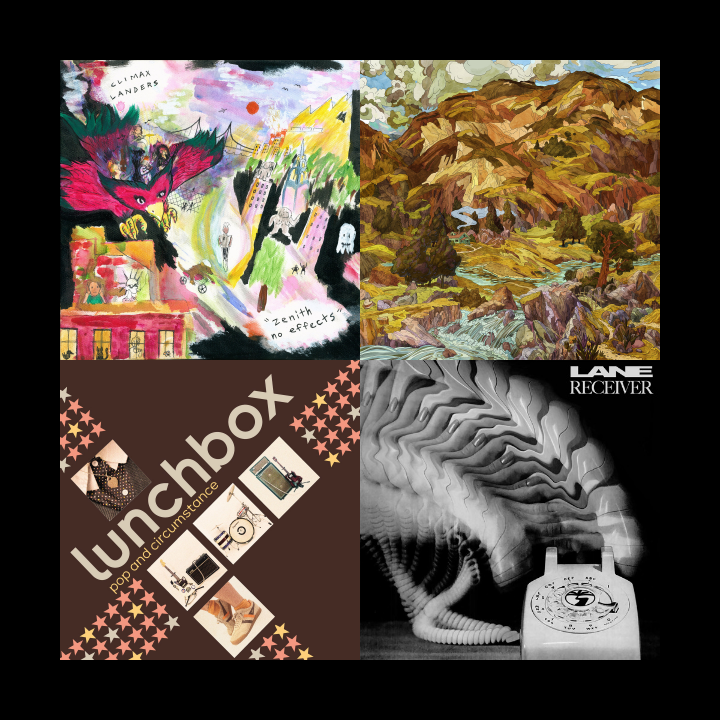

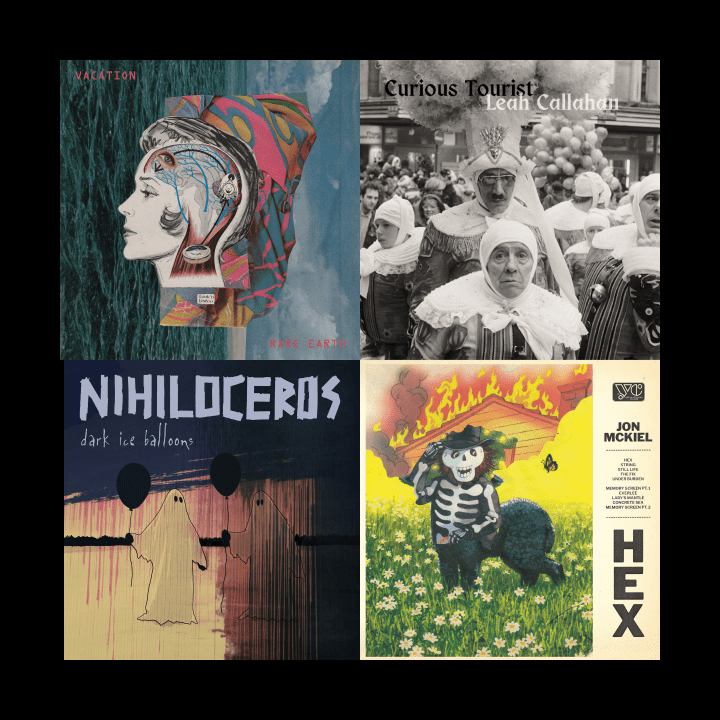





 Rosy Overdrive