Another wrecking ball of a week here at Rosy Overdrive comes to a close with the Thursday Pressing Concerns, featuring four records coming out tomorrow, September 20th. We’ve got new albums from Nina Ryser, Weak Signal, and Otis Shanty, plus a tenth anniversary reissue and remix album from the great Big Ups. While you’re here, I’ll run down everything else that’s graced the blog this week: Monday’s blog post featured Mister Data, Pallas Wept, Big Bend, and The Knickerbocker5, Tuesday’s post featured Ex Pilots, Freddy Trujillo, Hey I’m Outside, and Seawind of Battery, and on Wednesday we looked at How to Begin by Downhaul. Check those out too!
If you’re looking for more new music, you can visit the site directory to see what else we’ve written about lately. If you’d like to support Rosy Overdrive, you can share this (or another) post, or donate here.
Big Ups – Eighteen Hours of Static / Eighteen Hours of Static (Hxπ Decoded)
Release date: September 20th Record label: Dead Labour Genre: Post-hardcore, noise rock, punk rock, garage rock, experimental Formats: Vinyl (original album), cassette (Hxπ Decoded), digital Pull Track: Goes Black
“What happens when it all goes black?” That’s the question that Big Ups memorably asked ten years ago in the most popular song off of their debut album, Eighteen Hours of Static. To the degree that a mid-2010s post-hardcore/garage rock song can be a “hit”, that’s what “Goes Black” ought to be considered–that fiery chorus more or less functions as shorthand for a specific era of East Coast DIY indie rock/punk, an era of which Big Ups were indisputably a key part. Drummer Brendan Finn, vocalist Joe Galarraga, guitarist Amar Lal, and bassist Carlos Salguero Jr. were already a whirlwind of a band on the twenty-eight minute original version of Eighteen Hours of Static, a live-wire record that slams together meaty noise rock, sinewy, claustrophobic 90s post-hardcore/post-rock, and Black Flag-like self-combusting punk rock. The liner notes for the tenth anniversary reissue, written by Dayna Evans, do (knowingly) contain the phrase “man, you just had to be there”, but even those who came to Big Ups later (like me, who subsequently harbors a heightened appreciation for their final album, 2018’s Two Parts Together) don’t have to close our eyes and imagine that we’re in Shea Stadium to get rocked by Eighteen Hours of Static.
I consider Big Ups such a key part of the entire Exploding in Sound Records “thing” that I don’t think I realized that their first album wasn’t even put out by them–Eighteen Hours of Static came via Tough Love in the U.K. and Dead Labour in the U.S., the latter of which is reissuing it for its tenth anniversary and has also put together a supplemental remix album called Eighteen Hours of Static (Hxπ Decoded), featuring a bunch of artists who were a part of the same movement, including Maneka, This Is Lorelei, Rebecca Ryskalczyk (Bethlehem Steel), and Sad13 (Speedy Ortiz). The original album, as I’ve alluded to, still sounds monumentally fresh, the work of a quartet made up of exactly the right players at the right time. “Goes Black” is a towering presence, to be sure, but it’s hardly the only incredible song on the album–in another world, the blistering, warped punk of “Justice” is Big Ups’ signature song, and tracks like the writhing opening track “Body Parts” and four-minute centerpiece “Wool” capture the band’s kinetic energy and harness it for something different but no less powerful.
Big Ups went on “indefinite hiatus” in early 2019, and while they did contribute a Fugazi cover to a compilation in 2021, the sole live show they’re playing to commemorate the anniversary of Eighteen Hours of Static is their first one in a half-decade (I don’t know what the entire band has been up to in the meantime, but I can tell you that Lal has been busy, at least–he’s put out a few ambient albums and mastered several records I’ve written about on this website, too). While the band are looking back, Eighteen Hours of Static (Hxπ Decoded) is a neat way to make something new while doing so, inviting “old friends and collaborators” to remix these songs. Full disclosure–I’d already decided to write about the Eighteen Hours of Static reissue before I’d heard the remix album, so this would be here even if it was completely inessential. Of course I prefer the original album, but Hxπ Decoded is a pretty fun and enlightening listen–one thing I really appreciate about it is how pretty much everybody keeps the original’s aggression in the mix in some form or another, whether the original song is still fairly intact (like This Is Lorelei’s “Goes Black”) or deconstructed fully (like Rebecca Ryskalczyk’s “Justice”). Big Ups and their peers are free to mess around with Eighteen Hours of Static as much as they want–it’s not losing any power. (Bandcamp link/Bandcamp link)
Nina Ryser – Water Giants
Release date: September 20th Record label: Dear Life Genre: Indie pop, art pop, experimental rock, ambient pop Formats: Vinyl, digital Pull Track: Things I Claim
One of the first albums I ever wrote about in Pressing Concerns was Palberta’s Palberta5000, a wild experimental pop/rock record that was one of my favorites of 2021. Palberta hasn’t released anything since Palberta5000, but the band’s members have been busy–Lily Konigsberg has been adding to a fruitful solo career and co-leading My Idea with This Is Lorelei’s Nate Amos, while Ani Ivry-Block has shown up on records from Kolb and Climax Landers. The third member of Palberta, Nina Ryser, has recently joined the touring lineup of experimental duo @ and quietly released her first solo material since 2020, an EP called I Miss My Dog, late last year. I Miss My Dog was a quickly-written and recorded collection of songs about the death of Ryser’s dog, home-recorded like all her solo material at that point–Water Giants, her first album for Dear Life and fifth overall, is the one that breaks this streak. Co-produced by Lucas Knapp and featuring contributions from her @ bandmates (among others), Water Giants is a dizzying studio pop album that takes full advantage of the extra tools at its disposal. Ryser’s lo-fi pop attitude is still there, but it sits alongside material that takes it and blows it up into something larger and more expansive–as well as material that eschews “pop” entirely.
There are a lot of great pop songs on Water Giants, but none of them are in the album’s opening slot–that would be a two-minute, aptly-titled experimental piece called “Swirl”, introducing a just-as-important side of the record that’s also carried by the handclap-aided noise collage “Piggy Boys” and the ambient stillness of “Dust Girls”. In between these compositions, a pop album happens–right after “Swirl” is “Cuz You”, a steady piece of synth-colored pop rock that sounds like a more Stereolab-ified version of Palberta, and single “Things I Claim”, which is more-or-less a bedroom folk song displaying a different kind of accessibility. The mid-section of Water Giants is the heaviest part–“Why Do I Ask” and “Underestimate” spruce things up by marrying Ryser’s pop writing with layered indie rock that speeds (in the former) and lumbers (in the latter) in new ways. Climbing down the other side of the mountain, “Mercury Soda” and “Lessen Your Load” encounter a hazy fog that overwhelms Water Giants until a couple more golden pop songs emerge towards the record’s end. Eli Kleinsmith’s violin helps turn “You Are What You Eat” into an unlikely chamber pop winner, but “Beauty in Grime” might be my favorite moment on the album. Ryser’s muse is a literal heap of garbage, as she reflects on its contents (“Accumulated years filled with joy and tears / … / Former objects of desire growing higher and higher”) in nothing less than awe. Ryser needs little more than simple piano to deliver “Beauty in Grime”, but its plain-spoken beauty is enhanced by the glistening piles around it. (Bandcamp link)
Weak Signal – Fine
Release date: September 20th Record label: 12XU Genre: Psychedelic rock, garage rock, 90s indie rock Formats: Vinyl, digital Pull Track: Disappearing
I’m not one to often quote other music writers in my own writing, but Andy Cush (of The Bird Calls and the website “Pitchfork”) referred to Weak Signal as “Yo La Tengo, if Yo La Tengo gave you the vague sense that they might mug you with a butterfly knife after the show” last year, and there’s no sense trying to come up with a more succinct descriptor as that. The New York trio (Tran Huynh, Sasha Vine, and Mike Bones) have rode a distinct mix of chugging psychedelic rock, precise, fuzzed-out garage-y indie rock, and post-punk rhythmic excellence through four albums now–their sophomore album, Bianca, caught my attention in 2021, and 2022’s War&War subtly ironed out some wrinkles in a just-as-good way. War&War also began their affiliation with 12XU Records (Lupo Citta, John Sharkey III, Florry), who issued it on vinyl last year and are also releasing Fine, the fourth Weak Signal LP. The ten song’s on the trio’s latest album continue Weak Signal’s ability to feel streamlined but unhurried, forming an effortless-sounding mix of seediness and transcendence that is musical comfort food to a certain subset of indie rock sickos. Even the moments on Fine that don’t adhere to Weak Signal’s signature propulsive, electric rock and roll feel perfunctory, like well-curated detours before hopping back on the highway.
Fine starts with over a minute of guitar feedback and drumrolls before the opening track, “Out on a Wire”, cranks it into gear–I view it as a sort of throat-clearing and stretching ritual before Weak Signal launch into their familiar, sweaty workout. The first half of Fine doesn’t have a whole lot of breathing room, after all–sure, the somewhat downcast, mid-tempo college rock of “Wannabe” isn’t as fast as, say, the revved-up “Disappearing”, but there isn’t a moment on Side A that doesn’t feel driven and purposeful (Bones does dream of lounging about aimlessly on “Rich Junkie”, but it’s telling that this lifestyle feels out of reach). “Everything is cool, everything is chill,” Bones sings in the chorus of “Chill”, almost reassuring us before Weak Signal launch into the record’s first big left turn in the six-minute soft balladry of “Baby”. Bones has played in Cass McCombs’ band before, and the folk rocker appears on “Baby” to play acoustic guitar–it’s some of the most explicit connecting threads between the two of them yet, and though McCombs doesn’t appear on the two-minute acoustic “Terá Tera”, the similarities continue through that one, too. Fine gets back on the track with the trucking “ILF” and the rumbling “Barking at the Moon”, but “A Little Hum”, finally, finds the midpoint because acoustic strumming and fuzzed out, rhythmic indie rock to close the record. It’s a peaceful conclusion; surely my wallet is safe with these folks, right? (Bandcamp link)
Otis Shanty – Up on the Hill
Release date: September 20th Record label: Relief Map Genre: Jangle pop, dream pop, folk rock Formats: Cassette, digital Pull Track: Why Do I Care?
I first heard upstate New York-originating, Massachusetts-based quartet Otis Shanty late last year, when I wrote about a four-song EP of theirs called Early Birds. I was quite impressed with the sound that the band (vocalist/multi-instrumentalist Sadye Bobbette, guitarist Ryan DiLello, bassist Julian Snyder, and drummer Jono Quinn) proffered on Early Birds–laid-back and sprawling, studiously hewing towards the hazy and dreamier sides of jangle pop and folk rock aside from a couple of brief Yo La Tengo-esque noisy flare-ups and reliably strong vocals from Bobbette that prevent the record from fading into the background. The EP got the attention of Relief Map Records (the premiere label for New England bands that could be described as “jangly” and/or “dreamy”), who are putting out Otis Shanty’s sophomore album, Up on the Hill (recorded by Chaimes Parker at Bradford Krieger’s Big Nice Studio in Rhode Island). The nine-song record may only be eight minutes longer than Early Birds, but it feels like more of a “full-length”–there are moments where the band recreate the singular wandering feeling of their previous record, yes, but there are just as many moments where Otis Shanty look beyond and expand upon this sound.
If the shimmering, Real Estate-esque take on guitar pop music of Early Birds spoke to you, you’ll love “Nobody’s Party”, which starts Up on the Hill by picking up seemingly right where Otis Shanty left off–DiLello’s guitar gently but deftly rolls across the song, while Synder’s bass plods along and Bobbette delivers a conversationally dynamic performance as a singer. From there, though, Up on the Hill displays its range–“Tree Queen” is sweeping and surf-tinged, an upbeat and brief track that lets us all know that Otis Shanty can do shoegaze-y indie rock, too, and still deliver solid hooks. “Why Do I Care?” might be less dramatic of a departure, but it still sounds like new territory to my ears–the rhythms of the song, particularly in the bass-and-guitar interplay, are tighter than I’d grown to expect from Otis Shanty, coming together to form a gorgeously blossoming chorus. “Seasonal Apprehension” is another left turn from the band in its embrace of relatively straightforward 90s indie rock/slacker pop in its construction–and that’s even before the vocals kick in and it’s DeLillo who starts singing with a classic half-spoken lilt (you can hear Bobbette in the background, though). DeLillo even rips a giddy guitar solo as the song comes to a close (although the band follow it up with a one-minute ambient piece, perhaps as penance). Otis Shanty are still making comfortable-feeling music with Up on the Hill, but they don’t use that as an excuse to be complacent. (Bandcamp link)
Release date: September 20th Record label: Self Aware/Landland Colportage Genre: Alt-country, emo-indie rock, power pop, roots rock, folk rock Formats: Vinyl, cassette, digital
My favorite moment on How to Begin, the third album from Richmond rock band Downhaul, comes about a minute into the song “YCBTT”. The entire song is impressive, of course–Andrew Seymour’s skipping drumbeat and Robbie Ludvigsen’s classic rock opening riff are perfect out of the gate, singer Gordon Phillips’ distinctive long-steady-gut-punch is in vintage form, and when he trades off lead vocals with Seymour for a few lines (which they do elsewhere on the record, too), it’s an inspired, unorthodox decision. The moment I’m thinking of happens after that, though, in what I guess is the pre-chorus–Phillips grinds the song to a halt with a whammy of a realization (“Well I guess I just thought / About you more than you thought about me”) and Seymour answers by beginning a bright, almost cartoon-like percussive roll. Phillips rattles off hyper-specific, esoteric lines that are nonetheless quite evocative (“But the branch cracked like rock candy / And the devil is left-handed / Came down in a panic to / To the place we both were planted”), sidestepping the music without breaking eye contact. I called their last album, 2021’s PROOF, “cinematic”, which in my mind meant evoking serious, gritty, greyscale prestige-action-thrillers–on this emblematic moment of How to Begin, Downhaul are instead producing a slick movie-musical.
Three years after their last album, the quartet return with a new LP mastering an entirely different skill set; the funny thing is, though, Downhaul didn’t exactly disappear in between PROOF and How to Begin. Last year, they put out an EP called Squall as well as two-non album singles–in terms of runtime, that’s nearly as much music as there is on How to Begin (oh, and Phillips put out an entire solo album the year before that, too). In hindsight, the trail from the massive-sounding, post-rock-indebted emo-alt-rock of PROOF to the laconic, polished-up, alt-country/power pop-infused How to Begin comes into clearer focus with these interstitial releases. It’s superficially counterintuitive in the case of Squall–the four-song EP is actually “one movement”, recalling the excesses of prog and “art rock”, but there’s actually a bunch of smart pop moments built into it, and it’s really a lot more streamlined than it seems on the surface. “The Riverboat” and “Welcome”, while still being a bit hesitant to fully embrace the rootsier sound of early Downhaul that finally resurfaces on How to Begin, also serve as a dry run for an album in which the quartet consciously decided to go into the studio with the attitude of honing the songs into sharp points rather than “adding onto” them (one where Phillips specifically brings up “the campfire test” as an inspiration–or aspiration–for the record).
The band went to Go West Recording and recorded How to Begin with Mitch Clem, and they came away with a twenty-five minute, ten-song album that does indeed make just about every effort possible to present Downhaul as a band with a keen sense of guitar pop music. Not that this was some huge stretch, mind you–Downhaul have always been underrated hook merchants, and Phillips’ work both with the band on his own is full of proof (Seasonal, his solo album, is pretty much just him and an acoustic guitar, meaning that it passes the campfire test by default). Downhaul just have never been a conventional pop band–and How to Begin isn’t a conventional pop album, either. Songs end almost at the exact moment when they feel they’ve made their point where other bands would stretch another verse or chorus out of them, Phillips’ lyrics are just as thorny and gripping as ever (no watering-down to be found here, no), and Downhaul as a whole still feel like a band that exists in their own little world. That is to say, it’s still a Downhaul album, even as the band have shifted around their angles of attack in executing it.
Opening track “Blue Flame” also has a moment about a minute into the song that blows me away–it’s when the band slips into power chords and steady percussion to launch Phillips’ most memorable line of the song (“California funeral – it oughta be raining, shouldn’t it?”) streaming through the air. The trick of “Blue Flame” is that it eats its cake and has it too–it leans into automatically-pleasing moments like that, but it’s so much more than them, with Phillips’ elemental writing doing the less-obvious but arguably even more important moment of shading the song and situating us for Downhaul’s latest show. It’s a performance with acrobatics–single “Sinker” balances the immediate rootsy instrumental with lyrics that begins with “That shit takes time”, and the powerful mid-tempo “Solstice” takes the pop vehicle into choppy waters regarding uncertainty (“If I never know / If I never know can I live with that?”) and even futility (“Half of the leaves won’t grow back / In the coming spring, and you know that / But you plant in the fall like we can win ‘em all”).
Downhaul populate How to Begin with songs that do the right thing at the right time. “Off and On” is the musical-theater version of PROOF, condensing that album’s serious alt-rock into a quick, digestible two minutes, where “Tired of Trying” is a reminder that so much great art out there is frazzled and dramatic about it (there’s a moment in that one where Phillips rhymes “enzymes” with “slant rhymes”, which would be the most memorable line on any record that wasn’t How to Begin by Downhaul) and “Sleep in the Sunroom” is pure, unfiltered desperation in power pop form. It’s the world of Downhaul, which jars us all “out of it” just when said world starts to seem all-consuming. I’ve been noticing Phillips’ allusions to gardening and plant care in his writing for some time now, but How to Begin is where this really (sigh) blossoms–these moments sometimes read like counterbalances to the chaotic interpersonal nature of some of Phillips’ lyrics, other times like unmistakable metaphors.
Either way, when Phillips sings about trees and root rot and branches breaking in the wind, it feels like Downhaul’s strongest connections to the outside world. It’s integral to “Rootbound”, the one song on How to Begin that truly has the stamp of finality to it (“I know that it’s over,” Phillips declares, at the very least sounding stronger on this record than when the song initially appeared as a stark acoustic song on Seasonal). It also sets the stage for “Branch”, the final song on the record, which begins with a tree limb falling and splitting “like chopsticks on the lawn”. “It’s windy as hell in Richmond,” Phillips sings, the record’s lone reminder that all of this is taking place in a real mid-sized American city, and then just second later: “There’s comfort in routine / And easing off your dreams will make space for new ones”. The juxtaposition of known (“comfort in routine”) and unknown (finding “new” dreams) could seem contradictory, I suppose, but I think I get it. Jettison the branches that are giving you too much trouble, drop the leaves when it’s time to go dormant. Wait for the right conditions, and then bolt. Grow as much as you can, bloom if you can this year but hold out if it’s not in the cards. Make a bunch of records from different vines that all kind of sound the same. Make something that seems beautifully effortless, colorful and natural. Let them take the fruit thinking that it really was as simple as the final product looks–you’ll always know the rest. (Bandcamp link)
Welcome back to Pressing Concerns! This Tuesday, we’re looking at new albums from Ex Pilots, Freddy Trujillo, Hey I’m Outside, and Seawind of Battery. Alt-country! Instrumental cosmic Americana! Shoegaze! GBV-core! And more! And there’s also yesterday’s blog post, featuring Mister Data, Pallas Wept, Big Bend, and The Knickerbocker5, to check out if you missed it.
If you’re looking for more new music, you can visit the site directory to see what else we’ve written about lately. If you’d like to support Rosy Overdrive, you can share this (or another) post, or donate here.
Ex Pilots – Motel Cable
Release date: August 23rd Record label: Smoking Room Genre: Noise pop, alt-rock, shoegaze, power pop Formats: Vinyl, CD, digital Pull Track: Silver Sword
For those of you who aren’t staying up-to-date on the Pittsburgh shoegaze/noise pop/Guided by Voices-core scene, here’s a rundown: I’ve written a fair amount about Gaadge, which began as the solo project of Mitch Delong but has since evolved to feature songwriting contributions from the rest of the quartet, Nick Boston, Ethan Oliva, and Andy Yadeski. Yadeski and Oliva also play in the power trio Barlow with bassist Jake “JD” Nowoczynski, and all four members of Gaadge play in Ex Pilots alongside Mary Komondy and Ralph Dilullo (the latter of which has also contributed to Barlow), making them a sextet. Ex Pilots more or less seems to be to Oliva what Gaadge is for Delong–he’s the lead vocalist and (at least initially) the main songwriter, but they’ve pretty clearly been a full-on band for a while now. As Pittsburgh’s indie rock scene has gotten more attention thanks to bands like Feeble Little Horse, Bay Area imprint Smoking Room picked up Ex Pilots last year and reissued their 2019 self-titled LP, a strong collection of shoegaze-y noisy guitar pop–in the same world as Gaadge, yes, but Oliva has always been less interested in the experimental “zoomer My Bloody Valentine” layered texture side of Delong’s projects and more inclined to deliver huge Guided by Voices-indebted rock anthems (a band they’ve opened for, by the way) with distortion on tap.
Depending on whether one counts the lengthy 2015 collection Findlay, Motel Cable is either the second or third Ex Pilots full-length, and the first to initially come out on a label (once again, Smoking Room). On what will likely be an introduction to Ex Pilots for a lot of people, the sextet do what they do best–kick out fifteen songs and thirty-seven minutes of hook-laden, shoegaze-informed indie rock shot through with a sense of Robert Pollard-esque propulsive melancholy that’s equally present on the loud, punk-y rave-ups and the record’s more pensive moments. Ex Pilots have a few different modes–there’s the fidgety, punchy version of the band, in which it seems like the group can’t help from throwing moments of noise and aggression in the middle of perfect guitar pop (this version of the band pops up in dynamic opening track “Downdraft” and “Silver Sword”, a song that makes me want to go crazy and hurt myself and others).
Ex Pilots aren’t quite “mellow” yet, but there’s a surprising amount of acoustic guitar on Motel Cable between “Glory Thread”, “Not Yet”, and “Starry”, among others–while sometimes it’s just an atmospheric springboard to the louder moments on the album, the latter of the three is content to aspire to be nothing more than a contemplative, quietly beautiful early GBV-style ballad. Hello Whirled’s Ben Spizuco pops up on guitar on “Mystery Ship”, a hazy song that falls somewhere in between the group’s two sides–like early highlight “Hannah” and its restrained, mid-tempo steady-hand guitar pop, it helps Motel Cable feel more like a gradient than something oscillating between “all-hands-on deck rock music” and “dreamy basement vibes”. Whether or not Motel Cable is the strongest front-to-back record that its members have put together between their various projects remains to be seen, but it bodes well for both it and the future of all of their bands that it’s a strong contender. (Bandcamp link)
Freddy Trujillo – I Never Threw a Shadow at It
Release date: May 24th Record label: Self-released Genre: Alt-country, roots rock Formats: Digital Pull Track: Corpus Christi
For over twenty years, Freddy Trujillo played bass for long-running Portland, Oregon alt-country-rockers Richmond Fontaine, and since they broke up in 2016, he’s played the same role (along with some of his former bandmates) in soul-influenced country group The Delines. Trujillo, originally from Simi Valley, California, has dabbled in a solo career over the years–he put out an album under his own name in 2002, and again in 2014–but he’s really focused on it in recent years, with Sketch of a Man showing up in 2022 and I Never Threw a Shadow at It, his fourth solo album, arriving merely two years later. I Never Threw a Shadow at It pulls from across Trujillo’s music career and life in general–it’s a deft collection of Chicano rock with alt-country, roots rock, and college rock influences recalling greats like Alejandro Escovedo and The Silos. It’s clearly a “solo” album–almost all of Trujillo’s writing is about his own upbringing and experiences as a Chicano in southern California–but one that welcomes collaboration, as all members of The Delines contribute to it, and the band’s Willy Vlautin even penned the opening track, “Corpus Christi” (a Delines outtake that Trujillo didn’t want to see fade into obscurity).
The rootsy country-rock of “Corpus Christi” is a classic of the genre, an odd-seeming choice to open a record as personal as I Never Threw a Shadow at It, but the circumstances behind its creation serve to connect the Trujillo of the past (who appears in almost every song on the record) with the rock music veteran in the present. The western guitar riff that floats through “I Didn’t Cross the Border, the Border Crossed Me” shades a song about Trujillo’s ancestry that is remarkably restrained and patient in its explanation of the titular line, and the mid-tempo ballad “World There Haunting Me” laments possibility hovering just out of reach. As much of Trujillo is contained within all of these songs, the record’s centerpiece is clearly the title track, a nearly-spoken-word song recounting the blatant racial profiling and harassment he experienced at the hands of the LAPD in a single incident ( “April 17th, 1991: that was the night my car was almost stolen,” he situates us at the beginning of the song). Trujillo follows it with the positive, vibrant sketch of “Mexican Hearts”, although I Never Threw a Shadow at It ends somewhere in between the two with the contemplative “Many Years of Minding”. Trujillo closes the album by ruminating on a lifetime of observation (and even further back, as he acknowledges the “generational” scars of institutional racism on his lineage). The core message of the song–things are never as black and white as we’d like to make them out to be–is simple, but living it as Trujillo does on I Never Threw a Shadow at It is another story entirely.
Hey I’m Outside – Hey I’m Outside
Release date: August 23rd Record label: Archival Workshop Genre: Folk rock, alt-country Formats: Cassette, digital Pull Track: Crash
Medford, Massachusetts alt-country duo Hey I’m Outside made their triumphant debut last year with a pair of EPs–the second of them, May’s Smile, caught my attention with its mix of lo-fi bedroom rock and 90s-style rootsy pop rock. 2023 was also when Hey I’m Outside released the first song that would end up on their self-titled debut album (“Racecar”), and at some point the band became a trio with founding members Patrick McPherson (vocals/guitar) and Hannah Fletcher (bass) welcoming drummer Noah Wisch to the fold. The band’s early EPs were solid and flashed potential, but Hey I’m Outside is pretty easily the group’s best work to date–although it’s still home-recorded, the thirty-minute record is the band’s most polished work yet, and the meandering country rock sound hinted at in their earlier releases blossoms and takes full control on the LP. Both McPherson as a vocalist and the band as players sound like relaxed storytellers throughout Hey I’m Outside, an earnest but not overly-sentimental mix of folk, country, and rock in the vein of undersung underground acts like State Champion and Parister (as well as the nowadays-properly-sung MJ Lenderman).
Hey I’m Outside’s opening track “Frontyard” is a strong first statement that also taps the brakes a little bit, taking a moment to celebrate the beautiful things in life that words can’t adequately describe (and so instead the band lean on a more pure form of expression–Crazy Horse-esque guitar knots). The upbeat country-folk of “Crash” may start with a literal accident, but it shrugs off the mess to run away gleefully to the tune of what I believe is guest musician Timothy McPherson’s dobro. The fleshed-out electric country rock of “Racecar”, “Instincts”, and “Lived in Maze” gives Hey I’m Outside a robust midsection–this is all musical comfort food, and while Hey I’m Outside could’ve easily ridden this thread out for the rest of the album, there are some intriguing moments towards the end of the album that push the record over the line. There’s “Insects”, an acoustic-led song about hibernating, hunkering down, and “waiting for something better, I guess”, their ambivalent ode to the band’s homestate, “Massachusetts” (“Now the cool kids moved away / Down to Philadelphia, PA / And some went down to Richmond town / Where does that leave you now?”), and “Goner”, the band’s jangly tribute to Jay Reatard (“Did it hurt? / Sure sounds like it in the verse, in the hook / Of most of your songs / Yeah, damn near ‘em all”). There’s no shortage of this kind of music out there at the moment, but by the end of Hey I’m Outside, its architects have made their case as clear standouts. (Bandcamp link)
Seawind of Battery – East Coast Cosmic Dreamscaper
Release date: August 2nd Record label: WarHen Genre: Folk, psychedelia, ambient, post-rock, cosmic country Formats: Vinyl, CD, cassette, digital Pull Track: New Moon
New York musician Mike Horn made his debut as Seawind of Battery in 2022 with Clockwatching, an album full of instrumental, guitar-led ambient “cosmic country” soundscapes that got a bit of attention among those who like their lap steel to be on the psychedelic and post-rock side. Horn has kept a steady stream of Seawind of Battery live releases coming on the project’s Bandcamp page, but East Coast Cosmic Dreamscaper is the second formal full-length from the act. Since Clockwatching, Seawind of Battery have joined WarHen Records (Dogwood Tales, Tucker Riggleman & The Cheap Dates, Mike Frazier) and even grown to a duo, with lap steel player Jarrod Annis jumping from live member to full-timer. Those who enjoyed the singular, peaceful journey that Horn (who played everything on the first Seawind of Battery record) took us on with Clockwatching will find plenty of similar terrain covered on the six songs (seven on the CD) of East Coast Cosmic Dreamscaper, but there are also a handful of moments where Horn and Annis push against their languid roots politely but noticeably. East Coast Cosmic Dreamscaper is a more varied-sounding record than Seawind of Battery’s debut, but the LP is clearly stronger for it.
East Coast Cosmic Dreamscaper opens with “Blood Moon”, the only song on the album entirely recorded by Horn, and it enters the cosmos with gentle guitar melodies and lap steel shading in a comforting and familiar manner. The eight-minute “New Moon” which follows it, however, takes a different (and, indeed, new) turn–the guitar part Horn chooses to begin the song with is smooth and quite nearly peppy, and when the percussion kicks in sometime after the two-minute mark, it keeps up the rhythmic hypnosis. By the song’s midpoint, it’s Seawind of Battery’s version of dance pop, Horn shimmering and sketching over top of the steady hand of the drum machine. The duo pull a similar trick in the second half of the record with “Dreamscaper”, a song that balances earthbound, toe-tapping percussion with guitars played with an eye to the cosmos. These moments are perhaps East Coast Cosmic Dreamscaper’s most striking ones, but they’re richer for coming in the midst of songs like “Maze of Roses” (a brief foray into the world of psychedelic dream-folk that’s perhaps Seawind of Battery at their most “traditional”) and “Stay” (in which Horn and Annis unmoor themselves from the world entirely to float in a twinkling, ambient world of polite guitars). Seawind of Battery are growing, guided forward cautiously but openly. (Bandcamp link)
Last week was such a great week on Rosy Overdrive–and I’ll think you’ll be pleased to hear that what we’ve got in store this week is just as great. We’re starting off with a Monday Pressing Concerns featuring new albums from Pallas Wept, Big Bend, and The Knickerbocker5, as well as a new EP from Mister Data. I suspect that most of you have not heard of the majority of these bands before (if you have, congratulations–they’ve done it again!), but I believe you’ll find something in these records that you’ll love.
If you’re looking for more new music, you can visit the site directory to see what else we’ve written about lately. If you’d like to support Rosy Overdrive, you can share this (or another) post, or donate here.
Mister Data – Missing the Metaphor
Release date: September 13th Record label: Little Lifeforms Genre: Folk rock, power pop, indie pop Formats: CD, digital Pull Track: Transporter Room 3
I cover a lot of music in Pressing Concerns (I know, it’s true), so you’d be forgiven for not remembering Mister Data’s Pleasure in a Fast Void, which I wrote about in May of last year. A brief refresher–it’s an intriguing, exploratory yet laid-back guitar pop/power pop record from a Houston quintet that’s co-led by vocalists Austin Sepulvado (guitar) and Ellen Story (piano). Now that you remember, feel free to throw all that out the window–Mister Data’s follow-up, a five-song EP called Missing the Metaphor, is a pretty big departure for the band. Not that they suddenly started making ska or post-hardcore or anything like that–they’re still making relatively catchy pop rock, it just feels different. Much of that can be chalked up to some major lineup changes–Story and drummer Gus Alvarado have departed the band, Jack Gordon moved from bass to drums, and Marshall Graves from guitar to bass. Missing the Metaphor is the sound of a band soldiering forward nonetheless, finding a new sound that emphasizes the songwriting and lyricism–and in the process, creating their strongest work yet. Intentionally or otherwise, Missing the Metaphor’s writing touches on stumbling forward uncertainly but bravely, dealing with the agony and ecstasy in trying to live for something–anything–bigger than one’s self.
Missing the Metaphor is remarkable in its unflinching, cohesive cosmic ugliness–I liked Pleasure in a Fast Void, but there was nothing on that album suggesting that Mister Data had something like opening track “No. I Don’t Think So” in them. “Every day feels like the start of something new / Every day that I’m married to you,” Sepulvado sings as the sun rises at the beginning of the track, and the track (and the relationship therein) descends into a skin-crawlingly public disintegration, one that feels like it spills over into the EP’s second track, “Headcanon in G Minor” (these things never wrap themselves up as neatly and timely as we’d like, no). If the first two songs on Missing the Metaphor reflect the pratfalls of trusting another person with a hefty portion of one’s happiness and meaning, “Transporter Room 3”, the heart of the EP, is the antidote. Mister Data keep it simple here, as Sepulvado’s guitar and vocals sit largely unadorned while unspooling a genuinely affecting modern folk song about organized labor, ancestral pride, and belief in a shared humanity that extends beyond one’s own lifespan. Oh, and it’s about Star Trek, too–the whole thing is based on a minor plot point from an episode of Deep Space Nine (look, the band is called Mister Data, there’s no getting around it). “Transporter Room 3” bleeds into the title track, a rude awakening after the previous song’s interstellar utopianism. Probably the catchiest song on the EP, “Missing the Metaphor” is a just-as-beautiful portrait of the indignity of it all–scraping by in a dreadful job in order to pay the bills and “keep [one’s] dog alive”. It’s probably the best song ever to include the phrase “ecclesiastical evermore”.
We all want “Missing the Metaphor” to be an uplifting “quit your shitty job” anthem, but it doesn’t exactly lend itself just to that reading. Those looking for storybook closure aren’t going to really get it with the EP’s final track, “The Galaxy Song”, either. For one, it’s a Monty Python cover, which should clue you in on what’s coming–but nonetheless, the final verse (“So remember, when you’re feeling very small and insecure / How amazingly unlikely is your birth / And pray that there’s intelligent life somewhere up in space / ‘Cause it’s bugger all down here on Earth”) is still one hell of a lurch–taking us light-years away from the tiny planet where Mister Data’s characters are licking their wounds after a break-up, looking to the stars for hope, gritting their teeth and getting through the worst days, and actively fighting to make the world a better place. Time marches forward, but it’s also a social construct–that means you can make whatever trajectory you want out of Missing the Metaphor. At least, that’s probably what Mister Data believes–true Trekkies, these Texans. (Bandcamp link)
Pallas Wept – Nothing But Water
Release date: September 10th Record label: Self-released Genre: Psychedelic pop, 90s indie rock, art rock, math rock, prog-pop Formats: Digital Pull Track: Seasick
Pallas Wept is a new indie rock band out of Houston, comprised of vocalist/guitarist Ethan Adkison, guitarist Gavin Kenyon, bassist Zach Sutton-Fountain, and percussionist Ruairi O’Brien (who lives an hour away in Huntsville–a short jaunt by Texas standards). They’ve been playing live shows around the Lone Star State for over a year now without any music out, but they’re starting with a grand first statement in Nothing But Water, their debut album. For those of you who love when bands make proper, thirty-plus minute albums with only six songs on them, you’ll find exactly what you’re looking for on Nothing But Water, a record that isn’t shy about letting its songs creep past the five minute mark. Probably the simplest way to boil down Nothing But Water is the classic-rock-band-setup guitar heroic version of indie rock practiced by Built to Spill crossed with the progressive pop jamming attitude of Animal Collective (I didn’t just come up with that; both bands are prominently mentioned in the email O’Brien sent to me about this album). What sticks with me longer than the RIYL list, though, is just how even-keeled Nothing But Water sounds–Ruairi O’Brien’s drumming, Kenyon’s mesmerizing guitar leads and harmonics, Sutton-Fountain’s hidden-in-plain sight bass melodies, and Adkison’s earnest indie pop vocals all have their moments, working hard to tease out the best in these songs without hogging the spotlight for too long.
Being one of the two songs on the album under five minutes long, “Fuzzy” is almost Nothing But Water’s “single” by default–it’s certainly brimming with enough melodic hooks to function as that, although the majority of the track’s stately, restrained emo-y indie rock sound doesn’t quite tell the listener everything that Pallas Wept have in store for them. Of course, that was never going to be really all that doable in just one song–even when “Fuzzy” roars to life for a half-minute towards the end of the track, it’s nothing like the stomping first movement of “Seasick” that follows it, nor is it like the quiet, post-rock wave-lapping that leads the song to its Modest Mouse-esque big finish. The second half of Nothing But Water is Pallas Wept growing stronger and bolder in real-time, topping themselves with one more ambitious song after another. The guitar work in “Mountain” is key to the song’s journey, repetitive and sturdy yet excitedly reflecting the upward climb. “How Cruel” starts its life as a downcast slacker rocker and it advances without too many bells and whistles, Pallas Wept believing in the smoldering heart of the track completely. If you liked that, you’ll be thrilled to see the band bust out the acoustic guitar and “atmospheric” production choices to get seven-minute closing track “Shimmer” started. Three minutes of hazy, dreamy aimlessness, two more of burgeoning, building post-rock–and then one last big indie rock anthem to cap it all off. Everything’s just right. (Bandcamp link)
Big Bend – Last Circle in a Slowdown
Release date: September 13th Record label: Shimmy-Disc Genre: Post-rock, art rock, experimental, jazz rock, chamber pop Formats: Vinyl, digital Pull Track: Wheeling
Big Bend is the project of Nathan Phillips, a Mansfield, Ohio-based musician whose work lives in the experimental realms of folk, rock, and electronic music. His breakthrough album, 2019’s Radish, was culled from “improvised recording sessions” at New York’s Figure 8 studio, but it nonetheless added a clear pop side to Big Bend that was missing on the group’s free-form debut, Hunched (this is largely due to Phillips stepping up as a vocalist on Radish after leaving the first Big Bend album instrumental). The third Big Bend album (and first for Shimmy-Disc), Last Circle in a Slowdown, emerged in much the same way Radish did–this time, via “ensemble jam sessions” from an Australian residency featuring producer Shahzad Ismaily, hammered dulcimer player Jen Powers (Powers / Rolin Duo), violinist Anna Roberts-Gevalt (Shane Parish), and drummer Sarah Pedinotti (Lip Talk), among others. Last Circle in a Slowdown also picks up the thread Phillips began exploring on Hunched, sounding more confident in its marriage of delicate pop music with the power of an ensemble of brilliant musicians. It’s almost like Phillips did Talk Talk in reverse, pulling jazz and classical influences together and coming away with a pop-fluent version of post-rock and folk music that uses empty space just as deftly as it uses percussion, piano, and guitars.
The last album I remember enjoying this much that also evoked late-era Talk Talk was Modern Nature’s No Fixed Point in Space, but Last Circle in a Slowdown builds an identity for itself early on by being more percussive and propulsive. The piano and drums of opening track “Wheeling” feel just a little restless; when Phillips finds a desperate twinge in his vocals after trying to keep things to a croon for most of the track, it fits the song’s atmosphere. While there’s a slow and still beauty throughout Last Circle in a Slowdown, Big Bend don’t rest at the cool pond of their sound entirely–“The Exit” and the title track both pleasingly puncture their ornate cores with Phillips’ emotive voice, and “Fast Moon” makes a pact with noise early on in its runtime. Last Circle in a Slowdown continues its rustling with second half highlights “Cistern” and “At the Door”, while penultimate song “Rolling Chair” might be the most complete-sounding composition on the entire album. Phillips leads his collaborators in a more or less straightforward chamber pop song for most of “Rolling Chair”; it doesn’t sound all that different from the more exploratory moments of Last Circle in a Slowdown, and when the song gets wobbly and shaky as it comes to a close, it’s right in line with the record too. (Bandcamp link)
The Knickerbocker5 – Disco Princess (Where We Are Now)
Release date: September 10th Record label: Self-released Genre: Funk rock, dance-punk, post-punk, jazz-rock, art rock Formats: Digital Pull Track: Sugargaze
The Knickerbocker5 are a relatively new group, formed by three Japanese musicians (two from Osaka, one from Tokyo) living in Brooklyn during the pandemic and named for the location of their first practice sessions together in person (on a rooftop on Knickerbocker Avenue). After debuting with a couple of singles last year, the trio (bassist Yoko, guitarist Arii, and drummer Ayako) have put together a seven-song, twenty-seven-minute cassette called Disco Princess (Where We Are Now) as their first full-length. The first Knickberbocker5 album puts the band members’ skills (between them, they’ve played in the bands Hard Nips, First President of Japan, Juice, and Invisible College) to good use, as the group make a version of rock music with shades of funk, jazz, and post-punk in a way that calls to mind both The Knickerbocker5’s home country and their current city of residence. Although there are plenty of extra touches on Disco Princess (Where We Are Now) (the core members are credited with everything from flute to guiro to vibraslap, not to mention guest musicians Pearie Sol on keyboard and Katya on saxophone), it has a pleasing live-jam feel to it–I can imagine all of this (well, most of it) happening on a rooftop somewhere in Brooklyn.
“Ligero (a.k.a. Karokaya or Step Lightly)” is a pleasingly straightforward start to Disco Princess (Where We Are Now), a relatively minimal dance-funk-rock tune carried by the rhythm section and beginner Spanish vocals (“Quiero hablar español pero no sé como hacerlo” is the first line) and augmented by Ayako tinkering on the cajon and guiro and Katya’s saxophone. Although the title track does indeed include a few stabs of disco guitar, on the whole it’s actually more deconstructed and post-punk-ish than the song before it–but even that doesn’t prepare us for the eight-minute psych-funk-prog-disco-kraut odyssey of “Sugargaze” that ends the first half of the tape. The core of “Sugargaze” is a pretty catchy dance-punk idea, but The Knickerbocker5 throw everything they’ve got at it, keeping it exciting for its entire runtime. If that doesn’t sound like a blast to you, I don’t know what to tell you, but maybe you’ll enjoy the closest thing the album has to a “hit” in the groovy, synth-y post-punk of “Spangle”, or the dub-like saxophone-heavy “Showa”. If “Sugargaze” is too much for you, you’re definitely going to want to skip closing track “Silver”, too–for those of us who are completely down with New York psychedelic rock that contains a troubling amount of flute playing, however, it’s a perfectly acceptable way to close out Princess (Where We Are Now). (Bandcamp link)
The conclusion of an absolutely wonderful week on Rosy Overdrive arrives with the Thursday Pressing Concerns. We’re looking at four records coming out tomorrow, September 13th: new albums from Kal Marks, Old City, and Yon Loader, plus a reissue of Pulsars‘ sole album. To recap this week’s posts: on Monday, we looked at records from Public Opinion, Webb Chapel, Young Scum, and Trevor Sloan, Tuesday’s post featured Guidon Bear, Mythical Motors, WUT, and Alejandro, and Wednesday brought an in-depth look at Bad Moves’ Wearing Out the Refrain. Check those out too!
If you’re looking for more new music, you can visit the site directory to see what else we’ve written about lately. If you’d like to support Rosy Overdrive, you can share this (or another) post, or donate here.
Kal Marks – Wasteland Baby
Release date: September 13th Record label: Exploding in Sound Genre: Noise rock, post-punk, art punk Formats: Vinyl, CD, digital Pull Track: Wasteland Baby
I’ve had nothing but respect for Boston noise rock act Kal Marks for a while now (the last song from 2018’s Universal Care, the one with the long title, is one of my favorites), but the album that truly won me over was their fifth full-length, 2022’s My Name Is Hell. Perhaps not coincidentally, that was the album where vocalist/guitarist Carl Shane debuted a new line-up, featuring guitarist/vocalist Christina Puerto (of Bethlehem Steel and Mulva) and bassist John Russell, and the group took the band’s sound away from blistering post-hardcore and more towards straightforward, meaty noise rock (not a huge transition, but noticeable enough for people who like this kind of music). The sixth Kal Marks LP is called Wasteland Baby, and although it features another lineup change (Adam Berkowitz, who’s also played with Alexander, Big Heet, and Mulva, steps in for Dylan Teggart on the drums), it continues the evolution tentatively advanced with My Name Is Hell. Described as a “borderline-concept album”, Wasteland Baby wanders around a dystopian, post-apocalyptic world that looks pretty similar to our own–as much as or even more than the lyrics, it’s the band’s playing that turns the record into something like a story. There’s noise rock, but Kal Marks use rhythms and sweeping art rock to embark on a journey, not unlike labelmates Pile’s recent work.
Kal Marks are far from a “folk” band, but Wasteland Baby’s songwriting and narrative asks why noise rock can’t have some of the gravitas awarded to two of Shane’s favorite musicians, Leonard Cohen and Bob Dylan (and, plus, there’s an intriguing burned-out balladeer lurking in the vocal takes for “Hard Work Will Get You Nowhere” and “You Are Found”). In a way, Wasteland Baby mirrors Kal Marks’ journey in miniature, as darkness and chaos build into something more cohesive and maybe even a little less dim as the album progresses. The first proper song on the album, “Insects”, scurries along with its pessimistic, pestilential view of humanity in tow (it goes down easy with a danceable post-punk rhythm section), and “Hard Work Will Get You Nowhere” is even more pummeling than the title might suggest. Kal Marks sound uneasy on “A Functional Earth” and “You Are Found”, but that doesn’t stop the songs forming something towering and grand, and “Whatever the News” injects an actual groove (and Puerto’s excellent backing vocals) into the equation. “Whatever the News” kicks off Wasteland Baby’s incredibly strong home stretch, also featuring the surprisingly bright “Motherfuckers” (a curiously enjoyable number that paraphrases Cohen and maintains the band’s bite through mid-tempo alt-rock), the especially-modern-Pile-like drama of “Midnight”, and the closing title track. “Wasteland Baby” is an incredible final statement–I knew that Kal Marks could be explosive, but not like this. It’s a Bruce Springsteen song–I mean, about as close as anyone could get. There’s entire bands that’ve based their identity on ripping off Bruce Springsteen that have never made anything like “Wasteland Baby”. “There’s only one thing in this world I don’t despise / Oh, it’s her eyes,” howls Shane, right before the chorus throws a match into a fireworks warehouse. Needless to say, “Wasteland Baby” ends with its gaze straight ahead. (Bandcamp link)
Pulsars – Pulsars (Reissue)
Release date: September 13th Record label: Tiny Global Productions/Damaged Disco Genre: Power pop, new wave, alt-rock, synthpop Formats: Vinyl, CD, digital Pull Track: Tunnel Song
There is no shortage of different ways for me to introduce Dave Trumfio. As a producer, engineer, and runner of Kingsize SoundLabs, he most famously helped record Wilco’s Summerteeth, and has worked with everyone from OK Go to Franklin Bruno to Built to Spill as well. As of late, he’s been a member of longrunning British/Chicago alt-country group the Mekons, and he’s also started the record label Damaged Disco (which received something of a formal launch early last year with the release of Grey Factor’s 1979-1980 A.D. – Complete Studio Recordingscompilation). As a frontperson and songwriter, however, his most beloved work is with The Pulsars, the 1990s technologically-minded new wave revival duo he led with only his brother Harry on drums. Chewed up and spat out by the post-grunge major label industry, The Pulsars managed to released one album in 1997 before their upstart label (Almo, from the minds that brought you A&M) folded and Trumfio understandably decided to refocus on his production career rather than live in that particular purgatory. However, Pulsars have resurfaced in recent years, with a compilation of rare and unreleased material showing up in 2021 and this year bringing both a vinyl reissue of Pulsars (which had up until now only been available as a CD) and the announcement of the duo’s first live shows in 25 years.
A quarter-century later, Pulsars is a singular album. It doesn’t sound like the late 1990s, but it’s undoubtedly a product of its time in an odd way. The Cars-y new wave/synthpop homage baked into the record’s sound is more devoted than peers The Rentals or future Trumfio associates OK Go’s versions of it, but there’s still some irreverent Chicago 90s power pop/alt-rock a la Fig Dish and Triple Fast Action in the mix, too. Trumfio sings about robots, technology, and aliens in a way that updates the original 80s paranoia for the era of both slacker and geek rock. The computers and androids in Pulsars vindicate the tinkering hobbyist (“Technology”) and serve as a faithful companion for someone who probably wouldn’t get out much otherwise (“My Pet Robot”), and the extraterrestrials deliver a memorable, spirited kiss-off to all of humanity in one of the record’s most propulsive tracks (“Runway”). Pulsars is really obviously a great lost pop album, both in the more thematically-relevant songs and in Pulsars’ other concerns (like “Tunnel Song”, a buzzing, absurdly catchy synthpop tune about various tunnels in the United States, and “Suffocation”, which is of course about love). Maybe I’m reading too much into it, but it does feel like there’s some commentary on the exploding alt-rock world around them in songs like “Owed to a Devil” (the classic soul-selling story delivered in a way that practically invents Kiwi Jr.’s sound two decades before they showed up) and “Save You” (starring an under-the-microscope character that could be a stand-in for plenty of people around this time period). Buried under an end-of-history avalanche for entirely too long, Pulsars feels shockingly vibrant right now. (Bandcamp link)
Old City – Old City
Release date: September 13th Record label: Get Better Genre: Hip hop, punk rock, experimental rap, sampledelia Formats: Vinyl, digital Pull Track: Jump Off
Philadelphia’s Old City (not to be confused with the anarcho-punks from Portland of the same name) are a “punk hip-hop group” largely made up of producer Justin Mayer and emcee Tr38cho and who made their debut for indie punk label Get Better Records (Bacchae, Cowboy Boy, Empty Country) back in 2021 with a five-song self-titled EP. All five songs on the Old City EP are present on the group’s debut LP, also titled Old City, which spans sixteen songs and nearly an hour in length. The bio for this album gleefully compares Old City to Paul’s Boutique, and the album (built from “hundreds” of punk rock samples, in addition to contributions from a handful of real-live punk bands) does indeed combine the adventurous spirit from that era of hip-hop with an even clearer focus on rock in the construction of these songs. While Old City’s tracks may be collages of punk rock distortion, melodic bass, and meaty riffs, Tr38cho is more than capable of handling the “rap” portion of Old City’s sound on his own, as he’s just as likely to sound fiery, furious, or contemplative while leaving the production and guest spots (including Milo Aukerman, War On Women, and Olmec musically, and J. Robbins and Jonah Falco from a production standpoint) to supply the rest.
Old City has a lot of ground to cover, and it sets the scene with a handful of hard-hitting punk-rap scorchers one after another in the record’s opening salvo. “Jump Off” does just that, snagging a dirty-sounding surf-punk guitar riff to pair with the rest of the song’s punches (from the percussion to Tr38cho’s moments on the mic), while “Anthem” pulls a snaking, tension-filled instrumental into something just as catchy in a hypnotic way (featuring a memorable cameo from The Ramonas, living up to their name), and “Get Sued” borrows one of the most recognizable sounds from post-grunge rock radio for a three-minute drain-circling number. It’s hard enough to keep up with Old City on their own, but things get even wilder when War on Women commandeer “Class Act” and turn it into an actual paint-peeling punk anthem (built from one of my favorite subjects for songwriting, too, which is “song about a woman who’s really cool”). On something as all-encompassing as Old City, we’ve got time for the rhythm section showcase “Apollo Kids”, the blistering hardcore rap of “Crossfire”, and eight-minute album centerpiece “Prey”. “Prey” has everything you could want–deeply driven rapping from Tr38cho about organized religion, industrial freakouts, a swelling orchestra, and plenty of noise. “Prey” might be the grandest moment on Old City, but it’s an album way too sturdy to let one moment tower over the rest of it for too long. (Bandcamp link)
Yon Loader – Yon Loader
Release date: September 13th Record label: Tiny Engines Genre: Emo-y indie rock Formats: Vinyl, digital Pull Track: Locked and Left Behind
Earlier this year, I heard an album called Take Time by a band from New Zealand called Carb on Carb. It was the first album in nearly a decade from the duo (Nicole Gaffney and James Stutely), and the songs showcased an emo-tinged power pop sound that kind of sounded like a more electric version of fellow Kiwi group The Beths, delivered with the skill of experts. As it turns out, we don’t have to wait several years for new music from Carb on Carb’s members–in fact, only a few months after Take Time, Stutley has debuted a new project titled Yon Loader. Although Stutley is the creative head of Yon Loader, a “cast of rotating collaborators” (including members of the bands Recitals, Welcomer, For Everest, Model Home, Fouler, First Move, and Bad Friend) help give the project’s self-titled debut record a full-sounding, chilly emo-y indie rock sheen. Released on Tiny Engines, Yon Loader is in line with a lot of the label’s discography, particularly the wistful journal entry-rock of Norway’s Flight Mode (it also reminds me of Flight Mode associates Neighboring Sounds–perhaps Yon Loader is simply a Scandinavian emo-rock band that’s been accidentally placed in the wrong hemisphere).
I don’t have the credits for Yon Loader, but it’s clear that there are multiple lead singers on the record. The vocals on opening track “Locked and Left Behind” are key to setting the stage–matter-of-fact and melancholic, they sound strong enough to carry the polished, mid-tempo sad-rock instrumental up to the next level. A lot of records like this fall victim to becoming too sonically boilerplate, but Yon Loader mixes it up more than just with the vocals–the five-minute Midwestern emo journey of “Tied Up In” is an early-record endurance test, while the two tracks immediately following it (“Two Good Things” and “Another Month”) are both brief guitar-and-vocals-only recordings. Yon Loader walk this balance beam for the entirety of the record, the band’s knack for punchy, tight emo-alt-rock (“Another Year”, “The Doubt”, “Waiting Up”) burning bright alongside a just-as-deeply-felt interest in quieter, sparser moments (“In the Way”, “In the Glow”, “Leaving Now”). The final song on Yon Loader is another entry into the latter category called “Dust Settles Down”, spending most of its length guided by a guitar being played so as to not wake someone in the next room and accompanied by plain-spoken vocals. “Cut through the talk like a highway through a cemetery,” sings Stutley emphatically, and not long afterwards the song finds a soaring emo chorus. Like Yon Loader as a whole, its reflective moments are linked with its flares of passion. (Bandcamp link)
Release date: September 13th Record label: Don Giovanni Genre: Power pop, pop punk Formats: Vinyl, CD, digital
Washington D.C. power quartet Bad Moves made one memorable first impression back in 2018 with Tell No One, which still stands as one of the best punk rock debut LPs in recent memory a half-dozen years later. Their sophomore album, Untenable,followed less than two years later and kept things fresh with a palpably darker sound but without letting up on the the most important aspects of Bad Moves–massive, catchy power pop carried evenly by all four members of the band (guitarists Katie Park and David Combs, bassist Emma Cleveland, drummer Daoud Tyler-Ameen). Even though the gap between records was twice as long this time, the third Bad Moves LP hasn’t wavered as one of my most anticipated albums of the year. Part of that might be because Combs’ Dim Wizard solo project, whose two one-off singles last year served as a reminder of the brilliance he’s been a part of in the past, but there’s also just something unique about Bad Moves’ take on boisterous, rambunctious guitar pop music. In the intervening years, there have been several quite good records by bands using more or less the same formula (Martha, Teenage Halloween, Jeff Rosenstock), but nobody can quite match their ability to take on two separate ambitious muses (heady, whip-smart political and cultural observations and even analysis for one, and firecracker, all-in, hook-laden power pop for the other) and smash them together so effortlessly.
At their best, Bad Moves are a walking, talking, harmonizing example of how pop music can be jam-packed with meaning and intent without losing any other part of itself in the process–and Wearing Out the Refrain is Bad Moves at their best. Part of the thrill of Untenable is hearing Bad Moves swim upstream and still create something distinctly “them”–on their latest, the quartet make the opposite choice, leaning in and capturing the moment the rollercoaster starts gaining downhill momentum. That’s “A Drowning Confession”’s music you hear, an opening track that takes a page from the book of “Change Your Mind” from Tell No One but ups the ante with dramatic synths and ticking-time-bomb vibes. Wearing Out the Refrain lives up to its name as the hits keep coming and the group steamrolls forward–I’ve already written about “Hallelujah” when it was released as a single, but I want to reiterate that every time I’m listening to it, I’m convinced that it’s the best song of the year, and then some. It’s the catchiest thing they’ve ever done, and while the subject matter would’ve gotten an “I don’t know, man” from me in a vacuum, it sounds stronger and stronger every time I take it in (this is why I’m not in the band Bad Moves, I suppose). We (or, maybe, just me) take the hypocrisy of the American conservative movement for a given these days, but the moment that one realizes that not only are they completely devoid of virtue and hungry only for power, but that they do and are so murderously, and that you may indeed be a target, is a powerful and fucked moment indeed. “Hallelujah” captures that moment, and finds joyous rock and roll at the other side.
There are two songs on Wearing Out the Refrain that clock in at under two minutes, and they’re two of the best songs on the album. The first one is “I Know I Know”, which has the unenviable task of following up “Hallelujah” and takes the “just don’t look down” route straight ahead by speeding through one long, continuous hook that doesn’t allow for a moment’s peace before crossing the finish line. The other one is “Sorry That I’m Not Better”, which follows up “New Year’s Reprieve” (another one I’ve already written about, another one worth underscoring that it’s still really good) and takes a bit of a different route. The opening to the track, with just the guitar and vocals, underscores the harsh self-reflection that’s started by the title and only continues in the song’s lyrics. “Sorry That I’m Not Better” kicks into gear eventually because we’re still in the middle of the Bad Moves album, a whirlwind instrumental soundtracking “It’s always unsatisfying / But you know that I’m trying, I’m trying”; its triumphant uncertainty mirrors the blunt end-of-year reflections of the song before it.
If you liked the darker, heavier undertones of Untenable, I’d direct your attention to the final three tracks of Wearing Out the Refrain–I don’t think the refrains are properly “worn out” by this point, but that doesn’t stop Bad Moves from adding to the mix with a pair of five-plus minute songs and a “rocking out” dial that’s been conspicuously turned up. “The Undertow” is Bad Moves’ own personal wall of sound, threatening to sweep us all under but never losing the power pop at the core of the wave, while “A Lapse in the Emptiness” is one of the most dynamic songs on the record, mixing delicacy with some inspired guitarwork. And it all comes to a head with “Days Don’t Quit”, in which Bad Moves turn into something else entirely: a measured, inching-forward alt-rock group. I’ve been sitting with this one for a bit–to me, it sounds like a ghost, like a chilling out-of-body experience from a band that’s used to situating themselves right in the middle of the moment. There’s something about Bad Moves sounding unmoored that’s very affecting–even the inevitable big-rock-music finish to the track only serves to further obscure what to make of the song.
One can’t fault any of the choices for singles for this record–I didn’t even mention the Sugar-esque hit-by-a-truck power pop of “Outta My Head”, but that’s a great one, too–but if I’d have to choose one song to best capture Wearing Out the Refrain, it’d be the superb album track “Eviction Party”. “I’m not gonna lie, it socked me right between the eyes,” the band sing in the first verse, a relatively restrained piece of theatrical post-punk-pop compared to the twin galloping tunes that came before it. Like a lot of Wearing Out the Refrain, it’s unflinching in its engagement with the world around it (this is a song called “Eviction Party”), and like a lot of the album, it’s ambivalent about what it all means–it doesn’t give into the darkness, but nor does it provide you, the listener, with a clear way out. “Press your face up to the 8-track and breathe one precious breath at a time,” is how Bad Moves ramp up to the chorus, and then: “I close my eyes and chase the dread with something saccharine and sweet / Jack and coke ice in my head / A cool and carbonated heat”. It is, once again, the sound of a band right in the middle of things. One could note how the climax of “Eviction Party” is explicit escapism, surrounded on all sides by a much harsher reality. Or you could see the explosion of sensations in the refrain as proof that this “escape” is just as much reality as the eviction, if not more so–the compilation of perceptions that “reality” is, anyway. As the band says, it’s a two-part story. (Bandcamp link)
On this fine Tuesday, we’ve got an eclectic assortment of new records to look at in Pressing Concerns: new albums from Guidon Bear, Mythical Motors, and WUT, and the debut EP from Alejandro. An instant classic! If you missed yesterday’s post, featuring Public Opinion, Webb Chapel, Young Scum, and Trevor Sloan, check that one out here.
If you’re looking for more new music, you can visit the site directory to see what else we’ve written about lately. If you’d like to support Rosy Overdrive, you can share this (or another) post, or donate here.
Guidon Bear – Internal Systems
Release date: July 31st Record label: Antiquated Future/YoYo Genre: Indie pop, synthpop, folk Formats: CD, cassette, digital Pull Track: TV Screen
It seems like I should be familiar with Guidon Bear, but I hadn’t heard of them until quite recently. It’s a duo made up of two Olympia indie pop veterans, Mary Water and Pat Maley, who originally played together in Little Red Car Wreck in the late 1990s. Maley has also been a frequent collaborator with fellow Olympia musician Lois Maffeo, playing in her bands Lois and Courtney Love, as well as running Yoyo Recordings (the Mountain Goats, The Microphones, Mirah) and its associated recording studio. At the end of last decade, the two reunited as Guidon Bear, releasing albums in 2019 and 2022; Internal Systems is the project’s third full-length. While their first two albums, Downwardly Mobile: Steel Accelerator and Unravel, are offbeat collections of music primarily in the realms of indie folk and guitar-based pop, the latter started to incorporate a bit more synth/electronic elements, and this side of the band blossoms fully on Internal Systems. Remarkably, the buzzing and chiming synths added by Maley to these songs fit perfectly alongside their guitar-based indie rock sound–it doesn’t reduce Guidon Bear’s “old” style so much as add to it, and it’s no less devoted to enhancing Water’s incredible songwriting.
Internal Systems is a winding, rich listen–counting an alternate acoustic version of one song, it’s a dozen tracks and nearly fifty minutes long, and Water’s lyrics are just as engrossing and vivid as the music they accompany, if not more so. Internal Systems jumps between indie folk, indie pop, and electronic music in a way that reminds me quite pleasingly of the great Emperor X, and the incredibly human writing at the center of it (in the vein of Dear Nora, John K. Samson, and Christine Fellows) goes a long way towards that, too. The six-minute opening track “TV Screen” is a half-asleep jumble of images glimpsed on the titular object (as well as one’s phone), fiction and reality blurring much like watching videos on Instagram tends to do, the simple synth backgrounds soundtracking Waters’ train of thought and guitars only showing up on the sparingly-used chorus–it’s maybe the best song I’ve heard all year. As hard as it should be to live up to the strength of “TV Screen”, Guidon Bear press on with highlights like “Animal Child”, which pulls acoustic guitars and piano tones together as Water paints a tender portrait that’s just as compelling.
In a just world, I (or someone better at this that me) would devote entire articles to individual songs on this record; there’s just so much going on musically, thematically, and vocally in tracks like “Wheels” (containing a very pleasing couplet that rhymes “cars” with “amplifiers”), “Family Shadow Trance” (a hard-hitting piece of folk rock that contains some of the most animated moments on the album), and “Death Ray” (a truly breathtaking, painfully open portrait of a complex familial relationship) for me to capture in this brief review. The last proper song on Internal Systems, “Grizzles or Sharks?”, is hard-earned–the peace and companionship explicitly laid out in the song comes out of the thorny stories that came before it on the record (not to mention the first verse of “Grizzles or Sharks?” itself, dealing with suicidal ideation that’s kept at bay but doesn’t disappear entirely). When Water sings “living’s hard work”, though, she’s doing it. (Bandcamp link)
Mythical Motors – Seven Is Circular
Release date: September 6th Record label: Self-released Genre: Lo-fi power pop, psych pop Formats: CD, digital Pull Track: Impossible Symmetry
Regular readers of Rosy Overdrive will be well-acquainted with Chattanooga, Tennessee’s Matt Addison and his solo project Mythical Motors by this point. Since the advent of Pressing Concerns, I’ve written about four differentMythical Motorsrecords, all of which have kept Addison’s prolific streak of bite-sized lo-fi power pop alive and strong. Seven Is Circular is the second Mythical Motors album of 2024, following April’s Upside Down World, which saw a cassette release via Repeating Cloud Records (Teenage Tom Petties, Dignan Porch, Log Across the Washer). At this point, one has a good idea of what one will get in a Mythical Motors record–electric guitar pop instrumentals and synth/MIDI-string-aided ballads with Addison’s distinctive, Tobin Sprout-esque eternally youthful voice delivering ace melodies atop them. That being said, after having listened to both of this year’s Mythical Motors records a fair amount, they do have distinct personalities. Upside Down World felt a bit like Addison leaning into the upbeat, rockier side of Mythical Motors, almost like he was trying to meet potential new listeners via the proper label with his most immediate side. Seven Is Circular, meanwhile, is the one for us already on board–it’s Mythical Motors unfettered, zipping through twenty songs in thirty-seven minutes and running the gamut of their sound.
Addison might not be keeping things as tight as on his previous record here, but he still knows how to string together a bunch of power pop hits to kick Seven Is Circular into gear. Opening track “A Stolen Echo” (Halloween organ aside), “When We All Come Alive”, and “Queen Domino” all get the job done; while the bittersweet guitar meandering of “Dream Us In” flirts with tapping the brakes, it’s not until the acoustic “Slow March to Clown City” that Mythical Motors announce that they’re going to stretch out for a bit. And stretch out they do–the middle of the record is marked by the three-minute “The Tunnel Keeps Moving” and the arena rock turn of “Ignominious Glome”, indicating that Addison is paying just as much attention to the heavier, prog-indebted moments on later Guided by Voices records as he is to the bubblegum sections. Songs like “Spinning Tops Over Silver Sets” and “Tune Your Sun Dial” find Mythical Motors exploring sun-drenched psychedelia, quietly in the former and quite loudly in the latter, but both display a willingness by Addison to let his writing and his guitar playing meander just a bit. Mythical Motors are never going to be a “dark” or “heavy” band, but songs like “Curse of the Fallen Rainbow” ensure that Seven Is Circular feels like one of the colder entries into the band’s discography. Of course, that might just be because Addison allows himself time to explore these reaches on the record–we still end up at the bright-shining guitar pop of “Impossible Symmetry” at the end. (Bandcamp link)
WUT – Mingling with the Thorns
Release date: August 23rd Record label: HHBTM Genre: Twee, indie pop, jangle pop, C86 Formats: Vinyl, digital Pull Track: Beuys Oh Beuys
Drummer Lauren Smith plays bass in the excellent Tough Age, while guitarist Kaity McWhinney and bassist Tracey Vath have a history together in the bands Knife Pleats and Love Cuts (alongside Rose Melberg in the former). Since 2018, the Vancouver-based trio have been playing together as WUT, releasing their debut album, Now, independently in 2020. The group has linked up with HHBTM Records (Outer World, The Garment District, My Favorite) for their sophomore album, Mingling with the Thorns, which solidifies their status as a valuable member of the West Coast jangle pop/twee/guitar pop scene. With all three members contributing vocals and songwriting to the record, Mingling with the Thorns is a deceptively breezy listen that’s nonetheless overflowing with ideas, hooks, and things to say. It’s not just their grasp of simply-brilliant Pacific Northwest guitar pop that recalls the region’s indie rock history; their label refers to them as “riot-twee”, and all three members of WUT connect with each other via writing worthy of such a description. The eleven songs of Mingling with the Thorns largely navigate relationships–romantic, familial, whatever–both with a conscious and stalwart understanding of patriarchy (riot!) and by still largely hewing to people-first, emotional explorations of such situations (twee!).
It’s not an exaggeration to say that Mingling with the Thorns is overflowing with personality befitting a band with multiple strong songwriters, particularly in its opening salvo. “Powering Through” is nothing short of timeless indie pop–WUT are zipping through a clear winner of a pop tune, and they know it. The skipping twee-pop “Here for You”, the jangly storytelling of “Quiet Quiet”, and the rainy Cascadia guitar pop of the title track all have just as much to offer, but the writing is where the world of WUT really breaks open. The complete relationship subordination of “Here for You” is the flipside of the absolute scorn directed at a detestable patriarchal figure in “Quiet Quiet” (the vocal trade-offs in the latter are to die for, by the way), and the weak but sincere smile of “Mingling with the Thorns” is disarming in the face of what came before it. WUT’s ability to smoothly examine plenty of different perspective continues into the second half of Mingling with the Thorns–“Your Feelings” is a palpably frustrated song about trying to read somebody and failing, and then “Beuys Oh Beuys” is a satisfyingly sugary sneering song about a specific type of asshole (“You’re not a shaman, just a powerful man / A man in control–what’s so radical about that?”). When WUT bow out with “When I’m Gone”, we’re left with one last catchy indie pop song and the question of how sincerely we’re supposed to take the lyrics. That’s a lot of the appeal of Mingling with the Thorns–it’s eager to continuously give us more than it has to. (Bandcamp link)
Alejandro – Anaheim
Release date: August 16th Record label: Good Eye Genre: Indie pop, folk rock, soft rock, art rock Formats: Digital Pull Track: Anahiem
One of the most underappreciated new-to-me acts of the first couple years of this blog was Brooklyn’s Personal Space. The quartet put out an album on Tiny Engines in 2016, and after a while of silence returned at the beginning of this decade with two great records (2021’s A Lifetime of Leisure and 2022’s Still Life EP) that put together a unique mix of shining indie pop, languid soft rock, and relaxed but still sharp math rock. Personal Space quietly went on hiatus last year (very quietly–I don’t think they announced it publicly), but guitarist/vocalist Alex Silva was already working on new material, and he teamed up with Personal Space drummer Jesse Chevan and newcomers Charlie Hack (bass) and Justin Gonçalves (guitar) to form Alejandro. The Alejandro quartet debuted only slightly-less-quietly in mid-August of this year with a three-song digital EP called Anaheim, offering the first taste of a life post-Personal Space for Silva and Chevan. As it turns out, Alejandro shares plenty of superficial similarities with Personal Space, but a closer look reveals a group of musicians clearly not trying to just emulate their predecessor band. So much of Personal Space’s music relied on subtle interplay and subsequent meandering structures–Alejandro comes out of the gate with seemingly little interest in beating around the bush.
Anaheim does indeed sound like the work of musicians who had been constrained by the pandemic and are now eager to get back at making music together, the three songs bursting with an immediacy and core simplicity that Personal Space was more likely than not to eschew. It’s hard to think of a better introduction to Alejandro than the EP’s opening title track, a gorgeous piece of guitar pop that eagerly serves the whirlwind, confusing story that Silva delivers in the song’s lyrics. Silva sounds surprisingly messy on “Anaheim”, and while the rest of Alejandro can’t quite be called that, they’re dynamic enough to soundtrack this side of Silva appropriately. The travelogue continues in the tropical depression of “Rio”, in which the narrator, in passages described enthusiastically and grandly by Silva, thinks “I just want to be home in my room alone,” as they crawl across South America. The EP closes with “Folly Tree”, in which Alejandro’s acoustic, folk rock undertones bubble to the surface, and the story of visiting a “friend’s arboretum” is classically Personal Space in its mixture of ritzy cultural signifiers, personal uncertainty/uneasiness, and hyperspecificity in isolation. There’s a wine glass on the table; in several senses, no one knows how it got there. (Bandcamp link)
You don’t know it yet, but we’re about to enter what’s going to be one of the most stacked weeks in Rosy Overdrive history. It all begins here, with a Monday Pressing Concerns featuring new albums from Public Opinion, Webb Chapel, Young Scum, and Trevor Sloan. Three albums that came out last Friday, and one from yesterday (a Sunday–right, I know!).
If you’re looking for more new music, you can visit the site directory to see what else we’ve written about lately. If you’d like to support Rosy Overdrive, you can share this (or another) post, or donate here.
Public Opinion – Painted on Smile
Release date: September 6th Record label: Convulse Genre: Power pop, punk rock, fuzz rock, garage rock, hardcore punk Formats: Vinyl, digital Pull Track: Some Don’t
Don’t look now, but there’s some intriguing things going on in Denver, Colorado. There’s Power Goth Recordings, a new label founded by Lauren Beecher of Broken Record that’s put out music from shoegazers Flesh Tape, and then there’s Convulse Records, which has been around since the beginning of the decade. It’s a hardcore label made up primarily of bands who came up in hardcore circles, but it’s not constrained by that–for instance, they put out American Culture’s Hey Brother, It’s Been a While, which has power pop and even a bit of 90s Madchester/psychedelic pop in it. Public Opinion, then, are a perfect fit for Convulse–a Denver punk group who combine hardcore might, garage rock raggedness, and huge pop hooks on Painted on Smile, their debut LP. Public Opinion (led by vocalist Kevin Hart and also featuring drummer Devan Bentley, guitarists Kevin Johnson and Brent Liseth, bassist Sebastian Stanley, and Antonio Vargas, a mysterious sixth member) had Militarie Gun’s Ian Shelton co-produce Painted on Smile, and they share a knack for aggressively catchy rock music with Shelton’s most well-known band. Rather than Shelton’s Guided by Voices, however, Public Opinion’s melodic muse apparently comes via the 2000s garage rock revival (Hart specifically mentions The Strokes and The Hives).
Painted on Smile is a bit hard to get a handle on at first–not because the ten-song, 26-minute LP isn’t catchy, but because it’s a barrage of hooks and blunt force rock music that somehow manages more than a couple of surprising turns. “Drawn from Memory” opens the record with Public Opinion at their most Militarie Gun in the verses (chunky, meaty, catchy alt-rock with semi-growled kind of vocals over top) and grafts it onto a chorus that’s nearly pop punk in its earnestness. If there was any bullshit to cut, “Hothead” would’ve cut it, zipping through a two-minute piece of first-wave punk rock catchiness, but “Some Don’t” flips the script one song later by polishing up their alt-rock to nearly power pop levels in a way that reminds me of another Convulse associate, Dazy. Hopefully you’re ready for a quiet mellotron-strings-and-acoustic-guitar number, because that’s what you get in the middle of the album with the first half of “Passes Me By”–before, eventually, the soaring electric guitars kick in and the song becomes a genuine power ballad. The soft side of Public Opinion shows up once again in penultimate track “Scene Missing” (right after they rip through three scorching punk tunes like “Passes Me By” didn’t happen, of course). This time, the song (which was co-produced by Dazy’s James Goodson, which I swear I didn’t know sixty seconds ago when I compared “Some Don’t” to his band) stays just as mellotron-and-acoustic-guitar-based for its entirety. Somewhere along the way, they picked up the confidence to pull “Scene Missing” off, and then that same band close the record out with “Wear & Tear”, a four-minute pounder that’s the group’s clearest foray into classic garage rock yet–they’ve earned it. (Bandcamp link)
Webb Chapel – World Cup
Release date: September 6th Record label: Strange Mono Genre: Fuzz rock, noise pop, noise rock, art rock Formats: Vinyl, CD, digital Pull Track: Springtime
I first heard Philadelphia’s Webb Chapel last year via a Strange Mono-released record called Speeding. Speeding was the fifth Webb Chapel album since 2022, and appears to be typical of what can be found in the project’s other, largely self-released record–namely, lo-fi, warbly Martin Newell-esque guitar pop balanced against a darker (but still lo-fi) post-punk side. I enjoyed the record, but apparently didn’t keep close enough tabs on Webb Chapel to learn of their first two records of 2024, Vernon Manor and Ocean Bliss Awareness. World Cup, their third one of 2024, third for Strange Mono, and eighth album overall, is where I rejoin the world of Webb Chapel–and it’s just in time for a huge shift in the band’s sound. Up until now, Webb Chapel had been more or less the home-recorded solo project of Zack Claxton, but World Cup brings with it both a foray into full-band rock music (thanks to vocalist/bassist Rachel Gordon, guitarist Josh Lesser, and drummer Christian Mailloux) and into outside recording help (thanks to prolific Philly engineer Dan Angel). Claxton seizes on these changes to move Webb Chapel into heavier terrain, embracing a noisy, art-y indie rock sound that evokes forbearers like Sonic Youth and the more tuneful side of their contemporaries in the experimental Philadelphia shoegaze scene (Lesser has played with They Are Gutting a Body of Water, but it might be more accurate to compare World Cup to more song-based fuzz-rockers like A Country Western).
The elevation of Gordon to co-lead vocalist is key to Webb Chapel’s new look–without her, it’s hard to imagine the project achieving anything like opening track “Springtime”, a pounding but melodic song that enters Yo La Tengo/Dummy terrain but with a noise rock bite still attached. Claxton takes the helm for greyscale rockers “Shipping Containers Anonymous” and “Pretty”, but the band punch them up to previously-unattained heights. Even as Webb Chapel start to get comfortable in their electric skin, though, they’re not content to stay there–“Amelia” busts out the acoustic guitar for a burned-out folk tune, while “D.U.S.T.” takes the full band lineup into experimental and psychedelic territory and “Black Car” features a plugged in electric guitar but little else accompanying Gordon’s chilly vocals. Those who enjoyed Webb Chapel’s predilection for damaged (but potent nonetheless) guitar pop might be disappointed in World Cup at first, but a closer look reveals Claxton’s pop writing baked into these songs as well. It’s in the guitars shimmering through the psych-punk rocker “Brown Eyes”, in the mid-tempo garage rock strut of “Alone at the Fair”, and key in buoying late-record acoustic tracks “Red Roses” and “Velvet Morning”. There was plenty to like in earlier, solo Webb Chapel records like Speeding, yes, but I’m also intrigued to see how the full band version of the project progresses. Maybe, if we’re lucky, we’ll hear more from both soon. (Bandcamp link)
Young Scum – Lighter Blue
Release date: September 8th Record label: Pretty Olivia/Jigsaw Genre: Power pop, jangle pop Formats: Vinyl, digital Pull Track: Peach Ice Cream
Richmond quartet Young Scum released their self-titled debut album on Citrus City back in 2018, embarking on a mission to bring jangly power pop to the Commonwealth that they’d started with their first EP, Zona, two years before that. A half-dozen years after Young Scum, Chris Smith, Ali Mislowsky, Ben Medcalf, and Nate Rubin have returned with Lighter Blue, their long-awaited sophomore LP. As regular readers of this blog are no doubt aware, jangle pop has been in good hands during Young Scum’s absence, with their specific fizzy, giddily-melodic blend being practiced by bands like Ducks Ltd., Chime School, and Laughing. The bands on that list find the sweet spot of maximizing catchiness in their guitar pop while still offering up a tangible emotional core, and this is the area in which Young Scum find themselves with Lighter Blue. Coming back after an extended absence with a record clocking in at under 30 minutes might look like a headscratcher, but this is a fully-realized album that covers more than enough ground in its eleven tracks. A classic “second album”, Lighter Blue shows a band that can still flex the muscles they developed at their onset while sliding into something more pensive, too.
Lighter Blue’s opening title track is a crystal-clear piece of perfect jangle pop, shyly chiming its way to immortality. “Peach Ice Cream”, improbably, does “Lighter Blue” one better, retaining the sparkle and zippiness but adding the dramatic, nostalgic power pop attitude of bands like Blues Lawyer and Quivers to the two-minute tune. “See It Through” completes the trifecta of immediately-hitting jangle pop anthems to begin the record–and with Young Scum having now hooked us completely, they begin stretching out ever so slightly. I’m struggling to put my finger on which band “Velvet Crush” reminds me of (Teenage Fanclub?), but its mid-tempo, wistful balladry is a welcome change of pace, and “Limeade” adds just a hint of fuzzy noise pop to its primordial mopiness. Lighter Blue is such a consistent listen that I’m finding it hard to skip over singling out any one song–the R.E.M. guitars of “Got Mad” are surely worth a mention, and the zero-to-infinity trick that “Didn’t Mean To” pulls is one of my favorite parts, too. I can point out that “Wrong” sneaks in one last no-strings-attached indie pop classic towards the end of the record, or how the digital handclaps in “Fall into Your Arms” somehow meld perfectly with the sun-bursting vibe of the rest of the track. I could appreciate how “Away” closes the album with something just a little grander with just a couple of key additions. I probably shouldn’t, though–Young Scum don’t ramble on for longer than they need to on Lighter Blue, so why should I? (Bandcamp link)
Trevor Sloan – A Room by the Green Sea
Release date: September 6th Record label: Self-released Genre: Dream pop, soft rock, folk rock, psych pop Formats: Vinyl, digital Pull Track: Purple Starfish
Trevor Sloan is a collage artist and musician from Toronto who has been steadily releasing music since the early 2010s. After putting out a handful of albums under the name Phono d’enfant, Sloan began a solo career with 2018’s Seven Robins in the Snow, and has put out a solo album almost every year since. Like most of his solo albums, A Room by the Green Sea (his sixth LP) is self-released and written and recorded almost entirely by Sloan himself (horns from prolific producer Andy Magoffin, who also mixed and mastered the record, being the only outside contribution). Sloan’s version of guitar pop music is a soft and delicate one–the album’s twelve songs drift by in under a half-hour, dressed casually but carefully with Sloan’s guitars and synths (including a “newly repaired” Juno-106 keyboard) and landing somewhere in between folk, dream pop, and tropicalia/psychedelic pop. Fellow Canadian big sky folkie Jon McKiel comes to mind, as do indie royalty Belle & Sebastian and the lighter side of Stereolab (as well as modern bands following in a similar vein, like Peel Dream Magazine, Grand Drifter, and Monde UFO).
A Room by the Green Sea opens by evoking a slowly advancing and receding tide as well as indie pop music can–after a ninety-second instrumental introduction track, “Salty Ocean” begins the album proper so subtly that it’s easy to miss when Sloan begins singing if one isn’t paying close attention. If there are any visibility markers or beacons on A Room by the Green Sea, “Praying Mantis” is likely one of them, if only for having steady percussion (not at all a given on this record) and extending past the three minute mark, something only one other track does on the album. Some more of A Room by the Green Sea’s more fleshed-out moments come with “Faded Towel” (it’s quick but jaunty), “Blade on My Face” (a piece of thoughtful but substantial piano balladry) and “Purple Starfish” (a slowly beautiful piece of soft rock), although the songs that come in between these tracks don’t really feel “lesser”. As minimalist as “Don’t Waste Your Time” and “Sunlight Through the Window” are, they don’t feel incomplete so much as economical, finding a way to convey complete thoughts with as little embellishment as possible. Much like the tranquil and remote vista evoked by the record’s title (apparently inspired by spending time on Mayne Island, British Columbia), there’s obviously beauty in A Room by the Green Sea, but it takes a certain kind of person to meet it there and appreciate it. (Bandcamp link)
It’s been an entire week since we’ve had a Pressing Concerns, which is pretty rare these days thanks to a troubling devotion by the person running this blog. We did have the August 2024 playlist go up earlier this week, though, which hopefully kept you animals sated until today, where we look at three new albums coming out tomorrow, September 6th: ones from Dummy, Fig Dish, and Prim, plus an EP from Dagwood that came out earlier this week.
If you’re looking for more new music, you can visit the site directory to see what else we’ve written about lately. If you’d like to support Rosy Overdrive, you can share this (or another) post, or donate here.
Dummy – Free Energy
Release date: September 6th Record label: Trouble in Mind Genre: Psychedelic pop, art rock, noise pop, trip hop Formats: Vinyl, CD, cassette, digital Pull Track: Blue Dada
Los Angeles noise pop quartet Dummy arrived in a big way around the beginning of this decade, dropping a pair of EPs in 2020 and their full-length debut, Mandatory Enjoyment, in 2021. Since the release of Mandatory Enjoyment, the band (Alex Ewell, Emma Maatman, Nathan O’Dell, and Joe Trainor) have been touring heavily while starting to piece together what would become Free Energy, their second album (once again released via the reliably strong Chicago indie-art-rock imprint Trouble in Mind). Mandatory Enjoyment was a delirious sensory-overload of an album, cheerily ratcheting up the levels of psychedelic and space pop to bombardment-level without losing their knack for catchy tunes at the core. Dummy approached Free Energy with the clear intention of making something different (the words “harder”, “dancier” and, uh, “more psychedelic” were used in the record’s bio), and the band indeed grow into something new on their sophomore record. They haven’t gone full-on tropicalia like fellow L.A. noise pop group Peel Dream Magazine, no–the shift on Free Energy is more subtle and harder to pin down to one distinct subgenre, as one would expect from an always-omnivorous band. Like the similarly-minded Aluminum, Free Energy marries fuzzy, distorted shoegaze-pop with alternative-dance elements; in fact, Dummy might even embrace electronics more eagerly than many quieter bands that have made the same transition.
The resultant album is something that’s sleek, slick, and smooth–rather than come at you at full force, Dummy dart around us and leap over top of us with Free Energy. With “Intro-UB”, Dummy give us a little under three minutes to get used to a version of the band where the dreamy guitar pop, while still present, is sidelined in favor of strong, prominent beats. For our trouble, we’re rewarded with “Soonish”, a song that confirms that the band still know their way around a Stereolab-y drone-pop song, but the dance-friendly undercurrent to the song is a big a clue as to where the rest of Free Energy intends to traverse as anything else. The first side of Free Energy follows this muse intently, through the simmering synth-hymn “Unshaped Road”, the bubbling, rubbery “Nullspace”, and the electro-bounce of the first half of “Blue Dada”. The latter of those three songs contains the single-most exhilarating moment on Free Energy–two minutes into the track, where its first section gives way to sudden, joyous organ and the band launch into a brilliant guitar pop tune out of nowhere. The different sides of Dummy aren’t ever as quite explicitly pronounced as they are in “Blue Dada” (well, okay, the sudden flutes in “Sudden Flutes” pull the same trick again, but in reverse, and it’s so good that I don’t mind), but it informs the entire record, especially in second-half songs like “Dip in the Lake” and “Psychic Battery” that introduce us to a more understated version of Dummy. There’s still plenty going on even in the quietest moments of Free Energy; it’s just that Dummy have found new ways to distort this reality. (Bandcamp link)
Fig Dish – Feels Like the Very First Two Times
Release date: September 6th Record label: Forge Again Genre: Power pop, alt-rock, post-grunge, pop punk Formats: Vinyl, CD, digital Pull Track: Science Goes Public
Chicago’s Fig Dish are perhaps the archetypical cult 90s alt-rock band–they rode local buzz and the post-grunge major-label feeding frenzy to two major-label releases that didn’t go anywhere but could’ve (1995’s That’s What Love Songs Often Do and 1997’s When Shove Goes Back to Push), and then disintegrated into other groups at the end of the decade (most notably underrated one-hit wonder Caviar). The quartet (at this point, vocalist/guitarists Blake Smith and Rick Ness, bassist/vocalist Mike Willison, and drummer Andy Hamilton, the latter of which was a founding member who returned after sitting out their second album) had actually recorded a third album’s worth of material in mid-1998 after being dropped from Polydor Records, but it remained shelved after they couldn’t find a label to put it out. Fig Dish’s sound–a mix of midwestern power pop a la Cheap Trick and Material Issue with some 90s indie rock-like irreverence and just a bit of post-grunge bluntness–has aged beautifully, and it makes a ton of sense that local longrunning indie label Forge Again Records (Triple Fast Action, Extra Arms, Mike Lust) has stepped up to put out “something pretty close to what that third Fig Dish album might have been”, Feels Like the Very First Two Times, a quarter-century later.
So, does it really live up to Fig Dish’s previous work–does it really Feel Like the Very First Two Times? Well, I don’t think this album, had they gotten a label of note to release it before they broke up, would’ve been the one to launch them to stardom–but, considering what that would’ve entailed at the time, that’s hardly a bad thing quality-wise. In hindsight, it’s a little odd that half the band would end up in the more electronic-tinged Caviar, because Fig Dish’s final recordings feel like their most stripped-down and “basement rock band”. Maybe they would’ve polished these songs up some more if they hadn’t split so soon after recording them, but as it is, it’s a pretty refreshing collection of hooky, no-frills alt-rock. The songwriting’s still sharp, the differences between the anthemic power pop of “Burn Bright for Now”, the quiet-loud alt-rock of “The Ragged Ones”, and the rollicking garage-y pop punk of “Science Goes Public” are subtler but still pronounced. There’s nothing on Feels Like the Very First Two Times that feels as rock-radio-ready as their almost-hit “Seeds”, but it’s an incredibly consistent listen, with highlight after highlight (the mid-tempo ballad “Tear the Atmosphere”, the handclap-friendly “Cellophane and Suffer”, the post-Replacements power punk of “Senior Circuit” and “If Not Now When”) continuing well into the record’s second side. Feels Like the Very First Two Times is worthy of sitting alongside lost classics like That’s What Love Songs Often Do on the shelf–I’d encourage those unfamiliar with Fig Dish to check out their initial work, but there’s nothing wrong with starting at the end with this one, either. (Bandcamp link)
Dagwood – Pollyanna Visions
Release date: September 3rd Record label: Self-released Genre: Power pop, slacker rock, pop punk Formats: CD, cassette, VHS, digital Pull Track: Should Be
The six-song Everything Turned Out Alright EP by New Haven’s Dagwood was the sleeper hit of last summer for me. Sure, I liked “Sheep on Mars” pretty much as soon as I heard it–I still think that that song is one of the best modern power-pop-punk singles in recent memory–but over time, everything from the title track to the offbeat “Dagdream” to the self-explanatory anthem “I Am a Loser” wormed its way into my head, and I named the EP one of my favorites of 2023. The quartet (guitarist/vocalist Grady Hearn, guitarist Mike Nagy, bassist Tim Casey, and drummer Kilian Appleby) have been making music together for over a decade, but Everything Turned Out Alright seems to be a landmark release for Dagwood–it garnered them a bit of attention for their sharp, hooky mix of alt-rock, power pop, and punk, and the band decided it was time to make a record in a proper studio after a decade of home recording. None other than go-to indie punk engineer Justin Pizzofferato was enlisted for the task, and the band traversed up to his Easthampton studio, Sonelab, to record yet another six-song EP, Pollyanna Visions. Perhaps a tinge more laid-back than Everything Turned Out Alright, Dagwood on the whole lose little of their charm in a formal recording setting and continue to deliver hook-heavy, punk-influenced power pop effortlessly.
“So I’m taking my time, not gonna rush right over the line,” Hearn sings in opening track “Trying to Be Kind”–it’s an apt line, as the four-minute, mid-tempo college rock song moves along at its own, unhurried pace. Dagwood continue to mine this “slacker-friendly guitar pop” vein with “Should Be”–at the very least, this song eventually builds to a sharply-executed fuzz rock refrain. Almost to prove that they can be punctual if they want to be, the ninety-second “Candy Apple Green” is Dagwood at their sharpest and most economical, bouncing through an incredibly cheery pop rock number deftly. Pollyanna Visions continues keeping it short after “Candy Apple Green”, although Dagwood finds different ways to do so–“Stay Around” is the EP’s “ballad”, Hearn singing relatively gently in a sea of fuzz (the band is still animated enough that the “whoo!” in the last fifteen seconds isn’t out of place), while “Earth Spins” (sneakily maybe the best song on the record) is a two part mini-epic that holds the percussion until halfway through what becomes a high-flying piece of power-punk. Dagwood end Pollyanna Visions with a curveball in “Left the Place a Mess”, a choppy piece of alt-rock that feels significantly darker than the rest of the EP–although it’s certainly catchy enough through its roughness to fit in with the rest of the songs. I thought home-recorded Dagwood sounded just fine, but if the studio (or, perhaps, the self-imposed challenge of making a “studio record”) helped continue the band’s hot streak, then I’m all for it. (Bandcamp link)
Prim – Move Too Slow
Release date: September 6th Record label: Sunday Drive Genre: Fuzz rock, alt-rock, noise pop, punk Formats: Vinyl, digital Pull Track: Miss Out
Rosy Overdrive loves a good “portrait of the local scene” various artist-compilation, and one of the best in recent memory was this May’s From Far It All Seems Small, featuring fourteen Seattle bands largely specializing in shoegaze, fuzz rock, punk, and noisy, loud pop music. One of the new-to-me acts included therein was Prim, whose contribution (“Glad We’re Here”) painted them as fuzzed-out 90s indie rock revivalists. Not knowing anything else about them, I was surprised to learn that the quartet was originally formed in Houston, Texas by a couple of hardcore punks in Kevin Flores (guitar/vocals) and Mark Ramos (drums), who at some point between 2020 and last year relocated to the Pacific Northwest and added guitarist/vocalist Evelyn Frances and bassist Shane Juretic to the group. Move Too Slow is the quartet’s first full-length, and while it’s certainly not a hardcore record, the slacker rock of “Glad We’re Here” isn’t quite an accurate comparison, either. On Move Too Slow, Prim sound like a fire’s been lit under them, congealing into a sharp, catchy, hard-hitting alt-rock group with bits of punk and even power pop in tow.
The dozen songs of Move Too Slow follow in the tradition of indie rock guitar heroes like Dinosaur Jr. and fellow Washington State group Milk Music, although Prim put their own hyped-up stamp on them. “I’ll Drive” in the opening slot sets the tone with a pure fuzz-pop car anthem, a level of instant gratification that Prim prove they can reach again in the rolling “Miss Out” just a few songs later and via second-half highlight “It’s Just You”. Although Prim can be quite noisy at times, Move Too Slow doesn’t feel like a shoegaze album, exactly–there are moments on songs like “Make Your Bed” and “Cruisin” where the guitars play a peripheral role (or none at all), and the band instead pump out heavy dream pop (in the former track) and a strangely fascinating hardcore-goes-power-pop Frankenstein (the latter). The band’s punk energy (it’s in their foundational DNA) is a key part of Move Too Slow’s sound, whether it’s showing up in the foot-on-the-gas tempo of “Hot Enough”, the muscular chugging power chords of closing track “Livelihood”, or the assertive vocals on the otherwise-straight-ahead fuzz-rock of “Gonna Be”. It’s less obvious on the record’s more polished numbers (“Don’t Count on Me”, “I’ll Drive”), sure, but Move Too Slow is as enjoyable as it as in large part because it goes down in one substantial, lightning-fast piece. (Bandcamp link)
Well, I hope everyone in the United States had a wonderful Labor Day Weekend (and to those outside of it, I hope you had a nice one, too). I’m sorry I didn’t have the Rosy Overdrive August 2024 playlist ready for you to blast with your relatives and friends as you enjoyed the nice or bad weather, but it’s here now to soundtrack the rest of your week! And it’s a great one, featuring a bunch of great new music.
Supermilk, Jr. Juggernaut, and Hell Beach have two songs on this playlist each.
Here is where you can listen to the playlist on various streaming services: Spotify, Tidal, BNDCMPR. Be sure to check out previous playlist posts if you’ve enjoyed this one, or visit the site directory. If you’d like to support Rosy Overdrive, you can share this (or another) post, or donate here.
“Come Break My Heart”, Jr. Juggernaut From Another Big Explosion (2024, Mindpower/Nickel Eye)
Jr. Juggernau are a Los Angeles-based alt-rock/power-punk trio who’ve clearly worn out their CDs of Sugar’s Copper Blue. There’s nothing on Another Big Explosion that could be described as “slacker” or halfhearted, from Mike Williamson’s 110% all-the-time vocals to the Modern Rock Radio-ready hooks to the cranked-up, heavy-duty alt-rock sheen of the music. There’s a Bob Mouldian “pop music as endurance test” element to Another Big Explosion–the ten songs are almost all in the four-to-five minute range, and they’re roaring at full blast pretty much the entire time. It’s a key ingredient in making the album feel like a towering mountain, but Jr. Juggernaut summit it nonetheless, from the triumphant yet chilly all-in opening of “Come Break My Heart” onwards. Read more about Another Big Explosion here.
“First Time”, Oceanator From Everything Is Love and Death (2024, Polyvinyl)
I really liked Oceanator’s sophomore album, 2022’s Nothing’s Ever Fine, even as it emphasized the moody and insular sides of bandleader Elise Okusami’s writing. Their follow-up, the Will Yip-produced Everything Is Love and Death, lets loose with a distinct but fiery mix of emo, power pop, and even grunge-y 90s alt-rock. Opening track “First Time” pulls no punches–Okusami’s occasional tendency to favor big, bursting chord progressions pays off big time here, as the band pound through an undeniably huge power pop starting blast that should get everyone’s full attention trained on Everything Is Love and Death. Read more about Everything Is Love and Death here.
“The Arrival of the Graf Zeppelin”, The Ekphrastics From Make Your Own Snowboard (2024, Harriet)
“Always remember where you were on this date / October 16th, 1928 / The arrival of the Graf Zeppelin”. With only a passing familiarity with longtime indie pop musician Frank Boscoe’s previous work, I was immediately drawn in by his latest album as leader of The Ekphrastics, a fantastic exercise in storytelling with laid-back, folk-y indie pop as the fruitful vessel. “The Arrival of the Graf Zeppelin” is the perfect distillation of Boscoe’s writing on Make Your Own Snowboard–musically, it’s smart and catchy (I hear a bit of Lou Reed in this one), and lyrically it shines a light on Boscoe’s greatest strength. That is, he’d rather pull out semi-lost artifacts from history to meditate upon than lean on what we already know and understand to be common reference points–and it works because of his sincere, unpretentious approach to it all. Read more about Make Your Own Snowboard here.
“Oops!”, Little Hag From Now That’s What I Call Little Hag (2024, Bar None)
Just a superb pop song, this one. New Jersey’s Little Hag (a five-piece led by singer-songwriter Avery Mandeville) has been around since the late 2010s, and their third album, Now That’s What I Call Little Hag, suggests that they can pull off several different styles of indie rock and pop–but “Oops!” hooked me in a way that their previous work hadn’t. How could it not grab me, with lyrics like “If I don’t get attention things are gonna get ugly / Look at me and love me and then don’t ever look back”? Mandeville gives this song the whirlwind of a performance that it deserves, staring dead-eyed through the song’s frenetic, warped pop-rock with gale force winds swirling around the eye of the storm (“I wanted to feel something / Oops, all nothing”). My attention is firmly fixed on Little Hag–although, from the sounds of it, things have already gotten pretty ugly.
“Poison Mind”, Hell Beach From BEACHWORLD (2024, Uncle Style/Bad Time)
Dan Gorman of The Discover Tab was hyping this one up–er, sorry, I mean I found this album completely on my own and loved it. I associate Bad Time Records with ska punk, but Hell Beach’s BEACHWORLD is all snotty, hooky, golden-age pop punk from none other than Manchester, New Hampshire. This is one of the albums where I could’ve thrown a dart and hit a song good enough to be on this playlist, but the one that drew me in–“Poison Mind”–was the one I went with (well, the first one, at least–read on!) this time. “Poison Mind” isn’t the quickest song on BEACHWORLD, but it more than makes up for it with a nonstop power pop hook parade delivered with a punk-fluent flair. It’s a winning song about being fucked up, but at least it’s honest about it (“I’d like to attribute this to drugs that I did in high school / It’s not true”).
“Robot Talk”, Supermilk From High Precision Ghosts (2024, Specialist Subject)
Jake Popyura has been leading Supermilk for a while now (since 2017, and really kicking into gear when his old band, Doe, broke up at the end of last decade), but it’s the London band’s third album, High Precision Ghosts, that has found the quartet truly making themselves known as a contender for the best band whose name starts with “Super-” currently going. Supermilk has morphed from a solo project to a proper band, and it’s the contributions of Em Foster, Charlie Jamison, and Jason Cavalier that really take “Robot Talk” to the next level. Rich Mandell of ME REX and Happy Accidents pops up on keys on this one, but his work as a producer on the album might be more key–despite being clearly the work of a raw and kickass rock band, the metallic sheen, tight rhythms, and Popyura’s stuttering vocals all contribute to the offbeat vibe worthy of a song with “robot” in its title.
“Kick in the Shin”, Edie McKenna From For Edie (2024, Devil Town Tapes)
“Kick in the Shin” was Edie McKenna’s first solo single, originally released last year and reappearing on her debut EP For Edie in “remastered” form–and it’s a hurricane of a first impression. Musically, the lethal pop chord progression and alt-country bent make it reminiscent of her band, Modern Nun, but the incredibly blunt and personal lyrics, excoriating a terrible parental figure (“For what it’s worth, I think your pictures looked like shit / And you charged way too much for it”), certainly help make it an “Edie McKenna song” (I don’t know how to say this delicately, but if I ever fucked up so badly that somebody wrote something like the chorus of “Kick in the Shin” about me, I don’t think I’d be able to continue on as a person). Read more about For Edie here.
“Enemy”, Chandelier From Chandelier (2024)
The instrumentals on Chandelier’s self-titled debut are crystal clear, mid-tempo post-punk/noise rock, while vocalist Karl Green is an underground punk oddball in the vein of Al Johnson or Daniel Higgs who sing-speaks rhythmically, form-fitting himself to the rest of the band. The most surprising moment on Chandelier is easily “Enemy”, in which the group pull off a legitimate dance-punk song by shifting their sound up just a little bit. In the song’s chorus, Green stutters his way through declaring war on time, an explicit proclamation borne out by the rest of Chandelier, a record that suggests infinite diverging possibilities in its practice of imperfect, slightly-altered repetition. Read more about Chandelier here.
“Lace Monitor”, Dominic Angelella From God Loves a Scammer (2024, Dumb Solitaire)
God Loves a Scammer, the fifth LP from Philadelphia fixture Dominic Angelella, is a refreshingly timeless-sounding record, one that balances a predilection for offbeat, attention-grabbing songwriting from its frontperson with a casual, laid-back vibe from its players (who’ve played with everyone from Boygenius to Illuminati Hotties). One of my favorite songs on the album is “Lace Monitor”, which keeps things deceptively simple as it sketches a path to suave, steady insanity in the lyrics. For me personally, I’m always happy to hear large lizards mentioned in music, and Angelella plays around with the word “monitor” while singing about recharging one’s cold blood and surveillance. Read more about God Loves a Scammer here.
“I’m Gonna Sleep”, Spiral Island From Evacuation’s Out (2024)
I really like this song about skipping out on a friend’s show to get a good night’s sleep. Not that I relate to it personally or anything. Anyway, Madison, Wisconsin’s Nick Davies plays in Gentle Brontosaurus with Huan-Hua Chye of Miscellaneous Owl and also makes music on his own as Spiral Island. Evacuation’s Out appears to be the third Spiral Island LP, and it’s an intriguing listen–the project seems to be where Davies can explore more dance and electronic influences, and it pays off when he combines them with power pop in “I’m Gonna Sleep”. There’s plenty of bad Autotuned pop punk in the world, but “I’m Gonna Sleep” is the furthest thing from it–as infectious as it is, I’m convinced I would love it even if it didn’t contain lines like “I’m gonna sleep and it’s gonna be / The highlight of my week” and another one about not wanting to feel “jetlagged without a vacation”.
“Desperate Days”, Chime School From The Boy Who Ran the Paisley Hotel (2024, Slumberland)
The Boy Who Ran the Paisley Hotel is only really “mellow” compared to the last Chime School album‘s nonstop jolt of jangle pop electricity, but it does nonetheless find a few moments of musical subtlety in the midst of its jangling barrage. Some of the deepest moments on The Boy Who Ran the Paisley Hotel are in the middle of the shiniest pop songs–the best one on the album, “Desperate Days”, marries pep with sole member Andy Pastalaniec’s whip-smart social commentary, walking the streets of San Francisco all-too-vividly aware of what’s going on around him (“All the color’s gone away / From streets of houses painted gray / Cuz that’s what the markets say / In a couple of years they’ll wash away”). Read more about The Boy Who Ran the Paisley Hotel here.
“California Highway 99”, The Softies From The Bed I Made (2024, Lost Sound Tapes/Father/Daughter)
The Bed I Made is a reminder of why The Softies specifically have endured, even as their music is deliberately less immediate than most of Rose Melberg and Jen Sbragia’s other projects. When the duo sing together and play the guitars together, they don’t need any additional accompaniment–these songs don’t seek the spotlight, but neither do they shrink from the light shone upon them. As always, “pop music” supports The Softies through these moments–just listen to “California Highway 99”, which is probably the most musically “immediate” song on the record. While Melberg and Sbragia lean into the minimalism elsewhere on the album, this immortal car-as-escape song is one that makes us question just how The Softies can do so much with just guitars and vocals. Read more about The Bed I Made here.
“The Weaver”, Norm Archer From Verb (2024, Panda Koala)
Everything great about Norm Archer (the mostly-solo project of Portsmouth, England’s Will Pearce) appears on Verb–huge power pop anthems, Guided by Voices-esque arena pop rock, relaxed, 60s-esque jangly guitar pop, and multi-part prog-pop workouts all abound. Those who are looking for the latter should dive into the album’s twin ten-minute closing tracks, but the instant-gratification side of Verb fits a bit better on this playlist. “The Weaver” is one such song, a piece of no-holds-barred power pop candy that’s aggressively catchy in its backing “whoooos”, Pearce’s dramatic vocal take, and of course a ton of melodic guitars. Read more about Verb here.
“Dylan Goes Electric”, Biz Turkey From Biz Turkey (2024, Third Uncle)
If you like the less jammy side of Built to Spill and the more guitar-based music of Grandaddy, I’ve got great news for you with regards to what Biz Turkey sounds like. Biz Turkey captures the moment where the basement indie rock of the 90s started transforming into something larger and more aware of the concept of “the outdoors”. Vocalist Graham Wood sounds lost but still alert in the midst of these wandering instrumentals–every musician on any given track sounds like they’re following something different, but they’re all so in tune with each other that the puzzle pieces fit nonetheless. “Dylan Goes Electric” is a compelling first song–it captures pretty much everything I mentioned earlier, and together it gives the feeling that we’ve just stepped aboard a sinking ship. Read more about Biz Turkey here.
“County Lines”, Share From Have One (2024, Forged Artifacts)
Share is a new band made up of three Bay Area indie rock veterans, giving Jeff Day, Peter Kegler, and Dylan Allard a place to bring all their ideas to the table as “creative equals”. The three-headed composition is perhaps why Have One is such an odd-sounding record–it’s a repository for all sorts of rock and roll explorations, from garage rock to post-punk to psychedelic alt-country. “County Lines”, as one might be able to gather from its title, is on the country rock side of the spectrum, but it’s quite purposeful in its twang–it’s a piece of four-point-five-minute windows-down ecstasy that pulls together enough “power pop” for the entire record. Read more about Have One here.
“Sick Sweet”, Wishy From Triple Seven (2024, Winspear)
Even as Wishy embrace louder guitars and longer song lengths on their first full length, it’s somehow even more of an effective pop record than last year’s debut EP, Paradise. Any trepidation about Wishy’s continued success one might have is immediately put to rest by Triple Seven’s opening track “Sick Sweet”, in which the band absolutely knock “maximalist first statement” out of the park. It’s one part distorted, punk-y power pop (this is a band that’s played shows with Dazy and Guided by Voices recently, after all), but there’s a huge Mellon Collie-like grandiosity to the track as well (there’s just a hint of “Tonight, Tonight”-like swelling strings underneath the noise, and one needs a Corganesque confidence to sing “You’re like an afterlife and I really wanna die tonight,” as a chorus like co-bandleader Kevin Krauter does). Read more about Triple Seven here.
“Pink Smoke”, Quivers From Oyster Cuts (2024, Merge)
On their third album of original material, Melbourne’s Quivers are dogged pursuers of perfect guitar pop–their mix of college rock, C86, power pop, and new wave is as shined up and sparkly in its presentation as Sam Nicholson and Bella Quinlan’s vocals are intimate and distinct. Oyster Cuts stubbornly declines to embrace anonymity–it doesn’t hide the fact that it was made by Australian lifers who love The Chills and Pavement, nor does it stop at that surface-level descriptor. Early highlight “Pink Smoke” recalls the more low-key, laid-back side of Aussie guitar pop, but when Quivers sing “People go together ‘til they’re intertwined” as a unit, it feels huge and ambitious nonetheless. Read more about Oyster Cuts here.
“I Can’t Make You”, Sailor Down From Maybe We Should Call It a Night (2024, Relief Map)
Sailor Down’s second EP, Maybe We Should Call It a Night, is its first as a proper quartet, and it’s pleasing to hear that the group already have a distinct sound down as a unit on the record. The EP’s six songs pull together 90s Midwest emo, no-frills indie rock, and the more melancholic sides of twee and indie pop for a nostalgic, accessible, but hardly surface-level record. “I Can’t Make You” kicks off this era of Sailor Down with emo-y indie rock’s version of a pop anthem–Chloe Deeley’s vocals (joined by bassist Kevin McGrath and guitarist Ben Husk’s, too) hug a simple pop melody and lean heavily into earnestness, and the chorus sounds on the brink of falling apart in the best way possible. It’s hardly the mightiest moment on Maybe We Should Call It a Night, but I would argue its 90s-indie-rock looseness is a large part of its appeal. Read more about Maybe We Should Call It a Night here.
“Clowning Around”, Energy Slime From Planet Perfect (2024, We Are Time)
To some degree, Planet Perfect sounds like giving a couple of 80s pop wizards the keys to the recording studio and letting them cook–with the lack of excess or obviously dated production choices being the primary timestamp suggesting otherwise. Jay Arner and Jessica Delisle are offbeat (psychedelia, prog-rock, and synth-funk shade these ten songs) but never not “pop’, leading to a a home-recorded synthpop album that isn’t at all constrained by the circumstances of its creation, doling out maximalist yet streamlined arrangements with a steady but playful hand. The synth-led power pop of “Clowning Around” combines that robotic main riff with propulsive verses and an almost prog-pop chorus–it shouldn’t be on paper, but it’s one of the most immediately accessible songs on Planet Perfect. Read more about Planet Perfect here.
“All of My Love”, Oso Oso From Life Till Bones (2024, Yunahon)
Oh, wow, the new Oso Oso album is very sugary. Not that I’ve got a problem with that–I’m happy enough that Jade Lilitri and crew (on this record, Eddy Rodriguez, Jordan Krimston, and Billy Mannino) are back just two years after the sneakily brilliant Sore Thumb, and while Life Till Bones might not top that album, it’s quite good for what it is. And what it is is Oso Oso completing the emo-to-power-pop transformation (just like likeminded Long Island group Macseal just did), pulling off gleeful pop rock treasure troves like “All of My Love” with no strings attached. There’s handclaps, soaring guitars, lyrics about love–you’d be forgiven for missing what the song’s actually about (“I’m not trying to say that a moment can’t survive / But I can’t give you all of my love all of my life”) in the barrage.
“Sweat”, Supermilk From High Precision Ghosts (2024, Specialist Subject)
Most of the lyrics of “Sweat” by Supermilk are just the line “Sweat gets in my eyes” repeated over and over again. Hearing Jake Popyura give everything he’s got to that single line so many times over top of a soaring, high-flying British rock-and-roll instrumental starts to become meditative, hymn-like after a while. It’s a three-minute tune, and it’s not until nearly two minutes into it that Popyura offers up a couple of other lines: “Onomatopoeia / Living off the fear / Sleeping at the wheel / Is it everything you’ve asked for?” Supermilk aren’t really a “post-punk” band, but it’s hard to describe the groove of “Sweat” as anything else as it careens into this differently-worded bridge. And then the sweat gets in his eyes again. Sweat gets in my eyes. Sweat gets in my eyes. Gets in my, gets in my.
“Hammer of My Own”, Closebye From Hammer of My Own (2024)
Produced by bandmember Ian Salazar, Hammer of My Own introduces a clear early-90s alt-dance-pop influence into New York indie folk quintet Closebye’s sound, but it’s not a departure from their previous style so much as an addition. If anything, the band are even more committed to making wistful, acoustic-guitar-based folk-and-soft rock on their sophomore album, too. The record’s title track, coming near the end of the record, is one of the brightest and most immediate examples of Closebye’s new sound–it’s an incredibly bright, maximalist cloud-breaking art-pop anthem with more than a bit of mid-90s, psych-dance “oasis pop” in it, but not so wild that its relatively humble verses don’t fit alongside the folkier moments on Hammer of My Own. Read more about Hammer of My Own here.
“Gory Days”, Hell Beach From BEACHWORLD (2024, Uncle Style)
The line between this one and “The Fool” was so thin for the second Hell Beach song on this playlist, but I think it was the delivery of “2000 Dodge Avenger” in the first verse that got “Gory Days” the nod. Every bit as catchy as “Poison Mind”, with a truly accursed subject matter–being a teenager. It’s just as honest as “Poison Mind”, too–“It was no fun / Being young sucked” goes the refrain, and the verses provide examples by dint of crashing the aforementioned Dodge Avenger into an electric generator and getting “the living shit” kicked out of one’s self by a football player. Also, this is not really relevant to this song, but I really get a kick out of a band from New Hampshire riding the “beach” motif like Hell Beach seem to be doing. I’ve never been up there, but is “hell beach” really an accurate phrase for what goes on on its eighteen-mile shoreline?
“Ponies”, Fake Fruit From Mucho Mistrust (2024, Carpark)
If you liked the garage-y take on post-punk revival of Fake Fruit’s 2021 self-titled debut album, there’s plenty of that to go around on the Oakland group’s follow-up, Mucho Mistrust. However, my favorite moments on this record come near its end–specifically, the final four tracks, where Fake Fruit take a step out of their comfort zone and try some different styles of indie rock and indie pop. “Ponies” is a bittersweet-sounding guitar pop tune–it sounds vaguely Australian to me, I’m not sure why. It’s an almost-sleepy song at first, drifting in and out of some thoughts about betting at the racetrack, but eventually launches into a fuzz-rock chorus (but Hannah D’Amato’s vocals still sound weary, dragging the melodies out).
“All You See Is Weather”, Fast Execution From Menses Music (2024, Dandy Boy)
From the title on down, it’s not hard to gather that Oakland’s Fast Execution are drawing from classic riot grrl on their debut record Menses Music, although it’s firmly on the more polished and tuneful side of the subgenre–the trio make their brief but memorable first impression to the tune of garage rock, power pop, and West Coast pop punk. The second song on the record, “All You See Is Weather”, is incredibly catchy in a casual way–its hook is a distorted but quite pleasing guitar riff, suggesting a lighter version of the proto-grunge surf punk of one of their biggest stated influences, Wipers. Read more about Menses Music here.
“Dismantler”, Tulpa From Dismantler (2024)
I’m not entirely sure how Dismantler, the debut EP from Leeds’ Tulpa, got on my radar. Looks like they’ve played shows with some bands I like (Lightheaded, 2nd Grade), and the token British member of the Rosy Overdrive Discord seems to have sung their praises–whatever it was, this is a very strong indie pop record. I could’ve gone with just about any of the EP’s six songs, but in the end the opening title track is too good to pass up. It eschews some of the noisier, almost shoegaze-y aspects of some of the later songs and locks into a slick, polished power pop groove–the vocalist (I don’t know their name, sorry) is key to the dreamy guitar pop track’s success, sounding like a more twee/indie pop Neko Case (so like early Neko Case, I guess, but more dream pop) in the song’s huge chorus.
“Another Space-Time”, Ferri-Chrome From Under This Cherry Tree (2024)
Another quite good guitar pop band that wasn’t on my radar until now is Ferri-Chrome, a jangly/dreamy quartet from Tokyo who’ve put out three records (two LPs and and EP) since 2020. Their sophomore album, Under This Cherry Tree, really hits the sweet spot, with a singular melancholy underlining their writing as they move through power pop, dream pop, and alt-rock with undeniable skill. It’s probably not surprising that my favorite song on the album, “Another Space-Time”, is the song that leans into jangly guitars more than the rest of the record–the melodic guitar parts come out the door swinging, although the distortion and sweet but forceful vocals eventually rise to carry the song alongside them.
“Red Flowers”, Lindsay Reamer From Natural Science (2024, Dear Life)
The lineup on Lindsay Reamer’s debut album, Natural Science, is a real who’s who of Philadelphia indie rock/country/folk, featuring members of Friendship, Hour, Ther, 2nd Grade, Thank You Thank You, and Florry, among others. Reamer, at the helm, leads her collaborators through an impressively-orchestrated, polished record that takes advantage of the tools at its disposal but still comes off as breezy and pop-forward. It’s one of the most “instant-gratification” alt-country records to come out of Dear Life Records in a while–but Reamer isn’t put into a box by that at all, gleefully hopping from upbeat country rock to dreamy, layered folk music throughout Natural Science. Early highlight “Red Flowers” feigns a slow start before launching into a jaunty but laid-back electric country tune, streamlined but substantial. Read more about Natural Science here.
“Re-Materialize”, Google Earth From Street View (2024, Tiny Telephone)
I’m always happy to drop in and see what John Vanderslice is up to these days, even if it’s not always “my thing”. His latest project is called Google Earth, and their debut record (named Street View because of course it is) is an intriguing collaboration between Vanderslice and James Riotto (and Vanderslice’s wife, Maria, who wrote half of the album’s lyrics, with Riotto contributing the rest). Street View balances the truly wild electronic stuff Vanderslice has been into lately with a low-key pop side, and the minimal synth-ish pop-ish ballad “Re-Materialize” is my favorite thing he’s been involved with in a while. Even though he didn’t write the lyrics, the subject matter (about “standing on the brink”, described in fairly vivid detail) is in line with Vanderslice’s recent work, and the vocals, which go from casually spoke-sung to a sweeping chorus, recall his more formative records.
“Everything I Touch”, Jr. Juggernaut From Another Big Explosion (2024, Mindpower/Nickel Eye)
“Everything I Touch” was the lead single from Another Big Explosion, and while I think the entire record is overflowing with brilliant pop hooks, I do see why this one got the nod. Jr. Juggernaut train their cranked-out, power pop overdrive into the form of a beastly alt-rock could’ve-been-hit here. It packs a punch musically, of course, but it also benefits from the record’s secret weapon–that is, Williamson being able to tap into something primal and emotional to match the strength of the instrumentals. “Everything I touch turns black and blue,” is both constructed and delivered with the heft to match Jr. Juggernaut, the rock anthem machine, and is a perfect ambassador for Another Big Explosion, a record that would’ve been worth fishing out of the bargain bin thirty years ago and worth taking in as a whole now. Read more about Another Big Explosion here.
“Never Better”, Pretty Bitter From Take Me Out (2024)
Pretty Bitter and Flowerbomb are a pair of like-minded Washington, D.C.-based indie rock groups–both of them have a sound that blends the more stripped-down side of “stately” 2000s indie rock with emo and just a hint of indie pop/power pop/pop punk. They’re natural partners for a collaborative/split EP (featuring two songs from each band and one credited to the both of them), and emo busybody Evan Weiss is a just-as-natural choice for co-producer. Pretty Bitter kick off Take Me Out with an instant hit in “Never Better”, an earnest, propulsive song whose gigantic emo-synth hook from Zack Berman hints at a way to tell the two bands apart (although Flowerbomb, perhaps emboldened by Pretty Bitter, try their own hand at synthesizers later with “I Always Knew”). Read more about Take Me Out here.
“Trapped in a Parking Garage”, Citric Dummies From Trapped in a Parking Garage (2024, Feel It/Saalepower 2)
Bad news, everyone–the Citric Dummies are Trapped in a Parking Garage. Just a few months after the Minneapolis garage punks bravely took on their hometown heroes in Zen and the Arcade of Beating Your Ass, they’re back with another record, this time a four-song 7” assault that continues their steamrolling balance of raw rock aggression and an irreverent, charmingly goofy side. “I can’t be saved / I can’t go home” howls whichever Citric Dummy is on the mic, running around their concrete prison as the paranoia festers and grows over the song’s minute-forty-five runtime. Pay no attention to the frothing man with the giant orange cone, don’t make eye contact…
“Emotional Disguise”, Lesibu Grand From Triggered (2024, Kill Rock Stars)
You can call Atlanta’s Lesibu Grand a “punk band”, and sonically and attitude-wise you wouldn’t be wrong, but it’s hardly an orthodox exercise in the genre with its equal love of new wave, power pop, and indie pop. There are plenty of punk throwbacks on Triggered, but I find myself being drawn to the other tenets of Lesibu Grand’s sound, where they get a bit subtler and less in-your-face. The melancholic, jangly indie pop of “Emotional Disguise” is one of the strongest moments on the entire record, even as one might need to be paying attention to catch it in between “showier” moments. It’s a K/Sarah Records-type song from a modern Kill Rock Stars band, and I’m here for it–some of Lesibu Grand’s best work is done on the periphery of their sound. Read more about Triggered here.
“Lonely Hearts Killers”, Greaser Phase From Greaser Phase (2024, Shambotic)
On Greaser Phase, the New York band’s core duo (vocalist Jonny Couch and bassist/guitarist Benny Imbriani, assisted by Kevin Shea on drums) barrel through ten electric power pop songs in twenty-nine minutes, and the group’s barebones instrumental setup doesn’t stop Greaser Phase from incorporating early punk rock, mod, 60s pop rock, and even rockabilly into their pop music. There’s a certainpleasing immediacy to the record’s opening few songs that will undoubtedly particularly appeal to those of us who like their guitar pop short, strong, and sweet, particularly the first track–“Lonely Hearts Killers” is a brilliant opener, a power pop propeller in love with rock both classic and punk in a way that recalls the more bite-sized moments of Ted Leo and the Pharmacists. Read more about Greaser Phase here.
“Face in the Moon”, X From Smoke & Fiction (2024, Fat Possum)
I generally take band break-ups, especially ones packaged with a “final” album and tour, with a grain of salt, but it would make sense for X to bow out right about now. They aren’t getting any younger, and they’ve had a well-earned victory lap that actually added to their legacy in the form of a couple records that really did capture what the band had going during their classic era. It might be a bit early to lump Smoke & Fiction in with 2020’s Alphabetland in that department, but it sounds pretty good so far, both in terms of “X, the all-time punk rock group” and in terms of songs like “Face in the Moon”, where they slow it down and make a good case for themselves as the quintessential American rock band–no “punk” qualifier needed.
“Outlive You” (Steve Albini Mix), Friendship Commanders From BILL (The Steve Albini Mixes) (2024, Trimming the Shield)
BILL was tracked live to tape by Steve Albini in late 2017 and eventually mixed by Friendship Commanders’ Jerry Roe, but the band held onto Albini’s original mixes and planned to release them at some point–Albini’s sudden and unexpected death became the impetus for the mixes to finally see the light of day. On BILL, Albini captured the moment in between the loose punk rock of Friendship Commanders’ debut and the heavy stoner rock they’d go on to make–these songs rush by in a blur, whirlwinds of crushing rhythm sections, loud guitars, and Buick Audra’s commanding, centered vocals. The punk-powered “Outlive You” sticks around just long enough to sear an impression into one’s brain–there’s a pop sensibility in its refrain, neither outshining nor being swallowed up by the instrumental might found elsewhere in the track. Read more about BILL (The Steve Albini Mixes) here.
“Pemulwuy”, 2070 From Rabies Shot $5 (2024, Free World Vessel)
Back in May, I wrote about the sophomore album from Los Angeles’ 2070, Stay in the Ranch. It’s a strong collection of fuzzed-out shoegaze and noise pop, so I was pleasantly surprised to see the band put out a second record of 2024, Rabies Shot $5, a mere four months later; even though it’s not a proper follow-up album (“Demos and songs that were left off” of their first two albums, per Bandcamp), there’s still plenty to enjoy here. Perhaps unsurprisingly, Rabies Shot $5 sounds looser and more casual than their noisier, more shoegaze-influenced proper records, letting 2070’s pop songwriting stick out a little more; opening track “Pemulwuy” is their version of 60s garage rock, a somewhat muddy but infectious mix of tambourines and ramshackle melodies.
“Worst Time”, Bats & Mice From PS: Seriously (2024, Lovitt)
I don’t know too much about Bats & Mice–well, I do know that they’re from Chapel Hill, and that despite having ties to some of the most abrasive underground rock music I know of (Men’s Recovery Project, Rah Bras), their sound is of the more sensitive and arty indie rock variety. PS: Seriously has been in the works since the early 2010s (their last full length album, Believe It Mammals, came out all the way back in 2002), and it’s a bit all over the map sonically. My favorite song on the album is the last one, “Worst Time”, which is a simple melodic ballad with a bit of an edge to it, reminding me of the more tender moments on classic 90s indie rock albums from bands like Pavement and Archers of Loaf. There’s even some swooning synths that kick in as the song draws to a close!
“How Quaint”, Spring Silver From Don’t You Think It’s Strange? (2024)
Even though it was recorded entirely by Maryland musician K Nkanza alone, Don’t You Think It’s Strange? actually sounds like the most “rock-band-focused” version of their project Spring Silver yet. Still recognizably themself, Nkanza takes on the difficult task of making lengthy (five-to-seven-minute), rumbling, but still pop-focused rock songs on Don’t You Think It’s Strange?, and sticks the landing right up up to the end of the record. “How Quaint” ends the album with a calamitous, industrial-bubblegum pop anthem that reminds me a bit of the art pop of the last Spring Silver record, but with the grandiosity of Don’t You Think It’s Strange? in tow as well–and to bring it all together, there’s a damaged but palpable emotional core to it, too (“How quaint of the beast / She wishes to be pure / She scrubs her matted fur / And holds herself, unsure”). It’s a good sign for Nkanza that they’ve already covered so much ground while hammering out a distinct style this early in their musical career. Read more about Don’t You Think It’s Strange? here.

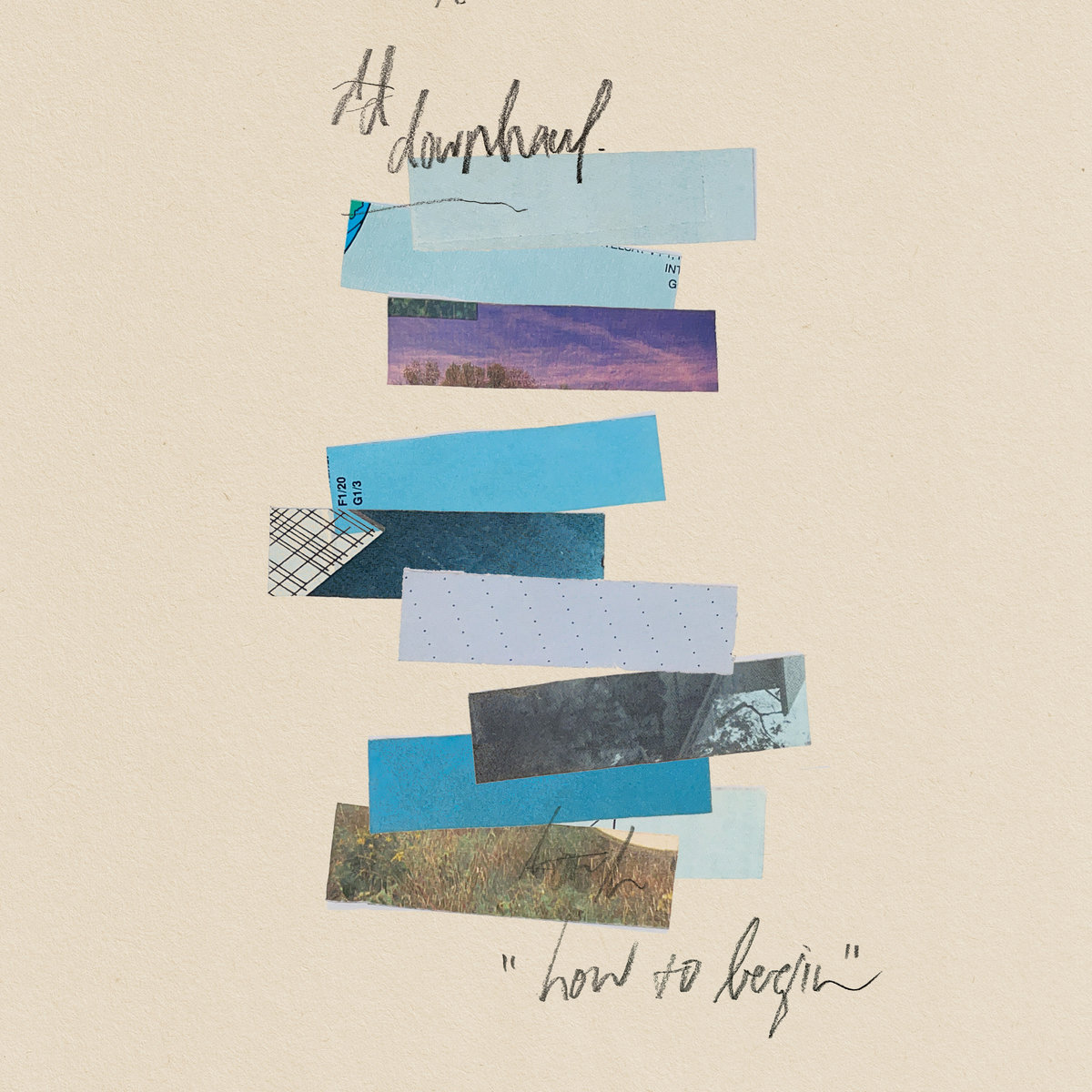
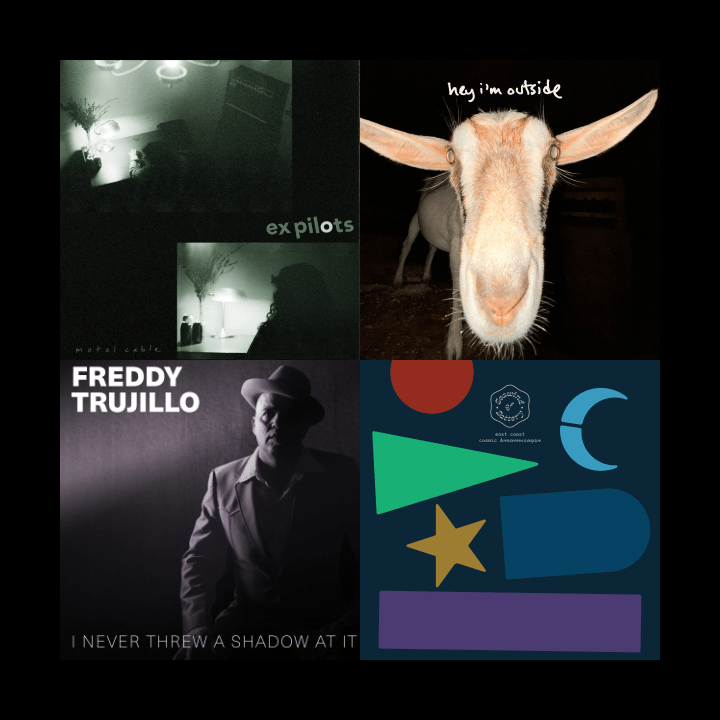
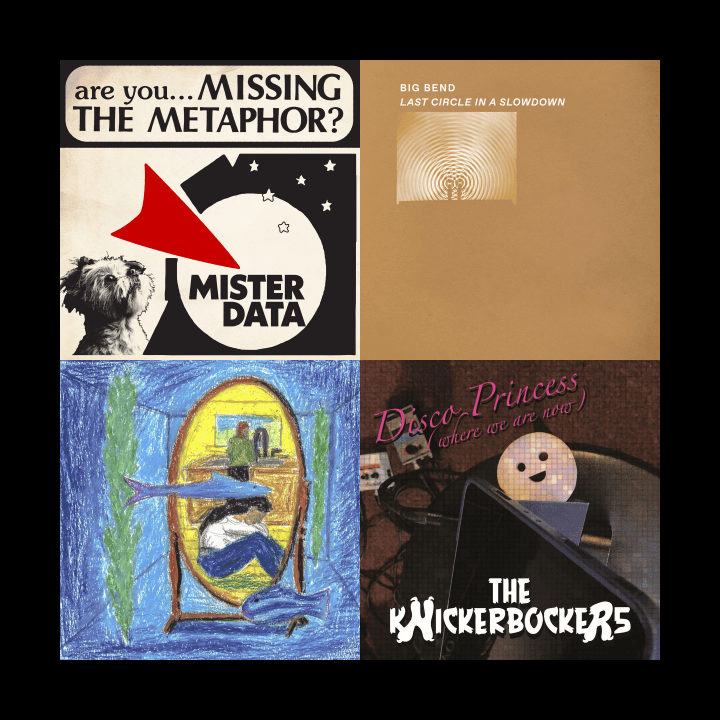

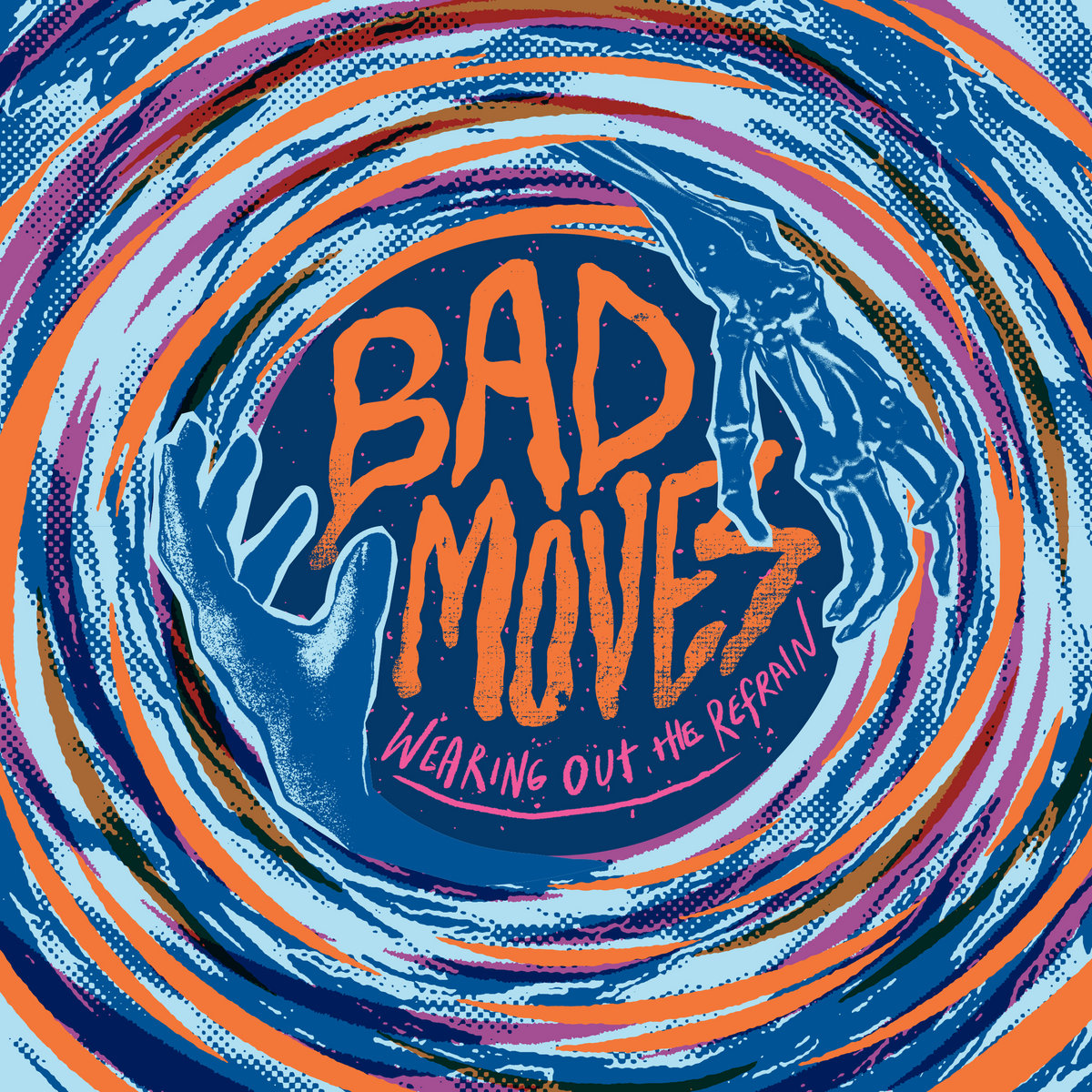
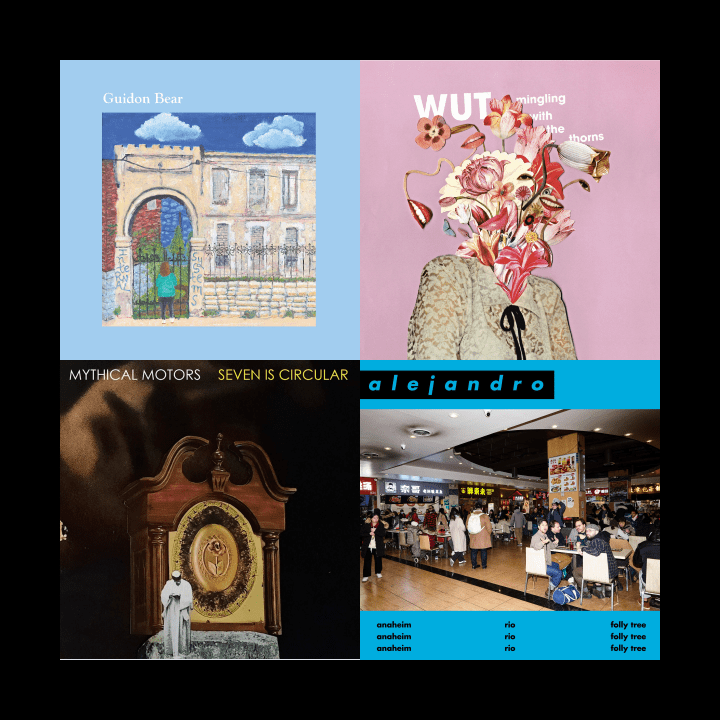
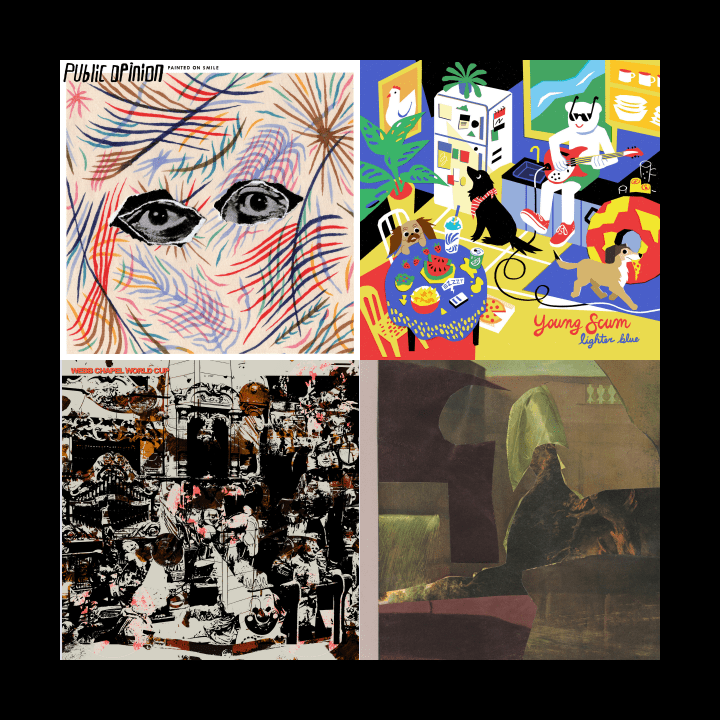

 Rosy Overdrive