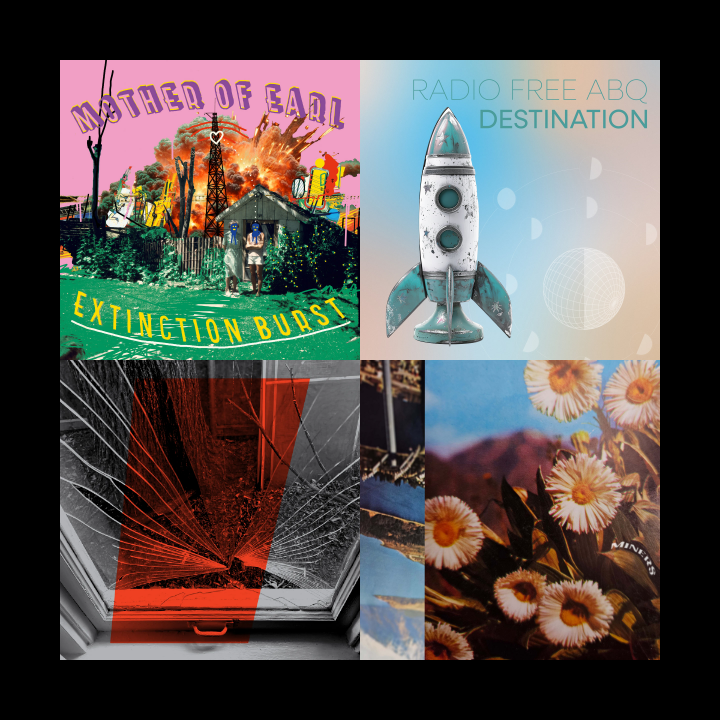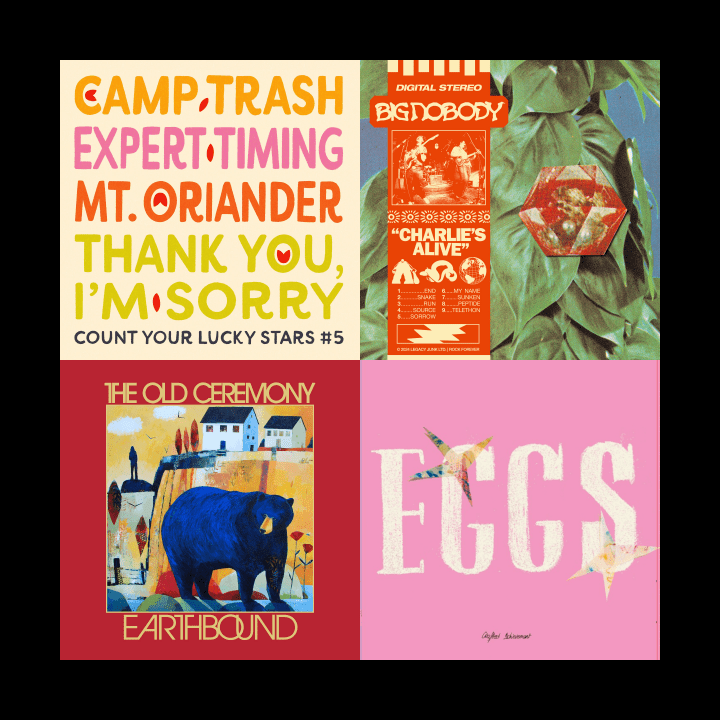
We’re back! Welcome to a Monday Pressing Concerns, populated with great records that have come out recently: new albums from Cast of Thousands, The Armoires, and Black Ends that came out last week, and an LP from Plastic Factory from back in August. There are multiple references to making lemons out of lemonade in this blog post, for some reason. Normally I’d try to remove one of them, but I like them both too much to edit them out.
If you’re looking for more new music, you can visit the site directory to see what else we’ve written about lately. If you’d like to support Rosy Overdrive, you can share this (or another) post, or donate here.
Cast of Thousands – Third House
Release date: October 10th Record label: Self-released Genre: Power pop, garage rock, college rock Formats: Cassette, digital Pull Track: If I Could Take It Back
Hopefully you were paying attention to Rosy Overdrive in late December, but if you weren’t, you might’ve missed the blog’s introduction to Cast of Thousands, a new band out of Austin, Texas. Max Vandever led the power-pop-punk group Flesh Lights for several years before they broke up in 2019; Cast of Thousands is his return to music, starting with a six-song debut cassette called First Six Songs late last year. The first Cast of Thousands full-length arrives about a year later and it’s called Third House (I would’ve called it Second Eight Songs, but that works too, I suppose), and the band have grown to a quintet in between releases. Drummer Luis Herrera and bassist Rex Rimato were on board for the debut EP, but Third House brings in a new second guitarist (Zach Wood) and a keyboardist (Ali Ditto). The band (which have also joined Wishy, Dazy, and Ex Pilots in the prestigious “opening for Guided by Voices on a recent tour date” club) pick up the thread they started with First Six Songs, although the full-length continues to add dimensions to Cast of Thousands’ sound–in particular, Ditto’s organ-toned keys add a The Clean-esque indie pop element to the college rock, power pop, and jangle pop (delivered with just the right amount of Lone Star garage rock energy) to the mix.
Vandever, of course, is at the helm, and he remains a sneakily stellar rock and roll frontperson in his ability to sound believably conversational even when I have no idea what he’s talking about (“If I could, I’d buy you every star in the sky / Well, what are the stars worth / And what do they even do,” he rambles in excellent opening track “If I Could Take It Back”). Each of these eight tracks feels like its own little distinct, self-contained trip–I loved “Sway” when it was released as a single earlier this year, and it sounds just as brilliant here, Ditto’s keys and the haggard power pop guitars colliding as Vandever attempts to lyrically disappear. Stuff like “You Wonder” and “A Little More Time” are great in a less showy way, Cast of Thousands establishing early on in their run that they aren’t always a punk band, perfectly able and willing to pull out pristine jangle pop in the former and subdued guitar pop wistfulness in the latter. The most “power pop” instrumental on the record, “So Much Better”, is also one of the most interesting performances from Vandever, who is pretty straightforwardly addressing someone who’s recently shed a toxic relationship (“You are so much better than her!”).
I don’t quite know what to make of the title track and its multi-part, prog-garage-pop ambitiousness, but it’s great, and the climax (“And if you find yourself in a bad spot / Well the stars could help, but they’d rather not / It would be so fine if they would just align”) is maybe the best moment on Third House. It seems odd to notice that a bunch of slacker-poppers from Texas are preoccupied with space and time on their latest record (right up until the last track, “Patience”, in which Vandever asks for more of the title). Perhaps it’s a bit of lemons-into-lemonade attitude for Cast of Thousands, who come off like they’re always either staring out into the former or running out of the latter. (Bandcamp link)
The Armoires – Octoberland
Release date: October 11th Record label: Big Stir Genre: Folk rock, jangle pop, power pop, psychedelic pop Formats: Vinyl, CD, digital Pull Track: Ridley & Me After the Apocalypse
You may not know the names of Christina Bulbenko and Rex Broome, but they’re a big deal within a small subset of the modern pop rock landscape. The record label they co-founded in 2017, Big Stir, has facilitated the release of new music from a large stable of “lifers” in the worlds of power pop, psychedelic pop, and retro 60s-esque folk rock–everyone from Graham Parker to Anton Barbeau to The Spongetones have put something out on the imprint. Bulbenko and Broom also have their own band called The Armoires–the former plays keys, the latter guitar, both of them sing, and they’re joined by bassist Clifford Ulrich, drummer John M. Borack, and violin/viola player Larysa Bulbenko. The fourth Armoires album is called Octoberland, and it’s an incredibly rich collection of music both from a lyrical and instrumental perspective. The string playing from the latter Bulbenko adds some psychedelia and perhaps even a bit of Eastern European folk traditionalism to The Armoires’ penchant for vintage college rock, jangle pop, and power pop, a key layer that goes a long way toward meeting Octoberland where it’s at thematically. The trick that the former Bulbekno and Broome pull as lyricists is in how they take the contents of the month they’ve chosen to immortalize–folkloric tales of harvest and seasonal change, the “witchy” world of the thirty-first, and the more modern prelude to Election Day–and make utopian lemonade out of the jumble.
“The sky is full of portents, and there’s harbingers on the wing,” Bulbenko sings in “Ouroboros Blues (Crow Whisperer)”, which presents itself as something of Octoberland’s centerpiece. The core duo actually incorporate the 12-bar blues into their folk rock here, as their writing finds plenty to appreciate in the world of “bad luck” animals like snakes, ravens, and black cats (“Looks like corvids, cats, and reptiles might outlive us and outsmart us yet,” they sing together). It’s a rich track, but if you’re looking for more immediate pop impact, The Armoires have you covered via their quasi-theme song “We Absolutely Mean It” that opens up the record (“We mean it in tandem / We mean it times two / First person plural and the third part is you”), the truly infectious jangly power pop of “Ridley & Me After the Apocalypse” (“Copium for trying times / Just to mitigate the rancid vibes”), and the toe-tapping psych-folk-pop of “Green Hellfire at the 7-11” (They let the genie out of the bottle / And man was that genie a dick”). The Armoires may enjoy a good clever joke, but they’re not not serious, and Octoberland makes sure to wrap things up neatly–“Snake Island Thirteen” may be inspired by Russia’s invasion of Ukraine (a personal subject for the Bulbenkos, first generation Ukrainian-Americans), but its mythical, psychedelic jangle and lyricism is well in line with the rest of the record, while “It’s a Good Time to Come Back Down from the Cold” is an explicit call for community and “Music & Animals” closes out the record by paying tribute to two of the finest pleasures in life. There’s a lot going on in Octoberland, but The Armoires get around to making sense of it all. (Bandcamp link)
Black Ends – Psychotic Spew
Release date: October 11th Record label: Youth Riot Genre: Garage rock, punk rock, psych rock, blues rock, gunk pop Formats: Vinyl, CD, cassette, digital Pull Track: Bent
Black Ends are a new trio from Seattle who refer to the music they make as “gunk pop” (they’re pretty serious about it; they’ve even snagged gunkpop.com for their band website). Psychotic Spew may be the band’s first full-length album, but they’ve been putting out EPs and singles since at least 2018 and have generated a bit of local buzz (which, in “Pacific Northwest indie rock” terms, means they’ve done a KEXP session and played shows with Hardly Art and Kill Rock Stars-associated bands). Vocalist/guitarist Nicolle Swims, bassist Ben Swanson, and drummer Billie Jessica Paine sound like a real power trio on their first LP–even though all three of them provide additional instrumentation (not to mention Lori Goldston’s cello and Eric Padget’s french horn on a couple of tracks), the core of Psychotic Spew’s sound is the stripped-down, heavy-duty punk rock that Black Ends hone across the record’s ten tracks. Bits of grunge, psych-rock, and even blues rock shade Psychotic Spew, as Black Ends grab onto any and every corner of rock and roll they can get their hands on to further their gunk-pop mission.
Swims drops a satisfying, impactful guitar riff to begin the record at the onset of opening track “She Speaks of Love”–the blues-y garage rock groove that follows is the perfect way to ease us into Psychotic Spew while still hinting at the edge Black Ends possess and are willing to unleash at any moment. “She Speaks of Love” builds to a big psych-punk conclusion, setting the stage for the trio to plow through the garage-punk wildfire of “Bent” and the slick, almost glam-tinged “Pour Me” and blow this whole thing wide open less than one-third of the way through the album. Black Ends are rowdy in these songs, but the “pop” element of their sound shouldn’t be overlooked, either–between the rollicking, at-times positively bouncy rhythm section of Paine and Swanson and Swims’ in-control, smooth vocals, both the aforementioned opening statements and noise-punk highlights to follow like “My Own Dead” and “Suppin’ on Strange” have plenty of hooks, too. As lean as Psychotic Spew can be, it still finds time for some interesting diversions–mid-tempo, mid-record single “Pretend 2 Be (Protect Me)” is the record’s first left turn, the band shambling through an offbeat art-punk tune that nonetheless gets its together for the refrain, and the back end of the album brings with it “Red Worry” (an explosive rocker that somehow roars its way near to the five-minute mark confidently) and closing track “Bye-Bye!” (which begins with over a minute and a half of exploratory, laid-back guitarplay). Black Ends end “Bye-Bye!” with a perfunctory psych-rock march and Goldston’s cello stabs, effectively wrapping up a strong and commanding debut. (Bandcamp link)
Plastic Factory – Forgotten Dreams
Release date: August 28th Record label: Self-released Genre: Indie pop, jangle pop, folk rock Formats: Digital Pull Track: The Entitled
Stuart Carroll is a professor of Early Modern History at the University of York, as well as the author of last year’s Enmity and Violence in Early Modern Europe, 1500-1800. In addition to his academic exploits, he appears to be the leader of the guitar pop band Plastic Factory–at least, he’s the person who sent me the band’s latest record via email, calling it “The Best Album of the Year”. Forgotten Dreams is the first release of any kind from Plastic Factory, and Carroll clearly isn’t lacking in confidence to back up his assertion–spanning nine songs across about forty-five minutes, the collection is an expansive record informed by college rock, folk rock, and indie pop of both the British and American varieties. Armed with jangly, Byrds-style guitar, harmonicas, and a charmingly sloppy attitude towards full-band rock and roll, Forgotten Dreams falls somewhere between pastoral British folk rock and irreverent American garage rock. Although perhaps not on the level of historical tomes, Carroll has plenty to say on Forgotten Dreams, filling these songs with freewheeling but incisive writing on everything from structural racism to the class divide to perpetual crises in British health care.
Carroll begins Forgotten Dreams with a welcoming opening salvo–in his own way, at least. The wistful, nostalgic jangle pop of the opening title track is bittersweet in its construction but blissful in its delivery, while the sneering hubris of “The Entitled” is given a classic C86-style indie pop refrain that turns it into one of the most fun moments on the entire record. The self-styled American Heart of Darkness detour of “The Bluest Eye” is the clearest signal yet that Plastic Factory have perhaps grander ambitions than your average York indie pop group, and the timeless meandering of songs like “Why Did You Set Me Free?” requires a bit of patience but is hardly impenetrable. The second half of Forgotten Dreams offers up the relative extremes of the record–the sub-two-minute glam rocker “Tough Decisions” is Plastic Factory’s Velvet Underground/Lou Reed tribute, while the seven-minute “The Past Is a Foreign Country” is an even-keeled demonstration of the band’s long-term vision and stamina. Perhaps the most immediately memorable track on Forgotten Dreams is the single “Hollow Gesture”–in an album hardly pinned down by any specific movement or moments, it’s actually somewhat jarring to hear a song that’s a clear rebuke of the U.K.’s handling of COVID-19 from the perspective of a nurse. For a British historian like Carroll, though, I suppose it’s just another tale of ruling-class greed, exploitation of low-class “essential” workers, and, of course, the plague.
Come one and come all to the Thursday Pressing Concerns! Today we’ve got three new albums that are coming out tomorrow, October 11th–new LPs from The Submissives, Jamison Field Murphy, and o’summer vacation–plus a new album from Toby the Tiger that is out today! It’s a great post, and if you missed either of the posts from earlier this week (Monday’s Pressing Concerns featuring Dancer/Whisper Hiss, Stomatopod, The Great Dying, and Bandy or the September 2024 playlist/round-up from Tuesday), be sure to check those out, too.
If you’re looking for more new music, you can visit the site directory to see what else we’ve written about lately. If you’d like to support Rosy Overdrive, you can share this (or another) post, or donate here.
Toby the Tiger – Demapper
Release date: October 10th Record label: Peligroso es Mi Nombre Medio Genre: Emo-y indie rock, singer-songwriter, folk rock, bedroom pop Formats: Digital Pull Track: Bones
One aspect of running a music blog that I do love is being sent random albums from across the world on a regular basis. Sure, it can get overwhelming sometimes, and a lot of them don’t make it past an initial cursory listen, but every now and then I’ll hear something that really resonates with me, which makes it more than worth it. I’m filing Demapper, the debut album from a Boise, Idaho musician named Brock Ross who makes music under the moniker Toby the Tiger, under “transcendent”. Demapper is the debut Toby the Tiger album; we don’t know much about Ross’ musical history before this, but we can infer from the lengthy thank-you section on the record’s Bandcamp (which includes his wife of twelve years, his two kids, plenty more family and friends, and the host of a local open mic) that it was a long road for Ross to finally arrive at recording and releasing original music out into the world. As a writer, Ross is squarely in the realm of “emo-adjacent” indie rock–he specifically cites Kevin Devine, Pedro the Lion, and Pinback in his email to me, and there’s a good deal of Death Cab for Cutie in here too. Ross is adept at writing delicate pop melodies (any time I hear something that reminds me of the obscure Kentucky guitar pop group The Scourge of the Sea, I feel like I have to point it out), but there’s an electric side to Demapper, too, with Ross using as wide a spectrum as he can to capture what he’s composed for the record.
Demapper takes great pains to reveal itself in the sturdiest, most arresting fashion possible. “Bones” is one of the best album openers I’ve heard this year, starting off simple with just electric guitar and Ross’s vocals–but, given the literal Biblical torrent of emotion and violence he eventually gets around to depicting, it can hardly be described as a low-key or “soft” launch. “Do Not Go Gentle” is the first real rocker on the album, sounding almost out of Dischord Records with its mix of choppy, meaty guitar and dynamic vocals. Toby the Tiger settle into something of a groove with the next few songs, although Ross enlists his brother Mitch to play trumpet on “Letter to Screwtape”, and the orchestral-folk touches help make the acoustic guitar-led track into a mid-record highlight. It almost seems like Demapper gets a bit more ambitious as it goes on, with a couple of around-six-minute tunes in “Oldest Friend” and “Verdure & Neon” stretching the project’s sound out in sensible but still novel ways. Demapper comes full circle with closing track “Boardroom”, which returns to the stripped-down, emphatic emo-folk-rock sound of “Bones” to end the record. The dry, corporate setting of the final song is a sharp contrast with the much more elemental “Bones”, but it’s clear which realm is more captivating to Ross as he tunes out the droning “J Crew”. “I got nothing to say in your dialect / so I’m closing the door,” Ross declares in “Boardroom”, in the midst of speaking an alternate language quite well. (Bandcamp link)
The Submissives – Live at Value Sound Studios
Release date: October 11th Record label: Celluloid Lunch/Rotten Apple Genre: Art punk, post-punk, indie pop, twee Formats: Vinyl, cassette, digital Pull Track: Perfect Woman
Montreal’s Deb Edison began making music as The Submissives in the mid-2010s–from 2015 to 2021, she released four albums under the name featuring material recorded and written entirely on her own. The fifth Submissives album is their first for Celluloid Lunch (Laughing, Feeling Figures, Rose Mercie) and also the first to be made by a full band, with a full cast of vocalist Talia Boguski, guitarist/trumpet player Christina Bell, bassist Emily Gray, drummer Marissa Cytryn, and flautist Olivier Dumont joining Edison for Live at Value Sound Studios. It appears that Edison has taken the opportunity of a proper band and studio to re-record some very early Submissives recordings, but given that it’s my introduction to the band (and will probably be the same for most readers), that’s hardly a complaint. Live at Value Sound Studios nails a hyper-specific type of indie rock/indie pop/punk music across its thirteen tracks, combining the expansive, spacious, uncertain art punk/post-punk of classic groups like The Raincoats with a clear interest and fluency in 60s pop music, in line with acts like The Roches as well as plenty of the original practitioners. The Submissives snake through a baker’s dozen love songs, crush songs, and break-up songs on Live at Value Sound Studios, the guidance of Edison and her backing band ensuring these tracks have an impact going significantly beyond their aged surface.
Live at Value Sound Studios is a warped record–in the “offbeat” sense of the word, yes, but also in a transportive way, too. Edison’s ability to conjure up legitimate approximations of popular culture from the better part of a century ago and deliver them in fresh, appealing, but removed packaging is the main strength of The Submissives. They’re clearly not a nostalgia act, but I don’t really view The Submissives as rejectors of their music of inspiration so much as repositioners. One can view the confused, disoriented readings that The Submissives give ageless pop songs like “He Wanted Her” and “Do You Really Love Me” (or, conversely, the confident desperation of “Perfect Woman”) as an accurate reflection of the youthful feelings that the Beach Boys and contemporary girl groups sought to capture at the time, or also as a darker, more complete exploration of the reality of both the generation depicted in these songs and of the people making the soundtrack for them. One could read “Betty Told Me” as a subversion of the band and era’s typical subject matter, but this (admittedly reductive) reading gets shattered by the companion track “Friend Named Betty” not long afterwards. The Submissives let you figure these things out for yourself, although whether that reflects confidence in the listener or a lack of answers from the band’s brain trust is left open, too. (Bandcamp link)
Jamison Field Murphy – It Has to End
Release date: October 11th Record label: Ramp Local Genre: Bedroom pop, lo-fi pop, psych pop, slowcore Formats: Cassette, digital Pull Track: Ermine Cloak
I’ve had the pleasure of charting the progression of Baltimore quartet Tomato Flower since their debut in 2022 with a pair of EPs up to the release of their first full-length album, No, earlier this year, and in the process watching the group evolve from fluttery psychedelic pop and airy space pop to incorporating some darker prog-pop and art rock influences. Along with Austyn Wohlers, Jamison Field Murphy is one of the band’s two singer-guitarists, meaning that It Has to End–Murphy’s debut solo album–is the second record this year to feature him as (at least) a co-leader. Given that No was made in the shadow of Wohlers’ and Murphy’s romantic break-up, it’d be tempting to attach a similar narrative to this quieter, more introspective solo release, but It Has to End isn’t a clean reflection of that particular moment in time–featuring recordings dating all the way back to 2016, the genesis of the album predates not only the recent breakup, but the beginning of Tomato Flower itself. I’m sure it’s felt in some of It Has to End’s more recent recordings, and sure, it’s not inaccurate to call the album “insular” or “intimate”, but it’s bigger than any one moment, capturing eight years of ideas, thoughts, and mile markers from a talented pop musician.
The fifteen songs of It Has to End float by quickly (largely staying in the one-to-three minute range), but the record as a whole hardly sounds hurried. It’s largely Murphy on his own, with a couple of outside contributions (Wohlers plays flute on three songs and Tomato Flower bassist Ruby Mars plays saxophone on “Queen View”, which also features violin from Miranda Sullivan), resulting in something of a photo negative of his main band’s busy, buzzing take on pop music. Yes, “Ermine Cloak”, “Fool to Ride”, and “That Boy” are slower and starker than anything we’ve heard from Murphy before, so it’s impressive that the musician is still able to conjure up similar sonic touchpoints (60s pop, Elephant 6, and, uh, Tomato Flower) with little more than just intermittent electric guitar, detached but melodic vocals, and even-more-intermittent percussion. It Has to End has an experimental streak and occasionally feels like it wasn’t recorded for public consumption, but it’s still almost entirely a “pop” album–the ambient “Señal” is the one exception, as even the drone-fuzz of “God on the Hill” contains shades of Phil Elverum-esque folk music. The distinction, I suppose, is that it’s perhaps not a song album–the Bandcamp description uses the word “collage” to describe this record, and that’s a good way to approach It Has to End, I think. Although, for me, the “greater than its parts” nature of It Has to End was apparent from the moment I was able to get a holistic look at it. (Bandcamp link)
o’summer vacation – Electronic Eye
Release date: October 11th Record label: Alien Transistor Genre: Noise rock, noise punk, art punk Formats: Vinyl, digital Pull Track: 宿痾(Shuku-a)
Way back in 2021, I wrote about Wicked Heart, the debut album from Kobe, Japan noise rockers o’summer vacation. The guitarless trio (members Ami, Mikiiii, and Manu are on vocals, bass, and drums, respectively) whipped through eleven songs in under twenty minutes of pummeling noisy, math-y punk rock in a way I compared to Ponytail and Melt-Banana. After putting out a three-song EP called Anti Christ 大体 Super Star the following year, o’summer vacation have jumped to Alien Transistor Records for their sophomore full-length album, Electronic Eye. The trio aren’t shying away from inviting classic Japanese noise rock comparisons on their new album, working with producer Shinji Masuko (who’s also worked with DMBQ and the Boredoms) and enlisting former Melt-Banana member Masaki Oshima to master the record. Once again, o’summer vacation insist that the lyrics are meaningless (Ami “does not like to communicate her thoughts through her music,” say the band), and once again this hardly matters–we can all get the gist of o’summer vacation without “coherent” “language”. Once again, o’summer vacation deliver a brief record of abrasive, stripped down bass-and-drums punk rock, this time coming out to thirteen tracks in twenty-three minutes.
Nearly a quarter of Electronic Eye is taken up by “宿痾(Shuku-a)”, an uncharacteristically lengthy six-minute odyssey. As it turns out, o’summer vacation’s sound translates well to the bigger screen, starting off in the world of weirdo, art-y post-punk and eventually settling into a pummeling noise-punk groove in its second half. It almost makes me wish o’summer vacation had pursued this expansiveness more on Electronic Eye–but, alas, none of the rest of the songs on the album are longer than three minutes, and only one of them is over two. Nevertheless, I’m here to judge the album o’summer vacation made, not the one I wish they did–and, bite-sized though they are, the rest of Electronic Eye adds up to a substantial meal on the whole. Picking highlights here feels like a fool’s errand, but on this particular listen, the thumping post-punk of “Poodle”, the explosive, almost dance-punk “vs I”, and the careening, explosive “Aloooooone” stand out to me. o’summer vacation seem to sum up the majority of Electronic Eye via the title of “Days Go By Fast”, which, ironically, starts with a rare ten-second breather–Mikiiii plays a simple, unadorned bass riff for a third of song’s half-minute runtime, leaving only twenty seconds for o’summer vacation to let loose before the song comes to a close. As it turns out, that’s all that they need. (Bandcamp link)
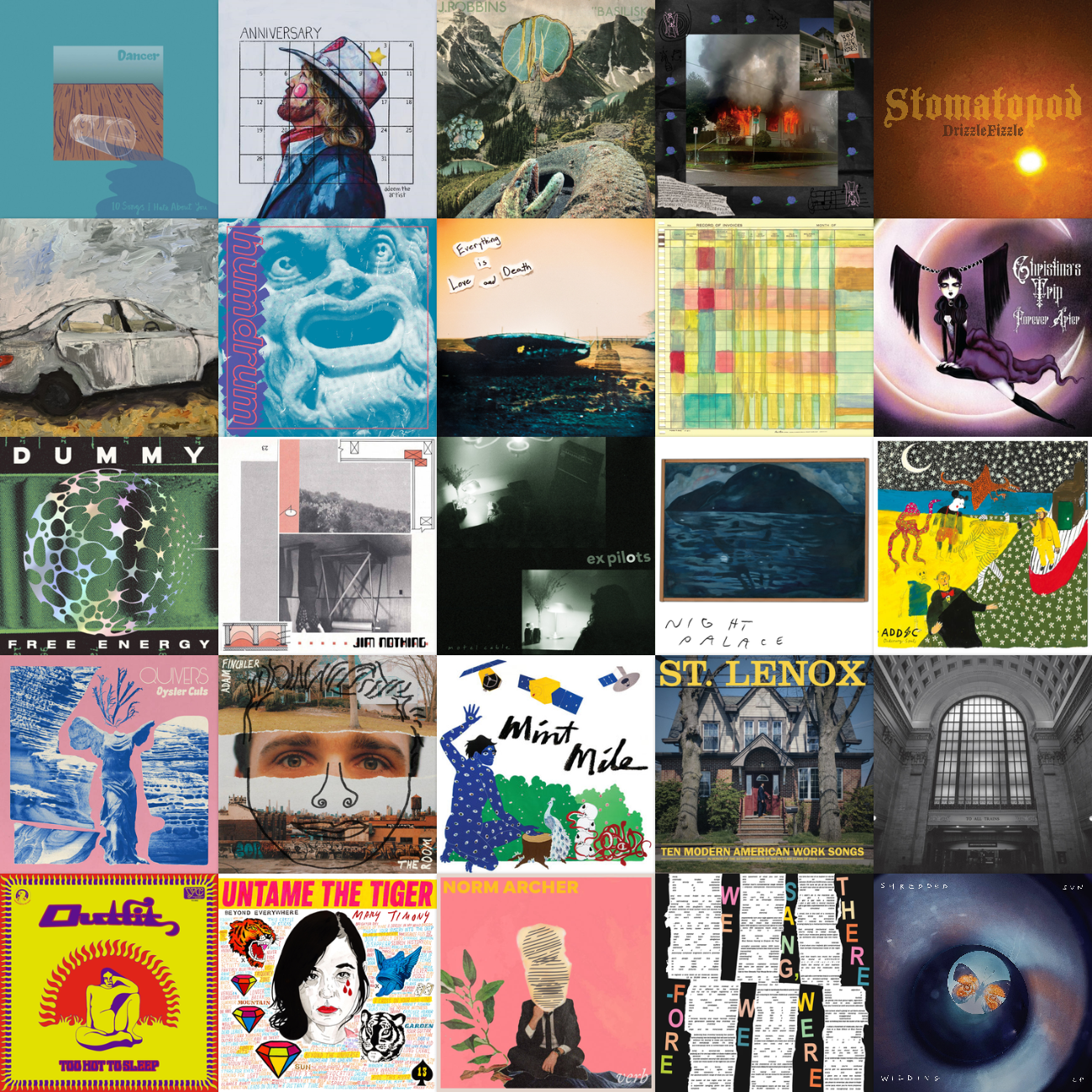
Alright, it’s a little later than normal, but the Rosy Overdrive September 2024 playlist is here! You’re going to find a ton of great new music on it, trust me–some of it from bands I’ve written about on the blog before, some from new faces, but all quality. That’s the Rosy Overdrive guarantee!
Best Bets, Guidon Bear, Downhaul, and Mister Data have multiple songs on this playlist (two apiece).
Here is where you can listen to the playlist on various streaming services: Spotify, Tidal (each missing a song), BNDCMPR (missing three). Be sure to check out previous playlist posts if you’ve enjoyed this one, or visit the site directory. If you’d like to support Rosy Overdrive, you can share this (or another) post, or donate here.
“Pillory Parade”, Best Bets From The Hollow Husk of Feeling (2024, Meritorio/Melted Ice Cream)
I want to be clear: I fucking love this song. All the threads from Best Bets’ The Hollow Husk of Feeling come to a head here–huge power pop hooks, withering lyrical invective, post-ironic showmanship, pop punk snottiness, garage rock fuzz. “Pillory Parade” hits the sweet spot that maybe only the Teenage Tom Petties are also achieving in 2024. This would’ve killed on 120 Minutes; imagine these Kiwi power-punk-poppers running around accompanied by these apocalyptic lyrics that are just as serious/cutting as you want them to be. If the exhilaration of The Hollow Husk of Feeling feels drawn from frantically attempting to outrun something, the wind at its back for forty minutes blows all the same. Read more about The Hollow Husk of Feeling here.
“TV Screen”, Guidon Bear From Internal Systems (2024, Antiquated Future)
Olympia indie pop duo Guidon Bear (Mary Water and Pat Maley, both of Little Red Car Wreck) began to incorporate a bit more synth/electronic elements on their 2022 record Unravel, and this side of the band blossoms fully on Internal Systems. The buzzing and chiming synths added by Maley to these songs fit perfectly alongside their guitar-based indie rock sound–it doesn’t reduce Guidon Bear’s “old” style so much as add to it, and it’s no less devoted to enhancing Water’s incredible songwriting. The record’s six-minute opening track “TV Screen” is a half-asleep jumble of images glimpsed on the titular object (as well as one’s phone), fiction and reality blurring much like watching videos on Instagram tends to do, the simple synth backgrounds soundtracking Waters’ train of thought and guitars only showing up on the sparingly-used chorus–it’s maybe the best song I’ve heard all year. Read more about Internal Systems here.
“College Jeopardy”, Upstairs From Be Seeing You (2024, Obscure Pharaoh)
Upstairs are a quintet of art pop/rock mad scientists from Cincinnati and Chicago who’ve recently put out their excellent sophomore album, Be Seeing You. Their latest record alternatively embraces electronics, strings, and “rock” instrumentation across its dozen tracks, veering into several ditches but also using “pop music” as a jumpscare tactic (in the form of swooning, swelling indie folk rock or relatively humble piano-pop). “College Jeopardy” is the catchiest thing on Be Seeing You to my ears; I just haven’t been able to shake that refrain ever since I’ve heard it. Whichever member of Upstairs is on lead vocals here really gives it their all–it’s not Rosy Overdrive favorite Jon Massey, although I’m fairly certain I hear him joining in on that monster jangly/power pop chorus, and he might be the one mumbling the spoken-word bridge that sounds like Bent Shapes if they liked Stereolab a little too much. Read more about Be Seeing You here.
“Silver Sword”, Ex Pilots From Motel Cable (2024, Smoking Room)
On Ex Pilots’ Motel Cable, the Pittsburgh sextet do what they do best–kick out fifteen songs and thirty-seven minutes of hook-laden, shoegaze-informed indie rock shot through with a sense of Robert Pollard-esque propulsive melancholy that’s equally present on the loud, punk-y rave-ups and the record’s more pensive moments. There’s plenty of highlights from the fidgety, punchy side of the band, where it seems like the group can’t help from throwing moments of noise and aggression in the middle of perfect guitar pop. The absolutely wild “Silver Sword” is my favorite song in this vein–the guitars seem like they’re just not on the same page as Ethan Oliva’s vocals, but that doesn’t slow the track down at all. It’s a song that makes me want to go crazy and hurt myself and others (yes, I’m proud of that meme, I wasn’t going to pass up another opportunity to use it again). Read more about Motel Cable here.
“Voyeur/Liverwalk”, Wavers From Wavers (2024, Musical Fanzine)
An excellent debut record from earlier this year that I want to make sure you didn’t miss is the self-titled first cassette EP from Olympia quartet Wavers. In under ten minutes, the four of them (vocalist Rosie, guitarist Josh, bassist Jake, and drummer Charlie) sketch out their sound–a little bit of emo, some 90s indie rock, lo-fi indie pop, and even a bit of punk attitude in between the cracks. The EP’s lead single and my favorite song on the record is “Voyeur/Liverwalk”, which just barely crosses the two-minute mark in order to deliver an unlikely Pacific Northwest guitar pop anthem in its aimless, late-night wandering. The pop music of Wavers is delicate and wobbly but quite powerful regardless of its trappings; I’m eager to hear their debut full-length, which I’ve heard rumors could be out sometime next year. Read more about Wavers here.
“YCBTT”, Downhaul From How to Begin (2024, Self Aware/Landland Colportage)
My favorite moment on How to Begin, the third album from Richmond rock band Downhaul, comes about a minute into the song “YCBTT”. The entire track is impressive, of course–Andrew Seymour’s skipping drumbeat and Robbie Ludvigsen’s classic rock opening riff are perfect out of the gate, singer Gordon Phillips’ distinctive long-steady-gut-punch is in vintage form, and when he trades off lead vocals with Seymour for a few lines, it’s an inspired, unorthodox decision. The moment I’m thinking of happens after that, though, in what I guess is the pre-chorus–Phillips grinds the song to a halt with a whammy of a realization (“Well I guess I just thought / About you more than you thought about me”) and Seymour answers by beginning a bright, almost cartoon-like percussive roll. Phillips rattles off hyper-specific, esoteric lines that are nonetheless quite evocative (“But the branch cracked like rock candy / And the devil is left-handed / Came down in a panic to / To the place we both were planted”), sidestepping the music without breaking eye contact. It’s emblematic of the slick movie-musical that is How to Begin. Read more about How to Begin here.
“Glad You’re Doing Well”, The Meeks From People Don’t Talk (2024, The Butter)
This is a brilliant song. The Meeks are a power pop band from Brooklyn or something, whatever–let’s talk about “Glad You’re Doing Well”, a real gem hidden in the second half of their sophomore album People Don’t Talk. As simple as “Glad You’re Doing Well” is in terms of instrumentation, there’s a ton of stuff going on in the song–it starts with the rhythm section tapping along to Michael Donovan’s engrossing vocals, the guitars eventually start trickling in, Donovan hits a Jason Lytle-like quiver with the word “clarify”, and then eventually there’s a big pop chorus, too. And then the song grinds to a start (Donovan hand-waving and chiding “guys, guys, guys”) and does the entire trick again, to no less great effect. It sounds like if The Weakerthans were obsessed with writing the perfect pop song or something (not that Donovan’s lyrics, a scattered relationship-disintegration thing, aren’t great, too).
Although it’s still home-recorded, Hey I’m Outside’s self-titled debut album is the band’s most polished work yet, and the meandering country rock sound hinted at in their earlier EPs blossoms and takes full control on the LP. Both Patrick McPherson as a vocalist and the band as players sound like relaxed storytellers throughout Hey I’m Outside, an earnest but not overly-sentimental mix of folk, country, and rock. The upbeat country-folk of “Crash”, my favorite song on the album, may start with a literal accident, but it shrugs off the mess to run away gleefully to the tune of what I believe is guest musician Timothy McPherson’s dobro. Read more about Hey I’m Outside here.
“Pigsville”, Waco Brothers From Wacoworld (1999, Bloodshot)
“How did a random Waco Brothers song from 1999 end up on this playlist?” you might ask. Well, blame Ted Leo. I saw him and The Pharmacists play Shake the Sheets in its entirety recently (great album, by the way), and afterwards he covered this song solo with just his electric guitar. I hadn’t heard the song before (I’ve listened to a few Waco Brothers albums in my day, sure, but not this one, I don’t think) and was blown away, and sought out the original version not long after the show. It wasn’t just Leo’s performance–the Wacos’ version is just as great, a brooding but huge-sounding folk-punk-rock anthem that still sounds jaw-dropping to me. The verses are the setup and the chorus the huge payoff–other bands would try to come up with something more than the single line Jon Langford repeats over and over again in the refrain, but that’s where “Pigsville” turns into something wild and immortal.
“Toynbee Tiles”, The Paint Splats From Amusing Ourselves to Death (2024, Magnaphone)
A power pop song about the Toynbee tiles, huh? Hey, sure, why not. First off, if you’re unfamiliar, it’s a fun Wikipedia rabbit hole do go down, and Dayton, Ohio sextet The Paint Splats use them to make an excellent album closer. I’d recommend listening to Amusing Ourselves to Death in its entirety if “Toynbee Tiles” does it for you, but regardless, this hook-laden tribute to “[riding] the bus to Philadelphia” to “stand on the sacred tile” is a winner. There are a few songs on this playlist about escaping or going on impromptu trips/vacations; perhaps that says something about where I’m at mentally. Either way, Brandon Berry and Rachel Rosen deliver a charming duet about trying to locate a newly-dropped tile and coming away empty-handed. Maybe the real Toynbee tiles were the friends we made along the way?
“Big Wave Surfer”, Slacker Key (2024)
Regular Rosy Overdrive readers will recognize Portland’s Sam Greenspan as one of the two vocalists in the excellent power pop trio Stoner Control, who’ve released two great records during this blog’s lifespan. Greenspan has a new solo project called Slacker Key, which originated after Greenspan spent two years doing “clinical fieldwork” on the Hawaiian island of Kauai and witnessed the tradition of slack-key guitar. The cleverly-named Slacker Key has two songs out so far, and while I’m not going to pretend that the introduction of slack-key has dramatically shifted Greenspan’s songwriting and playing away from his signature power pop/slacker rock, anything that sparks inspiration for something like “Big Wave Surfer” is a-okay in my book. It’s a charming and none-too-serious exploration of the culture clash implicitly depicted in the project (“I lied when I said I could surf / I lied about being a big wave surfer”).
“Doors Wide Open”, Feeling Figures From Everything Around You (2024, K/Perennial)
Everything Around You is the second full-length to come from Montreal indie rockers Feeling Figures, but it was actually recorded before their debut release, last year’s Migration Magic. It’s a deeper and more deliberate version of Feeling Figures on this one–the jams are heavier and jammier, the pop songs more polished and poppy, and the garage punk moments come with a bit more of an audible snarl. “Doors Wide Open” is an easy early highlight, bringing vamping indie-pop-punk bounding right through that unobstructed barn gate, the band breathing incredible life into a song that feels like it contains much more than its sub-two-minute runtime ought to allow. Read more about Everything Around You here.
“Master of Time”, Styrofoam Winos From Real Time (2024, Sophomore Lounge)
On their long-awaited sophomore album, Nashville supergroup Styrofoam Winos don’t sound particularly hurried. It’s not like “laid-back country rock” is new territory for Lou Turner, Trevor Nikrant, and Joe Kenkel, but the way that they do it here–effortlessly passing the torch between the three of them, creating a singular vibe across these ten songs–is a palpable leap. On one of the best songs on the record, “Master of Time”, the Winos embrace their relaxed relationship to this eternal element to great effect. Nikrant’s delicate but deft talk-singing is perhaps the most “Lambchop-esque” moment on Real Time, although 1990s Kurt Wagner didn’t have two more of him backing himself up like Nikrant does with Turner and Kenkel. Read more about Real Time here.
“Mercury Girl”, Chime School From Tales of a Kitchen Porter: A Tribute to Cleaners from Venus (2024, Dandy Boy)
Tales of a Kitchen Porter is lovely both in concept and execution: Dandy Boy Records having fifteen modern indie pop bands record songs from across the discography of The Cleaners from Venus and releasing them via a vinyl record and a “special edition” extra 7″. Given the amount of head Cleaner Martin Newell’s DNA that can be found in the current jangle/guitar pop renaissance, it’s not surprising that a lot of these covers are fairly faithful–but there’s plenty new to enjoy here, too. Chime School’s version of “Mercury Girl” was always going to take the cake for me, though–perhaps my favorite of the San Francisco power pop practitioners taking on one of the best Cleaners songs, and turning it into a more upbeat jangle pop tune but without losing the delicate core of the track? Well, there’s a reason I said it was “better than sex” when I wrote about the compilation. Read more about Tales of a Kitchen Porter: A Tribute to Cleaners from Venus here.
“Transporter Room 3”, Mister Data From Missing the Metaphor (2024, Little Lifeforms)
Austin’s Mister Data keep it simple on “Transporter Room 3”, perhaps the best song on their brilliant new EP Missing the Metaphor. In the track, Austin Sepulvado’s guitar and vocals sit largely unadorned while unspooling a genuinely affecting and powerful modern folk song about organized labor, ancestral pride, and belief in a shared humanity that extends beyond one’s own lifespan. Oh, and it’s about Star Trek, too–the whole thing is based on a minor plot point from an episode of Deep Space Nine (look, the band is called Mister Data, there’s no getting around it). This is one of the ones where me describing it just isn’t going to adequately do it justice; you don’t have to know anything about Ferengi in order to appreciate “Transporter Room 3”. Read more about Missing the Metaphor here.
“Missing the Metaphor”, Mister Data From Missing the Metaphor (2024, Little Lifeforms)
The aforementioned “Transporter Room 3” bleeds into Missing the Metaphor’s title track, a rude awakening after the previous song’s interstellar utopianism. Probably the catchiest song on the EP, “Missing the Metaphor” is a just-as-beautiful portrait of the indignity of it all–scraping by in a dreadful job in order to pay the bills and “keep [one’s] dog alive”. We all want “Missing the Metaphor” to be an uplifting “quit your shitty job” anthem, and there’s enough in that chorus to give us something to hang onto, but it doesn’t exactly lend itself just to that reading. This limbo is given a beautiful and, yes, dignified depiction by Mister Data nonetheless, though. Oh, and it’s probably the best song ever to include the phrase “ecclesiastical evermore”. Read more about Missing the Metaphor here.
“Hooks”, The Blackburns From The Blackburns (2024, Sell the Heart)
The Blackburns aren’t interested if you don’t have a hook. “They’ve got these songs that if you listen, it’s like trying to read a book / All I know when I hear ‘em though is that they got no hook,” they memorably declare in “Hooks”, the opening song to their self-titled debut album. Thankfully, the Philadelphia-based songwriting duo of Nick Palmer and Joel Tannenbaum practice what they preach on The Blackburns, particularly in that opening track. The chorus trends towards 90s radio-rock–hardly a bad thing, especially when paired with Lynna Stancao’s keyboard playing and some ace vocal trade-offs in the verses. It all makes sense for a band that claims the Angus soundtrack as an inspiration.
“Radio King (Stereo)”, Curling From Radio King/Mallow (Stereo) (2024, Royal Oakie)
Berkeley/Tokyo duo Curling made one of my favorite albums of last year with No Guitar, an exhilarating mix of power pop, math rock, and prog-pop made with a studio rat attitude (rattitude?). However, the album that initially got Curling on my radar was the previous one, 2018’s Definitely Band, which contained plenty of the hallmarks that populated the eventual follow-up, too. For the album’s sixth anniversary, Curling have looked back and put out stereo mixes of two songs from Definitely Band, “Radio King” and “Mallow”, on their new label Royal Oakie. These new reimaginings “from the ground up” sound great, particularly the emotional 60s pop tapestry of “Radio King”; I wouldn’t expect less from a band that named this song after the snare drum they used on the original recording.
“I Used to Feel Different”, MAITA From Want (2024, Fluff & Gravy)
Portland singer-songwriter Maria Maita-Keppeler and her eponymous project MAITA got a bit of attention for 2022’s Kill Rock Stars-released I Just Want to Be Wild for You. MAITA’s proper follow-up, Want, seems to have flown under the radar a bit (at least it did for me), but it’s my favorite of Maita-Keppeler’s works yet. There’s plenty to recommend among Want’s dozen tracks, but single “I Used to Feel Different” is practically crying out for playlist/mixtape representation. It’s guitar-based indie pop at its most streamlined and maximally-effective, with Maita-Keppeler’s voice, the confidently chugging guitar lines, and the smartly-deployed synths all serving to deliver hooks.
“Boulder Toss”, HEDGE From Better Days (2024, Midnight Werewolf/Bloated Kat)
Ah, I love a good all-in Bob Mould-style aggressive power-pop-punk record, don’t you? Statistically speaking, you probably do, and you’ll probably want to give the debut album from Worcester, Massachusetts’ HEDGE a spin if so. Better Days rushes through eleven fully-developed pop songs in twenty minutes–the title track nearly became my pick, but “Boulder Toss” sets such a high bar opening the record that it became the one that made the cut here. The verses are where HEDGE do some Lemonheads-esque revved-up alt-rock and the chorus is the punk barnburner, but both sections of the track are equally catchy–they’re burning through hooks like there’s no tomorrow on Better Days, and there’s no arguing with the finished product.
“What If I Like It?”, Pacing From Pretty Filthy (Covers) (2024)
Here’s a rough timeline of events: in January 2015, the off-Broadway musical Pretty Filthy–featuring lyrics and music written by the late Michael Friedman–debuted, with content based on the adult film industry and drawn from interviews from people in the field. Around 2018 or 2019, Katie McTigue of the band Pacing became obsessed with Pretty Filthy to the point of proselytizing to co-workers about “the porn musical”. Now jump to 2024, where McTigue, emboldened by the strides she’s made as a musician and arranger in Pacing (including releasing one of the best albums of last year), decides to record a covers EP, and she’s got the perfect song to open it up. The whole EP is great (seriously, I came this close to putting it in Pressing Concerns), but Pacing’s take on “What If I Like It?” from the previously-discussed musical is just something else. McTigue does the “theatrical” part with her voice (eventually singing over a few versions of herself), and the “Pacing-esque” folk-pop instrumental (there’s some nice bass on this one) is a winning combination. I like it even more than Pacing’s shockingly intimate take on “Stacy’s Mom”!
“Oh No! I Forgot My Chill Pill”, Addicus From Addicus (2024, Acid Punk/Leave It at That)
Addicus are a new-ish band from Michigan’s Upper Peninsula with a penchant for 2010s-style scrappy indie pop punk and even a bit of emo mixed in, too. Addicus is a strong introduction to the band, evoking groups like Remember Sports, Chumped, and Camp Cope but with their own nervous, melancholic stamp on the songwriting. The best song on Addicus is the first one–“Oh No! I Forgot My Chill Pill” is just about perfect, an unhinged, sugary pop punk tune that would’ve been right at home on Remember Sports’ Sunchokes or All of Something, with lead vocalist Lex laying out an engrossing mess in the lyrics before summing it all up with “I guess it’s just my normal mood swings”. Read more about Addicus here.
“Cloud or Mountain”, Wild Pink From Dulling the Horns (2024, Fire Talk)
My favorite Wild Pink album is still their self-titled debut. John Ross and friends have gone further and further away from my “kind” of music since then, but I’ll always give their records a listen because something always blows me away on them. Dulling the Horns might actually be my favorite of theirs since Wild Pink–teaming up with Justin Pizzoferrato to capture a live-in-studio sound will do that, yes. The more stripped-down, blustery country-rock sound of this record is a great fit for them, but Ross hasn’t simplified his writing down to match–look at my favorite song on the record, “Cloud or Mountain”, which shifts from a roaring folk-rock anthem to a more mid-tempo heartland rock exploration and eventually building to a big, all-hands-on-deck finish. I love the sauntering title track, too, but the ambitious-but-cathartic nature of this track makes it one of Wild Pink’s best songs ever–no qualifier there.
“Blue Flame”, Downhaul From How to Begin (2024, Self Aware/Landland Colportage)
“Blue Flame” is the track that opens Downhaul’s How to Begin, and like the other song of theirs on this playlist, it also has a moment about a minute into the song that blows me away. It’s when the band slips into power chords and steady percussion to launch Gordon Phillips’ most memorable line of the song (“California funeral – it oughta be raining, shouldn’t it?”) streaming through the air. The trick of “Blue Flame”, though, is that it eats its cake and has it too–it leans into automatically-pleasing moments like that, but it’s so much more than them, with Phillips’ elemental writing doing the less-obvious but arguably even more important work of shading the song and situating us for Downhaul’s latest show. Read more about How to Begin here.
“Mystery”, Rose Melberg From Things We Tried to Hide (Selected Songs, 1993-2023) (2024, Antiquated Future/Two Plum Press)
Portland-based Antiquated Future Records has a series of cassettes called “Selected Songs” where they compile music from across an artist’s career in one cassette tape–Rose Melberg, an indie pop legend with a sprawling discography stretched across several projects, is a great subject for this kind of project. I’m mostly only familiar with Melberg’s more well-known work, so finding a bunch of great lesser-known recordings on Things We Tried to Hide has been very rewarding–for example, I didn’t know I needed to hear Melberg cover “Mystery” by the Wipers, but her solo version is one of my favorites on the entire compilation. It’s originally from a twenty-two song covers collection from 2012 (also featuring Melberg’s takes on The Clean, Thin Lizzy, and Sebadoh, among others), so now I have yet another Rose Melberg album I’m keen to listen to. Not streaming; listen on Bandcamp. Read more about Things We Tried to Hide (Selected Songs, 1993-2023) here.
“Union Bust”, Neato From Future Stunts (2024)
Do you like bands that sound like Pavement with a bit of a louder garage rock-y edge? If so, you might want to queue up the latest EP from Burlington, Vermont quartet Neato. And even if charged-up slacker rock isn’t your thing, you still might be swayed by the crunchy power pop of my favorite song on Future Stunts, “Union Bust”. The debut EP from Ayden Flanigan (guitar) Lily Kulp, (drums) Mason Kosman (guitar), and Adam Morenberg (bass) is a blast, and nowhere is that more apparent than the 2.5 minute jolt of “Union Bust”, a jumble of guitars and hooks. Malkmus had his Stone Temple Pilots-as-elegant bachelors, Neato give us the random Fontaines D.C. namedrop in the midst of this scurrying rocker.
“I Know I Know”, Bad Moves From Wearing Out the Refrain (2024, Don Giovanni)
“I Know I Know” is the shortest song on Bad Moves’ third album, Wearing Out the Refrain, clocking in at under two minutes–and it’s also one of the record’s best. “I Know I Know” has the unenviable task of following up “Hallelujah” (which was in an earlier one of these playlists and is on my shortlist for best song of the year); it takes the “just don’t look down” route straight ahead by speeding through one long, continuous hook that doesn’t allow for a moment’s peace before crossing the finish line. Bad Moves’ unique take on boisterous, rambunctious guitar pop music is always exhilarating on impact and leaves plenty to chew on after that initial rush–even on songs like “I Know I Know” that come crashing through breathlessly. Read more about Wearing Out the Refrain here.
“Heaven (Yet)”, Steve Slagg From I Don’t Want to Get Adjusted to This World (2024)
The folk contingent of this blog’s readership will find a lot to like in I Don’t Want to Get Adjusted to This World, the third full-length from Chicago singer-songwriter Steve Slagg. Slagg plays in the band Mooner and has collaborated with Erin McKeown and members of Chaepter, but it’s a song from his recently-released solo record that really caught my ear. It’s one of the busier moments on a largely peaceful and pastoral-sounding record, swinging from straightforward folk-pop to orchestral chamber pop to a big psychedelic pop finish (Slagg mentions XTC as a touchpoint for this one, and it’s not not in line with Mummer as well as Andy Partridge’s most recent project, The 3 Clubmen). “Guys like us don’t go to Heaven yet / But I don’t wanna die in Provincetown,” Slagg declares, a fitting climax for a song that shoots for something grand.
“Pascal and Sabine”, Lost in Society From The Distribution of Comfort (2024, Wiretap)
Sometimes a good song is just a good song. Lost in Society knows this–the Spotify bio for the New Jersey-based group simply reads “Rippers only.”, and their Bandcamp page identifies them only as a “3 piece punk band from Asbury Park, NJ”. It appears that, since 2012, the band has put out three albums and a handful of EPs, with the four-song The Distribution of Comfort becoming the latest addition to the latter category. The whole thing rocks (I wish I could’ve fit “Skeleton Painting” on here, too), but I’m giving a nod to the EP’s opening track, “Pascal and Sabine”, here. The song appears to be named after a French restaurant/brewery in their hometown–don’t know how it relates to the rest of the track, which is a classic, vintage-style melodic power-pop-punk banger that pulls out all the stops in terms of pure catchiness (the “IIIIII-” in the sweeping chorus, the zagging backing vocals, and, of course, plenty of power chords).
“Justice”, Big Ups From Eighteen Hours of Static (2014, Dead Labour/Tough Love)
Big Ups’ debut album, Eighteen Hours of Static,came via Tough Love in the U.K. and Dead Labour in the U.S., the latter of which has reissued it for its tenth anniversary and has also put together a supplemental remix album called Eighteen Hours of Static (Hxπ Decoded), featuring a bunch of artists who were a part of the same movement. The original album still sounds monumentally fresh in its live-wire mixture of meaty noise rock, sinewy, claustrophobic 90s post-hardcore/post-rock, and Black Flag-like self-combusting punk rock–it’s the work of a quartet made up of exactly the right players at the right time. “Goes Black” ended up being the most well-known song from Eighteen Hours of Static, but in another world, the blistering, warped punk of “Justice” is Big Ups’ signature song–the way it scurries towards a surprising pop-punk progression as Joe Galarraga howls for justice is just so pleasing. Read more about Eighteen Hours of Static here.
“Three Dykes in a White Pacifica”, Allie From Every Dog (2024, Anxiety Blanket/Snack Shack Tracks)
Well, well, well, if it isn’t another great folk rock song about traveling and exploring and transcendence and whatnot. This one comes to us via Detroit-originating, New York-based singer-songwriter and producer Allie Cuva, who goes by Allie for her musical exploits. Every Dog is only her second solo album, but Allie’s been busy over the past few years, collaborating with Quarter-Life Crisis, touring as the drummer for Cavetown, and co-hosting a production/songwriting-themed podcast with Sarah Tudzin of Illuminati Hotties (who co-released Every Dog on her Snack Shack Tracks label). Oh, right, “Three Dykes in a White Pacifica”–beautiful, gorgeous song of sweeping desert-folk and indie rock, exploring the Western United States in a way reminiscent of the more pop-friendly moments of Dear Nora.
“Tunnel Song”, Pulsars From Pulsars (1997, Almo/Tiny Global)
Newly reissued for its twenty-fifth anniversary, the only record from Chicago duo Pulsars remains a singular album, equal parts Cars-y new wave/synthpop homage and irreverent Windy CIty power pop–it doesn’t sound like the late 1990s, but it’s a product of the era. Dave Trumfio sings about robots, technology, and aliens in a way that updates the original 80s paranoia for the era of both slacker and geek rock. He’s pretty unpredictable, too–take early highlight “Tunnel Song”, for instance, which is a buzzing, absurdly catchy synthpop tune about various tunnels in the United States. “Tunnels can be dark or bright,” Trumfio explains–and, of course, Pittsburgh gets a prominent mention. Read more about Pulsars here.
“Locked and Left Behind”, Yon Loader From Yon Loader (2024, Tiny Engines)
I first heard of New Zealand’s James Stutley via his longrunning duo Carb on Carb, but–mere months after the most recent Carb on Carb album–he’s now debuted a new project titled Yon Loader. Although Stutley is the creative head of Yon Loader, a “cast of rotating collaborators” help give the project’s self-titled debut record a full-sounding, chilly emo-y indie rock sheen. Released on Tiny Engines, Yon Loader is in line with a lot of the label’s discography, particularly the wistful journal entry-rock of Norway’s Flight Mode and their Scandinavian emo-rock associates. I don’t know who’s singing the lead vocals on “Locked and Left Behind”, the first song on Yon Loader, but they do a great job and are key to setting the stage for the entire record: matter-of-fact and melancholic, they sound strong enough to carry the polished, mid-tempo sad-rock instrumental up to the next level. Read more about Yon Loader here.
“XTC 1000”, Slippers From So You Like Slippers? (2024, Lame-O)
Madeline BB lives in Los Angeles, but she also spent time with New York’s Yucky Duster and grew up in Atlanta. The Bandcamp page for her debut album as Slippers lays out an interesting array of Georgia music that inspired her–Atlanta garage rockers like the Black Lips and Balkans, Elephant 6 in nearby Athens, and (perhaps not as intuitively, but making a lot of sense) the music of Cartoon Network, particularly the Powerpuff Girls. So You Like Slippers? is a brief indie pop jolt, tossing off ten guitar pop gems in seventeen minutes, and my favorite of them is the opening track, “XTC 1000”. Even though it’s over in under two minutes, “XTC 1000” has enough time to add some offbeat touches to its offbeat power pop, particularly the drum-led introduction and stop-start new wave-y attitude (the title isn’t inaccurate, no).
“Ode”, The Gabys From The Gabys (2024, Fruits & Flowers)
Though they may be across the globe in the United Kingdom, The Gabys fit very well among the quieter side of the current guitar pop revival happening in the San Francisco Bay Area, with the duo honing in on a similar ability to make timeless-sounding pop songs from the most basic of ingredients. Their third record and their second vinyl release, The Gabys (self-titled like their first two releases) has a few hallmarks–simple chord progressions delivered with as much feeling as possible, wispy, gazing-out-the-window dream pop-style vocals, unobtrusive drum machines, classic rock and roll slowed to a crawl. “Ode” opens the EP with The Gabys at their best, plugging away at a sub-two-minute song that features all the previously-mentioned aspects for their version of a pop hit. Read more about The Gabys here.
“Heaven”, Best Bets From The Hollow Husk of Feeling (2024, Meritorio/Melted Ice Cream)
On most indie rock albums, “Heaven” would be the unquestioned best track–Best Bets are college rock carpenters here, hammering out every pop detail for four minutes and giving us an indie pop sensory overload. If you insist on a Flying Nun comparison for these New Zealanders, it kind of reminds me of The 3D’s at their most “anthemic”. Of course, The Hollow Husk of Feeling also just happens to have the song I chose to lead off this monthly playlist with amongst its tracks as well, so “Heaven” has some pretty steep competition. Nevertheless, “Heaven” has to get The Hollow Husk of Feeling’s apocalyptic party started, and in that task it is highly successful–things are now in full swing. Read more about The Hollow Husk of Feeling here.
“LA Vibes”, Shredded Sun From Wilding (2024)
If you enjoyed Each Dot and Each Line and Translucent Eyes, the twin 2023 releases from Chicago’s Shredded Sun, you’ll be pleased to hear that the trio pick up right where they left off on their latest album, Wilding. Now, some of the tossed-off psych-garage energy of their last two records gives way to something just a little more deliberate and measured, but it’s not a huge departure, and highlights like “LA Vibes” recapture a lot of what makes Shredded Sun’s recent records so great. Guitarist Nick Ammerman, the more subtle of the band’s two vocalists, gets to do his best “Yo La Tengo but cool-sounding” loiter-drone-pop impression on this sun-drenched track, chugging smoothly, slickly, and deftly with assistance from drummer Ben Bilow and bassist Sarah Ammerman. Read more about Wilding here.
“Anaheim”, Alejandro From Anaheim (2024, Good Eye)
Alejandro arose from the now-on-hiatus Brooklyn quartet Personal Space, known (by me, at least) for their unique mix of shining indie pop, languid soft rock, and relaxed but still sharp math rock. Personal Space frontperson Alex Silva and drummer Jesse Chevan joined with Charlie Hack (bass) and Justin Gonçalves (guitar) for Alejandro, and their first release is a low-key three-song EP called Anaheim. It’s hard to think of a better introduction to Alejandro than the EP’s opening title track, a gorgeous piece of guitar pop that eagerly serves the whirlwind, confusing story that Silva delivers in the song’s lyrics. Silva sounds surprisingly messy on “Anaheim”, allowing Alejandro to be straightforward in a way Personal Space tended to avoid. In the interest of presenting both sides, however, I should also present a more mixed review of the song that my co-worker gave to me: “He’s giving us way too much detail. I don’t need to know that he went to his cousin’s place”. Read more about Anaheim here.
“Animal Child”, Guidon Bear From Internal Systems (2024, Antiquated Future)
I’ve hidden it near the end of this playlist, but “Animal Child” is one of the most beautiful and moving pieces of music I’ve heard this year (tied with a couple of other songs on Guidon Bear’s Internal Systems, yes). Mary Water and Pat Maley compliment each other with the skill of two long-term collaborators–Maley’s polished synths shade the folk rock/indie pop core of the track, and Water’s vocals and lyrics are the work of an empathetic, engrossing genius. Her depiction of a problematic but beloved figure is touching in its combination of hyper-specificity and universality, an unapologetic tribute to someone that doesn’t fit in with our “proper” world for better and for worse (“Go to your fake friends for nods and for smiles / Animal child”). Read more about Internal Systems here.
“On My Knees”, MJ Lenderman From Manning Fireworks (2024, Anti-)
Sure, I’ll write about another song from the new MJ Lenderman album. Why not? It’s good! And “On My Knees”, the penultimate track on Manning Fireworks, isn’t just good, it’s positively great. I’ve had the pleasure of watching Mr. Lenderman explode in popularity in real time, and Manning Fireworks, the first album made with any kind of expectations for the singer-songwriter, feels like a transitional one for me (not a criticism, no). I see a few different paths that Lenderman could end up taking throughout Manning Fireworks, but let me make the case for “On My Knees” here. It’s what I would call a “slab” of rock music, rock-solid Drive-By Truckers-core southern rock that serves as a tapestry for Lenderman to rattle off some writing that’s more subtle and a little richer than a lot of the rest of the album. It’s a nice mix of stark simplicity and Lenderman “offbeatness”, with the most memorable lyric drops being just a bit too weird to be memeable (“Burdened by those wet dreams / Of people having fun”; “A bee’s nest nestled in a hole in the yard / Of Travolta’s bald head”).
“Ocean Imagery”, Wifey From Just a Tease (2024, Mt Crushmore)
It took me a while to decide how I felt about Brooklyn theater kid power pop/pop punk group Wifey and their debut EP, Just a Tease. The high school torrent of “Mary Ann Leaves the Band” was a head turner, but I think “Ocean Imagery” is the one that convinced me of the brilliance of vocalist/songwriter Teddy Grey and their backing band of bassist Carly Kerr, guitarist Mickey Blurr, and drummer Harley Cox. “Ocean Imagery” is a power pop meltdown, bemoaning the personal and artistic regression caused by having a crush (“But you make me feel like I’ve turned fourteen again / Tripping over my words every time I hold a pen”). “I swear at one point I was lyrical,” Grey vows before finally giving into the siren’s song of the titular cliche as “Ocean Imagery”…washes ashore.
I seem to have come down with something as I’m writing this, but here’s hoping by the time this goes up on Monday morning I’ll be feeling better. I imagine you, the reader, will be feeling great after checking out the records featured in this edition of Pressing Concerns: new albums from Stomatopod, The Great Dying, a split LP from Dancer and Whisper Hiss, and a new EP from Bandy.
If you’re looking for more new music, you can visit the site directory to see what else we’ve written about lately. If you’d like to support Rosy Overdrive, you can share this (or another) post, or donate here.
Dancer / Whisper Hiss – Split
Release date: October 4th Record label: HHBTM Genre: Post-punk, indie pop, dance-punk, punk rock Formats: Vinyl, digital Pull Track: Limbo Land
Split LPs aren’t quite as prevalent as they used to be, but don’t tell that to HHBTM Records. I believe that they were responsible for the last full-length split album I wrote about on this blog, a cassette that connected two southeastern U.S. lo-fi guitar pop projects in Mythical Motors and Antlered Auntlord. HHBTM is back at it again with a split 12” record, this time with two more geographically-separated bands–one from the Pacific Northwest, one from Scotland. They’re also two bands I’ve written about in Pressing Concerns before–Glasgow’s Dancer, in fact, have had their entire discography appear in this column, twoEPs last year and their debut album, 10 Songs I Hate About You, earlier this year. Dancer have become a regular fixture on this blog, it’s true, but Portland’s Whisper Hiss also appeared here in July 2023 on the occasion of the release of their own debut LP, Shake Me Awake. Both groups are post-punk bands that know their way around a pop hook, but they’re fairly distinct to me–Dancer are the irreverent, offbeat Brits who mix new wave-y art punk with fluffy indie pop, and Whisper Hiss are the heavier, more serious Americans who certainly have listened to their fair share of Dischord and Kill Rock Stars records. Both of them get six songs to make the case for their version of indie rock, and both bring strong material to the table.
The biggest departure on the Dancer side of the record is that Gemma Fleet is no longer announcing each song title before the band kick in–otherwise, these half-dozen tracks sound just like the powerhouse “mutant disco post-punk” group that hasn’t missed a step yet. If anything, these songs are even catchier than the ones on their own LP, Dancer showing no heed for the “save the ‘hits’ for the proper albums” conventional wisdom. Opening track “Priority Girl” distills Dancer down to its purest elements–tight, dance-friendly rhythms, occasional siren synths, guitar stabs, Fleet doing Fleet things. It’s great, but the more full-bodied “Didn’t Mean To” (an infectious, bounding piece of twee…post-punk…something) and “Paging Planet Earth” (Dancer as jangle pop) are perhaps even more rewarding. “Limbo Land” closes the first half with some tightrope-walking power chords and eventually builds to a fuzzed-out power pop conclusion–almost like they’re trying to meet Whisper Hiss halfway. The Oregonians are in rare form with “Fawn”, an energetic Side-B opener that recalls kinetic, electric early 80s post-punk and even a bit of goth rock. Whisper Hiss return to this well on the closing track, “Envision Another”, which is two minutes of classic death rock in an indie pop package. The middle of Whisper Hiss’ side is a bit more upbeat and less spooky, but Rhiannon Flowers’ organ-keys remind us of the catacombs even as the quartet dance through the Pylon-punk of “Moveable Objects” or strut through their rainy but confident Cascadian take on indie pop with “Never Twice”. I’d like to see more bands try split albums, although Dancer and Whisper Hiss have set a high bar together with this one. (Bandcamp link)
Stomatopod – DrizzleFizzle
Release date: October 4th Record label: Pirate Alley Genre: Garage rock, punk rock, 90s indie rock Formats: CD, digital Pull Track: Someone Else’s Enemies
I first encountered Chicago’s Stomatopod in early 2022, when I wrote about their six-song, Steve Albini-recorded Competing With Hindsight–as one might guess from the engineer and locale, the power trio (guitarist/vocalist John Huston, bassist/vocalist Sharon Maloy, and drummer Elliot Dicks) could be reasonably described as “noise rock”, but it’s their own version of it–streamlined but expansive, unmistakably Midwestern, punk-y and garage-y, dark but “pop music”. DrizzleFizzle is their fourth album and the follow-up to Competing With Hindsight–and it’s a doozy, nearly twice as long as their last one and made up of ten enormous songs. The snapshot of brilliance that was Competing with Hindsight is blown up onto the big screen here, and Stomatopod are ready for primetime. Recorded earlier this year at Electrical Audio with Jon San Paolo, is a dizzyingly complete, uncomfortably-up-close version of Stomatopod–three rock and roll veterans hammering out songs because they must be hammered out. There have been some heavy losses in the world of Stomatopod-rock in between Competing With Hindsight and DrizzleFizzle–Albini, Froberg, Romweber–but Stomatopod are still here, still alive, and sounding as driven as ever.
As tempting as it would be to compare Stomatopod to other veteran Windy City PRF-core bands like Eleventh Dream Day and Deep Tunnel Project, Huston and his rhythm section inject DrizzleFizzle with much more nervousness and runaway-train energy than most of their peers deal in these days. One thing that’s really struck me about this album is how it just doesn’t let up–“Spatchcocked” is the four-minute attack-helicopter opening track, while the club-evoking (“club” as in the weapon) “Tiger Rider” is even more lethal and razor-sharp. Depending on which unfashionable aspects of indie rock you prefer, there will be different “wow” moments on DrizzleFizzle–for me, it was love at first listen with the revved-up power-punk chorus of “Someone Else’s Enemies”, a big, angry Andy Cohen-type beast that benefits from its players’ experience (Stomatopod know they’re onto something here, and they’ve got the clarity to embrace it seriously and without any self-consciousness). As I emphasized earlier, DrizzleFizzle does not quit–the second half isn’t short on thrillers between the alleyway-pop of “Take Me With You”, the surprisingly delicate, misleadingly-named “Instrumental”, the Greg Sage-isms of the title track, and the haunted, rhythm section-led closing track “Backwards to Infinity”. It’ll take a few listens to take all of this in, especially with the middle of the album containing the twin summits of “Someone Else’s Enemies” and “Ocean Slider”. The latter of those two is heavy in a different way than most of DrizzleFizzle– it’s the deep fissure that wrenches Stomatopod right open for four minutes. “We know / Not everything works as a metaphor” murmurs Huston at the beginning of the song. That doesn’t stop “Ocean Slider” from being as potent as it is, nor does it stop DrizzleFizzle or Stomatopod. (Bandcamp link)
The Great Dying – A Constant Goodbye
Release date: August 30th Record label: Dial Back Sound Genre: Alt-country, country rock Formats: Vinyl, digital Pull Track: New Years Day Blues
Will Griffith grew up in the Mississippi Delta in the town of Cleveland, eventually ending up in Oxford after gigging around the area’s “D.I.Y. punk house shows”. The first album from his project The Great Dying, 2018’s Bloody Noses & Roses, was co-produced by Water Valley’s Matt Patton and Bronson Tew and was one of the first records released on Patton’s Dial Back Sound imprint. It’s been a bit since their debut, but The Great Dying hasn’t been idle, with Griffith touring heavily with multi-instrumentalist Craig Pratt and recording with Patton and Tew–together, these four musicians form the core of A Constant Goodbye, the project’s second album. Loosely speaking, A Constant Goodbye is a “country-punk” album, combining the two genres in a way that Patton’s other band, the Drive-By Truckers, have been known to do, although Griffith stamps his writing with a pronounced dour streak. The songs on A Constant Goodbye generally hew towards the darker end of the spectrum, but it’s a pleasingly varied-sounding album nonetheless–sometimes The Great Dying band does its best to summon up their traditionalist country side, but we also get moments of southern rock and roll, orchestral folk, and even a bit of gothic synthpop.
“Blood” is one of the most striking opening tracks I’ve heard in a bit–it’s a percussionless song where Griffith is accompanied just by a couple of guitars (frantically strummed acoustic, dramatically roiling electric) and strings. The Great Dying let the song’s desperation sit front and center, with guest vocalist Schaefer Llana in the chorus only underscoring the harsh, vicious world depicted in the track. The polished string accents on “New Meithico” hardly dampen the bleakness of the situation the song’s characters find themselves in, and the rocker “Ride” holds on with a white-knuckle grip. After such an opening trio, I wasn’t expecting an old-fashioned country ballad, but that’s exactly what “Arterial Rain” is. “Arterial Rain” is an excellent performance, but the other straight-up country songs on A Constant Goodbye do it even better–the masochistic singalong “Hurt Me” is a winner, and “The Sky Over Tennessee” is a great song to lose your shit in an airport bar to near the album’s end. On the other end of the spectrum, the whirring synths, programmed drums, and deep country vocals of “Truck Stop” make it easily the oddest thing on the album, but it works, especially with the help of other oddballs like the dark-mariachi-horn-aided “Hard Few Days” and the power pop of “New Years Day Blues” to help it seem less alone. The latter song closes A Constant Goodbye with a perfect starry-eyed ballad, a lost college rock anthem unlike anything else on the record. Except in the sense that it’s incredibly lonely-sounding–in that way, it’s right at home. (Bandcamp link)
Bandy – VOID
Release date: August 23rd Record label: Bandyco Genre: Garage rock, post-punk, punk rock Formats: Vinyl, digital Pull Track: Cog in a Machine
Bandy are a trio from Chicago made up of a couple of former members of Windy City group MAMA (drummer/vocalist Ross Howard and bassist/vocalist Paul Parts) with Adam Cohen-Leadholm rounding things out on guitar and vocals. Bandy have put out a handful of albums, most recently 2021’s Surf Down, but they’ve never released anything on vinyl until VOID, their latest EP and first new music in three years. VOID, released on their own new label Bandyco, is a quick dispatch from the world of Bandy–just four songs and eight minutes long, the 7” EP reintroduces a group that, in accordance with their shrug of a band name, is pretty much only interested in pumping out lean, punchy Chicago-style punk rock without any of those fancy bells and whistles (like, you know, songs longer than three minutes). I don’t mean to paint Bandy as troglodytes or the like–the group’s clear biggest influence, Mission of Burma, was known for their inventive and skewed take on aggressive rock music, and behind Bandy’s clean guitars and “normal guy” vocals is a subtle but noticeable offbeat streak. It’s maybe not pronounced enough to make Bandy a full-on “egg punk” group–but they aren’t squares, either.
Bandy know how to make a swell first impression with “Cog in a Machine”–the melodic, almost jangle pop instrumental introduction gives way to Howard’s punk-agitating vocal performance, but he’s not so ornery that the chorus doesn’t have a sharp hook to it, too. Cohen-Leadholm takes the mic for the post-punk gallop of “Breezes”, which is probably the most Devo-core song on VOID (Parts, credited to “effects” on the EP, slips in some Martin Swope-esque fuckery via an odd synth undercurrent)–even the guitar is chained to the rhythm here. On “I’m Stuck”, it’s Parts’ turn behind the mic, and the song the bassist helms is the most “Electrical Audio/PRF-core” track on the EP–it’s a garage rocker that’s got a bit of that old Silkworm-y understated charm, the pile-up in the chorus jerking us back just enough to get our attention. And just like that, VOID is over (well, almost over–blink and you’ll miss 90-second closing track “In the Grotto”, which manages to triangulate the sounds of the three tracks that came before it in a flash). The only bone I could possibly have to pick with VOID is its brevity, but at the end of the day, it’s a record of four finely-tuned indie rock songs that didn’t exist before Bandy put them to tape–and the three of them deserve props for making that happen. (Bandcamp link)
Hello, loyal and appreciated Rosy Overdrive readers! Today’s Thursday Pressing Concerns looks at four albums coming out tomorrow, October 4th: new LPs from Fred Thomas, Naked Giants, Tony Vaz, and Mr. Husband. Some real underground indie rock/pop royalty in this one, if I do say so myself! It’s been a busy week; it’d be understandable if you missed Monday’s post (featuring Upstairs, Snakeskin, Best Bets, and Feeling Figures), Tuesday’s post (on Styrofoam Winos, Dom Sensitive, Wavers, and The Collect Pond), or Wednesday’s post (on Spirit Night’s Time Won’t Well), so be sure to check those ones out, too.
If you’re looking for more new music, you can visit the site directory to see what else we’ve written about lately. If you’d like to support Rosy Overdrive, you can share this (or another) post, or donate here.
Fred Thomas – Window in the Rhythm
Release date: October 4th Record label: Polyvinyl Genre: Folk rock, experimental rock, ambient rock, singer-songwriter Formats: Vinyl, digital Pull Track: Wasn’t
There’s too much to say about Fred Thomas–such it is with any musician who’s been releasing music at a prolific clip for nearly three decades now. The back half of his 2010s were defined by a trio of experimental, brilliant, and deeply-felt pop albums released under his own name, and the early 2020s by his new band Idle Ray, which put out an excellent debut album in 2021 amidst other smaller but worthwhile releases. Window in the Rhythm is the Ann Arbor-based musician’s first song-based solo album since 2018’s Aftering, and while it’s not in the same realm as the ambient music Thomas has been known to partake in, it’s not the lo-fi power pop of Idle Ray or the sonic busyness of his previous solo albums, either. Spanning seven songs in sixty minutes, Window in the Rhythm is a spacious album, Thomas and his guitar building a spindly but firm foundation. As the tracks unspool, some of them get louder and more ornate, but Window in the Rhythm uses vastness and absence as a weapon for a good chunk of the hour it takes. It’s a very natural-sounding record, and it still sounds like a Fred Thomas record–his voice and writing guide us through the double album, still recognizably the ace sing-speaking pop musician even as we enter a world of ten-minute songs with no choruses.
Thomas’ writing throughout Window in the Rhythm is backward-glancing but transient–memories drift in and out of these instrumentals, images from the brain of somebody who probably feels like a completely different person than the initial witness. A lot of artists would obscure or distort their vocals in some way to demonstrate this, but Thomas’ voice is, as always, crystal-clear and eminently discernible. It’s almost more disorienting this way, like when you wake up from a vivid dream and you still haven’t sorted out which residual anxieties you can let go of yet. In some ways, opening track “Embankment” feels even longer than its eight minutes–putting this blog post together, I was surprised that the song where Thomas sings alongside a droning chorus of himself, the song where Geoff dies, and the song with the mixtape with “the same Squarepusher song on it four times, but not in a row” are all the same one. There are just as many striking moments in the other two longest songs on the album–the ten-minute progressive folk of “Coughed Up a Cufflink” finds Thomas hungry after “everything’s closed” before being hit with a whammy of a memory that’s maybe the strongest thing on the entire album, and the fourteen-minute closing track “Wasn’t” fearlessly flies right into a classic “Fred Thomas indie rock” attitude that Window in the Rhythm had eschewed up until that point–and, of course, ends up nowhere near this familiar signpost.
“Living in fiction is rough / The doors are never locked enough / And your heart beats in retrospect,” Thomas sings in “Electric Guitar Left Out in the Street”, which at seven-and-a-half minutes is one of the shorter songs on the album. “Electric Guitar Left Out in the Street” and the majority of the song that follows it, “Season of Carelessness”, comprise the bleakest stretch of Window in the Rhythm. The former song is particularly bare, with nowhere for the subject of the song to hide as they try futilely to create and communicate something–Mary Lattimore’s harp provides just a small bit of cover as the song drifts away. “Season of Carelessness” is more scattershot but no less harsh–for three minutes, it’s Thomas and a delicately-played acoustic guitar, and this has to end before Window in the Rhythm can find more territory to explore in its second half. Thomas’ voice drops out, but the guitar carries on, joined by an insistent crowd of synths and drum machines that grow louder and more overwhelming. It is, of course, a natural transition. (Bandcamp link)
Naked Giants – Shine Away
Release date: October 4th Record label: DevilDuck Genre: Power pop, garage rock, 90s indie rock, fuzz rock, alt-rock Formats: Vinyl, digital Pull Track: Apartment 3
Seattle trio Naked Giants started playing together a decade ago as teenagers, and they had a bit of a moment at the end of the 2010s, putting out two albums on New West Records (2018’s SLUFF and 2020’s The Shadow) and touring and collaborating with artists like Car Seat Headrest and Ron Gallo. The time in between their last album and Shine Away feels like the first real “breather” for vocalist/guitarist Grant Mullen, bassist/vocalist Gianni Aiello, and drummer Henry LaVallee–the band that recorded the third Naked Giants LP is made up of people with day jobs and are at a significantly different stage in their lives than they were when the project began. I’m not sure if Shine Away is a “mature” album, but it’s a refined and experienced one–the version of alternative rock music practiced by Naked Giants on this record is a well-worn, lived-in mixture of the poppier side of 90s indie rock a la Pavement/Archers of Loaf, garage rock, and power pop. Sometimes the songs on Shine Away turn into anthems in spite of themselves, while other times it’s clearly what Naked Giants are gunning for–but one way or another, the band get to where they’re going.
I’m not entirely sure why, but I get a fair amount of disorientation and whiplash listening to Shine Away–while streaming this album during my day job, I’ve had the thought “maybe the album sequence got messed up when I downloaded it”, and I’ve incorrectly identified when the album ends and the next one in the queue begins on multiple occasions. The band that sings “Put me in that television like I’m Tom Verlaine” and then plays a Marquee Moon guitar lick in the slacker-pop candy of “Apartment 3” doesn’t seem like the same one that executes the dour, chilly indie rock of “Missed Out” one song later; the all-out, pounding endless chorus of “Did I Just Die” really seems like it should be the album’s grand finale, but the high-flying guitars of “Case of the Bastards” come swooping in to give Shine Away yet another wind in the penultimate slot. I don’t really mean all this as criticism–it ends up accentuating things that aren’t particularly all that upfront in albums like this. Naked Giants are fairly long-winded on Shine Away, and a lot of the record seems like scheming up the best way to present it all–the crumbling society that shows up in songs like “Bad Guys Win” and “Dissolve” is hardly a rare subject these days (yes, yes, we’re living in a declining empire, we know), but Naked Giants use their most exciting, catchiest power pop tricks to move through them–and the most intriguing story told in the album, found in “Oh Michael”, gets a more subtle but still quite hooky guitar pop skin. Just about everything on Shine Away is given the right tweaks and turns to make it stick. (Bandcamp link)
Tony Vaz – Pretty Side of the Ugly Life
Release date: October 4th Record label: Jubilee Gang Genre: Lo-fi indie rock, alt-country, bedroom pop, folk rock, psych pop Formats: Digital Pull Track: Your Purse or Your Life
New York musician Trevor Antonio “Tony” Vaz has been around for a bit–if you were paying attention to Brooklyn art rock circa the mid-2010s, maybe you came across his group Dances, and he’s also done a bit of production work over the years. Around the beginning of this decade, Vaz added “solo artist” to the list, releasing a few singles that have eventually culminated with the release of his first full-length album, Pretty Side of the Ugly Life, on Jubilee Gang (a label he co-runs). The first Tony Vaz LP is a constantly surprising pop album–self-recorded in Vaz’s home studio, Pretty Side of the Ugly Life is rooted in mid-2010s “bedroom pop”/and “lo-fi indie rock”, with regular detours into everything from orchestral pop to folk and alt-country to electronic music. The thirty-minute record has an independent attitude, but at the same time, Vaz is far from “alone” here–contributors Levon Henry (saxophone/clarinet), Zachary O’Brien (guitar), Cal Fish (flute), Chris Corsico (drums), and Alena Spanger (vocals), among others, make their marks on these songs, and a few are even credited as co-writers for their additions to the tracks. Vaz is holding all of it together at the middle, making sure Pretty Side of the Ugly Life is always “loose and freewheeling” in a coherent way.
Pretty Side of the Ugly Life starts in indie rock territory and gets more adventurous as it progresses–although that doesn’t mean there aren’t inspired, offbeat choices right up front on the album, too. “Your Purse or Your Life” opens the record with some strong country-rock guitar-play merged with a greyscale 90s indie rock foundation, soaring violin from Camellia Hartman, and Spanger’s backing vocals–it’s a somewhat confusing combination, but it works, and it opens up a bunch of possibilities that Vaz and his collaborators proceed to explore in the subsequent highlights “9 Lives” (a folk-pop tune with a beat, featuring co-lead vocals from Spanger) and “Spin” (fuzzed-out indie rock with just a bit of twang). Like I alluded to, the second half of Pretty Side of the Ugly Life features some of Vaz’s most experimental moments–adding violin to a pretty acoustic guitar instrumental in “Pretty Life” is one thing, but the blunt-force dance pop of “Servants” (with lyrics unmistakably about Vaz’s childhood growing up Indian in “mostly white communities”) and the experimental, hazy, R&B-tinged sophisti-pop of “Street Rips” really test the waters. The record’s closing track, “24 Hour Gang”, is another one of these moments, at least on paper. Vaz closes Pretty Side of the Ugly Life with a five-minute lo-fi pop banger that tries to cram the ambition of 80s new wave/synthpop into something sleek and streamlined. Pretty Side of the Ugly Life is the work of someone who doesn’t stop swinging, less worried about nailing a specific influence than landing somewhere interesting and unique. (Bandcamp link)
Mr. Husband – Wildflower
Release date: October 4th Record label: Good Soil/PIAPTK Genre: Folk rock, psychedelic pop, jangle pop Formats: Vinyl, digital Pull Track: Believer
Kenny Tompkins is a prolific singer-songwriter from Appalachia who makes gorgeous 60s-influenced pop music as Mr. Husband, pulling together psychedelic pop, folk rock, and other strains of indie pop across a vast discography. In short, he’s right at home on Rosy Overdrive. In fact, Tompkins has appeared on the blog before, via the long-awaited second album from his power pop band The Trend (one of my favorite LPs of 2022). However, Mr. Husband has long been the main output for Tompkins’ songwriting–the one-sheet refers to Wildflower as the seventh Mr. Husband full-length, but you can get to an even higher number depending on what you’re counting as an “album” (does 2020’s Hey Sufjan, You Took Too Long So I Went Ahead and Made West Virginia count? I say yes). These days, Mr. Husband is a Frederick, Maryland-based quartet featuring drummer Chris Morris, guitarist Adam Laye, and bassist Curt Tompkins (the brother of Kenny); working as a unit, the four of them took an unusually long two years to assemble Wildflower. Despite the extra work, Mr. Husband haven’t abandoned the carefree, streamlined version of guitar pop music they’ve nailed in the past–these nine songs are built around acoustic guitars, jangly folk rock, and earnest balladry as much as any of their others.
If there’s anything on Wildflower that sounds lab-grown, it’s “Believer”, an instant Mr. Husband classic jangle pop/folk rock cross-pollinated tune that goes down quite easily. Even in “Believer”, Tompkins sounds a little more reflective and contemplative, setting the stage for a record that has plenty on its shined-up mind. In its own way, “Tatezata (LED Frisbee)” is as catchy as the opening track, Mr. Husband turning in a calculated breeziness with bits of Graceland, soft rock, and jazz chords on tap. Aside from the indecisive power pop of “Waiting”, the rest of Wildflower is a bit more subdued–we’ve got the nearly six-minute record centerpiece “Lovefool” and penultimate power ballad “It Was You”, which balance dreamy psych-pop with eternal, almost pre-rock-and-roll torch songs and longing. The slow-burning full band performances in those songs shouldn’t go unnoticed, but the Mr. Husband band also know when to bow out–both “Red Light Green Light” and closing track “Songs Anyway” are simple acoustic constructions. The latter of the two might as well be called “The Ballad of Kenny ‘Husband’ Tompkins”; it begins “The world has so many songs / But I think it might be okay / If I wrote my songs anyway”. Over a pin-drop quiet guitar, Tompkins’ voice rises as he reaffirms this over the course of “Songs Anyway”; singing about writing, singing, and playing songs, he sounds as passionate as anywhere else on the record. (Bandcamp link)
Release date: October 4th Record label: Self-released Genre: Jangle pop, indie pop, synthpop, post-punk, dream pop Formats: Vinyl, digital
One of my favorite albums of last year was Bury the Dead by Spirit Night, the long-awaited fourth album from the band of former The World Is a Beautiful Place and I Am No Longer Afraid to Die guitarist Dylan Balliett. Bury the Dead is a career-landmark album–the New York-based Balliett returned to his hometown in West Virginia’s Eastern Panhandle to record it with Rozwell Kid’s Jordan Hudkins and Good Sport’s Ryan Hizer, and it felt like the culmination of the emo-shaded indie rock that was formative in both his youth and in his own music up until that point. After nailing that sound so strongly, why not try something different? Enter Time Won’t Tell, the fifth Spirit Night LP and the second in as many years. For one, it’s a quick turnaround after Bury the Dead’s long gestation time, and for another, it embraces a less-seen side of Balliett’s songwriting, exploring jangly Flying Nun-esque guitar pop, synthpop, and even a bit of post-punk and new wave. Time Won’t Tell is neither a logical extension from previous Spirit Night records nor is it a clean break from the past–Hudkins is still on the drums, and Hizer shows up on occasion too, but newcomer Miguel Gallego (Miserable chillers) makes his mark with his bass rhythms and synth additions, and while Balliett’s writing contains plenty of the years-past spelunking found in Bury the Dead, it’s more built from memories passively floating in and out than the former record’s vivid desperation.
I’m not sure if I’d call Time Won’t Tell a pure “bedroom pop” album, but it sits well alongside the classics of the genre. Spirit Night really let the synths shade the bulk of the record, forming a core tenet of songs like “Out of Hand” and “26” and even making an impact on some of the more “guitar-forward” tracks, while Hudkins (whose main band has spent their career making the equivalent of jock rock for some of the least jock-like people on Earth) proves more than up to the task of handling more delicate material with his percussion. The Dunedin-based tones of lead single “Darker Now” lose no power in the context of the album, and if that song’s melancholic take on power pop isn’t “Spirit Night” enough, “Another War”, the loudest song on the album, is an exasperated power-pop-punk sprint through a messy relationship. Balliett takes Spirit Night even further down the rabbit hole in some of the album’s other highlights–“A.M.” is impossibly tender except for when it isn’t, a classic Spirit Night song swallowed up by echoes and mirrors. “We talk plans / Even though none of us has one,” yells Balliett from somewhere deep within the song; on Bury the Dead, that’d be the focal point of the track, but here, the contemplation is secondary to the plea to which the track eventually builds–it’s like bells going off, equal parts celebratory and alarming.
There’s a two-minute synth instrumental at the middle of Time Won’t Tell called “Bertie” (named, of course, after one of Balliett’s dogs) that’s the most obvious indication that we’ve somehow landed in a millennial emo version of a Cleaners from Venus album, although there are less subtle hints, like the ninety-second heartfelt acoustic-based bedroom pop ballad “Wendy” (named, of course, after another one of Balliett’s dogs) and penultimate track “Memory Park” (which begins much the same way as “Wendy” before the synths truly run amok as the song draws to a close). The one song on Time Won’t Tell that reaches back towards Bury the Dead thematically is, enjoyably, the biggest musical departure. Second-half highlight “26” is a fully-developed synthpop exploration about being the titular age, Hizer’s bass and full-on 80s synth halos digging in alongside Balliett’s meditative lyrics. “You’ll never be this young again, and you’ve never been so old,” he sings in the chorus, hovering right beside his younger self on the train to work. And this moment is where the dividing line between the in-the-moment Bury the Dead and Time Won’t Tell takes shape to me: all the musical time machines and “nostalgic” keyboard presets in the world can’t make “26” sound like it was sung by the person depicted in the track itself. He’s still in there, of course, but he’s sharing space with the “elder emo” (who’d give you a death glare if you called him that, I’m sure) who’s no longer clinging to youth, intentionally or otherwise.
The truce is negotiated in the campfire-acoustic closing track, “Somebody’s Going to Love You for Who You Already Are”. “So if you’re still waiting for the right moment to strike / I think you might be better off to live your life just how you like,” Balliett sings, breezily but craftily threading the needle between static and change on a personal level. The song is about letting go of the urge to constantly tweak and shape one’s self chasing validation for others–but, of course, becoming someone who can brush these urges off (or, at least, become more discerning in what to tune out) is personal development in itself. “That’s not to say it was in vain to set a higher bar / Just that they’re going to love you for who you already are,” Balliett sings to sum things up. It reminds me of a line from my favorite band, Silkworm, from “The Operative” off of It’ll Be Cool: “Don’t ever change / Unless you change for the better”. I’ve always thought it was a beautiful and pure sentiment in the context of a love song–whittled down so sharply that it could be mistaken for something pettier in a different setting, but clear enough to me here. That’s what “Somebody’s Going to Love You for Who You Already Are”–and, I suppose Time Won’t Tell as a whole–crystallizes to me. (Bandcamp link)
Hey, all! The second Pressing Concerns of the week is here, and it’s a great one, looking at brand new albums from Styrofoam Winos, Dom Sensitive, and The Collect Pond, as well as an EP from Wavers that came out a few months ago. These records rule, and if you missed yesterday’s post (featuring Upstairs, Snakeskin, Best Bets, and Feeling Figures), be sure to check that one out, too.
If you’re looking for more new music, you can visit the site directory to see what else we’ve written about lately. If you’d like to support Rosy Overdrive, you can share this (or another) post, or donate here.
Styrofoam Winos – Real Time
Release date: September 27th Record label: Sophomore Lounge Genre: Folk rock, alt-country, singer-songwriter, country rock Formats: Vinyl, CD, digital Pull Track: Master of Time
Nashville’s premier alt-country supergroup Styrofoam Winos were one of the first bands to appear in Pressing Concerns when I started this blog up at the beginning of 2021, on the occasion of their self-titled debut album. In the three years since then, all three of the Winos–Lou Turner, Trevor Nikrant, and Joe Kenkel–have put out excellent solo albums, and the Winos as a trio have released a Michael Hurley covers album and toured with MJ Lenderman & The Wind. Still, we’d been missing a new album of original Styrofoam Winos tunes, which Real Time, once again released by the great Sophomore Lounge, finally rectifies. It’s quite satisfying to listen to Real Time and be able to hear the growth that the band has made together almost immediately–part of Styrofoam Winos’ appeal was its range, displaying the work of a group with three distinct songwriters adding their own touch to the songs. Real Time is a different story–the Winos meld together here more than ever before, creating a cohesive album that sounds relaxed and comfortable as a whole. It’s not like “laid-back country rock” is new territory for Styrofoam Winos, but the way that they do it here–effortlessly passing the torch between the three of them, creating a singular vibe across these ten songs–is a palpable leap.
The serene sophisti-pop of Kenkel, the more traditional folk and country of Turner, and the expansive dreaminess of Nikrant all go into Real Time’s sound–it’s an album that isn’t shy about evoking their hometown but doesn’t sound tied to any particular time, movement, or genre. Any album that starts off with something as stark as “Angel Flies Over”–a timeless country specimen that the Winos sing like they were born to do so–isn’t a particularly hurried one, a reality that also shades one of the best songs on the album, “Master of Time”, not long afterwards. Nikrant’s delicate but deft talk-singing is perhaps the most “Lambchop-esque” moment on the record, although 1990s Kurt Wagner didn’t have two more of him backing himself up like Nikrant does with Turner and Kenkel. The Styrofoam Winos eventually get around to the “rock” part of country rock, in a way-“Rollin’ with You” and “Don’t Mind Me” are a little more electric than the songs before them, although it feels like those just happened to be the instruments nearest Styrofoam Winos when it came time to put these tracks to tape (the latter of the two, which breaks into a steady cruise-control jam in its second half, is hard to imagine any other way, however). Real Time is a pretty mellow album when it’s all said and done, and the Winos take pains to give songs like “Dial Tone” and “Don’t Know What” the space they need. I can still hear all three of the band’s individuals on Real Time, but what I hear above anything else is a trio of musicians working as part of something distinct from (and larger than) themselves. (Bandcamp link)
Dom Sensitive – Leather Trim
Release date: September 27th Record label: Dinosaur City/Chrüsimüsi Genre: Art rock, post-punk, psychedelia Formats: Vinyl, CD, digital Pull Track: Critical Energy
Leather Trim by Dom Sensitive is a “how did we get here?” kind of album. By that, I mean that musicians don’t really ever start out by making music that sounds like this, but rather it’s something that one arrives at after exhausting more traditional avenues. Port Adelaide, Australia’s Dom Trimboli spent the early part of his musical career exploring garage rock, post-punk, and weirdo country rock fronting the bands Wireheads and Dom & The Wizards, largely putting out music via Melbourne imprint Tenth Court (Spice World, Joe Ziffer, Mope City). Wireheads is still going strong (the sextet’s most recent album came out last year), but Trimboli clearly had an itch to make something different than the Aussie rock and roll of that group–enter Dom Sensitive. The project’s name implies a solo endeavor of some kind, but plenty of frequent Trimboli collaborators contribute to its debut album, Leather Trim–bandmates Vic Conrad, David John Wilke, Liam Kenny, Daniel Heath, and Tom Spall all receive either writing or performing credits on the record. Leather Trim spans six songs in over a half-hour, and it’s about as far from a “traditional punk” album as a bunch of punk-reared musicians could possibly make–there are traces of the more rambling, exploratory sides of The Fall and Tropical Fuck Storm here, sure, as well as the ghosts of many a burned-out bar piano player.
It’s not lost on me that the first half of Leather Trim is the more confrontational and “out there” of the two. Dom Sensitive wants to introduce himself via the five-minute staggering-drunk opening track “Digital Random Hat” (Trimboli claims to be inspired by “patchwork hip-hop production”, which explains how they ended up with that as the song’s percussion) and an eleven-minute thing called “The Second Day of Spring”. It’s worth looking at that latter song in a bit more detail–there’s Trimboli’s bizarre sober-psychedelic lyrics, true, but the rest of the song is just as wacky, from the extended part where the guest vocalist sings “Nothing but remorse, nothing but remorse” over and over again in a memorable cadence from the rinky-dink piano to the nearly-two minute-outro that leans on little more than the drumbeat and a simple bass riff pounded into the ground. Blowing everything to smithereens with “The Second Day of Spring” that early on is an inspired choice; after leaving it all out there like that, songs like the somewhat corroded garage-y post-punk of “R&D” and the drum machine/horn-heavy punk-hop rager “Critical Energy” start looking like pop music. Although Leather Trim is clearly a heavily-labored-over album, the personalities and players leading it ensure that it stays interesting and attentive, and it only ups the catharsis of the extended guitar solo that marks the end of closing track “Weather Maps”. So, we’ve traced how we arrived at Leather Trim, and now it’s in Dom Sensitive’s hands to figure out where it goes next. (Bandcamp link)
Wavers – Wavers
Release date: May 21st Record label: Musical Fanzine Genre: 90s indie rock, fuzz rock, lo-fi indie rock, lo-fi pop Formats: CD, cassette, digital Pull Track: Voyeur/Liverwalk
I’ll give some behind-the-scenes information about how this EP got here, because everyone loves meta-writing. Back in March of this year, I got an email from Joshua Hoey, an Olympia, Washington-based musician who’s played in the bands Pigeon Pit, Fastener, and Parasol, but was now the guitarist in a new quartet called Wavers. Wavers was going to release their debut EP on Musical Fanzine later this year, Hoag told me, and wondered if I wanted to write about it. I really liked the Wavers EP, said I would write about it when it came out, and promptly forgot about it for several months until I saw it on my computer, checked to see if it had been released, and saw that it indeed had back in May. So here I am writing about the debut EP from Wavers, a Pacific Northwest quartet (also featuring vocalist Rosie, bassist Jake, and drummer Charlie) who proudly declare their love of Discount, J Church, and Versus on their Bandcamp page (with “any of the emo stuff that NUMERO GROUP has reissued” helpfully added on for those of you who aren’t familiar with those could’ve-been-canonical-indie-rock groups). In under ten minutes, Wavers sketch out their sound–a little bit of emo, some 90s indie rock, lo-fi indie pop, and even a bit of punk attitude in between the cracks.
It’s all too brief, but Wavers is more than enough to give the new band an incredibly strong and personable debut. In about ninety-seconds, “Parking Lot” builds a world of emotion based on interactions in the titular location and burns it down with Rosie’s voice and buzzing, soaring guitarplay. The EP’s lead single, “Voyeur/Liverwalk”, is a little longer (it crosses the two-minute mark), and Wavers find an unlikely Pacific Northwest guitar pop anthem in its aimless, late-night wandering. The most upbeat song on Wavers is the fuzz-punk of “Work Don’t Work”–there’s some bite to it, but the guitars drown out the vocals just enough to prevent it from fully taking shape as an angry rocker and it becomes something a little fuzzier. There’s no cover or shelter of any kind on such a short release–every moment of the EP counts, and Wavers continue to nail their hyper-specific sound in the EP’s final two tracks, “Orange to Blue” and “Birthday”. The former is the longest song on the record and arguably Rosie’s best vocal performance–there’s a bit of rootsiness to the blurry emo-tinged ballad, the vocals flying above the instrumental rather than being shaded by it. “Birthday”, meanwhile, ends Wavers on a bittersweet note, a song about loss that doesn’t wallow but rather injects the band’s last bit of energy to close the track out. Rosy Overdrive exists to spotlight bands like this, I think. I’m on the Wavers train, and I think you’ll want to be, too. (Bandcamp link)
The Collect Pond – Lightbreaker
Release date: September 27th Record label: Candlepin Genre: Lo-fi indie rock, lo-fi pop, psych pop, post-punk Formats: Cassette, digital Pull Track: Disassociating
I was introduced to Boston quartet The Collect Pond last year via their second album and Candlepin Records debut, Underwater Features. It also marked the on-record debut of The Collect Pond as a full band, evolving from a solo project from bandleader Danny Moffat–and the contributions of Roger Maranan, Rob Carrington, and Ben Bonadies helped turn the brief (18-minute) cassette into an impressive mix of lo-fi indie pop and darker, more post-punk-indebted material. When people compare modern bands to Flying Nun/classic Dunedin Sound groups, they’re usually referring to ramshackle guitar pop, but The Collect Pond are a more complete modern version of that era–there’s pop music, sure, but there’s also the less immediate sides of those acts in their forays into hazy psychedelia and greyscale art punk. Their newest record, Lightbreaker, picks up where Underwater Features left off–if anything, it’s an even darker experience than the last cassette, with Moffat and crew seemingly trusting the listeners to be able to pick up on subtler hooks and longer gaps in between moments of jangly guitars and timeless-sounding refrains. The Collect Pond aren’t reinventing themselves so much as seeing how far the rope goes on Lightbreaker.
Lightbreaker starts off fairly accessible with the fuzz-rock title track and first-half highlight “Disassociating”, which gets a lot of mileage out of simple keyboard hooks, backing vocals, and melodic guitar flourishes. Even so, “Disassociating” has a listless mid-tempo feel to it reflecting its title that’s prevalent even in the album’s brightest moments. “Which Part?” is almost an extension of “Disassociating”’s vibe, but “Sympathetic Hero” is catchy in a different way, embracing the jangly lo-fi post-punk sound of groups like The Laughing Chimes. The second half of Lightbreaker is where The Collect Pond really start trying new ideas, knocking off a woozy, tipsy Kiwi-esque lo-fi singalong (“Love on Hold”), sharp, slicing garage rock (“Revolution”), and acoustic psychedelic pop (“Whispers”). Like Underwater Features, Lightbreaker is on the shorter side (around 21 minutes), and after “Whispers” the tape kind of fades away with the twin brief instrumentals of “Flight Cancelled” and “Bloomsday”. It’s enough to stand on its own, though, and in context it’s a welcome dispatch from a band that has a clear “sound” they’re going for but are hardly spinning their wheels in their approach to it. (Bandcamp link)
Hey there everyone! The first Pressing Concerns of what’s going to be a stacked week is an incredibly strong one, looking at new albums from Upstairs, Snakeskin, Best Bets, and Feeling Figures. Read on! Also, a quick programming note: due to the end of September sneaking up on me, the monthly playlist won’t be ready until next week. There’ll still be a ton of new music in the meantime, though!
If you’re looking for more new music, you can visit the site directory to see what else we’ve written about lately. If you’d like to support Rosy Overdrive, you can share this (or another) post, or donate here.
Upstairs – Be Seeing You
Release date: September 27th Record label: Obscure Pharaoh Genre: Art rock, post-punk, experimental rock, indie pop Formats: Digital Pull Track: College Jeopardy
Sometime around 2018, a musical quintet associated with the cities of Cincinnati and Chicago and made up of Kyle Stone, Audrey Alger, Geoff Daniels, Paul Vine, and Jon Massey named Upstairs released their first record, an EP called Our Ass Is in the Jackpot Now. Fast forward a half-dozen years, and Upstairs have put out a couple more EPs, released an album called I Could Die Whenever, and Stone has been replaced with Nico (presumably not the famous one). We join the Upstairs band as they gear up to release their sophomore album, Be Seeing You, which happens to be an incredible art rock LP. Regular readers of this blog will be familiar with the work of Massey (who also recorded this album) via his projects Coventry (which is yacht rock for the Drag City/Thrill Jockey crowd) and Silo’s Choice (which introduces an even-more-progressive folk rock into the mix); Be Seeing You contains shades of both, to be sure, but Upstairs is a distinct and more varied group (“group” perhaps being the key word). It alternatively embraces electronics, strings, and “rock” instrumentation across its dozen tracks, veering into several ditches but also using “pop music” as a jumpscare tactic (in the form of swooning, swelling indie folk rock or relatively humble piano-pop).
Speaking of swooning and swelling, “Our Mutual Friend” is certainly a way to snag everyone’s attention with an opening track–it’s plenty offbeat in its own way, but that doesn’t stop it from transcending to “anthem” status fairly easily. Believe it or not, though, Be Seeing You has even more upfront pop moments to come–“College Jeopardy” is the one with the monster jangly/power pop chorus and vocal theatrics to match, while “Dig Out” adds a bit of melancholy and nuance to the hooks and the “just-can’t-take-it-anymore” cheery inferno of “Die By Bus” is a true triumph. The noise pop of “Tommy (Mescaline Version)” is a mess but makes sure to get its point across amidst the tangle of synths, violins, and insistent guitars. One of the weirdest songs on Be Seeing You is “Real Estate”, but Upstairs clearly believe in it, as they made it one of the album’s two singles–showy bass, jittery percussion, weeping violin, and mumbled vocals all go together to create an art rock exploration of private urban development (the title ends up being a nice double-entendre, too). Another memorable moment comes during “Elevator Shaft Fall-Downer”, in which the singer murmurs “You could never be strong / Who the fuck could be free?” over a borderline-krautrock groove. That bastardization of the canonical Guided by Voices lyric is, I think, helpful in contextualizing Upstairs in the grand scheme of things. We need the hopelessly earnest romantics, the jocks, in music, yes–but we also need the people tinkering away in the dorms or muttering on the sidelines in the picture. That’s Upstairs–preoccupied with something bigger and less obvious, but also not above looking out the window, seeing something promising happening, saying “Why not?” and joining in on occasion, too. (Bandcamp link)
Snakeskin – Summoning Suit
Release date: August 23rd Record label: Substitute Scene Genre: Art rock, psychedelic rock, dream pop, folk rock Formats: Vinyl, digital Pull Track: Skull Kid
New York musician Shanna Polley has been making music as Snakeskin for over a decade now, first via solo home recordings and then eventually with a more fully-developed sound in the realm of guitar-heavy indie rock and arty/experimental pop music. I first became aware of Snakeskin via their output on New Jersey imprint State Champion Records–they put out two LPs in the late 2010s and an EP earlier this decade, as well as contributing to a couple different releases by onetime Screaming Females bandleader Marissa Paternoster. The first full-band Snakeskin album, 2018’s Hangnail,positioned Polley and her band as absolutely wild guitar heroes, throwing out massive guitarwork across the six-song, thirty-minute album in line with the nearby world of Exploding in Sound Records and, yes, Screaming Females; 2021’s three-song Heart Orb Bone, however, reinvented Snakeskin as massive pop artists, pulling out big 80s-esque, synth-aided heartland rock in the title track and “T.V.”. Snakeskin’s first record in three years is their first for Substitute Scene Records, and Summoning Suit doesn’t really sound like either previously-mentioned record from Polley’s project. On their latest album, Snakeskin embraces a complex, sweeping progressive pop sound–it’s got the long song lengths of Hangnail, but this time these worlds are populated by atmospheric synths, acoustic guitars, and relatively hushed vocals.
Summoning Suit is a visual album, with the entire record receiving video treatment via frequent collaborator William Bottini–these videos are clearly an important part of Polley’s art, but as someone who’s primarily listened to Summoning Suit as an audio-only affair, I can assure everyone that the music stands just fine on its own, too. The latest post-shed version of Snakeskin seems to land somewhere in the realm of the headier projects helmed by Mary Timony (the ones it took some time for people to warm up to); plenty of this feeling has to do with the band’s choice to put some of its more difficult material right up front. Not that there isn’t pop music to be found in the seven-minute dream-folk odyssey of “Skull Kid”, the wobbly, swelling overture of “Spinning Heart”, and the eight-minute collage-like “Wasabi” (okay, so maybe there’s not a whole lot of “pop” in the latter of those three). There’s just enough accessible moments to get us to the “hit”, “Big Wave” (although even that one’s climax is a surprising, smooth talk-singing diversion that sounds a bit like power pop Laurie Anderson, and it also indulges in some classic prog lyrical callbacks). Perhaps the clearest example of the pop heart of Summoning Suit is “Cross Country”, another seven-minute song that floats and meanders but, when it’s time for the refrain, there’s no mistaking it (“Whatever way you want me, you got me / I’d move across the whole fucking country”). Yep, hard to beat that. (Bandcamp link)
Best Bets – The Hollow Husk of Feeling
Release date: September 27th Record label: Meritorio/Melted Ice Cream Genre: Power pop, garage rock, pop punk Formats: Vinyl, digital Pull Track: Pillory Parade
Rangiora, New Zealand power pop quartet Best Bets made their opening statement in 2022 with On an Unhistoric Night, with Meritorio and Melted Ice Cream Records introducing the wider world to the songwriting duo of drummer Olly Crawford Ellis and guitarist James Harding as well as their bandmates Joe Sampson (bass, also of Salad Boys and T54) and Matthew Phimmavanh (guitar). On their sophomore album, Sampson (who also recorded the LP) steps up for songwriting duty, too, and The Hollow Husk of Feeling feels like a record that’s full to the brim of smart pop craft and energy. Eschewing the hazier, less tangible sides of their home country’s guitar pop scene, The Hollow Husk of Feeling is a grounded, unsubtle collection of power pop, garage rock, and even glam rock that’s closer to American pop rabble rousers like Guided by Voices, The Replacements, and maybe even Green Day than their fellow Kiwi bands. The album as a whole is a cathartic listen–there’s an edge to Best Bets’ jangly, fuzzed-out tunes, and its vocalists are more likely to sound pensive or even aggravated than clearly blissful. The “feeling” may be a hollowed-out husk at this point, but Best Bets are going to squeeze every last spark out of it before their latest album is all said and done.
On most indie rock albums, “Heaven” would be the unquestioned best track–Best Bets are college rock carpenters here, hammering out every pop detail for four minutes (if you insist on a Flying Nun comparison, it kind of reminds me of The 3D’s at their most “anthemic”). The Hollow Husk of Feeling’s party is now in full swing, as “Sylvania Waters”, “Monster”, “Hairshirt”, and “Spooky Signals” find the band zipping through jangle pop melodic-bombs. I did mention “glam” earlier, and “The Last Grand Prix” has you covered there, Best Bets tearing amiably through one of their most infectious instrumentals (it still has a bit of bite to it, though). Now in the record’s second half, the quartet continue to keep things fresh with “Pensacola”, featuring a tight rhythm section and more or less functioning as the band’s (winning) entry into the “jangle pop/post-punk” sweepstakes. The final stretch of The Hollow Husk of Feeling also brings Best Bets’ best Teenage Fanclub impression (“When You Walk Out”) and my actual favorite song on the album, “Pillory Parade”. It all comes to a head here–huge power pop hooks, withering lyrical invective, post-ironic showmanship, pop punk snottiness, garage rock fuzz. “Pillory Parade” hits the sweet spot that maybe only the Teenage Tom Petties are also achieving in 2024. If the exhilaration of The Hollow Husk of Feeling feels drawn from frantically attempting to outrun something, the wind at its back for forty minutes blows all the same. (Bandcamp link)
Feeling Figures – Everything Around You
Release date: September 27th Record label: K/Perennial Genre: Post-punk, garage rock, 90s indie rock Formats: Vinyl, digital Pull Track: Doors Wide Open
Last November, I wrote about Migration Magic, the debut album from Montreal indie rockers Feeling Figures. I was charmed by the band’s concoction of rock and roll, controlled chaos, and pop, and I wasn’t the only one, as its adventurous journey through several decades’ worth of underground rock music garnered the quartet (guitarist/vocalists Zakary Slax and Kay Moon, bassist Joe Chamandy, and drummer Thomas Molander) a bit of buzz. Determined to strike while the iron was hot, Feeling Figures went right back to work crafting a second album and–hang on a second. It actually says here that Everything Around You, the sophomore Feeling Figures LP, was actually recorded before Migration Magic was. Rather than Migration Magic’s quick, spur-of-the-moment coming together, Everything Around You captures a portion of the members’ pandemic output, recorded in early 2022 after gestating for a while. Like Migration Magic, it’s a pretty varied listen, but it’s a deeper and more deliberate version of Feeling Figures here–the jams are heavier and jammier, the pop songs more polished and poppy, and the garage punk moments come with a bit more of an audible snarl. I hear similar influences in both albums (Sonic Youth, Eric’s Trip, Sebadoh, The Velvets, a bunch of bands from their label K Records), but Feeling Figures made two different beasts out of them.
The scuffed-up, fuzzed-out garage rock of “Co-operator” opens Everything Around You on a catchy but still somewhat standoffish note, but “Doors Wide Open” one song later brings vamping indie-pop-punk bounding right through that unobstructed barn gate, the band breathing incredible life into a song that feels like it contains much more than its sub-two-minute runtime ought to allow. The middle of Everything Around You is where Feeling Figures get incredibly slippery, coming off as electric garage rockers (of the laconic kind in “The Falcon” and of the more spread-out variety in “Space Burial”), experimental, almost-prog-folk adventurers (“Skin I’m In”), and even a bit dreamy-noise-pop-curious (“Swimming”). The two songs that rival “Doors Wide Open” in terms of pure pop success both come towards the end of Everything Around You–the title track comes out of nowhere with its slightly jangly, slightly psychedelic, slightly twee take on go-ahead guitar pop, and where “We Not the You” has a little bit of mid-tempo weary wooziness, its core is just as strong. Speaking of “strong”, Feeling Figures close out Everything Around You with what is by far their longest song to date, the seven-minute Velvet-y garage groove of “Social Anatomy”. It’s pretty different from anything else Feeling Figures have released so far, but the band spent the entirety of Everything Around You getting us prepared to expect moments like this. (Bandcamp link)
Welcome to the Thursday Pressing Concerns! This one has four great albums coming out tomorrow, September 27th: new LPs from John Davis (of Superdrag), Fantasy of a Broken Heart (featuring members of Water from Your Eyes), and Being Dead (featuring members of Zero Percent APR), as well as a brand-new Martin Newell/Cleaners from Venus tribute album put together by Dandy Boy Records. This is the third Pressing Concerns of the week; if you missed Monday’s post (featuring Beeef, Mo Dotti, 40 Watt Sun, and Tanukichan) or Tuesday’s (featuring Rose Melberg, Shredded Sun, Addicus, and The Gabys), check those out, too.
If you’re looking for more new music, you can visit the site directory to see what else we’ve written about lately. If you’d like to support Rosy Overdrive, you can share this (or another) post, or donate here.
Various Artists – Tales of a Kitchen Porter: A Tribute to Cleaners from Venus
Release date: September 27th Record label: Dandy Boy Genre: Jangle pop, lo-fi pop, power pop Formats: Vinyl, digital Pull Track: Mercury Girl
Something has been cosmically wrong for the last few years. We’re living in a golden era of homespun, jangly guitar pop, much of it coming out of the San Francisco Bay area, and yet somehow nobody had thought to gather a bunch of these bands up and have them cover a bunch of songs from the godfather of this entire movement–Martin Newell, aka the mind behind The Cleaners from Venus. It appears that there was one Newell tribute album (appropriately titled ReNewell) that came out back in 2000 and featured Stuart Moxham of Young Marble Giants, Dave Gregory of XTC, and R. Stevie Moore, but it’s long since been time to let the kids have a crack at these songs. That’s where Tales from a Kitchen Porter comes in, assembled by Oakland’s Dandy Boy Records and featuring fifteen bands’ takes on songs from the Cleaners from Venus discography stretched across two sides of a vinyl record and a “special edition” extra 7″. I’ve written about around half of these bands on this blog before now (and several of the ones I haven’t written about feature members of bands I have covered), so it’s not exactly a huge surprise that I enjoy Tales from a Kitchen Porter front-to-back. It’s also not shocking that, given the amount of Newell in these bands’ DNA, that these covers are largely fairly faithful. That doesn’t mean that the acts don’t put their own unique stamps on them, however–some are dreamier, some are noisier, some are more polished, some are more ramshackle-sounding.
There’s plenty to spotlight on Tales from a Kitchen Porter. Regular readers of the blog will recognize Yea-Ming Chen (albeit with a different backing band, The Gloomers) bringing her Yo La Tengo-esque folk/dream pop to “Night Starvation” to open the compilation, as well as Baltimore’s The Smashing Times adding a bit of their disorganized psychedelic mod-pop to personal favorite “Drowning Butterflies” while keeping the desperate gloominess of the original intact to close the proper LP. The familiar faces are responsible for some of the most surprising moments on Tales from a Kitchen Porter (Whitney’s Playland turning the offbeat “Corridor of Dreams” into a straight-up gorgeous dream-jangle ballad) and some of the most upbeat ones (Chime School’s “Mercury Girl”, which is better than sex). I’ve never written about The Dates on Rosy Overdrive before, but I was pleased to see their name on this album as they put out one of the greatest and most obscure jangle pop albums of the past few years in 2019’s Ask Again Later–their take on “Felicity” is louder and more power pop-friendly, but predictably excellent.
The 7” offers a couples of debuts–Inflatable Men (supposedly featuring members of The 1981 and The Goods) make a great first impression with a cheery jangly power pop reading of “He’s Going Out With Marilyn”, and Lauren Matsui of Seablite launches her new synthpop solo project Rhymies with a take on “Gamma Ray Blue”. Also showing up on the extra record is Sleepworld, a band I hadn’t heard of (one of their members plays in Fast Execution, apparently), whose cover of “I Can’t Stop Holding On” is shot through with a sort of wistful but purposeful jangle and might just capture the feeling of those ’80s Cleaners albums more than anything else on Tales from a Kitchen Porter. There’s a piece of that in every song on Tales from a Kitchen Porter, of course–but it’s still really enjoyable to hear who picks up which pieces, and how. (Bandcamp link)
John Davis – JINX
Release date: September 27th Record label: Lost in Ohio Genre: Power pop, alt-rock Formats: Vinyl, CD, cassette, digital Pull Track: Please Be My Love
Given the kind of music I generally cover on Rosy Overdrive, it can’t be a huge surprise that I’m a fan of Knoxville’s Superdrag, who took power pop merged with 90s alt-rock straight to #17 on the Billboard’s Modern Rock Tracks before disbanding in the early 2000s. I came to the band a little later than some people who had their minds blown by them in real time, but Regretfully Yours and Head Trip in Every Key are clearly brilliant records, and though they did reunite briefly for the album Industry Giants in 2009, it was still a welcome surprise to find out the band were working on their first LP in a decade and a half back in 2022. In the end, things didn’t work out, leading to Superdrag frontperson John Davis to rescue the songs from these sessions and put them out as a solo record called JINX, which is what the Superdrag album was tentatively going to be called, too (thankfully, it seems there hasn’t been a huge rift with the rest of the band over it, as they announced and played a few shows together just earlier this year). Regardless of who’s playing on JINX (in this case, it’s Davis, producer/bassist/father Stewart Pack, and engineer/drummer/son Henry Pack), Davis was right to ensure these songs saw the light of day after the previous false start.
Between Davis’ solo career and newer bands like The Lees of Memory, Epic Ditch, and The Rectangle Shades, there’s been no shortage of new music from the singer-songwriter over the past decade, and no lack of exploration in it, too. The songs of JINX, however, certainly bear the “earmarked for a Superdrag album” stamp, even as it doesn’t quite sound like Superdrag’s most beloved works. JINX is comparatively more stripped-down and laid-back–Davis and the Packs embrace being a power trio on these ten songs rather than attempting to layer themselves to a bigger sound. It works, in no small part because the trio are more than able to conjure up a Superdrag-esque “loud, fuzzed-out take on power pop” vibe by merely ripping through these songs as if they were live. Davis has spent plenty of time in this world, and he knows how to connect the relatively heavy, almost Failure-esque downer-rock of opening track “The Future” with the immediate guitar pop hits (“Please Be My Love” and “Take My Brains Out” brightening the corners on the first side, “Indifferent Stars” and “In Between the Waves” giving a healthy kick to Side B). It’s a fairly short (almost exactly a half-hour) album that doesn’t feel that way–all of these songs are full-scale rockers that merely pare down any and all excess. There’s still just enough time for Davis to remind us of his six-string melody skills in “Cold Advice”–much of the record, like this song, feels pretty thematically dark, but the John Davis trio doesn’t sound bogged down by it in their performance. (Bandcamp link)
Fantasy of a Broken Heart – Feats of Engineering
Release date: September 27th Record label: Dots Per Inch Genre: Art pop, experimental rock, psych pop Formats: Vinyl, CD, digital Pull Track: Loss
I think it’s a good bit that all of Water from Your Eyes’ solo and side projects are more accessible than the members’ “main” and most popular band. There’s the straightforward bedroom pop of Rachel Brown’s Thanks for Coming, Nate Amos’ ever-expanding folk-power-pop This Is Lorelei, the cheery-sounding indie pop of Amos’ My Idea, and now we can enjoy the ambitious, “artistic”, but quite hooky pop music of Fantasy of a Broken Heart and their debut album, Feats of Engineering. Al Nardo and Bailey Wollowitz round out the Water from Your Eyes touring quartet, but the duo are much more than just hired guns, having played in a bunch of other bands over the years, frequently together (most notably in Sloppy Jane). Fantasy of a Broken Heart has been kicking around for a while–Nardo and Wollowitz seem like they were destined to co-lead a band together, and the pandemic kicked off a project that began to take shape amid their time touring the world in other groups (the title of their first album is at least partially a nod to the patchwork nature of the record). The duo are remarkably in sync on Feats of Engineering, allowing them to add an impressive amount of interesting ideas to their songs but without losing each other in the fog.
Feats of Engineering is a pop album that takes its lumps, getting hit with bullets from prog rock, “art rock”, and experimental synth-based music and coming out the other side all the stronger for it. It isn’t being released by Ramp Local, but it feels very much in line with Ramp Local bands like Tomato Flower, Kolb, and Turbo World–pop rock for people who just can’t be normal about it for too long (Wollowitz’s Spencer Krug-esque deep-sounding but emotional talk-singing vocals also go a long way in having Fantasy of a Broken Heart remind me of the Wolf Parade/Moonface/Sunset Rubdown-iverse, too). The first proper song on the album, “AFV”, has moments that feel like sweeping, grandiose indie rock and moments that feel allergic to any of that kind of polish, and “Loss” opens with saccharine piano pop only for Wollowitz to ramble somewhat troublingly over the instrumental and Nardo’s vocal hooks. Feats of Engineering has no shortage of simple beauty and just as many moments of pure chaos–highlights like “Mega” and the title track happily steer their way through both ends of the spectrum. Feats of Engineering doesn’t run out of steam–far from it, was “Tapdance 1” and “Tapdance 2” are some of the most inspired compositions on the album, and closing track “Catharsis” ends the LP by giving us more than enough to take in. There’s a strong partnership at the center of Feats of Engineering, and I look forward to seeing where its architects go from here. (Bandcamp link)
Being Dead – EELS
Release date: September 27th Record label: Bayonet Genre: Indie pop, power pop, twee, psych pop, garage rock Formats: Vinyl, CD, cassette, digital Pull Track: Godzilla Rises
Austin’s Being Dead weren’t really on my radar before I noticed their 2023 debut LP, When Horses Would Run, popping up on some quality best-of-year lists, but the duo didn’t come out of nowhere. Their debut EP, Fame Money Death By Drive By, came out on Austin Town Hall Records in 2019, and while the follow-up LP took some time to come together, Juli Keller and Cody Dosier busied themselves in the meantime by releasing a few albums under the name Zero Percent APR (who I had heard of and enjoyed before knowing of the connection). Actually, sorry–Keller and Dosier are in Zero Percent APR, but the core duo of Being Dead is “Falcon Bitch” and “Smoofy”, names more than appropriate for the bonkers, trippy indie rock/indie pop/jazz-pop extravaganza that is When Horses Would Run. Being Dead kind of remind me of a more Americana version of The Bug Club, with the latter’s British sophisti-twee dialed back in favor of a classic Texas freak-rock energy. The group (now featuring bassist Nicole Roman-Johnston, too) wanted a quick turnaround rather than a long-drawn-out process for their sophomore album–apparently, they were writing new material right up until the time they’d booked with legendary producer John Congleton to make what would become EELS.
I thought that When Horses Would Run sounded lively enough as it was, but whatever goals Being Dead had for EELS, the result is something that manages to feel both unpredictable and laser-focused on pop music at the same time. The trio zip through sixteen tracks in under forty minutes, but the majority of the album is made up of robust, smart, hooky indie rock songs that are complete thoughts on their own. The Being Dead of EELS are constantly in motion, setting the stage with the 60s-infused power pop of “Godzilla Rises” and the dizzying catchiness of “Van Goes”, getting a bit more melancholic in “Problems”, heavier in “Firefighters”, shoegazier in “Gazing at Footwear” (which, despite the gimmicky name, is a intriguing piece of weirdo art rock that’s as good as some of the more “proper” songs). Being Dead pace themselves nicely on EELS–there are mid-record highlights like “Nightvision” and “Big Bovine” that could’ve come from a more traditional indie/jangle pop band, the trio not overdoing their “Being Dead”ness in songs that don’t call for that and saving their stop-start, turn-on-a-dime energetic operatic pop rock for things like “Ballerina” and “Love Machine” that really benefit from it. Hidden behind the band that cracks themselves up while singing “rock and roll will hurt your soul” is one that decided to bet on themselves following up a noteworthy first album–and EELS is vindication. (Bandcamp link)
Hey there, all! Welcome to the second Pressing Concerns of the week, which is looking at a new career-spanning compilation from the legendary Rose Melberg, new albums from Shredded Sun and Addicus, and a new EP from The Gabys. If you missed yesterday’s post, featuring Beeef, Mo Dotti, 40 Watt Sun, and Tanukichan, check that one out, too.
If you’re looking for more new music, you can visit the site directory to see what else we’ve written about lately. If you’d like to support Rosy Overdrive, you can share this (or another) post, or donate here.
Rose Melberg – Things We Tried to Hide (Selected Songs, 1993-2023)
Release date: August 2nd Record label: Antiquated Future/Two Plum Press Genre: Twee, indie pop, indie punk, lo-fi indie folk Formats: Cassette, digital Pull Track: Creaking Gates
Not so long ago, I wrote about The Bed I Made, the long-awaited return from Pacific Northwest indie pop duo The Softies after a twenty-four year gap. I was far from the only one, as plenty of people celebrated a new record that proved Rose Melberg and Jen Sbragia still “had it” all this time later. What a lot of you might not know, however, is that The Bed I Made isn’t the only album featuring Melberg’s music to come out this year. Portland-based Antiquated Future Records has a series of cassettes called “Selected Songs” where they compile music from across an artist’s career in one cassette tape; Fred Thomas, Bonnie “Prince” Billy, and Chris Sutton (Dub Narcotic Sound System) have been among the musicians who’ve gotten this treatment over the past few years. Melberg, who has a sprawling discography stretched across several projects of varying notoriety, is a great choice for this kind of compilation–it’s all laid out in one place as Things We Tried to Hide (Selected Songs, 1993-2023). Per the Bandcamp page, the twenty-five-song cassette comes from ten different projects, twenty different records, and a dozen different labels, ranging from Melberg’s most well-known 1990s acts (Tiger Trap, The Softies, Go Sailor) to perhaps more overlooked bands from the 2010s (Knife Pleats, PUPS, Imaginary Pants).
I’m mostly only familiar with Melberg’s more well-known work, so I’m not really qualified to tell you which underappreciated gems were left off of Things We Tried to Hide. I can only say that the ones that made it onto the compilation are great, both material with which I was already familiar and the new-to-me songs. The Tiger Trap tracks are always welcome–some of the most well-known ones from their sole album are left off in favor of compilation and 7” appearances, leaving songs like “Hiding” and “Sour Grass” to shine bright in this new context. The highest compliment I can give Melberg’s newer material and groups is that they sound right at home next to some of the best indie pop and twee music of all-time–“Creaking Gates” from Imaginary Pants is maybe the best power pop moment on the entire tape, while Brave Irene, PUPS, and her collaboration with Dustin Reske all contribute clear highlights with “Bank Holiday”, “PEI”, and “The Love We Could Have Had”, respectively (and I didn’t know I needed to hear Melberg cover “Mystery” by the Wipers, but her solo version on here is one of my favorites, too).
It all comes back to The Softies, even here–their signature percussionless, dual-vocal indie pop sticks out among the more upbeat faire, cementing just how special that band is in its ability to do so much with so little. There’s nothing from The Bed I Made here, but the most recent song on Things We Tried to Hide (a cover of Tony Molina’s “Walk Away” from a limited-edition split cassette featuring Molina covering The Softies’ songs and vice versa) is a Softies recording from last year, which also demonstrates the gravity the duo are still able to command. There’s more to Rose Melberg than Things We Tried to Hide, true, but if you’re unsure where to start with one of the greatest indie pop artists of all-time, it’s pretty perfect. (Bandcamp link)
Shredded Sun – Wilding
Release date: September 6th Record label: Self-released Genre: Garage rock, power pop, psych pop Formats: Digital Pull Track: LA Vibes
I wrote a fair amount about Chicago power trio Shredded Sun last year–between their incredibly strong sophomore album Each Dot and Each Line and the brief but substantial Translucent Eyes EP, they received the prestigious honor of having an entry on both my top LPs and top EPs of 2023 lists (The Reds, Pinks & Purples and Blues Lawyer were the only other ones, if you’re curious). 2023’s Shredded Sun releases depicted a group of underground rock and roll veterans (guitarist/vocalist Nick Ammerman, bassist/vocalist Sarah Ammerman, and drummer Ben Bilow, who have played together since the 2000s, initially in the band Fake Fictions) honing in on a winning combination of fuzz rock, garage-punk, psych pop, and power pop and hitting a creative stride. Even so, I wasn’t expecting another Shredded Sun album in 2024 (this is a band that took seven years in between its first and second full-lengths, after all), but here we are a year and change later with Wilding, thirteen more songs and nearly fifty minutes of brand new Shredded Sun material. If you enjoyed Each Dot and Each Line and Translucent Eyes, the trio pick up right where they left off, but (perhaps ironically given the quick turnaround) some of the tossed-off psych-garage energy of their last two records gives way to something just a little more deliberate and measured.
It’s not a huge departure, of course, and the opening salvo of Wilding in particular recaptures a lot of what makes Shredded Sun’s recent records so great–“Cowboy Skull” scoops up a bit of surf and western energy to create a memorable garage rock drama of an opener, while Nick gets to do his best “Yo La Tengo but cool-sounding” loiter-drone-pop impression on the sun-drenched “LA Vibes”. There’s something to be said for Nick’s relative subtlety as a vocalist, but when Sarah comes bursting through the wall Kool-Aid Man-style with “Breaking Out” and sets her expectations sky-high in “Shake the Clouds” (“If you wanna write me a love song, don’t do it sitting down / Make it loud”), the energy level jumps just as palpably. Shredded Sun stretch out into a more expansive, psych-tinged rock group with “Both Your Houses” and “Serpentine”, but they’re still both pop songs, and the second half of Wilding certainly doesn’t abandon the catchier impulses of Shredded Sun (peek the guitar-showcase “Blood in the Water” the fuzzed-out power pop of “Little Only”). There aren’t many moments as sparse as the quiet, almost-slowcore “In the Worst Way” in the middle of the album, but there’s plenty of restraint to be found on Wilding if you really look–not the least of which is “(Another Song Called) Mirror Ball”, which closes the album with a knowing wink and a sincere, thoughtful look back (and forward, too). The tongue-in-cheek attitude only extends to the song’s title, though, as Shredded Sun deliver an earnest, unapologetically emotional final statement–it’s more than earned. (Bandcamp link)
Addicus – Addicus
Release date: July 24th Record label: Acid Punk/Leave It at That Genre: Pop punk, power pop, emo Formats: Cassette, digital Pull Track: Oh No! I Forgot My Chill Pill
For most of recorded history, it was thought that there could be no rock music on Michigan’s upper peninsula. This conventional wisdom was disproved last year thanks to Marquette’s Liquid Mike (who, remarkably, had been surviving the region’s climate for several years, putting out three records before their self-titled fourth one got some attention in 2023). It was only a matter of time before more musical life on the UP was discovered–and here we have it with another Marquette-based band, a new power trio called Addicus. They’re a relatively new band, but the group (vocalist/guitarist Lex, drummer/guitarist Josh, bassist Eric) have put out a steady stream of EPs and singles since late 2022–one recording, non-album single “Trolls in My Closet”, even features Liquid Mike’s Mike Maple on lead guitar. Addicus and Liquid Mike are, in a larger sense, both power pop bands, but the muscular alt-rock and heavier punk vibes of the latter aren’t in line with Addicus’ pension for 2010s scrappy indie pop punk and even a bit of emo mixed in, too. Their debut album is a self-titled one, featuring about half new material and half selections from their earlier releases; Addicus is a strong introduction to the band, evoking groups like Remember Sports, Chumped, and Camp Cope but with their own nervous, melancholic stamp on the songwriting.
The best song on Addicus is the first one–“Oh No! I Forgot My Chill Pill” is just about perfect, an unhinged, sugary pop punk tune that would’ve been right at home on Sunchokes or All of Something; although that song’s a tough one to beat, Addicus find plenty more worthwhile material in the same vein across the record’s runtime (almost exactly thirty minutes long). The opening track’s anthemic emo-power pop is mirrored in songs like “Claustrophobia”, and “Can It Get Any Better Than This!”, although the first half of the record works because it intersperses them with interesting left turns like the toe-tapping rhythms of “Useless” and the slightly-less-grand bummer pop of “Backseat” (the guitar lead is that song’s real hook to my ears). Not that anything on Addicus is a huge surprise–they’re just adventurous enough, an attitude that extends to the record’s late highlights like “You’re Not You” (the chilly ballad, which eventually takes off but without abandoning its dour core), “Brb, Getting More Highlander Grogg” (in which Lex says the quiet part out loud by straight-up singing about caffeine) and “Sensitive”, a dynamic meditation on the titular word that closes the album with an impressive performance from everyone from Lex to guest guitarist Andrew Blanchard. Clearly we’ve been ignoring the south shores of Lake Superior for far too long. (Bandcamp link)
The Gabys – The Gabys
Release date: September 6th Record label: Fruits & Flowers Genre: Dream pop, indie pop, lo-fi pop, slowcore Formats: Vinyl, digital Pull Track: Ode
Little is known about The Gabys, an anonymous British guitar pop duo who are “too shy yet to set foot on stage”, per their record label. I can tell you that they most likely enjoy the music of The Velvet Underground, K Records, and Flying Nun Records–as well as making self-titled records. The first The Gabys was a six-song cassette on Detroit’s All Gone Records in 2021, and four more songs appeared on a self-titled seven-inch via Fruits & Flowers in 2022. We join The Gabys on the occasion of their third release called The Gabys, and their second one on vinyl (which is presumably why it’s designated The Gabys II on streaming services); it’s the best the duo have sounded yet, with hardly a wasted moment among the wistful-sounding indie pop EP’s four songs and ten minutes. Though they may be across the globe, The Gabys fit very well among the quieter side of the current guitar pop revival happening in the San Francisco Bay Area–those who appreciate the molasses-slow, deliberate pop music of Flowertown (and of its two members’ otherprojects) and April Magazine will find The Gabys’ ability to make timeless-sounding pop songs from the most basic of ingredients quite impressive as well.
The Gabys has a few hallmarks–simple chord progressions delivered with as much feeling as possible, wispy, gazing-out-the-window dream pop-style vocals, unobtrusive drum machines, classic rock and roll slowed to a crawl. “Ode” opens the EP with The Gabys at their best, plugging away at a sub-two-minute song that features all the previously-mentioned aspects for their version of a pop hit–after which, The Gabys say “let’s take it down a notch” and offer up the incredibly-fragile-sounding frozen-in-time 60s pop feeling of “Cursed”. The loudest song on The Gabys is pretty easily “Familiar Dreams”, which will please those of us who like their indie pop with a bit of guitar fuzz–there’s more than a bit of Pacific Northwest twee pop and C86 charm in this one, suggesting that The Gabys’ insular, quieter attitude elsewhere is a conscious choice rather than a necessity. The all-too-brief record comes to an end with “Colour Me Out”, which floats along to its simple percussion and lighter-than-air guitar strumming for three-and-a-half minutes. Dream pop at its most base elements, “Colour Me Out” could’ve gone on for plenty longer and still gotten something out of the track’s core, but The Gabys have gotten the art of giving us exactly what’s needed and nothing more down pat. (Bandcamp link)