Welcome to the Thursday Pressing Concerns! Despite the holiday week, I was still able to cobble together four solid records that are out today, tomorrow, or earlier this week: we’ve got new albums from Gosh Diggity, Space Jaguar, Ali Murray, and Terror Management Band for you below. If you missed either of this week’s earlier blog posts (on Monday, we looked at new albums from Abe Savas, Ella Hanshaw, City Planners, and The Whimbrels, and on Tuesday the June 2025 Playlist went up), check those out, too.
If you’re looking for more new music, you can visit the site directory to see what else we’ve written about lately. If you’d like to support Rosy Overdrive, you can share this (or another) post, or donate here.
Gosh Diggity – Good Luck! Have Fun!
Release date: July 3rd Record label: Worry Genre: Chiptune-punk, pop punk, power pop, emo Formats: Cassette, digital Pull Track: Can’t Believe It’s Not Butter!
Well, it seems like emo-chiptune-pop-punk-rock music is in good hands in 2025. I’m not talking about the similar but distinct “chiptune-slacker-rock” that’s practiced by blog favorite (T-T)b, but of a different strain of music that nonetheless seeks to combine big power pop hooks, rock band instrumentation, and video game-inspired synth bleating. It’s time for all of us to meet a trio from Chicago called Gosh Diggity, co-founded in 2018 by vocalist/guitarist/synth programmer Joe Marshall and vocalist/bassist CJ Hoglind and eventually (after a few different members cycled through) joined by drummer Kelson Zbichorski. From 2019 to 2023 Gosh Diggity put out three EPs and an album through labels like Rat Poison Recordings (a Lauren Records sublabel run by Avery Springer of Retirement Party) and Worry Records (Rust Ring, Truth or Consequences New Mexico, Snow Ellet); the latter of the two is putting out cassettes of the trio’s long-awaited sophomore album, Good Luck! Have Fun!. As one should be able to surmise for the album’s, ah, memorable cover art, Good Luck! Have Fun! is absolutely loaded with bright colors, quick energy, and 8-bit/chiptune hooks strewn all over the place. Hoglind and Marshall are an excellent tag-team, both displaying the ability to emote like proper emo/pop-punk frontpeople and not sound absurd with the technicolor, digital symphony going on around them.
Every part of Gosh Diggity is doing the absolute most on Good Luck! Have Fun!–take lead single “The Season”, which features everything from a sprawling sing-song manifesto of a lyric and vocal performance that reminds me of the great Bad Moves, bouncing and bounding 8-bit touchstones, and nice, big, shiny guitars. I’m not even sure if it’s the biggest wrecking ball of a pop song on Good Luck! Have Fun!–there are at least two other main contenders in the mood-swinging, weather-dependent “10 Simple Tricks Your Doctor Does NOT Want You To Know About (#6 Will Shock You!!!)” and the synth-pop-punk sing-speaking extravaganza of “Can’t Believe It’s Not Butter!” (I think that that’s Hoglind on lead vocals; whoever it is, it might be my favorite vocal performance of the year thus far). Like a good emo-punk band, there are instrumental intros (“Good Luck!”), skits (“Gosh Diggity Dental”, I guess)…songs built around dog barking (“Dog Song”)? Mostly, though, it’s great chiptune-punk-pop, whether it’s done a little more laid-back (the slacker rock detour of “It’s Too Crowded in Here”) or zippier (the ninety-second “Mediocre”) than is typical for Gosh Diggity. Gosh Diggity doesn’t sound like a band who does anything half-assed, and Good Luck! Have Fun! sounds as great as it does because it’s one big swing after another. (Bandcamp link)
Space Jaguar – If You Play Expect to Pay
Release date: July 4th Record label: Subjangle Genre: Power pop, jangle pop Formats: CD, digital Pull Track: Please Come Around
The debut record from British jangle pop group Space Jaguar has been a while in the making–bandleader Mark Grassick first tipped me off to it at the beginning of last year over email. The album that would eventually become If You Play Expect to Pay went through a few iterations before Grassick settled on a core of jangle pop great Andrew Taylor (of The Boys with the Perpetual Nervousness and Dropkick) and bassist Michael Wood (of Singing Adams and Whoa Melodic), who recorded the majority of this album in late 2024. The first Space Jaguar album is also marked by an impressive slate of guitar pop musicians making guest appearances–backing vocals from Hurry’s Matt Scottoline, extra guitars from Mike Connell (The Connells), Matt Ashton (Mirrored Daughters), and Josh Salter (Laughing). Taylor’s trademark euphoric jangly guitar melodies and sparkling production certainly put his stamp on If You Play Expect to Play, but these are Grassick’s songs, and that’s Grassick on lead vocals–all these embellishments wouldn’t amount to much without a capable bandleader. Thankfully, Grassick is a natural at this kind of thing, casually leading the rest of Space Jaguar through classic jangle pop and college rock hooks.
If You Play Expect to Pay does its business in ten songs and twenty-four minutes, with only one track crossing the three-minute barrier–Space Jaguar are acolytes of brevity, to be sure. The brief runtime isn’t because the band speeds things up too much–much like the aforementioned Scottoline’s band Hurry, Space Jaguar favor electric, mid-tempo performances that let the vocals and melodies hang in the air a bit. Despite the United Kingdom/Ireland origin of the band’s key personnel, there’s a surprising Americana streak to “Alone Now” (it reminds me a bit of Labrador), but Space Jaguar spend plenty of time on their bread and butter of jangly power pop with excellent material like “Please Come Around”, “Fall to Pieces”, and “Forward Momentum”. It’s becoming more apparent to me listening to this one closer and closer that If You Play Expect to Pay is a really sharply-honed album, even as it’s very unassuming in how it presents itself. “No Martyrs, No Victims”, “Nowhere Is My Home”, and “Standing in Your Way” all have a legitimate claim to the best chorus on the entire record (and, yes, the third of those three only has a one-line refrain, but it’s a really good line). The obligatory acoustic closing song “Untitled (23 February)” is the record’s only real departure, but stripping away (some of) the extra touches doesn’t change Space Jaguar’s timbre and only shows us just how much of Grassick is in the rest of the album anyway.
Ali Murray – The Summer Laden
Release date: July 1st Record label: Dead Forest Genre: Folk rock, dream pop, slowcore, fuzz rock Formats: Digital Pull Track: Heaven All the Way
The best-kept secret of the northern reaches of Scotland is Ali Murray, a singer-songwriter who calls the Isle of Lewis home. I’ve written about a coupleof Murray’s records over the years, but I’ve really only scratched the surface of the prolific musician–under a variety of projects, he’s made music encompassing the worlds of slowcore, folk (both “traditional” and “indie rock”-focused), dream pop, ambient, shoegaze, fuzz rock, and more. Murray hasn’t gone anywhere in recent years–last year, he put out a four-song solo EP called Highway to the End, and earlier this year he debuted a project called Felines of the Night (whose music is self-described as “dark, eerie, mournful death ballads sung entirely by cats”), but the first Murray record I’ve written about in a couple of years is a strong return to form to the music that first got him on my radar. The Summer Laden has its own detours, but it’s primarily an album fully re-embracing folky, slowcore-inspired indie rock of both the acoustic and electric varieties. Sometimes The Summer Laden is pin-drop quiet, sometimes it’s relatively amped-up, but it pretty much always feels like a delicate, thoughtful thirty-minute journey through the world of a talented and somewhat iconoclastic singer-songwriter.
The range of Murray is on full, constant display in The Summer Laden’s first half–he begins the record with the title track, a carefully-arranged chamber pop exercise that folds unexpectedly into the fuzzed-out indie rock of “Heaven All the Way” (the record’s loudest song and the one with the most divergent vocal performance from Murray) and then once again veers into a different world, this time via the acoustic folk of “Toby”. The verses of “Heaven All the Way” may feel pretty dark and obscure for Murray, but the singer surfaces for a beautiful shoegaze-pop chorus, and he’s able to unite some of The Summer Laden’s more disparate moments in this way, too, like the mid-record duo of “Don’t Fade on Me” and “July the Spiral”, which jump a little further into the realms of electronic-touched, rhythmic dream pop. The one song that rivals “Heaven All the Way” in terms of pure electricity is the album’s penultimate track, “Last to Leave”–this one is based on chugging power chords, typically held in some restraint but every now and then offering up minor explosions to go alongside Murray’s star-reaching vocals (see also the acoustic track “Starlit Beaches”, in which Murray gives so much to the barebones recording that it feels much “fuller” than it is on paper). It’s a good a time as any to get in on this particular secret. (Bandcamp link)
Terror Management Band – Austerity Gospel
Release date: July 1st Record label: Belladonna/Ashtray Monument Genre: Noise rock, post-punk, post-hardcore Formats: Vinyl, digital Pull Track: Chamber Music
And now we have a noise rock group from Florida called “Terror Management Band”. The quartet of Kevin Kelley (drums), Jeremy Rogers (bass), Alan Mills (“weird guitar”), and Mike Taylor (“regular guitar”) came together incrementally beginning in 2018 in the St. Augustine area, eventually releasing an album called Big Box Apocalypse in 2023 and a two-song single called “Landlord/WW1099” last year. Terror Management Band are clearly on a hot streak, as they’ve already returned to spread the Austerity Gospel via their second full-length record. The AmRep and “Side 2 of My War” references the group claimed for their first album largely still apply on Austerity Gospel; Terror Management Band say that their newest record “documents the psychic spiral between the Trump administrations”, but it just sounds like classic dark, angry, chaotic noise rock to me (which, I suppose, is as appropriate a soundtrack for this era as anything). Terror Management Band are somewhere on a spectrum between Lungfish and Pissed Jeans–sometimes they can be almost psychedelic in their slow-moving, low-end-worshipping post-punk sound, sometimes they’re more into straight-up pummeling, and they move between poles effortlessly.
Terror Management Band arrive with a buzz and a thud with “Deincarnation” (a classic noise rock song title if I’ve ever heard one), a blunt-force object of rock and roll featuring shouted-out vocals (“everyone sings on this record”, notes the Bandcamp page; good thing, as this would be an exhausting task for just one person). The group then impart a little bit of local history to us with a song called “Minorcan”, and one of Terror Management Band’s key dynamics–that of Mills’ “weird guitar” chiming and drilling alongside the more cavemen-like crunch of the rest of the band–begins to reveal itself. Through the Pile-like atmospherics of “Chamber Music” and the Devo-core banal paranoia of “Exit Interview”, Austerity Gospel remains hot to the touch; side two of the album kicks off with yet another noise rock classic title in “The Chisel”, which lives up to its name with a bit of Drive Like Jehu/Hot Snakes-esque screeching. Terror Management Band don’t lose their fire in the closing stretch of Austerity Gospel so much as employ it more strategically–the tricky dynamics of stuff like “Neon Pond” and “Hornets” sound like deep cuts from an unsung 90s-era Dischord record, and it also has a bit of that slow-dawning terror that I loved in last year’s American Motors album. Well, they did call themselves the “Terror Management Band”. (Bandcamp link)
June 2025 playlist! Bunch of great new music, much of which has appeared on this blog before but you’ll see some new faces, too. Hopefully you’ll find something to take with you to your Fourth of July picnic (for the Americans, at least).
Graham Hunt and HLLLYH have three songs on this playlist; Idle Ray, WPTR, Hallelujah the Hills, and Whitney’s Playland have two. Abe Savas has five, sort of.
Here is where you can listen to the playlist on various streaming services: Spotify, Tidal (BNDCMPR was bugging out when I tried to use it; check back later). Be sure to check out previous playlist posts if you’ve enjoyed this one, or visit the site directory. If you’d like to support Rosy Overdrive, you can share this (or another) post, or donate here.
“Bad July”, Ryli From Come and Get Me (2025, Dandy Boy)
Ryli are effectively a supergroup when it comes to Bay Area jangle pop–the group’s “co-leaders” are Yea-Ming Chen (of Yea-Ming and the Rumours) on lead vocals and guitar and Rob Good (of The Goods) on lead guitar, and the rhythm section features Luke Robbins of R.E. Seraphin and The Rumours on bass and Ian McBrayer, formerly of Sonny & the Sunsets, on drums. Everybody in Ryli is familiar with what goes into making a solid pop song, and Come and Get Me absolutely reflects this–practically the entire first half of the album is one long parade of brisk tempos, jangly arpeggios, deft lead guitars, and tons of hooks. “Bad July” is based on some chiming guitar riffs and precise percussion–it’s my favorite one on the album, but there’s plenty of competition. Read more about Come and Get Me here.
“Spiritual Problems”, Graham Hunt From Timeless World Forever (2025, Run for Cover)
It’s like an intricate and smooth version of “slacker pop”, the Graham Hunt sound, indie rock with bits of 90s alt-pop as well as electronic and dance touches delivered in a skewed but ultimately sincere fashion. Timeless World Forever might be the most “Graham Hunt” Graham Hunt album to date, and I think that might make it his best work so far. “Spiritual Problems” is a jaw-dropper; that chorus is sweeping and mountain-summiting, and Hunt just puts so much into the lines that end with “This weight is a gift that you’ve given to me” that it feels like whatever healing he’s talking about here is just within reach. Read more about Timeless World Forever here.
“Yellow Brick Wall”, HLLLYH From URUBURU (2025, Team Shi)
HLLLYH is effectively a new version of a 2000s art punk group from Los Angeles called The Mae Shi who put out a few albums before dissolving, seemingly for good. Three years ago, a bunch of former Mae Shi members got together to create what they envisioned as the final Mae Shi album, but instead, they decided that it was something new, and URUBURU became the first HLLLYH album instead. URUBURU is drawn from “unearthed half-written Mae Shi songs” as well as freshly-written material–regardless of where and when these songs came from, HLLLYH have done an excellent job of recapturing that supercharged, ornery kaleidoscopic rock and roll energy that The Mae Shi had. “Yellow Brick Wall”, my favorite song on URUBURU, is perfect glitzy power pop in spite of itself, a strange and kinetic journey through giant hooks. Read more about URUBURU here.
“Quiet Cab”, Idle Ray From Even in the Spring (2025, Life Like Tapes)
When the self-titled first Idle Ray album came out back in 2021, the Michigan “band” was pretty much entirely a Fred Thomas solo project; in the four years since, they’ve become a solid power trio with bassist Devon Clausen and guitarist Frances Ma joining Thomas, and the new members even wrote a few of the songs on Even in the Spring. Ma and Clausen’s contributions fit right in with Thomas’ lo-fi power pop/indie rock style, and the three of them zip through ten songs in a mere twenty-four minutes on this one. “Quiet Cab” is one of the two Ma-helmed songs, and as much as I’ve been on-record as loving Thomas’ songwriting, this might actually be the crown jewel of Even in the Spring between Ma’s capably lounging dream pop vocals and punchy drum machine/tinny-guitar lo-fi pop.
“In Bruges”, WPTR From Redness & Swelling at the Injection Site (2025, Lame-O)
WPTR is the new solo project of 2nd Grade frontperson Peter Gill, and his debut album under the name, Redness & Swelling at the Injection Site, stands out from his main band by following a more personal, insular brand of pop music–lo-fi, outsider bedroom pop and jazz/bossa nova-influenced instrumentals replace the full-band power pop rock and roll of 2nd Grade. If WPTR is looking for number one hit singles from a distant galaxy, Redness & Swelling at the Injection Site has ‘em–there’s a song in the middle of the album called “In Bruges” that’s sixty seconds of absolutely perfect lo-fi power pop, like, genuinely up there with the best 2nd Grade songs (I assume it’s named after the 2008 Colin Farrell/Brendan Gleeson movie I saw once and don’t remember very well). Read more about Redness & Swelling at the Injection Site here.
“Hit and Run”, Career Woman From Lighthouse (2025, Lauren)
Lighthouse, the long-awaited debut album from San Jose’s Career Woman,is world-conquering music. It’s the sound of a young songwriter and band excitedly reaching new heights together. These songs are massive and polished, gigantic indie pop rock anthems that balance the clear might of the Career Woman Band with the just-as-obvious spotlight on bandleader Melody Caudill herself. Listening to Lighthouse is to be taken in by a powerful universality that can only really be achieved by saying “fuck it” and just putting everything “you” that you can fit into your music–exemplified greatly by “Hit and Run”, which is restless to the point of catastrophe (“This morning, we fucked up / And not Walgreens, Target, Best Buy, or Wal-Mart could pick us back up” might be my favorite lyric on this entire album). Read more about Lighthouse here.
“Long Rehearsal”, Whitney’s Playland From Long Rehearsal (2025, Meritoro/Dandy Boy)
One of my favorite debuts of 2023 was Sunset Sea Breeze by Whitney’s Playland, a San Francisco-based indie pop group co-founded by George Tarlson and Inna Showalter and whose first statement delivered several records’ worth of lo-fi power pop hooks. The second Whitney’s Playland record, an EP called Long Rehearsal, is pretty short–three songs in about ten minutes. Still, this gives the quartet plenty of time to revisit and reaffirm their ability to hit all the high points they did on their last album–jangly, bubblegum-flavored guitar pop, electric and fuzzy power pop, and rainy, dreary, dreamy indie pop all make appearances on Long Rehearsal. Long Rehearsal opens with the title track, which comes in at under two minutes and spends every second of it offering up melodies in its jangly guitars and Inna Showalter’s vocals–it’s a high point for a band that’s already collected several of them. Read more about Long Rehearsal here.
“Freee”, Peaceful Faces From Without a Single Fight (2025, Glamour Gowns)
The first-ever Peaceful Faces album I heard was 2023’s Sifting Through the Goo, Reaching For the Candlelight, whichplaced itself firmly on the “soft” side of indie pop music. I was a bit surprised to press play on their follow-up, Without a Single Fight, and immediately be greeted not by delicate, chamber-ish indie pop sound but by the guitar distortion and bounding power pop tempo of opening track “Freee”. Not everything on Without a Single Fight is as much of a departure as this first statement, no, but there’s a concision to Peaceful Faces’ latest record that seems to be bandleader Tree Palmedo’s driving force. Read more about Without a Single Fight here.
“Frog in the Shower”, Graham Hunt From Timeless World Forever (2025, Run for Cover)
If It wasn’t for “Frog in the Shower”, “Spiritual Problems” would be the clear peak of Timeless World Forever, but as it is, Graham Hunt sticks what’s probably my favorite pop song of the year in his latest album’s second half. It’s just immaculate fuzzy power pop, stitched together with the skill of somebody who’s spent enough time outside the world of straight-ahead guitar pop to find a little extra gas. I think that screaming “Come back in a century and try it again” with a crowd of people at a Graham Hunt show sometime in the next year will fix me. Read more about Timeless World Forever here.
“Secret”, Salem 66 From SALT (2025, Don Giovanni)
Boston’s Salem 66 released all four of their albums on Homestead Records, played shows with Butthole Surfers, Flipper, and Big Black (among others), and were featured on 2020’s Strum & Thrum: The American Jangle Underground 1983-1987 compilation. With company like that, I’d say they’re probably pretty good! Judging by this new career-spanning compilation, SALT, Salem 66 are perhaps most easily defined as “college rock”–hardly “power pop”, “jangly” enough to fit in with Strum & Thrum, early R.E.M., and their ilk, marked by a guitar-led psychedelic sound that, presumably coincidentally, fits alongside the Paisley Underground happening on the other coast of the United States. The selections from their final two albums–like “Secret”, from 1988’s Natural Disasters, Natural Treasures–are my favorites, displaying a band who’d fully synthesized their parts into something confident, smooth, and heavy. Read more about SALT here.
“Burn This Atlas Down (2 of Clubs)”, Hallelujah the Hills featuring Craig Finn From DECK: CLUBS (2025, Discrete Pageantry/Best Brother)
Hallelujah the Hills have spent the 2020s working on a project called DECK: four albums, fifty-two songs (and two “jokers” as bonus tracks), with every track corresponding to a card in a traditional deck of playing cards (with an actual deck designed by frontperson Ryan H. Walsh available for purchase with the albums). Stephin Merritt must be furious he didn’t come up with this one! Every single song on DECK feels fully developed, the band doing their damndest to avoid anything that could get tagged as filler, and every album of the “deck” has a handful of songs that are among the Hills’ best. Clubs, for instance,has “Burn This Atlas Down”, a surging melancholic-rocker that does its best to live up to the “featuring Craig Finn” tag (it does). Read more about DECK here.
“(He’s Been) Phoning It in Again”, “Rise to the Occasion”, “The Lost Footage of the Magnificent Ambersons”, “Melodyne”, and “Jingle Work”, Abe Savas From 99 Songs (Plus One) (2025, Badgering the Witness)
The album is called 99 Songs (Plus One), and that’s exactly what it offers us. This ambitious project is the brainchild of a Kalamazoo, Michigan-based musician named Abe Savas. 99 Songs (Plus One) fits its ninety-nine tracks in seventy-eight minutes (enough for one CD)–you can do the math, but this means a lot of these songs are snippets a few seconds long, and even the more fully-developed tracks are almost all under two minutes. The songs range from incredibly goofy to surprisingly poignant, genre-wise hopping from power pop to acoustic folk to more genre side-excursions than I can count. There’s a lot of Elvis Costello in Savas’ pop music instincts, and this chaotic collection will likely also appeal to fans of Tony Molina, They Might Be Giants, and maybe even Fountains of Wayne. What follows are five of my favorite moments on 99 Songs (Plus One) (on streaming services, this selection is different, as Savas has combined a bunch of the songs into single tracks). Read more about 99 Songs (Plus One) here.
“Classy Plastic Lumber”, Modest Mouse From Sad Sappy Sucker (2001, K/Glacial Pace)
Obviously not a new song, and there’s no anniversary or reissue or anything attached to this. I listened to Modest Mouse’s initially-shelved debut album for the first time ever last month on the recommendation of a friend (I’ve only heard like their three biggest albums in full, I think) and what do you know, it’s very much up my alley. Nearly unrecognizable from the band that would make The Lonesome Crowded West, Sad Sappy Sucker is a no-fi, shit-wave collection of home-recorded experiments and, surprisingly frequently, great fragments of pop music. Early Built to Spill’s an obvious point of comparison, as well as early Guided by Voices, and there’s stuff that just straight-up sounds like Daniel Johnston. “Classy Plastic Lumber” is the best song on Sad Sappy Sucker, a shambolic 90s indie rock anthem that, of course, begins with a thirty-second garbled answering machine message.
“The Lindens, The Lindens, The Lindens!”, Lightheaded From Thinking, Dreaming, Scheming! (2025, Slumberland/Skep Wax)
The latest record from the New Jersey indie pop group Lightheaded features great brand-new guitar pop and provides a great excuse to revisit their earlier material. The vinyl and CD editions of Thinking, Dreaming, Scheming! include the entirety of the band’s 2023 debut EP Good Good Great!, marking the first time those songs have been available on either format. Placing their earliest and newest material right beside each other allows us a chance to really witness the progress of the band. The new songs feel like Lightheaded’s most confident, smoothest pop recordings yet to my ears–they’re bright, shiny jangle pop tunes that can’t be obscured by a little bit of echo. “The Lindens, The Lindens, The Lindens!” might be my favorite one, a bright chorus that arrives and leaves in the blink of an eye. Read more about Thinking, Dreaming, Scheming! here.
“Sound of the Rain (Alternate Mix)”, Tired of Triangles From Splendid Hour: Dave J. Andrae and Associates (1997-2023) (2025)
Splendid Hour: Dave J. Andrae and Associates (1997-2023) encompasses more than a quarter-century of various musical endeavors whittled down to twenty-five songs and sixty-six minutes, beginning in the titular singer-songwriter’s hometown of Milwaukee and ending in his current residence of northwest Florida, featuring both long-defunct bands and projects and Andrae’s still-active solo project Tired of Triangles. Splendid Hour is a lot to take in, but to me that’s part of its appeal. Not every song here is a lost underground classic, but there are plenty of moments on here that stand on their own as single triumphs–for example, Tired of Triangles’ unassuming, Yo La Tengo-ified cover of The Dils’ “Sound of the Rain” is a shining example of the blank-canvas brilliance of the indie rock of the 1990s. Read more about Splendid Hour: Dave J. Andrae and Associates (1997-2023) here.
“I’ve Just Seen the Rock of Ages”, Drunken Prayer From Thy Burdens (2025, Dial Back Sound)
Drunken Prayer’s Morgan Geer conceived Thy Burdens with Drive-By Truckers bassist Matt Patton, sharing a desire to shine a light on the “core values” of gospel songs: “the incontrovertibly true and inconceivably vast principles of kindness, right and wrong, and social justice”. That’s all noble and good, of course, but Thy Burdens wouldn’t be able to reach across the aisle so effectively if Drunken Prayer’s self-described “snarling country-soul” sound wasn’t so immaculately-executed. “I’ve Just Seen the Rock of Ages” might be the best of Thy Burdens distilled into four heat-packing minutes–it’s country music, it’s folk music, it’s the blues. It’s the Gospel, delivered by a bunch of southern rock-and-rollers who–despite what they might say–are the exact right people for the message. Read more about Thy Burdens here.
“Recolor”, The Western Expanse From The Western Expanse (2025, Dimensional Projects)
California indie rock group The Western Expanse was active in the late 1990s and early 2000s, but almost none of their recordings saw an official release during their lifespan–1999’s Hollywood Nights 7” single was the only one. The band’s Jae Rodriguez recently started up a record label called Dimensional Projects for the purpose of finally getting these recordings to see the light of day–an album and an EP from The Western Expanse, plus a compilation from the members’ previous band, Emery. Combining the rock-band precision of Emery with the patient, measured outlook of the EP, The Western Expanse’s LP is the best, fullest collection that the band’s members would make. “Recolor” lands on a sound that doesn’t sound unlike a lot of the “big name” 90s indie rock bands with which you’re likely already familiar, but getting to trace The Western Expanse’s journey to this song is rewarding in its own right. Read more about The Western Expanse here.
“Everybody’s Got Something to Hide Except Me and My Monkey”, The Feelies From Rewind (2025, Bar/None)
Rewind is an archival compilation of cover songs that legendary New Jersey post-punk/proto-indie rock group The Feelies have recorded across their entire career. Rewind may be a hodgepodge (of these nine songs, seven are from the band’s initial run from 1976 to 1992, and two of them from their “reunion” era in the 21st century), but these recordings have a unified feel to them. Veering away from the folky and pastoral side of the band, these nine recordings find The Feelies reveling in their love and understanding of electric, rollicking classic rock that’s just too simple and powerful to ever lose anything to time. Including “Everybody’s Got Something to Hide Except Me and My Monkey” from their classic debut album Crazy Rhythms feels like cheating, but I can’t argue that it doesn’t fit on here, particularly in the extra-frantic second half of the album. Read more about Rewind here.
“Florencia”, Friends of Cesar Romero (2025, Doomed Babe/Kit Fox)
It’s time to check in on the great J. Waylon Porcupine and his Friends of Cesar Romero power pop project. If you’re already familiar with the prolific South Dakota-based act, it probably won’t surprise you to learn that they had a busy June–we saw a new EP called All Goodbyes Aren’t Bad Cause This Goodbye Is for Good, the two-song “Can’t Get You” single, and the one-off “Florencia”. There are several winners among this recent crop (check out “Summer Boyfriend” from the EP too) but “Florencia” is my favorite of them by a wide margin. It’s unsubtle, collar-grabbing, punked-up power pop for all of its wrecking-ball two minutes. It’s a feverish paean to the titular character (who “love[s] The Smiths and anarchy”, among other things).
“Evolver”, HLLLYH From URUBURU (2025, Team Shi)
“Evolver” is one of the instant-classics of URUBURU, a huge-sounding, big-picture indie rock anthem that nonetheless twists and turns and refuses to settle into anything too comfortable. Does it sound like an older version of HLLLYH’s previous incarnation, The Mae Shi? Perhaps, but there’s no depletion of energy in the maximalist, twitching power pop of “Evolver”, an excellent piece of post-Apples in Stereo noisy hook assault. And don’t be worried, there’s plenty of wordless “way-oh, way-oh” vocals here, too. Read more about URUBURU here.
“You Can’t Get It Back”, Jeanines From How Long Can It Last (2025, Slumberland/Skep Wax)
Massachusetts indie pop trio Jeanines continue to favor a much more clean and direct sound on their latest album–How Long Can It Last is still very much in the world of “jangly indie pop”, but the more streamlined side of classic folk rock is in there too, and vocalist Alicia Jeanine’s distinct vocals are right in the center throughout the album. How Long Can It Last remains wedded to the “Jeanines ethos”–of the record’s thirteen songs, only two are (barely) longer than two minutes, and the entire thing is done in under twenty-two. “You Can’t Get It Back” is one of those fabulous quick-hitters, hurrying along with the perfunctory spookiness of a 1960s folk-pop tune. Read more about How Long Can It Last here.
“Backwards”, Idle Ray From Even in the Spring (2025, Life Like Tapes)
I highlighted “Quiet Cab” earlier on this playlist, but surely I wasn’t going to let the new Idle Ray album go by without highlighting one of Fred Thomas’ own songs, no? “Backwards” is classic Fred Thomas lo-fi power pop and the perfect choice to open Even in the Spring–after the wildly sprawling 2024 Thomas solo album Window in the Rhythm, it feels so good to hear him knock out two-minute pop songs with just as much zeal as anything on the first Idle Ray album (which is probably the best “pop” Thomas-led album in recent memory).
“Mi Si Ma Io”, Lùlù From Lùlù (2025, Howlin Banana/Taken by Surprise/Dangerhouse Skylab)
The self-titled Lùlù debut album is power pop in its most freewheeling, energetically fun form. Luc Simone and his collaborators gleefully roll around in the histories of garage rock and punk rock to make ten massively hooky rock and roll knockout punches. Far removed from the refined, cosmopolitan sound that I associated with French indie pop, Lùlù has more in common with Australian garage-power-poppers, American retro-pop groups and, honestly, even a little bit of the brighter side of melodic lifer punk rock (“orgcore”) groups. The cowbell-heavy classic rock throwback “Ma Si Ma Io” might be the most triumphant moment on Lùlù, but there is plenty of competition for that. Read more about Lùlù here.
“Bitter Blue”, Max Look From Cruise (2025, Kestrel)
Another unknown power pop musician? You bet! We’re highlighting Los Angeles’ Max Look, a “director and editor” who appears to make guitar pop music as a solo artist in his spare time. The latest Max Look release is a four-song cassette EP called Cruise on a San Francisco label I don’t know called Kestrel Records. Closing track “Bitter Blue” is probably the black sheep of Cruise–compared to the more rocking power pop of the three songs preceding it, this one is more of a starry-eyed jangly ballad. Nonetheless, it’s my favorite Max Look song that I’ve heard yet, a bittersweet final statement on a brief EP that hints at future heights for the singer-songwriter to scale.
“I Want to Remember It All”, Laura Stevenson From Late Great (2025, Really)
I will probably need more time with this Laura Stevenson album. The singer-songwriter’s first record of new material in four years (oddly enough, released by Jeff Rosenstock’s Really Records instead of her longtime home of Don Giovanni) is pretty subtle and unbothered, even for her, but Late Great has all the makings of a “sleeper favorite”. It’s a breakup album of some kind, but if that’s exactly what “I Want to Remember It All” is about, I’m not entirely sure. “…Even the tallest of hurts,” is how Stevenson completes the titular thought, which is a pretty fervent way to describe some conflicting emotions. Late Great probably sounds exactly like it should, with that in mind.
“Sometime”, Options From Beast Mode (2025)
Chicago recording engineer and musician Seth Engel was incredibly active as Options in the late 2010s and early 2020s, but Beast Mode is his solo project’s first record in three years. Beast Mode is slick, snappy, heavily AutoTuned bedroom pop music (indeed, Engel writes that it was recorded “in my room 2021-2024”) that reminds me of a more fully-developed version of 2021’s On the Draw, one of my favorite Options releases. It hits the same “fucking around and making timeless pop songs” sweet spot that, like, early This Is Lorelei did. The whole thing is full of casually hard-hitting pop songs, but the opening track, “Sometime”, lays down the gauntlet right at the beginning and is a pretty hard one to top.
“Treasures in the Magic Hole”, W. Cullen Hart & Andrew Rieger From Leap Through Poisoned Air (2025, Cloud Recordings)
Twenty-five years ago, two key figures in the Elephant 6 movement/Athens, Georgia indie rock (The Olivia Tremor Control’s Will Cullen Hart and Elf Power’s Andrew Rieger) were roommates, and they made a bit of music together–short, curious, dark pop pieces largely made up of instrumentals from the former and lyrics and vocal melodies from the latter. These four songs, finally seeing the light of day, come in at under six minutes total in length–nothing here crosses the two-minute mark. The first three songs on Leap Through Poisoned Air all feature strange, minimalist instrumentals from Hart–“Treasures in the Magic Hole” is a collision of Hart’s electronic tinkering and the darker side of 60s pop music, and Rieger is just the right person to helm it. Read more about Leap Through Poisoned Air here.
“Dark Pleasure of Endless Doing”, Little Mazarn From Mustang Island (2025, Dear Life)
The third Little Mazarn album is the Austin experimental folk group’s first as a trio, with the Chicago-based Carolina Chauffe (of Hemlock) officially joining the band on harmonies on every song. Synths and flutes join the familiar sounds of banjos and singing saw on Mustang Island, but while there are a few busy moments of psychedelic pop music, the trio’s expanded sound still frequently finds its way to the big wide empty. The fluttering, synth-led dream pop of “Dark Pleasure of Endless Doing” is a first-half highlight, coming out of nowhere to completely rearrange the whole Little Mazarn sound in a couple of sweet, bright minutes. Read more about Mustang Island here.
“Queen of the Hill”, Frizbee From Sour Kisses (2025, Painters Tapes/Noise Merchant)
Frizbee are an Indianapolis quartet who are expert practitioners of fast-paced, furious (almost hardcore) Midwestern garage punk. On Sour Kisses, we get seven brand-new Frizbee tracks as well as fresh-sounding versions of a couple tracks from Splat, their debut split EP with Cleveland’s PAL. I’ve heard plenty of great music along these lines coming out of Detroit and Chicago in recent memory, and it kind of feels like Frizbee synthesizes the infinitely-cool, fuzz-rock-and-roll-reverent vibes of the former with the sarcastic punk-y irreverence of the latter. Look, regardless of where Sour Kisses falls on your imagined egg/chain punk spectrum-graphics, it’s a really cool seventeen-minute rock record from a new band that’s already operating at a high and lethal level. “Queen of the Hill” is a second-half highlight from Sour Kisses, with frontperson Maude Atlas delivering the fuzz-pop excoriation we didn’t know that we all needed. Read more about Sour Kisses here.
“Dirt Nap”, Michael Robert Chadwick From Illusion of Touch (2025, Anxiety Blanket)
Made “over several years in several different places”, Illusion of Touch is a more polished, teased-out version of what seems to be the “Michael Robert Chadwick sound”–synth-led pop music that recalls a nice bite-sized, portable version of soft rock and sophisti-pop. The icy synths that kick off opening track “Dirt Nap” eventually give way to bass grooves, jazzy saxophones, and smooth indie pop vocals, setting up a lot of the key ingredients that go into Illusion of Touch. Read more about Illusion of Touch here.
“Only Daughter”, Whitney’s Playland From Long Rehearsal (2025, Meritoro/Dandy Boy)
“Only Daughter” follows Long Rehearsal’s sublime opening title track and holds its own against it–neither it nor the song after it are as concisely, immediately brilliant as “Long Rehearsal”, but they’re not exactly trying to best it at its own game. “Only Daughter”, for one, is the most electric song on the EP, opening with a nice, coiling guitar solo and the guitars continue giving off static (albeit in a more backgrounded form) as the track advances. I do hope that the next Whitney’s Playland release gives us more than three new songs, yes, but Long Rehearsal is a strong collection regardless of size. Read more about Long Rehearsal here.
“Lockjaw”, Idiot Mambo From Shoot the Star (2025, Strange Mono)
Shoot the Star is Philadelphia duo Idiot Mambo’s most ambitious and best release yet. The band (Benji Davis and Leah G.) sought and received more outside help on this one than ever before, but Idiot Mambo lose none of their vibrancy by adopting a higher level of production, and Shoot the Star only enhances their skewed indie pop music. Indeed, it only helps Davis and Leah G. bring the attitude of They Might Be Giants, Sparks, and the more pop side of Thinking Fellers Union Local 282 to the world of modern-day Philadelphia guitar pop. The surreal yet crystal-clear power pop of “Lockjaw” only needs two minutes to firmly lodge its way into one’s head. Read more about Shoot the Star here.
“Help”, The Apartments From Can’t Stop It! Australian Post-Punk 1978-82 (2001, Chapter Music)
“Post-punk” is at its best when it’s a wide-ranging term for a host of good, boundary-pushing rock music, and Australia must’ve gotten this memo–this compilation of early Aussie post-punk compiled by Chapter Music (newly reissued with six bonus tracks) ranges from sparkling indie pop, bizarre synth experiments, fiery garage-y rock, rhythmic “art punk”, and everything in between (sometimes more than one in a single track!). Classic guitar pop heroes The Apartments contribute “Help” to Can’t Stop It!, making a strong case that the story of the catchier side of early indie rock doesn’t end with Flying Nun Records in nearby New Zealand or C86 in the United Kingdom. Read more about Can’t Stop It! Australian Post-Punk 1978-82 here.
“Possession”, Ty Segall From Possession (2025, Drag City)
I’ve enjoyed a few Ty Segall-related releases over the past few years, but it seems like I always run out of space for them on these playlists. Well, good news–I was able to fit the title track of Possession, Segall’s most recent solo album, on this one. It’s most similar to the album Segall released earlier this year with Corey Madden as Freckle (especially compared to Segall’s most recent solo album, the percussion-led Love Rudiments)–some quite accessible glammy, poppy garage rock and roll. “Possession” does everything I want a Ty Segall song to do–offer up some cathartic guitar play, roll along in a nice groove, nail some easy, shambling hooks.
“Why Am I Here”, Subsonic Eye From Singapore Dreaming (2025, Topshelf)
Subsonic Eye’s fifth album, Singapore Dreaming, doesn’t reinvent the Singaporean band’s formula, but, considering how energized and focused they sound on this LP, there’s no need to worry about them running out of steam. As per usual with Subsonic Eye, Singapore Dreaming is a brief, sub-thirty minute listen; the band say it’s inspired by their hometown city-state, and while it might be a little more uptempo, busy, and/or direct than their last album, the threads that went into creating this one aren’t easy to differentiate from their earlier ones on the surface. Early on in the album, Subsonic Eye ask “Why Am I Here” with a song that takes a minute to really get going but which eventually builds into a triumphant, explosive guitar tangle in its final minute or so–for them, it’s quite “jammy”. Read more about Singapore Dreaming here.
“I Just Need Enough”, Graham Hunt From Timeless World Forever (2025, Run for Cover)
Three Graham Hunt songs on this playlist, huh? I think it’s safe to say that this one’s going to be on rotation for me for a while now and it’s pretty easily the pinnacle of the Wisconsinite’s career thus far. “I Just Need Enough” is Timeless World Forever’s opening track, and it’s a fascinating, intricate first statement. “I Just Need Enough” is so much more than its chorus, and the winding roads it takes to get there are just right, but it’s that huge refrain that’ll stick with me most of all. Read more about Timeless World Forever here.
“I Like to Think”, Void Participant (2025)
“I Like to Think” is the debut single from Void Participant, but the act already has a couple of connections to bands I’ve previously written about on Rosy Overdrive. It’s the solo project of Maria Muscatello, who was one-half of the San Jose folk-pop duo Comets Near Me (they appear to no longer be active, I think), and “I Like to Think” was produced by awakebutstillinbed guitarist Brendan Gibson. “I Like to Think” is something of a soft launch (is there any other kind for indie folk rock singer-songwriter solo projects?); there’s actually quite a bit of impressive instrumentation and orchestration going on underneath Muscatello’s acoustic surface, but it’s delivered pretty subtly. Seems like a new project to watch.
“Flex It, Tagger”, HLLLYH From URUBURU (2025, Team Shi)
The third song from URUBURU I’ve chosen for this playlist is the most “rocking” one. The writhing, taunting post-punk-revival scorcher “Flex It, Tagger” is a sneakier, punchier highlight compared to the gigantic, star-shooting anthems surrounding in the first half of the album. It’s no less effective at what it does, of course, with HLLLYH confirming their off-the-rails rock and roll side hasn’t been lost amidst the name change. Read more about URUBURU here.
“Waiting Again”, The Parkways From Quick Hitters (2025)
I mean, this is just excellent pop rock. I’m not sure if I have a whole bunch to say about The Parkways, a band from South Jersey who describe their live shows as “energetic and frenzied performances of original music alongside classic dive bar staples”. Quick Hitters is their debut EP, and it’s a post-Strokes collection of guitar pop music with shades of garage rock, surf rock, and classic rock. Those surf-y indie rock bands were kind of like the 2010s version of “landfill indie”, no? Well, regardless, “Waiting Again” sounds great in 2025.
“No Star General”, WPTR From Redness & Swelling at the Injection Site (2025, Lame-O)
Redness & Swelling at the Injection Site’s closing track, “No Star General”, is up there with the previously-mentioned “In Bruges” in terms of pop brilliance, just less frantic and more “aw, shucks” in terms of power pop archetypes. Redness & Swelling at the Injection Site has its immediate rewards like those two tracks, but it is, of course, also about the journey to get to (and away from) them. Redness & Swelling at the Injection Site has me ready to put my faith in Peter Gill, the No Star General, to helm such missions. Read more about Redness & Swelling at the Injection Site here.
“A Lot of Super Weird Stuff Went Down Right Before I Met You (Jack of Spades)”, Hallelujah the Hills From DECK: SPADES (2025, Discrete Pageantry/Best Brother)
Spades is kind of the sore thumb of the four-song DECK collection to me; it’s a lot looser and offbeat, allowing some genuine oddities to creep into the until-now fairly buttoned-up project. Even on Spades, though, “A Lot of Super Weird Stuff Went Down Before I Met You” is a titanic song that is one of the best things I’ve ever heard from Hallelujah the Hills yet. It’s a very surreal, viola-marked (thanks David Michael Curry) ballad featuring some evocative but head-scratching lyrics from the great Ryan H. Walsh. The contextless snippets we get of a, yes, “super weird” story could be gimmicky without the skill of Walsh, Curry, and the rest of Hallelujah the Hills here. Read more about DECK here.
Hey there! It may be a holiday week, but I’m planning on making it a full one nonetheless, and we’re beginning with a Pressing Concerns featuring new albums from Abe Savas, City Planners, and The Whimbrels, plus an archival collection from Ella Hanshaw. Check it out!
If you’re looking for more new music, you can visit the site directory to see what else we’ve written about lately. If you’d like to support Rosy Overdrive, you can share this (or another) post, or donate here.
Abe Savas – 99 Songs (Plus One)
Release date: June 20th Record label: Badgering the Witless Genre: Power pop, bedroom pop, folk-pop Formats: Vinyl, CD, cassette, digital Pull Track: (He’s Been) Phoning It in Again
The album is called 99 Songs (Plus One), and that’s exactly what it offers us. This ambitious project is the brainchild of one Abe Savas, a Kalamazoo, Michigan-based musician who made a record in 2023 with a backing band called “The New Standards of Beauty”. 99 Songs (Plus One) has (perhaps unsurprisingly) been in the works for longer than that; the bulk of the material was recorded between “2021 and 2025”, but some of its ideas and recordings have been bouncing around since the late 1990s. 99 Songs (Plus One) fits its ninety-nine tracks in seventy-eight minutes (enough for one CD)–you can do the math, but this means a lot of these songs are snippets a few seconds long, and even the more fully-developed tracks are almost all under two minutes in length. The songs range from incredibly goofy to surprisingly poignant, genre-wise hopping from power pop to acoustic folk to more side-excursions than I can count. There’s a lot of Elvis Costello in Savas’ pop music instincts, and this chaotic collection will likely also appeal to fans of Tony Molina, They Might Be Giants, and maybe even Fountains of Wayne. There’s a ton of brilliant moments on 99 Songs (Plus One), and for the less-memorable ones, one only needs to wait a couple of seconds for them to pass.
The first stone-cold classic on 99 Songs (Plus One) comes in the first five tracks with the cinematic complaint of a Costelloian punk-power-pop anthem in “(He’s Been) Phoning It in Again”, and the thirty-second NDA paean “Severance Package” is another great early rocker. Other perfect moments of power pop on 99 Songs (Plus One) include the surprisingly edgy garage rock of “The Lost Footage of The Magnificent Ambersons”, the euphoric bounce of “Melodyne”, and “Jingle Work”, which might as well be the theme song for the entire album. On the more acoustic side of the spectrum, “Rise to the Occasion” is a short Elliott Smith-like song about solitude that’s as good as anything else on the album, and there’s a really brilliant self-pitying song hidden near the end of the record called “Boring Dracula”. A few songs on 99 Songs (Plus One) are effectively just punchlines–they’re not my favorite songs on the album, of course, but I’ll admit that “Rock & Roll Taco” made me laugh and “In My Electric Car” is pretty great too. The songs that aren’t jokes maybe aren’t as immediately memorable as stuff like “Theme from MimeCop” (“He has the right to remain silent”), but stuff like “Freeze” and “Pay Phone” and “I’ll Wash, You Dry” (Jesus Christ, regarding the latter of those three) stick out in a raw emotional way. But maybe 99 Songs (Plus One) is at its best when it combines a bit of everything, like in the bizarre sixty-second new wave storytelling of “Radar”. You can choose whichever parts of 99 Songs (Plus One) work the best for you; there’s no shortage of pieces to pick up. (Bandcamp link)
Ella Hanshaw – Ella Hanshaw’s Black Book
Release date: June 13th Record label: Spinster Genre: Gospel folk, country Formats: Vinyl, CD, digital Pull Track: Reaching for Heaven/Reaching for You
The first-ever archival release from Appalachian folk record label Spinster Sounds is a remarkable unearthing: an entire album of recordings from Ella Hanshaw (1934-2020), a West Virginia gospel and country musician who devoted much of her life to writing and performing music for Baptist (and later Pentecostal) churches in Clay County (as well as across the state with the Hallelujah Hill Quartet, featuring her husband Tracy and Maxine and Chester Spencer). Ella Hanshaw’s Black Book was compiled by her granddaughter from “home and church recordings”, and it’s actually two collections in one–Side A, the Big Black Book, is made up of Hanshaw’s original gospel songs, largely recorded with the quartet, and Side B, the Little Black Book, features Hanshaw’s earliest, secular country material she recorded on her own before her faith and music became completely intertwined. The Big Black Book is the second gospel album I’ve written about this month, but while Drunken Prayer’s Thy Burdens was made with a (nonetheless very reverent) remove by a few alt-country musicians, Hanshaw and her quartet were quite literally an arm of the Church, and Hanshaw saw her work as an extension of God himself, who she credited with “giving” her these songs.
The sequencing of Ella Hanshaw’s Black Book is wonderful, and it’s probably the only way it would’ve made sense to arrange it. The gospel side is what Hanshaw considers her life’s work, and it’s not hard to hear and understand why a devoted servant of God would and should be proud of these songs. Hanshaw sings about laboring joyfully for the Lord and spiting the Devil, another frequent character in her songs. It seems appropriate that the Big Black Book ends with “Will My Lord Be Proud”, a question by which Hanshaw seemed to live her life. This bridges the gap to the Little Black Book, a set of home-recorded folk-country songs that humanize the divinely-inspired bandleader of the record’s first side. The lo-fi recordings only enhance the sharp country sadness in ballads like “I’ll Cry Tomorrow”, “Reaching for Heaven/Reaching for You”, and “Back in Your Heart”, and “Mr. B’s” and (especially) “Nobody’s Fool” are really fun country songs that shine through the barebones get-up. The Little Black Book is closer to the type of music I’m more likely to listen to for pleasure in the year 2025, but I appreciate that we get to see both sides of Ella Hanshaw the artist in one document. Most musicians end up projecting one image over another regardless of their true journey; Spinster and the Hanshaw family paint a truer portrait with Ella Hanshaw’s Black Book. (Bandcamp link)
City Planners – Plastic and Metal
Release date: March 20th Record label: The Off Allen Recording Company Genre: Indie pop, power pop, synthpop, new wave Formats: Digital Pull Track: Angles Are Everywhere
It seems like jangly indie pop is positively thriving up there in Portland, Maine. It’s the headquarters of Rosy Overdrive favorite Repeating Cloud Records, but the scene extends beyond just one label, and City Planners is the latest to join the party with their debut album, Plastic and Metal. They’ve played some shows with Field Studies, and their relaxed, vintage-sounding pop rock sound also evokes Maine groups like Crystal Canyon and Little Oso–but even though they’re only just now putting out their first LP, City Planners actually seems to predate most of those bands. They released a demo EP in 2019, and the quintet (vocalist/synth player Becky Brosnan, guitarist/vocalist Katie Gallegos, guitarist Steve Soloway, bassist Dave Ragsdale, and drummer Zac Hansen) took six years to arrive with an album featuring polished versions of those five songs plus seven new ones. Long wait time aside, there’s no arguing with the “pop”-forward version of indie pop that City Planners have unveiled with Plastic and Metal–between the front-and-center vocals, the bright, bubbly guitars, and the prominent swooning synths, the band (as well as producer Todd Hutchisen) deserve credit for pursuing hooks on just about every frontier that’s open to them.
“The Moon” opens up Plastic and Metal with some perfectly-executed synth-forward indie pop–between the starry electronic touches, the steady pulse of the drums, and the triumphant vocal duet, it’s the grandeur of 1980s pop music perfectly scaled to City Planners’ size. The Pixies-esque guitar riff and scurrying verses of “Doing Fine” keep the pop hooks coming via a different angle, and the retro girl-group inspired pop-rock of “Gone” is another fun example of City Planners’ range. Plastic and Metal crawls near the forty-five minute mark (it’s been a long time in the making, and I certainly can’t say that City Planners short-changed us); the midsection of the record is brightened up by the jangly “Rachel Carson” and the zippy “Pendulum”, while the Game Theory-esque new wave of “Angles Are Everywhere” keeps things curious and vibrant as Plastic and Metal begins to draw to a close. There are hints of a band with aims beyond sculpting pop pieces, particularly in the six-minute slow-burn “Blue Jacket”, but even that song is built on recognizable pop motifs that happened to be slowed down and stretched out until they become something entirely different. That just seems like how they do things up there in Maine. (Bandcamp link)
The Whimbrels – The Whimbrels
Release date: June 27th Record label: Dromedary Genre: Art rock, post-punk, garage rock, post-rock Formats: Vinyl, CD, digital Pull Track: She Is the Leader
The Whimbrels certainly have the pedigree. Primary songwriter and guitarist/vocalist Arad Evans was a longtime member of Glenn Branca’s ensemble, from the 1980s up until the New York composer’s death in 2018. Secondary songwriter and bassist/vocalist Matt Hunter co-founded cult 90s indie rock group New Radiant Storm King, played with Silver Jews and J. Mascis, and has been spending time in SAVAK as of late. Guitarist Norman Westberg has performed the same role in Swans for forty years, playing on most of the singular art rock/post-rock group’s albums. Drummer Steve DiBenedetto has played with Jad Fair and Phantom Tollbooth’s Dave Rick, in addition to being a renowned painter. Third guitarist Luke Schwartz is another Branca alum, and–okay, I need to talk about The Whimbrels and their self-titled debut album now. The Whimbrels is an art rock album that really, actually rocks–there’s plenty of New York no wave and noise in their sound, to be sure, but just about any underground band that knows how to combine “experimental” sounds with rock and roll–Sonic Youth, Yo La Tengo, Eleventh Dream Day, Oneida–are apt points of comparison for the quintet’s first album together.
The Whimbrels is seven songs long–a few of these songs are pretty lengthy jams, and while no one track is completely “out there”, the LP certainly has its moments. The album’s first track, “She Is the Leader”, has all of this–it slowly but surely comes into focus with clean, droning guitars, eventually adding in rambling sing-speaking vocals, and then the final two minutes (of a total of six) are devoted to a more serious style of noise exploration. Hunter’s “Monarchs” kicks out some sweeping but somewhat murky New York indie rock, and The Whimbrels continue to rock in both the shortest (the two-minute noise punk “That’s How It Was”) and longest (eight-minute sprawling closing track “Four Moons of Galileo”) moments on the album. “Scream for Me” is basically New York punk rock stretched and contorted into a six-minute electric journey, and “Eclipse Eye” (Hunter’s other contribution) brings a bit of lightly-psychedelic Lee Ranaldo vibe to its tension and empty space. The Whimbrels has plenty of flare-ups that you can tell were sculpted by people who’ve tested the outer limits of the guitar as an instrument, but it’s entirely a “rock” record and it’s entirely a joy to listen to. (Bandcamp link)
Happy Thursday! Tomorrow (June 27th), plenty of good new records will be released, and this blog post looks at four of them: new albums from Lightheaded, HLLLYH, Ryli, and Jeanines. It’s an indie pop-heavy edition! If you missed either of this week’s earlier blog posts (Monday’s Pressing Concerns featured Six Flags Guy, Dave J. Andrae, Nac/Hut Report, and Peaceful Faces, and Tuesday’s featured The Stick Figures, Hectorine, Grey Causeway, Docents), check those out, too.
If you’re looking for more new music, you can visit the site directory to see what else we’ve written about lately. If you’d like to support Rosy Overdrive, you can share this (or another) post, or donate here.
Lightheaded – Thinking, Dreaming, Scheming!
Release date: June 27th Record label: Slumberland/Skep Wax Genre: Jangle pop, dream pop, indie pop Formats: Vinyl, CD, cassette, digital Pull Track: The Lindens, The Lindens, The Lindens!
Thinking, Dreaming, Scheming! is an EP, but it’s also an LP. Maybe it’s a “double EP”, or a compilation with extra new material? Regardless of what one ought to file it under (I’ll figure it out later), the latest record from the New Jersey indie pop group Lightheaded features great brand-new guitar pop and provides a great excuse to revisit their earlier material. This makes three records in three years for the Cynthia Rittenbach/Stephen Stec project–they burst onto the scene in 2023 with a cassette EP called Good Good Great!, and the full-length Combustible Gems followed the year after. The 2025 Lightheaded release features five new songs recorded by Gary Olson (The Ladybug Transistor) and Alicia Vanden Heuvel (The Aislers Set) and “drenched in lush reverb on tape” by Fred Thomas. The vinyl and CD editions of Thinking, Dreaming, Scheming! don’t stop there, however–they both include the entirety of Good Good Great!, marking the first time those songs have been available on either format. Placing their earliest and newest material right beside each other allows us a chance to really witness the progress of the band (who I believe have changed members beyond the founding duo recently).
I’ve already written about Good Good Great! before (and I have nothing to add; it still sounds very good), so I’ll focus on the first five songs on the album (and the only five songs on the cassette version, if you’re keeping track). These new songs feel like Lightheaded’s most confident, smoothest pop recordings yet to my ears; they may have let Thomas reverb them up, but the first three tracks in particular are bright, shiny jangle pop tunes that can’t be obscured by a little bit of echo. “Same Drop” is the sweeping opener, taking a full three minutes to unfurl and build into Lightheaded’s version of “maximalism”; the next three songs are all under two minutes, lest we worry that Lightheaded might get a little too lost in the woods. “The Lindens, The Lindens, The Lindens!” might actually be my favorite one, a bright chorus that arrives and leaves in the blink of an eye. “Me and Amelia Fletcher” is an on-brand creation from a band who wear their influences on their sleeves and seem to take every opportunity to work with them–I’m sure I won’t be the first one to point out that Thinking, Dreaming, Scheming! is being co-released by Fletcher’s label Skep Wax. “The View from Your Room” and “Crash Landing of the Clod” close out this chapter of Lightheaded by reembracing their regal, airy, dream pop side–the former is as short as the mid-section of the EP and the latter sprawls to four minutes, but both sort through the haze of indie and pop music past to find curious sweetness. As good as the older songs that follow them are, the new recordings on Thinking, Dreaming, Scheming! are what’ll keep my eyes on Lightheaded. (Bandcamp link)
HLLLYH – URUBURU
Release date: June 27th Record label: Team Shi Genre: Art rock, noise pop, power pop, 2000s indie rock Formats: Vinyl, digital Pull Track: Yellow Brick Wall
The story behind the album URUBURU by the band HLLLYH is a bit convoluted, but this project is effectively a new version of a 2000s art punk group from Los Angeles called The Mae Shi who put out a few albums before dissolving, seemingly for good. The Mae Shi were very much a “blog rock” band in my eyes (and this is a blog, after all); their sound was very technicolor, noisy 2000s indie rock/pop music with all sorts of bizarre stuff thrown into the mix, somewhere between, say, The Unicorns and Parts & Labor. Three years ago, Mae Shi co-founder Tim Byron (now based in the Bay Area) got a bunch of former members together–original vocalist and the other co-founder Ezra Buchlan, as well as Jeff Byron, Brad Breeck, and Corey Fogel–to create what they envisioned as the final Mae Shi album. Instead, they decided that it was something new–something called HLLLYH (which means, somewhat confusingly, that The Mae Shi’s 2009 album, also called HLLLYH, will remain their final LP). Tim Byron has since welcomed three new members to HLLLYH and plans to make “several interconnected albums” under the name; the degree to which the other former Mae Shi members will be involved in those records isn’t clear to me, but we’re getting a bit ahead of ourselves here.
URUBURU–there’s a lot of good stuff on it! It’s drawn from “unearthed half-written Mae Shi songs” as well as freshly-written material–regardless of where and when these songs came from, HLLLYH have done an excellent job of recapturing that supercharged, ornery kaleidoscopic rock and roll energy that The Mae Shi had (Do they sound a little older? Sure, but I’m not sure I’d say it’s a more “mature” album). It’s an exhilarating start between two huge-sounding, big-picture indie rock anthems in “Uru Buru” and “Evolver” and the writhing, taunting post-punk-revival scorcher “Flex It, Tagger” that connects the two. “Evolver” in particular twists and turns and refuses to settle into anything too comfortable–traits it shares with my personal favorite song on the record, “Yellow Brick Wall”. “Yellow Brick Wall” is perfect glitzy power pop in spite of itself, and instead of trying to top that peak, HLLLYH just get weirder throughout URUBURU (although, after a wonky middle, the big rockers come back towards the end with “(Guess Who’s) Back from the Spirit World”, “Black Rainbows”, and “Dead Clade”). In classic Mae Shi/HLLLYH fashion, URUBURU feels like it has multiple ending-worthy moments between the leaving-it-all-out-there avant-pop rock of “Dead Clade” and the surprise acoustic closing track “I’m Glad You’re Alive”. It’s business as usual for the forces behind URUBURU, which means that it sounds like anything but that. (Bandcamp link)
Ryli – Come and Get Me
Release date: June 27th Record label: Dandy Boy Genre: Jangle pop, power pop Formats: Vinyl, CD, digital Pull Track: Bad July
I’ll stop writing about indie pop albums from the San Francisco Bay Area when they stop being good, but I don’t think we’re anywhere near the end of this era yet. And, if you’re already reasonably familiar with the bands and labels associated with this scene, it’s no surprise that the debut album from Ryli keeps the winning streak going. Ryli are effectively a supergroup when it comes to Bay Area jangle pop–the group’s “co-leaders” are Yea-Ming Chen (of Yea-Ming and the Rumours) on lead vocals and guitar and Rob Good (of The Goods) on lead guitar, and the rhythm section features Luke Robbins of R.E. Seraphin and The Rumours on bass and Ian McBrayer, formerly of Sonny & the Sunsets, on drums. The first Ryli single, “I Think I Need You Around”, came out on Dandy Boy late last year, and the quartet have moved quickly, as they’ve already put together a full-length called Come and Get Me. Chen writes the lyrics and all four of them write the music; compared to Chen’s work in The Rumours, Ryli’s version of jangle pop hews closer to “power pop” and contains a bit less of the folky tones of her most recent album with her other band, I Can’t Have It All.
Still, Come and Get Me is an album led by Chen’s vocals, and her stately, striking voice (one that doesn’t suffer in the least with a more electric backing band) is a clear connecting thread. Everybody in Ryli is familiar with what goes into making a solid pop song, and Come and Get Me absolutely reflects this–practically the entire first half of the album is one long parade of brisk tempos, jangly arpeggios, deft lead guitars, and tons of hooks. The cool-down moments on the LP are few and far between, but they’re there–like “Silent Colors” and “Downtown” in the middle of the record, bookending a new version of “I Think I Need You Around” that doesn’t mess with the sublimity of the original, and “Careful” and “Still Night”, which wrap the album up on a subdued (and, in the latter’s case, folk-y and acoustic) note. Everything else rocks, from the riffs-and-drums-based “Bad July” to the cautionary tale “Friend Collector” to early-R.E.M. jangly bliss of the title track. I have no complaints when it comes to Come and Get Me–it’s another solid record from a bunch of people with a good track record of making them, and it lays the foundation for Ryli to keep pursuing this noble goal. (Bandcamp link)
Jeanines – How Long Can It Last
Release date: June 27th Record label: Slumberland/Skep Wax Genre: Indie pop, jangle pop, power pop, twee Formats: Vinyl, CD, digital Pull Track: You Can’t Get It Back
Two Slumberland Records bands from the American Northeast are releasing LPs on the same day, and they’ve both teamed up with Skep Wax Records to release them in the United Kingdom and Europe. And furthermore, these two bands–Jeanines and Lightheaded (see above)–are touring the Kingdom together next month, with shows with British acts like Heavenly, Sassyhiya, The Gentle Spring, and Swansea Sound on the docket. Of the two, I’d say that I have less history with Jeanines–last time I wrote about them was three years ago and they were a duo in Brooklyn, but now they’re a trio in Massachusetts (founding members Alicia Jeanine and Jed Smith have since formally welcomed Maggie Gaster, the band’s longtime live bassist, into the group). It’s been a minute since their last album, yes, but they’ve remained active, putting out a single and an EP in between then and How Long Can It Last, and this new record sounds a lot like the Jeanines I remember. Compared to the reverb of Lightheaded, Jeanines favor a much more clean and direct sound–they’re still very much in the world of “jangly indie pop”, but the more streamlined side of classic folk rock is in there too, and Jeanine’s distinct vocals are right in the center throughout the album.
Jeanine’s singing style is perhaps the most immediately noticeable aspect of How Long Can It Last–conversational and laid-back, absent-minded to almost bored-sounding (perhaps “lackadaisical” is a better word). In terms of the music behind Jeanine, she and her co-composer Smith keep it simple and impactful; the skipping percussion and cheery bass guitar of opening track “To Fail”, for instance, are so completely capable of holding down the fort on their own that it’s actually kind of startling when the strings kick in. How Long Can It Last remains wedded to the “Jeanines ethos”–of the record’s thirteen songs, only two are (barely) longer than two minutes, and the entire thing is done in under twenty-two. “You Can’t Get It Back” hurries along with the perfunctory spookiness of a 1960s folk-pop tune, “Coaxed a Storm” is automatic, classic jangle pop, “On and On” is Jeanines’ version of a pogo-anthem, and so on. No time is wasted on How Long Can It Last–the trio launch into a smart, fully-realized, tiny pop song, bring it home, and move onto the next one with little fanfare. I can still hear plenty of excitement in the Jeanines way of doing things–they may cut out some excess, but that always stays intact. (Bandcamp link)
Round two, on a Tuesday! Today’s Pressing Concerns brings us an archival album from The Stick Figures, a new EP from Docents, and new albums from Hectorine and Grey Causeway. If you missed yesterday’s blog post (featuring Six Flags Guy, Dave J. Andrae, Nac/Hut Report, and Peaceful Faces), be sure to check that one out, too.
If you’re looking for more new music, you can visit the site directory to see what else we’ve written about lately. If you’d like to support Rosy Overdrive, you can share this (or another) post, or donate here.
The Stick Figures – Disturbance
Release date: June 1st Record label: Self-released Genre: Post-punk, dance punk, art punk, college rock Formats: CD, digital Pull Track: The Other Myth
I wrote about The Stick Figures back in the early days of this blog on the occasion of the release of 2021’s Archeology, and I was happy to do so. An early-adopter post-punk band from the underheralded music scene of late-70s Tampa, Florida, the five-piece “collective” (David and Rachel Bowman, Bill Carey, Sid and Robert Dansby, all of whom were attending the University of South Florida at the time) only ever released one EP (a 1981 self-titled one) before Floating Mill Records released an expanded version of it featuring a full album’s worth of unreleased recordings forty years later. At the time, the band stated that they had a second album’s worth of entirely unreleased material that they hoped to release soon after Archeology, and while their initial targets of 2022 and 2023 didn’t come to fruition (which may have had something to do with unspecified issues with their erstwhile record label), Disturbance is finally here in 2025, and it was worth the wait. Work on these songs apparently began in Tampa and continued after the band moved to New York, leading to the eleven tracks finally unleashed here on one LP. Why The Stick Figures disintegrated and these songs sat unreleased for so long isn’t really given a satisfying answer by the liner notes (Carey admits to only having “patchy recollections” of their break-up, Robert Dansby mentions Sid and David Bowman leaving New York City at some point), it’s clear that the music was important for all five of them when the project was active, and Disturbance reflects a band hell-bent on pushing forward (in multiple senses) no matter what.
Recorded in places like Davis Island’s PMS and Noise New York in Manhattan between 1980 and 1982, Disturbance is not “high-fidelity” as we know it (there’s a swampy murkiness to these songs that harkens back to their southeastern origins), but it does bear the mark of songs labored over and teased out carefully. Sometimes, this is more obvious than other times (I’m thinking of the deconstructed post-punk of “14 Days”, the floating, polished art rock of “Zone”, and the muddy jangle-funk of “Loudspeaker”), but The Stick Figures know what to keep “immediate” and when. “The Other Myth” is a great lost college rock/post-punk/dream pop anthem, easily hitting the best parts of all of those genres with the skill of a band not confined by such labels, “Worried” and its absurd spoken-word ranting is the most “Athens, Georgia” moment on the album, stuff like “After Me”, “Dusseldorf – Gleis 9”, and “Notes from Now On” incorporate empty space, surf-synth-punk, and dub into their sound without going to overboard, and the violin in the Mekons-y “Oil Painting” is a welcome modest excess. Disturbance is probably the closest thing we’ll get to a Stick Figures “album”–we had to wait forty-five years, but now we can finally hear the band at their most focused and locked-in. (Bandcamp link)
Hectorine – Arrow of Love
Release date: May 23rd Record label: Take a Turn Genre: Folk rock, soft rock, indie pop, singer-songwriter Formats: Vinyl, digital Pull Track: Heart of Stone
Hectorine–aka Sarah Gagnon–is an Oakland-based musician with some ties to the Bay Area indie pop scene–stalwart lo-fi pop label Paisley Shirt put out her 2021 album Tears (as well as a live cassette), Arrow of Love is being released by Take a Turn, the label co-run by Ray Seraphin and Luke Robbins (Ryli, Yea-Ming and the Rumours), and Matthew Ferrara of The Umbrellas and Magic Fig has mastered at least one of her albums. Assumed mutual admiration aside, Gagnon does something different from the majority of her peers with Hectorine, pursuing a sound drawn from classic folk rock and soft rock; names like Christine McVie, Leonard Cohen, Yoko Ono, and Bridget St. John (among others) have been thrown around in an attempt to describe her project. Arrow of Love is Gagnon’s third album as Hectorine and her first in four years, but she and her collaborators (returning contributors Betsy Gran and Max Shanley, new faces Geoff Saba, Jon Wujcik, Joel Robinow, and Lizzy Dutton) continue mining in Hectorine’s chosen corner of popular music history as if no time has been lost between Tears and now.
Arrow of Love is incredibly full-sounding throughout its ten songs and forty-one minutes–sometimes Hectorine tilts towards maximalism in its “easy-listening” (in theory) pop music, sometimes it attempts a more streamlined presentation, but everything on here sounds like Gagnon and Saba (who co-produced the album) really used the studio to sharpen and hone the songs down (or up) to their truest versions. I can hear the 80s influences in the synth-touched regal pop of “Is Love an Illusion?”, and this attitude bleeds into the more traditional piano-folk-pop balladry of “Everybody Says”. The organ-based polish of “No Hallelujah” and the cheerful indie pop of “Heart of Stone” (perhaps the most “Bay Area pop” moment on the LP by default) are some of Hectorine’s simplest pop moments, although the swooning studio pop of “Roses & Thorns” shows that Gagnon can still deliver strong pop hooks through the gauze of a little more studio glitz and tinkering. On the other hand, the title track sprawls to six minutes and “Throw Caution to the Wind” is content to wander around in its vintage folk-rock/soft-rock dressings without trying too hard to overly impress; Arrow of Love is equally at home catching a vibe and marinating thoughtfully in it. Saba adds a notable amount of harpsichord to Arrow of Love, which certainly helps the album feel lost in time, although she does her best to let it take its place alongside more “normal”-sounding synths and keys. Picking out individual elements of Arrow of Love can be fun and interesting to examine, but it’s the full-on blend that makes this album work as it does. (Bandcamp link)
Grey Causeway – Grey Causeway
Release date: May 27th Record label: Dandy Boy Genre: Post-punk, college rock, garage rock Formats: Vinyl, digital Pull Track: No Condition
Grey Causeway are a new band made up of four veterans of the San Francisco Bay Area indie rock, garage rock, punk, and post-punk scenes. Vocalist/guitarist Andy Asp and guitarist/keyboardist Omen Starr are both ringers who’ve most recently been spotted in the dark early-punk/garage rock revivalists Smokers, bassist Frankie Koeller was a longtime member in dreamy indie pop group Papercuts, and Chris Appelgren played in countless Bay Area punk groups and co-owned Lookout Records until it folded. Grey Causeway arrived last year with two digital EPs released on Mouth Magazine Records, and these songs make up about half of their self-titled debut album (co-released by local scene chronicler Dandy Boy Records and Mouth Magazine). The Oakland band certainly are drawing from early punk and post-punk music on Grey Causeway, but there’s a delicate and hook-filled side to their songs that fits in well with the Bay Area’s bustling world of indie pop (in fact, it’s significantly more indebted to classic guitar pop music than the most recent Smokers record). Displaying their experience, Grey Causeway lock into their various roles easily–Asp’s punk rasp softens just a bit to fit the more college rock/jangle pop-evoking material, the guitars and keys neatly arrange themselves as needed, and Koeller’s bass playing displays all the skill one wants in a post-punk bassist.
Perhaps the most “punk” thing about Grey Causeway is its devotion to brief, perfunctory bursts of catchy but somewhat dark rock music–none of its thirteen songs are all that short, but the group only push things past the three-minute mark when it’s really necessary. Opening track “I-580” is not one of those moments (it’s a clean two-and-thirty), but it is one of the most complete-sounding songs on the album and a perfect introduction to Grey Causeway–slightly dark, slightly rough, slightly smooth, quite “pop”. “Lost Squadron” is arguably even more impressive, combining lost, wallflower-y British indie pop with a somewhat dangerous post-punk edge, and “Unsettled Weather” has the whole “melancholic” and “rhythm section-forward” thing down very well. Grey Causeway have arrived at their debut LP with a songbook full of tricks, and the record is full of striking moment after striking moment–the awash-with-synths crawl of “Narcolepsy”, the jangly cheeriness of “No Condition”, the creepy “Girlfriend’s Boyfriend” (it’s just so much more unsettling than that Killers song, somehow), the punk firecracker of “The Raft”. Grey Causeway is evidence of a band of musicians who know both how to make strong music together and how to harness that into a strong first statement. (Bandcamp link)
Docents – Shadowboxing
Release date: May 16th Record label: Ten Tremors Genre: Noise rock, no wave, post-punk Formats: CD, digital Pull Track: Garden
Alright, we’ve got some New York noise rock for you today! Specifically, we have the latest release from a quartet called Docents, a CD EP called Shadowboxing. These four (vocalist/guitarists Will Scott and Noah Sider, bassist Kabir Kumar-Hardy, and drummer Matthew Heaton) debuted back in 2021 with a self-titled cassette EP, returned in 2023 with a full-length called Figure Study, and released a pair of two-song singles last year. Like everything else that Docents have released, Shadowboxing is out via the New York “collective” label Ten Tremors, and it’s more than enough to get a solid handle on the kind of music in which Docents specialize. At a clean five songs in ten minutes, Shadowboxing is short and sweet (okay, maybe not “sweet”), delivering quick blasts of noisy rock music with bits of post-punk, no wave, and industrial clang in the mix. I hear the New York unflappability of SAVAK, the explosiveness of Open Head, and the dead-seriousness art-rock sensibilities of FACS in these songs; Shadowboxing may be over in the blink of an eye, but the quartet still have an ear for the dynamics here, as well as inflicting as much damage as they reasonably could in a limited amount of space.
Comparably speaking, Shadowboxing’s opening track, “Garden”, shows a bit of restraint–the instrumental is all frantically-paced garage-y post-punk, yes, but the vocals rest at a monotone, dryly observing the ensuing chaos. Things get just a little more dire in the title track, which tries to walk a similarly understated tightrope, but the vocal hollering wins out in the end and Docents whip up an instrumental storm to match it. “Double Fantasy” is where Shadowboxing truly goes off the deep end, a horrifying wasteland of industrial, static-y noise and blind-shooting, and the ninety-second in-the-red hammering of “Shouldn’t We” certainly doesn’t do anything to clean up the ever-increasing inferno. “Workout” ends Shadowboxing with one minute of pummeling noise-punk–the EP offered a few different pathways for Docents to traverse down, but by this point, the group have set fire to everything and charged into their wildest impulses head-on. The brevity of Shadowboxing starts to feel more and more like a feature rather than a bug upon repeated listening–if it was depicted in some kind of graphical analysis, it’s a steadily-increasing line that all of a sudden bolts off the charts, and we only have our imaginations to figure out where Docents have ended up after these recordings abruptly stop. (Bandcamp link)
This very hot Monday in June will soon be a little more bearable, thanks to the albums in this week’s first Pressing Concerns. We’ve got new albums from Six Flags Guy, Nac/Hut Report, and Peaceful Faces below, as well as a career-spanning compilation featuring the various bands and projects of one Dave J. Andrae. Read on!
If you’re looking for more new music, you can visit the site directory to see what else we’ve written about lately. If you’d like to support Rosy Overdrive, you can share this (or another) post, or donate here.
Six Flags Guy – You Look Terrible
Release date: June 6th Record label: 329 Genre: Post-rock, 90s indie rock, noise rock, post-hardcore, slowcore Formats: Digital Pull Track: Everything I’ve Ever Found Useful I’ve Stolen
Do you like the band Slint? Six Flags Guy sure do. In fact, they even sound like them sometimes! 2023’s And Nothing Did So What was the sleeper post-rock hit of that particular summer, a trio of indie rockers from central Ohio making “smoky, dingy soundscapes unmoored from recognizable structure”, as I referred to the record’s eight songs at the time. I think Six Flags Guy might’ve changed up their lineup between that album and their follow-up LP (founding members Jonah Krueger and RJ Martin are still here on vocals/guitar and guitar, respectively, but this time there are newcomers in drummer Sean Pierce and bassist Colton Hamilton), but You Look Terrible more or less picks up where the band’s first record left off. Like And Nothing Did So What, You Look Terrible is a difficult, not-so-friendly collection of lengthy songs indebted to 90s indie rock chronicled by Touch & Go & Quarterstick Records (is it more difficult and less friendly than their debut? I don’t know; I think you reach a certain threshold with this music where the squares are sufficiently repelled regardless). Six Flags Guy’s resting state on this album is one of eerie slowcore and guitar-based post-rock; if you’re looking for respectable indie rock and cathartic post-hardcore moments, they’re both here, but you’re going to have to get to them Six Flags Guy’s way.
You Look Terrible begins with its back to us, hunched over equipment and avoiding even a hint of eye contact–at the very least, that’s how I imagine Six Flags Guy putting together “I’m All Out of Sorts Bro (Not a Goodbye)”, the album’s first track and a four-minute piece of sustained, droning organ and whispered vocals. The next few songs on You Look Terrible bring a familiarity of sorts–Krueger’s voice is still at a low mutter for the most part, but the guitars are back, and there are a few moments in the seven-minute “Everything I’ve Ever Found Useful I’ve Stolen” that genuinely smoke (that’s a rock and roll term, I think). With “My Brother My Killer” and “Ikea Way Gemini Place”, Six Flags Guy follow the tried-and-true method of “post-rock-slowcore song that wakes up from its slumber to deliver a crashing crescendo”, but they decide not to get to predictable by zagging towards the steady “The Children Yearn for the Mines” and “Emerald” (which, lol). You may not be surprised to learn that a band that prefers long song lengths made a long album (51 minutes, in the no-man’s land between one and two LPs known as the “CD zone”), and it all comes to a peak with the eleven-minute penultimate track, “Sleepy Hollow Elementary School”. The guitars rumble and the band lies in wait as they incorporate the likes of “Silverfuck” and Crazy Horse into their mad science. For a band that’s pretty obvious about their influences, Six Flags Guy seem to enjoy tweaking them just enough time and time again. (Bandcamp link)
Various – Splendid Hour: Dave J. Andrae and Associates (1997-2023)
Release date: May 1st Record label: Kaji-Pup Genre: 90s indie rock, lo-fi indie rock, experimental rock Formats: CD, digital Pull Track: Sound of the Rain (Alternate Mix)
We have a career-spanning retrospective compilation from an unknown (to me, at least), underground longtime indie rocker here for you today. How exciting! Dave J. Andrae is many things, including a film writer and director (he has a BFA in film from the University of Wisconsin-Milwaukee, though he calls himself “semiretired” these days from the medium), a novelist (he put out a book called Rem’s Chance last year), and (most relevant to our interests here at Rosy Overdrive) a musician. Like I said, I wasn’t familiar with Andrae before hearing this compilation, but Splendid Hour: Dave J. Andrae and Associates (1997-2023) is enough to catch anyone up. It encompasses more than a quarter-century of various musical endeavors whittled down to twenty-five songs and sixty-six minutes, beginning in Andrae’s hometown of Milwaukee and ending in his current residence of southwest Florida, featuring both long-defunct bands and projects and Andrae’s still-active solo project Tired of Triangles. Andrae is the common link, of course, but these “associates” include other lead vocalists, writers, and all manner of musicians, certainly a key feature in these tracks’ ability to leap from 90s-style indie rock to “oddball novelty music”, “breezy funk”, and “abstract noise” (as Andrae himself puts it).
Splendid Hour is a lot to take in, but to me that’s part of its appeal. Not every song here is a lost underground classic, but there are plenty of moments on here that stand on their own as single triumphs–for example, Tired of Triangles’ unassuming, Yo La Tengo-ified cover of The Dils’ “Sound of the Rain” is a shining example of the blank-canvas brilliance of the indie rock of the 1990s. A lot of the songs on here are instrumental or pretty close to it, and Andrae shines in this context between off-the-cuff guitar brilliance like “Letraset To-Do List” and “Resolving the Calm”. On the other hand, a few selections from a project called “Astronaut Ice Cream Headache” veer into intentionally-obnoxious novelty fuckery, but I’m not kidding when I saw that “Dancing Cosmonauts” and “Let’s Be Carnies” help Splendid Hour feel like the archival deep-dive that it is (if Andrae spent a notable amount of time since the mid-90s making music like this, it should be represented here, after all). And then there’s everything in between–songs like “Matt Simmons” and “Underwater Cave Diving Stress”, both of which could be throwaways but there’s a weird brilliance to them, too. There’s too much on Splendid Hour for me to cover fully here (I haven’t even gotten to the psych-folk-tinged material that Andrae recorded with “Leila M.”, for instance), but that’s okay–much like Splendid Hour itself, this is just a relatively brief attempt to capture something larger and hypnotically inviting. (Bandcamp link)
Nac/Hut Report – Blue Afternoon
Release date: April 24th Record label: Enjoy Life Genre: Dream pop, ambient pop, lo-fi pop Formats: CD, digital Pull Track: Blinking
Nac/Hut Report are new to me, but the “Polish-Italian duo” (made up of two people known only to me as Jadwiga and Luca) have been around for quite a bit now–they have albums on their Bandcamp page dating all the way back to 2010. They’re currently based in Kraków, and their latest album, Blue Afternoon, appears to be their first for Warsaw’s Enjoy Life Records, who are putting the record out via CD. Nac/Hut Report traffic in the worlds of experimental but delicate pop music, and Blue Afternoon is a particularly delicate listen. According to Jadwiga, Nac/Hut Report wanted to make a “soundtrack to a sad, gloomy afternoon”, as well as something that they somewhat nebulously refer to as “dead music”. These ten songs are marked by crackling reminiscent of a “gramophone stylus eroding”, faded-sounding vocals, and distant orchestration and pianos–it’s all an attempt to evoke a look back into an era of music (both in terms of genre and in how we experience or “consume” it) that Nac/Hut Report view as now “dead”. However, there’s a line where the fuzz and distance stop being past-tense signifiers and start being deliberate choices in how to make music in the present day, and Blue Afternoon doesn’t sound completely dead (maybe undead?).
It’s hard to get a handle on Nac/Hut Report’s songwriting, as real as it is. There are quality dream pop melodies hidden beneath the gramophone sounds and sepia-toned instrumentation, but you need to pay close attention to these disintegrating tracks in order to tell where one ends and the other begins. Some of the songs on Blue Afternoon, like the opening duo of “Blinking” and “Always Watching”, let the pop cores show themselves a little more readily–other tracks, such as “Elements” and most of “Silver”, are basically noise pieces with a little bit of radio interference peeking through. Most of Blue Afternoon is somewhere in between, and it’ll take some time and tuning to see the beauty of “Screen Glow” and “Comet” and “Other Side” through the clouds. Both the difficulty in grabbing onto these moments in Blue Afternoon and the just-barely-enough hints beckoning at the listener to want to do so regardless are very intentional decisions on the parts of Jadwiga and Luca–more important than the music of Blue Afternoon being “dead” is that the experience of listening to it is still an alive and active one, and regardless of the big-picture societal questions about the role of music that led Nac/Hut Report to creating this record, it stands above all else as a roadmap to keeping this way of interacting with art alive. (Bandcamp link)
Peaceful Faces – Without a Single Fight
Release date: June 6th Record label: Glamour Gowns Genre: Indie pop, power pop, indie folk, chamber pop Formats: Vinyl, digital Pull Track: Freee
The Boston-originating, New York-based Tree Palmedo is a singer-songwriter, composer, and trumpet player for hire who’s been making music under a couple of different names for the better part of this past decade. Palmedo leads the instrumental ensemble Drinking Bird, but Peaceful Faces appears to be his “pop” project; Without a Single Fight is the third Peaceful Faces LP since Palmedo debuted it on-record with 2020’s Letters from Late Adolescence. I first heard Peaceful Faces via their 2023 sophomore album Sifting Through The Goo, Reaching For the Candlelight; I didn’t get around to writing about it, but I enjoyed its delicate, chamber-ish indie pop sound, and it was more than enough to get me to queue up the third Peaceful Faces album (and first for Glamour Gowns). Sifting Through the Goo… placed itself firmly on the “soft” side of indie pop music, so I was a bit surprised to press play on Without a Single Fight and immediately be greeted by the guitar distortion and bounding power pop tempo of opening track “Freee”. Not everything on Without a Single Fight is as much of a departure as this first statement, no, but there’s a concision to Peaceful Faces’ latest record that seems to be Palmedo’s driving force.
Co-produced by Dylan McKinstry, Nate Mendelsohn (Market), and Palmedo and featuring a bunch of outside instrumental help, Without a Single Fight nonetheless remains focused on fulfilling a singular vision of pop music across its brisk half-hour. The specific instrumentation and dressings of these songs vary quite a bit–they range from Sufjan Stevens/Elliott Smith-inspired folk-pop compositions in “Half a Secret” and “The Danger” to the full-on power pop of “Freee” and “Feel Around in My Heart” to the electric-based but comparably subdued “Doin’ It Wrong” to the romantic piano-accented “Union” and everywhere in between. The melodies delivered by Palmedo in his comforting, relaxed vocal style are as strong a binding force as anything else on Without a Single Fight–somebody has to hold all these rock, pop, and orchestral instrumentals together, and Palmedo seems up to the task. Without a Single Fight signs off with something called “She’s Getting Married”; from its Sgt. Pepper-evoking title to the tasteful piano that leads the majority of the song to a sudden, out-of-nowhere sweeping orchestral climax to a just-as-quickly-back-to-subtlety finish, we get the Without a Single Fight experience in miniature. (Bandcamp link)
Happy Juneteeth, everybody! Perhaps because of the holiday, it appears like this Friday (6/20) is a bit of a light week in terms of new music, but since there were enough upcoming releases I wanted to write about to make a full Pressing Concerns, we’re doing it anyway! We have an archival album from The Feelies, an EP from Whitney’s Playland, and new albums from Michael Robert Chadwick and Little Mazarn! If you missed Monday’s Pressing Concerns (featuring Hallelujah the Hills, Idiot Mambo, Drunken Prayer, and a compilation from Chapter Music) or Tuesday’s (featuring Emery/The Western Expanse, Nape Neck, W. Cullen Hart and Andrew Rieger, and Frizbee), check those out, too.
If you’re looking for more new music, you can visit the site directory to see what else we’ve written about lately. If you’d like to support Rosy Overdrive, you can share this (or another) post, or donate here.
The Feelies – Rewind
Release date: June 20th Record label: Bar/None Genre: Folk rock, post-punk, dad rock, classic rock, garage rock Formats: Vinyl, CD, digital Pull Track: I Wanna Sleep in Your Arms
Everybody shut up and pay attention: The Feelies are playing your favorite cool-dad rock classics. Well, I should say “played”, because Rewind is an archival compilation of cover songs that the legendary New Jersey post-punk/proto-indie rock group have recorded across their entire career. Of these nine songs, seven are from the band’s initial run from 1976 to 1992, and two of them from their “reunion” era in the 21st century (specifically the year 2016). But I do think “are playing” still makes sense when talking about these songs, as The Feelies are somewhat well-known for their affinity for playing cover songs live; indeed, judging by recent setlists, you’re likely to hear at least a few of these at a Feelies show in 2025. To me, the purpose of Rewind feels like cementing a key part of The Feelies’ whole deal that hadn’t really been properly documented (aside from their recently-released live album tribute to The Velvet Underground, which perhaps began setting this right on its own). Rewind may be a hodgepodge, but these recordings–forty-some years apart or not–have a unified feel to them. Veering away from the folky and pastoral side of the band, these nine recordings find The Feelies reveling in their love and understanding of electric, rollicking classic rock that’s just too simple and powerful to ever lose anything to time.
If you’re looking for “variety” or “obscurity”, Rewind may not be the covers album for you. There are two Beatles songs and two Neil Young songs, and the rest of the artists covered here are, in order: Patti Smith, Bob Dylan, The Doors, The Rolling Stones, and The Modern Lovers. The trick of Rewind is how the band take all these well-worn songs made by bands and artists with distinct auras and flatten them with their signature nervous-rocking steamroller into a single statement. The opening version of “Dancing Barefoot” is the biggest outlier simply because bassist Brenda Sauter sings lead vocals on it; otherwise, the band tune it to the key of the simple rock and roll rhythms and chords that they go on to hone for the rest of the album. Dylan’s “Seven Days” and The Doors’ “Take It As It Comes” are the newest recordings–if I don’t consider either a highlight of the album as a whole, that has more to do with the originals being my least favorites among their selections than with the band’s energy (which sounds no weaker here than it did decades previously). Including “Everybody’s Got Something to Hide Except Me and My Monkey” from their classic debut album Crazy Rhythms feels like cheating, but I can’t argue that it doesn’t fit on here, particularly in the extra-frantic second half of the album also marked by a wild “Paint It Black” and an explosive “Sedan Delivery”. And then off The Feelies go, uncoupled from time in more ways than one. (Bandcamp link)
Whitney’s Playland – Long Rehearsal
Release date: June 20th Record label: Meritorio/Dandy Boy Genre: Jangle pop, power pop, psych pop Formats: Vinyl, digital Pull Track: Long Rehearsal
One of my favorite debuts of 2023 was Sunset Sea Breeze by Whitney’s Playland, a San Francisco-based indie pop group co-founded by George Tarlson and Inna Showalter and whose first statement delivered several records’ worth of lo-fi power pop hooks. Apparently, the quartet (rounded out by Evan Showalter and Paul DeMartini, who had joined by the time of Sunset Sea Breeze’s release but didn’t play on it) took a “brief hiatus” after the release of their first record, although a little over two years is hardly too long for a follow-up release (and, plus, Inna Showalter put out an album with her other band, Magic Fig, in the meantime). Admittedly, the second Whitney’s Playland record, an EP called Long Rehearsal, is pretty short–three songs in about ten minutes. Still, this gives the quartet plenty of time to revisit and reaffirm their ability to hit all the high points they did on their last album–jangly, bubblegum-flavored guitar pop, electric and fuzzy power pop, and rainy, dreary, dreamy indie pop all make appearances on Long Rehearsal. The quick break, the doubling of their membership–neither seems to have caused Whitney’s Playland to deviate from their established talents for even a moment.
Long Rehearsal opens with the title track, which comes in at under two minutes and spends every second of it offering up melodies in its jangly guitars and Inna Showalter’s vocals. It’s a high point for a band that’s already collected several of them, and it should be pretty hard to top. “Only Daughter” follows and holds its own against “Long Rehearsal”–neither it nor the song after it are as concisely, immediately brilliant as the opening track, but they’re not exactly trying to best “Long Rehearsal” at its own game. “Only Daughter”, for one, is the most electric song on the EP, opening with a nice, coiling guitar solo and the guitars continue giving off static (albeit in a more backgrounded form) as the track advances. The B-side of Long Rehearsal, meanwhile, is occupied by “Talk”, a five-minute song that veers into the wilderness of Whitney’s Playland’s sound. Don’t expect anything as far-out as the psychedelia of Magic Fig, exactly, but the melancholic, mid-tempo guitar-led dream pop is fairly far removed from the rest of the EP and classic “B-side” fodder that eventually floats away in a blissed-out finale. I do hope that the next Whitney’s Playland release gives us more than three new songs, yes, but Long Rehearsal is a strong collection regardless of size. (Bandcamp link)
Michael Robert Chadwick – Illusion of Touch
Release date: June 20th Record label: Anxiety Blanket Genre: Synthpop, sophisti-pop, jazz-pop, soft rock Formats: Cassette, digital Pull Track: Dirt Nap
Michael Robert Chadwick is a Los Angeles-based visual artist who’s made music videos and/or album artwork for Stuck, Amby Moho, and Sam Wilkes, among others, according to his website. He has also been “prolifically making music for almost 20 years”, although I had to do some more digging to find that–if this Discogs page is to be believed, he played in the bands Plum Professional and The Armchairs as well as appearing on the three most recent Weyes Blood albums (playing synths, which seem to be his instrument of choice). He also put out two jazzy, synth-y indie pop albums in 2019 called Tourist and Salad, which seem to be his only solo releases before now. Illusion of Touch is Chadwick’s first album for Anxiety Blanket Records (La Bonte, Jac Aranda, Daniel Brouns), and while it’s been six years since those aforementioned solo records, this new one isn’t so far off from what he was doing with them. Made “over several years in several different places”, Illusion of Touch is a more polished, teased-out version of what I must assume is the “Michael Robert Chadwick sound”–synth-led pop music that recalls a nice bite-sized, portable version of soft rock and sophisti-pop.
The icy synths that kick off opening track “Dirt Nap” eventually give way to bass grooves, jazzy saxophones, and smooth indie pop vocals, setting up a lot of the key ingredients that go into Illusion of Touch. The squirmy jazz-pop of “Longing for Scissors” and the minimal synth balladry of “Vans of Desire” find Illusion of Touch stretching itself towards different extremes, although songs like singles “A Song for the Cows” and “Pleasure Picture” always return to a centering of sharp pop hooks. The latter of those two songs features a vibrant chorus where Chadwick sings “I don’t subscribe to the theory of friendship / It’s only a guess”; Illusion of Touch is a “solo album” in more ways than one, very much coming off as the work of a single artist tinkering away on his own. Chadwick is an animated leader, though, and both his friendly, pleasing arrangements and his unadorned emoting as a vocalist prevent Illusion of Touch from coming off as too much of an “exercise”. Maybe it is an exercise, though, and making intricate yet breezy one-man-show pop music is how Michael Robert Chadwick stays in shape. Whichever need or desire got us to Illusion of Touch is a productive one. (Anxiety Blanket link)
Little Mazarn – Mustang Island
Release date: June 20th Record label: Dear Life Genre: Folk rock, psychedelia, chamber pop Formats: Vinyl, CD, digital Pull Track: Dark Pleasure of Endless Doing
Perhaps the platonic ideal of a Dear Life Records band, the Austin experimental folk group Little Mazarn first became known to me via their 2022 sophomore album, Texas River Song. They were a duo then, with Lindsey Verrill on vocals and banjo and Jeff Johnston on singing saw; I called them “somewhat spacey” at the time and enjoyed how they were able to conjure up a cosmic, Lone-Star-big sound with simple and slow ingredients. Little Mazarn have been busy in the three years since Texas River Song–there’s been an EP, a live album, and Verrill helped organize two benefit compilations (for Los Angeles and western North Carolina). Still, it’s been a minute since the last Little Mazarn LP, which Mustang Island now rectifies. The third Little Mazarn album is their first as a trio, with the Chicago-based Carolina Chauffe (of Hemlock) officially joining the band on harmonies on every song. Synths and flutes join the familiar sounds of banjos and singing saw on Mustang Island, but while there are a few busy moments of psychedelic pop music, the trio’s expanded sound still frequently finds its way to the big wide empty.
Warm harmonies and Casios welcome us into Mustang Island on opening track “Crystal Cave”; it’s a smoother version of Little Mazarn than the one I heard on their last album, but it’s still incredibly intimate. The slow, loping “New New San Antonio Rose” injects just a bit more traditionalism into the mix, but the fluttering, synth-led dream pop of “Dark Pleasure of Endless Doing” comes out of nowhere to completely rearrange the whole Little Mazarn sound in a couple of sweet, bright minutes. There’s nothing else quite like “Dark Pleasure of Endless Doing” on Mustang Island, but that hardly means the rest of the record doesn’t keep expanding–“Remember the Night Rainbow” is some more nice, strange banjo-led art folk, the title track is a flute-heavy psychedelic odyssey, “The Gate” takes synthpop to minimalist, ambient places, and so on. The last couple of songs on Mustang Island are two of the most “folk” moments on the record, but closing track “The Golden Hour” quietly bows out with only a cello to accompany Verrill. Making transportive music with just singing saw and banjo is an impressive achievement, yes, but so is being able to return once again to these inaccessible heights from a different path. (Bandcamp link)
For the second Pressing Concerns of the week, we’re looking at a full-discography reissue of the intertwined bands Emery and The Western Expanse, an archival collaborative EP from Will Cullen Hart and Andrew Rieger, and new albums from Nape Neck and Frizbee. There’s something in here for you! Yesterday, the blog looked at new music from Hallelujah the Hills, Idiot Mambo, and Drunken Prayer, plus a compilation from Chapter Music; check that post out if you missed it.
If you’re looking for more new music, you can visit the site directory to see what else we’ve written about lately. If you’d like to support Rosy Overdrive, you can share this (or another) post, or donate here.
Emery / The Western Expanse – 94-96 / The Western Expanse EP / The Western Expanse LP
Release date: June 6th Record label: Dimensional Projects Genre: 90s indie rock, post-hardcore, post-rock, math rock Formats: Vinyl, digital Pull Track: Miracles / Featherweight Crown / Recolor
In the mid-90s in California’s Inland Empire, four teenage musicians, inspired by punk, hardcore, and underground rock music in general, began making noisy post-hardcore under the name Emery. Two years after Emery broke up–in the year 1998–the members reformed as The Western Expanse, and continued recording together for at least another year or so. Almost none of these recordings saw an official release during the bands’ lifespan–Emery’s only releases were a debut 7” and a split single with another obscure, long-forgotten band called Jimmy Eat World (both in 1995), and The Western Expanse only got one 7” out themselves (1999’s Hollywood Nights). As far as I know, the members of these bands (Aaron Wimberley, Chris Smith, Jae Rodriguez, and Kevin Adamson for Emery, and some combination of the four of them plus Eric Feezell, Richard Jones, and Scott Goldberg at various points for The Western Expanse) then went silent for a quarter-century, but Rodriguez recently started up a record label called Dimensional Projects for the purpose of finally getting these recordings to see the light of day (one LP’s worth from Emery, and an LP and EP from The Western Expanse).
Listening to the collected works of Emery and The Western Expanse is an incredibly rewarding experience–all three records are great, and we can follow along their trajectory from Dischord-worshipping punk kids to experimental, almost post-rock artists (one that parallels several other bands that existed more publicly at the same time as them). If those 90s Dischord Records records, early Unwound, or that Lync album are your bag, then the Emery LP (94-96) is exactly what you’re looking for–it’s an album of noisy, fiery, actively-disintegrating punk rock music. There are certainly hints that the members of Emery could make music beyond this kind of thing hidden in this album (there’s some weird, tinny ambience to stuff like “Miracles” and “Casino”, and the emo-y/Superchunk-y “K’s Joint / Cats” sticks out like a sore thumb), but if you just want to hear some great antisocial rock music, 94-96 more than has us covered in this department.
The two Western Expanse releases have different lineups–the EP features all of Emery plus Eric Feezell, but the LP features only two members of the original band (Wimberley and Smith) plus two new faces (Richard Jones and Scott Goldberg). I don’t know which of the two was recorded first (or if they’re even grouped in that way); the lineup similarities would suggest the EP came first, but it also feels like the culmination of everything else the band(s) recorded. Made up of the 1999 single plus two songs from “a 1998 practice recording”, the EP is probably the most “difficult” (or, for those who can’t deal with post-hardcore, the most “out-there”) of these records, the band’s indie rock foundation becoming cracked with post-rock synthesizers, math rock guitars, and wandering, meandering song structures. That being said, “Featherweight Crown” is quite catchy, and The Western Expanse turns a little more towards the concise with their self-titled LP. Combining the rock-band precision of Emery with the patient, measured outlook of the EP, The Western Expanse’s LP is the best, fullest collection that the band’s members would make. The Western Expanse lands on a sound that doesn’t sound unlike a lot of the “big name” 90s indie rock bands with which you’re likely already familiar, but since we get to hear the music that led up to it, it’s easier to understand this as a case of convergent evolution rather than a simple homework-copying. In fact, I think these albums are a great listen for anyone who wants to “understand” this era of indie rock. (Bandcamp link)
Nape Neck – Nape Neck
Release date: March 20th Record label: Dot Dash Sounds/Red Wig/OCCII Genre: Post-punk, art punk, noise rock Formats: Vinyl, digital Pull Track: Aim Slow
A new art punk/“neo-no wave” trio from Leeds, huh? One whose Bandcamp biography uses phrases like “clang and clamor” and “jabbing and scrabbling”? A band who not only has garnered comparisons to The Ex and Dog Faced Hermans, but actually got Arnold de Boer of the former band to master their most recent record? Okay, I’m listening. Nape Neck are bassist Claire Adams, guitarist Bobby Glew, and drummer Kathy Grey (“everyone sings”), who’ve played in a bunch of local bands like Objections, The Web of Lies, and Beards between the three of them; they debuted in 2020 with a self-titled eight-song cassette tape, and followed it up two years later with an EP called Look Alive. Earlier this year, Nape Neck linked up with a relatively new label from New York called Dot Dash Sounds (Leopardo, The Sheaves, C.A.D & The Peacetime Consumers) to put out their first-ever vinyl release, a self-titled compilation of all thirteen Nape Neck songs that were released in their first four years of activity. Nape Neck certainly does the trick as an introduction to the trio’s music–it’s loud, abrasive punk rock that’s both limber and heavy at the same time. These songs are all sledgehammers that hit the listener with their full force, and the way they do it is so mind-bendingly simple–a never-flagging power trio setup with regular vocal trade-offs.
Nape Neck combines the fire and collective feel of The Ex with the neat, tidy instrumental compartmentalization of another band of Ex acolytes, Shellac. The first track on the album, “You Stand, You Sit”, begins with a minute of tinkering and noise, but when Nape Neck begin, it’s a nonstop collision of bursting-out-of-the-recording bass guitars, repetitive vocals, metallic guitars, and a fair amount of math-y tempo shifts and lurches. “You Stand, You Sit” is a pretty good summation of what to expect on the rest of Nape Neck–“Job Club” is a little more noisy and strange, “No Platforming” a little more clear in its messaging, “Don’t Know” a little more obviously punk-indebted, but it’s all playing the same game. The songs from Nape Neck’s two records are mixed together here–the tight post-punk window from “Aim Slow” to “Demonstrations” is so of-a-piece that I was surprised to learn that they weren’t all on the same record, but that’s all the more reason to sum this entire period of Nape Neck up in a single compilation LP, I suppose. Less than two months after Nape Neck, the trio put out a live cassette called Live at Sonic Protest Festival 2023 which features nine of these thirteen songs (plus one new one). The quality of that one is pretty good, so I think either of these albums would be a reasonable starting point for Nape Neck. No need to overthink it, just dive in there. (Bandcamp link)
W. Cullen Hart and Andrew Rieger – Leap Through Poisoned Air
Release date: May 30th Record label: Orange Twin Genre: Psychedelic pop, lo-fi indie rock, experimental rock Formats: Vinyl, digital Pull Track: Treasures in the Magic Hole
Will Cullen Hart and Andrew Rieger have both appeared on this blog several times, as both of them led or co-led a band that looms large over the modern guitar pop music I write about on Rosy Overdrive (Hart alongside Bill Doss in The Olivia Tremor Control, Rieger as the founder and lead vocalist of Elf Power). Twenty-five years ago, the two key figures in the Elephant 6 movement/Athens, Georgia indie rock were roommates, and both were charting the history of their primary projects–Hart was in the process of developing his new band Circulatory System after the demise of Olivia Tremor Control, and Elf Power had effectively completed a metamorphosis from a lo-fi noise pop project to a vibrant psychedelic power pop rock band. Somewhere in this time period (“1999-2000”, per Orange Twin Records), Hart and Rieger made a bit of music together–short, curious, dark pop pieces largely made up of music from the former and lyrics and vocal melodies from the latter. The timeline is a little hazy to me, but I believe that Hart was involved in preparing to finally release these recordings before his sudden death last November; at the very least, the artwork on the 10” vinyl record is his, and he co-mixed the EP alongside Rieger and Jason Nesmith (Is/Ought Gap, of Montreal).
These four songs come in at under six minutes total in length–nothing here crosses the two-minute mark. The first three songs on Leap Through Poisoned Air all feature strange, minimalist instrumentals from Hart–they’re probably closer to the more abyss-facing material of Circulatory System than the dense pop music of The Olivia Tremor Control, but neither of them are totally accurate for what he did here. “Treasures in the Magic Hole” is a collision of Hart’s electronic tinkering and the darker side of 60s pop music, and Rieger is just the right person to helm it. “Through Poisoned Air” and “Three Seeds” are both distorted and slowed-down guitar pop songs, Dusk at Cubist Castle-style pieces stripped for parts and left to deteriorate. The biggest outlier on Leap Through Poisoned Air is the closing track, “The Breathing Universe”, which seems to be a complete Will Cullen Hart song featuring additions from Rieger. After a brief but fairly intense trip to a brutalist pop dungeon, “The Breathing Universe” features bright acoustic guitars and ascending melodies and harmonies, a brief and sudden exposure to blinding light, relatively speaking. It’s unfair to burden something this small with the legacy of Will Cullen Hart, even though it is the first “new” music of his we’ve heard since his passing. It certainly does add to it, though, and both transcends and gains power from its casual origins. (Bandcamp link)
Frizbee – Sour Kisses
Release date: May 9th Record label: Painters Tapes/Noise Merchant Genre: Garage punk, punk rock Formats: Cassette, digital Pull Track: Queen of the Hill
It’s punk rock from Indiana time! It it now the time for all of us to become intimately familiar with Frizbee, a quartet from Indianapolis who’ve just put out their first non-split release, a nine-song cassette called Sour Kisses on the cult Detroit label Painters Tapes and the new-to-me British imprint Noise Merchant Records. The all-female band is led by Maude Atlas on lyrics and vocals, joined by June Smith on guitar, Jacki Walburn on bass and occasional guitar, and Susie Slaughter on drums–as a unit, they are Frizbee, expert practitioners of fast-paced, furious (almost hardcore) Midwestern garage punk. On Sour Kisses, we get seven brand-new Frizbee tracks as well as fresh-sounding versions of a couple tracks from Splat, their debut split EP with Cleveland’s PAL. I’ve heard plenty of great music along these lines coming out of Detroit and Chicago in recent memory, and it kind of feels like Frizbee synthesizes the infinitely-cool, fuzz-rock-and-roll-reverent vibes of the former with the sarcastic punk-y irreverence of the latter. Look, regardless of where Sour Kisses falls on your imagined egg/chain punk spectrum-graphics, it’s a really cool seventeen-minute rock record from a new band that’s already operating at a high and lethal level.
“I’m in my bitch era / I’m in my selfish era,” is how Atlas kicks off Sour Kisses’ first track, “Me Time”. It’s a great establishing moment, a compelling performance that has me fully believing and going along with every word she says until the (barely longer than sixty-seconds) song goes off the rails and intentionally loses the plot. You’re probably wondering if Sour Kisses has any more ripping, pulverizing, fuzzed-out rock songs with a runtime of somewhere between one and two minutes, and I’ve got some good news for you on that front. That describes about 78 percent of these songs, actually. Cathartic, funny, actually kind of catchy–all of this and more describes my favorite songs on Sour Kisses, from the stomping, bouncing “Glitz & Glamour” (great, appropriate title) to the garage punk tornado of “Tiny Jumping Spider” (a subject I’d love to see more bands tackle in 2025) to “Queen of the Hill” (the fuzz-pop excoriation we didn’t know that we all needed). The riveting “Off My Collar” is a little longer than two minutes, but the real black sheep is the closing track, “Clue”, which stretches to nearly five minutes. Look out, we’re in My War Side Two territory here–this is the sound of Frizbee getting into fuzzed-out, drain-circling sludge punk. And why not? They’re pretty good at that, too. And, besides, Sour Kisses already gave us everything we wanted and then some. (Bandcamp link)
Hey there, welcome to the first Pressing Concerns of the week! It’s a big one; we have a new album that’s actually four albums by Hallelujah the Hills, a compilation of early Australian post-punk music from Chapter Music, and new LPs from Idiot Mambo and Drunken Prayer. This should keep you busy!
If you’re looking for more new music, you can visit the site directory to see what else we’ve written about lately. If you’d like to support Rosy Overdrive, you can share this (or another) post, or donate here.
Hallelujah the Hills – DECK
Release date: June 13th Record label: Best Brother/Discrete Pageantry Genre: 2000s indie rock, folk rock, heartland rock Formats: Vinyl (Diamonds only), playing cards, digital Pull Track: Burn This Atlas Down
Boston’s Hallelujah the Hills have been a stalwart “if you know, you know” indie rock band for twenty years now. They burst onto the scene in the 2000s with a 90s-style lo-fi, quick-hook attitude combined with a largess and sincerity from a different world entirely, and their career has been marked by a focused consistency ever since, from their 2007 breakout record Collective Psychosis Begone to 2019’s I’m You, their most recent LP up until now. The Ryan H. Walsh-led band has spent the 2020s working on a project called DECK: four albums, fifty-two songs (and two “jokers” as bonus tracks), with every track corresponding to a card in a traditional deck of playing cards (with an actual deck designed by Walsh available for purchase with the albums). Stephin Merritt must be furious he didn’t come up with this one! Six years is a bit of time to go between releases, but when one considers the heft of DECK (I’m actually trying to condense four full albums into one of these capsules), it’s not so long at all–especially when one considers that Hallelujah the Hills seem to have taken great care not to shortchange any card. Every single song feels fully developed, the band doing their damndest avoiding anything that could get tagged as filler (a frequent occurrence in sprawling projects like these, and something I’ve come to accept as a byproduct of this kind of ambition).
DECK is a pure reflection of what I interpret as the Hallelujah the Hills ethos–it’s highly collaborative (guests include Craig Finn, John Vanderslice, Lydia Loveless, Titus Andronicus, and plenty more), it’s incredibly earnest and adventurous in both its writing and arrangement, it’s dream-like despite a very grounded execution from the players. When I’ve been listening to it, I’ve been taking it in as one large statement, so (with a couple exceptions) the individual albums don’t have different “feels” to me, and every one of them has a claim to be the best collection here. Clubs has “Burn This Atlas Down”, a surging melancholic-rocker that does its best to live up to the “featuring Craig Finn” tag (it does) and the strange psychedelic chant-banging of “I’m Your Meteorite”; on Diamonds, the acidic “Joke’s on You”, the Cassie Berman-featuring heart-beating “Fake Flowers at Sunset”, and the classically Hallelujah the Hills metatext “This Is a Song” stick out; over on Hearts, we’ve greeted with a more subdued feel, but that doesn’t stop “The Night Machine”, “Something Great”, and “Scream into the Void” from being as rich as anything on this collection. I kind of hinted at it earlier, but Spades is kind of the sore thumb of the set to me; it’s a lot looser and offbeat, allowing oddities like “The World Is Not What You Think It Is”, “No One Remembers Their Names”, and “I Did My Own Stunts” (featuring none other than Clint Conley on vocals) to creep into the until-now fairly buttoned-up project. Even on Spades, though, “A Lot of Super Weird Stuff Went Down Before I Met You” and “Places, Everybody” are titans of the Deck. I’m necessarily leaving out a lot of stuff here, but scratching the surface ought to be enough for you to want to flip over a couple more cards from the Deck. (Bandcamp link)
Various – Can’t Stop It! Australian Post-Punk 1978-82 (Deluxe Edition)
Release date: June 6th Record label: Chapter Music Genre: Post-punk, garage punk, art punk, synthpunk Formats: Vinyl, digital Pull Track: Help
Not only has Chapter Music has been documenting Australian independent music in several forms for more than thirty years now, but the Perth-originating, Melbourne-based record label has devoted a significant amount of resources to reissuing material that came before its inception, as well. For instance, one of their most notable releases was a 2001 compilation CD called Can’t Stop It! Australian Post-Punk 1978-82, a collection that did everything its title purported it to do, and then some. The CD did well enough to get a second pressing and even a sequel compilation, but it had never been released on vinyl until now–this newly-issued “deluxe edition” puts Can’t Stop It on four sides of vinyl for the first time and it piles on six bonus tracks that add to the Australian post-punk story that Chapter’s clearly intent on telling. “Post-punk” is at its best when it’s a wide-ranging term for a host of good, boundary-pushing rock music, and Australia must’ve gotten this memo–this compilation ranges from sparkling indie pop, bizarre synth experiments, fiery garage-y rock, rhythmic “art punk”, and everything in between (sometimes more than one in a single track!).
Between classic guitar pop heroes The Apartments’ contribution “Help” and the dreamy, jangly folk-pop of The Particles’ “Apricot’s Dream”, Can’t Stop It! makes a strong case that the story of the catchier side of early indie rock doesn’t end with Flying Nun Records in nearby New Zealand or C86 in the United Kingdom. These are the most effortlessly “pop” songs, but hardly the only ones–Ash Wednesday, Ron Rude, and The Fabulous Marquises are just a few of the acts featured on Can’t Stop It! to seek to smash pop hooks together with then-novel synthetic instrumentation and “lo-fi” recording. “Post-punk” purists will have plenty to enjoy on this compilation, too–the eerie, primitive “Summer” by The Take is all spoken vocals and prominent bass guitar, Xero’s “The Girls” is nice and elastic in its structure, and The Limp’s “Pony Club” attempts to join the nascent goth movement with synths and horses. “We Can Do” by Wild West adds some Pere Ubu-style buzzsaw sounds over top of a punk-ish garage rock song, and the horn-punched-up “One Note Song” by a band called “→↑→” is exactly what its name suggests. The “bonus tracks” are certainly worthy additions, and they also help Can’t Stop It! expand its range even wider–among my favorites of these new-old songs are “Knots” by *****,*****, a screaming Aussie garage punk track that could come out for the first time in 2025 and fit right in, the Siouxsie-ish dark pop “Garden of Uluru” from Electric Fans, and the six-minute “The Path” from The Plants, a gigantic Comsat Angels/The Sound kind of thing that’s a great closing track. All in all, this time capsule’s well-worth digging up another time. (Bandcamp link)
Idiot Mambo – Shoot the Star
Release date: May 30th Record label: Strange Mono Genre: Folk-pop, power pop, indie pop Formats: Vinyl, digital Pull Track: Lockjaw
It is time for all of us to do the Idiot Mambo. There’s a married couple from Philadelphia named Benji Davis and Leah G. who’ve been doing said mambo for a couple of years (at least) now–they linked up with Strange Mono Records to introduce the Idiot Mambo to the wider world in 2023 with their debut album, Flamingo in Limbo, a strange and bright collection of fractured new wave and lo-fi bedroom pop. After a self-released EP called Last Summer that came out last year, Idiot Mambo are back with Strange Mono for their sophomore album, Shoot the Star, which is their most ambitious and best release yet. The band’s core duo sought and received more outside help on this one than ever before–Jared Brey is on bass for these songs, Dan Angel (who’s been involved with a lot of Strange Mono and adjacent acts including Bungler, Luna Honey, and Webb Chapel) recorded it and played drums, and Strange Mono labelhead Dan Timlin gets in on the action by contributing percussion and pedal steel. Idiot Mambo lose none of their vibrancy by adopting a higher level of production, and Shoot the Star only enhances their skewed indie pop music–indeed, it only helps Davis and Leah G. bring the attitude of They Might Be Giants, Sparks, and the more pop side of Thinking Fellers Union Local 282 to the world of modern-day Philadelphia guitar pop.
The addition of a full band doesn’t result in any bloating from Idiot Mambo–in fact, the ten songs of Shoot the Star, at a clean 22 minutes, are a significantly shorter trip than Flamingo in Limbo was. It’s plenty of time for Idiot Mambo to present their ideas fully, though–surreal yet crystal-clear power pop songs like “Lockjaw” and “Lightbulbs” both only need two minutes (if that) to firmly lodge their way into one’s head. Shoot the Star is limber enough to easily swing down towards the worlds of breezy folk rock and minimal country balladry with “Tailchase” and “Deathdriver”, respectively–they’re streamlined in this setup, but it’s no less polished and pop-focused than some of the more developed songs like the new wave-y riff rock of “Pillowcase” (just trust me on this one, it rocks) and the somewhat hazy synth-y indie pop of “R U Dumb”. It’s one of the most “immediate” records I’ve heard from the frequently experimental-leaning Strange Mono’s discography thus far, but there’s a studied, “pop music as art” approach to Idiot Mambo’s work that makes it make some sense in the context of their label’s roster. Not that any hints or whispers of a dreaded “high-concept” version of indie pop music impact Shoot the Star’s technicolor core, though. (Bandcamp link)
Drunken Prayer – Thy Burdens
Release date: June 6th Record label: Dial Back Sound Genre: Gospel, country, soul, southern rock Formats: Vinyl, digital Pull Track: I’ve Just Seen the Rock of Ages
Really, this is quite good. I can tell you’re a bit hesitant looking at that “gospel” genre tag and the tracklist full of songs proclaiming the glory of the Lord. Maybe you weren’t raised in the Church and the idea of “gospel music” is foreign to you. Maybe you were raised in the Church and are hesitant to go back in the building you worked so hard to escape. Maybe you’re a sinner in the eyes of the Church (okay, you’re reading Rosy Overdrive, so you’re definitely a sinner in the eyes of the Church). Morgan Geer–the Asheville musician who goes by Drunken Prayer–surely knows all of this, and, with Thy Burdens, he’s attempted to make a gospel record for all of us. Geer conceived the project with Drive-By Truckers bassist Matt Patton, agreeing with a desire to shine a light on the “core values” of gospel songs: “the incontrovertibly true and inconceivably vast principles of kindness, right and wrong, and social justice”. That’s all noble and good, of course, but Thy Burdens wouldn’t be able to reach across the aisle so effectively if Drunken Prayer’s self-described “snarling country-soul” sound wasn’t so immaculately-executed.
I don’t know the hearts of Geer, Patton, and drummer Bronson Tew. I don’t know if they expect to enter the Pearly Gates when they pass on from this life. But I do know that there is a real reverence to Thy Burdens that’s palpable and infectious–whether it comes from the same divine inspiration as the writers of these songs must’ve felt or if it’s drawn from their clear admiration and respect for the music and musicians of the Church is immaterial for the time being. It’s apparent from the first song on the album, a version of Leon Payne’s “The Selfishness in Man”, that Drunken Prayer are true believers (and Wednesday’s Xandy Chelmis on pedal steel and Squirrel Nut Zippers’ Henry Westmoreland on horns are more than enough to make me a believer in “snarling country-soul”). Country-rock shuffles in “Bedside of a Neighbor” (originally by blues-gospel pioneer Thomas Andrew Dorsey) and “Ezekiel Saw the Wheel” (that’s a traditional) are fun as hell (ah, shit, I mean…); never before has sitting at your neighbor’s deathbed or witnessing bizarre, striking Old Testament hallucinations been such a hoot. “I’ve Just Seen the Rock of Ages” might be the best of Thy Burdens distilled into four heat-packing minutes–it’s country music, it’s folk music, it’s the blues. It’s the Gospel, delivered by a bunch of southern rock-and-rollers who–despite what they might say–are the exact right people for the message. (Bandcamp link)
Welcome to the Thursday Pressing Concerns, which also happens to be the first Pressing Concerns of the week (an uncommon occurrence)! We have new albums from WPTR, Graham Hunt, and Subsonic Eye, plus the debut EP from Autos, below. The first half of this week was devoted to unveiling Rosy Overdrive’s Top 40 Albums of 2025 So Far, so check those picks out if you haven’t yet.
If you’re looking for more new music, you can visit the site directory to see what else we’ve written about lately. If you’d like to support Rosy Overdrive, you can share this (or another) post, or donate here.
WPTR – Redness & Swelling at the Injection Site
Release date: June 13th Record label: Lame-O Genre: Lo-fi power pop, bedroom pop Formats: Cassette, digital Pull Track: In Bruges
Whenever a musician who’s the unquestioned leader of one band starts a solo project, there’s always the “well, what makes it different?” question. Peter Gill has put out two great albums in the past three years as the lead singer and songwriter of Philadelphia power pop band 2nd Grade–he could’ve put Redness & Swelling at the Injection Site out as a 2nd Grade album and nobody could have stopped him. Hell, some of the best moments on the most recent 2nd Grade album, Scheduled Explosions, were recorded entirely by Gill himself. Gill (who can also be heard playing in Friendship and Hour) has christened his solo output “WPTR”, an inspired name that reminds me of the quote about how Guided by Voices’ Alien Lanes is intended to evoke flipping through radio stations in an alternate universe. Redness & Swelling at the Injection Site stands out from those 2nd Grade albums by following a more personal, insular brand of pop music–lo-fi, outsider bedroom pop and jazz/bossa nova-influenced instrumentals replace the full-band power pop rock and roll of 2nd Grade. Gill’s almost entirely on his own here, with guest vocals on “Deep Blue” by Heeyoon Won (Boosegumps) and Buzz Lombardi (Pacemaker, occasional contributor to 2nd Grade) being the only others. It’s a weird one, but I recognize Peter Gill the familiar songwriter all over Redness & Swelling at the Injection Site.
To be clear, I’m not saying that 2nd Grade isn’t weird. There’s some really strange writing in Scheduled Explosions, which is part of why I love it so much. But it’s certainly easier to push the odd yet evocative lyrics to the side when one isn’t in the mood for them when it’s accompanied by full-band (or full-band-aping) power pop. Redness & Swelling at the Injection Site, meanwhile, starts with “If the Wind Could Talk”, and there’s nothing for us to do but think about “If the wind could talk / It wouldn’t talk” over and over again until Gill moves onto the next song. And move on he does, and quickly–as laid-back and casual as Redness & Swelling at the Injection Site feels, it’s also a restless album, as it feels like Gill is looking for something in (via?) these songs. If WPTR is looking for number one hit singles from a distant galaxy, Redness & Swelling at the Injection Site has ‘em–there’s a song in the middle of the album called “In Bruges” that’s sixty seconds of absolutely perfect lo-fi power pop, like, genuinely up there with the best 2nd Grade songs (I assume it’s named after the 2008 Colin Farrell/Brendan Gleeson movie I saw once and don’t remember very well; the obsession with zeitgeist-removed film and pop culture is another Gill-ism that’s very present in 2nd Grade but becomes more prominent by default here). The closing track, “No Star General”, is another one, less frantic and more “aw, shucks” in terms of power pop archetypes. Redness & Swelling at the Injection Site has its immediate rewards like those two tracks, but it is, of course, also about the journey to get to (and away from) them. I’ve followed the Fading Captain on enough such voyages to recognize a good trip when I see them; Redness & Swelling at the Injection Site has me ready to do the same with the No Star General. (Bandcamp link)
Graham Hunt – Timeless World Forever
Release date: June 13th Record label: Run for Cover Genre: Indie pop, psychedelic pop, power pop, Madchester, post-punk, trip hop Formats: Vinyl, CD, digital Pull Track: Frog in the Shower
Graham Hunt is a longtime Wisconsin indie rock musician, but the past few years he’s been tossing out solo albums at a steady clip, with LPs like 2022’s If You Knew Would You Believe It and 2023’s Try Not to Laugh slowly growing the Graham Hunt cult and beguiling music writers with an ability to write winning power pop hooks (and subsequently win over the modern power pop scene) without cleanly fitting into that box. It’s like an intricate and smooth version of “slacker pop”, the Graham Hunt sound, indie rock with bits of 90s alt-pop as well as electronic and dance touches delivered in a skewed but ultimately sincere fashion. Timeless World Forever might be the most “Graham Hunt” Graham Hunt album to date, and I think that might make it his best work so far. The instrumentals are bright, precise, and adventurous, Hunt’s vocals are all over the place from “burnout” to “soaring emo guy” to basically rap-singing; Hunt approached the album like a “modern pop record”, and there’s plenty of the hazy psychedelia and hip hop structure I’d associate with that kind of world here. Even among the various acts that merge power pop with electronic music and the like, Timeless World Forever feels ambitious; I kept thinking that the next album on my playlist started throughout the second half of the LP, but that’s just Graham Hunt trying on some new hats.
What it comes down to most of all, though, is that Timeless World Forever might just have the best pop hooks of any Graham Hunt album yet. “I Just Need Enough” and “East Side Screamer” are so much more than their choruses, and the winding roads they take to get there are just right, but it’s those huge refrains that’ll stick with me most of all. “Spiritual Problems” is a jaw-dropper; that chorus is sweeping and mountain-summiting, and Hunt just puts so much into the lines that end with “This weight is a gift that you’ve given to me” that it feels like whatever healing he’s talking about here is just within reach. If It wasn’t for “Frog in the Shower”, “Spiritual Problems” would be the crown jewel of Timeless World Forever, but as it is, Hunt sticks what’s probably my favorite pop song of the year in the album’s second half. It’s just immaculate fuzzy power pop, stitched together with the skill of somebody who’s spent enough time outside the world of straight-ahead guitar pop to find a little extra gas (and, going back to what I said earlier, it’s still kind of hard for my brain to wrap around the fact that the chill R&B-esque “Been There Done That”, the trash compactor dance-punk “Power Object”, and “Frog in the Shower” are not only on the same album, but back-to-back-to-back on it). I haven’t even talked about “Robot World”, which sounds like if the Dismemberment Plan tried to write a sellout anthem, or the bow-tying closing track “Movie Night”, yet. Timeless World Forever is a lot, but the weight of it is a gift, indeed. (Bandcamp link)
Autos – Autos
Release date: June 13th Record label: Dandy Boy Genre: Power pop, college rock, garage rock Formats: Vinyl, digital Pull Track: Breakin the Ice
What you got there, Dandy Boy Records? Another power pop band from the Bay Area, eh? That makes sense. Well, “the Bay Area” might be a bit of a stretch for Autos–they’re from Santa Cruz, although vocalist/guitarist and songwriter Brandon Tomovic did spend some time in San Francisco–but “power pop” certainly isn’t. The four members of Autos (Tomovic, guitarist Andrew Coonrad, bassist Rachael Chavez, and drummer Lex van den Berghe) have played in “countless” Santa Cruz bands over the years, but when they get together, they apparently hone in on a West Coast-specific, early punk rock-indebted version of guitar pop. That’s exactly what you’ll hear in the band’s debut release, a six-song self-titled 12” EP from the ever-reliable Dandy Boy. Tomovic kind of reminds me of a more “punk” Ray Seraphin–they’re both frequently-understated vocalists that are nonetheless unafraid to pursue big hooks in vintage college rock/new wave/power pop style. Autos aren’t a “punk rock” group by today’s standards, but (like other Bay Area groups led by aging punks such as Grey Causeway and Smokers) it’s a key part of their sound, at least as much as the chiming guitar melodies are.
Autos break the ice with an opening track called “Breakin the Ice”–our introduction to the quartet is a perfect power pop greeting, bounding through all the melodies a song like this could possibly need in under two minutes (with Tomovic singing about “an awkward fucking handshake”, among other things). If “Stay Clean” and “Into the Grey” have a little bit of a darker post-punk vibe to them, it’s hardly overwhelming and doesn’t get in the way of Autos’ power pop mission statement, and the second half of the EP might actually one-up the A-side in terms of immediate catchiness. At the very least, side two of Autos kicks off with “Spark in the Dark”, a giddy rock and roll song that grabs us by the collar more forcefully than anything else on the EP (not that it’s a competition). The beginning of “Arturo” might be the best instrumental moment on the EP–it takes nearly a minute for the vocals to kick in, and the entire time before that is spent exploring a giant college rock opening that reminds me of guitar work by the dB’s and Game Theory, among others. It falls on “Drive” to keep the momentum going and send Autos off on a high note, and the quartet close things out with nothing less than an instant-classic “car song” that pays tribute to the healing powers of the titular activity. (Bandcamp link)
Subsonic Eye – Singapore Dreaming
Release date: June 11th Record label: Topshelf/Kolibri Genre: Jangle pop, power pop, dream pop, indie pop Formats: Vinyl, CD, cassette, digital Pull Track: Why Am I Here
The Singaporean indie pop quartet Subsonic Eye have been steadily been releasing solid records since 2017’s Strawberry Feels–2021’s Nature of Things was my personal onboarding point, 2023’s All Around You(their first LP for Topshelf Records) was that for a lot of others, but there’s no bad way to join them. The band (vocalist Nur Wahidah, guitarists Daniel Borces and Jared Lim, bassist Samuel Venditti, and drummer Lucas Tee) have really honed in on a specific style of guitar pop that’s snappy and hooky but simultaneously expansive and frequently nature-inspired. The band’s fifth album, Singapore Dreaming, doesn’t reinvent the Subsonic Eye formula, but, considering how energized and focused they sound on this LP, there’s no need to worry about them running out of steam. As per usual with Subsonic Eye, Singapore Dreaming is a brief, sub-thirty minute listen; the band say it’s inspired by their hometown city-state, and while it might be a little more uptempo, busy, and/or direct than their last album, the threads that went into creating this album aren’t easy to differentiate from their earlier ones on the surface.
Singapore Dreaming hits the ground running (or maybe skipping) with “Aku Cemas”, in which we join Subsonic Eye in the midst of an excellent example of their typical smooth, polished, wistful pop rock. From there, Subsonic Eye ask “Why Am I Here”, a song that takes a minute to really get going but which eventually builds into a triumphant, explosive guitar tangle in its final minute or so–for them, it’s quite “jammy”. Songs like “Being Productive” and “Situations” are, perhaps, Subsonic Eye’s version of “city” rockers–they’re still quite electric but a little more subdued than I’ve come to expect from the quintet. Maybe Subsonic Eye can still reach the sky in these songs, but the airspace has gotten a lot more crowded. Those who prefer that Subsonic Eye remain fully immersed in the wilderness will still find a lot to enjoy on Singapore Dreaming, and particularly in “Blue Mountains”, the album’s nearly-five-minute (an eternity for them!) closing track. The band sprint up the mountain in the first half of the song before jerking to a halt and slowing things down enough to appreciate the majesty of the titular Australian mountain range. “Blue Mountains” tapers off and disappears somewhere in the alpine mist, a reassurance that Subsonic Eye can never be contained entirely no matter where they situate themselves. (Bandcamp link)
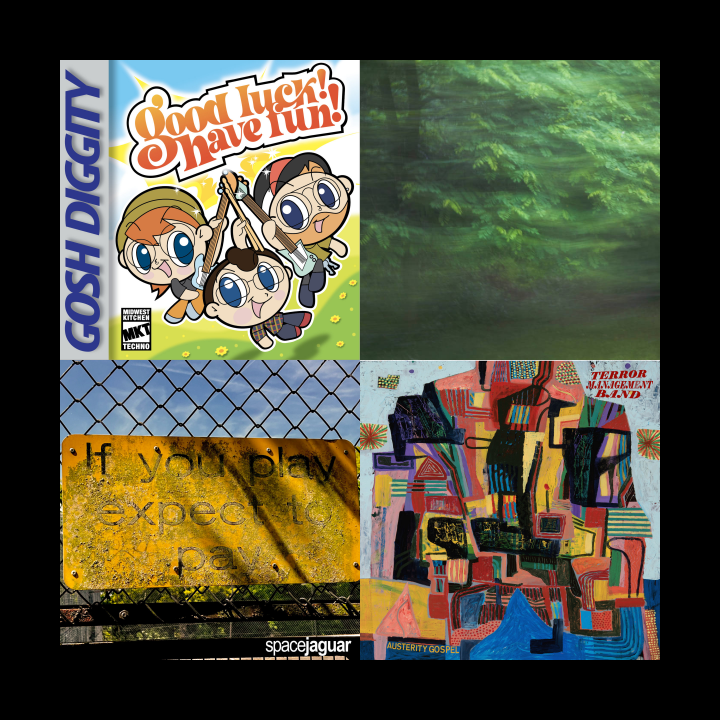

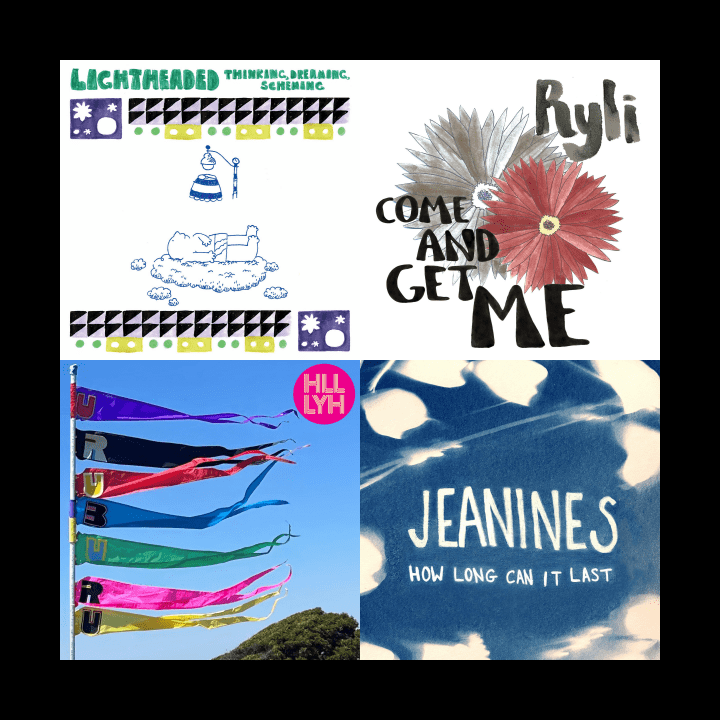
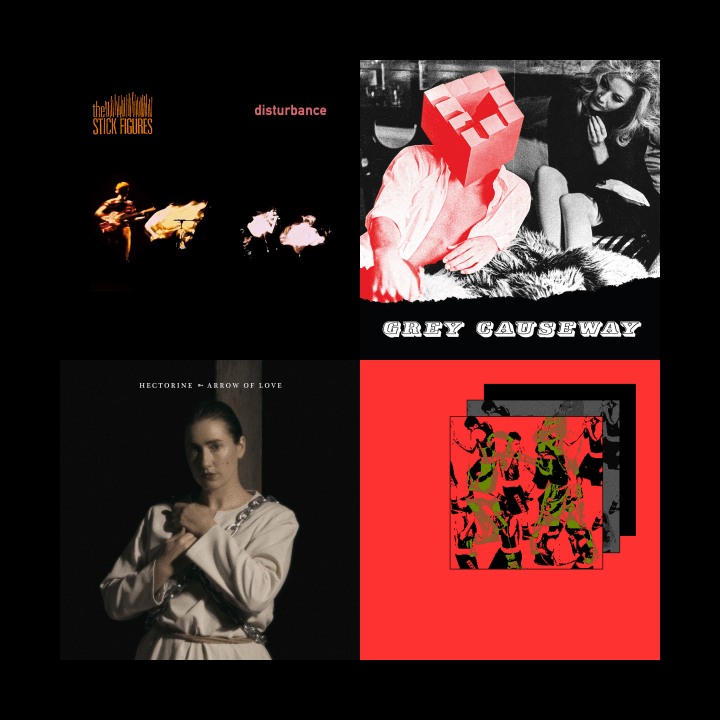
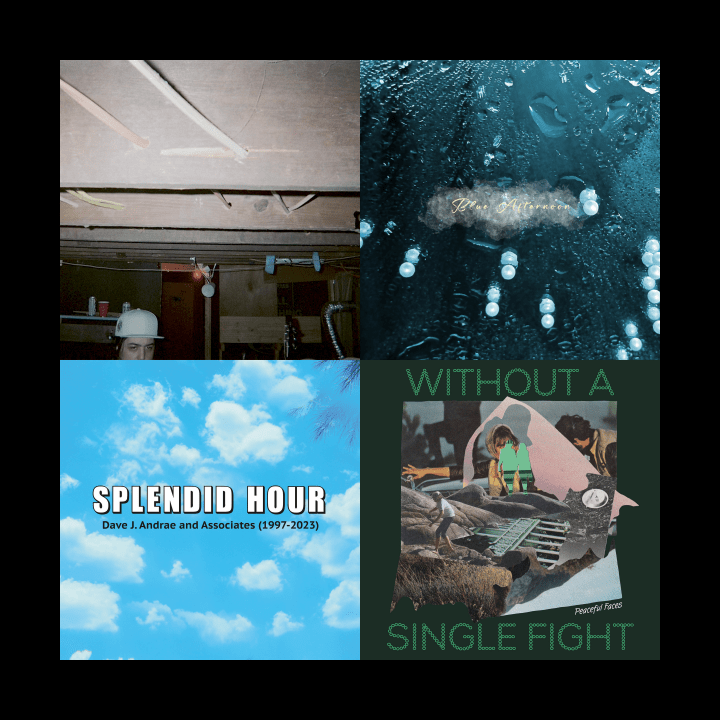
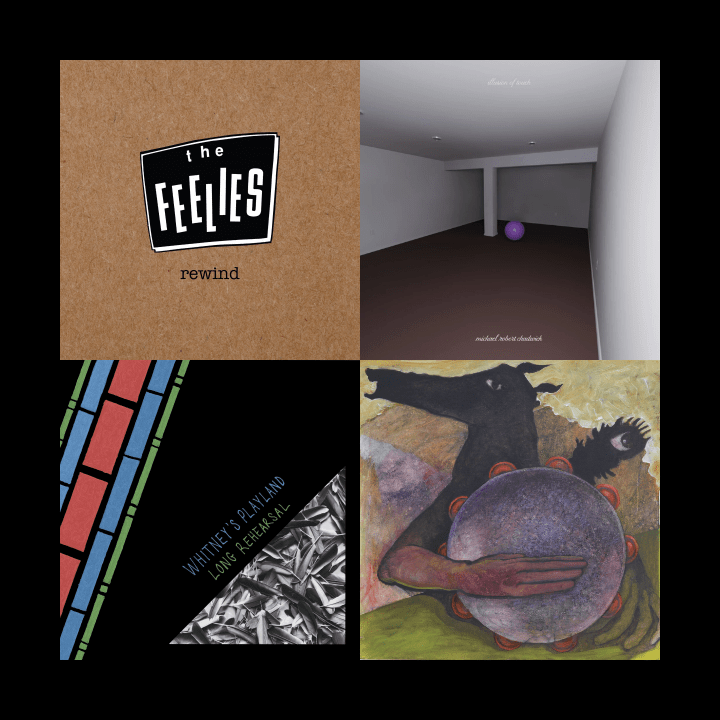

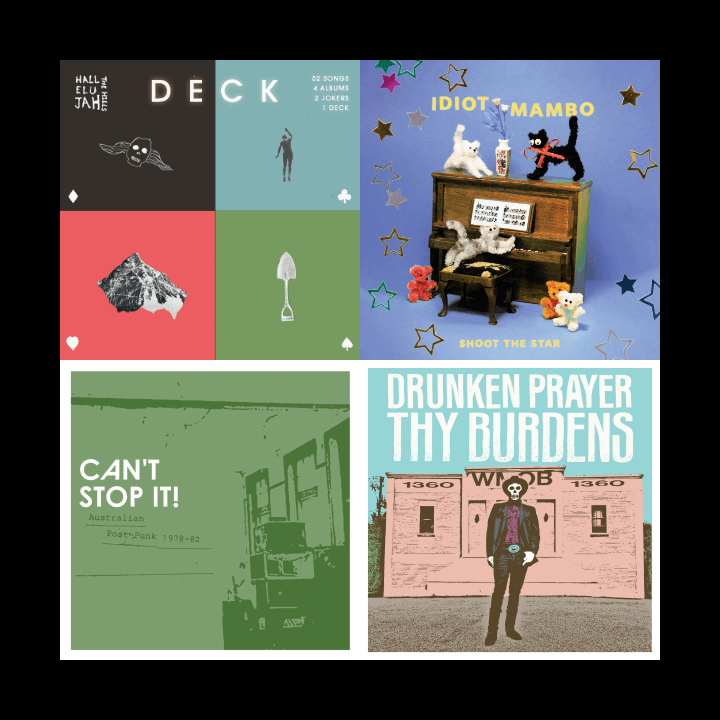
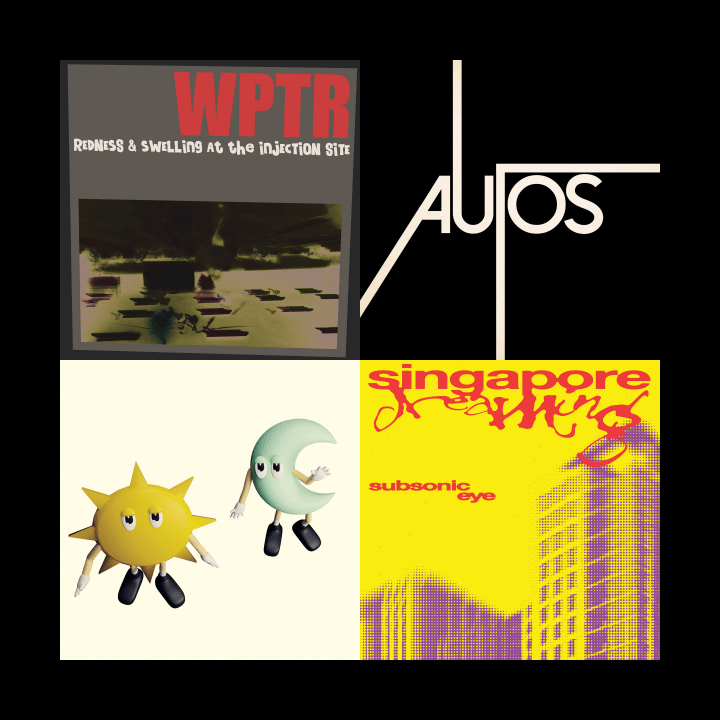
 Rosy Overdrive