Pressing Concerns: Golden Apples, Oruã / Reverse Death, Public Opinion, Frog

Thursday Pressing Concerns! We have new albums from Golden Apples and Frog, a new EP from Public Opinion, and a split LP between Oruã and Reverse Death. All of these are out tomorrow (September 19th)! Cool! And if you missed either of yesterday’s Pressing Concerns (on Monday we looked at Dragnet, Carson McHone, Miss Bones, and Dan Darrah & The Rain, and on Tuesday it was Understanding, Prathloons, BRNDA, and Shallowater), check those out, too.

If you’re looking for more new music, you can visit the site directory to see what else we’ve written about lately. If you’d like to support Rosy Overdrive, you can share this (or another) post, or donate here.

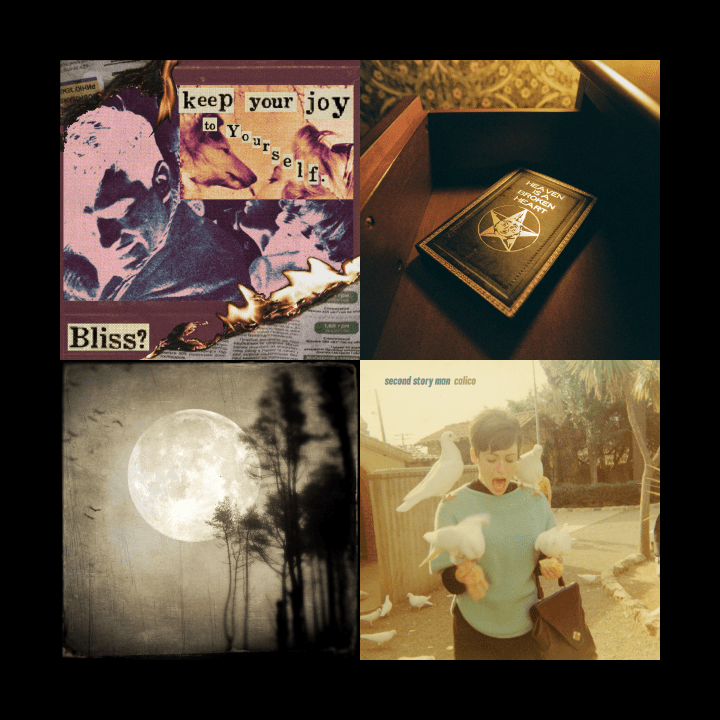
Golden Apples – Shooting Star

Release date: September 19th
Record label: Lame-O
Genre: Fuzz pop, noise pop, psychedelic pop, lo-fi indie rock
Formats: Vinyl, digital
Pull Track: Fantasia

Russell Edling has been making music as Golden Apples (and before that, as Cherry) for several years, but 2023’s Bananasugarfire was a big milestone for the Philadelphia artist. With a solid lineup behind him, Edling’s pop music became louder and fuzzier, incorporating shoegaze and psychedelia into Golden Apples’ sound. The latest Golden Apples LP, Shooting Star, takes the ambition and expanse of their previous album and refocuses it in a decidedly different manner. Pieced together in a handful of different locales with various contributors (Cave People’s Mimi Gallagher, Lowercase Roses’ Matthew Scheuermann, and Slaughter Beach, Dog’s Zack Robbins, among others), Shooting Star pulls off the trick of sounding more like an insular folk-influenced record while at the same time retaining the bright, distorted, kaleidoscopic, psychedelic power pop of Bananasugarfire (I’m only going to say this once: it sounds more like Sparklehorse than anything I’ve heard since the posthumous Sparklehorse album). There are too many great pop moments on Shooting Star to highlight all of them: there’s “Ditto”, the Golden Apples version of a Dazy/Graham Hunt danceable fuzz pop song, the laidback folk rock of “Mind”, the roaring power pop of “Fantasia”, and “Breeze”, a song that makes me wish I hadn’t already used up my one Sparklehorse comparison. Between Bananasugarfire and Shooting Star, there’s now a distinct “Golden Apples sound”–I think I like this new take on it the best so far, but there’s no wrong choice. (Bandcamp link)

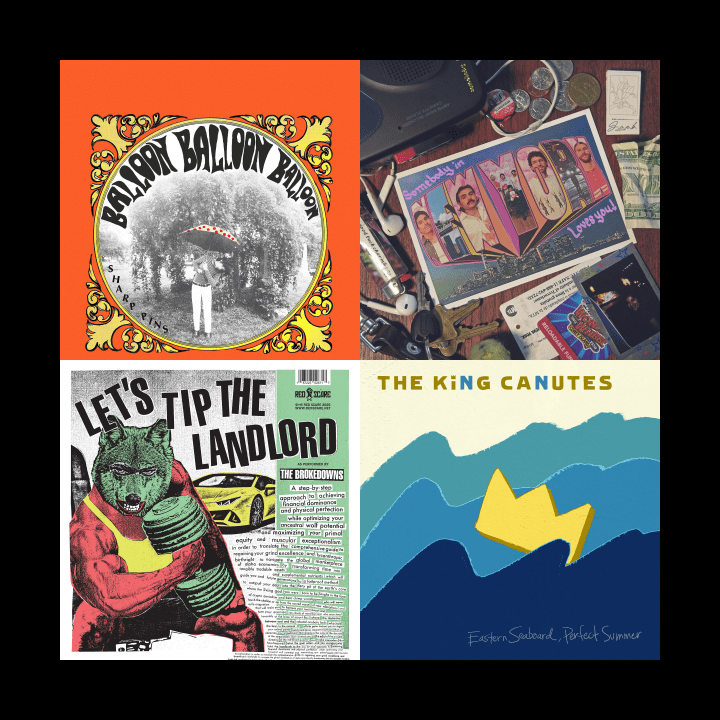
Oruã / Reverse Death – Reflectors Vol. I

Release date: September 19th
Record label: Dead Currencies/Half Shell
Genre: Psychedelic rock, psychedelia, post-rock, ambient pop
Formats: Vinyl, cassette, digital
Pull Track: Maldição

Nashville experimental label Dead Currencies (Monde UFO, Simon Joyner, Matthew J. Rolin) have recently announced a split LP series called “Reflectors”, and they’re kicking off this new project with two titans of modern psychedelic music. Reflectors, Vol. I (also available on cassette via Half Shell Records) brings together Seattle musician Daniel Onufer’s Reverse Death and Brazilian Built to Spill associates (and recent K Records signee) Oruã for two distinct but complimentary takes on the spacier, acid-tinged corners of rock music. Reverse Death’s music is a weightless mixture of ambient, drone, and jazz, and it’s impressive to hear Onufer and company turn this towards the realm of pop music (in a very loose sense) on their side of Reflectors, Vol. I. The final three tracks of Reverse Death’s side are actually one long twelve-minute song, a sprawling psychedelic chamber pop suite that gives way to something pretty different from Oruã. 

The Brazilians, all of a sudden, introduce grounding rhythms back into the mix–the first things we hear in “De se Envolver” are a shuffling drumbeat and plodding bassline. Apparently these are all demos or outtakes from Oruã’s upcoming K Records debut, Slacker–two of these song titles appear on that album’s tracklist–so we’ll see how the “final” product holds up, but Oruã’s more rock-focused psychedelia is a nice counterpoint. It’s still a pretty “soft” version of psych-rock–with the one exception of the nine-minute electric guitar explosion of “Maldição”, which is worth the price of admission on its own. The two sides of Reflectors, Vol. I may just be two stops in an infinite journey, but each one is a little world. (Bandcamp link)

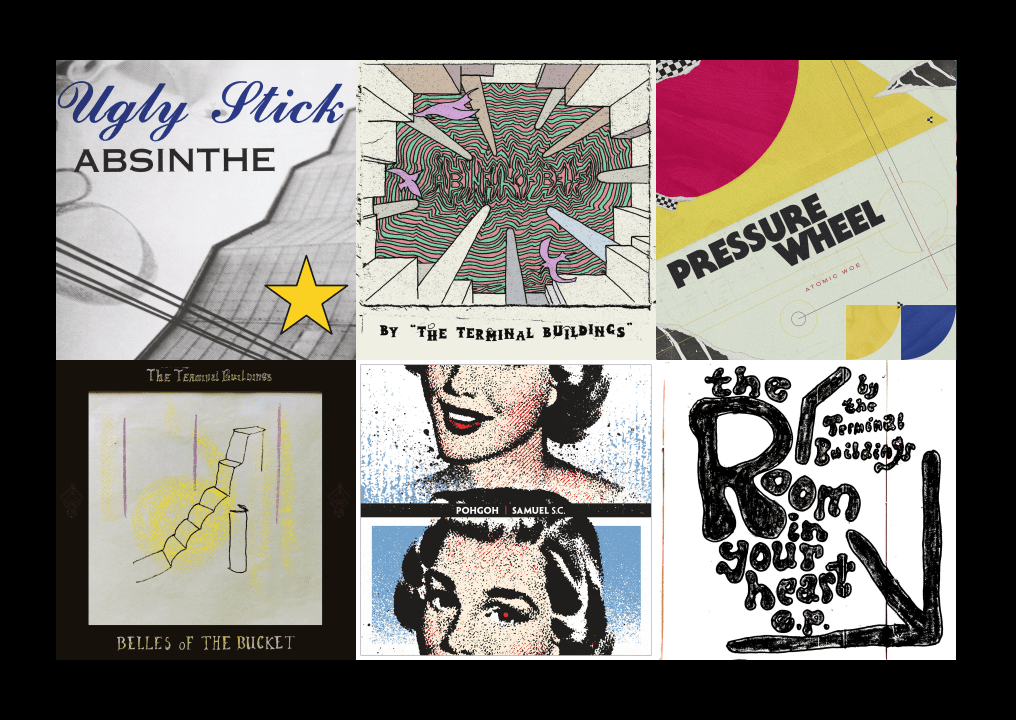
Public Opinion – Perpetual Motion Machine

Release date: September 19th
Record label: SideOneDummy
Genre: Punk rock, pop punk, post-hardcore, power pop, garage punk, emo-punk
Formats: Digital
Pull Track: Finale Rack

When I wrote about Public Opinion’s debut LP, Painted on Smile, last year, I said that the Denver group “combine hardcore might, garage rock raggedness, and huge pop hooks”–it was an excellent introduction to a quintet joining the “hardcore bands making music that’s not necessarily hardcore” movement. Since the release of Painted on Smile, Public Opinion apparently signed with SideOneDummy, and the group’s first release for their new label is a three-song, eight-minute EP called Perpetual Motion Machine that manages to roll their best qualities into a bite-sized, sampler portion. “Laughing Academy” features guest vocals from Patrick Kindlon of Drug Church, whose blistering punk frontperson routine (with Hart as the more polished counterpart) makes it the “heaviest” track on the EP. “Finale Rack” is basically just a pedal-on-the-floor, catchy-as-hell melodic punk rock (and roll) rave-up, and the closing title track ends Perpetual Motion Machine with a curveball in the form of a mid-tempo, emo-y pop punk track (with a bit of an edge to it here and there nonetheless). Those who remember the quieter moments of Painted on Smile won’t be fully surprised by “Perpetual Motion Machine”, but Public Opinion giving so much real estate to this side of themselves on a pretty brief (re)introduction feels like a harbinger of some kind. Maybe Perpetual Motion Machine represents three different doors, or maybe Public Opinion will do their best to keep all of them open on their next full-length. I’ll be listening. (Bandcamp link)

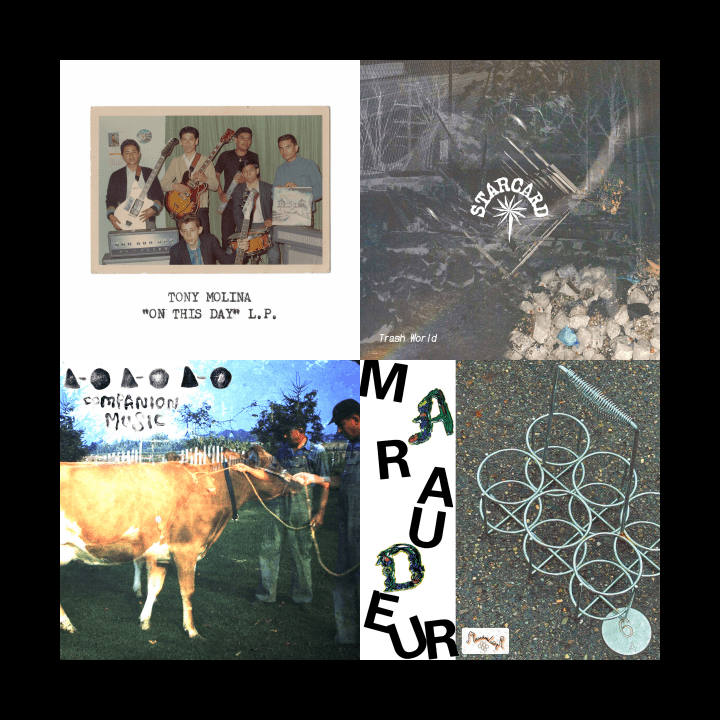
Frog – The Count

Release date: September 19th
Record label: Audio Antihero/Tapewormies
Genre: Indie pop, piano pop, folk-pop
Formats: Digital
Pull Track: Chelsea Piers

So we get a second Frog album in 2025. February’s 1000 Variations on the Same Song is barely even cold in the ground, and now The Count has risen from his coffin to greet us. The seventh album from the cult New York group comprised of brothers Daniel and Steve Bateman (and their third LP since returning from a hiatus in late 2023) is both a logical continuation of their most recent record and a unique entry in their ever-expanding discography. Daniel Bateman sings all of The Count in-character as the titular figure (see the album’s Bandcamp page for an entertaining description of him)–and what do you know, this “Count” fellow’s music sounds an awful lot like a Frog album. In fact, it’s more of a “Frog album” than ever: the back-to-school-special pianos, the soulful falsettos, the hip-hop-inspired cadence and attitude (and, increasingly, lyricism) have all been ratcheted up to dangerous levels. It’d be bordering on self-parodic for a lesser band (not that that’s even an inherently bad thing), but The Count feels free above anything else. Maybe Daniel Bateman needed a degree of remove to sing lines like “You took a piece of me like Crimea” (“Come Come Come Var. XIV”) like he means it, but, if so, good on Frog for letting The Count take it away. (Bandcamp link)

Also notable:

Pressing Concerns: Understanding, Prathloons, BRNDA, Shallowater

This Tuesday Pressing Concerns introduces to us new albums from Prathloons, BRNDA, and Shallowater, and a new EP from Understanding. Pretty cool if you ask me! If you missed yesterday’s blog post (featuring Dragnet, Carson McHone, Miss Bones, and Dan Darrah & The Rain), check that out here.

If you’re looking for more new music, you can visit the site directory to see what else we’ve written about lately. If you’d like to support Rosy Overdrive, you can share this (or another) post, or donate here.

Understanding – The Joy of Living

Release date: August 29th
Record label: Cooked Raw
Genre: Art pop, indie pop, piano rock, folk rock, chamber pop
Formats: Cassette, digital
Pull Track: Taxi2

It’s time for some Understanding. I am, of course, referring to the brand-new quartet out of Toronto, who’ve just put out their debut EP on Cooked Raw Records. Understanding may be fresh out of the gate, but the majority of their lineup has been featured on this blog as members of other acts before: bassist Alex Baigent and keyboardist/vocalist Lucas Temor are one-half of Westelaken, while guitarist/vocalist Nolan Jakupovski co-leads Cootie Catcher. Drummer Avalon Tassonyi (Whitney K, Eliza Niemi) rounds out the group for The Joy of Living, a record that doesn’t really sound like either of Understanding’s sibling bands but contains shades of both nonetheless. The Joy of Living, for the most part, pursues a rambling, keyboard-heavy indie rock sound that streamlines the sprawling folk rock of Westelaken and/or mellows out the chaotic, electronic-tinged twee pop of Cootie Catcher. Recorded by yet another member of Westelaken, Squiggly Lines’ Rob McLay, The Joy of Living is six songs of Understanding locking into place and riding a low-key but fervent vibe to a memorable debut.

The prominent, ringing piano-keys combined with the rootsy rest of the band’s sound reminds me of classic-era Okkervil River, although the singer(s) come more from the 90s indie-slacker school of lead vocalist approaches. The polished, smooth indie pop of opening track “Flesh Is Word” is nearly in Silo’s Choice territory, although the strange, muted performance by the lead singer (I think it’s Temor) keeps the song something of an enigma. Showy pianos and (relatively) shrinking vocals are the core of The Joy of Living, an interesting mix that feels like Understanding attempting to navigate the task of centering an instrument with so much gravitas while also making music that works best with a little bit of remove. “Carry Me Up” and “Tracing Hands” are Understanding’s version of “piano pop”, quick-paced but meandering, and even slight detours (the slower-paced “Nature Knows a Shape”, the swiftly humming “Taxi2”) keep the ivories front and center. The EP’s weird coda, a two-minute AutoTuned breakbeat-pop experiment called “As a Builder”, seems like it should be the only respite from the piano on The Joy of Living, but it’s in there beneath the effects, too. Understanding seem to have figured out what their deal is, even when they veer as far away from it as seemingly possible. (Bandcamp link)

Prathloons – Breadbox

Release date: September 12th
Record label: Self-released
Genre: Slowcore, 90s indie rock, emo-y indie rock, folk rock
Formats: Digital
Pull Track: The Days We Had Each Other

When I wrote about Prathloons in 2022, the Colin Dall-led project was based in Minneapolis and had just released their third album, The Kansas Wind. For a certain subset of indie rock fans, The Kansas Wind is a bullseye, incorporating bits of slowcore, emo, and post-rock in an ornate, string-laden package, and Dall and company have stayed busy since then. Despite a move to Chicago, Dall has remained accompanied by much of the same cast (John O’Brien, Matt Ciani, Nico Ciani, Audrey Alger-Daniels) on last year’s Incredible Things in High Speed EP and this year’s LP, Breadbox. Even for a Prathloons album, Breadbox is pretty hushed and low-key–it largely eschews the swooning crescendos in which The Kansas Wind occasionally indulged and instead seeks to expand and open up the space around Dall’s voice even further. The most upbeat song on the album, “The Days We Had Each Other”, is just a little perky in an early Death Cab for Cutie way, but Breadbox as a whole is the closest that Prathloons have veered (in the time that I’ve been listening to them, at least) towards straight-up slowcore music. The glacially-paced indie rock, post-rock detours, and similarly-slowed down folky string parts are all natural extensions of what Prathloons have been doing lately, although Breadbox also feels like new terrain, entered carefully but deliberately. (Bandcamp link)

BRNDA – Total Pain

Release date: September 12th
Record label: Crafted Sounds
Genre: Post-punk, garage rock, art punk, no wave, indie pop
Formats: Vinyl, CD, cassette, digital
Pull Track: Everyone Chicago

It’s been four years since BRNDA’s Do You Like Salt? graced the pages of Pressing Concerns, meaning we’ve been due for new material from the Washington, D.C. post-punk weirdos for a bit now. For their fourth LP, BRNDA (drummer Leah Gage, guitarists Dave Lesser and Mark McInerney, and bassist Nick Stavely–all vocalists) have given us Total Pain, an album that both re-ups the group’s penchant for bizarre, groovy art-dance-punk-whatever stuff and expands their range beyond that. Sure, BRNDA are their regular old no wave nonsense selves on stuff like “Books Are Bad”, but they’ve also followed their muses into the realms of buzzy, fuzzy noise pop (“Peach Pit”), low-key, Velvets-y indie pop (“MT Eyes”), and starry-eyed, toe tapping mid-tempo guitar pop (“Cool Night”). Even the hilarious and absurd “Everyone Chicago”, a post-punk rant-raver that sounds just like a slightly darker Do You Like Salt? cut, distinguishes itself thanks to what I can only call “blistering noise rock flute soloing” (credit Mike Gillispie, who also plays on “A Little Balloon”). It’s just a nice reminder that BRNDA are one of the more interesting bands operating in the District of Columbia currently in case any of us forgot, and a confirmation that they can still pick up some new tricks. (Bandcamp link)

Shallowater – God’s Gonna Give You a Million Dollars

Release date: September 5th
Record label: Sans Soleil
Genre: Slowcore, post-rock, 90s indie rock
Formats: Vinyl, CD, cassette, digital
Pull Track:
God’s Gonna Give You a Million Dollars

This Texas slowcore thing is pretty good, I’d say. Shallowater are a trio currently based out of Houston, but I believe they have roots in the desolate western half of their home state (perhaps near the Lubbock County town from which they took their name). Their debut album, There Is a Well (released on December 30th of 2023), was a cult hit of a sort–it’s bolded on Rate Your Music, if that means anything to you. They’ve been on the rise ever since–every post about them I’ve seen mentions that they’ve been “co-signed” by Ethel Cain (this is what they mean by that, I believe), they’ve toured with Horse Jumper of Love, and their sophomore album, God’s Gonna Give You a Million Dollars, was recorded by Alex Farrar, the guy who’s recorded every one of those Asheville bands. God’s Gonna Give You a Million Dollars sounds like how you’d hope an album with this kind of pedigree sounds–six songs and forty minutes, with song titles like “Untitled Cowboy” and “Highway”, with a recognizable “country rock” sound occasionally rearing its head only to get swallowed up by the vast blank expanse of eight-plus-minute behemoths like “Ativan” and the aforementioned nameless cowboy ode. Feels like a million cursed bucks. (Bandcamp link)

Also notable:

Pressing Concerns: Dragnet, Carson McHone, Miss Bones, Dan Darrah & The Rain

Hey there folks! We’re here with a Monday Pressing Concerns looking at new albums from Dragnet, Carson McHone, Miss Bones, and Dan Darrah & The Rain. It’s looking like these blog posts will be on the shorter side for the foreseeable future, but it’s the price we must pay for keeping the blog updated regularly at the moment. There will be a post tomorrow!

If you’re looking for more new music, you can visit the site directory to see what else we’ve written about lately. If you’d like to support Rosy Overdrive, you can share this (or another) post, or donate here.

Dragnet – Dragnet Reigns!

Release date: August 15th
Record label: Spoilsport/Idiotape
Genre: Post-punk, garage rock
Formats: Vinyl, digital
Pull Track:
Alta Vista

I’ve enjoyed the stylings of Geelong, Australia garage punks Vintage Crop for a while now, but it’s taken me all too long to get around to checking out lead singer Jack Cherry’s other group, Dragnet. As it turns out, Dragnet sounds a lot like Vintage Crop: Aussie garage rock and thumping post-punk in the instrumentals, Cherry talk-singing like a madman on top of it. Originally begun as a Cherry solo project, Dragnet are now a sextet featuring Dane Brunt, Tom Woodruff, Daniel Oke, Meaghan Weiley, and Alicia Nolan (the latter two of which amicably left the band after the recording of Dragnet Reigns!) and two whole Dragnet LPs have come out since the most recent Vintage Crop album. Dragnet Reigns! is less than twenty minutes of tension being hastily built up and then torn down ad nauseum: the opening post-punk lurch of “What It’s Worth” gives way to the fiery “Red Square” and the garage rock joyride “Alta Vista” before we’ve had a chance to process any of it. One can certainly hear traces of high concept “egg punk” godfathers Devo and Pere Ubu (not to mention, unsurprisingly given their name, The Fall) in Dragnet’s whole deal, but they’re too “rock and roll” to indulge all too much–the spoken-word “Heroic Dose” is the main exception, and it’s over in ninety seconds. It seems like the right amount of time to me. (Bandcamp link)

Carson McHone – Pentimento

Release date: September 12th
Record label: Merge
Genre: Folk rock, singer-songwriter
Formats: Vinyl, CD, digital
Pull Track: Downhill

I first heard of Carson McHone thanks to her work in the Canadian phenomenon Daniel Romano’s Outfit, but the Austin, Texas-originating, Ontario-based singer-songwriter has been making folk-country records under her own name for a decade as well. McHone’s third album, 2022’s Still Life, was put out by Merge Records (as well as a 2024 covers EP called Odes), and that’s who’s putting out Carson McHone LP number four, Pentimento. Featuring backing from Romano (who is McHone’s husband, by the way) and a crew of other Canadian music veterans, Pentimento is an album that could look intimidating from a distance (between the rambling, sixteen-track length and the spoken-word interludes which regularly crop up) but is quite friendly at its core. McHone’s music isn’t nearly as boisterous as Romano’s, but it’s “Americana”-tinged folk rock with a pulse and a more-than-passing interest in pop music. The polished, technicolor refrain of “Winter Breaking” (not to mention those handclaps), the electric jangle of “Downhill”, and the slightly psychedelic “Idiom” are first-half winners, and letting oneself get immersed in the likes of “Wake You Well” and “Fruits of My Tending” in the second half of Pentimento comes recommended as well. The warm “September Song” is an excellent bookend, like the rest of Pentimento made stronger by what it takes to get there. (Bandcamp link)

Miss Bones – Sap Green

Release date: September 13th
Record label: Self-released
Genre: Indie folk, folk rock, folk-pop, pop rock
Formats: Digital
Pull Track: I-93

There’s a nice little indie folk/folk rock/pop rock scene happening up in Boston, the participants of which have appeared on this blog a few times. There’s James Ikeda’s longrunning project The Michael Character, and current Michael Character bandmembers Amanda Lozada and June Isenhart have their own projects called Lonesome Joan and Miss Bones, respectively. Sap Green, the first Miss Bones album, follows a 2023 EP called Grey Lady and features Isenhart backed by an assortment of Boston-area musicians: Eugene Umlor on synths, Jasper Park on bass, Mat Bloomfield on drums, Melisande Pope on guitar, and Rachel Eber on vocals (not to mention Lozada as co-recording engineer). More pop-forward than Lonesome Joan, more laid-back than The Michael Character, Sap Green is a rock-solid coming-out party from the could’ve-been adult alternative/folk rock hit “What’s the Story, Mother?” (in which Isenhart pleads “I’ll split my head wide open just to prove / That you and I share the same skull”) on down. The roots-pop anthem “I-93”, the multi-layered folk-pop closing ballad “Moving Song”, the soaring heartland rock “Sign-Off”–any of these could be the center of Sap Green. We get it all on Sap Green, though, and a handful of more patience-requiring moments, too. (Bandcamp link)

Dan Darrah & The Rain – There’s a Place

Release date: June 13th
Record label: Sunday Drive
Genre: Jangle pop, folk rock, power pop
Formats: Vinyl, digital
Pull Track: You-Shaped Forever

I wrote about Dan Darrah & The Rain in the waning moments of 2023–it was mid-December, but I had to make sure everyone who reads Rosy Overdrive heard the blissful, wistful jangle pop of Rivers Bridges Trains. I am yet again slightly late to the Darrah train, as There’s a Place came out back in June, but once again the LP is strong enough that I can’t let it slip by without a mention in Pressing Concerns. Once again somewhat uncharacteristically released by emo-punk label Sunday Drive Records (Prim, Squint, Broken Head), There’s a Place features the same backing cast as the last Darrah record (bassist/producer Scott Downes, guitarist Darian Palumbo, vocalist Danielle Clark, and drummer Jacob Hellas) and is nothing less than forty-six minutes of sprawling, unhurried, melancholic guitar pop. The record’s opening trio is a (relatively speaking) tight parade of pop hits, whereas the middle of There’s a Place finds The Rain stretching into folk and even country tinged-numbers. “The Last Green Valley” and “Maze/January Runner” inject some energy into the album’s second side, but one shouldn’t sleep on subtler highlights like “George (Was My Favourite Beatle)” either–you’re listening to There’s a Place all wrong if you do. (Bandcamp link)

Also notable:

Pressing Concerns: Dancer, Liquid Mike, Spite House, $500

The Thursday blog post is here! We’ve got four new albums coming out tomorrow, September 12th, from Dancer, Liquid Mike, Spite House, and $500 below. Earlier this week, the August 2025 playlist went up, so check that out if you missed it.

It’s a shorter than normal blog post today, you may notice. I’m doing what I can to keep Rosy Overdrive rolling while being busy in my life outside of it, and I’m hoping to return to full force sooner rather than later.

If you’re looking for more new music, you can visit the site directory to see what else we’ve written about lately. If you’d like to support Rosy Overdrive, you can share this (or another) post, or donate here.

Dancer – More or Less

Release date: September 12th
Record label: Meritorio
Genre: Indie pop, post-punk, art rock
Formats: Vinyl, digital
Pull Track: Happy Halloween

Hopefully I’ve been clear enough on this blog that Glasgow’s Dancer is a special group. We’ve all had plenty of chances to see as much over the past two years, from the two EPs in 2023 to a debut full-length and a split LP with Whisper Hiss last year. Dancer have continued their winning streak into 2025, as their sophomore album, More or Less, is their most substantial release yet at a dozen tracks and nearly forty minutes. It’s the band’s first album with new drummer Luke Moran, who’s replaced founding member Gavin Murdoch behind the kit, but despite the lineup change and the fact that half the band (bassist Andrew Doig and vocalist Gemma Fleet) have been busy with their side project The Chop, More or Less has Dancer sounding more fluid and locked-in as a band than ever before. The jerky post-punk/offbeat indie pop structures are still part and parcel of More or Less, yes, but they’ve been more effectively ironed into a wider tapestry of expansive, exploratory art rock and (for Dancer, at least) more laid-back pursuits of pop music. There’s still boundless energy in songs like “Happy Halloween” and “Deadline”, but the almost late-period Sonic Youth-esque fuzz rock of the former and the spacey synthetic pop meandering of the latter display an occasional bout of patience, too. Dancer may be taking their time, but they aren’t slowing down. (Bandcamp link)

Liquid Mike – Hell Is an Airport

Release date: September 12th
Record label: Self-released
Genre: Power pop, pop punk, alternative rock, fuzz rock
Formats: Vinyl, digital
Pull Track: Crop Circles

I can’t say it enough: Liquid Mike have taken their moment and seized it better than any band I can think of in recent memory. I liked the Marquette, Michigan’s 2023 self-titled breakthrough album perfectly fine, but it was the record that Mike Maple and company made with the spotlight on his project, last year’s Paul Bunyan’s Slingshot, that made me really appreciate them as one of the best power pop acts currently operating. Hell Is an Airport strikes while the iron is hot: Maple apparently quit his job at the USPS to focus on Liquid Mike full-time, and founding members Maple and synthesizer player/backing vocalist Monica Nelson have been joined by drummer Cody Marecek, bassist Zack Alworden, and guitarist Dave Daignault to make a well-oiled five-piece alternative rock and roll band. If a tad less grandiose than Paul Bunyan’s Slingshot, Hell Is an Airport is the smoother and tighter album: fourteen songs of 90s-fuzz-laden, pop punk-baiting power pop in under thirty minutes. Everything on Hell Is an Airport feels like a hit, and the songs bleed and squeal into each other like Liquid Mike are running frantically from one idea to the next before the fire burns out. The urgency makes for exhilarating listening, but I don’t think there’s any act currently going that needs to worry less about their flame being extinguished than Liquid Mike.

Spite House – Desertion

Release date: September 12th
Record label: Pure Noise
Genre: Post-hardcore, punk rock, emo-punk
Formats: Vinyl, CD, digital
Pull Track: 10 Days

If you like 90s-style punk albums that evoke names like Jawbreaker and Knapsack, then–well, maybe “enjoy” isn’t the right word, but you should check out Spite House. I wrote about the Montreal trio’s New Morality Zine-released debut album in 2022, referencing names like Seaweed and Samiam while talking about a catchy but heavy punk album inspired by the death of vocalist/guitarist Max Lajoie’s mother. Regarding Spite House’s second album, Desertion, Lajoie says “There’s nothing happy about these songs,” and he’s not overstating things a bit. Writing not only about his mother’s death from cancer but also the death of his father when he was a teenager, Lajoie (with aid from bassist Nabil Ortega and drummer Marc Tremblay) leans more than ever into hard-hitting, intense post-hardcore as some kind of release on Spite House’s first album for Pure Noise. These are still, stubbornly, “punk anthems”, with Lajoie’s roared refrains, the gigantic guitars, and the pounding rhythms from the rest of the band all wielding an uncomfortably blunt hammer with arresting force. Much of Desertion is delivered in relatively brief missives like “10 Days” and “Ashen Grey”, but these two-minute bursts of revisited turmoil just end up being more concentrated punches. (Bandcamp link)

$500 – Twelve Eyes

Release date: September 12th
Record label: Self-released
Genre: 90s indie rock, slowcore, fuzz pop
Formats: CD, digital
Pull Track: Dead C

There are probably a few different 90s indie rock-inspired collectives in New York City and the surrounding areas these days, but one particularly strong one seems to center around the power trio Slake/Thirst and its associated acts like Beagle Scout and bcc:. We can now add Kingston-based trio $500 to the list–bassist/vocalist Kaitlyn Flanagan and guitarist Ian Donohue perform the same roles in Slake/Thirst, and they’re joined by the new-to-me Jonathan Crisafulli on drums. All of these aforementioned bands have made their statements via relatively brief EPs or “mini-LPs”, but $500 have cut to the chase by making their debut release a full-length ten-track album–there’s an eight minute song on here and everything! Twelve Eyes, like $500’s associates’ records, has one foot in the world of the “pop” side of Pavement, Built to Spill, and the Exploding in Sound Records roster, although there’s a more probing, almost droning element to $500’s pop music here. Between Donohue’s friendly but unpredictable guitars and Flanagan’s eager shadowboxing performance as a frontperson, I’m reminded a bit of the underappreciated Rick Rude. Don’t worry if you don’t know them or any of the other acts I mentioned earlier, though–just listen to the ninety-second fuzz-pop showcase “Dead C” and you’ll start to pick up on everything. (Bandcamp link)

Also notable:

New Playlist: August 2025

The August 2025 Playlist is here, featuring a bunch of great new music! Check it out below, of course. There won’t be a Tuesday blog post this week, so see you again on Thursday and enjoy this in the meantime!

Retirement Party, Pile, and Tullycraft have two songs on this playlist.

Here is where you can listen to the playlist on various streaming services: Spotify, Tidal. Be sure to check out previous playlist posts if you’ve enjoyed this one, or visit the site directory. If you’d like to support Rosy Overdrive, you can share this (or another) post, or donate here.

“Straight Line Was a Lie”, The Beths
From Straight Line Was a Lie (2025, Anti-)

The Beths make it sound like Straight Line Was a Lie was their most difficult record to make, and I can believe it based on how it sounds: the melancholy that’s always been at the periphery of the New Zealand power pop/indie pop institution’s sound is explored more thoroughly here than ever before, and it’s easy to imagine a band as tight and well-sculpted as The Beths struggling to let some of these songs sit as unadorned as they ended up sounding on-record. In terms of bittersweet flag-waving anthems, the phrase “Straight Line Was a Lie” is right up there with 2022’s “Expert in a Dying Field” (probably my favorite song of theirs if I had to choose), and the album’s opening title track is as huge and “power pop” as anything else in The Beths’ arsenal. Read more about Straight Line Was a Lie here.

“Black Sand”, Ganser
From Animal Hospital (2025, Felte)

Chicago post-punk group Ganser are a boring band–I mean, in the sense that their music drills and bores intensely and incessantly into anything and anyone that happens to be nearby. Pretty much every instrument takes up this task throughout Animal Hospital–the rhythm section is pounding, of course, the guitars are an assault, and the synths whir and seethe at the base of it all. Sometimes, the vocals match this cacophony, but they’re just as likely to go against the grain–like on my favorite song on the album, opening track “Black Sand”. Instead of mechanically mimicking the instrumental, co-frontperson Sophie Sputnik’s performance is sneering and taunting (if you’ve ever seen Ganser live, you know just what Sputnik is capable of). Read more about Animal Hospital here.

“The Ledge”, Tullycraft
From Shoot the Point (2025, HHBTM)

I’m not sure I would’ve pegged Tullycraft as the 90s indie pop band to still be going strong in the year 2025, but here we are with Shoot the Point, a very sturdy collection of pop music that might be “mature” in some ways but without “slowing down” in any. Bouncing power pop hooks, tambourine-shaking barebones 60s throwbacks, two wisened but still animated personalities at the reins–it’s hard to find any fault with where Tullycraft are at these days. “The Ledge” opens Shoot the Point with a well-timed wink, but it’s easy to miss between Sean Tollefson and Jenny Mears’ vocal tradeoffs and that eagerly slapdash rhythm section. Needless to say, it’s one of the best pop songs I’ve heard in quite some time. Read more about Shoot the Point here.

“Residual”, Retirement Party
From Nothing to Hear Without a Sound (2025, Rat Poison)

The “original lineup” of Chicago group Retirement Party may have ended in 2022, but bandleader Avery Springer has kept the project alive and Nothing to Hear Without a Sound is here to formally usher in a new era of the band (but one that’s still pursuing a muscular, full band-evoking power pop sound). The combination of big melodic guitar lines and Springer’s earnest Midwestern vocals both help this iteration of Retirement Party keep their place among the best of the current crop of bands arising from the punk/indie rock underground with a firm grip on “guitar pop”. “Residual” might be Springer’s best yet–nobody this side of Carmen Perry is as good at making “bummer pop” sound as euphoric as Springer does, and the immaculately-executed jangly power pop instrumental showcases her skills as an arranger, too. Read more about Nothing to Hear Without a Sound here.

“1978, Smiling Politely”, Martha
From Standing Where It All Began (Singles and B-Sides 2012-2025) (2025, Specialist Subject)

There’s nothing like a good Martha song. While we haven’t got any “new” new Martha songs this year, we did get Standing Where It All Began (Singles and B-Sides 2012-2025), a helpful compilation pulling from across the Durham power pop legends’ career and featuring tracks both familiar and unfamiliar to me beforehand. “1978, Smiling Politely” opens this collection by going all the way back to Martha’s 2012 self-titled debut EP–I don’t remember ever hearing this one before, and I feel like I’d remember this one. It’s hard to believe that this band came fully-formed right-out-of-the-gate with these huge pop instincts, band-centric presentation, and boundless energy. But here we are.

“Arms Fall Off”, K9
From Thrills (2025, Who Ya Know)

The Richmond quintet K9 isn’t shy at all about their love of classic college rock and jangle pop, but they carry themselves like a bunch of garage rockers (or even, at time, punks)–on their debut album, Thrills, the final product is somewhere around the midpoint between Lame-O and Feel It Records. I hear everything from the rootsy Texas power pop of Cast of Thousands, the sloppy, tinny college rock revivalism of Silicone Prairie, and countless casual-pop K Records alumni in Thrills’ opening track, “Arms Fall Off”, a garage rock runaway train. Read more about Thrills here.

“Now Now Now Now Now”, Robbie Fulks
From Now Then (2025, Compass)

Oh, man. It’s so nice to have a new classic grab-bag Robbie Fulks album. Not that I disliked the exactly-what-it-says-on-the-tin Bluegrass Vacation, but the alt-country firebrand wasn’t doing anything like “Now Now Now Now Now” on that one. It’s an exhilarating, delirious country rocker whose writing is brilliant enough to keep up with the insane pace. Fulks explains the song better than I could: it’s a jumble of “actual memories of [his]” mixed with “signals of mistrust, self-doubt, shakiness”. The unreliability, grandiosity, and offbeat, unsettling raving aren’t just fun wrinkles of the song–they’re, quite literally, the point.

“Mooncar”, Les Duck
From Love Is the Dirt (2025, Anything Bagel)

Haha, I love this song. It’s just a really sweet, simple, humble guitar pop song about the moon and skipping rocks and Avatar: The Way of Water and whatnot. I’ve got Butte, Montana label Anything Bagel to thank for bringing Les Duck in my life–they put out Love Is the Dirt, for one, and I believe both of the label’s co-founders (Sanders Smith and Jon Cardiello, also of The Pond) are part of the band, too. Lukas Phelan (a Missoula-based painter according to his website) is the lead vocalist and lyricist of “Mooncar”, a bright, sparkling guitar pop tune that is almost aggressively lackadaisical and infectious. 

“An Offering”, Lake Ruth
From Hawking Radiation (2025, Feral Child/Dell’Orso)

After releasing two albums in the late 2010s, New York’s Lake Ruth had been pretty quiet this decade, but Hawking Radiation is a great reintroduction to a high-quality indie rock band. Recorded by the band themselves with help from Savak’s Sohrab Habibion & Michael Jaworski, among others, Hawking Radiation is a sparkling example of adventurous, psychedelic, synth-led “space pop” with debts to Stereolab and many of the 60s pop albums from which Stereolab drew. Lake Ruth differentiate themselves from their like-minded peers on Hawking Radiation via a palpably-embraced jazz side. Plenty of bands like this dabble in “jazz-pop”, yes, but rarely is it so thoroughly a part of a record’s makeup as this; it’s the stopping and starting of “An Offering”, the second song on Hawking Radiation, that sets the tone for the album and starts the building of something intricate and long-lasting. Read more about Hawking Radiation here.

“College Radio Static”, Friend’s House
From Farewell Skylines (2025)

MyVeronica and Friend’s House are a pair of intertwined Los Angeles indie rock bands–Tristin Souvannarath, who leads the latter act, also plays guitar in the former. Both acts draw influence from 1990s emo, slowcore, and indie rock with traces of emo and/or slowcore, and (perhaps unsurprisingly), their four-song split EP Farewell Skylines hangs together as a coherent release. Friend’s House may be the slower and less “band”-like of the acts, but they get the biggest chorus on Farewell Skylines, and everyone made the right choice to have “College Radio Static” lead off the EP. For over a minute, “College Radio Static” is a steady, subtly beautiful slowcore tune, but the electric guitars take off like a rocket around the ninety-second mark and Souvannarath delivers a really passionate couple of lines with the platform. Read more about Farewell Skylines here.

“Born at Night”, Pile
From Sunshine and Balance Beams (2025, Sooper)

It’s really nice to have Pile back and rocking again. Rick Maguire and company never lost me during their most experimental years (Hot Air Balloon was quite good, and All Fiction, while not my favorite Pile album, is still fascinating in its own way). Still, Sunshine and Balance Beams hits in a way that Pile haven’t quite hit since Green and Gray, even if you can hear the spacier moments of their recent material all over the album too. Much of Pile’s best material can be described as “building up towards absolutely insane moments”, and “Born at Night” fits in this category quite well: “If there’s no room for cowards now / Then who the fuck are you?”

“Lip”, Shaki Tavi
From Minor Slip (2025, Felte)

Minor Slip doesn’t abandon the hard-hitting wall-of-sound of 2022’s Shaki Tavi, precisely, but the melodic and pop undercurrents of the Los Angeles band’s first LP are closer than ever to the surface now. With dream pop, psychedelia, and electronica all sitting next to the blasts of guitars, bandleader Leon Mosburg and company are now ready to explore an exciting style of “pop music”. Minor Slip starts on a mountain called “Lip”–Mosburg’s vocals glide steadily over a giant monolithic instrumental that pummels without detracting from the blooming melody at its core. Read more about Minor Slip here.

“Nightmare”, Jobber
From Jobber to the Stars (2025, Exploding in Sound)

Jobber to the Stars is the first Jobber record featuring all four of its members, their first full-length record at all, and it took over two and a half years to make; there are a lot of unknowns going into this record, but the quartet pull off the challenge admirably. Jobber are a band that really know how to put a bigger stage to use, keeping the smart hooks intact but adding heavy lumbering alternative rock moments and zippy, jagged Exploding in Sound-style underground rock into their sound. The biggest pop moments on Jobber to the Stars seem to take full advantage of Michael Julius’ ability to pull out huge, Rentals-like keyboard hooks–the melodic meltdown of “Nightmare” is perhaps the best example on-record. Read more about Jobber to the Stars here.

“Earthbound”, Moviola
From Earthbound (2025, Dromedary)

Moviola are a Columbus-based group who’ve been players in the Ohio indie rock world to the tune of thirty-plus years and eleven albums, recently returning from a hiatus of sorts with three albums in the past half-dozen years. I get the impression that Moviola have long existed in the realms of Midwestern alt-country and “Americana”, and Earthbound is a laid-back and leisurely roots rock album that does indeed sound like the work of a band with plenty of experience in those genres. The steady alt-country mid-tempo rocking of the title track is my favorite song on Earthbound, a timeless tribute to the “low life” (planetarily speaking) in vintage No Depression getup. Read more about Earthbound here.

“Just Like a Flower”, Winter
From Adult Romantix (2025, Winspear)

Samira Winter’s shoegaze-touched indie/dream pop feels ahead of the curve, as plenty of festival-tier “indie” musicians have found great success making some version of this sound in recent years, and it feels just that Winter’s been able to experience some success in its wake. Her first album for Anti-, Adult Romantix, is an odd but undeniably strong pop reintroduction album. The first proper track on Adult Romantix, “Just Like a Flower”, affirms the Brazil-originating, New York-based artist’s ability to pen and perform a monster truck of a jangly guitar pop anthem which is absolutely dripping with melodies, hooks, and exuberance. Read more about Adult Romantix here.

“Part of the Problem, Baby”, Fortitude Valley
From Part of the Problem, Baby (2025, Specialist Subject)

Nothing wrong with some good British indie-power-pop, and Fortitude Valley’s “Part of the Problem, Baby” very much fits the bill. Bandleader Laura Kovic references The Beths (who also appear in this playlist) as an influence, and the band also features members of Martha (who also appear in this playlist). It shouldn’t be surprising that “Part of the Problem, Baby” sounds a bit like both of those bands, nor should it be that I quite enjoy it! 

“Landscapes”, Wavers
From Look What I Found (2025, Salinas/Musical Fanzine/Reach Around)

Olympia, Washington’s Wavers eagerly name the likes of Discount, J Church, and “Numero Group-core” 90s indie rock as influences, but the pop side of the band can’t be overstated. Like their sibling band Pigeon Pit does with folk punk, Wavers merge their chosen genre(s) with lo-fi pop from Olympia and wider Cascadia. Look What I Found basically expands the sound of Wavers’ debut EP (my favorite of last year) to thirteen songs and twenty-eight minutes, to the point where a few of the songs from their last record are presented re-recorded here. “Landscapes” is a new one, though, a sneakily-grand sweeping, heartland pop track featuring some classic emo-worthy bass playing. Read more about Look What I Found here.

“The Source”, Google Earth
From for Mac OS X 10.11 (2025, Tiny Telephone)

First of all, I do have to admire Google Earth’s commitment to their thematic naming conventions–their sophomore album, for Mac OS X 10.11, follows last year’s Street View. I’ve followed John Vanderslice since he was an analog-devoted baroque pop musician into his current mind-boggling journey into glitchy electronics; Google Earth is his project with multi-instrumentalist Jamie Riotto and lyricist Maria Vanderslice, and there are some gorgeous pop songs buried in the confusing synthetic pile-up. “The Source” is a vintage haunting Vanderslice melody grafted onto low-key, slightly glitched-out synthpop. Sounds like nothing else.

“Felt a Little Left”, Bottomless Pit
From Shade Perennial (2013, Comedy Minus One)

and

“Bar Ice”, Silkworm
From Chokes! (2006, 12XU/Comedy Minus One)

Order Lay it Down In Full View: Collected Writings On Silkworm And Their Music, featuring an essay written by me about the EP Chokes! here, and read more about “Felt a Little Left” by some of the members’ successor band, Bottomless Pit here. Please and thank you.

“Kingdom Crime”, Upper Narrows
From Over the Prairie (2025, Repeating Cloud)

Upper Narrows, the Portland, Maine-based synthpop project of one Tyler Jackson, debuted on Repeating Cloud Records in 2023 with an LP called While We’re Warm. Jackson’s second release as Upper Narrows (mostly self-recorded, with some aid from Tyler Quist) is a six-song EP called Over the Prairie, and while this cassette does see Jackson pushing the project into odder synth exploration territory, there’s still plenty of good pop music on it, not the least of which is “Kingdom Crime”. It’s a mid-tempo, almost slacker rock-ish take on synthpop, digital strings and keys swooning lazily over a simple but effective hook.

“All Grown Up”, The Unknowns
From Looking from the Outside (2025, Bargain Bin)

The Unknowns got onto my radar back in 2023 with a great record of knucklehead Australian garage rock/power pop called East Coast Low. The The Chats-affiliated group are back two years later with another album called Looking from the Outside, and I mean it as a compliment to say that it’s much of the same this time around, too. When you can rattle off an effortlessly tough, swaggering punk-pop classic like “All Grown Up”, there’s no reason to mess with that.

“Pharaoh”, Modern Nature
From The Heat Warps (2025, Bella Union)

After getting more abstract and post-rock/chamber music-influenced over the course of four records, British art rock group Modern Nature decided it was time to start from scratch with The Heat Warps. The vast blank space of previous Modern Nature LPs hasn’t completely dissipated, but the quartet have allowed more of it than ever to fill with Jeff Tobias and Jim Wallis’ steady rhythms and Tara Cunningham and Jack Cooper’s snaking guitars. Even the album’s cover art–a warm yellow, depicting the four players–indicates a change to something more approachable and evenly-split. “Pharaoh” is a mesmerizing streamlined-psychedelic opening piece, chugging along in a groove only enhanced by what Cooper and Cunningham are doing over top of it–it kind of sounds like sophisti-pop The Feelies, if you can imagine that. Read more about The Heat Warps here.

“Eatin’ Big Time”, Tyler Childers
From Snipe Hunter (2025, RCA/Hickman Holler)

Maybe I was a bit too quick to subconsciously dismiss Tyler Childers after Can I Take My Hounds to Heaven? (which I “respected more than liked”) and Rustin’ in the Rain (which, hand to God, I swear, I completely forgot existed until I went to write this song entry). Do I like all of Snipe Hunter on first blush (after finally getting around to listening to it)? Not quite, no–but I love the opening track, “Eatin’ Big Time”. Yes, this is what good country rock music sounds like, and it’s a great reminder of just why Childers cut through the noise and the bullshit when he broke through in the first place. I’m not entirely sure what “Eatin’ Big Time” is about–if it’s even “about” anything–but Childers is a clever and rich writer here, weaving together a surreal but down-to-earth collection of images about class, wealth, culture, and tradition (from the EBT joke of the song title on down).

“Maybe Later”, DÄÄCHT
From Crying Houses (2025, Beta Cult)

German group DÄÄCHT make a triumphant return with Crying Houses, a garage punk album that puts its foot on the gas and balances heaviness with a commitment to fun rock and roll much like the late, great Hot Snakes. It’s psychedelic rock made by a punk rock band, or a punk album with a heavier, metallic shadow cast over it. Post-punk and goth are in Crying Houses’ mix too, but it’s a more subtle, attitudinal addition to the limber, dark, and loud sound the album hones in on for a nice clean ten tracks and twenty-nine minutes. “Maybe Later” is a dance song if you squint, an excellent garage rock hook in the refrain and a galloping drumbeat carrying the entire thing. Read more about Crying Houses here.

“Orange Julius”, Laminate
From Kiss Unltd. (2025, Den Tapes/Sifter Grim)

Ferocious post-hardcore rockers with bits of shoegaze, noise pop, and even straight-up alternative rock percolate throughout Kiss Unltd., and the occasional but very real hooks Laminate sneak into a few of these songs are just as jarring as the sudden drop-outs. Ironically, the second half of the album is where everything I would consider “pop songs” lie (or maybe that’s just par for the course with Seattle rock bands); the somewhat triumphant-sounding slacker rock of “Orange Julius” is arguably the biggest hook-fest on Kiss Unltd., but it has a surprising number of rivals for this kind of music. Read more about Kiss Unltd. here.

“Fintech Vest”, Peter Peter Hughes
From Half-Staff Blues (2025, Tired Media)

I’m quite enjoying this arc from Peter Peter Hughes, former Shrimper Records stalwart and longtime bassist for the Mountain Goats who decided to go to Australia and make one of them Aussie indie pop/post-punk kinda albums. Recorded with members of The Ocean Party, Pop Filter, and Partner Look, Half-Staff Blues translates Hughes’ propensity for unflinching left-wing commentary and melancholy meandering into the realms of snappy rhythms and bright and garish pop get-ups. I still think single “The End of Your Empire” is my favorite from the album, but “Fintech Vest” is quite fun too, a fairly goofy tribute to the titular article of clothing that’s become synonymous with a certain subset of Guys. A menagerie of bizarre sound effects and post-punk choppiness can’t derail what’s at its core a really great pop song, though.

“Grey Girl”, The Croaks
From Menagerie (2025, Cretin)

I wrote about The Croaks’ prog-folk “wench rock” back in 2023 with Croakus Pocus, an EP I quite enjoyed, and while the Boston group’s latest release, Menagerie, is a bit shorter than the last one, there’s still plenty of that increasingly-recognizable “Croaks sound” in these four songs and twelve minutes. “Grey Girl” is probably my favorite song on Menagerie, as it’s got a bit of everything–a sweeping folk-rock chorus, rustic instrumentation poking around the edges, and just a bit of prog-esque musical change-ups and unintuitive choices.

“Superstar 666”, Bunnygrunt
From Action Pants (Expanded 30th Anniversary Edition) (1995/2025, HHBTM/No Life/Silly Moo/Jigsaw)

Bunnygrunt’s longevity and consistency would be enough reasons to look back at their debut album, 1995’s Action Pants, on their own, but this thirtieth anniversary of the cult indie pop band’s first LP also restores the original intended tracklist for the album. This album is indie rock for people who like “indie rock” and all that entailed in 1995: there are bits of twee indie pop, scrappy indie punk, and even “motorik” moments here. There’s an oddly droning, humming quality to songs like opening track “Superstar 666”, even as it’s clearly an indie/power pop song at its core. Read more about Action Pants here.

“Out of Every Night”, The Chop
From It’s the Chop (2025, Wrong Speed)

From (some of) the minds who brought you Dancer, It’s the Chop! Specifically, these minds are Gemma Fleet and Andrew Doig (aka Robert Sotelo), one-half of that scrappy Scottish indie pop/post-punk quartet. Even compared to the more streamlined side of Dancer’s art pop, It’s the Chop is a minimal affair, with simple drum machines, bass riffs, and synth interjections all used fairly sparingly. Fleet’s vocals are much less inclined to go “off the rails” here; she’s still doing that conversational thing she does very well, but it’s less “mile a minute” and more “pensive”. Still, Gemma Fleet’s vocals and Andrew Doig’s basslines are two of the most important (perhaps the two most important) ingredients of Dancer, and they’re both right up front in It’s the Chop’s opening track, “Out of Every Night”. Read more about It’s the Chop here.

“Everybody Dies”, Superchunk
From Songs in the Key of Yikes (2025, Merge)

New Superchunk album’s pretty good. I don’t instantly love it, but it sounds a lot like Wild Loneliness, an album that steadily grew on me throughout 2022. There’s some great Superchunk-punk-pop moments on Songs in the Key of Yikes nonetheless–opening track “Is It Making You Feel Something” and “Stuck in a Dream” are both winners, but single “Everybody Dies” is still my favorite one. It’s their first album since the departure of longtime drummer Jon Wurster, but as long as Mac McCaughan and Jim Wilbur keep intertwining their guitars like this, I’m not too worried.

“My Heart”, TTTTURBO
From Modern Music (2025, It’s Eleven)

If you like your pop music to be shrill, tinny, and sounding like absolute shit, then Modern Music is the brief, murky punk record for you. TTTTURBO exist in a realm where nervous egg punk, lo-fi, drum machine one-man-band synthpunk, and muddled but gripping hooks all get equal playing time (It reminds me a bit of those Power Pants cassettes, but even more sonically fucked up). My favorite one on this record might be “My Heart”, a surprisingly full-sounding power pop/punk rock song that only needs about forty-five seconds to do everything it needs to do. Read more about Modern Music here.

“Sixth Sense”, Retirement Party
From Nothing to Hear Without a Sound (2025, Rat Poison)

At around eleven minutes in length, Retirement Party’s Nothing to Hear Without a Sound is short and sweet, a no-filler reintroduction to a power pop band I didn’t realize I was missing. Both of the songs that make up the EP’s first half have a strong claim to be the record’s “hit”–in the first slot, we have “Sixth Sense”, which wields a dangerously-catchy power pop guitar riff in its hand at the starting bell and only lives up to its potential when Avery Springer steps into the ring as a vocalist. Read more about Nothing to Hear Without a Sound here.

“King Bidgood’s in the Bathtub (and he won’t get out of there)”, The Smashing Times
From Split (2025, Upset the Rhythm)

There’s no new Smashing Times album in 2025 (yet), but the prolific Baltimore jangle pop institution will finish the year with no less than two new songs thanks to a four-song split EP with fellow Baltimore indie pop artist Linda Smith. Both of these new Smashing Times songs are awesome–I wanted to put the sixty-second pop charmer of “Alfie” on here too, but in the end I went with the four-minute psychedelic freakbeat odyssey of “King Bidgood’s in the Bathtub (and he won’t get out of there)”. Noodly jangly guitars, droll and droning vocals, stop-start rhythms, and flutes–pretty much all of The Smashing Times’ best qualities are on full display here.

“An Opening”, Pile
From Sunshine and Balance Beams (2025, Sooper)

Let’s do another Pile song because I’m quite enjoying Sunshine and Balance Beams. “An Opening” is (appropriately, I guess) the album’s first song, and it jumps into the thick of things with ugly, blunt guitars and Rick Maguire doing classic haunted Rick Maguire things. Given that “An Opening” basically starts at 110%, it doesn’t seem like Pile have anywhere to go at first, but they’re up to their usual tricks here: drawing back, surging forward, exploding into a fiery post-hardcore finale. Great band.

“Street Hassle Plays on Repeat”, Tullycraft
From Shoot the Point (2025, HHBTM)

It wouldn’t be a Tullycraft record without songs with titles like “Street Hassle Plays on the Repeat”, “Jeanine’s Up Again and Blaring Faith by The Cure”, and “Modern Lovers”–the chilly, undersold melodies of the former make it the big winner for me and quite possibly the best song on all of Shoot the Point. The pop hooks are the most important part, but what Sean Tollefson does with this blank canvas can’t be understated, either. The refrain: “Not so much for calling us friends, still I love you”. Yes, that’s definitely the guy from Crayon in there. Read more about Shoot the Point here.

Pressing Concerns: I Will Swim to You, Alexei Shishkin, Cheerbleederz, Alien Eyelid

Second blog post of the week! The Thursday one! Featuring four records out tomorrow September 5th! New albums from Alexei Shishkin and Alien Eyelid! A new EP from Cheerbleederz! A star-studded Jason Molina tribute album! Let’s get to it. Oh, also, check out Monday’s blog post (featuring Retirement Party, Wavers, Moviola, and Laminate) if you haven’t yet.

If you’re looking for more new music, you can visit the site directory to see what else we’ve written about lately. If you’d like to support Rosy Overdrive, you can share this (or another) post, or donate here.

Various – I Will Swim to You: A Tribute to Jason Molina

Release date: September 5th
Record label: Run for Cover
Genre: Country rock, alt-country, folk rock, slowcore
Formats: Vinyl, digital
Pull Track: Hard to Love a Man

It’s a slam dunk on paper, of course. A double-LP cover-compilation tribute album to the revered, canonical godfather of this current era of bastard-child alt-country/indie rock, featuring some of the most popular acts in this field, some of the most obvious successors to Jason Molina’s music, and some surprising inclusions. A lot more could be written about Molina’s music, its legacy, and how it’s all talked about a dozen years after his passing, but we’re looking at a small, interpreted slice of it today thanks to Run for Cover Records and a dozen artists they tapped to fill out I Will Swim to You. It makes sense for a New England-based record label who I associate more with emo and heavier alt-rock than anything else to emphasize the restlessness and innovation at the heart of the Midwestern folk singer-songwriter while presenting us with I Will Swim to You. Molina released a ton of albums during his too-short life, many of which were greeted with little more than a shrug at the time and have yet to be given proper retrospective reevaluations. Despite arguably shaping the current sound of “indie rock” more than any other indie musician, there’s a surprising lack of curiosity around huge swaths of Molina’s work at this present moment. I Will Swim to You isn’t equipped to change this, but it understands this, and it’s a good deal of how it stays interesting for its entirety.

The hits are up front here–as I alluded to earlier, Jason Molina isn’t one to be “distilled”, but I Will Swim to You opens by clearly illustrating the man’s influence on modern alt-country (via MJ Lenderman’s “Just Be Simple”), dark, slowcore-influenced indie rock (Horse Jumper of Love’s “Blue Factory Flame”), and tasteful folk rock/heartland rock/“Americana” (Trace Mountains’ “The Dark Don’t Hide It”). A good deal of you probably already like those bands, those songs, or both, and therefore you’ll enjoy these versions, but I Will Swim to You really breaks open with a regal, dreamy version of “Leave the City” by Run for Cover indie folk tentpole Sun June (a band who have, to be perfectly honest, never resonated with me before now). Run for Cover take advantage of having Advance Base on their roster to have Owen Ashworth, the only person on this album who could be described as a contemporary of Molina, offer up a very Owen Ashworth version of a Molina solo song I didn’t remember called “Everything Should Try Again”–enlisting Teen Suicide is much less intuitive, and I don’t really know what I expected from their version of “Whip Poor Will”, but it…wasn’t that. The two other tracks I want to make sure to acknowledge are my favorite band on the compilation’s contribution (Friendship, with a hypnotic, dark version of the Magnolia Electric Co. song “Hard to Love a Man” that lands somewhere between the coverer and the covered, somehow) and the version of Songs: Ohia’s signature song (Another Michael’s “The Farewell Transmission”, which is actually quite good and a more successful reinterpretation of a difficult-to-translate song than most have been able to muster). If you can’t tell from these two paragraphs, I have a lot more thoughts on the music of Jason Molina than what’s contained herein, and I Will Swim to You having the power to bring them to the surface again in 2025 is evidence that it’s been done right. (Bandcamp link)

Alexei Shishkin – Good Times

Release date: September 5th
Record label: Rue Defense
Genre: Indie pop, art rock, experimental pop, piano pop
Formats: Cassette, digital
Pull Track: Disco Elysium

This is the first time we’ve checked in on prolific Queens musician Alexei Shishkin this year, but regular readers will remember the singer-songwriter from a pair of 2024 albums that appeared in Pressing Concerns. The three records that this particular lo-fi indie rock/bedroom pop revivalist put out in last year followed a recognizable pattern of sorts: February’s Dagger was the primer, a mostly home/self-recorded experimental pop album, June’s Open Door Policy was the main course, polishing and cleaning up Shishkin’s sound to make his version of a palatable indie pop album, and November’s Greenwich Mean EP was the postscript, a bunch of tossed-off “castaways” to tie everything up. Good Times, the first Shishkin album of 2025, contains bits and pieces of all of the above, believe it or not–it has the experimental streak of Dagger (it was “created from scratch in four days”), the studio/collaborative aspect of Open Door Policy (like that one, it was recorded at Bradford Krieger’s Big Nice Studio in Providence, and Krieger and bassist Dave Kahn are also key instrumental contributors), and, of course, the electric nature of Greenwich Mean.

Whatever the “Alexei Shishkin sound” is, Good Times contains plenty of it–elements of surreal psychedelic pop and piano-and-saxophone-led soft rock filtered through the lens of grayscale 90s indie rock and decades of home-recording oddballs. Krieger, Kahn, and saxophonist Ivan Rodriguez are clearly all in tune with Shishkin’s musical style–the players on Good Times pretty effortlessly congeal into a proper pop rock band (not one without its quirks, of course). Shishkin writes that he and Krieger “built” the album around Kahn’s basslines–while the bass isn’t always “prominent” in the mix, Good Times nonetheless feels like an album built on a sturdy foundation, and rhythm is equally important on the record’s most ornate and most chaotic tracks. Not that there’s always much of a clean divide–from the opening track “Disco Elysium”, where tasteful piano playing and crunchy distortion sit side by side, it’s apparent that Shishkin and Krieger are following their own conception of pop music. Tracks like “Tough (Ugly Ghosts)”, “Ode to Carl Dennis”, “Baltimore”, and the title track are nearly Frog-level in their collision of offbeat pop music and gorgeous pianos, but Good Times doesn’t really sound even close to an album that’s attempting to imitate anything that came before it. It’s a casual conversation between a couple of good musical friends, nothing less and nothing more. (Bandcamp link)

Cheerbleederz – (Prove Me Wrong)

Release date: September 5th
Record label: Alcopop!
Genre: Power pop, indie pop, indie-pop-punk stuff
Formats: Cassette, digital
Pull Track:
Passenger Princess

I doubt they’d call themselves one, but Cheerbleederz are effectively a London indie rock supergroup–between Kathryn Woods (Fresh, ex-ME REX), Phoebe Cross (ME REX, Happy Accidents), and Sophie Mackenzie (Felicette, Supermilk), the trio have had a hand in some of the best (loosely-defined) “indie pop” music to come out of their home city this decade. Cheerbleederz themselves actually predate quite a bit of their members’ accomplishments: they put out EPs in 2018 and 2020, leading up to a 2022 LP called Even in Jest. Cheerbleederz went a little quiet after their debut album, however–(Prove Me Wrong) actually represents their first new music in three years, a little surprising for a band that had been pretty consistently putting out singles up until Even in Jest. The band mention about “extreme periods of loss and grief” in their personal lives during the interstitial period–between all of what that might entail and their other projects, it wouldn’t be surprising if Cheerbleederz fell by the wayside, but thankfully that hasn’t been the case, as these four brand-new songs make clear. Fans of the uniquely British, Martha-ish style of “indie pop punk”/power pop will find (Prove Me Wrong) much to their liking, and no previous knowledge of their scene or band histories is necessary to appreciate this loud, cathartic-sounding pop music.

Recorded once again by Rich Mandell (ME REX, Happy Accidents), (Prove Me Wrong) skips along all too briefly but not without leaving a trail of bubblegum-flavored carnage in its wake. “I Deserved Better” is toe-tapping surfy indie pop that’s as catchy as it is bitter (does anybody else remember the band Diet Cig?); that song’s wordless “ba-ba-ba-da” chorus is doing a lot of heavy lifting. “Passenger Princess” might be even better, a song about learning to drive as an adult that, I suspect, is about a little more than even that insurmountable-feeling topic.  As we move into (Prove Me Wrong)’s B-side, we get “Sleepwalking”, the closest thing to a “quiet song” as we get on the EP; when Cheerbleederz cajole us to “come on, get your wisecracks in”, it’s an encouragement to take advantage of a brief breather. “You Got It in for Me” ends the EP with a question mark, a puzzling sketch of the subject (do they really “have it in” for Cheerbleederz? Do they know themselves?) and a just-as-strange stitched-together instrumental of lazy psychedelic guitar lines and moments of clear-eyed rock (I think there’s some backmasking in there?). A lot to take in from a humble four-song indie pop EP. (Bandcamp link)

Alien Eyelid – Vinegar Hill

Release date: September 5th
Record label: Tall Texan
Genre: Country rock, neo-psychedelia, folk rock, baroque country
Formats: Vinyl, digital
Pull Track: Vinegar Hill

I wrote about Houston quintet Alien Eyelid a little over two years ago, back when they’d just released their debut album, Bronze Star. The band (vocalist/guitarist Tyler Morris, guitarist/pedal steel player Will Adams, drummer Justin Terrell, bassist/guitarist Brett Taylor, and saxophonist/flautist/vocalist Mlee Marie) put together a solid debut collection featuring “traditional country songwriting, breezy, Woodsist-esque folk rock, and a few genuinely weirder turns” (as a wrote about it at the time), but they’d kind of slipped my mind up until the advent of their sophomore album, Vinegar Hill. Based on my description of Bronze Star, it shouldn’t be all that unusual that Vinegar Hill once again finds the band veering between traditional country-inspired music and strange psychedelia, but Alien Eyelid’s sophomore album surprised me nonetheless–the quintet are more committed than ever to digging into the strange, sun-drenched corners of Texas roots rock this time.

One of the first things we hear on Vinegar Hill is Marie’s flute, which helps opening track “Blistered & Burned” feel even spacier and more psychedelic as it winds its way into focus. Marie also makes chamber-folk music as Hearts of Animals, and this side of her playing likely helps Alien Eyelid to arrive in the form of a leisurely, orchestral six-minute psychedelic folk rock opening statement. The starry-eyed countrydelic ballad of “F.I.T.” is both a world away from “Blistered & Burned” and still somehow comfortable right next to it–the directness and flair of Morris’ vocals is a nice counterbalance to the beautiful oddness creeping around the song’s edges. “Flys” and “Jail” ensure that Alien Eyelid sticks to the warped rhythms and twang even when they attempt “rockers”, and–if that wasn’t enough–the two tracks are linked together by the Marie-sung dream-folk ballad “Petition”, which sounds like nothing else on Vinegar Hill. And speaking of “like nothing else”, how about that ten-minute title track hiding out on the B-side of the album? For a few minutes, “Vinegar Hill” is just about the most accessible song on the album, a laid-back country-rock rambler that sounds like Alien Eyelid finally let some concision slip into their songwriting…until it just keeps going, and expanding, and deconstructing, and ascending. We can decompress via the relatively low-key closing track “Easy Street”, but that climb to the top of Vinegar Hill and back isn’t fading from sight and memory any time soon. (Bandcamp link)

Also notable:

Pressing Concerns: Retirement Party, Wavers, Moviola, Laminate

We’re back on a Tuesday! After a holiday weekend, Pressing Concerns has returned to look at a new EP from Retirement Party and new LPs from Wavers, Moviola, and Laminate.

If you’re looking for more new music, you can visit the site directory to see what else we’ve written about lately. If you’d like to support Rosy Overdrive, you can share this (or another) post, or donate here.

Retirement Party – Nothing to Hear Without a Sound

Release date: August 28th
Record label: Rat Poison
Genre: Power pop, pop punk
Formats: Digital
Pull Track: Residual

If you were standing at the intersection of underground emo, pop punk, and power pop in the late 2010s, you probably heard the name Retirement Party. The Chicago quartet garnered notoriety with their sleeper hit 2018 debut album Somewhat Literate and momentum continued building with 2020’s Runaway Dog, but the band abruptly broke up in early 2022. That might’ve ended the “original lineup” of Retirement Party, but bandleader Avery Springer has kept the project alive by playing a few shows under the name, and now a four-song EP called Nothing to Hear Without a Sound is here to formally usher in a new era of the band. Springer plays everything other than drums on these songs (those are provided by Sam Brown), but that doesn’t stop Nothing to Hear Without a Sound from pursuing and acquiring a muscular, full band-evoking power pop sound. The combination of big melodic guitar lines and Springer’s earnest Midwestern vocals both help this iteration of Retirement Party keep their place among the best of the current crop of bands arising from the punk/indie rock underground with a firm grip on “guitar pop” (Oso Oso, Camp Trash, Remember Sports, The Glow).

At around eleven minutes in length, Nothing to Hear Without a Sound is short and sweet, a no-filler reintroduction to a power pop band I didn’t realize I was missing. Both of the songs that make up the EP’s first half have a strong claim to be the record’s “hit”–in the first slot, we have “Sixth Sense”, which wields a dangerously-catchy power pop guitar riff in its hand at the starting bell and only lives up to its potential when Springer steps into the ring as a vocalist. “Residual” might be even better–nobody this side of Carmen Perry is as good at making “bummer pop” sound as euphoric as Springer does, and the immaculately-executed jangly power pop instrumental showcases her skills as an arranger, too. The second half of Nothing to Hear Without a Sound is a classic “B-side”; neither of these tracks are as openly catchy as “Sixth Sense” and “Residual”, but they’re “pop” in their own ways and they expand the EP’s sound to boot. “Jockeys” is “darker” and “more rocking” than the rest of the EP, but those are relative designations, as there’s still a hook right in the middle of it, and “Moving Forward” is the classic ninety-second acoustic closing track. “Moving Forward” is something of a full circle moment; it sounds like it belongs on a (very good) 2010s bedroom folk-pop solo project album, and while that’s certainly part of Retirement Party in 2025, that doesn’t begin to describe all of it. (Bandcamp link)

Wavers – Look What I Found

Release date: August 29th
Record label: Salinas/Musical Fanzine/Reach Around
Genre: 90s indie rock, lo-fi indie rock, indie pop, twee, fuzz pop
Formats: Vinyl, CD, cassette, digital
Pull Track: Landscapes

I enthusiastically introduced the Olympia, Washington quartet Wavers to Rosy Overdrive’s readership last year, thanks to their excellent self-titled debut EP. Despite featuring members who’ve played in notable groups like Pigeon Pit, Fastener, and Parasol, Wavers–released by the small Rhode Island label Musical Fanzine–flew under the radar a bit. It shouldn’t have–in under ten minutes, the band’s spirited mix of “emo, some 90s indie rock, lo-fi indie pop, and even a bit of punk attitude” (as I said at the time) made its mark, and I named it my favorite EP of 2024. Thankfully, Salinas Records was paying attention, and the stalwart underground indie rock label are putting out the first Wavers full-length, Look What I Found, on vinyl. It’s a great match, as Wavers sound like a more Pacific Northwest-indebted version of classic Salinas Records bands like P.S. Eliot and Swearin’, and Look What I Found retains the sound that made Wavers sound so great. Vocalist/guitarist Rosie, bassist Jake, guitarist Josh, and drummer Charlie give everyone who missed Wavers the perfect second opportunity to jump on board–it’s effectively their debut EP expanded to thirteen songs and twenty-eight minutes, to the point where a few of the songs from their last record are presented re-recorded here.

Wavers eagerly name the likes of Discount, J Church, and “Numero Group-core” 90s indie rock as influences, but the pop side of the band can’t be overstated. Like their sibling band Pigeon Pit does with folk punk, Wavers merge their chosen genre(s) with lo-fi pop from Olympia and wider Cascadia (think early Built to Spill/Modest Mouse as well as K Records in general). It’s all there in “Heartbeats”–heart-on-sleeve lyrics delivered with vulnerability and confidence from Rosie, fuzzed-out, slapdash guitars, surprisingly melodic bass lines. The vocal-trade-off between Charlie and Rosie in “Pink” animates a fuzz-pop-punk tune that hardly needed any more animation, and Jake’s bass playing is vintage emo-worthy in the middle of the sweeping, heartland pop track “Landscapes”. As of the time I’m writing this, Wavers have yet to gain a rabid cult following, but they’re already starting to look like a band with the mythology to attract and sustain such a phenomenon. The call-backs and connections (from “Heartbeat” to “Lake Michigan”, from “Orange to Blue” to “‘For Jake’”) help, as do the hooks (huge and undeniable, but with a lost and somewhat faded quality to them) and the independent yet communal vibe that permeates everything about them. (Bandcamp link)

Moviola – Earthbound

Release date: August 29th
Record label: Dromedary
Genre: Alt-country, folk rock, Americana
Formats: Vinyl, CD, digital
Pull Track: Earthbound

I’d heard of Moviola before now, but I don’t think I really understood or appreciated the magnitude of them. This is a band that’s been around since 1993; they’re a Columbus-based group who’ve been players in the Ohio indie rock world to the tune of thirty-plus years and eleven albums. They’ve released split singles with Eric’s Trip, Cobra Verde, and The Handsome Family (among others) and put out records on Columbus institution Anyway Records. After a gap in new music beginning at the onset of the 2010s, Moviola has returned in the past half-dozen years; Earthbound is their third album since 2019, and, interestingly, their first with a new label, Dromedary (Dauber, The Whimbrels, Night Court). Right now, they’re a five-piece band featuring drummer Greg Bonnell, guitarist Jerry Dannemiller, bassist Ted Hattemer, and guitarist/keyboardists Jake Housh and Scott Tabachnick; I believe most if not all of them have been with Moviola since the early days, and all of them contribute songs to Earthbound. I get the impression that Moviola have long existed in the realms of Midwestern alt-country and “Americana”, and Earthbound is a laid-back and leisurely roots rock album that does indeed sound like the work of a band with plenty of experience in those genres.

Earthbound is a full listen–fourteen songs and forty-two minutes, to be exact. I hear plenty of “Columbus” in Moviola’s sound, from the heart-on-sleeve folk rock of onetime labelmates Hello Emerson to the stream-like, keyboard-shaded indie rock of associates Closet Mix. Moviola cycle through a few different modes in the beginning of Earthbound, from the opening earnest rootsiness of “Dark Cloud” to the almost lullaby-like folk-piano-pop of “Kid Familiar” to the steady alt-country mid-tempo rocking of the title track to the violin-touched ballroom ghost of “Dancing Divorcees”. I don’t know which member of Moviola contributes what to Earthbound, but there are a bunch of little quirks that I suspect will start to reveal themselves if I continue to throw this album on my speakers. Importantly, Earthbound is a record that invites repeated listening, with the make-up of an album with surprising depth–even “Hillbilly Effigy” (in which the narrator sings of getting “choked by the bootstraps of J.D. Vance”) is too surreal to be a throwaway. Look beyond the ringing keys and unhurried tempos if you’d like, or just take them in for the moment–either works with Earthbound. (Bandcamp link)

Laminate – Kiss Unltd.

Release date: August 29th
Record label: Den Tapes/Sifter Grim
Genre: Post-hardcore, noise rock, post-rock, fuzz punk, shoegaze
Formats: Cassette, digital
Pull Track: Orange Julius

They’ve still got crazy post-hardcore up in the Pacific Northwest, thankfully. Laminate are a quartet from Seattle made up of Mark Carranza, Jacob Roos, Alfredo Arnaiz Sibila, and Benjamin Rea (AKA Jealous Yellow), and their sophomore album Kiss Unltd. comes out four years removed from their first album, 2021’s I. Out via Den Tapes (Fluung, Apples with Moya, Coral Grief) and Sifter Grim, it also follows the latest album from Rea’s Jealous Yellow project, but the freaky synthpunk of last year’s Czech Vampires is subbed out for something heavier and harder-hitting. One aspect of Jealous Yellow that Kiss Unltd. does retain is its offbeat, trickster side–ferocious post-hardcore rockers turn on a dime into strange noise valleys or even just full silence throughout the album. On top of all of this, bits of shoegaze, noise pop, and even straight-up alternative rock percolate throughout Kiss Unltd., and the occasional but very real hooks Laminate sneak into a few of these songs are just as jarring as the sudden drop-outs.

In classic Seattle fashion, Kiss Unltd. seems to open with it back to us–the soft-loud post-hardcore barnburner “Lazy Boy” sets the blistering pace, “No Bedtime” is rubbery but explosive in an almost Brainiac way, and the chaos and walls of sound continue to surge throughout “No. 3”. Laminate pretty much swing the album right into the ditch between the stop-and-start “Construction Orange” and the particularly extreme contrasts of “Destruction”; ironically, the second half of the album is where everything I would consider “pop songs” lie. The fuzz-pop shout-along of “Caterpillar” is easily the catchiest thing on Kiss Unltd. up until that point, but it’s not the last time Laminate break out the big choruses–it’s got two chief rivals in the somewhat triumphant-sounding slacker rock of “Orange Julius” and the first half of sprawling closing track “Off Orange”. Odder moments like “Josephine” and “Lizzy” temper this side of the band, and “Off Orange” itself devolves into a giant, destructive ball of noise in the back half of its seven-minute runtime. Laminate are as dynamic as any other band in their region, and they’re good at everything they try on Kiss Unltd., too. It’s a confounding album sometimes–for as much as they accomplish, Laminate aren’t overly interested in making it easier for us to explore it. Tread carefully, though, and you’ll be alright. (Bandcamp link)

Also notable:

Pressing Concerns: Ganser, Modern Nature, The Beths, Foot Ox

Pressing Concerns checking in! This Friday (August 28th, tomorrow) is one of the best weeks for new music in recent memory, and we’re taking a manageable chunk out of the lineup today by looking at new albums from Ganser, Modern Nature, The Beths, and Foot Ox. Read on below! If you missed Monday’s post (featuring Katsy Pline, The Problem with Kids Today, Sub/Shop, and Joel vs Joel), check that one out here. And if you like the band Silkworm and/or the possibility of reading my writing in print, you should look at Tuesday’s blog post.

If you’re looking for more new music, you can visit the site directory to see what else we’ve written about lately. If you’d like to support Rosy Overdrive, you can share this (or another) post, or donate here.

Ganser – Animal Hospital

Release date: August 29th
Record label: Felte
Genre: Post-punk, noise rock, art punk
Formats: Vinyl, digital
Pull Track: Black Sand

Like a lot of people, I got into Ganser somewhere after the release of their sophomore album, 2020’s Just Look at the Sky. The first release of theirs I heard was the following year’s Look at the Sun remix EP, and I followed them through 2022’s Nothing You Do Matters (featuring two new songs and another remix). It feels unusual for a band to keep growing in stature while taking a five-year gap in between albums, but that’s what the Chicago post-punk group seems to have done, and these stopgap releases and constant touring (with Ted Leo and Mclusky, among others) have certainly helped. Still, Animal Hospital is the one we’ve been waiting for for a half-decade now, and Ganser have finally returned with an album worthy of a larger spotlight. The band is down to a trio for the first time ever–founding guitarist Charlie Landsman left the band during recording (he’s still on the record, although it’s unclear how much of Animal Hospital’s guitars are by him), leaving vocalist/bassist Alicia Gaines, vocalist/keyboardist Sophie Sputnik, and drummer Brian Cundiff to soldier on. Nonetheless, Animal Hospital sounds like the Ganser we’ve continued to get glimpses of over the past few years: sometimes nervous, sometimes angry, always dark and loud.

Ganser are a boring band–I mean, in the sense that their music drills and bores intensely and incessantly into anything and anyone that happens to be nearby. Pretty much every instrument takes up this task throughout Animal Hospital–the rhythm section is pounding, of course, the guitars are an assault, and the synths whir and seethe at the base of it all. Sometimes, the vocals match this cacophony, but they’re just as likely to go against the grain–like on one of the best songs on the album, opening track “Black Sand”. Instead of mechanically mimicking the instrumental, Sophie Sputnik’s performance as a frontperson is sneering and taunting (if you’ve ever seen Ganser live, you know just what Sputnik is capable of). Ganser don’t exactly try to recreate “Black Sand” again, but Animal Hospital’s biggest rockers–“Ten Miles Tall”, “Half Plastic”, “Lounger”, “Creature Habits”, “Plato”–are all quite animated and frayed. The stranger, quieter moments on the album– “Dig Until I Reach the Moon”, “Stripe”, “Discount Diamonds”–at first only register as comedowns from the rest of the record, but sticking with Ganser for enough time reveals a different version of “post-punk” in these tracks, one that’s more limber and slippery (but there’s still quite a bit of bite in all of those songs, too). It’s not surprising that Ganser have all of this up their sleeves on Animal Hospital–yet it’s still exciting to hear them perform their tricks this well. (Bandcamp link)

Modern Nature – The Heat Warps

Release date: August 29th
Record label: Bella Union
Genre: Chamber pop, folk rock, post-rock, sophisti-pop, psychedelia
Formats: Vinyl, CD, digital
Pull Track: Pharaoh

I wrote about Modern Nature in 2023, on the occasion of the release of their third (or fourth, if you count the 2020 “mini-album” Annual) LP, No Fixed Point in Space. At the time, it felt like Jack Cooper and his collaborators had been making a single, linear multi-record-long statement: starting with the psychedelic folk rock of How to Live, Modern Nature began to get more abstract and post-rock/chamber music-influenced until they were conjuring up the likes of late-period Talk Talk on No Fixed Point in Space (the of-a-piece artwork for all of these records helped with the cohesion). In hindsight, No Fixed Point in Space looks like the endpoint of something major, and it makes sense that Modern Nature would start from scratch after its conclusion. For The Heat Warps, the band’s core trio (guitarist/vocalist Cooper, bassist Jeff Tobias, drummer Jim Wallis) welcomed second guitarist Tara Cunningham into the fold, and together they’re making music in the realm of “indie” and even “folk” “rock” yet again. The vast blank space of previous Modern Nature LPs hasn’t completely dissipated, but the quartet have allowed more of it than ever to fill with Tobias and Wallis’ steady rhythms and Cunningham and Cooper’s snaking guitars.

Even the album’s cover art–a warm yellow, depicting the four players–indicates a change to something more approachable and evenly-split. “Pharaoh” is a mesmerizing streamlined-psychedelic opening piece, chugging along in a groove only enhanced by what Cooper and Cunningham are doing over top of it (it kind of sounds like sophisti-pop The Feelies, if you can imagine that). It’d probably be easy for Modern Nature to lock in and pull together nothing but further jams of this nature (and there are a few more similar enough to “Pharaoh”, don’t you worry), but the quartet display an ability to adapt and fit themselves around different types of compositions, too–for “Radio”, they become a gorgeous and deliberate folky slowcore act like early Low, “Source” is a twinkling post-country meanderer, and “Jetty” a sparse, brief backwards-glancer. In between, the rigidly smooth grooves keep coming via cuts like “Glance” and “Alpenglow”, and The Heat Warps closes with three tracks that could (to varying degrees) be reasonably described as “ballads”. The final stretch of The Heat Warps is where Modern Nature sound the most comfortable with their new sound, like they’re most confident in their ability to make music missing many of the hallmarks of their previous work. The road to Modern Nature reaching “Totality” and “Takeover” is, of course, just as interesting as the destination itself. (Bandcamp link)

The Beths – Straight Line Was a Lie

Release date: August 29th
Record label: Anti-
Genre: Power pop, indie pop, The Beths
Formats: Vinyl, digital
Pull Track: Straight Line Was a Lie

Everybody loves The Beths, the scrappy yet polished indie pop quartet from Auckland, New Zealand led by a clever singer-songwriter named Elizabeth Stokes. There’s been something refreshingly classic about their rise in popularity: the sleeper hit debut (2018’s Future Me Hates Me), the moodier, underrated sophomore album (2020’s Jump Rope Gazers), and the blockbuster third album that seemingly cemented their position (2022’s Expert in a Dying Field). For their fourth album, Stokes apparently struggled with health-based writer’s block–from the outside, it merely meant that we had to wait three years for a follow-up instead of the like-clockwork two-year schedule that the quartet had reliably maintained. The Beths (Stokes, guitarist Jonathan Pearce, bassist Benjamin Sinclair, and drummer Tristan Deck) make it sound like Straight Line Was a Lie was their most difficult record to make, and I can believe it based on how it sounds: the melancholy that’s always been at the periphery of their sound is explored more thoroughly here than ever before, and it’s easy to imagine a band as tight and well-sculpted as The Beths struggling to let some of these songs sit as unadorned as they ended up sounding on-record.

In terms of bittersweet flag-waving anthems, the phrase “Straight Line Was a Lie” is right up there with “Expert in a Dying Field”, and the opening title track is as huge and “power pop” as anything else in The Beths’ arsenal. As good as that first song is, The Beths’ mind is in other places for most of Straight Line Was a Lie: the band that put songs like “Mosquitos”, “Mother, Pray for Me”, and “Til My Heart Stops” to tape is one that isn’t laser-focused on “power pop” at all (but, of course, pop music is still baked into these sparse ballads, too). Somewhere in between is close to the “heart” of Straight Line Was a Lie–thoughtful, wandering mid-tempo guitar pop songs like “Metal”, “Roundabout”, “Ark of the Covenant”, and “Best Laid Plans”, or the songs like “Take” and “No Joy” that intently sound like they’re trying to outrun something. The Beths have always been a band that seems to take seriously the placement and inclusion of every track on their records, and Straight Line Was a Lie is a Beths album through and through. For a band like this to make their unflappable, instantly-recognizable sound tell greater stories, a good deal of behind-the-curtain work must go into their records, and The Beths remain strong performers when the lights go dim. (Bandcamp link)

Foot Ox – A Lighthouse With Silver Dog Eyes

Release date: August 29th
Record label: Ernest Jenning
Genre: Indie pop, folk rock, alt-country, twee, singer-songwriter
Formats: Vinyl, digital
Pull Track: Bleached Yellow

The band Foot Ox formed in Tempe, Arizona in the late 2000s, self-releasing a handful of albums (such as Songs for Sam Oliphant, It’s Like Our Little Machine, and ooo) before their output slowed down in the late 2010s and then seemingly stopped entirely for a bit. The project reemerged in 2023, however, now based in Portland, Oregon and with a new LP called Judee & the Sun. As far as I can tell, founder Teague Cullen has been the project’s only consistent member, and that remains true for A Lighthouse With Silver Dog Eyes, Foot Ox’s latest album and first for Ernest Jenning Record Co. That being said, Cullen seems to have drawn both from Foot Ox’s home state and from across the West Coast for help making A Lighthouse With Silver Dog Eyes: it was recorded in Los Angeles with David J, and the musicians featured on the album include members of Pigeon Pit, Lake, AJJ, and La Luz, among others. It’s a bit hard to predict what A Lighthouse With Silver Dog Eyes sounds like based on that disparate cast of artists, but the warm folk-pop and alt-country that the album embraces shouldn’t be a bridge too far for those interested in any of the aforementioned acts. 

A Lighthouse With Silver Dog Eyes is a rambling album–it was written and recorded over several years, and it sounds like it. The individual songs are digestible and polished rootsy pop songs, but Foot Ox winds their way through a lengthy and leisurely set of them without worrying much about punctuality or brevity. I can imagine Cullen slowly but surely adding to this collection while traveling around the American West over the past few years. The melodies are slow but unimpeachable, the fiddles and steel guitars generous but not overdone, Cullen’s stories intriguing but rarely straightforward. This is an album from which I have trouble singling out individual songs; it’s really just one long pop trip through the desert, the redwoods, and the Rockies (kind of like if Dear Nora had a more Diners-ish pop music inclination). Hopefully, the new label and an album clearly made with a lot of care are both indications that, nearly twenty years since their debut album, Foot Ox still have a lot of music like this in their system. (Bandcamp link)

Also notable:

Lay It Down in Full View: Collected Writings on Silkworm and Their Music (plus some words on Bottomless Pit)

Hello there, readers! Some of you may already know this, but yesterday, a book was announced called Lay It Down in Full View: Collected Writings on Silkworm and Their Music. It was edited by Paul Duffus and features a bunch of very good writers attempting to interpret, in some way or another, the work of the greatest rock band of all-time. I can’t wait to read it! Oh, and I was asked to contribute a chapter to the book myself; I wrote about Silkworm’s posthumously-released final EP, Chokes!. Maybe you’d like to read that. If you purchase the book, you can. If there’s a link to the book by the time this goes live, it’ll go here!

Initially I had a broader, more wide-ranging idea for a chapter in this book. I wanted to talk about “endings” throughout the musical career of Silkworm and its key members. I eventually realized that just writing about Chokes! was more than enough for me to tackle, but I did produce a somewhat substantial essay on “Felt a Little Left”, the song which ended up being the final track on the final album by Bottomless Pit (co-founding Silkworm members Andy Cohen and Tim Midyett’s band after Silkworm’s dissolution, for those who don’t know). On the occasion of Lay It Down in Full View finally getting announced publicly, I’m sharing this “outtake” to, perhaps, get you excited about what actually is in the book.

“I guess it’s better than nothing / To find yourself on the street,”

In Bottomless Pit, Andy Cohen had perfected the art of the windswept, shellshocked alt-rock anthem, moving with a naturalness that his songs in his previous band, Silkworm, never quite approached in their lurching and plateauing. You can tell because the finest example of it was also the last one to appear on a Bottomless Pit record–“Horse Trading”, the penultimate track on their third and final LP, Shade Perennial. As the three-minute song nears its close, Cohen and the rest of Bottomless Pit take a rare turn toward the indulgent, soaking in the ragged glory of the core of the track by slowing down in the homestretch, even as its distinct Andy Cohen-isms (“My bondage feels so good to me / Without it I would fall”) never disappear. 

This is the context in which the final Bottomless Pit song, “Felt a Little Left”, emerges. More accurately, it’s the context in which Tim Midyett’s voice, unaccompanied, jumps into the fray. The song starts with Midyett singing that opening line on his own for two entire seconds–the rest of the band leap in to back him up in the middle of the word “nothing”. At the risk of dwelling too long on two seconds of a song that balloons to more than six minutes in length, it’s this ever-so-brief headstart that the rest of the band give Midyett that’s essential to setting the tone for “Felt a Little Left” (somewhat helpfully, the studio version of “Felt a Little Left” is exactly 365 seconds long, so perhaps it’s helpful to view these two seconds as one’s birthday and Christmas. Or, if we’re actually shooting for importance, Tax Day and Election Day). Tim Midyett sounds like he’s leaping from a burning building, the flames licking and tendrils of smoke following him immediately afterward in the form of Cohen’s six string, Brian Orchard’s bass, Chris Manfrin’s drumset. And, of course, Midyett’s own baritone guitar–to the extent that a band as workmanlike as Bottomless Pit could ever have a “calling card”, the band’s signature sound throughout its three albums and one EP.

There are a few videos of the band playing “Felt a Little Left” live on YouTube. The highest-quality one is, of course, their KEXP session, followed by a version they did as part of Epitonic’s “Saki Sessions” (they played all of Shade Perennial as well as their remarkable cover of Songs: Ohia’s “The Big Game Is Every Night”). In both of these videos, Midyett starts the song with his baritone guitar, pulling something ambient out of the instrument in order to accompany his voice. The a capella Midyett beginning, then, is a studio creation (from a band even less known for “studio creations” than Silkworm were), something the band visualized or stumbled upon that turns the song into a more frantic final statement (speaking of YouTube videos of “Felt a Little Left”, shout out to kingofthecastle7 for capturing an early version of the track in Cleveland in 2011, a full two years before the song would be released–interestingly enough, that version starts with Manfrin’s drums, and features a more “classically Bottomless Pit” two minutes of full-band instrumental before Midyett steps up to the mic).

Regardless of how that opening came about, the 363 seconds that follow on the record and the rest of the song as it’s played live converge and then diverge as something of the caliber of “Felt a Little Left” should. Recorded with Steve Albini (uncredited, unless you’d consider Manfrin’s drum sound a “credit”), it is at once both a sprint and a slow-motion explosion. That’s what one should expect when you’re hearing an orchestra as a four-person indie rock song, I suppose. The baritone guitar and the drums are the two tentpoles of the instrumental–Manfrin builds his end of the structure with a steady pounding, Midyett by hoarding notes and tones in whichever order he sees fit (which just happens to fit reasonably well with the percussion). Cohen and Orchard sound a little lower in the mix, but they’re still clearly there–the latter provides a land bridge between Midyett’s notes and the rhythms (as any quality bassist in a guitar-bass-baritone guitar-drums power quartet worth their salt knows how to do), while Cohen is able to graft the twin leaders together by creating an urgent shadow of Midyett’s playing that connects the brisk drumbeat to the unhurried baritone. It should be a miracle that the four of their tracks harmonize together in the way that they do, but it’s not. It’s just what Bottomless Pit did.

What’s Tim Midyett singing about, anyway? What’s worth all the hullabaloo? At this point, expecting coherent lyrical narratives out of Andy Cohen’s songs was unrealistic, so it’s unsurprising that the final words from the less direct of the two of them resist such readings, as well. The first line is its own world, and the following one that completes the thought (“…after a long night of limited light and unfamiliar sheets”) isn’t far behind. The images throughout “Felt a Little Left” are primal and opaque–cutting to an addressee who’s “out on the hastings”, heading “back to your home base, in a dirty shirt”, and then finding oneself “Back into the moonlight, the night cool on your skin”, and Midyett toggles and inverts the title line (“Felt a little left / left a little felt up / Felt a little left out”) in a way that drags down and complicates the sentiment in the title.

Less than a year after Shade Perennial came out in October 2013, Bottomless Pit were no more. An “indefinite hiatus” was announced in July 2014, and Midyett and Cohen both more or less immediately began solo projects (Midyett’s solo project, Mint Mile, is now a well-oiled Crazy Horse-indebted country rock and roll machine, while Cohen released a solo album backed by the band Light Coma–featuring Brian Orchard on guitar–in 2017, which stands as his only recorded output since the band broke up). With the members of Bottomless Pit spread out between three cities–Cohen is currently in Boston, Manfrin in the D.C. area, Midyett and Orchard still in Chicago–this hiatus is almost certainly permanent outside of potential one-off reunion shows (which I’d happily take). In a podcast interview from a few years after the fact, Midyett sheepishly discusses triggering the hiatus over email–burnt out on Bottomless Pit’s sound, he wanted the band to evolve, and calculated that the four of them just wouldn’t have enough practice time together to confidently pull off a smooth transition. Although much of that probably has to do with the heaviness surrounding Bottomless Pit’s origins and early subject matter, listening to “Felt a Little Left” is as life-affirming to experience as it is exhausting to imagine the work that went into constructing it. 

Midyett remains cognizant of the bond he and Cohen have as musicians, however–in a more recent interview, he referenced playing a solo doubleheader with Cohen at a restaurant in Chicago in 2019 to nobody (well, I was there, hiding in a corner booth) and reflectively saying he hopes to make music with the man again someday. He sounds sure of the fact that he will, but whether he has genuine reason to believe that or it comes from an inability to comprehend that he’d ever not is unclear. The early returns on the 2025 Silkworm reunion shows, announced after the initial draft of this piece was written, only bolster this, even as discussing new Midyett-Cohen music (let alone new Midyett-Cohen-Joel R.L. Phelps music) is putting the cart before all the horses one could possibly trade at this time.

So it stands in 2025 that “Felt a Little Left” is the final statement of Bottomless Pit and of Andy Cohen and Tim Midyett as creative partners (and even if we put our faith in the ability of the duo to reconnect and make something similar yet again, at the very least it represents a decade-plus-long break between two musicians creating music together virtually uninterrupted for nearly three decades). From the perspective of Bottomless Pit, at least, it’s something of a logical conclusion to the group–a six-minute, abstracted, controlled demolition of a band erected due to grief and tragedy. The last great trick Bottomless Pit pull is in the final minute of “Felt a Little Left”, where their white-knuckled grip on their hammer of the gods loosens into a haze of feedback and fading out so smoothly that we don’t realize we’re free until our ears start to ring.

(note: I don’t remember the exact podcasts I heard some of this information from; if any of you know, drop me a line. Probably either Conan Neutron or Vish Khanna or both).

Pressing Concerns: Katsy Pline, The Problem with Kids Today, Sub/Shop, Joel vs Joel

First Pressing Concerns of the week! It’s new albums from Katsy Pline, The Problem with Kids Today, and Joel vs Joel, and a new EP from Sub/Shop.

If you’re looking for more new music, you can visit the site directory to see what else we’ve written about lately. If you’d like to support Rosy Overdrive, you can share this (or another) post, or donate here.

Katsy Pline – Live at the Three Teardrops

Release date: June 13th
Record label: Paisley Shirt
Genre: Ambient country, experimental country
Formats: Cassette, digital
Pull Track: I Can’t Find the Time

I’ve been waiting for a good chance to write about the Berkley, California country musician Katsy Pline (aka Evie Brown) for a bit now. Although Pline’s music isn’t exactly the “Bay Area sound” I most frequently write about on this blog, she’s been active in the indie pop scene nonetheless, playing on the most recent Tony Jay album and releasing her third LP, 2023’s Incandescent Fire, on Ray Seraphin’s Take a Turn Records. Pline’s latest album is a Paisley Shirt Records-released cassette called Live at the Three Teardrops, a ten-song collection of “ambient instrumentals and reharmonized versions of classic country songs”. Pline plays most everything herself on Live at the Three Teardrops–she’s credited with “guitar, synthesizer, bass, B-bender talkbox, and electronics”, and pedal steel player Phill Hermans is the only other person on the recordings. I’ve heard a few albums that have been called “ambient country” recently, but Live at the Three Teardrops is perhaps the one most devoted to truly reaching both ends of the spectrum: some tracks on the album are slower and spacier but otherwise fairly traditionally-played versions of songs written by the likes of Willie Nelson, Buck Owens, and Skeeter Davis, and others are straight-up instrumental, pedal-steel-heavy ambient soundscapes.

The majority of Live at the Three Teardrops is made up of (to some degree) reimagined old songs–the molasses-slow lonesome stargazing of opening track “Cowboy’s Heaven (Tgirl’s Lament)” is one of them (that one’s originally by yodeler Slim Whitman, although I don’t think his version had the parenthetical). “I Can’t Find the Time” (Nelson), “Tired of Living” (Owens), and “Green Eyes Lullaby” (Rex Griffin) are perhaps the purest distillations of Katsy Pline’s “country music”–slow, aching yodeling in the vocals, minimal plodding guitars, and plenty of Hermans’ pedal steel. The original instrumental songs that stitch the rest of Live at the Three Teardrops together feel just as vital as the “country songs” when it comes to giving us a full picture of Katsy Pline–we have “Spring Snow”, an electronic, almost new age-ish track that’s almost jarring (if it weren’t so peaceful), the more cosmic-folk touches of “Miramir Beach”, the quiet landscape of “No Present, No Past, No Future”, and “The Moon Is Hidden from View (Without You)”, which is effectively just an instrumental country song. They’re all part of the Katsy Pline sound, as are the moments where the country tracks space themselves out to the point where they start to sound like something beyond that (“Forever”, parts of “Where No One Knows Me”). Katsy Pline knows country music inside and out, and Live at the Three Teardrops puts that knowledge to infinitely great use. (Bandcamp link)

The Problem with Kids Today – Take It!

Release date: August 22nd
Record label: In the Shed
Genre: Garage punk, garage rock, punk rock
Formats: CD, digital
Pull Track: Secret-Keeper

I wrote about The Problem with Kids Today early last year; the New Haven, Connecticut-based trio (guitarist/vocalist Tate Brooks, bassist/vocalist/keyboardist Silas Lourenco Lang, and drummer Reena Yu) had just released their second album, Born to Rock. That album lived up to its title, ripping through classic punk, garage rock, and power pop with a fun but sharp-pointed enthusiasm, so it’s certainly good news that the Kids have already followed it up with a third album a year and a half later. After making an album in a world-renowned studio (Q Division) with an impressively-credentialed producer (Adam Lasus), The Problem with Kids Today decided against following this trajectory with Take It!: they recorded it in a shed in Tate’s backyard, and the producer they enlisted was their local friend Joe LeMieux (of the band Litvar). Stripping everything down doesn’t seem to have changed The Problem with Kids Today all that much, however–it turns out that their sound is entirely the product of the interplay between the three of them. If anything, The Problem with Kids Today sound more natural on Take It!; they’ve settled into an early punk rock-inspired garage rock groove in these fifteen songs.

Take It! is a good ten minutes longer than Born to Rock, but with the Kids at the wheel, none of these brief bursts of rock and roll overstay their welcomes. For most of the album, it really does feel more or less like a band ripping through three-chord rockers in a shed: the opening duo of “Anymore” and “Feelin’ Alright” sets the right tone, and the second half of the record is arguably even more stuffed with garage-punk nuggets between the likes of “The Stranger”, “Bad Hair Day”, and “Secret-Keeper” (which are all back to back to back and under four minutes all in total, by the way). There’s punk energy infused throughout this whole album–it’s in the kooky surf rock opening to “Hillsborough Disaster 1989”, a sloppy zoomer-fied “TV Party”-esque song called “Spongebob Squarepants and Patrick Star”, and the 70s power pop melodic tricks of “The Beginning of the End of the World”. If there’s anything on Take It! that isn’t a punk song, it’s “Don’t Lose Yourself”, which might be the trio’s stab at a mid-tempo ballad. Between the power trio setup, the off-the-cuff energy, and the typically-shouted vocals, though, it’s done The Problem with Kids Today’s way–like the rest of Take It!, of course. (Bandcamp link)

Sub/Shop – Democatessen 

Release date: June 26th
Record label: Self-released
Genre: Garage rock, post-hardcore, punk rock, post-punk
Formats: CD, digital
Pull Track: 1987

Alright, okay. Here we go. A new punk rock band from Richmond, Virginia. This is Sub/Shop, a quintet made up of a bunch of RVA scene veterans (their bio lists sixteen different bands in which the members have previously played, none of which I’ve heard of before) and who have just released their first record, a CD EP called Democatessen. The band (drummer James O’Neill, bassist Kyler O’Brien, guitarists Robert Stubbs and Brendan Trache, and vocalist Chip Vermillion) seem to have backgrounds in hardcore and emo music, so it shouldn’t surprise you that they seem fairly indebted to the underground rock music of nearby Washington, D.C. associated with Dischord Records and the like. Democatessen is not a hardcore or emo record, but it brings both genres with it to its ferocious, live-wire version of punk music (there’s a helpful term called “post-hardcore” that I believe applies here). There’s plenty of “D.C. 1987” (as the band themselves describe their sound) on the EP, and the John Reis-Rick Froberg partnership is in here too. The members of Sub/Shop have been toiling away in a second-tier market city for (at least in some cases) more than two decades; people like this aren’t likely to “lose it”, and Democatessen sounds like a band that very much has it.

Sub/Shop call Democatessen an EP; it’s seven songs and twenty-seven minutes long, and to me it basically feels like an album. Democatessen probably seems larger-than-life because Sub/Shop pretty much always have their foot on the gas–four-minute punk songs that hardly let up for a second will do that. We start in “1987”, an opening track that sets the tone with scowling vocals and aggressive but deftly-played guitars; if that sounds intriguing to you, then the rest of the EP continues to deliver these particular goods. “Cloud City” is just as spiky as its predecessor, and the post-punk wire-traps of “Imposter” and “Catch as Catch Can” only pretend like they aren’t as fierce. “Navel Gazer” starts by threatening to live up to its title, feigning a quieter turn before kicking the guitars up into a storm yet again, and Sub/Shop (of course) don’t settle down in the home stretch of the record. Democatessen is a pretty strong starting point, and if nothing else, Sub/Shop have given us seven good new post-hardcore songs in 2025, with no such concern as to timeliness. (Bandcamp link)

Joel vs Joel – Smile in the Mirror

Release date: August 19th
Record label: Enigmatic Brunch
Genre: Folk rock, soft rock, singer-songwriter, art rock
Formats: CD, cassette, digital
Pull Track: Smile in the Mirror

What’s going on in Kansas City these days? I’m not really qualified to give a detailed answer to that question, but I can tell everyone that there’s apparently a brand-new record label based out of there called Enigmatic Brunch Records, and their debut release is a promising one. Joel vs Joel is Joel Stratton, a Kansas City-based multi-instrumentalist who plays keyboards in one of the only other Kansas City bands I know about (Eggs on Mars) as well as in a couple of other groups (Eggs on Mars actually has a few more connections to Joel vs Joel–the band’s Doug Bybee contributes synth to their debut album, and the Eggs’ lead vocalist Brad Smith is the brains behind Enigmatic Brunch). It’s a bit hard to categorize Joel vs Joel’s debut album, Smile in the Mirror, but loosely speaking, it’s a Midwestern folk rock/art rock/chamber pop record–Stratton lists Andy Shauf, Wilco, and (of course) Elliott Smith as inspirations, which makes sense for a collection drawing from a disparate set of rock and pop-based touchstones and being held together by an unassuming but wide-ranging craftsmanship.

The mesmerizing psychedelic folk rock of opening track “Enantiodromia” is far from the catchiest track on Smile in the Mirror, but its dark, smooth energy sets us up for a record that, without making a big deal of it, frequently deals in the unexpected. With bits of soft rock and even sophisti-pop in its folk rock, “Ad Hominem” is one of the biggest “hits” on the album, and comparisons to esoteric pop acts like Silo’s Choice and Nature’s Neighbor only continue to be warranted as we arrive at the kaleidoscopic “Central Park Towers”. Pop music is the core of everything on Smile in the Mirror, but the bright acoustic-folk-power-pop of the title track embraces it like little else, and the rootsy indie pop of “Boogaloo” continues the album’s mid-record winning streak. The delicate folk-pop of “stratton.joel@gmail.com”, the uncharacteristically heavy, slightly distorted rock music of “God’s Celestial Shore”, and the leisurely closing track “Joel Hold On” ensure that the album stays just as interesting (if not more so) in its final stretch, and then just like that, Joel vs Joel’s first statement is neatly wrapped up in a haze of odd synths and acoustic guitars. It all makes sense if you just think on it for a bit. (Bandcamp link)

Also notable: