We’re kicking off the holiday week with a traditional Monday Pressing Concerns! We have a new compilation from The Terminal Buildings and new albums from Long Hair in Three Stages, Psychic Shakes, and Dan Koshute to look at today. Just a programming note: due to the American Thanksgiving holiday, the normal Thursday Pressing Concerns will be going up on Wednesday instead.
If you’re looking for more new music, you can visit the site directory to see what else we’ve written about lately. If you’d like to support Rosy Overdrive, you can share this (or another) post, or donate here.
The Terminal Buildings – Coming to Terms with the Terminal Buildings: Best Ones 2021-2023
Release date: November 17th Record label: Self-released Genre: Lo-fi pop, power pop, bedroom pop Formats: Digital Pull Track: Forgettable Guy
The Terminal Buildings are a one-person guitar pop project led by a Glasgowian home recording enthusiast named Finlay. If you’ve read Pressing Concerns long enough, you’re familiar with the type–a project with a huge back catalog on Bandcamp recorded entirely by themselves, usually available for a name-your-price download, containing a ton of hidden pop gems in the vein of Robert Pollard, Martin Newell, Mo Troper, et cetera. Taking in a band in this exploratory kind of way is exciting for certain listeners, but the good news for the rest is that The Terminal Buildings have done this for us, in a way. Coming to Terms with the Terminal Buildings: Best Ones 2021-2023 is indeed what it sounds like–fifteen songs from the past two years of The Terminal Buildings, culling tracks from a half-dozen different releases and presenting them in an easily-digestible 28-minute package. The Terminal Buildings of Coming to Terms sound fairly humble, with the songs often containing the bare minimum amount of instrumentation required to qualify as “power pop”–nevertheless, it’s a compilation absolutely stacked with successful pop music.
The compilation hits the ground running with the basement-version-Big-Star track “Cruel World” and “Struck Me Down”, a lazy-sounding piece of C86-ish jangly indie pop with some melancholic undertones. It’s hard to pinpoint exactly where Coming to Terms cements itself as something special, although some point around the handclap-baiting “More Like That” and the undeniable rock and roll (in spite of itself) of “Forgettable Guy” might be where to set the stake. Tony Molina feels like an obvious point of influence for The Terminal Buildings, which the brief brilliance in songs like “Knew It from the Start” (which darts from casual college rock to guitar-hero power pop in about 60 seconds) and “There’s Still Something About You” serves to underline. With less than thirty minutes to spare, there’s no time for filler here–“Mr L.A.” has some odd moments, but the payoff is more than worth the journey to get there, and Coming to Terms certainly ends strongly with the surprisingly fully-realized pop rock of “Your Dance” and acoustic ballad “I Don’t Want to Wrong My Baby” (recorded to cassette and sounding like whichever folk-pop troubadour feels the most “intimate” to you). Regardless of how many people had heard these fifteen songs before now, Coming to Terms has plenty of material worthy of a real-deal “greatest hits” collection. (Bandcamp link)
Long Hair in Three Stages – The Oak Within the Acorn
Release date: November 18th Record label: NoiseWave Genre: Noise rock, post-punk Formats: CD, digital Pull Track: Dunning-Kruger-Voight-Kampff
A Sicilian noise rock band who’s named themselves after a U.S. Maple song, huh. Don’t mind if I do. The Oak Within the Acorn is the third full-length album from Catania quartet Long Hair in Three Stages (drummer Giovanni Piccinini, bassist Santi Zappalà, vocalist Giuseppe Iacobaci, and guitarist Fabio Corsaro), and the first album from the group in nearly a decade (following 2014’s Burn/Smother and their 2008 debut, Like a Fire in a Cave). Although the band have certainly learned a bit from U.S. Maple’s guitar squall, they’re more comfortably in the realm of post-punk and art-punk than deconstructed post-rock–Iacobaci’s vocals are more Jello Biafra than Beefheart, for instance, and they’ve probably listened a good amount to their fellow Europeans in The Ex as well. Similarly, Iacobaci doesn’t let any language barrier get in the way of his fiery lyrics–largely in English, his topics range from fascism to Alternative Nation to misogyny to extraction capitalism in a way that is refreshingly not self-serious but hardly a “joke” either.
Honestly, the most “U.S. Maple moment” on The Oak Within the Acorn just might be the clang of feedback that begins the album, before the song launches into an Ex/Kennedys-ish piece of agit-punk. The album is lean but slippery, with Corsaro’s winding guitar coiling and striking over top of Piccinini and Zappalà’s razor-sharp rhythm section. Iacobaci, meanwhile, is all over the map–he’s referencing Karl Popper, Kalergi, and Qanon in “Dunning-Kruger-Voight-Kampff”, then he’s name-dropping Tindersticks and Sonic Youth in “1991” and on “Mysogynocyde” he’s–well, use your imagination on that one. While this is certainly an album with a good deal of appeal to those of us who know what Alternative Tentacles and Amphetamine Reptile are, I do want to emphasize that Long Hair in Three Stages are, more than anything, a fun and driven rock and roll band on The Oak Within the Acorn. The musical and lyrical references swirl about, but one doesn’t need to catch them with any regularity to get something out of this record. (Bandcamp link)
Psychic Shakes – Forever Now
Release date: November 17th Record label: Good Eye Genre: Bedroom pop, jangle pop, indie pop, dream pop Formats: Digital Pull Track: Little One
Psychic Shakes is the project of Plymouth, England’s Max McLellan, who’s been making music under the name since 2016. Despite this, Forever Now appears to be the first Psychic Shakes full-length, as McLellan’s output had been restricted to EPs and singles up until now. On his first album, McLellan embraces a wide-sounding and sincere version of jangly, dreamy guitar pop (putting Psychic Shakes right at home on Good Eye Records, and it also reminds me of the recent Lost Film album). Forever Now is a short album, at nine songs and twenty-five minutes, but feels full and self-contained due to both the expansive sound that McLellan is able to pull off despite the “lo-fi” origins of the record and because of its driven, purposeful writing. Brought on by pandemic-induced instability and the impending birth of his daughter, Forever Now is deliberately constructed as a snapshot of McLellan’s past and present as he looks at the future.
Forever Now begins with a collection of huge, unstoppable pop songs. The first proper song on the record, “Little One”, starts off as a trebly piece of Cleaners from Venus-sounding jangle pop (Martin Newell is assuredly a big influence on Psychic Shakes), although it develops into a confident and modern-sounding piece of bedroom pop from there. “Fifteen Forever” and “Home” chase that song by offering up a similar level of energy and hooks–the former song in particular is a deft piece of wide-eyed new wave pop rock, and what “Home” lacks in a giant chorus it makes up for with a brisk tempo and a great ratio of melodic guitar parts for its relatively short length. Earning its “full length” status, Forever Now steers us into a contemplative midsection (the probing ballad “When We Die” and the spare instrumental “Island”) before rousing itself with the curious distorted folk of “Embrace”, one more dream pop hit single with “Unfold You”, and the acoustic epilogue of “My Baby Girl”. McLellan is skilled at articulating where he’s at in his life, and his use of arresting guitar pop to do so is a big part of why Forever Now works. (Bandcamp link)
Dan Koshute – Intravolve
Release date: July 26th Record label: Manga Persona Genre: Power pop, glam rock, garage rock Formats: Cassette, digital Pull Track: Cavalcade of Faces
I first became aware of Pittsburgh musician Dan Koshute via his contributions to Flowers Telegraphed to All Parts of the World, the latest album from The Garment District, a collective led by The Ladybug Transistor’s Jennifer Baron. He contributed guitar and sang lead vocals on two of the tracks (including highlight “The Starfish Song”), his piercing and confident singing providing a nice counterbalance to the swirling psychedelia of the music. As it turns out, 2023 has been a big year for Koshute–it also featured the release of Intravolve, his fourth full-length album and first since 2018. On his own, Koshute is a much more direct singer-songwriter and performer–on this album, he puts his foot on the gas for a breathless collection of power pop/garage rock tunes delivered with an all-in attitude reflecting someone who doesn’t know how many fully “on-his-own” statements he’ll be able to make.
Koshute recorded Intravolve entirely on his own in “a secret recording studio in the back of a Pittsburgh yoga studio”–all things considered, it sounds great. Opening track “Cavalcade of Faces” is a cavalcade of energy, gleefully hanging on one chord before the rest of the band (I mean, Koshute on different instruments) kicks out a garage-pop anthem. “For Reasons”, “The Mysteries”, and “Till Then” rival the runaway-train spirit of the opening track, delivering hooks and speed in equal measure, and the record’s final two songs (“Leonids” and the title track) ensure that Intravolve ends with just as much zeal as it begins. Koshute does find a little bit of time to deliver something that’s slightly less frantic–“Glow Area” and “Coeternal” are still loud and fuzzy enough, but the mid-tempo power pop of the two of them do work as more than just moments of relative levity. Perhaps most importantly, nothing on Intravolve serves to dampen its identity as a record absolutely bursting with hooks deserving to be heard beyond the confines of a yoga studio. (Bandcamp link)
This Thursday in November, Pressing Concerns rolls on uninhibited, offering up new albums from Frog and Wurld Series, a new EP from Major Awards, and a “mixtape” from none other than Molly O’Malley. Read on!
If you’re looking for more new music, you can visit the site directory to see what else we’ve written about lately. If you’d like to support Rosy Overdrive, you can share this (or another) post, or donate here.
Molly O’Malley – Noise Beyond the Mantle: A Mixtape
Release date: November 17th Record label: Mollywhop Record Shop Genre: Dream pop, power pop, noise pop, synthpop, emo Formats: Digital Pull Track: They Don’t Sing All the Time
Last time we checked in with Louisville-originating, Cleveland-based Molly O’Malley, it was October of 2021 and they’d just put out Goodwill Toy, an ambitious little four-song indie pop EP that snuck onto my best of the year list. O’Malley has kept busy in the interim–the three-song Nobody Parties (Like Molly) EP last year, a few demos on their Bandcamp this April, a song on a Blink-182 covers compilation for Smartpunk–but Noise Beyond the Mantle is their most substantial release yet. The eight-song “mixtape” is the most Molly O’Malley we’ve had in one place thus far, and what we get with it is a blurry but undeniably recognizable snapshot of a talented pop singer-songwriter. The songs here are as catchy as they are messy, given a full dose of controlled chaos in their presentations, and O’Malley’s writing feels sharper and fuller than ever in the midst of it all.
Listening to the opening power pop hooks of “Don’t Say When”, one gets the sense that Molly O’Malley could be a genuine pop hitmaker if they wanted to be, even as the rest of Noise Beyond the Mantle resists being so straightforward, instead letting noise and friendliness alternate for control of the record. “Giddy Up!” chugs along, its dreamy, reverb-y rock slightly obscuring but unable to hide some of the most interesting writing I’ve heard from O’Malley yet (everything in that second verse could be the line that sticks with you on any given day). The biggest vocal hook on the entire record just might be “I just don’t know what I’d say at your funeral / When they ask me to speak,” from “They Don’t Sing All the Time”, and the biggest hook of any kind is probably the blaring, Rentals-y synth that stakes out a position smack dab in the middle of “I’ll Guess I’ll Get Going (If Going Is What I Need to Get)”.
There’s a sort of lightness-darkness balance going on in that latter song, with O’Malley delivering “Either way I’ll be disappointed in you” with all the emotion they’ve got in the chorus. “I’ll Guess I’ll Get Going…” guest vocalist Karah Goldstein of Smol Data is in unfamiliar territory here, eschewing the cartoon-y dramedy vibes of their most recent record for something that’s more “unblinking stare” and less “winking” (Goldstein and O’Malley may have used up all that song’s silliness with its Brak Show-referencing title). When O’Malley sent me this mixtape, they mentioned that they were working on their debut full-length as well, and while I’m certainly interested in hearing what that eventually sounds like, there’s more than enough on Noise Beyond the Mantle to enjoy as more than an appetite-whetter. (Bandcamp link)
Frog – Grog
Release date: November 17th Record label: Audio Antihero Genre: Experimental pop, folk rock, psychedelic rock, freak folk, prog-pop Formats: Digital Pull Track: Maybelline
Frog are a Queens-based duo of brothers (Danny & Steve Bateman) who have been making music since 2015 to a fair amount of acclaim, even as their fifth album, Grog, is the first I’ve heard from them. I know that the band’s first four albums are beloved by a fair amount of people, and from my limited knowledge, their first new music since 2019’s Count Bateman is something of a departure for them, but from someone bringing no history or baggage to Grog, it sounds like an excellent collection of music from collaborators operating at their peak. It’s a pleasingly divergent record, with nearly every song taking a different tack than the track coming before it, even as the Batemans hold it together with shaky but intact pop hooks and Dan’s timeless-sounding, surprisingly versatile voice. Listening to Grog kind of feels like an alternate-universe oldies station in how it picks and chooses sounds from throughout the past to create a new listening experience.
This feeling is more pronounced than ever in Grog’s opening stretch, where the opening snippet track gives way to the space-y psych pop ballad “Goes w/o Saying”, a fascinating song whose falsetto vocals evoke a highly specific time period where bands like Mercury Rev, The Flaming Lips, and Grandaddy were incorporating the piano-pop-songwriting side of Neil Young into their indie rock. They follow that one up, of course, with the freak folk of “420!!”, a track that reminds me of the same feeling I get listening to Bruiser and Bicycle’s Woods Come Find Me, an indescribable campfire experience–and then after that comes the cascading, vintage power pop rock of “U Shuld Go 2 Me”. More twists keep coming, like the Grifters-y guitar möbius strip that is “Doom Song”, but by the second half of the record, something of a distinct “Grog style” starts to emerge in the form of folk-y, poppy journeys like “New Ro” and “Gone Back to Stanford”, one that can be slowed down (“So Twisted Fate”) or sped up (“Maybelline”) to best fit the song. As a document of a band developing a particular sound in real-time, it’s both successful and highly enjoyable to hear. (Bandcamp link)
Wurld Series – The Giant’s Lawn
Release date: November 17th Record label: Meritorio/Melted Ice Cream Genre: Lo-fi indie rock, jangle pop, 90s indie rock, psychedelic pop Formats: Vinyl, digital Pull Track: World of Perverts
Christchurch’s Wurld Series seem like a band made in a lab to appeal to me–a New Zealand guitar pop group that is inspired both directly by the classic Flying Nun bands that put their country on the indie rock map and indirectly via the American 90s indie rock groups that made the Dunedin Sound into something heavier and thornier. That being said, although I liked their 2021 breakthrough record What’s Growing, it didn’t end up fully “sticking” with me–but their follow-up and third full-length, The Giant’s Lawn, caught my attention just about immediately and has only rewarded this sleeve-tug since. Luke Towart, Brian Feary, Ben Woods, and Ben Dodd meander through an impressive patchwork sound throughout the album’s seventeen songs, displaying themselves as masters of both delicate pop music, indie guitar jams, and spacey acoustic psych-folk detours.
If thinking about The Giant’s Lawn as an Alien Lanes-ish mix of hits and strange interludes helps you understand it, Wurld Series certainly invites you to do so, especially early on, when the quartet offer up more than a few perfect guitar pop songs (the alt-rock chug of “Friend to Man and Traffic”, the especially Guided by Voices-y shit-kicking melancholy of “Lord of Shelves”, the deceptively affecting mid-tempo sparkle of “World of Perverts”) interspersed between the instrumental “The Giant’s Lawn Part I” and the warped piano snippet of Britishness that is “The Pugilist”. Particularly in the record’s second half, however, The Giant’s Lawn starts to melt in the sun, and the oddball and pop sides feel more likely to be directly intertwined. Not that, say, “Resplendent Fortress” isn’t as poppy as anything on the record’s A-side, but stuff like “Alive with Flies” and “Illustrious Plates” can’t be dismissed as interstitial even as they decline to be “normal” indie rock tunes. The last two songs of The Giant’s Lawn feel to me like divergent endpoints–on the one hand, there’s the multi-part prog-alt-rock-folk-swill of “Soft Ranks” and on the other one, the starkly beautiful acoustic/strings Pollardesque ballad “The Cloven Stone”. Both are highlights, and both represent The Giant’s Lawn well. (Bandcamp link)
Major Awards – It’s a Good Night to Have a Bad Time
Release date: November 17th Record label: Self-released Genre: Power pop, alt-rock, college rock Formats: Digital Pull Track: Dial Direct
Los Angeles’ Major Awards are a “sunshine punk” group made up of the core trio of Dylan Hensley (guitar/vocals), Mario Carreno (drums), and Josh Abarca (baritone guitar/trumpet), and joined on their debut EP by bassist James Bullock and pianist Tony Ramirez. It’s a Good Night to Have a Bad Time, which follows their debut single, September’s “Luxurious Sarcophagus”, is a four-song slow-burn of an EP with a familiar-seeming but nonetheless intriguing sound. Abarca’s prominent trumpet reminds me a bit of Fixtures’ most recent album in how just a single instrument is able to elevate a traditional “rock band” foundation beyond its starting point, and there’s a bit of Menzingers-y weary heartland punk (sapped of “attitude” to the point where only trace elements of “punk rock” can be ascertained) mixed in as well.
I’m not sure It’s a Good Night to Have a Bad Time could’ve started any more laid-back than with “Psalm 151”, whose mid-tempo power chords and Fender Rhodes accents give way to a lazily floating chorus (“Carry my thoughts and prayers to Heaven / On a plume of cigarette smoke,” Hensley sings alongside Abarca’s trumpet). Major Awards muster up just a bit of pep for “Let’s Be Resentful Again (Like We Were Last Year)”, although the cyclical, simmering emotions featured in the song keep the track from pushing the heat past “medium low”. Major Awards’ sound is just right to pull off “Red Eyes on the Red Line”, whose chorus feels like it’s frozen in time. It’s a Good Night to Have a Bad Time closes with “Dial Direct”, the EP’s busiest moment, and the one that feels like it most takes advantage of the newly-minted quintet lineup. Pretty much every instrument gets a moment in the spotlight throughout that track’s four-minute roots rock finale–a punctuation mark that only bodes well for Major Awards going forward. (Bandcamp link)
About a year ago, I made a blog post called “Rosy Overdrive Label Watch 2022“, in which I checked in on what a dozen of my favorite still-active labels had been up to during that year. I really enjoyed doing it (last year I wrote that “[small, independent record labels have] consistently been a key way to find good, varied, new-to-me music, and they remain a valuable, people-based resource for music discovery in an age where the ‘industry’ is openly trying to steer us away from such things,” which, frankly, feels even more relevant now than it did then). I hadn’t planned on making it an annual tradition at the time, but continuing it into this year feels very natural, so here we are.
Like I said last year, this is not a “best record labels of 2023” list (although there would, of course, be some overlap). These are the labels that I’ve grown to love over the past decade or so, some of which were quite active this year (looking at you, Feel It Records), while others were less so. Still, everyone on this list put out enough music for me to choose both a favorite record and a worthy “honorable mention” (which can be either my second favorite, something I thought didn’t get as much attention as it should’ve, or something I didn’t have time to review in Pressing Concerns but still merits a closer look). Also, I added Candlepin Records this year! Much deserved.
To read about many more records, some released by these labels, as well as by many other great ones I didn’t have space for here, visit the site archive.
In addition to reissuing their 2019 debut album Grass Stains and Novocaine this year, San Francisco’s Seablite also unveiled their sophomore record, Lemon Lights. The shoegaze quartet offer up a sharp collection of fuzzed-out pop songs–some of them whip up more of a wall of sound than others, but all of them display the band’s ability to pull off effortless-sounding but still substantial pieces of indie pop. (Read more)
Honorable Mention: XDS, Bicycle Ripper
On what appears to be their first new album since 2009, Chico, California’s XDS (formerly Experimental Dental School) come back with a vengeance via a delightful, experimental, but accessible rock record. The duo eagerly mixes in bits of dub, psychedelic rock, post-punk, synthpunk and more across Bicycle Ripper, sharpening their noise into something quite pleasing. (Read more)
RO Pick: The Reds, Pinks & Purples, The Town That Cursed Your Name
Let’s not take Glenn Donaldson for granted. With a Reds, Pinks & Purples record, one can expect exquisite jangle pop marked by gently-strummed chord progressions, generous melodies, and wistful, melancholic vocals. The Town That Cursed Your Name is no different, even as Donaldson sounds a bit louder, more electric, and fuzzier than he has of late on his full-length ode to fledgling bands and musicians. (Read more)
Honorable Mention: Blue Ocean, Fertile State
The hazy, fuzzy Fertile State is maybe one of the less immediate records Slumberland has released in recent memory–indeed, it took me a while to wrap my head around this one. Blue Ocean marry the “avant” side of shoegaze with loud indie pop in a fascinating way here; this one is for the adventurous guitar pop devotees out there.
It took Teenage Halloween three years to follow up their excellent self-titled debut album, but I’m happy to report that Till You Return is every bit that album’s equal in terms of massive power pop hooks and electric punk rock energy. The Asbury Park quartet offer up a murderer’s row of emo-punk songs–just about every track here reaches “anthem” status.
Honorable Mention: Dusk, Glass Pastures
Glass Pastures is the first proper Dusk album in a half-decade, although it finds the Appleton, Wisconsin sextet in just as rare a form as they were on 2018’s Dusk. It’s a timeless-sounding collection of vintage pop music in the form of enjoyable country rock and roll. It’s a summer windows-down album to be sure, but I’d imagine no amount of poor weather would dampen these songs.
On their first album in five years, Columbus’ Connections sound like reinvigorated power pop warriors. They’re alternatively massive and purposeful, suave and effortless, and subtle and pensive at various points on Cool Change. They’ve recently expanded to a six-piece, which helps it feel like the second decade of Connections’ existence just might be as thrilling as their first. (Read more)
Honorable Mention: FACS, Still Life in Decay
Sometimes it feels like FACS has been making one, long, apocalyptic song their entire career. After putting out four records in four years, the Chicago trio took 2022 off before roaring back with Still Life in Decay, resuming their empty-space-flavored post-punk, noise rock, and experimentalism with a palpable force.
RO Pick: Washer, Improved Means to Deteriorated Ends
On their first album in six years, Washer haven’t abandoned their core sound (a barebones blend of punk, post-punk, post-hardcore, and noise rock), but what they’ve been working on, it seems like, is packing it with as much as possible. Improved Means to Deteriorated Ends grapples with a lot of heady subject matter, but the Brooklyn duo do it all over spirited rock and roll. (Read more)
Honorable Mention: Shady Bug, What’s the Use?
St. Louis’ Shady Bug are still making frequently noisy and unbridled indie rock on What’s the Use?, their first new record in four years. However, the trio sound more streamlined and focused on this EP than on 2019’s Lemon Lime LP, dialing back just a bit of their insular and exploratory sides to deliver some thorny but melodic hits. (Read more)
RO Pick: Ryan Davis & The Roadhouse Band, Dancing on the Edge
Last decade, Kentucky/Indiana’s Ryan Davis made four great records as the leader of sprawling country-punks State Champion. On his first album of “songs” since 2018, Davis delivers seven tracks in over fifty minutes–Dancing on the Edge is as much a country record as he’s ever made, even as he continues to stretch out his writing even more than I thought possible. (Read more)
Honorable Mention: Bilderine, Split Seconds
Sophomore Lounge have dug deep and unearthed an underheralded New Zealand classic with this one. The second album from Bill Direen (rechristened “Bilderine” here), 1984’s Split Seconds, would certainly appeal to fans of more well-known Flying Nun works, although the record’s excitable deconstruction of 60s garage rock with post-punk precision gives it a distinct and unique feel apart from most of the other Kiwi albums of the time.
As North Carolina musicians like MJ Lenderman and Indigo De Souza have grown in stature, it’s been nice to see a bit of that spotlight hit Durham’s underappreciated Fust. Both Lenderman and De Souza play on Genevieve, which tightens up some of their last album‘s looseness and comes across as a quite deliberate statement of country-folk-rock. (Read more)
Honorable Mention: Florry, Sweet Guitar Solos
Their full-length album, The Holey Bible, rightfully got some accolades in August, but I wanted to spotlight this digital-only Florry EP that came out back in January. Two absolutely bursting versions of songs that would appear on the full-length, a Drive-By Truckers cover, and an original tune that lives up to its unwieldy title–it’s hard not to be “all in” on Florry after visiting Sweet Guitar Solos. (Read more)
Nothing else I’ve heard in 2023 quite sounds like House of Jackpots. As Rocket 808, Austin’s John Schooley combines a minimal drum machine with surf rock and Western guitar playing to evoke a Frankensteined past that never actually existed—although songs like “21st Century Boy” certainly make me favor this parallel universe.
Honorable Mention: Weak Signal, War&War
Weak Signal’s War&War was one of my favorite albums of 2022, so I’m happy to see 12XU give it a vinyl release this year. There’s a cavernous quality and vocal interplay that makes WAR&WAR sound like a fuzzier, edgier Yo La Tengo at times, and there’s also straightforward garage rock stompers that feel loose in a way distinct from Bianca, their previous record.
In what feels like a historically stacked year for Feel It Records, it only makes sense that the gold goes to what I’d consider to be one of their flagship bands. On Sultan of Squat, The Cowboys dive even further into polished, gleaming power pop than before, although they do it with an exuberance and energy that reflects their garage rock roots. (Read more)
Honorable Mention: Corker, Falser Truths
Corker comes out of the exciting Cincinnati garage punk underground (much of which has been documented by Feel It). Their first full-length, Falser Truths, is some fiery basement rock owes that just as much to blunt noise rock as the more “art punk”-indebted sound of much of their peers. (Read more)
RO Pick: Slaughter Beach, Dog, Crying, Laughing, Waving, Smiling
Crying, Laughing, Waving, Smiling, the fifth Slaughter Beach, Dog album, is a laid-back folk rock record that finds bandleader Jake Ewald completely in his element. It’s an album made by someone who’s always had a knack for songwriting, but it feels like he’s getting more comfortable and trusting in his work (and in his band, who more than do these songs justice). (Read more)
Honorable Mention: Provide, For Me
Evan Bernard has been playing in Philly-area bands for quite a while now (if you listen to a decent amount of music from that city, you’ve almost certainly heard a record he’s had a hand in creating). With Provide, it turns out he’s more than capable of making hits on his own as well–For Me is a snappy and brief record of punk-y power pop that nails a particular niche of this kind of music very well, and very enthusiastically.
I’ve extensively documented my love of Silkworm on this blog; Comedy Minus One didn’t release much in terms of “new” new music this year (something that looks likely to change in 2024), but even if they’d put out more “proper” albums this year I still probably would’ve had to have gone with this excellent unearthed radio session from Silkworm’s Tim Midyett and Andy Cohen (with drummer Michael Dahlquist “out scoring”–”drugs, I don’t mean sex,” Cohen clarifies). The duo pick and strum their way through eight selections from the Silkworm songbook, most of which are from 1996’s Firewater, but the opener, Developer outtake “Ogilvie”, is a rare treat.
Honorable Mention: These Estates, The Dignity of Man & Triumph, Reign
Since Comedy Minus One digitally re-released The Crust Brothers’ Marquee Mark, I could’ve gotten away with an all-Silkworm-related list here. Instead, however, we pay tribute to a band that sounds a lot like Silkworm, Regina’s These Estates. The Dignity of Man (originally released in 2013) and Triumph, Reign (2014) are albums that really get what made Silkworm great, and in the realization of this create two stunningly deep works of indie rock that transcend their influences. They’re both superb; why choose?
Really fun experimental post-punk/art punk stuff out of Olympia, Washington. Debt Rag (from the ashes of Wet Drag) break the world down and rebuild it all wrong on their sub-twenty-minute debut record Lost to the Fantasy–it reminds me of the clang-punk of Handle’s In Threes, although any “punk” album with no allegiances other than “rhythm” is in the same realm as this one.
Honorable Mention: Blue Dolphin, Robert’s Lafitte
Some more Texas oddness here with Robert’s Lafitte, a posthumous collection from Houston/Austin’s Blue Dolphin. Apparently the quartet only lasted for one year (2016) and this album collects their entire recorded output–they had enough to make a somewhat lo-fi but certainly on-target garage-y post-punk album that still sounds fresh in today’s guitar music climate.
RO Pick: Leor Miller’s Fear of Her Own Desire, Eternal Bliss Now!
On Eternal Bliss Now!, Leor Miller pulls in some non-rock influences (hip hop, electronica, and hyperpop) to compete with her more typical dream-shoegaze-distorted-indie rock. As disparate as the touchpoints are, Miller remains laser-focused on interpersonal connectivity and other big but interconnected subjects throughout the record. (Read more)
Honorable Mention: Parister, Here’s What You Wonder
Louisville’s Parister have enough of a twang on Here’s What You Wonder to put them in the realm of modern fuzz-country, although Jake Tapley’s songwriting is the main draw here. It’s a generous album–its thirteen songs all feel full and complete, unfolding with Tapley’s unassuming but steady vocals guiding them to either polished or noisy conclusions. (Read more)
New Monday, new Pressing Concerns! This is sort of an odds-and-ends one, which are always sneakily my favorite ones to do: new albums from Royal Ottawa and Lonesome Joan, a previously-unreleased new-old album from Cosmo Jimmy, and an EP from Still Submarine are what you can expect below.
If you’re looking for more new music, you can visit the site directory to see what else we’ve written about lately. If you’d like to support Rosy Overdrive, you can share this (or another) post, or donate here.
Royal Ottawa – Carcosa
Release date: October 17th Record label: Self-released Genre: College rock, folk rock, psychedelic rock, Paisley Underground Formats: Vinyl, digital Pull Track: Ontario Baby
Recently I was introduced to the music of Royal Ottawa, an elusive Canadian band whose members have been sporadically releasing and playing music since the 1980s. Their origins lie in the early punk/post-punk band Bugs Harvey Oswald, who spawned in Ireland, played shows with The Fall, Mission of Burma, and the Ramones, and who disappeared in the mid-80s having only ever released one single. According to Wally Salem of The Beautiful Music, Royal Ottawa arose in the 90s and put out a CD in 1996, although there’s no record of this on the Internet that I could find. After another period of inactivity (in the public eye, at least), Royal Ottawa entered the modern world with 2015’s The World We Know, and this time they took under a decade to return, materializing again this year with a double album called Carcosa.
For a band that’s existed under the radar for so long, Royal Ottawa are pretty good at selling themselves–their website describes Carcosa as “sand-blasted through time to create a sonic experience that is at once familiar and hauntingly alien”, which probably captures the record more than anything I could possibly write. Listening to the album, it’s clear that Royal Ottawa have been playing the long game, following a unique, winding path to arrive here in the form of a nineteen-song, eighty-minute behemoth. To me, Carcosa sounds like a miracle. There are some reference points, but this is a subgenre of rock music that is fairly hard to classify because so few bands make it to this point. It reminds me a little bit of the most recent Eleventh Dream Day album, the dense psychedelia of recent The Church, and there’s also some of the later work from Paisley Underground groups like The Dream Syndicate here.
As opening track “Slipping Away” comes in and out of focus, Royal Ottawa set up their hawk’s nest they’ll come to inhabit for the rest of the record. A lot of double albums are the product of young, eager bands darting from one style or idea to the next, unable to sit still–Carcosa is not that. It’s musical channeling–Royal Ottawa let the music come to, and through, them. This isn’t to say that the album isn’t varied, or that it doesn’t rock in places–plenty of songs, like “Try” and “Three Seven Zero”, are impressive electric guitar workouts, while tracks like “Rideau Street” and “Ontario Baby” have sharp hooks that are all the more impactful having emerged from the rest of the record’s dust storm. This side of Royal Ottawa stubbornly rears its head all the way to the end of Carcosa–some of the record’s final tracks, from “AK-49” to “Soul on Ice” to “Ground”, are some of its hardest-hitting. At some point, eighty minutes starts to feel like effectively nothing–Carcosa continues to resonate long after it draws to a close. (Bandcamp link) (Vinyl link)
Lonesome Joan – On North Pond
Release date: October 23rd Record label: Self-released Genre: Folk rock, singer-songwriter, lo-fi indie rock Formats: Cassette, digital Pull Track: Hermitage
Lonesome Joan is Amanda Lozada, a Boston-based singer-songwriter who’s been steadily releasing music under the name for nearly a decade now. Judging from their Bandcamp, On North Pond might be their first full-length album of original material, but whether or not it qualifies as a “debut album”, it’s a quietly impressive collection of folk rock with a depth that reveals itself to me more and more on repeat listens. It’s explicitly a concept album about the North Pond Hermit, a recluse who lived in the titular area of Maine with virtually no direct human contact for 27 years until 2013. Lozada clearly found a wellspring of inspiration in this figure; they wrote the entire album over “one weekend in 2019”, although it took them until earlier this year to finish recording these songs. For a mostly self-recorded folk album (aside from the spoken word soundbites in the opening track and some drum contributions from Matt Vuchichevich, it’s all Lozada), On North Pond is pleasingly dynamic–quiet and intimate, yes, but also rousing and rocking in more places than one would expect.
As opening track “Completely Free” gets at, there aren’t any easy answers to the story of the North Pond Hermit (Why did he abandon society? Why did he stay away for so long?); this grayness can either be a disappointment for those hoping to find some sort of larger universal truths in this remarkable story, or the inexplicability of the whole thing can, perhaps, be the whole draw in the first place. Likewise, On North Pond resists an easy readthrough–the degree to which Lozada is intentionally inhabiting the life of a different person compared to just how much they see themself in this figure varies based on where you’re at in On North Pond. The first track Lozada sings on the album, “Hermitage”, reaches its climax with them declaring “I’ll give my dead name up / To a dead world,” and it’s hard not to read autobiographically into that, but the duo of “Lord of the Woods” and “Lady of the Woods” both emphasize questions over observations, which I don’t believe is an accident. Several of these songs let a line or two linger in the air; one of these is “Fink”, in which Lozada sings “I’m tempted to say, ‘nothing personal’ / But these kinds of things are always personal”. In the midst of On North Pond’s blurriness, that might be the clearest picture we get. (Bandcamp link)
Cosmo Jimmy – Under That Dress
Release date: November 10th Record label: Feel It Genre: Power pop, pop rock, new wave Formats: Vinyl, digital Pull Track: Punch
Earlier this year I wrote about The Toms’ 1979 self-titled home-recorded debut, a power pop classic that’s perhaps one of the most beloved records to ever grace the pages of Pressing Concerns. The occasion of the review was a deluxe double vinyl reissue of the record via Feel It Records, a partnership that (as I said at the time) makes a lot of sense. The Toms was written, played, and recorded entirely by one man, New Jersey’s Tom Marolda, who, it should be noted, went on to create a lot more music after that debut, of varying stages of renown and availability in 2023. One of these records was Under That Dress, the sole album from the project Cosmo Jimmy, which was recorded at Marolda’s Songgram Studios in 1987 and scheduled to be released on Scorpio Records. For whatever reason, however, it was shelved until Feel It got their hands on it, releasing it for the first time ever nearly forty years later. What they’ve unearthed is a remarkable album, one that shows Marolda still at his power pop iconoclast best but not unaware of what was happening (80s pop, new wave, college rock) around him.
Under That Dress is perhaps a record with more extremes than The Toms. Opening track “Punch” is definitely one of the more “power pop anthem”-y songs here, and it packs a…well, a punch in a wide-screen 80s rock kind of way, too. It’s definitely still Tom Marolda, but it’s also not entirely removed from the world of slick “alternative” radio bands like The Smithereens, Hoodoo Gurus, and even the U.S.-commercial era of XTC. “Call of the Wild” also mines this territory gleefully in the record’s second half, and even as “Water on the Brain” is slightly harder to timestamp, it belongs in this category, too. Elsewhere on the album, though, Cosmo Jimmy look under different stones–the title track, for instance, is the group’s take on swaggering 70s rock and roll, and “Window” just as eagerly explores the world of synthpop. The B-side of Under That Dress bounces around between these points, locking into Marolda’s power pop world but still adding touches of these other elements to these songs. Cosmo Jimmy closes the record with “The Trend”, featuring a chorus that wraps up Under That Dress better than I could: “No matter what the trend might be, I’m still me”. (Bandcamp link)
Still Submarine – Warmer Shades of You
Release date: September 30th Record label: Self-released Genre: Dream pop, indie pop, shoegaze, jangle pop, twee, noise pop Formats: Digital Pull Track: Photos I Never Took
Still Submarine are an “indie pop/tweegaze” duo from New York, comprised of two people known only to us as Marcus (guitar and vocals) and Xuan (bass and vocals), who co-wrote the five songs on their debut release, the Warmer Shades of You EP. The band recruited drummer Steven Holmes and keyboardist/synth player August Smith to contribute a few extra layers to their first record, which is an intriguing collection of classically C86/melancholy jangle pop songs with a dreamy and distorted delivery. I would imagine that Marcus and Xuan have spent a lot of time with Sarah and Slumberland Records’ discographies (much like one of their closest-sounding contemporaries, New Jersey’s Lightheaded, who recently graduated from “being inspired by Slumberland bands” to “releasing music on Slumberland”). Still Submarine balance their pop side with Sweet Trip/Lovesliescrushing-ish shoegaze-y textures, although the duo don’t really let the latter side overwhelm the EP until its big finish.
The bouncy indie pop of “Photos I Never Took” kicks off the recorded era of Still Submarine with a friendly beginning, featuring a brisk drumbeat and cheerful guitar chords that are balanced by melodic but slightly downcast lead vocals. “Still Alice” is the song on Warmer Shades of You that comes closest to rivaling the pure pop charm of the opening track, with its jaunty instrumental dragging along the similarly understated but more-than-enough vocals. The sleepy ballad of “Yi’s Song” is as clear-sounding as the aforementioned two songs, although Marcus and Xuan choose to take the track in a more casual, lazily sprawling direction instead of tightly-constructed pop rock. Of course, those more interested in shoegaze-y distorted pop will gravitate towards the EP’s other two songs–the smoothly flowing noise pop of “Just Kidding” and closing track “More Glass”, which steadily takes a fuzzy indie rock foundation and layers some more instruments on top of it for a hazy but sturdy finale. Still Submarine let the noise take over, but not until after they’ve gotten their pop hits through. (Bandcamp link)
The third and final installment of Pressing Concerns this week sets you up with three albums set to come out tomorrow (new long-players from Wet Dip, Blue Stoplights, and Layperson) and one that came out two days ago (the new Grapes of Grain album). With one major exception, this edition features a lot of laid-back, folk-y, alt-country-y autumn-appropriate music. I’d also recommend going back and checking out Monday’s post (featuring Seablite, Means and Ways, Sandy Pylos, and No Drama) and Tuesday’s post (featuring Ryan Davis & the Roadhouse Band, Maria Elena Silva, Rory Strong, and Fortunato Durutti Marinetti) if you missed those.
If you’re looking for more new music, you can visit the site directory to see what else we’ve written about lately. If you’d like to support Rosy Overdrive, you can share this (or another) post, or donate here.
Wet Dip – Smell of Money
Release date: November 10th Record label: Feel It Genre: Post-punk, garage punk, no wave, art punk, surf punk, noise rock Formats: Vinyl, digital Pull Track: Rollercoaster
Just when you think that Feel It Records couldn’t possibly have any more surprises up their sleeves this year, they’ve unleashed the debut album from an exciting, classic Texas weirdo punk band. Wet Dip are an Austin-based trio whose roots stretch back to the Lone Star State’s northern panhandle, where sisters Sylvia Rodriguez (vocals/guitar) and Erica Rodriguez (drums) grew up before moving to the state capital and meeting Daniel Doyle (bass/guitar). After releasing a demo EP in 2019, the Rodriguezes and Doyle met up with another garage punk/post-punk band that’s been terrorizing the Great Plains as of late in Sweeping Promises and recorded Smell of Money, their first album, at Lira Mondal and Caufield Schnug’s Lawrence, Kansas studio. The first full-length statement from Wet Dip is another entry in a long lineage of hot-to-the-touch Texas oddball rock and roll, but it’s not constrained to even that large of a state line–shades of vintage New York no wave, Pixies/Breeders (they cover the former band’s “Silver”), and even the punkier side of Deerhoof all color Smell of Money.
Like any good no wave band, the elements of Wet Dip’s sound on Smell of Money can be counted on one hand, all serve different functions, and all come together to form a unique torrent. The rhythm section always has one foot on the gas pedal, the cacophonous guitar drops in and out, causing destruction and chaos anywhere it makes landfall, and Sylvia’s vocals (which range from flat post-punker to seething conversationalist to damaged crooner) are equally remarkable. Rodriguez conveys rage in a much more interesting way than your typical one-note punk frontman–her lyrics in the English-language songs here (“Black Friday” and “Emperor” particularly) are delivered in a fascinatingly nervous yet furious fashion, and her increasingly frantic repetition of the title line in the closing title track is the final ingredient in a piece of fiery industrial punk horror. Of the album’s two covers, it’s notable that Wet Dip turn the Pixies song into a desert noise-ballad with what’s probably Sylvia’s most melodic vocal, and it’s their version of Gloria Trevi’s “Pelo Suelto” that they turn into a basement no-wave garage-stomp. Wet Dip’s Spanish-language originals are no less effective either, particularly the western-surf experiment of “Stray” acquitting itself quite nicely in the record’s number two slot. Some moments on Smell of Money are more noisy than others, but absolutely none of them are boring. (Bandcamp link)
Grapes of Grain – Unaware
Release date: November 7th Record label: Drag Days Genre: Alt-country Formats: Digital Pull Track: Front Steps
At the beginning of the year, Dutch band Grapes of Grain returned after a decade-plus hiatus to release the five-song Getaways EP. The Utretcht-based quartet released three records before breaking up in 2009, but singer/songwriter/vocalist Alexis Vos had written some new material in 2022, and he reassembled the band (Berend Jan Ike, Stefan Breuer, and Arno Breuer, in addition to contributions from Niel van Heumen and Tammo Kersbergen) to put together that EP’s tranquil mix of jangle pop, folk rock, and indie pop. Vos’ return to music turned out to be more than a passing moment, and (after the standalone “Homebound” single in June), Grapes of Grain have released an entire full-length record merely months later. Unaware feels like a continuation of and an expounding on what the band had begun on Getaways, with Vos taking cautious but palpable steps forward as a songwriter and the music of the album (largely provided by Jan Ike this time around) equally cautiously and palpably molding itself around Vos’ writing.
Vos mentions listening to a lot of Tom Petty and Paul Westerberg while writing these songs, and, perhaps unsurprisingly, Unaware is more or less a straight-up alt-country album. That being said, their earlier influences of R.E.M. and a bygone but not forgotten era of college rock are still here–the link between the two maybe being the subtle folk rock of Westerberg’s solo career, or even the quieter moments of early “alt-country” Wilco. Although Unaware starts off with the upbeat folk rock of “All I Want” and it also features “Moonshine”, a decidedly “all-in” embrace of country rock, the meat of the album is much more melancholic. The pedal steel in “Send My Heart” and the piano-led “No Lie” have some rousing moments in them, but they’re certainly too pensive to be “anthems”–to say nothing of the affecting acoustic folk of “The Yard Sale” and the vintage singer-songwriter soft rock-y appeal of “Raining in December”. Vos has plenty of pop instincts even as Grapes of Grain go for an album that deliberately feels less “immediate”–the horn-aided closing track “Worries” and (especially) the mandolin-pop “Front Steps” snag bittersweet melodies impressively. What Grapes of Grain end up with is a record that’s instantly likable but quietly substantial enough to endure. (Bandcamp link)
Blue Stoplights – Bouquet
Release date: November 10th Record label: Self-released Genre: Alt-country, lo-fi indie rock Formats: Digital Pull Track: October Light
Blue Stoplights are an alt-country trio from Chicago–I was somewhat surprised to discover that this band has been around since the mid-2010s, releasing two full-lengths and two EPs in the latter half of that decade. The group (vocalist/guitarist/bassist/banjoist Robby Biegalski, vocalist/guitarist/bassist Dean Jepsen, and drummer Conor McKenzie) had been away for a few years, but their third album and first new music since 2019 is a warm reintroduction to Blue Stoplights. To say that Bouquet is the sound of Blue Stoplights roaring back to life wouldn’t exactly be accurate, given that the band’s brand of alt-country is clearly informed by 2010s lo-fi basement/bedroom indie rock and folk like Hovvdy, Spencer Radcliffe, and Elvis Depressedly. That is to say, we’re closer to slowcore than to ‘country punk’ here, and Bouquet is subsequently a record that requires a bit of patience–which is rewarded in due time.
The first half of Bouquet is the more “traditional”-sounding one–like any good A-side, it offers up five pieces of folky indie rock that don’t go out of their way to make themselves sound overly friendly but are more than enough on their own. The melodic guitar lines flowing through opening track “Fistful” and the trumpet (provided by Christian Torres) on “Katydid” and “Easy on Me” are far from showy, but Blue Stoplights nonetheless spin compelling music out of them and their base ingredients. The other five songs of Bouquet are, upon closer inspection, the band experimenting a little bit and stepping out of their sleepy comfort zone. “October Light”, “Hang Around”, and “The Fence” in particular feel like the work of a different band–one that offers up short (all three are under two and a half minutes), electric, but wide-open takes on 90s indie rock. Not that these numbers are incongruous with the other version of Blue Stoplights, mind you–they sit well next to tracks like folk-y closer “Coconspire”. There’s more than enough open space in Bouquet for all of it. (Bandcamp link)
Layperson – Massive Leaning
Release date: November 10th Record label: Lung/Bud Tapes Genre: Folk rock, dream pop, alt-country, singer-songwriter Formats: Vinyl, cassette, digital Pull Track: Black Pool
Layperson is Julian Morris, a Portland, Oregon-based singer-songwriter who has played with experimental post-rock group Post Moves in the past, among other bands. As Layperson, Morris makes more pop-forward music–on the latest release under that name, Massive Leaning, Morris dresses his songwriting in several ornate layers encompassing classic folk rock, dream-y indie pop, and even soft rock to a degree. It reminds me of the most recent Papercuts album, an artist who, like Layperson, has been steadily releasing lightly psychedelic guitar pop for quite a while now (Morris put out several EPs and a full-length under the name in the previous decade, but this is his first new material since 2019). It’s a laid-back, less immediate version of pop music–if it’s taking some time for you, try listening to Massive Leaning after a long day at work, because that’s what worked for me.
There’s no shortage of indie folk records cropping up these days, but Massive Leaning uses a combination of Morris’ excellent, heartfelt, melodic vocals and some smartly-deployed pedal steel courtesy of Sam Wenc to ensure that there’s more than enough for the listener to hold onto. Once you’re on Layperson’s wavelength, the opening title track and “Black Pool” feel like massive, undeniable pieces of indie rock (the latter in particular has an electric country-rock foundation and a positively stunning chorus). Those are the most obvious ones, but the downstroked Pacific Northwest indie rock of “Beginner’s Mind” and the dark toe-tapping of “Soft” break the record open in a completely different way following its strong start. The second half of the record is perhaps Layperson at their most “jangle pop”, although the orchestral pop of “I Want To” and the brisk folk-country tones of “My Loneliness Rings Like a Bell” give further color to Massive Leaning–every time I go back to this one, there are even more shades. (Bandcamp link)
What a turnaround! Just yesterday, you were reading the Monday edition of Pressing Concerns and enjoying new music from Seablite, Means and Ways, Sandy Pylos, and No Drama. You only had to wait one more day for the next edition, and it’s another all-timer, featuring new albums from Ryan Davis & the Roadhouse Band, Maria Elena Silva, Rory Strong, and Fortunato Durutti Marinetti.
If you’re looking for more new music, you can visit the site directory to see what else we’ve written about lately. If you’d like to support Rosy Overdrive, you can share this (or another) post, or donate here.
Ryan Davis & the Roadhouse Band – Dancing on the Edge
Release date: October 27th Record label: Sophomore Lounge/ever/never/Tough Love Genre: Alt-country, folk rock, country rock, singer-songwriter Formats: Vinyl, CD, cassette, digital Pull Track: Junk Drawer Heart
Those who are curious to see where the exciting current wave of alt-country bands and artists might end up once the initial rush of their first records dies down might want to cast their gaze towards Ryan Davis. Since the late 2000s, the singer-songwriter has led the Louisville/Jeffersonville, IN country-rambler-rockers State Champion, making music that combined punk rock energy with Crazy Horse long-windedness, traditional country instrumentation, and writing inspired by indie folk rockers like Smog and Silver Jews–the leaders of which are/were both fans of Davis’ writing–long before it was en vogue like it is now. Not that there isn’t steep competition, but State Champion’s consistently excellent four LPs in the 2010s should put them on the shortlist for “band of that particular decade” easily.
Choosing a “best” State Champion album would be like choosing a favorite child if I had four equally great ones, but 2018’s Send Flowers is, at the very least, their most refined moment. Perhaps unsure where to go from there, State Champion has seemingly been on ice since, although Davis has kept busy playing with noise rockers Tropical Trash and experimentalists Equipment Pointed Ankh, as well as running his record label, Sophomore Lounge (Ace of Spit, Footings, Styrofoam Winos). Ryan Davis the songwriter could not be vanquished entirely, however, and this has led us to Dancing on the Edge, his debut solo album (well, with “The Roadhouse Band”, a wide-ranging group featuring members of his various other bands, Louisville-area musicians, and other Sophomore Lounge-associated artists). Send Flowers was seven songs in 41 minutes, and Davis one-ups his band’s last album by delivering the same amount of tracks in over 50 here, his first genuine double album as a bandleader.
Necessarily, the songs here are even longer than the sprawling late-era State Champion records–the sort-of-reprise “Bluebirds Revisited” is the only track under six minutes on Dancing on the Edge, and three of them are over eight. Even though Davis’ primary musical outlet over the past few years has been in the experimental field, Dancing on the Edge doesn’t get to be so expansive by embracing post-rock–Davis is as much a country musician as ever here, just continuing to stretch out his writing even more than I thought possible. This album actually might be a bit more upbeat than the more recent State Champion releases–when you remove yourself from the constraints of time, you’ll find the space to do that, I suppose. Dancing on the Edge reminds me a bit of early Okkervil River, although Davis is in some ways the inverse of Will Sheff–Sheff is the nervy New England transplant trying to disguise his emotion with traditionalism, Davis is the laid-back-seeming Appalachian who acts like he’s asleep underneath his baseball cap but is just waiting for the right moment to deliver a cutting remark.
And in that aspect, the lyrics to Dancing on the Edge certainly deliver. Part of me says “Well, just about anything would sound brilliant delivered with Davis’ unbothered Kentucky tones and soundtracked by the post-post-country möbius strip of the Roadhouse Band”, but there are, I think, very few songwriters in any genre with the capability of writing something like “Junk Drawer Heart” (“Maybe there’s something of use deep down in the matchbox bottom of my junk drawer heart / Maybe there’s nothing there but joker cards and keychains,” is obviously a headliner, but the lines about chewing on an apple in an archery range and the “Sultans of Swing”-stuck jukebox should be up there as well), and even the least substantial song on the record (big fucking “by default” on that one) “Bluebirds Revisited” offers up “An angel gains its associate’s wings and moves back in with God”. Another one is “I never asked to be born / I was only wondering where the door went to / Now here I am at the kitchen table,” from “A Suitable Exit”. An album as preoccupied with the randomness of it all as Dancing on the Edge is is surely aware of the improbability of its own existence–chance might have gotten Ryan Davis and the Roadhouse Band to the door, but anyone who listens to their album attentively will be equally conscious of just how deliberately they’ve moved to open it. (Bandcamp link)
Maria Elena Silva – Dulce
Release date: September 29th Record label: Astral Spirits/Big Ego Genre: Post-rock, jazz-rock, psychedelic rock Formats: Vinyl, digital Pull Track: Love, If It Is So
Maria Elena Silva got her start making flamenco- and jazz-influenced rock music in her hometown of Wichita, Kansas, although it was her third solo album, 2021’s Eros, that both garnered her some renown and represented a shift in her sound, embracing a sparser, quieter, more post-rock-y style of music with help from Big Ego Studio’s Chris Schlarb and Tortoise’s Jeff Parker, among others. Schlarb is once again producing Dulce, the follow-up record to Eros, which finds Silva and her collaborators (here, legendary guitarist Marc Ribot, organist Carey Frank, and percussionists Danny Frankel, Stephen Hodges, and Scott Dean Taylor) diving headfirst into the realm of experimental rock and jazz. The empty space from Eros is still here, although a surprising amount of Dulce is quiet yet probing pop music at its core.
The slow-burning, blistering psychedelic rock of “Love, If It Is So” opens Dulce in particularly striking fashion–in under three minutes, Silva and her band go from delicately building its precarious structure to burning it down in an excitingly PJ Harvey-esque fashion. The album steps back a bit after that calamitous opening salvo–“Envolverlo I” and “Mujer” are both brief, guitar-ambient deep sighs of songs that are barely there but still very much there, and “Ruido Blanco” is a laid-back pop-folk song that features especially enjoyable use of Frank’s Hammond. This isn’t to say that this side of Silva is slighter than the louder version–in its own way, the heaviest part of the album might be its incredibly sprawling, stretched-out midsection, where the seven-minute “Jasper” and “Silver Linings” explore these depths, expanding the quiet without ever abandoning it. Of course, if you find yourself missing the guitar workouts, they return with a vengeance in the record’s second half in the form of “Narrowed” and “Sugar Water”, the latter of which closes out the album by spiraling into some organ-heavy rock and roll. That is Dulce–but so is the low-key percussive outro that actually ends the record. (Bandcamp link)
Rory Strong – Catholic Guilt
Release date: October 20th Record label: Oliver Glenn Genre: Singer-songwriter, alt-country, post-folk-punk Formats: CD, digital Pull Track: Catholic Guilt
I’ve been avoiding writing about this one because I know I’m not going to do it adequate justice. This time of year things are pretty busy both in terms of this blog and in real life, so I know that I’m not going to get as in-depth here as Catholic Guilt deserves. Nevertheless, the purpose of Rosy Overdrive is to share music I find worthwhile and stirring with other people, not to “save music journalism” or whatever, so we’re going to take a look at the latest record from Maine-originating, California-based singer-songwriter Rory Strong. Strong has been at it for a while–leading the project Holy Shadow for most of the 2010s, then eventually making music both as Rory Strong and the Standard Candles and completely under their own name. Catholic Guilt, a fifty-minute full-length being put out on CD through Oliver Glenn Records (Soft Idiot, Jordaan Mason) falls under the latter category. Much like the titular feeling, Catholic Guilt is impossible to ignore–it commands full attention all the way through.
Catholic Guilt is a fully sketched-out record, with a musical vocabulary hovering between electric indie rock and multi-layered folk rock/alt-country (featuring, among others, pedal steel from Mike “Slo-mo” Brenner). The contours are different, but Strong does have a bit in common with the previously-mentioned Mason as a songwriter. I would consider this album neither “emo” nor “folk punk”, but it feels informed by the same stuff that a lot of bands that hew towards the “singer-songwriter” side of the emo-y punk-y world also are, namely The Mountain Goats, The Weakerthans, and Dear Nora. “Johnsong” in particular is a dead-ringer for Little Pictures-era John K. Samson, and anyone sufficiently familiar with John Darnielle will feel the connection that the record’s title draws to his oeuvre (in addition to the title track, I also hear Darniellian echos in the writing found in “Shelly Duvall”, “Heretic Like You”, and “The Witch Is Alive”). Meanwhile, songs like “Desert Cottontails” and “The Dogs and the Dunes” take some fairly vast concepts and imagery and pull them down to Earth, which feels like a good encapsulation of Strong’s perspective on Catholic Guilt. You can still see the sun and the moon and the stars from down here, though. (Bandcamp link)
Fortunato Durutti Marinetti – Eight Waves in Search of an Ocean
Release date: November 3rd Record label: Quindi/Soft Abuse Genre: Sophisti-pop, jazz pop, soft rock, art rock, synthpop Formats: Vinyl, digital Pull Track: Misfit Streams
I’ve written about a fewrecords released by Florence, Italy’s Quindi Records before, but Eight Waves in Search of an Ocean is the first one with a connection to the label’s home country. Fortunato Durutti Marinetti is the project of Daniel Colussi, and while he’s been living in Toronto for some time now (playing in bands like The Shilohs and The Pinc Lincolns), he’s originally from Turin. Colussi debuted Fortunato Durutti Marinetti in 2020 with the self-released Desire, and put out Memory’s Fool last year on Soft Abuse and Bobo Integral (Tough Age, Fixtures, Daily Worker). The third Fortunato Durutti Marinetti album comes merely a year and change later, and with Eight Waves in Search of an Ocean, Colussi has put together a leisurely enjoyable singer-songwriter “studio pop” album. The record’s eight songs move ever so slowly, trying on a low-key but impressive array of Destroyer-ish sophisti-pop and Office Culture-ish soft jazz rock while Colussi’s casually talk-sung vocals lead the music along amiably.
Opening track “Lightning on a Sunny Day” stretches out to six minutes, beginning the album with an endless skyline of minimal, Kaputt-style synthpop that feels like an “anything can happen” kind of introduction to Eight Waves in Search of an Ocean. Colussi is openly inspired by Lou Reed, whose influence I absolutely hear in his voice as he delicately rambles his way through “The Movie of Your Life” and “Misfit Streams”, but the lush-but-not-overblown orchestral pop arrangements of these songs also feel informed by Reed’s solo career. The widescreen nature of Eight Waves in Search of an Ocean also kind of reminds me of Kurt Vile’s Bottle It In and (Watch My Moves)–if you’d like, Fortunato Durutti Marinetti is to synth-jazz-pop what Vile is to folk rock. Eight Waves in Search of an Ocean is nothing if not well-rounded: the second half of the album features its single most rousing moment in “Smashing Your Head Against the Wall”–the guitars and strings actually inject a bit of urgency into the instrumental, even though I couldn’t tell you just what Colussi’s going on about in this one–and “I Need You More” rides some prominent flute to a minimalist, (relatively) straightforward conclusion. It’s a smooth ride, but it’s still a journey. (Bandcamp link)
Welcome to the working week (I’ve probably used that one before, but I’ve done so many of these at this point, I think I’m allowed to)! Anyway, this is a good and varied edition of Pressing Concerns, featuring new albums from Means and Ways and Sandy Pylos, a new EP from No Drama, and a remastered reissue of Seablite‘s debut album. Which one’s your favorite? No wrong answers here.
If you’re looking for more new music, you can visit the site directory to see what else we’ve written about lately. If you’d like to support Rosy Overdrive, you can share this (or another) post, or donate here.
Seablite – Grass Stains and Novocaine (Reissue)
Release date: November 3rd Record label: Dandy Boy Genre: Shoegaze, jangle pop, indie pop, dream pop Formats: Vinyl, digital Pull Track: Pillbox
It’s a great year to be Seablite. The San Francisco noise pop quartet released their second album and Mt.St.Mtn. debut Lemon Lights back in September (according to Rosy Overdrive and many others: it’s a hit), and barely over a month later, their 2019 debut album Grass Stains and Novocaine, originally released through Emotional Response, has seen a remastered vinyl reissue through Dandy Boy Records. If you liked the follow-up record, you’ll find plenty to enjoy on their first full-length, even as the band (guitarist/vocalist Lauren Matsui, bassist/vocalist Galine Tumasyan, guitarist Jen Mundy, and drummer Andy Pastalaniec aka Chime School) definitely have developed their sound in the four years that passed between the two. On Lemon Lights, Seablite emphasized the louder end of their shoegaze-indebted sound and even explored some of the psychedelia that colored a lot of the band’s early 90s touchstone/reference-point records–and even though Grass Stains and Novocaine is plenty fuzzy in parts, its more straightforward indie pop/power pop sound recalls the subtler moments on that record, like “Monochrome Rainbow”, “Smudge Was a Fly”, and “Faded”.
Of course, there’s still plenty of shoegaze textures throughout Grass Stains and Novocaine–for one, “Won’t You” comes right out of the gate with an exciting and blistering wall of sound, and the vocals are plenty “ethereal” here. It’s far from the only such moment on the album, but Seablite also establish early on that they weren’t just that, with songs like “Pillbox” and “Time Is Weird” coming off more than anything else as louder versions of vintage indie pop in the vein of K, Slumberland, and Sarah Records. The slow-moving, atmospheric album centerpiece “(He’s a) Vacuum Chamber” uses some fuzz and reverb to make an intriguing piece of art rock that is nonetheless quite catchy, while the second half of the record reveals that Seablite can still rock out with almost no distortion in their sound with the surprisingly clean-sounding indie pop of “House of Papercuts”. Of course, some of the best moments on Grass Stains and Novocaine also come on the noisiest tracks–“Haggard” is classic retro pop run through a woodchipper, and the chilly “Polygraph” (“I’m starting over, because of you” is a pretty powerful, simple refrain line) also buries an excellent hook in fuzz. With Lemon Lights indicating that Seablite has no intention of attempting to recreate their debut faithfully over and over again, it’s worth appreciating Grass Stains and Novocaine as a singular entry into what one hopes will grow to be a large discography. (Bandcamp link)
Means and Ways – Fear Filter
Release date: November 3rd Record label: Self-released Genre: Alt-country, singer-songwriter, folk rock, soft rock Formats: Digital Pull Track: September Sun
New York-based singer-songwriter Quinn Mongeon makes music as Means and Ways, which is, per their Bandcamp page, “sometimes a band, sometimes one man”. Previous Means and Ways singles have featured a full band (Mongeon on guitar and vocals, plus pianist/organist Peter DeBartolo, bassist Brendan Finn, and Victor Lum); on the other end of the spectrum would be the two-hour Locked Down in New York, an album comprised of demos that Mongeon recorded alone during the pandemic (and subsequently decided to let them stay frozen in that time period). Fear Filter, which seems to be the first proper Means and Ways album, is somewhere in between–it does feature some contributions from his collaborators, but was “largely written, performed, and produced” by Mongeon himself. Some solitude is perhaps apt for an album fairly personal in nature, but it’s not overly lo-fi–either alone or with others, the Means and Ways of Fear Filter are practitioners of lush folk rock and guitar pop.
Fear Filter isn’t afraid to be subtle–opening track “New Voice in a Room” does feature some striking lead guitar work, but it’s far from “showy”, and this only sets the stage for what Mongeon delivers throughout the record. A good portion of the album–the somewhat dark but still fairly “pop” acoustic folk of “World Remains the Same”, mid-record ballad “Stardust”, the five-minute soft-country shuffle of “Time to Go”–are songs that’d drive a person to shush anyone who’d dare to try to talk over them when they’re being played at a show. There are more upbeat moments (“Another Year”, “Hollow”, “A Lot Like That”), but they’re not exactly hard-charging rockers–nor should they be, really. The lyrics of Fear Filter are drawn from Mongeon’s experience living with a debilitating panic attack disorder for several years; while he doesn’t say so directly in the album, most of its narratives–a combination of aurally-pacing inner monologues and brief, blurry glimpses into the outside world–make quite a bit of sense in this context. Closing track “September Sun” makes sense as a final statement with this in mind, as well–the city-life observations are vivid and complete in a way they hadn’t previously been, and the chorus (“Oh now that day is done / When I was alone, I was alone”) announces the beginning of a new chapter with clarity. (Bandcamp link)
Sandy Pylos – Notas de Voz
Release date: November 3rd Record label: Self-released Genre: Indie pop, synthpop, experimental pop Formats: Cassette, digital Pull Track: La Modelo de Mis Fantasias
Ana Diaz is a musician from Asunción, Paraguay, where they co-founded the psychedelic power pop band EEEKS in 2012. EEEKS put out a couple of albums in the late 2010s, but since Diaz moved to Portland, Oregon in 2018, they have started a new project, Sandy Pylos. Diaz has released singles as Sandy Pylos as early as 2020, but Notas de Voz is their debut album under the name, and it finds Diaz separating themselves from their work with EEEKS by embracing an atmospheric synthpop sound. Although they no longer live in Paraguay, Diaz’s place of origin is clearly still on their mind–these ten tracks are full of field recordings that Diaz makes every time they revisit their home country as a way of remembering it, and the subjects of the songs (which are bilingual, in both English and Spanish) deal with the idea of home, thoughts of family, and the intersection between the two of them.
New horizons aside, the first minute of Notas de Vozdoes sound pretty similar to an EEEKS song– “La Modelo de Mis Fantasias” gets off to a sprinting start with its bouncy power pop. However, almost as if to assert that this is Sandy Pylos, the song then deconstructs itself, shifting into a more low-key but still catchy pop rock tune in its midsection, and ending with a sound collage of hushed music from the song, bird sounds, and ambient noises. “Cerca Mio” and “Bellas Chollas” are the other “pop” songs found towards the front of the record, although they’re fairly distinct from one another–the former opts for guitar-driven, laid-back but still quite full-sounding bedroom-psych-pop, and the latter goes for prim, strutting synthpop. Diaz cautiously leads the album into a controlled unraveling with the entirely field-recording-based “1437” and the experimental pop of “Like a House” before ending Notas de Voz with a trio of heartfelt pop ballads. All of them feature synths in the foreground–“A Weekend” in particular would be hard to imagine without those soaring tones–although “synthpop” doesn’t quite get at where Diaz is coming from here. The pop music of Sandy Pylos pulls from several different corners, but Notas de Voz is built from a solid, sturdy, coherent structure. (Bandcamp link)
No Drama – No Drama
Release date: November 3rd Record label: Hidden Bay/Seitan’s Hell Bike Punks Genre: Lo-fi indie rock, fuzz rock, slowcore, shoegaze Formats: Cassette, digital Pull Track: Born to Clap
No Drama are a new Toulouse, France-based indie rock band made up of Hidden Bay labelhead Manon Raupp on guitar and vocals, as well as bassist Amandine Rué, guitarist/vocalist Daniel Selig, and drummer Iso Couderd. Raupp’s label is co-releasing their debut EP with Seitan’s Hell Bike Punks, and the members have played in various other Hidden Bay bands (Radical Kitten, Docks, Walk Home Drunk, Comité, balnéaire, and Chien pourri), although No Drama presents a group already developing a distinct sound. The five-track cassette EP is a dour-sounding piece of 90s-inspired indie rock, with No Drama pulling in a bit of slowcore, shoegaze, and emo into their downcast but quite striking music. For a debut record, No Drama is fairly fleshed-out–the quartet present both concise, chilly bummer pop and sprawling, four-to-five minute guitar-exploration-heavy rock songs in a sub-twenty minute package.
Opening track “Better Off” strikes an opening balance between the melodic, almost triumphant-sounding indie rock instrumental and the emotional, somewhat pained-feeling lead vocals, declining to settle into either “slacker rock” or “chill dream pop” easy listening modes. Although “Better Off” is a short tune, it primes the listener for the back-to-back punches of “Happy Dog” (which stretches to nearly six minutes) and the stop-start cavernous indie rock epic of “Exit”, both of which present grand-scale visions from the still-young-yet band. Those who make it through the EP’s rather harrowing midsection get rewarded with “MFNM” (that stands for “making friends, not money”), which steadily paces its way to a big, electric finish, and closing track “Born to Clap”, a bright, vocal-trade-off-heavy piece of fuzz pop that’s easily the most accessible track on the record. The song promises handclaps, and it delivers–with about three seconds left on the EP. If that seems a bit backwards to you–well, to me it seems like No Drama know exactly what they’re doing. (Bandcamp link)
It’s been a whirlwind week yet again here at Rosy Overdrive. Today’s post caps off the week by looking at four albums that are coming out tomorrow: new ones from Teenage Tom Petties, The Smashing Times, TIFFY, and Citric Dummies. The October 2023 playlist/round-up went up on Tuesday, and we looked at albums from Aux Caroling, Bungler, The Wind-Ups, and Miracle Sweepstakes on Monday; check those posts out, too.
If you’re looking for more new music, you can visit the site directory to see what else we’ve written about lately. If you’d like to support Rosy Overdrive, you can share this (or another) post, or donate here.
Teenage Tom Petties – Hotbox Daydreams
Release date: November 3rd Record label: Repeating Cloud/Safe Suburban Home Genre: Lo-fi power pop Formats: Vinyl, digital Pull Track: Dipshit
I first became aware of Wiltshire, England’s Tom Brown as one half of the lo-fi power pop duo Rural France, but Brown’s Teenage Tom Petties project (named after a song from the most recent Rural France album) has taken center stage as of late. The self-titled debut Teenage Tom Petties album came out last year, and it was a jolting 14-minute, 9-song proof of concept that was recorded entirely by Brown himself at home. I’m not the kind of person that listens to lo-fi, clanging, tuneful pop rock and thinks “I just wish this was recorded in a studio with a full band”, but playing these songs live necessitated the development of one, and, wouldn’t you know it, the Teenage Tom Petties are now a five-piece, three-guitar group that spans both Old and New England. In what I think is a first for Pressing Concerns, the Teenage Tom Petties Quintet features two different label heads–Galen Richmond of Portland, Maine’s Repeating Cloud (and the band Lemon Pitch) on guitar, and Jim Quinn of York’s Safe Suburban Home on bass, in addition to lead guitarist James Brown and drummer Jeff Hamm.
The group decamped to Providence, Rhode Island’s Big Nice Studio to record Hotbox Daydreams, the sophomore Teenage Tom Petties record, with Bradford Krieger of Courtney and Brad, and they ended up with an album that doubles the length of the debut (28 minutes) despite only having one more song. And in terms of fidelity, it’s obviously an exponential leap forward (regular readers of the blog are aware that Krieger knows what he’s doing). Great pop songwriters shine through the most rudimentary of recording setups, yes, but they also don’t need to lean heavily on amp distortion and off-the-cuff energy to make something worthwhile–with that in mind, I’m pleased to say that not only does Hotbox Daydreams retain the spark of Teenage Tom Petties, it’s a leap forward for Brown and his collaborators in every way. It’s deeper, more energetic, more consistent, and it sounds better (and mind you, I liked that debut quite a bit).
Every song on Hotbox Daydreams could’ve been a single. I can’t really argue with the two choices–particularly “Stoner”, a high-octane piece of loud melancholy that solidifies the album’s excellence in the track two slot–but what about the excellent, sprinting, scene-setting opening track “Trigger’s Broom”? Or the crunchy power chords, giant chorus, and “slacker rock anthem” vibes of “This One’s on You”? What about the instantly memorable lo-fi showtune “Dipshit” (well, unless they were going all out for radioplay, in which case that one answers itself)? Brown’s choruses feel more developed, maybe more “mature”–not in the sense that they’re any less immediate, but songs like “I Got It from Here” and “Find Me” feel precarious in how they shoot for the pop-song moon while balancing some more complex emotions. It’s rare that I think “ah, I wish I had a lyric sheet for this slacker rock album,” but Brown’s writing, which already had a bit more going on under the surface than normal on the last album, feels like it’s moving even further to the front of the pack here, both on the quieter moments–closing track “Death Trap” and…well, basically just that one–and in the crevices of the rockers. Welcome to the next generation of Teenage Tom Petties, bigger and better than ever. (Bandcamp link)
The Smashing Times – This Sporting Life
Release date: November 3rd Record label: K/Perennial Genre: Jangle pop, psychedelic pop Formats: Vinyl, digital Pull Track: Dandy
The Smashing Times are effectively the platonic ideal of a certain version of guitar pop. The Baltimore five-piece are lead by the duo of vocalists Thee Jasmine Monk (also on guitar) and Zelda-Anais (also on drums) and are rounded out by bassist Britta Leijonflycht (also of Galore, Rays, and Almond Joy), drummer Paul Krolian (also of Expert Alterations), and guitarist Blake Douglas (also of Gloop). This Sporting Life is the band’s fourth album since 2019–the first one I heard was last year’s Meritorio-released Bloom, which was presented as a “psychedelic twee freakbeat” album and lived up to that description, a warped wonderland where vintage jangle pop and folk rock take strange and unknowable twists and turns all over. Merely a year later they’ve jumped to K and Perennial (Daisies, Ribbon Stage, Milk Music) for This Sporting Life, which might be the most fully-realized The Smashing Times have sounded yet–it’s the most pop-forward they’ve sounded, even as they haven’t abandoned the exploratory streak that made them stick out in the first place.
The Smashing Times roll through fourteen songs (sixteen if you count bonus 7” single “Monday in a Small Town” and its B-side) in forty minutes here–if you want to get lost in This Sporting Life, it’s encouraged, but there are also several memorable signposts in the form of sneakily brilliant pop singles here. The roaring “Saturday Night and Sunday Morning” is the obvious single from the A-side–the band sound like a slightly more scatterbrained version of The Jam on that one–but the jangle pop overload of “Let’s Be Nice with Johnny” and the 60s folk rock sweetness of opening track “Glorious Tales of Wes” are both just as catchy without being quite as dramatic about the whole thing. Two of the best pop moments on the album come towards the end–the forty-second instrumental ball of melody that is “Petey” and the sparkling “Dandy”–even as the album ends by stretching their sound in classic Smashing Time fashion. “Where Is Rowan Morrison” is some vintage psych-folk-pop-rock, and the nearly eight-minute “Peppermint Girl” (which closes the album proper) just keeps going, declining to run out of ideas and territories in which to steer the song. “Peppermint Girl” could’ve gone on even longer as far as I’m concerned–but when it’s finished, I can just start This Sporting Life over again. (Bandcamp link)
TIFFY – So Serious
Release date: November 3rd Record label: Totally Real/Dollhouse Lightning Genre: Dream pop, indie punk, 90s indie rock, power pop Formats: Cassette, digital Pull Track: In Jest
So Serious is the debut album from TIFFY (aka Tiffany Sammy), but the Boston-based singer-songwriter has been around for a bit. I first heard her self-titled EP back in 2021, which was her second, following her 2019 debut Fire Sale. So Serious is being put out through the team of Dollhouse Lightning (with whom she’s been since her 2020 “Double Feature” cassette single) and Totally Real Records (Onesie, Pacing, Snake Lips), who’ve been on a real tear lately. Sammy describes her sound as “soft punk”, and the TIFFY EP reflected this by mixing quiet, dreamy indie pop with some louder fuzz-pop moments (the “pop” being the main throughline here). So Serious feels like the culmination of Sammy’s last few years of output–some of these songs have existed as demos or alternate recordings for a while now, but everything on the record locks into place and fits together as an inspired marriage of jagged alt-rock and more polished pop.
“I’m Not Equipped for This”, which kicks off So Serious, originally appeared on the TIFFY EP–this re-recorded version feels more dynamic, the Weezer-y wall-of-sound guitar flareups sounding more towering compared to the restraint shown in the verses. Sammy’s commitment to rock music is as strong as ever here–just on the first half, the blistering “In Jest”, the melodic lead guitar workout of “Don’t Take It Personally”, and the slow-but-steadily-building “Vying” all feature enjoyable guitar-forward music. Although the dance-pop groove of “Lost in the Shuffle” is an early outlier, you might have to stick around a bit to hear the “soft” side of TIFFY become the dominant strain–even the dreamy “Can’t Stand It (Don’t Wanna Talk)” develops into a full-blown rocker by its end. The muddled synthpop of “Ingest (With a G)” closes the album on a curious note, with Sammy, whose vocals had largely been front and center, fading into the background and wondering “what did I take all these years?” It’s a true breather in a record that doesn’t feature too many of them–but with one full-length finally under her built, TIFFY’s earned that much. (Bandcamp link)
Citric Dummies – Zen and the Arcade of Beating Your Ass
Release date: November 3rd Record label: Feel It Genre: Garage punk, hardcore punk, fuzz punk Formats: Vinyl, digital Pull Track: I Don’t Wanna Be with No One But Myself (Tonight)
I shoulda never smoked that shit, now I’m getting my ass beaten on the Zen Arcade cover. That album artwork and title is certainly the first thing I noticed about the fourth album from the Minneapolis trio Citric Dummies, who have apparently been skulking around releasing music on punk labels like Erste Theke Tonträger (Public Interest, Supercrush, Needles//Pins) since 2016. Yes, they’re probably just goofing around about an album they’re supposed to treat as a holy grail as a Minnesotan garage punk band, but at the same time, early-to-middle Hüsker Dü is not at all a bad starting point for Citric Dummies’ breakneck, land-speed-record hardcore-ish punk rock. While vocalist/bassist Drew Ailes (“Egg Norton”), vocalist/guitarist Patrick Dillon (“Blob Mould”), and Travis Minnick (“Brandt Shardt”) are not exactly trying to create punk rock opera, the twenty-three minute Zen and the Arcade of Beating Your Ass similarly takes its pop and pulverization in equal measure.
Maybe this is what happens when you take an early Dü ethic and devotion and combine it with a Replacements goofiness–you get songs like “I’m Gonna Punch Larry Bird” and “Doing Dope at Chucky Cheese” that are as serious about laying you out as their titles are absurd. Citric Dummies do have a hardcore speed to them, but the majority of Zen and the Arcade of Beating Your Ass is pop music delivered with plenty of fuzz and punk yelps. Sims Hardin of Mesh compares them to the Ramones on the album’s Bandcamp page, and while I’m not going to sit here and claim that these are just 60s girl-group pop songs sped up like Johnny, Joey, Dee Dee, and Tommy made, it’s not just pure aggression that makes “I’m Gonna Kill Myself (At the Co-op)” and “I Don’t Wanna Be with No One But Myself (Tonight)” into pretty timeless-sounding punk anthems. Really, the best thing I can say about this album is that it lives up to what you’d hope something called “Zen and the Arcade of Beating Your Ass” would sound like. It’s not Zen Arcade, but it stands on its own. (Bandcamp link)
Happy Halloween to all you ghouls, zombies, ghosts and whatnot. I’d say that this is a “spooky” edition of the monthly round-up or something, but really, this is just a normal one. It’s only scary if you’re afraid of good music. Or sentient mouths (we’ll get to that in a minute). Oh, and there is a Teenage Halloween song on here, so that counts for something too, I think.
The World Famous, Norm Archer, and The Bug Club have multiple songs on this playlist (two each).
Here is where you can listen to the playlist on various streaming services: Spotify, Tidal (missing one song), BNDCMPR (also missing one song). Be sure to check out previous playlist posts if you’ve enjoyed this one, or visit the site directory. If you’d like to support Rosy Overdrive, you can share this (or another) post, or donate here.
“Making Noise for the Ones You Love”, Ratboys From The Window (2023, Topshelf)
Turns out that what I had to do to really get into the new Ratboys album was listen to it while driving. Not that I’d disliked The Window before, but after a spin or two it hadn’t really grabbed me like their last couple of albums–but listening to the opening notes of “Making Noise for the Ones You Love” going down the highway? Hearing the band crank things up gear after gear after gear like they do here? This is classic rock, to me. This should be blanketing the airwaves so we can all get stoned with Julia Steiner on the way home.
“Samuel Was Beautiful Tonight”, The Bug Club From Rare Birds: Hour of Song (2023, We Are Busy Bodies)
Back in April, I summarized what Welsh trio The Bug Club had done so far and made it clear that I was curious where they’d end up next. Well, I didn’t expect an hour-plus double album to show up mere months later, but that’s what we’ve got with Rare Birds: Hour of Song. The first non-spoken word track on Rare Birds is “Samuel Was Beautiful Tonight”, an absolute monster of a garage-y power pop song that reminds us all instantly of the knack for hooks that Sam Willmett, Tilly Harris, and Dan Matthew possess as a trio. I hear some Jonathan Richman in this one–but mostly I hear just another entry in The Bug Club’s collection of classic songs.
“Rainbow Trout”, The Croaks From Croakus Pokus (2023)
The Croaks are a Boston-based prog-folk-rock that take their sound into baroque and medieval directions on their debut record–but they aren’t afraid of the “rock” end of folk rock either. Take “Rainbow Trout”, my favorite song on Croakus Pokus–it’s a shocking teleportation back into the (relatively) modern era, an incredibly bright, sweeping piece of indie folk rock with triumphant electric guitars, at least two separate hooks worthy of building a song around on their own, and lyrics that reveal just enough context to land the punch in the chorus most effectively. Read more about Croakus Pokus here.
“Mouth of the Century”, Fox Japan From Cannibals (2023)
The 60-second post-punk-pop thrashing of “Mouth of the Century” is Fox Japan’s most recent excursion back to the nervous new wave that characterized their earlier, late-2000s-era work, and it’s certainly a highlight of their five-song Cannibals EP. The lyrics are Charlie Wilmoth at his disturbing and perturbed best, breathlessly describing an actual all-consuming, pretty dickish sentient mouth (“I’ve got the mouth of the century chewing on me / Says I taste like manicotti,” not gonna forget that one). Would also recommend checking out an animated depiction of said mouth in the song’s music video, created by Ryan Hizer of Spirit Night, Librarians, and Good Sport. Read more about Cannibals here.
“Shell”, Medejin From The Garden (2023, Icy Cold/Den Tapes)
“Shell”, the opening track of Medejin’s The Garden, is one hell of a first impression. Lead singer Jenn Taranto’s vocals are full, right up front, and melodic, and the instrumental feels like it’s serving her singing rather than the other way around. Under the wide umbrella that encompasses modern dream pop, the Seattle band decidedly fall towards the “pop” side of the spectrum–this is about one step removed from a lost Cranberries or Sundays single. The more layered rest of the album shows they don’t have just one mode, but when they do dial this kind of music up, they nail it. Read more about The Garden here.
“Lipstick Trick”, The World Famous From Totally Famous (2023, Lauren)
Side two of The World Famous’ Totally Famous might be my single favorite side of a record this year. Definitely hard to choose a favorite one from it, but I’m settling more and more on “Lipstick Trick”, a perfect power pop song. The song’s verses are so catchy that it doesn’t even really compute to me when the chorus comes through and kicks its ass at its own game. Bandleader Will Harris has a delicately melodic voice that I’d put up there Matt Scottoline of Hurry and Peter Gill of 2nd Grade, and the band bring the “power” with an instrumental that’s as bright-sounding as possible. Read more about Totally Famous here.
“On the Tyne”, Norm Archer From Splitting the Bill (2023, Panda Koala)
Unlike the previous Norm Archer album, Splitting the Bill was recorded with all live drums (courtesy of Ben Whyntie, who played on a couple of the previous record’s tracks), allowing the music of Norm Archer to catch up just a little bit to bandleader Will Pearce’s kinetic energy. Splitting the Bill is still a pop record, but the edges of Norm Archer are as sharp as ever, merging power pop with Archers of Loaf-style 90s indie rock. Opening track “On the Tyne” is a Robert Pollardesque piece of multi-movement prog-pop that also rocks heavily and would kill in a stadium, I just know it. Read more about Splitting the Bill here.
“Seamless”, Stoner Control (2023)
Uh oh, Stoner Control discovered alt-country music. Maybe it’s just the Wilco A.M. vibes that I’m getting from the cover art to their latest one-off single, “Seamless”, but the Portland trio add a distinct twanginess to the song’s verses. That being said, they’re still the same power pop/alt rockers who put out stuff like 2021’s Sparkle Endlessly and this year’s Glad You Made It EP, so you can expect them to come at it with plenty of hooks, and the track’s chorus somehow reverts into a Built to Spill-ish indie rock hammering without seeming incongruous with the rest of the song. One might say that the band integrated these new elements into their sound seamlessly!
“Live Laugh Love”, Pacing From Real poetry is always about plants and birds and trees and the animals and milk and honey breathing in the pink but real life is behind a screen (2023, Totally Real)
“Live Laugh Love” is such a good song. The musical and lyrical adventurousness of Pacing is on full display here, a highlight among Real poetry is always about plants and birds and trees and the animals and milk and honey breathing in the pink but real life is behind a screen’s highlights. Katie McTigue walks the tightrope (or rides the seesaw) between defeatist self-flagellation (“Everything I do is dumb”, “This part of the song is a placeholder / To save myself from saying something stupid”, “This song is dumb”) and defiant defensiveness (“But if you don’t like this song / Why don’t you just rip out my heart?”). These headline-worthy lines are all good and I like them, but the most key one to me (and the one that relates a little more directly to the song’s title, I think) is a more subtle one: “It’s too late to be anything but ordinary”. Read more about Real poetry is always about plants and birds and trees and the animals and milk and honey breathing in the pink but real life is behind a screen here.
“Giant Giant Giant”, ME REX From Giant Elk (2023, Big Scary Monsters)
I really like ME REX. I never think of them as one of my favorite bands, but just look at where they’ve been lately–2021’s Megabear cracking the top 25 of my favorite albums from that year, last year’s Plesiosaur being my third favorite EP of 2022–maybe I need to start putting them up there. Part of my overlooking them might be that Giant Elk is their first “normal” album–up until now, they’d been all EPs and the 52-song (successful) experiment of Megabear. Myles McCabe, Phoebe Cross, and Rich Mandell, surprising no one, can absolutely hold their own in an eleven-song, 40-minute format, with the band sounding as loud and confident as ever as the poppy alt-rock foundation of “Giant Giant Giant” only serves to accent McCabe’s lyrics further.
“Best Supporting Actress”, Vesuvian From More Treble (2023)
This song rules so much. I first heard it on the 106-song Bee Side Beats 2: For Gaza compilation (which you should buy, because it’s good and it’s for a very very good cause) and it hit me immediately. Vesuvian (not the Seattle metal band) is Philadelphia’s Joey DeGrado, with help from drummer Will Kennedy and vocalist Tracy Feldman on More Treble, their debut album that came out in April. “Best Supporting Actress” is an excellent piece of alt-country-rock–do you like State Champion? Parister? MJ Lenderman? DeGrado’s operating in the same sphere–that is an inspired tribute to Lee Grant (“Best Supporting Actress ‘75”).
“Pest Control”, Big Cry Country From Living Conditions (2023)
“I’ve seen the afterlife, and you are wearing my old sweater,” now there’s a hell of a chorus hook. Big Cry Country are a Washington D.C.-originating power-pop-indie-punk quartet who’ve just put out their debut EP, Living Conditions. The whole thing is a solid, polished but not-overthought collection of spirited indie rock, but the opening track, “Pest Control”, is the one that I keep coming back to. Lead vocalist Roxanne Bublitz certainly can deliver a melody and convey a lot with just that aforementioned line, and the rest of the band (Jill Miller, JP Salussolia, and Jarrod Brennet) are certainly no slouches when it comes to fleshing out the music as much as possible.
“Vice Grip”, Noah Roth From Florida (2023, Rocket to Heaven)
Noah Roth recorded Florida–their third solo album in about a year–almost entirely alone with just an acoustic guitar in its titular state. Although their past releases were nowhere near this stark, Roth’s songwriting translates well to the world of early Mountain Goats-esque spartan structures. My favorite track on Florida, “Vice Grip”, particularly strains against its “folk rock” foundation in the perfect Darnielleian way, the simple but huge chords trying to launch themselves into space. “I thank my lucky stars that I’m alive today / Though I’m still not sure it’s better off this way,” goes the chorus of this one. As for that… Read more about Florida here.
“Guard Stick”, Golden Apples From Bananasugarfire (2023, Lame-O)
Bananasugarfire is the most ambitious Golden Apples have sounded yet–the third record from Russell Edling and his band in as many years gobbles up shoegaze, psychedelia, and power pop heedlessly to kickstart what feels like a new era for the newly-solidified quartet. Early on in the record, “Guard Stick” feels like Golden Apples developing the sound of Bananasugarfire in real time, it that takes a vintage Golden Apples-ish slacker-indie-rock chord progression and adorns it with more bells and whistles than, say, “Let Me Do My Thing” or “Slime” from their last album, but without losing any of the catchy core of those tracks. Read more about Bananasugarfire here.
“Caroline”, Strawberry Story From Clamming for It (1993, Vinyl Japan)
I’ll have more to say about Clamming for It when I do the next edition of my 1993 listening log, but I’ll leave you with “Caroline” for now. It’s a song from Strawberry Story, a British indie pop band who released a lot of singles–Clamming for It is actually a compilation–including this perfect one. Sometimes I need a jolt to remind myself how much I love music, and, well, this song absolutely shook me out of a stupor on a certain shitty morning. “Finally I’ve got a weakness that doesn’t take a toll on my smile,” what a beautiful chorus. What a wonderful sentiment. Music is magic!
“Doctor”, Teenage Halloween From Till You Return (2023, Don Giovanni)
It took Teenage Halloween three years to follow up their excellent self-titled debut album (one of my favorites from 2020), but I’m happy to report that Till You Return is every bit that album’s equal in terms of massive power pop hooks and electric punk rock energy. I could’ve put just about any song off of this damn album on the playlist and it would be one of the catchiest things here, but for now I’ve been particularly enjoying “Doctor”, which strains hard in its chorus to help it stand out in a murderer’s row of Teenage Halloween anthems.
“My Heart Is Breaking Over You”, Sick Thoughts From Born to Blitzkrieg (2023, Rokk)
jesus fucking christ
“Only One Way”, the Mountain Goats From Jenny from Thebes (2023, Merge)
I’m always having opinions on the new Mountain Goats album. Bleed Out won me back after a few years in the wilderness, and while Jenny from Thebes is probably not going to top that one for me, it does feel like John Darnielle and the rest of the band are back to making music I’m predisposed to like again. Of course, keeping the length down to a single LP’s length helps a lot–this is the first Mountain Goats studio album under 45 minutes since Transcendental Youth, which is probably not coincidentally the last one I really loved. Still, they’re pretty far away even from that album–the power chords, keyboard chimes, horn section, and handclaps of “Only One Way” lead up to a “I’m not sure if the Mountain Goats have ever sounded exactly like this” moment for me. If Darnielle is on, though, it doesn’t much matter what’s backing him.
“As If It’d Even the Score”, CLASS From If You’ve Got Nothing (2023, Feel It)
On If You’ve Got Nothing, Tucson quartet CLASS zeroes in on their glam-influenced power pop side, bashing out a dozen such tunes in half an hour. There’s plenty of hits on If You’ve Got Nothing, but my favorite song from their second full-length in as many years just might be penultimate track “As If It’d Even the Score”. It’s a glam rock/AOR-flavored strut that is as catchy as anything else on the record (it’s even got a bit of a jangle to it, which is a nice touch for CLASS). It’s also just a little bit off in an interesting way–the verses are probably catchier than the refrain here. Read more about If You’ve Got Nothing Here.
“Water Tower”, Combat Naps From Tap In (2023, ABC Postman)
The latest release from Madison’s Combat Naps, the 25-minute “mini album” Tap In, is a dozen tracks of brief, friendly dispatches of lo-fi guitar pop that pulls together early Tony Molina and early of Montreal eagerly. The record opens with a certified hit in the perfect bouncy power pop of “Water Tower”, a piece of post-LVL UP weird shininess–it’s as catchy as it is just about as stuffed with as many ideas as bandleader Neal Jochmann could possibly fit into two minutes. Read more about Tap In here.
“Time”, Aux Caroling From Hydrogen Bonds (2023, Half a Person)
Hydrogen Bonds, the debut album from North Carolina’s Aux Caroling, contains a preoccupation with the passing of time and what that means for its narrators that slowly but surely reveals itself. Singer-songwriter Scott Deaver and multi-instrumentalist Mike Albanese give album highlight “Time” a dressing that pushes against the subtlety of Deaver’s writing, however–it’s got a very pleasing piano-pop-rock feel, accentuating lines like “It’d be nice to get the answer before the ice caps melt / Or at least shortly after that”. Read more about Hydrogen Bonds here.
“Dusk”, Dusk From Glass Pastures (2023, Don Giovanni)
You’ve got to love when a band records a song with their name as the title. Of course, considering that Appleton, Wisconsin’s Dusk is a very good country rock band, it was only a matter of time before they wrote a song about that particular time of day. Glass Pastures is the first proper Dusk album in a half-decade, although they were R Boyd’s backing band for his 2020 album High Country Skyway and Amos Pitch and Julia Blair both put out solo albums in the interstitial time. Blair sings lead on “Dusk” and she absolutely kills it, confidently piloting a timeless-sounding pop song to its country classic-worthy refrain–“It’s not that I got nobody / Just that I got nobody right now”.
“Delete Me Everywhere”, Dear Vandal From You Were There (2023, Reginald Hill)
Earlier this year I wrote about Melancolony’s Qualia Problems, an overstuffed collection of pop music that borrowed a lot from vintage college rock and post-punk. Dear Vandal’s You Were There gives me the same feeling–over 46 minutes and 13 tracks, Geoff Turner goes digging through indie and early “alternative” rock’s past to dredge up lost-sounding pop music. That being said, my favorite track, opening number “Delete Me Everywhere”, obviously contains a couple of references that’d preclude it from being mistaken from a forgotten 1987 classic. That jaunty drumbeat and dusted-up but still “in it” chorus–those are timeless, though.
“Friends of Joey”, Joey Nebulous From Joey Spumoni Creamy Dreamy Party All the Time (2023, Dear Life)
Joey Spumoni Creamy Dreamy Party All the Time is a whirlwind queer pop record–Joey Nebulous bandleader Joey Farago’s falsetto is just one of the many striking features of the album’s eighteen songs. Farago and friends end the album on perhaps its highest note with “Friends of Joey”, a polished send-off in which Farago declares “I’m always there for you when you want it” and sounding exactly like he means it (and when his bandmates join in, it feels especially infectious). Read more about Joey Spumoni Creamy Dreamy Party All the Time here.
I feel like there are several bands in this edition of the playlist who finally released new albums after being away for several years. You can add Oakland’s Half Stack to that list–they’d been quiet since 2020’s Wings of Love (one of my favorite albums from that year), but Sitting Pretty continues their winning streak of solid desert-touched fuzzy, psych-y alt-country rock. Opening track “I Might Try” is a steady, low-key introduction– I believe that’s Marley Lix Jones, who has a larger presence on the new album than the last one, on vocals here, and the interplay between the lead guitar and the singing in the chorus is a really exciting moment on a record with no shortage of them.
“Shaken”, Upchuck From Bite the Hand That Feeds (2023, Famous Class)
Another band that’s returned with another full length in a year’s time is Atlanta quintet Upchuck, whose first album, Sense Yourself, was one of my favorite albums of 2022. That album balanced the extremes of garage punk, combining a hardcore punk ferocity with plenty of undeniably “pop” moments. The Ty Segall-produced Bite the Hand That Feeds finds the band honing their skills and songs down to short but sweet daggers, of which “Shaken” is maybe my favorite. This one gets it done in 90 seconds, with lead singer KT’s vocals grabbing one’s attention from the beginning, offering plenty of hook-y moments but declining to sugarcoat things.
“A Taste for Shame”, Norm Archer From Splitting the Bill (2023, Panda Koala)
Splitting the Bill is such an adventurous, unpredictable indie “power pop” rock album that “A Taste for Shame” is something of a black sheep just by playing things mostly straight. The track is pitch-perfect jangly college rock–it’s almost shocking how doggedly Will Pearce and Ben Whyntie stick to the slickly-unfurling pop rock that kicks off the song, but it’s absolutely what the track calls for. Like the rest of Splitting the Bill, Pearce’s songwriting acumen and the shot-in-the-arm Whyntie’s drumming gives it are more than enough for “A Taste for Shame” to succeed. Read more about Splitting the Bill here.
“Horse Riding”, The Small Intestines From Hide in Time (2023, Meritorio/Lost and Lonesome)
Melbourne’s The Small Intestines make distant-outpost rock music on Hide in Time. It feels like a thirty-minute excerpt from an infinitely-rolling tape, like these guys (Matt Liveriadis, Rob Remedios, and Tristan Peachare) are making low-key, timeless-sounding indie rock on a constant basis regardless of whether we’re listening. Remedios’ bass work is really sharp throughout Hide in Time–you can hear it prominently on opening track “Horse Riding”, a pastoral scene-setter that is subtle but brilliant on a focused listen. Read more about Hide in Time here.
“Can Ya Change a Thing Like This?”, The Bug Club From Rare Birds: Hour of Song (2023, We Are Busy Bodies)
There’s a lot to choose from on Rare Birds: Hour of Song (I mean, did you hear them? It’s an hour of song), but I knew pretty much instantly that “Can Ya Change a Thing Like This?” was going to end up on here. It’s another high-flying piece of high-energy, high-octane power pop, just like most of Rare Birds… What makes this one stand out among these standouts? Well, the vocal tradeoffs between Sam Willmett and Tilly Harris are absolutely ace, there’s some nice liberal f-bombs thrown around gleefully, and there’s a couple noisy rave-up moments here, in the biggest pop moment on the biggest pop album of the year.
“Basement Spaceman”, Mike Adams at His Honest Weight From Guess for Thrills (2023, Joyful Noise)
Releasing albums in back-to-back years is bold, yes, but even bolder is–as Mike Adams at His Honest Weight have done–designating one of them as the immediate, pop-friendly one. Like, what does that make the other one? The “pop” one, 2022’s Graphic Blandishment, was one of my favorites from last year, but now we have Guess for Thrills, built from “synthesizer experimentations” and “mellow singer-songwriter tunes” that’s Mike Adams at his most nebulous but still stubbornly hook-filled. I almost went with one of those synthesizer experimentations (the bizarre, fascinating “Golden Rule Breakdown”) but in the end “Basement Spaceman” is one of the best “singer-songwriter mode” Adams moments I’ve heard yet. Adams takes his time getting to the chorus, but he makes it more than worth your wait.
“Cordon Bleu”, Dancer From As Well (2023, GoldMold)
As Well is Dancer’s version of a “difficult second record”; they’re a bit moodier, noisier, and post-punk-ier. That being said, the Glasgow quartet still open the EP with “Cordon Bleu”, a jangly guitar pop number that falls somewhere in the Motorists realm of marrying pop with post-punk touches. It’s got a bit of that lean, economical guitar pop charm that marked their self-titled debut EP, even as the rhythm section of bassist Andrew Doig and drummer Gavin Murdoch hit just a bit harder here. Read more about As Well here.
“Losing Your Touch”, Alejandro Escovedo From Thirteen Years (1993, Watermelon/New West)
I don’t love Thirteen Years as much as the previous year’s Gravity–one of the great underheralded alt-country/singer-songwriter/roots rock whatever albums of the 90s–but upon relistening I rediscovered “Losing Your Touch”, which definitely stands as one of Alejandro Escovedo’s finest moments as a solo artist. It’s a swaggering piece of country rock–Escovedo can really probe with his ballads, yes, but my favorite songs of his are generally the ones that can light a fire under you–and “Losing Your Touch” is quite hot to the touch.
“Game Over”, Al Murb From BRD SHT (2023, Small Shot)
Pocatello, Idaho’s Al Murb is definitely making music for the true lo-fi indie rock scum amongst us on his latest record, BRD SHT. Pulling from the low-key adventurousness of The Jicks, the sloppiness of early Pavement, and some of the Silver Jews’ twang, Murb takes BRD SHT on some pretty weird detours, but decides to throw the pop heads a bone in album highlight “Game Over”. It’s a laid back and hypnotically catchy guitar pop tune in which Murb puts on his best J. Mascis/Kurt Vile face to pull it off. Read more about BRD SHT here.
“Bailed Out”, The Auteurs From New Wave (1993, Hut)
I really liked this Auteurs album. Again, more on it when I publish the next 1993 listening log, but “Bailed Out” made the cut pretty easily. There’s a lot of excessive British music from around this time period–New Wave, and “Bailed Out” especially, feels like a breath of fresh air in its (relative) minimalism. Its slightly eerie, ornate presentation is really unique and transfixing, and the understated chorus has really stuck with me.
“Oh I Know”, The Wind-Ups From Happy Like This (2023, Mt.St.Mtn.)
The latest album from California lo-fi-garage-power-poppers The Wind-Ups (aka Smokescreens’ Jake Sprecher) is weirdly backloaded. The flipside of Happy Like This isn’t any less in-the-red sonically than what precedes it, but the majority of the biggest “hits” on the album can be found here. “Oh I Know” is The Wind-Ups at their Ramones-iest, and it also finds them peeking into the world of Upper Wilds-y massive fuzz-power-pop sounds. Oh, and they bash the entire thing out in seventy-seven seconds, as well. Read more about Happy Like This here.
“Tinker’s Darn”, Upper Narrows From While We’re Warm (2023, Repeating Cloud)
Tyler Jackson is new to me, but he’s been kicking around for a while, playing in Portland, Maine bands like Foam Castles and Golden Rules the Thumb since the late 2000s. Upper Narrows is Jackson’s latest project–its debut record, While We’re Warm, is indeed a warm-sounding record of sleepily beautiful synthpop and dream pop. Opening track “Tinker’s Darn” is my favorite–Jackson’s earnest vocals float alongside a brightly-strummed acoustic guitar and slow, steady synth washes as plenty of memorable melodies rise to the surface.
“Candy Clouds”, The World Famous From Totally Famous (2023, Lauren)
I compared The World Famous frontman Will Harris to a couple of different vocalists when I wrote about “Lipstick Trick” earlier; “Candy Clouds” is the song where he really adds Grandaddy’s Jason Lytle to the list. Harris especially sounds Lytle-ish in the verses, which are chugging but delicate Grandaddy-like indie rock–and it’s worth noting that these verses are catchy enough to be chorus hooks on their own. Instead, they’re one of three such “hook-worthy” sections on “Candy Clouds”, along with the “When I look into your weary eyes…” pre-chorus and the actual chorus. Read more about Totally Famous here.
“Ask New York”, JOBS From Soft Sounds (2023, Ramp Local)
New York’s JOBS are an experimental/art rock four-piece made up of Max Jaffe, Ro(b) Lundberg, Jessica Pavone, and Dave Scanlon. Scanlon’s solo work has made appearances on the blog before (he released a really good album earlier this year), and JOBS’ latest album, Soft Sounds, feels like a grander-scale version of Scanlon’s relatively intimate but still “experimental” folk music. Scanlon sings lead on “Ask New York”, a suspended-in-amber piece of minimalist synthpop that I find quite hypnotic.
“Cool Fool”, Look at the Bones From Home Sweet Home (2023)
I feel like I’ve been slacking in the emo department lately. I’m a little pickier when it comes to this kind of music, so I really need to dig to find the stuff that really resonates with me. “Cool Fool” found me, however. I’ll tell you exactly what got to me–when Look at the Bones shift into “popping bass guitar and crackly vocals” about forty seconds into this song. These kinds of bands never have bass that sounds like this in their music, but this group make it sound natural. It’s a highlight from the Seattle trio’s first release, the five-song Home Sweet Home EP, and they seem like a new group worth keeping an eye on.
“Forced Perspective”, Dazy (2023, Lame-O)
New Dazy? Don’t mind if I….doozy. This is the first new music from the James Goodson-led power pop fuzz rock project since the Otherbody EP back in March, itself comprised of songs that didn’t make the cut from last year’s OUTOFBODY. Apparently there were a lot of outtakes from those sessions, but I have reason to believe that “Forced Perspective” is newer–for one, its late 90s alt-pop leanings are decidedly more teased-out here than in Goodson’s preview output. Tina Lou Vines from Negative Glow said the song has “Sugar Ray energy” and I can’t unhear that. If it’s all gonna be as good as “Forced Perspective”, though, I say: bring that revival on.
“Kentucky Kingdom”, Mister Goblin (2023, Exploding in Sound)
An alarming number of Mister Goblin’s best songs are about theme parks. “Six Flags America” from Four People in an Elevator and One of Them Is the Devil, “Holiday World” from Bunny…highlights of their respective records, both. Although the Indiana/Florida-based Sam Goblin has spent some time in the Bluegrass State as part of Louisville’s Deady, he admits he’s never been to the titular amusement park. No matter–this song is still Mister Goblin at their best. It’s just about the polar opposite of the last one-off Goblin single (the fiery post-hardcore of “Left Before Your Set”), showing off Sam Goblin’s indie folk singer-songwriter side. He’s really good at writing these…blurry, unfocused pain-based lyrics; “Kentucky Kingdom” reminds me of a more insular version of the personal micro-dramas that Fox Japan’s Charlie Wilmoth writes. “We’ll be standing in the line for the Lightning Run when Kentucky Kingdom comes / And collapses all at once,” indeed.
Welcome to a Monday Pressing Concerns! We’re staring down the barrel of November, but the new music has just not stopped coming; this issue looks at four great albums that came out last week. New records from Aux Caroling, Bungler, The Wind-Ups, and Miracle Sweepstakes grace this edition.
If you’re looking for more new music, you can visit the site directory to see what else we’ve written about lately. If you’d like to support Rosy Overdrive, you can share this (or another) post, or donate here.
Aux Caroling – Hydrogen Bonds
Release date: October 27th Record label: Half a Person Genre: Singer-songwriter,folk rock Formats: CD, digital Pull Track: Time
Aux Caroling is Scott Deaver, a North Carolina-based singer-songwriter who had a couple of singles and a Christmas album to his name until the release of Hydrogen Bonds, the first (as far as I can tell) non-holiday themed Aux Caroling album. Hydrogen Bonds has been kicking around for a while–two of its songs were initially released as a single back in 2020, and Deaver admits that it had sat gathering digital dust in a Dropbox folder until COVID-inflicted hearing loss spurred him to release it “while [he] can still sort of hear it”. Deaver comes off as a somewhat reluctant artist, at least in terms of being public-facing; like the release of Hydrogen Bonds, its recording was also the product of circumstance (in this case, recognizing that the upcoming birth of his daughter would make the completion of an album considerably more difficult going forward). This album (along with, apparently, a couple of more as-of-yet-unreleased records) was made in Athens, Georgia with help from Deaver’s friend and collaborator Mike Albanese (who also has played in Maserati and Cinemechanica). Albanese helps give these thirteen songs a polished indie rock sheen, but he doesn’t get in the way of Deaver’s compelling songwriting.
Hydrogen Bonds reminds me of last year’s Silent Reply by Kevin Dorff, another under-the-radar pop rock album with seemingly endless depths to it. While that record was explicitly and conceptually about death and mortality, Hydrogen Bonds’ preoccupation with the passing of time and what that means for its narrators is a bit subtler and reveals more gradually. That being said, the very first line on the record is “DNA”’s “You’ve been waiting around / I’ve been out there too,” and “Married Young” (“As if not to say I love you, but you’re turning me on”) and “Time” (“It’d be nice to get the answer before the ice caps melt / Or at least shortly after that”) both carry that torch forward in one way or another. “Time” has a really pleasing piano-rock sound, which is one of the wrinkles Deaver and Albanese give the album, along with the noise-into-big-rock-and-roll finish of “Boston, Baltimore, Dallas, Detroit”, the workmanlike power pop of “Fine” and “Face”, and the weary retro pop rock of “Company”. When the moment calls for it, though, Hydrogen Bonds is quiet and reserved, ruminating on “Whiskey”, “What You’d Pay, What You Bid”, and “Ready to Go”. “Nobody listening but the crickets and the melted ice,” Deaver sings in closing track “Friend”; it took a while, but Aux Caroling has finally contradicted that line. (Bandcamp link)
Bungler – Light in the Corner
Release date: October 24th Record label: Strange Mono Genre: Lo-fi indie rock, singer-songwriter, indie folk Formats: Cassette, digital Pull Track: Melancholia Will Get You in the End
Paul Hewes is a Philadelphia musician who’s played in the bands Snoozer and Idiot Forever, but he’s also been putting out music on his own as Bungler since the mid-2010s. Hewes seems to have a steady stream of music coming out via this project–last year saw the release of two EPs and a cassette tape via Super Wimpy Punch (High Pony, Buddie, Birthday Ass). This year, Hewes has prepared Light in the Corner, a ten-song, 23-minute record that’s being put out on tape via local label Strange Mono. In what seems to be Hewes’ primary mode of operation, these songs are a mix of completely self-recorded material and full-band collaborations (for this record, the latter features Dan Angel of Nyxy Nyx, Sam Kassel of Sand Castle, and his Snoozer bandmate Kieran Ferris, who also plays in Joy Again). Light in the Corner feels like a vintage lo-fi pop album–Hewes’ distinct and catchy writing shines through the occasionally minimal, occasionally chaotic arrangements.
Light in the Corner’s opening track, “Melancholia Will Get You in the End”, is a chilly but friendly piece of folk rock, with Hewes’ melodies being the main draw over top of the laid-back instrumental. One gets the feeling that Hewes can easily write an album’s worth of songs in this mode (see: the just-as-good “Run”), but I will give him credit for pushing his solo compositions into some odd places throughout the record, from the 60s baroque pop of “Panic Pending” to the minimal experimentalism of “Sympathy Symphony” to the sub-one-minute lo-fi rock and roll of “Lazy Dazy”. The latter of the three is the closest to the Bungler tracks which feature a full lineup–the grungy “Knot”, the downer fuzz of “Calm”, and the appropriately unhinged-sounding “Rant” set themselves apart from the rest of the album, adding even more variety to a record already excelling on that front. One version of Bungler doesn’t sound any more “complete” than the other–the extraordinarily sparse closing two songs on Light in the Corner are as fully-fleshed-out as the noisiest full-band numbers. (Bandcamp link)
The Wind-Ups – Happy Like This
Release date: October 27th Record label: Mt. St. Mtn. Genre: Lo-fi indie rock, power pop, garage punk Formats: Vinyl, digital Pull Track: Oh I Know
California’s The Wind-Ups appeared on Pressing Concerns not that long ago–back in August, in fact, with the release of the four-song Jonathan Says EP. However, the project of Jake Sprecher (Smokescreens, Terry Malts, Jonathan Richman) had more than just that up their sleeves–Happy Like This, the second proper Wind-Ups record, follows less than three months later. The title track to Jonathan Says turns up on this one, but otherwise it’s all new material that, in typical Wind-Ups fashion, was written and recorded almost entirely by Sprecher himself. Also typical of The Wind-Ups is the short, distorted, lo-fi pop-punk hit singles that make up the bulk of Happy Like This. The 20-minute album is only about twice as long as Jonathan Says, but it spans eleven songs, all of which have hooks–even if they only repeat them just enough for them to stick more often than not.
The majority of Happy Like This’ tracks are under two minutes in length, and only one of them crests the three-minute mark–zone out for a second and The Wind-Ups are already wrapping up side one. Honing in on the album, however, reveals a musician unafraid to present his hooks in a pleasingly garbled manner–the first half of Happy Like This is the less accessible on to my ears. Sprecher gets things warmed up with the mostly-instrumental noise-punk opening track “Petri Dish” (a co-write with Wind-Ups live band members Nick Justice and Jason Wuestefeld), the garage-y glam-trash of “Starting to Lose”, and the sub-60-second “Dumb”, the biggest pop song on Side A. The flipside of Happy Like This doesn’t turn down the fuzz, but the majority of the biggest “hits” on the album can be found here by my reckoning. “Oh I Know” is The Wind-Ups at their Ramones-iest, and it also finds them peeking into the world of Upper Wilds-y massive fuzz-power-pop sounds. “Tell Me Again (How Pretty I Am)” follows one song later, almost besting the prior song at its own game, and “My Rene” somehow achieves a not-insignificant amount of subtlety in its 60s-pop-influenced sound. “Jonathan Says” closes the EP, and its gleeful, noisy, celebratory tone is the perfect final statement. (Bandcamp link)
Miracle Sweepstakes – Last Licks
Release date: October 27th Record label: One Weird Trick Genre: Psychedelia, prog-pop, experimental rock, dream pop Formats: CD, digital Pull Track: Ooh Ahh
New York’s Miracle Sweepstakes have been around for longer than I realized. Half of the band (vocalist/lyricist/multi-instrumentalist Craig Heed and guitarist Justin Mayfield) also play in the un-Googleable band Hit, which I wrote a little bit about last year. Hit has only put out a couple of singles since their inception at the beginning of the decade, but Miracle Sweepstakes (Heed, Mayfield, bassist Doug Bleek, and drummer Ian Miniero) have been around for ten years; Last Licks is their third full-length record, and first in four years. The first two Miracle Sweepstakes albums are both electric jangle/power pop records with some vintage studio pop undertones; perhaps now with Hit existing to exorcise some of the band’s noisy post-punk energy, Last Licks further refines the quartet’s sound into something even more polished and layered across its eleven tracks.
Last Licks creeps past the 45-minute mark as Miracle Sweepstakes try to get the absolute most of every one of these eleven songs. The title track is a statement of an opener–the song journeys through several iterations of itself recalling 60s progressive pop in its adventurousness and catchiness. “O-Pine” and “Ooh Ahh” start as clanging indie rock and straightforward guitar pop, respectively, but the Miracle Sweepstakes of Last Licks aren’t interested in stopping there, adding several layers to each of the songs. The middle of the record contains its noisiest moment in “Bad Bee”, suggesting that the group can still make a hell of a racket when they want to, but the second half of Last Licks only serves to further deconstruct their sound. The ethereal “Let Something Happen” moves into the underwater-sounding “How True” into the mostly-wordless “Aah Ooh” into the seven-minute “Nor’easter”. In something of a meta moment, closing track “All This Way to Come Back Now” ends things by returning to Miracle Sweepstakes’ poppier side, although its extended outro indicates that they learned something on their round trip. (Bandcamp link)


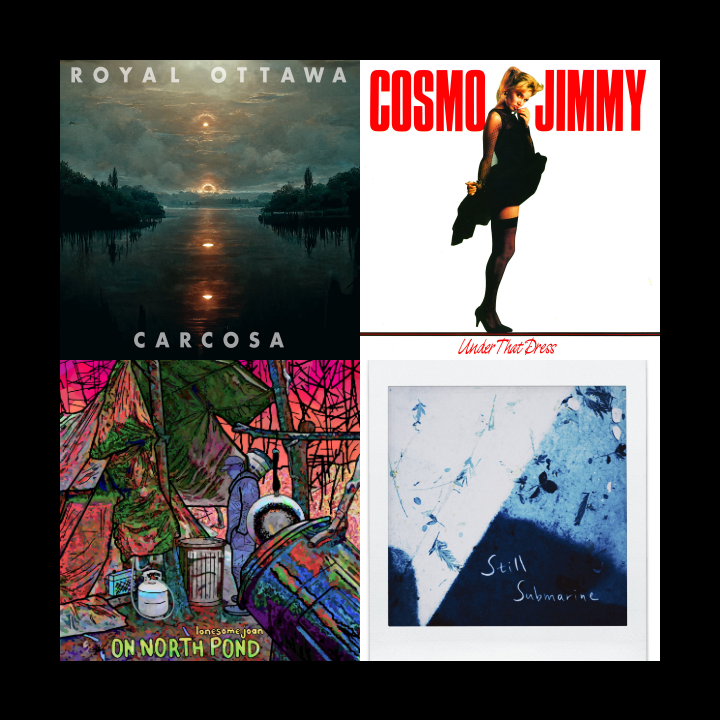

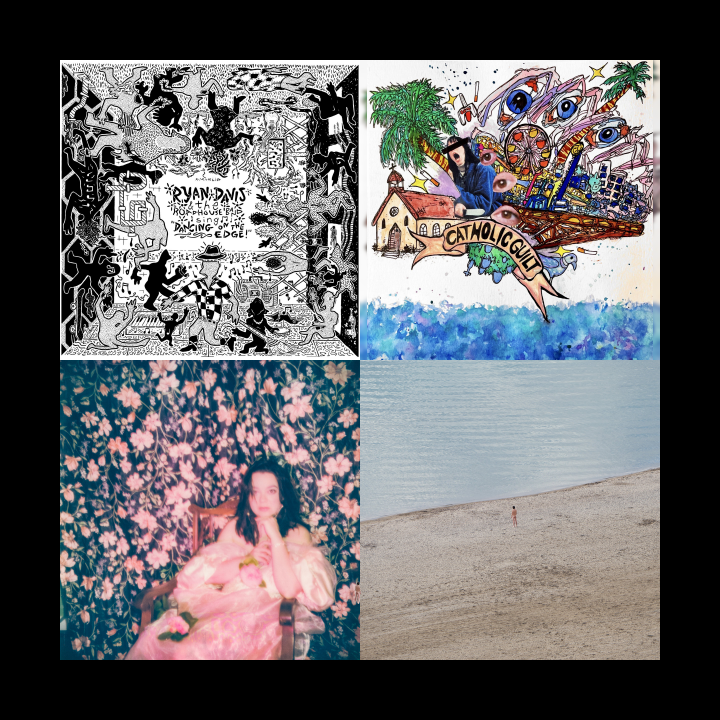
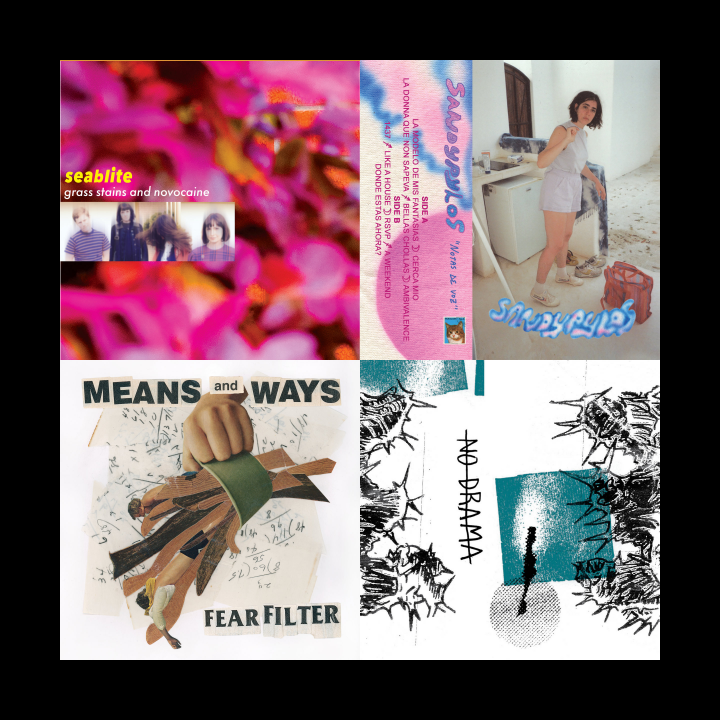
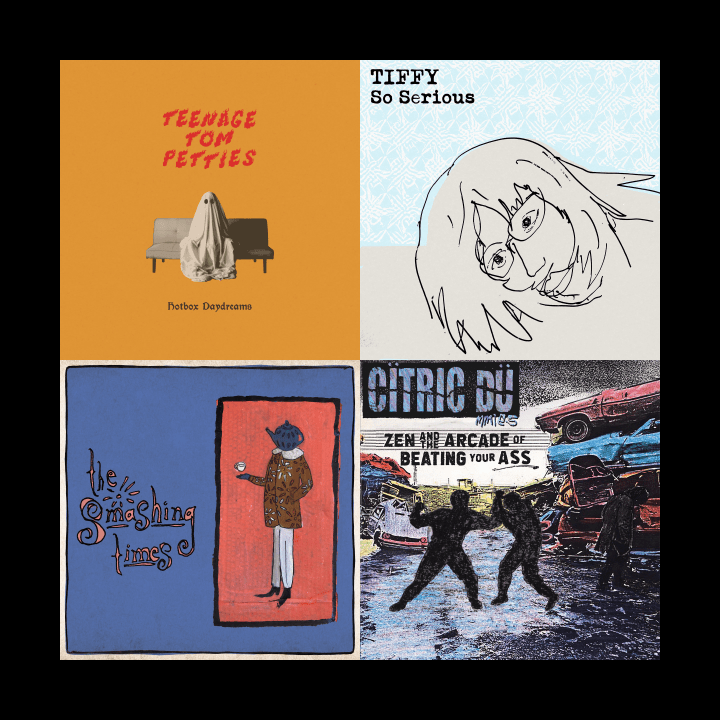
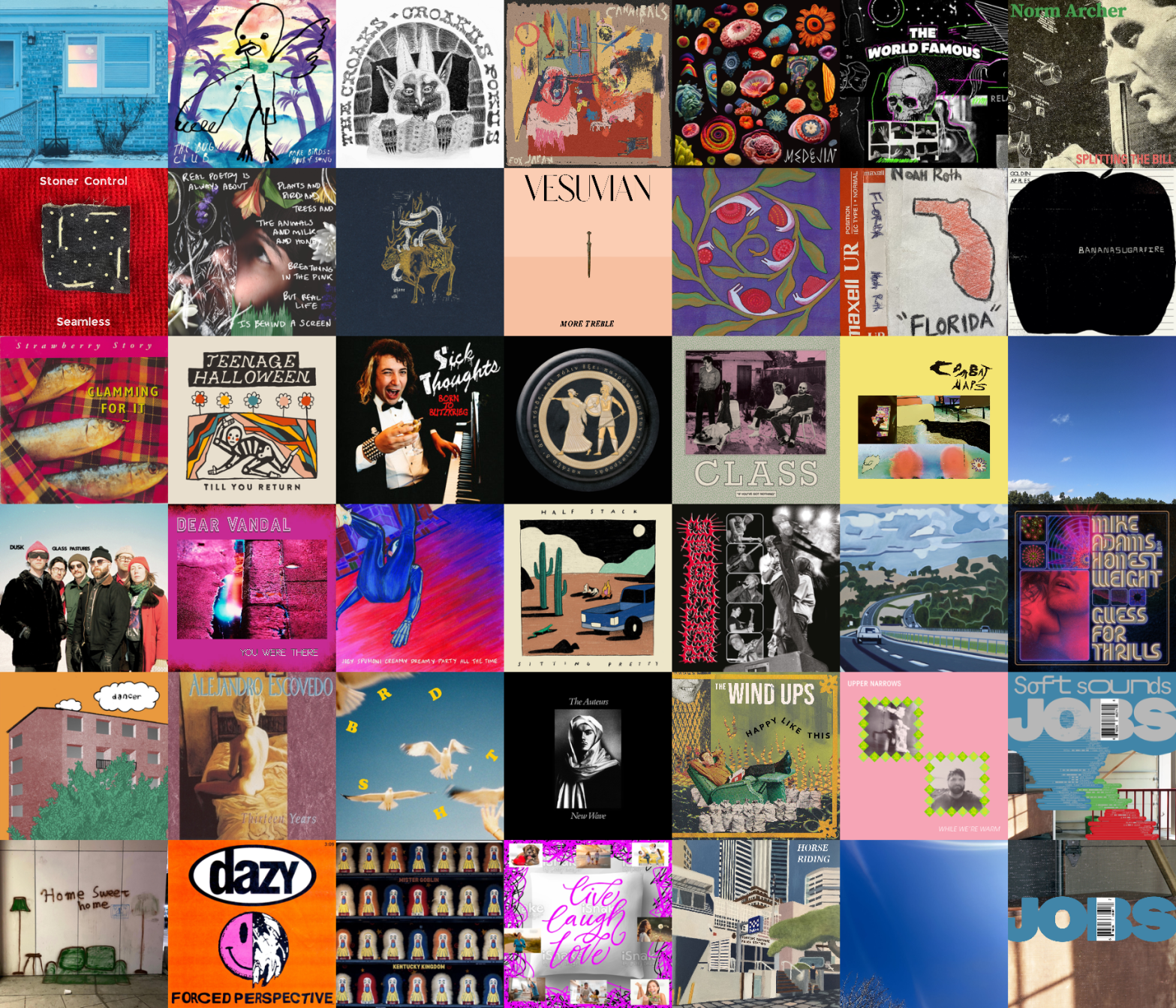
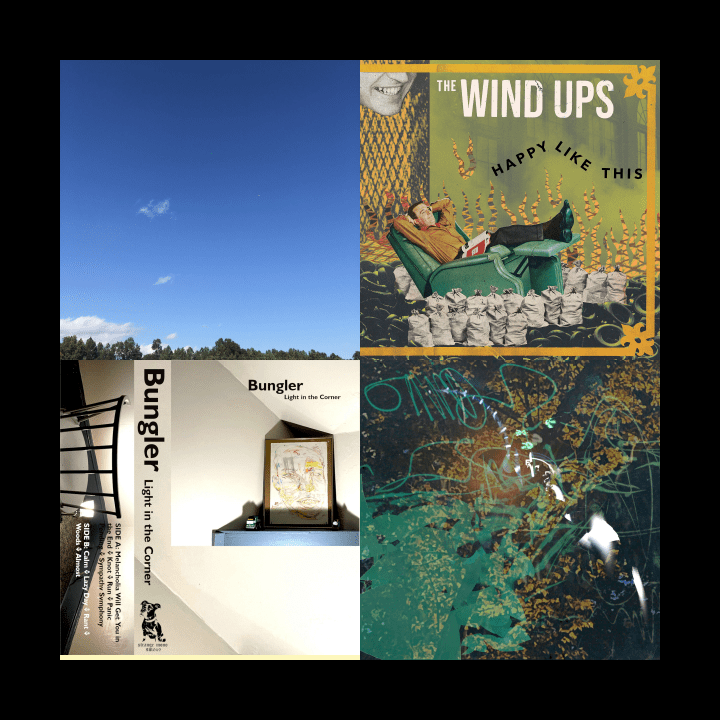
 Rosy Overdrive