An exciting week over on Rosy Overdrive kicks off with a Pressing Concerns featuring two superb albums that came out last week (from Dr Sure’s Unusual Practice and The Silver Doors), as well as two records from earlier this year (an album from Storm Clouds and a “double EP” from Onceweresixty). You probably haven’t heard most of these, and Monday morning is a great time to get familiar with ’em!
If you’re looking for more new music, you can visit the site directory to see what else we’ve written about lately. If you’d like to support Rosy Overdrive, you can share this (or another) post, or donate here.
Dr Sure’s Unusual Practice – Total Reality
Release date: April 19th Record label: Marthouse/Erste Theke Tontraeger Genre: Garage punk, post-punk, punk rock, no wave Formats: Vinyl, digital Pull Track: Escalator Man
One band I’ve been wanting to feature in Pressing Concerns for a while now but hadn’t gotten around to is Dr Sure’s Unusual Practice, a ferocious punk band out of Melbourne led by frontperson Dougal Shaw and backed by some combination of Jack Mccullagh, Mathias Dowle, Miranda Holt, Tali Harding-Hone, and Jake Suriano. Dr. Sure has given us all plenty to explore–since the last proper Unusual Practice album, Remember the Future? Vol. 2 & 1, in 2021, they’ve put out a live album, a split 7”, a cassette “mixtape”, and a one-LP reissue of two early EPs. All of them have come out through Shaw’s own Marthouse Records, which is also co-releasing the latest Dr. Sure full-length with Erste Theke Tontraeger. Total Reality captures Dr Sure’s Unusual Practice at its best, expansive and frequently chaotic but always with higher goals in mind. The last Dr. Sure album was notable in that it marked the incorporation of Shaw’s live band in the recording process, evolving from its “solo project” past. Total Reality does it one better by roping in even more contributors–the instrumental credits for the album have crept into the double digits. Shaw takes full advantage of everything at his disposal to make a weird, hypnotic, and ambitious rock record that lands somewhere between the sleek, lean, synth-colored “egg punk” of bands like Delivery and Vintage Crop and a more psychedelic, layered sound reminiscent of Tropical Fuck Storm.
Total Reality opens with a song called “Slug” that, after about a half minute of noise and atmospherics, displays Dr Sure’s Unusual Practice at their most immediate and fun-sounding, barreling through a piece of bouncy, garage-y “Devo-core” post-punk that doesn’t skimp on either the synth hooks or the saxophone accents. If you’re looking for more from this side of Dr. Sure, I’d steer you to single “Escalator Man” (a foot-on-gas, barnstorming yet nervy rock and roller) and second-half highlight “Realest” (which gets a lot of mileage out of that creepy post-punk-revival grin of a chorus). The rest of Total Reality isn’t difficult, exactly, just rock music with slightly different aims. “Celebration” and “Keeps Ya Head Up” show off Dr. Sure’s ability to still be quite catchy while being just as concerned with rhythm (nearly to the point of delirium, especially in the mantra-like repetition of the latter song’s title). Total Reality goes all-in on a “big” sound quite frequently, although in different manners–on “Last Guy at the Disco”, Shaw and his collaborators turn their sound into a glossy, chorused piece of 80s-pop (if that kind of music featured rambling Australian vocalists), while “Elephant in the Room” leans into the weirdness and disconnectivity, Shaw sounding like 90s Mark E. Smith trying to hold his own in new and strange soundscapes. If you’re going to call your post-punk album Total Reality, it better sound like you’re ready to engage with it and able to reflect some small part of it–Dr Sure’s Unusual Practice can take us there. (Bandcamp link)
Storm Clouds – F.O.G.
Release date: February 5th Record label: Self-released Genre: Slowcore, lo-fi indie rock, shoegaze Formats: Cassette, digital Pull Track: Self/Image
How would you expect an album called F.O.G. by a band (actually a solo project) called Storm Clouds to sound? If you answered, “lo-fi, slowcore and shoegaze-esque indie rock”, then congratulations, you’re on the same wavelength as Dima Zadorozhny, the San Diego musician who makes music under that name. Music like this almost works better as something completely devoid of context or background information, but there is a little bit to Storm Clouds, which has existed in sporadic form (a CD-R in 2009, an EP in 2016) for some time now. In recent years, Zadorozhny had been working as an audio engineer but ended up getting incredibly burnt out on the technical aspects of music as a result. In order to get back into making music, F.O.G. was a necessarily streamlined affair–recorded entirely on a four-track, the record’s eight songs embrace simplicity in arrangement, execution, and production, sounding like the work of somebody who’s quietly but palpably zeroed in on a new-old method of inspiration.
Anyone who isn’t open to the most downtrodden, insular, and downright cold impulses of 90s-style indie rock is going to find F.O.G. a difficult listen. The songs are largely mid-to-slow tempo-wise, the guitars are nice and fuzzy but quiet and restrained for the most part, and Zadorozhny’s vocals are whispered and barely audible in various parts of the record. Bedhead, Codeine, and Duster look like rock stars next to the sheer greyness of the opening trio of “Fog”, “Self/Image”, and “To-Do List”, all of which crawl through straightforward song structures as slowly and meekly as possible, like F.O.G. is trying to disappear before our very ears. It’s so effective at lulling the listener that “Kosmonaut” sounds like it’s from another world merely by selecting a more rousing drum preset and embracing shoegaze-y guitars a bit (even throwing a bit of flagging but memorable-sounding guitar leads sticking out underneath the fuzz, too). The second half of F.O.G. pulls a similar trick, retreating into the familiar stoicness of “Stick Around” and “Spider/Man” before ending the record with its two weirdest songs–the six-minute drum-machine-sound-collage-rock of “No Rewind” and the five-minute outro of “Out of the Fog”, a really bare track that’s the closest the album comes to “ambient” music. One minute, F.O.G. is wholeheartedly embracing the restrictions Zadorozhny placed on its creation, and the next it’s doing its best to push against them. (Bandcamp link)
Onceweresixty – Loco Sunset Boulevard / Ghetto Blast Noise Machine
Release date: March 22nd Record label: Uglydog/Beautiful Losers/Pretty Ok Genre: Indie pop, 90s indie rock, dream pop, college rock Formats: Vinyl, CD, digital Pull Track: Don’t Get Stuck
Italian indie rock group Onceweresixty released their debut album back in 2021, but their roots go much further back than that. Founding members Marco Lorenzoni (guitar/vocals/keyboard) and Luca Sella (drums/guitar/vocals) played together in a band called MR60 for the majority of the 2000s, and after a break from music, they reunited as Onceweresixty in 2018. Their second album, Loco Sunset Boulevard / Ghetto Blast Noise Machine, is presented as a double EP, with the first four songs of the record making up the former and the final four tracks comprising the latter. It’s also the group’s first release as a trio, having added Enrico Grando (keyboard/vocals/saxophone) in between the release of The Flood and the recording of its follow-up (which took place in 2022 and 2023 at the band’s own studio in Villa Albrizzi Marini, located in the Venetian countryside in the northern part of their home country). Loco Sunset Boulevard / Ghetto Blast Noise Machine is an intriguing record (or two), with each half developing its own personality–the former is friendly, laid-back guitar-driven indie pop, while the latter is a bit noisier and more experimental.
Every song on the Loco Sunset Boulevard works as a strong pop song, although they take a few different paths to get there–“Don’t Get Stuck” introduces the record with slow, jangly college rock, “Running” evokes its title with its spirited, (relatively) uptempo chorus, and “Back in the Days” is nostalgic, dreamy pop rock. “Weird Times” is the oddest track on Loco Sunset Boulevard, and that’s really only because Onceweresixty pepper a “motherfucker” into the song’s floating dream pop chorus. “Pills” opens Ghetto Blast Noise Machine with something different–it’s a minute before any instruments even kick in at all, and when they do, it’s noisy, shoegaze-y guitars in the lead. It eventually transforms into stomping post-punk-pop, but they never abandon noise and feedback, something that also marks the lengthy instrumental passages of closing track “All That Glitter”. “Into Town” and “Consequence of Capitalism” are stretched-out versions of the more accessible side of the band, adding in moments of white noise (in the former) and distortion (in the latter) to push the songs a bit further. Onceweresixty is clearly a sturdy group of musicians at this point, and the structure of Loco Sunset Boulevard / Ghetto Blast Noise Machine ensures that they’re still keeping their indie rock fresh as veterans. (Bandcamp link)
The Silver Doors – The Silver Doors
Release date: April 15th Record label: PHRC Genre: Psychedelic rock, garage rock, orchestral rock Formats: Cassette, digital Pull Track: Legwork
The Silver Doors are a new psychedelic rock quartet from Asheville, North Carolina which began releasing singles a year ago, culminating this month in their self-titled debut album. The band (bassist/vocalist Brett J Kent, violinist Justin Lawrence, drummer Bryce Alberghini, and guitarist/vocalist Alex Cox) refer to themselves as “Appalachian Desert Rock”, and they might be onto something with that. On the one hand, The Silver Doors are pretty clearly in conversation with the Ty Segall brand of West Coast garage-y psychedelic rock, but they’ve also got a heavy blues rock side that rears its head on some of the record’s louder moments, and Lawrence’s violin certainly sticks out throughout The Silver Doors, giving a uniquely Appalachian touch to these eight songs. Although The Silver Doors prove their psych-rock bona fides early on, the album (recorded by Alex Farrar at Drop of Sun Studios) captures the band showing off some dexterity, finding time to offer up some poppier indie rock and even a ballad or two before the record’s over.
The Silver Doors make one strong opening statement with the back-to-back psych-rock epics of “Redeemer” and “Losing Hand” in the first two slots. Violin in tow, the group roar through an increasingly dramatic instrumental in the former before Kent’s vocals, hypnotic and in command, appear among the noise. “Losing Hand” follows it up with some smoking, riff-centric rock music, keeping things moving forward just as strongly. That being said, the heaviest moment on The Silver Doors has to be “Bulleteeth”, a stomping piece of distorted noise-punk that reminds me of The Baptist Generals at their lo-fi best. The rest of the album doesn’t slot so cleanly into garage-psych, however. The first indication of The Silver Doors’ other dimensions comes with “Shattered”, an earnest mid-tempo tune where the swooning violin shifts into “orchestral indie rock” mode. “Legwork” kicks off the second half of the album with a tight rhythm section, sounding closer to the post-punk side of garage rock than anything else, and even so, nothing quite prepares the listener for the six-minute power ballad of “Gone”. The Silver Doors close the album by returning to some more psych-rock riffs in the final two tracks, but they sound more sprawling and less hurried this time around–they’ve already proven themselves as capable psychedelic rockers, and then some. (Bandcamp link)
Today, Rosy Overdrive is closing out the biggest week on the blog in a while with the fourth blog post in as many days. Today, we’re looking at three albums that come out tomorrow, April 19th–new LPs from Cloud Nothings, Sun Kin, and The Juniper Berries–and an album from Ekko Astral that came out yesterday. If you missed any of the other posts that came out earlier this week (Monday’s post featured Mythical Motors, Bill Baird, Hour, and Trummors, Tuesday’s looked at Rain Recordings, Virgins, Jay Alan Kay, and Squiggly Lines, and on Wednesday, we took a deeper look at 90s Bay Area singer-songwriter Hannah Marcus), be sure to check those out, too.
If you’re looking for more new music, you can visit the site directory to see what else we’ve written about lately. If you’d like to support Rosy Overdrive, you can share this (or another) post, or donate here.
Cloud Nothings – Final Summer
Release date: April 19th Record label: Pure Noise Genre: Garage rock, punk, power pop Formats: Vinyl, CD, digital Pull Track: Thank Me for Playing
Although Cloud Nothings haven’t formally appeared in Pressing Concerns before now, the Cleveland rock band certainly haven’t been absent from Rosy Overdrive in the past–you’ll find both 2021’s The Shadow I Remember and 2020’s The Black Hole Understands on their respectiveyears’ year-end lists (and had the blog been alive before 2020, I certainly would’ve been talking about 2018’s Last Building Burning and–especially–2017’s underrated Life WithoutSound). In a world where Greg Sage and Robert Pollard are Woody Guthrie and Bob Dylan, vocalist/guitarist Dylan Baldi would be a folk hero, churning out loud, pummeling, hooky rock music at a steady clip for a decade and a half now, aided deftly by longtime drummer Jayson Gerycz (also of Knowso) and bassist Chris Brown (who’s been with the band for the majority of its existence at this point). The three year gap between the band’s last album and their latest, Final Summer, is their largest yet, and it’s also their first for Pure Noise Records after leaving their longtime home of Carpark–but despite the strange krautrock-y introduction to the record, any fears of a huge departure for the band have been assuaged before the first half of the opening track is over.
One could cherry pick a few details from the record–like the way that krautrock-y intro of the opening title track gives way to a big-sounding, saxophone-featuring “heartland rock”-ish version of the Cloud Nothings sound–and spin a “Cloud Nothings as you’ve never heard them before” narrative, but to me Final Summer sounds like the band at their most comfortable. Ringers at this point, the trio are confident in their abilities to do things like the title track and putting the gear-shift, mid-tempo “Daggers of Light” in the record’s number two slot without having an identity crisis. They still retain the edge that caused Attack on Memory to jump out in a crowded field a dozen years ago, whether they’re moving through the 90s alt-rock-indebted “I’d Get Along” or the vintage Baldi-esque fuzzed-out pop of “Silence” or classic, fizzy power-pop-punk in the vein of “Thank Me for Playing” or noisy workouts like “The Golden Halo”.
Listening to the wall-of-sound guitarwork that rises up in between pop hooks in “I’d Get Along” and “On the Chain”, I start to wonder if Cloud Nothings are perhaps underappreciated in how they’ve shaped this current wave of shoegaze-y noise pop bands. We don’t think of Cloud Nothings in that context because they don’t sound like shoegaze; they sound like Cloud Nothings–even in 2024, they feel like a unique blip on the landscape of indie rock despite their discernible influences. “Common Mistake” is a surprisingly clear-sounding pop rock song hidden as Final Summer’s final song, although it makes sense as such–when Baldi sings “You’ll be alright, just give more than you take” in the chorus, it’s an invitation to take a step back and look at Cloud Nothings’ career as a whole (and, perhaps, zooming out even further to see what they’ve touched) and confirm that Baldi knows what he’s talking about with this advice. (Bandcamp link)
Ekko Astral – Pink Balloons
Release date: April 17th Record label: Topshelf Genre: Punk rock, noise rock, fuzz rock, art rock, post-punk Formats: Vinyl, cassette, digital Pull Track: Devorah
Ekko Astral are a Washington, D.C.-based quintet led by vocalist/guitarist Jael Holzman and rounded out by guitarists Liam Hughes and Sam Elmore, drummer Miri Taylor, and bassist Guinevere Tully. I’ve had my eye on the group since their 2022 debut EP, Quartz, a scrappy glam-tinged punk rock record. The group have jumped to Topshelf Records off the strength of those songs, and have now put together their first full-length album, called Pink Balloons. Their first EP was pretty good, but the leap that Ekko Astral have taken in between that record and what they sound like on Pink Balloons is remarkable–their base-level sound has expanded and mutated into a full-on assault of heavy fuzz-punk, and they also push and explore beyond that aspect of themselves across the record’s eleven songs and 35 minutes. Holzman is a remarkable frontperson–her lyrics are all over the map, frequently necessitating me consulting the lyric sheet to confirm that, yes, she did say what I thought she just said, and her vocal performance absolutely matches them. Sometimes she’ll sound like a droll Kill Rock Stars rocker, sometimes like a demented punk cheerleader, and other times she just sounds like herself.
Pink Balloons is a varied-sounding record, but Ekko Astral seem to have deliberately stacked the album so that we’re all pummeled into submission by its first half. The first two tracks, “Head Empty Blues” and “Baethoven”, both bash away at the listener via Holzman’s frenetic decision to grab onto a phrase and ride it out for all its worth–in the former, it’s the title line, which fills the space in between the series of intrusive-thought jumpscares running through Holzmann’s mind, and in the latter, it’s “the pain of being myself” laid up against the external pain described in the rest of the track. The truly bizarre-sounding “Uwu Type Beat” and the sheer antipathy of “On Brand” don’t let up, and the spoken-word “Somewhere at the Bottom of the River Between L’Enfant and Eastern Market” is a funeral procession that hits even harder in its own way.
It’s really tough to figure out where to go from Somewhere at the Bottom of the River…”, but Ekko Astral come out the other side with an ambitious and strong closing stretch–the six-minute stitched-together art-punk of “Devorah” is a fiery flag-waver, and the band enlist Salt Lake City singer-songwriter Josaleigh Pollett to sing co-lead vocals on Pink Balloons’ final, song “i90”. In the first few minutes of the eight-and-a-half minute song, the duo of Pollett and Holzmann drift in and out of a hazy instrumental, recounting similarly blurry memories of Torah verses and billboards seen outside of Chicago–and they then revisit some of the most uncomfortable moments of “Somewhere at the Bottom of the River…” together as the song navigates towards a huge finish. It’s at this moment that Ekko Astral are as far from their initial fuzz-punk as they’ve gotten yet–and at the same time, it makes even more sense to me than the rest of Pink Balloons. (Bandcamp link)
Sun Kin – Sunset World
Release date: April 19th Record label: Self-released Genre: Art pop, indie pop, synthpop, singer-songwriter Formats: Digital Pull Track: I’m in the Band
Sun Kin is the project of Bombay-originating, Los Angeles-based Kabir Kumar, who first became known to me through their frequent collaborations with Pacing, playing guitar, bass, and singing on their most recent record, which was one of my favorite albums of 2023. As of late, Kumar has also gained some notoriety as the guitarist of buzzy indie rockers GUPPY, although Sun Kin remains their longest-running and most prolific project. Over the past dozen years, Kumar has amassed an impressively large and varied back catalog as Sun Kin, and even though it’s been a few years since their last proper album (2021’s After the House), they’ve been busy in the meantime with a steady stream of EPs and singles. Some of these songs show up on Sunset World, an ambitious pop album in which Kumar corrals a ton of his musical collaborators and acquaintances–including members of Cheekface, Sweet Dreams Nadine, Illuminati Hotties, their bandmates in GUPPY, and their partner Nicole Levin–in service of an eleven-song, thirty-minute record with boundless energy.
As a songwriter and frontperson, Kumar has a wide-encompassing nature that finds them jumping across genres (folk, pop, and electronic among the most prominent), subjects, and personal proximity to their own material in a way that reminds me (very pleasingly) of Emperor X. Opening track “Big Window” leaps out of it in an exhilarating way to kick off Sunset World, and even though “I’m in the Band” (featuring GUPPY and Illuminati Hotties’s Sarah Tudzin) is decidedly lower-stakes in its depiction of awkwardness and minor indignities that come with being a musician, Kumar doesn’t approach the song like that’s the case at all. The R&B/trip hop-influenced “Fave Please” and the quiet acoustic “Til I’m Whole” both practice saying a lot with relatively little, and that’s all well and good, because “All the WeWorks Are Dead!” comes along not long afterwards, and it’s Kumar at their all-over-the-place, mile-a-minute best (“All the WeWorks are dead, WePlay now / Drinking lemonade in the ruins of downtown” are the first two lines of that one, and that’s just the beginning). The press release for SunsetWorld namedrops Steely Dan and Frank Ocean as fellow “apocalyptic LA pop” practitioners, and when Kumar smooths out their sound in “Small Gestures” and “I Wanna Believe”, it’s not crazy to see them in the same light (even as the latter of the two songs reminds me of Todd Rundgren more than anything else). Sunset World is a record about destruction, but it’s bright and sunny and never loses sight of the positives involved in ruins and decay–it’s just clearing more space for what really matters. (Bandcamp link)
The Juniper Berries – Death and Texas
Release date: April 19th Record label: Earth Libraries Genre: Folk rock, alt-country, singer-songwriter Formats: Vinyl, digital Pull Track: Stephanie
The latest release from prolific Alabama label Earth Libraries is the third album from The Juniper Berries, the project of singer-songwriter Joshua Stirm. Like another Earth Libraries artist, Pelvis Wrestley, Stirm originated in the Pacific Northwest (he grew up in southern Oregon) before eventually settling in Austin, Texas. Death and Texas is the first I’ve heard from The Juniper Berries, but it feels like it fits comfortably in the vein of singer-songwriter-centric pop records that have come out on Earth Libraries in recent years from acts like Pelvis, Bory, and Cash Langdon. Stirm’s writing is sharp but friendly, incorporating shades of folk rock, alt-country, power pop, and dream-y psychedelia across Death and Texas’ eleven songs. The stated influence of Andy Shauf feels about right, and these songs remind me of “Anywhere, USA” pop songwriters like Brian Mietz, Matthew Milia, and Collingwood and Schlesinger–but Death and Texas also has a rambling looseness to it, not being afraid to extend and stretch things out rather than doggedly focusing on precision and conciseness.
Stirm drew from some dark and heavy experiences–namely, the passing of both his brother and grandfather–while writing Death and Texas, but it doesn’t read as a straight autobiographical record. It’s not hard to see how these events influenced songs like the country-tinged reminiscing of “Role Model” and the offbeat but oddly touching “Walk Home”, but the record as a whole deals in crafted scenes, characters, and locations that are primarily held together by The Juniper Berries’ pop instincts. Stirm’s writing excels when it’s staging memorable settings, like the diner in the laid-back folk rock opening track “Tom, Dick, and Harry’s”, the intriguing marriage of football metaphors and 60s ornate folk pop on “The Home Team”, the slow-burn real-time collapse of “The Drunk Philosopher”, or the delirious, all-in pop rock of “Colleen”. “Colleen” and “Role Model” are Death and Texas at its most musically immediate, although “Stephanie”–which manages to turn in a pop anthem out of humbler ingredients–might actually be the peak of the hooky side of The Juniper Berries. On the other end of the spectrum, “Darkness” is a six-minute Okkervil River-esque ornate folk-country-rock song that isn’t overly concerned with catchiness (although it certainly is at times). “Darkness” casts a compounding shadow over the record, but as all-consuming as it feels, it’s just another moment captured by The Juniper Berries–as the last song’s title states, “Sad Songs Outlive Their Mother’s Pain”. (Bandcamp link)
Release date: April 5th Record label: Bar None Genre: Slowcore, sadcore, folk rock, singer-songwriter, jazzy/noire-y indie rock, lo-fi indie rock Formats: Digital
Hannah Marcus is a singer-songwriter who grew up in New York City but eventually made her way to the other side of the United States, ending up in San Francisco in the 1990s. Marcus had been a lifelong musician, but it was in the Bay Area where she found the kind of music she’d end up making in her solo career–long, dramatic, drawn-out folk-indie-rock in the vein of American Music Club and Red House Painters (slowcore, or, as the micro-genre is even more specifically referred to, “sadcore”). From 1994 to 2004, Marcus released five albums and an EP, with assistance from American Music Club drummer Tim Mooney and Mark Kozelek, among others, recorded in San Francisco and Montreal. Most of her records were released by German label Norman Records, although the last couple got a stateside release via Bar None Records, who’ve kept them available digitally in the two decades since the last Marcus solo album. Bar None have also recently put together The Hannah Marcus Years: 1993-2004, a career-spanning digital compilation featuring selections from both the Bar None albums and her earlier, still-unavailable-in-full discography (as well as one previously-unreleased track).
With even her biggest influence–American Music Club’s Mark Eitzel–remaining a cult favorite at best in 2024, perhaps it’s unlikely that Hannah Marcus will receive her proper due, but The Hannah Marcus Years makes a strong case for her to be not just remembered, but actively listened to and studied today. “Indie folk” and “slowcore” are wide-ranging terms, music that can sound like a bedroom or sound like nature–in Hannah Marcus’ hands, it sounds like motels and bars, like half-empty rooms that still somehow feel claustrophobic. Like San Francisco in the 1990s, a city unrecognizable from the thing that’s there now. She is not precisely peerless–in addition to her San Francisco collaborators, the folkier moments of the compilation remind me a bit of Nina Nastasia, and the jazzier ones of the late, great Jenny Mae–but her loneliness is a unique one, soundtracked by a New York art/experimentalist streak and featuring writing that would sound conversational if our conversations were much more interesting and less based in reality.
The Hannah Marcus Years is seventy minutes or so long, made up of fifteen tracks, and roughly in chronological order, opening with all four songs from 1995’s Demerol EP. The Demerol songs are some of the compilation’s biggest highlights–already a remarkable songwriter, the aching piano-led title track, the seedy psychedelia of “Invisible Bird”, and the beautiful folk simplicity of “Vampire Snowman” are all in contention for the best song on here. Marcus’ writing remains strong on the later recordings, with the main difference being an occasional musical expansion–the seven-minute “Coconut Cream Pie” incorporates crawling indie rock into her sound excellently, and “Osiris in Pieces” finds just as much paranoia and discomfort in excess as in intimacy (although songs like “Watching the Warriors” and “Ariel” still keep it simple when the moment calls for it).
The selections from her last solo album, 2004’s Desert Farmers, are also worth singling out–the careening, dizzying heights that Marcus and her collaborators reach on “Hairdresser in Taos” ensure that the song is the single most fascinating moment on the entire compilation, but the nevertheless-still-fairly-heavy exhale of “Laos” and the thin, film-covered “Stripdarts” are both not far behind. Desert Farmers was recorded after Marcus moved back to New York, as was “Blue Daisy”, a previously-unreleased country-folk tune about walking around the city post-9/11–in both cases, Marcus went up to Montreal to record. Despite the change in scenery and therefore backing players, she gathered up a new group (including Godspeed You! Black Emperor’s Efrim Menuck and Thierry Amar, participants in a decidedly different strain of grandiose underground 90s music) that maintained the continuity of her past releases and, if anything, even breathed a little more life into Marcus’ songs.
Hannah Marcus is still around–she released three albums as one third of The Wingdale Community Singers between 2005 and 2013 (including one on Drag City offshoot Blue Chopsticks), and she currently has a “cajunesque” band called Red Aces and a “noise duo” called Wintersea Playboy. She has also recently become an “olfactory artist”, “exploring scent-inflected sound performances” in New York in Los Angeles in recent years. It seems wrong that her solo albums hadn’t gotten a closer look before now, but it makes more sense when one realizes how busy their architect has been in the years since their creation. Whether or not this compilation begins a wider reevaluation of her music remains to be seen, but at the very least I’m now paying attention to The Hannah Marcus Years. (Bandcamp link)
The second Pressing Concerns in as many days collects a couple of albums that came out last week (new LPs from Rain Recordings and Virgins) as well as two ace records from last month (an album from Jay Alan Kay and an EP from Squiggly Lines). You won’t be disappointed, and there’s more new music where this came from–if you missed yesterday’s post (featuring Mythical Motors, Bill Baird, Hour, and Trummors), check that one out here.
If you’re looking for more new music, you can visit the site directory to see what else we’ve written about lately. If you’d like to support Rosy Overdrive, you can share this (or another) post, or donate here.
Rain Recordings – Terns in Idle
Release date: April 12th Record label: Trash Tape Genre: Emo-y indie rock, 90s indie rock, folk rock Formats: CD, cassette, digital Pull Track: Piece of Mind
I first heard about Chapel Hill-based imprint Trash Tape Records back in March when they released Night Time Is the Grace Period, the debut album from Atlanta’s Hill View #73. I was quite into that record’s take on lo-fi indie rock, which veered between bedroom folk, bright pop music, and fuzzed-out noisy rock with ease. As it turns out, Trash Tape’s next release wasn’t far behind, as they’re putting out Terns in Idle by Rain Recordings less than a month later. A duo, Rain Recordings is made up of Carrboro-based Evren Centeno (who is one of the three founders of Trash Tape) and Stockholm, Sweden’s Josef Löfvendahl, who met online earlier this decade and began collaborating remotely together not long after. These remote collaborations became Rain Recordings’ first album, Artificial Night, and the next step was for the duo to record together in person, which they did last year at Asheville’s Drop of Sun Studios with Lawson Alderson. The resultant record, Terns in Idle, still contains plenty of the underground 90s indie rock influence that seems to mark Trash Tapes, although the duo do take advantage of a proper studio to develop and expand these songs–guest musicians such as clarinet player Eilee Centeno and cellist Clara Lampkin aid in this, but Rain Recordings’ core duo is equally ready to make the step forward.
I’m sure Ceneno and Löfvendahl have spent a good deal of time with essential 90s indie rock groups like Modest Mouse and Built to Spill, but given that they didn’t experience this era of music firsthand (the former of 19, the latter 28), Terns in Idle perhaps unsurprisingly isn’t entirely devoted to Pacific Northwest guys with ornery guitars. Throughout the record, there’s also some Neutral Milk Hotel-ish folk ambition, as well as the earnest, wide-eyed 2000s version of indie rock mixed in (and maybe even a big of emo, although that might be more parallel thinking). There are distorted guitars, but Terns in Idle is too big to be covered entirely in fuzz–just in the first track, “2D Trance”, where clear, ringing piano, Lampkin’s cello, and even trumpet guide the song to a huge, cathartic crescendo. A lot of songs on Terns in Idle start with a relatively hushed, restrained beginning–from the fuzzy folk of “Stars Inside” to the Elephant 6-curious modest pop of “Piece of Mind” to “I’ll Be Be the Air” and “Eye Games”, two songs that mark the middle of the record with pin-drop quiet introductions. All of these songs (and, effectively, every song on the record) excitedly build to something huge and all-in, however–it’s certainly an ambitious record, and while I suspect that Ceneno and Löfvendahl could’ve made something impressive on their own, the studio, production, and guests all help drag Terns in Idle even higher. (Bandcamp link)
Virgins – Nothing Hurt and Everything Was Beautiful
Release date: April 11th Record label: Blowtorch Genre: Shoegaze, noise pop, fuzz rock Formats: Vinyl, digital Pull Track: S o f t e r
Virgins are a “deafening dream pop” band out of Belfast, Ireland–the quintet (vocalist Rebecca Dow, guitarists Michael Smyth and David Sloan, drummer James Foy, and bassist Brendy McCann) debuted with a couple of singles in 2021 which culminated in late 2022’s Transmit a Little Heaven EP. A year and a half later, the debut Virgins full-length, Nothing Hurt and Everything Was Beautiful, has arrived, and it’s a strong and commanding debut album. Equally close to Cocteau Twins and Smashing Pumpkins, Nothing Hurt and Everything Was Beautiful is a loud and quite catchy song-first shoegaze record; the band are defined both by Dow’s soaring melodies and Foy and McCann’s hard-hitting alt-rock rhythm section. And, of course, Smyth and Sloan’s wall-of-sound guitars are in front of it all, balancing brute force and intricate pop construction just as the band as a whole do. The eight songs on Nothing Hurt and Everything Was Beautiful are all very fleshed-out–half the songs are over five minutes long, and only one is under four–and it’s both the sturdy pop cores and the all-in energy that the band bring to the performances that carry us through the record at high speed.
The pounding, alt-rock indebted “s o f t e r” kicks Nothing Hurt and Everything Was Beautiful off with a bang–the rhythm section hammers their way through the verses and then hands the reins over to Dow just as the huge chorus takes off like a rocket ship. “S l o w l y, l o n g” and “c l o s e” both keep the foot on the gas in the record’s first half, with Dow still peaking out over the surging, noisy instrumentals to keep the pop side of Virgins intact. The six-minute “P a l e f i r e” closes out the first half with a lumbering piece of distorted but hypnotic rock music, setting the tone for a B-side that’s a little less immediate but still finds time for noisy pop moments. “A d o r e” takes its time traveling through its valleys and peaks of fuzz, while Dow slides a bit closer to the front of the mix in “D i s a p p e a r e r”, the biggest pop song on this side of Nothing Hurt and Everything Was Beautiful and perhaps the one that most clearly illustrates just how strong the vocals are throughout the record. “T e n d” closes the record with another clearer Dow performance–but it’s a big and expansive enough song that there’s plenty of key moments in the instrumentals as well. Nothing Hurt and Everything Was Beautiful is the work of a balanced band on equal footing, and their combined might is enough to make the album stand out in the shoegaze crowd. (Bandcamp link)
Jay Alan Kay – Songs Before Work
Release date: March 8th Record label: Setterwind Genre: Lo-fi power pop, singer-songwriter, alt-country Formats: CD, digital Pull Track: Another Turn
Towards the end of Closer You Are: The Story of Robert Pollard and Guided by Voices, the book’s author, Matthew Cutter, quotes the infamously prolific songwriter about his daily routine: “When I get up in the morning, the cats get excited. I make some coffee, I might write a song…Morning’s the best thing”. It’s hard not to think of that philosophy when listening to Songs Before Work, the debut album from Jay Alan Kay (aka Jason Kotarski). Kotarski is a librarian from Grand Rapids, Michigan who also plays in the punk rock band Singing Lungs (they put out a solid record back in 2023), but Jay Alan Kay is his first step out as a solo act. Both in work ethic–these songs were recorded on a Tascam 238 cassette in Kotarski’s basement before going to his day job–and in sound–lo-fi power pop, with just a bit of twang and the punk rock of his main band also discernible–Songs Before Work clearly belongs in the “indebted to Guided by Voices” world, but having good taste only gets one so far. The first Jay Alan Kay record is full of strong pop songs, simply adorned and enthusiastically delivered, that feel like the work of someone freshly inspired.
Songs Before Work is a rich and generous album–it’s thirteen songs and nearly 45 minutes long, but feels consistent and lacking in filler. “Another Turn” is a huge opening statement, a brimming-with-hooks college rock anthem that pulls from classic R.E.M. and early Guided by Voices gleefully. It sets the bar high early on, although in terms of pure sugary catchiness, I’d put both “Give It a Go” and “Astronaut” up there with it (and the messy, slapdash power pop of the latter in particular walks a very difficult tightrope between looseness and punchiness). There’s a Two Cow Garage-y Midwestern roots rock charm to Kotarski’s songwriting in “Minivan”, and “A Loyal Friend” is some crunchy rural rock and roll (“Thick and thin, you were the loyal friend / The dog wouldn’t let the emergency services in”), while late-record highlight “Happy New Year” is a late-night oversharing session. The brief, one-minute “I Saw GBV” makes the Robert Pollard influence explicit, inspired by seeing the band live for the first time at their 40th anniversary celebration. “I can’t make up for this lost time, but I’m sure coming home,” Kotarski declares, sounding ready to wake up the next morning and get to work. (Bandcamp link)
Squiggly Lines – Dead Deer
Release date: March 15th Record label: Sun Bear Genre: Fuzz rock, lo-fi indie rock, garage rock, experimental rock Formats: Digital Pull Track: I Don’t Really Care and That Bothers Me
Toronto singer-songwriter Rob McLay has appeared in Pressing Concerns before both as the drummer of folk rock group Westelaken and via his quasi-solo project, Squiggly Lines, which retains some of Westelaken’s expansive, folk-y sound but features more genre-hopping than that band. Last year’s Re: Love Songs LP pulled bright bedroom pop, intimate acoustic folk music, and electric indie rock into a coherent package–and while the typically prolific McLay spent a few years pulling that full-length record together, he’s only waited a few months before returning with a brand new five song EP under the Squiggly Lines moniker. Released via Sun Bear (McLay’s own imprint, which he also uses to put out a host of side projects), Dead Deer is somehow both looser and more singularly-focused than its predecessor. Rather than relying on a host of guest contributions, McLay’s only help on this EP is Westelaken’s Alex Baigent and Cootie Catcher’s Nolan Jakupovski–subsequently, Squiggly Lines sounds more like a garage rock band quickly running through a handful of fuzzed-out rock songs instead of an art pop project here.
Quick delivery and fast tempos abound on Dead Deer, but Squiggly Lines have nothing to hide here–the songwriting on this EP is just as strong as on Re: Love Songs despite the “tossed off” vibes that McLay and company give the record. “I Don’t Really Care and That Bothers Me” is an excellent piece of slightly distorted, hooky indie rock that goes full noise-pop towards its end–still getting the job done in under two minutes. “Dead Soon” wrings a bit more drama out of the same basic tools, with the loud guitars starting and stopping, veering from a shoegaze-y wall-of-sound to an empty cavern and back again. The middle of Dead Deer is where Squiggly Lines do actually find a little bit of time to slow things down and probe just a bit beyond their chosen sound–“Thought About Givin’ You a Call One Rainy Day” is downcast, distorted bedroom rock that lumbers through an instrumental matching the dreary weather conjured up by its title, while “Freaky Friday” is pin-drop quiet, with minimal music and whispered vocals, up until it finally lets loose with a giant finish–a looseness that continues into the closing track, the kind-of-punchy, shuffling indie rock of “Revenge on Something”. It’s one last hit in a record that provides several of them, plus a little bit extra. (Bandcamp link)
Hey there! We’re starting up a stacked week with a Pressing Concerns featuring four albums that came out last week: new LPs from Mythical Motors, Bill Baird, Hour, and Trummors. If you like power pop, psychedelic alt-country, synth-rock, and/or chamber music, there’s something here for you.
If you’re looking for more new music, you can visit the site directory to see what else we’ve written about lately. If you’d like to support Rosy Overdrive, you can share this (or another) post, or donate here.
Mythical Motors – Upside Down World
Release date: April 12th Record label: Repeating Cloud Genre: Lo-fi power pop Formats: Cassette, digital Pull Track: Court of the Beekeeper
After inducting Grass Jaw into the four-years-in-a-row club last month, Chattanooga’s Mythical Motors have become the second act to have at leastonerecord appear in Pressing Concerns in every year from 2021 to 2024. Like Grass Jaw, Mythical Motors is largely the work of one prolific singer-songwriter–in this case, Matt Addison, who–aside from mastering assistance from Meritorio Records’ Álvaro Lissón–is responsible for everything you’ll hear on Upside Down World. Mythical Motors (whose discography spans significantly beyond the four records that have appeared in Pressing Concerns) have spent the better part of this century hammering out a distinct sound in the field of lo-fi power pop–stitched together from familiar faces, sure, but delivered in such a way that I don’t think I’d mistake a Mythical Motors song for anything else.There’s the evocative but frequently-opaque lyrics and lo-fi attitude of Robert Pollard and Tobin Sprout, the whimsical earnestness of Martin Newell, the electricity of The Bevis Frond, and the laid-back hookiness of vintage college rock/C86 indie pop–and some new wave-y synths for good measure. Repeating Cloud Records has already done the public service of exposing one such Guided by Voices-inspired prolific bedroom act (New Jersey’s Hello Whirled) to a wider audience, so it’s the perfect match to give Addison’s latest record, Upside Down World, a cassette release.
Addison brings a lot of energy and consistency with him to Upside Down World–at this point, I expect a certain baseline of quality from a Mythical Motors album, but some of the project’s strongest moments can be found within this 27-minute, fourteen-song collection. Mythical Motors are at their fizziest in the opening stretch of Upside Down World, with “Take a Trip”, “Temporary Giants”, and the title track all going down as instant power pop classics. All three of them are anthems, but of different stripes–“Upside Down World” is jangly and just a little melancholic, “Take a Trip” is sweeping, all-in power pop, and “Temporary Giants” is just a little punchier and rockier (and although it’s still technically in the realm of myth, the refrain of “Temporary giants, your time has come to fall” feels like one of Addison’s more straightforward moments as a lyricist). The acoustic guitars that open “The Office of Royal Delivery” are the only respite in the album’s first half, but even that one rolls into a swooning, electric finish–and then it’s off to the races again with perhaps the best song on the record (the chaotic, synth-heavy power pop single “Court of the Beekeeper”, a huge-sounding song that isn’t dampened a bit by the electronic discord). Mythical Motors don’t exactly offer up any string-laced ballads this time around, but there are subtler moments of beauty–like the jangly, slightly shy-sounding “The Wind and Away”, or the melodic guitars that run through “Grand January High”. They’ve just released a career highlight without a moment of wasted space–if Mythical Motors have passed you by thus far, Upside Down World is a great starting point. (Bandcamp link)
Bill Baird – Astral Suitcase
Release date: April 8th Record label: Perpetual Doom Genre: Folk rock, psych rock, art rock, synth-rock Formats: Vinyl, digital Pull Track: Night of the Living Dad
Bill Baird is a musician and writer who came up in the Austin, Texas rock, folk, psychedelic, and experimental scenes in the mid-2000s, playing in the band Sound Team and releasing a slew of solo work over the past fifteen years. Baird has since lived in Oakland, California and San Antonio, but for Astral Suitcase, he trekked across the Atlantic to Iceland to record with producer Ulfur Hansson (who he met in Oakland while pursuing a degree in electronic music from Mills College). His first record since 2022’s Eternal Space Bar, Astral Suitcase is being released alongside an instrumental ambient album called Soundtracks–according to Baird, inspired by the divisions on David Bowie’s Low. The friendlier side of Berlin-era Bowie is probably a decent reference point for what Hansson and Baird have put together with Astral Suitcase, a record of sleek and deep but streamlined and immediate-sounding synth-driven rock music. It’s pop music more often than not, albeit slow-moving–you can see the train coming down the tracks, but that doesn’t make these nine songs any less impactful.
As deliberately-paced as it is, Astral Suitcase also takes pains not to repeat itself too much in its A-side. “Couch Olympics” is the only wordless song on the record, but the synths and vocalizations more than make up for the lack of lyrics in the melodic department. “Night of the Living Dad” is an excellent piece of minimal synth-rock (it’s poppy but not quite “synthpop”) that gives the record a bit of a kick, and while the two songs after it both take things slower, they do it in different ways–“Key Open Sky (Teleport)” with tired-sounding psychedelic pop and “Stjörnutaska” with a laid-back but slightly eerie acoustic-led folk sound and lyrics that I assume are in Icelandic (although I do not speak Icelandic). Single “World Series of Solitaire” marks the middle of Astral Suitcase with a big, towering piece of synth-led rock that nevertheless feels appropriately lonely at its core. It’s tempting to project a Low-esque transition onto Astral Suitcase by itself as “Steam Slow” steers the record into hypnotic, rhythm-based territory and the two songs immediately after it retreat into the exhale of swooning synths, intermittent singing, and only light instrumental touches elsewhere. Nevertheless, “Cloud Seat Head” ends the album with one last polished pop gem, a skipping drum machine beat gliding alongside Baird’s pleasantly dreamy lyrics before the song ascends to its closing instrumental part–if this is what a Texan making music in Iceland sounds like, I’d support the founding of a more formal cultural exchange program between the two. (Bandcamp link)
Hour – Ease the Work
Release date: April 12th Record label: Dear Life Genre: Post-rock, contemporary classical, orchestral, chamber music Formats: Vinyl, CD, cassette, digital Pull Track: The Most Gorgeous Day in History
I’ve been writing about Dear Life Records and it extensive network of bands and musicians for a while now, and co-founder Michael Cormier O’Leary is right in the center of all of it–through his solo work, through playing in bands like 2nd Grade and Friendship, through constantly popping up on others’ records, and so on. In addition to all of that, Cormier-O’Leary leads the instrumental ensemble Hour, who put out two albums in 2018 but hadn’t released anything else up until now. Hour never went away, and last year Cormier O’Leary took nine frequent collaborators to his home state of Maine to record Ease the Work, the third Hour album and first in a half-dozen years. A lot of the musicians appearing on Ease the Work have helped make excellent folk and rock music I’ve written about over the years–drummer Peter McLaughlin with Jordan Holtz and Dead Gowns, pianist Erika Nininger with Strawberry Runners, bassist Peter Gill with Friendship and 2nd Grade alongside Cormier-O’Leary–but the dozen songs on this album are something else entirely.
The closest analogues in the “indie rock”-verse are 90s post-rock acts on labels like Thrill Jockey and Quarterstick (the bio for this album mentions Rachel’s, which feels right), but Ease the Work might be better thought of as straight-up chamber music or contemporary classical compositions as played by guitarists, cellists, violinists, clarinetists, drummers, and pianists from all sorts of backgrounds. Ease the Work feels like an apt title, as the gorgeous, laid-back “Island Time” opens the album in very gentle fashion, and the brief “Stoner” not long after is similarly tranquil. Although the title track and “Brain Scrub” do contain busier undercurrents, the “work” really feels like it begins in earnest with “KC & Clem” (a piece that gets louder as the instruments spiral around each other but which never loses control) and “Dying of Laughter” (which starts off with a light breeze but is toppling everything around it over by the end of its five-minute run). As Ease the Work backs off this peak, Hour still has yet to deliver some of its best individual moments, which come in the wandering guitar melody that guides “The Most Gorgeous Day in History” and the piano and violins tugging the record towards its conclusion in “Mom Calls and You Answer”. The strings swell on their own on closing track “Kelly’s House” to play Ease the Work out, and the absence of the rest of the instruments only underscores just how well everything fits together throughout the eleven songs before it. (Bandcamp link)
Trummors – 5
Release date: April 12th Record label: Ernest Jenning Record Co. Genre: Alt-country, country rock, psychedelia Formats: Vinyl, digital Pull Track: Calico Gown
Trummors are a folk-country duo from Taos, New Mexico who have, at this point, been making music together for a dozen years. Singer-songwriters Anne Cunningham and David Lerner (who used to play bass in Ted Leo and the Pharmacists) have sculpted their own version of southwestern “cosmic country” over four full-lengths for Ernest Jenning Record Co. (Savak, Beauty Pill, Worriers) since 2012, honing a sound that feels particularly song-forward, the psychedelic touches creeping in around the edges like a faded and lightly water-stained photograph. 5, their fifth album, took a while to come together–the songs arose during the pandemic, and eventually Cunningham and Lerner made their way to Los Angeles to record the record with former collaborator Dan Horne (Neal Casal, Cass McCombs, Beachwood Sparks). The result is one of the best-sounding country albums I’ve heard this year, an incredibly free-feeling collection of songs dressed in pedal steel, piano, and harmonica. The instrumentation never gets in the way of the simple, laid-back feeling of the album, while at the same time the “front porch-ready” sound of 5 doesn’t diminish the excellent writing from Lerner and Cunnningham.
Pedal steel and Cunningham and Lerner’s intertwined vocals introduce the record on the 90-second “Hey Babe”, an earnest, timeless-sounding but nevertheless fresh piece of country music that sets the tone for 5. “Calico Gown” crosses the two-minute barrier but it, too, feels streamlined and sharp to the point where every note is in its right place with no excess at all. The consequence of starting 5 this way is that when Trummors open the songs up a bit with “Yellow Spanish Roses” and “Jalisco Kid” it feels like the whole sky has unfolded in front of you, and when the band finally bust out the sitar (provided by Clay Finch) in “Cosmic Monster”, it’s about as disorienting as a record this gentle could possibly be. The ten songs of 5 ease into the record’s second half with just as much as skill as the first–the loping “Horse Named Blue” is a B-side highlight, and the penultimate full-sounding, harmonica-aided folk rock of “Supermoon Moonshine” feels like the record’s big finish. The four-minute country ballad of “I Can Still Make Cheyenne” is 5’s actual conclusion, however, a cold and lonesome song (originally by George Strait) that’s a bit of a comedown after what preceded it. That’s country music, though, and Trummors channel it better than most throughout 5. (Bandcamp link)
The last blog post of yet another busy week on Rosy Overdrive is a Thursday Pressing Concerns looking at four great records coming out this week: new albums from The Reds, Pinks & Purples, Negative Passengers, Schedule 1, and Janelane are all here. All of them come out tomorrow (April 12th) except for the Schedule 1 album which came out yesterday! The March 2024 playlist/round-up went on Tuesday, so be sure to check that post out for a ton more new music, and also check out Monday’s Pressing Concerns (featuring Is/Ought Gap, Rave Ami, Vulture Feather, and Oort Clod) if you missed that one, too.
If you’re looking for more new music, you can visit the site directory to see what else we’ve written about lately. If you’d like to support Rosy Overdrive, you can share this (or another) post, or donate here.
The Reds, Pinks & Purples – Unwishing Well
Release date: April 12th Record label: Slumberland/Tough Love/World of Echo Genre: Indie pop, jangle pop Formats: Vinyl, CD, digital Pull Track: We Only Hear the Bad Things People Say
The influences and micro-genres are all wrong, but the way that Glenn Donaldson releases music as The Reds, Pinks & Purples is starting to remind me of early Mountain Goats–a steady stream of full-length albums, EPs, singles, and compilation appearances, with excellent guitar pop gems hidden in every format. If Donaldson isn’t saving all the obvious “hits” for his albums, the songs on recent Reds, Pinks & Purples LPs seem to be chosen via thematic links–perhaps most clearly illustrated on last year’s career highlight The Town That Cursed Your Name, a spirited meditation on fledgling bands and musicians. Donaldson’s bittersweet songwriting style suited such material, and he was game to make things a little bigger and more electric as a sort of tribute to his subject matter. Unwishing Well feels much more insular and subtler by comparison, even as Donaldson spends the record stretching his music-scene chronicling towards bigger aims in music, art, and culture. Donaldson (who plays everything on the record except for a couple of guitar parts from frequent collaborators Lewis Gallardo and Thomas Rubenstein) sounds worn out by the world throughout Unwishing Well but hardly spent, snagging some all-time great Reds, Pinks & Purples moments out of the mess we’re all in.
Although it’s a little more subdued than their last LP, The Reds, Pinks & Purples slide some inarguable indie pop songs towards the listener in Unwishing Well’s first half, between opening track “What’s Going on With Ordinary People” (musically-speaking, the most upbeat song on the record), the sliding strum of “Learning to Love a Band”, and single “Your Worst Song Is Your Greatest Hit”. It’s the other two tracks on the first side of Unwishing Well that set the tone in my view, though–the title track, whose acoustic chords are as simple as its lyrics are tough, and the sprawled-out minimalism of “Faith in Daydreaming Youth”, which does sound like something of a daydream-born train of thought. The flipside of Unwishing Well is my favorite half–entering the homestretch, Donaldson throws ugliness, grief, and sadness together with sparkling indie pop music with really affecting results. Between “Dead Stars in Your Eyes” (and the meaning Donaldson gives its title by his marked emphasizing of it in the chorus), “Nothing Between the Lines at All” (which gazes at the stars from the gutter), and “We Only Hear the Bad Things People Say” (a truly remarkable song that’ll stick with me for a long time), The Reds, Pinks & Purples balance lightness and heaviness in a way that–even as it becomes something of Donaldson’s signature style–is still fresh and impressive. It’s the kind of album that earns its six-minute instrumental closing track, “Goodbye Bobby”–with one last trick, Donaldson ends Unwishing Well on an emotional note despite saying nothing at all. (Bandcamp link)
Negative Passengers – Bills and Problems
Release date: April 12th Record label: Self-released Genre: Punk rock, post-punk, 90s indie rock Formats: CD, cassette, digital Pull Track: Funeral at Whole Foods
Negative Passengers are a new quartet out of Seattle, Washington that originated from a Craigslist ad in 2022. The band (who can be referred to as “Negative Passengers” or “The NP’s” but not “The Negative Passengers”) are made up of vocalist Riley, guitarist James, bassist Mike, and drummer Pete–I believe at least some of them have been playing in other bands in the area for some time now, but I don’t know too much about their various clandestine pasts. Bills and Problems is the group’s debut record, and it’s a hefty opening statement–ten songs and twenty-nine minutes of furious but lean punk rock. The group proudly refer to themselves as “punk-adjacent”, which to them seems to mean rock music in the vein of barebones but powerful American post-punk, both of Kill Rock Stars/K Records scenes in their home state and the Dischord variety on the other coast. The music rules, but the final piece in Bills and Problems is Riley, who’s quite possibly the most “punk” aspect of the record. They’re an instantly compelling punk frontperson, balancing melody and rage deftly, and their lyrics are always engrossing, very direct and almost stream-of-consciousness but fascinating due to the clear, focused worldview of the person delivering them.
Bills and Problems is a political album–I mean, in the sense that all of our lives are shaped by politics, and writing about one’s life in a direct and sober way (as Riley does) will necessarily reflect this. Good political writing can take a small-scale, intimate look at the various actors in one individual’s life and struggles without losing sight of the bigger picture–these two vantage points should contextualize each other. Negative Passengers do this throughout Bills and Problems, even right up to the pairing in the album’s title–Riley’s vocals and the rest of the band’s razor-sharp post-punk are a constant pressure cooker, underscoring the huge, systemic burdens pressing down on Riley as they deal with interpersonal drama in “Please Don’t Ever Ask Me For A Kidney” (an empathetic put-down whose title completes its story) and “Nostalgia”. In both tracks, Riley makes or leans towards decisions that reject how things are “supposed to be”, socially–in a way, these songs make just a strong a statement as the more “recognizably” political material like the never-ending poverty cycle depicted in “Early Retirement” and the creeping time-theft of capitalism found in “16 Hours”. One of the best songs on the record is late-album highlight “Funeral at Whole Foods”, a song that enthusiastically campaigns for agitation and unrest “at the slightest inconvenience”. “I don’t really need a reason, we can all just look around,” Riley sings in the refrain of that one; Bills and Problems is a masterclass in doing just that. (Bandcamp link)
Schedule 1 – Crucible
Release date: April 10th Record label: Council/Mendeku Diskak Genre: Post-punk, punk rock Formats: Vinyl, digital Pull Track: Nothing at All
Vancouver punk quartet Schedule 1 debuted back in 2022 with a self-titled EP on Dirt Cult Records, and now the group (vocalist Grant, guitarist Rob, bassist Alex, and drummer Mitch) have put a full-length album together–Crucible, out via Council Records and Mendeku Diskak. They remind me more than a bit of Edmonton’s Home Front, whose album Games of Power got some attention last year for how it combined The Cure/Echo & The Bunnymen-esque goth-y post-punk with a harder-edged, almost hardcore-indebted punk rock sound. Considering that Schedule 1 have played with Home Front, that they’ve been releasing records concurrently, and the two bands’ geographic proximity (Edmonton and Vancouver are less than 12 hours apart, which qualifies as “close” in western Canada), the two are probably best thought of as contemporaries, and while it took Schedule 1 a little longer to deliver an entire LP’s worth of this kind of music, their take on it sounds incredibly spirited and fresh. Grant’s vocals throughout the record are more traditionally post-punk than “hardcore grunt”, but Crucible is still a hard-hitting record–a good a reminder as any that, while The Cure and Joy Division have reputations as mopey sad-boys (and, in the former’s case, occasional guitar pop hitmakers), those bands still could deliver intense and heavy rock music.
Crucible is a record that seems to understand that the best 80s post-punk records balanced real beauty with the ugliness and darkness with which they’ve become synonymous, and Schedule 1 open the album with two songs that are transfixing, propulsive, catchy, and multi-layered in “Drifting” (the refrain on this one, “We’re only drifting through a wasteland,” delivered with as much as drama as Grant can muster, is an instant classic) and the title track (which is just a bit more cacophonous, but not distractingly so). The smoking punk rock guitar riff that slams into the listener at the beginning of “Nothing at All” is particularly exhilarating, but the geared-up, gritty roaring post-punk song that follows fits right in with the record–it’s a tool that Schedule 1 utilize, just like the gigantic low-end of “No Grace” or the pounding percussion of “Forgotten Ones”. It’s not that surprising that Crucible doesn’t run out of steam, but Schedule 1 do deserve credit for not flagging one bit, to the point where the record’s closing stretch–“Your Way”, which finds room for some pretty and melodic guitar work in between the catchy dark pop choruses, “Filles du Roi”, one last breakneck post-punk tune, and “Rat Maze”, a positively barnburning final track–might be the strongest one. Several decades past its initial explosion, this kind of music will remain in good hands as long as bands as potent as Schedule 1 are around. (Bandcamp link)
Janelane – Love Letters
Release date: April 12th Record label: Kingfisher Bluez Genre: Dream pop, indie pop, jangle pop, power pop Formats: Vinyl, digital Pull Track: Think I’d Be Fine Without You
Back in 2022 I wrote about Okay with Dancing Alone, a brief but promising four-song indie pop EP from Janelane, the project of Los Angeles’ Sophie Negrini. Even though Negrini hadn’t released a full-length at that point, she wasn’t exactly a neophyte–she’s been playing in various bands for a decade or so now, and the first Janelane EP came out back in 2015. Recently, the Janelane band has expanded to a quintet featuring members of Mo Dotti, Catwalk, and Dear Boy, setting the stage for the long-awaited first Janelane LP, Love Letters, out via Vancouver’s Kingfisher Bluez (Non La, Robert Sotelo, Xiu Xiu). Love Letters delivers on the potential Janelane had flashed on previous releases, as Negrini proves herself more than strong enough as a pop songwriter to carry an entire ten-song, thirty-five minute album. The record (co-produced by Joey Oaxaca and Nic Hessler) sounds great, too–it has a slight fuzziness to it while Negrini channels The Sundays and other bands on the pop end of the dreamy/jangle pop continuum, while also throwing in a good deal of 60s pop/girl group bittersweet songwriting touches and even a bit of Mazzy Star-ish dreamy-alt-country.
Opening track “Band Aid” launches Love Letters into pop excellence immediately, from its power pop ramping up to the soaring, charmingly overdressed chorus. The twinkling, 80s-recalling “Dance Floor” is (ironically) not quite as much of a party as the previous song, instead focusing on sounding polished, regal, and even a bit stately as Negrini sings about the titular location as if what’s happening there is the most important thing on Earth. The smooth-moving “Useless” is another pitch-perfect track that features some of the most exciting guitar work on the record, and when Love Letters takes a breather towards the end of the first half with the floating-in-the-ether country guitars of “One Way Streets” and the well-crafted but still earnest-feeling heartbreak of the title track, it doesn’t lose any momentum. When Negrini leans into her classic pop instincts in “Love Letters” and the penultimate highlight “Your Own Ride Home”, Janelane sounds like a more dream pop-indebted version of Heavenly, and when she chooses to ramp up the tempo a bit in the fizzy indie-pop-punk “Think I’d Be Fine Without You” (a two-minute late-record gem that might be my favorite song on the whole thing), she nails power pop too. If you enjoy this kind of music–and if you’re reading this, you probably do–there’s quite a lot to like on Love Letters. (Bandcamp link)
Here it is, friends: Rosy Overdrive’s March 2024 playlist/round-up. This one’s pretty much entirely new music, as I’ve been fully submerged in what 2024 has to offer in the past month. It’s also a little later than normal as I was on vacation the last week of March, but this is still just about the freshest blog post about new music you’re going to find as far as I’m concerned.
Friends of Cesar Romero has two songs on this playlist. Rosie Tucker has three.
Here is where you can listen to the playlist on various streaming services: Spotify, Tidal (each missing one song), BNDCMPR. Be sure to check out previous playlist posts if you’ve enjoyed this one, or visit the site directory. If you’d like to support Rosy Overdrive, you can share this (or another) post, or donate here.
“Bound to Let You Down”, Eyelids From No Jigsaw (2024, Jealous Butcher)
Wow, what a song! “Bound to Let You Down” is not a new track–in fact, it’s one of Eyelids’ earliest recordings, originally appearing on their 2015 self-titled EP. No Jigsaw is a compilation of non-album material celebrating a decade of the Portland power pop institution co-led by John Moen and Chris Slusarenko, and while the group are still going very strong (last year’s A Colossal Waste of Light was one of my favorites of 2023), “Bound to Let You Down” is a reminder that both Moen (who penned this one) and Slusarenko were already accomplished musicians before they teamed up as Eyelids. “Bound to Let You Down” is nothing short of perfect jangle pop, with not a wasted moment from the sharply-dressed verses to the soaring chorus to the excellent use of a pick-up note coming out of the bridge.
“Birthday”, Late Bloomer From Another One Again (2024, Self Aware/Dead Broke/Tor Johnson)
Another One Again, the fourth Late Bloomer full-length album, is also the Charlotte band’s first in six years and first in their second decade of existence. Another One Again reflects the passing of time in a way that makes it distinct from the rest of the band’s discography, but fans of their blend of 90s indie rock, punk, and pop hooks will certainly not be disappointed. Instant gratification Late Bloomer shows up on the record’s second song, “Birthday”–the way that the band cycle through a jangly, triumphant college rock chord progression and choppy power chords in the first half minute of the song is a real “Wait, they’re allowed to do that?” moment. Read more about Another One Again here.
“All My Exes Live in Vortexes”, Rosie Tucker From UTOPIA NOW! (2024, Sentimental)
UTOPIA NOW! is an album seemingly engineered to appeal specifically to me. As a songwriter, Rosie Tucker is lethally sharp, pulling out massive power pop/pop punk hooks out of nowhere, oftentimes completely at odds with where the track had been leading up to beforehand, but never in a way that feels overly shoehorned. The fiery alt-rock of early highlight “All My Exes Live in Vortexes” quite literally stitches together some unimpeachable art out of capitalist waste products, from piss bottles to giant piles of plastic–that opening line is going to stick with me for a while, but thankfully Tucker doesn’t coast on it, as “All My Exes Live in Vortexes” has much more to say than just that. Read more about UTOPIA NOW! here.
“Art History”, Perennial From Lemon on Plastic (2024, Ernest Jenning Record Co.)
2024 is shaping up to be the year of Perennial, just like 2023 was (with the release of their The Leaves of Autumn Symmetry EP) and 2022 was (with their In the Midnight Hour LP). Lemon on Plastic is the New England trio’s most “experimental” record yet, featuring four wildly different versions of a single song delivered in under five minutes. “Art History” is the “normal” Perennial post-hardcore-punk-pop tune, while “Minimalism” is a streamlined 60s pop-tinged take on it and “Impressionism” and “Expressionism” are straight-up ambient electronica. I’ll go with the A-side here, but the whole thing is an interesting (and brief) listen–nobody is delivering electrifying packages like “Art History” in 60 seconds like Perennial is at the moment.
“I Believe in Her Science”, Friends of Cesar Romero From More Like Norman Fucking Mailer (2024, Doomed Babe)
It’s becoming clearer and clearer to me that Friends of Cesar Romero are one of the best power pop projects operating currently. The South Dakota-based J. Waylon Porcupine puts out a steady stream of singles and EPs under the name, including the rock-solid Queen of All the Parliaments record late last year. Porcupine’s latest is a two-song single titled More Like Norman Fucking Mailer (excellent), and I might actually prefer the B-Side, the classic pop-punk chugging “I Believe in Her Science”. The power chord-led verses are just as satisfying as the brief but impactful power pop chorus. Another two-minute tour de force from the Friends of Cesar Romero.
“World on Fire”, Gemm From Spun Out (2024, Protagonist)
Gemm are a self-described “grunge rock” quartet out of Phoenix, Arizona who seem to fall somewhere along the post-hardcore/shoegaze/alt-rock spectrum. April’s Spun Out is the group’s second EP, and my favorite song on it is a little number called “World on Fire” that sets itself apart from the rest of the band’s discography by its huge, stadium-ready chorus. “World on Fire” (which originally showed up last year as part of a promo single) is mid-tempo, angstily shuffling fuzzed-out alt rock the entire way through, but the classic pop punk dual vocals in the refrain really send this one over the top and suggest some pretty high heights there for Gemm to climb in their near future.
“Delilah”, Coma Girl From ♡ (2024, Crying)
I really don’t recommend cold-DMing me your music (I can’t keep track of Instagram messages, email’s a lot better for that sort of thing), but I’m glad I listened to “Delilah” after it got sent to me, because this song rules. Coma Girl appears to be the project of Portland, Oregon’s Quin Saunders, and they’ve put out a record and a handful of singles under the name since 2020. Their latest is a two-song single just titled “♥”, the A-side of which features Keagan O’Brien on drums and Felipe Gutierrez on guitars. “Delilah” has a classic mall-pop-punk vibe, although Saunders has an emo-y sincerity and conviction in their delivery of the song. Pop music should sound like it’s being made by somebody feeling a bunch of things at once, and Coma Girl understood the assignment with this one.
“Faded Neil Young Shirt”, Apollo Ghosts From Amethyst (2024, You’ve Changed)
Apollo Ghosts are a Vancouver-based college rock/jangle pop quartet who I was surprised to learn have been around since at least the late 2000s. I’d seen some raving about the group (guitarist/vocalist Adrian Teacher, bassist Amanda Panda, guitarist Hasan Li, and drummer Dustin Bromley) around the time of the 2022 double album Pink Tiger–it passed me by, but I caught their most recent EP, February’s Amethyst, and have been hooked. On the seven-song record, Apollo Ghosts fall somewhere in between fellow Canadian guitar poppers Kiwi Jr. (the sardonic, Pavement-fluent side) and Ducks Ltd. (the casual, flowing melodic side), and “Faded Neil Young Shirt”, my favorite song on the EP, acknowledges another Canadian rocker while sounding closer to Dunedin, New Zealand.
“Suspended Animation”, False Tracks From Hymn for Terror (2024, Strange Mono)
Philadelphia’s Strange Mono have been one of the more intriguing under-the-radar labels as of late, putting out a lot of interesting, varied music, some of which (Marking & Plating, Bungler) I’ve written about and others (Be Nothing, Webb Chapel) I wasn’t able to get to. The label’s second record of 2024 is perhaps the one that’s the most geared-toward-me genre-wise–False Tracks embrace 80s underground rock music on Hymn for Terror, a collection of hooky new wave, post-punk, power pop, and college rock. Opening track “Suspended Animation” has an urgency to it, a nervousness to its catchiness that grabbed me immediately from its huge low-end and scratchy six-string beginning.
“When I Come East”, Thank You, I’m Sorry From Repeating Threes (2024)
Another month, another brief yet superb release from a band led by Colleen Dow. Last month, they debuted a new project called Mealworm with a really strong three-song EP, and now it’s time for their most well-known group, Thank You, I’m Sorry, to do the same. Repeating Threes is the Minneapolis quartet’s first new music since last year’s Growing in Strange Places LP and their first as a newly-independent band. Like Mealworm’s self-titled EP, Repeating Threes is only three tracks and under ten minutes, but it’s got plenty to enjoy on it, especially on my favorite song, “When I Come East”. After the quietness of Mealworm, it’s nice to hear Dow confidently helming a slick alt-rock instrumental–it’s as good a reminder as any that this kind of music can be as hard hitting as sparse indie folk when done well.
“Leave Me Alone”, Miracle Worker (2024)
Miracle Worker–two separate words, not to be confused with the one-word New Jersey trio Miracleworker that are also pretty good–is a Brooklyn-based project led by singer-songwriter Annie Sullivan and assisted by guitarist Dylan Balliett (who you may remember from Spirit Night). Miracle Worker has been around since at least 2018, and they primarily have spoken in singles thus far–but when you’ve got a song as solid as “Leave Me Alone”, that’s hardly a problem. A far cry from the emo-tinged indie rock of Spirit Night, “Leave Me Alone” is very sticky indie pop rock, with everything from handclaps, rootsy lead guitar work, and organ hooks deployed in something that is closer to “twee” than anything that could be hyphenated with the word “-punk” (if it’s too sunny for you, I’d direct your attention to Sullivan’s lyrics, which are a little more complex than the bluntness implied by the song title but not to the point of negating it).
“Small Grey Man”, Uranium Club From Infants Under the Bulb (2024, Static Shock/Anti Fade)
“I want to be special–I’m the least special of all”, what a way to return after a half-decade absence. Minneapolis’ Uranium Club was maybe the most emblematic group of the late 2010s “egg punk”/“Devo-core” phenomena that swept the Midwest, but they sort of disappeared after 2019’s excellent The Cosmo Cleaners. Infants Under the Bulb is a lot to take in, not the least of which is due to the four-minute post-punk-garage breakdown that opens the record, “Small Grey Man”. The song is proof that “speak-singing” will never be “over” just because a bunch of people don’t know how to do it this grippingly, and the lyrics are appropriately opaque, considering that they reference one of the most interesting mysteries of the 21st century.
“All of Thee Above”, Daniel Romano’s Outfit From Too Hot to Sleep (2024, You’ve Changed)
I’ve been waiting for something like Too Hot to Sleep from Daniel Romano’s Outfit for a while now–a genuine live-in-studio sounding garage rock scorcher of a record that does justice to their notoriously barnburning live shows. Romano is still a smooth operator as a pop songwriter, and the backing vocals of the Outfit’s Carson McHone and Julianna Riolino are still essential in chorus construction, creating an exhilarating experience where the band veer between Ty Segall/Thee Oh Sees garage rock and sugary power pop. The giddy, speeding “All of Thee Above” is closer to the latter, even as its quick tempo assures it’s a blast of cold water to the face as well. Read more about Too Hot to Sleep here.
“Booksmart”, Constant Greetings From Showpony (2024, Retriever)
Constant Greetings are a six-piece band from Saint John, New Brunswick who released their debut album, Field Trips, last year. Their second album in as many years, Showpony, was recorded with Corey Bonnevie at bassist Jeff Melanson’s “fishing camp”, and it’s an intriguing collection of somewhat hazy, somewhat dark, yet fairly catchy 90s-indebted indie rock. “Booksmart” is probably my favorite song on the record–it starts off rather unassumingly, but builds to a golden college rock chorus, singer JP Lewis’ vocals colliding with jangly guitars and newcomer James Lea’s triumphant piano.
“Forest God”, A Fish in the River From Forest God (2024, Bud Tapes)
A Fish in the River’s Forest God has been something of a hit in the Rosy Overdrive Discord, and I’ve been enjoying the latest record from the Portland, Oregon trio enough to drag it out of there and onto the blog. The five-song cassette EP is out through Bud Tapes (Lily Seabird, Layperson, Generifus), and it’s all over the place, with traces of art rock, prog, and folk across its twenty minutes. The opening title track is the friendliest number on the EP, I think–it has an almost slowcore subtlety to it, and an excellently subdued prog-pop chorus that is no less catchy for the (gentle) twists and turns the band (guitarist Cole Gann, bassist/vocalist John Durant, drummer Steven Driscoll) take to get there. Recommended if you like the weirder, folkier end of Exploding in Sound-core indie rock.
“Cured”, Restorations From Restorations (2024)
It seems like there are a few different bands on this playlist who’ve just returned after an extended period between releases. The self-titled, self-released Restorations is the Philadelphia punk band’s fifth full-length album and first since 2018’s LP5000–a Tiny Engines record that I enjoyed at the time but not enough to where I was keenly anticipating a follow-up. Restorations therefore pleasantly surprised me–it works incredibly well as a punk rock record that plays in a well-trod arena (Menzingers-evoking, Jersey/Philly “heartland-y” rock music) but succeeds by coming off just a little more damaged and a little more pained than this music typically sounds. Restorations play “Cured” like there’s a fire burning right underneath them, and it’s captivating.
“My Kind”, Rosali From Bite Down (2024, Merge)
I was a huge fan of Rosali’s last album, 2021’s No Medium, and I was happy to see her get called up to Merge Records for that record’s follow-up. As of this blog post, I’m still deciding how Bite Down compares to her previous work, but in the meantime I can offer up the most immediate song on the record for all of us to enjoy. “My Kind” is a bit more streamlined and down-to-earth than the frequently-towering, David Nance Group-featuring No Medium, but Rosali Middleman shines here as she brings excellent pop hooks to her not-always-so-structured country rock sound. The bright western piano–clear but not overwhelming in the mix–does a lot of the pop heavy lifting, allowing the guitar to meander in a way reminiscent of Middleman’s best work.
“Last Days of Gaddafi”, Silo’s Choice From Languid Swords (2024)
The two most recent records from Chicago’s Jon Massey–Priorities USA and Our Lady of Perpetual Health–both showcased the more bite-sized, pop-friendly side of his songwriting, but his latest as Silo’s Choice, Languid Swords, takes a different approach. This album takes its time and isn’t overly concerned with offering up pop hooks immediately, but there’s plenty to love on it–for instance, the six-minute opening track “Last Days of Gaddafi” is actually a quite gripping opener, a surging piece of folk rock where the mundanity of Massey’s writing is actually the ballast, fighting against the soaring instrumental and the context of the song’s title. Read more about Languid Swords here.
“Setting Sun”, Whitelands From Night-bound Eyes Are Blind to the Day (2024, Sonic Cathedral)
London quartet Whitelands have been buzzing under the radar for a while now–the group actually put an album out back in 2018, when it was still guitarist/vocalist Etienne Quartey-Papafio’s solo project, but Night-bound Eyes Are Blind to the Day is their first for Sonic Cathedral and their first since most people (including myself) started paying attention to them. Perhaps unsurprisingly given their label, the second Whitelands album leans heavily into dream pop and shoegaze textures, but it’s an inspired take on the genre, with songs like opening track “Setting Sun” leaning heavily into the “pop” part of this sound but with the band (whose backgrounds including making R&B, techno, metal, and punk music) coming off as just as interested in how they shape the noise surrounding the hooks.
“Suffer! Like You Mean It”, Rosie Tucker From UTOPIA NOW! (2024, Sentimental)
UTOPIA NOW!’s sound is truly commendable–like the majority of Rosie Tucker’s output, it was produced by themself and their longtime collaborator Wolfy, and they gleefully jump between chilly bedroom pop/folk/rock, slick alt-rock, and limber, jerky art rock/new wave across the record’s thirteen tracks. Smack dab in the middle of the record, the white-hot “Suffer! Like You Mean It” sounds like mall punk from an alternate universe where Silent Alarm sold more records than anything by Avril Lavigne. It’s so lethal-sounding that I never realized until now (upon listening very closely) just how restrained Tucker delivers the chorus. That exclamation mark in the title is more implied than I realized–but boy, is it ever. Read more about UTOPIA NOW! here.
“Boyfriends”, Career Woman & Pacing (2024, Lauren)
I’ve made my enjoyment of Pacing’s most recent album (the one with the very long title) clear–Los Angeles’ Career Woman I’m less familiar with, but I’ve enjoyed what I’ve heard from her, and she’s on Lauren Records (Star 99, The World Famous, Fishboy), so she’s probably pretty good. “Boyfriends”, a collaboration between the two, is closer to Pacing’s anti-folk-indie-pop than Career Woman’s pop punk-adjacent sound, but the two meld together excellently and naturally on the standalone single. “We and my friends, we don’t like men / But we got boyfriends” is the chorus, and that just about sums up the song’s lyrics, a song about the fleeting certainty of being a teenager giving way to growing up and become a real-life version of the meme of Gru looking at the whiteboard.
“Four Corners”, Casual Technicians From Casual Technicians (2024, Repeating Cloud)
On their debut album, the Casual Technicians (an experimental pop supergroup comprised of Boone Howard of The We Shared Milk, And And And’s Nathan Baumgartner, and Log Across the Washer’s Tyler Keene) sound off-the-wall and stitched together. The three of them switch lead vocals quite frequently, and late-record highlight “Four Corners” pulls off more than just a singer change. It’s the Casual Technicians at their prog-pop energetic best–the first half of the song is a mid-tempo offbeat pop song, before Baumgartner wrests control from the rest of them and leads the song through an unexpected, barreling runaway indie rock second half. Read more about Casual Technicians here.
“Boomerang”, Steve Drizos From I Love You Now Leave Me Alone (2024, Cavity Search)
On his second proper solo album, Portland singer-songwriter and studio owner Steve Drizos expands into classic college rock, early “alternative rock”, and power pop territory, building on the folk and roots rock of his debut. I Love You Now Leave Me Alone’sopening track, “Boomerang”, has more hooks than it knows what to do with, as both the pre-chorus and chorus are strong enough to carry an entire track–and at the same time, Drizos and his band still find time to offer up some darker-sounding alt-rock in the verses. Read more about I Love You Now Leave Me Alone here.
“Secrets, Chapter and Verse”, Robert Poss From Drones, Songs and Fairy Dust (2024, Trace Elements)
On his most recent solo album, former Band of Susans bandleader Robert Poss balances the blown-out rock and roll of his most well-known work with the more experimental, droning music that he’s explored in recent years. Drones, Songs and Fairy Dust contains examples of all three such things listed in its title–and it opens with a particularly exciting display of the second one. “Secrets, Chapter and Verse” kicks off the album with chugging power chords and a triumphant melody, transforming into a winning piece of fuzz-rock that’s shockingly immediate. Read more about Drones, Songs and Fairy Dust here.
“Police Me”, The Pretty Flowers (2024, Double Helix)
“Don’t police me, I can police myself,” I feel that, The Pretty Flowers. The Los Angeles-based power pop/jangle pop/college rock/pop punk quartet released an excellent record called A Company Sleeve last year, and their first “new” music since then is a non-album single that’s been kicking around for about a half-decade. “Police Me” is closer timeline-wise to their 2019 debut album, Why Trains Crash, which is perhaps why the band felt it didn’t fit on their new record, but it’s strong enough to stand on its own. Just a bit of classic jangle-rock colors the instrumental, and the chorus is something of a left-turn compared to the rest of the track (but not in a bad way). It’s never a bad idea to slip an extra hook or two in a song, and The Pretty Flowers remain great at doing that.
“Nu Jangle”, Hit (2024, One Weird Trick)
Vocalist/guitarist Craig Heed and guitarist Justin Mayfield are one-half of experimental psych-pop-rock group Miracle Sweepstakes, but apparently they need an outlet for some of their even weirder impulses too, so they’re also in Brooklyn quartet Hit (alongside bassist Charles Mueller and drummer Cameron LeCrone). Hit was last seen dropping a two-song Brainiac indebted-noise pop single in 2022–their latest, the one-off “Nu Jangle”, picks up where they left off and adds some new wrinkles, too. Heed’s vocals and the song’s chaotic, rhythmic industrial undertones continue to evoke Brainiac, yes, but there’s also a bit of Beach Boys-y choirboy pop in another one of the prog-pop tune’s sections, and, yes, even a bit of jangly guitars in between its more chaotic moments.
“Atlas”, The Klittens From Butter (2024)
New to me, The Klittens are a five-piece Dutch band who’ve put out a couple of EPs, the latest of which, Butter, came out in March. Loosely speaking, Butter is a post-punk record, although it’s not wedded to the subgenre, throwing in some fuzzed-out rock or sparkly indie pop when it feels like it. “Atlas” is relatively minimal post-punk-pop, not quite Nightshift-level white space but still managing to be catchy and complete-sounding with a fairly straightforward arrangement–or, at least, straightforward until the group (Yaël Dekker, Winnie Conradi, Katja Kahana, Michelle Geraerts and Laurie Zantinge) lob an unsuspecting synth blast at you before they start up the second chorus.
“Streaks”, Miscellaneous Owl From You Are the Light That Casts a Shadow (2024)
After a self-conscious jazzy introduction, “Streaks” opens Miscellaneous Owl’s You Are the Light That Casts a Shadow with nothing short of one of the finest pieces of pop music of the year so far. After shaking off its meta-narrative, everything locks into place: Huan-Hua Chye’s powerful Natalie Merchant-esque folk/college rock voice, the guitar arpeggio, the detail-specific but universally-landing subject matter, the sharp synths, and even some “whoa-oh” backing vocals. The Madison, Wisconsin indie pop singer-songwriter has put together an incredibly compelling collection of songs with You Are the Light That Casts a Shadow, and it opens with a particularly enticing example. Not streaming, get it on Bandcamp. Read more about You Are the Light That Casts a Shadow here.
“Herbicide”, Glaring Orchid From I Hope You’re Okay (2024, Candlepin/Julia’s War)
If Candlepin and Julia’s War Records are teaming up to release an album, it’s a good guess that it’s going to be A) some combination of 90s-style lo-fi indie rock, shoegaze, and slowcore and B) pretty good. So far, so good for Glaring Orchid, the New Jersey-based project of Quinn Mulvihill who are gearing up to release their first full-length in late April. My favorite single from the upcoming I Hope You’re Okay is called “Herbicide”, a simple but effective mid-tempo lo-fi rocker featuring Stove’s Jordyn Blakely on drums. Assisted by Dana DeBari’s vocals, Mulvihill pulls off sounding “dreamy” while still keeping one foot in basement rock impressively on the fairly darkly beautiful track.
“You Were Hoping”, Sonny Falls From Sonny Falls (2024, Earth Libraries)
The fourth album from Chicago’s Sonny Falls is a self-titled one, and it feels like an attempt to pack all the ambition that bandleader Ryan Ensley can muster into ten tracks and thirty-five minutes of roaring, garage-y rock and roll. The songs on Sonny Falls don’t sound like anything but Sonny Falls songs, but every track on the album feels stretched and teased out in a new way. Even the biggest-sounding songs on Sonny Falls aren’t always so straightforward–for instance, album highlight “You Were Hoping” merges a pounding, industrial beat to Ensley’s songwriting to create what is, shockingly, the biggest pop moment on the album. Read more about Sonny Falls here.
“Terminal Freakout”, MKVULTURE From Terminal Freakout (2024)
Little is known about MKVULTURE (by me, at least). I do not even know if they’re a proper band or just one person. What I can tell you is that they’re from Richmond, Virginia (per their Bandcamp), they put out a four-song, nine-minute debut EP in January, and they make some really solid, really entrancing garage rock/post-punk on it. Too dark to be “egg punk” but not enough to be “goth”, Terminal Freakout is closest to a noisier/scrappier version of Marbled Eye-esque sharp-edged post-garage-punk. My favorite song on the EP is the title track, which flirts with weird synthpunk noise before roaring into loud, nervous, and dangerous-sounding punk rock.
“Evil Spawn”, Waxahatchee From Tigers Blood (2024, Anti-)
Alright, alright, I’m on board with the new Waxahatchee album (it took a road trip to the South to get there). The singles (which hadn’t done much for me) sound better in the context of the album, and the album tracks are very solid. My favorite one is probably “Evil Spawn”, which makes good use of its MJ Lenderman cameo but never takes the spotlight off of Katie Crutchfield. Tigers Blood as a whole works due to how comfortable and natural it sounds in its “Americana”–it’s a sensible step forward from the still-figuring-it-out Saint Cloud and dials back the pastiche that made it hard for me to fully embrace the album she made as Plains in 2022. “Evil Spawn”, however, is right in Waxhatchee’s zone.
“More Like Norman Fucking Mailer”, Friends of Cesar Romero From More Like Norman Fucking Mailer (2024, Doomed Babe)
I said earlier in this blog post that the B-side to the “More Like Norman Fucking Mailer” single might be my favorite of the two songs, but the A-side is very close behind it if so. It’s a good problem for the Friends of Cesaro Romero to have–two songs that could both very easily lead off a guitar pop record. I do see why J. Waylon Porcupine put this one first, though–amusingly profane title aside, “More Like Norman Fucking Mailer” is a triumphant piece of retro pop rock and roll, playing the earnestness in the chorus straight–or at least straight enough to swing to.
“You’re Also a Jerk”, Washer From Come Back as a Bug (2024, Exploding in Sound)
We waited six years for 2023’s Improved Means to Deteriorated Ends, the third album from outstanding Brooklyn indie-punk-noise-rock-pop duo Washer–after that album (one of my favorite of last year), I wasn’t expecting to hear from them again so soon, but Kieran McShane and Mike Quigley are back with a two-song single that didn’t make the cut for their last full-length. “You’re Also a Jerk” is vintage Washer, a sub-two minute, incredibly catchy piece of fuzzed-out, mid-fi rock and roll that might’ve been too catchy and simple to fit on their most recent record’s busyness. Regardless, I’m glad “You’re Also a Jerk” made it out of the cave and onto this playlist.
“Cruellemonde De La Hi Fi”, Big Hug From A Living You’ll Never Know (2024)
A Living You’ll Never Know is a brief dispatch from London emo-punk trio Big Hug–it’s only four songs long, including one instrumental, and comes in at under a dozen minutes in length. The band’s second EP isn’t without new developments for the band, however–single “Cruellemonde de la Hi Fi” brings us back into the world of emo-rock one song after the ambient synth intro track “Pyrrhic Opposites”, but it does so with a jagged guitarline that veers into frame memorably before vocalist Tom Watkins’ refrain eventually takes the reins from it. Read more about A Living You’ll Never Know here.
“Oh, Dry Up”, Bug Day From UFOs by the Lake (2024)
Who are Bug Day? They’re a quartet from Rochester (Rowan Lynch, Rob Varon, Zach Walgren, and Simon Ribas) who released a five-song EP in 2021, and have begun 2024 by doing the same with their UFOs by the Lake CD. Bug Day’s latest record is a bit all over the place, with the song that opens the EP, “Oh, Dry Up”, representing the band at their catchiest. The band refer to “Oh, Dry Up” (originally released as a single last November) as their “kinda-sorta-hit-ish single”, and it’s hard not to hear why, as it’s a pleasantly hooky brand of Pavement/Dinosaur Jr.-indebted 90s-style indie rock/guitar pop. One of my favorite aspects of “Oh, Dry Up” is that its singular most catchy moment is its sparkling lead guitar riff–but the parts with vocals in them are pretty good, too.
“Al Pacino”, Near Beer (2024, Double Helix)
Near Beer and The Pretty Flowers are linked together tightly in my mind–they’re both from Los Angeles, they’re both on Double Helix Records, they both make a brand of vintage college rock with hints of jangle pop and punk, and they’ve both put out albums that are shining examples of this kind of music in the past few years (The Pretty Flowers last year and Near Beer in 2022, with their next full-length coming “late 2024 or early 2025”). Near Beer have always sounded a little bit more agitated than their peers, and “Al Pacino” is a typically earnest, somewhat despondent-sounding piece of guitar pop from the band. Joey Siara’s lyrics about a “great American so-and-so” seem fairly ambivalent about the titular actor (and of Tony Soprano, also name-checked in the song)–it’s enough to keep me anticipating new music from Near Beer.
“Things”, Toadvine From Toadvine II (2024)
Last year, I wrote about a song from Chicago garage-y country rock group The Roof Dogs–apparently, some of that band are also in a similarly-minded sextet called Toadvine. Organist/vocalist Andrew Marczak and guitarist/vocalist Jesse Cheshire are pulling double duty on Toadvine II, the second Toadvine EP and first release since 2020. Toadvine are a bit looser than the more “tasteful” rootsy rock of The Roof Dogs, but the group (also featuring guitarist/vocalist Tristan Huygen, pedal steel player Scott William, bassist Bell Cenower, and drummer Aidan O’Connor) can be refined too. My favorite song on Toadvine II is closing track “Things”, an earnest alt-country ballad that gets a lot of emotion across without breaking its strict pop structure.
“Utopia Now!”, Rosie Tucker From UTOPIA NOW! (2024, Sentimental)
Realistically, I should just put this entire damn album on here. In the midst of a record full of chaotic, massively-constructed pop rock music, leave it to Rosie Tucker to make the most stripped-down song on UTOPIA NOW! (the title track) the most frenetic. They wring everything they can out of an acoustic guitar for “Utopia Now!”’s sub-two-minute runtime, a song that’s just as full and rewarding as anything else on the album. “I can’t relax, but I’m good for other things,” they belt on repeat in the middle of this song–it’s a rare moment where UTOPIA NOW! just comes out and states the obvious. Read more about UTOPIA NOW! here.
“River Ain’t Safe”, Villagerrr From Tear Your Heart Out (2024, Darling)
Roughly speaking, Columbus’ Villagerrr trade in the sort of mid-2010s bedroom-y folk rock sound recalling landmark releases from everyone from Alex G and Hovvdy to Spencer Radcliffe and Elvis Depressedly. It’s not as easy as it sounds to make this kind of music sound fresh in 2024, but Tear Your Heart Out is sturdy and eminently relistenable. Take, for example, closing track “River Ain’t Safe”, which Mark Allen Scott and Zayn Dweik kick off with instant-gratification acoustic guitar and vocal hooks. It’s the most urgency found anywhere on the record, but Scott and Dweik subsequently let the track and the record float away, seemingly accepting the tough truth at the track’s heart. Read more about Tear Your Heart Out here.
Time to begin the week with some new music! Today’s Pressing Concerns features three records that came out last week–a long overdue reissue/compilation of material from 1980s post-punk group Is/Ought Gap, a new album from Oort Clod, and an EP from Vulture Feather–plus an album from Rave Ami that came out last month.
If you’re looking for more new music, you can visit the site directory to see what else we’ve written about lately. If you’d like to support Rosy Overdrive, you can share this (or another) post, or donate here.
Is/Ought Gap – SUA
Release date: April 5th Record label: HHBTM Genre: Dance-punk, post-punk, new wave, college rock, garage rock, punk rock Formats: Vinyl, digital Pull Track: Her Peace
I’ve covered plenty of newbands in Pressing Concerns that have taken influence from the fertile Athens, Georgia music scene of the early 1980s. I’ve even covered The Stick Figures, a band from Florida who were contemporaries of bands like Pylon and The B-52’s and were inspired by them. Is/Ought Gap, however, were right in the middle of all of it. Bryan Cook (Time Toy, Hindu Love Gods, Club Gaga) and Tom Cheek (Killkenny Cats) co-founded the band in Athens in 1981, who then collected Haynes Collins and Allen Wagner and made an album called Lucky 7 that was never formally released before the band went their separate ways a few years later. It took until 2014 to Is/Ought Gap to resurface–they played some shows, gave some old demos a proper recording, and self-released a limited number of Lucky 7 CDs. It took another decade after that for SUA to come together, but it’s safe to say that HHBTM Records (Outer World, The Primitives, The Garment District) have put together the definitive statement on Is/Ought Gap, collecting the original album, the newer recordings, and some live material.
Is/Ought Gap take shape on this compilation as a band who put together a record’s worth of music that’s as vibrant and current-sounding as anything to come out of Athens from the same time period, as well as containing glimpses of something beyond that specific “scene” from time to time. Lucky 7 makes up the first seven songs on SUA, and it rules. It’s not hard at all to imagine this album cementing Is/Ought Gap–if not into the kind of immortality that their peers in Pylon have enjoyed, than at least a Suburban Lawns-level art punk cult following. “Artsy Peace and Love” is a perfect opener, a fiery and fun piece of lower-tech B-52’s dance-punk that could’ve been the theme song of the whole movement from whence it sprang. What I love about Lucky 7, though, is that it doesn’t stop there–“Wake Up Wet” is a shocking dead-ringer for early (I mean really early) R.E.M., right down to those mystical-feeling guitar lines, and the combination of Talking Heads yelping and grandiose pop rock that marks “Her Peace” is when it starts to feel like there’s a clear “Is/Ought Gap sound”.
Pretty much all of Lucky 7 is a highlight on this compilation–the jangle-punk of “He Said”, the New York-punk-indebted title track, and the synth-dance-new wave “Voices” all make their marks. The newer studio tracks have a bit of a heavier, garage rock edge, but Is/Ought Gap doesn’t lose the fun (particularly in “Miss Meyers”, which sounds right out of the Cleveland underground circa 1978). The live recordings might stealthily be some of the best stuff on SUA–the only repeat track, “Artsy Peace and Love”, sounds completely unhinged live and I think I prefer it to the studio version, while covers of “Personality Crisis” and “Feeling Called Love” (not to mention some of the interstitial banter) capture the band at their ornery garage-punk best. And then there’s the title track, noisy and strange and all-over-the-place but still very alive. “SUA” strips away all of Is/Ought Gap’s bells and whistles and only makes it more abundantly clear that they were tapping into something at their core, which is a good explanation as any as to why their music still sounds this strong forty years later. (Bandcamp link)
Rave Ami – No Arc
Release date: March 8th Record label: Self-released Genre: Art rock, post-punk, alt-rock, dance punk, psychedelia, glam rock, noise rock Formats: Digital Pull Track: Glimmer Twins
I don’t think I’d listened to Pittsburgh trio Rave Ami before this year, but the group have been around for a while–their first record, Mock Pop, came out back in 2017, and No Arc is their fourth full-length, a self-release after putting out albums on Misra and Wild Kindness Records. After the large number of collaborators who showed up on their last album, 2021’s Let It Be, guitarist/vocalist Joe Praksti, bassist Pat O’Toole, and drummer/vocalist Evan Meindl decided to record the follow-up almost entirely on their own, with Patrick Breiner’s bass clarinet and saxophone on “Those Endearing Young Charms” being the only outside contribution on No Arc. The result is a weird and unique-sounding record–the band who wrote these nine songs can clearly write for a large-scale, orchestral indie rock ensemble, but the stripped-down nature of No Arc turns it into a different kind of art rock. Rave Ami instead slip between psychedelic pop, post-punk, dance-punk, alt-rock, grunge-y glam rock, and noise rock with ease, sounding both lean and dense at the same time.
In another world, Rave Ami clean up the messiness of No Arc to create the polished, festival-ready modern rock record that I can see peeking through its cracks sometimes–but I like this universe’s version of the record better. I love that they start the record with the genuinely confusing-sounding “Ave Atque Vale”, a song that’s juggling several things at once, and I enjoy that the catchy angst in the chorus of “Corporate” feels like it’s about to topple over. I appreciate that “Get Crucial” can’t decide if it wants to go for full-on power pop sugarness or a Brainiac-y nervousness and instead rides the median, and it makes perfect sense to me that the most straight-up catchy song on the album (“Glimmer Twins”) is in the penultimate slot. I like that there’s a very groovy dance-rock track in the middle of the record out of nowhere (the charmingly out-of-fashion “Waiting Room Boogie”, most likely the catchiest song ever to name-check Zarathustra). I’m into the theatrical alt-rock thing that Rave Ami tap into and I like when they inject a bit of Beatles-y melodies into it like in “Heavenly Gravitating Star”–it reminds me a bit of the underrated Chainsaw Kittens, or even the good Stone Temple Pilots albums. I’m down with the six-minute “indie jam” vibes of closing song “Give Me a Shot”, too. A rock-solid, unimpeachable rock record that feels “hammered out” in a great way, workmanlike but unpredictable. (Bandcamp link)
Vulture Feather – Merge Now in Friendship
Release date: April 5th Record label: Felte Genre: Post-punk, art rock Formats: Vinyl, digital Pull Track: Terminal Fair
I enjoyed Liminal Fields, the debut record from northern California trio Vulture Feather, when I wrote about it back in June of last year–although I didn’t necessarily expect it to land on my list of favorites from 2023. The debut of a new band from guitarist/vocalist Colin McCann and bassist Brian Gossman, who played together in Baltimore’s Wilderness in the 2000s, plus new drummer Eric Fiscus, there was just something about Liminal Fields that kept me returning to it in the following months. Vulture Feather’s first album felt both like a startlingly present update of Wilderness’ sound and like it was pulled from another world where time works differently–after something like that, I wasn’t anticipating new music from the trio so quickly, so Merge Now in Friendship is a pleasant surprise. Vulture Feather are presently recording their second full-length album, but they’ve also given us this brief but substantial three-song EP in the meantime. Recorded around at the same time as Liminal Fields, Merge Now in Friendship is an intriguing appendix to that record–it’s just as easy to see why these songs didn’t fit on that album as it is to see why Vulture Feather wanted them out in the world regardless.
Liminal Fields’ strength (well, one of its strengths) is its singularity–the album stays in the same register, the same tempo, and uses the same base ingredients all the way through. While not huge departures, the three tracks on Merge Now in Friendship would’ve all felt like outliers on the LP–“Friendship” takes Liminal Fields’ sound and streamlines it, “Terminal Fair” blows it up dramatically, and “Your Last Night” adds a screechiness unheard anywhere else in Vulture Feather’s discography. The cavernous, chiming instrumental side of Vulture Feather is slightly de-emphasized in “Friendship” as McCann truncates his sweeping, Lungfish-esque delivery to a two-minute “pop” song without losing any power. McCann’s incessant, high-pitched guitar is the star of “Your Last Night”, adding a uniquely overt edge of dread to the band’s typically subtlety. It’s the six-minute “Terminal Fair” that’s the crown jewel of Merge Now in Friendship, however–a multi-part anthem, the first couple minutes of the track are so urgent and intense that it would’ve overshadowed anything on Liminal Fields (just like it does here). Just as intensely as Vulture Feather build “Terminal Fair” up, though, they recede–the rest of the song is more subdued, returning to a more familiar sound for the band. Even at their strangest and discordant, Vulture Feather are still unshakeable. (Bandcamp link)
Oort Clod – Cult Value
Release date: April 5th Record label: Safe Suburban Home/Repeating Cloud Genre: Garage rock, lo-fi indie rock, jangle pop, fuzz rock Formats: Vinyl, digital Pull Track: The Lake
The latest album to come from the trans-Atlantic partnership between Repeating Cloud and Safe Suburban Home Records is the debut full-length from Manchester’s Oort Clod, led by guitarist/vocalist Patrick Glen and rounded out by guitarist/vocalist Matt Kings, bassist Jack Carpenter, drummer/vocalist Bruce Sargent, and keyboardist Rhys Davies. After releasing a split record with fellow Manchester group Priceless Bodies in 2021, Oort Clod are ready to helm an album entirely on their own in the form of the eleven-song, thirty-two-minute Cult Value. On their first LP, Oort Clod land somewhere between lo-fi guitar pop and 60s-indebted psychedelic garage rock–the quintet make ample use of Davies’ keyboard (set to “organ”) throughout the record, and plenty of songs on the album develop into loud, fuzzed-out rockers, but hooks can be found throughout Cult Value as well (and it seems worth noting that, between Oort Clod, Casual Technicians, Dignan Porch, and Teenage Tom Petties, Repeating Cloud has really built an identity for themselves as the premier home for a certain brand of lo-fi, hooky, Guided by Voices-y brand of indie rock).
I hear a bit of West Coast psych/garage rock in songs like “Number 7”, “Wrong Attention”, and their cover of ? and the Mysterians’ “96 Tears”, but Oort Clod don’t forget that nuggets like these ought to be quite catchy, too. Elsewhere on Cult Value, the band explore a more British (or perhaps more accurately, Kiwi) style of lo-fi pop, which marks the low-key triumphs of opening track “The Lake” and the murky, jangly melodies of lead single “Car Talk”. “Paper Cuts” shows that the group’s earnest indie pop side can still rock, as they barrel through a giddy indie pop-punk instrumental that nevertheless has a surprising amount of wistfulness hidden therein. It kind of feels like the second half of Cult Value is the louder one–that streak from “Paper Cuts” to “Imagination” is just one ripper after another–but we also get “Inner Rat”, a song that closes the album on a decidedly weird note. Everybody in the band seems to be slightly off from one another, creating a five-minute cacophony of noise pop that descends into layered lo-fi psychedelia as the record draws to a close. If you’re open to the kind of world Oort Cloud inhabit, it’s the perfect ending. (Bandcamp link)
A classic Thursday edition of Pressing Concerns is contained below! In it, you’ll find three albums that come out tomorrow–new LPs from Ther and Choo Choo La Rouge, plus a compilation from Skep Wax Records–as well as a new album from Vessel that came out earlier this week. If you missed Monday’s post (featuring Hello Emerson, Fanclubwallet, The Church, and Magana) or Tuesday’s (featuring Closet Mix, Non La, Sunglaciers, and With Patience), I’d recommend those two as well.
If you’re looking for more new music, you can visit the site directory to see what else we’ve written about lately. If you’d like to support Rosy Overdrive, you can share this (or another) post, or donate here.
Ther – Godzilla
Release date: April 5th Record label: Julia’s War Genre: Art rock, folk rock, post-post rock, alt-rock, slowcore Formats: Cassette, digital Pull Track: Matthew
Ever since Heather Jones’ Ther released their debut full-length record, Trembling, in 2022, they haven’t been content to rest on their laurels, nor have they been interested in repeating themselves. The folk-tronica of Trembling was followed a year later by the record that really got my attention, A Horrid Whisper Echoes in a Palace of Endless Joy, an excellent collection of sparse and intimate-sounding indie folk, and at the end of 2023, they also put out a live record called I’m Not Good at Making Plans that merged Ther’s previous sound with prominent synths, ambient, and electronic elements. Jones has done all this while simultaneously working extensively at her Philadelphia recording studio, So Big Auditory, where she’s recorded, mixed, and mastered countless records, placing her right in the middle of the city’s vibrant indie rock scene. Almost exactly a year after A Horrid Whisper… and four months removed from I’m Not Good at Making Plans, the third Ther studio album, Godzilla, has emerged, and at this point it isn’t surprising to say that the band (also featuring drummer Jon Cox, vocalist/keyboardist Veronica Magner, guitarist/saxophonist Max Rafter, bassist Amelia Swain, and cellist/guitarist Ripley Tiberio-Schultz) again sound like none of their previous records on this one.
Godzilla asserts itself in Ther’s discography by embracing electric guitars and loud, dramatic indie rock to a previously unseen degree. Jones has worked with experimental shoegazers They Are Gutting a Body of Water frequently, and while that doesn’t really describe what Godzilla sounds like, Jones has perhaps taken inspiration from that side of indie rock to create what can at times feel almost like a photo negative of A Horrid Whisper…, in which her vocals alternatingly fight against or become entirely swallowed up by swirling, all-encompassing rock instrumentals. This departure is more striking on some songs than others, but the first two songs on Godzilla both bear this out in different fashions. Opening track “A Wish” takes its time to get there, opening with Tiberio-Schultz’s cello and only letting the distorted guitars take over as the song draws to a close, while “Moon Ruby” comes right out of the gate with its stabbing alt-rock as Jones narrates some animal horror at the start of the song.
The middle of Godzilla is Ther at their heaviest yet, with “Matthew” and “A Pale Horse Ha Ha Ha Ha” both feeling like instant peaks for the project. Rafter’s saxophone lurks underneath the massive yet workmanlike-sounding electric guitars of the former, and Jones–who spends a lot of the album as a vocalist exploring more subdued and subtler territory–really lets loose in a few places to match the instrumental cathartically. It reminds me of Joel R.L. Phelps & The Downer Trio in a way that very few bands have ever done. “A Pale Horse Ha Ha Ha” I first heard on the For Gaza compilation last year, but it’s even stronger in context, slowly but steadily roaring into one of the most powerful moments on a record with a lot of them. Even in Godzilla’s muddy waters, there are still glimpses of previous Ther work–the two-minute, country-folk “Advil” is the biggest callback to their last studio record (Jones delivers some difficult lyrics, perhaps to herself, as gently as the song allows), but closing track “Star Wars” is also a link to Ther’s past. This is true in a few different ways–both literally in the sense that an experimental synth-rock version of it appeared on I’m Not Good at Making Plans, thematically in the sense that the lyrics feature Jones remembering people in her life now no longer among us, and in its clear, indie folk-like structure. Even so, “Star Wars”, built around a plodding bass, touches of cello, and steady percussion, also feels like new territory for the band. Last year, Ther made their first great album–barely 12 months later, they already feel like so much more than that. (Bandcamp link)
Various Artists – Under the Bridge 2
Release date: April 6th Record label: Skep Wax Genre: Indie pop, twee, pop punk, dream pop, sophisti-pop, jangle pop Formats: Vinyl, CD, digital Pull Track: Look Alive!
Back in 2022, I wrote about a remarkable compilation called Under the Bridge, put together by Skep Wax Records. In it, label co-founders Amelia Fletcher and Robert Pursey (of Heavenly) brought together fourteen brand-new recordings from musicians who were once labelmates with them on legendary indie pop/twee imprint Sarah Records. Under the Bridge proved that, decades removed from the heyday of “twee”, several of its key figures are still making vital music, either still in the same band (Even As We Speak, The Orchids, Boyracer) or via new acts made up of ex-Sarah veterans (like Fletcher and Pursey’s current band, The Catenary Wires). Given the success of the first Under the Bridge, it’s not surprising that Skep Wax has put together a sequel, and it’s similarly not surprising that some more bands wanted to get involved this time around. The result is Under the Bridge 2, a twenty-song double LP–twelve of the fourteen bands from the first album are back, along with eight new/old faces.
The second compilation becomes neither diluted nor disjointed with the extra length–like the first, these songs range from fuzzed-up indie pop punk to smooth sophisti-pop and from immediately hooky to more patience-requiring and experimental, but both compilations have the overarching feeling of familiarity and craft, like they’re the products of people who’ve been “at it” for a long time, who’ve devoted their lives (in some form or another) to making this kind of music. Sometimes, this experience leads the bands on Under the Bridge 2 down some stranger alleys–like Useless Users, an oddball art-pop-rock act featuring members of Action Painting! and Secret Shine that’s been brewing a concoction of the more avant-garde side of vintage Bowie, or Sepiasound, the current project of Blueboy’s Paul Stewart, who now seems inclined to make instrumental, ambient-pop folk music (even The Catenary Wires’ own contribution captures an odder, less structured side of the group).
There is, of course, a ton of great pop music on Under the Bridge 2–as much as these musicians may have diverged from one another since the days of Sarah Records, they all have that in common. That’s the linking thread between the drum-machine folk-pop of The Hit Parade, the 80s post-punk-tinged Leaf Mosaic, the blown-out shoegaze of Secret Shine, the fluttering soft rock of Gentle Spring, and the guitar pop drama of Tufthunter. And, of course, if you’re just looking for fast tempos, loud guitars, and big hooks delivered with maximum possible impact, plenty of bands use their Under the Bridge 2 slot to reassure us all that they still very much can offer this–St Christopher, Boyracer, Jetstream Pony, Action Painting!, and Wandering Summer all offer up pop hits that are ripe and ready for the mixtape. Listening to the lengthy, excited instrumental passages that intersperse the classic Boyracer hooks in their “Unknown Frequencies” or the earned wistfulness with which Wandering Summer (led by former Boyracer drummer Geddy Laurance) inject “Wake the Silver Dancing Waves”, though, it dawns on me that there really is no “typical” sound on Under the Bridge 2. There are twenty different artists on here with twenty different visions for what pop music is, and they’re all correct. (Bandcamp link)
Choo Choo La Rouge – The Sunshine State
Release date: April 5th Record label: Kiam Genre: College rock, folk rock, alt-country, singer-songwriter Formats: Vinyl, digital Pull Track: I’ll Be on the Lawn
Choo Choo La Rouge came out of Boston in the late 1990s. It was a period of transition for indie rock– bands like their neighbors in Hallelujah the Hills were bridging the gap between the obliqueness of the waning decade and the coming sincerity-based new slang of the 2000s. Choo Choo La Rouge managed to get a few EPs and two-full lengths (2004’s I’ll Be Out All Night and 2009’s Black Clouds, the latter on Jennifer O’Connor’s Kiam Records) out before seemingly fading into obscurity at the end of that decade. Yet a decade and a half later, the band (singer/guitarist Vincent Scorziello, drummer Jon Langmead, bassist/vocalist Chris Lynch) have returned, playing shows with some other longtime indie rockers like Antietam, Lupo Citta, and O’Connor, and releasing a brand-new third full-length album, The Sunshine State. Choo Choo La Rouge’s latest (named for the state to which Scorziello moved at the age of ten after growing up in New York) is a brief (under 30 minutes) but rock-solid return–it feels like classic New England college rock, with some jangly guitars, some offbeat Miracle Legion-esque pop rock, a bit of Silos/Vulgar Boatmen-esque rootsiness/folksiness, and even a bit of darker, Paisley Underground/Dream Syndicate-ish desert sound.
Choo Choo La Rouge don’t pull any punches on The Sunshine State’s opening track, “Hell Is Future Fire”. The mid-tempo power chords and the sober damnation of the lyrics make it the record’s most intense moment, even as it’s still quite catchy (the titular sunshine transforming into something more sinister, Scorziello seemingly taking stock of the trajectory of both Florida and the world at large). The other rockers on The Sunshine State are the 90-second garage rock of “Look What You Done” and the stop-start electricity of “Release”, both of which ensure that the record stays lively even as the trio take plenty of opportunities to explore a less-scruffy, more polished folk rock sound. The meandering country rock of “I’ll Be on the Lawn” is almost a rebuttal to “Hell Is Future Fire” (not that I think the song is interested in such a thing), while “I Wish That I Could Be” and “The 70’s Are Still Ringing in My Ears” both chase blissful jangle pop as the record begins to wind down. In the former of those two second-half highlights, Scorziello shrugs at a perceived inability to express something profound in the present (“This classic rock is taking up all eight lanes / And Dylan beats me to it every single time”), and the latter is an observation (neither painted as positive or negative) of “the wind whip[ping] past like years”. In the closing title track, Choo Choo La Rouge put together a hazy folk rock reminiscence of Scorziello’s Florida-based youth. “Times were good but not quite great,” he reflects, taking a stroll down memory lane but keeping an eye on the exit lest it start feeling like pure nostalgia. (Bandcamp link)
Vessel – Wrapped in Cellophane
Release date: April 2nd Record label: Double Phantom Genre: Post-punk, dance punk, garage punk, new wave Formats: Vinyl, CD, digital Pull Track: Lost Appeal
Vessel are an Atlanta-based post-punk quartet who are loudly and assertively keeping the spirit of the kind of weird, groovy, and impossibly cool-sounding rock music that originating in neighboring Athens in the 1980s alive. The group (vocalist/drummer Alex Tuisku, guitarist Keron Robinson, bassist Dan Pulido, and saxophonist/keyboardist/percussionist Isaac Bishop) came together during the pandemic, releasing singles in 2022 and 2023 for Double Phantom Records (Balkans, Abby Gogo, Stranded) while they prepared their debut record, Wrapped in Cellophane. The band’s first full-length is impressive in its cohesion–Vessel already sound solidly in command of their sound, and are able to swing between urgent post-punk, big-sounding party music, and laid-back grooves that cede ground to Tuisku’s vocals. The rhythm section is virtually always keying in on something danceable (whether or not it’s “dance-punk” or something less aggressive), Bishop’s saxophone stabs always jut in at the right moment, and Tuisku is an unimpeachable frontperson throughout Wrapped in Cellophane, with a voice to match the instruments.
Just how fun opening track “Watcha Doin” is can’t be overstated–the rhythm section is locked in from the get-go, Tuisku comes out of the gate singing with all she’s got, Robinson’s guitar sounds absurd in a welcome way, and–just when it seems like everything’s right into place, here comes Bishop with his saxophone to top the song off. Vessel excel when they’re in this mode, although they don’t exactly repeat themselves–for instance, “Abducted” delivers these ingredients in a more stoic-sounding “art punk” package that reminds me of bands like Patio and Nightshift, while “Lost Appeal” veers the other way and breaks into a dramatic, beautiful pop chorus that’s maybe Tuisku’s single best moment as a vocalist (and in terms of saying quite a bit with relatively little, “Who do you believe when it’s not me?” is one of her best as a lyricist). Not forgetting about the “nervy” side of post-punk, “Pull the Strings” and “Telephone” are Vessel’s most notable forays into that territory–and they find the fun in these songs, too, from the latter’s exciting bassline and dial tone sound effects to the call-and-response vocals between Tuisku and Bishop in the former. There are moments on Wrapped in Cellophane that are particularly lean (like “Balance” and “Game”), while it’s not until the nearly five-minute closing track “Some Say” that Vessel give full-on maximalism a try. The song and the album enter the home stretch with layered noise, the keys and saxophone warring overtop of the rhythm section. When the song suddenly ends, though, it becomes apparent just how much everything was working together. (Bandcamp link)
It’s the second day of April, and it’s also time for the month’s second edition of Pressing Concerns. It’s a really good one this time, featuring new albums from Closet Mix, Non La, and Sunglaciers, plus a new EP from With Patience. If you missed yesterday’s blog post (featuring Hello Emerson, Fanclubwallet, The Church, and Magana), check that out here.
If you’re looking for more new music, you can visit the site directory to see what else we’ve written about lately. If you’d like to support Rosy Overdrive, you can share this (or another) post, or donate here.
Closet Mix – 04 CD
Release date: March 29th Record label: Old 3C Genre: Post-college rock, 90s indie rock, keyboard rock Formats: CD, digital Pull Track: My Appeal to Heaven
One of my favorite kinds of releases to cover in Pressing Concerns is “debut album by a group of musicians who have been making music in some form for decades”–and that’s exactly what we’ve got with the first full-length from Columbus’ Closet Mix, given the very utilitarian title of 04 CD. The quartet is made up of vocalist/bassist Paul Nini, guitarist/vocalist Keith Novicki, keyboardist Chris Nini, and drummer Dan Della Flora–between the four of them, they’ve played in plenty of Ohio bands over the years, including Log, Peck of Snide, Househearts, Vena Cava, Van Echo, and the legendary Great Plains. Closet Mix (named after Lou Reed’s version of the 1969 Velvet Underground album, of course) came together in the mid-2010s, with their debut 01 EP arriving in 2016 and introducing their laid-back, keyboard-driven meandering rock stylings. Work on the Closet Mix debut album began shortly after–a few singles trickled out while completion was delayed by the pandemic, and 04 CD triumphantly arrives a little eight years after that first EP. Closet Mix’s slow pace yields plenty of rewards on their first album–it’s a dozen songs pushing fifty minutes, but still, just about every moment feels like the right step for the individual track and the record to which it belongs.
04 CD is a difficult-to-categorize album–it’s not an overly loud or noisy indie rock record, but Novicki does get to show off on guitar frequently, sometimes playing jangly melodies that might fall under vintage “college rock” and other times straight-up ripping classic rock solos. It’s reminiscent of recent records from Eleventh Dream Day, Royal Ottawa, and Mint Mile, all bands made up of musicians who’ve been at it for so long they’ve created their own languages. The main difference here is Chris Nini’s keyboards, which feature prominently throughout 04 CD and provide a nice, steady counterweight to the more showy guitar work. Paul Nini’s vocals are also an essential component to 04 CD–when he opens the record on “Hey World” with “Sorry about the mess we made / Sorry about the CIA … / Sorry about the Everglades” he sounds clear but distant, like a 20th century ghost coming in and out of focus. Songs like “My Appeal to Heaven” (with its early-R.E.M. instrumental and quick tempo) and “Contact Buzz” (with a handful of particularly evocative metaphors from Paul) feel like timeless pop rock songs unearthed from another era, and the darkly minimal “The Bastards Won Again” sounds beamed in from a cyclical future. As disparate as Closet Mix can feel, they’ll also stake their flag squarely in the present when they want to, as well—layered, attention-grabbing indie rock tracks like “Rabbit Hole” and “Sanctuary City” both sound like the band still have a fire lit under them. As long as there’s a spark, Closet Mix can work with that–04 CD is a record taking place in ashes and embers, but they’re still glowing. (Bandcamp link)
Non La – Like Before
Release date: March 29th Record label: Mint Genre: Fuzz rock, lo-fi indie rock, singer-songwriter Formats: Vinyl, cassette, digital Pull Track: Hold Me Down
Coming out the same week as Sunglaciers’ Regular Nature (which appears directly below) is a different ambitious indie rock record originating from Western Canada, although Non La’s Like Before earns this distinction by working in a few different arenas than their neighbors to the northeast. DJ On grew up in Vancouver and played in a few local bands (including Megamall), but they began their Non La project after living in Taiwan for a period and subsequently returning to Canada. They debuted Non La in 2020 with Not in Love via Lost Sound Tapes (Olivia’s World, Zowy, The Ashenden Papers) and Kingfisher Bluez (Janelane, Robert Sotelo, Allison Crutchfield) but they’ve jumped to Mint (Kamikaze Nurse, Tough Age, Dumb) for their sophomore full-length, Like Before. Compared to Regular Nature’s sprawling art rock, Like Before is much more insular–On plays everything on the record themself and recorded it at Dumb’s Choms studio, all of which gives the record a downbeat but loud, lo-fi, fuzzed-out indie rock sound. Stoic on the surface but with plenty going on underneath, Like Before is an apt vehicle for On’s lyrics which reflect extensively on queer love and navigating the relationships sprung from it.
The sixty-second acoustic bedroom pop opening track “Dark Room” is one of the most immediately captivating moments on Like Before, and On deftly segues from its skeletal structure to the full-on mid-tempo fuzz rock of “Hold Me Down” and its surging, desperate chorus that sets up the emotions and desire that trigger the rest of the record’s subject matter. Just glancing at the song titles that follow–“Every Lie”, “Hurtful”, “I Don’t Wanna Know”, “Forget”–is enough to know that Like Before is headed into choppy waters, but On doesn’t shy away from the harder stuff, from the bleak frankness of “Every Lie” (“And now I’m so embarrassed / Cause I let you sleep in my room / And you made a mess of it”) to the gorgeously desperate plea of “Forget” (“I need you / You need me,” is what it all boils down to). The title track is the loudest moment on the record, thundering, distorted alt-rock/power pop soundtracking uncertain lyrics about the changing nature of a relationship and the sheer impossibility of understanding what it could mean. The tenderest moments on Like Before (like the zen-like “Take Care”) are well-earned, as are its ugliest ones: On chooses to end the record with “Matter”, an audibly pained song where its rough lyrics (“I’ve bit my tongue so much it hurts / Because you matter to me / And you won’t do the same for me / Do I not matter to you”) are buried underneath the guitars, perhaps in an attempt to blunt the hurt a bit. Non La ask a bunch of questions on Like Before, even the ones where the mere fact that they must be verbalized answers them. (Bandcamp link)
Sunglaciers – Regular Nature
Release date: March 29th Record label: Mothland Genre: Post-punk, art rock, psychedelic rock Formats: Vinyl, digital Pull Track: Right Time
I’m fairly certain I’ve never written about any band that’s even close to being from Alberta in Pressing Concerns before, but we begin our foray into Canada’s Prairie Provinces with a doozy. Calgary’s Sunglaciers are a quartet who put out two EPs and two albums between 2017 and 2021; their third full-length, Regular Nature, is the first I’d heard of them, but it immediately got my attention. This record is an expansive collection of all-over-the-place art rock, with shades of punchy Devo-y new wave/post-punk as well as layered, rhythmic psychedelic rock, synthpop, and even a bit of an ambient odyssey hidden in here as well. Over fifteen songs and forty-one minutes, the group (vocalist/guitarist/synth players Evan Resnik and Nyssa Brown, drummer Mathieu Blanchard, and bassist Kyle Crough) rarely sound satisfied to stay in one place for long, and their ambitions are aided by a cadre of guest musicians including Calgary psych pop legend Chad VanGaalen on several instruments throughout the majority of these songs, and Daniel Monkman of Zoon and OMBIIGIZI’s guitar on lead single “Cursed”.
Sunglaciers open things up with the energetic egg-punk “Fakes”, yelping “All style, not a lot of substance!” as they rush into the chorus–the song’s title ends up being somewhat appropriate, though, as we’ve only really touched the tip of the iceberg that is Regular Nature. The first half of the record also features a few more revved-up rockers in the form of the frantic garage rock of “Kafka” and the fuzzed-out post-punk-glam “I Remember the Days”, but we also get the slick, almost krautrock-y chugging “Right Time”, the psychedelic synthpop of “Undermine”, and “Cursed”, an exciting collision of electronica and rock music. After the instrumental interludes “Interlude” and “Frog Mask”, lesser bands would start wrapping things up, but Sunglaciers are only halfway through with Regular Nature, with several side two highlights remaining (including the three-song run of “A.I.”, “Reef”, and “Not Ready”, a cacophonous and loud stretch that might be the best section of the entire album). Regular Nature is indeed a lot to take in at once, but I admire the commitment that Sunglaciers display–if they’d tried to trim the record down to a more “digestible” dozen songs, we probably would’ve lost some late-record curiosities like the VanGaalen-y synth-rock of “Gov Shut” or the relatively brief but spirited “One Time or Another”, which would’ve been a shame. One of Regular Nature’s best qualities is how much it sounds like a band aiming high and coming away with something rewarding for doing so. (Bandcamp link)
With Patience – Three of Swords
Release date: February 13th Record label: Self-released Genre: Post-hardcore, noise rock Formats: CD, digital Pull Track: Reasons
Chicago trio With Patience debuted last year with a two-song digital single, but the band’s members have been playing in various Windy City bands for some time now–bassist/vocalist Lance Curran in Careful, drummer/vocalist Lee Diamond in Douglass Kings and Alkaloid, and guitarist/vocalist Chris Wade in hose.got.cable. Just a couple months after their debut single, With Patience have released their first EP, Three of Swords (which is available on a CD combining it with their debut single). Mixed by J. Robbins of Jawbox and mastered by Bob Weston of Shellac, one might imagine that With Patience make music indebted to the noisier side of 90s indie rock–and indeed, that’d get you in the ballpark of what Three of Swords sounds like. The record’s three songs have a fair bit of 90s Dischord in them with their lean, post-punk/post-hardcore attitude, but there’s also a hint of Drive Like Jehu and Hot Snakes in the tracks’ electricity, pounding tempos, and frequently shredded-sounding vocals.
Three of Swords is quite brief–its three songs only just cross the eight-minute mark in total (to put it in Yank Crime terms, it’s longer than “Super Unison” but shorter than “Luau”). With Patience don’t have time to beat around the bush, and they jump right into things with the fiery post-punk of “Reasons” to open up the record. “Do you, do you, do you need instructions?” Wade barks in the chorus, the offbeat Devo-ism given a performance more akin to Ian MacKaye and Rick Froberg. The Diamond-sung “Obsolete at Production” is the oddest track on the record, alternating between choppy Dischord muscle and a bit of West Coast garage/psychedelia in both the vocal delivery and the speedy instrumental passages. Curran takes the lead for closing track “FOMO”, the record’s biggest “punk” moment–ferocious bass and crashing guitar mark the verses, and there’s a nice Fugazi-ish gang vocal thing going on in the chorus. With Patience do find a few different angles within their well-worn genre of choice, and the vocal trade-offs also add some variety, but Three of Swords works more than anything else because of its energy–the trio sound as excited about noisy rock and roll music as a group of brand-new musicians. You don’t get a debut record like Three of Swords otherwise. (Bandcamp link)


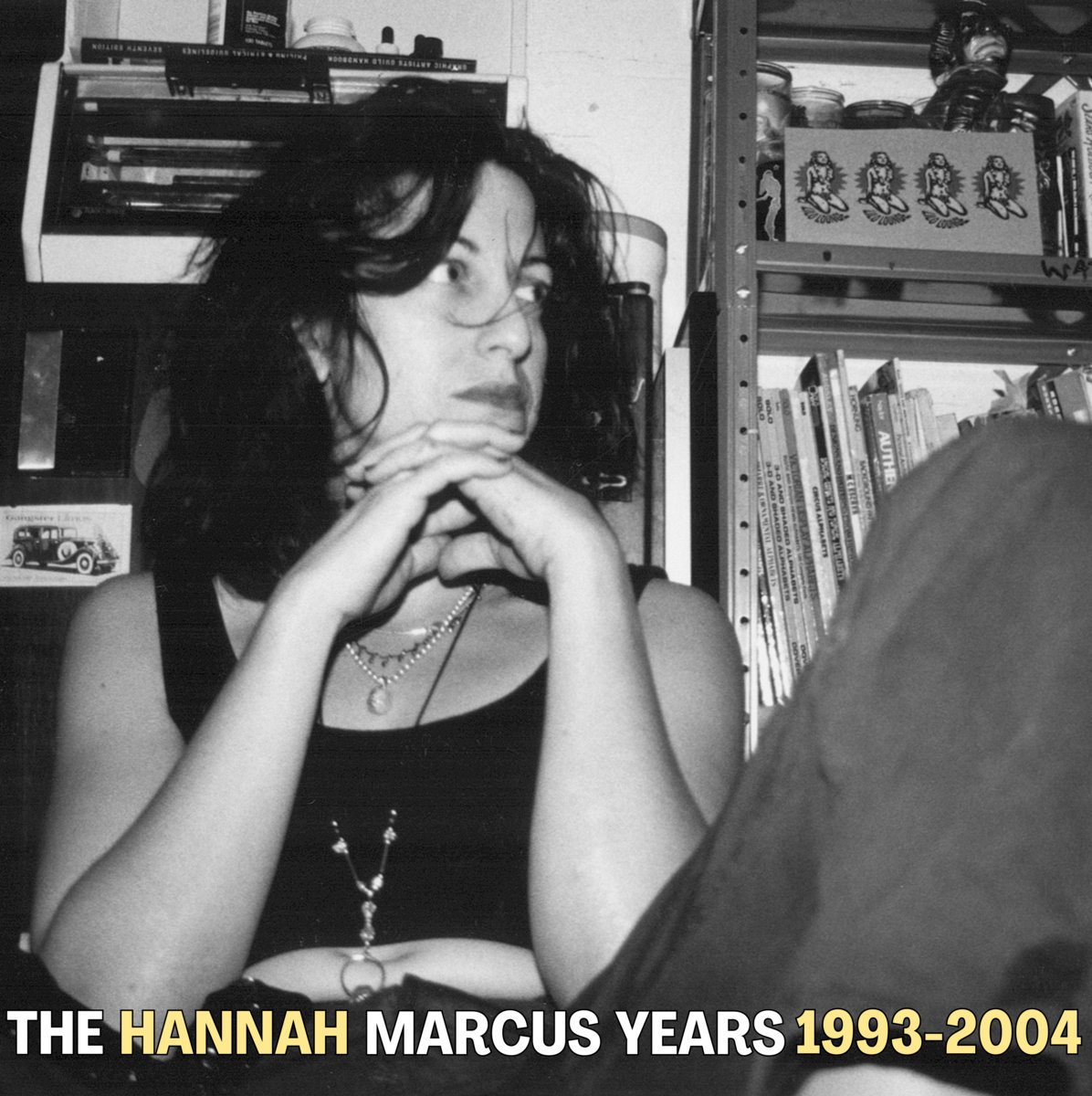


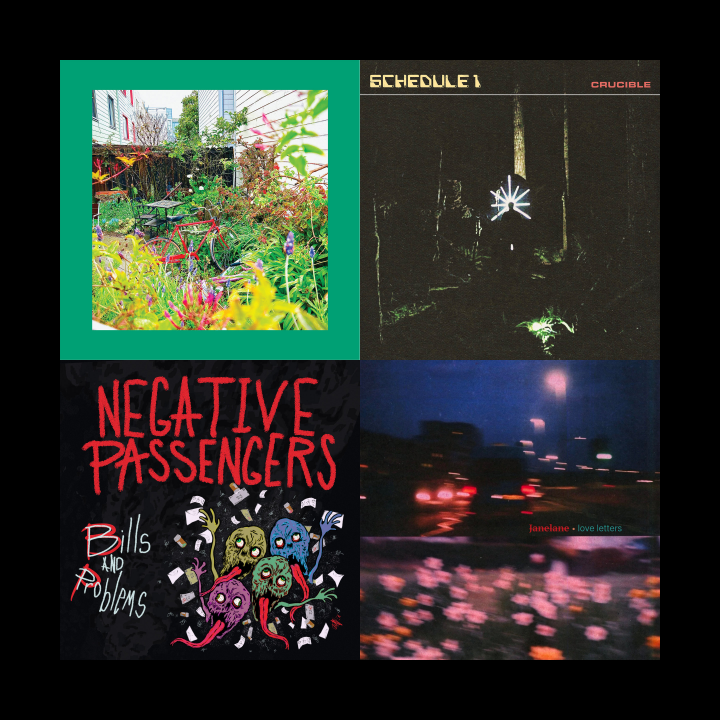


 Rosy Overdrive