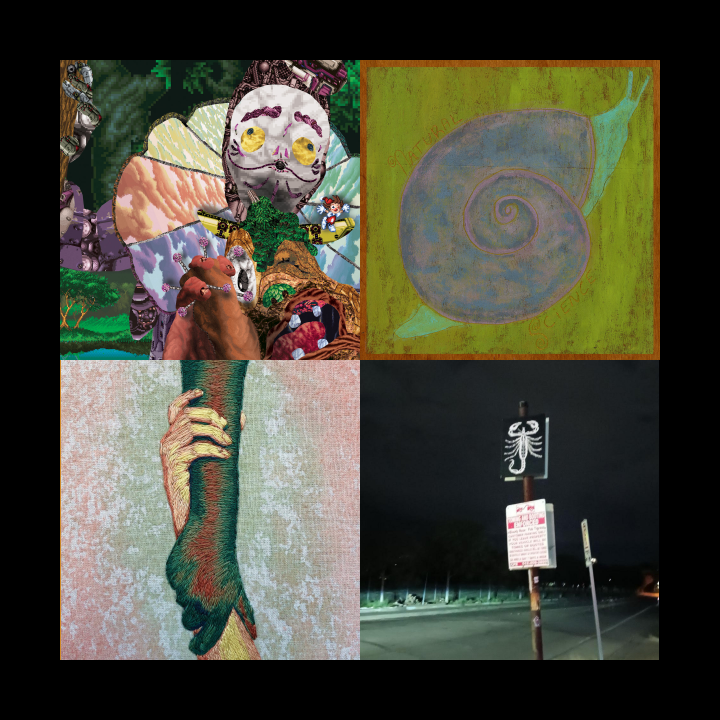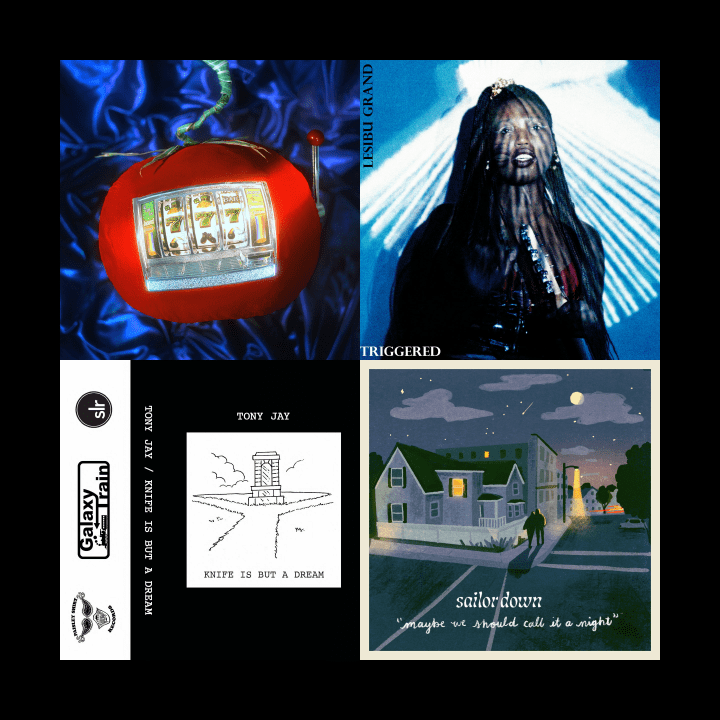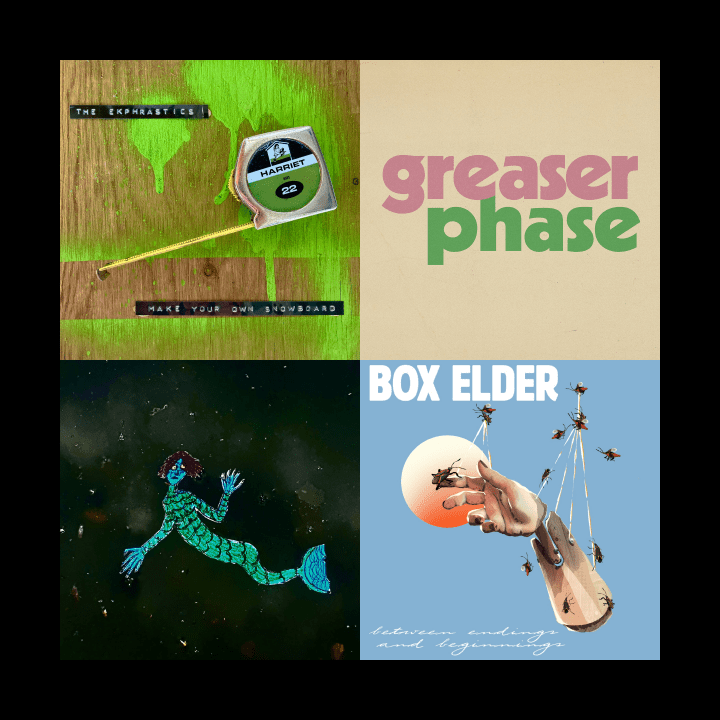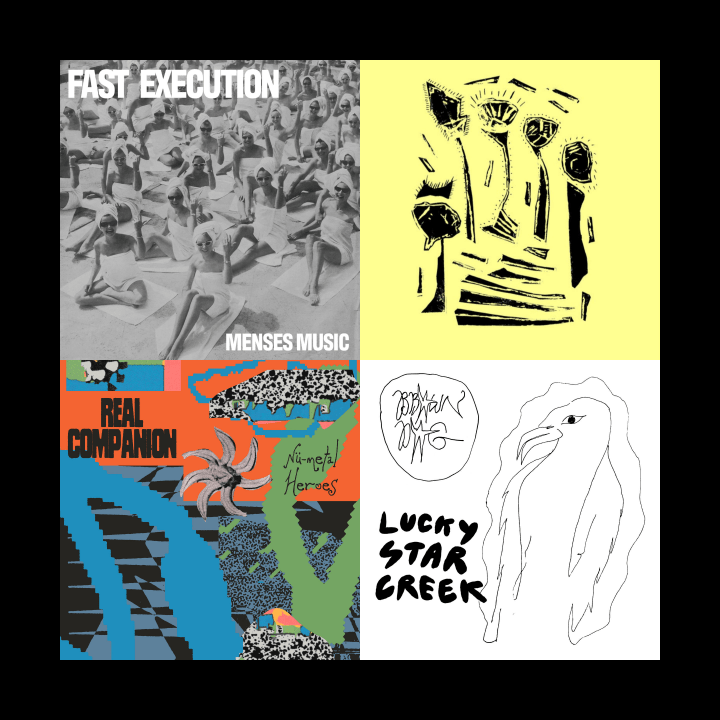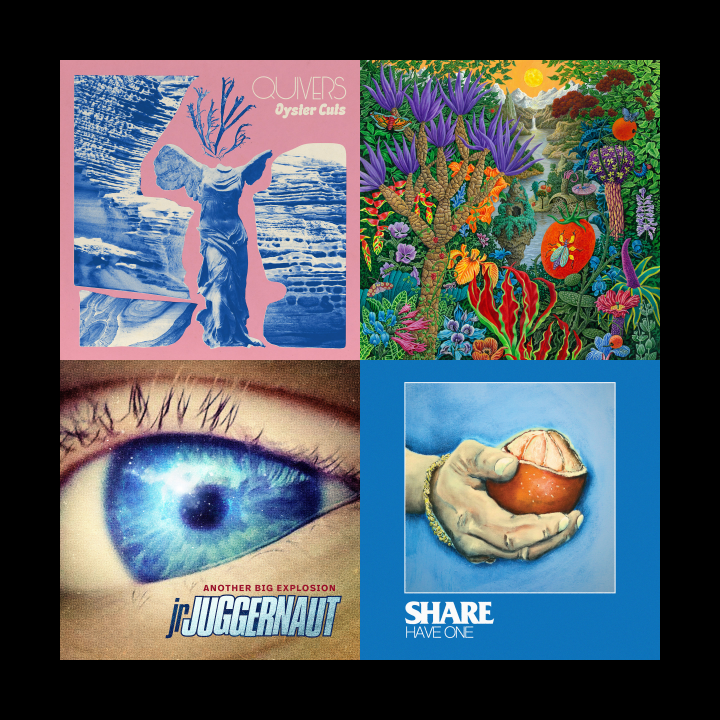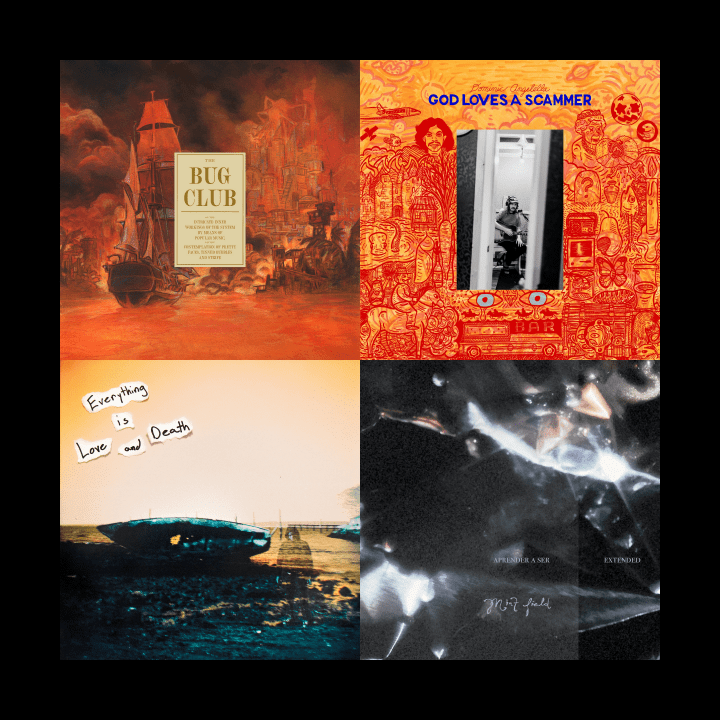
Pressing Concerns: Nature’s Neighbor, Hayes Noble, Bug Seance, Workers Comp

Good morning, Rosy Overdrive music blog nation! We’re wrapping up the month of June this week, and the first Pressing Concerns of the week is evenly split between records that came out last week (LPs from Nature’s Neighbor and Hayes Noble) and last month (an EP from Bug Seance and a compilation LP from Workers Comp). It’s a good one!

If you’re looking for more new music, you can visit the site directory to see what else we’ve written about lately. If you’d like to support Rosy Overdrive, you can share this (or another) post, or donate here.

Nature’s Neighbor – Projection

Release date: June 22nd
Record label: Pigeon Infirmary
Genre: Folk rock, soft rock, singer-songwriter, art rock
Formats: Vinyl, digital
Pull Track: Learning to Sail (弓削島)

When we last heard from Nature’s Neighbor, it was 2022, and bandleader Mike Walker had recently moved from his longtime home of Chicago to Kyoto to become an English teacher. Before he departed, however, he recorded The Glass Album in Humboldt Park with longtime collaborators Terrill Mast and Seth Engel (Options, Mister Goblin). At the time, the future of Nature’s Neighbor was somewhat uncertain, and the period between The Glass Album and its follow-up has been one of tumult for Walker on a personal level. His writing on the latest Nature’s Neighbor album, Projection, reflects on the dissolution of his marriage, a temporary stay in Japan turning into an indefinite one, attempts to move forward romantically, meeting new friends and musical collaborators in his new home country, and being reunited with old ones (Mast, who visited Walker in Kyoto in late 2022). Like previous Nature’s Neighbor releases, Projection primarily moves in the world of breezy folk rock, and while there are some louder, more electric moments, it feels more insular and reflective than The Glass Album did, perhaps appropriately for a record built from clearly personal writing on behalf of its principal songwriter.

Projection starts at a low point in multiple senses of the word–“The Truth Is Not” is a subdued acoustic-based song that feels like the capturing of the tail end of a dissolving relationship. “Plastic Bag Love Song” continues this theme, although Walker and his collaborators are able to conjure up something more rousing both instrumentally (which adds a bit of his experimental pop influences, and the strumming is more upbeat) and lyrically (in which Walker looks ahead to a better future, concluding that the breakup was all for the best in the end). The musical subtlety continues across the first half of the record via the mandolin-heavy “美山 (Miyama)”, the floating “Not Pining for Anything”, and the hazy “Indecipherable Dreams” (in which Engel’s drums are arguably the most prominent instrument). There’s some shifting going on underneath the surface of these songs, but Projection really takes a turn when “Bumble Date With You” kicks off the record’s second half with electric alt-rock, a roaring, nervous song in which confusion turns into (still apprehensive) understanding.

After “Bumble Date With You”, “Learning to Sail (弓削島)” balances the personal concerns of the rest of the album with a chorus that zooms out and seems to take some comfort in it, the middle part of a rousing trio capped off by the icy indie rock of “Lizard Blood Man”. Projection wraps up with yet another turn towards the acoustic and quiet, with “Instant Friends”, the last proper song on the record, being a really heartfelt-sounding tribute to the new faces on the record’s “credit” list (Taro Inoue, Shintaro Nagahara, Asagi Tsuchiya), and while the unlisted closing track deals with some more complex feelings, it’s no less affecting. Walker views Projection as the final Nature’s Neighbor album, a sad designation if so–but should he choose to continue to make music in some form, he has as many hands to help him do so as at any point in Nature’s Neighbor’s run. (Bandcamp link)

Hayes Noble – As It Was, As We Were

Release date: June 21st
Record label: 2-2-1 Press
Genre: Fuzz rock, garage rock, punk, 90s indie rock
Formats: Vinyl, CD, digital
Pull Track: Midcoast Kids

Galena, Illinois is a small town off the Mississippi River tucked into the northwest corner of the state, about a half an hour from Dubuque, Iowa. It’s what you might call a “‘Kerosene’ by Big Black town”. For Hayes Noble, I suppose there was nothing better to do than start making loud fuzzed-out indie rock inspired by the melodic side of 90s punk-y indie rock–and that’s exactly what he did (to illustrate just how devoted Noble is to this era of guitar music, he even enlisted Mike Scheer–the artist who made all of Treepeople’s album covers as well as You in Reverse by Built to Spill–to make the artwork for his latest album). Noble’s debut album, Head Cleaner, came out last year, when he was still in high school–his brother Everett plays bass on the record, his father Brett drums, and this family band also functioned as Noble’s touring lineup. The second Hayes Noble album, As It Was, As We Were, follows a year and change later, recorded last summer in Iowa with Luke Tweedy before the recently-graduated singer-songwriter relocated to Spokane (where he’s currently based). Noble can’t help but lay down one more massive Midwestern rock and roll statement before leaving the Driftless Area, a record that sounds like a freight train counterbalanced by the earnest writing at the center of the storm.

As It Was, As We Were begins as an album frantically beamed from nowhere to nothing–how else can one describe a record that shoots out of the gate like a dog slipping out of its leash with a Superchunk-indie-punk anthem called “Escape”, continues into a heavy, six-minute Hum-like alt-rock anthem called “In Search Of”, and then a punchy fuzz breakdown called “Comets” where Noble asks “What to do, stuck here alone? / Am I really on my own?” Noble rounds out the first half of As It Was, As We Were by confronting isolation and loneliness head on in “Blue to Grey” and the instrumental “On Montrose”. The second half of the record retains the 90s indie rock/punk energy of the rest of the record–a little Jawbreaker/Samiam in “Nothing Else”, some emo in “Pushin On”, and a massive J. Mascis fuzz riff in “Midcoast Kids”, but the isolation in the lyrics is a more interpersonal one, from the uncertain nostalgia in the former of those three tracks to the song-length apology in the middle one, or the fiery apocalyptic moods of late-record Tony Molina-esque scorcher “The End”. The most cathartic moment on As It Was, As We Were is “Midcoast Kids”, a song that deals with everything by turning the guitars up loud and driving around all over town “till curfew”. Noble situates us along the Mississippi, but between the guitars and attitude, it’s timeless and universal. (Bandcamp link)

Bug Seance – I’m Right Here

Release date: May 17th
Record label: Mind Goblin
Genre: Emo, shoegaze, emo-gaze, shoemo, emo with shoegaze in it, shoega–
Formats: Cassette, digital
Pull Track: These Days

Bug Seance are a five-piece fuzzy indie rock band from Portland, Oregon who’ve been kicking around since the beginning of this decade–they put out their debut EP, Erasing, back in 2020, and the three-track Retracing (featuring new recordings of the band’s first songs) followed in 2022. The band’s third EP, I’m Right Here, has been in the making for several years now–the quintet (bassist Javier Vasquez, synth player Maria Dehart, guitarists Pete Benson and Sean Cooper, and drummer Xochitl Vilorio) released the first single from it, “Wavering”, back in 2021, and songs continued to steadily trickle out before its cassette release in May. I’m Right Here is Bug Seance’s most substantial release yet–in a half-dozen songs and twenty-five minutes, the band deliver a polished, confident version of emo-y shoegaze (or shoegaze-y emo) that’d be right at home on labels like Topshelf, Count Your Lucky Stars, or fellow Portlanders Really Rad. I’m Right Here stands out due to Bug Seance’s cohesion, with the band’s five members (who all share vocal duty) being able to pull off both moments of wall-of-sound noisiness and an earnest, West Coast emotional fuzz-pop side with equal believability. 

Arguably the EP’s punchiest track, “Wavering” kicks off I’m Right Here with pop hooks, punk energy, and a wistful emo-y lead vocal–all of which are only enhanced by the song’s huge gang-vocal-bait big finish. “I Can Always Count on You” cranks the amps up a bit, dipping into grunge-gaze just so, but Bug Seance keep the vocals front and center and keep the record’s pop momentum rolling. The twin five-minute tracks in the middle of the cassette are the reason why I’m Right Here feels as grand as it does–“November” wanders in a labyrinth of distorted guitars and fuzzed-out dreaminess, the furthest thing from “punk” and “pop” the band have offered up yet, and while “The Raddest Day” eventually reaches a fiery conclusion, it gets there by passing through chilly indie rock and a quiet, slow-building midsection. Having proven their “grower” bona fides, Bug Seance rewards us with a piece of bubblegum in the incredibly breezy “These Days” and then close with “Aardvark”, a song that is so sublimely “emo-gaze” that it makes perfect sense that it ends with post-hardcore screaming that’s doing its best to make itself heard over an in-the-red guitar attack. The primary push-and-pull of I’m Right Here isn’t between genres so much as between fragile beauty and sonic might. (Bandcamp link)

Workers Comp – Workers Comp

Release date: May 31st
Record label: Ever/Never
Genre: Garage rock, fuzz rock, alt-country, lo-fi rock
Formats: Vinyl, digital
Pull Track: High on the Job

The three members of garage rockers Workers Comp all have notable backgrounds in similar such bands–singer/guitarist Joshua Gillis played in Detroit group Deadbeat Beat, drummer Ryan McKeever leads the Omaha-originating, D.C.-based Staffers, and bassist Luke Reddick has done time in Posmic, Saturday Night, and Divorce Horse. Between 2022 and 2023, three different four-song cassette EPs and a 7” single from Workers Comp surfaced on the Baltimore-based Gillis’ own label, Glad Fact, all of which displayed a strong grasp of distorted, blustery lo-fi garage rock. Their first long-player is a compilation of this previously-released material, put out through Ever/Never Records (Ryan Davis & The Roadhouse Band, Obnox, Dan Melchior), with the addition of one new song (“Basic Values”). McKeever’s Omaha roots are felt on the Workers Comp LP, both in the presence of guest vocalist Anna McClellan on “Never Have I Ever” and on the sound of the album as a whole, evoking a specifically blown-out, ragged version of Americana and rock and roll practiced by the likes of David Nance.

Workers Comp emerged fully formed on their debut EP, One Horse Pony, which comprises the first four tracks of this compilation. The delicate, woozy country rock of “When I’m Here” and the chugging garage burner of “Pick and Choose” set up some of Workers Comp’s greatest strengths, and the simple rock and roll throwback of “High on the Job” is an incredibly potent performance that might be the strongest song on the whole record. McClellan’s turn on the lilting “Never Have I Ever” is the biggest departure on the second EP, When in Room, which otherwise picks up where Workers Comp left off on their first record (for a more subtle change, one might closely inspect “Peel Away”, a piece of fuzz-fried Devo-core that widens the Workers Comp sound just so slightly). 2023’s Crazy with Sweat is the most polished Workers Comp release yet–not “hi-fi” exactly, but with a cleaner sound that emphasizes the retro-pop aspects of the trio’s sound. The lead guitar on “Good Luck” (courtesy of Brendan Reichhardt, also of Posmic) is the cherry on top, but the compilation ends with a more ramshackle take on garage rock in the form of “Basic Values”–an affirmation that, wherever Workers Comp go from here, their core mission seems likely to stay intact. (Bandcamp link)

Also notable:

Pressing Concerns: Riggings, Max Blansjaar, Eighteen Hundred and Froze to Death, Wild Yaks

It’s been yet another busy week on the blog–Monday and Tuesday saw the revealing of Rosy Overdrive’s Top 40 Albums of 2024, So Far, and on Wednesday, we looked at records from Goosewind, Eyecandy, Daniel Brouns, and Iffin. Today, we’ve got four albums that are coming out tomorrow, June 21st, to discuss: new LPs from Riggings, Max Blansjaar, Eighteen Hundred and Froze to Death, and Wild Yaks appear below.

If you’re looking for more new music, you can visit the site directory to see what else we’ve written about lately. If you’d like to support Rosy Overdrive, you can share this (or another) post, or donate here.

Riggings – Egg

Release date: June 21st
Record label: Horse Complex
Genre: Folk rock, experimental rock
Formats: CD, digital
Pull Track: Knife Necklace

Alex Riggs is a folk singer from Durham, North Carolina who’s been at it since the beginning of the 2010s, putting out a ton of records under her old name until coming out as trans around 2022 and switching gears to Riggings. The first proper Riggings album, Egg, has been in development pretty much since then–I suppose that’s only a couple of years, but for someone who’s spent a good deal of her career releasing multiple albums in the same year, the longer incubation time certainly seems remarkable. Not that Riggs stopped being prolific, mind you–you can find Riggings singles and EPs strewn across the Bandcamp page of her label, Horse Complex Records–but it’s clear that Egg was always supposed to be the first full-length Riggings statement. It’s still fair to call Riggs a folk artist on Egg, I think, although that doesn’t exactly capture the blown-open sound that she’s lassoed into place here–she’s been pretty open about Chicago experimental folk (like vintage Drag City artists and Ryley Walker, who’s put out some of her music on his Husky Pants label) being an influence, and I also associate her with fellow Durham act the Mountain Goats, another artist who has grown from fairly simple folk rock to something more laborious and ornate over time.

The record’s first track, “A New Opening”, is exactly that–an instrumental combining orchestral folk and lightly corrupted electronica that soundtracks us as we all file in and settle down to view the Egg show. “The Birds Knew First”, from the traditionalist nature-invocation of its title to the no-nonsense opening couplet to its basically turning the album title into a triple-entendre, is a damn strong scene setter, the sterile, frozen instrumentation eventually opening up into the warm folk rock of “Windshield Spider”. “The Birds Knew First” is as clear as day in how trans it is, as are “The High and Lonesome Racket” and “Old Bones”, albeit in different ways. These two songs are tough as nails because they have to be, written with the lucidity of a transgender woman living in the American South. Riggs will hit you with a blunt lyric from time to time but she’s not really a punk lyricist, as songs like “Knife Necklace”, “Sophie’s Moon”, and “Song for Pregnant Astronaut” are stronger for asking the listener to tease out how everything relates to each other (and I’ll also say that Riggs excels at the occasional John Darnielle-ian high-economical phrase, from “My new body’s a temple / Breaking out of the tomb” in “The Birds Knew First” to the fascinating “Invest in casts, invest in crutches / Learn how to wince good if anyone touches” in “Rhinoceros”). Egg ends with its title track, in which Riggs harangues us over and over to “pay attention” because she’s “got something to say”. Her message is: she’s not done “fucking up”, not done growing, not finished learning. With all due respect, Alex, I could’ve told you that already.  (Bandcamp link)

Max Blansjaar – False Comforts

Release date: June 21st
Record label: Beanie Tapes
Genre: Indie pop, singer-songwriter
Formats: Vinyl, cassette, digital
Pull Track: Saturnia

Although Max Blansjaar still can’t legally buy a drink in the United States, the debut album from the 20-year-old Oxford-based musician has actually been a long time coming. Blansjaar’s first releases, the Spit It Out! and Life’s Too Easy EPs, came out back in 2018 and 2019 respectively on local imprint Beanie Tapes, and he began working on his debut full-length not long afterwards. Blansjaar eventually hooked up with his “dream” producer, Katie von Schleicher, who ended up co-producing False Comforts with frequent collaborator Nate Mendelsohn at her Shitty Hits Recording Co. studio. Blansjaar’s first LP is a successful and personable pop album, a team effort (keyboardist Ben Walker, drummer Sean Mullins, and bassist Brian Betancourt being the other players) that spit-shines and enhances the emerging talent at the center of it all. Blansjaar is a quietly confident vocalist, and as a lyricist his aptitude is apparent from the beginning. His writing is reminiscent of more rambling corners of folk and rock music, but False Comforts turns the free-flowing narratives on their heads by corralling them with tight instrumentals and a stoic delivery from Blansjaar himself.

False Comforts feels classically-sequenced–hits up front, some interesting detours afterward. The record’s first four tracks all could’ve been the “lead single”–the confident, arm-swinging studio pop of “Saturnia” has a few weird touches but is still a wildly engrossing start to the record, the breezy “Burning in Our Name” follows a long, storied tradition of British guitar pop, “Anna Madonna” (which actually was the lead single) is finely honed, economical indie pop, and “Like a Bad Dream” takes the strengths of what came before it and applies them to blissful, slightly fuzzy indie rock. Even as Blansjaar favors a few simple motifs in the construction of these songs, the writing comes off as neither as fluffy as the instrumentals suggest it could be nor as a pure sardonic refutation of them–realistically, it goes wherever Blansjaar sees an opening. The middle of False Comforts tests the deep end with the crunchy distorted pop of “Song Against Love” and the six-minute chill of “Red Tiger”, and those who stick it out to the end of the record are rewarded with a gorgeous pin-drop quiet ballad (“On Beyond Eden”, a risky choice that nonetheless ends up being one of my favorite songs on the album) and the lo-fi folk clanging of closing track “I Will Not Be Forgiven”, an equally bold final statement. From a certain vantage point, Blansjaar singing “I will not go to heaven / It’s clean and pure and lifeless,” over sloppy open guitar chords is almost a refutation of what came before it on the record. Remember, though–you’re listening to a record called False Comforts. (Bandcamp link)

Eighteen Hundred and Froze to Death – Thirds

Release date: June 21st
Record label: Resident Recordings
Genre: Noise rock, post-punk, punk
Formats: Vinyl, CD, digital
Pull Track: Signal Burns

Ithaca’s Eighteen Hundred and Froze to Death are something of an upstate New York supergroup in reverse. The quartet of David Nutt (guitar/vocals), Joe Kepic (guitar), Brendan Kuntz (drums), and Tom Yagielski (bass) put out an album and EP in the early 2000s before going their separate ways and pursuing various projects–all of them but Nutt made a record together as The 1,000-Year Plan, Nutt started a solo project called why+the+wires, Kepic played in noise rock group Chimes of Bayonets, and Kuntz put out a bunch of great fuzz-country records as Grass Jaw. Always influenced by tough, post-punky 90s Dischord records, it made a lot of sense that, when Eighteen Hundred and Froze to Death reunited in the mid-2010s, they tapped J. Robbins to produce their second album, 2019’s appropriately-titled Some Years. Eighteen Hundred and Froze to Death fans only had to wait five years for a follow-up this time, with Thirds (yet again, an appropriate name) coming out this month (produced by Christopher Ploss this time, but Robbins returns to mix the record and sing backing vocals on “Minutewomen”).

There’s a lot of underground rock history contained in Thirds, but to be a bit reductive, it’s effectively the clean, workmanlike precision of Electrical Audio-recorded Chicago noise rock crossed with a palpable sense of Washington, D.C. punk rock agitation. If you liked the most recent Chimes of Bayonets album, it’s in the same universe, but that record’s blunt instrumentation is replaced by a more sharply-honed weapon on these nine songs. As is proper, Eighteen Hundred and Froze to Death’s rhythm section is incredibly key to their sound–Yagielski’s high-flying bass is the heartbeat of the record, and Kuntz’s powerhouse drumming the bolded exclamation mark. I have no idea how the band decided to sequence this album, as there are so many songs on here that feel either like an assault of an opening statement or a barnburning closing track (the record’s first four songs in particular are like one punch in the face after another, with the post-punk snaking of “Wreck the Decks” the first thing that even hints at subtlety). I suppose “Minutewomen” gets the nod as the album closer by virtue of it being the longest song on the album, a six-minute Touch & Go-type tune that spends half its length ramping up to an explosive, almost classic rock finale. Eventually, Eighteen Hundred and Froze to Death remember that they’re just a bunch of guys in a medium-sized college town and bring “Minutewomen” in for a conclusion that kind of tapers off. Still, I wouldn’t want to have to follow that one–but Eighteen Hundred and Froze to Death probably could’ve picked off where they left off if they wanted to. (Bandcamp link)

Wild Yaks – Monumental Deeds

Release date: June 21st
Record label: Ernest Jenning Record Co.
Genre: Garage rock, psych rock, art punk
Formats: Vinyl, digital
Pull Track: See the Light

Wild Yaks are a Rockaway, Queens-based band who debuted back in 2009 with an album called 10 Ships (Don’t Die Yet); depending on whether or not you count 2021’s Live at Rippers, they’re now on either their fifth or sixth full-length. The lineup’s shifted a bit over the years–vocalist/guitarist Robert Bryn and drummer Martin Cartegena have been there since the beginning, bassist Jose Aybar showed up a couple years later, and they added keyboardist Giovanni Kincaide sometime in the late 2010s. Their latest album, Monumental Deeds, introduces Jairo Barsallo Rubio on lead guitar, and this quintet (plus saxophone contributions from frequent collaborator Jeff Tobias) comprise the Wild Yaks this time around. Out via their longtime home of Ernest Jenning Record Co. (which seems to be the premier destination for long-running, unclassifiable rock bands in the greater New York area), Monumental Deeds is a loose but sharp collection of deeply felt rock and roll. It’s “garage rock” in a big-tent sense of the term–I hear a bit of the freaky, psych-tinged explosiveness of labelmate King Khan in it, particularly in the retro sound brought by the keys and the prominent rhythm section, but Wild Yaks are a group that primarily just sound like themselves at this point. 

Something of an accidental record, Monumental Deeds began as “a 7” or an EP”, but Wild Yaks just kept rolling until they had a full album. There’s an off-the-cuff charm to the album that shows up from the get-go, with the opening garage-pop rager of “Crazy People” and the euphoric “See the Light” both sounding incredibly fun. Wild Yaks take that attitude with them through detours into bass-led, saxophone-shaded dance-punk (“Lover/Liar”) and tipsy country western singalongs (“Desperado”), and the rambling spoken word soliloquy of “Jose’s Struggle” is even more gripping with the smooth playing of the band around its orator. The raging bull energy of the Yaks spills into the back half of Monumental Deeds, even as “See That Girl” (a two-point-five minute shapeshifting garage rocker) and “MOMD” (a five-minute post-psychedelic journey of a track) are genuinely weird songs. Just as impressively, Wild Yaks save what’s straight-up one of the best and most fully-realized moments on the album for last, with “Take the Bell” finding the band honing in on the kind of retro, 60s-touched rock music that they’d been dancing around up until that point and playing it straight. In a way, the rest of Monumental Deeds could be Wild Yaks working their way up to this final exclamation mark–but, thankfully, they’re a band that’s equally compelling in “hammering things out” mode. (Bandcamp link)

Also notable:

Pressing Concerns: Goosewind, Eyecandy, Daniel Brouns, Iffin

Hello there, folks! Both Monday and Tuesday of this week were dedicated to unveiling Rosy Overdrive’s Top 40 Albums of 2024 So Far, so the first Pressing Concerns of the week is a rare Wednesday edition. It’s a grab-bag of weird underground rock and roll, offbeat pop, and unique songwriting this time around: new albums from Goosewind, Eyecandy, and Daniel Brouns, and an EP from Iffin, appear in this edition.

If you’re looking for more new music, you can visit the site directory to see what else we’ve written about lately. If you’d like to support Rosy Overdrive, you can share this (or another) post, or donate here.

Goosewind – The Miracle of Tape

Release date: April 19th
Record label: Shrimper
Genre: Lo-fi indie rock, experimental rock
Formats: CD, digital
Pull Track: The Miracle of Tape

Goosewind is a long-running lo-fi indie rock project led by Rick Bunce, a Shrimper Records O.G. Like Shrimper’s most notable bands (The Mountain Goats, Refrigerator, Nothing Painted Blue), Bunce came up in southern California’s Inland Empire region, and the first few Goosewind cassettes in the early 90s were some of Shrimper’s first releases, even if they don’t exactly have the cult following today that some of the other acts on that label’s roster do (even the Internet’s preeminent Shrimper fansite has little to say on them). Although they moved on from Shrimper after a few releases, Goosewind never stopped putting out music, and the two reunited for 2022’s Grateful 4 the Times We Share cassette. Goosewind are back just two years later, and Bunce and his collaborators (this time, Melody Kriesel, Maddelleine Grae, Ruben Marquez, Gerry Hernandez, Rich Jones, and Jen Preciado) have cooked up a forty-five minute CD called The Miracle of Tape. My formal introduction to Goosewind may have come thirty years later, but I almost immediately understood them as true adherents to an important, inventive, and less-remembered strain of indie rock right out of the 1990s. 

Other than the obvious Shrimper bands, Goosewind’s underground is the same underground as Thinking Fellers Union Local 282, the Strapping Fieldhands, Souled American, Trumans Water, Skin Graft Records…music that’s compelling and “difficult”–not merely due to recording style, but due to something positively ornery at its core. Half a dozen songs into The Miracle of Tape, every track genuinely sounds like it was written and performed by a different band. To a certain kind of person, it might feel like Goosewind are playing a trick on you–but in reality, they’re not only serious, but just about as honest as they come, too. There’s no easily-digestible, polished package to be found here: just music, beautiful, weird, and impossible to ignore. The six-minute title track opens the record with Shrimper’s version of goth and punk rock, a mid-tempo power chord chugger that’s sure to satisfy neither goth nor punk purists. On the other hand, it’s hard to imagine someone who wouldn’t be charmed by the soaring, glossy, AutoTuned synthpop of “Broken Hearts Club” one song later. 

“Rest Stop Tree” and “Fever Pitch” land somewhere between the first two songs on the record–decidedly not for everyone, but if you’re open to either’s terrain (slide guitar-shaded folk music for the former, fuzzed-out glam-punk for the latter), they’re heavenly. These are the “hits” on The Miracle of Tape, but hardly the full story–one that also includes lengthy instrumentals (“It’s Always 1145”, “Rich Metal”), annoying “pirate radio” skits from Kriesel and Bunce (“Murphy’s Law”, “Transylvania Airlines”), and stuff that–there’s no way around it–is just plain weird (“Tourette’s of the Feet”, “Caddy Smells Like Trees”). Even the hits, though, are transmissions from a different world–as tempting as it would be to describe “Rest Stop Tree” as “Neutral Milk Hotel-esque”, it’s probably closer to Charlie McAlister, and while “Fever Pitch” could’ve been a 70s punk classic, it’s actually a cover of a song by Halo, a Los Angeles 90s band also associated with Shrimper. I’ve written about bands that sound like Lungfish before, but this might be the closest music has gotten to the miraculous feeling of going to the aquarium and seeing an actual lungfish. It’s out on CD, but The Miracle of Tape is the right name for it. (Midheaven link)

Eyecandy – You Can See Me from the Mountain

Release date: May 24th
Record label: Gore Club
Genre: Noise rock, experimental rock, post-hardcore, prog-punk
Formats: CD, cassette, digital
Pull Track: Changeling

Oxnard, California noise rock quartet Eyecandy first showed up in 2021 in the form of an EP (Supernova) and a full-length (The Promontory), which I heard through a tape released by Knife Hits and The Ghost Is Clear Records that compiled both into a single release. Eyecandy’s discography up to that point was a fine collection of loud, noisy rock music–clearly punk-informed, but still very heavy–but truthfully the band (Manuel Chavez, Cameron Esmaili, Robert Segura, and Julian Martinez) had kind of slipped my mind until their sophomore album, You Can See Me from the Mountain, showed up in my inbox. I ended up being quite surprised with how much of a leap Eyecandy have taken in the past few years–it’s not that they’ve abandoned their noise rock sound, they’re just…more now. The band careen through loopy, Beefheartian prog-punk, bone-quaking heavy rock, and bright and even a bit orchestral indie rock (among other genres) across You Can See Me from the Mountain–it’s a record clearly in line with weirdo underground rock of the 80s and 90s (from Touch & Go, Amphetamine Reptile, Alternative Tentacles, etc.), but it (like the best of this kind of music) hardly sounds like a reverent tribute.

You Can See Me from the Mountain greets the listener with an instrumental opener that moves into “The Grand Cannon”, which goes from jaunty, swinging saloon rock to pummeling noise rock on a dime, and “Skeleton Key”, a writhing, tortured-sounding post-harcore-metal thing that’s the heaviest song on the album. Funnily enough, this opening stretch is the least accessible part of the album–Eyecandy remain weird, but sometimes that means sticking a bright, jangly pop rock tune (“Changeling”, which still has just a bit of an edge) in the middle of the record, or channeling their huge sound into industrial post-punk throbbing (“The Entertainer”). The oddest single song on You Can See Me from the Mountain is probably “Polka”, which continues in the grand tradition of noise rock bands taking the piss out of other genres of music in a deliberately annoying and borderline-unlistenable way (I kind of hate it, but it’s also undeniably a work of art), although they continue to genre hop in the record’s second half from the maximalist, almost emo-indie-rock of “Pinky” to the straight-up punk of “Hole in My Head” to the huge, seven-minute prog-indebted closing track “The Mountain”. You Can See Me from the Mountain ends with everyone singing together, having reached the summit–we’d best enjoy it, as we’ve no idea where Eyecandy will go next. (Bandcamp link)

Daniel Brouns – Stock Music for the Cosmos

Release date: May 17th
Record label: Anxiety Blanket
Genre: Folk rock, singer-songwriter, slowcore
Formats: Vinyl, digital
Pull Track: Closure

Daniel Brouns grew up in Turlock, California (apparently it’s close to Modesto) before moving to Los Angeles to pursue music–engineering and mastering music, to be specific. He did that for a couple of years before deciding to make it himself, as well, releasing his debut solo EP Boy’s Normal in 2017. Anxiety Blanket Records eventually re-released his first record, and they’re also putting out Stock Music for the Cosmos, the first-ever Daniel Brouns LP. Brouns had been working on Stock Music for the Cosmos since before the pandemic with co-producer Kenny Becker–the two of them play most of what’s on the record, although they also enlist Emily Elkin (Angel Olsen’s band) to play cello and Chuck Moore (Cartalk) for backing vocals. Stock Music for the Cosmos is a “singer-songwriter” album, albeit one certainly informed by Brouns’ music engineering past, as it has a rich and impactful sound. Most of these songs have acoustic, folk-ish skeletons, but Brouns isn’t afraid of using synths and rock instrumentation to tease them out–combined with Brouns’ deep voice and his personal lyric-writing, the record reminds me a lot of Pedro the Lion’s David Bazan.

When I say Brouns’ writing on Stock Music for the Cosmos is “personal”, I mean that as literally as possible–the songs are about “nine of the most influential moments of his life”, three from each decade the thirty-year-old has been alive. Romantic and familial relationships, messy breakups, death–all of these color Brouns’ reminiscences throughout the record. The earliest songs all feel a bit more like discrete moments–the death of a classroom pet in “Lizard Killer”, the football game-turned-brawl in “The Legend of Duke Stone”, and “Porn: An Internet Experience”, a delicate folk song that fearlessly captures the gravity of something very powerful that we still don’t do a very good job of talking about. As Stock Music for the Cosmos advances, lines get blurred and the songs begin to bleed into each other. I view “Ash”, “Closure”, and “Watershed” as a trio of sorts–I don’t know if they’re all about the same romantic relationship, but they all capture the apprehension, pain, and peace (respectively) often found in one with a clear end date. Further reflecting real life, “700 Miles”–a song about the death of Brouns’ mother–interrupts this arc, a realistically inconvenient tragedy. It’s all handled with a polish that doesn’t cheapen anything Brouns sings about–Stock Music for the Cosmos receives a reading appropriate for a record a lifetime in the making. (Bandcamp link)

Iffin – Homage to Catatonia (Picaro Two)

Release date: May 1st
Record label: Self-released
Genre: College rock, folk rock, jangle pop, psych pop
Formats: Digital
Pull Track: Kinderkings

Last year, I wrote about a four-song EP called Picaro 1: As the Crow Fights by the Seattle-based project Iffin. Iffin is the latest guise of longtime musician Mira Tsarina, and as recent releases such as Picaro 1 indicated, it’s been a vehicle for her to explore her own unique, skewed take on vintage guitar pop and college rock (I mentioned Robert Pollard, Graeme Downes, and Franklin Bruno in that review at the time–artists that are effectively impossible to carbon copy, meaning that Iffin has had no trouble developing a distinct “sound” by taking influence from these giants). A year later, Iffin has put out a sequel of sorts in Homage to Catatonia (Picaro Two), five more songs that fit right next to its prequel on the digital shelf quite nicely but not without taking a step forward, too. At alternative moments both catchier and stranger than Picaro 1, Homage to Catatonia is marked by a more palpable playfulness and adventurousness that flirts with blowing the entire world of Iffin right open.

The prominent mandolin strumming that opens first song “Document of Descent” is unlike anything else I’d heard from Iffin thus far, and Tsarina takes it a step further by grafting a melodic bass part to the track as well–it’s one part R.E.M. and The Waterboys, another part XTC, all of which had been a part of Iffin but never quite bubbling to the surface like this. On almost any such brief EP, “Document of Descent” would easily be the catchiest song, but Homage to Catatonia actually saves its biggest moment for the back end with penultimate track “Kinderkings”, a sparkling, absurdly jaunty piece of jangle pop that once again evokes Andy Partridge if he had a completely different personality. With a couple of towering songs on either end of Homage to Catatonia, Iffin now has the cover necessary to get a bit weird in the center of the EP, with the murky “Cost of Floss” taking a minute to break out of its stupor to embrace a sneaky post-punk/new wave hook and the record’s centerpiece, the five-minute atmospheric “Pointless Walk”, never entirely leaving its own hypnosis. Instead, it just hands everything over to the giddy guitar, bass, and melodic of “Kinderkings” after its wandered enough, allowing Homage to Catatonia to hit us with a reminder of just how fun-sounding this kind of music can be in the right hands. (Bandcamp link)

Also notable:

Rosy Overdrive’s Top 40 Albums of 2024 So Far (Part 2 of 2)

If you’re only just now joining us: this is part two of my list of my favorite forty albums of 2024 thus far, presented in alphabetical order. Thanks for reading!

View part one of the list here.

Here are links to stream a playlist of these selections via Spotify and Tidal (Bandcamp links are provided below for all records).

​​Rain Recordings – Terns in Idle

Release date: April 12th
Record label: Trash Tape
Genre: Emo-y indie rock, 90s indie rock, folk rock
Formats: CD, cassette, digital

Carrboro-based Evren Centeno and Stockholm, Sweden’s Josef Löfvendahl have been collaborating remotely for a few years as Rain Recordings, but Terns in Idle is the first album that the duo recorded in person in the same studio. Ceneno and Löfvendahl sound like they’ve spent a good deal of time with essential 90s indie rock groups like Modest Mouse and Built to Spill, but Terns in Idle isn’t entirely devoted to this bygone ornery era of guitar music–there’s also some Neutral Milk Hotel-ish folk ambition, the earnest, wide-eyed 2000s version of indie rock, and even a bit of emo mixed in, as the duo take advantage of the studio setting to expand their sound. (Read more)

Tucker Riggleman & the Cheap Dates – Restless Spirit

Release date: February 17th
Record label: WarHen
Genre: Alt-country, country rock
Formats: Vinyl, digital

If 2021’s Alive and Dying Fast was the sound of Tucker Riggleman & The Cheap Dates slowing down and displaying enough confidence in Riggleman’s writing to let it take the unquestioned center stage, Restless Spirit is where the West Virginia-based band show that they can maintain the captivating quality of that record’s songs while also injecting just a bit more rock and roll into things. No one’s going to mistake Restless Spirit for a garage punk record, but it is very clearly an album where Riggleman’s formative alt-country and power pop influences peak through with regularity, and this suits his writing–always with chaos and darkness hovering around, but determined to keep it in check rather than overwhelming everything. (Read more)

J. Robbins – Basilisk

Release date: February 2nd
Record label: Dischord
Genre: Post-punk, post-hardcore, 90s indie rock, alt-rock, art punk
Formats: Vinyl, digital

We’re probably lucky that we got a sophomore J. Robbins album at all–the D.C.-based musician is a prolific and in-demand engineer these days, and his influential 90s Dischord group Jawbox have reunited and even released new material in recent years. Basilisk sounds familiar in a most welcome way, with Robbins evoking his golden era in a way few 90s indie rockers are still doing today. That being said, Basilisk doesn’t exactly sound ripped from the world of Jawbox circa 1993–it picks up about where 2019’s Un-Becoming left off, with Robbins writing art-punk anthems with both “maturity” and “edge” and a fearless awareness of the present. (Read more)

Daniel Romano’s Outfit – Too Hot to Sleep

Release date: March 1st
Record label: You’ve Changed
Genre: Power pop, punk rock, garage rock
Formats: Vinyl, CD, digital

Although the proper records from Daniel Romano’s Outfit generally hew more towards “studio rats” than “garage punks”, those who’ve followed the prolific Canadian troubadour know about his band’s energy and ferocity in their live shows. I’ve been waiting for something like Too Hot to Sleep from The Outfit for a while now–a genuine live-in-studio sounding garage rock scorcher of a record. Romano and his crew really honed in on something potent with this ten-song, twenty-seven minute collection, which is looser-sounding than typical Outfit fare but still led by a smooth operator of a pop songwriter. Even if you think you know Daniel Romano’s deal by now, I’d recommend Too Hot to Sleep to any power pop and/or garage rock fan–it’s one of his strongest albums yet. (Read more)

Greg Saunier – We Sang, Therefore We Were

Release date: April 26th
Record label: Joyful Noise
Genre: Art rock, noise pop, post-punk, math rock, garage rock
Formats: Vinyl, digital

Considering just how much great music he’s been involved with over the past quarter-century, it’s perhaps not surprising that Deerhoof’s Greg Saunier can carry an album all on his own, but still, I was surprised by just how much I enjoyed We Sang, Therefore We Were, somehow his first-ever solo record. As it turns out, he’s a killer, unique pop songwriter when left to his own devices; the album’s dozen tracks certainly are recognizably “Deerhoof-esque”, but the one-man Saunier band (he wrote, played, recorded, mixed, and mastered everything here) is truncated and streamlined, throwing jagged, catchy guitar riffs and shapeshifting, form-fitting vocals over top of everything in a keen manner. (Read more)

SAVAK – Flavors of Paradise

Release date: March 1st
Record label: Peculiar Works/Ernest Jenning Record Co.
Genre: Post-punk, garage rock, college rock, 90s indie rock
Formats: Vinyl, digital

Coming a little under two years after their last record, Human Error / Human Delight, Flavors of Paradise adds to the language SAVAK have been developing since their debut in 2016, contracting it in some places and expanding it in others. The Brooklyn trio recorded the album at Electrical Audio last year, and while they’ve always been a “no nonsense” group, Flavors of Paradise finds the band plowing through twelve songs triangulating garage rock, post-punk, and college rock with a fresh, live sound. It’s easy to take for granted just how well SAVAK click together, but Flavors of Paradise is the work of several indie rock lifers determined to harness their experience into something accessible but still doing justice to the trailblazing nature of their influences. (Read more)

Micah Schnabel – The Clown Watches the Clock

Release date: May 15th
Record label: Self-released
Genre: Country punk, alt-country, Americana, cowpunk
Formats: Vinyl, CD, digital 

Columbus country-punk institution Micah Schnabel has always come off as somebody with a lot to say in his lyrics, both as the primary frontperson of his cult alt-country group Two Cow Garage, and in his just-as-worthwhile solo career (and even, more recently, as a novelist).  His latest album, The Clown Watches the Clock, balances Schnabel’s long-winded tendencies with his punk rock instincts admirably–he wanders a fair bit in the songs’ verses, but there’s a conscious effort to return to clear, catchy, and concise refrains again and again on the album. The Clown Watches the Clock is a record about the ambient sights and sounds of middle America: guns, Jesus, and debilitating, humiliating, irritating poverty, delivered with none of the treacly, pandering romanticism in which lesser writers love to indulge (but, rather than cynicism, our narrator emerges out the other side with something much more potent). (Read more)

Sharp Pins – Radio DDR

Release date: May 19th
Record label: Hallogallo
Genre: Lo-fi indie rock, power pop, jangle pop
Formats: Digital

Last year’s Turtle Rock was one of the breakout debuts of 2023, an exuberant and well-crafted collection of lo-fi pop that put Sharp Pins square in the center of Chicago’s “Hallogallo” scene. How does Kai Slater (Lifeguard, Dwaal Troupe), one of the most exciting talents in indie rock, follow it up? With a Bandcamp-only digital album benefiting the Palestine Children’s Relief Fund, of course. As great as Turtle Rock was, Radio DDR is a huge step forward for Sharp Pins–Slater doesn’t lose the humble charms of his first record under the name, but the writing is refined and polished, finding the Pins inching closer and closer to power pop perfection. Two great and distinct records in as many years–pay attention to Sharp Pins.

Shellac – To All Trains

Release date: May 17th
Record label: Touch & Go
Genre: Noise rock, math rock, post-hardcore
Formats: Vinyl, CD, digital

It’s as good as I’d hoped it’d be. I can enjoy Big Black in a certain mood and obviously “appreciate” it, but Steve Albini’s work with Todd Trainer and Bob Weston has always been my favorite from him as a musician. To All Trains is ten more songs and twenty-eight more minutes of possibly the greatest-sounding rock and roll band of all-time doing their thing, re-announcing their dominance by honing their metallic, razorblade-sharp sound into levels of concision and prickliness previously thought impossible to reach by mankind. It fucking sucks that this is the last Shellac album. It fucking rules–this, the last Shellac album.

Silo’s Choice – Languid Swords

Release date: March 29th
Record label: Self-released
Genre: Folk rock, prog-folk, art folk, new age
Formats: Digital

Built largely around meandering acoustic guitar playing and upright bass, the seven-song, 40-minute Languid Swords backs up the John Fahey influence that Chicago’s Jon Massey cited when he emailed me about Languid Swords. The latest LP from his long-running Silo’s Choice project takes its time and isn’t overly concerned with offering up pop hooks immediately–not that it doesn’t indulge in “pop music”, but it’s always on Massey’s own terms. It’s a bit more challenging than the experimental yet accessible take on Chicago indie folk rock of his other band, Coventry, but Languid Swords is gripping and spirited in its own steadily smoldering way. (Read more)

Sonny Falls – Sonny Falls

Release date: March 1st
Record label: Earth Libraries
Genre: Fuzz rock, garage rock, alt-country
Formats: Vinyl, digital

Since 2018, Chicago’s Ryan Ensley aka Hoagie Wesley aka Sonny Falls has been putting out fiery, unique records that are loose-feeling but incredibly deep underneath their garage rock/fuzz-country exteriors. The fourth Sonny Falls album is a self-titled one that feels like an attempt to pack all the ambition strewn across the project in ten tracks and thirty-five minutes. The songs on Sonny Falls don’t sound like anything but Sonny Falls songs, but every track on the album feels stretched and teased out in a new way, Ensley spending a bit more time composing and arranging his sprawling writing instead of fully leaning into his street-raving side. At this point, Ensley has a very strong baseline as a songwriter, but it’s quite exciting to watch him figure out how to add to it. (Read more)

Sun Kin – Sunset World

Release date: April 19th
Record label: Self-released
Genre: Art pop, indie pop, synthpop, singer-songwriter
Formats: Digital

Sun Kin is the project of Bombay-originating, Los Angeles-based Kabir Kumar, who’s been making music under the name for a dozen years in addition to playing in the band GUPPY and collaborating with Rosy Overdrive favorite Pacing. Sunset World, Sun Kin’s latest, is an ambitious pop album in which Kumar corrals a ton of his musical collaborators and acquaintances in service of an eleven-song, thirty-minute record with boundless energy. Sunset World is a record about destruction (“apocalyptic LA pop”, they call it), but it’s bright and sunny and never loses sight of the positives involved in ruins and decay–it’s just clearing more space for what really matters. (Read more)

The Sylvia Platters – Vivian Elixir

Release date: April 26th
Record label: Grey Lodge
Genre: Jangle pop, power pop, indie pop
Formats: Cassette, digital

At eight songs and 24 minutes, Vivian Elixir is on the shorter side, but The Sylvia Platters consider it more than just another EP–it’s their first “album” since 2015’s Make Glad the Day, even as the Vancouver-based power/jangle pop quartet have remained fairly active in the interstitial decade. And when you’ve got a bunch of songs that are as strong as these are, you can call it just about whatever you want. The Sylvia Platters continue to assert themselves as one of the best guitar pop bands going with Vivian Elixir, offering up power pop songs of varying stripes but consistent in quality and catchiness–about half of the cassette is “gigantic tune that could’ve been the lead single”, and the other half gives Vivian Elixir some extra character and helps it feel more like a proper album. (Read more)

Ther – Godzilla

Release date: April 5th
Record label: Julia’s War
Genre: Art rock, folk rock, post-post rock, alt-rock, slowcore
Formats: Cassette, digital

On every record thus far from Philadelphia’s Ther, the band (led by So Big Auditory’s Heather Jones) has reinvented their sound in some form, so it’s no surprise that Godzilla sounds like none of their previous records once again. Godzilla asserts itself in Ther’s discography by embracing electric guitars and loud, dramatic indie rock to a previously unseen degree. Jones has worked with experimental shoegazers They Are Gutting a Body of Water frequently, and while that doesn’t really describe what Godzilla sounds like, Jones has perhaps taken inspiration from that side of indie rock to create what can at times feel almost like a photo negative the skeletal folk of their last album, in which her vocals alternatingly fight against or become entirely swallowed up by swirling, all-encompassing rock instrumentals. (Read more)

Mary Timony – Untame the Tiger

Release date: February 23rd
Record label: Merge
Genre: Folk rock, progressive rock, power pop
Formats: Vinyl, CD, digital

The amount of definitive rock music that Mary Timony has made in several different bands over the years is staggering–and it’s continued in recent years to the degree that I can’t be the only one to not realize it’s been fifteen years since a proper Timony solo album. Any indie rock musician who’s taken influence from Autoclave, Helium, or Ex Hex should get out their pen and paper for Untame the Tiger, a record that shows that Timony is still better than most at creating something intricate, immediate, and shockingly deep. Untame the Tiger is a surprising album, basking in the sun in plain sight but sneaking up on you at the same time–its leader sounds free, untamed, absolutely thrilled to be still pressing ahead in the form of inventive, unique rock music. (Read more)

True Green – My Lost Decade

Release date: February 1st
Record label: Spacecase
Genre: Lo-fi indie rock, lo-fi pop, psych pop, singer-songwriter
Formats: Cassette, digital

Minneapolis’ Dan Hornsby is a novelist–perhaps unsurprisingly, his knack for storytelling and flawed, deeply-felt character studies is pervasive in My Lost Decade, the debut from his project True Green. What does surprise me is that the singer-songwriter chooses lo-fi, reverb-y psychedelic guitar pop to deliver it all. There are acoustic guitars, but Hornsby isn’t a folk troubadour, rather making music that’s generally thought of as the domain of Beatlesesque bashers like The Cleaners from Venus and Guided by Voices. My Lost Decade is a pleasingly varied-sounding record, but Hornsby and multi-instrumentalist Tailer Ransom develop a distinct musical style, a busy, kitchen-sink pop attitude that reflects True Green’s confidence that Hornsby’s striking songwriting will shine even if they whip up an instrumental storm around it. And it does. (Read more)

Rosie Tucker – UTOPIA NOW!

Release date: March 22nd
Record label: Sentimental
Genre: Art rock, power pop, pop punk, alt-rock
Formats: Vinyl, CD, cassette, digital

The snippets of Rosie Tucker’s discography I’d heard before now definitely did not prepare me for the adventurous, overstuffed, and punchy rock record that is UTOPIA NOW!, an album seemingly engineered to appeal specifically to me. As a songwriter, Tucker is lethally sharp, pulling out massive power pop/pop punk hooks out of nowhere, oftentimes completely at odds with where the track had been leading up to beforehand, but never in a way that feels overly shoehorned. UTOPIA NOW!’s sound is just as commendable–like the majority of Tucker’s output, it was produced by themself and their longtime collaborator Wolfy, and they gleefully veer between chilly bedroom pop/folk/rock, slick alt-rock, and limber, jerky art rock/new wave across the record’s thirteen tracks. (Read more)

Vacation – Rare Earth

Release date: May 3rd
Record label: Feel It
Genre: Power pop, punk rock, garage rock
Formats: Vinyl, CD, cassette, digital

Vacation are a quartet out of Cincinnati that have been making their blend of garage rock, power pop, and punk rock for a decade and a half now. Rare Earth, their debut for Feel It Records, displays a belief that pop music should be played loud and fast, but it also reaches over to nearby Dayton to snag a mid-period Guided by Voices “meaty but hooky” attitude and, last but not least, throws in a dash of Midwestern, blue-collar pop punk. All in all, Rare Earth is one of the most inspired-sounding rock records I’ve heard in quite a bit–huge-sounding, catchy, with the edges anything but sanded off. (Read more)

Yea-Ming and the Rumours – I Can’t Have It All

Release date: May 24th
Record label: Dandy Boy
Genre: Indie pop, jangle pop, folk rock
Formats: Vinyl, CD, digital

The latest record from Oakland’s Yea-Ming Chen and her band, The Rumours, doesn’t reinvent their sound–Chen is still a sharp, 60s pop-inspired songwriter and a striking vocalist, and the band give these songs a polished but utilitarian, classic college rock reading. What makes I Can’t Have It All feel so full-sounding and like a career highlight is the well-earned, quiet but palpable confidence Yea-Ming and the Rumors display throughout the entire record. Every song on the first half is a “hit” in its own way, and once you get on their level, you can appreciate how The Rumours skip through twee-pop-rock, folk-country, dream pop, and slowed-down girl-group-influenced pop with a steady helping of zeal. (Read more)

Zero Point Energy – Tilted Planet

Release date: May 17th
Record label: Danger Collective
Genre: Post-punk, art punk, college rock
Formats: Vinyl, CD, cassette, digital

Genesis Edenfield and Ben Jackson played together in mid-2010s Atlanta, Georgia art punk group Warehouse–now based in Brooklyn, the duo have reunited as Zero Point Energy. Their debut album, Tilted Planet, is a collaborative reintroduction to Edenfield and Jackson–both of them play guitar, both sing, and both wrote material for the twelve-song, forty-two minute record. Tilted Planet reinvents Edenfield and Jackson’s sound into something more polished and restrained, but still quite unique. American post-punk and garage rock still abound, but Zero Point Energy also adopt a mellow pop rock attitude that puts them towards the jammier end of classic college rock. Edenfield and Jackson meld together excellently here, creating a beautiful, obstinate, simple, complex melting pot of a debut album. (Read more)

Go back to part one here!

Rosy Overdrive’s Top 40 Albums of 2024 So Far (Part 1 of 2)

Hello there, and welcome to the midway mark of 2024 (as measured by the music blog Rosy Overdrive, at least). That means it’s time for the blog to select forty records we’ve loved more than anything else so far this year. It’s been the busiest year for the blog yet, which means there’s a bunch of good music I wasn’t able to fit on here (check the site directory for other records we’ve written about recently), but it’s hard to be disappointed with the incredibly strong selection we’ve ended up with below.

The list is unranked, ordered alphabetically by artist name (last year I did it reverse-alphabetically, and I alternate it every year).

Thanks for reading, and here are links to stream a playlist of these selections via Spotify and Tidal (Bandcamp links are provided for all records).

Click here for part two!

ADD/C – Ordinary Souls

Release date: March 29th
Record label: Let’s Pretend
Genre: Punk rock, pop punk
Formats: Vinyl, digital

Ordinary Souls is ADD/C’s first new music in over a decade, and it’s a sweeping, wide-ranging punk rock record (seventeen songs in under forty minutes!) from a band with nothing to lose and no reason to keep “doing this”–other than the music itself, which is more than enough on its own. “Heartland rock” has come to mean something fairly polished and critic-friendly, but Ordinary Souls is perhaps a truer version of the term: catchy and decidedly rough-around-the-edges pop punk made by two-decade-plus rock and roll veterans strewn across tertiary-market cities in the South and Midwest with several lifetimes’ worth of fucked up shit to write about. (Read more)

Adeem the Artist – Anniversary

Release date: March 29th
Record label: Four Quarters
Genre: Alt-country, country rock, folk rock
Formats: Vinyl, CD, digital

Adeem the Artist put out an album called White Trash Revelry in 2022 that I really enjoyed–I wasn’t necessary expecting the Knoxville-based alt-country singer-songwriter to match it with their follow-up record, but I’m pleased to note that their latest full-length, Anniversary, is even better than the one that preceded it. For those of us already on board, Adeem takes several steps forward and outward in their writing, shooting for the stars by embracing polished, confident country rock and continuing to tackle the impossible task of writing about queer Southern experience in a powerful yet personable way (and if it were possible, it’d certainly sound pretty damn close to Anniversary).

Ahem – Avoider

Release date: May 17th
Record label: Forged Artifacts
Genre: Power pop, pop punk, jangle pop
Formats: Vinyl, digital

You can call it power pop, pop punk, alt-rock, or college rock–whatever it is, the second album from Minneapolis power trio Ahem has more than enough in its ten songs to please fans of any of those genres. You’ll hear the band’s Twin Cities indie rock forbearers in Avoider, a massive collection of loud guitar-based pop music, and they expertly meld their Westerbergs, Harts, and Moulds with their off-the-cuff “indie punk” style and just a hint of high Midwestern folksiness/rootsiness, too. Whether it’s in service of roaring catharsis or lighter, breezier sunset-strummers, Ahem know what they’re doing and where they’re going–and it’s a treat to hear. (Read more)

Aluminum – Fully Beat

Release date: May 24th
Record label: Felte
Genre: Shoegaze, noise pop, Madchester, fuzz rock
Formats: Vinyl, digital

Fully Beat is a huge leap forward for San Francisco shoegaze-pop group Aluminum, both sharpening and expanding their sound to create some of the most exciting, spirited, and downright fun rock music I’ve heard this year. The studied, carefully-constructed band on their debut EP, Windowpane, has been replaced with true believers in loud, bursting-at-the-seams indie rock throughout their debut LP. Fully Beat is the result of a band taking a big swing on their first full statement–it comes at you like a stampede in its loudest, most chaotic moments, but devotes plenty of time to filling in the gaps that they blast into their foundation, as well. (Read more)

American Culture – Hey Brother, It’s Been a While

Release date: May 3rd
Record label: Convulse
Genre: Punk rock, Madchester, power pop, jangle pop, noise pop, college rock, psychedelic rock
Formats: Vinyl, digital

Denver quartet American Culture’s sound has a lot of familiar ingredients, but it’s a unique and captivating blend that’s found on Hey Brother, It’s Been a While–they’re “punk rock” in a loose sense, yes, although in the older underground version of the term, while also leaving room for indie rock and pop of several different stripes (mid-to-late Replacements jangly power pop, and even some psychedelic Madchester influences). Some of the variety of Hey Brother, It’s Been a While can be explained by the band having two main singer-songwriters, Chris Adolf and Michael Stein–without getting into it, the two distinct voices are key to the narrative of the album, which deals with a community-level traumatic event from two different perspectives. (Read more)

Ethan Beck & The Charlie Browns – Duck Hollow

Release date: May 31st
Record label: Douglas Street
Genre: Power pop, college rock, jangle pop
Formats: Cassette, digital

Duck Hollow is the proper full length debut from Pittsburgh power poppers Ethan Beck & The Charlie Browns, and it pulls together giant hooks with electric alt-rock (at its most euphoric) and explores the terrain of delicate guitar pop music (at its most pensive). Duck Hollow is loosely a Pittsburgh-based concept album, with everything from the titular neighborhood to the one where Beck grew up (Squirrel Hill) to the Wabash Tunnel populating these songs. Recalling many great power pop records before it, Duck Hollow succeeds in placing us emotionally and geographically right next to its narrator as he traverses the Three Rivers. (Read more)

Climax Landers – Zenith No Effects

Release date: May 10th
Record label: Gentle Reminder/Home Late/Intellectual Birds
Genre: Art rock, post-punk, indie pop, college rock, folk rock
Formats: Vinyl, digital

Although Will Moloney is clearly the ringleader/lead carnival barker of the Climax Landers, Zenith No Effects is just as palpably a record made with full collaboration welcomed. As a frontperson, Moloney frequently offers up his lyrics in a conversational talk-singing fashion–he’s got a little bit of the Minutemen-esque “post-punk as folk music” attitude towards things–but he’s hardly a one-note leader. Zenith No Effects is an offbeat but sincere guitar pop record at its core, with classic pop rock and college rock (aided by Paco Cathcart’s violin, Ani Ivry-Block’s accordion, and Charlie Dore-Young’s bass) shading the record–and Moloney ups his game to match the rest of the Climax Landers. (Read more)

Cloud Nothings – Final Summer

Release date: April 19th
Record label: Pure Noise
Genre: Garage rock, punk, power pop
Formats: Vinyl, CD, digital

In a world where Greg Sage and Robert Pollard are Woody Guthrie and Bob Dylan, Cloud Nothings vocalist/guitarist Dylan Baldi would be a folk hero, churning out loud, pummeling, hooky rock music at a steady clip for a decade and a half now, aided deftly by longtime drummer Jayson Gerycz and bassist Chris Brown. One could cherry pick a few details from Final Summer–like the way that krautrock-y intro of the opening title track gives way to a big-sounding, saxophone-featuring “heartland rock”-ish version of the Cloud Nothings sound–and spin a “Cloud Nothings as you’ve never heard them before” narrative, but to me Final Summer sounds like the band at their most comfortable, like a group of ringers completely confident in their abilities. (Read more)

Crumbs – You’re Just Jealous

Release date: May 17th
Record label: Skep Wax
Genre: Post-punk, punk, garage rock, indie pop, dance punk
Formats: Vinyl, CD, digital

Coming in at a dozen tracks in under 30 minutes, every song on Crumbs’ sophomore album, You’re Just Jealous, goes on for exactly as long as it needs to and not a second further. The Leeds group cites bands like Gang of Four, Delta 5, and Chic as influences, and it’s apparent that You’re Just Jealous was made with the perspective that post-punk can and should be catchy and fun to listen to. The record combines the danceability of 80s post-punk, the hooks of classic indie pop, and the sharp edges of 90s Kill Rock Stars indie rock groups–it’s bullseye vocal melodies, Andy Gill guitar licks, and rumbling rhythms right up to the end. (Read more)

Dancer – 10 Songs I Hate About You

Release date: March 15th
Record label: Meritorio
Genre: Post-punk, indie pop, art rock
Formats: Vinyl, digital

After two stellar EPs introduced the Glasgow band last year, 10 Songs I Hate About You is Dancer’s first full-length. It’s remarkably comforting just how stubbornly the quartet show up in the same clothes with the LP–the album was recorded live to tape at Green Door studio with Ronan Fay just like their EPs were, Gemma Fleet is still announcing every song’s title before it begins, Andrew Doig’s bass is all over the place and a treat to observe, and so on. Dancer had already covered quite a bit of ground on their first two EPs–all the ingredients for an excellent first album were lined up, and 10 Songs I Hate About You knocks it out of the park. (Read more)

Female Gaze – Tender Futures

Release date: May 17th
Record label: Fort Lowell/Totally Real
Genre: Psychedelic rock, art rock, desert rock, post-rock, jazz rock
Formats: Vinyl, cassette, digital

After retiring the name of their old band, The Rifle, Tucson’s Nelene DeGuzman and Kevin Conklin formed Female Gaze with Nicky David Cobham-Morgese, and the former garage rockers undergo a remarkable transformation on Tender Futures, their debut album under the name. Stretching five songs across thirty-two minutes, Tender Futures is an expansive, vast record, with the band embodying the American southwest more than any of their projects ever have before. Inspired in part by DeGuzman’s chronic health issues that had left her in a “painful limbo”, Tender Futures explores the desert using empty space and towering nothingness as its language, intentionally evoking haziness and disorientation through psychedelia, post-rock, and even a bit of jazz-rock. (Read more)

Friko – Where We’ve Been, Where We Go From Here

Release date: February 16th
Record label: ATO
Genre: Indie pop, college rock, fuzz rock, 90s indie rock
Formats: Vinyl, CD, digital

Where We’ve Been, Where We Go From Here is the debut full-length from Chicago’s Friko, who’ve been associated with the Windy City’s “Hallogallo” scene since they arose around early 2020. Friko recall the playful guitar pop of several associated acts, albeit with a bit more “rock” in tow. Niko Kapetan is a compelling vocalist, sounding in command but close to breaking while delivering sharp melodies over top of instrumentals that veer into noisy indie rock freak-outs and then back to gorgeous chamber pop with ease. Where We’ve Been, Where We Go From Here swings drama and intensity around, but the projectiles are enjoyably well-crafted, going a long way towards defining Friko as standouts in a crowded and talented scene. (Read more)

Guitar – Casting Spells on Turtlehead

Release date: February 7th
Record label: Spared Flesh/Julia’s War
Genre: Shoegaze, experimental rock, noise pop, fuzz rock, garage rock, lo-fi indie rock
Formats: Cassette, digital

Portland’s Saia Kuli brings a louder, noisier sound to his project Guitar’s latest release, and he also gets a little more help this time around compared to 2022’s mostly self-recorded lo-fi post-punk Guitar EP. Kuli linked up with experimental shoegaze label Julia’s War for Casting Spells on Turtlehead, and, as it turns out, a more fleshed-out Guitar sounds surprisingly like it fits right in with the current wave of omnivorous noise pop/shoegaze acts. Like an early Guided by Voices EP, Casting Spells on Turtlehead feels like a collection of disparate but connected moments–beautiful, melodic guitar riffs, basement-acoustic immediacy, lumbering but fun fuzz rock, trippy dream pop. Guitar have stepped things up a bit on their newest release, and hopefully some more people take notice accordingly. (Read more)

Late Bloomer – Another One Again

Release date: March 1st
Record label: Self Aware/Dead Broke/Tor Johnson
Genre: Punk rock, 90s indie rock, fuzz rock, college rock
Formats: Vinyl, cassette, digital

As far back as 2013, Charlotte’s Late Bloomer were melding 90s indie rock, punk, and pop hooks together in a way that’s only gained popularity in the years since. Not only were the trio trailblazers in this specific revival, they’ve also been one of the best to do it–so it’s quite pleasing to hear Late Bloomer plug in their electric guitars and continue to tap into the sort of ragged-but-catchy Dinosaur Jr.-indebted indie rock they’ve done so well in the past on Another One Again, their first album in six years. At the same time, though, Another One Again thematically and thoughtfully reflects the passing of time in a way that makes it distinct from the rest of the band’s discography, entering their second decade as a band with a clear path forward. (Read more)

Liquid Mike – Paul Bunyan’s Slingshot

Release date: February 2nd
Record label: Self-released
Genre: Power pop, pop punk, fuzz rock, alt-rock
Formats: Vinyl, digital

The breakout act of 2023 was a punk band from the upper peninsula of Michigan called Liquid Mike, whose eleven-song, 18-minute self-titled record got them a fair amount of buzz. Liquid Mike took eleven months to follow up S/T with Paul Bunyan’s Slingshot, and the group’s pop punk energy, power pop hooks, and 90s indie rock sense of driven listlessness are not only intact, but expanded here. Paul Bunyan’s Slingshot is the sound of a band completely rising to the occasion–they’ve turned around and made a record that feels like a huge step forward from the (quite good, mind you) music that got them the modicum of attention in the first place. (Read more)

Mint Mile – Roughrider

Release date: February 23rd
Record label: Comedy Minus One
Genre: Alt-country, 90s indie rock, folk rock, Crazy Horse stuff
Formats: Vinyl, digital

Mint Mile’s Roughrider, their long-awaited second full-length, is their first to wrap its business up entirely on two sides of one vinyl record, finally adding the the “tight”, forty-minute single long-player album to their resumé. Roughrider has a “snapshot” and “wide-ranging” feel that–while not absent from their sprawling debut, Ambertron–becomes more pronounced here due to the shorter timespan. After years of being the “new” band of Silkworm/Bottomless Pit’s Tim Midyett, Mint Mile has traversed a ton of ground in its first decade of existence, and the band pull from several aspects of it (meandering country-rock, sunny pop rock, moments of surprising bareness) throughout their latest triumph. (Read more)

Miscellaneous Owl – You Are the Light That Casts a Shadow

Release date: March 1st
Record label: Self-released
Genre: Indie folk, indie pop, bedroom pop, singer-songwriter
Formats: Digital

Huan-Hua Chye’s latest as Miscellaneous Owl is You Are the Light That Casts a Shadow, a dozen-song record she wrote, recorded, and played entirely on her own over the course of February (which is, apparently, “Album Writing Month”). Given its method of incubation, it’s not surprising that You Are the Light That Casts a Shadow could loosely be described as a “bedroom pop/folk” record, although that doesn’t quite do justice to the music contained herein, which covers jangly, almost twee indie pop, offbeat guitar-pop singer-songwriters of decades past, and beautiful straight-up indie folk. Chye’s writing is clearly the work of a major talent, and just about everything on You Are the Light That Casts a Shadow merits much thought and engagement. (Read more)

Mister Goblin – Frog Poems

Release date: April 26th
Record label: Spartan
Genre: Singer-songwriter, alt-rock, folk rock, post-punk
Formats: Vinyl, digital

Frog Poems is notable in that it’s the first time Sam Goblin has released new music on a label other than Exploding in Sound Records (dating back to the first single from his old band, Two Inch Astronaut, in 2012)–and it feels like a new era by collecting and expanding on everything Mister Goblin had done up until that point. Frog Poems is a statement of active intent, a declaration that regardless of who’s around Sam Goblin (who’s moved states multiple times in the past few years) and what label he’s on, Mister Goblin will find a way to exist, with the “post-hardcore power trio” and “introspective folk rock” versions of the project both showing up here. (Read more)

Perennial – Art History

Release date: June 7th
Record label: Ernest Jenning Record Co./Safe Suburban Home/Totally Real
Genre: Art punk, garage rock, post-hardcore, dance punk
Formats: Vinyl, CD, cassette, digital

Over the past few years, New England trio Perennial have been honing a unique sound that mixes Dischord Records post-hardcore, turn-of-the-century dance punk, and retro garage rock together with just a hint of frayed experimentation around the edges. Their third album, Art History, finds Perennial doing exactly what they do best–making excellent rock music and pushing just a bit forward. This time around, the 60s pop rock influence feels less “implied” than ever and more and more central to their sound, and the experimentation continues to erode into the pop music. I was already fully on board the Perennial train before this album, and I’m just as excited as ever to witness the band continue to build in real-time something entirely distinct, huge, and befitting of the title Art History. (Read more)

Program – It’s a Sign

Release date: June 7th
Record label: Anti Fade
Genre: College rock, power pop, garage rock
Formats: Vinyl, digital

One of my favorite under-the-radar records of 2019 was Show Me, the debut album from Melbourne guitar pop group Program. Almost deliberately low-key but undeniably catchy, they’re the kind of in-their-own-universe band where it doesn’t surprise me that it took a while for them to put together a follow-up, but It’s a Sign is more than worth the wait. Co-leaders Rory Heane and Jonathan Ross-Brewin pick up where they left off, singing timeless laid-back pop songs with a Flying Nun influence but with enough ingredients–steady droning indie rock, power pop, garage rock, post-punk, all held down by rhythm section Charlotte Stewart and James Tyrrell–that the material found on It’s a Sign could’ve come from just about anywhere at any time.

Click here for part two!

Pressing Concerns: Swiftumz, Las Nubes, Cola, Russian Baths

Welcome to a Thursday Pressing Concerns! Today’s post is a real “who’s who” of “bands releasing new albums tomorrow, June 14th, 2024”. New albums from Swiftumz, Las Nubes, Cola, and Russian Baths are featured below. If you missed Monday’s post (featuring Maggie Gently, Apples with Moya, Modern Silent Cinema, and D. Sablu) or Tuesday’s (featuring Grr Ant, The Long Lost Somethins, Floral Print, and Dark Surfers), check those out, too.

If you’re looking for more new music, you can visit the site directory to see what else we’ve written about lately. If you’d like to support Rosy Overdrive, you can share this (or another) post, or donate here.

Swiftumz – Simply the Best

Release date: June 14th
Record label: Empty Cellar
Genre: Power pop, jangle pop, lo-fi pop
Formats: Vinyl, digital
Pull Track: Simply the Best

I hadn’t heard of Swiftumz’s Christopher McVicker before the advent of his latest album, Simply the Best, and it’s fair to say the San Francisco-based power pop musician is a bit under the radar–he put albums out in 2011 and 2015, with only a two-song single in 2017 materializing between then and now. Still, I certainly noticed the excitement among the Bay Area underground pop masses when the third Swiftumz LP was announced, with plenty noting their love of McVicker’s music on social media and The Reds, Pinks & Purples’ Glenn Donaldson warmly referring to him as “a songwriter’s songwriter”. I’m happy to say that Simply the Best lives up to the hyper-specific hype, with the LP providing ten shining examples of McVicker’s ability to come up with and execute a sublime pop song. Simply the Best has the earnest intimacy of bedroom pop, but it’s not cleanly a lo-fi affair–Kelley Stoltz and members of The Aislers Set, among others, contribute to these songs (the album press release singles out lead guitarist Chris Guthridge’s additions to the record, and I’m passing it on because it’s certainly right to do so). Sometimes fuzzy and distorted, other times sweet and jangly, Simply the Best could pass for a 2010s “hypnagogic” pop record, but it’s more precisely-focused on hooks than that era, with humble lo-fi guitar pop music from the likes of early Grandaddy, Tony Molina, Lost Boy ?, and Brian Mietz being the closest brethren.

Swiftumz has no problem whatsoever with coming out of the gate strong, with the mid-tempo, electric power pop strut of the opening title track being an instant ‘hit’, and the chiming, jangly fuzz-sprint of “Unconditional” and the lighter-than-air indie pop feel of “Never Impress” continue to ensure that Simply the Best is rolling from the get-go. Interestingly enough, McVicker chose the closest thing to a true ballad (“Second Take”) to be the album’s lead single, but it’s hard to argue it’s not a success in its own way, recalling the most peaceful sections of Ty Segall and Alex G’s discographies. McVicker flirts with taking Simply the Best into the ditch with the six-minute bedroom pop Neil Young vibes of “Almost Through” and the deconstructed fuzz-rock of “For Bucher”, but Swiftumz come out the other side with a pair of excellent pop tracks in “Falling Down” and “Fall Apart” that have just as many hooks as the record’s opening salvo. Simply the Best has already done everything it needs to do by this point, but the sub-30 minute album adds a few more wrinkles by closing with the record’s weirdest track (the percussion-heavy fog of “Demoralized”) and its most traditional-sounding (the waltzing “Finally Through”, the record’s other moment of balladry). Simply the Best does its best to put a hidden gem out there in the open–it’s never been easier to be “in the know” about Swiftumz. (Bandcamp link)

Las Nubes – Tormentas Malsanas

Release date: June 14th
Record label: Spinda/Godless America/Sweat
Genre: Alt-rock, fuzz rock, grunge, psych rock
Formats: Vinyl, CD, cassette, digital
Pull Track: Enredados

Miami rock band Las Nubes was formed in 2017 by guitarist/vocalist Ale Campos and drummer Emile Milgrim, eventually joined by guitarist Alumine Soto and bassist Cuci Amador. Their debut album, SMVT, came out in 2019, and since then they’ve put out a few one-off singles and gained some notable fans–the press email notes praise they’ve received from Iggy Pop and Calvin Johnson, and they put out a 7” on Thurston Moore’s Daydream Library label last year. Listening to their sophomore album, Tormentas Malsanas, it’s not hard to hear the appeal of the band (who sing in both Spanish and English)–this is loud and crunchy rock and roll music at its loudest and crunchiest. Las Nubes deal in the louder end of the 90s alt-rock spectrum, incorporating shoegaze and dream pop atmospherics with even a bit of punk energy–Breeders comparisons aren’t inaccurate, and one could put them alongside recent “Exploding in Sound-core” 90s revivalists like Melkbelly, Screaming Females, and Rick Rude. Still, there’s a grunge-y heaviness to their sound that puts them closer to The Smashing Pumpkins or even Hum, and while they’re not exactly “psychedelic”, Tormentas Malsanas packs a punch as strong as good psych-rock does.

Tormentas Malsanas offers up an excellently representative opening track in “Would Be”, which balances heavy-duty guitars and just-as-heavy-duty pop hooks in equal measure. The fuzzed-out riffs continue with “Pesada”, which turns in an alt-rock death march that sounds surprisingly fun, and “Silhouetted Man”, which parts the clouds just a little bit to really get themselves into Deal Sisters mode. The atmospheric opening of “Caricia” might feel like a breather until one glances at the song’s length and realizes that we’re only in the first stages of what eventually becomes the record’s towering ten-minute centerpiece. Las Nubes follow every excessive urge to blow “Caricia” up, capturing lightning in a bottle in the midst of the storm before picking up the thread with more “digestible” punky alt-rock in the form of “Enredados” and the shoegaze-pop “Caminar Sola”. There are other brief moments of reprieve–like the first minute or so of “The Weeks That Followed” before the guitar torpedoes kick in–but Tormentas Malsanas spends an impressive amount of its 40 minutes just rocking out as much as possible. It makes sense that it ends with two sub-three-minute songs in “Canse” and “Drop in, Ya Freaks” that pound away until the feedback takes over in the final thirty seconds of the latter track–they’ll circle around their point occasionally, but that’s what Las Nubes is all about on Tormentas Malsanas. (Bandcamp link)

Cola – The Gloss

Release date: June 14th
Record label: Fire Talk
Genre: Post-punk, art rock, 2000s indie rock
Formats: Vinyl, CD, digital
Pull Track: Tracing Hallmarks

I’ve been vaguely aware of the trajectory of Montreal-originating indie rock trio Cola, but admittedly haven’t been following them closely. They’re a successor band of sorts to beloved post-punk quartet Ought, who broke up in 2021 after putting out three LPs, and half of the band (vocalist/guitarist Tim Darcy and bassist Ben Stidworthy) immediately began the newer band with Evan Cartwright of The Weather Station and U.S. Girls on drums. Cola put out their first album, Deep in View, back in 2022, but I must confess that the only thing that the band members had done that had really stuck with me thus far is “Still Waking Up”, an excellent single from Darcy’s only solo album that, for my money, does Morrissey better than anything Morrissey himself ever did. So it was that I found myself increasingly drawn to the sound of The Gloss, the trio’s second album together. The band reference the “right” names as inspiration for this album–David Berman in the lyrics, Flying Nun Records, Television–and while they’re all in there a bit, the latter of the three is the one whose shadow looms the largest over Cola’s sophomore record.

The invocation of Television brings me to what kind of music I actually think The Gloss sounds the most like–2000s indie rock in the vein of The Strokes and Spoon. I would call it a post-post-punk album; Cola end up capturing the tipping point where tight rhythm sections stop being a backdrop for pure nervousness and instead provide the foundation for a smooth, suave, impossibly cool-sounding attitude instead. Obviously, the post-punk of Darcy and Stidworthy’s past is still a large component of The Gloss’ sound–nobody with any other kind of background would make the instrumental choices that end up giving songs like “Tracing Hallmarks” and “Pallor Tricks” a bit of tension. It’s just a bit, though, balancing with a hypnotic, meditative guitar pop sound in the former (yes, they’ve listened to The Clean as well, clearly) and the Marquee Moon-ish melodic window dressing of the latter. Cola meter everything out evenly and deliberately throughout The Gloss, with the post-punk excursion of “Down to Size” getting played out with the blissed-out march of “Keys Down If You Stay”, and they kick up the tempo in “Bell Wheel” after tinkering around for four minutes in “Nice Try”. Tight until the end, even the six-minute closing track “Bitter Melon” feels like a controlled exercise in “let’s stretch things out a bit”, flirting with stuff like Wand and mid-period Radiohead but never quite committing to the detour. Their eyes are still on the road ahead of them. (Bandcamp link)

Russian Baths – Mirror

Release date: June 14th
Record label: Good Eye
Genre: Post-punk, art rock, dream pop
Formats: Vinyl, digital
Pull Track: Vision (Dexedrine)

Russian Baths a trio from New York that practically ooze Empire State grandiosity and seriousness. The group is co-led by guitarist/vocalists Luke Koz and Jess Rees (who also plays in the band Activity), and in the second half of the 2010s they progressed from releasing singles (2016’s Ambulance) to EPs (2018’s Penance) to finally putting out an LP (2019’s Deepfake). Their second album, Mirror, arrives a half-decade later, with the band now counting bassist Kyle Garvey (Frankie Rose) as a full member. It once again comes out via Good Eye Records, which seems to be establishing themselves as choice purveyors of ambitious underground New York post-punk records between this one and last year’s Vital Return by Big Bliss. There are certainly similarities between the two albums, but Vital Return’s muscular guitar-heavy sound isn’t as prominent on Mirror, which chooses a more balanced approach both musically (in creating their noisy/empty atmospheres, the guitar lines are often warped or used primarily as accents) and vocally (in the switching off between Koz and Rees). Even though it’s clearly rooted in 80s alt-rock and post-punk, Mirror ends up pulling at least a bit from art rock of all eras.

We start to see how Russian Baths sculpt their sound from a few angles early on in Mirror, from opening track “Vision (Dexedrine)”, which takes a traditional post-punk rhythmic skeleton and extrapolates a few different moments of cranked-up fuzzy rock music from there, to the next two tracks, “Split” and “Bind”, which zoom out just a bit to come at their icy rock music from a more cavernous, sweeping perspective (while still adhering to post-punk sensibilities). Russian Baths have a good thing going here, and they reach back into the bag on later tracks like “Chlorine” and “Secret Keys”, but I also appreciate that they augment their dark train-track-gliding rock music with a few sidesteps, like the echoing ballad of “Furnace”, the almost psychedelic rock riff that marks “Purgatory”, and B-side highlight “Pair”, a giant, chugging piece of obelisk-like alt-rock. Koz and Rees feel incredibly in tune with each other, and it’s easy to forget that Mirror is helmed by two different frontpeople at any given moment (even in songs like “Always Night”, where the two of them come together in chilly but beautiful harmony). Mirror ends with “Confess”, a drawn-out five minute song that goes from blaring, pounding rock music to pin-drop quiet–it’s a studious and polished record, but it doesn’t forget to be exciting, either. (Bandcamp link)

Also notable:

Pressing Concerns: Grr Ant, The Long Lost Somethins, Floral Print, Dark Surfers

We’re back with a Tuesday post! In this edition, we’ve got new albums from Grr Ant and Floral Print, plus new EPs from The Long Lost Somethins and Dark Surfers. Some real hidden gems here! If you missed yesterday’s post, featuring Maggie Gently, Apples with Moya, Modern Silent Cinema, and D. Sablu, check that out here.

If you’re looking for more new music, you can visit the site directory to see what else we’ve written about lately. If you’d like to support Rosy Overdrive, you can share this (or another) post, or donate here.

Grr Ant – Once Upon a Time in Battersea

Release date: April 26th
Record label: Crafting Room
Genre: Jangle pop, lo-fi pop, power pop, indie pop
Formats: Digital
Pull Track: Vital Signs

Grant Gillingham is a British musician with a somewhat scattered resumé–he’s played in the bands Baltimore at an Angle, Men in Action, and Rest of the World, lived in Bournemouth for a while but has been based in London for four years now, and has recently debuted a solo project, Grr Ant. Released via Crafting Room Recordings (a Brighton label I’d previously heard of due to their series of various-artist Pavement tribute albums), Once Upon a Time in Battersea is an overstuffed, eager album of guitar pop anthems. Gillingham has made no secret of his love of 80s underground music–post-punk, C86 indie pop, college rock–and Once Upon a Time in Battersea reflects this, pulling together all of these influences ambitiously and successfully. Gillingham also mentions that he’d been obsessed with country music while recording this album (both vintage and modern, referencing both Chris Stapleton and Gram Parsons in his email to me)–while I can’t say it sounds much like a country record to me, I’ll grant that it has a bit of wide-open Americana in its jangly indie rock–recalling a bit of the British-Invasion-via Midwestern basement rock of early Guided by Voices, or modern GBV-inspired bands like The Laughing Chimes and Patches.

The hallmarks of Once Upon a Time in Battersea make themselves known fairly on in the record–bright, clanging guitar leads, solid post-punk basslines, galloping drumbeats, low-key but melodic vocals. “Vital Signs” kicks off the record with a gigantic statement, sounding trebly and warbly and yet absolutely huge at the same time, with synthesizers braying over the tuneful wall of sound and Gillingham’s steady vocal performance. “Titanic 20” has a lo-fi XTC feel to it, danceable but somewhat bashful, and if you want to say that there’s a country swing to the skipping tempos of “Lovestuck” and “Never Enough”, I won’t stop you. Post-punk is all over Once Upon a Time in Battersea in some form, but the dramatic, show-stopping “Carnation” is one of the few moments on the record where Gillingham lets it bubble to the surface. A forty-six minute, thirteen-song album that feels anything but tedious, Once Upon a Time in Battersea breaks new ground in its second half to the tune of rich melodic guitar explorations (“Dance the Night Away”), synth-y New Order worship (“Hope Is Not Lost”) and suspended-animation dream pop (“Space Ranger”). Gillingham closes the record with a song called “County Gates”, a no-nonsense piece of soaring college rock that hits all of Once Upon a Time in Battersea’s best pop beats and adds a palpable melancholic side to it as well. The end product is something like a British person’s conception of an American’s conception of British pop-rock music–if this is the sound of Grant Gillingham taking us full circle, it’s very enjoyable to listen to. (Bandcamp link)

The Long Lost Somethins – Farm

Release date: May 10th
Record label: Exclaim
Genre: Alt-rock, folk rock, 90s indie rock, alt-country, emo-rock
Formats: Vinyl (with Barn), digital
Pull Track: Soak Up the Sun

Huntington, West Virginia singer-songwriter Jake Wheeler passed away last year at the age of 24, leaving behind an extensive catalog of music dating back to when he was a teenager, some released under his own name and some recorded with his band, The Long Lost Somethins. The Long Lost Somethins began as a Wheeler solo vehicle as well, but starting with 2022’s Barn, it became a full band featuring drummer Kris Adkins, bassist Josh Dyer, and guitarist Tyler Rice. Unfortunately, Barn also proved to be the last Long Lost Somethins record released within Wheeler’s lifetime, but the band had recorded four original songs and a cover before his death, and these comprise the quartet’s final release, Farm. Released as a standalone digital EP and as part of a vinyl collection with Barn, Farm displays a singer-songwriter and a backing band who’d found cathartic harmony in each other. Although The Long Lost Somethins aesthetically embraced their Appalachian home, their music wasn’t overtly traditional–the collage on Farm’s cover includes influences such as Jason Molina and Paul Westerberg, and the songs contained therein mix folk and roots rock with louder 90s alt-rock, indie rock, and even a bit of emo.

Wheeler starts Farm effectively on his own with the acoustic “Phantom Pain”, the one track on the EP that truly recalls his bedroom folk beginnings. It’s a beautiful but dark folk song–some of the lyrics are a bit hard to hear knowing Wheeler’s no longer with us. I don’t think Wheeler’s being entirely facetious when he sings “At least I got a swing in my hips”, but he still has to temper it one line later with “I’m the most unhappy hedonist”. The rest of The Long Lost Somethins amble into frame on “Some Dodging Crows”, an icy, Pacific Northwest-recalling emo-rocker, and while the ruminative “Count My Antlers” isn’t exactly “positive vibes”, its rootsy indie rock is a bit more upbeat and recalls fellow West Virginia rockers Tucker Riggleman & The Cheap Dates. The final two songs on Farm are the longest and biggest two and end up showcasing the full range of The Long Lost Somethins. “Count My Antlers” bleeds into the loudest, most spirited track on the EP, a cover of Sheryl Crow’s “Soak Up the Sun” that the band transforms into a blaring, fuzzed-out power-pop-punk rocker–Wheeler sings the shit out of the song, a performance that grabs ahold of the ideals of the original and rides them for all they’re worth. On the other hand, the six-minute “Green Thumb” closes the EP with Wheeler wandering in a slowed-down, chilly desert of an instrumental as he sings about falling apart and destruction (self- and otherwise). Lyrically, my observations about “Phantom Pain” hold here, too–but at least Wheeler was able to close The Long Lost Somethins with his friends playing alongside him. (Bandcamp link)

Floral Print – Floral Print’s Guide to Practical Living and Magical Thinking

Release date: May 17th
Record label: Bee Side Cassettes/Rope Bridge/Pleasure Tapes
Genre: Art rock, math rock, noise pop, psych pop
Formats: Vinyl, cassette, digital
Pull Track: Dorsal

Atlanta trio Floral Print were a pre-hiatus Tiny Engines band, putting out an album (2017’s Mirror Stages) and an EP (2019’s Floral Print) before getting to work on their sophomore full-length, which took “almost exactly five years” to complete. The band is co-led by Nathan Springer and Clover Demerritt, and over the course of the making of Floral Print’s Guide to Practical Living and Magical Thinking, original bassist Josh Pittman left the band and was replaced by Paris Watel-Young–both ended up contributing to the fifteen-song, 45-minute album. Although I vaguely remember the self-titled Floral Print EP, Floral Print’s Guide to Practical Living and Magical Thinking is for all intents and purposes my first real look at this band, and it definitely sounds of a piece with a lot of the intriguing experimental pop/rock acts that came out of the underground in the late 2010s (The Spirit of the Beehive, Palm, Bruiser & Bicycle). Floral Print’s Guide to Practical Living and Magical Thinking is a lot to take in at once–it might make some sense to take it in as two different records, as the two sides of the record came about in different ways.

The first five songs of Floral Print’s Guide… are relatively lengthy (4-5 minutes per track), busy, ornate math-y pop rock songs that were part of the band’s live set for years before finally being set to tape. Despite how ballooned and stuffed these songs are, they’ve still got plenty of “pop”, and one senses that the different tacks the songs take (from the laid-back opener “Dorsal” to the noisy rave-ups of “Ecco/Flipper” and “Hover” to the post-punk groove of “Mumble Jumble”) were ironed out over time. Starting with the atmospheric “Am I Awake?”, however, Floral Print (somewhat paradoxically) get a lot looser, more concise, and more psychedelic. Two minute art-pop nuggets like “Thumbprint Roulette” and “Gracie and Zarkov” certainly stick out among the polite onslaught of interesting music that is the record’s B-side, although weird folk-y stuff like “Mappo” and “The Walls Still Move” and the jazz-influenced “Ada’s World” aren’t just filler (in fact, they provide a bridge to songs like “Keke’s Funeral” and “Playing Needles”, pop songs that incorporate bits and pieces of the odder fringes of Floral Print’s sound quite deftly). Floral Print’s Guide… is a record that keeps digging and tweaking until the basement-yacht rock harmonies of “Dolphins Over the Moon” close out the album–not every band needs to (or should) squeeze the absolutely maximum out of a forty-five minute LP, but it’s refreshing to hear Floral Print square up to the challenge. (Bandcamp link)

Dark Surfers – Songs from a Wednesday Night

Release date: March 30th
Record label: Self-released
Genre: Folk rock, soft rock, indie pop, alt-country
Formats: Digital
Pull Track: Open Window

Back towards the end of the 2000s, Trenton, New Jersey singer-songwriter Christopher Yaple put out a couple of releases as Dark Surfers–there was an album, Dreamland, in 2009, and a split EP with fellow Trenton act Ba Babes the following year. Dark Surfers then went on a “13-14 year hiatus” before resurfacing in 2022 with an EP called Can Dreams Be Real?, featuring Yaple and some collaborators (guitarist/bassist Ian Everett, drummer George Miller, vocalist Rachel Razza, and saxophonist Mark Gallagher) who would go on to form the core of the following Dark Surfers releases, 2023’s Lariat EP and last March’s Songs from a Wednesday Night. Dark Surfers appear to have some connection with New Hampshire/New York folk rock group John Andrews & The Yawns–their 2010 split EP was billed as “Dark Surfers & The Yawns”, while Andrews himself plays piano on the band’s newest EP–and the vintage, polished soft pop rock of that band’s most recent output is a good starting point for the five songs of Songs from a Wednesday Night. The instrumental smoothness is counterbalanced by Yaple’s deep, deliberately-delivered vocals, reminiscent of The Magnetic Fields’ Stephin Merritt.

Just about everything great about Songs from a Wednesday Night is on display on the EP’s opening track, “Rain (When You’re Around)”. Everything is in the right place to evoke the jaunty melancholy of Yaple’s writing–Everett’s subtly deft bass, Gallagher’s not-so-subtle but just as deft saxophone, Andrews’ steady hands on the piano, and just a little bit of underlining from Razza. We’re in a bit more lush territory, but one can’t help recall Merritt’s penchant for singing lost, timeless-sounding pop songs, something that the finger-snapping, saxophone-led instrumental of “Your Shadow” does nothing to shake (nor should it). The jangly guitars of “Open Window” (in addition to the duetting between Yaple and Razza and some organ-y keyboard work from Andrews) make it the most “indie pop” moment on the EP–it’s an impressive but not seismic shift, yes, but Dark Surfers still have one last trick up their sleeves in the form of final track “Waiting for the One Called Love”. The two-minute closer snags a bit of a country twang with help from pedal steel player Hamilton Belk, skipping through a Western showtune with a studious breeziness–it’s the perfect cap for what Dark Surfers accomplish on Songs from a Wednesday Night. (Bandcamp link)

Also notable:

Pressing Concerns: Maggie Gently, Apples with Moya, Modern Silent Cinema, D. Sablu

Good morning, folks, and welcome to the first Pressing Concerns of the week! This time around, we’ve got four albums from the past month or so to look at: new LPs from Maggie Gently, Apples with Moya, Modern Silent Cinema, and D. Sablu. Read on!

If you’re looking for more new music, you can visit the site directory to see what else we’ve written about lately. If you’d like to support Rosy Overdrive, you can share this (or another) post, or donate here.

Maggie Gently – Wherever You Want to Go

Release date: June 7th
Record label: Slang Church
Genre: Pop rock, power pop, pop punk, indie pop, alt-country
Formats: CD, cassette, digital
Pull Track: Your Touch

A couple of years ago, I heard a song called “Hold My Hand” by a San Francisco-based librarian known as Maggie Gently. The song’s surprisingly rootsy alt-pop-rock stood out on Peppermint, her debut album, and was probably one of my favorite songs from that year.  “Hold My Hand” captures the feeling of buzzing infatuation in the only way it can make sense–a sugary sweet, two-minute pop song. Maggie Gently’s second album, Wherever You Want to Go, doesn’t attempt to recreate that feeling–rather, it takes the opportunity to stretch out and let Gently unpack more complicated, less euphoric emotions across nine thoughtful indie rock songs. That isn’t to say that Wherever You Want to Go isn’t a pop album–sitting either at the “rock” end of indie pop or the “pop” end of indie rock, Gently cites similar-minded contemporaries like Remember Sports, The Beths, and Rosie Tucker as inspiration, and even enlists frequent Tucker collaborator Wolfy to co-produce the record. Wolfy and Brian Ishiba give Wherever You Want to Go a clear, polished sound, a contrast with Gently’s frequently insular writing at the core of the record that ensures it ends up being a big queer pop album nonetheless.

Thematically and musically, Maggie Gently does offer up a few songs that hover around the same territory as “Hold My Hand” in “Breakthrough” and “Your Touch”, two polished pop rock love songs that brighten the first half of Wherever You Want to Go. However, the songs’ refrains demonstrate how Gently isn’t just stuck on bubblegum, either trying to rationalize a perceived weakness in the former (“Just let me guess, I’m a lot to handle / But I’m worth it for the breakthrough”) or trying to rein in the “getting carried away” impulses in the latter (“When I want something, I want it too much”). These songs are nestled between a few thornier, more tangled tracks in “How This Feels” and “Redecorate”–there’s certainly love and pop in them, too, but also apprehension and messiness, as Gently reaches into the depths and pulls out poetry in the former and a fresh start in the latter. Between the moving-out of “Redecorate” and the seasonal depression of “Sad Songs”, I initially thought that Wherever You Want to Go was a breakup album–it’s not, but at least one song on the album (closing track “Fireworks”) handles an interpersonal separation of some kind deftly. “If I found you one more time, it’d be like fireworks / It’d be dark again before I know it,” Gently sings in the song’s chorus, almost rejecting the lightning-struck emotion of her earlier writing. That’s not what Wherever You Want to Go is entirely about, either, though. I already knew Maggie Gently could write about the moment the sky’s lit up; now she’s captured what comes afterward. (Bandcamp link)

Apples with Moya – A Heave of Lightness on the Ground

Release date: May 17th
Record label: Den Tapes
Genre: 2000s indie rock, indie pop, folk rock
Formats: Cassette, digital
Pull Track: Lift

2019–now that was a great year for Seattle indie rock. That’s the year that cult Seattle “grunge-pop” quintet Great Grandpa released Four of Arrows, their sophomore record and, in a just world, the one that should’ve launched them into the stratosphere. However, that was also the year that Great Grandpa’s sibling band, Apples with Moya, released their debut album, Get Behind the Horses. Lesser known but just as worthwhile, the album was the work of two members of Great Grandpa (vocalist Cam LaFlam, Apples with Moya’s primary songwriter, and guitarist Dylan Hanwright) and a host of other musicians, including some guest vocals from Great Grandpa’s lead vocalist Al Menne. Great Grandpa and Apples with Moya seem to be running on the same schedule–the former appear to be gearing up to release new music, and the latter has nowcreturned with their sophomore album, A Heave of Lightness on the Ground. The band seems to have settled on a core quartet–LaFlam, Hanwright, Special Explosion’s Sebastien Deramat on guitar and bass, and drummer John Laws–although Menne once again sings on the album, along with other guests like Dogbreth’s Malia Seavey and Special Explosion’s Liz Costello.

Although not exactly “easy listening”, Apples with Moya have a more tranquil sound than Great Grandpa on A Heave of Lightness on the Ground, with the songwriting (shared more evenly between LaFlam and the rest of the band this time) lending itself well to polished studio-pop and folk rock. Most of the record’s most accessible moments are credited to the entire band, like the three fully-developed pop rock songs in the album’s first half–the toe-tapping guitar pop of “Lift”, the mid-tempo melodic goldmine of “Contact”, and the flying-down-the-highway power pop of “Quiet Like This”. LaFlam is the sole writer for a lot of A Heave of Lightness on the Ground’s sparser moments, like the low-key opening track “Mercy” and mid-record breather “Force of Love”–not that the lead vocalist doesn’t contribute more outwardly substantial moments as well, with the gorgeous Al Menne-duet “Three in the Fall” and the huge finish of “Another Winter” both making their marks. Interestingly, one of the most memorable songs on the record (the five-minute slacker pop sprawl of “Strange Presence”) is Hanwright’s first writing credit for the band. Get Behind the Horses felt like a good record from the extended universe of a band (Great Grandpa) making a lot of good music; I suspect the two bands will forever be tied together in my mind, but on A Heave of Lightness on the Ground, Apples with Moya look like a band capable of forging their own path. (Bandcamp link)

Modern Silent Cinema – The Cabinet of Modern Silent Cinema

Release date: May 3rd
Record label: Bad Channels
Genre: Experimental rock, experimental folk, post-rock, lo-fi
Formats: CD, digital
Pull Track: Forest Warrior

Cullen Gallagher is a Brooklyn-based musician who’s been part of several bands (Hard Job, Demoted, Steve Carface) over the years, but his longest running endeavor seems to be his solo project, Modern Silent Cinema. Although the first few albums from the prolific “lo-fi experimental electro-acoustic instrumental” act came out in 2007, Gallagher actually began it in 2004–and he’s announced that he’s planning to put out six different Modern Silent Cinema albums in celebration of its 20th anniversary (three new, three archival). The first one that caught my attention is one of the archival ones–the appropriately-titled The Cabinet of Modern Silent Cinema, the twenty-seventh album from the project overall and third of 2024. These thirteen instrumental tracks are over a decade old–the first ten were recorded by Gallagher alone in 2009, and the final three with his brother Boru in 2010. These are primarily guitar-centric recordings, although Gallagher finds a lot of ground to cover here–some of these are loud, electric skeletons of rock songs, others are quieter (even treading into ambient territory), and folk and blues music shade his guitar playing  throughout the record.

Although it’s not exactly a “hit”, there’s something about opening track “Assless Chaps Do Harm” that kept drawing me to The Cabinet of Modern Silent Cinema, with its weird and fascinating combination of dub sensibilities, whispering folky guitar, and ambient background noise. The blown out acoustic guitar of “Forest Warrior” is a different type of creature, but it’s similarly rewarding in a skewed way–and then “Blues for a Broken Blue Ceramic Mug” comes stumbling into frame with its upbeat, jaunty strumming of a classic blues progression. “Sitting on a Bus, Thinking About a Burrito Blues” revisits this side of Modern Silent Cinema–together, they’re a nice pair of spirited diversions from some of the headier material on The Cabinet of Modern Silent Cinema, such as the chugging instrumental rock of “Death Whistles the Clues” and the messy, fuzzed out funk of “Rotorelief”. The three songs with Boru are all guitar duets, and when the snaking, shaking electric power of “Dislocations” begins to take shape, it appears that we’re in for the loudest stretch on the record–but Gallagher and Boru dial it back on the meandering, contemplative “Blues for Colonel Brewster” , while “Siodmak” makes the brothers’ twelve-string conversation sound like it’s happening a couple of rooms away. While I may not have the context that someone who’s been following Cullen Gallagher’s music for a long time might have, I nevertheless enjoyed perusing The Cabinet of Modern Silent Cinema. (Bandcamp link)

D. Sablu – No True Silence

Release date: May 17th
Record label: Yes We Cannibal
Genre: Garage punk, punk rock, hardcore punk, noise rock, post-hardcore
Formats: Vinyl, digital
Pull Track: 69 Forever

D. Sablu is a punk rock band from New Orleans, originally started by vocalist and namesake David Sabludowsky when his previous band, Casual Burn, became a casualty of the pandemic. Eventually, D. Sablu became a full-on quartet featuring several longtime New Orleans DIY/underground veterans–bassist Shana Applewhite (of Keen Dreams, whose Eric Martinez also contributed to an early version of the band), guitarist Cole Jones (Coal, Fault), and drummer Evan Cvitanovic (Glish, Sexy Dex and the Fresh). Following the self-recorded Taken By Static in 2020 and a couple of tour/demo cassette tapes, the band considers No True Silence to be their first “proper” album, and as a first statement, it’s an undeniably potent one. Across eleven songs and twenty-nine minutes, the band whips up a pummeling frenzy of noisy, explosive, hardcore-tinged punk rock with hardly a moment of respite. Sabludowsky (who also plays guitar in Sick Thoughts) is a classic punk vocalist, able to dial up “sneering 70s belter” and “possessed, losing-his-mind hardcore frontperson” with equal ease. No True Silence is unhinged, nothing-to-lose garage-punk, a more southern version of what The Stools concocted in Detroit last year.

You can’t say that No True Silence doesn’t warn you what you’re in for from the very first track–“Bomber Stop” is a nasty opener, a white-hot piece of post-hardcore/noise rock that only burns up quicker as the song picks up steam. “Hypocrites in Cyberspace” shows off D. Sablu’s ability to lean into classic punk rock, as they ride an avalanche of angry guitars for nearly four minutes with ease. “Stuck in a Rut” and “Spiral Out” keep No True Silence’s ratio of straight-up ferocious garage punk numbers nice and tidy, but it’s the pounding rock and roll endurance test of “Smut Date” that really kicks things up a notch in the record’s second half. The B-side of No True Silence is impeccable, offering up the pent-up fury of “So Sorry” (capturing the spirit of early, still-congealing hardcore punk better than most traditionalists are able to do), the high-flying, club-swinging workout “Try Harder”, and the climax of the album, “69 Forever” (a shockingly spirited-sounding piece of punk rock and roll that somehow keeps finding another higher gear and really needs to be heard to be believed). It nicks some tricks from punk rock ground zero and still sounds untamed–short of actual, physical violence, I’m not sure what else you could want from No True Silence. (Bandcamp link)

Also notable:

Pressing Concerns: Perennial, Pedro the Lion, Kelley Stoltz, Blab School

Today, we’re wrapping up the fabled “big week” on the blog by looking at four records out this week: new LPs from Perennial, Pedro the Lion, Kelley Stoltz, and Blab School. Here’s where I run through everything else that went up this week and suggest you check it out if you haven’t: Monday we looked at new music from Planet 81, The Bird Calls, Gramercy Arms, and a Night Court/The Dumpies split, Tuesday was the May 2024 playlist, and Wednesday was an in-depth look at Deep Tunnel Project’s self-titled album (I also talk a bit about Shellac in that one).

If you’re looking for more new music, you can visit the site directory to see what else we’ve written about lately. If you’d like to support Rosy Overdrive, you can share this (or another) post, or donate here.

Perennial – Art History

Release date: June 7th
Record label: Ernest Jenning Record Co./Safe Suburban Home/Totally Real
Genre: Art punk, garage rock, post-hardcore, dance punk
Formats: Vinyl, CD, cassette, digital
Pull Track: How the Ivy Crawls

Perennial: always different, always the same. Anyone who follows the New England trio (electric organist Chelsey Hahn, guitarist Chad Jewett, and drummer Ceej Dioguardi) on social media is aware of their love of experimental music of all stripes (rock, jazz, pop, electronic…) and of their desire to incorporate it into their music, which has been coming out at a steady clip these past few years. Over the course of 2022’s In the Midnight Hour and last year’s The Leaves of Autumn Symmetry reworkings EP (both recorded by The World Is a Beautiful Place & I Am No Longer Afraid to Die’s Chris Teti), the band honed a unique sound that mixed Dischord Records post-hardore, turn-of-the-century dance punk, and retro garage rock together with just a hint of frayed experimentation around the edges–somehow, they’ve pulled off making genuinely unpredictable and inventive rock music while at the same time sounding kind of like a punk rock AC/DC, reliably churning out muscular, scorching rock and roll over and over again. After putting all of their music out independently for a half-decade, they’ve hooked up with three different great record labels (Ernest Jenning for vinyl, Totally Real for tapes, and Safe Suburban Home for U.K./E.U. distribution) for Art History, their third full-length and what (in a just world) should be their breakout album. Once again recorded by Teti, Art History finds Perennial doing exactly what they do best–making excellent rock music and pushing just a bit forward.

Like In the Midnight Hour, Art History sprints through a dozen songs in twenty-one minutes, with tornado-like guitars and danceable rhythms assaulting us just as strongly as do Jewett and Hahn’s vocals–expect to get yelled at about mouthfuls of bees, wolfmen at sock hops, and tiger techniques by the both of them, as well as plenty of “yeah, yeah!”s. If you’re looking for differences between Art History and their last LP, the experimentation continues to erode into the pop music–rather than just being confined to snippets in between songs, we get “A Is for Abstract” and “B Is for Brutalism”, which both let the ambient, electronic, and even dub sides of the band surface for entire song lengths. In other welcome news, the 60s pop rock influence feels less “implied” than ever, and more and more central to their sound. Hahn’s organ stabs have always been key to Perennial’s sound, but they’re bolder than ever on Art History, not afraid at all to lock into that sweet “Scooby-Doo chase scene music” sound on songs like “Action Painting” and “Up-tight”.  Another wrinkle that shouldn’t be ignored is how deft Perennial and Teti have gotten at wielding dynamics in service of this kind of music, whether it’s the bubbling-to-the-surface pre-chorus detour of “Tiger Technique” or the spooky, feedback-laden first refrain of “How the Ivy Crawls” and its subsequent explosion. I was already fully on board the Perennial train before this album, and I’m just as excited as ever to witness the band continue to build in real-time something entirely distinct, huge, and befitting of the title Art History. (Bandcamp link)

Pedro the Lion – Santa Cruz

Release date: June 7th
Record label: Polyvinyl/Big Scary Monsters
Genre: 90s indie rock, emo, singer-songwriter
Formats: Vinyl, CD, cassette, digital
Pull Track: Tall Pines

I’ll just get this out of the way now: these relatively short capsules are not the optimal form to talk about Pedro the Lion’s latest album. Even minor David Bazan releases deserve a deep examination, and Santa Cruz is anything but “minor”. When Bazan revived the Pedro the Lion moniker after wandering through the world of solo records and side projects like Overseas and Lo Tom, it signaled the beginning of a vital stretch of the longtime indie rocker’s career. The stripped-down alt-rock of 2019’s Phoenix was an instant highlight, and 2022’s Havasu took a few subtle but noticeable steps forward from that starting point. After covering his childhood in Arizona, Santa Cruz is the third record in Bazan’s “musical memoir” anthology-in-progress (he’s planning to make five total), covering his teenage years up until he turned 21. Not that writing about young childhood is easy, but revisiting these hectic years presents its own set of challenges, and Bazan is up for them. Bazan’s life is more transient than in previous entries, as he splits time between the titular city, Modesto, and Seattle, and his world is expanding exponentially–it makes sense, then, that Santa Cruz is the most musically adventurous record from this version of Pedro the Lion yet.

Between solo albums like Blanco and Care and his Headphones side project, Bazan is no stranger to synth-led indie rock, but his choice to begin Santa Cruz with a full embrace of it with “It’ll All Work Out” (and to continue to lean on it in songs like “Don’t Cry Now”) feels like a deliberate mile marker. When I talk about the sonic success of Santa Cruz, I’m talking about songs like this, but I’m also talking about how Bazan explicitly addresses his own musical evolution with the instrumentals as well as the lyrics–in “Little Help”, which details Bazan discovering the Beatles with just a bit of fluttering psychedelia, and in “Modesto”, containing the most exciting individual moment of the record in which Bazan hears a “beautiful, hilarious, tragic mess” of a cassette from a local Modesto band (which, as far as I can tell, he hasn’t confirmed is Grandaddy, but that would make perfect sense) and resolves to “move back to Seattle [and] be the drummer in a band”. Santa Cruz is marked with moments of discomfort from Bazan, muttering about having the “stupidest backpack” in the title track and moving yet again in the beautifully weary-sounding “Tall Pines” (when Bazan’s father announces that they’re relocating again, one wants to shout “No!” like the most annoying person in the movie theater). Obviously, this aforementioned bolt of inspiration in “Modesto” isn’t a clean transformation–just one song later, Bazan is too ashamed to tell his cousins that he’s pursuing music full-time at Christmas dinner–but I imagine it felt that way at the time, and that’s exactly how it sounds on Santa Cruz. (Bandcamp link)

Kelley Stoltz – La Fleur

Release date: June 7th
Record label: Dandy Boy/Agitated
Genre: Indie pop, college rock, guitar pop, jangle pop, folk rock
Formats: Vinyl, CD, digital
Pull Track: Reni’s Car

At this point in his career, Kelley Stoltz is a quarter-century veteran of guitar pop music. He’s put out at least fifteen different solo albums since 1999, and has contributed in some way to music from his contemporaries (Sonny & The Sunsets, Thee Oh Sees), his influences (Robyn Hitchcock, Echo & The Bunnymen), and newer bands (The Staches, RAYS). Much like how Lunchbox was ahead of the Bay Area indie pop curve for several decades before the scene caught up to them, Stoltz has similarly been making this kind of music in his adopted hometown of San Francisco long enough to be absorbed into the current jangle/dream-y pop movement overtaking it. His latest solo album, La Fleur, comes out via Oakland’s Dandy Boy Records, who have been chronicling new indie pop coming out via bands like Yea-Ming and the Rumors, Seablite, and The 1981, and are thus a natural fit for Stoltz’s relaxed, timeless-sounding songwriting. La Fleur was largely recorded by Stoltz himself, with a couple of outside contributors in Fred Barnes and Jason Falkner (Jellyfish, The Grays) showing up on a handful of tracks.

The dozen songs of La Fleur certainly sound like a “mature” statement, a record made by a ringer who’s cracked the code of how to incorporate the music that made him (the showmanship of Hitchcock, the smooth, gliding post-punk of The Bunnymen) in a distinct way. Stoltz has clearly been influenced by guitar/power pop greats in his craft, but he’s long past the point of needing to prove his bona fides–instead, he’s more interested in opening his latest record with “Human Events” and “Victorian Box”, two somewhat dour, post-punk-shaded songs that emphasize rhythm and steadily growing tuneful noise over instant gratification. Of course, assuming that Stoltz can’t still knock out one hell of a sharp pop tune would be a mistake–for one, you’d be liable to get bowled over merely one song later with the triumphant college rock of “Hide in a Song”, and again towards the middle of the record with the back-to-back punches of “Switch on Switch Off” (bouncy 60s proto-power pop at its finest) and “Reni’s Car” (an impossible-to-dislike slice of jangle pop apparently inspired by a real situation Stoltz found himself in with The Stone Roses’ drummer). Stoltz is a subtle frontperson, preferring to let the instrumentals (like the drama of “Awake in a Dream”, the creeping bass-led “The Butterflies”, the campfire singalong vibes of “Make Believer”) set the stage for the mood of La Fleur, but he’s is no slacker either, able to adopt an insistent tone to sell the message of “The Butterflies” or the wonder in “Reni’s Car”. Guitar pop aficionados across several generations clearly don’t take Kelley Stoltz for granted; let’s not, either. (Bandcamp link)

Blab School – Blab School

Release date: June 6th
Record label: Fort Lowell/Clearly
Genre: Punk rock, post-punk, noise rock, 90s indie rock
Formats: Vinyl, digital
Pull Track: Small Simple Ways

Blab School are a new band formed by four longtime North Carolina indie rockers in guitarist/vocalists Ryan Seagrist (Discount, The Kitchen) and Lizzie Killian (Glowing Stars, Teens in Trouble), drummer Dave Cantwell (Analogue, Cold Sides, In the Year of the Pig), and bassist Fikri Yucel (Veronique Diabolique). The band formed via a Craigslist ad in Durham, but Cantwell has since moved to Carolina Beach–however, rather than slowing things down, Blab School remain quite active, and their drummer’s relocation even led to their self-titled debut album coming out via Cantwell’s new neighbors, Wilmington’s Fort Lowell Records (Kicking Bird, Common Thread, James Sardone). Blab School’s members come from all sorts of musical backgrounds, but the eight-song Blab School (recorded in Yucel’s living room by Nick Petersen) has a meaty, tough, unified sound that straddles the line between “punk” and “post-punk”. Underground rock movements like Dischord-ish limber post-hardcore/post-punk and Albini-recorded noise rock/punk come to mind in places, while in others Blab School sounds straight out of the early 1980s.

Blab School kicks off in overdrive via the pounding, almost-emo punk rock of “Small Simple Ways” that reminds me a little bit of classic Jawbreaker, but the quartet then swerve into “Scrolls”, a dark, guitar-forward post-punk tune in the vein of Killing Joke or early Siouxsie & The Banshees. At twenty-two minutes, Blab School is a record with absolutely no room for excess or embellishment–the band sound driven and laser-focused for its entire length. Whether that’s the retro, almost garage-y punk of “Quit Yr Job”, the massive slab of alt-rock of “Never Enough”, or the Kill Rock Stars-y emotional spikiness of “Will I Ever?”, Blab School remains captivating into the middle of the record, and they even explore a bit of new territory towards the album’s end. The four-minute “Rhizome” and its hammering, wall-of-sound punk rock and final song “(Don’t Forget to) Give Up”, which incorporates a bit of Touch & Go noise-punk ugliness, are two of Blab School’s heaviest moments, both of which help the record start circling the drain as it begins to sign off. Judging by their opening statement, Blab School are the best kind of “new veteran band”–one that draws from the wealth of music its members have made in the past, but all in the service of a unified, coherent sound. (Bandcamp link)

Also notable:

Pressing Concerns: Deep Tunnel Project, ‘Deep Tunnel Project’

Release date: April 5th
Record label: Comedy Minus One
Genre: 90s indie rock, punk, garage rock, noise rock
Formats: Vinyl, CD, digital

I’ve been aware of Chicago indie rock supergroup Deep Tunnel Project since they quietly released their first two singles in 2022 due to the involvement of Tim Midyett (Silkworm, Bottomless Pit, Mint Mile), one of my absolute favorite musicians. As it turns out, Midyett (who plays bass on Deep Tunnel Project’s self-titled debut album) was actually the last member to join the quartet, which began in 2021 when two members of legendary Chicago noise rock group Tar (vocalist/guitarist John Mohr and drummer Michael Greenlees) met up with veteran Windy City guitarist Jeff Dean (Her Head’s on Fire, The Story So Far, The Bomb) and started working together. Despite Mohr having not written songs since Tar’s dissolution in 1995, the collaboration was fruitful, Midyett was brought into the fold, and in three years they’d put together Deep Tunnel Project with the help of a few other indie rock veterans (Eleventh Dream Day’s Rick Rizzo plays guitar on “Gold Standard”, longtime engineer and Mint Mile member Matthew Barnhart recorded it, J. Robbins mastered it, singer-songwriter Rachel Draw contributes vocals to two songs).

Those familiar with this kind of music (of which I’ve written about quite a bit on this blog before) won’t be surprised by the words and terms that come to mind while listening to Deep Tunnel Project. “Workmanlike”. “Crazy Horse-esque”. “PRF-core”. Rosy Overdrive is a huge booster of Mint Mile, and they’re in the same universe (it doesn’t hurt that Mohr and Midyett are similar vocalists), but Deep Tunnel Project are more garage-y and punk-influenced than Mint Mile’s sprawling alt-country rock. Deep Tunnel Project came out a month before Steve Albini died suddenly in May, but I’m writing this after the fact, and it’s hard to not link the departure of Albini, Deep Tunnel Project, and the final Shellac album, To All Trains, together in my mind. Both Tar and Silkworm recorded almost exclusively with Albini, and Albini even shouted out Greenlees’ former SIRS bandmate Rob Warmowski on To All Trains–the connections are extensive, and though he didn’t contribute directly to Deep Tunnel Project, it’s fair to say that the trajectory of everyone involved with the album would look significantly different otherwise.

Deep Tunnel Project and To All Trains also stand together due to their deep connections to Chicago. Both album titles directly refer to the city (the Tunnel and Reservoir Plan for the former, the sign in Union Station that graces the album cover for the latter), and while Albini pays tribute to his adopted home by sketching vignettes of the city’s extensive pirate-like roving scrappers and pro-labor history, Deep Tunnel Project ambitiously seek to map out the entirety of Chicago on their album’s eleven songs. Right down to the titles of songs like “Connector”, “South Branch”, “The Grid”, and “Dry Spell”, Deep Tunnel Project draw from the geography and infrastructure evoked by their namesake, linking Chicago to Calumet to Wilmette to Dekalb to all streets namechecked in “The Grid”. 

Albini famously detested marketing and packaging (in a metaphorical sense, not so much a literal one) of his work with Shellac, and I imagine his instinctual resistance to attaching narratives to his writing was drawn from that (there’s a memorable moment in one of his final interviews, with Kreative Kontrol’s Vish Khanna, where the podcast host points out that there are multiple references to metal on the at-that-time unreleased final Shellac album. “Oh, god, I hadn’t thought about that, now I’m gonna have to think about that,” grouses Albini in reply). It’s up to us to take the time warp of “Days Are Dogs”, the “immortality” of the recently-deceased Warmowski proclaimed in “Scabby the Rat”, and the chillingly prescient closing track “I Don’t Fear Hell” together and declare that perhaps mortality influenced the art of a thirty-odd-year old band. Deep Tunnel Project don’t have that compunction–the bio for their album openly states “There’s less road ahead than there is behind us”, and, even more helpfully, follows it up with “…but there is still time left to create”.

In “Connector”, the opening track of Deep Tunnel Project, Mohr declares “What is never finished will never be done / Right now”, and he sings the first half of that proclamation again at the end of “Dry Spell”, the last original song on the record. These tracks get right at the twin themes of Deep Tunnel Project–connectivity and immortality. To work on a large work of infrastructure, one that creates, connects, or improves the lives of a large community, can be to accept that you may not personally live to see the final version of what you’re pouring your labor into. At the same time, though, it’s not like a hundred-year flipping of a light switch–every day of construction creates new connections and new avenues (literally in some cases). The members of Deep Tunnel Project were connected long before they came together as a quartet–by Chicago, by Steve Albini, by Tar, by indie rock, by boring old humanity. And yet here they are, still working together to make new music in new ways. 

“While we won’t finish what we started, much like the Deep Tunnel Project itself, we will continue working,” the band say. Deep Tunnel Project ends with “Took a Hammering”, a cover of a Breaking Circus song that features Midyett on (co-) lead vocals and is possibly the most “punk” moment on the album. If they’d ended the album with “Dry Spell”, with Mohr repeating the opening line/thesis of the record one more time, it would’ve been “perfect”, but it also might’ve come off like they believed they were putting together a finished product, wrapped and packaged in a neat bow. Instead, Deep Tunnel Project sign off by dredging up the past to create something new, both for them and in general. That’s one more linkage created in a grid that extends (and will continue to extend) far beyond the four people of Deep Tunnel Project and their collaborators. (Bandcamp link)