Welcome to mid-July! It’s a Monday, and today Pressing Concerns is going to be looking at three great records that came out last week (albums from Macseal and West of Roan, and an EP from Tension Pets), plus an LP from Other Half that came out last month. Everyone from folkies to post-hardcore fans to synth punks to emo-pop-punk heads will find something to like here.
If you’re looking for more new music, you can visit the site directory to see what else we’ve written about lately. If you’d like to support Rosy Overdrive, you can share this (or another) post, or donate here.
Macseal – Permanent Repeat
Release date: July 12th Record label: Counter Intuitive Genre: Power pop, pop punk, emo-pop Formats: Vinyl, digital Pull Track: Permanent Repeat
I’ve always thought of Farmingdale, New York’s Macseal as a clear-cut fourth-wave emo group, and the quartet’s most popular release, 2017’s Yeah, No, I Know, bears the mathy, twinkly hallmarks of that era. A closer examination of their 2019 debut full-length, Super Enthusiast, however, reveals a band with big pop ambitions beyond their starting point–they garnered Oso Oso comparisons, a link that goes beyond their shared Long Island homes. After a productive 2010s, Macseal took their time on a follow-up, and the quartet (vocalist/guitarists Ryan Bartlett and Cole Szilagyi, bassist Justin Canavaciol, and drummer Frankie Impastato) have returned with a record that fully and completely embraces what Super Enthusiast hinted at. Although the press release for Permanent Repeat mentioned quite a bit of music I like, what caught my attention was what it didn’t say–the word “emo” didn’t appear there once. And, look, Bartlett and Szilagyi still sound like “emo vocalists”, but it’s more than fair to say that Macseal has straight-up transformed at this point–Permanent Repeat immerses itself in the worlds of power pop, polished pop punk, and even widescreen “heartland” indie rock across its eleven tracks.
Permanent Repeat is chock full of instant hits, but opening track “A+B” isn’t one of them, a delicate song built around light-feeling vocals and acoustic guitar that does eventually get “huge”, but only at its finale. As immediate and natural as the “pop” side of Permanent Repeat feels, moments like “A+B” are reminders that Macseal have charted this new course for themselves deliberately and expertly. We also see them at work with “October”, an intro to the title track that plays the following song’s chorus acoustically, and then with how they barrel through “Permanent Repeat” for nearly three minutes before tacking the full version of the refrain (the catchiest single moment on the album) on at the end, upending any sort of traditional pop structure. In between the more inspired detours of Permanent Repeat are impeccable emo-tinged pop punk/power pop anthems, like the speedy “Golden Harbor”, the Fountains of Wayne-like harmonies of “Four Legs”, and “Easily Undone” and “Beach Vacation”, two gorgeous mid-tempo songs that confirm Macseal hasn’t lost any emotional impact by leaving behind their more Midwest emo-indebted sound. Permanent Repeat is so strong in its first half that one feels like it could go on forever, and while the final stretch has less clear highlights, I can’t in good conscience call a record that closes with “Hide Out” (which adds just a dash of Superdrag-esque wall of guitars to their distinct guitar pop brew) and the bittersweet “Afloat” “frontloaded”. Macseal deserve a great deal of credit for growing and forging themselves into a band that can pull off something like Permanent Repeat so smoothly. (Bandcamp link)
West of Roan – Queen of Eyes
Release date: July 12th Record label: Spinster Genre: Folk Formats: CD, cassette, digital Pull Track: Bread of Life
Washington State’s Annie Schermer and Channing Showalter are half of the “freak folk collective” Doran, but before that group released their self-titled debut in 2021, the two of them made folk music as a duo under the name West of Roan. Queen of Eyes is the second West of Roan album, coming six years after their self-titled debut, comprised of a dozen original folk songs and one interpretation of a traditional one. West of Roan do indeed bring a traditionalist attitude towards their original compositions–there’s less of the occasional deconstructive instinct found in Doran here. Part of that likely has to do with the making of the album–the duo self-recorded it in a “small one-room, off-grid cabin on Waldron Island” off the coast of Washington, with just one condenser microphone connected to solar power to capture their songs. As a result, Queen of Eyes is a clear and intimate-sounding record, with absolutely nothing to get in the way of Schermer and Showalter’s voices aside from their just-as-bare acoustic guitar and violin playing.
Just because Queen of Eyes is a barebones record doesn’t mean it’s in any way a “simple” one–that’s far from an accurate description of what’s contained in this album. Writing original folk music that sounds like it could and should belong in this ancient musical lineage seems like a fairly tricky task to take on, but West of Roan come off as students well-versed enough in their field to understand where to begin. The duo refer to Queen of Eyes as a “collection of myths”, and from the titular character on down (whose vision-based aura is as a good a way to understand the rest of the depictions in these songs as any), Schermer and Showalter deliberately build worlds such that the beauty of these songs comes from their appearance as imperfect but deeply-felt reflections of things much larger. Maybe “The Bell” and “The Mountain” are songs drawn from the duo’s Pacific Northwest home to some degree, but there’s no way of telling how close it is to the one that we’re able to access in our own reality. Songs like “Bread of Life”, “Gentian”, and “Bright” feel both foreign and universal at the same time, sounding equally like relics from a lost era and in touch with the present (particularly the vivid scene depicted in the beginning of the later of the three). The link might be as thin as an extension cord running to a solar panel at times, but it’s there. (Bandcamp link)
Other Half – Dark Ageism
Release date: June 21st Record label: Big Scary Monsters Genre: Post-hardcore, noise rock Formats: Vinyl, digital Pull Track: Farm Games
Although Norwich post-hardcore trio Other Half have been kicking around since at least 2014, the band emerged in earnest at the beginning of this decade, releasing their debut full-length, Big Twenty, in 2020, followed by Soft Action (their first for Big Scary Monsters) in 2022 and now their third LP, Dark Ageism, this June. The group (guitarist/vocalist Cal Hudson, bassist/vocalist Sophie “Soapy” Porter, and drummer Alfie Adams) have developed something of a following in recent years, although this new album is the first time I’d really listened to them. Dark Ageism has an intriguing sound, prowling about on the noisier edges of indie rock–your typical modern post-hardcore touchstones (Dischord Records, Electrical Audio-core, the Drive Like Jehu expanded universe) abound, yes, but between Hudson’s emphatic talk-singing, the high-concept writing throughout the record, and the grandiosity of the band, there’s something else here as well. Rather than trying to revive the danceability of noise-punk as bands like Perennial and Feefawum are doing, Dark Ageism is almost a post-hardcore version of The Hold Steady and their “literary punk” attitude.
It all adds up to a gripping and unique listen from the start of Dark Ageism onwards. Opening track “Lifted Fingers” glides into focus ominously, a Lungfish-esque hymn that’s one of the less explosive tracks on the record, even as Nada Surf’s Matthew Caws appears to deliver a spoken word section that slips from bitterness into a kind of hopeful hopelessness. After that, the fireworks really start, as Other Half burn through “Strange Loop”, “Sucked It Sore”, and “Lowlifes & Lower”–one might want to keep a lyric book handy to follow Hudson’s screamed diatribes. Porter helms the spoken-word based basement post-rock of “Feeling for Yourself”; it’s Other Half’s version of a breather, before they launch into one of my favorite moments on the record, the spiky, almost glam-punk steamroller that is “Farm Games”. I hope you’re keeping up, because the second half of Dark Ageism isn’t letting up–look out, the sneering noise-punk of “Dollar Sign Eyes” is turning the titles of the band’s preview records into characters and movements, and the record’s closing trio put everything into overdrive. We get a straight noise-rock blazer in “A Little Less Than Evil”, a death-throes ode to hanging it up in “Pastoral Existence”, and “Other Half Vs. the End of Everything” looms over it all in its burn-it-all-down death rattle. This isn’t exactly easy work; I appreciate Other Half and going and laying everything out there for us. (Bandcamp link)
Tension Pets – Cubey
Release date: July 11th Record label: Self-released Genre: New wave, synthpunk, egg punk, garage punk Formats: CD, cassette, digital Pull Track: Man of Opinion
I’ve got some good news, everyone–another Chicago egg punk band has just released their debut EP. Tension Pets formed just last year, but all four of its members have played in notable groups before–per Post-Trash, drummer Wendy Zeldin also drums in Mandy, synth player Jeff Graupner is in The Hecks, guitarist Davey Hart has played with The Christmas Bride and Wishgift, and bassist Brian Weza has done time with Richard Album and the Singles and Jessica Risker. Cubey is a “synthpunk” record, to be sure, but that doesn’t really capture everything that’s going on in these six songs. That description often just means “post-punk/garage rock with synths”, and while there’s plenty of that on Cubey, the quartet aim beyond that and end up creating huge, synth-driven anthemic rock and roll music in addition to their more lean, punk-y moments. Cubey is a debut that feels off-the-rails (or as close to it without actually being so)–all the members sing, and the frequent vocal handoffs go a long way towards giving the EP its “orchestrated chaos” aura.
Tension Pets’ opening statement, “Man of Opinion”, has a bit of everything in it–it’s got cruising, drilling garage rock guitars in the verses, an inspired, offbeat vocal performance, and a huge, new-wave-y chorus. The “slacker rock Devo” vibes of “Man of Opinion” work very well and would probably be enough to hang a record on on their own, but Tension Pets aren’t content to park Cubey in that particular cul-de-sac–for one, the careening “On the Outside” one song later is the closest the group get to ferocious “classic synthpunk”, and then the EP’s two middle tracks take Cubey to somewhere else entirely. “Mansion” recalls turn-of-the-century D.C. post-hardcore and dance-punk (stuff that bands like Perennial are trying to revive), a fiery, cocky, and deceptively dark piece of maximalist rock music that the band sound just as equipped to pull off. Then, in “Magnolia (She’s Back)”, the band’s synth-punk instincts fight against a swooning, widescreen indie rock side that surfaces not long into the track as well. The synths are at their busiest, the vocals feel almost classic rock, and it all creates maybe the most captivating two minutes on the EP. Every song on Cubey has something brilliant in it (even “Ticket to the Basement”, a forty-second thing that I can only describe as “twee Brainiac”), and taken together, it’s evidence of a band hitting the ground running. (Bandcamp link)
The third and final Pressing Concerns of the week looks at four records coming out tomorrow–specifically, new LPs from Adam Finchler, Lonnie Walker, and Armlock, and a new EP from Fold Paper. It’s a great cap to what’s been a great week on the blog; if you missed Monday’s post (featuring TJ Douglas, The Drin, Percy, and Big Fat Head) or Tuesday’s (featuring Laika Songs, Broken Hearts Are Blue, Pat’s Alternative Bus Tour, and Mantarochen), be sure to check those out, too.
If you’re looking for more new music, you can visit the site directory to see what else we’ve written about lately. If you’d like to support Rosy Overdrive, you can share this (or another) post, or donate here.
Adam Finchler – The Room
Release date: July 12th Record label: Window Sill Genre: Indie pop, soft rock, anti-anti-folk Formats: Vinyl, digital Pull Track: The President’s Colonoscopy
The Room is the debut album from New York singer-songwriter Adam Finchler, but he’s hardly a new face in the world of music in the greater New York area–he’s played in bands like Rubber Molding, AquaCloset, and Sea Urchin, made music videos for Ought and Charlotte Cornfield, and released a solo EP, Hair Gimmicks of Apathy, back in 2012. The bio for The Room includes a warm quote from Don Giovanni Records co-founder Joe Steinhardt, which makes sense to me, as the lo-fi anti-folk of Finchler’s solo EP reminds me of early Don Giovanni. The Room has been a long time in the making, and the LP–recorded in Montreal by Danji Buck-Moore–is a world away from Finchler’s previous music sonically. These ten songs are given polished pop readings, clear but streamlined, placing Finchler’s songwriting front and center. As a writer, Finchler is vaguely in line with what one might expect from an anti-folker–irreverent, wide-ranging, and fairly unpredictable. The short stories, snapshots, and character sketches of The Room can be genuinely funny and just-as-strongly gripping–combined with the serious, straightforward guitar pop dressing that Finchler and Buck-Moore pursue, it ends up being one of the most striking and unique-sounding albums I’ve heard this year.
The frantic “Eye Massage” opens The Room with a demonstration of musical might–as Finchler and guest vocalist Amelia Schonbek repeat the only two lines of the song over and over again, the instrumental rumbles from a wobbly bass-led indie rocker into a chaotic finale marked by electronics provided by Gen Ken Montgomery. If “Eye Message” is a declaration of how open Finchler intends to be musically on The Room, the rest of the first half of the record showcases his strengths as a pop songwriter. “Summer Flower”, “Patrick”, and “Reason to Cry” are all incredibly potent guitar pop songs, delving into lilting pastoral vibes, peppy indie pop, and jangly guitars with a slight undercurrent of tension (respectively). Lyrically, these songs are all cyphers, another key aspect of The Room that might be overshadowed at first by the more literal side of Finchler’s lyricism.
The more narrative-based storytelling of the title track (a breezy folk instrumental) and “Freedom Tower Window Watchers” (with just a hint of skyscraping indie rock drama) are successes, and while there’s nothing “traditional” about “Try to Love Toronto” (probably the closest thing to Finchler’s previous solo work) and “The President’s Colonoscopy” (which might be the best thing here, god dammit), it’s not exactly hard to figure out what’s going on in either of those songs. At this point, I’ve mentioned every song on The Room that has vocals except for “Melinda Wagner”, so I might as well throw that one a shout-out, too–one of the most fully-developed songs on the record, the combination of the hooky, jangly instrumental, the economical lyrics, and the sense of never-quite-illuminated dread all make it a highlight, too. Finchler sings of “a tiny world of pain,” in “Melinda Wagner”, and in “Patrick”, the titular character creates “a universe” with “every little movement”. Take any song on The Room, and you’ll find something just as large. (Bandcamp link)
Lonnie Walker – Easy Easy Easy Easy
Release date: July 12th Record label: Sleepy Cat Genre: Garage rock,country punk Formats: Vinyl, CD,digital Pull Track: Busy Bold Sounds
Lonnie Walker isn’t a person–rather, it’s a southern garage rock group led by singer-songwriter Brian Corum. Corum formed Lonnie Walker at East Carolina University in 2006, and the band released These Times Old Times in 2010 and a follow-up, Earth Canals, in 2015. At this point, Lonnie Walker’s lineup had solidified into the quartet of Corum, guitarist Eric Hill, bassist Michael Robinson, and drummer Raymond Finn, but the band and Corum’s life as a whole were both derailed not long after as he developed an opioid addiction that progressed to heroin. Some of the material on Easy Easy Easy Easy was written in a homeless shelter in Raleigh where Corum was “working through” an addiction program, and now, almost a decade after Earth Canals, the band is back together, their lead singer is “clean and stable”, and they’ve put together an album at least partially drawn from what Corum experienced in the time between records. The North Carolinians follow in the the tradition of the more sprawling side of southern garage rock on Easy Easy Easy Easy, taking scenic routes and augmenting their barebones rock and roll setup with extended jams and hot, humid psychedelia to match the frantic energy of Corum’s writing and performance.
Lonnie Walker begin Easy Easy Easy Easy with a groove, allowing opening track “The Making of the Man” to stroll along leisurely for five peaceful minutes before “Funny Feelin’” blows it all open one song later. Corum rants and raves almost nonstop over a high-speed garage-punk instrumental, throwing out a bunch of images of pain, discomfort, and spiraling that make a lot more sense after one finds out that it’s about opiate withdrawal. The album’s centerpiece is a steady piece of psychedelic rock called “Cool Sparkling Water”–the band’s rumbling desert energy is quite appealing, and it’s not hard to see how Corum’s single-minded lyrics relate to the greater picture of the record as a whole. Like most of the songs on Easy Easy Easy Easy, “Cool Sparkling Water” crosses the five-minute barrier–even some of the album’s obvious “hits”, like the triumphant “Busy Bold Sounds”, ride themselves out for a similar length. Easy Easy Easy Easy is a jam-packed record from the get-go, but it’s impressive just how much Lonnie Walker do with the final two songs with lyrics on the record, the wandering sort-of-ballad “Softly in the Morning” and the rolling finality of “All Form Will Fade”. The images, questions, and pointed observations in those two songs are a lot to take in, but it all makes sense–considering how long it took to put together Easy Easy Easy Easy, why wouldn’t Lonnie Walker lay everything out before it’s all said and done? (Bandcamp link)
Armlock – Seashell Angel Lucky Charm
Release date: July 12th Record label: Run for Cover Genre: Lo-fi indie rock, lo-fi folk, bedroom pop Formats: Vinyl, CD, digital Pull Track: Guardian
Vocalist/guitarist Simon Lam and guitarist/keyboardist Hamish Mitchell are a duo from Melbourne who released their first album under the name Armlock, Trust, back in 2021 before linking up with Run for Cover Records for their sophomore LP. A cursory listen to their second album, Seashell Angel Lucky Charm, puts Armlock in the world of lo-fi, downcast bedroom indie rock (I am far from the first person to say it reminds them of Alex G), but Lam and Mitchell have a shared background that I imagine is fairly different than most practitioners of this kind of music. They met studying jazz in school, and they’ve collaborated over the following fourteen years in various electronic and dance-based acts–Armlock is actually the first guitar-based project from the duo. That’s all well and good–there are certainly electronic elements incorporated into Seashell Angel Lucky Charm–but that doesn’t mean their talents will necessarily translate into the world of steady, slowcore-ish guitars and mumbled vocals. Their Run for Cover debut is a seven-song, eighteen-minute success nonetheless, though, primarily because the writing at the core of Seashell Angel Lucky Charm stands against some of the best of modern lo-fi indie pop.
Opening track “Ice Cold” doesn’t beat around the bush (at least, to the degree that this kind of music–which sounds like the aural equivalent of someone allergic to eye contact–can “not beat around the bush”), deploying a simple melodic guitar part and just as simple and melodic vocals from Lam to begin the song. The embellishments mostly come in the form of subtle vocal manipulations and some distortion, production choices that continue into the slightly-more-upbeat “Fear” and mark more or less the rest of Seashell Angel Lucky Charm, too–time and time again, Armlock seem first preoccupied with setting up the sturdy skeleton of the song, and then they add to and warp it a bit. Other than the sub-one minute instrumental title track and closing song “Fair”, Armlock adhere to this formula, but that hardly means that they’re repeating themselves, with the fluttering dream pop of “Guardian” and the relatively hurried “El Oh Vee Ee” both expanding on the duo’s sound. Depending on which strain of lo-fi indie rock one prefers, it’s easy to imagine any of these songs (as well as the low-key sturdiness of “Godsend”) being one’s favorite song on the album, but if one is a sucker for guitar-and-vocals simplicity, closing track “Fair” is the one song that tamps down on the additional instrumentation and lets the backbone stand on its own. Even though it’s the most subdued moment on Seashell Angel Lucky Charm, Armlock have already proved they can carry something this bare anyway. (Bandcamp link)
Fold Paper – 4TO
Release date: July 12th Record label: Royal Mountain Genre: Math rock, post-punk, noise rock Formats: Digital Pull Track: Idle Idle
Chell Osuntade was born in Nigeria, raised in Michigan, and eventually settled in Winnipeg, where he began showing up in local post-punk and indie rock bands like Julien’s Daughter, JayWood, and Super Duty Tough Work. Osuntade decided he wanted to lead his own group, which led to the formation of Fold Paper with guitarist Brendyn Funk, drummer Rob Gardiner, and bassist Mitchell Trainor–their first release, the non-album single “Medical Jargon”, surfaced last March. Fold Paper began playing shows with like-minded bands such as Pile, Cola, and Stuck before they even had an EP to their name, but the quartet are now ready to take the step forward with the four-song 4TO, released via Royal Mountain (Ducks Ltd., Gulfer, Cuffed Up). Recorded by Electrical Audio’s Greg Norman and mastered by Stuck’s Greg Obis, 4TO finds Fold Paper declaring themselves to be part of the burgeoning scene of noisy North American post-punk and math rock made up of bands like their tourmates and Pardoner. Although 4TO only has four tracks, each of them stretches past four minutes, and they all contain intriguing and kinetic moments of inspired experimental rock music, ensuring that it’s a memorable and substantial first statement from Fold Paper.
Fold Paper take their time in introducing themselves to us all–4TO opens with a song called “End Zone” that spends nearly two minutes as hypnotic instrumental math rock before shifting gears with a slowed-down, swirling guitar riff, and when the vocals kick in, they’re buried but oddly captivating. “Idle Idle” is what passes for a “hit” in Fold Paper’s world–a sneering, prowling piece of noise rock/post-punk marked by Osuntade shouting over workmanlike, forceful rock music for as long as the quartet can keep the steamroller rolling and steaming. “Nothing to Report” introduces a fiery garage rock element to Fold Paper’s sound, even as Funk’s punchy riffs and Trainor’s prominent bass keep it in the world of post-punk as well. “Nothing to Report” also features Osuntade’s most impressive vocal performance yet, wresting control of the track from the instrumental with a prominent-in-the-mix, self-assured take. 4TO is completed by “Come Down Awkward”, one last statement song from the band, a slice of potent underground, blunt-object post-punk that, unlike a lot of the rest of the EP, maintains something of a steady structure and energy level, resisting the urge to spill into noise and chaos. It all amounts to a debut EP that does a lot in its brief runtime, hinting at several exciting directions in which Fold Paper could expand themselves from here. (Bandcamp link)
It is, once again, a Tuesday Pressing Concerns! I’m writing this a few days in advance, so hopefully I have a working computer again by the time this goes up, but either way I’ve finished this one up on my partner’s computer to ensure that you aren’t deprived of these great records. This edition features an album from last month from Laika Songs, an LP from way back in February from Pat’s Alternative Bus Tour, a remastered cassette reissue of Broken Hearts Are Blue’s first album, and an EP from Mantarochen. If you missed yesterday’s post, featuring TJ Douglas, The Drin, Percy, and Big Fat Head, you should check that out, too.
If you’re looking for more new music, you can visit the site directory to see what else we’ve written about lately. If you’d like to support Rosy Overdrive, you can share this (or another) post, or donate here.
Laika Songs – Slowly Spiraling Towards the Light
Release date: June 14th Record label: Galaxy Train/Two Worlds Genre: Folk rock, Americana, heartland rock, dream pop Formats: Vinyl, cassette, digital Pull Track: SPF Infinity
Last year, I wrote about Infinity Is Whatever, the debut EP from Brooklyn indie rock quartet Neil Jung. A laid-back but sharp collection of fuzzy guitar pop, it was a strong introduction to the work of its lead singer and primary songwriter, Evan Brock. For the second straight year, Brock is debuting a new project, but this time it’s a solo endeavor called Laika Songs, and its opening statement is a nearly forty-five minute long-player. Eschewing the relative concision of Neil Jung, Slowly Spiraling Towards the Light is a sprawling, meandering album–Brock, a lifelong musician and former Fueled by Ramen staffer, came out the other side of an industry-fueled disillusion with making music with a new appreciation for it after attending writing workshops from Dave Benton (Trace Mountains) and Phil Elverum. Benton ended up mixing Slowly Spiraling Towards the Light and contributed “loops” and “drone”, joining a long list of musicians guesting on the album (drummer Ian Romano of Daniel Romano’s Outfit, pedal steel player Zena Kay, and trumpet player Danny T. Levin, among others). Brock’s 90s indie rock and classic guitar pop influences are still here, but Laika Songs embraces a wide-eyed indie-Americana sensibility not unlike Brock’s two most recent inspirations.
Brock’s vision for Laika Songs is pretty effectively sketched out in the first three songs of Slowly Spiraling Towards the Light–if those don’t do it for you, then chances are Laika Songs isn’t your thing. Brock doesn’t rush into his first-ever solo album–“Are we gettin’ there?” is a slow-moving, quiet opener, containing mostly empty space before breaking free with a guitar solo in its final minute. “In the Trees” and “SPF Infinity” follow with the record’s “hits”–both singles, they’re a pair of sweeping heartland rockers that earn their impressiveness with layered, vibrant instrumentals, surging into a plainly beautiful chorus in the former and moving more subtly between sections in the latter. The slight country tinge of “The Glow” is Slowly Spiraling Towards the Light’s first real flirtation with that kind of music (thank Kay’s pedal steel), but the bounding “Living Room” (the shortest song on the record at a clean two minutes) and the starry ballad of “So Many Ways” make it a key characteristic of Laika Songs. In the latter of those songs, Brock sings, “Here comes your man,” in the refrain, a weary reading that’s one of his most memorable as a vocalist. “Field of Vision” one song later offers up another such moment, Brock declaring “I keep trying to tell you / I like your haircut,” with help from Far/Onelinedrawing’s Jonah Matranga on backing vocals. “Field of Vision” is a grand-feeling song that’s on par with some of the record’s first tracks–and like those songs, part of their strength is Brock staying calm and real at the center of it all. (Bandcamp link)
Broken Hearts Are Blue – The Truth About Love (Remastered)
Release date: June 28th Record label: Poptek/Sweet Cheetah/Council/Summer Darling Genre: Midwest emo, 90s indie punk Formats: Cassette, digital Pull Track: Because I Am
Like many emo bands who formed around the same time, Broken Hearts Are Blue’s initial run was brief but eventful. The story’s a not-unfamiliar one–a group forms in the mid-90s in a mid-sized college town (Kalamazoo, Michigan), records one album (1997’s The Truth About Love), and is already broken up by the time it gets formally released. Their album came out on emo artifact Caulfield Records, which put out music from Mineral, Christie Front Drive, and Giants Chair before (like many emo labels who formed around the same time) shuttering in the early 2000s. Vocalist/lyricist Ryan Gage, guitarist Charles Wood, bassist Daniel Buettner, and drummer Derek Brosch scattered across the United States but reformed as a long-distance collaboration in the mid-2010s–they’ve actually put out three new albums since 2018, including last March’s Meeting Themselves. Although it might not have the full-on cult classic designation of some of their contemporaries, there definitely seems to still be an affection for the record that started it all–The Truth About Love got a limited vinyl reissue shortly after Broken Hearts Are Blue reformed in 2018, and it’s recently been remastered and is seeing its first-ever cassette release in 2024.
90s or “second-wave” emo is a lot more varied and unpredictable than its reputation suggests, so when I say that The Truth About Love sounds right out of that scene, that certainly doesn’t mean it’s interchangeable with any given Braid or Texas Is the Reason LP. Broken Hearts Are Blue are energetic on The Truth About Love and they’re frequently messy, but they’re not exactly “punk” and nowhere close to “hardcore” whatsoever. The louder songs on the record feel like marathons, pushing their way across amped-up, frantic, but weirdly sturdy foundations, while the quieter ones feel like mazes, the quartet soundtracking Gage’s vocals with a measured dirge that feels lost but hardly aimless. The Truth About Love is gripping from “Because I Am”, a song that doesn’t burn everything down so much as leave a nice scorch mark on the album, and “Get’n Over My Sassy Self” (whose title sounds like one of those emo in-jokes that doesn’t actually get sung, but you’d better believe Gage actually does utter that phrase multiple times) continues forward by plodding purposefully. The workmanlike rocker “And Then” feels a bit out of place, almost like it’s the band’s apology for closing the record with two six-minute slow-burners and a two-minute acoustic epilogue. Of course, one doesn’t need to apologize for making a record with enough quirks and contours that we’re still here talking about it over a quarter-century later. (Bandcamp link)
Pat’s Alternative Bus Tour – Virtual Virgins
Release date: February 1st Record label: Self-released Genre: Indie pop, jangle pop, folk rock Formats: Digital Pull Track: Down at the Casino
Around a decade ago, Glasgow’s Andrew Paterson played in a Scottish indie pop group called The Felt Tips–their last album, Symbolic Violence, came out back in 2013, but Paterson has recently resurfaced with a brand new solo endeavor called Pat’s Alternative Bus Tour. A decade removed from his last band, Paterson now has a family and full-time job, but he’s finding time for his new project–the debut Pat’s Alternative Bus Tour album, Virtual Virgins, came out earlier this year, and he’s promised a second one by the end of 2024. Virtual Virgins is anything but a soft-launch–a dozen songs and forty-five minutes long, the record immerses the listener completely into the world of Paterson’s writing. With its creator a guitar pop veteran, Virtual Virgins hardly disappoints on this front–the songs are based around breezy, acoustic, C86-influenced indie pop foundations, and Paterson’s conversational, heavily-Scottish-accented vocals always find their way back to the right melodies. Where Virtual Virgins distinguishes itself is via Paterson’s knack for storytelling and character-building–these songs stretch out for longer than your typical “indie pop”, but Paterson is an engrossing narrator throughout.
Paterson has helpfully included fairly utilitarian descriptions of each song on its respective Bandcamp page (“Hypnotic guitar-driven classic-sounding indiepop about someone going out for the first time during a wildfire-induced curfew,” reads the one on “Cinders”), but one would be equally well-served to sit back and see where Pat’s Alternative Bus Tour takes us on any given track. Virtual Virgins rolls through an ambivalent, psychedelic tale of a sci-fi future (“Looking Through a Telescope Backwards”), watches the downfall of a wunderkind politician (“Snakes & Ladders”), and falls down the rabbit hole of “online financial gurus” (“Freaky Finance”). One of the most polished pop moments on Virtual Virgins is mid-record highlight “Down at the Casino”, a song as deceptively bright and cheery as the machinery about which Paterson sings (“If it makes you feel better, we’re no longer enjoying ourselves”, as the characters populating the song relinquish their savings to slots and online gambling apps), and another one (“Bouley Bashers”) takes a simple overheard interaction and finds a world of profundity in it. While nothing on the album is quite as overt as Paterson’s recent single “Please Don’t Vote Conservative”, the album closes with “Dorian” and its plain suggestion that perhaps we should treat the people who the right-wing faction of his country have spent the past few years relentlessly demonizing as human beings. Virtual Virgins can be long-winded at times, but that doesn’t mean it doesn’t have a point. (Bandcamp link)
Mantarochen – In the Badgers Cave
Release date: May 31st Record label: It’s Eleven Genre: Post-punk, darkwave, synthpunk Formats: Vinyl, cassette, digital Pull Track: Im Sand
Over the past six months or so, I’ve been keeping an eye on It’s Eleven Records, an intriguing underground east German post-punk label that’s put out some of the most rewarding rock music I’ve heard out of continental Europe as of late. The wild, synth-tinged garage punk of Leipzig’s Ambulanz caught my attention last December, and the dark basement noise rock/post-punk of L’appel Du Vide (hailing from It’s Eleven’s home of Chemnitz) continued a winning streak. The label’s newest release is from another Leipzig-based band, although the second record from Mantarochen (following a self-titled debut last year) is in a different realm than Ambulanz’s frenetic garage rock. The self-recorded and self-mixed In the Badgers Cave EP fits squarely into the world of lo-fi darkwave, post-punk, and synth-punk. The band (“Diana, Sebi and Tom”, per It’s Eleven) build their songs off of quick, simple drum machines and striking, melodic, but still dark-feeling basslines, and augment them with intermittent guitar parts, synth interjections, and lead vocals that feel “cool” without being “expressionless”.
The fifteen-minute In the Badgers Cave spends its first five zipping through two excellent examples of Mantarochen’s sound at full force. “Reflection” and “Im Sand” are both heavily rhythmic songs, with the minimal, chugging backbone of the first song never losing ground to the synths, guitar, and vocals that eventually come into frame along with it. The latter continues Mantarochen’s stoic sprint, its theatrics limited to the drum machine briefly dropping out in the second half before it picks up again as if nothing happened. The clanging “Jaguar” is perhaps the biggest deviation from In the Badgers Cave’s core sound, although that’s not saying a whole bunch (mainly that the guitars are louder and the vocals are a little more freaked-out sounding), while the bass set to maximum “throb” and the vocals set to full-on “goth” in “Grey” keep us on our toes, as well. “Blue Heads” might be a tinge more “upbeat” and “Still Black” a tinge more “ethereal”, but In the Badgers Cave is primarily an underground rock music record for those of us who like taking them in as a single, ominous monolith of sound. That’s the biggest success of In the Badgers Cave–it’s fairly intangible, but I know it when I hear it. (Bandcamp link)
Hey there! Welcome to the blog! I’m quite excited for what we have coming up in Pressing Concerns this week, as it’s the one where I finally get around to covering a bunch of albums that I’ve been meaning to cover for a while now. With that in mind, the Monday post offers up two albums that came out last month (LPs from TJ Douglas and The Drin) and two albums from May (from Percy and Big Fat Head).
If you’re looking for more new music, you can visit the site directory to see what else we’ve written about lately. If you’d like to support Rosy Overdrive, you can share this (or another) post, or donate here.
TJ Douglas – Dying
Release date: June 14th Record label: Team Love Genre: Indie folk, singer-songwriter Formats: Vinyl, cassette, digital Pull Track: It Means What It Means
New York folk singer-songwriter TJ Douglas has been steadily making music for nearly a decade now–their debut (Joey) came out in 2015, the album that caught my attention (Our Lady Star of the Sea, Help and Protect Us) arrived a couple years later, they self-released an hourlong digital album during the pandemic (Lo) that got an abbreviated cassette reissue in 2022 (Lo 2.0). There’s a good deal of familiarity to be found on Dying, their latest album–Douglas’ distinct punctual but laid-back vocals are still accompanied by little more than an acoustic guitar, they’re once again working with Team Love Records (which put out Our Lady Star of the Sea…), the album was once again recorded by Douglas and longtime collaborator Kyle Morgan, and, like a lot of Douglas’ writing, Dying deals with theology and spirituality in some roundabout way. Previous Douglas records have approached this topic from different angles in their life–Our Lady Star of the Sea… as a Master’s student pursuing a divinity degree, Lo while attending seminary to become a hospital chaplain–and Dying continues this thread, featuring writing largely drawn from Douglas’ experiences as a palliative care chaplain.
The title of Dying is as blunt as it is accurate–it’s music from somebody whose job quite literally requires them to navigate death with others every day. The brushes with religion and theology in the record are the necessary result of staring down mortality, much of which is presented in the form of conversations between Douglas and those in their care. “You say if your soul chose this life / Then your soul made a fucking mistake,” they sing in “Life on Earth”, an early, crushing highlight that lays bare just how impossible the task before them (and, eventually, all of us) can be at times. Other songs clearly drawn from these experiences aren’t quite as rough, but the foggy suddenness of “Nothing Like Everything (Bathroom Mat)” and the more ambivalent “The Light on the Sidewalk” are still affecting. There’s a lot of Douglas themself in these songs, as well–the lines get blurred on songs like “It Means What It Means”, where they’re overwhelmed and trying to make sense of it all (“I walk home through the doorway / Saying ‘babe, I had a realization today’ / … / ‘You say that everyday’ you say”), or the determination of “I Can Be Anything”. Dying ends with a short benediction called “Help Me Die”–it’s a simple conclusion, and its relatively few lyrics (“Be with me in all my grief / My aching relief”, “When it comes time, I don’t want to fight / So please don’t even try”) land heavily. Douglas isn’t the first person to express such sentiments, but in their case, it’s a powerful instance of practicing what they preach. (Bandcamp link)
The Drin – Elude the Torch
Release date: June 28th Record label: Feel It Genre: Post-punk, garage rock, art punk, psych rock Formats: Vinyl, digital Pull Track: Elude the Torch
In some ways the beating heart of Cincinnati’s impressive, expansive underground garage rock/post-punk scene, The Drin have steadily put out a full-length each year this decade thus far, in the process growing from a Dylan McCartney solo project to a six-piece group and moving from Future Shock to recent Cincinnati transplants Feel It Records. Much of The Drin’s evolution came to a head last year via Today My Friend You Drunk the Venom (their Feel It debut and first clearly full-band effort) and the wild live album “37 Buried at Helltown”. The 2024 offering from The Drin is called Elude the Torch, made once again with what appears to be a stable sextet lineup (McCartney, Eric Dietrich, Ryan Sennett, Luke Cornett, Cole Gilfilen, and Dakota Carlyle, half of which also play in Corker) and once again released via Feel It. To my ears, Elude the Torch is a pretty clear departure from Today My Friend.., which was a charmingly disjointed album that delighted in stacking fiery, out-of-control garage rock right up against experimental, almost post-rock recordings. Elude the Torch is a much more singular experience, a more cautious trek through a world of dark, rhythmic rock music that finds power in steadiness rather than building up and releasing tension.
Opening track “Bascinet” has a bit of that echoing, busy, almost dubbed-over feel of the last Drin album, but these aspects all dance on the periphery of a laser-focused rhythmic garage rock march. Elude the Torch isn’t a one-trick album, as the title track brings live-wire guitar leads into the picture, and “Tomorrow’s Just Laughin’” lets an acoustic guitar evoke folk and blues music right in the middle of it. It all just fits together so naturally, though, that The Drin are able to pull out of the lo-fi basement pop of “Comb the Wreckage” into the noisy post-punk of “Tigers Cage” and then flit from the garage rock confidence of “Lease on Life” into the dub-influenced “Persistence” easily. Perhaps even more so than their previous records, Elude the Torch feels like one entire statement, with the offbeat breathers like “Persistence” and “Canyon” sounding just as necessary to the tapestry as the more outward rockers. Elude the Torch wraps itself up with a ten-minute closing track called “No One Knows for Sure / Prato Della Valle”–the first four minutes are the uplifting rhythms of the first part, before trailing off into its six minute ambient piano finale. It’s the first moment on Elude the Torch where The Drin truly veer away from their center of gravity, having accomplished everything they needed in forty-some minutes already. (Bandcamp link)
Percy – New Phase
Release date: May 15th Record label: Tenfoot Genre: Post-punk, noise rock Formats: CD, digital Pull Track: Last Train to Selby
York post-punk group Percy have been around since 1996, when guitarist/vocalist/lyricist Colin Howard and bassist Andy Wiles formed the band–and, not long after, their own label (Tenfoot Records) to put out their music. Other members of the band have come and gone, but in 2018 they added keyboardist Paula Duck and drummer Jason Wilson and experienced a “Dr. Who-like regeneration” (according to Wiles)–they’ve put out four full-length albums since that point, including their latest, New Phase. On New Phase, Percy sound like a classic British noisy post-punk group–somewhere between the bombast of Mclusky and the unflappable trudging of The Fall, one gets the impression that Percy were a perfectly nice 90s indie band that have gotten more callous and cantankerous with age. Percy are open about aging being an influence on the content of New Phase, but the group head towards middle age kicking and screaming–from the injection of new blood in the synths and percussion to Howard’s inspired vocal performances, there’s plenty of energy to be found in these ten songs.
The absolute cacophony of “Sink Estate Satanic Rites” introduces New Phase with an instrumental that matches an unhinged opening statement from Howard–the “images to haunt the rest of my years” he mentions among the clang of the song is a theme that pops up again in the dark corners of the record, from the unsettling train ride described in the barreling post-punk of “Last Train to Selby” to the frantic self-destruction of “I Can Hear Orgies”, the (sorry) climax of the record. Howard explores personality disorders (“Do You Think I’m on the Spectrum?”), avarice (“Greedy People”), and hypochondria (“You Never Know”) with a droll British attitude–singing about these more worldly concerns, it becomes clear that, while the frequently sarcastic and hyperbolic Howard narrations aren’t precisely autobiographical, there’s something clearly close to home about these caricatures. New Phase is a thrilling listen because the rest of Percy match the gripping, rollercoaster-ride journey of its frontperson, with breakneck garage-post-punk like “Do You Think I’m on the Spectrum?” sitting alongside violin-aided Mekons-y/The Ex-y punk (“Thinking of Jacking It in Again”) and the atmospheric, restrained six-minute closing track, “Afterlife”. After a couple of songs that either end in or swim in death before it, “Afterlife” is an appropriate way to send the record off, but Percy hardly sound dead as they flesh out their ode to the next life. Call it a New Phase. (Bandcamp link)
Big Fat Head – Bobo Rising
Release date: May 31st Record label: Clean Demon Genre: Post-punk, noise pop, 90s indie rock, experimental rock Formats: Cassette, digital Pull Track: Ricochet
Big Fat Head are a new-ish band that seem to rep Columbus and Ohio in general a good deal, which I appreciate. Started by vocalist/guitarist Nate Wilder in Athens, the project eventually moved to Columbus and became a sturdy five-piece band (featuring vocalist/bassist Olivia Stefanoff, guitarist Jordan “Flat-pack” Latas, synth player Felicity Gunn, and percussionist Stanic Russ). After some Wilder solo releases, 2022’s Villain Pop EP was the first quintet release, and now Big Fat Head have their first full-band album in Bobo Rising. As if the full-band expansion wasn’t enough, the band have also allowed plenty of other Buckeye fingerprints on their most recent record–it was recorded with John Hoffman of Cincinnati’s Vacation, features contribution from members of Columbus bands Tetnis, Confusions, and Golomb, and the title of the album even refers to Columbus’ Cafe Bourbon Street. Bobo Rising is, subsequently, a fairly all-over-the-place rock record–neither the sparkling jangle pop of The Laughing Chimes nor the bedroom folk-indebted sound of Villagerrr, Big Fat Head have a kitchen sink sound featuring bits of fuzzed-out garage rock, post-punk, lo-fi pop, and even a bit of shoegaze on Bobo Rising.
Bobo Rising feels almost deliberately hard to get a handle on as it kicks off with three fairly different-sounding tracks: album opener “Sneak” is a piece of messed-up, fuzzed-out country-tinged garage punk, “Pit-a-pat” veers into suave, smooth, and relatively minimal bass-led post-punk, and “Spiderweb” lets the synths and drum machines sit up front in service of a completely different experience than either of the songs preceding it. If Bobo Rising ever approaches a “rhythm”, it’s probably around the center of the album, where the 90s indie rock buzz of “Ricochet”, the shoegaze/Bailter Space-y noise pop of “Kahiki”, and the slacker mess of “Pendulum” all feel at the very least in the same galaxy. Still, plenty of Big Fat Head is unlocked in this stretch–for instance, when they go full wall-of-sound in “Kahiki”, an impressive mode that Bobo Rising only leans on one other time (towards the end of the hypnotic “Who Shot the Messenger?”). Taking left turns up until its end, Bobo Rising plays us out with the bizarre grooves of “Let It Go” and “Keep It Up”, the latter of which begins as a skeletal Guided by Voices-esque lo-fi pop rocker but closes with surging, distorted rock and roll–how else could a central Ohio indie rock record end? (Bandcamp link)
Hey, it’s the Fourth of July! I don’t think I’ve ever done a post on the fourth (that’s the United States’ Independence Day, for people blissfully unaware) before, but I had four albums coming out this week I wanted to write about, and so we’re celebrating America with four LPs from American bands and artists: Bacchae, The Dreaded Laramie, Wild Powwers, and Mark Sims. For those with a long weekend, we also had a Monday Pressing Concerns (featuring Growing Stone, Lame Drivers, Polkadot, and Abel) and the June 2024 playlist on Tuesday, which has plenty of music to get you through the holidays.
If you’re looking for more new music, you can visit the site directory to see what else we’ve written about lately. If you’d like to support Rosy Overdrive, you can share this (or another) post, or donate here.
Bacchae – Next Time
Release date: July 5th Record label: Get Better Genre: Punk rock, post-punk Formats: Digital Pull Track: Evening Drive
One of my favorite albums from 2020 was Pleasure Vision by Bacchae, the Washington, D.C.-based quartet’s sophomore record. Recorded with J. Robbins, it was a potent D.C. rock record that lobbed bits of furious punk rock, spiky post-punk, and polished pop rock out in equal measure. I’ve been anticipating the next Bacchae (pronounced “Bock-eye”, per their Bandcamp page) album for a while now, and so I’m thrilled that Next Time has finally arrived four years later. Once again recorded with Robbins, the band (vocalist/keyboardist Katie McD, bassist Rena Hagins, drummer Eileen O’Grady, and guitarist Andrew Breiner) pick up where they left off on Next Time–up to a point, at least. On their latest album, Bacchae incorporate their sides a bit more seamlessly–its ten tracks aren’t as easy to sort into “punk song”, “post-punk song”, “pop song”, et cetera. Although the disjointedness of Pleasure Vision was part of its charm for me, this level of evolution feels like a good move for Bacchae. At the very least, it works very well for Next Time, a record that’s nervous, fiery, and spirited–the band use a steady but forceful hand to guide us through these songs in a unified way.
“Everything’s busy, it’s overwhelming / Everything’s big and loud,” mumbles McD in the verses of opening track “Try”, a dour-sounding sludge-punk song that introduces the darkness (in how it captures futility and even despair) and lightness (the way McD jumps out of the gutter in the chorus to remind us how strong of a vocalist we have on hand here) of Bacchae. McD’s writing in the twitching title track (a speedy, agitated garage punk song) and “Drop Dead Gorgeous” (Bacchae at their pop punk brattiest) responds to the overloading assaults of information firehoses and unattainable idealized lifestyles with a steam-letting, while the corporate world/“work culture”-based songs on Next Time treat the subject the way it deserves–pure rage (“Cooler Talk”) and detached contempt (“Dead Man”). Some of my favorite moments on Next Time are the less bombastic ones–specifically, album tracks like “New Jersey”, “Feeling the Same”, and “Evening Drive” showcase just how strong Bacchae is operating at the moment. With “New Jersey”, the band nail a complicated but cathartic break-up anthem like it’s no big deal, while “Feeling the Same” reaches back to early, barebones post-punk to capture the scariness of something a lot less certain than an ending–a beginning. “Evening Drive” is Bacchae’s version of a car song–a propulsive beat and exciting guitar soloing, yes, but McD is still throwing out harrowing descriptions of sharks in the water and other isolation-evoking images. “Hey, maybe / We’ll wait and see / Delay the end / We’ll bide our time,” sings McD in the chorus. Combined with the backing music, the whole ordeal feels great–but then again, so does hitting the slots one more time. (Bandcamp link)
The Dreaded Laramie – Princess Feedback
Release date: July 5th Record label: Smartpunk Genre: Pop punk, power pop, alt-rock Formats: Vinyl, digital Pull Track: Life Is Funny
In the first lyrics you hear on Princess Feedback, the debut album from Nashville’s The Dreaded Laramie, lead singer M.C. Cunningham prays for the painful death of an ex–and in the very next line, Cunningham sings “I don’t need you to tell me I’m pathetic / I understand what I’m doing”. The title of this song is “Mess”–taking all of this together, one can start to get a sense of just what The Dreaded Laramie have in store for us with their first full-length. After releasing The Dreaded LaramiE.P. in 2019 and Everything a Girl Could Ask in 2022, the quartet (Cunningham on vocals and guitar, guitarist Zach Anderson, drummer, Andrew Mankin, and bassist Drew Swisher) have chosen to put together a first album that’s as huge and polished-sounding as its inner contents are messy and uncomfortable. Musically, The Dreaded Laramie are power pop/pop punk mercenaries, zeroing in on the mainstream side of 90s alt-rock revival and blowing it up to eleven. Bands like Guppy-era Charly Bliss, PONY, and Smol Data come to mind, although the group are more devoted to unabashed classic rock/Weezer-y guitar solos than those ones (former collaborator Adam Meisterhans co-wrote a song on this record, and his main band, Rozwell Kid, is one of the relatively few modern acts that match The Dreaded Laramie in this department).
With the grandiosity of The Dreaded Laramie established in their instruments, it’s time for Cunningham to deliver gut-spiller after gut-spiller in her lyrics. Princess Feedback isn’t entirely a break-up album, but that’s certainly one of the topics floating throughout the record, from the aforementioned “Mess” (I didn’t even mention the part about being blackout drunk in that one) to the bouncy depressive anthem “Breakup Songs” (“I should call and ask you whether / We could write breakup songs together,” is the line that gets to the heart of the matter here) to the hesitant skipping of “I Should Go” (“…unless there’s anything else you wanna share”) to the downer ending of “Where’s My Crystal Ball?” Even the songs on Princess Feedback that don’t seem to be about a break-up are still quite personal–as fun as “Life Is Funny” is to listen to, it’s a wildly unhealthy quasi-relationship described therein, and there’s also a song containing the lyric “I wanna take you like communion” in its chorus. The Dreaded Laramie are hardly the first band to discover that bombastic music combined with intimate lyrics can be a potent combination–but, of course, the reason it’s been established as such is because of the wonders writers like Cunningham and the rest of her band can do with it. A nice, big giant explosion obliterates everything in its vicinity, so why not toss your least favorite parts of yourself right in its epicenter? (Bandcamp link)
Wild Powwers – Pop Hits & Total Bummers Vol. 5
Release date: July 2nd Record label: Nadine/Den Tapes Genre: Alt-rock, dream pop, fuzz rock Formats: Vinyl, cassette, digital Pull Track: Gossamer
Seattle trio Wild Powwers have been around for a bit–their debut album came out back in 2014, and, as the title of Pop Hits & Total Bummers Vol. 5 implies, it is indeed the group’s fifth full-length. Their earlier releases might’ve been a little rougher around the edges, but vocalist/guitarist Lara Hilgemann, bassist Jordan Gomes, and drummer Lupe Flores have maintained a pretty consistent sound across their first decade of existence. Pop Hits & Total Bummers Vol. 5 has two tentpoles–heavy, garage-y psychedelic rock is one of them, and a lighter, more polished, almost dream pop sound is the other one. Both ends of Wild Powwers show up in pretty much all of Pop Hits & Total Bummers Vol. 5’s nine songs, the louder peaks tempered by moments of shimmery, reverb-y guitars and Hilgemann’s clear vocals, while the quieter ones occasionally rear up into distorted, tangled instrumentals. Hilgemann is a strong a guitarist as she is a vocalist, with her trailblazing playing forging a path for her singing to construct powerful, gripping rock music in its aftermath, and the rhythm section (and occasional backing vocals from Flores) moves in lockstep with her as well.
Pop Hits & Total Bummers Vol. 5 opens with a flex–the first song on the record, “Looper”, begins with simmering, droning guitar playing for nearly ninety seconds before the rest of the band kick in and Hilgemann launches her opening diatribe. The guitar never relents in its pounding and drilling–it’s up to the steady march of Flores and Gomes and Hilgemann’s just-as-even-attitude on the mic to turn “Looper” into an unlikely anthem. The reverb-y dream pop guitar intro to “Wild Reprise” eventually gives way into a song that’s just as huge in its own way, with the jangly six-string chorus tempering an incredibly strong vocal performance from Hilgemann. The smoldering “Spider Legs” and the retro-tinged “Far Wave” both lean on the rhythm section more than what came before them, but “Sam’s Song” (a clear-eyed, polished ballad) and “Gossamer” (led by a slicing guitar riff and soaring vocals) are distinct from one another as well. There’s hardly a breath to be had in Pop Hits & Total Bummers Vol. 5 until the gut-check that is the first minute of “Guided”–but, as it turns out, it’s necessary for the wrecking ball that the song eventually becomes. It’s a trick that Wild Powwers pull again in the record’s final track, “Baby Teeth”–it floats around for two minutes, and then steadily begins building up for the incinerating finale. At this point, I wouldn’t expect any less from Wild Powwers. (Bandcamp link)
Mark Sims – Take Me Faster
Release date: July 5th Record label: Carousel Horse Genre: Folk, folk rock, country-folk Formats: Digital Pull Track: Take Me Faster
Mark Sims is a bricklayer and folk singer from Columbus, Ohio (currently based out of Sylvania, a suburb of Toledo) who’s played in countless Buckeye State bands over the years (The Tough and Lovely, The Southern Diplomats, The Wells, and Miller Kelton, among others). His solo work of late has come out via his own Carousel Horse Records, part of the Old 3C Label Group run by Paul Nini of Closet Mix and Great Plains–Sims released an album called The Luddite in 2022 via Carousel House, and its follow-up, Take Me Faster, also arrives via the imprint. A fingerstyle guitar player, Sims cites blues artists like Mississippi John Hurt as influences on his playing, although this is more “honest about where the kind of folk music he performs originated” than Take Me Faster is a “blues album”. Traditional folk, country, and blues certainly shade Sims’ writing and playing, true (it’s hard to get songs like the dour “It Never Ends” and the pastoral “Hold on to Me” otherwise), but despite his previous work, he’s not exactly a Luddite, either, as it’s not far off from the worlds of indie folk and rock in parts as well.
Even though it offers up a fairly traditional-sounding title, opening track “Small Town Blues” punches up its acoustic skeleton with electric guitar accents, sounding closer to Jeff Tweedy than Merle Travis. Of course, one does need to have a certain tolerance of unadorned “acoustic guitar music” in order to really appreciate Take Me Faster–the aforementioned “It Never Ends” and “Hold on to Me” follow not longer after, yes, and it’s not like the songs succeeding them (“Sometimes I Feel”, a suspended-feeling nature-folk ballad, and the dark fingerpicking of “Oh That I Could”) are much less sparse. It all lends Take Me Faster an “active listening” quality, although Sims does offer up some folk songs with recognizable pop moments later on in the form of “The Blue Dube” and “Sitting on the Porch” (which does indeed sound like it’d sound great in its titular location). Penultimate track “I’m Always By Your Side” finds Sims pushing himself as a vocalist more than previously, a simply effective piece of balladry that’d be a strong closing statement–but instead, we’re played out with the psychedelic country haze of the title track. The steady drumbeat and electric echoes are unlike anything else on Take Me Faster, but Mark Sims sounds just as home here as he does with the acoustic in his lap. (Bandcamp link)
Now we’re at the real halfway mark of the year (not just the mid-June “music blog mid-year list season” mark of the year), it’s time to wrap up all the good music I heard in June of this year. This month’s playlist has a bunch of stuff I’ve written about already in some form, as well as some brand-new faces and a few welcome returns. It’s a good one!
Nobody has more than one song on this playlist. Forty different songs, forty different artists.
Here is where you can listen to the playlist on various streaming services: Spotify, Tidal (missing a song), BNDCMPR (missing two songs). Be sure to check out previous playlist posts if you’ve enjoyed this one, or visit the site directory. If you’d like to support Rosy Overdrive, you can share this (or another) post, or donate here.
“Forward March”, Laybrum From Hungry for the Other Thing (2024, Pleasure Tapes)
The debut album from Philadelphia’s Andrew Santora (aka Laybrum) is an impressively disparate collection of songs, and it saves one of its best tricks for last. Hungry for the Other Thing closes with “Forward March”, which stretches to six minutes, but–like its title suggests–it’s rolling full steam ahead for the majority of its length. Santora and crew pound out a massive, fuzzed-out hookfest from the starting gate and largely keep the song’s structure intact as they progress–a swarm of synths eventually surfaces at its big finish, but only after Laybrum have gotten everything they needed out of it. Read more about Hungry for the Other Thing here.
“Every Time I Hear”, Sharp Pins From Radio DDR (2024, Hallogallo)
The second Sharp Pins album, Radio DDR, was initially released only on Bandcamp in May to benefit the Palestine Children’s Relief Fund, but now that the record (one of my favorites of 2024 so far, by the way) is streaming, it’s time to throw “Every Time I Hear”, its brilliant opening song, onto a playlist. Chicago’s Kai Slater had already established himself as an emergent power pop talent with last year’s Turtle Rock, and he begins Radio DDR with a song that feels like a huge step forward. Triumphant electric guitars blast forward a path that traverses jangly college rock and the wistful melodies of early Guided by Voices with a sound that’s bigger than anything Sharp Pins has offered up before now.
“Hallelujah”, Bad Moves From Wearing Out the Refrain (2024, Don Giovanni)
We don’t need to overcomplicate this: every Bad Moves album thus far has been an exhilarating, massive rock and roll success, and we’re receiving every indication that the D.C. power-pop-punk quartet’s third record is going to keep the streak alive. No shade to the bummer pop anthem “New Year’s Reprieve”, but “Hallelujah” is my favorite piece of Wearing Out the Refrain (due in September) thus far. One of my favorite strengths of Bad Moves has been their ability to power through some high-concept writing while remaining fun, boisterous, and danceable, and “Hallelujah” follows in the grand tradition of Bad Moves classics like “Spirit FM” and “Party With the Kids Who Wanna Party With You”. It’s Bad Moves’ world, and we’re just trying to keep up with it.
“Vital Signs”, Grr Ant From Once Upon a Time in Battersea (2024, Crafting Room)
Once Upon a Time in Battersea is an overstuffed, eager album of guitar pop anthems. London’s Grant Gillingham has made no secret of his love of 80s underground music–post-punk, C86 indie pop, college rock–and his debut solo album pulls together all of these influences ambitiously and successfully (if you like bright, clanging guitar leads, solid post-punk basslines, galloping drumbeats, and low-key but melodic vocals–they’re all here!). “Vital Signs” kicks off the record with a gigantic statement, sounding trebly and warbly and yet absolutely huge at the same time, with synthesizers braying over the tuneful wall of sound and Gillingham’s steady vocal performance. Read more about Once Upon a Time in Battersea here.
“Texting & Driving”, GUPPY From Something Is Happening… (2024, Lauren)
I’d like to thank GUPPY for writing the song of my intrusive thoughts’ summer. In just about every aspect, “Texting & Driving” sounds like a cartoon come to life–the music, which sounds bouncy and colorful and gooey, the fairly impressive yet concerning vocal performance from frontperson J Lebow, and the lyrics, which do indeed concern the titular activity but also contain detours into catching Kony and Osama Bin Laden and “texting God in my head / (also known as praying)”. I’ll probably never be free of “Texting & Driving”–the question is whether or not the last thing I hear on my deathbed will be “Why would they let a bitch like me operate heavy machinery?” or “Mission accomplished, because America’s awesome”.
“Bruised”, Laughing From Because It’s True (2024, Meritorio/Celluloid Lunch)
A power pop star has been born on Because It’s True, the debut album from Montreal’s Laughing. It’s a collision of ragged pop music, an album that fires up a seemingly-endless bag of tricks to hook the listener immediately and keep the engines running long past the initial burst. The classic power pop balance between electric bluster and practiced shyness is struck in single and obvious “hit” “Bruised”, which is absolutely brimming with winning melodies and professional losers. Read more about Because It’s True here.
“Enredados (Misty’s Mix)”, Las Nubes From Tormentas Malsanas (2024, Spinda/Godless America/Sweat)
Tormentas Malsanas is loud and crunchy rock and roll music at its loudest and crunchiest. Miami’s Las Nubes deal in the more massive end of the 90s alt-rock spectrum, incorporating shoegaze and dream pop atmospherics with even a bit of punk energy–Breeders comparisons aren’t inaccurate, but, there’s a grunge-y heaviness to their sound and it packs a punch as strong as good psych-rock does, too. Right in the middle of the record is Las Nubes’ most “accessible” moment in the form of “Enredados (Misty’s Mix)”, finding the band dealing in “digestible” punky alt-rock that’s nonetheless sturdy enough to stand up against some of the more towering compositions found on Tormentas Malsanas. Read more about Tormentas Malsanas here.
“She’s Leaving You”, MJ Lenderman From Manning Fireworks (2024, Anti-)
You’re supposed to start sucking after you blow up and jump to a bigger label, I think, but MJ Lenderman clearly hasn’t gotten the memo yet. “She’s Leaving You” accompanied the announcement of September’s upcoming Manning Fireworks (which will also feature last year’s superb “Rudolph”), and it’s done nothing to dampen my enthusiasm for the record. As Lenderman gets more and more of a leash to make his solo music, he’s inching closer to the grandiosity of his north star, the Drive-By Truckers–and that’s perfectly fine by me, especially when he brings the energy like he does in “She’s Leaving You”. “It falls apart, we all got work to do,” is far from the most instantly memorable Lenderman refrain, but it plays along with the rest of the song nicely, a deceptively astute combination that bodes well for Lenderman’s fire in the long haul.
“Left in the Sun”, Local Drags From City in a Room (2024, Stardumb)
This song rules. Power pop wizards Local Drags first showed up on my radar last year via the excellent Mess of Everything, one of my favorite albums of 2023, and they’ve solidified their status as the best thing to come out of Springfield, Illinois since that guy with the tall hat by putting out another solid collection of exquisite Midwestern guitar pop a year later in City in a Room. Like Mess of Everything, it’s short and sweet, but my favorite song on the album, “Left in the Sun”, really only needs a few seconds to get its hooks in you. With a chorus as strong as the one this song has, it’s impressive that Local Drags wait a whole thirty seconds before launching into it, but thankfully the New Miserable Experience-level opening guitar lead and the effortless melodies in the verses both hold up their parts, too.
“Midcoast Kids”, Hayes Noble From As It Was, As We Were (2024, 2-2-1 Press)
Hayes Noble recently relocated from the small northwestern Illinois town in which he grew up to Spokane, but the teenage fuzz rock devotee couldn’t help but lay down one more massive Midwestern rock and roll statement before leaving the Driftless Area. Noble’s second full-length, As It Was, As We Were, sounds like a freight train counterbalanced by the earnest writing at the center of the storm. The most cathartic moment on As It Was, As We Were is “Midcoast Kids”, a song that deals with everything by turning the guitars up loud and driving around all over town “till curfew”. Noble situates us along the Mississippi, but between the guitars and attitude, it’s timeless and universal. Read more about As It Was, As We Were here.
“Simply the Best”, Swiftumz From Simply the Best (2024, Empty Cellar)
Simply the Best is the first record from Swiftumz’s Christopher McVicker since 2015, but the “songwriter’s songwriter” has remained beloved in his Bay Area home in the intervening years. The LP provides ten shining examples of McVicker’s ability to come up with and execute a sublime pop song–sometimes fuzzy and distorted, other times sweet and jangly, Simply the Best is precisely-focused on hooks while also retaining the earnest intimacy of bedroom pop. The mid-tempo, electric power pop strut of the opening title track is an instant ‘hit’, and even though there’s a lot else to like on Simply the Best, I think this song is still my favorite. Read more about Simply the Best here.
“High on the Job”, Workers Comp From Workers Comp (2024, Ever/Never)
Between 2022 and 2023, Workers Comp released three different four-song cassette EPs and a 7” single, all of which displayed a strong grasp of distorted, blustery lo-fi garage rock. Their first long-player is a compilation of this previously-released material, put out through Ever/Never Records, and Workers Comp is an excellent addition to the world of blown-out, ragged Americana and rock and roll. Workers Comp emerged fully formed on their debut EP, One Horse Pony, which includes the simple rock and roll throwback “High on the Job”, my favorite song on the whole compilation. The verses chug with an incredibly potent, dry patience, and the chorus (little more than the song’s title) sends us home (even if we’re all at our respective workplaces). Read more about Workers Comp here.
“Golden Sedan”, Grocer From Bless Me (2024, Grind Select)
Grocer have been an intriguing band to me for a while now–a Philadelphia trio seemingly splitting vocal duties evenly among themselves and playing with Exploding in Sound-extended-universe groups like Kal Marks, Pile, and Speedy Ortiz. Their third album, Bless Me, is a solid collection of indie rock that’s both “art” and “pop”, and the deceptive slacker vibes contained in “Golden Sedan” have powered the song towards being one of my favorite new discoveries in recent memory. Sort of sounding like if Pile was a pop band, “Golden Sedan” is a restrained, neatly-organized rock and roll track that is polished and well-executed right up to the controlled demolition at the song’s close.
“Write It in the Sky”, The Umbrellas From Write It in the Sky (2022, Slumberland)
I had the extremely good fortune of seeing The Umbrellas live last month, and while I already knew that their most recent album, Fairweather Friend, ruled, witnessing the San Francisco jangle pop quartet live gave me a renewed appreciation for “Write It in the Sky”, their 2022 non-album single that bridged the gap between their first two LPs. In hindsight, it’s easy to see how “Write It in the Sky” broke things open for the group–there’s a barreling-forward, exhilarating energy to The Umbrellas’ performance of the song that indicated where they were going to go after the relatively-restrained guitar pop of their (still quite good) 2021 self-titled debut. Both live and in the studio, The Umbrellas have only uncovered more gold by following down the path “Write It in the Sky” set.
“In My Japanese Compact”, Planet 81 From Escape!! to…Planet 81 (2024)
The debut album from Justin Cohn’s Planet 81, Escape!!, embraces the music from the year implied by the project name (namely prog-pop, sophisti-pop, funk, R&B, disco, and power pop/new wave) incredibly enthusiastically. Escape!! has plenty of irons in its aural fire, merely one of which is a desire to make vintage 80s pop in a way that sounds huge and current. The Prince-wave “In My Japanese Compact”, a zippy, cool-as-hell 80s “car song” if I’ve ever heard one, is definitely in the running for the biggest pop success on Escape!!–look, it has plenty of competition, but this is one of those songs that really knows how to drill its way into your head. Read more about Escape!! here.
“Western Leisure”, Oh Boland From Western Leisure (2024, Meritorio/Safe Suburban Home)
It’s been an incredible year for Meritorio Records between Dancer, Rural France, and Laughing, but don’t sleep on the latest record from Irish garage-punks Oh Boland, either. Their third full-length, Western Leisure, is a genuinely weird record that looks beyond the signature sound of the band (which is now effectively a Niall Murphy solo project) and does, indeed, snag a bit from the worlds of country and western music. The album’s title track is a particularly memorable diversion, a tipsy barroom rocker that has ringing piano and pedal steel in its arsenal, but they’re (particularly with the latter) deployed smartly and enthusiastically rather than merely as a gimmick.
“Live Without”, Program From It’s a Sign (2024, Anti Fade)
It’s a Sign, the long-anticipated (by me, at least) second album from Melbourne guitar pop group Program is fresh off of an appearance in Rosy Overdrive’s Top 40 Albums of 2024, So Far, so let’s hear a song from it, why don’t we? You can’t really go wrong on It’s a Sign, a collection of timeless laid-back pop songs with a Flying Nun influence, but “Live Without” in particular is an instantly-catchy success. Laying aside some of their more droning and post-punk impulses, “Live Without” is pure sugar, recalling the moments when bands like The Clean and Tall Dwarfs similarly followed their pop muses in the midst of more expansive records.
“Purple Hearts Hardly Bruise”, Friends of Cesar Romero From Last Summer a Year from Now (2024, Doomed Babe)
Another month, another great mini-release of strong power pop/garage rock from J. Waylon Porcupine. After March’s excellent “More Like Norman Fucking Mailer” single, the latest dispatch from the South Dakotan’s Friends of Cesar Romero project is Last Summer a Year from Now, a lightning-round, five-songs-in-under-ten-minutes EP. After leaning a bit into his punk/garage side in opening track “Kinetic Threat”, “Purple Hearts Hardly Bruise” is the no-strings-attached “hit” of the EP. The verse melody immediately establishes “Purple Hearts Hardly Bruise” as a surefire success–all Friends of Cesar Romero have to do is ride the momentum to nail another classic 90-second power pop song.
“I’m All Fucked Up”, This Is Lorelei From Box for Buddy, Box for Star (2024, Double Double Whammy)
I truly do love This Is Lorelei. I listened to one of the countless EPs from Nate Amos’ solo project back in 2020, and I’ve been hooked ever since. Box for Buddy, Box for Star is the first This Is Lorelei album since his main band, Water from Your Eyes, has really blown up, and is subsequently the first This Is Lorelei album a lot of people have heard. Accordingly, Amos has cleaned up the frequently messy, anarchic pop instincts of the project into something resembling “respectful folk-tinged indie pop”, but this is still This Is Lorelei we’re talking about. You’ll never be able to chase stuff like “I’m All Fucked Up” out of him. Impossibly wordy, impossibly catchy, just plain weird–it’s everything I’ve come to love about This Is Lorelei, and there’s something disorienting about how little the shined-up acoustic guitars and the clarity in the various-toned Amoses (singing with himself) change the vibe.
“Fictional Environment Dream”, Guided by Voices From Strut of Kings (2024, GBV, Inc.)
Strut of Kings, the so-called “only Guided by Voices album of 2024”, sounds pretty good to me so far! I’m not sure if it tops their trio of 2023 records as a whole, but the highlights feel very high this time around–in particular, lead single “Serene King”, excitable closing track “Bicycle Garden”, and “Fictional Environment Dream”, the one I’ve gone with for the playlist. It’s a mid-tempo rocker that has the wistfulness of Robert Pollard’s more “sensitive” writing but delivered with full-band backing–this describes a lot of recent Guided by Voices material, I know, but for whatever reason everything works together to let “Fictional Environment Dream” soar particularly high for four minutes.
“Closure”, Daniel Brouns From Stock Music for the Cosmos (2024, Anxiety Blanket)
Most of the songs on Stock Music for the Cosmos, the debut solo album from Daniel Brouns, have acoustic, folk-ish skeletons, but Brouns isn’t afraid of using synths and rock instrumentation to tease them out. Combined with Brouns’ deep voice and his personal lyric-writing, the record reminds me a lot of Pedro the Lion’s David Bazan. Stock Music for the Cosmos is made up discrete moments from Brouns’ life presented chronologically–as Stock Music for the Cosmos advances, lines get blurred and the songs begin to bleed into each other. “Closure” is an beautiful-sounding song about something ugly and painful, namely a relationship that implodes so palpably that it permanently alters several friendships in both of the central players’ lives. Read more about Stock Music for the Cosmos here.
“If There’s Nothing Left to Say”, Polkadot From …to Be Crushed (2024, Count Your Lucky Stars)
I’m not sure exactly what I would’ve expected a Bay Area indie rock group signed to a legendary emo imprint to sound like, but …to Be Crushed is a pretty good approximation of the midpoint between the indie pop scene around Polkadot and the emo-tinged 90s indie rock side of their label, Count Your Lucky Stars. …to Be Crushed suggests that the distance between twee and emo isn’t as great as it might seem, and the best song on the album is “If There’s Nothing Left to Say”, one of the band’s clearest embraces of indie pop. “I don’t wanna be stuck in this place anymore / Or maybe I do, I guess, now I’m not so sure,” vocalist Daney Espiritu sings in the song’s chorus–other Bay Area bands might use a dream pop haze to portray confusion, but for Polkadot, it’s crystal clear. Read more about …to Be Crushed here.
“Line of Demarcation”, Blame Shifters From Everyone Must Go (2024)
I’ll tell you what–I’ll always appreciate an obscure rock and roll band that’s performing like every eye in the world is upon them. Blame Shifters are a trio from Boston who draw equally from post-hardcore and guitar pop (it sounds a little bit like the classic “garage rock/post-punk” combo) on Everyone Must Go, and in recent years they’ve weathered the death of guitarist and songwriter Chris Simmons to continue making fiery, socially-conscious, globally-concerned rock music. “Line of Demarcation” is a Minutemen-style rant about redlining, inequality, and stark differences in affluence that can be found in their home city and its surrounding suburbs. One doesn’t need to know anything about the racist urban history of Boston to get the gist of Blame Shifters’ message here.
“Be Someone Else”, Extra Arms From RADAR (2024, Setterwind)
Ryan Allen is a power pop/pop punk ringer from Detroit who’s been really churning out records lately, both under his own name and via his band Extra Arms. Extra Arms’ latest album is RADAR, a ten-song, twenty-minute storm of pop hooks that’s probably my favorite thing I’ve heard from the musician yet. Out of a few different options, I’ve gone with the massive opening track “Be Someone Else”, a smooth, retro-tinged power pop anthem in which Allen cajoles the subject of the song to give up their attempts to do what its title suggests. Extra Arms certainly borrow from the past to make “Be Someone Else” hit as strongly as it does, but it’s so enthusiastic and natural-feeling that they’re clearly only following their own advice.
“Something Looming”, Marcel Wave From Something Looming (2024, Feel It/Upset the Rhythm)
Marcel Wave are a quintet from London who have been around since at least 2019 but have only just now offered up their first full-length, Something Looming. With it, the band have turned in a confident, polished, and accessible first statement following in the grand tradition of British “post-punk”/“indie pop” records, offbeat and keyboard-damaged but quite accessible. Something Looming is “catchy” in some form for pretty much its entire length, but sometimes it’s more traditionally so than others–the garage-pop bounce of the title track is one of the most immediate ones, hooking the listener early on in the runtime. Read more about Something Looming here.
“Bystander Apathy”, Silicone Values From How to Survive When People Don’t Like You and You Don’t Like Them (2024, SDZ)
Whoa, a lo-fi garage rock album with a comically long title by a band that has “Silicone” in their name? I gotta check this out. Apparently, Silicone Values are a “collective” from Bristol that have been reliably churning out singles of this stuff since 2020, and How to Survive When People Don’t Like You and You Don’t Like Them collects the fifteen songs they’d put out thus far on vinyl via French label SDZ. “Bystander Apathy” is probably the “hit” of the album, taking the ornerier garage-punk elements of the band and concentrating it to the tune of a three-minute British guitar pop tune (it’s still got a post-punk bite, don’t worry, but those early punk rockers would’ve really enjoyed a really catchy chorus that proclaimed “Bystander apathy / what a total failure”).
“Country Song”, Growing Stone From Death of a Momma’s Boy (2024, Near Mint)
Skylar Sarkis first became known to me as the frontperson of 90s indie rock/punk revivalists Taking Meds, but Death of a Mama’s Boy, the second album from his Growing Stone solo project, showcases a different side of Sarkis entirely. It’s acoustic guitar-based, featuring transparent, conversational lyricism, and darkly ornate in its arrangements. On Death of a Mama’s Boy, Sarkis tries on a few different aliases–orchestral pop singer, gothic folk troubadour, and, on one of my favorite songs on the record, a country balladeer. The slow-moving meditation of “Country Song” is shockingly straightforward (even on a record with plenty of such moments), and Sarkis’ lyrics are evocative enough that the song’s title isn’t a misleading advertisement. Read more about Death of a Mama’s Boy here.
“How the Ivy Crawls”, Perennial From Art History (2024, Safe Suburban Home/Totally Real/Ernest Jenning Record Co.)
Their third album, Art History, finds dance punk/post-hardcore revivalists Perennial doing exactly what they do best–making excellent rock music and pushing just a bit forward. This time around, the 60s pop rock influence feels less “implied” than ever and more and more central to their sound, and the experimentation continues to erode into the pop music. “How the Ivy Crawls” is an excellent example of how the band, which can feel like a club bashing a piñata over and over again at times, can also weaponize dynamics when the moment calls for them–the first refrain of the song pulls back, creating a weird, spooky, feedback-laden blank space, and then explodes next time around. Read more about Art History here.
“Awake and Miserable”, Tigerblind From It’s All Gonna Happen to You (2024)
It’s All Gonna Happen to You is self-released and self-recorded, like everything else put out by Dallas’ Cameron McCrary as Tigerblind. I like a lot of this music, but I was particularly struck by the album’s lo-fi pop whimsy delivered in a fluffy and somewhat sensitive package, reminding me of bands like Sparklehorse, early Grandaddy, and The Gerbils. It’s All Gonna Happen to You is a little bit punk, a little bit “confessional”, a little experimental, and late-record highlight “Awake and Miserable” has a lot of what makes the record work as well as it does. Tigerblind takes an uncertain but firm step forward with a steady bass guitar part and the track eventually blossoms into a mid-tempo, earnest, sweeping indie pop anthem. Of course, the song’s called “Awake and Miserable”, so don’t go into it expecting life-affirming lyrics. Read more about It’s All Gonna Happen to You here.
“Your Man”, Membrains From Membrains (2024)
There are days where I find myself listening to a ton of music and not really taking anything from any of it. On those days, I need a jolt to get my head back in the game and start really engaging with it again. Thankfully, bands like Philly garage rock five-piece Membrains are still roaming the streets with their aural defibrillators. Their self-titled debut will almost certainly do the trick, and if you aren’t entirely convinced, I suggest you skip to the sixth (out of eight) song on the record, “Your Man”. This is the kind of lit fuse, punk-fluent garage rock and roll that the revivalists were attempting (and frequently failing, though not always) to reach in the 2000s. This is power pop at the “power” end of the spectrum, a helicopter of hooks passing just a bit too low over the City of Brotherly Love.
“The Drummer”, Alexei Shishkin From Open Door Policy (2024, Candlepin)
Open Door Policy, the second Alexei Shishkin album of 2024, finds the Queens singer-songwriter cleaning and polishing up his sound. This time around Shishkin used both a proper studio (Bradford Krieger’s Big Nice Studio) and a bunch of collaborators, ending up with a record that sounds like the more refined, pop-friendly sides of Shishkin’s 90s indie rock influences. The first half of Open Door Policy in particular feels like a lost underground “best of” compilation, with the laid-back pop of opening track “The Drummer” kicking off the festivities expertly. Read more about Open Door Policy here.
“Acting Tough”, Shit Present From Acting Tough (2024, Specialist Subject)
You know I’m always down for some emo-tinged British indie-pop-punk–and the latest release from Exeter’s Shit Present is a potent dose of it. The six-song Acting Tough EP follows last year’s What Still Gets Me LP, and for whatever reason it gripped me in a way that the group’s previous releases hadn’t. The EP’s opening title track comes out of the gate roaring–it’s incredibly catchy and polished, true, but the refrain (“It’s such a shame to have to see you acting tough / Did somebody make you feel like you aren’t good enough”) finds Shit Present hardly holding back less-pleasant emotions and realizations.
“Sorry Signal”, Tamara Qaddoumi From Sorry Signal (2024)
Tamara Qaddoumi is a Lebanese/Kuwaiti indie pop singer-songwriter who’s been steadily releasing EPs since the late 2010s. Sorry Signal is her third EP, and the four-song record is an intriguing collection of icy post-punk and synthpop. My favorite song on Sorry Signal is the title track, which closes the record with a skittering post-punk rhythm section combined with the brighter hues of Qaddoumi’s vocals. Eventually, “Sorry Signal” blossoms into a synth-driven darkwave-influenced track, although it’s a natural progression from its more plainly-adorned beginning.
“1000000th Song”, Night Court From Shit Split Part Duh (2024, Hovercraft/Green Noise)
Earlier this year, Vancouver’s Night Court teamed up with like-minded punk-pop merchants The Dumpies to cram nine songs onto a split 7”. Of the two sides, Night Court’s is probably the less “punk” one, as the Canadians use their allotted time to run through a couple of brief but laser-focused power pop anthems. “1000000th Song” is a particularly potent display of the group’s power–it’s a punk-pop anthem that makes its mark in under a minute, with the flagging, spirited pessimism at its core giving it another dimension regardless. Read more about Shit Split Part Duh here.
“Saturnia”, Max Blansjaar From False Comforts (2024, Beanie Tapes)
The first LP from Oxford’s Max Blansjaar is a successful and personable pop album, spit-shined to enhance the emerging talent at the center of it all. Blansjaar is a quietly confident vocalist, and as a lyricist his aptitude is apparent from the beginning of False Comforts. His writing is reminiscent of more rambling corners of folk and rock music, but False Comforts turns the free-flowing narratives on their heads by corralling them with tight instrumentals and a stoic delivery from Blansjaar himself. The confident, arm-swinging studio pop of “Saturnia” has a few weird touches but is still a wildly engrossing start to the record (probably because of its few moments of chaos stitched alongside the zen found elsewhere in the track). Read more about False Comforts here.
“Beat Happened”, Blair Gun From There Are No Rival Clones Here (2024, sonaBLAST!/Enabler No. 6)
First of all, great song title on this one. Blair Gun are a new (to me, at least) band from San Diego that’s got a bit of garage rock, post-punk, and classic 90s indie rock in the sound of their second album, There Are No Rival Clones Here. “Beat Happened” is the best of all worlds–there’s a smooth post-punk rhythm section, garage rock bluster rearing up every now and again, a catchy, Malkmusian deranged pop performance from the lead vocalist, and even a few moments of overdriven, fiery garage-post-hardcore that are the most “San Diego” moments here. It’s just an exciting pop song (of the “Rosy Overdrive-fluent” variety) and I’m interested to hear more from Blair Gun.
“Shoes for Runners”, The Co Founder From Never Miss a Good Opportunity to Shut the Fuck Up (2024, Acrobat Unstable)
Out via stalwart emo label Acrobat Unstable, the latest album from Oakland’s The Co Founder is a striking record that combines dark but catchy alt-rock, anthemic pop punk, “heartland rock”, and, yes, a bit of emo in there, too. My favorite song from Never Miss a Good Opportunity to Shut the Fuck Up is “Shoes for Runners”, which contains a huge, brutal chorus “I buy shoes for runners / Knowing you don’t even walk home / I buy shoes for runners / Hypocrite”) that has stuck with me effectively since I first heard it. This band’s been around for nearly a decade now, so I suppose I’m somewhat late to the party, but it certainly bodes well that they’re still able to get it together to make something as potent as “Shoes for Runners”.
“Shed”, Sub*T From Spring Skin (2024, If This Then)
On their latest EP, Brooklyn’s Sub*T plow through five songs that fully embrace the “90s-alt rock revival”–if you had heard that the group (Grace Bennett and Jade Alcantara) had previously recorded an EP with Bully’s Alicia Bognanno, chances are you could’ve made a fairly accurate guess as to what Spring Skin would sound like. That being said, just because Sub*T is in well-trod territory doesn’t lessen the impact of songs like “Shed”, the barreling, slicing semi-title track that’s my favorite one on the EP. The song chugs through a seamless alt-rock foundation, and the vocals are clear and polished but not overly showy. Bennett and Alcantara just hit on something with this one, simple is that.
“Figure Me Out”, Twikipedia From For the Rest of Your Life (2024)
Back at the beginning of the year, I heard Still-Life, a charming lo-fi bedroom pop EP from Rio de Janeiro’s Twikipedia. As it turns out, the “20 year old experimental artist and producer” behind Twikipedia had an entire 50-minute full-length album coming merely months later in the form of For the Rest of Your Life, a record that takes a big step forward in the form of massive, fuzzed-out nü-shoegaze (but while still holding onto “pop” more than a lot of bigger bands in the genre do). “Figure Me Out” is the “pop hit” of the record to my ears, a distorted power pop tune with a studio pop streak and some stealthily charming synth hooks baked into its 2.5 minute humble-party vibes.
“Windshield Spider”, Riggings From Egg (2024, Horse Complex)
It’s still fair to call Alex Riggs a folk artist on Egg, her debut full-length as Riggings, although that doesn’t exactly capture the blown-open sound that she’s lassoed into place here. The prolific North Carolina singer-songwriter has been pretty open about Chicago experimental folk and post-rock being influences on her sound, and Egg cracks that side of her music wide open with whirring space positioned alongside the songs’ acoustic foundations. After a pretty heavy-duty opening to the record, “Windshield Spider” is Riggings’ version of warm, welcoming folk rock, pulling back the curtain and letting the sun’s rays hit the cobwebs–just admiring it all for a minute before Egg gets back to it. Read more about Egg here.
Hello, and welcome to July! The first Pressing Concerns of the week and the month pulls together three solid albums that came out last week (from Growing Stone, Lame Drivers, and Abel) as well as an LP from Polkadot that came out a month ago. Some nice variety here!
If you’re looking for more new music, you can visit the site directory to see what else we’ve written about lately. If you’d like to support Rosy Overdrive, you can share this (or another) post, or donate here.
Growing Stone – Death of a Mama’s Boy
Release date: June 28th Record label: Near Mint Genre: Indie folk, alt-country, orchestral folk, singer-songwriter, gothic folk Formats: Vinyl, digital Pull Track: Country Song
One of my favorite albums of last year was Dial M for Meds by Taking Meds, a 90s indie rock/punk revivalist record that shot for massive and polished hooks and choruses with a straightforwardness rarely seen in that kind of music. When I heard that Taking Meds frontperson Skylar Sarkis had a side project called Growing Stone which had a new album coming out, I thought “Oh boy, I hope it sounds like Taking Meds!” It does not sound like Taking Meds. Death of a Mama’s Boy is the second Growing Stone album, and it showcases a different side of Sarkis entirely–acoustic guitar-based, transparent, conversational lyricism, and darkly ornate in its arrangements. Death of a Momma’s Boy was recorded by emo-musician-turned-orchestral popper Jimmy Montague, and instrumental duties are largely shared between Sarkis and Montague with a couple of guest appearances (Chet Wasted’s Jacob McCabe on trumpet, former Taking Meds drummer Matt Battle on “Spring in New York”). Sometimes Sarkis sounds like a punk vocalist singing more delicate music (like a bit of Greg Barnett of even Craig Finn’s solo work), other times like somebody who’s a natural gothic folk troubadour.
Growing Stone try on a few different versions of their core sound on Death of a Mama’s Boy–for one, there’s Skylar Sarkis the introspective folk-tronica-pop singer, displayed on the first two songs on the record, the gliding “Apple Church Rd” and the sleepy drum machine-led “The Keep”. Then there’s Sarkis the balladeer, appearing on two of the best songs on the record, “Country Song” (a slow-moving meditation that’s evocative enough that I’ll allow the title) and “No Substitute” (in which Sarkis gets away with singing “You’d be worth rebuilding Germany”), as well as a vaguely haunted version of Warren Zevon’s “Play It All Night Long”. And then there are the act’s rambling tendencies, most clearly visible in “The Gym”, a treadmill-spurred intense train-of-thought monologue from Sarkis (if you’re still unclear on the difference between Taking Meds and Growing Stone, he actually explains it in a lyrical aside here). “Spring in New York” has a bit of this to it as well, even as its dark undertones eventually overtake it to where it becomes the most “rock” song on the record. Death of a Momma’s Boy bridges the gaps between these aforementioned tentpoles frequently–the poppiest song on the album, “The Keep”, opens with some frank lyrics about sobriety, while the sparseness and rawness of “The Ballad of Growing Stone” is aided by a simple but potent melody. At no point does Death of a Momma’s Boy sound like Taking Meds, no–Growing Stone wins us over via entirely different tools. (Bandcamp link)
Lame Drivers – Become an Island
Release date: June 28th Record label: Jigsaw/Bleeding Gold Genre: Power pop, psych pop, college rock Formats: Vinyl, CD, digital Pull Track: Professional Volunteer
What’s that, you say? There’s a new album from a college rock/power pop revival band that’s been toiling in relative obscurity for over a decade now? And it was recorded by Guided by Voices producer/“sixth member” Travis Harrison? Well, now I’m interested. (Re)introducing New York’s Lame Drivers, a trio made up of guitarist Jason Sigal (who also played in Home Blitz), bassist Joe Posner, and drummer Jeff Wood, who released a fair amount of music in the late 2000s and early 2010s before going radio silent after 2015’s Chosen Era. Become an Island is their triumphant return, a great big “power trio” indie rock album that does indeed contain plenty of the aforementioned college rock and power pop, but doesn’t just stop there–I also hear a fair bit of rubbery post-punk, hazy psychedelia, and earnest, maximalist 2000s-style indie rock (albeit delivered with an economical lineup) throughout the record’s ten (on the LP) to fourteen (on the CD) tracks. The pop hooks are all there, although they’re often delivered surprisingly or unsuspectingly, suddenly locking together after the trio have snaked through several decades’ worth of indie rock history to get there.
The opening title track is one of the best examples of Lame Drivers as patience-rewarding pop stars–the song is great from the get-go, but the refrain hits harder after the band hold back on it for the first half of the four-minute tune. “Professional Volunteer” and “Change Agent” are the songs on Become an Island that make the most open use of Lame Drivers’ power pop knowledge–they both find time to meander a bit, sure, and neither of their choruses are particularly intuitive, but they all flow seamlessly as part of a greater whole (particularly the early punk-recalling proclamation of the latter track). The murky, dark punk of “My Problem”, the dreamy psych pop of “Temple”, and the post-punk-garage-rock “Sealed” all find Lame Drivers pushing the edges of their foundation, and why bring a latter-day Guided by Voices collaborator on board if you aren’t going to attempt something like that band’s multi-part, arena-prog-pop (check out “Runnin’ Scared”)? For an album that zigs and zags a fair bit, it’s strange to say that the CD-exclusive tracks don’t quite fit in with the “record” proper, but they work as an interesting postscript, with two of them (“Winners Game”, a quick-look retro power pop song in which Lame Drivers give into some of the urges they’d resisted previously, and big-finish closing track “Fade”) ending up highlights of the whole thing. Quite literally overflowing with great ideas, there’s no dust to be shaken off with Become an Island. (Bandcamp link)
Polkadot – …to Be Crushed
Release date: May 29th Record label: Count Your Lucky Stars Genre: Emo-y indie rock, indie pop, alt-rock Formats: Cassette, digital Pull Track: If There’s Nothing Left to Say
Daney Espiritu is a Bay Area-based singer-songwriter who put out a cassette on Lavasocks Records as Polkadot back in 2020, with help from Anton Benedicto on drums and Jordan Jones on bass. As of late, Polkadot has congealed into a quartet, with Matthew Estolano joining on guitar to round out the band, who’ve signed on with Count Your Lucky Stars to put out their latest album, …to Be Crushed. I’m not sure exactly what I would’ve expected a Bay Area indie rock group signed to a legendary emo imprint to sound like, but …to Be Crushed is a pretty good approximation of the midpoint between the indie pop scene around Polkadot and the emo-tinged 90s indie rock side of their label. …to Be Crushed suggests that the distance between twee and emo (or between lo-fi bedroom pop and blown-out, noisy alt-rock) isn’t as great as it might seem, as the band bang out ten songs that have heft both in their full-band instrumentation and in Espiritu’s performance as a frontperson. Instead of turning insular like labelmates Be Safe or breaking out post-hardcore bombast like En Garde, though, Polkadot make these songs go down easy like a good Bay Area indie pop record should.
Opening track “Left Behind” feels a little bit indebted to 60s pop (or, at least, 60s pop as interpreted by 90s twee and power pop groups) with its harmonies and simple melody, with the “emo” coming in via Espiritu’s upfront, confessional-sounding lyrics and vocal performance. The mid-tempo alt-pop-rock of “New Friends” really blows …to Be Crushed open and reminds me a bit of Katie and Allison Crutchfield’s various projects (not that they’ve ever really been called “emo”, but they’ve both long been great at emotional songwriting with shades of both lo-fi pop and punk-y indie rock). There’s a healthy amount of quick, zippy punk-pop tunes on …to Be Crushed between “Pulling Threads”, “Baby Buzzkill”, and “Still Around”, although unlike a lot of these kinds of records, the “stopgaps” in between them might actually be my favorite moments. I like when Polkadot attempt to make their slower songs just as loud as the faster ones in “Unstuck” and “P.S.”, and the best song on the album is “If There’s Nothing Left to Say”, one of the band’s clearest embraces of indie pop. “I don’t wanna be stuck in this place anymore / Or maybe I do, I guess, now I’m not so sure,” Espiritu sings in that song’s chorus–other Bay Area bands might use a dream pop haze to portray confusion, but for Polkadot, it’s presented crystal clear. (Bandcamp link)
Abel – Dizzy Spell
Release date: June 27th Record label: Candlepin/Julia’s War Genre: Shoegaze, experimental rock, fuzz rock Formats: Cassette, digital Pull Track: Rut
2024 has been one of the best years for music out of Columbus, Ohio that I can recall–there have been good folk, country punk, and pop punk records to come out of the city this year so far, but the majority of the albums that have caught my attention have been lo-fi, distorted indie rock. This has historically been a strong suit of Buckeye State music, but between Villagerrr, Winston Hightower, and Big Fat Head, it’s as obvious as ever that the epicenter of new, exciting Ohio bands is in the state’s capital. Two of the finest modern purveyors of this kind of music, Candlepin and Julia’s War Records, have taken note, as they’ve come together to jointly release Dizzy Spell, the latest album from nü-shoegaze quintet Abel. Abel actually made their Candlepin debut last year with the Leave You Hanging EP, and while some of their records (like last year’s Rat Race ∞) are the solo work of vocalist/guitarist Isaac Kauffman, Dizzy Spell features a full-band, three-guitar sound, aided by John Martino and Brynna Hilman on the six-strings and Noah Fisher (bass) and Ethan Donaldon (drums) rounding out the group.
Dizzy Spell is definitely a record worthy of a Julia’s War release–Mark Scott of Villagerrr guests on “Placebo”, but there are few traces of that band’s bedroom folk tendencies here. Opening track “Dust II” announces the arrival of Abel with loud and overwhelming guitars, rolling everything into a sucker punch of noisy rock music. If you’re not into that, chances are Dizzy Spell isn’t the album for you, but Abel also aren’t just interested in erecting walls of sound. “Rut” features vocals shouted out over the guitar squall, creating a massive pop tune, and the initial fuzz-jolt of “We All Go to Heaven” gives way to a restrained, laid-back indie pop core. Later in the record, the 90-second Martino-penned “Placebo” is the one song that relents and turns in acoustic indie folk–not wasting an opportunity to use Scott’s guitar playing and vocals. Still, Abel’s bread and butter are in-the-red shoegaze songs with pop music intermittently visible within them, and songs like “Hexed”, “Occupied”, and “Mantra” (which has a healthy amount of noise punk attitude to it) all excel in the band’s home turf. All roads lead to closing track “Wanna”, which starts off as a distant-sounding, windswept lo-fi rock tune before climbing a mountain of guitars to its pummeling finish. You’re probably not all that afraid of heights if you’ve gotten this far. (Bandcamp link)
Regular readers know the drill by now, but for new ones: today is the Thursday Pressing Concerns, looking at three albums that come out tomorrow, June 28th (new LPs from Laughing, Alexei Shishkin, and bcc:) plus one that came out earlier this week (the latest album from Kass Richards). Also, a couple of other posts went up at the beginning of the week, so if you missed the Monday post (featuring Nature’s Neighbor, Hayes Noble, Bug Seance, and Workers Comp) or the Tuesday one (featuring Tigerblind, Marcel Wave, Laybrum, and Swan Wash), check those out, too!
If you’re looking for more new music, you can visit the site directory to see what else we’ve written about lately. If you’d like to support Rosy Overdrive, you can share this (or another) post, or donate here.
Laughing – Because It’s True
Release date: June 28th Record label: Meritorio/Celluloid Lunch Genre: Power pop, jangle pop, college rock Formats: Vinyl, digital Pull Track: Bruised
Rosy Overdrive is a huge booster of all things “jangle pop”. I’ve written about countless such bands and albums, and though I haven’t decided which records will share this entry with Laughing’s Because It’s True, it wouldn’t surprise me at all if at least one other album here could be described in this way. I have to imagine at this point that this blog is on the radar of everybody who is looking to have their jangle pop album, or a jangle pop album on their record label, or one they’re doing PR for, written about (believe me, I’m not trying to say this as a “flex” or “brag”). This is all to say, I’m here to talk about another guitar pop band that could conceivably be compared to Teenage Fanclub. Montreal’s Laughing are a new group, but at the very least, guitarist/vocalist/bassist Josh Salter isn’t new to the game, putting time in with bands like Quivers, Nap Eyes, and Monomyth before linking up with Cole Woods, André Charles Thériault (both guitar/bass/vocals), and Laura Jeffery (drums/vocals) to form a new quartet. Because It’s True, their first album, is a collision of ragged power pop music, an album that fires up a seemingly-endless bag of tricks to hook the listener immediately and keep the engines running long past the initial burst.
“Want to say sorry, but I’m not even sure what for,” humbly begins opening track “Easier Said”, but only after a triumphant instrumental opening salvo of pounding drums and lightning-bolt guitars–a sure a sign as any that a power pop star has been born. The balance between electric bluster and practiced shyness is once again struck in “Bruised”, which is absolutely brimming with winning melodies and professional losers. I promised “jangle” in the introduction of this review, and anyone who gets activated by that descriptor is going to have a field day with early highlight “Pebble”, every bit as strong as the two aforementioned tracks that buffer it even though its guitars are more discreetly deployed. After pulling out all the stops to begin Because It’s True, Laughing reveal their ability to cover all their bases in short, sweet, simple guitar pop packages (“Will She Ever Be a Friend of Mine”, “Don’t Care”) and their ability to let the pop music unfold into lengthy, wandering, introspective numbers (“Glue”, “Secret”), and they continue to pepper in power pop ‘hits’ that could’ve served just fine as introductory tracks (“Sour Note”, “You and I”). Maybe you’ve been burnt out on this kind of music, and you find yourself wondering why, out of all the jangly indie pop albums to go through Rosy Overdrive’s virtual doors, we’re singling out this one as a shining, expertly-delivered highlight in a crowded microgenre. Well…Because It’s True. (Bandcamp link)
Alexei Shishkin – Open Door Policy
Release date: June 28th Record label: Candlepin Genre: Lo-fi indie rock, 90s indie rock, indie pop Formats: Cassette, digital Pull Track: The Drummer
I was introduced to the sprawling world of Queens singer-songwriter Alexei Shishkin earlier this year with Dagger, his first album of 2024. Out via Rue Defense (more or less his home label since a similarly prolific stint with Forged Artifacts last decade), I called Dagger an “enjoyable hazy collection of lo-fi bedroom rock” and appreciated how it’d deliver both no-strings-attached pop music and more bizarre, experimental fare. As I alluded to, Shishkin is generally operating at a “more than one record a year” clip (both in terms of full-lengths and castoff EPs, including Built to Spill and New Pornographers cover collections), so it’s not too surprising that I’m back about four months later to talk about another solid Shishkin album, Open Door Policy. For this record, Shishkin has hooked up with Rosy Overdrive favorite Candlepin Records, and while that label has recently been putting out a good deal of messy, experimental shoegaze, Open Door Policy actually finds Shishkin cleaning and polishing up his sound. While Dagger was entirely home-recorded, this time around Shishkin used both a proper studio (Bradford Krieger’s Big Nice Studio) and a bunch of collaborators (Krieger, Rue Defense’s Graham W. Bell, bassist Dave Kahn, drummer Ian Dwy, guitarist/keyboardist Bill Waters, saxophonist Ivan Rodriguez, and clarinet/sax from Eyal Sela).
Subsequently, Open Door Policy ends up sounding like the more refined, pop-friendly sides of Shishkin’s 90s indie rock influences (Malkmus, Berman, Linkous, Martsch, and Lytle all come to mind), and there’s also a rootsy streak to the songs that wasn’t nearly as pronounced on his last record. The first half of Open Door Policy in particular feels like a lost underground “best of” compilation, with the laid-back pop of opening track “The Drummer”, the smooth-sailing jangle pop of “Autobahn”, and ever-so-slightly country tinge of “Ruby” being just a few of the A-side’s highlights. Open Door Policy eventually cracks the front entrance a little and lets more “rocking” and “experimental” touches in, but it’s still a pop album–“Animal Control” and “Chowder Powder” are two shining examples of the former, cranking things up a bit more than Shishkin and his collaborators had done previously but keeping in the album’s catchy tradition (and the pure absurdity of the former is worth a confused “thumbs up” gesture). Saving some of its best material for last, Open Door Policy hides “Idk!!!” in the penultimate slot, a surprisingly-strong Neil Young-influenced track from an album that hadn’t really gestured in that direction at all before that point. In a roundabout way, Shishkin goes about creating a “classic indie rock sound” with Open Door Policy–like it organically comes to the same conclusions as some of the greats of the genre. (Bandcamp link)
bcc: – Praise Low
Release date: June 28th Record label: Self-released Genre: 90s indie rock, indie pop, power pop Formats: Digital Pull Track: Magpie in the Commissary
New York musician Bobby Cardos spent the 2010s in the underappreciated indie rock group Doubting Thomas Cruise Control (their last album came out in 2019, although they’ve played live more recently than that), and this year he debuted a new project called Slake/Thirst with Kaitlyn Flanagan and Ian Donohue with the excellent Hunting Dust EP. Since 2020, Cardos has also had a quasi-solo project called bcc:, putting out a cassette in February of that year and following it up with a digital compilation of “songs/snippets” in 2022. The latest from bcc: is an eight-song “mini-album” called Praise Low, recorded in Cardos’ basement with help from Dan Murphy, Pat Murphy, and Johnny Skwirut. Both Doubting Thomas Cruise Control and Slake/Thirst are bands that wear their “90s indie rock” influences on their sleeves, training unadorned, plainspoken vocals and economical arrangements towards low-key pop gems. Praise Low doesn’t disappoint on this front–in fact, it seems that Cardos, left to his own devices, is more prone than ever to writing wobbly, almost-opaque-but-not-quite earnest guitar pop music.
There are some Malkmusian headscratchers of lyrics on Praise Low (the catchiest song on the record starts with “There’s a magpie in the commissary / Pecking at the actuary”), but opening track “Unoriginal” is almost shockingly direct. Like the opening track from Hunting Dust, “Ditty”, it’s under a minute long, and like the self-conscious jamboree of that song, “Unoriginal” is clearly a mission statement (“Try to settle down / Most of us are unoriginal / Don’t let it get you down / Do your work…” is certainly a memorable way to start your basement-made indie rock record in 2024). After that, Cardos and crew launch into the everyman lo-fi pop of “Chamomile”, crank things up for the electric power pop-tinged “Magpie in the Commissary”, and then take a step back for the guitar balladry of “Shadow”. There are no bells and whistles on Praise Low–that we’re transported out of the practice space in the way that we are is a testament to Cardos’ writing. It’s an incredibly well-rounded album–the chugging, baggage-jettisoning “Out of Order” towards the end of the record is one of its most rewarding moments–and even powers through the bold choice of making its two quietest songs the final two. They’re both great, but closing track “HIMYM” has to be singled out. “Wasn’t much/ Some conversation, staring at the dog / Just enough / To keep it going, try to make a start,” Cardos recalls of a first date with, as he says in the notes for this record, the person who would eventually become his wife. It’s not as cleanly a declaration of perseverance as “Unoriginal”, but it’s perhaps an even more effective one. (Bandcamp link)
Kass Richards – New Love Meditation
Release date: June 24th Record label: Good Cry Genre: Folk rock, singer-songwriter Formats: Vinyl, digital Pull Track: Dream
Boston musician Kassie Richardson is perhaps most widely-heard as a “frequent collaborator” with art pop group U.S. Girls–she’s a member of their live band and contributed in some form or another to the act’s three most recent records. However, on her own (as Kass Richards), she makes music with a more folk rock bent, although with perhaps a stronger grasp on pop music than a lot of folk/indie rock singer-songwriters these days. The first Kass Richards album, The Language Shadow, came out back in 2020 via Feeding Tube and Good Cry, and though the next few years brought a handful of one-off singles, 2024 is shaping up to be her biggest year yet. Back in February, Good Cry put out When We Were Wolves, an album billed to “Aidan Coughlan and Kass Richards” (Coughlan wrote the songs and instrumentals, both sang and produced), and June sees the release of Richardson’s second proper solo album, New Love Meditation. The record was recorded with a team of Canadian ringers and U.S. Girls collaborators–Geordie Gordon (Islands), Ed Squires (Badge Époque Ensemble), and Simone TB (Fiver)–and it balances Richardson’s clear love of traditional folk music with the rock and pop of the world around her.
New Love Meditation opens with TB pounding incessantly on the drums, an odd but fitting beginning for the breathless folk-pop-rock that comprises the first half of “Dreams”–only for the second part of the song to shift seamlessly into hazy ambient pop. Richardson is a remarkable pop songwriter, and New Love Meditation is set up to show this off to a degree–in particular, the middle three tracks of the record, “Picture”, the title track, and “Blue”, are a bunch of knockouts where the band play smartly to emphasize the core of the songs. However, Richardson’s folk instincts are reflected in that fact that two out of the eight full songs on New Love Meditation are covers of traditional folk music. “Love Is Teasing” and “Blackwater Side” both stand out on the record, but not necessarily due to their historical backgrounds–rather, these arrangements (credited to the entire band and co-producer Maximilian Turnbull) feel even more collaborative and inventive than the majority of the originals. The prominent percussion and droning, almost psychedelic guitar work on both tracks balances the straight nature of Richardson’s singing–these recordings don’t feel like “updates” of old songs so much as the latest turn in a long, twisting musical history. Much like the rest of New Love Meditation, in fact. (Bandcamp link)
The second Pressing Concerns of the week rounds up a few great records from recent weeks for your perusal below: we’ve got new albums from Tigerblind, Marcel Wave, Laybrum, and Swan Wash on deck. If you missed yesterday’s post, featuring Nature’s Neighbor, Hayes Noble, Bug Seance, and Workers Comp, be sure to check that one out, too.
If you’re looking for more new music, you can visit the site directory to see what else we’ve written about lately. If you’d like to support Rosy Overdrive, you can share this (or another) post, or donate here.
Tigerblind – It’s All Gonna Happen to You
Release date: May 7th Record label: Self-released Genre: Lo-fi power pop, lo-fi indie rock Formats: Digital Pull Track: Awake and Miserable
What’s that? There’s another musician making lo-fi, home-recorded guitar pop music that I haven’t heard of yet? Well, let’s take a look at who we’ve got now. Cameron McCrary is from Dallas, Texas, and, well, is Tigerblind–since 2020, recordings have intermittently showed up on Bandcamp, typically in the form of singles and EPs, but there are a few collections (2020’s We Love You, Tigerblind, last year’s Self-Inflicted Love Letters) that seem long enough to be considered albums (if that’s even a distinction that matters to McCrary). The most recent Tigerblind release, the ten-song It’s All Gonna Happen to You, is one such collection, self-released and self-recorded like everything else Tigerblind. I was predisposed to like It’s All Gonna Happen to You, sure, but even controlling for that I found myself impressed with McCrary’s songwriting, which is lo-fi pop whimsy delivered in a fluffy and somewhat sensitive package, reminding me of bands like Sparklehorse, early Grandaddy, and The Gerbils (of course, Guided by Voices and Sebadoh are here too). It’s All Gonna Happen to You is a little bit punk, a little bit “confessional”, a little experimental–McCrary is focused on pop above all else, though.
“Crashed Ur Car” opens It’s All Gonna Happen to You with a jolt of muddy lo-fi basement punk, although not so muddy that McCrary isn’t able to practically dance through some excellent vocal hooks. “Take the Money” is a vintage indie rock tune that’s fully teased-out but still low-key sounding, a jaunty greyscale song that’s on the “busier” side of Tigerblind’s spectrum. McCrary is able to get a lot of mileage out of keeping things relatively simple on the record, as the acoustic-based pop songs all breeze by amiably (“Fall for No Reason”, “Every Word Around Me Just Unravels”, “Make It Long”) and the drum-machine jangle pop of “Hold You Tight” is one of the record’s strongest moments, too. The jumbled mess of “Taken Your Good Advice” suggests that McCrary has some stranger instincts, and Tigerblind keep the album interesting by adding a few extra touches to their pop side in late record highlights “You’d Cry” and “Awake and Miserable”. The former has a giant chorus that (both musically and lyrically) borders on melodrama (“I’ll leave unscathed today and whine / It’s really nothing in the end,” is one of several lyrics that makes me wonder if I should be taking McCrary at face value here), and the latter takes an uncertain but firm step forward with a steady bass guitar part and eventually blossoms into a mid-tempo, earnest, sweeping indie pop anthem. Of course, the song’s called “Awake and Miserable”, which is a good summation of Tigerblind’s mental preoccupations throughout the record. Well, you’re already up, might as well throw on It’s All Gonna Happen to You–it can’t make you feel worse. (Bandcamp link)
Marcel Wave – Something Looming
Release date: June 14th Record label: Feel It/Upset the Rhythm Genre: Post-punk, indie pop, garage rock Formats: Vinyl, digital Pull Track: Something Looming
Marcel Wave are a quintet from London who have a pretty solid British indie rock pedigree–guitarist Oliver Fisher and drummer Patrick Fisher both previously played in Cold Pumas, bassist Christopher Murphy played in Sauna Youth and Monotony, and keyboardist Lindsay Corstorphine played in all three of those bands (plus Primitive Parts, Violin, The Steal…). Vocalist Maike Hale-Jones doesn’t seem to have been in any other bands–her background is as a writer, specifically as an essayist, screenwriter, and poet. Something Looming, the debut Marcel Wave LP, has presumably been in the works for a while–the group put out a demo EP in 2019–and with it, the band have turned in a confident, polished, and accessible first statement. Something Looming follows in the grand tradition of British “post-punk”/“indie pop” records, art practiced by modern groups like Dancer and Nightshift, among others. Corstorphine’s keyboard adds another dimension to the sound, teasing it out but never crowding it in a way reminiscent of Stereolab (or, to continue referencing newer bands, En Attendant Ana). Hale-Jones, meanwhile, is a classic post-punk frontperson, one with a “non-traditional” musical background whose delivery is of the “speak-singing” variety more often than not.
Something Looming is a pop album, and while the instrumentals are the primary driver of this side of Marcel Wave, Hale-Jones’ sense of rhythm and force of personality are a great fit for it nonetheless. Something Looming is “catchy” in some form for pretty much its entire length, but sometimes it’s more traditionally so than others–the triumphant indie pop of opening track “Bent Out of Shape” and the garage-pop bounce of the title track both function to hook the listener early on in the runtime. The drama and foreboding undergirding “Barrow Boys” and “Mudlarks” are perhaps more representative of the album as a whole, though, but thankfully, the guitars still arrive in memorable bursts, the keys are early-XTC-buzzy, and Hale-Jones is always on top of things. Her most memorable writing comes in the second half of the album via the vivid reports from “the outskirts of Enfield” in “Discount Centre” and the feverish fast food nightmares of “Great British High St.”–although it’s worth tuning into her lyrics throughout Something Looming, as there’s always something intriguing going on in them. Something Looming keeps rolling into its final stretch with the tightly-arranged diorama guitar pop of “Elsie”, the runaway garage rock of “Idles of March”, and the airy closing track “Linoleum Floor”–Marcel Wave are consistent but hardly content up until the end, cementing Something Looming as one of the top debuts of the year thus far. (Bandcamp link)
Laybrum – Hungry for the Other Thing
Release date: June 20th Record label: Pleasure Tapes Genre: Lo-fi indie rock, noise pop Formats: Cassette, digital Pull Track: Forward March
Andrew Santora is an engineer, producer, and musician who grew up on the Jersey Shore and is currently based in Philadelphia. Santora makes music under the name Laybrum, which has thus far included an assortment of self-released Bandcamp recordings and some film soundtrack/scoring work. I first learned of Laybrum due to Santora’s association with former Philadelphia resident Noah Roth, and I hear a bit of similarity to Roth’s solo work in the latest Laybrum release, Hungry for the Other Thing. Both Roth and Santora combine lo-fi pop cores with a layered, “studio rat” production style, but Laybrum distinguishes itself by being even more nomadic in its presentations. Roth generally keeps at least one foot in the world of folk rock in their music, but Santora flits between lo-fi indie pop, fluttering synthpop, dreamy psychedelia, and even a bit of murky Spirit of the Beehive-esque experimental pop. Hungry for the Other Thing (self-described by Santora as “maximalist”) layers drum machines over top of live drums, lets synths run wild, and expands itself with string instruments (played by Mike Frazier collaborator Jenn Fantaccione and arranged by Mt. Worry/Hell Trash’s Rowan Roth)–the consistent thread is a commitment to pop music through the noise.
Opening track “Empty-Handed” is a proof of concept of sorts, kicking off Hungry for the Other Thing with some relatively “normal” sounding basement rock at first before slowly but surely adding in Santora’s odder touches in the song’s second half. After sticking the landing in “Empty-Handed”, Laybrum are ready to test the limits a bit further via “Haunt Me How You Will” (a song that marries a swinging drumbeat to explosive, twinkling synths quite memorably) and the soundscape-pop of “Skyspaces” (and its noirish intro track, “Centrifuge”), although the low-key slacker pop of “Handle with Care” in between the two of them keeps the peace. As enjoyable as these more experimental moments are, the album’s biggest successes might come in the second half–Laybrum focuses their maximalism more strategically, creating the breathtaking, marathoning orchestral folk rock of “Rolling Dice” and single “Twirl”, which has a singalong pop rock core that’s impossible to dampen. Hungry for the Other Thing closes with another highlight–“Forward March” stretches to six minutes, but–like its title suggests–it’s rolling full steam ahead for the majority of its length. Santora and crew pound out a massive, fuzzed-out hookfest from the starting gate and largely keep the song’s structure intact as they progress–a swarm of synths eventually surfaces at its big finish, but only after Laybrum have gotten everything they needed out of it. (Bandcamp link)
Swan Wash – Shadow Shadow
Release date: May 24th Record label: Sister Cylinder Genre: Post-punk, goth, garage rock Formats: Vinyl, CD, cassette, digital Pull Track: Almost Gone
Bloomington, Indiana trio Swan Wash supposedly sprouted from a Siouxsie and the Banshees tribute act, and they certainly sound like it. The band (originally vocalist/bassist Scott Ferguson, guitarist Steve Garcia, and drummer Matt Leetz, with the latter two eventually replaced by Jack Andrews and Wyatt Worcel, respectively) debuted with a seven-song self-titled EP in 2019, introducing their version of post-punk–darkwave/goth-indebted, ferocious, but rooted entirely in a stripped down, guitar-forward power trio sound. Some of the songs that make up their debut album, Shadow Shadow, have been kicking around, showing up in live or demo form on various tapes and EPs, but the final record was recorded live in the band’s rehearsal space, with vocals and some overdubs recorded by Jerry Westerkamp (VACATION, Motorbike, Good Looking Son) in Cincinnati. Appropriately, Shadow Shadow sounds like a more streamlined version of the Midwestern basement post-punk practiced by Cincy bands on Feel It/Future Shock records like The Drin, Crime of Passing, and Corker, in addition to more disparate goth-tinged punk acts like Home Front and Schedule 1 and college rock revivalists The Laughing Chimes. Certainly informed by the gothic drama of Siouxsie, The Cure, and even The Teardrop Explodes, Shadow Shadow is too economical and laser-focused to get fully bogged down in Bauhaus-y doom-worship–it’s got too much ground to traverse.
There’s a bit of a tug-of-war to Swan Wash’s sound on Shadow Shadow–the band seem to alternate between foot-on-gas, dark garage rock rippers and mid-tempo, barebones-but-ornate basement goth rock. Opening track “Tunnel” trends toward the latter, with stomping percussion and plodding bass guitar serving up a muck for Ferguson’s vocals to wade into impressively. After that, Swan Wash burn through the fiery riffs and frantic pace of “23 Years”, and “Almost Gone” injects a beefy alt-rock backbone into their sound with minimal shock. The whiplash continues throughout Shadow Shadow (see the fiery “The Upstairs Museum” flowing into the tension and buildup of “Up the Stairs”), but Swan Wash start to fuse their extremes within the same songs by the record’s second half, as evidenced by late-album epics “Tavel’s Gavel” and “Ownership”. The former pulls off seven-minute psychedelic death rock with the same basic ingredients of the rest of the record, while the latter finishes off Shadow Shadow with a classic circling-the-drain post-punk slow-build of an instrumental. “Ownership” never quite lets loose as it crawls to its finish, but it’s too fierce to be mistaken for a retreat, either. (Bandcamp link)
Good morning, Rosy Overdrive music blog nation! We’re wrapping up the month of June this week, and the first Pressing Concerns of the week is evenly split between records that came out last week (LPs from Nature’s Neighbor and Hayes Noble) and last month (an EP from Bug Seance and a compilation LP from Workers Comp). It’s a good one!
If you’re looking for more new music, you can visit the site directory to see what else we’ve written about lately. If you’d like to support Rosy Overdrive, you can share this (or another) post, or donate here.
Nature’s Neighbor – Projection
Release date: June 22nd Record label: Pigeon Infirmary Genre: Folk rock, soft rock, singer-songwriter, art rock Formats: Vinyl, digital Pull Track: Learning to Sail (弓削島)
When we last heard from Nature’s Neighbor, it was 2022, and bandleader Mike Walker had recently moved from his longtime home of Chicago to Kyoto to become an English teacher. Before he departed, however, he recorded The Glass Album in Humboldt Park with longtime collaborators Terrill Mast and Seth Engel (Options, Mister Goblin). At the time, the future of Nature’s Neighbor was somewhat uncertain, and the period between The Glass Album and its follow-up has been one of tumult for Walker on a personal level. His writing on the latest Nature’s Neighbor album, Projection, reflects on the dissolution of his marriage, a temporary stay in Japan turning into an indefinite one, attempts to move forward romantically, meeting new friends and musical collaborators in his new home country, and being reunited with old ones (Mast, who visited Walker in Kyoto in late 2022). Like previous Nature’s Neighbor releases, Projection primarily moves in the world of breezy folk rock, and while there are some louder, more electric moments, it feels more insular and reflective than The Glass Album did, perhaps appropriately for a record built from clearly personal writing on behalf of its principal songwriter.
Projection starts at a low point in multiple senses of the word–“The Truth Is Not” is a subdued acoustic-based song that feels like the capturing of the tail end of a dissolving relationship. “Plastic Bag Love Song” continues this theme, although Walker and his collaborators are able to conjure up something more rousing both instrumentally (which adds a bit of his experimental pop influences, and the strumming is more upbeat) and lyrically (in which Walker looks ahead to a better future, concluding that the breakup was all for the best in the end). The musical subtlety continues across the first half of the record via the mandolin-heavy “美山 (Miyama)”, the floating “Not Pining for Anything”, and the hazy “Indecipherable Dreams” (in which Engel’s drums are arguably the most prominent instrument). There’s some shifting going on underneath the surface of these songs, but Projection really takes a turn when “Bumble Date With You” kicks off the record’s second half with electric alt-rock, a roaring, nervous song in which confusion turns into (still apprehensive) understanding.
After “Bumble Date With You”, “Learning to Sail (弓削島)” balances the personal concerns of the rest of the album with a chorus that zooms out and seems to take some comfort in it, the middle part of a rousing trio capped off by the icy indie rock of “Lizard Blood Man”. Projection wraps up with yet another turn towards the acoustic and quiet, with “Instant Friends”, the last proper song on the record, being a really heartfelt-sounding tribute to the new faces on the record’s “credit” list (Taro Inoue, Shintaro Nagahara, Asagi Tsuchiya), and while the unlisted closing track deals with some more complex feelings, it’s no less affecting. Walker views Projection as the final Nature’s Neighbor album, a sad designation if so–but should he choose to continue to make music in some form, he has as many hands to help him do so as at any point in Nature’s Neighbor’s run. (Bandcamp link)
Hayes Noble – As It Was, As We Were
Release date: June 21st Record label: 2-2-1 Press Genre: Fuzz rock, garage rock, punk, 90s indie rock Formats: Vinyl, CD, digital Pull Track: Midcoast Kids
Galena, Illinois is a small town off the Mississippi River tucked into the northwest corner of the state, about a half an hour from Dubuque, Iowa. It’s what you might call a “‘Kerosene’ by Big Black town”. For Hayes Noble, I suppose there was nothing better to do than start making loud fuzzed-out indie rock inspired by the melodic side of 90s punk-y indie rock–and that’s exactly what he did (to illustrate just how devoted Noble is to this era of guitar music, he even enlisted Mike Scheer–the artist who made all of Treepeople’s album covers as well as You in Reverse by Built to Spill–to make the artwork for his latest album). Noble’s debut album, Head Cleaner, came out last year, when he was still in high school–his brother Everett plays bass on the record, his father Brett drums, and this family band also functioned as Noble’s touring lineup. The second Hayes Noble album, As It Was, As We Were, follows a year and change later, recorded last summer in Iowa with Luke Tweedy before the recently-graduated singer-songwriter relocated to Spokane (where he’s currently based). Noble can’t help but lay down one more massive Midwestern rock and roll statement before leaving the Driftless Area, a record that sounds like a freight train counterbalanced by the earnest writing at the center of the storm.
As It Was, As We Were begins as an album frantically beamed from nowhere to nothing–how else can one describe a record that shoots out of the gate like a dog slipping out of its leash with a Superchunk-indie-punk anthem called “Escape”, continues into a heavy, six-minute Hum-like alt-rock anthem called “In Search Of”, and then a punchy fuzz breakdown called “Comets” where Noble asks “What to do, stuck here alone? / Am I really on my own?” Noble rounds out the first half of As It Was, As We Were by confronting isolation and loneliness head on in “Blue to Grey” and the instrumental “On Montrose”. The second half of the record retains the 90s indie rock/punk energy of the rest of the record–a little Jawbreaker/Samiam in “Nothing Else”, some emo in “Pushin On”, and a massive J. Mascis fuzz riff in “Midcoast Kids”, but the isolation in the lyrics is a more interpersonal one, from the uncertain nostalgia in the former of those three tracks to the song-length apology in the middle one, or the fiery apocalyptic moods of late-record Tony Molina-esque scorcher “The End”. The most cathartic moment on As It Was, As We Were is “Midcoast Kids”, a song that deals with everything by turning the guitars up loud and driving around all over town “till curfew”. Noble situates us along the Mississippi, but between the guitars and attitude, it’s timeless and universal. (Bandcamp link)
Bug Seance – I’m Right Here
Release date: May 17th Record label: Mind Goblin Genre: Emo, shoegaze, emo-gaze, shoemo, emo with shoegaze in it, shoega– Formats: Cassette, digital Pull Track: These Days
Bug Seance are a five-piece fuzzy indie rock band from Portland, Oregon who’ve been kicking around since the beginning of this decade–they put out their debut EP, Erasing, back in 2020, and the three-track Retracing (featuring new recordings of the band’s first songs) followed in 2022. The band’s third EP, I’m Right Here, has been in the making for several years now–the quintet (bassist Javier Vasquez, synth player Maria Dehart, guitarists Pete Benson and Sean Cooper, and drummer Xochitl Vilorio) released the first single from it, “Wavering”, back in 2021, and songs continued to steadily trickle out before its cassette release in May. I’m Right Here is Bug Seance’s most substantial release yet–in a half-dozen songs and twenty-five minutes, the band deliver a polished, confident version of emo-y shoegaze (or shoegaze-y emo) that’d be right at home on labels like Topshelf, Count Your Lucky Stars, or fellow Portlanders Really Rad. I’m Right Here stands out due to Bug Seance’s cohesion, with the band’s five members (who all share vocal duty) being able to pull off both moments of wall-of-sound noisiness and an earnest, West Coast emotional fuzz-pop side with equal believability.
Arguably the EP’s punchiest track, “Wavering” kicks off I’m Right Here with pop hooks, punk energy, and a wistful emo-y lead vocal–all of which are only enhanced by the song’s huge gang-vocal-bait big finish. “I Can Always Count on You” cranks the amps up a bit, dipping into grunge-gaze just so, but Bug Seance keep the vocals front and center and keep the record’s pop momentum rolling. The twin five-minute tracks in the middle of the cassette are the reason why I’m Right Here feels as grand as it does–“November” wanders in a labyrinth of distorted guitars and fuzzed-out dreaminess, the furthest thing from “punk” and “pop” the band have offered up yet, and while “The Raddest Day” eventually reaches a fiery conclusion, it gets there by passing through chilly indie rock and a quiet, slow-building midsection. Having proven their “grower” bona fides, Bug Seance rewards us with a piece of bubblegum in the incredibly breezy “These Days” and then close with “Aardvark”, a song that is so sublimely “emo-gaze” that it makes perfect sense that it ends with post-hardcore screaming that’s doing its best to make itself heard over an in-the-red guitar attack. The primary push-and-pull of I’m Right Here isn’t between genres so much as between fragile beauty and sonic might. (Bandcamp link)
Workers Comp – Workers Comp
Release date: May 31st Record label: Ever/Never Genre: Garage rock, fuzz rock, alt-country, lo-fi rock Formats: Vinyl, digital Pull Track: High on the Job
The three members of garage rockers Workers Comp all have notable backgrounds in similar such bands–singer/guitarist Joshua Gillis played in Detroit group Deadbeat Beat, drummer Ryan McKeever leads the Omaha-originating, D.C.-based Staffers, and bassist Luke Reddick has done time in Posmic, Saturday Night, and Divorce Horse. Between 2022 and 2023, three different four-song cassette EPs and a 7” single from Workers Comp surfaced on the Baltimore-based Gillis’ own label, Glad Fact, all of which displayed a strong grasp of distorted, blustery lo-fi garage rock. Their first long-player is a compilation of this previously-released material, put out through Ever/Never Records (Ryan Davis & The Roadhouse Band, Obnox, Dan Melchior), with the addition of one new song (“Basic Values”). McKeever’s Omaha roots are felt on the Workers Comp LP, both in the presence of guest vocalist Anna McClellan on “Never Have I Ever” and on the sound of the album as a whole, evoking a specifically blown-out, ragged version of Americana and rock and roll practiced by the likes of David Nance.
Workers Comp emerged fully formed on their debut EP, One Horse Pony, which comprises the first four tracks of this compilation. The delicate, woozy country rock of “When I’m Here” and the chugging garage burner of “Pick and Choose” set up some of Workers Comp’s greatest strengths, and the simple rock and roll throwback of “High on the Job” is an incredibly potent performance that might be the strongest song on the whole record. McClellan’s turn on the lilting “Never Have I Ever” is the biggest departure on the second EP, When in Room, which otherwise picks up where Workers Comp left off on their first record (for a more subtle change, one might closely inspect “Peel Away”, a piece of fuzz-fried Devo-core that widens the Workers Comp sound just so slightly). 2023’s Crazy with Sweat is the most polished Workers Comp release yet–not “hi-fi” exactly, but with a cleaner sound that emphasizes the retro-pop aspects of the trio’s sound. The lead guitar on “Good Luck” (courtesy of Brendan Reichhardt, also of Posmic) is the cherry on top, but the compilation ends with a more ramshackle take on garage rock in the form of “Basic Values”–an affirmation that, wherever Workers Comp go from here, their core mission seems likely to stay intact. (Bandcamp link)
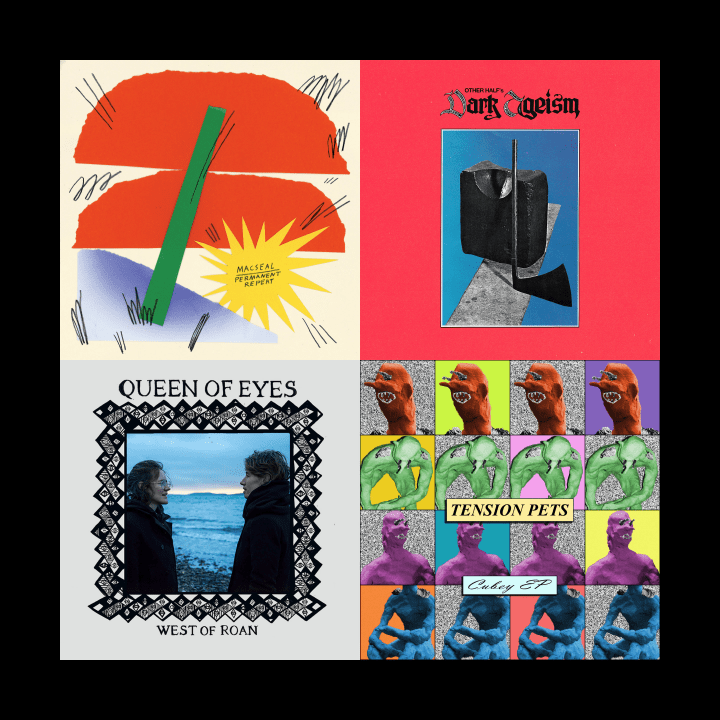
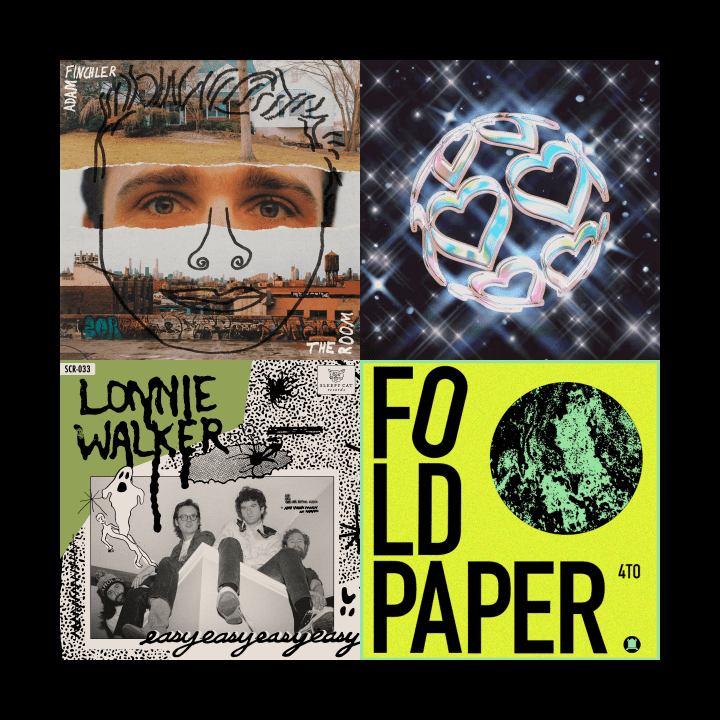
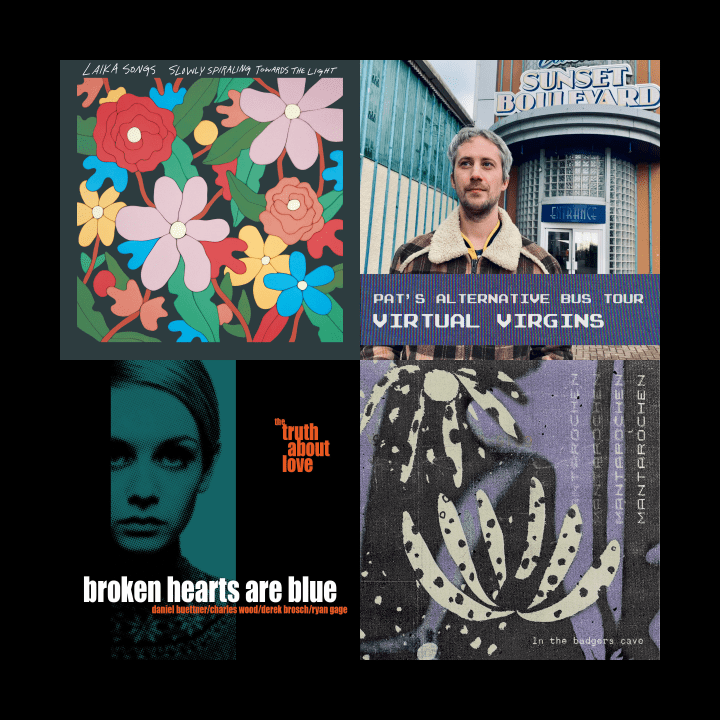
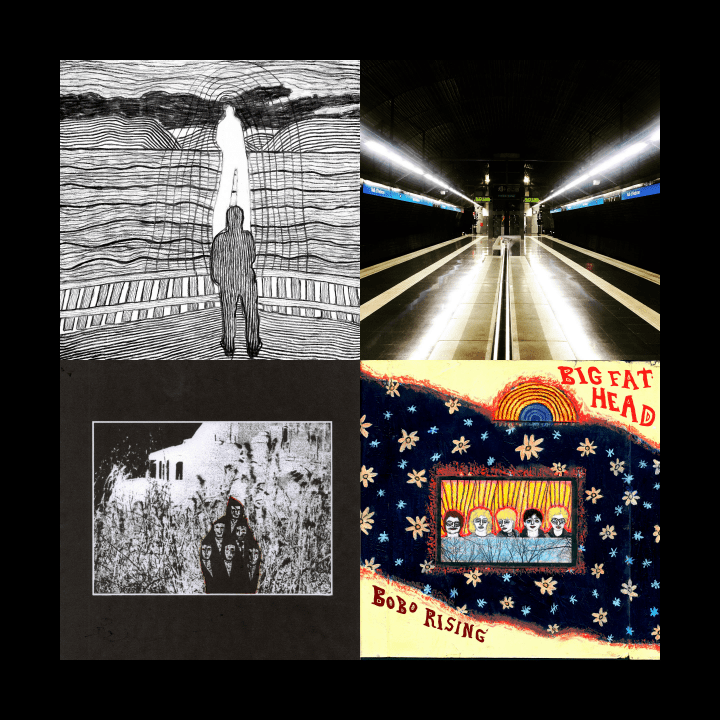
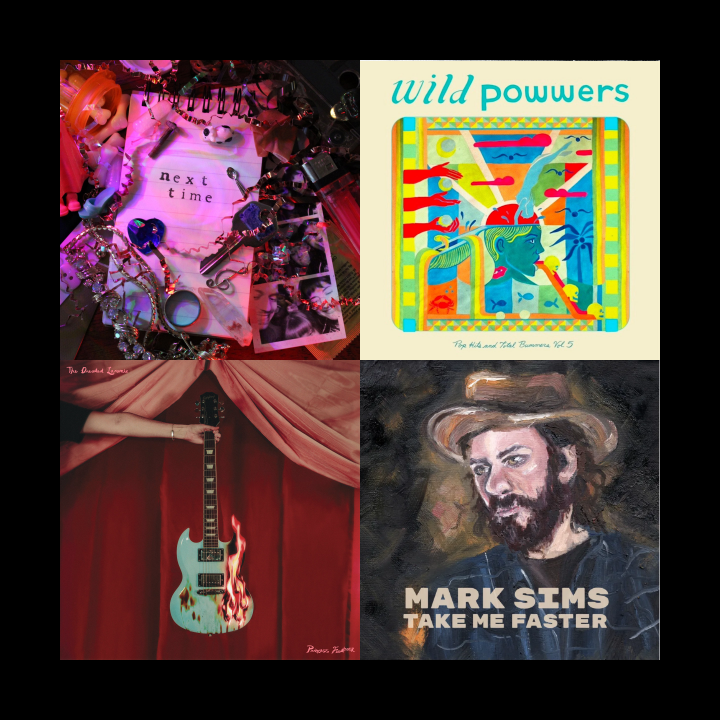
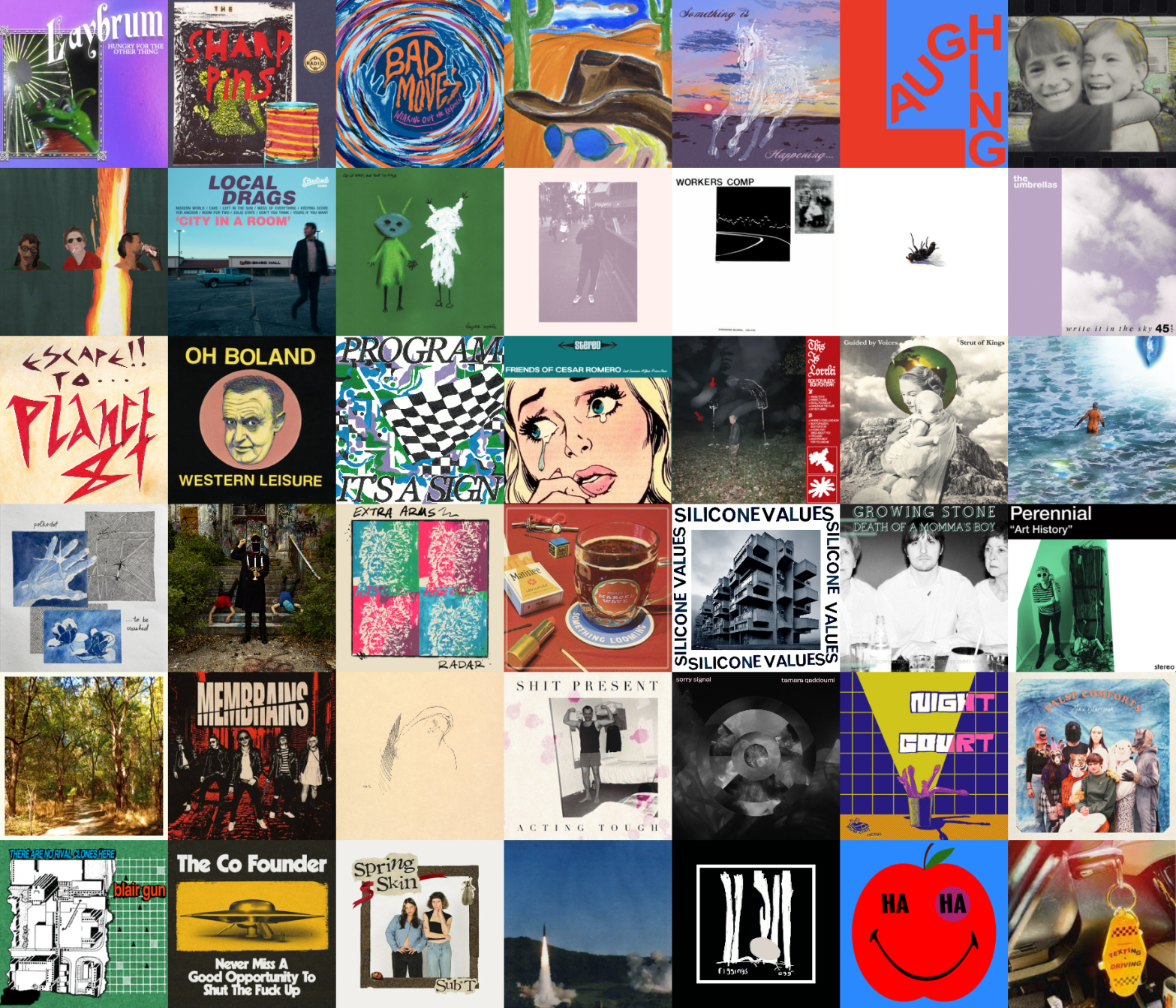
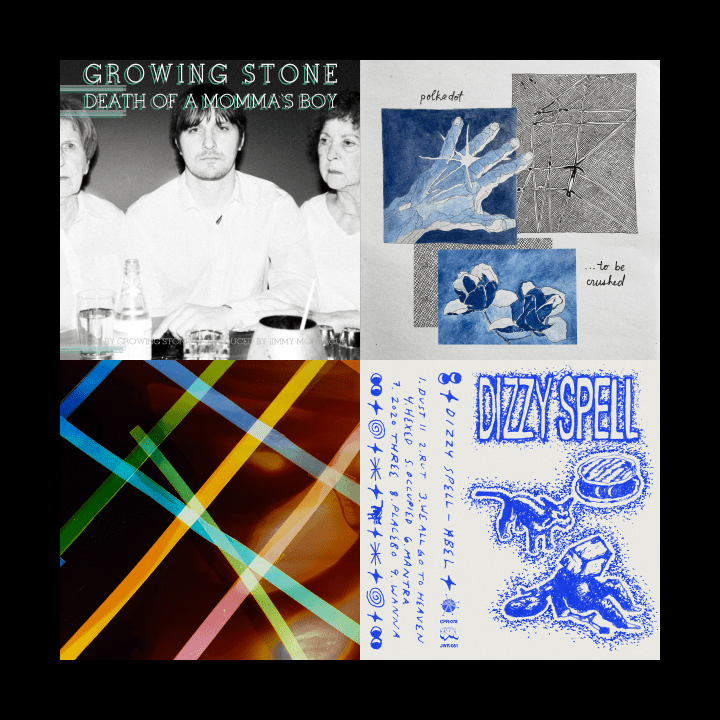
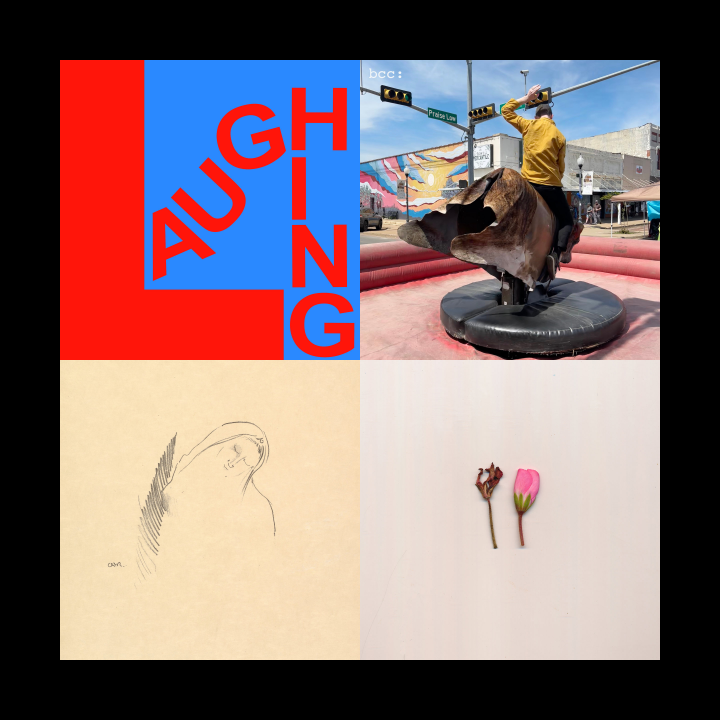
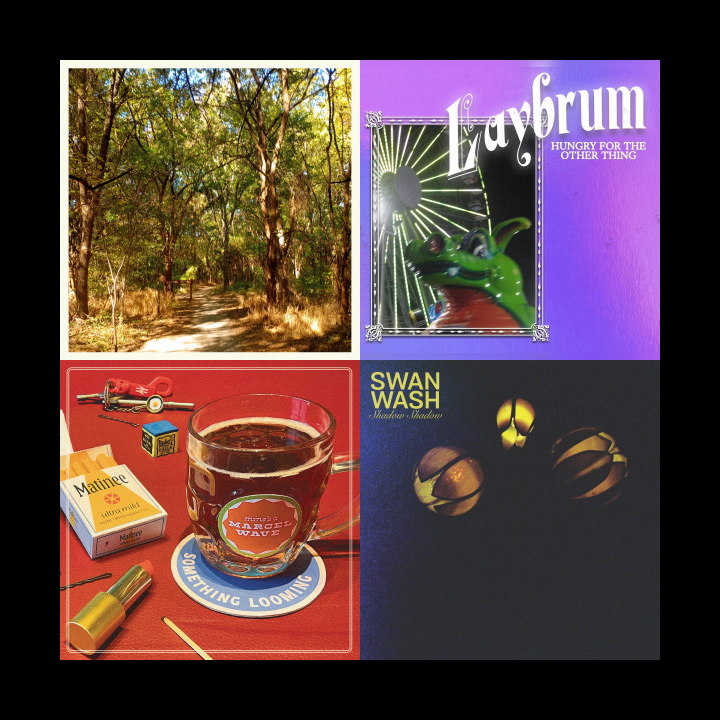
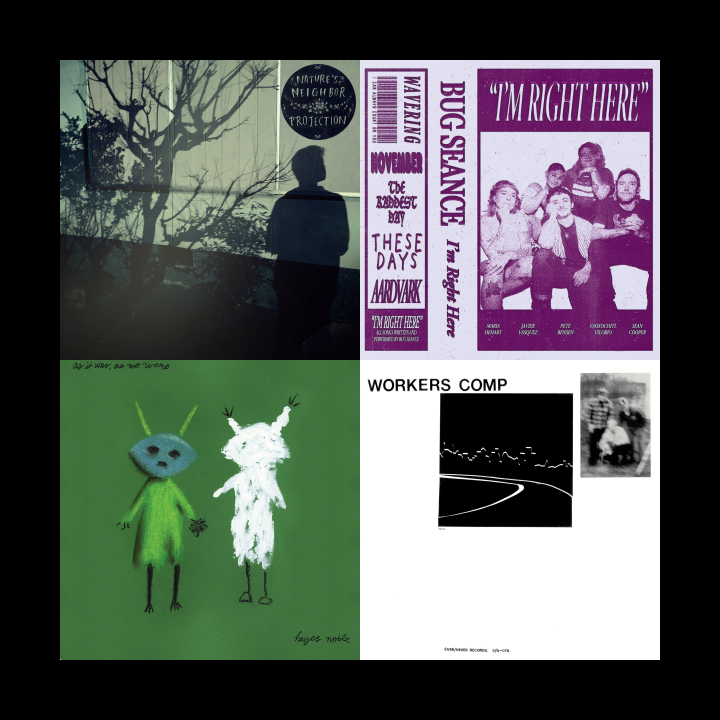
 Rosy Overdrive