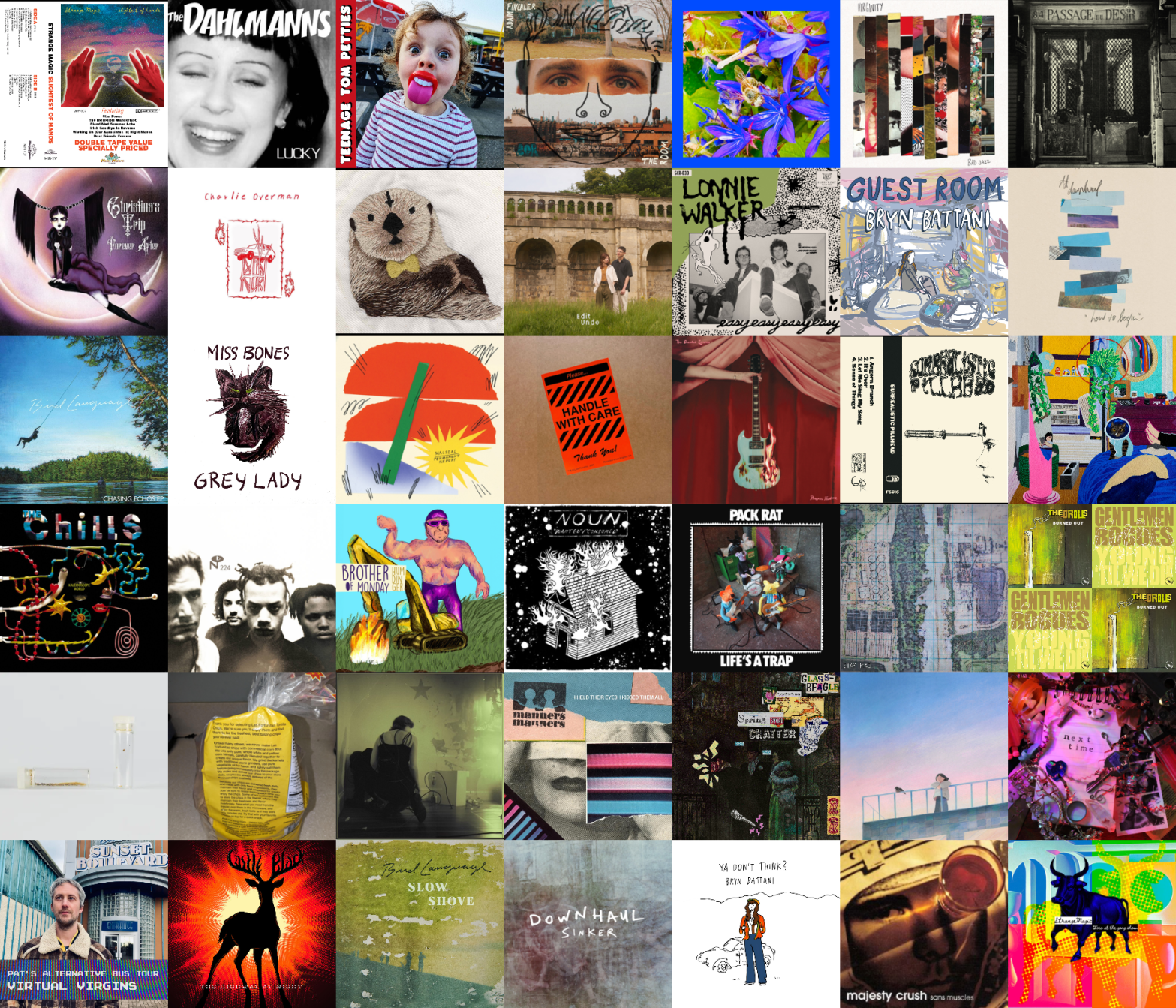
New Playlist: May 2024

What a week! (and yes, I know it’s only Tuesday, Alec Baldwin). Yesterday, Pressing Concerns broke the 1,000-record barrier, and today we have the May 2024 playlist, two hours of absolutely stellar new music for you to peruse.

Ethan Beck & The Charlie Browns, Ahem, and Mopar Stars have multiple songs on this playlist.

Here is where you can listen to the playlist on various streaming services: Spotify, Tidal, BNDCMPR (missing one song). Be sure to check out previous playlist posts if you’ve enjoyed this one, or visit the site directory. If you’d like to support Rosy Overdrive, you can share this (or another) post, or donate here.

“Fear & Loathing in Gramercy”, Ethan Beck & The Charlie Browns
From Duck Hollow (2024, Douglas Street)

I’m not sure if I’ve heard a better start to a record this year than Pittsburgh group Ethan Beck & The Charlie Browns’ “Fear and Loathing in Gramercy”, which kicks off their debut album, Duck Hollow, with nothing less than the platonic ideal of a power pop song. “Fear and Loathing in Gramercy” balances a soaring, almost smirking confidence in its construction with the humble earnestness of Beck’s performance sitting in the middle of it all (and the chorus, which moves from a stumble to a steady strut, would guarantee this one sticking out even if the rest of the track was a clunker). Duck Hollow is able to live up to the promise that “Fear and Loathing in Gramercy” shows, even as The Charlie Browns start by raising the bar very high. Read more about Duck Hollow here.

“Waterlogged”, Ahem
From Avoider (2024, Forged Artifacts)

The latest album from Minneapolis trio Ahem, Avoider, is a massive collection of loud guitar-based pop music–you can call it power pop, pop punk, alt-rock, or college rock, but it’s got more than enough in its ten songs to please fans of any of those genres (the extended careers of The Replacements and Husker Du’s primary songwriters are a clear influence, among others). The band kick off Avoider with a pair of barnburners in frantic opener “Lapdog” and “Waterlogged”, a triumphant-sounding song that’s a pitch-perfect success from the blaring guitars that kick the song off to the roaring catharsis of the chorus (which is little more than the song’s title). Read more about Avoider here.

“Everything”, Aluminum
From Fully Beat (2024, Felte)

Fully Beat is a huge leap forward for San Francisco quartet Aluminum–on their debut full-length, they both sharpen and expand their sound from the promise of 2022’s Windowpane EP to create some of the most exciting, spirited, and downright fun music I’ve heard this year. The band display a commitment to loud, bursting-at-the-seams rock music throughout Fully Beat, including on album highlight “Everything”, which features a massive dream-pop-as-stadium-rock sound. The guitars are set to overdrive, surging forward with textured melodies above “Everything”’s fuzzed-out foundations, stealing the show from the song’s up-front, melodic vocals. Read more about Fully Beat here.

“No Dice”, Comprador
From Please Stay Off the Statue (2024)

An omnivorous record that nevertheless retains a strong personality, the latest record from Philadelphia’s Comprador sounds somewhat like Jon Brion fronting a post-grunge band, and Please Stay Off the Statue has moments that incorporate everything from pop punk to shoegaze. On the pop side of Please Stay Off the Statue, the record’s second song “No Dice” is a perfect power pop track that I really can’t get enough of. It actually took me awhile to get into the rest of the record because I just wanted to listen to its absurdly huge Brion-pop-punk-fuzz refrain over and over again. The rest of Please Stay Off the Statue is certainly worth a listen, but there’s nothing wrong with getting hung up on “No Dice” for a while first. Read more about Please Stay Off the Statue here.

“Burning Question”, Mopar Stars
From Burning Question (2024, Furo Bungy)

One of my favorite under-the-radar debut EPs of last year was Mopar Stars’ Shoot the Moon, an awesome record of fuzzed-out Philadelphia power pop helmed by Nao Demand (who also plays in Poison Ruïn and Zorn). Despite Demand’s other musical concerns, Mopar Stars (also featuring Bill Magger and Evan Campbell) is back a year later with Burning Question, a six-song EP every bit as catchy and smooth as their first one. My favorite song on Burning Question is probably the opening title track, which balances Demand’s earnest, steady vocals with a roaring rock and roll instrumental (the entire song is great, but when the band really goes for it in the chorus, it kicks everything up a notch entirely). 

“2009”, Carb on Carb
From Take Time (2024, Salinas)

Mom, come pick me up, they’re getting nostalgic about 2009 and I’m scared. However, if beaming us all back to the early Obama administration (or whatever the New Zealand equivalent of that is) sounds as good as Carb on Carb make it, I can’t really protest too much. Salinas Records have found another winner in the Whanganui-based duo, whose Take Time appears to be their third album since 2015. “2009” opens the record with a devastating wistful power pop anthem–if its only innovation was the choppy power chord-led verses, it’d be a success, but between the “uh oh” giant chorus and the lyrics (comprised of a bit of self-aware nostalgia, among other vignettes) ensure that it’s even more.

“Canada Water”, ME REX
From Smilodon (2024)

The latest four-song dispatch from ME REX is the independently-released Smilodon EP. If it’s supposed to be a “lower-key” ME REX release, the songs didn’t get the memo–closing track “Canada Water” comes out of the gate roaring with its roller-rink synth hook and full-band lurch. The band keep the energy at this high opening level until the second half of the song, which slows down into an exercise of handclaps, restrained synths, and a call and response from lead singer Myles McCabe to the rest of the band (Phoebe Cross and Rich Mandell’s Greek chorus “We cannot wait!” response is a reminder that, even though ME REX began as a McCabe solo project, the tightness of the full band is their secret weapon). Read more about Smilodon here.

“To Art Bell”, Canyons and Locusts
From The Red Angel (2024)

“When the aliens send word to space rock clash / God save it to the grave it’s to Art Bell,” I gotta say I have no idea what Canyons and Locusts mean when they sing that, but it sounds great. The Red Angel is a punchy thirteen-minute EP from the Boston/Phoenix-based duo of Justin Keane (vocals/guitar) and Amy Young (drums), and it’s some concise, noisy punk rock music. Canyons and Locusts’ power is particularly felt in its opening transmission, “To Art Bell”–some of its lyrics might sound like garbled translations, but Keane and Young deliver the song with a precise, sober clarity. Around the world in two minutes and fourteen seconds.

“Decider”, Motorists
From Touched by the Stuff (2024, Bobo Integral/We Are Time)

When you’ve got a song like “Decider” in your pocket, that’s a no-brainer for Side A, track 1,  and Toronto power pop quartet Motorists don’t miss the layup to kick Touched by the Stuff off. The song’s all-in power pop fervor is straight out of the 1970s, a slight 90s alt-rock kick to it being the only thing marking it as something more recent (and evidence of influence from one of the band’s likely biggest influences, Sloan). Motorists embrace being a straight-up, rollicking power pop group more than ever across Touched by the Stuff’s dozen tracks, incorporating their post-punk side a bit more seamlessly and subtly–and “Decider” is the perfect track to reintroduce the band. Read more about Touched by the Stuff here.

“PS1”, Magic Fig
From Magic Fig (2024, Silver Current)

Featuring an overwhelming blanket of all-in, overstuffed psychedelia, the self-titled debut from San Francisco group Magic Fig merges pop and excess in a way that skips the current wave of Bay Area indie pop and goes all the way back to 1960s San Francisco psych rock (the Canterbury scene and the busier end of classic Elephant 6 albums are other touchstones for Magic Fig, a self-described “progressive psychedelic pop” group). Album highlight “PS1” openly incorporates jangly indie pop while still keeping one foot in psychedelia, resulting in a careening, ballooning six-minute pop behemoth that never loses its foundation. Read more about Magic Fig here.

“All That You Want”, Zero Point Energy
From Tilted Planet (2024, Danger Collective)

Tilted Planet represents the reunion of Genesis Edenfield and Ben Jackson, two former members of Atlanta post-punk group Warehouse who now co-lead the band Zero Point Energy in Brooklyn. Warehouse’s American post-punk and garage rock still abound, but Zero Point Energy also adopt a mellow pop rock attitude that puts them towards the jammier end of classic college rock. Tilted Planet is discernible as a well-crafted, sharply-honed indie rock record–it’s immediate and it’s not at the same time, inviting further listening to figure out just what Zero Point Energy are on about here. Edenfield sings the majority of the record’s songs, but Jackson makes the most of his turns up front–mid-record standout “All That You Want” is a wobbly but assured-sounding college rock hit that’s the best pop moment on the album. Read more about Tilted Planet here.

“So Triangular”, Birdfeeder
From Woodstock (2024, Soul Selects)

Miracle Legion: great band! The New Haven college rock legends were helmed by Mark Mulcahy, a national treasure, and while Mulcahy has never completely gone away, even casual Miracle Legion fans who haven’t kept abreast of his solo career would do well to check out his latest project, Birdfeeder (with Chris Harford of Three Colors and Dumptruck’s Kevin Salem). Supposedly written in the mid-90s but recorded years later, Woodstock feels like vintage Mulcahy (although he largely credits the other members for how it sounds). In any case, it’s great to hear his voice sing something like “So Triangular”, an opaquely beautiful piece of folk rock, sounding lost yet completely sure of itself.

“Get Rich Quick”, Micah Schnabel
From The Clown Watches the Clock (2024)

“I am rural American trash, and it’s not funny or cute like a country song,” Micah Schnabel sings in “Get Rich Quick”, an early highlight from the Two Cow Garage leader’s latest solo album, The Clown Watches the Clock. It’s a track that gets to the heart of Schnabel’s writing on the album (and, really, his career as a Midwestern country punk troubadour in general), which is about the ambient sights and sounds of middle America: guns, Jesus, and debilitating, humiliating, irritating poverty. It’s the first of several songs on the record that explicitly grapple with having hardly a dollar to one’s name–Schnabel’s narrator, a rebel without a dental plan, declares “I don’t wanna die a victim of my aw-shucks humility,” and makes a perfectly coherent argument for petty crime in doing so. Read more about The Clown Watches the Clock here.

“Everybody’s Finding Out”, Lane
From Receiver (2024, Illegally Blind)

Boston’s Lane consciously sought to make a streamlined, “interplay-heavy” version of math rock on Receiver, which can be felt in how happy it is to embrace a simple “power-trio” setup and how these songs feel balanced, without one aspect of them overpowering the other. “Everybody’s Finding Out” is a laid-back, XTC-evoking math-prog-pop tune that it’s an early highlight of the record, with all of its one-minute-and-thirteen-seconds feeling necessary–it reminds me of an even more streamlined version of this Exploding in Sound-adjacent sound practiced by bands like Pet Fox and Hammer No More the Fingers. Read more about Receiver here.

“All Along”, Jacob Freddy
From Songs from a Quiet Aliso Viejo Wasteland (2024)

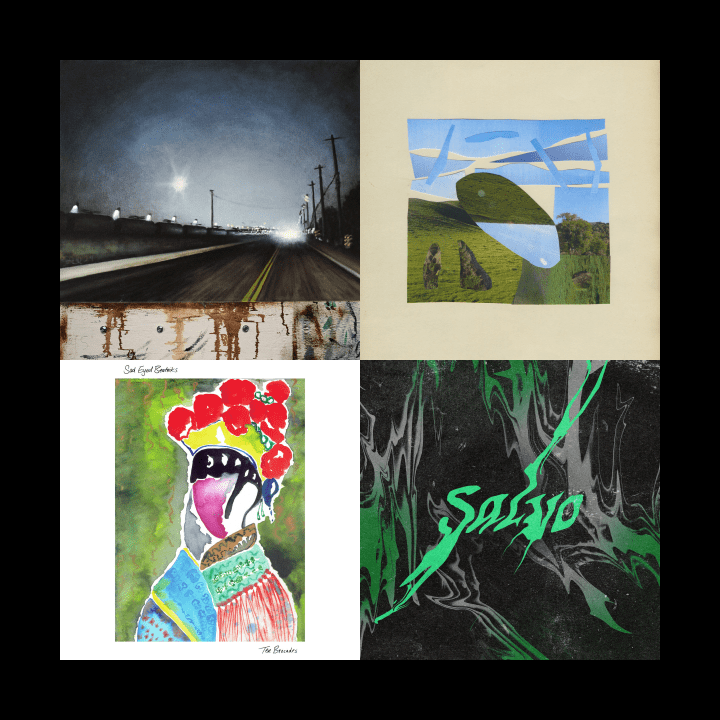
Recorded “with the speakers of an old Mazda CX5” (hence the album’s cover painting), Songs from a Quiet Aliso Viejo Wasteland is a pleasingly lively and pop-forward take on the “lo-fi bedroom indie rock record” subgenre. Beneath the fuzz, distortion, and frequently mumbled vocals, there’s a singer-songwriter (Jacob Frericks, aka Jacob Freddy) with a knack for classic power pop, a Teenage Fanclub/Elliott Smith/Big Star devotee with the reverb turned up high. Frericks kicks the record off with “All Along”, a gorgeous Bandwagonesque-esque steady fuzz-power-pop song whose core melody only seems to be strengthened by its humble dressing. Read more about Songs from a Quiet Aliso Viejo Wasteland here.

“I Can’t Have It All”, Yea-Ming and the Rumours
From I Can’t Have It All (2024, Dandy Boy)

The latest record from Yea-Ming Chen and her band, The Rumours, doesn’t reinvent their sound–Chen is still a sharp, 60s pop-inspired songwriter and a striking vocalist, and the band give these songs a polished but utilitarian, classic college rock reading. What makes I Can’t Have It All feel so full-sounding and like a step forward is the well-earned, quiet but palpable confidence Yea-Ming and the Rumors display throughout the entire record. I Can’t Have It All’s title track is my favorite song on the record–its refrain has an especially gorgeous simplicity in its recalling of the softer end of Yo La Tengo, and its plainspoken verses are just as rewarding in their own way. Read more about I Can’t Have It All here.

“Survive”, American Culture
From Hey Brother, It’s Been a While (2024, Convulse)

Denver quartet American Culture’s sound has a lot of familiar ingredients, but it’s a unique and captivating blend that’s found on Hey Brother, It’s Been a While–they’re “punk rock” in a loose sense, yes, although in the older underground version of the term, while also leaving room for indie rock and pop of several different stripes (mid-to-late Replacements jangly power pop, and even some psychedelic Madchester influences). The band features two primary songwriters, Chris Adolf and Michael Stein, and it’s the latter’s “Survive” I’ve chosen here. It’s catchy punk-pop as hooky as anything else on the record, showcasing how in tune the songwriters are with each other (the refrain, “I still don’t wanna live forever, but I think I’d like to survive,” is a reference to the depths of a drug addiction that informed a lot of the record, and is Stein’s biggest mark on the track). Read more about Hey Brother, It’s Been a While here.

“Default Parody”, Drahla
From Angeltape (2024, Captured Tracks)

I get it–there’s too many damn U.K. post-punk bands to keep track of these days. Maybe I can sell you on Leeds’ Drahla, though, who to my ears are a step ahead of the majority of their peers. A little bit goth, a little bit no wave, a little bit garage-y, Angeltape just sounds so much more alive and fiery than a lot of this stuff, particularly on highlights like opening track “Under the Glass” and “Default Parody”, my personal favorite track on the record. Vocalist Luciel Brown nails the beginning of the track, pulling off the “robotic but dynamic” speak-singing style that is an incredibly strong hook in its own way, and–oh, did I mention that this band has a full time saxophone player (Chris Duffin)? Because you’re going to notice it in “Default Parody”.

“Reveal”, Amy O
From Mirror, Reflect (2024, Winspear)

I’ve always thought Amy Oelsner (aka Amy O) was underrated–particularly the Arkansas-originating, Bloomington, Indiana-based musician’s 2017 record Elastic, but her 2019 album Shell is really solid, too. I’ve only listened to her latest record, Mirror, Reflect, a bit so far, but there’s plenty to like on it–the low-key but bouncy indie pop of “Reveal” is an early favorite that caught my ear just about immediately. It’s a pretty barebones-sounding track, and it almost feels like it’s going to collapse in its first half before settling into a deft bedroom pop sweep that makes me feel like the best of the Frankie Cosmos/Gabby’s World era of indie rock does.

“Purgatory (Summer Swim)”, Nihiloceros
From Dark Ice Balloons (2024, Totally Real)

Dark Ice Balloons is a beast of a pop album about death–Nihiloceros stack their record with huge melodic punk/pop punk hooks strong enough to stay intact as the band crank up the loudness and drama. “Purgatory (Summer Swim)”, the last and best song on the record, sounds like a lost radio-ready punk single from the 90s, from the way the melody and electric guitar spill out at the beginning of the song to the basketball dribble beat to the esoteric fist-pump of the chorus. Nihiloceros try on natural disasters and weapon-fellating for size, but it’s the open-ended question in the song’s refrain that defines the primary subject matter of Dark Ice Balloons. Read more about Dark Ice Balloons here.

“Don’t Worry”, Poppy Patica
From Sea Wrack (2024, Cows at the Edge of the Earth)

Poppy Patica released one of my favorite albums of last year–Black Cat Back Stage, an overstuffed, artsy pop rock record inspired by frontperson Peter Hartmann’s hometown of Washington, D.C. Hartmann (now based in Oakland) apparently had an entire other Poppy Patica album up his sleeve–Sea Wrack is more stripped down and low-key-sounding, recorded in New York by a different lineup than Black Cat Back Stage (largely just Hartmann, Paco Cathcart of Climax Landers and The Cradle, and previous collaborator Owen Wuerker). It’s tempting to treat Sea Wrack as comparatively “minor”, but even though it’s only 22 minutes long, it still has one of the best pop songs I’ve heard this year in “Don’t Worry”. Pulled from the Elliott Smith/Jon Brion school of deceptively simple pop music, Hartmann rides a huge-sounding acoustic guitar and keyboard accents across a sublime, incredibly catchy playground.

“Monk Eric”, Ethan Beck & The Charlie Browns
From Duck Hollow (2024, Douglas Street)

The second half of an incredible one-two punch beginning with ”Fear and Loathing in Gramercy” continues on with “Monk Eric”, yet another excellent highlight from Ethan Beck & The Charlie Browns’ Duck Hollow. “Monk Eric” is a pure sugar rush, with The Charlie Browns skipping along to Beck’s sympathetic but unfailingly honest character sketch. Beck takes a step back in the chorus and looks at the titular Eric through a partner of some sort (“She waits up every night / She hopes he’ll come to her side / She waits for him but he won’t come back”), a break from the rollicking verses where Eric tries various lives on for size. Read more about Duck Hollow here.

“I Bet You Know Karate”, Aerial
From Activities of Daily Living (2024, Signalsongs/Flake Music)

Activities of Daily Living is the third album from Scottish group Aerial–who’ve been around since the late 90s–and it’s a collection of best-foot-forward, eager-to-please power pop, full of energy and eagerly-delivered hooks. A bit of Teenage Fanclub, some synth touches, Matthew Sweet moves–there’s a lot to love on this record, particularly on highlight “I Bet You Know Karate”, whose central metaphor doesn’t even have to be as weirdly memorable as it is given the amount of other great stuff going on in it (did you hear those handclaps?). Read more about Activities of Daily Living here.

“The Iron That Never Swung”, Neutrals
From New Town Dream (2024, Slumberand/Static Shock)

Glasgow native Allan McNaughton’s background is in post-punk, but his current band Neutrals has a more indie pop/C86 sound fits well on their current label (Slumberland) and the Bay Area scene (where McNaughton is now based). McNaughton’s plainspoken Scottish-accented vocals contrast with the jangly and melodic (although sometimes messy in a punk-pop way) instrumentals, and McNaughton’s writing is primarily inspired by the plight of postwar “New Towns” in the U.K. and those who lived in them. McNaughton’s thematic preoccupations explicitly shade “The Iron That Never Swung”, but they’re smoothly integrated into indie pop–its brisk but melancholic undertones make it one of the best songs on the album. Read more about New Town Dream here.

“Nightmare”, Adeem the Artist
From Anniversary (2024, Four Quarters)

Adeem the Artist: great musician! Great songwriter! One of the most exciting alt-country faces in recent memory! They put out an album called White Trash Revelry in 2022 that I really enjoyed, and–though I find a lot of these Americana phenoms kind of flame out after getting some buzz–their latest, Anniversary, is even better than that one. If the idea of “queer country” music is interesting at all to you, Anniversary is the album for you (and it doesn’t really matter if you’re not interested in that, because you are interested in good music), and for those of us already on board, Adeem the Artist takes several steps forward and outward in their writing. “Nightmare” isn’t exactly my favorite song lyrically on the album–not that its blunt metaphor isn’t effective in an earnest, pleading way, much like Tyler Childers’ “Long Violent History”. What vaults it ahead of everything else is Adeem’s embrace of polished, confident country rock here–if they’re shooting for the stars, it’s a good look on them.

“Lovin’ You Ain’t Easy”, The Foreign Correspondents
From Lovin’ You Ain’t Easy (2024, Outer Battery)

Imagine a supergroup featuring Ted Leo, Brendan Canty (Fugazi), Sohrab Habibion (Savak, Edsel), and Michael Hampton (The Faith, Fake Names). Sounds great, right? Now, imagine them covering Michel Pagliaro, an obscure (outside of Canada, at least) Quebecois singer-songwriter from the 1970s. If that still sounds great, then you’ve come to the right place, as The Foreign Correspondents’ debut 7” single features two versions of Pagliaro’s songs. I’m not familiar with the originals at all whatsoever, but I love their take on “Lovin’ You Ain’t Easy”–led by laid-back acoustic guitar strumming and sharpness from the rest of the instruments, it’s got a nice early power pop feel to it, and Leo’s incredibly smooth lead vocals (always welcome) seal the deal.

“Scabby the Rat”, Shellac
From To All Trains (2024, Touch & Go)

Plenty of people have said it better than I have, but To All Trains is more than a worthy final statement from arguably the single most important person with regards to the kind of music I write about on this blog. Now, Shellac was always an equilateral triangle, and Todd Trainer’s drums and Bob Weston’s bass are absolutely essential to their sound, but (even though I didn’t really intend it as such when I chose it for this playlist) “Scabby the Rat” is such a great sub-two-minute encapsulation of the best of Steve Albini, from the metallic snaking guitar playing to his unique sing-speaking to his humor (“Pow! You’re pregnant!”) to his commitment to ethics (of course there’s a Shellac song about the titular pro-labor mascot) to a matter-of-fact sentimentality (the shouting out of Rob Warmowski, a punk lifer and friend of Albini’s who ran the @ScabbytheRat Twitter account and passed away in 2019). There’s nothing that’s ever going to take the place of stuff like this.  

“I’m Yours, You’re Mine”, Lunchbox
From Pop and Circumstance (2024, Slumberland)

The dozen pop songs on Pop and Circumstance were clearly authored by people devoted enough to the music of the 1960s and 70s to be able to pull several different stripes of it together. But while their influences might be worn a little more on their sleeves than those of their C86/twee/indie pop peers, Lunchbox avoid coming off as stiff genre reenactors by nailing pop hook after pop hook and using their knowledge to deliver them smartly. Early on in Pop and Circumstance, Lunchbox pull out all the stops with the sugary, horn-laden hit “I’m Yours, You’re Mine”–it’s quite charming from the get-go, and even more so when they break out the organ and handclaps. Read more about Pop and Circumstance here.

“My Love, Let’s Take the Stage Tonight”, Kiran Leonard
From Real Home (2024, Memorials of Distinction)

There are bands where I like all of their songs. There are bands where I don’t like any of their songs. And then there’s musicians like Kiran Leonard, a London-based singer-songwriter who’s been making experimental, orchestral pop music for over a decade now. I’ve heard bits and pieces of his music before, and I’ve listened to his latest album, Real Home, in its entirety, and I can fairly confidently say that “My Love, Let’s Take the Stage Tonight” is the one song of his that really stands out to me–but it really works for me. It’s such a confident and beautiful song, a string-laden romantic piece of college-folk rock that reminds me a bit of The Waterboys and Miracle Legion but doesn’t quite sound like anything but itself.

“Ratbike”, 2070
From Stay in the Ranch (2024, Free World Vessel)

Despite its similarities with more than a few “bedroom pop” projects, 2070’s Stay in the Ranch has plenty of moments where an honest-to-god rock band emerges from the static. The Los Angeles group plow through sixteen songs in 35 minutes, throwing out experimental shoegaze, fuzz rock, and noisy lo-fi pop like it’s nobody’s business.  After an intro track, “Ratbike” kicks off Stay in the Ranch properly with a blown-out piece of tuneful, almost post-punk racket, absolutely brimming with melodic guitars and pleasant agitation. Read more about Stay in the Ranch here.

“Sanity’s Sake”, Vacation
From Rare Earth (2024, Feel It)

Vacation are a veteran Midwestern, blue-collar power pop/punk group whose latest album, Rare Earth, displays a mid-period Guided by Voices-ish “meaty but hooky” attitude that works really well–my favorite song on the album, the earnest, chugging “Sanity’s Sake”, captures Robert Pollard’s ability to imbue his lyrics and vocals with both triumph and melancholy. “Sanity’s Sake” is an obvious success as a pop song, and it’s no small feat that Vacation turn a song with lyrics like “Corrosion of a paradise / A patina that shines / Let your theories oxidize” into not only a hit, but a deeply felt one, too. Read more about Rare Earth here.

“Severed Head”, Mopar Stars
From Burning Question (2024, Furo Bungy)

We’re doing two songs from the Mopar Stars EP because this thing is great, let me tell you. I think I like “Burning Question” a little more than “Severed Head”, but it’s very close. The former song has a sheer desperation to it, while this one is the “cool” end of the power pop spectrum. You thought I could ever get tired of choppy power chords? No, the verses to this one absolutely need them. You thought I’d get tired of cranked-up rock-and-roll chord progressions as interpreted by basement indie rock groups? No–I mean, just listen to the chorus of “Severed Head”. 

“Sway”, Cast of Thousands
(2024)

Mr. President, a seventh Cast of Thousands song has materialized on Bandcamp and other streaming services. The Austin-based quartet released a cassette last year entitled First Six Songs, which was a shining example of both truth in advertising and in superb garage-y power pop (frontperson Maxwell Vandever’s previous band, Flesh Lights, had already proven that he knew his way around this kind of music). Cast of Thousands’ first new music since then is the one-off “Sway”, and it’s familiar-sounding in the best way. It’s just a little muddy and distorted, in a way that’s able to still spotlight just about everything great about this band–the scene-stealing melodic bass, the slightly rootsy, wistful tone of Vandever’s vocals, and catchy but economical guitarplay.

“Impatient”, Kill Gosling
From Waster (2024, We’re Trying)

Columbus emo pop punk band Kill Gosling pack a bunch of stuff into less than ten minutes with Waster, their latest EP; the dramatic punk showtune “Impatient” is second-half-of-Worry.-worthy, showcasing some of Kill Gosling’s best writing. “What’s the point in learning something I know / Where’s the joy if you can never let go?” goes the chorus, and I enjoy how the refrain takes on a different meaning between the first time around (in euphoria at a show) and the next one (at home, crashing and expelling alcohol from one’s body involuntarily). Read more about Waster here.

“Better”, Ahem
From Avoider (2024, Forged Artifacts)

There’s just too many great pop songs on Avoider to choose from, but I’m happy with my selection of “Better” for this playlist. Compared to the blaring barnburners that open the record, “Better” shows off Ahem’s lighter and breezier side–up to a point, at least. It starts in that kind of territory, but the huge, starry-eyed power pop core of the song is impossible to restrain, with the “Yeah!”s in the cautious-but-giant refrain blooming among the traded-off vocals and melodic guitars. Read more about Avoider here.

“Pretty Blue 108”, Alice Kat
From Around the World & Back to You (2024, Subjangle)

“Pretty Blue 108”, the opening track to Alice Kat’s Around the World & Back to You, is a strong introduction to a side of Alice Katugampola that I didn’t really see in her work with indie pop duo fine.. Around the World & Back to You is a collection of relatively punchy, slick alt-rock, with a concept that roughly divides the record into huge-sounding power pop (“day time”) and chillier indie rock (“night time”). “Pretty Blue 108” does its job admirably, shooting for the stars and landing a giant hook that’s more than enough on which to hang a statement track. Read more about Around the World & Back to You here.

“Go Away”, The Wendy Darlings
From Lipstick Fire (2024, Lunadélia/Influenza)

The Wendy Darlings’ third LP, Lipstick Fire, is a portrait of a band devoted to both vintage indie pop and the genres from which it was initially derived. The French trio attack a classic bubblegum pop sound with the twee and punk-pop energy of a band absolutely thrilled to be making music together. My favorite song on the record, “Go Away”, is an early, smooth highlight that saunters up to its cathartic, shout-along chorus with just enough confidence to pull it off. Read more about Lipstick Fire here.

“You’re Just Jealous”, Crumbs
From You’re Just Jealous (2024, Skep Wax)

You’re Just Jealous equally combines the danceability of 80s post-punk, the hooks of classic indie pop, and the sharp edges of 90s Kill Rock Stars indie rock groups. The sophomore record from the Leeds quartet took six years to come about, but Crumbs sound incredibly fresh throughout their Skep Wax Records debut. You’re Just Jealous has a “locked-in” sound from the get-go, with the punchy rhythms of the opening title track providing the runway for vocalist Ruth Gilmore’s vocals to put on a show. “You’re Just Jealous” is essential in sketching out Crumbs’ philosophy–that post-punk can and should be catchy and fun to listen to. Read more about You’re Just Jealous here.

“Key to the Universe”, The Lousy Hitchhikers
From Key to the Universe (2024)

Multiple punk songs about aliens on this playlist, I don’t know. This one comes courtesy of The Lousy Hitchhikers, a Winston-Salem-based band (quite possibly the first time I’ve covered something from there before) led by Mike Koivisto and assisted by Scotty Sandwich and Alex Kirkpatrick. The four-song, seven-minute Keys to the City EP is the group’s first record made in a proper studio after years of home recording, but they certainly don’t have any “over-production” problems here, especially on the opening title track. “Key to the Universe” (an “extremely ridiculous song”, per its Bandcamp page) is a two-minute cannonball of power-pop-punk about how it’s not only humans that can’t get enough of The Lousy Hitchhikers’ music, but also those “crazy gray dudes” from outer space. Sure, why not?

“Found and Lost”, Sylvia
(2024)

Sylvia is a new-ish quartet from Melbourne made up of people from Australian bands I haven’t heard of (Earache, No Sister, Red Hell, Hygiene–maybe if you’re from Down Under you know them?) and who put out a self-titled debut EP in 2022. “Found and Lost” is apparently the first single from their upcoming second EP, and it sounds pretty good to me! Sylvia cite modern shoegaze and fuzz rock acts as influences, but “Found and Lost” is an indie pop song at its core–the end result is something that sounds like a Slumberland/Sarah Records band with the distortion cranked up and the drums played as forcefully as one can for this kind of music.

“Play It Cool”, Climax Landers
From Zenith No Effects (2024, Gentle Reminder/Home Late/Intellectual Birds)

Zenith No Effects is an offbeat but sincere guitar pop album at its core, with classic pop rock and college rock (aided by Paco Cathcart’s violin and Ani Ivry-Block’s accordion) shading the record, and Climax Landers’ ringleader, vocalist Will Moloney, ups his game to match. One of Zenith No Effects‘ biggest and most immediate moments is “Play It Cool”, a swooning pop song whose looseness and stream-of-consciousness feeling reminds me of the effortless-sounding pop music of Nate Amos’ This Is Lorelei and My Idea. Moloney seems to ramble on about the idea of “coolness”, namechecking music that, depending on one’s level of irony, is either the epitome of it or of the lack thereof (Staind, Styx, Rob Thomas and Santana, 311). Read more about Zenith No Effects here.

“Severance”, Female Gaze
From Tender Futures (2024, Fort Lowell/Totally Real)

The latest album from Tucson trio Female Gaze, Tender Futures, intentionally evokes haziness and disorientation and, according to the band, can be started from any song and played “on a loop”. Stretching five songs across thirty-two minutes, Tender Futures is an expansive, vast record that embodies the American southwest. By the end of the album, the disorientation is at a high, as we’re feeling lost out in no-man’s land somewhere–but the last song on Tender Futures is its clearest olive branch. “Severance” is not a departure from the rest of the album, but it’s where everything snaps into focus, as the trio set their sights on fluttering guitar pop for six minutes. Read more about Tender Futures here.

Pressing Concerns: Planet 81, The Bird Calls, Gramercy Arms, Night Court / The Dumpies

It’s going to be a big week here on Rosy Overdrive, bigger than normal even! We’re kicking off the week with a Pressing Concerns that’s an odds-and-ends one of sorts, covering several solid records that have come out in the last month or so: new albums from Planet 81, The Bird Calls, and Gramercy Arms, plus a split EP between Night Court and The Dumpies.

Oh, and by the way: after three-plus years of consistently writing about new records via this blog, we’ve reached a fairly notable milestone. We’ve now covered over 1,000 albums/EPs in Pressing Concerns! If we’re being technical, this edition contains numbers 999 through 1,002, with The Bird Calls getting the prestigious designation. So, congrats to Sam Sodomsky and company–I wish I had a prize or something to give you.

If you’re looking for more new music, you can visit the site directory to see what else we’ve written about lately. If you’d like to support Rosy Overdrive, you can share this (or another) post, or donate here.

Planet 81 – Escape!! to…Planet 81

Release date: April 29th
Record label: Self-released
Genre: Synthpop, sophisti-pop, new wave, power pop, synth-funk
Formats: Digital
Pull Track: In My Japanese Compact

Justin Cohn is a California musician who’s released a few albums as co-leader of Oakland’s Telegenic and more recently has been playing in the live band for Kabir Kumar’s Sun Kin. Currently based in Los Angeles, Cohn now has a brand-new solo project to their name called Planet 81, and has kicked off this new era with a bang entitled Escape!! to…Planet 81. Escape!! indeed sounds like the work of somebody associated with Sun Kin–and given that their Sunset World is one of the best albums of the year so far, that’s a good place to be. Like Sun Kin, Cohn is interested in the different feel that pop music of a few decades ago had–the “81” in the project’s title refers to the year Cohn is hoping to evoke, and Escape!! as a whole embraces that era’s prog-pop, sophisti-pop, funk, R&B, disco, and power pop/new wave even more enthusiastically than Sunset World did. XTC, Rundgren, and Scritti Politti are influences, of course, but for my money that most accurate comparison is a more recent band that Cohn mentioned in their email to me–Phoenix. Escape!! captures the same energy that marks the best of the 2000s French pop group–balancing a “rock band” feel with all-in pop music, making music with a backbone that one can still dance to.

Escape!! has plenty of irons in its aural fire, merely one of which is a desire to make vintage 80s pop in a way that sounds huge and current. The chart-toppers in the world of Planet 81 would have to include “Roses at My Feet”, a gorgeous synthpop mission statement that throws down the gauntlet to open the record, as well as the Prince-wave of “In My Japanese Compact”, a zippy, cool-as-hell 80s “car song” if I’ve ever heard one, “Silver Bullet” and its sophisti-pop sheen that gives way to a massive chorus, and “Space Invader!”, a peppy curiosity that opens the record’s second half with the moment where it feels like there’s a distinct “Planet 81 sound” developing from the influences perched on Cohn’s sleeve. Throw a dart at any of these aforementioned pop hits, they’ll hook you–but stick around for everything else that Escape!! has to offer, from the glitzy funk-tinged “Moneymaker”, so-earnest-it-hurts mid-record ballad “Let Love Be the Guide”, and the groove that Planet 81 lock into towards the end of the record in the disco-y “Heaven”, steady synthpop “Royal Counsel”, and “Hesitater”, which lets the big guitars and buzzing synths duke it out. Justin Cohn didn’t need to dig deep one last time to pull out one last polished power pop anthem in “Ever After…” to close the record, but to Escape!! to…Planet 81, doing anything less than the absolute maximum at any given moment is just plain unthinkable. (Bandcamp link)

The Bird Calls – Old Faithful

Release date: May 31st
Record label: Ruination
Genre: Folk, singer-songwriter
Formats: CD, digital
Pull Track: Footprints

I’ve been familiar with Sam Sodomsky as a writer for a long time now, and there’s a good chance that you are to some degree, as well–he’s written about music in a bunch of different places, most notably as being one of the most consistently readable reviewers for Pitchfork for several years. At the same time, the New York-based Sodomsky’s been making music of his own as The Bird Calls–prolifically and independently up until 2021, when he linked up with Ruination Record Co. (Carmen Quill, Frank Meadows, Blue Ranger) and “slowed” his output to a mere one album a year. I’d heard bits and pieces of The Bird Calls’ recent records, but Old Faithful is the first one I’ve really dove into, and I’m glad I did. It’s a compelling listen, one that lets its humbly charismatic frontperson stand front and center but also doesn’t mistake “vocal/lyric-first presentation” with “instrumentals as afterthoughts”. Apparently, Old Faithful is Sodomsky’s first album recorded with a drummer (Jason Burger of Big Thief, Scree, and Twain), who joins his gang of fellow music writer/musicians (keyboardist Winston Cook-Wilson of Office Culture and bassist Andy Cush of Garcia Peoples) and other ringers (vocalist Shaughnessy Jones and guitarist Katie Battistoni).

Almost aggressively lackadaisical at its outset, Old Faithful opens with a pair of deliberately-paced acoustic songs in the title track and “Old Folks” that places Sodomsky somewhere between the early recordings of Dan Bejar and the later ones of Bill Callahan. The drums kick in with the rambling country-folk of “I Haven’t Been This Happy in a Long Time” (“I was scanning the bookshelf, looking for a spine / She said she lost her will to live and so I kindly lent her mine” is the couplet that opens the song, assuring us that it still fits with the rest of the record), although the pensive “Going Insane” uses percussion more subtly (which is the tack that the rest of the album takes). In the second half of Old Faithful, “Footprints” and “I Wish That We Could Fall in Love Again” are the outwardly emotional highs and some of my instant favorites, although Sodomsky’s writing–dispatches and snippets of routines and trains of thought–wanders even more than the music does. The relatively frequent references to God and faith caught my attention upon repeated listening, although songs like “Pleasing Myself” and “Faith People” are less grand cosmic statements and more jumping-off points to just-as-deeply-felt ruminations on those of us down here on Earth. “If I ever lied to you, it’s not something I tried to do / I mean, it’s not like something I rehearsed,” sings Sodomsky memorably on the breezy “Worst Trip”, and later, “these delicate emotions are the messiest ones”. They’re nice moments, but neither the acoustic guitar nor Sodomsky’s parade of lyrical images lingers too long on them. (Bandcamp link)

Gramercy Arms – The Making of the Making of

Release date: April 26th
Record label: Magic Door
Genre: College rock, folk rock, indie pop, singer-songwriter
Formats: Digital
Pull Track: Pilot Light

Gramercy Arms are a New York-based band led by singer-songwriter Dave Derby, who in a different life was the bassist and vocalist in 1990s Boston alt-rock group The Dambuilders. Derby started Gramercy Arms in the mid-2000s, releasing a couple of records before disappearing for a bit, only to return with last year’s Deleted Scenes. A far cry from where he began, the album featured Derby along with a wide cast of guests making smartly-written guitar pop music with shades of college rock, folk rock, and vintage indie pop. Thankfully, we didn’t have to wait another decade for a follow-up to Deleted Scenes, as the fourth Gramercy Arms full-length, The Making of the Making of, has arrived just slightly over a year later. Like on the previous record, Derby gets plenty of help here, with Kevin March and Doug Gillard of Guided by Voices, John Leon of The Royal Arctic Institute, and Ray Ketchem of Elk City (who also produced the record) contributing music to the album, among others.

Featuring a cover song as well as an alternate version of a song on Deleted Scenes, The Making of the Making of might have more of an “odds-and-ends” feel than the previous Gramercy Arms album–but what’s here is more than enough to ensure that this record stands on its own. The first two songs on the album, “After the After Party” and “Pilot Light”, are Gramercy Arms at their post-college rock best, barreling through two catchy pieces of Gin Blossoms-y/Buffalo Tom-esque “polite alt-rock” that have just enough energy to them. The leisurely title track and the mid-tempo acoustic stomp of “Alaska” are a bit less immediate, but they both keep the momentum strong in the record’s first half. And I mentioned a cover earlier–it’s a version of “Don’t Respond, She Can Tell” by The Loud Family, a great song from one of the greatest and least appreciated albums of all time, Interbabe Concern. Derby makes the decision to play the song fairly straight–given how strong and not worn out the original is, that’s a valid choice–with the one major change (bringing in Jules Verdone and singing it as a duet) being a creative way to acknowledge the complexity Scott Miller breathed into the original. As breezy and laid-back as The Making of the Making of sounds at times, the way the Gramercy Arms rise to tackle something as thorny as that cover is a good reminder as any of the intent and strength behind the sunny exterior. (Bandcamp link)

Night Court / The Dumpies – Shit Split Part Duh

Release date: May 3rd
Record label: Hovercraft/Green Noise
Genre: Punk rock, power pop, lo-fi indie rock, garage rock
Formats: Vinyl, digital
Pull Track: 1000000th Song

Night Court are a Vancouver-based trio who first came to my attention at the end of last year, when I saw their 2023 album HUMANS! on a year-end list, thought the description sounded interesting, and ended up quite enjoying the band’s combination of garage rock, power pop, and melodic punk, delivered in bite-sized (sixteen songs in twenty-six minutes) packages. With a handful of releases since their inception, the band (Jiffy Marx, Dave-O, and Emilor) have effectively presented themselves as Guided by Voices for people who know who J Church are. The latest Night Court release is a split 7” with Oregon’s The Dumpies–who I hadn’t heard of before, but appear to be like-minded punk-poppers–released on the latter band’s longtime home of Hovercraft Records. The two bands cram nine songs onto the record (four on the Night Court side, five on the Dumpies’), and as it turns out, they’re built for constraints like this–plenty of hooks mark the sub-ten-minute release, and there’s even enough time for the two groups to differentiate themselves from each other a bit.

Of the two sides, the Night Court is probably the less “punk” one, as the Canadians use their allotted time to run through a couple of brief but laser-focused power pop anthems. First song “Not an Act(or)” even pulls out a bizarre egg punk introduction before zooming directly into the fuzzed-out catchiness that marks the entire 90-second track. “1000000th Song” actually does the opening track one better–it’s a punk-pop anthem that makes its mark in under a minute, with the flagging, spirited pessimism at its core giving it another dimension regardless. The Dumpies’ half is a bit more chaotic–they choose to introduce themselves with the frantic, foot-on-the-gas garage punk of “Big”, and the hardcore-indebted “HATS” doesn’t have any equivalent on the other side of the record. That being said, “Bisexual Hedge Fund Manager” and “Gobbler’s Knob” show that The Dumpies can aim their noisiness in the direction of “pop music” just as effectively as Night Court when they want to, and their side of the record also has the jangly college rock of “Egg Timer”, the most subtle song on the entire split (not that there’s much competition). The wobbly punk balladeering of “Egg Timer” is the most noticeable one, but there’s plenty more to entertain on Shit Split Part Duh once the initial jolt of energy wears off. (Bandcamp link – Night Court) (Bandcamp link – The Dumpies)

Also notable:

Pressing Concerns: Ethan Beck & The Charlie Browns, Babe Report, Neutrals, Winston Hightower

I probably say this most weeks by now, but that doesn’t make it any less true: this Thursday Pressing Concerns is one for the books. New albums from Ethan Beck & The Charlie Browns, Babe Report, and Neutrals, plus a vinyl compilation from Winston Hightower–all great, all out tomorrow (May 31st), all to be found below. For more fun, check out Monday’s blog post (featuring The Noisy, Alice Kat, Drug Country, and Dog Park) and/or Tuesday’s post (Comprador, From Far It All Seems Small, Jacob Freddy, Animal, Surrender!).

If you’re looking for more new music, you can visit the site directory to see what else we’ve written about lately. If you’d like to support Rosy Overdrive, you can share this (or another) post, or donate here.

Ethan Beck & The Charlie Browns – Duck Hollow

Release date: May 31st
Record label: Douglas Street
Genre: Power pop, college rock, jangle pop
Formats: Cassette, digital
Pull Track: Fear and Loathing in Gramercy

Ethan Beck is a musician from Pittsburgh, and when he’s not attending college in Brooklyn or writing about music for Paste and Bandcamp Daily, he’s leading a new power pop group called Ethan Beck & The Charlie Browns. After soft-launching the project with a live EP last year, Duck Hollow is the proper full length debut from the Pittsburgh group (also featuring bassist/vocalist Esperanza Siegert Wilkinson, guitarist/vocalist Atticus Crowley, and drummer/percussionist Mike Stolarz), and it’s an instantly-enjoyable collection of immediate, compelling guitar pop. Beck references Material Issue as an inspiration (among others) for the Charlie Browns’ sound, and Duck Hollow certainly backs it up in places, pulling together giant hooks with electric alt-rock, although the album also contains more delicate pop songs that are more reminiscent of Fountains of Wayne, The Tisburys, Hurry, and Matthew Milia. Beck has a natural-sounding gift for melody in his vocals–typically front and center in the mix–and as a writer, he pulls from his upbringing and the city around him. Duck Hollow is loosely a Pittsburgh-based concept album, with everything from the titular neighborhood to the one where Beck grew up (Squirrel Hill) to the Wabash Tunnel populating these songs.

I’m not sure if I’ve heard a better start to a record this year than “Fear and Loathing in Gramercy” and “Monk Eric”, which launch Duck Hollow with nothing less than two perfect power pop songs. The former track is effectively the platonic ideal of a power pop song, balancing a soaring, almost smirking confidence in its construction with the humble earnestness of Beck’s performance sitting in the middle of it all (and the chorus, which moves from a stumble to a steady strut, would guarantee this one sticking out even if the rest of the track was a clunker). “Monk Eric” is a pure sugar rush, with The Charlie Browns skipping along to Beck’s sympathetic but unfailingly honest character sketch. Songs like “And And And” and “Does This Bus Stop at Douglas?” could only ever be considered “subtle” in comparison to what comes before them, but they’re just as catchy in a slightly-more-laid-back way (and “Fear and Loathing in Squirrel Hill” shoots the energy level back up to “high” one song later, anyway).

The Charlie Browns have some tricks up their sleeves in the second half, too– “Matthew’s Song”, which shifts from a mid-tempo crooner to a waterfalling power pop anthem, and the all-too-brief, restrained-sounding, percussion-led “Brenda and Eddie” are both highlights. The band locks in for the home stretch, with “Pair of Twos” and “Wabash Tunnel” being two of their strongest moments as rockers. The latter of the two features another classic chorus, with Beck bundling up everything about the less-than-ideal relationship at the center of the song and declaring “Go ahead without me / It’s alright if you leave”. Duck Hollow, recalling many great power pop records before it, succeeds in placing us emotionally and geographically right next to Ethan Beck as he traverses the Monongahela River. (Bandcamp link)

Babe Report – Did You Get Better

Release date: May 31st
Record label: Exploding in Sound
Genre: 90s indie rock, noise rock, post-punk, garage rock
Formats: Vinyl, digital
Pull Track: Kathleen

Chicago’s Ben Grigg played in early Exploding in Sound band Geronimo!, but keeping track of his various projects since that band’s dissolution in 2015 gets pretty tricky. There’s his solo project, Whelpwisher, then there’s FKCR JR, which features guitarist Emily Bernstein among others, and Big Big Bison, which reunited Grigg with his old Geronimo! bandmates. And then we have Babe Report, which began as a “lockdown-inspired” project from Grigg and Bernstein, but by the time their debut EP, 2022’s The Future of Teeth, had rolled around, they’d added a rhythm section in bassist Mech and drummer Peter Reale (formerly of Yeesh). This lineup (with Grigg and Bernstein handling guitar and vocal duties) is the one that they take into their debut album, Did You Get Better, which is also (I believe) Grigg’s first release with Exploding in Sound since his Geronmino! days. Grigg’s recent work has covered everything from lo-fi pop to cacophonous noise rock, and I’m pleased to hear Babe Report incorporate a bit of everything–thorny, electric, and punk rock, but not without some pop smarts peeking through everything now and then.

Did You Get Better is an energy jolt of an album–at ten songs in 26 minutes, Babe Report make a racket for about two minutes and move on just as quickly. “Turtle of Reaper” crashes into focus with some assaulting Chicago noise rock in the verses before surging into an amped-up punk rock chorus, while “Universal” (which was originally recorded by Grigg by himself as Whelpwisher) incorporates a stop-start, rhythmic post-punk layer to Babe Report’s sound while still dealing with noisy garage-y rock and roll. After a couple of other noise-punk ragers, the middle of the record mixes things up a bit–“Voidreader” eventually descends into fuzz-rock but it starts off with a solid Grigg vocal hook, while Babe Report flex their experimental side on “Allergy 2000” with its slow-tempo, showy guitar leads, and murky vocals. A lot of Did You Get Better sounds like it was made by a much less patient Sonic Youth, and nowhere is this more obvious than late-record highlight “Kathleen”, a soaring rock song that captures the controlled-runway noisiness and rhythms that marked SY’s later records. “Kathleen” and “Allergy 2000” suggest a stranger, more esoteric path for Babe Report to wander down in future releases, but “Jane” is yet another interesting alternate route–towering, smoky guitar riffs mark the song, even as Grigg’s vocals are clear and poppy amongst the heavier alt-rock instrumental. Between the album’s extremely high base level of energy and everything else found underneath that sheen, you can’t accuse Babe Report of not making the most out of their first full-length statement. (Bandcamp link)

Neutrals – New Town Dream

Release date: May 31st
Record label: Slumberland/Static Shock
Genre: Jangle pop, indie pop, post-punk, power pop
Formats: Vinyl, CD, digital
Pull Track: The Iron That Never Swung

After playing around in various Bay Area bands like Giant Haystacks and Airfix Kits for the majority of the 2000s and the early 2010s, Glasgow native Allan McNaughton started up the trio Neutrals in 2016 with Phil Benson of Terry Malts on bass and his former Airfix Kits bandmate Phil Lantz (also of Sob Stories) on drums. Even though there’d only been one proper Neutrals album up until now (2019’s Kebab Disco), the trio have still been quite active in putting music out, from the pair of demo tapes that kicked off their career to EPs like 2020’s Rent/Your House and 2022’s Bus Stop Nights. Somewhere along the way, Seablite’s Lauren Matsui took the place of Benson, and it’s this lineup that put together New Town Dream, the sophomore Neutrals LP and first for Slumberland. McNaughton’s background is in post-punk, but Neutrals’ more indie pop/C86 sound fits well on their current label and the current Bay Area scene, with McNaughton’s plainspoken Scottish-accented vocals contrasting with the jangly and melodic (although sometimes messy in a punk-pop way) instrumentals.

New Town Dream is a continuation of the themes explored on Bus Stop Nights (the title track is even a reworking of a song that originally appeared on the EP)–one might think that a Bay Area band singing about urbanization and development would be drawing from what’s recently happened around them, but McNaughton’s primary inspiration is the plight of postwar “New Towns” in the U.K. and those who lived in them (he even cites Not for Rent, a book co-written by Grrrt, longtime sound engineer for The Ex, for its writing about the Pollok Free State in Glasgow). Reading list aside, Neutrals are a sharp pop band throughout the entirety of New Town Dream, and pretty much any guitar pop fan will be able to enjoy the bouncy “That’s Him on the Daft Stuff Again” and the ramshackle power pop of “Wish You Were Here”. McNaughton’s thematic preoccupations explicitly shade songs like “Stop the Bypass” and “The Iron That Never Swung”, but they’re just as smoothly integrated into indie pop as the rest of the record–the brisk but melancholic undertones of the latter in particular make it one of the best songs on the album. For all of two minutes, New Town Dream does get pretty out there in the form of the experimental synth piece “How Did I Get Here”, but then the band are back to post-punk-pop character studies (“Substitute Teacher”) and chugging, jangly pop anthems (“Phantom Arcade”)–the dream isn’t always rosy, but it’s certainly vibrant and colorful regardless. (Bandcamp link)

Winston Hightower – Winston Hytwr

Release date: May 31st
Record label: K/Perennial
Genre: Lo-fi indie rock, experimental rock, post-punk
Formats: Vinyl, digital
Pull Track: Hipswayer

I hadn’t heard of Winston Hightower before this release, but it feels like I should’ve, given his background. The Columbus, Ohio-based multi-instrumentalist (and pro skater) has been making lo-fi indie rock since the mid-2010s, sometimes just via uploading songs to his Bandcamp and other times via cassettes and CDRs on small labels like Superdreamer, Let’s Pretend, and his own FAH-Q Catalog. Hightower has never released a vinyl record, and is still fairly unknown outside of his local region–two problems that K and Perennial Records are seeking to fix with Winston Hytwr, a vinyl compilation of a dozen Winston Hightower songs selected from across his career thus far. Hightower clearly deserves to be considered as an essential part of Columbus’ lo-fi pop scene alongside acts like Times New Viking, Connections, Smug Brothers, and Healing & Peace (some of which Hightower has played with before), but Winston Hytwr paints a picture of a musician who isn’t constrained to power pop and 90s-style indie rock. Plenty of that is there, of course, but Hightower (who, according to the album’s press release, has earned the nickname “the Black R Stevie Moore”, which is too good not to repeat here) also incorporates more experimental usage of synths and a bit of offbeat jazz sensibilities, among other influences.

Winston Hytwr kicks off perfectly with “Hipswayer”, an understated but immediately enjoyable piece of indie rock built around minimal percussion, spiderwebbing guitars, and a steady bassline. After establishing just how well he can do straight-up lo-fi pop, the rest of the A-side of the record expands on this a little bit–the post-punk-y chant of “Insubordination Rules”, the rhythmic strut of “Deadbeat at Dawn”, the dizzy shuffle of “Wainbow”, and the lo-fi psychedelic rap of “Blind Pig” are all key wrinkles in developing a full image of everything that Winston Hightower encompasses. After the loudest song on the record, the roaring alt-punk-noise of “O N O”, Winston Hytwr comes the closest it ever does to “settling into a groove”–the screech-y synths and reverb-y vocals of “A Moment Like This” might be a little jarring, but Hightower incorporates them seamlessly into lo-fi pop in “Glitter Affair” and “TF” not long afterwards. Late in the runtime of Winston Hytwr, the musician once again delves into experimental, hazy lo-fi noise with “Hue Noise” and bright, almost-garish synth-led-hip-hop in “Apart of It”–by this point, the entirety of the record before these songs has already primed us to expect just about anything from Winston Hightower. (Bandcamp link)

Also notable:

Pressing Concerns: Comprador, From Far It All Seems Small, Jacob Freddy, Animal, Surrender!

In the second Pressing Concerns of the week, we’re looking at some more great new music that you might’ve missed: new albums from Comprador, Jacob Freddy, and Animal, Surrender!, as well as From Far It All Seems Small: A Compilation from Seattle’s Underground, organized by Supercrush. We actually did have a post go up on Memorial Day (featuring The Noisy, Alice Kat, Drug Country, and Dog Park), so if you missed it in the holiday weekend festivities, be sure to check it out here.

If you’re looking for more new music, you can visit the site directory to see what else we’ve written about lately. If you’d like to support Rosy Overdrive, you can share this (or another) post, or donate here.

Comprador – Please Stay Off the Statue

Release date: May 16th
Record label: Self-released
Genre: Power pop, alt-rock, art rock
Formats: Digital
Pull Track: No Dice

I was somewhat aware of the band Comprador due to Twitter, but I hadn’t heard their music or even knew anything about them, really, before their latest album, Please Stay Off the Statue, was brought to my attention via an email from bandleader Charlie D’Ardenne. I didn’t know that Comprador has existed in some form for over a decade–first in Arizona, then in Cincinnati, and, for the past five years now, in Philadelphia. I didn’t know that Please Stay Off the Statue was their sixth album (in addition to a bunch of odds and ends on their Bandcamp page). I certainly didn’t know what they sounded like–in their email to me, D’Ardenne mentioned playing shows with Nihiloceros and Kill Gosling, so “somewhere between punk and emo” would’ve been my guess.  As it turns out, Please Stay Off the Statue is both a unique record and one entirely up my alley. D’Ardenne’s writing is touched by classic power pop and even Beach Boys-esque pop rock, while they give the songs a heavier alt-rock punch (with even a bit of prog-pop in there) and a glam rock performance. An omnivorous record that nevertheless retains a strong personality, Comprador sounds somewhat like Jon Brion fronting a post-grunge band, and Please Stay Off the Statue has moments that incorporate everything from pop punk to shoegaze.

One of the first indications that Please Stay Off the Statue is going to be hard to get a handle on is its opening track, “One by Metallica by I Hate Sex by Thorn Tire by Prim”. There’s a lot of brilliant pop music on this album, but Comprador’s opening statement is all Greg Dulli-esque thorniness and tension. Speaking of brilliant pop music, the atmosphere is then punctured by “No Dice”, a perfect song that I really can’t get enough of (to the point where it took me awhile to get into the rest of the record because I just wanted to listen to its absurdly huge Brion-pop-punk-fuzz refrain over and over again). The majority of Please Stay Off the Statue demands to be played loud, from the crunchy drama of “Good Vibrations” to the Pixies-ish “Death Becomes U” to “Better Luck Next Time (Taylor’s Version)”, a gorgeous pop song run through a trash compactor. Gina LC of Lo-Priestess shows up “Ripcord”, a straight-up noise rock song that’s the record’s wildest single moment. D’Ardenne is orchestrating everything, packing all these walls of sound with memorable moments, a trait that also helps tease out stretched-out slow burners like “O M G” and the closing title track. Please Stay Off the Statue is a really consistent and well-developed record, but it’s hardly sterile–something like “Not the Strong Silent Type” is exactly the kind of mid-tempo, mid-record track that’d be a dud on a lesser album, but D’Ardenne practically wills it to be one of the best songs on the entire album. As polished as Please Stay Off the Statue is, it’s something less tangible than any of its individual brushstrokes that make it stand out as a piece of art. (Bandcamp link)

Various Artists – From Far It All Seems Small: A Compilation from Seattle’s Underground

Release date: May 24th
Record label: KR
Genre: Fuzz rock, shoegaze, power pop, punk rock
Formats: Vinyl, CD, cassette, digital
Pull Track: The Legend

Wait, you’re telling me that Seattle has a thriving underground rock scene? Who would have guessed? In all seriousness, there’s been a lot of talk about San Francisco, Philadelphia, even Cincinnati as of late, but a new compilation presents a strong argument that “Seattle, the major hub for indie and alternative rock” isn’t something that should be relegated to Sub Pop retrospectives. That’s how Mark Palm of Emerald City power pop group Supercrush saw it, and he followed through on his convictions by compiling From Far It All Seems Small, a collection of fourteen new songs from fourteen Seattle-hailing bands. Released on Palm’s KR record label, From Far It All Seems Small is an impressively cohesive listen that pulls from a few different strains of modern indie rock. There’s a bit of the Bay Area’s foggy indie pop to this new “Seattle sound”, but it’s louder, more distorted, and blown-out in classic Washington state fashion. Supercrush’s power pop anthem “Lost My Head” might be one of the more accessible songs on the compilation, but it’s far from the only one with big pop hooks–they’re delivered in everything from shoegaze to fuzzy garage punk to 90s-style indie rock (even the one hardcore-indebted song, Shook Ones’ “July One”, has a melodic punk undercurrent that surprisingly helps it fit right in).

Regular readers will spot five different bands who’ve appeared in Pressing Concerns on From Far It All Seems Small, and, unsurprisingly, all of their contributions are highlights. Supercrush’s loud Copper Blue pop is as sharp as ever on “Lost My Head”, while Spiral XP and TV Star (who released a collaborative EP earlier this year) offer up rainy, fuzzed-out dream-rock and distorted bubblegum pop, respectively. Lo-fi garage pop stars Star Party sprint through “Old As the Sun”, while 90s indie/alt-rock revivalists Fluung offer up one of the most spirited moments on the entire record in “The Legend”. Of course, one of the best things about compilations like this is discovering great new-to-me bands, and From Far It All Seems Small has given me plenty to keep on my radar. There are several good first impressions here, but the two I’ll single out are Hell Baby’s chugging power-pop-punk “Jewelry” and “Sunlight” by Kennero, which injects a bit of emo-adjacent wistfulness into its classic indie rock sound (and while I was already familiar with Shine and Versing, both bands’ distinct versions of wall-of-sound indie rock–Madchester and psychedelic for the former, gray and cloudy for the latter–are both welcome here). Although there are plenty of Seattle bands I like (Telehealth, Megadose, Medejin) not represented here, it’s hard to argue with the selection, especially when it’s sequenced in such a cohesive, hard-charging subterranean pop package. (Bandcamp link)

Jacob Freddy – Songs from a Quiet Aliso Viejo Wasteland

Release date: April 5th
Record label: Fml
Genre: Lo-fi indie rock, power pop, fuzz rock
Formats: CD, digital
Pull Track: All Along

Here’s a new singer-songwriter to watch for you: Jacob Frericks. Frericks is a nineteen-year-old Orange County, California native who recently moved to New York for school–back in California, he’s part of the band Bloom, but my first exposure to his music is through his solo project, Jacob Freddy. Songs from a Quiet Aliso Viejo Wasteland is Frerick’s first record on his own, a nine-song, twenty-five minute collection that he cobbled together between New York and California, mostly on his own (Jonas Moore drums on two songs, Ethan Imler sings backing vocals on one). Recorded “with the speakers of an old Mazda CX5” (hence the album’s cover painting), Songs from a Quiet Aliso Viejo Wasteland is certainly not beating the “lo-fi bedroom indie rock record” allegations–but it’s a pleasingly lively and pop-forward take on the subgenre. Beneath the fuzz, distortion, and frequently mumbled vocals, there’s a singer-songwriter with a knack for classic power pop, a Teenage Fanclub/Elliott Smith/Big Star devotee with the reverb turned up high.

Songs from a Quiet Aliso Viejo Wasteland is a quick, economical listen, not unlike Coming to Terms with The Terminal Buildings, another excellent bedroom power pop record that zips through tons of hooks in under a half-hour. Frericks kicks the record off with “All Along”, a gorgeous Bandwagonesque-esque steady fuzz-power-pop song whose core melody only seems to strengthen in its humble dressing. It’s probably the most immediate moment on the record, but when Frericks leans into his “rocker” instincts elsewhere, similarly strong moments happen–the Big Star swagger of “Somebody New” is probably the one track that gives “All Along” a run for its money, and while “Sorry in Advance” and “Eighties Car” both take a little more time to get going, they’re both soaring by the time they’re through as well. Interspersed with Songs from a Quiet Aliso Viejo Wasteland’s high water marks are quieter, more acoustic pop songs–but that doesn’t stop the bouncy strumming and Elliott Smith-like melodies of “When I Say Bye” and the Mazzy Star-like hazy dream pop of “Memory Lane” from being as strong as anything else on the album. For a low-profile, self-released indie rock CD, Songs from a Quiet Aliso Viejo Wasteland has a highly noticeable discipline and fixation on nailing pop songs again and again. Frericks does this on every track on the record, including closing track “Holy Ghost”–which flirts with ending the album with a noisy guitar squall, only to circle back to that slick refrain one last time. (Bandcamp link)

Animal, Surrender! – Animal, Surrender!

Release date: May 17th
Record label: Ernest Jenning Record Co.
Genre: Post-rock, jazz rock, art rock, slowcore, folk rock
Formats: Vinyl, digital
Pull Track: After

Animal, Surrender! is a new project from two prolific musicians. Multi-instrumentalist Peter Kerlin is a member of Trouble in Mind experimental jazz-punker group Sunwatchers and has played with everyone from John Dwyer to Ted Leo to Writhing Squares, while drummer Rob Smith’s credits include The Pigeons, Rhyton, and Animal Piss It’s Everywhere. Given everything the duo have been involved with, the self-titled debut Animal, Surrender! album could sound like just about anything, but it’s clear from just a single listen that Kerlin (who wrote the majority of these songs) and Smith had a singular, cohesive idea in mind while putting together this record. Animal, Surrender! does contain traces of jazz music like Sunwatchers–but that’s where the similarities end. These seven songs embrace the sparse and quiet end of jazz-rock–it’s reminiscent of 90s guitar-driven post-rock, as well as the more experimental and subdued side of the Dischord Records discography. Lengthy instrumental passages and intertwining rhythms abound, but there are some surprising moments of pop music hidden in the vastness of Animal, Surrender!

The opening title track of Animal, Surrender! is a soft launch, with guitar and bass hesitantly approaching each other before the percussion begins and the song commences with an increasingly less uneasy push forward. Kerlin and Smith then throw us to the wolves in the form of “King Panic”, a seven-minute piece featuring trippy, wobbling drumwork, spindly guitars, and surprisingly busy-sounding bass. After that is the first of the two covers on Animal, Surrender!, a song originally released a couple of years ago by Mike Wexler called “Again”. With “Again”, Animal, Surrender! shift into “accessible” mode and turn in a quiet and sprawling but still clearly-defined folk song (sounding like the sparser end of another band that Animal, Surrender! evokes, Yo La Tengo). The other cover on Animal, Surrender! is Nick Drake’s “One of These Things First”–the duo once again assume the form of a stretched-out folk rock group, although there’s an uneasiness to Kerlin’s vocals here, with the despair of the original still peaking through Animal, Surrender!’s less transparent aims. Kerlin’s “Sacred and Profane Love” closes the album with its sparest moment, with little more than intermittent guitar and basslines plodding along for three minutes. It feels funereal, but, at the same time, it’s part of a record that shows that there’s plenty of life in Animal, Surrender!. (Bandcamp link)

Also notable:

Pressing Concerns: The Noisy, Alice Kat, Drug Country, Dog Park

I asked some readers of the blog whether or not they wanted a post on Memorial Day, and the answer seemed to be mostly “yes”, so here we are on a federal holiday (in the United States, at least), looking at four new records. We’ve got new albums from The Noisy, Alice Kat (of fine.), and Dog Park, plus a new EP from Drug Country (John Russell of Gnawing) all ready for you below. Listen to these records at your cookout, or for non-Americans, whatever your normal Monday routine looks like.

If you’re looking for more new music, you can visit the site directory to see what else we’ve written about lately. If you’d like to support Rosy Overdrive, you can share this (or another) post, or donate here.

The Noisy – The Secret Ingredient Is More Meat

Release date: May 24th
Record label: Self-released
Genre: Dream pop, indie pop, pop rock
Formats: Digital
Pull Track: Grenadine

Here’s a fun game: take a drink every time singer Sara Mae mentions a different type of alcohol on their debut album as The Noisy, The Secret Ingredient Is More Meat. We get our start with the vermouth in “Ballerino” and the “two glasses of sweating white” in “Twos”, barrel through the “fire escape beer” and “rooftop champagne” in “Grenadine” and the Tom Collins in “Violent Lozenge”, and the “whisky background noise” in “Morricone” has us on the floor (get up, though, we’ve got a dirty martini coming up in “Glass of Olives”). Believe it or not, the high ABV is actually only one of the several memorable aspects to Mae’s writing through The Secret Ingredient Is More Meat, which they describe as a record about “queer metabolism”. Mae, who is also a poet, began making music as The Noisy in Knoxville a few years ago, releasing an EP in 2021 and recording what would become their debut album there before moving to Philadelphia last year (and enlisting Heather Jones of Ther to master the record). Mae’s voice and lyrics are clearly the star of The Secret Ingredient Is More Meat, although the music is hardly an afterthought, as they and their collaborators (Josh Sorrells, Ash Baker, and Nyleen Perez) give the record a rich, polished pop-rock sound with pieces of dream/chamber pop, synth pop, and even a bit of electric alt-rock thrown in.

The Secret Ingredient Is More Meat is an ear-catching record, one that’s hard for me to listen to anything but actively. Opening track “Little Grill” is a stage-setter, skipping delicately in its first half (“Drank propane and swilled / Grease stains, spent hours / At the waists of fathers”) before bursting with Mae’s declaration (“Tell me you want something more / than American cheese”) as the music rises. “Ballerino” is a huge pop song that sets up The Noisy’s perspective fascinatingly (“Frivolity, ephemerality, femininity, hot pants pretty”), and the chugging grunge-pop of “Twos” thoroughly explores its aforementioned sweating white duo. If there’s a breather in the record it’s the lo-fi dream pop of “Tony Soprano”, an open-ended moment before The Noisy take on two of the thorniest and best songs on the album, the horn-laden, back-glancing “Grenadine” and the retro, refined-sounding clueless dizziness of “Violet Lozenge”. The messiness of the situations and relationships described by Mae over and over again is clearly contrasted with the expertly-crafted music and fine dining contained within The Secret Ingredient Is More Meat; Mae answers their question about American cheese in “Little Grill” with “If it were up to me / I’d cut my teeth on brie”. In this way, The Secret Ingredient Is More Meat is an aspirational record, but it’s also a present-tense evaluation, an assertion of the vitality and richness of the world Mae and anyone who can relate to these experiences inhabit. (Bandcamp link)

Alice Kat – Around the World & Back to You

Release date: March 10th
Record label: Subjangle
Genre: Power pop, indie pop, alt-rock
Formats: CD, digital
Pull Track: Pretty Blue 108

Alice Katugampola is a Boston, England-based singer-songwriter who I first became aware of via fine., the jangle/indie pop duo that she started with Kid Chameleon’s Liam James Marsh. Fine. had a big 2022, releasing a massive double album called Love, Death, Dreams, and the Sleep Between as well as a just-as-large self-titled compilation of previously-released material. However, Katugampola has been making music as Alice Kat for significantly longer than fine. have been around, releasing three different solo albums from 2016 to 2020. Fine. are still going strong (they put out a Bandcamp-only EP in May), but Katugampola has returned to the Alice Kat moniker for Around the World & Back to You, her fourth solo LP. After making some sprawling guitar pop music the past couple of years, it’s nice to hear Katugampola knock out a twelve-song, 30-minute single album–and “knock out” feels like the right term for what she does on Around the World & Back to You, which has a punchier alt-rock sound than I was expecting (not quite “pop punk”, but closer to that than fine.’s ever come).

That’s not to say that Around the World & Back to You isn’t an ambitious record. I’ve written about plenty of concept albums on this blog, but I can’t recall another one that actually takes an entire song (the sixty-second “That Was Day Time, This Is Night Time”) to explain what the concept is supposed to be, and how the two sides of the record and even the album title relate to it. The conceit is simple enough–the album is split into “day time”, which hews closer to huge-sounding power pop, and the chillier alt-rock of “night time”–although there’s plenty of overlap. There’s a palpable melancholic streak to even some of the catchiest songs on the album (the soaring “Get High Feel Alive” and “Sun Goes Down”, which mixes icy post-punk with jangly indie rock as the sunlight fades), while Katugampola never abandons high-flying power chords (“Younger Life”), rumbling riffs and choruses (“Fear”) and synth-power pop hooks (“Rush”) in the record’s second half, either. Katugampola is an excellent lead singer, and Around the World & Back to You feels as cohesive as it does because she has complete faith in her vocals, placing them front and center and letting the emotion and melody come naturally. With that in mind, Katugampola can’t resist putting a cap to it all in the form of “Seasons”, the one song that embraces sunny, strummed jangly indie pop–seeing Around the World & Back to You to its complete conclusion. (Bandcamp link)

Drug Country – How to Keep a Band

Release date: May 24th
Record label: Hilltop Recordings
Genre: Fuzz rock, lo-fi indie rock, garage rock
Formats: Cassette, digital
Pull Track: Wellbutrin Blues

I’ve written a few times about Richmond rock band Gnawing on the blog before, and both of their albums (2021’s You Freak Me Out and 2023’s Modern Survival Techniques) are solid collections of Dinosaur Jr./early Nirvana-inspired fuzz rock. Gnawing frontperson John Russell let just a bit more of his sharp songwriting stick out among the distortion of his band’s most recent album, although it was a subtle change between two fairly similar-sounding records. This latest batch of songs that Russell has written, however, ended up far enough away from Gnawing that he decided they were a different thing entirely, and thus his Drug Country solo project was born. Russell’s first record as Drug Country is a six-song self-recorded and self-released cassette tape called How to Keep a Band, and it’s a strong lo-fi rock opening statement–sometimes it sounds like a more ramshackle and subdued version of Gnawing, but elsewhere Russell’s writing and recording wander into new territory entirely.

How to Keep a Band kicks off with Russell doing what he does best in “Wellbutrin Blues”, hammering out fuzzy, punchy, and loud pop music. Between the lo-fi sheen and the lengthy intro, Drug Country finds itself taking a bit more influence from their Virginia forbearers in Sparklehorse, although Russell’s pop sledgehammer writing style still is more in line with Cobain and Mascis. The other unqualified rocker on How to Keep a Band, “Karma Laundering”, is just a bit more restrained, with Russell’s drive-thru-speaker vocals steadily helming a mid-tempo alt-rock barge of an instrumental. The rest of the EP is where Russell lets Drug Country wander a bit in various directions–single and second track “Bird Patterns” (featuring harmonies from a fellow Russell, Russell Edling of Golden Apples) is a clear success story, merging his signature alt-rock with a dreamy, almost psychedelic sensibility that thrives in this lo-fi environment. The two quietest songs on the EP are the final two–“Foolish Acrobatics” is the full-band one, molasses-slow folk rock that echoes like a cave (I believe this is Drug Country’s take on “slowcore”), and “Orange Trees and Pipe Tobacco” closes out How to Keep a Band with a straight-up acoustic ballad. Russell is no stranger to the acoustic guitar (my favorite song from the first Gnawing album, “Blue Moon New”, embraced their alt-country side), but this is his clearest foray into haunted-sounding, desolate southern folk music–we’re way out in the Drug Country now. (Bandcamp link)

Dog Park – Festina Lente

Release date: April 19th
Record label: Géographie
Genre: Dream pop, psych pop, indie pop
Formats: Vinyl, digital
Pull Track: Sunny Decadence

Dog Park are a quartet from Paris with a sound that evokes dreamy, jangly guitar pop bands of several different decades (they specifically namecheck “early 2010s Captured Tracks” as an influence on them) throughout their debut album, Festina Lente. The band (Erica Ashleson, Isabella Cantani, Sarah Pitet and Jean Duffour) released their first single in 2022, a year after the geographically disparate members (Pitet and Duffour are originally from Paris, while Ashleson is from the United States and Cantani is Brazilian) first started playing together. The ten songs of Festina Lente collect the handful of songs the band had already released plus some new material, and the group (whose members trade songwriting and instrumental duties) meld together excellently on their first extended outing together, creating a record that incorporates psychedelic pop, British C86 indie pop, rainy Pacific Northwest guitar pop, and synth-shaded dream pop in a way suggesting that Dog Park are operating in unison with a singular shared goal in mind.

It’s hard to think of a better way for a band like Dog Park to introduce themselves than with “Sunny Decadence”, a song that’s relatively subtle but at the same time lives up to its name by offering up bright, jangly, warm hooks and a passionately catchy chorus. The song flirts with wandering off as it adds some hazy synths in its second half, but Festina Lente waits until the next track, “Time”, to get a little looser with, well, time. “Lalala” and “Stimulation” are still pop songs, but they sound particularly unhurried, and it’s a mode that suits Dog Park well–although “Goldfish” and “Trial and Error” have busier rhythm sections than the tracks before them, they still find time to meander and let the band’s pop moments show up along the way. By the time we’ve gotten to “Kaleidoscope” and especially the strange penultimate track “Head in the Clouds”, Dog Park are just as interested in layering their sound with guitar and synth textures as they are with melodies (but they never abandon the latter, and the vocals are never buried by the instrumentals). “Mirror” caps off the album with one last guitar-based dream pop anthem–perhaps a little bit more focused than some of the other selections on Festina Lente, but it’s still one strong pop moment of many. (Bandcamp link)

Also notable:

Pressing Concerns: Yea-Ming and the Rumours, Aluminum, Motorists, Mui Zyu

The third Pressing Concerns of the week looks at four albums that are coming out tomorrow, May 24th: new LPs from Yea-Ming and the Rumours, Aluminum, Motorists, and Mui Zyu. Just really great stuff all around, here. We had two posts go up earlier in the week; on Monday, we looked at Magic Fig, Crumbs, New Issue, and Masonic Wave, while Tuesday was Female Gaze, 2070, Sugar Candy Mountain, and The Wendy Darlings. Check those out, too!

If you’re looking for more new music, you can visit the site directory to see what else we’ve written about lately. If you’d like to support Rosy Overdrive, you can share this (or another) post, or donate here.

Yea-Ming and the Rumours – I Can’t Have It All

Release date: May 24th
Record label: Dandy Boy
Genre: Indie pop, jangle pop, folk rock
Formats: Vinyl, CD, digital
Pull Track: I Can’t Have It All

Oakland musician Yea-Ming Chen isn’t exactly a newcomer to the Bay Area music scene–she’s been releasing music as Yea-Ming and the Rumours since the mid-2010s, and played in San Francisco’s Dreamdate before that. The second Rumours full-length and their debut for Dandy Boy Records, 2022’s So, Bird…, is what put them on my radar initially–it’s a guitar pop record that fits in well with their record label and the larger Oakland-San Francisco jangle pop/indie pop movement at large, even as it set itself apart by letting the steady, stable, yet fresh-sounding personality of its primary singer-songwriter peak through. I enjoyed So, Bird…, so I expected to like its follow-up, I Can’t Have It All, as well–even so, I was pleasantly surprised by just how much of a leap forward it feels like for Chen and the Rumors. I Can’t Have It All certainly doesn’t reinvent the Yea-Ming and the Rumors “sound”–Chen is still a sharp, 60s pop-inspired songwriter and a striking vocalist, and the band (longtime collaborators Eóin Galvin on lead guitar and lap steel and Sonia Hayden on drums and percussion, as well as newcomers Jen Weisberg on bass and R.E. Serpahin’s Luke Robbins on drums) give these songs a polished but utilitarian reading, recalling the calm end of Yo La Tengo and classic college rock.

What makes I Can’t Have It All feel so full-sounding is the well-earned, quiet but palpable confidence Yea-Ming and the Rumors display throughout the entire record. Every song on the first half is a “hit” in its own way–from opening track “Pretending”, which expertly says and does everything that it needs to in just over a minute, to the gorgeous simplicity to the title track’s Kaplan/Hubley-recalling refrain and plainspoken verses, to the zippy, heavenly twee-pop-rock of “Ruby”, to detours into folk-country (“I Tried to Hide”), winding dream pop (“Big Blue Sea”), and slowed-down girl-group-influenced pop a la Cindy and Tony Jay (“Can We Meet in the Middle”). I Can’t Have It All loses not an ounce of steam as it moves along to the second side–“Before I Make It Home” and “Somebody’s Daughter”, for two, are as fully-developed indie pop songs as anything else on the album. Chen also offers up a couple of “late-record gems” in the more classical sense–sparser and quieter than some of the more immediate tracks on the record, but with the ability to grow with time. “How Can I Leave”, which opens the B-side with a thorny, messy relationship set to some of the simplest, bluntest pop music on the record, is one such song, as is the acoustic folk-breather “Old Frog”. “If that water keeps rushing down, well that’s just the way it goes,” sings Chen-as-the-titular frog over a chorused keyboard and peacefully-plucked guitars. It’s a testament to the power of Chen and the Rumors that the babbling brook in the song feels very real–and even when the images aren’t so vivid, I Can’t Have It All is a transportive album. (Bandcamp link)

Aluminum – Fully Beat

Release date: May 24th
Record label: Felte
Genre: Shoegaze, noise pop, Madchester, fuzz rock
Formats: Vinyl, digital
Pull Track: Everything

San Francisco’s Aluminum are a quartet made up of a bunch of notable Bay Area musicians–I’ve covered the other projects of vocalist/bassist Ryann Gonsalves (Torrey, a solo album) and drummer Chris Natividad (Marbled Eye, Public Interest) in Pressing Concerns before, while vocalist/guitarist Marc Leyda and guitarist Austin Montanari have played together in Nothing Natural and Wild Moth. Aluminum themselves have shown up on the blog before, too, as I named their debut EP, 2022’s Windowpane, one of my favorites of that year, finding myself impressed with their ability to whip up both Stereolab-eque motorik indie rock and wall-of-sound shoegaze in short order. Despite all the members’ other projects, Aluminum is back about a year and a half later with Fully Beat, their debut full-length. Released on their new home of Felte Records (Vulture Feather, Mint Field, Ganser), Fully Beat is a huge leap forward for Aluminum, both sharpening and expanding their sound to create some of the most exciting, spirited, and downright fun rock music I’ve heard this year. 

Aluminum are still a “shoegaze” band, although the studied, carefully-constructed version of the genre that I heard on Windowpane has been replaced with a commitment to loud, bursting-at-the-seams rock music throughout Fully Beat. From the unspooling opener “Smile” to the hard-charging noise pop of “Pulp” to the massive-sounding dream-pop-as-stadium-rock “Everything” to the speedy, somewhat greyscale closing track “Upside Down”, Aluminum have a strong argument for being one of the most impactful rock bands in any genre at the moment when they want to be (and it helps that, while not overly showy vocalists, Gonsalves and Leyda both hover above the swirling instrumentals even at their most tempestuous). The guitars are set to overdrive, surging forward with textured melodies above the tracks’ fuzzed-out foundations–while “Smile” and “Everything” have up-front, melodic vocals, the guitars threaten to steal the show in the former, and they do outright swipe it in the latter. 

When Aluminum aren’t trucking the listener with this side of them, they’re incorporating new avenues to their sound–most obviously, there’s a delirious-sounding, alternative dance (arguably even trip hop) streak to the album, arriving with a bang in Gonsalves’ first lead-vocal song on the album, the precise rhythms of “Behind My Mouth”. Aluminum nail it again in “Beat” (in which the reverb-soaked instrumental gets a danceable, Madchester backbeat) and “Call An Angel” (a strangely-inverted-sounding tune that feels like the late 90s in the best way). Elsewhere on Fully Beat, Aluminum find time to flirt with overwhelming psychedelia in the form of “Always Here, Never There” and a different, chamber-pop version of psych pop in “HaHa”. Fully Beat is the result of a band taking a big swing on their first full statement–it comes at you like a stampede in its loudest, most chaotic moments, but devotes plenty of time to filling in the gaps that Aluminum blast into their foundation, as well. (Bandcamp link)

Motorists – Touched by the Stuff

Release date: May 24th
Record label: Bobo Integral/We Are Time
Genre: Power pop, jangle pop, college rock
Formats: Vinyl, digital
Pull Track: Decider

Toronto guitar pop trio Motorists released their debut album, Surrounded, back in 2021, and the band (co-led by vocalist/bassist Matt Learoyd and vocalist/guitarist Craig Fahner) made their first impression with an impressive collection of college rock and jangle pop-inspired music with a surprisingly tough post-punk backbone frequently rearing its head, too. They came off as punchy understudies in a vibrant Toronto power pop scene (featuring Kiwi Jr., Ducks Ltd., and Young Guv, among others), and Surrounded snuck onto my best-of list for the year. For their sophomore album, Touched by the Stuff, Motorists have changed drummers (Nick MicKinlay replaces Tough Age’s Jesse Locke, although given that Locke’s We Are Time imprint is co-releasing the record, one must imagine the split was amicable), and the group display a subtle but palpable sonic evolution as well. The post-punk edge is less pronounced and more seamlessly baked into the sound, as Motorists embrace being a straight-up, rollicking power pop group more than ever across Touched by the Stuff’s dozen tracks.

When you’ve got a song like “Decider” in your pocket, that’s a no-brainer for Side A, track 1,  and Motorists don’t miss the layup to kick Touched by the Stuff off. The all-in power pop fervor is straight out of the 1970s, a slight 90s alt-rock kick to it being the only thing marking it as something more recent. Between “Decider” and the slightly psychedelic-yet-chunky power chords of “Barking at the Gates”, Motorists have never sounded more like Sloan, but this only describes a portion of what the band have to offer on Touched by the Stuff. The quick tempos of “Phone Booth in the Desert of the Mind”, “Call Control”, and “Back to the Queue” bear more than a little bit of the band’s post-punkier debut, although they’re primarily bouncy pop rock tunes with laser-precise melodic guitars on display. Motorists lock into some kind of guitar pop zen throughout Touched by the Stuff, polishing and teasing out these songs to where all of them sound like “hits”. The “extremes” of the record aren’t huge departures, but when Motorists want to sharpen up their alt-rock crunch (see “L.O.W.”) or deliver a delicate, Teenage Fanclub-esque ballad (“Embers”), they’re able to guide Touched by the Stuff toward those ends with just as much smoothness. Really, the only outlier on the record is closing track “Light Against the Shade”, which leans on mechanical drums, woozy synths, and falsetto vocals to take a fascinating detour into their version of dream pop. It’s something of an aural runaway truck ramp, three minutes to let Motorists’ power pop engines cool down as the record draws to a close. Once we’ve come to a stop on top of the mountain, it’s the perfect time to queue up “Decider” again. (Bandcamp link)

Mui Zyu – Nothing or Something to Die For

Release date: May 24th
Record label: Father/Daughter
Genre: Art pop, indie pop, dream pop, synthpop
Formats: Vinyl, CD, digital
Pull Track: Everything to Die For

Last year, I wrote about Rotten Bun for an Eggless Century, the debut album from London-based, Hong Kong-originating musician Eva Liu’s solo project Mui Zyu. Liu, who also plays in indie rock group Dama Scout, embraced a large-but-sparse ambient pop sound on her first solo LP, which was inspired by an insular examination of her own Chinese heritage. I wasn’t expecting a second Mui Zyu album hardly a year later, but with Nothing or Something to Die For, Liu expands her discography by fifteen tracks, forty minutes, and one huge step forward. Recorded by Liu and producer (and Dama Scout bandmate) Luciano Rossi at Middle Farm Studios in Devon, this is the first Mui Zyu release assembled outside of their home studio, and it sounds like it. Nothing or Something to Die For is somehow Mui Zyu at its fullest and most streamlined–rather than the buzzing ambience of Rotten Bun for an Eggless Century, Liu and Rossi shoot for crystal clear-sounding indie pop. Synths and strings are deployed strategically and, while Liu’s writing isn’t going to be mistaken for a top 40 hitmaker, the extra polish further illuminates her sense of melody.

Nothing or Something to Die For takes us all on a journey in the first couple of minutes, as the swelling strings that kick off the record with “Satan Marriage” give way to “The Mould”, a piece of minimalist synthpop which keeps its odder side in check with a strong and sturdy foundation. This propulsive version of Mui Zyu pops up a few more times on the record to varying degrees (I hear it in the expansive “The Rules of What an Earthling Can Be”, and especially in the slow-building, refined “Sparky”, which features fellow British-Chinese musician Lei,e of Emmy the Great), although it’s the rich balladry of Nothing or Something to Die For that ended up hooking me. Coming after “The Mould”, the twin successes of “Everything to Die For” and “Donna Like Parasites” really blow the album open–the gorgeously simple “Mui Zyu as a folk artist” of the former is impressive, and “Donna Like Parasites”, which combines nervous, skipping verses with a suspended-animation refrain, does it one better. Nothing or Something to Die For impressively hangs onto this spirit through highlights like “What’s the Password Baby Bird?” (which is positively hypnotizing) and “Cool As a Cucumber” (a piano-led track that sounds like its title suggests it should). Nothing or Something to Die For is the rewarding sound of a talented, wide-ranging artist taking a step back and letting everything come into focus together. (Bandcamp link)

Also notable:

Pressing Concerns: Female Gaze, 2070, Sugar Candy Mountain, The Wendy Darlings

Hey there! Welcome to the second Pressing Concerns of the week! This is a good one; we’ve got new albums from Female Gaze, 2070, and The Wendy Darlings to examine below, as well as a ten-year-anniversary reissue of an album from Sugar Candy Mountain. If you missed yesterday’s post, featuring Magic Fig, Crumbs, New Issue, and Masonic Wave, you’re gonna wanna check that one out, too.

If you’re looking for more new music, you can visit the site directory to see what else we’ve written about lately. If you’d like to support Rosy Overdrive, you can share this (or another) post, or donate here.

Female Gaze – Tender Futures

Release date: May 17th
Record label: Fort Lowell/Totally Real
Genre: Psychedelic rock, art rock, desert rock, post-rock, jazz rock
Formats: Vinyl, cassette, digital
Pull Track: Severance

Tucson trio The Rifle debuted about a decade ago, releasing three records in six years and growing from the solo project of guitarist/vocalist Nelene DeGuzman (2014’s Rib to Rib) to a 60s-tinged guitar pop act (2017’s Anababis) to incorporating a bit of desert psychedelia into their sound (2020’s Honeyden). Honeyden would prove to be The Rifle’s last album, but they didn’t break up, exactly–DeGuzman and bassist Kevin Conklin continued on as Female Gaze, with drummer Nicky David Cobham-Morgese replacing The Rifle’s Randy Rowland. Female Gaze debuted in 2021 with the one-off garage-indie-pop single “The Joy of Missing Out”, and while there’s a shade of darkness to that song, it doesn’t prepare one for the huge leap that the trio make on Tender Futures, the trio’s debut album. Stretching five songs across thirty-two minutes, Tender Futures is an expansive, vast record, with DeGuzman and her band embodying the American southwest more than they ever have before. Inspired in part by DeGuzman’s chronic health issues that had left her in a “painful limbo”, Tender Futures does with garage rock what Itasca’s Imitation of War did with folk music–it explores the desert using empty space and towering nothingness as its language.

Tender Futures intentionally evoke haziness and disorientation and, according to the band, can be started from any song and played “on a loop”. Female Gaze choose to begin the “proper” version of the album off with the sparsest moment on the record in “Ghosts”–it’s not the most accessible moment on Tender Futures, no, but there’s a captivating quality to how it sounds, a simple guitar part echoing cavernously with only DeGuzman’s, well, ghostly vocals as accompaniment. “Ghosts” also prepares one to expect extremes throughout the album, which the next song does as well, in a different way. “Broadcast” slides into focus by introducing us to Female Gaze the three-piece rock band, with elements of psychedelia and pop in their sound. It’d be a good choice for the “single”–if it wasn’t ten minutes long, expanding and probing all the while. The middle of the record is completely instrumental, most of which is comprised of the nine-minute title track, an impressive song that slouches towards post-rock and even a bit of jazz-rock (Conklin’s bass gets a nice showcase here), while the echoing piano of “In the Mezzanine” serves as a three-minute coda. By this point, the disorientation is at a high, as we’re feeling lost out in no-man’s land somewhere–but the last song on Tender Futures is its clearest olive branch. “Severance” is not a departure from the rest of the album, but it’s where everything snaps into focus, as the trio set their sights on fluttering guitar pop for six minutes. Ending with the triumphant is Tender Futures on easy mode, though–let’s see how quickly we get lost if we start with the title track… (Bandcamp link)

2070 – Stay in the Ranch

Release date: May 3rd
Record label: Free World Vessel
Genre: Lo-fi indie rock, garage rock, shoegaze, noise pop
Formats: Digital
Pull Track: Ratbike

I hadn’t heard of Los Angeles’ 2070 before Stay in the Ranch, their sophomore album, appeared in my inbox a couple of days before its release, but it wasn’t long before I was fully on board with their brand of noisy, fuzzy indie rock. A quartet, 2070 is led by vocalist and guitarist Trevor Coleman II and rounded out by drummer Rogers DeCoud Jr., guitarist Khari Cousins, and bassist Danny Rincon (although they frequently switch instruments throughout Stay in the Ranch, and original bassist Tchad Cousins plays on several of the songs as well). Their debut album, Shordy, came out on Already Dead Tapes back in 2022, and it’s a sprawling hourlong, twenty-four-song collection of lo-fi pop and blown-out, shoegaze inspired rock music. With Stay in the Ranch, 2070 have trimmed things down to a tidy sixteen songs in 35 minutes, and the band embrace both their “humble fuzzy pop” and “noisy and experimental” sides on their second record. Citing lo-fi pop outsiders both well-known (Guided by Voices, The Cleaners from Venus) and lesser known (Doug Hream Blunt, Dwight Sykes), 2070 hone in on a sound somewhere between the foggy, offbeat pop music of Cherub Dreams Records bands like Sucker and Buddy Junior and the experimental, shoegaze/“noise pop” of Julia’s War/Candlepin acts like Saturnalias and Guitar.

Despite its similarities with more than a few “bedroom pop” projects, Stay in the Ranch has plenty of moments where an honest-to-god rock band emerges from the static. After an intro track, “Ratbike” kicks off the record properly with a blown-out piece of tuneful, almost post-punk racket, and “Je Vais Aller Dormir” is a blast of fuzz-punk not long later. “Macho Man Confusion” adds a lumbering, mid-tempo garage rock dimension to 2070’s sound, while “Larf Finds Away” is a spirited, bashed-out guitar pop belter that reinvigorates things around halfway through the album. In between these tracks are the less immediate moments on Stay in the Ranch, but stuff like the gray slowcore of “IG Post”, the uncertain timbre of “Fan Reel (Tonite I Might)”, and the basement groove of “My City Punch” aren’t filler–they’re key to the makeup not just of Stay in the Ranch, but 2070 as a whole. When the record gets especially wobbly in the second half with songs like “Beem Ja’s Last Mistake”, “Bronze”, and “Never Had That”, it’s gripping–and when they crank it up again in “Uh Oh, I’m Yawning” and then ride off into the sunset with “Operator”, Stay in the Ranch makes its strong closing statement as a document of an exciting new band realizing a bunch of ideas all at once. (Bandcamp link)

Sugar Candy Mountain – Mystic Hits (Reissue)

Release date: April 12th
Record label: Sugar Candy Mountain/Royal Oakie
Genre: Psychedelic pop, garage rock
Formats: Vinyl, CD, cassette, digital
Pull Track: Soak Up the City

Sugar Candy Mountain came out of the Bay Area’s thriving psychedelic rock and pop scene around a decade ago, with the duo of Will Halsey and Ash Reiter self-releasing their first record together in 2011. Mystic Hits followed in 2013, released through Oakland’s Royal Oakie Records and beginning a streak of popular psychedelic records that’s lasted into the 2020s. Out of print for several years now, Royal Oakie and Sugar Candy Mountain are marking Mystic Hits‘ 10th anniversary by reissuing it on vinyl (on the band’s own self-titled imprint) and cassette (via Royal Oakie). Although Sugar Candy Mountain occasionally have an electric edge that puts them in conversation with the more garage-y/heavier In the Red/Levitation Sessions end of psychedelic rock, Mystic Hits is more interested in taking that attitude and incorporating a different side of the genre. Long influenced by Tropicália and Brazilian pop music, the duo traveled to São Paolo to record the album, finishing it back in Oakland. The result is a record that’s both “California” and “Os Mutantes”, slippery synths and rock-solid rock-and-roll both populating and fleshing out these thirteen (fourteen on the cassette) pop songs.

“Uva Uvam Vivendo Varia Fit” opens Mystic Hits with an instant success, with mid-tempo, horn-laden pop rock easing us into the record, only for just a bit of electric guitar-led psych rock to show up in the song’s second half. “Soak Up the City” is a great 60s-influenced psychedelic pop rock tune that continues the guitar-led moments, but much of the first half of Mystic Hits dives into something a bit hazier, with “I’m a Tiger”, “Echopraxia”, and “Caroline Mountain” all couching their pop hooks in slow tempos and swirling instrumental structures. “Saudade Love” is a relaxed underwater sunshine pop ballad stuck right in the middle of the record, while “Lovely Time” marks Mystic Hits’ second half with some pitch-perfect 60s pop energy. The B-side of the record might actually be a bit stronger, as the duo offer everything found in the album’s first half but also break into some new terrain with “Some Body” (rhythmically and structurally one of the band’s most overtly “Tropicália” moments) and “Hot Topics, Hot Tropics” (which is smart, slick indie pop that closes the record proper without completely losing the psychedelia). The cassette bonus track “Copacabana” was recorded during Mystic Hits’ sessions, and its cavernous, psych-dripping feel is a nice coda to a record that has a specific sound in mind but gives itself a lot of leeway in how it goes about achieving it. (Bandcamp link)

The Wendy Darlings – Lipstick Fire

Release date: April 11th
Record label: Lunadélia/Influenza
Genre: Twee, jangle pop, power pop, indie pop, bubblegum pop
Formats: Vinyl, digital
Pull Track: Go Away

Although it’s tempting to slot Clermont Ferrand-based trio The Wendy Darlings into the current wave of French indie pop alongside bands like En Attendant Ana, EggS, and Hobby, the group has actually been around since 2008. Vocalist/guitarist Suzy Borello, drummer Baptiste Fick, and bassist Sylvain Coantic spent the first few years of their music career together putting out singles and EPs, eventually moving onto full-lengths in 2014 (The Insufferable Fatigues of Idleness) and 2019 (Against Evil). They’re back with a third LP, Lipstick Fire, and the thirteen-song, 31-minute record paints a portrait of a band devoted to both vintage indie pop and the genres from which it was initially derived. The trio cite bands like Comet Gain and The Shop Assistants as inspiration and recently toured with Nervous Twitch, but Lipstick Fire reminds me more than anything else as a more rough-around-the-edges version of the most recent Lunchbox album. The Wendy Darlings attack a classic bubblegum pop sound with the twee and punk-pop energy of a band absolutely thrilled to be making music together.

The Wendy Darlings reintroduce themselves by offering up two of the strongest pop hooks I’ve heard this year in the ones that grace “Cowboy” and “Go Away”, Lipstick Fire’s first two songs. The former is bubblegum pop punk at its finest, a sugary revenge anthem that sets itself apart from the 1960s mostly due to its charming explicitness. “Go Away” isn’t as much of a runaway train, but it saunters up to its cathartic, shout-along chorus with just enough confidence to pull it off. Lipstick Fire doesn’t exactly let up from there, with “Ridicule” and “Devil” giving “Cowboy” a run for its money in terms of ramshackle, zippy pop music. Obviously, there are multiple songs on the album that start with the “Be My Baby” drum part–“Don’t Flirt” is my favorite of the two, a nice slow-builder in an instant-gratification record, but “Kisses” is impossible to dislike as well. Lipstick Fire doesn’t lose any steam, with the last four songs on the record comprising one of the most spirited, strongest streaks on the album–in particular, “A Ok Telephone” is a late-record highlight that stretches The Wendy Darlings’ indie pop out to a gargantuan three and a half minutes and still finds catchiness and melody all the way through. This kind of music is baked into our culture at this point, so to really make it work in 2024 you’ve got to feel it–and The Wendy Darlings clearly do. (Bandcamp link)

Also notable:

Pressing Concerns: Magic Fig, Crumbs, New Issue, Masonic Wave

Starting off the week with an all-timer of a Monday post, today we’ve got three albums that came out last Friday, May 17th (new LPs from Magic Fig, Crumbs, and New Issue), and an album from Masonic Wave that came out last month. If you like pop, psychedelia, noise rock, folk rock, or some combination thereof, you’ll definitely want to keep reading! Also, sorry if you got a rough draft version of this blog post via email a couple of days ago. Pressed the wrong button!

If you’re looking for more new music, you can visit the site directory to see what else we’ve written about lately. If you’d like to support Rosy Overdrive, you can share this (or another) post, or donate here.

Magic Fig – Magic Fig

Release date: May 17th
Record label: Silver Current
Genre: Psychedelic rock, psychedelic pop, indie pop, prog pop
Formats: Vinyl, digital
Pull Track: PS1

One of my favorite albums of last year was Sunset Sea Breeze by Whitney’s Playland, the debut record from a quartet co-led by San Francisco’s Inna Showalter and George Tarlson that combined sleepy, dreamy Bay Area jangle pop with a lo-fi power pop energy. So I was pleased to hear that Showalter is the lead vocalist of a new band called Magic Fig, and that the quintet’s lineup is rounded out by other Bay Area ringers–The Umbrellas’ Matthew Ferrara plays bass, Emmet “Muzzy” Moskowitz of Almond Joy and Froogie’s Groovies is on guitar, Healing Potpourri’s Jon Chaney provides keys and synths, and Taylor Giffin is on drums. The first Magic Fig record is a self-titled debut album produced by Once and Future Band’s Joel Robinow and released by Oakland’s Silver Current Records (Sonic Youth, Wooden Shjips, Howlin Rain). Considering the lineup’s indie pop pedigree, it’s not surprising how catchy Magic Fig is, but the band are shooting for something a little different with this project.

Showalter describes the album as “progressive psychedelic pop” and mentions the Canterbury scene, among other touchstones, as an influence on its sound, and all of this is borne out in Magic Fig’s six songs and twenty-eight minutes. Featuring an overwhelming blanket of all-in, overstuffed psychedelia, the album merges pop and excess in a way that skips the current wave of Bay Area indie pop and goes all the way back to 1960s San Francisco psych rock–and it’s also more reminiscent of landmark Elephant 6 records from The Olivia Tremor Control and The Apples in Stereo than any of their current geographic peers. Speaking of Elephant 6, the latest album from Jennifer Baron’s The Garment District feels like the closest modern analogue to opening track “Goodbye Suzy”, a huge piece of impressively-done-up 60s pop music.

“PS1” does “Goodbye Suzy” one better a track later–it more openly incorporates jangly indie pop while still keeping one foot in psychedelia, resulting in a careening, ballooning six-minute pop behemoth that never loses its foundation. After closing side one with one last retro rocker, Magic Fig are certainly going to stretch out a bit on the B-side. That includes kicking things off with “Distant Dream”, a hazy, dreamy ballad that shifts the band’s focus into something softer but still massive, and that also entails upping the stakes yet again in the form of the seven-minute climax of “Obliteration”. The multi-movement penultimate track begins as a languid, mid-tempo polished indie pop piece before transforming into a galloping, thundering “big finish” track. Technically, the last song on the album is the spare acoustic “Departure”, which functions as a cooldown after what came before it. Even in “Departure”, though, Magic Fig still embrace progressive and psychedelic touches, as the song shifts from gently picked six-string to a flute-heavy ambient postscript. (Bandcamp link)

Crumbs – You’re Just Jealous

Release date: May 17th
Record label: Skep Wax
Genre: Post-punk, punk, garage rock, indie pop, dance punk
Formats: Vinyl, CD, digital
Pull Track: You’re Just Jealous

Skep Wax Records first came onto my radar as the label for its co-founders (Amelia Fletcher and Rob Pursey of Heavenly) to re-release their older records, as well as the imprint for putting out new music from their current bands and their ex-Sarah Records contemporaries. However, the label has also been putting out records from relatively new faces for the entirety of their brief existence as well, and while I’ve enjoyed some of their more recent finds before (such as last year’s Special Friend album), they’ve found a real gem with Leeds’ Crumbs. The post-punk quartet (vocalist Ruth Gilmore, bassist/vocalist Jamie Wilson, drummer Gem Prout, guitarist Stuart Alexander) actually put out their debut album, Mind Yr Manners, on Everything Sucks back in 2017, meaning that their sophomore record, You’re Just Jealous, took about seven years to come about. Their second album is lean-sounding but fully-developed–coming in at a dozen tracks in under 30 minutes, every song on the record goes on for exactly as long as it needs to, and not a second further. Crumbs cite bands like Gang of Four, Delta 5, and Chic as influences, and it’s apparent that You’re Just Jealous was made with the perspective that post-punk can and should be catchy and fun to listen to.

You’re Just Jealous ends up equally combining the danceability of 80s post-punk, the hooks of classic indie pop, and the sharp edges of 90s Kill Rock Stars indie rock groups. The record has a “locked-in” sound from the get-go, with the punchy rhythms of the opening title track providing the runway for Gilmore’s vocals to put on a show. Crumbs never let the balance tip too far in one direction–in the more “jangly indie pop” moments like “Dear Deirdre”, Wilson and Prout are still holding up the song’s foundation with a steady, forceful rhythm, while the Dischord/Kill Rock Stars post-punk of “DIY SOS” doesn’t forget to keep the portions of pop hooks the same as in the rest of the record. The entire album is pretty breathless-sounding, but the middle of You’re Just Jealous in particular is Crumbs’ “lightning round”–blink and you’ll miss the agit-punk brilliance of “Let’s Not”, Alexander’s spot-on guitarwork in “4291”, the sleek bluntness of “Call Now”, and the zippy, accusatory punk-pop of “What’s It Means”. The record’s final two songs are the longest two, and the two where Crumbs most clearly indulge (if the word “indulge” can even be used in any context for an album like this) in letting the groove go for a little bit. The nervous-sounding “Mambo No. 6” and their fiery cover of Bush Tetras’ “Too Many Creeps” are still both very tight, however–it’s bullseye vocal melodies, Andy Gill guitar licks, and rumbling rhythms right up to the end. (Bandcamp link)

New Issue – Diminished & Transmitting

Release date: May 17th
Record label: Anything Bagel/Fontee Fount
Genre: Dream pop, slowcore, folk rock
Formats: Vinyl, cassette, digital
Pull Track: New Solution

New Issue is an Anacortes, Washington-based trio made up of three Pacific Northwest indie rock veterans in Nicholas Wilbur, Allyson Foster, and Paul Frunzi. Between the three of them, they’ve played on records from Your Heart Breaks, Generifus, Mount Eerie, Hoop, and Alien Boy, among many others–and that’s in addition to Wilbur’s production work as the owner and operator of recording studio The Unknown (where the entire band lives, as well). The trio made a few records in the early 2010s as Hungry Cloud Darkening, most recently 2014’s Glossy Recall, but (most likely being busy with other projects) it’d been a decade since Wilbur, Foster, and Frunzi had made an album together. I don’t know what spurred the three of them to get back to it, but recently they chose a new name (New Issue) and “quickly” recorded what became Diminished & Transmitting at The Unknown. The resultant album is a sublime collection of minimal indie rock that sounds both like a vintage Pacific Northwest record and like the work of three people incredibly in tune and comfortable with each other. The proximity to Mount Eerie is felt in Diminished & Transmitting’s thirteen songs, and New Issue’s stark folk music approaches Carissa’s Wierd-reminiscient slowcore as well.

The glacial-paced drone pop of “Cue” that opens Diminished & Transmitting is a strong declaration of a first statement–minimal percussion, plain but dreamy vocals, eerie synths, but somehow welcoming in spite of all that. Not everything is so dramatically bare on Diminished & Transmitting–the rhythm section that marks the slow but full-sounding dream pop of “New Solution” and the steady backbone of “Ginger” shows that New Issue have plenty of discipline when the moment calls for it–but it’s a good primer for some of the depths the record goes onto explore. On the record’s folkier songs like “Curb” and “Busted”–and even on “Itchy Void”, which is technically rock music–there’s an ambient quality to their shaped emptiness, reminding me a bit of Dave Scalon’s recent solo material. If any of this sounds lulling or head-nodding to you, New Issue take a page from the “fuzzed-out” end of the Phil Elverum handbook mid-record with “Vision Limited”–and now that you’re awake, you can appreciate late-record adventurousness with the widescreen folk rock of “Loose Structure” and the warehouse pop of “Bad Dream”. The record ends with “I Broke a Lamp” and “Faking It”, two very quiet and intimate-feeling tracks that almost seem like secrets for those still paying attention. A comfortable and safe-feeling record, it makes sense that Diminished & Transmitting ends with New Issue’s members embracing it in every aspect of their writing. (Bandcamp link)

Masonic Wave – Masonic Wave

Release date: April 12th
Record label: War Crime
Genre: Noise rock, post-hardcore, art punk
Formats: Vinyl, digital
Pull Track: Bully

As long as the greater noise rock community of Chicago, Illinois insists on starting new bands and making good music together, I will continue to write about it in Pressing Concerns. This time around, we’ve got Masonic Wave, a Windy City quintet featuring a bunch of longtime musicians–vocalist/saxophonist Bruce Lamont, bassist Fritz Doreza, drummer Clayton DeMuth, and guitarists Scott Spidale and Sean Hulet. The five of them have played in an absurd number of Chicago bands over the years (between them, they’ve spent time in Yakuza, Naked Raygun, Sybris, God Damn Your Eyes, Land of the El Caminos, and Sünken Ships), but Masonic Wave is a brand new endeavor–their self-titled debut album is their first record of any kind. I enjoy bands like this because they exist against the forces of entropy–playing in an anti-commercial genre and lacking any members with even cult fame, it’d be assuredly much easier for the members of Masonic Wave to hang it up. They’re entirely in it for the love of the game at this point.

Masonic Wave is inspired and dangerous to touch, coming off as a radioactive swill of the music the band’s members have enjoyed over the years–there’s a Kowloon Walled City-type almost-metal-edge, the sheer exhilarating nature of the Rick Froburg/John Reis universe, some 80s underground sludginess, and–while they don’t overuse Lamont’s saxophone–just a bit of Chicago jazz-y noise sprawl. Masonic Wave advances and retreats with all their might, with opening track “Bully” flitting between committing to post-rock/math rock atmospherics and noise rock aggression, before “Tent City” absolutely lets loose with blunt force post-hardcore-punk power in a potent two-minute burst. Masonic Wave is a warped punk-prog album in its own way–three different songs slip past the six minute mark, and “Idle Hands” spends almost all of its eight minutes building up the tension that the heavy metal-punk of its final 60 seconds finally releases. It’s a bit too metal and maybe not enough “caveman rock” to slot into the Jesus Lizard/Scratch Acid/Swans/Daughters continuum, but people who’ve enjoyed that offshoot of noise rock would, I think, enjoy the heights that Masonic Wave climb to in “Justify the Cling”, “Mountains of Labor”, and “Bamboozler”. It’s an album for people who want to be taken somewhere scary and fascinating that only this kind of music can transport them to–it’s why Masonic Wave do what they do, and it’s why I enjoy Masonic Wave. (Bandcamp link)

Also notable:

Pressing Concerns: Zero Point Energy, Ahem, System Exclusive, Lightheaded

What a huge release week it is! I’ll be talking about the albums that come out this Friday (May 17th) for a while in Pressing Concerns, and we’ll be kicking it off with four great ones: new albums from Zero Point Energy, Ahem, System Exclusive, and Lightheaded appear below. It’s been a busy week here, so if you missed any of the blog’s earlier posts (on Monday we had Death by Indie, Bibi Club, Saturnalias, and Kill Gosling, on Tuesday it was R.J.F., Aerial, Pretty Inside, and Lowe Cellar, and on Wednesday it was an in-depth look at Micah Schnabel’s The Clown Watches the Clock), I’d recommend queuing those up, too.

If you’re looking for more new music, you can visit the site directory to see what else we’ve written about lately. If you’d like to support Rosy Overdrive, you can share this (or another) post, or donate here.

Zero Point Energy – Tilted Planet

Release date: May 17th
Record label: Danger Collective
Genre: Post-punk, art punk, college rock
Formats: Vinyl, CD, cassette, digital
Pull Track: Disintegration

In the mid-2010s, there was this band from Atlanta, Georgia called Warehouse–they put out two albums for Bayonet in 2014 and 2016 before breaking up a year after the sophomore one, Super Low. I heard Super Low when it was new, and while it wasn’t my favorite album in the world, it stuck with me–Georgia art punk in the vein of Pylon, meaty but not unfriendly, topped off by the unique, striking vocals of frontperson Genesis Edenfield (who, more likely than not, is the main reason why Warehouse continued to rattle around in my brain for years after their dissolution). As it turns out, the end of Warehouse was not the end of Edenfield’s music career–he self-released a couple of solo records as Rug, came out as trans, moved to Brooklyn, and has now linked up with former Warehouse guitarist Ben Jackson to start Zero Point Energy. Jackson went through something similar himself (minus coming out as trans, I think), as he’d started a project called Tilted Planet upon his arrival to New York a few years earlier. 

Zero Point Energy ended up taking Tilted Planet as the name of their debut album, and it’s a collaborative reintroduction to Edenfield and Jackson–both of them play guitar, both sing, and both wrote material for the twelve-song, forty-two minute record. Aided by the rhythm section of bassist Jimmy Sullivan and drummer Nick Corbo (LVL UP, Spirit Was), Tilted Planet reinvents Edenfield and Jackson’s sound into something more polished and restrained, but still quite unique. American post-punk and garage rock still abound, but Zero Point Energy also adopt a mellow pop rock attitude that puts them towards the jammier end of classic college rock (perhaps bridging the gap between R.E.M. and Pylon). From the tuneful Sonic Youth/Yo La Tengo guitar tangle of opening track “I’m Receiving Downloads”, Tilted Planet is discernible as a well-crafted, sharply-honed indie rock record–it’s immediate and it’s not at the same time, inviting further listening to figure out just what Zero Point Energy are on about here.

Zero Point Energy aren’t afraid of leaning into their “pop” side, and putting the Jackson-sung summertime jam “Recurring Dream” and the ball of melody that is “Disintegration” back to back early on in the record goes a long way towards giving it the momentum it needs. The latter song reestablishes Edenfield as a generational vocalist–even if he’s not as confrontational-sounding as he was in Warehouse, there’s no restraining that voice, and as delicate as the last couple of songs on the record are, Edenfield’s raggedness ensures there’s no mistaking Zero Point Energy for anyone else. For his part, Jackson makes the most of the four songs he sings–mid-record standout “All That You Want” is a wobbly but assured-sounding college rock hit that’s the best pop moment on the album, and “Hyperquality” and “Negative Shape” let him show that he’s got a bit of range, too. The best thing about Tilted Planet, however, is how transparent any line between its two primary architects are–it’s a beautiful, obstinate, simple, complex melting pot of a debut album. (Bandcamp link)

Ahem – Avoider

Release date: May 17th
Record label: Forged Artifacts
Genre: Power pop, pop punk, jangle pop
Formats: Vinyl, digital
Pull Track: Waterlogged

Minneapolis power trio Ahem showed up in the back half of the 2010s, releasing a couple of EPs and an album in 2019 before going into hibernation for a half-decade. The typical pitfalls kept Ahem away for five years–marriage, raising children, band members moving, a global pandemic–but guitarist Erik Anderson, drummer Alyse Emanuel, and bassist Courtney Berndt kept at it, eventually recording their sophomore record in Cannon Falls, Minnesota and Minneapolis (with Nick Tveitbakk and Jordan Bleau, respectively). The resultant album, Avoider, is a massive collection of loud guitar-based pop music–you can call it power pop, pop punk, alt-rock, or college rock, but it’s got more than enough in its ten songs to please fans of any of those genres. The obvious old-guard influence (your Superchunks, Bob Moulds, Paul Westerbergs) is certainly there, and it’s got an off-the-cuff “indie punk” style reminiscent of the more tuneful style of mid-2010s “Salinas Records-core” groups like Big Nothing, Dogbreth, Swearin’, and Joyride!. Last but not least, I hear a bit of folksiness/rootsiness in Avoider–maybe it’s their proximity to Canada, but there’s a bit of The Rural Alberta Advantage in these songs, as well as more traditional alt-country rock.

Avoider opens with a barnburner in “Lapdog”, a song that sounds like it was forcibly ripped from somewhere, aggressively dragging Ahem back into the fold. It’s built of strong, muscular hooks and it shares Mould’s penchant for frantically hammering the catchiness out of the track for all its worth. The triumphant-sounding “Waterlogged” is no less of a success, from the blaring guitars that kick the song off to the roaring catharsis of the chorus (which is little more than the song’s title). “Leap Year” shifts gears to Ahem’s lighter, breezier side–but their jangly college rock mode is no less catchy, as it and fellow sunset-strummer “Sunroof” are both clear highlights as well. “Better” starts in similar territory, but the huge, starry-eyed power pop core of that sound is impossible to restrain, with the “Yeah!”s in the cautious-but-giant refrain blooming among the traded-off vocals and melodic guitars. If the quieter musical moments on Avoider let Ahem’s hooks shine through, the louder ones only punch them up–the chugging punk rock of “Old Hell” has plenty going on in between (and within) its twisting instrumental, while the fuzzed-out power ballad of “Pressed Flowers” balances subtlety with roaring guitars impressively. Avoider closes with a mini-epic in “Pinwheel”, which goes from catchy power pop to harder-hitting alt-rock to a big, dramatic finish in under two minutes. You don’t have to chart the song’s entire course to appreciate how fun it is to listen to it–Ahem know what they’re doing and where they’re going, and that’s what matters. (Bandcamp link)

System Exclusive – Click

Release date: May 17th
Record label: Mt.St.Mtn./Le Cèpe
Genre: Synthpunk, post-punk
Formats: Vinyl, digital
Pull Track: 2 Little 2 Late

System Exclusive are a Pasadena, California duo (Ari Blaisdell and Matt Jones) who make synth-based music that also features sharp live drums and some excellent electric guitar shading. They began their career in 2022 with an LP on garage rock legend John Dwyer’s Castle Face imprint, and last year they put out a three-song EP called Party All the Time which, indeed, contained a cover of the Eddie Murphy synthpop hit. In short: they’re one of the more intriguing rock bands going at the moment. Blaisdell and Jones have remained busy, touring heavily since their inception but still finding time to put together Click, their sophomore full-length. System Exclusive sound as potent as they’ve ever been on their latest album–falling right between “synthpunk” and “synthpop”, Click is bright and expansive without leaning on pastiche, and it’s able to sound rough-edged and surprising without being tossed-off. The synths are all over the place and painstakingly arranged, the guitars just as much so, and Blaisdell’s vocals sound impossibly strong–the sheer weight of Click would be remarkable for any band, let alone an underground post-punk duo from southern California. 

Single “2 Little 2 Late” opens Click with System Exclusive at their most streamlined–of course, this is all relative, as the song’s new wave-y punk skeleton still finds time for all sorts of synth diversions in between the punch-in-the-face lyrics from Blaisdell (“I want to see regret in your eyes!”). The record dives headfirst into layered synth-rock from this moment forward, but Click is still a punk record on some level–while the heavy synthpop assault wins out on tracks like “Fashion Island” and “Tower”, there’s no denying the classic post-punk influence on the guitars fighting for a spot on “Carry On”. “Song With a Hangover” shows that Click has even more surprises–although the sparkling, Martian synths are the first thing you’ll notice, the song eventually develops into a huge-sounding post-apocalyptic ballad that’s Blaisdell’s finest moment as a vocalist on the record. The second half of the record is where System Exclusive let the groove take the reins a little more openly, whether that means the all-in 80s-rock of “Can’t Stand 4 It”, the bizarre ringtone synth-rock of the title track, or the slow-moving but confident closing track “Lose Control”. By the end of “Lose Control”, System Exclusive have molded the song into a full-scale constellation of sounds, percussion, synths, and guitars all flying around each other in orbit. Paradoxically, System Exclusive don’t sound like they’ve lost control of anything here, but does anyone have a real handle on the universe anyway? (Bandcamp link)

Lightheaded – Combustible Gems

Release date: May 17th
Record label: Slumberland
Genre: Dream pop, indie pop, jangle pop, synthpop
Formats: Vinyl, CD, digital
Pull Track: Moments Notice

Last year, Slumberland Records introduced us to New Jersey’s Lightheaded with an excellent five-song EP entitled Good Good Great!. Their Slumberland debut established the young group (vocalist/bassist Cynthia Rickenbach and guitarists Sarah Abdlebarry and Stephen Stec) as classic indie pop devotees, a bunch of kids who unabashedly love The Aislers Set, The Clientele, and The Go-Betweens and fit perfectly on Slumberland’s roster. The first Lightheaded album for Slumberland (and second LP overall) has followed barely six months later, and while it’s not that much more substantial than Good Good Great! (eight songs in twenty-four minutes compared to five in fifteen), any and all new Lightheaded music is welcome in my book. Combustible Gems offers this, of course, but it’s also not merely a repeat of their last release–compared to the punchy, something-to-prove indie pop of their EP, Lightheaded sound more smooth and natural this time around, letting the songs unfurl on their own and claiming the extra record space as breathing room. Rickenbach and Stec (who share songwriting duties) are still writing sharp pop songs into the foundation of their sound, regardless of its textures.

“Always Sideways” functions as something of a statement opener for Combustible Gems, with its cavernous dream pop feel and tasteful synths leaning hard into the “regal” side of Lightheaded’s sound. No one’s going to mistake it for krautrock or anything, but it’s a superb way for the band to branch out while still keeping one foot on the ground–and by “ground”, I mean “bouncy, jangly, guitar-based indie pop”, which Lightheaded immediately offer up in the record’s first half with the twin hookfests of “Dawn Hush Lullaby” and “Moments Notice”. In addition to the hits up front, Lightheaded still find time for a few more instant pop winners in “Bright Happy Girls” (busting out some “retro” moves but still freewheeling on its own) and “You and Your Mother” (which balances its giddiness with just enough restraint to deliver maximum impact), although the rest of Combustible Gems is where the band really let the big, dreamy open hover over their pop music. “Still Sitting Sunday” flits between jangle pop and synth-heavy dream rock, while “Hugging Horizons” completely dispenses with any ballast and embraces being lighter than air. Foggy but clear-eyed, humble but undeniable–inspiring stuff from an inspiring band throughout Combustible Gems. (Bandcamp link)

Also notable:

Pressing Concerns: Micah Schnabel, ‘The Clown Watches the Clock’

Release date: May 15th
Record label: Self-released
Genre: Country punk, alt-country, Americana, cowpunk
Formats: Vinyl, CD, digital 

I’m not like the other girls. The kids these days are into alt-country because Katie Crutchfield of Waxahatchee or Karly Hartzman of Wednesday or whatever other indie rock sensation put them onto it. I’m into alt-country because those bands were the only non-Christian ones that would tour the flyover state I grew up in, so I had to get into it in order to see live music (I’m just built different, et cetera, et cetera). One of those bands that found their way to me in this manner was Columbus, Ohio’s Two Cow Garage, a country rock/cowpunk group co-led by singer-songwriters Micah Schnabel and Shane Sweeney that put out seven albums (and played countless live shows) from 2002 to 2016. A lot of Two Cow’s appeal is their perennial younger sibling status–they’re a lot scrappier and more down-to-earth-feeling than the reverent, untouchable aura surrounding your Drive-By Truckers and your Jason Isbells (even Lucero has a sort of cigarette-choked mystique to them). 

Two Cow Garage is still around, but their output has slowed as of late (this decade, it’s been three one-off singles thus far). Schnabel, the more prolific of the two Two Cow frontpeople, subsequently picked up where he left off in his solo career–he’d put out a couple of solo albums concurrently with his band, but towards the end of the 2010s he fired off two LPs (2017’s Your New Norman Rockwell and 2019’s The Teenage Years of the 21st Century) and the very bleak 2018 EP Winter. I’d kind of lost track of Schnabel since his last proper album, but he, too, had continued to release one-off singles, some of which are collected on The Clown Watches the Clock, Schnabel’s fifth solo album and first in five years. The record’s ten songs took shape during the pandemic, and its credits certainly are apt for somebody who’s existed in the realms of Midwestern country, punk, and indie rock for a long time now–in addition to vocals from Schnabel’s partner, Vanessa Jean Speckman, longtime Lydia Loveless sideman Jay Gasper plays lead guitar (Loveless themself sings on “CoinStar”), The Black Swans/Scioto Records’ Keith Hanlon engineered the album, Frank Turner mixed and mastered it, and Ohio ringers like Jason Winner (drums), Todd May (bass), and Bob Starker (saxophone) appear here, too.

Micah Schnabel’s version of alt-country songwriting can be a bit of a difficult listen, sometimes–not because he’s writing harrowing, vividly descriptive, but ultimately triumphant tales of the common American man, but because it’s decidedly not that. Ohio is the land of J.D. Vance and Hillbilly Elegy, the true heartland of America–according to him and other such men with something to sell you and an exploitative streak as long as the stretch of Route 35 from Dayton to Point Pleasant. Schnabel’s Ohio is horrific and dire, too, yes, but in a much more mundane way than the snake oil salesmen and clowns would paint it. “I am rural American trash, and it’s not funny or cute like a country song,” Schnabel sings in early highlight “Get Rich Quick”. It’s a track that gets to the heart of The Clown Watches the Clock, a record about the ambient sights and sounds of middle America: guns, Jesus, and debilitating, humiliating, irritating poverty. Not everyone in Schnabel’s America is some kind of Sisiphisuan noble savage trying to fight valiantly against the waning vestiges of an empire in decline–sometimes they’re just ordinary people trying to make their way through the detritus of babies with rifles, Christian cover bands, and buildings that are, were, and one day will again be Pizza Huts. It’s been “done before”, nobody’s going to option a Netflix special out of it, but it’s no less real than it has always been.

Schnabel has always come off as somebody with a lot to say in his lyrics–one of the reasons he hasn’t put out an album in a while is possibly due to his recent turn as a novelist, releasing a book that shares the same name as this album last year. The Clown Watches the Clock balances Schnabel’s long-winded tendencies with his punk rock instincts admirably–he wanders a fair bit in the songs’ verses, but there’s a conscious effort to return to clear, catchy, and concise refrains again and again on the record. “Get Rich Quick” is the first of several songs that explicitly grapple with having hardly a dollar to one’s name–Schnabel’s narrator, a rebel without a dental plan, declares “I don’t wanna die a victim of my aw-shucks humility,” and makes a perfectly coherent argument for petty crime (which is socially constructed, by the way) in doing so. The chorus of that song nakedly longs for financial capital to eliminate the tangible issues in the narrator’s life (“…and don’t give me that shit about money not solving problems”), while the two separate refrains of “Real Estate” respectively function to lament the humiliation of jumping through infinite-seeming hoops for a “simple operation” in a job interview (“I just wanted to wash the dishes,” he grouses) and fantasize about taking back a bit of control (“Thinking about sobering up, getting into real estate…”).

When you’re living paycheck to paycheck (or heist to heist), it’s not something you can deal with neatly and move on–The Clown Watches the Clock continues to check how much money is in its bank account, flex its morals as necessary to deal with it, and daydream of ways out through songs like “COINSTAR” (Starker’s saxophone illuminating a chorus that states, plain and simple, “I don’t want to be poor anymore”) and “Happy Birthday, Baby!”.  I haven’t talked too much about the music of The Clown Watches the Clock (such it is when the lyrics give you so much to discuss), but it’s the secret ingredient in turning the album into something more than a cathartic but…not particularly fun thing to listen to. Schnabel is still a master of tossing country, punk, and folk together in anthems like “Get Rich Quick” and “COINSTAR”, while his forays into huge-sounding, singalong balladry (record centerpiece “#33 Dryer”, which displays remarkable restraint) and scorched-earth acoustic folk (“Land of Impending Doom”, where Schnabel embraces his inner Mike Cooley and sketches a late capitalist disaster scene breathlessly) are just as successful. 

In “Christian Band”, Schnabel, sweating through a fever, witnesses the titular band play a Stone Temple Pilots song with the lyrics changed to be vaguely Jesus-related (“Didn’t know that was legal!”) and observes, contemplatively, “I guess I’ll never be good at fooling people for money”. “If you’re willing to sacrifice who you really are, people will pay you money to not make them uncomfortable,” he says nonchalantly in the song’s bridge. In certain hands, the song would be pretty self-righteous-sounding, but Schnabel doesn’t come off as somebody completely above it all (“If I ever get the opportunity to sell out, I’m gonna kiss it long and deep in the mouth,” he declares in “COINSTAR”), he’s just like this. He’s just somebody who wants to not have to add water to his shampoo to make it last a little longer, and maybe a break from the “unrequested intimacy” of the laundromat every week. He’ll settle for doing the dishes, if you let him, as long as he can keep writing his songs in the cracks. He’s one of the best to do it, too (the songwriting, I mean, I haven’t seen his dishwashing work). (Bandcamp link)