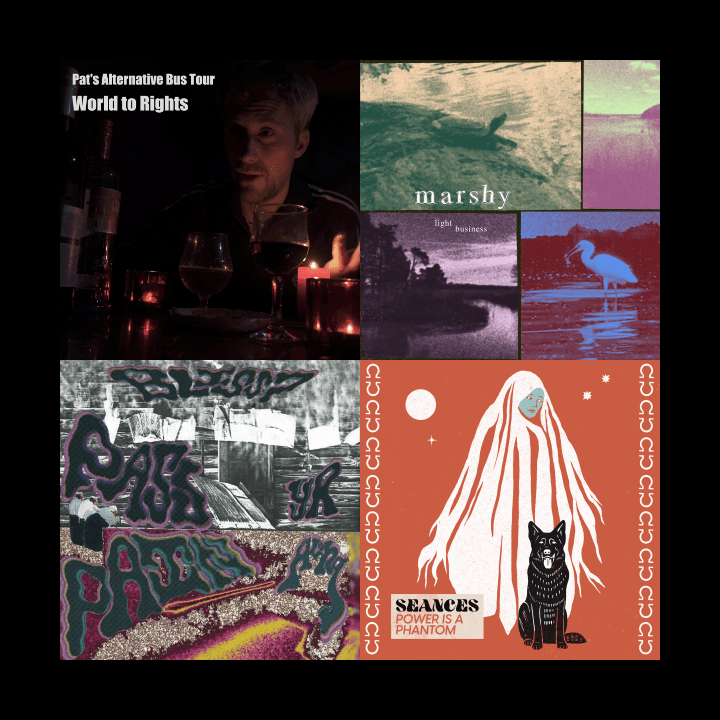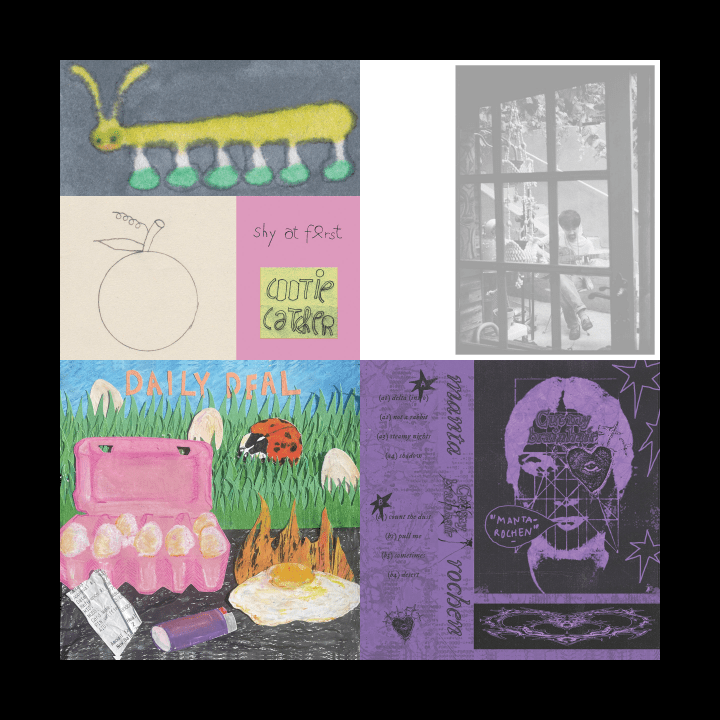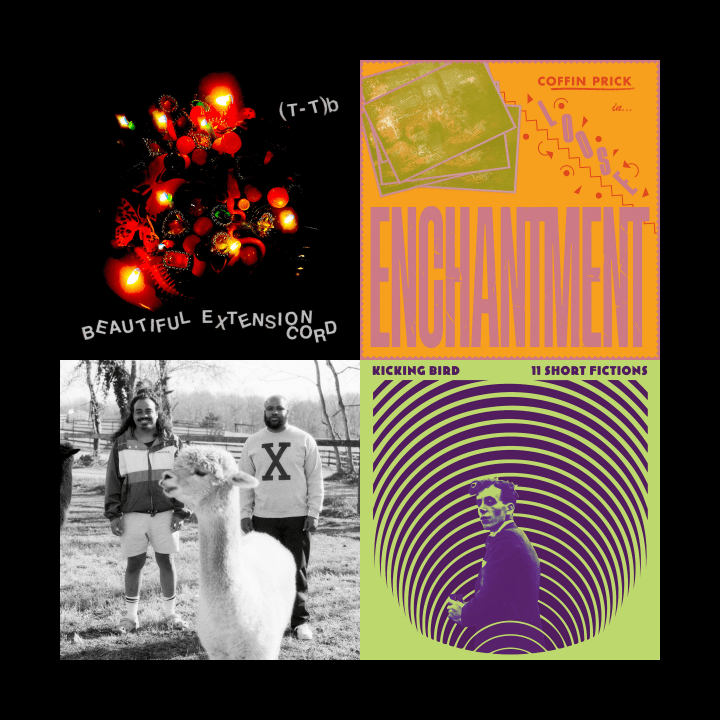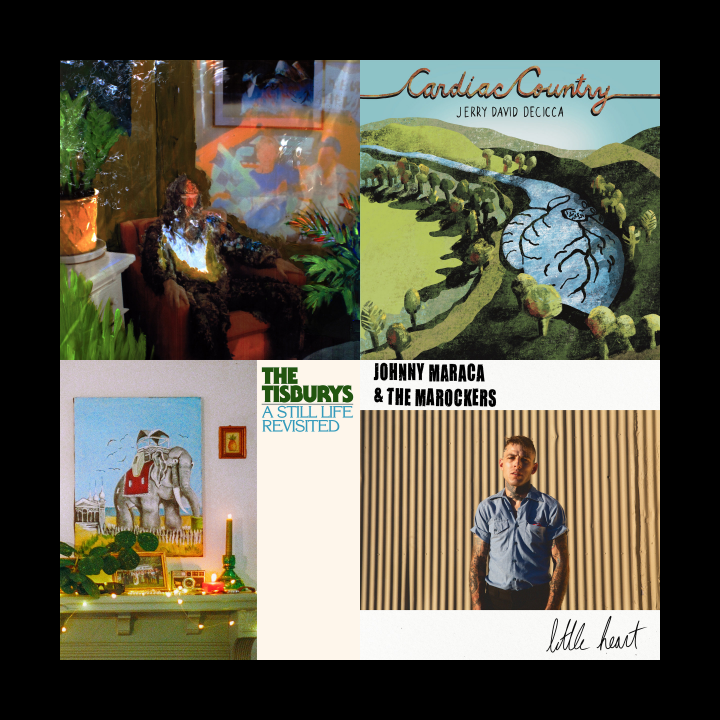
Pressing Concerns: Califone, Baths, Rapt, The Rishis

It’s the Thursday Pressing Concerns! It’s an avalanche of new music that comes out tomorrow, February 21st! It’s new albums from Califone, Baths, Rapt, and The Rishis! Oh, and also be sure to check out Monday’s Pressing Concerns (featuring Minorcan, Outro, Above Me, and Nobody’s Dad) or Tuesday’s (featuring Patches, …or Does It Explode?, Future Living, and Hour) if you haven’t yet. And–of course–you want to read 1,700 words on Silkworm’s reissued 1997 masterpiece Developer, which went up yesterday.

If you’re looking for more new music, you can visit the site directory to see what else we’ve written about lately. If you’d like to support Rosy Overdrive, you can share this (or another) post, or donate here.

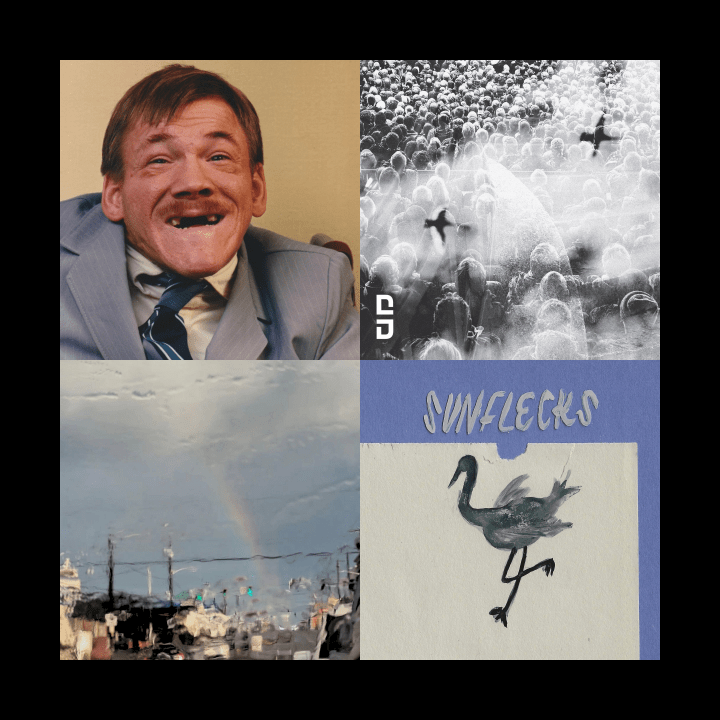
Califone – The Villager’s Companion

Release date: February 21st
Record label: Jealous Butcher
Genre: Folk rock, post-rock, art rock, blues rock, 90s indie rock
Formats: Vinyl, CD, digital
Pull Track:
The Bullet B4 the Sound

One of my favorite lesser-remembered 90s indie rock bands is Chicago blues-influenced group Red Red Meat, who were on Sub Pop and released four increasingly experimental LPs before disintegrating at the end of the decade. Frontperson Tim Rutili has went on to have an impressive second act as the leader of Califone, which I haven’t kept up with as much as I should but who more or less have continued to make music in the vein of Red Red Meat for over twenty years. Califone came back from something of a hiatus at the beginning of this decade by partnering with Jealous Butcher Records and starting to put out regular records again (2020’s Echo Mine, 2023’s The Villagers), and it’s apparent that the band (featuring contributions from a couple other Red Red Meat alumni in producer Brian Deck and percussionist Ben Massarella, as well as ex-Decemberists drummer Rachel Blumberg and guitarist Michael Krassner, a journeyman who’s played with everyone from Simon Joyner to The Moles) are fully active again, as they’re back just two years after their most recent album with another LP.

As the name implies, The Villager’s Companion is linked to the record before it, recorded around the same time and augmented by a couple of covers that have been previously released over the past few years. Rutili referred to these songs as “misfit toys” when the album was announced, but The Villager’s Companion is just further confirmation that Califone thrives in a less formal environment. It gives Rutili and company a chance to both spin some simple blues-folk numbers and to journey beyond them right next to each other, to interpret other people’s songs and incorporate them into the Califone songbook like they’ve always belonged there. After spending more time with them, Califone feel to me like old Chicago-blues version of what Lambchop do with bygone Nashville country-pop–both bands have a distinct but shifting style that can’t be summed up by a pair of “canonical” albums, and they’ve both clearly got a way with a cover song.

The Califone originals are too strong to be dinged with “castoff” status, even as they’re all disparate and probably tricky to slot into a “normal” LP–we’ve got “Gas Station Roller Doggs” and “Jaco Pastorius”, songs that the band were correct to let marinate in their skeletal folky forms, then there’s opening track “Every Amnesia Movie”, which thrives with a spacious Windy City post-rock reading, and “Burn the Sheets, Bleach the Books”, which becomes the full-throated Yo La Tengo-esque noisy indie rocker it was born to be. My favorite of these songs is “The Bullet B4 the Sound”, which is a bit of everything–Califone float purposefully but languidly in the ether on the verses, but come together all of a sudden to pull off a beautifully damaged chorus that’s on the level of career highs like Red Red Meat’s “Gauze”. The covers are the final two songs, and while that might feel like a relegation in some context, they’re an extension of Califone and The Villager’s Companion in attitude, too. “Family Swan” is a later-record song from Mecca Normal (a nineties indie rock band probably even less-remembered than Red Red Meat) and “Crazy As a Loon” comes from a 21st-century John Prine album I’ve never heard. There’s room for these “misfits” on The Villager’s Companion, too, enough so that the term ceases to apply. (Bandcamp link)

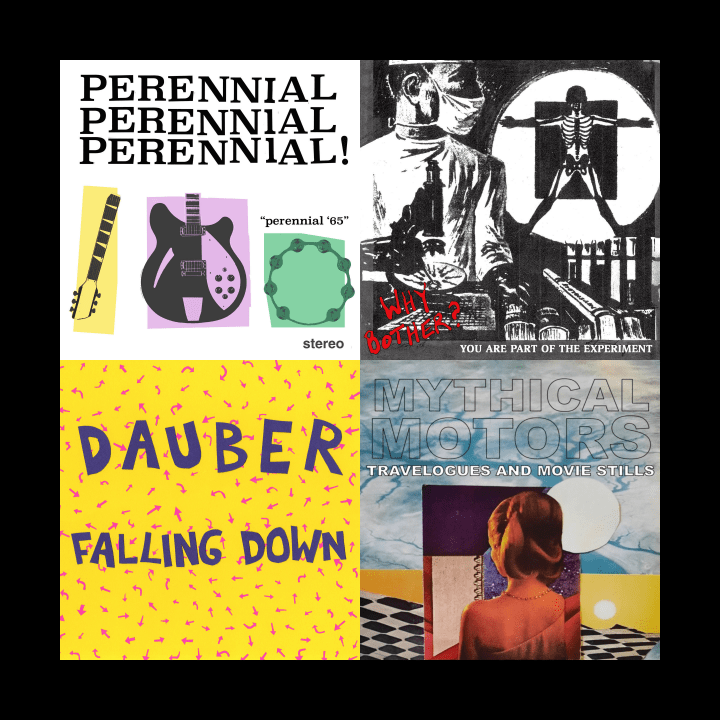
Baths – Gut

Release date: February 21st
Record label: Basement’s Basement
Genre: Art pop, post-punk, art punk, psych pop, synthpop
Formats: Vinyl, digital
Pull Track:
Eyewall

I came to the music of Will Wiesenfeld in a fairly roundabout way–after missing the boat on his most well-known project, Baths, I found myself being surprisingly drawn to the instrumental ambient/folk of The Anchorite, the most recent record from his more experimental and disparate alias Geotic. This year, Wiesenfeld has brought back Baths for its first proper album since 2017 (not counting B-side compilations and soundtrack work), a double LP called Gut. Accompanied by quotes from Wiesenfeld about seeking to incorporate noise rock and post-punk (Gilla Band and Protomartyr are some of the names being thrown around) into Baths’ electronic indie pop sound, my interest was certainly piqued. Gut is a lot to take in, unsurprisingly–featuring live drums on six of its eleven tracks (from Casey Dietz and Sam KS), there are a few genuinely gripping moments of real live indie rock and noise rock/post-hardcore catharsis in Wiesenfeld’s vocals, while the fifty-two minute album still has plenty of room for atmospheric electronica and even a few moments of synthetic dance-friendly electronic pop music as well. Wiesenfeld sought to hold “no regard to personal embarrassment or relatability” in his writing on Gut, exploring “men, and sex” (an “actual honest effort” to elucidate what’s on his mind on a regular basis) with all the freedom the instrumental side of Baths allows.

Gut starts off like an honest-to-God arty indie rock record in its opening trio of songs. “Eyewall” sets the stage for the album with an interesting mix of a post-punk bass undergirding and a vocal performance from Wiesenfeld that goes from “urgent pop music” to “spoken word” to a lacerating post-hardcore yell. “Sea of Men” couches its psychedelic indie pop in a mid-tempo indie rock sheen, Wiesenfeld singing about “fucking all the men in droves” against a vibrant, propulsive background; “Peacocking” isn’t as upbeat, but the electric guitar gets a prominent spot in the ever-so-slightly-darker art rocker. Gut’s strongest electro-pop moments come after this–there’s a bright euphoria to the bubbling “Eden”, while “American Mythos” is a synthpop wringer that leaves everything all out in the open and the of Montreal-like tinker-dance-pop of “Chaos” is wild in more ways than one. As much of a whirlwind as Gut is, Wiesenfeld does indeed bare much of himself in between the grooves–stuff like the psych-wobbling gut-check of “Homosexuals” finally comes to a head in “Governed”, a pretty unflinching self-assessment that stops the dizzying party right in its tracks. “Governed” isn’t the end of Gut, however–that would be “The Sound of a Blooming Flower”, a seven-minute epic that begins in delicate, almost ambient piano realms and finishes as a careening, explosive, noisy indie rock barnburner. The lyrical honesty of Gut might be the most obvious throughline, but “The Sound of a Blooming Flower” is the right final statement because it captures a larger one–the musical growth and exploration of Baths to the point where it can, yes, comfortably hold these musings of its frontperson. (Bandcamp link)

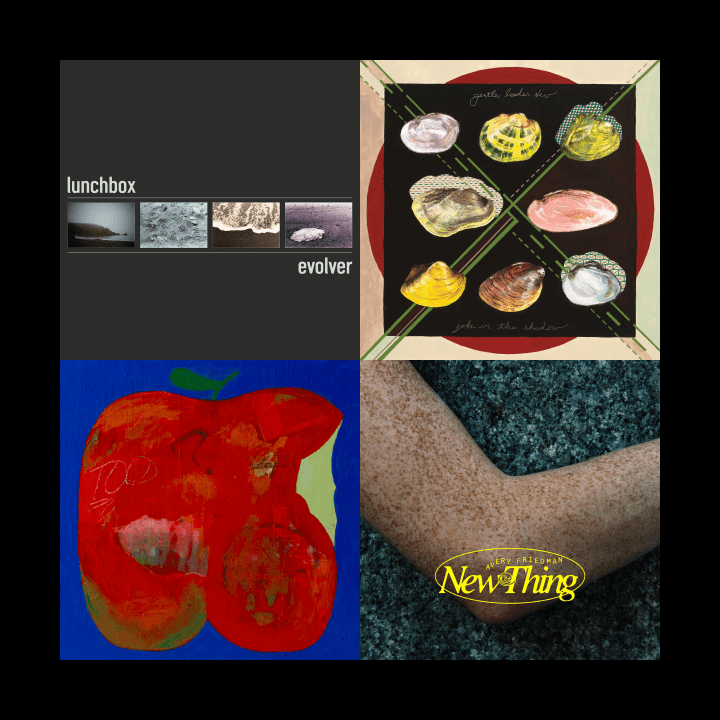
Rapt – Until the Light Takes Us

Release date: February 21st
Record label: Start-track
Genre: Folk, chamber folk, singer-songwriter, slowcore
Formats: Cassette, digital
Pull Track:
Making Maps

Jacob Ware is a folk musician from London, although he (and by extension, his solo project Rapt) isn’t just a folk musician. He started out playing bass in the “brutal death metal” band Enslavement, and, while his musical career as Rapt hasn’t encompassed that, he’s been dabbling in ambient, post-rock, and even techno over the course of four LPs since 2019. Until the Light Takes Us, the fifth Rapt album, is definitely, inarguably “folk music”, though: it’s just Ware and his gently-plucked guitar for the most part, with intermittent percussion, bass, strings, and pianos fading into and out of frame and, all the while, Ware singing about death and dreams and love (and the disintegration thereof) in a winding pastoral, British conversational cadence. Until the Light Takes Us places Ware in a storied lineage of “heavy” musicians (or at least those associated with heaviness) abandoning the musical intensity of their past for something more stark but nonetheless imbuing their acoustic pursuits with a kind of darkness and a different kind of intensity–names like 40 Watt Sun’s Patrick Walker (whose sprawling, ornate slowcore feels like what Rapt would be in a less stripped-down environment), Clockcleaner’s John Sharkey III, and Phil Elverum come to mind.

A lot of “slowcore”-associated music is centered around minimalism–think Alan Sparhawk and Mimi Parker wringing worlds out of just a couple of sentences and just as many chords–but Until the Light Takes Us takes a different path, choosing to build itself around Ware’s lengthy, always-centered diatribes and purposefully-meandering trains of high thought. “Tolkienesque prose”, his bio calls it, an unavoidable reminder that, by going from black metal to folk music, Ware has merely traded in one fantasy-nerd music genre for another. Ware doesn’t hide his vocals under any studio trickery; there’s a buttoned-up, formal quality to Until the Light Takes Us that underlines his writing instead. The guitar is plucked in a perfunctory manner, intricate little swirls of melodies, and when the strings appear, they’re always tastefully draped around the core of the track. It’s the same kind of craftsmanship that turned 2000s “indie folkers” like Sufjan Stevens and Andrew Bird into unlikely stars, but Ware resists the pop touches or heart-clutching relatability that could’ve ever put him in on such a trajectory. This isn’t to say Until the Light Takes Us is impenetrable or even unwelcoming–I’ve loved the most upbeat song on the record, “Making Maps”, from the moment I heard it, and “Attar of Roses” and “Fields of Juniper” both tap into the combination of instrumentation and imagery that reminds us why and how “folk music” endures and reverberates. After intently listening to Until the Light Takes Us, I couldn’t imagine not getting anything out of, say, the life-encompassing dream sequence of the title track–but “intent” is what it takes to get there, from both Rapt and us. (Bandcamp link)

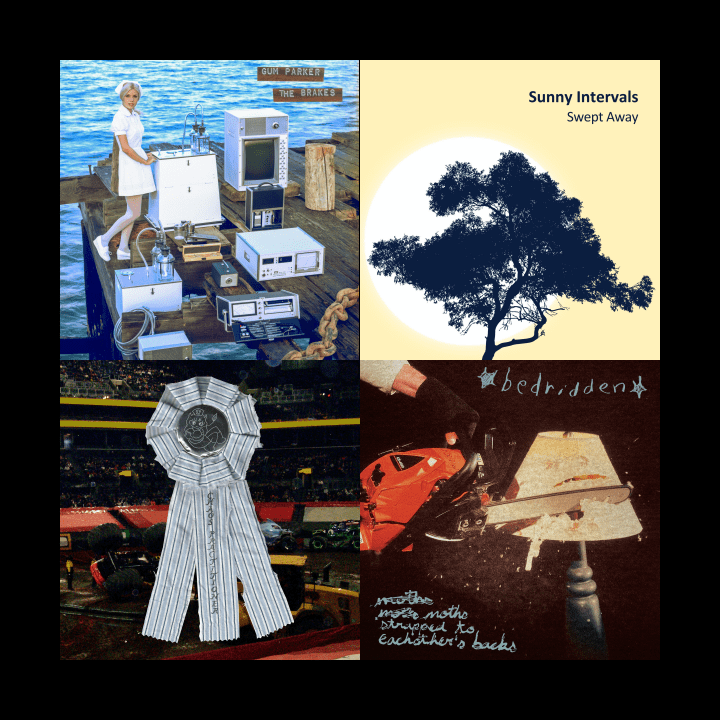
The Rishis – The Rishis

Release date: February 21st
Record label: Cloud Recordings/Primordial Void
Genre: Psychedelic pop, folk rock, chamber pop
Formats: Vinyl, digital
Pull Track:
Criminal Activities

Athens, Georgia band The Rishis debuted in 2022 with the full-length record August Moon, introducing us to the 60s pop-tinged folk rock of core duo Ranjan Avasthi and Sofie Lute and their many collaborators, including notable Elephant 6 Collective members John Kiran Fernandes, Scott Spillane, and Andrew Rieger, among others (Elephant 6 co-released August Moon on vinyl the following year, along with Fernandes’ Cloud Recordings). A second Rishis album, self-titled this time around, arrives a few years later, co-released by Cloud and another Athens stalwart label, Primordial Void (Real Companion, Banned 37, Limbo District), and Avasthi and Lute retain the relatively streamlined charms of August Moon once again. Despite a credits section again filled with indie rock royalty (Robert Schneider of The Apples in Stereo! Mac McCaughan from Superchunk!), The Rishis resist the urge to turn their sophomore album into an overstuffed affair and continue to lock their gaze on creating perfect pop tunes in their chosen folky, slightly psychedelic realms. The Rishis is perhaps more electric than their debut, but (with a couple of exceptions) it’s not exactly a “rock and roll” record; it’s just a means to keep their sound rolling forward. 

The Rishis opens with a pair of reassurances in the toe-tapping pop rock of “Coloring” and the note-perfect indie balladry of “Miles”, both of which are as good as anything on their debut LP. The folk side of The Rishis takes a minute to fully resurface, but the banjo-marked “Buffalo” and the pedal steel that opens the horn-laden “Ride” make sure that this part of the band is represented here, as well. For the most part, the Rishis’ guests are integrated seamlessly, but when McCaughan steps in on guitar on “Criminal Activities”, The Rishis are all of a sudden riding Superchunk-like electricity for a two-minute surprising album highlight. The slacker pop-tinged “Robot Factory” is less openly a departure, but the spirited mid-tempo bummer pop of that song is, upon closer inspection, exciting new territory for the band as well. August Moon contained at least one track (“Uttar Pradesh”) that openly nodded to Avasthi’s Indian ancestry; here, we get “Dharamsala” (a psychedelic pop song about the Dalai Lama fleeing Tibet for the titular Indian city) and closing instrumental “Rishikesh”. These two tracks are separated by a “normal” indie-psych-folk-pop song called “Stratosphere”, which ties the tracks surrounding it to the rest of The Rishis, much like the album as a whole pulls in disparate movements, faces, and histories together to make a neatly-tied singular sound. (Bandcamp link)

Also notable:

Pressing Concerns: Silkworm, ‘Developer’ (Reissue)

Release date: February 21st
Record label: Comedy Minus One
Genre: 90s indie rock, Silkworm
Formats: Vinyl, CD (included with LP)

I’ve written about Silkworm more than I’ve written about any other band, but it’s not every day that Developer gets reissued, so here we go again. I have, in fact, written at least a paragraph about every Silkworm-related record ever, so I’ll probably be repeating myself a little bit here, but on the off-chance that any of you haven’t yet heard Silkworm’s 1997 masterpiece Developer, then it’ll be worth it. Every Silkworm album is a “cult favorite”, but the background on Developer makes it perhaps the über “cult” Silkworm album–it was their second and final album for Matador Records, the Chicago-via-Missoula-and-Seattle band’s final chance to do what their then-labelmates Pavement and Guided by Voices had done and parlay critical/indie rock underground buzz into larger platforms, sizeable followings, and (in the case of the former) an actual minor hit single. They made Developer instead. This insular and cold album predictably went nowhere–Matador dropped them, Andrew Cohen, Tim Midyett, and Michael Dahlquist returned to the world of day jobs, and quietly went about their business making masterpieces on their own time until their unfortunate end in 2005.

“We loved Developer once we whittled it down to what happened to be the weirdest stuff and removed the more conventional things,” writes Midyett on the occasion of the album’s first-ever reissue (a two-LP set with a handful of bonus tracks). If you squinted at the band’s previous album, Firewater, you could kind of see some Alternative Nation anti-stars in the midst of its depressing, alcoholic bluster. Firewater wasn’t exactly a commercial record, either, but between Cohen’s post-grunge fire in “Nerves” and Midyett’s indie rock-via-classic rock penmanship, you could say to yourself, “now, if they cleaned things up, the next one…” And Developer is a clean album–cleaned out of those aforementioned flashes contained in Firewater. There are less rockers, and the ones that are here are all weird. Midyett in particular abandons his AOR side–the guy who ripped through “Wet Firecracker” and “The Lure of Beauty” is first heard in the glacial “Give Me Some Skin”, the opening track that’s “confrontational” in that it’s the closest Silkworm ever got to slowcore. “The City Glows”, Midyett’s next song, picks up the pace just a little bit, but he makes up for this excess by delivering an even more understated vocal performance. “Waiting on a Train”, a second-half Midyett track, aurally captures the feeling of waiting better than just about anything else I can think of; the steady instrumentation sounds like pacing, and Midyett himself pushes his vocals and then walks them back just for fun.

If there’s a key to unlocking Developer, it’s probably in Andy Cohen’s songs. Cohen doesn’t abandon electric rock and roll to the degree that Midyett does here (in fact, I don’t think he could if he wanted to), and so, while there’s no “Nerves” or even “A Cockfight of Feelings” on here, these are the tracks that are more likely to have “hooks” and “licks”. The “single” and the one that I’ve anecdotally heard people praise the most is his “Never Met a Man I Didn’t Like”, the rare 90s indie rock song that embraces Neil Young more so in its lyrics and temperament than in a “messy, plodding Crazy Horse guitars” way (there’s a version by Silkworm side project The Crust Brothers featuring Stephen Malkmus on lead vocals, which certainly helps). However, I distinctly remember that it was “Ice Station Zebra” that was my entrypoint into loving Developer.  I assume that the lyrics are more or less a retelling of the 1968 Rock Hudson/Ernest Borgnine Arctic thriller, which means that Cohen’s narrator isn’t as fascinating as, say, the one in “Goodnight Mr. Maugham” or even the wannabe tycoon in the title track, but he imbues the in-over-his-head soldier with his classic historical-drama flair, muttering about “chasing skirts” and “closet case[s]” over the sickest riff on the entire album.

“The Devil Is Beating His Wife” is a pretty weird song, no? It’s slotted in between Cohen’s two biggest rockers (“Developer” and “Ice Station Zebra”), and it’s significantly more electric than any of the other Midyett-sung tracks before it, but it doesn’t sound like anything else on this album, really. There is a refrain of sorts, and Midyett (sort of) sings the title, but the actual hook is the instrumental bit right after it, a simple guitar flourish and some intense bass playing. It’s psychedelic–maybe the most “psychedelic” Silkworm ever got?–but in a Stones-y way, I think. In the previous song, Cohen’s developer narrator brags about his downtown apartment, moans about his ex-wife, and sings about “feel[ing] the love in a piece of cold steel”–but compared to the relatively colorful figures of Cohen’s songs, the Midyett-sung tracks feel more typical of “cold steel”. It’s not until the final song on the original version of Developer, “It’s Too Bad…”, that the touchstones of what constituted “Silkworm rock music” up until that point–wailing Midyett vocals, increasingly squealing guitar from Cohen, huge, clattering drums from Dahlquist–come together even somewhat. As Midyett sings in that one, though, “it’s too late”.

I doubt (in fact, I know) Silkworm weren’t thinking about it at the time, but by sticking “It’s Too Bad…” at the end of Developer, they ended up creating a nice transition into the Comedy Minus One double LP’s bonus tracks, almost entirely built from outtakes that appeared on the original Japanese CD version of the album. These bonus tracks are part of Developer’s mythology–they left loud rock songs on the table to make space for all the weird tracks!–but few people have actually heard these recordings, given that they were only available in Japan, with not even an intrepid YouTube account stepping in to bridge the Pacific (this doesn’t include me, though; I know what Soulseek is). Three of these songs never appeared anywhere else, while two were re-recorded (in very different forms) for Lifestyle in 2000; I’ve always grouped them into these two camps when I think about them. The exclusive songs are definitely the meat of the Developer bonus tracks–they’re all swinging, roaring Midyett rockers, all catchy and/or loud enough to live up to their fairy-tale status. They, too, are hard to place within the Silkworm oeuvre–“Stray Bullets” is the heaviest one, a hard rock pistol that images an alternate universe where the band actually leaned into the classic rock trappings of Firewater rather than running away from them (which, it should be noted, probably wouldn’t have made them any more commercially well-off in 1997).

If “Stray Bullets” looked backward, “Ogilvie” looked forward–of the three Japanese Developer exclusives, it’s the most polished, a combination of tasteful classic rock indulgences, a rock-solid rhythm section groove, and some catchy pop hooks that marked Silkworm’s final three-and-a-half (shout out to the Chokes! EP) brilliant albums. Yes, it was actually insane to leave this one off of a proper album, but 1) they were right, it didn’t fit Developer, and 2) they had a lot more great songs where “Ogilvie” came from coming down the pipe, so instead we get the delayed gratification of enjoying it nearly thirty years later (and by “we”, I mean you–again, I downloaded these songs off of the file-sharing app Soulseek many years ago). Funnily enough, though, “Ogilvie” might be the most “complete” Silkworm song among these bonus tracks, but it’s not even the most openly catchy one. That’s “Numbered”, a sloppy but brilliant piece of almost power pop (I mean, Silkworm’s version of it) that’s just so much fun. No way in hell this should’ve been on Developer; in fact, it even feels kind of wrong having this on the LP of bonus material (maybe they could’ve done an extra 7” or something? With the random Crust Brothers “You Ain’t Going Nowhere” cover that’s also included here on the B-side?).

So, I’ve conquered the “difficult” Developer proper, and the previously-discussed bonus tracks are all a hoot–the final boss of this beautiful reissue from Comedy Minus One is “Dead Hair” and “Bones”, two songs that later appeared on Lifestyle as “Dead Air” and “The Bones” three years later. The reason I never got into these recordings as much as the others is because of how much I love the Lifestyle versions–if you’ve read that Silkworm piece I linked at the beginning of this review, you know that it’s my favorite album of all-time, and if you pressed me to choose my two favorite songs from that album, I’d likely be going with those two. I don’t know how they came up with turning the mid-tempo, blaring “Dead Hair” into a speedy, delirious post-punk rocker, or how “Bones” became a modern-day folk standard (in my eyes) by ditching the electric dirge for an acoustic guitar and a piano–but those were the right moves. “Dead Hair” I have always appreciated because it features Cohen and Midyett trading off lead vocals; the former (who sings the entirety of the Lifestyle version) still sings the majority of the track, but Cohen gets a good deal to work with, and it makes me wish the duo had tag-teamed more often when they were in Silkworm. It sounds very fun! (which, again, does not belong on Developer).

I can appreciate “Bones”, too. Midyett has said that the song is about founding Silkworm member Joel R.L. Phelps–whose split from the band was messy and a large part of why the first album they made without him, Firewater, dwelt heavily on substance abuse–and it’s interesting to consider that this song had been floating around not so long after Phelps’ initial departure. Silkworm whittled this one down quite a bit–they removed the full-band set-up, yes, and a few lines disappeared. Although the general feeling of “The Bones” has never been all that difficult for me to surmise, the context of it has always been a bit of a cypher, and hearing some of the struck/changed lyrics (“I’m a weak one and I know it”, “Your lack of histrionics pulled me through”) make things a little clearer. “The Bones” is a perfect song, and Silkworm made a perfect album by sticking it in the cellar for a few years. (Bandcamp link)

Pressing Concerns: Patches, …or Does It Explode?, Future Living, Hour

Wow, there’s a bunch of good records in this Tuesday Pressing Concerns. The (unfortunately) final EP from Patches, a live album from Hour, and new studio albums from …or Does It Explode? and Future Living are present in this one. It’s a great one, as was yesterday’s (featuring Minorcan, Outro, Above Me, and Nobody’s Dad), so check that one out too if you missed it.

If you’re looking for more new music, you can visit the site directory to see what else we’ve written about lately. If you’d like to support Rosy Overdrive, you can share this (or another) post, or donate here.

Patches – A Three Legged Chair

Release date: February 3rd
Record label: Self-released
Genre: Dream pop, post-punk, jangle pop, college rock
Formats: Digital
Pull Track:
Music for a Silent Film

I’ve got good news and I’ve got bad news. The good news is there’s a new EP from Patches, the college rock/post-punk/jangle pop group formed by three remote collaborators (Evan Seurkamp, Aaron Griffin, and Robin KC) in 2021. The bad news is that A Three Legged Chair also marks the end of Patches, a brief coda after two undersung but very good full-length albums (2022’s Tales We Heard from the Fields and 2023’s Scenic Route). In hindsight, it’s not all that shocking–I remember being surprised that Seurkamp had time for a second band in addition to his main one, The Laughing Chimes, and with the Chimes back with their long-awaited sophomore album, the juggling probably became a bit too much. A Three Legged Chair is a clearinghouse release–these five songs were “scrapped, passed over, or shared elsewhere”, and the band openly state on their Bandcamp page that it “isn’t as good” as their albums (I guess not being a band anymore means not having to promote every release like it’s your creative pinnacle). There’s a Guided by Voices cover that appeared on a compilation I wrote about in 2023, an alternate version of a track from Tales We Heard from the Fields, and three previously-unheard tracks, two of which feature Robin’s sister (credited as “KRMT”) on lead vocals (“without her, this probably wouldn’t have been released,” the band write). 

If you’re only familiar with Suerkamp’s other, more well-known band, you might be surprised by Patches’ darker streak (although at their most “pop” they were as bright as anything by The Laughing Chimes); A Three Legged Chair unearths a couple more highlights in this vein with the two Seurkamp-sung originals, “A Tree” and the alternate version of “A Nice Day to Orbit Saturn”. Patches are a muddy, moody, confused-sounding post-punk band on these recordings, particularly the eerie, almost-gothic “A Tree” (it’s a good song, though I see why it didn’t end up on either album). I touched on their fairly faithful version of “The Best of Jill Hives” when it was first released, but I don’t mind it resurfacing here and hearing Seurkamp sing it is still a fully enjoyable experience. Patches weren’t being self-deprecating when they highlighted the KRMT-sung songs as the best moments on A Three Legged Chair, though; they really do make the EP worthwhile on their own. “Music for a Silent Film” is my favorite of the two; the buzzing, sensory-overload dream pop sound is different than anything else on the EP and probably from anything Patches ever put out, period; “Crossbow” is a more recognizably Patches post-punk/jangle pop combination track, but it closes A Three Legged Chair by asserting that while Patches may be ending, it wasn’t for a lack of new ideas in their signature vein of songwriting. Maybe I just wanted to be able to say I wrote about everything Patches ever released, but A Three Legged Chair does hold its own against a couple of underrated but brilliant albums. (Bandcamp link)

…or Does It Explode? – Tales to Needed Outcomes

Release date: February 1st
Record label: Snmyhymns
Genre: Midwest emo, post-rock, slowcore, 90s indie rock
Formats: Vinyl, digital
Pull Track:
What Is Tough to See

…or Does It Explode? is an emo band hailing from Madison, Wisconsin that have been around since the beginning of the decade, more or less. The quintet (made up of guitarist/vocalist Shawn Bass, guitarist Brandon Boggess, bassist J Granberg, drummer Erik Rasmuson, and vocalist Katya Pierce) put out two albums in 2022 and 2023 that mixed Dischord Records-influenced post-hardcore with more cavernous and exploratory Midwest emo sounds. Even in their more “punk” earlier work, this more intimate side of …or Does It Explode? is discernible among the noise, and it’s this aspect of their sound that they’ve chosen to explore much more fully on their third album, Tales to Needed Outcomes. Interestingly, Bass initially conceived this record as a solo side project, but the rest of the band were fully on board with taking their sound into this direction, and not only do they all play on Tales to Needed Outcomes (recorded by Nick Tveitbakk at Pachyderm Studios in Cannon Falls, Minnesota), but …or Does It Explode? also bring in a host of guest musicians (Rin Ribble on violin, Logan Lamers on cello, Becky Lipsitz on trumpet, and Amy Wiegand on flute) to fully flesh this record out.

Spanning a dozen tracks in about fifty minutes, Tales to Needed Outcomes is an ambitious record that seems dead-set on getting the most out of the circumstances of its creation–a stable of talented musicians and a week at a world-famous recording studio. It’s a lot to take in, but it’s all very well-thought-out and just-as-well-executed, so take your time if you find …or Does It Explode? challenging your attention span at first. Tales to Needed Outcomes is operating in the world of horn/string-laden Midwest emo, orchestral slowcore and post-rock, and good old-fashioned 90s basement indie rock–it has the core of the bedroom project it began as, but it benefits greatly from the full punk-trained band backing it up at all times. It’s hard for me to single out specific tracks on Tales to Needed Outcomes because it’s such a cohesive experience–the post-hardcore backing vocals on “Cyclic Living” stick out like a sore thumb, but that’s in large part because the rest of the song is entirely in line with the rest of the record. When …or Does It Explode? “rock” on Tales to Needed Outcomes, it’s generally in a dramatic, slowcore-influenced indie rock kind of way that reminds me of 90s bands like American Music Club and Idaho (as well as more recent acts in this vein like 40 Watt Sun). There aren’t a ton of current groups making music like this, but maybe by mixing it with more traditional horns-and-guitar-noodling Midwest emo, …or Does It Explode? have found a way to get it to the masses. Maybe not, but it works for Rosy Overdrive. (Bandcamp link)

Future Living – Get Vasectomy

Release date: February 14th
Record label: Silent Co-op
Genre: Garage rock, psychedelic rock, post-punk, 90s indie rock
Formats: Vinyl, digital
Pull Track:
Diver

Last year, I wrote about the Chicago/Montana five-piece band Blank Banker, a bunch of noisy indie rock veterans who recorded their most recent album, Intervallic Travails, at Electrical Audio with Jon San Paolo and released it on drummer Neal Markowski’s label Silent Co-op. As it turns out, Markowski is also the drummer in another noisy indie rock band who recently recorded an album at Electrical Audio with Jon San Paolo that is seeing a vinyl release via Silent Co-op–this time, it’s the Kalamazoo/Chicago quartet Future Living, who’ve just released their sophomore album, Get Vasectomy. Future Living are co-led by vocalist/guitarist Anne Hensley (of Petrillo) and vocalist/guitarist Chafe Hensley (of OUT, Minutes, and Wowza in Kalamazoo), joined by guitarist John Patterson and Markowski behind the kit. Compared to the scuzzy, math-influenced basement rock of Blank Banker, Future Living are more regal–their sound is heavy, laser-precise, pummeling, almost psychedelic in its intense lumbering (the Bandcamp page for the album is tagged “space rock” and the biography mentions “shoegaze, post-punk, hard rock, and ’90s D.C. hardcore” as influences, all adding up to a somewhat hard-to-categorize but clearly heavy-on-the-rock indie rock album).

Made up of three interstitial snippets and nine “full-length” songs, Get Vasectomy walks the tightrope between smoking noise-indie-garage-rock and something a bit more high-concept and ambitious from the beginning. Opening track “Diver” begins with a guitar hero-type solo and then transforms into a lost indie rock classic, with Anne Hensley (who appears to sing lead vocals on the majority of these songs) giving an all-in performance as a frontperson. “Jury” starts with a synth sting (it could be from Patterson, who’s credited with “Moog”, or Markowski on “Korg”) which sticks around to help give the track that little “space rock” extra touch. I hear the Dischord and post-punk influence in the guitars on “Hawk”, which is just a little bit more lean than the blunt-force indie-hard rock of much of Get Vasectomy. Things start to get really heady in the back end of the record with “All Around”, an instrumental whose probing, wandering attitude bleeds into the next track, the slow-building jungle of “Duckie”. Future Living decide to end Get Vasectomy by bringing the energy back up to a boil, though, between the Chafe Hensley-sung “Grinning Time” (which, thanks in part to Chafe’s vocals, sounds like a more blunt-object version of Hot Snakes/Meat Wave-style garage-noise-punk) and closing track “Thrusters”. Once again kicking things off with an urgent-sounding guitar riff, “Thrusters” closes the book on Get Vasectomy with a levitating rocker that lives up to its title. After hearing Future Living roar through some serious rock music for an entire LP, you’ll want to Get Vasectomy too. (Bandcamp link)

Hour – Subminiature

Release date: February 14th
Record label: Dear Life
Genre: Post-rock, contemporary classical, orchestral, chamber music
Formats: CD, cassette, digital
Pull Track:
I Fall to Pieces

Hour, the Philadelphia-based instrumental ensemble led by Dear Life Records co-founder and Friendship drummer Michael Cormier-O’Leary, debuted in 2018 with two albums of their “chamber folk”/contemporary classical music sound, featuring a cast of contributors including 2nd Grade’s Peter Gill, Dear Life recording artist Jason Calhoun, and viola player Matt Fox. Hour took its time before recording a third album, but they returned in a big way last year, releasing Ease the Work (as well as a single featuring a couple of outtakes) and touring around the eastern United States in support of it. Subminiature is Hour’s first live album (well, aside from an “official bootleg” that’s been unavailable for several years now), a CD and cassette with some seventy-odd minutes of recordings from shows leading up to and following the release of Ease the Work, featuring selections from all three Hour LPs. Hour encompassed more than a dozen “players” over these shows, per the Bandcamp page’s credits, with more recognizable names in Philadelphia DIY–Cormier-O’Leary, Gill, prolific producer Lucas Knapp–appearing alongside skilled musicians that round out the ensemble like cellist Evan McGonagill, violinist Em Downing, and organist/pianist Erika Nininger. Music like this doesn’t conjure up the “DIY circuit”, but Hour pulled it off (playing “machine shops and parking garages, crowded bars and living rooms, churches and theaters”), and Subminiature is the proof of concept.

Different locales, a shuffling lineup, and the “live” recordings don’t take anything away from Cormier-O’Leary’s compositions, and, given that the songs are culled pretty evenly from the three Hour LPs, Subminiature actually functions very well as an introduction to Hour (provided you’re the kind of person that isn’t turned off by the idea of listening to over an hour of mostly-instrumental chamber music). Trying to pick “standouts” from Subminiature kind of misses the point, but the second-half stretch featuring the somewhat-eerie “Dying of Laughter”, the quiet, floating “Tiny House”, and the steady shimmering “The Most Gorgeous Day in History” might be the strongest section of the album. Oh, and I did say “mostly instrumental” earlier, because, towards the end of Subminiature, Hour hide a cover of Patsy Cline’s “I Fall to Pieces” featuring Philadelphia singer-songwriter Jacob Augustine (like Cormier-O’Leary, a Maine expat) on vocals. “I Fall to Pieces” is the moment on Subminiature that feels the most like a traditional “live album” recording–a deviation from a band’s normal fare, a curious moment in time fortunately captured by somebody pressing “record”. The rest of Subminiature? Well, that’s the sound of Hour doing what they do best, no matter who, when, and where they are. (Bandcamp link)

Also notable:

Pressing Concerns: Minorcan, Outro, Above Me, Nobody’s Dad

Good morning! Monday Pressing Concerns time! Two records from last week (an LP from Minorcan and an EP from Outro), plus two EPs from January I don’t want to leave behind from Above Me and Nobody’s Dad. Bunch of good records in this one that I don’t think I’ve been seeing anyone talk about online; let’s be conversation-starters today.

If you’re looking for more new music, you can visit the site directory to see what else we’ve written about lately. If you’d like to support Rosy Overdrive, you can share this (or another) post, or donate here.

Minorcan – Rock Alone

Release date: February 14th
Record label: Self-released
Genre: Indie pop, lo-fi pop, power pop, Americana
Formats: Vinyl, digital
Pull Track:
Nightmare Rider

Ryan Anderson was born in northern Florida and spent time in Georgia and Austin, but he’s called Asheville, North Carolina home for more than a decade now. Somewhere in there he started Minorcan, a “basement arena rock experience” that appears to basically be an Anderson solo project. The title of Minorcan’s most recent album, Rock Alone, seems to acknowledge this–Anderson wrote, played, recorded, and recorded everything on this record on his own, and he’s self-releasing it, too (albeit with distribution help from HHBTM Records, who released some of his solo albums in the 2000s). Anderson reminds me of vintage southern college rock/power pop/alt-country troubadours; he’s someone who came up on Elvis Costello and indie rock but doesn’t try to erase his region of origin (and as a frontperson, he’s somewhere between William Matheny and Hiss Golden Messenger, if either of them ditches the backing band for simple beats). The old aphorism “alone, not lonely” comes to mind listening to Rock Alone; it may just be Anderson and a drum machine on the tape, but the writing reflects somebody plugged into community, family, and other fulfilling relationships and urgently but happily wanting to underscore their importance (to him, to us as a species).

So, Rock Alone isn’t shy about the positivity at its core, but if that reads to you as too corny or “cringe” or whatever, at least hear Minorcan out. There’s a clear logic undergirding all the moves that Anderson is making alone in his basement–see the first song on side B, “Here on Out”, which rejects norms on both an artistic and societal level. Anderson sings a song that’s defiantly content in its domesticity, because, as he says, “They’re telling us to be ashamed / Screamin’ loud, sayin’ we can’t make art unless we’re suffering” (and, plus, consider the fact that his line about “abolish[ing] gender” would be subject to state censorship under this current regime–can your favorite art punk band say that?). It’s not that there isn’t darkness on Rock Alone, to be clear, but Anderson has fun with that, too–see “Burial Insurance”, a country-rock tune about a failed songwriter writing one last “Hail Mary” to “pay for [his] funeral”. It’s funny and playful, but when Anderson sings “I’ve worked all my life, but I can’t afford to die,” it’s very real, too. The best political music to me is the incidental kind–it seems accidental, and it probably is sometimes, but it intersects in all the right ways. Minorcan wrap everything up neatly and nicely in the final and best track on the record, “Nightmare Rider”, a song that’s anything but naive in its continued pursuit of its ideals. “To live without you, ooh, that’s my nightmare / To live without you, ooh, that’s my worst fear,” Anderson sings in the refrain–the lingering on the fear in this, the biggest moment on Rock Alone, is telling. “I say it all with gritted teeth / They want us to stay lonely,” goes the next line, and I shouldn’t have to tell you what the one after that entails. (Bandcamp link)

Outro – Broken Promise

Release date: February 14th
Record label: Repeating Cloud
Genre: Art rock, post-punk, garage rock, psychedelic rock, Paisley Underground, 90s indie rock
Formats: Vinyl (“Villages” and “New Home” only), digital
Pull Track:
Fool

Despite their SEO-hostile band name, I somehow stumbled onto the Northampton, Massachusetts quartet Outro back in 2023, when they released their debut album, The Current. At the time I didn’t know much about them, but I enjoyed their Paisley Underground-reminiscent indie rock/college rock sound (I threw out names like The Dream Syndicate and Eleventh Dream Day), and I’m thrilled that they got picked up by Repeating Cloud Records for their newest release, a five-song EP called Broken Promise. I now know a little more about the band–for instance, they’re made up of vocalist/guitarist Josh Levy, guitarist Adam Zucker, bassist Peter Sax, and drummer Noam Schatz, they rehearse in a practice space at Justin Pizzoferato’s Sonelab studio (which is also where they recorded Broken Promise), and the band members have played in a bunch of groups like Mobius Band, The Capitulators, the Lucky Shots, and Bring It to Bear. Outro don’t break from The Current too much on their newest record (whose release is accompanied by a 7” single featuring two of the tracks), but that’s hardly a bad thing–in addition to the aforementioned artists, the band mentions Steve Albini as a recording influence, and while Broken Promise isn’t precisely a “noise rock” record, it does capture the same energy of Electrical Audio-associated bands who make or made unflappable, unbothered indie rock from Silkworm to Stomatopod.

Broken Promise is worth checking out for its opening track, “Fool”, alone–it’s one of the best things I’ve heard this year so far, easily. It’s impossibly cool-sounding, sometimes like a chill explosion and other times like running water. Everything is positioned perfectly, from the roaring opening guitar riff to the rat-a-tat drums to the split-second bass spotlight to the rolling melodic guitars that eventually take over the track to Levy and Zucker’s harmonies in the brief refrain. It’s a high bar, but Outro round out Broken Promise with songs that hold their own–after “Fool”, they immediately launch into the lead single and biggest “rocker” on the EP, “Gila”, which definitely helps the record’s momentum. “Villages”, which leads off the physical 7”, is the other rocker, but instead of “Gila”’s careening post-punk, Outro achieve their goal on this one by turning the guitars (and bass) way up to make some almost peaceful-feeling, Sonic Youth-style electricity. The “psychedelia” in Outro’s sound is always on the more “implied” side, but I do hear plenty of paisley in “New Home” and its shimmering guitarplay, while the closing title track dabbles in this arena by alternating between swirling walls of guitars and more withdrawn instrumental moments that feel like the band is fading away before our very ears. They never do, though; Broken Promise ends on an abrupt, perfunctory note, with Outro seeing us through to the very last moment. (Bandcamp link)

Above Me – Above Me

Release date: January 31st
Record label: Dandy Boy
Genre: Shoegaze, noise pop, dream pop, psychedelia
Formats: CD, digital
Pull Track:
Out of Body Out of Mind

Among the staggering amount of new albums that Slumberland Records has released over the past couple of years, Blue Ocean’s Fertile State is probably one of the least accessible, but the San Francisco band’s noisy, experimental post-rock-influenced take on shoegaze won it praise in certain circles. Apparently Blue Ocean’s Slumberland debut will also be their final record, as they quietly broke up sometime between Fertile State and now–but this bad news is tempered by the announcement and debut release from co-founder Rick Altieri’s new solo project, Above Me. Above Me’s self-titled debut EP (which is eight songs and twenty-seven minute long, making the “EP” designation more of a stylistic choice than a necessary one) was mostly created by Altieri alone, with vocals from Kati Mashikian (Mister Baby, Cindy, Tony Jay) being the only outside contribution. Still certainly operating in the wider worlds of “shoegaze” and “noise pop”, Altieri (who also has an impressive Bay Area pedigree beyond Blue Ocean, playing with acts like Ryann Gonsalves and Blue Zero in recent years, among others) doesn’t try to recreate the sensory overload sensation of his previous band on Above Me, instead taking advantage of the self-recorded, drum-machine-heavy pallet to make some heavily fuzzed-out, psychedelic pop music.

Above Me is in the same vein as recent records from Dummy and Aluminum, but because it’s functionally impossible to recreate those albums with what Altieri’s working with, Above Me ends up being something else entirely anyway. Much of the first half of the EP (I would say first “side”, but it’s only on CD) is the more openly pop-forward side–the blossoming fuzz-dream-pop of opening track “Out of Body Out of Mind”, the lifting grooves of “New Pains”, and the psych pop new wave-gaze of “Grass Mouth” are all probably immediately catchier than anything off of Fertile State. Those worrying that Altieri might’ve lost his experimental streak need not worry, though–at first it’s just restricted to the slowed-down thirty second snippet “Weather”, but the second half of Above Me sports the soundscape of “Shine Thru” and the psychedelia-drenched “Place and a Day”, both of which dabble in atmospherics over instant pop gratification. Low in the mix, Altieri’s vocals keep Above Me grounded in the realm of classic shoegaze; not even Mashikian can lift the singing to more than a mumble over the walls of guitars. The trick that Above Me pulls is making the basement feel gigantic when it’s time to fly–like in closing song “Stone Mossy Lime”, which, after a glitchy opening, proceeds to make the drum machines and fuzz sound stadium-huge. (Bandcamp link)

Nobody’s Dad – Mixtape

Release date: January 18th
Record label: Sketch Book
Genre: 90s indie rock, lo-fi indie rock, fuzz pop
Formats: Cassette, digital
Pull Track:
You Don’t Communicate

Simon Smith works at Trowbridge, Wiltshire music venue The Village Pump, and as of late the promoter and booker has started a cassette label out of a desire to release music from upcoming local acts. Sketch Book Records debuted last year with a promising demo cassette from Steatopygous, a teen riot grrrl-inspired punk trio who’ve recently played shows with Perennial and Other Half, and the imprint continues their early winning streak into 2025 with another debut cassette, this time from Bath quartet Nobody’s Dad. Noticeably different from the Steatopygous record, the four-song Mixtape EP recalls a different side of 90s rock music–grungey but tuneful, Nobody’s Dad recalls bands on the fringes of the early 90s alt-rock “mainstream” like The Breeders and Throwing Muses, with a bit of the noisy-pop wistfulness of bands like The Spinanes and Velocity Girl (and even a bit of classic twee/indie pop) thrown in for good measure, too. Perhaps a cassette EP dubbed “Mixtape” is intended as a soft launch, but the band (Juliet Allarton, Max Earl, Phoebe Stokes, and Rahul Hasler, per their Bandcamp) already sound polished and like they’ve got their sound down pat.

Mixtape comes out swinging with “Angel” (which was Nobody’s Dad’s debut single, originally released last summer), starting with some Deal-Sisters-worthy alt-rock vamping and droll but accusatory vocals, and then unexpectedly taking flight in a near power pop-level chorus. There’s just a bit of “emo” baked into the sound of “Angel”, which serves Nobody’s Dad well as they move into “Margo”, the “ballad” of the EP. It’s a huge departure from the high-flying “Angel”, and the four-minute slow-builder could’ve wrecked Mixtape’s entire momentum if the band didn’t know how to utilize just the right combination of acoustic folk and fuzzed-out, 90s basement indie rock to usher the track along. The second half of the EP might be better than the first–the quick-tempo sadness and confusion of “You Don’t Communicate” is a tour-de-force of winning melodies from its inception and is the best song on the EP in terms of pure pop music, and “You’re All I Ever Wanna Be” is a big, sweeping closing statement with nice, big alt-rock guitars and a ghostly catchy chorus. The more I listen to Mixtape, the more impressive it sounds as a debut release–we should be keeping our eyes on Nobody’s Dad in the future, yes, but these specific four songs also deserve a bit more attention that they’ve received thus far. (Bandcamp link)

Also notable:

Pressing Concerns: Frog, Vulture Feather, Cathedrale, Night Collectors

Happy Valentine’s Day’s Eve! Tomorrow (February 14th) is shaping up to be a pretty big day for new music, and Rosy Overdrive is looking at a few of these upcoming records today: new albums from Frog, Vulture Feather, Cathedrale, and Night Collectors. Be sure to check out the previous posts from this week (Monday’s Pressing Concerns featured The Pains of Being Pure at Heart, Iffin, Brown Dog, and Paul Bergmann, while Tuesday’s featured Hello Whirled, The Winter Journey, Jac Aranda, and Grant Pavol) if you didn’t catch them the first time, too.

If you’re looking for more new music, you can visit the site directory to see what else we’ve written about lately. If you’d like to support Rosy Overdrive, you can share this (or another) post, or donate here.

Frog – 1000 Variations on the Same Song

Release date: February 14th
Record label: Tapewormies/Audio Antihero
Genre: Indie pop, folk rock, psychedelic pop, piano pop, alt-country, Frog
Formats: Vinyl, digital
Pull Track:
DOOMSCROLLING VAR. II

The cult New York act Frog returned after a four-year hiatus in 2023 with an album called Grog, a perfect reintroduction (or, for me at least, a formal introduction) to an exciting world of folk rock/country-influenced indie pop music dreamed up by Daniel Bateman with assistance from his brother, Steve, on drums. I called Grog an “alternate-universe oldies station” and mentioned Mercury Rev, The Flaming Lips, and Grandaddy, among others, as artists evoking a similar feeling to that record. 1000 Variations on the Same Song, the sixth Frog album, is a departure from the more technicolored, eager-to-please pop sensibilities of their previous LP, even though it still sounds like a Frog record. As the title implies, 1000 Variations on the Same Song arose from Bateman realizing he was working on “a bunch of stuff that all sounds alike” and deciding to embrace the similarities rather than try to vary things up some more; on this record, Frog sound more subdued and thoughtful, making their way through simple yet disorienting piano-led instrumentals at a leisurely pace. Bateman’s singular-sounding high-pitched vocals prevent 1000 Variations on the Same Song from truly being “laid-back”; I was helpfully given a lyrics sheet for this record, but it almost feels like cheating to pull too much from it in this review, as I think the proper way to take it in is to catch snatches of phrases in moments of clarity between Bateman jumping between soul-influenced croons and Isaac Brock-like yelps.

I like that Frog (who’ve recently welcomed back founding drummer Thomas White into the live band on bass) followed up an immediately-satisfying comeback record with something that took me a few listens to really get a handle on. It’s good world-building! After spending a good deal of time in 1000 Variations on the Same Song, it’s now hard to imagine it sounding any other way–Bateman sounds almost divinely inspired in the most memorable parts of the record, giving a chant or even hymn-like quality to the refrains of “DOOMSCROLLING VAR. II” (yes, he is saying “Damn, baby, what is you talking ‘bout” there), “HOUSEBROKEN VAR. IV” (“It sounded clever to regale her ‘front of all her friends,” no idea why this sounds so profound), and “MIXTAPE LINER NOTES VAR. VII” (which rhymes “broken Casios” with “The National”). The other Bateman makes a stronger impression on the drums than I would’ve expected on first listen, but Steve’s contributions are really sticking out to me now–Daniel leaned pretty heavily on non-rock influences for this record, and it’s his brother that keeps things grounded with stuff like the sharp marching beat to “DOOMSCROLLING”, the melancholic shuffle of “WHERE DO I SIGN VAR. III”, and the slow plodding to “HOUSEBROKEN VAR. IV”. In fact, it becomes pretty noticeable when the percussion is sidelined in the final two tracks, the ringing piano carol “DID SANTA COME VAR. IX” (Bateman mentions listening to “a lot of Mozart” while making this record, by the way) and the campfire folk closing track “ARTHUR MCBRIDE VAR. X”. Not to belabor the point, but by making a album with its own wrinkles and bumps that still sits nicely with the rest of their records, Bateman and company have created a welcome variation on the same Frog. (Bandcamp link)

Vulture Feather – It Will Be Like Now

Release date: February 14th
Record label: Felte
Genre: Post-punk, art rock, art punk
Formats: Vinyl, digital
Pull Track:
Let It Through

When I wrote about Liminal Fields, the 2023 debut album from northern California trio Vulture Feather, I didn’t expect to be writing about two more Vulture Feather records in less than two years. It’s not that Liminal Fields wasn’t a great debut, it’s just that when artists return to making music after a long time away, they don’t typically start putting out records prolifically. But vocalist/guitarist Colin McCann and bassist Brian Gossman have apparently found a fertile third act after playing together in Florida emo group Don Martin Three in the 1990s and Baltimore art rock group Wilderness in the 2000s. Now based in Hayfork, California (about sixty miles west of Redding), the duo have linked up with new drummer Eric Fiscus and have gotten to work hammering out slow, deliberate, Lungfish-esque guitar-heavy post-punk (as I called Liminal Fields at the time). We got a three-song EP called Merge Now in Friendship last year, and 2025 has brought the second Vulture Feather LP, It Will Be Like Now, recorded after a year of touring by ex-Nation of Ulysses guitarist Tim Green (another former mid-Atlantic resident who’s since relocated to northern California; he plays baritone guitar on one track on the record, too) at his Louder Studios in Grass Valley.

Vulture Feather have such a distinct sound–McCann’s otherworldly yowling vocals and chiming guitar, the steady, glacial movement, a rapturous devotion to minimalism and repetition–that they really only sound like themselves at this point. Like Merge Now in Friendship and Liminal Fields before it, It Will Be Like Now is a powerful-sounding record, but I didn’t come away from it thinking “Vulture Feather just made the same album again”.  The fact that they recorded the album after a bunch of touring might explain the subtle difference I hear–“looser” isn’t exactly the right descriptor…maybe “more alive”? Liminal Fields sounded like it just came into being one day, but I can actually imagine Vulture Feather playing the songs of It Will Be Like Now live, in person, in-studio. This is their punk album, maybe. It’s hard to single out specific Vulture Feather songs because everything they ever do feels like one big single movement, but It Will Be Like Now has some notable mile markers–for one, “Let It Through” (the one with Green on baritone guitar) is really indescribable, just four minutes of one three-chord guitar progression and McCann giving it everything in the vocals. “Into Space” starts off with some excellent guitarplay that underscores how close McCann’s playing is to “jangle pop” when you listen to it intently, and “Like Now” makes up for being mostly instrumental by letting the guitar show off in a way they hadn’t really before. As always, though, Vulture Feather is even more so about the moments in between these ones, about the eternal balancing act that they make feel frighteningly vital and easy at the same time. (Bandcamp link)

Cathedrale – Poison

Release date: February 14th
Record label: Howlin’ Banana/Regarts
Genre: Garage rock, punk rock, post-punk
Formats: Vinyl, CD, digital
Pull Track:
Cravings

I’ve written a fair amount about France’s surprisingly robust garage rock scene in recent years between TH Da Freak, Opinion, and SIZ, but Toulouse’s Cathedrale seem to be an institution of their own. Starting in 2017, the quartet have put out four albums of energetic, power pop-informed garage rock, all the while honing their skills touring across Europe (apparently with Osees at one point, too). Perhaps their time on the road has hardened and darkened Cathedrale’s sound–there were hints of this on their most recent album, 2023’s Words/Silence, and their fifth LP, Poison, continues down this path. Recorded live by Almost Lovers’ Mathieu Versini in Brussels at Chez Nini, Poison is a fiery punk album, with the darker and noisier edges of post-punk and garage rock poking through these thirteen tracks. The former genre is present in a sort of greyscale stoicism in both the music and singer/guitarist Jules Maison’s vocals, while Cathedrale remind us again and again of their garage rock roots by launching into one torrent of guitars after another before Poison is all said and done. I shouldn’t overstate how inaccessible Cathedrale sound here; there’s still plenty of catchy songwriting going on in Poison, the band just sound a bit more…pissed off about it.

“Monuments & Bricks” functions excellently as a table setter for Poison–it’s a four-minute chugging opener, never fully releasing the tension it builds up and filling in empty spaces with whirring, Pere Ubu-like synths. It feels a lot like underground American garage punk, like Devo but with any bright colors intentionally leached out of it. The cruising “South Life” brings more rock and roll to said table, and it’s served with a helping of white-hot anger (I love hearing Maison’s French-accented voice shouting “You fucking loser!” in the refrain). There are a few more stabs at genuinely freewheeling garage rock on Poison, like in single “The Setting Sun”, the almost bouncy “Cravings”, and the dark but quick-moving “Enchantress”. Poison corrodes in real-time, though, starting around the one-two punch of “Radium” (a disintegrating-sounding piece of art punk) and “Polonium” (which is more or less a sound collage). Cathedrale come out the other side of this collapse damaged but still intact, resulting in spirited late-record numbers like the synthpunk-tinged “Wave Goodbye” and the anticipatory “Horsemen”–not to mention “New Light”, in which Cathedrale sign off with an uncharacteristic hymn-like snippet of a final track. You can listen to an unhealthy amount of albums with similar origin stories as Poison (as I have), but as long as you don’t lose the ability to appreciate these little defining moments and what must’ve gone into them, I don’t see how you could ever reach capacity.  (Bandcamp link)

Night Collectors – Heat and Fury

Release date: February 14th
Record label: Aagoo/Cardinal Fuzz
Genre: Psychedelic rock, fuzz rock, acid rock, garage rock
Formats: Vinyl, digital
Pull Track:
Transmission

Night Collectors are a quartet made up of a bunch of San Francisco indie rock, psychedelic, and experimental music veterans–guitarist/vocalists John Krausbauer and Blaine Todd, drummer Kaori Suzuki, and bassist Brian Wakefield (who’s since been replaced with Kevin Guzman) started playing shows together and rehearsing before the pandemic, eventually recording two songs at Tiny Telephone in Oakland before COVID interrupted work on a planned full-length record. Those songs, “One Thousand Years” and “Transmissions”, came out on a 7” single for Debacle Records in 2022, and around that time Night Collectors reconvened to finish their first LP, Heat and Fury. The first Night Collectors album is a brief but incredibly potent blast of psychedelic rock from beginning to end–neither in line with the garage-punk of the late 2000s-2010s Bay Area nor the dreamy guitar pop of the current scene, Heat and Fury instead opts for a challenging, droning, but very much rocking take on the genre. Only five songs and twenty-five minutes long, Heat and Fury makes every overloaded second count, making sure to cover everything up with a blanket of ringing, roaring guitar fuzz whether Night Collectors are surging alongside it or staggering within its mist.

The two previously-released Night Collectors tracks open and close Heat and Fury, and they’re two of the most intense moments on the album. “One Thousand Years” is tasked with introducing us to the band, and it indeed sounds like the awakening of something ancient–Krausbauer and Todd draw up a full-on assault of distorted guitars, while Suzuki’s simple, steady percussion marches the song forward, obscured but not dampened by the noise surrounding it. “Transmission” is the slow burn, sounding almost lazy in its meandering psych rock at first but soon launching into another drone-psych-fuzz piece that only gets larger and larger as everything draws to a heady conclusion. In between these twin towers is one song that meets the extremes of the record’s bookends (the title track, another pounder that’s probably the closest thing to “garage-y rock and roll” on the LP), and two songs where Night Collectors dig deeper into the trenches of their psychedelic sound. “Take Me Higher” and “What Would I Do” are still pretty distinct from each other–the former sounds like a slowed-down and warped version of the louder tracks on Heat and Fury, the latter like Night Collectors have fully set this record adrift into murky waters–but both songs (which feature contributions from a mysterious “T. Gevondyan”) help the band’s first album feel like a complete journey. It’s not always a smooth one, but that’s the point with Night Collectors. (Bandcamp link)

Also notable:

Pressing Concerns: Hello Whirled, The Winter Journey, Jac Aranda, Grant Pavol

Second Pressing Concerns in as many days! We’ve got an album of new recordings of old songs from Hello Whirled, the first new LP from The Winter Journey in over fifteen years, and new EPs from Jac Aranda and Grant Pavol. It’s a good one, as was yesterday’s (featuring The Pains of Being Pure at Heart, Iffin, Brown Dog, and Paul Bergmann), so check that one out too if you haven’t yet.

If you’re looking for more new music, you can visit the site directory to see what else we’ve written about lately. If you’d like to support Rosy Overdrive, you can share this (or another) post, or donate here.

Hello Whirled – Gives Up and Plays the Hits

Release date: January 8th
Record label: Sherilyn Fender
Genre: Lo-fi indie rock, lo-fi pop, 90s indie rock, fuzz rock
Formats: Digital
Pull Track:
Rusty Engagements

I’ve written about many Hello Whirled records over the years (I believe the count is at nine), but it’s been a while since I’ve formally checked in on Ben Spizuco’s eternally prolific New Jersey lo-fi indie rock project. The dead zone of early-to-mid January (where I’m beginning to write this) seems a good time to pop in, and we’re in luck, as Hello Whirled have just put out an album called Gives Up and Plays the Hits. Coming less than a month after the last “proper” Hello Whirled album (last December’s Momentum, which appears to have been the third Hello Whirled album of 2024 after March’s Fractions of Worlds and August’s correctly-titled 50 Songs), Spizuco has recorded new versions of eighteen songs from the early years (2016-2018) of Hello Whirled. As these songs predate my discovery of Hello Whirled, they’re all basically new to me, so if the goal was to give a spotlight to some highlights of Spizuco’s earlier work, it’s already a success. Since Gives Up and Plays the Hits is almost entirely the work of Spizuco himself (his sibling Dan plays drums on a couple of tracks), it’s also a showcase for his growth as a home-recorder over the past seven to nine years, and the album does indeed reflect the work of somebody who’s honed their ability to make utilitarian rock songs that nonetheless sound warm and “pop”.

By and large, the eighteen songs of Gives Up and Plays the Hits are simpler structurally than what you’ll typically find on the Hello Whirled albums I’ve previously written about, which could either reflect a younger, more limited-as-a-writer Spizuco or a conscious decision to pull more straightforward and catchier songs (“hits”) from the archives (probably both to a degree). The Robert Pollard influence is maybe a little clearer here than on some of Spizuco’s late work, but that’s hardly a bad thing, and since Spizuco’s pulling from the “mid-tempo melancholic pop rock” side (“20 Wolves on the Plot”, “Rusty Engagements”), “the choppy arena rock” side (“Night Parade”), and the “fractured psychedelia” side (“Head Balloons”), there’s some nice variety in the mix. It’s not quite on the level of Spizuco’s friends in Ex Pilots, but there’s a nice embrace of fuzz-rock in early highlights “Fall of Mantis” and “Puzzle Piece”. These are the first two songs, but just when it seems like Spizuco is going to “nu-gaze” up his old material, the rest of Gives Up and Plays the Hits comes along to mix things up some more–we’ve got lazy, meandering guitar pop in “Melodramatic Bullet” and “A Collection of X’s & Y’s”, the floating balladry of “Her Flaming Absence”, punchy sixty-second songs in “Life Is Shit” and “Indigo Crystal Asshole”, and “Positively James McNew”, a late-record highlight that’s Hello Whirled at their most tender. Whatever the song calls for, I guess Hello Whirled have learned to “give up” and follow its lead. (Bandcamp link)

The Winter Journey – Graceful Consolations

Release date: January 31st
Record label: Turning Circle
Genre: 60s pop, folk rock, psychedelic pop, soft rock, indie pop
Formats: Digital
Pull Track:
Downhill

Anthony Braithwaite and Suzy Mangion are a married couple from Manchester who played together in a band called George in the early 2000s. The Winter Journey began not long after that, with their 2008 debut record This Is the Sound of The Winter Journey As I Remember It featuring the both of them harmonizing to the tune of 60s-inspired folk pop songs penned by Braithwaite. This Is the Sound proved to be the only Winter Journey album for over fifteen years, but a Mangion solo album in 2023 (featuring songs recorded in the interstitial decade and a half) turned out to be a prelude for a Winter Journey revival. Graceful Consolations does remind me a bit of the duo’s era of origin–a precocious and deliberate period of “indie music”, where everyone from Sufjan Stevens to Belle & Sebastian was suggesting that maybe there was something new to be gained from the old guard of 70s folk rock, Brian Wilson, and soft rock after all. This kind of music is a double-edged sword, to be sure, but The Winter Journey wield it like experts–this dozen-track comeback album sounds delightful and captivating all the way through.

“Downhill”, which opens Graceful Consolations, starts with Braithwaite singing a gorgeously wistful melody alongside folk-y guitar playing; halfway through the brief track, Mangion arrives as a second voice, and the piano and bass begin to fill the song out. This is Graceful Consolations in a nutshell–deceptively simple, but complete and containing so much. Whether The Winter Journey commit to exploring breathtaking, pin-drop quiet folk (like in “English Estuaries”) or pursue a more vibrant version of pop music from long ago (like in “The Way That You Are”, which sounds right out of the Nixon era) or even adding in pedal steel like they do in “Late Night Line”, all of it sounds equally natural. Just as fresh-sounding is the duo’s ever-so-slightly more experimental attitude on the second half of Graceful Consolations–not everything is so obvious as “Little Consolation”, a crackling ninety-second piece apparently recorded on an Edison wax cylinder phonograph, but there are a few more surprises before the album’s all said and done. The homes stretch of Graceful Consolations features the most nervous-sounding song on the album (“Family Line”, a song about endings thereof), a percussionless piece of electric folk music in “Bedford Falls”, the one true “rock” song on the album with “The Years”, and a bemusing closing track called “Friday Night for Sure”. “Pop music is never art / Please don’t ever be confused / Just as there’s never been a poem on the news / Dignity is only something that you lose,” imparts Braithwaite at the beginning of the song, leaving us to question whether or not everything about Graceful Consolations proves this point or refutes it. (Bandcamp link)

Jac Aranda – Ultraviolet

Release date: February 7th
Record label: Anxiety Blanket
Genre: Power pop, 60s pop, indie pop
Formats: Cassette, digital
Pull Track:
Ultraviolet

James “Jac” Aranda is a fairly busy Los Angeles-based musician–most notably, he’s the guitarist in longtime Fire Talk group Media Jeweler, but he’s also played with La Bonte, Megan Siebe, and Anna McClellan, among others. His associates’ music ranges from art rock to alt-country, but on his own, Aranda (not to be confused with Bay Area folk singer and Speakeasy Studios SF signee Jacob Aranda) apparently makes 1960s-influenced guitar pop records. After a prolific period of self-releasing music as Jac Aranda in the back half of the 2010s, the six-song Ultraviolet EP is Aranda’s first proper new music since his Anxiety Blanket Records debut, 2020’s No One. Although Ultraviolet is a fairly humble-sounding record, Aranda got plenty of help realizing it–a bunch of Southern California musicians contributed, including drummer Miles Wintner (Tara Jane O’Neil, GracieHorse), bassist Tara Milch (The Lentils, iji), guitarist Sam Farzin (Media Jeweler), pianist Dylan Marx (Gigi), and violinists Matt Maruskin (Gigi, Windowsill) and Pauline Lay. Aranda rounds up these musicians and creates something streamlined, taking lofty pop influences like Elliott Smith and the more explicitly Brian Wilson-indebted side of Elephant 6 and turning them into brief, digestible power pop/orchestral pop bursts in a way that reminds me of fellow Los Angeles artist Fur Trader.

Ultraviolet (which is being released as a cassette with instrumental versions of these six tracks on the B-side) knows how to kick things off with the “hits”; the opening title track is as catchy as can be, imagining a lost Beach Boys track being played through enthusiastically by a lo-fi basement power pop band. The first three songs on Ultraviolet seem to be the “rock” half–we get a real treat in the electric guitar/piano angst of “Nobody Knows”, imagining a world where Heatmiser stayed together and kept evolving alongside its co-frontperson, and the jaunty Beatles-y arm-swinging of “Out for a Stroll in the Rain”, which is a bit sloppy in parts but never goes off the rails. The second half of Ultraviolet is the quieter side, led by two earnest, show-stopping ballads in “J’accuse Moi” and “Just One More”. The former is the chilly, wintry tinker-pop studio creation, and the latter is the one where Aranda gets to wring his heart out in the vocals over little more than sparse acoustic guitars. Even in “Just One More”, though, Aranda has a bit of trickery up his sleeve, as the song takes a hard left turn into swirling noise as his vocals strain, unbothered. The full band is back for closing track “Honeymoon”, but they’re deployed in a slowly ambling folk-country manner that’s actually a bit of a palette-cleanser after the intensity that ends “Just One More”; for a low-key power pop EP, Ultraviolet is quite generous. (Purchase link) (Bandcamp link)

Grant Pavol – College

Release date: January 17th
Record label: Accidental Popstar
Genre: Folk, singer-songwriter, alt-country
Formats: Digital
Pull Track:
College

Singer-songwriter, Shamir collaborator, and professional person who sends me emails (sorry, “publicist”) Grant Pavol was most active as a solo artist around the turn of the last decade, releasing an EP and two albums on Shamir’s Accidental Popstar Records from 2019 to 2021. Pavol’s been a bit quiet since then, but his plan is to return to making music in a big way this year–he intends to release four EPs in 2025, each with “a different production palate”. College, the first of these EPs, is Pavol’s foray into stripped-down, quiet folk, and even country music, with viola from Sloppy Jane’s Isabella Bustanoby being the only non-Pavol accompaniment. Although the traditionalist approach to instrumentation on College recalls classic folk-country artists, Pavol’s primary inspirations for this simple, string-aided sound are “non-traditional” art rock acts like John Cale and Lambchop. Whether he’s singing about getting stoned during a break from his university courses, his aging family dog, or his own eventual death, the plain-spoken clarity of Pavol’s singing and writing is almost confrontational, reflecting a very deliberate decision to place himself front and center that pays off quickly and uniquely.

Maybe it’d be easier to take the four-song, ten-minute College as part of a larger statement along with the other three yet-to-be-released EPs slated for later this year, but Pavol is still able to wrap up this record neatly and satisfyingly despite (or perhaps because of) its streamlined brevity. The opening title track crystallizes Pavol’s approach the best of any song on here, I think–the beauty conjured up by Pavol’s ringing acoustic guitar, self-harmonized vocals, and Bustanoby’s strings contrasts with lyrics like “I stayed in bed and played on my phone” and “I stayed up late so I could get high”. This successful exercise in gravitas blows College right open–when Pavol continues this thread by upping the tenderness and warmth in “Late Night with the Old Girl” (his “beloved dog Ripley” being the old girl) and by shifting ever so slightly into a low-key country shuffle for the bar report of “No One Talks the Way They Should at Night”, things only make more and more sense. Perhaps the most overtly “traditional”-sounding track on College is the closing track, “Twin Sized Bed”, almost hymn-like in its acceptance of the finality of death. Pavol’s vocals almost duet with Bustanoby’s viola (and later on, a bit of slide guitar); after carrying College as far as he can take it with his voice, Pavol’s closing statement lets the instruments do a bit of summing up for him. (Bandcamp link)

Also notable:

Pressing Concerns: The Pains of Being Pure at Heart, Iffin, Brown Dog, Paul Bergmann

I will cut to the chase here–we’re starting this week off with an excellent edition of Pressing Concerns. If you want to read about a new B-sides/non-album-songs compilation from The Pains of Being Pure at Heart, new albums from Iffin and Brown Dog, and a new EP from Paul Bergmann, they’re all down below. And you should want to read about them.

If you’re looking for more new music, you can visit the site directory to see what else we’ve written about lately. If you’d like to support Rosy Overdrive, you can share this (or another) post, or donate here.

The Pains of Being Pure at Heart – Perfect Right Now: A Slumberland Collection 2008-2010

Release date: February 7th
Record label: Slumberland
Genre: Noise pop, power pop, jangle pop, fuzz pop, twee
Formats: Vinyl, CD, digital
Pull Track:
Side Ponytail

The Pains of Being Pure at Heart effectively defined an entire era of indie pop. They were incredibly catchy and just as incredibly noisy, they released music on San Francisco’s Slumberland Records while being right in the middle of an exploding late-2000s Brooklyn indie rock movement–vocalist/guitarist Kip Berman, keyboardist Peggy Wang, drummer Kurt Feldman, and bassist Alex Naidus bridged together a bunch of scenes and genres with an enthusiastic credibility that nobody else really had the right ingredients to do. The quartet petered out at the end of the 2010s after four albums (five if you count their full-length cover of Tom Petty’s Full Moon Fever), but they reunited for some live shows recently, and Slumberland has taken this golden opportunity to put together Perfect Right Now, a compilation of early singles, EPs, and compilation tracks from the band’s first three years. Almost all of these ten songs initially came about either before or concurrently with The Pains of Being Pure at Heart’s most beloved album (their 2009 self-titled debut), and, as it turns out, there was an incredibly strong companion LP out there this whole time, just waiting for Slumberland to compile it. As much as the name “The Pains of Being Pure at Heart” evokes a specific time and place for indie rock fans of a certain age, they were making timeless music at their peak, and this helping of noise pop, power pop, jangle pop, twee, and fuzz rock blended together only reaffirms this. 

If you enjoy perfect guitar pop songs, you’re going to be drawn in immediately by “Kurt Cobain’s Cardigan”, a ringing, chiming piece of power pop that reminds me of a 2nd Grade song with more distortion (or like Kids on a Crime Spree, one of their initial peers who stuck around into the 2020s). About half of Perfect Right Now’s songs qualify as “rippers”, and none of them disappoint; the “Searching for the Now” version of “Come Saturday” (also from The Pains of Being Pure at Heart) keeps the foot on the gas as the second song on the record, and “103” and “Twins” add a bit of wistfulness to the fuzz-pop in the record’s second half. My favorite song from this side of The Pains of Being Pure at Heart on here is “Side Ponytail”, which is two minutes of nonstop hooks, fuzzed out to perfection. It’s a twee song on steroids; it’s 2009, and it’s forever. Elsewhere, The Pains of Being Pure at Heart decline to dial down the distortion on the less “zippy” songs, but that doesn’t stop “Ramona”, “Higher Than the Stars”, and “Falling Over” from successfully incorporating post-punk, new wave, and even a bit of sophisti-pop in their sound (it’s kind of like “incidental dream pop”). The record ends with the most recent recording on the album, the 2010 song “Say No to Love” that’s a bit more polished-up and nearly four minutes long. It’s effectively the closing of the curtain for this era of The Pains of Being Pure at Heart, but this exit sounds great and graceful, too. (Bandcamp link)

Iffin – Get Hung, Fascist

Release date: February 6th
Record label: Self-released
Genre: Jangle pop, power pop, psych pop, chamber pop
Formats: Digital
Pull Track:
Shouting

What would you expect an album called Get Hung, Fascist to sound like? If you said “somewhat jangly, somewhat convoluted guitar pop music with shades of classic college and folk rock, inspired by lo-fi indie rock band from New Zealand and American basements”…well, then you’ve probably already read either of my reviews of Iffin’s first two EPs, Picaro 1: As the Crow Fights and Homage to Catatonia (Picaro Two). That’s the specific niche that Mira Tsarina has been carving out for herself this decade as Iffin, causing me to pull out some points of comparison I don’t typically get to use (The Waterboys! The Verlaines! Scott Miller, this blog’s very namesake!). I’ve written about bands that have couched revolutionary rhetoric with jangly guitars (see Proper Nouns, and Chime School have their moments, too), but, like in the writing of those acts, things are rarely as straightforward as the title of Get Hung, Fascist suggests. One must listen a little closer and more intently to follow what Tsarina is going on about on your typical Get Hung, Fascist track, but Iffin (here, just Tsarina and “horns and samples” from one Henry F.) meet us halfway with an album that both sounds welcoming enough and is sufficiently thorny and tangled to suggest relistening.

Tsarina draws upon a good deal of earlier Iffin material for the act’s big full-length debut–all four songs from As the Crow Fights show up here, as well as one track from Homage to Catatonia and the 2022 “Shout” single, meaning that over half the album was previously released and I’ve written about almost as much of it (but since these songs are still quite good, and you probably haven’t heard all of them anyway, there’s no harm in double dipping). Either way, it’s a rewarding journey in repackaging (if you’d like to look at it that way), and the new songs hold their own against shined-up (shout out to Henry F.’s horn playing) highlights from Iffin’s previous output. The opening stretch is a full-on arrival announcement for Iffin, sparkling versions of “Shouting” and “Girls Like Us” buttressing the perfect pop music of the new, excellent “Birds Are Gone”. The wild Elvis Costello/mid-career Guided By Voices-esque “Bigger Star” feels like new territory for Iffin, while a lot of the back half of the record gives some of the weirdest pop moments from the EPs (the bad-vibes post-punk-pop of “Julian Was Here”, the psychedelic dance-friendly “Cost of Floss”, the pastoral folk-pop of “My Majesty”) the B-side home they’ve always deserved. There’s a six-minute prog-pop song called “Our Nation’s Straightest Dad” hidden away in the penultimate slot, and even that one’s got a nice jangle-horn-pop sound to it. Good thing too, because Tsarina sounds like the Riddler or something with these lyrics (“The thought of bruises / Your father chooses … Our father grew into a man of taste / He takes salt with his water”) and it’s gonna take me a bit to figure that one out. (Bandcamp link)

Brown Dog – I Thought I Was Gonna Dance

Release date: January 23rd
Record label: Self-released
Genre: Folk rock, alt-country, cosmic country, slowcore
Formats: Cassette, digital
Pull Track:
Sweet Exits

I first heard Berkeley, California alt-country band Brown Dog last year, when they released their sophomore album, Lucky Star Creek. Lucky Star Creek represented a step forward for the band–they’d grown from the founding duo of singer-songwriter Milo Jimenez and multi-instrumentalist Haniel Roland-Holst (the lineup that recorded their first album, 2021’s See You Soon) to a five-piece band also featuring bassist Stew Homans, pedal steel player Jeff Phunmongkol, and drummer Elihu Knowles. Despite the expansion, I called Lucky Star Creek a “restrained and pensive listen”, much closer to bedroom folk and even slowcore than electric country-rock. Clearly, though, Brown Dog have hit on something with their current lineup, as they’ve returned less than a year later with their third LP, I Thought I Was Gonna Dance. This time around, they’ve added Gabriel Bennet on flute and bass clarinet, and, if anything, Brown Dog have gotten even more subtle and quiet on this album. The rock moments are even fewer and far between, increasingly replaced with a sprawling, pastoral folk-dream-country sound that’s nearly psychedelic in its expansiveness. Lucky Star Creek may have been meandering, but you’re practically guaranteed to get lost somewhere in I Thought I Was Gonna Dance

And that “somewhere” just might be at the very onset of I Thought I Was Gonna Dance, as Brown Dog choose to kick off the record with a nearly six-minute track called “Just a Little Changed”. The song’s slow, deliberate dream-folk, marked by leisurely acoustic strumming, Jimenez’s raspy vocals, and moments of big sky daydreaming, falls somewhere between the spacier side of Giant Sand and Wilco, and it should prepare you more or less for what to expect with I Thought I Was Gonna Dance. “Again” may be shorter, but it’s no more direct in its presentation, and “Lights” strips things down even further to delicate fingerpicking. The closest thing to a “rock song” on the album is the mid-tempo, mid-record highlight “Sweet Exits”, but it’s something of a red herring, as the flipside of I Thought I Was Gonna Dance delves even more extensively into folky psychedelia. The seven-minute “Corners”, the half-awake cloudiness of “Little Spring”, and the train-station folk music of “Under My Shoes” are the sound of wandering somewhere in the northern California wilderness, with no discernible markers to speak of in sight. I don’t even know how a group of musicians get into the headspace to pull off an entire record of music like that of I Thought I Was Gonna Dance, but Brown Dog clearly were right to pursue this train of thought to its conclusion. (Bandcamp link)

Paul Bergmann – Long Island Sounds

Release date: January 17th
Record label: Self-released
Genre: Singer-songwriter, post-punk, folk rock
Formats: Digital
Pull Track:
Sunlight in Your Hair

I wasn’t really familiar with the music of Paul Bergmann before hearing his latest EP, Long Island Sounds, but the New Haven-based singer-songwriter actually has a fairly impressive history between playing shows with Angel Olsen and Lou Barlow and amassing a large discography of full-lengths, EPs, and one-off singles since 2013. As of late, Paul Bergmann has been playing with a full band (a trio rounded out by Scott Lawrence on bass and Cameron Brown on drums), and this is the lineup that went up to Easthampton, Massachusetts to record Long Island Sounds live with prolific producer Justin Pizzoferrato at his Sonelab Studio last year. Pizzoferrato is sort of the go-to producer for garage rock and punk bands of the American Northeast (and the records he works on are typically strong enough that I downloaded Long Island Sounds to my phone upon reading about his involvement despite having not heard any of it), but Bergmann and his band have a sound subtler and distinct from Pizzoferrato’s typical clients. Bergmann’s folk-inspired writing collides with his band’s polished, regal, almost post-punk indie rock sound in these five songs, reminding me somewhat of a mid-career, still-hungry The National.

The Paul Bergmann trio choose to start Long Island Sounds with a slow burn–it takes a half-minute for opening track “Sunlight in Your Hair” to actually start, and even after that, it’s not until a minute into the track that the song really comes alive in the chorus. “Sunlight in Your Hair” floats away just as it arrived, leading to a couple of songs that are apparently re-recordings from Bergmann’s previous works (but since I don’t know them, they might as well be brand new). Perhaps Bergmann wanted to get versions of “Lover of the Good Times” and “White Burning Lace” with his new band on tape, and that’s understandable, as the dark post-punk-pop bittersweetness of the former and the slow-building propulsion of the latter (probably the most “The National” moment on the EP) are both highlights. As the Bergmann band reaches the end of the Long Island Sounds sessions, they reach their most sprawled-out and restrained (the five-minute “Old Motel”) as well as their loosest (“Untitled”, which starts off not unlike the EP’s earlier highlights, only for Bergmann to unleash a tortured howl of a vocal unlike anything else on the record as it comes to a close). Long Island Sounds isn’t precisely what I expected, but I came away impressed with what Bergmann, Lawrence, and Brown did on it nonetheless. (Bandcamp link)

Also notable:

Pressing Concerns: FACS, The Moles, The Bird Calls, May Leitz

This lovely first week of February concludes with a Thursday Pressing Concerns, featuring four LPs that’ll be coming out tomorrow (February 7th). New albums from FACS, The Moles, The Bird Calls, and May Leitz are featured below, in a blog post that already feels like an instant classic. If you missed Monday’s Pressing Concerns (featuring Really Great, Magana, Power Pants, and Distant Relatives) or the January 2025 playlist/round-up (which went up on Tuesday), be sure to check those out, too.

If you’re looking for more new music, you can visit the site directory to see what else we’ve written about lately. If you’d like to support Rosy Overdrive, you can share this (or another) post, or donate here.

FACS – Wish Defense

Release date: February 7th
Record label: Trouble in Mind
Genre: Noise rock, experimental rock, post-punk
Formats: Vinyl, CD, cassette, digital
Pull Track:
Talking Haunted

In some ways, FACS are the platonic ideal of the “overlooked indie rock band”. Since the Chicago trio rose from the ashes of Kranky band Disappearers in 2017, they’ve released an impressive six albums for Trouble in Mind Records, all with the same basic ingredients (Windy City noise rock, Dischord-esque art rock, dub, industrial, no wave, post-rock, and the like) but always fresh-sounding and distinct when you sit down and listen to them. Every FACS album that’s come out during the lifespan of this blog has either been on my year-end list or an honorable mention for that year, yet they’ve never been in Pressing Concerns and their consistency has probably been overlooked by me. They’re an obvious match for Steve Albini, whose productivity as an engineer was also taken for granted in his lifetime; every single FACS album has been recorded at Electrical Audio, but, somewhat surprisingly, Wish Defense was the first to be engineered by Albini. It would also tragically prove to be the last record of anyone’s engineered by Albini, who passed away the evening after the second day of recording (Sanford Parker, who recorded the two previous FACS records, stepped in to record the final touches to Wish Defense).

The circumstances undeniably shade Wish Defense for me, but they do not obscure the fact that this LP is actually a rebirth and revitalization of FACS. They welcome back original guitarist Jonathan Van Herik for the first time since their 2018 debut Negative Houses, now playing bass after founding bassist Brian Case moved over to guitar to replace him. 2023’s Still Life in Decay and even 2021’s relatively accessible Present Tense found FACS pushing and probing their sound to the outer margins of “rock music”, a direction seemingly necessary for the band to continue to sound inspired and forward-glancing. The reintroduction of Van Herik seems to have changed this calculus, allowing FACS to find heretofore undiscovered life in the realms of (relatively) brief bursts of power trio post-punk and noise rock.

They’re still the haunted-sounding, negative-space experimentalists we’ve all come to know and love (check out the empty-warehouse vibes of opening track “Talking Haunted” if you don’t believe me–even if there’s an interesting instrumental bridge that I can only describe as “FACS new wave” contained therein as well). It’s not like “Ordinary Voices”, “Wish Defense”, “A Room”, and “Desire Path” are uncharted territory for FACS, but the trio’s comfort in rattling off these tracks one after another, shifting slightly enough to accommodate the Dischord-dub touches of the latter two tracks after the sleeker post-punk of the former two, is wildly refreshing. The six-minute overstimulating ball of nerves of “Sometimes Only” is the exception rather than the rule, although I also do hear a bit of it in closing track “You Future”, which adds just a bit of the squall to its iron-tough skeleton. FACS aren’t “feel-good music”, but they’ve continued to feel their way to good music without flagging for a bit. (Bandcamp link)

The Moles – Composition Book

Release date: February 7th
Record label: Splendid Research
Genre: Folk rock, jangle pop, indie pop
Formats: Vinyl, CD, digital
Pull Track:
Alvin Hollis

Richard Davies is a longtime pop believer. The Australian musician never fit in geographically with the plethora of indie pop “scenes” that have sprung up concurrently to his music career, but he’s pushed forward for over thirty years nonetheless, first in Sydney (where he first led the band The Moles in the late 80s and early 90s) and later in Boston, Massachusetts (where he formed the duo Cardinal with Eric Matthews and began releasing solo albums). As of late, “The Moles” has been more or less interchangeable with Davies’ solo output–around a decade ago, he revived the name with a rotating cast of musicians for 2016’s Tonight’s Music and 2018’s Code Word. These Moles revival records have featured members of Sebadoh, Sugar, and Califone, among others, reflecting Davies’ reach over the years–another notable admirer is Guided by Voices’ Robert Pollard, who made a record with Davies under the name Cosmos in 2009 and has selected The Moles as one of the first acts to put out new music on his newest record label, Splendid Research.

Composition Book is Davies’ first new music of any kind in the better part of a decade, and the record is appropriately grizzled-sounding; between the unhurried tempos and unbothered vocals, Davies sounds like an indie rock veteran on these eleven tracks. That being said, Davies and his current band of collaborators (Malcom Travis of Sugar and Kustomized on drums, High Risk Group’s Sue Metro on pedal steel, David Gould on bass, and vocalists Caroline Shutz and Katherine Poindexter) still spend the bulk of Composition Book showing they know how to navigate their way around a good pop song. The acoustic guitar-led folk-y pop music of opening duo “Feel Like a Dollar” and “Chimes” is positively disarming; apparently, this album was recorded on an iPad, and it sounds like the device captured a bunch of musicians happily, casually, and intimately making music together.

Still, when the jaunty piano and handclaps introduce excellent highlight “Alvin Hollis”, it’s as deft as anything from the golden era of 60s pop revivalists like The Minders and The Ladybug Transistor, and there are moments throughout the LP (like the languid group chorus of “Since I Don’t Know When”, the brisk Flying Nun guitar pop of “Rattlesnakes, Vampires, Horse Tribes and Rocket Science”, and the suave Velvet Underground nod in “Blow Yer Mind”) that remind us of the expertise of this ship’s captain. It’s these moments that allow us to follow The Moles down some of the odder and less outwardly “indie pop” moments on Composition Book with an open mind–the clattering of “Lost Generation” and lullaby-like closing track “Promised Land” reveal themselves over time, and their cover of The Bats’ “Had to Be You” seems like a key link to the past (in addition to, you know, sounding very good, too). Composition Book really is the kind of album that could only be made well into an artist’s career, and I’m grateful Richard Davies got around to making it. (Bandcamp link)

The Bird Calls – Melody Trail

Release date: February 7th
Record label: Ruination
Genre: Folk rock, soft rock, singer-songwriter, synthpop, sophisti-pop
Formats: CD, digital
Pull Track:
I Don’t Wanna Be a Cowboy Anymore

Longtime music writer and singer-songwriter Sam Sodomsky seems to have reached a productive balance with his solo project The Bird Calls as of late; since linking up with New York label Ruination Record Co. at the beginning of this decade, he’s put out one album a year, sometimes more or less on his own, sometimes with musical assistance from collaborators like Charlie Kaplan and Office Culture’s Winston Cook-Wilson. Last year’s Old Faithful was my formal entry point into The Bird Calls, and I found myself quite enjoying the casual country-folk ruminations from which Sodomsky built that record. 2025’s Bird Calls album has arrived early, and I’m pleased that Sodomsky has put together something a bit different with Melody Trail. The album was assembled entirely by Sodomsky and producer Ryan Weiner (of the band Tiny Hazard), and while these songs certainly sound like they were written and sung by the same artist who made Old Faithful, the duo give Melody Trail a more polished pop reading. It’s a path down which many of Sodomsky’s influences–Dan Bejar, Elvis Costello, Bruce Springsteen–have wandered to rewarding ends, but Melody Trail retains the greatest strength of Sodomsky’s previous work: namely, that he’s able to evoke the art of such idiosyncratic, larger-than-life figures while coming off more or less as a regular guy.

Sometimes Sodomsky and Weiner embrace full-on 80s synthpop trappings on Melody Trail, while other times they settle on a more subtle “sophisti-pop”-indebted style, but the entirety of this record–even when it could be reasonably described as “folk rock”–distinguishes itself with its presentation. It’s a more focused record than Old Faithful in that way, even though Sodomsky the writer isn’t restrained by any of this. I could imagine Sodomsky playing songs like early highlight “Makeover Scene” on an acoustic guitar on his own, but the tasteful inchworm electric guitars, drum machines, and full-sounding bass guitar pave the way for Sodomsky’s self-conversation as clearly as open chords could’ve done. The advantages of Weiner’s production only get more and more pronounced–it helps Sodomsky get away with the lovely Kaputt-indebted ballad “Critic Meets Artist”, and it’s also hard to imagine The Bird Calls reaching the surprising pop heights that they do on this record without it. Specifically, I’m talking about the twin punches of “Butterfly Strokes Home” and “I Don’t Wanna Be a Cowboy Anymore”, either one of which would be the pinnacle of most “indie pop” records. The two songs achieve their aims by decidedly different means–“Butterfly Strokes Home” is a more traditional “Bird Calls”-sounding track dressed up all nicely, while “I Don’t Wanna Be a Cowboy Anymore” sounds like Sodomsky and Weiner tried to rebuild The Bird Calls from the ground-up with new wave and synthpop. The production launches these two songs into the clouds, but it still comes down to the singer-songwriter at their centers to holds them–and Melody Trail as a whole–together. (Bandcamp link)

May Leitz – A Touch of Grace

Release date: February 7th
Record label: Lonely Ghost
Genre: Noise pop, hyperpop, pop punk
Formats: Digital
Pull Track:
Kill Yourself

There’s a whole world of bedroom musicians making some kind of “hyperpop”, by which I mean AutoTuned, abrasive pop music with varying degrees of allegiance to digital hardcore, pop punk/emo, electronica, and hip hop (and varying degrees of listenability). It’s not my scene (if you’re interested in it, there are definitely better blogs to be following than mine), but the latest album from a Colorado Springs artist named May Leitz caught my attention. Leitz is a prolific self-releaser–apparently she’s put out fifteen albums since 2017, and I believe that A Touch of Grace is the first one released via an outside label (Lonely Ghost Records). Look, it’s going to be a polarizing listen for those of you who like the typical stuff I cover on this blog, but I’m quite impressed with what Leitz is doing, consistently and expertly, underneath this record’s initial bratty provocation (and I like the bratty provocation at times, too). A Touch of Grace is a trip, but not unnecessarily so–the core of each of these tracks is undeniably effective pop hooks, and when Leitz throws either 80s synthpop dressings or an assault of pop punk guitars at them (maybe even in the same song), it’s a complimentary balancing act.

For somebody who releases music at a steady clip, it’s impressive how much A Touch of Grace feels intentionally bound together as a single statement. Between the early run-ragged, country-infused “Grindset Blues” (which works way better than you think) to late-record statements “$$$” (a lethally simple tune about money, money, money) and “Radio Killed the Radio Star” (which ends the record with an off-the-rails narrative story), there’s a clear rumination on the costs of fame and success (as a pursuit and as a lifestyle, as well). Kind of an odd thing for a bedroom pop musician from the second-biggest city in Colorado to focus on, but it goes to show that Leitz is thinking widescreen and big-picture on A Touch of Grace. This means maximum maximalism sometimes, like in the opening hyperpop-punk sneering anthem “Kill Yourself” (daring today, aren’t we?), but there are some stranger, surprising odysseys in this vein, too. The absolute restraint of the tropicalia soft pop of “Copium” is positively jarring coming after the opening three songs, while “Wack” (which starts as an excellent 80s pop homage before veering into 70s classic rock guitars all of a sudden) and “You Don’t Know the Difference” (an industrial-grade pop song with its eyes on the prize for its entirety) end up as some of A Touch of Grace’s biggest successes, too. What more could you want from May Leitz? She’s doing everything she can here. (Bandcamp link)

Also notable:

New Playlist: January 2025

Hey there! It’s time for the January 2025 Rosy Overdrive playlist and round-up. There was a lot of good music that came out last month, and this playlist corrals much of it in addition to some songs from albums from 2024 that I missed initially and a few selections from my journey into the year 1994 that I undertook over late December and early January. You simply won’t get all of this anywhere else out there, but it’s all here on Rosy Overdrive.

Pigeon Pit and Pacing have multiple songs on this playlist (two apiece).

Here is where you can listen to the playlist on various streaming services: Spotify (missing a song), Tidal (missing two songs), BNDCMPR (missing six songs). Be sure to check out previous playlist posts if you’ve enjoyed this one, or visit the site directory. If you’d like to support Rosy Overdrive, you can share this (or another) post, or donate here.

“Swansea”, Ex-Vöid
From In Love Again (2025, Tapete)

Lovely, lovely, song. I’m not sure why Ex-Vöid’s sibling band, The Tubs, seems to get more attention in North America–maybe Trouble in Mind Records really has that level of pull over here in the States, or maybe it’s intentional on the part of co-frontperson Lan McArdle, who stepped down from their previous band, Joanna Gruesome, for mental health reasons. This is all to say that Ex-Vöid have done it again with their latest album, In Love Again, and that its opening track, “Swansea”, is one of the loveliest things in which any of its members have been involved. McArdle and Owen Williams singing together is one of the greatest sounds one can hear in all of indie pop/power pop/jangle pop/et cetera, and “Swansea” blows the band’s second album right open with an excellent helping of it.

“Heads or Tails”, Cast of Thousands
From Useful People (2025)

Whoa, damn, what’s this? Austin power pop/college rock insurgents Cast of Thousands have been busy as of late between their debut EP at the end of 2023 and their first album, Third House, last year, so I wasn’t expecting a new release from the band to welcome us into 2025. Here we are, though, with a rock-solid four-song EP called Useful People, featuring what might be the band’s best song yet, “Heads or Tails”. It’s a chugging alt-rock/power pop/“heartland” rock anthem marked by the odd choice to heavily AutoTune bandleader Max Vandever’s vocals. The gambit works, though–in fact, it’s an inspired way to hammer home the lyrics, a confused plea for a life that makes just a little bit more sense (“I would like to think I have a strong foundation, but I was fed too much information”).

“Spangled”, Fust
From Big Ugly (2025, Dear Life)

“Spangled” is one of those songs that sounds like the greatest thing ever recorded when you’re listening to it. I haven’t felt this way since–well, shit, since the lead single of the last Fust album, “Trouble”, from Genevieve. If there’s any justice in the world, “Spangled” and Big Ugly will launch Aaron Dowdy and his collaborators (a septet these days) to the heights recently achieved by labelmate MJ Lenderman. Or maybe Fust will continue to be one of the best-kept secrets in North Carolina country-rock, if it’s possible to keep something as grand-sounding as “Spangled” like a secret. Dowdy’s performance is one of the most peaceful and gentle-sounding rants I’ve heard in a while–the band give him plenty of runway, and Dowdy uses it to spin a grounded whirlwind about hospitals, Shenandoah, “Precinct 305”, and “feeling pretty spangled”.

“Youthquaker”, Charm School
From Debt Forever (2025, Surprise Mind)

Compared to the tightly-controlled bursts of energy of their previous record, Finite Jest, Charm School’s Debt Forever somehow both looser and angrier; there’s still plenty of that modern Fall-influenced post-punk sound here, but there’s also some San Diego-style post-hardcore/garage rock and turn-of-the-century Washington, D.C. art punk in the mix, too. Debt Forever spends a good deal of time focusing on financial anxiety and insecurity, and it’s baked into several of the record’s best tracks; for one, there’s “Youthquaker”, a song about the American working class (in a way) that somehow shifts Charm School’s sound into a dancefloor-friendly, impossibly-cool kind of punk rock (it kind of reminds me of Perennial, even if it doesn’t exactly sound like Perennial). Read more about Debt Forever here.

“You’re Not Singing Anymore”, Mekons
From Horror (2025, Fire)

The Mekons are forty-nine years old this year, and judging by the lead single from their upcoming album (I’m not even going to try to figure out what number LP they’re on) Horror, they’ve still got a lot of great music left in the tank. The Mekons are not always a “this hits immediately” band, but I’ve loved “You’re Not Singing Anymore” from the moment I heard it; it’s the country-folk-rock-and-roll-punk troubadours at their catchiest, singing a sturdy bar anthem that’s hard to believe didn’t exist before now. “You’re Not Singing Anymore” is more or less one giant chorus, and I’m interested to hear it in the context of Horror, which “looks at history and the legacies of British imperialism with mashed up lyrics”, per its Bandcamp page. It’s a very animated tune about “songs from the past” that feels very much alive in the present, catchy but weighty. Still got it!

“Bronco”, Pigeon Pit
From Crazy Arms (2025, Ernest Jenning Record Co.)

On their latest album, Pigeon Pit has solidified into a six-piece “country/punk maximalist” group led by Lomes Oleander and featuring a bunch of Olympia-area ringers. Crazy Arms is both a culmination of “Pigeon Pit the Band” and a statement of their current power; Oleander is still a “folk punk” frontperson, yes, but her vocals and writing have evolved to also encapsulate the kind of world-reverent folk-y indie rock practiced by heroes like the Mountain Goats, The Weakerthans, and certain eras of Against Me!–and, of course, the band is key in helping her realize a more expansive sound for these songs, too. There’s a lot to love on Crazy Arms, including more than one transcendental anthem with the staying power to match their previous best song, “Milk Crates”; rambling, sneakily suave single “Bronco” is maybe the pinnacle of this side of Pigeon Pit, but there are several contenders. Read more about Crazy Arms here.

“Every Summer”, All My Friends Are Cats
From Picking Up on the Pattern (2025, Grey Cat Studios)

Pittsburgh act All My Friends Are Cats still offers a comforting, well-worn feeling that reminds me of a more casual, mostly bygone era of slacker-y pop punk/power pop on their latest EP, Picking Up on the Pattern. All My Friends Are Cats appears to have morphed into a solo project recently, but the new EP contains some of bandleader Dave Maupin’s strongest songwriting yet–like the construction on the EP’s cover, Picking Up on the Pattern feels like a transitional work, but there’s a lot of fertile ground in this in-between. The mid-tempo pop rock targeted strike of “Every Summer” is the record’s best moment–the chorus is an excellent loaded gun, but it’s the shit-eating-grin-delivered verses (“This place is just a ghost town, but the views they aren’t as vast / The buildings are much bigger and the tumbleweeds are trash”) that really make the track transcend. Read more about Picking Up on the Pattern here.

“Parking Ticket Song”, Pacing
From Songs (2025, Asian Man)

A high-flying song about never remembering to do anything about a parking ticket on one’s car “except for when I’m driving”, “Parking Ticket Song” is the “hit” of Pacing’s latest mini-album, Songs. “Parking Ticket Song” to me is about the benefits and drawbacks of being somebody who lets their “instincts” take the reins, either as a coping mechanism for avoiding harder decisions or as a way to maintain some kind of artistic “purity”. It might lead you to sit in the car looking at your phone for a long time after arriving home even if you could go look at your phone in your house with just a bit of focused effort, or write a song with lyrics like “I’m staring at the parking ticket / I don’t remember getting it / So it’s not my fault”, or turning an anti-folk song into a pop punk track at the drop of a hat (which is what happens all of a sudden halfway through “Parking Ticket Song”, springing into action to meet Asian Man Records’ contractual pop punk requirements). Read more about Songs here.

“Chutes and Ladders”, Crayon
From Brick Factory (1994, Harriet/HHBTM)

Pop music! Crayon were a trio from Bellingham, WA and were associated with Washington’s twee/indie pop movement; two-thirds of them went on to co-found the more well-known Tullycraft, and Crayon only ever made one proper album. This is “noise pop”, I believe—loud 90s guitars in bursts and flares and then twee-ish pop music in between them. “Chutes and Ladders” is probably my favorite song on Brick Factory; just incredibly catchy bursts of noise, with some petulant twee-pop in the cracks. I talked about this in the 1994 listening log, but there’s a self-aware skeeviness to a lot of this album, and the refrain of this song (“I do good things, for where good things they give me”) isn’t beating those particular allegations. It really works here, though.

“Lucky You”, Flora Hibberd
From Swirl (2025, 22TWENTY)

Flora Hibberd is a singer-songwriter from Britain who currently lives in Paris and who traveled to Eau Claire, Wisconsin to record her second album, Swirl. The resultant LP is a rich-sounding record of pop music from decades past, with bits of folk and psychedelia and Lou Reed lazily floating around in the ether. The best pop moment on Swirl is probably “Lucky You”, which manages to sound casually off-the-cuff and purely giddy at the same time in a way that reminds me of a more folky version of Parisian guitar pop groups like En Attendant Ana (honestly, this specific combination might just be a “French” thing, native Parisian or no). Read more about Swirl here.

“Feel Like Going Home”, Zuzu’s Petals
From The Music of Your Life (1994, Roadrunner/Twin/Town)

Zuzu’s Petals were a short-lived Minneapolis band led by Laurie Lindeen, an author and professor (and ex-wife of Paul Westerberg) who passed away last year. They lasted for two LPs and I listened to the second one, The Music of Your Life, for my 1994 listening log. I listed Throwing Muses, Tsunami, and Scrawl as points of comparison, although there’s a push and pull between wanting to be a more serious, mature rock band and embracing full-on guitar pop. My favorite song on the record, “Feel Like Going Home”, is in the latter camp, although the bashed-out power pop of this song is hardly “too” simple. This is one of those “could’ve been a hit” type lost college rock-adjacent songs; let’s all close our eyes and imagine hearing this on the radio in between Soul Asylum and Belly (it’s hard to imagine a better world some days; this might be the best I can do today).

“Blue Seersucker”, West Coast Music Club
From 1989 (2025, 72rpm)

West Coast Music Club–generic-sounding band name, but good tunes! They’re Brits actually, from West Kirby (“about as far west as you can go in the UK without getting wet”), which makes their name a bit more forgivable than if they were Californians, but regardless, their most recent record is a solid but brief collection of jangle/power pop. West Coast Music Club are planning to release an album later this year (considering they’ve apparently put one out every year this decade so far, that’s not so surprising), and they’ve started off 2025 with a three-song preview EP called 1989. When I talked to the band about this record, I learned that “Blue Seersucker” isn’t even planned to be on the digital version of the album (but will show up on the physical double LP), and it must be very good if West Coast Music Club can relegate a song as strong as this one to semi-B-side status. “Blue Seersucker” (named after the suit, I presume) captures the moment that post-punk and new wave became “college rock” and “indie pop”, melodies and a strong rock backbone springing forward effortlessly and all of it being held up by a massive chorus.

“Color of My Blade”, Ex Pilots
From Watch Out for Joker Bob: A Birthday Tribute to Robert Pollard (2024, Unmarketed Products)

Ex Pilots covering Guided by Voices is almost too on the nose, but I can’t pretend that their version of “Color of My Blade” doesn’t completely rock and/or get me completely hyped up nonetheless. Originally released on a vinyl-only tribute to Robert Pollard last year (alongside contributions from bands like Kiwi Jr., The Gotobeds, and, um, Michael Shannon and Jason Narducy), the Pittsburgh noise pop group put out their Guided by Voices cover (of a song that was originally the B-side to “Motor Away”) digitally this year, and it sounds a lot like an Ex Pilots song. That is to say, it sounds kind of like a Guided by Voices song polished up and with a bit more shoegaze heaviness around the edges. I have to give Ex Pilots credit for choosing a GBV song that hasn’t been flogged to death, too–not that I would expect any less from this group, who are true Pollard sickos who’ve been known to pull out Suitcase and side project tunes to play live.

“ifonly”, T a F F Y
From lull (2025, Club AC30)

There’s a really strong guitar pop movement going on in Japan right now, it seems–hardly early adapters, Tokyo’s T a F F Y have been around since 2011, even though I’ve only just now heard of them. Lull is the band’s sixth album and first since 2019, and it’s a really fun indie rock record–there’s dream pop, jangle pop, and even Britpop in the sound of this album, which features guitar lines that remind me of early Radiohead and a psych-dream cover of R.E.M.’s “Hairshirt”. “Ifonly” is probably the catchiest song on Lull, but it’s still a bit odd–the rhythm section is almost locked into a post-punk groove, the vocals are pure dream pop, and the guitars, as I alluded to earlier, are very “No Surprises”/“Let Down”. It’s all an interesting combination from an interesting new-to-me band.

“A Little Bit of Bad”, NRBQ
From Message for the Mess Age (1994, Forward)

“I Want You Bad”, off of NRBQ’s beloved 1978 album At Yankee Stadium, is maybe my favorite power pop song of all-time. Nothing that the (brilliant) band has done since quite reaches that, but I was pleased to discover during my 1994 odyssey that “A Little Bit of Bad” is about the closest they’ve gotten, at least among the NRBQ albums I’ve heard thus far. It sounds like a classic John Hiatt song, but without the John Hiatt-ness that’s a turnoff for some people (not me, though, I like John Hiatt). Message for the Mess Age really does seem like a hidden gem in NRBQ’s catalog of hidden gems–don’t go into it expecting a bunch of songs like “A Little Bit of Bad”, but considering that they pretty much nailed it with this one, it was probably the right choice to leave it at that anyway.

“Walking Down the Road”, Henrik Appel
From Shadows (2024, PNKSLM)

Straight out of Stockholm, Sweden is a rock and roller named Henrik Appel; since 2018, the singer-songwriter has made three albums inspired by everything from The Velvet Underground and Bob Dylan to post-punk and jazz. Shadows is probably one of my favorite post-2024 discoveries from last year–it falls somewhere between the smooth, Velvets-influenced garage-psychedelia of Weak Signal and the European party-college rock of EggS, which is pretty much a direct bullseye for me. “Walking Down the Road” has it all–a simple, chugging post-post-punk guitar riff, saxophone squalls, electric Dylan-esque vocals from Appel, and a bizarre descent into throat-thrashing vocal screaming towards the end of the song. It’s just incredibly catchy rock music that cribs from the past without being obvious or predictable about it, which is probably harder than it sounds.

“Obsession”, Des Demonas
From Apocalyptic Boom! Boom! (2024, In the Red)

Oh, yes. This rocks. Des Demonas are a garage rock band from Washington, D.C., which I probably could’ve told you within seconds of hearing the absolutely massive Farfisa organ hook that opens “Obsession”, the first song on their newest record Apocalyptic Boom! Boom!. The band–led by Jacky Cougar Abok and backed up by musicians who’ve played with The Make-Up, Kid Congo Powers, Medications, and fucking Two Inch Astronaut–are a tour de force throughout Apocalyptic Boom! Boom!, but to me there’s no beating the opening fireball of “Obsession”. It’s their first record in four years and features some lineup shifts, but Des Demonas sound right at home on this one, the band grooving along to Abok listing off a bunch of “new obsessions” (including “white collar crime”, “communication”, and “parental supervision”).

“Boy Wonder”, The Michael Character
From My Cow! (2024)

People would probably have a lot more sympathy for “gifted kid syndrome” if everyone made songs as good as “Boy Wonder” about it. But then again, we can’t all be The Michael Character’s James Ikeda. “Boy Wonder” is a striking piece of wondrous Emperor X-style folk rock that is apparently a decade old, having first appeared on a Michael Character album in 2016. There’s something indescribable about hearing these childhood snapshots (“I was the sage of cabin B12 / The summer I turned 13 years old / The kids all thought I was a genius / I talked about white dwarfs and black holes”) run through again all these years later (with help from an all-star band featuring members of Miss Bones and Lonesome Joan), and Ikeda updating the final stanza’s “Now I’m turning 25 in New England” to “35”.

“Crasseux”, Rosa Bordallo
From Isidro (2025, Bad Auntie)

Rosa Bordallo’s Isidro recalls “indie music” of that band’s late 2000s/early 2010s heyday, a mishmash of forward-thinking synths, “art rock”, and bright, vibrant guitar/indie/psychedelic pop music. Isidro sews Bordallo’s different lives and influences together expertly–there’s the stately coastal psych-folk artiste in her presentation (reflecting her current home of New York), her post-punk past (in the band Cholo) in the record’s more lively moments, her island of origin (the Pacific U.S. territory of Guam) in her writing, and the sun-baked psychedelia previously chronicled by producer Ben Etter (who’s worked extensively with Deerhunter) in Georgia, where the album was recorded. “Crasseux” is one of the brightest pop moments on the record, utilizing jangly psychedelic pop sound to captivating and dynamic ends. Read more about Isidro here.

“Getaway Girl”, Molly Tuttle & Golden Highway
From Into the Wild (2024, Nonesuch)

I’m glad I checked in on what Molly Tuttle & Golden Highway have been up to lately during the new music lull of December/January, because I wouldn’t have heard “Getaway Girl” otherwise. 2022’s Crooked Tree is one of my favorite bluegrass albums in recent memory, and while 2023’s City of Gold didn’t connect with me, the grab-bag Into the Wild EP is a nice reassurance that Tuttle can still pen an excellent tune. The EP is hit-or-miss, especially the covers (I’m sorry, “Good 4 U” just does not work as a bluegrass song), but the originals are all very strong, especially “Getaway Girl”. Golden Highway are note-perfect on this one–banjo, fiddle, upright bass all deployed excellently–and Tuttle is a large-than-life personality, smoothly and suavely delivering the sweet rebuke that gives the track its title.

“Grow High”, Motherhood
From Thunder Perfect Mind (2025, Forward Music Group)

Everyone’s favorite Maritime Province art punks Motherhood are back, following up their excellent fourth album (2022’s Winded) with a little something called Thunder Perfect Mind. I tagged it “RIYL Tropical Fuck Storm” in a tweet–er, Bluesky post–last month, and I’ll stand by that: it’s not as accessible as the weirdly catchy punk energy of Winded was, but it’s strange and hypnotizing and I look forward to giving it some more time. “Grow High” is a pretty immediate highlight from the LP, regardless–the vocals have that Motherhood trippy hip-hop-influenced (but not trip-hop) hollering to them reminiscent of Australian acts like TFS and Dom Sensitive, and the post-punk instrumental is well-oiled and fiery but still somewhat hard to pin down.

“Waded for You”, Uzumaki
From Waded (2024, Everything Sucks)

Hey there–do you like Sugar, the Pixies, and 90s pop punk? You might want to check out the most recent release from London quartet Uzumaki, Waded, if so. I’m not sure if this is what “bubble-grunge” is, but the opening semi-title track “Waded for You” utilizes 90s alt-rock tropes to incredibly catchy ends for the entirety of its 2.5-minute runtime (if the very “remember the nineties?” album artwork didn’t already give it away). There’s the Kim Deal bass, the SoCal punk rock vocals, the Copper Blue guitars–all of this and “Waded for You” still manages to sound pretty laid-back and even “slacker”-y. I don’t know too much about this band–this appears to be their first album, and their label, Everything Sucks, has put out good stuff from Good Grief and Schande in the past–but judging by Waded, they’re one of the better upstart British bands at the moment.

“Rocks Hit My Window”, Answering Machines
From Star Charms (2025, Inscrutable)

When I wrote about Good Flying Birds’ Talulah Tape I shouted out “Rocks Hit My Window” by Answering Machines as maybe my favorite song of 2025 so far, so I have to include it in this playlist even though it’s not on any of the major streaming services. Inscrutable Records’ Star Charms compilation features three new tracks apiece from Good Flying Birds, St. Louis indie poppers Soup Activists, and Answering Machines, a no-fi power pop group from Chicago. “Rocks Hit My Window” got my attention immediately and it’s only grown on me since–there’s garage rock, classic punk rock, and straight-up rock and roll in its DNA, all covered in a borderline-irritating level of scuzz and fuzz. All this is well and good, but it’s the simple yet deadly effective refrain that launches “Rocks Hit My Window” to the next level–there’s something about proclaiming “I wanna hear rocks hit my window!” over dirty rock and roll guitars that captures the spirit of this whole damn music thing better than just about anything.

“Rollercoaster”, Everything But the Girl
From Amplified Heart (1994, Blanco y Negro/Atlantic)

I heard Everything But the Girl’s Amplified Heart for the 1994 listening log, and I’m glad I did, because I really enjoyed it! Even though (perhaps because) it wasn’t quite what I was expecting; between Tracey Thorn’s somewhat soulful voice, the tasteful acoustic guitar, upright bass, and overall jazz sensibilities, this is pretty close to stuff that gets derided as “coffeehouse folk” music. I think people are too dismissive of a lot of this kind of music! And the fact that this album is apparently quite acclaimed is heartening. “Rollercoaster” is the opening track to the album, and it’s more emblematic of its sound than “Missing”, the song that formed the basis for their fluke dance/club hit. Jazzy and even a bit spacey indie folk pop/soft rock stuff. Look, it’s very good, and you should check it out if (like me, until recently) you haven’t.

“If I Had to Go I Would Leave the Door Closed Halfway”, zzzahara
From Spiral Your Way Out (2025, Lex)

It seems like the first couple of zzzahara releases were more low-key, pulling from the 2010s style of Captured Tracks-esque dreamy indie rock and adding some California sunniness to the music; Spiral Your Way Out is the big, shiny, polished coming-out, enlisting a bunch of notable Los Angeles indie rock/pop musicians to bring the record to fruition. The jangly guitar pop of previous zzzahara releases is still present in Spiral Your Way Out, but there’s also…more, as Zahara Jaime and their collaborators hammer out an ambitious LP of huge-sounding but moody pop rock songs. Spiral Your Way Out is a break-up album, which may help explain the title of “If I Had to Go I Would Leave the Door Closed Halfway”; regardless, it’s an excellent, inspired-sounding pop song, sporting a gorgeous melody in the verses and soaring power pop guitars. Read more about Spiral Your Way Out here.

“Hourglass”, Celebrity Sighting
From …They’re Just Like Us (2024, NightBell)

It’s just a nice garage-y power pop/pop punk song by a band I didn’t know about at all until this month. In fact, I still don’t know too much about the band Celebrity Sighting–they appear to be from Madison, Wisconsin, are a duo made up of “Doons & Ty”, and put out their first record (a full-length cassette called …They’re Just Like Us) on a new local label called NightBell Records. The whole album is a nice jolt of energy, but I’m going with “Hourglass” for the playlist–we’ve got what I assume are both band members shouting out the lyrics for basically the entire song length, and they’re accompanied by a sick, simple fuzzed-up garage rock-pop instrumental. Kind of reminiscent of the more tuneful side of that late 2000s/early 2010s “shitgaze” scene. Either way, it rocks.

“Metaphorical Ohio”, Little Oso
From How Lucky to Be Somebody (2025, Safe Suburban Home/Repeating Cloud)

Maine quartet Little Oso’s guitar-driven dream pop sound is in full bloom on their debut album, How Lucky to Be Somebody. Every aspect of the record (from the chorused guitar chords to the floating leads to Jeannette Berman’s confident and anchoring vocals to guest musician Eddie Holmes’ synth contributions to even the bass at various points) is shedding great melodies all over the place, resulting in fully-developed guitar pop anthems that keep the entire record fresh. Single “Metaphorical Ohio” is just about perfect in its dreamy jangle pop synthesis–I love when bands that aren’t from the Midwest mythologize Ohio, by the way, and it makes so much sense that this track features probably the most beautiful incorporation of the phrase “four-piece chicken” into a song’s lyrics ever put to tape. Read more about How Lucky to Be Somebody here.

“Some Days”, Benny P
From No Place (2024)

Ben “Benny P” Polito may not be at the center of the Philadelphia power pop revival, but the latest Benny P album, No Place, is a good argument for, at the very least, a mention of them alongside the Hurrys and 2nd Grades of the city. Polito recorded No Place with Eric Lichter (who also contributes slide guitar and keys/organ) at Dirt Floor in Haddam, Connecticut, and the two of them put together an expansive forty-five minute collection of jangly power pop and college rock with plenty of highlights. “Some Days” is probably my favorite song on No Place–it’s a pretty no-nonsense track, jumping pretty much immediately into robust jangle pop hooks and not letting go for its roughly three-minute runtime. If Benny P sounds anything like they’re for you, then they probably are!

“Sex Thoughts”, Really Great
From Be the Light On (2025, Disposable America)

It’s been a bit since we’ve heard from Boston emo-power-pop-punks Really Great, and Be the Light On is a record that reflects a band that’s taken the interstitial time to grow. Don’t get me wrong, they’re still pop punk underdogs, but the scrappiness of their first album, So Far, No Good, has been augmented by some polished Rozwell Kid-esque guitar heroics, a couple of sprawling song lengths, and just a pinch of instrumental self-control and restraint in the right places. Owen Harrelson as a frontperson and songwriter has always been Really Great’s key attraction, and the instrumental growth of Be the Light On doesn’t detract from this–just check out “Sex Thoughts”, a two-minute perfect pop song about loneliness and lost innocence. Classic Really Great! Read more about Be the Light On here.

“Tide Pools”, Pigeon Pit
From Crazy Arms (2025, Ernest Jenning Record Co.)

Crazy Arms begins with three polished (for Pigeon Pit, at least) folk-rock-punk tracks that roll out the red carpet in a way that feels new but one that hardly abandons the “Pigeon Pit” sound; “Tide Pools”, which follows immediately after those, takes us back to the project’s beginning with a recording that’s made up entirely of bandleader Lomes Oleander and a warped-sounding acoustic guitar. Nevertheless, it’s exactly the right choice for the “contemplative but also moving at a hundred miles an hour mentally” track and hardly wrecks Crazy Arms’ momentum (quite the contrary, in fact!). Oleander really keys on tide pools as a powerful metaphor in this song; I’ll let her do the explaining herself: “Each one needs the others to stay trapped there to survive”. Read more about Crazy Arms here.

“Regulator Watts”, Hoover
From The Lurid Traversal of Route 7 (1994, Dischord)

Finally listening to the sole album from Dischord Records cult group Hoover was definitely one of the highlights of my 1994 listening journey. I’ve seen Hoover compared to Fugazi, and while I hear it in some places, I actually think I like this more than any of the Fugazi albums. They do the spitting punk thing very well, but things get weirder and more my speed as the album goes on; Hoover get more jazzy, less aggressive (except in short bursts), and a little more Touch & Go-y on later record highlights like “Regulator Watts”. It’s a five-minute deconstructed post-punk atmospheric thing; there’s aggression in all parts of the song, but somehow it’s all kept to the periphery of this huge track nonetheless.

“Slowly, Slowly”, Magnapop
From Hot Boxing (1994, Play It Again Sam/Priority)

This Athens, Georgia band has a bunch of legit early college/alt-rock connections—Bob Mould produced this album, Michael Stipe produced some of their others, and the lead vocalist previously was in a band with Matthew Sweet. That being said, this album fits in very well with mid-90s power pop—loud guitars, aggressive power chords, and a 90s drollness are all key features of Hot Boxing. It sounds excellent (thanks, Mr. Mould!), and while not every song lives up to its impressive ingredients, when Magnapop hit on something, they really hit on it. “Slowly, Slowly” opens up Hot Boxing with some smooth-moves alt-rock/power pop, doing some cool stop-start Pixies song construction but not really enough “stop” to live up to “slowly, slowly”. That’s a good thing, though. 

“Afternoon Tea”, Linda Smith
From I So Liked Spring (1996, Shrimper/Captured Tracks)

Cult Baltimore lo-fi pop musician Linda Smith has seen a bit of a resurgence in recent years thanks to a reissue campaign from Captured Tracks, who famously (at least to me) helped usher in a Martin Newell/The Cleaners from Venus revival a decade ago. Last year, Captured Tracks dredged up a couple of mid-90s Smith releases, including I So Liked Spring (originally released by Shrimper in 1996), in which the singer-songwriter adapts the poetry of Charlotte Mew to her lo-fi bedroom/indie pop style. If that sounds too “high concept” to you, then I encourage you to listen to “Afternoon Tea”, a handclap-heavy guitar/folk pop tune that would’ve fit perfectly with the “twee” and “C86” bands across the Atlantic at the time.

“Like a Million Bucks”, Delivery
From Force Majeure (2025, Heavenly)

Oh, Delivery are back! How nice! 2022’s Forever Giving Handshakes by the Melbourne group is probably one of my favorite LPs from the current crop of Aussie garage punk groups, and they earned the call-up to Heavenly Recordings for their sophomore album, Force Majeure. I’m not sure if Force Majeure lives up to the insane promise of Forever Giving Handshakes on the whole, but it starts off excellently–the first four tracks are all instant classics, and I could’ve put any of ‘em on here. I went with “Like a Million Bucks”, which is speedy but not the most intense moment from Delivery thus far–it’s a nice mix of droll vocals, intermittent garage rock electricity, and odd moments of acoustic guitars, too. One of Delivery’s main strengths is being able to pull together a few different “Feel It Records”-core sounds together deftly, and it’s on full display on “Like a Million Bucks”.

“No More Songs!”, Pacing
From Songs (2025, Asian Man)

The more I think about it, everything on Pacing’s Songs mini-album has some kind of surprising twist or addition to it that I don’t think I would’ve predicted before giving it a spin. Mid-record track “No more songs!” is the familiar folk-pop Pacing of previous records, but, for one, it’s possibly the most meta track on the whole album (“I want crazy chords and times / Like ones that I read about,” goes the refrain), and it’s surprisingly polished both from a vocal perspective (I didn’t know Katie McTigue could sing like that! Or, probably more accurately, I didn’t know that she wanted to!) and a musical one (I don’t know who Noah Sanchez de Tagle is, but those are some nice bass contributions). It’s tempting to just throw all of Songs on this playlist because it’s so short (go listen to it right now if you haven’t yet), but if I’m choosing songs to highlight, I don’t think I can leave off “No More Songs!”. Read more about Songs here.

“Aurora”, 12 Valentines
From Secret Infinity (12V.1) (2024)

12 Valentines describe their music as “pop songs with comic book/superhero tropes, intended to be karaoke-able” and their makeup as “generally Californian”–they seem to be something of a collective, and I first heard of them because of their association with Huan-Hua Chye of excellent Madison, Wisconsin bedroom pop project Miscellaneous Owl. To be perfectly honest with you, Secret Infinity is probably some of the nerdiest shit to ever grace the digital pages of Rosy Overdrive, but at its best it lives up to its lofty indie pop goals, and then some. So, I don’t really know all that much about Northstar and Aurora and the X-Men and Alpha Flight and whatnot, but I enjoy this synthpop song that seems to be about them (the music and lyrics are credited to Dominic Mah, and the vocals to Vic Ess).

“Francesca D”, The Bedbugs
From 6 PACK Series, Vol. 8 (2025, Bed Go Boom)

Rochester, New York’s Tim Sheehan and his project The Bedbugs are true believers in lo-fi basement indie rock/pop–since the mid-90s, he’s been plugging away with his brand of Paul Westerberg-influenced “bedroom power pop”, and much of his music is only available on CD (and I think you have to email him at bedbugs.contact@gmail.com to actually get these CDs as I don’t they’re “for sale” anywhere). The Bedbugs started off 2025 with six songs that you can hear digitally, however, and the 6 PACK Series, Vol. 8 EP opens with a real winner in “Francesca D”. Described by Sheehan as “a plaintive little song about Francesca da Rimini as totally roasted by Dante in his Inferno”, it’s a jaunty but, yes, plaintive acoustic folk-pop tune with a little bit of synths shading the edges. Wherever Sheehan came up with this source of inspiration, it’s working for him.

“Costume Party”, Jake Mann
From Sidewalk Runways (Orbits & Oscillations Vol. 2) – Demos / Outtakes 2018-2023 (2024, Mannik Frequencies)

Jake Mann is a Santa Cruz-based indie rocker making music inspired by the Paisley Underground, Neil Young, and–to my ears, at least–Paul Westerberg’s solo material. My first brush with Mann’s music is through an “outtakes” collection; Sidewalk Runways features demos and recordings that didn’t make the cut for his most recent proper album, 2023’s Outta Mind a While. “B-side” nature aside, there’s some very strong material on Sidewalk Runways, including my personal favorite track, “Costume Party”. This one really leans into the aforementioned Westerberg influence–maybe I’m just thinking about “Swingin’ Party”, but I think it’s deeper than that, as the song’s laid-back but navel-gazing narrator is a dead-ringer for the Midwesterner even as the instrumental is a bit more SoCal desert folk rock.

“Consider the Priesthood”, True Green
From Consider the Priesthood/Falconry (2025, Spacecase)

True Green–what a band! Last year’s My Lost Decade was one of my favorite albums of 2024, and established Twin Cities-based novelist Dan Hornsby as an up-and-coming songwriter for all of us to watch eagerly. Hornsby’s first new music since My Lost Decade is a two-song 7” single through Spacecase Records that emphasizes the quieter, subtler, almost psychedelic folk side of True Green. Compared to stuff like “Polycarp” and “Hopeless Diamond”, “Consider the Priesthood” and “Falconry” are much more thorny and insular, but Hornsby’s writing is so on point here (aided by the excellent touches from multi-instrumentalist Tailer Ransom on banjo and synths) that I don’t think there’s any harm with starting here vis a vis My Lost Decade if you’re unfamiliar with True Green. Give these songs a couple listens to really stand out, though–you’ll be sucked in sooner or later.

“Rain Delay”, Souled American
From Frozen (1994, Moll Tonträger/Scissor Tail)

I’ve heard some say not to start with Souled American’s later albums (Frozen is the second-to-last-one) because they only got weirder and weirder, but I’m happy to disagree with this take because I loved this record from the cult Chicago alt-country act. Not to say it isn’t weird—I can imagine Frozen not being everyone’s cup of tea. But this specific combination of molasses-slow playing, traditional folk and country experimentation, and an ambient Chicago experimental nature to the material creates something that just…works. “Rain Delay” is an eight-minute slow-moving ballad stuck right in the middle of the album; for a lot of bands, this would be a pure momentum-killer, but Souled American prepares us for strange detours from the very beginning.

Pressing Concerns: Really Great, Magana, Power Pants, Distant Relatives

We’ve now entered February, but before we get to new music from the second month of 2025 (stay tuned for later this week), the first Pressing Concerns of the week looks at four records from January: new LPs from Really Great and Power Pants, and new EPs from Distant Relatives and Magana (although one of these “LPs” is sixteen minutes long and one of the EPs is over twenty; call them what you’d like).

If you’re looking for more new music, you can visit the site directory to see what else we’ve written about lately. If you’d like to support Rosy Overdrive, you can share this (or another) post, or donate here.

Really Great – Be the Light On

Release date: January 31st
Record label: Disposable America
Genre: Pop punk, power pop, emo-punk, slacker rock
Formats: CD, cassette, digital
Pull Track:
Sex Thoughts

Three years ago, back in the relatively early days of the blog, I wrote about So Far, No Good, the debut album from Boston band Really Great. Though I’d heard about them because they shared members with chiptune-rock group (T-T)b (another band I wrote about long ago on the blog who are gearing up to return), So Far, No Good had a more distinct emo-power-pop-punk feel to it–I called it a “theatrical rock record” at the time, singling out bandleader Owen Harrelson’s vocals and comparing the album to Jeff Rosenstock’s solo material. Although you may have heard Harrelson playing bass on last year’s Bedbug album, it’s been a bit since we’ve heard from Really Great–and Be the Light On is a record that reflects a band that’s taken the interstitial time to grow. Don’t get me wrong, the band (Harrelson on guitar and vox, joined by (T-T)b’s Jake Cardinal and Nick Dussault on guitar and drums respectively, plus Fenn Macon on bass) are still pop punk underdogs, but the scrappiness of So Far, No Good has been augmented by some polished Rozwell Kid-esque guitar heroics, a couple of sprawling song lengths, and just a pinch of instrumental self-control and restraint in the right places.

Owen Harrelson the frontperson and songwriter was probably the most remarkable part of So Far, No Good, and Really Great don’t water these strengths down even as they push forward. Apparently, Be the Light On is something of a concept album about Harrelson quitting a bad job, and it seems to have really animated him here. It’s a whirlwind from the get-go, from the anticipatory excitement of opening track “Story” to the tossing, turning pop-punk scene-setter “Streetlight” to a couple more contemplative moments in singles “Skateboard Amp” (a Strange Ranger-inspired moment of zen) and “Way Out” (a reminder that sometimes all you need is blunt lines like “I gotta find a way out”). Really Great have their theater-kid pop punk game locked down as well as they’ve ever had it in Be the Light On’s opening stretch, but the band bring forward a few more tricks as they move into the back half. After a two-minute song called “Sex Thoughts” that might be the best pop song that Harrelson’s ever penned (classic Really Great!), we get a foray into more melancholic emo melodies with “If We Talked”, the six-minute surprisingly smooth groove of “Rescue from Without”, and the fairly hushed “Morning”. All of these songs still fit well within the Really Great modus operandi, so by the time we get to the closing track, “The Champion of Things Becoming”, it’s not surprising that the triumphant, soaring pop punk guitars that kick off the track bring us full circle. And the lengthy finale really is triumphant–it’s the victory lap at the end of our hero’s journey. Harrelson does take some time to peek over the rose-tinted glasses (“It’s not like everything’s easy / God knows, days drag on” … “Still a work in progress, but I’ve changed my ways”), but it doesn’t harsh the celebration. When you’re able to pull off eight-minute rock and roll album cappers like Really Great, you’re just able to say a lot more. (Bandcamp link)

Magana – Bad News

Release date: January 24th
Record label: Audio Antihero
Genre: Synthpop, indie folk, indie pop, singer-songwriter
Formats: Digital
Pull Track:
Shower Song

I first wrote about Jeni Magaña’s solo project Magana last year, when she released her second “proper” studio album, Teeth. At the time, I mentioned that the Los Angeles-based singer-songwriter and touring musician for hire is a busy person with a bunch of varied projects to her name, and she’s spent the time after Teeth’s release proving my point–she abandoned the orchestral folk sound of Teeth for an ambient collection called Dreams a few months later, and she’s back again in 2025 with a four-song EP that doesn’t really sound like either of them. Bad News is a return to “song-based” music, yes, but compared to Teeth’s expansive musical palette, these songs are about as stripped-down and streamlined as “pop” music can be. Magaña has been Mitski’s touring bassist for a few years now, but Bad News is the first release of hers I’ve heard that actually reminds me of Mitski’s music–with little more than subtle acoustic guitars and simple synth parts accompanying her vocals, this is Magana’s foray into a more, well, popular version of “indie pop” and “indie folk”. Not only is Magaña’s voice centered more prominently than ever before, but the short length of the EP (four tracks, fifteen minutes) also gives her nowhere to hide.

Magaña calls Bad News a “winter” record, and says it’s about “the period of time right before a transition”; parts of it sound like a break-up album, although we can play it safe and say that the EP is about an ending of some kind or another. The EP’s opening track, “Half to Death”, is maybe the starkest thing on the entire record–for most of the song, Magaña sings alongside a suspended synth and little else, eventually punctuating her own vocals with harmonies when she reaches the most important line of the song (“But I won’t play a game that no one wins”). Magaña’s grand proclamation in “Half to Death” doesn’t seem to take effect immediately, however, as the rest of Bad News reveals. “So here I am, standing in the shower again / Thinking about things I can’t change,” she sings in “Shower Song”, frozen in place and spinning her wheels in a way that continues into the record’s final track, “I’m Not Doing Anything”. The nagging “I don’t want to do this anymore” realization of “Shower Song” becomes the titular refrain of “I’m Not Doing Anything”, a situation leading to people “calling, asking about [her]”, as Magaña says. “Not doing anything” can be cause for concern, sure, but Bad News offers a different perspective, about reestablishing baselines and recentering one’s gravity before the spring returns. (Bandcamp link)

Power Pants – PP7

Release date: January 13th
Record label: Punk Valley/Knuckles on Stun/Idiotape
Genre: Garage punk, power pop, synthpunk
Formats: Cassette, digital
Pull Track:
30 Years

I first heard Winchester, Virginia’s Power Pants at the beginning of last year, when they’d just released their fifth album since 2023 (PP5). Fast forward about twelve months, and the group has just put out their seventh full-length cassette in under two years, creatively titled PP7 (this number doesn’t reflect a bunch of random singles and live recordings the group has also put out in between these releases, also). As per usual with Power Pants, PP7 is a cassette release put out via I guess whichever labels were free this time (Punk Valley and Knuckles on Stun in the U.S., Idiotape in Europe), and it once again houses a brief (ten songs, sixteen minutes) collection of incredibly catchy and lo-fi garage punk music (I called PP5 “right in the center of ‘egg punk’, ‘power pop’, and ‘synthpunk’” last year, and PP7 doesn’t mess with Power Pants’ winning formula). There’s not a moment of respite to be found on PP7; only one song reaches the two-minute mark (“Where I Live Now”, which is 2:00 on the dot) and all of them are a delirious assault of train-speed punk guitars, blaring synth hooks, and gruff but somewhat anxious-sounding vocals.

Within ten seconds, PP7 has already cranked out a barrage of Power Pants’ typical tricks. Opening track “30 Years” positively roars out of the gate with a garishly catchy synth part and guitars streaming out of control, and the garage punk vocals kick in not long afterwards and hold their own against the instrumental torrent. To some degree, this description can be applied to the other nine songs on PP7 as well, but that’s hardly a knock on the album–just because Power Pants make playing this kind of music sound easy doesn’t make it any less impressive. At the very least, it doesn’t make the songs that immediately follow (“May I Rest”, which doesn’t display any of the tiredness implied by the lyrics, and “I’m Grateful for You”, which might be just a little bouncier) less successful. Power Pants’ devotion to power pop hooks and big synths puts them on the nerdier (yes, “egg”) side of punk rock, and even when they’re trying to sound tough, they’re not beating the allegations either: the most aggressive moment on PP7 is a song called “Don’t Touch My Gear” (“If you touch my shit, I’ll pull your hair”). Somewhere deep in the Shenandoah Valley, some person or group of people continues to hammer out synth-garage-power-pop excellence, and as long as we keep our hands off their gear, there’s no reason to suspect Power Pants won’t keep grinding. (Bandcamp link)

Distant Relatives – Distant Relatives

Release date: January 10th
Record label: It’s Eleven
Genre: Post-punk, garage rock, goth
Formats: Cassette, digital
Pull Track:
Malfunction

Chemnitz imprint It’s Eleven Records has spent the last year and change establishing itself as the premier label for noisy, dark east German post-punk (and one of the most consistent modern post-punk labels anywhere), and it looks like we can expect them to continue their run well into 2025 between a reissue of the debut album from Berlin’s Fotokiller (slated for next month) and their first release of the new year, the self-titled debut cassette from a quartet from Leipzig called Distant Relatives. On Distant Relatives, the band (vocalist Marleen, guitarist Max, bassist Albrecht, and drummer Alex) hammer out a distinct sound for themselves using the well-worn tools of garage rock and post-punk; needless to say, they fit well within It’s Eleven’s hyper-specific niche, but their peers beyond their home country are bands like Home Front, Schedule 1, and Crime of Passing, who inject a bit of gothic urgency into their version of punk rock. Perhaps not as indebted to hardcore as those bands, Distant Relatives nonetheless expertly utilize their dual devotion to high emotional Cure/Bauhaus-esque angst and a punchy, angry punk attitude. Marleen’s vocals leap from a Siouxie-esque wail to “grounded and conversational”, able to shift with the changing tides of Distant Relatives’ instrumentals.

Although It’s Eleven refers to Distant Relatives as an EP, the seven-song, twenty-one minute cassette is substantial enough that I wouldn’t have had any issue with it being christened an “album”. Distant Relatives’ opening track, “On My Own”, is the longest song on the record and possibly the most overwhelming moment on it, too. Distant Relatives slowly but surely let the dark wave of the track wash over everything, letting night fall before they’re ready to rip through some dark garage rockers like “Malfunction” and “Desert Rose” not long afterwards. Gothic inclinations aside, it’s remarkable how catchy Distant Relatives is on a regular basis, whether it’s in the laser-precise garage rock tracks or more mid-tempo ones like “Sunburned Teeth” (with a massive hook hiding in the squall of guitars) or “Eyes & Lies” (which is almost danceable at points). Marleen is on point throughout the entire record, but as the band loosen up towards the end of the cassette, she shines even brighter, sounding like a goth Chrissie Hynde on “Mei Nue” and leading the final march of destruction of “Done” just as eagerly. Distant Relatives have discovered some kind of release in the bleakness of their sound; it’s dark, yes, but it’s an incredibly fun listen without a hint of difficulty. (Bandcamp link)

Also notable: