Release date: February 21st
Record label: Comedy Minus One
Genre: 90s indie rock, Silkworm
Formats: Vinyl, CD (included with LP)
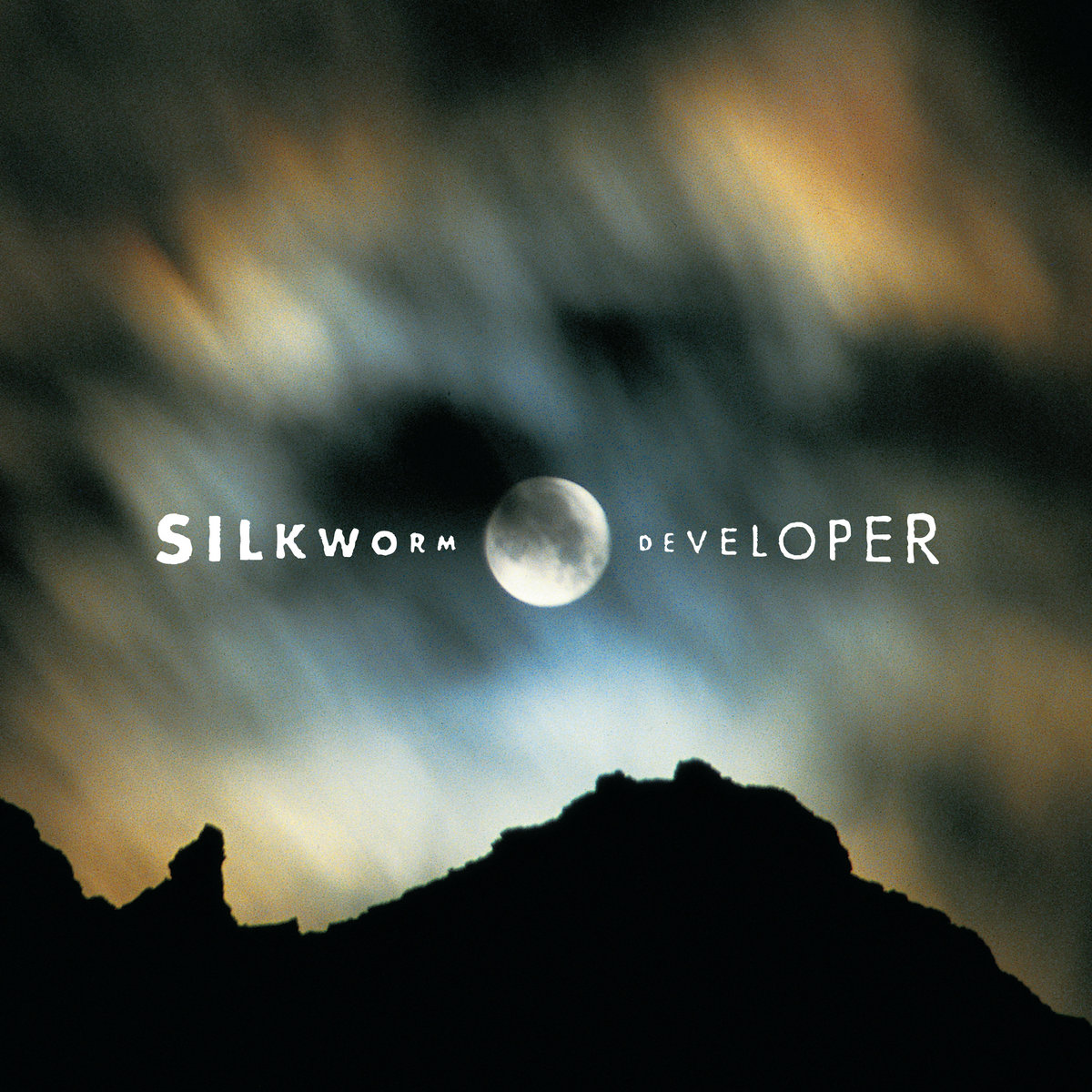
I’ve written about Silkworm more than I’ve written about any other band, but it’s not every day that Developer gets reissued, so here we go again. I have, in fact, written at least a paragraph about every Silkworm-related record ever, so I’ll probably be repeating myself a little bit here, but on the off-chance that any of you haven’t yet heard Silkworm’s 1997 masterpiece Developer, then it’ll be worth it. Every Silkworm album is a “cult favorite”, but the background on Developer makes it perhaps the über “cult” Silkworm album–it was their second and final album for Matador Records, the Chicago-via-Missoula-and-Seattle band’s final chance to do what their then-labelmates Pavement and Guided by Voices had done and parlay critical/indie rock underground buzz into larger platforms, sizeable followings, and (in the case of the former) an actual minor hit single. They made Developer instead. This insular and cold album predictably went nowhere–Matador dropped them, Andrew Cohen, Tim Midyett, and Michael Dahlquist returned to the world of day jobs, and quietly went about their business making masterpieces on their own time until their unfortunate end in 2005.
“We loved Developer once we whittled it down to what happened to be the weirdest stuff and removed the more conventional things,” writes Midyett on the occasion of the album’s first-ever reissue (a two-LP set with a handful of bonus tracks). If you squinted at the band’s previous album, Firewater, you could kind of see some Alternative Nation anti-stars in the midst of its depressing, alcoholic bluster. Firewater wasn’t exactly a commercial record, either, but between Cohen’s post-grunge fire in “Nerves” and Midyett’s indie rock-via-classic rock penmanship, you could say to yourself, “now, if they cleaned things up, the next one…” And Developer is a clean album–cleaned out of those aforementioned flashes contained in Firewater. There are less rockers, and the ones that are here are all weird. Midyett in particular abandons his AOR side–the guy who ripped through “Wet Firecracker” and “The Lure of Beauty” is first heard in the glacial “Give Me Some Skin”, the opening track that’s “confrontational” in that it’s the closest Silkworm ever got to slowcore. “The City Glows”, Midyett’s next song, picks up the pace just a little bit, but he makes up for this excess by delivering an even more understated vocal performance. “Waiting on a Train”, a second-half Midyett track, aurally captures the feeling of waiting better than just about anything else I can think of; the steady instrumentation sounds like pacing, and Midyett himself pushes his vocals and then walks them back just for fun.
If there’s a key to unlocking Developer, it’s probably in Andy Cohen’s songs. Cohen doesn’t abandon electric rock and roll to the degree that Midyett does here (in fact, I don’t think he could if he wanted to), and so, while there’s no “Nerves” or even “A Cockfight of Feelings” on here, these are the tracks that are more likely to have “hooks” and “licks”. The “single” and the one that I’ve anecdotally heard people praise the most is his “Never Met a Man I Didn’t Like”, the rare 90s indie rock song that embraces Neil Young more so in its lyrics and temperament than in a “messy, plodding Crazy Horse guitars” way (there’s a version by Silkworm side project The Crust Brothers featuring Stephen Malkmus on lead vocals, which certainly helps). However, I distinctly remember that it was “Ice Station Zebra” that was my entrypoint into loving Developer. I assume that the lyrics are more or less a retelling of the 1968 Rock Hudson/Ernest Borgnine Arctic thriller, which means that Cohen’s narrator isn’t as fascinating as, say, the one in “Goodnight Mr. Maugham” or even the wannabe tycoon in the title track, but he imbues the in-over-his-head soldier with his classic historical-drama flair, muttering about “chasing skirts” and “closet case[s]” over the sickest riff on the entire album.
“The Devil Is Beating His Wife” is a pretty weird song, no? It’s slotted in between Cohen’s two biggest rockers (“Developer” and “Ice Station Zebra”), and it’s significantly more electric than any of the other Midyett-sung tracks before it, but it doesn’t sound like anything else on this album, really. There is a refrain of sorts, and Midyett (sort of) sings the title, but the actual hook is the instrumental bit right after it, a simple guitar flourish and some intense bass playing. It’s psychedelic–maybe the most “psychedelic” Silkworm ever got?–but in a Stones-y way, I think. In the previous song, Cohen’s developer narrator brags about his downtown apartment, moans about his ex-wife, and sings about “feel[ing] the love in a piece of cold steel”–but compared to the relatively colorful figures of Cohen’s songs, the Midyett-sung tracks feel more typical of “cold steel”. It’s not until the final song on the original version of Developer, “It’s Too Bad…”, that the touchstones of what constituted “Silkworm rock music” up until that point–wailing Midyett vocals, increasingly squealing guitar from Cohen, huge, clattering drums from Dahlquist–come together even somewhat. As Midyett sings in that one, though, “it’s too late”.
I doubt (in fact, I know) Silkworm weren’t thinking about it at the time, but by sticking “It’s Too Bad…” at the end of Developer, they ended up creating a nice transition into the Comedy Minus One double LP’s bonus tracks, almost entirely built from outtakes that appeared on the original Japanese CD version of the album. These bonus tracks are part of Developer’s mythology–they left loud rock songs on the table to make space for all the weird tracks!–but few people have actually heard these recordings, given that they were only available in Japan, with not even an intrepid YouTube account stepping in to bridge the Pacific (this doesn’t include me, though; I know what Soulseek is). Three of these songs never appeared anywhere else, while two were re-recorded (in very different forms) for Lifestyle in 2000; I’ve always grouped them into these two camps when I think about them. The exclusive songs are definitely the meat of the Developer bonus tracks–they’re all swinging, roaring Midyett rockers, all catchy and/or loud enough to live up to their fairy-tale status. They, too, are hard to place within the Silkworm oeuvre–“Stray Bullets” is the heaviest one, a hard rock pistol that images an alternate universe where the band actually leaned into the classic rock trappings of Firewater rather than running away from them (which, it should be noted, probably wouldn’t have made them any more commercially well-off in 1997).
If “Stray Bullets” looked backward, “Ogilvie” looked forward–of the three Japanese Developer exclusives, it’s the most polished, a combination of tasteful classic rock indulgences, a rock-solid rhythm section groove, and some catchy pop hooks that marked Silkworm’s final three-and-a-half (shout out to the Chokes! EP) brilliant albums. Yes, it was actually insane to leave this one off of a proper album, but 1) they were right, it didn’t fit Developer, and 2) they had a lot more great songs where “Ogilvie” came from coming down the pipe, so instead we get the delayed gratification of enjoying it nearly thirty years later (and by “we”, I mean you–again, I downloaded these songs off of the file-sharing app Soulseek many years ago). Funnily enough, though, “Ogilvie” might be the most “complete” Silkworm song among these bonus tracks, but it’s not even the most openly catchy one. That’s “Numbered”, a sloppy but brilliant piece of almost power pop (I mean, Silkworm’s version of it) that’s just so much fun. No way in hell this should’ve been on Developer; in fact, it even feels kind of wrong having this on the LP of bonus material (maybe they could’ve done an extra 7” or something? With the random Crust Brothers “You Ain’t Going Nowhere” cover that’s also included here on the B-side?).
So, I’ve conquered the “difficult” Developer proper, and the previously-discussed bonus tracks are all a hoot–the final boss of this beautiful reissue from Comedy Minus One is “Dead Hair” and “Bones”, two songs that later appeared on Lifestyle as “Dead Air” and “The Bones” three years later. The reason I never got into these recordings as much as the others is because of how much I love the Lifestyle versions–if you’ve read that Silkworm piece I linked at the beginning of this review, you know that it’s my favorite album of all-time, and if you pressed me to choose my two favorite songs from that album, I’d likely be going with those two. I don’t know how they came up with turning the mid-tempo, blaring “Dead Hair” into a speedy, delirious post-punk rocker, or how “Bones” became a modern-day folk standard (in my eyes) by ditching the electric dirge for an acoustic guitar and a piano–but those were the right moves. “Dead Hair” I have always appreciated because it features Cohen and Midyett trading off lead vocals; the former (who sings the entirety of the Lifestyle version) still sings the majority of the track, but Cohen gets a good deal to work with, and it makes me wish the duo had tag-teamed more often when they were in Silkworm. It sounds very fun! (which, again, does not belong on Developer).
I can appreciate “Bones”, too. Midyett has said that the song is about founding Silkworm member Joel R.L. Phelps–whose split from the band was messy and a large part of why the first album they made without him, Firewater, dwelt heavily on substance abuse–and it’s interesting to consider that this song had been floating around not so long after Phelps’ initial departure. Silkworm whittled this one down quite a bit–they removed the full-band set-up, yes, and a few lines disappeared. Although the general feeling of “The Bones” has never been all that difficult for me to surmise, the context of it has always been a bit of a cypher, and hearing some of the struck/changed lyrics (“I’m a weak one and I know it”, “Your lack of histrionics pulled me through”) make things a little clearer. “The Bones” is a perfect song, and Silkworm made a perfect album by sticking it in the cellar for a few years. (Bandcamp link)
 Rosy Overdrive
7 thoughts on “Pressing Concerns: Silkworm, ‘Developer’ (Reissue)”