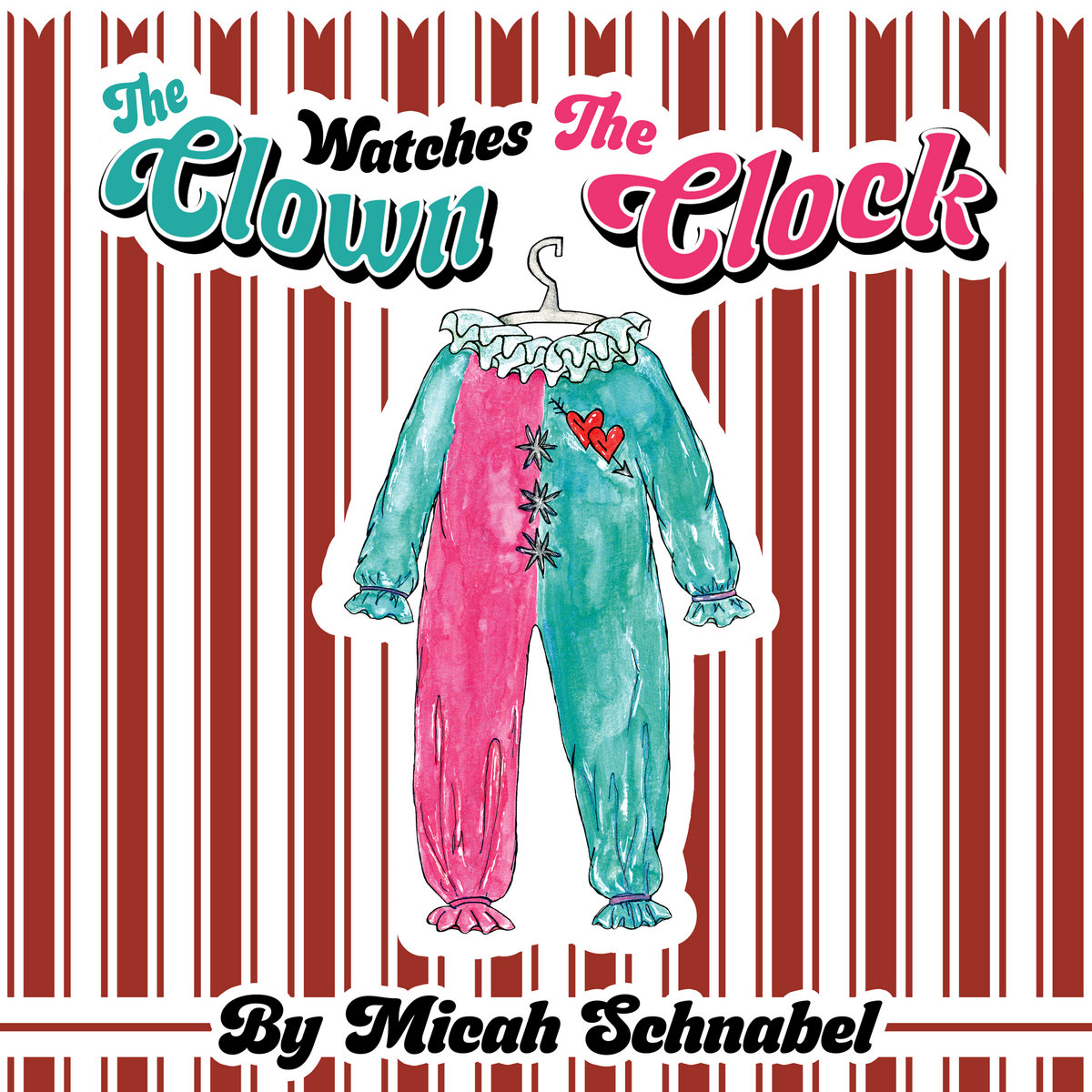
Release date: May 15th
Record label: Self-released
Genre: Country punk, alt-country, Americana, cowpunk
Formats: Vinyl, CD, digital
I’m not like the other girls. The kids these days are into alt-country because Katie Crutchfield of Waxahatchee or Karly Hartzman of Wednesday or whatever other indie rock sensation put them onto it. I’m into alt-country because those bands were the only non-Christian ones that would tour the flyover state I grew up in, so I had to get into it in order to see live music (I’m just built different, et cetera, et cetera). One of those bands that found their way to me in this manner was Columbus, Ohio’s Two Cow Garage, a country rock/cowpunk group co-led by singer-songwriters Micah Schnabel and Shane Sweeney that put out seven albums (and played countless live shows) from 2002 to 2016. A lot of Two Cow’s appeal is their perennial younger sibling status–they’re a lot scrappier and more down-to-earth-feeling than the reverent, untouchable aura surrounding your Drive-By Truckers and your Jason Isbells (even Lucero has a sort of cigarette-choked mystique to them).
Two Cow Garage is still around, but their output has slowed as of late (this decade, it’s been three one-off singles thus far). Schnabel, the more prolific of the two Two Cow frontpeople, subsequently picked up where he left off in his solo career–he’d put out a couple of solo albums concurrently with his band, but towards the end of the 2010s he fired off two LPs (2017’s Your New Norman Rockwell and 2019’s The Teenage Years of the 21st Century) and the very bleak 2018 EP Winter. I’d kind of lost track of Schnabel since his last proper album, but he, too, had continued to release one-off singles, some of which are collected on The Clown Watches the Clock, Schnabel’s fifth solo album and first in five years. The record’s ten songs took shape during the pandemic, and its credits certainly are apt for somebody who’s existed in the realms of Midwestern country, punk, and indie rock for a long time now–in addition to vocals from Schnabel’s partner, Vanessa Jean Speckman, longtime Lydia Loveless sideman Jay Gasper plays lead guitar (Loveless themself sings on “CoinStar”), The Black Swans/Scioto Records’ Keith Hanlon engineered the album, Frank Turner mixed and mastered it, and Ohio ringers like Jason Winner (drums), Todd May (bass), and Bob Starker (saxophone) appear here, too.
Micah Schnabel’s version of alt-country songwriting can be a bit of a difficult listen, sometimes–not because he’s writing harrowing, vividly descriptive, but ultimately triumphant tales of the common American man, but because it’s decidedly not that. Ohio is the land of J.D. Vance and Hillbilly Elegy, the true heartland of America–according to him and other such men with something to sell you and an exploitative streak as long as the stretch of Route 35 from Dayton to Point Pleasant. Schnabel’s Ohio is horrific and dire, too, yes, but in a much more mundane way than the snake oil salesmen and clowns would paint it. “I am rural American trash, and it’s not funny or cute like a country song,” Schnabel sings in early highlight “Get Rich Quick”. It’s a track that gets to the heart of The Clown Watches the Clock, a record about the ambient sights and sounds of middle America: guns, Jesus, and debilitating, humiliating, irritating poverty. Not everyone in Schnabel’s America is some kind of Sisiphisuan noble savage trying to fight valiantly against the waning vestiges of an empire in decline–sometimes they’re just ordinary people trying to make their way through the detritus of babies with rifles, Christian cover bands, and buildings that are, were, and one day will again be Pizza Huts. It’s been “done before”, nobody’s going to option a Netflix special out of it, but it’s no less real than it has always been.
Schnabel has always come off as somebody with a lot to say in his lyrics–one of the reasons he hasn’t put out an album in a while is possibly due to his recent turn as a novelist, releasing a book that shares the same name as this album last year. The Clown Watches the Clock balances Schnabel’s long-winded tendencies with his punk rock instincts admirably–he wanders a fair bit in the songs’ verses, but there’s a conscious effort to return to clear, catchy, and concise refrains again and again on the record. “Get Rich Quick” is the first of several songs that explicitly grapple with having hardly a dollar to one’s name–Schnabel’s narrator, a rebel without a dental plan, declares “I don’t wanna die a victim of my aw-shucks humility,” and makes a perfectly coherent argument for petty crime (which is socially constructed, by the way) in doing so. The chorus of that song nakedly longs for financial capital to eliminate the tangible issues in the narrator’s life (“…and don’t give me that shit about money not solving problems”), while the two separate refrains of “Real Estate” respectively function to lament the humiliation of jumping through infinite-seeming hoops for a “simple operation” in a job interview (“I just wanted to wash the dishes,” he grouses) and fantasize about taking back a bit of control (“Thinking about sobering up, getting into real estate…”).
When you’re living paycheck to paycheck (or heist to heist), it’s not something you can deal with neatly and move on–The Clown Watches the Clock continues to check how much money is in its bank account, flex its morals as necessary to deal with it, and daydream of ways out through songs like “COINSTAR” (Starker’s saxophone illuminating a chorus that states, plain and simple, “I don’t want to be poor anymore”) and “Happy Birthday, Baby!”. I haven’t talked too much about the music of The Clown Watches the Clock (such it is when the lyrics give you so much to discuss), but it’s the secret ingredient in turning the album into something more than a cathartic but…not particularly fun thing to listen to. Schnabel is still a master of tossing country, punk, and folk together in anthems like “Get Rich Quick” and “COINSTAR”, while his forays into huge-sounding, singalong balladry (record centerpiece “#33 Dryer”, which displays remarkable restraint) and scorched-earth acoustic folk (“Land of Impending Doom”, where Schnabel embraces his inner Mike Cooley and sketches a late capitalist disaster scene breathlessly) are just as successful.
In “Christian Band”, Schnabel, sweating through a fever, witnesses the titular band play a Stone Temple Pilots song with the lyrics changed to be vaguely Jesus-related (“Didn’t know that was legal!”) and observes, contemplatively, “I guess I’ll never be good at fooling people for money”. “If you’re willing to sacrifice who you really are, people will pay you money to not make them uncomfortable,” he says nonchalantly in the song’s bridge. In certain hands, the song would be pretty self-righteous-sounding, but Schnabel doesn’t come off as somebody completely above it all (“If I ever get the opportunity to sell out, I’m gonna kiss it long and deep in the mouth,” he declares in “COINSTAR”), he’s just like this. He’s just somebody who wants to not have to add water to his shampoo to make it last a little longer, and maybe a break from the “unrequested intimacy” of the laundromat every week. He’ll settle for doing the dishes, if you let him, as long as he can keep writing his songs in the cracks. He’s one of the best to do it, too (the songwriting, I mean, I haven’t seen his dishwashing work). (Bandcamp link)
 Rosy Overdrive